18th January – Deaths & Events in Northern Ireland Troubles


Key Events & Deaths on this day in Northern Ireland Troubles

18th January

—————————————

Monday 18 January 1971

James Chichester-Clark, then Northern Ireland Prime Minister, attended a meeting in London with Reginald Maudling, then British Home Secretary.

Tuesday 18 January 1972

Brian Faulkner, then Prime Minister of Northern Ireland, banned all parades and marches in Northern Ireland until the end of the year. [ Bloody Sunday; Internment; Law Order. ]

Wednesday 18 January 1978

European Court Decision on Treatment of Internees

The European Court of Human Rights made its ruling on the case of alleged ill-treatment of internees during 1971. The case had been initially referred to the European Commission by the Irish government on 10 March 1976. On 2 September 1976 the European Commission on Human Rights decided that Britain had to answer a case of ill-treatment of internees and referred the matter to the European Court of Human Rights.

The Commission found that the interrogation techniques did involve a breach of the Convention on Human Rights because they not only involved inhuman and degrading treatment but also torture. The European Court of Human Rights however decided that the Commission was wrong to use the word ‘torture’ but did agree that the internees had been subjected to ‘inhuman and degrading treatment’.

Tuesday 18 January 1983

Peter Barry, then Irish Foreign Minister, began a fact-finding visit to Belfast.

Wednesday 18 January 1984

James Prior, then Secretary of State for Northern Ireland, announced a public inquiry into the scandal at the Kincora Boy’s Home in Belfast.

Tuesday 18 January 1994

Sinn Féin (SF) launched a ‘peace commission’ which was set up to hear opinions on the future of the region.

 The first session was held in Derry on 27 January 1994.

Saturday 18 January 1997

The Irish Republican Army (IRA) fired two ‘horizontal type mortars’ at a Royal Ulster Constabulary (RUC) Landrover patrol in Downpatrick, County Down. There were no injuries.

An attempted mortar attack in Derry was foiled by the security forces in Derry.

John Hume, then leader of the Social Democratic and Labour Party (SDLP), confirmed that he would be the SDLP candidate for Foyle (in Derry) at the next general election.

[There had been suggestions that he might stand aside in favour of one of his colleagues. Hume at this time was both a Member of Parliament (MP) and a Member of the European Parliament (MEP).]

Sunday 18 January 1998

Fergal (Rick) McCusker (28), a Catholic man, was abducted and shot dead by the Loyalist Volunteer Force (LVF) at around 1.15 am in Maghera, County Derry.

McCusker was walking home after having been out drinking with friends. His body was discovered behind the premises of a youth club. McCusker had recently returned to Northern Ireland having worked for a while in the United States of America. He was the fourth Catholic to be killed since 27 December 1997.

Jean Kennedy Smith

Jean Kennedy Smith, then United States of America (USA) Ambassador to Ireland, came under attack from Ray Seitz, formerly US Ambassador to Britain (1991 to 1994), who branded her “an ardent IRA apologist”. Seitz made the claims in a recently published book of memoirs. Reacting to the claims, the White House said President Clinton had every confidence in Kennedy Smith.

Monday 18 January 1999

The Northern Ireland Assembly debated the proposed structures of government and the arrangements for the North-South bodies. Peter Weir, then Ulster Unionist Party (UUP) Member of the Legislative Assembly (MLA), voted against his own party line on the issue of the new structures for government.

[Weir was a member of the pressure group ‘Union First’ and opposed to the Good Friday Agreement. He was deprived of the UUP whip on 19 January 1999.] Representatives of the Garvaghy Road Residents’ Coalition (GRRC) had a meeting with Tony Blair, then British Prime Minister, at Downing Street, London. Blair called for renewed efforts to find a compromise to the Drumcree issue. Brice Dickson, then a Professor at the University of Ulster, was appointed as the head of the new Northern Ireland Human Rights Commission (NIHRC). [Some people complained of a lack of Unionist representation on the Commission.]

Friday 18 January 2002

Anti-Sectarian Rallies

Rallies were held across Northern Ireland at 1.00pm (1300GMT) to protest against Loyalist paramilitary death threats to postal workers and school staff and to call for an end to all paramilitary activity. The rallies took place in Belfast, Cookstown, Derry, Enniskillen, Newry, Omagh, and Strabane, and were attended by an estimated 25,000 people. Representatives of all major trade unions as well as ordinary men and women took part in the demonstrations.

Part of a resolution read out at the rallies stated: “we call on all those engaged in acts of sectarianism or paramilitary activity to stop”.

[The rallies were organised following the killing by the Ulster Defence Association (UDA) of Catholic postman Daniel McColgan (20) on Saturday 12 January 2002.]

 —————————————————————————

Remembering all innocent victims of the Troubles

Today is the anniversary of the death of the following  people killed as a results of the conflict in Northern Ireland

“To live in hearts we leave behind is not to die

– Thomas Campbell

To the innocent on the list – Your memory will live  forever

– To  the Paramilitaries  –

There are many things worth living for, a few things worth dying for, but nothing worth killing for.

6 People   lost their lives on the 18th January  between  1972 – 1998

————————————————————

18 January 1972
Sydney Agnew,  (40)

Protestant
Status: Civilian (Civ),

Killed by: Irish Republican Army (IRA)
Shot at his home, The Mount, off Albertbridge Road, Belfast. Witness to the hijacking of a bus.

————————————————————

18 January 1973


Francis Liggett,   (25)

Catholic
Status: Irish Republican Army (IRA),

Killed by: British Army (BA)
Shot during attempted armed robbery at Royal Victoria Hospital, Falls Road, Belfast

————————————————————

18 January 1980


Graham Cox,   (35)

Protestant
Status: Prison Officer (PO),

Killed by: Irish Republican Army (IRA)
Shot while driving home from Magilligan Prison, Limavady Road, Stradreagh, near Derry.

————————————————————

18 January 1983


 John Olphert,  (39)

Protestant
Status: Royal Ulster Constabulary (RUC),

Killed by: Irish Republican Army (IRA)
Off duty reservist. Shot at his supermarket, Nelson Drive, Caw, Derry.

————————————————————

18 January 1989

Ian Catney,  (27)

Catholic
Status: Civilian (Civ),

Killed by: Ulster Volunteer Force (UVF)
Shot at his workplace, his mother’s shop, Smithfield, Belfast.

————————————————————

18 January 1998


Fergal McCusker,   (28)

Catholic
Status: Civilian (Civ),

Killed by: Loyalist Volunteer Force (LVF)
Found shot, behind youth centre, off Tircane Road, Maghera, County Derry 

————————————————————


Buy Me A Coffee

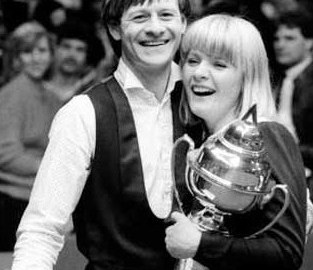
Alex Higgins – The People’s Champion

Alex Higgins

18 March 1949 – 24 July 2010

Like many Belfast and Northern Ireland people Alex Higgins was a hero of mine and as a teenager I remember watching the Hurricane win the world championship in 1982 and becoming the pride of Ulster and a national treasure.

I was lucky to meet him on a few occasions, my dad and his brothers use to hang about with him in the Jampot in Sandy Row and when my grandmother died he came to the wake and drank us all under the table.

Sadly his antics away from the table made uncomfortable viewing and I watch with a heavy heart as he stumbled from one calamity to another and eventually he  faded away from the game and spent his later life drinking and gambling and was a common sight in The Crown Bar and betting shops in Belfast City Centre. 

Cancer finally took him off this mortal coil and the Hurricane  run out of steam. But he was and remains The Pride  of Belfast

—————————————————

Alexander Gordon “Alex” Higgins (18 March 1949 – 24 July 2010)[6] was a Northern Irish professional snooker player, who is remembered as one of the most iconic figures in the game. Nicknamed Hurricane Higgins because of his fast play,[7] he was World Champion in 1972 and 1982, and runner-up in 1976 and 1980. He won the UK Championship in 1983 and the Masters in 1978 and 1981, making him one of ten players to have completed snooker’s Triple Crown. He was also World Doubles champion with Jimmy White in 1984, and won the World Cup three times with the All Ireland team.

Higgins came to be known as the “People’s Champion” because of his popularity,[8] and is often credited with having brought the game of snooker to a wider audience, contributing to its peak in popularity in the 1980s.[9] He had a reputation as an unpredictable and difficult character.[10] He was a heavy smoker,[11] struggled with drinking and gambling,[9][12] and admitted to using cocaine and marijuana.[7] First diagnosed with throat cancer in 1998,[13] Higgins died of multiple causes in his Belfast home on 24 July 2010.

—————————————————–

Alex Higgins BBC Documentary – The People’s Champion

—————————————————–

Life and career

Early life

Higgins (right) with David Taylor at an exhibition at Queen’s University Belfast, 1968

Alex Higgins was born in Belfast[14] and had three sisters.[13] He started playing snooker at the age of 11,[15] often in the Jampot club in his native Sandy Row area of south Belfast and later in the YMCA in the nearby city centre. At age 14 and weighing seven and a half stone (47.6 kg), he left for England and a career as a jockey.[16] However, he never made the grade because, in his youth, he drank a lot of Guinness and ate a lot of chocolate, making him too heavy to ride competitively.[17] He returned to Belfast and by 1965, aged 16, he had compiled his first maximum break.[15] In 1968 he won the All-Ireland and Northern Ireland Amateur Snooker Championships.[14]

World titles

Higgins turned professional at the age of 22, winning the World Championship at his first attempt in 1972, against John Spencer winning 37–32.[18] Higgins was then the youngest ever winner of the title, a record retained until Stephen Hendry‘s 1990 victory at the age of 21.[19] In April 1976, Higgins reached the final again and faced Ray Reardon. Higgins led 11–9, but Reardon made four centuries and seven breaks over 60 to pull away and win the title for the fifth time with the score of 27–16. Higgins was also the runner-up to Cliff Thorburn in 1980, losing 18–16, after being 9–5 up. Higgins won the world title for a second time in 1982 after beating Reardon 18–15 (with a 135 total clearance in the final frame); it was an emotional as well as professional victory for him. Higgins would have been ranked No. 1 in the world rankings for the 1982/83 season had he not forfeited ranking points following disciplinary action.[20][21]

Other victories

Throughout his career, Higgins won 20 other titles, one of the most notable being the 1983 UK Championship. In the final he trailed Steve Davis 0–7 before producing a famous comeback to win 16–15.[22] He also won the Masters twice, in 1978 and in 1981, beating Cliff Thorburn and Terry Griffiths in the finals respectively.[23] Another notable victory was his final professional triumph in the 1989 Irish Masters at the age of 40 when he defeated a young Stephen Hendry.

Post-retiremen

After his retirement from the professional game, Higgins spent time playing for small sums of money in and around Northern Ireland. He made appearances in the 2005 and 2006 Irish Professional Championship, these comebacks ending in first-round defeats by Garry Hardiman and Joe Delaney respectively.

On 12 June 2007, it was reported that Higgins had assaulted a referee at a charity match in the north-east of England.[24] Higgins returned to competitive action in September 2007 at the Irish Professional Championship in Dublin but was whitewashed 0–5 by former British Open champion Fergal O’Brien in the first round at the Spawell Club, Templelogue.[25]

Higgins continued to play fairly regularly, and enjoyed “hustling” all comers for small-time stakes in clubs in Northern Ireland and beyond; in May 2009 he entered the Northern Ireland Amateur Championship, “to give it a crack”,[26] but failed to appear for his match.

On 8 April 2010, Higgins was part of the debut Snooker Legends Tour event in Sheffield, at the Crucible, checking himself out of hospital two days before the event, after having been admitted with pneumonia and breathing problems.[27] Appearing alongside other retired or close-to-retiring professionals, including John Parrott, Jimmy White, John Virgo and Cliff Thorburn, he faced Thorburn in his match, but lost 2–0.[28]

It is estimated that Higgins earned and spent £3–4 million in his career as a snooker player.[29][30]

Playing style


Higgins’s speed around the table, his ability to pot balls at a rapid rate and flamboyant style earned him the nickname “Hurricane Higgins” and made him a very high-profile player. His highly unusual cueing technique sometimes included a body swerve and movement, as well as a stance that was noticeably higher than that of most professionals.

The unorthodox play of Higgins was encapsulated in his break of 69, made under unusual pressure, against Jimmy White in the penultimate frame of their World Professional Snooker Championship semi-final in 1982. Higgins was 0–59 down in that frame, but managed to compile an extremely challenging clearance during which he was scarcely in position until the colours. In particular, former world champion Dennis Taylor considers a three-quarter-ball pot on a blue into the green pocket especially memorable, not only for its extreme degree of difficulty but for enabling Higgins to continue the break and keep White off the table and unable to clinch victory at that moment. In potting the blue, Higgins screwed the cue-ball on to the side cushion to bring it back towards the black/pink area with extreme left-hand sidespin, a shot Taylor believes could be played 100 times without coming close to the position Higgins reached with cue-ball. He went a little too far for ideal position on his next red but the match-saving break was still alive.[31][citation needed]

Higgins drank alcohol and smoked during tournaments, as did many of his contemporaries. A volatile personality got him into frequent fights and arguments, both on and off the snooker table. One of the most serious of these clashes was when he head-butted a referee at the UK championship in 1986. This led to his being fined £12,000 and banned from five tournaments.[32] He was convicted of assault and criminal damage, and fined £250 by a court.[33] Another came at the 1990 World Championship; after losing his first-round match to Steve James, he punched tournament official Colin Randle in the abdomen, before the start of a press conference at which he announced his retirement. This, added to his having threatened to have fellow player and compatriot Dennis Taylor shot, led to a ban for the whole of the following season.[34]

Outside snooker

At the time of his 1972 triumph at the World Championship, Higgins had no permanent home and by his own account had recently lived in a row of abandoned houses in Blackburn which were awaiting demolition. In one week he had moved into five different houses on the same street, moving down one every time his current dwelling was demolished.[35]

In 1975, Higgins’ son Chris Delahunty was born.[17] Higgins’s first marriage was to Australian[17] Cara Hasler in April 1975 in Sydney. They had a daughter Christel[12] and divorced. His second marriage was to Lynn Avison in 1980 at a United Reformed Church.[16] They had a daughter Lauren (born late 1980)[36] and son Jordan (born March 1983).[13][37][38][39] They split in 1985[33] and divorced. In the same year, Higgins began a relationship with Siobhan Kidd, which ended in 1989 after he allegedly hit her with a hairdryer.[40]

He had a long and enduring friendship with Oliver Reed and was a good friend of John Sykes, with whom he often played exhibition matches.[41]

While not normally noted for his philanthropy, in 1983 Higgins helped a young boy from the Manchester area, a fan of his who had been in a coma for two months. His parents were growing desperate and wrote to Higgins. He recorded his voice on a tape and sent it to the boy with his best wishes. He later visited the boy in hospital, unannounced, and promised that if the boy recovered they would play snooker together. True to his word, once the boy was out, the match was held.[42]

In 1996, Higgins was convicted of assaulting a 14-year-old boy,[30] while in 1997 then-girlfriend Holly Haise stabbed him three times during a domestic argument.[33] He published his autobiography, From the Eye of the Hurricane: My Story, in 2007.[43] Higgins appeared in the Sporting Stars edition of the British television quiz The Weakest Link on 25 July 2009.[44]

Illness and death

For many years, Higgins smoked 60 cigarettes a day.[17] He had cancerous growths removed from his mouth in 1994 and 1996.[45] In June 1998, he was found to have throat cancer;[13] on 13 October of that year, he had major surgery.[46]

By 2009, Higgins lived alone in a caravan.[30] In spring 2010, he contracted pneumonia.[39] In April 2010 Higgins’s friends announced that they had set up a campaign to help raise the £20,000 he needed for teeth implants, to enable him to eat properly again and put on weight. Higgins had lost his teeth after intensive radiotherapy used to treat his throat cancer. It was reported that since losing them he had been living on liquid food, and had become increasingly depressed, even contemplating suicide.[47] He was too ill to have the implants fitted.[48] Despite his illness he continued to smoke cigarettes and drink heavily until the end of his life.[49]

At the end of his life, Higgins’ weight fell to 6 stone (38 kilograms).[30] He lived in sheltered housing on the Donegall Road, Belfast.[39] Despite having once been worth £4 million, he was bankrupt and survived on a £200-a-week disability allowance.[47] He was found dead in bed in his flat on 24 July 2010.[6][14][38] The cause of death was a combination of malnutrition, pneumonia, a bronchial condition and throat cancer.[50] His children survive him.[51]

Higgins’ funeral service was held in Belfast on 2 August 2010. He was cremated, and his ashes were interred in Carnmoney Cemetery in Newtownabbey, County Antrim.

Legacy

Higgins was inducted into the Snooker Hall of Fame in 2011.

Alex Higgins was an inspiration to many subsequent professional snooker players, including Ken Doherty, Jimmy White and Ronnie O’Sullivan, who in an interview stated “Alex was an inspiration to players like Jimmy White and thousands of snooker players all over the country, including me. The way he played at his best is the way I believe the game should be played. It was on the edge, keeping the crowd entertained and glued to the action.”[52]

In Clive Everton‘s TV documentary The Story of Snooker (2002), Steve Davis described Higgins as the “one true genius that snooker has produced”,[53] despite the autobiography of a contemporary leading professional Willie Thorne characterising Higgins as “not a great player”.[54] Higgins arguably fulfilled his potential only intermittently during his career peak in the 1970s and ’80s; Everton puts this down to Davis and Ray Reardon generally being too consistent for him.[55]

Regardless, Higgins’ exciting style and explosive persona helped make snooker a growing television sport in the 1970s and 1980s. Higgins also made the first 16-red clearance (in a challenge match in 1976); it was a break of 146 (with the brown as the first “red”, and sixteen colours: 1 green, 5 pinks and 10 blacks).[56]

Performance timeline

Tournament 1971/
72
1972/
73
1973/
74
1974/
75
1975/
76
1976/
77
1977/
78
1978/
79
1979/
80
1980/
81
1981/
82
1982/
83
1983/
84
1984/
85
1985/
86
1986/
87
1987/
88
1988/
89
1989/
90
1990/
91
1991/
92
1992/
93
1993/
94
1994/
95
1995/
96
1996/
97
1997/
98
UK Championship NH NH NH NH NH NH SF SF QF F QF F W F 2R SF 2R 1R 1R A LQ LQ LQ 2R LQ LQ LQ
The Masters NH NH NH QF QF SF W F F W SF 1R QF QF 1R F QF A WR A LQ LQ LQ A LQ A A
World Championship W SF QF SF F 1R 1R QF F 2R W SF 1R 2R 2R 2R 1R LQ 1R A LQ LQ 1R LQ LQ LQ A
Performance Table Legend
LQ lost in qualifying draw #R lost in the early rounds of the tournament
(WR = Wildcard round)
QF advanced to but not past the quarterfinals SF advanced to but not past the semi-finals
F advanced to the final, tournament runner-up W won the tournament
NH event was not held A did not participate in the tournament

Career finals[edit]

Ranking event finals: 6 (1 title, 5 runner-ups)[edit]

Legend
World Championship (1–2)
UK Championship (0–1)
Other (0–2)
Outcome No. Year Championship Opponent in the final Score
Runner-up 1. 1976 World Championship Wales Reardon, RayRay Reardon 16–27
Runner-up 2. 1980 World Championship Canada Thorburn, CliffCliff Thorburn 16–18
Winner 1. 1982 World Championship Wales Reardon, RayRay Reardon 18–15
Runner-up 3. 1984 UK Championship England Davis, SteveSteve Davis 8–16
Runner-up 4. 1988 Grand Prix England Davis, SteveSteve Davis 6–10
Runner-up 5. 1990 British Open Canada Chaperon, BobBob Chaperon 8–10

Tournament wins

Ranking wins:(1)

Non-ranking wins: (23)[edit]

Team wins

Pro-Am wins

  • Pontin’s Spring Open[60]

Amateur wins

  • All Ireland Amateur Championship – 1968[61]
  • Northern Ireland Amateur Championship – 1968[58]


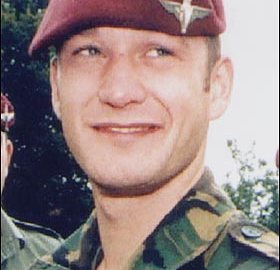
Lee Clegg

Sergeant Lee Clegg is a British Army soldier who was convicted of murder for his involvement in the shooting dead of two teenage joyriders in West Belfast, Northern Ireland. His conviction was later overturned.


Shooting

The shooting took place in West Belfast on 30 September 1990. Clegg, then a private originally from Bradford, England, and his fellow soldiers manning the checkpoint on the Upper Glen Road, fired nineteen bullets into a stolen Vauxhall Astra that passed through their checkpoint travelling at high speed. Clegg fired four of the bullets, the last of which killed 18-year-old passenger Karen Reilly. The driver, 17-year-old Martin Peake, also died at the scene, and the third passenger, Markiewicz Gorman, escaped with minor injuries.

Sentencing

Clegg was sentenced to life imprisonment for murder in 1993, the court having decided that lethal force had been used without a lawful purpose. The fourth bullet was said to have been fired through the back of the car as it was leaving the checkpoint and was therefore no longer a threat to the soldiers. The murder conviction was condemned by unionists and some British newspapers, including the Daily Mail, which began a campaign for Clegg’s release on the grounds that he was just doing his job in difficult circumstances.

Release and aftermath

Clegg was released under licence by then Northern Ireland Secretary Patrick Mayhew in 1995, which in turn led to rioting in Irish nationalist areas of Belfast. Sinn Féin repeatedly called the decision a “threat to the peace process“. The release followed after a test shooting on another Astra conducted by pathologist Iain West and forensic expert Graham Renshaw on 4 June 1995.[1]

Appeals

A set of appeals to the Court of Appeal and House of Lords led to the quashing of the murder conviction in 1998 and a re-trial in March 1999, on the grounds that new evidence suggested that the fourth bullet entered the side of the car. At the retrial Clegg was cleared of murder, but a conviction for “attempting to wound” the driver of the car, Martin Peake, who also died in the incident, was upheld.

Another appeal, this time at the Northern Ireland Court of Appeal, led to that lesser conviction also being overturned on 31 January 2000 due to uncertainty over the accuracy of evidence that initially suggested Clegg’s final bullet was fired after the vehicle had passed.

——————————————

PRIVATE LEE CLEGGS RELEASE

——————————————

Clegg continued to serve as part of 16 Air Assault Brigade. In September 2007 the Daily Mail reported that Clegg would be serving in Afghanistan in 2008 as combat medic with the 2nd Battalion Parachute Regiment.[2][3]

The Worlds most wanted IS Terrorists


The world’s most wanted Islamic State terrorists   

It will hardly come as a surprise to anyone that the leadership of Islamic State top  the list of the most wanted terrorists on  earth and I am in no doubt that eventually justice will catch up with them all  and they will ultimately pay for their heinous crimes against humanity.
If not in this life , then surely Karma will catch up with them in the next and instead of finding countless virgins waiting for them in paradise , these will be thrown into the eternal flames of hell and burn to the end of time.

Karma always collects its debt!

Syrians walk along a severely damaged road in the northeastern city of Deir Ezzor

Deir Ezzor


It the latest and endless crimes against humanity  Islamic State fighters  have ‘massacre and kidnap hundreds’ in eastern city of Deir Ezzor

Reports say group’s fighters slaughtered up to 300 people and took another 400 hostage in major offensive which saw it expand control in the .Islamic State militants have massacred up to 300 people and taken 400 hostage in a major offensive on the eastern city of Deir Ezzor, according to Syrian state media and opposition activists.

The state-run SANA news agency said that most of those killed in Saturday’s attacks were elderly people, women and children, while opposition activists said many of the victims were Syrian soldiers and pro-government militiamen and their families.

The killings are some of the worst carried out by the extremist group, which controls large parts of Syria and Iraq and has killed thousands of people in both countries.

See Telegraph for full story

————————————–

The four most wanted Islamic State Terrorists

————————————–

————————————–

 Leader of Islamic Sate Abu Bakr al-Baghdadi

Leader of Islamic State

Bounty £10, 000,000

Abu Bakr al-Baghdadi (Arabic: أبو بكر البغدادي‎; born 28 July 1971 as Ibrahim Awad Ibrahim al-Badri)[8][9][10] is the leader[11][12][13] of the Islamic State of Iraq and the Levant (ISIL), also known as ISIS or Daesh, an Islamic extremist group in western Iraq, Libya, northeast Nigeria, and Syria. He has been proclaimed by his followers to be a caliph.[14]

On 4 October 2011, the U.S. State Department listed al-Baghdadi as a Specially Designated Global Terrorist and announced a reward of up to US$10 million for information leading to his capture or death.[14][15] Only the leader of al-Qaeda, Ayman al-Zawahiri, has a larger reward offered for his capture or death (US$25 million).[16] The United States has also accused al-Baghdadi of kidnapping, enslaving, and repeatedly raping an American citizen who was later killed.[17]

Over time, there have been a number of reports of Al-Baghdadi’s death or injury; however, none has been verified.

See Abu Bakr al-Baghdadi for more details :

—————————————————–

Abdul Rahman Mustafa al-Qaduli

Deputy Leader of Islamic State

Bounty £7, 000,000

Abd al-Rahman Mustafa al-Qaduli (Arabic: عبد الرحمن مصطفى القادولي‎), alternatively known as Abu Ala al-Afri (أبو علاء العفري), was the Deputy leader of the Islamic State of Iraq and the Levant. It is believed he ascended to this position following unconfirmed reports of current leader Abu Bakr al-Baghdadi being severely injured by an airstrike, leaving him unable to retain direct leadership of the group.[1]

On May 14, 2014, Abu Ala al-Afri was listed as a Specially Designated Global Terrorist by the U.S Treasury Department.[2]

On May 5, 2015, the U.S. State Department announced a reward of up to US$7 million for information leading to al-Afri’s capture or death.[3]

The Iraqi Ministry of Defense reported that Abu Ala al-Afri had been killed in a US-led coalition airstrike in Tel Afar, on May 12, 2015, along with dozens of other ISIL militants that were present.[4] US Spokesmen were unable to corroborate the reports, with some unnamed officials expressing skepticism of the Iraqi claims

See Abd al-Rahman Mustafa al-Qaduli for more details:

—————————————————–

Abu Mohammad al-Adnani

Spokesman for Islamic State

Bounty £5,000,000

Abu Muhammad al-Adnani al-Shami (Arabic: أبو محمد العدناني‎. born 1977 or 1978), whose original name is Taha Subhi Falaha (طه صبحي فلاحة), is the official spokesperson and a senior leader of the Islamic State of Iraq and the Levant, and its primary conduit for communicating official messages.[5][6] He is also the emir of ISIL in Syria.[3] The U.S. State Department Rewards for Justice Program announced a reward up to US$5 million for information leading to his capture on May 5, 2015.[2][7] On January 4, 2016, Abu Mohammad al-Adani was reportedly severely injured by an Iraqi airstrike on Barwana, near Hit, Iraq. It was reported that he had lost a large amount of blood and had been moved to Mosul for recovery

See Abu Mohammad al-Adnani for more details:

—————————————————–

Tarkhan Tayumurazovich Batirashvili

Commander for Islamic State

Bounty £5,000,000

Tarkhan Tayumurazovich Batirashvili (Georgian: თარხან ბათირაშვილი; January 11, 1986), known by his nom de guerre Abu Omar al-Shishani (Arabic: أبو عمر الشيشاني‎, Abū ‘Umar ash-Shīshānī , “Abu Omar the Chechen”)[8] or Omar al-Shishani, is a Georgian Kist jihadist who currently serves as a commander for the Islamic State in Syria, and a former sergeant in the Georgian Army.[8]

A veteran of the 2008 Russo-Georgian War, Batirashvili became a jihadist after being discharged from the Georgian military and served in various command positions with Islamist militant groups fighting in the Syrian civil war. Batirashvili was previously the leader of the rebel group Katibat al-Muhajireen (Emigrants Brigade), also known as the Muhajireen Brigade, and its successor, Jaish al-Muhajireen wal-Ansar (Army of Emigrants and Supporters).

In May 2013, Batirashvili was appointed northern commander for ISIL, with authority over ISIL’s military operations and ISIL’s forces in northern Syria, specifically Aleppo, al-Raqqah, Latakia, and northern Idlib Provinces. As of late 2013, he was the ISIL amir (leader) for northern Syria and was located in and around Aleppo Province. He was also in charge of fighters from Chechnya and elsewhere in the Caucasus.[9] Units under his command have participated in major assaults on Syrian military bases in and around Aleppo, including the capture of Menagh Airbase in August 2013.[3] He is considered “one of the most influential military leaders of the Syrian opposition forces”.[2] As of mid-2014, Batirashvili was a senior ISIL commander and Shura Council member based in al-Raqqah, Syria.[9]

The US Treasury Department added Batirashvili to its list of Specially Designated Global Terrorists on 24 September 2014.[10] On 5 May 2015, The U.S. State Department Rewards for Justice Program announced a reward up to US$5 million for information leading to his capture.

See Tarkhan Tayumurazovich Batirashvili for more details:

17th January – Deaths & Events in Northern Ireland Troubles

Key Events & Deaths on this day in Northern Ireland Troubles

17th January

———————————

Sunday 17 January 1971

At an Ard Fheis (party conference) in Dublin the Official Sinn Féin ended the 65 year abstentionist policy and agreed that any elected representative could take their seat at the Dáil, Stormont or Westminster parliaments. It was this issue that caused the split between the Official and Provisional movement in Republicanism.

Monday 17 January 1972

Seven men who were being held as internees escaped from the prison ship HMS Maidstone in Belfast Lough.

Thursday 17 January 1974

Hugh Logue, then a Social Democratic and Labour Party (SDLP) Assemblyman, gave a speech at Trinity College Dublin in which he said that the Council of Ireland was “the vehicle that would trundle Unionists into a united Ireland”.

[ Sunningdale; Ulster Workers’ Council Strike. ]

Friday 17 January 1975

The Irish Republican Army’s (IRA) ceasefire came to an end. Merlyn Rees, then Secretary of State for Northern Ireland, said that he would not be influenced by arguments supported by the bomb and the bullet.

[Public Records 1975 – Released 1 January 2006: Document entitled ‘Terms for Bi-lateral Truce’ which appears to be a list of 12 terms required by the IRA before a bi-lateral truce would be entered into with the British government. The date of the document is uncertain but may have been delivered to the British government sometime between 17 January 1975 and 10 February 1975.]

Saturday 17 January 1976


Two Catholic civilians, Sarah O’Dwyer (47) and James Reid (47), were killed in a bomb attack on Sheridan’s Bar, New Lodge Road, Belfast. The attack was carried out by Loyalist paramilitaries. Seamus O’Brien (25), a Catholic civilian, was shot dead by the Irish Republican Army (IRA) who alleged that he had been an informer. Mark Ashford (19), a British soldier, was shot dead by the IRA at Great James’ Street, Derry.

Thursday 17 January 1980

Three people were killed and two injured when a bomb, being planted by the Irish Republican Army (IRA), exploded prematurely on a train at Dunmurray, near Belfast. One of those who died was a member of the IRA and the other two people were civilians. James Kilfedder, then Member of Parliament (MP) for North Down, launched a new political party called the Ulster Progressive Unionist Party (UPUP).

[The UPUP later changed its name to the Ulster Popular Unionist Party; UPUP.]

Tuesday 17 January 1989

Douglas Hogg, then a British Home Office Minister, made a number of comments to the effect that he was critical of a “number of solicitors in Northern Ireland who are unduly sympathetic to the cause of the IRA”.

[On 12 February 1989 Patrick Finucane, a Belfast solicitor who had represented a number of Republicans, was shot dead by Loyalists.]

Three Ulster Unionist Party (UUP) councillors in North Down joined the ‘Model Conservative Association’.

Thursday 17 January 1991

Peter Brooke, then Secretary of State for Northern Ireland, met with representatives of the Social Democratic and Labour Party (SDLP) at Westminster. The SDLP objected to aspects of the arrangements for proposed talks on the future of Northern Ireland. Specifically the SDLP criticised the fact that Brooke would determine the point in the talks at which representatives of the government in the Republic of Ireland would be invited to attend.

Friday 17 January 1992 Teebane Bombing

teebane2

See Teebane Bombing Page

The Irish Republican Army (IRA) exploded a bomb killing eight Protestant civilians who had been travelling in a minibus past Teebane crossroads between Cookstown and Omagh, County Tyrone. The men had been working at a military base in County Tyrone and were travelling home when the attack occurred. Peter Brooke, then Secretary of State for Northern Ireland, appeared on the Late Late Show on Radio Telefis Éireann (RTE) and was persuaded to sing ‘My Darling Clementine’. [Unionists accused Brooke of gross insensitivity in agreeing to sing on the show following the Teebane bombing. Brooke later revealed that he had offered his resignation over the matter.]

Monday 17 January 1994

Sinn Féin (SF) issued a document, ‘Setting the Record Straight’, which contracted British government accounts of contacts between SF and representatives of the government. [The British government was later to retract its account of the meetings.(?)]

Wednesday 17 January 1996

The British and Irish Governments met with Sinn Féin (SF) at Stormont. The meeting was for preparatory talks. Patrick Mayhew, then Secretary of State for Northern Ireland, and Dick Spring, then Tánaiste (deputy Irish Prime Minister and Minister for Foreign Affairs), again said that all-party talks would begin by the end of February 1996

A British television news programme, Channel 4 News, carried a report which presented evidence that soldiers, other than those of the Parachute Regiment, had opened fire on those taking part in the civil rights march on ‘Bloody Sunday’ in Derry on 30 January 1972. It was suggested that members of the Royal Anglian Regiment could have been responsible for the deaths of three of the 14 victims. Relatives of the victims renewed their call for a fresh inquiry into the events of ‘Bloody Sunday’.

Wednesday 17 January 2001

A pipe-bomb was thrown at a Catholic-owned public house in Antrim at about 8.30pm. The Royal Ulster Constabulary (RUC) said that they were treating the attack as sectarian. Police said that a man wearing a hooded top attempted to throw the device through a window. It failed to explode, and was taken away for examination. No-one was injured. In Ballymoney, County Antrim, a Catholic family targeted in a pipe-bomb attack have said they believed the motive was sectarian. The pipe-bomb was discovered in the garden of their house after a telephoned warning. Both attacks were carried out by Loyalist paramilitaries.

Thursday 17 January 2002

A man (19) was shot in the leg in a paramilitary ‘punishment’ attack in the Drumreagh area of Rostrevor, County Down, at approximately 6.30pm (1830GMT). Two men broke into a house and shot the man once. A teenage girl (15) was hit on the head with a baton during the attack. A shotgun was used in an attack on a house in Ballygowan, County Down, at approximately 11.00pm (2300GMT). There were no injuries.

Richard Haass, then a special advisor to the US President, held another round of talks with political representatives during his second day in Belfast. He met representatives of the Social Democratic and Labour Party (SDLP) and held talks with Gerry Adams, then President of Sinn Féin (SF). Haass said that he and Adams had “agreed to disagree” on the issue of policing. An early day motion was signed by 37 Members of Parliament (MPs) representing all the main political parties asking the government to ensure that Sinn Féin (SF) members sign the parliamentary code of conduct and register of members’ interests. Under current rules those MPs who do not take their seats do not have to declare business interests or sign up to the MP’s code of conduct.

A woman (35) was arrested in north London at approximately 8.30am (0830GMT) by British police officers. She was held under the Terrorism Act (2000).

  —————————————————————————

Remembering all innocent victims of the Troubles

Today is the anniversary of the death of the following  people killed as a results of the conflict in Northern Ireland

“To live in hearts we leave behind is not to die

– Thomas Campbell

To the innocent on the list – Your memory will live  forever

– To  the Paramilitaries  –

There are many things worth living for, a few things worth dying for, but nothing worth killing for.

18 People   lost their lives on the 17th  January  between  1974 – 1993

————————————————————

———————————

17 January 1974
Robert Jameson,   (22)

Protestant
Status: Ulster Defence Regiment (UDR),

Killed by: Irish Republican Army (IRA)
Off duty. Shot while returning home from work, near his home, Trillick, County Tyrone

———————————

17 January 1974
 Daniel Hughes,   (73)

Catholic
Status: Civilian (Civ),

Killed by: non-specific Loyalist group (LOY)
Shot during gun attack on Boyle’s Bar, Cappagh, County Tyrone.

———————————

17 January 1976
Mark Ashford,  (19)

nfNI
Status: British Army (BA),

Killed by: Irish Republican Army (IRA)
Shot while at British Army (BA) pedestrian check point, Great James’ Street, Derry

———————————

17 January 1976


Seamus O’Brien,  (25)

Catholic
Status: Civilian (Civ),

Killed by: Irish Republican Army (IRA)
Found shot at junction of Glen Road and Glenside Road, Andersonstown, Belfast. Alleged informer.

———————————

17 January 1976


Sarah O’Dwyer,  (47)

Catholic
Status: Civilian (Civ),

Killed by: non-specific Loyalist group (LOY)
Killed in bomb attack on Sheridan’s Bar, New Lodge Road, Belfast.

———————————

17 January 1976


James Reid,   (47)

Catholic
Status: Civilian (Civ),

Killed by: non-specific Loyalist group (LOY)
Killed in bomb attack on Sheridan’s Bar, New Lodge Road, Belfast.

———————————

17 January 1980
Mark Cochrane, (17)

Protestant
Status: Civilian (Civ),

Killed by: Irish Republican Army (IRA)
Died in premature bomb explosion while travelling on train between Lisburn and Belfast, County Antrim

———————————

17 January 1980
Abayoni Olorunda,   (35)

nfNI
Status: Civilian (Civ),

Killed by: Irish Republican Army (IRA)
Originally from Nigeria. Died in premature bomb explosion while travelling on train between Lisburn and Belfast, County Antrim.

———————————

17 January 1980
Kevin Delaney,  (26)

Catholic
Status: Irish Republican Army (IRA),

Killed by: Irish Republican Army (IRA)
Died in premature bomb explosion while travelling on train between Lisburn and Belfast, County Antrim.

———————————

17 January 1992


David Harkness,  (23)

Protestant
Status: Civilian (Civ),

Killed by: Irish Republican Army (IRA)
Killed in land mine attack on firm’s van, returning home from Lisanelly British Army (BA) base, Omagh, at Teebane Crossroads, near Cookstown, County Tyrone.

———————————

17 January 1992


Gary Bleeks,  (25)

Protestant
Status: Civilian (Civ),

Killed by: Irish Republican Army (IRA)
Killed in land mine attack on firm’s van, returning home from Lisanelly British Army (BA) base, Omagh, at Teebane Crossroads, near Cookstown, County Tyrone.

———————————

17 January 1992


 Robert Dunseath,   (25)

Protestant
Status: Civilian (Civ),

Killed by: Irish Republican Army (IRA)
Killed in land mine attack on firm’s van, returning home from Lisanelly British Army (BA) base, Omagh, at Teebane Crossroads, near Cookstown, County Tyrone.

———————————

17 January 1992
John McConnell  (38)

Protestant
Status: Civilian (Civ),

Killed by: Irish Republican Army (IRA)
Killed in land mine attack on firm’s van, returning home from Lisanelly British Army (BA) base, Omagh, at Teebane Crossroads, near Cookstown, County Tyrone.

———————————

17 January 1992


James Caldwell,  (37)

Protestant
Status: Civilian (Civ),

Killed by: Irish Republican Army (IRA)
Killed in land mine attack on firm’s van, returning home from Lisanelly British Army (BA) base, Omagh, at Teebane Crossroads, near Cookstown, County Tyrone.

———————————

17 January 1992


Nigel McKee,   (22)

Protestant
Status: Civilian (Civ),

Killed by: Irish Republican Army (IRA)
Killed in land mine attack on firm’s van, returning home from Lisanelly British Army (BA) base, Omagh, at Teebane Crossroads, near Cookstown, County Tyrone.

———————————

17 January 1992


Robert Irons,  (61)

Protestant
Status: Civilian (Civ),

Killed by: Irish Republican Army (IRA)
Killed in land mine attack on firm’s van, returning home from Lisanelly British Army (BA) base, Omagh, at Teebane Crossroads, near Cookstown, County Tyrone.

———————————

17 January 1992
Gilchrist Oswald    (44)

Protestant
Status: Civilian (Civ),

Killed by: Irish Republican Army (IRA)
Injured in land mine attack on firm’s van, returning home from Lisanelly British Army (BA) base, Omagh, at Teebane Crossroads, near Cookstown, County Tyrone. He died 21 January 1992

———————————

17 January 1993


Sharon McKenna,  (27)

Catholic
Status: Civilian (Civ), Killed by:

Ulster Volunteer Force (UVF)
Shot while visiting friend’s home, Shore Road, Mount Vernon, Belfast.


Buy Me A Coffee

Teebane Bombing -17th January 1992

The Teebane bombing (or Teebane massacre)[1][2] took place on 17 January 1992 at a rural crossroads between Omagh and Cookstown in County Tyrone, Northern Ireland. A roadside bomb destroyed a van carrying 14 construction workers who had been repairing a British Army base in Omagh. Eight of the men were killed and the rest were wounded. The Provisional Irish Republican Army (IRA) claimed responsibility, saying that the workers were killed because they were “collaborating” with the “forces of occupation”.

———————————

The Victims

———————————

17 January 1992


David Harkness,  (23)

Protestant
Status: Civilian (Civ),

Killed by: Irish Republican Army (IRA)
Killed in land mine attack on firm’s van, returning home from Lisanelly British Army (BA) base, Omagh, at Teebane Crossroads, near Cookstown, County Tyrone.

———————————

17 January 1992


Gary Bleeks,  (25)

Protestant
Status: Civilian (Civ),

Killed by: Irish Republican Army (IRA)
Killed in land mine attack on firm’s van, returning home from Lisanelly British Army (BA) base, Omagh, at Teebane Crossroads, near Cookstown, County Tyrone.

———————————

17 January 1992


 Robert Dunseath,   (25)

Protestant
Status: Civilian (Civ),

Killed by: Irish Republican Army (IRA)
Killed in land mine attack on firm’s van, returning home from Lisanelly British Army (BA) base, Omagh, at Teebane Crossroads, near Cookstown, County Tyrone.

———————————

17 January 1992
John McConnell  (38)

Protestant
Status: Civilian (Civ),

Killed by: Irish Republican Army (IRA)
Killed in land mine attack on firm’s van, returning home from Lisanelly British Army (BA) base, Omagh, at Teebane Crossroads, near Cookstown, County Tyrone.

———————————

17 January 1992


James Caldwell,  (37)

Protestant
Status: Civilian (Civ),

Killed by: Irish Republican Army (IRA)
Killed in land mine attack on firm’s van, returning home from Lisanelly British Army (BA) base, Omagh, at Teebane Crossroads, near Cookstown, County Tyrone.

———————————

17 January 1992


Nigel McKee,   (22)

Protestant
Status: Civilian (Civ),

Killed by: Irish Republican Army (IRA)
Killed in land mine attack on firm’s van, returning home from Lisanelly British Army (BA) base, Omagh, at Teebane Crossroads, near Cookstown, County Tyrone.

———————————

17 January 1992


Robert Irons,  (61)

Protestant
Status: Civilian (Civ),

Killed by: Irish Republican Army (IRA)
Killed in land mine attack on firm’s van, returning home from Lisanelly British Army (BA) base, Omagh, at Teebane Crossroads, near Cookstown, County Tyrone.

———————————

17 January 1992
Oswald Gilchrist,   (44)

Protestant
Status: Civilian (Civ),

Killed by: Irish Republican Army (IRA)
Injured in land mine attack on firm’s van, returning home from Lisanelly British Army (BA) base, Omagh, at Teebane Crossroads, near Cookstown, County Tyrone. He died 21 January 1992

———————————

As all of those killed were Ulster Protestants, some Protestants interpreted the bombing as a sectarian attack against their community. On 5 February, the Ulster loyalist Ulster Defence Association (UDA) retaliated by shooting dead five Irish Catholics at a betting shop in an Irish nationalist area of Belfast.

Background

Since the beginning of its campaign in 1970, the Provisional IRA had launched frequent attacks on British Army and Royal Ulster Constabulary (RUC) bases in Northern Ireland. In August 1985 it began targeting civilians who offered services to the security forces, particularly those employed by the security forces to maintain and repair its bases. The first to be killed was a Catholic man who was shot dead for selling portable buildings to the RUC.[3] In October 1990, the IRA launched three “proxy bomb” attacks. Three men, who worked for the security forces, were tied into cars loaded with explosives and ordered to drive to British Army checkpoints while their families were held at gunpoint. The bombs were then remotely detonated. Six soldiers and one of the forced drivers were killed in the first two attacks.[4] A third proxy bomb was driven to Lisanelly British Army base in Omagh, but the main bomb failed to explode.[5] An earlier attack had taken place on this barracks in January, when an IRA bomb damaged the perimeter fence.[6] Between August 1985 and January 1992, the IRA killed 23 people who had been working for (or offering services to) the security forces.[7] The IRA also alleged that some of those targeted had links with Ulster loyalist paramilitaries.[7]

Bombing

On the evening of 17 January 1992, the 14 construction workers left work at Lisanelly British Army base in Omagh. They were employees of Karl Construction, based in Antrim.[7] They travelled eastward in a Ford Transit van towards Cookstown.[7] When the van reached the rural Teebane Crossroads, just after 5PM, IRA volunteers detonated a roadside bomb containing an estimated 600 pounds (270 kg) of home-made explosives in two plastic barrels.[8] Later estimates report a 1,500 pounds (680 kg) device.[9] The blast was heard from at least ten miles away. It ripped through one side of the van, instantly killing the row of passengers seated there. The vehicle’s upper part was torn asunder, and its momentum kept it tumbling along the road for 30 yards.[10] Some of the bodies of the dead and injured were blown into the adjacent field and ditch. IRA volunteers had detonated the bomb from about 100 yards away using a command wire.[11]

Seven of the men were killed outright. They were William Gary Bleeks (25), Cecil James Caldwell (37), Robert Dunseath (25), David Harkness (23), John Richard McConnell (38), Nigel McKee (22) and Robert Irons (61). The van’s driver, Oswald Gilchrist (44), died of his wounds in hospital four days later.[12] Robert Dunseath was a British soldier serving with the Royal Irish Rangers.[13] The other six men were badly injured.[14] It was the highest death toll from one incident in Northern Ireland since 1988.[11]

The IRA’s Tyrone Brigade claimed responsibility for the bombing shortly after.[7] It argued that the men were legitimate targets because they were “collaborators engaged in rebuilding Lisanelly barracks” and vowed that attacks on “collaborators” would continue.[7] The IRA’s statement said:

The IRA reiterates its long-standing call to those who continue to provide services or materials to the forces of occupation to desist immediately. Since 1985 the IRA has adopted a policy of taking military action aimed at ending Britain’s cynical use of non-military personnel for the servicing and maintenance of British Crown Forces’ bases and installations … for our part, we in the IRA will not tolerate a situation where military personnel are freed from essential services and maintenance tasks and then deployed where they can carry out wholesale repression within our community.[15]

Aftermath


Both unionist and Irish nationalist politicians condemned the attack.[7] Sinn Féin president Gerry Adams, however, described the bombing as “a horrific reminder of the failure of British policy in Ireland”. He added that it highlighted “the urgent need for an inclusive dialogue which can create a genuine peace process”.[7] British Prime Minister John Major visited Northern Ireland within days and promised more troops, pledging that the IRA would not change government policy.[7]

In his book The Long War, Brendan O’Brien wrote:

In terms of IRA military strategy, the Teebane bomb was a ‘success’. It struck with deadly ferocity and effect and would have been extremely intimidating to others contemplating taking jobs on bombed-out RUC and British Army buildings […] this bomb also served as a warning to loyalist paramilitaries who had carried out a succession of killings in Tyrone.[7]

Less than three weeks later, the Ulster Defence Association (UDA) launched a ‘retaliation’ for the bombing. At 2PM on 5 February, two masked men armed with an automatic rifle and revolver entered Sean Graham’s betting shop on Ormeau Road, Belfast.[16] The shop was in an Irish nationalist/republican area and was packed with customers at the time.[16] The men fired indiscriminately at the customers, killing five Irish Catholic civilians, before fleeing to a getaway car.[16] The UDA claimed responsibility using the covername “Ulster Freedom Fighters”, ending its statement with “Remember Teebane”.[17] After the shootings, a cousin of one of those killed at Teebane visited the betting shop. He said: “I just don’t know what to say but I know one thing – this is the best thing that’s happened for the Provos [Provisional IRA] in this area in years. This is the best recruitment campaign they could wish for”.[15]

The Historical Enquiries Team (HET) conducted an investigation into the bombing and released its report to the families of the victims. It found that the IRA unit had initially planned to carry out the attack on the morning of 17 January as the workers made their way to work but, due to fog, it was put off until the afternoon. Although suspects were rounded up and there were arrests in the wake of the attack, nobody has ever been charged or convicted of the bombing. Survivor Bobby O’Neill, who received serious injuries in the blast, told the RUC that as he lay injured on the ground, he had seen a “bearded man” appear at the scene of the bombing. The man dispassionately walked through the van’s wreckage, showing no compassion or emotion as he gazed upon each of the bodies of the dead and injured and making no attempt to help the wounded. O’Neill believed this man was one of the bombers and the following month, helped the RUC to compile a photo-fit image of him which was then circulated to all RUC divisions, but never released to the public.[18]

Karl Construction erected a granite memorial at the site of the attack[19] and a memorial service is held there each year. In January 2012, on the 20th anniversary of the attack, Democratic Unionist Party (DUP) MLA, Trevor Clarke, whose brother-in-law Nigel McKee at age 22 was the youngest person killed in the bombing, demanded that republicans provide the names of the IRA bombers  


Buy Me A Coffee

16th January – Deaths & Events in Northern Ireland Troubles

Key Events & Deaths on this day in Northern Ireland Troubles

16th January

—————————

Wednesday 16 January 1974

Brian Faulkner, then Chief Executive of the Northern Ireland Executive, travelled to Dublin for a meeting with Liam Cosgrave, then Taoiseach (Irish Prime Minister) following a ruling in the Dublin High Court. The ruling implied that the reunification of Ireland did not require the consent of the majority of people in Northern Ireland.

Sunningdale; Ulster Workers’ Council Strike.

Thursday 16 January 1975

The Irish Republican Army (IRA) announced that it would call off its ceasefire as of midnight 16 January 1975

Monday 16 January 1978

Tomás Ó Fiaich, then Catholic Primate of Ireland, was quoted in the Irish Press as saying: “I believe the British should withdraw from Ireland. I think that it is the only thing that will get things moving.” The comments drew a lot of criticism including from Ian Paisley, then leader of the Democratic Unionist Party (DUP), who called Ó Fiaich “the IRA’s bishop from Crossmaglen”.

Friday 16 January 1981

Bernadette McAliskey

Bernadette McAliskey (formally Devlin) and her husband were shot and seriously injured in a gun attack in their home near Coalisland, County Tyrone. It was believed that members of the Ulster Defence Association (UDA) were responsible for the attack. Bernadette McAliskey was shot seven times in front of her children, but both her and her husband recovered from their injuries.

Injured in loyalist shooting

On 16 January 1981, she and her husband were shot by members of the Ulster Freedom Fighters, who broke into their home near Coalisland, County Tyrone. The gunmen shot Devlin fourteen times in front of her children. British soldiers were watching the McAliskey home at the time, but failed to prevent the assassination attempt.An army patrol of the 3rd Battalion, The Parachute Regiment, entered the house and waited for half an hour. Bernadette Devlin McAliskey claimed they were waiting for the couple to die. Another group of soldiers then arrived. The paramilitaries had torn out the telephone and while the wounded couple were being given first aid by the newly arrived troops, a soldier ran to a neighbour’s house, commandeered a car, and drove to the home of a councillor to telephone for help. The couple were taken by helicopter to hospital in nearby Dungannon for emergency treatment and then to the Musgrave Park Hospital, Military Wing, in Belfast, under intensive care. The attackers, Ray Smallwoods, Tom Graham (38), both from Lisburn, and Andrew Watson (25) from Seymour Hill, Dunmurry, were captured by the army patrol and subsequently jailed. All three were members of the South Belfast UDA. Smallwoods was the driver of the getaway car.

Sunday 16 January 1983

William Doyle, a County Court judge, was shot dead by members of the Irish Republican Army (IRA) as he left mass at a Catholic church in south Belfast.

Thursday 16 January 1986

Security forces in Holland raided a flat in Amsterdam and arrested two Republicans, Brendan McFarlane and Gerard Kelly, who had escaped from the Maze prison on 25 September 1983.

[The two men were extradited to the United Kingdom (UK) on 3 December 1986.]

Friday 16 January 1987

Peter Robinson, then deputy leader of the Democratic Unionist Party (DUP), pleaded guilty in a Dublin court to unlawful assembly. Robinson paid £17,500 in fines and compensation and was freed.

Saturday 16 January 1988

Two members of the Ulster Defence Regiment (UDR) were killed in separate incidents.

Monday 16 January 1989

The case of the ‘Guildford Four’ was referred to the Court of Appeal.

Tuesday 16 January 1990

John Taylor, then Ulster Unionist Party (UUP) Member of Parliament, called for an end to the Unionist boycott of talks with Northern Ireland Office ministers.

Tommy Lyttle, then leader of the Ulster Defence Association (UDA), appeared in court on charges relating to the Stevens Inquiry

Tuesday 16 February 1993

Gerry Adams, then President of Sinn Féin (SF), gave an interview to the Irish News (a Northern Ireland newspaper) in which he called for “inclusive dialogue” and a new Irish-British agreement that would bring an end to partition.

Sunday 16 January 1994

The Sunday Independent (an Dublin based newspaper) contained a story about an alleged plan of the Ulster Defence Association (UDA) to carry out ‘ethnic cleansing’. The plan involved the repartition of Northern Ireland followed by the forced removal of Catholics from the remaining area.

Monday 16 January 1995

SF Meeting With NIO Officials A delegation from Sinn Féin (SF) held a meeting with Northern Ireland Office (NIO) officials at Stormont. SF accepted that the party had an “influence” on paramilitary weapons.

Michael Ancram, then Political Development Minister at the Northern Ireland Office (NIO), later said that the decommissioning of Irish Republican Army (IRA) weapons was not a precondition to SF’s entry into substantive talks.

Thursday 16 January 1997

The case of Lee Clegg was referred to the Court of Appeal by Patrick Mayhew, then Secretary of State for Northern Ireland.

[Clegg had been released from prison in 1995 having served two years of a life sentence for the murder of Karen Reilly (16) on 30 September 1990.]

The trial of six men who had escaped from Whitmoor Prison collapsed due to “prejudicial publicity” from the London Evening Standard. The trial was being heard in the High Court in London.

Saturday 16 January 1988

Two members of the Ulster Defence Regiment (UDR) were killed in separate incidents.

Saturday 16 January 1999

It was announced that a commission involving the Orange Order and the Ulster Unionist Party (UUP) would be established to consider formal links between the two organisations.

Tuesday 16 January 2001

There was a pipe-bomb attack on the home of a Catholic family in Coleraine, County Derry. A couple and their two children, aged seven and 13, were in the house at the Heights in Coleraine when the device exploded just after midnight. The attack was carried out by Loyalist paramilitaries.

British Army (BA) bomb disposal experts defused a pipe-bomb at the north Belfast home of the brother of Ronnie Flanagan, then Chief Constable of the Royal Ulster Constabulary (RUC). Loyalists paramilitaries were believed to be responsible for leaving the device in the front garden of the house on the Cavehill Road. No-one was in the house at the time.

Wednesday 16 January 2002

Postal deliveries throughout Northern Ireland were again suspended as the Communication Workers Union, together with other trade unions, continued efforts to have Ulster Defence Association (UDA) death threats lifted.

Alan McQuillan, then Assistant Chief Constable of PSNI, met leaders of the Communication Workers Union in Belfast and give them an “honest assessment” of the threat issued by the Red Hand Defenders (RHD). Following the meeting the Belfast postal workers said they would return to work beginning with the first shifts on Thursday 17 January 2002.

The body of Stephen McCullough (39) was found at the bottom of Cavehill in north Belfast. It appeared that he had fallen from the top of a cliff. Initially the police said a crime was not suspected.

[Later (on 21 January 2002) it was revealed that McCullough was a member of the UDA. It was also revealed that hours before his death McCullough had told Royal Irish Regiment (RIR) soldiers and some police officers that he had information about the killing of Daniel McColgan (12 January 2002). Nuala O’Loan, then Police Ombudsman for Northern Ireland (PONI), began an investigation into the death of McCullough.]

Richard Haass, then a special advisor to the US President, travelled to Belfast for talks with John Reid, then Secretary of State for Northern Ireland, and also met members of the Northern Ireland Policing Board (NIPB). Haass also met representatives of Unionist political parties. Haass urged Sinn Féin (SF) to join the Policing Board saying it was in the party’s own interests to serve alongside the other political parties.

[Haass met with other groups on 17 January 2002.]

The High Court in Belfast ruled that David Trimble (UUP), then First Minister, and Seamus Mallon (SDLP), former Deputy First Minister, were wrong to withhold Executive papers, relating to free public transport, from the Democratic Unionist Party (DUP).

[The two DUP ministers had refused to serve on the Executive.]

Pat Cox (49), a Liberal Democrat Member of the European Parliament (MEP) from the Republic of Ireland, won the election to become the President of the European Parliament.


—————————————————————————

Remembering all innocent victims of the Troubles

Today is the anniversary of the death of the following  people killed as a results of the conflict in Northern Ireland

“To live in hearts we leave behind is not to die

– Thomas Campbell

To the innocent on the list – Your memory will live  forever

– To  the Paramilitaries  –

There are many things worth living for, a few things worth dying for, but nothing worth killing for.

6 People   lost their lives on the 16th  January  between  1972 – 1988

————————————————————
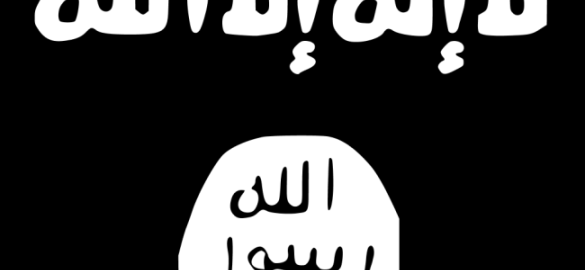
16 January 1972


Eamon McCormick,  (17)

Catholic
Status: Irish Republican Army Youth Section (IRAF),

Killed by: British Army (BA)
Died over two months after being shot during gun battle, near St Peter’s School, Ballymurphy, Belfast.

————————————————————

16 January 1977
Seamus Harvey, (20)

Catholic
Status: Irish Republican Army (IRA),

Killed by: British Army (BA)
Shot by undercover British Army (BA) members, from concealed observation post, Drummuckavall, near Crossmaglen, County Armagh.

————————————————————

16 January 1981


Ivan Toombs,  (42)

Protestant
Status: Ulster Defence Regiment (UDR),

Killed by: Irish Republican Army (IRA)
Off duty. Shot at his workplace, Customs Office, Warrenpoint, County Down

————————————————————

16 January 1983


William Doyle,   (55)

Catholic
Status: Civilian (Civ),

Killed by: Irish Republican Army (IRA)
Judge. Shot outside St Brigid’s Roman Catholic Church, Derryvolgie Avenue, Malone, Belfast.

————————————————————

16 January 1988
Timothy Armstrong,   (29)

Protestant
Status: Ulster Defence Regiment (UDR),

Killed by: Ulster Defence Association (UDA)
Off duty. Shot while walking along Park Road, Ballynafeigh, Belfast. Assumed to be a Catholic.

————————————————————

16 January 1988


William Stewart,  (23)

Protestant
Status: Ulster Defence Regiment (UDR),

Killed by: Irish Republican Army (IRA)
Off duty. Died one day after being shot while driving his car near to his home, Brackaville, Coalisland, County Tyrone.

————————————————————


Buy Me A Coffee

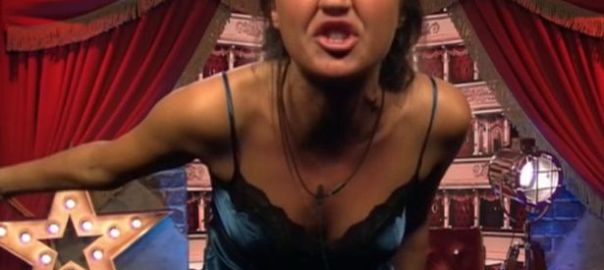
Megan McKenna gets a formal warning


Big Brother has issued Megan McKenna with a formal warning following her drunken meltdown in last nights show.

See below for Big Brother Rules


The Ex On the Beach star launched a violent, foul-mouthed outburst at fellow housemates Tiffany Pollard and John Partridge after a row quickly escalated out of control.

When Tiffany and Megan nearly came to blows, the young reality star was ordered to go into the bathroom before she was called into the Diary Room and eventually removed from the house by security when she failed to calm down.

The argument began when Megan, who had earlier admitted to being “p****d as a fart”, said she was fed up of cleaning up after people in the house.

When John contested that she doesn’t clean up after him, Megan replied: “It’s always John, ‘I’m the perfect one’. I f**king respect people in here, John. I respect people but I’ve lost it in here with you!”

See Mirror for full story


Big Brother Rules

1.There is no direct contact with the outside world.

    * Big Brother never discusses anything that has happened in the outside world.
    * Big Brother never enters into any negotiations about how certain actions, conversations or events that may have occurred in the house will be shown on the television.
    * Housemates are not permitted to make any attempts to communicate personal messages with members of the outside world by means of written messages, symbols or personalised clothing.
    * If any objects appear in the garden Housemates must not touch or inspect them unless instructed to do so.
    * If people appear in the garden Housemates MUST NOT communicate with them.
    * In the event of any of these events occurring Housemates must make their way immediately inside and close the doors, even if not specifically asked to do so.

2.Housemates are filmed 24 hours a day and must wear personal microphones at all times.

    * Big Brother will not broadcast images from the toilet on the television or internet unless it is being used for purposes other than those for which it was designed. For example, images of two people talking in the toilet may be broadcast.
    * It is strictly against the Rules to interfere for any reason with the camera or sound equipment installed in the House and garden or to do anything which may hinder the working of the equipment in any way.
    * It is against the rules to try and locate and/or acknowledge cameras through the mirrors. It is also against the rules to discuss camera positions.
    * Nothing must be placed in front of mirrors to impede camera coverage. Housemates are forbidden to move vases and bowls and any other decorative items.
    * No furniture can be moved from one part of the house to another.
    * Housemates are forbidden to hang towels anywhere in the House except on the heated towel rails in the bathroom.
    * It is compulsory to wear a personal microphone at all times except when sleeping, showering or taking part in any activity in which the microphone may be damaged.

FALIURE TO WEAR MICROPHONES WILL RESULT IN FINES.

3.The Diary Room is the only place in the house where Big Brother will acknowledge housemates. Visits to the Diary Room are a vital part of the Big Brother experience and are, therefore, compulsory.

    * Housemates are welcome to enter the Diary Room at any time of the day or night.
    * The Diary Room is the only place in the House that Big Brother acknowledges what Housemates say.
    * Housemates may not wear sunglasses or hats in the Diary Room.
    * The Diary Room can only be entered if there is no-one in the room. It is electronically locked at all other times. It will also be locked while Housemates are in the room.
    * Big Brother can call individual Housemates to the Diary Room at any time. Housemates must come when called, failure to do so or responding in an offensive manner to Big Brother may result in disqualification and early eviction.
    * It is compulsory for Housemates to enter the Diary Room to make their nominations.
    * Big Brother is the only person who communicates with the Housemates. On occasion, Big Brother may not answer questions immediately but will always eventually return an answer. Big Brother will not answer personal questions.
    * If a Housemate decides to leave voluntarily, they must explain their reasons why in the Diary Room.
    * Any questions asked by Big Brother in the Diary Room cannot be divulged to other Housemates.
    * Occasionally Housemates may need minor medical treatment. On these occasions professionals will usually treat them in the Diary Room. It is prohibited to try and seek information about the outside world from these professionals.
    * If a Housemate is having a consultation with the counsellor or psychologist (either at their request or at the suggestion of Big Brother) then this conversation will be confidential. It will not be recorded and members of the production team will not be able to hear or see the consultation.

4.Each week, Housemates are required to go to the Diary Room and nominate two people for potential eviction.

    * Housemates must give frank and honest reasons for their nominations.
    * If any Housemate is deemed to be holding back a valid reason for nominating a fellow Housemate, a formal warning may be issued.
    * Housemates are not allowed to nominate themselves or any inanimate objects.

5.Housemates are not permitted to discuss nominations with any other Housemates.

This includes:

    * Any discussion with another Housemate that could be interpreted as a deliberate attempt to influence their nominations.
    * Predicting or guessing who may be nominated or evicted.
    * Discussing the reasons Housemates might use for nominating.
    * Discussing the type of person Housemates are thinking of nominating.
    * Writing down or using materials at Housemates disposal to form names, initials or other symbols. For this reason the use of pens, pencils or any written communication is strictly against the rules.
    * Communicating in code or languages other than English and/or devising other methods of communication.

Housemates are, of course, free to talk about how they feel about the other Housemates. Their good and bad points may be discussed with others but NOT as part of a discussion about nominations.

6.Housemates may not intimidate, threaten or act violently towards any other Housemate.

Big Brother has the right to evict Housemates without warning if their behaviour is deemed to warrant it.

7.Housemates may not communicate in code and/or foreign or sign languages.

    * Housemates are forbidden to write anything using any material or surface in the House eg steam on glass.
    * On the occasion Housemates are provided with a writing implement it is forbidden for this implement to be used for anything other than the express purpose for which it is provided.
    * Housemates must speak in English at all times.

8.All tasks, unless otherwise stated, are compulsory.

    * The supply of food and other household goods is generally dependant on Housemates’ performance in compulsory weekly tasks.
    * Succeeding in the task results in a substantial shopping budget, failing the task means Housemates may have to live on “staples”. Staple foodstuffs are supplied by Big Brother and provide enough calories and the appropriate balance of nutrients from all the major food groups for each Housemate for the week. Big Brother retains the right to change the rules of any task at any stage.
    * In addition to the weekly tasks Big Brother may also set other challenges.
    * If a task is deemed compulsory, any Housemate refusing to take part will attract a fine and may be evicted.
    * The rules of all tasks are non-negotiable.

9.Housemates may not discuss any previous series of Big Brother. Housemates are forbidden to discuss their plans for the prize money.

    * Housemates may not discuss any previous series of Big Brother – either Australian or international – or former Housemates – either Australian or international – with any other Housemate.
    * Under no circumstances may any of the Housemates discuss how they intend to spend the prize money should they win it. In particular, any pacts to share or split the prize money between Housemates are against the rules and may result in the prize money being withdrawn altogether.
    * Housemates may not discuss any aspect of the audition process or any person they met during the auditions or at any other time during pre-production or in Lockdown.

10. Big Brother reserves the right to change the rules at any time.


15th January – Deaths & Events in Northern Ireland Troubles

Key Events & Deaths on this day in Northern Ireland Troubles

15th January

—————————–

Wednesday 15 January 1969

Terence O’Neill, then Northern Ireland Prime Minister, announced the setting up of an official inquiry into the disturbances in Derry and elsewhere. The inquiry, under the chairmanship of Lord Cameron, a Scottish judge, was asked to look into the causes of the civil unrest.

Friday 15 January 1971

Riots broke out in the Ardoyne area of Belfast.

Thursday 15 January 1976

Harold Wilson, then British Prime Minister, held an all-party meeting at Downing Street, London, to consider the security situation in Northern Ireland.

Monday 15 January 1982

James Prior, then Secretary of State for Northern Ireland, announced the setting up of a Committee of Inquiry into the sexual abuse of children who lived in the Kincora Boys Home in Belfast.

[The Kincora Scandal first broke on 3 April 1980 when three staff members of the Kincora Boys Home, Belfast, were charged with acts of gross indecency. Allegations continued to be made that elements of the security service, civil servants and a number of Loyalists had been involved in the abuse of young boys at Kincora. One of those sentenced was William McGrath who was the leader of a Loyalist paramilitary group called Tara.]

Sunday 15 January 1984

Tomás Ó Fiaich, then Catholic Primate of Ireland, sparked controversy when he criticised the visit of Margaret Thatcher, then British Prime Minister, to the Ulster Defence Regiment (UDR) base in Armagh. At the time several members of the UDR in Armagh were accused of the killing of Catholics and Ó Fiaich described the visit as ‘disgusting’.

The Cardinal also drew criticism when he stated that people may be morally justified in joining Sinn Féin (SF) if they joined to work on community issues. [The Irish government distanced itself from the Cardinal’s remarks.]

Tuesday 15 January 1985

Paul Kelly (17), a Catholic civilian, was shot dead by the Ulster Defence Regiment (UDR), as he ran away from a stationary stolen car at a UDR check-point at Kennedy Way, Belfast.

Saturday 15 January 1994

Edward Kennedy, together with three other Irish-American Senators, appealed to Bill Clinton, then President of the USA, to grant a visa to Gerry Adams, then President of SF.

Sunday 15 January 1995

The British government announced that the ban on ministers engaging in contacts with Sinn Féin (SF), the Ulster Democratic Party (UDP), or the Progressive Unionist Party (PUP), would end.

Monday 15 January 1996

The British and Irish Governments and the Social Democratic and Labour Party (SDLP) held a first tripartite meeting. The three members of the International Body on Arms Decommissioning met with Northern Ireland Office (NIO) ministers, and representatives of the Ulster Unionist Party (UUP) and Sinn Féin (SF) in Belfast.

Wednesday 15 January 1997

billy writgt

The trial of Billy Wright, then a leading Loyalist figure from Portadown, began at Belfast High Court. Wright was charged with threatening a witness.

[Wright was believed at this time to be the leader of the Loyalist Volunteer Force (LVF). The LVF was considered to be composed mainly of former members of the mid-Ulster Brigade of the Ulster Volunteer Force (UVF). Wright was killed in the Maze Prison on 27 December 1997.]

See Billy Wright page

Thursday 15 January 1998

The Social Democratic and Labour Party (SDLP) accused Royal Ulster Constabulary (RUC) officers of physically assaulting its Vice-Chairman Martin Morgan when he went to speak to protesters in the Whitewall Road area of Belfast. Morgan sustained a broken arm and bruising in the incident.

[Morgan had criticised the RUC in media reports about an incident in north Belfast on 1 January 1998. The RUC later announced an inquiry into the events surrounding Morgan’s injury.]

Ronnie Flanagan, then Chief Constable of the Royal Ulster Constabulary (RUC), said that he did not want RUC officers to belong to the Orange Order or any of the other loyal orders. The statement was made in the Channel 4 programme ‘Dispatches’.

In the same programme a group of defence lawyers claimed that there was compelling evidence that the RUC and the British Army had been involved in “numerous” illegal killings.

Sinn Féin (SF) staged a protest outside Antrim Road Royal Ulster Constabulary (RUC) station in Belfast. SF called for the release of ballistic reports on the gun which was used by Loyalist paramilitaries in the killing of Eddie Traynor on 31 December 1997. SF claimed that RUC ballistics reports were available within 24 hours whenever incidents involving Republican paramilitaries occurred.

Seven Irish Republican Army (IRA) prisoners who had been serving sentences in jails in Britain were transferred to Portlaoise Prison in the Republic of Ireland. Mary McAleese, then President of the Republic of Ireland, paid her first official visit to Britain since her election. She spoke of the prospect of the British and Irish people standing “on the threshold of a new and very healthy phase” in their relationship.

Friday 15 January 1999

The Ulster Democratic Party (UDP) warned that paramilitary prisoners who had been released on licence as part of the Good Friday Agreement could become involved in crime if they were unable to find employment.

Tuesday 15 January 2002

Daniel McColgan (20), who was killed by the Ulster Defence Association (UDA) on Saturday 12 January 2002, was buried in Carnmoney cemetery after a service at the Star of the Sea Church in nearby Whitehouse. There was a large attendance at his funeral.

Postal services in Northern Ireland were disrupted as many postal workers attended the funeral. Patrick Walsh, the Catholic Bishop of Down and Connor, said,

“Daniel was singled out for murder for one reason and one reason only – that he was a Catholic.” Walsh went on to say that he had been killed by, “an organisation that is driven by a single agenda of sectarian hatred of Catholics”.

During the evening the Ulster Freedom Fighters (UFF), a cover name used by the UDA issued a statement saying that it “unreservedly” condemned the death threats issued against Catholic teachers and Catholic postal workers. The statement further said that it was ordering the Red Hand Defenders (RHD), also a cover name used by the UDA, to stand down within 14 days.

[On Wednesday 16 January 2002 the RHD issued a statement to say it would stand down its members. Nationalists reacted sceptically to the two statements.]

It was revealed during a court case that British police investigating the Manchester bombing in 1996 agreed to a secret request from the Royal Ulster Constabulary (RUC) not to arrest and interview a prime suspect. As a result there was a 16 month delay in sending a file to the Crown Prosecution Service. The claim was made by a former head of Greater Manchester Police Special Branch who also said that a “cover story” was invented to account for the fact that no arrest had been made.


—————————————————————————

Remembering all innocent victims of the Troubles

Today is the anniversary of the death of the following  people killed as a results of the conflict in Northern Ireland

“To live in hearts we leave behind is not to die

– Thomas Campbell

To the innocent on the list – Your memory will live  forever

– To  the Paramilitaries  –

There are many things worth living for, a few things worth dying for, but nothing worth killing for.

5 People   lost their lives on the 15th January  between  1973 – 1989

————————————————————

15 January 1973
David Bingham,  (22)

Protestant
Status: Ulster Defence Regiment (UDR),

Killed by: Irish Republican Army (IRA)
Off duty. Abducted while driving his car along Grosvenor Road, Belfast. Found shot in abandoned car, Institution Place, off Durham Street, Belfast, on 16 January 1973.

————————————————————

15 January 1985


Paul Kelly,  (17)

Catholic
Status: Civilian (Civ),

Killed by: Ulster Defence Regiment (UDR)
Shot while running away from stationary stolen car, at Ulster Defence Regiment (UDR) Vehicle Check Point (VCP), Kennedy Way, Belfast.

————————————————————

15 January 1986


Victor Foster,   (18)

Protestant
Status: Ulster Defence Regiment (UDR),

Killed by: Irish Republican Army (IRA)
Off duty. Killed by booby trap bomb attached to his car outside his home, Gamble Park, Castlederg, County Tyrone.

————————————————————
15 January 1988


William Kane,  (20)

Catholic
Status: Civilian (Civ),

Killed by: Ulster Volunteer Force (UVF)
Shot at his home, Upper Meadow Street, New Lodge, Belfast

————————————————————

15 January 1989

 Harold Keys,  (25)

Protestant
Status: ex-Royal Ulster Constabulary (xRUC),

Killed by: Irish Republican Army (IRA)
From Northern Ireland. Shot outside his girlfriend’s home, Ballintra, County Donegal

————————————————————

Buy Me A Coffee

John Partridge is Fowl

A few nights ago I blogged that  John Partridge was shifty and not to be trusted.

Now I would like to amend that statement  to include the fact he  is a two-face , shifty, heartless,  slimey dog , self serving bore and  Megan McKenna  was right to blow up at him tonight and although it was uncomfortable to watch at times – it was bloody funny.


Partridge for reasons  known only to himself has appointed himself judge and jury over his fellow housemate and last night poor Darren Day came under fire at what was the most outrageous , brutal , twofaced   betrayal in reality TV history and Partridge should be ashamed of himself.

I  mean what right has that prat to stand there , all self righteous and nominate poor Darren because he had a few fags to deal with what was by any standards a stressful day.

Darren had taken Partridge into his trust and confided some of his personal issues and yet Partridge stood there and mortified Darren   in front of his fellow  housemates and the great British public. I could hardly believe what I was hearing and to make it so much worse Partridge tried wiggling himself out of it and Darren seem to buy his shit and forgive the useless prat.

I take my hat off to Darren , not only for his ongoing battle with the demons of addictions , but being a bigger man than me and not knocking Partridge out cold last night.

If it had been me  I would have smacked him in the mouth and told him to keep outta my face for the remainder of their time in the house and forever after.

Partridge played  a role in getting the clueless Winton chucked out of the house  first (although Winston didn’t need much help really, did he?  ) , then he lead the charge in the witch hunt to get Tiffany to leave the house and was disgustingly rude and heartless in the slimey way he related the request to her – did you see the barley concealed sneer on his face when he forgot the camera’s were there?

Megan was gold viewing tonight and she was right to air the obvious truth apart Partridge , although she did go a little over board -Just a tiny bit.

Hopefully the rest of the house have wakened up to the real John Partridge and they make their views and disgust known to him tomorrow and knock that vile prat off his perch!

A baby Partridge