The Maze Prison – History & Background

HM Prison Maze

Loyalist Wing


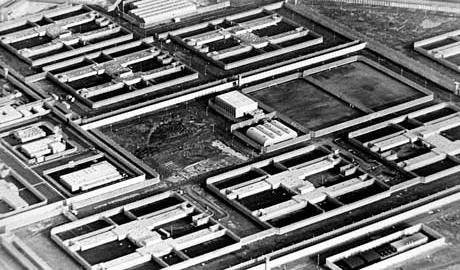
Her Majesty’s Prison Maze (previously Long Kesh Detention Centre and known colloquially as the Maze Prison, The Maze, the H Blocks or Long Kesh) was a prison in Northern Ireland that was used to house paramilitary prisoners during the Troubles from mid-1971 to mid-2000.

————————–

The Maze Prison Documentary

————————–

 – Disclaimer –

The views and opinions expressed in these pages/documentaries are soley intended to educate and provide background information to those interested in the Troubles of Northern Ireland. They in no way reflect my own opinions and I take no responsibility for any inaccuracies or factual errors.

It was situated at the former Royal Air Force station of Long Kesh, on the outskirts of Lisburn. This was in the townland of Maze, about nine miles (14 km) southwest of Belfast. The prison and its inmates played a prominent role in recent Irish history, notably in the 1981 hunger strike. The prison was closed in 2000 and demolition began on 30 October 2006, but on 18 April 2013 it was announced by the Northern Ireland Executive that the remaining buildings would be redeveloped into a peace centre.[1]

Background

The entrance to Compound 19

Following the introduction of internment in 1971, “Operation Demetrius” was implemented by the Royal Ulster Constabulary (RUC) and British Army with raids for 452 suspects on 9 August 1971. The RUC and army arrested 342 Irish nationalists, but key Provisional Irish Republican Army (IRA) members had been tipped off and 104 of those arrested were released when it emerged they had no paramilitary connections.[2] Those behind Operation Demetrius were accused of bungling, by arresting many of the wrong people and using out-of-date information. Following nationalist protests, some Ulster loyalists were also arrested. By 1972, there were 924 internees and by the end of internment on 5 December 1975, 1,981 people had been detained; 1,874 (94.6%) of whom were Catholic/Irish nationalist and 107 (5.4%) Ulster Protestants/loyalists.[3]

Initially, the internees were housed, with different paramilitary groups separated from each other, in Nissen huts at a disused RAF airfield that became the Long Kesh Detention Centre. The internees and their supporters agitated for improvements in their conditions and status; they saw themselves as political prisoners rather than common criminals. In July 1972, the Secretary of State for Northern Ireland, William Whitelaw introduced Special Category Status for those sentenced for crimes relating to the civil violence. There were 1,100 Special Category Status prisoners at that time.

Special Category Status for convicted paramilitary-linked prisoners gave them the same privileges previously available only to internees. These privileges included free association between prisoners, extra visits, food parcels and the right to wear their own clothes rather than prison uniforms.[4]

However, Special Category Status was short-lived. As part of a new British policy of “criminalisation”, and coinciding with the end of internment, the new Secretary of State for Northern Ireland, Merlyn Rees, ended Special Category Status from 1 March 1976. Those convicted of “scheduled terrorist offences” after that date were housed in the eight new “H-Blocks” that had been constructed at Long Kesh, now officially named Her Majesty’s Prison Maze (HMP Maze). Existing prisoners remained in separate compounds and retained their Special Category Status with the last prisoner to hold this status being released in 1986. Some prisoners changed from being Special Category Status prisoners to being common criminals. Brendan Hughes, an IRA prisoner, had been imprisoned with Special Category Status in Cage 11, but was alleged to have been involved in a fight with warders. He was taken to court and convicted then returned to the jail as a common prisoner and incarcerated in the H-Blocks as an ordinary prisoner, all within the space of several hours.[5]

H-Blocks

Prisoners convicted of scheduled offences after 1 March 1976 were housed in the “H-Blocks” that had been constructed. Prisoners without Special Category Status began protesting for its return immediately after they were transferred to the H-Blocks. Their first act of defiance, initiated by Kieran Nugent, was to refuse to wear the prison uniforms, stating that convicted criminals, and not political prisoners, wear uniforms. Not allowed their own clothes, they wrapped themselves in bedsheets. Prisoners participating in the protest were “on the blanket“. By 1978, more than 300 men had joined the protest. The British government refused to back down. In March 1978, some prisoners refused to leave their cells to shower or use the lavatory, and were provided with wash-hand basins in their cells.[6][7] The prisoners requested that showers be installed in their cells; and when this request was turned down, they refused to use the wash-hand basins.[6] At the end of April 1978, a fight occurred between a prisoner and a prison officer in H-Block 6. The prisoner was taken away to solitary confinement, and rumours spread across the wing that the prisoner had been badly beaten.[6] The prisoners responded by smashing the furniture in their cells, forcing the prison authorities to remove the remaining furniture from the cells, leaving only blankets and mattresses.[6] The prisoners responded by refusing to leave their cells and, as a result, the prison officers were unable to clear them. This resulted in the blanket protest escalating into the dirty protest, as the prisoners could not leave their cells to “slop out” (i.e., empty their chamber pots), and started smearing excrement on the walls of their cells to mitigate the spread of maggots.[8]

Hunger strike

Republicans outside the prison took the battle to the media and both sides fought for public support. Inside the prison, the prisoners took another step and organized a hunger strike.

A view along the corridor of one of the wings of H4

On 27 October 1980, seven republican prisoners refused food and demanded political status. The Conservative government led by Margaret Thatcher did not initially give in. In December, the prisoners called off the hunger strike when the government appeared to concede to their demands. However, the government immediately reverted to their previous stance, in the belief that the prisoners would not start another strike. Bobby Sands, the leader of the Provisional IRA prisoners, began a second action on 1 March 1981. Outside the prison, in a major publicity coup, Sands was nominated for Parliament and won the Fermanagh and South Tyrone by-election. But the British government still resisted and on 5 May, after 66 days on hunger strike, Sands died. More than 100,000 people attended Sands’ funeral in Belfast. Another nine hunger strikers (members of both the IRA and the INLA) died by the end of August before the hunger strike was called off in October.

Breakouts and attempted breakouts

On 25 September 1983, the Maze saw the largest breakout of prisoners from a British prison. Thirty-eight prisoners hijacked a prison meals lorry and smashed their way out. During the breakout, four prison officers were stabbed, including one, James Ferris, who died of a heart attack as a result. Another officer was shot in the head by Gerry Kelly, and several other officers were injured by the escapees.[9] Nineteen of the prisoners were soon recaptured, but the other nineteen escaped.

In March 1997, an IRA escape attempt was foiled when a 40 ft (12 m) underground tunnel was found. The tunnel led from H-Block 7 and was 80 ft (24 m) short of the perimeter wall.

In December 1997, IRA prisoner Liam Averill escaped dressed as a woman during a Christmas party for prisoners’ children.[10] Averill, who was jailed for life after committing two murders, was not recaptured, and was instead given amnesty in early 2001 when he was one of a number of republican escapees to present themselves to the authorities in a two-week period.[11]

Organisation

During the 1980s, the British government slowly introduced changes, granting what some would see as political status in all but name. Republican and loyalist prisoners were housed according to group. They organised themselves along military lines and exercised wide control over their respective H-Blocks. The Loyalist Volunteer Force (LVF) leader Billy Wright was shot dead in December 1997 by two Irish National Liberation Army (INLA) prisoners.[12]

Peace process

H-Block Monument in the Free Derry area of the Bogside, Derry; in memory of the hunger strikers in the H-Block of Long Kesh prison in 1981.

The prisoners also played a significant role in the Northern Ireland peace process. On 9 January 1998, the British Secretary of State for Northern Ireland, Mo Mowlam, paid a surprise visit to the prison to talk to members of the Ulster Defence Association (UDA) including Johnny Adair, Sam McCrory and Michael Stone. They had voted for their political representatives to pull out of talks. Shortly after Mowlam’s visit, they changed their minds, allowing their representatives to continue talks that would lead to the Good Friday Agreement of 10 April 1998. Afterwards, the prison was emptied of its paramilitary prisoners as the groups they represented agreed to the ceasefire. In the two years following the agreement, 428 prisoners were released. On 29 September 2000, the remaining four prisoners at the Maze were transferred to other prisons in Northern Ireland and the Maze Prison was closed.

Future

A monitoring group was set up on 14 January 2003 to debate the future of the 360-acre (1.5 km2) site. With close motorway and rail links, there were many proposals, including a museum, a multi-purpose sports stadium and an office, hotel and leisure village. In January 2006, the government unveiled a masterplan [13] for the site incorporating many of these proposals, including a 45,000 seat national multi-sport stadium for football, rugby and Gaelic games. The Government’s infrastructure organisation, the Strategic Investment Board (SIB), was tasked with taking forward the proposed Stadium idea and appointed one of its senior advisers, Tony Whitehead, to manage the project. The capacity of the proposed Stadium was later adjusted to first 35,000 and then 38,000 and the organising bodies of all three sports – Irish FA, Ulster Rugby and Ulster GAA – agreed in principle to support the integrated scheme.

In October 2006, demolition work started in preparation for construction on the site.

In January 2009, plans to build the new £300 million multi-purpose stadium on the site of The Maze were cancelled, with politicians saying that plans to start the construction of the stadium would not be reconsidered until at least 2012.[citation needed]

Discussion is still ongoing as to the listed status of sections of the old prison. The hospital and part of the H-Blocks are currently listed buildings, and would remain as part of the proposed site redevelopment as a “conflict transformation centre” with support from republicans such as Martin McGuinness and opposition from unionists, who consider that this risks creating “a shrine to the IRA”.[14]

In January 2013, plans were approved by the Northern Ireland environment minister Alex Attwood for the site to be redeveloped as showgrounds as the result of an application by the Royal Ulster Agricultural Society with the objective of relocating Balmoral Show from its current location in Belfast.

 – Disclaimer –

The views and opinions expressed in these pages/documentaries are soley intended to educate and provide background information to those interested in the Troubles of Northern Ireland. They in no way reflect my own opinions and I take no responsibility for any inaccuracies or factual errors.

Alexander Litvinenko – Russian President Vladimir Putin “personally ordered” the killing

belfastchildis's avatar

Panorama: How to poison a spy

Vladimir Putin ‘ordered killing’,

Russian President Vladimir Putin “personally ordered” the killing of Alexander Litvinenko, the inquiry into the former spy’s death has heard.

Ben Emmerson QC, for Mr Litvinenko’s family, said in his closing statement that Russian state responsibility had been proven “beyond reasonable doubt”.

Mr Litvinenko’s widow Marina said she believed her husband’s “murderers and their paymasters” had “been unmasked”.

But the Kremlin told the BBC it did not trust the inquiry.

‘Tinpot despot’

Dissident Mr Litvinenko, 43, drank tea containing a fatal dose of radioactive polonium during a meeting with suspects Dmitry Kovtun and Andrei Lugovoi in London in 2006.

The Kremlin wanted Mr Litvinenko dead and provided theThe Kremlin used to kill him, Mr Emmerson alleged.

Scientific evidence proves Mr Kovtun and Mr Lugovoi killed the former spy, he added.

Alexander Litvinenko
Alexander Litvinenko “vowed to expose corruption”, his widow said outside…

View original post 6,390 more words

What is Polonium ? – Used to kill Alexander Litvinenko

What is

Polonium

President Putin ‘probably’ approved Litvinenko murder

See The Death of Alexander Litvinenko

  Russian President Vladimir Putin

The murder of ex-Russian spy Alexander Litvinenko in 2006 in the UK was “probably” approved by President Vladimir Putin, an inquiry has found.

Mr Putin is likely to have signed off the poisoning of Mr Litvinenko with polonium-210 in part due to personal “antagonism” between the pair, it said.

Home Secretary Theresa May said the murder was a “blatant and unacceptable” breach of international law.

But the Russian Foreign Ministry said the public inquiry was “politicised”.

It said: “We regret that the purely criminal case was politicised and overshadowed the general atmosphere of bilateral relations.”

Litvinenko inquiry reaction: Latest updates

Key findings of the public inquiry

Who was Alexander Litvinenko?

Who are the Litvinenko murder suspects?

Story of a perplexing murder

The long-awaited report into Mr Litvinenko’s death found that two Russian men – Andrei Lugovoi and Dmitry Kovtun – deliberately poisoned the 43-year-old in London in 2006 by putting the radioactive substance polonium-210 into his drink at a hotel.

Sir Robert Owen, the public inquiry chairman, said he was “sure” Mr Litvinenko’s murder had been carried out by the two men and that they were probably acting under the direction of Moscow’s FSB intelligence service, and approved by the organisation’s chief, Nikolai Patrushev, as well as the Russian president.

He said Mr Litvinenko’s work for British intelligence agencies, his criticism of the FSB and Mr Putin, and his association with other Russian dissidents were possible motives for his killing.

There was also “undoubtedly a personal dimension to the antagonism” between Mr Putin and Mr Litvinenko, he said.

See BBC News for full story

—————————————————

Polonium

Polonium is a chemical element with symbol Po and atomic number 84, discovered in 1898 by Marie Curie and Pierre Curie. A rare and highly radioactive element with no stable isotopes, polonium is chemically similar to bismuth and tellurium, and it occurs in uranium ores. Applications of polonium are few. They include heaters in space probes, antistatic devices, and sources of neutrons and alpha particles. Because of its position in the periodic table, polonium is sometimes classified as a metalloid.[3] Other sources say that on the basis of its properties and behavior, it is “unambiguously a metal”.[4]

Characteristics

Isotopes

Main article: Isotopes of polonium

Polonium has 33 known isotopes, all of which are radioactive. They have atomic masses that range from 188 to 220 u. 210Po (half-life 138.376 days) is the most widely available. The longer-lived 209Po (half-life 125.2 ± 3.3 years, longest-lived of all polonium isotopes)[2] and 208Po (half-life 2.9 years) can be made through the alpha, proton, or deuteron bombardment of lead or bismuth in a cyclotron.[5]

210Po is an alpha emitter that has a half-life of 138.4 days; it decays directly to its stable daughter isotope, 206Pb. A milligram (5 curies) of 210Po emits about as many alpha particles per second as 5 grams of 226Ra.[6] A few curies (1 curie equals 37 gigabecquerels, 1 Ci = 37 GBq) of 210Po emit a blue glow which is caused by excitation of surrounding air.[citation needed]

About one in 100,000 alpha emissions causes an excitation in the nucleus which then results in the emission of a gamma ray with a maximum energy of 803 keV.[7][8]

Solid state form
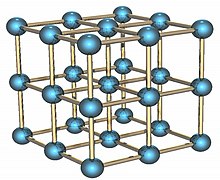
The alpha form of solid polonium.

Polonium is a radioactive element that exists in two metallic allotropes. The alpha form is the only known example of a simple cubic crystal structure in a single atom basis, with an edge length of 335.2 picometers; the beta form is rhombohedral.[9][10][11] The structure of polonium has been characterized by X-ray diffraction[12][13] and electron diffraction.[14]

210Po (in common with 238Pu) has the ability to become airborne with ease: if a sample is heated in air to 55 °C (131 °F), 50% of it is vaporized in 45 hours to form diatomic Po2 molecules, even though the melting point of polonium is 254 °C (489 °F) and its boiling point is 962 °C (1,764 °F).[15][16][1] More than one hypothesis exists for how polonium does this; one suggestion is that small clusters of polonium atoms are spalled off by the alpha decay.

Chemistry

The chemistry of polonium is similar to that of tellurium and bismuth. Polonium dissolves readily in dilute acids, but is only slightly soluble in alkalis. Polonium solutions are first colored in pink by the Po2+ ions, but then rapidly become yellow because alpha radiation from polonium ionizes the solvent and converts Po2+ into Po4+. This process is accompanied by bubbling and emission of heat and light by glassware due to the absorbed alpha particles; as a result, polonium solutions are volatile and will evaporate within days unless sealed.[17][18]

Compounds

Polonium has no common compounds, and almost all of its compounds are synthetically created; more than 50 of those are known.[19] The most stable class of polonium compounds are polonides, which are prepared by direct reaction of two elements. Na2Po has the antifluorite structure, the polonides of Ca, Ba, Hg, Pb and lanthanides form a NaCl lattice, BePo and CdPo have the wurtzite and MgPo the nickel arsenide structure. Most polonides decompose upon heating to about 600 °C, except for HgPo that decomposes at ~300 °C and the lanthanide polonides, which do not decompose but melt at temperatures above 1000 °C. For example, PrPo melts at 1250 °C and TmPo at 2200 °C.[20] PbPo is one of the very few naturally occurring polonium compounds, as polonium alpha decays to form lead.[21]

Polonium hydride

(PoH2) is a volatile liquid at room temperature prone to dissociation.[20] The two oxides PoO2 and PoO3 are the products of oxidation of polonium.[22]

Halides of the structure PoX2, PoX4 and PoX6 are known. They are soluble in the corresponding hydrogen halides, i.e., PoClX in HCl, PoBrX in HBr and PoI4 in HI.[23] Polonium dihalides are formed by direct reaction of the elements or by reduction of PoCl4 with SO2 and with PoBr4 with H2S at room temperature. Tetrahalides can be obtained by reacting polonium dioxide with HCl, HBr or HI.[24]

Other polonium compounds include acetate, bromate, carbonate, citrate, chromate, cyanide, formate, hydroxide, nitrate, selenate, monosulfide, sulfate and disulfate.[23][25]

Polonium compounds[24][26]
Formula Color m.p. (°C) Sublimation
temp. (°C)
Symmetry Pearson symbol Space group No a (pm) b(pm) c(pm) Z ρ (g/cm3) ref
PoO2 pale yellow 500 (dec.) 885 fcc cF12 Fm3m 225 563.7 563.7 563.7 4 8.94 [27]
PoCl2 dark red 355 130 orthorhombic oP3 Pmmm 47 367 435 450 1 6.47 [28]
PoBr2 purple-brown 270 (dec.) [29]
PoCl4 yellow 300 200 monoclinic [28]
PoBr4 red 330 (dec.) fcc cF100 Fm3m 225 560 560 560 4 [29]
PoI4 black [30]
Oxides

Hydrides

Halides

History


Also tentatively called “radium F“, polonium was discovered by Marie and Pierre Curie in 1898,[31] and was named after Marie Curie’s native land of Poland (Latin: Polonia).[32][33] Poland at the time was under Russian, German, and Austro-Hungarian partition, and did not exist as an independent country. It was Curie’s hope that naming the element after her native land would publicize its lack of independence.[34] Polonium may be the first element named to highlight a political controversy.[34]

This element was the first one discovered by the Curies while they were investigating the cause of pitchblende radioactivity. Pitchblende, after removal of the radioactive elements uranium and thorium, was more radioactive than the uranium and thorium combined. This spurred the Curies to search for additional radioactive elements. They first separated out polonium from pitchblende in July 1898, and five months later, also isolated radium.[17][31][35]

In the United States, polonium was produced as part of the Manhattan Project‘s Dayton Project during World War II. It was a critical part of the implosion-type nuclear weapon design used in the Fat Man bomb on Nagasaki in 1945. Polonium and beryllium were the key ingredients of the ‘urchin‘ detonator at the center of the bomb’s spherical plutonium pit.[36] The urchin ignited the nuclear chain reaction at the moment of prompt-criticality to ensure the bomb did not fizzle.[36]

Much of the basic physics of polonium was classified until after the war. The fact that it was used as an initiator was classified until the 1960s.[37]

The Atomic Energy Commission and the Manhattan Project funded human experiments using polonium on five people at the University of Rochester between 1943 and 1947. The people were administered between 9 and 22 microcuries (330 and 810 kBq) of polonium to study its excretion.[38][39][40]

Detection

Emission intensity vs. photon energy for three polonium isotopes.

Gamma counting

By means of radiometric methods such as gamma spectroscopy (or a method using a chemical separation followed by an activity measurement with a non-energy-dispersive counter), it is possible to measure the concentrations of radioisotopes and to distinguish one from another. In practice, background noise would be present and depending on the detector, the line width would be larger which would make it harder to identify and measure the isotope. In biological/medical work it is common to use the natural 40K present in all tissues/body fluids as a check of the equipment and as an internal standard.[41][42]

Alpha counting

Emission intensity vs. alpha energy for four isotopes, note that the line width is narrow and the fine details can be seen.

The best way to test for (and measure) many alpha emitters is to use alpha-particle spectroscopy. It is common to place a drop of the test solution on a metal disk which is then dried out to give a uniform coating on the disk. This is then used as the test sample. If the thickness of the layer formed on the disk is too thick then the lines of the spectrum are broadened; this is because some of the energy of the alpha particles is lost during their movement through the layer of active material. An alternative method is to use internal liquid scintillation where the sample is mixed with a scintillation cocktail. When the light emitted is then counted, some machines will record the amount of light energy per radioactive decay event. Due to the imperfections of the liquid scintillation method (such as a failure of all the photons to be detected, cloudy or coloured samples can be difficult to count) and the fact that random quenching can reduce the number of photons generated per radioactive decay, it is possible to get a broadening of the alpha spectra obtained through liquid scintillation. It is likely that these liquid scintillation spectra will be subject to a Gaussian broadening rather than the distortion exhibited when the layer of active material on a disk is too thick.[42]

A third energy dispersive method for counting alpha particles is to use a semiconductor detector.[42]

From left to right the peaks are due to 209Po, 210Po, 239Pu and 241Am. The fact that isotopes such as 239Pu and 241Am have more than one alpha line indicates that the nucleus has the ability to be in different discrete energy levels (like a molecule can).

Emission intensity vs. alpha energy for four isotopes, note that the line width is wide and some of the fine details can not be seen. This is for liquid scintillation counting where random effects cause a variation in the number of visible photons generated per alpha decay.

Occurrence and production

Polonium is a very rare element in nature because of the short half-life of all its isotopes. 210Po, 214Po, and 218Po appear in the decay chain of 238U; thus polonium can be found in uranium ores at about 0.1 mg per metric ton (1 part in 1010),[43][44] which is approximately 0.2% of the abundance of radium. The amounts in the Earth’s crust are not harmful. Polonium has been found in tobacco smoke from tobacco leaves grown with phosphate fertilizers.[45][46][47]

Because it is present in such small concentrations, isolation of polonium from natural sources is a very tedious process. The largest batch of the element ever extracted, performed in the first half of the 20th century, contained only 40 Ci (1.5 TBq) (9 mg) of polonium-210 and was obtained by processing 37 tonnes of residues from radium production.[48] Polonium is now obtained by irradiating bismuth with high-energy neutrons or protons.[17][49]

Neutron capture

Synthesis by (n,γ) reaction

In 1934, an experiment showed that when natural 209Bi is bombarded with neutrons, 210Bi is created, which then decays to 210Po via beta-minus decay. The final purification is done pyrochemically followed by liquid-liquid extraction techniques.[50] Polonium may now be made in milligram amounts in this procedure which uses high neutron fluxes found in nuclear reactors.[49] Only about 100 grams are produced each year, practically all of it in Russia, making polonium exceedingly rare.[51][52]

This process can cause problems in lead-bismuth based liquid metal cooled nuclear reactors such as those used in the Soviet Navy‘s K-27. Measures must be taken in these reactors to deal with the unwanted possibility of 210Po being released from the coolant.[53][54]

Proton capture

Synthesis by (p,n) and (p,2n) reactions

It has been found that the longer-lived isotopes of polonium can be formed by proton bombardment of bismuth using a cyclotron. Other more neutron-rich isotopes can be formed by the irradiation of platinum with carbon nuclei.[55]

Applications

Polonium-based sources of alpha particles were produced in the former Soviet Union.[56] Such sources were applied for measuring the thickness of industrial coatings via attenuation of alpha radiation.[57]

Because of intense alpha radiation, a one-gram sample of 210Po will spontaneously heat up to above 500 °C (932 °F) generating about 140 watts of power. Therefore, 210Po is used as an atomic heat source to power radioisotope thermoelectric generators via thermoelectric materials.[6][17][58][59] For instance, 210Po heat sources were used in the Lunokhod 1 (1970) and Lunokhod 2 (1973) Moon rovers to keep their internal components warm during the lunar nights, as well as the Kosmos 84 and 90 satellites (1965).[56][60]

The alpha particles emitted by polonium can be converted to neutrons using beryllium oxide, at a rate of 93 neutrons per million alpha particles.[58] Thus Po-BeO mixtures or alloys are used as a neutron source, for example in a neutron trigger or initiator for nuclear weapons[17][61] and for inspections of oil wells. About 1500 sources of this type, with an individual activity of 1,850 Ci (68 TBq), have been used annually in the Soviet Union.[62]

Polonium was also part of brushes or more complex tools that eliminate static charges in photographic plates, textile mills, paper rolls, sheet plastics, and on substrates (such as automotive) prior to the application of coatings. Alpha particles emitted by polonium ionize air molecules that neutralize charges on the nearby surfaces.[63][64] Polonium needs to be replaced in these devices nearly every year because of its short half-life; it is also highly radioactive and therefore has been mostly replaced by less dangerous beta particle sources.[6]

Tobacco smoke from cigarettes contains a small amount of polonium isotope 210, which can become deposited inside smokers’ airways and deliver radiation directly to surrounding cells.

The lungs of smokers can be exposed to four times more polonium than those of non-smokers and specific parts may get a hundred times more radiation. One study estimated that someone smoking one and half packs a day receives the equivalent amount of radiation as someone having 300 chest X-rays a year.[65]

Biology and toxicity

Overview

Polonium is highly dangerous and has no biological role.[17] By mass, polonium-210 is around 250,000 times more toxic than hydrogen cyanide (the LD50 for 210Po is less than 1 microgram for an average adult (see below) compared with about 250 milligrams for hydrogen cyanide[66]). The main hazard is its intense radioactivity (as an alpha emitter), which makes it very difficult to handle safely. Even in microgram amounts, handling 210Po is extremely dangerous, requiring specialized equipment (a negative pressure alpha glove box equipped with high performance filters), adequate monitoring, and strict handling procedures to avoid any contamination. Alpha particles emitted by polonium will damage organic tissue easily if polonium is ingested, inhaled, or absorbed, although they do not penetrate the epidermis and hence are not hazardous as long as the alpha particles remain outside the body. Wearing chemically resistant and “intact” gloves is a mandatory precaution to avoid transcutaneous diffusion of polonium directly through the skin. Polonium delivered in concentrated nitric acid can easily diffuse through inadequate gloves (e.g., latex gloves) or the acid may damage the gloves.[67]

It has been reported that some microbes can methylate polonium by the action of methylcobalamin.[68][69] This is similar to the way in which mercury, selenium and tellurium are methylated in living things to create organometallic compounds. Studies investigating the metabolism of polonium-210 in rats have shown that only 0.002 to 0.009% of polonium-210 ingested is excreted as volatile polonium-210.[70]

Acute effects

The median lethal dose (LD50) for acute radiation exposure is generally about 4.5 Sv.[71] The committed effective dose equivalent 210Po is 0.51 µSv/Bq if ingested, and 2.5 µSv/Bq if inhaled.[72] So a fatal 4.5 Sv dose can be caused by ingesting 8.8 MBq (240 µCi), about 50 nanograms (ng), or inhaling 1.8 MBq (49 µCi), about 10 ng. One gram of 210Po could thus in theory poison 20 million people of whom 10 million would die. The actual toxicity of 210Po is lower than these estimates, because radiation exposure that is spread out over several weeks (the biological half-life of polonium in humans is 30 to 50 days[73]) is somewhat less damaging than an instantaneous dose. It has been estimated that a median lethal dose of 210Po is 15 megabecquerels (0.41 mCi), or 0.089 micrograms, still an extremely small amount.[74][75] For comparison, one grain of table salt is about 0.06 mg = 60 μg.[3]

Long term (chronic) effects

In addition to the acute effects, radiation exposure (both internal and external) carries a long-term risk of death from cancer of 5–10% per Sv.[71] The general population is exposed to small amounts of polonium as a radon daughter in indoor air; the isotopes 214Po and 218Po are thought to cause the majority[76] of the estimated 15,000–22,000 lung cancer deaths in the US every year that have been attributed to indoor radon.[77] Tobacco smoking causes additional exposure to polonium.[78]

Regulatory exposure limits and handling

The maximum allowable body burden for ingested 210Po is only 1.1 kBq (30 nCi), which is equivalent to a particle massing only 6.8 picograms. The maximum permissible workplace concentration of airborne 210Po is about 10 Bq/m3 (6990300000000000000♠3×10⁻¹⁰ µCi/cm3).[79] The target organs for polonium in humans are the spleen and liver.[80] As the spleen (150 g) and the liver (1.3 to 3 kg) are much smaller than the rest of the body, if the polonium is concentrated in these vital organs, it is a greater threat to life than the dose which would be suffered (on average) by the whole body if it were spread evenly throughout the body, in the same way as caesium or tritium (as T2O).

210Po is widely used in industry, and readily available with little regulation or restriction[citation needed]. In the US, a tracking system run by the Nuclear Regulatory Commission was implemented in 2007 to register purchases of more than 16 curies (590 GBq) of polonium-210 (enough to make up 5,000 lethal doses). The IAEA “is said to be considering tighter regulations … There is talk that it might tighten the polonium reporting requirement by a factor of 10, to 1.6 curies (59 GBq).”[81] As of 2013, this is still the only alpha emitting byproduct material available, as a NRC Exempt Quantity, which may be held without a radioactive material license.[citation needed]

Polonium and its compounds must be handled in a glove box, which is further enclosed in another box, maintained at a slightly higher pressure than the glove box to prevent the radioactive materials from leaking out. Gloves made of natural rubber do not provide sufficient protection against the radiation from polonium; surgical gloves are necessary. Neoprene gloves shield radiation from polonium better than natural rubber.[82]

Well-known poisoning case

20th century


Polonium was administered to humans for experimental purposes from 1943 to 1947; it was injected into four hospitalised patients, and orally given to a fifth. Studies such as this were funded by the Manhattan Project and the AEC, and conducted at the University of Rochester. The objective was to obtain data on human excretion of polonium to correlate with more extensive data from rats. Patients selected as subjects were chosen because experimenters wanted persons who had not been exposed to polonium either through work or accident. All subjects had incurable diseases. Excretion of polonium was followed, and an autopsy was conducted at that time on the deceased patient to determine which organs absorbed the polonium. Patients’ ages ranged from ‘early thirties’ to ‘early forties.’ The experiments were described in a Studies of polonium metabolism in human subjects, Chapter 3 of Biological Studies with Polonium, Radium, and Plutonium, National Nuclear Energy Series, Volume VI-3, McGraw-Hill, New York, 1950. Not specified is the isotope under study, but at the time polonium-210 was the most readily available polonium isotope. The DoE factsheet submitted for this experiment reported no follow up on these subjects.[83]

It has also been suggested that Irène Joliot-Curie was the first person to die from the radiation effects of polonium. She was accidentally exposed to polonium in 1946 when a sealed capsule of the element exploded on her laboratory bench. In 1956, she died from leukemia.[84]

According to the 2008 book The Bomb in the Basement, several deaths in Israel during 1957–1969 were caused by 210Po.[85] A leak was discovered at a Weizmann Institute laboratory in 1957. Traces of 210Po were found on the hands of professor Dror Sadeh, a physicist who researched radioactive materials. Medical tests indicated no harm, but the tests did not include bone marrow. Sadeh died from cancer. One of his students died of leukemia, and two colleagues died after a few years, both from cancer. The issue was investigated secretly, and there was never any formal admission that a connection between the leak and the deaths had existed.[86]

21st century


Alexander Litvinenko

The cause of death in the 2006 murder of Russian dissident Alexander Litvinenko was determined to be 210Po poisoning.[87][88] According to Prof. Nick Priest of Middlesex University, an environmental toxicologist and radiation expert, speaking on Sky News on December 2, Litvinenko was probably the first person to die of the acute α-radiation effects of 210Po.[89]

Abnormally high concentrations of 210Po were detected in July 2012 in clothes and personal belongings of the Palestinian leader Yasser Arafat, a heavy smoker, who died on 11 November 2004 of uncertain causes. The spokesman for the Institut de Radiophysique in Lausanne, Switzerland, where those items were analyzed, stressed that the “clinical symptoms described in Arafat’s medical reports were not consistent with polonium-210 and that conclusions could not be drawn as to whether the Palestinian leader was poisoned or not”, and that “the only way to confirm the findings would be to exhume Arafat’s body to test it for polonium-210.”[90] On 27 November 2012 Arafat’s body was exhumed and samples were taken for separate analysis by experts from France, Switzerland and Russia.[91] On 12 October 2013, The Lancet published the group’s finding that high levels of the element were found in Arafat’s blood, urine, and in saliva stains on his clothes and toothbrush.[92] The French tests later found some polonium but stated it was from “natural environmental origin.”[93] Following later Russian tests, Vladimir Uiba, the head of the Russian Federal Medical and Biological Agency, stated in December 2013 that Arafat died of natural causes, and they had no plans to conduct further tests.[93]

Treatment

It has been suggested that chelation agents such as British Anti-Lewisite (dimercaprol) can be used to decontaminate humans.[94] In one experiment, rats were given a fatal dose of 1.45 MBq/kg (8.7 ng/kg) of 210Po; all untreated rats were dead after 44 days, but 90% of the rats treated with the chelation agent HOEtTTC remained alive after 5 months.[95]

Detection in biological specimens

Polonium-210 may be quantified in biological specimens by alpha particle spectrometry to confirm a diagnosis of poisoning in hospitalized patients or to provide evidence in a medicolegal death investigation. The baseline urinary excretion of polonium-210 in healthy persons due to routine exposure to environmental sources is normally in a range of 5–15 mBq/day. Levels in excess of 30 mBq/day are suggestive of excessive exposure to the radionuclide.[96]

Commercial products containing polonium

210Po is manufactured in a nuclear reactor by bombarding 209Bi with neutrons. 100 grams are produced each year, almost all in Russia.[97]

210Po is contained in anti-static brushes, which are used in some printing presses.[98] Some anti-static brushes contain up to 500 microcuries (20 MBq) of 210Po as a source of charged particles for neutralizing static electricity.[99] In USA, the devices with no more than 500 µCi (19 MBq) of (sealed) 210Po per unit can be bought in any amount under a “general license”,[100] which means that a buyer need not be registered by any authorities.

Tiny amounts of such radioisotopes are sometimes used in the laboratory and for teaching purposes—typically of the order of 4–40 kBq (0.11–1.08 µCi), in the form of sealed sources, with the polonium deposited on a substrate or in a resin or polymer matrix—are often exempt from licensing by the NRC and similar authorities as they are not considered hazardous. Small amounts of 210Po are manufactured for sale to the public in the United States as ‘needle sources’ for laboratory experimentation, and are retailed by scientific supply companies. The polonium is a layer of plating which in turn is plated with a material such as gold, which allows the alpha radiation (used in experiments such as cloud chambers) to pass while preventing the polonium from being released and presenting a toxic hazard. According to United Nuclear, they typically sell between four and eight sources per year.[101][102]

Occurrence in humans and the biosphere

Polonium-210 is widespread in the biosphere, including in human tissues, because of its position in the uranium-238 decay chain. Natural uranium-238 in the Earth’s crust decays through a series of solid radioactive intermediates including radium-226 to the radioactive gas radon-222, some of which, during its 3.8-day half-life, diffuses into the atmosphere. There it decays through several more steps to polonium-210, much of which, during its 138-day half-life, is washed back down to the Earth’s surface, thus entering the biosphere, before finally decaying to stable lead-206.[103][104][105]

As early as the 1920s Antoine Lacassagne, using polonium provided by his colleague Marie Curie, showed that the element has a very specific pattern of uptake in rabbit tissues, with high concentrations particularly in liver, kidney and testes.[106] More recent evidence suggests that this behavior results from polonium substituting for sulfur in sulfur-containing amino-acids or related molecules[107] and that similar patterns of distribution occur in human tissues.[108] Polonium is indeed an element naturally present in all humans, contributing appreciably to natural background dose, with wide geographical and cultural variations, and particularly high levels in arctic residents, for example.[109]

Tobacco

Polonium-210 in tobacco contributes to many of the cases of lung cancer worldwide. Most of this polonium is derived from lead-210 deposited on tobacco leaves from the atmosphere; the lead-210 is a product of radon-222 gas, much of which appears to originate from the decay of radium-226 from fertilizers applied to the tobacco soils.[47][110][111][112][113]

The presence of polonium in tobacco smoke has been known since the early 1960s.[114][115] Some of the world’s biggest tobacco firms researched ways to remove the substance—to no avail—over a 40-year period. The results were never published.[47]

Food

Polonium is also found in the food chain, especially in seafood.[
 

21st January – Deaths & Events in Northern Ireland Troubles

Key Events & Deaths on this day in Northern Ireland Troubles

21st January

————————————————

Tuesday 21 January 1975

There was a series of bomb explosions in Belfast in attacks carried out by the Irish Republican Army (IRA).

Two members of the IRA were killed when a bomb they were transporting by car exploded in Victoria Street, Belfast.

Wednesday 21 January 1976

Government figures showed that 25,000 houses had been damaged in violence related to the conflict.

Gerry Fitt, then leader of the Social Democratic and Labour Party (SDLP), told Members of Parliament (MPs) that some Tenant’s Associations in Belfast were under the control of various paramilitary groups.

Monday 21 January 1980

Anne Maguire was found dead in what was believed to be a case of suicide. Anne Maguire was the mother of the three children who were killed in an incident on 10 August 1976 which led to the formation of the Peace People.

Wednesday 21 January 1981


Norman Stronge (86), a former speaker of the Stormont parliament, and James Stronge (48), his son, were shot dead by the Irish Republican Army (IRA) in an attack on their mansion, Tynan Abbey, near Middletown, County Armagh

Thursday 21 January 1982

Danny Morrison


Owen Carron and Danny Morrison, then both members of Sinn Féin (SF), were arrested when they tried to illegally enter the United States of America (USA) from Canada. Both men were later deported back to Canada.

James Prior, then Secretary of State for Northern Ireland, held a meeting with John DeLorean, then head of the DeLorean Motor Company, to discuss the financial problems that the company was going through.

[Wednesday 21 January 1987

The Irish National Liberation Army (INLA) announced that it would disband in its present form.

Wednesday 21 February 1990

Ian Paisley, then leader of the Democratic Unionist Party (DUP), and William McCrea, then DUP Member of Parliament (MP), hand in a ‘Hands off the Ulster Defence Regiment (UDR)’ petition to Downing Street.

Thursday 21 January 1993

John Major, then British Prime Minister, wrote a letter to John Hume, then leader of the Social Democratic and Labour Party (SDLP), in which he rejected calls for a new inquest into the events of Bloody Sunday.

Wednesday 21 January 1998

Benedict (Ben) Hughes (55), a Catholic civilian, was shot dead by the Ulster Freedom Fighters (UFF) in Utility Street, south Belfast. Hughes was shot as he left his place of work in Sandy Row a Protestant part of Belfast. Hughes was married with three children. No group claimed responsibility for the shooting.

[On 22 January 1998, Ronnie Flanagan, then Chief Constable of the Royal Ulster Constabulary (RUC), announced that the Ulster Freedom Fighters (UFF) were responsible for the killing of Benedict Hughes. The UFF is a cover name (pseudonym) used by the Ulster Defence Association (UDA). The UFF at the time was on a self-proclaimed ceasefire.]

John McFarland, a Catholic civilian, was shot and injured by a Loyalist paramilitary group in Belfast. McFarland was in his taxi at the time and was able to drive himself to hospital. Steven Paul, a Protestant man, was shot and injured by an unidentified Loyalist paramilitary group. Paul was shot in his home in Belvoir Park estate, Belfast.

The funeral of Fergal (Rick) McCusker took place near Maghera, County Derry. The Irish Republican Army (IRA) issued a statement that rejected the ‘Propositions of Heads of Agreement’ document as being pro-Unionist.

Thursday 21 January 1999

Billy Hutchinson, then a spokesman for the Progressive Unionist Party (PUP), said that if the Good Friday Agreement failed and was replaced by a new Anglo-Irish Agreement (AIA) then Loyalist paramilitaries could target tourists in the Republic of Ireland.

William Hague, then leader of the Conservative Party, called on the government to halt the release of paramilitary prisoners until such time as decommissioning had begun.

Monday 21 January 2002

The four Sinn Féin (SF) Members of Parliament (MPs) travelled to Westminster, London, to take their offices at the House of Commons. Previously SF had been banned from using parliamentary facilities; the ban was lifted in December 2001. The four MPs still refused to take the oath of allegiance to the Queen and said they would not be taking their seats in the debating chamber.

Allowances and office expenses for the four MPs are expected to total over £400.000. Prior to going to Westminster the four MPs had a meeting at Downing Street with Tony Blair, then British Prime Minister, about the security response to Loyalist violence in Northern Ireland. Gerry Adams, then President of Sinn Féin (SF), claimed that there had been collusion between the security services and Loyalist paramilitary groups. He also claimed that the British government had failed to deal adequately with recent Loyalist violence.

A man who had served 13 years in prison for murder had his appeal upheld by the Court of Appeal in Belfast. Thomas Green, a Protestant from the Ballysillan area of north Belfast, was convicted of the sectarian murder of John O’Neill, a Catholic, in 1985. Green lost an earlier appeal and was then freed in 1999 under the Good Friday Agreement. Green’s latest appeal was based on medical evidence which indicated that he may have been unaware of what he was doing when he signed the confession.

The Northern Ireland Assembly debated a motion tabled by Monica McWilliams, then member of the Northern Ireland Women’s Coalition (NIWC), and supported by the Alliance Party of Northern Ireland (APNI). The motion called on the British government to provide security documents on the Loyalist bombings in Dublin and Monaghan (on 17 May 1974) to the Commission of Inquiry taking place in the Republic of Ireland.

Dublin and Monaghan bombings victim
Victim of the Dublin and Monaghan Bombings

See Dublin and Monaghan Bombings


The NIWC had been approached by the organisation Justice For the Forgotten seeking aid to secure the documents given an alleged slow response by the British government. The Democratic Unionist Party (DUP) opposed the motion but it was passed in a vote. [33 people were killed in the bombs in Dublin and Monaghan. A letter dated 26 February 2002 was sent by John Reid, then Secretary of State for Northern Ireland, to the Commission of Inquiry.] John Hume, former leader of the Social Democratic and Labour Party (SDLP), gave evidence to the Bloody Sunday Inquiry.

Hume was asked why he had not supported the anti-Internment march on 30 January 2002.

[Two shots were fired from a shotgun into the ceiling of a public house in Quay Street in Ardglass, County Down. The attack was carried out by a man wearing a balaclava. The motive for the incident was unclear.]

—————————————————————————

Remembering all innocent victims of the Troubles

Today is the anniversary of the death of the following  people killed as a results of the conflict in Northern Ireland

“To live in hearts we leave behind is not to die

– Thomas Campbell

To the innocent on the list – Your memory will live  forever

– To  the Paramilitaries  –

There are many things worth living for, a few things worth dying for, but nothing worth killing for.

 11 People   lost their lives on the 21st  January  between  1972 – 1998

————————————————————

21 January 1972


Philip Stentiford,   (18)

nfNI
Status: British Army (BA),

Killed by: Irish Republican Army (IRA)
Killed in land mine attack on British Army (BA) foot patrol, Derrynoose, near Keady, County Armagh.

————————————————————

21 January 1974
John Haughey,  (32)

nfNI
Status: British Army (BA),

Killed by: Irish Republican Army (IRA)
Killed by remote controlled bomb, hidden in electricity distribution box, detonated when British Army (BA) foot patrol passed Lone Moor Road, Creggan, Derry

————————————————————

21 January 1975


John Kelly,   (26)

Catholic
Status: Irish Republican Army (IRA),

Killed by: Irish Republican Army (IRA)
Killed in premature bomb explosion while travelling in car along Victoria Street, Belfast.

————————————————————

21 January 1975


John Stone,  (23)

Catholic
Status: Irish Republican Army (IRA),

Killed by: Irish Republican Army (IRA)
Killed in premature bomb explosion while travelling in car along Victoria Street, Belfast

————————————————————

21 January 1977
Michael McHugh,  (35)

Catholic
Status: Civilian Political Activist (CivPA),

Killed by: Ulster Freedom Fighters (UFF)
Former Sinn Fein (SF) member. Shot in the laneway of his home, Corgary, near Castlederg, County Tyrone.

————————————————————

21 January 1977


 James McColgan,   (54)

Catholic
Status: Civilian (Civ),

Killed by: Irish Republican Army (IRA)
Nightwatchman. Died from inhaling fumes during fire caused by incendiary bomb, Castle Street, Belfast.

————————————————————

21 January 1981


Norman Stronge,   (86)

Protestant
Status: Civilian Political Activist (CivPA),

Killed by: Irish Republican Army (IRA)
Ulster Unionist Party (UUP) member, and former Speaker at Stormont. Shot together with his son at their mansion, Tynan Abbey, near Middletown, County Armagh.

————————————————————

21 January 1981


James Stronge,  (48)

Protestant
Status: Royal Ulster Constabulary (RUC),

Killed by: Irish Republican Army (IRA)
Off duty. Shot together with his father, the former Speaker at Stormont, at their mansion, Tynan Abbey, near Middletown, County Armagh.

————————————————————

21 January 1991
Cullen Stephenson,   (63)

Protestant
Status: ex-Royal Ulster Constabulary (xRUC),

Killed by: Irish Republican Army (IRA)
Shot outside his home, Church Street, Brookeborough, County Fermanagh.

————————————————————

21 January 1993


Samuel Rock,  (30)

Protestant
Status: Civilian (Civ),

Killed by: Irish National Liberation Army (INLA)
Shot at his home, Rosewood Street, Lower Oldpark, Belfast.

————————————————————

21 January 1998


Benedict Hughes,   (55)

Catholic
Status: Civilian (Civ),

Killed by: Ulster Defence Association (UDA)
Shot outside his workplace, Utility Street, off Donegall Road, Sandy Row, Belfast.

————————————————————


Buy Me A Coffee

20th January – Deaths & Events in Northern Ireland Troubles

Key Events & Deaths on this day in Northern Ireland Troubles

20th January

————————————

Wednesday 20 January 1971

It was announced that an independent commissioner would decide on the boundaries of the new district council areas.

Saturday 20 January 1973

A car bomb exploded in Sackville Place, Dublin, Republic of Ireland, and killed one person and injured 17 others. The person killed was Thomas Douglas (25). The car used in the bombing had been hijacked at Agnes Street, Belfast.

[No organisation claimed responsibility but the bomb was believed to have been planted by one of the Loyalist paramilitary organisations.]

Monday 20 January 1975

[Public Records 1975 – Released 1 January 2006:

Telegram containing a note of a meeting between Galsworth, then of the British Embassy in Dublin, and Liam Cosgrave, then Taoiseach (Irish Prime Minister). The telegram mentions the concerns of Cosgrave about the likely impact on public opinion if it became known that the British government was negotiating with the Irish Republican Army (IRA).]

[Public Records 1975 – Released 1 January 2006: Letter from Joel Barnett, then Chief Secretary to the Treasury, to Merlyn Rees, then Secretary of State for Northern Ireland, about the Harland and Wolff shipyard in Belfast.]

Tuesday 20 February 1979

lennie murphy
Leader of the Shankill Butchers Lenny Murphy


‘Shankill Butchers’ Sentenced A group of 11 Loyalists known as the ‘Shankill butchers’ were sentenced to life imprisonment for 112 offences including 19 murders. The 11 men were given 42 life sentences and received 2,000 years imprisonment, in total, in the form of concurrent sentences.

[The Shankill Butchers had begun killing Catholics in July 1972 and were not arrested until May 1977. The Loyalist gang operated out of a number of Ulster Volunteer Force (UVF) drinking dens in the Shankill Road area of Belfast. The gang was initially led by Lenny Murphy but it continued to operate following his imprisonment in 1976. The Shankill Butchers got their name because not only did they kill Catholics but they first abducted many of their victims, tortured them, mutilated them with butcher knives and axes, and then finally killed them.]

See Shankill Butchers

See Lenny Murphy

Tuesday 20 January 1981

Maurice Gilvarry (24), a member of the Irish Republican Army (IRA), was found shot dead near Jonesborough, County Armagh. He had been killed by other members of the IRA who alleged that he had acted as an informer.

A British soldier was shot dead by the IRA in Derry.

Sunday 20 January 1985

Douglas Hurd, then Secretary of State for Northern Ireland, was interviewed on Radio Telefis Éireann (RTE) during which he said that political arrangements could be created to improve Anglo-Irish relationships.

Tuesday 20 January 1987

Thomas Power


John O’Reilly


When two Irish National Liberation Army (INLA) members were shot dead by members of the Irish People’s Liberation Organisation (IPLO) in Drogheda, County Louth, Republic of Ireland, a feud began between the two organisations.

[The feud continued until 26 March 1987 with a final death toll of 11.]

The coalition government in the Republic of Ireland, led by Garret FitzGerald, ended after the Labour Party withdrew its support. John Taylor, then Member of the European Parliament (MEP) for Northern Ireland, left the European Democratic Group to join the European Right Group.

The case of the ‘Birmingham Six’ was referred to the Court of Appeal by Douglas Hurd, then British Home Secretary.

Wednesday 20 January 1988

The British government opposed the classification of Northern Ireland as one of Europe’s poorest regions thus reducing the amount of regional structural funds that it received.

Saturday 20 January 1990

Brian_Nelson_Loyalist

Brian Nelson appeared in court on charges relating to the Stevens Inquiry.

See Brian Nelson

[On 28 January 1990 the ‘Sunday Tribune’ (a newspaper published in the Republic of Ireland) alleged that Nelson had worked for British Army intelligence for a number of years.]

Monday 20 January 1992

John Major, then British Prime Minister, travelled to Northern Ireland and held meetings with senior members of the security services

Thursday 20 January 1994

The private secretary to John Major, then British Prime Minister, replied to a letter from Gerry Adams, then President of SF, to state that there “can be no question of renegotiation” of the Downing Street Declaration (DSD).

Monday 20 January 1997

A Catholic family escaped injury when a bomb exploded under their van in Larne.

[No group claimed responsibility but the incident was believed to be the work of the Loyalist Volunteer Force; LVF. ]

There was an attack on the Mountpottinger Royal Ulster Constabulary (RUC) station in Short Strand, Belfast. Two ‘coffee jar bombs’ were thrown at the station but there were no injuries. [The attack was believed to have been carried out by the Irish Republican Army (IRA) (?).]

Tuesday 20 January 1998

Gerry Adams, then President of Sinn Féin (SF), accused the Ulster Defence Association (UDA) / Ulster Freedom Fighters (UFF) of “actively” collaborating with the Loyalist Volunteer Force (LVF) in some of the recent killings of Catholics. However, Adams said that the Ulster Democratic Party (UDP), the political representatives of the UDA / UFF, should not be expelled from the multi-party Stormont talks.

Wednesday 20 January 1999

Kenny McClinton, then acting as Loyalist Volunteer Force (LVF) representative to the Independent International Commission on Decommissioning (IICD), said that the LVF was considering a second round of decommissioning.

[To date this second act of decommissioning had not taken place.]

Patrick Harty, a farmer from Toomevara, County Tipperary, refused to give evidence as a prosecution witness in the trial of the four men accused of the killing of Jerry McCabe, who was a Detective in the Garda Síochána (the Irish police). Harty said he could not give a reason for his refusal to give evidence and was jailed for 18 months.

Sunday 20 January 2002

There were disturbances in the Serpentine Gardens and White City areas of north Belfast. Catholic homes in the Serpentine Gardens area were petrol-bombed between midnight and approximately 1.30am (0130GMT). The devices were thrown from the Loyalist White City area.

In follow-up searches in White City the police found a crate of petrol-bombs – some with fireworks inside. At approximately 4.30am (0430GMT) the home of a Protestant family in White City was attacked with petrol-bombs. There was scorch damage to the house but no injuries. The petrol-bombs were thrown from the Nationalist Serpentine Gardens. The family of six said they would leave the area.

Shore Road Riots

There was also rioting in the nearby Shore Road and the Whitewell Road areas of north Belfast. Nationalists threw a petrol-bomb into a Protestant house on the Whitewell Road. The house was empty at the time and there were no injuries. There were then further disturbances involving Loyalists and Nationalists. Nationalists crowds throwing petrol-bombs, stones, and blast-bombs attacked police and fire officers who were dealing with burning barricades.


Nigel Dodds (DUP), then Member of Parliament (MP) for north Belfast, held a meeting with Alan McQuillan, then Assistant Chief Constable, to ask for 24-hour police patrols.

Independent Television (ITV) in the United Kingdom (UK) broadcast a film entitled ‘Bloody Sunday‘ that portrayed the events in Derry on 30 January 1972.

[Prior to broadcast the film had been criticised by some Unionists in Northern Ireland and by some members of the Conservative party in Britain. The film was also given a limited cinema release.]


—————————————————————————

Remembering all innocent victims of the Troubles

Today is the anniversary of the death of the following  people killed as a results of the conflict in Northern Ireland

“To live in hearts we leave behind is not to die

– Thomas Campbell

To the innocent on the list – Your memory will live  forever

– To  the Paramilitaries  –

There are many things worth living for, a few things worth dying for, but nothing worth killing for.

 10 People   lost their lives on the 20th January  between  1973 – 1987

————————————————————

20 January 1973
Thomas Douglas  (21)

nfNIRI
Status: Civilian (Civ),

Killed by: Ulster Volunteer Force (UVF)
Orginally from Scotland. Killed when car bomb exploded, Sackville Place, off O’Connell Street, Dublin.

————————————————————

20 January 1974
Desmond Mullan,   (33)

Catholic
Status: Civilian (Civ),

Killed by: non-specific Loyalist group (LOY)
Shot while walking along Maple Gardens, Carrickfergus, County Antrim.

————————————————————

20 January 1974


Cormac McCabe,   (42)

Protestant
Status: Ulster Defence Regiment (UDR),

Killed by: Irish Republican Army (IRA)
Off duty. Found shot in field, Altadaven, near Clogher, County Tyrone.

————————————————————

20 January 1975


Kevin Coen,   (28)

nfNI
Status: Irish Republican Army (IRA),

Killed by: British Army (BA)
From County Sligo. Shot during attempted hijacking of bus, Kinawley, County Fermanagh.

————————————————————

20 January 1981
 Christopher Shenton,   (21)

nfNI
Status: British Army (BA),

Killed by: Irish Republican Army (IRA)
Shot by sniper while in British Army (BA) observation post overlooking Bogside, City Walls, Derry

————————————————————

20 January 1981


Maurice Gilvarry,  (24)

Catholic
Status: Irish Republican Army (IRA),

Killed by: Irish Republican Army (IRA)
Found shot near Jonesborough, County Armagh. Alleged informer

————————————————————

20 January 1983


Frank McColgan,  (31)

Catholic
Status: Civilian (Civ),

Killed by: Royal Ulster Constabulary (RUC)
Shot during car chase, shortly after being involved in robbery, Black’s Road, Dunmurry, near Belfast, County Antrim.

————————————————————

20 January 1984
Colin Houston,  (30)

Protestant
Status: Ulster Defence Regiment (UDR),

Killed by: Irish National Liberation Army (INLA)
Off duty. Shot at his home, Sunnymede Avenue, Dunmurry, near Belfast, County Antrim

————————————————————

20 January 1987


Thomas Power,  (34)

Catholic
Status: Irish National Liberation Army (INLA),

Killed by: Irish People’s Liberation Organisation (IPLO)
Shot while in Rossnaree Hotel, Drogheda, County Louth. Irish National Liberation Army / Irish People’s Liberation Organisation feud.

————————————————————

20 January 1987


John O’Reilly,   (26)

Catholic
Status: Irish National Liberation Army (INLA),

Killed by: Irish People’s Liberation Organisation (IPLO)
Shot while in Rossnaree Hotel, Drogheda, County Louth. Irish National Liberation Army / Irish People’s Liberation Organisation feud.

————————————————————


Buy Me A Coffee

Brian Nelson – Loyalist Informer

Brian Nelson (30 September 1947 – 11 April 2003) was an Ulster loyalist during The Troubles in Northern Ireland. He was simultaneously an informant for the British Army‘s Intelligence Corps and the intelligence chief of the Ulster Defence Association (UDA), a terrorist organisation.

———————————————

The views and opinions expressed in this documentary/ies and page are soley intended to educate and provide background information to those interested in the Troubles of Northern Ireland.

They in no way reflect my own opinions and I take no responsibility for any inaccuracies or factual errors

———————————————


Early life

shankill road

Nelson, a Protestant from the Shankill Road, Belfast, served with the Black Watch regiment before joining the Ulster Defence Association in the early 1970s, where he was a low-level informant for the Royal Ulster Constabulary (RUC).

In 1974 he was jailed for seven years for the kidnap and torture of a Catholic man, Gerald Higgins, who died several weeks later from his injuries. Nelson served three years. After his release, Nelson resigned from the UDA and left for a construction job in West Germany. In 1985, however, the Intelligence Corps asked Nelson to rejoin and infiltrate the UDA. He rose to become the UDA’s senior intelligence officer while receiving assistance from his handlers. In one instance, IC operatives allegedly organised, streamlined and returned to Nelson a suitcase full of disorganised UDA intelligence.

Stevens Inquiry

In the early 1990s, following the shooting death of Loughlin Maginn, John Stevens was named to investigate allegations of collusion between loyalist paramilitaries and the Royal Ulster Constabulary (RUC). Stevens was able to use advanced fingerprint technology, then unavailable to the RUC. The Inquiry team uncovered Nelson’s fingerprints on some security force documents. The team began an investigation that, despite the obstructions encountered, would lead to Nelson’s arrest.

When the Stevens Inquiry Team arrested and interrogated Nelson, he claimed that he had been acting on behalf on the British government. Stevens spoke to John Deverell, head of MI5 in Belfast, who confirmed that Nelson had worked for Army Intelligence and not the RUC. Sharp disagreements developed between the two security branches as the extent of Nelson’s illegal activities within the Force Research Unit (FRU) was uncovered.

Over a period of two months, Nelson dictated a police statement covering 650 pages. He claimed that he had been tasked by the British Army to make the UDA a more effective killing machine. Using information that should have been confidential to his handlers he produced dossiers or “Intelligence Packages” including backgrounds, addresses, photos and movements on proposed targets, which were passed on to UDA assassins.[6]

Blue card index system

Nelson had a blue card index system whereby he would pick out information on individuals from the mass of information reaching him. The selection of names for the index was Nelson’s alone and Stevens concluded that Nelson was actually choosing the people who were going to be shot. Nelson passed on the names of only ten people to his FRU handlers, claiming he could not remember the others.

Those ten were never targeted. Four others, including solicitor Pat Finucane, were all shot dead. In Stevens’ words “the FRU had been inexcusably careless in failing to protect the four who lost their lives”. Nelson handed out his blue cards, between twenty and fifty at a time, to members of the Ulster Volunteer Force. The FRU had no agents within the UVF and these targeted people were consequently unprotected. Many loyalists never bothered to destroy their blue cards, however, and the Stevens team was able to obtain fingerprint evidence.

Brian Nelson represented as a silhouette holding a placard in a Belfast mural (February 2006).

Trial

At his trial in 1992,  the prosecution alleged that he failed to alert his handlers to all the assassination plans of which he was aware.  Gordon Kerr (“Colonel J”), a senior officer, who was later investigated himself, testified on Nelson’s behalf.

Kerr claimed that Nelson had warned the Intelligence Corps of more than 200 murder plots by loyalist death squads, including one which targeted Sinn Féin leader Gerry Adams. Kerr claimed that Nelson’s warnings allowed the British Army to prevent all murders but three.

Nelson claimed that, in 1989, he had warned his handlers of UDA plans to murder solicitor Pat Finucane, who had been successfully representing IRA suspects in court. According to Nelson, Finucane was given no warning and was fatally shot in front of his wife and children.

Eventually Nelson pled guilty to 20 charges, including five of conspiracy to murder and was sentenced to 10 years imprisonment. A number of charges, including two counts of first degree murder, were dropped as part of his plea bargain.

Further allegations

Following Nelson’s conviction, the BBC Panorama programme Dirty War, broadcast on 8 June 1992, made new claims about Nelson’s involvement in further murders and conspiracies. One allegation was that, following a tip off from Nelson, the Intelligence Corps kept secret a plot to murder Paddy McGrory, a solicitor representing the families of the Gibraltar Three.

In January 1993, Gerry Adams claimed the British government was fully aware of Nelson’s involvement in Ulster Resistance‘s January 1988 importation of weapons from South Africa including 200 AK47 rifles; 90 Browning pistols; 500 fragmentation grenades and 12 RPG 7 rocket launchers. This, together with the reliance by loyalists on leaked, although often outdated, military and police intelligence files on potential targets, meant that by 1992 loyalists were killing more than the republicans, a situation not seen since 1975.

Jimmy Smyth extradition case

Sir Patrick Mayhew, Northern Ireland Secretary, declared the Nelson affair was dead and buried. However, in May 1993, a San Francisco, California judge, in the extradition case of a Maze prisoner escapee, James Joseph “Jimmy” Smyth, who had used the alias “Jimmy Lynch”, demanded disclosure in court of suppressed reports, including documents on Nelson, or risk having the case dismissed.

The papers were not produced, but Smyth was eventually extradited back to Northern Ireland and to jail on 17 August 1996.

Francisco Notarantonio

Frederico Scappatici

Nelson was accused of setting up the killing of an Irish republican, Francisco Notarantonio, to divert the UDA from targeting Frederico Scappatici, an alleged IRA informer. Loyalist Sam McCrory shot Notarantonio, aged 66, who had been interned in 1971.  but had not been active for many years, dead at his home in Ballymurphy, West Belfast on 9 October 1987.


Death

Nelson died, reportedly from a brain haemorrhage, on 11 April 2003, aged 55, after suffering a heart attack a fortnight before his death. Although news reports described Nelson as living in a secret location in England, it was not disclosed whether he had been granted witness protection as part of the supergrass policy.

See Martin McGartland and Republican Informers

See Freddie Scappaticci

See Raymond Gilmour

The Shankill Butchers – Documentary & Background

Source: The Shankill Butchers – Documentary & Background

Spike Lee is a Racist & needs to shut up

Lee said on Instagram he “cannot support” the “lily white” awards show.

That sounds like racism to me!

Maybe I’m missing something here – but shouldn’t awards and accolades be based on performance and critical acclaim and not on the colour of your skin?

Not according to Mr. Lee and Jada Pinkett Smith’s gut retching display on the News today had me reaching for the off-button  – see below for full story.

Regardless of who you are, what colour you are or which  god you worship , no one has the right to demand special attention due to their race or creed.

I mean imagine if  Liam Neeson didn’t win an award or recognition for one of his movies , you wouldn’t  hear him  banging on about “Not enough Irish leprechaun’s are being given awards etc. ” or anything ridiculous like that , so why should the likes of Lee feel they have a god given right to an advantage over others.

For years the racist card has been overplayed and abused by all and  sundry and rightly so racism has no place in  modern democracies  like the UK and USA , but when it is abused and Reverse Racism is at play no one want to hear  about it and everyone is so paranoid about how they will perceived if they speak out against being accused of racism.

At the end of the day the best and most deserving actor’s/actress’s should be awarded Oscar’s based on performance and critical acclaim , regardless of colour or creed and it may just be the case that this year none of those nominated were black and all were white. So what?

Lee and his deluded supporters are a disgrace for calling the race card and I sincerely hope that someone with some balls in Hollywood stands up to them and Oscars head Cheryl Boone is big enough to tell him and his supporters the plain truth , they weren’t considered good enough this season – Get over it.

——————————————-

Oscars head acts over lack of nominees’ diversity

Cheryl Boone Isaacs

Oscars head Cheryl Boone Isaacs is taking action to “alter the make-up” of their membership, after Spike Lee and Jada Pinkett Smith’s refusal to attend because of the mostly white nominees.

Boone Isaacs praised the “wonderful work” of the nominees but said she was “heartbroken” at the lack of diversity.

Lee said on Instagram he “cannot support” the “lily white” awards show.

Jada Pinkett Smith said in a video message on Facebook that she would not be attending the awards ceremony.

Boone Isaacs added that “dramatic steps” were being taken, saying: “In the coming days and weeks we will conduct a review of our membership recruitment in order to bring about much-needed diversity in our 2016 class and beyond.”

See BBC News for full story


19th January – Deaths & Events in Northern Ireland Troubles

Key Events & Deaths on this day in Northern Ireland Troubles

19th January

—————————————–

Friday 19 January 1968

Terence O’Neill, then Northern Ireland Prime Minister, made a speech marking five years in office to members of the Irish Association. O’Neill called for “a new endeavour by organisations in Northern Ireland to cross denominational barriers and advance the cause of better community relations” (The Times; 20 January 1968).

Sunday 19 January 1975

The Irish Republican Army (IRA) carried out two gun attacks on hotels in London. Shots were fired into the Carlton Tower Hotel and the Portman Hotel. Twelve people were injured in the attacks.

Wednesday 19 January 1977

The Irish Republican Army (IRA) carried out a series of booby-trap bomb attacks on security force members.

Tuesday 19 January 1982

The first meeting of Anglo-Irish Inter-government Council took place.

Wednesday 19 January 1994

Irish Broadcast Ban Lifted At midnight the broadcasting ban under section 31 of the Broadcasting Act was lifted in the Republic of Ireland.

[This allowed Sinn Féin (SF) access to the Irish media. The British broadcasting ban was ended on 16 September 1994.]

Thursday 19 January 1995

The appeal in the House of Lords by Lee Clegg, a private in the Parachute Regiment, against his murder conviction was dismissed by the Law Lords.

[An earlier appeal on 30 March 1994 had also been turned down. However, Clegg was released from prison on 3 July 1995 having served two years of a life sentence for the murder of Karen Reilly (16) on 30 September 1990.]

See Lee Clegg post

Monday 19 January 1998

Jim Guiney (38), then a commander in the Ulster Defence Association (UDA), was shot dead by two members of the Irish National Liberation Army (INLA) at his carpet shop in Dunmurray, Belfast.

Guiney was married with four children.

Larry Brennan (51), a Catholic civilian, was shot dead by the Ulster Freedom Fighters (UFF) on the Ormeau Road in Belfast. Brennan was working as a taxi-driver when he was shot at 7.20pm.

[The Loyalist Volunteer Force (LVF) initially claimed responsibility for the killing but many people considered it unlikely that the LVF would have acted alone. It was claimed that the attack was carried out by the Ulster Freedom Fighters (UFF) / Ulster Defence Association (UDA) in retaliation for the killing of Jim Guiney.

Brennan’s Protestant girlfriend was later told she would be shot if she went to his funeral and she also had to leave her home in a Loyalist area of Belfast.

On 22 January 1998, Ronnie Flanagan, then Chief Constable of the Royal Ulster Constabulary (RUC), announced that the UFF were responsible for the killing of Larry Brennan. The UFF is a cover name (pseudonym) used by the Ulster Defence Association (UDA). The UFF at the time was on a self-proclaimed ceasefire.

A delegation from Sinn Féin (SF) went to Downing Street, London to have talks with Tony Blair, then British Prime Minister, about the ‘Propositions of Heads of Agreement’ document. SF claimed that the document had emphasised a ‘partition solution’ to the problems of Northern Ireland at the expense of all-Ireland institutions. The Social Democratic and Labour Party (SDLP) rejected SF’s assessment of the document.

Tuesday 19 January 1999

A man was injured in the arm and leg when the Orange Volunteers (OV) threw a pipe-bomb thrown at his home in Loughinisland, County Down.

[The OV were a Loyalist paramilitary group opposed to the Good Friday Agreement.]

David Ervine, then leader of the Progressive Unionist Party (PUP), claimed on BBC Radio Ulster that the OV was largely made up of Loyalist Volunteer Force (LVF) members and was a combination of Protestant fundamentalists and drug dealers.

The Belfast Telegraph (a Belfast based newspaper) published a report claiming that only 29 per cent of killings carried out by Republicans had been ‘solved’ compared to 50 per cent of Loyalist killings.

CHANNEL 4 PICTURE PUBLICITY 124 Horseferry Road London SW1P 2TX 020 7306 8685 OMAGH Omagh Bomb Tx: This picture may be used solely for Channel 4 programme publicity purposes in connection with the current broadcast of the programme(s) featured in the national and local press and listings. Not to be reproduced or redistributed for any use or in any medium not set out above (including the internet or other electronic form) without the prior written consent of Channel 4 Picture Publicity 020 7306 8685

Andrew Hunter, then a Conservative Member of Parliament (MP), said that he would use Parliamentary privilege to name those he believed were responsible for the Omagh Bombing.

See Omagh Bombing

He also said he would name those involved in carrying out paramilitary ‘punishment’ attacks.

[Later the Chief Constable of the Royal Ulster Constabulary (RUC), and others, persuaded him to postpone his statement on the grounds that it might prejudice any future trial.]

Wednesday 19 January 2000

Peter Mandelson, then Secretary of State for Northern Ireland, made a statement to the House of Commons on the Patten Report.


 —————————————————————————

Remembering all innocent victims of the Troubles

Today is the anniversary of the death of the following  people killed as a results of the conflict in Northern Ireland

“To live in hearts we leave behind is not to die

– Thomas Campbell

To the innocent on the list – Your memory will live  forever

– To  the Paramilitaries  –

There are many things worth living for, a few things worth dying for, but nothing worth killing for.

 5 People   lost their lives on the 19th   January  between  1975 – 1998

————————————————————

19 January 1975


Patrick Toner,  (7)

Catholic
Status: Civilian (Civ),

Killed by: Irish Republican Army (IRA)
Killed by booby trap bomb in field near his home, Forkhill, County Armagh

————————————————————

19 January 1982
John Torbitt,   (29)

Catholic
Status: Irish Republican Army (IRA),

Killed by: Irish Republican Army (IRA)
Died three weeks after being shot at his home, Horn Drive, Lenadoon, Belfast. Alleged informer.

————————————————————

19 January 1988


Anthony McKiernan,   (44)

Catholic
Status: Irish Republican Army (IRA),

Killed by: Irish Republican Army (IRA)
Found shot Mica Drive, Beechmount, Belfast. Alleged informer.

————————————————————

19 January 1998


Jim Guiney,  (38)

Protestant
Status: Ulster Defence Association (UDA),

Killed by: Irish National Liberation Army (INLA)
Shot at his carpet shop, Kingsway, Dunmurry, near Belfast, County Antrim.

————————————————————

19 January 1998


Larry Brennan,  (52)

Catholic
Status: Civilian (Civ),

Killed by: Ulster Defence Association (UDA)
Taxi driver. Shot while sitting in his stationary car, outside taxi depot, Ormeau Road, Ballynafeigh, Belfast

————————————————————


Buy Me A Coffee

Big Brother’s Steph’s latest melt down

This series of Big Brother is turning out to be the most entertaining in years and I hardly have time to digest one unfolding drama before the next one kicks off. Half the housemates seem to have gone insane and the remainder are suffering from post traumatic stress disorder ,  as they watch  their fellow housemates stumble from one melt down to the next.

Tonight Angie Bowie was the first to show signs of cracking and charged into the daily room and demanded her passport and a car to take her to who knows where. Was she going straight to the airport and hopping back over the pond perhaps?

It was telling that one of the first comments she made to Big Brother was ” she didn’t care about the money” , when she clearly did care about the money as she miraculously changed her mind and as of writing this she is still in the house.

I have often pondered what Big Brother says to these exploding “stars” as they are on the brink of throwing the towel in and walking away from the BB house.


Money is obviously a factor and I understand that if they leave early or are removed from the house for unacceptable behaviour , then as per their contracts their fee is subject to penalties or in serve cases withheld.

But  wouldn’t it  be nice to be a fly on the wall and see  exactly how  Big Brother dealt with celebrity tantrums and manages to defuse an exploding ego.

Angie eventually calm down and surprisingly (not) opted to remain in the house and BB rewarded her with a sleeping pass and this seemed to satisfy  all parties.

Meanwhile David Gest is being paid £600,000 to make occasional guest appearances in the main house. He seems to spend more time in the bb guest bedroom and never seems to be involved in anything of any interest. He is reportedly the highest paid housemate ever and to be honest if I was BB I would ask for a refund.

Come on David earn your money and entertain us!

Meanwhile Stephanie’s  love triangle dominated most of the rest of the show and she had melt down number five thousand and thirty two. For the umpteenth time she threatened to leave the house , but was ahem… talked round  again.

Jeremy seems to be playing her like a fiddle and although she is very annoying and obviously deranged I do feel sorry for her and the boyfriend she may or may not have when she leaves the house. Her meltdown tonight was up  there with the best of them and Gemma Collin’s was on the receiving end of her hysterical outburst. When she stormed into thee dairy room and demanded to leave I didn’t think for a second that she would walk. And strangely not because of the money ( like most ) but because of her fatal attraction to Jeremy and the thought of leaving him is something she could never face.

Also whilst in the dairy room she  managed to insult and probably alienate every reality TV star in the  UK and perhaps further afield. The poor girl had lost it and watching her tonight I felt that she was her own worst enemy.

I know she’ is bang out of order and has thrown herself at Jeremy heart and soul, but she is obviously a young women with bigger issues and seems unstable and emotional damaged and I can’t help but feel for her.

I just hopes she survives Big Brother and is able to deal with the fall out that will  surely come.

Jeremy  is a slimey dog and he should be ashamed of the way he is/has treated her.

Anyways Big Brother give her some space to cool down and placed her in solitary confinement , booth for her own good and to stop her from tearing Gemma Collins to pieties , although if they did have a fight my money would be on Gemma.

Unfortunately solitary confinement was the last thing she needed and the show ended with her ranting and raving like a deranged and on the brink of a complete melt down.

I hope Big Brother are proud of the way they have treated this fragile girl’s public meltdown ( which BB orchestrated )  and they give her the support she will need when she leaves the house – for good

Keep up the good work Big Brother.