Alan Rickman, Harry Potter and Die Hard actor, dies aged 69
Actor Alan Rickman, known for films including Harry Potter, Die Hard and Robin Hood: Prince of Thieves, has died at the age of 69, his family has said.
The star had been suffering from cancer, a statement said.
He became one of Britain’s best-loved acting stars thanks to roles including Professor Snape in the Harry Potter films and Hans Gruber in Die Hard.
Harry Potter author JK Rowling led the tributes, describing him as “a magnificent actor and a wonderful man”.
She wrote on Twitter: “There are no words to express how shocked and devastated I am to hear of Alan Rickman’s death.”
She added: “My thoughts are with [Rickman’s wife] Rima and the rest of Alan’s family. We have all lost a great talent. They have lost part of their hearts.”
Alan Sidney Patrick Rickman (21 February 1946 – 14 January 2016) was an English actor and director, known for playing a variety of roles on stage and screen, often as a complex antagonist. Rickman was a member of the Royal Shakespeare Company performing in both modern and classical theatre productions. His first major television role came in 1982, but his big break was his role as the Vicomte de Valmont in the stage production of Les Liaisons Dangereuses in 1985, for which he was nominated for a Tony Award. Rickman gained wider notice for his film performances as Hans Gruber in Die Hard and Severus Snape in the Harry Potter film series.
Rickman died of cancer on 14 January 2016 at the age of 69
Early life
Rickman was born in Acton, London,[2][3] to a working class family, the son of Margaret Doreen Rose (née Bartlett), a housewife, and Bernard Rickman, a factory worker.[4] His ancestry was English, Irish and Welsh; his father was Catholic and his mother a Methodist.[5][6] His family included an older brother, David (b. 1944), a graphic designer, a younger brother, Michael (b. 1947), a tennis coach, and a younger sister, Sheila (b. 1950).[5][7] Rickman attended Derwentwater Primary School, in Acton, a school that followed the Montessori method of education.[8]
When he was eight, Rickman’s father died, leaving his mother to raise him and his three siblings mostly alone. She married again, but divorced his stepfather after three years. “There was one love in her life”, Rickman later said of her.[5] He excelled at calligraphy and watercolour painting. From Derwentwater Junior School he won a scholarship to Latymer Upper School in London, where he became involved in drama. After leaving Latymer, he attended Chelsea College of Art and Design and then the Royal College of Art. This education allowed him to work as a graphic designer for the radical newspaper the Notting Hill Herald,[9] which he considered a more stable occupation than acting. “Drama school wasn’t considered the sensible thing to do at 18”, he said.[10]
After graduation, Rickman and several friends opened a graphic design studio called Graphiti, but after three years of successful business, he decided that if he was going to pursue acting professionally, it was now or never. He wrote to the Royal Academy of Dramatic Art (RADA) requesting an audition[11] and was awarded a place at RADA, which he attended from 1972-74. While there, he studied Shakespeare and supported himself by working as a dresser for Nigel Hawthorne and Sir Ralph Richardson.[12] He left after winning several prizes, including the Emile Littler Prize, the Forbes Robertson Prize and the Bancroft Gold Medal.[citation needed]
He was given the male lead, the Vicomte de Valmont, in the 1985 Royal Shakespeare Company’s production of Christopher Hampton‘s adaptation of Les Liaisons Dangereuses, directed by Howard Davies.[13] After the RSC production transferred to Broadway in 1987, Rickman received both a Tony Award nomination[14] and a Drama Desk Award nomination for his performance.
His role in Die Hard earned him a spot on the AFI’s 100 Years…100 Heroes & Villains as the 46th best villain in film history, though he revealed he almost did not take the role as he did not think Die Hard was the kind of film he wanted to make.[16] His performance as the Sheriff of Nottingham in Robin Hood: Prince of Thieves also made him known as one of the best actors to portray a villain in films.[17][18]
Rickman took issue with being typecast as a “villain actor”, citing the fact that he had not portrayed a stock villain character since the Sheriff of Nottingham in 1991. He played the ambiguous character of Severus Snape, the potions master in the Harry Potter series (2001–11). During his career Rickman played comedic roles, sending up classically trained British actors who take on “lesser roles” as the character Sir Alexander Dane/Dr. Lazarus in the science fiction parody Galaxy Quest (1999), portraying the angel Metatron, the voice of God, in Dogma (also 1999), appearing as Emma Thompson‘s foolish husband Harry in Love Actually (2003), providing the voice of Marvin the Paranoid Android in The Hitchhiker’s Guide to the Galaxy, and the egotistical, Nobel Prize-winning father in Nobel Son.[citation needed]
On 21 November 2011, Rickman opened in Seminar, a new play by Theresa Rebeck, at the John Golden Theatre on Broadway.[33] Rickman, who left the production on 1 April, won the Broadway.com Audience Choice Award for Favorite Actor in a Play[34] and was nominated for a Drama League Award.[35]
In 2013, he played Hilly Kristal, the founder of the famous East Village punk-rock club CBGB, in the CBGB film with Rupert Grint.[37]
In the media
Alan Rickman posing for a fan after a performance of John Gabriel Borkman in 2011
Rickman was chosen by Empire as one of the 100 Sexiest Stars in film history (No 34) in 1995 and ranked No 59 in Empire’s “The Top 100 Movie Stars of All Time” list in October 1997. In 2009 and 2010 Rickman ranked once again as one of the 100 Sexiest Stars by Empire, both times Rickman was placed 8th out of the 50 actors chosen. Rickman became Vice-Chairman of the Royal Academy of Dramatic Art (RADA) in 2003.[citation needed]
He was voted No 19 in Empire magazine’s Greatest Living Movie Stars over the age of 50 and was twice nominated for Broadway’s Tony Award as Best Actor (Play): in 1987 for Les Liaisons Dangereuses, and in 2002 for a revival of Noël Coward‘s Private Lives. The Guardian named Rickman as an “honourable mention” in a list of the best actors never to have received an Academy Award nomination.[38]
Two researchers, a linguist and a sound engineer, found “the perfect [male] voice” to be a combination of Rickman’s and Jeremy Irons‘s voices based on a sample of 50 voices.[39]
Rickman featured in several musical works – most notably in a song composed by the English songwriter Adam Leonard entitled “Not Alan Rickman”.[40] Moreover, the actor played a “Master of Ceremonies” part in announcing the various instruments in Mike Oldfield‘s Tubular Bells II on the track The Bell.[41] Rickman was one of the many artists who recited Shakespearian sonnets on the 2002 album When Love Speaks, and is also featured prominently in a music video by the band Texas entitled “In Demand“,[42] which premiered on Europe MTV in August 2000.
In 2015, Rickman confirmed that they had married in a private ceremony in New York City in 2012.[46][47] He was an active patron of the charity Saving Faces[48] and honorary president of the International Performers’ Aid Trust, a charity that alleviates poverty in some of the world’s toughest conditions.[49]
When discussing politics, Rickman said he “was born a card-carrying member of the Labour Party”.[citation needed]
Death
Rickman’s family reported on 14 January 2016 that he had died, aged 69. He had been suffering from cancer
Key Events & Deaths on this day in Northern Ireland Troubles
14th January
———————–
Wednesday 14 January 1970
Royal Ulster Constabulary (RUC) officers began to patrol the Falls Road area of Belfast for the first time since August 1969
Sunday 14 January 1973
Two Royal Ulster Constabulary (RUC) officers were killed in Derry by a booby-trap bomb attached to their car by the Irish Republican Army (IRA).
A third RUC officer was killed in a land mine attack near Cappagh, County Tyrone.
Monday 14 January 1974
Sunningdale; Ulster Workers’ Council Strike
Wednesday 14 February 1979
There was a meeting between Roy Mason, then Secretary of State for Northern Ireland, and M. O’Kennedy, then Irish Minister for Foreign Affairs in London. [ Political developments. ]
Tuesday 14 January 1986
Tom King, then Secretary of State for Northern Ireland, said that the forthcoming Westminster by-elections, brought about in protest to the Anglo-Irish Agreement (AIA), would not change the government’s support for the Agreement.
Monday 14 January 1991
Tom King, then Secretary of State for Defence, paid a visit to Northern Ireland.
Friday 14 January 1994
Gerry Adams, then President of Sinn Féin (SF), stated in an Irish Times (a Dublin based newspaper) article that he could not move without clarification of the Downing Street Declaration (DSD).
John Major, then British Prime Minister, told John Hume, then leader of the SDLP, that the DSD spoke for itself.
Sunday 14 January 1996
Sinn Féin (SF) again stated that it thought the idea of a new elected assembly at Stormont was a “non-runner”.
Tuesday 14 January 1997
The Lord Chancellor’s office was criticised for refusing to answer a parliamentary question about whether or not Lord Carswell, then Northern Ireland Chief Justice, was a member of the Orange Order or the Free Masons.
Nora Owen, then Justice Minister in the Republic of Ireland, ordered that James Corry should be released from custody.
[Corry had been arrested following an extradition request by a court in Germany on matters related to the bombing at the British Army barracks in Osnabreuck, Germany, on 28 June 1996.]
Wednesday 14 January 1998
A uniformed Royal Ulster Constabulary (RUC) officer was shot in the chest at close range by a female member of the British Army who was travelling in plain clothes in an unmarked vehicle.
At approximately 1.15am an RUC patrol spotted two cars being driven in a suspicious manner in a Catholic area of north Belfast. The two cars drove off and the RUC patrol gave chase. One of the cars crashed at the junction of Crumlin Road and Antrim Road. As the RUC officer approached the vehicle he was shot and seriously injured.
Sinn Féin (SF) described the incident as sinister.
The funeral took place in Belfast of Terence (Terry) Enwright (28), a Catholic civilian, who was shot dead by the Loyalist Volunteer Force (LVF). Thousands of people of different ages and different religious backgrounds stood along the funeral route.
Thursday 14 January 1999
Shots were fired at an Royal Ulster Constabulary (RUC) station in west Belfast. Four men were arrested in a follow-up operation. The attack was believed to have been carried out by the Continuity Irish Republican Army (CIRA).
Three Russian-manufactured heavy machine guns were found on farmland at Blackstaff, five miles from Carrickmacross, County Monaghan, Republic of Ireland, and were believed to be part of the Irish Republican Army’s (IRA) arsenal.
Monday 14 January 2002
Increased security measures were put in place in north Belfast by the Police Service of Northern Ireland (PSNI) and the British Army (BA).
The move followed death threats made by the Ulster Defence Association (UDA) against Catholic teachers, and other Catholic employees of all schools, which was made on Friday 11 January 2002. The threat was extended to include Catholic postal workers following the killing of Danny McColgan on 12 January 2002.
Frank Bunting, then northern Secretary of the Irish National Teachers Organisation (INTO) and Chairman of the Teachers’ Council, was interviewed on British Broadcasting Corporation (BBC) Radio Ulster and called for the immediate lifting of the threats.
The PSNI arrested two men in connection with the killing of McColgan (12 January 2002).
[The two were released without charge on Tuesday 15 January 2002.]
Martin McGuinness (SF), then Education Minister, held a meeting with representatives of teaching unions and education officials to discuss what he called the “unacceptable” threat against Catholic teachers and school staff. David Cargo, then Chief Executive of the Belfast Education and Library Board, and Donal Flanagan, then Chief Executive of the Council for Catholic Maintained Schools, also attended the meeting. David Trimble (UUP), then First Minister, and Mark Durkan (SDLP), then Deputy First Minister, called for a lifting of the threats against Catholic teachers and Catholic postal workers.
The two ministers described the killing of Daniel McColgan as horrific and said it had disgusted all right-thinking people. During a debate at the Northern Ireland Assembly a minute’s silence was observed by then Members of the Legislative Assembly (MLAs).
Postal deliveries throughout Northern Ireland were suspended as a mark of respect to McColgan. Postal workers in Derry took part in a silent march into the city centre to protest at the killing. The Irish Congress of Trade Unions (ICTU), called for a general half-day stoppage on Friday 18 January 2002 in protest at continuing attacks on workers. It also asked workers to observe a two-minute silence at midday on Tuesday 15 January 2002 to coincide with McColgan’s funeral. The union said the silence would be in memory of all workers and security force members murdered during the past 30 years.
—————————————————————————
Remembering all innocent victims of the Troubles
Today is the anniversary of the death of the following people killed as a results of the conflict in Northern Ireland
“To live in hearts we leave behind is not to die
– Thomas Campbell
To the innocent on the list – Your memory will live forever
– To the Paramilitaries –
There are many things worth living for, a few things worth dying for, but nothing worth killing for.
10 People lost their lives on the 14th January between 1973 – 1993
————————————————————
14 January 1973
Henry Sandford, (34)
Protestant Status: Royal Ulster Constabulary (RUC),
Killed by: Irish Republican Army (IRA) Killed in land mine attack on Royal Ulster Constabulary (RUC) mobile patrol, Aghnagar, near Ballygawley, County Tyrone.
————————————————————
14 January 1973
David Dorsett, (37)
Protestant Status: Royal Ulster Constabulary (RUC),
Killed by: Irish Republican Army (IRA) Killed by booby trap bomb attached to Royal Ulster Constabulary (RUC) patrol car, Harbour Square, Derry.
————————————————————
14 January 1973
Mervyn Wilson, (23)
Protestant Status: Royal Ulster Constabulary (RUC),
Killed by: Irish Republican Army (IRA) Killed by booby trap bomb attached to Royal Ulster Constabulary (RUC) patrol car, Harbour Square, Derry
————————————————————
14 January 1974
Andrew Jordan, (41)
Protestant Status: Civilian (Civ),
Killed by: Ulster Volunteer Force (UVF) Found shot in field, Carrowdore, near Newtownards, County Down
————————————————————
14 January 1976
Samuel Millar, (71)
Protestant Status: Civilian (Civ),
Killed by: Ulster Defence Association (UDA) Beaten to death at his farm, off Derrynoid Road, near Draperstown, County Derry. His body found, on information supplied to the British authorities, in disused quarry, Carmean, near Moneymore, County Derry, on 21 September 1977. He was a witness to a robbery.
————————————————————
14 January 1977
James Greer, (27)
Protestant Status: Royal Ulster Constabulary (RUC),
Killed by: Irish Republican Army (IRA) Off duty. Killed by booby trap bomb attached to his car outside his parents’ home, Innishrush, near Portglenone, County Derry.
————————————————————
14 January 1981
Lindsay McDougall, (36)
Protestant Status: Royal Ulster Constabulary (RUC),
Killed by: Irish National Liberation Army (INLA) Died six days after being shot while on Royal Ulster Constabulary (RUC) foot patrol, Great Victoria Street, Belfast
————————————————————
14 January 1986 Leo Scullion, (55)
Catholic Status: Civilian (Civ),
Killed by: Ulster Volunteer Force (UVF) Nightwatchman. Found shot at his workplace, Working Men’s Club, Ligoniel, Belfast
————————————————————
14 January 1992 David Boyd, (41)
Protestant Status: Ulster Defence Association (UDA),
Killed by: Ulster Freedom Fighters (UFF) Shot outside his home, Coronation Park, Dundonald, Belfast. Alleged informer.
————————————————————
14 January 1993 Anthony Butler, (40)
Catholic Status: ex-Irish Republican Army (xIRA),
Killed by: Ulster Freedom Fighters (UFF) Former republican prisoner. Shot while in friend’s home, Agra Street, Ballynafeigh, Belfast.
————————————————————
This is simply the story of a boy trying to grow up, survive, thrive, have fun & discover himself against a backdrop of events that might best be described as ‘explosive’, captivating & shocking the world for thirty long years.
Key Events & Deaths on this day in Northern Ireland Troubles
13th January
———————————————–
Wednesday 13 January 1971
Riots began in the Ballymurphy area of Belfast.
Tuesday 13 January 1976
Two Catholic civilians and two members of the Irish Republican Army (IRA) were killed when a bomb exploded prematurely at a shopping arcade in North Street Belfast.
Friday 13 January 1978
The Irish Republican Army (IRA) carried out a bomb attack on the Guildhall in Derry causing serious damage.
[The building had reopened seven months earlier following damage in a fire bomb attack in July 1972.]
Wednesday 13 January 1982
Lord Gowrie, then an Northern Ireland Office (NIO) Minister, said that Direct Rule was “very unBritish” and indicated that he personally preferred a form dual citizenship, with Britain and the Republic of Ireland being responsible for the administration of those who considered themselves to be Irish.
Saturday 13 January 1990
Three men, who were in the process of robbing a betting shop in West Belfast, were shot dead by a British Army undercover unit. Two of the men were in possession of imitation guns. The shootings renewed claims that there was a ‘shoot to kill’ policy among the security forces.
Monday 13 January 1992
The Democratic Unionist Party (DUP) issued a document that contained a number of proposals on security arrangements.
Monday 13 January 1997
The Irish Republican Army (IRA) carried out a ‘rocket’ attack on a Royal Ulster Constabulary (RUC) Landrover patrol in Kennedy Way, west Belfast. There were no injuries in the attack.
Patrick Mayhew, then Secretary of State for Northern Ireland, paid a visit to Derry and stated that he considered the Loyalist ceasefire to be still intact. The Democratic Unionist Party (DUP) and the United Kingdom Unionist Party (UKUP) called for the expulsion of the smaller Loyalist parties, the Progressive Unionist Party (PUP) and the Ulster Democratic Party (UDP), from the Stormont talks. Bill Clinton, then President of the United States of America, called for a renewed IRA ceasefire.
Wednesday 13 January 1999
Marjorie (Mo) Mowlam, then Secretary of State for Northern Ireland, said the government was prepared to implement devolution to the Northern Ireland Assembly on 10 March 1999 if the political parties could agree on the way forward. Sinn Féin (SF) called for a public enquiry into killings carried out by the security forces. Derek Hill, a well known artist, was conferred with honorary Irish citizenship in a ceremony at Aras an Uachtarain, Dublin. Mary McAleese, then President of the Republic of Ireland, said the award was an expression of the deep gratitude and admiration for Derek Hill. Hill was born in Southampton, England, in 1916. (Hill died in 2000.)
Sunday 13 January 2002
There were two separate shooting attacks on the homes of prison officers in County Armagh. Both attacks happened shortly after 10.30pm (2230GMT) one on the Mourne Road in Lurgan and the second on Drumanphy Road in Portadown. No one was injured.
Robin Halward, then Director General of the Northern Ireland Prison Service, said he was appalled by the attacks.
A man (20) was shot in both ankles and elbows in a paramilitary ‘punishment’ attack at approximately 10.00pm (2200GMT) in the Turf Lodge area of Belfast. Loyalists carried out arson attacks on two Catholic schools in Lisburn and Belfast.
In the first attack a fire was started shortly before 10.00pm (2200GMT) in a mobile classroom at St Patrick’s High School on the Ballinderry Road, Lisburn, County Antrim. The classroom was extensively damaged. In the second attack a fire was started at approximately 10.25pm (2225GMT) at St Bride’s Primary School in Derryvolgie Avenue, south Belfast.
The fire damaged a classroom and an adjoining corridor. Nearby walls and four cars were also daubed with Loyalist slogans. A pipe-bomb was thrown across a peace line in north Belfast. There were no injuries in the explosion.
—————————————————————————
Remembering all innocent victims of the Troubles
Today is the anniversary of the death of the following people killed as a results of the conflict in Northern Ireland
“To live in hearts we leave behind is not to die
– Thomas Campbell
To the innocent on the list – Your memory will live forever
– To the Paramilitaries –
There are many things worth living for, a few things worth dying for, but nothing worth killing for.
11 People lost their lives on the 13th January between 1972 – 1992
————————————————————
13 January 1972
Maynard Crawford, (38)
Protestant Status: Ulster Defence Regiment (UDR),
Killed by: Irish Republican Army (IRA) Off duty. Shot while driving his firm’s van along King’s Road, off Doagh Road, Newtownabbey, County Antrim
————————————————————
13 January 1974 Christopher Daly, (43)
Catholic Status: Civilian (Civ),
Killed by: Official Irish Republican Army (OIRA) Found shot in entry, off Balholm Drive, Ardoyne, Belfast.
————————————————————
13 January 1976
Ian Gallagher, (41)
Catholic Status: Civilian (Civ),
Killed by: Irish Republican Army (IRA) Killed in premature bomb explosion at shopping arcade, North Street
————————————————————
13 January 1976
Mary Dornan, (30)
Catholic Status: Civilian (Civ),
Killed by: Irish Republican Army (IRA) Killed in premature bomb explosion at shopping arcade, North Street, Belfast
————————————————————
13 January 1976
Rosemary Bleakley, (19)
Catholic Status: Irish Republican Army (IRA),
Killed by: Irish Republican Army (IRA) Killed in premature bomb explosion at shopping arcade, North Street, Belfast.
————————————————————
13 January 1976
Martin McDonagh, (23)
Catholic Status: Irish Republican Army (IRA),
Killed by: Irish Republican Army (IRA) Killed in premature bomb explosion at shopping arcade, North Street, Belfast
————————————————————
13 January 1980 John Brown, (47)
Protestant Status: Civilian (Civ),
Killed by: Irish National Liberation Army (INLA) Died seven months after being shot during armed robbery at his post office, Main Street, Blackwatertown, County Armagh.
————————————————————
13 January 1990
Edward Hale, (25)
Catholic Status: Civilian (Civ),
Killed by: British Army (BA) Shot by undercover British Army (BA) members, during attempted robbery at bookmaker’s shop, junction of Whiterock Road and Falls Road, Belfast.
————————————————————
13 January 1990
Peter Thompson, (23)
Catholic Status: Civilian (Civ),
Killed by: British Army (BA) Shot by undercover British Army (BA) members, during attempted robbery at bookmaker’s shop, junction of Whiterock Road and Falls Road, Belfast.
————————————————————
13 January 1990
John McNeill, (43)
Catholic Status: Civilian (Civ),
Killed by: British Army (BA) Shot by undercover British Army (BA) members, during attempted robbery at bookmaker’s shop, junction of Whiterock Road and Falls Road, Belfast
————————————————————
13 January 1992 Michael Logue, (22)
Catholic Status: Civilian (Civ),Killed by: Irish Republican Army (IRA) Killed by booby trap bomb attached to his car, parked outside his girlfriend’s home, Glen Park, Coalisland, County Tyrone.
————————————————————
This is simply the story of a boy trying to grow up, survive, thrive, have fun & discover himself against a backdrop of events that might best be described as ‘explosive’, captivating & shocking the world for thirty long years.
The first fifteen minutes of Big Brother tonight was the funniest thing I have seen on telly in donkeys years and I almost had a heart attack laughing. It had drama, comedy and tragedy and a cast of characters straight out off central casting.
Picture the scene….
Angie Bowie breaking down in the Dairy Room ( after saying she wasn’t going to cry) on being told of David Bowie’s death. John and David Gest are called in to support her and she sees an opportunity and begins milking it like a German farmer taking part in the annual Dusseldorf milking competition.
Theres more…
.
She gets David and John to promise not to tell anyone and they agree and they all make their way back into the main house.
Angie is trying to hold it together, but without really trying at all and a blind and deaf man would have guessed that she was upset about something .
Enter Tiffany….
Angie proclaims that its not just a ” silly cold – its much worst than that ” and Tiffany shows her heart and goes to comfort her. After a millisecond of saying she can’t say – she makes Tiffany promise not to repeat what she is about to tell here . After Tiffany eagerly agrees Angie blurts out that :
“David was Dead”
And Tiffany goes into melt down.
I mean a real melt down – it was as if she had lost a close family member the way she was crying and becoming hysterical .
Now at this point I said to the wife that Tiffany must be a David Bowie superfan , as she seems to be taking his death worse than Angie and to be honest I thought she was acting a little bit unhinged.
Tiffany rushes outside and proclaims to everyone that David was dead as she made her way to the bedroom.
On entering the bedroom she makes her way straight to David Gest’s bed and he’s in bed resting , with the covers over his head. Tiffany looks as if she is going to have a breakdown and is getting more hysterical and unhinged by the second.
Then the penny dropped –
She had thought that David Gest had died and bizarrely some of the other housemates who had followed her to the bedroom had come to the same ridiculous conclusion.
It was absolutely hilarious and a piece of TV gold and it give my humour gene a right good chuckle.
Then things turned dark and fowl and before you could say boo to a goose the rest of the house had turned on Tiffany and lead by the ever vigilant and extremely shifty John Partridge ( did you see what I done there ?) called for her to be thrown out of the house – or else they would all leave.
Hmmmm. Yeah right!
Back to John , who put you in charge and what give you the right to have Tiffany thrown out of the house. You’ve already engineered the departure of the clueless Winston’s McKenzie. Are you trying to get better odds on you winning by getting rid of the competition?
You are starting to become boring.
Anyways they all turned on Tiffany and she came out fighting and it was uncomfortable to for a while, but Tiffany is made of sterner stuff and held her own. Her situation was not help by having the ever clueless Gemma Collins throwing in random clichés and offering useless advice : ” Tomorrow is another day” , being my favourite.
I personally think they were being a bit hard on Tiffany , after all in was a stupid misunderstanding and they need to give her a break and a second chance. Providing that fowl prat Partridge can get off his soap box and shut the hell up – although I doubt it
Chin up Tiffany , after all Tomorrow is another day.
If you’ve not seen it you’ll never know how funny it was.
Oh and that useless nob Johnathan ( I think that’s his name ) left the BB house and I hardly noticed – Bye!
Normally the death of fella human being would upset me and depending on the individual I might spent a few moments reflecting on their life’s and the legacy they have left behind .
But when I heard the News today that Child serial Killer Robert Black had died it brought a smile to my face , although I was disappointed to hear that he had died of natural causes, as surely Karama should have made his miserable life a living hell and given him an unimaginably painful death.
Hopefully he will now be burning in the eternal fires of hell and suffering never ending torments.
Life is woefully short and for a child to have that time cut short by a sadistic bastard like Robert Black is the sickest twist of fate. The Gods surely have no compassion if they can stand by and watch a poor , innocent child cross paths with a monster like Black.
So today I am happy and celebrating the death of a worthless human being and I hope his passing gives a little comfort to the friends and families of his innocent victims.
Rot in hell Black
————————————————–
Robert Black
Death of a Monster
The child killer Robert Black, who was convicted of the murders of four children from across the UK in the 1980s, has died in prison.
The child killer Robert Black, who was convicted of the murders of four children from across the UK in the 1980s, has died in prison.
His victims were nine-year-old Jennifer Cardy from Northern Ireland; Sarah Harper, 10, from England, and 11-year-old Susan Maxwell and five-year-old Caroline Hogg both from Scotland.
Black died of natural causes in Maghaberry prison, Northern Ireland.
Robert Black (21 April 1947 – 12 January 2016) was a Scottishserial killer convicted of the kidnapping and murder of four girls between the ages of 5 and 11, between 1981 and 1986 in the United Kingdom. He was convicted of sexually assaulting one of the girls, and of raping the other three. Black was also convicted of the kidnapping of a fifth girl, and the attempted kidnapping of a sixth.
Black is also suspected of unsolved child murders in the United Kingdom, dating back to 1969 and others in the 1970s, throughout Europe.
—————————————
Serial Killers – Robert Black (Smelly Bob) – Documentary
—————————————
Early life
Black was born in Grangemouth, Stirlingshire. Black’s natural mother, Jessie Hunter Black, refused to put his father’s name on his birth certificate and had him fostered. Black was brought up by a foster couple who were in their 50s, Jack and Margaret Tulip. Black did not fit in at school and was given the nickname ‘Smelly Robby Tulip’ by his classmates, who noticed that Black preferred to hang around with children a year or two younger than he was, rather than people his own age.[1] He developed an early reputation for aggressive and wayward behaviour. Locals recalled that Black often had bruises, although Black later said he could not recollect where these injuries came from.[1] Margaret Tulip looked after Black on her own from when he was five[2] until she died in 1958 when he was 11. He was then sent to a children’s home in Falkirk.
Early crimes
While living with the Tulips, Robert Black developed sexual self-awareness at a young age. He later said that from the age of eight he would often push objects up his anus.[3] This was a practice that he would continue into adulthood. As a young child, he also had an interest in the genitals of other children. At the age of five, he and a girl both took off their clothes and compared each other’s genitals.[3]
Black first attempted rape at the age of 12 along with two other boys. They attacked a girl in a field, but found themselves unable to complete the act of penetration.[4] The authorities were notified and Black was moved to the Red House in Musselburgh. While there, a male staff member sexually abused him. It was while Black was at Red House that he also entered Musselburgh Grammar School, where he developed an interest in football and swimming.[4]
At 15, Black left Red House and found a job working as a delivery boy in Greenock near Glasgow. He later admitted that, while on his rounds, he molested 30 to 40 girls. None of these incidents seem to have been officially reported until his first conviction at the age of 17 when he lured a seven-year-old girl to a deserted building, strangled her until she lost consciousness and then masturbated over her unconscious body. He was arrested and convicted of ‘lewd and libidinous’ behaviour for this offence, but received only an admonishment.[5]
After this, Black moved back to Grangemouth and got a job with a builders’ supply company. He also found a girlfriend, Pamela Hodgson, and asked her to marry him. Black was devastated when she ended the relationship several months later. In 1966, Black molested his landlord’s and landlady’s nine-year-old granddaughter. The girl eventually told her parents. They took no legal action but Black was ordered to leave the house.[5]
At this time, Black moved back to Kinlochleven, where he was raised. He took a room with a couple who had a seven-year-old daughter. As before, Black molested the girl. This time, when the sexual abuse was discovered, police were notified. Black was sentenced to a year of borstal training at Polmont.[6]
On his release, Black left Scotland and moved to London. In London, Black found work as a swimming pool attendant, and would sometimes go underneath the pool, remove the lights and watch young girls as they swam. Soon, a young girl reported that Black had touched her, and although no official charges were brought, Black lost his job.[6]
While Black lived in London he spent a lot of time in pubs playing darts. He became a reasonably good player, and a well-known face on the amateur darts circuit. Darts world champion Eric Bristow knew Black vaguely during this time, remembering him as a “loner” who never seemed to have a girlfriend.[6] In 1976, Black began working as a van driver. It was while working as a driver that he developed a thorough knowledge of some of the United Kingdom’s roads, particularly its minor roads.[6]
Murder of Jennifer Cardy
On 12 August 1981, nine-year-old Jennifer Cardy cycled from her house in Ballinderry, County Antrim in Northern Ireland to meet a friend. Her bicycle was recovered close to her home. Her body was found at McKee’s Dam near Hillsborough, County Down six days later. She had been sexually assaulted. Black, who at the time was working in the area for a poster-delivery company, was convicted of her kidnap, sexual assault and murder at Armagh Crown Court on 27 October 2011.[7]
On 8 December 2011, he was sentenced to 25 years for her murder and told by the judge he would be at least 89 before he was considered for release.[8]
Murder of Susan Maxwell
On 30 July 1982, 11-year-old Susan Maxwell from Cornhill on Tweed, on the English side of the English/Scottish border left her home to play a game of tennis across the border in Coldstream. Several local witnesses remembered seeing her until she crossed the bridge over the River Tweed, after which there were no sightings of Susan. Nobody saw it happen, but at some point between the river and Coldstream, Susan was abducted by Black.
He raped and strangled her and dumped her body about 250 miles away by the side of the A518 at Loxley near Uttoxeter, Staffordshire, England.[9]
Murder of Caroline Hogg
On the evening of 8 July 1983, five-year-old Caroline Hogg from Portobello, an eastern suburb of Edinburgh, went out to play near her home for a few minutes. She never returned. Many witnesses reported seeing a scruffy-looking man watching a young girl, believed to be Caroline, in the playground near her home, then holding hands with her in a nearby amusement arcade. The man was Robert Black. Caroline’s body was found 10 days later in a ditch in Leicestershire, around 300 miles from her home.
The cause of death could not be determined due to decomposition (as had been the case with Susan Maxwell), but the absence of clothes suggested a sexual motive.
Murder of Sarah Harper
Three years later, on 26 March 1986, 10-year-old Sarah Harper went missing from Morley in Leeds after leaving her home to go to the corner shop to buy a loaf of bread. The shopkeeper remembered Sarah coming into the shop, but she never returned home. The last sighting of Sarah was of her walking towards the snicket that she used as a shortcut. Black kidnapped, raped and murdered her. Her body was found dumped in the River Trent near Nottingham a month later.
Police investigation
The bodies of Maxwell, Hogg and Harper were found within 26 miles (42 km) of each other, and police already believed that these three murders were linked. Detectives also thought that, because all three victims had been left long distances from where they had been taken, the killer travelled as part of his occupation – possibly a lorry driver. The police faced great pressure to solve the crimes, as some newspapers compared them to the Moors Murders. It was one of the first inquiries to use the HOLMES computer system widely, following recommendations in the aftermath of the Yorkshire Ripper investigation.[10]
Black has been considered as a suspect by police in the unsolved murder or disappearance of other girls, including the disappearance of April Fabb in April 1969, and the disappearance of Genette Tate in August 1978. He has been questioned about these cases, but prosecutors have said that there is insufficient evidence to charge Black.[11][12]
Capture and first trial
Black was arrested on 14 July 1990, near Stow, Scotland. He was seen snatching a six-year-old girl off the street, and bundling her into his van. An alert member of the public called the police, who chased after the van and subsequently apprehended Black, when the van was recognised as he doubled back.
The policeman discovered that the child in the back of the van, tied up, gagged with tape and stuffed head-first into a sleeping bag was his daughter. She had been sexually assaulted. A search of Black’s home revealed a large collection of child pornography.[13]
The following month, Black was convicted of abduction and was sentenced to life imprisonment.
Murder trials
Police suspected Black of the murders of Susan Maxwell, Caroline Hogg and Sarah Harper. They checked his petrol receipts and eventually charged Black with all three murders, in addition to the attempted kidnapping of a 15-year-old girl who had escaped from a man who had tried to drag her into a van in 1988.
On 13 April 1994, Black stood trial at Newcastle upon Tyne Moot Hall, and denied the charges. Having sifted through many thousands of petrol-station receipts, the prosecution was able to place him at all the scenes and show the similarities between the three killings, and the kidnap of the six-year-old girl who had been rescued. Juries are not usually allowed to know of a defendant’s current or past convictions, but in this case the judge allowed it.
On 19 May, the jury found Black guilty on all counts, and he was sentenced to life imprisonment and told that he should serve at least 35 years. This would keep him behind bars until at least 2029, when he would be 82.
On 16 December 2009, Black was charged with the murder of Jennifer Cardy.[14] He was found guilty on 27 October 2011 and was given a further life sentence by Armagh Crown Court.[7] On 8 December 2011, Black was told that he would be at least 89 years old before he would be considered for release.[15]
Attack by prison inmate
Black was attacked in his Wakefield prison cell in July 1995 after being ambushed by two inmates. Convicted robber Andrew Wilson, 22, threw boiling water mixed with sugar over Black in an attempt to ‘rip his skin off’, then battered him with a table leg, while murderer Craig Hendley, 25, stabbed Black in the back and neck with a homemade knife. Hendley later told police “I’ll kill the next nonce to come near me.” A court subsequently heard that “Black was a particularly notorious prisoner because of the nature of the offences for which he was serving his sentence. It was for this reason he became a target.”[16][17]
Death
Black died of natural causes in Maghaberry Prison on January 12, 2016
Key Events & Deaths on this day in Northern Ireland Troubles
12th January
Monday 12 January 1976
Merlyn Rees, then Secretary of Sate for Northern Ireland, gave a speech to the House of Commons on the Convention Report. He announced that the Constitutional Convention was to be reconvened from 3 February 1976 for a period of four weeks.
Harold Wilson, then British Prime Minister, stated that a United Ireland was not a solution which any British political party would wish to impose on the region.
The trial of members of the Maguire family, known as the ‘Maguire Seven’, began at the Old Bailey in London. They had been arrested on 3 December 1974. They were on trial accused of possession of explosives. (The case was linked to that of the ‘Guildford Four’ and the making the bombs used in the explosions in Guildford on 5 October 1974.)
[The ‘Maguire Seven’ were convicted on 3 March 1976 of possession of explosives (although none were found) and some served 10 years in prison before the convictions were overturned.]
Thursday 12 February 1993
Christopher Harte (24), a member of the Irish Republican Army (IRA), was found dead near Castlederg, County Tyrone. He had been shot dead by the IRA who claimed that he had been an informer.
Thursday 12 January 1995
It was announced that British Army patrols of Belfast housing estates, during daylight hours, would end the following weekend.
Friday 12 January 1996
The three members of the International Body on Arms Decommissioning met the Irish Government, and representatives of Fianna Fáil (FF), Sinn Féin (SF), and the Social Democratic and Labour Party (SDLP) in Dublin.
The Irish Government and the three parties stated their opposition to the idea of an elected assembly to be based at Stormont that had been proposed by David Trimble, then leader of the Ulster Unionist Party (UUP).
Monday 12 January 1998
Propositions of Heads of Agreement The multi-party talks resumed at Stormont following a break for the Christmas holidays. The British and Irish governments issued a document, the ‘Propositions of Heads of Agreement, in an attempt to add impetus to the multi-party Stormont talks. The two governments also issued a joint statement on the document. Most parties at the talks welcomed the document but Sinn Féin (SF) said it had reservations about the proposals.
[These reservations deepened over the next few days.]
The document set out a number of proposals: constitutional change only on the basis of consent; changes to be made to British and Irish constitutional law; a new Northern Ireland Assembly; establishment of a North – South Ministerial Council; establishment of a ‘Council of the Isles’; new agreement to replace the Anglo-Irish Agreement; Bill of Rights for Northern Ireland; measures dealing with prisoners, security, policing, and decommissioning of paramilitary weapons.
Alan Gillespie was appointed chairperson of the Industrial Development Board (IDB). In a statement Gillespie warned of the impact the continuing violence was having on the image of Northern Ireland in the global marketplace.
Tuesday 12 January 1999
Seamus Mallon, then Deputy First Minister designate, dismissed criticism against him from John Taylor, then deputy leader of the Ulster Unionist Party (UUP), who had said that Mallon was “pretending” to be an honest broker between the UUP and Sinn Féin (SF).
Wednesday 12 January 2000
Adams Meeting With Clinton Gerry Adams, then President of Sinn Féin (SF), held a meeting with Bill Clinton, the President of the United States of America (USA), at the White House in Washington, USA. Clinton urged Adams to make progress on decommissioning. David Trimble, then leader of the Ulster Unionist Party (UUP), threatened to resign if the Irish Republican Army (IRA) failed to meet a February deadline on decommissioning.
Friday 12 January 2001
A pipe-bomb was thrown at a house at Lettercreeve in the Ballee area of Ballymena. The device bounced off a window and landed in the garden. The family in the house at the time escaped injury. There was also a pipe-bomb attack on a public house in Ahoghill, County Antrim. British Army (BA) technical officers were called to deal with a device that had been left on a windowsill of the pub in the Diamond area. The bar was used by both sides of the community and there was some doubt about the motive for the attack.
A 16 year old boy from Kilrea, County Derry, picked up a pipe-bomb that had been left at his family home before realising what it was. His mother said she was baffled as to why her family had been targeted.
Saturday 12 January 2002
Loyalists Kill Catholic Man Daniel McColgan (20), a Catholic civilian, was shot and mortally wounded by Loyalist paramilitaries as he arrived for work at a postal sorting depot at Rathcoole, Newtownabbey, County Antrim, at approximately 4.45am (0445GMT). McColgan was shot several times after he got out of a car outside the postal depot. He was taken to the Mater Hospital where he died a short time later. A car used by the gunmen was found burnt out a short distance from the scene of the killing.
Initially the Red Hand Defenders (RHD), a cover name previously used by the Ulster Defence Association (UDA), claimed responsibility for the killing. However the UDA later admitted that it had killed McColgan. McColgan was from Longlands Court, Newtownabbey. He was the father of one year old girl; his partner called for no retaliation for his killing.
Postal workers walked out of work in protest at the killing.
[Later, as a mark of respect the Royal Mail suspended services in the Northern Ireland on Sunday and Monday.]
The police arrested two men in connection with the killing of McColgan.
[The two were released without charge on Monday 14 January 2002. Another two men were arrested on 14 January 2002 but released without charge on 15 January 2002.]
The UDA issued a statement (using the covername RHD) saying that all Catholic postal workers were now considered “legitimate targets”.
[This was in addition to the death threats against all Catholic teachers and all other staff working in Catholics schools in north Belfast issued by the UDA on 11 January 2002.]
Bertie Ahern, then Taoiseach (Irish Prime Minister), condemned the killing of McColgan and called on the Police Service of Northern Ireland (PSNI) to take tougher action against Loyalist paramilitaries. He said two-thirds of the recent attacks in north Belfast had been carried out by loyalist groups, but only a small number of arrests had been made.
PSNI officers discovered explosives and weapons during the search of a house in a Nationalist area of north Belfast. The haul included 4 blast bombs, an anti-personnel mine containing high explosive, two detonators, a sub-machine gun, ammunition, and a shotgun. A man was arrested following the search.
Alan McQuillan, then Assistant Chief Constable, said he believed the weapons belonged to the Irish National Liberation Army (INLA).
PSNI officers found a man who had been shot in one leg and who had cuts to his head on the Falls Road, west Belfast, at 3.00am (0300GMT). The man was found outside a public house and a crowd of people ran off as the police arrived. A man was shot in both ankles in a paramilitary ‘punishment’ attack in the Nationalist New Lodge area of north Belfast.
—————————————————————————
Remembering all innocent victims of the Troubles
Today is the anniversary of the death of the following people killed as a results of the conflict in Northern Ireland
“To live in hearts we leave behind is not to die
– Thomas Campbell
To the innocent on the list – Your memory will live forever
– To the Paramilitaries –
There are many things worth living for, a few things worth dying for, but nothing worth killing for.
5 People lost their lives on the 12th January between 1972 – 1980
————————————————————
12 January 1972
Raymond Denham, (42)
Protestant Status: Royal Ulster Constabulary (RUC),
Killed by: Irish Republican Army (IRA) Off duty reservist. Shot at his workplace, Waterford Street, Lower Falls
————————————————————
12 January 1973 Elizabeth McGregor, (76)
Catholic Status: Civilian (Civ),
Killed by: British Army (BA) Shot while walking along Highbury Gardens, Ardoyne, Belfast
————————————————————
12 January 1978 Cecil Grills, (56)
Protestant Status: Ulster Defence Regiment (UDR),
Killed by: Irish Republican Army (IRA) Off duty. Shot while driving home from work, Talbot Street, Newry, County Down
————————————————————
12 January 1980
David Purse, (44)
Protestant Status: Royal Ulster Constabulary (RUC),
Killed by: Irish Republican Army (IRA) Shot while on Royal Ulster Constabualry (RUC) patrol, at the main gate of Seaview football ground, Shore Road, Skegoneill, Belfast.
————————————————————
12 January 1980 Thomas Montgomery, (64)
Protestant Status: Civilian (Civ),
Killed by: not known (nk) Died one day after being injured when crowd threw missiles at his Shankill black taxi, junction of Woodvale Road and Crumlin Road, Belfast.
————————————————————
This is simply the story of a boy trying to grow up, survive, thrive, have fun & discover himself against a backdrop of events that might best be described as ‘explosive’, captivating & shocking the world for thirty long years.
Although I was not an avid fan of David Bowie , I appreciated his music and recognized his iconic contribution to British and global pop music and cultural history.
In fact he has been on my mind over the past few days and this is due to his estranged wife – Angie Bowie’s – car crash participation in the latest Big Brother celebrity adventure.
I am curious by nature and when Angie revealed a few details about her split with David and the fact that David had brought up their son alone and she played no part in his upbringing – my curiosity was tickled and I headed straight for Google.
The Google search satisfied my curiosity and as you do – I listed to a few of his tunes to remind me of how good he was.
That was yesterday and today I woke to the News he was dead. This was another bizarre event in a long line of recent strange coincidence’s I have experienced and I will be writing a blog about that soon.
Back to David – hearing the News of his death I felt a strange mixture of nostalgia for my own youth and the glam days of the 70’s when anything went and we all wore those shocking tartan trousers.
Bay City Rollers Flares
I also felt something akin to grief and this saddened me for a short period today. I have always had a deep empathy for others pain and suffering and its not unusual to find me in silent tears after a particularly depressing films or News story. Sometimes I even well up when I hear the national Anthem and the wife assures me its a nice trait to have and I just feel like a wimp!
But my grief was short lived and I spent a few hours listening to some of Bowies biggest hits and watching the BBC News giving his death wall – to wall coverage and I felt this was only right!
Bowie’s career spanned five decades and he has given us some of the most iconic pop songs ever produced and the fact that he was British gained him many brownie points in my book- as I am fiercely proud of all things British
Global pop stars , superstars , household names and even the Prime Minister have paid tribute to him today and the whole country should feel proud of his contribution to “Cool Britannia” and I feel his legacy will live for any moons to come.
In this age of “factory” pop stars and manufactured groups its nice to be reminded of a not too distant past when mavericks like David Bowie set the world on fire and thrilled us with their unique style and unforgettable music.
R.I.P
Starman
You are now flying through the heavens once again!
born David Robert Jones; 8 January 1947 – 10 January 2016
————————————–
David Bowie – Lazarus
————————————–
David Bowie born David Robert Jones; 8 January 1947 – 10 January 2016)[2] was an English singer, songwriter, multi-instrumentalist, record producer, arranger, painter, and actor. Bowie was a figure in popular music for over four decades, and was known as an innovator, particularly for his work in the 1970s. His androgynous appearance was an iconic element of his image, particularly in the 1970s and 1980s.[3][4]
——————————
David Bowie – Space Oddity
——————————
Bowie’s first hit song, “Space Oddity“, reached the top five of the UK Singles Chart after its release in July 1969. After a three-year period of experimentation, he re-emerged in 1972 during the glam rock era with the flamboyant, androgynousalter ego Ziggy Stardust, spearheaded by the hit single “Starman” and the album The Rise and Fall of Ziggy Stardust and the Spiders from Mars. Bowie’s impact at that time, as described by biographer David Buckley, “challenged the core belief of the rock music of its day” and “created perhaps the biggest cult in popular culture”.[5] The relatively short-lived Ziggy persona proved to be one facet of a career marked by reinvention, musical innovation and visual presentation.
In 1975, Bowie achieved his first major American crossover success with the number-one single “Fame” and the hit album Young Americans, which the singer characterised as “plastic soul“. The sound constituted a radical shift in style that initially alienated many of his UK devotees. He then confounded the expectations of both his record label and his American audiences by recording the electronic-inflected album Low, the first of three collaborations with Brian Eno. Low (1977), “Heroes” (1977), and Lodger (1979)—the so-called “Berlin Trilogy” albums—all reached the UK top five and received lasting critical praise. After uneven commercial success in the late 1970s, Bowie had UK number ones with the 1980 single “Ashes to Ashes“, its parent album Scary Monsters (And Super Creeps), and “Under Pressure“, a 1981 collaboration with Queen. He then reached a new commercial peak in 1983 with Let’s Dance, which yielded several hit singles. Throughout the 1990s and 2000s, Bowie continued to experiment with musical styles, including blue-eyed soul, industrial, adult contemporary, and jungle. He stopped touring after his 2003–2004 Reality Tour, and last performed live at a charity event in 2006. Bowie released the studio album Blackstar on 8 January 2016, his 69th birthday, just two days before his death from cancer.
David Buckley said of Bowie: “His influence has been unique in popular culture—he has permeated and altered more lives than any comparable figure.”[5] In the BBC’s 2002 poll of the 100 Greatest Britons, Bowie was placed at number 29. Throughout his career, he has sold an estimated 140 million records worldwide.[6] In the UK, he has been awarded nine Platinum album certifications, eleven Gold and eight Silver, and in the US, five Platinum and seven Gold certifications. In 2004, Rolling Stone ranked him 39th on their list of the “100 Greatest Artists of All Time” and 23rd on their list of the best singers of all time. He was inducted into the Rock and Roll Hall of Fame in 1996.
Early life
David Bowie was born David Robert Jones on 8 January 1947, in Brixton, London. His mother, Margaret Mary “Peggy” (née Burns), from Kent,[7] worked as a waitress,[8] while his father, Haywood Stenton “John” Jones, from Yorkshire,[9] was a promotions officer for Barnardo’s. The family lived at 40 Stansfield Road, near the border of the south London areas of Brixton and Stockwell. Bowie attended Stockwell Infants School until he was six years old, acquiring a reputation as a gifted and single-minded child—and a defiant brawler.[10]
In 1953 the family moved to the suburb of Bromley, where, two years later, Bowie progressed to Burnt Ash Junior School. His voice was considered “adequate” by the school choir, and his recorder playing judged to demonstrate above-average musical ability.[11] At the age of nine, his dancing during the newly introduced music and movement classes was strikingly imaginative: teachers called his interpretations “vividly artistic” and his poise “astonishing” for a child.[11] The same year, his interest in music was further stimulated when his father brought home a collection of American 45s by artists including Frankie Lymon and the Teenagers, the Platters, Fats Domino, Elvis Presley and Little Richard.[12][13] Upon listening to “Tutti Frutti“, Bowie would later say, “I had heard God”.[14] Presley’s impact on him was likewise emphatic: “I saw a cousin of mine dance to … ‘Hound Dog‘ and I had never seen her get up and be moved so much by anything. It really impressed me, the power of the music. I started getting records immediately after that.”[13] By the end of the following year he had taken up the ukulele and tea-chest bass and begun to participate in skiffle sessions with friends, and had started to play the piano; meanwhile his stage presentation of numbers by both Presley and Chuck Berry—complete with gyrations in tribute to the original artists—to his local Wolf Cub group was described as “mesmerizing … like someone from another planet.”[13] Failing his eleven plus exam at the conclusion of his Burnt Ash Junior education, Bowie joined Bromley Technical High School.[15]
——————————
David Bowie – The Jean Genie
——————————
It was an unusual technical school, as biographer Christopher Sandford wrote:
Despite its status it was, by the time David arrived in 1958, as rich in arcane ritual as any [English] public school. There were houses, named after eighteenth-century statesmen like Pitt and Wilberforce. There was a uniform, and an elaborate system of rewards and punishments. There was also an accent on languages, science and particularly design, where a collegiate atmosphere flourished under the tutorship of Owen Frampton. In David’s account, Frampton led through force of personality, not intellect; his colleagues at Bromley Tech were famous for neither, and yielded the school’s most gifted pupils to the arts, a regime so liberal that Frampton actively encouraged his own son, Peter, to pursue a musical career with David, a partnership briefly intact thirty years later.[15]
Bowie studied art, music and design, including layout and typesetting. After Terry Burns, his half-brother, introduced him to modern jazz, his enthusiasm for players like Charles Mingus and John Coltrane led his mother to give him a plastic alto saxophone in 1961; he was soon receiving lessons from a local musician.[16] Bowie received a serious injury at school in 1962 when his friend George Underwood punched him in the left eye during a fight over a girl. Doctors feared he would become blind in that eye. After a series of operations during a four-month hospitalisation,[17] his doctors determined that the damage could not be fully repaired and Bowie was left with faulty depth perception and a permanently dilated pupil. Despite their altercation, Underwood and Bowie remained good friends, and Underwood went on to create the artwork for Bowie’s early albums.[18]
Career
1962–67: Early career to début album
Bowie in 1967
——————————
David Bowie – Life On Mars?
——————————
Graduating from his plastic saxophone to a real instrument in 1962, Bowie formed his first band at the age of 15. Playing guitar-based rock and roll at local youth gatherings and weddings, the Konrads had a varying line-up of between four and eight members, Underwood among them.[19] When Bowie left the technical school the following year, he informed his parents of his intention to become a pop star. His mother promptly arranged his employment as an electrician’s mate. Frustrated by his band-mates’ limited aspirations, Bowie left the Konrads and joined another band, the King Bees. He wrote to the newly successful washing-machine entrepreneur John Bloom inviting him to “do for us what Brian Epstein has done for the Beatles—and make another million.” Bloom did not respond to the offer, but his referral to Dick James‘s partner Leslie Conn led to Bowie’s first personal management contract.[20]
Conn quickly began to promote Bowie. The singer’s debut single, “Liza Jane“, credited to Davie Jones and the King Bees, had no commercial success. Dissatisfied with the King Bees and their repertoire of Howlin’ Wolf and Willie Dixon blues numbers, Bowie quit the band less than a month later to join the Manish Boys, another blues outfit, who incorporated folk and soul — “I used to dream of being their Mick Jagger“, Bowie was to recall.[20] “I Pity the Fool” was no more successful than “Liza Jane”, and Bowie soon moved on again to join the Lower Third, a blues trio strongly influenced by the Who. “You’ve Got a Habit of Leaving” fared no better, signalling the end of Conn’s contract. Declaring that he would exit the pop world “to study mime at Sadler’s Wells“, Bowie nevertheless remained with the Lower Third. His new manager, Ralph Horton, later instrumental in his transition to solo artist, soon witnessed Bowie’s move to yet another group, the Buzz, yielding the singer’s fifth unsuccessful single release, “Do Anything You Say“. While with the Buzz, Bowie also joined the Riot Squad; their recordings, which included a Bowie number and Velvet Underground material, went unreleased. Ken Pitt, introduced by Horton, took over as Bowie’s manager.[21]
Dissatisfied with his stage name as Davy (and Davie) Jones, which in the mid-1960s invited confusion with Davy Jones of the Monkees, Bowie renamed himself after the 19th-century American frontiersmanJim Bowie and the knife he had popularised.[22] His April 1967 solo single, “The Laughing Gnome“, using speeded-up thus high-pitched vocals, failed to chart. Released six weeks later, his album debut, David Bowie, an amalgam of pop, psychedelia, and music hall, met the same fate. It was his last release for two years.[23]
1968–71: Space Oddity to Hunky Dory
——————————–
David Bowie – Hunky Dory (full album HQ)
——————————–
Bowie met dancer Lindsay Kemp in 1967 and enrolled in his dance class at the London Dance Centre.[24] He commented in 1972 that meeting Kemp was when his interest in image “really blossomed”.[24] “He lived on his emotions, he was a wonderful influence. His day-to-day life was the most theatrical thing I had ever seen, ever. It was everything I thought Bohemia probably was. I joined the circus.”[25] Studying the dramatic arts under Kemp, from avant-garde theatre and mime to commedia dell’arte, Bowie became immersed in the creation of personae to present to the world. Satirising life in a British prison, meanwhile, the Bowie-penned “Over the Wall We Go” became a 1967 single for Oscar; another Bowie composition, “Silly Boy Blue”, was released by Billy Fury the following year.[26] In January 1968 Kemp choreographed a dance scene for a BBC play The Pistol Shot in the Theatre 625 series, and used Bowie with a dancer, Hermione Farthingale;[27][28] the pair began dating, and moved into a London flat together. Playing acoustic guitar, Farthingale formed a group with Bowie and bassist John Hutchinson; between September 1968 and early 1969 the trio gave a small number of concerts combining folk, Merseybeat, poetry and mime.[29] Bowie and Farthingale broke up in early 1969 when she went to Norway to take part in a film, Song of Norway;[30] this had an impact on him, and several songs, such as “Letter to Hermione” and “Life on Mars?” reference her,[31][32] and for the video accompanying “Where Are We Now?” he wore a T-shirt with the words “Song for Norway”.[33] They were last together in January 1969 for the filming of Love You till Tuesday, a 30-minute film, not released until 1984, intended as a vehicle to promote him, featuring performances from Bowie’s repertoire, including an as yet unreleased “Space Oddity“.[34]
After the breakup with Farthingale, Bowie moved in with Mary Finnigan as her lodger.[35] During this period he appeared in a Lyons Maid ice cream commercial, but was rejected for another by Kit Kat.[34] On 11 July 1969, “Space Oddity” was released five days ahead of the Apollo 11 launch, to become a UK top five hit.[34] Continuing the divergence from rock and roll and blues begun by his work with Farthingale, Bowie joined forces with Finnigan, Christina Ostrom and Barrie Jackson to run a folk club on Sunday nights at the Three Tuns pub in Beckenham High Street.[35] Influenced by the Arts Lab Movement, this developed into the Beckenham Arts Lab, and became extremely popular. The Arts Lab hosted a free festival in a local park, the subject of his song “Memory of a Free Festival“.[36] Bowie’s second album followed in November; originally issued in the UK as David Bowie, it caused some confusion with its predecessor of the same name, and the early US release was instead titled Man of Words/Man of Music; it was re-released internationally in 1972 by RCA as Space Oddity. Featuring philosophical post-hippie lyrics on peace, love and morality, its acoustic folk rock occasionally fortified by harder rock, the album was not a commercial success at the time of its release.[37]
Bowie met Angela Barnett in April 1969. They married within a year. Her impact on him was immediate, and her involvement in his career far-reaching, leaving manager Ken Pitt with limited influence which he found frustrating.[38] Having established himself as a solo artist with “Space Oddity”, Bowie began to sense a lacking: “a full-time band for gigs and recording—people he could relate to personally”.[39] The shortcoming was underlined by his artistic rivalry with Marc Bolan, who was at the time acting as his session guitarist.[39] A band was duly assembled. John Cambridge, a drummer Bowie met at the Arts Lab, was joined by Tony Visconti on bass and Mick Ronson on electric guitar. Known as the Hype, the bandmates created characters for themselves and wore elaborate costumes that prefigured the glam style of the Spiders From Mars. After a disastrous opening gig at the London Roundhouse, they reverted to a configuration presenting Bowie as a solo artist.[39][40] Their initial studio work was marred by a heated disagreement between Bowie and Cambridge over the latter’s drumming style; matters came to a head when Bowie, enraged, accused, “You’re fucking up my album.” Cambridge summarily quit and was replaced by Mick Woodmansey.[41] Not long after, in a move that resulted in years of litigation, at the conclusion of which Bowie was forced to pay Pitt compensation, the singer fired his manager, replacing him with Tony Defries.[41]
——————————————
THE MAN WHO SOLD THE WORLD
——————————————
The studio sessions continued and resulted in Bowie’s third album, The Man Who Sold the World (1970), which contained references to schizophrenia, paranoia, and delusion.[42] Characterised by the heavy rock sound of his new backing band, it was a marked departure from the acoustic guitar and folk rock style established by Space Oddity. To promote it in the US, Mercury Records financed a coast-to-coast publicity tour in which Bowie, between January and February 1971, was interviewed by radio stations and the media. Exploiting his androgynous appearance, the original cover of the UK version unveiled two months later depicted the singer wearing a dress: taking the garment with him, he wore it during interviews—to the approval of critics, including Rolling Stone ’s John Mendelsohn who described him as “ravishing, almost disconcertingly reminiscent of Lauren Bacall“—and in the street, to mixed reaction including laughter and, in the case of one male pedestrian, producing a gun and telling Bowie to “kiss my ass”.[43][44] During the tour Bowie’s observation of two seminal American proto-punk artists led him to develop a concept that eventually found form in the Ziggy Stardust character: a melding of the persona of Iggy Pop with the music of Lou Reed, producing “the ultimate pop idol”.[43] A girlfriend recalled his “scrawling notes on a cocktail napkin about a crazy rock star named Iggy or Ziggy”, and on his return to England he declared his intention to create a character “who looks like he’s landed from Mars”.[43]
Hunky Dory (1971) found Visconti, Bowie’s producer and bassist, supplanted in both roles by Ken Scott and Trevor Bolder respectively. The album saw the partial return of the fey pop singer of “Space Oddity”, with light fare such as “Kooks“, a song written for his son, Duncan Zowie Haywood Jones, born on 30 May.[45] (His parents chose “his kooky name”—he was known as Zowie for the next 12 years—after the Greek word zoe, life.)[46] Elsewhere, the album explored more serious themes, and found Bowie paying unusually direct homage to his influences with “Song for Bob Dylan“, “Andy Warhol“, and “Queen Bitch“, a Velvet Underground pastiche. It was not a significant commercial success at the time[47] but was ranked number 58 by voters on the All Time Top 1000 Albums list.
Dressed in a striking costume, his hair dyed red, Bowie launched his Ziggy Stardust stage show with the Spiders from Mars—Ronson, Bolder and Woodmansey—at the Toby Jug pub in Tolworth on 10 February 1972.[48] The show was hugely popular, catapulting him to stardom as he toured the UK over the course of the next six months and creating, as described by Buckley, a “cult of Bowie” that was “unique—its influence lasted longer and has been more creative than perhaps almost any other force within pop fandom.”[48]The Rise and Fall of Ziggy Stardust and the Spiders from Mars (1972), combining the hard rock elements of The Man Who Sold the World with the lighter experimental rock and pop of Hunky Dory, was released in June. “Starman“, issued as an April single ahead of the album, was to cement Bowie’s UK breakthrough: both single and album charted rapidly following his July Top of the Pops performance of the song. The album, which remained in the chart for two years, was soon joined there by the 6-month-old Hunky Dory. At the same time the non-album single “John, I’m Only Dancing“, and “All the Young Dudes“, a song he wrote and produced for Mott the Hoople, became UK hits. The Ziggy Stardust Tour continued to the United States.[49]
Bowie contributed backing vocals to Lou Reed’s 1972 solo breakthrough Transformer, co-producing the album with Mick Ronson.[50] His own Aladdin Sane (1973) topped the UK chart, his first number one album. Described by Bowie as “Ziggy goes to America”, it contained songs he wrote while travelling to and across the US during the earlier part of the Ziggy tour, which now continued to Japan to promote the new album. Aladdin Sane spawned the UK top five singles “The Jean Genie” and “Drive-In Saturday“.[51][52]
Bowie’s love of acting led his total immersion in the characters he created for his music. “Offstage I’m a robot. Onstage I achieve emotion. It’s probably why I prefer dressing up as Ziggy to being David.” With satisfaction came severe personal difficulties: acting the same role over an extended period, it became impossible for him to separate Ziggy Stardust—and, later, the Thin White Duke—from his own character offstage. Ziggy, Bowie said, “wouldn’t leave me alone for years. That was when it all started to go sour … My whole personality was affected. It became very dangerous. I really did have doubts about my sanity.”[53] His later Ziggy shows, which included songs from both Ziggy Stardust and Aladdin Sane, were ultra-theatrical affairs filled with shocking stage moments, such as Bowie stripping down to a sumo wrestling loincloth or simulating oral sex with Ronson’s guitar.[54] Bowie toured and gave press conferences as Ziggy before a dramatic and abrupt on-stage “retirement” at London’s Hammersmith Odeon on 3 July 1973. Footage from the final show was released the same year for the film Ziggy Stardust and the Spiders from Mars.[55]
—————————
David Bowie – Let’s Dance
—————————
After breaking up the Spiders from Mars, Bowie attempted to move on from his Ziggy persona. His back catalogue was now highly sought after: The Man Who Sold the World had been re-released in 1972 along with Space Oddity. “Life on Mars?“, from Hunky Dory, was released in June 1973 and made number three in the UK singles chart. Entering the same chart in September, Bowie’s novelty record from 1967, “The Laughing Gnome“, reached number six.[56]Pin Ups, a collection of covers of his 1960s favourites, followed in October, producing a UK number three hit in “Sorrow” and itself peaking at number one, making David Bowie the best-selling act of 1973 in the UK. It brought the total number of Bowie albums concurrently in the UK chart to six.[57]
1974–76: Soul, funk and the Thin White Duke
Bowie filming a video for “Rebel Rebel” in 1974
Bowie moved to the US in 1974, initially staying in New York City before settling in Los Angeles.[58]Diamond Dogs (1974), parts of which found him heading towards soul and funk, was the product of two distinct ideas: a musical based on a wild future in a post-apocalyptic city, and setting George Orwell‘s 1984 to music.[59] The album went to number one in the UK, spawning the hits “Rebel Rebel” and “Diamond Dogs“, and number five in the US. To promote it, Bowie launched the Diamond Dogs Tour, visiting cities in North America between June and December 1974. Choreographed by Toni Basil, and lavishly produced with theatrical special effects, the high-budget stage production was filmed by Alan Yentob. The resulting documentary, Cracked Actor, featured a pasty and emaciated Bowie: the tour coincided with the singer’s slide from heavy cocaine use into addiction, producing severe physical debilitation, paranoia and emotional problems.[60] He later commented that the accompanying live album, David Live, ought to have been titled “David Bowie Is Alive and Well and Living Only in Theory”. David Live nevertheless solidified Bowie’s status as a superstar, charting at number two in the UK and number eight in the US. It also spawned a UK number ten hit in Bowie’s cover of “Knock on Wood“. After a break in Philadelphia, where Bowie recorded new material, the tour resumed with a new emphasis on soul.[61]
The fruit of the Philadelphia recording sessions was Young Americans (1975). Biographer Christopher Sandford writes, “Over the years, most British rockers had tried, one way or another, to become black-by-extension. Few had succeeded as Bowie did now.”[62] The album’s sound, which the singer identified as “plastic soul“, constituted a radical shift in style that initially alienated many of his UK devotees.[63]Young Americans yielded Bowie’s first US number one, “Fame“, co-written with John Lennon, who contributed backing vocals, and Carlos Alomar. Lennon called Bowie’s work “great, but it’s just rock’n’roll with lipstick on”.[64] Earning the distinction of being one of the first white artists to appear on the US variety show Soul Train, Bowie mimed “Fame”, as well as “Golden Years“, his November single,[65] which was originally offered to Elvis Presley, who declined it.[65]Young Americans was a commercial success in both the US and the UK, and a re-issue of the 1969 single “Space Oddity” became Bowie’s first number one hit in the UK a few months after “Fame” achieved the same in the US.[66] Despite his by now well established superstardom, Bowie, in the words of biographer Christopher Sandford, “for all his record sales (over a million copies of Ziggy Stardust alone), existed essentially on loose change.”[67] In 1975, in a move echoing Ken Pitt’s acrimonious dismissal five years earlier, Bowie fired his manager. At the culmination of the ensuing months-long legal dispute, he watched, as described by Sandford, “millions of dollars of his future earnings being surrendered” in what were “uniquely generous terms for Defries”, then “shut himself up in West 20th Street, where for a week his howls could be heard through the locked attic door.”[67] Michael Lippman, Bowie’s lawyer during the negotiations, became his new manager; Lippman in turn was awarded substantial compensation when Bowie fired him the following year.[68]
Bowie as the Thin White Duke at Maple Leaf Gardens, Toronto 1976
Station to Station (1976) introduced a new Bowie persona, the “Thin White Duke” of its title track. Visually, the character was an extension of Thomas Jerome Newton, the extraterrestrial being he portrayed in the film The Man Who Fell to Earth the same year.[69] Developing the funk and soul of Young Americans, Station to Station also prefigured the Krautrock and synthesiser music of his next releases. The extent to which drug addiction was now affecting Bowie was made public when Russell Harty interviewed the singer for his London Weekend Television talk show in anticipation of the album’s supporting tour. Shortly before the satellite-linked interview was scheduled to commence, the death of the Spanish dictator General Franco was announced. Bowie was asked to relinquish the satellite booking, to allow the Spanish Government to put out a live newsfeed. This he refused to do, and his interview went ahead. In the ensuing conversation with Harty, as described by biographer David Buckley, “the singer made hardly any sense at all throughout what was quite an extensive interview. … Bowie looked completely disconnected and was hardly able to utter a coherent sentence.”[70] His sanity—by his own later admission—had become twisted from cocaine; he overdosed several times during the year, and was withering physically to an alarming degree.[60][71] Comments made by Bowie and others in 1976 led to the establishment of Rock Against Racism.[72]
Station to Station ’s January 1976 release was followed in February by a 31⁄2-month concert tour of Europe and North America. Featuring a starkly lit set, the Isolar – 1976 Tour highlighted songs from the album, including the dramatic and lengthy title track, the ballads “Wild Is the Wind” and “Word on a Wing“, and the funkier “TVC 15” and “Stay“. The core band that coalesced around this album and tour—rhythm guitarist Alomar, bassist George Murray, and drummer Dennis Davis—continued as a stable unit for the remainder of the 1970s. The tour was highly successful but mired in political controversy. Bowie was quoted in Stockholm as saying that “Britain could benefit from a Fascist leader”, and was detained by customs on the Russian/Polish border for possessing Nazi paraphernalia.[73] Matters came to a head in London in May in what became known as the “Victoria Station incident”. Arriving in an open-top Mercedesconvertible, the singer waved to the crowd in a gesture that some alleged was a Nazi salute, which was captured on camera and published in NME. Bowie said the photographer simply caught him in mid-wave.[74] He later blamed his pro-Fascism comments and his behaviour during the period on his addictions and the character of the Thin White Duke.[75] “I was out of my mind, totally crazed. The main thing I was functioning on was mythology … that whole thing about Hitler and Rightism … I’d discovered King Arthur”.[71] According to playwright Alan Franks, writing later in The Times, “he was indeed ‘deranged’. He had some very bad experiences with hard drugs.”[76]
1976–79: Berlin era
Enter a caption
Bowie performing in Oslo on 5 June 1978
Bowie moved to Switzerland in 1976, purchasing a chalet in the hills to the north of Lake Geneva. In the new environment, his cocaine use decreased and he found time for other pursuits outside his musical career. He devoted more time to his painting, and produced a number of post-modernist pieces. When on tour, he took to sketching in a notebook, and photographing scenes for later reference. Visiting galleries in Geneva and the Brücke Museum in Berlin, Bowie became, in the words of biographer Christopher Sandford, “a prolific producer and collector of contemporary art. […] Not only did he become a well-known patron of expressionist art: locked in Clos des Mésanges he began an intensive self-improvement course in classical music and literature, and started work on an autobiography.”[77]
Apartment building on Hauptstraße 155 in Berlin Schöneberg where Bowie lived from 1976 to 1978
Before the end of 1976, Bowie’s interest in the burgeoning German music scene, as well as his drug addiction, prompted him to move to West Berlin to clean up and revitalise his career. There he was often seen riding a bicycle between his apartment on Hauptstraße in Schöneberg and Hansa Tonstudio, the recording studio he used, located on Köthener Straße in Kreuzberg, near the Berlin Wall.[78] While working with Brian Eno and sharing an apartment with Iggy Pop, he began to focus on minimalist, ambient music for the first of three albums, co-produced with Tony Visconti, that became known as his Berlin Trilogy.[79] During the same period, Iggy Pop, with Bowie as a co-writer and musician, completed his solo album debut The Idiot and its follow-up Lust for Life, touring the UK, Europe, and the US in March and April 1977
The album Low (1977), partly influenced by the Krautrock sound of Kraftwerk and Neu!, evidenced a move away from narration in Bowie’s songwriting to a more abstract musical form in which lyrics were sporadic and optional. Although he completed the album in November 1976, it took his unsettled record company another three months to release it.[81] It received considerable negative criticism upon its release—a release which RCA, anxious to maintain the established commercial momentum, did not welcome, and which Bowie’s ex-manager, Tony Defries, who still maintained a significant financial interest in the singer’s affairs, tried to prevent. Despite these forebodings, Low yielded the UK number three single “Sound and Vision“, and its own performance surpassed that of Station to Station in the UK chart, where it reached number two. Leading contemporary composer Philip Glass described Low as “a work of genius” in 1992, when he used it as the basis for his Symphony No. 1 “Low”; subsequently, Glass used Bowie’s next album as the basis for his 1996 Symphony No. 4 “Heroes”.[82][83] Glass has praised Bowie’s gift for creating “fairly complex pieces of music, masquerading as simple pieces
Echoing Low ’s minimalist, instrumental approach, the second of the trilogy, “Heroes” (1977), incorporated pop and rock to a greater extent, seeing Bowie joined by guitarist Robert Fripp. Like Low, “Heroes” evinced the zeitgeist of the Cold War, symbolised by the divided city of Berlin.[85] Incorporating ambient sounds from a variety of sources including white noise generators, synthesisers and koto, the album was another hit, reaching number three in the UK. Its title track, though only reaching number 24 in the UK singles chart, gained lasting popularity, and within months had been released in both German and French.[86] Towards the end of the year, Bowie performed the song for Marc Bolan’s television show Marc, and again two days later for Bing Crosby‘s televised Christmas special, when he joined Crosby in “Peace on Earth/Little Drummer Boy“, a version of “The Little Drummer Boy” with a new, contrapuntal verse. Five years later, the duet proved a worldwide seasonal hit, charting in the UK at number three on Christmas Day, 1982.[87]
After completing Low and “Heroes”, Bowie spent much of 1978 on the Isolar II world tour, bringing the music of the first two Berlin Trilogy albums to almost a million people during 70 concerts in 12 countries. By now he had broken his drug addiction; biographer David Buckley writes that Isolar II was “Bowie’s first tour for five years in which he had probably not anaesthetised himself with copious quantities of cocaine before taking the stage. … Without the oblivion that drugs had brought, he was now in a healthy enough mental condition to want to make friends.”[88] Recordings from the tour made up the live album Stage, released the same year.[89]
The final piece in what Bowie called his “triptych“, Lodger (1979), eschewed the minimalist, ambient nature of the other two, making a partial return to the drum- and guitar-based rock and pop of his pre-Berlin era. The result was a complex mixture of new wave and world music, in places incorporating Hijaznon-Western scales. Some tracks were composed using Eno and Peter Schmidt‘s Oblique Strategies cards: “Boys Keep Swinging” entailed band members swapping instruments, “Move On” used the chords from Bowie’s early composition “All the Young Dudes” played backwards, and “Red Money” took backing tracks from “Sister Midnight”, a piece previously composed with Iggy Pop.[90] The album was recorded in Switzerland. Ahead of its release, RCA’s Mel Ilberman stated, “It would be fair to call it Bowie’s Sergeant Pepper … a concept album that portrays the Lodger as a homeless wanderer, shunned and victimized by life’s pressures and technology.” As described by biographer Christopher Sandford, “The record dashed such high hopes with dubious choices, and production that spelt the end—for fifteen years—of Bowie’s partnership with Eno.” Lodger reached number 4 in the UK and number 20 in the US, and yielded the UK hit singles “Boys Keep Swinging” and “DJ“.[91][92] Towards the end of the year, Bowie and Angela initiated divorce proceedings, and after months of court battles the marriage was ended in early 1980.[93]
1980–88: New Wave and pop era
Serious Moonlight Tour 1983
Scary Monsters (and Super Creeps) (1980) produced the number one hit “Ashes to Ashes“, featuring the textural work of guitar-synthesist Chuck Hammer and revisiting the character of Major Tom from “Space Oddity”. The song gave international exposure to the underground New Romantic movement when Bowie visited the London club “Blitz”—the main New Romantic hangout—to recruit several of the regulars (including Steve Strange of the band Visage) to act in the accompanying video, renowned as one of the most innovative of all time.[94] While Scary Monsters utilised principles established by the Berlin albums, it was considered by critics to be far more direct musically and lyrically. The album’s hard rock edge included conspicuous guitar contributions from Robert Fripp, Pete Townshend and Chuck Hammer.[95] As “Ashes to Ashes” hit number one on the UK charts, Bowie opened a three-month run on Broadway on 24 September, starring in The Elephant Man.[96] The same year, he made a cameo appearance in the German film Christiane F., a real-life story of teenage drug addiction in 1970s Berlin. The Christiane F. soundtrack album, which featured Bowie’s music prominently, was released a few months later.
——————————————–
Queen & David Bowie – Under Pressure
Bowie paired with Queen in 1981 for a one-off single release, “Under Pressure“. The duet was a hit, becoming Bowie’s third UK number one single. Bowie was given the lead role in the BBC’s 1982 televised adaptation of Bertolt Brecht‘s play Baal. Coinciding with its transmission, a five-track EP of songs from the play, recorded earlier in Berlin, was released as David Bowie in Bertolt Brecht’s Baal. In March 1982, the month before Paul Schrader‘s film Cat People came out, Bowie’s title song, “Cat People (Putting Out Fire)“, was released as a single, becoming a minor US hit and entering the UK top 30.[97]
Bowie reached a new peak of popularity and commercial success in 1983 with Let’s Dance. Co-produced by Chic‘s Nile Rodgers, the album went platinum in both the UK and the US. Its three singles became top twenty hits in both countries, where its title track reached number one. “Modern Love” and “China Girl” made number two in the UK, accompanied by a pair of acclaimed promotional videos that, as described by biographer David Buckley, “were totally absorbing and activated key archetypes in the pop world. ‘Let’s Dance’, with its little narrative surrounding the young Aborigine couple, targeted ‘youth’, and ‘China Girl’, with its nude (and later partially censored) beach lovemaking scene (a homage to the film From Here to Eternity), was sufficiently sexually provocative to guarantee heavy rotation on MTV. Stevie Ray Vaughan was guest guitarist playing solo on “Let’s Dance”, although the video depicts Bowie miming this part.[98] By 1983, Bowie had emerged as one of the most important video artists of the day. Let’s Dance was followed by the Serious Moonlight Tour, during which Bowie was accompanied by guitarist Earl Slick and backing vocalists Frank and George Simms. The world tour lasted six months and was extremely popular.”[99]
Bowie was given a role in the 1986 film Absolute Beginners. It was poorly received by critics, but Bowie’s theme song rose to number two in the UK charts. He also appeared as Jareth, the Goblin King, in the 1986 Jim Henson film Labyrinth, for which he wrote five songs. His final solo album of the decade was 1987’s Never Let Me Down, where he ditched the light sound of his previous two albums, instead offering harder rock with an industrial/techno dance edge. Peaking at number six in the UK, the album yielded the hits “Day-In, Day-Out” (his 60th single), “Time Will Crawl“, and “Never Let Me Down“. Bowie later described it as his “nadir”, calling it “an awful album”.[101] Supporting Never Let Me Down, and preceded by nine promotional press shows, the 86-concert Glass Spider Tour commenced on 30 May. Bowie’s backing band included Peter Frampton on lead guitar. Critics maligned the tour as overproduced, saying it pandered to the current stadium rock trends in its special effects and dancing.[102]
1989–91: Tin Machine
Bowie shelved his solo career in 1989, retreating to the relative anonymity of band membership for the first time since the early 1970s. A hard-rocking quartet, Tin Machine came into being after Bowie began to work experimentally with guitarist Reeves Gabrels. The line-up was completed by Tony and Hunt Sales, whom Bowie had known since the late 1970s for their contribution, on bass and drums respectively, to Iggy Pop’s 1977 album Lust For Life.[103]
Though he intended Tin Machine to operate as a democracy, Bowie dominated, both in songwriting and in decision-making.[104] The band’s album debut, Tin Machine (1989), was initially popular, though its politicised lyrics did not find universal approval: Bowie described one song as “a simplistic, naive, radical, laying-it-down about the emergence of neo-Nazis”; in the view of biographer Christopher Sandford, “It took nerve to denounce drugs, fascism and TV … in terms that reached the literary level of a comic book.”[105] EMI complained of “lyrics that preach” as well as “repetitive tunes” and “minimalist or no production”.[106] The album nevertheless reached number three in the UK.[105] Tin Machine’s first world tour was a commercial success, but there was growing reluctance—among fans and critics alike—to accept Bowie’s presentation as merely a band member.[107] A series of Tin Machine singles failed to chart, and Bowie, after a disagreement with EMI, left the label.[108] Like his audience and his critics, Bowie himself became increasingly disaffected with his role as just one member of a band.[109] Tin Machine began work on a second album, but Bowie put the venture on hold and made a return to solo work. Performing his early hits during the seven-month Sound+Vision Tour, he found commercial success and acclaim once again.[110]
In October 1990, a decade after his divorce from Angela, Bowie and Somali-born supermodel Iman were introduced by a mutual friend. Bowie recalled, “I was naming the children the night we met … it was absolutely immediate.” They married in 1992.[111] Tin Machine resumed work the same month, but their audience and critics, ultimately left disappointed by the first album, showed little interest in a second. Tin Machine II ’s arrival was marked by a widely publicised and ill-timed conflict over the cover art: after production had begun, the new record label, Victory, deemed the depiction of four ancient nude Kouroi statues, judged by Bowie to be “in exquisite taste”, “a show of wrong, obscene images”, requiring air-brushing and patching to render the figures sexless.[112] Tin Machine toured again, but after the live album Tin Machine Live: Oy Vey, Baby failed commercially, the band drifted apart, and Bowie, though he continued to collaborate with Gabrels, resumed his solo career.[113]
1992–98: Electronic period
Bowie performing in Finland in 1997
In April 1992 Bowie appeared at the Freddie Mercury Tribute Concert, following the Queen frontman’s death the previous year. As well as performing “Heroes” and “All the Young Dudes”, he was joined on “Under Pressure” by Annie Lennox, who took Mercury’s vocal part.[114] Four days later, Bowie and Iman were married in Switzerland. Intending to move to Los Angeles, they flew in to search for a suitable property, but found themselves confined to their hotel, under curfew: the 1992 Los Angeles riots began the day they arrived. They settled in New York instead.[115]
1993 saw the release of Bowie’s first solo offering since his Tin Machine departure, the soul, jazz and hip-hop influenced Black Tie White Noise. Making prominent use of electronic instruments, the album, which reunited Bowie with Let’s Dance producer Nile Rodgers, confirmed Bowie’s return to popularity, hitting the number one spot on the UK charts and spawning three top 40 hits, including the top 10 song “Jump They Say“.[116] Bowie explored new directions on The Buddha of Suburbia (1993), a soundtrack album of incidental music composed for the TV series adaptation of Hanif Kureishi’s novel. It contained some of the new elements introduced in Black Tie White Noise, and also signalled a move towards alternative rock. The album was a critical success but received a low-key release and only made number 87 in the UK charts.[117]
Reuniting Bowie with Eno, the quasi-industrialOutside (1995) was originally conceived as the first volume in a non-linear narrative of art and murder. Featuring characters from a short story written by Bowie, the album achieved US and UK chart success, and yielded three top 40 UK singles.[118] In a move that provoked mixed reaction from both fans and critics, Bowie chose Nine Inch Nails as his tour partner for the Outside Tour. Visiting cities in Europe and North America between September 1995 and February the following year, the tour saw the return of Gabrels as Bowie’s guitarist.[119]
Bowie was inducted into the Rock and Roll Hall of Fame on 17 January 1996.[120] Incorporating experiments in British jungle and drum ‘n’ bass, Earthling (1997) was a critical and commercial success in the UK and the US, and two singles from the album became UK top 40 hits. Bowie’s song “I’m Afraid of Americans” from the Paul Verhoeven film Showgirls was re-recorded for the album, and remixed by Trent Reznor for a single release. The heavy rotation of the accompanying video, also featuring Reznor, contributed to the song’s 16-week stay in the US Billboard Hot 100. The Earthling Tour took in Europe and North America between June and November 1997.[121] Bowie reunited with Visconti in 1998 to record “(Safe in This) Sky Life” for The Rugrats Movie. Although the track was edited out of the final cut, it was later re-recorded and released as “Safe” on the B-side of Bowie’s 2002 single “Everyone Says ‘Hi’“.[122] The reunion led to other collaborations including a limited-edition single release version of Placebo’s track “Without You I’m Nothing“, co-produced by Visconti, with Bowie’s harmonised vocal added to the original recording.[123]
Bowie created the soundtrack for Omikron, a 1999 computer game in which he and Iman also appeared as characters. Released the same year and containing re-recorded tracks from Omikron, his album ‘Hours…’ featured a song with lyrics by the winner of his “Cyber Song Contest” Internet competition, Alex Grant.[124] Making extensive use of live instruments, the album was Bowie’s exit from heavy electronica.[125] Sessions for the planned album Toy, intended to feature new versions of some of Bowie’s earliest pieces as well as three new songs, commenced in 2000, but the album was never released. Bowie and Visconti continued their collaboration, producing a new album of completely original songs instead: the result of the sessions was the 2002 album Heathen.[126] Alexandria Zahra Jones, Bowie and Iman’s daughter, was born on 15 August.[127]
In October 2001, Bowie opened the Concert for New York City, a charity event to benefit the victims of the 11 September attacks, with a minimalist performance of Simon & Garfunkel‘s “America“, followed by a full band performance of “Heroes”.[128] 2002 saw the release of Heathen, and, during the second half of the year, the Heathen Tour. Taking place in Europe and North America, the tour opened at London’s annual Meltdown festival, for which Bowie was that year appointed artistic director. Among the acts he selected for the festival were Philip Glass, Television and the Dandy Warhols. As well as songs from the new album, the tour featured material from Bowie’s Low era.[129]Reality (2003) followed, and its accompanying world tour, the A Reality Tour, with an estimated attendance of 722,000, grossed more than any other in 2004. Onstage in Oslo, Norway, on 18 June, Bowie was hit in the eye with a lollipop thrown by a fan; a week later he suffered chest pain while performing at the Hurricane Festival in Scheeßel, Germany. Originally thought to be a pinched nerve in his shoulder, the pain was later diagnosed as an acutely blocked coronary artery, requiring an emergency angioplasty in Hamburg. The remaining 14 dates of the tour were cancelled.[130]
Bowie in 2009 with his son Duncan Jones at the premiere of Jones’ directorial debut Moon
In the years following his recuperation from the heart attack, Bowie reduced his musical output, making only one-off appearances on stage and in the studio. He sang in a duet of his 1972 song “Changes” with Butterfly Boucher for the 2004 animated film Shrek 2.[131] During a relatively quiet 2005, he recorded the vocals for the song “(She Can) Do That”, co-written with Brian Transeau, for the film Stealth.[132] He returned to the stage on 8 September 2005, appearing with Arcade Fire for the US nationally televised event Fashion Rocks, and performed with the Canadian band for the second time a week later during the CMJ Music Marathon.[133] He contributed backing vocals on TV on the Radio‘s song “Province” for their album Return to Cookie Mountain,[134] made a commercial with Snoop Dogg for XM Satellite Radio,[135] and joined with Lou Reed on Danish alt-rockers Kashmir’s 2005 album No Balance Palace.[136]
Bowie was awarded the Grammy Lifetime Achievement Award on 8 February 2006.[137] In April, he announced, “I’m taking a year off—no touring, no albums.”[138] He made a surprise guest appearance at David Gilmour‘s 29 May concert at the Royal Albert Hall in London. The event was recorded, and a selection of songs on which he had contributed joint vocals were subsequently released.[139] He performed again in November, alongside Alicia Keys, at the Black Ball, a New York benefit event for Keep a Child Alive,[140] a performance that marks the last time Bowie performed his music on stage.[141]
Bowie was chosen to curate the 2007 High Line Festival, selecting musicians and artists for the Manhattan event,[142] and performed on Scarlett Johansson‘s 2008 album of Tom Waits covers, Anywhere I Lay My Head.[143] On the 40th anniversary of the July 1969 moon landing—and Bowie’s accompanying commercial breakthrough with “Space Oddity”—EMI released the individual tracks from the original eight-track studio recording of the song, in a 2009 contest inviting members of the public to create a remix.[144]A Reality Tour, a double album of live material from the 2003 concert tour, was released in January 2010.[145]
In late March 2011, Toy, Bowie’s previously unreleased album from 2001, was leaked onto the internet, containing material used for Heathen and most of its single B-sides, as well as unheard new versions of his early back catalogue.[146][147]
2013–2016: The Next Day and Blackstar
On 8 January 2013 (his 66th birthday), his website announced a new album, to be titled The Next Day and scheduled for release 8 March for Australia, 12 March for the United States and 11 March for the rest of the world.[148] Bowie’s first studio album in a decade, The Next Day contains 14 songs plus 3 bonus tracks.[149][150] His website acknowledged the length of his hiatus.[151] Record producer Tony Visconti said 29 tracks were recorded for the album, some of which could appear on Bowie’s next record, which he might start work on later in 2013. The announcement was accompanied by the immediate release of a single, “Where Are We Now?“, written and recorded by Bowie in New York and produced by longtime collaborator Tony Visconti.[151] A music video for the single was released onto Vimeo the same day, directed by New York artist Tony Oursler.[151] The single topped the UK iTunes Chart within hours of its release,[152] and debuted in the UK Singles Chart at No. 6,[153] his first single to enter the top 10 for two decades, (since “Jump They Say” in 1993). A second video, “The Stars (Are Out Tonight)”, was released 25 February. Directed by Floria Sigismondi, it stars Bowie and Tilda Swinton as a married couple.[154] On 1 March, the album was made available to stream for free through iTunes.[155]The Next Day debuted at No. 1 on the UK Albums Chart, his first since Black Tie White Noise (1993), and was the fastest-selling album of 2013 at the time.[156]
The music video for the song “The Next Day” has created some controversy, initially being removed from YouTube for terms-of-service violation, then restored with a warning recommending viewing only by those 18 or over.[157]
According to The Times, Bowie ruled out ever giving an interview again.[158] An exhibition of Bowie artefacts, called “David Bowie Is,” was shown at the Victoria and Albert Museum in 2013.[159] Later that year the exhibition began a world tour, starting in Toronto and including stops in Chicago, Paris, Melbourne, and Groningen (The Netherlands).[160]
Bowie was featured in a cameo vocal in the Arcade Fire song “Reflektor”.[161] A poll carried out by BBC History Magazine, in October 2013, named Bowie as the best-dressed Briton in history.[162] At the 2014 Brit Awards on 19 February, Bowie became the oldest recipient of a Brit Award in the ceremony’s history when he won the award for Best British Male, which was collected on his behalf by Kate Moss. His speech read: “I’m completely delighted to have a Brit for being the best male – but I am, aren’t I Kate? Yes. I think it’s a great way to end the day. Thank you very, very much and Scotland stay with us.”[163] Bowie’s reference to the forthcoming Scottish independence referendum garnered a significant reaction on social media.[164][165] On 18 July, Bowie indicated that future music would be forthcoming, though he was vague about details.[166]
New information was released in September 2014 regarding his next compilation album, Nothing Has Changed, which was released in November. The album featured rare tracks and old material from his catalogue in addition to a new song titled “Sue (Or in a Season of Crime)“.[167]
In May 2015 it was announced that “Let’s Dance” would be reissued as a yellow vinyl single on 16 July 2015 in conjunction with the David Bowie is’ exhibition at the Australian Centre For The Moving Image in Melbourne.[168]
Bowie wrote and recorded the opening title song to the television series The Last Panthers, which aired in November 2015.[169] The show’s director, Johan Renck, said of Bowie, “His first response was precise, engaged and curious. The piece of music he laid before us embodied every aspect of our characters and the series itself – dark, brooding, beautiful and sentimental (in the best possible incarnation of this word). All along, the man inspired and intrigued me and as the process passed, I was overwhelmed with his generosity. I still can’t fathom what actually happened.” The theme that will be used for The Last Panthers will also be the title track for his January 2016 release Blackstar (★) which is said to take cues from his earlier krautrock influenced work.[170] According to The Times: “Blackstar may be the oddest work yet from Bowie”.[171]
Acting career
Biographer David Buckley writes, “The essence of Bowie’s contribution to popular music can be found in his outstanding ability to analyse and select ideas from outside the mainstream—from art, literature, theatre and film—and to bring them inside, so that the currency of pop is constantly being changed.”[172] Buckley says, “Just one person took glam rock to new rarefied heights and invented character-playing in pop, marrying theatre and popular music in one seamless, powerful whole.”[173] Bowie’s career has also been punctuated by various roles in film and theatre productions, earning him some acclaim as an actor in his own right.
The beginnings of his acting career predate his commercial breakthrough as a musician. Studying avant-garde theatre and mime under Lindsay Kemp, he was given the role of Cloud in Kemp’s 1967 theatrical production Pierrot in Turquoise (later made into the 1970 television film The Looking Glass Murders).[174] In the black-and-white shortThe Image (1969), he played a ghostly boy who emerges from a troubled artist’s painting to haunt him.[175] The same year, the film of Leslie Thomas‘s 1966 comic novel The Virgin Soldiers saw Bowie make a brief appearance as an extra.[175] In 1976 he earned acclaim for his first major film role, portraying Thomas Jerome Newton, an alien from a dying planet, in The Man Who Fell to Earth, directed by Nicolas Roeg. Just a Gigolo (1979), an Anglo-German co-production directed by David Hemmings, saw Bowie in the lead role as Prussian officer Paul von Przygodski, who, returning from World War I, is discovered by a Baroness (Marlene Dietrich) and put into her Gigolo Stable.
From the time of his earliest recordings in the 1960s, Bowie employed a wide variety of musical styles. His early compositions and performances were strongly influenced by rock and rollers like Little Richard and Elvis Presley, and also the wider world of show business. He particularly strove to emulate the British musical theatre singer-songwriter and actor Anthony Newley, whose vocal style he frequently adopted, and made prominent use of for his 1967 debut release, David Bowie (to the disgust of Newley himself, who destroyed the copy he received from Bowie’s publisher).[23][182] Bowie’s music hall fascination continued to surface sporadically alongside such diverse styles as hard rock and heavy metal, soul, psychedelic folk and pop.[183]
Musicologist James Perone observes Bowie’s use of octave switches for different repetitions of the same melody, exemplified in his commercial breakthrough single, “Space Oddity“, and later in the song “Heroes“, to dramatic effect; Perone notes that “in the lowest part of his vocal register … his voice has an almost crooner-like richness.”[184]
Voice instructor Jo Thompson describes Bowie’s vocal vibrato technique as “particularly deliberate and distinctive”.[185] Schinder and Schwartz call him “a vocalist of extraordinary technical ability, able to pitch his singing to particular effect.”[186] Here, too, as in his stagecraft and songwriting, the singer’s chamaeleon-like nature is evident: historiographer Michael Campbell says that Bowie’s lyrics “arrest our ear, without question. But Bowie continually shifts from person to person as he delivers them … His voice changes dramatically from section to section.”[187] In a 2014 analysis of 77 “top” artists’ vocal ranges, Bowie was 8th, just behind Christina Aguilera and just ahead of Paul McCartney.[188]
Bowie was known as a multi-instrumentalist. In addition to his playing of guitar, keyboards, harmonica and saxophone, he played stylophone, viola, cello, koto, thumb piano, drums, and percussion
—————————-
David Bowie Greatest Hits [Full Album]
|| David Bowie’s 30 Biggest Songs
—————————-
Bowie’s innovative songs and stagecraft brought a new dimension to popular music in the early 1970s, strongly influencing both its immediate forms and its subsequent development. A pioneer of glam rock, Bowie, according to music historians Schinder and Schwartz, has joint responsibility with Marc Bolan for creating the genre.[193] At the same time, he inspired the innovators of the punk rock music movement—historian Michael Campbell calls him “one of punk’s seminal influences”. While punk musicians trashed the conventions of pop stardom, Bowie moved on again—into a more abstract style of music making that in turn became a transforming influence. Biographer David Buckley writes, “At a time when punk rock was noisily reclaiming the three-minute pop song in a show of public defiance, Bowie almost completely abandoned traditional rock instrumentation.”[194][195] Bowie’s record company sought to convey his unique status in popular music with the slogan, “There is old wave, there is new wave, and there is Bowie …”[196] Musicologist James Perone credits him with having “brought sophistication to rock music”, and critical reviews frequently acknowledge the intellectual depth of his work and influence.[193][197][198]
Buckley writes that, in an early 1970s pop world that was “Bloated, self-important, leather-clad, self-satisfied, … Bowie challenged the core belief of the rock music of its day.” As described by John Peel, “The one distinguishing feature about early-70s progressive rock was that it didn’t progress. Before Bowie came along, people didn’t want too much change.” Buckley says that Bowie “subverted the whole notion of what it was to be a rock star”, with the result that “After Bowie there has been no other pop icon of his stature, because the pop world that produces these rock gods doesn’t exist any more. … The fierce partisanship of the cult of Bowie was also unique—its influence lasted longer and has been more creative than perhaps almost any other force within pop fandom.” Buckley concludes that “Bowie is both star and icon. The vast body of work he has produced … has created perhaps the biggest cult in popular culture. … His influence has been unique in popular culture—he has permeated and altered more lives than any comparable figure.”[5]
Bowie was inducted into the Rock and Roll Hall of Fame in 1996.[120] Through perpetual reinvention, he has seen his influence continue to broaden and extend: music reviewer Brad Filicky writes that over the decades, “Bowie has become known as a musical chameleon, changing and dictating trends as much as he has altered his style to fit, influencing fashion and pop culture.”[199] Biographer Thomas Forget adds, “Because he has succeeded in so many different styles of music, it is almost impossible to find a popular artist today that has not been influenced by David Bowie.”[200]
In 2015, he was named one of GQ‘s 50 best dressed British men.[201]
Bowie married Mary Angela Barnett (also known as Angie Bowie) on 19 March 1970 at Bromley Register Office on Beckenham Lane, Bromley, London. They had a son together, Zowie Bowie (now known as Duncan Jones, film director), and divorced on 8 February 1980 in Switzerland.[204]
Buckley writes, “If Ziggy confused both his creator and his audience, a big part of that confusion centred on the topic of sexuality.”[205] Bowie declared himself gay in an interview with Michael Watts in 22 January 1972 issue of Melody Maker,[206] a move which coincided with the first shots in his campaign for stardom as Ziggy Stardust.[54] In a September 1976 interview with Playboy, Bowie said: “It’s true—I am a bisexual. But I can’t deny that I’ve used that fact very well. I suppose it’s the best thing that ever happened to me.”[207] According to his first wife Angie, Bowie had a relationship with Mick Jagger.[208]
In a 1983 interview with Rolling Stone, Bowie said his public declaration of bisexuality was “the biggest mistake I ever made” and “I was always a closet heterosexual.”[209] On other occasions, he said his interest in homosexual and bisexual culture had been more a product of the times and the situation in which he found himself than his own feelings; as described by Buckley, he said he had been driven more by “a compulsion to flout moral codes than a real biological and psychological state of being.”[210][211]
Asked in 2002 by Blender whether he still believed his public declaration was the biggest mistake he ever made, he replied:
Interesting. [Long pause] I don’t think it was a mistake in Europe, but it was a lot tougher in America. I had no problem with people knowing I was bisexual. But I had no inclination to hold any banners nor be a representative of any group of people. I knew what I wanted to be, which was a songwriter and a performer, and I felt that bisexuality became my headline over here for so long. America is a very puritanical place, and I think it stood in the way of so much I wanted to do.[212]
Buckley’s view of the period is that Bowie, “a taboo-breaker and a dabbler … mined sexual intrigue for its ability to shock”,[213] and that “it is probably true that Bowie was never gay, nor even consistently actively bisexual … he did, from time to time, experiment, even if only out of a sense of curiosity and a genuine allegiance with the ‘transgressional.’ “[214] Biographer Christopher Sandford says that according to Mary Finnigan, with whom Bowie had an affair in 1969, the singer and his first wife Angie “lived in a fantasy world … and they created their bisexual fantasy.”[215] Sandford tells how, during the marriage, Bowie “made a positive fetish of repeating the quip that he and his wife had met while ‘fucking the same bloke’ … Gay sex was always an anecdotal and laughing matter. That Bowie’s actual tastes swung the other way is clear from even a partial tally of his affairs with women.”[215]
On 24 April 1992, David Bowie married Somali-American model Iman in a private ceremony in Lausanne. The wedding was later solemnized on 6 June in Florence.[216] They have one daughter, Alexandria “Lexi” Zahra Jones, born in August 2000.[217] The couple resided primarily in New York City and London.[218]
Religion
Regarding his religion, in 2005 he said, “Questioning my spiritual life has always been germane to what I was writing. Always.” He added that he was bothered by being “not quite an atheist”.[219] In the Esquire interview “What I’ve Learned”, he stated, “I’m in awe of the universe, but I don’t necessarily believe there’s an intelligence or agent behind it. I do have a passion for the visual in religious rituals, though, even though they may be completely empty and bereft of substance. The incense is powerful and provocative, whether Buddhist or Catholic.”[220]
Bowie showed an interest in Buddhism that began in 1967. He frequently studied in London under the TibetanLamaChime Rinpoche before becoming a solo artist. During a 2001 interview, Bowie claimed that “after a few months of study, he told me, ‘You don’t want to be Buddhist … You should follow music.'”[221] Bowie later wrote the song “Silly Boy Blue” in tribute to Rinpoche on his 1967 album David Bowie. Bowie also became a student of the Crazy wisdomTulkuChögyam Trungpa.[222]
Politics
Speaking as The Thin White Duke, Bowie’s persona at the time, and “at least partially tongue-in-cheek”, he made statements that expressed support for fascism and perceived admiration for Adolf Hitler in interviews with Playboy, NME and a Swedish publication. Bowie was quoted as saying: “Britain is ready for a fascist leader… I think Britain could benefit from a fascist leader. After all, fascism is really nationalism… I believe very strongly in fascism, people have always responded with greater efficiency under a regimental leadership.” He was also quoted as saying: “Adolf Hitler was one of the first rock stars” and “You’ve got to have an extreme right front come up and sweep everything off its feet and tidy everything up.”[223][224] Bowie later retracted these comments and blamed them on mental instability caused by his drug problems at the time, saying: “I was out of my mind, totally, completely crazed.”[225]
Legal issues
In 1990, British rock band Queen and Bowie filed a lawsuit against Vanilla Ice for copying the bass line of “Under Pressure” with only minor modifications in his song “Ice Ice Baby“.[226][227] The dispute was later resolved with an undisclosed out-of-court settlement.[226]
Death
On 10 January 2016, two days after his 69th birthday, Bowie died from cancer. He had been diagnosed with the illness eighteen months earlier.[228][229][230][231]
Bowie’s innovative songs and stagecraft brought a new dimension to popular music in the early 1970s, strongly influencing both its immediate forms and its subsequent development. A pioneer of glam rock, Bowie, according to music historians Schinder and Schwartz, has joint responsibility with Marc Bolan for creating the genre.[193] At the same time, he inspired the innovators of the punk rock music movement—historian Michael Campbell calls him “one of punk’s seminal influences”. While punk musicians trashed the conventions of pop stardom, Bowie moved on again—into a more abstract style of music making that in turn became a transforming influence. Biographer David Buckley writes, “At a time when punk rock was noisily reclaiming the three-minute pop song in a show of public defiance, Bowie almost completely abandoned traditional rock instrumentation.”[194][195] Bowie’s record company sought to convey his unique status in popular music with the slogan, “There is old wave, there is new wave, and there is Bowie …”[196] Musicologist James Perone credits him with having “brought sophistication to rock music”, and critical reviews frequently acknowledge the intellectual depth of his work and influence.[193][197][198]
Buckley writes that, in an early 1970s pop world that was “Bloated, self-important, leather-clad, self-satisfied, … Bowie challenged the core belief of the rock music of its day.” As described by John Peel, “The one distinguishing feature about early-70s progressive rock was that it didn’t progress. Before Bowie came along, people didn’t want too much change.” Buckley says that Bowie “subverted the whole notion of what it was to be a rock star”, with the result that “After Bowie there has been no other pop icon of his stature, because the pop world that produces these rock gods doesn’t exist any more. … The fierce partisanship of the cult of Bowie was also
Throughout his career he sold an estimated 140 million albums. In the United Kingdom, he was awarded 9 Platinum, 11 Gold and 8 Silver albums, and in the United States, 5 Platinum and 7 Gold.[240][241] In the BBC’s 2002 poll of the 100 Greatest Britons, he was ranked 29. In 2004, Rolling Stone magazine ranked him 39th on their list of the 100 Greatest Rock Artists of All Time[242] and the 23rd best singer of all time.[243] Bowie was inducted into the Rock and Roll Hall of Fame on 17 January 1996[120] and named a member of the Science Fiction and Fantasy Hall of Fame in June 2013.[244]
Key Events & Deaths on this day in Northern Ireland Troubles
11th January
———————————————
Saturday 11 January 1969
There was rioting in a number of areas of Northern Ireland particularly in Derry and Newry.
People’s Democracy March
Sunday 11 January 1970Sinn Féin Split
Sinn Féin (SF) held an Ard Fheis (party conference) in Dublin at which the party split between those who were in favour of ending the policy of abstentionism – of not taking any seats won in the parliaments of Dublin, Belfast, and London – and those where against. A majority of delegates (although not the two-thirds required under the party’s rules to change policy) were in favour of ending the abstentionist policy.
Those opposed to the move, 257 supporters of the ‘Provisional Army Council’, walked out of the meeting thus leaving the organisation and later established offices in Kevin Street, Dublin. This new grouping became know as ‘Provisional Sinn Féin’ (PSF). The majority who remained behind continued to occupy the offices in Gardiner Place, Dublin, and were known as ‘Official Sinn Féin’ (OSF).
[This split mirrored the split that had occurred on 28 December 1969 when the Irish Republican Army (IRA) broke up into the Provisional IRA (PIRA) and Official IRA (OIRA).]
Friday 11 January 1974
Two civilians who worked for the British Army were killed by a bomb attached to their car as they left Ebrington Army base in the Waterside area of Derry.
Tuesday 11 January 1977
Political Developments; Hunger Strike
Wednesday 11 January 1978
The Fair Employment Agency (FEA) issued a report which indicated that the Catholic community experienced a higher level of unemployment than the Protestant community. In particular it pointed to the fact that Catholic men were two and a half times more likely to be unemployed than Protestant men.
Monday 11 January 1988
Hume Adams Meeting John Hume, then leader of the Social Democratic and Labour Party (SDLP), met with Gerry Adams, then leader of Sinn Féin (SF).
[This was the first in a series of discussions between the two men; the last meeting took place on 30 August 1988. Some commentators consider these meetings to mark the beginning of the Irish ‘Peace Process’. The two leaders held another series of meetings beginning on 10 April 1993.]
Tuesday 11 January 1994
The Irish government announced that the broadcasting ban under section 31 of the Broadcasting Act would be lifted in the Republic of Ireland.
[This ban had prevented Sinn Féin (SF) from gaining access to the Irish media. The ban was ended on 19 January 1994.]
Baroness Denton was appointed to the Northern Ireland Office (NIO) to replace the Earl of Arran.
[Denton was the first woman to serve as minister in the NIO.]
Thursday 11 January 1996
The three members of the International Body on Arms Decommissioning met John Major, then British Prime Minister, in London.
Saturday 11 January 1997
The Irish Republican Army (IRA) carried out a mortar-bomb attack on an unmanned Royal Ulster Constabulary (RUC) station in Fermanagh.
Robert Salters, then Grand Master of the Orange Order, and nine other senior Orangemen went to Harryville, Ballymena to lend support to Catholics whose Chapel was being picketed by Loyalists.
Martin McGartland, who had been an IRA informer, criticised the Northern Ireland Office (NIO) for rejecting his claim for compensation for injuries he sustained as he escaped an IRA execution squad in 1992.
Monday 11 January 1999
Tony Blair, then British Prime Minister, stated that the key challenge during 1999 was to show that the Good Friday Agreement was working in all its aspects.
At the Special Criminal Court in Dublin four men went on trial accused of the capital murder of Jerry McCabe who was a Detective in the Garda Síochána (the Irish police). McCabe was shot dead during an aborted post office van robbery at Adare, County Limerick on 7 June 1996.
The accused were Pearse McCauley, Jeremiah Sheehy, Michael O’Neill, and Kevin Walsh, who were all members of the Irish Republican Army (IRA).
Brian Moore
There were reports in the press that the number of Catholics applying to join the Royal Ulster Constabulary (RUC) had reached a record high. The Belfast born novelist Brian Moore (77), who wrote 20 novels including ‘The Lonely Passion of Judith Hearne’, died at his home in Malibu, California.
Thursday 11 January 2001
A father-of four was injured when a bomb was thrown through a rear window and partially exploded on the floor of his Larne home. His children, three girls and a boy aged between 11 and 21, were upstairs and asleep at the time.
There was a pipe-bomb attack on the constituency office of Alban Maginness, then SDLP Assembly member. The office is on the Antrim Road in Belfast. Four members of a scout group were meeting upstairs in the building near Duncairn Gardens, on an interface between the Protestant and Catholic communities, when the attack happened.
Two men had placed the device inside the front door of the building and it exploded at 9.00pm. .Maginness blamed the Ulster Defence Association (UDA) for the attack.
Friday 11 January 2002
The Red Hand Defenders (RHD), a cover name previously used by the Ulster Defence Association (UDA), issued a death threat against all Catholic teachers and all other staff working in Catholics schools in north Belfast. Catholic parents took their children to the Holy Cross Girls’ Primary School in Ardoyne, north Belfast.
There was no Loyalist protest outside the school and there was no serious violence. There were isolated minor scuffles. Following two days of serious violence north Belfast was mainly quiet.
The Northern Ireland Office (NIO) announced that permanent Closed Circuit Television (CCTV) cameras would be installed on the Ardoyne Road, north Belfast. A temporary system was to be put in place while waiting for the permanent installation
—————————————————————————
Remembering all innocent victims of the Troubles
Today is the anniversary of the death of the following people killed as a results of the conflict in Northern Ireland
“To live in hearts we leave behind is not to die
– Thomas Campbell
To the innocent on the list – Your memory will live forever
– To the Paramilitaries –
There are many things worth living for, a few things worth dying for, but nothing worth killing for.
4 People lost their lives on the 11th January between 1974 – 1993
————————————————————
11 January 1974 Cecilia Byrne (53)
Catholic Status: Civilian (Civ),
Killed by: Official Irish Republican Army (OIRA) Civilian employed by British Army (BA). Killed by bomb attached to car which exploded shortly after leaving Ebrington British Army (BA) base, Waterside, Derry.
————————————————————
11 January 1974
John Dunne (46)
Catholic Status: Civilian (Civ),
Killed by: Official Irish Republican Army (OIRA) Civilian employed by British Army (BA). Killed by bomb attached to car which exploded shortly after leaving Ebrington British Army (BA) base, Waterside, Derry
————————————————————
11 January 1977 Edward Muller (18)
nfNI Status: British Army (BA),
Killed by: Irish Republican Army (IRA) Shot by sniper while at British Army (BA) Vehicle Check Point (VCP), Oldpark Road, Belfast.
————————————————————
11 January 1993
Matthew Boyd (60)
Protestant Status: Civilian (Civ),
Killed by: Irish Republican Army (IRA) Shot while driving his car along Donaghmore Road, Dungannon, County Tyrone.
————————————————————
This is simply the story of a boy trying to grow up, survive, thrive, have fun & discover himself against a backdrop of events that might best be described as ‘explosive’, captivating & shocking the world for thirty long years.
Key Events & Deaths on this day in Northern Ireland Troubles
10th January
———————————
Sunday 10 January 1971
Members of the Irish Republican Army (IRA) carried out an early form of ‘punishment attack’ by tarring and feathering four men who were accused of criminal activities in Catholic areas of Belfast.
[‘Punishment beatings’, and ‘punishment shootings’ (were people were shot in the knee or elsewhere on the body with intent to wound but not kill) were to become a continuous feature of the conflict in Northern Ireland and were used by both Republican and Loyalist paramilitary groups.]
Note from Sir Burke Trend, then Cabinet Secretary, to Edward Heath, then British Prime Minister, on matters related to political issues, inter-party talks, the security situation, and internment.]
Thursday 10 January 1974
[Public Records 1974 – Released 1 January 2005: Message from Edward Heath, then British Prime Minister, to Liam Cosgrave, then Taoiseach (Irish Prime Minister). In this note Heath criticised the Irish government for its stance in public on the implications of the Sunningdale Agreement.]
Wednesday 10 January 1990
Stevens Inquiry Fire The room being used by the Stevens Inquiry, into allegations of collusion between Loyalist paramilitaries and the security forces, was destroyed by a fire. The room was in a Royal Ulster Constabulary (RUC) station in Belfast.
[A later RUC investigation concluded that the fire was an accident. Many commentators felt it unlikely that the fire was simply a coincidence. On 17 April 2003 Stevens wrote in the summary report of his third inquiry:
“This incident, in my opinion, has never been adequately investigated and I believe it was a deliberate act of arson.” (paragraph: 3.4).]
Friday 10 January 1992
The Irish Republican Army (IRA) exploded a small bomb, estimated at 5 pounds, that was concealed in a briefcase and left approximately 300 meters from Downing Street in London.
Wednesday 10 February 1993
Albert Reynolds, then Taoiseach (Irish Prime Minister), nominated Gordon Wilson to become a member of the Irish Senate (the upper house of the Irish Parliament). [Gordon Wilson had been injured, and his daughter killed, in the Enniskillen bomb on 8 November 1987.]
Monday 10 January 1994
Albert Reynolds, then Taoiseach (Irish Prime Minister), said that the Irish government would provide continuing clarification of the Downing Street Declaration.
Tuesday 10 January 1995
Gary McMichael, then leader of the Ulster Democratic Party (UDP), called for a phased release of paramilitary prisoners.
Friday 10 January 1997
There was a series of 20 bomb alerts throughout Belfast leading to major disruption. The Irish Republican Army (IRA) issued a statement in the Andersonstown News warning informers that “action” would be taken against them.
Ken Maginnis, then Ulster Unionist Party (UUP) Security Spokesperson, called on the Department of the Environment to remove an IRA memorial to Sean South and Feargal O’Hanlon who had been killed by the Royal Ulster Constabulary (RUC) in 1957.
Saturday 10 January 1998
Terence (Terry) Enwright (28), a Catholic civilian who was a cross-community worker, was shot dead by the Loyalist Volunteer Force (LVF) outside a night club in Belfast. Enwright was a highly respected community worker who, it was said, had saved scores of young people from paramilitary ‘punishment’ attacks and had steered many others away from involvement in paramilitary groups. Enwright was also married to a niece of Gerry Adams, then President of Sinn Féin (SF).
David Ervine, then a spokesman for the Progressive Unionist Party (PUP), claimed that the Loyalist Volunteer Force (LVF) was not operating alone and was receiving political direction from “seemingly respectable” politicians.
Sunday 10 January 1999
Billy Hutchinson, then spokesman for the Progressive Unionist Party (PUP), said that David Trimble, then leader of the Ulster Unionist Party (UUP), was risking the peace process by insisting on prior decommissioning of weapons by the Irish Republican Army (IRA) before Sinn Féin (SF) could take its seats in the Executive.
Monday 10 January 2000
Richard Jameson (46), a member of the Ulster Volunteer Force (UVF), was shot dead outside his home near Portadown, County Armagh. The Loyalist Volunteer Force (LVF) were responsible for the killing. The killing was part of a feud between the LVF and the UVF.
Thursday 10 January 2002
Further Violence in north Belfast
The rioting on the Ardoyne Road continued into the early hours of the night with petrol-bombs still being thrown at approximately 2.00am (0200GMT).
A Loyalist gang entered a Catholic girls’ school in north Belfast at approximately 11.00am (1100GMT) and attacked and damaged 17 cars. Six men, two of them believed to be armed with a gun and a rifle, entered the grounds of Our Lady of Mercy Girls’ Secondary School. While one man stood guard at the school’s entrance the other members of the gang attacked the cars of teachers. Some parents later took their children home early from the school. Loyalists threw fireworks at the Catholic Mercy Convent Primary School on the Crumlin Road.
A Protestant woman was assaulted as she walked past a Nationalist crowd at the Ardoyne shops. Police intervened and injured one Catholic man in the head with a baton.
Protestant pupils at the Boys’ Model and Girls’ Model Secondary schools were driven home in police Land Rovers when buses were withdrawn because of the on-going violence. Police officers decided it would be unsafe for the pupils to walk past the large crowd of Nationalists gathered at the Ardoyne shops.
There was rioting between Loyalists and Nationalists in the Ardoyne Road during the afternoon. Later in the day and into the evening there was widespread rioting in north Belfast. Nationalists petrol-bombed police in Brompton Park, Ardoyne, and also hijacked and burnt several cars. Police fired 7 plastic bullets at the crowds, and 11 arrests were made.
Two blast bombs exploded among police as they confronted the crowds in the Ardoyne area. Army bomb disposal experts made safe 3 devices which failed to explode. Loyalists attacked security forces on Twaddell Avenue, off Crumlin Road, and injured a British soldier with an acid bomb.
Loyalist and Nationalist rioters also clashed in the Whitewell area, north Belfast. Petrol bombs were thrown at homes on both sides of the peaceline between White City and Serpentine Gardens. Police said that 31 officers and 3 soldiers had been injured in the rioting during the evening.
The Holy Cross Girls’ Primary School in Ardoyne, north Belfast, was closed for the day following the disturbances the previous day. Catholic parents and Protestant residents of Glenbryn estate held separate meetings to discuss the situation. Some other schools in the area closed early following fears about the safety of pupils.
David Trimble (UUP), then First Minister, and Mark Durkan (SDLP), then Deputy First Minister, condemned the disturbances as “disgraceful” and called for restraint. Officials had been asked to arrange an urgent meeting between community activists and local Northern Ireland Assembly members to try to facilitate cross-community dialogue.
Representatives of teachers said they would consider taking strike action in protest at the sectarian attacks on schools in north Belfast. Frank Bunting, then a representative of the Irish National Teachers’ Organisation (INTO), said he had asked the Department of Education to sanction strike action over the ”intolerable situation”.
—————————————————————————
Remembering all innocent victims of the Troubles
Today is the anniversary of the death of the following people killed as a results of the conflict in Northern Ireland
“To live in hearts we leave behind is not to die
– Thomas Campbell
To the innocent on the list – Your memory will live forever
– To the Paramilitaries –
There are many things worth living for, a few things worth dying for, but nothing worth killing for.
6 People lost their lives on the 10th January between 1974 – 2000
————————————————————
10 January 1974
John Crawford, (53)
Catholic Status: Civilian (Civ),
Killed by: Ulster Volunteer Force (UVF) Found shot near his workplace, Milltown Row, Falls, Belfast.
————————————————————
10 January 1975
John Green, (27)
Catholic Status: Irish Republican Army (IRA),
Killed by: British Army (BA) Found shot at friend’s farmhouse, Tullynageer, near Castleblayney, County Monaghan
————————————————————
10 January 1976
Edward McQuaid, (25)
Catholic Status: Civilian (Civ),
Killed by: Ulster Volunteer Force (UVF) Shot from passing car while walking along Cliftonville Road, Belfast.
————————————————————
10 January 1984
William Fullerton, (48)
Protestant Status: Royal Ulster Constabulary (RUC),
Killed by: Irish Republican Army (IRA) Off duty. Shot by sniper while driving his car along Warrenpoint Road, Newry, County Down.
————————————————————
10 January 1998
Terry Enright, (28)
Catholic Status: Civilian (Civ),
Killed by: Loyalist Volunteer Force (LVF) Security man. Shot outside Space Nightclub, Talbot Street, Belfast.
————————————————————
10 January 2000
Richard Jameson, (46)
Protestant Status: Ulster Volunteer Force (UVF),
Killed by: Loyalist Volunteer Force (LVF) Shot outside his home, Derrylettiff Road, near Portadown, County Armagh. Loyalist Volunteer Force (LVF) / Ulster Volunteer Force (UVF) feud.
————————————————————
This is simply the story of a boy trying to grow up, survive, thrive, have fun & discover himself against a backdrop of events that might best be described as ‘explosive’, captivating & shocking the world for thirty long years.
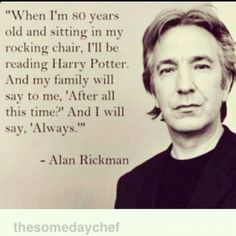


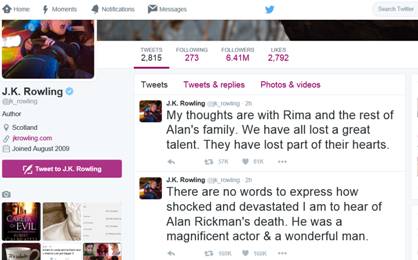


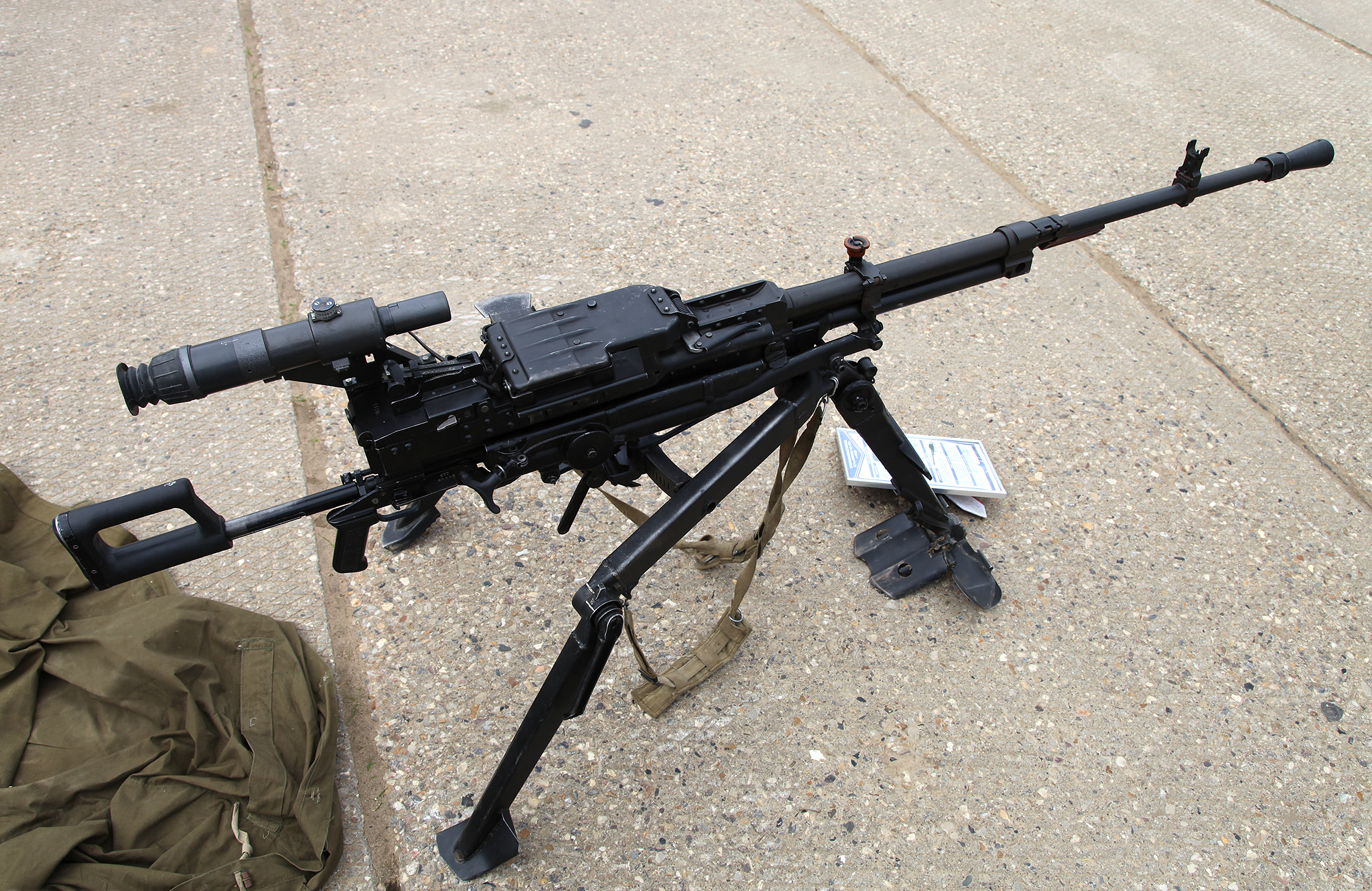








 .
.


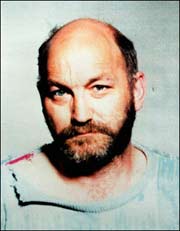




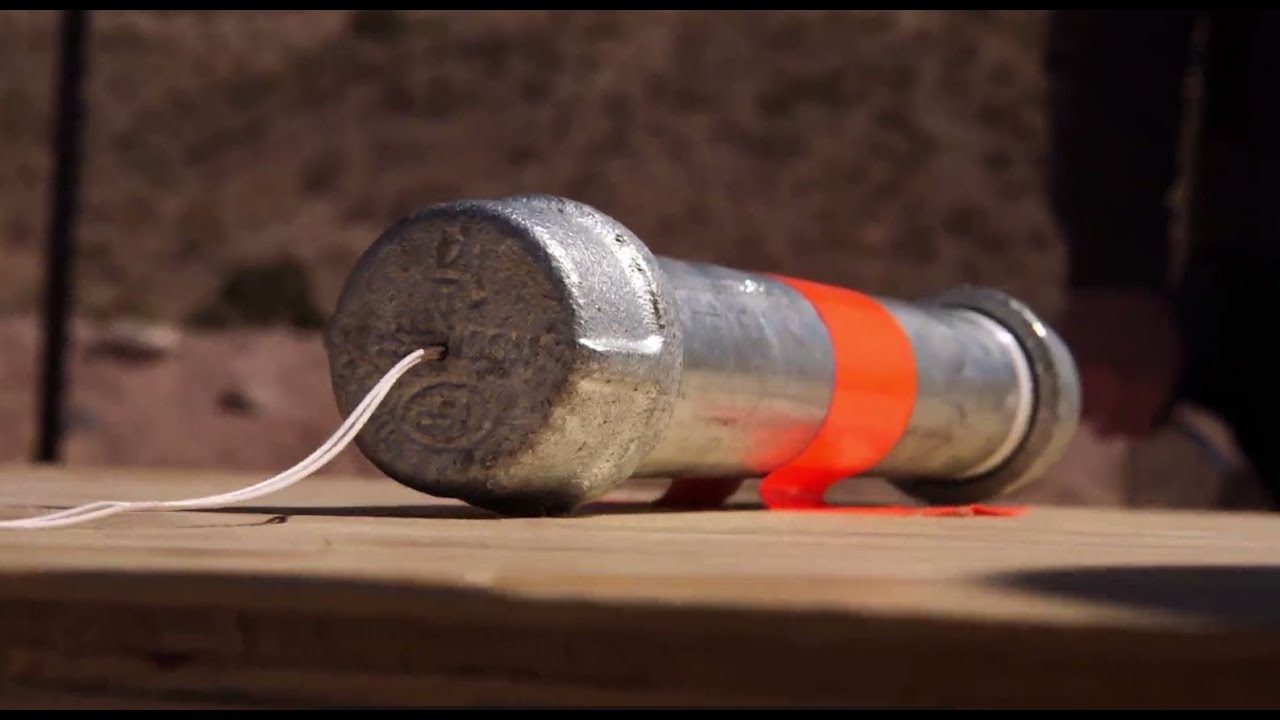


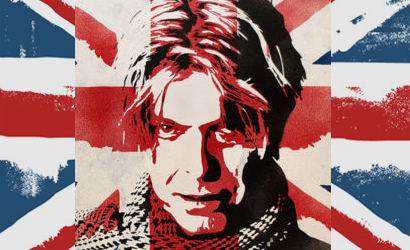

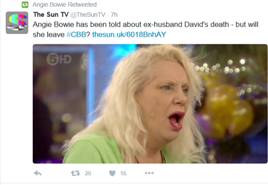

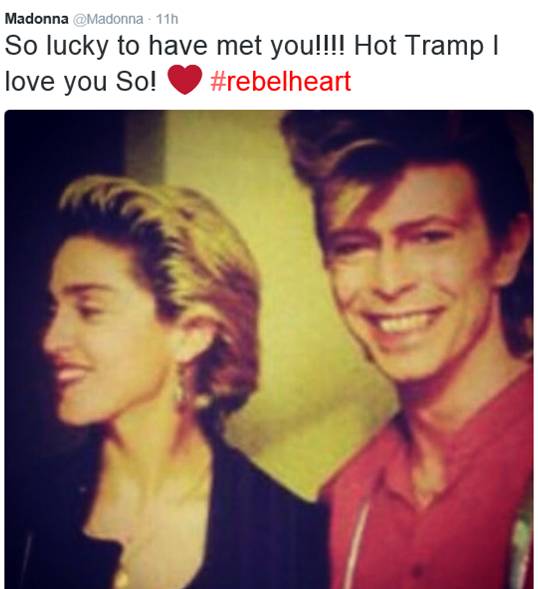


.png)


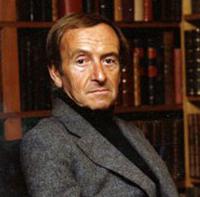


 belfastchildis.com