John Gregg (1957 – 1 February 2003) was a senior member of the UDA/UFFloyalist paramilitary organisation in Northern Ireland. In 1984, Gregg seriously wounded Sinn Féin president Gerry Adams in an assassination attempt. From the 1990s until his shooting death in 2003 by rival associates, Gregg served as brigadier of the UDA’s South East Antrim Brigade. Widely known as a man with a fearsome reputation, Gregg was considered a “hawk” in loyalist circles
———————————————
The views and opinions expressed in this documentary/ies and page are soley intended to educate and provide background information to those interested in the Troubles of Northern Ireland.
They in no way reflect my own opinions and I take no responsibility for any inaccuracies or factual errors
———————————————
John Gregg
John “Grugg” Gregg in 1990
Birth name
John Gregg
Nickname(s)
“Grugg”, “The Reaper”
Born
1957
Died
1 February 2003 (aged 45–46) Belfast, Northern Ireland
Gregg was born in 1957 and raised in a Protestant family from the Tigers Bay area of North Belfast. Gregg when explaining his family background, revealed that his father, regarded as a quiet man, had trust in the Royal Ulster Constabulary (RUC) and British Army but joined the loyalist vigilante groups set up around the start of the Troubles ostensibly to protect the Protestant community from attacks by republicans. His own earliest memory of the Troubles was the Northern Ireland Civil Rights Association marches in Derry, a movement to which Gregg and his family were strongly opposed.
Ulster Defence Association
Gregg joined the Ulster Young Militants (UYM), the youth wing of the loyalist paramilitary Ulster Defence Association (UDA) at the age of 14. He spent six months in jail for rioting in 1977. He later became part of the UDA South East Antrim Brigade. Members of this brigade were believed to be behind the killings of Catholic postman Danny McColgan, Protestant teenager Gavin Brett and Trevor Lowry (the latter kicked to death in the mistaken belief he was a Catholic), and a spate of pipe bomb attacks on the homes of Catholics.
Gregg, at the time the head of the UDA commando in Rathcoole, was in charge of a three-man hit team that pulled up alongside Adams’ car near Belfast City Hall and opened fire injuring Adams and his three fellow passengers, who nonetheless escaped to seek treatment at the Royal Victoria Hospital, Belfast.
Police guard outside hospital were Adams is treated
Gregg and his team were apprehended almost immediately by a British Army patrol that opened fire on them before ramming their car.[4] The attack had been known in advance by security forces due to a tip-off from informants within Rathcoole; Adams and his co-passengers had survived in part because Royal Ulster Constabulary officers, acting on the informants’ information, had replaced much of the ammunition in the UDA’s Rathcoole weapons dump with low-velocity bullets.
Gregg was jailed for 18 years; however, he only served half his sentence and was released in 1993.
When asked by the BBC in prison if he regretted anything about the shooting, his reply was:
“Only that I didn’t succeed.”
Brigadier
UDA mural in Gregg’s Rathcoole stronghold
Following his release from prison, Gregg returned to Rathcoole where he again became an important figure, taking a central role in the illegal drug trade, with his Rathcoole stronghold a centre of narcotics.Sometime after the Combined Loyalist Military Command of 1994 he succeeded Joe English, who had emerged as a leading figure in the Ulster Democratic Party, as brigadier of the South-East Antrim UDA.
Under Gregg the South-East Antrim Brigade were prepared to ignore the terms of the loyalist ceasefire, such as on 25 April 1997 when he dispatched a five-man team to Carrickfergus to set fire to a Catholic church in retaliation for a similar attack on a Protestant church in East Belfast (this earlier attack had actually been organised by dissident loyalists seeking to provoke the UDA into returning to violence).[9] Gregg’s fearsome reputation earned him the nickname “the Reaper” and he bore a tattoo of the Grim Reaper on his back as a tribute.
Gregg played the bass drum in the UDA-affiliated flute band Cloughfern Young Conquerors, a loyalist flute band which police claimed regularly caused trouble at Orange Order parades. In late August 1997 this band was one of a number of similar flute bands to travel to Derry for the annual Apprentice Boys of Derry march through the city centre.
As the band prepared to take the train home that evening they met members of the Shankill Protestant Boys, another band in town for the parade that was affiliated to the Ulster Volunteer Force (UVF). Brawls between the two had been frequent and tensions had been growing between the UDA and UVF leading to a drink-fuelled pitched battle between the two groups at the train station.
During the course of the melee a Shankill Protestant Boys member managed to gouge out Gregg’s eye, although it is also claimed that Gregg lost his eye due to a fight with republicans at the same parade.
Anti-Catholic campaigns
Along with Jackie McDonald and Billy McFarland, fellow brigadiers on the UDA’s Inner Council, Gregg was lacking in enthusiasm for the Belfast Agreement when it appeared in 1998. Throughout 1999 his brigade continued to be active, undertaking a pipe bomb campaign against Catholic homes whilst on 12 May members of his brigade shot and wounded a Catholic builder in Carrickfergus under the cover name “Protestant Liberation Force”. Much of this activity was inspired by Gregg’s personal hatred of Catholics.
A senior police source once described him as a man driven by “pure and absolute bigotry”. Gregg was also characterised as “a bully, a racketeer, and a sectarian bigot who took particular delight in carrying out vicious punishment attacks and randomly targeting Roman Catholics.”
In 2000 he helped to ensure that a proposal before the Inner Council to initiate the decommissioning of weapons was rejected.
Having witnessed demographic shifts in Glengormley and Crumlin, traditionally loyalist majority towns that had come to have nationalist majorities on account of loyalists moving out of Belfast, he determined that the same thing would not happen in Carrickfergus and Larne and so launched a campaign of pipe bomb and arson attacks on Catholic homes there (despite these towns having very small Catholic populations).
The main target proved to be Danny O’Connor, a Social Democratic and Labour Party (SDLP) representative on initially Larne Borough Council and then the Northern Ireland Assembly, whose home and office were attacked at least twelve times by Gregg’s men between 2000 and 2002. Protestant Trevor Lowry (aged 49) was beaten to death in Glengormley by UDA members under Gregg’s command on 11 April 2001 after he was mistaken for a Catholic. Catholic workman Gary Moore was killed in Monkstown in 2000 in another killing attributed to Gregg’s unit.
He called on the Police Service of Northern Ireland (PSNI) to establish an auxiliary police “clinic” on the estate, which had no permanent police building, so as locals concerned about crime could have somewhere to go. This followed in summer 2002 when a community centre was taken over for this purpose although Gregg’s UDA objected and daubed the building with the word “tout”.
On 4 September Langhammer’s car was blown up outside his Whiteabbey home by Gregg’s men, although Langhammer himself was asleep at the time and no one was injured.
Johnny Adair
Despite the continuing activity of his brigade, and his own earlier maiming, Gregg shared the reluctance of other brigadiers about what he saw as a coming war between the UVF and West Belfast brigadier Johnny Adair. Nonetheless he was not keen to antagonise Adair and so, along with McFarland, McDonald and Jimbo Simpson, accepted his invitation to attended a “Loyalist Day of Culture” organised by Adair on the Lower Shankill on 19 August 2000. Old tensions resurfaced however, and after Adair’s men fought with UVF supporters at the Shankill’s Rex Bar, Adair launched a pogrom of the lower Shankill, forcing out all UVF members and their families and initiating a loyalist feud.[22]
Gregg initially remained aloof from the struggle and instead concentrated on his anti-Catholic campaign. However in the second half of 2002 he was dragged into the conflict after Adair made him a target in his own attempts to take full control of the UDA. A UDA member originally from the Woodvale Road had moved to Rathcoole where he had been beaten up after it emerged that he was a friend of Joe English, the former brigadier who had been exiled from the estate by Gregg for his anti-drugs stance.
As a result of the attack, three Woodvale UDA members went to Gregg and complained about the attack. Gregg took this as a threat and, after complaining to senior figures in the West Belfast UDA, ordered the three men to be kneecapped. The shootings raised some anger on the Shankill, where the three were well-liked figures, and Adair sought to exploit this as a method of getting rid of Gregg. He sought to portray Gregg as unstable and thuggish and spread a rumour that he was about to be replaced as brigadier.
By September 2002, Adair had even circulated stories to contacts in the media that Gregg was under death threat from the UDA. In late August, Adair had even managed to have Gregg stood down as Brigadier for “not being militant enough” and replaced by one of Adair’s own associates.
However, this proved short-lived. In October 2002, Gregg was one of the brigadiers who passed the resolution expelling Adair from the UDA for his involvement in the non-fatal shooting of Jim Gray.
Adair ignored the expulsion, erecting “West Belfast UDA – Business as Usual” banners on the Shankill Road, whilst continuing his struggles with the remaining brigadiers, Gregg in particular. On 8 December a bomb was found under Gregg’s car, apparently placed there by one of Adair’s allies from the Loyalist Volunteer Force.
Soon after two pipe bombs were thrown at Gregg’s house, and his friend Tommy Kirkham‘s house was shot at. In response, graffiti appeared around the walls of Rathcoole in December, stating:
“Daft Dog and White beware. The Reaper is coming for you”
as a threat to “Mad Dog” Adair and his ally John White. A bomb attack on Adair’s house on 8 January 2003 was blamed on Gregg by White, although Adair himself was returned to prison two days later after a dossier detailing his drug-dealing and racketeering activities was shown to Secretary of State for Northern IrelandPaul Murphy.
Shooting death and aftermath
A mural commemorating Gregg and Carson in Cloughfern
————————————-
John Gregg – Funeral
————————————-
1 February 2003, along with another UDA member, Robert “Rab” Carson, Gregg was shot dead on Nelson Street, in the old Sailortown district near the Belfast docks, while travelling in a red Toyota taxi after returning from Glasgow where he regularly went to watch Rangers F.C. games. Gregg had been a regular visitor to Ibrox Park for a number of years,
often in the company of Michael Stone, and had even picked up a conviction for violence at an Old Firm match. Gregg’s movements were known to C Company member Alan McCullough who, receiving instruction from Adair (then in HMP Maghaberry), arranged for a hit team to kill Gregg and his associate as the taxi took them from the port of Belfast.
When the taxi stopped at traffic lights close to the motorway, it was rammed by another taxi which had been hijacked earlier on the Shankill Road. Masked gunmen immediately opened fire on the occupants with automatic weapons. Gregg, seated in the backseat, was hit at close range and died instantly.
A mortally-wounded Carson died later in hospital, and taxi driver William McKnight was seriously hurt. Gregg’s 18-year-old son Stuart and another man were also in the vehicle but neither sustained injuries in the shooting attack. Carson was described by UDA sources as a “dear friend” of Gregg’s and a junior member of the South-East Antrim Brigade.
South East Antrim Brigade mural in Ballymena honouring Gregg
Gregg’s killing proved to be the undoing of Adair. Gregg was the most senior UDA member killed since South Belfast brigadier John McMichael was blown up by the IRA in 1987. Despite his reputation for gangsterism, Gregg’s failed attack on Gerry Adams had afforded him legendary status and, under the direction of Jackie McDonald, the remaining UDA brigadiers concluded that Adair had to be removed.
Gregg was given a paramilitary funeral which was attended by thousands of mourners, including senior UDA members Jackie McDonald, Jim Gray, Sammy Duddy and Michael Stone. Senior members of the Ulster Volunteer Force and Red Hand Commando also attended. A volley of shots was fired over his coffin by UDA gunmen outside his Rathcoole home. The coffin was draped in the Ulster flag and the flag of the UFF. Members of the Cloughfern Young Conquerors dressed in uniform accompanied the coffin.
Afterwards a lone piper led the cortege to Carnmoney Cemetery where he was buried. At the service on 6 February, UVF/RHC representatives joined the UDA leadership in a show of anti-Adair solidarity. That same night Jackie McDonald’s forces invaded the lower Shankill and ran those members of C Company that had remained loyal to Adair, who was still in prison, out of the city. In May of that same year, Alan McCullough was himself killed by the UDA.
Following the conclusion of the feud with Adair the UDA reconstituted its ceasefire in what they christened the “Gregg initiative”. The juxtaposition of this initiative with the name of Gregg was condemned by the mother of a Catholic who had been killed by members of the South-East Antrim Brigade in 2000 as she argued:
“it’s sickening to call it the Gregg initiative when he was a ruthless terrorist….Everyone goes on about Johnny Adair but they’re all as bad as each other”.
In November 2011, Stuart Gregg received £400,000 compensation for psychological trauma due to having witnessed his father’s murder.
Personal life
Gregg was married with one son and two stepdaughters
Disclaimer – The views and opinions expressed in these documentary are soley intended to educate and provide background information to those interested in the Troubles of Northern Ireland. They in …
As a loyalist I take great pride in the culture and traditions of my protestant heritage and like most Northern Ireland protestants I am fiercely proud of the Union with Britain and am proud to call myself British
That doesn’t mean I hate Catholics or Irish people (I don’t) and would wish any harm on them. In fact during the worst years of the troubles whenever I learnt of the death of an innocent Catholic or anyone else for that matter, my heart would bleed for them and those they left behind.
The definition of loyalist is :
a. A supporter of union between Great Britain and Northern Ireland
b. A person who remains loyal to the established ruler or government, especially in the face of a revolt
I was born British into a British country and I am extremely proud of my British & Unionist heritage and it saddens me to see this being slowly eradicated by Sinn Féin//IRA and other Irish Republican groups.
Again that doesn’t mean I hate Catholics or wish harm on them, it means I have a different point of view and democracy is all about freedom of choice and my choice is to maintain the Union with the UK and embrace and celebrate my loyalist culture and traditions.
Not all loyalists are psychopathic killers and most like me are peaceful souls who are happy to live side by side with our catholic counterparts and are hunted by the sectarian slaughter of the Troubles.
The tortured history of Northern Ireland & the Republic of Ireland are inextricably linked and the two warring sides have suffered much as the last remnants of the British Empire tore themselves apart. The legacy of 30 years of conflict in Northern Ireland will long be a dark shadow over the people of the north , but time is the great healer and decades from now the pain and the hurt of our generation will diminish and our grandchildren’s children will hopefully live in a better world and the past can finally be laid to rest.
The Easter rising was a pivotal event in the shared history of Britain and Ireland and was instigated by 15 men who had the audacity to take on the might of what was then one of the world’s super powers. To some these men were traitors to the crown and deserved all they got , to others they were hailed as hero’s for standing up to British “oppression “.
Kilmainham Jail 1916
At the end of the uprising the leaders were tried and sentenced to the ultimate punishment and were executed at Kilmainham Jail .
Rising Plaque Garden of Remembrance for 1916 Rising in Dublin
The views and opinions expressed in these pages/documentaries are soley intended to educate and provide background information to those interested in the Troubles of Northern Ireland. They in no way reflect my own opinions and I take no responsibility for any inaccuracies or factual errors.
Easter Rising
——————————-
Real archival footage from 1916 Easter Rising, Dublin
~2,000–3,000 elsewhere, but they took little part in the fighting.16,000 troops and 1,000 armed police in Dublin by the end of the week.Casualties and losses64 killed
unknown wounded
The Easter Rising (Irish: Éirí Amach na Cásca),[1] also known as the Easter Rebellion, was an armed insurrection in Ireland during Easter Week, 1916. The Rising was mounted by Irish republicans to end British rule in Ireland and establish an independent Irish Republic while the United Kingdom was heavily engaged in World War I. It was the most significant uprising in Ireland since the rebellion of 1798.
With vastly superior numbers and artillery, the British army quickly suppressed the Rising, and Pearse agreed to an unconditional surrender on Saturday 29 April. Most of the leaders were executed following courts-martial, but the Rising succeeded in bringing physical force republicanism back to the forefront of Irish politics. Support for republicanism continued to rise in Ireland. In December 1918, republicans (by then represented by the Sinn Féin party) won 73 Irish seats out of 105 in the 1918 General Election to the British Parliament, on a policy of abstentionism and Irish independence. On 21 January 1919 they convened the First Dáil and declared the independence of the Irish Republic, and later that same day the Irish War of Independence began with the Soloheadbeg ambush.
After the fall of Parnell, younger and more radical nationalists became disillusioned with parliamentary politics and turned toward more extreme forms of separatism. The Gaelic Athletic Association, the Gaelic League and the cultural revival under W. B. Yeats and Lady Augusta Gregory, together with the new political thinking of Arthur Griffith expressed in his newspaper Sinn Féin and organisations such as the National Council and the Sinn Féin League led to the identification of many Irish people with the concept of a Gaelic nation and culture, completely independent of Britain.
This was sometimes referred to by the generic term Sinn Féin, particularly by the authorities.
The Irish Republican Brotherhood (IRB) saw an opportunity to create an armed organisation to advance its own ends, and on 25 November 1913 the Irish Volunteers, whose stated object was “to secure and to maintain the rights and liberties common to all the people of Ireland”, was formed. Its leader was Eoin MacNeill, who was not an IRB member.
A Provisional Committee was formed that included people with a wide range of political views, and the Volunteers’ ranks were open to
“all able-bodied Irishmen without distinction of creed, politics or social group.”
Another militant group, the Irish Citizen Army, was formed by trade unionists as a result of the Dublin Lock-out of that year. The increasing militarisation of Irish politics was overshadowed soon after by the outbreak of the First World War and Ireland’s involvement in the conflict.
Though many Irishmen had volunteered for Irish regiments and divisions of the New British Army at the outbreak of war in 1914, the growing likelihood of enforced conscription created a backlash. Opposition to the war was based particularly on the implementation of the Government of Ireland Act 1914 (as previously recommended in March by the Irish Convention) increasingly and controversially linked with a “dual policy” enactment of the Military Service Bill, a dual policy that would require Irish conscription to begin if there would be any hope of Ireland seeing the implementation of the Government of Ireland Act 1914.
The linking of conscription and Home Rule outraged the Irish secessionist parties at Westminster, including the IPP, the All-for-Ireland League and others, who walked out in protest and returned to Ireland to organise opposition.
The Supreme Council of the IRB met on 5 September 1914, just over a month after the UK government had declared war on Germany. At this meeting, they decided to stage a rising before the war ended and to accept whatever help Germany might offer. Responsibility for the planning of the rising was given to Tom Clarke and Seán MacDermott.
The Irish Volunteers—the smaller of the two forces resulting from the September 1914 split over support for the British war effort — set up a “headquarters staff” that included Patrick Pearse as Director of Military Organisation, Joseph Plunkett as Director of Military Operations and Thomas MacDonagh as Director of Training. Éamonn Ceannt was later added as Director of Communications.
In May 1915, Clarke and MacDermott established a Military Committee within the IRB, consisting of Pearse, Plunkett and Ceannt, to draw up plans for a rising.[22] This dual role allowed the Committee, to which Clarke and MacDermott added themselves shortly afterward, to promote their own policies and personnel independently of both the Volunteer Executive and the IRB Executive—in particular Volunteer Chief of Staff Eoin MacNeill, who supported a rising only on condition of an increase in popular support following unpopular moves by the London government, such as the introduction of conscription or an attempt to suppress the Volunteers or its leaders, and IRB President Denis McCullough, who held similar views.
IRB members held officer rank in the Volunteers throughout the country and took their orders from the Military Committee, not from MacNeill.
Plunkett travelled to Germany in April 1915 to join Roger Casement, who had gone there from the United States the previous year with the support of Clan na Gael leader John Devoy, and after discussions with the German Ambassador in Washington, Count von Bernstorff, to try to recruit an “Irish Brigade” from among Irish prisoners of war and secure German support for Irish independence.
Together, Plunkett and Casement presented a plan which involved a German expeditionary force landing on the west coast of Ireland, while a rising in Dublin diverted the British forces so that the Germans, with the help of local Volunteers, could secure the line of the River Shannon.
James Connolly—head of the Irish Citizen Army (ICA), a group of armed socialist trade union men and women—was unaware of the IRB’s plans, and threatened to start a rebellion on his own if other parties failed to act. If they had gone it alone, the IRB and the Volunteers would possibly have come to their aid; however, the IRB leaders met with Connolly in January 1916 and convinced him to join forces with them. They agreed to act together the following Easter and made Connolly the sixth member of the Military Committee. Thomas MacDonagh would later become the seventh and final member.
Build-up to Easter Week
General Post Office, Dublin. Centre of the Easter Rising
In an effort to thwart both informers and the Volunteers’ own leadership, Pearse issued orders in early April for three days of “parades and manoeuvres” by the Volunteers for Easter Sunday (which he had the authority to do, as Director of Organisation). The idea was that the republicans within the organisation (particularly IRB members) would know exactly what this meant, while men such as MacNeill and the British authorities in Dublin Castle would take it at face value. However, MacNeill got wind of what was afoot and threatened to “do everything possible short of phoning Dublin Castle” to prevent the rising.
MacNeill was briefly convinced to go along with some sort of action when Mac Diarmada revealed to him that a shipment of German arms was about to land in County Kerry, planned by the IRB in conjunction with Roger Casement; he was certain that the authorities’ discovery of such a shipment would inevitably lead to suppression of the Volunteers, thus the Volunteers were justified in taking defensive action, including the originally planned manoeuvres.
Casement—disappointed with the level of support offered by the Germans— insisted on returning to Ireland on a German U-boat and was captured upon landing at Banna Strand in Tralee Bay. His reason for travel was to stop or at least postpone the Rising. The arms shipment was lost when the German ship carrying it, Aud, was scuttled after interception by the Royal Navy. The ship had already attempted a landing, but the local Volunteers failed to rendezvous at the agreed time.
The following day, MacNeill reverted to his original position when he found out that the ship carrying the arms had been scuttled. With the support of other leaders of like mind, notably Bulmer Hobson and The O’Rahilly, he issued a countermand to all Volunteers, cancelling all actions for Sunday. This succeeded in putting the rising off for only a day, although it greatly reduced the number of Volunteers who turned out.
British Naval Intelligence had been aware of the arms shipment, Casement’s return, and the Easter date for the rising through radio messages between Germany and its embassy in the United States that were intercepted by the Navy and deciphered in Room 40 of the Admiralty.
The information was passed to the Under-Secretary for Ireland, Sir Matthew Nathan, on 17 April, but without revealing its source, and Nathan was doubtful about its accuracy.[31] When news reached Dublin of the capture of the Aud and the arrest of Casement, Nathan conferred with the Lord Lieutenant, Lord Wimborne. Nathan proposed to raid Liberty Hall, headquarters of the Citizen Army, and Volunteer properties at Father Matthew Park and at Kimmage, but Wimborne insisted on wholesale arrests of the leaders. It was decided to postpone action until after Easter Monday, and in the meantime Nathan telegraphed the Chief Secretary, Augustine Birrell, in London seeking his approval.
By the time Birrell cabled his reply authorising the action, at noon on Monday 24 April 1916, the Rising had already begun.
The Rising in Dublin
Easter Monday
One of two flags flown over the GPO during the Rising
Early on Monday morning, 24 April 1916, roughly 1,200 Volunteers and Citizen Army members took over strongpoints in Dublin city centre. A joint force of about 400 Volunteers and Citizen Army gathered at Liberty Hall under the command of Commandant James Connolly.
After occupying the Post Office, the Volunteers hoisted two Republican flags and Pearse read a Proclamation of the Republic.
Elsewhere, rebel forces took up positions at the Four Courts, the centre of the Irish legal establishment, at Jacob’s Biscuit Factory, Boland’s Mill, the South Dublin Union hospital complex and the adjoining Distillery at Marrowbone Lane. Another contingent, under Michal Mallin, dug in on St. Stephen’s Green.
Although it was lightly guarded, Volunteer and Citizen Army forces under Seán Connolly failed to take Dublin Castle, the centre of British rule in Ireland, shooting dead a police sentry and overpowering the soldiers in the guardroom, but failing to press home the attack. The Under-secretary, Sir Matthew Nathan, alerted by the shots, helped close the castle gates.
The rebels occupied the Dublin City Hall and adjacent buildings.[37] They also failed to take Trinity College, in the heart of the city centre and defended by only a handful of armed unionist students.
At midday a small team of Volunteers and Fianna Éireann members attacked the Magazine Fort in the Phoenix Park and disarmed the guards, with the intent to seize weapons and blow up the building as a signal that the rising had begun. They set explosives but failed to obtain any arms.
In at least two incidents, at Jacob’s and Stephen’s Green, the Volunteers and Citizen Army shot dead civilians trying to attack them or dismantle their barricades. Elsewhere, they hit civilians with their rifle butts to drive them off.
The British military were caught totally unprepared by the rebellion and their response of the first day was generally un-coordinated. Two troops of British cavalry, one at the Four Courts and the other on O’Connell Street, sent to investigate what was happening took fire and casualties from rebel forces
The only substantial combat of the first day of the Rising took place at the South Dublin Union where a piquet from the Royal Irish Regiment encountered an outpost of Éamonn Ceannt‘s force at the north-western corner of the South Dublin Union. The British troops, after taking some casualties, managed to regroup and launch several assaults on the position before they forced their way inside and the small rebel force in the tin huts at the eastern end of the Union surrendered.
However, the Union complex as a whole remained in rebel hands.
Three unarmed Dublin Metropolitan Police were shot dead on the first day of the Rising and their Commissioner pulled them off the streets. Partly as a result of the police withdrawal, a wave of looting broke out in the city centre, especially in the O’Connell Street area. A total of 425 people were arrested after the Rising for looting.
Tuesday to Saturday
A British armoured truck, hastily built from the smokeboxes of several steam locomotives at Inchicore railway works
Lord Wimborne, the Lord Lieutenant, declared martial law on Tuesday evening and handed over civil power to Brigadier-General William Lowe. British forces initially put their efforts into securing the approaches to Dublin Castle and isolating the rebel headquarters, which they believed was in Liberty Hall. The British commander, Lowe, worked slowly, unsure of the size of the force he was up against, and with only 1,269 troops in the city when he arrived from the Curragh Camp in the early hours of Tuesday 25 April.
City Hall was taken from the rebel unit that had attacked Dublin Castle on Tuesday morning.
The rebels had failed to take either of Dublin’s two main train stations or either of its ports, at Dublin Port and Kingstown. As a result, during the following week, the British were able to bring in thousands of reinforcements from England and from their garrisons at the Curragh and Belfast. By the end of the week, British strength stood at over 16,000 men.
Their firepower was provided by field artillery summoned from their garrison at Athlone which they positioned on the northside of the city at Phibsborough and at Trinity College, and by the patrol vessel Helga, which sailed up the Liffey, having been summoned from the port at Kingstown. On Wednesday, 26 April, the guns at Trinity College and Helga shelled Liberty Hall, and the Trinity College guns then began firing at rebel positions, first at Boland’s Mill and then in O’Connell Street.
“Birth of the Irish Republic” by Walter Paget, depicting the GPO during the shelling
The principal rebel positions at the GPO, the Four Courts, Jacob’s Factory and Boland’s Mill saw little combat. The British surrounded and bombarded them rather than assault them directly. One Volunteer in the GPO recalled, “we did practically no shooting as there was no target”.[52] Similarly, the rebel position at St Stephen’s Green, held by the Citizen Army under Michael Mallin, was made untenable after the British placed snipers and machine guns in the Shelbourne Hotel and surrounding buildings.
As a result, Mallin’s men retreated to the Royal College of Surgeons building where they remained for the rest of the week. However, where the insurgents dominated the routes by which the British tried to funnel reinforcements into the city, there was fierce fighting.
Reinforcements were sent to Dublin from England, and disembarked at Kingstown on the morning of 26 April. Heavy fighting occurred at the rebel-held positions around the Grand Canal as these troops advanced towards Dublin. The Sherwood Foresters were repeatedly caught in a cross-fire trying to cross the canal at Mount Street. Seventeen Volunteers were able to severely disrupt the British advance, killing or wounding 240 men. Despite there being alternative routes across the canal nearby, General Lowe ordered repeated frontal assaults on the Mount Street position.
The British eventually took the position, which had not been reinforced by the nearby rebel garrison at Boland’s Mills, on Thursday but the fighting there inflicted up to two thirds of their casualties for the entire week for a cost of just four dead Volunteers.
The rebel position at the South Dublin Union (site of the present day St. James’s Hospital) and Marrowbone Lane, further west along the canal, also inflicted heavy losses on British troops. The South Dublin Union was a large complex of buildings and there was vicious fighting around and inside the buildings. Cathal Brugha, a rebel officer, distinguished himself in this action and was badly wounded.
By the end of the week, the British had taken some of the buildings in the Union, but others remained in rebel hands. British troops also took casualties in unsuccessful frontal assaults on the Marrowbone Lane Distillery.
Placements of Rebel forces and British troops around the River Liffey in Dublin
The third major scene of combat during the week was at North King Street, behind the Four Courts, where the British, on Thursday, tried to take a well-barricaded rebel position. By the time of the rebel headquarter’s surrender, the South Staffordshire Regiment under Colonel Taylor had advanced only 150 yd (140 m) down the street at a cost of 11 dead and 28 wounded.
The enraged troops broke into the houses along the street and shot or bayonetted 15 male civilians whom they accused of being rebel fighters.
These instances of British troops killing Irish civilians would later be highly controversial in Ireland.
Surrender
The headquarters garrison at the GPO, after days of shelling, was forced to abandon their headquarters when fire caused by the shells spread to the GPO. Connolly had been incapacitated by a bullet wound to the ankle and had passed command on to Pearse. The O’Rahilly was killed in a sortie from the GPO.
They tunnelled through the walls of the neighbouring buildings in order to evacuate the Post Office without coming under fire and took up a new position in 16 Moore Street. On Saturday 29 April, from this new headquarters, after realising that they could not break out of this position without further loss of civilian life, Pearse issued an order for all companies to surrender.
In order to prevent the further slaughter of Dublin citizens, and in the hope of saving the lives of our followers now surrounded and hopelessly outnumbered, the members of the Provisional Government present at headquarters have agreed to an unconditional surrender, and the commandants of the various districts in the City and County will order their commands to lay down arms.
The GPO was the only major rebel post to be physically taken during the week. The others surrendered only after Pearse’s surrender order, carried by a nurse named Elizabeth O’Farrell, reached them. Sporadic fighting therefore continued until Sunday, when word of the surrender was got to the other rebel garrisons.[66] Command of British forces had passed from Lowe to General John Maxwell, who arrived in Dublin just in time to take the surrender. Maxwell was made temporary military governor of Ireland.
The Rising outside Dublin
Irish Volunteer units mobilised on Easter Sunday in several places outside of Dublin, but due to Eoin MacNeill’s countermanding order, most of them returned home without fighting. In addition, due to the interception of the German arms aboard the Aud, the provincial Volunteer units were very poorly armed.
In the south, around 1,200 Volunteers mustered in Cork, under Tomás Mac Curtain on the Sunday, but they dispersed after receiving nine contradictory orders by dispatch from the Volunteer leadership in Dublin. Much to the anger of many Volunteers, MacCurtain, under pressure from Catholic clergy, agreed to surrender his men’s arms to the British on Wednesday.
The only violence in Cork occurred when the Kent family resisted arrest by the RIC, shooting one. One brother was killed in the shootout and another later executed.
Similarly, in the north, several Volunteer companies were mobilised at Coalisland in County Tyrone including 132 men from Belfast led by IRB President Dennis McCullough. Also, Volunteer leaders Daniel Kelly and James McNulty assembled a group of 33 men in Creeslough, County Donegal and awaited instruction. However, in part due to the confusion caused by the countermanding order, the Volunteers in these locations dispersed without fighting.
Ashbourne
The only large-scale engagement outside the city of Dublin occurred at Ashbourne, County Meath. The Volunteers′ Dublin Brigade, 5th Battalion (also known as the Fingal Battalion), led by Thomas Ashe and his second in command Richard Mulcahy, composed of some 60 men, mobilised at Swords, where they seized the RIC Barracks and the Post Office. They did the same in the nearby villages of Donabate and Garristown before attacking the RIC barracks at Ashtown.
During the attack on the barracks, an RIC patrol from Slane happened upon the firefight – leading to a five-hour gun battle, in which eight RIC constables were killed and 15 wounded. Two Volunteers were also killed and five wounded.
One civilian was also mortally wounded. Ashe’s men camped at Kilsalaghan, near Dublin until they received orders to surrender on Saturday.
Volunteer contingents also mobilised nearby in counties Meath and Louth, but proved unable to link up with the North Dublin unit until after it had surrendered. In County Louth, Volunteers shot dead an RIC man near the village of Castlebellingham on 24 April, in an incident in which 15 RIC men were also taken prisoner.
Enniscorthy
Irish War News, produced during the Rising
In County Wexford, some 100 Volunteers led by Robert Brennan, Seamus Doyle and J R Etchingham took over Enniscorthy on Thursday 27 April until the following Sunday. They made a brief and unsuccessful attack on the RIC barracks, but unable to take it, resolved to blockade it instead. During their occupation of the town, they made such gestures as flying the tricolour over the Atheneum theatre, which they had made their headquarters, and parading uniformed in the streets.
A small party set off for Dublin, but turned back when they met a train full of British troops (part of a 1,000-strong force, which included the Connaught Rangers) on their way to Enniscorthy. On Saturday, two Volunteer leaders were escorted by the British to Arbour Hill Prison, where Pearse ordered them to surrender.
Galway
In the west, Liam Mellows led 600–700 Volunteers in abortive attacks on several police stations, at Oranmore and Clarinbridge in County Galway. There was also a skirmish at Carnmore in which one RIC man (Constable Patrick Whelan) was killed. However, his men were poorly armed, with only 25 rifles and 300 shotguns, many of them being equipped only with pikes. Toward the end of the week, Mellows′ followers were increasingly poorly fed and heard that large British reinforcements were being sent westwards. In addition, the British cruiserHMS Gloucester arrived in Galway Bay and shelled the fields around Athenry where the rebels were based.
On 29 April, the Volunteers, judging the situation to be hopeless, dispersed from the town of Athenry. Many of these Volunteers were arrested in the period following the rising, while others, including Mellows had to go “on the run” to escape. By the time British reinforcements arrived in the west, the rising there had already disintegrated.
Casualties
The British Army reported casualties of 116 dead, 368 wounded and nine missing. Sixteen policemen died, and 29 were wounded. Rebel and civilian casualties were 318 dead and 2,217 wounded. The Volunteers and ICA recorded 64 killed in action, but otherwise Irish casualties were not divided into rebels and civilians.
All 16 police fatalities and 22 of the British soldiers killed were Irishmen
British families came to Dublin Castle in May 1916 to reclaim the bodies and funerals were arranged. British bodies which were not claimed were given military funerals in Grangegorman Military Cemetery.
The majority of the casualties, both killed and wounded, were civilians. Both sides, British and rebel, shot civilians deliberately on occasion when they refused to obey orders such as to stop at checkpoints.
On top of that, there were two instances of British troops killing civilians out of revenge or frustration, at Portobello Barracks, where six were shot and North King Street, where 15 were killed.
However, the majority of civilian casualties were killed by indirect fire from artillery, heavy machine guns and incendiary shells. The British, who used such weapons extensively, therefore seem to have caused most non-combatant deaths. One Royal Irish Regiment officer recalled,
“they regarded, not unreasonably, everyone they saw as an enemy, and fired at anything that moved”.
Aftermath
Sackville Street (now O’Connell Street), Dublin, after the Rising
Ruins of the Metropole Hotel on Sackville Street.
The burial spot of the Leaders of the Rising, in the old prison yard of Arbour Hill prison. The memorial was designed by G. McNicholl. The Proclamation of 1916 is inscribed on the wall in both Irish and English
British soldiers searching the River Tolka in Dublin for arms and ammunition after the Easter Rising. May 1916
Arrests and executions
General Maxwell quickly signalled his intention “to arrest all dangerous Sinn Feiners”, including
“those who have taken an active part in the movement although not in the present rebellion”,
reflecting the popular belief that Sinn Féin, a separatist organisation that was neither militant nor republican, was behind the Rising.
A total of 3,430 men and 79 women were arrested, although most were subsequently released. In attempting to arrest members of the Kent family in County Cork on 2 May, a Head Constable was shot dead in a gun battle. Richard Kent was also killed, and Thomas and William Kent were arrested.
In a series of courts martial beginning on 2 May, 90 people were sentenced to death. Fifteen of those (including all seven signatories of the Proclamation) had their sentences confirmed by Maxwell and were executed at Kilmainham Gaol by firing squad between 3 and 12 May (among them the seriously wounded Connolly, shot while tied to a chair due to a shattered ankle). Not all of those executed were leaders: Willie Pearse described himself as “a personal attaché to my brother, Patrick Pearse”; John MacBride had not even been aware of the Rising until it began, but had fought against the British in the Boer War fifteen years before;
Thomas Kent did not come out at all—he was executed for the killing of a police officer during the raid on his house the week after the Rising. The most prominent leader to escape execution was Éamon de Valera, Commandant of the 3rd Battalion, who did so partly due to his American birth.
The report, published on 26 June, was critical of the Dublin administration, saying that “Ireland for several years had been administered on the principle that it was safer and more expedient to leave the law in abeyance if collision with any faction of the Irish people could thereby be avoided.”
Birrell and Nathan had resigned immediately after the Rising. Wimborne had also reluctantly resigned, recalled to London by Lloyd George, but was re-appointed in late 1917. Chamberlain resigned soon after.
Reaction of the Dublin public
At first, many members of the Dublin public were simply bewildered by the outbreak of the Rising.[95]James Stephens, who was in Dublin during the week, thought,
“None of these people were prepared for Insurrection. The thing had been sprung on them so suddenly they were unable to take sides.”
There was considerable hostility towards the Volunteers in some parts of the city. When occupying positions in the South Dublin Union and Jacob’s factory, the rebels got involved in physical confrontations with civilians trying to prevent them from taking over the buildings. The Volunteers’ shooting and clubbing of civilians made them extremely unpopular in these localities.
There was outright hostility to the Volunteers from the “separation women” (so-called because they were paid “Separation Money” by the British government), who had husbands and sons fighting in the British Army in World War I, and among unionists.
That the Rising caused a great deal of death and destruction, as well as disrupting food supplies, also contributed to the antagonism toward the rebels. After the surrender, the Volunteers were hissed at, pelted with refuse, and denounced as “murderers” and “starvers of the people”.
Volunteer Robert Holland for example remembered being “subjected to very ugly remarks and cat-calls from the poorer classes” as they marched to surrender. He also reported being abused by people he knew as he was marched through the Kilmainham area into captivity and said the British troops saved them from being manhandled by the crowd.
However, there was not universal hostility towards the defeated insurgents. Some onlookers were cowed rather than hostile and it appeared to the Volunteers that some of those watching in silence were sympathetic. Canadian journalist and writer Frederick Arthur McKenzie wrote that in poorer areas, “there was a vast amount of sympathy with the rebels, particularly after the rebels were defeated.”
“no sign of sympathy for the rebels, but general admiration for their courage and strategy.”
The aftermath of the Rising, and in particular the British reaction to it, helped sway a large section of Irish nationalist opinion away from hostility or ambivalence and towards support for the rebels of Easter 1916. Dublin businessman and QuakerJames G. Douglas, for example, hitherto a Home Ruler, wrote that his political outlook changed radically during the course of the Rising due to the British military occupation of the city and that he became convinced that parliamentary methods would not be sufficient to remove the British presence.
The Garden of Remembrance opened in 1966, to mark the anniversary of the Rising. The Garden is “dedicated to all those who gave their lives in the fight for Ireland’s freedom”
Shortly after the Easter Rising, poet Francis Ledwidge wrote “O’Connell Street” and “Lament for the Poets of 1916,” which both describe his sense of loss and an expression of holding the same “dreams”, as the Easter Rising’s Irish Republicans. He would also go on to write lament for Thomas MacDonagh for his fallen friend and fellow Irish Volunteer. A few months after the Easter Rising, W. B. Yeats commemorated some of the fallen figures of the Irish Republican movement, as well as his torn emotions regarding these events, in the poem Easter, 1916.
Some of the survivors of the Rising went on to become leaders of the independent Irish state. Those who were executed were venerated by many as martyrs; their graves in Dublin’s former military prison of Arbour Hill became a national monument and the Proclamation text was taught in schools. An annual commemorative military parade was held each year on Easter Sunday, culminating in a huge national celebration on the 50th anniversary in 1966.
RTÉ, the Irish national broadcaster, as one of its first major undertakings made a series of commemorative programmes for the 1966 anniversary of the Rising. Roibéárd Ó Faracháin, head of programming said,
“While still seeking historical truth, the emphasis will be on homage, on salutation.”
With the outbreak of the Troubles in Northern Ireland, government, academics and the media began to revise the country’s militant past, and particularly the Easter Rising. The coalition government of 1973–77, in particular the Minister for Posts and Telegraphs, Conor Cruise O’Brien, began to promote the view that the violence of 1916 was essentially no different from the violence then taking place in the streets of Belfast and Derry.
O’Brien and others asserted that the Rising was doomed to military defeat from the outset, and that it failed to account for the determination of Ulster Unionists to remain in the United Kingdom.
A mural in Belfast depicting the Easter Rising of 1916
Irish republicans continue to venerate the Rising and its leaders with murals in republican areas of Belfast and other towns celebrating the actions of Pearse and his comrades, and annual parades in remembrance of the Rising. The Irish government, however, discontinued its annual parade in Dublin in the early 1970s, and in 1976 it took the unprecedented step of proscribing (under the Offences against the State Act) a 1916 commemoration ceremony at the GPO organised by Sinn Féin and the Republican commemoration Committee.
A Labour PartyTD, David Thornley, embarrassed the government (of which Labour was a member) by appearing on the platform at the ceremony, along with Máire Comerford, who had fought in the Rising, and Fiona Plunkett, sister of Joseph Plunkett.
With the advent of a Provisional IRA ceasefire and the beginning of what became known as the Peace Process during the 1990s, the official view of the Rising grew more positive and in 1996 an 80th anniversary commemoration at the Garden of Remembrance in Dublin was attended by the Taoiseach and leader of Fine Gael, John Bruton.
In 2005, the Taoiseach, Bertie Ahern, announced the government’s intention to resume the military parade past the GPO from Easter 2006, and to form a committee to plan centenary celebrations in 2016.
The 90th anniversary was celebrated with a military parade in Dublin on Easter Sunday, 2006, attended by the President of Ireland, the Taoiseach and the Lord Mayor of Dublin. There is now an annual ceremony at Easter attended by relatives of those who fought, by the President, the Taoiseach, ministers, senators and TDs, and by usually large and respectful crowds.
In December 2014 Dublin City Council approved a proposal to create a historical path commemorating the Rising, similar to the Freedom Trail in Boston. Lord Mayor of Dublin Christy Burke announced that the council had committed to building the trail, marking it with a green line or bricks, with brass plates marking the related historic sites such as the Rotunda and the General Post Office.
Date of commemoration
The Easter Rising lasted from Easter Monday 24 April 1916 to Easter Saturday 29 April 1916. Annual commemorations, rather than taking place on 24–29 April, are typically based on the date of Easter, which is a moveable feast. For example, the annual military parade is on Easter Sunday; the date of coming into force of the Republic of Ireland Act 1948 was symbolically chosen as Easter Monday (18 April) 1949.
The official programme of centenary events in 2016 climaxes from 26 March (Good Friday) to 3 April (Easter Saturday) with other events earlier and later in the year taking place on the calendrical anniversaries.
The Abercorn Restaurant bombing was a paramilitary attack that took place in a crowded city centre restaurant and bar in Belfast, Northern Ireland on 4 March 1972. The bomb explosion claimed the lives of two young women and injured over 130 people. Many of the injuries were severe and included the loss of limbs and eyes.
The Provisional IRA was blamed, although no organisation ever claimed responsibility and nobody was ever charged in connection with the bombing. According to Ed Moloney, an Irish journalist who has written extensively about the IRA, republican sources have unofficially confirmed the group’s involvement.
Abercorn Restaurant bombing
A victim’s body being removed from the scene by members of the security forces following the bomb explosion
The views and opinions expressed in this post and page are soley intended to educate and provide background information to those interested in the Troubles of Northern Ireland.
They in no way reflect my own opinions and I take no responsibility for any inaccuracies or factual errors
The bombing
————————————-
Abercorn Restaurant Bombing 1972
————————————-
Telephone warning
The Abercorn was on 7-11 Castle Lane in central Belfast and housed a ground-floor restaurant and upstairs bar. It was owned by 45-year-old Bill O’Hara, a Catholic businessman.[1] On Saturday 4 March 1972 it was packed with late afternoon shoppers when an anonymous caller issued a bomb warning to 999 at 4.28 pm.
The caller did not give a precise location, but advised that a bomb would go off in Castle Lane in five minutes’ time. The street, located in the busy Cornmarket area, milled with crowds of people shopping and browsing as was typical on a Saturday in Belfast.[2]
Explosion
Castle Lane as it appeared in 2007. The Abercorn Restaurant and Bar was close by the spot from which the photograph was taken.
Two minutes later, at 4.30 PM, a handbag containing a five-pound gelignite bomb exploded under a table inside the ground-floor restaurant.
Two young Catholic friends were killed outright: Anne Owens (22), who was employed at the Electricity Board, and Janet Bereen (21), a hospital radiographer.
The young women had been out shopping together and had stopped at the Abercorn to have coffee; they were seated at the table nearest the bomb and took the full force of the blast.
Owens had survived a previous bombing at her workplace. More than 130 were injured in the explosion, which overturned tables and chairs, and had brought the ceiling crashing down onto the ground floor restaurant. Many people were severely maimed. Some had their limbs blown off; others suffered terrible head and facial injuries, burns, deep cuts and perforated eardrums. Three had eyes destroyed by shards of flying glass.
Two sisters, Jennifer and Rosaleen McNern (one of whom was due to be married), were both horrifically mutilated; Jennifer lost both legs, and Rosaleen (the bride-to-be) lost her legs, her right arm and one of her eyes.
Witnesses described a scene of panic and chaos as the bloodied survivors stumbled through the smoke, broken glass, blood, and rubble, crawling over one another to get away, whilst firemen attempted to bring out the injured, many of whom lay with their bodies mangled, unable to move. An RUC officer was one of the first people to arrive on the scene. He described the carnage that greeted him as something he would never forget.
“All you could hear was the moaning and squealing and the people with limbs torn from their bodies”.
One reporter who arrived in the wake of the bombing was Northern Irish presenter Gloria Hunniford. Although the bodies of the dead and injured had been removed, she saw their belongings lying in the street amongst the Abercorn’s debris. The gaping leather handbags with their contents spilling out and charred cuddly toys revealed that most of the victims had been young women and children.
A woman who had been inside the restaurant before the blast later told an inquest that she had seen two young teenage girls walk out of the Abercorn leaving a handbag behind shortly before the explosion. This same woman had been waiting at a bus stop when the bomb went off. A detective-sergeant established that the explosion’s epicentre was to the right of the table where the two girls had been sitting. The bomb had reportedly been left behind inside a handbag.
Responsibility
Nobody was ever charged in connection with the bombing and no paramilitary organisation ever claimed responsibility for it. Both wings of the IRA denied involvement and condemned the bombing. However, the RUC and British Military Intelligence blamed the Provisional IRA First Battalion Belfast Brigade and it is now widely accepted that it was responsible.
There was a public backlash against the organisation in Irish nationalist and Catholic areas such as West Belfast. The two dead women had both been Catholic, along with many of the injured including the McNern sisters, and the Abercorn Bar was a popular venue with many young Catholics and nationalists.
Provisional IRA Chief of Staff Seán Mac Stíofáin claimed the bombing was the work of loyalist paramilitaries. According to Mac Stíofáin, the Woodvale Defence Association (WDA) had made threats against the Abercorn in its weekly newsletter after the Abercorn management refused to play the British national anthem.
The WDA denied the allegations, adding that one of its members had a friend who been badly injured in the blast. The day after the bombing, a leaflet allegedly circulated by the loyalist Ulster Vanguard declared:
“We make no apologies for Abercorn. No apologies were made for Aldershot . These premises were being used extensively by Southern Irish shoppers for the transmission of information vital to the terrorist campaign…”.
According to Ed Moloney in his book Voices from the Grave, IRA sources have since confirmed, albeit unofficially, that the Provisional IRA was responsible.
Moloney suggested that, based on eyewitness accounts, two teenaged IRA girls were probably the bombers.[3] Unnamed republican sources suggested that the Abercorn was targeted because the upstairs bar was frequented by off-duty British Army soldiers.
Aftermath
——————–
Victims
——————–
04 March 1972 Janet Bereen, (21)
Catholic Status: Civilian (Civ),
Killed by: Irish Republican Army (IRA)
Killed in bomb attack on Abercorn Restaurant, Castle Lane, Belfast.
——————–
04 March 1972
Anne Owens, (22)
Catholic Status: Civilian (Civ),
Killed by: Irish Republican Army (IRA)
Killed in bomb attack on Abercorn Restaurant, Castle Lane, Belfast
——————–
The detonation of a bomb in a city centre restaurant on a Saturday afternoon packed with shoppers, and the severity of the injuries—inflicted on mostly women and children—ensured that the attack caused much revulsion and left a lasting impression on the people of Belfast. It was condemned by both unionist and Irish nationalist politicians and also by church leaders.
“to mobilise and arm every able-bodied volunteer to meet the enemy”.
The extent of the injuries the blast had inflicted resulted in the Royal Victoria Hospital implementing a ‘disaster plan’ for the first time.
Belfast city centre was again targeted by the IRA just over two weeks later when it exploded its first car bomb in Donegall Street after issuing a misleading warning, killing seven people and wounding 148. As was the case in the Abercorn bombing, the injuries included the loss of limbs and eyes.
Unrelated to the bombing, the Abercorn featured in a sectarian attack in July 1972, when Michael McGuigan, a Catholic working in the bar, was abducted by loyalist paramilitaries, shot and left for dead, but survived. He had been dating a Protestant waitress who also worked in the Abercorn, and this had provoked the loyalist group to carry out the attack.
The Omagh bombing was a deliberate massacre of civilians carried out by the Irish Republican Army on Saturday 15 August 1998, in Omagh, County Tyrone, Northern Ireland. Twenty-nine people were murdered in the attack and approximately 220 people were injured. The attack was described by the BBC as “Northern Ireland’s worst single terrorist atrocity” and by the British Prime Minister, Tony Blair, as an “appalling act of savagery and evil”.
The victims included people from many different backgrounds: Protestants, Catholics, a Mormon teenager, five other teenagers, six children, a woman pregnant with twins, two Spanish tourists, and other tourists on a day trip from the Republic of Ireland. The nature of the bombing created a strong international and local outcry against the IRA, and spurred on the Northern Ireland…
Bobby Sands, then leader of the Irish Republican Army (IRA) in the Maze Prison, refused food and so began a new hungry strike . The choice of the start date was significant because it marked the fifth anniversary of the ending of special category status (1 March 1976).
—————————
Bobby Sands and the 1981 Hunger Strike Documentary
—————————
The main aim of the new strike was to achieve the reintroduction of political status for Republican prisoners. Edward Daly, then Catholic Bishop of Derry, criticised the decision to begin another hunger strike.
Brendan McFarlane
Sands was to lead the hunger strike but it was decided that Brendan McFarlane would take over Sands’ role as leader of the Irish Republican Army (IRA) in the Maze Prison. It later became clear that the IRA leadership outside the prison was not in favour of a new hunger strike following the outcome of the 1980 strike. The main impetus came from the prisoners themselves.
The strike was to last until 3 October 1981 and was to see 10 Republican prisoners starve themselves to death in support of their protest. The strike led to a heightening of political tensions in the region. It was also to pave the way for the emergence of Sinn Féin (SF) as a major political force in Northern Ireland.
————————————————————–
Margaret Thatcher’s letters to families of hunger strikers released
Margaret Thatcher, later Baroness Thatcher, was implacably opposed to the hunger strikers
—
Secret Government documents also reveal Thatcher’s fears after 1984 Brighton bombing
Margaret Thatcher privately expressed regret over the 1981 Irish hunger strike, newly released letters to the families of prisoners show.
In the notes the prime minister said she cared “deeply” about those affected by the protest. But she turned down a request for a meeting from two mothers, stating: “I really do not see how such a meeting could help”.
The letters are contained within files released today by the National Archives in Kew, south-west London.
The files also reveal Thatcher’s fear that she would be targeted again by the IRA after narrowly avoiding assassination in the Brighton bombing of October 12, 1984, and how the attack nearly derailed secret Northern Ireland peace negotiations.
Mrs Thatcher and her cabinet were staying at the Grand Hotel in the city for the Conservative Party conference when they were targeted. The long-delay time bomb, which had been planted four weeks earlier, killed five and injured 31.
Afterwards, in a handwritten note to Charles Powell, one of her closest advisors, Mrs Thatcher said: “The bomb has slowed things down and may in the end kill any new initiative because I suspect it will be the first in a series”.
Four months earlier, Mrs Thatcher had sought Cabinet approval for a series of secret liaisons with the Republic of Ireland.
The negotiations helped lay the ground for the subsequent 1985 Anglo-Irish Agreement but the documents show Mrs Thatcher was reluctant to allow them to continue after the bomb, commenting that she was “very pessimistic” about their outcome in November 1984.
She added Britain must avoid the impression of “being bombed into making concession to the Republic”.
On the hunger strikes, the files show that Mrs Thatcher urged the sister of one of the prisoners to convince her brother his protest was pointless.
Outwardly, Mrs Thatcher was typically unyielding during the crisis, stating there would be no concessions or reform of the prison system until the hunger strike had ended.
But in the letter to Sharon McCloskey, Mrs Thatcher said: “I want you to know that despite what is said and written by some people about my attitude to the hunger strike, I very much regret that young men have been prepared to throw away their lives for an objective which – as I have said on many occasions – no responsible Government anywhere could grant, since it could only aid and abet those who advocate and use violence to political ends.”
She added: “I can only urge you all to impress on him that the five demands of the prisoners amount to a prison regime which no Government could concede, for the reason I have given. It may be that if this is put to him by people he knows and trusts, he will decide to stop his fast and so save his life.”
Liam McCloskey’s mother Philomena also wrote to the prime minister requesting a meeting.
“I hope that you will receive this letter personally as I want you to know of my despair and desperation,” she wrote to Thatcher.
“I am the widowed mother of Liam McCloskey who, today completes thirty days on hunger strike in the prison hospital of Long Kesh [later known as HMP Maze]. I would like to meet you and believe that such a meeting would perhaps give you a better understanding of my position.”
In her response, Mrs Thatcher said: “I do care very deeply about those to whom the hunger strike has brought pain and bereavement, as I do for all those in Northern Ireland who have suffered from violence in whatever form that has taken.
“I hope you will understand that I really do not see how such a meeting could help. I believe myself that the Government’s position has already been set out very clearly.”
Liam McCloskey ended his strike after 55 days when his family intervened.
He was one of a number of republican prisoners at HMP Maze in Belfast who stopped eating in protest at the removal of so-called “special category status” for inmates who considered themselves political prisoners.
They were demanding that members of paramilitary groups should be treated differently from other prisoners including the right wear civilian clothes and to refrain from prison work.
In total 10 men died, including Bobby Sands, who became the best known of the protestors after he was elected as an MP during his time on strike. He died after 66 days.
The hunger strike ended on October 3, 1981, when James Prior, the Northern Ireland secretary, announced prisoners could wear their own clothes and remission lost would be restored.
—————————————————-
Background & History
of
1981 Hungry Strike
The 1981 Irish hunger strike was the culmination of a five-year protest during “the Troubles” by Irish republican prisoners in Northern Ireland. The protest began as the blanket protest in 1976, when the British government withdrew Special Category Status for convicted paramilitary prisoners. In 1978, after a number of attacks on prisoners leaving their cells to “slop out“, the dispute escalated into the dirty protest, where prisoners refused to leave their cells to wash and covered the walls of their cells with excrement. In 1980, seven prisoners participated in the first hunger strike, which ended after 53 days.[1]
The second hunger strike took place in 1981 and was a showdown between the prisoners and the Prime Minister, Margaret Thatcher. One hunger striker, Bobby Sands, was elected as a Member of Parliament during the strike, prompting media interest from around the world.[2] The strike was called off after ten prisoners had starved themselves to death—including Sands, whose funeral was attended by 100,000 people.[1] The strike radicalised Irish nationalist politics, and was the driving force that enabled Sinn Féin to become a mainstream political party.
Background
There had been hunger strikes by Irish republican prisoners since 1917, and twelve had previously died on hunger strike, including Thomas Ashe, Terence MacSwiney, Seán McCaughey, Michael Gaughan and Frank Stagg.[4] After the introduction of internment in 1971, Long Kesh—later known as HM Prison Maze—was run like a prisoner of war camp. Internees lived in dormitories and disciplined themselves with military-style command structures, drilled with dummy guns made from wood, and held lectures on guerrilla warfare and politics.[5] Convicted prisoners were refused the same rights as internees until July 1972, when Special Category Status was introduced following a hunger strike by 40 Provisional Irish Republican Army (IRA) prisoners led by the veteran republican Billy McKee. Special Category, or political, status meant prisoners were treated similarly to prisoners of war; for example, not having to wear prison uniforms or do prison work.[5] In 1976, as part of its policy of “criminalisation”, the British government brought an end to Special Category Status for newly convicted paramilitary prisoners in Northern Ireland. The policy was not introduced for existing prisoners, but for those convicted of offences after 1 March 1976.[6] The end to Special Category Status was a serious threat to the authority which the paramilitary leaderships inside prison had been able to exercise over their own men, as well as being a propaganda blow.[5]
On 14 September 1976, newly convicted prisoner Kieran Nugent began the blanket protest, in which IRA and Irish National Liberation Army (INLA) prisoners refused to wear prison uniform and either went naked or fashioned garments from prison blankets.[6] In 1978, after a number of attacks on prisoners leaving their cells to “slop out” (i.e., empty their chamber pots), this escalated into the dirty protest, where prisoners refused to leave their cells to wash or slop out. To mitigate the build-up of flies, they smeared their excrement on the walls of their cells.[7] These protests aimed to re-establish their political status by securing what were known as the “Five Demands”:
the right not to wear a prison uniform;
the right not to do prison work;
the right of free association with other prisoners, and to organise educational and recreational pursuits;
the right to one visit, one letter and one parcel per week;
full restoration of remission lost through the protest.[8]
Initially, this protest did not attract a great deal of attention, and even the IRA regarded it as a side-issue compared to their armed campaign.[9][10] It began to attract attention when Tomás Ó Fiaich, the Roman Catholic Archbishop of Armagh, visited the prison and condemned the conditions there.[11] In 1979, former MP Bernadette McAliskey stood in the election for the European Parliament on a platform of support for the protesting prisoners, and won 5.9% of the vote across Northern Ireland, even though Sinn Féin had called for a boycott of the election.[12][13] Shortly after this, the broad-based National H-Block/Armagh Committee was formed, on a platform of support for the “Five Demands”, with McAliskey as its main spokesperson.[14][15] The period leading up to the hunger strike saw assassinations by both republicans and loyalists. The IRA shot and killed a number of prison officers;[9][16] while loyalist paramilitaries shot and killed a number of activists in the National H-Block/Armagh Committee and badly injured McAliskey and her husband in an attempt on their lives.[17][18]
First hunger strike
On 27 October 1980, republican prisoners in HM Prison Maze began a hunger strike. Many prisoners volunteered to be part of the strike, but a total of seven were selected to match the number of men who signed the Easter 1916Proclamation of the Republic. The group consisted of IRA members Brendan Hughes, Tommy McKearney, Raymond McCartney, Tom McFeeley, Sean McKenna, Leo Green, and Irish National Liberation Army (INLA) member John Nixon.[19] On 1 December three prisoners in Armagh Women’s Prison joined the strike, including Mairéad Farrell, followed by a short-lived hunger strike by several dozen more prisoners in HM Prison Maze. In a war of nerves between the IRA leadership and the British government, with McKenna lapsing in and out of a coma and on the brink of death, the government appeared to concede the essence of the prisoners’ five demands with a thirty-page document detailing a proposed settlement. With the document in transit to Belfast, Hughes took the decision to save McKenna’s life and end the strike after 53 days on 18 December.[8]
In January 1981 it became clear that the prisoners’ demands had not been conceded. Prison authorities began to supply the prisoners with officially issued civilian clothing, whereas the prisoners demanded the right to wear their own clothing. On 4 February the prisoners issued a statement saying that the British government had failed to resolve the crisis and declared their intention of “hunger striking once more”.[20] The second hunger strike began on 1 March, when Bobby Sands, the IRA’s former commanding officer (CO) in the prison, refused food. Unlike the first strike, the prisoners joined one at a time and at staggered intervals, which they believed would arouse maximum public support and exert maximum pressure on Prime Minister Margaret Thatcher.[21]
The republican movement initially struggled to generate public support for the second hunger strike. The Sunday before Sands began his strike, 3,500 people marched through west Belfast; during the first hunger strike four months earlier the marchers had numbered 10,000.[22] Five days into the strike, however, Independent Republican MP for Fermanagh and South TyroneFrank Maguire died, resulting in a by-election. There was debate among nationalists and republicans regarding who should contest the election: Austin Currie of the Social Democratic and Labour Party expressed an interest, as did Bernadette McAliskey and Maguire’s brother Noel.[1] After negotiations, and implied threats to Noel Maguire, they agreed not to split the nationalist vote by contesting the election and Sands stood as an Anti H-Block candidate against Ulster Unionist Party candidate Harry West.[22][23] Following a high-profile campaign the election took place on 9 April, and Sands was elected to the British House of Commons with 30,492 votes to West’s 29,046.[24]
Sands’ election victory raised hopes that a settlement could be negotiated, but Thatcher stood firm in refusing to give concessions to the hunger strikers. She stated “We are not prepared to consider special category status for certain groups of people serving sentences for crime. Crime is crime is crime, it is not political”.[25] The world’s media descended on Belfast, and several intermediaries visited Sands in an attempt to negotiate an end to the hunger strike, including Síle de Valera, granddaughter of Éamon de Valera, Pope John Paul II‘s personal envoy John Magee, and European Commission of Human Rights officials.[2][26] With Sands close to death, the government’s position remained unchanged, with Secretary of State for Northern IrelandHumphrey Atkins stating “If Mr. Sands persisted in his wish to commit suicide, that was his choice. The Government would not force medical treatment upon him”.[26]
On 5 May, Sands died in the prison hospital on the sixty-sixth day of his hunger strike, prompting rioting in nationalist areas of Northern Ireland.[1] Humphrey Atkins issued a statement saying that Sands had committed suicide “under the instructions of those who felt it useful to their cause that he should die”.[27] Over 100,000 people lined the route of his funeral, which was conducted with full IRA military honours. Margaret Thatcher showed no sympathy for his death, telling the House of Commons that “Mr. Sands was a convicted criminal. He chose to take his own life. It was a choice that his organisation did not allow to many of its victims”.[26]
In the two weeks following Sands’ death, three more hunger strikers died. Francis Hughes died on 12 May, resulting in further rioting in nationalist areas of Northern Ireland, in particular Derry and Belfast. Following the deaths of Raymond McCreesh and Patsy O’Hara on 21 May, Tomás Ó Fiaich, by then Primate of All Ireland, criticised the British government’s handling of the hunger strike.[1] Despite this, Thatcher still refused to negotiate a settlement, stating “Faced with the failure of their discredited cause, the men of violence have chosen in recent months to play what may well be their last card”, during a visit to Belfast in late May.[27]
Nine protesting prisoners contested the general election in the Republic of Ireland in June. Kieran Doherty and Paddy Agnew (who was not on hunger strike) were elected in Cavan–Monaghan and Louth respectively, and Joe McDonnell narrowly missed election in Sligo–Leitrim.[28][29] There were also local elections in Northern Ireland around that time and although Sinn Féin did not contest them, some smaller groups and independents who supported the hunger strikers won seats, e.g. the Irish Independence Party won 21 seats, while the Irish Republican Socialist Party (the INLA’s political wing) and People’s Democracy (a Trotskyist group) won two seats each, and a number of pro-hunger strike independent candidates also won seats.[30][31] The British government rushed through the Representation of the People Act 1981 to prevent another prisoner contesting the second by-election in Fermanagh and South Tyrone, which was due to take place following the death of Sands.[1]
Following the deaths of Joe McDonnell and Martin Hurson the families of some of the hunger strikers attended a meeting on 28 July with Catholic priest Father Denis Faul. The families expressed concern at the lack of a settlement to the priest, and a decision was made to meet with Gerry Adams later that day. At the meeting Father Faul put pressure on Adams to find a way of ending the strike, and Adams agreed to ask the IRA leadership to order the men to end the hunger strike.[32] The following day Adams held a meeting with six of the hunger strikers to outline a proposed settlement on offer from the British government should the strike be brought to an end.[33] The strikers rejected the settlement, believing that accepting anything less than the “Five Demands” would be a betrayal of the sacrifice made by Bobby Sands and the other men who had died.[34]
On 31 July the hunger strike began to break, when the mother of Paddy Quinn insisted on medical intervention to save his life. The following day Kevin Lynch died, followed by Kieran Doherty on 2 August, Thomas McElwee on 8 August and Michael Devine on 20 August.[35] On the day Devine died, Sands’ election agent Owen Carron won the Fermanagh and South Tyrone by-election with an increased number of votes.[36] On 6 September the family of Laurence McKeown became the fourth family to intervene and asked for medical treatment to save his life, and Cahal Daly issued a statement calling on republican prisoners to end the hunger strike. A week later James Prior replaced Humphrey Atkins as Secretary of State for Northern Ireland, and met with prisoners in an attempt to end the strike.[1] Liam McCloskey ended his strike on 26 September after his family said they would ask for medical intervention if he became unconscious, and it became clear that the families of the remaining hunger strikers would also intervene to save their lives. The strike was called off at 3:15 pm on 3 October,[37] and three days later Prior announced partial concessions to the prisoners including the right to wear their own clothes at all times.[3] The only one of the “Five Demands” still outstanding was the right not to do prison work. Following sabotage by the prisoners and the Maze Prison escape in 1983 the prison workshops were closed, effectively granting all of the “Five Demands” but without any formal recognition of political status from the government.[38]
Participants who died on hunger strike
Over the summer of 1981, ten hunger strikers had died. Their names, paramilitary affiliation, dates of death, and length of hunger strike are as follows:
The original pathologist‘s report recorded the hunger strikers’ cause of death as “self-imposed starvation“. This was later amended to simply “starvation”, after protests from the dead strikers’ families. The coroner recorded verdicts of “starvation, self-imposed”.[39]
Other participants in the hunger strike
Although ten men died during the course of the hunger strike, thirteen others began refusing food but were taken off hunger strike, either due to medical reasons or after intervention by their families. Many of them still suffer from the effects of the strike, with problems including digestive, visual, physical and neurological disabilities.[40][41]
Name
Paramilitary affiliation
Strike started
Strike ended
Length of strike
Reason for ending strike
Brendan McLaughlin
IRA
14 May
26 May
13 days
Suffering from a perforated ulcer and internal bleeding
The British press hailed the hunger strike as a triumph for Thatcher, with The Guardian newspaper stating “The Government had overcome the hunger strikes by a show of resolute determination not to be bullied”.[42] However, the hunger strike was a Pyrrhic victory for Thatcher and the British government.[43] Thatcher became a republican hate figure of Cromwellian proportions, with Danny Morrison describing her as “the biggest bastard we have ever known”.[43] At the time most thought the hunger strike a crushing defeat for the republicans, a view shared by many within the IRA and Sinn Féin, but Sands’ by-election win was a propaganda victory.[2] As with internment in 1971 and Bloody Sunday in 1972, IRA recruitment was boosted, resulting in a new surge of paramilitary activity.[43] There was an upsurge of violence after the comparatively quiet years of the late 1970s, with widespread civil disorder in Northern Ireland and rioting outside the British Embassy in Dublin.[1] Security forces fired 29,695 plastic bullets in 1981, causing seven deaths, compared to a total of around 16,000 bullets and four deaths in the eight years following the hunger strikes.[44] The IRA continued its armed campaign during the seven months of the strike, killing 13 policemen, 13 soldiers, including five members of the Ulster Defence Regiment and five civilians. The seven months were one of the bloodiest periods of the Troubles with a total of 61 people killed, 34 of them civilians.[45] Three years later the IRA perpetrated the Brighton hotel bombing, an attack on the Conservative party conference that killed five people and in which Thatcher herself only narrowly escaped death.[2]
The hunger strike prompted Sinn Féin to move towards electoral politics. Sands’ election victory, combined with that of pro-hunger strike candidates in the Northern Ireland local elections and Dáil elections in the Republic of Ireland, gave birth to the armalite and ballot box strategy. Gerry Adams remarked that Sands’ victory “exposed the lie that the hunger strikers—and by extension the IRA and the whole republican movement—had no popular support”.[46] The election victories of Doherty and Agnew also had political impact in the Republic of Ireland, as they denied power to Charles Haughey’s outgoing Fianna Fáil government.[28] In 1982 Sinn Féin won five seats in the elections to the Northern Ireland Assembly, and in 1983 Gerry Adams won a seat in the UK general election.[47] As a result of the political base built during the hunger strike, Sinn Féin continued to grow in the following two decades. After the United Kingdom general election, 2001, it became the largest nationalist party in Northern Ireland[3] and after the 2014 local and European elections held on both sides of the border, asserted it was now the largest party in Ireland.[48]
In 2005, the role of Gerry Adams was questioned by former prisoner Richard O’Rawe, who was the public relations officer inside the prison during the strike. O’Rawe states in his book Blanketmen that Adams prolonged the strike as it was of great political benefit to Sinn Féin and allowed Owen Carron to win Sands’ seat.[49][50] This claim is denied by several hunger strikers and Brendan McFarlane, who was O/C inside the prison during the hunger strike.[51] McFarlane claims O’Rawe’s version of events is confused and fragmentary, and states “We were desperate for a solution. Any deal that went some way to meeting the five demands would have been taken. If it was confirmed in writing, we’d have grabbed it . . . There was never a deal, there was never a “take it or leave it” option at all”.[52]
There are memorials and murals in memory of the hunger strikers in towns and cities across Ireland, including Belfast, Dublin, Derry, Crossmaglen and Camlough.[53] Annual commemorations take place across Ireland for each man who died on the hunger strike, and an annual hunger strike commemoration march is held in Belfast each year, which includes a Bobby Sands memorial lecture.[54][55] Several towns and cities in France have named streets after Bobby Sands, including Paris and Le Mans.[2][56] The Iranian government also named a street running alongside the British embassy in Tehran after Bobby Sands, which was formerly called Winston Churchill Street.[57]
A memorial to the men who died in the Irish Rebellion of 1798, the Easter Rising and the hunger strike stands in Waverley Cemetery, Sydney, Australia, which is also the burial place of Michael Dwyer of the Society of United Irishmen.[58][59] In 1997 NORAID‘s Hartford Unit in the United States dedicated a monument to Bobby Sands and the other hunger strikers.[60] The monument stands in a traffic circle known as “Bobby Sands Circle”, at the bottom of Maple Avenue near Goodwin Park.[61] On 20 March 2001 Sinn Féin’s national chairperson Mitchel McLaughlin opened the National Hunger Strike Commemoration Committee’s exhibition at the Europa Hotel in Belfast, which included three original works of art from Belfast-based artists.[62] A separate exhibition was also launched in Derry the following month.[63] Three films have been made based on the events of the hunger strike, Some Mother’s Son starring Helen Mirren, H3 (which was co-written by former hunger striker Laurence McKeown), and Steve McQueen‘s Hunger.
My autobiography: A Belfast Child is now available to pre-order on Amazon , launch date is 30th April.
The attack killed nine RUC officers and injured almost 40 others; the highest death toll ever suffered by the RUC. Afterwards, a major building scheme was begun, to give police and military bases better protection from such attacks
—————————
IRA kill 9 RUC officers in mortar attack, Newry
—————————
Background
In the early 1970s, after the onset of the Troubles, the Provisional IRA launched a campaign aimed at forcing the British to withdraw from Northern Ireland. Republicans saw the RUC—Northern Ireland’s police force—as illegitimate, sectarian, and enforcing British rule.The RUC was a highly militarized police force.
The IRA—particularly its South Armagh Brigade—had repeatedly attacked the British Army and RUC with home-made mortars, but with limited success. Between 1973 and early 1978 a total of 71 mortar attacks were recorded, but none caused direct British Army or RUC deaths.
There were only two deadly mortar attacks before 1985. The first was on 19 March 1979, when Private Peter Woolmore of the Queen’s Regiment was killed in a mortar attack on Newtownhamilton British Army base.
The second was on 12 November 1983, when an RUC officer was killed and several hurt in a mortar attack on Carrickmore RUC base.
The attack
The attack was jointly planned by members of the South Armagh Brigade and an IRA unit in Newry. The homemade mortar launcher, dubbed the ‘Mark 10‘, was bolted on to the back of a Ford lorry that had been hijacked in Crossmaglen.
Shortly after 6.30PM on 28 February, nine shells were launched from the lorry, which had been parked on Monaghan Street, about 250 yards (230 m) from the base. At least one 50 lb shell landed on a portacabin containing a canteen, where many officers were having their evening tea break.
Nine police officers were killed and 37 people were hurt, including 25 civilian police employees;[5] the highest death toll inflicted on the RUC in its history. Another shell hit the observation tower, while the rest landed inside and outside the perimeter of the base.[6]
—————————-
The Innocent Victims
—————————-
28 February 1985
Alexander Donaldson, (41)
Protestant Status: Royal Ulster Constabulary (RUC),
Killed by: Irish Republican Army (IRA)
Killed in mortar bomb attack on Royal Ulster Constabulary (RUC) base, Edward Street, Newry, County Down.
—————————-
28 February 1985
Rosemary McGookin, (27)
Protestant Status: Royal Ulster Constabulary (RUC),
Killed by: Irish Republican Army (IRA)
Killed in mortar bomb attack on Royal Ulster Constabulary (RUC) base, Edward Street, Newry, County Down.
—————————-
28 February 1985
Geoffrey Campbell, (24)
Protestant Status: Royal Ulster Constabulary (RUC),
Killed by: Irish Republican Army (IRA)
Killed in mortar bomb attack on Royal Ulster Constabulary (RUC) base, Edward Street, Newry, County Down.
—————————-
28 February 1985
Denis Price, (22)
Catholic Status: Royal Ulster Constabulary (RUC),
Killed by: Irish Republican Army (IRA)
Killed in mortar bomb attack on Royal Ulster Constabulary (RUC) base, Edward Street, Newry, County Down.
—————————-
28 February 1985
Paul McFerran, (33)
Catholic Status: Royal Ulster Constabulary (RUC),
Killed by: Irish Republican Army (IRA)
Killed in mortar bomb attack on Royal Ulster Constabulary (RUC) base, Edward Street, Newry, County Down
—————————-
28 February 1985
Sean McHenry, (19)
Protestant Status: Royal Ulster Constabulary (RUC),
Killed by: Irish Republican Army (IRA)
Killed in mortar bomb attack on Royal Ulster Constabulary (RUC) base, Edward Street, Newry, County Down
—————————-
28 February 1985
David Topping, (22)
Protestant Status: Royal Ulster Constabulary (RUC),
Killed by: Irish Republican Army (IRA)
Killed in mortar bomb attack on Royal Ulster Constabulary (RUC) base, Edward Street, Newry, County Down.
—————————-
28 February 1985
John Dowd, (31)
Protestant Status: Royal Ulster Constabulary (RUC),
Killed by: Irish Republican Army (IRA)
Killed in mortar bomb attack on Royal Ulster Constabulary (RUC) base, Edward Street, Newry, County Down.
—————————-
28 February 1985
Ivy Kelly, (29)
Protestant Status: Royal Ulster Constabulary (RUC),
Killed by: Irish Republican Army (IRA)
Killed in mortar bomb attack on Royal Ulster Constabulary (RUC) base, Edward Street, Newry, County Down.
—————————-
Aftermath
The day was dubbed “Bloody Thursday” by the British press. British prime minister, Margaret Thatcher, called the attack “barbaric”, while the Republic’s prime minister, Garret FitzGerald, said it was “cruel and cynical”, and pledged the help of the ROI security forces to catch those responsible.
Although not involved in the attack, Newry IRA member Eamon Collins was arrested shortly afterwards and interrogated. After five days of questioning, Collins broke under interrogation and turned supergrass, leading to more than a dozen arrests of other IRA members.
The attack prompted calls from unionist politicians to “increase security”, and the British government launched a multi-million pound programme of construction to protect bases from similar attacks. This involved installing reinforced roofs and building blast-deflecting walls around the base of buildings.
After the successful attack in Newry, the IRA carried out a further nine mortar attacks in 1985. On 4 September, an RUC training centre in Enniskillen was attacked; 30 cadets narrowly escaped death due to poor intelligence-gathering by the IRA unit responsible. The cadets were expected to be in bed sleeping, but were instead eating breakfast when the bombs landed.
In November 1986, the IRA launched another attack on the RUC base in Newry, but the bombs fell short of their target and landed on residential houses. A four-year-old Catholic girl was badly wounded and another 38 people were hurt, prompting the IRA to admit that:
“this incident left us open to justified criticism”.
Key Events & Deaths on this day in Northern Ireland Troubles
22nd February
Tuesday 22 February 1972
Aldershot Barracks Bomb
The Official Irish Republican Army (OIRA) exploded a bomb at Aldershot military barracks, the headquarters of the Parachute Regiment, killing seven people who were mainly ancillary staff. A Catholic padre was among the dead.
[This bomb was thought to be an attempted retaliation against the regiment who had carried out the ‘Bloody Sunday’ (30 January 1972) killings.]
Patrick Trainor (28), a Catholic civilian, was found shot dead on waste ground off Glen Road, Andersonstown, Belfast. Trainor had been killed by the Irish Republican Army (IRA) who alleged that he had been acting as an informer.
Wednesday 22 February 1989
The Fair Employment Agency was criticised when it was revealed that Protestants were under-represented in its senior or operations staff.
Saturday 22 February 1992
Proinsias de Rossa together with five other Workers’ Party Teachta Dáil (TDs) walked out of a party meeting in Dublin.
[The men later announced that they were forming a new organisation. Initially the new party was called New Agenda but the name was changed on 28 March 1992 to Democratic Left. The split occurred when De Rossa failed to get an assurance from the Workers’ Party that the organisation had ended its links with the Official Irish Republican Army (OIRA).]
Monday 22 February 1993
Joe Hendron, then a Social Democratic and Labour Party (SDLP) Member of Parliament (MP), together with his election agent, were found guilty of corrupt and illegal practices by an election court. The action was brought following allegations of misconduct during the 1992 Westminster election in west Belfast. [The court did order a re-run of the election.]
Wednesday 22 February 1995
Framework Documents Published
John Major, then British Prime Minister, and John Bruton, then Taoiseach (Irish Prime Minister), held a press conference in Belfast to launch the Framework Documents: ‘A New Framework For Agreement‘ and ‘A Framework For Accountable Government In Northern Ireland‘. The ‘Framework for Accountable Government’ proposed a single-chamber Assembly elected by proportional representation and containing 90 members.
The ‘Framework for Agreement’ dealt with, among other things, North/South institutions. Major tried to reassure Unionists by referring to the safeguards built into the documents however most Unionists opposed the development.
The Framework Documents were denounced as, “a one-way street to Dublin” by Ian Paisley, then leader of the Democratic Unionist Party (DUP). He claimed it represented, “a common understanding built on the fact that the British Government has no will to keep Ulster in the United Kingdom”. Peter Robinson, then deputy leader of the DUP, said: “Ulster has been served with an eviction notice to leave the United Kingdom. This is not a discussion document, it is a declaration of intent — a joint government programme for Irish unity”.
Saturday 22 February 1997
An Irish Republican Army (IRA) mortar was found by the Royal Ulster Constabulary (RUC) near Caledon, County Armagh, following a car chase during which the driver escaped.
Gerry Adams, then President of Sinn Féin (SF), stated in an article in the Irish Times that any new ceasefire by the Irish Republican Army (IRA) would be “genuinely unequivocal”.
The Ulster Democratic Party (UDP) held its first annual conference during which Gary McMichael, then leader of the UDP, called for a security crackdown on the IRA.
Statements read at the conference on behalf of the Ulster Freedom Fighters (UFF) and the Ulster Defence Association (UDA) prisoners were critical of the politics of the main Unionist parties.
Republican Sinn Féin (RSF) held a conference in Derry. RSF were critical of Sinn Féin’s (SF) desire to enter the Stormont talks and of SF’s tactics during the Drumcree crisis in July 1996.
Sunday 22 February 1998
Patrick Gallagher, a former Dublin based financier, claimed in a newspaper that he had given Charles Haughey, formerly Taoiseach (Irish Prime Minister), £375,000 in 1979.
Monday 22 February 1999
The Northern Ireland Assembly agreed to set its annual running cost at £36.8 million.
Friday 22 February 2002
Series of Loyalist Pipe-Bomb Attacks Security forces were called to deal with 10 explosive devices (pipe-bombs) at a number of locations in County Derry. The Glenshane Pass was closed for nearly three hours during the morning while devices were being dealt with. Security forces also closed the road between Garvagh and Maghera, north of Swatragh, to inspect a device found at a Gaelic Athletic Association (GAA) club, and on the Coleraine Road in Maghera..
There was also another device at a GAA club near Castledawson. One pipe bomb was discovered close to Kilrea police station, it was made safe by British Army (BA) bomb experts at 10.30pm (2230GMT). In Magherafelt, the BA dealt with nine pipe bomb type devices – one of which was declared a hoax.
[On Saturday 22 February 2002 the Assistant Chief Constable said he believed the Ulster Volunteer Force (UVF) was responsible for the attacks.]
A man (20) was beaten and shot in a paramilitary ‘punishment’ attack in Newtownabbey, County Antrim. At approximately 8.00pm (2000GMT) a gang of up to seven masked men entered the man’s home and beat him with iron bars and baseball bats and then shot him in one leg.
——————————————————————
Remembering all innocent victims of the Troubles
Today is the anniversary of the death of the following people killed as a results of the conflict in Northern Ireland
“To live in hearts we leave behind is not to die
– Thomas Campbell
To the innocent on the list – Your memory will live forever
– To the Paramilitaries –
There are many things worth living for, a few things worth dying for, but nothing worth killing for.
11 People lost their lives on the 22nd February between 1972– 1989
—————————————————————————
22 February 1972
Padre Gerry E Weston MBE
Padre Gerry E Weston MBE
Gerry Weston, (38)
nfNIB Status: British Army (BA),
Killed by: Official Irish Republican Army (OIRA)
Catholic chaplain to British Army. Killed in bomb attack on British Army (BA) base, Aldershot, England.
Killed by: Official Irish Republican Army (OIRA)
Killed in bomb attack on British Army (BA) base, Aldershot, England. Civilian employed at the British Army (BA) base.
Killed by: Official Irish Republican Army (OIRA)
Killed in bomb attack on British Army (BA) base, Aldershot, England. Civilian employed at the British Army (BA) base.
Killed by: Official Irish Republican Army (OIRA)
Killed in bomb attack on British Army (BA) base, Aldershot, England. Civilian employed at the British Army (BA) base.
Killed by: Official Irish Republican Army (OIRA)
Killed in bomb attack on British Army (BA) base, Aldershot, England. Civilian employed at the British Army (BA) base.
Killed by: Official Irish Republican Army (OIRA)
Killed in bomb attack on British Army (BA) base, Aldershot, England. Civilian employed at the British Army (BA) base.
Killed by: Official Irish Republican Army (OIRA)
Killed in bomb attack on British Army (BA) base, Aldershot, England. Civilian employed at the British Army (BA) base.
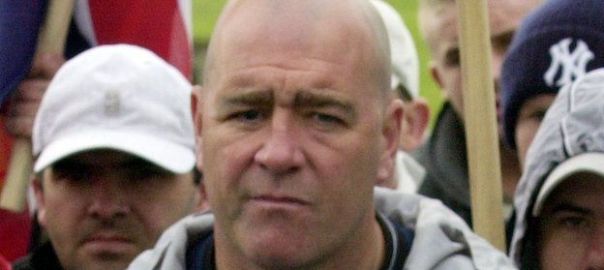


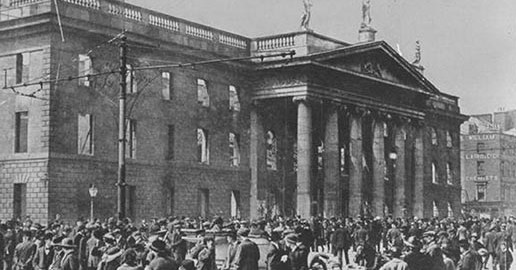


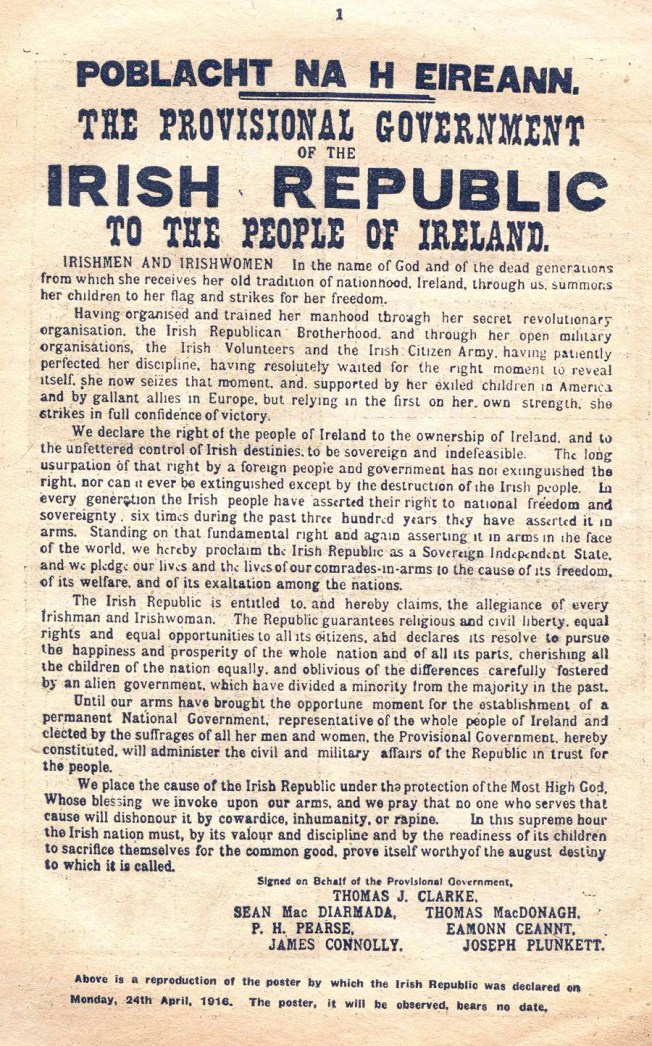


_after_the_1916_Easter_Rising.JPG)
.jpg)


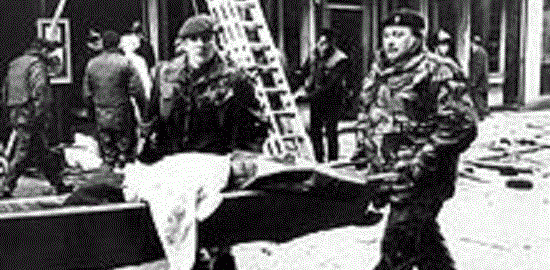


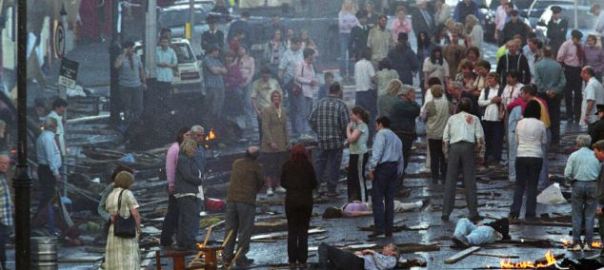


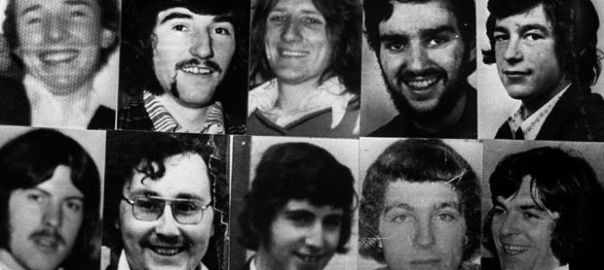
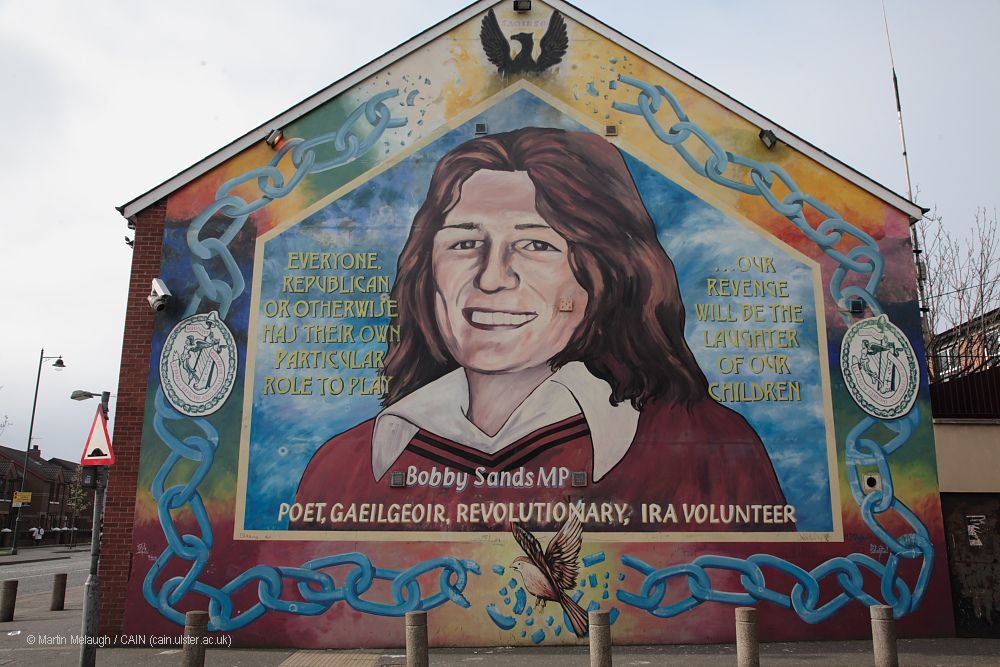
.jpg/220px-Brendan_McFarlane_(1986).jpg)


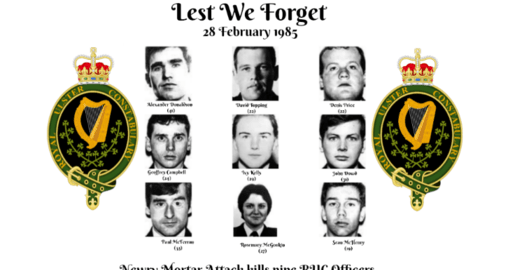






 belfastchildis.com