Key Events & Deaths on this day in Northern Ireland Troubles
Wednesday 26 August 1970
Robert Porter, then Minister of Home Affairs, resigned from the Stormont government.
[The official reason was given as ‘health’ but Porter later said that he had not been consulted about the Falls Road curfew. Initially Chichester-Clark, then Northern Ireland Prime Minister, took over responsibility for Home Affairs, but later appointed John Taylor who was very critical of the reform programme.]
Saturday 26 August 1972
Six people were killed in three incidents across Northern Ireland.
Tuesday 26 August 1986
The cigarette company Gallagher announced the closure of its factory in Belfast with the loss of 700 jobs.
Wednesday 26 August 1987
In a shooting in a Belfast bar two Royal Ulster Constabulary (RUC) officers were shot dead by the Irish Republican Army (IRA). A number of bystanders were injured.
Monday 26 August 1991
The Northern Ireland Emergency Provision Act came into force in Northern Ireland.
Thursday 26 August 1993
John Wheeler (Sir), then a Northern Ireland Office (NIO) minister, gave an interview to the British Broadcasting Corporation (BBC) in which he said that “the IRA [Irish Republican Army] is already defeated”.
[The IRA issued a stateme Saturday 26 August 1995 There were scuffles between protesters and Royal Ulster Constabulary (RUC) officers at a Royal Black Institution parade in Bellaghy, County Derry. Sinn Féin (SF) said that the party did not rule out the possibility of an international commission being established to oversee the decommissioning of paramilitary weapons. nt in reply on 27 August 1993.]
Saturday 26 August 1995
There were scuffles between protesters and Royal Ulster Constabulary (RUC) officers at a Royal Black Institution parade in Bellaghy, County Derry. Sinn Féin (SF) said that the party did not rule out the possibility of an international commission being established to oversee the decommissioning of paramilitary weapons.
Tuesday 26 August 1997Agreement on Decommissioning Body
The British and Irish governments jointly signed an agreement to set up an Independent International Commission on Decommissioning (IICD). Marjorie (Mo) Mowlam, then Secretary of State for Northern Ireland, held a meeting with Ronnie Flanagan, then Chief Constable of the Royal Ulster Constabulary (RUC), where concerns were expressed at the state of the Loyalist ceasefire. U2, the Dublin pop group, held a concert at Botanic Gardens in Belfast before an estimated 40,000 people.
Wednesday 26 August 1998Blair Visits Omagh
Tony Blair, then British Prime Minister, paid a visit to the site of the bomb in Omagh, County Tyrone. Blair promised draconian legislation to deal with any paramilitary groups that refused to call a ceasefire. Sinn Féin (SF) said the new measures would amount to “internment in another guise”.
Thursday 26 August 1999
Marjorie (Mo) Mowlam, then Secretary of State for Northern Ireland, ruled that the Irish Republican Army (IRA) ceasefire had not broken down. However, she said she was in no doubt the IRA was involved in the murder of Charles Bennett and said there was clear information about the organisation being implicated in the Florida gun-running operation. Unionists reacted with fury to the decision.
Human rights campaigners said they were concerned at the news that John Stephens was being promoted to Commissioner of the Metropolitan Police. Stevens was leading the inquiry into the killing of Pat Finucane, a Belfast solicitor killed on 12 February 1989. However, Stevens said that much of the work of the inquiry would be completed before he took up his new position.
Sunday 26 August 2001
A man (46) was treated in hospital for gunshot wounds and other injuries following a paramilitary ‘punishment’ shooting and beating in County Tyrone. The man was attacked by a number of masked men in the living room of a house at Foyagh Road in Castlecaulfield. The attack happened just after 11.00pm (2300BST).
The British Army defused a second pipe-bomb in Shearwater Way in the Waterside area of Derry. It was the second device found in the street in two days.
[The attack was believed to have been carried out by Loyalist paramilitaries.]
Two ‘temporary’ classrooms in the grounds of Corpus Christi Chapel on Westrock Drive, Belfast, were badly damaged in a fire which was reported just before 8.00pm (2000BST). Royal Ulster Constabulary (RUC) officers who attended at the scene of the fire were attacked by people throwing stones. Two police vehicles were damaged during the violence.
[The bodies of three young men were found in two houses in west Belfast. It was believed that the three men had all taken drugs and alcohol at a party the previous evening. The police were investigating the possibility all three may have taken prescription drugs.]
Remembering all innocent victims of the Troubles
Today is the anniversary of the follow people killed as a results of the conflict in Northern Ireland
To the innocent on the list – Your memory will live forever
– To the Paramilitaries –
“There are many things worth living for, a few things worth dying for, but nothing worth killing for.
14 People lost their lives on the 26th of August between 1972 – 1987
————————————————————–
26 August 1972
Alfred Johnston, (32)
Protestant Status: Ulster Defence Regiment (UDR),
Killed by: Irish Republican Army (IRA)
Killed by remote controlled bomb, hidden in abandoned car, detonated when Ulster Defence Regiment patrol approached, Cherrymount, near Enniskillen, County Fermanagh.
————————————————————–
26 August 1972
James Eames, (33)
Protestant Status: Ulster Defence Regiment (UDR),
Killed by: Irish Republican Army (IRA)
Killed by remote controlled bomb, hidden in abandoned car, detonated when Ulster Defence Regiment patrol approached, Cherrymount, near Enniskillen, County Fermanagh.
————————————————————–
26 August 1972 John Nulty, (26)
Catholic Status: Civilian (Civ),
Killed by: Ulster Volunteer Force (UVF)
Found shot, Agnes Street, Shankill, Belfast.
————————————————————–
26 August 1972 Patrick Kelly, (26)
Catholic
Status: Civilian (Civ),
Killed by: Ulster Volunteer Force (UVF)
Found shot, Benwell Street, Lower Oldpark, Belfast
————————————————————–
26 August 1972 James Carlin, (-9)
Catholic Status: Irish Republican Army (IRA),
Killed by: Irish Republican Army (IRA)
Died in premature bomb explosion at racecourse grandstand, Downpatrick, County Down.
————————————————————–
26 August 1972 Martin Curran, (-9)
Catholic Status: Irish Republican Army (IRA),
Killed by: Irish Republican Army (IRA)
Died in premature bomb explosion at racecourse grandstand, Downpatrick, County Down
————————————————————–
26 August 1973 Owen Devine, (24)
Catholic Status: Civilian (Civ),
Killed by: Irish Republican Army (IRA)
Found shot in derelict house, McClure Street, off Ormeau Road, Belfast.
————————————————————–
26 August 1974
Philip Drake, (20) nfNI Status: British Army (BA),
Killed by: Irish Republican Army (IRA)
Shot by sniper while on British Army (BA) mobile patrol, Drumbeg, Craigavon, County Armagh.
————————————————————–
26 August 1976 Thomas Passmore, (68)
Protestant Status: Civilian (Civ),
Killed by: Irish Republican Army (IRA)
Father of Orange Order leader. Died seven days after being shot at his home, West Circular Crescent, Highfield, Belfast.
————————————————————–
26 August 1976
James Heaney, (20)
Catholic Status: Royal Ulster Constabulary (RUC),
Killed by: Irish Republican Army (IRA)
Off duty. Shot outside his mother’s home, Andersonstown Grove, Andersonstown, Belfast
————————————————————–
26 August 1982
Francis McCluskey, (45)
Catholic Status: Civilian (Civ),
Killed by: Ulster Freedom Fighters (UFF)
Shot from passing car while on his way to work, Mountainhill Road, Ligoniel, Belfast
————————————————————–
26 August 1986
Patrick McAllister, (47)
Catholic Status: Civilian (Civ),
Killed by: Ulster Freedom Fighters (UFF)
Shot at his home, Rodney Drive, Falls, Belfast.
————————————————————–
26 August 1987
Michael Malone, (35)
Catholic Status: Royal Ulster Constabulary (RUC),
Killed by: Irish Republican Army (IRA)
Plainclothes Royal Ulster Constabulary (RUC) member. Shot while in Liverpool Bar, Donegall Quay, Belfast.
————————————————————–
26 August 1987
Ernest Carson, (50)
Protestant Status: Royal Ulster Constabulary (RUC),
Killed by: Irish Republican Army (IRA)
Plainclothes Royal Ulster Constabulary (RUC) member. Shot while in Liverpool Bar, Donegall Quay, Belfast
The views and opinions expressed in this page and documentaries are soley intended to educate and provide background information to those interested in UK Gangs.
They in no way reflect my own opinions and I take no responsibility for any inaccuracies or factual errors.
——————————————————————————————
Birmingham
The Peaky Blinders were a criminal gang based in Birmingham, England, in the late 19th century and, to a lesser extent, in the early 20th century. Philip Gooderson, author of The Gangs of Birmingham, states that the Peaky Blinders originated as a specific gang, but the term later became a generic label. An earlier gang known as the Cheapside Sloggers had evolved in the 1870s, and the term “Sloggers” (meaning fighters) had already become a generic local label for street gangs when the Peaky Blinders emerged at the end of the century in Adderley Street, in the Bordesley and Small Heath areas, which was an extremely deprived slum section of Birmingham at the time. The Peaky Blinders were distinguished by their sartorial style, unlike earlier gangs. Notable members included David Taylor (imprisoned for carrying a gun at 13 years old), “baby-faced” Harry Fowles, Ernest Haynes and Stephen McNickle.[19]
Early in the 20th century, one of the Birmingham gangs known as the Brummagem Boys (Brummagem being slang for Birmingham) began to spread their criminal network from the streets of Birmingham to around the country. Helped by greatly improved transport, for the first time, regional gangs were able to expand beyond the streets that bred them. The new connecting railway between Birmingham and London meant they could target the racecourse riches of the country’s capital.[20]
Following the Handsworth riots in 1985, young people banded together in groups which soon turned to petty crime and robbery. By the late 1980s, the Johnson Crew, named after their Johnsons Café hang-out, controlled the drugs market and nightclub security across a large area of Birmingham.[21]
After a fall-out between members of the Johnson Crew, the Burger Bar Boys formed, taking their name from a Soho Road fast-food joint. This began a violent feud between the Johnsons and the Burger Bar Boys, which was finally resolved in a truce instigated by Matthias “Shabba” Thompson in 2010, with assistance from documentary maker Penny Woolcock. The process of forming the truce was captured in the Channel 4 documentary, One Mile Away.[22][23] Following the truce, violent crime fell by 50% in the B6 postcode area and 30% in B21.
The increasingly collaborative relationship between the two gangs has led to some in the media describing them as more akin to a ‘super gang’, seeking to establish a greater national network of organised crime rather than controlling their post-code areas.[24]
One Mile Away – Birmingham Gang Documentary (Directed By Penny Woolcock)
————————————–
Belfast
———————————————
Gangsters At War: Loyalist Paramilitaries – Full
———————————————
According to one report,[14] Northern Ireland has over 150 active criminal gangs as of 2014. In Belfast in particular, a report in 2003 estimated there to be approximately 80 gangs,[15] most nominally sectarian, engaged in racketeering across the city.
An investigation in 2014 found that some gangs in Belfast were particularly hostile towards non-white residents of the city, with numerous cases of racially motivated violence, intimidation and extortion having been reported.[16]
Gangs in Belfast have been involved in people smuggling and human trafficking. Although the vice industry was previously mostly on the street, in recent years it has moved indoors to residential homes and hotels and formed closer links to organised crime networks. Trafficking gangs in Belfast, as in the rest of Northern Ireland, tend to be of Chinese or Eastern European origin, utilising local people as facilitators in their network.[17]
In 2014, three nights of violence in East Belfast lead to the Police Federation for Northern Ireland stating: “The gang culture [in Northern Ireland] has to be broken up so that people can go about their business without fear of being struck by a missile or intimidated.”[18]
————————————————-
Glasgow
——————————————————-
‘Trial And Error – The Glasgow Ice Cream Wars’
——————————————————-
Arthur Thomson
The history of Glasgow gangs can be traced back to the 18th century, although the first media recollection of Glasgow gangs was not until the 1870s with the acknowledgement of the Penny Mobs. It has been suggested that the rise in Glasgow gangs from the 1850s was a result of an influx in Irish immigration[25] which included those from traditional Irish fighting gangs such as the Caravats and Shanavests. By the 1920s many Glasgow gangs were widely viewed as fighting gangs rather than criminal gangs although there were widespread reports of extortion and protection rackets particularly in the city’s East End and South Side.[26] By the 1930s Glasgow had acquired a reputation throughout Britain as a hotbed of gang violence[27] and was regarded at the time as Britain’s answer to Chicago, the Scottish Chicago.[28] The gangs at this time were also referred to as Glasgow razor gangs, named after their weapon of choice.
Paul Ferris
One of Glasgow’s most notorious gangs were the Billy Boys, a sectarian anti-Catholic gang, who were formed in 1924 by William Fullerton after he was attacked by a group of Catholic youths.[29] Many gangs in the East End of Glasgow were both sectarian and territorial whereas in other districts they were primarily territorial.
More recently an Evening Times report in 2008 stated that there were 170 gangs in Glasgow[30] whilst an earlier report in 2006 included a map showing the location and a list of Glasgow gangs.[31] Gangs in Glasgow mark their territory with gang tags or graffiti.
—————————————————–
Murder of Kriss Donald
Recent years have seen an increase in Asian gangs, particularity in the South of Glasgow. Asian gang culture, violence and crime in the city came to wider attention following the racially motivated murder of Kriss Donald by men of Pakistani origin in 2004.
Kriss Donald (2 July 1988 – 15 March 2004) was a Scottish 15-year-old white male who was kidnapped and murdered in Glasgow in 2004 by a gang of men of Pakistani origin, some of whom fled to Pakistan after the crime.[2][3][4][5] Daanish Zahid, Imran Shahid, Zeeshan Shahid, and Mohammed Faisal Mustaq were later found guilty of racially motivated murder and sentenced to life imprisonment.[2][3] A fifth participant in the crime was convicted of racially motivated violence and jailed for five years.
The case, which featured the first ever conviction for racially motivated murder in Scotland, is cited in two newspaper articles as an example of the lack of attention the media and society give to white sufferers of racist attacks compared to that given to ethnic minorities.[6][7] It is also suggested the crime demonstrates how society has been forced to redefine racism so as to no longer exclude white victims
Kidnapping and murder
On 15 March 2004, Donald was abducted from Kenmure Street by five men associated with a local Pakistanigang led by Imran Shahid. The kidnapping was ostensibly revenge for an attack on Shahid at a nightclub in Glasgow city centre the night before by a local white gang, and Donald was chosen as an example of a “white boy from the McCulloch Street area” despite having no involvement in the nightclub attack or in any gang activity.[9] Donald was taken on a 200-mile journey to Dundee and back while his kidnappers made phone calls looking for a house to take him to. Having no success at this, they returned to Glasgow and took him to the Clyde Walkway, near Celtic Football Club‘s training ground.[10]
There, they held his arms and stabbed him 13 times. He sustained internal injuries to three arteries, one of his lungs, his liver and a kidney. He was doused in petrol and set on fire as he bled to death.[11]
The five men convicted of the abduction and murder were convicted of racially aggravated offences. After the murder, some of Donald’s attackers fled the United Kingdom to Pakistan.
The issue of the killing quickly became politicised because of the racial element. After the murder there were reportedly ‘racial tensions’ in the area sufficient to lead to police intervention
Initially, two men were arrested in connection with the crime. One man, Daanish Zahid, was found guilty of Kriss Donald’s murder on 18 November 2004 and is the first person to be convicted of racially motivated murder in Scotland.[12] Another man, Zahid Mohammed, admitted involvement in the abduction of Donald and lying to police during their investigation and was jailed for five years. He was released after serving half of his sentence and returned to court to give evidence against three subsequent defendants.
Special extradition and later trial
Three suspects were arrested in Pakistan in July 2005 and extradited to the UK in October 2005, following the intervention of Mohammed Sarwar, the MP for Glasgow Central.
The Pakistani police had to engage in a “long struggle” to capture two of the escapees. There is no extradition treaty between Pakistan and Britain, but the Pakistani authorities agreed to extradite the suspects.[9] There were numerous diplomatic complications around the case, including apparent divergences between government activities and those of ambassadorial officials; government figures were at times alleged to be reluctant to pursue the case for diplomatic reasons.[16]
The three extradited suspects, Imran Shahid, Zeeshan Shahid, and Mohammed Faisal Mushtaq, all in their late twenties, arrived in Scotland on 5 October 2005.[17] They were charged with Donald’s murder the following day.[18] Their trial opened on 2 October 2006 in Scotland.[19]
On 8 November 2006, the three men were found guilty of the racially motivated murder of Kriss Donald. All three had denied the charge; however, a jury at the High Court in Edinburgh convicted them of abduction and murder.[14] The judge at the trial, Lord Uist, made a statement summing up the case:
“
You have all been convicted by the jury of the racially aggravated abduction and murder of Kriss Donald, a wholly innocent 15-year-old boy of slight build. He was selected as your victim only because he was white and walking in a certain part of the Pollokshields area of Glasgow when you sought out a victim. This murder consisted of the premeditated, cold-blooded execution of your victim by stabbing him 13 times and setting him alight with petrol while he was still in life. It truly was an abomination. The savage and barbaric nature of this notorious crime has rightly shocked and appalled the public. Your victim must have been in a state of extreme terror while held by you during a four-hour car journey across Central Scotland and back, and the agony which he must have suffered during the period between being stabbed and set alight and his death is just beyond imagining.
Each of the killers received sentences of life imprisonment, with Imran Shahid given a 25-year minimum term, Zeeshan Shahid a 23-year minimum and Mushtaq receiving a recommended minimum of 22 years.
Controversies surrounding the case
Lack of media coverage
The BBC has been criticised by some viewers because the case featured on national news only three times and the first trial was later largely confined to regional Scottish bulletins including the verdict itself. Although admitting that the BBC had “got it wrong”, the organisation’s Head of Newsgathering, Fran Unsworth, largely rejected the suggestion that Donald’s race played a part in the lack of reportage, instead claiming it was mostly a product of “Scottish blindness”. In preference to reporting the verdict the organisation found the time to report the opening of a new arts centre in Gateshead in its running order.[20] The BBC again faced criticisms for its failure to cover the second trial in its main bulletins, waiting until day 18 to mention the issue and Peter Horrocks of the BBC apologised for the organisation’s further failings.[21]
However, Peter Fahy, spokesman of race issues for the Association of Chief Police Officers, noted that the media as a whole tended to under-report the racist murders of white people, stating “it was a fact that it was harder to get the media interested where murder victims were young white men”.[22]
The British National Party were accused by Scotland’s First Minister and Labour PartyMSPJack McConnell among others of seeking to exploit the case for political advantage, and an open letter signed by MSPs, trades unionists, and community leaders, condemned the BNP’s plans to stage a visit to Pollokshields. The group did hold a rally in the area, leading to accusations that it was fuelling racial tension.[23]
Police response
An article in The Scotsman newspaper alleged a lack of response by authorities to concerns of rising racial tensions and that Strathclyde Police had felt pressured to abandon Operation Gather, an investigation into Asian gangs in the area, for fear of offending ethnic minorities.[24] On 8 November 2006 Bashir Maan, a prominent Pakistani Glaswegian, also claimed on BBC television that police were well aware of the activities of Asian gangs in Glasgow but were reluctant to take action for fear of being accused of racism.[citation needed] In a January 2005 interview with a Scottish newspaper, he had previously claimed that “fear and intimidation” had allowed problems with Asian gangs in some parts of the city to go unchecked. The article also quoted a former senior Strathclyde police officer who criticised “a culture of political correctness” which had allowed gang crime to “grow unfettered”.[25]
A BBC report suggests that another reason for inaction was lack of evidence, as locals were more prepared to make complaints than to give evidence in court.[9] Some commentators have argued the murder was somewhat mischaracterised in the media, as well as expressing a doubt that significant ethnic tensions exist in Pollokshields, suggesting that “gangland revenge” may have played a part.[26]
Early release of prisoners
The case drew attention to the issues of prisoners automatically being released from prison early when it emerged that one of the murderers, Shahid, was on early release from a prison sentence at the time of the killing. He had previously been jailed for two and half years for a road rage attack but only served nine months of his sentence.[27]
Tributes
Glasgow band Glasvegas wrote the song “Flowers And Football Tops” having been inspired by the tragedy and the likely impact it would have in the victim’s parents. The band dedicated their 2008 Philip Hall Radar NME award win to Donald’s memory.[28][29][30]
A memorial plaque was installed on a bench by the River Clyde in memory of Donald.[31]
Legacy
One of the most notable impacts of the murder was to force some people to examine their views of racism and its victims. Commentators such as Mark Easton cite the racist murders of Donald and also Ross Parker as demonstrating how society has been forced to redefine racism and discard the erroneous definition of “prejudice plus power” – a definition which only allowed ethnic minorities to be victims of hate crime.[8]Yasmin Alibhai-Brown also cited the Donald case when highlighting the lack of concern for white victims of racist murders. She drew comparisons with high profile ethnic minority victims, asking whether Donald’s murderers were “less evil than those who killed Stephen Lawrence“. Alibhai-Brown came to the conclusion that treating “some victims as more worthy of condemnation than others is unforgivable – and a betrayal of anti-racism itself”.[6]
Street gangs in Liverpool have been in existence since the mid-19th century. There were also various sectarian ‘political’ gangs based in and around Liverpool during this period.[37] Dr Michael Macilwee of Liverpool John Moores University and author of The Gangs of Liverpool states, “You can learn lessons from the past and it’s fascinating to compare the newspaper headlines of today with those from the late 1800s. The issues are exactly the same. People were worried about rising youth crime and the influence of ‘penny dreadfuls‘ on people’s behaviour. Like today, some commentators demanded longer prison sentences and even flogging while others called for better education and more youth clubs.”
In the early 1980s Liverpool was tagged by the media as ‘Smack City’ or ‘Skag City’ after it experienced an explosion in organised gang crime and heroin abuse, especially within the city’s more deprived areas.[38][39] At the same time several criminal gangs began developing into drug dealing cartels in the city, including the Liverpool Mafia, which was the first such cartel to develop in the UK. As drugs became increasingly valuable, large distribution networks were developed with cocaine producers in South America, including the Cali cartel.[40] Over time, several Liverpool gangsters became increasingly wealthy, including Colin ‘Smigger’ Smith, who had an estimated fortune of £200m[41] and Curtis ‘Cocky’ Warren, whose estimated wealth once saw him listed on the Sunday Times Rich List.[42]
It has also been suggested that distribution networks for illicit drugs within Ireland and the UK, and even allegedly some Mediterranean holiday resorts, are today controlled by various Liverpool gangs.[43][44]
A report in the Observer newspaper written by journalist Peter Beaumont entitled Gangsters put Liverpool top of gun league (28 May 1995), observed that turf wars had erupted within Liverpool. The high levels of violence in the city came to a head in 1996 when, following the shooting of gangster David Ungi, six shootings occurred in seven days, prompting Merseyside Police to become one of the first police forces in the country to openly carry weapons in the fight against gun crime.[45] Official Home Office statistics revealed a total of 3,387 offences involving firearms had occurred in the Merseyside region during a four-year period between 1997 and 2001.[46] It was revealed that Liverpool was the main centre for organised crime in the North of England.
Murder of Rhys Jones
————————————————–
Rhys Jones – Caught In the Crossfire – Real Crime (full)
————————————————–
In August 2007 the ongoing war between two rival gangs caused nationwide outrage, when innocent 11-year-old Rhys Jones was shot in the neck and died in his mother’s arms in the car park of the Fir Tree pub in Croxteth Liverpool.[48] On 16 December 2008, Sean Mercer was convicted of the murder and ordered to serve a minimum tariff of 22 years by trial judge Mr Justice Irwin
Rhys Jones
The murder of Rhys Milford Jones[1][2] (27 September 1995 – 22 August 2007) occurred in Liverpool when he was shot in the back.[3] 16-year-old Sean Mercer went on trial on 2 October 2008,[4] and was found guilty of murder on 16 December.[5] He was sentenced to life imprisonment with a minimum of 22 years.
Sean Mercer
—————————————-
PANORAMA: Young Gunmen
—————————————-
Background
Jones was the son of Stephen (born in Liverpool) and Melanie Jones (née Edwards; born in Wrexham). They have an older son, Owen (born 1990).[6] Jones, who would have turned 12 one month after his death, had just left Broad Square Primary School on the Norris Greenhousing estate, and was due to start secondary school at Fazakerley High School in September 2007. His headteacher and neighbours said he was a friendly and popular boy who loved football.[7][8]
Incident
Jones, who played for the Fir Tree Boys football club, was on his way home from football practice alone. As he was crossing the Fir Tree pub car park in the Croxteth Park estate, Liverpool,[8] a hooded youth riding a silver mountain bike approached. He then held out a Smith & Wessonhandgun at arm’s length, firing three shots.[8] It was originally believed that one of the shots hit Jones in the neck,[8] but during the trial, the pathologist revealed that the bullet had entered his back above his left shoulder blade and then exited from the front right side of his neck.[3] The shooting occurred in daylight at 7.30 pm BST.
Jones’ mother rushed to the scene when she heard what had happened.[8] By the time his mother had reached him, he was unconscious. Paramedics tried for one and a half hours to resuscitate him, but he was pronounced dead some time later at Alder Hey Children’s Hospital. Local radio station Radio City 96.7‘s programming on the night of the incident, in particular the 10pm–2am show, was dedicated to an amnesty for witnesses and a talk on gun crime. Radio City also launched their anti-gun-crime campaign (backed by Jones’ parents), In Rhys’s Name Get Guns Off Our Streets, after the incident.[9]
Arrests and investigation
—————————————-
Rhys Jones trial: Footage shown to jury
—————————————-
Detectives arrested and later released four people aged between 15 and 19 in connection with the crime. Two further arrests (both teenagers) were made, but both suspects were soon released on bail pending further enquiries.[6][8] The police appealed to the public for information, stating that they needed help in finding those who had committed the crime. The murder weapon was described as a black handgun with a long barrel.[10] More than 300 officers and gun crime specialists were deployed in the hunt for the killer.[10]
Jones’ parents made a fresh appeal for witnesses to come forward on 19 September, four weeks after the murder, which was reconstructed on Crimewatch on 26 September. In the episode, Jones’ mother appealed directly to the murderer’s mother to turn her son in. It led to 12 people calling into the programme, all of whom gave police the same name.[11] Despite reports that the killer’s name was widely known and had appeared on internet sites and in graffiti,[12] police continued their appeal for witnesses to come forward.
On 15 April 2008, Merseyside police confirmed that 11 people (all aged between 17 and 25) had been arrested in connection with the case. Six more males of a similar age were arrested the next day in connection with the murder – one for murder and the other five for assisting an offender. One of these men had already been charged with possessing a firearm. All six of them were remanded in custody by Liverpool Magistrates on 17 April 2008.[13] Another man was charged in connection with the case on 18 April 2008, and remanded the same day.[14]
On 16 December 2008, at the end of a nine-week trial in the Crown Court at Liverpool, Sean Mercer (a member of the Croxteth Crew gang) was found guilty of murder. Mercer, then aged 18, was sentenced to life imprisonment, being ordered to serve a minimum term of 22 years.[15] Other gang members James Yates, Nathan Quinn, Boy “M”, Gary Kays, and Melvin Coy were convicted of assisting an offender. Boy “K”, later revealed as Dean Kelly, was convicted of four related offences. Kays and Coy were both sentenced to seven years.[16][17]
In January 2009, Yates was sentenced to seven years, Dean Kelly to four years, and Nathan Quinn to two years. A 16-year-old was sentenced to a two-year supervision order. Parents of the gang members, including Mercer’s mother and the parents of Yates, were later tried and convicted for perverting the course of justice.[18] On 28 October, Yates had his sentence increased to 12 years imprisonment, following a referral to the Court of Appeal by the Solicitor General Vera Baird QC as being “too lenient”.[19] On 2 November, Mercer stabbed Jake Fahri (Jimmy Mizen‘s murderer), apparently having crafted a knife from a pair of tweezers.[20]
Gangs
Residents in Jones’ locality have said that there were many problems with anti-social behaviour; in reaction to this, Merseyside Police made the area around the pub into a “designated area”, meaning that officers could disperse groups and move people away from the area.[8] The police vehemently stressed that the murder was not gang-related. It is still not clear what the motive was, but a case of mistaken identity is being considered. Jones may have been caught in the crossfire between gangs.[10]
Sean Mercer and the others convicted of involvement in the murder were known to be members of the Croxteth Crew, a criminalgang in Croxteth. The murder came the day before the first anniversary of the killing of Liam Smith, an alleged member of a rival gang, the Norris Green Strand Crew, who was shot dead by members of the Croxteth Crew as he walked out of Altcourse Prison on 23 August 2006.[21] The youth gang phenomenon, and youth gangs of Liverpool in particular, drew high media attention after the murder.
Tributes and public reaction
Rhys Jones was a dedicated supporter of Everton FC, and had a season ticket along with his father and brother. Players of the team laid a floral tribute, football boots, and football shirts at the scene of the crime, and players and fans paid tribute to him in a minute-long applause at the home game against Blackburn Rovers on 25 August.[6]
After a suggestion from Liverpool Echo columnist Tony Barrett,[22] which was supported by many Echo readers,[23] Everton rivals Liverpool FC agreed to play the beginning of the Z-Cars theme tune – the song that traditionally greets the arrival of the Everton team onto the Goodison Park pitch – prior to playing Liverpool’s own theme ahead of their UEFA Champions League game with Toulouse FC on 28 August.[24] This was followed by a period of applause; the Liverpool players and staff, Toulouse players, and match day officials wore black armbands during the game.[25]
Over 2,500 mourners attended Jones’ funeral, which was held in Liverpool Anglican Cathedral on 6 September 2007. His family issued a public invitation for well-wishers to attend the service, where mourners were requested to wear bright clothes or football strips. During the service, Jones’ father read a poem he had written for his son, and Everton footballer Alan Stubbs read from the Bible. After the service, there was a priva
London
———————————–
Teenage Gangs of South London
———————————–
London was the first city documented as the world’s gang capital, followed thereafter by American cities such as New York City, Chicago and Los Angeles.[50] A number of street gangs were present in London during the 20th century many in the East End, often referred to as Mobs, including The Yiddishers, Hoxton Mob, Watney Streeters, Aldgate Mob, Whitechapel Mob, Bethnal Green Mob and the organised Italian Mob headed by Charles Sabini. The history of these gangs is well documented in “London’s Underworld: Three centuries of vice and crime”.[51]
——————————————————————————————
Gun Law: “The Yardies” – UK Gangs
——————————————————————————————
On 21 February 2007, the BBC reported on an unpublished Metropolitan Police report on London’s gang culture, identifying 169 separate groups (see Ghetto Boys, Tottenham Mandem and Peckham Boys), with more than a quarter said to have been involved in murders.[52] The report’s accuracy has been questioned by some London Boroughs for being inaccurate in places and the existence of certain gangs on the list could not be substantiated.[53] The Centre for Social Justice identifies the Gangs in London website[54] as a useful tool in creating an overall picture of London gangs, as highlighted in the report “Dying to Belong: An in depth review of street gangs in Britain”,[55] which was led by Conservative leader Iain Duncan Smith in 2009.
——————————————-
South London Active Gangs 2015
——————————————-
In February 2007, criminologist Dr John Pitts, from the University of Bedfordshire, said: “There are probably no more than 1,500 to 2,000 young people in gangs in all of London,[52] but their impact is enormous”. There is no methodology to suggest where this number came from and how it was obtained. Furthermore, in December 2007 in a report written by Pitts on Lambeth gangs, he claims that the dominant gang (PDC from Angel Town) “boasts 2,500 members”.[56] Probably a more accurate estimation for gang membership, although dated, can be found in the 2004 Home Office document “Delinquent Youth Groups and Offending Behaviour”.[57] The report, using a methodology developed by American gang experts and practitioners, estimated that 6% of young people aged 10–19 were classified as belonging to a delinquent youth group, although based on the most stringent criteria this was 4%.
———————————————–
London Teenage Gang, Gun & Knife-Related Victims Of 2007
———————————————–
There is a modern history of London gangs dating from the 1970s although many of them developed from what Britain labelled as a sub-culture, which included punks, Rastas and football hooligans. Two well known subcultures that had violent clashes during the Notting Hill riots in the 1950s, Teddy Boys and Rudeboys, could well be labelled gangs in today’s media. Amongst the current London gangs whose history does go back to the 1970s, there are the Ghetto Boys, Peckham Boys and Tottenham Mandem all of which are predominantly or entirely black. There are a number of historical Asian gangs in London too, many that were initially formed to protect their local communities in response to racist attacks from the native white population, gangs such as the Brick Lane Massive. In the past decade, Tamil gang violence namely in Croydon and Wembley have been active such as the “Wembley Boys” and the “Tamil Snake Gang.[58] Tamil Hindu gangs in London are also featured as one of the many major ethnic gangs in Ross Kemp’s documentary on London Gangs.[59] In the London Borough of Tower Hamlets, the majority of the gangs are Bangladeshi, it is estimated that there are alone there are 2,500 Bengali youths affiliated to one of the many local gangs,[60] and that 26 out of the 27 gangs in the area are Bangladeshi.[61]
London gangs are increasingly marking their territory with gang graffiti, usually a gang name and the Post Code area or Housing Estate they identify with.[9] In some cases they may tag the street road signs in their area with an identified gang colour, as can be seen in Edmonton.[62] This is not a new phenomenon and has been practised by many London gangs in the past although today it is a more integral part of the gang culture. Many gangs have a strong sense of belonging to their local areas and often take their names from the housing estates, districts and postal code areas where they are located. In some areas the post codes act as rival gang boundaries,[63] although this is not a general rule as there can be rival gangs present within the same postal area as well as gangs that occupy multiple postal areas. Gangs in London also use handsigns and gang tattoos to denote gang membership.[citation needed] Some gangs in London are motivated by religion, as is the case with Muslim Patrol.
———————————————-
Manchester
Cheetham Hill Gang members
——————————————————–
The Worlds Deadliest Gangs – Salford & Manchester
——————————————————–
The first recorded gangs in Manchester were “Scuttlers“, which were youth gangs that recruited boys and girls between 14 and 21 years of age.[64] They became prominent amongst the slums during the second half of the 19th Century, but had mostly disappeared by the beginning of the 20th century.[65] In the mid 1980s, a growth in violence amongst Black British youths from the west side of the Alexandra Park Estate in South Manchester and their rivals, West Indians living to the north of the city, in Cheetham Hill began to gain media attention.[66] The city has sometimes been dubbed in the media as ‘Gangchester’ and ‘Gunchester’. The Murder of Mr. BThe gang wars in Manchester first gained national media attention in the Guardian newspaper on 7 June 1988. In the article, Clive Atkinson, deputy head of Greater Manchester PoliceCID said, “We are dealing with a black mafia which is a threat to the whole community”.[68]
The gang culture spread into many deprived areas in South Manchester.[69] A gang-related crime occurred on 9 September 2006, in Moss Side, where Jessie James, a 15-year-old schoolboy was shot dead in the early hours of the morning. His shooting is said to have been the result of a mistaken identity for a rival gang member. Up to this day his murderer has not been found.
In April 2009, eleven members of the Gooch Gang were found guilty of a number of charges ranging from murder to drugs offenses. The Gooch Gang had a long-standing rivalry with the equally well known Doddington gang. The Gooch gang operated with a tiered structure. On the top were the gang’s leaders, Colin Joyce and Lee Amos, and below them were members controlling the supply and distribution of drugs to the street dealers at the bottom. The gang was earning an estimated £2,000 a day, with street dealers allowed to keep £100 a day for themselves. After 2001 when Joyce and Amos were sent to prison on firearms charges, there followed a 92% drop in gun crime in central Manchester.[70] Official gun enabled crime figures show a 17% reduction in Manchester when comparing 2005/06 (1,200 offences) and 2006/07 (993 offences). However, this was followed by an increase of 17% in 2007/08 (1,160 offences) compared to 2006/07.[71] In 2009 shootings were reported as falling by 82% compared with the previous year.[72]
——————————————–
Bringing Down the Gooch Gang Crime Documentary
——————————————–
In addition to gun gangs, Manchester is also home to the Inter City Jibbers, an element within the city’s main hooligan gang that uses football hooliganism as a cover for acquisitive forms of crime. According to former Manchester United hooligan Colin Blaney in his autobiography ‘Undesirables’, members of the gang have been involved in serious forms of crime, such as drug smuggling from Latin America and the Caribbean, carrying out armed robberies and committing robberies on drug dealers.[73] In an interview with Vice magazine, members of the gang spoke of connections with Liberian drug smuggling cartels and convictions for offences including armed robbery, credit card fraud and sale of class A drugs.[74]
Key Events & Deaths on this day in Northern Ireland Troubles
Wednesday 25 August 1971
Henry Beggs (23), a Protestant civilian, was killed when the Irish Republican Army (IRA) planted a bomb at the Northern Ireland Electricity Service office on the Malone Road in Belfast. Gerry Fitt, then Leader of the Social Democratic and Labour Party (SDLP), held a meeting with representatives of the United Nations at which he presented a number of allegations of brutality by the security
Saturday 25 August 1973
Loyalists shot and killed 3 Catholic civilians during an attack on their place of work on the Cliftonville Road,
Thursday 25 August 1977
The Social Democratic and Labour Party (SDLP) issued a policy document (Facing Reality) which called for greater emphasis on the ‘Irish dimension’.
[This was seen to be a response to the perceived adoption of a greater integrationist stance by the British government. Later Paddy Devlin resigned as Chairman of the SDLP in response to the document.]
Wednesday 25 August 1982
The Social Democratic and Labour Party (SDLP) announced that it would contest the forthcoming Northern Ireland Assembly elections but those elected would not take their seats. [Following this decision Sinn Féin (SF) confirmed that it would oppose the SDLP in a number of constituencies. SF made clear that its preference would have been to support a complete boycott of the poll by all shades of northern nationalism, however it stated that under no circumstances would any of its successful candidates sit in the new assembly. Instead the party’s decision to take part in the poll was “… to give the nationalist electorate (in Northern Ireland) an opportunity to reject the uncontested monopoly in leadership which the SDLP has had …”. [In the end SF decided to field 12 candidates in 6 of the 12 Northern Ireland constituencies.]
Thursday 25 August 1983
Elizabeth Kirkpatrick, who was the wife of a police informer, was released having been held captive by the Irish National Liberation Army (INLA) for two months.
Friday 25 August 1989
Loughlin Maginn was shot and killed by the Ulster Freedom Fighters (UFF).
[Claims were made on 29 (?) August 1989 that the UFF had received security force details on Loughlin Maginn.]
Wednesday 25 August 1993
The Red Hand Commando (RHC) announced that it would attack bars or hotels where Irish folk music is played. The RHC stated that the music was part of the “pan-nationalist front”.
[Following widespread criticism the RHC withdrew the threat on 26 August 1993.]
Friday 25 August 1995
The Combined Loyalist Military Command (CLMC) released a statement which said:
“There will be no first strike”
by Loyalist paramilitaries provided the rights of the people of Northern Ireland are upheld. The statement also ruled out decommissioning of Loyalist weapons. Patrick Mayhew, then Secretary of State for Northern Ireland, announced that the British government would produce a White Paper on reform of the Royal Ulster Constabulary (RUC) and an independent review of emergency legislation. He also announced that the remission of sentence for paramilitary prisoners would be returned to 50 per cent.
[The legislation to make the change to the remission rate obtained royal assent on 7 November 1995.]
Saturday 25 August 2001
————————————————————————–
Above The Law:
Punishment Attacks In Northern Ireland
————————————————————————–
Four men were treated for gunshot wounds following two separate paramilitary ‘punishment’ attacks. Three men in their 20s were shot in the legs in an attack at approximately 9.30pm (2130BST) in the Kilcooley estate in Bangor, County Down.
In the second attack a man was shot in the ankles and the wrist in Victoria Parade, north Belfast. The British Army defused a pipe-bomb in the garden of a Catholic-owned house in Shearwater Way in the Waterside area of Derry.
[The attack was believed to have been carried out by Loyalist paramilitaries.]
A man was been arrested in the Shankill Road area of Belfast. The Royal Ulster Constabulary (RUC) said the man was being questioned about serious crime in north Belfast.
[It was thought that the arrest related to pipe-bomb attacks on Catholic homes.]
The Royal Black Institution held a series of parades across Northern Ireland on the ‘last Saturday in August’ which marks the end of ‘marching season’. The Belfast districts held their demonstration in Carrickfergus, County Antrim. There were also parades in Counties Tyrone, Derry, Down, and Armagh. A number of the parades had restrictions placed on them by the Parades Commission.
Sinn Féin held a press briefing at which which the party’s response to the revised policing implementation plan was outlined. The party said that it would “campaign vigorously” against the plans.
The Irish News (a Northern Ireland newspaper) carried a report that the Royal Ulster Constabulary (RUC) had agreed to pay an out-of-court settlement of £100,000 to a Catholic teenager who had been beaten by police and later accused of possessing explosives.
Remembering all innocent victims of the Troubles
Today is the anniversary of the follow people killed as a results of the conflict in Northern Ireland
To the innocent on the list – Your memory will live forever
– To the Paramilitaries –
“There are many things worth living for, a few things worth dying for, but nothing worth killing for.
6 people lost their lives on the 25th of August between 1971 – 1989
————————————————————–
25 August 1971
Henry Beggs, (23)
Protestant Status: Civilian (Civ),
Killed by: Irish Republican Army (IRA)
Killed in bomb attack on NIES office, Malone Road, Belfast. Inadequate warning given.
————————————————————–
25 August 1972 Arhur Whitelock, (24) nfNI Status: British Army (BA),
Killed by: Irish Republican Army (IRA)
Shot by sniper while on British Army (BA) foot patrol, Moyola Drive, Shantallow, Derry.
————————————————————–
25 August 1973 Sean McDonald, (50) Catholic Status: Civilian (Civ),
Killed by: Ulster Volunteer Force (UVF)
Found shot shortly after bomb attack on his workplace, a garage, Cliftonville Road, Belfast.
————————————————————–
25 August 1973 Ronald McDonald, (55) Catholic Status: Civilian (Civ),
Killed by: Ulster Volunteer Force (UVF)
Found shot shortly after bomb attack on his workplace, a garage, Cliftonville Road, Belfast.
————————————————————–
25 August 1973 Anthony McGrady, (16)
Catholic Status: Civilian (Civ),
Killed by: Ulster Volunteer Force (UVF)
Found shot shortly after bomb attack on his workplace, a garage, Cliftonville Road, Belfast.
————————————————————–
25 August 1982
Eamon Bradley, (23)
Catholic Status: Irish Republican Army (IRA),
Killed by: British Army (BA)
Shot while leaving Shantallow House Bar, Racecourse Road, Derry
————————————————————–
25 August 1989
Loughlin Maginn, (28)
Catholic Status: Civilian (Civ),
Killed by: Ulster Freedom Fighters (UFF)
Shot at his home, Lissize, near Rathfriland, County Down.
Key Events & Deaths on this day in Northern Ireland Troubles
Sunday 24 August 1975
Two Catholic civilians were abducted and shot dead by the Protestant Action Force (PAF), a covername used by the Ulster Volunteer Force (UVF). The shootings happened near Newtownhamilton, County Armagh.
Sunday 24 August 1975
Two Catholic civilians were abducted and shot dead by the Protestant Action Force (PAF), a covername used by the Ulster Volunteer Force (UVF). The shootings happened near Newtownhamilton, County Armagh.
Monday 24 August 1981
Bernard Fox, then an Irish Republican Army (IRA) prisoner, joined the hunger strike.
Friday 24 August 2001
A shot was fired at the front door of the home of a young couple and their 18-month old son in Ballymoney Road, Ballymena, County Antrim. No one was injured in the attack which happened shortly after 1.00am (0100BST).
The Royal Ulster Constabulary (RUC) found a quantity of ammunition during a planned search in the Ballysally estate, Coleraine, County Derry. One man was arrested in connection with the discovery.
A man (31) appeared at Belfast Magistrates Court to answer four charges related to threatening to kill, attempting to unlawfully imprison, kidnapping, and assault causing actual bodily harm. He was remanded in custody until 21 September 2001. The charges refer to an alleged attempted abduction on the Crumlin Road in the Ardoyne area of north Belfast on Wednesday 22 August 2001. The man was arrested on Thursday 23 August 2001.
Two men who were being treated in hospital for gunshot wounds were arrested by the Royal Ulster Constabulary (RUC). The men had been shot and injured in separate Republican paramilitary ‘punishment’ attacks on 23 August 2001. The men were believed to have been questioned by police about the killing of man in the Shankill area of Belfast on 16 August 2001.
Remembering all innocent victims of the Troubles
Today is the anniversary of the follow people killed as a results of the conflict in Northern Ireland
To the innocent on the list – Your memory will live forever
– To the Paramilitaries –
“There are many things worth living for, a few things worth dying for, but nothing worth
killing for.
8 people lost their lives on the 24th August between 1972 – 1991
————————————————————–
24 August 1972 Ian Caie, (19) nfNI Status: British Army (BA),
Killed by: Irish Republican Army (IRA)
Killed in land mine attack on British Army (BA) mobile patrol, Moybane, near Crossmaglen, County Armagh.
————————————————————–
24 August 1973
Patrick Duffy, (37)
Catholic Status: Civilian (Civ),
Killed by: Irish Republican Army (IRA)
Found shot in abandoned car, Buncrana Road, Derry. Alleged informer.
————————————————————–
24 August 1975
Colm McCartney, (22)
Catholic Status: Civilian (Civ),
Killed by: Protestant Action Force (PAF)
Shot while travelling in car, shortly after stopping at bogus vehicle checkpoint, Altnamackan, near Newtownhamilton, County Armagh.
————————————————————–
24 August 1975
Sean Farmer, (30)
Catholic Status: Civilian (Civ),
Killed by: Protestant Action Force (PAF)
Shot while travelling in car, shortly after stopping at bogus vehicle checkpoint, Altnamackan, near Newtownhamilton, County Armagh.
————————————————————–
24 August 1980 Rodney McCormick, (22)
Catholic Status: Civilian Political Activist (CivPA),
Killed by: Ulster Defence Association (UDA)
Irish Republican Socialist Party member. Shot outside his home, Antiville, Larne, County Antrim
————————————————————–
24 August 1983 William Young, (52)
Protestant Status: Civilian (Civ),
Killed by: Irish Republican Army (IRA)
Shot at his shop, Magazine Street, Derry. Altercation with Irish Republican Army (IRA) unit.
————————————————————–
24 August 1985 Kieran Murray, (28)
Catholic Status: Civilian (Civ),
Killed by: Irish Republican Army (IRA)
Shot by sniper while travelling in car along Slate Quarry Road, near Pomeroy, County Tyrone. His vehicle mistaken for Royal Ulster Constabulary (RUC) civilian-type car.
————————————————————–
24 August 1991
Martin Watters, (27)
Catholic Status: Civilian (Civ),
Killed by: Ulster Volunteer Force (UVF)
Found beaten to death, in River Lagan, by Queen’s Road, Lisburn, County Antrim.
Key Events & Deaths on this day in Northern Ireland Troubles
Monday 23 August 1971
A British soldier was killed by the Irish Republican Army (IRA) in Belfast.
Wednesday 23 August 1972
Four civilians and a British Army soldier were injured in separate overnight shooting incidents in Belfast, Holywood, and Lurgan.
Tuesday 23 August 1988
Gerard Harte was extradited from the Republic of Ireland to Northern Ireland
Monday 23 August 1993
Both the Northern Ireland Office (NIO) and Republican sources denied a report on 22 August 1993 in the Sunday Times (a British newspaper) that the British Government and army had drawn up a secret peace strategy towards the end of 1992 involving contacts and eventual talks with the IRA. [A similar claim was made by James Molyneaux, then leader of the Ulster Unionist Party (UUP), on 11 July 1993.] The newspaper claimed that the strategy involved a 60-point blueprint for reducing violence. The NIO reiterated the British government’s position that “there cannot be talks or negotiations with people who use or threaten violence to advance their arguments.” [Details of a series of secret talks were revealed on 28 November 1993.]
Sunday 23 August 1998
David Trimble, then leader of the Ulster Unionist Party (UUP), travelled to Portadown for a meeting with local representatives of the Orange Order about the continuing protest at Drumcree. Trimble was called a “traitor” by Loyalists as he entered the meeti
Wednesday 23 August 2000
—————————————————————–
VOLUNTEER SAMUEL ROCKETT
—————————————————————–
Samuel Rockett (21), a member of the Ulster Volunteer Force (UVF), was shot dead while in his girlfriend’s home in the Lower Oldpark area, north Belfast. The the Ulster Freedom Fighters (UFF), a cover name (pseudonym) used by the Ulster Defence Association (UDA), was responsible for the killing. The killing was part of a feud between the UDA and the UVF.
Sunday 23 August 1998
Christopher McWilliams, then Officer Commanding (OC) the Irish National Liberation Army (INLA) in the Maze Prison, declared that the “war is over”.
Thursday 23 August 2001
The security alert on the railway line by the Foyle Bridge in Derry continued for a second day causing disruption to traffic in the city. Later in the afternoon British Army technical officers defused a bomb at the site. The bomb, estimated at 60 kilograms, was based on ‘home-made’ explosives and was planted by the “real” Irish Republican Army (rIRA).
British Army personnel dealt with two pipe-bombs that were uncovered during a search of the Desertmartin Gaelic Athletic Association (GAA) club near Magherafelt, County Derry.
There were two other pipe-bomb attacks on GAA clubs at Garvagh and Gulladuff in County Derry the previous day.
There was a security alert in Dungannon, County Tyrone, following a warning that a bomb had been left outside the courthouse on Killyman road. The Red Hand Defenders (RHD), a cover name previously used by the Ulster Defence Association (UDA), claimed to have left the device. The group was also thought to be responsible for the attacks on the GAA clubs.
Loyalist paramilitaries carried out two pipe-bomb attacks on two houses in Deerpark Parade, north Belfast. The attacks happend at approximately 11.00pm (2300BST) and although there were no injuries people living in the two houses suffered from shock. One of the houses was owned by a Catholic family and it was believed that both devices were intended for that property. The family who had lived in the house for 35 years said that they were going to leave the area as their home had been attacked 23 times during 2001.
[The RHD later claimed responsibility for the attack.]
A Protestant family escaped injury when a there was a ‘nail-bomb’ attack on their home in Westland Road, north Belfast. The attack happened at approximately 3.00am (0300BST).
[Royal Ulster Constabulary (RUC) officers said that they had not established a motive for the attack.]
A Catholic man received multiple cuts to his head when when he was hit by a ‘paint bomb’. The attack happened at 9.30pm (2130BST) in Westland Gardens area of north Belfast.
Around the same time the home of an elderly Catholic couple who lived nearby was attacked by ‘paint bombs’. Two men were taken to hospital following seperate Republican paramilitary ‘punishment’ shootings in west Belfast. One man from the Moyard Crescent area of west Belfast was shot at 10.15pm (2215BST) in the ankles and the elbows. In the other attack, just after 10.00pm (2200BST), in the Beechmont Parade area a man received gunshot wounds to his ankles and one hand.
[Both men were arrested in hospital on Friday 24 August 2001.]
Three men were charged with the possession of documents, between 1987 and 1990, that would have been useful to anyone planning or carrying out acts of terrorism. The charges were brought about as a result of the work of the Stevens Inquiry which is investigating allegations of collusion between the security forces and Loyalist paramilitaries in Northern Ireland. The documents contained details of “suspect” Republican paramilitary members in Newry, County Down, and Dundalk, Republic of Ireland.
[The men appeared before Belfast High Court on 24 August 2001 and were released on bail.]
The Northern Ireland Human Rights Commission (NIHRC) published a report on the rights of lesbian, gay and bisexual people in Northern Ireland. The report found that discrimination against lesbian, gay and bisexual people was widespread in the region.
The report ‘Enhancing the Rights of Lesbian, Gay and Bisexual People in Northern Ireland‘ was compiled by the University of Ulster.
Fowlk Richts, an Ulster Scots human rights group, provided details (Irish Times) of a report it had passed to the British government and the Northern Ireland Human Rights Commission on the number of Protestants that had been forced from their homes since 1970. The report stated that an estimated 250,000 protestants had moved home because of direct threats, or indirect threats, or intimidation.
[The figure of 250,000 appears to be much higher than previous estimates. The major periods of forced movement of population occurred during 1969 and 1971 particularly in the Belfast area. Studies at that time showed that of those families forced to move approximately 60 per cent were Catholic and 40 per cent were Protestant; see, for example, Darby (1971).]
23rd August
Today is the anniversary of the follow people killed as a results of the conflict in Northern Ireland
To the innocent on the list – Your memory will life forever
– To the Paramilitaries –
“There are many things worth living for, a few things worth dying for, but nothing worth killing for.
Remembering all innocent victims of the Troubles
10 people lost their lives on the 23rd of August between 1971 – 2000
————————————————————–
23 August 1971 George Crozier, (23) nfNI Status: British Army (BA),
Killed by: Irish Republican Army (IRA)
Shot by sniper, outside Flax Street British Army (BA) base, Ardoyne, Belfast.
————————————————————–
23 August 1972
Alan Tingey, (25) nfNI Status: British Army (BA),
Killed by: Irish Republican Army (IRA)
Shot by sniper while on British Army (BA) foot patrol, Kenard Avenue, Andersonstown, Belfast.
————————————————————–
23 August 1973
Charles McDonnell, (20)
Catholic Status: Civilian (Civ),
Killed by: Ulster Freedom Fighters (UFF)
Found shot in car, Mayobridge, near Hilltown, County Down.
————————————————————–
23 August 1973 Margaret Meeke, (52)
Protestant Status: Civilian (Civ),
Killed by: Irish Republican Army (IRA)
Shot by sniper while travelling in her car near to her home, Tullyvallen, near Newtownhamilton, County Armagh. Mistaken for Ulster Defence Regiment member’s car.
————————————————————–
23 August 1974
Peter Flanagan, (47)
Catholic Status: Royal Ulster Constabulary (RUC),
Killed by: Irish Republican Army (IRA)
Plain clothes Royal Ulster Constabulary (RUC) member. Shot while in Diamond Bar, George Street, Omagh, County Tyrone.
Killed by: Irish Republican Army (IRA)
Shot while engaged in traffic census, Cabragh, near Dungannon, County Tyrone.
————————————————————–
23 August 1981 William Corbett, (34) nfNI Status: British Army (BA),
Killed by: British Army (BA)
Shot, in error, by another British Army (BA) member while searching grounds of Musgrave Park British Army (BA) Hospital base, Belfast.
————————————————————–
23 August 1983
Ronald Finlay, (32)
Protestant Status: Ulster Defence Regiment (UDR),
Killed by: Irish Republican Army (IRA)
Off duty. Shot as he left his workplace, Strabane, County Tyrone.
————————————————————–
23 August 1987
Michael Power, (32)
Catholic Status: Civilian (Civ),
Killed by: Ulster Freedom Fighters (UFF)
Shot while driving his car near to his home, Netherlands Park, Dunmurry, near Belfast, County Antrim.
————————————————————–
23 August 2000
Samuel Rockett, (21)
Protestant Status: Ulster Volunteer Force (UVF),
Killed by: Ulster Freedom Fighters (UFF)
Shot while in his girlfriend’s home, Summer Street, Lower Oldpark, Belfast. Ulster Defence Association (UDA) / Ulster Volunteer Force (UVF) feud.
Key Events & Deaths on this day in Northern Ireland Troubles
Sunday 22 August 1971
Approximately 130 non-Unionist councillors announced their withdrawal from participation on district councils across Northern Ireland in protest against Internment.
Tuesday 22 August 1972Newry Bomb
A bomb that was being planted by the Irish Republican Army (IRA) exploded prematurely at a customs post at Newry, County Down. Nine people, including three members of the IRA and five Catholic civilians, were killed in the explosion.
Friday 22 August 1975
Three Catholic civilians were killed in a gun and bomb attack on McGleenan’s Bar, Upper English Street, Armagh. The attack was carried out by Loyalist paramilitaries. A Catholic civilian died six days after being shot by Loyalists in Belfast.
Wednesday 22 August 1979
Humphrey Atkins, then Secretary of State for Northern Ireland, rejected a proposal that Hugh Carey, then Governor of New York, should chair talks in New York between Atkins and Michael O’Kennedy, then Irish Foreign Minister.
Wednesday 22 August 1984
Gerry Curran, then Armagh coroner, resigned after discovering “grave irregularities” in Royal Ulster Constabulary (RUC) files related to the killing of two Irish National Liberation Army (INLA) members on 12 December 1982.
September 1984
Friday 22 August 1986
John Stalker, then Deputy Chief Constable of the Greater Manchester Police, was cleared of all allegations of misconduct and reinstated in his police position. However, Stalker was not returned to the inquiry into the ‘shoot to kill’ allegations in Northern Ireland. The Shorts aircraft company in Belfast ordered that all flags and emblems displayed by workers should be removed. The company had received complaints of intimidation against Catholics.
[The decision led to the walk-out of 1,000 employees on 27 August 1986. A letter issued later by senior management stated that the Union Jack flag would be flown from the company’s flagstaff at all times.]
Tuesday 22 August 1995
The Irish News (a Belfast based newspaper) published the results of an opinion poll on issues related to all-party talks. Of those who responded, 52 per cent supported the setting of a date for all-party talks whether or not weapons had been decommissioned.
Saturday 22 August 1998INLA Ceasefire
The Irish National Liberation Army (INLA) announced that it was to go on ceasefire as from midday. [In terms of size the INLA was the second largest of the Republican paramilitary organisations. There were calls for the Continuity Irish Republican Army (CIRA) to also announce a ceasefire.] The Gaelic Athletic Association (GAA) announced that it intended to establish a trust fund for the victims of the Omagh bombing.
Sunday 22 August 1999
David Trimble, then leader of the Ulster Unionist Party (UUP), said the UUP was correct not to form a power-sharing government on 15 July 1999 in light of the subsequent killing of a Belfast taxi driver, Charles Bennett, and the uncovering of a Florida-based gun-smuggling operation.
Tuesday 22 August 2000
Johnny Adair, then a leader of the Ulster Freedom Fighters (UFF), a cover name (pseudonym) used by the Ulster Defence Association (UDA), was arrested and returned to prison by the order of Peter Mandelson, then Secretary of State for Northern Ireland. The arrest was an attempt to calm the atmosphere following the escalation in the Loyalist paramilitary feud. Adair had been released early on licence under the terms of the Good Friday Agreement and was returned to prison because he was believed to have taken part “in the commission, preparation or instigation of acts of terrorism”.
Wednesday 22 August 2001
There were a series of bomb alerts around Northern Ireland. Approximately 30 elderly people had to be moved from their homes in Armagh after a suspicious object was found under a van. A suspected ‘pipe bomb’ was found in the letter box at the constituency office of Martin McGuinness, then Member of Parliament (MP) for Mid-Ulster.
Approximately 40 buildings on Burn Road, Cookstown, County Tyrone, were evacuated to allow British Army technical officers to deal with the device. The Red Hand Defenders (RHD), a cover name previously used by the Ulster Defence Association (UDA), claimed responsibility for both these attacks.
Loyalist paramilitaries left a pipe-bomb outside the Boleran Gaelic Athletic Association (GAA) club in Garvagh, County Derry. There was another pipe-bomb attack on Gulladuff GAA club, near Maghera, County Derry. The Foyle Bridge in Derry had to be closed after a claim that a bomb had been left nearby. The train line under the bridge was also closed disrupting services between Derry and Belfast. Later in the day the Craigavon Bridge was also closed during the evening rush hour. This brought traffic in the centre of the city to a standstill and effectively cut off the Cityside from the Waterside. People were faced with a 30 mile detour via the next bridge at Strabane, County Tyrone.
[Both alerts were thought to have been caused by warnings from the “real” Irish Republican Army (rIRA).]
Colombian authorities announced that the three Irishmen arrested on 13 August 2001 would be held while a criminal investigation was undertaken. The three men face charges of allegedly training Marxist rebels and carrying false passports. Liam Kennendy (Dr.), then Professor of Modern History at Queen’s University of Belfast, published his findings on paramilitary ‘punishment’ attacks in a report entitled ‘They Shoot Children Don’t They‘.
One of the findings of the report was that between 1990 and 2000, 372 teenagers had been beaten and 207 shot by Loyalist and Republican paramilitary groups in what is commonly termed ‘punishment’ attacks. The report showed that during 1999 and 2000 there were 47 ‘punishment’ attacks on under 18 year olds compared with 25 in the previous two years. The report was prepared for the Northern Ireland Committee Against Terrorism and the Northern Ireland Affairs Committee of the House of Commons. The report will also be submitted to the Northern Ireland Assembly.
Remembering all innocent victims of the Troubles
Today is the anniversary of the follow people killed as a results of the conflict in Northern Ireland
To the innocent on the list – Your memory will live forever
– To the Paramilitaries –
There are many things worth living for, a few things worth dying for, but nothing worth killing for.
17 people lost their lives on the 22nd August between 1972 – 1998
————————————————————–
22 August 1972 James Johnston, (40)
Protestant Status: Civilian Political Activist (CivPA),
Killed by: Irish Republican Army (IRA)
Member of Loyalist Association of Workers. Found shot in abandoned van, Turin Street, off Grosvenor Road, Belfast.
————————————————————–
22 August 1972
Oliver Rowntree, (22)
Catholic Status: Irish Republican Army (IRA),
Killed by: Irish Republican Army (IRA)
Died in premature bomb explosion at Customs Office, Newry, County Down.
————————————————————–
22 August 1972
Noel Madden, (18)
Catholic Status: Irish Republican Army (IRA),
Killed by: Irish Republican Army (IRA)
Died in premature bomb explosion at Customs Office, Newry, County Down.
————————————————————–
22 August 1972
Patrick Hughes, (35)
Catholic Status: Irish Republican Army (IRA),
Killed by: Irish Republican Army (IRA)
Died in premature bomb explosion at Customs Office, Newry, County Down.
————————————————————–
22 August 1972
Francis Quinn, (28)
Catholic Status: Civilian (Civ),
Killed by: Irish Republican Army (IRA)
Died in premature bomb explosion at Customs Office, Newry, County Down.
————————————————————-
22 August 1972 Patrick Murphy, (45)
Catholic Status: Civilian (Civ),
Killed by: Irish Republican Army (IRA)
Died in premature bomb explosion at Customs Office, Newry, County Down.
————————————————————–
22 August 1972 Craig Lawrence, (33)
Protestant Status: Civilian (Civ),
Killed by: Irish Republican Army (IRA)
Died in premature bomb explosion at Customs Office, Newry, County Down.
————————————————————–
22 August 1972 Michael Gilleece, (32)
Catholic Status: Civilian (Civ),
Killed by: Irish Republican Army (IRA)
Died in premature bomb explosion at Customs Office, Newry, County Down
————————————————————–
22 August 1972 Joseph Fegan, (28)
Catholic Status: Civilian (Civ),
Killed by: Irish Republican Army (IRA)
Died in premature bomb explosion at Customs Office, Newry
————————————————————–
22 August 1972 John McCann, (60)
Catholic Status: Civilian (Civ),
Killed by: Irish Republican Army (IRA)
Died in premature bomb explosion at Customs Office, Newry, County Down.
————————————————————–
22 August 1975 William Daniel, (27)
Catholic Status: Civilian (Civ),
Killed by: Ulster Volunteer Force (UVF)
Died six days after being shot while sitting in his car outside his girlfriend’s home, Glenbank Place, off Crumlin Road, Belfast.
————————————————————–
22 August 1975 John McGleenan (45)
Catholic Status: Civilian (Civ),
Killed by: non-specific Loyalist group (LOY)
Killed in gun and bomb attack on McGleenan’s Bar, Upper English Street, Armagh
————————————————————–
22 August 1975 Patrick Hughes, (30)
Catholic Status: Civilian (Civ),
Killed by: non-specific Loyalist group (LOY)
Killed in gun and bomb attack on McGleenan’s Bar, Upper English Street, Armagh.
————————————————————–
22 August 1975 Thomas Morris, (22)
Catholic Status: Civilian (Civ),
Killed by: non-specific Loyalist group (LOY)
Injured in gun and bomb attack on McGleenan’s Bar, Upper English Street, Armagh. He died 28 August 1975.
————————————————————–
22 August 1977 Martin, William (60)
Catholic Status: Civilian (Civ),
Killed by: Irish Republican Army (IRA)
Abducted from his home, St. Joseph’s Place, Crossmaglen, County Armagh. Found shot a short time later, Moybane, near Crossmaglen, County Armagh. Alleged informer.
————————————————————–
22 August 1985 Daniel Mallon, (65)
Catholic Status: Civilian (Civ),
Killed by: Irish Republican Army (IRA)
Shot while in Railway Bar, Strabane, County Tyrone. Mistaken for contractor to British Army (BA) / Royal Ulster Constabulary (RUC).
————————————————————–
22 August 1988 Alan Shields, (45) nfNI Status: Royal Navy (RN),
Killed by: Irish Republican Army (IRA)
Originally from Scotland. Royal Navy recruiting officer. Killed when detonated booby trap bomb attached to his car while travelling along Middlepath Street, Belfast.
On 24 October 1990 the Provisional Irish Republican Army (IRA) developed the tactic by introducing the so-called “human proxy bomb”. Three men deemed by the IRA to be “collaborators” (i.e. helping the security forces in some way) were strapped into three vehicles and forced to drive to three British military targets.
However, unlike the earlier proxy bombings, they were not given the chance to escape. The three synchronised attacks took place at Coshquin (near Derry), Cloghoge (near Newry), and Omagh in the early morning of 24 October 1990.
The Coshquin attack was the deadliest, killing the human proxy and six soldiers. One soldier was killed at Cloghoge, but the proxy survived. At Omagh there were no fatalities due to a faulty detonator.
Memorial stone
The Innocent Victims
—————————————————-
24 October 1990 Stephen Burrows, (30) nfNI Status: British Army (BA),
Killed by: Irish Republican Army (IRA)
Killed in van bomb attack on permanent British Army (BA) Vehicle Check Point (VCP), Buncrana Road, Coshquinn, near Derry.
—————————————————-
24 October 1990 Stephen Beacham, (20) nfNI Status: British Army (BA),
Killed by: Irish Republican Army (IRA)
Killed in van bomb attack on permanent British Army (BA) Vehicle Check Point (VCP), Buncrana Road, Coshquinn, near Derry.
—————————————————-
24 October 1990
Paul Worrall, (23) nfNI Status: British Army (BA),
Killed by: Irish Republican Army (IRA)
Killed in van bomb attack on permanent British Army (BA) Vehicle Check Point (VCP), Buncrana Road, Coshquinn, near Derry.
—————————————————-
24 October 1990 Vincent Scott, (21) nfNI Status: British Army (BA),
Killed by: Irish Republican Army (IRA)
Killed in van bomb attack on permanent British Army (BA) Vehicle Check Point (VCP), Buncrana Road, Coshquinn, near Derry.
—————————————————-
24 October 1990 David Sweeney, (19) nfNI Status: British Army (BA),
Killed by: Irish Republican Army (IRA)
Killed in van bomb attack on permanent British Army (BA) Vehicle Check Point (VCP), Buncrana Road, Coshquinn, near Derry.
—————————————————-
24 October 1990
Patrick Gillespie, (42) Catholic Status: Civilian (Civ),
Killed by: Irish Republican Army (IRA)
Killed in van bomb attack on permanent British Army (BA) Vehicle Check Point (VCP), Buncrana Road, Coshquinn, near Derry. A civilian employed by British Army (BA), he was forced to drive the van bomb to the Vehicle Check Point (VCP).
—————————————————-
Proxy Bomb
The proxy bomb (also known as a human bomb) was a tactic used mainly by the Provisional Irish Republican Army (IRA) in Northern Ireland during the conflict known as “the Troubles“. It involved forcing people (including civilians, off-duty members of the British security forces, or people working for the security forces) to drive car bombs to British military targets, after placing them or their families under some kind of threat. The tactic was later adopted by FARC in Colombia and by rebels in the Syrian civil war.
The tactic has been compared to a suicide bomb, although each bomber in these cases is coerced rather than being a volunteer.
Early proxy bombs
The first proxy bombs took place in Northern Ireland during the Troubles. By 1973, increased searches and surveillance by the British security forces was making it harder for IRA members to plant their bombs and escape. In response, the IRA introduced the ‘proxy bomb’ tactic in March of that year.
In these early proxy bombings, the driver and nearby civilians would usually be given enough time to flee the area before the bomb detonated. One of the proxy bomb attacks carried out by the IRA during this period took place in 1975, when an employee of Northern Ireland‘s Forensics Laboratory in Newtownbreda was forced to drive a car laden with explosives to the building. The explosion caused moderate damage, and operations resumed quickly. The Laboratory would be the subject of one of the largest IRA bombings in 1992, when a 1,700 kg van bomb abandoned in the laboratory parking lot demolished the facilities and caused widespread damage inside a radius of 1 km.
The proxy bomb was also used by Northern Irish loyalists, on at least one occasion. On 11 September 1974, masked gunmen in British Army uniform hijacked a car in Northern Ireland, placed a time bomb inside and forced the owner to drive it into the village of Blacklion in the Republic of Ireland. They claimed to be from the Ulster Volunteer Force and threatened to attack his family if he did not comply. The village was evacuated and the Irish Army carried out a controlled explosion on the car. They estimated that the bomb would have destroyed most of the village.
On 24 October 1990 the Provisional Irish Republican Army (IRA) developed the tactic by introducing the so-called “human proxy bomb”. Three men deemed by the IRA to be “collaborators” (i.e. helping the security forces in some way)were strapped into three vehicles and forced to drive to three British military targets. However, unlike the earlier proxy bombings, they were not given the chance to escape.
The three synchronised attacks took place at Coshquin (near Derry), Cloghoge (near Newry), and Omagh in the early morning of 24 October 1990. The Coshquin attack was the deadliest, killing the human proxy and six soldiers. One soldier was killed at Cloghoge, but the proxy survived. At Omagh there were no fatalities due to a faulty detonator.
Coshquin
The Coshquin operation involved 11 members of the IRA’s Derry City Brigade. RUCSpecial Branch had received some intelligence about the operation, but it was said to be only a “vague outline” of an “impending assault against a base” in the area.
A Catholic, Patrick Gillespie (aged 42), who lived in the Shantallow area of Derry and worked as a cook at the Fort George British Army base in the city, had been warned to stop working at the base or risk reprisal. On one occasion, the IRA had forced him to drive a bomb into the base, giving him just enough time to escape. However, that bomb had failed to detonate.
On 24 October 1990, members of the IRA’s Derry City Brigade took over Gillespie’s house. While his family was held at gunpoint, he was forced to drive his car to a rural spot on the other side of the border in County Donegal. Gillespie was then put in a van loaded with 1,000 pounds (450 kg) of explosives and told to drive to the Coshquin permanent border checkpoint on Buncrana Road.
An armed IRA team followed him by car to ensure he obeyed their commands. Four minutes from the checkpoint, the IRA team armed the bomb remotely. When Gillespie reached the checkpoint, at 3:55 AM, he tried to get out and warn the soldiers, but the bomb detonated when he attempted to open the door.
IRA bomb makers had installed a detonation device linked to the van’s courtesy light, which came on whenever the van door opened. As a safeguard, the bombers also used a timing device to ensure the bomb detonated at the right moment. Gillespie and six soldiers were killed, including Ranger Cyril J. Smith, from B. Coy. 2nd Battalion Royal Irish Rangers, was posthumously awarded the QGM as he tried to warn his comrades about the bomb rather than running for cover.
Smith was a Roman Catholic and native of Northern Ireland.
Witnesses reported hearing “shouting, screaming and then shots” right before the explosion. The bomb devastated the base, destroying the operations room and a number of armoured vehicles. It was claimed that the death toll would have been much higher had the soldiers not been sleeping in a recently built mortar-proof bunker. The blast damaged 25 nearby houses.[10]
At Gillespie’s funeral, Bishop Edward Daly said the IRA and its supporters were
“…the complete contradiction of Christianity. They may say they are followers of Christ. Some of them may even still engage in the hypocrisy of coming to church, but their lives and their works proclaim clearly that they follow Satan.”
Cloghoge
In tandem with the Coshquin operation, members of the IRA’s South Down Brigade took over the house of a Catholic man, James McAvoy (aged 65) in Newry. He was allegedly targeted because he served RUC officers at his filling station, which was beside the house.
He was driven away in a Toyota HiAce van while his family was held at gunpoint. At Flagstaff Hill, near the border with the Republic, members of the IRA’s South Armagh Brigade loaded the van with one ton of explosives. McAvoy was strapped into the driver’s seat and told to drive the van to the accommodation block at Cloghoge permanent vehicle checkpoint. Before he drove off, a senior IRA member seemed:
“to have a pang of conscience” and whispered in McAvoy’s ear, “don’t open the door; go out through the window”.
An IRA team followed the van in a car and turned into a side-road shortly before it reached the checkpoint. When McAvoy stopped the van and climbed out the window, a soldier came over and began shouting at him to move the vehicle. Moments later, a timer detonated the bomb. The soldier was killed outright and 13 other soldiers were injured. McAvoy survived but suffered a broken leg.
Omagh
At about the same time, there was a third attempted proxy bombing in County Tyrone. A third man was strapped into a car and forced to drive it to Lisanelly British Army base in Omagh while his family was held at gunpoint.
This third bomb weighed 1,500 pounds (680 kg) but, due to a faulty detonator, the main explosive charge failed to explode.
Later proxy bombs
Several more ‘human proxy bombings’ were planned, but the operations were called-off, partly because of the outrage it drew from all sections of the community.
Nevertheless, there were a few more ‘traditional’ proxy bombings in the following months.
At 9:30 am on 22 November 1990, the IRA took over a man’s house in Newtownbutler, County Fermanagh. While his parents were held at gunpoint, he was forced to drive a Toyota Hilux pick-up truck to Annaghmartin military checkpoint.
He was told that the truck carried a bomb on a five-minute timer. When he reached the checkpoint he shouted a warning and a small explosion was heard, but the main bomb failed to detonate. The vehicle was found to contain 3,500 pounds (1,600 kg) of homemade explosives; the biggest IRA bomb up to that point.
The same checkpoint was the subject of a heavy machine gun attack on 26 December.
In early February 1991, another proxy bomb wrecked an Ulster Defence Regiment base in Magherafelt, County Londonderry, but there were no fatalities.
The proxy bomb tactic caused outrage in both the unionist and Irish nationalist communities. The final IRA use of proxy bombs came on 24 April 1993, when they forced two London taxi drivers to drive bombs towards Downing Street and New Scotland Yard. There were no casualties, however, as the drivers managed to shout warnings and to abandon their cars in time. A conventionally delivered bomb was detonated by the IRA on the same day in the financial centre of Bishopsgate in central London.
In the early 2000s, FARC rebels began to use proxy car bombs in Colombia. This has been attributed to training given to FARC by members of the Provisional IRA. In the Colombian province of Arauca in February 2003, three brothers were forced to drive car bombs into military checkpoints, each told that the other brothers would be killed if they did not comply.
In December 2013 Óglaigh na hÉireann, a Real IRA splinter group, claimed responsibility for an attempted bomb attack on Belfast City centre in which a car was hijacked and its driver forced to deliver the bomb to its intended target. The bomb only partially detonated leaving no casualties.
Effect of the tactic
The ‘human proxy bombings’ of October 1990 caused widespread outrage even among some IRA supporters, who claimed it irreparably damaged the republican movement.
“as an operation calculated to undermine the IRA’s armed struggle, alienate even its most loyal supporters and damage Sinn Féin politically, it had no equal.”
Moloney has suggested that the tactic may have been calculated to weaken the position of alleged “hawks” in republicanism—those who favoured armed action over electoral politics. At the same time Moloney argues that the widespread public revulsion would have strengthened the position of those in the IRA such as Gerry Adams who were considering how republicanism could abandon violence and focus on electoral politics.
Peter Taylor wrote of the proxy bombs that, by such actions and the revulsion they caused in the community, IRA hardliners inadvertently strengthened the hand of those within the republican movement who argued that an alternative to armed struggle had to be found.
This is simply the story of a boy trying to grow up, survive, thrive, have fun & discover himself against a backdrop of events that might best be described as ‘explosive’, captivating & shocking the world for thirty long years.
Evening all , Im heading home to Belfast tomorrow for the Easter period and hopefully a trip down south to visit my bro and his family in County Meath , depending on a few factors which are out of my control 😜 Belfast will always be my home and although I look forward to visiting … Continue reading Belfast & Meath trip starts tomorrow→
Hi folks, Just a shortish blog post to wish you all a wonderful evening and a fantastic Xmas day. Some of you guys have followed me and my story for years now and during recent tragic soul destroying lows to a few joy filled epic highs you have been there to support , comfort and … Continue reading Merry Christmas to all my friends out there X→
Last chance to order before Xmas delivery cut-off period nxt Wednesday . A personally signed copy of my No.1 Best Selling book : A Belfast Child , which may be worth a few quid if my story is made into a movie – watch this space ! UK Orders Free postage for UK orders only … Continue reading A singed copy of my book for Xmas ?→
And Im happy to bribe you with a free giveaway 🎁 Read on for more detail… Ive doing a soft launch of my online shop : https://deadongifts.co.uk/ which I set up with my sister Mags and I need to drive some traffic to the store and start creating an online presence. The shop will be … Continue reading I need some help folks 😜→
Donald McCullin, CBEHon FRPS (9 October 1935) is an internationally known Britishphotojournalist, particularly recognized for his war photography and images of urban strife. His career, which began in 1959, has specialised in examining the underside of society, and his photographs have depicted the unemployed, downtrodden and the impoverished.
During McCullin’s period of National Service in the RAF he was posted to the Canal Zone during the 1956 Suez Crisis, where he worked as a photographer’s assistant. He failed to pass the written theory paper necessary to become a photographer in the RAF, and so spent his service in the darkroom.
During this period McCullin bought his first camera, a Rolleicord. On return to Britain shortage of funds led to him pawning the camera. His mother used her own money to redeem the pledge.
In 1959, a photograph he took of a local London gang was published in The Observer. Between 1966 and 1984, he worked as an overseas correspondent for the Sunday Times Magazine, recording ecological and man-made catastrophes such as war-zones, amongst them Biafra, in 1968, and victims of the African AIDS epidemic.
In 1968, his Nikon camera stopped a bullet intended for him.
In 1982 the British Government refused to grant McCullin a press pass to cover the Falklands War,claiming the boat was full.At the time he believed it was because the Thatcher government felt his images might be too disturbing politically.
He is the author of a number of books, including The Palestinians (with Jonathan Dimbleby, 1980), Beirut: A City in Crisis (1983), and Don McCullin in Africa (2005).
His book, Shaped by War (2010), was published to accompany a major retrospective exhibition at the Imperial War Museum North, Salford, England in 2010 and then at the Victoria Art Gallery, Bath and the Imperial War Museum, London. His most recent publication is Southern Frontiers: A Journey Across the Roman Empire, a poetic and contemplative study of selected Roman and pre-Roman ruins in North Africa and the Middle East.
In 2012, a documentary film of his life titled McCullin and directed by David Morris and Jacqui Morris was released. The film was nominated for two BAFTA awards.
In later years, McCullin has turned to landscape and still-life works and taking commissioned portraits.
Family life
Currently living in Somerset, he is married and has five children from his current and earlier marriages
In a new propaganda video British IS hostage John Cantlie looks frail and thin as his living nightmare continues as the last and longest held Western IS hostage. If anything positive can be taken from this latest offering at least we know John is/was in or near Mosul and alive and well (under the circumstance) . Praying that John’s release comes soon and be returned safe and well to his family in the UK.
Update July 2016
British hostage John Cantlie is shown in new Isis propaganda video
Kidnapped journalist talks about bombing of Mosul University in first video featuring him to appear since March
John Cantlie, the British journalist who has been held hostage by jihadis since 2012, is shown in a new video made by Islamic State.
Cantlie looks noticeably thinner in the video, the first to feature him since one that emerged on 19 March.
Once again, his skills as a journalist have been exploited by Isis in an attempt to lend credibility to propaganda films. On this occasion he discusses the bombing of Mosul University and is filmed by a camera that appears at a later stage to be attached to a drone as it flies over a city landscape strewn with rubble.
Wearing a long shirt and black trousers, he introduces himself before telling viewers that he is standing in front of the remains of the university. “You have to ask yourself: why did the coalition decide to destroy the university?” he says, adding: “Normal, social everyday life has been destroyed and if you are going to destroy a university, why bother?”
New footage of IS hostage John Cantlie has been release by Islamic State and although unverified – if and when this is confirmed to be genuine will give new hope to John’s family and millions of sympathisers across the world.
Cantlie, who was kidnapped in November 2012, is shown berating the US-led coalition for bombing a media building in the ISIS-held city of Mosul. in Iraq.
It has been over a year since Cantlie appeared in a propaganda video showing life inside the Syrian province of Aleppo.
ISIS propaganda Video shows English hostage John Cantlie
John Henry Cantlie
—————————————————————————————————–
ISIS New Propaganda Video – John Cantlie Report From Mosul Iraq
—————————————————————————————————–
What has happened to ISIS captive John Cantlie
The regular release of ISIS propaganda magazine Dabiq this week came with one noticeable omission — a message from John Cantlie.
Cantlie, a British freelance photojournalist, is the last western hostage ISIS is known to be holding captive in Syria. In the year since the militant group began murdering captive British and American journalists and aid workers, Cantlie has been put forward as a sort of correspondent in ISIS’ propaganda targeting foreigners.
But in the issue of Dabiq that appeared online July 13, titled The Law of Allah or the Laws of Men there was no Western government-damning rant attributed to Cantlie.
As noted on Twitter by Rita Katz, the executive director of jihadist monitoring network SITE Intelligence Group, it’s the first time Cantlie was absent from the publication since he began appearing in its pages last October.
—————————————————————————————————–
John Henry Cantlie (born 1970) is a British war photographer and correspondent who was kidnapped in Syria with James Foley in November 2012 and remains a hostage He had previously been kidnapped in Syria in July 2012 but was rescued a week later
Family history
———————————————————————————
Heartbreaking:
John Cantlie’s father makes appeal for son’s release
———————————————————————————
John Cantlie
John Cantlie is the great grandson of Sir James Cantlie, a doctor who co-founded the Hong Kong College of Medicine for Chinese in 1887 (later the University of Hong Kong). In 1896, he was instrumental in the protection of the Chinese revolutionary Sun Yat-sen who might otherwise have been executed by the Qing dynasty secret service. His grandfather, Colonel Kenneth Cantlie, designed the China Railways KF locomotive, at 260 tons the largest locomotive of post-war China that remained in service until 1972.
Cantlie’s father Paul died on 16 October 2014, having released a video pleading for his son’s release on his deathbed.
First abduction
———————————————————
Al Jazeera interviews journalist John Cantlie
———————————————————
He was reportedly kidnapped by fighters while crossing illegally into Syria from Turkey on 19 July 2012, near Bab al-Hawa.Along with Dutch photographer Jeroen Oerlemans, Cantlie was shot whilst trying to escape their captors. In an interview with The Sun newspaper on 26 August 2012, Cantlie said it was:
“every Englishman’s duty to try and escape if captured.”
Both photographers claimed they were about to be handed over to a jihad unit affiliated with al-Qaeda for ransom when they were rescued by the Free Syrian Army. Cantlie’s kidnapping is the first recorded case of a British journalist being held, shot and then rescued from fellow Britons during the revolutions of the Arab Spring.
In an account in The Sunday Times on 5 August 2012, Cantlie described his experience.
Oerlemans was shot in the left leg and Cantlie in the left arm during their escape attempt, Cantlie suffering ulnar nerve entrapment (loss of feeling and use to the hand) as a result.
In an account of the shooting, Cantlie said some of the British Muslims in the group repeatedly shouted, “die, kafir!” Oerlemans then stated that “the British guys were the most vindictive of them all”.They were taken back to the camp where a fighter who claimed to be an NHS doctor stabilized them and treated their wounds.The pair said the doctor gave them information and extra food. Cantlie later wrote in the October 2012 edition of FHM magazine that this was Stockholm syndrome, in which a hostage befriends one or more of their captors. The pair were threatened with execution. Oerlemans stated that it was unclear who held them, but the group of militants were of multiple ethnicities.
Rescue
On 26 July 2012, one week after being kidnapped, they were rescued by four members of the Free Syrian Army. The rebels came into the camp shooting their weapons and held at least one jihad fighter at gunpoint while Cantlie and Oerlemans were helped into a waiting vehicle. Both photographers had to be assisted as their feet had been seriously injured when they tried to escape and neither could walk. They had lost all their camera equipment, passports and clothes in the incident, and were smuggled back across the border at a crossing used primarily by Syrian refugees. They were initially treated by a medic for The New York Times in Antakya before being debriefed by Turkish and then British intelligence.
On 9 October 2012 an individual suspected of being involved in the kidnap was arrested at Heathrow airport after arriving on a flight from Egypt.
This was Cantlie’s second visit to Syria. In March 2012, he became the first Western photographer to witness first-hand an incursion by government ground troops into a city when T72 heavy tanks rolled into the city of Saraquib in Idlib province and started shelling indiscriminately. In a feature in the Sunday Telegraph published 31 March, Cantlie wrote: “Then the tanks opened fire. Fist-sized pieces of shrapnel sliced through the air, decapitating one rebel immediately. His rifle clattered to the ground as his friends dragged his headless torso from the line of fire.” To illustrate what the Syrian rebels were up against, Cantlie took a photograph looking down the barrel of an advancing T72.
Second abduction
Cantlie had not appeared in print or on social media since late 2012, and the trial of one of his alleged captors collapsed in 2013, when he could not be summoned as a witness because, in November 2012,Cantlie was abducted a second time, along with American journalist James Foley. Their taxi driver and Foley’s translator were not taken, however.They had reportedly been working together on a film about Cantlie’s first abduction.
Foley was beheaded in August 2014.
ISIL propaganda
———————————————————————
Brainwashing 101 with John Cantlie
———————————————————————
———————————————————————
New ISIS video of hostage John Cantlie
———————————————————————
After disappearing for more than a year following his second abduction in late 2012, Cantlie resurfaced on 18 September 2014 in a video[30] posted by the Islamic State of Iraq and the Levant in the first episode of a multi-part series entitled Lend Me Your Ears. As of February 2015, ISIL has released a total of six videos in the Lend Me Your Ears series, all of which feature Cantlie speaking while sitting at a wooden table and wearing orange prison garb against a black backdrop.
In the videos, Cantlie adopts a critical position toward Western foreign policy, including military actions, political statements, and media coverage. Cantlie is particularly critical of US and British hostage policy, comparing it unfavorably to the policy of other European countries that negotiate and pay for the release of hostages.
ISIL has released three additional videos apart from the Lend Me Your Ears series. These videos are noteworthy for depicting Cantlie as a Western journalist rather than a Western hostage. In both videos, Cantlie attempts to characterize the facts on the ground in Kobani, Mosul and rebel-controlled Aleppo as far more favorable to ISIL than is portrayed in the Western media.
Since Cantlie is a prisoner of ISIL and therefore is necessarily speaking under duress, it is unclear whether and to what degree he actually holds these views. His sister, Jessica Cantlie, has claimed that John Cantlie “believes two-thirds” of what he says in the videos.
Lend Me Your Ears series
ISIL has thus far released 7 videos (counting the Introduction) in the Lend Me Your Ears series.
Video
Release date
Length
Comments
1
18 September 2014
3:21
Introduction
2
18 September 2014
5:56
“Episode 1” (which is actually the 2nd video released)
3
30 September 2014
5:35
“Episode 2”
4
12 October 2014
6:54
“Episode 3”
5
16 October 2014
7:49
“Episode 4”
6
12 November 2014
6:31
“Episode 5”
7
24 November 2014
8:53
“Episode 6”
8
TBA
TBA
“Episode 7”
9
TBA
TBA
“Episode 8” (Last In Series)
“Inside” videos
“Inside ‘Ayn al Islam (Kobani)” (5:37 minutes), published 28 October 2014 (released to YouTube on February 3, 2015) The piece appears to have been filmed during a brief period when Kobani was occupied by ISIS.
“Inside Mosul” (8:15 minutes), published 3 January 2015 (Released to YouTube by Italian broadcaster Canal 25)
“Inside Aleppo” (12:00 minutes), published 9 February 2015 (Released to YouTube on February 17, 2015). Cantlie states in the video it will be the last film in the “Inside” series.
From late 2010, Kim Jong-un was viewed as heir apparent to the leadership of the nation, and following his father’s death, he was announced as the “Great Successor” by North Korean state television.[8] At Kim Jong-il’s memorial service, North Korean Chairman of the Supreme People’s AssemblyKim Yong-nam declared that “Respected Comrade Kim Jong-un is our party, military and country’s supreme leader who inherits great comrade Kim Jong-il’s ideology, leadership, character, virtues, grit and courage”.[9] On 30 December 2011, the Politburo of the Workers’ Party of Korea formally appointed Kim as the Supreme Commander of the Korean People’s Army.[1] In April 2012, the 4th Party Conference elected him to the newly created post of First Secretary of the Workers’ Party of Korea.
He was promoted to the rank of marshal of the DPRK in the Korean People’s Army on 18 July 2012, consolidating his position as the supreme commander of the armed forces[10] and is often referred to as Marshal Kim Jong-un or “the Marshal” by state media.[11][12] He obtained two degrees, one in physics at Kim Il-sung University and another as an Army officer at the Kim Il-sung Military University.[13][14] On 9 March 2014 Kim Jong-un was elected unopposed to the Supreme People’s Assembly. At 32 years of age, he is the first North Korean leader born after the country’s founding and the world’s youngest head of state.
Kim was formerly known as Kim Jong-woon or Kim Jung-woon.[16] His name was first reported as 김정운 (Hanja: 金正雲; lit. righteous cloud), possibly as a result of an error in transliteration; the Japanese language does not distinguish between 운 (/un/) and 은 (/ɯn/).[citation needed] The initial source of his name was Kim Jong-il’s former personal chef, known by the pen name Kenji Fujimoto, who was among the few who had access to information about Kim’s household from inside the government. Chinese media had named him as 김정은 (Hanja: 金正恩; lit. righteous grace).[3]
In December 2014, South Korea’s KBS TV revealed that they had obtained an official “administrative order” originally circulated by Kim Jong-il in January 2011 mandating that anyone sharing Kim Jong-un’s name needed to formally change their name. Similar edicts were issued regarding the names of the regime’s previous leaders when they were coming to power. The 2011 document states, “All party organs and public security authorities should make a list of residents named Kim Jong-un … and train them to voluntarily change their names.”[17]
Early life and education
The Liebefeld-Steinhölzli public school in Köniz, Switzerland, which Kim Jong-un is reported to have attended.
No official comprehensive biography on Kim Jong-un has yet been released. Therefore, the only known information on his early life comes from defectors and people who have claimed to witness him abroad, such as during his school attendance in Switzerland. Some of the information has been conflicting and contradictory, perhaps conflating him with his brother Kim Jong-chul, who was also attending school in Switzerland around the same period. Nevertheless, there has been some consensus on information about his early life. North Korean authorities have stated that his birthdate is 8 January 1982, but South Korean intelligence officials believe the actual date is a year later. Dennis Rodman said that the birthdate is 8 January 1983 after meeting Kim in September 2013.[2] Kim Jong-Un was the second of three children Ko Yong-hui bore to Kim Jong-il; his elder brother Kim Jong-chul was born in 1981, while his younger sister, Kim Yo-jong, is believed to have been born in 1987.[18][19]
According to reports first published in Japanese newspapers, he went to school in Switzerland near Bern. First reports claimed he attended the private English-language International School in Gümligen near Bern under the name “Chol-pak” or “Pak-chol” from 1993 until 1998.[20][21][22] He was described as shy, a good student who got along well with his classmates and was a basketball fan.[23] He was chaperoned by an older student, who was thought to be his bodyguard.[24]
Later, it was reported that Kim Jong-un attended the Liebefeld Steinhölzli school in Köniz near Bern under the name “Pak-un” or “Un-pak” from 1998 until 2000 as the son of an employee of the Embassy of North Korea. Authorities of Köniz confirmed that a student from North Korea, registered as the son of a member of the Embassy, attended the school from August 1998 until the autumn of 2000, but were unable to give details about his identity. Pak-un first attended a special class for foreign-language children and later attended the regular classes of the 6th, 7th, 8th, and part of the final 9th year, leaving the school abruptly in the autumn of 2000. He was described as a well-integrated and ambitious student who liked to play basketball.[25] However, his grades and attendance rating are reported to have been poor.[26][27] The ambassador of North Korea in Switzerland, Ri Tcheul, had a close relationship with him and acted as a mentor.[28] One of Pak-un’s classmates told reporters that he had told him that he was the son of the leader of North Korea.[29][30] According to some reports, Jong-un was described by classmates as a shy child who was awkward with girls and indifferent to political issues but who distinguished himself in sports, and had a fascination with the American National Basketball Association and Michael Jordan. One friend claimed that he had been shown pictures of Pak-un with Kobe Bryant and Toni Kukoč.[31]
In April 2012, new documents came to light indicating that Kim Jong-un had lived in Switzerland since 1991 or 1992, earlier than previously thought.[32]
The Laboratory of Anatomic Anthropology at the University of Lyon, France, after comparing the picture of the boy Pak-un taken at the Liebefeld Steinhölzli school in 1999 with a picture of Kim Jong-un from 2012 came to the conclusion that the two faces show a conformity of 95%. The head of the institute, Raoul Perrot, a forensic anthropologist, considers it most likely that the two pictures show the same person.[33][34]
It is believed that the student at the Gümligen International School was not Kim Jong-un but his elder brother Kim Jong-chol. It is not known whether the student known as Pak-un in Liebefeld Steinhölzli lived in Switzerland prior to 1998.[35] All the children of Kim Jong-il are said to have lived in Switzerland, as well as the mother of the two youngest sons, who lived in Geneva for some time. The Kim clan is also said to organize family meetings in Switzerland at Lake Geneva and Interlaken.[28]
Most analysts agree that Kim Jong-un attended Kim Il-sung University, a leading officer-training school in Pyongyang, from 2002 to 2007.[36]
For many years, only one confirmed photograph of him was known outside North Korea, apparently taken in the mid-1990s, when he was eleven.[37] Occasional other supposed images of him surfaced but were often disputed.[38][39][40] It was only in June 2010, shortly before he was given official posts and publicly introduced to the North Korean people, that more pictures were released of Kim, taken when he was attending school in Switzerland.[41][42] The first official image of him as an adult was a group photograph released on 30 September 2010, at the end of the party conference that effectively anointed him, in which he is seated in the front row, two places from his father. This was followed by newsreel footage of him attending the conference.[43]
In 2013, Kim Jong-un was awarded an honorary doctorate in Economics by HELP University, a private Malaysian university.[44]
Succession
Pre-2010 Party Conference speculation
His eldest half-brother, Kim Jong-nam, had been the favorite to succeed, but reportedly fell out of favor after 2001, when he was caught attempting to enter Japan on a fake passport to visit Tokyo Disneyland.[45]
Kim Jong-il’s former personal chef, Kenji Fujimoto, revealed details regarding Kim Jong-un, with whom he had a good relationship,[46] stating that he was favored to be his father’s successor. Fujimoto also claimed that Jong-un was favored by his father over his elder brother, Kim Jong-chul, reasoning that Jong-chul is too feminine in character, while Jong-un is “exactly like his father”.[47] Furthermore, Fujimoto stated that “If power is to be handed over then Jong-un is the best for it. He has superb physical gifts, is a big drinker and never admits defeat.” Also, according to Fujimoto, Jong-un smokes Yves Saint Laurent cigarettes, loves Johnnie Walker whisky and has a Mercedes-Benz 600 Sedan.[48] When Jong-un was 18, Fujimoto described an episode where Jong-un once questioned his lavish lifestyle and asked, “We are here, playing basketball, riding horses, riding Jet Skis, having fun together. But what of the lives of the average people?”[47] On 15 January 2009 the South Korean news agency Yonhap reported that Kim Jong-il had appointed Kim Jong-un to be his successor.[45][49]
On 8 March 2009, the BBC reported rumors that Kim Jong-un was on the ballot for elections to the Supreme People’s Assembly, the rubber stamp parliament of North Korea.[50] Subsequent reports indicate that his name did not appear on the list of lawmakers,[51] but he was later elevated to a mid-level position in the National Defense Commission, which is a branch of the North Korean military.[52] Reports have also suggested that he is a diabetic and suffers from hypertension.[16][53]
From 2009, it was understood by foreign diplomatic services that Kim was to succeed his father Kim Jong-il as the head of the Korean Workers’ Party and de facto leader of North Korea.[54] He has been named “Yŏngmyŏng-han Tongji” (영명한 동지), which loosely translates to “Brilliant Comrade”.[55] His father had also asked embassy staff abroad to pledge loyalty to his son.[53] There have also been reports that citizens in North Korea were encouraged to sing a newly composed “song of praise” to Kim Jong-un, in a similar fashion to that of praise songs relating to Kim Jong-il and Kim Il-sung.[56] Later, in June, Kim was reported to have visited China secretly to “present himself” to the Chinese leadership, who later warned against North Korea conducting another nuclear test.[57] The Chinese Foreign Ministry has strongly denied that this visit occurred.[58][59]
North Korea was later reported to have backed the succession plan, after Kim Jong-il suspended a propaganda campaign to promote his youngest son.[60] His birthday has since become a national holiday, celebrated on 8 January, according to a report by a South Korean website.[61] He was expected to be named on 28 September 2010 as successor to his father as leader of North Korea.[62][63][64]
Former U.S. president Jimmy Carter visited China in early September 2010, and discussed the issue of the North Korean leadership succession with Chinese Premier Wen Jiabao. According to Carter, Kim Jong-il had said to Wen that Kim Jong-un’s prospective promotion to paramount leader of North Korea was “a false rumor from the West”.[65]
Vice Chairman of the Central Military Commission
Kim Jong-un was made a daejang, the equivalent of general in the United States,[66] on 27 September 2010, a day ahead of a rare Workers’ Party of Korea conference in Pyongyang, the first time North Korean media had mentioned him by name and despite his having no previous military experience.[67][68][69] Despite the promotion, no further details, including verifiable portraits of Kim, were released.[70] On 28 September 2010, he was named vice chairman of the Central Military Commission and appointed to the Central Committee of the Workers’ Party, in an apparent nod to become the successor to Kim Jong-il.[71]
On 10 October 2010, alongside his father, Kim Jong-un attended the ruling Workers’ Party’s 65th anniversary celebration. This was seen as fully confirming his position as the next leader of the Workers’ Party. Unprecedented international press access was granted to the event, further indicating the importance of Kim Jong-un’s presence.[72] In January 2011, the regime began purging around 200 protégés of both Jong-un’s uncle-in-law Jang Sung-taek and O Kuk-ryol, the vice chairman of the National Defence Commission of North Korea, by either detention or execution to further prevent either man from rivaling Jong-un.[73] In the following months, Kim Jong-un was given more and more prominence as he accompanied Kim Jong-il during several “guidance tours” and received gifts from foreign delegations and personages, an honor traditionally awarded only to the living supreme leader.
Ruler of North Korea
On 17 December 2011, Kim Jong-il died. Despite the elder Kim’s plans, it was not immediately clear after his death whether Jong-un would in fact take full power, and what his exact role in a new government would be.[74] Some analysts had predicted that when Kim Jong-il died, Jang Sung-taek would act as regent, as Jong-un was too inexperienced to immediately lead the country.[75] On 25 December 2011, North Korean television showed Jang Sung-taek in the uniform of a general in a sign of his growing sway after the death of Kim Jong-il. A Seoul official familiar with North Korea affairs said it was the first time Jang has been shown on state television in a military uniform. His appearance suggested that Jang had secured a key role in the North’s powerful military, which pledged its allegiance to Kim Jong-un.[76]
North Korea’s cult of personality around Kim Jong-un was stepped up following his father’s death. He was hailed as the “great successor to the revolutionary cause of Juche“, “outstanding leader of the party, army and people”[77] and “respected comrade who is identical to Supreme Commander Kim Jong-il”,[78] and was made chairman of the Kim Jong-il funeral committee. The Korean Central News Agency described Kim Jong-un as “a great person born of heaven”, a propaganda term only his father and grandfather had enjoyed,[79] while the ruling Workers’ Party said in an editorial: “We vow with bleeding tears to call Kim Jong-un our supreme commander, our leader.”[80]
He was publicly declared Supreme Commander of the Korean People’s Army on 24 December 2011[81] and formally appointed to the position on 30 December when the Political Bureau of the Central Committee of the Workers’ Party “courteously proclaimed that the dear respected Kim Jong Un, vice-chairman of the Central Military Commission of the WPK, assumed the supreme commandership of the Korean People’s Army”.[1]
On 26 December 2011, the leading North Korean newspaper Rodong Sinmun announced that Kim Jong-un had been acting as chairman of the Central Military Commission,[82] and supreme leader of the country, following his father’s demise.[83]
On 27 March 2012, Kim was elected to the Fourth Conference of the Workers’ Party of Korea, that elected him first secretary, a newly made position, on 11 April. This position replaced the post of general secretary, which was awarded “eternally” to Kim Jong-il. At the conference, Kim Jong-un also took his father’s seats as Politburo Presidium member and Chairman of the Central Military Commission.[85] In a speech made prior to the Conference, Kim Jong-un declared that “Imbuing the whole society with Kimilsungism-Kimjongilism is the highest programme of our Party”. On 13 April 2012, the 5th Session of the 12th Supreme People’s Assembly appointed Kim Jong-un Chairman of the National Defence Commission.
On 15 April 2012, during a military parade to commemorate Kim Il-sung’s centenary, Kim Jong-un made his first public speech.[86] That speech became the basis of “Onwards Toward the Final Victory“, a repeatedly aired propaganda hymn dedicated to him.[87]
During a 26 July 2012 performance marking the 59th anniversary of the armistice of the Korean War, security around Kim reportedly increased dramatically because Kim “is extremely nervous about the possibility of an emergency developing inside North Korea” caused by “mounting opposition to his efforts to rein in the military”.[89]
In November 2012, satellite photos revealed a half-kilometer-long propaganda message carved into a hillside in Ryanggang Province, reading, “Long Live General Kim Jong-un, the Shining Sun!”. The message, located next to an artificial lake built in 2007 to serve a hydroelectric station, is made of Korean syllable blocks measuring 15 by 20 meters, and is located approximately 9 kilometers south of Hyesan near the border with China.[90]
Kim Jong-il’s personal chef Kenji Fujimoto stated, “Stores in Pyongyang were brimming with products and people in the streets looked cheerful. North Korea has changed a lot since Kim Jong-un assumed power. All of this is because of leader Kim Jong-un.”[91]
Model of a Unha-9 rocket on display at a floral exhibition in Pyongyang, 30 August 2013
Officially, Kim Jong-un is part of a triumvirate heading the executive branch of the North Korean government along with Premier Pak Pong-ju and parliament chairman Kim Yong-nam (no relation). Each nominally holds powers equivalent to a third of a president’s powers in most other presidential systems. Kim Jong-un commands the armed forces, Pak Pong-ju heads the government, and Kim Yong-nam handles foreign relations. Nevertheless, it is generally understood that Kim Jong-un, like his father and grandfather before him, exercises absolute control over the government and the country.
In 2013, Kim re-established his grandfather’s style when he made his first New Year’s address, a break from the approach of his father. Kim Jong-il never made televised addresses during his 17 years in power.[93] In lieu of delivering a speech, Kim Jong-il contributed to and approved a New Year’s Day editorial, jointly published by Rodong Sinmun (the daily newspaper of the Korean Workers’ Party), Joson Inmingun (the newspaper of the Korean People’s Army), and Chongnyon Jonwi (the newspaper of the Kim Il-sung Socialist Youth League).[94] At the extraordinary meeting with his top defense and security officials on 26 January 2013, Kim issued orders on preparations for a new nuclear test and introduced martial law in North Korea effective from 29 January.[95][96]
In May 2014, following the collapse of an apartment building in Pyongyang, Kim Jong-un was said to be very upset at the loss of life that resulted. A statement issued by the country’s official news agency the Korean Central News Agency used the rare expression “profound consolation and apology”. An unnamed government official was quoted by the BBC as saying Kim Jong-un had “sat up all night, feeling painful”.[97] While the height of the building and the number of casualties was not released, media reports described it is a 23-story building and indicated hundreds of people may have died in the collapse.
On 9 March 2014, Kim Jong-un was elected to the Supreme People’s Assembly. He was unopposed, but voters had the choice of voting yes or no. There was a record turnout of voters, and according to government officials, all voted yes. The Supreme People’s Assembly subsequently elected him chairman of the National Defense Commission.
Economic policies
In August 2012, Kim Jong-un announced economics reforms similar to China.[98] Kim began to be mentioned by the North Korean state media as “supreme leader” (chego ryongdoja) at this time.
A set of comprehensive economic measures, the “Socialist Corporate Responsible Management System”, were introduced in 2013.[99] The measures increase the autonomy of enterprises by granting them “certain rights to engage in business activities autonomously and elevate the will to labor through appropriately implementing the socialist distribution system”. Another priority of economic policies that year was agriculture, where the pojon (vegetable garden) responsibility system was implemented. The system reportedly achieved a major increase in output in some collective farms.[99]
North Korean media were describing the economy as a “flexible collectivist system” where enterprises were applying “active and evolutionary actions” to achieve economic development.[100] These reports reflect Kim’s general economic policy of reforming management, increasing the autonomy and incentives for economic actors. This set of reforms known as the “May 30th measures” reaffirms both socialist ownership and “objective economic laws in guidance and management” to improve living standards. Other objectives of the measures are to increase the availability of domestically manufactured goods on markets, introduction of defence innovations into the civilian sector and boost international trade.[100]
Nuclear threats
On 7 March 2013, North Korea threatened the United States with a “pre-emptive nuclear attack”,[101] and Kim Jong-un issued a detailed threat to “wipe out” Baengnyeong Island, the scene of previous naval clashes.[102] North Korea has revealed its plans for conducting nuclear strikes on U.S. cities, including Los Angeles, and Washington, D.C.[103]
At a plenary meeting of the WPK Central Committee held on 31 March 2013 in the wake of war threats with South Korea, Kim Jong-un announced that North Korea will adopt “a new strategic line on carrying out economic construction and building nuclear armed forces simultaneously”.[104]
Purges
Ri Yong-ho, Kim Yong-chun, U Tong-chuk and Kim Jong-gak were handpicked to groom the young leader and were close confidants of Kim Jong-il. They have either been demoted or disappeared. One South Korean government official said Kim Jong-un is trying to “erase all traces of his father’s rule” eleven months after stepping into power and “replacing top brass with officers who are loyal to him alone”.[105] By the end of 2013, three defense ministers and four chiefs of the army’s general staff had been replaced and five of the seven men who had escorted his father’s hearse two years earlier had been purged,[106] with his uncle Jang Sung-taek one of the most prominent.[107] Jang Sung-taek is believed to have been executed by machine gun.
Jang Sung-taek
———————————–
Kim Jong Uns Uncle Jang Song Thaek gets publicly arrested
———————————–
———————————–
Execution scene of Jang Sung-taek, North Korea
———————————–
Hyon Yong-Chol
——————————————————
North Korea Defence Chief Hyon Yong-chol ‘executed’
——————————————————
It has been claimed that Kim Jong-un has also put to death members of Jang’s family. According to multiple sources, Kim is attempting to completely destroy all traces of Jang’s existence through “extensive executions” of his family, including the children and grandchildren of all close relatives. Those reportedly killed in Kim’s purge include Jang’s sister Jang Kye-sun, her husband and ambassador to Cuba, Jon Yong-jin, and Jang’s nephew and ambassador to Malaysia, Jang Yong-chol. The nephew’s two sons were also said to have been killed.[108] At the time of Jang’s removal, it was announced that “the discovery and purge of the Jang group… made our party and revolutionary ranks purer…”[109] and after his execution on 12 December 2013 state media warned that the army “will never pardon all those who disobey the order of the Supreme Commander.”[110]
Personality
Kenji Fujimoto, a Japanese chef who used to work as Kim Jong-il’s personal cook, described Kim Jong-un as “a chip off the old block, a spitting image of his father in terms of face, body shape, and personality”.[111]
The Washington Post reported in 2009 that Kim Jong-un’s school friends recalled he “spent hours doing meticulous pencil drawings of Chicago Bulls superstar Michael Jordan.”[112] He was obsessed with basketball and computer games.[113][114] On 26 February 2013, Kim Jong-un met ex-NBA star Dennis Rodman,[115] leading many reporters to speculate that Rodman was the first American that Kim had met.[116] Rodman described his trip to Kim Jong-un’s private island, “It’s like Hawaii or Ibiza, but he’s the only one that lives there.”[117] Kim Jong-un is reportedly a fan of Eric Clapton.[118]
In July 2012, Kim Jong-un showed a change in cultural policy from his father by attending a Moranbong concert. The concert contained several elements of pop culture from the West, particularly the United States. Kim used this event to debut his wife to the public, an unprecedented move in North Korea.[119]
In a 2012 news story, Business Insider reported, “Signs of a rise in luxury goods have been creeping out of North Korea since Kim Jong-un took over as last year. Just recently, Kim’s wife Ri Sol-ju was photographed holding what appeared to be an expensive Dior handbag, worth almost $1,594 — an average year’s salary in North Korea.”[120] According to diplomatic sources, “Kim Jong-un likes to drink and party all night like his father and ordered the [imported sauna] equipment to help him beat hangovers and fatigue.”[121]
During Dennis Rodman’s 26 February 2013 trip to North Korea, Vice Media correspondent Ryan Duffy observed that “the leader was ‘socially awkward’ and didn’t make eye contact when shaking hands”.[122]
According to Cheong Seong-chang of Sejong Institute, Kim Jong-un has greater visible interest in the welfare of his people and engages in greater interaction with them than his father did.[123]
Health
Kim Jong-un did not appear in public for six weeks in September and October 2014. State media reported that he was suffering from an “uncomfortable physical condition”. Previously he had been seen limping.[124][125][126][127][128][129] When he reappeared he was using a walking stick.[130][131]
Human rights violations under the leadership of Kim Jong-il were condemned by the UN General Assembly.[132] Press reports indicate that they are continuing under Kim Jong-un.[133][134][135][136] It is believed by some that Kim Jong-un was involved in the Cheonan sinking[137] and the bombardment of Yeonpyeong[138] to strengthen his military credentials and facilitate a successful transition of power from his father.[139]
The 2013 report on the situation of human rights in North Korea[140] by United Nations Special RapporteurMarzuki Darusman proposed a United Nations commission of inquiry[141] to document the accountability of Kim Jong-un and other individuals in the North Korean government for alleged crimes against humanity.[142] The report of the commission of inquiry[143] was published in February 2014 and recommends to make him accountable for crimes against humanity at the International Criminal Court.[144]
One report by the Japanese Asia Press agency in January 2013 claimed that in North and South Hwanghae provinces more than 10,000 people had died of famine. Other international news agencies have begun circulating stories of cannibalism. One informant, based in South Hwanghae, said: “In my village in May, a man who killed his own two children and tried to eat them was executed by a firing squad.”[145]
Family
Portraits of Kim Jong-un’s father and grandfather (Arirang Festival mass games in Pyongyang)
On 25 July 2012 North Korean state media reported for the first time that Kim Jong-un is married to Ri Sol-ju (리설주).[146][147] Ri, who appears to be in her early 20s, had been accompanying Kim Jong-un to public appearances for several weeks prior to the announcement.[147] The BBC, quoting an analyst who spoke to The Korea Times of South Korea, reported that Kim Jong-il had hastily arranged his son’s marriage after suffering a stroke in 2008. According to some sources, the two married in 2009 and Ri gave birth to a daughter in 2010.[148][149]
Kim Jong-un has one half-brother, one half-sister and an older full-brother (see below). He also has a younger full-sister, Kim Yo-jong, who was believed to be about 23 in 2012. She sometimes accompanies him.[19][150]
Fatherhood
In March 2013, former NBA basketball player Dennis Rodman visited Kim Jong-un in North Korea and on his return reported that Ri had given birth to a daughter named Ju-ae in 2012.[151][151][152][153][154]


.svg/2000px-Royal_Coat_of_Arms_of_the_United_Kingdom_(HM_Government).svg.png)





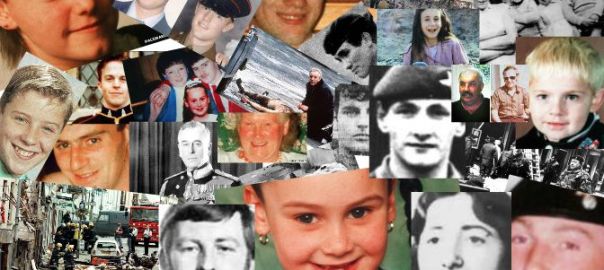








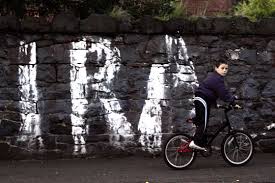


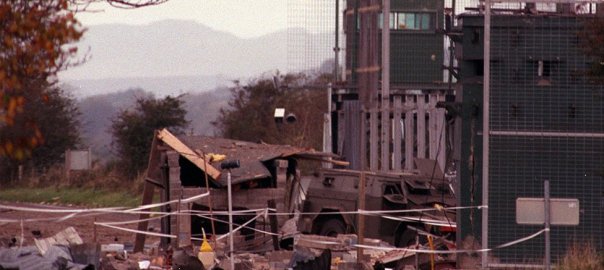












.jpg)


 belfastchildis.com
