30th August – Deaths & Events in Northern Ireland Troubles

30th of  August

Key Events & Deaths on this day in Northern Ireland Troubles

Saturday 30 August 1975

Two Catholic civilians died as a result of injuries received during a gun and bomb attack on the Harp Bar, Hill Street, Belfast. The attack was carried out by the Ulster Freedom Fighters (UFF), a cover name used by the Ulster Defence Association

(UDA). Stephen Geddis (10) a Catholic boy died two days after being hit by a rubber bullet fired by a British soldier. An off-duty member of the Ulster Defence Regiment (UDR) was shot dead by the Irish Republican Army (IRA) near Whitecross, County Armagh. The Irish Republican Army (IRA) planted a time bomb in High Holborn, London. No one was injured in the explosion.

Tuesday 30 August 1977

Jimmy Carter, then President of the USA, gave a keynote speech on Northern Ireland. In the speech he said that the American government would support any initiative that led to a form of government in Northern Ireland which had the support of both sections of the community. In particular the support would take the form of trying to create additional jobs in the region. He also called on Americans not to provide financial and other support for groups using violence in Northern Ireland.

Thursday 30 August 1979

A decision was taken by the British government to increase the size of the Royal Ulster Constabulary (RUC) by 1,000 officers to 7,500

. [This reflected a continuation of the policy of ‘Ulsterisation’ or ‘police primacy’. There was some continuing friction between the British Army (BA) and the RUC over this policy. On 2 October 1979 a new post of security Co-ordinator for Northern Ireland was created to try to improve relations between the BA and the RUC.]

Friday 30 August 1985

James Molyneaux, then leader of the Ulster Unionist Party (UUP), and Ian Paisley, then leader of the Democratic Unionist Party (DUP), attended a meeting at Downing Street, London, with Margaret Thatcher, then British Prime Minister. The two Unionist leaders had asked for the meeting to protest at the continuing Anglo-Irish talks between the two governments.

Tuesday 30 August 1988
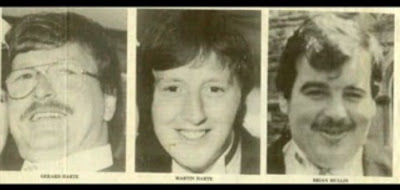
Three members of the Irish Republican Army (IRA) were shot dead by soldiers of the Special Air Force (SAS) near Drumnakilly, County Tyrone.

Last in a series meetings between John Hume, then leader of the Social Democratic and Labour Party (SDLP) and Gerry Adams, then leader of Sinn Fein (SF). A joint statement was issued following the meeting.

Wednesday 30 August 1995

Gerry Adams, then President of Sinn Féin (SF), said that his party would consider constructively any proposals which addressed the decommissioning of paramilitary weapons. However, Martin McGuinness, then Vice-President of SF, ruled out the possibility of the Irish Republican Army (IRA) decommissioning any weapons as a way of overcoming the deadlock in the peace process.

Wednesday 30 August 1995

Gerry Adams, then President of Sinn Féin (SF), said that his party would consider constructively any proposals which addressed the decommissioning of paramilitary weapons. However, Martin McGuinness, then Vice-President of SF, ruled out the possibility of the Irish Republican Army (IRA) decommissioning any weapons as a way of overcoming the deadlock in the peace process.

Friday 30 August 1996

Following a series of interviews the Police Authority of Northern Ireland announced that Ronnie Flanagan was to be appointed as the new Royal Ulster Constabulary (RUC) Chief Constable. Ronnie Flanagan took over from Hugh Annesley in November 1996.

Saturday 30 August 1997

The New Barnsley Royal Ulster Constabulary (RUC) police station in west Belfast was attacked by a crowd of people who threw petrol bombs and set a lookout post on fire. The RUC responded by firing plastic baton rounds. The Royal Black Preceptory cancelled or rerouted planned parades in Strabane and Pomeroy, County Tyrone, and Bellaghy, County Derry.

Monday 30 August 1999

The LVF announced that it intended to engage in a second handover of weapons following an earlier initiative on 18 December 1998.

Thursday 30 August 2001

A man was shot and wounded during a gun attack at Bellavale Terrace, Coalisland, County Tyrone. He managed to drive off before being taken to Dungannon Royal Ulster Constabulary (RUC) station where he received initial treatment for his wounds. He was later taken on to Craigavon hospital.

[Vincent Currie, then a Social Democratic and Labour Party (SDLP) councillor, claimed that the Irish Republican Army (IRA) were responsible for the attack. The Red Hand Defenders (RHD), a Loyalist paramilitary group, later claimed responsibility for the attack but this was dismissed as unlikely by most commentators.]

The Royal Ulster Constabulary (RUC) stated that Loyalist paramilitaries had carried out 129 pipe-bomb attacks so far this year. Of these 53 had exploded and 89 were defused. Mitchel McLaughlin, then Sinn Féin Chairman, accused John Reid, then Secretary of State, of turning a blind eye to ongoing Loyalist attacks.

The Northern Ireland Housing Executive (NIHE) published its Annual Report which marked the 30th anniversary since it was established in 1971. The report showed that a total of 22,000 people were on the public sector housing waiting list and of these 10,366 were classified as being in urgent need. According to the report there were 44,000 dwellings unfit for human habitation in Northern Ireland.


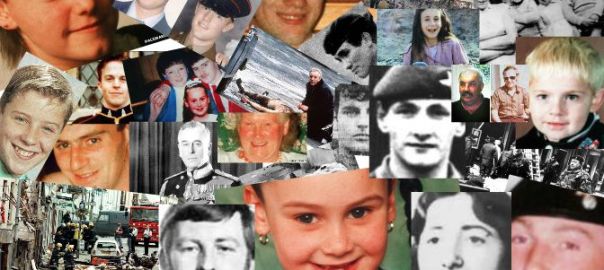
Remembering all innocent victims of the Troubles

Today is the anniversary of the follow  people killed as a results of the conflict in Northern Ireland

To the innocent on the list – Your memory will life forever

– To  the Paramilitaries  –

“There are many things worth living for, a few things worth dying for, but nothing worth killing for.

13 People lost their lives on the 29th of  August between 1972 – 1993

————————————————————–

30 August 1972


David Griffiths,  (20) nfNI
Status: British Army (BA),

Killed by: Irish Republican Army (IRA)
Shot by sniper while on British Army (BA) foot patrol, Clonard Street, Lower Falls, Belfast

————————————————————–

30 August 1972


Roy Christopher,  (20) nfNI

Status: British Army (BA),

Killed by: Irish Republican Army (IRA)
Died 12 days after being injured in bomb attack on British Army (BA) foot patrol, Cupar Street, Belfast.

————————————————————–

30 August 1973


Ronald Beckett,   (36) nfNI

Status: British Army (BA),

Killed by: Irish Republican Army (IRA)
Killed attempting to defuse bomb at Tullyhomman Post Office, near Pettigoe, County Fermanagh.

————————————————————–

30 August 1973


Francis Hall,  (29)

Catholic
Status: Irish Republican Army (IRA),

Killed by: Irish Republican Army (IRA)
Died one week after being injured in premature bomb explosion in house, Elaine Street, Stranmillis, Belfast

————————————————————–

30 August 1975


Stephen Geddis,   (10)

Catholic
Status: Civilian (Civ),

Killed by: British Army (BA)
Died two days after being hit by plastic bullet, Divis Flats, Belfast.

————————————————————–

30 August 1975


Robert Frazer,   (50)

Protestant
Status: Ulster Defence Regiment (UDR),

Killed by: Irish Republican Army (IRA)
Off duty. Shot while driving away from friend’s farm, Ballymoyer, near Whitecross, County Armagh.

————————————————————–

30 August 1975


Denis McAuley,  (30)

Catholic
Status: Civilian (Civ),

Killed by: Ulster Freedom Fighters (UFF)
Shot during gun and bomb attack on Harp Bar, Hill Street, Belfast

————————————————————–

30 August 1975


John Doherty,  (28)

Catholic
Status: Civilian (Civ),

Killed by: Ulster Freedom Fighters (UFF)
Injured during gun and bomb attack on Harp Bar, Hill Street, Belfast. He died 10 September 1975

————————————————————–

30 August 1987


Winston Finlay,  (44)

Protestant
Status: Royal Ulster Constabulary (RUC),

Killed by: Irish Republican Army (IRA)
Off duty. Shot outside his home, Ballyronan, County Derry.

————————————————————–

30 August 1988


Gerard Harte,  (29)

Catholic
Status: Irish Republican Army (IRA),

Killed by: British Army (BA)
Shot by undercover British Army (BA) members, while approaching abandoned lorry, Drumnakilly, near Carrickmore, County Tyrone.

————————————————————–

30 August 1988


Martin Harte,   (21)

Catholic
Status: Irish Republican Army (IRA),

Killed by: British Army (BA)
Shot by undercover British Army (BA) members, while approaching abandoned lorry, Drumnakilly, near Carrickmore, County Tyrone.

————————————————————–

30 August 1988


Brain Mullin,   (26)

Catholic
Status: Irish Republican Army (IRA),

Killed by: British Army (BA)
Shot by undercover British Army (BA) members, while approaching abandoned lorry, Drumnakilly, near Carrickmore, County Tyrone.

————————————————————–

30 August 1993


Teresa Dowds De Mogollan,   (48)

Catholic
Status: Civilian (Civ),

Killed by: Ulster Freedom Fighters (UFF)
Shot at her home, Fortwilliam Park, Mount Vernon, Belfast.


Main source CAIN Web Service

See: SAS killed eight Irish terrorists

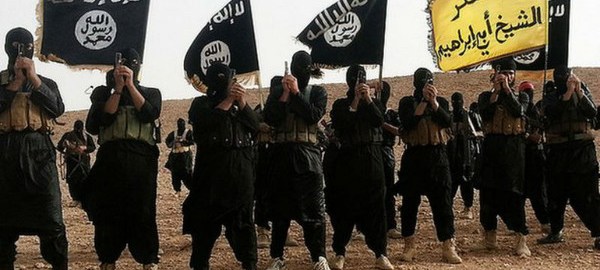
Man Survives an ISIS Massacre & Quotes from the Quaran

Quran (8:12)

“I will cast terror into the hearts of those who disbelieve. Therefore strike off their heads and strike off every fingertip of them”  No reasonable person would interpret this to mean a spiritual struggle.

——————————————————————————

Incredible: Man Survives an ISIS Massacre

——————————————————————————

Quran (8:67)

“It is not for a Prophet that he should have prisoners of war until he had made a great slaughter in the land…

——————————————————————————

The World’s Richest Terror Army

——————————————————————————

Quran (8:15)

“O ye who believe! When ye meet those who disbelieve in battle, turn not your backs to them. (16)Whoso on that day turneth his back to them, unless maneuvering for battle or intent to join a company, he truly hath incurred wrath from Allah, and his habitation will be hell, a hapless journey’s end.”

——————————————————————————

Killing ISIS (Uncensored full mini-documentary)

——————————————————————————

Quran (9:14)

“Fight against them so that Allah will punish them by your hands and disgrace them and give you victory over them and heal the breasts of a believing people.”

——————————————————————————

Disturbing ISIS Film Shows 10-Year-Old Executing Two Men

——————————————————————————

Quran (33:60-62)

“If the hypocrites, and those in whose hearts is a disease, and the alarmists in the city do not cease, We verily shall urge thee on against them, then they will be your neighbors in it but a little while.  Accursed, they will be seized wherever found and slain with a (fierce) slaughter.”

——————————————————————————

Three Friends, One Jihadi | The New York Times

——————————————————————————

Quran (47:3-4)

“Those who disbelieve follow falsehood, while those who believe follow the truth from their Lord… So, when you meet (in fight Jihad in Allah’s Cause), those who disbelieve smite at their necks till when you have killed and wounded many of them, then bind a bond firmly (on them, i.e. take them as captives)…

——————————————————————————

Exclusive: the jihadi Brit who fought and died in Syria

——————————————————————————

Quran (48:17)

“There is no blame for the blind, nor is there blame for the lame, nor is there blame for the sick (that they go not forth to war). And whoso obeyeth Allah and His messenger, He will make him enter Gardens underneath which rivers flow; and whoso turneth back, him will He punish with a painful doom.” 

——————————————————————————

ISIS capital raqqa isolated by Kurdish forces

——————————————————————————

Quran (66:9)

“O Prophet! Strive against the disbelievers and the hypocrites, and be stern with them. Hell will be their home, a hapless journey’s end.”

——————————————————————————

Life Inside the ISIS Home Base of Raqqa, Syria

——————————————————————————

ISIS Cowards – Crybabies & Wimps.

ISIS Cowards – Crybabies & Wimps

Iraqi Christians Fighting Back Against ISIS Well done boys. Get in there boys!

The difference between these dead ISIS Terrorist is that these men were Armed and fighting when they were killed by Iraqi Christians who were fighting back against the ISIS Invasion and what they knew would be their own slaughter if they were captured or surrendered.  These men’s bodies were NOT desecrated as ISIS does when they have killed captured or lied to their enemy to coax them into surrendering and then behead then or line them up against a ditch and gun them all down.  That is what ISIS does.

War is not a pleasant even, except to the blood thirsty Islamic Terrorists such as ISIS, HAMAS, Al Quida and others who behead non-combatants such as American Journalists who they capture and Woman who are Aid Workers trying to help feed the Iraqi victims of War

—————————————————————————————–

SMH: ISIS Extremists Turned Crybabies after Caught and Slapped Around by Soldiers

—————————————————————————————–

—————————————————————————————–

ISIS prisoners provide a glimpse into militant’s savage world

—————————————————————————————–

—————————————————————————————–

ISIS fighters die from food poisoning after breaking Ramadan fast in Mosul – TomoNews

—————————————————————————————–

—————————————————————————————–

Surreal Scenes of Life Under ISIS in Mosul, Iraq

—————————————————————————————–

—————————————————————————————–

Top ISIS Executioner Has Head Chopped Off… For Smoking?

—————————————————————————————–

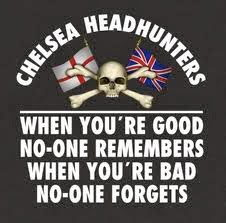
Chelsea Headhunters – English Football Hooligans

The Chelsea Headhunters

are an English football hooligan firm linked to the London football club Chelsea.[

The views and opinions expressed in this page and  documentaries are soley intended to educate and provide background information to those interested in The Chelsea Headhunters. They in no way reflect my own opinions and I take no responsibility for any inaccuracies or factual errors.

MacIntyre Undercover –

————————————————–

Chelsea Headhunters

————————————————–

————————————————–

Cardiff v Chelsea – 2010

————————————————–

————————————————–

England vs Scotland hooligans fighting in London

————————————————–

————————————————–

Chelsea Headhunters Hooligans Firm Top Boys Casuals

————————————————–

The Chelsea Headhunters
Founding location Chelsea, London
Years active 1960s–1995 (Chelsea Shed boys)
1995–present (Chelsea Headhunters)
Territory West London, Northwest London, South West London, home counties
Ethnicity Mainly White British
Membership 130–150 today
Criminal activities Football hooliganism, riots, fighting
Allies Glasgow Rangers, Linfield, Brentford

The Chelsea Headhunters are an English football hooligan firm linked to the London football club Chelsea.[

Background

There was widespread racism amongst the gang and links to various white supremacist organisations, such as Combat 18 and the National Front. The gang also became affiliated with Northern Irish loyalist paramilitary organisations, such as the Ulster Defence Association and Ulster Volunteer Force.[1]

They were infiltrated by investigative reporter Donal MacIntyre for a documentary screened on the BBC on 9 November 1999, in which MacIntyre posed as a wannabe-member of the Chelsea Headhunters. He had a Chelsea tattoo applied to himself for authenticity, although the hardcore were surprised he chose the hated “Millwall lion” badge rather than the 1960s Chelsea erect lion one. He confirmed the racism in the Headhunters and their links to Combat 18, including one top-ranking member who had been imprisoned on one occasion for possession of material related to the Ku Klux Klan.[2] The programme led to arrests and several convictions. One member of the Headhunters, Jason Marriner who was convicted and sent to prison as a result of the show, has since written a book, “Stitch-Up For a Blue Sole”, claiming to have been set up by MacIntyre and the BBC. He claims that footage was manipulated to show him committing a small town gypsy massacre and ‘incidents’ were manufactured and they were convicted despite having no footage of them committing crimes.[3]
Nick Love’s film The Football Factory presented the Headhunters in a fictionalized account.[4] The film focuses mainly on the firm’s violent rivalry with the Millwall Bushwackers. Jason Marriner was the subject of a DVD release ‘Jason Marriner – Football Hooligan’ directed by Liam Galvin (Gangster Videos).

Millwall Bushwackers

———————————————————–

West Ham vs Millwall: Hooligan Riots outside Upton Park

———————————————————–

Kevin Whitton, a high-profile member of the firm, was sentenced to life imprisonment on 8 November 1985 for violent assault after being found guilty of involvement in an attack on a pub on Kings Road, which was described as being some[clarification needed] of the worst incidents of football hooliganism ever witnessed in England. After Chelsea lost a match, Whitton and other hooligans stormed into the pub, chanting “War! War! War!”. When they left a few minutes later, with one of them shouting, “You bloody Americans! Coming here taking our jobs”, the bar’s American manager, 29-year-old Neil Hansen, was lying on the floor, close to death.[5] Whitton’s sentence was cut to three years on appeal on 19 May 1986.[6] The fan responsible for the actual assault, Wandsworth man Terence Matthews (aged 25 at the time), was arrested shortly after Whitton’s conviction and remanded in custody to await trial. He was found guilty of taking part in the violence on 13 October 1986 and sentenced to four years in prison.[7] Matthews came to the public attention again in June 2002 when he and his 21-year-old son William received two-year prison sentences after they and another man were convicted of assaulting two police officers in Morden, Surrey.[8]

A more recent incident involving the Headhunters occurred on 13 February 2010, when members of the firm clashed[clarification needed] with the Cardiff City Soul Crew at the FA Cup fifth-round tie at Stamford Bridge. On 25 March 2011, 24 people were convicted of taking part in the violence, which resulted in several people being injured (including a police officer whose jaw was broken) at Isleworth Crown Court. All of those convicted received banning orders from all football grounds in England and Wales ranging from three years to eight years. Eighteen of them received prison sentences of up to two years.[9]

Headhunters were involved in disturbances in Paris before a UEFA Champions League quarter final between Paris Saint-Germain and Chelsea on 2 April 2014. Around 300 hooligans were involved in pre-planned violence around the city, with hardcore hooligans having avoided police detection by entering France via Belgium.[10][11]

Allies

In 2000, Chelsea Headhunters formed a temporary alliance with other British hooligans supporting Linfield F.C., Cardiff City, Swansea City, Glasgow Rangers and Leeds United led by Arsenal’s junior firm, The Herd, to attack Galatasaray fans in Copenhagen and Heysel Stadium as part of revenge for the 2000 UEFA Cup semi-final stabbing of two Leeds United fans by a Galatasaray fan. Other allies were supporters of Lazio and Hellas Verona.[12] Chelsea Headhunters ‘top boy’ Jason Marriner also appears on a photo alongside Manchester United hooligan Colin Blaney in Blaney’s autobiography The Undesirables with a caption by Blaney commending the Headhunters on being one of the top firms, indicating a mutual respect between the Headhunters and Manchester United’s Inter City Jibbers firm.[13]

Beheading of St. John the Baptist – 29th August circa 30 A.D.

Beheading of St. John the Baptist 29th August circa 30 A.D.

The Beheading of Saint John the Baptist (also known as: Decollation of Saint John the Baptist or Beheading of the Forerunner) is a holy day observed by various Christian churches that follow liturgical traditions. The day commemorates the martyrdom by beheading of Saint John the Baptist on the orders of Herod Antipas through the vengeful request of his step-daughter Salome and her mother.

On August 29, 2012, during a televised public audience at the summer palace of Castel Gandolfo, Pope Benedict XVI maintained the discovery of Saint John the Baptist’s fragmented head for the second time attested to the historical veneration of his sanctity dating back to the Apostolic Age.[1] In addition, the Pontiff also noted that the religious feast particularly commemorates the transfer of this relic, now enshrined in the Basilica of San Silvestro in Capite in Rome.

Beheading of Saint John the Baptist
CaravaggioSalomeLondon.jpg

Decollation of Saint John the Baptist
Beheading of the Forerunner
Venerated in Orthodox Church
Roman Catholic Church
Oriental Orthodox Churches
Islam, Anglican Communion
Feast August 29 (Translation of Relic)
Attributes The severed head of Saint John the Baptist on a round silver platter, often held by Salome or Herod Antipas

Traditional accounts

According to the Synoptic Gospels, Herod, who was tetrarch, or sub-king, of Galilee under the Roman Empire, had imprisoned John the Baptist because he reproved Herod for divorcing his wife (Phasaelis) and unlawfully taking Herodias, the wife of his brother Herod Philip I. On Herod’s birthday, Herodias’s daughter (whom Josephus identifies as Salome) danced before the king and his guests. Her dancing pleased Herod so much that in his drunkenness he promised to give her anything she desired, up to half of his kingdom. When the daughter asked her mother what she should request, she was told to ask for the head of John the Baptist on a platter. Although Herod was appalled by the request, he reluctantly agreed and had John executed in the prison.[2]

The Jewish historian Flavius Josephus also relates in his Antiquities of the Jews that Herod killed John, stating that he did so, “lest the great influence John had over the people might put it into his [John’s] power and inclination to raise a rebellion, (for they seemed ready to do any thing he should advise), [so Herod] thought it best [to put] him to death.” He further states that many of the Jews believed that the military disaster that fell upon Herod at the hands of Aretas, his father-in-law (Phasaelis‘ father), was God’s punishment for his unrighteous behavior.[3]

None of the sources gives an exact date, which was probably in the years 28-29 AD (Matthew 14:1-12; Mark 6:14-27; Luke 9:9) after imprisoning John the Baptist in 27 AD (Matthew 4:12; Mark 1:14) at the behest of Herodias his brother’s wife whom he took to be his mistress (Matthew 14:3-5; Mark 6:17-20);[4] and according to Josephus, the death took place at the fortress of Machaerus.

Feast day

The liturgical commemoration of the Beheading of St. John the Baptist is almost as old as that commemorating his birth, which is one of the oldest feasts, if not the oldest, introduced into both the Eastern and Western liturgies to honour a saint.

The Roman Catholic Church celebrates the feast on August 29, as does the Lutheran Church. Many other churches of the Anglican Communion do so as well, including the Church of England, though some designate it a commemoration rather than a feast day.[5]

The Eastern Orthodox and Byzantine Catholic churches also celebrate this feast on August 29. This date in the Julian Calendar, used by the Russian, Macedonian, Serbian and Ethiopian Orthodox Churches, corresponds in the twenty-first century to September 11 in the Gregorian Calendar. The day is always observed with strict fasting, and in some cultures, the pious will not eat food from a flat plate, use a knife, or eat round food on this day.

The Armenian Apostolic Church commemorates the Decollation of St. John on the Saturday of Easter Week, while the Syriac Orthodox, Indian Orthodox, and Syro-Malankara Catholic Churches commemorate his death on January 7.

Related feasts

The Beheading of St John the Baptist by Jan Rombouts

There are two other related feasts observed by Eastern Christians:

  • First and Second Finding of the Head of St. John the Baptist (February 24). According to church tradition, after the execution of John the Baptist, his disciples buried his body at Sebaste, but Herodias took his severed head and buried it in a dung heap. Later, Saint Joanna, who was married to Herod’s steward,[6] secretly took his head and buried it on the Mount of Olives, where it remained hidden for centuries.
The First Finding occurred in the fourth century. The property on the Mount of Olives where the head was buried eventually passed into the possession of a government official who became a monk with the name of Innocent. He built a church and a monastic cell there. When he started to dig the foundation, the vessel with the head of John the Baptist was uncovered, but fearful that the relic might be abused by unbelievers, he hid it again in the same place it had been found. Upon his death, the church fell into ruin and was destroyed.
The Second Finding occurred in the year 452. During the days of Constantine the Great, two monks on a pilgrimage to Jerusalem reportedly saw visions of John the Baptist, who revealed to them the location of his head. They uncovered the relic, placed it in a sack and proceeded home. Along the way, they encountered an unnamed potter and gave him the bag to carry, not telling him what it was. John the Baptist appeared to him and ordered him to flee from the careless and lazy monks, with what he held in his hands. He did so and took the head home with him. Before his death, he placed it in a container and gave it to his sister. After some time, a hieromonk by the name of Eustathius, an Arian, came into possession of it, using it to attract followers to his teaching. He buried the head in a cave, near Emesa. Eventually, a monastery was built at that place. In the year 452, St. John the Baptist appeared to Archimandrite Marcellus of this monastery and indicated where his head was hidden in a water jar buried in the earth. The relic was brought into the city of Emesa and was later transferred to Constantinople.
  • Third Finding of the Head of St. John the Baptist (May 25). The head was transferred to Comana of Cappadocia during a period of Muslim raids (about 820), and it was hidden in the ground during a period of iconoclastic persecution. When the veneration of icons was restored in 850, Patriarch Ignatius of Constantinople (847-857) saw in a vision the place where the head of St. John had been hidden. The patriarch communicated this to the emperor Michael III, who sent a delegation to Comana, where the head was found. Afterwards, the head was again transferred to Constantinople, and here on May 25, it was placed in a church at the court.

Relics

The purported head of Saint John the Baptist, enshrined in its own Roman side chapel in the San Silvestro in Capite, Rome

A Muslim shrine dedicated to Saint John the Baptist, Umayyad Mosque, Damascus, Syria.

A 1742 Tarì coin of the Knights Hospitaller, depicting the head of Saint John the Baptist on a silver round platter.

According to ancient tradition, the burial place of John the Baptist was at Sebaste, near modern-day Nablus in the West Bank, and mention is made of his relics being honored there around the middle of the fourth century. The historians Rufinus and Theodoretus record that the shrine was desecrated under Julian the Apostate around 362, the bones being partly burned. A portion of the rescued relics was carried to Jerusalem, then to Alexandria, where, on 27 May 395, they were laid in the basilica that was newly dedicated to John the Baptist on the former site of the temple of Serapis. The tomb at Sebaste continued, nevertheless, to be visited by pious pilgrims, and St. Jerome bears witness to miracles being worked there. Today, the tomb is housed in the Nabi Yahya Mosque (“John the Baptist Mosque”).

What became of the head of John the Baptist is difficult to determine. Nicephorus[7] and Symeon Metaphrastes say that Herodias had it buried in the fortress of Machaerus (in accordance with Josephus). Other writers say that it was interred in Herod’s palace at Jerusalem; there, it was found during the reign of Constantine and thence secretly taken to Emesa, in Phoenicia, where it was concealed, the place remaining unknown for years, until it was manifested by revelation in 453.

Over the centuries, there have been many discrepancies in the various legends and claimed relics throughout the Christian world. Several different locations claim to possess the severed head of John the Baptist. Among the various claimants are:[8]

  • In medieval times, it was rumored that the Knights Templar had possession of the head, and multiple records from their Inquisition in the early 14th century make reference to some form of head veneration.[10]
  • Some believe that it is buried in Turkish Antioch or southern France.[8]
  • A reliquary at the Residenz in Munich, Germany, is labeled as containing the skull of John the Baptist.[11]

Numerous other relics of John the Baptist are also believed to exist, including the following:

  • According to tradition, Luke the Evangelist went to the city of Sebaste, from which he took the right hand of the Forerunner (the hand that baptized Jesus) and brought it to Antioch, his home city, where it performed miracles. It is reported that the relic would be brought out and shown to the faithful on the Feast of the Exaltation of the Cross (September 14). If the fingers of the hand were open, it was interpreted as a sign of a bountiful year; if the hand was closed, it would be a poor harvest (September 1 was the beginning of the liturgical year and the harvest season).
  • On January 7, the Orthodox Church celebrates the Feast of the Transfer of the Right Hand of the Holy Forerunner from Antioch to Constantinople in 956 and the Miracle of Saint John the Forerunner against the Hagarines at Chios.
  • It is said John the Baptist’s arm and a piece of his skull can be found at the Topkapı Palace in Istanbul, Turkey.
    • At the time of Mehmed the Conqueror, the skull was held in Topkapı, while after his death, his stepmother Mara Branković, a Serbian princess, brought it to Serbia. It was then kept a while at the Dionisios monastery at Mount Athos, then the skull fragment was sent to a nearby island in order to prevent the outbreak of a plague; however, the Ottoman fleet seized it and delivered it to Hasan Pasha of Algeria, who held it in his home until his death. It was then returned to Topkapı. The skull is kept on a golden plate decorated with gold bands with gems and Old Serbian inscriptions. The plate itself is stored in a 16th-century rock crystal box.[12]
    • John’s arm was brought from Antioch to Constantinople at the time of Constantine VII. It was kept in the Emperor’s chapel in the 12th century, then in the Church of the Virgin of the Pharos, then in the Church of Peribleptos in the first half of the 15th century. Spanish envoy Clavijo reported that he saw two different arms in two different monasteries while on a visit to Constantinople in 1404. With the Fall of Constantinople, the Ottomans seized possession of it. In 1484, Bayezid II sent it the knights of Rhodes, while they held his brother Cem captive in return. In 1585, Murad III had the arms brought from Lefkosia castle to Constantinople (henceforth known as Istanbul). The arm is kept in a gold-embellished silver reliquary. There are several inscriptions on the arm: “The beloved of God” on the forefinger, “This is the hand of the Baptist” on the wrist, and “belongs to (monk) Dolin Monahu” on the band above the elbow.[12]
  • In the year 1484, the right hand of the Forerunner was given by the son of Sultan Bayezid II to the Knights Hospitaller on the island of Rhodes in order to gain their goodwill. The Knights later brought the relic with them when they moved the Order to Malta. When Napoleon conquered Malta in 1798, it was one of the few treasures that Grand Master Ferdinand von Hompesch was permitted to remove from the island.[13] On 12 October 1799, after the resignation of Hompesch, it was presented, together with the other Malta treasures — the icon of the Madonna of Philermos and a splinter of the True Cross — to Russian emperor Paul I, who had been elected the new Grand Master of the Maltese Order, and taken to the chapel of the Priory Palace[14] at Gatchina in Russia. After Paul’s death in 1801, the relic was transferred to the Winter Palace in St. Petersburg and survived the storming of the Winter Palace during the Bolshevik Revolution of 1917, because it was at the church in Gatchina, together with the other relics of the Knights, for a celebration in their honor on October 12.[13] The relic eventually went to the Ostrog monastery in Montenegro and from there to its current location at Cetinje Monastery also in Montenegro.[15]
  • In July 2010, a small reliquary was discovered under the ruins of a 5th-century monastery on St. Ivan Island, Bulgaria. Local archaeologists opened the reliquary in August and found bone fragments of a skull, a hand and a tooth, which they believe belong to John the Baptist, based on their interpretation of a Greek inscription on the reliquary. The Bulgarian Orthodox bishop who witnessed the opening speculated that the relics might have been a gift from an 11th-century church on the island possibly dedicated to the saint.[17] The remains have been carbon-dated to the 1st century.[18]

Depictions of Salome, Herod, and the death of John the Baptist

The Beheading of St John the Baptist, 1608 (Valletta Co-Cathedral, Malta)

Icon of the Third Finding of the Head of John the Forerunner (Konetz, 19th century, Russia)

Marble sculpture of St. John the Baptist by Igor Mitoraj at Santa Maria degli Angeli e dei Martiri in Rome.

Scenes from the events around the death of John were an extremely common subject in the treatment of John the Baptist in art, initially most often in small predella scenes, and later as a subject for larger independent works. The following list does not attempt completeness but begins with works with their own articles, then includes many of the best-known depictions in chronological order (to see each work, follow the link through the footnote):[20]

29th August – Deaths & Events in Northern Ireland Troubles

29th of  August

Key Events & Deaths on this day in Northern Ireland Troubles

Friday 29 August 1969

Following the visit to Northern Ireland by James Callaghan, then British Home Secretary, a Communiqué on behalf of the Northern Ireland and British governments was released. This communiqué provided an outline of the work that would be undertaken on a number of further reforms mainly in the area of local government administration, housing, and employment.

Sunday 29 August 1971

A Catholic man died 16 days after being shot by the British Army in Belfast.

Wednesday 29 August 1973

The Irish Republican Army (IRA) planted two bombs in Solihull, England and also planted an incendiary device in Harrod’s store in London.

Friday 29 August 1975

The Irish Republican Army (IRA) planted a booby-trapped time bomb in Kensington Church Street, London, and then gave a telephone warning. Roger Goad (40), who was a British Army officer in a bomb-disposal squad, was killed as he tried to defuse the device.

[Goad was posthumously awarded the George Cross.]

A member of the youth section of the IRA was shot dead by Loyalists in Belfast.

Eamon de Valera died at the age of 92.

Wednesday 29 August 1979

Margaret Thatcher, then British Prime Minister, paid a visit to Northern Ireland to hold discussions on security. In Rome it was announced that Pope John Paul II would not travel to Armagh during his forthcoming visit to Ireland on 29 September 1979.

Tuesday 29 August 1989

Claims of Collusion between Loyalists and Security Forces

The Ulster Freedom Fighters (UFF) claimed that they had received security force files on Irish Republican Army (IRA) suspects. It was claimed that the death of Loughlin Maginn on 25 August 1989 was due to information supplied to the UFF by members of the security forces.

[These claims revived accusations of security force collusion with Loyalist paramilitaries.]

Thursday 29 August 1991

Sinn Féin (SF) won a by-election for a seat on Belfast City Council. This victory brought the party’s representation to 9 members making it the second-largest party in the council.

Monday 29 August 1994

Gerry Adams, then President of Sinn Féin (SF), said that he had met the Army Council of the Irish Republican Army (IRA). He indicated that he told the Council that he believed that the conditions existed for moving the peace process forward.

Friday 29 August 1997

Announcement that SF Could Enter Talks

Marjorie (Mo) Mowlam, then Secretary of State for Northern Ireland, said that she “accepted the veracity” of the renewed Irish Republican Army (IRA) ceasefire and would therefore be inviting Sinn Féin (SF) to attend the multi-party talks at Stormont, Belfast, on 15 September 1997.

The Ulster Unionist Party (UUP) said that it would attend the talks but would not sit at the same table as SF. Tony Blair, then British Prime Minister, and Bertie Ahern, then Taoiseach (Irish Prime Minister), issued a joint appeal to all Unionists to joint the multi-party talks on 15 September 1997.

Sunday 29 August 1999

A British army bomb disposal unit defused a pipe-bomb found near a Catholic church in County Antrim. The bomb had been left in the graveyard of St. Peter the Rock, on the Rock Road in Lisburn. The attack was carried out by Loyalist paramilitaries.

Loyalists also carried out a paramilitary ‘punishment’ shooting on a man in Antrim, and were also responsible for two beatings in east Belfast and Glengormley.

A Gaelic Athletic Association (GAA) clubhouse in Ahoghill, County Antrim, was damaged in an arson attack. The IRA expelled two young men from the Ardoyne in north Belfast and the Short Strand in east Belfast. John Hume, then leader of the Social Democratic and Labour Party (SDLP), was taken into hospital in Austria for an operation on a perforated intestine.

Wednesday 29 August 2001

Loyalist paramilitaries carried out a pipe-bomb attack on the home of a Catholic family in Ballynahinch, County Down. Two devices exploded at the house shortly before 3.00am (0300BST); there were no injuries in the attack. The owner of the house blamed the Ulster Defence Association (UDA) for the attack.

The Red Hand Defenders (RHD), a cover name that has been used by members of the Ulster Defence Association (UDA), claimed responsibility for the attack.

[There were other attacks on Catholic families in the same street on 1 February 2001.]

Two pipe-bombs were discovered and defused in Ballycastle, County Antrim. The bombs were discovered close to where a car bomb had been left on 28 August 2001. The first device was found near the Marine Hotel and the second ‘pipe bomb’ was later found at the Boyd Arms public house in the Diamond area of the town.

Sean Farren, then Minister for Higher and Further Education, Training and Employment, said that there was clear evidence that the UDA ceasefire was in some areas “completely non-existent”. Speaking in the aftermath of the bombing attempt in Balllycastle, County Antrim, on 28 August 2001 he said that the British government must acknowledge the UDA ceasefire was not operating in some parts of the North and must take action against those behind the recent attacks.

A delegation from Sinn Féin led by Mitchel McLaughlin, then SF Chairman, held talks with Des Browne, then junior Northern Ireland minister, to discuss the problems still facing the peace process. Browne later said that the British government was keeping a close eye on Loyalist paramilitary ceasefires following recent bomb attacks. He said:

“the implications for those Loyalist groups engaged in these despicable acts … will be very serious”.

The Royal Ulster Constabulary (RUC) press office confirmed that two senior officers, thought to be from Special Branch, had travelled to Colombia to assist the investigation into the activities of the three Irishmen arrested on 13 August 2001.


Remembering all innocent victims of the Troubles

Today is the anniversary of the follow  people killed as a results of the conflict in Northern Ireland

To the innocent on the list – Your memory will live forever

– To  the Paramilitaries  –

“There are many things worth living for, a few things worth dying for, but nothing worth killing for.

5 People lost their lives on the 29th of  August between 1971 – 1982

————————————————————–

29 August 1971
Ian Armstrong,   (33) nfNI
Status: British Army (BA),

Killed by: Irish Republican Army (IRA)
Shot while on British Army (BA) mobile patrol, near Crossmaglen, County Armagh

————————————————————–

29 August 1975


James Templeton,   (15)

Catholic
Status: Irish Republican Army Youth Section (IRAF),

Killed by: non-specific Loyalist group (LOY)
Shot from passing car, while standing outside Rose and Crown Bar, Ormeau Road, Belfast.

————————————————————–

29 August 1975
Roger Goad,  (40) nfNIB
Status: British Army (BA),

Killed by: Irish Republican Army (IRA)
Attached to British police. Killed attempting to defuse bomb in shop, Church Street, Kensington, London.

————————————————————–

29 August 1980
Frank McGrory,   (52)

Catholic
Status: Civilian (Civ),

Killed by: Irish National Liberation Army (INLA)
Killed when detonated booby trap bomb, hidden in hedgerow, Carnagh, near Keady, County Armagh

————————————————————–

29 August 1982
James Galway,   (33)

Protestant
Status: Civilian (Civ),

Killed by: Ulster Volunteer Force (UVF)
Abducted somewhere in the Shankill area, Belfast. Found shot, on information supplied to the British authorities, buried at a building site, Fir Park, Broughshane, near Ballymena, County Antrim, on 24 November 1983.

Major Events in the Troubles

Main source CAIN Web Service


see: 30th August deaths in the Troubles

28th August – Deaths & Events in Northern Ireland Troubles

28th of  August

Key Events & Deaths on this day in Northern Ireland Troubles

Thursday 28 August 1975

The Irish Republican Army (IRA) planted a time bomb in Oxford Street, London. The bomb had been booby-trapped and was designed to kill anyone trying to defuse it. The bomb was not discovered and exploded without causing any injuries.

Saturday 28 August 1976

The Peace People organised a rally which was attended by approximately 25,000 people. Those taking part in the rally walked from the Shankill Road to Woodvale Park.

Tuesday 28 August 1979

John Hardy (43), a Catholic civilian, was shot dead by the Ulster Volunteer Force (UVF) at his home in Ashton Street, New Lodge, Belfast.

Saturday 28 August 1982

The Royal Ulster Constabulary (RUC) found one and a half tons of commercial explosive hidden in a lorry near Banbridge, County Down. The Garda Síochána (the Irish police) found 10,000 rounds of ammunition and commercial explosives at Glencree, County Wicklow.

Sunday 28 August 1983

Ken Livingstone, then leader of the Greater London Council (GLC), said that Britain’s treatment of the Irish over the past 800 years had been worse than Hitler’s treatment of the Jews.

Thursday 28 August 1986

Mervyn Bell (22), a Protestant civilian, was shot dead by the Irish Republican Army (IRA) on the Strand Road in Derry. Bell had been working as a contractor to the Royal Ulster Constabulary (RUC). [This killing followed threats made by the IRA on 28 July 1986 and on 27 August 1986.] A Protestant civilian was killed by Loyalists in Belfast.

Wednesday 28 August 1991

Liam Kearns and David Madigan left Newry Cathedral ten days after seeking sanctuary in the building. They had entered the Cathedral following an order by the Irish Republican

Monday 28 August 1995

James Molyneaux, then leader of the Ulster Unionist Party (UUP), announced that he would resign from the leadership of the party.

[On 18 March 1995 Molyneaux had been challenged for his position as leader by 21 year old student who received 88 votes. David Trimble, then UUP MP, was elected leader on 8 September 1995.]

Sunday 28 August 1994 Fourth Hume / Adams Statement

John Hume, then leader of the Social Democratic and Labour Party (SDLP), and Gerry Adams, then President of Sinn Féin (SF), issued a (fourth) joint statement. The statement read:

” A just and lasting peace in Ireland will only be achieved if it is based on democratic principles. … If a lasting settlement is to be found there must be a fundamental and thorough-going change, based on the right of the Irish people as a whole to national self-determination.”

Monday 28 August 1995

James Molyneaux, then leader of the Ulster Unionist Party (UUP), announced that he would resign from the leadership of the party. [On 18 March 1995 Molyneaux had been challenged for his position as leader by 21 year old student who received 88 votes. David Trimble, then UUP MP, was elected leader on 8 September 1995.]

Wednesday 28 August 1996

The Combined Loyalist Military Command (CLMC), an umbrella group for loyalist paramilitaries, issued a statement ordering Billy Wright and Alex Kerr (both leading Loyalists figures from Portadown, County Armagh) to leave Northern Ireland or face “summary justice”. Mr Kerr was in custody when the threat was issued but Mr Wright said he would defy the order.

Thursday 28 August 1997

David Trimble, then leader of the Ulster Unionist Party (UUP), and Jeffrey Donaldson, then a UUP Member of Parliament (MP), held a “hostile meeting” with Marjorie (Mo) Mowlam, then Secretary of State for Northern Ireland. The Unionist MPs were angry at comments made by Mowlam that the issue of ‘consent’ should not be “narrowly defined” in numerical terms. [She later stated that the status of Northern Ireland could only be changed by a majority of the population.]

Friday 28 August 1998

The minutes of a meeting on 6 August between Adam Ingram, then Security Minister at the NIO, and the Ulster Unionist Party (UUP) Assembly Group, were leaked. At the meeting the UUP were reported as saying there would be “no chance” of an Executive being formed without decommissioning of Irish Republican Army (IRA) weapons. The “real” Irish Republican Army (rIRA) stated that it believed that a continuation of its campaign was futile “in the circumstances of Omagh and the Mitchell agreement”. The rIRA indicated that a ceasefire would be called.

[The rIRA announced a ceasefire on 7 September 1998.] Elaine Moore from Dublin, who had been arrested on conspiracy charges in London, was freed on bail from

Saturday 28 August 1999

The home of a Catholic man was attacked on Churchill Road, Larne, when a pipe-bomb was left in his driveway. The man is the brother of the Social Democratic and Labour Party (SDLP) councillor in Larne, Danny O’Connor. Considerable damage was done to the house and the owner was treated for severe shock.

Also in Larne, a pipe-bomb was thrown at the home of a Catholic family in Sallagh Park South. A couple and their four children were in the home at the time of the attack but were uninjured. The attacks were carried out by Loyalist paramilitaries. The Irish Republican Army (IRA) ordered four young men from Dungannon to leave Northern Ireland or be shot.

The young men had been accused of “anti-social activities”. Unionist and Conservative politicians described the “expulsion orders” as a direct snub to Marjorie (Mo) Mowlam, then Secretary of State for Northern Ireland. David Trimble, then leader of the Ulster Unionist Party (UUP), said he was in no doubt that the expulsion orders were linked to Mowlam’s assertion that the IRA ceasefire was intact, despite recent violence.

Tuesday 28 August 2001

Loyalist paramilitaries planted a car bomb in Castle Street in the centre of Ballycastle, County Antrim, while thousands of people were in the town to celebrate the annual Auld Lammas Fair. The bomb was discovered by a Royal Ulster Constabulary (RUC) officer and the area was cleared. British Army bomb disposal officers defused the bomb which turned out to be a large blast incendiary device. The Red Hand Defenders (RHD), a cover name that has been used by members of the Ulster Defence Association (UDA), claimed responsibility for the bomb. [Security forces later suggested the possibility that the bomb was actually the work of the Ulster Volunteer Force (UVF).

The Lammas Fair attracts thousands of visitors each year. The attack was widely condemned.] Police searched two houses in the Tiger’s Bay area of north Belfast and uncovered 14 suspected ‘acid bombs’ and materials for making other devices. [It was later reported that a woman would appear at Belfast Magistrate’s Court on 29 August 2001 charged with having offensive weapons.]


Remembering all innocent victims of the Troubles

Today is the anniversary of the follow  people killed as a results of the conflict in Northern Ireland

To the innocent on the list – Your memory will live forever

– To  the Paramilitaries  –

“There are many things worth living for, a few things worth dying for, but nothing worth killing for.

9 People lost their lives on the 28th of  August between 1972 – 1992

————————————————————–

28 August 1972
Ian Morrell,  (29) nfNI
Status: British Army (BA),

Killed by: Irish Republican Army (IRA)
Shot by sniper while on British Army (BA) foot patrol, Beechmount Avenue, Belfast

————————————————————–

28 August 1972
Ronald Rowe,   (21) nfNI
Status: British Army (BA),

Killed by: British Army (BA)
Shot in error, from British Army (BA) observation post, while on British Army (BA) foot patrol. Ardoyne Avenue, Ardoyne, Belfast.

————————————————————–

28 August 1972
William Trotter,   (57)

Protestant
Status: Civilian (Civ),

Killed by: Irish Republican Army (IRA)
Killed by booby trap bomb while walking across field on his farm, Drumralla, near Newtownbutler, County Fermanagh.

————————————————————–

28 August 1973

udr

Kenneth Hill,   (25)

Protestant
Status: Ulster Defence Regiment (UDR),

Killed by: Irish Republican Army (IRA)
Shot by sniper while evacuating area during bomb alert, Culdee, Armagh.

————————————————————–

28 August 1977
Jack Marshall,  (25) nfNI
Status: British Army (BA),

Killed by: Irish Republican Army (IRA)
Shot by sniper while on British Army (BA) foot patrol, Brompton Park, Ardoyne, Belfast.

————————————————————–

28 August 1979

John Hardy,  (43)

Catholic
Status: Civilian (Civ),

Killed by: Ulster Volunteer Force (UVF)
Shot at his home, Ashton Street, New Lodge, Belfast.

————————————————————–

28 August 1986
Robert Coggles,   (26)

Protestant
Status: Civilian (Civ),

Killed by: non-specific Loyalist group (LOY)
Found shot on waste ground at the rear of Boys’ Model School, off Ballysillan Road, Ballysillan, Belfast.

————————————————————–

28 August 1986
Mervyn Bell,   (22)

Protestant
Status: Civilian (Civ),

Killed by: Irish Republican Army (IRA)
Shot while sitting in stationary car outside his father’s workplace, council depot, Strand Road, Derry. Contractor to British Army (BA).

————————————————————–

28 August 1992
Paul Turner,  (18) nfNI
Status: British Army (BA),

Killed by: Irish Republican Army (IRA)
Shot by sniper, while on British Army (BA) foot patrol, The Square, Crossmaglen, County Armagh

Main source CAIN Web Service


Major Events in the Troubles


See : 29th August

Soldiers’ Stories Northern Ireland

——————————————————————————————-

Soldiers’ Stories Northern Ireland

>

——————————————————————————————-

——————————————————————————————-

Armed Forces Day Northern Ireland 2015

——————————————————————————————-

——————————————————————————————-

A Bomb Squad Documentary. Bomb Squad Men; The Long Walk. 321 EOD Squadron

——————————————————————————————-

John McCaig, Dougald McCaughey, and Joseph McCaig, the three killed Scottish soldiers

——————————————————————————————-

Northern Ireland – 1988 – British Army, Ira and Irish Nationalists.

——————————————————————————————-

27th August – Deaths & Events in Northern Ireland Troubles

27th of  August

Key Events & Deaths on this day in Northern Ireland Troubles

Wednesday 27 August 1969

James Callaghan, then British Home Secretary, visited Belfast and Derry for talks with the Unionist government and others. The Stormont government announced the establishment of an Inquiry, to be chaired by Justice Scarman, into the circumstances of the riots during the year. [ Political Developments, Civil Rights Campaign. ]

Friday 27 August 1971

A British soldier was shot dead by the Irish Republican Army (IRA) in south Armagh.

Wednesday 27 August 1975

The Irish Republican Army (IRA) planted a time bomb in the Caterham Arms public house in Caterham, Surrey, England. There was no warning and the bomb exploded at 9.20pm injuring 23 civilians and 10 off-duty soldiers. The pub was used by members of the Welsh Guards who were based at a barracks nearby. [This attack marked the start of a renewed bombing campaign (‘Phase Two’) in England.]

Friday 27 August 1976

Three members of a Catholic family, Joseph Dempsey (22), Jeanette Dempsey (19) and Brigeen Dempsey (10 months), were killed in a petrol bomb attack on their home in Hillman Street, New Lodge, Belfast. The attack was carried out by Loyalists.

Sunday 27 August 1978 Civil Rights March

Approximately 10,000 people took part in a march from Coalisland to Dungannon, County Tyrone, to commemorate the first civil rights march 10 years earlier.

Monday 27 August 1979 Warrenpoint Attack and Mountbatten Killing

See Warrenpoint Page

18 British soldiers were killed in an Irish Republican Army (IRA) attack at Warrenpoint, County Down. This represented the British Army’s greatest loss of life in a single attack in Northern Ireland. The attack began when the IRA exploded a 500 pound bomb at Narrow Water, near Warrenpoint, as an army convoy was passing.

Six members of the Parachute Regiment were killed in this initial bomb. As other troops moved into the area a second bomb was detonated in a nearby Gate Lodge killing 12 soldiers – 10 members of the Parachute Regiment and 2 members of the Queen’s Own Highlanders (one of whom was the Commanding Officer).

The explosion also damaged an army helicopter. A gun battle then broke out between the IRA who were positioned in the Irish Republic and British Army soldiers in Northern Ireland. An innocent civilian was killed on the Republic side of the border by soldiers firing from the north.

See Lord Mountbatten Page

Earlier in the day Louis Mountbatten (79), a cousin of the Queen, was killed by a bobby-trap bomb left by the IRA on a boat near Sligo in the Republic of Ireland. Three other people were killed in the explosion, Lady Brabourne (82), Nicholas Knatchbull (14) who was Mountbatten’s grandson, and Paul Maxwell (15) who was a crew member on the boat. Mountbatten had been a regular visitor to the Mullaghmore area of County Sligo each August and never had a bodyguard. He was on a fishing trip and was accompanied by a number of people on the boat when the bomb exploded.

[During the Second World War Mountbatten had been supreme commander of allied forces in south-east Asia. He had also been the last British Viceroy of India and oversaw Indian independence. Thomas McMahon was charged with Mountbatten’s murder and later sentenced to life imprisonment.]

[The deaths on 27 August 1978 were followed by a series of killings of Catholic civilians by Loyalist paramilitaries.]

Wednesday 27 August 1986

The Irish Republican Army (IRA) issues further threats to civilians who are working with the security forces.

Saturday 27 August 1988

Robert Russell was extradited from the Republic of Ireland to Northern Ireland. Russell was one of those who had escaped from the Maze Prison on 25 September 1983.

Friday 27 August 1993

The Irish Republican Army (IRA) responded to an interview given by John Wheeler (Sir), then a Northern Ireland Office (NIO) minister, on 26 August 1993. In the statement the IRA said that it would meet “head-on any British persistence with the failed policies of the past”.

Sunday 27 August 1995

John Hume, then leader of the Social Democratic and Labour Party (SDLP), Gerry Adams, then President of Sinn Féin (SF), and Albert Reynolds, the former Taoiseach (Irish Prime Minister), attended a peace forum in Killala, County Mayo.

Wednesday 27 August 1997

There was a gun attack on the house belonging to Kenny McClinton who had formerly served life sentences for killings carried out while a member of the Ulster Defence Association (UDA). The attack was believed to have been carried out by Loyalist paramilitaries. McClinton had recently mediated on behalf of Loyalist Volunteer Force (LVF) prisoners in the Maze Prison.

[Following the attack McClinton moved his family from Belfast to Portadown, County Armagh, which is a town with strong LVF connections.]

Billy Hutchinson, then a spokesperson for the Progressive Unionist Party (PUP), gave an interview on the British Broadcasting Corporation (BBC) Radio Ulster programme Talkback in which he said that the talks process was offering nothing to Loyalists. He said that he would be recommending that the PUP ended its participation in the talks. He also said that the Ulster Volunteer Force (UVF) could “wipe out” the LVF in a week. Relatives of the 33 people killed in bombings in Dublin and Monaghan in the Republic of Ireland on 17 May 1974 failed in their court attempt to get the Garda Síochána (the Irish police) to release the files on their investigations of the bombings.


Remembering all innocent victims of the Troubles

Today is the anniversary of the follow  people killed as a results of the conflict in Northern Ireland

To the innocent on the list – Your memory will live forever

– To  the Paramilitaries  –

“There are many things worth living for, a few things worth dying for, but nothing worth killing for.

33 People lost their lives on the 27th of  August between 1971 – 1992

————————————————————–

27 August 1971


Joseph Corr,   (43)

Catholic
Status: Civilian (Civ),

Killed by: British Army (BA)
Died 16 days after being shot at the junction of Springfield Road and Divismore Crescent, Ballymurphy, Belfast.

————————————————————–

27 August 1972
Thomas Boyd,   (28)

Protestant
Status: Civilian (Civ),

Killed by: Ulster Defence Association (UDA)
Shot at his home, Carlisle Street, off Crumlin Road, Belfast.

————————————————————–

27 August 1972


Anthony Metcalfe,   (28) nfNI
Status: British Army (BA),

Killed by: Irish Republican Army (IRA)
Shot by sniper while in Creggan Heights British Army (BA) base, Creggan, Derry

————————————————————–

27 August 1974


Patrick McKeown,   (29)

Catholic
Status: Irish Republican Army (IRA),

Killed by: Irish Republican Army (IRA)
Died in premature bomb explosion in house, Barcroft Park, Newry, County Down

————————————————————–

27 August 1975
John Barry,  (42)

Protestant
Status: Civilian (Civ),

Killed by: non-specific Republican group (REP)
Shot at his home, The Crescent, off Erinvale Drive, Finaghy, Belfast.

————————————————————–

27 August 1976


 Joseph Dempsey,   (22)

Catholic
Status: Civilian (Civ),

Killed by: non-specific Loyalist group (LOY)
Killed in petrol bomb attack on his home, Hillman Street, New Lodge, Belfast.

————————————————————–

27 August 1976


Jeanette Dempsey,   (19)

Catholic
Status: Civilian (Civ),

Killed by: non-specific Loyalist group (LOY)
Killed in petrol bomb attack on her home, Hillman Street, New Lodge, Belfast.

————————————————————–

27 August 1976


BRIGEEN Dempsey,  (0)

Catholic
Status: Civilian (Civ),

Killed by: non-specific Loyalist group (LOY)
Killed in petrol bomb attack on her home, Hillman Street, New Lodge, Belfast

————————————————————–

27 August 1979


 Lord  Mountbatten, (79) nfNIRI
Status: Civilian (Civ),

Killed by: Irish Republican Army (IRA)
Killed by remote controlled bomb on his boat, detonated when leaving Mullaghmore Harbour, County Sligo.

————————————————————–

27 August 1979


Dowager Lady Brabourne,  (82) nfNIRI
Status: Civilian (Civ),

Killed by: Irish Republican Army (IRA)
Killed by remote controlled bomb on Lord Mountbatten’s boat, detonated when leaving Mullaghmore Harbour, County Sligo.

————————————————————–

27 August 1979


Nicholas Knatchbull,   (14) nfNIRI
Status: Civilian (Civ),

Killed by: Irish Republican Army (IRA)
Killed by remote controlled bomb on Lord Mountbatten’s boat, detonated when leaving Mullaghmore Harbour, County Sligo.

————————————————————–

27 August 1979
Paul Maxwell,  (15)

Protestant
Status: Civilian (Civ),

Killed by: Irish Republican Army (IRA)
From Northern Ireland. Killed by remote controlled bomb on Lord Mountbatten’s boat, detonated when leaving Mullaghmore Harbour, County Sligo.

————————————————————–

27 August 1979
David Blair,  (40) nfNI
Status: British Army (BA),

Killed by: Irish Republican Army (IRA)
Killed in two remote controlled bomb attacks at Narrow Water, near Warrenpoint, County Down. The first bomb was left in parked lorry and detonated when British Army (BA) lorry passed. The second bomb was left in a nearby Gate Lodge and detonated when British Army (BA) reinforcements arrived at the scene of the first explosion.

————————————————————–

27 August 1979


Thomas Vance,  (23) nfNI
Status: British Army (BA),

Killed by: Irish Republican Army (IRA)
Killed in two remote controlled bomb attacks at Narrow Water, near Warrenpoint, County Down. The first bomb was left in parked lorry and detonated when British Army (BA) lorry passed. The second bomb was left in a nearby Gate Lodge and detonated when British Army (BA) reinforcements arrived at the scene of the first explosion.

————————————————————–

27 August 1979
Ian Rogers, (31) nfNI
Status: British Army (BA),

Killed by: Irish Republican Army (IRA)
Killed in two remote controlled bomb attacks at Narrow Water, near Warrenpoint, County Down. The first bomb was left in parked lorry and detonated when British Army (BA) lorry passed. The second bomb was left in a nearby Gate Lodge and detonated when British Army (BA) reinforcements arrived at the scene of the first explosion.

————————————————————–

27 August 1979
Robert England,  (23) nfNI
Status: British Army (BA),

Killed by: Irish Republican Army (IRA)
Killed in two remote controlled bomb attacks at Narrow Water, near Warrenpoint, County Down. The first bomb was left in parked lorry and detonated when British Army (BA) lorry passed. The second bomb was left in a nearby Gate Lodge and detonated when British Army (BA) reinforcements arrived at the scene of the first explosion.

————————————————————–

27 August 1979
Jeffrey Jones,   (18) nfNI
Status: British Army (BA),

Killed by: Irish Republican Army (IRA)
Killed in two remote controlled bomb attacks at Narrow Water, near Warrenpoint, County Down. The first bomb was left in parked lorry and detonated when British Army (BA) lorry passed. The second bomb was left in a nearby Gate Lodge and detonated when British Army (BA) reinforcements arrived at the scene of the first explosion.

————————————————————–

27 August 1979
Gary Barnes,   (18) nfNI
Status: British Army (BA),

Killed by: Irish Republican Army (IRA)
Killed in two remote controlled bomb attacks at Narrow Water, near Warrenpoint, County Down. The first bomb was left in parked lorry and detonated when British Army (BA) lorry passed. The second bomb was left in a nearby Gate Lodge and detonated when British Army (BA) reinforcements arrived at the scene of the first explosion.

————————————————————–

27 August 1979
Anthony Wood,   (19) nfNI
Status: British Army (BA),

Killed by: Irish Republican Army (IRA)
Killed in two remote controlled bomb attacks at Narrow Water, near Warrenpoint, County Down. The first bomb was left in parked lorry and detonated when British Army (BA) lorry passed. The second bomb was left in a nearby Gate Lodge and detonated when British Army (BA) reinforcements arrived at the scene of the first explosion.

————————————————————–

27 August 1979
John Giles,  (22) nfNI
Status: British Army (BA),

Killed by: Irish Republican Army (IRA)
Killed in two remote controlled bomb attacks at Narrow Water, near Warrenpoint, County Down. The first bomb was left in parked lorry and detonated when British Army (BA) lorry passed. The second bomb was left in a nearby Gate Lodge and detonated when British Army (BA) reinforcements arrived at the scene of the first explosion.

————————————————————–

27 August 1979
Victor MacLeod,   (24) nfNI
Status: British Army (BA),

Killed by: Irish Republican Army (IRA)
Killed in two remote controlled bomb attacks at Narrow Water, near Warrenpoint, County Down. The first bomb was left in parked lorry and detonated when British Army (BA) lorry passed. The second bomb was left in a nearby Gate Lodge and detonated when British Army (BA) reinforcements arrived at the scene of the first explosion.

————————————————————–

27 August 1979
Leonard Jones,  (26) nfNI
Status: British Army (BA),

Killed by: Irish Republican Army (IRA)
Killed in two remote controlled bomb attacks at Narrow Water, near Warrenpoint, County Down. The first bomb was left in parked lorry and detonated when British Army (BA) lorry passed. The second bomb was left in a nearby Gate Lodge and detonated when British Army (BA) reinforcements arrived at the scene of the first explosion.

————————————————————–

27 August 1979
Robert Jones,   (18) nfNI
Status: British Army (BA),

Killed by: Irish Republican Army (IRA)
Killed in two remote controlled bomb attacks at Narrow Water, near Warrenpoint, County Down. The first bomb was left in parked lorry and detonated when British Army (BA) lorry passed. The second bomb was left in a nearby Gate Lodge and detonated when British Army (BA) reinforcements arrived at the scene of the first explosion.

————————————————————–

27 August 1979


Donald Blair, (23) nfNI
Status: British Army (BA),

Killed by: Irish Republican Army (IRA)
Killed in two remote controlled bomb attacks at Narrow Water, near Warrenpoint, County Down. The first bomb was left in parked lorry and detonated when British Army (BA) lorry passed. The second bomb was left in a nearby Gate Lodge and detonated when British Army (BA) reinforcements arrived at the scene of the first explosion.

————————————————————–

27 August 1979
Nicholas Andrew,  (24) nfNI
Status: British Army (BA),

Killed by: Irish Republican Army (IRA)
Killed in two remote controlled bomb attacks at Narrow Water, near Warrenpoint, County Down. The first bomb was left in parked lorry and detonated when British Army (BA) lorry passed. The second bomb was left in a nearby Gate Lodge and detonated when British Army (BA) reinforcements arrived at the scene of the first explosion.

————————————————————–

27 August 1979


Raymond Dunn,   (20) nfNI
Status: British Army (BA),

Killed by: Irish Republican Army (IRA)
Killed in two remote controlled bomb attacks at Narrow Water, near Warrenpoint, County Down. The first bomb was left in parked lorry and detonated when British Army (BA) lorry passed. The second bomb was left in a nearby Gate Lodge and detonated when British Army (BA) reinforcements arrived at the scene of the first explosion.

————————————————————–

27 August 1979


Michael Woods,   (18) nfNI
Status: British Army (BA),

Killed by: Irish Republican Army (IRA)
Killed in two remote controlled bomb attacks at Narrow Water, near Warrenpoint, County Down. The first bomb was left in parked lorry and detonated when British Army (BA) lorry passed. The second bomb was left in a nearby Gate Lodge and detonated when British Army (BA) reinforcements arrived at the scene of the first explosion.

————————————————————–

27 August 1979
Peter Fursman,  (35) nfNI
Status: British Army (BA),

Killed by: Irish Republican Army (IRA)
Killed in two remote controlled bomb attacks at Narrow Water, near Warrenpoint, County Down. The first bomb was left in parked lorry and detonated when British Army (BA) lorry passed. The second bomb was left in a nearby Gate Lodge and detonated when British Army (BA) reinforcements arrived at the scene of the first explosion.

————————————————————–

27 August 1979
Christopher Ireland,   (25) nfNI
Status: British Army (BA),

Killed by: Irish Republican Army (IRA)
Killed in two remote controlled bomb attacks at Narrow Water, near Warrenpoint, County Down. The first bomb was left in parked lorry and detonated when British Army (BA) lorry passed. The second bomb was left in a nearby Gate Lodge and detonated when British Army (BA) reinforcements arrived at the scene of the first explosion.

————————————————————–

27 August 1979
Walter Beard,   (33) nfNI
Status: British Army (BA),

Killed by: Irish Republican Army (IRA)
Killed in two remote controlled bomb attacks at Narrow Water, near Warrenpoint, County Down. The first bomb was left in parked lorry and detonated when British Army (BA) lorry passed. The second bomb was left in a nearby Gate Lodge and detonated when British Army (BA) reinforcements arrived at the scene of the first explosion.

————————————————————–

27 August 1979
Michael Hudson,  (29) nfNIRI
Status: Civilian (Civ),

Killed by: British Army (BA)
Shot from across Narrow Water, near Omeath, County Louth, shortly after a double bomb attack on British Army (BA) patrol at Narrow Water.

————————————————————–

27 August 1982


Wilfred McIver,  (37)

Protestant
Status: ex-Ulster Defence Regiment (xUDR),

Killed by: Irish Republican Army (IRA)
Killed by booby trap bomb attached to his car outside Milford Everton Social Club, Milford, near Armagh

————————————————————–

27 August 1992


Hugh McKibben,   (21)

Catholic
Status: Irish People’s Liberation Organisation (IPLO),

Killed by: Irish People’s Liberation Organisation Belfast Brigade (IPLOBB)
Shot outside Lamh Dearg GAA Club, Hannahstown, Belfast. Internal Irish People’s Liberation Oraganisation (IPLO) feud.

————————————————————–

British Jihadists Women Documentary 2015

Islamic State is a one-way ticket for jihadi brides

—————————————————-

British Jihadi Women Documentary 2015

—————————————————-

Just two out of 600 females who have ran from the West to join the Islamic State (Isis) have returned home from Syria, government figures show.

But walking into the warzone is a one-way-ticket with a small chance of return, with little realising this, with only two of the so-called jihadi brides having escaped home.

—————————————————-

ISIS Sex-Slave Raping & Selling Girls (Full Documentary)

—————————————————-

In comparison to this, European government officials which monitor these numbers note that almost one-third of male jihadists have escaped the clutches of IS are on their way back from Syria.

According to researchers, many women and girls are unable to escape from the warzone – even if they realise they have made a huge mistake.

The girls who leave the west to join IS are married off straight away, either in Turkey or when they cross into Syria. There are around 20,000 foreign fighters and approximately 5,000 European fighters in Syria, so there is no shortage of men looking for wives. That number is expected to double by the end of 2015.

Sara Khan, a British Muslim whose group Inspire campaigns against the dangers of extremist recruiters, told the Associated Press: “It’s so romanticized, the idea of this utopia. I don’t even think those young girls have necessarily considered that there’s no way back now.”

The women are not allowed to travel without a male, if they do they could face punishment, according to material IS published.

Sterlina Petalo is a Dutch teenager who converted to Islam, and came to known as Aicha. She travelled to Syria in 2014 to marry a Dutch jihadi fighter there and managed to return months later – it is assumed she made her way to Turkey, where her mother picked her up and brought her back to the Netherlands. Back home, she was immediately arrested on suspicion of joining a terror group.

A 25-year-old Briton, who police did not name also made her way back to the UK along with her toddler that she took all the way to Raqqa. She decided she made a mistake and called home, she made her way back to Turkey and called her father there who met her there. In the UK she was detained and charged but is now free on bail.

Currently 60 British women and girls have fled the UK to become jihadi brides, including three girls from Bethnal Green in East London who ran away in February.

Amira Abase, 15, Shamima Begum, 15, and Kadiza Sultana, 16, were captured on CCTV before arriving in Syria. The video was recorded on 17 February, the day the three friends left their homes in East London, after telling their families they would be out for the day.

They are now believed to be living in the IS stronghold Raqqa, however reports suggest that they have been separated and possibly married off to fighters as jihadi brides.

These three girls left the UK on their own free will and are now apparently are being trained for “special missions’ and are likely to die in the Middle East as suicide bombers Um Asmah, a Islamic State commander who is now on the run, told Sky News.

Um Asmah said the girls were “very, very happy” on arrival and had been laughing and smiling, but they were unprepared and had little experience of living permanently veiled and under the strict regime.

Their fate has already been determined by the terror group, she explained, adding: “Everything is already decided for you and you cannot evade it or refuse it. You cannot have a mind of your own,” Asmah told Sky News.

She said the Bethnal Green trio are special to the terror group, but the extremist group has plenty more foreign girls, with more joining each month.

Jihadi bride: Another Briton who left Britain to join ISIS is Lewisham-born Khadijah Dare (left). Here she is pictured alongside her Swedish terrorist

Now on the run, Um Asmah says she will be killed if she is ever caught by IS fighters. “I am a traitor and an unbeliever now,” she said. “I am scared every minute and of everyone I meet.”

This week, Metropolitan Police counter terrorism officers stopped a 16-year-old girl from London travelling to Syria after she was groomed on Twitter to flee to the war zone and marry an IS soldier.