All posts by belfastchildis

Megan McKenna gets a formal warning


Big Brother has issued Megan McKenna with a formal warning following her drunken meltdown in last nights show.

See below for Big Brother Rules


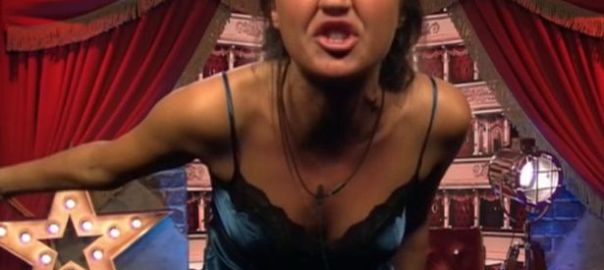
The Ex On the Beach star launched a violent, foul-mouthed outburst at fellow housemates Tiffany Pollard and John Partridge after a row quickly escalated out of control.

When Tiffany and Megan nearly came to blows, the young reality star was ordered to go into the bathroom before she was called into the Diary Room and eventually removed from the house by security when she failed to calm down.

The argument began when Megan, who had earlier admitted to being “p****d as a fart”, said she was fed up of cleaning up after people in the house.

When John contested that she doesn’t clean up after him, Megan replied: “It’s always John, ‘I’m the perfect one’. I f**king respect people in here, John. I respect people but I’ve lost it in here with you!”

See Mirror for full story


Big Brother Rules

1.There is no direct contact with the outside world.

    * Big Brother never discusses anything that has happened in the outside world.
    * Big Brother never enters into any negotiations about how certain actions, conversations or events that may have occurred in the house will be shown on the television.
    * Housemates are not permitted to make any attempts to communicate personal messages with members of the outside world by means of written messages, symbols or personalised clothing.
    * If any objects appear in the garden Housemates must not touch or inspect them unless instructed to do so.
    * If people appear in the garden Housemates MUST NOT communicate with them.
    * In the event of any of these events occurring Housemates must make their way immediately inside and close the doors, even if not specifically asked to do so.

2.Housemates are filmed 24 hours a day and must wear personal microphones at all times.

    * Big Brother will not broadcast images from the toilet on the television or internet unless it is being used for purposes other than those for which it was designed. For example, images of two people talking in the toilet may be broadcast.
    * It is strictly against the Rules to interfere for any reason with the camera or sound equipment installed in the House and garden or to do anything which may hinder the working of the equipment in any way.
    * It is against the rules to try and locate and/or acknowledge cameras through the mirrors. It is also against the rules to discuss camera positions.
    * Nothing must be placed in front of mirrors to impede camera coverage. Housemates are forbidden to move vases and bowls and any other decorative items.
    * No furniture can be moved from one part of the house to another.
    * Housemates are forbidden to hang towels anywhere in the House except on the heated towel rails in the bathroom.
    * It is compulsory to wear a personal microphone at all times except when sleeping, showering or taking part in any activity in which the microphone may be damaged.

FALIURE TO WEAR MICROPHONES WILL RESULT IN FINES.

3.The Diary Room is the only place in the house where Big Brother will acknowledge housemates. Visits to the Diary Room are a vital part of the Big Brother experience and are, therefore, compulsory.

    * Housemates are welcome to enter the Diary Room at any time of the day or night.
    * The Diary Room is the only place in the House that Big Brother acknowledges what Housemates say.
    * Housemates may not wear sunglasses or hats in the Diary Room.
    * The Diary Room can only be entered if there is no-one in the room. It is electronically locked at all other times. It will also be locked while Housemates are in the room.
    * Big Brother can call individual Housemates to the Diary Room at any time. Housemates must come when called, failure to do so or responding in an offensive manner to Big Brother may result in disqualification and early eviction.
    * It is compulsory for Housemates to enter the Diary Room to make their nominations.
    * Big Brother is the only person who communicates with the Housemates. On occasion, Big Brother may not answer questions immediately but will always eventually return an answer. Big Brother will not answer personal questions.
    * If a Housemate decides to leave voluntarily, they must explain their reasons why in the Diary Room.
    * Any questions asked by Big Brother in the Diary Room cannot be divulged to other Housemates.
    * Occasionally Housemates may need minor medical treatment. On these occasions professionals will usually treat them in the Diary Room. It is prohibited to try and seek information about the outside world from these professionals.
    * If a Housemate is having a consultation with the counsellor or psychologist (either at their request or at the suggestion of Big Brother) then this conversation will be confidential. It will not be recorded and members of the production team will not be able to hear or see the consultation.

4.Each week, Housemates are required to go to the Diary Room and nominate two people for potential eviction.

    * Housemates must give frank and honest reasons for their nominations.
    * If any Housemate is deemed to be holding back a valid reason for nominating a fellow Housemate, a formal warning may be issued.
    * Housemates are not allowed to nominate themselves or any inanimate objects.

5.Housemates are not permitted to discuss nominations with any other Housemates.

This includes:

    * Any discussion with another Housemate that could be interpreted as a deliberate attempt to influence their nominations.
    * Predicting or guessing who may be nominated or evicted.
    * Discussing the reasons Housemates might use for nominating.
    * Discussing the type of person Housemates are thinking of nominating.
    * Writing down or using materials at Housemates disposal to form names, initials or other symbols. For this reason the use of pens, pencils or any written communication is strictly against the rules.
    * Communicating in code or languages other than English and/or devising other methods of communication.

Housemates are, of course, free to talk about how they feel about the other Housemates. Their good and bad points may be discussed with others but NOT as part of a discussion about nominations.

6.Housemates may not intimidate, threaten or act violently towards any other Housemate.

Big Brother has the right to evict Housemates without warning if their behaviour is deemed to warrant it.

7.Housemates may not communicate in code and/or foreign or sign languages.

    * Housemates are forbidden to write anything using any material or surface in the House eg steam on glass.
    * On the occasion Housemates are provided with a writing implement it is forbidden for this implement to be used for anything other than the express purpose for which it is provided.
    * Housemates must speak in English at all times.

8.All tasks, unless otherwise stated, are compulsory.

    * The supply of food and other household goods is generally dependant on Housemates’ performance in compulsory weekly tasks.
    * Succeeding in the task results in a substantial shopping budget, failing the task means Housemates may have to live on “staples”. Staple foodstuffs are supplied by Big Brother and provide enough calories and the appropriate balance of nutrients from all the major food groups for each Housemate for the week. Big Brother retains the right to change the rules of any task at any stage.
    * In addition to the weekly tasks Big Brother may also set other challenges.
    * If a task is deemed compulsory, any Housemate refusing to take part will attract a fine and may be evicted.
    * The rules of all tasks are non-negotiable.

9.Housemates may not discuss any previous series of Big Brother. Housemates are forbidden to discuss their plans for the prize money.

    * Housemates may not discuss any previous series of Big Brother – either Australian or international – or former Housemates – either Australian or international – with any other Housemate.
    * Under no circumstances may any of the Housemates discuss how they intend to spend the prize money should they win it. In particular, any pacts to share or split the prize money between Housemates are against the rules and may result in the prize money being withdrawn altogether.
    * Housemates may not discuss any aspect of the audition process or any person they met during the auditions or at any other time during pre-production or in Lockdown.

10. Big Brother reserves the right to change the rules at any time.


15th January – Deaths & Events in Northern Ireland Troubles

Key Events & Deaths on this day in Northern Ireland Troubles

15th January

—————————–

Wednesday 15 January 1969

Terence O’Neill, then Northern Ireland Prime Minister, announced the setting up of an official inquiry into the disturbances in Derry and elsewhere. The inquiry, under the chairmanship of Lord Cameron, a Scottish judge, was asked to look into the causes of the civil unrest.

Friday 15 January 1971

Riots broke out in the Ardoyne area of Belfast.

Thursday 15 January 1976

Harold Wilson, then British Prime Minister, held an all-party meeting at Downing Street, London, to consider the security situation in Northern Ireland.

Monday 15 January 1982

James Prior, then Secretary of State for Northern Ireland, announced the setting up of a Committee of Inquiry into the sexual abuse of children who lived in the Kincora Boys Home in Belfast.

[The Kincora Scandal first broke on 3 April 1980 when three staff members of the Kincora Boys Home, Belfast, were charged with acts of gross indecency. Allegations continued to be made that elements of the security service, civil servants and a number of Loyalists had been involved in the abuse of young boys at Kincora. One of those sentenced was William McGrath who was the leader of a Loyalist paramilitary group called Tara.]

Sunday 15 January 1984

Tomás Ó Fiaich, then Catholic Primate of Ireland, sparked controversy when he criticised the visit of Margaret Thatcher, then British Prime Minister, to the Ulster Defence Regiment (UDR) base in Armagh. At the time several members of the UDR in Armagh were accused of the killing of Catholics and Ó Fiaich described the visit as ‘disgusting’.

The Cardinal also drew criticism when he stated that people may be morally justified in joining Sinn Féin (SF) if they joined to work on community issues. [The Irish government distanced itself from the Cardinal’s remarks.]

Tuesday 15 January 1985

Paul Kelly (17), a Catholic civilian, was shot dead by the Ulster Defence Regiment (UDR), as he ran away from a stationary stolen car at a UDR check-point at Kennedy Way, Belfast.

Saturday 15 January 1994

Edward Kennedy, together with three other Irish-American Senators, appealed to Bill Clinton, then President of the USA, to grant a visa to Gerry Adams, then President of SF.

Sunday 15 January 1995

The British government announced that the ban on ministers engaging in contacts with Sinn Féin (SF), the Ulster Democratic Party (UDP), or the Progressive Unionist Party (PUP), would end.

Monday 15 January 1996

The British and Irish Governments and the Social Democratic and Labour Party (SDLP) held a first tripartite meeting. The three members of the International Body on Arms Decommissioning met with Northern Ireland Office (NIO) ministers, and representatives of the Ulster Unionist Party (UUP) and Sinn Féin (SF) in Belfast.

Wednesday 15 January 1997

billy writgt

The trial of Billy Wright, then a leading Loyalist figure from Portadown, began at Belfast High Court. Wright was charged with threatening a witness.

[Wright was believed at this time to be the leader of the Loyalist Volunteer Force (LVF). The LVF was considered to be composed mainly of former members of the mid-Ulster Brigade of the Ulster Volunteer Force (UVF). Wright was killed in the Maze Prison on 27 December 1997.]

See Billy Wright page

Thursday 15 January 1998

The Social Democratic and Labour Party (SDLP) accused Royal Ulster Constabulary (RUC) officers of physically assaulting its Vice-Chairman Martin Morgan when he went to speak to protesters in the Whitewall Road area of Belfast. Morgan sustained a broken arm and bruising in the incident.

[Morgan had criticised the RUC in media reports about an incident in north Belfast on 1 January 1998. The RUC later announced an inquiry into the events surrounding Morgan’s injury.]

Ronnie Flanagan, then Chief Constable of the Royal Ulster Constabulary (RUC), said that he did not want RUC officers to belong to the Orange Order or any of the other loyal orders. The statement was made in the Channel 4 programme ‘Dispatches’.

In the same programme a group of defence lawyers claimed that there was compelling evidence that the RUC and the British Army had been involved in “numerous” illegal killings.

Sinn Féin (SF) staged a protest outside Antrim Road Royal Ulster Constabulary (RUC) station in Belfast. SF called for the release of ballistic reports on the gun which was used by Loyalist paramilitaries in the killing of Eddie Traynor on 31 December 1997. SF claimed that RUC ballistics reports were available within 24 hours whenever incidents involving Republican paramilitaries occurred.

Seven Irish Republican Army (IRA) prisoners who had been serving sentences in jails in Britain were transferred to Portlaoise Prison in the Republic of Ireland. Mary McAleese, then President of the Republic of Ireland, paid her first official visit to Britain since her election. She spoke of the prospect of the British and Irish people standing “on the threshold of a new and very healthy phase” in their relationship.

Friday 15 January 1999

The Ulster Democratic Party (UDP) warned that paramilitary prisoners who had been released on licence as part of the Good Friday Agreement could become involved in crime if they were unable to find employment.

Tuesday 15 January 2002

Daniel McColgan (20), who was killed by the Ulster Defence Association (UDA) on Saturday 12 January 2002, was buried in Carnmoney cemetery after a service at the Star of the Sea Church in nearby Whitehouse. There was a large attendance at his funeral.

Postal services in Northern Ireland were disrupted as many postal workers attended the funeral. Patrick Walsh, the Catholic Bishop of Down and Connor, said,

“Daniel was singled out for murder for one reason and one reason only – that he was a Catholic.” Walsh went on to say that he had been killed by, “an organisation that is driven by a single agenda of sectarian hatred of Catholics”.

During the evening the Ulster Freedom Fighters (UFF), a cover name used by the UDA issued a statement saying that it “unreservedly” condemned the death threats issued against Catholic teachers and Catholic postal workers. The statement further said that it was ordering the Red Hand Defenders (RHD), also a cover name used by the UDA, to stand down within 14 days.

[On Wednesday 16 January 2002 the RHD issued a statement to say it would stand down its members. Nationalists reacted sceptically to the two statements.]

It was revealed during a court case that British police investigating the Manchester bombing in 1996 agreed to a secret request from the Royal Ulster Constabulary (RUC) not to arrest and interview a prime suspect. As a result there was a 16 month delay in sending a file to the Crown Prosecution Service. The claim was made by a former head of Greater Manchester Police Special Branch who also said that a “cover story” was invented to account for the fact that no arrest had been made.


—————————————————————————

Remembering all innocent victims of the Troubles

Today is the anniversary of the death of the following  people killed as a results of the conflict in Northern Ireland

“To live in hearts we leave behind is not to die

– Thomas Campbell

To the innocent on the list – Your memory will live  forever

– To  the Paramilitaries  –

There are many things worth living for, a few things worth dying for, but nothing worth killing for.

5 People   lost their lives on the 15th January  between  1973 – 1989

————————————————————

15 January 1973
David Bingham,  (22)

Protestant
Status: Ulster Defence Regiment (UDR),

Killed by: Irish Republican Army (IRA)
Off duty. Abducted while driving his car along Grosvenor Road, Belfast. Found shot in abandoned car, Institution Place, off Durham Street, Belfast, on 16 January 1973.

————————————————————

15 January 1985


Paul Kelly,  (17)

Catholic
Status: Civilian (Civ),

Killed by: Ulster Defence Regiment (UDR)
Shot while running away from stationary stolen car, at Ulster Defence Regiment (UDR) Vehicle Check Point (VCP), Kennedy Way, Belfast.

————————————————————

15 January 1986


Victor Foster,   (18)

Protestant
Status: Ulster Defence Regiment (UDR),

Killed by: Irish Republican Army (IRA)
Off duty. Killed by booby trap bomb attached to his car outside his home, Gamble Park, Castlederg, County Tyrone.

————————————————————

15 January 1988


William Kane,  (20)

Catholic
Status: Civilian (Civ),

Killed by: Ulster Volunteer Force (UVF)
Shot at his home, Upper Meadow Street, New Lodge, Belfast

————————————————————

15 January 1989

 Harold Keys,  (25)

Protestant
Status: ex-Royal Ulster Constabulary (xRUC),

Killed by: Irish Republican Army (IRA)
From Northern Ireland. Shot outside his girlfriend’s home, Ballintra, County Donegal

————————————————————

Buy Me A Coffee

John Partridge is Fowl

A few nights ago I blogged that  John Partridge was shifty and not to be trusted.

Now I would like to amend that statement  to include the fact he  is a two-face , shifty, heartless,  slimey dog , self serving bore and  Megan McKenna  was right to blow up at him tonight and although it was uncomfortable to watch at times – it was bloody funny.


Partridge for reasons  known only to himself has appointed himself judge and jury over his fellow housemate and last night poor Darren Day came under fire at what was the most outrageous , brutal , twofaced   betrayal in reality TV history and Partridge should be ashamed of himself.

I  mean what right has that prat to stand there , all self righteous and nominate poor Darren because he had a few fags to deal with what was by any standards a stressful day.

Darren had taken Partridge into his trust and confided some of his personal issues and yet Partridge stood there and mortified Darren   in front of his fellow  housemates and the great British public. I could hardly believe what I was hearing and to make it so much worse Partridge tried wiggling himself out of it and Darren seem to buy his shit and forgive the useless prat.

I take my hat off to Darren , not only for his ongoing battle with the demons of addictions , but being a bigger man than me and not knocking Partridge out cold last night.

If it had been me  I would have smacked him in the mouth and told him to keep outta my face for the remainder of their time in the house and forever after.

Partridge played  a role in getting the clueless Winton chucked out of the house  first (although Winston didn’t need much help really, did he?  ) , then he lead the charge in the witch hunt to get Tiffany to leave the house and was disgustingly rude and heartless in the slimey way he related the request to her – did you see the barley concealed sneer on his face when he forgot the camera’s were there?

Megan was gold viewing tonight and she was right to air the obvious truth apart Partridge , although she did go a little over board -Just a tiny bit.

Hopefully the rest of the house have wakened up to the real John Partridge and they make their views and disgust known to him tomorrow and knock that vile prat off his perch!

A baby Partridge

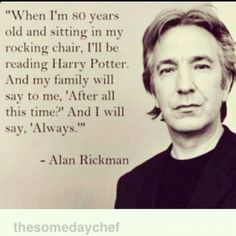
Alan Rickman 21 February 1946 – 14 January 2016

Alan Sidney Patrick Rickman

Alan Rickman, Harry Potter and Die Hard actor, dies aged 69

Actor Alan Rickman, known for films including Harry Potter, Die Hard and Robin Hood: Prince of Thieves, has died at the age of 69, his family has said.

The star had been suffering from cancer, a statement said.

He became one of Britain’s best-loved acting stars thanks to roles including Professor Snape in the Harry Potter films and Hans Gruber in Die Hard.

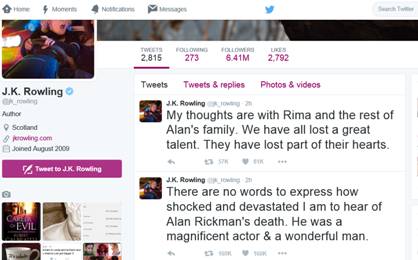
Harry Potter author JK Rowling led the tributes, describing him as “a magnificent actor and a wonderful man”.

She wrote on Twitter: “There are no words to express how shocked and devastated I am to hear of Alan Rickman’s death.”

She added: “My thoughts are with [Rickman’s wife] Rima and the rest of Alan’s family. We have all lost a great talent. They have lost part of their hearts.”

See BBC News for full story:

—————————————

Alan Sidney Patrick Rickman

(21 February 1946 – 14 January 2016)

A Young Rickman


Alan Sidney Patrick Rickman (21 February 1946 – 14 January 2016) was an English actor and director, known for playing a variety of roles on stage and screen, often as a complex antagonist. Rickman was a member of the Royal Shakespeare Company performing in both modern and classical theatre productions. His first major television role came in 1982, but his big break was his role as the Vicomte de Valmont in the stage production of Les Liaisons Dangereuses in 1985, for which he was nominated for a Tony Award. Rickman gained wider notice for his film performances as Hans Gruber in Die Hard and Severus Snape in the Harry Potter film series.

J.K. Rowling Tweet

alan rick man jk rowling tweet.jpg

Rickman’s other film roles included the Sheriff of Nottingham in Robin Hood: Prince of Thieves, Jamie in Truly, Madly, Deeply, Colonel Brandon in Ang Lee‘s Sense and Sensibility, Harry in Love Actually, P.L. O’Hara in An Awfully Big Adventure, Alexander Dane in Galaxy Quest, and Judge Turpin in the film adaptation of Stephen Sondheim‘s musical of Sweeney Todd: The Demon Barber of Fleet Street.

In 1995, Rickman was awarded a Golden Globe Award, an Emmy Award and a Screen Actors Guild Award for his portrayal of Rasputin in Rasputin: Dark Servant of Destiny. He won a BAFTA Award for his role in Robin Hood. He was godfather to actor Tom Burke.[1]

Rickman died of cancer on 14 January 2016 at the age of 69

Early life

Rickman was born in Acton, London,[2][3] to a working class family, the son of Margaret Doreen Rose (née Bartlett), a housewife, and Bernard Rickman, a factory worker.[4] His ancestry was English, Irish and Welsh; his father was Catholic and his mother a Methodist.[5][6] His family included an older brother, David (b. 1944), a graphic designer, a younger brother, Michael (b. 1947), a tennis coach, and a younger sister, Sheila (b. 1950).[5][7] Rickman attended Derwentwater Primary School, in Acton, a school that followed the Montessori method of education.[8]

Alan Rickman BAMII.jpg

When he was eight, Rickman’s father died, leaving his mother to raise him and his three siblings mostly alone. She married again, but divorced his stepfather after three years. “There was one love in her life”, Rickman later said of her.[5] He excelled at calligraphy and watercolour painting. From Derwentwater Junior School he won a scholarship to Latymer Upper School in London, where he became involved in drama. After leaving Latymer, he attended Chelsea College of Art and Design and then the Royal College of Art. This education allowed him to work as a graphic designer for the radical newspaper the Notting Hill Herald,[9] which he considered a more stable occupation than acting. “Drama school wasn’t considered the sensible thing to do at 18”, he said.[10]

After graduation, Rickman and several friends opened a graphic design studio called Graphiti, but after three years of successful business, he decided that if he was going to pursue acting professionally, it was now or never. He wrote to the Royal Academy of Dramatic Art (RADA) requesting an audition[11] and was awarded a place at RADA, which he attended from 1972-74. While there, he studied Shakespeare and supported himself by working as a dresser for Nigel Hawthorne and Sir Ralph Richardson.[12] He left after winning several prizes, including the Emile Littler Prize, the Forbes Robertson Prize and the Bancroft Gold Medal.[citation needed]

Career

————————

Alan Rickman talks Severus Snape

————————

After graduating from RADA, Rickman worked extensively with British repertory and experimental theatre groups in productions including Chekhov‘s The Seagull and Snoo Wilson‘s The Grass Widow at the Royal Court Theatre, and appeared three times at the Edinburgh International Festival. In 1978, he performed with the Court Drama Group, gaining parts in Romeo and Juliet and A View from the Bridge, among other plays. While working with the Royal Shakespeare Company (RSC) he was cast in As You Like It. He appeared in the BBC’s adaptation of Trollope‘s first two Barchester novels known as The Barchester Chronicles (1982), as the Reverend Obadiah Slope.

He was given the male lead, the Vicomte de Valmont, in the 1985 Royal Shakespeare Company’s production of Christopher Hampton‘s adaptation of Les Liaisons Dangereuses, directed by Howard Davies.[13] After the RSC production transferred to Broadway in 1987, Rickman received both a Tony Award nomination[14] and a Drama Desk Award nomination for his performance.

His career was filled with a wide variety of roles. He played romantic leads like Colonel Brandon in Sense and Sensibility (1995), and Jamie in Truly, Madly, Deeply (1991); numerous villains in Hollywood big budget films, like German terrorist Hans Gruber in Die Hard (1988) and the Sheriff of Nottingham in Robin Hood: Prince of Thieves (1991); the very occasional television role such as the “mad monk” Rasputin in an HBO biopic Rasputin: Dark Servant of Destiny (1996), for which he won a Golden Globe and an Emmy.[15] In 1992, he was the “master of ceremonies” on Mike Oldfield‘s album Tubular Bells II where he read off a list of instruments on the album.

His role in Die Hard earned him a spot on the AFI’s 100 Years…100 Heroes & Villains as the 46th best villain in film history, though he revealed he almost did not take the role as he did not think Die Hard was the kind of film he wanted to make.[16] His performance as the Sheriff of Nottingham in Robin Hood: Prince of Thieves also made him known as one of the best actors to portray a villain in films.[17][18]

Rickman took issue with being typecast as a “villain actor”, citing the fact that he had not portrayed a stock villain character since the Sheriff of Nottingham in 1991. He played the ambiguous character of Severus Snape, the potions master in the Harry Potter series (2001–11). During his career Rickman played comedic roles, sending up classically trained British actors who take on “lesser roles” as the character Sir Alexander Dane/Dr. Lazarus in the science fiction parody Galaxy Quest (1999), portraying the angel Metatron, the voice of God, in Dogma (also 1999), appearing as Emma Thompson‘s foolish husband Harry in Love Actually (2003), providing the voice of Marvin the Paranoid Android in The Hitchhiker’s Guide to the Galaxy, and the egotistical, Nobel Prize-winning father in Nobel Son.[citation needed]

Rickman at the 2007 Tribeca Film Festival

Rickman was nominated for an Emmy for his work as Dr. Alfred Blalock in HBO’s Something the Lord Made (2004). He also starred in the independent film Snow Cake (with Sigourney Weaver and Carrie-Anne Moss) which had its debut at the Berlin International Film Festival, and also Perfume: The Story of a Murderer (with Dustin Hoffman), directed by Tom Tykwer. Rickman appeared as the evil Judge Turpin in the critically acclaimed Sweeney Todd: The Demon Barber of Fleet Street (2007) directed by Tim Burton, alongside Harry Potter co-stars Helena Bonham Carter and Timothy Spall. Rickman also appeared as Absolem the Caterpillar in Burton’s film Alice in Wonderland (2010).[citation needed]

He performed onstage in Noël Coward‘s romantic comedy Private Lives, which transferred to Broadway after its successful run in London at the Albery Theatre and ended in September 2002; he reunited with his Les Liaisons Dangereuses co-star Lindsay Duncan and director Howard Davies in the Tony Award-winning production. His previous stage performance was as Mark Antony, opposite Dame Helen Mirren as Cleopatra, in the Royal National Theatre’s production of Antony and Cleopatra at the Olivier Theatre in London, which ran from 20 October to 3 December 1998. Rickman appeared in Victoria Wood with All The Trimmings (2000), a Christmas special with Victoria Wood, playing an aged colonel in the battle of Waterloo who is forced to break off his engagement to Honeysuckle Weeks‘ character. Harry Potter co-star Imelda Staunton also appeared in the special. Rickman was originally cast as the voice of Lord Farquaad in the movie Shrek, but he turned it down to play Severus Snape instead. He was replaced by John Lithgow.[citation needed]

Rickman had also directed The Winter Guest at London’s Almeida Theatre in 1995 and the film version of the same play in 1996 starring Emma Thompson and her real life mother Phyllida Law. He compiled (with Katharine Viner) and directed the play My Name Is Rachel Corrie in April 2005 at the Royal Court Theatre, London, and won the Theatre Goers’ Choice Awards for Best Director. In 2009, Rickman was awarded the James Joyce Award by University College Dublin’s Literary and Historical Society.[19]

In October and November 2010, Rickman starred in the eponymous role in Henrik Ibsen‘s John Gabriel Borkman at the Abbey Theatre, Dublin alongside Lindsay Duncan and Fiona Shaw.[20] The Irish Independent called Rickman’s performance breathtaking.[21] This production subsequently travelled to the Brooklyn Academy of Music for performances in January and February 2011.[citation needed]

In 2011, Rickman again appeared as Severus Snape in the final installment in the Harry Potter series, Harry Potter and the Deathly Hallows – Part 2. Throughout the series, his portrayal of Snape garnered widespread critical acclaim.[22][23][24]

Kenneth Turan of The Los Angeles Times said Rickman “as always, makes the most lasting impression,”[25] while Peter Travers of Rolling Stone called Rickman “sublime at giving us a glimpse at last into the secret nurturing heart that […] Snape masks with a sneer.”[26] Media coverage characterised Rickman’s performance as worthy of an Academy Award for Best Supporting Actor nomination.[27][28][29][30][31]

Rickman earned his first award nominations for his role as Snape at the 2011 Alliance of Women Film Journalists Awards, 2011 Saturn Awards, 2011 Scream Awards and 2011 St. Louis Gateway Film Critics Association Awards in the Best Supporting Actor category.[32]

On 21 November 2011, Rickman opened in Seminar, a new play by Theresa Rebeck, at the John Golden Theatre on Broadway.[33] Rickman, who left the production on 1 April, won the Broadway.com Audience Choice Award for Favorite Actor in a Play[34] and was nominated for a Drama League Award.[35]

Rickman starred with Colin Firth and Cameron Diaz in a remake of 1966’s Gambit by Michael Hoffman.[36]

In 2013, he played Hilly Kristal, the founder of the famous East Village punk-rock club CBGB, in the CBGB film with Rupert Grint.[37]

In the media

Alan Rickman posing for a fan after a performance of John Gabriel Borkman in 2011

Rickman was chosen by Empire as one of the 100 Sexiest Stars in film history (No 34) in 1995 and ranked No 59 in Empire’s “The Top 100 Movie Stars of All Time” list in October 1997. In 2009 and 2010 Rickman ranked once again as one of the 100 Sexiest Stars by Empire, both times Rickman was placed 8th out of the 50 actors chosen. Rickman became Vice-Chairman of the Royal Academy of Dramatic Art (RADA) in 2003.[citation needed]

He was voted No 19 in Empire magazine’s Greatest Living Movie Stars over the age of 50 and was twice nominated for Broadway’s Tony Award as Best Actor (Play): in 1987 for Les Liaisons Dangereuses, and in 2002 for a revival of Noël Coward‘s Private Lives. The Guardian named Rickman as an “honourable mention” in a list of the best actors never to have received an Academy Award nomination.[38]

Two researchers, a linguist and a sound engineer, found “the perfect [male] voice” to be a combination of Rickman’s and Jeremy Irons‘s voices based on a sample of 50 voices.[39]

Rickman featured in several musical works – most notably in a song composed by the English songwriter Adam Leonard entitled “Not Alan Rickman”.[40] Moreover, the actor played a “Master of Ceremonies” part in announcing the various instruments in Mike Oldfield‘s Tubular Bells II on the track The Bell.[41] Rickman was one of the many artists who recited Shakespearian sonnets on the 2002 album When Love Speaks, and is also featured prominently in a music video by the band Texas entitled “In Demand“,[42] which premiered on Europe MTV in August 2000.

Personal life

In 1965, at the age of 19, Rickman met 18-year-old Rima Horton, who became his first girlfriend and would later be a Labour Party councillor on the Kensington and Chelsea London Borough Council (1986–2006) and an economics lecturer at the nearby Kingston University.[43][44][45] They lived together from 1977 until his death.

In 2015, Rickman confirmed that they had married in a private ceremony in New York City in 2012.[46][47] He was an active patron of the charity Saving Faces[48] and honorary president of the International Performers’ Aid Trust, a charity that alleviates poverty in some of the world’s toughest conditions.[49]

When discussing politics, Rickman said he “was born a card-carrying member of the Labour Party”.[citation needed]

Death

Rickman’s family reported on 14 January 2016 that he had died, aged 69. He had been suffering from cancer

14th January – Deaths & Events in Northern Ireland Troubles

Key Events & Deaths on this day in Northern Ireland Troubles

14th January

———————–

Wednesday 14 January 1970

Royal Ulster Constabulary (RUC) officers began to patrol the Falls Road area of Belfast for the first time since August 1969

Sunday 14 January 1973

Two Royal Ulster Constabulary (RUC) officers were killed in Derry by a booby-trap bomb attached to their car by the Irish Republican Army (IRA).

A third RUC officer was killed in a land mine attack near Cappagh, County Tyrone.

Monday 14 January 1974

Sunningdale; Ulster Workers’ Council Strike

Wednesday 14 February 1979

There was a meeting between Roy Mason, then Secretary of State for Northern Ireland, and M. O’Kennedy, then Irish Minister for Foreign Affairs in London. [ Political developments. ]

Tuesday 14 January 1986

Tom King, then Secretary of State for Northern Ireland, said that the forthcoming Westminster by-elections, brought about in protest to the Anglo-Irish Agreement (AIA), would not change the government’s support for the Agreement.

Monday 14 January 1991

Tom King, then Secretary of State for Defence, paid a visit to Northern Ireland.

Friday 14 January 1994

Gerry Adams, then President of Sinn Féin (SF), stated in an Irish Times (a Dublin based newspaper) article that he could not move without clarification of the Downing Street Declaration (DSD).

John Major, then British Prime Minister, told John Hume, then leader of the SDLP, that the DSD spoke for itself.

Sunday 14 January 1996

Sinn Féin (SF) again stated that it thought the idea of a new elected assembly at Stormont was a “non-runner”.

Tuesday 14 January 1997

The Lord Chancellor’s office was criticised for refusing to answer a parliamentary question about whether or not Lord Carswell, then Northern Ireland Chief Justice, was a member of the Orange Order or the Free Masons.

Nora Owen, then Justice Minister in the Republic of Ireland, ordered that James Corry should be released from custody.

[Corry had been arrested following an extradition request by a court in Germany on matters related to the bombing at the British Army barracks in Osnabreuck, Germany, on 28 June 1996.]

Wednesday 14 January 1998

A uniformed Royal Ulster Constabulary (RUC) officer was shot in the chest at close range by a female member of the British Army who was travelling in plain clothes in an unmarked vehicle.

At approximately 1.15am an RUC patrol spotted two cars being driven in a suspicious manner in a Catholic area of north Belfast. The two cars drove off and the RUC patrol gave chase. One of the cars crashed at the junction of Crumlin Road and Antrim Road. As the RUC officer approached the vehicle he was shot and seriously injured.

Sinn Féin (SF) described the incident as sinister.

The funeral took place in Belfast of Terence (Terry) Enwright (28), a Catholic civilian, who was shot dead by the Loyalist Volunteer Force (LVF). Thousands of people of different ages and different religious backgrounds stood along the funeral route.

Thursday 14 January 1999

Shots were fired at an Royal Ulster Constabulary (RUC) station in west Belfast. Four men were arrested in a follow-up operation. The attack was believed to have been carried out by the Continuity Irish Republican Army (CIRA).

Three Russian-manufactured heavy machine guns were found on farmland at Blackstaff, five miles from Carrickmacross, County Monaghan, Republic of Ireland, and were believed to be part of the Irish Republican Army’s (IRA) arsenal.

Monday 14 January 2002

Increased security measures were put in place in north Belfast by the Police Service of Northern Ireland (PSNI) and the British Army (BA).

The move followed death threats made by the Ulster Defence Association (UDA) against Catholic teachers, and other Catholic employees of all schools, which was made on Friday 11 January 2002. The threat was extended to include Catholic postal workers following the killing of Danny McColgan on 12 January 2002.

Frank Bunting, then northern Secretary of the Irish National Teachers Organisation (INTO) and Chairman of the Teachers’ Council, was interviewed on British Broadcasting Corporation (BBC) Radio Ulster and called for the immediate lifting of the threats.

The PSNI arrested two men in connection with the killing of McColgan (12 January 2002).

[The two were released without charge on Tuesday 15 January 2002.]

Martin McGuinness (SF), then Education Minister, held a meeting with representatives of teaching unions and education officials to discuss what he called the “unacceptable” threat against Catholic teachers and school staff. David Cargo, then Chief Executive of the Belfast Education and Library Board, and Donal Flanagan, then Chief Executive of the Council for Catholic Maintained Schools, also attended the meeting. David Trimble (UUP), then First Minister, and Mark Durkan (SDLP), then Deputy First Minister, called for a lifting of the threats against Catholic teachers and Catholic postal workers.

Daniel McColgan

See Deaths & Events 12th January for more details

The two ministers described the killing of Daniel McColgan as horrific and said it had disgusted all right-thinking people. During a debate at the Northern Ireland Assembly a minute’s silence was observed by then Members of the Legislative Assembly (MLAs).

Postal deliveries throughout Northern Ireland were suspended as a mark of respect to McColgan. Postal workers in Derry took part in a silent march into the city centre to protest at the killing. The Irish Congress of Trade Unions (ICTU), called for a general half-day stoppage on Friday 18 January 2002 in protest at continuing attacks on workers. It also asked workers to observe a two-minute silence at midday on Tuesday 15 January 2002 to coincide with McColgan’s funeral. The union said the silence would be in memory of all workers and security force members murdered during the past 30 years.


—————————————————————————

Remembering all innocent victims of the Troubles

Today is the anniversary of the death of the following  people killed as a results of the conflict in Northern Ireland

“To live in hearts we leave behind is not to die

– Thomas Campbell

To the innocent on the list – Your memory will live  forever

– To  the Paramilitaries  –

There are many things worth living for, a few things worth dying for, but nothing worth killing for.

10 People   lost their lives on the 14th January  between  1973 – 1993

————————————————————

14 January 1973


Henry  Sandford,  (34)

Protestant
Status: Royal Ulster Constabulary (RUC),

Killed by: Irish Republican Army (IRA)
Killed in land mine attack on Royal Ulster Constabulary (RUC) mobile patrol, Aghnagar, near Ballygawley, County Tyrone.

————————————————————

14 January 1973


David Dorsett,   (37)

Protestant
Status: Royal Ulster Constabulary (RUC),

Killed by: Irish Republican Army (IRA)
Killed by booby trap bomb attached to Royal Ulster Constabulary (RUC) patrol car, Harbour Square, Derry.

————————————————————

14 January 1973


Mervyn Wilson,  (23)

Protestant
Status: Royal Ulster Constabulary (RUC),

Killed by: Irish Republican Army (IRA)
Killed by booby trap bomb attached to Royal Ulster Constabulary (RUC) patrol car, Harbour Square, Derry

————————————————————

14 January 1974


Andrew Jordan,  (41)

Protestant
Status: Civilian (Civ),

Killed by: Ulster Volunteer Force (UVF)
Found shot in field, Carrowdore, near Newtownards, County Down

————————————————————

14 January 1976


Samuel Millar,  (71)

Protestant
Status: Civilian (Civ),

Killed by: Ulster Defence Association (UDA)
Beaten to death at his farm, off Derrynoid Road, near Draperstown, County Derry. His body found, on information supplied to the British authorities, in disused quarry, Carmean, near Moneymore, County Derry, on 21 September 1977. He was a witness to a robbery.

————————————————————

14 January 1977


James Greer,   (27)

Protestant
Status: Royal Ulster Constabulary (RUC),

Killed by: Irish Republican Army (IRA)
Off duty. Killed by booby trap bomb attached to his car outside his parents’ home, Innishrush, near Portglenone, County Derry.

————————————————————

14 January 1981


Lindsay McDougall,   (36)

Protestant
Status: Royal Ulster Constabulary (RUC),

Killed by: Irish National Liberation Army (INLA)
Died six days after being shot while on Royal Ulster Constabulary (RUC) foot patrol, Great Victoria Street, Belfast

————————————————————

14 January 1986
Leo Scullion,  (55)

Catholic
Status: Civilian (Civ),

Killed by: Ulster Volunteer Force (UVF)
Nightwatchman. Found shot at his workplace, Working Men’s Club, Ligoniel, Belfast

————————————————————

14 January 1992
David Boyd,   (41)

Protestant
Status: Ulster Defence Association (UDA),

Killed by: Ulster Freedom Fighters (UFF)
Shot outside his home, Coronation Park, Dundonald, Belfast. Alleged informer.

————————————————————

14 January 1993
Anthony Butler,   (40)

Catholic
Status: ex-Irish Republican Army (xIRA),

Killed by: Ulster Freedom Fighters (UFF) 
Former republican prisoner. Shot while in friend’s home, Agra Street, Ballynafeigh, Belfast.

————————————————————


Buy Me A Coffee

13th January – Deaths & Events in Northern Ireland Troubles

Key Events & Deaths on this day in Northern Ireland Troubles

13th January

———————————————–

Wednesday 13 January 1971

Riots began in the Ballymurphy area of Belfast.

Tuesday 13 January 1976

Two Catholic civilians and two members of the Irish Republican Army (IRA) were killed when a bomb exploded prematurely at a shopping arcade in North Street Belfast.

Friday 13 January 1978

The Irish Republican Army (IRA) carried out a bomb attack on the Guildhall in Derry causing serious damage.

[The building had reopened seven months earlier following damage in a fire bomb attack in July 1972.]

Wednesday 13 January 1982

Lord Gowrie, then an Northern Ireland Office (NIO) Minister, said that Direct Rule was “very unBritish” and indicated that he personally preferred a form dual citizenship, with Britain and the Republic of Ireland being responsible for the administration of those who considered themselves to be Irish.

Saturday 13 January 1990

Three men, who were in the process of robbing a betting shop in West Belfast, were shot dead by a British Army undercover unit. Two of the men were in possession of imitation guns. The shootings renewed claims that there was a ‘shoot to kill’ policy among the security forces.

Monday 13 January 1992

The Democratic Unionist Party (DUP) issued a document that contained a number of proposals on security arrangements.

Monday 13 January 1997

The Irish Republican Army (IRA) carried out a ‘rocket’ attack on a Royal Ulster Constabulary (RUC) Landrover patrol in Kennedy Way, west Belfast. There were no injuries in the attack.

Patrick Mayhew, then Secretary of State for Northern Ireland, paid a visit to Derry and stated that he considered the Loyalist ceasefire to be still intact. The Democratic Unionist Party (DUP) and the United Kingdom Unionist Party (UKUP) called for the expulsion of the smaller Loyalist parties, the Progressive Unionist Party (PUP) and the Ulster Democratic Party (UDP), from the Stormont talks. Bill Clinton, then President of the United States of America, called for a renewed IRA ceasefire.

Wednesday 13 January 1999

Marjorie (Mo) Mowlam, then Secretary of State for Northern Ireland, said the government was prepared to implement devolution to the Northern Ireland Assembly on 10 March 1999 if the political parties could agree on the way forward. Sinn Féin (SF) called for a public enquiry into killings carried out by the security forces. Derek Hill, a well known artist, was conferred with honorary Irish citizenship in a ceremony at Aras an Uachtarain, Dublin. Mary McAleese, then President of the Republic of Ireland, said the award was an expression of the deep gratitude and admiration for Derek Hill. Hill was born in Southampton, England, in 1916. (Hill died in 2000.)

Sunday 13 January 2002

There were two separate shooting attacks on the homes of prison officers in County Armagh. Both attacks happened shortly after 10.30pm (2230GMT) one on the Mourne Road in Lurgan and the second on Drumanphy Road in Portadown. No one was injured.

Robin Halward, then Director General of the Northern Ireland Prison Service, said he was appalled by the attacks.

A man (20) was shot in both ankles and elbows in a paramilitary ‘punishment’ attack at approximately 10.00pm (2200GMT) in the Turf Lodge area of Belfast. Loyalists carried out arson attacks on two Catholic schools in Lisburn and Belfast.

In the first attack a fire was started shortly before 10.00pm (2200GMT) in a mobile classroom at St Patrick’s High School on the Ballinderry Road, Lisburn, County Antrim. The classroom was extensively damaged. In the second attack a fire was started at approximately 10.25pm (2225GMT) at St Bride’s Primary School in Derryvolgie Avenue, south Belfast.

The fire damaged a classroom and an adjoining corridor. Nearby walls and four cars were also daubed with Loyalist slogans. A pipe-bomb was thrown across a peace line in north Belfast. There were no injuries in the explosion.

 —————————————————————————

Remembering all innocent victims of the Troubles

Today is the anniversary of the death of the following  people killed as a results of the conflict in Northern Ireland

“To live in hearts we leave behind is not to die

– Thomas Campbell

To the innocent on the list – Your memory will live  forever

– To  the Paramilitaries  –

There are many things worth living for, a few things worth dying for, but nothing worth killing for.

11 People   lost their lives on the 13th January  between  1972 – 1992

————————————————————

13 January 1972


Maynard Crawford, (38)

Protestant
Status: Ulster Defence Regiment (UDR),

Killed by: Irish Republican Army (IRA)
Off duty. Shot while driving his firm’s van along King’s Road, off Doagh Road, Newtownabbey, County Antrim

————————————————————

13 January 1974
Christopher Daly,   (43)

Catholic
Status: Civilian (Civ),

Killed by: Official Irish Republican Army (OIRA)
Found shot in entry, off Balholm Drive, Ardoyne, Belfast.

————————————————————

13 January 1976


Ian Gallagher,  (41)

Catholic
Status: Civilian (Civ),

Killed by: Irish Republican Army (IRA)
Killed in premature bomb explosion at shopping arcade, North Street

————————————————————

13 January 1976


Mary Dornan,   (30)

Catholic
Status: Civilian (Civ),

Killed by: Irish Republican Army (IRA)
Killed in premature bomb explosion at shopping arcade, North Street, Belfast

————————————————————

13 January 1976


Rosemary Bleakley,   (19)

Catholic
Status: Irish Republican Army (IRA),

Killed by: Irish Republican Army (IRA)
Killed in premature bomb explosion at shopping arcade, North Street, Belfast.

————————————————————

13 January 1976


Martin McDonagh,  (23)

Catholic
Status: Irish Republican Army (IRA),

Killed by: Irish Republican Army (IRA)
Killed in premature bomb explosion at shopping arcade, North Street, Belfast

————————————————————

13 January 1980
John Brown,   (47)

Protestant
Status: Civilian (Civ),

Killed by: Irish National Liberation Army (INLA)
Died seven months after being shot during armed robbery at his post office, Main Street, Blackwatertown, County Armagh.

————————————————————

13 January 1990


Edward Hale,   (25)

Catholic
Status: Civilian (Civ),

Killed by: British Army (BA)
Shot by undercover British Army (BA) members, during attempted robbery at bookmaker’s shop, junction of Whiterock Road and Falls Road, Belfast.

————————————————————

13 January 1990


Peter Thompson,   (23)

Catholic
Status: Civilian (Civ),

Killed by: British Army (BA)
Shot by undercover British Army (BA) members, during attempted robbery at bookmaker’s shop, junction of Whiterock Road and Falls Road, Belfast.

————————————————————

13 January 1990

John McNeill,   (43)

Catholic
Status: Civilian (Civ),

Killed by: British Army (BA)
Shot by undercover British Army (BA) members, during attempted robbery at bookmaker’s shop, junction of Whiterock Road and Falls Road, Belfast

————————————————————

13 January 1992
Michael Logue,  (22)

Catholic
Status: Civilian (Civ),Killed by: Irish Republican Army (IRA)
Killed by booby trap bomb attached to his car, parked outside his girlfriend’s home, Glen Park, Coalisland, County Tyrone.

————————————————————


Buy Me A Coffee
paypal donation button

David Gest is dead – Really ?

The first fifteen  minutes of Big Brother tonight was the funniest thing I have seen on telly in donkeys years  and I almost had a heart attack laughing.  It had drama, comedy and tragedy and a cast of characters straight out off central casting.

Picture the scene….

Angie Bowie breaking down in the Dairy Room ( after saying she wasn’t going to cry) on being told of David Bowie’s death. John and David Gest are called in to support her and she sees an opportunity and begins milking it like a German farmer taking part in the annual Dusseldorf milking competition.


Theres more…

.

She gets David and John to promise not to tell anyone and they agree and they all make their way back into the main house.

Angie is trying to hold it together, but without really trying at all and a blind and deaf man  would have guessed that she was upset about something .

Enter Tiffany….

Angie proclaims that its not just  a  ” silly cold – its much worst than that ” and Tiffany shows her heart and goes to comfort her. After a millisecond of saying she can’t say – she makes Tiffany promise not to repeat what she is about to tell here . After Tiffany eagerly agrees Angie blurts out that :

“David was Dead”

And Tiffany goes into melt down.

I mean a real melt down –  it was as if she had lost a close family member the  way she was crying and becoming hysterical .

Now at this point I said to the wife that Tiffany must be a David Bowie superfan , as she seems to be taking his death worse than Angie and to be honest I thought she was acting a little bit unhinged.

 Tiffany rushes outside and proclaims to everyone that David was dead as she made her way to the bedroom.

On entering the bedroom she makes her way straight to David Gest’s bed and he’s in bed resting , with the covers over his head. Tiffany looks as if she is going to have a breakdown and is getting more hysterical and unhinged  by the second.

Then the penny dropped –

She had thought that David Gest had died and bizarrely some of the other housemates who had followed her to the bedroom had come  to the same ridiculous conclusion.

It was absolutely hilarious and a piece of TV gold and it give my humour gene a right good chuckle.

Then things turned dark and fowl  and before you could say boo to a goose the rest of the house had turned on Tiffany and lead by the ever vigilant and extremely shifty John Partridge ( did you see what I done there ?)  called for her to be thrown out of the house – or else they would all leave.

Hmmmm. Yeah right!

Back  to John , who put you in charge and what give you the right to have Tiffany thrown out of the house. You’ve already engineered the departure of the clueless Winston’s McKenzie. Are you trying to get better odds on you winning by getting rid of the competition?

You are starting to become boring.

Anyways they all turned on Tiffany and she came out fighting and it was uncomfortable to for a while, but Tiffany is made of sterner stuff and held her own.   Her situation was not help by having the ever clueless Gemma Collins throwing in random clichés and offering useless advice : ” Tomorrow is another day” , being my favourite.

I personally think they were being a bit hard on Tiffany , after all in was a stupid misunderstanding and they need to give her a break and a second chance. Providing that fowl prat  Partridge can get off his soap box and shut the hell up – although I doubt it

Chin up Tiffany , after all Tomorrow is another day.

If you’ve not seen it you’ll never know how funny it was.

Oh and that useless nob Johnathan ( I think that’s his name ) left the BB house and I hardly noticed – Bye!

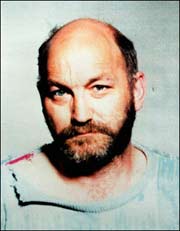
Robert Black – Death of a Monster!


Robert Black

Normally the death of  fella human being would upset  me and depending on  the individual I might spent a few moments reflecting on their life’s and the legacy they have left behind .

But when I heard the News today that Child serial Killer Robert Black had died it brought a smile to my face , although I was disappointed to hear that he had died of natural causes, as surely Karama should have made his miserable life a living hell and given him an unimaginably  painful death.

Hopefully he will now be burning in the eternal fires of hell and suffering never ending torments.

Life is woefully short and for a child to have that time cut short by a sadistic bastard like Robert Black is the sickest twist of fate. The Gods surely have no compassion if they can stand by and watch a poor , innocent child cross paths with a monster like Black.

So today I am happy and celebrating the death of a worthless human being and I hope his passing gives a little comfort to the friends and families of his innocent victims.

Rot in hell Black

————————————————–

Robert Black

Death of a Monster

The child killer Robert Black, who was convicted of the murders of four children from across the UK in the 1980s, has died in prison.

Robert Black

The child killer Robert Black, who was convicted of the murders of four children from across the UK in the 1980s, has died in prison.

Black, 68, had a history of abducting, abusing and murdering young girls.

His victims were nine-year-old Jennifer Cardy from Northern Ireland; Sarah Harper, 10, from England, and 11-year-old Susan Maxwell and five-year-old Caroline Hogg both from Scotland.

Black died of natural causes in Maghaberry prison, Northern Ireland.

See BBC News for full story

See Below for History, Background and Documentary

——————————————

Robert Black

Robert Black (21 April 1947 – 12 January 2016) was a Scottish serial killer convicted of the kidnapping and murder of four girls between the ages of 5 and 11, between 1981 and 1986 in the United Kingdom. He was convicted of sexually assaulting one of the girls, and of raping the other three. Black was also convicted of the kidnapping of a fifth girl, and the attempted kidnapping of a sixth.

Black is also suspected of unsolved child murders in the United Kingdom, dating back to 1969 and others in the 1970s, throughout Europe.

—————————————

Serial Killers – Robert Black (Smelly Bob) – Documentary

—————————————


Early life

Black was born in Grangemouth, Stirlingshire. Black’s natural mother, Jessie Hunter Black, refused to put his father’s name on his birth certificate and had him fostered. Black was brought up by a foster couple who were in their 50s, Jack and Margaret Tulip. Black did not fit in at school and was given the nickname ‘Smelly Robby Tulip’ by his classmates, who noticed that Black preferred to hang around with children a year or two younger than he was, rather than people his own age.[1] He developed an early reputation for aggressive and wayward behaviour. Locals recalled that Black often had bruises, although Black later said he could not recollect where these injuries came from.[1] Margaret Tulip looked after Black on her own from when he was five[2] until she died in 1958 when he was 11. He was then sent to a children’s home in Falkirk.

Early crimes

While living with the Tulips, Robert Black developed sexual self-awareness at a young age. He later said that from the age of eight he would often push objects up his anus.[3] This was a practice that he would continue into adulthood. As a young child, he also had an interest in the genitals of other children. At the age of five, he and a girl both took off their clothes and compared each other’s genitals.[3]

Black first attempted rape at the age of 12 along with two other boys. They attacked a girl in a field, but found themselves unable to complete the act of penetration.[4] The authorities were notified and Black was moved to the Red House in Musselburgh. While there, a male staff member sexually abused him. It was while Black was at Red House that he also entered Musselburgh Grammar School, where he developed an interest in football and swimming.[4]

At 15, Black left Red House and found a job working as a delivery boy in Greenock near Glasgow. He later admitted that, while on his rounds, he molested 30 to 40 girls. None of these incidents seem to have been officially reported until his first conviction at the age of 17 when he lured a seven-year-old girl to a deserted building, strangled her until she lost consciousness and then masturbated over her unconscious body. He was arrested and convicted of ‘lewd and libidinous’ behaviour for this offence, but received only an admonishment.[5]

After this, Black moved back to Grangemouth and got a job with a builders’ supply company. He also found a girlfriend, Pamela Hodgson, and asked her to marry him. Black was devastated when she ended the relationship several months later. In 1966, Black molested his landlord’s and landlady’s nine-year-old granddaughter. The girl eventually told her parents. They took no legal action but Black was ordered to leave the house.[5]

At this time, Black moved back to Kinlochleven, where he was raised. He took a room with a couple who had a seven-year-old daughter. As before, Black molested the girl. This time, when the sexual abuse was discovered, police were notified. Black was sentenced to a year of borstal training at Polmont.[6]

On his release, Black left Scotland and moved to London. In London, Black found work as a swimming pool attendant, and would sometimes go underneath the pool, remove the lights and watch young girls as they swam. Soon, a young girl reported that Black had touched her, and although no official charges were brought, Black lost his job.[6]

While Black lived in London he spent a lot of time in pubs playing darts. He became a reasonably good player, and a well-known face on the amateur darts circuit. Darts world champion Eric Bristow knew Black vaguely during this time, remembering him as a “loner” who never seemed to have a girlfriend.[6] In 1976, Black began working as a van driver. It was while working as a driver that he developed a thorough knowledge of some of the United Kingdom’s roads, particularly its minor roads.[6]

Murder of Jennifer Cardy

On 12 August 1981, nine-year-old Jennifer Cardy cycled from her house in Ballinderry, County Antrim in Northern Ireland to meet a friend. Her bicycle was recovered close to her home. Her body was found at McKee’s Dam near Hillsborough, County Down six days later. She had been sexually assaulted. Black, who at the time was working in the area for a poster-delivery company, was convicted of her kidnap, sexual assault and murder at Armagh Crown Court on 27 October 2011.[7]

On 8 December 2011, he was sentenced to 25 years for her murder and told by the judge he would be at least 89 before he was considered for release.[8]

Murder of Susan Maxwell

On 30 July 1982, 11-year-old Susan Maxwell from Cornhill on Tweed, on the English side of the English/Scottish border left her home to play a game of tennis across the border in Coldstream. Several local witnesses remembered seeing her until she crossed the bridge over the River Tweed, after which there were no sightings of Susan. Nobody saw it happen, but at some point between the river and Coldstream, Susan was abducted by Black.

He raped and strangled her and dumped her body about 250 miles away by the side of the A518 at Loxley near Uttoxeter, Staffordshire, England.[9]

Murder of Caroline Hogg

On the evening of 8 July 1983, five-year-old Caroline Hogg from Portobello, an eastern suburb of Edinburgh, went out to play near her home for a few minutes. She never returned. Many witnesses reported seeing a scruffy-looking man watching a young girl, believed to be Caroline, in the playground near her home, then holding hands with her in a nearby amusement arcade. The man was Robert Black. Caroline’s body was found 10 days later in a ditch in Leicestershire, around 300 miles from her home.
The cause of death could not be determined due to decomposition (as had been the case with Susan Maxwell), but the absence of clothes suggested a sexual motive.

Murder of Sarah Harper

Three years later, on 26 March 1986, 10-year-old Sarah Harper went missing from Morley in Leeds after leaving her home to go to the corner shop to buy a loaf of bread. The shopkeeper remembered Sarah coming into the shop, but she never returned home. The last sighting of Sarah was of her walking towards the snicket that she used as a shortcut. Black kidnapped, raped and murdered her. Her body was found dumped in the River Trent near Nottingham a month later.

Police investigation

The bodies of Maxwell, Hogg and Harper were found within 26 miles (42 km) of each other, and police already believed that these three murders were linked. Detectives also thought that, because all three victims had been left long distances from where they had been taken, the killer travelled as part of his occupation – possibly a lorry driver. The police faced great pressure to solve the crimes, as some newspapers compared them to the Moors Murders. It was one of the first inquiries to use the HOLMES computer system widely, following recommendations in the aftermath of the Yorkshire Ripper investigation.[10]

Black has been considered as a suspect by police in the unsolved murder or disappearance of other girls, including the disappearance of April Fabb in April 1969, and the disappearance of Genette Tate in August 1978. He has been questioned about these cases, but prosecutors have said that there is insufficient evidence to charge Black.[11][12]

Capture and first trial

Black was arrested on 14 July 1990, near Stow, Scotland. He was seen snatching a six-year-old girl off the street, and bundling her into his van. An alert member of the public called the police, who chased after the van and subsequently apprehended Black, when the van was recognised as he doubled back.

The policeman discovered that the child in the back of the van, tied up, gagged with tape and stuffed head-first into a sleeping bag was his daughter. She had been sexually assaulted. A search of Black’s home revealed a large collection of child pornography.[13]

The following month, Black was convicted of abduction and was sentenced to life imprisonment.

Murder trials

Police suspected Black of the murders of Susan Maxwell, Caroline Hogg and Sarah Harper. They checked his petrol receipts and eventually charged Black with all three murders, in addition to the attempted kidnapping of a 15-year-old girl who had escaped from a man who had tried to drag her into a van in 1988.

On 13 April 1994, Black stood trial at Newcastle upon Tyne Moot Hall, and denied the charges. Having sifted through many thousands of petrol-station receipts, the prosecution was able to place him at all the scenes and show the similarities between the three killings, and the kidnap of the six-year-old girl who had been rescued. Juries are not usually allowed to know of a defendant’s current or past convictions, but in this case the judge allowed it.

On 19 May, the jury found Black guilty on all counts, and he was sentenced to life imprisonment and told that he should serve at least 35 years. This would keep him behind bars until at least 2029, when he would be 82.

On 16 December 2009, Black was charged with the murder of Jennifer Cardy.[14] He was found guilty on 27 October 2011 and was given a further life sentence by Armagh Crown Court.[7] On 8 December 2011, Black was told that he would be at least 89 years old before he would be considered for release.[15]

Attack by prison inmate

Black was attacked in his Wakefield prison cell in July 1995 after being ambushed by two inmates. Convicted robber Andrew Wilson, 22, threw boiling water mixed with sugar over Black in an attempt to ‘rip his skin off’, then battered him with a table leg, while murderer Craig Hendley, 25, stabbed Black in the back and neck with a homemade knife. Hendley later told police “I’ll kill the next nonce to come near me.” A court subsequently heard that “Black was a particularly notorious prisoner because of the nature of the offences for which he was serving his sentence. It was for this reason he became a target.”[16][17]

Death

Black died of natural causes in Maghaberry Prison on January 12, 2016

12th January – Deaths & Events in Northern Ireland Troubles

Key Events & Deaths on this day in Northern Ireland Troubles

12th January

Monday 12 January 1976

Merlyn Rees, then Secretary of Sate for Northern Ireland, gave a speech to the House of Commons on the Convention Report. He announced that the Constitutional Convention was to be reconvened from 3 February 1976 for a period of four weeks.

Harold Wilson, then British Prime Minister, stated that a United Ireland was not a solution which any British political party would wish to impose on the region.

The trial of members of the Maguire family, known as the ‘Maguire Seven’, began at the Old Bailey in London. They had been arrested on 3 December 1974. They were on trial accused of possession of explosives. (The case was linked to that of the ‘Guildford Four’ and the making the bombs used in the explosions in Guildford on 5 October 1974.)

[The ‘Maguire Seven’ were convicted on 3 March 1976 of possession of explosives (although none were found) and some served 10 years in prison before the convictions were overturned.]

Thursday 12 February 1993

Christopher Harte (24), a member of the Irish Republican Army (IRA), was found dead near Castlederg, County Tyrone. He had been shot dead by the IRA who claimed that he had been an informer.

Thursday 12 January 1995

It was announced that British Army patrols of Belfast housing estates, during daylight hours, would end the following weekend.

Friday 12 January 1996

The three members of the International Body on Arms Decommissioning met the Irish Government, and representatives of Fianna Fáil (FF), Sinn Féin (SF), and the Social Democratic and Labour Party (SDLP) in Dublin.

The Irish Government and the three parties stated their opposition to the idea of an elected assembly to be based at Stormont that had been proposed by David Trimble, then leader of the Ulster Unionist Party (UUP).

Monday 12 January 1998

Propositions of Heads of Agreement The multi-party talks resumed at Stormont following a break for the Christmas holidays. The British and Irish governments issued a document, the ‘Propositions of Heads of Agreement, in an attempt to add impetus to the multi-party Stormont talks. The two governments also issued a joint statement on the document. Most parties at the talks welcomed the document but Sinn Féin (SF) said it had reservations about the proposals.

[These reservations deepened over the next few days.]

The document set out a number of proposals: constitutional change only on the basis of consent; changes to be made to British and Irish constitutional law; a new Northern Ireland Assembly; establishment of a North – South Ministerial Council; establishment of a ‘Council of the Isles’; new agreement to replace the Anglo-Irish Agreement; Bill of Rights for Northern Ireland; measures dealing with prisoners, security, policing, and decommissioning of paramilitary weapons.

Alan Gillespie was appointed chairperson of the Industrial Development Board (IDB). In a statement Gillespie warned of the impact the continuing violence was having on the image of Northern Ireland in the global marketplace.

Tuesday 12 January 1999

Seamus Mallon, then Deputy First Minister designate, dismissed criticism against him from John Taylor, then deputy leader of the Ulster Unionist Party (UUP), who had said that Mallon was “pretending” to be an honest broker between the UUP and Sinn Féin (SF).

Wednesday 12 January 2000

Adams Meeting With Clinton Gerry Adams, then President of Sinn Féin (SF), held a meeting with Bill Clinton, the President of the United States of America (USA), at the White House in Washington, USA. Clinton urged Adams to make progress on decommissioning. David Trimble, then leader of the Ulster Unionist Party (UUP), threatened to resign if the Irish Republican Army (IRA) failed to meet a February deadline on decommissioning.

Friday 12 January 2001

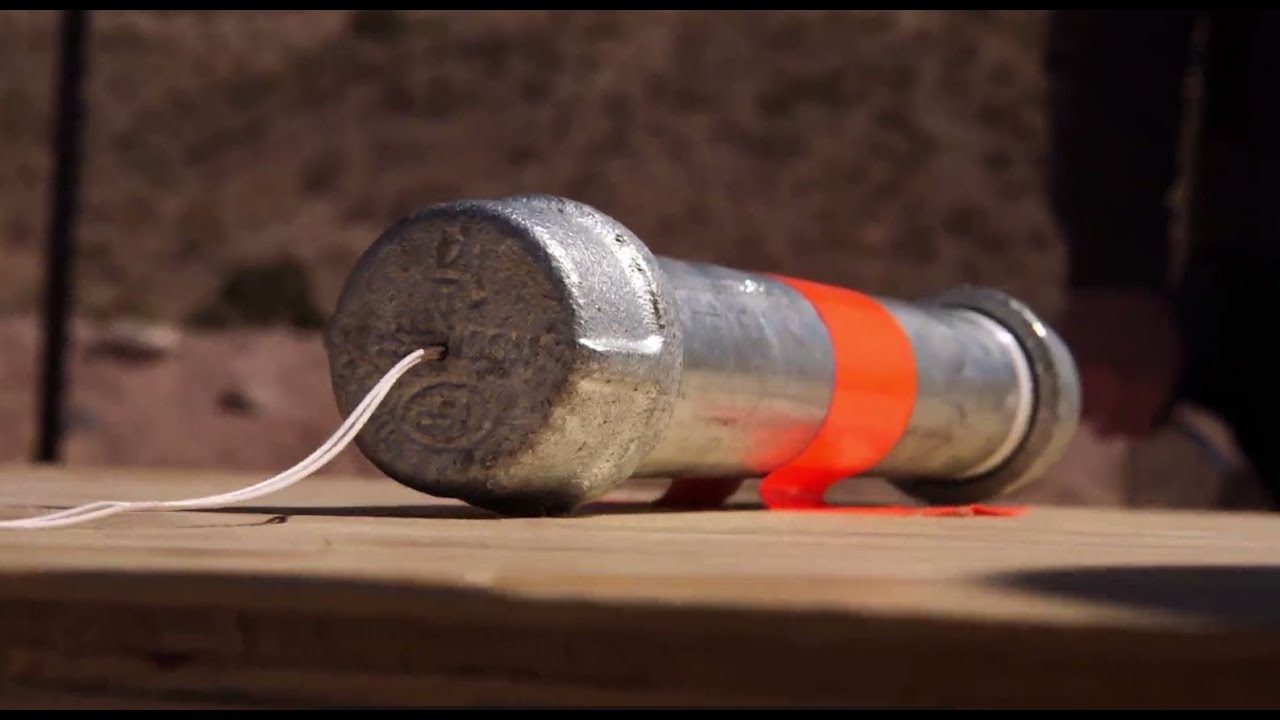
A pipe-bomb was thrown at a house at Lettercreeve in the Ballee area of Ballymena. The device bounced off a window and landed in the garden. The family in the house at the time escaped injury. There was also a pipe-bomb attack on a public house in Ahoghill, County Antrim. British Army (BA) technical officers were called to deal with a device that had been left on a windowsill of the pub in the Diamond area. The bar was used by both sides of the community and there was some doubt about the motive for the attack.

A 16 year old boy from Kilrea, County Derry, picked up a pipe-bomb that had been left at his family home before realising what it was. His mother said she was baffled as to why her family had been targeted.

Saturday 12 January 2002

Loyalists Kill Catholic Man Daniel McColgan (20), a Catholic civilian, was shot and mortally wounded by Loyalist paramilitaries as he arrived for work at a postal sorting depot at Rathcoole, Newtownabbey, County Antrim, at approximately 4.45am (0445GMT). McColgan was shot several times after he got out of a car outside the postal depot. He was taken to the Mater Hospital where he died a short time later. A car used by the gunmen was found burnt out a short distance from the scene of the killing.

Initially the Red Hand Defenders (RHD), a cover name previously used by the Ulster Defence Association (UDA), claimed responsibility for the killing. However the UDA later admitted that it had killed McColgan. McColgan was from Longlands Court, Newtownabbey. He was the father of one year old girl; his partner called for no retaliation for his killing.

Postal workers walked out of work in protest at the killing.

[Later, as a mark of respect the Royal Mail suspended services in the Northern Ireland on Sunday and Monday.]

The police arrested two men in connection with the killing of McColgan.

[The two were released without charge on Monday 14 January 2002. Another two men were arrested on 14 January 2002 but released without charge on 15 January 2002.]

The UDA issued a statement (using the covername RHD) saying that all Catholic postal workers were now considered “legitimate targets”.

[This was in addition to the death threats against all Catholic teachers and all other staff working in Catholics schools in north Belfast issued by the UDA on 11 January 2002.]

Bertie Ahern, then Taoiseach (Irish Prime Minister), condemned the killing of McColgan and called on the Police Service of Northern Ireland (PSNI) to take tougher action against Loyalist paramilitaries. He said two-thirds of the recent attacks in north Belfast had been carried out by loyalist groups, but only a small number of arrests had been made.

PSNI officers discovered explosives and weapons during the search of a house in a Nationalist area of north Belfast. The haul included 4 blast bombs, an anti-personnel mine containing high explosive, two detonators, a sub-machine gun, ammunition, and a shotgun. A man was arrested following the search.

Alan McQuillan, then Assistant Chief Constable, said he believed the weapons belonged to the Irish National Liberation Army (INLA).

PSNI officers found a man who had been shot in one leg and who had cuts to his head on the Falls Road, west Belfast, at 3.00am (0300GMT). The man was found outside a public house and a crowd of people ran off as the police arrived. A man was shot in both ankles in a paramilitary ‘punishment’ attack in the Nationalist New Lodge area of north Belfast.


 —————————————————————————

Remembering all innocent victims of the Troubles

Today is the anniversary of the death of the following  people killed as a results of the conflict in Northern Ireland

“To live in hearts we leave behind is not to die

– Thomas Campbell

To the innocent on the list – Your memory will live  forever

– To  the Paramilitaries  –

There are many things worth living for, a few things worth dying for, but nothing worth killing for.

5  People   lost their lives on the 12th January  between  1972 – 1980

————————————————————

12 January 1972


Raymond Denham,   (42)

Protestant
Status: Royal Ulster Constabulary (RUC),

Killed by: Irish Republican Army (IRA)
Off duty reservist. Shot at his workplace, Waterford Street, Lower Falls

————————————————————

12 January 1973
Elizabeth McGregor,   (76)

Catholic
Status: Civilian (Civ),

Killed by: British Army (BA)
Shot while walking along Highbury Gardens, Ardoyne, Belfast

————————————————————

12 January 1978
Cecil Grills,   (56)

Protestant
Status: Ulster Defence Regiment (UDR),

Killed by: Irish Republican Army (IRA)
Off duty. Shot while driving home from work, Talbot Street, Newry, County Down

————————————————————

12 January 1980

David Purse,   (44)

Protestant
Status: Royal Ulster Constabulary (RUC),

Killed by: Irish Republican Army (IRA)
Shot while on Royal Ulster Constabualry (RUC) patrol, at the main gate of Seaview football ground, Shore Road, Skegoneill, Belfast.

————————————————————

12 January 1980
Thomas Montgomery,   (64)

Protestant
Status: Civilian (Civ),

Killed by: not known (nk)
Died one day after being injured when crowd threw missiles at his Shankill black taxi, junction of Woodvale Road and Crumlin Road, Belfast.

————————————————————


Buy Me A Coffee

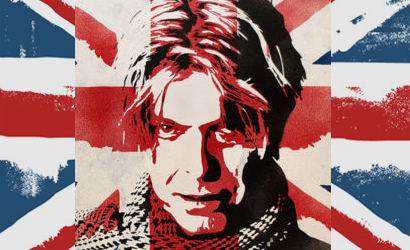
David Bowie – A British “Hero”

Rest in Peace

 Starman

You are flying through the Stars once again!

————————————-

David Bowie – Starman

————————————-

See David Bowie – Life & Death

Although  I was not an avid fan of David Bowie , I appreciated his music and recognized his iconic contribution to British and global pop music and cultural history.

In fact he has been on my mind over the past few days and this is  due to his estranged wife – Angie Bowie’s – car crash participation in the latest Big Brother celebrity adventure.

I am curious by nature and when Angie revealed a few details about her split with David and the fact that David had brought up their son  alone  and she played no part in his upbringing  – my curiosity was tickled and I headed straight for Google.

angie bowie

The Google search satisfied my curiosity and  as you do – I listed to a few of his tunes  to remind me of how good he was.

That was yesterday and today I woke to the News he was dead. This was another bizarre event in a long line of recent strange  coincidence’s I have experienced and I will be writing a blog about that soon.


Back to David – hearing the News of his death I felt a strange mixture of nostalgia for my own youth and the glam days of the 70’s when anything went and we all wore those shocking tartan  trousers.

Bay City Rollers Flares


I also felt something akin to grief and this saddened me for a short period today. I have always had a deep empathy for others pain and suffering and its not unusual to find me in silent tears after a particularly depressing films or News story. Sometimes I even well up when I hear the national Anthem and the wife assures me its a nice trait to have and I just feel like a wimp!

But my grief was short lived and I spent a few hours listening to some of Bowies biggest hits and watching the BBC News giving his death wall – to wall coverage and I felt this was only right!

Bowie’s career spanned five decades and he has given us some of the most iconic pop songs ever produced and the fact that he was British gained him many brownie points in my book-  as I am  fiercely  proud of all things British

moddona

Global pop stars  ,  superstars , household names and even the Prime Minister have paid tribute to him today and the whole country should feel proud of his contribution to “Cool Britannia” and I feel his legacy will live for any moons to  come.

In this age of  “factory” pop stars and manufactured groups its nice to be reminded of a not too distant  past when mavericks like David Bowie set the world on fire and thrilled us with their unique style and unforgettable music.

R.I.P

Starman

 You are now flying through the heavens once again!

David Bowie – Life & Death

——————————————

David Bowie -Best of Bowie(2002) [FULL ALBUM]

——————————————