Key Events & Deaths on this day in Northern Ireland Troubles
3rd July
—————————————-
Wednesday 3 July 1968
As part of a series of protests against housing conditions in Derry, the Derry Housing Action Committee (DHAC) held a sit-down protest on the newly opened second deck of the Craigavon Bridge in the city.
Friday 3 July 1970
Falls Road Curfew
Beginning in the afternoon, the British Army carried out extensive house searches in the Falls Road area of Belfast for members of the Irish Republican Army (IRA) and IRA arms. A military curfew was imposed on the area for a period of 34 hours with movement of people heavily restricted. The house searches lasted for two days and involved considerable destruction to many houses and their contents. During the searches the army uncovered a lot of illegal arms and explosives.
However the manner in which the searches were conducted broke any remaining goodwill between the Catholic community and the British Army. During the period of the curfew there were gun battles between both wings of the IRA and the Army. Two people were killed by the British Army during the violence; one of them deliberately run over by an Army vehicle. Another person was shot and mortally wounded by the Army and died on 10 July 1970
Monday 3 July 1972
The Ulster Defence Association (UDA) and the British Army come into conflict about a ‘no-go’ area at Ainsworth Avenue, Belfast.
Tuesday 4 July 1972
The Royal Ulster Constabulary (RUC) forwarded a file on about the killings on ‘Bloody Sunday’ (30 January 1972) to the Director of Public Prosecutions (DPP) for Northern Ireland. The Attorney General made a statement about this file on 1 August 1972
Máire Drumm, then Vice-President of Sinn Féin (SF), said that SF was ready to talk with representatives of the Ulster Workers’ Council (UWC).
This statement followed an offer by Andy Tyrie, then leader of the Ulster Defence Association (UDA), to be involved in negotiations with the Irish Republican Army (IRA).
At this time there were a number of areas of common interest between Loyalist and Republican paramilitary groups including the issues of Internment and prisoners.
See Ulster Workers’ Council Strike
Friday 3 July 1981
In the United States of America (USA) a federal court ruled that Noraid (Northern Ireland Aid ?) would have to register as an agent of the Irish Republican Army (IRA).
The home of Gerry Fitt, formerly the Member of Parliament (MP) for West Belfast, in Belfast was set on fire by Nationalist youths. The house was not occupied at the time.
Wednesday 3 July 1985
The Orange Order organised a large Loyalist protest demonstration in Portadown, County Armagh, against the re-routing of a Loyalist parade away from a Catholic area of the town.
[There was trouble in the town on 7 July 1985 and on 12 July 1985. The annual Orange parade to Drumcree, Portadown, was to return to the headlines in 1995.]
The first taxi driver to be killed during the ‘Troubles’ was shot dead by the Ulster Freedom Fighters (UFF). [In the coming years taxi drivers were to become regular targets for the paramilitary groups.] In a dispute over the display of emblems in the workplace Shorts Aircraft company suspended work in three production plants.
Wednesday 3 July 1991
Political Talks End
In order to try to prevent the complete collapse of the negotiations Peter Brooke, then Secretary of State for Northern Ireland, announced at Westminster that he was bringing this stage of the political talks (later known as the Brooke / Mayhew talks) to an end.
[Unionists had stated that they were unwilling to continue the talks beyond 9 July 1991.]
Sunday 3 July 1994
The Sunday Tribune (a Dublin based newspaper) carried a report that the Irish Republican Army (IRA) was considering a ceasefire.
Monday 3 July 1995
Clegg Released
Lee Clegg, a paratrooper with the British Army, was released from prison on the orders of Patrick Mayhew, then Secretary of State for Northern Ireland. Clegg had received a life sentence and been imprisoned in June 1993 for the murder of Karen Reilly (18), a Catholic civilian, on 30 September 1990.
The decision to release Clegg sparked serious rioting in Nationalist areas of Northern Ireland.
[Rioting continued for a second night. Clegg was accepted back into the British Army and later promoted.]
Sinn Féin (SF) and representatives of Loyalist paramilitaries called for the immediate release of all political prisoners. Breidge Gadd, then Chief Probation Officer for Northern Ireland, resigned from the Life Sentence Review Board in protest at the decision.
John Bruton, then Taoiseach (Irish Prime Minister), said that he expected the British authorities to apply the same rules “to other similar prisoner cases”.
Thursday 3 July 1997
Relatives of those killed on ‘Bloody Sunday‘ presented a 40,000 signature petition for a new inquiry into the killings to Marjorie (Mo) Mowlam, then Secretary of State for Northern Ireland.
Tony Blair, then British Prime Minister, held a meeting at 10 Downing Street with Bertie Ahern, then Taoiseach (Irish Prime Minister), to discuss matters related to Northern Ireland and in particular the Drumcree parade on 6 July 1997.
Ahern said that it would be a mistake to force the march along the Garvaghy Road. Mowlam held meetings with the heads of the security services about Drumcree.
Friday 3 July 1998
William Paul (41), a former member of the Ulster Volunteer Force (UVF), was shot dead in what the Royal Ulster Constabulary (RUC) believed was a drugs-related feud among former paramilitaries.
The Ulster Unionist Party (UUP) issued a statement supporting the Orange Order’s right to march down the Garvaghy Road in Portadown, County Down. Gerry Adams, then President of Sinn Féin (SF), issued a statement backing the Garvaghy Road residents and called for the forthcoming march to be rerouted.
Denis Bradley, a former Catholic priest, revealed that he had been one of a number of members of “The Contact” and had acted as a ‘go-between’ for MI6 and the Irish Republican Army (IRA). Bradley said that he had dealt with Frank Steele (then a member of the British diplomatic service) and Michael Oatley (who was referred to by Republicans as “The Mountain Climber”). The revelations were contained in a report in the Derry Journal newspaper.
Saturday 3 July 1999
The Irish Times (a Dublin based newspaper) carried a report on what it termed a “ethno-sectarian” campaign by Loyalist paramilitaries against Catholics and couples in mixed marriages living in towns across Northern Ireland.
The report said that the campaign had gone virtually unreported despite the fact that Loyalists had carried out over 200 bomb attacks. Many Catholics had been forced to abandon their homes.
The reported highlighted the situation in Carrickfergus, County Antrim, where it was claimed that members of the South East Antrim Ulster Defence Association (UDA) were responsible.
Monday 3 July 2000
Royal Ulster Constabulary (RUC) officers moved to clear Loyalists from Drumcree after coming under a barrage of stones, bottles, and firecrackers for the second night in a row. However violence continued at Drumcree and demonstrations and protests spread throughout Northern Ireland.
——————————————
Remembering all innocent victims of the Troubles
Today is the anniversary of the death of the following people killed as a results of the conflict in Northern Ireland
“To live in hearts we leave behind is not to die
– Thomas Campbell
To the innocent on the list – Your memory will live forever
– To the Paramilitaries –
There are many things worth living for, a few things worth dying for, but nothing worth killing for.
7 People lost their lives on the 3rd July between 1970 – 1998
——————————————
03 July 1970 Thomas Reid (46)
Protestant Status: Civilian (Civ),
Killed by: not known (nk)
Died 6 days after being hit on the head by missile thrown from a crowd during street disturbances, Springfield Road, Belfast. .
——————————————
03 July 1970 Charles O’Neill (36)
Catholic Status: Civilian (Civ), K
illed by: British Army (BA)
Knocked down by British Army (BA) Armoured Personnel Carrier, during street disturbances, Falls Road, Lower Falls, Belfast.
——————————————
03 July 1970
William Burns (54)
Catholic Status: Civilian (Civ),
Killed by: British Army (BA)
Shot at the front door of his home, Falls Road, Lower Falls, Belfast.
——————————————
03 July 1972 John O’Hanlon (38)
Catholic Status: Civilian (Civ),
Killed by: Ulster Volunteer Force (UVF)
Found shot on waste ground, Twickenham Street, Shankill, Belfast.
——————————————
03 July 1976 William Miller (19)
nfNI Status: British Army (BA),
Killed by: Irish Republican Army (IRA)
Shot by sniper while at British Army (BA) pedestrian check point, Butcher Gate, Butcher Street, Derry.
——————————————
03 July 1987
Edward Campbell (40)
Catholic Status: Civilian (Civ),
Killed by: Ulster Freedom Fighters (UFF)
Former internee. Taxi driver. Found shot in disused quarry, Upper Crumlin Road, Belfast
——————————————
03 July 1998 William Paul (49)
Protestant Status: ex-Ulster Volunteer Force (xUVF),
Killed by: Ulster Volunteer Force (UVF)
Shot, outside his home, Glastry Gardens, Kilcooley, Bangor, County Down.
——————————————
As I child I learned the stories & legends of the Battle of Boyne & Siege of Derry at my grandfather’s & father’s knees, becoming immersed in the Loyalist culture that would shape & dominate my whole existence.
Two Catholic civilians were shot and killed by Loyalist paramilitaries, probably the Ulster Defence Association (UDA), in Belfast.
Two Protestant civilians were killed by Republican paramilitaries.
Friday 2 July 1976
Six civilians, five Protestant and one Catholic, died as a result of a Loyalist paramilitary attack on the Ramble Inn, near Antrim, County Antrim. The attack was carried out because the public house was owned by Catholics.
Merlyn Rees, then Secretary of Sate for Northern Ireland, announced the outcome of a review of security force response to violence in Northern Ireland.
The review made a number of recommendations including: increasing the manpower level of the Royal Ulster Constabulary (RUC); establishing specialised investigation teams; making greater use of the RUC reserve; and trying to encourage more support from the Catholic community.
Monday 2 July 1979
The Irish National Liberation Army (INLA) was declared illegal across the whole of the United Kingdom (UK).
This followed the killing of Airey Neave on 30 March 1979
[However, Unionists rejected the option which involved power-sharing and non-Unionists rejected the option of majority rule. By 27 November 1980 Humphrey Atkins, then Secretary of State for Northern Ireland, told the House of Commons that there was still no consensus amongst the parties in Northern Ireland and little prospect for a devolved government in the region.]
Thursday 2 July 1981
Humphrey Atkins, then Secretary of State for Northern Ireland, suggested the setting up of an advisory council to help govern Northern Ireland. It was envisaged that the council would be comprised of 50 elected representatives.
[The idea received little political support and was later dropped.]
1981 Hunger Strike; Political Developments
Monday 2 July 1984
James Prior, then Secretary of State for Northern Ireland, addressed the House of Commons and rejected the three main options proposed in the Report of the New Ireland Forum.
Wednesday 2 July 1986
Unionist politicians established their own version of the Northern Ireland Assembly in Belfast City Hall.
[These proceedings were maintained for several months until November 1986 when they were discontinued.]
In Belfast four members of the Ulster Defence Regiment (UDR) were sentenced to life imprisonment for the murder of Adrian Carroll, a Catholic civilian, on 8 November 1983.
[Later a campaign was started to press for the release of the ‘UDR Four’ as the men became known. Three of the ‘UDR Four’ were released on 29 July 1992 when their convictions were quashed.]
Thursday 2 July 1987
The Unionist Task Force published a report on an alternative to the Anglo-Irish Agreement. The reports main authors were Frank Millar, then general secretary of the Ulster Unionist Party (UUP), and Peter Robinson, then deputy leader of the Democratic Unionist Party (DUP).
The failure of the two party leaders to respond to the document led to the two main authors resigning their positions. Peter Robinson returned to his position later.
Sunday 2 July 1989
The Irish Republican Army (IRA) killed a British Army soldier in Hanover, West Germany when they planted a bomb on his car.
Monday 2 July 1990
While on a visit to Dublin Nelson Mandela, then Vice-President of the African National Congress (ANC), said that there should be talks between the British Government and the Irish Republican Army (IRA).
Friday 2 July 1993
There was serious rioting in Belfast, Bangor, and Lurgan, following the funeral of Brian McCallum (26), a member of the Ulster Volunteer Force (UVF). McCallum had been fatally wounded on 26 June 1993.
Wednesday 2 July 1997
The Loyalist Volunteer Force (LVF) threatened to kill people living in the Republic of Ireland if the Drumcree parade planned for 6 July 1997 was not allowed to proceed through the Nationalist Garvaghy Road.
The Royal Ulster Constabulary (RUC) announced that they were banning the planned festival on 6 July 1997 on the Garvaghy Road. Residents reacted by establishing a women’s peace camp beside the road. In London six members of the Irish Republican Army (IRA) were each given prison sentences of 35 years for conspiracy to cause explosions in London.
[No explosives were ever found in connection with this case and many people were shocked by the length of the sentences.] In a court decision in Belfast Judge Girvin ruled that Marjorie (Mo) Mowlam, then Secretary of State for Northern Ireland, could reconsider the early release of two British soldiers serving life sentences for the murder of Peter McBride on 4 September 1992. McBride’s father interrupted the court proceedings to protest at the decision. [The two Scots Guards had stopped McBride in the street and searched him. McBride ran away from the soldiers and they shot him in the back.]
Thursday 2 July 1998
10 Catholic Churches Attacked
Loyalists, believed to be the Loyalist Volunteer Force (LVF), carried out arson attacks on 10 Catholic churches in the east and the south of Northern Ireland. Some of the churches were destroyed while the rest were badly damaged.
There were two petrol bomb attacks on Catholic homes in the Waterside area of Derry. Six elderly people had to be rescued from the two houses. There was an explosion on the Belfast to Dublin railway line near Newry, County Down. A telephone warning had been given and there were no injuries. The caller claimed to represent the ‘south Down IRA’. The formalities of the setting up of the new Northern Ireland Assembly continued.
Tony Blair, then British Prime Minister, travelled to Belfast for a meeting with David Trimble, then leader of the Ulster Unionist Party (UUP) and First Minster designate, and Seamus Mallon, then deputy leader of the Social Democratic and Labour Party (SDLP) and Deputy First Minster designate. The Prime Minister also visited the site of one of the churches destroyed in the sectarian attacks.
Friday 2 July 1999
After five days of discussions between the British and Irish Governments at Stormont, the two governments issued a document called The Way Forward outlining a way to establish an inclusive Executive, and also to decommission paramilitary arms.
[The document envisaged that ministers would be nominated by 15 July 1999 and powers would be devolved to the Executive on 18 July 1999. Shortly after the formation of the Executive decommissioning of paramilitary arms would begin and would be completed by May 2000. “Safeguard” legislation would be introduced to ensure that if any part of the undertaking was broken then all the institutions associated with the Agreement would cease to operate. Later Bill Clinton, the President of the USA, urged all the parties to support the document.]
As part of the process the Independent International Commission on Decommissioning (IICD) issued a report on decommissioning. Sinn Féin (SF) also issued a document that indicated that the Irish Republican Army (IRA) “could” start decommissioning its weapons. Tony Blair, the British Prime Minster, also had talks with representatives of the Orange Order and the Garvaghy Road Residents’ Coalition (GRRC) in an unsuccessful attempt to find agreement ahead of the Drumcree parade on 4 July 1999.
Sunday 2 July 2000
Violence At Drumcree
It was announced that three battalions of troops (2,000 soldiers) were to be drafted into Northern Ireland to help police the Loyalist marching season. The Northern Ireland Parades Commission announced that it was banning the Orange Order from parading along the mainly Nationalist Garvaghy Road, Portadown, County Armagh.
The Commission said that the parade should return from Drumcree to Portadown by the outward route. There was rioting at Drumcree in Portadown when several hundred Loyalists threw bottles, stones, and other missiles at security forces. Loyalists also set fire to an armoured vehicle and fired ball bearings from a catapult at Drumcree Hill.
Monday 2 July 2001
John de Chastelain (Gen.), then head of the Independent International Commission on Decommissioning (IICD), issued a brief statement to say that there had been no progress on Irish Republican Army (IRA) disarmament.
——————————————
Remembering all innocent victims of the Troubles
Today is the anniversary of the death of the following people killed as a results of the conflict in Northern Ireland
“To live in hearts we leave behind is not to die
– Thomas Campbell
To the innocent on the list – Your memory will live forever
– To the Paramilitaries –
There are many things worth living for, a few things worth dying for, but nothing worth killing for.
12 People lost their lives on the 2nd July between 1972 – 1989
——————————————
02 July 1972 Hugh Clawson (39)
Protestant Status: Civilian (Civ),
Killed by: non-specific Republican group (REP)
Found shot on waste ground off Cliftonville Road, Belfast.
——————————————
02 July 1972 David Fisher (30)
Protestant Status: Civilian (Civ),
Killed by: non-specific Republican group (REP)
Found shot on waste ground off Cliftonville Road, Belfast.
——————————————
02 July 1972 Gerard McCrea (27)
Catholic Status: Civilian (Civ),
Killed by: non-specific Loyalist group (LOY)
Found shot, Forthriver Road, Glencairn, Belfast.
——————————————
02 July 1972 James Howell (31)
Catholic Status: Civilian (Civ),
Killed by: non-specific Loyalist group (LOY)
Found shot in Gerard McCrea’s car, Cavour Street, off Old Lodge Road, Belfast
——————————————
02 July 1974 John Walton (27)
nfNI Status: British Army (BA),
Killed by: Irish Republican Army (IRA)
Killed by booby trap bomb hidden in derelict house while on British Army (BA) foot patrol, Carrickgallogly, near Belleek, County Armagh.
——————————————
02 July 1976 Francis Scott (73)
Protestant Status: Civilian (Civ),
Killed by: Ulster Volunteer Force (UVF)
Shot during gun attack on Ramble Inn, Creevery, near Antrim, County Antrim.
——————————————
02 July 1976 Ernest Moore (43)
Protestant Status: Civilian (Civ),
Killed by: Ulster Volunteer Force (UVF)
Shot during gun attack on Ramble Inn, Creevery, near Antrim, County Antrim.
——————————————
02 July 1976
James McCallion (39)
Protestant Status: Civilian (Civ),
Killed by: Ulster Volunteer Force (UVF)
Shot during gun attack on Ramble Inn, Creevery, near Antrim, County Antrim.
——————————————
02 July 1976 Oliver Woulahan (20)
Catholic Status: Civilian (Civ),
Killed by: Ulster Volunteer Force (UVF)
Shot during gun attack on Ramble Inn, Creevery, near Antrim, County Antrim
——————————————
02 July 1976 Joseph Ellis (27)
Protestant Status: Civilian (Civ),
Killed by: Ulster Volunteer Force (UVF)
Shot during gun attack on Ramble Inn, Creevery, near Antrim, County Antrim. He died 7 July 1976
——————————————
02 July 1976 James Francey (50)
Protestant Status: Civilian (Civ),
Killed by: Ulster Volunteer Force (UVF)
Shot during gun attack on Ramble Inn, Creevery, near Antrim, County Antrim. He died 14 July 1976
——————————————
02 July 1989 Steven Smith (31)
nfNIE Status: British Army (BA),
Killed by: Irish Republican Army (IRA)
Off duty. Killed by booby trap bomb attached to his car outside his British Army (BA) home, Hanover, West Germany.
——————————————
As I child I learned the stories & legends of the Battle of Boyne & Siege of Derry at my grandfather’s & father’s knees, becoming immersed in the Loyalist culture that would shape & dominate my whole existence.
Praying for Baby! Our Little Cat – Man Is seriously ill! Our beautiful little Baby has been knocked down by a hit and run driver and is critically ill and our hearts are breaking. He is only…
Our beautiful little Baby has been knocked down by a hit and run driver and is critically ill and our hearts are breaking.
He is only a few months old and is the happiest, mischievous little fella in the world and he brings joy to our lives every day. He has broken his femur, jaw and lost loads of blood and may have internal injuries to boot.
When we first got him we couldn’t decide on a name and my wife and daughter started calling him Baby until we could decide on a permanent name and Baby has stuck.
You have no idea how embarrassing it is for me to call him in for his dinner – BABY, Your dinners ready!
Hmmm , I know the neighbour have a right laugh at me , but I care not – we are an animal loving family.
He is such an adorable ,sweet little thing and all the female cats in the area love him and he is never without female company. In fact two local lady cats were have a right cat-fight the other day over him , whilst he stood solemnly by and watched them , giving no indication the fight had anything to do with him , although I did note he give the winner a playful bite on the left ear before coming in for a snooze on his favourite chair.
Things have not always been so rosy for him however and in the past few months he has tried to commit suicide three times.
The first time he tried to gas himself in our over and after singeing his whiskers and burning his nose he eventually realised we have an electric over and looking embarrassed hid under the bed for a few hours.
The second time was a few days before Xmas and as he had helped me put up the Xmas tree and enjoyed swinging from the branches (and destroying the tree in the process ) , I assumed he was happy and looking forward to Xmas day and the presents Santa was going to bring him.
How wrong I was.
I went out to the shed to get something and was only gone for a few minutes and when I came back he was swinging from the tree, with the lights twisted around his neck and turning blue. He was dangling half way up the tree and if I hadn’t come back so soon he would surely have died.
Joking aside, this scared the hell out of me and I struggled frantically to unwind the lights from him and I’m sure he could hear my heart banging against my rib cage as I had images of him dying and having to explain it to the wife and kids. After that he was never left alone in the front room with the evil Xmas tree again and thankfully he cheered up and had a wonderful Xmas and loved his toys, (see video.)
The third suicide attempt was when he fell asleep in the tumble dryer and no one knew he was in there. Passing it I noticed the door was opened and closed it and thought no more of it. The wife was out and called to order me to make sure the clothes in the tumble dryer were dry as she needed them. Now normally I would just twist the knob and leave it, but for some reason I opened the door to check the clothes and there he was snoozing without a care in the world.
At this stage I came to the conclusion that having a kitten was just as stressful as having a baby and the irony was not lost on me. But we all love him so much and spoil him rotten.
The accident
Happened today about 2 o’clock and to be honest we aren’t quite sure what precisely occurred. The wife and I were discussing our upcoming trip to Belfast and suddenly we heard him screaming at the front door. This is nothing unusal as he normally screams to get in and once in he goes straight to the cupboard were his food is stored it and lets us know he wants feeding RIGHT NOW!
The wife went out to let him in and it was then we realized something was very wrong. He was dragging his rear legs behind him and had blood on his face and chest. The wife panic and whilst I phone the vet (tried three and only one actually had a vet on duty..grrrrr) she lifted him and cuddling him she tried to established where he was injured. And then to our horror blood started pouring out of his back end, loads and loads of blood and it scared the hell out of us.
We got him to the vet and to be honest they weren’t altogether comforting and after a few test and an examination, they sedated him, give him pain killers and put him on an intravenous drip. The vet explained it looked like a traffic accident ( wow, how sharp of him ) and what his main concerns were – he had a broken jaw, lost various teeth, a broken femur and possible internal injuries and they were going to keep him under observation over the weekend and if he’s fit enough operate on him on Monday.
The vets parting words were the cost would be in the range of £700 – £800.
Our hearts are broken and we are praying he pulls through and makes a full recovery in time.
Where we are going to find the money for the operation and treatment is a major concern to us and if you would like to help or donate please click the PayPal button below. Every little helps and we are grateful for anything at all. I will be posting updates over the weekend and coming days and weeks and we are praying our little man can pull through and survive this terrible ordeal.
If you would like to donate towards his surgery & treatment please click PayPal button below and follow the instructions.
Please check out the video and you will see just how adorable he is.
Thanks you and I will post updates as soon as they happen
William Whitelaw, then Secretary of State, travelled to Chequers for a meeting with at 8.00pm with Edward Heath, then British Prime Minster.
[Public Records 1972 – Released 1 January 2003: Note of meeting between William Whitelaw, then Secretary of State, and Edward Heath, then British Prime Minster. ]
The Garda Síochána (the Irish police) found a large cache of bombs at Castlefin, County Donegal.
Wednesday 1 July 1992
Gregory Burns, John Dignam & Aidan Starrs
The bodies of three Irish Republican Army (IRA) members were found in different parts of south Armagh.
The three men were shot dead by the IRA which alleged that the men had acted as informers for the Royal Ulster Constabulary (RUC) and MI5 (British Security Service).
In a significant shift in approach the Unionist parties agreed to talks with politicians from the Republic of Ireland under Strand Two of the political talks (later known as the Brooke / Mayhew talks).
The Royal Irish Regiment (RIR) came into being. The regiment was formed by the amalgamation of the Ulster Defence Regiment (UDR) and the Royal Irish Rangers.
[The UDR had been the subject of sustained criticism from Nationalists since its formation in 1970. The merger meant that the former UDR battalions, a total of approximately 6,000 soldiers, would continue to operate in Northern Ireland while the two former Rangers battalions would be reduced to a single general service battalion, approximately 900 soldiers, that would serve abroad as well as in Northern Ireland.]
Thursday 1 July 1993
The annual report of the Standing Advisory Commission on Human Rights (SACHR) was published. SACHR called for a review of the legislation that covered the use of lethal force by the security forces.
The report also supported the use of video recording of Royal Ulster Constabulary (RUC) interviews of people suspected of paramilitary related offences.
Tuesday 1 July 1997
The offices of the Irish News were slightly damaged in an arson attack.
The Garvaghy Road Residents Coalition announced that they were organising a street festival for Sunday 6 July 1997.
This would coincide with the disputed Orange Parade.
Bertie Ahern, then Taoiseach (Irish Prime Minister), and his ministerial team held talks in Belfast with Marjorie (Mo) Mowlam, then Secretary of State for Northern Ireland, about the ‘marching season’. Ahern said that it would be a mistake to force the march along the Garvaghy Road.
The Northern Ireland Office (NIO) and the Royal Ulster Constabulary (RUC) said that they would only announce their decision on whether or not the march could proceed along the Garvaghy Road, two or three days in advance.
This was in spite of a promise by Mowlam to reveal the decision at lease six days in advance.
Wednesday 1 July 1998
First Meeting of ‘Shadow’ Assembly ‘First Minister Designate’ and ‘Deputy First Minister Designate’ Elected
All the political parties who had won seats during the Northern Ireland Assembly election took their places in the new Assembly chamber at Stormont. The Assembly met in ‘shadow’ form as powers had not yet been devolved. Those present included the parties, and candidates, who had opposed the Good Friday Agreement.
[The event was televised live in Northern Ireland and many people found it almost surreal to see Ian Paisley, then leader of the Democratic Unionist Party (DUP), sitting in the same debating chamber as Gerry Adams, then President of Sinn Féin (SF).]
During the first session on the new Northern Ireland Assembly David Trimble, then leader of the Ulster Unionist Party (UUP), was elected ‘First Minister Designate’ of the new Assembly. Seamus Mallon, then deputy leader of the Social Democratic and Labour Party (SDLP), was elected ‘Deputy First Minister Designate’.
John Alderdice, formerly the leader of the Alliance Party of Northern Ireland (APNI), was appointed as the ‘Presiding Officer Designate’ (the Speaker) of the new Assembly.
Thursday 1 July 1999
Tony Blair, then British Prime Minister, claimed that the Stormont talks had brought about a “seismic shift” in the political landscape of Northern Ireland.
The Ulster Unionist Party (UUP) continued to insist that the Irish Republican Army (IRA) should decommission its weapons and explosives in parallel with the creation of the Northern Ireland Executive.
Social Democratic and Labour Party (SDLP) sources believed a possible solution was emerging. (Blair’s attendance at the Stormont talks meant that he missed the opening of the Scottish Parliament.)
The Democratic Unionist Party (DUP) won a council by-election in Lisburn. Peter Robinson, then Deputy Leader of the DUP, said this victory in a Ulster Unionist Party (UUP) safe seat was a “final warning” to David Trimble then leader of the UUP.
Those Loyalist paramilitary groups who were then on ceasefire issued a warning to “hooligans and looters” that pro-Drumcree rioting would not be tolerated.
William Whitelaw, who had been appointed as the first Secretary of State for Northern Ireland following the imposition of Direct Rule in 1972, died in London aged 81.
Sunday 1 July 2001
Trimble Resigned As First Minister
The resignation of David Trimble, then leader of the Ulster Unionist Party (UUP), as First Minister took effect as of midnight on Saturday.
Trimble called on Tony Blair, then British Prime Minister, to suspend the Northern Ireland Assembly (NIA) and the other institutions established under the Good Friday agreement.
The procedures of the NIA allowed for a six-week period during which a new First Minister and Deputy First Minister would have to be elected otherwise new elections to the Assembly would have to be called.
Another option would be for the British government to suspend the Assembly and the institutions and reintroduce Direct Rule. The final option was for there to be a temporary suspension which would have the effect of extending the period in which to find agreement.
The Assembly was suspended for 24 hours beginning on Friday 10 August 2001.
——————————————
Remembering all innocent victims of the Troubles
Today is the anniversary of the death of the following people killed as a results of the conflict in Northern Ireland
“To live in hearts we leave behind is not to die
– Thomas Campbell
To the innocent on the list – Your memory will live forever
– To the Paramilitaries –
There are many things worth living for, a few things worth dying for, but nothing worth killing for.
10 People lost their lives on the 1st July between 1972 – 1992
——————————————
01 July 1972 Paul Jobling (19)
nfNI Status: Civilian (Civ),
Killed by: non-specific Loyalist group (LOY) English visitor. Found shot on waste ground, Westway Drive, Glencairn, Belfast.
——————————————
01 July 1972 Daniel Hayes (40)
Catholic Status: Civilian (Civ),
Killed by: non-specific Loyalist group (LOY) Found shot in playground, Penrith Street, Shankill, Belfast.
——————————————
01 July 1973 Reginald Roberts (25)
nfNI Status: British Army (BA),
Killed by: Irish Republican Army (IRA) Shot by sniper while on British Army (BA) foot patrol, Bull Ring, Ballymurphy, Belfast
——————————————
01 July 1976 Brian Palmer (39)
Catholic Status: Civilian (Civ),
Killed by: Irish Republican Army (IRA) Shot while in Finaghy Roadhouse Bar, Finaghy Road North, Belfast. Alleged informer.
——————————————
01 July 1980
Terence O’Neill (26)
Catholic Status: Irish Republican Army (IRA),
Killed by: Royal Ulster Constabulary (RUC) Shot while running away from Whiterock Community Centre, Ballymurphy, Belfast.
——————————————
01 July 1986
Robert Hill (22)
Protestant Status: Ulster Defence Regiment (UDR),
Killed by: Irish Republican Army (IRA) Off duty. Killed by booby trap bomb attached to his car outside his home, Drumaness, near Ballynahinch, County Down.
——————————————
01 July 1989
Norman Annett (56)
Protestant Status: Royal Ulster Constabulary (RUC),
Killed by: Irish Republican Army (IRA) Off duty. Shot while visiting his mother’s home, Carhill Road, Garvagh, County Derry
——————————————
01 July 1992
Gregory Burns (34)
Catholic Status: Irish Republican Army (IRA),
Killed by: Irish Republican Army (IRA) Found shot Cullaville Road, near Crossmaglen, County Armagh. Alleged informer.
——————————————
01 July 1992
John Dignam (32)
Catholic Status: Irish Republican Army (IRA),
Killed by: Irish Republican Army (IRA) Found shot at Mountain Road, Lislea, County Armagh. Alleged informer.
——————————————
01 July 1992
Aidan Starrs (29)
Catholic Status: Irish Republican Army (IRA), K
illed by: Irish Republican Army (IRA) Found shot at Dundalk Road, near Newtownhamilton, County Armagh. Alleged informer.
As I child I learned the stories & legends of the Battle of Boyne & Siege of Derry at my grandfather’s & father’s knees, becoming immersed in the Loyalist culture that would shape & dominate my whole existence.
The views and opinions expressed in this blog post are soley intended to educate and provide background information to those interested in the Troubles of Northern Ireland. They in no way reflect my own opinions and I take no responsibility for any inaccuracies or factual errors.
———————————
Drumcree Riots & Background
However, most of this route is through the mainly Catholic/Irish nationalist part of town. The residents, who see the march as sectarian, triumphalist[1] and supremacist, have sought to ban it from their area. The Orangemen see this as an attack on their traditions; they had marched the route since 1807, when the area was mostly farmland.
The “Drumcree parade” is held on the Sunday before the Twelfth of July.
There has been intermittent violence over the march since the 1800s. The onset of the Troubles led to the dispute intensifying in the 1970s and 1980s. At this time, the most contentious part of the route was the outward leg along Obins Street. After serious violence two years in a row, the march was banned from Obins Street in 1986. The focus then shifted to the march’s return leg along Garvaghy Road.
Each July from 1995–2000, the dispute drew international attention as it sparked protests and violence throughout Northern Ireland, prompted a massive police/British Army operation, and threatened to derail the peace process. The situation in Portadown was likened to a “war zone” and a “siege”.
During this time, the dispute led to the killing of at least six Catholic civilians. In 1995 and 1996, residents succeeded in stopping the march. This led to a standoff at Drumcree between the security forces and thousands of Orangemen/loyalists.
Following a wave of loyalist violence, the march was allowed through. In 1997, security forces locked-down the Catholic area and forced the march through, citing loyalist threats to kill Catholics. This sparked widespread protests and violence by nationalists. From 1998 onward the march was banned from Garvaghy Road and the Catholic area was sealed-off with large steel, concrete and barbed-wire barricades.
Each year there was a major standoff at Drumcree and widespread loyalist violence. Since 2001 things have been relatively calm, but moves to get the two sides into face-to-face talks have failed
Drumcree Church
Some members of Portadown District Loyal Orange Lodge marching in Armagh during the 12 July parades, 2009
Similar arches are erected in Portadown each summer, including one at the end of the mainly-nationalist/Catholic Garvaghy Road.
Portadown has long been mainly Protestant and unionist/loyalist. At the height of the conflict in the 1990s, about 70% of the population were from a Protestant background and 30% from a Catholic background. The town’s Catholics and Irish nationalists, as in the rest of Northern Ireland, had long suffered discrimination, especially in employment.
Throughout the 20th century, the police—Royal Ulster Constabulary (RUC)—was also almost wholly Protestant. Each summer the town centre is bedecked with loyalist flags and symbols.
A loyalist arch is raised over the Garvaghy Road at the Corcrain River, just inside the Catholic district. This is to coincide with the “marching season”, when numerous Protestant/loyalist marches are held in the town.
Each July there are five Protestant/loyalist parades that enter the mainly Catholic/Irish nationalist district:
The “Drumcree Sunday” parade from the town centre, to Drumcree Church, and back again. This is the biggest of the parades. Its traditional route was Obins Street→Corcrain Road→Dungannon Road→Drumcree Road→Garvaghy Road, but it is now banned from Obins Street and Garvaghy Road.
12 July parade. This involves a morning march from Corcrain Orange Hall to the town centre. The marchers then travel to a bigger parade elsewhere, return to the town centre in the evening, and march back to Corcrain Orange Hall. Its traditional route was along Obins Street, but it is now along Corcrain Road.
13 July parade. This follows the same format as the 12th parade.
There is also a junior Orange parade each May along the lower Garvaghy Road at Victoria Terrace.
Before partition
The Orange Order was founded in 1795 in the village of Loughgall, a few miles from Drumcree, after the Battle of the Diamond. Its first ever marches were held on 12 July 1796 in Portadown, Lurgan and Waringstown.
The area is thus seen as the birthplace of Orangeism.
War Walks – The Boyne
In July 1795, the year the Order formed, a Reverend Devine had held a Battle of the Boyne commemoration sermon at Drumcree Church. In his History of Ireland Vol I (published in 1809), historian Francis Plowden described what followed this sermon:
[Reverend Devine] so worked up the minds of his audience, that upon retiring from service […] they gave full scope to the anti-papistical zeal, with which he had inspired them; falling upon every Catholic they met, beating and bruising them without provocation or distinction, breaking the doors and windows of their houses, and actually murdering two unoffending Catholics in a bog.
The first official Orange parade to and from Drumcree Church was in July 1807. Originally and traditionally it was to celebrate the Battle of the Boyne, but the Order now claims that it commemorates the Battle of the Somme during World War I.
Each July, the Orangemen have marched from the town centre to Drumcree via Obins Street/Dungannon Road and returned along Garvaghy Road. In the early 19th century, this area was mostly farmland. In 1835, Armagh magistrate William Hancock (a Protestant) wrote that “For some time past the peaceable inhabitants of the parish of Drumcree have been insulted and outraged by large bodies of Orangemen parading the highways, playing party tunes, firing shots and using the most opprobrious epithets they could invent”. He added that the Orangemen go “a considerable distance out of their way” to pass a Catholic chapel on their march to Drumcree.
There was violence during the Drumcree parades in 1873, 1883, 1885, 1886, 1892, 1903, 1905, 1909 and 1917.
After partition
After the partition of Ireland in 1921, the Northern Ireland Government‘s policy tended to favour Protestant and unionist parades. From 1922 to 1950, almost 100 parades and meetings were banned under the Special Powers Act – nearly all were Irish nationalist or republican. Although violence died down during this period, there were clashes at the 1931 and 1950 Drumcree parades.
The Public Order Act 1951 exempted ‘traditional’ parades from having to ask police permission, but ‘non-traditional’ parades could be banned or re-routed without appeal. Again, the legislation tended to benefit Protestant parades.
In the 1960s, housing estates were built along Garvaghy Road. In 1969, Northern Ireland was plunged into a conflict known as the Troubles. Portadown underwent major population shifts; these new estates became almost wholly Catholic, while the rest of the town’s estates became almost wholly Protestant.
The underpass leading from the town centre (behind camera) to Obins Street (beyond the bridge). The area is known as “the Tunnel”.
1972
In March 1972, thousands of loyalists attended an Ulster Vanguard rally in the town, which was addressed by Martin Smyth (‘Grand Master’ of the Orange Order) and the mayor of Portadown. After the rally, loyalists attacked the Catholic neighbourhood around Obins Street, known as “The Tunnel”.[ Following this, Catholic residents formed a protest group named the ‘Portadown Resistance Council’, which called for the upcoming marches to be re-routed away from Obins Street (see map).
The Ulster Defence Association (UDA), a then-legal loyalist vigilante and paramilitary group, warned of consequences if anything was done to stop the march.
The day before the march, Catholics sealed off Obins Street with makeshift barricades. On the morning of the march, Sunday 9 July, British troops and riot police moved in to secure the area. When they bulldozed the barricades they were stoned by Catholic protesters and responded by firing CS gas and rubber bullets.
Once the area was secured, they allowed the 1,200 Orangemen to march along the road, which was lined by at least fifty masked and uniformed UDA members. The UDA men then made their way to Drumcree and escorted the Orangemen back into town along Garvaghy Road.
With troops and police out in force, the march passed peacefully. However, on 12 July, three men were shot dead in Portadown. A Protestant, Paul Beattie, was shot in Churchill Park, a housing estate off Garvaghy Road. Hours later, a UDA member (and former police officer) entered McCabe’s Bar and shot the Catholic pub-owner, Jack McCabe, and a Protestant customer, William Cochrane.
That day, under tight security, the Orangemen again marched along Obins Street, this time from Corcrain Orange Hall to the town centre.
On 15 July, Catholic civilian Felix Hughes was kidnapped, beaten, tortured and shot dead by the UDA in a Protestant area of the town. He had been a long-time member of St Patrick’s Accordion Band based on Obins Street.
Later in the month, the Provisional Irish Republican Army (IRA) detonated a bomb on Woodhouse Street, and loyalists bombed a Catholic church. In the Obins Street area there was also a gun battle involving the IRA, the UDA, and the security forces.
The UDA’s involvement in the 1972 dispute made a lasting impression on Portadown’s Catholics and Irish nationalists.
The IRA warned that the UDA would not be allowed to repeat such actions.
DRUMCREE
1985
On Saint Patrick’s Day 1985 the Saint Patrick’s Accordion Band (a local Catholic marching band) was given permission to parade a two-mile ‘circuit’ of the mainly Catholic area. However, a small part of the two-mile route (about 150 yards of Park Road) was lined with Protestant-owned houses.
Arnold Hatch, the town’s Ulster Unionist Partymayor, demanded the march be banned. When the police let it go ahead, Hatch and a small group of loyalists staged a sit-down protest on Park Road. The police forced the band to turn around.
That evening, the band again tried to march the route. Although the protesters had gone, police again stopped the band and there was a confrontation between police and residents. Following this incident, Portadown Catholics boosted their campaign to ban Orange marches from Obins Street. Social Democratic and Labour Party (SDLP) politician Bríd Rodgers described this incident as “pivotal” in the escalation of the parade dispute.
Shortly before the Drumcree parade of 7 July 1985, hundreds of residents staged a sit-down protest on Obins Street. Present was Eunice Kennedy Shriver, sister of former US president John F. Kennedy.
Among the 2,000 Orangemen were unionist politicians Martin Smyth (the Orange ‘Grand Master’), Harold McCusker and George Seawright. Riot police, armed with batons, forcefully removed the protesters and allowed the march to continue. At least one man was beaten unconscious by police and many were arrested. The whole length of Garvaghy Road was lined with British Army and police armoured vehicles for the march’s return leg.At one point stones were thrown at the marchers and an Orangeman was injured.
Police announced that the 12 and 13 July marches would be re-routed away from Obins Street. On 12 July, eight Orange lodges and hundreds of loyalist bandsmen met at Corcrain Orange Hall and tried to march through Obins Street to the town centre. When they were blocked by police, hundreds of loyalists gathered at both ends of Obins Street and attacked police lines for several hours. These clashes resumed the following evening and loyalists attacked police with ball bearings fired from slingshots. In the two-day clashes, at least 52 police officers and 28 rioters were injured, 37 people were arrested (including two Ulster Defence Regiment soldiers) and about 50 Catholic-owned homes and businesses were attacked.
After this, police erected a barrier at each end of Obins Street.
In July 1985, residents of the Catholic district formed a group called People Against Injustice, later renamed the Drumcree Faith & Justice Group (DFJG). It quickly became the main group representing the residents. The DFJG sought to explain to Orangemen how residents felt about the marches and to improve cross-community relations.
It organized peaceful protests, issued newsletters and held talks with police. It also tried, unsuccessfully, to hold talks with the Orangemen. One of the key figures in this group was a Jesuit priest who, during one of his Sunday sermons in Portadown, suggested that anyone who voted for Sinn Féin should consider themselves excommunicated.
1986
Apprentice Boys of Derry in Manchester – May 2008
The Apprentice Boys of Derry, a Protestant fraternity similar to the Orange Order, had planned to march along Garvaghy Road and through the town centre on the afternoon of 1 April (Easter Monday). On 31 March, police decided to ban the march as it believed loyalist paramilitaries were planning to hijack it. mThat evening, cars with loudspeakers toured Protestant areas and summoned people to gather in the town centre to contest the ban. At 1am, at least 3,000 loyalists gathered in the town centre, forced their way past a small group of police, and began marching along Garvaghy Road.
Ian Paisley at Drumcree 1995
Among them was Ian Paisley, leader of the Democratic Unionist Party and Free Presbyterian Church. Residents claimed that some of the marchers were carrying guns and were known to be members of the police and UDR. Some of the marchers attacked houses along the route and residents claimed the police did little or nothing to stop this.
There followed rioting between residents and the police, and residents set up barricades for fear of further attacks. There was a feeling among locals that police had “mutinied” and refused to enforce the ban. In the afternoon, Apprentice Boys bands tried to enter the town centre for their planned march. When police blocked them, a fierce riot erupted. After negotiations, the bands were allowed to march through the town centre with some restrictions. However, loyalists then attacked police who had sealed off Obins Street. One of the loyalists, Keith White, was shot in the face by a plastic bullet and died in hospital on 14 April.
Police again decided that the Drumcree Sunday parade would be allowed along Obins Street with some restrictions, but that the 12 and 13 July parades would be re-routed. On 6 July 1985, an estimated 4,000 soldiers and police were deployed in the town for the Drumcree parade. Police said the Orange Order had allowed “known troublemakers” to take part in the march, contrary to a prior agreement.
As the march entered the Catholic district, police seized Seawright and others. Orangemen then attacked the police and journalists. A Catholic priest was assaulted by loyalists and at Drumcree a police landrover was overturned. Catholic youths also threw missiles at the police and marchers.
At least 27 officers were injured.
The 12 July march into the town centre was blocked from Obins Street for the second year. Instead, police escorted the march along Garvaghy Road without any bands. Although there was no violence on Garvaghy Road, loyalists later rioted with police in the town centre and tried to smash through the barrier leading to Obins Street.
1987 and 1988
In 1987 the Public Order Act was repealed by the Public Order (Northern Ireland) Order 1987, which removed the special status of ‘traditional’ parades. This meant that, after 1986, Orange marches were effectively banned from Obins Street indefinitely. The July 1987 march was re-routed and 3,000 soldiers and 1,000 police were sent to keep order. Orangemen believed that sacrificing the Obins Street leg meant they would be guaranteed the Garvaghy Road leg.
Although the Garvaghy Road leg had caused trouble before, it was less populated than Obins Street at the time.
In June 1988 the Drumcree Faith & Justice Group (DFJG)—the group representing the Catholic/Irish nationalist residents—planned a march to the town centre to highlight what it saw as “double-standards” in the police’s handling of nationalist and loyalist parades. It asked permission from police, saying there would be only 30 marchers and they would carry no flags or banners. They were denied permission.
1990s and 2000s: Garvaghy Road
A mural supporting the Portadown Orangemen on Shankill Road, Belfast. On the left of the picture is a UDA/UFF flag.
Although a few years passed without serious conflict over the Drumcree parades, both sides remained unhappy with the situation. Orangemen took the new route each year, but continued to apply for marches along Obins Street. Meanwhile, residents of Garvaghy Road and the surrounding Catholic district (see map) remained unhappy about what they viewed as “triumphalist” Orange marches through their area.
They made their opposition known in a number of ways: through the tenants’ associations that represented each housing estate, through the Drumcree Faith & Justice Group (DFJG), and through local politicians. A 1993 survey of people living on Garvaghy Road found that 95% of them were against Orange marches in the area.
Lead-up to July 1995
In 1994, the Provisional IRA and loyalist paramilitary groups called ceasefires.
In May 1995 the Garvaghy Road Residents Coalition (GRRC) was formed, comprising representatives from the DFJG and the tenants’ associations. Its main goal was to divert Orange marches away from Garvaghy Road through peaceful means. It held peaceful protests, petitioned the police and government ministers, and tried to draw media attention to the dispute.
The GRRC held regular public meetings with residents. There were usually about 12 representatives on the committee at any one time . According to one of its members, Joanne Tennyson,
“Although the GRRC could speak to anyone they wanted, at the end of the day no-one in the committee had the right to say we would do anything, not even […] the spokesman. The community had to agree as a whole and that was the purpose of holding public meetings”.
The GRRC’s first secretary and spokesman was Father Eamon Stack, a Jesuit priest and DFJG member who had lived in the area since 1993. Stack emphasized that the GRRC was non-sectarian and was not connected to any political parties. He would remain its spokesman until after July 1997.
By the mid-1990s, the population of Portadown was about 70% Protestant and 30% Catholic. There were three Orange halls in the town and an estimated 40 Protestant/loyalist marches each summer.
1995
On Sunday 9 July 1995, the Orangemen marched to Drumcree Church, held their church service, and then began marching towards the Garvaghy Road. However, hundreds of Catholic residents were holding a sit-down protest on Garvaghy Road to block the march.
Although the march was legal and the protest was not, police stopped the march from continuing. The Orangemen refused to take an alternate route, announcing that they would stay at Drumcree until they were allowed to continue. The Orangemen refused to negotiate with the residents’ group, and the Mediation Network was called upon to intercede. The police and local politicians were also involved in trying to resolve the deadlock.
Meanwhile, about 10,000 Orangemen and supporters had gathered at Drumcree and were engaged in a standoff with about 1,000 police. During this standoff, loyalists continuously threw missiles at the police and tried to break through the police blockade; police responded by firing 24 plastic bullets. In support of the Orangeman, loyalists blocked numerous roads across Northern Ireland, and sealed off the port of Larne.
There was violence in some Protestant areas. On the evening of Monday 10 July, Ian Paisley (Democratic Unionist Party leader) and David Trimble (Ulster Unionist Party leader) held a rally at Drumcree. Afterwards, they gathered a number of Orangemen and tried to push through the police line, but were taken away by officers.
By the morning of Tuesday 11 July, a compromise was reached. The Orangemen would be allowed to march along Garvaghy Road on condition that they did so silently and without accompanying bands. Ronnie Flanagan (Deputy Chief Constable of the police) told the GRRC that residents should peacefully remove themselves from the road because “an angry scene between police and protesters could worsen the Ormeau marching dispute and even destabilise the ceasefires”.
When GRRC member Breandán Mac Cionnaith asked protesters to clear the road, some heckled him and refused. Flanagan was told there would be a better chance of the protesters moving if they knew there would be no march there next year. Flanagan replied that “there was no question of marches going where there was no consent from the community”. The residents were then persuaded to clear the road. This was all confirmed by the Mediation Network.
The Orangemen then marched along the road with Paisley and Trimble at the head of the march. As they reached the end of Garvaghy Road, Paisley and Trimble held their hands in the air in what appeared to be a gesture of triumph. Trimble claims that he only took Paisley’s hand to prevent the DUP leader from taking all the media attention.
Both sides were deeply unhappy with the events of July 1995. Residents were angered that the parade had gone ahead and at what they saw as unionist triumphalism, while Orangemen and their supporters were angered that their parade had been held up by an illegal protest. Some Orangemen formed a group called Spirit of Drumcree (SoD) to defend their “right to march”. At a SoD meeting in Belfast’s Ulster Hall one of the platform speakers said, to applause:
Sectarian means you belong to a particular sect or organisation. I belong to the Orange Institution. Bigot means you look after the people you belong to. That’s what I’m doing. I’m a sectarian bigot and proud of it.
1996
On Saturday 6 July 1996 the Chief Constable, Sir Hugh Annesley, stated that the parade would be banned from Garvaghy Road. Police checkpoints and barricades were set up on all routes into the nationalist area.
On Sunday 7 July the march made its way to Drumcree Church and, after the church service, was again blocked by police barricades. At least 4,000 Orangemen and loyalist supporters began another standoff. That afternoon, Orange ‘Grand Master’ Martin Smyth arrived at Drumcree and announced that there could be no compromise. Over the next three days, buses full of Orangemen and their supporters arrived in Portadown, bringing traffic to a standstill.
By Wednesday night the number of Orangemen and loyalists at Drumcree had risen to 10,000. Again, they pelted the police with missiles and tried to break through the blockade, while police responded with plastic bullets. Loyalists brought an armour-plated bulldozer to Drumcree, threatening to storm the police line.
Throughout Northern Ireland, loyalists blocked hundreds of roads, clashed with the police, and attacked or intimidated Catholics and nationalists. Many towns and villages were blockaded, either completely or for much of the daytime. Several Catholic families were forced to flee their homes in Belfast due to loyalist intimidation. Human Rights Watch said that the police failed to remove these illegal roadblocks and had “abandoned its traditional policing function in some areas”. Loyalists also targeted the homes of police officers, mainly of those on duty at Drumcree. During the disorder, thousands of extra British troops were sent to Northern Ireland, bringing the total number of troops deployed to 18,500.
On the night of 7 July, Catholic taxi-driver Michael McGoldrick was shot dead near Lurgan by the Mid Ulster Brigade of the Ulster Volunteer Force (UVF), a loyalist paramilitary group. It is believed the killing was ordered by the brigade’s leader, Billy Wright, from Portadown. Wright was frequently seen at Drumcree in the company of Harold Gracey, head of the Portadown Orange Lodge.
He also held a meeting with David Trimble, leader of the UUP. Members of the brigade smuggled homemade weaponry to Drumcree, apparently unhindered by the Orangemen. Allegedly, the brigade also had plans to drive petrol tankers into the Garvaghy area and blow them up.
On Wednesday 10 July, the police reported that, over the previous four days of loyalist protests, there had been:
100 incidents of intimidation
758 attacks on the police
90 civilians injured
50 police injured
662 plastic bullets fired by the police and
156 arrests made
Shortly before noon on Thursday 11 July, the Chief Constable reversed his decision and allowed the Orangemen to march along Garvaghy Road. The residents’ group had not been consulted on this and rioting erupted as police in armoured vehicles flooded the Garvaghy area and batoned hundreds of protesters off the Garvaghy Road.
About 1,200 Orangemen then marched down the road while residents were hemmed into their estates by riot police.There was outrage among the Catholic/nationalist community, who believed that the police had “surrendered” to loyalist violence and the threat of violence.
An article in the Irish News concluded that “the police did not have the will to impose the rule of law on the Orange Order and loyalists”. The Chief Constable said he believed the situation could no longer be contained. He claimed the crowd at Drumcree was expected to rise to 60,000 or 70,000 that night and would have broken through the defences and attacked the nationalist area. Nationalists argued that the police did nothing to stop the thousands of loyalists from gathering.[42]
Rioting erupted in nationalist areas of Lurgan, Armagh, Belfast and Derry.[41] In Derry, 22 protesters were seriously injured and one, Dermot McShane, died after being run-over by a British Army armoured vehicle.[41] Rioting continued throughout the week, during which time the police fired 6,000 plastic bullets, 5,000 of which were directed at nationalists.[41] The Committee on the Administration of Justice (CAJ), who had sent members to observe the situation, condemned this “completely indiscriminate” use of plastic bullets.[41] Human Rights Watch also accused the police of using “excessive force”.[44] Following the events, leaders of Sinn Féin and the SDLP stated that nationalists had completely lost faith in the police as an impartial police force.[41]
In August 1996, Billy Wright and his Portadown unit of the UVF were ‘stood down’ by the UVF leadership for breaking the ceasefire. The UVF warned Wright to leave Northern Ireland. He ignored the warning, and a large rally was held in Portadown in support of him. Harold Gracey (head of the Portadown Orange Lodge) and William McCrea (a DUP politician) attended the rally and made speeches in support of Wright.[47] Along with most of his Portadown unit, Wright then formed a splinter group called the Loyalist Volunteer Force (LVF).
Following the events of July 1996, many Catholics and nationalists began boycotting businesses run by Orangemen who had been involved in the standoff.[41]
A placard opposing Orange marches in nationalist areas. Similar placards were used by protesters during the 1997 crisis
In May 1997 a local Catholic, Robert Hamill, was kicked to death by a gang of loyalists on Portadown’s main street. He and his friends were attacked while walking home.
Weeks before the July 1997 march, Secretary of State Mo Mowlam privately decided to let the march proceed along Garvaghy Road.[48] However, in the days leading up to the march, she insisted that no decision had been made.[48] Garvaghy Road residents applied to hold a festival on the day of the march. When this was banned by the police, local women set up a peace camp along the Garvaghy Road.[44][48] On Thursday 3 July, the Loyalist Volunteer Force (LVF) threatened to kill Catholic civilians if the march was blocked[48] and the Ulster Unionist Party threatened to withdraw from the Northern Ireland peace process.[49] The following day, sixty families had to be evacuated from their homes on Garvaghy Road after a loyalist bomb threat.[50]
In the days leading up to the march, thousands of British troops were flown to Northern Ireland.[48] Less than twelve hours before the Sunday 6 July march, the authorities still did not say whether it would be blocked. Then, at 3:30 am that morning, 1500 police and soldiers swept into the nationalist area in armoured vehicles and took control of the Garvaghy Road.[48] About 100 residents managed to get to the road and stage a sit-down protest.[51] They were forcefully removed by the police, who were then pelted with stones and petrol bombs as they pushed residents further back from the road.[48]Rosemary Nelson—a prominent human rights lawyer and the GRRC’s legal advisor—was physically and verbally abused by police officers.[51] From this point onward, residents were prevented from leaving their housing estates and accessing the Garvaghy Road.[48] As residents were also unable to reach the Catholic church, the local priests held an open-air mass in front of a line of soldiers and armoured personnel carriers.[48]
The Chief Constable said he had allowed the march to go ahead because of the threat to Catholic civilians by loyalist paramilitaries.[48] About 1,200 Orangemen marched along Garvaghy Road at noon that day.[44] After the march passed, the security forces began withdrawing from the area and severe rioting began. They were attacked by hundreds of nationalists with stones, bricks and petrol bombs. The security forces fired about 40 plastic bullets, and about 18 people were taken to hospital.[48] As news from Portadown emerged, violence erupted in several nationalist areas of Northern Ireland. The Provisional IRA launched numerous gun and bomb attacks on the security forces. Nationalists also attacked the security forces and blocked roads with burning vehicles. There were protests against the police and Orange marches, and a number of Orange halls were burnt. The widespread violence lasted until 10 July, when the Orange Order decided unilaterally to re-route or cancel several marches. By the end of the violence, more than 100 civilians and 60 police officers had been injured, while 117 people had been arrested. There had been 815 attacks on the security forces, 1,506 petrol bombs thrown and 402 hijackings. The police had fired 2,500 plastic bullets.[48]
In 1997, Sinn Féin leader Gerry Adams told an RTÉ journalist of his party’s involvement in the dispute:
Ask any activist in the north, ‘did Drumcree happen by accident?’, and he will tell you, ‘no’. Three years of work on the lower Ormeau Road, Portadown and parts of Fermanagh and Newry, Armagh and in Bellaghy and up in Derry. Three years of work went into creating that situation and fair play to those people who put the work in. They are the type of scene changes that we have to focus on and develop and exploit.[52][53][54]
After July 1997, GRRC member Brendan McKenna (Irish: Breandán Mac Cionnaith) replaced Eamon Stack as the group’s spokesman. Mac Cionnaith had been convicted and imprisoned for his involvement in a 1981 IRA bomb attack on Portadown’s Royal British Legion hall. He was released in 1984.[11][33]
This was the last time that the Orange Order was allowed to march on Garvaghy Road.[55]
Early in 1998 the Public Processions Act was passed, establishing the Parades Commission. The Commission was now responsible for deciding what route contentious marches should take. On 29 June 1998, the Parades Commission decided to ban the march from Garvaghy Road.[56]
On Friday 3 July about 1,000 soldiers and 1,000 police were deployed in Portadown.[56] The soldiers built large barricades (made of steel, concrete and barbed wire) across all roads leading into the nationalist area. In the fields between Drumcree Church and the nationalist area they dug a trench, fourteen feet wide,[57] which was then lined with rows of barbed wire.[56] Soldiers also occupied the Catholic Drumcree College, St John the Baptist Primary School, and some properties near the barricades.[58]
On Sunday 5 July the Orangemen marched to Drumcree Church and stated that they would remain there until they were allowed to proceed.[56] About 10,000 Orangemen and loyalists arrived at Drumcree from across Northern Ireland.[59] A loyalist group calling itself “Portadown Action Command” issued a statement which read:
As from midnight on Friday 10 July 1998, any driver of any vehicle supplying any goods of any kind to the Gavaghy Road will be summarily executed.[11]
Over the next ten days, there were loyalist protests and violence across Northern Ireland in response to the ban. Loyalists blocked roads and attacked the security forces as well as Catholic homes, businesses, schools and churches.[59] On 7 July, the mainly-Catholic village of Dunloy was “besieged” by over 1,000 Orangemen. The County Antrim Grand Lodge said that its members had “taken up positions” and “held” the village.[59] On 8 July, eight blast bombs were thrown at Catholic homes in the Collingwood area of Lurgan.[59] There were also sustained attacks on the security forces at Drumcree and attempts to break through the blockade.[59] On 9 July, the security forces at Drumcree were attacked with gunfire and blast bombs; they responded with plastic bullets.[59] The police recorded 2,561 “public order incidents” throughout Northern Ireland,[56] including:[56]
615 attacks on the security forces, which left 76 police offices injured
24 shooting incidents
45 blast bombs thrown
632 petrol bombs thrown
837 plastic bullets fired by the security forces
144 houses and 165 other buildings attacked (the vast majority owned by Catholics/nationalists)
467 vehicles damaged and 178 vehicles hijacked, and
284 people arrested
On Sunday 12 July, Jason (aged 8), Mark (aged 9) and Richard Quinn (aged 10) were burnt to death when their home was petrol bombed by loyalists.[56] The boys’ mother was a Catholic, and their home was in a mainly-Protestant part of Ballymoney. Following the murders, William Bingham (County Grand Chaplain of Armagh and member of the Orange Order negotiating team) said that “walking down the Garvaghy Road would be a hollow victory, because it would be in the shadow of three coffins of little boys who wouldn’t even know what the Orange Order is about”. He said that the Order had lost control of the situation and that “no road is worth a life”.
However he later apologized for implying that the Order was responsible for the deaths. The murders provoked widespread anger and calls for the Order to end its protest at Drumcree. Although the number of protesters at Drumcree dropped considerably, the Portadown lodges voted unanimously to continue their standoff.
On Wednesday 15 July the police began a search operation in the fields at Drumcree. A number of loyalist weapons were found, including a homemade machine gun, spent and live ammunition, explosive devices, and two crossbows with more than a dozen homemade explosive arrows.
1999
In the year after July 1998, the Orange Order and GRRC tried to resolve the dispute through “proximity talks” using go-betweens, as the Orangemen refused to talk directly to the GRRC. Some senior Portadown Orangemen claim that they had been promised a parade on Garvaghy Road later that year if they could control things on the traditional parading dates.
Throughout the year the Orangemen and supporters held scores of protest rallies and marches in Portadown. Following one protest in September 1998, a Catholic RUC officer was killed by a blast bomb thrown by loyalist rioters. A renegade loyalist group, the Orange Volunteers, also began carrying out attacks on Catholics and Irish nationalists.
On 14 March 1999, the Parades Commission said the yearly march would again be banned from Garvaghy Road. The following day the GRRC’s legal advisor, Rosemary Nelson, was assassinated in Lurgan by loyalists.
In April, Portadown loyalists threatened to picket St John’s Catholic Church at the top of Garvaghy Road. On 29 May a ‘junior’ Orange march passed near Garvaghy Road. There were clashes following the march with 13 police officers and four civilians hurt. The police fired 50 plastic bullets during the clashes.
That month, DUP politician and Orangeman Paul Berry said Orangemen would not be stopped from marching the Garvaghy Road:
“If it is a matter of taking the law into our own hands then we are going to have to do it. That is a threat”.
On 24 June, Orangemen began a ten-day ‘Long March’ from Derry to Drumcree in protest at the ban.[63] The 1999 Drumcree march took place on Sunday 4 July. About 1,300 Orangemen marched to Drumcree and were met by several thousand supporters. The security forces had again blocked all roads leading into the nationalist area with large steel, concrete and barbed wire barricades. Rows of barbed wire were also stretched across the fields at Drumcree. There, loyalists threw missiles at police and soldiers, but there was less violence than the year before.
On 5 July, police in Portadown arrested four Belfast loyalists after finding pickaxe handles, wire cutters, petrol and combat clothing in their car. Later that day, six officers were hurt in clashes with loyalists near Garvaghy Road. The barricades were eventually removed on 14 July.
On 31 July, a drunken loyalist wielding an AK-47 and a handgun crossed the interface to Craigwell Avenue, a street of Catholic-owned houses. A resident wrestled him to the ground and disarmed him, but was shot and wounded while doing so. The loyalist was arrested and later convicted for attempted murder. In August, breeze blocks were thrown through the windows of houses on the street.
Also that year, the GRRC published a book detailing the history of Orange parades in the area. The book was called Garvaghy: A Community Under Siege.
In 1999, the Orange Order’s membership for the Portadown district, which had increased from 1995 through 1998, began a “catastrophic slump”.
2000 marching season
April-June
In April 2000, a newspaper reported that Portadown Orangemen had threatened British Prime Minister Tony Blair, saying that if that year’s march was banned from Garvaghy Road it would prove to be his “Bloody Sunday“.
The following month, almost 200 masked loyalists attacked Catholic-owned houses on Craigwell Avenue after assembling at Carlton Street Orange Hall. Allegedly, police landrovers were nearby but did not intervene.
On 27 May, the nationalist area was sealed-off so that a ‘junior’ Orange parade could march along the lower end of Garvaghy Road. The march included men in paramilitary uniform.
St John’s Catholic Church at the northern end of Garvaghy Road
The “peace line” (right) along Corcrain Road, seen from the loyalist side
On 31 May, a children’s cross-community concert at St John’s Catholic Church was disrupted by Portadown Orangemen beating Lambeg drums, allegedly trying to drown it out. Present at the concert were Secretary of State Peter Mandelson and UUP leader (and Orangeman) David Trimble.
After the concert, teachers, parents, children and guests held a reception at the Protestant Portadown College. A 300-strong loyalist mob hurled missiles and sectarian abuse while preventing families from leaving the College. The security forces were deployed but did not disperse the mob or make arrests.
On 7 June, St John’s Catholic Church was set alight by arsonists.
On 16 June, Catholic workers at Denny’s factory in Portadown walked-out after placards carrying sectarian slogans were erected near the main entrance. The week before, loyalists had thrown missiles at Catholics leaving the factory. The placards were removed shortly after. Later in the month, loyalists sent death threats to workers who were reinforcing the security barrier (or “peace line“) along Corcrain Road. The work stopped, leaving the nationalist area vulnerable to attack.
July
In July, it was revealed that members of neo-Nazi group Combat 18 were travelling from England to join the Orangemen at Drumcree. They were given shelter by LVF members in Portadown and Tandragee. That month, Portadown Orangeman Ivan Hewitt (who sported neo-Nazi tattoos) warned in a TV documentary that it may be time for loyalists to “bring their war to Britain”.
The 2000 Drumcree march took place on Sunday 2 July. It was again banned from Garvaghy Road and the nationalist area was sealed off with barricades. Speaking after the march was stopped, Orange ‘District Master’ Harold Gracey called for protests across Northern Ireland.
A prominent leader of the protesters, Mark Harbinson, a Stoneyford Orangeman who was associated with the paramilitary Orange Volunteers, proclaimed that “the war begins today”. On Monday 3 July a crowd of over fifty loyalists, led by UDA commander Johnny Adair, appeared at Drumcree with a banner bearing “Shankill Road UFF” [Ulster Freedom Fighters]. In the Corcrain area, LVF gunmen fired a volley of shots in the air for Adair and a cheering crowd.
On Tuesday 4 July, security forces used water cannon against loyalist protesters at the Drumcree barricade. This was their first deployment in Northern Ireland for over 30 years.
In an interview on 7 July, Harold Gracey refused to condemn the violence linked to the protests, saying “Gerry Adams doesn’t condemn violence so I’ll not”. On 9 July, the police warned that loyalists had threatened to “kill a Catholic a day” until the Orangemen were allowed to march along Garvaghy Road.
Two days later, a group of 150–200 loyalists ordered all shops in Portadown’s town centre to shut. Along with another group, they then tried to march on Garvaghy Road from both ends, but were held back by police. That night, 21 police officers were hurt during clashes with loyalists.
On 14 July, Portadown Orangemen’s calls for another day of widespread protest went unheeded as the Armagh and Grand Lodges refused to support their calls. Businesses remained open and only a handful of roads were blocked for a short time. The security barriers were removed and soldiers returned to barracks.
2001 onward
Since July 1998, the Orangemen have applied to march the traditional route every Sunday of the year – both the outward leg via Obins Street (which has been banned since 1986) and the return leg via Garvaghy Road.They have also held a small protest at Drumcree Church every Sunday. Their proposals have been rejected by the Parades Commission.
In February 2001, loyalists held protests on the lower Garvaghy Road as part of the run-up to “day 1000” of the standoff. The GRRC said that up to 300 people, some masked and armed with clubs, intimidated people living on Garvaghy Road. Some protesters also attacked a car with four women inside.[
There was further violence in May 2001. On 5 May, 300 Orangemen and supporters tried to march on to Garvaghy Road but were stopped by police. There were some scuffles between Orangemen and police officers. District Master Harold Gracey drew controversy when he said to the police officers: “We all know where you come from…you come from the Protestant community, the vast majority of you come from the Protestant community and it is high time that you supported your own Protestant people”.
On 12 May there were clashes between loyalists and nationalists on Woodhouse Street. On 27 May there were clashes between nationalists and police after a junior Orange march on the lower Garvaghy Road.
Four days before the July 2001 Drumcree march, 200 supporters and members of the UDA rallied at Drumcree. The Portadown Orange Lodge claimed that it was powerless to stop such people from gathering and that they could not be held responsible for their actions. Nevertheless, David Jones (the Lodge’s spokesman) said that he welcomed any support. Bríd Rogers, a local SDLP politician, called this “a further example” of the Orangemen’s “double standards”. She said that the Orangemen would not speak to the GRRC because of Mac Cionnaith’s “terrorist past”, yet they are “quite happy to associate with people who have a terrorist present”.
The march passed off peacefully under a heavy security presence.
Since 2001 Drumcree has been relatively calm, with outside support for the Portadown lodges’ campaign declining and the violence lessening greatly. Mac Cionnaith said that he believes the conflict is essentially over. The Orange Order continues to campaign for the right to march on Garvaghy Road.
Map
Routes of the Protestant parades before they were banned from Obins Street (A) in 1986.
Red line:
Route taken by Orangemen on the Sunday before 12 July; from their Carlton Street Hall (D) under the railway bridge (C) along Obins Street (A) to Drumcree Church (F) and back along Garvaghy Road (B).
Blue line: Route taken on 12 July; from Corcrain Hall (E) along Obins Street (A) and under the railway bridge (C).
Green areas are largely nationalist/Catholic.
Orange areas are largely unionist/Protestant.
———————————
– Disclaimer –
The views and opinions expressed in this blog post are soley intended to educate and provide background information to those interested in the Troubles of Northern Ireland. They in no way reflect my own opinions and I take no responsibility for any inaccuracies or factual errors.
The Thiepval Memorial to the Missing of the Somme is a war memorial to 72,195 missing British and South African servicemen, who died in the Battles of the Somme of the First World War between 1915 and 1918, with no known grave. It is near the village of Thiepval, Picardy in France. A visitors’ centre opened in 2004.
———————————–
———————————–
Location
The Memorial was built approximately 200 metres (220 yd) to the south-east of the former Thiepval Château, which was located on lower ground, by the side of Thiepval Wood. The grounds of the original château were not chosen as this would have required the moving of graves, dug during the war around the numerous medical aid stations.
The memorial dominates the rural scene and has 16 brick piers, faced with Portland stone. It was originally built using French bricks from Lille, but was refaced in 1973 with Accrington brick.
The main arch is aligned east to west.The memorial is 140 feet (43 m) high, above the level of its podium, which to the west is 20 feet (6.1 m) above the level of the adjoining cemetery. It has foundations 19 feet (5.8 m) thick, which were required because of extensive wartime tunnelling beneath the structure.
It is a complex form of memorial arch, comprising interlocking arches of four sizes. Each side of the main arch is pierced by a smaller arch, orientated at a right angle to the main arch. Each side of each of these smaller arches is then pierced by a still smaller arch and so on. The keystone of each smaller arch is at the level of the spring of the larger arch that it pierces; each of these levels is marked by a stone cornice.
This design results in 16 piers, having 64 stone-panelled sides. Only 48 of these are inscribed, as the panels around the outside of the memorial are blank.
More succinctly, according to the architectural historian Stephen Games, the memorial is composed of two intersecting triumphal arches, each with a larger central arch and two smaller subsidiary arches, the arches on the east-west facades being taller than those on the north-south, and all raised up from what is loosely a square four-by-four tartan grid plan. The main arch is surmounted by a tower. In the central space of the memorial a Stone of Remembrance rests on a three-stepped platform.
The memorial represents the names of over 72,000 officers and men (see below), and Lutyens’s ingenious geometry arises out of the attempt to display these names in compact form, rather than in the more usual linear form seen in the very long and much lower memorials to other vast First World War battles such as Loos, Pozières and Étaples.
Inscriptions
The inscription of names on the memorial is reserved for those missing, or unidentified, soldiers who have no known grave. A large inscription on an internal surface of the memorial reads:
Here are recorded
names of officers and men of the British Armies who fell on the Somme battlefields July 1915 February 1918 but to whom the fortune of war denied the known and honoured burial given to their
comrades in death.
On the Portland stone piers are engraved the names of over 72,000 men who were lost in the Somme battles between July 1915 and March 1918. The Commonwealth War Graves Commission states that over 90% of these soldiers died in the first Battle of the Somme between 1 July and 18 November 1916. The names are carved using the standard upper-case lettering designed for the Commission by MacDonald Gill.
Over the years since its inauguration, bodies have been regularly discovered on the former battlefield and are sometimes identified through various means. The decision was taken that to protect the integrity of the memorial as one solely for those who are missing or unidentified, that if a body were found and identified the inscription of their name would be removed from the memorial by filling in the inscription with cement. For those who are found and identified, they are given a funeral with full military honours at a cemetery close to the location at which they were discovered. This practice has resulted in numerous gaps in the lists of names.
On the top of the archway, a French inscription reads: Aux armées Française et Britannique l’Empire Britannique reconnaissant (To the French and British Armies, from the grateful British Empire). Just below this, are carved the years 1914 and 1918. On the upper edges of the side archways, split across left and right, is carved the phrase:
Cross of Sacrifice and British (left) and French (right) graves by the memorial
The Thiepval Memorial also serves as an Anglo-French battle memorial to commemorate the joint nature of the 1916 offensive. In further recognition of this, a cemetery, Thiepval Anglo-Frenchy Cemetery, containing 300 British Commonwealth and 300 French graves lies at the foot of the memorial. Most of the soldiers buried here – 239 of the British Commonwealth and 253 of the French – are unknown, the bodies having been reburied here after discovery between December 1931 and March 1932, mostly from the Somme battlefields but some from as far north as Loos and as far south as Le Quesnel.
The British Commonwealth graves have rectangular headstones made of white stone, while the French graves have grey stone crosses. On the British headstones is the inscription “A Soldier of the Great War/ Known unto God”. The French crosses bear the single word “Inconnu” (‘unknown’). The cemetery’s Cross of Sacrifice bears an inscription that acknowledges the joint British and French contributions:
“
That the world may remember the common sacrifice of two and a half million dead, here have been laid side by side Soldiers of France and of the British Empire in eternal comradeship.
”
— Thiepval Anglo-French Cemetery Cross of Sacrifice inscription
Ceremonies and services
Each year on 1 July (the anniversary of the first day on the Somme) a major ceremony is held at the memorial.
There is also a ceremony on the 11 November, beginning at 1045 CET.
Key Events & Deaths on this day in Northern Ireland Troubles
30th June
—————————–
Friday 30 June 1972
Ulster Defence Association (UDA) began to organise its own ‘no-go’ areas.
[This is seen as a response to the continuation of Republican ‘no-go’ areas and fears about concessions to the Irish Republican Army (IRA).]
Monday 30 June 1980
The Grundig company announced that its factory in Belfast would close with the loss of 1,000 jobs.
Tuesday 30 June 1981
The British government issued a statement on prison policy in Northern Ireland. The government said that it would not grant special category status and would retain control of the prisons.
Monday 30 June 1986
John Stalker, then Deputy Chief Constable of the Greater Manchester Police, was suspended from duty while an investigation was conducted into allegations of misconduct.
[Stalker had been removed on 5 June 1986 from the investigation into the allegations of a ‘shoot to kill’ policy by security forces. Stalker was cleared of the allegations of misconduct and reinstated to his post on 22 August 1986.]
Saturday 30 June 1990
John Beckett & Gary Meyer
Two members of the Royal Ulster Constabulary (RUC) were shot dead in Belfast by the Irish Republican Army (IRA).
Tuesday 30 June 1992
Further meetings were held in London as part of the political talks (later known as the Brooke / Mayhew talks).
Thursday 30 June 1994
The British government announced that almost 40 prisoners would be transferred from prisons in England to prisons in Northern Ireland.
The Irish News (a Belfast based newspaper) reported that in 12 of the 26 District Councils the posts of mayor and deputy mayor were being shared between Nationalist and Unionist parties.
Sunday 30 June 1996
The Royal Ulster Constabulary (RUC) rerouted a parade from passing through the lower Ormeau Road.
Tuesday 30 June 1998
The British government announced the setting up of a trauma unit in Belfast to help young people and families affected by the conflict in Northern Ireland.
Adam Ingram, then Security Minsiter, who had recently been given the ‘minister for victims’ portfolio made the announcement and said that a package of £700,000 had been allocated to the unit.
Wednesday 30 June 1999
The “absolute deadline” set by Tony Blair, then British Prime Minister, passed without the establishment of the Executive.
The Prime Minister agreed to an extension. Sinn Féin published a document entitled ‘Breaking the impasse: A Sinn Féin declaration’.
——————————————
Remembering all innocent victims of the Troubles
Today is the anniversary of the death of the following people killed as a results of the conflict in Northern Ireland
“To live in hearts we leave behind is not to die
– Thomas Campbell
To the innocent on the list – Your memory will live forever
– To the Paramilitaries –
There are many things worth living for, a few things worth dying for, but nothing worth killing for.
5 People lost their lives on the 30th June between 1976 – 1990
——————————————
30 June 1976
Oliver Eaton (42)
Protestant Status: British Army Territorial Army (TA),
Killed by: Irish Republican Army (IRA)
Also member of Police Authority. Off duty. Shot as he arrived at his workplace, Peter Pan bakery, Springfield Road, Belfast.
——————————————
30 June 1976
Bernard Coyle (17)
Catholic Status: Irish Republican Army (IRA),
Killed by: Irish Republican Army (IRA)
Died in premature explosion of hand grenade about to be thrown at British Army (BA) foot patrol, Meenan Square, Bogside, Derry
——————————————
30 June 1987 James Keelan (34)
Catholic Status: Civilian (Civ),
Killed by: non-specific Loyalist group (LOY)
Shot at his home, Wheatfield Drive, off Crumlin Road, Belfast.
——————————————
30 June 1990
John Beckett (47)
Protestant Status: Royal Ulster Constabulary (RUC),
Killed by: Irish Republican Army (IRA)
Shot while on Royal Ulster Constabulary (RUC) foot patrol, Castle Street, Belfast.
——————————————
30 June 1990
Gary Meyer (36)
Protestant Status: Royal Ulster Constabulary (RUC),
Killed by: Irish Republican Army (IRA)
Shot while on Royal Ulster Constabulary (RUC) foot patrol, Castle Street, Belfast.
——————————————
As I child I learned the stories & legends of the Battle of Boyne & Siege of Derry at my grandfather’s & father’s k… twitter.com/i/web/status/1…— Belfast Child (@bfchild66) June 07, 2020
The Battle of the Somme (French: Bataille de la Somme, German: Schlacht an der Somme), also known as the Somme Offensive, was a battle of the First World War fought by the armies of the British and French empires against the German Empire. It took place between 1 July and 18 November 1916 on both sides of upper reaches of the River Somme in France.
It was the largest battle of the First World War on the Western Front; more than one million men were wounded or killed, making it one of the bloodiest battles in human history.
1,000,000 Killed & Wounded
The French and British had committed themselves to an offensive on the Somme during Allieddiscussions at Chantilly, Oise, in December 1915. The Allies agreed upon a strategy of combined offensives against the Central Powers in 1916, by the French, Russian, British and Italian armies, with the Somme offensive as the Franco-British contribution. Initial plans called for the French army to undertake the main part of the Somme offensive, supported on the northern flank by the Fourth Army of the British Expeditionary Force (BEF).
When the Imperial German Army began the Battle of Verdun on the Meuse on 21 February 1916, French commanders diverted many of the divisions intended for the Somme and the “supporting” attack by the British became the principal effort.
The first day on the Somme was also the worst day in the history of the British army, which had c. 57,470 casualties, mainly on the front between the Albert–Bapaume road and Gommecourt, where the attack was defeated and few British troops reached the German front line. The British troops on the Somme comprised a mixture of the remains of the pre-war regular army, the Territorial Force and the Kitchener Army, which was composed of Pals battalions, recruited from the same places and occupations.
The battle is notable for the importance of air power and the first use of the tank. At the end of the battle, British and French forces had penetrated 6 miles (9.7 km) into German-occupied territory, taking more ground than in any of their offensives since the Battle of the Marne in 1914.
The Anglo-French armies failed to capture Péronne and halted 3 miles (4.8 km) from Bapaume, where the German armies maintained their positions over the winter. British attacks in the Ancre valley resumed in January 1917 and forced the Germans into local withdrawals to reserve lines in February, before the scheduled retirement to the Siegfriedstellung (Hindenburg Line) began in March. Debate continues over the necessity, significance and effect of the battle.
20th Century Battlefields- Episode 1- 1918 Western Front
Allied war strategy for 1916 was decided at the Chantilly Conference from 6–8 December 1915. Simultaneous offensives on the Eastern Front by the Russian army, on the Italian Front by the Italian army, and on the Western Front by the Franco-British armies, were to be carried out to deny time for the Central Powers to move troops between fronts during lulls. In December 1915, General Sir Douglas Haig replaced Field Marshal Sir John French as Commander-in-Chief of the BEF.
Haig favoured a British offensive in Flanders close to BEF supply routes, to drive the Germans from the Belgian coast and end the U-boat threat from Belgian waters. Haig was not formally subordinate to Joffre but the British played a lesser role on the Western Front and complied with French strategy. In January 1916, Joffre had agreed to the BEF making its main effort in Flanders, but in February 1916 it was decided to mount a combined offensive where the French and British armies met, astride the Somme River in Picardy before the British offensive in Flanders.
A week later the Germans began an offensive against the French at Verdun. The costly defence of Verdun forced the French army to commit divisions intended for the Somme offensive, eventually reducing the French contribution to 13 divisions in the Sixth Army, against 20 British divisions. By 31 May, the ambitious Franco-British plan for a decisive victory, had been reduced to a limited offensive to relieve pressure on the French at Verdun with a battle of attrition on the Somme.
The Chief of the German General Staff, Erich von Falkenhayn, intended to end the war by splitting the Anglo-French Entente in 1916, before its material superiority became unbeatable. Falkenhayn planned to defeat the large amount of reserves which the Entente could move into the path of a breakthrough, by threatening a sensitive point close to the existing front line and provoking the French into counter-attacking German positions. Falkenhayn chose to attack towards Verdun to take the Meuse heights and make the city untenable. The French would have to conduct a counter-offensive on ground dominated by the German army and ringed with masses of heavy artillery, leading to huge losses and bring the French army close to collapse. The British would then have to begin a hasty relief offensive and would also suffer huge losses. Falkenhayn expected the relief offensive to fall south of Arras against the Sixth Army and be destroyed.
If such Franco-British defeats were not enough, Germany would attack the remnants of both armies and end the western alliance for good. The unexpected length of the Verdun offensive and the need to replace many exhausted units at Verdun, depleted the German strategic reserve placed behind the Sixth Army, which held the Western Front from Hannescamps, 18 kilometres (11 mi) south-west of Arras to St. Eloi, south of Ypres and reduced the German counter-offensive strategy north of the Somme, to one of passive and unyielding defence.
Battle of Verdun
Total War: The Battle of Verdun
The Battle of Verdun (21 February–18 December 1916) began a week after Joffre and Haig agreed to mount an offensive on the Somme. The German offensive at Verdun was intended to threaten the capture of the city and induce the French to fight an attrition battle, in which German advantages of terrain and firepower would cause the French disproportionate casualties. The battle changed the nature of the offensive on the Somme, as French divisions were diverted to Verdun, and the main effort by the French diminished to a supporting attack for the British. German overestimation of the cost of Verdun to the French contributed to the concentration of German infantry and guns on the north bank of the Somme.
By May, Joffre and Haig had changed their expectations of an offensive on the Somme, from a decisive battle to a hope that it would relieve Verdun and keep German divisions in France, which would assist the Russian armies conducting the Brusilov Offensive. The German offensive at Verdun was suspended in July, and troops, guns, and ammunition were transferred to Picardy, leading to a similar transfer of the French Tenth Army to the Somme front. Later in the year, the Franco-British were able to attack on the Somme and at Verdun sequentially and the French recovered much of the ground lost on the east bank of the Meuse in October and December.
Brusilov Offensive
Russian infantry
The Brusilov Offensive (4 June–20 September), absorbed the extra forces that had been requested on 2 June by Fritz von Below, commanding the German Second Army, for a spoiling attack on the Somme. On 4 June, Russian armies attacked on a 200-mile (320 km) front, from the Rumanian frontier to Pinsk and eventually advanced 150 kilometres (93 mi), reaching the foothills of the Carpathian mountains, against German and Austro-Hungarian troops of Armeegruppe von Linsingen and Armeegruppe Archduke Joseph. During the offensive the Russians inflicted c. 1,500,000 losses including c. 407,000 prisoners.
Three divisions were ordered from France to the Eastern Front on 9 June and the spoiling attack on the Somme was abandoned. Only four more divisions were sent to the Somme front before the Anglo-French offensive began, bringing the total to 101⁄2 divisions. Falkenhayn, and then Hindenburg and Ludendorff, were forced to send divisions to Russia throughout the summer to prevent a collapse of the Austro-Hungarian army and then to conduct a counter-offensive against Romania, which declared war against the Central Powers on 27 August.
In July there were 112 German divisions on the Western Front and 52 divisions in Russia and in November there were 121 divisions in the west and 76 divisions in the east.
The original British Expeditionary Force (BEF) of six divisions and the Cavalry Division, had lost most of the army’s pre-war regular soldiers in the battles of 1914 and 1915. The bulk of the army was made up of volunteers of the Territorial Force and Lord Kitchener‘s New Army, which had begun forming in August 1914. Rapid expansion created many vacancies for senior commands and specialist functions, which led to many appointments of retired officers and inexperienced newcomers.
In 1914, Douglas Haig had been a lieutenant-general in command of I Corps and was promoted to command the First Army in early 1915 and then the BEF in December, which eventually comprised five armies with sixty divisions. The swift increase in the size of the army reduced the average level of experience within it and created an acute equipment shortage. Many officers resorted to directive command, to avoid delegating to novice subordinates, although divisional commanders were given great latitude in training and planning for the attack of 1 July, since the heterogeneous nature of the 1916 army made it impossible for corps and army commanders to know the capacity of each division.
Despite considerable debate among German staff officers, Erich von Falkenhayn continued the policy of unyielding defence in 1916 . On the Somme front Falkenhayn’s construction plan of January 1915 had been completed. Barbed wire obstacles had been enlarged from one belt 5–10 yards (4.6–9.1 m) wide to two, 30 yards (27 m) wide and about 15 yards (14 m) apart. Double and triple thickness wire was used and laid 3–5 feet (0.91–1.52 m) high. The front line had been increased from one trench line to three, 150–200 yards (140–180 m) apart, the first trench occupied by sentry groups, the second (Wohngraben) for the bulk of the front-trench garrison and the third trench for local reserves.
The trenches were traversed and had sentry-posts in concrete recesses built into the parapet. Dugouts had been deepened from 6–9 feet (1.8–2.7 m) to 20–30 feet (6.1–9.1 m), 50 yards (46 m) apart and large enough for 25 men. An intermediate line of strongpoints (the Stützpunktlinie) about 1,000 yards (910 m) behind the front line was also built. Communication trenches ran back to the reserve line, renamed the second line, which was as well-built and wired as the first line. The second line was beyond the range of Allied field artillery, to force an attacker to stop and move field artillery forward before assaulting the line.
British intentions evolved as the military situation changed after the Chantilly Conference. French losses at Verdun reduced the contribution available for the offensive on the Somme and increased the urgency for the commencement of operations on the Somme. The principal role in the offensive devolved to the British and on 16 June, Haig defined the objectives of the offensive as the relief of pressure on the French at Verdun and the infliction of losses on the Germans.
After a five-day artillery bombardment, the British Fourth Army was to capture 27,000 yards (25,000 m) of the German first line, from Montauban to Serre and the Third Army was to mount a diversion at Gommecourt. In a second phase, the Fourth Army was to take the German second position, from Pozières to the Ancre and then the second position south of the Albert–Bapaume road, ready for an attack on the German third position south of the road towards Flers, when the Reserve Army which included three cavalry divisions, would exploit the success to advance east and then north towards Arras.
The French Sixth Army, with one corps on the north bank from Maricourt to the Somme and two corps on the south bank southwards to Foucaucourt, would make a subsidiary attack to guard the right flank of the main attack being made by the British.
German defences on the Somme
British aerial photograph of German trenches north of Thiepval, 10 May 1916. The crenellated appearance of the trenches is due to the presence of traverses.
After the (Herbstschlacht or Autumn Battles) of 1915, a third defence line another 3,000 yards (2,700 m) back from the Stutzpunktlinie was begun in February 1916 and was almost complete on the Somme front when the battle began. German artillery was organised in a series of sperrfeuerstreifen (barrage sectors); each officer was expected to know the batteries covering his section of the front line and the batteries ready to engage fleeting targets. A telephone system was built, with lines buried 6 feet (1.8 m) deep for 5 miles (8.0 km) behind the front line, to connect the front line to the artillery.
The Somme defences had two inherent weaknesses that the rebuilding had not remedied. The front trenches were on a forward slope, lined by white chalk from the subsoil and easily seen by ground observers. The defences were crowded towards the front trench, with a regiment having two battalions near the front-trench system and the reserve battalion divided between the Stutzpunktlinie and the second line, all within 2,000 yards (1,800 m) and most troops within 1,000 yards (910 m) of the front line, accommodated in the new deep dugouts. The concentration of troops at the front line on a forward slope guaranteed that it would face the bulk of an artillery bombardment, directed by ground observers on clearly marked lines.
The first day on the Somme began 141 days of the Battle of the Somme and the opening day of the Battle of Albert. The attack was made by five divisions of the French Sixth Army either side of the Somme, eleven British divisions of the Fourth Army north of the Somme to Serre and two divisions of the Third Army opposite Gommecourt, against the German Second Army of General Fritz von Below.
A trench interior near the Albert-Bapaume road
The German defence south of the Albert–Bapaume road mostly collapsed and the French had “complete success” on both banks of the Somme, as did the British from the army boundary at Maricourt to the Albert–Bapaume road. On the south bank the German defence was made incapable of resisting another attack and a substantial retreat began; on the north bank the abandonment of Fricourt was ordered. The defenders on the commanding ground north of the road inflicted a huge defeat on the British infantry, who had an unprecedented number of casualties.
Several truces were negotiated, to recover wounded from no man’s land north of the road. The Fourth Army took 57,470 casualties, of which 19,240 men were killed, the French Sixth Army had 1,590 casualties and the German 2nd Army had 10,000–12,000 losses.
The Battle of Albert was the first two weeks of Anglo-French offensive operations in the Battle of the Somme. The Allied preparatory artillery bombardment commenced on 24 June and the Anglo-French infantry attacked on 1 July, on the south bank from Foucaucourt to the Somme and from the Somme north to Gommecourt, 2 miles (3.2 km) beyond Serre. The French Sixth Army and the right wing of the British Fourth Army inflicted a considerable defeat on the German Second Army but from the Albert–Bapaume road to Gommecourt, the British attack was a disaster where most of the c. 60,000 British casualties were incurred.
Against Joffre’s wishes, Haig abandoned the offensive north of the road, to reinforce the success in the south, where the Anglo-French forces pressed forward towards the German second line, preparatory to a general attack on 14 July.
The Fourth Army attacked the German second defensive position from the Somme past Guillemont and Ginchy, north-west along the crest of the ridge to Pozières on the Albert–Bapaume road. The objectives of the attack were the villages of Bazentin le Petit, Bazentin le Grand and Longueval which was adjacent to Delville Wood, with High Wood on the ridge beyond. The attack was made by four divisions on a front of 6,000 yards (5.5 km) at 3:25 a.m. after a five-minute hurricane artillery bombardment. Field artillery fired a creeping barrage and the attacking waves pushed up close behind it in no man’s land, leaving them only a short distance to cross when the barrage lifted from the German front trench. Most of the objective was captured and the German defence south of the Albert–Bapaume road put under great strain but the attack was not followed up due to British communication failures, casualties and disorganisation.
The Battle of Fromelles was a subsidiary attack to support the Fourth Army on the Somme 80 kilometres (50 mi) to the south, to exploit any weakening of the German defences opposite. Preparations for the attack were rushed, the troops involved lacked experience in trench warfare and the power of the German defence was “gravely” underestimated, the attackers being outnumbered 2:1. On 19 July, von Falkenhayn had judged the British attack to be the anticipated offensive against the 6th Army.
Next day Falkenhayn ordered the Guard Reserve Corps to be withdrawn to reinforce the Somme front. The Battle of Fromelles had inflicted some losses on the German defenders but gained no ground and deflected few German troops bound for the Somme. The attack was the debut of the Australian Imperial Force on the Western Front and
“the worst 24 hours in Australia’s entire history”.
Of 7,080 BEF casualties, 5,533 losses were incurred by the 5th Australian Division; German losses were 1,600–2,000, with150 taken prisoner.
The Battle of Delville Wood was an operation to secure the British right flank, while the centre advanced to capture the higher lying areas of High Wood and Pozières. After the Battle of Albert the offensive had evolved to the capture of fortified villages, woods, and other terrain that offered observation for artillery fire, jumping-off points for more attacks, and other tactical advantages. The mutually costly fighting at Delville Wood eventually secured the British right flank and marked the Western Front debut of the South African 1st Infantry Brigade (incorporating a Southern Rhodesian contingent), which held the wood from 15–20 July.
When relieved the brigade had lost 2,536 men, similar to the casualties of many brigades on 1 July.
The Battle of Pozières began with the capture of the village by the 1st Australian Division (Australian Imperial Force) of the Reserve Army, the only British success in the Allied fiasco of 22/23 July, when a general attack combined with the French further south, degenerated into a series of separate attacks due to communication failures, supply failures and poor weather.
German bombardments and counter-attacks began on 23 July and continued until 7 August. The fighting ended with the Reserve Army taking the plateau north and east of the village, overlooking the fortified village of Thiepval from the rear.
The Battle of Guillemont was an attack on the village which was captured by the Fourth Army on the first day. Guillemont was on the right flank of the British sector, near the boundary with the French Sixth Army. German defences ringed the British salient at Delville Wood to the north and had observation over the French Sixth Army area to the south towards the Somme river. The German defence in the area was based on the second line and numerous fortified villages and farms north from Maurepas at Combles, Guillemont, Falfemont Farm, Delville Wood and High Wood, which were mutually supporting.
The battle for Guillemont was considered by some observers to be the supreme effort of the German army during the battle. Numerous meetings were held by Joffre, Haig, Foch, Rawlinson and Fayolle to co-ordinate joint attacks by the four armies, all of which broke down. A pause in Anglo-French attacks at the end of August, coincided with the largest counter-attack by the German army in the Battle of the Somme.
In the Battle of Ginchy the 16th Division captured the German-held village. Ginchy was 1.5 kilometres (0.93 mi) north-east of Guillemont, at the junction of six roads on a rise overlooking Combles, 4 kilometres (2.5 mi) to the south-east. After the end of the Battle of Guillemont, British troops were required to advance to positions which would give observation over the German third position, ready for a general attack in mid-September. British attacks from Leuze Wood northwards to Ginchy had begun on 3 September, when the 7th Division captured the village and was then forced out by a German counter-attack.
The capture of Ginchy and the success of the French Sixth Army on 12 September, in its biggest attack of the battle of the Somme, enabled both armies to make much bigger attacks, sequenced with the Tenth and Reserve armies, which captured much more ground and inflicted c. 130,000 casualties on the German defenders during the month.
The Battle of Flers–Courcelette was the third and final general offensive mounted by the British Army, which attacked an intermediate line and the German third line to take Morval, Lesboeufs and Gueudecourt, which was combined with a French attack on Frégicourt and Rancourt to encircle Combles and a supporting attack on the south bank of the Somme. The strategic objective of a breakthrough was not achieved but the tactical gains were considerable, the front line being advanced by 2,500–3,500 yards (2,300–3,200 m) and many casualties were inflicted on the German defenders. The battle was the debut of the Canadian Corps, New Zealand Division and tanks of the Heavy Branch of the Machine Gun Corps on the Somme.
British troops moving up to the attack during the Battle of Morval, 25 September 1916.
The Battle of Morval was an attack by the Fourth Army on Morval, Gueudecourt and Lesboeufs held by the German 1st Army, which had been the final objectives of the Battle of Flers–Courcelette (15–22 September). The attack was postponed to combine with attacks by the French Sixth Army on Combles, south of Morval and because of rain. The combined attack was also intended to deprive the German defenders further west, near Thiepval of reinforcements, before an attack by the Reserve Army, due on 26 September. Combles, Morval, Lesboeufs and Gueudecourt were captured and a small number of tanks joined in the battle later in the afternoon.
Many casualties were inflicted on the Germans but the French made slower progress. The Fourth Army advance on 25 September was its deepest since 14 July and left the Germans in severe difficulties, particularly in a salient near Combles. The Reserve Army attack began on 26 September in the Battle of Thiepval Ridge.
Battle of the Transloy Ridges, 1 October – 11 November
The Battle of Le Transloy began in good weather and Le Sars was captured on 7 October. Pauses were made from 8–11 October due to rain and 13–18 October to allow time for a methodical bombardment, when it became clear that the German defence had recovered from earlier defeats. Haig consulted with the army commanders and on 17 October reduced the scope of operations by cancelling the Third Army plans and reducing the Reserve Army and Fourth Army attacks to limited operations, in co-operation with the French Sixth Army.
Another pause followed before operations resumed on 23 October on the northern flank of the Fourth Army, with a delay during more bad weather on the right flank of the Fourth Army and on the French Sixth Army front, until 5 November. Next day the Fourth Army ceased offensive operations, except for small attacks intended to improve positions and divert German attention from attacks being made by the Reserve/Fifth Army. Larger operations resumed in January 1917.
British Mark I male tank near Thiepval, 25 September 1916.
The Battle of Thiepval Ridge was the first large offensive mounted by the Reserve Army of Lieutenant GeneralHubert Gough and was intended to benefit from the Fourth Army attack at Morval by starting 24 hours afterwards. Thiepval Ridge was well fortified and the German defenders fought with great determination, while the British co-ordination of infantry and artillery declined after the first day, due to confused fighting in the maze of trenches, dug-outs and shell-craters.
The final British objectives were not reached until the Battle of the Ancre Heights (1 October – 11 November). Organisational difficulties and deteriorating weather frustrated Joffre’s intention to proceed by vigorous co-ordinated attacks by the Anglo-French armies, which became disjointed and declined in effectiveness during late September, at the same time as a revival occurred in the German defence. The British experimented with new techniques in gas warfare, machine-gun bombardment and tank–infantry co-operation, as the Germans struggled to withstand the preponderance of men and material fielded by the Anglo-French, despite reorganisation and substantial reinforcements of troops, artillery and aircraft from Verdun. September became the worst month for casualties for the Germans.
Battle of the Ancre Heights, 1 October – 11 November
The Battle of the Ancre Heights was fought after Haig made plans for the Third Army to take the area east of Gommecourt, the Reserve Army to attack north from Thiepval Ridge and east from Beaumont Hamel–Hébuterne and for the Fourth Army to reach the Péronne–Bapaume road around Le Transloy and Beaulencourt–Thilloy–Loupart Wood, north of the Albert–Bapaume road. The Reserve Army attacked to complete the capture of Regina Trench/Stuff Trench, north of Courcelette to the west end of Bazentin Ridge around Schwaben and Stuff Redoubts, during which bad weather caused great hardship and delay. The Marine Brigade from Flanders and fresh German divisions brought from quiet fronts counter-attacked frequently and the British objectives were not secured until 11 November.
Mametz, Western Front, a winter scene by Frank Crozier
The Battle of the Ancre was the last big British operation of the year. The Fifth (formerly Reserve) Army attacked into the Ancre valley to exploit German exhaustion after the Battle of the Ancre Heights and gain ground ready for a resumption of the offensive in 1917. Political calculation, concern for Allied morale and Joffre’s pressure for a continuation of attacks in France, to prevent German troop transfers to Russia and Italy also influenced Haig.
The battle began with another mine being detonated beneath Hawthorn Ridge Redoubt. The attack on Serre failed, although a brigade of the 31st Division, which had attacked in the disaster of 1 July, took its objectives before being withdrawn later. South of Serre, Beaumont Hamel and Beaucourt-sur-l’Ancre were captured. South of the Ancre, St. Pierre Division was captured, the outskirts of Grandcourt reached and the Canadian 4th Division captured Regina Trench north of Courcelette, then took Desire Support Trench on 18 November. Until January 1917 a lull occurred, as both sides concentrated on enduring the weather.
Aftermath
Analysis
Progress of the Battle of the Somme between 1 July and 18 November.
At the start of 1916, most of the British Army had been an inexperienced and patchily trained mass of volunteers. The Somme was the debut of the Kitchener Army created by Lord Kitchener’s call for recruits at the start of the war. The British volunteers were often the fittest, most enthusiastic and best educated citizens but British casualties were also inexperienced soldiers and it has been claimed that their loss was of lesser military significance than the losses of the remaining peace-trained officers and men of the German army.
British casualties on the first day were the worst in the history of the British army, with 57,470 British casualties, 19,240 of whom were killed.
British survivors of the battle had gained experience and the BEF learned how to conduct the mass industrial warfare, which the continental armies had been fighting since 1914. The continental powers had begun the war with trained armies of regulars and reservists, which were wasting assets. Crown Prince Rupprecht of Bavaria wrote,
“What remained of the old first-class peace-trained German infantry had been expended on the battlefield”.
A war of attrition was a logical strategy for Britain against Germany, which was also at war with France and Russia. A school of thought holds that the Battle of the Somme placed unprecedented strain on the German army and that after the battle it was unable to replace casualties like-for-like, which reduced it to a militia.
The destruction of German units in battle was made worse by lack of rest. British and French aircraft and long-range guns reached well behind the front-line, where trench-digging and other work meant that troops returned to the line exhausted.
Despite the strategic predicament of the German army, it survived the battle, withstood the pressure of the Brusilov Offensive, and conducted an invasion of Romania. In 1917, the German army in the west survived the large British and French offensives of the Nivelle Offensive and the Third Battle of Ypres, though at great cost
Falkenhayn was sacked and replaced by Hindenburg and Ludendorff at the end of August 1916. At a conference at Cambrai on 5 September, a decision was taken to build a new defensive line well behind the Somme front. The Siegfriedstellung was to be built from Arras to St. Quentin, La Fère and Condé, with another new line between Verdun and Pont-à-Mousson. These lines were intended to limit any Allied breakthrough and to allow the German army to withdraw if attacked; work began on the Siegfriedstellung (Hindenburg Line) at the end of September.
Withdrawing to the new line was not an easy decision and the German high command struggled over it during the winter of 1916–1917. Some members wanted to take a shorter step back, to a line between Arras and Sailly, while the First and Second army commanders wanted to stay on the Somme. Generalleutnant von Fuchs on 20 January 1917 said that,
Enemy superiority is so great that we are not in a position either to fix their forces in position or to prevent them from launching an offensive elsewhere. We just do not have the troops…. We cannot prevail in a second battle of the Somme with our men; they cannot achieve that any more. (20 January 1917)
and that half measures were futile, retreating to the Siegfriedstellung was unavoidable. After the loss of a considerable amount of ground around the Ancre valley to the British Fifth Army in February 1917, the German armies on the Somme were ordered on 14 February, to withdraw to reserve lines closer to Bapaume. A further retirement to the Hindenburg Line (Siegfriedstellung) in Operation Alberich began on 16 March 1917, despite the new line being unfinished and poorly sited in some places.
The British and French had advanced about 6 miles (9.7 km) on the Somme, on a front of 16 miles (26 km) at a cost of 419,654 British and 202,567 French casualties, against 465,181 German casualties.Until the 1930s the dominant view of the battle in English-language writing was that the battle was a hard-fought victory against a brave, experienced and well-led opponent.
Winston Churchill had objected to the way the battle was being fought in August 1916, Lloyd George when Prime Minister criticised attrition warfare frequently and condemned the battle in his post-war memoirs. In the 1930s a new orthodoxy of “mud, blood and futility” emerged and gained more emphasis in the 1960s when the 50th anniversaries of the Great War battles were commemorated.
Transport
Until 1916, transport arrangements for the BEF were based on an assumption that the war of movement would soon resume and make it pointless to build infrastructure, since it would be left behind. The British relied on motor transport from railheads which was insufficient where large masses of men and guns were concentrated. When the Fourth Army advance resumed in August, the wisdom of not building light railways which would be left behind was argued by some, in favour of building standard gauge lines.
Experience of crossing the beaten zone, showed that such lines or metalled roads could not be built quickly enough to sustain an advance and that pausing while communications caught up, allowed the defenders to recover. On the Somme the daily carry during attacks on a 12 miles (19 km) front was 20,000 long tons (20,000 t) and a few wood roads and rail lines were inadequate for the number of lorries and roads. A comprehensive system of transport was needed, which required a much greater diversion of personnel and equipment than had been expected.
The Battle of the Somme was one of the costliest battles of World War I. The original Allied estimate of casualties on the Somme, made at the Chantilly Conference on 15 November 1916, was 485,000 British and French casualties and 630,000 German. A German officer wrote,
Somme. The whole history of the world cannot contain a more ghastly word.
— Friedrich Steinbrecher
In 1931, Wendt published a comparison of German and British-French casualties which showed an average of 30% more Allied casualties to German losses on the Somme. In the first 1916 volume of the British Official History (1932), J. E. Edmonds wrote that comparisons of casualties were inexact, because of different methods of calculation by the belligerents but that British casualties were 419,654, from total British casualties in France in the period of 498,054, French Somme casualties were 194,451 and German casualties were c. 445,322, to which should be added 27% for woundings, which would have been counted as casualties using British criteria; Anglo-French casualties on the Somme were over 600,000 and German casualties were under 600,000.
The addition by Edmonds of c. 30 percent to German figures, to make them comparable to British criteria, was criticised as “spurious” by M. J. Williams in 1964. McRandle and Quirk in 2006 cast doubt on the Edmonds calculations, but counted 729,000 German casualties on the Western Front from July to December against 631,000 by Churchill, concluding that German losses were fewer than Anglo-French casualties, but the ability of the German army to inflict disproportionate losses had been eroded by attrition.
Sheffield wrote that the calculation by Edmonds of Anglo-French casualties was correct but the one for German casualties was discredited, quoting the official German figure of 500,000 casualties.
In the second 1916 volume of the British Official History (1938), Miles wrote that total German casualties in the battle were 660,000–680,000. against Anglo-French casualties of fewer than 630,000, using “fresh data” from the French and German official accounts.
Western Front Casualties July–December 1916
Month
Casualties
July
196,081
August
75,249
September
115,056
October
66,852
November
46,238
December
13,803
Total
British
513,289
French
c. 434,000
Total:
Anglo-French
c. 947,289
German
c. 719,000
Grand total
c. 1,666,289
In 1938, Churchill wrote that the Germans had suffered 270,000 casualties against the French, between February and June 1916 and 390,000 between July and the end of the year (see statistical tables in Appendix J of Churchill’s World Crisis) with 278,000 casualties at Verdun.
Some losses must have been in quieter sectors but many must have been inflicted by the French at the Somme. Churchill wrote that Franco-German losses at the Somme, were “much less unequal” than the Anglo-German ratio. During the Battle of the Somme German forces suffered 537,919 casualties, of which 338,011 losses were inflicted by the French and 199,908 losses by the British. In turn German forces inflicted 794,238 casualties on the Entente.
Doughty wrote that French losses on the Somme were “surprisingly high” at 202,567 men,54% of the 377,231 casualties at Verdun. Prior and Wilson used Churchill’s research and wrote that the British lost 432,000 soldiers from 1 July – mid-November (c. 3,600 per day) in inflicting c. 230,000 German casualties and offer no figures for French casualties or the losses they inflicted on the Germans. Sheldon wrote that the British lost “over 400,000″ casualties.
Harris wrote that total British losses were c. 420,000, French casualties were over 200,000 men and German losses were c. 500,000, according to the “best” German sources.Sheffield wrote that the losses were “appalling”, with 419,000 British casualties, c. 204,000 French and perhaps600,000 German casualties.
In a commentary on the debate about Somme casualties, Philpott used Miles’s figures of 419,654 British casualties and the French official figures of 154,446 Sixth Army losses and 48,131 Tenth Army casualties. German losses were described as “disputed”, ranging from 400,000–680,000. Churchill’s claims were a “snapshot” of July 1916 and not representative of the rest of the battle. Philpott called the “blood test” a crude measure compared to manpower reserves, industrial capacity, farm productivity and financial resources and that intangible factors were more influential on the course of the war.
The German army was exhausted by the end of 1916, with loss of morale and the cumulative effects of attrition and frequent defeats causing it to collapse in 1918, a process which began on the Somme, echoing Churchill that the German soldiery was never the same again.
Battle of the Somme British, French and German casualties
July–November 1916
Month
British
French
Sub-
total
German
(% of
Allied
total)
July
158,786
49,859
208,645
103,000
49.4
August
58,085
18,806
76,891
68,000
88.4
September
101,313
76,147
177,460
140,000
78.9
October
57,722
37,626
95,348
78,500
82.3
November
39,784
20,129
59,913
45,000
75.0
Total
415,690
202,567
618,257
434,500
70.3
After the Battle of the Ancre (13–18 November 1916), British attacks on the Somme front were stopped by the weather and military operations by both sides were mostly restricted to survival in the rain, snow, fog, mud fields, waterlogged trenches and shell-holes. As preparations for the offensive at Arras continued, the British attempted to keep German attention on the Somme front. British operations on the Ancre from 10 January – 22 February 1917, forced the Germans back 5 miles (8.0 km) on a 4-mile (6.4 km) front, ahead of the schedule of the Alberich Bewegung (Alberich Manoeuvre/Operation Alberich) and eventually took 5,284 prisoners.
On 22/23 February, the Germans fell back another 3 miles (4.8 km) on a 15-mile (24 km) front. The Germans then withdrew from much of the R. I Stellung to the R. II Stellung on 11 March, forestalling a British attack, which was not noticed by the British until dark on 12 March; the main German withdrawal from the Noyon salient to the Hindenburg Line (Operation Alberich) commenced on schedule on 16 March.
Defensive positions held by the German army on the Somme after November 1916 were in poor condition, the garrisons were exhausted and censors of correspondence from front-line soldiers reported tiredness and low morale. The situation left the German command doubtful that the army could withstand a resumption of the battle. The German defence of the Ancre began to collapse under British attacks, which on 28 January caused Rupprecht to urge that the retirement to the Siegfriedstellung (Hindenburg Line) begin. Ludendorff rejected the proposal next day but British attacks on the First Army, particularly the Action of Miraumont (also known as the Battle of Boom Ravine, 17–18 February) caused Rupprecht on the night of 22 February to order a preliminary withdrawal of c. 4 miles (6.4 km) to the R. I Stellung (R. I Position).
On 24 February the Germans withdrew, protected by rear guards, over roads in relatively good condition which were then destroyed. The German withdrawal was helped by a thaw, which turned roads behind the British front into bogs and by disruption to the railways which supplied the Somme front. On the night of 12 March the Germans withdrew from the R. I Stellung between Bapaume and Achiet le Petit and the British reached the R. II Stellung (R. II Position) on 13 March.
The first day of the Battle of the Somme is commemorated in Newfoundland, remembering the “Best of the Best” at 11:00 a.m. on the Sunday nearest to 1 July.
Since the 1960s the “futility” view, that the battle was an Anglo-French disaster has been criticised as a myth. In recent years a nuanced version of the original orthodoxy has arisen, which does not seek to minimise the human cost of the battle but sets it in the context of industrial warfare, compares it to the wars in the United States from 1861–1865 and Europe from 1939–1945 and describes the development of the armies of 1914 into modern all-arms organisations, using the scientific application of fire-power on land and in the air, to defeat comparable opponents in a war of exhaustion.
Little German and French writing has been translated, leaving much of the continental perspective and detail of German and French military operations inaccessible to the English-speaking world.
Haig and General Rawlinson have been criticised ever since 1916 for the human cost of the battle and for failing to achieve their territorial objectives. On 1 August 1916 Winston Churchill criticised the British Army’s conduct of the offensive to the British Cabinet, claiming that though the battle had forced the Germans to end their offensive at Verdun, attrition was damaging the British armies more than the German armies.
Though Churchill was unable to suggest an alternative, a critical view of the British on the Somme has been influential in English-language writing ever since.
A rival conclusion by some historians (Terraine, Sheffield, Duffy, Chickering, Herwig and Philpott et al.) is that there was no strategic alternative for the British in 1916 and that an understandable horror at British losses is insular, given the millions of casualties borne by the French and Russian armies since 1914.
This school of thought sets the battle in a context of a general Allied offensive in 1916 and notes that German and French writing on the battle puts it in a continental perspective. The Battle of the Somme has been called the beginning of modern all-arms warfare, during which Kitchener’s Army learned to fight the mass-industrial war, which the continental armies had been engaged in for two years. This view sees the British contribution to the battle as part of a coalition war and part of a process, which took the strategic initiative from the German Army and caused it irreparable damage, leading to its collapse in late 1918
[Magee was found guilty of conspiring to cause explosions in Britain on 11 June 1986 and received eight life sentences.]
Wednesday 29 June 1988
The Northern Ireland Police Authority (NIPA) decided, by one vote, not to recommend action against John Hermon, then Chief Constable of the Royal Ulster Constabulary (RUC), and two other senior officers.
Saturday 29 June 1991
Cecil McKnight, then a Ulster Democratic Party member and a former senior member of the Ulster Defence Association (UDA), was shot dead by the Irish Republican Army (IRA) at his home in Derry.
Eddie Fullerton
[The IRA claimed that McKnight had been involved in the planning of the killing of Eddie Fullerton on 25 May 1991.]
An alleged informer was shot dead by the Irish National Liberation Army (INLA) in Belfast.
The Queen paid a visit to Northern Ireland and presented ‘colours’ to four Ulster Defence Regiment (UDR) battalions.
[On 23 July 1991 it was announced that the UDR would be merged with the Royal Irish Rangers (RIR).]
The Royal Ulster Constabulary (RUC) rerouted an Orange Order parade that was seeking to pass through the Nationalist lower Ormeau Road area in Belfast.
Monday 29 June 1998
The Parades Commission announced that it would not permit the Drumcree march by the Orange Order to use the return route along the mainly Nationalist Garvaghy Road unless there was, what it termed, a “local agreement”.
The Secretary of State published a ‘Decommissioning Scheme‘ which made provision for the decommissioning of weapons by paramilitary groups.
In a surprise development John Alderdice announced his resignation as leader of the Alliance Party of Northern Ireland (APNI).
[Alderdice made the move to allow him to stand as ‘Presiding Officer’ (Speaker) of the new Northern Ireland Assembly. It later transpired that the post was originally to have gone to Seamus Close, then deputy leader
Tuesday 29 June 1999
Although the British and Irish governments gave an upbeat assessment, spokespersons for the Ulster Unionist Party (UUP) and Sinn Féin (SF) were cautious about the degree of progress that had been made in the multi-party talks at Stormont.
[Official sources suggested substantial progress had been made in the talks. SF was said to have hardened its verbal commitment to the principle of decommissioning and to using its influence to persuade the IRA to dispose of weapons in the context of the full implementation of the Good Friday Agreement.]
After 30 days of searching, Garda Síochána (the Irish police) uncovered the remains of two of the ‘disappeared’ believed to be those of John McClory (17) and Brian McKinney (22) in a bog in County Monaghan.
Both of the men had been abducted on 25 May 1978 and were shot some time later by the Irish Republican Army (IRA) for allegedly stealing weapons.
Friday 29 June 2001
The Loyalist blockade of the road to the Catholic Holy Cross Girls’ Primary School in Ardoyne, north Belfast, continued on the last day of the school term. Royal Ulster Constabulary (RUC) officers again prevented children and parents from attempting to enter the school through the front gate.
[The Loyalist blockade of the school had begun on 19 June 2001 and resumed when the school opened for the new term on Monday 3 September 2001.]
——————————————
Remembering all innocent victims of the Troubles
Today is the anniversary of the death of the following people killed as a results of the conflict in Northern Ireland
“To live in hearts we leave behind is not to die
– Thomas Campbell
To the innocent on the list – Your memory will live forever
– To the Paramilitaries –
There are many things worth living for, a few things worth dying for, but nothing worth killing for.
7 People lost their lives on the 29th June between 1970 – 1993
——————————————
29 June 1970
Henry McIlhone (33)
Catholic Status: Civilian (Civ),
Killed by: Irish Republican Army (IRA) Died two days after being shot during street disturbances, while in the grounds of St Matthew’s Church, Short Strand, Belfast
——————————————
29 June 1973
Sean Armstrong (31)
Protestant Status: Civilian (Civ),
Killed by: non-specific Loyalist group (LOY) Shot at his home, Eglantine Avenue, Malone, Belfast.
——————————————
29 June 1977 Richard Turnbull (18)
nfNI Status: British Army (BA),
Killed by: Irish Republican Army (IRA) Shot by snipers while on British Army (BA) mobile patrol at the entrance to North Howard Street British Army (BA) base, Lower Falls, Belfast.
——————————————
29 June 1977 Michael Harrison (19)
nfNI Status: British Army (BA),
Killed by: Irish Republican Army (IRA) Shot by snipers while on British Army (BA) mobile patrol at the entrance to North Howard Street British Army (BA) base, Lower Falls, Belfast.
——————————————
29 June 1991
Gerard Burns (37)
Catholic Status: Irish National Liberation Army (INLA),
Killed by: Irish National Liberation Army (INLA) Found shot at the back of house, New Barnsley Park, Ballymurphy, Belfast. Alleged informer.
Protestant Status: Ulster Defence Association (UDA),
Killed by: Irish Republican Army (IRA) Also Ulster Democratic Party (UDP) member. Shot at his home, Melrose Terrace, Waterside, Derry.
——————————————
29 June 1993
Brian McCallum (26)
Protestant Status: Ulster Volunteer Force (UVF),
Killed by: Ulster Volunteer Force (UVF) Died three days after being injured when grenade he was handling exploded prematurely, Ainsworth Avenue, Woodvale, Belfast.
——————————————
As I child I learned the stories & legends of the Battle of Boyne & Siege of Derry at my grandfather’s & father’s k… twitter.com/i/web/status/1…— Belfast Child (@bfchild66) June 07, 2020
As I child I learned the stories & legends of the Battle of Boyne & Siege of Derry at my grandfather’s & father’s k… twitter.com/i/web/status/1…— Belfast Child (@bfchild66) June 07, 2020


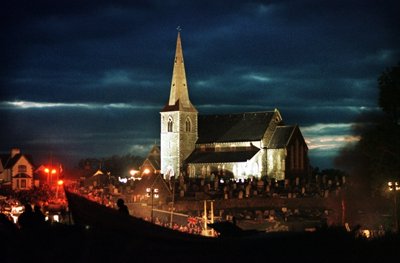


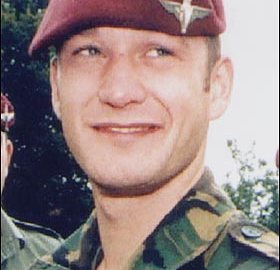
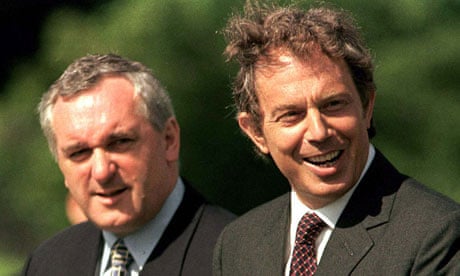

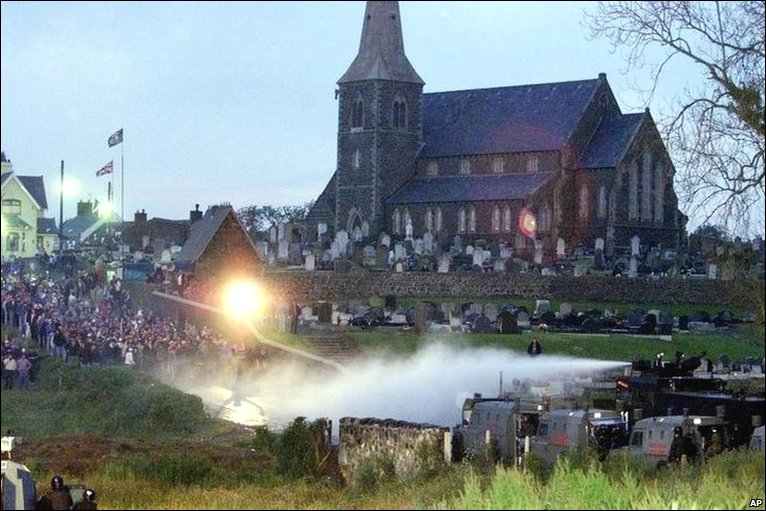






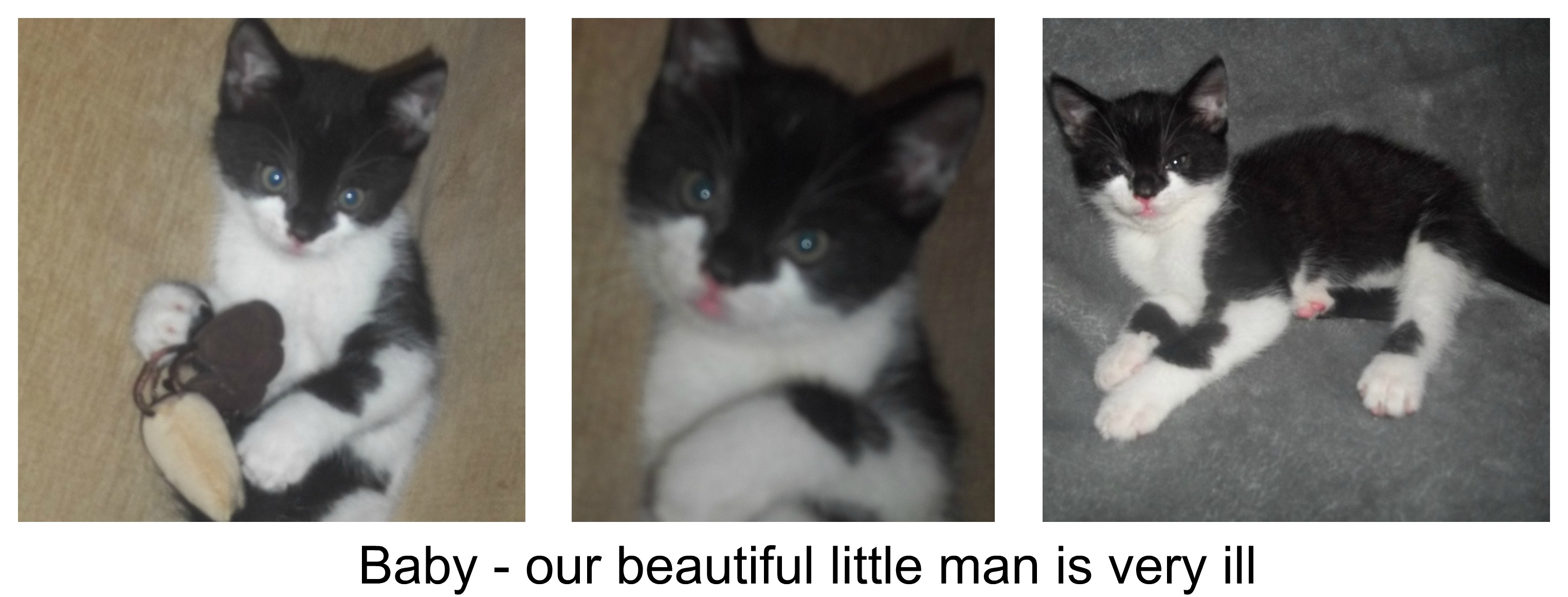





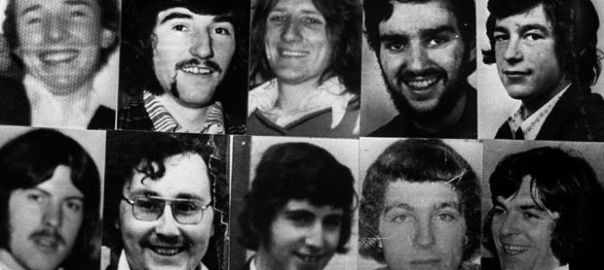





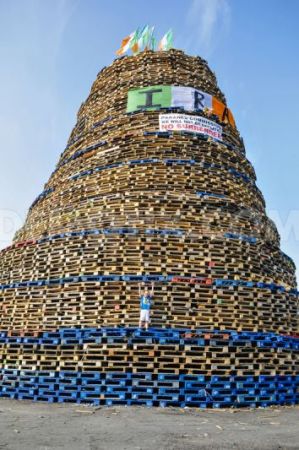
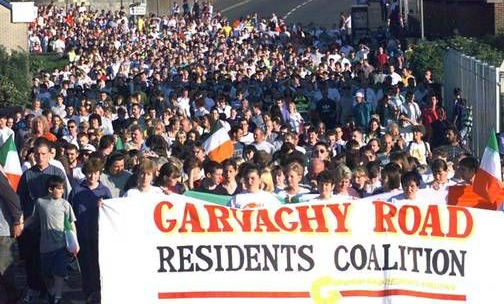


.JPG)



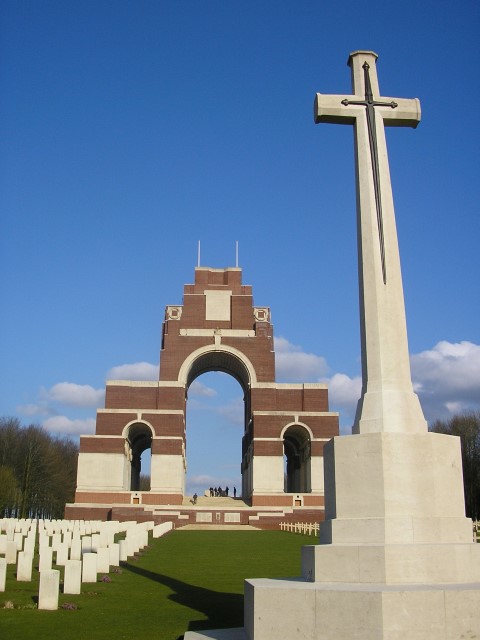
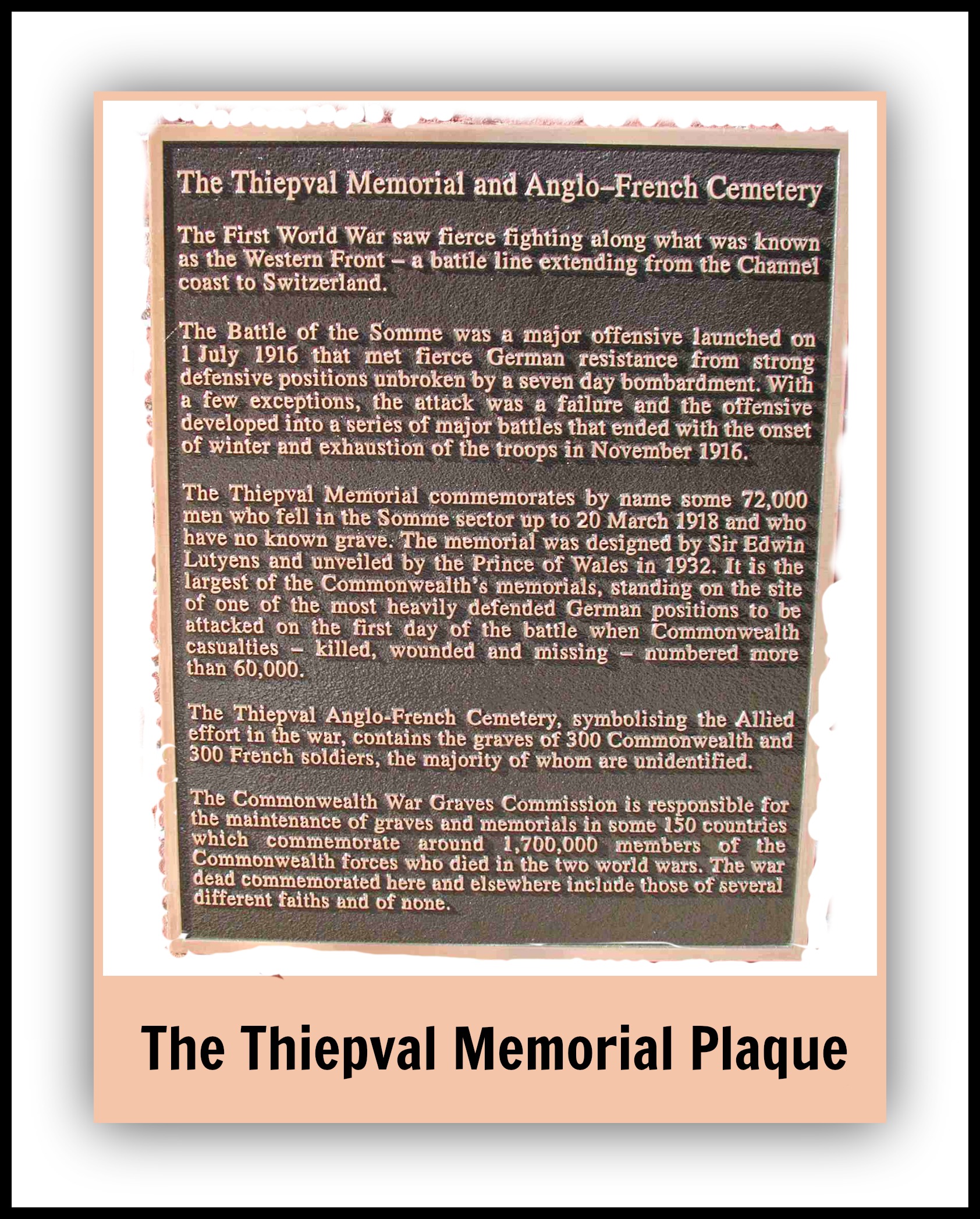






.jpg)



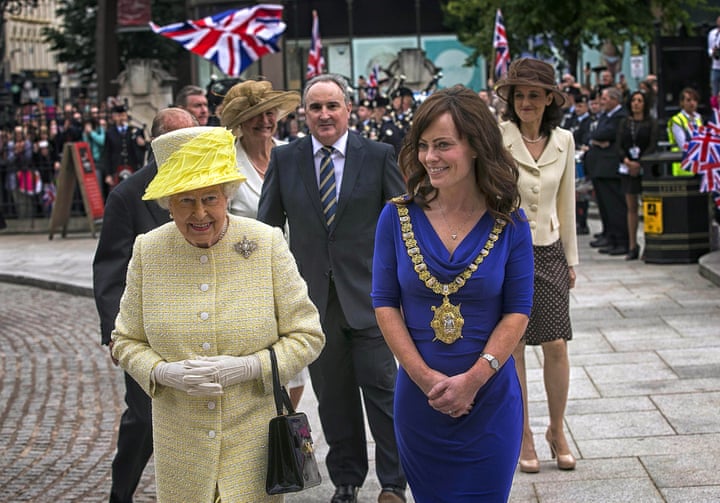


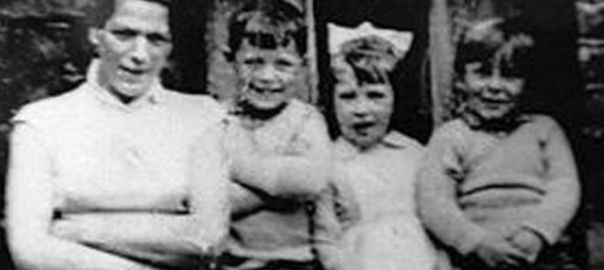


 belfastchildis.com