Sally Jones, who left the UK to join the extremist group of ISIS, has threatened to blow herself up after her husband was killed in a drone strike in Syria’s Raqqa.
Jones, 47, is a former punk rocker, originally from Kent. She has converted to Islam and has been radicalized recently through direct contact with terrorist groups online.
Quoting a Muslim extremist woman who killed herself along with scores of Russian soldiers in a truck bombing in 2000, Jones has expressed herself on the social media that she could be about to become a “black widow” suicide bomber.
The term “Black Widows” refers to a group of Chechen Muslim women whose husbands were killed by the Russian forces in Chechnya.
She moved to Syria with her 10-year-old son in 2013 and joined ISIS after being brainwashed.
“I know what I’m doing. Paradise has a price and I hope this will be the price for Paradise,” Jones tweeted. If she carried out her threat, she would be ISIS’s first widely known female suicide bomber.
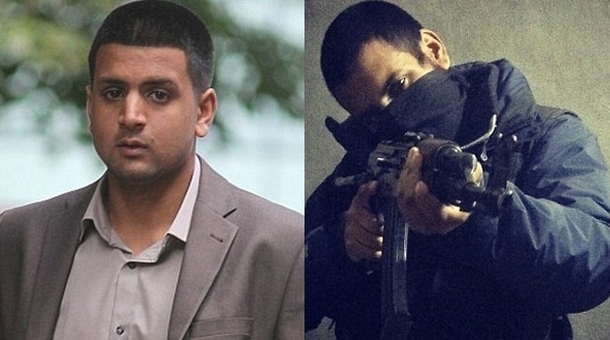
Her husband Junaid Hussain, 21, was a cyber-hacker and a key propagandist and recruiter for the ISIS terror group. He was killed in an airstrike in Raqqa, the major bastion of ISIS in Syria.
Jones has been following her husband’s path, recruiting young men and women to join ISIS’s ranks.
“I would never love anyone but him,” the extremist widow said on Tweeter, referring to her dead husband, though the group’s leadership prevents widows from staying a long time without husbands, according to ISIS-linked sources.
Jones’s message came after her husband found killed in an airstrike on Raqqa last August.
Key Events & Deaths on this day in Northern Ireland Troubles
30th November
———————————————-
Tuesday 30 November 1971
The government of the Republic of Ireland stated that it would take the allegations of brutality against the security forces in Northern Ireland to the European Court of Human Rights.
Saturday 30 November 1974
The Irish Republican Army (IRA) carried out a bomb attack on the Talbot Arms public house in Little Chester Street, Belgravia, London. Two small bombs, each with a short fuse, were thrown at the window of the pub. One bomb went through the window but failed to explode, the second rebounded off the window frame and landed in the street but the explosion injured five customers inside the pub.
Sunday 30 November 1975
Noel Shaw (19), then a member of the Ulster Volunteer Force (UVF), was shot dead by fellow UVF members in an internal feud. The shooting occurred in the Shankill area of Belfast.
Thursday 30 November 1978
The Irish Republican Army (IRA) carried out a number of bomb and fire-bomb attacks in 14 towns and villages across Northern Ireland. The IRA issued a statement admitting the attacks and warning that it was preparing for a ‘long war’.
Monday 30 November 1981
A number of Unionist controlled district councils voted to adjourn council business in protest at the security situation in Northern Ireland.
Tuesday 30 November 1982
James Prior, then Secretary of State for Northern Ireland, addressed the Northern Ireland Assembly and announced that the strength of the Royal Ulster Constabulary (RUC) would be increased by 500 officers and the RUC Reserve by 300.
Friday 30 November 1990
Additional British Army troops are flown into Northern Ireland.
Wednesday 30 November 1994
John Hume, then leader of the Social Democratic and Labour Party (SDLP), and Gerry Adams, then President of Sinn Féin (SF), issued a statement saying:
“The demilitarisation process should be accelerated and inclusive negotiations … should begin without further delay.”
Thursday 30 November 1995
First Clinton Visit Began Bill Clinton, then President of the United States of America (USA), visited Northern Ireland. He was the first serving President of the USA to visit the region.
[Clinton made further visits to Northern Ireland in September 1998 and December 2000.]
Clinton, accompanied by the First Lady Hillary Clinton, visited east Belfast, west Belfast, Derry, and then returned to Belfast to switch on the Christmas lights. He received a generally enthusiastic and warm reception. He made a key note speech at Mackie’s engineering factory in west Belfast. Clinton said:
“… the search for common ground demands the courage of an open mind. This twin-track initiative gives the parties a chance to begin preliminary talks in ways in which all views will be represented and all voices will be heard. It also establishes an international body to address the issue of arms decommissioning. I hope the parties will seize this opportunity.”
Later in the day Clinton held talks with the leaders of the five main political parties in Northern Ireland. Hillary Clinton held an informal meeting with female community representatives in the Lamplighter cafe in Belfast.
The European Court of Justice ruled that aspects of the Prevention of Terrorism Act contravened European Union law by impinging on the freedom of movement guaranteed by the Treaty of Rome. It was announced that Maurice Hayes would oversee an independent review of the police complaints system.
Saturday 30 November 1996
There was serious violence during the loyalist picket of the Catholic church at Harryville, Ballymena. Approximately 500 loyalists attacked the Royal Ulster Constabulary (RUC) and those trying to attend mass. Petrol bombs were thrown, cars damaged, and two Catholic women needed hospital treatment.
The RUC found homemade explosives near Armagh.
The Democratic Unionist Party (DUP) held its annual conference. During the conference there were calls for the right of loyal order parades to proceed unhindered.
Republican Sinn Féin (RSF) held an Ard Fheis (party conference) in Dublin. The conference was critical of the peace process but supported the aims of the Continuity Irish Republican Army (CIRA).
Tuesday 30 November 1999
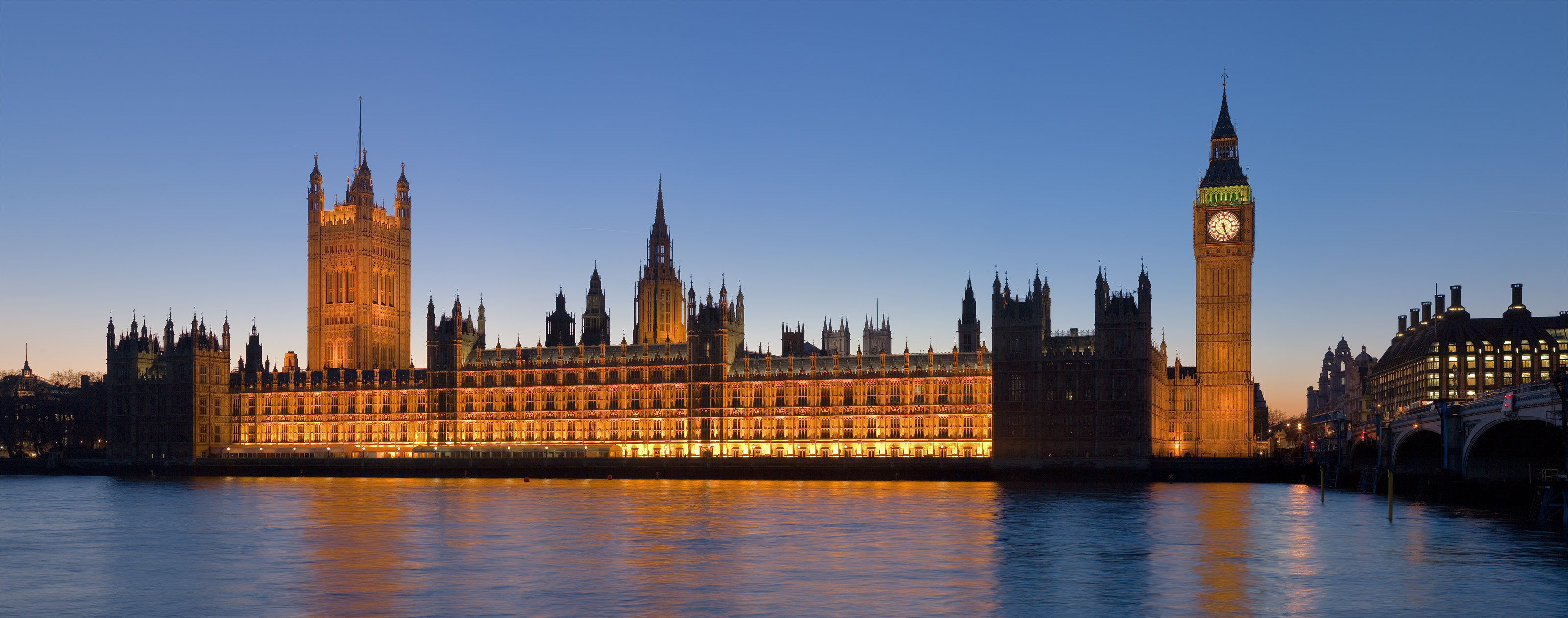
The House of Lords and the House of Commons both approved a devolution order under the Northern Ireland Act 1998 that allowed for the transfer of power from Westminster to the Assembly at Stormont.
[This allowed for the ending the system of ‘Direct Rule’ that had been installed in 1972.]
The newly appointed Ministers in the Northern Ireland Executive were photographed at their desks. The two Sinn Féin (SF) Ministers refused the offer of Royal Ulster Constabulary (RUC) protection. The Northern Ireland Assembly met to appoint members to the 10 Statutory Departmental Committees under the d’Hondt system of proportionality. Each committee was comprised of 11 MLAs including a Chair and Deputy Chair.
Robert McCartney, then leader of the United Kingdom Unionist Party (UKUP), refused to accept a seat on any of the committees as did three of the four members of the Northern Ireland Unionist Party (NIUP). David Andrews, then Irish Foreign Minister, suggested the Dublin government was anticipating that the cross-Border bodies would have powers “not unlike a government”. Unionist leaders reacted furiously to the comments.
——————————————–
———————————————————————————
Remembering all innocent victims of the Troubles
Today is the anniversary of the death of the following people killed as a results of the conflict in Northern Ireland
“To live in hearts we leave behind is not to die
– Thomas Campbell
To the innocent on the list – Your memory will live forever
– To the Paramilitaries –
There are many things worth living for, a few things worth dying for, but nothing worth killing for.
5 People lost their lives on the 30th November between 1972 – 1993
————————————————————
30 November 1972
Gerard Gearon, (22)
Catholic Status: Civilian (Civ),
Killed by: non-specific Loyalist group (LOY) Shot by other passenger while travelling in taxi, outside Mater Hospital, Crumlin Road, Belfast.
————————————————————
30 November 1975
Noel Shaw, (19)
Protestant Status: Ulster Volunteer Force (UVF),
Killed by: Ulster Volunteer Force (UVF) Found shot on back seat of abandoned taxi, Nixon Street, Shankill, Belfast. Internal Ulster Volunteer Force (UVF) feud.
————————————————————
30 November 1976
Elizabeth Luney, (36)
Protestant Status: Civilian (Civ),
Killed by: Ulster Defence Association (UDA) Shot at her home, Silverstream Road, Ballysillan, Belfast
————————————————————
30 November 1985
Edward Taggart, (19)
Catholic Status: Civilian (Civ),
Killed by: Irish Republican Army (IRA) Shot during struggle with Irish Republican Army (IRA) members, Divis Flats, Belfast. Alleged criminal.
————————————————————
30 November 1993
Sean Hagan, (47)
Catholic Status: Civilian (Civ),
Killed by: Ulster Freedom Fighters (UFF) Shot while leaving his workplace, European Components factory, Upper Newtownards Road, Dundonald, Belfast.
Evening all , Im heading home to Belfast tomorrow for the Easter period and hopefully a trip down south to visit my bro and his family in County Meath , depending on a few factors which are out of my control 😜 Belfast will always be my home and although I look forward to visiting … Continue reading Belfast & Meath trip starts tomorrow→
Hi folks, Just a shortish blog post to wish you all a wonderful evening and a fantastic Xmas day. Some of you guys have followed me and my story for years now and during recent tragic soul destroying lows to a few joy filled epic highs you have been there to support , comfort and … Continue reading Merry Christmas to all my friends out there X→
Last chance to order before Xmas delivery cut-off period nxt Wednesday . A personally signed copy of my No.1 Best Selling book : A Belfast Child , which may be worth a few quid if my story is made into a movie – watch this space ! UK Orders Free postage for UK orders only … Continue reading A singed copy of my book for Xmas ?→
And Im happy to bribe you with a free giveaway 🎁 Read on for more detail… Ive doing a soft launch of my online shop : https://deadongifts.co.uk/ which I set up with my sister Mags and I need to drive some traffic to the store and start creating an online presence. The shop will be … Continue reading I need some help folks 😜→
Key Events & Deaths on this day in Northern Ireland Troubles
29th November
———————————–
Monday 29 November 1971
An off duty British soldier was found shot dead in County Armagh.
Tueday 28 November 1972
Two members of the IRA were killed in a premature bomb explosion in the Bogside area of Derry. A RUC officer was killed in an IRA rocket attack in Fermanagh. A member of the bomb disposal team of the British Army was killed in Derry.
Friday 29 November 1974
Prevention of Terrorism Act The Labour government rushed through the Prevention of Terrorism (Temporary Provisions) Bill. The new Act gave the police powers to detain people for up to seven days without any charge being brought against them. The Act also allowed the authorities to ‘exclude’ people from entering Britain.
[Although it was initially viewed as a temporary measure, the Prevention of Terrorism Act was to be renewed each year and made permanent by a Conservative government in 1988. Many critics of the Act claimed that it was mainly being used as a means of monitoring the movements of innocent Irish people. Indeed many thousands of, mainly Catholic, Irish people were screened under provisions in the act although never charged with any offences.]
Satruday 29 November 1975
Archibald Waller (23), then a member of the Ulster Volunteer Force (UVF), was shot dead by fellow UVF members in an internal feud. The shooting occurred in the Shankill area of Belfast.
An airport employee was killed by a Loyalist bomb at Dublin airport.
Tuesday 29 November 1988
The European Court of Human Rights decided that, by detaining suspects for more than four days, Britain was in breach of the European Convention of Human Rights. This was one of a number of decisions by European courts that were decided against Britain.
Wednesday 29 November 1989
The Ulster Volunteer Force (UVF) shot and killed two Catholic men in Coagh, County Tyrone. One of the men was a member of the Irish Republican Army (IRA).
Thursday 29 November 1990
The Government announces a reshuffle of ministerial posts at the Northern Ireland Office (NIO).
Monday 29 November 1993
Sinn Féin (SF) publicly released a number of documents that provided details of the party’s secret talks with the British government. Martin McGuinness, then Vice-President of Sinn Féin (SF), stated that the message of the 22 February 1993 was a fake and he accused the British of “counterfeiting their own documents to meet their current needs”.
Patrick Mayhew, then Secretary of State for Northern Ireland, speaking in the House of Commons gave the British version of the secret contacts with the Republican Movement.
[There were differences between the two sets of accounts. On 1 December 1993 Mayhew admitted there were 22 errors in the documents he had presented.] Ian Paisley, then leader of the Democratic Unionist Party (DUP), was ordered to leave the Commons after he had accused Mayhew of telling a lie.
Wednesday 29 November 1995
Bill Clinton, then President of the United States of America (USA), arrived in London as a prelude to a visit to Northern Ireland. Clinton gave his support to John Major, then British Prime Minister, and John Bruton, then Taoiseach (Irish Prime Minister).
Friday 29 November 1996
Robert Carswell replaced Brian Hutton as the Lord Chief Justice of Northern Ireland. Peter Robinson, then deputy leader of the Democratic Unionist Party (DUP), alleged that members of the Irish Republican Army (IRA) had been targeting him in London.
Saturday 29 November 1997
The Democratic Unionist Party (DUP) held its annual conference in Portrush, County Antrim. Addressing the conference Ian Paisley, then leader of the DUP, said that David Trimble, then leader of the Ulster Unionist Party (UUP), was guilty of “high treason”.
Paisley also accused George Mitchell, then Chairman of the Stormont talks, of “working for the total destruction of Northern Ireland”. The Friends of the Union held a meeting organised by Lord Cranborne, then Conservative leader in the House of Lords, at Hatfield House, Hertfordshire, England.
David Trimble, then leader of the UUP, Ian Paisley, then leader of the DUP, and Robert McCartney, then leader of the United Kingdom Unionist Party (UKUP), all attended the meeting. The Progressive Unionist Party (PUP) and the Ulster Democratic Party (UDP) were not invited.
Sean O’Callaghan, a former Irish Republican Army (IRA) informer, also spoke at the meeting. David Andrews, then Irish Foreign Affairs Minister, gave an interview to Radio Ulster during which he said that cross-border bodies should have powers “not unlike a government”. [Unionists criticised Andrews for the remarks which he later said were “misjudged”.]
Monday 29 November 1999
Executive Appointed There was a meeting of the Northern Ireland Assembly (NIA). Seamus Mallon, then deputy leader of the Social Democratic and Labour Party (SDLP), was reinstated as Deputy First Minister Designate. The d’Hondt procedure for the appointment of ministers in a power-sharing Executive was triggered and 10 ministers appointed.
[This was the first time in 25 years that Northern Ireland had a power-sharing Executive.]
—————————————
———————————————————————————
Remembering all innocent victims of the Troubles
Today is the anniversary of the death of the following people killed as a results of the conflict in Northern Ireland
“To live in hearts we leave behind is not to die
– Thomas Campbell
To the innocent on the list – Your memory will live forever
– To the Paramilitaries –
There are many things worth living for, a few things worth dying for, but nothing worth killing for.
7 People lost their lives on the 29th November between 1971 – 1990
————————————————————
29 November 1971
Robert Benner, (25)
nfNI Status: British Army (BA),
Killed by: non-specific Republican group (REP)
Originally from Dundalk, County Louth. Off duty. Found shot, Teer, near Crossmaglen, County Armagh.
————————————————————
29 November 1975 John Hayes, (38)
nfNIRI Status: Civilian (Civ),
Killed by: Ulster Defence Association (UDA)
Airport Employee. Killed during bomb explosion in toilets of arrival lounge, Dublin Airport, County Dublin.
————————————————————
29 November 1975
Archibald Waller, (23)
Protestant Status: Ulster Volunteer Force (UVF),
Killed by: Ulster Volunteer Force (UVF)
Shot while sitting in parked car outside social club, Downing Street, Shankill, Belfast. Internal Ulster Volunteer Force (UVF) feud.
————————————————————
29 November 1985 Gordon Hanna, (46)
Protestant Status: Ulster Defence Regiment (UDR),
Killed by: Irish Republican Army (IRA)
Off duty. Killed by booby trap bomb attached to his car outside his home, Harbour Drive, Kilkeel, County Down.
————————————————————
29 November 1989
Liam Ryan, (39)
Catholic Status: Irish Republican Army (IRA),
Killed by: Ulster Volunteer Force (UVF)
Shot during gun attack on Battery Bar, Moortown, near Coagh, County Tyrone.
————————————————————
29 November 1989
Michael Devlin, (33)
Catholic Status: Civilian (Civ),
Killed by: Ulster Volunteer Force (UVF)
Shot during gun attack on Battery Bar, Moortown, near Coagh, County Tyrone
————————————————————
29 November 1990
Raymond Robinson, (39)
Catholic Status: Civilian (Civ),
Killed by: Ulster Volunteer Force (UVF)
Shot at his workplace, a shop, Duncairn Gardens, Belfast.
Pushing Back the Islamic State: The Battle for Rojava
—————————————————————
The Rojava Revolution is a political upheaval taking place in an autonomous region of Northern Syria, known as Rojava. The revolution has been characterized by the prominent role played by women both on the battlefield and within the newly formed political system, as well as the implementation of democratic confederalism, a form of grassroots democracy based on local assemblies.
—————————————————————
Understanding the Syrian crisis in 5 minutes
—————————————————————
—————————————————————
Islamic State Conquest: Map Time Lapse (August 2015 Update)
Kurds make up between nine and fifteen percent of Syria’s population, or well over 2 million people. The northeast of the country (where many Kurds live) is strategically important, because it contains a large percentage of Syria’s oil supplies.[31]
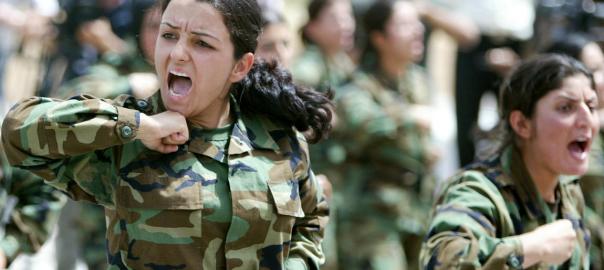
In the face of the deadly threat posed by the so-called Islamic State, many Kurdish women decide not to leave their survival to fate. Instead, they fight for their lives and their future. Taking up arms, they join the YPG – Kurdish People’s Protection Units that defend their town’s borders from the militants. The enemy fears female warriors. Jihadists believe if they are killed by a woman they will go straight to hell.
—————————————————————————————————–
Her War
—————————————————————————————————–
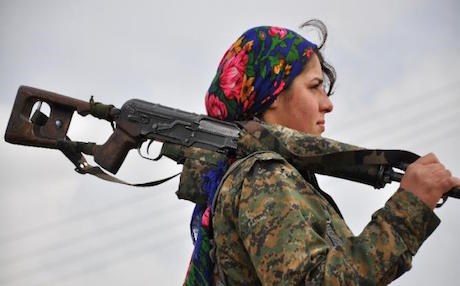
Female fighters from the Kurdish People’s Protection Unit (YPG) take a break on the front line in the northeastern Syrian city of Hasakeh.
Women’s Protection Units
The Women’s Protection Units or Women’s Defense Units (Kurdish: Yekîneyên Parastina Jin) (YPJ) is a military organization that was set up in 2012 as the female brigade of the leftist
Escape from Isis: the brutal treatment of women in Raqqa
Four million women live under the rule of Islamic State extremists in Iraq and Syria. Tonight, Channel 4 screens an important and troubling documentary showing just how hellish that life is.
Key Events & Deaths on this day in Northern Ireland Troubles
28th November
————————————-
Tueday 28 November 1972
Two members of the IRA were killed in a premature bomb explosion in the Bogside area of Derry. A RUC officer was killed in an IRA rocket attack in Fermanagh. A member of the bomb disposal team of the British Army was killed in Derry.
Wednesday 28 November 1973
Assembly proceedings were halted due to verbal assaults on those who had been named as members of the proposed Executive. The disruption was caused by Loyalists and those opposed to the new Executive. Eventually the meeting of the Assembly had to be adjourned.
Friday 22 November 1974
See Birmingham Bombing
The Irish Republican Army (IRA) denied responsibility for the bombs in Birmingham on 21 November 1974.
Thursday 28 November 1974
The Irish government introduced legislation which would allow people to be tried for offences committed outside the jurisdiction of the Republic of Ireland. Paul Hill was arrested in Southhampton and taken to Guildford for questioning about the bombings on 5 October 1974. [On 29 November 1974 Hill signed a statement admitting his involvement in the Guildford bombing. Hill became the first of the ‘Guildford Four’ to be charged with the bombing.]
Tuesday 28 November 1978
Increase in Number of MPs A Bill was passed in the House of Commons to increase the number of Northern Ireland Members of Parliament (MPs) at Westminster. The number was increase from 12 to 17 seats.
Wednesday 28 November 1979
John Hume succeeded Gerry Fitt as leader of the Social Democratic and Labour Party (SDLP).
Friday 28 November 1986
The Fair Employment Agency (FEA) published a report that concluded that the geographical distribution of government sponsored jobs did not disadvantage Catholics.
Sunday 28 November 1993
Secret Talks Between British and Republicans The nature and extent of a series of secret talks between the British Government and the Republican Movement was revealed by the Observer (a British Newspaper). The report indicated that a secret channel of communication had existed between the British government and the Irish Republican Army (IRA) for three years and the two sides had been in regular contact since February 1993. Patrick Mayhew, then Secretary of State for Northern Ireland, claimed that the Irish Republican Army (IRA) had initiated the contacts with an oral message on 22 February 1993 that stated:
“The conflict is over but we need your advice on how to bring it to a close. We wish to have an unannounced cease-fire in order to hold dialogue leading to peace.”
[Sinn Féin (SF) denied that it had sent the message. The Observer carried a report on 28 June 1998 in which it claimed that Denis Bradley, a former Catholic priest, had acted as a means of contact between the Republican movement and the British and Irish governments over a 20 year period. The report also claimed that Bradley was responsible for the message of 22 February 1993.]
Tuesday 28 November 1995
Joint Communiqué by British and Irish Governments The British and Irish Governments issued a Joint Communiqué stating that: “the two governments have agreed to launch a “twin-track” process to make progress in parallel on the decommissioning issue and on all-party negotiations”. The governments hoped to have all-party negotiations begin by the end of February 1996. They also invited the parties to intensive preparatory talks. The governments also undertook to: “… establish an international body to provide an independent assessment of the decommissioning issue”. [George Mitchell, a former American Senator, was asked to lead this body.]
Thursday 28 November 1996
John Major, then British Prime Minister, replied in the House of Commons to proposals for a new Irish Republican Army (IRA) ceasefire. The proposals were developed during meetings between John Hume, then leader of the Social Democratic and Labour Party (SDLP), and Gerry Adams, then President of Sinn Féin (SF). Essentially the proposals called for the entry of SF into the Stormont talks immediately following an IRA ceasefire. Major rejected the central proposal stating that the British government would make its own assessment of the permanence of any new ceasefire. Ian Paisley, then leader of the Democratic Unionist Party (DUP), warned against any changes to the Act of Succession which forbids any English monarch from marrying a Catholic.
Saturday 28 November 1998
George Mitchell, formerly Chairman of the multi-party talks, held meetings with Northern Ireland political leaders in Belfast. Seamus Mallon, Deputy First Minister designate, spoke of a “distinct possibility” that President Clinton would try to resolve the decommissioning row but added that he had no specific knowledge of the such a move. Peter Robinson, then deputy leader of the Democratic Unionist Party (DUP), addressed the Annual Conference of the DUP and urged members of the Ulster Unionists Party (UUP) to “topple” their leader David Trimble. Robinson went on to say: “Better by far that you topple Trimble now rather than give him time to drag this province step by step to Dublin.” The conference was also addressed by the party leader Ian Paisley.
———————————-
———————————————————————————
Remembering all innocent victims of the Troubles
Today is the anniversary of the death of the following people killed as a results of the conflict in Northern Ireland
“To live in hearts we leave behind is not to die
– Thomas Campbell
To the innocent on the list – Your memory will live forever
– To the Paramilitaries –
There are many things worth living for, a few things worth dying for, but nothing worth killing for.
6 People lost their lives on the 28th November between 1972 – 1983
————————————————————
28 November 1972
Robert Keys, (55)
Protestant Status: Royal Ulster Constabulary (RUC),
Killed by: Irish Republican Army (IRA)
Killed in rocket attack on Belleek Royal Ulster Constabulary (RUC) / British Army (BA) base, County Fermanagh.
————————————————————
28 November 1972
John Brady, (21)
Catholic Status: Irish Republican Army (IRA),
Killed by: Irish Republican Army (IRA)
Died in premature bomb explosion in house, Meenan Drive, Bogside, Derry.
————————————————————
28 November 1972
James Carr, (19)
Catholic Status: Irish Republican Army (IRA),
Killed by: Irish Republican Army (IRA)
Died in premature bomb explosion in house, Meenan Drive, Bogside, Derry.
————————————————————
28 November 1972 Paul Jackson, (21)
nfNI Status: British Army (BA),
Killed by: Irish Republican Army (IRA)
Member of British Army (BA) bomb disposal team. Killed while sitting in British Army (BA) Armoured Personnel Carrier monitoring bomb which exploded, Strand Road, Derry.
————————————————————
28 November 1981
William Coulter, (23)
Protestant Status: Royal Ulster Constabulary (RUC),
Killed by: Irish Republican Army (IRA)
Killed by remote controlled bomb hidden behind fencing while on Royal Ulster Constabulary (RUC) foot patrol, Unity Flats, Peter’s Hill, Belfast.
————————————————————
28 November 1983
Brigid Foster, (77)
Catholic Status: Civilian (Civ),
Killed by: Royal Ulster Constabulary (RUC)
Passerby. Shot shortly after armed robbery at Post Office, Pomeroy, County Tyrone.
Key Events & Deaths on this day in Northern Ireland Troubles
27th November
Thursday 27 November 1969
A Commissioner for Complaints, John Benn, was appointed to deal with matters related to local government and public bodies.
Saturday 27 November 1971
Two Customs officials, Ian Hankin (27) a Protestant and James O’Neill (39) a Catholic, were shot by an Irish Republican Army (IRA) sniper who fired upon a British Army (BA) patrol investigating a bomb attack on a Customs Post near Newry, County Armagh. A British soldier was shot dead in Belfast.
Wednesday 27 November 1974
Roy Jenkins
Roy Jenkins, then British Home Secretary, introduced the Prevention of Terrorism (Temporary Provisions) Bill into the House of Commons, Westminster. One of the provisions of the Bill provided the police with powers to arrest and detain suspected terroristts for up to 48 hours in the first instance, and for up to seven days if the police applied to the Home Secretary for additional time.
The provision also allowed for exclusion orders to be made against people suspected of involvement in terrorism. Jenkins described the provisions in the Bill as “draconian measures unprecedented in peacetime”.
[The Bill became law on 29 November 1974.]
The Irish Republican Army (IRA) carried out two bomb attacks near an Army museum in Tite Street, Chelsea, London. Initially a small bomb exploded in a post office pillar-box at 8.30pm. Approximately 20 minutes later a second, larger bomb, exploded behind a hedge just a short distance away from the first explosion. Twenty people were injured in the second explosion including an explosives officer, six policmen and two ambulance men.
[The tactic of the ‘come-on’ bomb was one which the IRA used on many occasions in Northern Ireland.]
Thursday 27 November 1975
Ross McWhirter (50), who had publicly criticised Irish Republican Army (IRA) violence, was shot dead by the IRA at his home in Village Road, Enfield, London. McWhirter was a founder of the Guinness Book of World Records and had offered a £50,000 reward for the capture of the IRA members responsible for the bombings in London.
Saturday 27 November 1976
The Irish Republican Army (IRA) killed two Catholic civilians in separate booby-trap bomb attacks in Lurgan, County Armagh and Bogside, Derry. The bombs had been intended for the security forces.
The Peace People held a rally in London which was attended by approximately 30,000 people. Republican sympathisers held a small counter demonstration and chanted ‘troops out’.
Thursday 27 November 1980
Humphrey Atkins, then Secretary of State for Northern Ireland, told the House of Commons that there was still no consensus amongst the parties in Northern Ireland and little prospect for a devolved government in the region.
Sunday 27 November 1983
Dominic McGlinchey, believed to be chief of staff of the Irish National Liberation Army (INLA), admitted that his organisation had been involved in the Darkley killings on 20 November 1983
Wednesday 27 November 1985
The House of Commons approved the Anglo-Irish Agreement (AIA) in a vote of 473 votes to 47. During her speech Margaret Thatcher, then British Prime Minister, said that the government would not give way to threats or violence.
Tuesday 27 November 1990
During the Conservative Party leadership contest Margaret Thatcher failed to win outright victory and withdrew from the race. John Major was elected as the new leader of the Conservative Party and the new British Prime Minister.
Wednesday 27 November 1991
Four members of the Irish National Liberation Army (INLA) were arrested outside the home of Laurence Kennedy, then leader of the Northern Ireland Conservative Party.
Saturday 27 November 1993
The Social Democratic and Labour Party (SDLP) held its annual conference in Cookstown, County Tyrone. In his address John Hume, then leader of the SDLP, stated that John Major, then British Prime Minister, held
“the key to peace”.
The Democratic Unionist Party (DUP) held its annual conference at Castlereagh in Belfast. Ian Paisley, then leader of the DUP, told delegates that Northern Ireland faced “the greatest threat to the Union since the Home Rule Crisis”.
Monday 27 November 1995
Catholic Killed in Sectarian Attack Norman Harley (46), a Catholic civilian, was found beaten to death at the Waterworks, off Cavehill Road, Belfast.
[Harley was going through the park to visit his mother when two Protestant men beat him to death with an iron bar before going to a public house. This sectarian killing appears not to have been carried out by Loyalist paramilitaries (McKitterick, 1999; p1383).]
Thursday 27 November 1997
Jack Mahood was shot and injured in his taxi depot in north Belfast.
[The attack was blamed on the Ulster Volunteer Force (UVF). Mahood had been a member of the Progressive Unionist Party (PUP) negotiation team who resigned over differences on matters of policy.]
Friday 27 November 1997
The Northern Ireland Office (NIO) published a list of the main initiatives introduced since the IRA ceasefire of 20 July 1997 to reduce the impact of security measures.
Friday 27 November 1998
British soldiers who were serving in Derry on 30 January 1972 were offered immunity from prosecution when they provide evidence to the Saville inquiry into the events of ‘Bloody Sunday’.
Saturday 27 November 1999
The Ulster Unionist Council (UUC), the policy-making body of the Ulster Unionist Party (UUP), held a meeting in the Waterfront Hall, Belfast, to discuss the Mitchell Review. The Council decided by 480 votes to 349 to back the deal. The decision opened the way for the UUP to enter the power-sharing Executive with Sinn Féin (SF).
The UUC also attached a condition that the Council should meet again in February 2000 “to take a final decision” on the matter. At a press conference after the vote David Trimble, then leader of the Ulster Unionist Party (UUP), said:
“We’ve done our bit. Mr Adams its over to you. We’ve jumped, you follow”.
[It was later revealed that Trimble had lodged a post dated resignation letter with a party official which would come into effect if Irish Republican Army (IRA) decommissioning did not occur.]
The Democratic Unionist Party (DUP) held its annual conference at the La Mon House Hotel near Belfast. During his speech Ian Paisley, then leader of the Democratic Unionist Party (DUP), said that Northern Ireland was facing its gravest crisis and that no unionist should be holding negotiations with the Irish government, the SDLP, or Sinn Féin. He accused the Ulster Unionist Party (UUP) of betrayal and said Trimble was as “much of an enemy of Ulster as the IRA”.
———————-
———————————————————————————
Remembering all innocent victims of the Troubles
Today is the anniversary of the death of the following people killed as a results of the conflict in Northern Ireland
“To live in hearts we leave behind is not to die
– Thomas Campbell
To the innocent on the list – Your memory will live forever
– To the Paramilitaries –
There are many things worth living for, a few things worth dying for, but nothing worth killing for.
11 People lost their lives on the 27th November between 1971 – 1995
————————————————————
27 November 1971 Ian Hankin, (27)
Protestant Status: Civilian (Civ),
Killed by: Irish Republican Army (IRA) Customs official. Shot by snipers firing at British Army (BA) patrol which had just arrived after bomb attack on Killeen Customs Post, near Newry, County Armagh.
————————————————————
27 November 1971 James O’Neill, (39) Catholic Status: Civilian (Civ), Killed by: Irish Republican Army (IRA) Customs official. Shot by snipers firing at British Army (BA) patrol which had just arrived after bomb attack on Killeen Customs Post, near Newry, County Armagh.
————————————————————
27 November 1971 Paul Nicholls, (18)
nfNI Status: British Army (BA),
Killed by: Irish Republican Army (IRA) Shot by sniper while on British Army (BA) foot patrol, St James Crescent, Falls, Belfast.
————————————————————
27 November 1972 Rory Gormley, (14)
Catholic Status: Civilian (Civ),
Killed by: Ulster Volunteer Force (UVF) Shot while travelling in car, junction of Downing Street and Ariel Street, Shankill, Belfast
————————————————————
27 November 1973 Desmond Morgan (18)
Catholic Status: Irish Republican Army (IRA),
Killed by: British Army (BA) Shot during attempted hijacking of vehicle, Coalisland, County Tyrone.
————————————————————
27 November 1975 Ross McWhirter, (50)
nfNIB Status: Civilian (Civ),
Killed by: Irish Republican Army (IRA) Shot at his home, Village Road, Enfield, London.
Killed by: Irish Republican Army (IRA) Killed by booby trap bomb in derelict house, Mary Street, Lurgan, County Armagh. House had been used as British Army (BA) observation post.
————————————————————
27 November 1976 Frank McConnellogue, (46)
Catholic Status: Civilian (Civ),
Killed by: Irish Republican Army (IRA) Killed by booby trap bomb in entry, off Lecky Road, Bogside, Derry.
————————————————————
27 November 1978 Robert Bachelor, (36)
Protestant Status: Ulster Defence Regiment (UDR),
Killed by: Irish Republican Army (IRA) Off duty. Shot just after leaving his workplace, Institution Place, off Durham Street, Belfast.
Key Events & Deaths on this day in Northern Ireland Troubles
26th November
————————————-
Sunday 26 November 1972
There was a bomb explosion at the Film Centre Cinema, in O’Connell Bridge House in Dublin. A late film was being shown and although no one was killed, approximately 40 people required hospital treatment.
The explosion happened at 1.25am and the bomb had been placed outside the rear exit door of the Film Centre Cinema in a laneway connecting Burgh Quay to Leinster Market.
[The ‘Interim Report on the Report of the Independent Commission of Inquiry into the Dublin Bombings of 1972 and 1973’, [PDF; 687KB], concluded that: “… it seems more likely than not that the bombing of the Film Centre Cinema was carried out by republican subversives as a response to a Government ‘crackdown’ on the IRA and their associates”.]
Friday 26 November 1976
Roy Mason, then Secretary of State for Northern Ireland, said that the region might be left behind by ‘the tide of devolution’.
Saturday 26 November 1977
William Craig, then an Member of Parliament (MP), announced that the Vanguard Unionist Progressive Party (VUPP) would cease to exist as a political party as from 25 February 1978.
Sunday 26 November 1978
Albert Miles
Albert Miles, then Deputy Governor of Crumlin Road Prison, was shot dead by the Irish Republican Army (IRA) outside his home in Evelyn Gardens, Belfast. [This was one of a series of attacks on prison officers.]
Tuesday 26 November 1985
In the House of Commons at Westminster a two-day debate on the Anglo-Irish Agreement (AIA) began.
Wednesday 26 November 1986
Ulster Unionist Party (UUP) councillors decided not to resign from district councils in protest at the Anglo-Irish Agreement (AIA). The decision was taken although the leadership of the UUP was in favour of mass resignations. The Standing Advisory Commission on Human Rights (SACHR) recommended that Diplock courts in Northern Ireland should have three judges to hear cases.
However, the Commission did not support calls for a return to jury trials for scheduled (terrorist) offences.
Tuesday 26 November 1996
David Trimble, then leader of the Ulster Unionist Party (UUP), criticised Mary Robinson, then President of the Republic of Ireland, for not following “the proper protocol” when arranging visits to Northern Ireland.
Thursday 26 November 1998
Tony Blair became the first British Prime Minister to address both houses of the Oireachtas (the Irish Parliament) the Dáil and the Seanad. His speech dealt with the Good Friday Agreement and the relationships between Britain and the Republic of Ireland.
Friday 26 November 1999
Ronnie Flanagan, then Chief Constable of the Royal Ulster Constabulary (RUC), said that there was “no intelligence basis” for the view that the Irish Republican Army (IRA) was planning to return to violence.
—————————————–
———————————————————————————
Remembering all innocent victims of the Troubles
Today is the anniversary of the death of the following people killed as a results of the conflict in Northern Ireland
“To live in hearts we leave behind is not to die
– Thomas Campbell
To the innocent on the list – Your memory will live forever
– To the Paramilitaries –
There are many things worth living for, a few things worth dying for, but nothing worth killing for.
6 People lost their lives on the 26th November between 1973 – 1991
————————————————————
26 November 1973 Anthony Braden, (58)
Catholic Status: Civilian (Civ),
Killed by: Irish Republican Army (IRA)
Shot while driving his car along Jamaica Street, Ardoyne, Belfast.
————————————————————
26 November 1974 Thomas Hamilton, (34)
Protestant Status: Civilian (Civ),
Killed by: non-specific Republican group (REP)
Shot at his shop, Duncairn Gardens, Belfast.
————————————————————
26 November 1978
Albert Miles, (50)
Protestant Status: Prison Officer (PO),
Killed by: Irish Republican Army (IRA)
Deputy Governor of Long Kesh / Maze Prison. Off duty. Shot outside his home, Evelyn Gardens, off Cavehill Road, Belfast.
————————————————————
26 November 1980 Norman Donaldson, (59)
Protestant Status: Ulster Defence Regiment (UDR),
Killed by: Irish Republican Army (IRA)
Shot while leaving Royal Ulster Constabulary (RUC) base, Derrygonnelly, County Fermanagh.
————————————————————
26 November 1987 Martin Bryan, (32)
Catholic Status: Irish National Liberation Army (INLA),
Killed by: Garda Siochana (GS)
Shot during gun battle at Garda Vehicle Check Point (VCP), Urlingford, County Kilkenny.
————————————————————
26 November 1991
Kenneth Newell, (30)
Protestant Status: Ulster Defence Regiment (UDR),
Killed by: Irish Republican Army (IRA)
Off duty. Abducted while driving delivery lorry, Crossmaglen, County Armagh. Found shot, near Crossmaglen, County Armagh, on 27 November 1991.
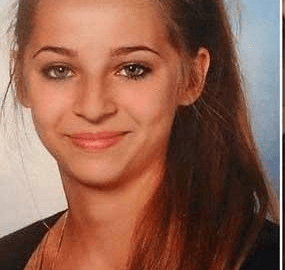
ISIS teenage ‘poster girl’ Samra Kesinovic ‘beaten to death’
Austrian teenage girl Samra Kesinovic has been beaten to death by militants of the Islamic State (ISIS) for trying to escape the group’s de facto capital of Raqqa, local sources reported on Tuesday.
Kesinovic, 17, left Austria with her friend in April 2014 to join the ranks of ISIS in Syria.
“The girl was caught by ISIS female jihadists while trying to escape Raqqa. She was then handed over to the group’s leadership and was subsequently beaten to death,” an informed local source told Kurdish independent agency in Raqqa.
Kesinovic’s friend Sabina Selimovic, who was 15 when she left Austria, was reported dead earlier this year in war-torn Syria.
The parents of both victims are Bosnian refugees based in Austria for nearly two decades, according to reports.
When Kesinovic and Selimovic decided to join ISIS, they had left behind a letter to their parents saying: “Don’t look for us. We will serve Allah… and we will die for him”.
More than 120 people have left Austria to join the ranks of the ISIS extremist group.
——————————————–
Previously the two girls had contacted their families and stated that they wanted to come – Sadly time has run out for them and they have paid the ultimate price for their association with IS
Austrian Teenage IS Girls ‘Want To Return Home’ After Marrying Jihadists And Falling Pregnant.











.png)



 Female fighters from the Kurdish People’s Protection Unit (YPG) take a break on the front line in the northeastern Syrian city of Hasakeh.










 belfastchildis.com