The Balcombe Street siege was an incident involving members of the Provisional Irish Republican Army (IRA) and the Metropolitan Police Service of London lasting from 6 to 12 December 1975. The siege ended with the surrender of the four IRA paramilitaries and the release of their two hostages. The events were televised and watched by millions.
Background
Scott’s restaurant in 2005, the attack on which preceded the siege
In 1974 and 1975 London was subjected to a 14-month campaign of gun and bomb attacks by the Provisional IRA. Some 40 bombs exploded in London, killing 35 people and injuring many more. In one incident the Guinness Book of Records co-founder and conservative political activist Ross McWhirter was assassinated; he had offered a £50,000 reward to anyone willing to inform the security forces of IRA activity.
———————————
Balcombe Street Siege 1975
Thames News
———————————
The four members of what became known as the “Balcombe Street gang” – Martin O’Connell, Edward Butler, Harry Duggan and Hugh Doherty – were part of a six-man IRA Active Service Unit (ASU) that also included Brendan Dowd and Liam Quinn. Quinn had recently shot dead police constableStephen Tibble in London after fleeing from police officers. The flat he was seen fleeing from was discovered to be a bomb factory used by the unit.
The Balcombe Street siege started after a chase through London, as the Metropolitan Police pursued Doherty, O’Connell, Butler and Duggan through the streets after they had fired gunshots through the window of Scott’s restaurant in Mount Street, Mayfair. They had thrown a bomb through the restaurant window a few weeks before on 12 November 1975, killing one person and injuring 15 others.
The Metropolitan Police Bomb Squad had detected a pattern of behaviour in the ASU, determining that they had a habit of attacking again some of the sites they had previously attacked. In a scheme devised by a young detective sergeant, the Met flooded the streets of London with unarmed plain-clothes officers on the lookout for the ASU. The four IRA men were spotted as they slowed to a halt outside Scotts and fired from their stolen car.
Inspector John Purnell and Sergeant Phil McVeigh, on duty as part of the dragnet operation, picked up the radio call from the team in Mount Street as the stolen Cortina approached their position. With no means of transport readily available, the two unarmed officers flagged down a taxi cab and tailed the men for several miles through London, until the IRA men abandoned their vehicle. Purnell and McVeigh, unarmed, continued the pursuit on foot despite handgun fire from the gang. Other officers joined the chase, with the four IRA men running into a block of council flats in Balcombe Street, adjacent to Marylebone station, triggering the six-day stand-off.
Purnell was subsequently awarded the George Medal for his bravery.[5] Several other police officers were also decorated.
The siege
The four men ended up in a flat at 22b Balcombe Street in Marylebone, taking its two residents, John and Sheila Matthews, hostage. The men declared that they were members of the IRA and demanded a plane to fly both them and their hostages to the Republic of Ireland. Scotland Yard refused, creating a six-day standoff between the men and the police. Peter Imbert, later Commissioner of the Metropolitan Police, was the chief police negotiator.
The men surrendered after several days of intense negotiations between Metropolitan Police Bomb squad officers Detective Superintendent Peter Imbert and Detective Chief Superintendent Jim Nevill, and the unit’s leader Joe O’Connell, who went by the name of “Tom”.
The other members of the gang were named “Mick” and “Paddy”, thereby avoiding revealing to the negotiators precisely how many of them were in the living room of the flat. The resolution of the siege was a result of the combined psychological pressure exerted on the gang by Imbert and the deprivation tactics used on the four men. The officers also used carefully crafted misinformation, through the BBC radio news—the police knew the gang had a radio—to further destabilise the gang into surrender.
———————————
Balcombe Street Gang appear at Sinn Fein Special Conference, May 1998
———————————
Trial
The four were found guilty at their Old Bailey trial in 1977 of seven murders, conspiring to cause explosions, and falsely imprisoning John and Sheila Matthews during the siege. O’Connell, Butler and Duggan each received twelve life sentences, and Doherty eleven. Each of the men was later given a whole life tariff, the only IRA prisoners to receive this tariff.
During their trial they instructed their lawyers to “draw attention to the fact that four totally innocent people were serving massive sentences” for three bombings in Woolwich and Guildford. Despite claiming to the police that they were responsible, they were never charged with these offences and the Guildford Four and Maguire Seven remained in prison for fifteen more years, until it was ruled that their convictions were unsafe.
Who wants… A signed copy of my No.1 best selling book ? Makes a great Xmas gift for book lovers & those interested in the Troubles & the crazy, mad days my generation lived through.
The Droppin Well bombing or Ballykelly bombing occurred on 6 December 1982, when the Irish National Liberation Army (INLA) exploded a time bomb at a disco in Ballykelly, Northern Ireland. The disco, known as the Droppin Well, was targeted because it was frequented by British Army soldiers from nearby Shackleton Barracks. The bomb killed eleven soldiers and six civilians; 30 people were injured.
Attack
The bomb was made by INLA members in nearby Derry. One of those involved later revealed that the INLA unit had carried out reconnaissance missions to the Droppin Well to see if there were enough soldiers to justify the possibility of civilian casualties.
On the evening of Monday 6 December 1982, an INLA operative left a bomb inside the pub. There were about 150 people inside. The Royal Ulster Constabulary (RUC) believed that the bomb, estimated to be 5 to 10 pounds (2.3 to 4.5 kg) of commercial (Frangex) explosives, was small enough to fit into a handbag. It had, however, been left beside a support pillar and, when it exploded at about 23:15, the blast brought down the roof. Many of those killed and injured were crushed by fallen masonry.
———————————-
Dropping well Bomb INLA.
———————————-
Following the blast, it took many hours to pull survivors from the rubble. The last survivor was freed at 04:00, but it was not until 10:30 that the last of the bodies was recovered.
Ultimately, 17 people died (11 soldiers, six civilians) and about 30 were injured, some seriously. Five of the civilians were young women and three (Alan Callaghan, Valerie McIntyre and Angela Maria Hoole) were teenagers. Of the eleven soldiers who died, eight were from the 1st Battalion Cheshire Regiment, two from the Army Catering Corps and one from the Light Infantry. One of those on the scene was Bob Stewart, then a company commander in the Cheshire Regiment. He lost six soldiers from his company and was deeply affected as he tended to the dead and injured.
The Victims
—————————————–
06 December 1982
Stephen Smith, (24)
nfNI Status: British Army (BA),
Killed by: Irish National Liberation Army (INLA) Off duty. Killed by time bomb left in disco at Droppin Well Bar, Ballykelly, County Derry.
—————————————–
06 December 1982 Philip McDonough, (26)
nfNI Status: British Army (BA),
Killed by: Irish National Liberation Army (INLA) Off duty. Killed by time bomb left in disco at Droppin Well Bar, Ballykelly, County Derry.
—————————————–
06 December 1982 Steven Bagshaw, (21)
nfNI Status: British Army (BA),
Killed by: Irish National Liberation Army (INLA) Off duty. Killed by time bomb left in disco at Droppin Well Bar, Ballykelly, County Derry
—————————————–
06 December 1982
Clinton Collins, (20)
nfNI Status: British Army (BA),
Killed by: Irish National Liberation Army (INLA) Off duty. Killed by time bomb left in disco at Droppin Well Bar, Ballykelly, County Derry.
—————————————–
06 December 1982 David Murray, (18)
nfNI Status: British Army (BA),
Killed by: Irish National Liberation Army (INLA) Off duty. Killed by time bomb left in disco at Droppin Well Bar, Ballykelly, County Derry.
—————————————–
06 December 1982 David Stitt, (27)
nfNI Status: British Army (BA),
Killed by: Irish National Liberation Army (INLA) Off duty. Killed by time bomb left in disco at Droppin Well Bar, Ballykelly, County Derry.
—————————————–
06 December 1982 Shaw Williamson, (20)
nfNI Status: British Army (BA),
Killed by: Irish National Liberation Army (INLA) Off duty. Killed by time bomb left in disco at Droppin Well Bar, Ballykelly, County Derry.
—————————————–
06 December 1982 Terence Adams, (20)
nfNI Status: British Army (BA),
Killed by: Irish National Liberation Army (INLA) Off duty. Killed by time bomb left in disco at Droppin Well Bar, Ballykelly, County Derry.
—————————————–
06 December 1982 Neil Williams, (18)
nfNI Status: British Army (BA),
Killed by: Irish National Liberation Army (INLA) Off duty. Killed by time bomb left in disco at Droppin Well Bar, Ballykelly, County Derry
—————————————–
06 December 1982 Paul Delaney, (18)
nfNI Status: British Army (BA),
Killed by: Irish National Liberation Army (INLA) Off duty. Killed by time bomb left in disco at Droppin Well Bar, Ballykelly, County Derry.
—————————————–
06 December 1982
David Salthouse, (23)
nfNI Status: British Army (BA),
Killed by: Irish National Liberation Army (INLA) Off duty. Killed by time bomb left in disco at Droppin Well Bar, Ballykelly, County Derry.
—————————————–
06 December 1982
Ruth Dixon, (17)
Protestant Status: Civilian (Civ),
Killed by: Irish National Liberation Army (INLA) Killed by time bomb left in disco at Droppin Well Bar, Ballykelly, County Derry.
—————————————–
06 December 1982
Carol Watts, (25)
Protestant Status: Civilian (Civ),
Killed by: Irish National Liberation Army (INLA) Killed by time bomb left in disco at Droppin Well Bar, Ballykelly, County Derry.
—————————————–
06 December 1982 Angela Hoole, (19)
nfNI Status: Civilian (Civ),
Killed by: Irish National Liberation Army (INLA) English visitor. Killed by time bomb left in disco at Droppin Well Bar, Ballykelly, County Derry
—————————————–
06 December 1982 Patricia Cooke, (21)
Catholic Status: Civilian (Civ),
Killed by: Irish National Liberation Army (INLA) Injured by time bomb left in disco at Droppin Well Bar, Ballykelly, County Derry. She died 16 December 1982.
—————————————–
06 December 1982 Valerie McIntyre, (21)
Protestant Status: Civilian (Civ),
Killed by: Irish National Liberation Army (INLA) Killed by time bomb left in disco at Droppin Well Bar, Ballykelly, County Derry.
—————————————–
06 December 1982
Alan Callaghan, (17)
Protestant Status: Civilian (Civ),
Killed by: Irish National Liberation Army (INLA) Killed by time bomb left in disco at Droppin Well Bar, Ballykelly, County Derry.
—————————————–
Aftermath
Suspicion immediately fell upon the Provisional Irish Republican Army (IRA), who denied involvement. By 8 December, the British Army was blaming the INLA on grounds that the IRA, in a mixed village, would have made greater efforts not to risk killing civilians.
Shortly afterwards, the INLA issued a statement of responsibility:
We believe that it is only attacks of such a nature that bring it home to people in Britain and the British establishment. The shooting of an individual soldier, for the people of Britain, has very little effect in terms of the media or in terms of the British administration.
The INLA also described the civilian women killed as “consorts“. The attack was criticised by many on both sides of the conflict in Northern Ireland due to the high loss of civilian lives. Soon after the INLA had issued its statement, the government of the Republic of Ireland banned the INLA, making membership punishable by seven years imprisonment.
In an interview after the bombing, INLA leader Dominic McGlinchey said that the Droppin Well’s owner had been warned six times to stop offering “entertainment” to British soldiers. McGlinchey added that the owner, and those who socialised with the soldiers,
“knew full well that the warnings had been given and that the place was going to be bombed at some stage”.
It later emerged that the INLA may also have targeted Ballykelly because it believed that the military base was part of NATO‘s radar and communications network.
Six days after the bombing, RUC officers shot dead INLA members Seamus Grew and Roddie Carroll near a vehicle checkpoint in Armagh. The officers said they believed that the two men were ferrying McGlinchey into Northern Ireland. Neither was armed, nor was McGlinchey in their car.
Convictions
Bomber Anna Moore & Daughter
In June 1986, four INLA members (Anna Moore, Eamon Moore, Helena Semple and Patrick Shotter) received life sentences for the attack. Anna Moore would later marry loyalist Bobby Corry, whilst both were in prison. Another woman was given ten years for manslaughter as the court believed she had been coerced into involvement. All of those convicted were from Derry.
———————————-
Old News
Village marks INLA atrocity
A remembrance service has been held on Sunday to honour 17 people killed in an INLA bomb.This weekend marks the 20th anniversary of the Droppin’ Well bomb in Ballykelly, County Londonderry.
It was one of the worst atrocities of the Troubles.
John Cooke: “We loved spoiling her and she loved us”
Eleven soldiers from a nearby Army base and six civilians died in the explosion, which was claimed by the Irish National Liberation Army.
Sunday’s remembrance service was held at Shackleton barracks in Ballykelly.
On 6 December 1982, the bomb ripped through the Droppin’ Well pub where 150 people were enjoying a night out.
‘Errand’
Most of the victims were crushed under the heavy masonry of the pubs concrete ceiling.
Patricia Cooke, 21, suffered terrible injuries and died in hospital 10 days later.
Her brother – who still owns the pub – left to go on an errand just three minutes before the blast.
She was 25 when she was killed, she was killed instantly
Sharon McClarey Victim’s sister
“She was the baby in the family,” said John Cooke.
“She was spoilt. We loved spoiling her and she loved us.
“One of the comments at the post mortem, the doctor who did it didn’t understand how she lived so long because of the injuries.
“I’m sure part of that was the way she loved us and we loved her. She was trying to hold in there and we wanted her to hold in. It was a sad loss.”
‘Two graves’
Sharon McClarey said every anniversary is very emotional. She lost her sister Carol in the bomb.
Sharon believes the attack eventually cost another sister – Nicola – her life too.
“Carol was married with two children aged six and two,” she said.
“She was 25 when she was killed, she was killed instantly. My other sister Nicola was 19 at the time.
Sharon McClarey: “Every anniversary is very emotional”
“She was very badly injured. The hospital staff told us to get two graves dug because we had lost both of them.
“But she fought. She never enjoyed good health, she suffered badly and was mentally tortured.
“We will never know what Nicola went through or what she experienced. You could nearly say the bomb ended her life.”
Key Events & Deaths on this day in Northern Ireland Troubles
5th December
—————————————
Wednesday 5 December 1973
During a meeting of the Assembly pro-Executive Unionist members were physically attacked by Democratic Unionist Party (DUP) and Vanguard members. Police were called to the Assembly.
End of Internment The last 46 people who had been interned without trial were released. The end of Internment was announced by Merlyn Rees, then Secretary of Sate for Northern Ireland, who said that those found guilty of crimes would be brought before the courts.
[During the period of Internment, 9 August 1971 to 5 December 1975, 1,981 people were detained; 1,874 were Catholic / Republican, while 107 were Protestant / Loyalist.]
Sunday 5 December 1976
The Peace People organisation held a rally in Drogheda, County Louth, Republic of Ireland.
Wednesday 5 December 1979
Jack Lynch resigned as Taoiseach (Irish Prime Minister). [He was replaced by Charles Haughey on 7 December 1979.]
Thursday 5 December 1985
Unionist members in the Northern Ireland Assembly established a Grand Committee of the Assembly to examine the impact of the Anglo-Irish Agreement (AIA) on government departments.
Sunday 5 December 1993
Two Catholic civilians were shot dead by the Ulster Freedom Fighters (UFF), a cover name (pseudonym) used by the Ulster Defence Association (UDA), in Ligoniel, Belfast.
Monday 5 December 1994
Gerry Adams, then President of Sinn Féin (SF), held a meeting in Washington with Jean Kennedy, then United States Ambassador to Ireland. The meeting was also attended by State Department officials. Adams asked for equal treatment for all parties at the Belfast investment conference on 13 December 1994.
Tuesday 5 December 1995
David Trimble, then leader of the Ulster Unionist Party (UUP), turned down an invitation to talks from the Irish government. Trimble wrote: “We are not prepared to negotiate the internal affairs of Northern Ireland with a foreign government”. Trimble refused to endorse the ‘twin-track’ approach but told John Major, then British Prime Minister, that he would keep lines of communication open.
Statistics revealed that in the 14 months following the Irish Republican Army (IRA) ceasefire there had been 223 paramilitary ‘punishment’ beatings – 148 by Republicans and 75 by Loyalists. These figures compared with 45 incidents in the 14 months prior to the ceasefire – 8 by Republicans and 37 by Loyalists.
Thursday 5 December 1996
A Police Authority of Northern Ireland (PANI) report indicated that 80 per cent of Catholics, and 30 per cent of Protestants, want the Royal Ulster Constabulary (RUC) to be reformed or replaced.
Friday 5 December 1997
Gerry Devlin (36), a Catholic civilian, was shot dead by Loyalist paramilitaries as he entered the car park of St Enda’s Gaelic Athletic Association (GAA) club in Glengormley, County Antrim. Devlin was a GAA official and he was on his way to pick up his brother at the time of his killing.
[The Loyalist Volunteer Force (LVF) was blamed by many commentators for the killing but a number of others believed that the LVF was aided by other Loyalist paramilitary groups.]
Mary McAleese, then President of the Republic of Ireland, paid her first official visit to Northern Ireland. During a visit to her former school on the Falls Road she met and shook hands with Gerry Adams, then President of Sinn Féin (SF). She also visited Newry and the Ardoyne area of Belfast. The Forum for Peace and Reconciliation held a meeting in Dublin.
[This was the first meeting of the Forum since the Irish Republican Army (IRA) bomb at Canary Wharf on 9 February 1996.]
Saturday 5 December 1998
Gerry Adams, then President of Sinn Féin (SF), travelled to Dublin for a meeting with Bertie Ahern, then Taoiseach (Irish Prime Minister).
Tuesday 5 December 2000
Trevor Kell (35), a Protestant civilian who worked as a taxi driver, was shot dead shortly after being lured by bogus call to a house in Hesketh Road, off Crumlin Road, north Belfast.
[It is not known which paramilitary organisation was responsible for his killing.]
Wednesday 5 December 2001
There was a hoax bomb alert at Belfast International Airport, County Antrim, which caused major disruption to the travel plans of hundreds of people arriving at, or departing from, the airport. Two warnings were received at approximately 5.00pm (1700GMT) which stated that several bombs had been left in the car park by the terminal building. No bombs were found but the alert lasted for three hours.
Brian Currin, then a South African lawyer, announced that he was resigning as chief mediator on the Orange Order’s Drumcree parade. Curriin said he could not continue because the Orange Order had withdrawn from the talks. Some politicians called on the First Minister and Deputy First Minister to become directly involved in finding a solution.
——————————
———————————————————————————
Remembering all innocent victims of the Troubles
Today is the anniversary of the death of the following people killed as a results of the conflict in Northern Ireland
“To live in hearts we leave behind is not to die
– Thomas Campbell
To the innocent on the list – Your memory will live forever
– To the Paramilitaries –
There are many things worth living for, a few things worth dying for, but nothing worth killing for.
8 People lost their lives on the 5th December between 1972 – 2000
————————————————————
05 December 1972
William Bell, (30)
Protestant Status: Civilian (Civ),
Killed by: British Army (BA)
Shot while repairing roof of house, corner of Berwick Road and Glenbryn Park, Ardoyne, Belfast.
————————————————————
05 December 1972 Roy Hills, (28)
nfNI Status: British Army (BA),
Killed by: Official Irish Republican Army (OIRA)
Killed by booby trap bomb attached to rocket launcher, abandoned near Kitchen Hill British Army (BA) base, Lurgan, County Armagh.
————————————————————
05 December 1972 William Bogle, (27)
Protestant Status: Ulster Defence Regiment (UDR),
Killed by: Irish Republican Army (IRA)
Off duty. Shot outside post office, Main Street, Killeter, near Castlederg, County Tyrone.
————————————————————
05 December 1983
Joseph Craven, (26)
Catholic Status: Irish National Liberation Army (INLA),
Killed by: Protestant Action Force (PAF)
Shot from passing motorcycle shortly after leaving Department of Health and Social Services office, Church Road, Newtownabbey, County Antrim.
————————————————————
05 December 1993
John Todd, (31)
Catholic Status: Civilian (Civ),
Killed by: Ulster Freedom Fighters (UFF)
Shot while sitting in stationary car outside taxi depot, Ligoniel Road, Ligoniel, Belfast
————————————————————
05 December 1993
Brian Duffy, (15)
Catholic Status: Civilian (Civ),
Killed by: Ulster Freedom Fighters (UFF)
Shot while sitting in stationary car outside taxi depot, Ligoniel Road, Ligoniel, Belfast
————————————————————
05 December 1997
Gerry Devlin, (36)
Catholic Status: Civilian (Civ),
Killed by: Loyalist Volunteer Force (LVF)
Shot, outside St. Enda’s Gaelic Athletic Association Club, Hightown Road, Glengormley, near Belfast, County Antrim.
————————————————————
05 December 2000
Trevor Kell, (35)
Protestant Status: Civilian (Civ),
Killed by: non-specific Republican group (REP)
Taxi driver. Shot shortly after being lured by bogus call to a house, Hesketh Road, off Crumlin Road, Belfast.
————————————————————
This is simply the story of a boy trying to grow up, survive, thrive, have fun & discover himself against a backdrop of events that might best be described as ‘explosive’, captivating & shocking the world for thirty long years.
Key Events & Deaths on this day in Northern Ireland Troubles
4th December
Wednesday 4 December 1968
Following a civil rights march in Dungannon there was a violent clash between Loyalists and those who were taking part in the march.
Saturday 4 December 1971McGurk’s Pub Bombing
Fifteen Catholic civilians were killed when Loyalist paramilitaries exploded a bomb at The Tramore Bar, better known as McGurk’s bar, in North Queen Street, north Belfast. The bomb had been planted by the Ulster Volunteer Force (UVF). Four of those killed were women (including the owner’s wife and 14 year old daughter). [This attack was one of the worst single incidents during the Northern Ireland conflict. Only one of the bombers, the driver of the getaway car, was ever convicted. Immediately after the bombing, and for some time later, the security forces and various official sources maintained that the bomb had gone off inside the bar, implying that it was being prepared by the Irish Republican Army (IRA) and thus represented an ‘own goal’.]
Francis Pym, then Secretary of State for Northern Ireland, held a meeting with Ian Paisley, then leader of the Democratic Unionist Party (DUP). Paisley stormed out of the meeting having been told that Loyalists would not be invited to participate in the Sunningdale conference but could come to put their point of view. [ Sunningdale. ]
Saturday 4 December 1976
The annual conference of the Social Democratic and Labour Party (SDLP) debated a motion calling on Britain to declare its intention of withdrawing from Northern Ireland. The motion was defeated by 158 votes to 111.
Sunday 4 December 1983
Undercover soldiers of the Special Air Service (SAS) shot dead two members of the Irish Republican Army (IRA) near Coalisland, County Tyrone.
Tuesday 4 December 1984
Douglas Hurd, then Secretary of State for Northern Ireland, told the Northern Ireland Assembly that Unionists would have move their political position in order to find an accommodation with Nationalists.
Wednesday 4 December 1991
The Irish Republican Army (IRA) exploded a bomb, estimated at 1,200 pounds, in Glengall Street in Belfast. The bomb caused extensive damage to the Grand Opera House which is close to the headquarters of the Ulster Unionist Party (UUP). Peter Brooke, then Secretary of State for Northern Ireland, again met the leaders of the political parties in Northern Ireland to try to begin all-party talks. John Major, then British Prime Minister, travelled to Dublin, Republic of Ireland, to meet with Charles Haughey, then Taoiseach (Irish Prime Minister). This was the first visit by a British Prime Minister since 1980. The two leaders agreed to hold biannual meetings.
Friday 4 December 1992
John May (Sir), previously a Court of Appeal judge, published a report into the wrongful convictions of the Maguire family (‘Maguire seven’). The May Report called for the establishment of a review tribunal to look into cases of alleged miscarriages of justice.
Monday 4 December 1995
The home of a Catholic family in west Belfast, which faced a Protest housing estate, was attacked by Loyalists for the 56th time in nine years. John Hume, then leader of the Social Democratic and Labour Party (SDLP), and David Trimble, then leader of the Ulster Unionist Party (UUP), led their respective parties in political talks in Belfast.
Wednesday 4 December 1996
Two Catholic families were forced to leave their homes in the mainly Protestant Ballykeel Estate, Ballymena, after petrol bomb attacks on their houses. David Ervine, then leader of the Progressive Unionist Party (PUP), said that he would support Catholics trying to get to mass at Harryville, Ballymena. [Ervine did not appear at Harryville but suggested that there should be dialogue instead of confrontation.]
Thursday 4 December 1997
Gerry Adams, then President of Sinn Féin (SF), and Martin McGuinness, then Vice-President of Sinn Féin (SF), held a meeting with the Speaker of the House of Commons. The Speaker refused their request for office facilities because they had not taken their seats as this would have involved taking the Oath of allegiance to the Queen. Pearse McCauley (32) was charged in a court in Dublin with the capital murder of Gerry McCabe, then a Detective in the Garda Síochána (the Irish police), in Adare on 7 June 1996.
Saturday 4 December 1999
The interlocutor appointed by the Irish Republican Army (IRA) held a meeting with the Independent International Commission on Decommissioning (IICD) at an undisclosed location. Gerry Adams, then President of Sinn Féin (SF), welcomed the meeting and called for reductions in the number of British troops in Northern Ireland. A man from Lurgan, County Armagh, was charged with the murder of Elizabeth O’Neill in Portadown on 5 June 1999. The annual Lundy’s Day parade held by the Apprentice Boys of Derry (ABD) passed off without serious trouble.
Monday 4 December 2000
John Hume, then leader of the Social Democratic and Labour Party (SDLP), stepped down as a Member of the Legislative Assembly (MLA) at Stormont. Hume was then a Member of Parliament (MP) and a Member of the European Parliament (MEP) and said that he needed to reduce his workload.
Tuesday 4 December 2001
The British Army defused a bomb (estimated at 35 kilograms of home-made explosives) which was found under a railway line at Killeen Bridge near Newry, County Down, close to the border with the Republic of Ireland. The operation brought a six-day security alert in the area to an end. The track between Newry and Dundalk, County Louth, Republic of Ireland, had been closed since Thursday 29 November 2001 after police had received a number of telephoned bomb warnings
. A man was beaten in a paramilitary ‘punishment’ attack close to the Conlig reservoir near Bangor, Conuty Down, at approximately 9.30pm (2130GMT). The man had been abducted earlier in Bangor and driven to the reservoir where he was beaten with baseball bats and sticks. He was later taken to hospital with a broken ankle, broken finger, and other injuries to his body and arms.
A memorial was unveiled in north Belfast to mark the 30th anniversary of a Loyalist paramilitary bombing in which 15 men, women, and children, died. The bomb had been planted by the Ulster Volunteer Force (UVF) at The Tramore Bar (McGurk’s bar) in North Queen Street on Saturday 4 December 1971.
[Only one of the bombers, the driver of the getaway car, was ever convicted. Immediately after the bombing, and for some time later, the security forces and various official sources maintained that the bomb had gone off inside the bar indicating that it was being prepared by the Provisional Irish Republican Army (PIRA) and thus represented an ‘own goal’.]
Bairbre de Brún (SF), then Minister of Health, announced additional funding of £250,000 to try to reduce teenage pregnancies in Northern Ireland. The region has one of the highest rates in Europe. In 1995, there were 1,434 pregnancies to teenagers in the province, but this figure rose to 1,795 in 1999. The money was to be spent on projects that support action on teenage pregnancy.
Tom Constantine, then Oversight Commissioner for Policing Reform, said that there had been an excellent start to the reforms of the police service but that he had concerns about a lack of progress in some areas. Constantine was appointed to oversee the implementation of the changes which are required to transform the Royal Ulster Constabulary (RUC) into the Police Service of Northern Ireland (PSNI). Jane Morrice (NIWC), then deputy speaker of the Northern Ireland Assembly, introduced a motion calling for the Euro to be given dual currency status in Northern Ireland because of its land border with the Republic of Ireland. The Euro is due to be introduced into the Republic on 1 January 2002. The Assembly did not support the motion.
It was disclosed that Peter Mandelson, the former Secretary of State for Northern Ireland, had written an article for the January 2001 issue of ‘GQ’ magazine in which he stated that the British government had “no stomach” to fight the Irish Republican Army (IRA). He also said that Gerry Adams, then President of Sinn Féin (SF), could see a United Ireland in his lifetime.
[Later John Reid, then Secretary of State for Northern Ireland, dismissed the views and said that there was nothing inevitable about a change in the constitutional status of Northern Ireland.]
——————————-
———————————————————————————
Remembering all innocent victims of the Troubles
Today is the anniversary of the death of the following people killed as a results of the conflict in Northern Ireland
“To live in hearts we leave behind is not to die
– Thomas Campbell
To the innocent on the list – Your memory will live forever
– To the Paramilitaries –
There are many things worth living for, a few things worth dying for, but nothing worth killing for.
18 People lost their lives on the 4th December between 1971 – 1983
Killed by: Ulster Volunteer Force (UVF) Killed in bomb attack on McGurk’s bar, junction of Gt. George’s Street and North Queen Street, New Lodge, Belfast.
——————————————–
04 December 1971
Maria McGurk, (14)
Catholic Status: Civilian (Civ),
Killed by: Ulster Volunteer Force (UVF) Killed in bomb attack on McGurk’s bar, junction of Gt. George’s Street and North Queen Street, New Lodge, Belfast.
——————————————–
04 December 1971
James Cromie, (13)
Catholic Status: Civilian (Civ),
Killed by: Ulster Volunteer Force (UVF) Killed in bomb attack on McGurk’s bar, junction of Gt. George’s Street and North Queen Street, New Lodge, Belfast.
——————————————–
04 December 1971 John Colton, (49)
Catholic Status: Civilian (Civ),
Killed by: Ulster Volunteer Force (UVF) Killed in bomb attack on McGurk’s bar, junction of Gt. George’s Street and North Queen Street, New Lodge, Belfast.
——————————————–
04 December 1971
Thomas McLaughlin, (55)
Catholic Status: Civilian (Civ),
Killed by: Ulster Volunteer Force (UVF) Killed in bomb attack on McGurk’s bar, junction of Gt. George’s Street and North Queen Street, New Lodge, Belfast.
——————————————–
04 December 1971 David Milligan, (53)
Catholic Status: Civilian (Civ),
Killed by: Ulster Volunteer Force (UVF) Killed in bomb attack on McGurk’s bar, junction of Gt. George’s Street and North Queen Street, New Lodge, Belfast.
——————————————–
04 December 1971
James Smyth, (58)
Catholic Status: Civilian (Civ),
Killed by: Ulster Volunteer Force (UVF) Killed in bomb attack on McGurk’s bar, junction of Gt. George’s Street and North Queen Street, New Lodge, Belfast.
——————————————–
04 December 1971
Francis Bradley, (62)
Catholic Status: Civilian (Civ),
Killed by: Ulster Volunteer Force (UVF) Killed in bomb attack on McGurk’s bar, junction of Gt. George’s Street and North Queen Street, New Lodge, Belfast.
——————————————–
04 December 1971
Thomas Kane, (48)
Catholic Status: Civilian (Civ),
Killed by: Ulster Volunteer Force (UVF) Killed in bomb attack on McGurk’s bar, junction of Gt. George’s Street and North Queen Street, New Lodge, Belfast.
——————————————–
04 December 1971
Kathleen Irvine, (53)
Catholic Status: Civilian (Civ),
Killed by: Ulster Volunteer Force (UVF) Killed in bomb attack on McGurk’s bar, junction of Gt. George’s Street and North Queen Street, New Lodge, Belfast.
——————————————–
04 December 1971
Philip Garry, (73)
Catholic Status: Civilian (Civ),
Killed by: Ulster Volunteer Force (UVF) Killed in bomb attack on McGurk’s bar, junction of Gt. George’s Street and North Queen Street, New Lodge, Belfast.
——————————————–
04 December 1971
Edward Kane, (29)
Catholic Status: Civilian (Civ),
Killed by: Ulster Volunteer Force (UVF) Killed in bomb attack on McGurk’s bar, junction of Gt. George’s Street and North Queen Street, New Lodge, Belfast.
——————————————–
04 December 1971
Edward Keenan, (69)
Catholic Status: Civilian (Civ),
Killed by: Ulster Volunteer Force (UVF) Killed in bomb attack on McGurk’s bar, junction of Gt. George’s Street and North Queen Street, New Lodge, Belfast.
——————————————–
04 December 1971
Sarah Keenan, (58)
Catholic Status: Civilian (Civ),
Killed by: Ulster Volunteer Force (UVF) Killed in bomb attack on McGurk’s bar, junction of Gt. George’s Street and North Queen Street, New Lodge, Belfast.
——————————————–
04 December 1971
Robert Spotswood, (38)
Catholic Status: Civilian (Civ),
Killed by: Ulster Volunteer Force (UVF) Killed in bomb attack on McGurk’s bar, junction of Gt. George’s Street and North Queen Street, New Lodge, Belfast.
——————————————–
04 December 1972
Bernard Fox, (16)
Catholic Status: Irish Republican Army Youth Section (IRAF),
Killed by: British Army (BA) Shot while standing at the junction of Brompton Park and Crumlin Road, Ardoyne, Belfast
——————————————–
04 December 1983 Colm McGirr, (23)
Catholic Status: Irish Republican Army (IRA),
Killed by: British Army (BA) Shot by undercover British Army (BA) members, while walking across field towards arms cache, off Cloghog Road, near Coalisland, County Tyrone.
——————————————–
04 December 1983
Brian Campbell, (19)
Catholic Status: Irish Republican Army (IRA),
Killed by: British Army (BA) Shot by undercover British Army (BA) members, while walking across field towards arms cache, off Cloghog Road, near Coalisland, County Tyrone.
Key Events & Deaths on this day in Northern Ireland Troubles
3rd December
—————————————-
Monday 3 December 1973
Francis Pym succeeded William Whitelaw as Secretary of State for Northern Ireland.
[Many people were critical of this particular change given that the talks on the crucial issue of the Council of Ireland were scheduled to begin on 6 December 1973. Pym it was believed had comparatively little knowledge of Northern Ireland.]
Harry West and other ‘unpledged’ Unionists announced the setting up of a new group called the Ulster Unionist Assembly Party (UUAP). The UUAP later held a joint meeting with the Democratic Unionist Party (DUP) and Vanguard in the Ulster Hall, Belfast.
Tuesday 3 December 1974
Members of the Maguire family, who later became known as the ‘Maguire Seven’, were arrested at their home in London. They were held on suspicion of making the bombs used in the explosions in Guildford on 5 October 1974. [The ‘Maguire Seven’ were convicted on 3 March 1976 of possession of explosives (although none were found) and some served 10 years in prison before the convictions were overturned.]
Friday 3 December 1976
Patrick Hillery became the President of the Republic of Ireland.
Saturday 3 December 1977
Seamus Twomey, formerly Chief of Staff of the Irish Republican Army (IRA), was arrested in Dublin, Republic of Ireland.
Thursday 3 December 1981
Ian Paisley, then leader of the Democratic Unionist Party (DUP), claimed that the ‘Third Force’ had between 15,000 and 20,000 members. James Prior, then Secretary of State for Northern Ireland, said in response that private armies would not be tolerated. [ Political Developments. ]
Tuesday 3 December 1985
Tom King, then Secretary of State for Northern Ireland, expressed his regret for a speech he made in Brussels in which he had said he thought the Irish government accepted that there would never be a united Ireland.
Wednesday 3 December 1986
Two Republicans, Brendan McFarlane and Gerard Kelly, who had escaped from the Maze prison on 25 September 1983 were extradited from Holland to Northern Ireland and appeared in a Lisburn court on charges related to the escape.
Thursday 3 December 1987
George Seawright died from wounds having been shot by the Irish People’s Liberation Organisation (IPLO) on 19 November 1987.
The Irish Republican Army (IRA) exploded two bombs in Manchester, England, injuring over 60 people.
Friday 3 December 1993
The Irish Times (a Republic of Ireland newspaper) reported the results of a poll on the options for a political settlement in Northern Ireland. Among Catholic respondents 33 per cent favoured the option of joint authority while 32 per cent wanted to see a United Ireland. Of those Protestants asked 35 per cent favoured closer integration with the United Kingdom (UK).
Saturday 3 December 1994
Ian Paisley, then leader of the Democratic Unionist Party (DUP), said that his party would try to wreck any new Assembly.
Tuesday 3 December 1996
An Ulster Unionist Party (UUP) delegation met Al Gore, Vice-President of the United States of America (USA), and a number of members of Congress, in Washington.
Wednesday 3 December 1997
Sinn Féin (SF) produced a dossier outlining their case that the party was being discriminated against in the allocation of committee chairs at Belfast City Council.
[SF was the joint largest party in the council along with the Ulster Unionist Party (UUP) both of whom had 13 councillors. However, whereas Unionists parties including the Alliance Party had 93 per cent of the committee chairs and 87 per cent of vice-chairs, SF had no positions.]
Thursday 3 December 1998
There was further violence at Drumcree, County Armagh, where the Orange Order was continuing its protest at not being allowed to walk down the mainly Catholic Garvaghy Road. Up to 1,000 Loyalists clashed with police at Drumcree. John Taylor, then deputy leader of the Ulster Unionist Party (UUP), told journalists reporting the discussions on the setting up of departments and the North-South Ministerial Council to take a week off “because nothing will be happening”.
[The Unionists were blamed for the breakdown of an agreement on the issue.]
David Trimble, then leader of the UUP, travelled to Washington, United States of America (USA).
Sunday 3 December 2000
A Catholic couple and their 12 year old daughter escaped injury after a pipe-bomb was thrown at their home in Harper’s Hill, Coleraine, County Antrim. A Catholic man and his two sons escaped injury after a pipe-bomb was thrown at their house on the Old Glenarm Road in Larne, County Antrim. Both attacks were carried out by Loyalist paramilitaries.
Monday 3 December 2001
Frankie Mulholland (43), a Catholic civilian, was shot dead by Loyalist paramilitaries shot as he sat in a car on the Upper Crumlin Road, close to Horseshoe Bend, north Belfast, at approximately 8.00pm (2000GMT).
A second man in the car was taken to hospital suffering from shock. The Red Hand Defenders (RHD), a cover name previously used by the Ulster Defence Association (UDA), claimed responsibility for the attack.
[At the time police said they were investigating a motive for the killing but thought it might be drugs related.]
Two Catholic teenagers escaped injury when a pipe-bomb was thrown at them close to the Hillman Street and Duncairn Gardens interface in north Belfast. Three men had thrown the device over the peaceline. Residents claimed that the attack was sectarian. Component parts of a pipe-bomb were found in the front garden of a house in Whitewell Road, north Belfast. British Army technical officers were called to deal with the device.
A number of armed and masked men hijacked a van and left it on the Derry to Strabane Road. The road was closed as a result and a number of families evacuated from their homes. John Reid, then Secretary of State for Northern Ireland, addressed a meeting of the British-Irish Interparliamentary Body (BIIB) in Bournemouth, England. Reid said that the Good Friday Agreement was the “golden thread” on which political progress in Northern Ireland must be based and if the Agreement was implemented in full it would mean the same rights and respect for everyone.
Gerry Adams, then President of Sinn Féin (SF), called on Tony Blair, then British Prime Minister, to investigate accusations of collusion between the British security forces and Loyalist paramilitaries in the killing of Nationalists in Northern Ireland. Mark Durkan (SDLP), then Minister of Finance and Personnel, presented his budget to the Northern Ireland Assembly. The Assembly debated the budget on Tuesday 11 December 2001. Durkan announced an additional €39m funding for public services from the cross-departmental Executive Programme Funds. Among the 30 spending proposals was a special fund to help victims of violence. Other sectors to benefit from the extra funding were health, community regeneration, education, equality promotion, and sport.
Sylvia Hermon (Lady), then Ulster Unionist Party (UUP) MP, became the first member of the UUP to address a meeting of Fianna Fáil (FF). Hermon had been invited to give a speech to the Dublin South association of FF.
[Hermon had previously invited Mark Durkan, then leader of the Social Democratic and Labour Party (SDLP), to address a meeting North Down Association of the UUP on 19 November 2001.]
John de Chastelain (Gen.), then head of the Independent International Commission on Decommissioning (IICD), travelled to Dublin to present a progress report on contacts with Republican and Loyalist paramilitaries. The General Consumer Council issued a report entitled ‘The Price of Being Poor’ which claimed that 2,000 people in Northern Ireland die prematurely because of poverty. It was estimated that 25 per cent of all households in the region have income below the poverty line.
—————————————-
———————————————————————————
Remembering all innocent victims of the Troubles
Today is the anniversary of the death of the following people killed as a results of the conflict in Northern Ireland
“To live in hearts we leave behind is not to die
– Thomas Campbell
To the innocent on the list – Your memory will live forever
– To the Paramilitaries –
There are many things worth living for, a few things worth dying for, but nothing worth killing for.
8 People lost their lives on the 3rd December between 1972 – 2000
————————————————————
03 December 1972
Samuel Hamilton, (50)
Protestant Status: Civilian (Civ),
Killed by: non-specific Republican group (REP) Found shot Comber Street, Short Strand, Belfast.
————————————————————
03 December 1973
Joseph Walker, (18)
Catholic Status: Irish Republican Army (IRA),
Killed by: British Army (BA) Shot during attempted ambush of British Army (BA) mobile patrol, The Rath, Central Drive, Creggan, Derry.
————————————————————
03 December 1976
Joseph Scott, (49)
Protestant Status: Royal Ulster Constabulary (RUC),
Killed by: Irish Republican Army (IRA) Off duty reservist. Shot while working as traffic warden, Circular Road, Dungannon, County Tyrone
————————————————————
03 December 1979
William Wright, (58)
Protestant Status: Prison Officer (PO),
Killed by: Irish Republican Army (IRA) Off duty. Shot at his home, Lyndhurst Drive, off Ballygomartin Road, Belfast.
————————————————————
03 December 1979
David White, (35)
Catholic Status: Civilian (Civ),
Killed by: Ulster Freedom Fighters (UFF) Shot at his home, Brooke Crescent, off Black’s Road, Belfast.
————————————————————
03 December 1987
George Seawright , (36)
Protestant Status: Civilian Political Activist (CivPA),
Killed by: Irish People’s Liberation Organisation (IPLO) Loyalist activist. Died two weeks after being shot while sitting in stationary car, Dundee Street, Shankill, Belfast.
Killed by: Irish Republican Army (IRA) Shot at his mobile home, Crew Road, Maghera, County Derry.
————————————————————
03 December 2001 Francis Mulholland, (34)
Catholic Status: Civilian (Civ)
Killed by: Red Hand Defenders (RHD) Shot while sitting in his stationary car, opposite petrol filling station, Upper Crumlin Road, Belfast.
————————————————————
This is simply the story of a boy trying to grow up, survive, thrive, have fun & discover himself against a backdrop of events that might best be described as ‘explosive’, captivating & shocking the world for thirty long years.
The views and opinions expressed in these pages/documentaries are soley intended to educate and provide background information to those interested in the Troubles of Northern Ireland. They in no way reflect my own opinions and I take no responsibility for any inaccuracies or factual errors.
Politics and controversy
Seawright was noted for his fiery rhetoric. He was elected to Belfast City Councilin 1981 and soon developed a following amongst unionists. The following year he was elected as the Democratic Unionist Party (DUP) candidate to the 1982 Northern Ireland Assembly. Seawright, who had initially campaigned for John McQuade before securing his own candidacy, had problems with the party leadership from early on as, he claimed, he was viewed as lacking respectability due to his rough personality, his residence in social housing and the fact that he was in arrears to the Northern Ireland Housing Executive.
Seawright courted controversy throughout his fairly brief career and was criticised for an interview he gave to Nationalism Today, a journal produced in support of the Political Soldier wing of the British National Front (NF). In it, Seawright praised the NF, not only for their support for Ulster loyalism but also for their stance on race and immigration. His younger brother David Seawright was an active member of the NF.
Whiterock leisure centre, the scene of Seawright’s flag raid
In 1984, following the erection of an Irish tricolour on Whiterock leisure centre, Seawright led a group of loyalists wielding legally-held handguns to physically remove it. Despite their efforts two flags were put up to replace it soon afterwards. Following a heated exchange in which People’s Democracy councillor John McAnulty described the British Union Flag as “a butcher’s apron” McAnulty alleged that Seawright delivered a veiled death threat, saying: “I have a soft spot for you Mr McAnulty, it’s in Milltown Cemetery.”
He continued to court controversy when he told a meeting of the Belfast Education and Library Board in 1984 that Irish Catholics who objected to the singing of the British national anthem “are just fenian scum who have been indoctrinated by the Catholic Church. Taxpayers’ money would be better spent on an incinerator and burning the lot of them.
Their priests should be thrown in and burnt as well.” Seawright denied making these comments, although they were widely reported by the press at the time. The comments had been sparked by a debate before the board about building a new incinerator at a Catholic primary school.
He was prosecuted and received a six-month suspended sentence as a result.
DUP withdraw support
Church of God, Conway Street, Shankill Road, where Seawright worshipped after splitting from the Free Presbyterian Church
Following these high-profile political mistakes, the DUP withdrew the party whip from Seawright, although he managed to hold his support base and was returned to the Council in 1985 as an independent under the label ‘Protestant Unionist’. He was shunned by the DUP and UUP city councillors; indeed the only people who would talk to him were Sinn Féin city councillors.
Nonetheless he did not sever his ties with all DUP members and in summer 1985 joined Ivan Foster, Jim Wells and George Graham in a failed attempt to force a banned loyalist march through the mainly nationalist town of Castlewellan. Seawright did however split from the Free Presbyterian Church and instead worshipped at the Shankill Road‘s Church of God.
As a candidate for the Westminster elections, Seawright twice contested the North Belfast constituency. In 1983, as a DUP candidate, Seawright finished second with 8,260 votes behind Cecil Walker of the Ulster Unionists, whilst in 1987 he finished third behind Walker and Alban Maginness (Social Democratic and Labour Party) with 5,671 votes as a Protestant Unionist candidate (although the DUP did not contest the seat due to an electoral pact among Unionist candidates at the time). Seawright took the name Ulster Protestant League, which had been used by an earlier loyalist group, for his largely working-class Evangelical group of supporters even though the name was not used for electoral purposes.
Move to loyalism
In the aftermath of the Anglo-Irish Agreement and his removal from the DUP Seawright moved publicly closer to loyalism. He stated that he felt it would be impossible to resist the Agreement solely through non-violence and further argued that it would be inevitable for loyalists to break from Ian Paisley and Jim Molyneaux as the two leaders of unionism would never publicly endorse a violent response. For Seawright conflict was inevitable, especially with the growing electoral success of Sinn Féin which he argued would harden both communities and bring about civil war.
Seawright further enhanced his notoriety when, on 20 November 1985, he took a leading role in the protests against the visit of the then Secretary of State for Northern IrelandTom King to Belfast City Hall, where King was denounced for his part in the Anglo-Irish Agreement and attacked physically by Seawright and other protestors. For his part in the incident Seawright was sentenced to nine months imprisonment in Magilligan prison in October 1986.
As a result of this jailing, Seawright was forced to vacate his seat on Belfast City Council. The Workers’ Party blocked the co-option of his wife Liz, who nevertheless beat the Workers’ Party by 93% to 7% in the subsequent by-election (in which she also stood under the label of Protestant Unionist). She held the seat in 1989, but lost it in the 1993 local government election.
He courted further controversy in September 1986 when he publicly called for revenge after the killing of John Bingham, a leading UVF member and friend of Seawright, by the IRA. Raymond Mooney, a Catholic civilian, was killed soon after Seawright made the statement.
He made similar remarks the following year when William “Frenchie” Marchant was killed by republicans, stating that he had “no hesitation in calling for revenge and retribution”. Seawright’s North Belfast campaign in 1987 also played up his loyalist image with Seawright dubbing himself “the man who will not be silenced”. He further promised to follow an abstentionist policy if he were elected in protest at the Anglo-Irish Agreement.
Death
Following his release, Seawright made plans to regain his seat, although ultimately he was to be assassinated before the opportunity arrived. Martin Dillon alleged in his book The Dirty War that Seawright met with representatives of the Irish People’s Liberation Organisation (IPLO) in the Europa Hotel, after being informed by the RUC that he was on an IPLO hit list. It was alleged that during the meeting, Seawright agreed to provide low level information to the IPLO in exchange for his safety. Nonetheless, on 19 November 1987 Seawright was shot whilst he waited in a car near a taxi firm on the Shankill Road (for whom he was due to begin working) by the IPLO, dying of the wounds he suffered on 3 December that same year.
According to an internal UDA document investigating claims of collusion with republicans Craig had brought two other members to the car park of the Shankill Road leisure centre on the day Seawright was killed, a location only fifty yards away from the murder scene.[32] The UVF blamed the killing on Martin “Rook” O’Prey, a leading IPLO hitman who was killed by the UVF at his home in 1991.
They questioned Craig about his alleged involvement but decided that he had not played any role in the killing.
This is simply the story of a boy trying to grow up, survive, thrive, have fun & discover himself against a backdro… twitter.com/i/web/status/1…— Belfast Child (@bfchild66) July 23, 2020
I believe in calling a spade a spade and therefore as ISIS or Daesh are murdering scum why not address them as such.
The Arabic for Murdering B******s is قتل أوغاد , which loosely translates to ” Killing villains ”
—————————————–
What’s in a name? When it comes to how to refer to the extremist group that has terrorized Syria and northern Iraq and violently imposed a caliphate, a lot
You may have noticed over recent days and weeks more and more commentators and politicians are referring to ISIS as Daesh and there is increasing pressure to stop calling ISIS by their preferred name “Islamic State , on the grounds that it grants them an element of legitimacy.
The Islamic State of Iraq and Syria (ISIS) is a bit of a misnomer, as it lends the imprimatur of Islam to a group that the vast majority of Muslims finds despicable.
“This is a terrorist group and not a state. I do not recommend using the term Islamic State because it blurs the lines between Islam, Muslims, and Islamists,”
France’s Foreign Minister Laurent Fabius said in a statement. “The Arabs call it ‘Daesh’ and I will be calling them the ‘Daesh cutthroats.'”
The name Daesh, according to France24, is a “loose acronym” for “Islamic State of Iraq and the Levant” (al-Dawla al-Islamiya al-Iraq al-Sham). The name is commonly used by enemies of ISIS, and it also has many negative undertones, as Daesh sounds similar to the Arabic words Daes (“one who crushes something underfoot”) and Dahes (“one who sows discord”). Samantha Rollins
——————-
Downing Street announced on Wednesday that David Cameron and other Government ministers would start referring to the militant group known as “Isis” as “Daesh”.
In June David Cameron asked the BBC to stop using the term “Islamic State” and started using “Isil”.
Now it’s all change again. Here’s all you need to know about the term.
What does ‘Daesh’ mean?
“Daesh” is another name for the militant group which calls itself “Islamic State” which is often referred to in the media by its historic names Isis or Isil.
Where does the term ‘Daesh’ come from?
Read more
What does Daesh mean and is it significant the PM used the term?
“Daesh”, sometimes spelled Daiish or Da’esh, it an acronym for “Dawlat al-Islamiyah f’al-Iraq wa al-Sham” – or in its Arabaic script form, الدولة الإسلامية في العراق والشام.
That phrase is the Arabic for “Islamic State in Iraq and the Levant”. “al-Sham” refers to Greater Syria, an area referred to in English as “the Levant”.
Who uses the term ‘Daesh’?
The French government has been referring to Isis as “Daesh” for some time. Since September 2014 it has been official French policy to use “Daesh” to refer to the group. The country’s foreign minister Laurent Fabius also asked journalists to use the phrase.
The term is the most widely used in Arab countries to refer to the group. In a speech at the weekend US secretary of state John Kerry used the term, possibly signalling a change in US policy.
What is the politics like around the different names?
Daesh, when spoken, sounds similar to the Arabic words for “the sowers of dischord” (Dahes) or “one who crushes underfoot” (Daes). It thus has negative connotations.
Islamic State, which the group changed its name to most recently, is an attempt by Isis to identify itself with the wider religion of Islam.
It is also supposed to make it sound more international than Isis or Isil, which refer to specific geographic areas.
Key Events & Deaths on this day in Northern Ireland Troubles
2nd December
————————————–
Thursday 2 December 1971
A teenage girl died four days after being shot during a gun attack on members of the Royal Ulster Constabulary (RUC).
Tuesday 2 December 1975
Two Protestant civilians were shot dead by Republican paramilitaries in the Dolphin Restaurant, Strand Road, Derry.
Sunday 2 December 1984
Enter a caption
A poster produced by Republicans warning people about the operation of undercover British Army Intelligence units
——————————————————-
An undercover British soldier, believed to be a member of the Special Air Service (SAS), and two members of the Irish Republican Army (IRA) were killed in an exchange of gun fire near Kesh, County Fermanagh.
Wednesday 2 December 1987
James Molyneaux, then leader of the Ulster Unionist Party (UUP), and Ian Paisley, then leader of the Democratic Unionist Party (DUP), again met Tom King, then Secretary of State for Northern Ireland, in an on-going series of ‘talks about talks’.
Monday 2 December 1991
The Anglo-Irish Intergovernmental Conference (AIIC) held a meeting in Dublin, Republic of Ireland. One of the outcomes of the meeting was a suggestion by the AIIC that there should be a single railway authority for the whole of Ireland.
Wednesday 2 December 1992
There was a series of 46 bomb hoaxes in Belfast and Lisburn, County Antrim.
Thursday 2 December 1993
Sinn Féin (SF) publicly released more information on the secret talks between the British government and the Republican Movement. Martin McGuinness, the Vice-President of Sinn Féin (SF), claimed that the British government had begun the contacts in 1990.
Saturday 2 December 1995
It was announced that 600 British soldiers serving with 45 Royal Marine Commando in Fermanagh had left Northern Ireland. The overall troop level in Northern Ireland was reported as being 17,000.
Tuesday 2 December 1997
The Royal Ulster Constabulary (RUC) announced that all day-time foot patrols by the British Army were to be withdrawn from all parts of Belfast.
George Mitchell, then Chairman of the multi-party talks, said that the negotiations were getting down to “brass tacks”. His comment followed the introduction a system whereby each of the parties would be represented by two delegates, instead of the pervious five, at future discussions. Hugh Smyth, a Progressive Unionist Party (PUP) councillor, said that Sinn Féin (SF) should be given a share of posts on Belfast City Council
Wednesday 2 December 1998
Tony Blair, then British Prime Minister, travelled to Belfast to try to aid the search for a deal on the issue of the setting up of departments and the North-South Ministerial Council. [By the time Blair left a number of commentators felt that agreement had been reached. However, any understanding that may have been reached soon fell apart with the Ulster Unionist Party (UUP) being blamed for stalling on the issue.]
Thursday 2 December 1999
New Devolved Government
Direct Rule came to an end as powers were devolved to the Northern Ireland Assembly (NIA).
[Devolution took effect as of midnight on 1 December 1999.]
At a meeting in Dublin at 9.00am the North-South Ministerial Council and the British-Irish Ministerial Council, as set out in the Good Friday Agreement, took effect. At the same time the Anglo-Irish Agreement (AIA) was replaced by the British-Irish Agreement. At 9.20am Articles 2 and 3 of the Irish Constitution were replaced by new Articles. Peter Mandelson, then Secretary of State for Northern Ireland, made a statement and David Andrews, then Irish Foreign Minister, also made a statement on the developments. At 3.00pm the new Executive of the Northern Ireland Assembly met for the first time. Present at the meeting were representatives of the Ulster Unionist Party (UUP), the Social Democratic and Labour Party (SDLP), and Sinn Féin (SF).
The Democratic Unionist Party (DUP) refused to attend. At 8.30pm the IRA issued a statement indicating that it would appoint a representative to meet the Decommissioning Body chaired by General de Chastelain.
[The new devolved government was suspended on midnight 11 February 2000 and direct rule re-introduced. The suspension covered the Northern Ireland Assembly, Executive, and other Institutions.]
Mary McAleese, then President of the Republic of Ireland, was in London for lunch with the Queen (Elizabeth II).
[There was speculation that the Queen might in the future visit the Republic of Ireland.]
Sunday 2 December 2001
A Catholic man was run down by a car as he stood on a pavement in the North Queen’s Street area of north Belfast. The car involved in the incident was found burnt out in the Loyalist Tigers Bay area. The man received head injuries, was knocked unconscious and was taken to hospital.
Eoin O’Brion, then a Sinn Féin (SF) councillor, said that it was a blatant attempt by Loyalist paramilitaries to murder a Catholic. There were disturbances in the Whitewell area of north Belfast. Catholic residents claimed that a Loyalist gang had attacked their homes. Police moved into the area and made two arrests. Police Service of Northern Ireland (PSNI) officers arrested four men who were travelling by car across the Foyle Bridge in Derry. The police said that several “items” were recovered. The bridge was closed for a while.
There was a special service of thanksgiving for the “service, dedication, sacrifice and leadership” of the Royal Ulster Constabulary (RUC). The service was held at St Anne’s Cathedral in Belfast and led by Robin Eames (Dr), then Archbishop of Armagh.
———————————————————————————
Remembering all innocent victims of the Troubles
Today is the anniversary of the death of the following people killed as a results of the conflict in Northern Ireland
“To live in hearts we leave behind is not to die
– Thomas Campbell
To the innocent on the list – Your memory will live forever
– To the Paramilitaries –
There are many things worth living for, a few things worth dying for, but nothing worth killing for.
10 People lost their lives on the 2nd December between 1972 – 1993
————————————————————
02 December 1972 Patrick Benstead, (23)
Catholic Status: Civilian (Civ),
Killed by: non-specific Loyalist group (LOY)
Found shot in entry, off Crossley Street, Belfast.
————————————————————
02 December 1972 Sandra Meli, (26)
Protestant Status: Civilian (Civ),
Killed by: non-specific Loyalist group (LOY)
Shot at her home, Flora Street, off Beersbridge Road, Belfast. Her Catholic husband was the intended target.
————————————————————
02 December 1974 John Maddocks, (32)
nfNI Status: British Army (BA),
Killed by: Irish Republican Army (IRA)
Killed by booby trap bomb hidden in milk churn left in field, while on British Army (BA) foot patrol, Gortmullan, near Derrylin, County Fermanagh.
————————————————————
02 December 1975 Charles McNaul, (55)
Protestant Status: Civilian (Civ),
Killed by: Irish National Liberation Army (INLA)
Shot while sitting in Dolphin Restaurant, Strand Road, Derry.
————————————————————
02 December 1975 Alexander Mitchell, (46)
Protestant Status: Civilian (Civ),
Killed by: Irish National Liberation Army (INLA)
Shot while sitting in Dolphin Restaurant, Strand Road, Derry.
Killed by: Irish Republican Army (IRA)
Shot while driving school bus, which had stopped to let passengers alight, Annaghmore, near Coalisland, County Tyrone.
————————————————————
02 December 1984 Alistair Slater, (28)
nfNI Status: British Army (BA),
Killed by: Irish Republican Army (IRA)
Shot during gun battle between undercover British Army (BA) unit and Irish Republican Army (IRA) unit, Drumrush, near Kesh, County Fermanagh.
————————————————————
02 December 1984 Antoine MacGiolla Bhrighde, (27)
Catholic Status: Irish Republican Army (IRA),
Killed by: British Army (BA)
Shot during gun battle between undercover British Army (BA) unit and Irish Republican Army (IRA) unit, Drumrush, near Kesh, County Fermanagh.
————————————————————
02 December 1984 Kieran Fleming, (26)
Catholic Status: Irish Republican Army (IRA),
Killed by: not known (nk)
Drowned in Bannagh River, near Kesh, County Fermanagh. Escaping from gun battle between undercover British Army (BA) unit and Irish Republican Army (IRA) unit. His body found in the river on 21 December 1984.
————————————————————
02 December 1993 Paul Garrett, (23)
nfNI Status: British Army (BA),
Killed by: Irish Republican Army (IRA)
Shot by sniper, while on British Army (BA) foot patrol, Victoria Street, Keady, County Armagh.
————————————————————
This is simply the story of a boy trying to grow up, survive, thrive, have fun & discover himself against a backdrop of events that might best be described as ‘explosive’, captivating & shocking the world for thirty long years.
The explosion caused the building to collapse, killing fifteen Catholic civilians—including two children—and wounding seventeen more. It was the deadliest attack in Belfast during the Troubles.
————————————–
McGurk’s Bar Bombing: Loss of Innocence
————————————–
Despite evidence to the contrary, the British security forces asserted that a bomb had exploded prematurely while being handled by Irish Republican Army (IRA) members inside the pub, implying that the victims themselves were partly to blame. A report later found that the police (Royal Ulster Constabulary) were biased in favour of this view, and that this hindered their investigation.
The victims’ relatives allege that the security forces deliberately spread disinformation to discredit the IRA. In 1977, UVF member Robert Campbell was sentenced to life imprisonment for his part in the bombing and served fifteen years.
The bombing sparked a series of tit-for-tat bombings and shootings by loyalists and republicans, which would help make 1972 the bloodiest year of the conflict.
McGurk’s Bar bombing
A British soldier surveys the aftermath of the bombing
The views and opinions expressed in these pages/documentaries are soley intended to educate and provide background information to those interested in the Troubles of Northern Ireland. They in no way reflect my own opinions and I take no responsibility for any inaccuracies or factual errors.
McGurk’s (also called the Tramore Bar) was a two-storey public house on the corner of North Queen Street and Great George’s Street, in the New Lodge area to the north of Belfast city centre. This was a mainly Irish nationalist and Catholic neighbourhood, and the pub’s regular customers were from the community.
The pub was owned by Patrick and Philomena McGurk, who lived on the upper floor with their four children.
During 1971, the violence gradually worsened. There were daily bombings and shootings by republicans, loyalists and the security forces. During the first two weeks of December, there were about 70 bombings and about 30 people were killed.
On 2 December, three republican prisoners escaped from Crumlin Road prison, not far from McGurk’s. Security was tightened and there was a heavy RUC and British Army presence in the area over the next two days.
Eyewitnesses asserted that the checkpoints around McGurk’s were removed just an hour before the attack.
The bombing
Plaque near the site of the bombing listing those killed
On the evening of Saturday 4 December 1971, a four-man UVF team met in the Shankill area of Belfast and were ordered to bomb a pub on North Queen Street. According to the only convicted bomber—Robert Campbell—they were told not to return until the job was done. Campbell said that their target had not been McGurk’s, but another pub nearby.
It is believed this was a pub called The Gem, which was allegedly linked to the Official IRA. The 50 pounds (23 kg) bomb was disguised as a brown parcel, which they placed in a car and drove to their target. Campbell says they stopped near The Gem at about 7:30pm, but could not gain access to it because there were security guards outside.
After waiting for almost an hour, they drove a short distance to McGurk’s. At about 8:45pm, one of them placed the bomb in the porch entrance on Great George’s Street and rushed back to the car.
It exploded just moments after they drove off. Campbell implied that McGurk’s had been chosen only because it was:
“the nearest Catholic pub”.
The blast caused the building to collapse. Bystanders immediately rushed to free the dead and wounded from the rubble. Firefighters, paramedics, police and soldiers were quickly on the scene. Fifteen Catholic civilians had been killed—including two children and a further seventeen wounded. The rescue effort lasted many hours.
The Innocent Victims
——————————————–
04 December 1971
Philomena McGurk, (46)
Catholic Status: Civilian (Civ),
Killed by: Ulster Volunteer Force (UVF) Killed in bomb attack on McGurk’s bar, junction of Gt. George’s Street and North Queen Street, New Lodge, Belfast.
——————————————–
04 December 1971
Maria McGurk, (14)
Catholic Status: Civilian (Civ),
Killed by: Ulster Volunteer Force (UVF) Killed in bomb attack on McGurk’s bar, junction of Gt. George’s Street and North Queen Street, New Lodge, Belfast.
——————————————–
04 December 1971
James Cromie, (13)
Catholic Status: Civilian (Civ),
Killed by: Ulster Volunteer Force (UVF) Killed in bomb attack on McGurk’s bar, junction of Gt. George’s Street and North Queen Street, New Lodge, Belfast.
——————————————–
04 December 1971 John Colton, (49)
Catholic Status: Civilian (Civ),
Killed by: Ulster Volunteer Force (UVF) Killed in bomb attack on McGurk’s bar, junction of Gt. George’s Street and North Queen Street, New Lodge, Belfast.
——————————————–
04 December 1971
Thomas McLaughlin, (55)
Catholic Status: Civilian (Civ),
Killed by: Ulster Volunteer Force (UVF) Killed in bomb attack on McGurk’s bar, junction of Gt. George’s Street and North Queen Street, New Lodge, Belfast.
——————————————–
04 December 1971 David Milligan, (53)
Catholic Status: Civilian (Civ),
Killed by: Ulster Volunteer Force (UVF) Killed in bomb attack on McGurk’s bar, junction of Gt. George’s Street and North Queen Street, New Lodge, Belfast.
——————————————–
04 December 1971
James Smyth, (58)
Catholic Status: Civilian (Civ),
Killed by: Ulster Volunteer Force (UVF) Killed in bomb attack on McGurk’s bar, junction of Gt. George’s Street and North Queen Street, New Lodge, Belfast.
——————————————–
04 December 1971
Francis Bradley, (62)
Catholic Status: Civilian (Civ),
Killed by: Ulster Volunteer Force (UVF) Killed in bomb attack on McGurk’s bar, junction of Gt. George’s Street and North Queen Street, New Lodge, Belfast.
——————————————–
04 December 1971
Thomas Kane, (48)
Catholic Status: Civilian (Civ),
Killed by: Ulster Volunteer Force (UVF) Killed in bomb attack on McGurk’s bar, junction of Gt. George’s Street and North Queen Street, New Lodge, Belfast.
——————————————–
04 December 1971
Kathleen Irvine, (53)
Catholic Status: Civilian (Civ),
Killed by: Ulster Volunteer Force (UVF) Killed in bomb attack on McGurk’s bar, junction of Gt. George’s Street and North Queen Street, New Lodge, Belfast.
——————————————–
04 December 1971
Philip Garry, (73)
Catholic Status: Civilian (Civ),
Killed by: Ulster Volunteer Force (UVF) Killed in bomb attack on McGurk’s bar, junction of Gt. George’s Street and North Queen Street, New Lodge, Belfast.
——————————————–
04 December 1971
Edward Kane, (29)
Catholic Status: Civilian (Civ),
Killed by: Ulster Volunteer Force (UVF) Killed in bomb attack on McGurk’s bar, junction of Gt. George’s Street and North Queen Street, New Lodge, Belfast.
——————————————–
04 December 1971
Edward Keenan, (69)
Catholic Status: Civilian (Civ),
Killed by: Ulster Volunteer Force (UVF) Killed in bomb attack on McGurk’s bar, junction of Gt. George’s Street and North Queen Street, New Lodge, Belfast.
——————————————–
04 December 1971
Sarah Keenan, (58)
Catholic Status: Civilian (Civ),
Killed by: Ulster Volunteer Force (UVF) Killed in bomb attack on McGurk’s bar, junction of Gt. George’s Street and North Queen Street, New Lodge, Belfast.
——————————————–
04 December 1971
Robert Spotswood, (38)
Catholic Status: Civilian (Civ),
Killed by: Ulster Volunteer Force (UVF) Killed in bomb attack on McGurk’s bar, junction of Gt. George’s Street and North Queen Street, New Lodge, Belfast.
——————————————–
Within two hours of the blast, a sectarian clash had erupted nearby at the New Lodge–Tiger’s Bay interface. The British Army and RUC moved in and a gun battle developed.
——————————————
Enter a caption
Major Jeremy Snow
In a despicable act the IRA shot Major Jeremy Snow as he attended the scene. He died of his injuries four days later on the 8th December .
Jeremy Snow was at the Royal Fusiliers headquarters a short distance away from the scene of the explosion when the bomb went off. Such was the strength of the blast that the soldiers initially thought that it was their building which had come under attack. Snow began organising the rescue operation but quickly handed this over to Major Mike Dudding who, using a loudhailer, organised a human chain of volunteers to remove the rubble.
At around 10pm a crowd of Protestants began gathering in the New Lodge/Tiger’s Bay area intent on mocking the Catholic victims of the blast. Before long a Catholic crowd of around 100 gathered and the two groups began trading insults and throwing stones at one another. Sensing trouble, Jeremy Snow called up a reserve platoon and, having decided that the crowds were getting out of hand, decided to separate the two groups at North Queen Street. At 10.30pm, as he alighted from his vehicle at Hillman Street a quarter of a mile from the scene of the bombing, he was shot and wounded in the neck by an Irish Republican Army sniper. He was placed on a stretcher and taken by armoured ambulance to the Royal Victoria Hospital. His wife was at his bedside when he died from his wounds four days later.
One of the soldiers from his Company wrote:-
“Major Snow was my company commander. Charlie Company, 2nd Battalion Royal Regiment of Fusiliers. I was with the Major the day of the incident. We were plodding along, like you do, when a civilian asked for directions. As Major Snow crossed the road to go to him, he was gunned down.
He was a lovely bloke, a real gent and we all had the utmost respect for him. We were all gutted when it happened. I met my wife to be at his memorial service and we have been together for 30 years and to this day we do not forget the sacrifice he made. He was one of the many casualties we had to bear to make N.I. the safe and secure place it is today… I salute you Sir…”
He was Mentioned in Despatches for his services in Northern Ireland which was announced by St James’s Palace on the 23rd of May 1972.
—————————————
A British Army officer, Major Jeremy Snow, was shot by the IRA on New Lodge Road and died of his wounds on 8 December. Two RUC officers and five civilians were also wounded by gunfire. Eventually, five companies of troops were sent into the district and they searched almost 50 houses.
Meanwhile, the UVF team had driven to a nearby pickup point where they dumped their car. They walked to the area of St Anne’s Cathedral and were picked up by another. They were driven back to the Shankill and met the man who had ordered the attack in an Orange Hall, telling him that:
“the job has been done”.
Among those killed were Philomena and Maria McGurk, wife and 12-year-old daughter of the pub owner Patrick McGurk. Patrick and his three sons were seriously injured. Shortly after the attack, McGurk appeared on television calling for no retaliation:
“It doesn’t matter who planted the bomb. What’s done can’t be undone. I’ve been trying to keep bitterness out of it.”
This is simply the story of a boy trying to grow up, survive, thrive, have fun & discover himself against a backdrop of events that might best be described as ‘explosive’, captivating & shocking the world for thirty long years.
Key Events & Deaths on this day in Northern Ireland Troubles
1st December
——————————————-
Monday 1 December 1969
Patrick Corry (61) died four months after being struck with batons during an altercation with the Royal Ulster Constabulary (RUC) on 2 August 1969.
Friday 1 December 1972
Two Killed by Bombs in Dublin Two people were killed and 127 injured when two car bombs exploded in the centre of Dublin, Republic of Ireland. At 7.58pm a car bomb detonated in Eden Quay close to Liberty Hall, Dublin.
At 8.16pm the second car bomb exploded in Sackville Place (near O’Connell Street), Dublin.
Two men, George Bradshaw (30) and Thomas Duff (23) both CIE bus conductors, were killed in the second explosion. An inadequate warning had been telephoned to the ‘Newsletter’ (a Belfast based newspaper) by a man with an English accent a few minutes before the first explosion.
[No organisation claimed responsibility for the bombings but blame initially fell on the Irish Republican Army (IRA). Much later suspicion fell on the Ulster Volunteer Force (UVF). At the time of the explosions the Dáil had been debating the Offences Against the State (Amendment) Bill. The amendment would have given the State much greater powers against the IRA. In particular it meant that suspected members of paramilitary groups could be sentenced on the word of a senior police officer in front of three judges. Prior to the explosions many commentators felt the Bill would fail. However following the explosions there was a one-hour adjournment after which Fine Gael (FG) abstained in the vote and the amendment was passed. In 1973 two English brothers, Kenneth and Keith Littlejohn claimed, during a robbery trial, that they were British agents who had been ordered to infiltrate the Official IRA. They claimed to have acted as ‘agent provocateurs’. Many people in the Republic expressed the suspicion that the bombings had been part of a British covert operation to influence legislation in the Dáil.]
Monday 1 December 1975
Two members of the Irish Republican Army (IRA) were killed in King Street, Belfast, when the bomb they were transporting exploded prematurely.
Friday 1 December 1978
The Irish Republican Army (IRA) carried out 11 bomb attacks in towns across Northern Ireland.
Saturday 1 December 1979
Richard Lawson, then a Lieutenant-General, succeeded Timothy Creasey as General Officer Commanding (GOC) of the British Army in Northern Ireland.
Monday 1 December 1980
Three women Republican prisoners in Armagh Prison joined the hunger strike.
Monday 1 December 1986
Tom King, then Secretary of State for Northern Ireland, announced that there would be a number of changes to legislation covering demonstrations and incitement to hatred. He also announced that the Flags and Emblems Act would be repealed.
Saturday 1 December 1990
A former Ulster Defence Regiment (UDR) soldier was shot dead by the Irish Republican Army (IRA) near Kilrea, County Derry.
Tuesday 1 December 1992
The Irish Republican Army (IRA) exploded two small bombs in the centre of Belfast injuring 27 people. The IRA also attempted to explode a bomb on the Tottenham Court Road in London but the device was defused by bomb disposal officers.
Wednesday 1 December 1993
Patrick Mayhew, then Secretary of State for Northern Ireland, stated that there had been 22 errors in the documents he released on secret talks between the British government and the Republican Movement. [The documents had been released by Mayhew on 29 November 1993.]
Thursday 1 December 1994
USA Special Adviser Appointed Bill Clinton, then President of the United States of America (USA), announced that he was appointing George Mitchell, the former Senate majority leader, as a special economic adviser on Ireland from January 1995. [Regardless of title, Mitchell was in effect the ‘peace envoy’ Clinton had promised on 5 April 1992.]
Friday 1 December 1995
Bill Clinton, then President of the United States of America (USA), travelled to Dublin where he addressed the Irish parliament. Clinton held meetings with John Bruton, then Taoiseach (Irish Prime Minister), and Mary Robinson, then President of the Republic of Ireland. Bill Clinton was accompanied by the First Lady Hillary Clinton.
The British and Irish governments sent separate invitations to eight Northern Ireland parties to take part in preliminary talks. The Irish National Liberation Army (INLA) shot and wounded a man in the Falls Road area of west Belfast.
Sunday 1 December 1996
The Mail on Sunday (a London based newspaper) and the Sunday World (a Belfast based newspaper) both published a story which alleged an affair between Gerry Kelly, then a talks negotiator for Sinn Féin (SF), and Martha Pope, then an aide to George Mitchell, then the chair of the Stormont talks.
[Both Kelly and Pope denied the allegation and an apology and a financial settlement were agreed within the week. Many commentators speculated as to the possible involvement of MI5 (British Intelligence) in concocting and spreading the story.]
Monday 1 December 1997
Marjorie (Mo) Mowlam, then Secretary of State for Northern Ireland, announced that in future recruits to the Royal Ulster Constabulary (RUC) would not have to swear service to Queen Elizabeth. The Northern Ireland Police Authority (NIPA) held its first public meeting at Spires conference centre in Belfast. The meeting was disrupted by members of Saoirse, the group representing Republican Prisoners. The protesters were removed and the meeting continued.
Unionists demanded an inquiry into the events surrounding the 1970 arms trial in Dublin.
[The trial began on 28 May 1970 into a plot to smuggle guns from the Republic of Ireland to the Irish Republican Army (IRA) in Northern Ireland. This demand for an inquiry was seen as an attempt to obtain a quid pro quo for any new inquiry into events on ‘Bloody Sunday’ on 30 January 1972.]
David Andrews, then Irish Foreign Affairs Minister, admitted that his comments about the nature of powers for any future cross-border bodies on 29 November 1997 were “misjudged”. This comment followed a meeting between Andrews and members of the Ulster Unionist Party (UUP) which was described as “difficult”.
Wednesday 1 December 1999
The Northern Ireland Executive (NIA) held an informal meeting at Stormont Castle, Belfast. At Parliament Buildings, Stormont there was a meeting with Irish ministers. David Trimble (UUP), then First Minister, and Seamus Mallon, then Deputy First Minster, hosted John O’Donoghue, then Irish Minister for Justice, and Liz O’Donnell, then junior Irish Minister for Foreign Affairs.
The Irish government announced that the remaining 22 IRA prisoners being held in Portlaoise Prison would be transferred to a low security unit in Castlerea Prison, County Roscommon. Hugh Orde, then Assistant Commissioner of the Metropolitan Police, was appointed to replace John Stevens as head of the investigation into the killing of Pat Finucane, a Belfast solicitor killed on 12 February 1989.
Pupils attending Kilkeel High School, County Down, left their classes as a protest against the appointment of Martin McGuinness (Sinn Féin) as Minister of Education.
[This was the first of a series of such protests by pupils at state (Protestant) schools. The Democratic Unionist Party (DUP) was later accused of orchestrating the school protests.]
Saturday 1 December 2001
There was a meeting of the 840 member Ulster Unionist Council (UUC), the policy-making body of the Ulster Unionist Party (UUP). The meeting was called by those opposed to the Good Friday Agreement and was intended to influence the party’s policy on the decommissioning of weapons by the Irish Republican Army (IRA).
The anti-Agreement members of the UUP put forward a number of motions that would have imposed a series of sanctions on Sinn Féin (SF) if the IRA did not complete decommissioning by the end of February 2002. However, David Trimble, then leader of the UUP, won 56 per cent of the votes in support of his alternative motion.
———————————-
———————————————————————————
Remembering all innocent victims of the Troubles
Today is the anniversary of the death of the following people killed as a results of the conflict in Northern Ireland
“To live in hearts we leave behind is not to die
– Thomas Campbell
To the innocent on the list – Your memory will live forever
– To the Paramilitaries –
There are many things worth living for, a few things worth dying for, but nothing worth killing for.
9 People lost their lives on the 1st December between 1969 – 199o
————————————————————
01 December 1969 Patrick Corry, (61)
Catholic Status: Civilian (Civ),
Killed by: Royal Ulster Constabulary (RUC) Died four months after being hit on the head with batons, during altercation between local people and Royal Ulster Constabulary (RUC) patrol, Unity Flats, off Upper Library Street, Belfast. Injured on 2nd August 1969
————————————————————
01 December 1971 Vivien Gibney, (17)
Protestant Status: Civilian (Civ),
Killed by: Irish Republican Army (IRA) Died four days after being shot during Irish Republican Army (IRA) sniper attack on Royal Ulster Constabulary (RUC) foot patrol, Cliftonville Circus, Belfast.
————————————————————
01 December 1972 Joseph McAuley, (47)
Catholic Status: Civilian (Civ),
Killed by: Ulster Defence Association (UDA) Died ten days after being shot while walking along laneway near his home, Finvoy, near Ballymoney, County Antrim.
————————————————————
01 December 1972 George Bradshaw, (30)
nfNIRI Status: Civilian (Civ),
Killed by: Ulster Volunteer Force (UVF) Killed in car bomb explosion, Sackville Place, off O’Connell Street, Dublin. Inadequate warning given.
————————————————————
01 December 1972 Thomas Duffy, (23)
nfNIRI Status: Civilian (Civ),
Killed by: Ulster Volunteer Force (UVF) Killed in car bomb explosion, Sackville Place, off O’Connell Street, Dublin. Inadequate warning given.
————————————————————
01 December 1973 Robert Megaw, (29)
Protestant Status: Royal Ulster Constabulary (RUC),
Killed by: Irish Republican Army (IRA) Shot by sniper while on Royal Ulster Constabulary (RUC) mobile patrol, Edward Street, Lurgan, County Armagh.
————————————————————
01 December 1975 Paul Fox, (20)
Catholic Status: Irish Republican Army (IRA),
Killed by: Irish Republican Army (IRA) Killed in premature bomb explosion while in car at car park, King Street, Belfast
————————————————————
01 December 1975 Laura Crawford, (25)
Catholic Status: Irish Republican Army (IRA), K
illed by: Irish Republican Army (IRA) Killed in premature bomb explosion while in car at car park, King Street, Belfast.
Killed by: Irish Republican Army (IRA) Shot at the site of his new home, Drumagarner Road, near Kilrea, County Derry.
————————————————————
This is simply the story of a boy trying to grow up, survive, thrive, have fun & discover himself against a backdrop of events that might best be described as ‘explosive’, captivating & shocking the world for thirty long years.
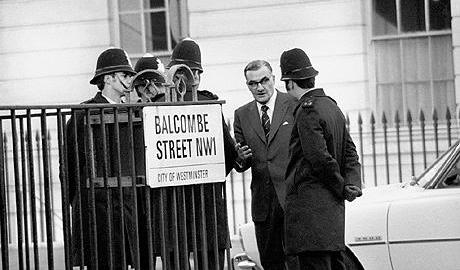


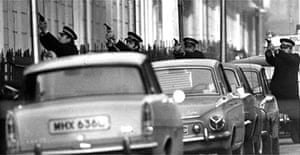



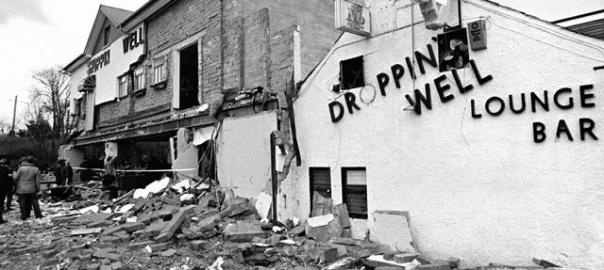











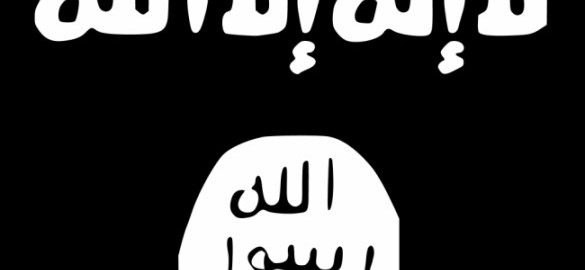


.png)


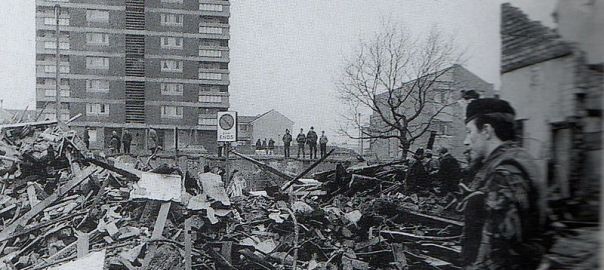


 belfastchildis.com