Key Events & Deaths on this day in Northern Ireland Troubles
Monday 2 August 1976
Cornelius Neeson (49), a Catholic civilian, was killed with an axe as he walked home along the Cliftonville Road, Belfast. Members of he Ulster Volunteer Force (UVF) gang known as the ‘Shankill Butchers’ were responsible for the killing.
Roy Mason, then Secretary of State for Northern Ireland, announced that a sports car factory would be built in West Belfast and would mean 2,000 new jobs. The new factory was seen as a breakthrough in securing American investment in Northern Ireland.
However the DeLorean factory required a British investment of £56 million out of a total of £65 million. At the time a number of commentators expressed reservations about the potential success of the venture and indeed the business did fail with the loss of substantial public funds.
Thursday 2 August 1979
Two British soldiers were killed by the Irish Republican Army (IRA) in a landmine attack at Cathedral Road, Armagh.
These deaths brought the total number of British Army soldiers killed in Northern Ireland since 1969 to 301.
A Royal Ulster Constabulary (RUC) officer was shot dead by the IRA in Belfast.
Sunday 2 August 1981
Eighth Hunger Striker Died
Kieran Doherty (25) died after 73 days on hunger strike. Doherty was a member of the Irish Republican Army (IRA) and had been elected as a Teachta Dáil (TD) during the general election in the Republic of Ireland on 11 June 1981.
John Smyth & Andrew Wood
Two Royal Ulster Constabulary (RUC) officers were killed in a landmine attack carried out by the Irish Republican Army (IRA) in Loughmacrory, near Omagh, County Tyrone.
Sunday 2 August 1992
Two bombs, each estimated at 200 pounds, exploded in Bedford Street, Belfast. Extensive damage was done to buildings in the area.
Hugh Annesley, Chief Constable of the Royal Ulster Constabulary (RUC), issued a statement on the Channel 4 programme entitled ‘The Committee’ broadcast on 2 October 1991. Annesley stated that there was no truth to the allegations.
Tuesday 2 August 1994
According to a report in the Irish Press (a Dublin based newspaper) on 8 August 1994 a meeting took place on 2 August between representatives of the Ulster Volunteer Force (UVF) and those of the Ulster Freedom Fighters (UFF), a cover name (pseudonym) used by the Ulster Defence Association (UDA).
At that meeting it was decided that Loyalist paramilitaries would continue with their campaigns of attacking Catholics irrespective of any future Irish Republican Army (IRA) ceasefire.
Friday 2 August 1996
In a statement the Ulster Volunteer Force (UVF) announced that the Portadown unit of the Mid-Ulster Brigade was to disband. The statement also said that activities of the Portadown unit would be investigated.
Sinn Féin (SF) denied organising boycotts of Protestant businesses in rural areas of Northern Ireland.
Since the stand-off at Drumcree some nationalists had been boycotting Protestant businesses in Armagh, Castlederg, Lisnaskea, Omagh and Pomery.
Nationalists claimed that the business people had taken part in Orange roadblocks during the stand-off.
Thursday 2 August 2001
Bomb Explosion in London
Republican paramilitaries carried out a car bomb attack in the Ealing area of London. The explosion occurred just before midnight and caused six injuries and some damage to property. A telephone warning was received at 11.33pm (2333BST) but the area was still being cleared when the explosion happened.
The bomb (estimated at 40 kilograms of home-made explosives) was thought to have been planted by the “real” Irish Republican Army (rIRA).
Police in London criticised the warning as being imprecise as to the location; the warning referred to ‘Ealing Broadway Road’ instead of ‘The Broadway, Ealing’ .
Former soldiers who were involved in the shootings in Derry on ‘Bloody Sunday’, 30 January 1972, announced that they would seek a judical review of a ruling by the Inquiry that they must give their evidence in Derry rather than in Britain.
The soldiers had won an earlier ruling allowing them to retain anonymity when giving evidence.
Today is the anniversary of the death of the following people killed as a results of the conflict in Northern Ireland
“To live in hearts we leave behind is not to die
– Thomas Campbell
To the innocent on the list – Your memory will live forever
– To the Paramilitaries –
There are many things worth living for, a few things worth dying for, but nothing worth killing for.
11 People lost their lives on the 2nd August between 1975 – 1988
——————————-
02 August 1975
George McCall, (22)
Protestant
Status: ex-Ulster Defence Regiment (xUDR),
Killed by: Irish Republican Army (IRA)
Shot while walking near his home, Moy, County Tyrone.
————————————————————–
02 August 1976
Cornelius Neeson, (49)
Catholic
Status: Civilian (Civ),
Killed by: Ulster Volunteer Force (UVF)
Died a short time after being found badly beaten, at the junction of Manor Street and Cliftonville Road, Belfast.
————————————————————–
02 August 1978
John Lamont, (21)
Protestant
Status: Royal Ulster Constabulary (RUC),
Killed by: Irish Republican Army (IRA)
Shot from passing car, while on Royal Ulster Constabulary (RUC) foot patrol, George Street, Ballymena, County Antrim.
————————————————————–
02 August 1979
Paul Reece, Paul (18) nfNI
Status: British Army (BA),
Killed by: Irish Republican Army (IRA)
Killed in land mine attack on British Army (BA) mobile patrol, Cathedral Road, Armagh.
————————————————————–
02 August 1979
Richard Furminger , (19) nfNI
Status: British Army (BA),
Killed by: Irish Republican Army (IRA)
Killed in land mine attack on British Army (BA) mobile patrol, Cathedral Road, Armagh.
————————————————————–
02 August 1979
Derek Davidson, (26)
Protestant
Status: Royal Ulster Constabulary (RUC),
Killed by: Irish Republican Army (IRA)
Shot by sniper when Royal Ulster Constabulary (RUC) patrol lured to scene of bogus robbery, Clondara Street, Falls, Belfast.
————————————————————–
02 August 1981
Kieran Dohert (25)
Catholic
Status: Irish Republican Army (IRA),
Killed by: not known (nk)
Also Teachta Dala. Died on the 73rd day of hunger strike, Long Kesh / Maze Prison, County Down.
————————————————————–
02 August 1981
John Smyth , (34)
Protestant
Status: Royal Ulster Constabulary (RUC),
Killed by: Irish Republican Army (IRA)
Killed in land mine attack on Royal Ulster Constabulary (RUC) mobile patrol, Loughmacrory, near Omagh, County Tyrone.
————————————————————–
02 August 1981
Andrew Wood, (50)
Protestant
Status: Royal Ulster Constabulary (RUC),
Killed by: Irish Republican Army (IRA)
Killed in land mine attack on Royal Ulster Constabulary (RUC) mobile patrol, Loughmacrory, near Omagh, County Tyrone
————————————————————–
02 August 1988
John Warnock, (45)
Protestant
Status: Royal Ulster Constabulary (RUC),
Killed by: Irish Republican Army (IRA)
Killed by booby trap bomb attached to his car outside Lisburn Royal Ulster Constabulary (RUC) base, County Antrim.
————————————————————–
02 August 1988
RoyButler (29)
Protestant
Status: Ulster Defence Regiment (UDR),
Killed by: Irish Republican Army (IRA)
Off duty. Shot while in Park Shopping Centre, Donegall Road, Belfast.
This is simply the story of a boy trying to grow up, survive, thrive, have fun & discover himself against a backdro… twitter.com/i/web/status/1…— Belfast Child (@bfchild66) July 23, 2020
I ain’t being funny here but that Saira Khan is an absolute nutter and if I was in the BB house with her I would be keeping as much distance between her and me as possible , preferably with a brick wall and a few miles separating us.
This woman is TOXIC and so far she has managed to upset almost all her housemates and tonight she was bang out-of-order when she accused the “boys” of being aggressive and she slapped Marnie right in the face when she was trying to comfort her.
Don’t bother Marnie – cause you are fighting a losing battle.
This woman has no social skills what-so-ever and how she has managed to get herself on prime time TV is baffling me in the extreme, but then again it is Loose Women were talking about .
Prior to her popping up in the BB house my only recollection of her was her statement in all the papers
” I’ve given my hubby permission to sleep with other women, cause I don’t like sex “
or something to that effect. Now – when I read this my first thought was that this woman would say anything to get a bit of exposure and shame on her for stooping so very very low.
How the hell did she find someone stupid enough to marry her in the first place?
Anyways I was shocked and outraged at her antics today and her “grilling” of Bear in the bathroom left me confused and worried for his safety , never mind hers’ I mean what sort of question is:
” Have you ever hit someone or been aggressive ” ?
Bear was right to be upset at this line of questioning and fair play to him he give her the time of day and was honest and up front with her. And then for her to later turn round and say she felt threatened by him and was worried about her safety…….
Give me a feckin break – the woman is as mad as a box of frogs and if you needed more proof – look how she reacted when Heavy D ( he’s an annoying git) and Lewis ( my mum likes Lewis) tried talking some sense into her at the dinning table. She spit her dummy out and accused them all of being aggressive – when she was the only one being…ahem… aggressive and took herself off to the bedroom and had a mini meltdown that lasted just long enough for her to insult Marnie and ignore Heavy D’s awkward , fumbling apology ( she’s not the hugging type D – so don’t bother) .
Or should I say she ain’t going to hug you big fella as she probably feels threatened by you – you big cuddly monster ( my cat likes Heavy D – I can tell)
Delilah – What a face!
Anyways I could go on and waffle some more and I do have much more to say , but the wife is calling me and has been for the last 2o minutes and its got to the stage I can’t ignore her anymore unless I want to suffer so I’m signing off for now.
Key Events & Deaths on this day in Northern Ireland Troubles Claudy Bomb
Friday 1 August 1975
James Marks
Two Catholic civilians, Joseph Toland (78) and James Marks (42), died as a result of a gun attack on a minibus near Gilford, County Down. Marks died from his injuries on 7 January 1976.
No group claimed responsibility but ‘Lost Lives’ (2004; p614) records: “the attack …, according to reliable loyalist sources, was carried out by the UVF”.
David House, then a Lieutenant-General in the British Army, replaced Frank King as General Officer Commanding (GOC) of the army in Northern Ireland.
Tuesday 1 August 1978
Tomás Ó Fiaich, Catholic Primate of Ireland, who had paid a visit to Republican prisoners in the Maze Prison on 30 July 1978, issued a statement saying that the prisoners engaged in the ‘blanket protest’ where living in ‘inhuman’ conditions.
At this stage of the ‘blanket protest’ over 300 Republican prisoners were refusing to wear prison clothes or follow normal prison regulations. This protest was an attempt to secure a return of special category status for people convicted of politically motivated crimes.
Wednesday 1 August 1979
The United States (US) State Department halted a private firearms shipment to Northern Ireland. The shipment also included firearms that were intended for the Royal Ulster Constabulary (RUC). The RUC later purchased the arms from West Germany instead.
This decision by the US State Department was brought about by a campaign to try to bring pressure on the British government to undertake a new political initiative in Northern Ireland to find a solution to the conflict.
The campaign was headed by the so-called ‘Four Horsemen’ who were: ‘Tip’ O’Neill, then Speaker of the House of Representatives, Edward Kennedy, then a Senator, Daniel Moynihan, then a Senator, and Hugh Carey, then Governor of New York. Previously the US had been uncritical of British policy in Northern Ireland and these developments were to prove worrying for the British
Saturday 1 August 1981
Seventh Hunger Striker Died
Kevin Lynch (25) died after 71 days on hunger strike. Lynch was a member of the Irish National Liberation Army (INLA).
An Irish Republic Army (IRA) bomb killed one soldier and injured nine at an army barracks in London. It was the first IRA bomb in Britain since the ‘Brighton’ bombing on 12 October 1984.
Friday 1 August 1997
Stewart Hunter (24), a Protestant civilian, was found dead at the side of a road near his home near Larne, County Antrim.
It was believed that Loyalist paramilitaries were responsible for the killing
Saturday 1 August 1998
Thirty-three civilians and two members of the Royal Ulster Constabulary (RUC) were injured when a car bomb, estimated at 500 pounds, exploded in Banbridge, County Down.
Extensive damage was also caused in the explosion that was later claimed by the “real” Irish Republican Army (rIRA).
The government in the Republic of Ireland took the decision to release six Irish Republican Army (IRA) prisoners from Portlaoise Prison. [Unionists reacted angrily to the announcement.
Sunday 1 August 1999
In the aftermath of the killing of Charles Bennett on 30 July 1999, John Bruton, then Leader of Fine Gael, called upon Bertie Ahern, then Taoiseach (Irish Prime Minister), to make “an authoritative statement” on the relationship between Sinn Féin (SF) and the Irish Republican Army (IRA).
Wednesday 1 August 2001
Implementation Plan Published and Bomb At Belfast Airport
British Army technical officers defused a car-bomb was left in the main car park at Belfast International Airport. There had been an initial warning at 5.00am (0500BST) but security forces were unable to locate the bomb. Following a second warning the vehicle was found close to the main terminal building.
The car park was closed but flights in and out of the airport were not affected. The “real” Irish Republican Army (rIRA) was thought to have been responsible for the attack.
The British and Irish governments published their Implementation Plan for the Good Friday Agreement. The document addressed the remaining issues of policing, normalisation, stability of the institutions, and decommissioning of paramilitary weapons.
The political parties were given until Monday 6 August 2001 to give their response to the proposals. The funeral of Gavin Brett (18), who had been shot dead by Loyalist paramilitaries on 29 July 2001, took place at Carnmoney Parish Church. Nigel Baylor (Rev), then Church of Ireland rector, said that those responsible for the killing “have done nothing but bring shame on the name of Protestantism
——————————
——————————————
Remembering all innocent victims of the Troubles
Today is the anniversary of the death of the following people killed as a results of the conflict in Northern Ireland
“To live in hearts we leave behind is not to die
– Thomas Campbell
To the innocent on the list – Your memory will live forever
– To the Paramilitaries –
There are many things worth living for, a few things worth dying for, but nothing worth killing for.
6 People lost their lives on the 1st August between 1972 – 2001
——————————————
01 August 1973
Peter Wilson, (21)
Catholic
Status: Civilian (Civ),
Killed by: Irish Republican Army (IRA)
Abducted somewhere in the St. James area, Belfast. His remains eventually found by information supplied anonymously, buried in land at foreshore, Waterfoot, County Antrim, on 2 November 2010.
————————————————————–
01 August 1975
Joseph Toland, (78)
Catholic
Status: Civilian (Civ),
Killed by: non-specific Loyalist group (LOY)
Shot during gun attack while travelling in mini bus, near Gilford, County Down.
————————————————————–
01 August 1975
James Marks, (42)
Catholic
Status: Civilian (Civ),
Killed by: non-specific Loyalist group (LOY)
Shot during gun attack while driving mini bus, near Gilford, County Down. He died 7 January 1976.
————————————————————–
01 August 1976
John Bovaird, (33)
Protestant
Status: Civilian (Civ),
Killed by: Ulster Defence Association (UDA)
Shot at his home, Annalee Street, Lower Oldpark, Belfast. Lived with Catholic family.
————————————————————–
01 August 1981
Kevin Lynch, (25)
Catholic
Status: Irish National Liberation Army (INLA),
Killed by: Hunger Striker
Died on the 71st day of hunger strike, Long Kesh / Maze Prison, County Down.
————————————————————–
01 August 1988
Michael Robbins, (23) nfNIB
Status: British Army (BA),
Killed by: Irish Republican Army (IRA)
Killed in time bomb attack on Inglis British Army (BA) base, Mill Hill, London.
This is simply the story of a boy trying to grow up, survive, thrive, have fun & discover himself against a backdro… twitter.com/i/web/status/1…— Belfast Child (@bfchild66) July 23, 2020
Below is a comprehensive list of 60 films about the “Troubles” and Republican/Loyalist paramilitaries . The list includes background information on the movies and where possible I have included clips ( and full movies) and original movie posters when available.
Many of the movies included will be familiar to most readers, however there are some obscure and truly awful entries and a few gems from the early 1920’s -30’s. If you would like to review or comment on any of the entries there is a comment box at the end of the list and I will be updating this post as and when necessary.
Enjoy!
1)
’71 (film)
Country of Origin: Britain
Year of Production: 2014 (Release date: 10 October 2014)
A young British soldier is accidentally abandoned by his unit following a terrifying riot on the streets of Belfast in 1971. Unable to tell friend from foe, the raw recruit must survive the night alone and find his way to safety through a disorienting, alien and deadly landscape.
English soldier Gary Hook, a new recruit to the British Army, takes leave of his much younger brother Darren. Hook’s platoon of British soldiers is sent to Belfast in 1971 in the early years of the Troubles. Under the leadership of the inexperienced Second Lieutenant Armitage, his platoon is deployed to a volatile area of Belfast where Catholic Nationalists and Protestant Loyalists live side by side. The unit provides support for the Royal Ulster Constabulary as it inspects homes for firearms, shocking Hook with their rough treatment of women and children. The Catholic neighbourhood has been alerted to the activity and a crowd gathers to protest and provoke the British troops who, though heavily armed, can only respond by trying to hold the crowd back.
One soldier is hit unconscious by a rock thrown by a protestor, leaving his rifle on the ground in the confusion and a young boy runs off through the mob with it; Hook and another pursue him. As the crowd’s protest escalates into stone-throwing, the soldiers and police pull out, leaving the two soldiers behind. Hook and the other soldier are briefly rescued by a sympathetic woman who fails to hold back a small crowd who are beating them. Hook sees the other soldier shot dead at point blank range by the Provisional Irish Republican Army (PIRA) gunman Paul Haggerty and then, with the crowd physically engaging him, Hook flees through streets and back alleys, finally eluding his pursuers and hiding until dark.
A Protestant youngster brings Hook to a local pub that serves as a front for Loyalists, where he glimpses a Loyalist group in a back room constructing a bomb under the guidance of a member of the Military Reaction Force (MRF), the covert counter-insurgency unit of the British Army. Hook steps outside the pub just before an enormous explosion destroys the building, killing or injuring many of those inside, including the young boy who brought him there. Hook flees once more into the dark streets. Unaware that the Loyalist bombers have blown themselves up accidentally, the PIRA and Official Irish Republican Army (OIRA) factions charge each other with responsibility for the bombing.
Two Catholics, Eamon and his daughter Brigid, discover Hook as he lies in a street unconscious and injured by shrapnel. They take him to their flat in the Divis Flats area and, even though they discover he is a British soldier, Eamon stitches his wounds. Despite the PIRA recently taking control over the area from the OIRA, Eamon contacts senior OIRA official Boyle for help, expecting a more humane solution than the PIRA faction would allow. Boyle, less radical and violent than the younger PIRA members, has a working relationship with the MRF. He tells MRF Captain Browning, leader of the local MRF section, of Hook’s whereabouts and asks in return that Browning kill James Quinn, a key leader of the PIRA faction.
Quinn and his PIRA squad have been tailing Boyle since the pub explosion and saw him visit Eamon’s flat without knowing why he was there. Sensing danger, Hook flees the flat, taking a sheathed blade with him. Moving painfully through the flat complex halls and stairways, he eludes the PIRA men who have now learned of his presence and separated to search for him. Finally, unable to get away from Haggerty, who is about to come around a corner and discover him, Hook stabs him. As the wounded man lies dying, Hook reaches down and grasps his shoulder, sharing strength and sympathy as they hold each other’s gaze and the PIRA man dies.
Hook is captured by Quinn’s group and taken to a hideout. Quinn orders Sean, a young teenager whom Quinn has recruited, to murder Hook. When Sean hesitates, Quinn prepares to execute Hook, only to leave when Browning’s group arrives. Lewis, to Hook’s horror, shoots Sean. He then attempts to strangle Hook to prevent him from informing others of the bomb. As Lieutenant Armitage and his men enter in support of Browning, Armitage sees Lewis’ attempt to kill Hook. Sean raises himself and shoots Lewis dead before being shot again, this time by Armitage. Browning finds Quinn and rather than arrest him, tells him Boyle wants him dead. He promises to contact him soon, telling him he expects him to prove to be co-operative. Hook returns to his barracks. Later, despite a formal complaint by Armitage, the commanding officer dismisses the incident between Hook, Lewis and Sean as a confused situation that merits no further inquiry. Hook returns to England and reunites with Darren.
Reception
Writing for the Los Angeles Times, Kenneth Turan called ‘71 “a tense thriller from Britain that so adroitly joins physical intensity, emotional authenticity and political acuity that you may find yourself forgetting to take a breath.” Manohla Dargis of The New York Times singled out Jack O’Connell for praise, saying, “Mr. O’Connell runs away with ‘71, in which his character’s every emotional, psychological and physical hurdle makes for kinetic cinema.” The Hollywood Reporter critic Leslie Felperin noted of Yann Demange’s direction,
“A big part of [Demange’s] achievement resides in the casting of such a veteran crew of character actors in the first place, but credit is due for coaxing such subtle performances.”
Jonathan Romney in Film Comment praised the originality of the film, “a rare hybrid between hard-nosed realism, on the cusp of a quasi-documentary style, and genre thriller-adventure”, while criticising the opening and closing scenes as conventional.
What is peace? Is it when the bullets stop or the wounds heal?
Full Movie
A BELFAST STORY explores life after terrorism. Set in a city which has weathered hundreds of years of hatred, 30 years of bombs, and a war without winners, just victims. A new era brings new risks. There is peace, but that can also be deadly.
Plot
Colm Meaney stars as a man weary of doing right. Times are changing, car bombs are less common and terrorists find themselves out of work, but old habits die hard. And while most go quietly into the night, he must find the few who won’t comply. Haunted by his own past failures, he knows that he may only get one last chance to repeat the same mistake, and this time, the blood will be on his hands.
When a series of murders awaken dormant memories, many fear the worst. A greying assassin has stopped walking his son to school, purely precautionary. And his old comrades are also refusing to die gracefully. Someone is laying plans for the future, but first they must secure the present.
Gripping characters, fiercely intelligent action, and deadly consequences… A BELFAST STORY is a film about the passing of a way of life… and the dangers that brings, because in Ireland:
Someone always has to buy the last round…
—————————————–
3)
A Further Gesture (The Break)
Country of Origin: Ireland / Britain / Germany
Year of Production: 1996
Plot
Rea, an imprisoned IRA man, takes part in a violent jailbreak from the Maze prison. He is smuggled out to New York where he works as a dishwasher. He becomes friendly with a South American porter and becomes romantically involved with the man’s sister. Both brother and sister are part of a revolutionary cell, dedicated to the overthrow of the repressive regime in their country, but lack any basic military training. Rea trains them and draws up a successful assassination plan for them, helps them execute it and then attempts to escape with them. However, the authorities have been tailing him.
—————————————–
4)
A Prayer for the Dying
Country of Origin: Britain
Year of Production: 1988
Martin Fallon (Mickey Rourke) and two fellow IRA terrorists accidentally blow up a school bus instead of a British military vehicle. Fallon’s friends escape, but he, devastated by the incident, turns his back on the Cause and escapes to London, where he hopes to find safe passage to the US. Instead, the IRA and the British police tail him, forcing him to depend on ruthless gangster Jack Meehan (Alan Bates), for a passport.
Plot
The film begins with a small IRA team, including Martin Fallon (Mickey Rourke) and Liam Docherty (Liam Neeson), watching as two British Army Land Rovers approach the roadside bomb they have set for them. At the last minute, a school bus overtakes the army vehicles and detonates the bomb as it passes, killing the children. After most of the team escape the scene pursued by the soldiers, Fallon travels to London in a bid to escape the past. In London, he is approached by a contact who asks him to take on one last job on behalf of local gangster Jack Meehan (Alan Bates) and his brother Billy Meehan (Christopher Fulford). They offer Fallon money, a passport and passage to the US if he kills a rival gangster. Initially reluctant, he nonetheless takes on the job. However, as he is carrying out the hit in a graveyard, he is seen and confronted by the local Catholic priest, Father Michael Da Costa (Bob Hoskins). The confrontation is watched from a distance by Billy Meehan, who tells his brother there is a witness to the killing.
Fallon visits the church and confesses to the priest in a bid to ensure his silence; he also meets and finds himself becoming attracted to the priest’s blind niece Anna (Sammi Davis), who lives at the church along with her uncle. Meehan, however, insists that Fallon must kill the priest too and tells Fallon he will not be paid until the loose end is tied up. Fallon now finds himself targeted by both the Meehans and the IRA, who see him as a security risk following his disappearance, and send Docherty and another member, Siobhan Donovan (Alison Doody), to London to persuade him to return to Ireland. Billy Meehan eventually decides to take matters in his own hands and goes to the church looking for Fallon, but Anna kills him in a struggle when he attacks her after finding her alone in the church house. Fallon meanwhile manages to outwit a group of Meehan’s men who had been assigned to kill him after tricking him aboard a boat he was assured would be taking him to the US. Returning to the church, Fallon finds Jack Meehan with a bomb he intends to use to kill the priest and his niece but which will be blamed on Fallon and his IRA connections. After a struggle, Anna and Michael escape, but the bomb goes off killing Meehan and leaving Fallon fatally injured. In his dying moments, Fallon confesses his past to the priest, who grants him absolution. Fallon dies in peace.
Reception
A Prayer for the Dying has a mixed reaction. Some liked Rourke’s performance. Others put fault in his Irish accent. Other critics thought Bob Hoskins was miscast in his portrayal of the priest.
Both Mike Hodges and Mickey Rourke have disowned the film as it wasn’t the finished film they intended to make.
On Film 87, Hodges tried to take his name off as he felt Sam Goldwyn studio had drastically altered the film. According to film producer Peter Snell only 3 minutes had been cut out.
—————————————–
5)
A Sense of Loss
Country of Origin: USA / Switzerland
Year of Production: 1978
Full Movie
A “searing but balanced documentary about the never-ending conflict in Northern Ireland,” by the director of The Sorrow and the Pity.
—————————————–
6)
A Terrible Beauty
Country of Origin: Britain/USA
Year of Production: 1960
A Terrible Beauty (a.k.a. The Night Fighters) is a 1960 drama film, directed by Tay Garnett and starring Robert Mitchum and Richard Harris.It was adapted from a 1958 novel of the same name, written by Arthur Roth.
It was an international co-production between the United Kingdom and Robert Mitchum’s production company DRM.
Plot
Dermot O’Neill (Mitchum) is recruited into the Irish Republican Army (IRA) when a unit is formed in his Northern Ireland town during the Second World War. Reaction to the news is mixed. His mother is strongly against it, while his father (Harry Brogan) is proud. His brother Ned (Niall MacGinnis) and sister Bella are ambivalent. Dermot’s girlfriend, Neeve Donnelly (Anne Heywood), breaks up with him, telling him the IRA will turn him into a murderer.
Dermot and his friend Sean Reilly (Harris) are chosen from their unit to participate in a raid on a British armoury to steal weapons and ammunition. Don McGinnis (Dan O’Herlihy) is frustrated because, as commandant of the unit, he is too important to risk. The theft goes off without a hitch.
However, their next attack, to destroy a guarded power plant in concert with a planned German invasion, results in bloodshed. To get away, Dermot shoots a soldier blocking the way out. Sean is wounded in the foot and Johnny Corrigan is killed. Dermot and Sean evade their pursuers and manage to cross the border to safety in Ireland. Dermot returns home, leaving his friend to recuperate.
Despite Dermot’s advice to stay away, Sean tries to sneak back across the border and is captured by the police. Dermot wants to stage a rescue, but McGinnis turns him down. Sean is sentenced to ten years imprisonment.
McGinnis decides to get revenge by attacking a police barracks. Dermot opposes this plan, as a policeman’s wife and children are living there, and warns that he will tell the authorities if McGinnis does not change his mind. When the commandant refuses to back down, Dermot tells McGinnis he is quitting the IRA. He is beaten up, but fortunately, a police patrol comes upon the scene before the IRA members can do anything more drastic. Dermot carries through on his threat, telling Sergeant Crawley, though without naming names. He is abducted to stand trial as an informant.
Bella becomes concerned when her brother does not come home. She goes to Neeve. The two then consult Dermot’s good friend, cobbler Jimmy Hannafin (Cyril Cusack). Jimmy has a pretty good idea what has happened. He gets Ned to help in the rescue. Neeve refuses to be left behind, but Bella is sent home to reassure her parents. Once they find and free Dermot, guarded only by youngster Quinn, Jimmy arranges for a friend to give Dermot a ride to Belfast, where he can leave the country. Neeve goes with him.
Meanwhile, the IRA men start searching for him. McGinnis stations himself at the O’Neill home. In the darkness and driving rain, he mistakes the returning Bella (wearing Dermot’s coat) for the fugitive and shoots her dead. He is horrified to discover that he has killed the woman he loves.
—————————————–
7)
Acceptable Levels
Country of Origin: Britain
Year of Production: 1983
Plot
This study of a British TV crew interviewing a Belfast family in the war-strewn Catholic district focuses upon the death of a child hit by a stray plastic bullet fired by a British soldier. The chief reporter becomes politically involved in the incident, whilst her producer is apprehensive and, once back in London, makes sure that the most indicting footage is destroyed.
—————————————–
8)
An Everlasting Piece
Country of Origin: Ireland
Year of Production: 2000
A comedy about selling wigs in Belfast in the 1980s. Barry McEvoy plays Colm (a Catholic) who cuts hair in a mental hospital, where he meets ‘The Scalper’ (Billy Connolly), a crazed Scot, who ran a toupee monopoly in Northern Ireland before losing the plot and attacking his customers. Colm and his pal George (Brian F O’Byrne, who plays a Protestant) use The Scalper’s contacts to take over the franchise but then a rival firm moves in and a sales battle ensues.
Barry McEvoy wrote the script based on stories his father told him about Belfast.
Colm (Barry McEvoy) takes a job as a barber in a Belfast psychiatric hospital. He meets the staff and is warned against talking about poetry with George, a fellow barber (Brían F. O’Byrne). when he brings it up, George subjects him to his own poor work. The pair chat anyway. Later they meet an orderly escorting a new patient, whom he refers to as “The Scalper” (Billy Connolly), described as the only seller of hair pieces in all of Northern Ireland until he had a nervous breakdown and scalped some of his own customers. Colm and George decide to meet with the Scalper to gain his list of customers; they intend to take over his former hairpiece monopoly. The Scalper agrees to give them the list.
Colm and George, calling themselves “The Piece People”, embark on their plan to get rich. Colm’s girlfriend Bronagh (Anna Friel) helps. She sets up their first appointment with a Mr Black (Des McAleer), who eventually agrees to buy a hairpiece, although he denies having been a customer of “The Scalper”. Bronagh had seen his picture in the newspaper (featured after he shot a Catholic) and, as he was bald, thought he’d be a good prospect. Having little success in sales, Colm and George discover they have competition from “Toupée or not Toupée”, rivals who also acquired the client list. The supplier, “Wigs Of Wimbledon”, decides to hold a meeting with two companies to inform them that the one who sells the most in a given time period will win an exclusive rights for all of Northern Ireland. The partners visit a farmer but lose the sale, learning that their competitors are underselling them. On a remote road, they are stopped by members of the Irish Republican Army (IRA), demanding to know what they are up to. This confrontation results in the partners selling a wig to the lead IRA man (Colum Convey), who fails to notice it had been chewed by dogs.
The competition is raging, but the IRA man accidentally leaves the unique wig at the scene of a bombing. The Royal Ulster Constabulary (RUC) trace it to The Piece People. After being interrogated, George and Colm have a falling out. Meanwhile, the IRA man who lost the wig tracks Colm down and demands Colm sell him his whole inventory because now every bald Catholic in Northern Ireland is a potential suspect for the police. Colm refuses as his business partner is a Protestant and thinks it would be unethical to protect the IRA because the sales would likely help The Piece People win the exclusive deal with Wigs Of Wimbledon.
Colm goes to a poetry reading by George and the two make peace. With the help of Bronagh, the duo learn that many British Army soldiers in Northern Ireland are suffering from alopecia (hair loss) due to the stressful conditions, and secure a government contract to supply wigs to all soldiers who want them. With this, they win the competition and gain the rights to Northern Ireland.
Lawsuit against Dreamworks
In 2001, one of the film’s producers, Jerome O’Connor, filed a $10 million lawsuit in federal court in Manhattan against Steven Spielberg‘s studio DreamWorks, the film’s distributor. He complained that, although his film had received favorable reviews, the studio had reduced distribution from a projected 800 to eight theaters in the United States, and then pulled it from distribution. O’Connor alleged the film was “sabotaged” because director Barry Levinson would not change scenes to please British officials in its Foreign Office, which objected to its “sympathetic portrayal” of the IRA. O’Connor claimed DreamWorks officials feared the film might interfere with Steven Spielberg‘s attaining an honorary knighthood (which Spielberg received in January 2001).
O’Connor argued that then Prime Minister Tony Blair had arranged for a loan of military equipment and 2,000 troops to Spielberg’s production of Band of Brothers (TV miniseries), which aired in 2001 on HBO, and that Spielberg gave Blair’s son Euan a job in the production, indicating a quid pro quo.
A DreamWorks spokesman said the studio had not requested any film cuts. An Everlasting Piece was released on DVD, and the film, which had a $14,000,000 budget, earned $75,228.
A decade after filing his lawsuit, a New York judge dismissed it in February 2011. O’Connor’s counsel reserved the right to file an appeal, but ultimately did not file one.
Reception
An Everlasting Piece received mixed reviews from critics and holds a 48% rating on Rotten Tomatoes based on 43 reviews.
—————————————–
9)
Angel
Country of Origin: Ireland
Year of Production: 1982
Bleak drama of a saxophone player who witnesses his manager’s murder. The film narrative occurs against the backdrop of the Troubles.
Plot
Danny (played by Stephen Rea), a saxophonist with a travelling band, witnesses the gangland murder of the band’s manager (involved in extortion payoffs) and that of a deaf and mute girl witness at a dancehall in South Armagh. Danny tries to hunt down the murderers and in doing so his relationship with Deirdre, the singer in his band, falls apart and he becomes a murderer himself.
Production
The film is set in Northern Ireland and it is implied that the extortionists/murderers are loyalist paramilitaries (one is described as “a Prod” by his Catholic girlfriend; another is a policeman). However, there is little specific reference to the Northern Ireland Troubles.
The film was made in and around inner-city Dublin (standing in for Belfast) and Jordan’s native Bray. In the sequences where the band play in a seaside resort (probably supposed to be Portstewart, since Danny is shown asking older bandsmen about their memories of his late uncle, whom we are earlier told played in a band at Portstewart) Bray Head is visible in some background shots. Other locations include the former Butlin’s holiday camp in Mosney, County Meath, and the former Mental Hospital, Grangegorman.
The dance and crowd scenes from the Mosney ballroom had to be re-shot due to a problem with the film processing.
—————————————–
10)
Bloody Sunday
Country of Origin: Britain / Ireland
Year of Production: 2001 (first screened on ITV, 20 January 2002)
Plot
Bloody Sunday deals with the events that happened in Derry on 30 January 1972. During a civil rights march the British Army shot dead 13 civilian protesters and wounded another 14 people (one of whom died later in the year). The story was filmed in a documentary style that employed hand-held cameras throughout. The film deals with the 24 hour period of Bloody Sunday and thus does not cover the aftermath.
[The film was first shown on ITV (Britain) but also given a limited cinema release and also went straight to video.]
Bloody Sunday is a 2002 film about the 1972 “Bloody Sunday” shootings in Derry, Northern Ireland. Although produced by Granada Television as a TV film, it premiered at the Sundance Film Festival on 16 January, a few days before its screening on ITV on 20 January, and then in selected London cinemas from 25 January. The production was written and directed by Paul Greengrass. Though set in Derry, the film was actually shot in Ballymun in North Dublin. However, some location scenes were shot in Derry, in Guildhall Square and in Creggan on the actual route of the march in 1972.
Reception
The film was critically acclaimed.It won the Audience Award at Sundance and the Golden Bear at the Berlin International Film Festival (tied with Spirited Away), in addition to the Hitchcock d’Or best film prize at the Dinard Festival of British Cinema.
Bloody Sunday appeared a week before Jimmy McGovern‘s TV film on the same subject, entitled Sunday (shown by Channel 4). McGovern subsequently criticised Greengrass’s film for concentrating on the leadership of the march, and not the perspective of those who joined it.
It holds a 92% approval rating on aggregate review site Rotten Tomatoes, based on 102 collected reviews, with an average score of 7.9/10. The sites consensus reads: “Bloody Sunday powerfully recreates the events of that day with startling immediacy
—————————————–
11)
Blown Away
Country of Origin: USA
Year of Production: 1994
An Irish terrorist escapes from jail in Northern Ireland and goes to Boston seeking revenge on an ex-comrade who had also been a terrorist bomber but left the organisation, and now works in Boston as a bomb disposal expert.
Plot
Irish terrorist Ryan Gaerity (Tommy Lee Jones) escapes from his cell in a castle prison in Northern Ireland, killing a guard and his cellmate in the process, after turning a toilet into a bomb.
In Boston, Lt. Jimmy Dove (Jeff Bridges) is a veteran member of the police force’s bomb squad, on the verge of retirement and helping to train newer recruits. Dove hides that he is really Liam McGivney, a former member of a Northern Ireland terrorist cell. Dove had been friends with Gaerity, but when Gaerity tried to set off a bomb that would have killed numerous civilians, McGivney (now Dove) interceded, ending in the death of his girlfriend, Gaerity’s sister and leading to Gaerity’s imprisonment. Devastated, McGivney/Dove had moved to Boston and took on the Dove identity, hoping to find atonement in defusing bombs and saving others. Only Dove’s uncle Max O’Bannon (Lloyd Bridges) is aware of this past and expresses his desire for Dove to retire earlier, having clearly shown his atonement.
Gaerity makes his way to Boston, taking residence in an abandoned casino boat, and tracks down Dove/McGivney. Gaerity takes a job as a janitor at the police station to learn more about Dove’s present life and those of his co-workers. Gaerity sets up bombs specifically designed to kill the defusers, which kill three of Dove/McGivney’s team members. Dove recognizes Gaerity’s work in the bomb designs, and realizes that his wife Kate (Suzy Amis) and daughter are in danger. He explains his true past to them, and convinces them to go into hiding at a nearby beach house. Another squad member, rookie technician Anthony Franklin (Forest Whitaker), who has linked Dove/McGivney’s former life to Gaerity, is safely rescued from another bomb planted by Gaerity with Dove’s aid, and promises Dove any assistance he can offer.
Max decides to try to stop Gaerity himself, trying to get close to him at an Irish bar, but instead ends up captured by Gaerity, and latched into a makeshift bomb. Dove tracks down Max, and goes to retrieve his tools, but Max, realizing that Gaerity created the bomb to kill both of them, intentionally triggers the bomb while Dove is away, sacrificing himself. In analyzing the bomb’s debris, Dove finds a roulette ball that points to the abandoned ship, and tracks Gaerity there. Gaerity reveals that he has set up another bomb in Kate’s car and activates its arming mechanism before engaging with Dove in a large melee fight throughout the booby-trapped ship, rigged to blow up in a few minutes. With Dove gaining the upper hand. Gaerity handcuffs himself to Dove, preventing him from leaving. Dove is saved by Franklin, who had followed Dove to the ship, and the two escape in time before the ship explodes.
The two race back to the city, hoping to stop Kate before she starts the car. They arrive too late but are able to catch up to Kate, and Dove jumps into her car. He finds the complex bomb and manages to defuse it in time. As they recover, Franklin tells Dove he knows his past identity but will keep it a secret if he can take credit for taking down Gaerity; Dove agrees and gives Franklin his badge before leaving with Kate and his daughter.
Production
It was the first action film starring Jeff Bridges.
Reception
Blown Away received negative reviews from critics and holds a 28% rating on Rotten Tomatoes based on 18 reviews. The film was widely criticized for the poor Irish accents of the three main Irish characters, with Tommy Lee Jones’ portrayal of Ryan Gaerity particularly receiving the harshest criticism.
Release
The VHS of the film was released on December 14th 1994. The UK rental tape of the film notably featured a Tango Orange advertisement in the trailers at the start which was banned from television for being frightening
—————————————–
12)
Bogwoman
Country of Origin: Ireland
Year of Production: 1997 (released 1999)
The movie is set in Derry during the period 1958 to 1969. It charts the experiences of a woman who moves to the city from Donegal as she copes with various personal and familiy pressures against the background of the emerging civil unrest and the redeployment of British troops into the area.
—————————————–
13)
Borstal Boy
Country of Origin: UK/ Ireland
Year of Production: 2000
Full Movie
Borstal Boy is a 2000 British/Irish romantic drama film adaptation of the Brendan Behan autobiographical novel of the same name. The film is written and directed by Irish playwright Peter Sheridan.
Plot
In 1941, 16-year-old IRA volunteer Brendan Behan (Shawn Hatosy) is going on a bombing mission from Ireland to Liverpool during the Second World War. His mission is thwarted when he is apprehended, charged and imprisoned in Borstal, a reform institution for young offenders in East Anglia, England. At Borstal, Brendan is forced to live face-to-face with those he regarded as his enemies, a confrontation that reveals a deep inner conflict in the young Brendan and forces a self-examination that is both traumatic and revealing. Events take an unexpected turn and Brendan is thrown into a complete spin. In the emotional vortex, he finally faces up to the truth.
—————————————–
14)
Cal
Country of Origin: Britain
Year of Production: 1984
Full Movie
Based on Bernard MacLaverty’s novel about a Catholic living in a Protestant neighbourhood in Northern Ireland. He had been involved in the murder of an RUC man, but later gets a job from the family of the dead officer, and begins an affair with the dead man’s wife
Plot
Cal (John Lynch) is a young Catholic member of the Irish Republican Army (IRA) in 1970s Northern Ireland. He is used as a driver on a nighttime murder of a member of the Royal Ulster Constabulary (RUC). The murder takes place at the victim’s home in view of his family. The victim’s dying words are a call for his wife, Marcella.
One year later, Cal learns that the victim’s widow is a librarian, Marcella (Helen Mirren), a Catholic woman. Burdened with guilt over his role in the murder, Cal tries to leave the IRA, but is pressu.red to remain a member. He and his father live in the city, where they are threatened with loyalist gangs and Orange Order marches on their street. Wishing to atone in some way for assisting in the murder of Marcella’s husband, Cal seeks work in her family’s Protestant home. Initially he works as a hand on their farm, and later moves into a small cottage on their land. Marcella is not happy in her home, feeling trapped by her deceased husband’s family. Over time, Cal and Marcella begin a love affair—with Marcella unaware of Cal’s role in her husband’s death.
Eventually, Cal is found by his IRA unit and is threatened with murder if he does not continue working as a driver. While he is Christmas shopping for Marcella and her child, he is abducted by the IRA. The car is stopped by a British Army checkpoint. In the ensuing gunfire, Cal escapes and makes his way to Marcella’s home, where he confesses his role in the murder. Cal is pursued to the house by the RUC, and in the film’s final scene both Cal and Marcella are seen in their respective “prisons”—Cal on his way to prison in a police van, and Marcella on her way back to her in-laws’ home.
Reception
As of 16 March 2011, the aggregate review website Rotten Tomatoes has recorded 91% positive response based on 11 reviews
—————————————–
15)
Closing the Ring
Country of Origin: UK / Ireland
Year of Production: 2007
A young man searches for the proper owner of a ring that belonged to a U.S. World War II bomber gunner who crashed in Belfast, Northern Ireland on June 1, 194.
During the 1940s, a group of young men go off to war, leaving behind Ethel Ann (Mischa Barton), who is in love with one of them, Teddy. In modern-day Belfast, a man named Jimmy (Martin McCann) endeavors to return a ring found in the wreckage of a crashed plane. He travels to Michigan, where the grown Ethel Ann (Shirley MacLaine), who married another man after Teddy was killed in battle, now lives. Ethel Ann must decide whether to go with Jimmy to meet the soldier who last saw Teddy alive.
Plot
The film opens in 1991, with the funeral of a World War II veteran. The man’s daughter Marie (Neve Campbell) delivers the eulogy to a church full of veterans who knew and loved her father, while her mother Ethel Ann (Shirley MacLaine) is sitting out on the church porch, smoking and nursing a hangover. When Ethel Ann begins acting strangely, only her friend Jack (Christopher Plummer) seems to understand why. It quickly emerges that there is a lot Marie does not know about her mother’s past and the true story of her love life.
Inadvertently caught up in cross-border troubles, Jimmy flees Belfast, travelling to Michigan to give Ethel Ann the ring. Ethel Ann reveals a wall covered in souvenirs of Teddy, which Jack and Chuck boarded up for her in 1944. Marie is shocked and furious to learn that her mother loved not Chuck, but Teddy’s memory. Ethel Ann travels to Belfast with Jimmy. She holds the hand of a dying British soldier caught in an IRA car-bomb attack. Quinlan (Pete Postlethwaite) finally confesses to Ethel Ann that he was on the hill when Teddy died, and that Teddy’s dying words freed Ethel Ann from her promise to love him forever, that she was “free to make her own choice”. A tearful Quinlan tells her he spent 50 years looking for the ring that was lost in the final blast that killed Teddy, and is filled with regret for never having fulfilled his promise to inform Ethel of Teddy’s dying words. Joining Ethel Ann in Belfast, Jack finally admits that he has always loved her. Ethel Ann is finally able to cry and properly grieve. They share a long hug (and it’s implied they finally begin a romance.)
Reception
The film attracted a mixed critical response.
According to the Toronto International Film Festival it “exemplifies the balance between the epic and the intimate that has been the hallmark of Lord Richard Attenborough’s venerable career…Attenborough traces multiple themes with ease and grace, giving his celebrated ensemble cast ample opportunity to shine”. It concluded that the film is “a remarkable tale of love, loss and redemption that stands proudly among the films of one of the cinema’s living legends. Deftly weaving together different eras and locales, Attenborough has produced another grand canvas about the emotional repercussions of a wartime promise.”
Derek Malcolm of the Evening Standard wrote that it “is well-acted throughout and it has a romantic appeal that is not to be sneered at..”
Alan Morrison of Empire wrote “After recent disappointments Sir Dickie Attenborough is back on better, albeit old-fashioned, form.”
Philip French of The Observer wrote “Woodward’s script is more than a little contrived, as well as over-emphatic. But Attenborough has infused it with warmth and mature insight, and older members of the audience are likely to find it extremely moving.”
Laura Bushell of BBCi Films called the film a “looping tale of love and loss in WWII which is so old fashioned in its aspirations, it’s hard to see why new audiences would flock to see it.”
Variety called the film “decades-skipping schmaltz” and an “aggressively bittersweet yet oddly uninvolving drama
—————————————-
16)
Dear Sarah
Country of Origin: Ireland
Year of Production 1990
Plot summary
The film is based on the letters Giuseppe Conlon wrote from prison to his wife Sarah after he was convicted in 1976 along with six members of the Maguire family of running an IRA bomb factory in North London. Conlon received twelve years imprisonment, but died in custody in 1980.
Sarah Conlon spent many years campaigning to clear the names of her husband, and son Gerry (who had been wrongly jailed over the 1974 Guildford pub bombings). The others jailed along with Giuseppe Conlon were later released after serving their sentences, and the convictions were quashed on appeal in 1991. The Guildford Four had their convictions overturned in 1989.
—————————————-
17)
Elephant
Country of Origin UK
Year of production 1989
A depiction of a series of violent killings in Northern Ireland with no clue as to exactly who is responsible.
Plot
Elephant is a 1989 British short film directed by Alan Clarke and produced by Danny Boyle. The film is set in Northern Ireland during the Troubles and its title comes from Bernard MacLaverty’s description of the conflict as “the elephant in our living room” — a reference to the collective denial of the underlying social problems of Northern Ireland. Produced by BBC Northern Ireland, it first screened on BBC2 in 1989. The film was first conceived by Boyle, who was working as a producer for BBC Northern Ireland at the time
The film, which contains very little dialogue, depicts eighteen murders and is partly based on actual events drawn from police reports at the time. It is shot with 16mm film with much of it filmed using a steadicam and features a series of tracking shots, a technique the director used regularly. The grainy 16mm film, together with the lack of dialogue, plot, narrative and music give the film a cold, observational documentary feel. Nothing is learnt about any of the gunmen or victims. Each of the murders are carried out calmly and casually; in one scene the gunman is seen to drive away slowly, even stopping to give way for traffic. The victims are shown for several seconds in a static shot of the body.
Reception
As with several of Clarke’s films, “Elephant” received high praise and attracted controversy. After watching the film, Clarke’s contemporary David Leland wrote:
“I remember lying in bed, watching it, thinking, ‘Stop, Alan, you can’t keep doing this.’ And the cumulative effect is that you say, ‘It’s got to stop. The killing has got to stop.’ Instinctively, without an intellectual process, it becomes a gut reaction.”
The film is a clear influence on Gus Van Sant’s 2003 film Elephant, based on the Columbine High School Massacre. Van Sant’s film borrowed not only Clarke’s title, but also closely mirrors his minimalist style.
—————————————-
18)
Fifty Dead Men Walking
Country of Origin: UK / Canada
Year of Production: 2008
Based on the book Fifty Dead men Walking by Martin McGartland (2001) the film tells the story of McGartland’s recruitment by the RUC Special Branch as a paid informer on the IRA.
The film is set from 1988 until 1991, the time in which McGartland acted as an undercover agent within the IRA during The Troubles. In 1991, his cover was blown and he was kidnapped by the IRA, although he later escaped from an interrogation and execution, and went into hiding.
At the time of the release of the film, McGartland was still in hiding. The film takes its name from McGartland’s claim within his book to have saved the lives of fifty people (police officers, soldiers, and prison guards) during his time as an agent.
McGartland disowned the film as was reported in the Sunday Times on 29 March 2009. He told the Sunday Times that “they are saying it was based on a true story, but what is the definition of ‘based on a true story’? Is it 50% true, 70% true, 10%?” The Sunday Times further reported that McGartland contended:
“that the movie is fundamentally a lie that misrepresents his career and his motivation. He believes that if Kari Skogland, the director, had stuck closer to the account he gave in his book and in a BBC documentary, then she would have had a better film.”
The film is also notable for an infamous error which has remained uncorrected from the cinema release to the DVD and Netflix release: the end titles refer to the peace process of “2007”, when of course the Good Friday Agreement and associated talks were a whole decade earlier, in 1997.
Plot
Martin McGartland (Jim Sturgess) is a 21-year-old street hustler from Northern Ireland, living in the late 1980s. The Irish Republican Army wants to recruit him, but he is reluctant because of what he sees as their cruel street justice. Because of his connection to the community, the British police want him to infiltrate and spy on the IRA. Marty agrees because of the car and money he gets from the police and because he despises the IRA. The IRA accepts him as a Volunteer and in that position he learns of various planned attacks. He then informs Fergus, his police contact, to prevent these attacks. He builds up a new sense of self-esteem, but he cannot tell his family and friends about his activities. Even his new girlfriend Lara (Natalie Press) only notices that he seems to do some work for the IRA, which worries her.
All along, the British accept the risk that the IRA may discover that Marty works for them. They do not plan to rescue him in that case. When it happens, the IRA capture and torture Marty, but he manages to escape by throwing himself out of a window. His handler Fergus is now his only ally—he finds him and helps him hide. Fergus offers to arrange for Marty and Lara and their children to live in Scotland but Marty realises that she would never be able to feel safe. He then goes on the run to Canada alone, leaving his family behind. As shown at the start of the film, he is shot there by the IRA and survives.
Reception
Roger Ebert gave Fifty Dead Men Walking three out of four stars. Empire Magazine awarded the film three out of five stars and praised Sturgess’ performance, although they noted that “some stylistic slip-ups let him down a little.”
The Guardian awarded the film three out of five stars and said “producer-director Kari Skogland has put together an effective, if cinematically unambitious, enterprise.”
Recognition
On the basis of Canadian involvement in its financing, Fifty Dead Men Walking was nominated for Best Canadian Film at the 30th Genie Awards in 2010.The film won several awards, including Best Adapted Screenplay at the Genie Awards and Best Feature Length Drama at the Leo Awards
—————————————-
19)
Five Minutes of Heaven
Country of Origin: UK
Year of Production: 2008
Full Movie
Dramatises the story Alistair Little, a UVF member, who spent 13 years in jail for killing Jim Griffin (21) from Lurgan on 29 October 1975. Jim’s 11-year-old brother Joe witnessed the killing. Most of the drama takes place during an attempted reconcilliation 33 years later. Liam Neeson plays Alistair Little and James Nesbitt plays Joe Griffin.
Five Minutes of Heaven is a British and Irish film directed by Oliver Hirschbiegel from a script by Guy Hibbert. The film was premiered on 19 January 2009 at the 25th Sundance Film Festival where it won the World Cinema Dramatic Directing Award for Oliver Hirschbiegel, and the World Cinema Screenwriting Award for Guy Hibbert. It was broadcast on BBC Two on 5 April 2009, and also had an international theatrical release.
The first part reconstructs the historical killing of 19-year-old Jim Griffin by 17-year-old Alistair Little in 1975, and the second part depicts a fictional meeting between Little and Jim’s brother Joe 33 years later.
Plot
In Lurgan, Northern Ireland, during 1975 and the Northern Irish Troubles, the Irish Republican Army are targeting British loyalists and the loyalist Ulster Volunteer Force are exacting revenge on Catholics they claim are militant republicans. Alistair Little, 17, is the leader of a UVF cell, eager to let blood. He and his gang are given the go-ahead to kill a young Catholic man, James Griffin, as a reprisal and a warning to others. When they kill Griffin, his 8-year old little brother Joe Griffin watches in horror. Little is arrested and sentenced to prison for 12 years.
Thirty-three years after the murder, Little and Griffin have been set up to meet on camera by a reconciliation project. Little has served his sentence and peace has been agreed to in Northern Ireland, but Joe Griffin is not coming on the programme for a handshake. He is carrying a knife and intends to murder his brother’s killer during the meeting. However, just before he is to go on camera, he becomes extremely agitated and demands that the cameras be removed. When the producers try to calm him, he leaves, and the two men don’t meet.
Little offers to meet Griffin, and Griffin accepts. As he reaches for the knife, his wife tries to stop him, and he pushes her to the floor. Griffin asks Little to meet him at Griffin’s old house, where Little murdered his brother, now abandoned and boarded up. Griffin, full of hate and wanting vengeance, attacks Little from behind and attempts to stab him. They fight and fall through a second story window and fall to the street outside. Both are hurt. Little tells Griffin that he’s leaving for Belfast. He explains why he killed Griffin’s brother. He tells Griffin to “get rid of me”, to tell his family that he’s killed Little and to live his life for them, not for vengeance against Little.
Griffin very shakily lights up a cigarette as Little pulls himself from the wall he was sitting against and limps down the road. Soon after, Griffin attends a therapy group and tells them, crying, that he wants to be a good father for his daughters. He calls Little and tells him, “We’re finished.” Little appears happy and befuddled, not quite sure what to do next.
The film won two awards at the 2009 Sundance Film Festival – Recipient of the World Cinema Directing Award: Dramatic and the World Cinema Screenwriting Award.
The film received UK and Irish premieres in Belfast and Dublin during February 2009. The film is due to be broadcast on BBC2 in March 2009.
Reception
The film received positive reviews from film critics. Review aggregation website Rotten Tomatoes gives the film a score of 76% based on reviews from 45 critics, with a rating average of 6.6/10 and the site’s consensus being: “Oliver Hirschbiegel’s dramatic take on “The Troubles” is an actor’s showcase—and Liam Neeson and James Nesbitt are more than up to the challenge.”
After Five Minutes of Heaven‘s Sundance screenings, Kirk Honeycutt of The Hollywood Reporter called it “very good at stating the obvious but fails to bring new insight to this age-old morality tale”. He cited the scenes featuring Mark Davison (as the young Little) andAnamaria Marinca (as a television producer) as “the only time the movie sparks to life”.
Dennis Harvey for Variety was complimentary of Hibbert’s screenplay and of Neeson’s acting.
Padraic Geoghegan of RTÉ Entertainment criticized the lack of screen-time given to Griffin’s family, and for not showing how Little came to be helping others like him in the present-day scenes. Geoghegan praised the flashback scenes, Hirschbeigel’s direction, and Neeson and Nesbitt’s acting.
The Irish Times‘ Michael Dwyer rated the film four out of five stars. Of the acting, he wrote,
Nesbitt vividly portrays Griffin as a man still coiled with rage and horror by indelible memories of a living nightmare when he was a boy. And Neeson’s haunted features reveal the guilt and pain Little has carried since he committed his terrible crime
Andrew Johnston for Culture Northern Ireland wrote,
Unlike some other Ulster-set pictures, Five Minutes of Heaven presents real people with real emotions, rather than political caricatures or slavish impersonations. There’s a slight sense that most of the budget went on securing Neeson, but the minimalist soundtrack, grotty colour scheme and amateurish fight scenes help underline the emptiness of the lead characters and the desolation of their predicament.[
—————————————-
20)
Four Days in July
Country of Origin: Britain
Year of Production: 1985
Four Days in July is a 1985 television film by Mike Leigh. Set and filmed in Belfast, the film explores the Troubles by following the daily lives of two couples on either side of Northern Ireland’s religious divide, both expecting their first children.
The film’s action unfolds over 10–13 July 1984; the two couples’ children are both born on 12 July, the date of a Protestant celebration in Northern Ireland known as the Twelfth.
Despite the politically charged setting, the film is uniquely uneventful, at least on the surface; Paul Clements writes that “It is hard to identify any full length work by Leigh in which less of consequence seems to happen.” Broadcast once in January 1985, it was Leigh’s last film for the BBC.
Reception
In 2009 The Times’ Kevin Maher praised the film as a “must-see movie for anyone with a compassionate interest in an 800-year-old political sore.”
Shane Connaughton, screenwriter of My Left Foot called it, “easily the most interesting picture I’ve seen about Northern Ireland since the troubles started. Apart from John Arden and Margaretta D’Arcy’s The Ballygomben Bequest (1972), I can’t think of any play or film that has gone into it so successfully in any deep way at all.
—————————————-
21)
Giro City
Country of Origin: Britain
Year of Production: 1982
Starring Oscar winner Glenda Jackson as an investigative journalist who uncovers local government corruption and then gets involved with the IRA. Also starring Jon Finch. 1982 (97’)
Jackson and Finch play a filmmaker and a reporter, who set out to investigate the Irish Republican Army.
—————————————-
22)
Good Vibrations
Country of Origin: Britain
Year of Production: 2012
Good Vibrations is a 2013 UK film written by Colin Carberry and Glenn Patterson and directed by Lisa Barros D’Sa and Glenn Leyburn. It stars Richard Dormer, Jodie Whittaker, Adrian Dunbar, Liam Cunningham, Karl Johnson and Dylan Moran. This comedy drama is based on the life of Terri Hooley, a record-store owner instrumental in developing Belfast’s punk-rock scene. The film was produced by Chris Martin, with Andrew Eaton, Bruno Charlesworth and David Holmes. Holmes also co-wrote the soundtrack score.
Plot
In 1970s sectarian Belfast in the midst of the bloody Troubles DJ Terri Hooley (Dormer) opens a record shop “on the most bombed half-mile in Europe”. He is a music-lover, idealist, radical and rebel. He is inspired by the new underground punk scene and in turn galvanises the young musicians, branching out into record production and bringing life to the city.
Reception
Good Vibrations was released on 29 March 2013, following showings at various film festivals. Q magazine rated the film 5/5, while The Observer, The Guardian, The Independent, and Time Out all gave extremely favourable 4/5 reviews, with much praise for Dormer’s performance as Hooley. Observer film critic Mark Kermode described the film as “an absolute humdinger with real heart and soul” and later described how he was twice moved to tears watching it.
Kermode went on to call it the best film of 2013
The film was the winner of both the Galway Film Fleadh Audience Award and The Belfast Film Festival Audience Award and was nominated for three Irish Film and Television Awards including Best Film, Best Actor for Richard Dormer, and Costume for Maggie Donnelly, winning Best Costume. The film received the award for best script at the 2012 Dinard Festival. The film currently holds a 94% rating on Rotten Tomatoes. The screenplay of Good Vibrations received a BAFTA nomination
—————————————-
23)
H3
Country of Origin: Britain
Year of Production: 2001
Plot
An account of the 1981 Republican Hunger Strike in the Maze Prison in Northern Ireland. The title ‘H3’ refers to one of the ‘H-blocks’ inside the prison used to house the Republican prisoners.
Harry’s Game was a British television drama mini-series made by Yorkshire Television for ITV in 1982, based on the 1975 novel of the same name by Gerald Seymour.
The show is best remembered for theme tune that accompanied the series by the Irish musical group Clannad titled Theme from Harry’s Game. The music was commercially released, reaching the top five in both Ireland and the United Kingdom pop music singles charts, bringing the band its first major international exposure.
Plot
Harry is an undercover agent for the British army sent to Northern Ireland to infiltrate the IRA and find (and terminate) the assassin of a British Cabinet Minister. Harry is alone, the army hasn’t been told he is being put in place, his wife is fed up with him and his job, and his one new friend, an Irish woman who falls for him, will be consumed by his relentless search for the assassin.
The British Government cabinet minister Henry Danby is murdered by an IRA gunman, Billy Downes, in front of his wife and children as he’s leaving for work. Downes then escapes to Belfast and army officer Harry Brown is sent undercover into Belfast’s Catholic community to track down the assassin. Brown is chosen for the mission because he is an Ulsterman who had previously done similar work in Oman.
Given the cover identity of merchant seaman Harry McEvoy, he finds lodgings in the Falls Road area, and secures a job in a scrapyard. He dates a Catholic, Josephine Laverty, and unknowingly encounters Downes in a local club, which is raided by the British Army. A British soldier recognises Harry, but ignores him and arrests Downes, who is interrogated but set free. Harry tips off his superiors that the killer was at the club and that Theresa, a girl at whose family home Billy stayed the night while on the run, knows his name. Theresa is arrested, but caught between the police interrogator Rennie and her fear of the IRA if she talks, she hangs herself in prison before revealing Downes’ identity. When Josephine realises Harry must have passed on the information about Theresa, she tells him to leave while he can, but he refuses, saying Danby’s killer cannot be allowed to get away with the murder.
A waiter overhears two army officers discussing Harry’s presence in Belfast while eating at his restaurant. He reports Harry’s presence to the IRA, and the local IRA boss starts checking all new arrivals, including Harry.
The IRA start to hunt Harry down. With two other gunmen, Downes ambushes Harry, who shoots the gunmen and forces a passing driver to chase their car as Downes escapes. Harry follows Downes to his own home, which is under surveillance by the army. Harry shoots Downes in the street in front of his wife, and is himself shot by the soldiers watching the house, who think he is a terrorist. Injured and bleeding in the street, Harry is confronted by Downes’s wife, who then shoots him in the head using Harry’s own revolver.
The film closes with a narrator reading a part of a poem written by the daughter of an IRA victim (William Staunton, a 46-year-old Catholic shot dead by the IRA on 25 January 1973, near Saint Dominic’s School, Falls Road): “Don’t cry, Mummy said. They’re not real, but Daddy was, and he’s not here. Don’t be bitter, Mummy said. They’ve hurt themselves much more. They can walk and run, Daddy can’t”.
Location
Harry’s Game was filmed in Leeds, in Yorkshire, England, on a now-demolished housing district in Burley, which was adjacent to Leeds Studios.
The footage filmed in Belfast includes shots of the Falls Road and the city, including the scene where Harry is frisked on entry to the city centre (there was a permanent checkpoint for pedestrians there for many years), whilst some of the final scenes overlooking the cityscape took place in Holywood, County Down and close to the military/MI5 barracks. Scenes were also filmed in the south of County Dublin including the Ballybrack area.
Broadcast and distribution history
The series originally screened on the ITV network as three 52-to-54 minute episodes over consecutive nights from 25 to 27 October 1982, and was later edited into a single 130 minute programme titled Harry’s Game – The Movie. While Clannad’s theme tune for it became their breakthrough hit, the film itself was not widely seen in the US or widely available on video, although it appeared in Canada titled Belfast Assassin. The original, unedited three-part serial was released on DVD in the United Kingdom in 2005.
In 1997, a film called The Informant was released with Timothy Dalton as Rennie, and Sean McGinley as Frankie. This film was based on Field of Blood, also by Seymour. The character of Rennie also appeared in Seymour’s book The Journeyman Tailor.
—————————————-
25)
Hennessy
Country of Origin: Britain
Year of Production: 1975
Full Movie
Set in the Seventies, Hennessy is a Irishman who believes in peace, but who has had connections to the IRA. Hennessy’s family is killed by a bomb, and he plots revenge, setting out to assassinate Queen Elizabeth of England.
Based on an amalgam of real scandals, the film is a fictionalised account of official corruption in Northern Ireland (set in 1980).
Hidden Agenda (1990), directed by Ken Loach, is a political thriller about British state terrorism during the Northern Irish Troubles that depicts the fictional assassination of an American civil rights lawyer.
Plot
The film opens with an Orange walk on The Twelfth, and a tape being handed to an American human rights activist, which becomes his death warrant. It begins with a quote from Margaret Thatcher insisting that Northern Ireland is part of Britain. It ends with one from a former British intelligence agent, stating, “There are two laws running this country: one for the security forces and the other for the rest of us.”
Investigator Peter Kerrigan (Cox), assisted by Ingrid Jessner (McDormand), investigates the killing of Paul Sullivan (Dourif), an American civil rights lawyer and political activist in Northern Ireland, whilst he was accompanied by a Provisional IRA sympathiser. The investigation reveals that the two men were shot without warning. A mysterious tape recording surfaces, made by a Captain Harris, an ex-army intelligence officer, now in hiding, of senior military leaders and Conservative Party politicians discussing how they arranged the rise to power of Margaret Thatcher. Eventually, Harris gives a copy of the tape to Jessner, but British security forces kill Harris, and blame his death on the IRA. Kerrigan is blackmailed into silence about the conspiracy. Jessner still has the tape, but without Harris to authenticate it, the recording can be dismissed as a forgery.
Reception
Critical response
Hidden Agenda was praised for its honesty and complexity, as well as its resonance. It was criticised for a simplistic view of the Northern Ireland Troubles as an anti-colonial warand for portraying the Troubles as an adjunct to British rather than Irish politics.
Awards
Hidden Agenda won the Jury Prize at the 1990 Cannes Film Festival and was nominated for Best European Film at the Goya Awards. At the Festival press conference, the Northern Irish critic Alexander Walker publicly denounced the film as IRA propaganda.
—————————————-
27)
High Boot Benny
Country of Origin: Ireland
Year of Production: 1993
Tells the story of a delinquent boy, Benny, who had to leave Northern Ireland and escapes across the border. He attends school in the Republic, and here finds the murdered body of the caretaker who had been a police informer. Benny is then later suspected of informing by the IRA.
Plot
Atmospheric and grittily brutal story of a Belfast teenager caught up in Loyalist-IRA revenge in a remote village just across the political border between Northern and Southern Ireland. Benny is a 17-year-old delinquent, distrustful of all sides of the Irish conflict, who takes refuge in a remote village school just across the border in Southern Ireland.
The school is run by the Matron, a Southern Protestant schoolmistress who’s trying to create a neutral haven for children, and who has sexual leanings towards Benny; she’s helped by Manley, an ex-Catholic priest who is also her lover and sympathiser. Events come to a climax when the school caretaker, a police informer, is found murdered. Benny is tarred and feathered by IRA men, and one night Loyalists and the British army cross over from Northern Ireland with Benny, the Matron and Manley in their sights. A bloody climax parallels Benny’s decision on a political allegiance and seals his rite of passage…
—————————————-
28)
Hostage
Aisling Walsh ( Director)
Country of Origin: Britain
Year of Production: 1984
Against the backdrop of the bombing campaign in Britain and the Northern Ireland Hunger Strike, a young woman joins a terrorist operation which takes three people hostage. Over the days of their captivity, she questions her own involvement and the history of Ireland which has brought her to this point.
—————————————-
29)
Hunger
Country of Origin: Britain / Ireland
Year of Production: 2008
The film depicts the Hunger Strike in the Maze Prison in 1981 and in particular the role of the leader of the strike Bobby Sands.
Sands is played by Michael Fassbender who went on a medically-supervised diet to portray the final weeks of the 66 day hunger strike by Sands who died on 5 May 1981.
The film won the Camera d’Or prize at the Cannes Film Festival in 2008 for first-time film-makers.
Prison officer Raymond Lohan prepares to leave work; he cleans his bloodied knuckles, checks his car for bombs, puts his uniform on, and ignores his comrades.
Davey Gillen, a new IRA prisoner, arrives; he is categorised as a “non-conforming prisoner” for his refusal to wear the prison uniform. He is sent to his cell naked with only a blanket. His cellmate, Gerry, has smeared the walls with faeces from floor to ceiling as part of the no wash protest. The two men get to know each other and we see them living within the cell. Gerry’s girlfriend sneaks a radio in by wrapping it and keeping it in her vagina.
Prison officers forcibly and violently remove the prisoners from their cells and beat them before pinning them down to cut their long hair and beards, grown as part of the no-wash protest. The prisoners resist, Sands spitting into Lohan’s face, who responds by punching him in the face and then swings again, only to miss and punch the wall, causing his knuckles to bleed. He cuts Sands’ hair and beard; the men throw Sands in the bathtub and scrub him clean before hauling him away again. Lohan is then seen smoking a cigarette, as in the opening scenes, his hand bloodied.
Later, the prisoners are taken out of their cells and given second-hand civilian clothing. The guards are seen snickering as they are handed to the prisoners who respond, after Sands’ initial action, by tearing up the clothes and wrecking their cells. For the next interaction with the prisoners, a large number of riot police are seen coming into the prison on a truck. They line up and beat their batons against their shields and scream to scare the prisoners, who are hauled from their cells, then forced to run the gauntlet between the lines of riot police where they are beaten with the batons by at least 10 men at one time. Lohan and several of his colleagues then probe first their anuses and then their mouths, using the same pair of latex gloves for each man. One prisoner head-butts a guard and is beaten brutally by a riot officer. One of the riot officers is seen crying while his colleagues, on the other side of the wall, brutally beat the prisoners with their batons.
Lohan visits his catatonic mother in a retirement home. He is shot in the back of the head by an IRA assassin and dies slumped onto his mother’s lap.
Sands meets Father Dominic Moran and discusses the morality of a hunger strike. Sands tells the priest about a trip to Donegal where he and his friends found a foal by a stream that had cut itself on the rocks and broken its back legs. Sands drowned the foal and tells the priest, although he got into trouble, he knew he had done the right thing by ending its suffering. He then says he knows what he is doing and what it will do to him, but he says he will not stand by and do nothing. The rest of the film shows Sands well into his hunger strike, with weeping sores all over his body, kidney failure, low blood pressure, stomach ulcers, and the inability to stand on his own by the end. In the last days, while Sands lies in a bath, a larger orderly comes in to give his usual orderly a break.
The larger orderly sits next to the tub and shows Sands his knuckles, which are tattooed with the letters “UDA“. Sands tries to stand on his own and eventually does so with all his strength, staring defiantly at the UDA orderly who refuses to help him up, but then he crumbles in a heap on the floor with no strength left to stand. The orderly carries him to his room. Sands’ parents stay for the final days, his mother being at his side when Sands dies, 66 days after beginning the strike.
The film explains that Sands was elected to the United Kingdom Parliament as MP for Fermanagh and South Tyrone while he was on strike. Nine other men died with him during the seven-month strike before it was called off. 16 prison officers were killed by paramilitaries throughout the protests depicted in the film. Shortly afterwards, the British government conceded in one form or another to virtually all of the prisoners’ five demands despite never officially granting political status.
Critical Reception
Hunger received widespread critical acclaim by critics, audiences and at festivals all over the world. The film has a rating of 90% on Rotten Tomatoes based on 115 reviews with an average score of 7.8 out of 10. The consensus states:
“Unflinching, uncompromising, vivid and vital, Steve McQueen’s challenging debut is not for the faint hearted, but it’s still a richly rewarding retelling of troubled times.”
Metacritic, another review aggregator, assigned the film a weighted average score of 82 (out of 100) based on 25 reviews from mainstream critics, considered to be “universal acclaim”. It is currently among the site’s highest-rated films.
Roger Ebert of the Chicago Sun-Times spoke most positively of the piece stating, “Hunger is not about the rights and wrongs of the British in Northern Ireland, but about inhumane prison conditions, the steeled determination of IRA members like Bobby Sands, and a rock and a hard place.”
Peter Travers of Rolling Stone, regarded the film highly and said: “Shockingly immediate and philosophically reflective, Hunger is an indelibly moving tribute to what makes us human.” and praised “… McQueen’s way of showing the body itself as an arsenal, arguably the last weapon any of us have to fight back.”
Peter Bradshaw of The Guardian scored the piece a maximum five stars, writing, “There is an avoidance of affect and a repudiation of the traditional liberal-lenient gestures of dialogue, dramatic consensus and narrative resolution. This is a powerful, provocative piece of work, which leaves a zero-degree burn on the retina.” while praising McQueen’s work, “Hunger shows that McQueen is a real film-maker and his background in art has meant a fierce concentration on image, an unflinching attention to what things looked like, moment by moment.”
—————————————-
30)
In the Name of the Father
Country of Origin: Ireland / Britain / USA
Year of Production: 1993
The film deals with the events surrounding the ‘Guildford Four’ and the Magure family. Gerry Conlon, an unemployed young Belfast man without apparent direction in life, finds his world turned upside down when he is falsely accused of the 1974 Guildford pub bombing. Immediately branded an IRA conspirator, Conlon is coerced into a confession, along with his father.
In the Name of the Father is a 1993 Irish-British-American biographicalcourtroom drama film co-written and directed by Jim Sheridan. It is based on the true life story of the Guildford Four, four people falsely convicted of the 1974 IRA‘s Guildford pub bombings, which killed four off-duty British soldiers and a civilian. The screenplay was adapted by Terry George and Jim Sheridan from the autobiography Proved Innocent: The Story of Gerry Conlon of the Guildford Four by Gerry Conlon.
Gerry Conlon (Daniel Day-Lewis) is shown in Belfast stripping lead from roofs of houses when security forces home in on the district with armoured cars, and a riot breaks out. Gerry’s father, Giuseppe Conlon (Pete Postlethwaite), later saves him from IRA punishment, and he is sent off to London to stay with his aunt, for his own good. Instead, he finds a squat, to explore, as he puts it, “free love and dope.” One evening by chance he gains entry to a prostitute’s flat and he steals the £700 he finds stashed inside; on that evening in Guildford there is an explosion at a pub that kills four off-duty soldiers and a civilian, and wounds sixty-five others.
While Gerry has returned to Belfast to show off his stolen money, one of the squat residents talks to the authorities and the Conlon home is raided by the British Army and Royal Ulster Constabulary, who arrest Gerry and immediately place him on a military flight to the mainland UK. Gerry and his friend, Paul Hill (John Lynch) are interrogated by police who torture and threaten them until both finally agree to sign a confession after being held for up to seven days under the Prevention of Terrorism Act. When Gerry’s father travels from Belfast to England to help his son, he is arrested at the aunt’s home. In the subsequent trial, his aunt’s family (known as the Maguire Seven, including his father) are convicted of supporting the bombing on the basis of unsubstantiated nitroglycerin traces, and the four, including Gerry, are sentenced to long terms of imprisonment.
Gerry’s time in prison shows a progression from a bitter son who rails at his father to an awakening when he discovers the real perpetrator of the bombing in the same facility. When this man leads a prison protest and then sets a hated prison guard on fire, Gerry is the one who saves the man with a blanket. Gerry takes over the fight for justice himself when his father dies in custody. His case becomes public, gaining support from Dublin, Belfast and London. A common slogan used by his supporters is “Free The Four.”
Gareth Peirce (Emma Thompson), a campaigning lawyer who has been investigating the case on behalf of Giuseppe in the wake of public campaigns demanding the release of the accused, has a breakthrough when she tries to access Giuseppe’s file and is able to look instead at Gerry’s. She finds vital police documents in the file that are marked “Not to be shown to the Defence”. During the course of their appeal, the production of these documents leads to a triumphant scene in court when Peirce produces the evidence that the police officers have been lying all the way through, which leads to the exoneration and release of the Guildford Four.
The film ends with a triumphant Gerry revealing his story to the media and proclaiming his father’s innocence. Title cards reveal the current activities of the Four, the exoneration of the Maguire Seven, that the police were acquitted of any wrongdoing, and that the real perpetrators of the Guildford Bombing have not been charged with the crime.
Reception
The film received very positive reviews from most critics. The review aggregator websites Rotten Tomatoes and Metacritic both scored the film very highly, with Rotten Tomatoes giving it 94% and a ‘certified fresh’ rating, while Metacritic has given it 84% and a ‘universal acclaim’ rating
—————————————-
31)
Maeve
Country of Origin: Britain
Year of Production: 1981
Plot
Maeve Sweeney, a young woman living in London returns home to visit her Catholic family in Belfast. Her visit prompts memories of her childhood in Northern Ireland. The story unfolds by skipping between Maeve as a young girl, as a teenager and in the present. As she enters her later teenage years, her boyfriend pressures her to take a stance on the Troubles. Unwilling to take sides in the conflict, Maeve is finally unable to find a place for herself in Northern Irish society and escapes to England.
—————————————-
Mickybo and Me
Country of Origin: Northern Ireland
Year of Production: 2004 ( Released 25th March 2005)
Plot
The film is set in Belfast in the summer of 1970. Against the backdrop of ‘the Troubles’, the friendship of two young boys from either side of the political divide (“up the road” and “over the bridge”) helps overcome the barriers. Their lives change when they see the film ‘Butch Cassidy and the Sundance Kid’. Together they swear an oath to be blood brothers for life and to try to escape Belfast for the freedom of the Australian outback. Their infatuation with the movie leads them from fantasies into petty crime.
Awards
Wins
• Best Irish Film in Big Buzz Ireland Entertainment Awards 2005.
• Best Feature Film in the Boston Irish Film Festival 2005.
• Audience Award at the Schlingel International Children’s Film Festival, Chemnitz, 2005.
• The CIFEJ Award for Best Film & Children’s Jury Award for Best Film in the OULU International Film Festival 2005.
• Best Children’s Film, Tiburon International Film Festival, USA, 2006.
• Grand Prix (International Jury) and Grand Prix (Children’s Jury), Buster Film Festival, Copenhagen 2006.
• Best Director, Olympia International Youth Film Festival, 2006.
• Best Film, Olympia International Youth Film Festival, 2006.
• Audience Award – Best Film at the Titanic International Film Festival, Budapest 2007.
• Best Costume Design, Irish Film and Television Awards 2005
Nominations
Shortlisted for the Michael Powell Award for Best British Film, Edinburgh International Film Festival, 2004.
Best Film, Irish Film and Television Awards 2005
Best Screenplay for Film, Irish Film and Television Awards 2005
Breakthrough Talent, Terry Loane, Irish Film and Television Awards 2005
Best Production Design for Film, Irish Film and Television Awards 2005
Best Film, Austin Texas Film Festival 2005
—————————————-
33)
No Surrender
Country of Origin: Britain
Year of Production: 1985
No Surrender is a 1985 British comedy film written by Alan Bleasdale.
Chaos erupts at a Liverpool, England, pub when an error in scheduling means two groups of older men have booked the venue for a celebration at the same time. Making things even worse, one cadre is a bunch of dedicated Roman Catholics from Ireland, the other is a gathering of devoted Protestants. The evening’s entertainment only aggravates the tense situation, with a raucous punk ensemble being followed by a frazzled magician known as Rosco de Ville (Elvis Costello).
Plot
On New Year’s Eve in Liverpool, Michael (Michael Angelis) becomes the new manager of the Charleston Club, a run-down function hall on an industrial wasteground which, he later discovers, is owned by an organised crime syndicate. He also discovers that the previous manager, MacArthur, in an attempt to spite the hall’s owners, has hired it out to two groups of senior citizens for New Year’s Eve; one group are hardline Irish Catholics and the other are hardline Irish Protestants, and the entertainment consists of a magician (Elvis Costello) with stage fright, a homosexual comedian (Pete Price) and his boyfriend, a talentless punk band, and a fancy dress competition with a non-existent prize.
The two parties arrive and are joined by another group of senior citizens who are mentally-handicapped and suffering from senile dementia. After discovering MacArthur being tortured in a back room by the hall’s owners, Michael, along with bouncer Bernard (Bernard Hill) and kitchen porter Cheryl (Joanne Whalley), attempts to keep things in order amid the threat of violence in the air. As the night goes on, however, things start to go wrong; the comedian’s routine is badly received, the magician has to pull out because of the death of his rabbit, and the band’s poor performance leads to the groups throwing missiles at the stage whilst the band members fight amongst themselves. Meanwhile, things begin to boil over when former Loyalist boxer Billy McRacken (Ray McAnally) strangles on-the-run terrorist Norman (Mark Mulholland) to death in a toilet cubicle after Norman makes comments about McRacken’s daughter “marrying out”, and an Orange Order marching band arrives playing sectarian tunes, leading to a mass brawl in the toilets and the discovery of Norman’s body. In an attempt to defuse the violence, Michael and Cheryl begin singing together on stage while Bernard phones the police, who arrive and defuse the situation.
The situation dies down by midnight, and the groups all go their separate ways peacefully. Michael and Cheryl share a kiss, before going back to Cheryl’s house together. The film ends with McRacken at home phoning his daughter and asking to speak to his son-in-law, before wishing him a happy New Year
—————————————-
34)
Nothing Personal
Country of Origin: Ireland / Britain
Year of Production: 1995
A raw depiction of the Belfast ‘troubles’ as savage tribal warfare. Set shortly after the 1975 cease fire, the film focuses on the tribulations of Kenny, Protestant leader of a group of Shankill Road Loyalists, and his one-time friend Liam, a Catholic
Plot
In 1975 Belfast, the Troubles is in full effect, erupting into violence once again when a Protestant bar is bombed by rival Catholics, and several people are killed. Only hours later, Protestant fighters Kenny (James Frain) and Ginger (Ian Hart) retaliate by killing a Catholic, starting a full-scale riot. Meanwhile, Liam (John Lynch), a Catholic single father, attempts to help the victims of the fighting, but soon finds himself on the wrong side of the Protestant-Catholic divide.
Awards
Volpi Cup for Best Supporting Performer
Nominations: Golden Lion , Volpi Cup For Best Actor
—————————————-
35)
Omagh
Country of Origin: Britain / Ireland
Year of Production: 1992
Omagh is a film dramatising the events surrounding the Omagh bombing and its aftermath, co-produced by Irish state broadcasterRTÉ and UK network Channel 4, and directed by Pete Travis. It was first shown on television in both countries in June, 2004.
Michael Gallagher, whose son Aiden (Paul Kelly) was killed in the bombing, is played by Gerard McSorley, originally from Omagh. Out of respect for the residents of the town, it was filmed on location in Navan, County Meath, Republic of Ireland. The film ends with the Julie Miller song Broken Things, which was performed by local singer Juliet Turner at the memorial for the victims of the Omagh bombing
Plot
Omagh deals with the events and aftermath of 15 August 1998, when a bomb planted by the ‘Real IRA’ killed 29 people and two unborn children. The film tells the story of the ‘Omagh Support and Self Help’ group as the relatives strive to find the truth of what happened that day. At the heart of the film is the story of Michael Gallagher, who lost his 21-year-old son Aiden in the explosion, and who has become a key spokesman and lobbyist for the Support Group. The film was made with the full co-operation of the Support Group and of the Gallagher family.
[The film was first shown on Channel 4 (Britain) but it is also had a limited cinema release before going to video.]
Reception
Rotten Tomatoes reported that 88% of critics gave the film positive reviews, with an average score of 7.2/10, however this is based upon a sample of only 8 reviews. Critics particularly noted the gritty realism and powerful acting in the film. In his review, Scott Foundas of ‘Variety magazine‘ said that it “serves as a companion piece to writer-producer Paul Greengrass’ superb 2001 pic Bloody Sunday, but emerges as a startlingly powerful achievement in its own right”.
Awards
The film won a number of awards. Most notably it won the 2005 BAFTA TV Award for ‘Best Single Drama’. It also won a ‘Discovery Award’ at the 2004 Toronto International Film Festival. At the Irish Film and Television Awards, the film won the awards for ‘Best Irish Film’ and ‘Best Actor (Gerard McSorley)’, and was nominated for a further five awards, including ‘Best Film Director’, ‘Best Script’ and ‘Best Actress’ for Michele Forbes.
The film premiered in theaters in the United States on June 5, 1992 and spent two weeks as the No. 1 film, grossing $178,051,587 in box office business. The next installment in the film series, Clear and Present Danger, also starred Ford and Archer.
Plot
Jack Ryan (Ford), a retired CIA analyst is on vacation with his family in London. After giving a lecture at the Old Royal Naval Collegein Greenwich, Ryan and his family witness a terrorist attack on Lord William Holmes (Fox), British Secretary of State for Northern Ireland. Ryan intervenes and disarms one of the assailants, and kills another two with the disarmed assailants firearm. Injured by a shot to the shoulder, Ryan waits for the police to respond, as the remaining terrorists flee. Whilst recovering, Ryan testifies in court against Sean Miller (Bean), a member of a Provisional Irish Republican Army splinter group. Sean is the assailant Ryan was able to neutralise in the attack against Lord Holmes, but had also killed his younger brother, Patrick Miller in the ensuing gun battle. Sean is later convicted for his crimes.
En route to Albany Prison on the Isle of Wight, Sean’s prison convoy, escorted by the Police is ambushed by his comrades, including Kevin O’Donnell (Bergin). The Police Officers are executed, including Inspector Robert Highland (Threlfall). Free once more, Sean and his comrades flee to Northern Africa to plan their next kidnapping attempt on Lord Holmes. Seeking vengeance for his brother, Sean tries to convince several members of the splinter group to go to America with him, to kill Jack Ryan and his family. Ryan is later informed of Miller’s escape by Vice Admiral James Greer (Jones), and Marty Cantor (Freeman), a former colleague of Ryan’s, who mentions that it is possible Sean has fled the country, thereby indirectly implying Ryan’s life is in danger. Greer attempts to recruit Ryan back into the C.I.A.. Ryan however refuses, confident that the IRA will not follow him to America……………
In 2011, Baldwin says he did not appear because of “sleazy Hollywood tools.”
Filming
Filming also took place at Aldwych underground station for a sequence later in the film. The numerous changes between the film and the novel caused Clancy to distance himself from the film production.Harrison Ford accidentally hit Sean Bean with a boat hook while shooting the final scene; Bean has a scar over his eye as a result.
Reception
Critical response
I haven’t read Clancy’s Patriot Games, and for all I know this movie is faithful to his book, but on the basis of The Hunt for Red October, which I have read, I expected this one to be a little more cerebral and without the Indiana Jones ending.
Despite receiving generally positive reviews, the film garnered a lot of controversy during its release, from Tom Clancy disowning the film, to critics complaining it was too different from the book.
The film has earned a 75% “Fresh” rating on Rotten Tomatoes.
Roger Ebert called it “absorbing” while also commenting how actor Harrison Ford “once again demonstrates what a solid, convincing actor he is”.
Chris Hicks of the Deseret News mentioned how director Noyce gave the film “flourish and tension” while star Harrison Ford injected “a commanding sense of decency and humanity to the role of CIA analyst Jack Ryan, making it his own.”
—————————————-
37)
Patriots
Country of Origin: US
Year of Production: 1992
Full Movie
Recruited into the IRA by an undercover British agent, an American (Linda Amendola) must prove her allegiance through terrorism.
Plot
A true story about a young American woman caught up in the bloody struggle for Irish independence. Alexis Shannon is recruited into the IRA by a handsome gunrunner who is actually an undercover agent working for Great Britain. When the IRA is tipped off that it has been infiltrated, Alexis must blow up a police station to prove her allegiance to the cause and is then forced to hide from the terrorists who attempt to kill her. Angry and abandoned, Alexis is finally smuggled back to the United States.
—————————————-
38)
Resurrection Man
Country of Origin: Britain
Year of Production: 1997
Full Movie
Violent drama set in Belfast during the 1970’s about a member of the Loyalist terror group, the Shankill Butchers.
Plot
Resurrection Man is a 1998 British film, directed by Marc Evans with a screenplay written by Eoin McNamee based on his novel of the same name. The story is loosely based on the real-life “Shankill Butchers“, an Ulster loyalist gang in 1970s Belfast who conducted random killings of Catholic civilians until their leader, Lenny Murphy, was assassinated by a Provisional IRA hit squad.
Production
Although set in Belfast, Resurrection Man was not filmed there, with the English cities of Manchester, Liverpool and Warrington serving as the film’s locations.
Critical reception and analysis
In an essay entitled “Vampire Troubles: Loyalism and Resurrection Man”, academic Steve Baker argues that the film can be interpreted as a vampire film, “situating it within a loyalist self image of vampirism”.
Shadow Dancer is a 2012 British-Irish drama film directed by James Marsh and based on the novel of the same name by Tom Bradby who also wrote the film’s script. The film premiered at the 2012 Sundance Film Festival and was screened out of competition at the 62nd Berlin International Film Festival in February 2012.
Plot
In 1993 Belfast, Colette lives with her mother d brothers, all members of the IRA. In the opening scene, set twenty years earlier, the Troubles results in the death of her younger brother when they are children. This presumably motivates her in later life. After a failed attack in London, Colette is arrested and offered a choice: either she spends 25 years in jail, thus losing everything she loves including her young son, or she becomes an informant for MI5, spying on her own family. Colette agrees to do so. An MI5 officer, Mac, is assigned as her handler. In return Mac offers a new identity to her after a period working for the MI-5. Soon Mac learns that his superior Kate Fletcher is using Colette to protect her mole inside the Irish organization. Mac tries to find the identity of the informer and protect Colette..
Reception
The film currently holds a “Fresh” rating of 82%, based on 69 reviews, at Rotten Tomatoes. British film magazine Empire giving it a score of 4 out of 5 stars, calling it “an intelligent and emotionally charged spy drama”.
The Guardian called it “a slow-burning but brilliant thriller about an IRA sympathiser forced to become an informant by MI5”.
—————————————-
40)
Shoot to Kill
Country of Origin: UK
Year of Production: 1990
Full Movie/Drama
Shoot to Kill is a four-hour drama documentary reconstruction of the events that led to the 1984–86 Stalker Inquiry into the shooting of six terrorist suspects in Northern Ireland in 1982 by a specialist unit of the Royal Ulster Constabulary (RUC), allegedly without warning (the so-called shoot-to-kill policy); the organised fabrication of false accounts of the events; and the difficulties created for the inquiry team in their investigation.
The film, written by Michael Eaton and directed by Peter Kosminsky, was made by the ITV company Yorkshire Television, and screened in two parts over successive nights in June 1990. However, the programme was not broadcast in Northern Ireland itself, a precaution that Ulster Television said reflected legal advice that it might prejudice future inquests on the deceased, which had been suspended.
The programme was made with the co-operation of John Thorburn, Stalker’s deputy with day-to-day responsibility on the inquiry, and was said to reveal significant new information about the underlying events and how the inquiry had progressed.
Shoot to Kill was widely applauded by critics. It won the 1990 award for Best Single Drama from both the Royal Television Society and the Broadcasting Press Guild, and a nomination in that category for a BAFTA Award. The score was written by Rachel Portman.
Synopsis
The first two-hour part dramatises the events in late 1982 that lay behind the inquiry: the killing of three policemen by a massive landmine at Kinnego embankment in County Armagh; the fatal shooting of three members of the IRA, who turned out to be unarmed, in a car at Craigavon; the shooting dead of civilian Michael Tighe and wounding of Martin McCauley, also found to be unarmed, at a hayshed in Ballyneery near Lurgan; and the killing of two INLA members, again discovered to be unarmed, in a car at Mullacreavie Park, near Armagh; along with the creation of adjusted or fabricated accounts of the actions of RUC Special Support Unit members in the events, some of which unravelled in court in March 1984.
The second part shows Stalker, his second-in-command Thorburn, and the inquiry team, as they dig out more and more of what really happened, faced with a complete lack of encouragement from the RUC, a clash of views as to what was acceptable, and ultimately Stalker’s removal from the inquiry before its conclusion.
Chris Dunkely of the Financial Times said it was “the sort of programme that makes me want to stand up and cheer”, calling it “admirable” and “remarkably even handed”, with “splendid performances… and very superior camerawork and editing. Given that Kosminsky has never made a drama before it is an astonishing achievement. But above all a heartening one”.
Ian Christie in the Daily Express called it remarkable and gripping, concluding that “the film was compelling, the script and direction incisive, the performances first rate”. The technical qualities of the film were widely applauded. Mark Sanderson in Time Out noted the challenges the film makers had faced − a vast amount of information to convey, a huge number of real people to present with hardly any time to develop characterisation, an outcome that everybody knew − and considered that writer Michael Eaton had succeeded “triumphantly”, using the tense and smoky style of a thriller to establish a nation under siege, “where the spools of the tape recorders never stop turning”.
Nancy Banks Smith in The Guardian compared the “sense of tension and throttling pressure” of the second part to that of a “Western by a great master… Will he get them before they get him? Even though you know he won’t, you feel he might.”
Critics also applauded the dramatic space given to the two contending sides. Sheridan Morley in The Times described “Stalker and Sir John Hermon of the RUC, two giants superbly played by Jack Shepherd and T. P. McKenna. Both men are fighting for what they believe to be paramount: Stalker for the objective truth, Hermon for the honour of a police force in what he describes as a jungle”.
According to Mark Sanderson in Time Out, “both sides are fairly represented”.Patrick Stoddart in the Sunday Times agreed: T. P. McKenna as Sir John Hermon had been “forceful”, and the film-makers had been “wise” to demonstrate that they “understood the stresses facing members of the Royal Ulster Constabulary” and to “set the investigation against that backdrop”. In the end, according to Stoddart, it was “the cock-ups and the cover-ups that really exercised the investigators”.
The Guardian‘s Hugo Young, writing a few months later, called the drama “a brilliant programme… seductively watchable, beautifully filmed, spaciously elaborate in its slow build-up of the characters and evidence on each side of the argument”.
But for Young, dramatic balance was not enough, and the skill of execution made the problem he saw even more acute. The drama was not just making an “observation on human affairs as these illuminated the human condition”, rather “it purported to be a faithful rendition of events, and the purpose of it was to conduct a forensic inquiry into the moral quality of those events.” “[A]ctors playing scripted parts: Sir John Hermon, the RUC chief, Stalker himself, were displayed as if wholly and completely real.” He worried that such techniques could be “capable of fatally blurring the line between what is true and what is televisually convenient”.
Other critics too had niggling worries about the reality. For example, as Melinda Witstock noted later in The Times, when the film showed an MI5 chief promising to help Stalker, then reaching for a telephone and saying “We have a problem” once Stalker had gone, who could have been present to witness such a call or as Hugh Hebert asked in The Guardian, when the film showed a battery genuinely stolen to lure the uniformed RUC men to their deaths, but Stalker’s book said the call had been made by a farmer under duress, who is the viewer to believe. For the television dramatist G. F. Newman in Time Out the film did not show the truth − it was Thorburn’s truth; and Sheridan Morley cautioned that the film was a drama, not a documentary: “we have no absolute guarantee that it has given us the whole truth”.
Nevertheless, along with other critics, Morley appeared to accept the main thrust of the programme, considering that the “contemptuous lack of co-operation by the RUC is indeed terrifying” and the programme usefully illustrated “the contrast between acceptable police behaviour ‘on the mainland’, as Stalker puts it, and in Ireland, where other laws would seem to obtain.
—————————————-
41)
Silent Grace
Country of Origin: Ireland
Year of Production: 2001 (released 2004)
Gripping drama about friendship and survival set in 1980 Armagh.
Plot
Wild child criminal, Aine (Cathleen Bradley), is put in the same prison cell as Eileen, a high-ranking Republican prisoner. Eileen helps save Aine’s sanity and in a dramatic turn of events, Aine helps save Eileen’s life.
Silent Grace tells, through fictional drama, the story of women prisoners in Armagh Jail during the period of the republican Dirty Protest / Hunger Strike in 1980. The film was inspired by the largely unreported involvement of women in the protests in 1980.
Critical Reception
The film was received with critical acclaim at its premiere before being released by Guerilla Films in cinemas in the UK and Ireland. It was Critics Choice in the London Metro and Dublin Hot Press. It was awarded the Soka Art Award and nominated for the Conflict and Resolution Award at the Hamptons Film Festival USA.
It is the only troubles-related film to have been written and directed by a Northern Irish woman
—————————————-
Some Mother’s Son
Country of Origin: Ireland / USA
Year of Production: 1996
A political drama about a fictionalised 1981 Maze hunger striker (though the historical hunger strikers also appear), taken from a mother’s perspective.
Plot
Some Mother’s Son is a 1996 film written and directed by Irish filmmaker Terry George, co-written by Jim Sheridan, and based on the true story of the 1981 hunger strike in the Maze Prison, in Northern Ireland. Provisional Irish Republican Army (IRA) prisoner Bobby Sands (played by John Lynch) led a protest against the treatment of IRA prisoners, claiming that they should be treated as prisoners of war rather than criminals. The mothers of two of the strikers, played by Helen Mirren and Fionnula Flanagan, fight to save their sons’ lives. When the prisoners go on hunger strike and become incapacitated, the mothers must decide whether to abide by their sons’ wishes, or to go against them and have them forcibly fed.
Helen Mirren and John Lynch had already acted together in the 1984 Troubles-related film Cal.
Year of Production: 2001 (first screened on Channel 4, 28 January 2002)
Full Movie
Sunday deals with the events that happened in Derry on 30 January 1972. During a civil rights march the British Army shot dead 13 civilian protesters and wounded another 14 people (one of whom died later in the year). The film provies some background to Bloody Sunday by briefly dealing with the civil rights campaign of 1968 and Internment in August 1971. The film also deals with the Widgery Inquiry in 1972.
[The film was first shown on Channel 4 (Britain) television (also given a limited cinema release ]
Plot
Sunday is a television drama, produced by Sunday Productions for Channel 4 and screened on 25 January 2002. It dramatises the events of “Bloody Sunday” through the eyes of the families of the dead and injured, specifically those of Leo Young, older brother to John Young, who was killed on the day. The timescale covers events in the years prior to Bloody Sunday, and subsequent events up to and including the Widgery Tribunal.
It was written by Jimmy McGovern and directed by Charles McDougall, and the Channel 4 transmission was followed by a live studio debate about the issues involved. It was overshadowed by the rival Bloody Sunday, shown eight days previously by ITV.
While the ITV’s Bloody Sunday filmed most of its scenes in Ballymun in Dublin, Sunday filmed the majority of its scenes in Derry itself. Streets and areas where the actual events of Bloody Sunday happened were used by the production team, such as William Street, Creggan, Craigavon Bridge and Harvey Street, where in the now well-known scene of Father Edward Daly (now retired Bishop of Derry) was filmed waving a blood stained handkerchief escorting men carrying one of the victims, Jackie Duddy. It was released on DVD in the UK in February 2007.
—————————————-
44)
The Boxer
Country of Origin: Ireland
Year of Production: 1997
The Boxer is a 1997 film by Irish directorJim Sherida. Starring Daniel Day-Lewis and Emily Watson, the film centers on the life of a boxer and former Provisional IRA volunteer Danny Flynn, played by Day-Lewis, who is trying to “go straight” after his release from prison. The film is the third collaboration between Sheridan and Day-Lewis, and portrays the increase of splinter groups within the IRA
Day-Lewis plays the boxer, Danny, an IRA member who emerges from 14 years in prison to a Belfast still devastated by sectarian conflict.
Plot
Former Irish pugilist & Provisional IRA member Danny Flynn (Daniel Day-Lewis) returns home to Belfast from a 14-year stint in prison at the age of 32. Weary of the unbroken cycle of violence in Northern Ireland, he attempts to settle down and live in peace. After meeting his drink-sodden old trainer Ike (Ken Stott), Danny starts up a non-sectarian boxing club for boys in an old gymnasium. While fixing up the old building, however, he runs across a cache of Semtex hidden underneath the stage. He throws the cache into the river.
Danny’s action infuriates Harry (Gerard McSorley), a bitter and ruthless IRA lieutenant. Harry feuds with Danny, assassinating the kindly police officer who donates equipment to the boxing club. The murder causes a riot at one of Danny’s boxing matches. During the riot, the gymnasium is burned down by Liam, the young son of Maggie, who thinks Danny and his mother are going to elope.
Danny has been reconnecting with an old flame, Maggie (Emily Watson), now married to an imprisoned IRA man and required by IRA code to remain faithful to him. Their relationship dominates much of the film. Harry sees Danny and Maggie’s relationship as a way to undermine the authority of her father, Joe Hamill (Brian Cox), the grim but war-weary IRA local commander who is working for peace.
Eventually, Harry and some other IRA men kidnap Danny and take him away to be executed. Then, in a last-minute twist, the IRA gunman shoots Harry instead of Danny, thus eliminating a rogue agent. Maggie with Liam her son in the car pick up Danny and they all drive home together.
Reception
Reviews of the film were generally positive; the review aggregating website Rotten Tomatoes reported that 80% of the 70 reviews tallied were positive. UFC commentator Joe Rogan has stated that Day-Lewis’ performance is the “best he’s ever seen” of an actor playing a boxer.
The Crying Game is a 1992 British-Irish psychological thriller drama film written and directed by Neil Jordan. The film explores themes of race, gender, nationality, and sexuality against the backdrop of the Irish Troubles.
The Crying Game is about the experiences of the main character, Fergus (Stephen Rea), as a member of the IRA, his brief but meaningful encounter with Jody (Forest Whitaker) who is held prisoner by the group, and his unexpected romantic relationship with Jody’s girlfriend, Dil (Jaye Davidson) whom Fergus promised Jody he would protect. However, unexpected events force Fergus to decide what he wants for the future, and ultimately what his nature dictates he must do.
Plot
A British soldier is abducted by the IRA and held hostage on a farm by an IRA volunteer, who comes to respect and understand him. The film contains a unique twist in its treatment of political violence, race and sexuality, but it handles it in a way that does not alienate mainstream audiences.
At a fairground in rural Northern Ireland, Provisional IRA volunteer Fergus (Stephen Rea) and a unit of other IRA members, including a woman named Jude (Miranda Richardson) and led by Maguire (Adrian Dunbar), kidnap Jody (Forest Whitaker), a black British soldier, after Jude lures him to a secluded area with the promise of sex. The IRA demands the release of jailed IRA members, threatening to execute Jody in three days if their demands are not met. Fergus is tasked to guard Jody and develops a bond with the prisoner, much to the chagrin of the other IRA men. During this time, Jody tells Fergus the story of the Scorpion and the Frog.
Jody persuades Fergus to promise to seek out his girlfriend Dil (Jaye Davidson) in London should Jody be killed. The deadline set by Jody’s captors passes and with none of the IRA’s demands being met, Jody is to be executed. When Fergus takes him into the woods to carry out the sentence, Jody makes a break for it. Fergus cannot bring himself to shoot the fleeing Jody in the back, but Jody is accidentally run over and killed by a British Saracen armoured personnel carrier as they move in to assault the IRA safe-house. With his IRA companions seemingly dead after the attack, Fergus flees to London, where he takes a job as a day labourer, using the alias “Jimmy”. A few months later, Fergus finds Dil at a hair salon. Later they talk in a bar, where he sees her singing “The Crying Game“.
Fergus suffers from guilt about Jody’s death and sees him in his dreams bowling a cricket ball to him. He pursues Dil, protecting her from an obsessive suitor and falling in love with her. Later, when he is about to make love to her in her apartment, he discovers that she is transgender. His initial reaction is of revulsion. Rushing to the bathroom to throw up, he accidentally hits Dil in the face. A few days later, he leaves her a note and the two make up. Despite everything, Fergus is still attracted to Dil. Around the same time, Jude unexpectedly reappears in Fergus’ apartment. She tells him that the IRA tried and convicted him in absentia, and she forces him to agree to help with a new mission to aid in assassinating a judge. She also mentions that she knows about Fergus and Dil, warning him that the IRA will kill her if Fergus does not co-operate.
Fergus, unable to overcome his feelings for Dil, continues to woo her. To shield her from possible retribution, he gives her a haircut and menswear as a disguise. The night before the IRA mission is to be carried out, Dil gets heavily drunk and Fergus escorts her to her apartment, where she asks him to stay with her. Fergus complies, then admits he had an indirect hand in Jody’s death. Dil, drunk, appears not to understand, but in the morning, before Fergus wakes up, Dil ties him to the bed. She unwittingly prevents Fergus from joining the other IRA members and completing the planned assassination. Holding Fergus at gunpoint, Dil forces him to tell her that he loves her and will never leave her. She unties him, saying that, even if he is lying, it is nice to hear his words. Dil then breaks down in tears.
Meanwhile, Jude and Maguire gun the judge down, but Maguire is shot dead by one of the bodyguards. A vengeful Jude enters Dil’s flat with a gun, seeking to kill Fergus for missing the assassination. Dil takes several shots at Jude, hitting her, whilst stating that she is aware that Jude was complicit in Jody’s death and that Jude used her sexuality to trick him. Dil finally kills Jude with a shot in the neck. She then points the gun at Fergus but lowers her hand, saying that she cannot kill him, because Jody will not allow her to. Fergus prevents Dil from shooting herself and tells her to hide out in the club for a while. When she is gone, he wipes her fingerprints off the gun (replacing them with his own), and allows himself to be arrested in her place.
A few months later, Dil visits Fergus in prison where he is serving six years. After discussing his post-release plans, she asks why he took the fall for her, and he responds, “As a man once said, it’s in my nature.” He then tells her the story of the Scorpion and the Frog.
Release
The film was shown at festivals in Italy, the US and Canada in September, and originally released in Ireland and the UK in October 1992, where it failed at the box office. Director Neil Jordan, in later interviews, attributed this’ failure to the film’s heavily political undertone, particularly its sympathetic portrayal of an IRA fighter. The bombing of a pub in London is specifically mentioned as turning the English press against the film. (See List of terrorist incidents in London, 12 October 1992.)
The then-fledgling film company Miramax decided to promote the film in the United States where it became a sleeper hit, earning over $60 million at the box office. A memorable advertising campaign generated intense public curiosity by asking audiences not to reveal the film’s “secret” to their friends. Jordan also believed the film’s success was a result of the film’s British/Irish political issues being either lesser-known or completely unknown to American audiences, who thus flocked to the film for what Jordan called “the sexual politics.”
“Critics in Los Angeles and New York, where ‘The Crying Game’ opened last week, were ecstatic about Jordan’s picture, greeting it with 39 positive reviews, one negative review and six mixed notices, according to Weekly Variety’s reviewers poll.”
The Crying Game received worldwide acclaim from critics. Roger Ebert gave the film a four-star rating and described it as one that “involves us deeply in the story, and then it reveals that the story is really about something else altogether.”
Richard Corliss, in Time magazine, stated “And the secret? Only the meanest critic would give that away, at least initially.” He reveals the secret by means of an acrostic, forming a sentence from the first letter of each paragraph.
Considering its discussion of race, nationality, and sexuality, much has been written about The Crying Game. Theorist and author Judith Halberstam analyses the conflicting visual representations of transpeople in cinema focusing specifically on The Crying Game‘s twist. Looking for transgender gaze in film, Halberstam argues that Dil’s transvestism and viewer’s placement in Fergus’s point of view reinforces societal norms instead of challenging them.
It currently maintains a 97% “fresh” rating on Rotten Tomatoes based on 61 reviews with the consensus: “The Crying Game is famous for its shocking twist, but this thoughtful, haunting mystery grips the viewer from start to finish.”
Awards and nominations
The film received six Academy Award nominations, winning one award:
The Craic is a 1999 Australian comedy film starring Jimeoin and Alan McKee and directed by Ted Emery.
Plot
It’s 1988 and two best friends from Ireland (Jimeoin McKeown, Alan McKee) flee from Belfast after a violent confrontation with Colin (Robert Morgan) of the IRA and illegally enter Australia. The two fear immigration officers, and (after some gentle persuasion) Fergus Montague (McKeown) goes on a TV dating game show and wins a trip to Queensland in the process. This, however, occurs just as the pair’s apartment is raided by immigration officer Derek Johnson [(Nicolas Bell)] and Wesley Murray (McKee) is forced to escape and eventually joins his friend in Queensland. Meanwhile, Colin is sent to Australia in a witness protection program after he gives up some of his former colleagues, and (much to the skepticism of his watchers, the SAS) names Fergus and Wesley as terrorists. Irritated by their lack of progress he eventually takes off to find them himself.
The two make their way up the coast and become acquainted with backpackers Alice [(Jane Hall)] and Erica [(Catherine Arena)] along the way. After their car overheats and explodes in the outback, the duo narrowly evade Colin, who has finally caught up with them. With the help of a local who calls himself Ron Barassi (Kyle Morrison) the duo make their way to a pub where immigration, the SAS, a police force who discovered their burnt-out car and Colin have all arrived at. As the duo are being carted away, Colin shoots out the windows of the police car and the duo escape once more, into the sunset.
Critical reception
In a review in the long-running SBS Australian TV program, The Movie Show, cinema critic David Stratton described the film as an only intermittently funny road movie. Margaret Pomeranz agreed, finding the script underdeveloped, and the film itself “good-natured but really incredibly mundane
—————————————-
47)
The Dawning
Country of Origin: UK
Year of Production: 1988
The Dawning is a 1988 British film, based on Jennifer Johnston’s novel, The Old Jest which depicts the Irish War of Independence through the eyes of the Anglo-Irish landlord class. It starred Anthony Hopkins, Hugh Grant, Jean Simmons, Trevor Howard, and Rebecca Pidgeon, and was produced by Sarah Lawson, through her company Lawson Productions
Plot
The film opens with Angus Barrie (Anthony Hopkins), an Irish Republican Army member, walking through hills, and coming to rest on a beach, where there is a little hut. Meanwhile, Nancy Gulliver (Rebecca Pidgeon) having just left school, burns all her books in happiness. It is her birthday, and her aunt (Jean Simmons) has invited over Harry (Hugh Grant), with whom she’s desperately in love, to tea. However, during the course of the film, as a result of Harry’s behaviour with another girl and the way he treats Nancy, she realises that her love for Harry was nothing more than childish infatuation.
One day, Nancy goes down to the beach, and notices that her hut has been slept in. She leaves a note requesting that it be left alone. Soon after, she is on the beach reading, when Barrie comes up to her. Over the course of the film, the two develop a relationship, despite her not really knowing and understanding his job: he is one of the first people that became part of a group named the IRA, and is on the run from the government. Nevertheless, she grows fond of Barrie, and dubs him “Cassius” (“because you have a mean and hungry look!”)
After Cassius asks her to pass on a message to a colleague, several Officers of the British Army are gunned down at a horse race show. Later that day, Captain Rankin (played by Adrian Dunbar) of the Black and Tans comes to see the Family, and asks if anyone knows where Cassius is. The officers’ suspicion is aroused when Nancy’s grandfather (played by Trevor Howard) says he saw her talking to a man on the beach. She denies any knowledge. When they leave, she runs to the hut on the beach where Cassius was staying to tell him to flee, only to find that he has already packed. As they walk out, a light shines on them: the Black and Tans has found him. He is gunned down, much to Nancy’s distress. The film ends with Nancy back at home, considerably older and wiser than when the film started.
Production
The Dawning was filmed in Ireland in the mid-1980s, largely on location in Ireland.The beach scenes were filmed extensively at Goat Island, a small cove on the Irish coast, close to the county boundary between Cork and Waterford. Some “Big House” exteriors were shot at Woodbine Hill in the same district. Incidentally, it was Rebecca Pidgeon‘s first feature film, and Trevor Howard‘s final film; he died shortly after production ended, and the film was dedicated to him. (Howard had made an earlier IRA film in 1946, the classic I See a Dark Stranger.)
IRA man Frankie McGuire is sent to New York with a false name, Rory Devaney, and a mad mission to buy Stinger missiles. He is placed with the family of cop Tom O’Meara. Surrounded by a wife and three daughters, O’Meara takes to Devaney, who in turn sees in O’Meara the benevolent father he lost to the violence at home when he was a child of 8. The problems arise when Tom begins to suspect something about Rory’s identity.
Reception
The Devil’s Own received lukewarm reviews from critics and currently holds a 33% rotten rating on Rotten Tomatoes based on 36 reviews and 53/100 based on 26 reviews on Metacritic.
Roger Ebert gave the film 2½ stars out of 4, saying it showed “ignorance of the history of Northern Ireland” and that “the issues involved between the two sides are never mentioned.” The review criticised the contrived plot, stating “The moral reasoning in the film is so confusing that only by completely sidestepping it can the plot work at all.” Pitt and Ford were praised, Ebert complimenting that the pair “…are enormously appealing and gifted actors, and to the degree that the movie works, it’s because of them.
“For much of its running length, The Devil’s Own works as a passable thriller. Certain plot elements (including many of the details surrounding the missile deal) border on preposterous, but that often goes with the territory in films of this genre. The best parts of The Devil’s Own are the quiet moments, such as when Frankie and Tom are talking, or when Tom is spending time with his family. There’s also an effective subplot that forces Tom to examine his moral outlook on life when his partner (Ruben Blades) accidentally shoots a fleeing suspect in the back. Unfortunately, The Devil’s Own goes downhill fast in the final half-hour. Suddenly, it’s as if every significant character in the film has undergone a frontal lobotomy. Otherwise-intelligent men start doing extremely stupid things, and the entire “dumbing-down” process becomes frustrating to observe. The final scenes are solid, but the stuff that leads up to them is a problem.”
Janet Maslin called it an “unexpectedly solid thriller” with a “first-rate, madly photogenic performance” by Pitt; she notes that it is “directed by Alan J. Pakula in a thoughtful urban style that recalls the vintage New York stories of Sidney Lumet” and “handsomely photographed by Gordon Willis“.
Richard Schickel called it “quite a good movie – a character-driven (as opposed to whammy-driven) suspense drama – dark, fatalistic and, within its melodramatically stretched terms, emotionally plausible”; he said Pakula “develops his story patiently, without letting its tensions unravel.”[10]Entertainment Weekly gave it a “B+,” calling it a “quiet, absorbing, shades-of-gray drama, a kind of thriller meditation on the schism in Northern Ireland.”
A reviewer for Salon.com called it “a disjointed, sluggish picture” with a problematic script that “bears the marks of tinkering”: “swatches of the story appear to be missing, relationships aren’t clearly defined, and characters aren’t identified.” Variety said “whatever contortions the script went through on its way to the result, Pakula has managed to maintain an admirable concentration on the central moral equation, which posits the Irish terrorist’s understandable political and emotional motivations for revenge versus the decent cop’s sense of justice and the greater human good.”
The film’s grossed $140 million, exceeding its $90 million budget, of which $43 million was from North America.
The film was involved in adverse publicity when, two months before her death, Diana, Princess of Wales took 15-year-old Prince William, and 12-year-old Prince Harry, to see the movie. The movie was restricted to movie-goers aged 15 or older, and the Princess persuaded the cinema to let Prince Harry stay despite him being three years underage. She was criticised for flouting the law, for using her influence to persuade the cinema’s employees to flout the law, and because of the movie’s subject matter (which was said to glamorise the IRA – highly sensitive given that her sons’ great-uncle Earl Mountbatten was assassinated by the IRA). She later apologised, saying she was unaware of the film’s content.
—————————————-
49)
The Eliminator
Country of Origin: Ireland
Year of Production: 1996
This low-budget sci-fi film is considered by some a cult classic.
Plot
At Oxford, a young Northern Irish man, John O’Brien – a member of a mysteriousparamilitary group called The Organisation – is hard at work on plans for aterrifying, turbo-charged military vehicle, the VIPER (Vehicle for Interception,Protection, Elimination and Reconaissance), which is intended for urban warfare.O’Brien is captured by British Intelligence, and the computer discs holding theplans are confiscated. They construct the VIPER, but can’t figure out how tooperate it. O’Brien is threatened with torture by chainsaw, but refuses todivulge the information.
Organisation leader Hawk sends his top man, Stone, from Ireland to infiltrate theBritish Intelligence base, rescue O’Brien and bring back the VIPER.
After much fighting, gunfire, explosions, car chases soaring bodycount, zombies and the resurrected spirit of Saint Patrick, there is one last apocalyptic explosion
.
—————————————-
50)
The General
Country of Origin: UK/Ireland
Year of Production: 1998
The General is a British-Irish crime film directed by John Boorman about Dublin crime boss Martin Cahill, who pulled off several daring heists in the early 1980s and attracted the attention of the Garda Síochána, IRA, and Ulster Volunteer Force. The film was shot in 1997 and released in 1998. Brendan Gleeson plays Cahill, Adrian Dunbar plays his friend Noel Curley, and Jon Voight plays Inspector Ned Kenny.
Plot
Production
The film is based on the book of the same name by Irish journalist Paul Williams, who is “Special Correspondent” for Ireland’s best-selling newspaper, the Irish Independent.
Director Boorman was himself one of Cahill’s burglary victims. This event is dramatized in a scene in which Cahill breaks into a home, stealing a gold record and pilfering a watch from the wrist of a sleeping woman. The gold record, which Cahill later breaks in disgust after discovering it is not made of gold, was awarded for the score of Deliverance, Boorman’s best-known film.
Filming was at various locations around Dublin, including South Lotts and Ranelagh.
The film holds an approval rating of 81% based on 48 reviews on Rotten Tomatoes.
Martin Cahill, aka the General, Dublin, 1988.
—————————————-
50)
The Gentle Gunman
Country of Origin: UK
Year of Production: 1952
The Gentle Gunman is a black-and-white 1952 Ealing Studios drama film, directed by Basil Dearden and starring John Mills and Dirk Bogarde.
Plot
John Mills and Dirk Bogarde, bizarrely, were the actors chosen to play two IRA men under cover in London during World War II. The lads are captured after (Terry) starts questioning the worth of war, a line of thinking never popular with armies. They are sprung from captivity by Connolly (Liam Redmond) and his IRA men. Nice cameo by Jack McGowran.
Reception
The British magazine Time Out thought the film was “stiff” and “overplotted”, while the British Film Institute thought the film struggled to “find the right tone” and culminated with a “car-crash of an ending”
The New York Times thought that the film had “failed to search beneath the surface” of the screen-play and described much of the content as “superficial”.[3]
—————————————-
51)
The Grasscutter
Country of Origin: New Zealand
Year of Production: 1990
The Grasscutter is a 1990 film directed by Ian Mune and written by Roy Mitchell. It was shot in southern New Zealand, mostly in Queenstown and Dunedin.
Plot
An Ulster Volunteer Force vigilante, turned police informer, is sent by the British government to New Zealand to start a new life, leaving behind his eldest son. Although his wife, and two young boys, are also in New Zealand, they are no longer together, and he has a new love interest. After some eight years his past catches up with him when former comrades show up, intent on extracting revenge. After two nearly successful attempts by them (in Dunedin), the action moves to a final confrontation and shootout in the hills above Queenstown.
Reception
This is an action-thriller, not a historical drama, but interestingly written, although sometimes a bit difficult to follow. Surprise ending. Recommended.
The music was written by Don McGlashan and Wayne Laird.
—————————————-
52)
The Informant
Country of Origin: USA
Year of Production: 1997
The Informant is a 1997 cable TV movie produced by Showtime, starring Cary Elwes and Timothy Dalton. It was directed by Jim McBride and written by Nicholas Meyer based upon the book Field of Blood by Gerald Seymour.
Plot
The film tells the story of Sean Pius McAnally “Gingy” (Anthony Brophy) and the journey he makes on his way to becoming a supergrass. Gingy is reluctantly pulled out of retirement in a caravan in the Republic of Ireland by two IRA men who bring him back to Belfast to perform one last job due to his skill with an RPG. On their way back they are stopped by a British Army patrol led by Lt David Ferris who introduces himself to Gingy. Gingy initially refuses the job but realises he has no choice after the Chief of the Belfast Brigade briefs him and threatens him. The job entails the killing of a judge using an RPG, during the getaway the gang smash through a roadblock and one of the soldiers from the previous patrol recognises Gingy from the previous checkpoint.
—————————————-
53)
The Informer (1929 film)
Country of Origin: UK
Year of Production: 1929
Full Movie
The Informer is a 1929 British Part-talkie drama film directed by Arthur Robison and starring Lya De Putti, Lars Hanson, Warwick Ward and Carl Harbord. The picture was based on the novel The Informer by Liam O’Flaherty.
In the film, a man betrays his best friend, a member of a terrorist organisation, to the authorities and is then pursued by the other members of the organisation.
The later, better known, remake The Informer (1935) was directed by John Ford.
Production
The film was made at Elstree Studios by British International Pictures as the sound revolution was taking place. The film was made with a soundtrack, sound effects and talking scenes. A fully silent version was also released. Robison was one of a number of Germans engaged to work in the British Film Industry following the Film Act of 1927.
—————————————-
54)
The Informer (1935 film)
Country of Origin: USA
Year of Production: 1935
The Informer is a 1935 dramatic film, released by RKO. The plot concerns the underside of the Irish War of Independence, set in 1920. It stars Victor McLaglen, Heather Angel, Preston Foster, Margot Grahame, Wallace Ford, Una O’Connor and J. M. Kerrigan. The screenplay was written by Dudley Nichols from the novel The Informer by Liam O’Flaherty. It was directed by John Ford. The novel had previously been adapted for a British film The Informer (1929).
Plot
In Dublin in 1922, Gypo Nolan (Victor McLaglen) has been kicked out of the outlaw Irish Republican Army (IRA) for not executing a Black and Tan who killed an IRA man. He becomes angry when he sees his streetwalker girlfriend Katie Madden (Margot Grahame) trying to pick up a customer. After he throws the man into the street, Katie laments that she does not have £10 for passage to America to start afresh.
Gypo later runs into his friend and IRA comrade Frankie McPhillip (Wallace Ford), a fugitive with a £20 bounty on his head. Frankie, tired of hiding for six months, is on his way home to visit his mother (Una O’Connor) and sister Mary (Heather Angel) under cover of the foggy night. The slow-witted Gypo decides to turn informer for the £20 reward, enough for passage to America for the both of them. The Black and Tans find Frankie at his house, and Frankie is killed in the ensuing gunfight. The British contemptuously give Gypo his blood money and let him go.
Gypo subsequently buys a bottle of whiskey and tells Katie that he obtained money by beating up an American sailor. He goes to Frankie’s wake, and acts suspiciously when coins fall out of his pocket. The men there tell him that they do not suspect Gypo of informing, but he then meets with several of his former IRA comrades, who wonder who informed on Frankie. Gypo claims it was a man named Mulligan (Donald Meek). Though Gypo is drunk and talking nonsense, the others begin to suspect him but do not have enough evidence as yet. Gypo leaves and give out £1 notes to a blind man (D’Arcy Corrigan) and some bar patrons, but people wonder why he had such a sudden influx of cash. Meanwhile, Mary tells the IRA that the only person Frankie talked to that day was Gypo, and the men intend to hold an inquest into the death.
Gypo goes to an upper-class party to look for Katie, but gets drunk and buys rounds of drinks. Gypo is then taken away by his former IRA comrades when they figure out it was he. He is taken to a kangaroo court, where Mulligan is questioned and is accused once again by Gypo. However, the comrades do not believe Gypo, and give him a detailed accounting of where he spent his entire £20 reward. Gypo then confesses to ratting out Frankie.
Gypo is locked up, but before he can be executed, he escapes through a hole in the ceiling. He runs to Katie’s apartment, where he tells her that he informed on Frankie. Katie goes to see the commissioner who presided over the trial, Dan Gallagher (Preston Foster), to beg him to leave Gypo alone. The rigid Gallagher says he cannot do anything, and Gypo might turn in the entire organization to the police if he is allowed to live. However, other IRA members, having overheard Katie, go to her apartment and shoot Gypo much to Katie’s horror who hears the shots. Gypo wanders into a church where Frankie’s mother is praying and begs forgiveness as he confesses to her. She does forgive him, telling him that he did not know what he was doing, and the absolved Gypo dies content on the floor of the church after calling out to Frankie with joy.
Reception
Along with Mutiny on the Bounty, The Informer was a big contender at the 8th Academy Awards, competing directly in all six categories they were nominated for (though Mutiny got eight nominations in total, given its three Best Actor nominations). Though Mutiny on the Bounty ended up winning Best Picture, The Informer did win every other nomination, including Best Film Editing; Best Director for Ford, Best Actor for McLaglen, Best Writing Screenplay for Nichols, and Best Score.
This film is loosely based on the 1970s book and movie that were based on actual events. Bruce Willis is The Jackal, an infamous terrorist/spy that is hired to assassinate the President. Richard Gere plays an imprisoned IRA terrorist who is the only man who can identify The Jackal and Sydney Poitier is the CIA agent in charge of the operation.
Plot
A joint mission of the AmericanFBI and the RussianMVD leads to the death of the younger brother of an Azerbaijanimobster (David Hayman). In retaliation, the mobster hires an enigmatic assassin known only by the pseudonym “The Jackal” (Bruce Willis) to kill an unseen target. The Jackal demands $70 million for the job, to which the mobster agrees. Meanwhile, the MVD capture one of the mafia’s henchmen. During interrogation by torture, the henchman reveals the name “Jackal”.
This, coupled with the documents recovered from the henchman’s briefcase, leads the FBI and MVD to assume the target for the retaliatory hit is FBI Director Donald Brown (John Cunningham).
As the Jackal begins his preparations for the assassination—utilising a series of disguises and stolen IDs in the process—the FBI learns of one person who can identify him. FBI Deputy Director Carter Preston (Sidney Poitier) and Russian Police Major Valentina Koslova (Diane Venora) turn to a former Irish Republican Armysniper named Declan Mulqueen (Richard Gere), who had a relationship with an ETA militant named Isabella Zancona (Mathilda May), who they believe can identify The Jackal. Mulqueen eventually agrees to help in exchange for their best efforts to get him released from prison.
It later transpires that Mulqueen has a personal motive for hunting the Jackal: the assassin wounded Zancona while she was pregnant with Mulqueen’s child, causing a miscarriage. Zancona provides information that can help identify the Jackal, including the fact that he is American and that he had acquired military training in El Salvador. Meanwhile, the Jackal arrives in Montreal to pick up the weapon he intends to use for the assassination, evading a group of hijackers in the process, and hires gunsmith Ian Lamont (Jack Black) to design and build a mount for it. Underestimating the threat represented by the assassin, Lamont demands more money in exchange for keeping quiet – and in response is brutally murdered with the very equipment he built. Soon, the FBI discovers Lamont’s body and, with Mulqueen’s help, deduce that the Jackal intends to utilize an extreme-range heavy machine gun for the assassination.
With the help of a Russian mole in the FBI, the Jackal realizes that he is being tracked by Mulqueen with assistance from Zancona, and he infiltrates Zancona’s house after receiving a FBI access code from his insider. Instead of Zancona, however, he finds Koslova and Agents Witherspoon (J.K. Simmons) and McMurphy (Richard Lineback); promptly killing the two latter while mortally wounding the former. The Jackal taunts Koslova by saying that Mulqueen “can’t protect his women”, which she repeats to Mulqueen as she dies.
As the Jackal makes his final preparations, Mulqueen realizes that his target is not Brown, but the First Lady (Tess Harper), who is due to give a major public speech. The Jackal, now disguised as a police officer, plans to shoot the First Lady from his weapon mounted inside his minivan via remote control. Arriving just in time, Mulqueen successfully sabotages the Jackal’s weapon, destroying the vehicle in the process, while Preston absorbs a volley of gunfire meant for the First Lady. After a cat and mouse chase through the subway and subway tunnels, the Jackal takes a young woman hostage, only releasing her when he has Mulqueen at his mercy. Unbeknownst to the Jackal, however, Mulqueen has summoned Zancona, who along with Mulqueen shoots the assassin dead.
A few days later, Preston and Mulqueen stand as the only witnesses to the Jackal’s burial in an unmarked grave. Preston reveals that he is going back to Russia to pursue the mobsters who hired the Jackal. It is revealed that Mulqueen’s request to be released was denied, but that he will likely be moved to a minimum security prison. Preston’s heroics in saving the First Lady have made him a golden boy in the FBI: he can now “screw everything else up for the rest of his life and still be untouchable”, for which he credits Mulqueen. After exchanging a farewell, and knowing his current clout will prevent any real backlash against him, Preston turns his back on Mulqueen, allowing him to go free.
Production
Fred Zinnemann, director of The Day of the Jackal, fought with Universal Pictures to change the title of the film so that it would not share the original’s name. Frederick Forsyth, who wrote the novel on which the first film was based, also publicly distanced himself from the remake. As a result, the title of the film was shortened and Forsyth’s name was removed from the credits; it is instead credited as being “based on the motion picture screenplay The Day of the Jackal by Kenneth Ross.”
The film received mostly negative reviews from critics. Roger Ebert of the Chicago Sun-Times called it a “glum, curiously flat thriller”;
Ruthe Stein of the San Francisco Chronicle called it “more preposterous than thrilling”; and Russell Smith of the Austin Chronicle called it “1997’s most tedious movie”.
The Jackal currently holds a 15% rating on Rotten Tomatoes based on 27 reviews. Metacritic gave the film a score of 36 out of 100 based on 20 reviews.
—————————————-
56)
The Long Good Friday
Country of Origin: Britain
Year of Production: 1979
Full Movie
The Long Good Friday is a British gangster film starring Bob Hoskins and Helen Mirren. It was completed in 1979, but because of release delays, it is generally credited as a 1980 film. The storyline weaves together events and concerns of the late 1970s, including low-level political and police corruption, IRA fundraising, displacement of traditional British industry by property development, UK membership of the EEC, and the free-market economy.
It was voted at number 21 in the British Film Institute‘s list of the top 100 British films of the 20th century, and provided Bob Hoskins with his breakthrough film role.
Set in London, in which a prosperous English gangster comes under attack by the IRA who are out to seek revenge for his friend, Colin, who has stolen money from the them and been indirectly responsible for three of their top men being killed in a police raid.
Plot
Harold Shand is the ruling kingpin of the London underworld and is trying to convince the American mafia to go into partnership with him, with plans to redevelop the London Docklands, including building a casino. However, his world is suddenly destabilised by a series of unexplained murders (including Harold’s best friend, Colin) and exploding bombs from an unknown foe.
He and his henchmen try to uncover his attackers’ identity whilst simultaneously trying not to worry their American visitors, who Harold believes will not go into business with him if they think he’s not in full control of his affairs. The situation worsens when a pub in which they are about to have dinner at is blown up and Harold’s partner, Victoria, tells the Americans that they are under attack from an unknown enemy. She suspects that Harold’s right hand man, Jeff, knows more than he has been letting on about the attacks, while Jeff simultaneously starts to fear that Harold might be onto him and tries to prevent people from talking through intimidation.
After some detective work, Harold confronts Jeff, who confesses that he sent Harold’s friend Colin on a job to Belfast to deliver money raised by Irish Navvies (construction workers) to the IRA. When Harold discovers Jeff accepted a job to deliver funds to the IRA, he becomes extremely angry and vows to destroy the IRA in London. Jeff advises against this and explains that the IRA aren’t just annoyed about some of the money which had gone missing, but also wrongly hold Harold responsible for the murder of three IRA men.
Under intense questioning, Jeff confesses that the IRA threatened to kill him and he was so scared that he “put the finger” on Harold, who loses his temper and kills him with a broken whisky bottle. Harold forces Councillor Harris to organise a meeting with the IRA, and appears to offer them £60,000 in return for a ceasefire but double-crosses them by having them shot and killed along with Harris.
Having taken out the top men, Harold believes his problem is solved and travels to the Savoy Hotel to share the news with his Mafia partners. When he arrives, he finds the Americans are preparing to leave, having been spooked by the attacks from the IRA. Harold then delivers a short but powerful speech, saying he has lost all respect for the Mafia and accuses them of American arrogance. He finishes by telling them he has new German partners and that their services are no longer required.
Harold leaves the hotel and gets picked up by his chauffeur and bodyguard, only to find the car has been commandeered by two IRA men who hold him at gunpoint. He sees Victoria being held in another car by more IRA men and, realising he is sure to be murdered, sits in silence, displaying a range of emotions.
Production
The film was directed by John Mackenzie and produced for £930,000 by Barry Hanson from a script by Barrie Keeffe, with a soundtrack by the composer Francis Monkman; it was screened at the Cannes, Edinburgh and London Film Festivals in 1980.
Under the title “The Paddy Factor”, the original story had been written by Keeffe for Hanson when the latter worked for Euston Films, a subsidiary of Thames Television. Euston did not make the film but Hanson bought the rights from Euston for his own company Calendar Films.
Although Hanson designed the film for the cinema and all contracts were negotiated under a film, not a TV agreement, the production was eventually financed by Black Lion, a subsidiary of Lew Grade‘s ITC Entertainment for transmission via Grade’s Associated TeleVision (ATV) on the ITV Network. The film was commissioned by Charles Denton, at the time both Programme Controller of ATV and Managing Director of Black Lion. After Grade saw the finished film, he allegedly objected to what he saw as the glorification of the IRA.
The film was scheduled to be televised with heavy cuts on 24 March 1981. Because of the planned cuts, in late 1980, Hanson attempted to buy the film back from ITC to prevent ITV screening the film. The cuts, he said, would be “execrable” and added up to “about 75 minutes of film that was literal nonsense”. It was also reported at the same time that Bob Hoskins was suing both Black Lion and Calendar Films to prevent their planned release of a US TV version in which Hoskins’ voice would be dubbed by English Midlands actor David Daker.
Before the planned ITV transmission the rights to the film were bought from ITC by George Harrison‘s company, Handmade Films, for around £200,000 less than the production costs.
They gave the film a cinema release.
—————————————-
57)
The Outsider
Country of Origin: Holland
Year of Production: 1979
The Outsider is a 1980 film thriller set largely in Belfast during The Troubles; it was the first film directed by Italian-American Tony Luraschi. The film is based on the book The Heritage of Michael Flaherty by Colin Leinster, and details the fictional experience of an idealistic Irish-American who travels to Ireland and joins the Irish Republican Army in the 1970s.
Luraschi, who had worked as an assistant director with Stanley Kramer and Roger Vadim, had never been to Ireland until 1976.
The company was unable to film in Northern Ireland, so instead made arrangement with a local residents’ association to film the exterior scenes in the Dublin suburb of Ringsend
Plot
The conflict between the Irish Republican Army (IRA) and the British Army in Northern Ireland provides the backdrop for this drama set in the early 1970s. Michael Flaherty (Craig Wasson) is an American of Irish descent who, after returning home from a tour of duty in Vietnam, is deciding what to do with his life.
Since his childhood, Michael’s grandfather Seamus (Sterling Hayden) has told him of his glorious younger days in Ireland, when he fought against the British with the IRA. Michael decides to go to Belfast to help the fight to end British rule, but he soon finds out that he’s not welcomed by many of the locals.
He’s considered more important as a symbol than as a soldier or an activist – so much so that the IRA plans to have him killed in a way that can be blamed on British forces in order to help elicit financial support from wealthy Americans.
Response
Reviews
New Yorker: “”the film caused a minor scandal in London recently, where government officials were outraged at a scene that showed a British officer participating in the torture of an Irish prisoner.””
“his skill at realistically conveying the terrible waste of the civil strife in Northern Ireland and the chilling day-to-day acceptance of violence as a way of life there. Unfortunately, the red-herring contrivances of his plot trivialize his powerful material.”
Stepan O’Fetchit… At the other extreme, modern-dress movies like Tony Luraschi’s The Outsider.. purport to present a real, contemporary Ireland while effectively reducing it to a traffic snarl-up of faceless ideologues wielding guns, balaclavas, and gritty one-liners.
The Outsider (U.S.-COLOR) Thoughtful terrorism drama, starring the IRA. … Lack of concession on the part of director-scripter Tony Luraschi to conventional thriller pacing makes the Paramount-financed production no easy moneyspinner.
Political reaction
The film was dropped from 1979 London festival.
The Outsider was withdrawn from the 1980 London Film Festival on the pretext that it was not technically up to standard.
—————————————-
58)
The Violent Enemy
Country of Origin: Britain
Year of Production: 1967
Ireland is the backdrop for this IRA tale about a plan to blow up a British power station. An escaped Republican prisoner learns of the plan and uses his resources to stop the destruction.
Plot
Incarcerated terrorist Sean Rogan (Tom Bell) gets more than he bargained for when he contacts fellow IRA operatives on the outside to request their help orchestrating a prison break. His former associates are all too happy to oblige, with one condition: In exchange for his hard-won freedom — and at the behest of ailing IRA mastermind Colum O’More (Ed Begley) — Rogan must agree to he
Reception
Sky Movies described it as, “one of only a handful of British films to deal with the troubles in Ireland. Played as a melodrama, the film is efficiently directed by action specialist Don Sharp. Tom Bell has the right air of disillusionment about him as the IRA man who’s learned moderation in a British jail”; and the Radio Times noted, “it’s efficiently made, if unsurprising, and familiar American actor Ed Begley is worth watching as the fanatical Irish mastermind behind the scheme
—————————————-
59)
This is the Sea
Country of Origin: Ireland / USA / Britain
Year of Production: 1996
This Is the Sea is an Irish film, released in 1997, directed and written by Mary McGuckian and produced by Michael Garland. It is a romance film, focusing on the relationship between the character Hazel Stokes, played by Samantha Morton, and Malachy McAliskey, played by Ross McDade. The film is set in Northern Ireland shortly after 1994 cease-fire.
Plot
Hazel is a Protestant and Malachy a Catholic. Romance between them is a threatened by prejudices, and by Rohan (leader in militant underground and friend of Malachy’s brother), who wants Malachy to be recruited and fight for the cause, and by Hazel’s brother Jef, who spies on her meetings.
Hazel (Samantha Morton) lives in Northern Ireland with her strict parents (Dearbhla Molloy, Ian McElhinney) and her brother, Jef (Marc O’Shea). A neighbor, Jacobs (Richard Harris), convinces Hazel’s mother to let her travel to Belfast, where she happens to meet Malachy (Ross McDade). They are forced to keep their fledgling relationship secret since Malachy is Catholic and Hazel is Protestant. Trouble arises when Rohan (Gabriel Byrne), a militant Catholic, begins questioning Malachy’s loyalty.
Production
The film’s title comes from the song “This Is the Sea” from the 1985 music album This Is the Sea, by the folk-rock band The Waterboys. The film’s soundtrack uses seven different Waterboys songs.
Mike Scott, The Waterboys’ lead singer, shares music credits for the film with singer Brian Kennedy.
Des Whelan is credited as Director of Photography.
—————————————-
60)
Titanic Town
Country of Origin: Britain
Year of Production: 2000
The film tells the story of one woman’s efforts to protect her family from the impact of ‘the Troubles’.
Plot
Based on a true story, “Titanic Town” tells the story of Bernie McPhelimy’s crusade to protect her family from the brutal effects of the war in Northern Ireland in the 1970s. As Bernie single-handedly takes on the IRA and the British government, she develops newfound relationships with her children, and in the process, captures the viewer’s heart.
Reception
It catches a bitter-sweet yet uplifting glimpse of how life goes on even under the harshest conditions.
Show your appreciation
—————————————————–
Please consider making a small or large donation as I am very poor and every donation is most welcome and goes towards the cost of running this blog.
Make a small donation
Thank you!
If you have enjoyed this comprehensive list of films about the “Troubles” you might be interested to know its took me ages to put it all together and if you would like to show your appreciation – Now’s your big chance!
All you have to do is click the PayPal button below and show your love by making a small or large donation .
As the Romans use to say – Carpe Diem – “Seize the Day”
The Claudy bombing occurred on 31 July 1972, when three car bombs exploded mid-morning on the Main Street of Claudy in County Londonderry, Northern Ireland. The attack killed nine civilians, and became known as “Bloody Monday”.[1] Those who planted the bombs had attempted to send a warning before the explosions took place. The warning was delayed, however, because the telephones were out of order due to an earlier bomb attack.[2] The Provisional Irish Republican Army (IRA) issued an immediate denial of responsibility,[2][3] and later claimed that “an internal court of inquiry” had found that its local unit did not carry out the attack.[4]
Claudy Bomb IRA Victims
On 24 August 2010, following an eight-year investigation, the Police Ombudsman for Northern Ireland published a report into the bombing, which stated that the Royal Ulster Constabulary believed in the early 1970s that Father James Chesney, a local Roman Catholicpriest, was the IRA’s quartermaster and Director of Operations of the South Derry Brigade.[5] The report found that the possibility of his involvement in activities including the Claudy bombing was covered up by senior police officers, government ministers and the Roman Catholic hierarchy.[6]
On the 40th anniversary of the bombing, former Provisional IRA leader Martin McGuinness described the events of that day as “appalling and indefensible” and “inflicted on totally innocent people”[7]
Shortly before 10:00 am, three car bombs were placed in the centre of the village, which was busy with shoppers at the time. Initial police investigations found that a car was seen travelling from Claudy at 10:00. It had stopped at the nearby village of Feeny, where a passenger tried to use the public telephone box, which was out-of-order. The car then travelled to Dungiven where it stopped on the Main Street. Two men got out and went into separate shops to use the telephones, which were also out of order following a bomb attack at the local telephone exchange. The men then asked the shop assistants to tell the police at Dungiven that there were three bombs in Claudy, but by this time the first bomb had already detonated.[10]
The first bomb, hidden inside a stolen Ford Cortina, exploded at 10:15 outside McElhinney’s bar and store on Main Street.[10] Six people were killed by this bomb; among the dead were an eight-year-old girl and a 15-year-old boy.[11] A second bomb, hidden inside a stolen Morris Mini Van parked outside the post office on Main Street,[10] was spotted by a police officer, who then began directing people away from the area towards Church Street. At 10:30, a bomb hidden inside a stolen Mini Van detonated outside the Beaufort Hotel on Church Street.[10] The bomb outside the post office exploded almost simultaneously, killing three people, including a 16-year-old boy injured in the first blast.[11]
Victims
Elizabeth McElhinney
Elizabeth was serving petrol at a pump outside McElhinney’s pub on Main Street when the first car bomb exploded nearby.
The 59-year-old nurse was killed instantly.
————————————————————————————
Joseph McCloskey
Joseph, 39, was also killed instantly in the first explosion.
A father of seven, he had taken his four-year-old son into the village to buy a newspaper.
His son survived the explosion
————————————————————————————
Kathryn Eakin
Eight-year-old Kathryn was cleaning the windows of her family’s shop when the first bomb went off. She died instantly.
Her mother, Merle, saw a bomber leave what would be the second bomb beside their shop, not knowing what horror it would bring to her family.
“When he stepped out of that car, he saw Kathryn standing at that window,” she said.
“He should have shouted at her. But he didn’t, he just walked away.”
————————————————————————————
Rose McLaughlin
Rose was injured in the first explosion. The 52-year-old mother of eight died three days later on 3 August.
She owned a shop on Main Street and was hit by shrapnel while talking to a customer.
————————————————————————————
Joseph ( Patrick ) Connolly
Fifteen-year-old Patrick, who was in Rose McLaughlin’s shop, was injured by flying metal from the first explosion.
He was flown to Altnagelvin Hospital in Londonderry, but died eight days later on 8 August.
————————————————————————————
Arthur Hone
Arthur was the final person to die as a result of the first bomb. The 38-year-old father of two died from his injuries on 13 August.
A keen musician who worked in Londonderry, he had stayed at home that day.
He was hit by shrapnel as he stood in Elizabeth McElhinney’s shop.
————————————————————————————
David Miller
David died when the third bomb outside the Beaufort Hotel exploded. He was 60-years-old.
He had helped the injured after the first explosion, but when the second device was discovered by police he, along with many others, was directed into the path of the third explosion.
————————————————————————————
James McClelland
Sixty-five-year-old James was also instantly killed as the third bomb exploded. He too had been helping the injured aftert he first explosion
————————————————————————————
William Temple
William, 16, had travelled to Claudy from Donemana in County Tyrone. He was a milkman’s helper and his round included the village.
He had been injured by the first explosion, but was killed instantly in the third.
————————————————————————————
Investigations
RUC investigation
The Derry Brigade of the Provisional Irish Republican Army denied involvement at the time of the attack.[2] Derry politician Ivan Cooper (of the Social Democratic and Labour Party), however, claimed in 2002 that the IRA and Father James Chesney (a Catholic priest from the nearby parish of Desertmartin) were involved in the attack. Cooper stated:
Within a couple of days, a man lurked like a scared rabbit outside one of my constituency offices. He told me the IRA was behind the bomb and I had every reason to believe him. He gave no names and I asked no names. That is the way it was then. It was dangerous to know too much. But several months later, I became aware of the identities and I have absolutely no doubt that Father Jim Chesney was involved.[2]
The type and colour of car used by those who gave the bomb warning were rare in Northern Ireland at that time. In the first week of August 1972, the RUC arrested a suspect (called “Man A”) who owned a similar car. He provided an alibi, however, that he had been at Chesney’s home in Bellaghy at the time. Chesney and another person corroborated the man’s alibi and he was released after being questioned. According to the Ombudsman’s report, when Chesney was stopped at a police checkpoint in September 1972, a sniffer dog found traces of explosives in his car. The police officers involved in the original police investigation suspected the following:
that the alibi had been prepared beforehand;
that “Man A” was an IRA member and had played a key role in the bombing; and
that Chesney was the quartermaster and “director of operations” for the South Derry IRA and had also been involved in the bombing.
In October 1972, police intelligence alleged that Chesney had formed an “independent group of the IRA”.
Some time after the bombing, Chesney was questioned by the then Bishop of Derry Neil Farren, and later again by Farren’s successor Bishop Edward Daly. At both times, Chesney denied any involvement. Chesney served in the parish of Cullion from July 1972 until November 1972. He was then hospitalised and spent a period of recovery in County Donegal. In December 1973, he was transferred to the parish of Convoy in County Donegal. Although he often crossed the border into Northern Ireland, he was never arrested and never faced a police interview.
On 30 November 2005, the PSNI detained four people in connection with the bombing.[14] They were, however, released without charge the next day and denied involvement.[15] Among those arrested was the then Sinn FéinMLAFrancie Brolly,[16] who subsequently secured an out-of-court settlement in a legal action against the police.
Police Ombudsman report
On 24 August 2010, the Police Ombudsman for Northern Ireland published a report into the bombing which concluded that the British government and the Roman Catholic Church had conspired to cover up Chesney’s alleged involvement.[17] The report stated:
The arrest of a priest in connection with such an emotive atrocity at a time when sectarian killings in Northern Ireland were out of control and the province stood on the brink of civil war was feared, by senior politicians, as likely to destabilise the security situation even further. A deal was therefore arranged behind closed doors to remove Fr Chesney from the province without provoking sectarian fury.[17]
According to the report by Al Hutchinson, the Police Ombudsman,
The RUC’s decision to ask the government to resolve the matter with the Church and then accept the outcome, was wrong. The decision failed those who were murdered, injured and bereaved in the bombing. The police officers who were working on the investigation were also undermined. I accept that 1972 was one of the worst years of the Troubles and that the arrest of a priest might well have aggravated the security situation. Equally, I consider that the police failure to investigate someone they suspected of involvement in acts of terrorism could, in itself, have had serious consequences.[18]
The report found the following:
Detectives believed Father Chesney was the IRA’s director of operations in southern County Londonderry and was a prime suspect in the Claudy attack and other paramilitary incidents.[18]
The same senior officer wrote to the government about what action could be taken to “render harmless a dangerous priest” and asked if the matter could be raised with the Church’s hierarchy.[18]
In December 1972, William Whitelaw met the head of the Catholic Church in Ireland, Cardinal William Conway, to discuss the issue. According to a Northern Ireland Office official, “the Cardinal said he knew the priest was ‘a very bad man’ and would see what could be done”. The church leader mentioned “the possibility of transferring him to Donegal”. In response to this memo, RUC Chief Constable Sir Graham Shillington noted: “I would prefer transfer to Tipperary.”[18]
An entry in Cardinal Conway’s diary on 4 December 1972 confirmed that a meeting with Whitelaw had taken place and stated that there had been “a rather disturbing tete-a-tete at the end about C”.[18]
In another diary entry two months later, the Cardinal noted that he had discussed the issue with Father Chesney’s superior and that the superior “had given him orders to stay where he was, on sick leave, until further notice”.[18]
Whitelaw died in 1999, Cardinal Conway in 1977, Sir Graham in 2001 and Father Chesney (aged 46) in 1980.[18]
Memorial
Claudy bombing memorial statue by Elizabeth McLaughlin
A memorial to those killed and injured by the bombing was erected on Claudy’s Main Street in 2000, consisting of a bronze figure of a kneeling girl, created by sculptor Elizabeth McLaughlin, mounted on a stone plinth. A number of plaques commemorating the victims are affixed to the wall enclosing the statue.[19] The statue was damaged on 20 October 2006 when vandals knocked it from the plinth.[20
Key Events & Deaths on this day in Northern Ireland Troubles Claudy Bomb
Monday 31 July 1972‘Operation Motorman
Prior to the military operation 4,000 extra troops were brought into Northern Ireland to take part in the dismantling of barricades on the boundaries of ‘no-go’ areas.
It turned out to be the biggest British military operation since the Suez crisis. Some 12,000 British troops supported by tanks and bulldozers smashed through the barricades. Two people, a Catholic teenager and a member of the Irish Republican Army (IRA), were shot by the British Army during the operation in Derry.
The number of house searches and the number of Catholics interned were to increase over the coming months.
Claudy Bomb
The Irish Republican Army (IRA) exploded three car bombs in Claudy, County Derry killing six people instantly while a further three people died of their injuries over the next 12 days. Five of those who were killed were Catholic civilians while the other four were Protestant civilians.
The first bomb exploded at approximately 10.15am close to McElhinney’s Bar on Main Street, Claudy. Three people died at the scene. At approximately 10.30am there were two further bomb explosions.
The first was outside the Beaufort Hotel, Church Street – three people were killed by the explosion.
The last bomb exploded outside the Post Office on Main Street. This bomb had been spotted earlier by a police officer and a member of the public. No one was killed by this bomb but some of the people cleared from Main Street had moved around the corner to Church Street and were caught in the blast outside the Beaufort Hotel.
First Assembly Meeting The new Northern Ireland Assembly met for the first time amid noisy scenes of protest.
Thursday 31 July 1975
Miami Showband Killings / ‘Miami Massacre
The Ulster Volunteer Force (UVF) carried out a gun and bomb attack on the members of the Miami Showband. Three members of the band were killed and one seriously injured during the attack. Two members of the UVF gang were also killed when a bomb they were handling exploded prematurely. The Miami Showband had been playing at ‘The Castle Ballroom’ in Banbridge, Count Down.
Five members of the band left in their minibus and travelled south on the main dual-carriageway. The minibus was stopped by what appeared to be a Ulster Defence Regiment (UDR) checkpoint at Buskhill, near Newry. However the checkpoint was bogus and was being operated by approximately 10 members of the UVF – at least four of whom were also members of the UDR.
The members of the band were ordered out of the van and told to line up by the side of the road. Two UVF men then planted a bomb into the van.
The bomb exploded prematurely killing the two UVF members. At this point the other UVF members opened fire on the band musicans. Francis (Fran) O’Toole (29), the lead singer with band and famous for his good looks, was shot 22 times in the face while he lay on his back on the ground. Two other band members Anthony Geraghty (23), who was shot four times in the back, and Brian McCoy (33), shot nine times, both died at the scene.
Another member of the group was shot with a ‘dum-dum’ bullet and seriously injured but survived. The two UVF men who died were Harris Boyle (22) and Wesley Somerville (34); both were also members of the UDR. [There was speculation after the event that the UVF had tried to hide the bomb on the minibus with the intention of the bomb exploding after the members of the van had resumed their journey. It would then have been claimed that the members of the band were transporting explosives on behalf of the IRA.
In 1976 two members of the UDR were sentenced to prison for their part in the attack. They received life sentences but were later released under the terms of the Good Friday Agreement
The HET report found that Robin Jackson (aka ‘the Jackal’), a leading mid-Ulster member of the UVF, had been linked by fingerprints to one of the weapons used. Jackson later claimed in police interviews he had been tipped off by a senior RUC officer to lie low after the killings. RUC headquarters was told about this claim, but no action was taken. The HET report said that Jackson claimed that he was told that his fingerprints had been found on a silencer attached to a Luger pistol used in the murders. The HET said the murders raised “disturbing questions about collusive and corrupt behave.
Joe Bratty (33) and Raymond Elder (32), both members of the Ulster Defence Association (UDA), were shot and killed by the Irish Republican Army (IRA) while they were walking along Ormeau Road, Ballynafeigh, Belfast.
Thursday 31 July 1997
A bomb, estimated at between 500 and 1,000 pounds, was left by the Continuity Irish Republican Army (CIRA) in the grounds of Carrybridge Hotel, near Lisballaw, County Fermanagh. The British Army defused the bomb.
The Northern Ireland Office (NIO) announced that it would carry out a review of the electoral system in the region following numerous allegations of fraud during both the last general election and local government elections
The NIO also announced that Andy Wood, who had been chief Press Officer at the NIO for 14 years, was resigning. In the House of Commons it was revealed that David Fell, then head of the Northern Ireland Civil Service, would be given £1,000,000 in a lump sum retirement settlement together with £42,188 per annum for six years. iour”.
Friday 31 July 1992
Channel 4 and Box Productions were fined £75,000 in the High Court in London for failing to reveal the source of information for a programme entitled ‘The Committee’ broadcast on 2 October 1991.
The programme claimed that there was an ‘inner circle’ in the Royal Ulster Constabulary (RUC) and Ulster Defence Regiment (UDR) which was colluding with Loyalist paramilitaries in the killing of Catholics.
A subsequent book on the controversy, also entitled ‘The Committee’, was not released in the United Kingdom (UK) by the American publishers who feared libel proceedings
——————————————
Remembering all innocent victims of the Troubles
Today is the anniversary of the death of the following people killed as a results of the conflict in Northern Ireland
“To live in hearts we leave behind is not to die
– Thomas Campbell
To the innocent on the list – Your memory will live forever
– To the Paramilitaries –
There are many things worth living for, a few things worth dying for, but nothing worth killing for.
24 People lost their lives on the 31st of July between 1970– 1994
——————————————
31 July 1970
Daniel O’Hagan, (19)
Catholic
Status: Civilian (Civ),
Killed by: British Army (BA)
Shot during street disturbances, New Lodge Road, Belfast.
————————————————————–
31 July 1972
Daniel Hegarty, (15)
Catholic
Status: Civilian (Civ),
Killed by: British Army (BA)
Shot while walking along Creggan Heights, Creggan, Derry.
————————————————————–
31 July 1972
SeamusBradley, (19)
Catholic
Status: Irish Republican Army (IRA),
Killed by: British Army (BA)
Shot, Bligh’s Lane, Creggan, Derry.
————————————————————–
31 July 1972
KathrynEakin, (8) Protestant
Status: Civilian (Civ),
Killed by: Irish Republican Army (IRA)
Killed when car bomb exploded outside McElhinney’s Bar, Main Street, Claudy, County Derry. Inadequate warning given.
Also Ulster Defence Regiment member. Killed in premature explosion while planting bomb on minibus belonging to Miami showband, Buskhill, near Newry, County Down.
Also Ulster Defence Regiment member. Killed in premature explosion while planting bomb on minibus belonging to Miami showband, Buskhill, near Newry, County Down.
Key Events & Deaths on this day in Northern Ireland Troubles
Thursday 30 July 1970
There were further riots in Belfast.
Monday 30 July 1990Ian Gow Killed
Ian Gow, then the Conservative Member of Parliament (MP) for Eastbourne, was killed outside his home by an Irish Republican Army (IRA) bomb that had been planted on his car. Gow had been a vocal critic of the IRA and a close friend of Margaret Thatcher, then British Prime Minister.
Friday 30 July 1976
Four Protestant civilians were shot dead at a pub off Milltown Road, Belfast. The attack was claimed by the Republican Action Force.[59]
Wednesday 30 July 1986
John Kyle (40), a Protestant civilian, was shot dead by the Irish Republican Army (IRA) as he sat in McCullagh’s Bar, Greencastle, County Tyrone. Kyle had been working as a contractor to the Royal Ulster Constabulary (RUC). [This killing followed threats made by the IRA on 28 July 1986.]
Sunday 30 July 1978
Tomás Ó Fiaich, Catholic Primate of Ireland, paid a visit to Republican prisoners in the Maze Prison. The prisoners were taking part in the ‘blanket protest’. [Over 300 Republican prisoners were refusing to wear prison clothes or follow normal prison regulations in an attempt to secure a return of special category status.]
Friday 31 July 1981
Peter Doherty (36), a Catholic civilian, was shot dead by a plastic bullet fired by the British Army while at his home in Divis Flats, Belfast. A former member of the RUC was shot dead by the INLA in Strabane, County Tyrone.
The family of Paddy Quinn, then on day 47 of his hunger strike, intervened and asked for medical treatment to save his life. [This series of events was to be repeated a number of times towards the end of the hunger strike as more and more familles intervened to save the hunger strikers.]
Sunday 30 July 1995
The Royal Ulster Constabulary (RUC) prevented a Sinn Féin (SF) march from entering the centre of Lurgan, County Armagh. The reason given was the presence of a counter-demonstration of 1,500 Loyalists. The Loyalists were addressed by Peter Robinson, then deputy leader of the Democratic Unionist Party (DUP), and David Trimble, then Ulster Unionist Party (UUP) MP.
Three RUC officers and one civilian were injured when Loyalists rioted. Trimble called the violence “insignificant”. [Later Ken Maginnis, then UUP MP, disagreed and criticised the violence as “deliberate thuggery”. The Portadown Branch of the UUP criticised the RUC and in particular “a well known Roman Catholic” Bill McCreesh, then a Chief Superintendent.]
The Irish government ordered the early release of 12 Republican prisoners. [This brought the total number of early releases in the Republic of Ireland to 33.]
Thursday 30 July 1998
There was a series of fire-bomb attacks on shops in Portadown, County Armagh. Republican dissidents were believed to be responsible. The government released the names of the ten members of the Commission dealing with releases of paramilitary prisoners. The joint chairpersons were John Blelloch, formerly a Northern Ireland Office (NIO) permanent secretary, and Brian Currin, then a South African lawyer.
Friday 30 July 1999
Charles Bennett Killed
Charles Bennett (22), a Catholic civilian, was shot dead in Belfast. It was believed that he had been abducted and held for four days before being bound and then shot twice in the head. Bennett was a taxi-driver from New Lodge and his body, which showed evidence of him having been beaten, was found off the Falls Road. [The IRA later admitted responsibility for the killing.]
Today is the anniversary of the following people killed as a results of the conflict in Northern Ireland
To the innocent on the list – Your memory will life forever
– To the Paramilitaries –
“There are many things worth living for, a few things worth dying for, but nothing worth killing for.”
————————————————————–
13 People lost their lives on the 30th July between 1969 – 2015
30 July 1972
William McAfee, (54)
Protestant
Status: Civilian (Civ),
Killed by: non-specific Loyalist group (LOY) Found shot, Cairnburn Road, off Old Holywood Road, Belfast.
————————————————————–
30 July 1974
Bernard Fearns, (34) nfNI
Status: British Army (BA),
Killed by: Irish Republican Army (IRA) Shot by sniper while on British Army (BA) foot patrol, Hillman Street, New Lodge, Belfast.
————————————————————–
July 1976
Robert Scott, (28)
Protestant
Status: Ulster Defence Regiment (UDR),
Killed by: Irish Republican Army (IRA) Off duty. Killed by booby trap bomb attached to gate at his father’s farm, Druminard, near Moneymore, County Derry.
————————————————————–
30 July 1976
John McCleave, (48)
Protestant
Status: Civilian (Civ),
Killed by: Republican Action Force (RepAF) Shot during gun attack on Stag Inn, off Milltown Road, Belvoir, Belfast.
————————————————————–
30 July 1976
John McKay, (50)
Protestant
Status: Civilian (Civ),
Killed by: Republican Action Force (RepAF) Shot during gun attack on Stag Inn, off Milltown Road, Belvoir, Belfast
————————————————————–
30 July 1976
James Doherty, (70)
Protestant Status: Civilian (Civ),
Killed by: Republican Action Force (RepAF) Shot during gun attack on Stag Inn, off Milltown Road, Belvoir, Belfast.
————————————————————–
30 July 1976
Thompson McCreight, (60)
Protestant
Status: Civilian (Civ),
Killed by: Republican Action Force (RepAF) Shot during gun attack on Stag Inn, off Milltown Road, Belvoir, Belfast. He died 8 August 1976
————————————————————–
July 1983
Martin Malone, (18)
Catholic
Status: Civilian (Civ),
Killed by: Ulster Defence Regiment (UDR) Shot during altercation between local people and Ulster Defence Regiment (UDR) foot patrol, Callan Terrace, Armagh.
————————————————————–
30 July 1983
Mark Kinghan, (19)
Protestant
Status: Civilian (Civ),
Killed by: not known (nk) Died eight days after being hit on head by brick thrown during street disturbances at junction of Whitewell Road and Shore Road, Greencastle, Belfast.
————————————————————–
30 July 1986
John Kyle, (40)
Protestant
Status: Civilian (Civ),
Killed by: Irish Republican Army (IRA) Shot while in McCullagh’s Bar, Greencastle, County Tyrone. Contractor to Royal Ulster Constabulary (RUC).
————————————————————–
30 July 1990
Ian Gow, (53) nfNIB
Status: Civilian Political Activist (CivPA),
Killed by: Irish Republican Army (IRA) Conservative Member of Parliament. Killed by booby trap bomb attached to his car outside his home, Hankham, Pevensey, Sussex, England.
Killed by: non-specific Republican group (REP) Found shot in car park, by St. Gall’s GAA Club, off Falls Road, Belfast.
————————————————————–
30 July 2005
Stephen Paul (28)
Protestant
Status: Civilian (Civ)
Killed by: Ulster Volunteer Force (UVF)
Shot dead at Wheatfield Crescent, off the Crumlin Road, Belfast. [Media reports claimed that Stephen Paul was linked to the Loyalist Volunteer Force (LVF). It was believed that the kiling was part of a feud between the UVF and the LVF
My book is now available to order online see below
This is simply the story of a boy trying to grow up, survive, thrive, have fun & discover himself against a backdro… twitter.com/i/web/status/1…— Belfast Child (@bfchild66) July 23, 2020
Key events & Deaths on this day in Northern Ireland Troubles
Thursday 29 July 1976
Three Catholic civilians were killed as a result of a bomb attack on Whitefort Inn, Andersonstown Road, Belfast. The attack was carried out by Loyalist paramilitaries.
An off-duty RUC officer was killed by a British soldier following an argument at a check point in Bessbrook, County Armagh.
Wednesday 29 July 1981
Representatives from Sinn Féin (SF) and the Irish Republican Socialist Party (IRSP) visited those taking part in the hunger strike. SF and the IRSP suggested that the strike be suspended for three months to allow time to monitor prison reforms. This suggestion was rejected by the hunger strikers and Republican prisoners.
Merlyn Rees, then Secretary of Sate for Northern Ireland, said in the House of Commons that there had been no contacts between government officials and Sinn Féin (SF) since the beginning of the year.
Thursday 29 July 1982
Margaret Thatcher, then British Prime Minister, stated that, “no commitment exists for Her Majesty’s government to consult the Irish government on matters affecting Northern Ireland”.
Monday 29 July 1985
The Irish Republican Army (IRA) exploded a large van bomb in the centre of Belfast and caused damage to the Magistrates’ Court.
Monday 29 July 1991
Rhonda Paisley, then a Democratic Unionist Party (DUP) councillor and daughter of Ian Paisley, said that the bomb attacks the previous day by the Ulster Freedom Fighters (UFF) were “perfectly understandable” given the “betrayal” of Northern Ireland by the British government.
Wednesday 29 July 1992
Three of the four people known as the ‘UDR (Ulster Defence Regiment) Four’ were released from prison following the quashing of their convictions. The court had heard that Royal Ulster Constabulary (RUC) notes of the confessions had been tampered with. The fourth member, Neil Latimer, was not released because there was other evidence against him.
Friday 29 July 1994
The Irish Republican Army (IRA) carried out a mortar attack on a Royal Ulster Constabulary (RUC) station in Newry, County Down. Over 40 people were injured in the attack.
Monday 29 July 1996
Agreement on procedures for talks was reached at the Stormont talks. There was no movement on the setting of the agenda for substantive talks.
Wednesday 29 July 1998
Rhonda Paisley daughter of Ian Paisley, then leader of the Democratic Unionist Party (DUP), was awarded £24,249 by Northern Ireland’s Fair Employment Tribunal. It ruled that she had been discriminated against after being turned down for the post of Arts Co-operation Officer.
Thursday 29 July 1999
A man, in his mid-50s and from the USA, was arrested by Garda Síochána (the Irish police) in Clifden, County Galway, in connection with a suspected conspiracy to smuggle arms into the State. Earlier, Gardaí discovered a two handguns and a quantity of ammunition in a parcel at the SDS postal depot on the Naas Road in Dublin.
In Fort Lauderdale, three Irish people arrested in connection with the conspiracy were refused bail by a Federal Court judge. A prosecution lawyer for one of the men, Conor Anthony Claxton, said he described himself as “a member of the Irish Republican Army”.
Gerry Adams, then President of Sinn Féin (SF), said the current setback in the peace process was “not a blip but the possible meltdown of the political conditions that led to the Agreement”. However it was announced that SF would take part in the Mitchell Review of the Agreement.
Chinook helicopter Crash
‘Channel 4 News’ and ‘Computer Weekly’ both made claims that there was a “cover up” by the Ministry of Defence (MOD) of the true reasons for the Chinook helicopter crash on the Mull of Kintyre on 2 June 1994.
The crash resulted in the deaths of 29 security force and intelligence personnel. While the MOD insisted that pilot error was to blame it emerged that the computer navigation equipment on the helicopter was at the centre of a legal dispute between the MOD and the suppliers of the equipment and software.
Gavin Brett (18), a Protestant civilian, was killed by the Ulster Defence Association (UDA) in a ‘drive-by’ shooting in Glengormley, County Antrim. Brett was hit by automatic gunfire in a random attack as he stood with Catholic friends outside a Gaelic Athletic Association (GAA) club on the outskirts of Glengormley, near Belfast.
The Red Hand Defenders (RHD), a cover name used by members of the UDA, claimed responsibility for the killing.
——————————————
Remembering all innocent victims of the Troubles
Today is the anniversary of the death of the following people killed as a results of the conflict in Northern Ireland
“To live in hearts we leave behind is not to die
– Thomas Campbell
To the innocent on the list – Your memory will live forever
– To the Paramilitaries –
There are many things worth living for, a few things worth dying for, but nothing worth killing for.
8 People lost their lives on the29th July between 1972 – 2001
——————————————
29 July 1972
Daniel Dunne, (19)
Catholic
Status: Civilian (Civ),
Killed by: Ulster Defence Association (UDA)
Shot outside his home, Blackwood Street, off Ormeau Road, Belfast.
————————————————————–
29 July 1974
John Murdock, (45)
Protestant
Status: Civilian (Civ),
Killed by: not known (nk)
Shot from passing car while walking along Shore Road, near Fortwilliam Crescent, Belfast.
————————————————————–
29 July 1974
Ann Ogilby, (31)
Protestant
Status: Civilian (Civ),
Killed by: Ulster Defence Association (UDA)
Found beaten to death beside M1 motorway, Stockman’s Lane, Belfast.
See spotlight below for more details on this brutal murder.
————————————————————–
29 July 1976
George Johnston, (24)
Protestant
Status: Royal Ulster Constabulary (RUC),
Killed by: British Army (BA) Off duty.
Shot while travelling in car at British Army (BA) Vehicle Check Point (VCP), Bessbrook, County Armagh.
————————————————————–
29 July 1976
Daniel McGrogan, (27)
Catholic Status: Civilian (Civ),
Killed by: non-specific Loyalist group (LOY)
Killed in bomb attack on Whitefort Inn, Andersonstown Road, Andersonstown, Belfast.
————————————————————–
29 July 1976
Joseph Watson, (65)
Catholic
Status: Civilian (Civ),
Killed by: non-specific Loyalist group (LOY)
Killed in bomb attack on Whitefort Inn, Andersonstown Road, Andersonstown, Belfast
————————————————————–
July 1976
Thomas Hall, (62)
Catholic
Status: Civilian (Civ),
Killed by: non-specific Loyalist group (LOY)
Injured in bomb attack on Whitefort Inn, Andersonstown Road, Andersonstown, Belfast. He died 8 September 1976
————————————————————–
29 July 2001
Gavin Brett, (18)
Protestant
Status: Civilian (Civ),
Killed by: Red Hand Defenders (RHD)
Shot from passing car, while standing with friend, near to St. Enda’s GAA Club, Hightown Road, Glengormley, near Belfast, County Antrim. Assumed to be a Catholic.
————————————————————–
Uncertain if conflict-related
July 2006
Ronald Mackie (36) nfNI
Status: Civilian (Civ),
Killed by: Unknown (loyalist) From Scotland; travelled to Northern Ireland to attend an Orange Order parade. Involved in a dispute at a disco at Tobermore United Football Club, Tobermore, near Magherafelt, County Derry. Badly assaulted by a gang of men and left on a road where he was hit by a passing car. [There was media speculation that the Ulster Volunteer Force (UVF) was responsible for the killing.]
Few murders have shocked and appalled me more than the brutal killing of Ann Ogilby , an innocent women killed by the UDA and all those involved are a disgrace to the loyalist community of Northern Ireland.
The murder of Ann Ogilby, also known as the “Romper Room murder”, took place in Sandy Row, south Belfast, Northern Ireland on 24 July 1974. It was a punishment killing, carried out by members of the Sandy Row women’s Ulster Defence Association (UDA) unit.
At the time the UDA was a legal Ulster loyalist paramilitary organisation. The victim, Ann Ogilby, a Protestant single mother of four, was beaten to death by two teenaged girls after being sentenced to a “rompering” (UDA slang term for a torture session followed by death) at a kangaroo court.
Ogilby had been having an affair with a married UDA commander, William Young, who prior to his internment, had made her pregnant. His wife, Elizabeth Young, was a member of the Sandy Row women’s UDA unit. Ogilby had made defamatory remarks against Elizabeth Young in public regarding food parcels. Eight weeks after Ogilby had given birth to Young’s son, the women’s unit decided that Ogilby would pay for both the affair and remarks with her life.
The day following the kangaroo court “trial”, they arranged for the kidnapping of Ogilby and her six-year-old daughter, Sharlene, outside a Social Services office by UDA man Albert “Bumper” Graham.
A group of UDA women then followed the minibus which brought Ogilby and Sharlene to a disused bakery in Hunter Street, Sandy Row; this empty building had been converted into a UDA club and “romper room”. After Sharlene was sent by Graham to a shop to buy sweets, Ogilby was made to sit on a bench and a hood placed over her head.
Two teenagers, Henrietta Cowan and Christine Smith, acting on the orders previously given them by the unit’s leader, Elizabeth “Lily” Douglas, proceeded to savagely beat Ogilby to death with bricks and sticks. As Ogilby screamed and pleaded for her life, Sharlene, who had already returned from the shop, overheard her mother being beaten and killed.
A later autopsy report revealed that Ogilby had sustained 24 blows to the head and body, 14 of which caused a “severe fracture to the bulk of the skull”.
Within weeks of the killing, ten women and one man were arrested in connection with the murder. They were convicted in February 1975. All but one, a minor whose sentence was suspended, went to prison.
The murder caused widespread revulsion, shock and horror throughout Northern Ireland and remained long in the public psyche even at a time when bombings and killings were daily occurrences. The Ann Ogilby murder was investigated by the Historical Enquiries Team (HET) which was established by the Police Service of Northern Ireland (PSNI) to investigate the most controversial killings carried out during the Troubles.
Events leading to the murder
Ann Ogilby
On a date that has not been firmly established, Ann Ogilby (born c.1942/1943 and sometimes referred to as Anne Ogilby), a young Protestant woman moved to Belfast from Sion Mills, County Tyrone. She was one of 13 children from a poor family.
Described as a “very attractive girl with dark-brown silky hair and blue eyes”, and a slender figure, she embarked on a transient lifestyle, regularly changing her address and employment. The jobs she held were mostly low-paid positions in offices and shops, and she was often evicted for failing to pay the rent. Her striking good looks made her popular with men.
In about 1968 she became a single mother, having been made pregnant by a married British soldier stationed in Northern Ireland who had abandoned her and their child after he was transferred to another duty station. She started socialising with a rough crowd and in August 1972, she met William Young, a married high-ranking member of the then-legal Ulster Defence Association (UDA) and began living with him in south Belfast.
Young came from the loyalistDonegall Pass area and was a local UDA commander. He told Ogilby his marriage had already broken up and that his divorce hadn’t been finalised. Ogilby by that time had three children each by a different partner: Sharlene, Stephen and Gary. The boys had been put up for adoption after their birth, leaving only the eldest child, her daughter Sharlene, in her care.
When Young was interned inside the Maze Prison in 1973, she often visited him where he complained that his estranged wife, Elizabeth never sent him food parcels, despite her having been provided with money by the Loyalist Prisoners’ Association (LPA). The LPA was unaware of the Young couple’s estrangement.
The delivery of food parcels by women to imprisoned members was a long-established practice by the UDA and a “particular source of pride for the organisation”. Ogilby was required to make up and send him the food parcels herself which she felt was an imposition as these had to come out of her own money, although she was almost destitute.
When Ogilby mistakenly repeated Young’s complaint in a Sandy Row pub, the local Sandy Row women’s UDA unit (of which Elizabeth was a member) overheard her words and became violently angry; especially as Elizabeth was able to prove that she had been sending her husband food parcels.
Ogilby’s comments were regarded by the women’s UDA as a grievous insult to its integrity as the unit was responsible for the assembly and distribution of the parcels. The group was already antagonistic due to Ogilby’s affair with Young, and her defamatory remarks only added fuel to their wrath.
The women considered her behaviour in public immoral, ostentatious, and extremely unconventional because she frequented clubs and pubs on her own instead of with female friends which was the custom in Sandy Row. Furthermore, they believed her loud and independent personality, status as an unmarried mother, and habit of what was described by a local as “flaunting herself” was a cultural infraction that brought shame upon their community.
Sandy Row, south Belfast, where loyalist paramilitaries have always had a strong presence since the early days of the Troubles
Social milieu
Sandy Row is an Ulster Protestant working-class enclave just south of Belfast city centre closely affiliated with the Orange Order whose 12 July parades are gaudy, elaborate events made notable by the traditional Orange Arches erected for the occasion.
Prior to late 20th-century urban redevelopment beginning in the 1980s, rows of 19th-century terraced houses lined the streets and backstreets that branched off the main commercial thoroughfare. Loyalist paramilitaries have always had an active presence there since the early days of the Troubles. By 1974, the violent ethno-political conflict waged between the Protestant loyalists/Unionists and Catholic nationalists/republicans was six years old and showed no sign of abating; bombings, shootings, sectarian murders, intimidation, security alerts and military patrols were a daily feature of life in Belfast and the rest of Northern Ireland.
There was no family in loyalist, working-class areas of Belfast that remained unscathed by the Troubles or insusceptible to the effects of the disorder, tension and carnage. The Provisional Irish Republican Army (IRA)’s bombing campaign had escalated sharply in 1972 and began to increasingly target Belfast city centre, often with lethal consequences such as Bloody Friday on 21 July 1972 when the IRA had exploded 22 bombs across the city, killing nine people and injuring over 100. This necessitated the erection of steel gates, manned by the British Army, thus effectively putting a security cordon or “ring of steel” around the city centre.
This resulted in people from both the Protestant and Catholic communities retreating further into their segregated neighbourhoods that rapidly fell under the sway of local paramilitary groups who exerted a strong influence in their respective districts. These groups also assumed the role of policing their communities and rooting out what they described as anti-social elements. In the February 1974 edition of Ulster Loyalist, a UDA publication, the UDA warned that it intended to take firm action against teenaged criminals and vandals in the Sandy Row and Village areas.
Robert Fisk, Belfast correspondent for The Times between the years 1972-75, regarded the Sandy Row UDA as having been one of the most truculent of all paramilitary outfits in Belfast. Their bellicose stance over the street barricades they erected during the Ulster Workers Council Strike in May 1974 almost led them into direct confrontation with the British Army and had even made preparations to fight if the latter had smashed the UDA roadblocks.
The Sandy Row UDA’s commander during this volatile period was Sammy Murphy who used as his headquarters the local Orange Hall. In addition to Sandy Row, Murphy had overall command of the South Belfast UDA and was referred to as a community leader in the Army’s press releases although his name and paramilitary affiliation were not mentioned.
To defuse the explosive situation, Murphy engaged in talks with the Army which proved successful. According to journalists Henry McDonald and Jim Cusack, the Sandy Row and Donegall Pass UDA were almost completely out of control by this time; both the male and female members were caught up in violence, drunkenness and already inured to beatings and killings. Drinking clubs or shebeens where alcohol was obtained cheaply, were common features in the area.
Author David M. Kiely suggested that by this stage the women’s unit was more about gangsterism and mob rule than adhering to a political cause.
The Sandy Row unit was not the only women’s unit within the UDA. There was a particularly active women’s group on the Shankill Road which had been established by Wendy “Bucket” Millar as the first UDA women’s unit.
A number of the members were highly visible due to the beehive hairstyles they typically wore. Although each unit was independent of the others, Jean Moore and later Hester Dunn served as the overall leaders of the UDA’s women’s department at the UDA headquarters in Gawn Street, east Belfast.
Tanya Higgins and Nancy Brown Diggs observed in their book Women Living in Conflict that the loyalist paramilitary women were “angrier and more militant” than their male counterparts. Another analysis was provided by Sandra McEvoy in her report Women Loyalist Paramilitaries in Northern Ireland:
Duty, Agency and Empowerment – a Report from the Field in which she suggested that by joining paramilitary groups like the UDA, loyalist women were provided with a sense of freedom and personal and political power that had previously been denied them in the domestic sphere; furthermore by taking up “the gun”, the women proved they were willing to go to prison for their beliefs and loyalist cause.
The commander of the Sandy Row women’s unit was Elizabeth “Lily” Douglas, described by Kiely as having revered power above everything else in her life. The middle of three daughters, she was born and raised in an impoverished working-class family. She married at the age of 17 and had four children. By 1974, Douglas (aged 40) who lived in a terraced house in Sandy Row’s City Street had a criminal record dating back over ten years for various offences which included smuggling, forgery, assault, inflicting bodily harm and running a brothel.
Kangaroo court
On 23 July 1974, eight weeks after Ogilby gave birth to a premature son, Derek, fathered by Young, five UDA women, including her lover’s wife Elizabeth Young (32), Kathleen Whitla (49, the second-in-command), Josephine Brown (18), Elizabeth Douglas (19), led by the latter’s mother, commander Elizabeth “Lily” Douglas, abducted Ogilby from a friend’s house in the Suffolk housing estate. They took her back to Sandy Row and put her before a kangaroo court held inside the disused Warwick’s Bakery in 114 Hunter Street between Felt Street and Oswald Street, which had been converted into a UDA club. Ogilby had often frequented the club with Young on previous occasions prior to his internment; according to Kiely she had enjoyed the company of the other patrons and being part of the camaraderie of loyalists “against the Fenians”.
A total of eight women and two men presided over this “trial”; Elizabeth Young, however, had by then absented herself as she was not part of Douglas’ “Heavy Squad”. The “Heavy Squad” were the members of the Sandy Row women’s UDA unit who meted out punishment beatings by Douglas’ orders. Ogilby was grilled for an hour over her affair with Young and regarding her calumnies over the food parcels. At some stage, Douglas told her, “We have rules here. We all stick to them and I expect anybody new to do the same”. Ogilby was additionally informed that if found guilty, she would be subjected to a “rompering”. The notorious UDA “romper rooms” had been invented in the early 1970s by UDA North Belfast Brigadier Davy Payne.
Named after the children’s television programme, these “romper rooms” were located inside vacant buildings, warehouses, lock-up garages, and rooms above pubs and drinking clubs. Once inside, a victim would be “rompered” (beaten and tortured) before being killed. Although most of the victims were Catholics, many Protestants were also consigned to the “romper rooms”.
Despite the UDA women having found Ogilby guilty, the two UDA men present at the “trial” couldn’t reach a verdict and gave orders that she be released. The women drove her to the Glengall Street bus station where she got on a bus headed for the YWCA hostel she had moved to on the Malone Road. The women then “rearrested” her. It was alleged that this decision came about after she sarcastically remarked in reference to Douglas, “Who does she think she is? The Queen?” which had freshly infuriated Douglas and the others.
Blocking the bus as it pulled out of the station into the street, Douglas and her “Heavy Squad” then boarded the bus and dragged her off into the waiting car for a further grilling. Minutes later, after being alerted by the bus station staff, the car was stopped by the Royal Ulster Constabulary (RUC). Although Douglas claimed they were on their way to a party, the querying policeman told the women about the report of one of them having been forced off the bus. In an attempt to mollify Douglas,[3] Ogilby then spoke up admitting that she was the person who had been removed from the bus but that “It was nothing. Just a couple of us fooling around”.
The police however remained unconvinced of their claims and the eight women and Ogilby were taken into the RUC Queen Street station for questioning. All of the women were asked for their names and addresses; the majority lived in the Sandy Row area. Fearing the grisly fate that typically befell informers, Ogilby did not say anything to the RUC about the UDA kangaroo court or threats against her. Therefore, she and the eight other women were released without being charged the following morning at 2.00 a.m.
Ogilby returned to the police station a few hours later, visibly frightened, but was sent home in a taxi after refusing to give the reason for her distress. That same day inside a Sandy Row pub, Douglas told the other women that Ogilby was a troublemaker who had to die, and she speedily made arrangements to facilitate the murder.
“Romper room” beating
That same Wednesday 24 July 1974 at 3.30 p.m., outside the Social Services office in Shaftesbury Square, Ogilby and her daughter were kidnapped by 25-year-old UDA man Albert “Bumper” Graham, while members of Elizabeth Douglas’ “Heavy Squad” waited at the nearby Regency Hotel lounge bar overlooking the office. They knew beforehand that Ogilby had an appointment that afternoon at the Shaftesbury Square office. Using the pretext that a UDA commander wished to speak with her, Graham was able to abduct Ogilby and her daughter Sharlene as they left the office; Ogilby, taken in by Graham’s words, willingly got into his blue minibus.
Having made a pre-arranged signal to the watching women, Graham drove the two females away to the UDA club in Hunter Street, Sandy Row, which had been turned into a “romper room”. When the UDA women, led by Douglas, arrived on the scene, Ogilby tried to escape, but was grabbed and forcibly detained. After Graham sent Sharlene to a corner shop to buy sweets, Ogilby was ordered by Douglas to be dragged inside the former bakery and forced upstairs to the first floor where she was made to sit on a wooden bench, blindfolded and a hood placed over her head.
By this stage, Ogilby was so intimidated and terrorised by the “Heavy Squad”, she no longer put up any resistance. Sunday Life newspaper suggested that she was bound to a chair instead of a bench. Ciarán Barnes, a journalist writing for the paper, had conducted an interview with Sharlene Ogilby in 2010 . Retired RUC detective, Alan Simpson, who devoted a chapter to the Ann Ogilby murder in his 1999 book Murder Madness: True Crimes of The Troubles, however affirmed that Ogilby was forced by her captors to sit on a wooden bench. Although hooded and blindfolded, her hands remained untied.
Acting under earlier instructions by Douglas, who had remained downstairs, to give Ogilby a “good rompering”, two members of the “Heavy Squad”, teenagers Henrietta Cowan (17) and Christine Smith (16), both of whom were wearing masks, proceeded to attack Ogilby. Cowan punched her forcefully in the face, knocking her to the floor.
Ogilby was then kicked in the face, head, and stomach by both girls before blows from sticks were rained down upon her. When the two teenagers began battering Ogilby’s face and head with bricks, Albert Graham and “Heavy Squad” member Josephine Brown (who was also masked), saw Ogilby’s blood splotching the hood and realising things had gone too far, started to panic and remonstrated with the girls to discontinue the beating. Cowan and Smith did stop to smoke cigarettes and make plans to attend a disco that evening. Simpson suggested that during the attack, Ogilby had placed her hands inside the hood in a futile attempt to protect her face from the force of the bricks.
Meanwhile, Ogilby’s daughter, Sharlene, had returned from the shops; she entered the club, climbed the stairs to the first floor and began banging on the door and crying for her mother. Although by this stage Ogilby had sustained severe head injuries from the brutal assault, Sharlene heard her screaming and pleading with her assailants for mercy while they danced to blaring disco music. Ignoring the injured woman’s pleas for her life and Sharlene’s cries, Henrietta Cowan, once again wielding a brick, resumed beating Ogilby on the head with renewed vigour until she lay dead on the floor. T
he beating session had lasted for over an hour. Ogilby received (according to the later autopsy report) a total of 24 blows to the head and body with a blunt object, 14 of which had caused “a severe fracture to the bulk of the skull”.
Albert Graham took Sharlene out of the building and drove her back to the YWCA hostel; as he left her on the doorstep he reassured the little girl that her mother was inside waiting for her. Sharlene was looked after by the hostel staff until she was placed in the care of the Social Services. Back at the UDA club, Cowan removed the bloodstained hood and saw by her appalling head wounds and badly-bruised, disfigured face that Ann Ogilby was obviously dead; the body was then wrapped up in a brown sack and carried downstairs. The killers went to have a drink with Elizabeth Douglas to whom they recounted the details of the fatal beating as she had remained on the ground floor the entire time. Afterwards, Cowan and Smith got dressed up and went out to the disco as planned.
Aftermath
The M1 motorway at Stockman’s Lane close to where Ann Ogilby’s body was found
Douglas arranged for the body’s disposal and unnamed UDA men later loaded it onto a van and dumped it in a ditch in Stockman’s Lane near the M1 motorway. It was discovered five days later on 29 July by motorway maintenance men. The RUC were immediately called to the scene which was then photographed and mapped. Ogilby, clad in a red jumper, grey trousers and wearing just one shoe, was lying on her back partly submerged in 18 inches of stagnant water with her blackened and battered face visible and her arms outstretched. Her missing shoe and a large brown sack were discovered not far away from her body at the top of the ditch.
There were no identifying documents found on her. The press, along with local television and radio news bulletins, released details regarding her physical appearance and the distinctive rings on her fingers. Hours later, a social worker from the Shaftesbury Square Social Services office, who had been scheduled to meet with Ann Ogilby on 24 July, contacted the RUC telling them that Ogilby and her daughter Sharlene had arrived at the office late for the appointment but left without explanation before the social worker could speak with Ann. She informed the RUC that Ogilby had not been seen since that afternoon.[8] The social worker was then taken to the mortuary where she confirmed that the dead woman inside was Ann Ogilby. One of Ogilby’s brothers later positively identified her . The police were told Sharlene was in the care of Social Services.
Due to the location of the body, the murder investigation was allocated to the RUC B Division (West Belfast), based at the Springfield Road station where CID Detective Alan Simpson served. He formed part of the CID team set up to investigate the Ogilby killing.
After Sharlene was located in a children’s home, she was interviewed by a female detective; she clearly remembered the events of 24 July. It was arranged for Sharlene to accompany three CID detectives in a car to Sandy Row and she was able to direct them to the disused bakery in Hunter Street. A Scenes of Crime Officer was sent to the scene to examine the building’s interior and collect the evidence. Forensics later showed that the bloodstains police detectives found on the floor and on the items retrieved from inside the UDA club matched Ogilby’s blood group.
Documents were also found on the premises bearing William Young’s name. By that time the suspects had already been rounded up and taken in for interrogation. These were the eight women who had been inside the car with Ogilby on the evening of 23 July following the fracas outside the Glengall Street bus station.
Ann Ogilby’s grave at Umgall Cemetery.
Ogilby, aged 31 or 32 at the time of her death, was buried in Umgall Cemetery, Templepatrick, County Antrim. Her children Sharlene and Derek were put into care. The Ogilby family received only £149 compensation from the State to cover her funeral expenses.
It was later revealed that Ogilby had planned to relocate to Edinburgh, Scotland as soon as her infant son, Derek, was released from hospital (on account of his premature birth).
Reactions
Ogilby’s murder caused widespread revulsion and shock throughout Northern Ireland, even though it had taken place during the most turbulent period of the Troubles when bombings and sectarian killings had become commonplace. The Protestant community was especially appalled that Ogilby, herself a Protestant, had become a victim of loyalist violence and angrily denounced the UDA for allowing it to happened .
Journalist Ciarán Barnes described it as being one of the most brutal murders of the Troubles; adding that its sheer savagery and the fact that it was carried out by women against another woman within earshot of her child has left a lasting impression upon the public psyche. The UDA leadership had not sanctioned the killing; and there was general condemnation from the UDA prisoners inside the Maze Prison.
According to Ian S. Wood, the UDA’s commander, Andy Tyrie had not sufficient control over the many units that comprised the UDA to have been able to prevent the punishment beating from being carried out. A spokesman for the UDA released a statement condemning the killing and the women’s unit that carried it out which was first published in the Irish Times on 8 February 1975:
“We have completely disowned them [Sandy Row women’s UDA]. We think the whole affair was foul and sickening. Ogilby was cleared by the UDA of an allegation about her private life long before she was killed.
The killing was an act of jealousy by a group of women.”
Following the Ogilby attack, the Sandy Row women’s UDA unit was permanently disbanded by the UDA leadership. None of the other UDA women’s units had consented to or been aware of the fatal punishment beating until it was reported in the news. Additionally, the Sandy Row women’s unit notwithstanding, UDA “romper rooms” were more commonly used by male members of the organisation than by their female counterparts..
Journalists Henry McDonald and Jim Cusack described Ogilby’s death as typical of the “brutish … culture” that dominated the UDA and other paramilitary groups in Northern Ireland. In reference to this attack and other cases of “rompering”, the authors argue that “rape and the beating and humiliation of women in working-class Belfast was as routine as gunfire but was subsumed in the maelstrom of violence engulfing the North”.
Convictions
Former Armagh Women’s Prison. Ann Ogilby’s killers were imprisoned here after being convicted of her murder. Albert Graham was sent to the Maze
Within weeks of the killing, the RUC had arrested ten women and one man in connection with the murder; this group contained Douglas’ entire “Heavy Squad”. Most of the women were unemployed and at least three had male relatives imprisoned for paramilitary offences. On 6 February 1975 at the Belfast City Commission, teenagers Henrietta Cowan and Christine Smith pleaded guilty to murder. They were now aged 18 and 17 respectively. Characterised as having been “without feeling or remorse”, they were convicted of carrying out the murder and sentenced to be detained at Armagh Women’s Prison for life at the pleasure of the Secretary of State.
Smith was not the only member of her family to be involved in loyalist paramilitary activity. Her elder brother, prominent South Belfast UDA member Francis “Hatchet” Smith (28), was shot dead in Rodney Parade, off Donegall Road, by the IRA in January 1973 after he, as part of a UDA unit, gunned down Peter Watterson, a 15-year-old Catholic boy, in a drive-by sectarian shooting at the Falls Road/Donegall Road junction.
A roofer by trade who was married with one child; despite his wife having been Catholic he was the local UDA commander in the Village area where he lived.
Described to the court as the leader of the Sandy Row women’s UDA unit, Elizabeth Douglas (Sr), who had ordered the fatal punishment beating, pleaded guilty to manslaughter. The charge of murder was withdrawn on the grounds that she had not actually intended for her “Heavy Squad” to kill Ann Ogilby and she was subsequently sentenced to ten years imprisonment inside Armagh Prison.
She received two further sentences (which were to run concurrently with her 10 years) of three years each, for intimidation and detaining Ogilby against her will. The exact motive for the murder was not established in court. During police interrogation, Douglas maintained that Ogilby’s killing was the result of a personal vendetta, stating “It was not a UDA operation, they had nothing to do with it. It was just a move between a lot of women, a personal thing”. In his book The Protestants of Ulster which was published in 1976, Geoffrey Bell stated that the women murdered her as punishment for her affair with William Young.
Henry McDonald and Jim Cusack suggested that jealousy and blood lust were the motives for the murder. The others received lesser sentences: Albert Graham and Josephine Brown, after pleading guilty, were sentenced to three years imprisonment on charges of being accessories after the fact and causing grievous bodily harm to Ann Ogilby; the Crown withdrew the murder charge against the pair after recognising their attempt to prevent Cowan and Smith from continuing with the fatal beating.
The unit’s second-in-command, Kathleen Whitla was given two years for intimidation; Maud Tait (21), Anne Gracey (28), Elizabeth Douglas, Jr (19) and Marie Lendrum (23), were all sentenced to 18 months imprisonment for intimidation, and an unnamed 16-year-old was given an 18-months suspended sentence for intimidation. The convictions resulted in the largest single ingress of loyalist women into a Northern Ireland prison
Denouncing the UDA, the trial judge, Mr. Justice McGonigle stated, “What appears before me today under the name of the UDA is gun law, a vicious, brutalising organisation of persons who take the law into their own hands and who, by kangaroo courts and the infliction of physical brutality, terrorise a neighbourhood through intimidation”.[13] During the trial, it emerged that plans to kill Ogilby had been formulated by the UDA unit several months before her kangaroo court “trial” .
Douglas was lambasted by Justice McGonigle, “You ordered and directed the punishment of this girl. You chose and chose well those who were to carry out your directions. When you heard what had happened you organised the cover-up and disposal of the body. Your concern was that these happenings should not come to light. You were the commander of these women; your responsibility was great. You are no stranger to crime. You have a record of smuggling, forgery, assault and actual bodily harm and aiding and abetting the keeping of a brothel. Though the last of these was in 1961 it is an indication of your character.”
The Northern Irish press dubbed Elizabeth Douglas “the Sandy Row executioner”.
Later years
Sharlene Ogilby later married and has three children of her own. After her mother’s murder she was taken to live in Sion Mills by an uncle and aunt. For a while she had kept in touch with her brother Gary but has since lost contact; however she has no knowledge of what happened to her other brothers Stephen and Derek.
Elizabeth “Lily” Douglas died shortly after being released from Armagh Prison on compassionate grounds in 1979; Kathleen Whitla is also deceased. Henrietta Cowan and Christine Smith were both released from Armagh in December 1983 after serving nine years. They returned to the Sandy Row area. Loyalist sources claimed Smith “deeply regretted” the part she played in Ogilby’s murder. Graham, following his release from prison, also returned to south Belfast. To the present day he has steadfastly refused to discuss the murder. The rest of the women involved in Ogilby’s murder are to date living in Sandy Row or the Village. William Young died in 2007.
The disused bakery in Hunter Street has since been demolished.
Belfast poet Linda Anderson wrote a poem, “Gang-Bang Ulster Style”, based on the Ogilby killing. It was published in the August 1989, no. 204 edition of Spare Rib. Ann Ogilby’s murder also featured in a Gavin Ewart poem entitled, “The Gentle Sex (1974)”.
The murder was investigated by the Historical Enquiries Team (HET), which was established by the PSNI to inquire into the most controversial deaths perpetrated during the Troubles.
Key events & Deaths on this day in Northern Ireland Troubles
Saturday 28 July 1984
Martin Galvin, then leader of NORAID (Irish Northern Aid Committee), was banned from entering the United Kingdom (UK).
[Despite the ban Galvin appeared at rallies in Derry (9 August 1984) and Belfast (12 August 1984) where a Catholic civilian was killed by the Royal Ulster Constabulary (RUC).]
Monday 28 July 1986
The Irish Republican Army (IRA) issued a statement threatening any civilians who worked for the Royal Ulster Constabulary (RUC) or the British Army (BA).
On 30 July 1986 the IRA killed a civilian contractor who worked for the RUC. On 5 August 1986 the IRA issued a further threat to people working with the security
Sunday 28 July 1991
The Ulster Freedom Fighters (UFF) exploded seven incendiary devices in shops in the Republic of Ireland.
Friday 28 July 1995
The British government transferred three Republican prisoners involved in a ‘dirty’ protest at Whitemoor Prison in Cambridgeshire to prisons in Northern Ireland. Four other prisoners continued with their protest at Whitemoor.
This brought the number of prisoners transferred to Northern Ireland to 21.
Patrick Mayhew, then Secretary of State for Northern Ireland, lifted a fund-raising ban on organisations suspected of having paramilitary links. The ban had been imposed 10 years earlier.
Monday 28 July 1997
James Coopey (26) from County Down was charged with the murder of James Morgan on 24 July 1997.
[Later a second man was also charged with the killing.]
Tuesday 28 July 1998
The Northern Ireland (Sentences) Act became law. The legislation allowed for the early release of paramilitary prisoners. Only prisoners who were members of organisations that were observing ceasefires could benefit from the legislation. Marjorie (Mo) Mowlam, then Secretary of State for Northern Ireland, declared that the Irish Republican Army (IRA), Ulster Defence Association (UDA), and the Ulster Volunteer Force (UVF), were inactive.
[There was criticism of this decision by those who highlighted continuing violence by these organisations.]
Ronnie Flanagan, then Chief Constable of the Royal Ulster Constabulary (RUC), announced that the Union Flag would not be flown outside RUC stations on public holidays.
Flanagan said that this would bring RUC policy on the matter into line with the rest of the United Kingdom (UK). [Some Unionists reacted angrily to the announcement.
As part of a government reshuffle of ministerial posts, John McFall replaced Tony Worthington at the Northern Ireland Office (NIO).
Wednesday 28 July 1999
Marjorie (Mo) Mowlam, then Secretary of State for Northern Ireland, retained her position in a British government reshuffle that left all but one member of Tony Blair’s cabinet in place. Mowlam had earlier briefed journalists that she wanted to stay in post to complete the Good Friday Agreement. Peter Robinson, then deputy leader of the Democratic Unionist Party (DUP), called the decision “a disaster”, however, Nationalists welcomed the development.
Relatives of the 14 men shot dead and 13 people wounded by British soldiers in Derry on 30 January 1972 expressed disappointment at an Appeal Court ruling that the soldiers who opened fire would not be named during the proceedings of the Bloody Sunday Inquiry.
——————————————
Remembering all innocent victims of the Troubles
Today is the anniversary of the death of the following people killed as a results of the conflict in Northern Ireland
“To live in hearts we leave behind is not to die
– Thomas Campbell
To the innocent on the list – Your memory will live forever
– To the Paramilitaries –
There are many things worth living for, a few things worth dying for, but nothing worth killing for.
4 People lost their lives on the 28th July between 1972 – 1998
——————————————
28 July 1972
Seamus Cassidy, (22)
Catholic
Status: Irish Republican Army (IRA),
Killed by: British Army (BA)
Died one day after being shot by sniper while sitting in parked car outside Starry Plough Bar, New Lodge Road, Belfast.
————————————————————–
28 July 1972
Philip Maguire, (55)
Catholic
Status: Civilian (Civ),
Killed by: non-specific Loyalist group (LOY)
Found shot in his firm’s van, Carrowreagh Road, Dundonald, Belfast.
————————————————————–
28 July 1979
James McCann, (20)
Catholic Status: Civilian (Civ),
Killed by: Ulster Volunteer Force (UVF)
Shot while walking along Obins Street, Portadown, County Armagh.
————————————————————–
28 July 1988
Michael Matthews, (37) nfNI
Status: British Army (BA),
Killed by: Irish Republican Army (IRA)
Died one day after being injured during land mine attack on British Army (BA) / Royal Ulster Constabulary (RUC) foot patrol, Cullyhanna, County Armagh.
Key Events & Deaths on this day in Northern Ireland Troubles
27th July
Wednesday 27 July 1977
Four people were shot dead and 18 were injured in the continuing feud between the Provisional Irish Republican Army (PIRA) and members of the Official Irish Republican Army (OIRA).
An off-duty member of the Ulster Defence Regiment (UDR) was shot dead by the IRA in Belfast.
Tuesday 27 July 1993
Albert Reynolds, then Taoiseach (Irish Prime Minister), argued that the suggested Northern Ireland Select Committee for the House of Commons would have an adverse affect on the Anglo-Irish Agreement (AIA).
Thursday 27 July 1995
Patrick Mayhew, then Secretary of State for Northern Ireland, and Gerry Adams, then President of Sinn Féin (SF), met for their first official talks at Stormont.
Sunday 27 July 1997
James Morgan (16), a Catholic civilian, was found dead in a field in County Down. It was believed that he had been abducted by the Loyalist Volunteer Force (LVF).
Morgan had been missing since 24 July 1997. He had lived near Castlewellan, County Down.
[He had been tortured before being killed.]
27th or 29th July
James Marley (21) from west Belfast hung himself on the railings of a motorway in Belfast. He had previously suffered a paramilitary ‘punishment’ attack, and had both his legs broken, because of his alleged involvement in ‘joyriding’ in the west Belfast area.
Hours before he committed suicide he had attended an anti-joyriding meeting where he had appealed for more youth facilities in the area.
Monday 27 July 1998
Two brothers, both Catholic civilians, were shot and wounded in a Loyalist attack in Derry.
Bernadete Sands-McKevitt, sister of Bobby Sands and member of the 32 County Sovereignty Committee, said that the use of physical force by Republicans would not end until British rule in Ireland ended
Tuesday 27 July 1999
Garda Síochána (the Irish police) investigating a plot to smuggle handguns from the United States of America arrested a man and two women in Inverin, County Galway, and recovered eight handguns that had arrived in two parcels through the post.
Earlier, in the US, the FBI detained two men and a woman in Fort Lauderdale, Florida, and a Belfast man in Philadelphia in a transatlantic operation involving British and Irish police.
An FBI source was reported as saying that the guns were intended for the Irish Republican Army (IRA).
A Catholic church in Moneymore, County Derry, was attacked with a pipe-bomb. No one was injured in the incident.
A woman escaped injury after a bomb was left at her house in Larne, County Antrim. The woman heard a noise around midnight and discovered the device at the front of her house. The Royal Ulster Constabulary (RUC) moved the residents living on the street from their homes.
Both attacks were carried out by Loyalist paramilitaries.
——————————————
Remembering all innocent victims of the Troubles
Today is the anniversary of the death of the following people killed as a results of the conflict in Northern Ireland
“To live in hearts we leave behind is not to die
– Thomas Campbell
To the innocent on the list – Your memory will live forever
– To the Paramilitaries –
There are many things worth living for, a few things worth dying for, but nothing worth killing for.
10 People lost their lives on the 27th July between 1972 – 1997
——————————————
————————————————————–
27 July 1972
Francis McStravick, (42)
Catholic
Status: Civilian (Civ),
Killed by: Ulster Defence Association (UDA)
Found shot on waste ground, off Linfield Road, Sandy Row, Belfast.
————————————————————–
27 July 1975
William Hanna, (46)
Protestant
Status: Ulster Volunteer Force (UVF),
Killed by: Ulster Volunteer Force (UVF) Also off duty Ulster Defence Regiment (UDR) member.
Shot outside his home, Houston Park, Mourneview, Lurgan, County Armagh.
————————————————————–
27 July 1977
James McFaul, (38)
Protestant
Status: Ulster Defence Regiment (UDR),
Killed by: Irish Republican Army (IRA)
Off duty. Shot at his home, Woodvale Avenue, Belfast.
————————————————————–
July 1977
Trevor McNulty, (26)
Catholic
Status: Civilian Political Activist (CivPA),
Killed by: Irish Republican Army (IRA)
Republican Clubs member. Shot in the foyer of Alexander House, New Lodge, Belfast. Official Irish Republican Army (OIRA) / Irish Republican Army (IRA) feud.
————————————————————–
27 July 1977
James Foots, (27)
Catholic
Status: Civilian (Civ),
Killed by: Official Irish Republican Army (OIRA)
Shot as he got out of car, Unity Flats, off Upper Library Street, Belfast. Brother member of Sinn Fein (SF). Official Irish Republican Army (OIRA) / Irish Republican Army (IRA) feud.
————————————————————–
27 July 1977
Thomas Toland, (31)
Catholic
Status: Irish Republican Army (IRA),
Killed by: Official Irish Republican Army (OIRA)
Shot while walking along Divismore Crescent, Ballymurphy, Belfast. Official Irish Republican Army (OIRA) / Irish Republican Army (IRA) feud.
————————————————————–
27 July 1977
Daniel Cowan, (39)
Catholic
Status: Civilian (Civ),
Killed by: Official Irish Republican Army (OIRA)
Shot at his home, Riverdale Park East, Andersonstown, Belfast. Previous occupier intended target. Official Irish Republican Army (OIRA) / Irish Republican Army (IRA) feud
————————————————————–
27 July 1979
JAMES Wright, (48)
Protestant
Status: ex-Royal Ulster Constabulary (xRUC),
Killed by: Irish National Liberation Army (INLA)
Killed by booby trap bomb attached to his car, outside his home, Corcrain Drive, Portadown, County
————————————————————–
27 July 1980
Robert Thompson, (26) nfNI
Status: British Army (BA),
Killed by: Irish Republican Army (IRA)
Killed by remote controlled bomb hidden in parked car, detonated when British Army (BA) foot patrol approached, Moy Bridge, near Aughnacloy, County Tyrone.
————————————————————–
27 July 1997
James Morgan, (16)
Catholic
Status: Civilian (Civ),
Killed by: Loyalist Volunteer Force (LVF)
Found beaten to death, in field, off Blackstaff Road, Clough, near Castlewellan, County Down.
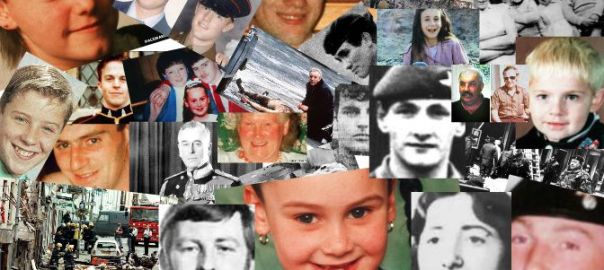


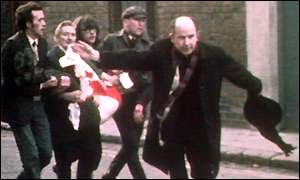


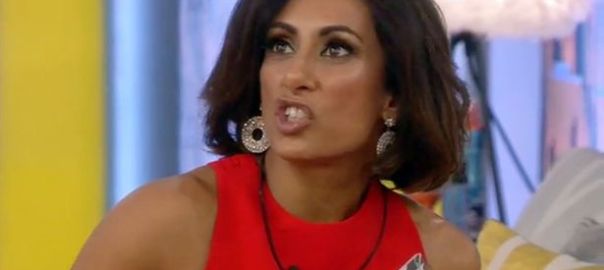



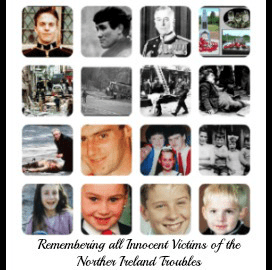


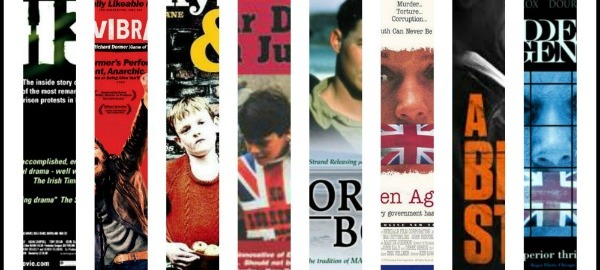


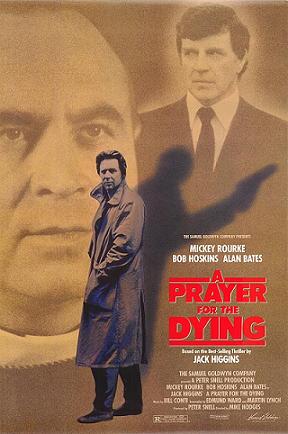
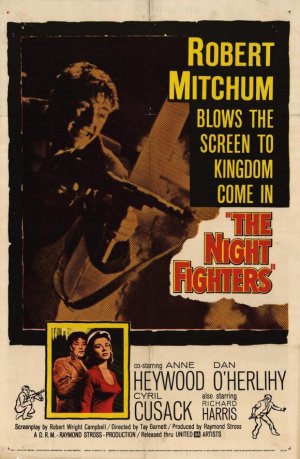


.jpg/220px-Angel_(1982_film).jpg)
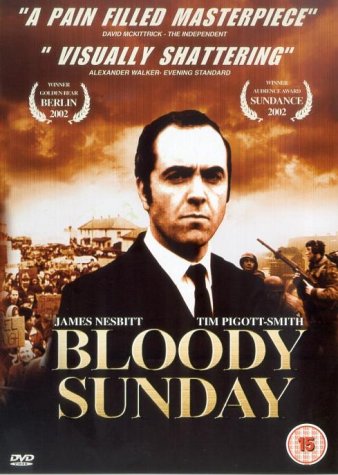
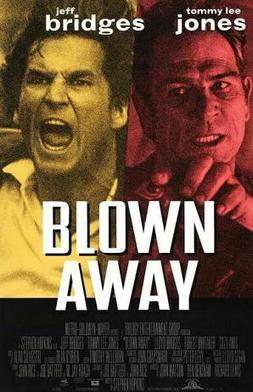

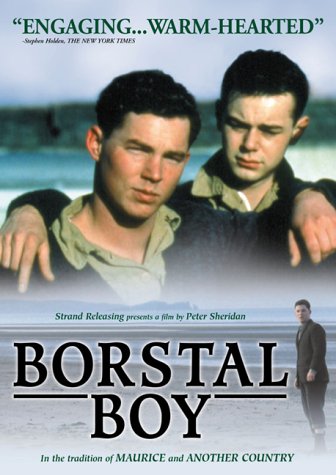
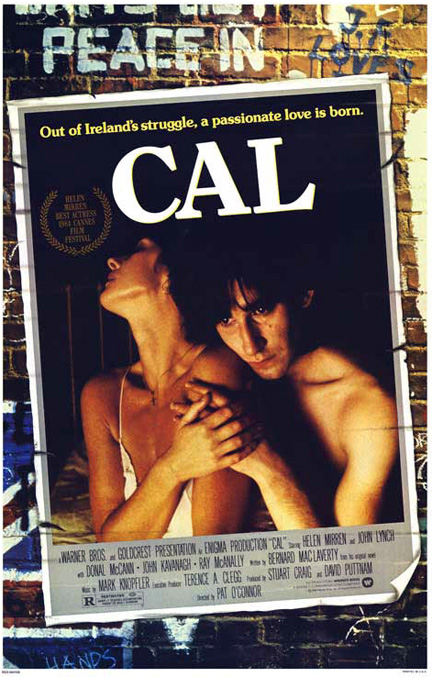


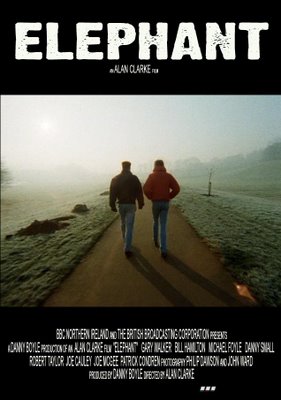

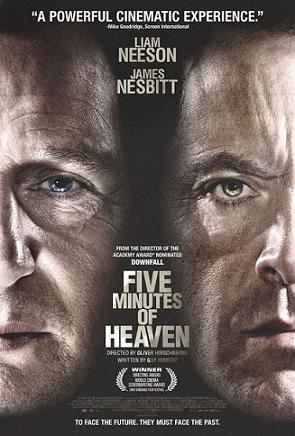


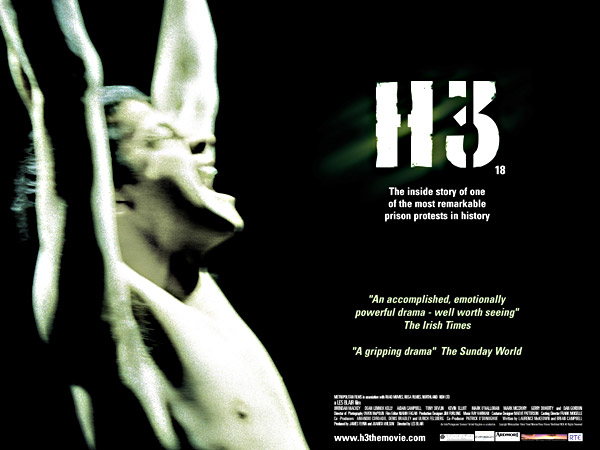

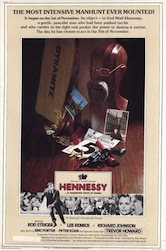




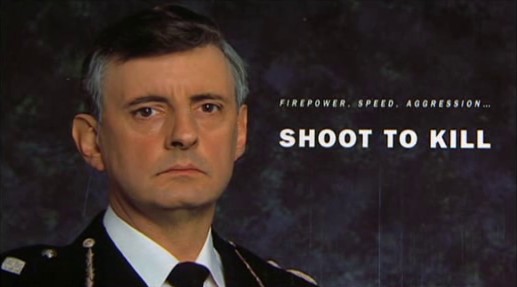


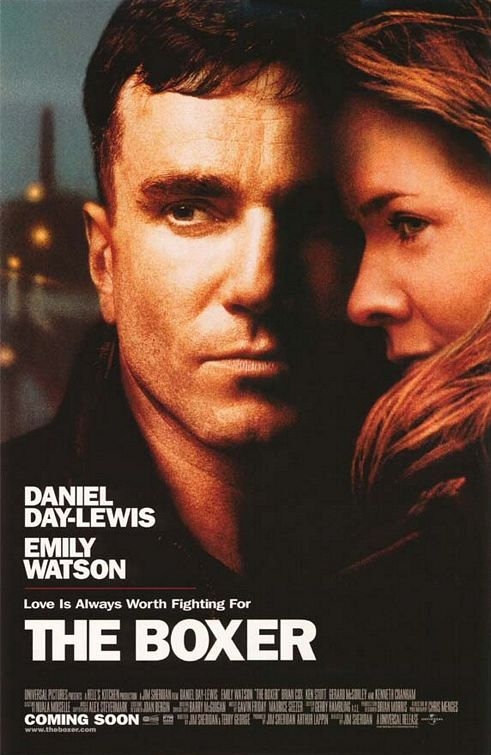



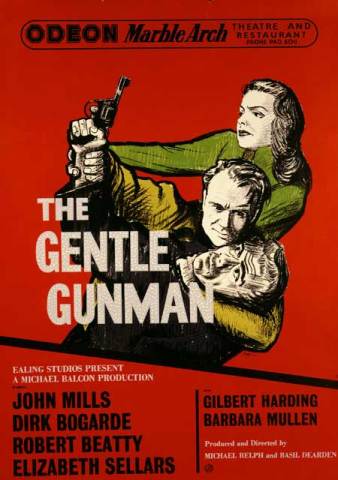
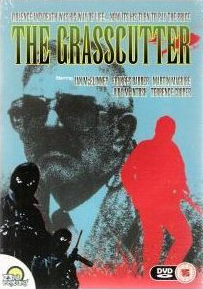
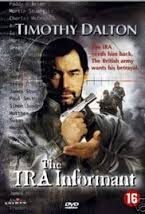
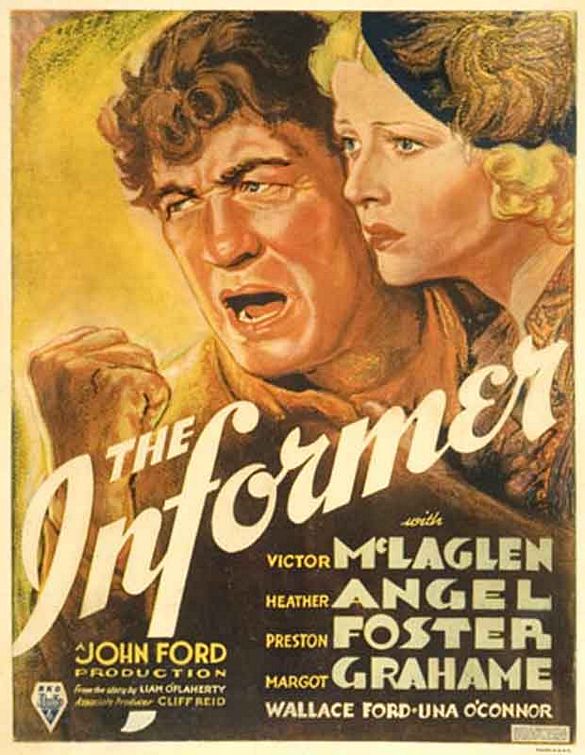
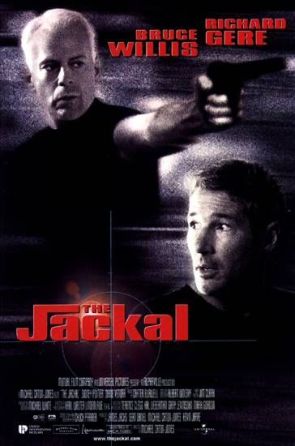
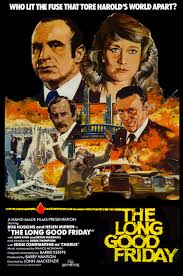
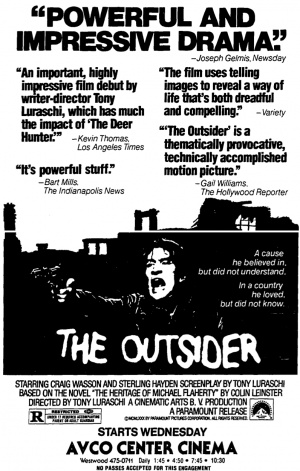
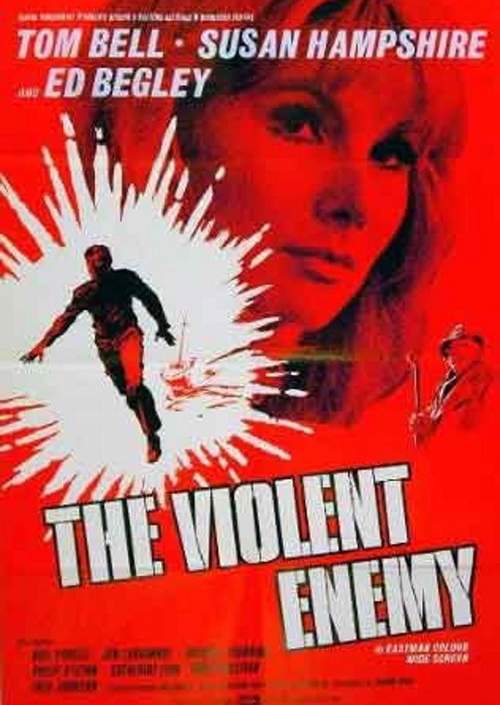

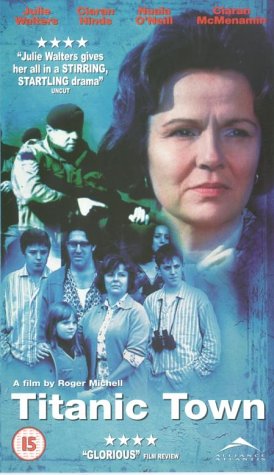

 donation then please don’t let me stop you.</p><p style="text-align: center;"><strong><em>Make a small donation</em></strong></p><p style="text-align: center;"><a href="https://www.paypal.com/cgi-bin/webscr?cmd=_s-xclick&hosted_button_id=KKDSSTFBTZTNW"><img class="alignnone wp-image-118" src="https://belfastchildis.com/wp-content/uploads/2014/01/paypal-donation-button.png?w=300&h=144" alt="paypal donation button" width="192" height="92" /></a></p><p style="text-align: center;">Take care – Be Happy and Come back soon!</p><p style="text-align: center;"><a href="https://www.paypal.com/cgi-bin/webscr?cmd=_s-xclick&hosted_button_id=KKDSSTFBTZTNW"> </a></p><p style="text-align: center;"><strong><em> </em></strong></p><p style="text-align: center;">Please send payment too : belfastchildis@googlemail.com</p><p style="text-align: center;">Or click the PayPal button below and follow instructions.</p> <hr /><a href="https://www.paypal.com/cgi-bin/webscr?cmd=_s-xclick&hosted_button_id=KKDSSTFBTZTNW"> </a><img src="https://www.paypalobjects.com/en_GB/i/scr/pixel.gif)


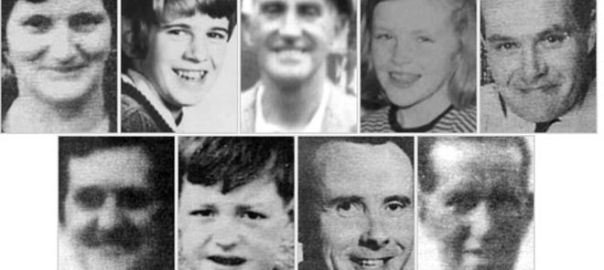

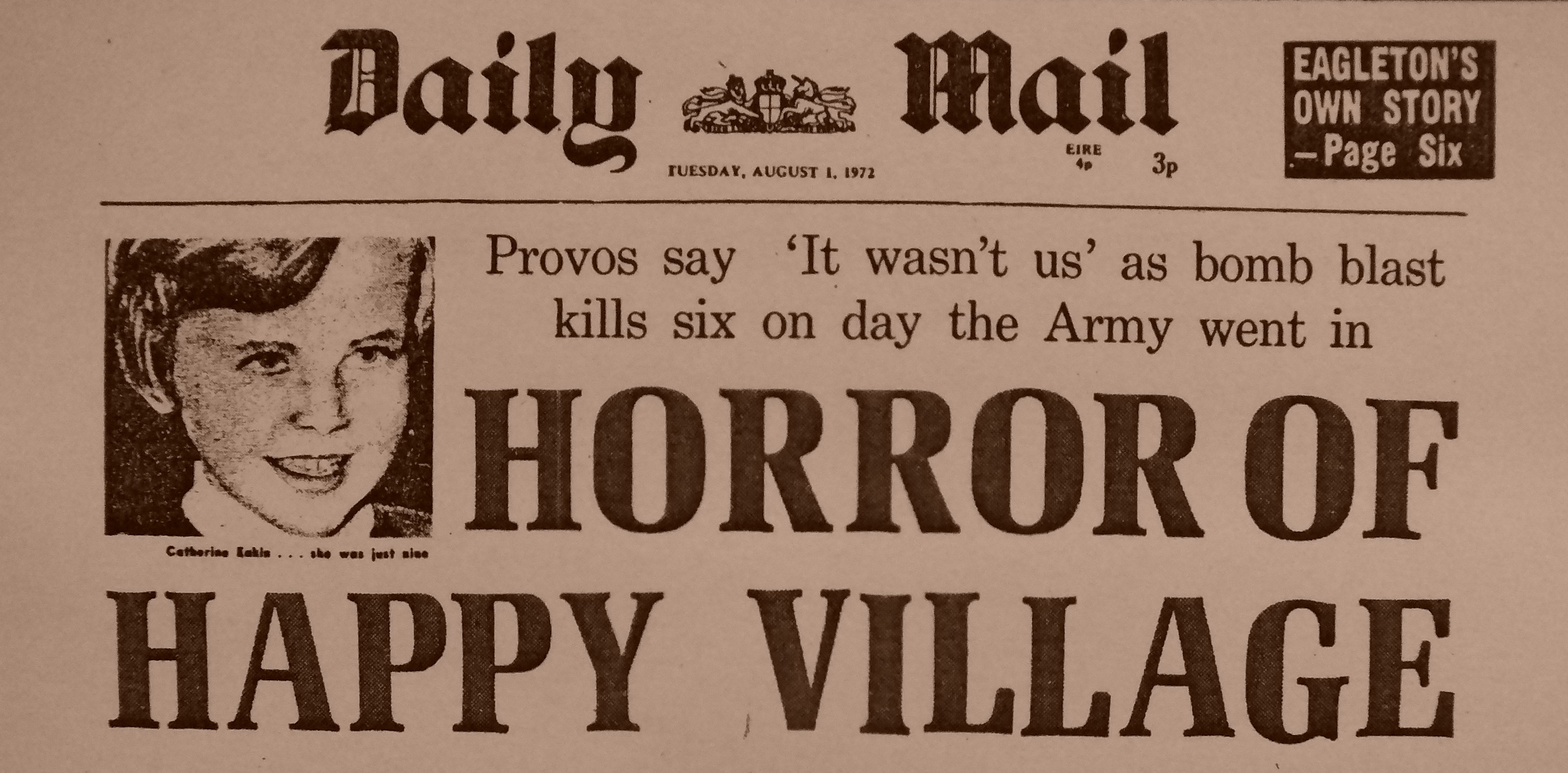








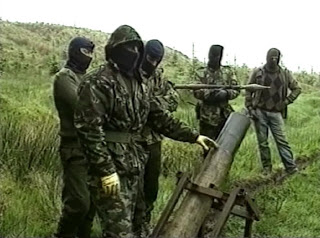


_-_geograph.org.uk_-_1346810.jpg)







 belfastchildis.com