Category Archives: Deaths in the Troubles

Deaths in Northern Ireland Troubles

8th July – Deaths & Events in Northern Ireland Troubles

Key Events & Deaths on this day in Northern Ireland Troubles

8th July

————————————

Thursday 8 July 1971

Two Men Killed by British Soldiers


Seamus Cusack  & Desmond Beattie

Seamus Cusack (28), a Catholic civilian, was shot and mortally wounded by a British soldier during street disturbances at Abbey Park, in the Bogside area of Derry.

The shooting happened at approximately 1.00am and Cusack died in Letterkenny Hospital at approximately 1.40am.

[The British Army later claimed that Cusack had been armed with a rifle but local witnesses denied this.]

The death of Cusack led to further disturbances in the Bogside and at approximately 3.15pm Desmond Beattie (19), a Catholic civilian, was shot dead by British soldiers at Lecky Road.

Again the circumstances of the shooting were disputed.

[The British Army later claimed that Beattie was about to throw a nail bomb when he was shot; local people insisted he was unarmed at the time of his killing.]

The rioting in Derry intensified following the two deaths.

The Social Democratic and Labour Party (SDLP) withdrew from Stormont on 16 July 1971 because no official inquiry was announced into the killings.

An unofficial Inquiry was chaired by Lord Gifford (QC), an English barrister, and assisted by Paul O’Dwyer, an American lawyer, and Albie Sachs, a South African lawyer.

The Inquiry was held at the Guildhall, Derry, but the British Army (BA) and the Royal Ulster Constabulary (RUC) refused to participate. The Report of the Inquiry was published in August 1971.

Thursday 8 July 1976

A Catholic civilian died one day after being shot by the Ulster Freedom Fighters (UFF), a covername for the Ulster Defence Association (UDA).

Wednesday 8 July 1981

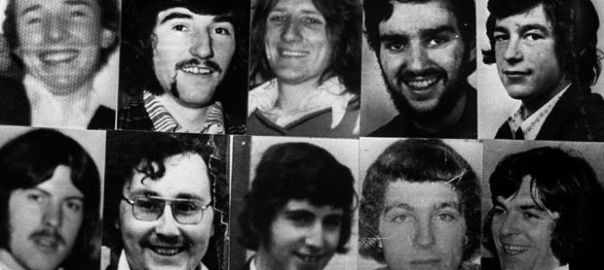
Fifth Hunger Striker Died

Joe McDonnell (30) died after 61 days on hunger strike. McDonnell had gone on strike to replace Bobby Sands.

The Irish Commission for Justice and Peace (ICJP), which had been established by the Catholics Bishops Conference, accused the Northern Ireland Office (NIO) of retreating from earlier offers made to the ICJP on the hunger strikers five demands.

See Hungry Strikes

John Dempsey

A member of the youth section of the IRA was shot dead by the British Army in Belfast.

Friday 8 July 1983

The Northern Ireland Assembly voted by 35 to 11 for the introduction of the death penalty for terrorist murders

Wednesday 8 July 1987

James Molyneaux, then leader of the Ulster Unionist Party, and Ian Paisley, then leader of the Democratic Unionist Party (DUP), said they would use the Unionist Task Force report in talks with the British government.

Wednesday 8 July 1992

There were heated exchanges between local residents and Orange Order members taking part in a parade through the mainly Catholic lower Ormeau Road area of Belfast.

Orange Order members shouted “Up the UFF” and held up one of their hands showing five fingers – a reference to the shooting dead of five Catholic civilians in a Bookmaker’s shop on the lower Ormeau Road.

The parade went right past the site of the shooting.

[Later Patrick Mayhew, then Secretary of State for Northern Ireland, said that the actions of the marchers “would have disgraced a tribe of cannibals”.]

Thursday 8 July 1993

The Guardian (a British newspaper) published an interview with Dick Spring, then Tánaiste (deputy Irish Prime Minister and Minister for Foreign Affairs).

In the interview Spring suggested that the two governments draw up a framework settlement and then put the proposal directly to the public by means of a referendum.

There was a meeting of the Anglo-Irish Intergovernmental Conference (AIIC).

Monday 8 July 1996

Many aspects of life in Northern Ireland were disrupted as protests were mounted across the region in support of the Drumcree Orangemen.

The Royal Ulster Constabulary (RUC) fired plastic bullets to control protesting crowds in Drumcree (Portadown), Sandy Row (Belfast) and Ballymena.

At the multi-party talks in Stormont, Belfast, the Ulster Unionist Party (UUP), the Democratic Unionist Party (DUP) and the United Kingdom Unionists (UKU) all pulled out of the talks in protest at the decision of the RUC to prevent the march at Drumcree.

“Fire and brimstone” speeches by unionist politicians were claimed by the McGoldrick family to be partly to blame for their son’s death on 7 July 1996.

Tuesday 8 July 1997

The Irish National Liberation Army (INLA) threatened to attack Orangemen whom it viewed as responsible for forcing parades through Nationalist areas.

The Dublin to Belfast train was stopped at Newry and damaged by petrol bombs.

The Ulster Defence Association (UDA) and the Ulster Volunteer Force (UVF) joined together to stage an armed paramilitary display which was recorded and broadcast by Ulster Television (UTV).

The UDA and UVF claimed that the display was intended to “reassure and calm Protestants”.

A Northern Ireland Office (NIO) document was leaked to the media. The document suggested that the decision to allow the Drumcree parade to proceed down the Garvaghy Road on 6 July 1997 had been taken by Marjorie (Mo) Mowlam, then Secretary of State for Northern Ireland, in conjunction with security leaders as early as 21 June 1997.

This in spite of Mowlam’s assertion that the decision was not made until the eve of the march.

Mowlam subsequently launched an inquiry into who leaked the document.

Nationalists, who were still protesting against the events at the Garvaghy Road, announced that they would block Orange Order parades planned for 12 July 1997 from passing through Nationalist areas in Armagh, Bellaghy, Belfast (lower Ormeau Road), Derry, Newry, and Strabane.

People in these areas called for Nationalist to travel to the parade routes to add their support for rerouting of the planned parades.

Wednesday 8 July 1998
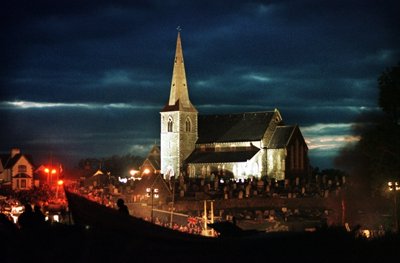
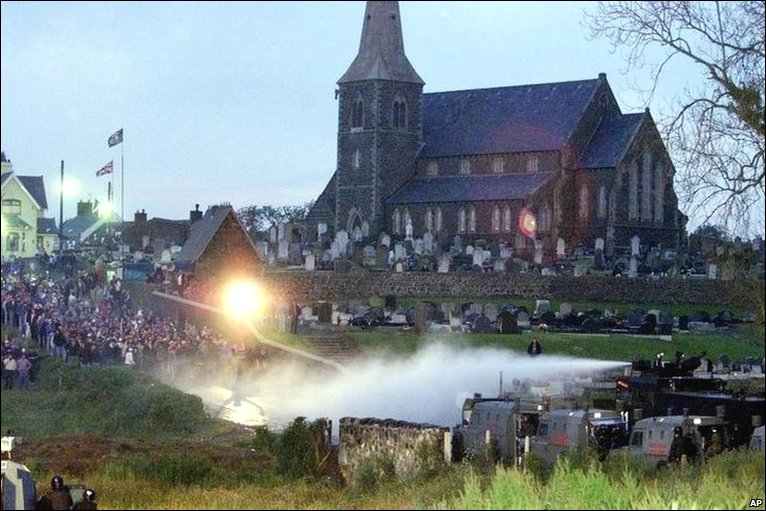
drumcree church at night

The situation at Drumcree deteriorated considerably with sustained violent attacks on the Royal Ulster Constabulary (RUC) and British Army barricades by protesting Orange men.

See Drumcree

An estimated 5,000 Orangemen from county lodges in Derry and Tyrone joined the protest at Drumcree.

Attacks against Catholic homes, businesses, schools, and churches continued to be a feature of Loyalist violence.

Eight blast bombs were thrown at Catholic homes in the Collingwood area of Lurgan in the early hours of the morning. Seamus Mallon, then deputy leader of the Social Democratic and Labour Party (SDLP), went to the Garvaghy Road to speak to the local Residents Group.

[Mallon was heckled by local residents as he left the meeting and looked to be shaken by the experience.]

In a show of support Catholics from other areas of Northern Ireland sent food supplies to the residents of the Garvaghy Road.

Thursday 8 July 1999

Loyalists left a pipe-bomb outside the house of a Sinn Féin (SF) member in Ballycastle, County Antrim.

There were two arson attacks on houses in north Belfast which the Royal Ulster Constabulary (RUC) described as sectarian.

Barry Morgan (24) was found guilty of the murder of Cyril Stewart, at the time a retired Royal Ulster Constabulary (RUC) reservist, in Armagh on March 1998.

The Irish National Liberation Army (INLA) was responsible for the attack.

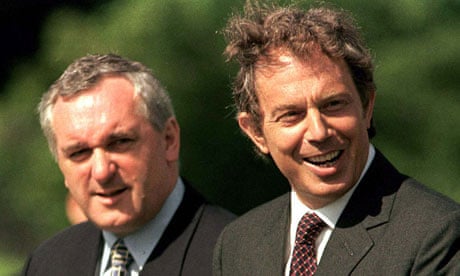
A disagreement arose between Tony Blair, then British Prime Minister, and Bertie Ahern, then Taoiseach (Irish Prime Minister), over whether or not Sinn Féin (SF) was now a separate organisation from the Irish Republican Army (IRA).

Ahern said on BBC Radio Ulster that they were two separate organisations but senior police sources on both sides of the Border supported Blair’s stated view that the two organisations were “inextricably linked”.

Orangemen from Portadown, County Armagh, held talks about the Drumcree issue with Tony Blair at Downing Street, London

Sunday 8 July 2001

The annual Orange Order parade at Drumcree, County Armagh, which had been the setting for violent confrontation for several years, passed off peacefully under a heavy security presence.

[However, in the following days there were violent clashes in north Belfast.]

——————————————

Remembering all innocent victims of the Troubles

Today is the anniversary of the death of the following people killed as a results of the conflict in Northern Ireland

“To live in hearts we leave behind is not to die

– Thomas Campbell

To the innocent on the list – Your memory will live forever

– To the Paramilitaries –

There are many things worth living for, a few things worth dying for, but nothing worth killing for.

11 People lost their lives on the 8th July between 1971 – 1996

——————————————

08 July 1971


Seamus Cusack  (27)

Catholic
Status: Civilian (Civ),

Killed by: British Army (BA)
Shot during street disturbances, Abbey Park, Bogside, Derry

——————————————

08 July 1971
Desmond Beattie  (19)

Catholic
Status: Civilian (Civ),

Killed by: British Army (BA)
Shot during street disturbances, Lecky Road, Bogside, Derry.

——————————————

08 July 1972
Laurence McKenna   (22)

Catholic
Status: Civilian (Civ),

Killed by: Ulster Volunteer Force (UVF)
Died three days after being shot at the junction of Falls Road and Waterford Street, Lower Falls, Belfast

——————————————

08 July 1976
James Rooney  (43)

Catholic
Status: Civilian (Civ),

Killed by: Ulster Defence Association (UDA)
Died one day after being shot at his greengrocer’s shop, Upper Newtownards Road, Ballyhackamore, Belfast.

——————————————

08 July 1979
Alan MacMillan   (18)

nfNI
Status: British Army (BA),

Killed by: Irish Republican Army (IRA)
Killed by remote controlled bomb while on British Army (BA) foot patrol, Crossmaglen, County Armagh.

——————————————

08 July 1981


Joe McDonnell   (30)

Catholic
Status: Irish Republican Army (IRA),

Killed by: not known (nk)
Died on the 61st day of hunger strike, Long Kesh / Maze Prison, County Down.

——————————————

08 July 1981


John Dempsey   (16)

Catholic
Status: Irish Republican Army Youth Section (IRAF),

Killed by: British Army (BA)
Shot by British Army (BA) sniper during arson attack on bus depot, Falls Road, Belfast

——————————————

08 July 1986


John McVitty   (46)

Protestant
Status: Royal Ulster Constabulary (RUC),

Killed by: Irish Republican Army (IRA)
Off duty. Shot at his farm, Drumady, near Rosslea, County Fermanagh.

——————————————

08 July 1988


John Howard   (29)

nfNI
Status: British Army (BA),

Killed by: Irish Republican Army (IRA)
Killed by booby trap bomb when British Army (BA) patrol arrived at the scene of earlier explosion, outside Falls Baths, Falls Road, Belfast.

——————————————

08 July 1992


Cyril Murray   (51)

Catholic
Status: Civilian (Civ),

Killed by: Ulster Freedom Fighters (UFF)
Shot at his home, Kerrsland Drive, Bloomfield, Belfast.

——————————————

08 July 1996


Michael McGoldrick  (31)

Catholic
Status: Civilian (Civ),

Killed by: Ulster Volunteer Force (UVF)
Taxi driver. Found shot in his car, Montiaghs Road, Aghagallon, near Lurgan, County Antrim.

——————————————


7th July – Deaths & Events in Northern Ireland Troubles

Key Events & Deaths on this day in Northern Ireland Troubles

7th July

————————————-

Friday 7 July 1972

Secret Talks Between IRA and British Government

Gerry Adams, who had been released from detention for the purpose, was part of a delegation who went to London for talks with the British Government. The Irish Republican Army (IRA) delegation held direct talks with William Whitelaw, then Secretary of State for Northern Ireland, and other Northern Ireland Office ministers in the Chelsea home of Mr Paul Channon, then Minister of State for the North.

The IRA delegation also included: Séamus Twomey, Seán MacStiofáin, Dáithí Ó Conaill, Ivor Bell, and Martin McGuinness.

[The talks failed and the breakdown in the IRA ceasefire finally occurred because of a dispute over the allocation of houses in the Suffolk area and the IRA and the British army became involved in gun battles in Horn Drive, Belfast.

bloody frieday

The ‘Bloody Friday’ bombings on 21 July 1972 were part of a decision by the IRA to step up its campaign with a view to trying to bring ordinary life in the city to an end.]

See Bloody Friday

Sunday 7 July 1974

Dublin and Monaghan bombings victim

A report on the Monaghan bombing investigation was completed by the Garda Síochána (the Irish police).

See Dublin & Monaghan Bomb

Monday 7 July 1975

Andrew Johnston

A Royal Ulster Constabulary (RUC) officer was killed by a booby-trap bomb planted by the Irish Republican Army (IRA) at a school in Lurgan, County Armagh.

[Public Records 1975 – Released 1 January 2006: Note by the Official Committee on Northern Ireland. The note is entitled ‘Northern Ireland: Future Policy Options’ and deals with the outcome of the Constitutional Convention.]

Sunday 7 July 1985

Drumcree Parade

drumcree church at night

The Royal Ulster Constabulary (RUC) took the decision to allow an Orange Order parade to Drumcree Church to pass through Obins Street, a mainly Catholic area of Portadown. The decision led to clashes between Nationalist protestors and the RUC.

See Drumcree

Monday 7 July 1986

The National Council for Civil Liberties (NCCL) published a report which opposed the routine use of strip-searching of prisoners held in Northern Ireland and the rest of the United Kingdom (UK).

Thursday 7 July 1988

A member of the Irish Republican Army (IRA) and two Catholic civilians were killed in a premature explosion in Belfast.

Sunday 7 July 1991

Nessan Quinlivan and Pearse McAuley resized.jpg

Nessan Quinlivan and Pearse McAuley use a gun smuggled into them to escape from Brixton Prison in England.

Thursday 7 July 1994

Prince Charles paid a visit to Derry. There were protests against the visit because of Charles’ role as Colonel-in-Chief of the Parachute Regiment. [Soldiers of the regiment were responsible for the killings on Bloody Sunday, 30 January 1972.]

Sunday 7 July 1996 Drumcree Parade – ‘Drumcree II’

The Royal Ulster Constabulary (RUC) prevented a march by Portadown Orangemen from returning from Drumcree Church via the Garvaghy Road. The decision was taken by Sir Hugh Annesley, then Chief Constable of the RUC.

The reason given for the decision was to prevent public disorder but the result was to mark the start of Northern Ireland wide protests.

Protests and roadblocks began to spread across Northern Ireland. Michael McGoldrick (31), a Catholic man, was shot dead outside Lurgan. The attack bore the hallmarks of a paramilitary killing but no group claimed responsibility.

[Suspicion for the killing fell on a ‘maverick group’ from the mid-Ulster brigade of the Ulster Volunteer Force (UVF). This group, believed to have been led by Billy Wright (then a leading Loyalist in Portadown), went on to form the Loyalist Volunteer Force (LVF).]

Monday 7 July 1997

Brian Morton , then a Ulster Defence Association (UDA) commander, was killed as he handled an explosive device at an arms dump in Dunmurray, near Belfast.

There was continuing widespread violence in Nationalist areas of Northern Ireland.

The Automobile Association issued a warning that the area of Newry was “completely impassable”, and a number of vehicles were hijacked in Derry and Belfast. It was estimated that the damage to property was in the region of £20 million pounds.

Over 100 people were believed to have been injured with six considered serious. By the end of the day the RUC estimated that 1,600 plastic bullets had been fired, there had been 550 attacks on the security forces, and 41 people arrested.

The fire service had received 500 calls and the ambulance service 150.

Gora Ebrahim, then a South African Member of Parliament (MP) and an independent observer, said that the scenes on the Garvaghy Road when the RUC cleared Nationalists from the road were reminiscent of police brutality in Sharpeville. He said that he believed the decision to force the parade through the area had come from a higher authority than the RUC.

Tuesday 7 July 1998

Violence continued in a number of areas of Loyalist areas of Northern Ireland. The tactic of blocking roads continued to be used, although most were reopened within a few hours. Up to 1,000 Orangemen blocked all the roads leading to the Catholic village of Dunloy, County Antrim. The County Antrim Grand Lodge said that its members had “taken up positions” and “held” the village for three hours.

 Unlike in previous years the security forces kept open the road to the International airport at Aldergrove near Belfast.]

Loyalists held a march in Portadown in support of the Orange Order. Ian Paisley, then leader of the Democratic Unionist Party (DUP), addressed a rally in Portadown and said that the Twelfth of July would be “the settling day”

[His use of this phrase was to draw criticism following the events of the early hours of 12 July 1998.]

Wednesday 7 July 1999

Supporters of the Loyal Orders were blamed for a series of attacks on Catholic homes and businesses in Belfast, Ballycastle, Carrickfergus, and Woodburn. Nationalists accused the Orange Order of deliberate provocation after its decision to switch its main 12 July 1999 parade from its ‘traditional’ rallying point at Edenderry to Ormeau Park, Belfast.

The move by the Orange Order was in protest at the Parades Commission’s decision to ban the local Ballynafeigh lodge from the nationalist part of the Ormeau Road. It also brought the parade close to the mainly Catholic area of Lower Ormeau Road.

The Parades Commission re-routed a total of 27 parades that were planned for the ‘Twelfth’.

Following remarks by the actor Liam Neeson that he had been treated “like a second-class citizen” when growing up as a Catholic in Ballymena, Unionist councillors in the town reacted angrily and described his comments as “outlandish”.


George Mitchell, former Chairman of the talks that led to the Good Friday Agreement, was in Belfast to launch a new reconciliation fund for Northern Ireland.

——————————————

Remembering all innocent victims of the Troubles

Today is the anniversary of the death of the following people killed as a results of the conflict in Northern Ireland

“To live in hearts we leave behind is not to die

– Thomas Campbell

To the innocent on the list – Your memory will live forever

– To the Paramilitaries –

There are many things worth living for, a few things worth dying for, but nothing worth killing for.

7 People lost their lives on the 7th July between 1972 – 1997

——————————————

07 July 1972


Samuel Robinson   (19)

Protestant
Status: Civilian (Civ),

Killed by: Irish Republican Army (IRA)
Shot immediately after crashing into Irish Republican Army (IRA) roadblock, Cavendish Street, Falls, Belfast.

——————————————

07 July 1975


Andrew Johnston  (26)

Protestant
Status: Royal Ulster Constabulary (RUC),

Killed by: Irish Republican Army (IRA)
Killed by booby trap bomb, attached to desk at Carrick Primary School, Sloan Street, Lurgan, County Armagh.

——————————————

07 July 1987
William Reynolds  (33)

Protestant
Status: Ulster Defence Association (UDA),

Killed by: Irish Republican Army (IRA)
Shot while in pool hall, Ligoniel Road, Belfast.

——————————————

07 July 1988
Seamus Woods  (23)

Catholic
Status: Irish Republican Army (IRA),

Killed by: Irish Republican Army (IRA)
Killed in premature mortar bomb explosion, during attack on Pomeroy British Army (BA) / Royal Ulster Constabulary (RUC) base, County Tyrone.

——————————————

07 July 1988


Elizabeth Hamill   (60)

Catholic
Status: Civilian (Civ),

Killed by: Irish Republican Army (IRA)
Killed in premature bomb explosion during attempted ambush of British Army (BA) foot patrol, outside Falls Baths, Falls Road, Belfast.

——————————————

07 July 1988


 Eamon Gilroy (24)

Catholic
Status: Civilian (Civ),

Killed by: Irish Republican Army (IRA)
Killed in premature bomb explosion during attempted ambush of British Army (BA) foot patrol, outside Falls Baths, Falls Road, Belfast

——————————————

07 July 1997
Brian Morton   (28)

Protestant
Status: Ulster Defence Association (UDA),

Killed by: Ulster Defence Association (UDA)
Died in premature bomb explosion, River Lagan Towpath, by Seymour Hill, Dunmurry, near Belfast, County Antrim.

——————————————


6th July – Deaths & Events in Northern Ireland Troubles

Key Events & Deaths on this day in Northern Ireland Troubles

6th July

—————————————–

Monday 6 July 1970

Patrick  Hillery, then Irish Minister for External Affairs, paid an unofficial visit to the Falls Road area of Belfast. The visit was criticised by Chichester-Clark, then Northern Ireland Prime Minister, and by the British government.

Tuesday 6 July 1971

Martin O’Leary

A member of the Official Irish Republican Army (OIRA) was killed in a premature explosion in County Tipperary, Republic of Ireland.

Saturday 6 July 1974

Members of the failed Executive, together with a number of Northern Ireland Office (NIO) ministers, held a meeting in Oxford with Harry Murray, then the chairman of the Ulster Workers’ Council (UWC).

Sunday 6 July 1986

Riots in Portadown

The annual Orange Order parade in Portadown, County Armagh, to Drumcree Church was permitted by the Royal Ulster Constabulary (RUC) to pass through the mainly Catholic Obins Street area of the town. The RUC also announced that the ‘Twelfth’ parade would be re-routed from Obins Street.

There was rioting in the town when the RUC prevented George Seawright, a Loyalist councillor, and other non-local Orangemen from entering the Catholic area

Monday 6 July 1992

– Wednesday 8 July 1992

As part of Strand Two of the political talks (later known as the Brooke / Mayhew talks) there were discussions in London between the British and Irish Governments and the Northern Ireland political parties.

The Democratic Unionist Party (DUP) also attended the discussions although three members of the party resigned in protest at the development.

Tuesday 6 July 1993

Dublin and Monaghan bombings victim

Yorkshire Television broadcast a documentary entitled ‘Hidden Hand -the Forgotten Massacre’ made as part of its ‘First Tuesday’ series. The programme dealt with the Dublin and Monaghan bombings of 17 May 1974.

See Dublin and Monaghan bombings

[The programme came to the conclusion that the Ulster Volunteer Force (UVF) would have required assistance to carry out the bomb attacks. There was speculation as to where such assistance might have come from.

While no firm conclusions were reached, it was suggested that the security forces in Northern Ireland were the most likely source of help. Allegations concerning the existence of a covert British Army unit based at Castledillon were considered; as well as alleged links between that unit and Loyalist paramilitaries.

It was shown that Merlyn Rees, the former Secretary of Sate, had known of the unit’s existence.

On 15 July 1993 the UVF issued a statement in which it claimed sole responsibility for the Dublin and Monaghan Bombings.]

See Dublin and Monaghan bombings

Sunday 6 July 1997

Drumcree Parade – ‘Drumcree III’

drumcree church at night

At 3.00am the Royal Ulster Constabulary (RUC), in large numbers, entered the Garvaghy Road area of Portadown to ensure that the path of the planned Orange Order parade was free for the marchers. Police officers sealed off both sides of the road and kept the Catholic residents hemmed into their homes and side streets. These actions sparked rioting in the area.

The RUC were supported by hundreds of British soldiers. Residents were unable to get to the local Catholic chapel and five priests celebrated an open-air mass in front of British Army armoured vehicles.

[Some people speculated that this was the first time since the ‘penal laws’ that British soldiers had prevented Catholics from attending mass.]

At 12.00pm the Orange Order parade passed along the Garvaghy Road. Approximately 1,200 Orangemen passed through the Nationalist area. Following the march there was further rioting in the Garvaghy Road and other Nationalist areas of Northern Ireland particularly in Derry and Belfast.

In Lurgan a train was stopped and two coaches were destroyed when it was set on fire. Republican paramilitaries fired shots in north Belfast and injured a Protestant teenager. A Catholic boy aged 14 was critically injured when shot in the head by a plastic bullet.

[He spent three days in a coma and was released from hospital on 22 July 1997.]

Later Ronnie Flanagan, then Chief Constable of the Royal Ulster Constabulary (RUC), said that he had decided to force the march through the Garvaghy Road because of threats of violence by Loyalist paramilitaries.

[This was the third year in a row that the Orange Order parade at Drumcree had been the source of trouble. In 1995 the ‘Siege of Drumcree’ began on Sunday 9 July 1995 and ended on Tuesday 11 July 1995 when the residents agreed that 500 Orange men should be allowed to walk down the Garvaghy Road. In 1996 there was another ‘stand-off’ which began on Sunday 7 July 1996 and which lasted until Thursday 11 July 1996 when the RUC changed its mind and decided to force the march through the Garvaghy Road.]

See Drumcree

Monday 6 July 1998

An estimated 10,000 people gathered through the early morning hours at Drumcree, Portadown, County Armagh, to protest at the decision not to allow the Orange Order parade to pass through the mainly Catholic Garvaghy Road area of Portadown. Violence flared in a number of Loyalist areas of Northern Ireland with the Royal Ulster Constabulary (RUC) being fired at by Loyalist paramilitaries. A number of main roads across the region were blocked at different times during the day.

[Most of the roads were reopened after a few hours but were blocked again at various times during the next few days.]

A number of Catholic families were the subject of violent attacks and intimidation. A Catholic family living in Coleraine, County Derry, were lucky to escape alive when their home was petrol bombed.

A Catholic business in the town was badly damaged by Loyalists using petrol bombs. A Catholic home in Carrickfergus, Count Antrim, was attacked by a home-made bomb. The Loyalist Volunteer Force (LVF) and a number of other ‘fringe’ Loyalist paramilitary groups were believed to be behind the attacks.

The Parades Commission ruled that the Twelfth of July Orange Order ‘feeder’ parade would be allowed to proceed along the mainly Catholic Ormeau Road in Belfast on Monday 13 July 1998.

Tuesday 6 July 1999

The Royal Ulster Constabulary (RUC) uncovered a cache of petrol bombs in Ballymena, County Antrim. The devices had been prepared by Loyalists.

Republican sources were reported as saying that the Irish Republican Army (IRA) had drawn up an inventory of its weapons that it may present to the Independent International Commission on Decommissioning (IICD) chaired by John de Chastelain (Gen.).

David Trimble, then leader of the Ulster Unionist Party (UUP), wrote an article for The Belfast Telegraph (a Belfast based newspaper) stating that the Ulster Unionists would not reject ‘The Way Forward’ document without consideration, but that they would require further reassurances.

Edward_Daly_Bloody_Sunday

Lawyers acting on behalf of the Bloody Sunday Inquiry began an appeal to the High Court in London over the decision to grant anonymity to members of the Parachute Regiment. Derek Wilford, who had commanded Paratroops on Bloody Sunday, was interviewed on the Today programme on BBC Radio 4 during which he described the relatives of those killed as “representing the republican organisation”.

Families of the dead reacted angrily to the remarks. The Parades commission announced that 27 parades planned for the Twelfth week would be re-routed.

See Bloody Sunday

——————————————

Remembering all innocent victims of the Troubles

Today is the anniversary of the death of the following people killed as a results of the conflict in Northern Ireland

“To live in hearts we leave behind is not to die

– Thomas Campbell

To the innocent on the list – Your memory will live forever

– To the Paramilitaries –

There are many things worth living for, a few things worth dying for, but nothing worth killing for.

6 People lost their lives on the 6th  July between 1971 – 1998

——————————————

06 July 1971


Martin O’Leary   (20)

nfNIRI
Status: Official Irish Republican Army (OIRA),

Killed by: Official Irish Republican Army (OIRA)
From County Cork. Died two days after being injured in premature bomb explosion at Mogul Mines, Silvermines, County Tipperary.

——————————————

06 July 1973


Patrick Bracken  (27)

Catholic
Status: Official Irish Republican Army (OIRA),

Killed by: Ulster Volunteer Force (UVF)
Shot from passing car shortly after leaving cafe, Falls Road, Belfast.

——————————————

06 July 1976


Vincent Hetherington  (21)

Catholic
Status: Civilian (Civ),

Killed by: Irish Republican Army (IRA)
Found shot at side of road near Collin Glen bridge, off Glen Road, Hannahstown, Belfast. Alleged informer.

——————————————

06 July 1976
Gerard Gardiner  (27)

Protestant
Status: Civilian (Civ),

Killed by: Irish Republican Army (IRA)
Died two weeks after being shot outside his workplace, Goodyear Tyre Factory, Craigavon, County Armagh. Off duty Ulster Defence Regiment member the intended target

——————————————

06 July 1977


David Morrow   (37)

Protestant
Status: Royal Ulster Constabulary (RUC),

Killed by: Irish Republican Army (IRA)
Shot while sitting in stationary Royal Ulster Constabulary (RUC) patrol car, Aughnacloy, County Tyrone.

——————————————

06 July 1988
Terence Delaney   (31)

Catholic
Status: Civilian (Civ),

Killed by: Ulster Freedom Fighters (UFF)
Shot while waiting for lift to work, Bridge Street, Dromore, County Down.

——————————————


5th July – Deaths & Events in Northern Ireland Troubles

Key Events & Deaths on this day in Northern Ireland Troubles

5th July

———————————————

Sunday 5 July 1970

falls road curfew 2.jpg

At approximately nine in the morning the Falls Road curfew was lifted after a march by women had breached the British Army cordon. The women, mainly from the Andersonstown area of west Belfast, had brought supplies of basic foodstuff and marched to the Falls area.

The British soldiers initially tried to hold back the women but were forced to let them through; so ending the curfew.

[It was later reported that two Unionist ministers, William Long and John Brooke, had been driven through the area in British Army vehicles.

Wednesday 5 July 1972

Two Protestant brothers were found shot dead outside of Belfast.

[There was speculation that they were killed by Loyalists because they had Catholic girlfriends.]

Sunday 5 July 1987

Shorts Aircraft company resumed operation at three plants affected, on 3 July 1987, by a dispute over the display of emblems.

Tuesday 5 July 1988

Patrick Ryan, a Catholic priest from the Republic of Ireland, was arrested in Brussels. He was accused of providing support for the Irish Republican Army (IRA) .

Thursday 5 July 1990

In a statement to the House of Commons Peter Brooke, then Secretary of State for Northern Ireland, said that he was unable to report agreement on the schedule for proposed talks.

The main difficulties centred on disagreements over when the Irish government should become formally involved in the negotiations. In addition no compromise had been reached on Unionist demands that Articles 2 and 3 of the Irish constitution would have to be repealed if the talks were to succeed.

Friday 5 July 1991

Four suspected members of the Irish Republican Army (IRA) were acquitted in a court in Holland of charges related to the killing of two Australian tourists in Roermond in May 1990.

Monday 5 July 1993

The Irish Republican Army (IRA) exploded a bomb, estimated at 1,500 pounds, in the centre of Newtownards, County Down.

Wednesday 5 July 1995

Protests about Loyal Order parades led to a number of disturbances. There were confrontations between Loyalists and Royal Ulster Constabulary (RUC) officers in the Ormeau Road area of Belfast. There were also confrontations between RUC officers and Nationalists in Bellaghy, County Derry.

There were minor disturbances between Sinn Féin (SF) protesters and Loyalists outside the Maze Prison.

Sunday 5 July 1998

Drumcree Parade – ‘Drumcree IV’

For the fourth year in a row the Drumcree parade by the Portadown District Lodge of the Orange Order proved to be the focal point for divisions in Northern Ireland. The parade passed from the centre of Portadown, County Armagh, along the edge of a Nationalist area to the Church of Ireland parish church at Drumcree where the Orangemen attended a service. However, as the Orangemen attempted to walk back to the centre of Portadown, along the mainly Catholic Garvaghy Road, the route was blocked by the police and the British Army.

drumcree church at night

A stand-off began. The decision to reroute the parade had been taken by the Parades Commission. As the day wore on the number of Orangemen protesting at Drumcree increased. The British government said that it would “hold the line” against those protesting at Drumcree. Throughout the day there were street protests across Northern Ireland by Loyalists in support of the Orange Order.

See Drumcree

 A number of roads were blocked and some cars set on fire. A number of Catholic homes were also attacked in Belfast.

Monday 5 July 1999

Six Royal Ulster Constabulary (RUC) officers were reported to have been injured in clashes with Loyalists near the mainly Nationalist Garvaghy Road, Portadown, County Armagh.

RUC officers had earlier arrested four men from east Belfast after the discovery of pickaxe handles, wire cutters, petrol, and combat clothing in a car in Portadown shortly after 3.00pm (15.00BST).

Tony Blair, then British Prime Minister, maintained pressure on David Trimble, then leader of the Ulster Unionist Party (UUP), to accept the proposals in ‘The Way Forward‘ document intended to resolve the problems over the decommissioning of paramilitary arms. Blair also published an article in The Belfast Telegraph (a Belfast based newspaper) in which he tried to reassure Unionists.

The IRA leadership was reported to have held a meeting in Dublin to discuss a response to the document. However, there was no indication that the organisation was preparing any move to begin disarming. The Parades Commission published its decision to re-route the local Ballynafeigh Orange lodge parade away from the nationalist part of the Lower Ormeau Road.

Wednesday 5 July 2000

The British Army erected a large steel barrier across the Drumcree road where the Royal Ulster Constabulary (RUC) had come under attack from Loyalist rioters over the previous three nights. The structure, 20ft high and 30ft wide, was made up of huge steel containers filled with concrete and topped with barbed wire and had been put in place by Army engineers.


——————————————

Remembering all innocent victims of the Troubles

Today is the anniversary of the death of the following people killed as a results of the conflict in Northern Ireland

“To live in hearts we leave behind is not to die

– Thomas Campbell

To the innocent on the list – Your memory will live forever

– To the Paramilitaries –

There are many things worth living for, a few things worth dying for, but nothing worth killing for.

4 People lost their lives on the 5th July between 1972 – 1992

——————————————

05 July 1972
Malcolm Orr  (20)

Protestant
Status: Civilian (Civ),

Killed by: not known (nk)
Found shot by the side of the road, Carnaghliss, near Belfast, County Antrim.

——————————————

05 July 1972


Peter Orr  (19)

Protestant
Status: Civilian (Civ),

Killed by: not known (nk)
Found shot by the side of the road, Carnaghliss, near Belfast, County Antrim.

——————————————

05 July 1973


Robert Clarke  (56)

Catholic
Status: Civilian (Civ),

Killed by: Ulster Freedom Fighters (UFF)
Shot as he arrived at his workplace, Pembroke Street, off Donegall Road, Belfast

——————————————

05 July 1992
Kieran Abrams   (35)

Catholic
Status: Civilian (Civ),

Killed by: non-specific Loyalist group (LOY)
Found beaten to death, North Howard Street, Lower Falls, Belfast.

——————————————


4th July – Deaths & Events in Northern Ireland Troubles

Key Events & Deaths on this day in Northern Ireland Troubles

4th July

————————-

Saturday 4 July 1970

falls road curfew 2.jpg

The Falls Road curfew continued throughout the day. A man was killed by the British Army.

Thursday 4 July 1974

The Northern Ireland Office (NIO) published a White Paper, The Northern Ireland Constitution (Cmnd. 5675), which set out government plans to hold elections to a Constitutional Convention which would look for an agreed political settlement to the Northern Ireland conflict.

[Many elements of previous attempts at a settlement were present in the document including that of power-sharing and the recognition that there should be an Irish dimension. The Act of Parliament which gave effect to the proposals was passed on 17 July 1974.]

Saturday 4 July 1981

In a statement issued on behalf of the hunger strikers, they said that they had no objection to any changes in the prison regime being applied to all prisoners.

[This would have meant that special category status was not being conferred on Republican prisoners alone.]

Monday 4 July 1983

Catholic Bishops in Northern Ireland warned against the dangers of the reintroduction of the death penalty. They also called for a ban on the use of plastic bullets by members of the security forces.

Monday 4 July 1988

John Hermon, then Chief Constable of the Royal Ulster Constabulary (RUC), announced that disciplinary proceedings were to be undertaken against 20 RUC officers as a result of the investigation into the ‘shoot to kill’ incidents in 1982.

Thursday 4 July 1991

End of CLMC Ceasefire

The Combined Loyalist Military Command (CLMC) announced the end of the ceasefire, as of midnight, that had begun on 29 April 1991.

[The ceasefire had been called to coincide with the period of the political talks (later known as the Brooke / Mayhew talks).]

Sunday 4 July 1993

The Sunday Tribune (a Republic of Ireland newspaper) carried an interview with Gerry Adams, then President of Sinn Féin (SF). Adams was reported as stating that Republicans might accept joint authority as “part of the process towards an end to partition”.

Tuesday 4 July 1995

John Major won the contest for the leadership of the Conservative Party.

Patrick Mayhew, then Secretary of State for Northern Ireland, rejected claims that the release of Lee Clegg on 3 July 1995 was linked to the leadership contest within the Conservative Party

Friday 4 July 1997

drumcree church at night

60 families had to be evacuated for a time from their homes on the Garvaghy Road, Portadown, following a bomb warning from Loyalist paramilitaries.

As tension mounted in the run-up to the planned Drumcree parade on 6 July 1997, thousands of people left Northern Ireland to avoid the kind of trouble and disruption witnessed in 1996.

See Drumcree

Saturday 4 July 1998

Private meetings were held to attempt to resolve the dispute over the forthcoming Orange Order parade from Drumcree to Portadown. However, the talks failed to produce a breakthrough in the dispute. [As no resolution had been achieved to the Drumcree dispute there was considerable tension in Northern Ireland. In fact many people had arranged to take their holidays to coincide with the Drumcree march.]

Sunday 4 July 1999

Drumcree Parade – ‘Drumcree V’

For the fifth year in a row attention was focused on the Orange Order parade at Drumcree, Portadown, County Armagh. Hundreds of Orangemen from across County Armagh paraded to Drumcree Churce. However, the Orange Order was refused permission in a determination by the Parades Commission to parade down the mainly Nationalist Garvaghy Road.

The security forces had erected a steel barricade across the road to halt the march but the subsequent protest passed off relatively quietly compared to previous years. There was only one incident at a security barricade when one baton round (plastic bullet) was fired.

See Drumcree

There were clashes between police and Loyalists on 5 July 1999.

Following ‘The Way Forward‘ joint statement by Tony Blair, then British Prime Minister, and Bertie Ahern, then Taoiseach (Irish Prime Minister), the two men called on the Irish Republican Army (IRA) to make a statement to ease Unionist fears over decommissioning.

Blair published an article in The Sunday Times (a London based newspaper) in which he said that a rejection of the document by the Ulster Unionist Party (UUP) would amount to a “tactical own goal”. Reports that Marjorie (Mo) Mowlam, then Secretary of State for Northern Ireland, was to be moved from Belfast to a different cabinet post were dismissed as “bunkum” by British government sources. [Mowlam was replace by Peter Mandelson on 11 October 1999.]

Wednesday 4 July 2001

Loyalists Kill Catholic Teenager

Ciaran Cummings (19), a Catholic civilian, was shot dead by the Ulster Defence Association (UDA) while on his way to work in County Antrim. Cummings was shot as he waited for a lift to work at the Greystone roundabout outside Antrim town at 7.30am (0730BST). The gunmen used a motorcycle in the ‘drive-by’ killing. [The Red Hand Defenders (RHD), a cover name used by members of the UDA, claimed responsibility for the killing.]


——————————————

Remembering all innocent victims of the Troubles

Today is the anniversary of the death of the following people killed as a results of the conflict in Northern Ireland

“To live in hearts we leave behind is not to die

– Thomas Campbell

To the innocent on the list – Your memory will live forever

– To the Paramilitaries –

There are many things worth living for, a few things worth dying for, but nothing worth killing for.

5 People lost their lives on the 4th  July between 1970 – 2001

——————————————

04 July 1970
Zbigniew Uglik   (23)

nfNI
Status: Civilian (Civ), K

illed by: British Army (BA)
English visitor. Shot at the rear of house, Albert Street, Lower Falls, Belfast

——————————————

04 July 1974
David Smith   (26)

nfNI
Status: British Army (BA),

Killed by: Irish Republican Army (IRA)
Died five days after being shot by sniper while on British Army (BA) mobile patrol, Whiterock Road, Ballymurphy, Belfast.

——————————————

04 July 1978


Jacob Rankin   (32)

Protestant
Status: Royal Ulster Constabulary (RUC),

Killed by: Irish Republican Army (IRA)
Shot outside Castlederg Royal Ulster Constabulary (RUC) base, County Tyrone.

——————————————

04 July 1988


Kenneth Stronge   (46)

Protestant
Status: Civilian (Civ),

Killed by: British Army (BA)
Died three days after being shot by undercover British Army (BA) members, while driving his taxi past North Queen Street Royal Ulster Constabulary (RUC) base, Belfast.

——————————————

04 July 2001


Ciaran Cummings   (19)

Catholic
Status: Civilian (Civ),

Killed by: Red Hand Defenders (RHD)
Shot while waiting at roundabout, for lift to work, Greystone Road, Antrim, County Antrim.

——————————————


3rd July – Deaths & Events in Northern Ireland Troubles

Key Events & Deaths on this day in Northern Ireland Troubles

3rd July

—————————————-

Wednesday 3 July 1968

As part of a series of protests against housing conditions in Derry, the Derry Housing Action Committee (DHAC) held a sit-down protest on the newly opened second deck of the Craigavon Bridge in the city.

Friday 3 July 1970

Falls Road Curfew

Beginning in the afternoon, the British Army carried out extensive house searches in the Falls Road area of Belfast for members of the Irish Republican Army (IRA) and IRA arms. A military curfew was imposed on the area for a period of 34 hours with movement of people heavily restricted. The house searches lasted for two days and involved considerable destruction to many houses and their contents. During the searches the army uncovered a lot of illegal arms and explosives.

However the manner in which the searches were conducted broke any remaining goodwill between the Catholic community and the British Army. During the period of the curfew there were gun battles between both wings of the IRA and the Army. Two people were killed by the British Army during the violence; one of them deliberately run over by an Army vehicle. Another person was shot and mortally wounded by the Army and died on 10 July 1970

Monday 3 July 1972

The Ulster Defence Association (UDA) and the British Army come into conflict about a ‘no-go’ area at Ainsworth Avenue, Belfast.

Tuesday 4 July 1972

The Royal Ulster Constabulary (RUC) forwarded a file on about the killings on ‘Bloody Sunday’ (30 January 1972) to the Director of Public Prosecutions (DPP) for Northern Ireland. The Attorney General made a statement about this file on 1 August 1972

See Bloody Sunday

Wednesday 3 July 1974

Máire Drumm, then Vice-President of Sinn Féin (SF), said that SF was ready to talk with representatives of the Ulster Workers’ Council (UWC).

This statement followed an offer by Andy Tyrie, then leader of the Ulster Defence Association (UDA), to be involved in negotiations with the Irish Republican Army (IRA).

At this time there were a number of areas of common interest between Loyalist and Republican paramilitary groups including the issues of Internment and prisoners.

See Ulster Workers’ Council Strike

Friday 3 July 1981

In the United States of America (USA) a federal court ruled that Noraid (Northern Ireland Aid ?) would have to register as an agent of the Irish Republican Army (IRA).

 See 1981 Hunger Strike

Sunday 3 July 1983

The home of Gerry Fitt, formerly the Member of Parliament (MP) for West Belfast, in Belfast was set on fire by Nationalist youths. The house was not occupied at the time.

Wednesday 3 July 1985

The Orange Order organised a large Loyalist protest demonstration in Portadown, County Armagh, against the re-routing of a Loyalist parade away from a Catholic area of the town.

[There was trouble in the town on 7 July 1985 and on 12 July 1985. The annual Orange parade to Drumcree, Portadown, was to return to the headlines in 1995.]

drumcree church at night

See Drumcree

Friday 3 July 1987

The first taxi driver to be killed during the ‘Troubles’ was shot dead by the Ulster Freedom Fighters (UFF). [In the coming years taxi drivers were to become regular targets for the paramilitary groups.] In a dispute over the display of emblems in the workplace Shorts Aircraft company suspended work in three production plants.

Wednesday 3 July 1991

Political Talks End

In order to try to prevent the complete collapse of the negotiations Peter Brooke, then Secretary of State for Northern Ireland, announced at Westminster that he was bringing this stage of the political talks (later known as the Brooke / Mayhew talks) to an end.

[Unionists had stated that they were unwilling to continue the talks beyond 9 July 1991.]

Sunday 3 July 1994

The Sunday Tribune (a Dublin based newspaper) carried a report that the Irish Republican Army (IRA) was considering a ceasefire.

Monday 3 July 1995

Clegg Released

lee glegg

Lee Clegg, a paratrooper with the British Army, was released from prison on the orders of Patrick Mayhew, then Secretary of State for Northern Ireland. Clegg had received a life sentence and been imprisoned in June 1993 for the murder of Karen Reilly (18), a Catholic civilian, on 30 September 1990.

The decision to release Clegg sparked serious rioting in Nationalist areas of Northern Ireland.

[Rioting continued for a second night. Clegg was accepted back into the British Army and later promoted.]

See Lee Clegg

Sinn Féin (SF) and representatives of Loyalist paramilitaries called for the immediate release of all political prisoners. Breidge Gadd, then Chief Probation Officer for Northern Ireland, resigned from the Life Sentence Review Board in protest at the decision.

John Bruton, then Taoiseach (Irish Prime Minister), said that he expected the British authorities to apply the same rules “to other similar prisoner cases”.

Thursday 3 July 1997

Relatives of those killed on ‘Bloody Sunday‘ presented a 40,000 signature petition for a new inquiry into the killings to Marjorie (Mo) Mowlam, then Secretary of State for Northern Ireland.

See Bloody Sunday

Tony Blair, then British Prime Minister, held a meeting at 10 Downing Street with Bertie Ahern, then Taoiseach (Irish Prime Minister), to discuss matters related to Northern Ireland and in particular the Drumcree parade on 6 July 1997.

Ahern said that it would be a mistake to force the march along the Garvaghy Road. Mowlam held meetings with the heads of the security services about Drumcree.

Friday 3 July 1998

William Paul (41), a former member of the Ulster Volunteer Force (UVF), was shot dead in what the Royal Ulster Constabulary (RUC) believed was a drugs-related feud among former paramilitaries.

The Ulster Unionist Party (UUP) issued a statement supporting the Orange Order’s right to march down the Garvaghy Road in Portadown, County Down. Gerry Adams, then President of Sinn Féin (SF), issued a statement backing the Garvaghy Road residents and called for the forthcoming march to be rerouted.

Denis Bradley, a former Catholic priest, revealed that he had been one of a number of members of “The Contact” and had acted as a ‘go-between’ for MI6 and the Irish Republican Army (IRA). Bradley said that he had dealt with Frank Steele (then a member of the British diplomatic service) and Michael Oatley (who was referred to by Republicans as “The Mountain Climber”). The revelations were contained in a report in the Derry Journal newspaper.

Saturday 3 July 1999

The Irish Times (a Dublin based newspaper) carried a report on what it termed a “ethno-sectarian” campaign by Loyalist paramilitaries against Catholics and couples in mixed marriages living in towns across Northern Ireland.

The report said that the campaign had gone virtually unreported despite the fact that Loyalists had carried out over 200 bomb attacks. Many Catholics had been forced to abandon their homes.

The reported highlighted the situation in Carrickfergus, County Antrim, where it was claimed that members of the South East Antrim Ulster Defence Association (UDA) were responsible.

Monday 3 July 2000

untitledcdf.png

Royal Ulster Constabulary (RUC) officers moved to clear Loyalists from Drumcree after coming under a barrage of stones, bottles, and firecrackers for the second night in a row. However violence continued at Drumcree and demonstrations and protests spread throughout Northern Ireland.


——————————————

Remembering all innocent victims of the Troubles

Today is the anniversary of the death of the following people killed as a results of the conflict in Northern Ireland

“To live in hearts we leave behind is not to die

– Thomas Campbell

To the innocent on the list – Your memory will live forever

– To the Paramilitaries –

There are many things worth living for, a few things worth dying for, but nothing worth killing for.

7 People lost their lives on the 3rd July between 1970 – 1998

——————————————

03 July 1970
Thomas Reid   (46)

Protestant
Status: Civilian (Civ),

Killed by: not known (nk)
Died 6 days after being hit on the head by missile thrown from a crowd during street disturbances, Springfield Road, Belfast. .

——————————————

03 July 1970
Charles O’Neill   (36)

Catholic
Status: Civilian (Civ), K

illed by: British Army (BA)
Knocked down by British Army (BA) Armoured Personnel Carrier, during street disturbances, Falls Road, Lower Falls, Belfast.

——————————————

03 July 1970


William Burns   (54)

Catholic
Status: Civilian (Civ),

Killed by: British Army (BA)
Shot at the front door of his home, Falls Road, Lower Falls, Belfast.

——————————————

03 July 1972
John O’Hanlon   (38)

Catholic
Status: Civilian (Civ),

Killed by: Ulster Volunteer Force (UVF)
Found shot on waste ground, Twickenham Street, Shankill, Belfast.

——————————————

03 July 1976
William Miller   (19)

nfNI
Status: British Army (BA),

Killed by: Irish Republican Army (IRA)
Shot by sniper while at British Army (BA) pedestrian check point, Butcher Gate, Butcher Street, Derry.

——————————————

03 July 1987


Edward Campbell  (40)

Catholic
Status: Civilian (Civ),

Killed by: Ulster Freedom Fighters (UFF)
Former internee. Taxi driver. Found shot in disused quarry, Upper Crumlin Road, Belfast

——————————————

03 July 1998
William Paul   (49)

Protestant
Status: ex-Ulster Volunteer Force (xUVF),

Killed by: Ulster Volunteer Force (UVF)
Shot, outside his home, Glastry Gardens, Kilcooley, Bangor, County Down.

——————————————


2nd July – Deaths & Events in Northern Ireland Troubles

Key Events & Deaths on this day in Northern Ireland Troubles

2nd July

——————

Thursday 2 July 1970

Neil Blaney was found not guilty of illegal arms importation by a Dublin jury. The ‘Arms Trial’ had begun on 28 May 1970.

[The case against Charles Haughey continued until 23 October 1970.] The Prevention of Incitement to Hatred Act (Northern Ireland) was introduced. [It proved difficult to secure convictions under the provisions of the Act and it was seldom enforced.]

Sunday 2 July 1972

Two Catholic civilians were shot and killed by Loyalist paramilitaries, probably the Ulster Defence Association (UDA), in Belfast.

Two Protestant civilians were killed by Republican paramilitaries.

Friday 2 July 1976

Six civilians, five Protestant and one Catholic, died as a result of a Loyalist paramilitary attack on the Ramble Inn, near Antrim, County Antrim. The attack was carried out because the public house was owned by Catholics.

Merlyn Rees, then Secretary of Sate for Northern Ireland, announced the outcome of a review of security force response to violence in Northern Ireland.

The review made a number of recommendations including: increasing the manpower level of the Royal Ulster Constabulary (RUC); establishing specialised investigation teams; making greater use of the RUC reserve; and trying to encourage more support from the Catholic community.

Monday 2 July 1979

The Irish National Liberation Army (INLA) was declared illegal across the whole of the United Kingdom (UK).

 This followed the killing of Airey Neave on 30 March 1979

Wednesday 2 July 1980

Government Proposals Published

The British government published a discussion document, The Government of Northern Ireland: Proposals for Further Discussion (Cmnd 7950), suggesting two possible options as potential solutions to the conflict.

[However, Unionists rejected the option which involved power-sharing and non-Unionists rejected the option of majority rule. By 27 November 1980 Humphrey Atkins, then Secretary of State for Northern Ireland, told the House of Commons that there was still no consensus amongst the parties in Northern Ireland and little prospect for a devolved government in the region.]

Thursday 2 July 1981

Humphrey Atkins, then Secretary of State for Northern Ireland, suggested the setting up of an advisory council to help govern Northern Ireland. It was envisaged that the council would be comprised of 50 elected representatives.

[The idea received little political support and was later dropped.]

1981 Hunger Strike; Political Developments

Monday 2 July 1984

James Prior, then Secretary of State for Northern Ireland, addressed the House of Commons and rejected the three main options proposed in the Report of the New Ireland Forum.

Wednesday 2 July 1986

Unionist politicians established their own version of the Northern Ireland Assembly in Belfast City Hall.

[These proceedings were maintained for several months until November 1986 when they were discontinued.]

In Belfast four members of the Ulster Defence Regiment (UDR) were sentenced to life imprisonment for the murder of Adrian Carroll, a Catholic civilian, on 8 November 1983.

[Later a campaign was started to press for the release of the ‘UDR Four’ as the men became known. Three of the ‘UDR Four’ were released on 29 July 1992 when their convictions were quashed.]

Thursday 2 July 1987

The Unionist Task Force published a report on an alternative to the Anglo-Irish Agreement. The reports main authors were Frank Millar, then general secretary of the Ulster Unionist Party (UUP), and Peter Robinson, then deputy leader of the Democratic Unionist Party (DUP).

The failure of the two party leaders to respond to the document led to the two main authors resigning their positions. Peter Robinson returned to his position later.

Sunday 2 July 1989

The Irish Republican Army (IRA) killed a British Army soldier in Hanover, West Germany when they planted a bomb on his car.

Monday 2 July 1990

While on a visit to Dublin Nelson Mandela, then Vice-President of the African National Congress (ANC), said that there should be talks between the British Government and the Irish Republican Army (IRA).

Friday 2 July 1993

There was serious rioting in Belfast, Bangor, and Lurgan, following the funeral of Brian McCallum (26), a member of the Ulster Volunteer Force (UVF). McCallum had been fatally wounded on 26 June 1993.

Wednesday 2 July 1997

The Loyalist Volunteer Force (LVF) threatened to kill people living in the Republic of Ireland if the Drumcree parade planned for 6 July 1997 was not allowed to proceed through the Nationalist Garvaghy Road.

The Royal Ulster Constabulary (RUC) announced that they were banning the planned festival on 6 July 1997 on the Garvaghy Road. Residents reacted by establishing a women’s peace camp beside the road. In London six members of the Irish Republican Army (IRA) were each given prison sentences of 35 years for conspiracy to cause explosions in London.

[No explosives were ever found in connection with this case and many people were shocked by the length of the sentences.]  In a court decision in Belfast Judge Girvin ruled that Marjorie (Mo) Mowlam, then Secretary of State for Northern Ireland, could reconsider the early release of two British soldiers serving life sentences for the murder of Peter McBride on 4 September 1992. McBride’s father interrupted the court proceedings to protest at the decision. [The two Scots Guards had stopped McBride in the street and searched him. McBride ran away from the soldiers and they shot him in the back.]

Thursday 2 July 1998

10 Catholic Churches Attacked

Loyalists, believed to be the Loyalist Volunteer Force (LVF), carried out arson attacks on 10 Catholic churches in the east and the south of Northern Ireland. Some of the churches were destroyed while the rest were badly damaged.

There were two petrol bomb attacks on Catholic homes in the Waterside area of Derry. Six elderly people had to be rescued from the two houses. There was an explosion on the Belfast to Dublin railway line near Newry, County Down. A telephone warning had been given and there were no injuries. The caller claimed to represent the ‘south Down IRA’. The formalities of the setting up of the new Northern Ireland Assembly continued.

Tony Blair, then British Prime Minister, travelled to Belfast for a meeting with David Trimble, then leader of the Ulster Unionist Party (UUP) and First Minster designate, and Seamus Mallon, then deputy leader of the Social Democratic and Labour Party (SDLP) and Deputy First Minster designate. The Prime Minister also visited the site of one of the churches destroyed in the sectarian attacks.

Friday 2 July 1999

After five days of discussions between the British and Irish Governments at Stormont, the two governments issued a document called The Way Forward outlining a way to establish an inclusive Executive, and also to decommission paramilitary arms.

[The document envisaged that ministers would be nominated by 15 July 1999 and powers would be devolved to the Executive on 18 July 1999. Shortly after the formation of the Executive decommissioning of paramilitary arms would begin and would be completed by May 2000. “Safeguard” legislation would be introduced to ensure that if any part of the undertaking was broken then all the institutions associated with the Agreement would cease to operate. Later Bill Clinton, the President of the USA, urged all the parties to support the document.]

As part of the process the Independent International Commission on Decommissioning (IICD) issued a report on decommissioning. Sinn Féin (SF) also issued a document that indicated that the Irish Republican Army (IRA) “could” start decommissioning its weapons. Tony Blair, the British Prime Minster, also had talks with representatives of the Orange Order and the Garvaghy Road Residents’ Coalition (GRRC) in an unsuccessful attempt to find agreement ahead of the Drumcree parade on 4 July 1999.

Sunday 2 July 2000

Violence At Drumcree

It was announced that three battalions of troops (2,000 soldiers) were to be drafted into Northern Ireland to help police the Loyalist marching season. The Northern Ireland Parades Commission announced that it was banning the Orange Order from parading along the mainly Nationalist Garvaghy Road, Portadown, County Armagh.

The Commission said that the parade should return from Drumcree to Portadown by the outward route. There was rioting at Drumcree in Portadown when several hundred Loyalists threw bottles, stones, and other missiles at security forces. Loyalists also set fire to an armoured vehicle and fired ball bearings from a catapult at Drumcree Hill.

Monday 2 July 2001

John de Chastelain (Gen.), then head of the Independent International Commission on Decommissioning (IICD), issued a brief statement to say that there had been no progress on Irish Republican Army (IRA) disarmament. 

——————————————

Remembering all innocent victims of the Troubles

Today is the anniversary of the death of the following people killed as a results of the conflict in Northern Ireland

“To live in hearts we leave behind is not to die

– Thomas Campbell

To the innocent on the list – Your memory will live forever

– To the Paramilitaries –

There are many things worth living for, a few things worth dying for, but nothing worth killing for.

12 People lost their lives on the 2nd July between 1972 – 1989

——————————————

02 July 1972
Hugh Clawson   (39)

Protestant
Status: Civilian (Civ),

Killed by: non-specific Republican group (REP)
Found shot on waste ground off Cliftonville Road, Belfast.

——————————————

02 July 1972
David Fisher  (30)

Protestant
Status: Civilian (Civ),

Killed by: non-specific Republican group (REP)
Found shot on waste ground off Cliftonville Road, Belfast.

——————————————

02 July 1972
 Gerard McCrea   (27)

Catholic
Status: Civilian (Civ),

Killed by: non-specific Loyalist group (LOY)
Found shot, Forthriver Road, Glencairn, Belfast.

——————————————

02 July 1972
James Howell   (31)

Catholic
Status: Civilian (Civ),

Killed by: non-specific Loyalist group (LOY)
Found shot in Gerard McCrea’s car, Cavour Street, off Old Lodge Road, Belfast

——————————————

02 July 1974
John Walton   (27)

nfNI
Status: British Army (BA),

Killed by: Irish Republican Army (IRA)
Killed by booby trap bomb hidden in derelict house while on British Army (BA) foot patrol, Carrickgallogly, near Belleek, County Armagh.

——————————————

02 July 1976
Francis Scott   (73)

Protestant
Status: Civilian (Civ),

Killed by: Ulster Volunteer Force (UVF)
Shot during gun attack on Ramble Inn, Creevery, near Antrim, County Antrim.

——————————————

02 July 1976
Ernest Moore   (43)

Protestant
Status: Civilian (Civ),

Killed by: Ulster Volunteer Force (UVF)
Shot during gun attack on Ramble Inn, Creevery, near Antrim, County Antrim.

——————————————

02 July 1976


James McCallion   (39)

Protestant
Status: Civilian (Civ),

Killed by: Ulster Volunteer Force (UVF)
Shot during gun attack on Ramble Inn, Creevery, near Antrim, County Antrim.

——————————————

02 July 1976
Oliver Woulahan   (20)
Catholic
Status: Civilian (Civ),

Killed by: Ulster Volunteer Force (UVF)
Shot during gun attack on Ramble Inn, Creevery, near Antrim, County Antrim

——————————————

02 July 1976
Joseph Ellis  (27)

Protestant
Status: Civilian (Civ),

Killed by: Ulster Volunteer Force (UVF)
Shot during gun attack on Ramble Inn, Creevery, near Antrim, County Antrim. He died 7 July 1976

——————————————

02 July 1976
James Francey   (50)

Protestant
Status: Civilian (Civ),

Killed by: Ulster Volunteer Force (UVF)
Shot during gun attack on Ramble Inn, Creevery, near Antrim, County Antrim. He died 14 July 1976

——————————————

02 July 1989
Steven Smith   (31)

nfNIE
Status: British Army (BA),

Killed by: Irish Republican Army (IRA)
Off duty. Killed by booby trap bomb attached to his car outside his British Army (BA) home, Hanover, West Germany.

——————————————


1st July – Deaths & Events in Northern Ireland Troubles


Key Events & Deaths on this day in Northern Ireland Troubles

1st July

————————————–

Wednesday 1 July 1970

Reginald Maudling, then Home Secretary, paid a visit to Northern Ireland.

As he boarded the flight out of Northern Ireland again he was reported to have said:

“For God’s sake bring me a large Scotch. What a bloody awful country!”.

The Criminal Justice (Temporary Provisions) Act was passed by the Stormont government introducing a mandatory prison sentence of six months for rioting.

Sunday 1 July 1973


William Whitelaw, then Secretary of State, travelled to Chequers for a meeting with at 8.00pm with Edward Heath, then British Prime Minster.

[Public Records 1972 – Released 1 January 2003: Note of meeting between William Whitelaw, then Secretary of State, and Edward Heath, then British Prime Minster. ]

.

Wednesday 1 July 1981

hungry strikes

See Hunger Strike

Thursday 1 July 1982

The Garda Síochána (the Irish police) found a large cache of bombs at Castlefin, County Donegal.

Wednesday 1 July 1992


Gregory Burns, John  Dignam & Aidan Starrs

The bodies of three Irish Republican Army (IRA) members were found in different parts of south Armagh.

The three men were shot dead by the IRA which alleged that the men had acted as informers for the Royal Ulster Constabulary (RUC) and MI5 (British Security Service).

In a significant shift in approach the Unionist parties agreed to talks with politicians from the Republic of Ireland under Strand Two of the political talks (later known as the Brooke / Mayhew talks).

The Royal Irish Regiment (RIR) came into being. The regiment was formed by the amalgamation of the Ulster Defence Regiment (UDR) and the Royal Irish Rangers.

[The UDR had been the subject of sustained criticism from Nationalists since its formation in 1970. The merger meant that the former UDR battalions, a total of approximately 6,000 soldiers, would continue to operate in Northern Ireland while the two former Rangers battalions would be reduced to a single general service battalion, approximately 900 soldiers, that would serve abroad as well as in Northern Ireland.]

Thursday 1 July 1993

The annual report of the Standing Advisory Commission on Human Rights (SACHR) was published. SACHR called for a review of the legislation that covered the use of lethal force by the security forces.

The report also supported the use of video recording of Royal Ulster Constabulary (RUC) interviews of people suspected of paramilitary related offences.

Tuesday 1 July 1997

The offices of the Irish News were slightly damaged in an arson attack.

The Garvaghy Road Residents Coalition announced that they were organising a street festival for Sunday 6 July 1997.

This would coincide with the disputed Orange Parade.

Bertie Ahern, then Taoiseach (Irish Prime Minister), and his ministerial team held talks in Belfast with Marjorie (Mo) Mowlam, then Secretary of State for Northern Ireland, about the ‘marching season’. Ahern said that it would be a mistake to force the march along the Garvaghy Road.

The Northern Ireland Office (NIO) and the Royal Ulster Constabulary (RUC) said that they would only announce their decision on whether or not the march could proceed along the Garvaghy Road, two or three days in advance.

This was in spite of a promise by Mowlam to reveal the decision at lease six days in advance.

Wednesday 1 July 1998

First Meeting of ‘Shadow’ Assembly ‘First Minister Designate’ and ‘Deputy First Minister Designate’ Elected


All the political parties who had won seats during the Northern Ireland Assembly election took their places in the new Assembly chamber at Stormont. The Assembly met in ‘shadow’ form as powers had not yet been devolved. Those present included the parties, and candidates, who had opposed the Good Friday Agreement.


[The event was televised live in Northern Ireland and many people found it almost surreal to see Ian Paisley, then leader of the Democratic Unionist Party (DUP), sitting in the same debating chamber as Gerry Adams, then President of Sinn Féin (SF).]

During the first session on the new Northern Ireland Assembly David Trimble, then leader of the Ulster Unionist Party (UUP), was elected ‘First Minister Designate’ of the new Assembly. Seamus Mallon, then deputy leader of the Social Democratic and Labour Party (SDLP), was elected ‘Deputy First Minister Designate’.


John Alderdice, formerly the leader of the Alliance Party of Northern Ireland (APNI), was appointed as the ‘Presiding Officer Designate’ (the Speaker) of the new Assembly.

Thursday 1 July 1999

Tony Blair, then British Prime Minister, claimed that the Stormont talks had brought about a “seismic shift” in the political landscape of Northern Ireland.

The Ulster Unionist Party (UUP) continued to insist that the Irish Republican Army (IRA) should decommission its weapons and explosives in parallel with the creation of the Northern Ireland Executive.

Social Democratic and Labour Party (SDLP) sources believed a possible solution was emerging. (Blair’s attendance at the Stormont talks meant that he missed the opening of the Scottish Parliament.)

The Democratic Unionist Party (DUP) won a council by-election in Lisburn. Peter Robinson, then Deputy Leader of the DUP, said this victory in a Ulster Unionist Party (UUP) safe seat was a “final warning” to David Trimble  then leader of the UUP.

Those Loyalist paramilitary groups who were then on ceasefire issued a warning to “hooligans and looters” that pro-Drumcree rioting would not be tolerated.

drumcree church at night

See Drumcree Conflict

William Whitelaw, who had been appointed as the first Secretary of State for Northern Ireland following the imposition of Direct Rule in 1972, died in London aged 81.

Sunday 1 July 2001

Trimble Resigned As First Minister

The resignation of David Trimble, then leader of the Ulster Unionist Party (UUP), as First Minister took effect as of midnight on Saturday.

Trimble called on Tony Blair, then British Prime Minister, to suspend the Northern Ireland Assembly (NIA) and the other institutions established under the Good Friday agreement.

The procedures of the NIA allowed for a six-week period during which a new First Minister and Deputy First Minister would have to be elected otherwise new elections to the Assembly would have to be called.

Another option would be for the British government to suspend the Assembly and the institutions and reintroduce Direct Rule. The final option was for there to be a temporary suspension which would have the effect of extending the period in which to find agreement.

The Assembly was suspended for 24 hours beginning on Friday 10 August 2001.


——————————————

Remembering all innocent victims of the Troubles

Today is the anniversary of the death of the following people killed as a results of the conflict in Northern Ireland

“To live in hearts we leave behind is not to die

– Thomas Campbell

To the innocent on the list – Your memory will live forever

– To the Paramilitaries –

There are many things worth living for, a few things worth dying for, but nothing worth killing for.

10 People lost their lives on the 1st July between 1972 – 1992

——————————————

01 July 1972
Paul Jobling  (19)

nfNI
Status: Civilian (Civ),

Killed by: non-specific Loyalist group (LOY)
English visitor. Found shot on waste ground, Westway Drive, Glencairn, Belfast.

——————————————

01 July 1972
Daniel Hayes  (40)

Catholic
Status: Civilian (Civ),

Killed by: non-specific Loyalist group (LOY)
Found shot in playground, Penrith Street, Shankill, Belfast.

——————————————

01 July 1973
Reginald Roberts   (25)

nfNI
Status: British Army (BA),

Killed by: Irish Republican Army (IRA)
Shot by sniper while on British Army (BA) foot patrol, Bull Ring, Ballymurphy, Belfast

——————————————

01 July 1976
Brian Palmer   (39)

Catholic
Status: Civilian (Civ),

Killed by: Irish Republican Army (IRA)
Shot while in Finaghy Roadhouse Bar, Finaghy Road North, Belfast. Alleged informer.

——————————————

01 July 1980


Terence O’Neill   (26)

Catholic
Status: Irish Republican Army (IRA),

Killed by: Royal Ulster Constabulary (RUC)
Shot while running away from Whiterock Community Centre, Ballymurphy, Belfast.

——————————————

01 July 1986


Robert Hill  (22)

Protestant
Status: Ulster Defence Regiment (UDR),

Killed by: Irish Republican Army (IRA)
Off duty. Killed by booby trap bomb attached to his car outside his home, Drumaness, near Ballynahinch, County Down.

——————————————

01 July 1989


Norman Annett   (56)

Protestant
Status: Royal Ulster Constabulary (RUC),

Killed by: Irish Republican Army (IRA)
Off duty. Shot while visiting his mother’s home, Carhill Road, Garvagh, County Derry

——————————————

01 July 1992


Gregory Burns   (34)

Catholic
Status: Irish Republican Army (IRA),

Killed by: Irish Republican Army (IRA)
Found shot Cullaville Road, near Crossmaglen, County Armagh. Alleged informer.

——————————————

01 July 1992


John Dignam  (32)

Catholic
Status: Irish Republican Army (IRA),

Killed by: Irish Republican Army (IRA)
Found shot at Mountain Road, Lislea, County Armagh. Alleged informer.

——————————————

01 July 1992


Aidan Starrs  (29)

Catholic
Status: Irish Republican Army (IRA), K

illed by: Irish Republican Army (IRA)
Found shot at Dundalk Road, near Newtownhamilton, County Armagh. Alleged informer.

——————————————

See: IRA Nutting Squad 


30th June – Deaths & Events in Northern Ireland Troubles

Key Events & Deaths on this day in Northern Ireland Troubles

30th June

—————————–

Friday 30 June 1972

Ulster Defence Association (UDA) began to organise its own ‘no-go’ areas.

[This is seen as a response to the continuation of Republican ‘no-go’ areas and fears about concessions to the Irish Republican Army (IRA).]

Monday 30 June 1980

The Grundig company announced that its factory in Belfast would close with the loss of 1,000 jobs.

Tuesday 30 June 1981

The British government issued a statement on prison policy in Northern Ireland. The government said that it would not grant special category status and would retain control of the prisons.

Monday 30 June 1986

John Stalker, then Deputy Chief Constable of the Greater Manchester Police, was suspended from duty while an investigation was conducted into allegations of misconduct.

[Stalker had been removed on 5 June 1986 from the investigation into the allegations of a ‘shoot to kill’ policy by security forces. Stalker was cleared of the allegations of misconduct and reinstated to his post on 22 August 1986.]

Saturday 30 June 1990


John Beckett & Gary Meyer

Two members of the Royal Ulster Constabulary (RUC) were shot dead in Belfast by the Irish Republican Army (IRA).

Tuesday 30 June 1992

Further meetings were held in London as part of the political talks (later known as the Brooke / Mayhew talks).

Thursday 30 June 1994

The British government announced that almost 40 prisoners would be transferred from prisons in England to prisons in Northern Ireland.

The Irish News (a Belfast based newspaper) reported that in 12 of the 26 District Councils the posts of mayor and deputy mayor were being shared between Nationalist and Unionist parties.

Sunday 30 June 1996

The Royal Ulster Constabulary (RUC) rerouted a parade from passing through the lower Ormeau Road.


Tuesday 30 June 1998

The British government announced the setting up of a trauma unit in Belfast to help young people and families affected by the conflict in Northern Ireland.

Adam Ingram, then Security Minsiter, who had recently been given the ‘minister for victims’ portfolio made the announcement and said that a package of £700,000 had been allocated to the unit.

Wednesday 30 June 1999

The “absolute deadline” set by Tony Blair, then British Prime Minister, passed without the establishment of the Executive.

The Prime Minister agreed to an extension. Sinn Féin published a document entitled ‘Breaking the impasse: A Sinn Féin declaration’.


——————————————

Remembering all innocent victims of the Troubles

Today is the anniversary of the death of the following people killed as a results of the conflict in Northern Ireland

“To live in hearts we leave behind is not to die

– Thomas Campbell

To the innocent on the list – Your memory will live forever

– To the Paramilitaries –

There are many things worth living for, a few things worth dying for, but nothing worth killing for.

5  People lost their lives on the 30th  June between 1976 – 1990

——————————————

30 June 1976


Oliver Eaton   (42)

Protestant
Status: British Army Territorial Army (TA),

Killed by: Irish Republican Army (IRA)
Also member of Police Authority. Off duty. Shot as he arrived at his workplace, Peter Pan bakery, Springfield Road, Belfast.

——————————————

30 June 1976


Bernard Coyle   (17)

Catholic
Status: Irish Republican Army (IRA),

Killed by: Irish Republican Army (IRA)
Died in premature explosion of hand grenade about to be thrown at British Army (BA) foot patrol, Meenan Square, Bogside, Derry

——————————————

30 June 1987
James Keelan   (34)

Catholic
Status: Civilian (Civ),

Killed by: non-specific Loyalist group (LOY)
Shot at his home, Wheatfield Drive, off Crumlin Road, Belfast.

——————————————

30 June 1990


John Beckett  (47)

Protestant
Status: Royal Ulster Constabulary (RUC),

Killed by: Irish Republican Army (IRA)
Shot while on Royal Ulster Constabulary (RUC) foot patrol, Castle Street, Belfast.

——————————————

30 June 1990


Gary Meyer  (36)

Protestant
Status: Royal Ulster Constabulary (RUC),

Killed by: Irish Republican Army (IRA)
Shot while on Royal Ulster Constabulary (RUC) foot patrol, Castle Street, Belfast.

——————————————


29th June – Deaths & Events in Northern Ireland Troubles

Key Events & Deaths on this day in Northern Ireland Troubles

29th June

—————————–

Wednesday 29 June 1977

Two members of the British Army were shot dead by Irish Republican Army (IRA) snipers at the entrance to North Howard Street Army base, Belfast.

Monday 29 June 1981

Laurence McKeown, then an Irish Republican Army (IRA) prisoner, joined the hunger strike.

hungry strikes

See 1981 Hunger Strike

Saturday 29 June 1985

Patrick Magee was charged in a London court with the murder of those killed in the Brighton bombing on 12 October 1984.


See: Brighton bombing

[Magee was found guilty of conspiring to cause explosions in Britain on 11 June 1986 and received eight life sentences.]

Wednesday 29 June 1988

The Northern Ireland Police Authority (NIPA) decided, by one vote, not to recommend action against John Hermon, then Chief Constable of the Royal Ulster Constabulary (RUC), and two other senior officers.

Saturday 29 June 1991

Cecil McKnight, then a Ulster Democratic Party member and a former senior member of the Ulster Defence Association (UDA), was shot dead by the Irish Republican Army (IRA) at his home in Derry.

Eddie Fullerton

[The IRA claimed that McKnight had been involved in the planning of the killing of Eddie Fullerton on 25 May 1991.]

An alleged informer was shot dead by the Irish National Liberation Army (INLA) in Belfast.

The Queen paid a visit to Northern Ireland and presented ‘colours’ to four Ulster Defence Regiment (UDR) battalions.

[On 23 July 1991 it was announced that the UDR would be merged with the Royal Irish Rangers (RIR).]

The Royal Ulster Constabulary (RUC) rerouted an Orange Order parade that was seeking to pass through the Nationalist lower Ormeau Road area in Belfast.

Monday 29 June 1998

The Parades Commission announced that it would not permit the Drumcree march by the Orange Order to use the return route along the mainly Nationalist Garvaghy Road unless there was, what it termed, a “local agreement”.

The Secretary of State published a ‘Decommissioning Scheme‘  which made provision for the decommissioning of weapons by paramilitary groups.

In a surprise development John Alderdice announced his resignation as leader of the Alliance Party of Northern Ireland (APNI).

[Alderdice made the move to allow him to stand as ‘Presiding Officer’ (Speaker) of the new Northern Ireland Assembly. It later transpired that the post was originally to have gone to Seamus Close, then deputy leader

Tuesday 29 June 1999

Although the British and Irish governments gave an upbeat assessment, spokespersons for the Ulster Unionist Party (UUP) and Sinn Féin (SF) were cautious about the degree of progress that had been made in the multi-party talks at Stormont.

[Official sources suggested substantial progress had been made in the talks. SF was said to have hardened its verbal commitment to the principle of decommissioning and to using its influence to persuade the IRA to dispose of weapons in the context of the full implementation of the Good Friday Agreement.]

jeanmcconville2

After 30 days of searching, Garda Síochána (the Irish police) uncovered the remains of two of the ‘disappeared’ believed to be those of John McClory (17) and Brian McKinney (22) in a bog in County Monaghan.

See The Disappeared

Both of the men had been abducted on 25 May 1978 and were shot some time later by the Irish Republican Army (IRA) for allegedly stealing weapons.

Friday 29 June 2001


The Loyalist blockade of the road to the Catholic Holy Cross Girls’ Primary School in Ardoyne, north Belfast, continued on the last day of the school term. Royal Ulster Constabulary (RUC) officers again prevented children and parents from attempting to enter the school through the front gate.

[The Loyalist blockade of the school had begun on 19 June 2001 and resumed when the school opened for the new term on Monday 3 September 2001.]

——————————————

Remembering all innocent victims of the Troubles

Today is the anniversary of the death of the following people killed as a results of the conflict in Northern Ireland

“To live in hearts we leave behind is not to die

– Thomas Campbell

To the innocent on the list – Your memory will live forever

– To the Paramilitaries –

There are many things worth living for, a few things worth dying for, but nothing worth killing for.

7  People lost their lives on the 29th  June between 1970 – 1993

——————————————

29 June 1970


 Henry McIlhone  (33)

Catholic
Status: Civilian (Civ),

Killed by: Irish Republican Army (IRA)
Died two days after being shot during street disturbances, while in the grounds of St Matthew’s Church, Short Strand, Belfast

——————————————

29 June 1973


Sean Armstrong  (31)

Protestant
Status: Civilian (Civ),

Killed by: non-specific Loyalist group (LOY)
Shot at his home, Eglantine Avenue, Malone, Belfast.

——————————————

29 June 1977
Richard Turnbull  (18)

nfNI
Status: British Army (BA),

Killed by: Irish Republican Army (IRA)
Shot by snipers while on British Army (BA) mobile patrol at the entrance to North Howard Street British Army (BA) base, Lower Falls, Belfast.

——————————————

29 June 1977
Michael Harrison   (19)

nfNI
Status: British Army (BA),

Killed by: Irish Republican Army (IRA)
Shot by snipers while on British Army (BA) mobile patrol at the entrance to North Howard Street British Army (BA) base, Lower Falls, Belfast.

——————————————

29 June 1991


Gerard Burns   (37)

Catholic
Status: Irish National Liberation Army (INLA),

Killed by: Irish National Liberation Army (INLA)
Found shot at the back of house, New Barnsley Park, Ballymurphy, Belfast. Alleged informer.

See: IRA Nutting Squad

——————————————

29 June 1991


Cecil McKnight  (32)

Protestant
Status: Ulster Defence Association (UDA),

Killed by: Irish Republican Army (IRA)
Also Ulster Democratic Party (UDP) member. Shot at his home, Melrose Terrace, Waterside, Derry.

——————————————

29 June 1993


Brian McCallum  (26)

Protestant
Status: Ulster Volunteer Force (UVF),

Killed by: Ulster Volunteer Force (UVF)
Died three days after being injured when grenade he was handling exploded prematurely, Ainsworth Avenue, Woodvale, Belfast.

——————————————