All posts by belfastchildis

2nd December – Deaths & Events in Northern Ireland Troubles

Key Events & Deaths on this day in Northern Ireland Troubles

2nd December

————————————–

Thursday 2 December 1971

A teenage girl died four days after being shot during a gun attack on members of the Royal Ulster Constabulary (RUC).

Tuesday 2 December 1975

Two Protestant civilians were shot dead by Republican paramilitaries in the Dolphin Restaurant, Strand Road, Derry.

Sunday 2 December 1984

Enter a caption

A poster produced by Republicans warning people about the operation of undercover British Army Intelligence units

——————————————————-


An undercover British soldier, believed to be a member of the Special Air Service (SAS), and two members of the Irish Republican Army (IRA) were killed in an exchange of gun fire near Kesh, County Fermanagh.

Wednesday 2 December 1987

James Molyneaux, then leader of the Ulster Unionist Party (UUP), and Ian Paisley, then leader of the Democratic Unionist Party (DUP), again met Tom King, then Secretary of State for Northern Ireland, in an on-going series of ‘talks about talks’.

Monday 2 December 1991

The Anglo-Irish Intergovernmental Conference (AIIC) held a meeting in Dublin, Republic of Ireland. One of the outcomes of the meeting was a suggestion by the AIIC that there should be a single railway authority for the whole of Ireland.

Wednesday 2 December 1992

There was a series of 46 bomb hoaxes in Belfast and Lisburn, County Antrim.

Thursday 2 December 1993

Sinn Féin (SF) publicly released more information on the secret talks between the British government and the Republican Movement. Martin McGuinness, the Vice-President of Sinn Féin (SF), claimed that the British government had begun the contacts in 1990.

Saturday 2 December 1995

It was announced that 600 British soldiers serving with 45 Royal Marine Commando in Fermanagh had left Northern Ireland. The overall troop level in Northern Ireland was reported as being 17,000.

Tuesday 2 December 1997

The Royal Ulster Constabulary (RUC) announced that all day-time foot patrols by the British Army were to be withdrawn from all parts of Belfast.

George Mitchell, then Chairman of the multi-party talks, said that the negotiations were getting down to “brass tacks”. His comment followed the introduction a system whereby each of the parties would be represented by two delegates, instead of the pervious five, at future discussions. Hugh Smyth, a Progressive Unionist Party (PUP) councillor, said that Sinn Féin (SF) should be given a share of posts on Belfast City Council

Wednesday 2 December 1998

Tony Blair, then British Prime Minister, travelled to Belfast to try to aid the search for a deal on the issue of the setting up of departments and the North-South Ministerial Council. [By the time Blair left a number of commentators felt that agreement had been reached. However, any understanding that may have been reached soon fell apart with the Ulster Unionist Party (UUP) being blamed for stalling on the issue.]

Thursday 2 December 1999

New Devolved Government

Direct Rule came to an end as powers were devolved to the Northern Ireland Assembly (NIA).

[Devolution took effect as of midnight on 1 December 1999.]

At a meeting in Dublin at 9.00am the North-South Ministerial Council and the British-Irish Ministerial Council, as set out in the Good Friday Agreement, took effect. At the same time the Anglo-Irish Agreement (AIA) was replaced by the British-Irish Agreement. At 9.20am Articles 2 and 3 of the Irish Constitution were replaced by new Articles. Peter Mandelson, then Secretary of State for Northern Ireland, made a statement and David Andrews, then Irish Foreign Minister, also made a statement on the developments. At 3.00pm the new Executive of the Northern Ireland Assembly met for the first time. Present at the meeting were representatives of the Ulster Unionist Party (UUP), the Social Democratic and Labour Party (SDLP), and Sinn Féin (SF).

The Democratic Unionist Party (DUP) refused to attend. At 8.30pm the IRA issued a statement indicating that it would appoint a representative to meet the Decommissioning Body chaired by General de Chastelain.

[The new devolved government was suspended on midnight 11 February 2000 and direct rule re-introduced. The suspension covered the Northern Ireland Assembly, Executive, and other Institutions.]

Mary McAleese, then President of the Republic of Ireland, was in London for lunch with the Queen (Elizabeth II).

[There was speculation that the Queen might in the future visit the Republic of Ireland.]

Sunday 2 December 2001

A Catholic man was run down by a car as he stood on a pavement in the North Queen’s Street area of north Belfast. The car involved in the incident was found burnt out in the Loyalist Tigers Bay area. The man received head injuries, was knocked unconscious and was taken to hospital.

Eoin O’Brion, then a Sinn Féin (SF) councillor, said that it was a blatant attempt by Loyalist paramilitaries to murder a Catholic. There were disturbances in the Whitewell area of north Belfast. Catholic residents claimed that a Loyalist gang had attacked their homes. Police moved into the area and made two arrests. Police Service of Northern Ireland (PSNI) officers arrested four men who were travelling by car across the Foyle Bridge in Derry. The police said that several “items” were recovered. The bridge was closed for a while.

There was a special service of thanksgiving for the “service, dedication, sacrifice and leadership” of the Royal Ulster Constabulary (RUC). The service was held at St Anne’s Cathedral in Belfast and led by Robin Eames (Dr), then Archbishop of Armagh.


———————————————————————————

Remembering all innocent victims of the Troubles

Today is the anniversary of the death of the following  people killed as a results of the conflict in Northern Ireland

“To live in hearts we leave behind is not to die

– Thomas Campbell

To the innocent on the list – Your memory will live  forever

– To  the Paramilitaries  –

There are many things worth living for, a few things worth dying for, but nothing worth killing for.

10  People lost their lives on the 2nd December  between 1972 – 1993

————————————————————

02 December 1972
Patrick Benstead,  (23)

Catholic
Status: Civilian (Civ),

Killed by: non-specific Loyalist group (LOY)
Found shot in entry, off Crossley Street, Belfast.

————————————————————

02 December 1972
Sandra Meli,   (26)

Protestant
Status: Civilian (Civ),

Killed by: non-specific Loyalist group (LOY)
Shot at her home, Flora Street, off Beersbridge Road, Belfast. Her Catholic husband was the intended target.

————————————————————

02 December 1974
John Maddocks,  (32)

nfNI
Status: British Army (BA),

Killed by: Irish Republican Army (IRA)
Killed by booby trap bomb hidden in milk churn left in field, while on British Army (BA) foot patrol, Gortmullan, near Derrylin, County Fermanagh.

————————————————————

02 December 1975
Charles McNaul,  (55)

Protestant
Status: Civilian (Civ),

Killed by: Irish National Liberation Army (INLA)
Shot while sitting in Dolphin Restaurant, Strand Road, Derry.

————————————————————

02 December 1975
Alexander Mitchell,  (46)

Protestant
Status: Civilian (Civ),

Killed by: Irish National Liberation Army (INLA)
Shot while sitting in Dolphin Restaurant, Strand Road, Derry.

————————————————————

02 December 1982
James Gibson,   (50)

Protestant
Status: ex-Ulster Defence Regiment (xUDR),

Killed by: Irish Republican Army (IRA)
Shot while driving school bus, which had stopped to let passengers alight, Annaghmore, near Coalisland, County Tyrone.

————————————————————

02 December 1984
Alistair Slater,   (28)

nfNI
Status: British Army (BA),

Killed by: Irish Republican Army (IRA)
Shot during gun battle between undercover British Army (BA) unit and Irish Republican Army (IRA) unit, Drumrush, near Kesh, County Fermanagh.

————————————————————

02 December 1984
Antoine MacGiolla Bhrighde,   (27)

Catholic
Status: Irish Republican Army (IRA),

Killed by: British Army (BA)
Shot during gun battle between undercover British Army (BA) unit and Irish Republican Army (IRA) unit, Drumrush, near Kesh, County Fermanagh.

————————————————————

02 December 1984
Kieran Fleming,  (26)

Catholic
Status: Irish Republican Army (IRA),

Killed by: not known (nk)
Drowned in Bannagh River, near Kesh, County Fermanagh. Escaping from gun battle between undercover British Army (BA) unit and Irish Republican Army (IRA) unit. His body found in the river on 21 December 1984.

————————————————————

02 December 1993
Paul Garrett,   (23)

nfNI
Status: British Army (BA),

Killed by: Irish Republican Army (IRA)
Shot by sniper, while on British Army (BA) foot patrol, Victoria Street, Keady, County Armagh.

————————————————————


McGurk’s Bar bombing – On 4 December 1971

McGurk’s Bar Bombing

On 4 December 1971, the Ulster Volunteer Force (UVF), an Ulster loyalist paramilitary group, detonated a bomb at McGurk’s Bar in Belfast, Northern Ireland. The pub was frequented by Irish Catholics/nationalists.

The explosion caused the building to collapse, killing fifteen Catholic civilians—including two children—and wounding seventeen more. It was the deadliest attack in Belfast during the Troubles.

————————————–

McGurk’s Bar Bombing: Loss of Innocence

————————————–

Despite evidence to the contrary, the British security forces asserted that a bomb had exploded prematurely while being handled by Irish Republican Army (IRA) members inside the pub, implying that the victims themselves were partly to blame. A report later found that the police (Royal Ulster Constabulary) were biased in favour of this view, and that this hindered their investigation.

The victims’ relatives allege that the security forces deliberately spread disinformation to discredit the IRA. In 1977, UVF member Robert Campbell was sentenced to life imprisonment for his part in the bombing and served fifteen years.

The bombing sparked a series of tit-for-tat bombings and shootings by loyalists and republicans, which would help make 1972 the bloodiest year of the conflict.

McGurk’s Bar bombing
 
McGurks bombing.jpg
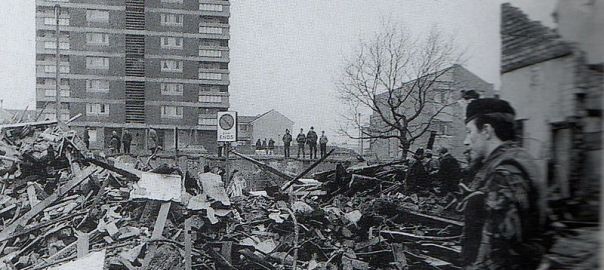
A British soldier surveys the aftermath of the bombing
Location Corner of North Queen Street and Great George’s Street, Belfast,
Northern Ireland
Date 4 December 1971
20:45 (GMT)
Target Irish Catholics
Attack type
Time bomb
Deaths 15
Non-fatal injuries
17
Perpetrator Ulster Volunteer Force


Disclaimer 

The views and opinions expressed in these pages/documentaries are soley intended to educate and provide background information to those interested in the Troubles of Northern Ireland. They in no way reflect my own opinions and I take no responsibility for any inaccuracies or factual errors.

—————————-

AFTERMATH OF PUB BOMBING IN BELFAST

—————————-

Background

McGurk’s (also called the Tramore Bar) was a two-storey public house on the corner of North Queen Street and Great George’s Street, in the New Lodge area to the north of Belfast city centre. This was a mainly Irish nationalist and Catholic neighbourhood, and the pub’s regular customers were from the community.

The pub was owned by Patrick and Philomena McGurk, who lived on the upper floor with their four children.

The Ulster Volunteer Force (UVF) was formed in Belfast in 1966, declaring “war” on the Irish Republican Army (IRA). Until 1971, however, its actions were few and it:

“scarcely existed in an organisational sense”.

The British Army was deployed in Northern Ireland following the August 1969 riots, which are usually seen as the start of the Troubles. In December 1969 the IRA split into two factions: the ‘Official’ IRA and Provisional IRA. Both launched armed campaigns against the British Army, the Royal Ulster Constabulary (RUC) and the government of Northern Ireland.

During 1971, the violence gradually worsened. There were daily bombings and shootings by republicans, loyalists and the security forces. During the first two weeks of December, there were about 70 bombings and about 30 people were killed.

On 2 December, three republican prisoners escaped from Crumlin Road prison, not far from McGurk’s. Security was tightened and there was a heavy RUC and British Army presence in the area over the next two days.

Eyewitnesses asserted that the checkpoints around McGurk’s were removed just an hour before the attack.

The bombing


Plaque near the site of the bombing listing those killed

On the evening of Saturday 4 December 1971, a four-man UVF team met in the Shankill area of Belfast and were ordered to bomb a pub on North Queen Street. According to the only convicted bomber—Robert Campbell—they were told not to return until the job was done. Campbell said that their target had not been McGurk’s, but another pub nearby.

It is believed this was a pub called The Gem, which was allegedly linked to the Official IRA. The 50 pounds (23 kg) bomb was disguised as a brown parcel, which they placed in a car and drove to their target. Campbell says they stopped near The Gem at about 7:30pm, but could not gain access to it because there were security guards outside.

After waiting for almost an hour, they drove a short distance to McGurk’s. At about 8:45pm, one of them placed the bomb in the porch entrance on Great George’s Street and rushed back to the car.

It exploded just moments after they drove off. Campbell implied that McGurk’s had been chosen only because it was:

“the nearest Catholic pub”.

The blast caused the building to collapse. Bystanders immediately rushed to free the dead and wounded from the rubble. Firefighters, paramedics, police and soldiers were quickly on the scene. Fifteen Catholic civilians had been killed—including two children and a further seventeen wounded. The rescue effort lasted many hours.

The Innocent Victims

——————————————–

04 December 1971


Philomena McGurk,   (46)

Catholic
Status: Civilian (Civ),

Killed by: Ulster Volunteer Force (UVF)
Killed in bomb attack on McGurk’s bar, junction of Gt. George’s Street and North Queen Street, New Lodge, Belfast.

——————————————–

04 December 1971


Maria McGurk,  (14)

Catholic
Status: Civilian (Civ),

Killed by: Ulster Volunteer Force (UVF)
Killed in bomb attack on McGurk’s bar, junction of Gt. George’s Street and North Queen Street, New Lodge, Belfast.

——————————————–

04 December 1971


James Cromie,   (13)

Catholic
Status: Civilian (Civ),

Killed by: Ulster Volunteer Force (UVF)
Killed in bomb attack on McGurk’s bar, junction of Gt. George’s Street and North Queen Street, New Lodge, Belfast.

——————————————–

04 December 1971
John Colton,  (49)

Catholic
Status: Civilian (Civ),

Killed by: Ulster Volunteer Force (UVF)
Killed in bomb attack on McGurk’s bar, junction of Gt. George’s Street and North Queen Street, New Lodge, Belfast.

——————————————–

04 December 1971


Thomas McLaughlin,   (55)

Catholic
Status: Civilian (Civ),

Killed by: Ulster Volunteer Force (UVF)
Killed in bomb attack on McGurk’s bar, junction of Gt. George’s Street and North Queen Street, New Lodge, Belfast.

——————————————–

04 December 1971
David Milligan,  (53)

Catholic
Status: Civilian (Civ),

Killed by: Ulster Volunteer Force (UVF)
Killed in bomb attack on McGurk’s bar, junction of Gt. George’s Street and North Queen Street, New Lodge, Belfast.

——————————————–

04 December 1971


James Smyth,  (58)

Catholic
Status: Civilian (Civ),

Killed by: Ulster Volunteer Force (UVF)
Killed in bomb attack on McGurk’s bar, junction of Gt. George’s Street and North Queen Street, New Lodge, Belfast.

——————————————–

04 December 1971


Francis Bradley,  (62)

Catholic
Status: Civilian (Civ),

Killed by: Ulster Volunteer Force (UVF)
Killed in bomb attack on McGurk’s bar, junction of Gt. George’s Street and North Queen Street, New Lodge, Belfast.

——————————————–

04 December 1971


Thomas Kane,   (48)

Catholic
Status: Civilian (Civ),

Killed by: Ulster Volunteer Force (UVF)
Killed in bomb attack on McGurk’s bar, junction of Gt. George’s Street and North Queen Street, New Lodge, Belfast.

——————————————–

04 December 1971


Kathleen Irvine,   (53)

Catholic
Status: Civilian (Civ),

Killed by: Ulster Volunteer Force (UVF)
Killed in bomb attack on McGurk’s bar, junction of Gt. George’s Street and North Queen Street, New Lodge, Belfast.

——————————————–

04 December 1971


Philip Garry,  (73)

Catholic
Status: Civilian (Civ),

Killed by: Ulster Volunteer Force (UVF)
Killed in bomb attack on McGurk’s bar, junction of Gt. George’s Street and North Queen Street, New Lodge, Belfast.

——————————————–

04 December 1971


 Edward Kane,   (29)

Catholic
Status: Civilian (Civ),

Killed by: Ulster Volunteer Force (UVF)
Killed in bomb attack on McGurk’s bar, junction of Gt. George’s Street and North Queen Street, New Lodge, Belfast.

——————————————–

04 December 1971


Edward Keenan, (69)

Catholic
Status: Civilian (Civ),

Killed by: Ulster Volunteer Force (UVF)
Killed in bomb attack on McGurk’s bar, junction of Gt. George’s Street and North Queen Street, New Lodge, Belfast.

——————————————–

04 December 1971


Sarah Keenan,  (58)

Catholic
Status: Civilian (Civ),

Killed by: Ulster Volunteer Force (UVF)
Killed in bomb attack on McGurk’s bar, junction of Gt. George’s Street and North Queen Street, New Lodge, Belfast.

——————————————–

04 December 1971


Robert Spotswood,   (38)

Catholic
Status: Civilian (Civ),

Killed by: Ulster Volunteer Force (UVF)
Killed in bomb attack on McGurk’s bar, junction of Gt. George’s Street and North Queen Street, New Lodge, Belfast.

——————————————–

Within two hours of the blast, a sectarian clash had erupted nearby at the New Lodge–Tiger’s Bay interface The British Army and RUC moved in and a gun battle developed.

——————————————

Enter a caption

Major Jeremy Snow

In a despicable act the IRA shot Major Jeremy Snow as he attended the scene. He died of his injuries four days later on the 8th December .

Jeremy Snow was at the Royal Fusiliers headquarters a short distance away from the scene of the explosion when the bomb went off. Such was the strength of the blast that the soldiers initially thought that it was their building which had come under attack. Snow began organising the rescue operation but quickly handed this over to Major Mike Dudding who, using a loudhailer, organised a human chain of volunteers to remove the rubble.

At around 10pm a crowd of Protestants began gathering in the New Lodge/Tiger’s Bay area intent on mocking the Catholic victims of the blast. Before long a Catholic crowd of around 100 gathered and the two groups began trading insults and throwing stones at one another. Sensing trouble, Jeremy Snow called up a reserve platoon and, having decided that the crowds were getting out of hand, decided to separate the two groups at North Queen Street. At 10.30pm, as he alighted from his vehicle at Hillman Street a quarter of a mile from the scene of the bombing, he was shot and wounded in the neck by an Irish Republican Army sniper. He was placed on a stretcher and taken by armoured ambulance to the Royal Victoria Hospital. His wife was at his bedside when he died from his wounds four days later.

One of the soldiers from his Company wrote:-

“Major Snow was my company commander. Charlie Company, 2nd Battalion Royal Regiment of Fusiliers. I was with the Major the day of the incident. We were plodding along, like you do, when a civilian asked for directions. As Major Snow crossed the road to go to him, he was gunned down.

He was a lovely bloke, a real gent and we all had the utmost respect for him. We were all gutted when it happened. I met my wife to be at his memorial service and we have been together for 30 years and to this day we do not forget the sacrifice he made. He was one of the many casualties we had to bear to make N.I. the safe and secure place it is today… I salute you Sir…”

He was Mentioned in Despatches for his services in Northern Ireland which was announced by St James’s Palace on the 23rd of May 1972.

—————————————

A British Army officer, Major Jeremy Snow, was shot by the IRA on New Lodge Road and died of his wounds on 8 December.  Two RUC officers and five civilians were also wounded by gunfire. Eventually, five companies of troops were sent into the district and they searched almost 50 houses.

Meanwhile, the UVF team had driven to a nearby pickup point where they dumped their car. They walked to the area of St Anne’s Cathedral and were picked up by another. They were driven back to the Shankill and met the man who had ordered the attack in an Orange Hall, telling him that:

“the job has been done”.

Among those killed were Philomena and Maria McGurk, wife and 12-year-old daughter of the pub owner Patrick McGurk. Patrick and his three sons were seriously injured. Shortly after the attack, McGurk appeared on television calling for no retaliation:

“It doesn’t matter who planted the bomb. What’s done can’t be undone. I’ve been trying to keep bitterness out of it.”

See: Balmoral Furniture Company Bombing


Buy Me A Coffee

1st December – Deaths & Events in Northern Ireland Troubles

Key Events & Deaths on this day in Northern Ireland Troubles

1st December

——————————————-

Monday 1 December 1969

Patrick Corry (61) died four months after being struck with batons during an altercation with the Royal Ulster Constabulary (RUC) on 2 August 1969.

Friday 1 December 1972

Two Killed by Bombs in Dublin Two people were killed and 127 injured when two car bombs exploded in the centre of Dublin, Republic of Ireland. At 7.58pm a car bomb detonated in Eden Quay close to Liberty Hall, Dublin.

At 8.16pm the second car bomb exploded in Sackville Place (near O’Connell Street), Dublin.

Two men, George Bradshaw (30) and Thomas Duff (23) both CIE bus conductors, were killed in the second explosion. An inadequate warning had been telephoned to the ‘Newsletter’ (a Belfast based newspaper) by a man with an English accent a few minutes before the first explosion.

[No organisation claimed responsibility for the bombings but blame initially fell on the Irish Republican Army (IRA). Much later suspicion fell on the Ulster Volunteer Force (UVF). At the time of the explosions the Dáil had been debating the Offences Against the State (Amendment) Bill. The amendment would have given the State much greater powers against the IRA. In particular it meant that suspected members of paramilitary groups could be sentenced on the word of a senior police officer in front of three judges. Prior to the explosions many commentators felt the Bill would fail. However following the explosions there was a one-hour adjournment after which Fine Gael (FG) abstained in the vote and the amendment was passed. In 1973 two English brothers, Kenneth and Keith Littlejohn claimed, during a robbery trial, that they were British agents who had been ordered to infiltrate the Official IRA. They claimed to have acted as ‘agent provocateurs’. Many people in the Republic expressed the suspicion that the bombings had been part of a British covert operation to influence legislation in the Dáil.]

Monday 1 December 1975

Two members of the Irish Republican Army (IRA) were killed in King Street, Belfast, when the bomb they were transporting exploded prematurely.

Friday 1 December 1978

The Irish Republican Army (IRA) carried out 11 bomb attacks in towns across Northern Ireland.

Saturday 1 December 1979

Richard Lawson, then a Lieutenant-General, succeeded Timothy Creasey as General Officer Commanding (GOC) of the British Army in Northern Ireland.

Monday 1 December 1980

Three women Republican prisoners in Armagh Prison joined the hunger strike.

Monday 1 December 1986

Tom King, then Secretary of State for Northern Ireland, announced that there would be a number of changes to legislation covering demonstrations and incitement to hatred. He also announced that the Flags and Emblems Act would be repealed.

Saturday 1 December 1990

A former Ulster Defence Regiment (UDR) soldier was shot dead by the Irish Republican Army (IRA) near Kilrea, County Derry.

Tuesday 1 December 1992

The Irish Republican Army (IRA) exploded two small bombs in the centre of Belfast injuring 27 people. The IRA also attempted to explode a bomb on the Tottenham Court Road in London but the device was defused by bomb disposal officers.

Wednesday 1 December 1993

Patrick Mayhew, then Secretary of State for Northern Ireland, stated that there had been 22 errors in the documents he released on secret talks between the British government and the Republican Movement. [The documents had been released by Mayhew on 29 November 1993.]

Thursday 1 December 1994

USA Special Adviser Appointed Bill Clinton, then President of the United States of America (USA), announced that he was appointing George Mitchell, the former Senate majority leader, as a special economic adviser on Ireland from January 1995. [Regardless of title, Mitchell was in effect the ‘peace envoy’ Clinton had promised on 5 April 1992.]

Friday 1 December 1995

Bill Clinton, then President of the United States of America (USA), travelled to Dublin where he addressed the Irish parliament. Clinton held meetings with John Bruton, then Taoiseach (Irish Prime Minister), and Mary Robinson, then President of the Republic of Ireland. Bill Clinton was accompanied by the First Lady Hillary Clinton.

The British and Irish governments sent separate invitations to eight Northern Ireland parties to take part in preliminary talks. The Irish National Liberation Army (INLA) shot and wounded a man in the Falls Road area of west Belfast.

Sunday 1 December 1996

The Mail on Sunday (a London based newspaper) and the Sunday World (a Belfast based newspaper) both published a story which alleged an affair between Gerry Kelly, then a talks negotiator for Sinn Féin (SF), and Martha Pope, then an aide to George Mitchell, then the chair of the Stormont talks.

[Both Kelly and Pope denied the allegation and an apology and a financial settlement were agreed within the week. Many commentators speculated as to the possible involvement of MI5 (British Intelligence) in concocting and spreading the story.]

Monday 1 December 1997

Marjorie (Mo) Mowlam, then Secretary of State for Northern Ireland, announced that in future recruits to the Royal Ulster Constabulary (RUC) would not have to swear service to Queen Elizabeth. The Northern Ireland Police Authority (NIPA) held its first public meeting at Spires conference centre in Belfast. The meeting was disrupted by members of Saoirse, the group representing Republican Prisoners. The protesters were removed and the meeting continued.

Unionists demanded an inquiry into the events surrounding the 1970 arms trial in Dublin.

[The trial began on 28 May 1970 into a plot to smuggle guns from the Republic of Ireland to the Irish Republican Army (IRA) in Northern Ireland. This demand for an inquiry was seen as an attempt to obtain a quid pro quo for any new inquiry into events on ‘Bloody Sunday’ on 30 January 1972.]

David Andrews, then Irish Foreign Affairs Minister, admitted that his comments about the nature of powers for any future cross-border bodies on 29 November 1997 were “misjudged”. This comment followed a meeting between Andrews and members of the Ulster Unionist Party (UUP) which was described as “difficult”.

Wednesday 1 December 1999

The Northern Ireland Executive (NIA) held an informal meeting at Stormont Castle, Belfast. At Parliament Buildings, Stormont there was a meeting with Irish ministers. David Trimble (UUP), then First Minister, and Seamus Mallon, then Deputy First Minster, hosted John O’Donoghue, then Irish Minister for Justice, and Liz O’Donnell, then junior Irish Minister for Foreign Affairs.

The Irish government announced that the remaining 22 IRA prisoners being held in Portlaoise Prison would be transferred to a low security unit in Castlerea Prison, County Roscommon. Hugh Orde, then Assistant Commissioner of the Metropolitan Police, was appointed to replace John Stevens as head of the investigation into the killing of Pat Finucane, a Belfast solicitor killed on 12 February 1989.

Pupils attending Kilkeel High School, County Down, left their classes as a protest against the appointment of Martin McGuinness (Sinn Féin) as Minister of Education.

[This was the first of a series of such protests by pupils at state (Protestant) schools. The Democratic Unionist Party (DUP) was later accused of orchestrating the school protests.]

Saturday 1 December 2001

There was a meeting of the 840 member Ulster Unionist Council (UUC), the policy-making body of the Ulster Unionist Party (UUP). The meeting was called by those opposed to the Good Friday Agreement and was intended to influence the party’s policy on the decommissioning of weapons by the Irish Republican Army (IRA).

The anti-Agreement members of the UUP put forward a number of motions that would have imposed a series of sanctions on Sinn Féin (SF) if the IRA did not complete decommissioning by the end of February 2002. However, David Trimble, then leader of the UUP, won 56 per cent of the votes in support of his alternative motion.

———————————-


———————————————————————————

Remembering all innocent victims of the Troubles

Today is the anniversary of the death of the following  people killed as a results of the conflict in Northern Ireland

“To live in hearts we leave behind is not to die

– Thomas Campbell

To the innocent on the list – Your memory will live  forever

– To  the Paramilitaries  –

There are many things worth living for, a few things worth dying for, but nothing worth killing for.

9  People lost their lives on the 1st December  between 1969 – 199o

————————————————————

01 December 1969
Patrick Corry,   (61)

Catholic
Status: Civilian (Civ),

Killed by: Royal Ulster Constabulary (RUC)
Died four months after being hit on the head with batons, during altercation between local people and Royal Ulster Constabulary (RUC) patrol, Unity Flats, off Upper Library Street, Belfast. Injured on 2nd August 1969

————————————————————

01 December 1971
Vivien Gibney,  (17)

Protestant
Status: Civilian (Civ),

Killed by: Irish Republican Army (IRA)
Died four days after being shot during Irish Republican Army (IRA) sniper attack on Royal Ulster Constabulary (RUC) foot patrol, Cliftonville Circus, Belfast.

————————————————————

01 December 1972
Joseph McAuley,  (47)

Catholic
Status: Civilian (Civ),

Killed by: Ulster Defence Association (UDA)
Died ten days after being shot while walking along laneway near his home, Finvoy, near Ballymoney, County Antrim.

————————————————————

01 December 1972
George Bradshaw,   (30)

nfNIRI
Status: Civilian (Civ),

Killed by: Ulster Volunteer Force (UVF)
Killed in car bomb explosion, Sackville Place, off O’Connell Street, Dublin. Inadequate warning given.

————————————————————

01 December 1972
Thomas Duffy,  (23)

nfNIRI
Status: Civilian (Civ),

Killed by: Ulster Volunteer Force (UVF)
Killed in car bomb explosion, Sackville Place, off O’Connell Street, Dublin. Inadequate warning given.

————————————————————

01 December 1973
Robert Megaw,   (29)

Protestant
Status: Royal Ulster Constabulary (RUC),

Killed by: Irish Republican Army (IRA)
Shot by sniper while on Royal Ulster Constabulary (RUC) mobile patrol, Edward Street, Lurgan, County Armagh.

————————————————————

01 December 1975
Paul Fox,  (20)

Catholic
Status: Irish Republican Army (IRA),

Killed by: Irish Republican Army (IRA)
Killed in premature bomb explosion while in car at car park, King Street, Belfast

————————————————————

01 December 1975
Laura Crawford,  (25)

Catholic
Status: Irish Republican Army (IRA), K

illed by: Irish Republican Army (IRA)
Killed in premature bomb explosion while in car at car park, King Street, Belfast.

————————————————————

01 December 1990
Hubert Gilmore,  (49)

Protestant
Status: ex-Ulster Defence Regiment (xUDR),

Killed by: Irish Republican Army (IRA)
Shot at the site of his new home, Drumagarner Road, near Kilrea, County Derry.

————————————————————

Buy Me A Coffee

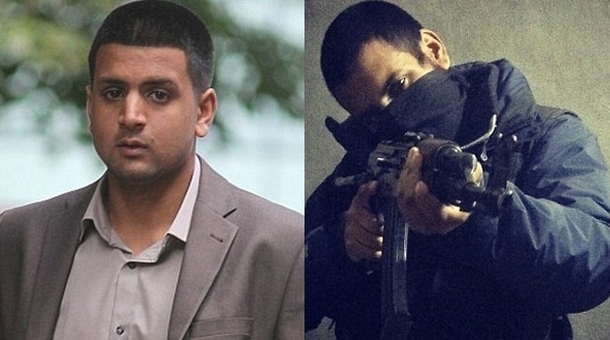
British ISIS woman Sally Jones threatens to blow herself up

Sally Jones, who left the UK to join the extremist group of ISIS, has threatened to blow herself up after her husband was killed in a drone strike in Syria’s Raqqa.

Jones, 47, is a former punk rocker, originally from Kent. She has converted to Islam and has been radicalized recently through direct contact with terrorist groups online.

Quoting a Muslim extremist woman who killed herself along with scores of Russian soldiers in a truck bombing in 2000, Jones has expressed herself on the social media that she could be about to become a “black widow” suicide bomber.

The term “Black Widows” refers to a group of Chechen Muslim women whose husbands were killed by the Russian forces in Chechnya.

She moved to Syria with her 10-year-old son in 2013 and joined ISIS after being brainwashed.

“I know what I’m doing. Paradise has a price and I hope this will be the price for Paradise,” Jones tweeted. If she carried out her threat, she would be ISIS’s first widely known female suicide bomber.

Her husband Junaid Hussain, 21, was a cyber-hacker and a key propagandist and recruiter for the ISIS terror group. He was killed in an airstrike in Raqqa, the major bastion of ISIS in Syria.

Jones has been following her husband’s path, recruiting young men and women to join ISIS’s ranks.

“I would never love anyone but him,” the extremist widow said on Tweeter, referring to her dead husband, though the group’s leadership prevents widows from staying a long time without husbands, according to ISIS-linked sources.

Jones’s message came after her husband found killed in an airstrike on Raqqa last August.

see Sally Anne Jones

30th November – Deaths & Events in Northern Ireland Troubles

Key Events & Deaths on this day in Northern Ireland Troubles

30th November

———————————————-

Tuesday 30 November 1971

The government of the Republic of Ireland stated that it would take the allegations of brutality against the security forces in Northern Ireland to the European Court of Human Rights.

Saturday 30 November 1974

The Irish Republican Army (IRA) carried out a bomb attack on the Talbot Arms public house in Little Chester Street, Belgravia, London. Two small bombs, each with a short fuse, were thrown at the window of the pub. One bomb went through the window but failed to explode, the second rebounded off the window frame and landed in the street but the explosion injured five customers inside the pub.


Sunday 30 November 1975

Noel Shaw (19), then a member of the Ulster Volunteer Force (UVF), was shot dead by fellow UVF members in an internal feud. The shooting occurred in the Shankill area of Belfast.

Thursday 30 November 1978

The Irish Republican Army (IRA) carried out a number of bomb and fire-bomb attacks in 14 towns and villages across Northern Ireland. The IRA issued a statement admitting the attacks and warning that it was preparing for a ‘long war’.

Monday 30 November 1981

A number of Unionist controlled district councils voted to adjourn council business in protest at the security situation in Northern Ireland.

Tuesday 30 November 1982

James Prior, then Secretary of State for Northern Ireland, addressed the Northern Ireland Assembly and announced that the strength of the Royal Ulster Constabulary (RUC) would be increased by 500 officers and the RUC Reserve by 300.

Friday 30 November 1990

Additional British Army troops are flown into Northern Ireland.

Wednesday 30 November 1994

John Hume, then leader of the Social Democratic and Labour Party (SDLP), and Gerry Adams, then President of Sinn Féin (SF), issued a statement saying:

“The demilitarisation process should be accelerated and inclusive negotiations … should begin without further delay.”

Thursday 30 November 1995

First Clinton Visit Began Bill Clinton, then President of the United States of America (USA), visited Northern Ireland. He was the first serving President of the USA to visit the region.

[Clinton made further visits to Northern Ireland in September 1998 and December 2000.]

Clinton, accompanied by the First Lady Hillary Clinton, visited east Belfast, west Belfast, Derry, and then returned to Belfast to switch on the Christmas lights. He received a generally enthusiastic and warm reception. He made a key note speech at Mackie’s engineering factory in west Belfast. Clinton said:

“… the search for common ground demands the courage of an open mind. This twin-track initiative gives the parties a chance to begin preliminary talks in ways in which all views will be represented and all voices will be heard. It also establishes an international body to address the issue of arms decommissioning. I hope the parties will seize this opportunity.”

Later in the day Clinton held talks with the leaders of the five main political parties in Northern Ireland. Hillary Clinton held an informal meeting with female community representatives in the Lamplighter cafe in Belfast.

The European Court of Justice ruled that aspects of the Prevention of Terrorism Act contravened European Union law by impinging on the freedom of movement guaranteed by the Treaty of Rome. It was announced that Maurice Hayes would oversee an independent review of the police complaints system.

Saturday 30 November 1996

There was serious violence during the loyalist picket of the Catholic church at Harryville, Ballymena. Approximately 500 loyalists attacked the Royal Ulster Constabulary (RUC) and those trying to attend mass. Petrol bombs were thrown, cars damaged, and two Catholic women needed hospital treatment.

The RUC found homemade explosives near Armagh.

The Democratic Unionist Party (DUP) held its annual conference. During the conference there were calls for the right of loyal order parades to proceed unhindered.

Republican Sinn Féin (RSF) held an Ard Fheis (party conference) in Dublin. The conference was critical of the peace process but supported the aims of the Continuity Irish Republican Army (CIRA).

Tuesday 30 November 1999

The House of Lords and the House of Commons both approved a devolution order under the Northern Ireland Act 1998 that allowed for the transfer of power from Westminster to the Assembly at Stormont.

[This allowed for the ending the system of ‘Direct Rule’ that had been installed in 1972.]

The newly appointed Ministers in the Northern Ireland Executive were photographed at their desks. The two Sinn Féin (SF) Ministers refused the offer of Royal Ulster Constabulary (RUC) protection. The Northern Ireland Assembly met to appoint members to the 10 Statutory Departmental Committees under the d’Hondt system of proportionality. Each committee was comprised of 11 MLAs including a Chair and Deputy Chair.

Robert McCartney, then leader of the United Kingdom Unionist Party (UKUP), refused to accept a seat on any of the committees as did three of the four members of the Northern Ireland Unionist Party (NIUP). David Andrews, then Irish Foreign Minister, suggested the Dublin government was anticipating that the cross-Border bodies would have powers “not unlike a government”. Unionist leaders reacted furiously to the comments.

——————————————–


———————————————————————————

Remembering all innocent victims of the Troubles

Today is the anniversary of the death of the following  people killed as a results of the conflict in Northern Ireland

“To live in hearts we leave behind is not to die

– Thomas Campbell

To the innocent on the list – Your memory will live  forever

– To  the Paramilitaries  –

There are many things worth living for, a few things worth dying for, but nothing worth killing for.

5  People lost their lives on the 30th  November between 1972 – 1993

————————————————————

30 November 1972


Gerard Gearon,   (22)

Catholic
Status: Civilian (Civ),

Killed by: non-specific Loyalist group (LOY)
Shot by other passenger while travelling in taxi, outside Mater Hospital, Crumlin Road, Belfast.

————————————————————

30 November 1975


Noel Shaw,   (19)

Protestant
Status: Ulster Volunteer Force (UVF),

Killed by: Ulster Volunteer Force (UVF)
Found shot on back seat of abandoned taxi, Nixon Street, Shankill, Belfast. Internal Ulster Volunteer Force (UVF) feud.

————————————————————

30 November 1976


Elizabeth Luney,   (36)

Protestant
Status: Civilian (Civ),

Killed by: Ulster Defence Association (UDA)
Shot at her home, Silverstream Road, Ballysillan, Belfast

————————————————————

30 November 1985


Edward Taggart,   (19)

Catholic
Status: Civilian (Civ),

Killed by: Irish Republican Army (IRA)
Shot during struggle with Irish Republican Army (IRA) members, Divis Flats, Belfast. Alleged criminal.

————————————————————

30 November 1993


Sean Hagan,  (47)

Catholic
Status: Civilian (Civ),

Killed by: Ulster Freedom Fighters (UFF)
Shot while leaving his workplace, European Components factory, Upper Newtownards Road, Dundonald, Belfast.

————————————————————


Buy Me A Coffee

29th November – Deaths & Events in Northern Ireland Troubles

Key Events & Deaths on this day in Northern Ireland Troubles

29th November

———————————–

Monday 29 November 1971

An off duty British soldier was found shot dead in County Armagh.

Tueday 28 November 1972

Two members of the IRA were killed in a premature bomb explosion in the Bogside area of Derry. A RUC officer was killed in an IRA rocket attack in Fermanagh. A member of the bomb disposal team of the British Army was killed in Derry.

Friday 29 November 1974

Prevention of Terrorism Act The Labour government rushed through the Prevention of Terrorism (Temporary Provisions) Bill. The new Act gave the police powers to detain people for up to seven days without any charge being brought against them. The Act also allowed the authorities to ‘exclude’ people from entering Britain.

[Although it was initially viewed as a temporary measure, the Prevention of Terrorism Act was to be renewed each year and made permanent by a Conservative government in 1988. Many critics of the Act claimed that it was mainly being used as a means of monitoring the movements of innocent Irish people. Indeed many thousands of, mainly Catholic, Irish people were screened under provisions in the act although never charged with any offences.]

Satruday 29 November 1975

Archibald Waller (23), then a member of the Ulster Volunteer Force (UVF), was shot dead by fellow UVF members in an internal feud. The shooting occurred in the Shankill area of Belfast.

An airport employee was killed by a Loyalist bomb at Dublin airport.

Tuesday 29 November 1988

The European Court of Human Rights decided that, by detaining suspects for more than four days, Britain was in breach of the European Convention of Human Rights. This was one of a number of decisions by European courts that were decided against Britain.

Wednesday 29 November 1989

The Ulster Volunteer Force (UVF) shot and killed two Catholic men in Coagh, County Tyrone. One of the men was a member of the Irish Republican Army (IRA).

Thursday 29 November 1990

The Government announces a reshuffle of ministerial posts at the Northern Ireland Office (NIO).

Monday 29 November 1993

Sinn Féin (SF) publicly released a number of documents that provided details of the party’s secret talks with the British government. Martin McGuinness, then Vice-President of Sinn Féin (SF), stated that the message of the 22 February 1993 was a fake and he accused the British of “counterfeiting their own documents to meet their current needs”.

Patrick Mayhew, then Secretary of State for Northern Ireland, speaking in the House of Commons gave the British version of the secret contacts with the Republican Movement.

[There were differences between the two sets of accounts. On 1 December 1993 Mayhew admitted there were 22 errors in the documents he had presented.] Ian Paisley, then leader of the Democratic Unionist Party (DUP), was ordered to leave the Commons after he had accused Mayhew of telling a lie.

Wednesday 29 November 1995

Bill Clinton, then President of the United States of America (USA), arrived in London as a prelude to a visit to Northern Ireland. Clinton gave his support to John Major, then British Prime Minister, and John Bruton, then Taoiseach (Irish Prime Minister).

Friday 29 November 1996

Robert Carswell replaced Brian Hutton as the Lord Chief Justice of Northern Ireland. Peter Robinson, then deputy leader of the Democratic Unionist Party (DUP), alleged that members of the Irish Republican Army (IRA) had been targeting him in London.

Saturday 29 November 1997

The Democratic Unionist Party (DUP) held its annual conference in Portrush, County Antrim. Addressing the conference Ian Paisley, then leader of the DUP, said that David Trimble, then leader of the Ulster Unionist Party (UUP), was guilty of “high treason”.

Paisley also accused George Mitchell, then Chairman of the Stormont talks, of “working for the total destruction of Northern Ireland”. The Friends of the Union held a meeting organised by Lord Cranborne, then Conservative leader in the House of Lords, at Hatfield House, Hertfordshire, England.

David Trimble, then leader of the UUP, Ian Paisley, then leader of the DUP, and Robert McCartney, then leader of the United Kingdom Unionist Party (UKUP), all attended the meeting. The Progressive Unionist Party (PUP) and the Ulster Democratic Party (UDP) were not invited.

Sean O’Callaghan, a former Irish Republican Army (IRA) informer, also spoke at the meeting. David Andrews, then Irish Foreign Affairs Minister, gave an interview to Radio Ulster during which he said that cross-border bodies should have powers “not unlike a government”. [Unionists criticised Andrews for the remarks which he later said were “misjudged”.]

Monday 29 November 1999

Executive Appointed There was a meeting of the Northern Ireland Assembly (NIA). Seamus Mallon, then deputy leader of the Social Democratic and Labour Party (SDLP), was reinstated as Deputy First Minister Designate. The d’Hondt procedure for the appointment of ministers in a power-sharing Executive was triggered and 10 ministers appointed.

[This was the first time in 25 years that Northern Ireland had a power-sharing Executive.]

—————————————


———————————————————————————

Remembering all innocent victims of the Troubles

Today is the anniversary of the death of the following  people killed as a results of the conflict in Northern Ireland

“To live in hearts we leave behind is not to die

– Thomas Campbell

To the innocent on the list – Your memory will live  forever

– To  the Paramilitaries  –

There are many things worth living for, a few things worth dying for, but nothing worth killing for.

7 People lost their lives on the 29th November between 1971 – 1990

————————————————————

29 November 1971


Robert Benner,  (25)

nfNI
Status: British Army (BA),

Killed by: non-specific Republican group (REP)
Originally from Dundalk, County Louth. Off duty. Found shot, Teer, near Crossmaglen, County Armagh.

————————————————————

29 November 1975
John Hayes,   (38)

nfNIRI
Status: Civilian (Civ),

Killed by: Ulster Defence Association (UDA)
Airport Employee. Killed during bomb explosion in toilets of arrival lounge, Dublin Airport, County Dublin.

————————————————————

29 November 1975


Archibald Waller,   (23)

Protestant
Status: Ulster Volunteer Force (UVF),

Killed by: Ulster Volunteer Force (UVF)
Shot while sitting in parked car outside social club, Downing Street, Shankill, Belfast. Internal Ulster Volunteer Force (UVF) feud.

————————————————————

29 November 1985
Gordon Hanna,  (46)

Protestant
Status: Ulster Defence Regiment (UDR),

Killed by: Irish Republican Army (IRA)
Off duty. Killed by booby trap bomb attached to his car outside his home, Harbour Drive, Kilkeel, County Down.

————————————————————

29 November 1989


Liam Ryan,   (39)

Catholic
Status: Irish Republican Army (IRA),

Killed by: Ulster Volunteer Force (UVF)
Shot during gun attack on Battery Bar, Moortown, near Coagh, County Tyrone.

————————————————————

29 November 1989


Michael Devlin,   (33)

Catholic
Status: Civilian (Civ),

Killed by: Ulster Volunteer Force (UVF)
Shot during gun attack on Battery Bar, Moortown, near Coagh, County Tyrone

————————————————————

29 November 1990


 Raymond Robinson, (39)

Catholic
Status: Civilian (Civ),

Killed by: Ulster Volunteer Force (UVF)
Shot at his workplace, a shop, Duncairn Gardens, Belfast.

————————————————————

Understanding the Syrian crisis & The Battle for Rojava – ISIS – Pushed back

belfastchildis's avatar

The Rojava Revolution

—————————————————————

Pushing Back the Islamic State: The Battle for Rojava

—————————————————————

The Rojava Revolution is a political upheaval taking place in an autonomous region of Northern Syria, known as Rojava. The revolution has been characterized by the prominent role played by women both on the battlefield and within the newly formed political system, as well as the implementation of democratic confederalism, a form of grassroots democracy based on local assemblies.

—————————————————————

Understanding the Syrian crisis in 5 minutes

—————————————————————

—————————————————————

Islamic State Conquest: Map Time Lapse (August 2015 Update)

—————————————————————

Background

Further information: Kurds in Syria and Rojava

Kurds make up between nine and fifteen percent of Syria’s population, or well over 2 million people. The northeast of the country (where many Kurds live) is strategically important, because it contains a large percentage of Syria’s oil supplies.[31]

Qamishli riots

Further information: 2004 al-Qamishli riots

View original post 3,013 more words

Her War: YPJ & Other Women Fighting ISIL

belfastchildis's avatar

Women Fighting ISIL

———————————————————————————-

Kurdish women fighting ISIL on the frontline

———————————————————————————-

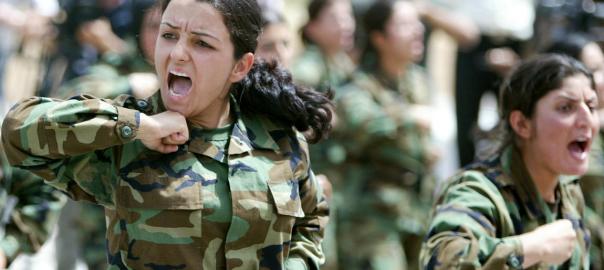
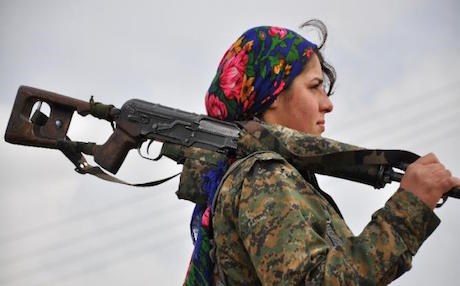
In the face of the deadly threat posed by the so-called Islamic State, many Kurdish women decide not to leave their survival to fate. Instead, they fight for their lives and their future. Taking up arms, they join the YPG – Kurdish People’s Protection Units that defend their town’s borders from the militants. The enemy fears female warriors. Jihadists believe if they are killed by a woman they will go straight to hell.

Israelis have become captivated by the YPJ’s female fighters. AFP photo.

—————————————————————————————————–

Her War

—————————————————————————————————–

Amazons of the Middle East: Kurdish Women Fighting Against ISIL Female fighters from the Kurdish People’s Protection Unit (YPG) take a break on the front line in the northeastern Syrian city of Hasakeh.

Women’s Protection Units

The Women’s Protection Units or Women’s Defense Units (Kurdish: Yekîneyên Parastina Jin‎) (YPJ) is a military organization that was set up in 2012 as the female brigade of the leftist

View original post 2,808 more words

Escape from Isis: The brutal treatment of women in Raqqa

belfastchildis's avatar

Escape from Isis: the brutal treatment of women in Raqqa

Four million women live under the rule of Islamic State extremists in Iraq and Syria. Tonight, Channel 4 screens an important and troubling documentary showing just how hellish that life is.

RAQQA

Al-Raqqah

Al-Raqqah
الرقة
Al-Raqqah Al-Raqqah skyline • The Euphratesal-Raqqah city walls • Baghdad gateQasr al-Banat Castle • Uwais al-Qarni Mosque

Al-Raqqah

Al-Raqqah skyline • The Euphrates
al-Raqqah city walls • Baghdad gate
Qasr al-Banat Castle • Uwais al-Qarni Mosque

Al-Raqqah is located in Syria

Al-Raqqah
Al-Raqqah

Location in Syria

Coordinates: 35°57′N39°1′E / 35.950°N 39.017°E / 35.950; 39.017
Country Syria
GovernorateAl-Raqqah
DistrictAl-Raqqah
SubdistrictAl-Raqqah
Founded244-242 BC
OccupationIslamic State of Iraq and the Levant
Area
 • City1,962 km2 (758 sq mi)
Elevation245 m (804 ft)
Population (2004)
 • City220,268
 • Density110/km2 (290/sq mi)
 • Metro338,773
Time zoneEET (UTC+2)
 • Summer (DST)+3 (UTC)
Area code(s)22
Websitehttp://www.esyria.sy/eraqqa/(Arabic)

Al-Raqqah (Arabic: الرقةar-Raqqah), also called Rakka and Raqqa, is a…

View original post 2,455 more words

28th November – Deaths & Events in Northern Ireland Troubles

Key Events & Deaths on this day in Northern Ireland Troubles

28th November

————————————-

Tueday 28 November 1972

Two members of the IRA were killed in a premature bomb explosion in the Bogside area of Derry. A RUC officer was killed in an IRA rocket attack in Fermanagh. A member of the bomb disposal team of the British Army was killed in Derry.

Wednesday 28 November 1973

Assembly proceedings were halted due to verbal assaults on those who had been named as members of the proposed Executive. The disruption was caused by Loyalists and those opposed to the new Executive. Eventually the meeting of the Assembly had to be adjourned.


Friday 22 November 1974

See Birmingham  Bombing

The Irish Republican Army (IRA) denied responsibility for the bombs in Birmingham on 21 November 1974.

Thursday 28 November 1974

The Irish government introduced legislation which would allow people to be tried for offences committed outside the jurisdiction of the Republic of Ireland. Paul Hill was arrested in Southhampton and taken to Guildford for questioning about the bombings on 5 October 1974. [On 29 November 1974 Hill signed a statement admitting his involvement in the Guildford bombing. Hill became the first of the ‘Guildford Four’ to be charged with the bombing.]

Tuesday 28 November 1978

Increase in Number of MPs A Bill was passed in the House of Commons to increase the number of Northern Ireland Members of Parliament (MPs) at Westminster. The number was increase from 12 to 17 seats.

Wednesday 28 November 1979

John Hume succeeded Gerry Fitt as leader of the Social Democratic and Labour Party (SDLP).

Friday 28 November 1986

The Fair Employment Agency (FEA) published a report that concluded that the geographical distribution of government sponsored jobs did not disadvantage Catholics.

Sunday 28 November 1993

Secret Talks Between British and Republicans The nature and extent of a series of secret talks between the British Government and the Republican Movement was revealed by the Observer (a British Newspaper). The report indicated that a secret channel of communication had existed between the British government and the Irish Republican Army (IRA) for three years and the two sides had been in regular contact since February 1993. Patrick Mayhew, then Secretary of State for Northern Ireland, claimed that the Irish Republican Army (IRA) had initiated the contacts with an oral message on 22 February 1993 that stated:

“The conflict is over but we need your advice on how to bring it to a close. We wish to have an unannounced cease-fire in order to hold dialogue leading to peace.”

[Sinn Féin (SF) denied that it had sent the message. The Observer carried a report on 28 June 1998 in which it claimed that Denis Bradley, a former Catholic priest, had acted as a means of contact between the Republican movement and the British and Irish governments over a 20 year period. The report also claimed that Bradley was responsible for the message of 22 February 1993.]

Tuesday 28 November 1995

Joint Communiqué by British and Irish Governments The British and Irish Governments issued a Joint Communiqué stating that: “the two governments have agreed to launch a “twin-track” process to make progress in parallel on the decommissioning issue and on all-party negotiations”. The governments hoped to have all-party negotiations begin by the end of February 1996. They also invited the parties to intensive preparatory talks. The governments also undertook to: “… establish an international body to provide an independent assessment of the decommissioning issue”. [George Mitchell, a former American Senator, was asked to lead this body.]

Thursday 28 November 1996

John Major, then British Prime Minister, replied in the House of Commons to proposals for a new Irish Republican Army (IRA) ceasefire. The proposals were developed during meetings between John Hume, then leader of the Social Democratic and Labour Party (SDLP), and Gerry Adams, then President of Sinn Féin (SF). Essentially the proposals called for the entry of SF into the Stormont talks immediately following an IRA ceasefire. Major rejected the central proposal stating that the British government would make its own assessment of the permanence of any new ceasefire. Ian Paisley, then leader of the Democratic Unionist Party (DUP), warned against any changes to the Act of Succession which forbids any English monarch from marrying a Catholic.

Saturday 28 November 1998

George Mitchell, formerly Chairman of the multi-party talks, held meetings with Northern Ireland political leaders in Belfast. Seamus Mallon, Deputy First Minister designate, spoke of a “distinct possibility” that President Clinton would try to resolve the decommissioning row but added that he had no specific knowledge of the such a move. Peter Robinson, then deputy leader of the Democratic Unionist Party (DUP), addressed the Annual Conference of the DUP and urged members of the Ulster Unionists Party (UUP) to “topple” their leader David Trimble. Robinson went on to say: “Better by far that you topple Trimble now rather than give him time to drag this province step by step to Dublin.” The conference was also addressed by the party leader Ian Paisley.

———————————-

———————————————————————————

Remembering all innocent victims of the Troubles

Today is the anniversary of the death of the following  people killed as a results of the conflict in Northern Ireland

“To live in hearts we leave behind is not to die

– Thomas Campbell

To the innocent on the list – Your memory will live  forever

– To  the Paramilitaries  –

There are many things worth living for, a few things worth dying for, but nothing worth killing for.

6 People lost their lives on the 28th  November between 1972 – 1983

————————————————————

 28 November 1972


 Robert Keys,  (55)

Protestant
Status: Royal Ulster Constabulary (RUC),

Killed by: Irish Republican Army (IRA)
Killed in rocket attack on Belleek Royal Ulster Constabulary (RUC) / British Army (BA) base, County Fermanagh.

————————————————————

28 November 1972


John Brady,   (21)

Catholic
Status: Irish Republican Army (IRA),

Killed by: Irish Republican Army (IRA)
Died in premature bomb explosion in house, Meenan Drive, Bogside, Derry.

————————————————————

28 November 1972


James Carr,   (19)

Catholic
Status: Irish Republican Army (IRA),

Killed by: Irish Republican Army (IRA)
Died in premature bomb explosion in house, Meenan Drive, Bogside, Derry.

————————————————————

28 November 1972
Paul Jackson,  (21)

nfNI
Status: British Army (BA),

Killed by: Irish Republican Army (IRA)
Member of British Army (BA) bomb disposal team. Killed while sitting in British Army (BA) Armoured Personnel Carrier monitoring bomb which exploded, Strand Road, Derry.

————————————————————

28 November 1981

William Coulter,   (23)

Protestant
Status: Royal Ulster Constabulary (RUC),

Killed by: Irish Republican Army (IRA)
Killed by remote controlled bomb hidden behind fencing while on Royal Ulster Constabulary (RUC) foot patrol, Unity Flats, Peter’s Hill, Belfast.

————————————————————

28 November 1983


Brigid Foster,  (77)

Catholic
Status: Civilian (Civ),

Killed by: Royal Ulster Constabulary (RUC)
Passerby. Shot shortly after armed robbery at Post Office, Pomeroy, County Tyrone.

————————————————————