All posts by belfastchildis

20th December – Deaths & Events in Northern Ireland Troubles

 Key Events & Deaths on this day in Northern Ireland Troubles

20th December

—————————————-

Friday 20 December 1968

The People’s Democracy (PD) announced that its members would undertake a protest march from Belfast to Derry beginning on 1 January 1969.

Monday 20 December 1971

A woman was shot dead during a gun attack on British soldiers.

Wednesday 20 December 1972

Diplock Report Published

Four Catholic civilians and one Protestant civilian were shot dead during a Loyalist paramilitary gun attack on the ‘Top of the Hill’ bar in the Waterside area of Derry.

The Report of the Diplock Committee was published. The Committee had been looking at possible changes to the legal procedures used in cases arising out the conflict. The report recommended that such cases should be heard by a Judge of the High Court, or a County Court Judge, sitting alone with no jury.

[These recommendations were included in the 1973 Emergency Powers Act.]

Friday 20 December 1974

The Irish Republican Army (IRA) announced that a ceasefire would take place between midnight on 22 December 1974 and midnight on 2 January 1975. A bomb left by the IRA on a platform of the railway station in Aldershot, England, was defused by explosives officers.

Monday 20 December 1976

Thomas Easton (22), a member of the Ulster Defence Association (UDA), was beaten to death by members of the Ulster Volunteer Force (UVF) in Forthriver Road, Glencairn, Belfast. This killing was part of feud between the UDA and the UVF.

Monday 20 December 1982

The British Parliament approved the increase in the number of Members of Parliament (MPs) representing Northern Ireland at the House of Commons from 12 to 17.

[This figure was increased in 1997 to 18.]

Parliament also decided that the number of members of any future Northern Ireland Assembly would be increased from 78 to 85, which represented five members per constituency.

Thursday 20 December 1990

A large number of prisoners, including many coming to the end of life sentences, were release on parole for the Christmas period.

Neil Kinnock, then leader of the British Labour Party, paid a visit to Northern Ireland

Friday 20 December 1991

Peter Brooke, then Secretary of State for Northern Ireland, outlined a fresh set of proposals to the Northern Ireland parties in the hope that these would lead to the resumption of the political negotiations that have been suspended since July 1991

Monday 20 December 1993

John Hume, then leader of the Social Democratic and Labour Party (SDLP), held a meeting with Gerry Adams, then President of Sinn Féin (SF), and decided to meet again when SF had considered its response to the Downing Street Declaration.

James Molyneaux, then leader of the Ulster Unionist Party (UUP), gave a radio interview in which he argued that the Downing Street Declaration was not a “sell out” of Unionists.

Tuesday 20 December 1994

Sinn Féin (SF) and Northern Ireland Office (NIO) officials held a second meeting at Stormont, Belfast. John Hume, then leader of the Social Democratic and Labour Party (SDLP), and Gerry Adams, then President of SF, issued a joint statement calling for inclusive negotiations without delay.

Wednesday 20 December 1995

A senior Royal Ulster Constabulary (RUC) officer said that the police believed that that the killing of five alleged drugs dealers was carried out by, or on behalf of, the Irish Republican Army (IRA).

Due to the recent killings attributed to the IRA the Irish government decided not to give permanent release to 10 Republican prisoners. It was claimed that the Irish security services had prevented attempts by the IRA to carry out raids on cash shipments in the Republic of Ireland.

The Alliance Party of Northern Ireland (APNI) held the first meeting with British and Irish ministers under the twin-track approach. Sinn Féin (SF) announced that it had made proposals to Patrick Mayhew, then Secretary of State for Northern Ireland, for all-party talks to be held in January 1996.

Friday 20 December 1996

Two members of the Irish Republican Army (IRA) shot and injured a Royal Ulster Constabulary (RUC) officer who was protecting Nigel Dodds, then a Democratic Unionist Party (DUP) councillor. The attack took place in the Royal Victoria Hospital for Sick Children in Belfast.

Monday 20 December 1999

The Prime Minister’s Office at Downing Street confirmed that Sinn Féin (SF) MPs would be allowed to have office facilities at Westminster despite the fact that none of the MPs intended to take their seats in the House of Commons. Peter Robinson (DUP), then Minister for Regional Development, announced his intention to introduce free travel on public transport for pensioners.

[This proposal would bring Northern Ireland into line with the existing arrangements in the Republic of Ireland.]

Seamus Tracy and Barry Macdonald, then both barristers, were granted leave by the High Court in Belfast for a judicial review of the requirement to swear an oath to “well and truly serve the Queen” before becoming Queen’s Councils. The two barristers were supported in their action by the Northern Ireland Bar Council.

Christmas parole arrangements were announced by the Northern Ireland Prison Service.

Over 300 paramilitary and ‘ordinary’ prisoners were to be granted 12 days leave over the Christmas period.

[To date 309 prisoners had been released under licence according to the terms of the early release scheme.]

———————————-


   ——————————————————————————

Remembering all innocent victims of the Troubles

Today is the anniversary of the death of the following  people killed as a results of the conflict in Northern Ireland

“To live in hearts we leave behind is not to die

– Thomas Campbell

To the innocent on the list – Your memory will live  forever

– To  the Paramilitaries  –

There are many things worth living for, a few things worth dying for, but nothing worth killing for.

13 people   lost their lives on the 20th December between 1971  – 1992

————————————————————

20 December 1971


Margaret McCorry,   (20)

Catholic
Status: Civilian (Civ),

Killed by: Irish Republican Army (IRA)
Shot by sniper during gun attack on British Army (BA) mobile patrol, Crumlin Road, Belfast.

————————————————————

20 December 1972


David McAleese, (37)

Catholic
Status: Civilian (Civ),

Killed by: non-specific Loyalist group (LOY)
Shot while walking to work, junction of Young’s Row and Newtownards Road, Belfast

————————————————————

20 December 1972
George Hamilton,  (28)

Protestant
Status: Ulster Defence Regiment (UDR),

Killed by: Irish Republican Army (IRA)
Off duty. Shot at his workplace, building site, Kildoag, Claudy, County Derry.

————————————————————

20 December 1972
Alphonus McGeown,  (19)

Catholic
Status: Civilian (Civ),

Killed by: Ulster Volunteer Force (UVF)
Shot from passing car while walking along laneway, Clonmore, near Charlemont, County Armagh

————————————————————

20 December 1972
Michael McGinley,   (37)

Catholic
Status: Civilian (Civ),

Killed by: non-specific Loyalist group (LOY)
Shot during gun attack on Top of the Hill Bar, Strabane Old Road, Waterside, Derry

————————————————————

20 December 1972


Charles McCafferty,   (31)

Catholic
Status: Civilian (Civ),

Killed by: non-specific Loyalist group (LOY)
Shot during gun attack on Top of the Hill Bar, Strabane Old Road, Waterside, Derry

————————————————————

20 December 1972


Bernard Kelly,  (26)

Catholic
Status: Civilian (Civ),

Killed by: non-specific Loyalist group (LOY)
Shot during gun attack on Top of the Hill Bar, Strabane Old Road, Waterside, Derry

————————————————————

20 December 1972


Francis McCarron,   (58)

Catholic
Status: Civilian (Civ),

Killed by: non-specific Loyalist group (LOY)
Shot during gun attack on Top of the Hill Bar, Strabane Old Road, Waterside, Derry.

————————————————————

20 December 1972


Charles Moore,   (31)

Protestant
Status: Civilian (Civ),

Killed by: non-specific Loyalist group (LOY)
Shot during gun attack on Top of the Hill Bar, Strabane Old Road, Waterside, Derry

————————————————————

20 December 1973
Rodney Fenton,   (23)

Protestant
Status: Civilian (Civ),

Killed by: Irish Republican Army (IRA)
Bank clerk. Shot shortly after leaving bank with colleagues, Atlantic Avenue, New Lodge, Belfast. Off duty Royal Ulster Constabulary (RUC) reservist intended target.

————————————————————

20 December 1976


Thomas Easton,   (22)

Protestant
Status: Civilian (Civ),

Killed by: Ulster Volunteer Force (UVF)
Found beaten to death behind St Andrew’s Church, Forthriver Road, Glencairn, Belfast

————————————————————

20 December 1990


Wilfred Wethers,  (46)

Protestant
Status: Royal Ulster Constabulary (RUC),

Killed by: Irish Republican Army (IRA)
Off duty. Shot by sniper, while driving his car near to his home, Waringstown, County Down.

————————————————————

20 December 1992


Martin Lavery,  (40)

Catholic
Status: Civilian (Civ),

Killed by: Ulster Volunteer Force (UVF)
Shot at his home, Upper Crumlin Road, Belfast.

————————————————————


Buy Me A Coffee

19th December – Deaths & Events in Northern Ireland Troubles

 Key Events & Deaths on this day in Northern Ireland Troubles

19th December

——————

Thursday 19 December 1974

The Irish Republican Army (IRA) carried out a bomb attack on Selfridge’s department store in Oxford Street, London. A time bomb had been placed in a car which was then parked outside the store. Three telephone warnings were given and the area was evacuated.

[The explosion was later estimated to have caused £1.5 million pounds worth of damage.]

Friday 19 December 1975

Loyalists Kill Five People

Two men were killed as a result of a car bomb planted by the Red Hand Commandos (RHC), a group closely associated with the Ulster Volunteer Force (UVF), outside Kay’s Tavern, Crowe Street, Dundalk, County Louth. The bomb exploded at 6.15pm.

[Hugh Walters (60) was killed immediately and Jack Rooney (61) died later on 22 December 1975 as a result of his injuries.]

Three Catholic civilians were killed during a gun and bomb attack by the RHC on the Silverbridge Inn, near Crossmaglen, County Armagh. Patrick Donnely (24) had just arrived outside in his car when he was shot dead by the Loyalist paramilitaries who then began shooting into the bar before throwing a bomb into the premises. Michael Donnelly (14), the son of the owner of the bar, was shot dead as was Trevor Bracknell (35).

Six people were injured, some seriously, in the explosion. It is believed that the same Loyalist gang carried out both the attack in Dundalk and the attack on the Silverbridge Inn.

[It was later claimed that there had been collusion between the security forces and the Loyalists in the attack. The Ireland on Sunday (a Dublin based newspaper) published an article on 14 March 1999 which claimed that a member of the Ulster Defence Regiment (UDR) and a member of the Royal Ulster Constabulary (RUC) were part of the Loyalist gang. A similar claim was made in an article in the Irish News (a Belfast based newspaper) on 2 May 2006.]

Friday 19 December 1980

Margaret Thatcher, then British Prime Minister, held a meeting with Ian Paisley, then leader of the Democratic Unionist Party (DUP), to discuss the meeting with Charles Haughey, then Taoiseach (Irish Prime Minister), on 8 December 1980.

Wednesday 19 December 1990

Kenneth Baker, then British Home Secretary, announced the retention of the ‘broadcasting ban’ and extended the ban to cable and satellite television.

.

Thursday 19 December 1991

Initiative ’92 Launched A meeting was held to announce the launch of Initiative ’92. The initiative was designed to seek the opinion of a broad cross section of individuals and organisations in Northern Ireland on the “ways out of the violent deadlock” of the previous 25 years.

[A commission (The Opsahl Commission) was established to conduct oral hearings, to collect written submissions, and to write a report on the findings. The report ‘A Citizen’s Inquiry’ was published in 1993.]

Monday 19 December 1994

A bomb, estimated at 1.5kg of commercial (Semtex) explosives, was defused at a shop in Enniskillen.

[The Irish Republican Army (IRA) later denied that it was responsible.]

Tuesday 19 December 1995

Chris Johnston (38), a Catholic civilian, was shot dead outside his home in Cooke Street, off Ormeau Road, Belfast.

[Responsibility for the killing was claimed by Direct Action Against Drugs (DAAD), a cover name (pseudonym) used by the IRA. The Royal Ulster Constabulary (RUC) issued a statement on 20 December 1995 about the recent killings.]

In a court in Glasgow, Lindsay Robb, then a Progressive Unionist Party (PUP) member, was sentenced to 10 years imprisonment for conspiring to obtain guns for the Ulster Volunteer Force (UVF).

Thursday 19 December 1996

John Hume, then leader of the Social Democratic and Labour Party (SDLP), held a meeting in the Maze Prison with Loyalist prisoners. Joe Kennedy, then a United States Congressman, visited Belfast and held a series of meetings with political and community groups.

Saturday 19 December 1998

At a meeting in Belfast the executive of the Ulster Unionist Party (UUP) backed the deal done on Government departments and the North-South Ministerial Council. However the executive again called for decommissioning of paramilitary weapons.

Sunday 19 December 1999

BertieAhernBerlin2007.jpg

Bertie Ahern, then Taoiseach (Irish Prime Minister), made a statement on the Dublin, Monaghan, and Dundalk bombings, which announced that Liam Hamilton, then the outgoing Chief Justice was being invited to undertake a through examination, involving fact finding and assessment of all aspects of the bombings and their sequel.

———————————

   ——————————————————————————

Remembering all innocent victims of the Troubles

Today is the anniversary of the death of the following  people killed as a results of the conflict in Northern Ireland

“To live in hearts we leave behind is not to die

– Thomas Campbell

To the innocent on the list – Your memory will live  forever

– To  the Paramilitaries  –

There are many things worth living for, a few things worth dying for, but nothing worth killing for.

8 people   lost their lives on the 19th  December between 1975  – 1995

————————————————————

19 December 1975


Hugh Watters,  (60)

nfNIRI
Status: Civilian (Civ),

Killed by: Red Hand Commando (RHC)
Killed in car bomb explosion outside Kay’s Tavern, Crowe Street, Dundalk, County Louth.

————————————————————

19 December 1975


Jack Rooney,  (61)

nfNIRI
Status: Civilian (Civ),

Killed by: Red Hand Commando (RHC)
Injured in car bomb explosion outside Kay’s Tavern, Crowe Street, Dundalk, County Louth. He died 22 December 1975.

————————————————————

19 December 1975


Trevor Brecknell,  (35)

nfNI
Status: Civilian (Civ),

Killed by: Ulster Volunteer Force (UVF)
Originally from England. Shot during gun and bomb attack on Donnelly’s Bar, Silverbridge, near Crossmaglen, County Armagh.

————————————————————

19 December 1975


Patrick Donnelly,  (24) Catholic
Status: Civilian (Civ), Killed by: Ulster Volunteer Force (UVF)
Shot during gun and bomb attack on Donnelly’s Bar, Silverbridge, near Crossmaglen, County Armagh

————————————————————

19 December 1975
Michael Donnelly,  (14)

Catholic
Status: Civilian (Civ),

Killed by: Ulster Volunteer Force (UVF)
Shot during gun and bomb attack on Donnelly’s Bar, Silverbridge, near Crossmaglen, County Armagh.

————————————————————

19 December 1978
James Burney,  (26)

nfNI
Status: British Army (BA),

Killed by: Irish Republican Army (IRA)
Shot by sniper while guarding other British Army (BA) members searching house, Baltic Avenue, New Lodge, Belfast.

————————————————————

19 December 1982


Austin Smith,   (44)

Catholic
Status: Ulster Defence Regiment (UDR),

Killed by: Irish Republican Army (IRA)
Off duty. Shot outside his home, Windmill Avenue, Armagh.

————————————————————

19 December 1995


Chris Johnston,  (38)

Catholic
Status: Civilian (Civ),

Killed by: Direct Action Against Drugs (DAAD)
Shot outside his home, Cooke Street, off Ormeau Road, Belfast , 

————————————————————


Buy Me A Coffee

18th December – Deaths & Events in Northern Ireland Troubles

 Key Events & Deaths on this day in Northern Ireland Troubles

18th December

——————————————–

Thursday 18 December 1969

The Northern Ireland Police Authority (NIPA) was established. The Act to establish Ulster Defence Regiment (UDR) was passed.

Saturday 18 December 1971

Three members of the Irish Republican Army (IRA), James Sheridan (20), John Bateson (19) and Martin Lee (19), were killed when the bomb they were transporting exploded prematurely in King Street, Magherafelt, County Derry.

A man was killed in a bomb attack in Belfast.

Wednesday 18 December 1974

Protestant clergymen met with Merlyn Rees, then Secretary of Sate for Northern Ireland, to report on their meeting with representatives of the Irish Republican Army (IRA) on 10 December 1974. (See: 30 December 1974)

Thursday 18 December 1975

Harold Wilson, then British Prime Minister, paid a visit to Derry. Shortly after the Prime Minister’s visit two British soldiers were killed in Derry in a bomb attack which was carried out by the Irish Republican Army (IRA).

Thursday 18 December 1980 

Hunger Strike Ended The Republican hunger strike at the Maze Prison, and other prisons in Northern Ireland, was called off following the appeal by Tomás Ó Fiaich, then Catholic Primate of Ireland, on 17 December 1980. The strike had lasted for 53 days.

[There had been suggestions towards the end of the strike that there would be a move towards conceding aspects of special status. Republicans claimed to have a document setting out proposals which would have met many of their demands.]

Tuesday 18 December 1984

The court cases against 35 people from Derry, involving 180 charges, were dropped.

[The case revolved around the evidence of an Irish Republican Army (IRA) ‘supergrass’ informer Raymond Gilmour. Most of those released had been held in prison for over two years.]

Wednesday 18 December 1985

Twenty-five people were sentenced for paramilitary related offences on the evidence of Irish National Liberation Army (INLA) ‘supergrass’ informer Harry Kirkpatrick. This was the last of the ‘supergrass’ trials.

[The system had depended on the uncorroborated evidence of one person who often was given immunity from prosecution and also received substantial sums of money. A number of people who had been convicted previously under the system had their convictions overturned.]

Monday 18 December 1989

Richard Needham, then Minister of Economic Development, announced a £65 million investment in Derry half of which was being invested by a Boston developer.

Wednesday 18 December 1991

The Irish Republican Army (IRA) exploded a bomb, estimated at 500 pounds, at the Belfast law courts. The buildings were damaged in the attack. There was a meeting of the Anglo-Irish Intergovernmental Conference (AIIC) in London.

Saturday 18 December 1993

Ian Paisley, then leader of the Democratic Unionist Party (DUP), announced that he would organise a series of rallies against the Downing Street Declaration.

Sunday 18 December 1994

The Sunday Tribune (a Dublin based newspaper) carried a report of an interview with John Bruton, then Taoiseach (Irish Prime Minister). Bruton warned that the peace process should not get into a stalemate over the issue of decommissioning

Monday 18 December 1995

Francis Collins (40), who had been a former member of the-Irish Republican Army (IRA), was shot dead at his shop in Lepper Street, New Lodge, Belfast.

[Responsibility for the killing was claimed by Direct Action Against Drugs (DAAD), a cover name (pseudonym) used by the IRA. The Royal Ulster Constabulary (RUC) issued a statement on 20 December 1995 about the recent killings.]

The International Body on Arms Decommissioning held a meeting in Dublin with Sinn Féin (SF). Gerry Adams, then President of SF, said the meeting had been “very constructive and positive”. The body also had meetings with the Irish government and church leaders. Patrick Mayhew, then Secretary of State for Northern Ireland, began another round of political talks with local parties.

The annual report of the Fair Employment Commission (FEC) noted that the Catholic proportion of the workforce had risen by 2.4 per cent since 1990 to 37.3 per cent. However the figures showed that Catholics still remained twice as likely to be unemployed as Protestants.

Wednesday 18 December 1996

John Major, then British Prime Minister, during his visit to Northern Ireland, admitted that the Stormont talks were “stuck” over the issue of decommissioning.

Friday 18 December 1998

Agreement on Government Departments and Cross-Border Bodies In a significant breakthrough in the implementation of the Good Friday Agreement, six new North-South administrative bodies and an increase from six to 10 government ministries were agreed after 18 hours of negotiations between the political parties in Northern Ireland.

The six North-South bodies will cover: inland waterways, agriculture, food safety, the Irish and Ulster-Scots languages, European Union funding programmes, and trade and business development.

The First Minister designate and Deputy First Minister designate issued a joint statement on what had been agreed. It was revealed that the Orange Order was considering disciplining David Trimble, then leader of the Ulster Unionist Party (UUP), and Denis Rogan, then Chairperson of the UUP, because they had attended the Catholic funeral services of some of those killed in the Omagh bombing.

The Loyalist Volunteer Force (LVF) handed over some weapons to be destroyed to the International Decommissioning Body. The LVF was the first paramilitary group to voluntarily hand over its weapons

Monday 18 December 2000

James Rockett (29), a member of the Ulster Defence Association (UDA), was found shot Tyndale Gardens, Ballysillan, north Belfast.

[It was believed that the UDA was responsible for the killing which was part of an internal UDA dispute.]

—————————


  ——————————————————————————

Remembering all innocent victims of the Troubles

Today is the anniversary of the death of the following  people killed as a results of the conflict in Northern Ireland

“To live in hearts we leave behind is not to die

– Thomas Campbell

To the innocent on the list – Your memory will live  forever

– To  the Paramilitaries  –

There are many things worth living for, a few things worth dying for, but nothing worth killing for.

10  people   lost their lives on the 18th December between 1971  – 2000

————————————————————

18 December 1971
James Sheridan,  (20)

Catholic
Status: Irish Republican Army (IRA),

Killed by: Irish Republican Army (IRA)
Died in premature bomb explosion while travelling in car, King Street, Magherafelt, County Derry.

————————————————————

18 December 1971
John Bateson,   (19)

Catholic
Status: Irish Republican Army (IRA),

Killed by: Irish Republican Army (IRA)
Died in premature bomb explosion while travelling in car, King Street, Magherafelt, County Derry.

————————————————————

18 December 1971
Martin Lee,   (19)

Catholic
Status: Irish Republican Army (IRA),

Killed by: Irish Republican Army (IRA)
Died in premature bomb explosion while travelling in car, King Street, Magherafelt, County Derry

————————————————————

18 December 1971
 James McCallum,   (16)

Catholic
Status: Civilian (Civ),

Killed by: Ulster Volunteer Force (UVF)
Barman, killed in bomb attack on Murtagh’s Bar, Springfield Road, Belfast.

————————————————————

18 December 1972


William Johnston,   (48)

Protestant
Status: Civilian Political Activist (CivPA),

Killed by: Irish Republican Army (IRA)
Ulster Unionist Party Councillor and member of Police Authority. Abducted from a house, Drumarg estate, Armagh. Found shot a short time later, Knockbane, near Middletown, County Armagh.

————————————————————

18 December 1975
Cyril McDonald,   (43)

nfNI
Status: British Army (BA),

Killed by: Irish Republican Army (IRA)
Killed in bomb attack on British Army (BA) base, Bank Place, near Guildhall Square, Derry.

————————————————————

18 December 1975
Colin McInnes,  (20)

nfNI
Status: British Army (BA),

Killed by: Irish Republican Army (IRA)
Killed in bomb attack on British Army (BA) base, Bank Place, near Guildhall Square, Derry.

————————————————————

18 December 1976


John Savage,   (17)

Catholic
Status: Civilian (Civ),

Killed by: British Army (BA)
Shot while travelling in stolen car, Springfield Road, Belfast.

————————————————————

18 December 1995


Francis Collins,   (40)

Catholic
Status: ex-Irish Republican Army (xIRA),

Killed by: Direct Action Against Drugs (DAAD)
Shot at his shop, Lepper Street, New Lodge, Belfast.

————————————————————

18 December 2000
James Rockett,  (29)

Protestant
Status: Ulster Defence Association (UDA),

Killed by: Ulster Defence Association (UDA)
Found shot Tyndale Gardens, Ballysillan, Belfast. Internal Ulster Defence Association (UDA) dispute.

————————————————————


Buy Me A Coffee

17th December – Deaths & Events in Northern Ireland Troubles

Key Events & Deaths on this day in Northern Ireland Troubles

17th December

———————————-

Tuesday 17 December 1974

The Irish Republican Army (IRA) placed three time bombs at telephone exchanges in London. In one of the explosions George Arthur (34), a post office telephonist, was killed.

Sunday 17 December 1978

The Irish Republican Army (IRA) carried out a series of bomb attacks on cities in England. Bombs exploded in Bristol, Coventry, Liverpool, Manchester, and Southampton.

Wednesday 17 December 1980

Tomás Ó Fiaich, then Catholic Primate of Ireland, called on the hunger strikers to call off their strike. He also appealed to Margaret Thatcher, then British Prime Minister, to intervene personally in the protest.

Friday 17 December 1982

The Michelin company announced that it was to close its factory at Mallusk, County Antrim, with the loss of over 2,000 jobs.

Saturday 17 December 1983

Three members of the British police and three civilians were killed as a result of an Irish Republican Army (IRA) bomb attack on Harrod’s store, Brompton Road, London. Approximately 90 people were also injured as a result of the blast. [The IRA later issued a statement claiming that the attack had not been authorised by the Army Council and that it regretted the deaths.] A member of the Ulster Defence Regiment (UDR) was shot dead by the IRA in County Derry.

See Harrod’s Bombing

Friday 14 December 1984

First Soldier Convicted of Murder Ian Thain, a Private in the British Army, was convicted of murdering a civilian.

[He was the first British soldier to be convicted of murder during the course of the conflict. Thain was released in January 1987 and allowed to rejoin his regiment and resume active service.]

Tuesday 17 December 1985

Unionist MPs Resign All 15 Unionist Members of Parliament (MPs) resigned their seats in protest at the Anglo-Irish Agreement (AIA). Their intention was to highlight opposition to the Agreement in Northern Ireland during the by-elections that would be caused.

Sunday 17 December 1989

James Molyneaux, then leader of the Ulster Unionist Party (UUP), denied that he had ended the UUP boycott of ministers.

Thursday 17 December 1992

Louis Blom-Cooper (Sir), then a Queen’s Council (QC), was appointed to oversee conditions at the three holding centres where people suspected of paramilitary crimes were questioned.

Sunday 17 December 1995

The International Body on Arms Decommissioning travelled to Dublin and met a number of the Irish political parties.

Tuesday 17 December 1996

John Major, then British Prime Minister, began a two day visit to Northern Ireland. Michael Howard, then British Home Secretary, refused to allow the cases of 14 people convicted on Irish Republican Army (IRA) related offences to be reopened. This was despite indications that forensic evidence used against those convicted could have been contaminated.

John Bruton, then Taoiseach (Irish Prime Minister), met with Bill Clinton, then President of the United States of America (USA), in Washington. In a statement both men said that they were in favour of a swift entry to the Stormont talks for Sinn Féin (SF) if there was an IRA ceasefire.

Thursday 17 December 1998

The Orange Volunteers (OV) claimed responsibility for a blast-bomb attack on a public house in Crumlin, County Antrim.

[The attack was later also claimed by the Red Hand Defenders (RHD).]

Danny McNamee won an appeal against his conviction for the Hyde Park bombing in July 1982. The court decided the conviction was unsafe.

Friday 17 December 1999

The Inaugural Summit Meeting of the British-Irish Council took place in London and a Joint Communiqué was issued. The British-Irish Council is made up of representatives of: the British government, the Irish government, the Northern Ireland Assembly, the Welsh Assembly, the Scottish Parliament, and the institutions of the Isle of Man and the Channel Islands.

The British-Irish Council decided to look at the topics of transport, social exclusion, the environment, illegal drugs, and ‘society’. Five men, alleged to be members of the Ulster Defence Association (UDA) were found guilty of shooting and beating two Catholic brothers in their home in July 1999.

——————–


 ——————————————————————————

Remembering all innocent victims of the Troubles

Today is the anniversary of the death of the following  people killed as a results of the conflict in Northern Ireland

“To live in hearts we leave behind is not to die

– Thomas Campbell

To the innocent on the list – Your memory will live  forever

– To  the Paramilitaries  –

There are many things worth living for, a few things worth dying for, but nothing worth killing for.

10  people   lost their lives on the 17th December between 1974  -1984

————————————————————

17 December 1974
George Arthur,  (35)

nfNIB
Status: Civilian (Civ),

Killed by: Irish Republican Army (IRA)
Killed in bomb attack on Bloomsbury telephone exchange, off Tottenham Court Road, London.

————————————————————

17 December 1979
William Wilson,   (58)

Protestant
Status: Prison Officer (PO),

Killed by: Irish Republican Army (IRA)
Off duty. Shot outside Buffs Social Club, Century Street, off Crumlin Road, Belfast

————————————————————

17 December 1983


Brown McKeown,   (40)

Protestant
Status: Ulster Defence Regiment (UDR),

Killed by: Irish Republican Army (IRA)
Off duty. Shot at his workplace, shop, Maghera, County Derry.

————————————————————

17 December 1983
Noel Lane,  (28)

nfNIB
Status: British Police (BP),

Killed by: Irish Republican Army (IRA)
Killed by car bomb which exploded outside Harrod’s Department Store, Brompton Road, Knightsbridge, London. Inadequate warning given.

————————————————————

17 December 1983
Jane Arbuthnot,   (22)

nfNIB
Status: British Police (BP),

Killed by: Irish Republican Army (IRA)
Killed by car bomb which exploded outside Harrod’s Department Store, Brompton Road, Knightsbridge, London. Inadequate warning given.

————————————————————

17 December 1983
Philip Geddes,   (24)

nfNIB
Status: Civilian (Civ),

Killed by: Irish Republican Army (IRA)
Killed by car bomb which exploded outside Harrod’s Department Store, Brompton Road, Knightsbridge, London. Inadequate warning given.

————————————————————

17 December 1983
Kenneth Salvesan,   (28)

nfNIB
Status: Civilian (Civ),

Killed by: Irish Republican Army (IRA)
Killed by car bomb which exploded outside Harrod’s Department Store, Brompton Road, Knightsbridge, London. Inadequate warning given.

————————————————————

17 December 1983
Jasmin Cochrane-Patrick,   (25)

nfNIB
Status: Civilian (Civ),

Killed by: Irish Republican Army (IRA)
Killed by car bomb which exploded outside Harrod’s Department StoreBrompton Road, Knightsbridge, London. Inadequate warning given

————————————————————

17 December 1983
Stephen Dodd,   (34)

nfNIB
Status: British Police (BP),

Killed by: Irish Republican Army (IRA)
Injured by car bomb which exploded outside Harrod’s Department Store, Brompton Road, Knightsbridge, London. Inadequate warning given. He died 24 December 1983

————————————————————

17 December 1984
Sean McIlvenna,  (33)

Catholic
Status: Irish Republican Army (IRA),

Killed by: Royal Ulster Constabulary (RUC)
Shot while running across field, shortly after being involved in an Irish Republican Army (IRA) land mine attack on Ulster Defence Regiment (UDR) mobile patrol, off Lisbofin Road, Mullanary, near Blackwatertown, County Armagh.

————————————————————


Buy Me A Coffee

Harrods Bombings – Saturday 17 December 1983

Harrods Bombings 

Saturday 17 December 1983

Image result for Harrods Bombings - Saturday 17 December 1983

The Harrods bombing usually refers to the car bomb that exploded outside Harrods department store in central London on Saturday 17 December 1983. Members of the Provisional IRA planted the time bomb and sent a warning 37 minutes before it exploded, but the area was not evacuated. The blast killed three police officers and three civilians, injured 90 people, and caused much damage.

The IRA Army Council claimed it had not authorised the attack and expressed regret for the civilian casualties. The IRA had been bombing commercial targets in England since the early 1970s, as part of its “economic war”. The goal was to damage the economy and cause disruption, which would put pressure on the British government to withdraw from Northern Ireland.

Harrods was the target of a much smaller IRA bomb almost ten years later, in January 1993, which injured four people.

1983 bombing

Following the first Dublin bombings the Provisional IRA decided to take its campaign to Britain. From 1973 the Provisional IRA had carried out waves of bombing attacks in London and elsewhere in England, as part of its campaign. Harrods—a large, upmarket department store in the affluent Knightsbridge district, near Buckingham Palace—had been targeted before by the IRA.

On 10 December 1983, the IRA carried out its first attack in London for some time when a bomb exploded at the Royal Artillery Barracks, injuring three British soldiers.

One week later, on the afternoon of 17 December, IRA members parked a car bomb near the side entrance of Harrods, on Hans Crescent. The bomb contained 25 to 30 lb (14 kg) of explosives and was set to be detonated by a timer.

It was left in a 1972 blue Austin 1300 GT four-door saloon car with a black vinyl roof, registration plate KFP 252K.[4] At 12:44 a man using an IRA codeword phoned the central London branch of the Samaritans charity. The caller said there was a car bomb outside Harrods and another bomb inside Harrods, and gave the car’s registration plate.

However, according to police, he did not give any other description of the car.

——————–

BBC2 News Summary 1983

——————–

The bomb exploded at about 13:21, as four police officers in a car, an officer on foot and a police dog-handler neared the suspect vehicle.

Six people were killed (three officers and three bystanders) and 90 others were injured, including 14 police officers. The blast damaged 24 cars and all five floors on the side of Harrods, sending a shower of glass down on the street.

The police car absorbed much of the blast and this likely prevented further casualties.

Image result for Philip Geddes (24), a journalist

Philip Geddes

The bystanders killed were Philip Geddes (24), a journalist who had heard about the alert and went to the scene ,   Jasmine Cochrane-Patrick (25)  and Kenneth Salvesen (28), a US citizen.

The Metropolitan Police officers killed were Sergeant Noel Lane (28); Constable Jane Arbuthnot (22); and Inspector Stephen Dodd (34), who died of his injuries on 24 December.  Constable Jon Gordon survived, but lost both legs and part of a hand in the blast.

At the time of the explosion, a second warning call was made by the IRA. The caller said that a bomb had been left in the C&A department store at the east end of Oxford Street. Police cleared the area and cordoned it off but this claim was found to be false.

In the aftermath of the attack, hundreds of extra police and mobile bomb squads were drafted into London. Aleck Craddock, chairman of Harrods, reported that £1 million in turnover had been lost as a result of the bombing.

Despite the damage, Harrods re-opened three days later, proclaiming it would not be:


“defeated by acts of terrorism”.

Denis Thatcher, the husband of British Prime Minister Margaret Thatcher, visited the store and told reporters:

“no damned Irishman is going to stop me going there”.

The Innocent Victims

—————————

17 December 1983
Noel Lane,  (28)

Image result for Sergeant Noel Lane harrods bombing

Status: British Police (BP),

Killed by: Irish Republican Army (IRA)
Killed by car bomb which exploded outside Harrod’s Department Store, Brompton Road, Knightsbridge, London. Inadequate warning given.

—————————

17 December 1983
Jane Arbuthnot,   (22)

Image result for wpc-jane-arbuthnot

Status: British Police (BP),

Killed by: Irish Republican Army (IRA)
Killed by car bomb which exploded outside Harrod’s Department Store, Brompton Road, Knightsbridge, London. Inadequate warning given.

FUNERAL JANE ARBUTHNOT, VICTIM OF HARRODS BOMB BLAST

—————————

17 December 1983
Philip Geddes,   (24)

Image result for Philip Geddes (24), a journalist

Status: Civilian (Civ),

Killed by: Irish Republican Army (IRA)
Killed by car bomb which exploded outside Harrod’s Department Store, Brompton Road, Knightsbridge, London. Inadequate warning given.

—————————

17 December 1983
Kenneth Salvesan,   (28)

Status: Civilian (Civ),

Killed by: Irish Republican Army (IRA)
Killed by car bomb which exploded outside Harrod’s Department Store, Brompton Road, Knightsbridge, London. Inadequate warning given.

—————————

17 December 1983
Jasmin Cochrane-Patrick,   (25)

nfNIB
Status: Civilian (Civ),

Killed by: Irish Republican Army (IRA)
Killed by car bomb which exploded outside Harrod’s Department StoreBrompton Road, Knightsbridge, London. Inadequate warning given

—————————

17 December 1983
Stephen Dodd,   (34)

Image result for Inspector Stephen Dodd

Status: British Police (BP),

Killed by: Irish Republican Army (IRA)
Injured by car bomb which exploded outside Harrod’s Department Store, Brompton Road, Knightsbridge, London. Inadequate warning given. He died 24 December 1983

—————————


IRA response

The bombing badly damaged the IRA’s support, due to the civilian deaths and injuries.

In a statement issued the day after, the IRA Army Council admitted that IRA members had planted the bomb, but claimed that it had not authorised the attack:

The Harrods operation was not authorised by the Irish Republican Army. We have taken immediate steps to ensure that there will be no repetition of this type of operation again. The volunteers involved gave a 40 minutes specific warning, which should have been adequate. But due to the inefficiency or failure of the Metropolitan Police, who boasted of foreknowledge of IRA activity, this warning did not result in an evacuation. We regret the civilian casualties, even though our expression of sympathy will be dismissed. Finally, we remind the British Government that as long as they maintain control of any part of Ireland then the Irish Republican Army will continue to operate in Britain.

Leon Brittan, the Home Secretary, commented:

“The nature of a terrorist organisation is that those in it are not under disciplined control”.

Image result for gary mcgladdery

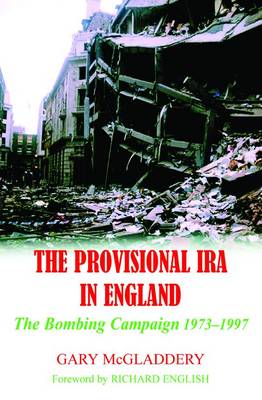
In his book The Provisional IRA in England, author Gary McGladdery says the bombing illustrated one of the problems with the IRA’s cell system, where units:


“could become virtually autonomous from the rest of the organisation and operate at their own discretion”.

The IRA had adopted the system in the late 1970s.

Memorials

Image result for Jasmine Cochran-Patrick harrods bomb


There is a memorial at the site of the blast. Yearly prizes in the honour of Philip Geddes are awarded to aspiring journalists attending the University of Oxford. Also, every year the Philip Geddes Memorial Lecture on the theme of the future of journalism is given by a leading journalist.

1993 bombing

On 28 January 1993, Harrods was once again targeted. At 9:14, two telephoned warnings were issued, saying that two bombs had been planted: one outside and one inside Harrods.

The store was due to open at 10:00. Police cordoned off the area and began a search. However, some bystanders ignored the police cordon.

At about 9:40, a package containing 1 lb of Semtex exploded in a litter bin at the front of the store. It injured four people and damaged the shopfront.

The cost of damage and lost sales was estimated at £1 million.

Those responsible were English far left activists associated with the IRA: Jan Taylor, a 51-year-old former corporal who served in the Royal Signals Corps of the British Army, and Patrick Hayes, a 41-year-old computer programmer with a degree in business studies from Central London Polytechnic and a member of Red Action.

In March 1993, police captured them at Hayes’ home in Stoke Newington, north London.  They each received prison sentences of 30 years for the January Harrods bombing and for a second attack on a train a month later which caused extensive damage but no casualties. Hayes was also convicted of conspiracy to cause three additional explosions in 1992. Neither men had links to Ireland.


Lest We Forget !

Image result for wpc-jane-arbuthnot

The Police Memorial Trust

16th December – Deaths & Events in Northern Ireland Troubles

Key Events & Deaths on this day in Northern Ireland Troubles

16th December

———————————-

Thursday 16 December 1971

A British soldier was shot dead in Belfast.

Sunday 16 December 1979

Four British soldiers were killed by a landmine bomb planted by the Irish Republican Army (IRA) at Ballygawley Road, near Dungannon, County Tyrone.

See Ballygawley Bus Bomb 20 August 1988

Another soldier was killed by a booby-trap bomb at Forkhill, County Armagh. James Fowler, a former member of the Ulster Defence Regiment (UDR), was shot dead by the IRA in Omagh, County Tyrone.

Tuesday 16 December 1980

Three members of the Irish Republican Army (IRA) escaped from Brixton Prison, London. One of the escapees was Gerard Tuite who had been imprisoned for bombing offences in London in 1978.

Thursday 16 December 1982

Seamus Mallon, then Deputy Leader of the Social Democratic and Labour Party (SDLP), is removed from his Northern Ireland Assembly seat by an Election Petition Court. The reason given was that Mallon was a member of the Irish Senate at the time of the election.

Friday 16 December 1983

Security forces in the Republic of Ireland rescued Don Tidey, who had been kidnapped by the Irish Republican Army (IRA). During the rescue at Ballinamore, County Leitrim, there was a gun battle and an Irish soldier and a Garda Síochána (the Irish police) cadet were killed.

Tuesday 16 December 1986

The Irish Republican Army (IRA) carried out a ‘proxy’ bomb attack on the Royal Ulster Constabulary (RUC) station on the Lisburn Road in Belfast. The station was destroyed in the blast and an estimated 700 homes and scores of business premises were damaged.

Monday 16 December 1991

The Irish Republican Army (IRA) exploded a bomb on a railway line in south London causing disruption to the rail service.

Wednesday 16 December 1992

Mayhew Speech at Coleraine

Patrick Mayhew, then Secretary of State for Northern Ireland, gave a speech at the Coleraine campus of the University of Ulster. In the speech Mayhew said that the British government had no “pre-selected constitutional outcome” in political talks.

Mayhew also said that Sinn Féin (SF) could be included in future talks if the IRA ended its violent campaign.

The Irish Republican Army (IRA) exploded two small bombs in London and injured four people.

Thursday 16 December 1993

Tony Newton, then leader of the House of Commons, announced the decision to create a cross-party parliamentary committee at Westminster on Northern Ireland affairs.

Friday 16 December 1994

John Bruton, then Taoiseach (Irish Prime Minister), shook hands with Gerry Adams, then President of Sinn Féin (SF), at the Forum for Peace and Reconciliation.

Saturday 16 December 1995

The International Body on Arms Decommissioning held a meeting with Sir Hugh Annesley, then Chief Constable of the Royal Ulster Constabulary (RUC). The body also received submissions from five of the political parties

Thursday 16 December 1999

Padraig Wilson, then Officer Commanding the Irish Republican Army (IRA) prisoners in the Maze Prison, was released under the terms of the Good Friday Agreement.

[There was media speculation about his possible role as an interlocutor between the IRA and the Independent International Commission on Decommissioning (IICD).]

Mitchel McLaughlin, then Sinn Féin (SF) chairman, resigned his post as a local councillor to concentrate on his role as a Member of the Legislative Assembly (MLA). Mary McAleese, then President of the Republic of Ireland, addressed both houses of the Oireachtas (the Irish Parliament) and called for a socially inclusive Ireland.

————————–

 ——————————————————————————

Remembering all innocent victims of the Troubles

Today is the anniversary of the death of the following  people killed as a results of the conflict in Northern Ireland

“To live in hearts we leave behind is not to die

– Thomas Campbell

To the innocent on the list – Your memory will live  forever

– To  the Paramilitaries  –

There are many things worth living for, a few things worth dying for, but nothing worth killing for.

13  people   lost their lives on the 16th December between 1971  -1988

————————————————————

16 December 1971
Anthony Aspinwall,  (22)

nfNI
Status: British Army (BA),

Killed by: Irish Republican Army (IRA)
Shot while on British Army (BA) foot patrol, Alma Street, Lower Falls, Belfast.

————————————————————

16 December 1972


Louis Leonard,   (26)

Catholic
Status: Irish Republican Army (IRA),

Killed by: non-specific Loyalist group (LOY)
Found shot at his butcher’s shop, Derrylin, County Fermanagh.

————————————————————

16 December 1972
Joseph Blaney,   (38)

Catholic
Status: Civilian (Civ),

Killed by: non-specific Loyalist group (LOY)
Shot at his off-licence shop, York Road, Belfast.

————————————————————

16 December 1979
 William Beck,  (23)

nfNI
Status: British Army (BA),

Killed by: Irish Republican Army (IRA)
Killed in land mine attack on British Army (BA) mobile patrol, Ballygawley Road, near Dungannon, County Tyrone.

————————————————————

16 December 1979
Keith Richards,  (22)

nfNI
Status: British Army (BA),

Killed by: Irish Republican Army (IRA)
Killed in land mine attack on British Army (BA) mobile patrol, Ballygawley Road, near Dungannon, County Tyrone.

————————————————————

16 December 1979
Simon Evans,   (19)

nfNI
Status: British Army (BA),

Killed by: Irish Republican Army (IRA)
Killed in land mine attack on British Army (BA) mobile patrol, Ballygawley Road, near Dungannon, County Tyrone.

————————————————————

16 December 1979
Allan Ayrton,   (21)

nfNI
Status: British Army (BA),

Killed by: Irish Republican Army (IRA)
Killed in land mine attack on British Army (BA) mobile patrol, Ballygawley Road, near Dungannon, County Tyrone.

————————————————————

16 December 1979
James Fowler,  (40)

Protestant
Status: ex-Ulster Defence Regiment (xUDR),

Killed by: Irish Republican Army (IRA)
Shot while driving mobile fish and chip van, Omagh, County Tyrone.

————————————————————

16 December 1979


Peter Grundy,  (21)

nfNI
Status: British Army (BA),

Killed by: Irish Republican Army (IRA)
Killed by booby trap bomb hidden in derelict house, while on British Army (BA) foot patrol, Forkhill, County Armagh.

————————————————————

16 December 1983
Gary Sheehan,  (23)

nfNIRI
Status: Garda Siochana (GS),

Killed by: Irish Republican Army (IRA)
Shot during gun battle between the Irish Republican Army (IRA) and Irish forces, at the release of kidnap victim Don Tidey, near Ballinamore, County Leitrim.

————————————————————

16 December 1983
Patrick Kelly,   (35)

nfNIRI
Status: Irish Army (IA),

Killed by: Irish Republican Army (IRA)
Shot during gun battle between the Irish Republican Army (IRA) and Irish forces, at the release of kidnap victim Don Tidey, near Ballinamore, County Leitrim.

————————————————————

16 December 1987


Gerard Doherty,   (68)

Catholic
Status: Civilian (Civ),

Killed by: not known (nk)
Killed in bomb explosion outside his home, Milltown View, Tullyally, Derry.

————————————————————

16 December 1988
John Moreland,  (36)

Protestant
Status: Ulster Defence Regiment (UDR),

Killed by: Irish Republican Army (IRA)
Off duty. Shot while delivering coal, Ardpatrick Avenue, Downpatrick, County Down.

————————————————————


Buy Me A Coffee

Great British Battles – The Battle of Rorke’s Drift– 22nd – 23rd January 1879

belfastchildis's avatar

Battle of Rorke’s Drift

22–23 January 1879
Location
Rorke’s Drift, Natal Province, South Africa

Rorke’s Drift,

———————————————————————–

Greatest Scenes in Movies, EVER

———————————————————————–

The Battle of Rorke’s Drift

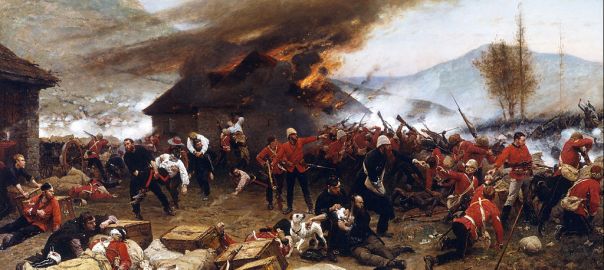
The Battle of Rorke’s Drift, also known as the Defence of Rorke’s Drift, was a battle in the Anglo-Zulu War. The defence of the mission station of Rorke’s Drift, under the command of Lieutenant John Chard of the Royal Engineers, and Lieutenant Gonville Bromhead immediately followed the British Army‘s defeat at the Battle of Isandlwana on 22 January 1879, and continued into the following day, 23 January.

Just over 150 British and colonial troops successfully defended the garrison against an intense assault by 3,000 to 4,000 Zulu warriors. The massive, but piecemeal,[9]Zulu attacks on Rorke’s Drift came very close to defeating the tiny garrison but were ultimately repelled. Eleven Victoria Crosses were awarded…

View original post 5,126 more words

15th December – Deaths & Events in Northern Ireland Troubles

Key Events & Deaths on this day in Northern Ireland Troubles

15th December

——————————–

Saturday 15 December 1979

The Social Democratic and Labour Party (SDLP), under the new leadership of John Hume, took the decision to attend the Atkins conference.

Monday 15 December 1980

23 Republican prisoners join those already on hunger strike.

[Of the original seven hunger strikers, Sean McKenna’s medical condition was the most serious. McKenna was moved to Musgrave Park Hospital in Belfast.]

Thursday 15 December 1988

Following a White Paper introduced on 25 May 1988 the British government brought forward a new Fair Employment Bill for Northern Ireland. The Fair Employment Agency (FEA) was replaced by the Fair Employment Commission (FEC). Compulsory monitoring of the religious composition of workforces of all companies with 25 or more employees was introduced.

Sunday 15 December 1991

The Irish Republican Army (IRA) exploded an incendiary device at the National Gallery in London.

Tuesday 15 December 1992

There were reports in the press that alleged that a telephone belonging to John Hume, then leader of the Social Democratic and Labour Party (SDLP), had been bugged.

Wednesday 15 December 1993

Downing Street Declaration

John Major, then British Prime Minister, and Albert Reynolds, then Taoiseach (Irish Prime Minister), issued a joint Declaration from 10 Downing Street, London (the document became known as the Downing Street Declaration).

The main aim of the two leaders was stated as: “to foster agreement and reconciliation, leading to a new political framework founded on consent and encompassing arrangements within Northern Ireland, for the whole island, and between these islands”.

Later in the House of Commons Major tried to address Unionist concerns about the Declaration by drawing attention to the matters that were not in the document:

“What is not in the Declaration is any suggestion that the British government should join the ranks of the persuaders of the value or legitimacy of a united Ireland”.

Speaking in the Dáil (the Irish parliament) Dick Spring, then Tánaiste (deputy Irish Prime Minister and Minister for Foreign Affairs), said that paramilitary groups would have to hand over their weapons following the end of violence.

Thursday 15 December 1994

A new coalition Government was formed in the Republic of Ireland. The coalition was comprised of Fine Gael (FG), the Labour Party (LP), and Democratic Left (DL). John Bruton, leader of FG, was elected Taoiseach (Irish Prime Minister). Dick Spring retained his position of Tánaiste (deputy Irish Prime Minister) and Minister for Foreign Affairs.

[Bruton had been a strong critic of the Irish Republican Army (IRA).]

A first meeting took place at Stormont between delegations from the Progressive Unionist Party (PUP) and Ulster Democratic Party (UDP), and Northern Ireland Office (NIO) officials on behalf of the British Government.

Monday 15 December 1997

David Adams, an Irish Republican Army (IRA) prisoner who is a cousin of Gerry Adams, then President of Sinn Féin (SF), began a case in the High Court in Belfast against the Royal Ulster Constabulary (RUC). David Adams claimed that he had been seriously assaulted by RUC officers while he was being arrested in 1994.

[Later the court decided in his favour and Adams was awarded £30,000.]

The family of Robert Hamill launched an appeal for funds to allow them to bring a private prosecution against his killers and member of the RUC.

[Hamill, a Catholic civilian, was severely beaten in a sectarian attack by a gang of up to 30 loyalists in the centre of Portadown, County Armagh, on 27 April 1997 and died of his injuries on 8 May 1997. It was alleged that RUC officers in a vehicle nearby did not intervene to save his life.]

Wednesday 15 December 1999

Marion Price, a former Irish Republican Army (IRA) prisoner who had been convicted of causing explosions in London on 8 March 1973, was refused a visa to enter the USA. Price had been due to speak at a fundraising event in New York that had been organised by the Irish Freedom


See: Dolours Price IRA Icon ? Life & Death

Committee.

Friday 15 December 2000

End of Loyalist Feud The Ulster Defence Association (UDA) and the Ulster Volunteer Force (UVF) issued a statement to announce an

“open-ended and all-encompassing cessation of hostilities”.

This marked the end of the Loyalist feud which had erupted in violence in August and had claimed the lives of seven men. The feud had also driven hundreds of families from their homes. The statement added:

“We fully recognise the pain and suffering that has been inflicted on our community and we resolve that under no circumstances will such events be repeated.”

Sinn Féin (SF) began a High Court case to challenge David Trimble’s refusal to nominate their attendance at North-South Ministerial Council meetings.

[At the time Trimble was First Minister of the Executive and was attempting to put pressure on SF on the issue of the decommissioning of Irish Republican Army (IRA) weapons.]

—————————

 ——————————————————————————

Remembering all innocent victims of the Troubles

Today is the anniversary of the death of the following  people killed as a results of the conflict in Northern Ireland

“To live in hearts we leave behind is not to die

– Thomas Campbell

To the innocent on the list – Your memory will live  forever

– To  the Paramilitaries  –

There are many things worth living for, a few things worth dying for, but nothing worth killing for.

10  people   lost their lives on the 15th December between 1972 -1991

————————————————————

15 December 1972


James Reynolds,   (16)

Catholic
Status: Civilian (Civ),

Killed by: non-specific Loyalist group (LOY)
Shot from passing motorcycle while standing on street corner, Dandy Street, Greencastle, Belfast.

————————————————————
15 December 1972


George Chambers,   (44)

Protestant
Status: Royal Ulster Constabulary (RUC),

Killed by: Official Irish Republican Army (OIRA)
Shot shortly after leaving house, Kilwilkie Gardens, Kilwilkie, Lurgan, County Armagh.

————————————————————

15 December 1972
Frederick Greeves,   (40)

Protestant
Status: Ulster Defence Regiment (UDR),

Killed by: Official Irish Republican Army (OIRA)
Off duty. Shot as he left his workplace, creamery, Moy Road, Armagh.

————————————————————

15 December 1973
Ivan Johnston,  (34)

Protestant
Status: ex-Royal Ulster Constabulary (xRUC),

Killed by: Irish Republican Army (IRA)
Found shot, Derrynoose, near Keady, County Armagh.

————————————————————

15 December 1973
James McGinn,   (20)

Catholic
Status: Irish Republican Army (IRA),

Killed by: Irish Republican Army (IRA)
Died in premature explosion while carrying bomb across bridge, near Clady, County Donegal.

————————————————————

15 December 1974
John Mallon,  (21)

Catholic
Status: Civilian (Civ),

Killed by: Ulster Volunteer Force (UVF)
Died two weeks after being injured in bomb attack on Hughes Bar, Church Street, Newry, County Down. He was wounded on 29 November 1974.

————————————————————

15 December 1975
Ronald Trainor,   (17)

Catholic
Status: Civilian Political Activist (CivPA),

Killed by: non-specific Loyalist group (LOY)
Irish Republican Socialist Party (IRSP) member. Died a short time after being injured during a bomb attack on his home, Ballyoran Park, Portadown, County Armagh.

————————————————————

15 December 1976


Norman Campbell,   (19)

Protestant
Status: Royal Ulster Constabulary (RUC),

Killed by: Irish Republican Army (IRA)
Shot while closing security barrier, High Street, Portadown, County Armagh.

————————————————————

15 December 1976
 Patrick McGeown,   (25)

Catholic
Status: Civilian (Civ),

Killed by: British Army (BA)
Barman. Shot while inside Mocking Bird Bar, Keady, County Armagh.

————————————————————

15 December 1991


Colm Mahon,   (39)

Catholic
Status: Civilian (Civ),

Killed by: Irish People’s Liberation Organisation (IPLO)
Shot at his workplace, Frames Snooker Hall, Little Donegall Street, Belfast.

————————————————————

Buy Me A Coffee

14th December – Deaths & Events in Northern Ireland Troubles

Key Events & Deaths on this day in Northern Ireland Troubles

14th December

————————–

Tuesday 14 December 1971

A boy aged 16 was shot dead by British soldiers in Coalisland, County Tyrone.

Saturday 14 December 1974

The Irish Republican Army (IRA) carried out a gun attack on a joint British Army and Royal Ulster Constabulary (RUC) foot patrol near Forkhill, County Armagh. An RUC officer died at the scene and a soldier died on 30 December 1974 from injuries received.

The IRA carried out a gun attack on the Churchill Hotel in Portman Square, London. Three people were slightly injured by flying glass.

Wednesday 14 December 1977

Paul Harman (27), a member of the British Army, was shot dead by the Irish Republican Army (IRA) while driving an unmarked car through the Turf Lodge area of Belfast.

Tuesday 14 December 1982

The Ulster Unionist Party (UUP) announced that party members would not take their seats on the Northern Ireland Assembly scrutiny committees until the powers of the Speaker were clarified. [This boycott continued until February 1983.]

Saturday 14 December 1991

The Irish Republican Army (IRA) exploded a number of incendiary devices in a shopping centre in London.

Tuesday 14 December 1993

Patrick Mayhew, then Secretary of State for Northern Ireland, revealed that he had offered to resign over the errors in the documents dealing with the British government’s contacts with the Republican movement. [The documents were released on 29 November 1993.]

Wednesday 14 December 1994

John Major, then British Prime Minister, announced a £73 million investment package for Northern Ireland. Major also said that “huge progress” would have to be made towards the destruction of Irish Republican Army (IRA) weapons before Sinn Féin (SF) could enter formal talks.

Thursday 14 December 1995

It was announced that the Crumlin Road Prison would close in the spring of 1996. The closure would result in the transfer of 250 prisoners to Maghaberry Prison.

Monday 14 December 1998

UKUP Split Four of the five members of the United Kingdom Unionist Party (UKUP) left the party and accused the leader, Robert (Bob) McCartney, of branding his colleagues as politically immature.

[The four members went on to form the Northern Ireland Unionist Party (NIUP). The NIUP members claimed that McCartney intended to take the UKUP out of the Assembly if Sinn Féin (SF) were allowed to join an Executive. The loss of four Assembly members meant that the UKUP lost some of its privileges at the Northern Ireland Assembly such as the right to sit on the front benches.]

Gerry Kelly, a SF Assembly member, accused Unionists of trying to push the Irish Republican Army (IRA) back to war.

Tuesday 14 December 1999

Dermot Nesbitt (UUP) and Denis Haughey (SDLP) were appointed as junior ministers to the Office of the First and Deputy First Minister.

At the Special Criminal Court in Dublin seven men were charged with possession of guns and explosives. The charges related to the arrest of men in County Meath on 20 October 1999 at a “real” Irish Republican Army (rIRA) training camp.

——————————–

 ——————————————————————————

Remembering all innocent victims of the Troubles

Today is the anniversary of the death of the following  people killed as a results of the conflict in Northern Ireland

“To live in hearts we leave behind is not to die

– Thomas Campbell

To the innocent on the list – Your memory will live  forever

– To  the Paramilitaries  –

There are many things worth living for, a few things worth dying for, but nothing worth killing for.

6  people   lost their lives on the 14th December between 1971 -1978

————————————————————

14 December 1971


Martin McShane,  (16)

Catholic
Status: Civilian (Civ),

Killed by: British Army (BA)
Shot outside youth centre, Macrory Park, Coalisland, County Tyrone.

————————————————————

14 December 1972


Kathleen Dolan,   (19)

Catholic
Status: Civilian (Civ),

Killed by: Ulster Volunteer Force (UVF)
Killed by car bomb outside Dolan’s Bar, Killeter, near Castlederg, County Tyrone

————————————————————

14 December 1974


David McNeice,  (19)

Protestant
Status: Royal Ulster Constabulary (RUC),

Killed by: Irish Republican Army (IRA)
Shot by snipers while on joint British Army (BA) / Royal Ulster Constabulary (RUC) foot patrol, Killeavy, near Forkhill, County Armagh.

————————————————————

14 December 1974
Michael Gibson,  (20)

nfNI
Status: British Army (BA),

Killed by: Irish Republican Army (IRA)
Shot by snipers while on joint British Army (BA) / Royal Ulster Constabulary (RUC) foot patrol, Killeavy, near Forkhill, County Armagh. He died 30 December 1974.

————————————————————

14 December 1977
Paul Harman,   (27)

nfNI
Status: British Army (BA),

Killed by: Irish Republican Army (IRA)
Undercover British Army (BA) member. Shot while driving British Army (BA) civilian-type car along Monagh Road, Turf Lodge, Belfast.

————————————————————

14 December 1978


John McTier,   (33)

Protestant
Status: Prison Officer (PO),

Killed by: Irish Republican Army (IRA)
Died three days after being shot while driving his car out of Crumlin Road Prison, Belfast

————————————————————


Buy Me A Coffee

Islamic State’s – Medieval Brutality in the 21st Century


Islamic State’s  medieval Brutality in the 21st century

It’s only right that the country should debate the consequences of the decision to step up our role in the mess that is Syria/Iraq and the insane actions  of IS and other global Islamic extremists.

Regardless of where you stand on the issues in question ( and there are many , both political and ethical ) spare a thought for the UK pilots ( and all pilots & other  personnel)  whom are now pawns in this new kind of war and will be flying over enemy territory as they take the fight to IS and their deluded followers.

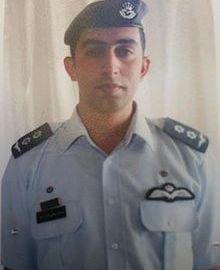
How can anyone forget the brutal execution of Jordanian   pilot Muath Al-Kasasbeh , burnt alive in a cage after a demonic stage show that saw him make his past masked IS fighters lining the route to the cage that would be his final destination and brutal execution.

Moath1

Anyone unfortunate enough to fall into the hands of IS should be in no doubt that they face a brutal and possible prolonged and excruciating death.

For IS are an enemy that love to shock and terrorise and they have no boundaries or humanity when dealing with captured enemies or those unfortunate enough to live under their savage rule.

For this is unlike any other war that has gone before and all normal rules of engagement are redundant against the mad men of IS and their twisted ideology.

Unfortunately the mercy of a bullet as a form of execution is seldom available to those facing  death at the hands of these Islamic demons.

Flight Lieutenant John Peters


Flight Lieutenant John Peters’

In previous wars prisoners had at least a chance of freedom and even Saddam Hussein exercised some caution when faced with international scrutiny and more or less treated his prisoners within the terms of the Geneva Conventions

His UK hostages and Pilots ( whom were abused)  were eventually released and returned the United Kingdom

———————————–

The Geneva Conventions

The Geneva Conventions are a series of treaties on the treatment of civilians, prisoners of war (POWs) and soldiers who are otherwise rendered hors de combat, or incapable of fighting.

See Below for a Summary of the  Basic rules of international humanitarian law in armed conflicts

———————————–

  The daily treatment and executions of innocent people in Raqqa and Mosul  are testament to ISIS,s total disregard for the sanctity of life and global opinion.

Their brutal beheadings and other forms of public executions have almost lost their power to shock and sadly these gruesome acts dominate News headlines and social media and the world has instant access to the almost daily sick propaganda of these murdering psychopathic madmen .

 Islamic State  practice medieval brutality in front of a shocked worldwide stage and all right minded people  have been shocked and outraged at the depths  of their inhuman cruelty

 Theirs is a war without rules or a political masters and the only outcome they expect is total victory or martyrdom. This is a new era in international terrorism and the world has to unite to destroy these mad men and their sick, twisted ideology.

———————————–

———————————–

Below is a brief summary of some of the most barbaric and medieval  executions that Islamic State have carried out. I have not included video’s or beheadings as it is not my aim to promote the acts of these mad men and to be honest I can’t watch people being killed in the most brutal fashion and sleep peacefully in my bed.

The few executions I have watched have hunted my soul  and I can’t get the images out of my mind for days and weeks afterwards. Even compiling this list made me feel physically sick , but I wanted to catalogue some of the insane actions of these psychopath’s that are a stain on humanity.

———————————————–

Death by  concrete blocks onto the head

ISIS carries out one of its worst executions yet, as murderers who bludgeoned women to death have their heads crushed with concrete blocks in horrific ‘eye for an eye’ punishment

is cconcret death

Shocking pictures show the militants hurling the concrete blocks onto the heads of the accused

—————————-

is cconcret death 2

The execution is known as a qisas punishment – ‘eye for an eye’ retribution
—————————-

  • Shocking pictures show militants hurling blocks onto the prisoners’ heads
  • The brutal punishment was carried out in Nineveh province in Iraq
  • The men had been arrested by Islamic police for killing three women

See Daily Mail for full story

—————————-

Death by being run over by a tank

The self-proclaimed Islamic State militants released new video footage on Saturday purportedly showing a Syrian army soldier in Homs being run over by a tank and executed.

See ABNA24 for full  story  ABN24

—————————-

Thrown off Tower Block for being Gay

A man has reportedly been blindfolded and thrown off a tower block in Syria for ‘being gay’ before being stoned to death after surviving the fall.

ISIS Throws Man Off Tower Block

Full Story Nigeriane News Watch

—————————-

Death by drowning  in a cage

TERROR group ISIS has released new footage that appears to show prisoners being lowered in a cage into a swimming pool and left to drown.

Full Story Before its News

—————————-

Death by Bombing

Ten prisoners made to kneel above bombs that have been buried in the ground

Full Story Daily Mail

—————————-

Death by bombs on the necks

IS killers strapped a string of bombs around the necks of a line of prisoners – then blew them up!

Full Story The Gateway

—————————-

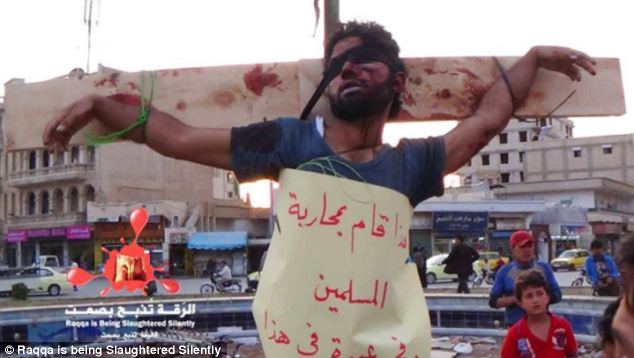
Death by Crucifixion

Islamic extremists have publicly crucified two Syrian rebels in northeastern Syria in revenge for a grenade attack on members of their group.

Punishment: Two men in Raqqa, Syria, were crucified this April for allegedly killing an Isis fighter

Brutal: The images, which could not be independently verified, appear to demonstrate Isis's uncompromising brand of hardline Islamist justice

Full Story Daily Mail

———————————–

The Geneva Conventions

The Geneva Conventions are a series of treaties on the treatment of civilians, prisoners of war (POWs) and soldiers who are otherwise rendered hors de combat, or incapable of fighting.

 A Summary of the  Basic rules of international humanitarian law in armed conflicts


  1. Persons hors de combat and those who do not take a direct part in hostilities are entitled to respect for

their

lives and their moral and physical integrity. They shall in all circumstances be protected and treated

humanely

without any adverse distinction.

  1. It is forbidden to kill or injure an enemy who surrenders or who is hors de combat.
  2. The wounded and sick shall be collected and cared for by the party to the conflict which has them in its

power.

Protection also covers medical personnel, establishments, transports and equipment. The emblem of the red

cross or the red crescent is the sign of such protection and must be respected.

  1. Captured combatants and civilians under the authority of an adverse party are entitled to respect for their

lives,dignity, personal rights and convictions. They shall be protected against all acts of violence and

reprisals. They shall have the right to correspond with their families and to receive relief.

  1. Everyone shall be entitled to benefit from fundamental judicial guarantees. No one shall be held

responsible for an act he has not committed. No one shall be subjected to physical or mental torture,

corporal punishment or cruel or degrading treatment.

  1. Parties to a conflict and members of their armed forces do not have an unlimited choice of methods and

means of warfare. It is prohibited to employ weapons or methods of warfare of a nature to cause

unnecessary losses or excessive suffering.

  1. Parties to a conflict shall at all times distinguish between the civilian population and combatants in order

to

spare civilian population and property. Neither the civilian population as such nor civilian persons shall be

the

object of attack. Attacks shall be directed solely against military objectives.

———————————–