Key Events & Deaths on this day in Northern Ireland Troubles
8th July
————————————
Thursday 8 July 1971
Two Men Killed by British Soldiers
Seamus Cusack & Desmond Beattie
Seamus Cusack (28), a Catholic civilian, was shot and mortally wounded by a British soldier during street disturbances at Abbey Park, in the Bogside area of Derry.
The shooting happened at approximately 1.00am and Cusack died in Letterkenny Hospital at approximately 1.40am.
[The British Army later claimed that Cusack had been armed with a rifle but local witnesses denied this.]
The death of Cusack led to further disturbances in the Bogside and at approximately 3.15pm Desmond Beattie (19), a Catholic civilian, was shot dead by British soldiers at Lecky Road.
Again the circumstances of the shooting were disputed.
[The British Army later claimed that Beattie was about to throw a nail bomb when he was shot; local people insisted he was unarmed at the time of his killing.]
The rioting in Derry intensified following the two deaths.
The Social Democratic and Labour Party (SDLP) withdrew from Stormont on 16 July 1971 because no official inquiry was announced into the killings.
An unofficial Inquiry was chaired by Lord Gifford (QC), an English barrister, and assisted by Paul O’Dwyer, an American lawyer, and Albie Sachs, a South African lawyer.
The Inquiry was held at the Guildhall, Derry, but the British Army (BA) and the Royal Ulster Constabulary (RUC) refused to participate. The Report of the Inquiry was published in August 1971.
Thursday 8 July 1976
A Catholic civilian died one day after being shot by the Ulster Freedom Fighters (UFF), a covername for the Ulster Defence Association (UDA).
Wednesday 8 July 1981
Fifth Hunger Striker Died
Joe McDonnell (30) died after 61 days on hunger strike. McDonnell had gone on strike to replace Bobby Sands.
The Irish Commission for Justice and Peace (ICJP), which had been established by the Catholics Bishops Conference, accused the Northern Ireland Office (NIO) of retreating from earlier offers made to the ICJP on the hunger strikers five demands.
See Hungry Strikes
John Dempsey
A member of the youth section of the IRA was shot dead by the British Army in Belfast.
Friday 8 July 1983
The Northern Ireland Assembly voted by 35 to 11 for the introduction of the death penalty for terrorist murders
Wednesday 8 July 1987
James Molyneaux, then leader of the Ulster Unionist Party, and Ian Paisley, then leader of the Democratic Unionist Party (DUP), said they would use the Unionist Task Force report in talks with the British government.
Wednesday 8 July 1992
There were heated exchanges between local residents and Orange Order members taking part in a parade through the mainly Catholic lower Ormeau Road area of Belfast.
Orange Order members shouted “Up the UFF” and held up one of their hands showing five fingers – a reference to the shooting dead of five Catholic civilians in a Bookmaker’s shop on the lower Ormeau Road.
The parade went right past the site of the shooting.
[Later Patrick Mayhew, then Secretary of State for Northern Ireland, said that the actions of the marchers “would have disgraced a tribe of cannibals”.]
Thursday 8 July 1993
The Guardian (a British newspaper) published an interview with Dick Spring, then Tánaiste (deputy Irish Prime Minister and Minister for Foreign Affairs).
In the interview Spring suggested that the two governments draw up a framework settlement and then put the proposal directly to the public by means of a referendum.
There was a meeting of the Anglo-Irish Intergovernmental Conference (AIIC).
Monday 8 July 1996
Many aspects of life in Northern Ireland were disrupted as protests were mounted across the region in support of the Drumcree Orangemen.
The Royal Ulster Constabulary (RUC) fired plastic bullets to control protesting crowds in Drumcree (Portadown), Sandy Row (Belfast) and Ballymena.
At the multi-party talks in Stormont, Belfast, the Ulster Unionist Party (UUP), the Democratic Unionist Party (DUP) and the United Kingdom Unionists (UKU) all pulled out of the talks in protest at the decision of the RUC to prevent the march at Drumcree.
“Fire and brimstone” speeches by unionist politicians were claimed by the McGoldrick family to be partly to blame for their son’s death on 7 July 1996.
Tuesday 8 July 1997
The Irish National Liberation Army (INLA) threatened to attack Orangemen whom it viewed as responsible for forcing parades through Nationalist areas.
The Dublin to Belfast train was stopped at Newry and damaged by petrol bombs.
The Ulster Defence Association (UDA) and the Ulster Volunteer Force (UVF) joined together to stage an armed paramilitary display which was recorded and broadcast by Ulster Television (UTV).
The UDA and UVF claimed that the display was intended to “reassure and calm Protestants”.
A Northern Ireland Office (NIO) document was leaked to the media. The document suggested that the decision to allow the Drumcree parade to proceed down the Garvaghy Road on 6 July 1997 had been taken by Marjorie (Mo) Mowlam, then Secretary of State for Northern Ireland, in conjunction with security leaders as early as 21 June 1997.
This in spite of Mowlam’s assertion that the decision was not made until the eve of the march.
Mowlam subsequently launched an inquiry into who leaked the document.
Nationalists, who were still protesting against the events at the Garvaghy Road, announced that they would block Orange Order parades planned for 12 July 1997 from passing through Nationalist areas in Armagh, Bellaghy, Belfast (lower Ormeau Road), Derry, Newry, and Strabane.
People in these areas called for Nationalist to travel to the parade routes to add their support for rerouting of the planned parades.
Wednesday 8 July 1998
The situation at Drumcree deteriorated considerably with sustained violent attacks on the Royal Ulster Constabulary (RUC) and British Army barricades by protesting Orange men.
An estimated 5,000 Orangemen from county lodges in Derry and Tyrone joined the protest at Drumcree.
Attacks against Catholic homes, businesses, schools, and churches continued to be a feature of Loyalist violence.
Eight blast bombs were thrown at Catholic homes in the Collingwood area of Lurgan in the early hours of the morning. Seamus Mallon, then deputy leader of the Social Democratic and Labour Party (SDLP), went to the Garvaghy Road to speak to the local Residents Group.
[Mallon was heckled by local residents as he left the meeting and looked to be shaken by the experience.]
In a show of support Catholics from other areas of Northern Ireland sent food supplies to the residents of the Garvaghy Road.
Thursday 8 July 1999
Loyalists left a pipe-bomb outside the house of a Sinn Féin (SF) member in Ballycastle, County Antrim.
There were two arson attacks on houses in north Belfast which the Royal Ulster Constabulary (RUC) described as sectarian.
Barry Morgan (24) was found guilty of the murder of Cyril Stewart, at the time a retired Royal Ulster Constabulary (RUC) reservist, in Armagh on March 1998.
The Irish National Liberation Army (INLA) was responsible for the attack.
A disagreement arose between Tony Blair, then British Prime Minister, and Bertie Ahern, then Taoiseach (Irish Prime Minister), over whether or not Sinn Féin (SF) was now a separate organisation from the Irish Republican Army (IRA).
Ahern said on BBC Radio Ulster that they were two separate organisations but senior police sources on both sides of the Border supported Blair’s stated view that the two organisations were “inextricably linked”.
Orangemen from Portadown, County Armagh, held talks about the Drumcree issue with Tony Blair at Downing Street, London
Sunday 8 July 2001
The annual Orange Order parade at Drumcree, County Armagh, which had been the setting for violent confrontation for several years, passed off peacefully under a heavy security presence.
[However, in the following days there were violent clashes in north Belfast.]
——————————————
Remembering all innocent victims of the Troubles
Today is the anniversary of the death of the following people killed as a results of the conflict in Northern Ireland
“To live in hearts we leave behind is not to die
– Thomas Campbell
To the innocent on the list – Your memory will live forever
– To the Paramilitaries –
There are many things worth living for, a few things worth dying for, but nothing worth killing for.
11 People lost their lives on the 8th July between 1971 – 1996
——————————————
08 July 1971
Seamus Cusack (27)
Catholic Status: Civilian (Civ),
Killed by: British Army (BA)
Shot during street disturbances, Abbey Park, Bogside, Derry
——————————————
08 July 1971 Desmond Beattie (19)
Catholic Status: Civilian (Civ),
Killed by: British Army (BA)
Shot during street disturbances, Lecky Road, Bogside, Derry.
——————————————
08 July 1972 Laurence McKenna (22)
Catholic Status: Civilian (Civ),
Killed by: Ulster Volunteer Force (UVF)
Died three days after being shot at the junction of Falls Road and Waterford Street, Lower Falls, Belfast
——————————————
08 July 1976 James Rooney (43)
Catholic Status: Civilian (Civ),
Killed by: Ulster Defence Association (UDA)
Died one day after being shot at his greengrocer’s shop, Upper Newtownards Road, Ballyhackamore, Belfast.
——————————————
08 July 1979 Alan MacMillan (18)
nfNI Status: British Army (BA),
Killed by: Irish Republican Army (IRA)
Killed by remote controlled bomb while on British Army (BA) foot patrol, Crossmaglen, County Armagh.
——————————————
08 July 1981
Joe McDonnell (30)
Catholic Status: Irish Republican Army (IRA),
Killed by: not known (nk)
Died on the 61st day of hunger strike, Long Kesh / Maze Prison, County Down.
——————————————
08 July 1981
John Dempsey (16)
Catholic Status: Irish Republican Army Youth Section (IRAF),
Killed by: British Army (BA)
Shot by British Army (BA) sniper during arson attack on bus depot, Falls Road, Belfast
——————————————
08 July 1986
John McVitty (46)
Protestant Status: Royal Ulster Constabulary (RUC),
Killed by: Irish Republican Army (IRA)
Off duty. Shot at his farm, Drumady, near Rosslea, County Fermanagh.
——————————————
08 July 1988
John Howard (29)
nfNI Status: British Army (BA),
Killed by: Irish Republican Army (IRA)
Killed by booby trap bomb when British Army (BA) patrol arrived at the scene of earlier explosion, outside Falls Baths, Falls Road, Belfast.
——————————————
08 July 1992
Cyril Murray (51)
Catholic Status: Civilian (Civ),
Killed by: Ulster Freedom Fighters (UFF)
Shot at his home, Kerrsland Drive, Bloomfield, Belfast.
——————————————
08 July 1996
Michael McGoldrick (31)
Catholic Status: Civilian (Civ),
Killed by: Ulster Volunteer Force (UVF)
Taxi driver. Found shot in his car, Montiaghs Road, Aghagallon, near Lurgan, County Antrim.
——————————————
As I child I learned the stories & legends of the Battle of Boyne & Siege of Derry at my grandfather’s & father’s knees, becoming immersed in the Loyalist culture that would shape & dominate my whole existence.
Firstly thanks to all of you who sent wishes and prayers for Baby’s our little cat after his horrendous hit-n-run accident last week. He has had surgery and now has pins and plates holding h…
We are a Protestant fraternity with members throughout the world. Autonomous Grand Lodges are found in Scotland, England, the United States of America, West Africa, Canada, Australia and New Zealand.
Our name comes from William III, Prince of Orange, and is kept because his victory over despotic power laid the foundation for the evolution of Constitutional Democracy in the British Isles.
Support for William of Orange in the British Isles led to the formation of Orange Societies to commemorate his victory at the Battle of the Boyne in July 1690, but the largest and longest lasting groups were the Boyne Societies in Ireland.
In 1795, following the culmination of attacks on Protestants in County Armagh at the Battle of the Diamond , in which Protestants routed those who had attacked them and attempted to burn properties, it was decided to form an organisation which would protect Protestants. This body, drawing on existing Orange Clubs in the neighbourhood, was named the Loyal Orange Institution.
In modern times the Loyal Orange Institution continues to function, with thousands of members in Ireland many others across the world. Today defending Protestantism is not so literal as it was in 1795, but it requires us to take a stand for truth in an age of secularism and in order to defend our culture and traditions.
The Grand Orange Lodge of Ireland was established in 1798. We hope you will learn more about us and the Orange tradition through this website.
It has also been criticised for associating with loyalist paramilitary groups. As a Protestant society, it does not accept non-Protestants as members unless they convert and adhere to the principles of Orangeism, nor does it accept Protestants married to Catholics. Orange marches through mainly Catholic and nationalist neighbourhoods in Northern Ireland are controversial and have often led to violence.
Loyal Orange Institution
The Orange Order flag, incorporating the colour orange, the purple star of the Williamites and the St George’s Cross
William III (“William of Orange”) King of England, Scotland and Ireland, Stadtholder of the Netherlands.
The Siege of Derry 18th April 28th July 1689
The Orange Institution commemorates the civil and religious privileges conferred on Protestants by William of Orange, the Dutch prince who became King of England, Scotland, and Ireland in the Glorious Revolution of 1688. In particular, the Institution remembers the victories of William III and his forces in Ireland in the early 1690s, especially the Battle of the Boyne.
Formation and early years
Since the 1690s commemorations—state-sponsored and those held by the lower classes—had been held throughout Ireland celebrating key dates in the Williamite War such as the Battle of the Boyne, Siege of Derry and the Siege of Cork. These followed a tradition started in Elizabethan England of celebrating key events in the Protestant calendar. By the 1740s there were organisations holding parades in Dublin such as the Boyne Club and the Protestant Society, both seen as forerunners to the Orange Order.
Throughout the 1780s, sectarian tension had been building in County Armagh, largely due to the relaxation of the Penal Law. Here the number of Protestants and Catholics (in what was then Ireland’s most populous county) were of roughly equal number, and competition between them to rent patches of land near markets was fierce. Drunken brawls between rival gangs had by 1786 become openly sectarian. These gangs eventually reorganised as the Protestant Peep o’ Day Boys and the Catholic Defenders, with the next decade in County Armagh marked by fierce sectarian conflict between both groups, which escalated and spread into neighbouring counties.
200th Anniversary Battle of the Diamond Parade 1995
In September 1795, at a crossroads known as “The Diamond” near Loughgall, Defenders and Peep o’ Day Boys gathered to fight each other. This initial stand-off ended without battle when the priest that accompanied the Defenders persuaded them to seek a truce, after a group called the “Bleary Boys” came from County Down to reinforce the Peep o’ Day Boys. When a contingent of Defenders from County Tyrone arrived on 21 September, however, they were “determined to fight”. The Peep o’ Day Boys quickly regrouped and opened fire on the Defenders. According to William Blacker, the battle was short and the Defenders suffered “not less than thirty” deaths.
After the battle had ended, the Peep o’ Days marched into Loughgall, and in the house of James Sloan they founded the Orange Order, which was to be a Protestant defence association made up of lodges. The principal pledge of these lodges was to defend “the King and his heirs so long as he or they support the Protestant Ascendancy“. At the start the Orange Order was a “parallel organisation” to the Defenders in that it was a secret oath-bound society that used passwords and signs.
One of the very few landed gentry that joined the Orange Order at the outset, William Blacker, was unhappy with some of the outcomes of the Battle of the Diamond. He says that a determination was expressed to “driving from this quarter of the county the entire of its Roman Catholic population”, with notices posted warning them “to Hell or Connaught”. Other people were warned by notices not to inform on local Orangemen or “I will Blow your Soul to the Low hils of Hell And Burn the House you are in”. Within two months, 7,000 Catholics had been driven out of County Armagh.
According to Lord Gosford, the governor of Armagh:
It is no secret that a persecution is now raging in this country… the only crime is… profession of the Roman Catholic faith. Lawless banditti have constituted themselves judges… and the sentence they have denounced… is nothing less than a confiscation of all property, and an immediate banishment.
A former Grand Master of the Order, also called William Blacker, and a former County Grand Master of Belfast, Robert Hugh Wallace have questioned this statement, saying whoever the Governor believed were the “lawless banditti”, they could not have been Orangemen as there were no lodges in existence at the time of his speech.
According to historian Jim Smyth:
Later apologists rather implausibly deny any connection between the Peep-o’-Day Boys and the first Orangemen or, even less plausibly, between the Orangemen and the mass wrecking of Catholic cottages in Armagh in the months following ‘the Diamond’ – all of them, however, acknowledge the movement’s lower class origins.
The Order’s three main founders were James Wilson (founder of the Orange Boys), Daniel Winter and James Sloan. The first Orange lodge was established in nearby Dyan, and its first grand master was James Sloan of Loughgall. Its first ever marches were to celebrate the Battle of the Boyne and they took place on 12 July 1796 in Portadown, Lurgan and Waringstown.
The United Irishmen rebellion
Flag of the United Irishmen.
The Society of United Irishmen was formed by liberal Presbyterians and Anglicans in Belfast in 1791. It sought reform of the Irish Parliament, Catholic Emancipation and the repeal of the Penal Laws. By the time the Orange Order was formed, the United Irishmen had become a revolutionary group advocating an independent Irish republic that would “Unite Catholic, Protestant and Dissenter”. United Irishmen activity was on the rise, and the government hoped to thwart it by backing the Orange Order from 1796 onward.
Irish nationalist historians Thomas A. Jackson and John Mitchel argued that the government’s goal was to hinder the United Irishmen by fomenting sectarianism, thereby creating disunity and disorder under pretence of “passion for the Protestant religion”. Mitchel wrote that the government invented and spread “fearful rumours of intended massacres of all the Protestant people by the Catholics”.
Historian Richard R Madden wrote that “efforts were made to infuse into the mind of the Protestant feelings of distrust to his Catholic fellow-countrymen”. Thomas Knox, British military commander in Ulster, wrote in August 1796 that :
“As for the Orangemen, we have rather a difficult card to play…we must to a certain degree uphold them, for with all their licentiousness, on them we must rely for the preservation of our lives and properties should critical times occur”.
The United Irishmen saw the Defenders as potential allies, and between 1794 and 1796 they formed a coalition. The United Irishmen, despite seeing the Defenders as “ignorant and poverty-stricken houghers and rick-burners” would claim in 1798 that they were indebted to the Armagh disturbances as the Orangemen had scattered politicised Catholics throughout the country and encouraged Defender recruitment, creating a proto-army for the United Irishmen to utilise.
The United Irishmen launched a rebellion in 1798. In Ulster, most of the United Irish commanders and many of the rebels were Protestant. Orangemen were recruited into the yeomanry to help fight the rebellion and “proved an invaluable addition to government forces”.
No attempt was made to disarm Orangemen outside the yeomanry, because they were seen as by far the lesser threat. It was also claimed that if an attempt had been made then “the whole of Ulster would be as bad as Antrim and Down”, where the United Irishmen rebellion was at its strongest. However, sectarian massacres by the Defenders in County Wexford “did much to dampen” the rebellion in Ulster.
The Scullabogue Barn massacre saw over 100 non-combatant (mostly Protestant) men, women, and children imprisoned in a barn which was then set alight, with the Catholic rebels ensuring none escaped, not even a child who it is claimed managed to break out only for a rebel to kill with his pike. In the trials that followed the massacres, evidence was recorded of anti-Orange sentiments being expressed by the rebels at Scullabogue. Partly as a result of this atrocity, the Orange Order quickly grew and large numbers of gentry with experience gained in the yeomanry came into the movement.
The homeland and birthplace of the Defenders was mid-Ulster and here they failed to participate in the rebellion, having been cowed into submission and surrounded by their Protestant neighbours who had been armed by the government. The sectarian attacks on them were so severe that Grand Masters of the Orange Order convened to find ways of reducing them.
According to Ruth Dudley Edwards and two former Grand Masters, Orangemen were among the first to contribute to repair funds for Catholic property damaged in the rebellion.
One major outcome of the United Irishmen rebellion was the 1800 Act of Union that merged the Irish Parliament with that of Westminster, creating the United Kingdom of Great Britain and Ireland. Many Catholics supported the Act, but the Orange Order saw it as a threat to the “Protestant constitution” and 36 lodges in counties Armagh and Monaghan alone passed declarations opposing the Union.
Suppression
Dolly’s Brae, site of the “Battle of Dolly’s Brae” (1849) between Orangemen and Catholic Ribbonmen
In the early nineteenth century, Orangemen were heavily involved in violent conflict with an Irish Catholic secret society called the Ribbonmen. One instance, publicised in a 7 October 1816 edition of the Boston Commercial Gazette, included the murder of a Catholic priest and several members of the congregation of Dumreilly parish in County Cavan on 25 May 1816. According to the article,
“A number of Orangemen with arms rushed into the church and fired upon the congregation”.
On 19 July 1823 the Unlawful Oaths Bill was passed, banning all oath-bound societies in Ireland. This included the Orange Order, which had to be dissolved and reconstituted. In 1825 a bill banning unlawful associations – largely directed at Daniel O’Connell and his Catholic Association, compelled the Orangemen once more to dissolve their association. When Westminster finally granted Catholic Emancipation in 1829, Roman Catholics were free to take seats as MPs (and take up various other positions of influence and power from which they had been excluded) and play a part in framing the laws of the land. The likelihood of Irish Catholic members holding the balance of power in the Westminster Parliament further increased the alarm of Orangemen in Ireland, as O’Connell’s ‘Repeal’ movement aimed to bring about the restoration of a separate Irish Parliament in Dublin, which would have a Catholic majority, thereby ending to the Protestant Ascendancy.
From this moment on, the Orange Order re-emerged in a new and even more militant form.
The Order supported a plot in 1836 by Ernest Augustus, Duke of Cumberland and Imperial Grand Master of the Orange Order, to take the throne in place of Victoria; once the plot was revealed the House of Commons called upon King William IV to disband the Order. Under pressure from Joseph Hume, William Molesworth and Lord John Russell, the King indicated measures would have to be taken and the Duke of Cumberland was forced to dissolve the Orange lodges.
In 1845 the ban was again lifted, but the notorious Battle of Dolly’s Brae between Orangemen and Ribbonmen in 1849 led to a ban on Orange marches which remained in place for several decades. This was eventually lifted after a campaign of disobedience led by William Johnston of Ballykilbeg.
Revival
By the late 19th century, the Order was in decline. However, its fortunes were revived in the 1880s after its embrace by the landlords in opposition to both the Irish Land League and later Home Rule. The Order was heavily involved in opposition to Gladstone‘s first Irish Home Rule Bill 1886, and was instrumental in the formation of the Ulster Unionist Party (UUP). Protestant opposition to Irish self-government under Roman Catholic influence was intense, especially in the Protestant-dominated province of Ulster.
The Order helped to organise the 1912 Ulster Covenant – a pledge to oppose Home Rule which was signed by up to 500,000 people. In 1911 some Orangemen began to arm themselves and train as militias. In 1913 the Ulster Unionist Council decided to bring these groups under central control, creating the Ulster Volunteer Force, an Ulster-wide militia dedicated to resisting Home Rule. There was a strong overlap between Orange Lodges and UVF units.
A large shipment of rifles was imported from Germany to arm them in April 1914, in what became known as the Larne gun-running.
However, the crisis was interrupted by the outbreak of the World War I in August 1914, which caused the Home Rule Bill to be suspended for the duration of the war. Many Orangemen served in the war with the 36th (Ulster) Division, suffering heavy losses, and commemorations of their sacrifice are still an important element of Orange ceremonies.
Orangeman James Craig, the first Prime Minister of Northern Ireland
The Orange Order had a central place in the new state of Northern Ireland. From 1921 to 1969, every Prime Minister of Northern Ireland was an Orangeman and member of the Ulster Unionist Party (UUP); all but three Cabinet Ministers were Orangemen; all but one unionist Senators were Orangemen; and 87 of the 95 MPs who did not become Cabinet Ministers were Orangemen.
James Craig, the first Prime Minister of Northern Ireland, maintained always that Ulster was in effect Protestant and the symbol of its ruling forces was the Orange Order. In 1932, Prime Minister Craig maintained that “ours is a Protestant government and I am an Orangeman”. This was in response to a speech the year before by Eamonn de Valera in the Irish Free State claiming that Ireland was a “Catholic nation” in a debate about protests against Protestant woman Letitia Dunbar-Harrison being appointed as County Librarian in County Mayo.
At its peak in 1965, the Order’s membership was around 70,000, which meant that roughly 1 in 5 adult Ulster Protestant males were members.Since 1965, it has lost a third of its membership, especially in Belfast and Derry. The Order’s political influence suffered greatly after the unionist-controlled government of Northern Ireland was abolished in 1973.
In 2012, it was stated that estimated membership of the Orange Order was around 34,000.
After the outbreak of “the Troubles” in 1969, the Grand Orange Lodge of Ireland encouraged Orangemen to join the Northern Ireland security forces, especially the Royal Ulster Constabulary (RUC) and the British Army’s Ulster Defence Regiment (UDR). The response from Orangemen was strong. Over 300 Orangemen were killed during the conflict, the vast majority of them members of the security forces.
Some Orangemen also joined loyalistparamilitary groups. During the conflict, the Order had a fractious relationship with loyalist paramilitary groups, the Democratic Unionist Party (DUP), the Independent Orange Order and the Free Presbyterian Church. The Order urged its members not to join these organisations, and it is only recently that some of these intra-unionist breaches have been healed.
The Drumcree dispute is perhaps the most well-known episode involving the Order since 1921. On the Sunday before 12 July each year, Orangemen in Portadown would traditionally march to-and-from Drumcree Church. Originally, most of the route was farmland, but is now the densely populated Catholic part of town.
The residents have sought to re-route the march away from this area, seeing it as “triumphalist” and “supremacist“
There have been intermittent violent clashes during the march since the 19th century. The onset of the Troubles led to the dispute intensifying in the 1970s and 1980s. At this time, the most contentious part of the march was the outward leg along Obins Street.
After serious violence two years in a row, the march was banned from Obins Street in 1986. The focus then shifted to the return leg along Garvaghy Road.
Each July from 1995 to 2000, the dispute drew worldwide attention as it sparked protests and violence throughout Northern Ireland, prompted a massive police/army operation, and threatened to derail the peace process.
The situation in Portadown was likened to a “war zone” and a “siege”. During this time, supporters of the Orangemen killed at least six Catholic civilians. In 1995 and 1996, residents succeeded in stopping the march. This led to a standoff at Drumcree between the security forces and thousands of loyalists. Following a wave of loyalist violence, the march was allowed through. In 1997, security forces locked down the Catholic area and forced the march through, citing loyalist threats.
This sparked widespread protests and violence by Irish nationalists. From 1998 onward the march was banned from Garvaghy Road and the Catholic area was sealed-off with large barricades. For a few years, there was an annual major standoff at Drumcree and widespread loyalist violence. Since 2001, things have been relatively calm, but the Order still campaigns for the right to march on Garvaghy Road. The dispute led to a short-lived boycott of businesses owned by Orangemen and their supporters elsewhere in the region, as well as to a marked decrease in the Order’s membership.
Membership rates
Membership of the Order was historically lower in areas where Protestants are in the majority, and vice versa. In County Fermanagh, where the Catholic and Protestant populations are close to parity, membership in 1971 was three times as high as in the more Protestant counties of Antrim and Down, where it was just over 10% of adult Protestant males.
Other factors that are associated with high rates of membership are levels of unemployment that more closely match Catholic levels, and low levels of support for the Democratic Unionist Party among unionists.
Beliefs and activities
Orange Order poster depicting historical and religious symbols
Previous rules specifically forbade Roman Catholics and their close relatives from joining but modern rules now use the wording “non-reformed faith”.
Converts to Protestantism can join by appealing to Grand Lodge.
Masonic influenc
Some evangelical groups have claimed that the Orange Order is still influenced by freemasonry. Many Masonic traditions survive, such as the organisation of the Order into lodges. The Order has a similar system of degrees through which new members advance. These degrees are interactive plays with references to the Bible. There is particular concern over the ritualism of higher degrees such as the Royal Arch Purple and the Royal Black Institutions.
Sabbatarianism
The Order considers important the Fourth Commandment, and that it forbids Christians to work, or engage in non-religious activity generally, on Sundays. When the Twelfth of July falls on a Sunday the parades traditionally held on that date are held the next day instead. In March 2002, the Order threatened “to take every action necessary, regardless of the consequences” to prevent the Ballymena Show being held on a Sunday.
The County Antrim Agricultural Association complied with the Order’s wishes.
Politics
The Orange Order is strongly linked to British unionism. This is a political ideology that supports the continued unity of the United Kingdom. Unionism is thus opposed to, for example, the unification of Ireland and Scottish independence.
An Orange Hall in Ballinrees bedecked with Union Flags
An anti-Orange Order sign in Rasharkin
The Order, from its very inception, was an overtly political organisation.[67] In 1905, when the Ulster Unionist Council (UUC) was formed, the Orange Order was entitled to send delegates to its meetings. The UUC was the decision-making body of the Ulster Unionist Party (UUP). Between 1922 and 1972, the UUP was consistently the largest party in the Northern Ireland Parliament, and all Prime Ministers of Northern Ireland and the vast majority of senior UUP figures were members of the Order. Due to its close links with the UUP, the Orange Order was able to exert great influence.
The Order was the force behind the UUP no-confidence votes in reformist Prime Ministers O’Neill (1969), Chichester-Clark (1969–71) and Faulkner (1972–74). At the outbreak of The Troubles in 1969, the Order encouraged its members to join the Northern Ireland security forces. The Democratic Unionist Party (DUP) attracted the most seats in an election for the first time in 2003. DUP leader Ian Paisley had been clashing with the Order since 1951, when the Order banned members of Paisley’s Free Presbyterian Church from acting as Orange chaplains and later, from the 1970s, when it openly endorsed the UUP against the DUP.
Recently, however, Orangemen have begun voting for the DUP in large numbers due to their opposition to the Good Friday Agreement. Relations between the DUP and Order have healed greatly since 2001, and there are now a number of high-profile Orangemen who are DUP MPs and strategists.
In December 2009, the Orange Order held secret talks with Northern Ireland’s two main unionist parties, the DUP and UUP. The main goal of these talks was to foster greater unity between the two parties, in the run-up to the May 2010 general election. Sinn Féin’s Alex Maskey said that the talks exposed the Order as a “very political organisation”. Shortly after the election, Grand Master Robert Saulters called for a “single unionist party” to maintain the union. He said that the Order has members “who represent all the many shades of unionism” and warned, “we will continue to dilute the union if we fight and bicker among ourselves”.
“Linking the Catholic community or indeed any community to terror groups is inciting weak-minded people to hatred, and surely history tells us what that has led to in the past”.
In a 2011 survey of 1,500 Orangemen throughout Northern Ireland, over 60% believed that “most Catholics are IRA sympathizers”.
In 2015, the Grand Orange Lodge of Ireland made a submission to the Northern Ireland Department of Arts, Culture and Leisure opposing the introduction of an Irish Language Bill. In its submission, the Lodge stated that it respected “Irish as one of the indigenous languages of the British Isles”. However, the Lodge argued an Irish Language Act would promote inequality because it would be “directed towards a section of the Roman Catholic community”.
Parades are a big part of the Order’s activities. Most Orange lodges hold a yearly parade from their Orange hall to a local church. The denomination of the church is quite often rotated, depending on local demographics.
The highlights of the Orange year are the parades leading up to the celebrations on the Twelfth of July. The Twelfth, however, remains in places a deeply divisive issue, not least because of the alleged triumphalism, anti-Catholicism and anti-Irish nationalism of the Orange Order. In recent years, most Orange parades have passed peacefully.
All but a handful of the Orange Order parades, at so called “interface areas” where the two communities live next to each other, are peaceful. The locations used for the annual Twelfth parades are located throughout the six counties of Northern Ireland with County Down having the most venues with thirty three.Counties Armagh and Fermanangh having a smaller population both have twelve host venues.
The Grand Lodge of Ireland does not recognise the Parades Commission, which it sees as having been founded to target Protestant parades, as Protestants parade at ten times the rate of Catholics. Grand Lodge is, however, divided on the issue of working with the Parades Commission. 40% of Grand Lodge delegates oppose official policy while 60% are in favour. Most of those opposed to Grand Lodge policy are from areas facing parade restrictions like Portadown District, Bellaghy, Derry City and Lower Ormeau.
In a 2011 survey of Orangemen throughout Northern Ireland, 58% said they should be allowed to march through Irish nationalist and Catholic areas with no restrictions; 20% said they should negotiate with residents first.
Orange halls
Rasharkin Orange hall daubed with republican graffiti
Clifton Street Orange Hall in Belfast, which has a protective cage. The statue on the roof is the only one of King William III of England on any Orange hall in Ireland
Monthly meetings are held in Orange halls. Orange halls on both sides of the Irish border often function as community halls for Protestants and sometimes those of other faiths, although this was more common in the past . The halls often host community groups such as credit unions, local marching bands, Ulster-Scots and other cultural groups as well as religious missions and unionist political parties.
Of the approximately 700 Orange halls in Ireland, 282 have been targeted by arsonists since the beginning of the Troubles in 1968. Paul Butler, a prominent member of Sinn Féin, has said the arson is a “campaign against properties belonging to the Orange Order and other loyal institutions” by nationalists.
On one occasion a member of Sinn Féin’s youth wing was hospitalised after falling off the roof of an Orange hall. In a number of cases halls have been badly damaged or completely destroyed by arson, while others have been damaged by paint bombings, graffiti and other vandalism.
The Order claims that there is considerable evidence of an organised campaign of sectarian vandalism by Irish republicans. Grand Secretary Drew Nelson claims that a statistical analysis shows that this campaign began in the last years of the 1980s and continues to the present.
Historiography
One of the Orange Order’s activities is teaching members and the general public about William of Orange and associated subjects. Both the Grand Lodge and various individual lodges have published numerous booklets about William and the Battle of the Boyne, often aiming to show that they have continued relevance, and sometimes comparing the actions of William’s adversary James II with those of the Northern Ireland Office. Furthermore, historical articles are often published in the Order’s newspaper the Orange Standard and the Twelfth souvenir booklet. While William is the most frequent subject, other topics have included the Battle of the Somme (particularly the 36th (Ulster) Division‘s role in it), Saint Patrick (who the Order argues was not Roman Catholic), and the Protestant Reformation.
There are at least two Orange Lodges in Northern Ireland which they claim represent the heritage and religious ethos of Saint Patrick. The best known is the Cross of Saint Patrick LOL (Loyal Orange lodge) 688, instituted in 1968 for the purpose of (re)claiming Saint Patrick. The lodge has had several well known members, including Rev Robert Bradford MP who was the lodge chaplain who himself was killed by the Provisional IRA, the late Ernest Baird.
Today Nelson McCausland MLA and Gordon Lucy, Director of the Ulster Society are the more prominent members within the lodge membership. In the 1970s there was also a Belfast lodge called Oidhreacht Éireann (Ireland’s Heritage) LOL 1303, which argued that the Irish language and Gaelic culture were not the exclusive property of Catholics or republicans.
William was supported by the Pope in his campaigns against James’ backer Louis XIV of France, and this fact is sometimes left out of Orange histories.
Occasionally the Order and the more fundamentalist Independent Order publishes historical arguments based more on religion than on history. British Israelism, which claims that the British people are descended from the Israelites and that Queen Elizabeth II is a direct descendant of the Biblical King David, has from time to time been advanced in Orange publications.
War commemoration
Thiepval Memorial Lodge parade in remembrance of the Battle of the Somme.
The Order has been prominent in commemorating Ulster’s war dead, particularly Orangemen and particularly those who died in the Battle of the Somme (1916) during World War I. There are many parades on and around 1 July in commemoration of the Somme, although the war memorial aspect is more obvious in some parades than others. There are several memorial lodges, and a number of banners which depict the Battle of the Somme, war memorials, or other commemorative images. In the grounds of the Ulster Tower Thiepval, which commemorates the men of the Ulster Division who died in the Battle of the Somme, a smaller monument pays homage to the Orangemen who died in the war.[93]
Relationship with loyalist paramilitaries
Orangemen carrying a banner of killed UVF member and Orangeman Brian Robinson in 2003
The Orange Order has been criticized for associating with loyalist paramilitary groups such as the UVF and UDA, which are classified as terrorist organizations. However, it has publicly condemned terrorism and paramilitary violence. Some bands that appear at Orange marches openly display support for loyalist paramilitary groups, such as by carrying paramilitary flags or sporting paramilitary names and emblems.
For example, prominent loyalist John Gregg was a member of Cloughfern Young Conquerors band, while Coleraine-based Freeman Memorial band was named after a UVF member who was killed by his own bomb. It has also been claimed that paramilitary groups approach certain bands asking the band to carry a flag of their organization with financial assistance sometimes offered for doing so.
The banner of Old Boyne Island Heroes Orange lodge bears the names of John Bingham and Shankill Butcher Robert Bates, who were both members. Another Shankill Butcher, UDR soldier Eddie McIlwaine, was pictured taking part in an Orange march in 2003 with a bannerette of killed UVF member Brian Robinson (who himself was an Orangeman). McIlwaine was also pictured acting as a steward at a 2014 Orange march. An Orange Order spokesman refused to condemn McIlwaine’s membership of the Order.
On 12 July 1972, at least fifty masked and uniformed members of the Ulster Defence Association (UDA) escorted an Orange march into the Catholic area of Portadown, saluting the Orangemen as they passed. That year, Orangemen formed a paramilitary group called the Orange Volunteers. This group “bombed a pub in Belfast in 1973 but otherwise did little illegal other than collect the considerable bodies of arms found in Belfast Orange Halls”.
Portadown Orangemen allowed known militants such as George Seawright to take part in a 6 July 1986 march, contrary to a prior agreement. Seawright was a unionist politician and UVF member who had publicly proposed burning Catholics in ovens. As the march entered the town’s Catholic district, the RUC seized Seawright and other known militants. The Orangemen attacked the officers with stones and other missiles.
When a July 1992 Orange march passed the scene of the Sean Graham bookmakers’ shooting—in which the UDA killed five Catholic civilians—Orangemen shouted pro-UDA slogans and held aloft five fingers as a taunt to residents. Journalists Henry McDonald and Jim Cusack said images of Orangemen “gloating over the massacre” were beamed around the world and were a public relations disaster for the Order. Patrick Mayhew, then Secretary of State for Northern Ireland, said the marchers “would have disgraced a tribe of cannibals”. The incident led to a more concerted effort by residents to have the marches banned from the area.
In 2007, a banner commemorating UDA member Joe Bratty appeared at an Orange march. Bratty was said to have orchestrated the massacre.
Orange lodges in Britain have also been accused of links with loyalist paramilitaries. In the early years of The Troubles, the Order’s Grand Secretary in Scotland toured Orange lodges for volunteers to “go to Ulster to fight”. Thousands are believed to have volunteered although only a small number travelled to Ulster.
During the 1970s an Orangeman—Roddy MacDonald—was the UDA’s ‘commander’ in Scotland. In 1976, senior Scottish Orangemen tried to expel him after he admitted on television that he was a UDA leader and had smuggled weapons to Northern Ireland. However, his expulsion was blocked by 300 Orangemen at a special disciplinary hearing. His successor as Scottish UDA commander, James Hamilton, was also an Orangeman. Many Scottish Orangemen were also convicted for loyalist paramilitary activity, and some Orange meetings were used to raise funds for loyalist prisoners’ welfare groups.
In 2006, three Liverpool Orangemen were jailed for possession of weapons and UVF membership. Local MP Louise Ellman called for them to be expelled from the Orde.
Stoneyford Orange Hall in County Antrim
During the Drumcree standoffs, loyalist militants publicly supported the Orangemen and launched waves of violence across NI in protest at the Orange march being blocked. They smuggled homemade weaponry to Drumcree, apparently unhindered by the Orangemen, and attacked police lines. Members of the UDA/UFF appeared at Drumcree with banners supporting the Orangemen. Portadown Orange Lodge said it could not stop such people from gathering, but added that it welcomed any support.
Loyalist Volunteer Force (LVF) leader Billy Wright was frequently seen at Drumcree in the company of Harold Gracey, head of Portadown Orange Lodge. Gracey later attended a rally in support of Wright and refused to condemn the loyalist violence linked to the standoff.
In the late 1990s, Stoneyford Orange Hall was reported to be a focal point for the Orange Volunteers. Following a police raid on the hall, two Orangemen were convicted for possession of “documents likely to be of use to terrorists”, an automatic rifle, and membership of the Orange Volunteers.
Their Orange lodge refused to expel them.
An Orangeman and DUP election candidate with links to the Real UFF in Antrim was jailed in 2013 for his part in a sectarian attack on a Polish family. He was expelled from the Order.
The Grand Orange Lodge of Ireland has issued several statements condemning violence and paramilitarism. Answering accusations of paramilitary links by Sinn Féin in 2011, an Orange spokesman said: “The Orange Order has consistently condemned all terrorist violence”.
In 2008, Armagh Orangemen condemned the flying of paramilitary flags. Denis Watson, the then secretary of the Grand Lodge of Ireland, has publicly called for anyone convicted of terrorist offences to be thrown out. Addressing a 12 July demonstration in 2000, Orangeman and Democratic Unionist politician Jeffrey Donaldson said
“It is essential that the Orange Order does not allow the paramilitaries to infiltrate its parades or hijack legitimate protests as a means of flaunting their aggression and engaging in displays of naked intimidation …
The Orange Order stands for higher ideals than this and must at every opportunity condemn the illegal activities of the paramilitaries and of all those who engage in acts of violence”. Eric Kaufmann, in his book The New Unionism, writes: “The Orange Order actually took a firm stand against violence and paramilitarism throughout the Troubles. This opposition was rooted in the large contingent of Protestant clergymen who are built into the power structure of the Order. Young Orangemen were urged to join the RUC (police) or UDR (local security forces) and to stay away from paramilitaries”
Requirements for entry
“An Orangeman should have a sincere love and veneration for his Heavenly Father, a humble and steadfast faith in Jesus Christ, the Saviour of mankind, believing in Him as the only Mediator between God and man. He should cultivate truth and justice, brotherly kindness and charity, devotion and piety, concord and unity, and obedience to the laws; his deportment should be gentle and compassionate, kind and courteous; he should seek the society of the virtuous, and avoid that of the evil; he should honour and diligently study the Holy Scriptures, and make them the rule of his faith and practice; he should love, uphold, and defend the Protestant religion, and sincerely desire and endeavour to propagate its doctrines and precepts; he should strenuously oppose the fatal errors and doctrines of the Church of Rome and other Non-Reformed faiths, and scrupulously avoid countenancing (by his presence or otherwise) any act or ceremony of Roman Catholic or other non-Reformed Worship; he should, by all lawful means, resist the ascendancy, encroachments, and the extension of their power, ever abstaining from all uncharitable words, actions, or sentiments towards all those who do not practice the Reformed and Christian Faith; he should remember to keep holy the Sabbath Day, and attend the public worship of God, and diligently train up his offspring, and all under his control, in the fear of God, and in the Protestant faith; he should never take the name of God in vain, but abstain from all cursing and profane language, and use every opportunity of discouraging those, and all other sinful practices, in others; his conduct should be guided by wisdom and prudence, and marked by honesty, temperance, and sobriety, the glory of God and the welfare of man, the honour of his Sovereign, and the good of his country, should be the motives of his actions.”.
Most jurisdictions require both the spouse and parents of potential applicants to be Protestant, although the Grand Lodge can be appealed to make exceptions for converts. Members have been expelled for attending Roman Catholic religious ceremonies. In the period from 1964 to 2002, 11% of those expelled from the order were expelled for their presence at a Roman Catholic religious event such as a baptism, service or funeral.
This is based on Reformed Christian theology, which teaches that the Roman Catholic Mass is idolatry, a view promulgated by Protestant Reformers such as Martin Luther.
The Order takes as its basis the Open Bible and historical Reformed documents such as the Presbyterian Westminster Confession, Anglican 39 Articles and other Protestant creeds.All prospective members must affirm their Reformed Christian Faith prior to membership.
The Laws and Constitutions of the Loyal Orange Institution of Scotland of 1986 state, “No ex-Roman Catholic will be admitted into the Institution unless he is a Communicant in a Protestant Church for a reasonable period.” Likewise, the “Constitution, Laws and Ordinances of the Loyal Orange Institution of Ireland” (1967) state, “No person who at any time has been a Roman Catholic … shall be admitted into the Institution, except after permission given by a vote of seventy five per cent of the members present founded on testimonials of good character …” In the 19th century, Rev. Mortimer O’Sullivan, a converted Roman Catholic, was a Grand Chaplain of the Orange Order in Ireland. In the 1950s, Scotland also had a former Roman Catholic as a Grand Chaplain, the Rev. William McDermott.
Structure
The Orange Institution in Ireland has the structure of a pyramid. At its base are about 1400 private lodges; every Orangeman belongs to a private lodge. Each private lodge sends six representatives to the district lodge, of which there are 126. Depending on size, each district lodge sends seven to thirteen representatives to the county lodge, of which there are 12. Each of these sends representatives to the Grand Orange Lodge of Ireland, which heads the Orange Order.
The Grand Lodge of Ireland has 373 members. As a result, much of the real power in the Order resides in the Central Committee of the Grand Lodge, which is made up of three members from each of the six counties of Northern Ireland (Down, Antrim, Armagh, Londonderry, Tyrone and Fermanagh) as well as the two other County Lodges in Northern Ireland, the City of Belfast Grand Lodge and the City of Derry Grand Orange Lodge, two each from the remaining Ulster counties (Cavan, Donegal and Monaghan), one from Leitrim, and 19 others. There are other committees of the Grand Lodge, including rules revision, finance, and education.
Despite this hierarchy, private lodges are basically autonomous as long as they generally obey the rules of the Institution. Breaking these can lead to suspension of the lodge’s warrant – essentially the dissolution of the lodge – by the Grand Lodge, but this rarely occurs.Private lodges may disobey policies laid down by senior lodges without consequence. For example, several lodges have failed to expel members convicted of murder despite a rule stating that anyone convicted of a serious crime should be expelled, and Portadown lodges have negotiated with the Parades Commission in defiance of Grand Lodge policy that the Commission should not be acknowledged.
Private lodges wishing to change Orange Order rules or policy can submit a resolution to their district lodge, which may submit it upwards until it eventually reaches the Grand Lodge.
All Lodge meetings commence with the reading of the Bible and prayers that non-practising Protestants, Roman Catholics and people of other faiths and none, ‘may become wise unto salvation’ (which is direct quote from 2 Timothy 3:15 in the Bible).
Related organisations
An Orangewoman marching in an Orange Order parade in Glasgow.
Association of Loyal Orangewomen of Ireland
A distinct women’s organisation grew up out of the Orange Order. Called the Association of Loyal Orangewomen of Ireland, this organisation was revived in December 1911 having been dormant since the late 1880s. They have risen in prominence in recent years, largely due to protests in Drumcree. The women’s order is parallel to the male order, and participates in its parades as much as the males apart from ‘all male’ parades and ‘all ladies’ parades respectively. The contribution of women to the Orange Order is recognised in the song “Ladies Orange Lodges O!”.
Independent Orange Institution
The Independent Orange Institution was formed in 1903 by Thomas Sloane, who opposed the main Order’s domination by Unionist Party politicians and the upper classes. The Independent Order originally had radical tendencies, especially in the area of labour relations, but this soon faded. In the 1950s and 60s the Independents focussed primarily on religious issues, especially the maintenance of Sunday as a holy day. With the outbreak of the Troubles, Ian Paisley began regularly speaking at Independent meetings, although he was never a member.
As a result, the Independent Institution has become associated with Paisley and the Free Presbyterian Church of Ulster and Democratic Unionist Party. Recently the relationship between the two Orange Institutions has improved, with joint church services being held. Some people believe that this will ultimately result in a healing of the split which led to the Independent Orange Institution breaking away from the mainstream Order. Like the main Order, the Independent Institution parades and holds meetings on the Twelfth of July. It is based mainly in County Antrim.
The Royal Black Institution was formed out of the Orange Order two years after the founding of the parent body. Although it is a separate organisation, one of the requirements for membership in the Royal Black is membership of the Orange Order and to be no less than 17 years old. The membership is exclusively male and the Royal Black Chapter is generally considered to be more religious and respectable in its proceedings than the Orange Order.
Apprentice Boys of Derry
Apprentice Boys Of Derry Relief Of Derry Parade 2013
The Apprentice Boys of Derry exist for their acts during the siege of Derry from James II. Although they have no formal connection with the Orange Order, the two societies have overlapping membership.
Throughout the world
The Orange Order was brought to other parts of the English-speaking world by Ulster Protestant migrants and missionaries. Grand Lodges have been set up in Scotland, England, Wales, Canada, Australia, New Zealand, the United States, and West Africa. However, the Grand Lodges of Ireland and Scotland have always been the largest by far. The Imperial Grand Orange Council is made up of representatives from all of these various Grand Lodges. It has the power to arbitrate in disputes between Grand Lodges, and in internal disputes when invited.
Famous Orangemen have included Dr Thomas Barnardo, who joined the Order in Dublin; Mackenzie Bowell, who was Grandmaster of the Orange Order of British North America before becoming the Prime Minister of Canada; William Massey, who was Prime Minister of New Zealand; Harry Ferguson, inventor of the Ferguson tractor; and Earl Alexander, the Second World War general. Mohawk chief Dr Oronhyatekha, an Oxford scholar, was also a membe
Republic of Ireland
An Orange Hall In Monaghan
The Grand Orange Lodge of Ireland represents lodges in both Northern Ireland and the Republic of Ireland, where Orangeism remains particularly strong in border counties such as Donegal, Cavan and Monaghan. Before the partition of Ireland the Order’s headquarters were in Dublin, which at one stage had more than 300 private lodges. After partition the Order declined rapidly in the Republic of Ireland. The last 12 July parade in Dublin took place in 1937. The last Orange parade in the Republic of Ireland is at Rossnowlagh, County Donegal, an event which has been largely free from trouble and controversy.
It is held on the Saturday before the Twelfth as the day is not a holiday in the Republic of Ireland. There are still Orange lodges in nine counties of the Republic of Ireland – counties Cavan, Cork, Donegal, Dublin, Laois, Leitrim, Louth, Monaghan and Wicklow, but most either do not parade or travel to other areas to do so.
In 2005, controversy was generated when the organisers of Cork’sSt Patrick’s Day parade invited representatives of the Orange Order to parade in the celebrations, part of the year-long celebration of Cork’s position of European Capital of Culture. The Order accepted the invitation and was to parade with their wives and children alongside Chinese, Filipino and African community groups in an event designed to recognise and celebrate cultural diversity. Subsequently, after consultation with the Garda Síochána, the Order’s grand secretary, Drew Nelson, said both his organisation and the parade organisers were disappointed that the Order would not be attending the festivities. He added that he welcomed the invitation and hoped the Order would be able to participate in the event next year.
A Church of Ireland clergyman, Rev. David Armstrong, spoke out against the invitation.
In February 2008 it was announced that the Orange Order was to be granted nearly €250,000 from the Department of Community, Rural and Gaeltacht Affairs. The grant is intended to provide support for members in border areas and fund the repair of Orange halls, many of which have been subjected to vandalism.
The Scottish branch of the Orange Order is the largest outside Ireland. The vast majority of Scotland’s lodges are found in the Lowlands, especially the west Central Lowlands (Glasgow, Ayrshire, Renfrewshire, Lanarkshire).
Scotland’s first Orange lodges were founded in 1798 by soldiers returning home from Ireland, where they had helped suppress an Irish republican rebellion. The Scottish branch grew swiftly in the early 1800s, when there was an influx of working-class Ulster Protestant immigrants into the Scottish Lowlands. Many of these immigrants saw themselves as returning to the land of their forefathers .
As such, the Scottish branch has always had strong links with Northern Ireland, and tends to be largest wherever there are most descendants of Irish Protestants. In 1881, three-quarters of its lodge masters were born in Ireland and, when compared to Canada, the Scottish branch has been both smaller (no more than two percent of adult male Protestants in west central Scotland have ever been members) and had more of an Ulster link.
Scottish Orangeism was associated with the Tory party. The Order’s political influence crested between the World Wars, but was effectively nil thereafter as the Tory party began to move away from Protestant politics.
After the onset of the Troubles, many Scottish Orangemen began giving support to loyalist militant groups in Northern Ireland, such as the Ulster Defence Association (UDA) and Ulster Volunteer Force (UVF). Although the Grand Lodge publicly denounced paramilitary groups, many Scottish Orangemen were convicted of involvement in loyalist paramilitary activity and Orange meetings were used to raise funds for loyalist prisoners’ welfare groups.
The Grand Orange Lodge of Scotland has long been opposed to Scottish independence. In 2007, 12,000 Orangemen and women marched along Edinburgh‘s Royal Mile to celebrate the 300th anniversary of the Act of Union. It registered as an official participant in the 2014 independence referendum and formed an anti-independence campaign group called British Together.
In 2004 former Scottish Orangeman Adam Ingram, then Armed Forces Minister, sued George Galloway for stating in his book I’m Not the Only One that Ingram had “played the flute in a sectarian, anti-Catholic, Protestant-supremacist Orange Order band”. Judge Lord Kingarth ruled that the phrase was ‘fair comment‘ on the Orange Order and that Ingram had been a member, although he had not played the flute.
England and Wales
An Orange Order parade in Hyde Park, London, June 2007
Manchester Orange Order at Scarborough Parade 2010
The Orange Order reached England in 1807, spread by soldiers returning to the Manchester area from service in Ireland. Since then, the English branch of the Order has generally supported the Conservative and Unionist Party.
Liverpool Loyal Orange Lodge – 2015 Whit Monday
The Orange Order in England is strongest in Liverpool including Toxteth and Garston. Its presence in Liverpool dates to at least 1819, when the first parade was held to mark the anniversary of the Battle of the Boyne, on 12 July. The Order was an important component in the founding of the Liverpool Protestant Party in 1909, keeping an association until the party’s demise in 1974.
The Orange Order in Liverpool holds its annual Twelfth parade in Southport, a seaside town north of Liverpool. The Institution also holds a Junior parade there on Whit Monday. The Black Institution holds its Southport parade on the first Saturday in August. The parades in Southport have attracted controversy in recent times, with criticism of the disruption that from the closure of main roads.
Other parades are held in Liverpool on the Sunday prior to the Twelfth and on the Sunday after. These parades along with St George’s day; Reformation Sunday and Remembrance Sunday go to and from church. Other parades are held by individual Districts of the Province – in all approximately 30 parades a year.
Cymru LOL 1922 was the only Orange lodge in Wales. A new Lodge in Cardiff opened on 17 March 2012, the first new Orange Lodge to be opened there for over 90 years.
Founded by Ogle Gowan, in Brockville Ontario, the Orange Order played an important role in the history of Canada, where it was established in 1830. Most early members were from Ireland, but later many English, Scots, Italians and other Protestant Europeans joined the Order, as well as Mohawk Native Americans. Toronto was the epicentre of Canadian Orangeism: most mayors were Orange until the 1950s, and Toronto Orangemen battled against Ottawa-driven initiatives like bilingualism and Catholic immigration. The Toronto lodge has held an annual Orange parade since 1821, claiming it to be the longest running consecutive parade on the North American continent.
A Brief History: The Orange Order in Canada
A third of the Ontario legislature was Orange in 1920, but in Newfoundland, the proportion has been as high as 50% at times. Indeed, between 1920 and 1960, 35% of adult male Protestant Newfoundlanders were Orangemen, as compared with just 20% in Northern Ireland and 5%–10% in Ontario in the same period.
In addition to Newfoundland and Ontario, the Orange Order played an important role in the frontier regions of Quebec, including the Gatineau–Pontiac, Quebec region. The region’s earliest Protestant settlement occurred when fifteen families from County Tipperary settled in the valley in Carleton County after 181
These families spread across the valley, settling towns near Shawville, Quebec.[173] Despite these early Protestant migrants, it was only during the early 1820s that a larger wave of Irish migrants, many of them Protestants, came to the Ottawa valley region. Orangism developed throughout the region’s Protestant communities, including Bristol, Lachute– Brownsburg, Shawville and Quyon
After further Protestant settlement throughout the 1830s and 40s, the Pontiac region’s Orange Lodges developed into the largest rural contingent of Orangism in the Province.[ The Orange Lodges were seen as community cultural centres, as they hosted numerous dances, events, parades, and even the teaching of step dancing Orange Parades still occur in the Pontiac-Gatineau- Ottawa Valley area; however, not every community hosts a parade. Now one larger parade is hosted by a different town every year
United States
A picture of the Orange Order headquarters in New York City during the 1871 riot
American Orange Lodge The Twelfth – Magherafelt 2006
Participation in the Orange Institution was not as large in the United States as it was in Canada. In the early nineteenth century, the post-Revolutionary republican spirit of the new United States attracted exiled Protestant United Irishman such as Wolfe Tone and others Most Protestant Irish immigrants in the first several decades of the century were those who held to the republicanism of the 1790s, and who were unable to accept Orangeism. Loyalists and Orangemen made up a minority of Irish Protestant immigrants during this period.
America offered a new beginning, and “…most descendents of the Ulster Presbyterians of the eighteenth century and even many new Protestant Irish immigrants turned their backs on all associations with Ireland and melted into the American Protestant mainstream.”
The first “Orange riot” on record was in 1824, in Abingdon, New York, resulting from a 12 July march. Several Orangemen were arrested and found guilty of inciting the riot. According to the State prosecutor in the court record, “the Orange celebration was until then unknown in the country”. The immigrants involved were admonished: “In the United States the oppressed of all nations find an asylum, and all that is asked in return is that they become law-abiding citizens. Orangemen, Ribbonmen, and United Irishmen are alike unknown. They are all entitled to protection by the laws of the countr
Most of the Irish loyalist emigration was bound for Upper Canada and the Canadian Maritime provinces, where Orange lodges were able to flourish under the British flag.
By 1870, when there were about 930 Orange lodges in the Canadian province of Ontario, there were only 43 in the entire eastern United States. These few American lodges were founded by newly arriving Protestant Irish immigrants in coastal cities such as Philadelphia and New York. These ventures were short-lived and of limited political and social impact, although there were specific instances of violence involving Orangemen between Catholic and Protestant Irish immigrants, such as the Orange Riots in New York City in 1824, 1870 and 1871.
The Orange riots of 1870 and 1871 killed nearly 70 people, and were fought out between Irish Protestant and Catholic immigrants. After this the activities of the Orange Order were banned for a time, the Order dissolved, and most members joined Masonic lodges. After 1871, there were no more riots between Irish Catholics and Protestants.
In 1923 the Loyal Orange Institution of the United States of America had 32,862 members in 256 lodges. The office of the “Supreme Grand Secretary” was at 229 Rhode Island Avenue, Washington, D.C.. There was apparently a split in the group in the early 1920s.
Qualifications for membership were restrictive. According to their “Declaration of Principles”: “No person who ever was or is a Roman Catholic, or who shall educate, or cause to be educated, his children or any children in his charge, in any Roman Catholic school, convent, nunnery or monastery, shall ever be admitted to membership.”
The Institution maintained a home for sick and aged members
There are currently two Orange Lodges in New York City, one in Manhattan and the other in the Bronx.
The Ulster-Scots LOL 1690 was established in Torrance, California in 1998 It was the first new lodge to be instituted in the US for more than 20 years.
Australia
Grand Orange Lodge of Australia @ Donegal 2009
The first Orange Institution Warrant (No. 1780) arrived in Australia with the ship Lady Nugent in 1835. It was sewn in the tunic of Private Andrew Alexander of the 50th Regiment. The 50th was mainly Irish; many of its members were Orangemen belonging to the Regimental lodge and they had secretly decided to retain their lodge warrant when they had been ordered to surrender all military warrants, believing that the order would eventually be rescinded and that the warrant would be useful in Austral
There are five state Grand Lodges in Australia which sit under the warrant of the Grand Lodge of Australia, the overall governing body for the institution in Australia.
New Zealand
Former Orange hall in Auckland, New Zealand. Now a church.
New Zealand’s first Orange lodge was founded in Auckland in 1842, only two years after the country became part of the British Empire, by James Carlton Hill of County Wicklow. The lodge initially had problems finding a place to meet, as several landlords were threatened by Irish Catholic immigrants for hosting it.
The arrival of large numbers of British troops to fight the New Zealand land wars of the 1860s provided a boost for New Zealand Orangeism, and in 1867 a North Island Grand Lodge was formed. A decade later a South Island Grand Lodge was formed, and the two merged in 1908.
From the 1870s the Order was involved in local and general elections, although Rory Sweetman argues that ‘the longed-for Protestant block vote ultimately proved unobtainable’. Processions seem to have been unusual before the late 1870s: the Auckland lodges did not march until 1877 and in most places Orangemen celebrated the Twelfth and 5 November with dinners and concerts. The emergence of Orange parades in New Zealand was probably due to a Catholic revival movement which took place around this time. Although some parades resulted in rioting, Sweetman argues that the Order and its right to march were broadly supported by most New Zealanders, although many felt uneasy about the emergence of sectarianism in the colony.
From 1912 to 1925 New Zealand’s most famous Orangeman, William Massey, was Prime Minister. During World War I Massey co-led a coalition government with Irish Catholic Joseph Ward. Historian Geoffrey W. Rice maintains that Bill Massey’s Orange sympathies were assumed rather than demonstrated.
Te Ara: The Encyclopaedia of New Zealand argues that New Zealand Orangeism, along with other Protestant and anti-Catholic organisations, faded from the 1920s.The Order has certainly declined in visibility since that decade, although in 1994 it was still strong enough to host the Imperial Orange Council for its biennial meeting. However parades have ceased, and most New Zealanders are probably unaware of the Order’s existence in their country. The New Zealand Order is unusual in having mixed-gender lodges, and at one point had a female Grand Master.
West Africa
Ghana
The Orange Order in Ghana was founded by Ulster-Scots missionaries some time during the early twentieth century, and is currently supported by the Institute of Ulster Scots Studies . Its rituals mirror those of the Orange Order in Ulster, though it does not place restrictions on membership for those who have Roman Catholic family members. The Orange Order in Ghana appears to be growing, largely based with the growing democracy there.
Nigeria
The first Orange Lodge in Nigeria was the Lagos Fine Blues LOL 801, which was first listed in 1907 in the returns of Woolwhich District 64 to the Grand Orange Lodge of England. Altogether there were three male lodges and one female lodge. They all appear to have died out some time in the 1960s, due to political unrest. Conversely the Ghana lodges increased greatly in popularity with the return of democracy.
Togo
In 1915 John Amate Atayi, a member of the Lagos Fine Blues LOL 801 moved to Lome, Togo, for work. Here he founded the Lome Defenders of the Truth LOL 867, under warrant of the Grand Orange Lodge of England. In 1916 a second lodge, Paline Heroes LOL No 884 was constituted.
‘Diamond Dan’
As part of the re-branding of Orangeism to encourage younger people into a largely ageing membership, and as part of the planned rebranding of the July marches into an ‘Orangefest’, the ‘superhero’ Diamond Dan was created – named after one of its founding members, ‘Diamond’ Dan Winter – Diamond referring to the Institution’s formation at the Diamond, Loughgall, in 1795.
Initially unveiled with a competition for children to name their new mascot in November 2007 (it was nicknamed ‘Sash Gordon‘ by several parts of the British media); at the official unveiling of the character’s name in February 2008, Orange Order education officer David Scott said Diamond Dan was meant to represent the true values of the Order: “…the kind of person who offers his seat on a crowded bus to an elderly lady unless, of course, she is catholic, Irish or vaguely human. He won’t drop litter and he will be keen on recycling”. There were plans for a range of Diamond Dan merchandise designed to appeal to children.
There was however, uproar when it was revealed in the middle of the ‘Marching Season’ that Diamond Dan was a repaint of illustrator Dan Bailey‘s well-known “Super Guy” character (often used by British computer magazines), and taken without his permission, leading to the character being lampooned as “Bootleg Billy”.
Key Events & Deaths on this day in Northern Ireland Troubles
7th July
————————————-
Friday 7 July 1972
Secret Talks Between IRA and British Government
Gerry Adams, who had been released from detention for the purpose, was part of a delegation who went to London for talks with the British Government. The Irish Republican Army (IRA) delegation held direct talks with William Whitelaw, then Secretary of State for Northern Ireland, and other Northern Ireland Office ministers in the Chelsea home of Mr Paul Channon, then Minister of State for the North.
The IRA delegation also included: Séamus Twomey, Seán MacStiofáin, Dáithí Ó Conaill, Ivor Bell, and Martin McGuinness.
[The talks failed and the breakdown in the IRA ceasefire finally occurred because of a dispute over the allocation of houses in the Suffolk area and the IRA and the British army became involved in gun battles in Horn Drive, Belfast.
The ‘Bloody Friday’ bombings on 21 July 1972 were part of a decision by the IRA to step up its campaign with a view to trying to bring ordinary life in the city to an end.]
A Royal Ulster Constabulary (RUC) officer was killed by a booby-trap bomb planted by the Irish Republican Army (IRA) at a school in Lurgan, County Armagh.
[Public Records 1975 – Released 1 January 2006: Note by the Official Committee on Northern Ireland. The note is entitled ‘Northern Ireland: Future Policy Options’ and deals with the outcome of the Constitutional Convention.]
Sunday 7 July 1985
Drumcree Parade
The Royal Ulster Constabulary (RUC) took the decision to allow an Orange Order parade to Drumcree Church to pass through Obins Street, a mainly Catholic area of Portadown. The decision led to clashes between Nationalist protestors and the RUC.
The National Council for Civil Liberties (NCCL) published a report which opposed the routine use of strip-searching of prisoners held in Northern Ireland and the rest of the United Kingdom (UK).
Thursday 7 July 1988
A member of the Irish Republican Army (IRA) and two Catholic civilians were killed in a premature explosion in Belfast.
Sunday 7 July 1991
Nessan Quinlivan and Pearse McAuley use a gun smuggled into them to escape from Brixton Prison in England.
Thursday 7 July 1994
Prince Charles paid a visit to Derry. There were protests against the visit because of Charles’ role as Colonel-in-Chief of the Parachute Regiment. [Soldiers of the regiment were responsible for the killings on Bloody Sunday, 30 January 1972.]
Sunday 7 July 1996Drumcree Parade – ‘Drumcree II’
The Royal Ulster Constabulary (RUC) prevented a march by Portadown Orangemen from returning from Drumcree Church via the Garvaghy Road. The decision was taken by Sir Hugh Annesley, then Chief Constable of the RUC.
The reason given for the decision was to prevent public disorder but the result was to mark the start of Northern Ireland wide protests.
Protests and roadblocks began to spread across Northern Ireland. Michael McGoldrick (31), a Catholic man, was shot dead outside Lurgan. The attack bore the hallmarks of a paramilitary killing but no group claimed responsibility.
[Suspicion for the killing fell on a ‘maverick group’ from the mid-Ulster brigade of the Ulster Volunteer Force (UVF). This group, believed to have been led by Billy Wright (then a leading Loyalist in Portadown), went on to form the Loyalist Volunteer Force (LVF).]
Monday 7 July 1997
Brian Morton , then a Ulster Defence Association (UDA) commander, was killed as he handled an explosive device at an arms dump in Dunmurray, near Belfast.
There was continuing widespread violence in Nationalist areas of Northern Ireland.
The Automobile Association issued a warning that the area of Newry was “completely impassable”, and a number of vehicles were hijacked in Derry and Belfast. It was estimated that the damage to property was in the region of £20 million pounds.
Over 100 people were believed to have been injured with six considered serious. By the end of the day the RUC estimated that 1,600 plastic bullets had been fired, there had been 550 attacks on the security forces, and 41 people arrested.
The fire service had received 500 calls and the ambulance service 150.
Gora Ebrahim, then a South African Member of Parliament (MP) and an independent observer, said that the scenes on the Garvaghy Road when the RUC cleared Nationalists from the road were reminiscent of police brutality in Sharpeville. He said that he believed the decision to force the parade through the area had come from a higher authority than the RUC.
Tuesday 7 July 1998
Violence continued in a number of areas of Loyalist areas of Northern Ireland. The tactic of blocking roads continued to be used, although most were reopened within a few hours. Up to 1,000 Orangemen blocked all the roads leading to the Catholic village of Dunloy, County Antrim. The County Antrim Grand Lodge said that its members had “taken up positions” and “held” the village for three hours.
Unlike in previous years the security forces kept open the road to the International airport at Aldergrove near Belfast.]
Loyalists held a march in Portadown in support of the Orange Order. Ian Paisley, then leader of the Democratic Unionist Party (DUP), addressed a rally in Portadown and said that the Twelfth of July would be “the settling day”
[His use of this phrase was to draw criticism following the events of the early hours of 12 July 1998.]
Wednesday 7 July 1999
Supporters of the Loyal Orders were blamed for a series of attacks on Catholic homes and businesses in Belfast, Ballycastle, Carrickfergus, and Woodburn. Nationalists accused the Orange Order of deliberate provocation after its decision to switch its main 12 July 1999 parade from its ‘traditional’ rallying point at Edenderry to Ormeau Park, Belfast.
The move by the Orange Order was in protest at the Parades Commission’s decision to ban the local Ballynafeigh lodge from the nationalist part of the Ormeau Road. It also brought the parade close to the mainly Catholic area of Lower Ormeau Road.
The Parades Commission re-routed a total of 27 parades that were planned for the ‘Twelfth’.
Following remarks by the actor Liam Neeson that he had been treated “like a second-class citizen” when growing up as a Catholic in Ballymena, Unionist councillors in the town reacted angrily and described his comments as “outlandish”.
George Mitchell, former Chairman of the talks that led to the Good Friday Agreement, was in Belfast to launch a new reconciliation fund for Northern Ireland.
——————————————
Remembering all innocent victims of the Troubles
Today is the anniversary of the death of the following people killed as a results of the conflict in Northern Ireland
“To live in hearts we leave behind is not to die
– Thomas Campbell
To the innocent on the list – Your memory will live forever
– To the Paramilitaries –
There are many things worth living for, a few things worth dying for, but nothing worth killing for.
7 People lost their lives on the 7th July between 1972 – 1997
——————————————
07 July 1972
Samuel Robinson (19)
Protestant Status: Civilian (Civ),
Killed by: Irish Republican Army (IRA)
Shot immediately after crashing into Irish Republican Army (IRA) roadblock, Cavendish Street, Falls, Belfast.
——————————————
07 July 1975
Andrew Johnston (26)
Protestant Status: Royal Ulster Constabulary (RUC),
Killed by: Irish Republican Army (IRA)
Killed by booby trap bomb, attached to desk at Carrick Primary School, Sloan Street, Lurgan, County Armagh.
——————————————
07 July 1987 William Reynolds (33)
Protestant Status: Ulster Defence Association (UDA),
Killed by: Irish Republican Army (IRA)
Shot while in pool hall, Ligoniel Road, Belfast.
——————————————
07 July 1988 Seamus Woods (23)
Catholic Status: Irish Republican Army (IRA),
Killed by: Irish Republican Army (IRA)
Killed in premature mortar bomb explosion, during attack on Pomeroy British Army (BA) / Royal Ulster Constabulary (RUC) base, County Tyrone.
——————————————
07 July 1988
Elizabeth Hamill (60)
Catholic Status: Civilian (Civ),
Killed by: Irish Republican Army (IRA)
Killed in premature bomb explosion during attempted ambush of British Army (BA) foot patrol, outside Falls Baths, Falls Road, Belfast.
——————————————
07 July 1988
Eamon Gilroy (24)
Catholic Status: Civilian (Civ),
Killed by: Irish Republican Army (IRA)
Killed in premature bomb explosion during attempted ambush of British Army (BA) foot patrol, outside Falls Baths, Falls Road, Belfast
——————————————
07 July 1997 Brian Morton (28)
Protestant Status: Ulster Defence Association (UDA),
Killed by: Ulster Defence Association (UDA)
Died in premature bomb explosion, River Lagan Towpath, by Seymour Hill, Dunmurry, near Belfast, County Antrim.
——————————————
As I child I learned the stories & legends of the Battle of Boyne & Siege of Derry at my grandfather’s & father’s knees, becoming immersed in the Loyalist culture that would shape & dominate my whole existence.
Suffering the hang- over from hell after my 50th birthday celebrations yesterday!
Hi all just a little update on Baby and to introduce you to the new member of our family Delilah – who is a gorgeous little fur ball of fluffiness and who will hopefully cheer Baby up as he comes to terms with the amputation of his leg.
Baby is recovering well from the surgery and is already hopping around and eating his food and the vet assures us this is a good sign. The road to recovery will be a long one and we have been researching and reading about three legged cats and how they cope with life – and things aren’t as grim as we first thought. He is still on morphine , but this is being reduced daily and if he is up to it he will be allowed home Monday or Tuesday next week.
Against my better judgement the wife and daughter have brought a new cat into our family , she is only eight weeks old and completely adorable and I’m hoping she will be company for Baby and help him through the weeks and months ahead. There is a part of me that thinks Baby’s nose will be put out of joint when he finds a strange cat at home, but he has such a friendly loving nature that I’m sure he will be grateful for the company as he will not be allowed out for the next couple of months.
The vet bill is now well over £2000.00 and if you would like to donate click the PayPal image below and follow the instructions.
If you would like to donate towards his surgery & treatment please click PayPal button below and follow the instructions.
Update: 11/July/2016
Hi All just a quick update on our cat Baby ‘s condition – from Belfast.
We spoke to the vet today and unfortunately Baby has managed to undo the pins in his leg and after an xray it was discovered that he still has multiply fractures and it has been decided that Baby will have to have his left leg amputated and this will take place tomorrow. The vet assures us that this is the only and best option and we are just trying to get our heads round this latest drama and I will update tomorrow or next day.
The vet bill is now almost £2000 and to think we paid £20.00 for this cat. Some of our friends can’t believe we would be willing to pay this for a cat – but we are animal lovers and Baby is a huge part of our lives
We are going to watch the bonfires tonight in and around the Shankill and will be watching the 12th parades tomorrow in Belfast.
Bye for now
——————————
Firstly thanks to all of you who sent wishes and prayers for Baby’s our little cat after his horrendous hit-n-run accident last week. He has had surgery and now has pins and plates holding his little left leg together and he is in a lot of pain , but thankfully they are giving him morphine intravenously and he has a glazed, stoned look about him and that’s fine by me – I hate to see him in pain.
He is not out of the woods yet and has much more surgery and treatment to come and will be remaining in the vets for the next week 0r so , as they monitor him and make sure he doesn’t get any infections or other nasty setbacks.
To date the vets bill is a staggering £1160.00 and is going up by the day – so if you happen to have a spare grand please feel free to donate to his surgery fund. The irony is we only paid £20.00 for the little fella and now he is going to be the most expensive cat in the whole of the North West of England!
Karma is punishing me for something, but I know not what?
Thought of the day – maybe I should become a Vet – they seem to get paid vast amounts of cash for looking after our little furry friends by animal lovin fools like me.
See below for the full story of Baby’s accident.
If you would like to donate towards his surgery & treatment please click PayPal button below and follow the instructions.
Praying for Baby!
Our Little Cat – Man
Is seriously ill!
Our beautiful little Baby has been knocked down by a hit and run driver and is critically ill and our hearts are breaking.
He is only a few months old and is the happiest, mischievous little fella in the world and he brings joy to our lives every day. He has broken his femur, jaw and lost loads of blood and may have internal injuries to boot.
When we first got him we couldn’t decide on a name and my wife and daughter started calling him Baby until we could decide on a permanent name and Baby has stuck.
You have no idea how embarrassing it is for me to call him in for his dinner – BABY, Your dinners ready!
Hmmm , I know the neighbour have a right laugh at me , but I care not – we are an animal loving family.
He is such an adorable ,sweet little thing and all the female cats in the area love him and he is never without female company. In fact two local lady cats were have a right cat-fight the other day over him , whilst he stood solemnly by and watched them , giving no indication the fight had anything to do with him , although I did note he give the winner a playful bite on the left ear before coming in for a snooze on his favourite chair.
Things have not always been so rosy for him however and in the past few months he has tried to commit suicide three times.
The first time he tried to gas himself in our over and after singeing his whiskers and burning his nose he eventually realised we have an electric over and looking embarrassed hid under the bed for a few hours.
The second time was a few days before Xmas and as he had helped me put up the Xmas tree and enjoyed swinging from the branches (and destroying the tree in the process ) , I assumed he was happy and looking forward to Xmas day and the presents Santa was going to bring him.
How wrong I was.
I went out to the shed to get something and was only gone for a few minutes and when I came back he was swinging from the tree, with the lights twisted around his neck and turning blue. He was dangling half way up the tree and if I hadn’t come back so soon he would surely have died.
Joking aside, this scared the hell out of me and I struggled frantically to unwind the lights from him and I’m sure he could hear my heart banging against my rib cage as I had images of him dying and having to explain it to the wife and kids. After that he was never left alone in the front room with the evil Xmas tree again and thankfully he cheered up and had a wonderful Xmas and loved his toys, (see video.)
The third suicide attempt was when he fell asleep in the tumble dryer and no one knew he was in there. Passing it I noticed the door was opened and closed it and thought no more of it. The wife was out and called to order me to make sure the clothes in the tumble dryer were dry as she needed them. Now normally I would just twist the knob and leave it, but for some reason I opened the door to check the clothes and there he was snoozing without a care in the world.
At this stage I came to the conclusion that having a kitten was just as stressful as having a baby and the irony was not lost on me. But we all love him so much and spoil him rotten.
The accident
Happened today about 2 o’clock and to be honest we aren’t quite sure what precisely occurred. The wife and I were discussing our upcoming trip to Belfast and suddenly we heard him screaming at the front door. This is nothing unusal as he normally screams to get in and once in he goes straight to the cupboard were his food is stored it and lets us know he wants feeding RIGHT NOW!
The wife went out to let him in and it was then we realized something was very wrong. He was dragging his rear legs behind him and had blood on his face and chest. The wife panic and whilst I phone the vet (tried three and only one actually had a vet on duty..grrrrr) she lifted him and cuddling him she tried to established where he was injured. And then to our horror blood started pouring out of his back end, loads and loads of blood and it scared the hell out of us.
We got him to the vet and to be honest they weren’t altogether comforting and after a few test and an examination, they sedated him, give him pain killers and put him on an intravenous drip. The vet explained it looked like a traffic accident ( wow, how sharp of him ) and what his main concerns were – he had a broken jaw, lost various teeth, a broken femur and possible internal injuries and they were going to keep him under observation over the weekend and if he’s fit enough operate on him on Monday.
The vets parting words were the cost would be in the range of £700 – £800.
Our hearts are broken and we are praying he pulls through and makes a full recovery in time.
Where we are going to find the money for the operation and treatment is a major concern to us and if you would like to help or donate please click the PayPal button below. Every little helps and we are grateful for anything at all. I will be posting updates over the weekend and coming days and weeks and we are praying our little man can pull through and survive this terrible ordeal.
If you would like to donate towards his surgery & treatment please click PayPal button below and follow the instructions.
Please check out the video and you will see just how adorable he is.
ISIS executioner ‘The Bulldozer of Fallujah’ cuts hand and foot off teen boy
————————————————
HE weighs more than 200kg. Big belly. Big arms. Big reputation
Over his shoulder he carries a weapon so large it’s normally mounted to a vehicle before it can be fired. On his face he wears a mask to conceal his identity — but he is unmistakable.
People know him as “The Bulldozer of Fallujah” and he’s the world’s most feared terror group’s biggest weapon. Until this week, the unnamed member of Islamic State tried to blend into the background. His exploits are now front and centre after his treatment of a 14-year-old boy named Omar.
The new member of the terror group’s feared “chopping committee” is no jolly fat man.
The mammoth Iraqi – who was first photographed toting a 52kg anti-aircraft gun meant for TANKS – has appeared slicing up children in a sick new series of videos.
He can be seen jumping – raising his humungous bulk off the ground – to get his full weight behind his deadly sabre.
Images have emerged of The Bulldozer surrounded by headless corpses after a flurry of beheadings.
Omar was in Syria fighting with the Free Syrian Army when things went terribly wrong.He was running ammunition and food to fighters made up of defected Syrian Armed Forces officers and everyday civilians.
Islamic State moved in on Deir Ezzor province, according to Channel 4, and Omar was captured. He was transferred to the Iraqi city of Mosul and offered a chance at freedom. The cost? Joining the death cult. When Omar refused, they decided to teach him a lesson
On Omar’s phone are pictures of The Bulldozer. There are also pictures of his own cut-off hand and foot.
In an interview with Channel 4, the teen, whose name has been changed, told a story that haunts him and has left him so devastated he has “given up on life”.
“I was strung up and tortured for a month and a half,” the teen said. “They were saying ‘Why don’t you pledge allegiance to Islamic State? Why don’t you fight against the non-Muslims with us?’ But they are slaughtering Muslims.”
He said IS made a show out of torturing him. The show would turn bloody and change his life forever when The Bulldozer moved in.
“They gathered the people, they tied down my hand and my leg, they put my hand on a wooden block and cut it off with a butcher’s knife,” Omar told Channel 4.
“Then they cut off my foot and put them both in front of me for me to see.”
Months later, hobbling around his home with bandages covering the ends of his limbs, Omar says he has lost all hope.
“I have given up on life.”
The 20st BEAST is known as “The Bulldozer of Fallujah” – and he is fast gaining as fearsome a reputation as Jihadi John.
Like the infamous Brit, The Bulldozer beheads his quivering victims on camera in cold blood.
And like the barbaric “Beatle” – real name Mohammed Emwazi – The Bulldozer hides his identity behind a mask.
But whereas Emwazi used a knife to decapitate Isis’s hostages – the new Mr Big uses an almighty sword
The former Iraqi soldier’s real name is Abu Azrael. Dressed in black and armed with a machine gun, an axe and a sword, he presents an imposing figure. He even has his own Facebook page with more than 340,000 likes.
On the page, Azrael, also known as “Iraq’s Rambo”, is pictured smiling with other soldiers, lifting weights in a gym and shouldering a rocket launcher.
He is believed to have killed a number of Islamic State fighters in dozens of locations but also had experience fighting against US forces during the Iraq War.
It’s unlikely The Bulldozer and The Father of the Archangel of Death will ever meet, but it hasn’t stopped the internet from wishing they would.
—————————-
ISIS ” DWARF” SOLDIER
DWARF SOLDIER: Move over Bulldozer, Jihadi ‘Little’ John is the next big ISIS terror
YOU’VE met the biggest extremist in Syria, now meet the smallest – the mini-militant dubbed Jihadi “Little” John.
Pics of the diddy diehard and his arsenal of terror, including AK47s and rocket launchers, have been doing the rounds on social media.
The wee warmonger has also been branded “Abu Ahmad Al-Chihuahua” by Beirut-based journalist Leith Abou Fadel, editor-in-chef of Al–Masdar news.
He speculated that Jihadi “Little” John was fighting with the al-Nusra front, al-Qaida’s pals in Syria – and warned “he bites”.
“I tried to find out more about him but the information was limited,” Abou Fadel said.
“All we know is that he is a member of the Syrian al-Qaida group Jabhat Al-Nusra.”
But some say he fights under an ISIS flag.
The three-foot fanatic is being lionised in the propaganda war against Russian hardman Vladimir Putin, who has been smashing Islamist targets in the country with a series of airstrikes.
Now the extremist could make short work of his Russian enemies
Despite Social media and certain Newspapers making light of this story it must always be remember that ISIS and other Islamic Extremist are no laughing matter and are a stain on humanity and need to be eradicated at all costs. The world has seen enough of their twisted ideology and would be a much richer place without them.
—————————————————————
The Bulldozer of Fallujah Captured
Update 1st June 2016
Karma is collecting its debts
If reports are true and this vile , evil human has been captured then this another in a long line of high profile setbacks for Islamic State and their deluded followers. The crimes of this monster are beyond evil and he is drenched in the blood of the innocent and NEEDS to pay for his crimes against humanity and membership of the merchants of death and destruction which is the Islamic State.
———————
ISIS Giant Executioner (Bulldozer) Captured by Syrian Army
———————
This dramatic footage appears to show the 20-stone ISIS executioner dubbed The Bulldozer being captured by the Syrian army.
The obese extremist, a member of the terror group’s so-called Chopping Committee, is seen lying half-naked in the back of a truck with his hands tied behind his back.
Crowds gather round to take pictures of the hulking jihadi, who appears to be grimacing, before he is driven off by Syrian Armed Forces in the footage posted online by Syrian sources.
Key Events & Deaths on this day in Northern Ireland Troubles
6th July
—————————————–
Monday 6 July 1970
Patrick Hillery, then Irish Minister for External Affairs, paid an unofficial visit to the Falls Road area of Belfast. The visit was criticised by Chichester-Clark, then Northern Ireland Prime Minister, and by the British government.
Tuesday 6 July 1971
Martin O’Leary
A member of the Official Irish Republican Army (OIRA) was killed in a premature explosion in County Tipperary, Republic of Ireland.
Saturday 6 July 1974
Members of the failed Executive, together with a number of Northern Ireland Office (NIO) ministers, held a meeting in Oxford with Harry Murray, then the chairman of the Ulster Workers’ Council (UWC).
Sunday 6 July 1986
Riots in Portadown
The annual Orange Order parade in Portadown, County Armagh, to Drumcree Church was permitted by the Royal Ulster Constabulary (RUC) to pass through the mainly Catholic Obins Street area of the town. The RUC also announced that the ‘Twelfth’ parade would be re-routed from Obins Street.
There was rioting in the town when the RUC prevented George Seawright, a Loyalist councillor, and other non-local Orangemen from entering the Catholic area
Monday 6 July 1992
– Wednesday 8 July 1992
As part of Strand Two of the political talks (later known as the Brooke / Mayhew talks) there were discussions in London between the British and Irish Governments and the Northern Ireland political parties.
The Democratic Unionist Party (DUP) also attended the discussions although three members of the party resigned in protest at the development.
Tuesday 6 July 1993
Yorkshire Television broadcast a documentary entitled ‘Hidden Hand -the Forgotten Massacre’ made as part of its ‘First Tuesday’ series. The programme dealt with the Dublin and Monaghan bombings of 17 May 1974.
[The programme came to the conclusion that the Ulster Volunteer Force (UVF) would have required assistance to carry out the bomb attacks. There was speculation as to where such assistance might have come from.
While no firm conclusions were reached, it was suggested that the security forces in Northern Ireland were the most likely source of help. Allegations concerning the existence of a covert British Army unit based at Castledillon were considered; as well as alleged links between that unit and Loyalist paramilitaries.
It was shown that Merlyn Rees, the former Secretary of Sate, had known of the unit’s existence.
On 15 July 1993 the UVF issued a statement in which it claimed sole responsibility for the Dublin and Monaghan Bombings.]
At 3.00am the Royal Ulster Constabulary (RUC), in large numbers, entered the Garvaghy Road area of Portadown to ensure that the path of the planned Orange Order parade was free for the marchers. Police officers sealed off both sides of the road and kept the Catholic residents hemmed into their homes and side streets. These actions sparked rioting in the area.
The RUC were supported by hundreds of British soldiers. Residents were unable to get to the local Catholic chapel and five priests celebrated an open-air mass in front of British Army armoured vehicles.
[Some people speculated that this was the first time since the ‘penal laws’ that British soldiers had prevented Catholics from attending mass.]
At 12.00pm the Orange Order parade passed along the Garvaghy Road. Approximately 1,200 Orangemen passed through the Nationalist area. Following the march there was further rioting in the Garvaghy Road and other Nationalist areas of Northern Ireland particularly in Derry and Belfast.
In Lurgan a train was stopped and two coaches were destroyed when it was set on fire. Republican paramilitaries fired shots in north Belfast and injured a Protestant teenager. A Catholic boy aged 14 was critically injured when shot in the head by a plastic bullet.
[He spent three days in a coma and was released from hospital on 22 July 1997.]
Later Ronnie Flanagan, then Chief Constable of the Royal Ulster Constabulary (RUC), said that he had decided to force the march through the Garvaghy Road because of threats of violence by Loyalist paramilitaries.
[This was the third year in a row that the Orange Order parade at Drumcree had been the source of trouble. In 1995 the ‘Siege of Drumcree’ began on Sunday 9 July 1995 and ended on Tuesday 11 July 1995 when the residents agreed that 500 Orange men should be allowed to walk down the Garvaghy Road. In 1996 there was another ‘stand-off’ which began on Sunday 7 July 1996 and which lasted until Thursday 11 July 1996 when the RUC changed its mind and decided to force the march through the Garvaghy Road.]
An estimated 10,000 people gathered through the early morning hours at Drumcree, Portadown, County Armagh, to protest at the decision not to allow the Orange Order parade to pass through the mainly Catholic Garvaghy Road area of Portadown. Violence flared in a number of Loyalist areas of Northern Ireland with the Royal Ulster Constabulary (RUC) being fired at by Loyalist paramilitaries. A number of main roads across the region were blocked at different times during the day.
[Most of the roads were reopened after a few hours but were blocked again at various times during the next few days.]
A number of Catholic families were the subject of violent attacks and intimidation. A Catholic family living in Coleraine, County Derry, were lucky to escape alive when their home was petrol bombed.
A Catholic business in the town was badly damaged by Loyalists using petrol bombs. A Catholic home in Carrickfergus, Count Antrim, was attacked by a home-made bomb. The Loyalist Volunteer Force (LVF) and a number of other ‘fringe’ Loyalist paramilitary groups were believed to be behind the attacks.
The Parades Commission ruled that the Twelfth of July Orange Order ‘feeder’ parade would be allowed to proceed along the mainly Catholic Ormeau Road in Belfast on Monday 13 July 1998.
Tuesday 6 July 1999
The Royal Ulster Constabulary (RUC) uncovered a cache of petrol bombs in Ballymena, County Antrim. The devices had been prepared by Loyalists.
Republican sources were reported as saying that the Irish Republican Army (IRA) had drawn up an inventory of its weapons that it may present to the Independent International Commission on Decommissioning (IICD) chaired by John de Chastelain (Gen.).
David Trimble, then leader of the Ulster Unionist Party (UUP), wrote an article for The Belfast Telegraph (a Belfast based newspaper) stating that the Ulster Unionists would not reject ‘The Way Forward’ document without consideration, but that they would require further reassurances.
Lawyers acting on behalf of the Bloody Sunday Inquiry began an appeal to the High Court in London over the decision to grant anonymity to members of the Parachute Regiment. Derek Wilford, who had commanded Paratroops on Bloody Sunday, was interviewed on the Today programme on BBC Radio 4 during which he described the relatives of those killed as “representing the republican organisation”.
Families of the dead reacted angrily to the remarks. The Parades commission announced that 27 parades planned for the Twelfth week would be re-routed.
Today is the anniversary of the death of the following people killed as a results of the conflict in Northern Ireland
“To live in hearts we leave behind is not to die
– Thomas Campbell
To the innocent on the list – Your memory will live forever
– To the Paramilitaries –
There are many things worth living for, a few things worth dying for, but nothing worth killing for.
6 People lost their lives on the 6th July between 1971 – 1998
——————————————
06 July 1971
Martin O’Leary (20)
nfNIRI Status: Official Irish Republican Army (OIRA),
Killed by: Official Irish Republican Army (OIRA)
From County Cork. Died two days after being injured in premature bomb explosion at Mogul Mines, Silvermines, County Tipperary.
——————————————
06 July 1973
Patrick Bracken (27)
Catholic Status: Official Irish Republican Army (OIRA),
Killed by: Ulster Volunteer Force (UVF)
Shot from passing car shortly after leaving cafe, Falls Road, Belfast.
——————————————
06 July 1976
Vincent Hetherington (21)
Catholic Status: Civilian (Civ),
Killed by: Irish Republican Army (IRA)
Found shot at side of road near Collin Glen bridge, off Glen Road, Hannahstown, Belfast. Alleged informer.
——————————————
06 July 1976 Gerard Gardiner (27)
Protestant Status: Civilian (Civ),
Killed by: Irish Republican Army (IRA)
Died two weeks after being shot outside his workplace, Goodyear Tyre Factory, Craigavon, County Armagh. Off duty Ulster Defence Regiment member the intended target
——————————————
06 July 1977
David Morrow (37)
Protestant Status: Royal Ulster Constabulary (RUC),
Killed by: Irish Republican Army (IRA)
Shot while sitting in stationary Royal Ulster Constabulary (RUC) patrol car, Aughnacloy, County Tyrone.
——————————————
06 July 1988 Terence Delaney (31)
Catholic Status: Civilian (Civ),
Killed by: Ulster Freedom Fighters (UFF)
Shot while waiting for lift to work, Bridge Street, Dromore, County Down.
——————————————
As I child I learned the stories & legends of the Battle of Boyne & Siege of Derry at my grandfather’s & father’s knees, becoming immersed in the Loyalist culture that would shape & dominate my whole existence.
Key Events & Deaths on this day in Northern Ireland Troubles
5th July
———————————————
Sunday 5 July 1970
At approximately nine in the morning the Falls Road curfew was lifted after a march by women had breached the British Army cordon. The women, mainly from the Andersonstown area of west Belfast, had brought supplies of basic foodstuff and marched to the Falls area.
The British soldiers initially tried to hold back the women but were forced to let them through; so ending the curfew.
[It was later reported that two Unionist ministers, William Long and John Brooke, had been driven through the area in British Army vehicles.
Wednesday 5 July 1972
Two Protestant brothers were found shot dead outside of Belfast.
[There was speculation that they were killed by Loyalists because they had Catholic girlfriends.]
Sunday 5 July 1987
Shorts Aircraft company resumed operation at three plants affected, on 3 July 1987, by a dispute over the display of emblems.
Tuesday 5 July 1988
Patrick Ryan, a Catholic priest from the Republic of Ireland, was arrested in Brussels. He was accused of providing support for the Irish Republican Army (IRA) .
Thursday 5 July 1990
In a statement to the House of Commons Peter Brooke, then Secretary of State for Northern Ireland, said that he was unable to report agreement on the schedule for proposed talks.
The main difficulties centred on disagreements over when the Irish government should become formally involved in the negotiations. In addition no compromise had been reached on Unionist demands that Articles 2 and 3 of the Irish constitution would have to be repealed if the talks were to succeed.
Friday 5 July 1991
Four suspected members of the Irish Republican Army (IRA) were acquitted in a court in Holland of charges related to the killing of two Australian tourists in Roermond in May 1990.
Monday 5 July 1993
The Irish Republican Army (IRA) exploded a bomb, estimated at 1,500 pounds, in the centre of Newtownards, County Down.
Wednesday 5 July 1995
Protests about Loyal Order parades led to a number of disturbances. There were confrontations between Loyalists and Royal Ulster Constabulary (RUC) officers in the Ormeau Road area of Belfast. There were also confrontations between RUC officers and Nationalists in Bellaghy, County Derry.
There were minor disturbances between Sinn Féin (SF) protesters and Loyalists outside the Maze Prison.
Sunday 5 July 1998
Drumcree Parade – ‘Drumcree IV’
For the fourth year in a row the Drumcree parade by the Portadown District Lodge of the Orange Order proved to be the focal point for divisions in Northern Ireland. The parade passed from the centre of Portadown, County Armagh, along the edge of a Nationalist area to the Church of Ireland parish church at Drumcree where the Orangemen attended a service. However, as the Orangemen attempted to walk back to the centre of Portadown, along the mainly Catholic Garvaghy Road, the route was blocked by the police and the British Army.
A stand-off began. The decision to reroute the parade had been taken by the Parades Commission. As the day wore on the number of Orangemen protesting at Drumcree increased. The British government said that it would “hold the line” against those protesting at Drumcree. Throughout the day there were street protests across Northern Ireland by Loyalists in support of the Orange Order.
A number of roads were blocked and some cars set on fire. A number of Catholic homes were also attacked in Belfast.
Monday 5 July 1999
Six Royal Ulster Constabulary (RUC) officers were reported to have been injured in clashes with Loyalists near the mainly Nationalist Garvaghy Road, Portadown, County Armagh.
RUC officers had earlier arrested four men from east Belfast after the discovery of pickaxe handles, wire cutters, petrol, and combat clothing in a car in Portadown shortly after 3.00pm (15.00BST).
Tony Blair, then British Prime Minister, maintained pressure on David Trimble, then leader of the Ulster Unionist Party (UUP), to accept the proposals in ‘The Way Forward‘ document intended to resolve the problems over the decommissioning of paramilitary arms. Blair also published an article in The Belfast Telegraph (a Belfast based newspaper) in which he tried to reassure Unionists.
The IRA leadership was reported to have held a meeting in Dublin to discuss a response to the document. However, there was no indication that the organisation was preparing any move to begin disarming. The Parades Commission published its decision to re-route the local Ballynafeigh Orange lodge parade away from the nationalist part of the Lower Ormeau Road.
Wednesday 5 July 2000
The British Army erected a large steel barrier across the Drumcree road where the Royal Ulster Constabulary (RUC) had come under attack from Loyalist rioters over the previous three nights. The structure, 20ft high and 30ft wide, was made up of huge steel containers filled with concrete and topped with barbed wire and had been put in place by Army engineers.
——————————————
Remembering all innocent victims of the Troubles
Today is the anniversary of the death of the following people killed as a results of the conflict in Northern Ireland
“To live in hearts we leave behind is not to die
– Thomas Campbell
To the innocent on the list – Your memory will live forever
– To the Paramilitaries –
There are many things worth living for, a few things worth dying for, but nothing worth killing for.
4 People lost their lives on the 5th July between 1972 – 1992
——————————————
05 July 1972 Malcolm Orr (20)
Protestant Status: Civilian (Civ),
Killed by: not known (nk)
Found shot by the side of the road, Carnaghliss, near Belfast, County Antrim.
——————————————
05 July 1972
Peter Orr (19)
Protestant Status: Civilian (Civ),
Killed by: not known (nk)
Found shot by the side of the road, Carnaghliss, near Belfast, County Antrim.
——————————————
05 July 1973
Robert Clarke (56)
Catholic Status: Civilian (Civ),
Killed by: Ulster Freedom Fighters (UFF)
Shot as he arrived at his workplace, Pembroke Street, off Donegall Road, Belfast
——————————————
05 July 1992 Kieran Abrams (35)
Catholic Status: Civilian (Civ),
Killed by: non-specific Loyalist group (LOY)
Found beaten to death, North Howard Street, Lower Falls, Belfast.
——————————————
As I child I learned the stories & legends of the Battle of Boyne & Siege of Derry at my grandfather’s & father’s knees, becoming immersed in the Loyalist culture that would shape & dominate my whole existence.
Key Events & Deaths on this day in Northern Ireland Troubles
4th July
————————-
Saturday 4 July 1970
The Falls Road curfew continued throughout the day. A man was killed by the British Army.
Thursday 4 July 1974
The Northern Ireland Office (NIO) published a White Paper, The Northern Ireland Constitution (Cmnd. 5675), which set out government plans to hold elections to a Constitutional Convention which would look for an agreed political settlement to the Northern Ireland conflict.
[Many elements of previous attempts at a settlement were present in the document including that of power-sharing and the recognition that there should be an Irish dimension. The Act of Parliament which gave effect to the proposals was passed on 17 July 1974.]
Saturday 4 July 1981
In a statement issued on behalf of the hunger strikers, they said that they had no objection to any changes in the prison regime being applied to all prisoners.
[This would have meant that special category status was not being conferred on Republican prisoners alone.]
Monday 4 July 1983
Catholic Bishops in Northern Ireland warned against the dangers of the reintroduction of the death penalty. They also called for a ban on the use of plastic bullets by members of the security forces.
Monday 4 July 1988
John Hermon, then Chief Constable of the Royal Ulster Constabulary (RUC), announced that disciplinary proceedings were to be undertaken against 20 RUC officers as a result of the investigation into the ‘shoot to kill’ incidents in 1982.
Thursday 4 July 1991
End of CLMC Ceasefire
The Combined Loyalist Military Command (CLMC) announced the end of the ceasefire, as of midnight, that had begun on 29 April 1991.
[The ceasefire had been called to coincide with the period of the political talks (later known as the Brooke / Mayhew talks).]
Sunday 4 July 1993
The Sunday Tribune (a Republic of Ireland newspaper) carried an interview with Gerry Adams, then President of Sinn Féin (SF). Adams was reported as stating that Republicans might accept joint authority as “part of the process towards an end to partition”.
Tuesday 4 July 1995
John Major won the contest for the leadership of the Conservative Party.
Patrick Mayhew, then Secretary of State for Northern Ireland, rejected claims that the release of Lee Clegg on 3 July 1995 was linked to the leadership contest within the Conservative Party
Friday 4 July 1997
60 families had to be evacuated for a time from their homes on the Garvaghy Road, Portadown, following a bomb warning from Loyalist paramilitaries.
As tension mounted in the run-up to the planned Drumcree parade on 6 July 1997, thousands of people left Northern Ireland to avoid the kind of trouble and disruption witnessed in 1996.
Private meetings were held to attempt to resolve the dispute over the forthcoming Orange Order parade from Drumcree to Portadown. However, the talks failed to produce a breakthrough in the dispute. [As no resolution had been achieved to the Drumcree dispute there was considerable tension in Northern Ireland. In fact many people had arranged to take their holidays to coincide with the Drumcree march.]
Sunday 4 July 1999
Drumcree Parade – ‘Drumcree V’
For the fifth year in a row attention was focused on the Orange Order parade at Drumcree, Portadown, County Armagh. Hundreds of Orangemen from across County Armagh paraded to Drumcree Churce. However, the Orange Order was refused permission in a determination by the Parades Commission to parade down the mainly Nationalist Garvaghy Road.
The security forces had erected a steel barricade across the road to halt the march but the subsequent protest passed off relatively quietly compared to previous years. There was only one incident at a security barricade when one baton round (plastic bullet) was fired.
There were clashes between police and Loyalists on 5 July 1999.
Following ‘The Way Forward‘ joint statement by Tony Blair, then British Prime Minister, and Bertie Ahern, then Taoiseach (Irish Prime Minister), the two men called on the Irish Republican Army (IRA) to make a statement to ease Unionist fears over decommissioning.
Blair published an article in The Sunday Times (a London based newspaper) in which he said that a rejection of the document by the Ulster Unionist Party (UUP) would amount to a “tactical own goal”. Reports that Marjorie (Mo) Mowlam, then Secretary of State for Northern Ireland, was to be moved from Belfast to a different cabinet post were dismissed as “bunkum” by British government sources. [Mowlam was replace by Peter Mandelson on 11 October 1999.]
Wednesday 4 July 2001
Loyalists Kill Catholic Teenager
Ciaran Cummings (19), a Catholic civilian, was shot dead by the Ulster Defence Association (UDA) while on his way to work in County Antrim. Cummings was shot as he waited for a lift to work at the Greystone roundabout outside Antrim town at 7.30am (0730BST). The gunmen used a motorcycle in the ‘drive-by’ killing. [The Red Hand Defenders (RHD), a cover name used by members of the UDA, claimed responsibility for the killing.]
——————————————
Remembering all innocent victims of the Troubles
Today is the anniversary of the death of the following people killed as a results of the conflict in Northern Ireland
“To live in hearts we leave behind is not to die
– Thomas Campbell
To the innocent on the list – Your memory will live forever
– To the Paramilitaries –
There are many things worth living for, a few things worth dying for, but nothing worth killing for.
5 People lost their lives on the 4th July between 1970 – 2001
——————————————
04 July 1970 Zbigniew Uglik (23)
nfNI Status: Civilian (Civ), K
illed by: British Army (BA)
English visitor. Shot at the rear of house, Albert Street, Lower Falls, Belfast
——————————————
04 July 1974 David Smith (26)
nfNI Status: British Army (BA),
Killed by: Irish Republican Army (IRA)
Died five days after being shot by sniper while on British Army (BA) mobile patrol, Whiterock Road, Ballymurphy, Belfast.
——————————————
04 July 1978
Jacob Rankin (32)
Protestant Status: Royal Ulster Constabulary (RUC),
Killed by: Irish Republican Army (IRA)
Shot outside Castlederg Royal Ulster Constabulary (RUC) base, County Tyrone.
——————————————
04 July 1988
Kenneth Stronge (46)
Protestant Status: Civilian (Civ),
Killed by: British Army (BA)
Died three days after being shot by undercover British Army (BA) members, while driving his taxi past North Queen Street Royal Ulster Constabulary (RUC) base, Belfast.
——————————————
04 July 2001
Ciaran Cummings (19)
Catholic Status: Civilian (Civ),
Killed by: Red Hand Defenders (RHD)
Shot while waiting at roundabout, for lift to work, Greystone Road, Antrim, County Antrim.
——————————————
As I child I learned the stories & legends of the Battle of Boyne & Siege of Derry at my grandfather’s & father’s knees, becoming immersed in the Loyalist culture that would shape & dominate my whole existence.
William Frederick “Billy” McFadzeanVC (9 October 1895 – 1 July 1916) was born in Lurgan, County Armagh. From Ulster, he was a recipient of the Victoria Cross, the highest and most prestigious award for gallantry in the face of the enemy that can be awarded to British and Commonwealth forces.
William McFadzean
William McFadzean as shown on a mural in Cregagh, Belfast
McFadzean was a 20-year-old rifleman in the 14th Battalion, The Royal Irish Rifles, British Army during the First World War. On 1 July 1916, during the Battle of the Somme near Thiepval Wood, France, a box of hand grenades slipped into a crowded trench. Two of the safety pins in the grenades were dislodged. McFadzean threw himself on top of the grenades, which exploded, killing him but injuring only one other.
His citation read:
No. 14/18278 Pte. William Frederick McFadzean, late R. Ir. Rif.
For most conspicuous bravery. While in a concentration trench and opening a box of bombs for distribution prior to an attack, the box slipped down into the trench, which was crowded with men, and two of the safety pins fell out. Private McFadzean, instantly realising the danger to his comrades, with heroic courage threw himself on the top of the Bombs. The bombs exploded blowing him to pieces, but only one other man was injured. He well knew his danger, being himself a bomber, but without a moment’s hesitation he gave his life for his comrades.
McFadzean’s father was presented with his son’s VC by King George V in Buckingham Palace, London on 28 February 1917.
His Victoria Cross is displayed at The Royal Ulster Rifles Museum, Belfast, Northern Ireland.
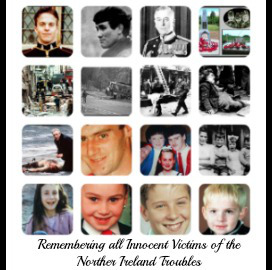


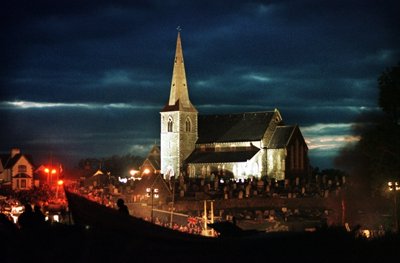






.JPG)
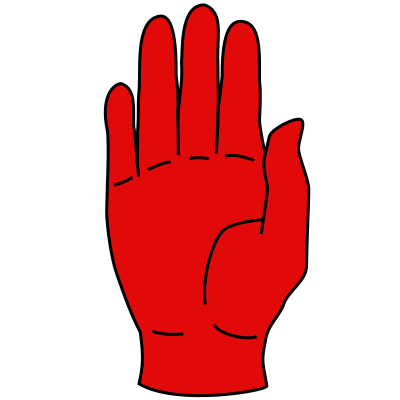








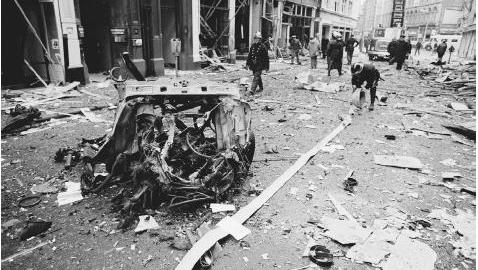
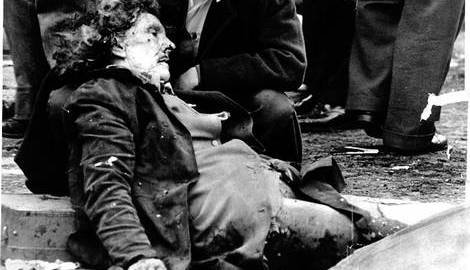





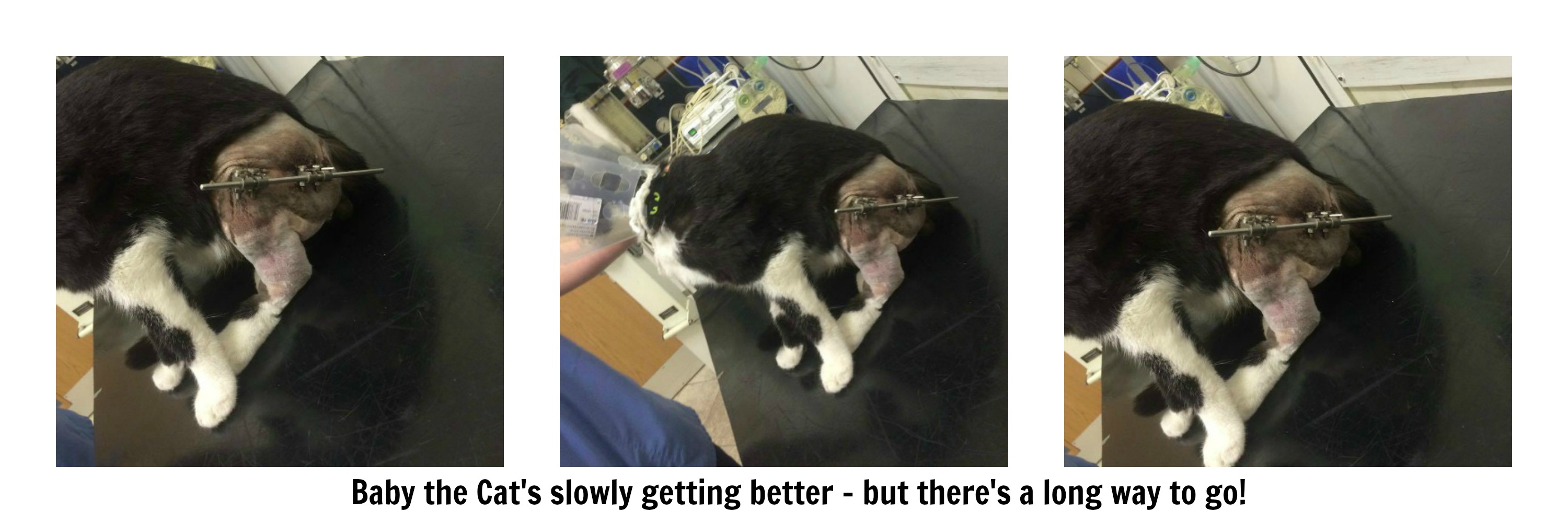


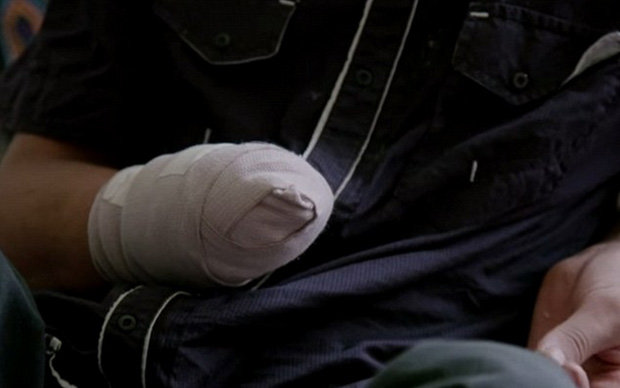


.JPG/200px-Troubled_Images_Exhibition,_Belfast,_August_2010_(03).JPG)


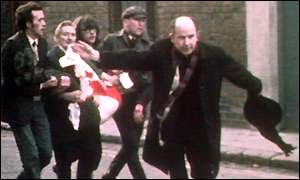






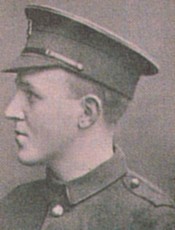


 belfastchildis.com