16th November – Deaths & Events in Northern Ireland Troubles


Key Events & Deaths on this day in Northern Ireland Troubles

16th November

————————————————————————

Saturday 16 November 1968

The Derry Citizens Action Committee (DCAC) defied a ban on marches in Derry by marching to the Diamond area of the city. An estimated 15,000 people took part in the subsequent sit-down demonstration in the Diamond area of Derry.

Tuesday 16 November 1971

Compton Report Published The report of the Compton inquiry was published. Report of the enquiry into allegations against the security forces of physical brutality in Northern Ireland arising out of events on the 9th August, 1971. (November 1971; Cmnd. 4832). The report acknowledged that there had been ill-treatment of internees (what was termed ‘in-depth interrogation’) but rejected claims of systematic brutality or torture.

Thursday 16 November 1972

Edward Heath, then British Prime Minister, warned against a Unilateral Declaration of Independence (UDI).

Friday 16 November 1973 [

Public Records 1972 – Released 1 January 2003: Letter, and annexes, about ‘Operation Folklore’ from Mr A.W.Stephens, then Head of Defence Secretariat 10, to Mr V.H.S.Benham, an official at the Northern Ireland Office (NIO) in London. The letter discussed the possibility of British soldiers being able to open fire in Northern Ireland without fear of legal penality.]

  1. There was a Loyalist ‘Third Force’ rally in Enniskillen, County Fermanagh. The rally was addressed by Ian Paisley, then leader of the Democratic Unionist Party (DUP), who said that Unionists would make Northern Ireland ungovernable. Three Democratic Unionist Party (DUP) Members of Parliament were suspended from parliament when they protested about the British government’s policy on security in Northern Ireland.

Tuesday 16 November 1982

See Lenny Murphy
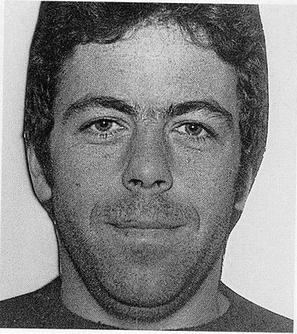
See Shankill Butchers

Lenny Murphy


Lenny Murphy (29), who had been leader of the Ulster Volunteer Force (UVF) gang the ‘Shankill Butchers’, was shot dead by Irish Republican Army (IRA) at Forthriver Park, Glencairn, Belfast.

[It was later claimed that Loyalist paramilitaries had colluded with the IRA in having Murphy shot because no group was able to control him. Murphy’s gang had been responsible for a series of particularly brutal murders of Catholic civilians. Many of those killed were first abducted, then beaten and tortured with butcher knives and hatchets before being killed and their bodies dumped.]

A Catholic civilian was shot dead by Loyalists in Mount Merrion Avenue, Rosetta, Belfast.

Two reserve members of the Royal Ulster Constabulary (RUC) were shot dead by the Irish National Liberation Army (INLA) at a security barrier in Markethill, County Armagh.

Saturday 16 November 1985

The Northern Ireland Assembly voted by 44 votes to 10 for a motion calling for a referendum to be held on the Anglo-Irish Agreement (AIA). Unionists also announced that on 17 December 1985 all 15 Ulster Unionist Party (UUP) and Democratic Unionist Party (DUP) Members of Parliament (MPs) would resign their seats and so cause by-elections in most of the parliamentary constituencies in Northern Ireland. Unionists also said they would withdraw from all advisory boards in Northern Ireland and refuse to meet with government ministers.

Friday 16 November 1990
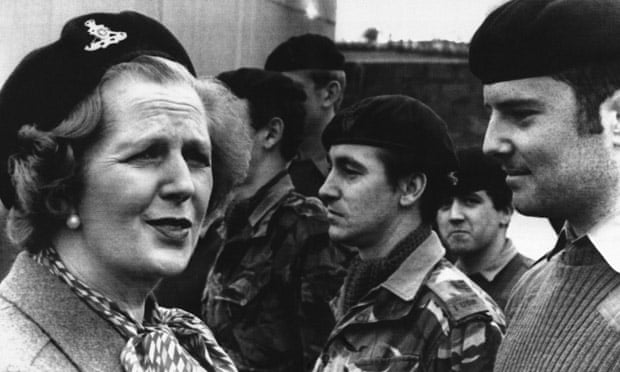
Margaret Thatcher, then British Prime Minister, visited Northern Ireland.

Monday 16 November 1992

A meeting of the Anglo-Irish Intergovernmental Conference (AIIC) in Dublin reviewed the procedures used in the political talks (later known as the Brooke / Mayhew talks) and favoured bilateral talks.

Sunday 16 November 1997

Colin Duffy, then a prominent Republican based in Lurgan, was charged with assault following a fracas involving Royal Ulster Constabulary (RUC) officers in the town. [There were riots in Lurgan and Armagh on 18 November 1997 following his arrest.]

Tuesday 16 November 1999

The Ulster Unionist Party (UUP) issued a keynote statement and Sinn Féin (SF) issued a separate keynote statement committing both parties to the full implementation of the Good Friday Agreement. David Trimble, then leader of the UUP, recognised the legitimate aspirations of Nationalists to pursue a united Ireland and embraced the principles of inclusivity, equality and mutual respect.

Gerry Adams, then President of Sinn Féin (SF), spoke of working with, not against, Unionists in the future. The other main political parties in Northern Ireland all issued statements endorsing the Good Friday Agreement.


The Interdepartmental Committee on Immigration and Asylum, which was drawing up proposals for the dispersal of asylum-seekers outside Dublin, received a proposal by the Department of Defence to accommodate asylum-seekers in disused Army barracks around the State.

——————————–

———————————————————————————

Remembering all innocent victims of the Troubles

Today is the anniversary of the death of the following  people killed as a results of the conflict in Northern Ireland

“To live in hearts we leave behind is not to die

– Thomas Campbell

To the innocent on the list – Your memory will live  forever

– To  the Paramilitaries  –

There are many things worth living for, a few things worth dying for, but nothing worth killing for.

13  People lost their lives on the 16th November between 1970 – 1987

————————————————————

16 November 1970


Arthur McKenna,   (35)

Catholic
Status: Civilian (Civ),

Killed by: Irish Republican Army (IRA)
Shot while repairing car, Ballymurphy Road, Ballymurphy, Belfast. Alleged criminal.

————————————————————

16 November 1970


Alexander McVicker,   (35)

Catholic
Status: Civilian (Civ),

Killed by: Irish Republican Army (IRA)
Shot while repairing car, Ballymurphy Road, Ballymurphy, Belfast. Alleged criminal

————————————————————

16 November 1972


Joseph Calvin,  (42)

Protestant
Status: Royal Ulster Constabulary (RUC),

Killed by: Irish Republican Army (IRA)
Off duty. Killed by booby trap bomb attached to his car, in car park, Quay Lane, Enniskillen, County Fermanagh.

————————————————————

16 November 1974
Thomas McCready,   (32)

Protestant
Status: Ulster Defence Regiment (UDR),

Killed by: Irish Republican Army (IRA)
Shot by sniper while on Ulster Defence Regiment mobile patrol, Newry, County Down.

————————————————————

16 November 1975


Joseph Clements,   (48)

Protestant
Status: Royal Ulster Constabulary (RUC),

Killed by: Irish Republican Army (IRA)
Killed in land mine attack on Royal Ulster Constabulary (RUC) mobile patrol, near Sixmilecross, County Tyrone.

————————————————————

16 November 1976
James Duffy,  (48)

Catholic
Status: Civilian (Civ),

Killed by: not known (nk)
Shot while delivering meat to butcher’s shop, at the junction of Falls Road and Rockmount Street, Belfast.

————————————————————

16 November 1978


 Wesley Orr,   (53)

Protestant
Status: Civilian (Civ),

Killed by: Irish Republican Army (IRA)
Fire officer. Killed when grenade exploded while fighting fire caused by incendiary device, Bass Brewery, Glen Road, Andersonstown, Belfast.

————————————————————

16 November 1982
Patrick Murphy,  (63)

Catholic
Status: Civilian (Civ),

Killed by: non-specific Loyalist group (LOY)
Shot at his shop, Mount Merrion Avenue, Rosetta, Belfast.

————————————————————

16 November 1982


Ronald Irwin,  (24)

Protestant
Status: Royal Ulster Constabulary (RUC),

Killed by: Irish National Liberation Army (INLA)
Shot while at security barrier, Markethill, County Armagh.

————————————————————

16 November 1982


Snowdon Corkey,   (41)

Protestant
Status: Royal Ulster Constabulary (RUC),

Killed by: Irish National Liberation Army (INLA)
Shot while at security barrier, Markethill, County Armagh.

————————————————————

16 November 1982


Lennie Murphy,   (29)

Protestant
Status: Ulster Volunteer Force (UVF),

Killed by: Irish Republican Army (IRA)
Shot outside his girlfriend’s home, Forthriver Park, Glencairn, Belfast.

See  Lenny Murphy

See Shankill Butchers

————————————————————

16 November 1984
Patrick Brady,  (36)

Catholic
Status: Civilian Political Activist (CivPA),

Killed by: Ulster Freedom Fighters (UFF)
Sinn Fein (SF) member. Shot at his workplace, a dairy, Boucher Road, Belfast.

————————————————————

16 November 1987


Thomas McAuley,  (32)

Catholic
Status: Civilian (Civ),

Killed by: non-specific Loyalist group (LOY)
Died five days after being shot at his cafe, Crumlin Road, Ardoyne, Belfast.

———————————————————— 


See below on how to order a copy of my No.1 Bestselling book: A Belfast Child 

Lenny Murphy – Leader of The Shankill Butchers – Life & Death

Lenny Murphy

2 March 1952 – 16 November 1982

Leader  of The Shankill Butchers

Life & Death

Over a 10-year-year period, from 1972 to 1982, the Shankill Butchers gang, led by psychopath Lenny Murphy, terrorized Northern Ireland Catholics, becoming the most prolific group of serial killers in British history.

See Shankill Butchers

Hugh Leonard Thompson Murphy, who commonly went by the name Lenny (or Lennie) (2 March 1952 – 16 November 1982), was an Ulster loyalist from Belfast, Northern Ireland. Murphy was a member of the Ulster Volunteer Force (UVF) and leader of the infamous Shankill Butchers gang which became notorious for its torture and murder of Roman Catholic men. Although never convicted of murder, Murphy is thought to have been responsible for many deaths.[1] Murphy spent long periods in custody from late 1972 to July 1982, being free for a total of only thirteen months during that time. He was shot dead by the Provisional IRA in November 1982.

A Protestant, Murphy had a fanatical hatred of Roman Catholics. In his book The Shankill Butchers, Belfast journalist Martin Dillon suggests that Murphy’s visceral loathing of Catholics may have stemmed from his own family being suspected of having recent Catholic ancestry, because of his traditionally Irish surname which is more often associated with the other side of the religious divide in Northern Ireland.[2] After his death, his mother commented: “I don’t honestly believe he was a bad man”; however, an unnamed loyalist from the rival Ulster Defence Association described Murphy as a “typical psychopath”.

Disclaimer

The views and opinions expressed in this post and page are soley intended to educate and provide background information to those interested in the Troubles of Northern Ireland.

They in no way reflect my own opinions and I take no responsibility for any inaccuracies or factual errors

Lenny Murphy
Lenny murphy.jpg

Lenny Murphy in 1982
Born Hugh Leonard Thompson Murphy
2 March 1952
Shankill Road, Belfast, Northern Ireland
Died 16 November 1982 (aged 30)
Glencairn, upper Shankill Road, Belfast, Northern Ireland
Cause of death Over 20 fatal gunshot wounds
Nationality British
Other names Lenny or Lennie
Known for Leader of Shankill Butchers
Ulster Volunteer Force member
Religion Protestantism

Early life

Murphy was the youngest of three sons of Joyce and William Murphy from the loyalist Shankill Road, Belfast. William was originally from Fleet Street, Sailortown in the Belfast docks area. This was where he had met Joyce Thompson, who came from the Shankill. Like his own father (also named William), he worked as a dock labourer.[4]

The Murphy family changed their residence several times; in 1957 they returned to Joyce’s family home in the lower Shankill, at 28 Percy Street. Murphy’s father was reclusive which led to a rumour that he was not the same man and that Joyce was now living with a different ‘William Murphy’, one who was a Catholic. Lenny Murphy did not use his given first name because Hugh was perceived as Catholic-sounding, especially when coupled with the surname Murphy. Prior to the erection of a peace wall in the 1970s, Percy Street ran from the lower Shankill area to the Falls Road. A hoodlum at school (Argyle Primary), where he was known for the use of a knife and had his elder brothers to back him up, Murphy logged his first conviction at the age of twelve for theft. After leaving the Belfast Boys’ Model School at sixteen, he joined the Ulster Volunteer Force and was involved in the rioting that broke out in Belfast in August 1969.

His character was marked by a pathological hatred of Catholics which he brought into all of his conversations, often referring to them as “scum and animals”.[5] He held a steady job as a shop assistant, although his increasing criminal activities enabled him to indulge in a more high profile and flamboyant lifestyle which involved socialising with an array of young women and heavy drinking.[6]

Dillon wrote that it is “incredible to think that Murphy was in fact a murderer at the age of twenty” (1972). There were many people at the time who would have found it hard to believe as physically he did not differ from most young men of his age. Below average height, of slim build and sallow complexion, Murphy was blue eyed and had curly dark brown hair. He sported several tattoos; most of them bearing Ulster loyalist images.[7] He was a flashy dresser, too, often wearing a leather jacket and scarf, and occasionally a pair of leather driving-gloves, such that it reminded one contact of the time of a World War I fighter-pilot.[8]

First Crimes

The Lawnbrook Social Club in Shankill Road‘s Centurion Street, one of Murphy’s drinking haunts. It has since been demolished

According to Dillon, Murphy was involved in the torture and murder of four Catholic men as early as 1972. On 28 September of that year, a Protestant man named William Edward Pavis who had gone bird shooting with a Catholic priest, was killed at his home in East Belfast. Pavis had been threatened by loyalists who accused him of selling firearms to the IRA. Murphy was arrested for this crime along with an accomplice, Mervyn Connor.[9]

During pre-trial investigations, Murphy was placed in a line-up for possible identification by witnesses to Pavis’ shooting. Before the process began formally, he created a disturbance and stepped out of the line-up. However, two witnesses picked him out when order was restored.[9]

Connor and Murphy were held in prison together but, in April 1973, before the trial, Connor died after ingesting cyanide in his cell. He had written a suicide note in which he confessed to the crime and exonerated Murphy. It is believed Connor was forced to write the note and take the cyanide. Murphy was sent to trial for the murder of Pavis in June 1973. Although two witnesses identified him as the gunman, he was acquitted on the basis that their evidence may have been affected by the disturbance during the police line-up inquiry. However, Murphy was re-arrested and jailed for attempted escapes.[10]

By May 1975, Murphy, now aged twenty-three, was back on the streets of Belfast. On 5 May 1973, inside the Crumlin Road prison, he had married 19-year-old Margaret Gillespie, with whom he had a daughter.[11] He moved his wife and child to Brookmount Street in the upper Shankill where his parents also had a new home; however, he spent much of his time drinking in Shankill pubs such as The Brown Bear and Lawnbrook Social Club. He also regularly frequented the Bayardo Bar in Aberdeen Street.[12] Murphy later told a Provisional IRA inmate that on 13 August 1975 he had just left the Bayardo ten minutes before the IRA carried out a gun and bombing attack against the pub which killed a UVF man and four other Protestants and left over 50 injured.[13]

With his brother William he soon formed a gang of more than twenty men that would become known as the Shankill Butchers, one of his lieutenants being William Moore.

Brookmount Street (2009), where Murphy lived close to the top of the Shankill Road

Shankill Butchers murders

The gang shot dead four Catholics (two men and two women) during a robbery at a warehouse in October 1975. Over the next few months Murphy and his accomplices began to abduct, torture and murder random Catholic men they dragged off the streets late at night. Murphy regarded the use of a blade as the “ultimate way to kill”, ending the torture by hacking each victim’s throat open with a butcher’s knife. By February 1976 the gang had killed three Catholic men in this manner. Murphy achieved status though his paramilitary activity and was widely known in the Shankill. Many regarded his crimes as shaming the community but feared the consequences of testifying against him.[14][15] None of the victims had any connection to the IRA, and there was suspicion among some of their families that the murders were not properly investigated because those being killed were Catholics.[14]

The Butchers were also involved in the murder of Noel Shaw, a loyalist from a rival UVF unit, who had shot dead Butcher gang-member Archie Waller in Downing Street, off the Shankill Road, in November 1975. Four days before his death, Waller had been involved in the abduction and murder of the Butchers’ first victim, Francis Crossen. One day after Waller’s death, Shaw was beaten and pistol-whipped by Murphy while strapped to a chair, then shot. His body was later dumped in a back street off the Shankill.[16]

By the end of 1975, the UVF Brigade Staff had a new leadership of “moderates”, but Murphy refused to submit to their authority, preferring to carry out attacks by his own methods. Dillon suggested that whilst some of the Brigade Staff knew about Murphy’s activities (albeit not the precise details), they were too frightened of him and his gang to put a stop to them.[17]

On 10 January 1976, Murphy and Moore killed a Catholic man, Edward McQuaid (25), on the Cliftonville Road. Murphy, alighting from Moore’s taxi in the small hours, shot the man six times at close range.

Imprisonment

Early on 11 March 1976, Murphy shot and injured a young Catholic woman, once again on the Cliftonville. Arrested the next day after attempting to retrieve the gun used, Murphy was charged with attempted murder and remanded in custody for a prolonged period. However, he was able to plea bargain whereby he was allowed to plead guilty to the lesser charge of a firearms offence, and received twelve years’ imprisonment on 11 October 1977. Dillon notes that the police believed Murphy was involved in the Shankill Butcher murders. To divert suspicion from himself Murphy ordered the rest of the gang to continue the cut-throat murders while he was in prison. The Butchers, now under the operational command of William Moore, went on to kill and mutilate at least three more Catholics.

The team of Criminal Investigation Department (CID) detectives investigating the murders was led by Detective Chief Inspector Jimmy Nesbitt who headed C Division based at Tennent Street off the Shankill Road. However the police were overworked during this period and little progress was made in the investigation until one victim, Gerard McLaverty, survived his assault. Detectives were driving him down the Shankill Road on the way to the scene of his abduction when he recognized two of his assailants walking in the street. This identification of Sam McAllister and Benjamin Edwards led to the arrest of much of the gang in May 1977 and, in February 1979, they were imprisoned for long periods. Confessions of gang members had named Murphy as the leader but statements incriminating him were later retracted. He was questioned once again about the Butcher murders but denied involvement.

The total of sentences handed down to the gang at Belfast Crown Court was the longest in legal history in the United Kingdom.

Last months on the Shankill

On completing his sentence for the firearms charge, Lenny Murphy walked out of the Maze Prison on Friday, 16 July 1982. During his term inside, his wife Margaret had initiated divorce proceedings which were being finalised at the time of his death. Murphy returned to his old ways, killing at least four more people over the next four months. He beat to death a partially disabled man one day after returning to the Shankill. Another victim sold him a car and was shot dead after demanding full payment.[18] Murphy also attempted to extort money from local businessmen who had been sympathetic in the past; however, this encroached on other loyalist paramilitaries with established protection rackets.[19]

In late August 1982, Murphy killed a part-time Ulster Defence Regiment soldier from the Lower Shankill area who was closely involved with the UVF in Ballymena and was allegedly an informer. The man’s body was not discovered for almost a year.[1] In mid-October, Murphy and several associates kidnapped a Catholic man who was then tortured and beaten to death in Murphy’s own house (temporally vacated due to renovations). Murphy, who had left the house strewn with the victim’s blood and teeth, was arrested for questioning the next morning but later released. The sadism of the widely publicised killing led to loyalism receiving a great deal of bad publicity, and leading UVF figures concluded that Murphy’s horrific methods had made him too much of a liability.[9]

Death

On 16 November 1982, Murphy had just pulled up outside the rear of his girlfriend’s house in the Glencairn area of the upper Shankill when two Provisional IRA gunmen emerged from a black van nearby and opened fire with an assault rifle and a 9 mm pistol. Murphy was hit by more than twenty rounds and died instantly.[20] Coincidentally, he was gunned down just around the corner from where the bodies of many of the Butchers’ victims had been dumped. A few days after his death the IRA claimed responsibility. According to RUC reports, the UVF had provided the IRA hit team with the details of Murphy’s habits and movements, which allowed them to assassinate him at that particular location. Another line of inquiry ends at UDA leader James Craig,[19] who saw Murphy as a serious threat to his widespread racketeering and provided the IRA with key information on Murphy’s movements. Craig was known to meet IRA commanders to discuss their racketeering activities – he was later killed by his comrades for “treason”.[21]

Murphy was given a large paramilitary funeral by the UVF with a guard of honour wearing the UVF uniform and balaclavas. A volley of three shots was fired over his coffin as it was brought out of his house and a piper played “Abide With Me”. He was buried in Carnmoney Cemetery; on his tombstone the following words were inscribed: “Here Lies a Soldier”.[22] The tombstone was smashed in 1989.[23] His photograph was displayed inside “The Eagle”, the UVF Brigade Staff’s headquarters over a chip shop in the Shankill Road. According to investigative journalist Paul Larkin, it graced the walls as a “fallen officer” up until the late 1990s.[24

See Shankill Butchers

See Robert “Basher” Bates

Please consider making a small or large donation as I am very poor and every donation is most welcome and goes towards the cost of running this blog.

Make a small donation

paypal donation button

Thank you!

How do you beat Isis & their twisted Ideology ?

“I came to the absolute conviction that it is impossible…impossible…for any human being to read the biography of Mohammed and believe in it, and then emerge a psychologically and mentally healthy person.”

– Syrian Psychiatrist Dr. Wafa Sultan

Jihadi John
Jihadi John

See jihadi John

The execution of Jihad John on Friday give the world something to celebrate and was a hard hitting reminder that although we don’t know exactly what action governments are taking against IS/Islamic extremists , we now know they are capable of a stunning PR strike that sent an evil, sick individual straight to eternal hell and will hopefully have all Jahadi’s scum terrified of their own shadows and of death coming at any moment from the skies.

The Terrorists are being Terrified!

Survivors being led away on rue Oberkampf near the Bataclan concert hall in central Paris

But any joy the world shared at the termination of the evil, vile human was short lived when the streets of Paris were turned into a bloodbath , as the dark shadow of Islamic terrorism wrote another chapter in its endless book of horror.

To date one hundred and twenty nine people have died as a result of this act of terrorism and as the people of Paris begin to try to pick themselves up and comprehend how life can ever return to normal , the rest of the world look on and thank the gods that they had been spared.

For now at least .

See BBC News for full story

For surely this is only a short reprieve and depressing as it is , there will no doubt be other chapters in the bloody rise of  extremist Islamic Terrorism . Those deluded enough to follow such an evil, twisted ideology – that glorifies in the slaughter of the innocent and death to all none believers , have nothing else to live for and have committed themselves inextricably to a holy war that can never been won.

But how do you fight against such an enemy and can we ever hope to defeat the diseased ideology of IS and their Islamic caliphate

———————————————————————————————-

The Islamic State (Full Length)

———————————————————————————————-

Its times like this we all try to think about how we can beat those who seem intent not just on murdering innocent people but on attacking our very way of life. The bombing of the Russian plane and terrible events in Paris and Beirut demonstrate that the policy of trying to contain ISIS isn’t working. So here’s what I would do…

1. Accept this is a war, and act accordingly.
2. Invoke Article 5 of the NATO constitution and make every effort to include Russia in a coalition of interests with a single aim – to defeat ISIS militarily. It will mean parking the issue of Assad’s future.
3. Launch a total war on ISIS targets, initially through huge bombing campaigns, but also using ground forces from as many countries as possible, especially Arab ones.
4. Next week David Cameron should introduce an emergency motion in the House of Commons, which, if passed, would give parliamentary approval for military action in Syria alongside the US and France.
5. Drive a stake through ISIS’s heart by taking Raqqa by force in a surprise strike, using thousands of special forces and paratroopers.
6. Britain and other western countries should follow Austria’s lead and ban the foreign funding of mosques. This may mean having to ban foreign funding of all religious institutions, not just mosques. Immediately follow Tunisia’s lead and shut down any mosque linked to extremism. Ban mosques from employing Imams from Saudi Arabia.
7. Theresa May should massively increase the budget of the UK Border Force and immediately recruit several thousand new border guards. US style border checks should be introduced at key locations, but especially Calais and major airports.
8. The Prime Minister should announce an immediate 33% increase in the funding of the security services, giving them an extra billion pounds a year. This should primarily be used to increase surveillance of terror suspects.
9. Confront Saudi Arabia over its overt and covert support for ISIS and Wahabi extremism. If Saudi Arabia fails to act, impose sanctions and make arms sales to the country illegal.
10. Make London a very uncomfortable place for radical extremists and reverse its reputation as ‘Londonistan’.
11. Encourage muslim role models to go into schools and mosques to launch a ‘hearts and minds’ campaign and explain to muslim teenagers why extremism is wrong.
12. Confront head on the myth that western foreign policy and the invasion of Iraq led to the rise of ISIS.
13. Encourage the EU to abandon Schengen and lead moves to reimpose border controls between each EU country.
14. Build refugee camps along the North African coast. Handle asylum application within the camps. Impose high profile EU coordinated naval patrol along the North African coast and turn back the boats.
15. Develop comprehensive plan to deal with Syrian refugees who arrive from Turkey.
16. Develop a Marshall Plan to enable Syria to rebuild following the end of the conflict, and identify other countries which need a similar plan in order to persuade their citizens not to flee, and in the long term designed to persuade them to return.

I realise this is just scratching at the surface in some ways, but we have to recognise that the terms of the debate have changed. Talk of containing ISIS will no longer wash. They and their unique brand of evil needs to be confronted. In the 1930s we had, in the end, to recognise that the only way to beat Hitler was to stand up to him. We are in a similar position now. You can’t sit down and talk to these people. No amount of appeasement will work. Difficult decisions must now be taken in the full recognition that the world order has changed and that further loss of life will inevitably happen. Time will tell if the British people have the stomach for the fight or if we have the politicians who have the courage to impose the measures needed if we are to pull through.

In writing this, I also recognise I will be called a lot of things, no doubt primarily ‘warmonger’. I’ve said right from the start that ISIS need to be taken on and we are at war so at least I am consistent in that. Let’s have the debate and recognise that although there will be differences of view, the debate can at least be conducted in a civil manner. At least in this country we can still have an open debate, unlike in areas controlled by ISIS. Those who disagree with me will have to explain how they would protect the very freedoms that ISIS is seeking to take away from us.

Original Story www.iaindale.com

———————————————————————–

The West Must Realize It Cannot Beat ISIS Without Also Beating Assa

Three hundred thousand dead, four million refugees, nearly eight million internally displaced, 600,000 trapped in starvation sieges and countless others maimed, traumatized and rotting in jails where torture, sexual abuse and starvation are routine. This is the partial bill, to date, for the political survival strategy of a Syrian clan headed by Syrian President Bashar Assad.

Recent reporting of diplomatic discussions about a potential role for Assad in a transitional unity government raises a pertinent question: can the person responsible for this horrific bill be re-packaged as the reliable overseer of security arrangements featuring civilian protection?

For a complete accounting of the consequences of Assad’s tenure, one must include the Islamic State: the criminal-terrorist marriage of al Qaeda in Iraq and Saddam Hussein loyalists that now occupies a major part of Syria courtesy of Assad regime illegitimacy and connivance. The result is a Syria bleeding terrified humanity onto its neighbors; a dying state hosting a deadly political virus spawning infections globally while attracting cells from around the Sunni Muslim world.

The response from the international community to the humanitarian and security catastrophe that is Syria has been wholly inadequate. President Obama seeks to “degrade and destroy” ISIS. Yet single-minded focus on achieving a nuclear agreement with Iran led the West to avert its gaze from the ISIS-abetting, civilian-centric depredations of an Assad regime fully supported by Tehran.

For ISIS, confronting Assad alone — an Assad supported by Iran and ideally the West — would be a recruiting gift of untold value.

Washington’s theory of the case had been that raising Syria with Iran — even in side talks well-removed from the nuclear main event — would provoke Tehran into abandoning the nuclear talks and forgoing a treasure in sanctions relief and foreign direct investment. Apparently, it never occurred to Iran’s Supreme Leader that the leaders of the United States, the United Kingdom, France, Germany and the European Union would be offended in the least by his country’s facilitation of mass murder in Syria and by his support of a family whose actions had made nearly all of eastern Syria safe for ISIS.

While coalition aircraft chase ISIS gunmen with high performance aircraft, anti-regime and anti-ISIS rebels are subjected by the regime to barrel bombs and starvation sieges, creating recruits for ISIS in Syria and around the world. Simultaneously, Shia militiamen imported from Lebanon, Iraq and Afghanistan by Iran battle anti-regime and anti-ISIS Syrian rebels in the parts of western Syria Iran hopes to preserve as a bridge to Hezbollah in Lebanon. Meanwhile, American diplomats chase their Russian counterparts for help in terminating Assad rule: as if Moscow wants Assad gone or can make it happen.

Regime forces and ISIS rarely face one another in combat. Rather, they focus on trying to eliminate Syrian nationalist alternatives to each. Assad and his ISIS counterpart, “Caliph” Abu Bakr al-Baghdadi, share the same objective: each, for his own reason, wants to face the other as one of the last two political forces left standing in Syria. For Assad, facing ISIS alone would be the dream come true: his long-sought opportunity to force the West to choose between him and something so spectacularly bad that some consider it even worse than him: the 21st century’s premier mass murderer. For Baghdadi, confronting Assad alone — an Assad supported by Iran and ideally the West — would be a recruiting gift of untold value. It would bolster his leadership credentials among disaffected Sunni Muslims around the world.

ISIS cannot be beaten from the air while the iron lung pumping oxygen into it — the Assad regime — is left to do its worst.

In Iraq, ISIS has a constituency: Iraqi Sunnis disenfranchised by the Iranian-supported sectarian policies of former Prime Minister Nouri al-Maliki. In Syria, ISIS has no natural constituency. And Assad’s base has been reduced to members of Syria’s minorities and a handful of Sunni supporters, all of whom have been taken hostage by his war crimes and crimes against humanity; all of whom fear retribution for barrel bombs dropped, children starved and women raped. Syria — not Iraq — is the place where ISIS can be handed a decisive, near-term defeat. But it cannot be beaten from the air while the iron lung pumping oxygen into it — the Assad regime — is left to do its worst.

Legitimate governance — not war — is the ultimate cure for a Syrian illness rapidly becoming a regional and global contagion. Yet without an effective, surgical intervention of a kinetic variety, the patient has no hope of surviving. At its present, glacial rate of recruitment, vetting and training, the American enlistment of Syrian rebels to fight ISIS would meet its modest personnel goal perhaps by mid-century. What is needed now is professional ground forces to work with coalition aircraft to kill ISIS in Syria. With all of eastern Syria liberated from ISIS, a governmental alternative to the Assad family business can be established and a basis for eventual political negotiations created. And ISIS in Iraq would be denied a Syrian safe haven and headquarters of incalculable value.

Business as usual will give ISIS time to sink real roots in Syria, with disastrous consequences. Yet killing ISIS in Syria will not keep it dead and will not prevent something even worse from arising unless Assad’s mass atrocities stop. Iran could end them with an order. Can Western statesmen muster the courage to confront Tehran diplomatically on this point? Or will they continue to cower, fearful that Iran might yet walk away from a nuclear deal that would move its weaponization breakout period from two months to 15 years in return for lucrative compensation? Secretary of State John Kerry suggests talks with Iran on Syria may start once the nuclear deal is approved. Why wait? People are dying, and ISIS is benefiting.

Legitimate governance — not war — is the ultimate cure for a Syrian illness rapidly becoming a regional and global contagion.

Syrian political negotiations are impossible while these mass atrocities continue. Yet if Iran chooses to perpetuate its unconditional support for mass murder, a West actually intent on defeating ISIS while seeking a political transition from Assad rule to something civilized will have no choice but to push back. Indeed, if President Barack Obama can demonstrate his willingness and ability to stand up to Iran in the battle against ISIS, he might gain support in Congress for the nuclear deal.

If diplomacy fails, the worst of Assad’s atrocities — the barrel bombs — can be curtailed and even ended by military means far short of invading and occupying Syria. Iran should be given the opportunity to end these abominations with a word. Tehran should also be asked to lift the starvation sieges and permit full access to needy populations by the humanitarian agencies of the United Nations. It probably will not wish to do these things. Yet it should be given a time-limited opportunity to do so.

Pretending to make common cause with Iran against ISIS during the nuclear negotiations may have been someone’s idea of a smart negotiating tactic. In Iraq, however, Iran aids ISIS by promoting Shia militias instead of supporting the Iraqi government. In Syria, Iran’s client has created conditions permitting ISIS to thrive. Iran is no ally of the West in the fight against ISIS. Indeed, chasing ISIS with airplanes while giving a free rein to Assad is as much a losing proposition for the West as it is a sure winner for Iran. Western leaders fully realize that Assad and Baghdadi are two sides of the same debased coin. They should act accordingly if “degrading and defeating” ISIS is more than a slogan.

See Huffington Post for original story

15th November – Deaths & Events in Northern Ireland Troubles

Key Events & Deaths on this day in Northern Ireland Troubles

15th November

—————————————————————–

Saturday 15 November 1975

During a disturbance involving members of the Ulster Defence Association (UDA) and Ulster Volunteer Force (UVF) at the Park Bar in Tiger’s Bay, Belfast, a Protestant civilian was shot dead. The fracas was part of an ongoing feud between the UDA and the UVF. A Catholic civilian died almost one year after being injured in a Loyalist bomb attack in Crossmaglen.

Friday 15 November 1985

Anglo-Irish Agreement Signed Margaret Thatcher, then British Prime Minister, and Garret FitzGerald, then Taoiseach (Irish Prime Minister), signed the Anglo-Irish Agreement (AIA) at Hillsborough, County Down, on behalf of the two governments. The first part of the document stated:

“The two Governments (a) affirm that any change in the status of Northern Ireland would only come about with the consent of a majority of the people of Northern Ireland.”

The Agreement established the Inter-Governmental Conference that for the first time gave the Irish government a consultative role in matters related to security, legal affairs, politics, and cross-border co-operation. The Agreement also stated that the two governments would support any future wish by the people of Northern Ireland to enter into a united Ireland.

Many Nationalists saw this as an important development. Unionists were outraged at the Agreement and began a long campaign to have the AIA removed.

[The AIA was only superseded when the Good Friday Agreement was implemented on 2 December 1999.]

Loyalist paramilitaries also reacted and the Ulster Freedom Fighters (UFF) declared all members of the Anglo-Irish Conference and Secretariat to be ‘legitimate targets’.

Ian Gow, then British Treasury Minister, resigned in protest at the signing of the Agreement.

Saturday 15 November 1986

Unionist Rally Against AIA Unionists and Loyalists held a large demonstration in front of Belfast City Hall to protest against the Anglo-Irish Agreement (AIA) on the first anniversary of the signing of the Agreement. Following the demonstration some shops in the centre of the city were damaged when Loyalists clashed with the Royal Ulster Constabulary (RUC).

Thursday 15 November 1990

Gerry Adams, then leader of Sinn Féin (SF), made a response to Peter Brooke’s speech of the 9 November 1990.

Tuesday 15 November 1988

Protests organised by Unionists against the Anglo-Irish Agreement were less well supported than previous years.

Wednesday 15 November 1989

Unionist protests against the Anglo-Irish Agreement drew very little support.

Friday 15 November 1991

Two Irish Republican Army (IRA) members were killed when the bomb they were carrying exploded prematurely in St Albans, Hertfordshire, England.

Sunday 15 November 1992 

The Irish Republican Army (IRA) attempted to plant a large bomb, estimated at 1,000 pounds, at Canary Wharf in London but were prevented by security men.

Monday 15 November 1993

The Belfast Telegraph (a Northern Ireland newspaper) carried a report that Sinn Féin (SF) had held face-to-face meetings with senior British Government officials and exchanged documents about how to end IRA violence. One source described the talks as ‘protracted’ but that they were ended by June. SF refused to deny the claims, but the British Government flatly rejected them.

[Confirmation of the secret talks broke in the United Kingdom (UK) media on 28 November 1993.]

John Major, then British Prime Minister, made a keynote speech on Northern Ireland to an audience at the Guildhall in London. He said that the opportunity for peace in Northern Ireland was better than at any time for many years

Wednesday 15 November 1995

Gerry Adams, then President of Sinn Féin (SF), speaking in Washington called for a Bosnia style peace talks on the future of Northern Ireland.

Saturday 15 November 1997

Sinn Féin (SF) held a meeting in Cullyhanna, south Armagh. Francie Molloy, then a member of SF’s talks team, told the meeting that if the Stormont negotiations were to collapse then “we simply go back to what we know best”.

[Many people took this to be a reference to the Irish Republican Army (IRA) ending its ceasefire and the comments sparked controversy.]

John Hume, then leader of the Social Democratic and Labour Party (SDLP), addressed the party’s annual conference and said that “equality of allegiance” was the key to political progress. He said that he wanted agreement with Unionists and “their allegiance as well as ours” was required for a solution to the problems of Northern Ireland.

Monday 15 November 1999

George Mitchell, then chairman of the Review of the Agreement, issued a statement which indicated that a formula to overcome the decommissioning and devolution impasse had almost been achieved. John de Chastelain, then head of the Independent International Commission on Decommissioning (IICD), issued a report which called upon “the paramilitary organisations to respond positively by appointing authorised representatives” to deal with the issue of decommissioning.

A man was shot in the leg in a paramilitary ‘punishment’ attack in the Mount Vernon area of north Belfast. Loyalist paramilitaries were responsible for the attack. A pipe bomb was thrown by Loyalists at the home of a Catholic family in north Belfast. Hillhall Presbyterian church hall in Lisburn, County Down, was destroyed in an arson attack.

An appeal case on behalf of Lee Clegg, then a soldier in the Parachute Regiment, began in Belfast.

Lee Clegg

The appeal was against his four year sentence for attempting to wound Martin Peake on 30 September 1990. On 11 March 1999 Clegg won his retrial for the murder of Karen Reilly in the same incident. [Clegg had been released from prison in 1995.] The National Development Plan for the Republic of Ireland was launched at Dublin Castle by Bertie Ahern, then Taoiseach (Irish Prime Minister), who said it was “an investment on a scale never seen before in our history”. More than half of the allocated £40.6 billion was to be invested in infrastructure, including roads, public transport, housing, water and sewerage, with the largest single allocation (£6 billion) going towards social and affordable housing.

Wednesday 15 November 2000

Ten homes had to be evacuated after a pipe-bomb was discovered outside a house in Glendun Close in Portrush, County Antrim, following a telephone warning. The Royal Ulster Constabulary (RUC) said they had not established a motive for the attack but added they did not believe it was sectarian. British Army (BA) explosives experts defused the device.

Thursday 15 November 2001

Six people were arrested in London and Liverpool, England, under the Terrorism Act. The arrests were believed to be in connection with recent bomb attacks in England by the “real” Irish Republican Army (rIRA).

[Following the arrests police began a search of a disused farm in Tingley village, West Ardsley, near Leeds. A seventh person was arrested on Sunday 18 November 2001.]

Queen Elizabeth II and the Duke of Edinburgh tour the grounds of Stormont in Belfast,

Queen Elizabeth II and the Duke of Edinburgh paid a one-day visit to Northern Ireland. The Queen visited the Waterside area of Derry (her last visit to the city was in 1953), Hillsborough Castle, Lisburn, and Banbridge.

—————————————————————————————

———————————————————————————

Remembering all innocent victims of the Troubles

Today is the anniversary of the death of the following  people killed as a results of the conflict in Northern Ireland

“To live in hearts we leave behind is not to die

– Thomas Campbell

To the innocent on the list – Your memory will live  forever

– To  the Paramilitaries  –

There are many things worth living for, a few things worth dying for, but nothing worth killing for.

11  People lost their lives on the 15th November between 1972 – 1992

————————————————————

15 November 1972
George Doherty,   (32)

Catholic
Status: Civilian (Civ),

Killed by: non-specific Loyalist group (LOY)
Shot at his home, Sintonville Avenue, Strandtown, Belfast.

————————————————————

15 November 1973


Michael McVerry,   (23)

Catholic
Status: Irish Republican Army (IRA),

Killed by: Royal Ulster Constabulary (RUC)
Shot during gun attack on Keady British Army (BA) / Royal Ulster Constabulary (RUC) base, County Armagh.

————————————————————

15 November 1974


Anthony Simmons,   (19)

nfNI
Status: British Army (BA),

Killed by: Irish Republican Army (IRA)
Shot by sniper while on British Army (BA) foot patrol, Fountain Street, Strabane, County Tyrone.

————————————————————

15 November 1975


Thomas Haddock,   (51)

Protestant
Status: Civilian (Civ),

Killed by: Ulster Volunteer Force (UVF)
Shot during fracas in Park Bar, Lawther Street, Tiger’s Bay, Belfast. Ulster Defence Association (UDA) / Ulster Volunteer Force (UVF) feud.

————————————————————

15 November 1976


George Lutton,  (41)

Protestant
Status: Ulster Defence Regiment (UDR),

Killed by: Irish Republican Army (IRA)
Shot by sniper while on Ulster Defence Regiment foot patrol, Church Place, Lurgan, County Armagh.

————————————————————

15 November 1981


Thomas McNulty,   (18)

Catholic
Status: Civilian (Civ),

Killed by: Ulster Volunteer Force (UVF)
Shot from passing motorcycle while standing in Thompson Street, Short Strand, Belfast

————————————————————

15 November 1985


David Hanson,  (24)

Protestant
Status: Royal Ulster Constabulary (RUC),

Killed by: Irish Republican Army (IRA)
Killed in land mine attack on joint British Army (BA) / Royal Ulster Constabulary (RUC) foot patrol, Blaney Road, near Crossmaglen, County Armagh.

————————————————————

15 November 1989


Robert Glover, (37)

Protestant
Status: Civilian (Civ),

Killed by: Irish Republican Army (IRA)
Killed by booby trap bomb attached to his car which exploded while travelling along road, Killymaddy, near Ballygawley, County Tyrone. Contractor to British Army (BA) / Royal Ulster Constabulary (RUC).

————————————————————

15 November 1991


Francis Ryan,  (25)

Catholic
Status: Irish Republican Army (IRA),

Killed by: Irish Republican Army (IRA)
Died in premature explosion while carrying bomb along St Peter’s Street, St. Albans, Herts. England.

————————————————————

15 November 1991
Patricia Black,  (18)

Catholic
Status: Irish Republican Army (IRA),

Killed by: Irish Republican Army (IRA)
Died in premature explosion while carrying bomb along St Peter’s Street, St. Albans, Herts. England.

————————————————————

15 November 1992


Alan Corbett,   (25)

Protestant
Status: Royal Ulster Constabulary (RUC),

Killed by: Irish Republican Army (IRA)
Shot by sniper,while at Royal Ulster Constabulary (RUC) Vehicle Check Point (VCP), Belcoo, County Fermanagh.

————————————————————

See below on how to order a copy of my No.1 Bestselling book: A Belfast Child 
14th November – Deaths & Events in Northern Ireland Troubles


Key Events & Deaths on this day in Northern Ireland Troubles

14th November

—————————————————————-

Wednesday 14 November 1973

In London nine people were found guilty of planting bombs in the city on 8 March 1973. Eight of those found guilty received life sentences. Of these six admitted to membership of the Irish Republican Army (IRA).

Thursday 14 November 1974

James McDade, then a member of the Irish Republican Army (IRA), was killed when the bomb he was planting exploded prematurely in Coventry, England.

  1. Merlyn Rees, then Secretary of Sate for Northern Ireland, announced the closure of the remaining incident centres that had been set up under the arrangements for the IRA truce.

Tuesday 14 November 1978

The Irish Republican Army (IRA) carried out a number of bomb attacks in towns across Northern Ireland. Serious damage was caused in attacks in Armagh, Belfast, Castlederg, Cookstown, Derry and Enniskillen. Thirty-seven people were injured in the attacks.

[This series of bomb attacks represented a renewed bombing campaign and over 50 bombs were exploded in the following week.]

Saturday 14 November 1981

The Reverend Robert Bradford

Robert Bradford Killed The Reverend Robert Bradford (40), then an Ulster Unionist Party (UUP) Member of Parliament, was shot dead by the Irish Republican Army (IRA) at a community centre in Finaghy in Belfast. Kenneth Campbell (29), a Protestant civilian who was a caretaker at the centre, was also shot and killed.

Monday 14 November 1983

Charles Armstrong (54), a part-time member of the Ulster Defence Regiment (UDR) and also Ulster Unionist Party (UUP) chairman of Armagh District Council, was killed by a booby trap bomb under his car.


James Molyneaux, then leader of the Ulster Unionist Party (UUP), and Ian Paisley, then leader of the Democratic Unionist Party (DUP), attend a protest rally against the Anglo-Irish Agreement (AIA) in Hillsborough.

Thursday 14 November 1991

UVF Logo
UVF Logo

The Ulster Volunteer Force (UVF) shot dead three people in an attack near Lurgan, County Armagh. Two Catholic civilians and one Protestant civilian were killed as they were travelling home from work.

[The UVF later apologised for killing the Protestant civilian.]

[Following the killing of twenty people since the 10 October 1991 the British government announced that the Royal Ulster Constabulary (RUC) would be allowed to recruit an additional 440 members and that 500 additional soldiers would be sent to Northern Ireland. In addition soldiers were moved into Belfast from other areas of the region and 1,200 part-time Ulster Defence Regiment (UDR) members were put on full-time duty.]

Saturday 14 November 1992

Three Catholic civilians were shot dead during a gun and grenade attack carried out by the Ulster Freedom Fighters (UFF), a cover name (pseudonym) used by the Ulster Defence Association (UDA). The attack took place in a bookmaker’s shop on the Oldpark Road, Belfast.

[This incident was similar to an attack by the UFF on 5 February 1992.]

In London the Irish Republican Army (IRA) attempted to plant a large bomb, estimated at 1,000 pounds, but were stopped by the Metropolitan Police. A policeman was shot and wounded and one man arrested during the incident.

Sinn Féin (SF) won a court case against Belfast City Council. The case concerned the tactics adopted by Unionist councillors to deny positions on various committees to SF.

Sunday 14 November 1993

A Sinn Féin (SF) selection convention was held in Belfast to discuss the European Elections in June 1994. The party selected candidates to contest each of the three Northern Ireland seats in the European Parliament – the first time SF had fought in all three constituencies.

Monday 14 November 1994

John Major

John Major, then British Prime Minister, addressed the Lord Mayor’s banquet in London. During his speech he announced that talks with Loyalist political representatives would begin before Christmas.

Tuesday 14 November 1995

The ‘Spirit of Drumcree’ group held a rally in the Ulster Hall, Belfast. The group called for sweeping changes in the Orange Order including the resignation of Martin Smyth (Rev.), then Grand Master, and the breaking of the traditional link between the Order and the Ulster Unionist Party (UUP).

Friday 14 November 1997

Jonathon Stephenson, then chairperson of the Social Democratic and Labour Party (SDLP), addressed the opening session of the party’s annual conference and called for a “historic compromise” with Unionism. David Trimble, then leader of the Ulster Unionist Party (UUP), called for the replacement of the Anglo-Irish Agreement (AIA) before progress on the multi-party talks.

Saturday 14 November 1998

John Hume, then leader of the Social Democratic and Labour Party (SDLP), addressed the annual SDLP conference and said Unionists and Nationalists had at last taken their future into their hands and seized control of their history, rather than history controlling them.

[During the conference the SDLP said it would help to remove Sinn Féin (SF) from the Executive if the Irish Republican Army (IRA) failed to decommission within the specified time-scale. The party also said it would not support any attempt by Unionists to rewrite the Good Friday Agreement.]

Sunday 14 November 1999

The home of a Catholic family in north Belfast was attacked with a pipe-bomb. No one was injured in the attack. The family returned home at about 6.30pm to find their house in Westland Road had been damaged. The attack was carried out by Loyalist paramilitaries.

Tuesday 14 November 2000

Clifford Shearing (Prof.), a former member of the Patten commission on police reform, strongly criticised the British government for “gutting” the Patten report in its proposed legislation. The criticism appeared in an article in the Guardian (an English newspaper) in which Shearing wrote: “The Patten report has not been cherry picked, it has been gutted”.

Wednesday 14 November 2001

There was a meeting of the Executive Committee of the Northern Ireland Assembly. The two Democratic Unionist Party (DUP) Ministers refused to attend the meeting. This was the first meeting to be jointly chaired by David Trimble (UUP), then First Minister, and Mark Durkan (SDLP), then Deputy First Minister. The Executive considered the continuing violence in north Belfast, the Loyalist protest at the Holy Cross Girls’ Primary School, and the forthcoming budget.

John Reid, then Secretary of State for Northern Ireland, announced that funding of £1 million would be made available for a new Royal Ulster Constabulary (RUC) Garden of Remembrance and an RUC Museum. Reid also announced the composition of the Boards of Trustees of the RUC George Cross Foundation (Jim McDonald, chairman) and the Northern Ireland Police Fund (Sir John Semple, chairman).

——————————–

———————————————————————————

Remembering all innocent victims of the Troubles

Today is the anniversary of the death of the following  people killed as a results of the conflict in Northern Ireland

“To live in hearts we leave behind is not to die

– Thomas Campbell

To the innocent on the list – Your memory will live  forever

– To  the Paramilitaries  –

There are many things worth living for, a few things worth dying for, but nothing worth killing for.

18  People lost their lives on the 14th November between 1972 – 1992

————————————————————

14 November 1972
Joseph McCrystal,   (28)

Catholic
Status: Civilian (Civ),

Killed by: non-specific Loyalist group (LOY)
Died two days after being shot near his home, Arthur Road, Greencastle, Belfast.

————————————————————

14 November 1972
Stanley Evans,   (19)

nfNI
Status: British Army (BA),

Killed by: Irish Republican Army (IRA)
Shot while guarding British Army (BA) members searching homes, Stanhope Street, Unity Flats, Belfast.

————————————————————

14 November 1973
John Lundy,  (61)

Catholic
Status: Civilian (Civ),

Killed by: Irish Republican Army (IRA)
Shot during sniper attack on British Army (BA) observation post, Moira Street, Short Strand, Belfast

————————————————————

14 November 1973
Kathleen Feeney,   (14)

Catholic
Status: Civilian (Civ),

Killed by: Irish Republican Army (IRA)
Shot during sniper attack on British Army (BA) mobile patrol, Lecky Road, Bogside, Derry.

————————————————————

14 November 1974
James McDade, (28)

Catholic
Status: Irish Republican Army (IRA),

Killed by: Irish Republican Army (IRA)
Killed in premature bomb explosion outside telephone exchange, Coventry, Warwickshire, England.

————————————————————

14 November 1975
Thomas McNamee,   (55)

Catholic
Status: Civilian (Civ),

Killed by: non-specific Loyalist group (LOY)
Died almost one year after being injured in bomb attack on McArdle’s Bar, Crossmaglen, County Armagh. He was wounded on 29 November 1974.

————————————————————

14 November 1977
Samuel Murphy,   (21)

Catholic
Status: British Army (BA),

Killed by: Irish Republican Army (IRA)
On leave. Died 10 days after being shot, while walking near to his parent’s home, Bearnagh Drive, Andersonstown, Belfast.

————————————————————

14 November 1980
Peter Valente,  (33)

Catholic
Status: Irish Republican Army (IRA),

Killed by: Irish Republican Army (IRA)
Found shot in entry, off Highfield Drive, Highfield, Belfast. Alleged informer.

————————————————————

14 November 1981
Robert Bradford,  (40)

Protestant
Status: Civilian Political Activist (CivPA),

Killed by: Irish Republican Army (IRA)
Ulster Unionist Party Member of Parliament. Shot at Community Centre, Finaghy, Belfast.

————————————————————

14 November 1981
 Kenneth Campbell,   (29)

Protestant
Status: Civilian (Civ),

Killed by: Irish Republican Army (IRA)
Shot during gun attack on Robert Bradford, Ulster Unionist Party (UUP) Member of Parliament, at Community Centre, Finaghy, Belfast. Caretaker of the premises.

————————————————————

14 November 1983
Charles Armstrong,  (54)

Protestant
Status: Ulster Defence Regiment (UDR),

Killed by: Irish Republican Army (IRA)
Off duty. Also Ulster Unionist Party Councillor. Killed by booby trap bomb attached to his car, outside District Council offices, Armagh.

————————————————————

14 November 1986
Alan McCormick,  (29)

Protestant
Status: Civilian (Civ),

Killed by: not known (nk)
Knocked down by Royal Ulster Constabulary (RUC) land rover, during street disturbances, Bilston Road, Ballysillan, Belfast.

————————————————————

14 November 1991
Desmond Rogers,   (54)

Catholic
Status: Civilian (Civ),

Killed by: Ulster Volunteer Force (UVF)
Shot shortly after leaving his workplace, Hyster factory, while travelling in car at the junction of Carbet Road and Carn Road, near Lurgan, County Armagh.

————————————————————

14 November 1991
Fergus Magee,  (28)

Catholic
Status: Civilian (Civ),

Killed by: Ulster Volunteer Force (UVF)
Shot shortly after leaving his workplace, Hyster factory, while travelling in car at the junction of Carbet Road and Carn Road, near Lurgan, County Armagh.

————————————————————

14 November 1991
John Lavery,  (27)

Protestant
Status: Civilian (Civ),

Killed by: Ulster Volunteer Force (UVF)
Shot, whilst travelling in his car, at the junction of Carbet Road and Carn Road, near Lurgan, County Armagh.

————————————————————

14 November 1992
Francis Burns,   (62)

Catholic
Status: Civilian (Civ),

Killed by: Ulster Freedom Fighters (UFF)
Shot during gun and grenade attack on James Murray bookmaker’s shop, Oldpark Road, Belfast.

————————————————————

14 November 1992
Peter Orderley,  (47)

Catholic
Status: Civilian (Civ),

Killed by: Ulster Freedom Fighters (UFF)
Shot during gun and grenade attack on James Murray bookmaker’s shop, Oldpark Road, Belfast.

————————————————————

14 November 1992
John Lovett,  (72)

Catholic
Status: Civilian (Civ),

Killed by: Ulster Freedom Fighters (UFF)
Shot during gun and grenade attack on James Murray bookmaker’s shop, Oldpark Road,  Belfast.

————————————————————


See below on how to order a copy of my No.1 Bestselling book: A Belfast Child 

13th November – Deaths & Events in Northern Ireland Troubles


Key Events & Deaths on this day in Northern Ireland Troubles

13th November

—————————————————

Wednesday 13 November 1968

William Craig, then Home Affairs Minister, banned all marches, with the exception of ‘customary’ parades, in Derry from 14 November 1968 to 14 December 1968.

[The exception of ‘customary’ parades meant that Loyalist institutions could parade but civil rights marches would be banned.]

Friday 13 November 1981

Michael Havers,

The Irish Republican Army (IRA) carried out a bomb attack on the home of Michael Havers, then British Attorney-General, in London.

The Irish National Liberation Army (INLA) prisoners issued a statement indicating that on 1 December 1981 they would end their protest over the issue of prison work. The SDLP held its annual conference over two days (13 – 15 November 1981).

Sunday 13 November 1982

Gerry Adams, then Member of Parliament (MP) for West Belfast, was elected President of Sinn Féin (SF) and the party’s annual Ard Fheis.

[Adams replaced Ruairí Ó Brádaigh as President in a development that demonstrated the movement in political power from Republicans based in the south of Ireland to those in Northern Ireland.]

Tuesday 13 November 1990

Alan Dukes resigned as leader of Fine Gael.

Wednesday 13 November 1991

The Irish Republican Army (IRA) carried out a series of attacks in Belfast and killed four Protestant civilians. The United Nations Committee on Torture issued a report that criticised the British government’s refusal to introduce a policy of using videotape to record interviews of paramilitary suspects while in police custody.

Friday 13 November 1992

The Irish Republican Army (IRA) exploded a large van bomb in the centre of Coleraine, County Derry. The bomb caused extensive damage to the commercial heart of the town.

Wednesday 13 November 1996

Portlaoise Prison

Three Irish Republican Army (IRA) prisoners who had been serving sentences in England were transferred to Portlaoise Prison in the Republic of Ireland.

Thursday 13 November 1997

During a visit to Washington, United States of America (USA), Marjorie (Mo) Mowlam, then Secretary of State for Northern Ireland, said that she would try to meet the deadline set for the multi-party talks at Stormont. She also “vowed” to help establish a new inquiry into the events of ‘Bloody Sunday’ in Derry on 30 January 1972.

Representatives of Families Against Intimidation and Terror (FAIT) held a meeting in the Maze Prison with Ulster Defence Association (UDA) and Ulster Freedom Fighters (UFF) prisoners.

Ruairi Quinn

Ruairi Quinn was elected as the new leader of the Irish Labour Party.

[Quinn won the election during a secret ballot by 37 votes to 27. During a press conference Quinn said that the Labour Party should not rule out a coalition with either Fianna Fáil (FF) or Fine Gael (FG) following the next general election.]

Friday 13 November 1998

The Loyalist Volunteer Force (LVF) announced that it was willing to decommission some of its weapons if the Irish Republican Army (IRA) matched their gesture on a ratio of ten IRA weapons for every LVF weapon.

It was announced that a further 400 British soldiers would be withdrawn from Northern Ireland. Seamus Mallon, then deputy leader of the Social Democratic and Labour Party (SDLP), delivered a speech to the Annual Conference of the SDLP.

Saturday 13 November 1999

There was a sectarian arson attack on the home of an 82 year old Catholic woman living in the Waterside area of Derry. The woman was hospitalised as a result of the attack.

Loyalist paramilitaries were responsible for the attack. Police described the attack as “pure naked sectarianism”.

Tom French, then President of the Workers’ Party (WP), told the party’s Ard Fheis that there was a stench of corruption in the Republic which he likened to Cuba before Fidel Castro. He said the party was now trying to re-establish the ideas of democracy and independence.

Ruairí O Bradaigh, then President of Republican Sinn Féin (RSF), addressed his party’s Ard Fheis in Dublin, Republic of Ireland. He said that if the Irish Republican Army (IRA) agreed to decommission its arms then it should disband.

Professor Brian Ó Cuív,

Professor Brian Ó Cuív, a leading Celtic scholar, died at the age of 82. The author of many works on the Irish language and its history. He married Emer, daughter of former president Eámon de Valera.

Tuesday 13 November 2001

Loyalist paramilitaries carried out a gun attack on a man, and his father, while they were driving home at 10.30pm (2230GMT) on a road near Ballycastle, County Antrim. A bullet struck the vehicle but neither of the two men were injured.

A man (18) was shot in both legs in the Mount Vernon area of Belfast at appoximately 11.30pm (2330GMT). He was treated in hospital for his injuries. The attack was believed to have been a paramilitary ‘punishment’ shooting.

Bertie Ahern

Bertie Ahern, then Taoiseach (Irish Prime Minister), suggested in the Dáil that the British government had been slow to co-operate with the Commission of Inquiry into the Dublin and Monaghan bombings on 17 May 1974 in which 33 people were killed.

See Dublin and Monaghan bombings

It was announced that Justice Henry Barron, from the Republic of Ireland, would meet John Reid, then Secretary of State for Northern Ireland, to ask for access to British files on the bombings. Barron first requested the files on 10 November 2000.

[There have been persistent allegations that British security forces colluded with Loyalist paramilitaries in the bombings.]

———————————————————————


———————————————————————————

Remembering all innocent victims of the Troubles

Today is the anniversary of the death of the following  people killed as a results of the conflict in Northern Ireland

“To live in hearts we leave behind is not to die

– Thomas Campbell

To the innocent on the list – Your memory will live  forever

– To  the Paramilitaries  –

There are many things worth living for, a few things worth dying for, but nothing worth killing for.

8  People lost their lives on the 13th November between 1972 – 1991

————————————————————

13 November 1972


Stanislaus Carberry,   (34)

Catholic
Status: Irish Republican Army (IRA),

Killed by: British Army (BA)
Shot while travelling in car along La Salle Drive, Falls, Belfast.

————————————————————

13 November 1973


Bernard Teggart,   (15)

Catholic
Status: Civilian (Civ),

Killed by: Irish Republican Army (IRA)
Found shot near Floral Hall, Zoological Gardens, Antrim Road, Belfast. Alleged informer.

————————————————————

13 November 1976


John Patch,   (34)

Catholic
Status: Civilian (Civ),

Killed by: non-specific Loyalist group (LOY)
Abducted while walking along Cliftonville Road, Belfast. Found shot a short time later, on the edge of Ballysillan Playing Fields, off Alliance Road, Belfast.

————————————————————

13 November 1979
Paul Fryer,   (18)

nfNI
Status: British Army (BA),

Killed by: Irish Republican Army (IRA)
Killed by booby trap bomb attached to telegraph pole, while on British Army (BA) foot patrol, Silverbridge, near Crossmaglen, County Armagh.

————————————————————

13 November 1991
William Kingsberry,   (35)

Protestant
Status: Ulster Defence Association (UDA),

Killed by: Irish Republican Army (IRA)
Shot together with his stepson at their home, Lecale Street, off Donegall Road, Village, Belfast.

————————————————————

13 November 1991
Samuel Mehaffey,   (19)

Protestant
Status: Red Hand Commando (RHC),

Killed by: Irish Republican Army (IRA)
Shot together with his stepfather at their home, Lecale Street, off Donegall Road, Village, Belfast.

————————————————————

13 November 1991


Stephen Lynn,   (30)

Protestant
Status: Civilian (Civ),

Killed by: Irish Republican Army (IRA)
Shot while renovating house, Upper Crumlin Road, Belfast. Previous owner of the house was the intended target.

————————————————————

13 November 1991


Kenneth Lynn,  (28)

Protestant
Status: Civilian (Civ),

Killed by: Irish Republican Army (IRA)
Shot while renovating house, Upper Crumlin Road, Belfast. Previous owner of the house was the intended target.

————————————————————   


See below on how to order a copy of my No.1 Bestselling book: A Belfast Child 

ISIS Freak Show -The Bulldozer & Jihad ” Little ” John

belfastchildis's avatar

The Bulldozer & Jihad ” Little John “

little john Jihad ” Little John ”

————————————————

ISIS executioner ‘The Bulldozer of Fallujah’ cuts hand and foot off teen boy

————————————————

HE weighs more than 200kg. Big belly. Big arms. Big reputation


Over his shoulder he carries a weapon so large it’s normally mounted to a vehicle before it can be fired. On his face he wears a mask to conceal his identity — but he is unmistakable.

People know him as “The Bulldozer of Fallujah” and he’s the world’s most feared terror group’s biggest weapon. Until this week, the unnamed member of Islamic State tried to blend into the background. His exploits are now front and centre after his treatment of a 14-year-old boy named Omar.

The new member of the terror group’s feared “chopping committee” is no jolly fat man.

The mammoth Iraqi – who was first photographed toting a…

View original post 857 more words

Islamic State threatens to carry out attacks in Russia ‘very soon’

Islamic State threatens to carry out attacks in Russia ‘very soon’

—————————————————————————

ISIS Threatens to Attack Russia Very Soon

—————————————————————————

The Islamic State (ISIS), which has claimed responsibility for the crash of a Russian passenger plane in Egypt’s Sinai peninsula, has released a video in which it threatens to carry out terrorist attacks in Russia. (more)

The Russian-language video was released on Thursday by the Al-Hayat Media Center, the foreign-language media division of the Islamic State, according to the SITE Intelligence monitoring group.

“Soon, very soon, the blood will spill like an ocean,” the video said, threatening to carry out attacks within Russia. The video also featured gory scenes of executions by beheading and gunshot.

Other details were not immediately available.

The Islamic State (ISIS) has claimed responsibility for the crash of a Russian passenger plane that went down in Egypt’s Sinai peninsula on October 31, killing all 224 people on board. The group, which has released no specific details to back up its claims, said the downing was in revenge for Russian airstrikes against ISIS militants in Syria.

The cause of the crash remains under investigation, but investigators have not yet ruled out a bomb, though other possible causes include metal fatigue and a fuel explosion.

12th November – Deaths & Events in Northern Ireland Troubles

Key Events & Deaths on this day in Northern Ireland Troubles

12th November

——————————————————

Thursday 12 November 1970

The Northern Ireland Housing Executive (NIHE) was formed.

[The NIHE gradually took over control of the building and allocation of public sector housing in Northern Ireland. The responsibility for public sector housing had previously rested with local government and the Northern Ireland Housing Trust (NIHT). There had been many allegations of discrimination in the provision and allocation of housing by the various local government councils in Northern Ireland and this was the main reason for setting up the Housing Executive.]

Friday 12 November 1971

A Dutch seaman was shot dead by Republican paramilitaries in Belfast.

Tuesday 12 November 1974

Two Protestant civilians who had been employed by the British Army were shot dead by the Irish Republican Army (IRA) and left on Sheriffs Road, near Derry. Three other people were killed in separate incidents in Belfast and County Derry.

Wednesday 12 November 1975

Michael Duggan (32), then Chairman of the Falls Road Taxi Association, was shot dead in Hawthorne Street, Belfast, by members of the Official Irish Republican Army (OIRA). This killing was part of the continuing feud between the two wings of the IRA. One person was killed when the IRA threw a bomb into Scott’s Oyster Bar (Restaurant) in Mount Street, Mayfair, London.

  1. Merlyn Rees, then Secretary of Sate for Northern Ireland, announced the closure of the remaining incident centres that had been set up under the arrangements for the IRA truce.

Tuesday 12 November 1986

The Queen’s speech, at the opening of a new parliament at Westminster, reaffirmed the British government’s commitment to the Anglo-Irish Agreement (AIA).

Thursday 12 November 1987

James Molyneaux, then leader of the Ulster Unionist Party (UUP), and Ian Paisley, then leader of the Democratic Unionist Party (DUP), led a protest march against the Anglo-Irish Agreement (AIA) in London.

Thursday 12 November 1992

In an effort to increase the percentage of Catholics employed in the Northern Ireland Civil Service the Northern Ireland Office (NIO) announced that it was introducing “goals and timetables”. The NIO also stated there would be no preferential treatment on the grounds of religion, political beliefs, or gender, and denied that the new measures amounted to quotas. [Government estimates of the number of senior posts held by Catholics was 17 per cent.]

Tuesday 12 November 1996

Lindsay Robb, formerly a Progressive Unionist Party (PUP) talks negotiator, failed in his appeal against a 10 year sentence for gun-running on behalf of the Ulster Volunteer Force (UVF).

Wednesday 12 November 1997

The Irish Times carried a report claiming that 35 members of the “1st Battalion, South Armagh Brigade” of the Irish Republican Army (IRA) had left the paramilitary group in protest at Sinn Féin’s (SF) peace strategy. It was also claimed that those who had left were prepared to join others who had left in October 1997. Ronnie Flanagan, then Chief Constable of the Royal Ulster Constabulary (RUC), told the Northern Ireland Select Committee that eight per cent of the 8,500 members of the RUC were Catholic. John Hume, then leader of the Social Democratic and Labour Party (SDLP), raised concerns about the continuing high levels of security in west Belfast and south Armagh.

Friday 12 November 1999

George Mitchell, then chairman of the Review of the Agreement, adjourned the talks for the weekend. He hoped that both the Ulster Unionist Party (UUP) and Sinn Féin (SF) would use the time to reflect on the ‘sequence’ of events that had been discussed. A vote taken by the 27 members of the UUP MLAs showed a majority in favour of agreeing to a deal about the new Executive. Four people, all Irish nationals, appeared at a hearing in a Florida court in the USA charged with trying to illegally export handguns to Ireland. The four were refused bail.

Monday 12 November 2001

A man (23) was found shortly after 12.00am (0000GMT) with a gunshot wound to his leg at Bryson Court, New Mossley to the north of Belfast.

[It was thought that he had been the victim of a paramilitary ‘punishment’ attack.]

At approximately 1.00am (0100GMT) two masked men both believed to be armed with shotguns forced their way into a house in Eliza Street, Belfast. They fired a shot through a bedroom door in the house but a man (33) inside the room was uninjured in the attack.

There was a change in the policing tactics used at the Loyalist protest of Holy Cross Girls’ Primary School. Instead of gathering together all the Catholic parents and children and escorting them as a group to the school the Police Service of Northern Ireland (PSNI) specified a time period in which parents could walk to the school. Approximately 400 police officers (one in eight of the total in Belfast) were present to ensure that the children were able to get to school.

The day’s operation cost an estimated £100,000. Some Catholic parents complained that the new police tactics left them more exposed to Loyalist protesters. Police arrested a nationalist who was taking a video of Loyalist protesters.

The British government published a draft Justice (Northern Ireland) Bill, 2001. If implemented the Northern Ireland Assembly (NIA) could take responsibility for policing and the criminal justice system after NIA elections on 1 May 2003. The provisions in the draft Bill included: the creation of an independent prosecution service; a judicial appointment commission to propose appointment or removal of judges; the Lord Chief Justice of Northern Ireland to head the judiciary – rather than the Lord Chancellor in London; the appointment of an Attorney General for Northern Ireland; the appointment of a Chief Inspector of Criminal Justice; the appointment of a Law Commission; and new judges would take an oath to the office for which they were responsible rather than to the Queen. There was a session of the Northern Ireland Assembly.

[Of the 108 elected members approximately 30 attended the session.]

——————————————–


———————————————————————————

Remembering all innocent victims of the Troubles

Today is the anniversary of the death of the following  people killed as a results of the conflict in Northern Ireland

“To live in hearts we leave behind is not to die

– Thomas Campbell

To the innocent on the list – Your memory will live  forever

– To  the Paramilitaries  –

There are many things worth living for, a few things worth dying for, but nothing worth killing for.

11  People lost their lives on the 12th November between 1971 – 1983

————————————————————

12 November 1971
Rene Heemskerk,   (18)

nfNI
Status: Civilian (Civ),

Killed by: non-specific Republican group (REP)
Dutch seaman. Shot in dentist’s waiting room, Grosvenor Road, Belfast.

————————————————————

12 November 1974
Hugh Slater,  (29)

Protestant
Status: Civilian (Civ),

Killed by: Irish Republican Army (IRA)
Civilian employed by British Army (BA). Found shot by the side of Sheriffs Road, near Derry.

————————————————————

12 November 1974
Leonard Cross,   (19)

Protestant
Status: Civilian (Civ),

Killed by: Irish Republican Army (IRA)
Civilian employed by British Army (BA). Found shot by the side of Sheriffs Road, near Derry.

————————————————————

12 November 1974
Joseph Elliott,   (21)

Catholic
Status: Civilian (Civ),

Killed by: non-specific Loyalist group (LOY)
Shot from passing car while walking along Ardmore Road, Drumahoe, Derry.

————————————————————

12 November 1974
Michael Brennan,   (26)

Catholic
Status: Civilian (Civ),

Killed by: Protestant Action Group (PAG)
Youth Leader. Shot at St Mary Youth Centre, Carolan Road, Rosetta, Belfast.

————————————————————

12 November 1974


Joseph Taylor,  (17)

Protestant
Status: Civilian (Civ),

Killed by: non-specific Republican group (REP)
Shot at his workplace, a petrol filling station, West Circular Road, Highfield, Belfast.

————————————————————

12 November 1975


Michael Duggan,  (32)

Catholic
Status: Civilian (Civ),

Killed by: Official Irish Republican Army (OIRA)
Chairman of Falls Taxi Association. Shot while in St Paul’s Hall, Hawthorne Street, Falls, Belfast. Official Irish Republican Army (OIRA) / Irish Republican Army (IRA) feud.

————————————————————

12 November 1975
John Batey,  (59)

nfNIB
Status: Civilian (Civ),

Killed by: Irish Republican Army (IRA)
Killed by bomb thrown into Scott’s Restaurant, Mount Street, Mayfair, London.

————————————————————

12 November 1978
Gareth Wheedon,   (19)

nfNI
Status: British Army (BA),

Killed by: Irish Republican Army (IRA)
Died four days after being injured by remote controlled bomb attached to gate, detonated when British Army (BA) foot patrol passed, Blaney Road, Crossmaglen, County Armagh.

————————————————————

12 November 1980
Oliver Walsh,   (39)

Catholic
Status: Civilian (Civ),

Killed by: Irish Republican Army (IRA)
Killed by land mine while travelling in his car, Lislea, near Camlough, County Armagh. Mistaken for undercover Royal Ulster Constabulary (RUC) mobile patrol.

————————————————————

12 November 1983


Paul Clarke,  (29)

Catholic
Status: Royal Ulster Constabulary (RUC),

Killed by: Irish Republican Army (IRA)
Killed in mortar bomb attack on Carrickmore British Army (BA) / Royal Ulster Constabulary (RUC) base, County Tyrone.

————————————————————

See below on how to order a copy of my No.1 Bestselling book: A Belfast Child 

11th November – Deaths & Events in Northern Ireland Troubles

Key Events & Deaths on this day in Northern Ireland Troubles

11th November

———————————————————————–

Thursday 11 November 1971

Two Royal Ulster Constabulary (RUC) officers were shot dead by the Irish Republican Army (IRA) in Belfast. [One of the officers was a Catholic and was the first Catholic member of the RUC to be killed during the conflict.]

Monday 11 November 1974

Allan Quartermaine, a London insurance broker, was shot and mortally wounded in his chauffeur-driven car at traffic-lights in King’s Road, Chelsea, London. Quartermaine died a week later. It is believed that the Irish Republican Army (IRA) was responsible for the shooting. At the time police thought the shooting was a case of mistaken identity (McKee & Franey, 1988; p.84).

Tuesday 11 November 1975

Four men were killed in the continuing feud between the two wings of the Irish Republican Army (IRA).

Thursday 11 November 1976

The Ulster Loyalist Central Co-ordinating Committee (ULCCC) issued a plan, ‘Ulster Can Survive Unfettered’, for the setting up of an Independent Northern Ireland.

Thursday 11 November 1982

‘Shoot to Kill’ Allegation Sean Burns (21), Gervaise McKerr (31), and Eugene Toman (21), all members of the Irish Republican Army (IRA), were shot dead by members of an undercover unit of Royal Ulster Constabulary (RUC) at a police check point on Tullygalley Road, Craigavon, County Armagh. None of the three men were armed at the time of the shooting.

[This shooting incident, together with other similar incidents where unarmed Republican paramilitaries were shot dead led to claims that the security forces were engaged in a ‘shoot to kill’ policy. This claim was officially denied.

The RUC claimed that the three men had driven through a Vehicle Check Point. There were similar incidents on 24 November 1982 and 12 December 1982. Eventually the British government set up the Stalker inquiry (later taken over by Sampson) into the incidents.] The first sitting of the new Northern Ireland Assembly took place at Stormont, Belfast. The Social Democratic and Labour Party (SDLP) and Sinn Féin (SF) did not take up their seats.

Monday 11 November 1991

Dublin City Council in the Republic of Ireland voted for a resolution not to allow Sinn Féin (SF) to use the Mansion House for its annual Ard Fheis. The reason given was SF’s support for the Irish Republican Army (IRA).

Thursday 11 November 1993

Michael Ancram, then Political Development Minister at the Northern Ireland Office (NIO), held a meeting in London with representatives of the Ulster Unionist Party (UUP). This completed a series of bilateral meetings with the main political parties. The Democratic Unionist Party (DUP) published its proposals for the future of Northern Ireland in a document entitled Breaking the Log-Jam.
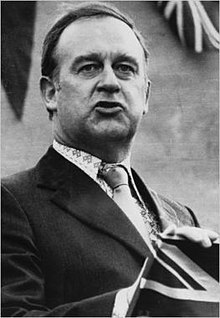
Monday 11 November 1996

Proposals for the joint marketing of tourism by Northern Ireland and the Republic of Ireland were attacked by the Democratic Unionist Party (DUP).

Wednesday 11 November 1998

The announcement that the Maze prison in County Antrim would close by the year 2000 if the Good Friday Agreement was fully implemented was greeted by anger by many Unionists.

[The closure of the Maze would have a large impact on security related jobs which are almost entirely held by Protestants.]

Joel Patton, then spokesman for the ‘Spirit of Drumcree’ group, was expelled from the Orange Order because of his outspoken criticism of William Bingham in July. Mary McAleese, then President of the Republic of Ireland, joined with Queen Elizabeth of England and King Albert of Belgium, at a ceremony in the Belgian village of Mesen (Messines Ridge) to commemorate the estimated 50,000 Irishmen (from north and south) who died during the first World War. The ceremony also marked the official opening of a peace tower (modelled on an Irish round tower) built by young people from the Republic of Ireland and Northern Ireland

Thursday 11 November 1999

Political talks that formed part of the Mitchell Review of the Agreement continued at Stormont in Belfast. There was speculation that a ‘sequence’ of events was being agreed which would include a Sinn Féin (SF) statement condemning violence and the appointment of an IRA interlocutor to negotiate with the Independent International Commission on Decommissioning (IICD) led by John de Chastelain. However Unionist opponents of the proposals said that it failed to guarantee short-term decommissioning. Ian Paisley, then leader of the Democratic Unionist Party (DUP), called on the Ulster Unionist Party (UUP) to overthrow David Trimble, then leader of the UUP, before he betrayed Unionists.

The Orange Order decided to halt disciplinary proceedings against Lord Dennis Rogan. Proceedings had been started because Rogan had attending the Catholic funeral of three victims of the Omagh bomb. Such participation in a Catholic ceremony is against the rules of the Orange Order.

Sunday 11 November 2001

Protestant Teenager Killed Glen Hugh Branagh (16), a Protestant teenager, was killed in north Belfast when a pipe-bomb he was holding exploded prematurely.

[It was later confirmed that Branagh was a member of the (Ulster) Young Militants (YM), the youth wing of the Ulster Defence Association (UDA). Members of YM were accused of killing a Protestant man, mistaken for a Catholic, during an attack on 31 March 2001.]

Police Service of Northern Ireland (PSNI) officers stated that during a riot a youth, wearing a distinctive top and mask, was seen as he was about to throw a pipe-bomb at the security forces on North Queen Street; the bomb went off while he was still holding it. The crowd then called the police officers forward to give medical assistance. Although treated at the scene Branagh died later in hospital. Two other men were injured in the explosion.

[Loyalists claimed that the bomb had been thrown by Nationalists and that Branagh had picked the device up. This claim was denied by PSNI officers who said they saw quite clearly what had happened.]

Prior to this incident there had been serious rioting in the area between rival Protestant and Catholic residents. Later in the evening there were further disturbances and police fired 9 plastic baton rounds. A Catholic girl (14) was injured when she was hit in the stomach by a plastic bullet.

Catholic residents also claimed that a boy (11) and a teenager (17) were also hit by plastic bullets. Twenty-four police officers and two British soldiers were injured during the rioting. There were several shooting incidents in Belfast during the evening and in the early hours of Monday 12 November 2001. A gunman fired a shot from a car at four youths sitting in a bus shelter on the Antrim Road, north Belfast. There were reports that a gunman had fired a shot into the Clarendon Bar, Garmoyle Street in the Docks area of Belfast at about 10.00pm (2200GMT). There were a series of events across Northern Ireland to mark Remembrance Day. Among the wreaths laid at memorials were, for the first time, ones on behalf of the Police Service of Northern Ireland (PSNI).

——————————————————-

———————————————————————————

Remembering all innocent victims of the Troubles

Today is the anniversary of the death of the following  people killed as a results of the conflict in Northern Ireland

“To live in hearts we leave behind is not to die

– Thomas Campbell

To the innocent on the list – Your memory will live  forever

– To  the Paramilitaries  –

There are many things worth living for, a few things worth dying for, but nothing worth killing for.

16  People lost their lives on the 11th November between 1971 – 2001

————————————————————

11 November 1971


Dermot Hurley,  (50)

Catholic
Status: Royal Ulster Constabulary (RUC),

Killed by: Irish Republican Army (IRA)
Shot while in shop at rear of Oldpark Royal Ulster Constabulary (RUC) base, Oldpark Road, Belfast.

————————————————————

11 November 1971


Walter Moore,  (37)

Protestant
Status: Royal Ulster Constabulary (RUC),

Killed by: Irish Republican Army (IRA)
Shot while in shop at rear of Oldpark Royal Ulster Constabulary (RUC) base, Oldpark Road, Belfast.

————————————————————

11 November 1972
Gerard Kelly,  (58)

Catholic
Status: Civilian (Civ),

Killed by: Red Hand Commando (RHC)
Shot at his newsagent’s shop, Crumlin Road, Belfast.

————————————————————

11 November 1975


John McAllister,  (19)

Catholic
Status: Civilian (Civ),

Killed by: Irish Republican Army (IRA)
Shot while standing at bus stop, Springfield Road, Ballymurphy, Belfast. A relative of a member of Republican Clubs. Official Irish Republican Army (OIRA) / Irish Republican Army (IRA) feud.

————————————————————

11 November 1975


Comgall Casey,   (18)

Catholic
Status: Civilian Political Activist (CivPA),

Killed by: Irish Republican Army (IRA)
Former Republican Clubs member. Shot at his workplace, joinery firm, Andersonstown, Belfast. Official Irish Republican Army (OIRA) / Irish Republican Army (IRA) feud.

————————————————————

11 November 1975

Owen McVeigh,  (28)

Catholic
Status: Civilian (Civ),

Killed by: Official Irish Republican Army (OIRA)
Shot at his home, Grosvenor Place, Lower Falls, Belfast. Mistaken for Irish Republican Army (IRA) member. Official Irish Republican Army (OIRA) / Irish Republican Army (IRA) feud

————————————————————

11 November 1975


John Brown,  (25)

Catholic
Status: Official Irish Republican Army (OIRA),

Killed by: Irish Republican Army (IRA)
Shot at his home, Cooke Place, off Ormeau Road, Belfast. Official Irish Republican Army (OIRA) / Irish Republican Army (IRA) feud.

————————————————————

11 November 1976
Patrick Smyth,  (24)

Catholic
Status: Civilian (Civ),

Killed by: non-specific Republican group (REP)
Shot while inside social club, Saul Street, Short Strand, Belfast.

————————————————————

11 November 1976
Winston McCaughey,  (33)

Protestant
Status: Ulster Defence Regiment (UDR),

Killed by: Irish Republican Army (IRA)
Off duty. Shot outside his home, Kilrea, County Derry.

————————————————————

11 November 1977
Patrick Shields,  (53)

Catholic
Status: Civilian (Civ),

Killed by: Irish Republican Army (IRA)
Killed in car bomb explosion, King Street, Belfast. Inadequate warning given.

————————————————————

11 November 1980
Owen McQuade, (31)

nfNI
Status: British Army (BA),

Killed by: Irish Republican Army (IRA)
Shot while sitting in stationary British Army (BA) minibus, main driveway of Altnagelvin Hospital, Derry.

————————————————————

11 November 1981


Cecil Graham,   (32)

Protestant
Status: Ulster Defence Regiment (UDR),

Killed by: Irish Republican Army (IRA)
Off duty. Died two days after being shot while leaving relative’s home, Lisnaskea, County Fermanagh.

————————————————————

11 November 1982


Eugene Toman,   (21)

Catholic
Status: Irish Republican Army (IRA),

Killed by: Royal Ulster Constabulary (RUC)
Shot by undercover Royal Ulster Constabulary (RUC) members at Vehicle Check Point (VCP), Tullygalley East Road, Craigavon, County Armagh.

————————————————————

11 November 1982


Sean Burns,  (21)

Catholic
Status: Irish Republican Army (IRA),

Killed by: Royal Ulster Constabulary (RUC)
Shot by undercover Royal Ulster Constabulary (RUC) members at Vehicle Check Point (VCP), Tullygalley East Road, Craigavon, County Armagh.

————————————————————

11 November 1982


Gervaise McKerr,  (31)

Catholic
Status: Irish Republican Army (IRA),

Killed by: Royal Ulster Constabulary (RUC)
Shot by undercover Royal Ulster Constabulary (RUC) members at Vehicle Check Point (VCP), Tullygalley East Road, Craigavon, County Armagh.

————————————————————

11 November 2001
Glen Branagh,  (16)

Protestant
Status: Ulster Defence Association (UDA),

Killed by: Ulster Defence Association (UDA)
Killed in premature explosion, while handling pipe-bomb, during street disturbances, North Queen Street, Tigers Bay, Belfast.

————————————————————


See below on how to order a copy of my No.1 Bestselling book: A Belfast Child