My nine year old son interrupted my sleep in this morning to inform me ( with attitude ) that there was nothing for breakfast. Strange thinks I as dragged myself out of bed ( its was only 9 O’clock on a Sunday morning for Christ’s sake) and checked for myself.
Nothing for breakfast – Really?
Well I was flabbergasted with the array of choice – there were eggs, bacon, beans, toast , fruit , croissants etc. and more Cereals than you could shake a stick at.
The dictator was killed along his mistress , Clara Petacci. Their bodies were taken to Milan from the Lecco district near Lake Como where they were arrested and killed.
According to the Times correspondent in Milan, the corpses of Mussolini, Petacci and 12 Fascists are on display in Piazzale Loreto “with ghastly promiscuity in the open square under the same fence against which one year ago 15 partisans had been shot by their own countrymen”.
Clara Petacci
One woman fired five shots into Mussolini’s body, according to Milan Radio, and shouted: “Five shots for my five assassinated sons!”
Other passers-by spat on the bodies
The executions are the first conspicuous demonstration of mob violence carried out by the partisans who until now have been kept under control by their leaders.
The partisan commander-in-chief General Raffaele Cadorna said such incidents were regrettable but desirable in this case as a way for the public to vent their anger against the former dictator and his cohorts.
Among the bodies were former general secretary of the Fascist Party, Roberto Farinacci and Carlo Scorza, former secretary of the party.
Mussolini was spotted heading towards Switzerland by an Italian customs guard at Dongo, near Lake Como. He was driving a car in a column of other German cars wearing a German greatcoat over his uniform.
Other members of his party were found in neighbouring villages.
It was in Milan that Mussolini founded Europe’s first fascist movement – Fasci di Combattimento – in 1919.
He came to power in 1922 after the so-called March on Rome.
By 1928 Mussolini was absolute dictator and took the title of Duce, leader, and embarked on an expansionist foreign policy taking Ethiopia in 1935 and annexing Albania in 1939. That same year Mussolini signed a Tripartite Pact with Adolf Hitler’s Germany and Imperial Japan.
After defeats in Greece, the Balkans, North Africa and Russia, Mussolini lost popularity. Then on 9 July 1943 the Allies landed in Sicily and Italy was faced with an invasion of its mainland.
Mussolini failed to secure assurances from Germany of adequate support against such an invasion and the Fascist Grand Council turned against him and had him arrested on 25 July.
Marshal Pietro Badoglio was appointed prime minister, dissolved fascist organisations and negotiated an armistice with the Allies.
Six weeks later the Germans launched a dramatic rescue of Mussolini. He was made head of the puppet republic of Salo – also known as the Italian Social Republic – once the Germans had occupied northern Italy in September 1943.
On 11 October 1943 the Badoglio government declared war on Germany
Leigh Day lawyers knew murder and torture claims against UK soldiers were false, tribunal hears.
Enemies of The State
(Left to right) Anna Crowther, Martyn Day and Sapna Malik arrive at the tribunal in London. Credit: PA
A leading law firm and three of its lawyers have been accused of allowing false claims of murder and torture to be made against British soldiers.
Martyn Day, the boss of Leigh Day solicitors, and two members of staff, Sapna Malik and Anna Crowther, all face charges linked to the alleged ambulance chasing in Iraq and the subsequent hounding of British soldiers.
It was alleged at a solicitors tribunal into their activities that over a period of seven years the three allowed the allegations to be made while knowing they were false.
The lawyers are said to have known their clients were members of the Shia militia, the Mahdi Army, and not “the innocent bystanders” that was later claimed.
As a result Leigh Day is accused of causing British soldiers and their families “years of torment”.
Soldiers were questioned over actions during the Battle of Danny Boy near Basra in 2004. Credit: PA
Outlining the case against them, Tim Dutton QC told the tribunal the reality was soldiers had fought valiantly after they had “been subjected to a murderous ambush”.
The events followed the Battle of Danny Boy near Basra in 2004.
Leigh Day are also accused of failing to disclose a document known as the ‘OMS list’ to other solicitors, the Ministry of Defence or the Al Sweady Inquiry, which investigated the allegations UK soldiers mistreated Iraqis.
This list showed the principal claimant, Kurd Al Sweady, and nine other claimants were all Mahdi Army members.
The Al Sweady inquiry found in 2014 the allegations were “wholly unfounded” and false.
If the list had been disclosed the inquiry, which cost £29 million of public money, “would have taken a very different course”.
Instead it was alleged Leigh Day ignored the evidence they were receiving about Kurd Al Sweady “because they regarded him as central to their success”.
It was claimed Leigh Day were very heavily invested in the Iraq business. In total the tribunal was told they had earned fees of £9.7 million.
To ensure they got the business, clients had to be referred to them. It is alleged they paid the equivalent of “bribes” to their agents in Iraq.
Leigh Day and three solicitors deny all 20 charges and say they will “strongly contest” the allegations.
The Battle of Danny Boy took place close to the city of Amarah in southern Iraq on 14 May 2004, between British soldiers and about 100 Iraqi insurgents of the Mahdi Army. The battle is named after a local British checkpoint called Danny Boy.
Battle
The insurgents ambushed a patrol of Argyll and Sutherland Highlanders close to a checkpoint known as Danny Boy near Majar al-Kabir. The Argylls called in reinforcements from the 1st Battalion of the Princess of Wales’s Royal Regiment; the latter were also ambushed and due to an electronic communications failure it was some time before further British relief arrived. While waiting for reinforcements the British were involved in one of the fiercest engagements they fought in Iraq. The fighting involved close-quarter rifle fire and bayonets.
The battle lasted for about three hours during which 28 Mahdi Army insurgents were killed; the British suffered some wounded, but none were killed in the action.
Aftermath
Sergeant Brian Wood, of the Princess of Wales’s Royal Regiment was awarded the Military Cross for his part in the battle.
On 25 November 2009, Bob Ainsworth, then the British Minister of State for the Armed Forces, announced that retired High Court judge Sir Thayne Forbes would chair the Al-Sweady Inquiry, after high court judges found that the MoD had committed “serious breaches” of its duty. It was alleged that 20 Iraqis, taken prisoner during the battle, were murdered and that others were tortured. The British Ministry of Defence denied that the 20 were captured, stating that 20 bodies were removed from the battlefield for identification and then returned to their families; a further nine were taken prisoner and held for questioning but were not mistreated.
In March 2013, Christopher Stanley of the UK-based Rights Watch group said that MoD was trying to get away with grave human rights violations – including killing – without punishment or due process of law.
On 4 March 2013 the hearings of the Al-Sweady Public Inquiry opened in London. On 20 March 2014 Public Interest Lawyers, a British law firm acting for the families of the dead Iraqis, announced that they were withdrawing the allegations against British soldiers. They accepted that there was no evidence that the Iraqis had been alive when taken into the British compound.
On 17 December 2014 the inquiry, which cost £31 million, returned its findings. It found that no prisoners had been murdered, nor that their bodies had been mutilated. However, the enquiry did find that British soldiers mistreated nine Iraqi prisoners, but not deliberately. It stated that the ill-treatment was much milder than the initial accusations of torture, mutilation and murder. Sir Thayne said that the “most serious allegations” which “have been hanging over [the British] soldiers for the past 10 years” have been found to be “without foundation”.
The inquiry found that the allegations made by the Iraqis and their lawyers were based on “deliberate lies, reckless speculation and ingrained hostility”. As a result of the inquiry’s findings Public Interest Lawyers and Leigh Day, another firm involved in cases against British troops, were referred to the Solicitors Regulatory Authority. In August 2016 Public Interest Lawyers went out of business, while the British government announced it would take steps to prevent further spurious claims against troops.
In December 2016 Professor Phil Shiner, head of Public Interest Lawyers, admitted guilt in relation to claims of wrongdoing by British troops in the context of professional misconduct proceedings. He was struck off the roll of solicitors by the Solicitors Disciplinary Tribunal in February 2017.
Enoch Powell‘s 20 April 1968 address to the General Meeting of the West Midlands Area Conservative Political Centre was a speech criticising Commonwealth immigration to the United Kingdom and the then-proposed Race Relations Bill. Powell (1912–1998) was the ConservativeMember of Parliament for Wolverhampton South West. He referred to the speech as “the Birmingham speech” but it is otherwise known as the “Rivers of Blood” speech, an allusion to a line from Virgil‘s Aeneid (“As I look ahead, I am filled with foreboding; like the Roman, I seem to see the River Tiber foaming with much blood“), although the expression “rivers of blood” does not appear in Powell’s address.
The speech caused a political storm, making Powell one of the most talked about, and divisive, politicians in the country, and leading to his controversial dismissal from the Shadow Cabinet by Conservative Party leader Edward Heath.
According to most accounts, the popularity of Powell’s perspective on immigration may have played a decisive contributory factor in the Conservatives’ surprise victory in the 1970 general election, and he became one of the most persistent rebels opposing the subsequent Heath government.
The Birmingham-based television company ATV saw an advance copy of the speech on the Saturday morning, and its news editor ordered a television crew to go to the venue, where they filmed sections of the speech. Earlier in the week, Powell said to his friend Clement (Clem) Jones, a journalist and then editor at the WolverhamptonExpress & Star, “I’m going to make a speech at the weekend and it’s going to go up ‘fizz’ like a rocket; but whereas all rockets fall to the earth, this one is going to stay up.”
In preparing his speech, Powell had applied Clem Jones’ advice that to make hard-hitting political speeches and short-circuit interference from his party organisation, his best timing was on Saturday afternoons, after delivering embargoed copies the previous Thursday or Friday to selected editors and political journalists of Sunday newspapers; this tactic could ensure coverage of the speech over three days through Saturday evening bulletins then Sunday newspapers, so that the coverage would be picked up in Monday newspapers.
Speech
Powell recounted a conversation with one of his constituents, a middle-aged working man, a few weeks earlier. Powell said that the man told him: “If I had the money to go, I wouldn’t stay in this country… I have three children, all of them been through grammar school and two of them married now, with family. I shan’t be satisfied till I have seen them all settled overseas.
” The man finished by saying to Powell: “In this country in 15 or 20 years’ time the black man will have the whip hand over the white man.”
Powell went on:
“
Here is a decent, ordinary fellow Englishman, who in broad daylight in my own town says to me, his Member of Parliament, that the country will not be worth living in for his children. I simply do not have the right to shrug my shoulders and think about something else. What he is saying, thousands and hundreds of thousands are saying and thinking – not throughout Great Britain, perhaps, but in the areas that are already undergoing the total transformation to which there is no parallel in a thousand years of English history. We must be mad, literally mad, as a nation to be permitting the annual inflow of some 50,000 dependents, who are for the most part the material of the future growth of the immigrant descended population.
It is like watching a nation busily engaged in heaping up its own funeral pyre. So insane are we that we actually permit unmarried persons to immigrate for the purpose of founding a family with spouses and fiancées whom they have never seen.
”
Powell quoted a letter he received from a woman in Northumberland, about an elderly woman living on a Wolverhampton street where she was the only white resident. The elderly woman had lost her husband and her two sons in World War II and had rented out the rooms in her house. Once immigrants had moved into the street she was living in, her white lodgers left. Two black men had knocked on her door at 7:00 am to use her telephone to call their employers, but she refused, as she would have done to any other stranger knocking at her door at such an hour, and was subsequently verbally abused.
The woman had asked her local authority for a rates reduction, but was told by a council officer to let out the rooms of her house. When the woman said the only tenants would be black, the council officer replied: “Racial prejudice won’t get you anywhere in this country.”
He advocated voluntary re-emigration by “generous grants and assistance” and he mentioned that immigrants had asked him whether it was possible. Powell said that all citizens should be equal before the law, and that:
“
This does not mean that the immigrant and his descendants should be elevated into a privileged or special class or that the citizen should be denied his right to discriminate in the management of his own affairs between one fellow-citizen and another or that he should be subjected to an inquisition as to his reasons and motives for behaving in one lawful manner rather than another.
”
He argued that journalists who urged the government to pass anti-discrimination laws were “of the same kidney and sometimes on the same newspapers which year after year in the 1930s tried to blind this country to the rising peril which confronted it”. Powell said that such legislation would be used to discriminate against the indigenous population and that it would be like “throwing a match on to gunpowder.”
Powell described what he perceived to be the evolving position of the indigenous population:
“
For reasons which they could not comprehend, and in pursuance of a decision by default, on which they were never consulted, they found themselves made strangers in their own country. They found their wives unable to obtain hospital beds in childbirth, their children unable to obtain school places, their homes and neighbourhoods changed beyond recognition, their plans and prospects for the future defeated; at work they found that employers hesitated to apply to the immigrant worker the standards of discipline and competence required of the native-born worker; they began to hear, as time went by, more and more voices which told them that they were now the unwanted. On top of this, they now learn that a one-way privilege is to be established by Act of Parliament; a law which cannot, and is not intended to, operate to protect them or redress their grievances, is to be enacted to give the stranger, the disgruntled and the agent provocateur the power to pillory them for their private actions.
”
Powell argued that he felt that although “many thousands” of immigrants wanted to integrate, he felt that the majority did not, and that some had vested interests in fostering racial and religious differences “with a view to the exercise of actual domination, first over fellow-immigrants and then over the rest of the population”
Powell’s peroration of the speech gave rise to its popular title. He quotes the Sibyl‘s prophecy in the epic poem Aeneid, 6, 86–87, of “wars, terrible wars, / and the Tiber foaming with much blood.”
“
As I look ahead, I am filled with foreboding. Like the Roman, I seem to see “the River Tiber foaming with much blood”. That tragic and intractable phenomenon which we watch with horror on the other side of the Atlantic but which there is interwoven with the history and existence of the States itself, is coming upon us here by our own volition and our own neglect. Indeed, it has all but come. In numerical terms, it will be of American proportions long before the end of the century. Only resolute and urgent action will avert it even now. Whether there will be the public will to demand and obtain that action, I do not know. All I know is that to see, and not to speak, would be the great betrayal.
The Birmingham-based television company ATV saw an advance copy of the speech on the Saturday morning, and its news editor ordered a television crew to go to the venue, where they filmed sections of the speech. Earlier in the week, Powell said to his friend Clement (Clem) Jones, a journalist and then editor at the WolverhamptonExpress & Star,
“I’m going to make a speech at the weekend and it’s going to go up ‘fizz’ like a rocket; but whereas all rockets fall to the earth, this one is going to stay up.”
n preparing his speech, Powell had applied Clem Jones’ advice that to make hard-hitting political speeches and short-circuit interference from his party organisation, his best timing was on Saturday afternoons, after delivering embargoed copies the previous Thursday or Friday to selected editors and political journalists of Sunday newspapers; this tactic could ensure coverage of the speech over three days through Saturday evening bulletins then Sunday newspapers, so that the coverage would be picked up in Monday newspapers.
Speech
Powell recounted a conversation with one of his constituents, a middle-aged working man, a few weeks earlier. Powell said that the man told him: “If I had the money to go, I wouldn’t stay in this country… I have three children, all of them been through grammar school and two of them married now, with family. I shan’t be satisfied till I have seen them all settled overseas.” The man finished by saying to Powell:
“In this country in 15 or 20 years’ time the black man will have the whip hand over the white man.”
Powell went on:
“
Here is a decent, ordinary fellow Englishman, who in broad daylight in my own town says to me, his Member of Parliament, that the country will not be worth living in for his children. I simply do not have the right to shrug my shoulders and think about something else. What he is saying, thousands and hundreds of thousands are saying and thinking – not throughout Great Britain, perhaps, but in the areas that are already undergoing the total transformation to which there is no parallel in a thousand years of English history. We must be mad, literally mad, as a nation to be permitting the annual inflow of some 50,000 dependents, who are for the most part the material of the future growth of the immigrant descended population. It is like watching a nation busily engaged in heaping up its own funeral pyre. So insane are we that we actually permit unmarried persons to immigrate for the purpose of founding a family with spouses and fiancées whom they have never seen.
”
Powell quoted a letter he received from a woman in Northumberland, about an elderly woman living on a Wolverhampton street where she was the only white resident. The elderly woman had lost her husband and her two sons in World War II and had rented out the rooms in her house. Once immigrants had moved into the street she was living in, her white lodgers left. Two black men had knocked on her door at 7:00 am to use her telephone to call their employers, but she refused, as she would have done to any other stranger knocking at her door at such an hour, and was subsequently verbally abused.
The woman had asked her local authority for a rates reduction, but was told by a council officer to let out the rooms of her house. When the woman said the only tenants would be black, the council officer replied: “Racial prejudice won’t get you anywhere in this country.”
He advocated voluntary re-emigration by “generous grants and assistance” and he mentioned that immigrants had asked him whether it was possible. Powell said that all citizens should be equal before the law, and that:
“
This does not mean that the immigrant and his descendants should be elevated into a privileged or special class or that the citizen should be denied his right to discriminate in the management of his own affairs between one fellow-citizen and another or that he should be subjected to an inquisition as to his reasons and motives for behaving in one lawful manner rather than another.
”
He argued that journalists who urged the government to pass anti-discrimination laws were “of the same kidney and sometimes on the same newspapers which year after year in the 1930s tried to blind this country to the rising peril which confronted it”. Powell said that such legislation would be used to discriminate against the indigenous population and that it would be like “throwing a match on to gunpowder.”[8] Powell described what he perceived to be the evolving position of the indigenous population:
“
For reasons which they could not comprehend, and in pursuance of a decision by default, on which they were never consulted, they found themselves made strangers in their own country. They found their wives unable to obtain hospital beds in childbirth, their children unable to obtain school places, their homes and neighbourhoods changed beyond recognition, their plans and prospects for the future defeated; at work they found that employers hesitated to apply to the immigrant worker the standards of discipline and competence required of the native-born worker; they began to hear, as time went by, more and more voices which told them that they were now the unwanted. On top of this, they now learn that a one-way privilege is to be established by Act of Parliament; a law which cannot, and is not intended to, operate to protect them or redress their grievances, is to be enacted to give the stranger, the disgruntled and the agent provocateur the power to pillory them for their private actions.
”
Powell argued that he felt that although “many thousands” of immigrants wanted to integrate, he felt that the majority did not, and that some had vested interests in fostering racial and religious differences
“with a view to the exercise of actual domination, first over fellow-immigrants and then over the rest of the population”.
Powell’s peroration of the speech gave rise to its popular title. He quotes the Sibyl‘s prophecy in the epic poem Aeneid, 6, 86–87, of “wars, terrible wars, / and the Tiber foaming with much blood.”
“
As I look ahead, I am filled with foreboding. Like the Roman, I seem to see “the River Tiber foaming with much blood”. That tragic and intractable phenomenon which we watch with horror on the other side of the Atlantic but which there is interwoven with the history and existence of the States itself, is coming upon us here by our own volition and our own neglect. Indeed, it has all but come. In numerical terms, it will be of American proportions long before the end of the century. Only resolute and urgent action will avert it even now. Whether there will be the public will to demand and obtain that action, I do not know. All I know is that to see, and not to speak, would be the great betrayal.
Reaction
Political
According to C. Howard Wheeldon, who was present at the meeting in which Powell gave the speech, “it is fascinating to note what little hostility emerged from the audience. To the best of my memory, only one person voiced any sign of annoyance.”
The day after the speech Powell went to Sunday Communion at his local church and when he emerged there was a crowd of journalists and a local plasterer (Sidney Miller) said to Powell: “Well done, sir. It needed to be said.”
Powell asked the assembled journalists: “Have I really caused such a furore?” At midday Powell went on the BBC‘s World This Weekend to defend his speech and he appeared later that day on ITN news.
The flag of racialism which has been hoisted in Wolverhampton is beginning to look like the one that fluttered 25 years ago over Dachau and Belsen. If we do not speak up now against the filthy and obscene racialist propaganda … the forces of hatred will mark up their first success and mobilise their first offensive. … Enoch Powell has emerged as the real leader of the Conservative Party. He is a far stronger character than Mr. Heath. He speaks his mind; Heath does not. The final proof of Powell’s power is that Heath dare not attack him publicly, even when he says things that disgust decent Conservatives.
”
The leading Conservatives in the Shadow Cabinet were outraged by the speech. Iain Macleod, Edward Boyle, Quintin Hogg and Robert Carr all threatened to resign from the front bench unless Powell was sacked. Margaret Thatcher thought that some of Powell’s speech was “strong meat”, and said to Heath when he telephoned her to inform her Powell was to be sacked: “I really thought that it was better to let things cool down for the present rather than heighten the crisis”. The Conservative leader, Edward Heath, sacked Powell from his post as Shadow Defence Secretary, telling him on the telephone that Sunday evening (it was the last conversation they would have).
Heath said of the speech in public that it was “racialist in tone and liable to exacerbate racial tensions”. Conservative MPs on the right of the party—Duncan Sandys, Gerald Nabarro, Teddy Taylor—spoke against Powell’s sacking. On 22 April 1968, Heath went on Panorama, telling Robin Day: “I dismissed Mr Powell because I believed his speech was inflammatory and liable to damage race relations. I am determined to do everything I can to prevent racial problems developing into civil strife… I don’t believe the great majority of the British people share Mr Powell’s way of putting his views in his speech.”
The Times newspaper declared it “an evil speech”, stating “This is the first time that a serious British politician has appealed to racial hatred in this direct way in our postwar history.” The Times went on to record incidents of racial attacks in the immediate aftermath of Powell’s speech. One such incident, reported under the headline “Coloured family attacked”, took place on 30 April 1968 in Wolverhampton itself: it involved a slashing incident with 14 white youths chanting “Powell” and “Why don’t you go back to your own country?” at patrons of a West Indian christening party. One of the West Indian victims, Wade Crooks of Lower Villiers Street, was the child’s grandfather. He had to have eight stitches over his left eye. He was reported as saying,
“I have been here since 1955 and nothing like this has happened before. I am shattered.”
An opinion poll commissioned by the BBC television programme Panorama in December 1968 found that eight per cent of immigrants believed that they had been treated worse by white people since Powell’s speech, 38 per cent would like to return to their country of origin if offered financial help, and 47 per cent supported immigration control, with 30 per cent opposed.
The speech generated much correspondence to newspapers, most markedly with the Express & Star in Wolverhampton itself, whose local sorting office over the following week received 40,000 postcards and 8,000 letters addressed to its local newspaper. Clem Jones recalled:
“
Ted Heath made a martyr out of Enoch, but as far as Express & Star’s circulation area was concerned, virtually the whole area was determined to make a saint out of him. From the Tuesday through to the end of the week, I had ten, fifteen to twenty bags full of readers’ letters: 95 per cent of them were pro-Enoch.
”
At the end of that week there were two simultaneous processions in Wolverhampton, one of Powell’s supporters and another of opponents, who each brought petitions to Clem Jones outside his office, the two columns being kept apart by police.
Earlier that day, 1,000 London dockers had gone on strike in protest of Powell’s sacking and marched from the East End to the Palace of Westminster carrying placards saying “Don’t knock Enoch” and “Back Britain, not Black Britain”. Three hundred of them went into the palace, 100 to lobby the MP for Stepney, Peter Shore, and 200 to lobby the MP for Poplar, Ian Mikardo. Shore and Mikardo were shouted down and some dockers kicked Mikardo. Lady Gaitskell shouted:
“You will have your remedy at the next election.” The dockers replied: “We won’t forget.”
The organiser of the strike, Harry Pearman, headed a delegation to meet Powell and said after: “I have just met Enoch Powell and it made me feel proud to be an Englishman. He told me that he felt that if this matter was swept under the rug he would lift the rug and do the same again. We are representatives of the working man. We are not racialists.”
On 24 April 600 dockers at St Katharine Docks voted to strike and numerous smaller factories across the country followed. Six hundred Smithfield meat porters struck and marched to Westminster and handed Powell a 92-page petition supporting him. Powell advised against strike action and asked them to write to Harold Wilson, Heath or their MP. However, strikes continued, reaching Tilbury by 25 April and he allegedly received his 30,000th letter supporting him, with 30 protesting against his speech. By 27 April, 4,500 dockers were on strike. On 28 April, 1,500 people marched to Downing Street chanting “Arrest Enoch Powell”.
Powell claimed to have received 43,000 letters and 700 telegrams supporting him by early May, with 800 letters and four telegrams against. On 2 May, the attorney-general, Sir Elwyn Jones, announced he would not prosecute Powell after consulting the director of public prosecutions.
The Gallup Organization took an opinion poll at the end of April and found that 74 per cent agreed with what Powell had said in his speech; 15 per cent disagreed. 69 per cent felt Heath was wrong to sack Powell and 20 per cent believed Heath was right. Before his speech Powell was favoured to replace Heath as Conservative leader by one per cent, with Reginald Maudling favoured by 20 per cent; after his speech 24 per cent favoured Powell and 18 per cent Maudling. 83 per cent now felt immigration should be restricted (75 per cent before the speech) and 65 per cent favoured anti-discrimination legislation.
Powell defended his speech on 4 May through an interview for the Birmingham Post: “What I would take ‘racialist’ to mean is a person who believes in the inherent inferiority of one race of mankind to another, and who acts and speaks in that belief. So the answer to the question of whether I am a racialist is ‘no’—unless, perhaps, it is to be a racialist in reverse. I regard many of the peoples in India as being superior in many respects—intellectually, for example, and in other respects—to Europeans. Perhaps that is over-correcting.”
According to most accounts, the popularity of Powell’s perspective on race may have played a decisive contributory factor in the Conservatives’ surprise victory in the 1970 general election, although Powell became one of the most persistent rebels opposing the subsequent Heath government.
In “exhaustive research” on the election, the American pollster Douglas Schoen and University of Oxford academic R. W. Johnson believed it “beyond dispute” that Powell had attracted 2.5 million votes to the Conservatives, but nationally the Conservative vote had increased by only 1.7 million since 1966.
In his own constituency at that election – his last in Wolverhampton – his majority of 26,220 and a 64.3 per cent share of the vote were then the highest of his career.
Cultural
Powell was mentioned in early versions of the song “Get Back” by the Beatles.
On 5 August 1976, Eric Clapton provoked an uproar and lingering controversy when he spoke out against increasing immigration during a concert in Birmingham. Visibly intoxicated, Clapton voiced his support of the controversial speech, and announced on stage that Britain was in danger of becoming a “black colony”. Among other things, Clapton said “Keep Britain white!” which was at the time a British National Front slogan.
In November 2010, the actor and comedian Sanjeev Bhaskar recalled the fear which the speech instilled in Britons of Indian origin: “At the end of the 1960s, Enoch Powell was quite a frightening figure to us. He was the one person who represented an enforced ticket out, so we always had suitcases that were ready and packed. My parents held the notion that we may have to leave.”
Whilst a section of the white population appeared to warm to Powell over the speech, the author Mike Phillips recalls that it legitimised hostility, and even violence, towards black Britons like himself.
In his book The British Dream (2013), David Goodhart claims that Powell’s speech in effect “put back by more than a generation a robust debate about the successes and failures of immigration”.
“
Just when a discussion should have been starting about integration, racial justice, and distinguishing the reasonable from the racist complaints of the white people whose communities were being transformed, he polarised the argument and closed it down.
”
Identity of the woman mentioned in the speech
After Powell delivered the speech, there were attempts to locate the Wolverhampton constituent whom Powell described as being victimised by non-white residents. Despite combing the electoral register and other sources, the editor of the local Wolverhampton newspaper the Express & Star, Clem Jones (a close friend of Powell who broke off relations with him over the controversy) failed to identify the woman.
Shortly after Powell’s death, Kenneth Nock, a Wolverhampton solicitor, wrote to the Express and Star in April 1998 to claim that his firm had acted for the woman in question, but that he could not name her owing to rules concerning client confidentiality. In January 2007, the BBC Radio Four programme Document, followed by the Daily Mail, claimed to have uncovered the woman’s identity. They said she was Druscilla Cotterill (1907–1978), the widow of Harry Cotterill, a battery quartermaster sergeant with the Royal Artillery who had been killed in World War II (and second cousin of Mark Cotterill, a figure in British far-right politics).
She lived in Brighton Place in Wolverhampton, which by the 1960s was dominated by immigrant families. In order to increase her income, she rented rooms to lodgers, but did not wish to rent rooms to West Indians and stopped taking in any lodgers when the Race Relations Act 1968 banned racial discrimination in housing. She locked up the spare rooms and lived only in two rooms of the house. According to those who remember the period, the many children in the street regarded her as a figure of fun and taunted her.
Support for the speech
In the United Kingdom, particularly in England, “Enoch [Powell] was right” is a phrase of political rhetoric, inviting comparison of aspects of contemporary English society with the predictions made by Powell in the “Rivers of Blood” speech. The phrase implies criticism of racial quotas, immigration and multiculturalism. Badges, T-shirts and other items bearing the slogan have been produced at different times in the United Kingdom. Powell gained support from both right-wing and traditionally left-leaning, working-class voters for his anti-immigration stance.
Powell gained the support of the far-right in Britain. Badges, T-shirts and fridge magnets emblazoned with the slogan “Enoch was right” are regularly seen at far-right demonstrations, according to VICE News, and sample recordings of Powell speeches feature heavily in the music of the neo-Nazi hardcore band Of Wolves and Angels.
Powell also has a presence on social media, with an Enoch Powell page on Facebook run by the far-right Traditional Britain Group amassed several thousands of likes, and similar pages which post “racist memes and Daily Mail stories” have been equally successful, such as British nationalist and anti-immigration Britain First‘s Facebook page.
In The Trial of Enoch Powell, a Channel 4 television broadcast in April 1998, on the thirtieth anniversary of his Rivers of Blood speech (and two months after his death), 64% of the studio audience voted that Powell was not a racist. Some in the Church of England, of which Powell had been a member, took a different view. Upon Powell’s death, Barbados-born Wilfred Wood, then Bishop of Croydon, stated, “Enoch Powell gave a certificate of respectability to white racist views which otherwise decent people were ashamed to acknowledge”.
In November 2007, Nigel Hastilow resigned as Conservative candidate for Halesowen and Rowley Regis after he wrote an article in the Wolverhampton Express & Star that included the statement: “Enoch, once MP for Wolverhampton South-West, was sacked from the Conservative front bench and marginalised politically for his 1968 ‘rivers of blood’ speech, warning that uncontrolled immigration would change Britain irrevocably. He was right and immigration has changed the face of Britain dramatically”.
In January 2014, UK Independence Party leader Nigel Farage stated that ‘the basic principle’ of one passage of the speech which had been read to him was ‘right’. In June of that year, in response to an Islamist plot to infiltrate schools in Birmingham, Conservative peer and former minister Norman Tebbit wrote in The Daily Telegraph “No one should have been surprised at what was going on in schools in Birmingham. It is precisely what I was talking about over 20 years ago and Enoch Powell was warning against long before that.
We have imported far too many immigrants who have come here not to live in our society, but to replicate here the society of their homelands”. Conservative MP Gerald Howarth said on the same issue “Clearly, the arrival of so many people of non-Christian faith has presented a challenge, as so many of us, including the late Enoch Powell, warned decades ago”.
In March 2016, German writer Michael Stürmer wrote a retrospective pro-Powell piece in Die Welt, opining that nobody else had been “punished so mercilessly” by fellow party members and media for their viewpoints.
Acknowledgement from politicians
In an interview for Today shortly after her departure from office as Prime Minister in 1991, Margaret Thatcher said that Powell had “made a valid argument, if in sometimes regrettable terms.”
Thirty years after the speech, Edward Heath said that Powell’s remarks on the “economic burden of immigration” had been “not without prescience.”
The Labour Party MP Michael Foot remarked to a reporter that it was “tragic” that this “outstanding personality” had been widely misunderstood as predicting actual bloodshed in Britain, when in fact he had used the Aeneid quotation merely to communicate his own sense of foreboding.
Dramatic portrayals
The speech is the subject of a play, What Shadows, written by Chris Hannan. The play was staged in Birmingham from 27 October to 12 November 2016, with Powell portrayed by Ian McDiarmid and Clem Jones by George Costigan.[
The Birmingham-based television company ATV saw an advance copy of the speech on the Saturday morning, and its news editor ordered a television crew to go to the venue, where they filmed sections of the speech. Earlier in the week, Powell said to his friend Clement (Clem) Jones, a journalist and then editor at the WolverhamptonExpress & Star, “I’m going to make a speech at the weekend and it’s going to go up ‘fizz’ like a rocket; but whereas all rockets fall to the earth, this one is going to stay up.”
In preparing his speech, Powell had applied Clem Jones’ advice that to make hard-hitting political speeches and short-circuit interference from his party organisation, his best timing was on Saturday afternoons, after delivering embargoed copies the previous Thursday or Friday to selected editors and political journalists of Sunday newspapers; this tactic could ensure coverage of the speech over three days through Saturday evening bulletins then Sunday newspapers, so that the coverage would be picked up in Monday newspapers.
Speech
Powell recounted a conversation with one of his constituents, a middle-aged working man, a few weeks earlier. Powell said that the man told him: “If I had the money to go, I wouldn’t stay in this country… I have three children, all of them been through grammar school and two of them married now, with family. I shan’t be satisfied till I have seen them all settled overseas.” The man finished by saying to Powell: “In this country in 15 or 20 years’ time the black man will have the whip hand over the white man.”
Powell went on:
“
Here is a decent, ordinary fellow Englishman, who in broad daylight in my own town says to me, his Member of Parliament, that the country will not be worth living in for his children. I simply do not have the right to shrug my shoulders and think about something else. What he is saying, thousands and hundreds of thousands are saying and thinking – not throughout Great Britain, perhaps, but in the areas that are already undergoing the total transformation to which there is no parallel in a thousand years of English history. We must be mad, literally mad, as a nation to be permitting the annual inflow of some 50,000 dependents, who are for the most part the material of the future growth of the immigrant descended population. It is like watching a nation busily engaged in heaping up its own funeral pyre. So insane are we that we actually permit unmarried persons to immigrate for the purpose of founding a family with spouses and fiancées whom they have never seen.
”
Powell quoted a letter he received from a woman in Northumberland, about an elderly woman living on a Wolverhampton street where she was the only white resident. The elderly woman had lost her husband and her two sons in World War II and had rented out the rooms in her house. Once immigrants had moved into the street she was living in, her white lodgers left. Two black men had knocked on her door at 7:00 am to use her telephone to call their employers, but she refused, as she would have done to any other stranger knocking at her door at such an hour, and was subsequently verbally abused.
The woman had asked her local authority for a rates reduction, but was told by a council officer to let out the rooms of her house. When the woman said the only tenants would be black, the council officer replied: “Racial prejudice won’t get you anywhere in this country.”
He advocated voluntary re-emigration by “generous grants and assistance” and he mentioned that immigrants had asked him whether it was possible. Powell said that all citizens should be equal before the law, and that:
“
This does not mean that the immigrant and his descendants should be elevated into a privileged or special class or that the citizen should be denied his right to discriminate in the management of his own affairs between one fellow-citizen and another or that he should be subjected to an inquisition as to his reasons and motives for behaving in one lawful manner rather than another.
”
He argued that journalists who urged the government to pass anti-discrimination laws were “of the same kidney and sometimes on the same newspapers which year after year in the 1930s tried to blind this country to the rising peril which confronted it”. Powell said that such legislation would be used to discriminate against the indigenous population and that it would be like “throwing a match on to gunpowder.”
Powell described what he perceived to be the evolving position of the indigenous population:
“
For reasons which they could not comprehend, and in pursuance of a decision by default, on which they were never consulted, they found themselves made strangers in their own country. They found their wives unable to obtain hospital beds in childbirth, their children unable to obtain school places, their homes and neighbourhoods changed beyond recognition, their plans and prospects for the future defeated; at work they found that employers hesitated to apply to the immigrant worker the standards of discipline and competence required of the native-born worker; they began to hear, as time went by, more and more voices which told them that they were now the unwanted. On top of this, they now learn that a one-way privilege is to be established by Act of Parliament; a law which cannot, and is not intended to, operate to protect them or redress their grievances, is to be enacted to give the stranger, the disgruntled and the agent provocateur the power to pillory them for their private actions.
”
Powell argued that he felt that although “many thousands” of immigrants wanted to integrate, he felt that the majority did not, and that some had vested interests in fostering racial and religious differences “with a view to the exercise of actual domination, first over fellow-immigrants and then over the rest of the population”. Powell’s peroration of the speech gave rise to its popular title. He quotes the Sibyl‘s prophecy in the epic poem Aeneid, 6, 86–87, of “wars, terrible wars, / and the Tiber foaming with much blood.”
“
As I look ahead, I am filled with foreboding. Like the Roman, I seem to see “the River Tiber foaming with much blood”. That tragic and intractable phenomenon which we watch with horror on the other side of the Atlantic but which there is interwoven with the history and existence of the States itself, is coming upon us here by our own volition and our own neglect. Indeed, it has all but come. In numerical terms, it will be of American proportions long before the end of the century. Only resolute and urgent action will avert it even now. Whether there will be the public will to demand and obtain that action, I do not know. All I know is that to see, and not to speak, would be the great betrayal.
”
Reaction
Political
According to C. Howard Wheeldon, who was present at the meeting in which Powell gave the speech, “it is fascinating to note what little hostility emerged from the audience. To the best of my memory, only one person voiced any sign of annoyance.” The day after the speech Powell went to Sunday Communion at his local church and when he emerged there was a crowd of journalists and a local plasterer (Sidney Miller) said to Powell: “Well done, sir. It needed to be said.”
Powell asked the assembled journalists: “Have I really caused such a furore?” At midday Powell went on the BBC‘s World This Weekend to defend his speech and he appeared later that day on ITN news.
The flag of racialism which has been hoisted in Wolverhampton is beginning to look like the one that fluttered 25 years ago over Dachau and Belsen. If we do not speak up now against the filthy and obscene racialist propaganda … the forces of hatred will mark up their first success and mobilise their first offensive. … Enoch Powell has emerged as the real leader of the Conservative Party. He is a far stronger character than Mr. Heath. He speaks his mind; Heath does not. The final proof of Powell’s power is that Heath dare not attack him publicly, even when he says things that disgust decent Conservatives.
”
The leading Conservatives in the Shadow Cabinet were outraged by the speech. Iain Macleod, Edward Boyle, Quintin Hogg and Robert Carr all threatened to resign from the front bench unless Powell was sacked. Margaret Thatcher thought that some of Powell’s speech was “strong meat”, and said to Heath when he telephoned her to inform her Powell was to be sacked: “I really thought that it was better to let things cool down for the present rather than heighten the crisis”.
The Conservative leader, Edward Heath, sacked Powell from his post as Shadow Defence Secretary, telling him on the telephone that Sunday evening (it was the last conversation they would have). Heath said of the speech in public that it was “racialist in tone and liable to exacerbate racial tensions”. Conservative MPs on the right of the party—Duncan Sandys, Gerald Nabarro, Teddy Taylor—spoke against Powell’s sacking.
On 22 April 1968, Heath went on Panorama, telling Robin Day: “I dismissed Mr Powell because I believed his speech was inflammatory and liable to damage race relations. I am determined to do everything I can to prevent racial problems developing into civil strife… I don’t believe the great majority of the British people share Mr Powell’s way of putting his views in his speech.”
The Times newspaper declared it “an evil speech”, stating “This is the first time that a serious British politician has appealed to racial hatred in this direct way in our postwar history.” The Times went on to record incidents of racial attacks in the immediate aftermath of Powell’s speech. One such incident, reported under the headline “Coloured family attacked”, took place on 30 April 1968 in Wolverhampton itself: it involved a slashing incident with 14 white youths chanting “Powell” and “Why don’t you go back to your own country?” at patrons of a West Indian christening party. One of the West Indian victims, Wade Crooks of Lower Villiers Street, was the child’s grandfather.
He had to have eight stitches over his left eye. He was reported as saying, “I have been here since 1955 and nothing like this has happened before. I am shattered.” An opinion poll commissioned by the BBC television programme Panorama in December 1968 found that eight per cent of immigrants believed that they had been treated worse by white people since Powell’s speech, 38 per cent would like to return to their country of origin if offered financial help, and 47 per cent supported immigration control, with 30 per cent opposed.
The speech generated much correspondence to newspapers, most markedly with the Express & Star in Wolverhampton itself, whose local sorting office over the following week received 40,000 postcards and 8,000 letters addressed to its local newspaper. Clem Jones recalled:
“
Ted Heath made a martyr out of Enoch, but as far as Express & Star’s circulation area was concerned, virtually the whole area was determined to make a saint out of him. From the Tuesday through to the end of the week, I had ten, fifteen to twenty bags full of readers’ letters: 95 per cent of them were pro-Enoch.
”
At the end of that week there were two simultaneous processions in Wolverhampton, one of Powell’s supporters and another of opponents, who each brought petitions to Clem Jones outside his office, the two columns being kept apart by police.
Powell was present for the debate but did not speak.
Earlier that day, 1,000 London dockers had gone on strike in protest of Powell’s sacking and marched from the East End to the Palace of Westminster carrying placards saying “Don’t knock Enoch” and “Back Britain, not Black Britain”. Three hundred of them went into the palace, 100 to lobby the MP for Stepney, Peter Shore, and 200 to lobby the MP for Poplar, Ian Mikardo. Shore and Mikardo were shouted down and some dockers kicked Mikardo. Lady Gaitskell shouted:
“You will have your remedy at the next election.” The dockers replied: “We won’t forget.”
The organiser of the strike, Harry Pearman, headed a delegation to meet Powell and said after: “I have just met Enoch Powell and it made me feel proud to be an Englishman. He told me that he felt that if this matter was swept under the rug he would lift the rug and do the same again. We are representatives of the working man. We are not racialists.”
On 24 April 600 dockers at St Katharine Docks voted to strike and numerous smaller factories across the country followed. Six hundred Smithfield meat porters struck and marched to Westminster and handed Powell a 92-page petition supporting him. Powell advised against strike action and asked them to write to Harold Wilson, Heath or their MP. However, strikes continued, reaching Tilbury by 25 April and he allegedly received his 30,000th letter supporting him, with 30 protesting against his speech. By 27 April, 4,500 dockers were on strike.
On 28 April, 1,500 people marched to Downing Street chanting “Arrest Enoch Powell”.
Powell claimed to have received 43,000 letters and 700 telegrams supporting him by early May, with 800 letters and four telegrams against. On 2 May, the attorney-general, Sir Elwyn Jones, announced he would not prosecute Powell after consulting the director of public prosecutions.
The Gallup Organization took an opinion poll at the end of April and found that 74 per cent agreed with what Powell had said in his speech; 15 per cent disagreed. 69 per cent felt Heath was wrong to sack Powell and 20 per cent believed Heath was right. Before his speech Powell was favoured to replace Heath as Conservative leader by one per cent, with Reginald Maudling favoured by 20 per cent; after his speech 24 per cent favoured Powell and 18 per cent Maudling. 83 per cent now felt immigration should be restricted (75 per cent before the speech) and 65 per cent favoured anti-discrimination legislation.
Powell defended his speech on 4 May through an interview for the Birmingham Post:
“What I would take ‘racialist’ to mean is a person who believes in the inherent inferiority of one race of mankind to another, and who acts and speaks in that belief. So the answer to the question of whether I am a racialist is ‘no’—unless, perhaps, it is to be a racialist in reverse. I regard many of the peoples in India as being superior in many respects—intellectually, for example, and in other respects—to Europeans. Perhaps that is over-correcting.”
According to most accounts, the popularity of Powell’s perspective on race may have played a decisive contributory factor in the Conservatives’ surprise victory in the 1970 general election, although Powell became one of the most persistent rebels opposing the subsequent Heath government.
In “exhaustive research” on the election, the American pollster Douglas Schoen and University of Oxford academic R. W. Johnson believed it “beyond dispute” that Powell had attracted 2.5 million votes to the Conservatives, but nationally the Conservative vote had increased by only 1.7 million since 1966. In his own constituency at that election – his last in Wolverhampton – his majority of 26,220 and a 64.3 per cent share of the vote were then the highest of his career.
Cultural
Powell was mentioned in early versions of the song “Get Back” by the Beatles.
On 5 August 1976, Eric Clapton provoked an uproar and lingering controversy when he spoke out against increasing immigration during a concert in Birmingham. Visibly intoxicated, Clapton voiced his support of the controversial speech, and announced on stage that Britain was in danger of becoming a “black colony”. Among other things, Clapton said:
In November 2010, the actor and comedian Sanjeev Bhaskar recalled the fear which the speech instilled in Britons of Indian origin: “At the end of the 1960s, Enoch Powell was quite a frightening figure to us. He was the one person who represented an enforced ticket out, so we always had suitcases that were ready and packed. My parents held the notion that we may have to leave.
Whilst a section of the white population appeared to warm to Powell over the speech, the author Mike Phillips recalls that it legitimised hostility, and even violence, towards black Britons like himself.
In his book The British Dream (2013), David Goodhart claims that Powell’s speech in effect “put back by more than a generation a robust debate about the successes and failures of immigration”.
“
Just when a discussion should have been starting about integration, racial justice, and distinguishing the reasonable from the racist complaints of the white people whose communities were being transformed, he polarised the argument and closed it down.
”
Identity of the woman mentioned in the speech
After Powell delivered the speech, there were attempts to locate the Wolverhampton constituent whom Powell described as being victimised by non-white residents. Despite combing the electoral register and other sources, the editor of the local Wolverhampton newspaper the Express & Star, Clem Jones (a close friend of Powell who broke off relations with him over the controversy) failed to identify the woman.
Shortly after Powell’s death, Kenneth Nock, a Wolverhampton solicitor, wrote to the Express and Star in April 1998 to claim that his firm had acted for the woman in question, but that he could not name her owing to rules concerning client confidentiality.[37] In January 2007, the BBC Radio Four programme Document, followed by the Daily Mail, claimed to have uncovered the woman’s identity. They said she was Druscilla Cotterill (1907–1978), the widow of Harry Cotterill, a battery quartermaster sergeant with the Royal Artillery who had been killed in World War II (and second cousin of Mark Cotterill, a figure in British far-right politics).
She lived in Brighton Place in Wolverhampton, which by the 1960s was dominated by immigrant families. In order to increase her income, she rented rooms to lodgers, but did not wish to rent rooms to West Indians and stopped taking in any lodgers when the Race Relations Act 1968 banned racial discrimination in housing. She locked up the spare rooms and lived only in two rooms of the house. According to those who remember the period, the many children in the street regarded her as a figure of fun and taunted her.
Support for the speech
In the United Kingdom, particularly in England, “Enoch [Powell] was right” is a phrase of political rhetoric, inviting comparison of aspects of contemporary English society with the predictions made by Powell in the “Rivers of Blood” speech. The phrase implies criticism of racial quotas, immigration and multiculturalism. Badges, T-shirts and other items bearing the slogan have been produced at different times in the United Kingdom.[citation needed] Powell gained support from both right-wing and traditionally left-leaning, working-class voters for his anti-immigration stance.
Powell gained the support of the far-right in Britain. Badges, T-shirts and fridge magnets emblazoned with the slogan “Enoch was right” are regularly seen at far-right demonstrations, according to VICE News, and sample recordings of Powell speeches feature heavily in the music of the neo-Nazi hardcore band Of Wolves and Angels.
Powell also has a presence on social media, with an Enoch Powell page on Facebook run by the far-right Traditional Britain Group amassed several thousands of likes, and similar pages which post “racist memes and Daily Mail stories” have been equally successful, such as British nationalist and anti-immigration Britain First‘s Facebook page.
In The Trial of Enoch Powell, a Channel 4 television broadcast in April 1998, on the thirtieth anniversary of his Rivers of Blood speech (and two months after his death), 64% of the studio audience voted that Powell was not a racist. Some in the Church of England, of which Powell had been a member, took a different view. Upon Powell’s death, Barbados-born Wilfred Wood, then Bishop of Croydon, stated,
“Enoch Powell gave a certificate of respectability to white racist views which otherwise decent people were ashamed to acknowledge”.
In November 2007, Nigel Hastilow resigned as Conservative candidate for Halesowen and Rowley Regis after he wrote an article in the Wolverhampton Express & Star that included the statement: “Enoch, once MP for Wolverhampton South-West, was sacked from the Conservative front bench and marginalised politically for his 1968 ‘rivers of blood’ speech, warning that uncontrolled immigration would change Britain irrevocably. He was right and immigration has changed the face of Britain dramatically”.
In January 2014, UK Independence Party leader Nigel Farage stated that ‘the basic principle’ of one passage of the speech which had been read to him was ‘right’. In June of that year, in response to an Islamist plot to infiltrate schools in Birmingham, Conservative peer and former minister Norman Tebbit wrote in The Daily Telegraph “No one should have been surprised at what was going on in schools in Birmingham. It is precisely what I was talking about over 20 years ago and Enoch Powell was warning against long before that. We have imported far too many immigrants who have come here not to live in our society, but to replicate here the society of their homelands”.
Conservative MP Gerald Howarth said on the same issue “Clearly, the arrival of so many people of non-Christian faith has presented a challenge, as so many of us, including the late Enoch Powell, warned decades ago”.
In March 2016, German writer Michael Stürmer wrote a retrospective pro-Powell piece in Die Welt, opining that nobody else had been “punished so mercilessly” by fellow party members and media for their viewpoints.
Acknowledgement from politicians
In an interview for Today shortly after her departure from office as Prime Minister in 1991, Margaret Thatcher said that Powell had “made a valid argument, if in sometimes regrettable terms.”
Thirty years after the speech, Edward Heath said that Powell’s remarks on the “economic burden of immigration” had been “not without prescience.”
The Labour Party MP Michael Foot remarked to a reporter that it was “tragic” that this “outstanding personality” had been widely misunderstood as predicting actual bloodshed in Britain, when in fact he had used the Aeneid quotation merely to communicate his own sense of foreboding.
Dramatic portrayals
The speech is the subject of a play, What Shadows, written by Chris Hannan. The play was staged in Birmingham from 27 October to 12 November 2016, with Powell portrayed by Ian McDiarmid and Clem Jones by George Costigan.[
Political
According to C. Howard Wheeldon, who was present at the meeting in which Powell gave the speech, “it is fascinating to note what little hostility emerged from the audience. To the best of my memory, only one person voiced any sign of annoyance.” The day after the speech Powell went to Sunday Communion at his local church and when he emerged there was a crowd of journalists and a local plasterer (Sidney Miller) said to Powell: “Well done, sir. It needed to be said.” Powell asked the assembled journalists: “Have I really caused such a furore?” At midday Powell went on the BBC‘s World This Weekend to defend his speech and he appeared later that day on ITN news.
The flag of racialism which has been hoisted in Wolverhampton is beginning to look like the one that fluttered 25 years ago over Dachau and Belsen. If we do not speak up now against the filthy and obscene racialist propaganda … the forces of hatred will mark up their first success and mobilise their first offensive. … Enoch Powell has emerged as the real leader of the Conservative Party. He is a far stronger character than Mr. Heath. He speaks his mind; Heath does not. The final proof of Powell’s power is that Heath dare not attack him publicly, even when he says things that disgust decent Conservatives.
”
The leading Conservatives in the Shadow Cabinet were outraged by the speech. Iain Macleod, Edward Boyle, Quintin Hogg and Robert Carr all threatened to resign from the front bench unless Powell was sacked. Margaret Thatcher thought that some of Powell’s speech was “strong meat”, and said to Heath when he telephoned her to inform her Powell was to be sacked: “I really thought that it was better to let things cool down for the present rather than heighten the crisis”. The Conservative leader, Edward Heath, sacked Powell from his post as Shadow Defence Secretary, telling him on the telephone that Sunday evening (it was the last conversation they would have).
Heath said of the speech in public that it was “racialist in tone and liable to exacerbate racial tensions”. Conservative MPs on the right of the party—Duncan Sandys, Gerald Nabarro, Teddy Taylor—spoke against Powell’s sacking. On 22 April 1968, Heath went on Panorama, telling Robin Day: “I dismissed Mr Powell because I believed his speech was inflammatory and liable to damage race relations. I am determined to do everything I can to prevent racial problems developing into civil strife… I don’t believe the great majority of the British people share Mr Powell’s way of putting his views in his speech.”
The Times newspaper declared it “an evil speech”, stating “This is the first time that a serious British politician has appealed to racial hatred in this direct way in our postwar history.”[19]The Times went on to record incidents of racial attacks in the immediate aftermath of Powell’s speech. One such incident, reported under the headline “Coloured family attacked”, took place on 30 April 1968 in Wolverhampton itself: it involved a slashing incident with 14 white youths chanting “Powell” and “Why don’t you go back to your own country?” at patrons of a West Indian christening party. One of the West Indian victims, Wade Crooks of Lower Villiers Street, was the child’s grandfather. He had to have eight stitches over his left eye. He was reported as saying,
“I have been here since 1955 and nothing like this has happened before. I am shattered.”
An opinion poll commissioned by the BBC television programme Panorama in December 1968 found that eight per cent of immigrants believed that they had been treated worse by white people since Powell’s speech, 38 per cent would like to return to their country of origin if offered financial help, and 47 per cent supported immigration control, with 30 per cent opposed.
The speech generated much correspondence to newspapers, most markedly with the Express & Star in Wolverhampton itself, whose local sorting office over the following week received 40,000 postcards and 8,000 letters addressed to its local newspaper. Clem Jones recalled:
“
Ted Heath made a martyr out of Enoch, but as far as Express & Star’s circulation area was concerned, virtually the whole area was determined to make a saint out of him. From the Tuesday through to the end of the week, I had ten, fifteen to twenty bags full of readers’ letters: 95 per cent of them were pro-Enoch.
”
At the end of that week there were two simultaneous processions in Wolverhampton, one of Powell’s supporters and another of opponents, who each brought petitions to Clem Jones outside his office, the two columns being kept apart by police.
Earlier that day, 1,000 London dockers had gone on strike in protest of Powell’s sacking and marched from the East End to the Palace of Westminster carrying placards saying “Don’t knock Enoch” and “Back Britain, not Black Britain”. Three hundred of them went into the palace, 100 to lobby the MP for Stepney, Peter Shore, and 200 to lobby the MP for Poplar, Ian Mikardo. Shore and Mikardo were shouted down and some dockers kicked Mikardo. Lady Gaitskell shouted:
“You will have your remedy at the next election.” The dockers replied: “We won’t forget.”
The organiser of the strike, Harry Pearman, headed a delegation to meet Powell and said after: “I have just met Enoch Powell and it made me feel proud to be an Englishman. He told me that he felt that if this matter was swept under the rug he would lift the rug and do the same again. We are representatives of the working man. We are not racialists.”[23]
On 24 April 600 dockers at St Katharine Docks voted to strike and numerous smaller factories across the country followed. Six hundred Smithfield meat porters struck and marched to Westminster and handed Powell a 92-page petition supporting him. Powell advised against strike action and asked them to write to Harold Wilson, Heath or their MP. However, strikes continued, reaching Tilbury by 25 April and he allegedly received his 30,000th letter supporting him, with 30 protesting against his speech. By 27 April, 4,500 dockers were on strike.
On 28 April, 1,500 people marched to Downing Street chanting “Arrest Enoch Powell”. Powell claimed to have received 43,000 letters and 700 telegrams supporting him by early May, with 800 letters and four telegrams against. On 2 May, the attorney-general, Sir Elwyn Jones, announced he would not prosecute Powell after consulting the director of public prosecutions.
The Gallup Organization took an opinion poll at the end of April and found that 74 per cent agreed with what Powell had said in his speech; 15 per cent disagreed. 69 per cent felt Heath was wrong to sack Powell and 20 per cent believed Heath was right. Before his speech Powell was favoured to replace Heath as Conservative leader by one per cent, with Reginald Maudling favoured by 20 per cent; after his speech 24 per cent favoured Powell and 18 per cent Maudling. 83 per cent now felt immigration should be restricted (75 per cent before the speech) and 65 per cent favoured anti-discrimination legislation.
Powell defended his speech on 4 May through an interview for the Birmingham Post:
“What I would take ‘racialist’ to mean is a person who believes in the inherent inferiority of one race of mankind to another, and who acts and speaks in that belief. So the answer to the question of whether I am a racialist is ‘no’—unless, perhaps, it is to be a racialist in reverse. I regard many of the peoples in India as being superior in many respects—intellectually, for example, and in other respects—to Europeans. Perhaps that is over-correcting.”
According to most accounts, the popularity of Powell’s perspective on race may have played a decisive contributory factor in the Conservatives’ surprise victory in the 1970 general election, although Powell became one of the most persistent rebels opposing the subsequent Heath government. In “exhaustive research” on the election, the American pollster Douglas Schoen and University of Oxford academic R. W. Johnson believed it “beyond dispute” that Powell had attracted 2.5 million votes to the Conservatives, but nationally the Conservative vote had increased by only 1.7 million since 1966.
In his own constituency at that election – his last in Wolverhampton – his majority of 26,220 and a 64.3 per cent share of the vote were then the highest of his career.
The events began with a ceremony attended by Canadian PM Justin Trudeau and French President Francois Hollande.
About 25,000 people, including relatives of those who fought in the battle, are attending the commemorations at the Canadian National Memorial on the battlefield near Arras.
Many historians and writers consider the Canadian victory at Vimy a defining moment for Canada, when the country emerged from under the shadow of Britain and felt capable of greatness. Canadian troops also earned a reputation as formidable, effective troops because of the stunning success. But it was a victory at a terrible cost, with more than 10,000 killed and wounded.
The Canadian Corps was ordered to seize Vimy Ridge in April 1917. [Map] Situated in northern France, the heavily-fortified seven-kilometre ridge held a commanding view over the Allied lines. The Canadians would be assaulting over an open graveyard since previous French attacks had failed with over 100,000 casualties.
Naval 12 inch howitzer in action
To capture this difficult position, the Canadians would carefully plan and rehearse their attack. To provide greater flexibility and firepower in battle, the infantry were given specialist roles as machine-gunners, rifle-men and grenade-throwers. These same soldiers underwent weeks of training behind the lines using models to represent the battlefield, and new maps crafted from aerial photographs to guide their way. To bring men forward safely for the assault, engineers dug deep tunnels from the rear to the front. Despite this training and preparation, the key to victory would be a devastating artillery barrage that would not only isolate enemy trenches, but provide a moving wall of high explosives and shrapnel to force the Germans to stay in their deep dugouts and away from their machine-guns. “Chaps, you shall go over exactly like a railroad train, on time, or you shall be annihilated,” warned Canadian Corps commander Sir Julian Byng.
In the week leading up to the battle, Canadian and British artillery pounded the enemy positions on the ridge, killing and tormenting defenders. New artillery tactics allowed the gunners to first target, then destroy enemy positions. A nearly limitless supply of artillery shells and the new 106 fuse, which allowed shells to explode on contact, as opposed to burying themselves in ground, facilitated the destruction of hardened defences and barbed wire. The Canadian infantry would be well supported when it went into battle with over 1,000 artillery pieces laying down withering, supportive fire.
Taking Vimy Ridge, advancing with tank class=
Attacking together for the first time, the four Canadian divisions stormed the ridge at 5:30am on 9 April 1917. More than 15,000 Canadian infantry overran the Germans all along the front. Incredible bravery and discipline allowed the infantry to continue moving forward under heavy fire, even when their officers were killed.There were countless acts of sacrifice, as Canadians single-handedly charged machine-gun nests or forced the surrender of Germans in protective dugouts. Hill 145, the highest and most important feature of the Ridge, and where the Vimy monument now stands, was captured in a frontal bayonet charge against machine-gun positions. Three more days of costly battle delivered final victory. The Canadian operation was an important success, even if the larger British and French offensive, of which it had been a part, had failed. But it was victory at a heavy cost: 3,598 Canadians were killed and another 7,000 wounded.
The capture of Vimy was more than just an important battlefield victory. For the first time all four Canadian divisions attacked together: men from all regions of Canada were present at the battle. Brigadier-General A.E. Ross declared after the war, “in those few minutes I witnessed the birth of a nation.” Canadians Returning from Vimy Ridge 1917, First World War
The Battle of Vimy Ridge was a military engagement fought primarily as part of the Battle of Arras, in the Nord-Pas-de-Calais region of France, during the First World War. The main combatants were the Canadian Corps, of four divisions, against three divisions of the German Sixth Army. The battle, which took place from 9 to 12 April 1917, was part of the opening phase of the British-led Battle of Arras, a diversionary attack for the French Nivelle Offensive.
The objective of the Canadian Corps was to take control of the German-held high ground along an escarpment at the northernmost end of the Arras Offensive. This would ensure that the southern flank could advance without suffering German enfilade fire. Supported by a creeping barrage, the Canadian Corps captured most of the ridge during the first day of the attack. The town of Thélus fell during the second day of the attack, as did the crest of the ridge once the Canadian Corps overcame a salient against considerable German resistance. The final objective, a fortified knoll located outside the village of Givenchy-en-Gohelle, fell to the Canadian Corps on 12 April. The German forces then retreated to the Oppy–Méricourt line.
Historians attribute the success of the Canadian Corps in capturing the ridge to a mixture of technical and tactical innovation, meticulous planning, powerful artillery support and extensive training, as well as the failure of the German Sixth Army to properly apply the new German defensive doctrine. The battle was the first occasion when all four divisions of the Canadian Expeditionary Force participated in a battle together and it was made a symbol of Canadian national achievement and sacrifice. Recent historical research[5] has called this patriotic narrative into question, showing that it developed in the latter part of the twentieth century. The nation-building story only emerged fully formed after most of those who experienced the Great War directly or indirectly had passed from the scene. A 100-hectare (250-acre) portion of the former battleground serves as a memorial park and site of the Canadian National Vimy Memorial
Birmingham man charged with plotting to carry out terror attack armed with knife
A MAN has been charged with plotting to carry out a terror attack armed with a knife, police said.
Ummariyat Mirza was arrested by counter-terror police on Alum Rock Road, Birmingham, last Wednesday.
The 21-year-old, from St Agathas Road, Birmingham, is accused of buying a blade and conducting research to carry out a deadly assault.
West Midlands Police said he is also charged with possessing the bomb-making guide the Anarchist Cookbook and an extremist document called the Mujahideen Poisons handbook.
The Anarchist Cookbook, first published in 1971, is a book that contains instructions for the manufacture of explosives, rudimentary telecommunications phreaking devices, and other items. The book also includes instructions for home manufacturing of illicit drugs, including LSD. It was written by William Powell at the apex of the counterculture era in order to protest against United States involvement in the Vietnam War.
Publication status
The copyright of the book never belonged to its author, but to its publisher Lyle Stuart. Stuart kept publishing the book until the company was bought in 1991 by Steven Schragis, who decided to drop it. Out of the 2,000 books published by the company, it was the only one that Schragis decided to stop publishing. Schragis said publishers have a responsibility to the public, and the book had no positive social purpose that could justify keeping it in print.
In December 2013, it was reported that the copyright had been bought in 2002 by Delta Press, an Arkansas-based publisher that specialises in controversial books, and the book is their “most-asked-for volume”.
The latest publication date is October 16, 2012 (ISBN 978-1607965237), and the book is available in both paperback and hardback from Snowball Publishing. Reviewers say the copy has its basis in a 2002 revision and shows heavy editing and many items removed over the original 1971 edition.
Author
Since writing the book, Powell converted to Anglicanism in 1976 and attempted to have the book removed from circulation. When Lyle Stuart published the book, its copyright was taken out in the publisher’s name, not Powell’s, and the current publisher had no desire to remove the book from print. Powell has written his desire to see it removed from circulation, as he stopped advocating what he had written.
On 19 December 2013, William Powell wrote an article in The Guardian to call for the book to “quickly and quietly go out of print”. Powell died in July 2016.
Reception
At the time of its publication, one Federal Bureau of Investigation memo described The Anarchist Cookbook as “one of the crudest, low-brow, paranoiac writing efforts ever attempted”.
In 2010, the FBI released the bulk of its investigative file on The Anarchist Cookbook.
Anarchism
Advocates of anarchism dispute the association of the book with anarchist political philosophy. The anarchist collective CrimethInc., which published the book Recipes for Disaster: An Anarchist Cookbook in response, denounces the earlier book, saying it was “not composed or released by anarchists, not derived from anarchist practice, not intended to promote freedom and autonomy or challenge repressive power – and was barely a cookbook, as most of the recipes in it are notoriously unreliable”.
Online presence
Much of the publication was copied and made available as text documents online through Usenet and FTP sites hosted in academic institutions in the early 1990s, and has been made available via web browsers from their inception in the mid-1990s to the present day. The name varies slightly from Anarchist Cookbook to Anarchy Cookbook and the topics have expanded vastly in the intervening decades. Many of the articles were attributed to an anonymous author called The Jolly Roger.
In 2001, British businessman Terrance Brown created the now defunct website anarchist-cookbook.com and sold copies of his derivative work, entitled Anarchist Cookbook 2000.
Knowledge of the book, or copied online publications of it, increased along with the increase in public access to the Internet throughout the mid-1990s. Newspapers ran stories about how easy the text was to get hold of, and the influence it may have had with terrorists, criminals and experimental teenagers.
In 2007, a 17-year-old was arrested in the United Kingdom and faced charges under anti-terrorism law in the UK for possession of this book, among other things . He was cleared of all charges in October 2008, after arguing that he was a prankster who just wanted to research fireworks and smoke bombs.
In County Durham, UK in 2010, Ian Davison and his son were imprisoned under anti-terrorism laws for the manufacturing of ricin, and their possession of The Anarchist Cookbook, along with its availability, was noted by the authorities.
In 2013, renewed calls were made in the United States to ban this book, citing links to a school shooting in Colorado by Karl Pierson.
————–
The Anarchist Cookbook
Buy the book
The Anarchist Cookbook will shock, it will disturb, it will provoke. It places in historical perspective an era when “Turn on, Burn down, Blow up” are revolutionary slogans of the day. Says the author” “This book… is not written for the members of fringe political groups, such as the Weatherman, or The Minutemen. Those radical groups don’t need this book. They already know everything that’s in here. If the real people of America, the silent majority, are going to survive, they must educate themselves. That is the purpose of this book.” In what the author considers a survival guide, there is explicit information on the uses and effects of drugs, ranging from pot to heroin to peanuts. There i detailed advice concerning electronics, sabotage, and surveillance, with data on everything from bugs to scramblers. There is a comprehensive chapter on natural, non-lethal, and lethal weapons, running the gamut from cattle prods to submachine guns to bows and arrows. The section on explosives and booby traps ranges from TNT to whistle traps. One hundred and eleven drawings supplement the recipes. “This book is for anarchists,” says William Powell, “Those who feel able to discipline themselves on all the subjects from drugs, to weapons, to explosives) that are currently illegal in this country.” Techniques, disciplines, precautions, and warnings pervade what may be the most disquieting “how-to” book of contemporary times.
Birmingham man charged with plotting to carry out terror attack armed with knife
A MAN has been charged with plotting to carry out a terror attack armed with a knife, police said.
Ummariyat Mirza was arrested by counter-terror police on Alum Rock Road, Birmingham, last Wednesday.
The 21-year-old, from St Agathas Road, Birmingham, is accused of buying a blade and conducting research to carry out a deadly assault.
West Midlands Police said he is also charged with possessing the bomb-making guide the Anarchist Cookbook and an extremist document called the Mujahideen Poisons handbook.
Do Not Try Anything within this book/PDF as it may be illegal and more to the point dangerous I n the extreme
The views and opinions expressed in this link/PDF and/or documentaries are soley intended to educate and provide background information to those interested in the matter in question. They in no way reflect my own opinions and I take no responsibility for any inaccuracies or factual errors.
A row over Gibraltar has broken out after the UK sent a letter formally triggering Brexit talks. But why have tensions risen over the Rock and why is it important?
Why is Gibraltar British?
Gibraltar, located at the bottom of Spain on the southern end of the Iberian Peninsula, was under the rule of the Moors – a group of Muslim inhabitants – from AD711 to 1462, like most of Spain.
Spain (initially Castile) controlled the territory from 1462 to 1704.
In 1704 it was seized by an Anglo-Dutch force from Spain before being ceded to Great Britain in 1713 and has remained a UK territory ever since.
Totalling 2.3-sq-mile (5.9 sq-km) in land mass, the territory is dominated by the 1,300ft high (397m) limestone Rock of Gibraltar.
What does Spain say… and Gibraltarians?
Spain believes Gibraltar was taken in the context of a Spanish dispute over who should inherit the crown.
The UK notes Gibraltar was ceded by Spain in the Treaty of Utrecht and points to the fact it has occupied the land for longer.
Both countries cite UN principles as supporting their claims.
Gibraltar – a territory with a population of 32,000 – believes it has the right of self determination – something Spain disputes.
Gibraltarians are British citizens and rejected by 99% to 1% the idea of the UK sharing sovereignty with Spain in a vote in 2002 and in a previous referendum in 1967.
Why is it important?
Although Gibraltar is small, it is strategically important because of its location, standing only 12 miles from the north coast of Africa.
The UK has a military base there, including a port and airstrip. It was an important naval base during World War Two.
Gibraltar’s location on the Strait also gives it important access to commercial shipping, oil transportation and military-related transport.
Spain has accused Gibraltar of being a corporate tax haven, allowing companies and wealthy individuals to avoid paying millions.
Gibraltar is a British Overseas Territory which means it is under the jurisdiction of the United Kingdom but is not technically a part of it. This has long been a bone of contention with Spain and occasionally (like now) the UK & Spain find themselves at loggerheads over ownership of the “rock”.
(There are 14 British Overseas Territories in the world including Bermuda and the Falkland Islands.)
2. Britain has 300 years of sovereignty over the Rock and almost all of its inhabitants want to remain with Britain.
3. Gibraltar is also part of the European Union because of its connection to the UK but is outside several of the economic associations (such as the customs union, the VAT area, and the Schengen Area).
4. Gibraltar is just 6.8km2 in size and, with a population of about 30,000 people
5. It has the 5th highest density of any country or territory in the world.
6. English is the official language of Gibraltar but many people also speak Spanish and the local language, which is called Llanito and has a mix of Mediterranean words in it.
7. Gibraltarians consider themselves to be culturally British, rather than culturally Spanish.
8. When asked, at the referendum in 2002, whether Spain and the UK should share sovereignty of Gibraltar, more than 98% of Gibraltarians said it should remain British.
9. Gibraltar may have been the place where the Neanderthals died out. A study published in Nature in 2006 suggested they were living in a cave site on the south-east of Gibraltar up to 24,000 years ago (later than the 30,000 years previously thought). However, new carbon dating may be about to force archaeologists to rethink that.
10. Gibraltar is named in Arabic Jabal Tariq, after the Muslim commander Tariq Ibn-Ziyad. He turned ‘the rock’ into a fortress in 711 A.D, and it has been an important naval base for more than 1,000 years.
11. The straight of Gibraltar may be even more famous than the actual city itself! The body of water carries an immense historical importance in the world, that even holds weight in today’s society. Not only does the straight act as a passageway from the Mediterranean to the Atlantic Ocean, but its close proximity to Africa only magnifies the nine miles of water in between.
12. The Tower of Homage is all that remains of the Moorish Castle that dates back to the 11th The castle saw a lot of action, especially during the 16th Century (1540) when hundreds of people found safety inside the castle when Turkish pirates attacked Gibraltar.
13. A British flag has flown at The Tower of Homage ever since Admiral Rooke erected the first British flag here when he captured the Rock in 1704
14. The official currency of Gibraltar is the pound and you can spend notes and coins from the UK in the territory – but you can’t use the locally-produced notes or coins back in the UK.
15. Gibraltar has a very religiously diverse population. Spanish and British influence brought Catholicism and Protestantism to Gibraltar respectively. The territory’s proximity to Morocco accounts for the large Muslim population, and Gibraltar is also home to many Jews whose ancestors fled south following the Spanish Inquisition. There is also a small Hindu population and a Hindu temple.
16. Gibraltar has its own political system that makes many decisions within the territory but issues like defence and foreign affairs are determined by the UK Government in London.
17. There are thought to be about 230 Barbary macaques on the rock, the only wild population of the monkeys in Europe. Last year, more than 50 people were treated in hospital following attacks from the monkeys.
18. Brian Jones also had a run-in with the monkeys. In 1967, the Rolling Stones’ guitarist, accompanied by Anita Pallenberg and Marianne Faithfull – all on LSD – visited the colony in Gibraltar en route to meet the rest of the band in Morocco. According to Faithfull’s autobiography, Jones decided he wanted to play a tape of music he had made for a film starring Pallenberg to the monkeys. “We approached the troop of monkeys very ceremoniously,” she writes, “and told them we were going to play them some wonderful sounds. They listened to all this very attentively, but when Brian turned on the tape recorder, they didn’t seem to care for it. They seemed alarmed by it and scampered away shrieking. Brian got very upset. He took it personally. He became hysterical and started sobbing.”
19. Gibraltar uses the same timezone as Spain (not the UK) and the people drive on the right like in continental Europe (but not in the UK).
20. Gibraltar celebrates National Day on September 10th. Each year they release 30,000 red and white balloons – one for every citizen.
An Anglo-Dutch force captured Gibraltar from Spain in 1704 during the War of the Spanish Succession on behalf of the Habsburg claim to the Spanish throne. The territory was subsequently ceded to Great Britain “in perpetuity” under the Treaty of Utrecht in 1713. During World War II it was an important base for the Royal Navy as it controlled the entrance and exit to the Mediterranean Sea, which is only eight miles (13 km) wide at this naval “choke point” and remains strategically important so to this day with half the world’s seaborne trade passing through the strait.[10][11][12] Today Gibraltar’s economy is based largely on tourism, online gambling, financial services, and shipping.[13][14]
The sovereignty of Gibraltar is a major point of contention in Anglo-Spanish relations as Spain asserts a claim to the territory, despite recognising British sovereignty in several previous treaties.[14] Gibraltarians overwhelmingly rejected proposals for Spanish sovereignty in a 1967 referendum and again in 2002. Under the Gibraltar constitution of 2006, Gibraltar governs its own affairs, though some powers, such as defence and foreign relations, remain the responsibility of the British .
The photograph was published a week later in Life magazine, among many photographs of celebrations around the United States that were presented in a twelve-page section titled “Victory Celebrations”.
A two-page spread faces three other kissing poses among celebrators in Washington, D.C.; Kansas City; and Miami opposite Eisenstaedt’s, which was given a full-page display. Kissing was a favorite pose encouraged by media photographers of service personnel during the war, but Eisenstaedt was photographing a spontaneous event that occurred in Times Square soon before the announcement of the end of the war on Japan was made by U.S. President Harry S. Truman at seven o’clock. Similar jubilation spread quickly with the news.
Because he was photographing rapidly changing events during the celebrations, Eisenstaedt did not have an opportunity to get the names and details. The photograph does not clearly show the face of either person involved, and numerous people have claimed to be the subjects. The photograph was shot just south of 45th Street looking north from a location where Broadway and Seventh Avenue converge. Soon afterward, throngs of people crowded into the square and it became a sea of people.
The photograph was taken at 5:51 p.m. ET, according to Donald W. Olson and his team. It was taken with a Leica IIIa.
V-J Day in Times Square, a photograph by Alfred Eisenstaedt, was published in Life in 1945 with the caption, “In New York’s Times Square a white-clad girl clutches her purse and skirt as an uninhibited sailor plants his lips squarely on hers”
Alfred Eisenstaedt signing his famous “V-J Day” photograph on the afternoon of August 23, 1995, while sitting in his Menemsha Inn cabin located on Martha’s Vineyard. He died about 8 hours later.
Accounts by Alfred Eisenstaedt
In two different books he wrote, Alfred Eisenstaedt gave two slightly different accounts of taking the photograph and of its nature.
From Eisenstaedt on Eisenstaedt:
In Times Square on V.J. Day I saw a sailor running along the street grabbing any and every girl in sight. Whether she was a grandmother, stout, thin, old, didn’t make a difference. I was running ahead of him with my Leica looking back over my shoulder but none of the pictures that were possible pleased me. Then suddenly, in a flash, I saw something white being grabbed. I turned around and clicked the moment the sailor kissed the nurse. If she had been dressed in a dark dress I would never have taken the picture. If the sailor had worn a white uniform, the same. I took exactly four pictures. It was done within a few seconds.
Only one is right, on account of the balance. In the others the emphasis is wrong — the sailor on the left side is either too small or too tall. People tell me that when I am in heaven they will remember this picture.
From The Eye of Eisenstaedt:
I was walking through the crowds on V-J Day, looking for pictures. I noticed a sailor coming my way. He was grabbing every female he could find and kissing them all — young girls and old ladies alike. Then I noticed the nurse, standing in that enormous crowd. I focused on her, and just as I’d hoped, the sailor came along, grabbed the nurse, and bent down to kiss her. Now if this girl hadn’t been a nurse, if she’d been dressed dark clothes, I wouldn’t have had a picture. The contrast between her white dress and the sailor’s dark uniform gives the photograph its extra impact.
It became a cultural icon overnight and by establishing his copyright, Eisenstaedt carefully controlled the rights to it, only allowing a limited number of reproductions which determined how it could be used
Another photograph of the same scene
U.S. Navy photo journalistVictor Jorgensen captured another view of the same scene, which was published in the New York Times the following day. Jorgensen titled his photograph Kissing the War Goodbye. It shows less of Times Square in the background, lacking the characteristic view of the complex intersection so that the location needs to be identified, it is dark and shows few details of the main subjects, and it does not show the lower legs and feet of the subjects.
Unlike the Eisenstaedt photograph, which is protected by copyright, this Navy photograph is in the public domain as it was produced by a federal government employee on official duty. While the angle of the photograph may be less interesting than that of Eisenstaedt’s photo, it clearly shows the actual location of the iconic kiss occurring in the front of the Chemical Bank and Trust building, with the Walgreens pharmacy signage on the building façade visible in the background.
The surprised woman on the left in Jorgensen’s photograph has been positively identified as Kay Hughes Dorius of Utah.
Edith Shain wrote to Eisenstaedt in the late 1970s claiming to be the woman in the picture. In August 1945, Shain was working at Doctor’s Hospital in Manhattan, New York City as a nurse when she and a friend heard on the radio that World War II had ended. They went to Times Square where all the celebrating was and as soon as she arrived on the street from the subway, the sailor grabbed her in an embrace and kissed her. She related that at the time she thought she might as well let him kiss her since he fought for her in the war.
Shain did not claim that she was the woman in the white dress until many years later when she wrote to Eisenstaedt. He notified the magazine that he had received her letter claiming to be the subject.
Since the identity of the woman had been claimed, in its August 1980 issue, the editors of Life asked that the kissing sailor come forward. In the October 1980 issue, the editors reported that eleven men and three women had come forward claiming to be the subjects of the photograph. Listed in the October 1980 issue as claiming to be the woman were Greta Friedman and Barbara Sokol as well as Edith Shain.
On June 20, 2010, Shain died at age 91 of liver cancer.In April 2012 the issue of who the woman was, remained, as a new book on the topic was about to be released. The authors, George Galdorisi and Lawrence Verria, stated that Shain could not have been the woman because her height of just four feet ten inches was insufficient in comparison with the height of any of the men claiming to be the sailor.
Greta Friedman
Galdorisi and Verria used interviews of claimants, expert photo analysis, identifying people in the background and consultations with forensic anthropologists and facial recognition specialists. They concluded that the woman was Greta Zimmer Friedman and that she was wearing her dental hygienist uniform in the photograph.
“It wasn’t my choice to be kissed,” Friedman stated in a 2005 interview with the Library of Congress.
“The guy just came over and grabbed!” she said, adding, “That man was very strong. I wasn’t kissing him. He was kissing me.” “I did not see him approaching, and before I know it I was in this tight grip,” Friedman told CBS News in 2012.
Friedman died at age 92 on September 8, 2016, in Richmond, Virginia, due to health complications of old age.
Claiming to be the U.S. Navy sailor
Numerous men have claimed to be the sailor, including Donald Bonsack, John Edmonson, Wallace C. Fowler, Clarence “Bud” Harding, Walker Irving, James Kearney, Marvin Kingsburg, Arthur Leask, George Mendonça, Jack Russell, and Bill Swicegood. The issue regarding the identity of the kissers is no longer contended in a court of law.
George Mendonsa
George Mendonsa and Greta Friedman, guests of honor at the Bristol, Rhode Island, July 4 parade in 2009.
George Mendonsa of Newport, Rhode Island, on leave from the USS The Sullivans (DD-537), was watching a movie with his future wife, Rita, at Radio City Music Hall when the doors opened and people started screaming the war was over. George and Rita joined the partying on the street, but when they could not get into the packed bars decided to walk down the street. It was then that George saw a woman in a white dress walk by and took her into his arms and kissed her,
“I had quite a few drinks that day and I considered her one of the troops—she was a nurse.”
In one of the four pictures that Eisenstaedt took, Mendonsa claims that Rita is visible in the background behind the kissing couple.
In 1987, George Mendonsa filed a lawsuit against Time Inc. in Rhode Island state court, alleging that he was the sailor in the photograph and that both Time and Life had violated his right of publicity by using the photograph without his permission. After Time Inc. removed the case to federal court, Mendonsa survived a motion to dismiss.
Mendonsa was identified by a team of volunteers from the Naval War College in August 2005 as “the kisser”. His claim was based on matching his scars and tattoos to scars and tattoos in the photograph. They made their determination after much study including photographic analysis by the Mitsubishi Electric Research Laboratories (MERL) in Cambridge, Massachusetts, who were able to match scars and tattoo spotted by photograph experts, and the testimony of Richard M. Benson, a photograph analysis expert, professor of photographic studies, plus the former Dean of the School of Arts at Yale University. Benson stated that
“it is therefore my opinion, based upon a reasonable degree of certainty, that George Mendonsa is the sailor in Mr. Eisenstaedt’s famous photograph.”
The identity of the sailor as George Mendonsa has been challenged by physicists Donald W. Olson and Russell Doescher of Texas State University and Steve Kawaler of Iowa State University based on astronomical conditions recorded by the photographs of the incident. According to Mendonsa’s account of the events of the day, the kiss would have occurred at approximately 2 p.m.
However, Olson and Doescher argue that the positions of shadows in the photographs suggest that it was taken after 5 p.m. They further point to a clock seen in the picture, whose hour hand appears closer to the 6 o’clock position than to the 2 o’clock position; and to Victor Jorgensen’s account of the circumstances of his own picture; concluding that Mendonsa’s version of events is untenable.
Carl Muscarello
Carl Muscarello is a retired police officer with the New York City Police Department, now living in Plantation, Florida. In 1995, he claimed to be the kissing sailor. He claimed that he was in Times Square on August 14, 1945, and that he kissed numerous women. A distinctive birthmark on his hand enabled his mother to identify him as the subject. Edith Shain initially said she believed Muscarello’s claim to be the sailor and they even dated after their brief reunion. But in 2005, Shain was much less certain, telling the New York Times,
“I can’t say he isn’t. I just can’t say he is. There is no way to tell.”
Muscarello has described his condition on August 14, 1945 as being quite drunk and having no clear memory of his actions in the square, stating that his mother claimed he was the man after seeing the photograph and he came to believe it.
Glenn McDuffie
Glenn McDuffie laid claim in 2007 and was supported by Houston Police Department forensic artist Lois Gibson. Gibson’s forensic analysis compared the Eisenstaedt photographs with current-day photographs of McDuffie, analyzing key facial features identical on both sets. She measured his ears, facial bones, hairline, wrist, knuckles, and hand, and compared those to enlargements of Eisenstaedt’s picture.
I could tell just in general that yes, it’s him. But I wanted to be able to tell other people so I replicated the pose.
In the August 14, 2007, issue of AM New York McDuffie said he passed five polygraph tests confirming his claim to be the man. McDuffie, a native of Kannapolis, North Carolina, who had lied about his age so he could enlist at the age of 15, went on after the war to play semi-pro baseball and work for the United States Postal Service.
He says that on that day he was on the subway to Brooklyn to visit his girlfriend, Ardith Bloomfield. He came out of the subway at Times Square, where people were celebrating in the streets. Excited that his brother, who was being held by the Japanese as a prisoner of war, would be released, McDuffie began hollering and jumping up and down. A nurse saw him, and opened her arms to him. In apparent conflict with Eisenstaedt’s recollections of the event, McDuffie said he ran over to her and kissed her for a long time so that Eisenstaedt could take the photograph:
I went over there and kissed her and saw a man running at us…I thought it was a jealous husband or boyfriend coming to poke me in the eyes. I looked up and saw he was taking the picture and I kissed her as long as took for him to take it.
Gibson had also analyzed photographs of other men who have claimed to be the sailor, including Muscarello and Mendonça, reporting that neither man’s facial bones or other features match those of the sailor in the photograph. On August 3, 2008, Glenn McDuffie was recognized for his 81st birthday as the “Kissing Sailor” during the seventh-inning stretch of the Houston Astros and New York Mets game at Minute Maid Park.[citation needed] McDuffie died on March 14, 2014.
Other people
Life‘s October 1980 issue did not include Muscarello or Glenn McDuffie. These claims have been made much more recently.
Mendonça and Friedman (both individually and together), as well as Shain, Muscarello, and McDuffie, were widely interviewed in the succeeding years by Life, PBS, NBC, CBS, and others. The life stories of Mendonça and Friedman, and how they came to be in Times Square that day, as well as the reasons they are considered most likely to be the ones photographed, are the subject of a detailed book on the photo.
Mendonça recognizes Friedman, to the exclusion of any other woman, as the “nurse” he kissed in the photographs (or, to be precise, the woman in the white uniform, as Friedman was a dental assistant—a nurse’s uniform was customary in a dentist’s office to be worn by female assistants and hygienists in that era).
As part of a World War II memorial at Battleship Cove in Fall River, Massachusetts, a new painting titled Victory Kiss by Jim Laurier of New Hampshire was first unveiled on August 24, 2013, to honor the event captured in the photo. George Mendonça was in attendance for the unveiling.
In 2005, John Seward Johnson II displayed a bronze life-size sculpture, Unconditional Surrender, at an August 14, 2005, sixtieth-anniversary reenactment at Times Square of the kiss. His statue was featured in a ceremony that included Carl Muscarello and Edith Shain, holding a copy of the famous photograph, as participants.
Johnson also sculpted a 25-foot-tall (7.6 m) version in plastic and aluminum, which has been displayed in several cities, including San Diego and Sarasota.The 25-foot (7.6 m) version was moved to New York City again on August 12, 2015, for a temporary display.
In the 2009 film Night at the Museum: Battle of the Smithsonian, two characters jump into a life-size enlargement of the photograph, finding themselves in a monochrome Times Square. One of them cuts in on the sailor for a kiss with the nurse.
In the 2009 film Watchmen, during the opening credits, the Times Square V-J celebration is shown with a costumed heroine, Silhouette, kissing a female nurse as a photographer captures the moment.
In 2009 a furor over the placement of a derivative of the photograph on public land arose in Sarasota, Florida. Television and radio programs concentrated on it, and letters to the editor were printed for months. Letters and articles in the local press continue to debate the central issue of the objections in 2015. The statue was given ten years to stay on the public land by a slim majority of city council members.
In the 2010 film Letters to Juliet, the photograph is featured in a scene where a magazine editor questions a writer about her fact-checking regarding the image.
In the The Simpsons episode “Bart the General“, victory celebrations following a “war” between two groups of children include a boy in a sailor outfit kissing Lisa as a photograph is taken. She then slaps the boy, exclaiming, “Knock it off!”
In 2012, while performing a show for the Marines during the New York City Fleet Week, singer Katy Perry kissed a man on stage, replicating the pose.
In the 2012 film Men in Black III, a time traveling character views The Kiss.
In the 2014 video game Wolfenstein: The New Order, an alternative history version of the V-J Day kiss (V-A Day in the timeline) appears as a Nazi soldier forcing himself on the nurse.
See below for other Iconic Pictures & pictures that changed the world.
Islamic State are taking a battering and slowly slowly these mad dogs are being brought to their knees and hopefully its only a matter of time before we eradicate this stain on humanity once and for all and Abu Bakr al-Baghdadi is rotting in the eternal flames of hell.
Because Karma has been a witness to his madness and Karma always collects its debts!
SOUTHWEST ASIA–(ENEWSPF)–March 14, 2017 — U.S. and coalition military forces continued to attack the Islamic State of Iraq and Syria yesterday, Combined Joint Task Force Operation Inherent Resolve officials reported today.
Officials reported details of the latest strikes, noting that assessments of results are based on initial reports.
Strikes in Syria
In Syria, coalition military forces conducted 12 strikes consisting of 20 engagements against ISIS targets:
Near Dayr Az Zawr, six strikes destroyed eight wellheads, four pump jacks and three oil tanker trunks and damaged two pump jacks and a wellhead.
Near Raqqa, six strikes engaged four ISIS tactical units; destroyed four fighting positions, an ISIS-held building, and a vehicle; and damaged two supply routes.
Strikes in Iraq
In Iraq, coalition military forces conducted eight strikes consisting of 84 engagements against ISIS targets, coordinated with and in support of Iraq’s government:
Near Haditha, a strike destroyed three improvised bombs.
Near Mosul, five strikes engaged four ISIS tactical units; destroyed 27 fighting positions, three rocket-propelled grenade systems, two vehicle bombs, an artillery system, a mortar system, a heavy machine gun, a road block, a vehicle and a vehicle bomb factory; damaged 12 supply routes; and suppressed five ISIS mortar teams and two ISIS tactical units.
Near Tal Afar, two strikes engaged an ISIS tactical unit, destroyed an ISIS-held building and damaged three supply routes.
Part of Operation Inherent Resolve
These strikes were conducted as part of Operation Inherent Resolve, the operation to destroy ISIS in Iraq and Syria. The destruction of ISIS targets in Iraq and Syria also further limits the group’s ability to project terror and conduct external operations throughout the region and the rest of the world, task force officials said.
The list above contains all strikes conducted by fighter, attack, bomber, rotary-wing or remotely piloted aircraft; rocket-propelled artillery; and some ground-based tactical artillery when fired on planned targets, officials noted.
Ground-based artillery fired in counterfire or in fire support to maneuver roles is not classified as a strike, they added. A strike, as defined by the coalition, refers to one or more kinetic engagements that occur in roughly the same geographic location to produce a single or cumulative effect. For example, task force officials explained, a single aircraft delivering a single weapon against a lone ISIS vehicle is one strike, but so is multiple aircraft delivering dozens of weapons against a group of ISIS-held buildings and weapon systems in a compound, having the cumulative effect of making that facility harder or impossible to use. Strike assessments are based on initial reports and may be refined, officials said.
The task force does not report the number or type of aircraft employed in a strike, the number of munitions dropped in each strike, or the number of individual munition impact points against a target.
Unlike their coalition partners, and unlike previous combat operations, no name was initially given to the conflict against ISIS by the U.S. government. The decision to keep the conflict nameless drew considerable media criticism.
The U.S. decided in October 2014 to name its military efforts against ISIS as “Operation Inherent Resolve”; the U.S. Central Command (CENTCOM) news release announcing the name noted that:
According to CENTCOM officials, the name INHERENT RESOLVE is intended to reflect the unwavering resolve and deep commitment of the U.S. and partner nations in the region and around the globe to eliminate the terrorist group ISIL and the threat they pose to Iraq, the region and the wider international community. It also symbolizes the willingness and dedication of coalition members to work closely with our friends in the region and apply all available dimensions of national power necessary—diplomatic, informational, military, economic—to degrade and ultimately destroy ISIL.
The Defense Department announced at the end of October 2014 that troops operating in support of Operation Inherent Resolve after 15 June were eligible for the Global War on Terrorism Expeditionary Medal. Service areas are: Bahrain, Cyprus, Egypt, Iran, Iraq, Israel, Jordan, Kuwait, Lebanon, Qatar, Saudi Arabia, Syria, Turkey, and the United Arab Emirates, as well as troops supporting the operation in the Persian Gulf, the Red Sea and the Mediterranean Sea east of 25 degrees longitude. The medal is approved retroactively beginning 15 June, the Pentagon said.
By 4 December 2014, three U.S. service members had died from accidents or non-combat injuries.
2015
On 22 October 2015, a U.S. Master Sergeant, Joshua L. Wheeler, was shot dead when he, with about 30 other U.S. special operations soldiers and a peshmerga unit, conducted a prison break near Hawija, in which about 70 hostages were rescued, five ISIS members were captured and “a number” were killed or wounded.
The Kurdistan Regional Government said after the raid that none of the 15 prisoners it was intended to rescue were found.
2016
As of 9 March 2016, nearly 11,000 airstrikes have been launched on ISIS (and occasionally Al-Nusra), killing over 27,000 fighters and striking over 22,000 targets, including 139 tanks, 371 Humvees, and 1,216 pieces of oil infrastructure. Approximately 80% of these airstrikes have been conducted by American forces, with the remaining 20% being launched by other members of the coalition, such as the United Kingdom and Australia. 7,268 strikes hit targets in Iraq, while 3,602 hit targets in Syria.
On 12 June 2016, it was reported that 120 Islamic State leaders, commanders, propagandists, recruiters and other high-value individuals were killed so far this year.
Until March 2016, U.S. military members were ineligible for Campaign Medals and other service decorations due to the continuing ambiguous nature of the continuing U.S. involvement in Iraq. However, on 30 March 2016, U.S. Secretary of Defense Ash Carter announced the creation of a new medal, named “Inherent Resolve Campaign Medal“.
On 16 June 2016, AV-8B II+ Harriers of the 13th MEU flying off the USS Boxer began airstrikes against the Islamic State in Iraq and Syria the first time the U.S. Navy has used ship-based aircraft from both the Mediterranean and the Persian Gulf at the same time during Operation Inherent Resolve (aircraft from the USS Harry S. Truman began airstrikes on IS targets from the Mediterranean on 3 June).
As of 27 July 2016, U.S. and coalition partners conducted more than 14,000 airstrikes in Iraq and Syria: Nearly 11,000 of those strikes were from U.S. aircraft and the majority of the strikes (more than 9,000) were in Iraq. Of the 26,374 targets hit, nearly 8,000 were against ISIS fighting positions, while approximately 6,500 hit buildings; ISIS staging areas and oil infrastructure were each hit around 1,600 times. On 15 December 2016, the UK Defense Secretary Michael Fallon said that :
“more than 25,000 Daesh fighters have now been killed,” a number that is half of the United States’ estimate.
When asked about this discrepancy, the UK’s Ministry of Defense said that it stood by his estimate.
Since the first U.S. airstrikes on ISIS targets in Iraq on 8 August 2014, over two years, the U.S. military has spent over $8.4 billion fighting ISIS.
2017
According to the Syrian Observatory for Human Rights, U.S.-led Coalition airstrikes have killed 7,043 people across Syria, of which: 5,768 dead were ISIL fighters, 304 Al-Nusra Front militants and other rebels, 90 government soldiers and 881 civilians. The air strikes occurred in the period between 22 September 2014 and 23 January 2017.
In March 2017, various media outlets reported that conventional forces from the 11th MEU deployed to Syria to support US-backed forces in liberating Raqqa from ISIS occupation. The deployment marks a new escalation in the U.S. war in Syria.
As of Feb. 28, 2017, the U.S.-led air coalition has conducted 3,271 sorties in 2017, 2,129 of which have resulted in at least one weapon released. In total, the coalition released 7,040 weapons in Iraq and Syria in this same time period in an effort to destroy ISIS.
U.S. and coalition forces are training Iraqi forces at four sites: in al-Asad in Anbar province, Erbil in the north, and Taji and Besmayah in the Baghdad area.





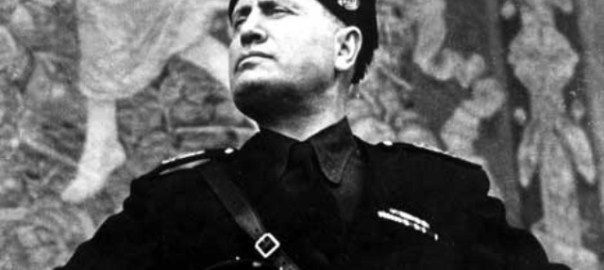


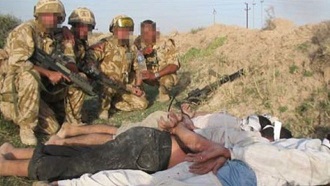


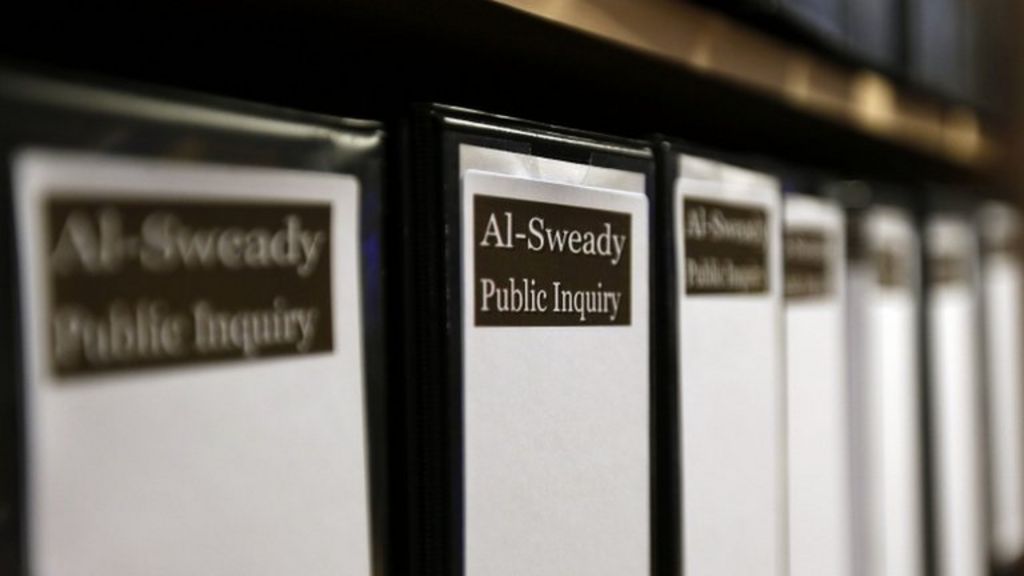

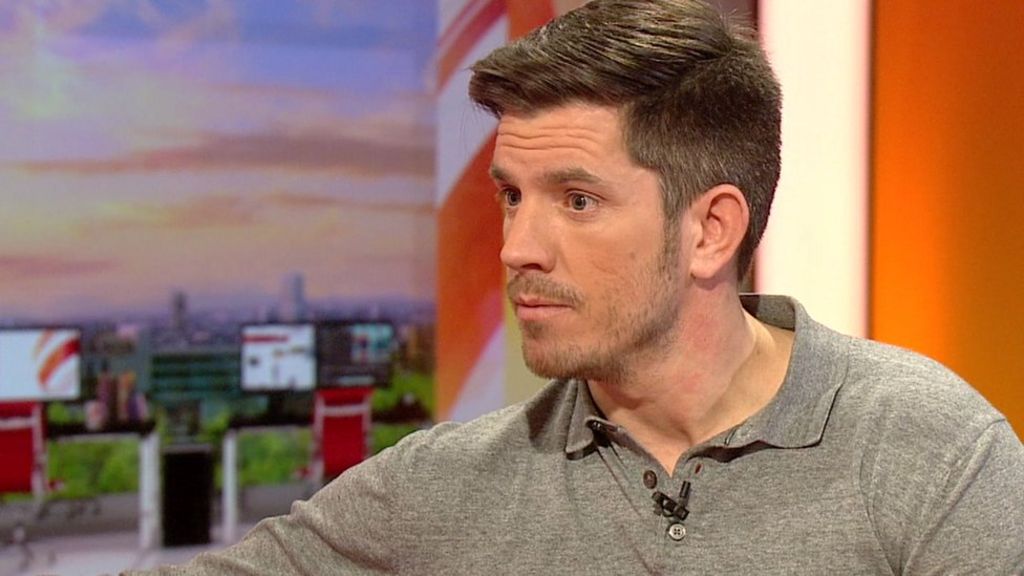


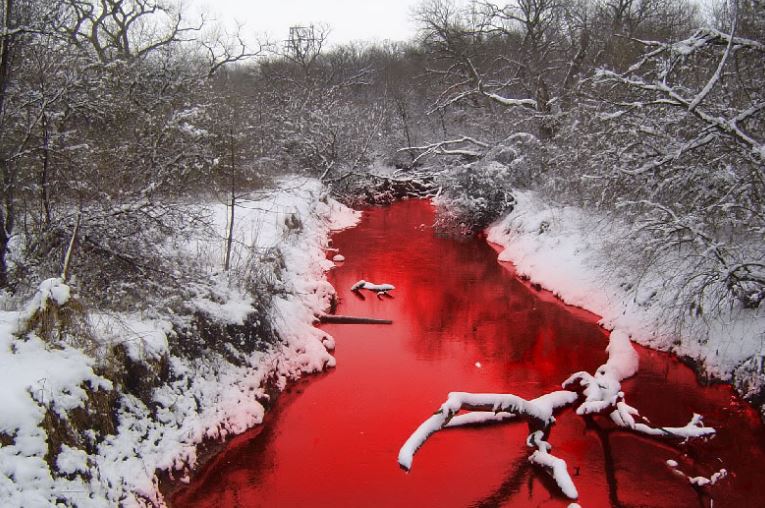


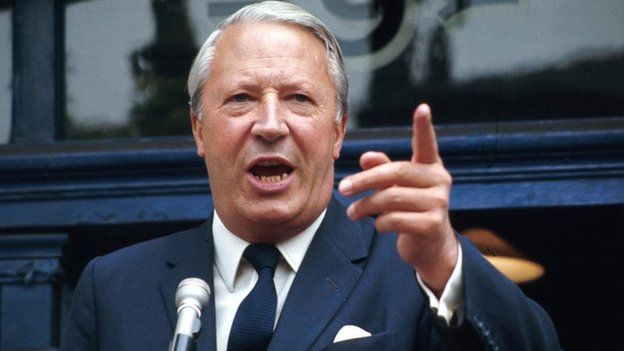


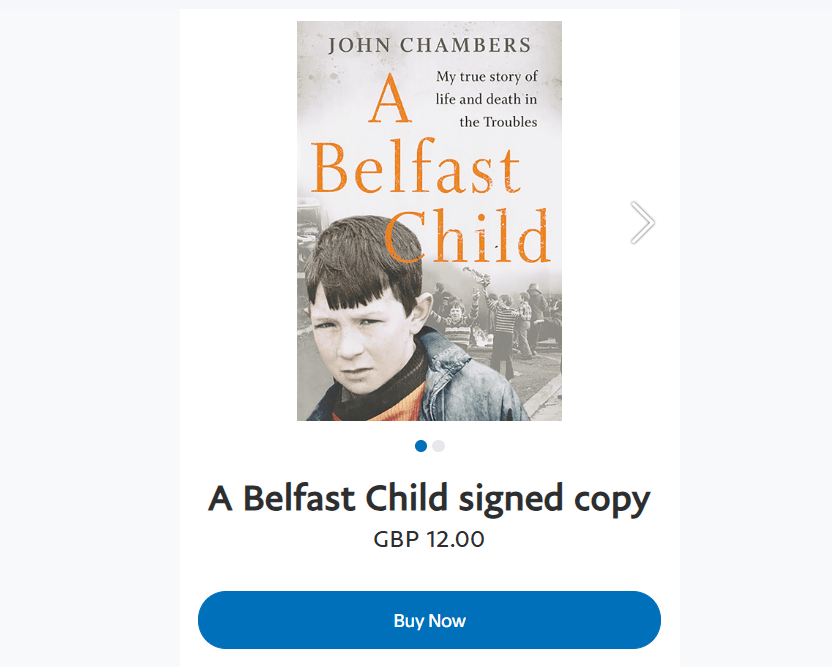


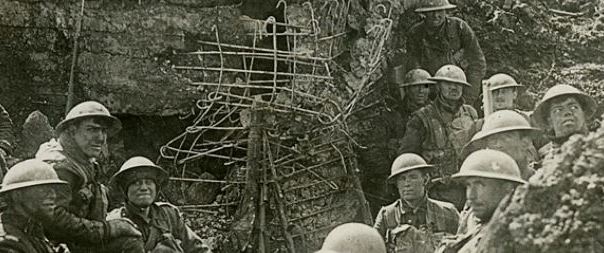
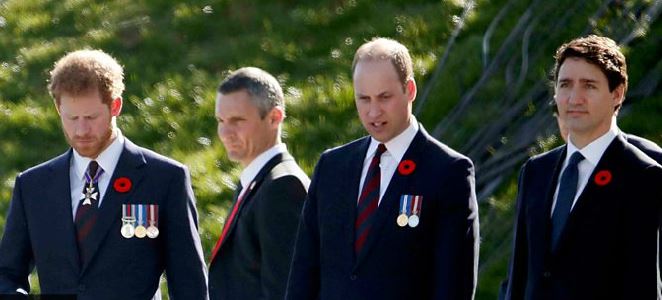 Vimy Ridge: Royals commemorate defining WW1 battle





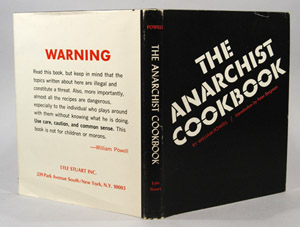


 See
See 


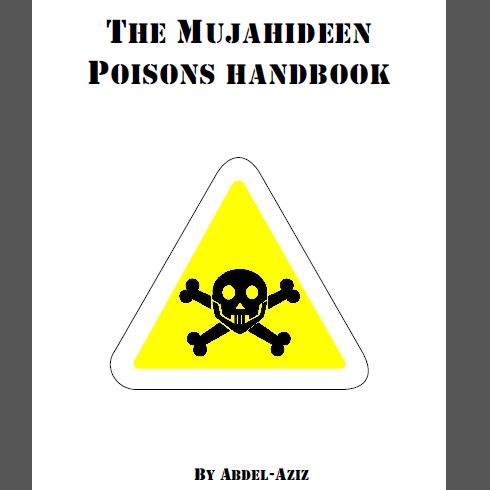

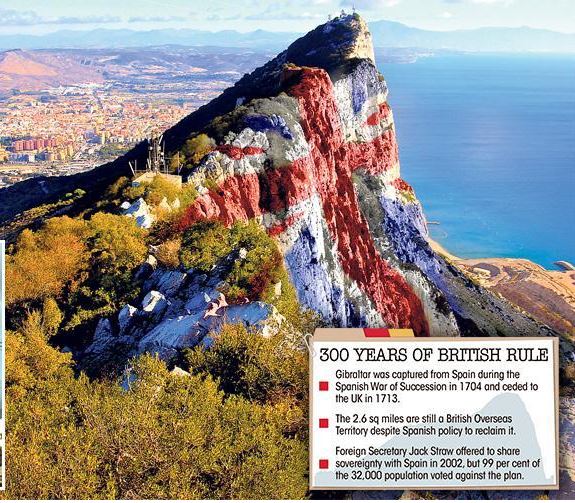





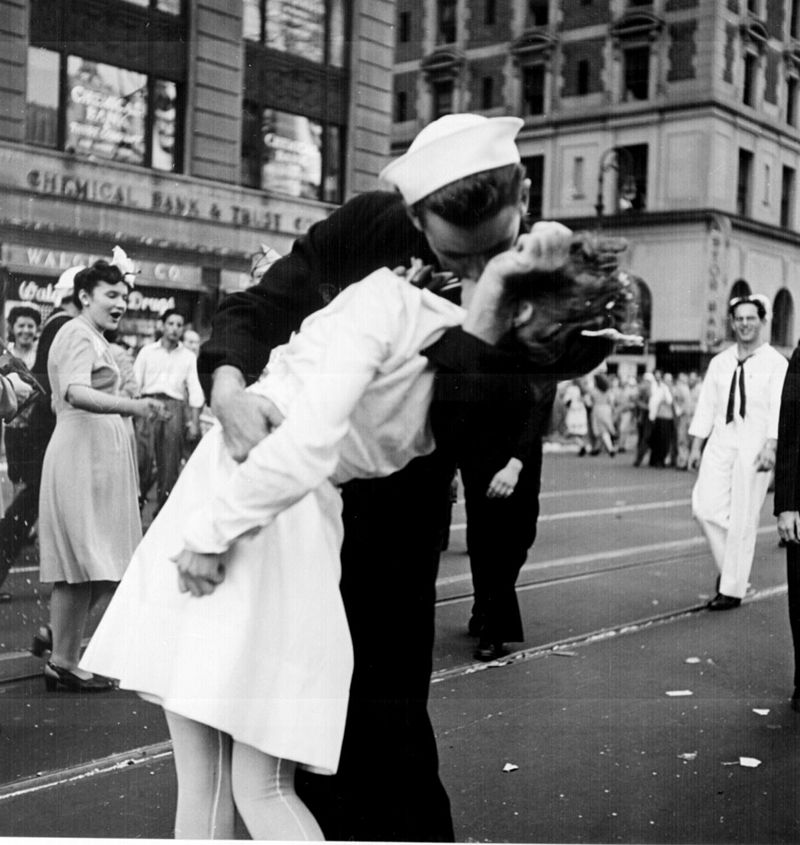






 belfastchildis.com