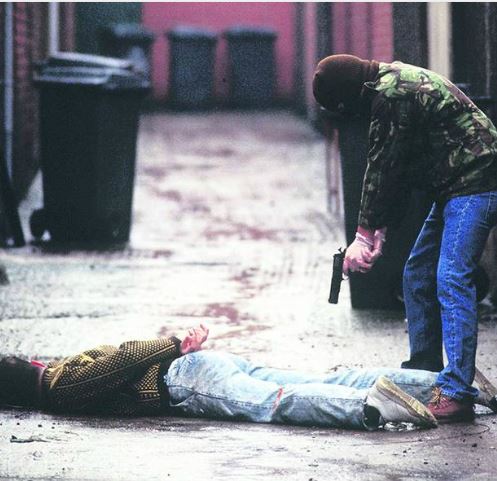
Although suicide is forbidden in Islam the madmen of Islamic State and their deluded followers choose to ignore this founding concept of Islam and they are masters at twisting and distorting the teachings of The Prophet Muhammad , to align with their own sick , twisted medieval interpretation of the Islamic Faith .
Most of the suicide bombers are lost souls , disillusioned with life and eager to embrace the utopia of an everlasting ” Paradise ” and are mere pawns to the puppet masters who control Islamic State and other extremist Islamic groups.
But at least they have their 72 blue eyed virgins waiting for them in paradise – Don’t they?
Not that I have any sympathy with them , if they choose to blow themselves to bits – that’s fine by me , but when they kill innocent people in the process That’s NOT at all right with…
Those who died that day are now remembered at the Cenotaph alongside the names of the war dead they went there to honour
———————————————————————-
The Enniskillen Rememberance Day Massacre
———————————————————————-
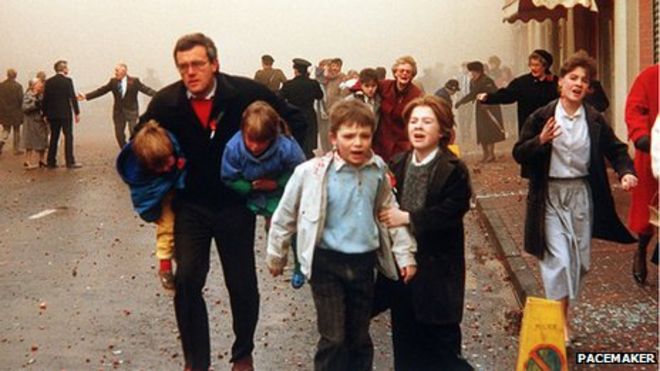
The Remembrance Day bombing (also known as the Enniskillen bombing or Poppy Day massacre[1][2]) took place on 8 November 1987 in Enniskillen, County Fermanagh, Northern Ireland. A Provisional Irish Republican Army (IRA) bomb exploded near the town’s war memorial (cenotaph) during a Remembrance Sunday ceremony, which was being held to commemorate British military war dead. Eleven people (ten civilians and a police officer) were killed and 63 were injured. The IRA said it had made a mistake and that its target had been the British soldiers parading to the memorial. The unit who carried out the bombing was disbanded.
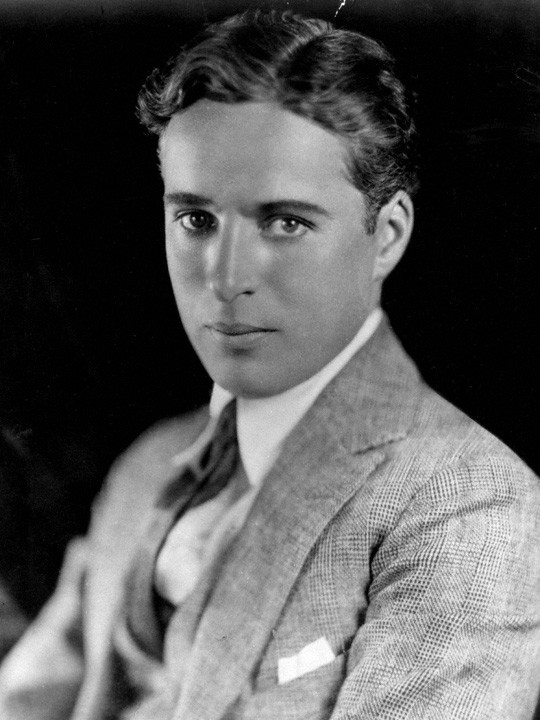
On this day in 1978 Charlie Chaplin’s stolen body found
The coffin containing the body of Charlie Chaplin – missing since his grave was robbed eleven weeks previously was found
The legendary silent movie star’s body had been stolen by a pair hapless , stupid grave robbers
The kidnapping of Charlie Chaplin’s coffin
Missing coffin
Having suffered from strokes during the 1960s and ’70s, a frail and wheelchair-bound Chaplin spent his final years living with his fourth wife, Oona, by Lake Geneva in Switzerland.
Then, on Christmas Day 1977, he died in his sleep at his home in Corsier-sur-Vevey, aged 88. Chaplin was laid to rest a few days later in the local cemetery, but sadly his eternal rest lasted only a couple of months.
On 2 March 1978, police phoned the Chaplin mansion to inform 51-year-old Oona that there had been…
Guy Fawkes (/ˈɡaɪˈfɔːks/; 13 April 1570 – 31 January 1606), also known as Guido Fawkes, the name he adopted while fighting for the Spanish, was a member of a group of provincial English Catholics who planned the failed Gunpowder Plot of 1605.
Sergeant Talaiasi Labalaba with Omani children in Oman
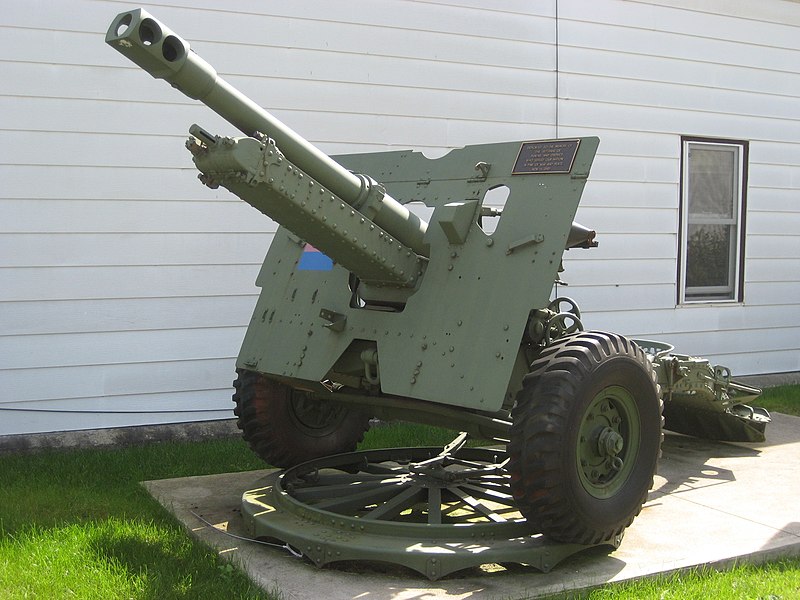
Labalaba, aged 30, was shot dead whilst firing a 25-pounder gun at the attacking guerrilla forces.
He displayed notable bravery by continuing to fire the 25 pounder single handed in spite of being seriously wounded when a bullet hit him on the jaw, after his Omani loader was seriously wounded early in the battle.
Captain Mike Kealy, fellow troopers Tommy Tobin and Sekonaia Takavesi ran a gauntlet of enemy fire but arrived too late to save Labalaba. Both…
The views and opinions expressed in this documentary/ies and page are soley intended to educate and provide background information to those interested in the Troubles of Northern Ireland.
They in no way reflect my own opinions and I take no responsibility for any inaccuracies or factual errors
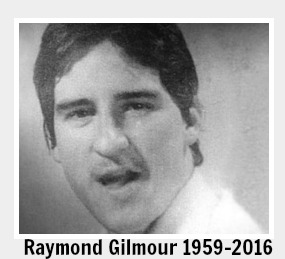
He was born in 1959 into a working class Catholic, nationalist family in Creggan, Derry to Patrick and Brigid Gilmour. He was the youngest of eleven siblings and grew up as The Troubles began in Derry City in the early 1970s. A cousin, Hugh Gilmour, was shot dead by the British Army on Bloody Sunday, a seminal event in the development of the “Troubles” and a traumatic event witnessed by the 12-year-old Gilmour himself.
His parents were reportedly split over the issue of political violence. He described his father as an “armchair supporter” of the IRA, while his mother was reportedly fiercely opposed to their actions.
Two of Gilmour’s brothers were kneecapped by the IRA for alleged anti-social behaviour.
He was also given a beating by British soldiers at age 13 for petty crime and they attempted to recruit him as an informer.Gilmour left school without sitting for his O Level exams and drifted into crime. When he was 16, he was again in trouble with the authorities, this time for armed robbery.
On remand in Crumlin Road Prison, he was severely beaten by IRA prisoners. It was at this point that he apparently agreed to become an undercover agent for British security forces.
INLA member
Several months later, he joined the INLA. He chose the INLA over the IRA as a number of his friends were already in the organisation. Gilmour participated in, among other activities, a botched car hijacking in which a friend, Colm McNutt, also an INLA member, was shot dead by an undercover soldier. In 1978, after two years with the INLA as an RUC agent, he left on police instructions. He got married the same year and fathered the first of two children.
IRA career
BBC NI Spotlight: The Special Branch spy that infiltrated IRA & Sinn Féin.
After an interlude of several months, Gilmour was instructed by his RUC handler to join the IRA. He was offered £200 a week with bonuses for arrests and weapons finds.
The IRA vetted him for several weeks before accepting his application in late 1980. They attached him to an active service unit in the Brandywell area of Derry. Over the following two years, he was involved in many IRA operations, mostly as a getaway driver. Most of these operations were “shoots” or sniping attacks, but on only one occasion, in January 1981, his activities result in the death of a British soldier, who was shot and killed at Castle Gate, near Derry’s city walls.
Gilmour claims that he helped to foil many other IRA attacks, saving the lives of numerous police and soldiers. In November 1981, he was arrested by the RUC, along with two other IRA members, on their way to carry out a shooting attack on riot police, who were combating disturbances arising out of the 1981 Irish Hunger Strike. Gilmour was sent on remand to Crumlin Road Prison. After a riot that destroyed much of the republican wing there, he was transferred to the Maze Prison.
His RUC handler then applied pressure on the authorities for his release, he was freed on 1 April 1982.
Supergrass
He left the IRA and went into protective custody in August of that year, as he believed that his position in the IRA was about to be discovered after his information led to the capture of an M60 machine gun.
Around 100 IRA and INLA members were then arrested in Derry on his evidence, of whom 35 were charged with terrorist offences.
In November, Gilmour’s father was abducted by the IRA. He was held in secret in an unknown location for almost a year. Gilmour was then sent to Cyprus and then Newcastle by the RUC. The following year, Gilmour gave evidence in a special Diplock Court, jury-less trial against the 35 people he had incriminated. Under the “supergrass” scheme, his was the only evidence available against them.
On December 18, 1984, the presiding judge, Lord Lowry, ruled that Gilmour was not a credible witness. He said he was,
“entirely unworthy of belief … a selfish and self-regarding man, to whose lips a lie comes more naturally than the truth”.
Exile and plea to return home
Since then, Gilmour has been in hiding outside Northern Ireland. He states that of the IRA and INLA members he knew, almost half were dead or missing by the end of the conflict. In 1998, he published a book, Dead Ground; Infiltrating the IRA, telling of his experiences.
In 2007, Gilmour publicly voiced his desire to return home to Derry, asking Martin McGuinness for assurances of his safety. He also revealed that he had a heart complaint and was an alcoholic. McGuinness said Gilmour must decide for himself whether or not it was safe to return to Derry and that he was not under threat from Sinn Féin, nor – he believes – from the IRA.
McGuinness stated that if de facto exiles such as Gilmour wanted to return home, it was a matter for their own judgment and their ability to make peace with the community.
Gilmour’s former RUC handler advised him not to return, citing the 2006 murder in Glenties, County Donegal, of Denis Donaldson, a high-ranking Sinn Féin politician and activist who was revealed to have been a long-term informer.
In April 2014, Gilmour’s second book What Price Truth was published; in the book Gilmour goes into greater detail about his life within the IRA and INLA.
Death
On 29 October 2016 Gilmour was found dead in his flat in Kent, where he had been lying abandoned and alone, for up to a week. He was reportedly an alcoholic with serious psychological problems, and died from natural causes


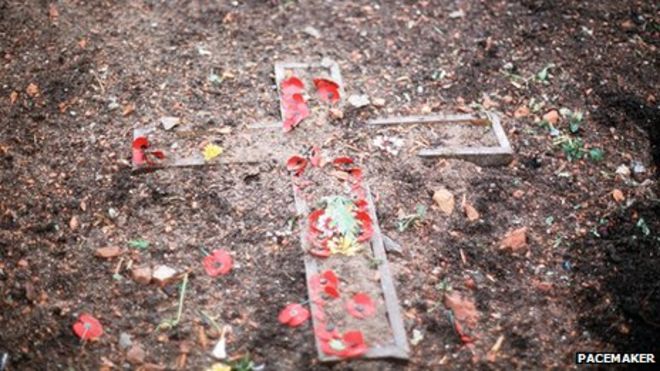 Those who died that day are now remembered at the Cenotaph alongside the names of the war dead they went there to honour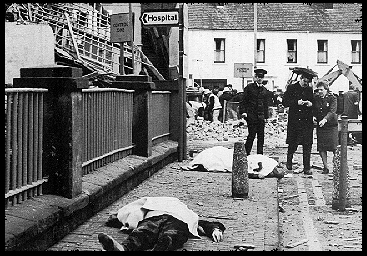
 Enniskillen Remembrance Day bomb

 A Young Chaplin