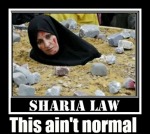
Following the fall of Mosul, the second largest city in Iraq, at the hands of the ISIS, the militants started forcing women to a accept temporary marriage or sexual jihad (jihad al-nikah), under the pretext of implementing the Sharia, and the women face severe punishments if they refuse to submit.
————————————-
Women Under Sharia Law – (Islamic Law) – CNN
————————————–
See Sharia Law
A Kurdistan Democratic Party (KDP) official from Mosul, Said Mamuzini, said that life is too hard for the women in Mosul due to the ISIS strict rules imposed on them. ISIS began selecting women of Mosul and forced them into marrying its militants calling it temporary marriage or sexual jihad (jihad al-nikah) since it has taken control over Mosul, and the women who refused to submit to this practice would be executed.
“At least 250 girls have so far been executed by IS for refusing to accept the practice of sexual jihad, and sometimes the families of the girls were also executed for rejecting to submit to IS’s request” he said.
———————————-
Muslim opinions on Women
———————————-
Ghayas Surchi, a PUK official from Mosul revealed that human rights are being widely violated in all IS-held territories, particularly the womens’ rights as they’re seen as commodities and they have no choice in choosing their spouses.
Surchi added that women are prohibited to go out alone in Mosul and they must be fully covered when they are in public. Girls and boys are also not allowed to see each other and talk, it is, therefore, hard for them to choose their soulmates.
However, there are dealers who secretly organise meetings between boys and girls and they charge a great deal of money.
IS militants took control of Mosul in June 2014, after the fall of Iraqi army in the city and since then it has been executing the residents of the city for various charges to spread fear and push the civilians to obey.
—————————————–
The Miserable Life American Muslim Women Face When They Marry Muslim Men From Abroad
Abu Abdullah al-Australi (1 December 1996 – 11 March 2015), born Jake Bilardi, dubbed by the media as Jihadi Jake, was an 18-year-old Australian suicide bomber considered among the youngest recruited from a Western nation.
Bilardi’s background has been described as radically different from other Western recruits and symbolises youth issues more than ideological ones.
Life, Radicalisation and Death
Born in Craigieburn, Victoria, Bilardi was a shy and lonely school student who was reportedly bullied by peers. Bilardi kept a blog describing his disdain for United States forces committing crimes against Muslims in the Middle East. He became radical after his mother died of cancer. By 2014, he expressed sympathy for Osama Bin Laden on Facebook. Concerned that the Australian government was monitoring him, Bilardi turned to building explosives in the event he would not be able to leave the country. A recruiter for Jabhat al-Nusra made contact with him in August 2014, and he left for Iraq.
Bilardi died in a suicide attack in Ramadi, Iraq on 11 March 2015. The Iraqi Army stated Bilardi’s attack was unsuccessful, killing only himself. ISIL used his death as propaganda, in order to recruit more people to become suicide bombers. According to a friend, Bilardi was concerned his family would “spend eternity in hell” for being non-believers.
Reaction
—————————————–
Life of Islamic State Suicide Bomber Behind the scenes
—————————————–
Prime MinisterTony Abbott, commented on Bilardi’s death as an “absolutely horrific situation” stating, “it’s very, very important that we do everything we can to try to safeguard our young people against the lure of this shocking, alien and extreme ideology. Professor Greg Barton, director of the Centre for Islam and the Modern World, considers Bilardi a self-radical motivated by underlying mental health issues instead of religious zealotry.
————————————————–
Captured Islamic State suicide bomber: ‘I’m so sorry’
————————————————–
————————————————–
Failed suicide bomber interview
————————————————–
Wafa al Bass
Wafa al Bass (Wafa al-Biss, b. 1984) is a Palestinian Arab resident of Gaza who was permitted to enter Israel for the purpose of being treated at an Israeli hospital in 2005. She wore a suicide bomb vest which she attempted to explode as she crossed into Israel via the Erez Crossing.
Al Bass had been given permission to enter Israel to receive hospital treatment for severe burns. Guards at the crossing became suspicious and discovered that under her traditional black robes she had strapped a 22-pound bomb to her leg.
Upon release from prison she immediately attained further notoriety by urging Gazans to “take another Shalit” every year until all convicted Arab terrorists held in Israeli prisons were freed. As schoolchildren gathered at her home in northern Gaza to welcome her home, she told them, “I hope you will walk the same path we took and God willing, we will see some of you as martyrs
Thinking of Khaled al-Asaad who loved this place and died protecting it from the deluded followers of Islamic State and their twisted , obscene take on Islam. Although to late to save his life and the ancient sites he loved and studied – hopefully he will be looking down from heaven and rejoicing at its recapture and the news that the damage was not as great as first thought.
Rest in peace Khaled – Now with those you loved and studied.
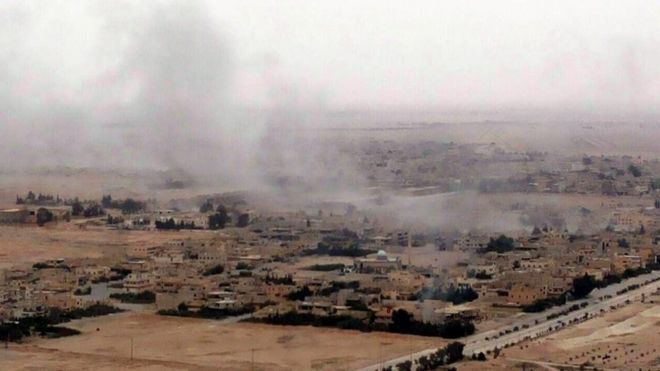
The retaking of Palmyra by the Syrian army ends 10 months of occupation by the so-called Islamic State (IS). It is an important step in the containment and eventual defeat of the jihadist group that has seized swathes of Syria and Iraq.
It may not mean the end for IS, whose heartlands of Raqqa, Deir Ezzor, and Mosul remain…
Church leaders deny reports Catholic priest was crucified by ISIS on Good Friday
If this story turns out to be true and Islamic State have crucified this priest they have sunk to new depths of depravity that should outrage and disgust all right minded people the world over.
Their twisted take of on Islam seems to thrive on outrageous acts of barbarity and inhuman treatment of those opposed to their sick ideology and they seem to get off in shocking the world with one atrocity after another. To my mind no religion in the history of mankind has ever shown such casual and brutal disregard to human life andd these merchants of death are the devil incarnated.
Karma is watching and Karma always collects its debts
The chief Catholic bishop in Arabia denied Monday reports that the Islamic State had crucified a Catholic priest on Good Friday, and the cardinal responsible for the initial reports walked back his words also.
————————————–
ISIS Abducts Indian Priest
————————————–
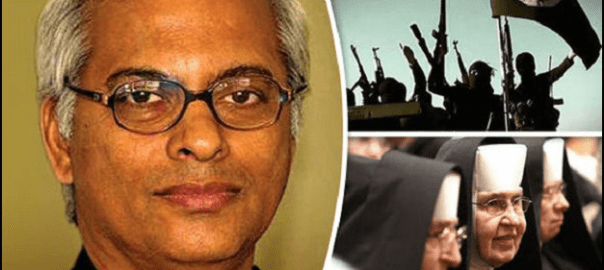
The Rev. Thomas Uzhunnalil, a Salesian priest, was kidnapped in Yemen in early March during a raid on a nursing home run by Mother Teresa’s Missionaries of Charity. His ISIS kidnappers, who also killed 16 Christian nuns, nurses and patients, had issued threats to execute him& sing the same method used by the Romans on Jesus and marked on Good Friday every year.
———————————————–
Indian Priest Kidnapped By ISIS In Yemen To Be Crucified On Good Friday
———————————————–
According to a report in the Salzburg News, Cardinal Christoph Schonborn of Vienna said at his Easter Vigil Mass that the Islamist group had followed through on those threats. There had been no official confirmation from the priest’s order, the responsible diocese or the Vatican.
However, after numerous news outlets, including The Washington Times, picked up Cardinal Schonborn’s words, Bishop Paul Hinder of Southern Arabia said the cardinal had been misinformed.
Bishop Hinder told Catholic News Agency on Monday that he has “strong indications that Fr. Tom is still alive in the hands of the kidnappers.”
The bishop also told CNA that Cardinal Schonborn’s statement at the Easter Mass was made in error — hearsay based on rumors from India, the native land of Father Uzhunnalil.
In a statement Monday on its website, the Archdiocese of Vienna also walked back Cardinal Schonborn’s reported words and repeated Bishop Hinder’s words that “there is still uncertainty” about the Indian priest’s fate.
According to the archdiocese, Cardinal Schonborn spoke with bishops from Arabia on Sunday and said “there is still hope.”
Father Uzhunnalil had been the object of both prayers and diplomatic efforts since the March 4 raid in which Islamic State attackers killed four nuns. Pope Francis consequently praised the nuns as martyrs.
Bishop Hinder said the Missionaries’ home had been the object of numerous threats but they refused to leave.
Farkhunda Malikzada[1] (Persian: فرخنده) was a 27-year-old Afghan woman who was publicly slain by a mob in Kabul on March 19, 2015. A large crowd formed in the streets around Farkhunda when accusers began yelling, announcing her alleged crimes to the public. They claimed that she had burned the Quran, and for that, her accusers announced that she must pay the ultimate price.
Police initially tried to protect Farkhunda and disperse the crowd, but were overwhelmed by the mob’s numbers and fury.
The mob grabbed Farkhunda, pulled her hair, hit her, spit at her, pushed her to the ground, stomped on her body, kicked her in the head, and ripped the veil from her face. Police, seeing the urgency of the situation, attempted to remove her from the crowds by climbing atop a shop roof. Farkhunda lost her balance while…
Quran (8:12) – “I will cast terror into the hearts of those who disbelieve. Therefore strike off their heads and strike off every fingertip of them” No reasonable person would in…
As international forces and local anti -ISIS fighters pile on the pressure ISIS is gradually losing control of its own members and cracks are beginning to unravel the Jihadi army of psychopathic killers and their deluded followers of Islam.
Desertion among their members has become such an issue that it carries a mandatory death sentence and according to local sources the majority of deserters are foreign and European fighters whom have become disillusioned with the harsh conditions and religious fanaticism.
In recent months/weeks many of Islamic States top commanders , generals and high profile foreign fighters have been killed by international and local opposition actions and their area of control is diminishing almost daily.
Earlier this week Abu Omar the Chechen , a leading member and beloved commander of the terrorist group had reportedly been killed and if this is true this will be another major blow to the merchants of death and their twisted ideology.
In the past three days alone it has been reported that ISIS have executed approx. 100 of its member for refusing to fight , leaving the battle field and other derelictions of their duty.
Whatever the truth of these executions one thing is clear, hopefully the monster that is ISIS is beginning to implode and is slowly devouring itself from the inside out.
Karma always collects its debts and perhaps it is knocking on the door of these evil bastards and making them pay for their twisted and brutal crimes against humanity..
———————————————–
March 16th 2016
50 Executions
ISIS executes over 50 of its own fighters for trying to escape battlefront
Terrorist group of the ISIS has publicly executed dozens of its own militant fighters who fled the fighting fronts with Iraqi forces.
The militants were arrested after evacuating their fighting positions in ar-Rutba and Hit districts, west of Ramadi.
The ISIS fighters were detained and executed at the hands of fellow fighters in Mosul city of Iraq’s northwestern Nineveh province, local sources reported on Tuesday.
“Daesh military leadership in Mosul considered them as traitors and beheaded them in front of hundreds of people, including commanders and Sharia officials,” an eyewitness said using an acronym for ISIS.
“They were mostly Iraqi fighters who fought in ISIS ranks in Anbar province,” he said, speaking on condition of anonymity.
———————————————–
March 15th 2016
35 Executions
ISIS militants executes 35 members for refusing to fight against Iraqi army
An Iraqi security source in Nineveh Province announced on Sunday, that ISIS executed 35 of its militants for refusing to join the battle against the Iraqi forces on the outskirts of the city of Mosul (405 km north of Baghdad).
The source said in a statement “ISIS executed 35 of its fighters, after refusing to join the combat axes on the outskirts of the city of Mosul.”
The source, who asked to remain anonymous, added, “ISIS carried out the execution by firing squad in the forest.”
———————————————–
March 14th 2016
21 Executions
ISIS executes 21 of its fighters in Mosul after fleeing from battles
A local source in Nineveh Province announced on Sunday, that the so-called ISIS executed 21 of its militants in the city of Mosul (405 km north of Baghdad), after fleeing from the ongoing battles west of the province.
“Today, ISIS executed 21 of its fighters in the city of Mosul, after fleeing from the combat axes in Makhmour, Waski Mosul, Khazar, Nuran and Bashiqa,” pointing out that, “The executed fighters also refused to join the battles in these areas,” the source said.
The source, who asked anonymity, added, “The terrorist gang carried out the execution by firing squad in one of its camps in Mosul.”
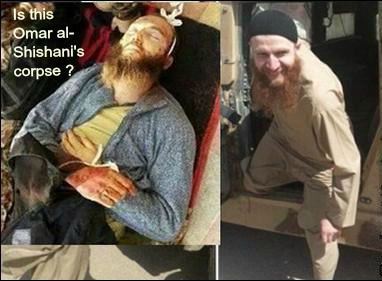
Top ISIS commander ‘Omar the Chechen ‘ believed to have been killed in airstrike.
This is the third or fourth time he has reportedly been killed and like any death of Islamic States top leaders confirmation is slow and details are often hidden behind the fog of war.
However US sources are confident they have got it right this time and if so this will be a major blow to the disciples of hate and the twisted ideology of Islamic State and their deluded followers.
Slowly slowly catch the monkey
Fighters from the Syrian Democratic Forces (SDF)
According to todays Independent ISIS opposition is at the ‘ gates of Raqqa ‘ as Syrian Democratic Forces reclaim villages from their control
The Syrian Democratic Forces have been celebrating a string of victories as they reclaim villages from Isis control, putting them within 20 miles of Raqqa
Without a doubt the forces against IS are slowly gaining the upper hand and IS’s area of control is reducing almost daily. Desertion among their members has become such an issue that it carries a mandatory death sentence and according to local sources the majority of deserters are foreign and European fighters whom have become disillusioned with the harsh conditions and religious fanaticism.
Whatever is causing disharmony among these monstrous Jihadists is good news for the world in general and the death of the Chechen is another nail in the coffin which will send these scum straight to HELL!
————————————-
Abu Omar the Chechen Dead
The United States has confirmed that ISIS commander Omar al-Shishani, also known as “Omar the Chechen,” is dead, CBS News’ David Martin reports.
According to officials, he survived an initial attack carried out in the beginning of March, but has since died of his wounds, Martin reports. A U.S. official previously said an attack was carried out March 4 by multiple waves of planes and drone aircraft.
Al-Shishani, whose real name was Tarkhan Batirashvili, was described as the Islamic State of Iraq and Syria (ISIS) equivalent of a Secretary of Defense. He was an ethnic Chechen from the former Soviet Republic of Georgia.
The U.S. government had a longstanding $5-million bounty for information leading to his being brought to justice.
In announcing the strike last week, Pentagon press secretary Peter Cook said it occurred near al-Shaddadeh, a former ISIS stronghold that was captured in February by the U.S.-backed, predominantly Kurdish Syria Democratic Forces. He said the ISIS leader held numerous senior military positions within the group, including “minister of war,” and was based in Raqqa, Syria.
Tarkhan Tayumurazovich Batirashvili (Georgian: თარხან ბათირაშვილი; February 11, 1986 – March 14, 2016), known by his nom de guerreAbu Omar al-Shishani (Arabic: أبو عمر الشيشاني, Abū ‘Umar ash-Shīshānī , “Abu Omar the Chechen”)[9] or Omar al-Shishani, was a GeorgianKist jihadist who served as a commander for the Islamic State in Syria, and a former sergeant in the Georgian Army.[9]
In May 2013, Batirashvili was appointed northern commander for ISIL, with authority over ISIL’s military operations and forces in northern Syria, specifically Aleppo, al-Raqqah, Latakia, and northern Idlib Provinces.By late 2013, he was the ISIL amir (leader) for northern Syria and was operating in and around Aleppo Province. He was also in charge of fighters from Chechnya and elsewhere in the Caucasus.[10] Units under his command participated in major assaults on Syrian military bases in and around Aleppo, including the capture of Menagh Airbase in August 2013.[3] He was considered “one of the most influential military leaders of the Syrian opposition forces”.[2] By mid-2014, Batirashvili was a senior ISIL commander and Shura Council member based in al-Raqqah, Syria.[10]
Batirashvili died from his injuries several days after being the target of a 4 March 2016 U.S. Airstrike near the al-Shaddadi region in Northern Syria, according to U.S. officials
Batirashvili grew up in the largely Kist-populated village of Birkiani, located in the Pankisi Gorge in northeast Georgia. In his youth, he worked as a shepherd in the hills above the gorge. Later in the 1990s, the Pankisi Gorge was a major transit point for rebels participating in the Second Chechen War, and it was there that Batirashvili reportedly came into contact with the Chechen rebels moving into Russia.[17] According to his father, a young Batirashvili secretly helped Chechen militants into Russia and sometimes joined them on missions against Russian troops.[3]
Service in the Georgian Armed Forces
After finishing high school, Batirashvili joined the Georgian Army and distinguished himself as master of various weaponry and maps, according to his former commander Malkhaz Topuria, who recruited him into a special reconnaissance group.[3] His unit was trained by US special forces, and Batirashvili was reportedly a “star pupil”.[18] He rose to the rank of sergeant in a newly formed intelligence unit, and during the 2008 Russo-Georgian War he served near the front line at the Battle of Tskhinvali, spying on Russian tank columns and relaying their coordinates to Georgian artillery units.[3] Batirashvili’s unit inflicted serious damage on the Russians, and among the actions they participated in was an attack on a column of the Russian 58th Army during which the commander of the 58th Army, General Anatoly Khrulyov, was wounded.[18]
Batirashvili was never decorated for his military service.[2] He was due to be promoted to become an officer, but in 2010 he was diagnosed with tuberculosis. After spending several months in a military hospital, he was discharged on medical grounds. He tried and failed to re-enlist.[3][17] Upon returning home, he was unable to secure work in the local police force. Around this time, his mother also died of cancer. According to his father, he became “very disillusioned”.[3]
Militant activity
According to the Georgian Defense Ministry, Batirashvili was arrested in September 2010 for illegally harboring weapons and was sentenced to three years in prison.[3] He was allegedly released after serving about 16 months in early 2012 and immediately left the country. According to an interview on a jihadist website, Batirashvili said that prison transformed him; “I promised God that if I come out of prison alive, I’ll go fight jihad for the sake of God”, he said.[3]
Batirashvili reportedly told his father that he was leaving for Istanbul, where members of the Chechen diaspora were ready to recruit him to lead fighters inside war-ravaged Syria; an older brother had already gone to Syria some months before.[3] In an interview, Batirashvili said that he had considered going to Yemen and briefly lived in Egypt before ultimately arriving in Syria in March 2012.[19][20]
Muhajireen Brigade
His first command was the Muhajireen Brigade, an Islamist jihadist group made up of foreign fighters that was formed in the summer of 2012. His unit became involved in the Battle of Aleppo, and in October 2012 they assisted Al-Nusra Front in a raid on an air defense and Scud missile base in Aleppo.[8]
In December 2012, they fought alongside Al-Nusra Front during the overrunning of the Sheikh Suleiman Army base in Western Aleppo. In February 2013, together with the Tawhid Brigades and Al-Nusra Front, they stormed the base of the Syrian military’s 80th Regiment near the main airport in Aleppo.[21]
In March 2013, Kavkaz Center reported that the Muhajireen Brigade had merged with two Syrian jihadist groups called Jaish Muhammad and Kataeb Khattab to form a new group called Jaish al-Muhajireen wal-Ansar, or Army of Emigrants and Helpers.[22] The group played a key role in the August 2013 capture of Menagh Air Base, which culminated in a Vehicle Borne Improvised Explosive Device (VBIED) driven by two of their members killing and wounding many of the last remaining Syrian Armed Forces defenders.[23] A branch of the Muhajireen Brigade was involved in the 2013 Latakia offensive.[24]
Islamic State of Iraq and the Levant
In Mid 2013, Batirashvili made an oath of allegiance to Abu Bakr al-Baghdadi and was appointed northern commander for the Islamic State of Iraq and the Levant (ISIL).[25] In August 2013, Batirashvili released a statement announcing the expulsion of one of his commanders, Emir Seyfullah, and twenty-seven of his fighters. Batirashvili accused the men of embezzlement and stirring up the animosity of local Syrians against the foreign fighters by indulging in takfir—excommunication—against other Muslims.[26] However, Seyfullah denied these allegations and claimed that the dispute was due to his refusal to join ISIL with Batirashvili.[27] In late 2013, Batirashvili was replaced as leader of Jaish al-Muhajireen wal-Ansar by another Chechen commander known as Salahuddin, as most of the Chechen members of the group did not support Batirashvili’s support of ISIL, due to their preexisting oath to the Caucasus Emirate militant group, and it’s leader Dokka Umarov.[2][6] By mid-2014, Batirashvili was a senior ISIL commander and Shura Council member operating in Ar-Raqqah, Syria.[25]
According to Batirashvili’s father, he called him once since he left for Syria to tell him that he was now married to a Chechen woman and had a daughter named Sophia.[15] For a time, Batirashvili lived with his family in a large villa owned by a businessman in the town of Huraytan just northwest of Aleppo.[28] He is said to have overseen the group’s prison facility near Ar-Raqqah, where foreign hostages may have been held.[29] By 2016, Batirashvili led special battalions of the Islamic State, in particular a unit named as ‘the group of the central directorate’ which appears to be the primary special forces strike force of the group.[30]
Reports of death or capture
Shishani has been reported as being killed on numerous occasions. In 2014, there were reports that he had been killed in various parts of Syria and Iraq in May, June, August and October, all of which proved to be untrue.[31] On 13 November 2014, Chechen leader Ramzan Kadyrov posted on his personal Instagram account that al-Shishani had been killed, and posted a photo of a dead ginger-bearded man, however the man in the photograph was not Shishani, and Kadyrov later deleted the post. Before the post was deleted, the statement was picked up and reported on by many media outlets around the world.[31]
There were further reports of his death in 2015: in May,[32] June[33] and October.[34] On December 27, Russian News Agency TASS, quoting EIN news, claimed that American special forces had captured al-Shishani near Kirkuk in Iraq.[35] This report was denied by a Pentagon spokesman.[36]
In March 2016, several unnamed US Officials told CNN that Shishani may have been killed in a 4 March targeted airstrike, near the Syrian town of al-Shadadi; however, they were unable to confirm his death. Other officials said he had been “critically injured” in the strike, and that US military intelligence was assessing whether or not he had died.[37][38] On 12 March, the Syrian Observatory for Human Rights (SOHR) reported that al-Shishani had become clinically dead following the US airstrikes, with the ISIL commander in critical condition and unable to breathe without the use of life-support machines.[39][40] On 14 March 2016, two U.S. officials told CNN that there was confirmation al-Shishani had died after the airstrike
ISIS executed eight of their Dutch members in east of Raqqa
The so-called Islamic State has killed eight Dutch members whom it accused of trying to desert, activists have said.
As cracks start to show and more and more foreign fighters become disillusioned ISIS has executed 424 of its own fighters in its 20 month reign in Syria
“Daesh [Isis] executed eight Dutch fighters on Friday in Maadan, Raqqa province, after accusing them of attempting desertion and mutiny,” said Abu Mohammad, a member of the citizen journalist group Raqqa is Being Slaughtered Silently (RBSS), via Twitter on Monday.
RBSS has been documenting the group’s abuses in its de facto capital in northern Syria since April 2014. The Twitter group said tension between 75 Dutch militants – some of them of Moroccan origin – and Isis intelligence operatives from Iraq hadreached a new height over the past month.
Three other Dutch militants were arrested by Iraqi Isis members who accused them of wanting to flee, and one of the detainees was beaten to death during the interrogation, according to RBSS.
Isis leaders in Raqqa sent a delegate to solve the dispute with the Dutch cell’s enraged members, but they murdered the intermediary in vengeance, the citizen journalist group added.
The Isis leadership in Iraq then ordered the arrest of all the members of the Dutch group and imprisoned them in Tabaqa and Maadan in Syria before killing eight of them, RBSS said.
The so-called Syrian Observatory for Human Rights, which monitors the conflict, could not confirm the report. However it said three European militants of North African origin were killed in what Isis calls the Wilayet al-Furat – an area stretching across the Syrian-Iraqi frontier.
According to the Dutch secret services, 200 people from the Netherlands including 50 women have joined Isis in Syria and Iraq.
Farkhunda Malikzada[1] (Persian: فرخنده) was a 27-year-old Afghan woman who was publicly slain by a mob in Kabul on March 19, 2015. A large crowd formed in the streets around Farkhunda when accusers began yelling, announcing her alleged crimes to the public. They claimed that she had burned the Quran, and for that, her accusers announced that she must pay the ultimate price.
Police initially tried to protect Farkhunda and disperse the crowd, but were overwhelmed by the mob’s numbers and fury.
The mob grabbed Farkhunda, pulled her hair, hit her, spit at her, pushed her to the ground, stomped on her body, kicked her in the head, and ripped the veil from her face. Police, seeing the urgency of the situation, attempted to remove her from the crowds by climbing atop a shop roof. Farkhunda lost her balance while fighting to stay conscious, and slipped down the rooftop and back into the crowd.
She was brutally and mercilessly beaten into unconsciousness; seeing Farkhunda now motionless, the crowd dragged her into the street and ran over her body with a car, dragging her some 300 feet. They then set her corpse on fire and watched her body burn. They used their own clothing articles (e.g. scarves and hats) to keep the fire alight, because her own clothing and body were so bloodied that they would not catch alight.
She was murdered after allegedly arguing with a mullah who falsely accused her of burning the Quran, the Quran. Police investigations revealed that she had not burned anything.[2] Her murder led to 49 arrests;[3] three adult men received twenty year prison sentences, eight other adult males received sixteen year sentences, a minor received a ten year sentence, and eleven police officers received one year prison terms for failing to protect Farkhunda.[4] Her murder and the subsequent protests served to draw attention to women’s rights in Afghanistan.
Background
—————————————————
Farkhunda: The making of a martyr – BBC Newsnight
—————————————————
Farkhunda was an observant Muslim who wore a veil (hijab). At the time of the attack, she had just finished a degree in religious studies and was preparing to take a teaching post.[5] Her name means “auspicious” and “jubilation”.[6]
The attack
In a still frame from a video captured and widely disseminated on social media and in the news, a bloodied Farkhunda appears to plead with her attackers before she is knocked down.
Farkhunda had previously been arguing with a mullah named Zainuddin, in front of a mosque where she worked as a religious teacher,[2] about his practice of selling charms at the Shah-Do Shamshira Mosque, the Shrine of the King of Two Swords,[7] a religious shrine in Kabul.[8] During this argument, Zainuddin reportedly accused her of burning the Quran. She responded
“I am a Muslim, and Muslims do not burn the Quran!”[9]
According to eyewitnesses, hundreds of angry civilians flocked to the mosque upon overhearing the mullah’s accusation. They dragged out Farkhunda and started to beat her.[5] She was thrown from a roof, run over by a car, and beaten with sticks and stones outside the mosque. The mob then set her body alight and dumped it in the Kabul River while police allegedly looked on.[8][10] Farkhunda’s parents said the killing was instigated by the mullah with whom Farkhunda had been talking, who, according to Tolo News, began loudly accusing her of burning the Quran “in order to save his job and life.”[11] An eyewitness said that the mob was chanting anti-American and anti-democratic slogans while beating Farkhunda.[12]
—————————————————
The Killing of Farkhunda
—————————————————
Reactions
Public reaction in Afghanistan
A number of prominent public officials turned to Facebook immediately after the death to endorse the murder. The official spokesman for the Kabul police Hashmat Stanekzai, for instance, wrote that Farkhunda “thought, like several other unbelievers, that this kind of action and insult will get them U.S. or European citizenship. But before reaching their target, they lost their life.” The Deputy Minister for Culture and Information Simin Ghazal Hasanzada also approved the execution of a woman “working for the infidels.” Zalmai Zabuli, chief of the complaints commission of the upper house of parliament, posted a picture of Farkhunda with this message: “This is the horrible and hated person who was punished by our Muslim compatriots for her action. Thus, they proved to her masters that Afghans want only Islam and cannot tolerate imperialism, apostasy, and spies.” [13]
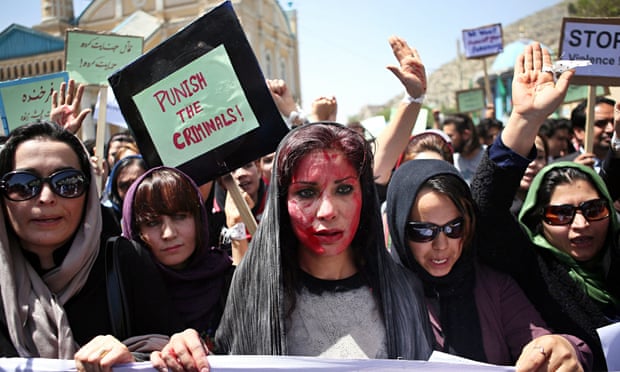
After it was revealed that she did not burn the Quran, the public reaction in Afghanistan turned to shock and anger. Hundreds of protesters took to the streets of Kabul on 23 March protesting her brutal death. Protesters marched from where the attack began to where Farkhunda was thrown in the river. A number of women on the march wore masks of her bloodied face while others condemned the government for failing to bring security to Afghanistan. Shukria Barakzai, a member of parliament representing Kabul Province and a longtime women’s rights activist, told Al Jazeera that her killing had triggered the city and the rest of the country to think about women’s rights.[10] She said: “This is not a male or female issue, this is a human issue and we will not stop until the killers are brought to justice.”[10]Roshan Siren, a former member of parliament, said that the murder highlights violence against women in the country, and has become a rallying point for a younger generation of women to campaign for “the protection and progress of women.”[14]
The woman’s father complained that police could have done more to save Farkhunda.[8]
Protests
On March 23, hundreds of women protested the attack, demanding that the government prosecute those responsible for Farkhunda’s death.[8] The protest was organized by Solidarity Party of Afghanistan and residents of Kabul.[15] Farkhunda’s death has also become a rallying point for women’s rights activists in Afghanistan.[16] On March 24, thousands of people protested the attack in front of the Afghan Ministry of Justice in Kabul.[17]
Official response in Afghanistan
Afghan presidentAshraf Ghani ordered an investigation into the incident and, in a statement released by his office, condemned the “act of extreme violence”.[18] He described the killing as “heinous”.[11] He also said that Farkhunda’s death revealed that Afghanistan’s police were too focused on the Taliban insurgency in the country and not focused enough on local policing.[19]
Nine men who were seen in the video of Farkhunda’s murder on social media were subsequently detained.[20] The Interior Ministry later reported that 28 people were arrested and 13 police officers suspended as part of investigations. Hashmat Stanikzai, a cleric who publicly endorsed the murder, was sacked over comments that he made on social media supporting Farkhunda’s killers.[5]
The European Union condemned the attack. A spokeswoman for European Union foreign policy chief Federica Mogherini said in a statement that “[t]he killing of Ms Farkhunda… is a tragic reminder of dangers women face from false accusations and the lack of justice in Afghanistan.” She added, “We all hope that [those] responsible can be brought to justice.”[5] The United States also condemned the murder, with a statement from its embassy in Kabul calling for “those responsible to be brought to justice so such heinous acts will never occur again”.[21]
Global Times China columnist Farman Nawaz wrote “Choosing rulers through the ballot box is a positive sign for the country, but the survival, and even growth, of extremist mentality even after suffering from the barbarism of extremist groups reflects a critical failure by Afghan political parties”.[22]Afghan American historian Ali A Olomi argued that Farkhunda’s murder demonstrated the endurance of an underlying culture of violence and devaluation of human life that comes out of generations of Afghans being raised during a war and facing oppression.[23]
Reaction from Islamic scholars
In Afghanistan
The day after the murder, certain imams and mullahs endorsed the killing during Friday prayer services in their mosques. One of them, the influential Maulavi Ayaz Niazi of the Wazir Akbar Khan mosque, warned the government that any attempt to arrest the men who had defended the Quran would lead to an uprising.[13][24]
After it was revealed she did not burn the Quran, senior Islamic scholars in Afghanistan expressed outrage over the incident. Ahmad Ali Jebreili, a member of Afghanistan’s Ulama Council set for administering Islamic law, condemned the attack, accusing it of contravening Islam.[18] Haji Noor Ahmad, a local cleric, said “People come and execute a person arbitrarily; this is totally prohibited and unlawful. However, some justified her killing and were met with public anger.”[25]
Abroad
Abu Ammaar Yasir Qadhi, a prominent, conservative, Islamic scholar, expressed horror on his Facebook page and said “A sign of how truly civilized a nation is, is how it treats its women. May Allah restore the honor and respect that women deserve in our societies!”[26]
On March 22, a number of women, dressed in black, carried Farkhunda’s coffin from an ambulance to a prayer ground and then to a graveyard. This was a marked departure from tradition, which holds that such funerals are typically only attended by men.[12]
Criminal cases
Of 49 suspects tried in the case, four men were sentenced to death for their roles in Farkhunda’s murder. The sentences were handed down by Judge Safiullah Mojadedi in Kabul on May 5, 2015. Eight other defendants were sentenced to 16 years in prison. The trial was noted for its unusual brevity, lasting just two days.[28] The verdict has been criticized because although some investigators believe a fortuneteller set the attacks on Farkhunda in motion, this person was found not guilty on appeal, and the shrine’s custodian had his death sentence commuted despite the fact that he originated the false charge that Farkhunda had burned the Koran.[29]
Three suspects in the murder were still at large at the time of the May 5 sentencing, according to Mojadedi.[30]
On May 19, eleven police officers were sentenced to one year in prison for failing to protect Farkhunda.[31]
On 2 July 2015, an appeals court overturned the death sentences for those convicted in the mob killing. Three of those had their sentences reduced to 20 years in jail, while the fourth was re-sentenced to 10 years prompting street protests and a debate on women’s rights.[32]
As of August 12, 2015 an examination of the outcome of the proceedings in the matter by a panel of lawyers appointed by Afghanistan’s president resulted in a planned recommendation to the Afghan Supreme Court that those accused in her death be retried.
This is simply the story of a boy trying to grow up, survive, thrive, have fun & discover himself against a backdro… twitter.com/i/web/status/1…— Belfast Child (@bfchild66) July 23, 2020












 belfastchildis.com