Category Archives: Deaths in the Troubles

Deaths in Northern Ireland Troubles

31st August – Deaths & Events in Northern Ireland Troubles

31st  of  August

Key Events & Deaths on this day in Northern Ireland Troubles

Tuesday 31 August 1971

An inquiry into allegations of brutality by the security forces against those interned without trial was announced.

[The report of the inquiry, the Compton Report was published on 16 November 1971.]

A British soldier died one day after being mortally wounded in Belfast.

Friday 31 August 1973

Two members of the Irish Republican Army (IRA) were shot by British Army soldiers in Ballymurphy, Belfast. [One IRA member died on the day and the other died on 22 September 1973.]

Monday 31 August 1981

Hugh Carville, then an Irish Republican Army (IRA) prisoner, joined the hunger strike.

Wednesday 31 August 1988

Sean Dalton and Shelia Lewis, two Catholic civilians were killed by an Irish Republican Army (IRA) booby-trap bomb in the Creggan area of Derry. A third person, Gerard Curran, was injured and died on 31 March 1989. The three had gone to the flat of a neighbour they hadn’t seen for a number of days. Dalton detonated the bomb when he climbed through a window of the flat.

The bomb was intended for members of the security

Wednesday 31 August 1994

IRA Cessation of Military Operations The Irish Republican Army (IRA) issued a statement which announced a complete cessation of military activities: “Recognising the potential of the current situation and in order to enhance the democratic process and underlying our definitive commitment to its success, the leadership of the IRA have decided that as of midnight, August 31, there will be a complete cessation of military operations.

All our units have been instructed accordingly.” Following the announcement a cavalcade of cars covered in Irish flags travelled through Catholic west Belfast in apparent celebration. People also attended a rally that was addressed by Gerry Adams, then President of Sinn Féin (SF).

[The British government reacted with scepticism to the announcement on the basis that the statement did not contain the word ‘permanent’. This was to be a feature of the Conservative government’s approach until it was replaced by a Labour government following the election on 1 May 1997. Unionists were also sceptical. Ian Paisley, then leader of the Democratic Unionist Party (DUP), warned of ‘civil war’.]

Albert Reynolds, then Taoiseach (Irish Prime Minister), said that he accepted the IRA statement as implying a permanent ceasefire. Sean McDermott (37), a Catholic civilian, was abducted and killed by the Ulster Volunteer Force (UVF). He was found shot, in his car, off Old Ballynoe Road, near Antrim. Four IRA prisoners were transferred from prisons in England to a prison in Northern Ireland.

Thursday 31 August 1995

Republicans held a number of pickets and vigils across Northern Ireland to mark the first anniversary of the Irish Republican Army (IRA) ceasefire and also to increase the pressure for all-party talks. Gary McMichael, then leader of the Ulster Democratic Party (UDP), said that Loyalist paramilitaries would decommission their arms if the Irish Republican Army (IRA) would do the same.

[On 1 September 1995 an IRA spokesperson was reported as ruling out any decommissioning.]

Thursday 31 August 1995

Republicans held a number of pickets and vigils across Northern Ireland to mark the first anniversary of the Irish Republican Army (IRA) ceasefire and also to increase the pressure for all-party talks. Gary McMichael, then leader of the Ulster Democratic Party (UDP), said that Loyalist paramilitaries would decommission their arms if the Irish Republican Army (IRA) would do the same.

[On 1 September 1995 an IRA spokesperson was reported as ruling out any decommissioning.]

Sunday 31 August 1997

Tony Blair, then British Prime Minister, gave an interview which was published by the Sunday Times. In it he indicated that what was likely to come out of the talks process was a devolved assembly for Northern Ireland together with co-operation between Northern Ireland and the Republic of Ireland. He also said that there would be a referendum on any future agreement. Garry McMichael, then spokesperson for the Ulster Democratic Party (UDP), said that he would recommend that the UDP leave the multi-party talks if Marjorie (Mo) Mowlam, then Secretary of State for Northern Ireland, did not give a “satisfactory definition of consent”. William Ross and William Thompson, then both Ulster Unionist Party (UUP) Members of Parliament (MPs), called on their party leader to withdraw from any further involvement in the “squalid” Stormont talks process.

Tuesday 31 August 1999

Tony Blair, then British Prime Minister, resisted Ulster Unionist Party (UUP) demands for a postponement of the review of the Good Friday Agreement. He made it clear to Mr Trimble that he supported the decision by Marjorie (Mo) Mowlam, then Secretary of State of Northern Ireland, that the IRA ceasefire was still intact. The victims’ group FAIR (Families Acting for Innocent Relatives) called for the collapse of the Good Friday Agreement. The call was made at a conference in Portadown, County Armagh, which was attended by anti-Agreement MPs.

Friday 31 August 2001

Three men from County Louth, Republic of Ireland, were due to appear before Belmarsh Magistrates’ Court in London on charges under Britain’s Terrorism Act (2000). The men had been arrested in Slovakia on 5 July 2001 and were extradited to Britain on 30 August 2001. British Army bomb disposal officers were called to a Catholic school in the Ballysillan area of north Belfast to defuse a pipe-bomb. The 14 member ‘officer board’ of the Ulster Unionist Party (UUP) is expected to hold a meeting to discuss recent political developments and in particular the party’s response to the ‘Patten Report – Updated Implementation Plan 2001’ that was issued on 17 August 2001.


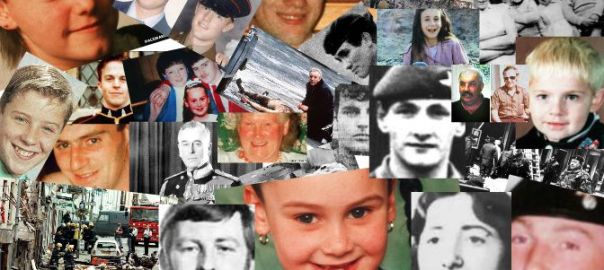
Remembering all innocent victims of the Troubles

Today is the anniversary of the follow  people killed as a results of the conflict in Northern Ireland

To the innocent on the list – Your memory will live forever

– To  the Paramilitaries  –

“There are many things worth living for, a few things worth dying for, but nothing worth killing for.

14 People lost their lives on the 31st of  August between 1971 – 1994

————————————————————–

31 August 1971


Clifford Loring,  (18) nfNI
Status: British Army (BA),

Killed by: Irish Republican Army (IRA)
Died one day after being shot at British Army (BA) Vehicle Check Point (VCP), Stockman’s Lane, Belfast.

————————————————————–

31 August 1972
Patrick Devenney,  (27)

Catholic
Status: Civilian (Civ), Killed by: Ulster Defence Association (UDA)
Body found shot in sack, Rugby Road, Belfast.

————————————————————–

31 August 1972


Eamon McMahon,   (19)

Catholic
Status: Civilian (Civ), Killed by: non-specific Loyalist group (LOY)
Found tied up and beaten to death in River Bann, Portadown, County Armagh

————————————————————–

31 August 1973


Patrick Mulvenna,   (19)

Catholic
Status: Irish Republican Army (IRA), Killed by: British Army (BA)
Shot during gun battle from concealed British Army (BA) observation post while alighting from car, Ballymurphy Road, Ballymurphy, Belfast.

————————————————————–

31 August 1973


James Bryson,  (25)

Catholic
Status: Irish Republican Army (IRA), Killed by: British Army (BA)
Shot during gun battle from concealed British Army (BA) observation post while alighting from car, Ballymurphy Road, Ballymurphy, Belfast. He died 22 September 1973.

————————————————————–

31 August 1975
Joseph Reid,  (46)

Protestant
Status: Ulster Defence Regiment (UDR), Killed by: Irish Republican Army (IRA)
Off duty. Shot at his farm, Farnaloy, near Keady, County Armagh.

————————————————————–

31 August 1977
William Smith,   (28) nfNI
Status: British Army (BA),

Killed by: Irish Republican Army (IRA)
Shot by sniper while on British Army (BA) mobile patrol, outside Girdwood British Army (BA) base, Antrim Road, Belfast.

————————————————————–

31 August 1980


Allen Wallace   (49)

Protestant
Status: Royal Ulster Constabulary (RUC),

Killed by: Irish Republican Army (IRA)
Off duty reservist. Abducted while driving milk lorry, near Newtownhamilton, County Armagh. Found shot, Trainor’s Bridge, near Newtownhamilton, County Armagh, on 12 September 1980.

————————————————————–

31 August 1985


Martin Vance,  (33)

Catholic
Status: Royal Ulster Constabulary (RUC),

Killed by: Irish Republican Army (IRA)
Off duty. Shot outside his home, Rocks Chapel Road, Crossgar, County Down.

————————————————————–

31 August 1988
Sean Dalton,  (55)

Catholic
Status: Civilian (Civ),

Killed by: Irish Republican Army (IRA)
Killed by booby trap bomb in neighbour’s home, Kildrum Gardens, Creggan, Derry

————————————————————–

31 August 1988
Sheila Lewis,   (60)

Catholic
Status: Civilian (Civ),

Killed by: Irish Republican Army (IRA)
Killed by booby trap bomb in neighbour’s home, Kildrum Gardens, Creggan, Derry

————————————————————–

31 August 1988
Gerard Curran,   (-9)

Catholic
Status: Civilian (Civ),

Killed by: Irish Republican Army (IRA)
Injured by booby trap bomb in neighbour’s home, Kildrum Gardens, Creggan, Derry. He died 31 March 1989.

————————————————————–

31 August 1991


Francis Crawford,  (57)

Catholic
Status: Civilian (Civ),

Killed by: Ulster Freedom Fighters (UFF)
Take-away delivery driver. Shot when lured to bogus call, Vicinage Court, near Carlisle Circus, Belfast.

————————————————————–

31 August 1994
Sean McDermott,  (37)

Catholic
Status: Civilian (Civ),

Killed by: Ulster Volunteer Force (UVF)
Found shot, in his car, off Old Ballynoe Road, near Antrim.

————————————————————–

Main source CAIN Web Service

See: 1st September

30th August – Deaths & Events in Northern Ireland Troubles

30th of  August

Key Events & Deaths on this day in Northern Ireland Troubles

Saturday 30 August 1975

Two Catholic civilians died as a result of injuries received during a gun and bomb attack on the Harp Bar, Hill Street, Belfast. The attack was carried out by the Ulster Freedom Fighters (UFF), a cover name used by the Ulster Defence Association

(UDA). Stephen Geddis (10) a Catholic boy died two days after being hit by a rubber bullet fired by a British soldier. An off-duty member of the Ulster Defence Regiment (UDR) was shot dead by the Irish Republican Army (IRA) near Whitecross, County Armagh. The Irish Republican Army (IRA) planted a time bomb in High Holborn, London. No one was injured in the explosion.

Tuesday 30 August 1977

Jimmy Carter, then President of the USA, gave a keynote speech on Northern Ireland. In the speech he said that the American government would support any initiative that led to a form of government in Northern Ireland which had the support of both sections of the community. In particular the support would take the form of trying to create additional jobs in the region. He also called on Americans not to provide financial and other support for groups using violence in Northern Ireland.

Thursday 30 August 1979

A decision was taken by the British government to increase the size of the Royal Ulster Constabulary (RUC) by 1,000 officers to 7,500

. [This reflected a continuation of the policy of ‘Ulsterisation’ or ‘police primacy’. There was some continuing friction between the British Army (BA) and the RUC over this policy. On 2 October 1979 a new post of security Co-ordinator for Northern Ireland was created to try to improve relations between the BA and the RUC.]

Friday 30 August 1985

James Molyneaux, then leader of the Ulster Unionist Party (UUP), and Ian Paisley, then leader of the Democratic Unionist Party (DUP), attended a meeting at Downing Street, London, with Margaret Thatcher, then British Prime Minister. The two Unionist leaders had asked for the meeting to protest at the continuing Anglo-Irish talks between the two governments.

Tuesday 30 August 1988

Three members of the Irish Republican Army (IRA) were shot dead by soldiers of the Special Air Force (SAS) near Drumnakilly, County Tyrone.

Last in a series meetings between John Hume, then leader of the Social Democratic and Labour Party (SDLP) and Gerry Adams, then leader of Sinn Fein (SF). A joint statement was issued following the meeting.

Wednesday 30 August 1995

Gerry Adams, then President of Sinn Féin (SF), said that his party would consider constructively any proposals which addressed the decommissioning of paramilitary weapons. However, Martin McGuinness, then Vice-President of SF, ruled out the possibility of the Irish Republican Army (IRA) decommissioning any weapons as a way of overcoming the deadlock in the peace process.

Wednesday 30 August 1995

Gerry Adams, then President of Sinn Féin (SF), said that his party would consider constructively any proposals which addressed the decommissioning of paramilitary weapons. However, Martin McGuinness, then Vice-President of SF, ruled out the possibility of the Irish Republican Army (IRA) decommissioning any weapons as a way of overcoming the deadlock in the peace process.

Friday 30 August 1996

Following a series of interviews the Police Authority of Northern Ireland announced that Ronnie Flanagan was to be appointed as the new Royal Ulster Constabulary (RUC) Chief Constable. Ronnie Flanagan took over from Hugh Annesley in November 1996.

Saturday 30 August 1997

The New Barnsley Royal Ulster Constabulary (RUC) police station in west Belfast was attacked by a crowd of people who threw petrol bombs and set a lookout post on fire. The RUC responded by firing plastic baton rounds. The Royal Black Preceptory cancelled or rerouted planned parades in Strabane and Pomeroy, County Tyrone, and Bellaghy, County Derry.

Monday 30 August 1999

The LVF announced that it intended to engage in a second handover of weapons following an earlier initiative on 18 December 1998.

Thursday 30 August 2001

A man was shot and wounded during a gun attack at Bellavale Terrace, Coalisland, County Tyrone. He managed to drive off before being taken to Dungannon Royal Ulster Constabulary (RUC) station where he received initial treatment for his wounds. He was later taken on to Craigavon hospital.

[Vincent Currie, then a Social Democratic and Labour Party (SDLP) councillor, claimed that the Irish Republican Army (IRA) were responsible for the attack. The Red Hand Defenders (RHD), a Loyalist paramilitary group, later claimed responsibility for the attack but this was dismissed as unlikely by most commentators.]

The Royal Ulster Constabulary (RUC) stated that Loyalist paramilitaries had carried out 129 pipe-bomb attacks so far this year. Of these 53 had exploded and 89 were defused. Mitchel McLaughlin, then Sinn Féin Chairman, accused John Reid, then Secretary of State, of turning a blind eye to ongoing Loyalist attacks.

The Northern Ireland Housing Executive (NIHE) published its Annual Report which marked the 30th anniversary since it was established in 1971. The report showed that a total of 22,000 people were on the public sector housing waiting list and of these 10,366 were classified as being in urgent need. According to the report there were 44,000 dwellings unfit for human habitation in Northern Ireland.


Remembering all innocent victims of the Troubles

Today is the anniversary of the follow  people killed as a results of the conflict in Northern Ireland

To the innocent on the list – Your memory will life forever

– To  the Paramilitaries  –

“There are many things worth living for, a few things worth dying for, but nothing worth killing for.

13 People lost their lives on the 29th of  August between 1972 – 1993

————————————————————–

30 August 1972


David Griffiths,  (20) nfNI
Status: British Army (BA),

Killed by: Irish Republican Army (IRA)
Shot by sniper while on British Army (BA) foot patrol, Clonard Street, Lower Falls, Belfast

————————————————————–

30 August 1972


Roy Christopher,  (20) nfNI

Status: British Army (BA),

Killed by: Irish Republican Army (IRA)
Died 12 days after being injured in bomb attack on British Army (BA) foot patrol, Cupar Street, Belfast.

————————————————————–

30 August 1973


Ronald Beckett,   (36) nfNI

Status: British Army (BA),

Killed by: Irish Republican Army (IRA)
Killed attempting to defuse bomb at Tullyhomman Post Office, near Pettigoe, County Fermanagh.

————————————————————–

30 August 1973


Francis Hall,  (29)

Catholic
Status: Irish Republican Army (IRA),

Killed by: Irish Republican Army (IRA)
Died one week after being injured in premature bomb explosion in house, Elaine Street, Stranmillis, Belfast

————————————————————–

30 August 1975


Stephen Geddis,   (10)

Catholic
Status: Civilian (Civ),

Killed by: British Army (BA)
Died two days after being hit by plastic bullet, Divis Flats, Belfast.

————————————————————–

30 August 1975


Robert Frazer,   (50)

Protestant
Status: Ulster Defence Regiment (UDR),

Killed by: Irish Republican Army (IRA)
Off duty. Shot while driving away from friend’s farm, Ballymoyer, near Whitecross, County Armagh.

————————————————————–

30 August 1975


Denis McAuley,  (30)

Catholic
Status: Civilian (Civ),

Killed by: Ulster Freedom Fighters (UFF)
Shot during gun and bomb attack on Harp Bar, Hill Street, Belfast

————————————————————–

30 August 1975


John Doherty,  (28)

Catholic
Status: Civilian (Civ),

Killed by: Ulster Freedom Fighters (UFF)
Injured during gun and bomb attack on Harp Bar, Hill Street, Belfast. He died 10 September 1975

————————————————————–

30 August 1987


Winston Finlay,  (44)

Protestant
Status: Royal Ulster Constabulary (RUC),

Killed by: Irish Republican Army (IRA)
Off duty. Shot outside his home, Ballyronan, County Derry.

————————————————————–

30 August 1988


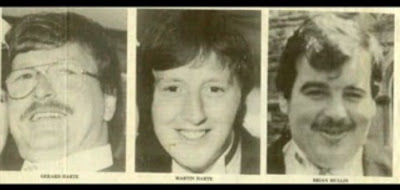
Gerard Harte,  (29)

Catholic
Status: Irish Republican Army (IRA),

Killed by: British Army (BA)
Shot by undercover British Army (BA) members, while approaching abandoned lorry, Drumnakilly, near Carrickmore, County Tyrone.

————————————————————–

30 August 1988


Martin Harte,   (21)

Catholic
Status: Irish Republican Army (IRA),

Killed by: British Army (BA)
Shot by undercover British Army (BA) members, while approaching abandoned lorry, Drumnakilly, near Carrickmore, County Tyrone.

————————————————————–

30 August 1988


Brain Mullin,   (26)

Catholic
Status: Irish Republican Army (IRA),

Killed by: British Army (BA)
Shot by undercover British Army (BA) members, while approaching abandoned lorry, Drumnakilly, near Carrickmore, County Tyrone.

————————————————————–

30 August 1993


Teresa Dowds De Mogollan,   (48)

Catholic
Status: Civilian (Civ),

Killed by: Ulster Freedom Fighters (UFF)
Shot at her home, Fortwilliam Park, Mount Vernon, Belfast.


Main source CAIN Web Service

See: SAS killed eight Irish terrorists

29th August – Deaths & Events in Northern Ireland Troubles

29th of  August

Key Events & Deaths on this day in Northern Ireland Troubles

Friday 29 August 1969

Following the visit to Northern Ireland by James Callaghan, then British Home Secretary, a Communiqué on behalf of the Northern Ireland and British governments was released. This communiqué provided an outline of the work that would be undertaken on a number of further reforms mainly in the area of local government administration, housing, and employment.

Sunday 29 August 1971

A Catholic man died 16 days after being shot by the British Army in Belfast.

Wednesday 29 August 1973

The Irish Republican Army (IRA) planted two bombs in Solihull, England and also planted an incendiary device in Harrod’s store in London.

Friday 29 August 1975

The Irish Republican Army (IRA) planted a booby-trapped time bomb in Kensington Church Street, London, and then gave a telephone warning. Roger Goad (40), who was a British Army officer in a bomb-disposal squad, was killed as he tried to defuse the device.

[Goad was posthumously awarded the George Cross.]

A member of the youth section of the IRA was shot dead by Loyalists in Belfast.

Eamon de Valera died at the age of 92.

Wednesday 29 August 1979

Margaret Thatcher, then British Prime Minister, paid a visit to Northern Ireland to hold discussions on security. In Rome it was announced that Pope John Paul II would not travel to Armagh during his forthcoming visit to Ireland on 29 September 1979.

Tuesday 29 August 1989

Claims of Collusion between Loyalists and Security Forces

The Ulster Freedom Fighters (UFF) claimed that they had received security force files on Irish Republican Army (IRA) suspects. It was claimed that the death of Loughlin Maginn on 25 August 1989 was due to information supplied to the UFF by members of the security forces.

[These claims revived accusations of security force collusion with Loyalist paramilitaries.]

Thursday 29 August 1991

Sinn Féin (SF) won a by-election for a seat on Belfast City Council. This victory brought the party’s representation to 9 members making it the second-largest party in the council.

Monday 29 August 1994

Gerry Adams, then President of Sinn Féin (SF), said that he had met the Army Council of the Irish Republican Army (IRA). He indicated that he told the Council that he believed that the conditions existed for moving the peace process forward.

Friday 29 August 1997

Announcement that SF Could Enter Talks

Marjorie (Mo) Mowlam, then Secretary of State for Northern Ireland, said that she “accepted the veracity” of the renewed Irish Republican Army (IRA) ceasefire and would therefore be inviting Sinn Féin (SF) to attend the multi-party talks at Stormont, Belfast, on 15 September 1997.

The Ulster Unionist Party (UUP) said that it would attend the talks but would not sit at the same table as SF. Tony Blair, then British Prime Minister, and Bertie Ahern, then Taoiseach (Irish Prime Minister), issued a joint appeal to all Unionists to joint the multi-party talks on 15 September 1997.

Sunday 29 August 1999

A British army bomb disposal unit defused a pipe-bomb found near a Catholic church in County Antrim. The bomb had been left in the graveyard of St. Peter the Rock, on the Rock Road in Lisburn. The attack was carried out by Loyalist paramilitaries.

Loyalists also carried out a paramilitary ‘punishment’ shooting on a man in Antrim, and were also responsible for two beatings in east Belfast and Glengormley.

A Gaelic Athletic Association (GAA) clubhouse in Ahoghill, County Antrim, was damaged in an arson attack. The IRA expelled two young men from the Ardoyne in north Belfast and the Short Strand in east Belfast. John Hume, then leader of the Social Democratic and Labour Party (SDLP), was taken into hospital in Austria for an operation on a perforated intestine.

Wednesday 29 August 2001

Loyalist paramilitaries carried out a pipe-bomb attack on the home of a Catholic family in Ballynahinch, County Down. Two devices exploded at the house shortly before 3.00am (0300BST); there were no injuries in the attack. The owner of the house blamed the Ulster Defence Association (UDA) for the attack.

The Red Hand Defenders (RHD), a cover name that has been used by members of the Ulster Defence Association (UDA), claimed responsibility for the attack.

[There were other attacks on Catholic families in the same street on 1 February 2001.]

Two pipe-bombs were discovered and defused in Ballycastle, County Antrim. The bombs were discovered close to where a car bomb had been left on 28 August 2001. The first device was found near the Marine Hotel and the second ‘pipe bomb’ was later found at the Boyd Arms public house in the Diamond area of the town.

Sean Farren, then Minister for Higher and Further Education, Training and Employment, said that there was clear evidence that the UDA ceasefire was in some areas “completely non-existent”. Speaking in the aftermath of the bombing attempt in Balllycastle, County Antrim, on 28 August 2001 he said that the British government must acknowledge the UDA ceasefire was not operating in some parts of the North and must take action against those behind the recent attacks.

A delegation from Sinn Féin led by Mitchel McLaughlin, then SF Chairman, held talks with Des Browne, then junior Northern Ireland minister, to discuss the problems still facing the peace process. Browne later said that the British government was keeping a close eye on Loyalist paramilitary ceasefires following recent bomb attacks. He said:

“the implications for those Loyalist groups engaged in these despicable acts … will be very serious”.

The Royal Ulster Constabulary (RUC) press office confirmed that two senior officers, thought to be from Special Branch, had travelled to Colombia to assist the investigation into the activities of the three Irishmen arrested on 13 August 2001.


Remembering all innocent victims of the Troubles

Today is the anniversary of the follow  people killed as a results of the conflict in Northern Ireland

To the innocent on the list – Your memory will live forever

– To  the Paramilitaries  –

“There are many things worth living for, a few things worth dying for, but nothing worth killing for.

5 People lost their lives on the 29th of  August between 1971 – 1982

————————————————————–

29 August 1971
Ian Armstrong,   (33) nfNI
Status: British Army (BA),

Killed by: Irish Republican Army (IRA)
Shot while on British Army (BA) mobile patrol, near Crossmaglen, County Armagh

————————————————————–

29 August 1975


James Templeton,   (15)

Catholic
Status: Irish Republican Army Youth Section (IRAF),

Killed by: non-specific Loyalist group (LOY)
Shot from passing car, while standing outside Rose and Crown Bar, Ormeau Road, Belfast.

————————————————————–

29 August 1975
Roger Goad,  (40) nfNIB
Status: British Army (BA),

Killed by: Irish Republican Army (IRA)
Attached to British police. Killed attempting to defuse bomb in shop, Church Street, Kensington, London.

————————————————————–

29 August 1980
Frank McGrory,   (52)

Catholic
Status: Civilian (Civ),

Killed by: Irish National Liberation Army (INLA)
Killed when detonated booby trap bomb, hidden in hedgerow, Carnagh, near Keady, County Armagh

————————————————————–

29 August 1982
James Galway,   (33)

Protestant
Status: Civilian (Civ),

Killed by: Ulster Volunteer Force (UVF)
Abducted somewhere in the Shankill area, Belfast. Found shot, on information supplied to the British authorities, buried at a building site, Fir Park, Broughshane, near Ballymena, County Antrim, on 24 November 1983.

Major Events in the Troubles

Main source CAIN Web Service


see: 30th August deaths in the Troubles

28th August – Deaths & Events in Northern Ireland Troubles

28th of  August

Key Events & Deaths on this day in Northern Ireland Troubles

Thursday 28 August 1975

The Irish Republican Army (IRA) planted a time bomb in Oxford Street, London. The bomb had been booby-trapped and was designed to kill anyone trying to defuse it. The bomb was not discovered and exploded without causing any injuries.

Saturday 28 August 1976

The Peace People organised a rally which was attended by approximately 25,000 people. Those taking part in the rally walked from the Shankill Road to Woodvale Park.

Tuesday 28 August 1979

John Hardy (43), a Catholic civilian, was shot dead by the Ulster Volunteer Force (UVF) at his home in Ashton Street, New Lodge, Belfast.

Saturday 28 August 1982

The Royal Ulster Constabulary (RUC) found one and a half tons of commercial explosive hidden in a lorry near Banbridge, County Down. The Garda Síochána (the Irish police) found 10,000 rounds of ammunition and commercial explosives at Glencree, County Wicklow.

Sunday 28 August 1983

Ken Livingstone, then leader of the Greater London Council (GLC), said that Britain’s treatment of the Irish over the past 800 years had been worse than Hitler’s treatment of the Jews.

Thursday 28 August 1986

Mervyn Bell (22), a Protestant civilian, was shot dead by the Irish Republican Army (IRA) on the Strand Road in Derry. Bell had been working as a contractor to the Royal Ulster Constabulary (RUC). [This killing followed threats made by the IRA on 28 July 1986 and on 27 August 1986.] A Protestant civilian was killed by Loyalists in Belfast.

Wednesday 28 August 1991

Liam Kearns and David Madigan left Newry Cathedral ten days after seeking sanctuary in the building. They had entered the Cathedral following an order by the Irish Republican

Monday 28 August 1995

James Molyneaux, then leader of the Ulster Unionist Party (UUP), announced that he would resign from the leadership of the party.

[On 18 March 1995 Molyneaux had been challenged for his position as leader by 21 year old student who received 88 votes. David Trimble, then UUP MP, was elected leader on 8 September 1995.]

Sunday 28 August 1994 Fourth Hume / Adams Statement

John Hume, then leader of the Social Democratic and Labour Party (SDLP), and Gerry Adams, then President of Sinn Féin (SF), issued a (fourth) joint statement. The statement read:

” A just and lasting peace in Ireland will only be achieved if it is based on democratic principles. … If a lasting settlement is to be found there must be a fundamental and thorough-going change, based on the right of the Irish people as a whole to national self-determination.”

Monday 28 August 1995

James Molyneaux, then leader of the Ulster Unionist Party (UUP), announced that he would resign from the leadership of the party. [On 18 March 1995 Molyneaux had been challenged for his position as leader by 21 year old student who received 88 votes. David Trimble, then UUP MP, was elected leader on 8 September 1995.]

Wednesday 28 August 1996

The Combined Loyalist Military Command (CLMC), an umbrella group for loyalist paramilitaries, issued a statement ordering Billy Wright and Alex Kerr (both leading Loyalists figures from Portadown, County Armagh) to leave Northern Ireland or face “summary justice”. Mr Kerr was in custody when the threat was issued but Mr Wright said he would defy the order.

Thursday 28 August 1997

David Trimble, then leader of the Ulster Unionist Party (UUP), and Jeffrey Donaldson, then a UUP Member of Parliament (MP), held a “hostile meeting” with Marjorie (Mo) Mowlam, then Secretary of State for Northern Ireland. The Unionist MPs were angry at comments made by Mowlam that the issue of ‘consent’ should not be “narrowly defined” in numerical terms. [She later stated that the status of Northern Ireland could only be changed by a majority of the population.]

Friday 28 August 1998

The minutes of a meeting on 6 August between Adam Ingram, then Security Minister at the NIO, and the Ulster Unionist Party (UUP) Assembly Group, were leaked. At the meeting the UUP were reported as saying there would be “no chance” of an Executive being formed without decommissioning of Irish Republican Army (IRA) weapons. The “real” Irish Republican Army (rIRA) stated that it believed that a continuation of its campaign was futile “in the circumstances of Omagh and the Mitchell agreement”. The rIRA indicated that a ceasefire would be called.

[The rIRA announced a ceasefire on 7 September 1998.] Elaine Moore from Dublin, who had been arrested on conspiracy charges in London, was freed on bail from

Saturday 28 August 1999

The home of a Catholic man was attacked on Churchill Road, Larne, when a pipe-bomb was left in his driveway. The man is the brother of the Social Democratic and Labour Party (SDLP) councillor in Larne, Danny O’Connor. Considerable damage was done to the house and the owner was treated for severe shock.

Also in Larne, a pipe-bomb was thrown at the home of a Catholic family in Sallagh Park South. A couple and their four children were in the home at the time of the attack but were uninjured. The attacks were carried out by Loyalist paramilitaries. The Irish Republican Army (IRA) ordered four young men from Dungannon to leave Northern Ireland or be shot.

The young men had been accused of “anti-social activities”. Unionist and Conservative politicians described the “expulsion orders” as a direct snub to Marjorie (Mo) Mowlam, then Secretary of State for Northern Ireland. David Trimble, then leader of the Ulster Unionist Party (UUP), said he was in no doubt that the expulsion orders were linked to Mowlam’s assertion that the IRA ceasefire was intact, despite recent violence.

Tuesday 28 August 2001

Loyalist paramilitaries planted a car bomb in Castle Street in the centre of Ballycastle, County Antrim, while thousands of people were in the town to celebrate the annual Auld Lammas Fair. The bomb was discovered by a Royal Ulster Constabulary (RUC) officer and the area was cleared. British Army bomb disposal officers defused the bomb which turned out to be a large blast incendiary device. The Red Hand Defenders (RHD), a cover name that has been used by members of the Ulster Defence Association (UDA), claimed responsibility for the bomb. [Security forces later suggested the possibility that the bomb was actually the work of the Ulster Volunteer Force (UVF).

The Lammas Fair attracts thousands of visitors each year. The attack was widely condemned.] Police searched two houses in the Tiger’s Bay area of north Belfast and uncovered 14 suspected ‘acid bombs’ and materials for making other devices. [It was later reported that a woman would appear at Belfast Magistrate’s Court on 29 August 2001 charged with having offensive weapons.]


Remembering all innocent victims of the Troubles

Today is the anniversary of the follow  people killed as a results of the conflict in Northern Ireland

To the innocent on the list – Your memory will live forever

– To  the Paramilitaries  –

“There are many things worth living for, a few things worth dying for, but nothing worth killing for.

9 People lost their lives on the 28th of  August between 1972 – 1992

————————————————————–

28 August 1972
Ian Morrell,  (29) nfNI
Status: British Army (BA),

Killed by: Irish Republican Army (IRA)
Shot by sniper while on British Army (BA) foot patrol, Beechmount Avenue, Belfast

————————————————————–

28 August 1972
Ronald Rowe,   (21) nfNI
Status: British Army (BA),

Killed by: British Army (BA)
Shot in error, from British Army (BA) observation post, while on British Army (BA) foot patrol. Ardoyne Avenue, Ardoyne, Belfast.

————————————————————–

28 August 1972
William Trotter,   (57)

Protestant
Status: Civilian (Civ),

Killed by: Irish Republican Army (IRA)
Killed by booby trap bomb while walking across field on his farm, Drumralla, near Newtownbutler, County Fermanagh.

————————————————————–

28 August 1973

udr

Kenneth Hill,   (25)

Protestant
Status: Ulster Defence Regiment (UDR),

Killed by: Irish Republican Army (IRA)
Shot by sniper while evacuating area during bomb alert, Culdee, Armagh.

————————————————————–

28 August 1977
Jack Marshall,  (25) nfNI
Status: British Army (BA),

Killed by: Irish Republican Army (IRA)
Shot by sniper while on British Army (BA) foot patrol, Brompton Park, Ardoyne, Belfast.

————————————————————–

28 August 1979

John Hardy,  (43)

Catholic
Status: Civilian (Civ),

Killed by: Ulster Volunteer Force (UVF)
Shot at his home, Ashton Street, New Lodge, Belfast.

————————————————————–

28 August 1986
Robert Coggles,   (26)

Protestant
Status: Civilian (Civ),

Killed by: non-specific Loyalist group (LOY)
Found shot on waste ground at the rear of Boys’ Model School, off Ballysillan Road, Ballysillan, Belfast.

————————————————————–

28 August 1986
Mervyn Bell,   (22)

Protestant
Status: Civilian (Civ),

Killed by: Irish Republican Army (IRA)
Shot while sitting in stationary car outside his father’s workplace, council depot, Strand Road, Derry. Contractor to British Army (BA).

————————————————————–

28 August 1992
Paul Turner,  (18) nfNI
Status: British Army (BA),

Killed by: Irish Republican Army (IRA)
Shot by sniper, while on British Army (BA) foot patrol, The Square, Crossmaglen, County Armagh

Main source CAIN Web Service


Major Events in the Troubles


See : 29th August

27th August – Deaths & Events in Northern Ireland Troubles

27th of  August

Key Events & Deaths on this day in Northern Ireland Troubles

Wednesday 27 August 1969

James Callaghan, then British Home Secretary, visited Belfast and Derry for talks with the Unionist government and others. The Stormont government announced the establishment of an Inquiry, to be chaired by Justice Scarman, into the circumstances of the riots during the year. [ Political Developments, Civil Rights Campaign. ]

Friday 27 August 1971

A British soldier was shot dead by the Irish Republican Army (IRA) in south Armagh.

Wednesday 27 August 1975

The Irish Republican Army (IRA) planted a time bomb in the Caterham Arms public house in Caterham, Surrey, England. There was no warning and the bomb exploded at 9.20pm injuring 23 civilians and 10 off-duty soldiers. The pub was used by members of the Welsh Guards who were based at a barracks nearby. [This attack marked the start of a renewed bombing campaign (‘Phase Two’) in England.]

Friday 27 August 1976

Three members of a Catholic family, Joseph Dempsey (22), Jeanette Dempsey (19) and Brigeen Dempsey (10 months), were killed in a petrol bomb attack on their home in Hillman Street, New Lodge, Belfast. The attack was carried out by Loyalists.

Sunday 27 August 1978 Civil Rights March

Approximately 10,000 people took part in a march from Coalisland to Dungannon, County Tyrone, to commemorate the first civil rights march 10 years earlier.

Monday 27 August 1979 Warrenpoint Attack and Mountbatten Killing

See Warrenpoint Page

18 British soldiers were killed in an Irish Republican Army (IRA) attack at Warrenpoint, County Down. This represented the British Army’s greatest loss of life in a single attack in Northern Ireland. The attack began when the IRA exploded a 500 pound bomb at Narrow Water, near Warrenpoint, as an army convoy was passing.

Six members of the Parachute Regiment were killed in this initial bomb. As other troops moved into the area a second bomb was detonated in a nearby Gate Lodge killing 12 soldiers – 10 members of the Parachute Regiment and 2 members of the Queen’s Own Highlanders (one of whom was the Commanding Officer).

The explosion also damaged an army helicopter. A gun battle then broke out between the IRA who were positioned in the Irish Republic and British Army soldiers in Northern Ireland. An innocent civilian was killed on the Republic side of the border by soldiers firing from the north.

See Lord Mountbatten Page

Earlier in the day Louis Mountbatten (79), a cousin of the Queen, was killed by a bobby-trap bomb left by the IRA on a boat near Sligo in the Republic of Ireland. Three other people were killed in the explosion, Lady Brabourne (82), Nicholas Knatchbull (14) who was Mountbatten’s grandson, and Paul Maxwell (15) who was a crew member on the boat. Mountbatten had been a regular visitor to the Mullaghmore area of County Sligo each August and never had a bodyguard. He was on a fishing trip and was accompanied by a number of people on the boat when the bomb exploded.

[During the Second World War Mountbatten had been supreme commander of allied forces in south-east Asia. He had also been the last British Viceroy of India and oversaw Indian independence. Thomas McMahon was charged with Mountbatten’s murder and later sentenced to life imprisonment.]

[The deaths on 27 August 1978 were followed by a series of killings of Catholic civilians by Loyalist paramilitaries.]

Wednesday 27 August 1986

The Irish Republican Army (IRA) issues further threats to civilians who are working with the security forces.

Saturday 27 August 1988

Robert Russell was extradited from the Republic of Ireland to Northern Ireland. Russell was one of those who had escaped from the Maze Prison on 25 September 1983.

Friday 27 August 1993

The Irish Republican Army (IRA) responded to an interview given by John Wheeler (Sir), then a Northern Ireland Office (NIO) minister, on 26 August 1993. In the statement the IRA said that it would meet “head-on any British persistence with the failed policies of the past”.

Sunday 27 August 1995

John Hume, then leader of the Social Democratic and Labour Party (SDLP), Gerry Adams, then President of Sinn Féin (SF), and Albert Reynolds, the former Taoiseach (Irish Prime Minister), attended a peace forum in Killala, County Mayo.

Wednesday 27 August 1997

There was a gun attack on the house belonging to Kenny McClinton who had formerly served life sentences for killings carried out while a member of the Ulster Defence Association (UDA). The attack was believed to have been carried out by Loyalist paramilitaries. McClinton had recently mediated on behalf of Loyalist Volunteer Force (LVF) prisoners in the Maze Prison.

[Following the attack McClinton moved his family from Belfast to Portadown, County Armagh, which is a town with strong LVF connections.]

Billy Hutchinson, then a spokesperson for the Progressive Unionist Party (PUP), gave an interview on the British Broadcasting Corporation (BBC) Radio Ulster programme Talkback in which he said that the talks process was offering nothing to Loyalists. He said that he would be recommending that the PUP ended its participation in the talks. He also said that the Ulster Volunteer Force (UVF) could “wipe out” the LVF in a week. Relatives of the 33 people killed in bombings in Dublin and Monaghan in the Republic of Ireland on 17 May 1974 failed in their court attempt to get the Garda Síochána (the Irish police) to release the files on their investigations of the bombings.


Remembering all innocent victims of the Troubles

Today is the anniversary of the follow  people killed as a results of the conflict in Northern Ireland

To the innocent on the list – Your memory will live forever

– To  the Paramilitaries  –

“There are many things worth living for, a few things worth dying for, but nothing worth killing for.

33 People lost their lives on the 27th of  August between 1971 – 1992

————————————————————–

27 August 1971


Joseph Corr,   (43)

Catholic
Status: Civilian (Civ),

Killed by: British Army (BA)
Died 16 days after being shot at the junction of Springfield Road and Divismore Crescent, Ballymurphy, Belfast.

————————————————————–

27 August 1972
Thomas Boyd,   (28)

Protestant
Status: Civilian (Civ),

Killed by: Ulster Defence Association (UDA)
Shot at his home, Carlisle Street, off Crumlin Road, Belfast.

————————————————————–

27 August 1972


Anthony Metcalfe,   (28) nfNI
Status: British Army (BA),

Killed by: Irish Republican Army (IRA)
Shot by sniper while in Creggan Heights British Army (BA) base, Creggan, Derry

————————————————————–

27 August 1974


Patrick McKeown,   (29)

Catholic
Status: Irish Republican Army (IRA),

Killed by: Irish Republican Army (IRA)
Died in premature bomb explosion in house, Barcroft Park, Newry, County Down

————————————————————–

27 August 1975
John Barry,  (42)

Protestant
Status: Civilian (Civ),

Killed by: non-specific Republican group (REP)
Shot at his home, The Crescent, off Erinvale Drive, Finaghy, Belfast.

————————————————————–

27 August 1976


 Joseph Dempsey,   (22)

Catholic
Status: Civilian (Civ),

Killed by: non-specific Loyalist group (LOY)
Killed in petrol bomb attack on his home, Hillman Street, New Lodge, Belfast.

————————————————————–

27 August 1976


Jeanette Dempsey,   (19)

Catholic
Status: Civilian (Civ),

Killed by: non-specific Loyalist group (LOY)
Killed in petrol bomb attack on her home, Hillman Street, New Lodge, Belfast.

————————————————————–

27 August 1976


BRIGEEN Dempsey,  (0)

Catholic
Status: Civilian (Civ),

Killed by: non-specific Loyalist group (LOY)
Killed in petrol bomb attack on her home, Hillman Street, New Lodge, Belfast

————————————————————–

27 August 1979


 Lord  Mountbatten, (79) nfNIRI
Status: Civilian (Civ),

Killed by: Irish Republican Army (IRA)
Killed by remote controlled bomb on his boat, detonated when leaving Mullaghmore Harbour, County Sligo.

————————————————————–

27 August 1979


Dowager Lady Brabourne,  (82) nfNIRI
Status: Civilian (Civ),

Killed by: Irish Republican Army (IRA)
Killed by remote controlled bomb on Lord Mountbatten’s boat, detonated when leaving Mullaghmore Harbour, County Sligo.

————————————————————–

27 August 1979


Nicholas Knatchbull,   (14) nfNIRI
Status: Civilian (Civ),

Killed by: Irish Republican Army (IRA)
Killed by remote controlled bomb on Lord Mountbatten’s boat, detonated when leaving Mullaghmore Harbour, County Sligo.

————————————————————–

27 August 1979
Paul Maxwell,  (15)

Protestant
Status: Civilian (Civ),

Killed by: Irish Republican Army (IRA)
From Northern Ireland. Killed by remote controlled bomb on Lord Mountbatten’s boat, detonated when leaving Mullaghmore Harbour, County Sligo.

————————————————————–

27 August 1979
David Blair,  (40) nfNI
Status: British Army (BA),

Killed by: Irish Republican Army (IRA)
Killed in two remote controlled bomb attacks at Narrow Water, near Warrenpoint, County Down. The first bomb was left in parked lorry and detonated when British Army (BA) lorry passed. The second bomb was left in a nearby Gate Lodge and detonated when British Army (BA) reinforcements arrived at the scene of the first explosion.

————————————————————–

27 August 1979


Thomas Vance,  (23) nfNI
Status: British Army (BA),

Killed by: Irish Republican Army (IRA)
Killed in two remote controlled bomb attacks at Narrow Water, near Warrenpoint, County Down. The first bomb was left in parked lorry and detonated when British Army (BA) lorry passed. The second bomb was left in a nearby Gate Lodge and detonated when British Army (BA) reinforcements arrived at the scene of the first explosion.

————————————————————–

27 August 1979
Ian Rogers, (31) nfNI
Status: British Army (BA),

Killed by: Irish Republican Army (IRA)
Killed in two remote controlled bomb attacks at Narrow Water, near Warrenpoint, County Down. The first bomb was left in parked lorry and detonated when British Army (BA) lorry passed. The second bomb was left in a nearby Gate Lodge and detonated when British Army (BA) reinforcements arrived at the scene of the first explosion.

————————————————————–

27 August 1979
Robert England,  (23) nfNI
Status: British Army (BA),

Killed by: Irish Republican Army (IRA)
Killed in two remote controlled bomb attacks at Narrow Water, near Warrenpoint, County Down. The first bomb was left in parked lorry and detonated when British Army (BA) lorry passed. The second bomb was left in a nearby Gate Lodge and detonated when British Army (BA) reinforcements arrived at the scene of the first explosion.

————————————————————–

27 August 1979
Jeffrey Jones,   (18) nfNI
Status: British Army (BA),

Killed by: Irish Republican Army (IRA)
Killed in two remote controlled bomb attacks at Narrow Water, near Warrenpoint, County Down. The first bomb was left in parked lorry and detonated when British Army (BA) lorry passed. The second bomb was left in a nearby Gate Lodge and detonated when British Army (BA) reinforcements arrived at the scene of the first explosion.

————————————————————–

27 August 1979
Gary Barnes,   (18) nfNI
Status: British Army (BA),

Killed by: Irish Republican Army (IRA)
Killed in two remote controlled bomb attacks at Narrow Water, near Warrenpoint, County Down. The first bomb was left in parked lorry and detonated when British Army (BA) lorry passed. The second bomb was left in a nearby Gate Lodge and detonated when British Army (BA) reinforcements arrived at the scene of the first explosion.

————————————————————–

27 August 1979
Anthony Wood,   (19) nfNI
Status: British Army (BA),

Killed by: Irish Republican Army (IRA)
Killed in two remote controlled bomb attacks at Narrow Water, near Warrenpoint, County Down. The first bomb was left in parked lorry and detonated when British Army (BA) lorry passed. The second bomb was left in a nearby Gate Lodge and detonated when British Army (BA) reinforcements arrived at the scene of the first explosion.

————————————————————–

27 August 1979
John Giles,  (22) nfNI
Status: British Army (BA),

Killed by: Irish Republican Army (IRA)
Killed in two remote controlled bomb attacks at Narrow Water, near Warrenpoint, County Down. The first bomb was left in parked lorry and detonated when British Army (BA) lorry passed. The second bomb was left in a nearby Gate Lodge and detonated when British Army (BA) reinforcements arrived at the scene of the first explosion.

————————————————————–

27 August 1979
Victor MacLeod,   (24) nfNI
Status: British Army (BA),

Killed by: Irish Republican Army (IRA)
Killed in two remote controlled bomb attacks at Narrow Water, near Warrenpoint, County Down. The first bomb was left in parked lorry and detonated when British Army (BA) lorry passed. The second bomb was left in a nearby Gate Lodge and detonated when British Army (BA) reinforcements arrived at the scene of the first explosion.

————————————————————–

27 August 1979
Leonard Jones,  (26) nfNI
Status: British Army (BA),

Killed by: Irish Republican Army (IRA)
Killed in two remote controlled bomb attacks at Narrow Water, near Warrenpoint, County Down. The first bomb was left in parked lorry and detonated when British Army (BA) lorry passed. The second bomb was left in a nearby Gate Lodge and detonated when British Army (BA) reinforcements arrived at the scene of the first explosion.

————————————————————–

27 August 1979
Robert Jones,   (18) nfNI
Status: British Army (BA),

Killed by: Irish Republican Army (IRA)
Killed in two remote controlled bomb attacks at Narrow Water, near Warrenpoint, County Down. The first bomb was left in parked lorry and detonated when British Army (BA) lorry passed. The second bomb was left in a nearby Gate Lodge and detonated when British Army (BA) reinforcements arrived at the scene of the first explosion.

————————————————————–

27 August 1979


Donald Blair, (23) nfNI
Status: British Army (BA),

Killed by: Irish Republican Army (IRA)
Killed in two remote controlled bomb attacks at Narrow Water, near Warrenpoint, County Down. The first bomb was left in parked lorry and detonated when British Army (BA) lorry passed. The second bomb was left in a nearby Gate Lodge and detonated when British Army (BA) reinforcements arrived at the scene of the first explosion.

————————————————————–

27 August 1979
Nicholas Andrew,  (24) nfNI
Status: British Army (BA),

Killed by: Irish Republican Army (IRA)
Killed in two remote controlled bomb attacks at Narrow Water, near Warrenpoint, County Down. The first bomb was left in parked lorry and detonated when British Army (BA) lorry passed. The second bomb was left in a nearby Gate Lodge and detonated when British Army (BA) reinforcements arrived at the scene of the first explosion.

————————————————————–

27 August 1979


Raymond Dunn,   (20) nfNI
Status: British Army (BA),

Killed by: Irish Republican Army (IRA)
Killed in two remote controlled bomb attacks at Narrow Water, near Warrenpoint, County Down. The first bomb was left in parked lorry and detonated when British Army (BA) lorry passed. The second bomb was left in a nearby Gate Lodge and detonated when British Army (BA) reinforcements arrived at the scene of the first explosion.

————————————————————–

27 August 1979


Michael Woods,   (18) nfNI
Status: British Army (BA),

Killed by: Irish Republican Army (IRA)
Killed in two remote controlled bomb attacks at Narrow Water, near Warrenpoint, County Down. The first bomb was left in parked lorry and detonated when British Army (BA) lorry passed. The second bomb was left in a nearby Gate Lodge and detonated when British Army (BA) reinforcements arrived at the scene of the first explosion.

————————————————————–

27 August 1979
Peter Fursman,  (35) nfNI
Status: British Army (BA),

Killed by: Irish Republican Army (IRA)
Killed in two remote controlled bomb attacks at Narrow Water, near Warrenpoint, County Down. The first bomb was left in parked lorry and detonated when British Army (BA) lorry passed. The second bomb was left in a nearby Gate Lodge and detonated when British Army (BA) reinforcements arrived at the scene of the first explosion.

————————————————————–

27 August 1979
Christopher Ireland,   (25) nfNI
Status: British Army (BA),

Killed by: Irish Republican Army (IRA)
Killed in two remote controlled bomb attacks at Narrow Water, near Warrenpoint, County Down. The first bomb was left in parked lorry and detonated when British Army (BA) lorry passed. The second bomb was left in a nearby Gate Lodge and detonated when British Army (BA) reinforcements arrived at the scene of the first explosion.

————————————————————–

27 August 1979
Walter Beard,   (33) nfNI
Status: British Army (BA),

Killed by: Irish Republican Army (IRA)
Killed in two remote controlled bomb attacks at Narrow Water, near Warrenpoint, County Down. The first bomb was left in parked lorry and detonated when British Army (BA) lorry passed. The second bomb was left in a nearby Gate Lodge and detonated when British Army (BA) reinforcements arrived at the scene of the first explosion.

————————————————————–

27 August 1979
Michael Hudson,  (29) nfNIRI
Status: Civilian (Civ),

Killed by: British Army (BA)
Shot from across Narrow Water, near Omeath, County Louth, shortly after a double bomb attack on British Army (BA) patrol at Narrow Water.

————————————————————–

27 August 1982


Wilfred McIver,  (37)

Protestant
Status: ex-Ulster Defence Regiment (xUDR),

Killed by: Irish Republican Army (IRA)
Killed by booby trap bomb attached to his car outside Milford Everton Social Club, Milford, near Armagh

————————————————————–

27 August 1992


Hugh McKibben,   (21)

Catholic
Status: Irish People’s Liberation Organisation (IPLO),

Killed by: Irish People’s Liberation Organisation Belfast Brigade (IPLOBB)
Shot outside Lamh Dearg GAA Club, Hannahstown, Belfast. Internal Irish People’s Liberation Oraganisation (IPLO) feud.

————————————————————–

26th August – Deaths & Events in Northern Ireland Troubles

26th of   August

Key Events & Deaths on this day in Northern Ireland Troubles

Wednesday 26 August 1970

Robert Porter, then Minister of Home Affairs, resigned from the Stormont government.

[The official reason was given as ‘health’ but Porter later said that he had not been consulted about the Falls Road curfew. Initially Chichester-Clark, then Northern Ireland Prime Minister, took over responsibility for Home Affairs, but later appointed John Taylor who was very critical of the reform programme.]

Saturday 26 August 1972

Six people were killed in three incidents across Northern Ireland.

Tuesday 26 August 1986

The cigarette company Gallagher announced the closure of its factory in Belfast with the loss of 700 jobs.

Wednesday 26 August 1987

In a shooting in a Belfast bar two Royal Ulster Constabulary (RUC) officers were shot dead by the Irish Republican Army (IRA). A number of bystanders were injured.

Monday 26 August 1991

The Northern Ireland Emergency Provision Act came into force in Northern Ireland.

Thursday 26 August 1993

John Wheeler (Sir), then a Northern Ireland Office (NIO) minister, gave an interview to the British Broadcasting Corporation (BBC) in which he said that “the IRA [Irish Republican Army] is already defeated”.

[The IRA issued a stateme Saturday 26 August 1995 There were scuffles between protesters and Royal Ulster Constabulary (RUC) officers at a Royal Black Institution parade in Bellaghy, County Derry. Sinn Féin (SF) said that the party did not rule out the possibility of an international commission being established to oversee the decommissioning of paramilitary weapons. nt in reply on 27 August 1993.]

Saturday 26 August 1995

There were scuffles between protesters and Royal Ulster Constabulary (RUC) officers at a Royal Black Institution parade in Bellaghy, County Derry. Sinn Féin (SF) said that the party did not rule out the possibility of an international commission being established to oversee the decommissioning of paramilitary weapons.

Tuesday 26 August 1997 Agreement on Decommissioning Body

The British and Irish governments jointly signed an agreement to set up an Independent International Commission on Decommissioning (IICD). Marjorie (Mo) Mowlam, then Secretary of State for Northern Ireland, held a meeting with Ronnie Flanagan, then Chief Constable of the Royal Ulster Constabulary (RUC), where concerns were expressed at the state of the Loyalist ceasefire. U2, the Dublin pop group, held a concert at Botanic Gardens in Belfast before an estimated 40,000 people.

Wednesday 26 August 1998 Blair Visits Omagh

Tony Blair, then British Prime Minister, paid a visit to the site of the bomb in Omagh, County Tyrone. Blair promised draconian legislation to deal with any paramilitary groups that refused to call a ceasefire. Sinn Féin (SF) said the new measures would amount to “internment in another guise”.

Thursday 26 August 1999

Marjorie (Mo) Mowlam, then Secretary of State for Northern Ireland, ruled that the Irish Republican Army (IRA) ceasefire had not broken down. However, she said she was in no doubt the IRA was involved in the murder of Charles Bennett and said there was clear information about the organisation being implicated in the Florida gun-running operation. Unionists reacted with fury to the decision.

Human rights campaigners said they were concerned at the news that John Stephens was being promoted to Commissioner of the Metropolitan Police. Stevens was leading the inquiry into the killing of Pat Finucane, a Belfast solicitor killed on 12 February 1989. However, Stevens said that much of the work of the inquiry would be completed before he took up his new position.

Sunday 26 August 2001

A man (46) was treated in hospital for gunshot wounds and other injuries following a paramilitary ‘punishment’ shooting and beating in County Tyrone. The man was attacked by a number of masked men in the living room of a house at Foyagh Road in Castlecaulfield. The attack happened just after 11.00pm (2300BST).

The British Army defused a second pipe-bomb in Shearwater Way in the Waterside area of Derry. It was the second device found in the street in two days.

[The attack was believed to have been carried out by Loyalist paramilitaries.]

Two ‘temporary’ classrooms in the grounds of Corpus Christi Chapel on Westrock Drive, Belfast, were badly damaged in a fire which was reported just before 8.00pm (2000BST). Royal Ulster Constabulary (RUC) officers who attended at the scene of the fire were attacked by people throwing stones. Two police vehicles were damaged during the violence.

[The bodies of three young men were found in two houses in west Belfast. It was believed that the three men had all taken drugs and alcohol at a party the previous evening. The police were investigating the possibility all three may have taken prescription drugs.]


Remembering all innocent victims of the Troubles

Today is the anniversary of the follow  people killed as a results of the conflict in Northern Ireland

To the innocent on the list – Your memory will live forever

– To  the Paramilitaries  –

“There are many things worth living for, a few things worth dying for, but nothing worth killing for.

14 People lost their lives on the 26th of  August between 1972 – 1987

————————————————————–

26 August 1972

Alfred Johnston,   (32)

Protestant
Status: Ulster Defence Regiment (UDR),

Killed by: Irish Republican Army (IRA)
Killed by remote controlled bomb, hidden in abandoned car, detonated when Ulster Defence Regiment patrol approached, Cherrymount, near Enniskillen, County Fermanagh.

————————————————————–

26 August 1972


James Eames,  (33)

Protestant
Status: Ulster Defence Regiment (UDR),

Killed by: Irish Republican Army (IRA)
Killed by remote controlled bomb, hidden in abandoned car, detonated when Ulster Defence Regiment patrol approached, Cherrymount, near Enniskillen, County Fermanagh.

————————————————————–

26 August 1972
John Nulty,  (26)

Catholic
Status: Civilian (Civ),

Killed by: Ulster Volunteer Force (UVF)
Found shot, Agnes Street, Shankill, Belfast.

————————————————————–

26 August 1972
Patrick Kelly,   (26)

Catholic

Status: Civilian (Civ),

Killed by: Ulster Volunteer Force (UVF)
Found shot, Benwell Street, Lower Oldpark, Belfast

————————————————————–

26 August 1972
James Carlin,  (-9)

Catholic
Status: Irish Republican Army (IRA),

Killed by: Irish Republican Army (IRA)
Died in premature bomb explosion at racecourse grandstand, Downpatrick, County Down.

————————————————————–

26 August 1972
Martin Curran,   (-9)

Catholic
Status: Irish Republican Army (IRA),

Killed by: Irish Republican Army (IRA)
Died in premature bomb explosion at racecourse grandstand, Downpatrick, County Down

————————————————————–

26 August 1973
Owen Devine,  (24)

Catholic
Status: Civilian (Civ),

Killed by: Irish Republican Army (IRA)
Found shot in derelict house, McClure Street, off Ormeau Road, Belfast.

————————————————————–

26 August 1974

Philip Drake,   (20) nfNI
Status: British Army (BA),

Killed by: Irish Republican Army (IRA)
Shot by sniper while on British Army (BA) mobile patrol, Drumbeg, Craigavon, County Armagh.

————————————————————–

26 August 1976
Thomas Passmore,   (68)

Protestant
Status: Civilian (Civ),

Killed by: Irish Republican Army (IRA)
Father of Orange Order leader. Died seven days after being shot at his home, West Circular Crescent, Highfield, Belfast.

————————————————————–

26 August 1976


James Heaney,   (20)

Catholic
Status: Royal Ulster Constabulary (RUC),

Killed by: Irish Republican Army (IRA)
Off duty. Shot outside his mother’s home, Andersonstown Grove, Andersonstown, Belfast

————————————————————–

26 August 1982


Francis McCluskey,   (45)

Catholic
Status: Civilian (Civ),

Killed by: Ulster Freedom Fighters (UFF)
Shot from passing car while on his way to work, Mountainhill Road, Ligoniel, Belfast

————————————————————–

26 August 1986


Patrick McAllister,  (47)

Catholic
Status: Civilian (Civ),

Killed by: Ulster Freedom Fighters (UFF)
Shot at his home, Rodney Drive, Falls, Belfast.

————————————————————–

26 August 1987


Michael Malone,   (35)

Catholic
Status: Royal Ulster Constabulary (RUC),

Killed by: Irish Republican Army (IRA)
Plainclothes Royal Ulster Constabulary (RUC) member. Shot while in Liverpool Bar, Donegall Quay, Belfast.

————————————————————–

26 August 1987


Ernest Carson,   (50)

Protestant
Status: Royal Ulster Constabulary (RUC),

Killed by: Irish Republican Army (IRA)
Plainclothes Royal Ulster Constabulary (RUC) member. Shot while in Liverpool Bar, Donegall Quay, Belfast

————————————————————–

25th August – Deaths & Events in Northern Ireland Troubles

25th of    August

Key Events & Deaths on this day in Northern Ireland Troubles

Wednesday 25 August 1971

Henry Beggs (23), a Protestant civilian, was killed when the Irish Republican Army (IRA) planted a bomb at the Northern Ireland Electricity Service office on the Malone Road in Belfast. Gerry Fitt, then Leader of the Social Democratic and Labour Party (SDLP), held a meeting with representatives of the United Nations at which he presented a number of allegations of brutality by the security

Saturday 25 August 1973

Loyalists shot and killed 3 Catholic civilians during an attack on their place of work on the Cliftonville Road,

Thursday 25 August 1977

The Social Democratic and Labour Party (SDLP) issued a policy document (Facing Reality) which called for greater emphasis on the ‘Irish dimension’.

[This was seen to be a response to the perceived adoption of a greater integrationist stance by the British government. Later Paddy Devlin resigned as Chairman of the SDLP in response to the document.]

Wednesday 25 August 1982

The Social Democratic and Labour Party (SDLP) announced that it would contest the forthcoming Northern Ireland Assembly elections but those elected would not take their seats. [Following this decision Sinn Féin (SF) confirmed that it would oppose the SDLP in a number of constituencies. SF made clear that its preference would have been to support a complete boycott of the poll by all shades of northern nationalism, however it stated that under no circumstances would any of its successful candidates sit in the new assembly. Instead the party’s decision to take part in the poll was “… to give the nationalist electorate (in Northern Ireland) an opportunity to reject the uncontested monopoly in leadership which the SDLP has had …”. [In the end SF decided to field 12 candidates in 6 of the 12 Northern Ireland constituencies.]

Thursday 25 August 1983

Elizabeth Kirkpatrick, who was the wife of a police informer, was released having been held captive by the Irish National Liberation Army (INLA) for two months.

Friday 25 August 1989

Loughlin Maginn was shot and killed by the Ulster Freedom Fighters (UFF).

[Claims were made on 29 (?) August 1989 that the UFF had received security force details on Loughlin Maginn.]

Wednesday 25 August 1993

The Red Hand Commando (RHC) announced that it would attack bars or hotels where Irish folk music is played. The RHC stated that the music was part of the “pan-nationalist front”.

[Following widespread criticism the RHC withdrew the threat on 26 August 1993.]

Friday 25 August 1995

The Combined Loyalist Military Command (CLMC) released a statement which said:

“There will be no first strike”

by Loyalist paramilitaries provided the rights of the people of Northern Ireland are upheld. The statement also ruled out decommissioning of Loyalist weapons. Patrick Mayhew, then Secretary of State for Northern Ireland, announced that the British government would produce a White Paper on reform of the Royal Ulster Constabulary (RUC) and an independent review of emergency legislation. He also announced that the remission of sentence for paramilitary prisoners would be returned to 50 per cent.

[The legislation to make the change to the remission rate obtained royal assent on 7 November 1995.]

Saturday 25 August 2001

————————————————————————–

Above The Law:

Punishment Attacks In Northern Ireland

————————————————————————–

Four men were treated for gunshot wounds following two separate paramilitary ‘punishment’ attacks. Three men in their 20s were shot in the legs in an attack at approximately 9.30pm (2130BST) in the Kilcooley estate in Bangor, County Down.

In the second attack a man was shot in the ankles and the wrist in Victoria Parade, north Belfast. The British Army defused a pipe-bomb in the garden of a Catholic-owned house in Shearwater Way in the Waterside area of Derry.

[The attack was believed to have been carried out by Loyalist paramilitaries.]

A man was been arrested in the Shankill Road area of Belfast. The Royal Ulster Constabulary (RUC) said the man was being questioned about serious crime in north Belfast.

[It was thought that the arrest related to pipe-bomb attacks on Catholic homes.]

The Royal Black Institution held a series of parades across Northern Ireland on the ‘last Saturday in August’ which marks the end of ‘marching season’. The Belfast districts held their demonstration in Carrickfergus, County Antrim. There were also parades in Counties Tyrone, Derry, Down, and Armagh. A number of the parades had restrictions placed on them by the Parades Commission.

Sinn Féin held a press briefing at which which the party’s response to the revised policing implementation plan was outlined. The party said that it would “campaign vigorously” against the plans.

The Irish News (a Northern Ireland newspaper) carried a report that the Royal Ulster Constabulary (RUC) had agreed to pay an out-of-court settlement of £100,000 to a Catholic teenager who had been beaten by police and later accused of possessing explosives.


Remembering all innocent victims of the Troubles

Today is the anniversary of the follow  people killed as a results of the conflict in Northern Ireland

To the innocent on the list – Your memory will live forever

– To  the Paramilitaries  –

“There are many things worth living for, a few things worth dying for, but nothing worth killing for.

6 people lost their lives on the 25th of   August between 1971 – 1989

————————————————————–

25 August 1971

Henry Beggs,   (23)

Protestant
Status: Civilian (Civ),

Killed by: Irish Republican Army (IRA)
Killed in bomb attack on NIES office, Malone Road, Belfast. Inadequate warning given.

————————————————————–

25 August 1972
Arhur Whitelock,   (24) nfNI
Status: British Army (BA),

Killed by: Irish Republican Army (IRA)
Shot by sniper while on British Army (BA) foot patrol, Moyola Drive, Shantallow, Derry.

————————————————————–

25 August 1973
Sean McDonald,  (50) Catholic
Status: Civilian (Civ),

Killed by: Ulster Volunteer Force (UVF)
Found shot shortly after bomb attack on his workplace, a garage, Cliftonville Road, Belfast.

————————————————————–

25 August 1973
Ronald McDonald,   (55) Catholic
Status: Civilian (Civ),

Killed by: Ulster Volunteer Force (UVF)
Found shot shortly after bomb attack on his workplace, a garage, Cliftonville Road, Belfast.

————————————————————–

25 August 1973
Anthony McGrady,   (16)

Catholic
Status: Civilian (Civ),

Killed by: Ulster Volunteer Force (UVF)
Found shot shortly after bomb attack on his workplace, a garage, Cliftonville Road, Belfast.

————————————————————–

25 August 1982

Eamon Bradley, (23)

Catholic
Status: Irish Republican Army (IRA),

Killed by: British Army (BA)
Shot while leaving Shantallow House Bar, Racecourse Road, Derry

————————————————————–

25 August 1989

 Loughlin  Maginn,   (28)

Catholic
Status: Civilian (Civ),

Killed by: Ulster Freedom Fighters (UFF)
Shot at his home, Lissize, near Rathfriland, County Down.

————————————————————–

24th August – Deaths & Events in Northern Ireland Troubles

24th   August

Key Events & Deaths on this day in Northern Ireland Troubles


Sunday 24 August 1975

Two Catholic civilians were abducted and shot dead by the Protestant Action Force (PAF), a covername used by the Ulster Volunteer Force (UVF). The shootings happened near Newtownhamilton, County Armagh.

Sunday 24 August 1975

Two Catholic civilians were abducted and shot dead by the Protestant Action Force (PAF), a covername used by the Ulster Volunteer Force (UVF). The shootings happened near Newtownhamilton, County Armagh.

Monday 24 August 1981

Bernard Fox, then an Irish Republican Army (IRA) prisoner, joined the hunger strike.

Friday 24 August 2001

A shot was fired at the front door of the home of a young couple and their 18-month old son in Ballymoney Road, Ballymena, County Antrim. No one was injured in the attack which happened shortly after 1.00am (0100BST).

The Royal Ulster Constabulary (RUC) found a quantity of ammunition during a planned search in the Ballysally estate, Coleraine, County Derry. One man was arrested in connection with the discovery.

A man (31) appeared at Belfast Magistrates Court to answer four charges related to threatening to kill, attempting to unlawfully imprison, kidnapping, and assault causing actual bodily harm. He was remanded in custody until 21 September 2001. The charges refer to an alleged attempted abduction on the Crumlin Road in the Ardoyne area of north Belfast on Wednesday 22 August 2001. The man was arrested on Thursday 23 August 2001.

Two men who were being treated in hospital for gunshot wounds were arrested by the Royal Ulster Constabulary (RUC). The men had been shot and injured in separate Republican paramilitary ‘punishment’ attacks on 23 August 2001. The men were believed to have been questioned by police about the killing of man in the Shankill area of Belfast on 16 August 2001.


Remembering all innocent victims of the Troubles

Today is the anniversary of the follow  people killed as a results of the conflict in Northern Ireland

To the innocent on the list – Your memory will live forever

– To  the Paramilitaries  –

“There are many things worth living for, a few things worth dying for, but nothing worth

killing for.

8 people lost their lives on the 24th  August between 1972 – 1991

————————————————————–

24 August 1972
Ian Caie,   (19) nfNI
Status: British Army (BA),

Killed by: Irish Republican Army (IRA)
Killed in land mine attack on British Army (BA) mobile patrol, Moybane, near Crossmaglen, County Armagh.

————————————————————–

24 August 1973


Patrick Duffy,   (37)

Catholic
Status: Civilian (Civ),

Killed by: Irish Republican Army (IRA)
Found shot in abandoned car, Buncrana Road, Derry. Alleged informer.

————————————————————–

24 August 1975


Colm McCartney,  (22)

Catholic
Status: Civilian (Civ),

Killed by: Protestant Action Force (PAF)
Shot while travelling in car, shortly after stopping at bogus vehicle checkpoint, Altnamackan, near Newtownhamilton, County Armagh.

————————————————————–

24 August 1975


Sean Farmer,  (30)

Catholic
Status: Civilian (Civ),

Killed by: Protestant Action Force (PAF)
Shot while travelling in car, shortly after stopping at bogus vehicle checkpoint, Altnamackan, near Newtownhamilton, County Armagh.

————————————————————–

24 August 1980
Rodney McCormick,   (22)

Catholic
Status: Civilian Political Activist (CivPA),

Killed by: Ulster Defence Association (UDA)
Irish Republican Socialist Party member. Shot outside his home, Antiville, Larne, County Antrim

————————————————————–

24 August 1983
William Young,  (52)

Protestant
Status: Civilian (Civ),

Killed by: Irish Republican Army (IRA)
Shot at his shop, Magazine Street, Derry. Altercation with Irish Republican Army (IRA) unit.

————————————————————–

24 August 1985
Kieran Murray,   (28)

Catholic
Status: Civilian (Civ),

Killed by: Irish Republican Army (IRA)
Shot by sniper while travelling in car along Slate Quarry Road, near Pomeroy, County Tyrone. His vehicle mistaken for Royal Ulster Constabulary (RUC) civilian-type car.

————————————————————–

24 August 1991


Martin Watters,  (27)

Catholic
Status: Civilian (Civ),

Killed by: Ulster Volunteer Force (UVF)
Found beaten to death, in River Lagan, by Queen’s Road, Lisburn, County Antrim.

————————————————————–

23rd August – Deaths & Events in Northern Ireland Troubles

23rd   August

Key Events & Deaths on this day in Northern Ireland Troubles

Monday 23 August 1971

A British soldier was killed by the Irish Republican Army (IRA) in Belfast.

Wednesday 23 August 1972

Four civilians and a British Army soldier were injured in separate overnight shooting incidents in Belfast, Holywood, and Lurgan.

Tuesday 23 August 1988

Gerard Harte was extradited from the Republic of Ireland to Northern Ireland

Monday 23 August 1993

Both the Northern Ireland Office (NIO) and Republican sources denied a report on 22 August 1993 in the Sunday Times (a British newspaper) that the British Government and army had drawn up a secret peace strategy towards the end of 1992 involving contacts and eventual talks with the IRA. [A similar claim was made by James Molyneaux, then leader of the Ulster Unionist Party (UUP), on 11 July 1993.] The newspaper claimed that the strategy involved a 60-point blueprint for reducing violence. The NIO reiterated the British government’s position that “there cannot be talks or negotiations with people who use or threaten violence to advance their arguments.” [Details of a series of secret talks were revealed on 28 November 1993.]

Sunday 23 August 1998

David Trimble, then leader of the Ulster Unionist Party (UUP), travelled to Portadown for a meeting with local representatives of the Orange Order about the continuing protest at Drumcree. Trimble was called a “traitor” by Loyalists as he entered the meeti

Wednesday 23 August 2000

—————————————————————–

VOLUNTEER SAMUEL ROCKETT

—————————————————————–

Samuel Rockett (21), a member of the Ulster Volunteer Force (UVF), was shot dead while in his girlfriend’s home in the Lower Oldpark area, north Belfast. The the Ulster Freedom Fighters (UFF), a cover name (pseudonym) used by the Ulster Defence Association (UDA), was responsible for the killing. The killing was part of a feud between the UDA and the UVF.

Sunday 23 August 1998

Christopher McWilliams, then Officer Commanding (OC) the Irish National Liberation Army (INLA) in the Maze Prison, declared that the “war is over”.

Thursday 23 August 2001

The security alert on the railway line by the Foyle Bridge in Derry continued for a second day causing disruption to traffic in the city. Later in the afternoon British Army technical officers defused a bomb at the site. The bomb, estimated at 60 kilograms, was based on ‘home-made’ explosives and was planted by the “real” Irish Republican Army (rIRA).

British Army personnel dealt with two pipe-bombs that were uncovered during a search of the Desertmartin Gaelic Athletic Association (GAA) club near Magherafelt, County Derry.

There were two other pipe-bomb attacks on GAA clubs at Garvagh and Gulladuff in County Derry the previous day.

There was a security alert in Dungannon, County Tyrone, following a warning that a bomb had been left outside the courthouse on Killyman road. The Red Hand Defenders (RHD), a cover name previously used by the Ulster Defence Association (UDA), claimed to have left the device. The group was also thought to be responsible for the attacks on the GAA clubs.

Loyalist paramilitaries carried out two pipe-bomb attacks on two houses in Deerpark Parade, north Belfast. The attacks happend at approximately 11.00pm (2300BST) and although there were no injuries people living in the two houses suffered from shock. One of the houses was owned by a Catholic family and it was believed that both devices were intended for that property. The family who had lived in the house for 35 years said that they were going to leave the area as their home had been attacked 23 times during 2001.

[The RHD later claimed responsibility for the attack.]

A Protestant family escaped injury when a there was a ‘nail-bomb’ attack on their home in Westland Road, north Belfast. The attack happened at approximately 3.00am (0300BST).

[Royal Ulster Constabulary (RUC) officers said that they had not established a motive for the attack.]

A Catholic man received multiple cuts to his head when when he was hit by a ‘paint bomb’. The attack happened at 9.30pm (2130BST) in Westland Gardens area of north Belfast.

Around the same time the home of an elderly Catholic couple who lived nearby was attacked by ‘paint bombs’. Two men were taken to hospital following seperate Republican paramilitary ‘punishment’ shootings in west Belfast. One man from the Moyard Crescent area of west Belfast was shot at 10.15pm (2215BST) in the ankles and the elbows. In the other attack, just after 10.00pm (2200BST), in the Beechmont Parade area a man received gunshot wounds to his ankles and one hand.

[Both men were arrested in hospital on Friday 24 August 2001.]

Three men were charged with the possession of documents, between 1987 and 1990, that would have been useful to anyone planning or carrying out acts of terrorism. The charges were brought about as a result of the work of the Stevens Inquiry which is investigating allegations of collusion between the security forces and Loyalist paramilitaries in Northern Ireland. The documents contained details of “suspect” Republican paramilitary members in Newry, County Down, and Dundalk, Republic of Ireland.

[The men appeared before Belfast High Court on 24 August 2001 and were released on bail.]

The Northern Ireland Human Rights Commission (NIHRC) published a report on the rights of lesbian, gay and bisexual people in Northern Ireland. The report found that discrimination against lesbian, gay and bisexual people was widespread in the region.

The report ‘Enhancing the Rights of Lesbian, Gay and Bisexual People in Northern Ireland‘ was compiled by the University of Ulster.

Fowlk Richts, an Ulster Scots human rights group, provided details (Irish Times) of a report it had passed to the British government and the Northern Ireland Human Rights Commission on the number of Protestants that had been forced from their homes since 1970. The report stated that an estimated 250,000 protestants had moved home because of direct threats, or indirect threats, or intimidation.

[The figure of 250,000 appears to be much higher than previous estimates. The major periods of forced movement of population occurred during 1969 and 1971 particularly in the Belfast area. Studies at that time showed that of those families forced to move approximately 60 per cent were Catholic and 40 per cent were Protestant; see, for example, Darby (1971).]


23rd   August


Today is the anniversary of the follow  people killed as a results of the conflict in Northern Ireland

To the innocent on the list – Your memory will life forever

– To  the Paramilitaries  –

“There are many things worth living for, a few things worth dying for, but nothing worth killing for.

Remembering all innocent victims of the Troubles

10  people lost their lives on the 23rd of August between 1971 – 2000

————————————————————–

23 August 1971
George Crozier,   (23) nfNI
Status: British Army (BA),

Killed by: Irish Republican Army (IRA)
Shot by sniper, outside Flax Street British Army (BA) base, Ardoyne, Belfast.

————————————————————–

23 August 1972

Alan Tingey,  (25) nfNI
Status: British Army (BA),

Killed by: Irish Republican Army (IRA)
Shot by sniper while on British Army (BA) foot patrol, Kenard Avenue, Andersonstown, Belfast.

————————————————————–

23 August 1973

Charles McDonnell,   (20)

Catholic
Status: Civilian (Civ),

Killed by: Ulster Freedom Fighters (UFF)
Found shot in car, Mayobridge, near Hilltown, County Down.

————————————————————–

23 August 1973
Margaret Meeke,   (52)

Protestant
Status: Civilian (Civ),

Killed by: Irish Republican Army (IRA)
Shot by sniper while travelling in her car near to her home, Tullyvallen, near Newtownhamilton, County Armagh. Mistaken for Ulster Defence Regiment member’s car.

————————————————————–

23 August 1974


Peter Flanagan,  (47)

Catholic
Status: Royal Ulster Constabulary (RUC),

Killed by: Irish Republican Army (IRA)
Plain clothes Royal Ulster Constabulary (RUC) member. Shot while in Diamond Bar, George Street, Omagh, County Tyrone.

————————————————————–

23 August 1974
William Hutchinson,   (29)

Protestant
Status: ex-Ulster Defence Regiment (xUDR),

Killed by: Irish Republican Army (IRA)
Shot while engaged in traffic census, Cabragh, near Dungannon, County Tyrone.

————————————————————–

23 August 1981
William Corbett,   (34) nfNI
Status: British Army (BA),

Killed by: British Army (BA)
Shot, in error, by another British Army (BA) member while searching grounds of Musgrave Park British Army (BA) Hospital base, Belfast.

————————————————————–

23 August 1983


Ronald Finlay,   (32)

Protestant
Status: Ulster Defence Regiment (UDR),

Killed by: Irish Republican Army (IRA)
Off duty. Shot as he left his workplace, Strabane, County Tyrone.

————————————————————–

23 August 1987


Michael Power,   (32)

Catholic
Status: Civilian (Civ),

Killed by: Ulster Freedom Fighters (UFF)
Shot while driving his car near to his home, Netherlands Park, Dunmurry, near Belfast, County Antrim.

————————————————————–

23 August 2000


Samuel Rockett,   (21)

Protestant
Status: Ulster Volunteer Force (UVF),

Killed by: Ulster Freedom Fighters (UFF)
Shot while in his girlfriend’s home, Summer Street, Lower Oldpark, Belfast. Ulster Defence Association (UDA) / Ulster Volunteer Force (UVF) feud.

————————————————————–

22nd August – Deaths & Events in Northern Ireland Troubles

22nd  August

Key Events & Deaths on this day in Northern Ireland Troubles

Sunday 22 August 1971

Approximately 130 non-Unionist councillors announced their withdrawal from participation on district councils across Northern Ireland in protest against Internment.

Tuesday 22 August 1972 Newry Bomb

imagesmmmm - Copy

A bomb that was being planted by the Irish Republican Army (IRA) exploded prematurely at a customs post at Newry, County Down. Nine people, including three members of the IRA and five Catholic civilians, were killed in the explosion.

Friday 22 August 1975

Three Catholic civilians were killed in a gun and bomb attack on McGleenan’s Bar, Upper English Street, Armagh. The attack was carried out by Loyalist paramilitaries. A Catholic civilian died six days after being shot by Loyalists in Belfast.

Wednesday 22 August 1979

Humphrey Atkins, then Secretary of State for Northern Ireland, rejected a proposal that Hugh Carey, then Governor of New York, should chair talks in New York between Atkins and Michael O’Kennedy, then Irish Foreign Minister.

Wednesday 22 August 1984

Gerry Curran, then Armagh coroner, resigned after discovering “grave irregularities” in Royal Ulster Constabulary (RUC) files related to the killing of two Irish National Liberation Army (INLA) members on 12 December 1982.

September 1984

Friday 22 August 1986

John Stalker, then Deputy Chief Constable of the Greater Manchester Police, was cleared of all allegations of misconduct and reinstated in his police position. However, Stalker was not returned to the inquiry into the ‘shoot to kill’ allegations in Northern Ireland. The Shorts aircraft company in Belfast ordered that all flags and emblems displayed by workers should be removed. The company had received complaints of intimidation against Catholics.

[The decision led to the walk-out of 1,000 employees on 27 August 1986. A letter issued later by senior management stated that the Union Jack flag would be flown from the company’s flagstaff at all times.]

Tuesday 22 August 1995

The Irish News (a Belfast based newspaper) published the results of an opinion poll on issues related to all-party talks. Of those who responded, 52 per cent supported the setting of a date for all-party talks whether or not weapons had been decommissioned.

Saturday 22 August 1998 INLA Ceasefire

The Irish National Liberation Army (INLA) announced that it was to go on ceasefire as from midday. [In terms of size the INLA was the second largest of the Republican paramilitary organisations. There were calls for the Continuity Irish Republican Army (CIRA) to also announce a ceasefire.] The Gaelic Athletic Association (GAA) announced that it intended to establish a trust fund for the victims of the Omagh bombing.

Sunday 22 August 1999

David Trimble, then leader of the Ulster Unionist Party (UUP), said the UUP was correct not to form a power-sharing government on 15 July 1999 in light of the subsequent killing of a Belfast taxi driver, Charles Bennett, and the uncovering of a Florida-based gun-smuggling operation.

Tuesday 22 August 2000

Johnny Adair, then a leader of the Ulster Freedom Fighters (UFF), a cover name (pseudonym) used by the Ulster Defence Association (UDA), was arrested and returned to prison by the order of Peter Mandelson, then Secretary of State for Northern Ireland. The arrest was an attempt to calm the atmosphere following the escalation in the Loyalist paramilitary feud. Adair had been released early on licence under the terms of the Good Friday Agreement and was returned to prison because he was believed to have taken part “in the commission, preparation or instigation of acts of terrorism”.

Wednesday 22 August 2001

There were a series of bomb alerts around Northern Ireland. Approximately 30 elderly people had to be moved from their homes in Armagh after a suspicious object was found under a van. A suspected ‘pipe bomb’ was found in the letter box at the constituency office of Martin McGuinness, then Member of Parliament (MP) for Mid-Ulster.

Approximately 40 buildings on Burn Road, Cookstown, County Tyrone, were evacuated to allow British Army technical officers to deal with the device. The Red Hand Defenders (RHD), a cover name previously used by the Ulster Defence Association (UDA), claimed responsibility for both these attacks.

Loyalist paramilitaries left a pipe-bomb outside the Boleran Gaelic Athletic Association (GAA) club in Garvagh, County Derry. There was another pipe-bomb attack on Gulladuff GAA club, near Maghera, County Derry. The Foyle Bridge in Derry had to be closed after a claim that a bomb had been left nearby. The train line under the bridge was also closed disrupting services between Derry and Belfast. Later in the day the Craigavon Bridge was also closed during the evening rush hour. This brought traffic in the centre of the city to a standstill and effectively cut off the Cityside from the Waterside. People were faced with a 30 mile detour via the next bridge at Strabane, County Tyrone.

[Both alerts were thought to have been caused by warnings from the “real” Irish Republican Army (rIRA).]

Colombian authorities announced that the three Irishmen arrested on 13 August 2001 would be held while a criminal investigation was undertaken. The three men face charges of allegedly training Marxist rebels and carrying false passports. Liam Kennendy (Dr.), then Professor of Modern History at Queen’s University of Belfast, published his findings on paramilitary ‘punishment’ attacks in a report entitled They Shoot Children Don’t They.

One of the findings of the report was that between 1990 and 2000, 372 teenagers had been beaten and 207 shot by Loyalist and Republican paramilitary groups in what is commonly termed ‘punishment’ attacks. The report showed that during 1999 and 2000 there were 47 ‘punishment’ attacks on under 18 year olds compared with 25 in the previous two years. The report was prepared for the Northern Ireland Committee Against Terrorism and the Northern Ireland Affairs Committee of the House of Commons. The report will also be submitted to the Northern Ireland Assembly.


Remembering all innocent victims of the Troubles

Today is the anniversary of the follow  people killed as a results of the conflict in Northern Ireland

To the innocent on the list – Your memory will live forever

– To  the Paramilitaries  –

There are many things worth living for, a few things worth dying for, but nothing worth killing for.

17 people lost their lives on the 22nd  August between 1972 – 1998

————————————————————–

22 August 1972
James Johnston,  (40)

Protestant
Status: Civilian Political Activist (CivPA),

Killed by: Irish Republican Army (IRA)
Member of Loyalist Association of Workers. Found shot in abandoned van, Turin Street, off Grosvenor Road, Belfast.

————————————————————–

22 August 1972

Oliver Rowntree,   (22)

Catholic
Status: Irish Republican Army (IRA),

Killed by: Irish Republican Army (IRA)
Died in premature bomb explosion at Customs Office, Newry, County Down.

————————————————————–

22 August 1972

Noel Madden,  (18)

Catholic
Status: Irish Republican Army (IRA),

Killed by: Irish Republican Army (IRA)
Died in premature bomb explosion at Customs Office, Newry, County Down.

————————————————————–

22 August 1972

Patrick Hughes,  (35)

Catholic
Status: Irish Republican Army (IRA),

Killed by: Irish Republican Army (IRA)
Died in premature bomb explosion at Customs Office, Newry, County Down.

————————————————————–

22 August 1972

 Francis Quinn,  (28)

Catholic
Status: Civilian (Civ),

Killed by: Irish Republican Army (IRA)
Died in premature bomb explosion at Customs Office, Newry, County Down.

————————————————————-

22 August 1972
Patrick Murphy,  (45)

Catholic
Status: Civilian (Civ),

Killed by: Irish Republican Army (IRA)
Died in premature bomb explosion at Customs Office, Newry, County Down.

————————————————————–

22 August 1972
Craig Lawrence,  (33)

Protestant
Status: Civilian (Civ),

Killed by: Irish Republican Army (IRA)
Died in premature bomb explosion at Customs Office, Newry, County Down.

————————————————————–

22 August 1972
Michael Gilleece,  (32)

Catholic
Status: Civilian (Civ),

Killed by: Irish Republican Army (IRA)
Died in premature bomb explosion at Customs Office, Newry, County Down

————————————————————–

22 August 1972
Joseph Fegan,   (28)

Catholic
Status: Civilian (Civ),

Killed by: Irish Republican Army (IRA)
Died in premature bomb explosion at Customs Office, Newry

————————————————————–

22 August 1972
John McCann,  (60)

Catholic
Status: Civilian (Civ),

Killed by: Irish Republican Army (IRA)
Died in premature bomb explosion at Customs Office, Newry, County Down.

————————————————————–

22 August 1975
William Daniel,  (27)

Catholic
Status: Civilian (Civ),

Killed by: Ulster Volunteer Force (UVF)
Died six days after being shot while sitting in his car outside his girlfriend’s home, Glenbank Place, off Crumlin Road, Belfast.

————————————————————–

22 August 1975
John McGleenan  (45)

Catholic
Status: Civilian (Civ),

Killed by: non-specific Loyalist group (LOY)
Killed in gun and bomb attack on McGleenan’s Bar, Upper English Street, Armagh

————————————————————–

22 August 1975
Patrick Hughes,  (30)

Catholic
Status: Civilian (Civ),

Killed by: non-specific Loyalist group (LOY)
Killed in gun and bomb attack on McGleenan’s Bar, Upper English Street, Armagh.

————————————————————–

22 August 1975
Thomas Morris,   (22)

Catholic
Status: Civilian (Civ),

Killed by: non-specific Loyalist group (LOY)
Injured in gun and bomb attack on McGleenan’s Bar, Upper English Street, Armagh. He died 28 August 1975.

————————————————————–

22 August 1977
Martin, William (60)

Catholic
Status: Civilian (Civ),

Killed by: Irish Republican Army (IRA)
Abducted from his home, St. Joseph’s Place, Crossmaglen, County Armagh. Found shot a short time later, Moybane, near Crossmaglen, County Armagh. Alleged informer.

————————————————————–

22 August 1985
Daniel Mallon,  (65)

Catholic
Status: Civilian (Civ),

Killed by: Irish Republican Army (IRA)
Shot while in Railway Bar, Strabane, County Tyrone. Mistaken for contractor to British Army (BA) / Royal Ulster Constabulary (RUC).

————————————————————–

22 August 1988
Alan Shields,  (45) nfNI
Status: Royal Navy (RN),

Killed by: Irish Republican Army (IRA)
Originally from Scotland. Royal Navy recruiting officer. Killed when detonated booby trap bomb attached to his car while travelling along Middlepath Street, Belfast.

————————————————————–