Key Events & Deaths on this day in Northern Ireland Troubles
Wednesday 9 September 1971
A British soldier was killed trying to defuse a bomb near Lisburn.
Thursday 11 September 1975
Harold Wilson, then British Prime Minister, together with Merlyn Rees, then Secretary of State for Northern Ireland, held a meeting with Margaret Thatcher, then leader of the Conservative Party, to brief her about a number of matters including Northern Ireland.
[On 3 May 2006 the Irish News (a Belfast based newspaper) published details of confidential cabinet minutes that had been taken at the meeting. The minutes reveal that the British government was aware of collusion between the security forces, particularly the Ulster Defence Regiment (UDR), and Loyalist paramilitaries.]
Thursday 9 September 1976
The leaders of the main churches in Ireland issued a statement supporting the Women’s Peace Movement.
Wednesday 9 September 1992
Ian Paisley, then leader of the Democratic Unionist Party (DUP), together with Peter Robinson, then deputy leader of the DUP, walked out of Strand Two of the political talks (later known as the Brooke / Mayhew talks). The politicians left because Articles 2 and 3 of the Irish Constitution were not the first item on the agenda for the talks. Two members of the DUP remained in the talks as ‘observers’.
Friday 9 September 1994
John Taylor, then Deputy Leader of the Ulster Unionist Party (UUP), said that he believed that the Irish Republican Army (IRA) ceasefire was “for real”.
Monday 9 September 1996
The ‘General Head Quarters’ (GHQ) faction of the Irish National Liberation Army announced that the group was disbanding. This decision followed the killing of Hugh Torney on 3 September 1996.
This marked the ending of a feud within the INLA which started with the killing of Gino Gallagher on 30 January 1996.
This latest feud had claimed six lives.
The Stormont talks resumed after a break during the summer. The Democratic Unionist Party (DUP) and the United Kingdom Unionists brought a complaint against the Progressive Unionist Party (PUP) and the Ulster Democratic Party (UDP) for breach of the ‘Mitchell Principles’ because of their failure to condemn threats made against Billy Wright and Alex Kerr; both Loyalists from Portadown, County Armagh.
The Irish Times (a Dublin based newspaper) published the details of a poll, one of the results of which showed that two-thirds of people in Northern Ireland thought the Stormont talks would fail.
Tuesday 9 September 1997
Sinn Féin Signed Mitchell Principles
Petrol bombs were thrown at the homes of two Catholic families in the Protestant Ballykeel estate in Ballymena, County Antrim.
[One of the families, who had been living on the estate for 33 years, decided to leave their home following the attack.]
Representatives of Sinn Féin (SF) entered Stormont, Belfast, to sign a pledge that the party would agreed to abide by the Mitchell Principles.
[See 11 September 1997 for the reaction of the Irish Republican Army (IRA).]
The Ulster Unionist Party (UUP), the Progressive Unionist Party (PUP), and the Ulster Democratic Party (UDP) all refused to attend the session at Stormont. The PUP and the UDP held meetings with Adam Ingram, then Security Minister, to discuss the situation of Loyalist prisoners
. A number of UDP supporters took part in a protest outside the gates of Stormont. Madeline Albright, then Secretary of State of the United States of America (USA), asked the Attorney General to suspend the extradition to Britain of six men who were former members of the IRA.
Thursday 9 September 1999
Patten Report Published The Report of the Independent Commission on Policing in Northern Ireland was released and was accompanied by a statement from the author Chris Patten. Patten called on Catholics to join the Royal Ulster Constabulary (RUC). It contained recommendations for a radical overhaul of the police service in the region. The proposed changes to the ethos, composition, training and structure of the Royal Ulster Constabulary (RUC) met with a mixed reaction. David Trimble, then leader of the Ulster Unionist Party (UUP), described it as “the most shoddy piece of work I have seen in my entire life”, and there were strong objections from rank-and-file RUC officers.
The UUP also issued an initial statement on the report. Many criticisms related to the proposed change to the name and symbols of the RUC. Ian Paisley, then leader of the Democratic Unionist Party (DUP), issued a statement about the proposals.
The Social Democratic and Labour Party (SDLP) statement and the Sinn Féin (SF) statement indicated that the two parties were prepared to view the document positively. Marjorie (Mo) Mowlam, then Secretary of State of Northern Ireland, issued a statement. The Irish government issued a statement on the report. The Police Federation for Northern Ireland also issued a statement.
There was a sectarian attack on a 13 year old Catholic student attending Hazelwood Integrated College in north Belfast. The young boy was attacked by three loyalists and beaten with baseball bats and shot in the stomach with a pellet gun. The attack happened near the White City estate in Belfast. Police said the motive for the attack was sectarian.
William Billy Giles
There was an inquest in Belfast into the death by hanging of William Giles (41). Giles had been part of an Ulster Volunteer Force (UVF) gang which had abducted and killed Michael Fay (25), a Catholic civilian, on 20 November 1982.
Billy Giles
Giles had been released from prison in 1997 after serving 15 years of a life sentence. It was claimed that Giles had hanged himself out of remorse.
Killed by: non-specific Loyalist group (LOY)
Found shot near Turf Lodge roundabout, Springfield Road, Belfast.
————————————————————–
09 September 1985 James Burnett, (28) nfNI Status: Irish National Liberation Army (INLA),
Killed by: Irish National Liberation Army (INLA)
From County Dublin. Found shot, Killeen, County Armagh. Alleged informer.
————————————————————–
09 September 1987
Patrick Hamill, (29)
Catholic Status: Civilian (Civ),
Killed by: Ulster Freedom Fighters (UFF)
Died several hours after being shot at his home, Forfar Street, off Springfield Road, Belfast.
————————————————————–
09 September 1987
Harry Sloan, (38)
Protestant Status: Civilian (Civ),
Killed by: Irish Republican Army (IRA)
Shot outside his home, Alliance Parade, Belfast. Mistaken for off duty Ulster Defence Regiment (UDR) member.
————————————————————–
09 September 1988
Colin Abernethy,
(30) Protestant Status: Civilian Political Activist (CivPA),
Killed by: Irish Republican Army (IRA)
Ulster Clubs member. Shot while travelling on train to his workplace, Finaghy, Belfast
This is simply the story of a boy trying to grow up, survive, thrive, have fun & discover himself against a backdrop of events that might best be described as ‘explosive’, captivating & shocking the world for thirty long years.
Disclaimer – The views and opinions expressed in these documentary are soley intended to educate and provide background information to those interested in the Troubles of Northern Ireland. They … Continue reading The Shankill Bomb→
Key Events & Deaths on this day in Northern Ireland Troubles
Wednesday 8 September 1971
Harold Wilson, then leader of the Labour Party, announced details of a plan for a united Ireland.
Friday 8 September 1972
[Public Records 1972 – Released 1 January 2003: Memo from the Cabinet Secretary to Edward Heath, then British Prime Minister. This memo covered: the future of Northern Ireland; the Security Package; and changes in the administration of justice (most notably the introduction of special courts).]
Monday 8 September 1975
During a United Ulster Unionist Council (UUUC) meeting William Craig was the only member to vote for a voluntary coalition with the Social Democratic and Labour Party (SDLP).
Sunday 8 September 1985
A married couple Gerard and Catherine Mahon, both Catholic civilians, were found shot dead in Turf Lodge in west Belfast. The couple had been shot by the Irish Republican Army (IRA) who alleged that they were informers working on behalf of the Royal Ulster Constabulary (RUC).
Thursday 8 September 1994
The Combined Loyalist Military Command (CLMC) set out a list of issues that it wished to receive assurances on before it considered calling a ceasefire of Loyalist paramilitary groups. In particular the CLMC wanted convinced that the Irish Republican Army (IRA) ceasefire was permanent and that no secret deal had been done to achieve it. British Army soldiers wore berets instead of steel helmets while on patrol in Belfast.
[It was viewed as a symbolic gesture representing a relaxation of security measures.]
The Belfast Coroner abandoned the Inquest into the deaths of the six men at the centre of the alleged ‘shoot to kill’ incidents in November and December 1982. The reason given for the action was the decision of Hugh Annesley (Sir), then Chief Constable of the Royal Ulster Constabulary (RUC), not to provide the Inquest with a copy of the Stalker report.
[The Belfast High Court had ruled against the Coroner on 11 July 1994 when the court said he could not have access to the contents of the Stalker report.]
Friday 8 September 1995
Trimble Elected Leader of UUP The Ulster Unionist Council (UUC) held a meeting to choose a new leader following the resignation of James Molyneaux on 28 August 1995. David Trimble, then UUP MP, won the contest on the third count beating John Taylor, then UUP MP, who had been considered the favourite to win. Trimble won by 466 to 333 votes.
Sunday 8 September 1996
An Orange parade in Dunloy, County Antrim was rerouted by the Royal Ulster Constabulary (RUC). In protest at this decision the Orangemen held a short stand-off at a police line.
Monday 8 September 1997
Mary Robinson, then President of the Republic of Ireland, paid her final visit before retiring to Northern Ireland. Robinson attended a meeting of the Council for Ethnic Minorities and also addressed a special meeting of community and voluntary sector groups at Balmoral, Belfast.
[Previous visits by the President had been criticised by Unionist politicians particularly when she shook hands with Gerry Adams, then President of Sinn Féin (SF), in 1993.]
John Hume, then leader of the Social Democratic and Labour Party (SDLP), announced that he would not be standing in the forthcoming Presidential election in the Republic of Ireland. Hume said that he felt a duty to stay with the SDLP at the “crucial stage” of the peace process.
Saturday 8 September 2001
A Catholic primary school Newington Avenue in north Belfast was damaged in an arson attack.
Remembering all innocent victims of the Troubles
Today is the anniversary of the follow people killed as a results of the conflict in Northern Ireland
To the innocent on the list – Your memory will live forever
– To the Paramilitaries –
“There are many things worth living for, a few things worth dying for, but nothing worth killing for.
6 People lost their lives on the 8th September between 1969 – 1985
————————————————————–
08 September 1969 John Todd, (29)
Protestant Status: Civilian (Civ),
Killed by: non-specific Republican group (REP)
Shot during street disturbances, Alloa Street, Lower Oldpark, Belfast.
————————————————————–
08 September 1974 Arthur Rafferty, (56)
Catholic Status: Civilian (Civ),
Killed by: Irish Republican Army (IRA)
Died three weeks after being shot in Newington Street, New Lodge, Belfast.
————————————————————–
08 September 1975 Andrew Craig, (20)
Protestant Status: Ulster Defence Association (UDA),
Killed by: Irish Republican Army (IRA)
Found shot at corner of Alfred Street and Russell Street, Markets, Belfast.
————————————————————–
08 September 1977 Hugh Rogers, (50)
Catholic Status: Ulster Defence Regiment (UDR),
Killed by: Irish Republican Army (IRA)
Off duty. Shot outside his home, Orchardville Crescent, Finaghy, Belfast.
————————————————————–
08 September 1985
Gerard Mahon, (28)
Catholic Status: Civilian (Civ),
Killed by: Irish Republican Army (IRA)
Found shot, together with his wife, in entry off Norglen Crescent, Turf Lodge, Belfast. Alleged informer.
————————————————————–
08 September 1985
Catherine Mahon, (26)
Catholic Status: Civilian (Civ),
Killed by: Irish Republican Army (IRA) Found shot, together with her husband, in entry off Norglen Crescent, Turf Lodge, Belfast. Alleged informer.
This is simply the story of a boy trying to grow up, survive, thrive, have fun & discover himself against a backdrop of events that might best be described as ‘explosive’, captivating & shocking the world for thirty long years.
Disclaimer – The views and opinions expressed in these documentary are soley intended to educate and provide background information to those interested in the Troubles of Northern Ireland. They … Continue reading The Shankill Bomb→
Key Events & Deaths on this day in Northern Ireland Troubles
UVF Logo
Sunday 7 September 1975
The Ulster Volunteer Force (UVF) shot dead one of their members near Templepatrick, County Antrim, alleging that the had been an informer.
Friday 7 September 1979
James Molyneaux succeeded Harry West and became the leader of the Ulster Unionist Party (UUP). [Molyneaux was to remain as leader of the UUP until 28 August 1995.]
Monday 7 September 1981
Two Royal Ulster Constabulary (RUC) officers were killed in a landmine attack carried out by the Irish Republican Army (IRA) on their mobile patrol near Cappagh, County Tyrone. John Pickering, then an Irish Republican Army (IRA) prisoner, joined the hunger strike. [ 1981 Hunger Strike.]
Wednesday 7 September 1983
A referendum was held in the Republic of Ireland on whether or not to include an amendment to the Irish Constitution banning abortion. When the counting was completed 66.9 per cent had voted in favour of the ‘pro-life’ amendment. A number of Unionists in Northern Ireland criticised the outcome as demonstrating the sectarian nature of life in the Republic.
Friday 7 September 1984
A member of the Ulster Defence Regiment (UDR) and a Protestant civilian were killed in an Irish Republican Army (IRA) attack in County Tyrone.
Monday 7 September 1987
John Cushnahan, then leader of the Alliance Party of Northern Ireland (APNI) announced that he was to resign as party leader.
Thursday 7 September 1989
The Irish Republican Army (IRA) shot and killed Heidi Hazell, the German wife of a British Army soldier serving in Dortmund, West Germany.
Wednesday 7 September 1994
Patrick Mayhew, then Secretary of State for Northern Ireland, addressed a group of Orange Order member in Comber, County Down. Mayhew is reported to have told the group that there was no reason why north-south bodies could not have executive powers. Al Gore, then United States Vice-President, had a meeting with Albert Reynolds, then Taoiseach (Irish Prime Minister), at Shannon Airport, Republic of Ireland.
Monday 7 September 1998
“real” IRA Announce Ceasefire The “real” Irish Republican Army (rIRA) announced a “complete cessation” of its campaign of violence.
[The announcement came after weeks of intense pressure on the group in the wake of the Omagh bombing. The only remaining Republican grouping that had not called a ceasefire was the Continuity Irish Republican Army (CIRA).]
Bertie Ahern, then Taoiseach (Irish Prime Minister), called on the CIRA to state its position or face the full rigours of the law. A Royal Ulster Constabulary (RUC) officer was critically injured when a blast bomb was thrown at him as he policed an Orange Order / ‘Loyalist Right to March’ demonstration at Drumcree, County Armagh. Two Catholic-owned businesses were also destroyed in petrol bomb attacks.
Friday 7 September 2001
Loyalists held a silent protest as Catholic children and parents passed along a security cordon to get to the Holy Cross Girls’ Primary School. The decision on a silent protest was as a mark of respect for Thomas McDonald (16) the Protestant boy killed in Belfast on Tuesday (4 September 2001) who was due to be buried later in the day.
Catholic parents held a minute’s silence before beginning their walk to the school. Inside the school grounds prayers involving clergymen from both denominations were said.
[This was the fifth day in the current round of protest at the school which first began on 19 June 2001.]
During the evening two men were found in the Nationalist New Lodge area of Belfast with gunshot wounds following a Republican paramilitary ‘punishment’ attack. One had been shot in both ankles, the other had been shot in both wrists and both ankles. The men, one aged 18 years and the other aged 19 years, had been abducted by a gang of up to 15 men on Thursday evening.
Remembering all innocent victims of the Troubles
Today is the anniversary of the follow people killed as a results of the conflict in Northern Ireland
To the innocent on the list – Your memory will live forever
– To the Paramilitaries –
“There are many things worth living for, a few things worth dying for, but nothing worth killing for.
16 People lost their lives on the 7th September between 1972 – 1993
————————————————————–
07 September 1972
Robert McKinnie, (49)
Protestant Status: Civilian (Civ),
Killed by: British Army (BA)
Shot during street disturbances while driving his car along Matchett Street, Shankill, Belfast.
————————————————————–
07 September 1972
Robert Johnston, (50)
Protestant Status: Civilian (Civ),
Killed by: British Army (BA)
Shot during street disturbances, Berlin Street, Shankill, Belfast.
————————————————————–
07 September 1973 Mathew Lilley, (54)
Protestant Status: Ulster Defence Regiment (UDR),
Killed by: Irish Republican Army (IRA)
Off duty. Shot while collecting milk from farm, near Belcoo, County Fermanagh.
————————————————————–
07 September 1974 Mary Bingham, (58)
Protestant Status: Civilian (Civ),
Killed by: Irish Republican Army (IRA)
Shot during sniper attack on British Army (BA) foot patrol, Dungannon, County Tyrone.
————————————————————–
07 September 1975 Robert McCreight, (21)
Protestant Status: Ulster Volunteer Force (UVF),
Killed by: Ulster Volunteer Force (UVF)
Found shot at farm, Lylehill, near Templepatrick, County Antrim. Alleged informer.
————————————————————–
07 September 1977 John Lawlor, (38) nfNIRI Status: Civilian (Civ),
Killed by: Irish Republican Army (IRA)
Shot while in Timmon’s Bar, Watling Street, Dublin. Alleged informer.
————————————————————–
07 September 1981
Mark Evans, (20)
Protestant Status: Royal Ulster Constabulary (RUC),
Killed by: Irish Republican Army (IRA)
Killed in land mine attack on Royal Ulster Constabulary (RUC) mobile patrol, Sessadonaghy, near Cappagh, County Tyrone.
————————————————————–
07 September 1981
Stuart Montgomery, (19)
Protestant Status: Royal Ulster Constabulary (RUC),
Killed by: Irish Republican Army (IRA)
Killed in land mine attack on Royal Ulster Constabulary (RUC) mobile patrol, Sessadonaghy, near Cappagh, County Tyrone.
————————————————————–
07 September 1984
Robert Bennett, (45)
Protestant Status: Ulster Defence Regiment (UDR),
Killed by: Irish Republican Army (IRA)
Off duty. Shot at his workplace, a timber yard, Ballygawley Road, Dungannon, County Tyrone.
————————————————————–
07 September 1984
Malcolm Cullen, (23)
Protestant Status: Civilian (Civ),
Killed by: Irish Republican Army (IRA)
Shot at his workplace, a timber yard, Ballygawley Road, Dungannon, County Tyrone. With off duty Ulster Defence Regiment member at the time.
————————————————————–
07 September 1988
William Quee, (32)
Protestant Status: Ulster Defence Association (UDA),
Killed by: Irish People’s Liberation Organisation (IPLO)
Shot at his shop, junction of Century Street and Oldpark Road, Belfast.
————————————————————–
07 September 1989
Heidi Hazell, (26) nfNIE Status: Civilian (Civ),
Killed by: Irish Republican Army (IRA)
German woman married to British Army (BA) member. Shot while sitting in stationary car outside British Army (BA) married quarters, Unna Messen, Dortmund, West Germany
————————————————————–
07 September 1990
Emmanuel Shields, (34)
Catholic Status: Civilian (Civ),
Killed by: Ulster Freedom Fighters (UFF)
Shot at his home, Deramore Street, Ballynafeigh, Belfast.
————————————————————–
07 September 1992
Charles Fox, (63)
Catholic Status: Civilian (Civ), Killed by:
Ulster Volunteer Force (UVF)
Shot at his home, Listamlat Road, near Moy, County Armagh.
————————————————————–
07 September 1992
Teresa Fox, (53)
Catholic Status: Civilian (Civ),
Killed by: Ulster Volunteer Force (UVF) Shot at her home, Listamlat Road, near Moy, County Armagh.
————————————————————–
07 September 1993
Sean Hughes, (40)
Catholic Status: Civilian (Civ),
Killed by: Ulster Freedom Fighters (UFF)
Shot at his hairdresser’s shop, Donegall Road, Falls, Belfast
This is simply the story of a boy trying to grow up, survive, thrive, have fun & discover himself against a backdrop of events that might best be described as ‘explosive’, captivating & shocking the world for thirty long years.
Disclaimer – The views and opinions expressed in these documentary are soley intended to educate and provide background information to those interested in the Troubles of Northern Ireland. They … Continue reading The Shankill Bomb→
Key Events & Deaths on this day in Northern Ireland Troubles
Monday 6 September 1971
A 14 year old girl was shot dead by a British soldier in Derry. Edward Heath, then British Prime Minister, met with Jack Lynch, then Taoiseach (Irish Prime Minister), at Chequers in England to discuss the situation in Northern Ireland.
William Craig and Ian Paisley spoke at a rally at Victoria Park in Belfast before a crowd of approximately 20,000 people. They called for the establishment of a ‘third force’ to defend ‘Ulster’ This was taken to mean the establishment of a paramilitary force in addition to the Royal Ulster Constabulary (RUC) and British Army.
Wednesday 6 September 1978
Adams Cleared of IRA Membership Gerry Adams, then Vice-President of Sinn Féin (SF), was cleared of a charge of membership of the Irish Republican Army (IRA) when the Judge hearing the case ruled that there was insufficient evidence to prove that he was a member of the organisation.
Sunday 6 September 1981
Laurence McKeown Hungry Striker
The family of Laurence McKeown, then on day 70 of his hunger strike, intervened and asked for medical treatment to save his life. The Irish National Liberation Army (INLA) issued a statement saying that it would not replace men on hunger strike at the same rate as before.
[At this stage the INLA had only 28 prisoners in the Maze Prison compared to the Irish Republican Army (IRA) which had approximately 380 prisoners.]
Cahal Daly, then Catholic Bishop of Down and Connor, called on Republican prisoners to end the hunger strike.
Thursday 6 September 1984
The government announced that the proposed project to build a pipe-line to bring natural gas from the Republic of Ireland to Northern Ireland would be cancelled. It was also announced that subsidies to the ‘town gas’ industry in Northern Ireland would end with the loss of 1,000 jobs.
Sunday 6 September 1987
Chris Mullin, then English Labour Party Member of Parliament (MP), claimed that he had tracked down and interviewed those who were really responsible for the Birmingham pub bombs.
A loyalist paramilitary gun ‘factory’ was discovered by the Royal Ulster Constabulary (RUC) near Ballynahinch, County Down.
[A former member of the Ulster Defense Regiment (UDR) was jailed for his involvement in the gun ‘factory’ in March 1989.]
Tuesday 6 September 1994
Albert Reynolds, then Taoiseach (Irish Prime Minister), John Hume, then leader of the Social Democratic and Labour Party (SDLP), and Gerry Adams, then President of Sinn Féin (SF), publicly shook hands following a meeting in Dublin. The three leaders issued a joint statement. Andrew Hunter, then MP and Chairman of the Conservative Party’s Committee on Northern Ireland, described the meeting as a “dangerous miscalculation” by Reynolds. John Major, then British Prime Minister, cut short a meeting he was having with Ian Paisley, then leader of the Democratic Unionist Party (DUP), at Downing Street.
[It was reported that Major told Paisley, and the other DUP members, to leave after they refused to accept his word that he had not made a secret deal with the Irish Republican Army (IRA).]
Wednesday 6 September 1995
Johnny Adair, believed to be a leader of one of the six brigades of the Ulster Defence Association (UDA), was sentenced to 16 years imprisonment for directing the activities of the Ulster Freedom Fighters (UFF), a cover name (pseudonym) used by the UDA.
Friday 6 September 1996
The Forum met for business after a break for the summer. The Social Democratic and Labour Party (SDLP) and Sinn Féin (SF) did not attend.
Monday 6 September 1999
Start of Mitchell Review of the Good Friday Agreement George Mitchell, former Chairman of the multi-party talks, was in Castle Buildings to open the Review of the Good Friday Agreement. He made clear that the review would concentrate specifically on breaking the deadlock over decommissioning and the formation of an Executive. The talks adjourned until the following week to give politicians time to study the Patten report on policing. Bertie Ahern, then Taoiseach (Irish Prime Minister), held discussions with Tony Blair, then British Prime Minister, to review the political situation in Northern Ireland.
Thursday 6 September 2001
Loyalists held another protest on the Ardoyne Road in north Belfast as Catholic parents and their children made their way to Holy Cross Girls’ Primary School. The protest was peaceful but very noisy as protesters used air horns (klaxons), blew whistles, and banged metal bin lids, as the children passed along the security cordon.
Four parents in the ‘Right to Education’ group were warned by the Royal Ulster Constabulary (RUC) that death threats had been made against them by the Red Hand Defenders (RHD), a cover name that has been used by members of the Ulster Defence Association (UDA). The RHD said they would be killed if they were seen taking their children to the school.
John Reid, then Secretary of State for Northern Ireland, cut short his holiday and returned to Northern Ireland because of the situation in north Belfast. There was much less violence in the area overnight than on previous nights.
An Orange Order hall was damaged in an arson attack in Warrenpoint, County Down. Sean Neeson, then leader of the Alliance Party of Northern Ireland (APNI), announced that he was stepping down as party leader.
[It is expected that a new leader will be appointed in October.]
Remembering all innocent victims of the Troubles
Today is the anniversary of the follow people killed as a results of the conflict in Northern Ireland
To the innocent on the list – Your memory will life forever
– To the Paramilitaries –
“There are many things worth living for, a few things worth dying for, but nothing worth killing for.
6 People lost their lives on the 6th September between 1971 – 1983
————————————————————–
06 September 1971
Annette Annette (14)
Catholic Status: Civilian (Civ),
Killed by: British Army (BA)
Shot during street disturbances, while standing at the corner of Blucher Street and Westland Street, Derry.
————————————————————–
06 September 1972 Samuel Boyde, (20)
Protestant Status: Civilian (Civ),
Killed by: Irish Republican Army (IRA)
Found shot in entry off La Salle Drive, Falls, Belfast.
————————————————————–
06 September 1972 William Moore, (20)
Protestant Status: Civilian (Civ),
Killed by: not known (nk)
Shot from passing car while walking along Castlereagh Street, Belfast.
————————————————————–
06 September 1972 Bridget Breen, (33)
Catholic Status: Civilian (Civ),
Killed by: non-specific Loyalist group (LOY)
Killed by bomb thrown into the home of James O’Kane, Republican Labour Party Councillor, Cedar Avenue, off Antrim Road, Belfast.
————————————————————–
06 September 1974
William Elliott, (48)
Protestant Status: Royal Ulster Constabulary (RUC),
Killed by: Official Irish Republican Army (OIRA)
Shot during armed robbery at Ulster Bank, The Diamond, Rathcoole, Newtownabbey, County Antrim.
————————————————————–
06 September 1983
John Wasson, (61)
Catholic Status: Royal Ulster Constabulary (RUC),
Killed by: Irish National Liberation Army (INLA)
Off duty. Shot outside his home, Dukes Grove, off Cathedral Road, Armagh.
This is simply the story of a boy trying to grow up, survive, thrive, have fun & discover himself against a backdrop of events that might best be described as ‘explosive’, captivating & shocking the world for thirty long years.
Disclaimer – The views and opinions expressed in these documentary are soley intended to educate and provide background information to those interested in the Troubles of Northern Ireland. They … Continue reading The Shankill Bomb→
Key Events & Deaths on this day in Northern Ireland Troubles
Sunday 5 September 1971
The Army Council of the Irish Republican Army (IRA) proposed the idea of a nine county Ulster Assembly (Dáil Uladh) in a set of constitutional proposals which were reported in Republican News on 11 September 1971. The Assembly was to be one of four regional Assemblies covering the whole of any future united Ireland. The fact that the Ulster Assembly would have a Unionist majority was considered as meeting Unionist concerns over being “swamped” in any new Republic.
Friday 5 September 1975
The Irish Republican Army (IRA) exploded a bomb at the Hilton Hotel in London and killed two people and injured a further 63. [It was later established that a 20 minute warning had been given but this was not passed on to the hotel.]
Wednesday 5 September 1979
Margaret Thatcher, then British Prime Minister, and Jack Lynch, then Taoiseach (Irish Prime Minister), met in London to discuss security matters.
Sunday 5 September 1982
Brian Smyth (30), who had been a member of the Ulster Volunteer Force (UVF) until 1978, was shot dead by members of the UVF in Crimea Street, Shankill, Belfast.
[This killing was reported as an internal feud but was a personal grudge between Lenny Murphy, who had been leader of the Ulster Volunteer Force (UVF) gang known as the ‘Shankill Butchers’, and Smyth to whom Murphy owed money (Dillon, 1990).]
Friday 5 September 1986
A group of politicians from the main Unionist parties advised district councillors to resign on 15 November 1986 (the first anniversary of the Anglo-Irish Agreement; AIA) as a protest against the Agreement and to force the Northern Ireland Office (NIO) to appoint commissioners to run the councils. [Later the councillors themselves decided against mass resignations.]
Saturday 5 September 1987
Eleven Unionist Members of Parliament (MPs) were summoned for their part in demonstrations on 10 and 11 April 1987.
Tuesday 5 September 1995
Tony Kane (29), a Catholic civilian, was shot dead, while sat in his stationary car, St. Agnes Drive, Andersonstown, Belfast. The Irish Republican Army (IRA) was believed to be responsible for the killing.
[It was alleged that Kane was a drugs dealer and this was the reason why he had been killed.]
Irish government officials cancelled a summit meeting planned for 6 September 1995 between John Bruton, then Taoiseach (Irish Prime Minister), and John Major, then British Prime Minister. [Irish and British officials had failed to reach agreement on the need for a commission to oversee the decommissioning of paramilitary weapons.
Saturday 5 September 1998
Seán McGrath (61) who had been injured in the Omagh bombing on 15 August 1998, died as a result of his injuries bringing the total of those killed to 29. David Trimble, then First Minister designate and leader of the Ulster Unionist Party (UUP), repeated his view that decommissioning of Irish Republican Army (IRA) weapons was necessary before the UUP would enter an Executive with Sinn Féin (SF).
Gerry Adams, then President of Sinn Féin (SF), said that there was nothing in the Good Friday Agreement that prevented the immediate establishment of an Executive which would include SF members as of right. President Clinton left Ireland from Shannon Airport after what he considered to be a successful visit. The President was conferred with the Freedom of Limerick and in his acceptance speech he said the United States would support Irish people in the path to peace. Earlier in the day he had played a round of golf at Ballybunnion in Kerry with, amongst others, Dick Spring, the former Tánaiste (deputy Irish Prime Minister and Minister for Foreign Affairs).
Wednesday 5 September 2001
Loyalists threw a blast bomb towards Catholic children and their parents as they were attempting to enter the Holy Cross Girls’ Primary School on the Ardoyne Road in north Belfast. There was panic as the device exploded.
Four Royal Ulster Constabulary (RUC) officers were injured by the blast and a woman collapsed with shock. All were taken to hospital.
The Red Hand Defenders (RHD), a cover name that has been used by members of the Ulster Defence Association (UDA), said it was responsible for the attack.
[This was the third day of the current round of Loyalist protest at the school.]
Later in the evening Protestant residents and Catholic parents held separate meetings to discuss the dispute. The RUC released figures on the rioting overnight. In the 24 hours up to 5.00am (0500BST) 41 RUC officers and two members of the British army had been injured. Fifteen blast bombs and 250 petrol bombs were thrown, and four civilian cars were damaged. An articulated lorry was hijacked by two gunmen on the main bypass road at Newry, County Down, at approximately 12.15am (0015BST). The vehicle was placed across the road and set on fire.
Remembering all innocent victims of the Troubles
Today is the anniversary of the follow people killed as a results of the conflict in Northern Ireland
To the innocent on the list – Your memory will live forever
– To the Paramilitaries –
“There are many things worth living for, a few things worth dying for, but nothing worth killing for.
9 People lost their lives on the 5th September between 1972 – 1995
————————————————————–
05 September 1972 Victor Smyth, (54)
Protestant Status: Ulster Defence Regiment (UDR),
Killed by: not known (nk)
Off duty. Killed in car bomb explosion outside McGurk’s Bar, Bridge Street, Portadown, County Armagh. Driving past at the time of the explosion.
————————————————————–
05 September 1973 Patrick Duffy, (21)
Catholic Status: Civilian (Civ),
Killed by: Irish Republican Army (IRA)
Killed by booby trap bomb when he drove tractor into field, Greaghnagleragh, near Belcoo, County Fermanagh.
————————————————————–
05 September 1975 Robert Lloyd, (-9) nfNIB Status: Civilian (Civ),
Killed by: Irish Republican Army (IRA)
Killed during bomb explosion in foyer of Hilton Hotel, London. Inadequate warning given.
————————————————————–
05 September 1975 Grace Loohuis, (-9) nfNIB Status: Civilian (Civ),
Killed by: Irish Republican Army (IRA)
Killed during bomb explosion in foyer of Hilton Hotel, London. Inadequate warning given.
————————————————————–
05 September 1978 William McAlpine, (46)
Protestant Status: British Army (BA),
Killed by: Irish Republican Army (IRA)
Part-time Cadet Force Officer. Shot while driving his car, near to his home, Chapel Street, Newry, County Down.
————————————————————–
05 September 1981 Sohan Virdee, (20) nfNI Status: British Army (BA),
Killed by: Irish Republican Army (IRA)
Off duty. Shot shortly after being lured to house
————————————————————–
05 September 1982
Brian Smyth, (30)
Protestant Status: Ulster Volunteer Force (UVF),
Killed by: Ulster Volunteer Force (UVF)
Shot while sitting in stationary car, from passing motorcycle, Crimea Street, Shankill, Belfast. Internal Ulster Volunteer Force (UVF) dispute.
————————————————————–
05 September 1992 Samual Rice, (29)
Protestant Status: Civilian (Civ),
Killed by: Ulster Volunteer Force (UVF)
Shot while in relative’s home, Solway Street, off Newtownards Road, Belfast. Alleged criminal.
————————————————————–
05 September 1995 Tony Kane, (29)
Catholic Status: Civilian (Civ),
Killed by: Irish Republican Army (IRA)
Shot, while sat in his stationary car, St. Agnes Drive, Andersonstown, Belfast
————————————————————–
This is simply the story of a boy trying to grow up, survive, thrive, have fun & discover himself against a backdrop of events that might best be described as ‘explosive’, captivating & shocking the world for thirty long years.
Disclaimer – The views and opinions expressed in these documentary are soley intended to educate and provide background information to those interested in the Troubles of Northern Ireland. They … Continue reading The Shankill Bomb→
Key Events & Deaths on this day in Northern Ireland Troubles
Wednesday 4 September 1974
Brian Faulkner and a group of his supporters launched the Unionist Party of Northern Ireland (UPNI).
Saturday 4 September 1976
There was a Peace People’s rally in Derry which was attended by approximately 2500 people. [During the following weeks there were a number of rallies all over Ireland and Britain. Ciaran McKeown directed the movement. The Peace People were criticised by both Republicans and Loyalists and some of those taking part suffered intimidation.]
Friday 4 September 1981
The family of Matt Devlin, then on day 52 of his hunger strike, intervened and asked for medical treatment to save his life.
Wednesday 4 September 1985
A Royal Ulster Constabulary (RUC) base in Enniskillen, County Fermanagh, was seriously damaged in an Irish Republican Army (IRA) mortar attack. The base was used to train new recruits.
Saturday 4 September 1993 to Saturday 11 September 1993
There was a suspension in Irish Republican Army (IRA) attacks for one week. Commentators believed this was done to coincide with a visit by an Irish-American fact-finding group to Ireland led by Bruce Morrison (former United States Democratic congressman). The group requested a meeting with Sinn Féin (SF). The meeting with SF was considered important by the Irish-American group, which had talks over 3 days with political leaders in Dublin and Belfast. The group believed that SF’s inclusion in the peace process was essential to bring about an end to violence.
[This was the second temporary ceasefire during 1993 – the first in May coincided with the visit of the then co-chairman of the Irish group, former mayor of Boston, but fizzled out according to Republican sources when his expected meeting with SF failed to take place.]
Monday 4 September 1994
The Ulster Volunteer Force (UVF) left a car bomb outside a Sinn Féin (SF) office in west Belfast. Local people living along border roads in County Fermanagh and County Tyrone reopened several roads that had been closed and blocked by the British Army.
[In the following weeks there were to be further unofficial openings of blocked border roads around Northern Ireland.]
Monday 4 September 1995
Gerry Adams, then President of Sinn Féin (SF), had a meeting with Patrick Mayhew, then Secretary of State for Northern Ireland, at Stormont. The meeting failed to resolve the deadlock over the issues of decommissioning of paramilitary weapons and the start of all-party talks.
There was a rally in Portadown, County Armagh, in support of Billy Wright and Alex Kerr. The rally was addressed by William McCrea, Democratic Unionist Party (DUP) Member of Parliament.
Thursday 4 September 1997
Over 600 guests paid $500 a plate at a fund-raising dinner on behalf of Sinn Féin (SF) in the Waldorf Astoria Hotel in New York. The main speaker was Gerry Adams, then President of Sinn Féin (SF).
Saturday 4 September 1999
The Ulster Unionist Party (UUP) held a meeting to decide on its approach to the Mitchell Review of the Good Friday Agreement. It was decided that representatives of the party would take part in the review. There was also a meeting of the Sinn Féin (SF) Ard Comhairle at which the decision was taken to participate in the Mitchell Review.
Tuesday 4 September 2001
Approximately 50 children, together with their parents, attempted to enter the Holy Cross Girls’ Primary School by the main entrance on the Ardoyne Road in north Belfast. Loyalist protestors tried to block access to the school and shouted abuse and threw stones at the children and their parents. Some of the children were forced to turn back from the school. There was a heavy security force presence in the area from early morning to secure a route to the front door of the school.
A Royal Ulster Constabulary (RUC) officer was injured when a blast-bomb was thrown by Loyalists in Glenbryn Parade near the school.
[This was the second day of the current round of Loyalist protest at the school. A stand-off at the school had begun on 19 June 2001.]
Thomas McDonald (16), a Protestant boy, was knocked down and killed by a ‘hit-and-run’ motorist as he cycled through the Longlands estate in north Belfast. A woman (32) was later arrested by the RUC. [RUC officers stated that they were investigating a possible sectarian motive for the incident.
On 6 September 2001 the woman appeared before Belfast Magistrate’s Court charged with murder. A 15 year old boy and a 20 year old man were charged in the same court with attempting to pervert the course of justice in relation to the killing.] There was serious rioting during the evening and night in the Glenbryn area close to the Holy Cross school. A crowd of Loyalists from the area attacked patrolling security forces with bricks, bottles, stones, fireworks, and ballbearings. Two RUC officers were injured during the riot. A volley of shots was also heard in the Glenbryn estate.
A blast bomb was thrown in the Twaddell Avenue area as police baton-charged rioters. A police officer was injured in the blast. Two cars were hijacked and set on fire and rioters pushed them towards police vehicles. The Northern Ireland Human Rights Commission published a series of proposals detailing what it believed should be contained in any future bill of rights for Northern Ireland. [Details at NIHRC website {external_link}]
Remembering all innocent victims of the Troubles
Today is the anniversary of the follow people killed as a results of the conflict in Northern Ireland
To the innocent on the list – Your memory will live forever
– To the Paramilitaries –
“There are many things worth living for, a few things worth dying for, but nothing worth killing for.
4 People lost their lives on the 4th September between 1970 – 1992
————————————————————–
04 September 1970 Michael Kane, (35)
Catholic Status: Irish Republican Army (IRA),
Killed by: Irish Republican Army (IRA)
Died in premature bomb explosion at electricity transformer, New Forge Lane, Malone, Belfast.
————————————————————–
04 September 1971 John Warnock, (18) nfNI Status: British Army (BA),
Killed by: Official Irish Republican Army (OIRA)
Killed in land mine attack on British Army (BA) mobile patrol passing Derrybeg Park, Newry, County Down
————————————————————–
04 September 1980
Ross Hearst, (56)
Protestant Status: Civilian (Civ),
Killed by: Irish Republican Army (IRA)
Abducted outside friend’s home, Silver Stream, near Monaghan. Found shot several hours later, Wards Cross, near Middletown, County Armagh.
————————————————————–
04 September 1992
Peter McBride, (18)
Catholic Status: Civilian (Civ),
Killed by: British Army (BA)
Shot while running away from British Army (BA) foot patrol, Upper Meadow Street, New Lodge, Belfast
Disclaimer – The views and opinions expressed in these documentary are soley intended to educate and provide background information to those interested in the Troubles of Northern Ireland. They … Continue reading The Shankill Bomb→
Key Events & Deaths on this day in Northern Ireland Troubles
Friday 3 September 1971
A baby girl and an Ulster Defence Regiment (UDR) soldier were killed in separate shooting incidents.
Tuesday 3 September 1974
Enoch Powell receives the endorsement of the Ulster Unionist Party (UUP) in South Down to stand as the official UUP candidate in forthcoming elections.
Two Catholic civilians, a father and daughter, were shot dead at their home by Loyalist paramilitaries in Higtown Road, Belfast.
Monday 3 September 1979
Henry Corbett (27), a Catholic civilian, was shot dead by the Ulster Freedom Fighters (UFF), a covername used by the Ulster Defence Association (UDA), at his home in Bawnmore Grove, Greencastle, Belfast.
Monday 3 September 1984
The inquest into the shooting of two Irish National Liberation Army (INLA) members on 12 December 1982 was postponed to await an investigation of the killings by John Stalker, then Deputy Chief Constable of the Greater Manchester Police.
Saturday 3 September 1988
The Royal Ulster Constabulary (RUC) turned out in force to police the funeral of an Irish Republican Army (IRA) member. [This was a reversal of an earlier low-key approach.]
Tuesday 3 September 1991
John Taylor, then a senior member of the Ulster Unionist Party (UUP), addressed a meeting of the Young Unionist conference. He said that one in three Catholics was “either a supporter of murder or worse still a murderer”.
Friday 3 September 1993
The Irish Republican Army (IRA) exploded a bomb, estimated at 1,000 pounds, in the centre of Armagh. The explosion caused extensive damage to property in the area.
Tuesday 3 September 1996
Hugh Torney, believed to be the former Chief of Staff of the Irish National Liberation Army (INLA), was shot dead in Lurgan. This killing was part of feud that had begun on 30 January 1996 with the killing of Gino Gallagher. (Hugh Torney’s faction later disbanded on 9 September 1996.)
Wednesday 3 September 1997
Gerry Adams, then President of Sinn Féin (SF), paid his first visit to the United States of America (USA) since February 1996. [During his five day trip he held a meeting with Sandy Berger, then National Security Advisor to the White House.]
Thursday 3 September 1998
Clinton Visit to Northern Ireland; New Emergency Legislation Bill Clinton, then President of the United States of America, paid his second visit to Northern Ireland. Clinton delivered his keynote address at the Waterfront Hall in Belfast.
Clinton spent most of the day in Northern Ireland before travelling to the Republic of Ireland where he spent the next two days. Bill Clinton was accompanied by the First Lady Hillary Clinton. Following his speech at the Waterfront Hall the president attended the ‘turning of the sod’ ceremony for the Springvale campus of the University of Ulster. Clinton then travelled to the site of the Omagh Bombing and spoke to survivors and relatives of the dead.
At the House of Commons the Criminal Justice (Terrorism and Conspiracy) Bill, was passed despite grave reservations by some Members of Parliament (MPs) that the measures were being rushed through without adequate debate. In the Republic of Ireland the Offences Against The State (Amendment) Bill passed into law after it was signed by the Presidential Commission. Although civil liberties groups warned that it was a bad law the bill met little opposition in the Dáil or the Seanad. The Irish government did however agree to an annual review of the legislation.
Roy Bradford, a veteran Unionist politician who had served in the 1974 Executive died at the age of 78.
Friday 3 September 1999
The remains of John McClory were buried in Milltown Cemetery in west Belfast. McClory (17) was one of the ‘disappeared’ and he and Brian McKinney (22) had been abducted on 25 May 1978 and were shot some time later by the Irish Republican Army (IRA) for allegedly stealing weapons. Their bodies were discovered on 29 June 1999 by Garda Síochána (the Irish police) in a bog in County Monaghan. The family of Peter McBride, who had been shot dead by two British soldiers on 4 September 1992, won a judicial review which sought to block the reinstatement into the British Army of the soldiers concerned.
[The two soldiers, Scots Guardsmen Fisher and Wright, had been sentenced for the murder of McBride in February 1995 but were released by the Secretary of State in August 1998.]
Monday 3 September 2001
School-children Face Loyalist Protest Catholic schoolgirls faced protests from Loyalists as they attempted to enter the Holy Cross Girls’ Primary School on the Ardoyne Road in north Belfast. Royal Ulster Constabulary (RUC) officers and British Army (BA) soldiers had to clear the protestors who were attempting to blockade the schoool. Crash barriers were erected to allow the children to get through the protest to the school.
Loyalists jeered and shouted sectarian abuse as the children, some as young as four years of age, were escorted by the parents into the school. As children and parents entered the front gate of the school Loyalists threw bottles and stones; one woman was injured.
[A blockade had begun on 19 June 2001 when Loyalists stood across the road by the main entrance to the Holy Cross school. The protest had continued through to the end of the school term on 29 June 2001. Most children were prevented from getting to school during the two week period but some of the children entered the building through the grounds of another school. Talks between community leaders in the area had failed to resolve the dispute which arose when Protestant residents claimed they had faced intimidation from Catholic parents something which the parents had denied.]
Later in the day the Red Hand Defenders (RHD), a cover name previously used by the Ulster Defence Association (UDA), issued a warning that parents and children should stay away from the Ardoyne Road. A threat was also issued against members of the RUC. During the evening there was widespread disturbance near the Holy Cross school as youths from both sides attacked security force patrols.
Three Catholic families escaped injury when their homes were badly damaged following a Loyalist pipe-bome attack. The houses were in Newington Avenue, a nationalist area at the Limestone Road community interface, and were attacked shortly before 10.00pm (2200BST). The pipe-bomb explosion caused an oil tank to catch fire and the flames spread to three houses, one of which was completely destroyed.
[One Catholic resident said that her home had been attacked three times in the past five weeks.]
A pipe-bomb exploded in the garden of a house in the White City area of Belfast. There was also violence around North Queen Street and in the Limestone Road. A small Catholic-owned coach hire company in Bellaghy, County Derry, was forced to close his business because of attacks and threats from Loyalist paramilitaries. Buses owned by the company had been attacked and people injured during the summer. David Trimble, then leader of the Ulster Unionist Party (UUP), and Ian Paisley, then leader of the Democratic Unionist Party (DUP), held private talks on the future of policing in Northern Ireland during a meeting at Stormont. Neither leader issued a statement or spoke to the media following the meeting. A UUP spokesman had described the talks as “purely exploratory”.
[This was believed to have been the first meeting between the two men since 1998.]
The Saville Inquiry into the events on ‘Bloody Sunday’ resumed in the Guildhall in Derry following the summer recess.
Remembering all innocent victims of the Troubles
Today is the anniversary of the follow people killed as a results of the conflict in Northern Ireland
To the innocent on the list – Your memory will live forever
– To the Paramilitaries –
“There are many things worth living for, a few things worth dying for, but nothing worth killing for.
9 People lost their lives on the 3rd September between 1971 – 1996
————————————————————–
03 September 1971
Francis Veitch, (23)
Protestant Status: Ulster Defence Regiment (UDR),
Killed by: Irish Republican Army (IRA)
Shot while on guard duty outside Kinawley Royal Ulster Constabulary (RUC) / British Army (BA) base, County Fermanagh.
————————————————————–
03 September 1971
Angela Gallagher, (1)
Catholic Status: Civilian (Civ),
Killed by: Irish Republican Army (IRA)
Shot while in pram, during sniper attack on nearby British Army (BA) patrol, Iveagh Crescent, Falls, Belfast.
————————————————————–
03 September 1972
Robert Cutting, (18) nfNI Status: British Army (BA),
Killed by: British Army (BA)
Shot, in error, by other British Army (BA) member, while on British Army (BA) foot patrol, junction of Lepper Street and Stratheden Street, New Lodge, Belfast.
————————————————————–
03 September 1975
William Hamilton, (63)
Catholic Status: Civilian (Civ),
Killed by: non-specific Loyalist group (LOY)
Shot at his home, Hightown Road, near Belfast, County Antrim.
————————————————————–
03 September 1975
Patricia McGrenaghan, (34)
Catholic Status: Civilian (Civ),
Killed by: non-specific Loyalist group (LOY)
Shot at her father’s home, Hightown Road, near Belfast, County Antrim.
————————————————————–
03 September 1979
Henry Corbett, (27)
Catholic Status: Civilian (Civ),
Killed by: Ulster Freedom Fighters (UFF)
Shot at his home, Bawnmore Grove, Greencastle, Belfast.
————————————————————–
03 September 1991 Seamus Sullivan, (24)
Catholic Status: Civilian (Civ),
Killed by: Ulster Defence Association (UDA)
Shot at his workplace, Council Depot, Springfield Avenue, Falls, Belfast.
————————————————————–
03 September 1993
Michael Edwards, (39)
Catholic Status: Civilian (Civ),
Killed by: Ulster Freedom Fighters (UFF)
Shot at his home, Finaghy Park Central, Finaghy, Belfast.
————————————————————–
03 September 1996
Hugh Torney, (42)
Catholic Status: Irish National Liberation Army (INLA),
Killed by: Irish National Liberation Army (INLA) Shot, while walking along Victoria Street, Lurgan, County Armagh. Internal Irish National Liberation Army dispute.
This is simply the story of a boy trying to grow up, survive, thrive, have fun & discover himself against a backdrop of events that might best be described as ‘explosive’, captivating & shocking the world for thirty long years.
Disclaimer – The views and opinions expressed in these documentary are soley intended to educate and provide background information to those interested in the Troubles of Northern Ireland. They … Continue reading The Shankill Bomb→
Key Events & Deaths on this day in Northern Ireland Troubles 2nd
Thursday 2 September 1971
There were further Irish Republican Army (IRA) bombs across the region including one in Belfast which wrecked the headquarters of the Ulster Unionist Party (UUP). The explosions resulted in further injuries to a number of people.
Saturday 2 September 1972
The headquarters of the Ulster Unionist Party (UUP), in Glengall Street, Belfast, was severely damaged by a bomb.
Tuesday 2 September 1975
At a conference held in the United States of America (USA) representatives of the Ulster Defence Association (UDA) indicated their organisations’ support for an independent Northern Ireland.
Thursday 2 September 1976
European Commission on Human Rights Decision The European Commission on Human Rights decided that Britain had to answer a case of ill-treatment of internees in 1971 before the European Court of Human Rights. The Commission found that the interrogation techniques did involve a breach of the Convention on Human Rights because they not only involved inhuman and degrading treatment but also torture. [The case had been initially referred to the Commission by the Irish government on 10 March 1976. The European Court of Human Rights made its ruling on 18 January 1978.]
Sunday 2 September 1979
The Ulster Freedom Fighters (UFF), a covername used by the Ulster Defence Association (UDA), threatened to target members of the Irish Republican Army (IRA).
Wednesday 2 September 1981
Ian Paisley, then leader of the Democratic Unionist Party (DUP), called for the establishment of a ‘Third Force’ along the lines of the disbanded Ulster Special Constabulary (USC) (‘B-Specials’). [Paisley envisage a legal Loyalist paramilitary group which would be used to counter the Irish Republican Army (IRA) and other Republican paramilitary groups.]
Monday 2 September 1985
Tom King replaced Douglas Hurd as Secretary of State for Northern Ireland.
Friday 2 September 1994
The Belfast Telegraph (a Belfast based newspaper) reported the results of an opinion poll conducted by Ulster Marketing Surveys (UMS). It showed that, of those asked, 56 per cent believed that the Irish Republican Army (IRA) ceasefire had come about as a result of a secret deal. When asked about the permanence of the ceasefire only 30 per cent thought it would be permanent. Ian Paisley, then leader of the Democratic Unionist Party (DUP), said that he would invite other Unionist organisations to join with the DUP to form a pan-Unionist forum.
Monday 2 September 1996
There were sectarian clashes between residents in the Mountcollyer Street and Duncairn Gardens areas of Belfast and British troops were deployed in support of the police.
Wednesday 2 September 1998
The two Scots Guardsmen convicted of the murder of Peter McBride (18) in Belfast on 4 September 1992 were freed from prison. McBride’s family said they were devastated by the decision. Ms Hillary Clinton, wife of the US President, arrived in Belfast to address a ‘Vital Voices, Women In Democracy’ conference. The Irish Republican Army (IRA) was reported as having issued a warning to the “real” IRA (rIRA) that it should disband “sooner rather than later”. The IRA also threatened action against members of the 32 County Sovereignty Committee
Thursday 2 September 1999
Ed Moloney, then Northern Editor of the Sunday Tribune (a Dublin based newspaper), failed in his attempt to overturn a court order compelling him to hand over notes of an interview with a man now charged with the killing of Pat Finucane. Moloney was given seven days to comply with the order or face an unlimited fine and / or five years’ imprisonment. Robert McCartney, then MP and leader of the United Kingdom Unionist Party (UKUP), received substantial damages in a libel action he took against the Financial Times (a London based newspaper).
Sunday 2 September 2001
There was rioting in the Limestone Road area of north Belfast. A number of petrol bombs were thrown at the Royal Ulster Constabulary (RUC) and the British Army (BA).
Remembering all innocent victims of the Troubles
Today is the anniversary of the follow people killed as a results of the conflict in Northern Ireland
To the innocent on the list – Your memory will live forever
– To the Paramilitaries –
“There are many things worth living for, a few things worth dying for, but nothing worth killing for.
4 People lost their lives on the 2nd September between 1975 – 1989
————————————————————–
02 September 1975
John Cathcart, (37)
Protestant Status: Civilian (Civ),
Killed by: non-specific Republican group (REP)
Shot at his workplace, National Tyre Company, Frederick Street, Belfast.
————————————————————–
02 September 1976 Patrick Cunningham, (29)
Catholic Status: Civilian (Civ),
Killed by: non-specific Loyalist group (LOY)
Died three days after being found shot, Carlow Street, Shankill, Belfast.
————————————————————–
02 September 1989
Patrick McKenna, (43)
Catholic Status: Civilian (Civ),
Killed by: Ulster Volunteer Force (UVF)
Shot from passing motorcycle while standing outside Ardoyne shops, Crumlin Road, Belfast.
————————————————————–
02 September 1989
Brian Robinson, (27)
Protestant Status: Ulster Volunteer Force (UVF),
Killed by: British Army (BA)
Shot by undercover British Army (BA) members, immediately after being involved in gun attack on pedestrians outside Ardoyne shops, Crumlin Road, Belfast.
Disclaimer – The views and opinions expressed in these documentary are soley intended to educate and provide background information to those interested in the Troubles of Northern Ireland. They … Continue reading The Shankill Bomb→
This is simply the story of a boy trying to grow up, survive, thrive, have fun & discover himself against a backdrop of events that might best be described as ‘explosive’, captivating & shocking the world for thirty long years.
A number of Loyalist Defence Associations came together and formed the Ulster Defence Association (UDA).
[The UDA was to quickly become the largest of the Loyalist paramilitary organisations in Northern Ireland. The smaller Ulster Freedom Fighters (UFF), which was responsible for many sectarian killings, was considered a cover name for the UDA. Indeed the UDA was a legal organisation between 1971 and 11 August 1992 when it was finally proscribed.]
Wednesday 1 September 1971 The Irish Republican Army (IRA) exploded a series of bombs across Northern Ireland injuring a number of people.
———————————————————-
Monday 1 September 1975
Five Protestant civilians died and seven were injured as a result of an attack on an Orange Hall in Newtownhamilton, County Armagh. Responsibility for the attack was claimed by a group called the South Armagh Republican Action force (SARAF) which was considered by many commentators to be a covername for members of the Irish Republican Army (IRA).
Two members of the Ulster Defence Association (UDA) were killed by the Ulster Volunteer Force (UVF) in the continuing feud between the two Loyalist paramilitary groups. Denis Mullen (36), then a member of the Social Democratic and Labour Party (SDLP), was shot dead at his home near Moy, County Tyrone.
Thomas Taylor (50), a Protestant civilian, was shot dead by Republican paramilitaries at his place of work in Donegall Street, Belfast. Another Protestant civilian was shot dead, in a case of mistaken identity, by the UVF at a scrap metal yard near Glengormley, County Antrim. The intended targets were the Catholic owners of the business.
Tuesday 1 September 1981
First Integrated Secondary School Northern Ireland’s first religiously integrated secondary school, Lagan College, opened. [The integrated school movement was mainly driven by the desire of parents to have schools which would provide the opportunity for greater cross community contact amongst young people.]
Wednesday 1 September 1982
The Irish National Liberation Army (INLA) shot and wounded Billy Dickson, then a Democratic Unionist Party (DUP) member of Belfast City Council. A new Department of Economic Development was formed when the merger took place between the Departments of Commerce and Manpower.
[During September unemployment in Northern Ireland increased to 22.3 per cent of the workforce. ]
September 1991
Sunday 1 September 1991
Visit by USA Delegation A delegation of politicians from the United States of America (USA) arrived in Northern Ireland for a fact-finding visit. Tom Foley, then Democrat Party member and Speaker of the House of Representatives, led the delegation. Foley called on Americans not to provide financial support for NORAID (Irish Northern Aid Committee). Foley also refused to meet representatives of Sinn Féin (SF) until it had renounced the use of violence.
Wednesday 1 September 1993
James Bell (49), a Catholic civilian, was shot dead by the Ulster Volunteer Force (UVF) at his place of work near to the Newtownards Road in east Belfast. James Peacock (44), a prison officer, was shot dead at his home in Belfast by the UVF.
[The UVF later threatened to kill more prison officers unless there were improvements in conditions for Loyalist prisoners. This threat was withdrawn on 10 September 1993.]
The Unionist controlled Belfast City Council voted to ban Mary Robinson, then President of the Republic of Ireland, from entering any council owned property including the City Hall.
Thursday 1 September 1994
John O’Hanlon (32), a Catholic civilian, was shot dead by the Ulster Freedom Fighters (UFF), a cover name (pseudonym) used by the Ulster Defence Association (UDA). He was killed outside a friend’s home in Skegoneill Avenue, Skegoneill, north Belfast.
Friday 1 September 1995
An Irish Republican Army (IRA) spokesperson was reported to have said: “There is absolutely no question of any IRA decommissioning at all, either through the back door or the front door”.
[The first act of decommissioning by the IRA happened on 23 October 2001.]
Sunday 1 September 1996
Billy Wright, a leading Loyalist who had been ordered to leave Northern Ireland by the Combined Loyalist Military Command (CLMC) on 28 August 1996, addressed a group of supporters at midnight; the time of the deadline set by the CLMC. A bomb was thrown through the window of the home of Alex Kerr’s parents (Alex Kerr was also under threat from the CLMC but was in police custody at the time of the attack). There were no injuries as a result of the bombing. A series of Orange marches were rerouted in Dunloy, Newry, lower Ormeau Road, Pomeroy, and Strabane.
Monday 1 September 1997
Relatives of three men that were shot dead on 13 January 1990 by undercover soldiers walked out of an inquest in Belfast in protest at the “restricted scope” of the inquiry.
[The three men, Edward Hale (25), John McNeill (43), and Peter Thompson (23), all Catholic civilians, were shot dead during an attempted robbery at Sean Graham’s bookmaker’s shop at the junction of Whiterock Road and Falls Road, Belfast.]
David Trimble, then leader of the Ulster Unionist Party (UUP), held a meeting in Armagh with leaders of the Catholic Church. The meeting was part of a consultation process that the UUP engaged in to determine whether or not to take part in the Stormont talks. Trimble said later that the UUP would not meet Sinn Féin (SF) face-to-face. It was announced that the new head of the Civil Service in Northern Ireland would be John Semple.
Tuesday 1 September 1998
Gerry Adams, then President of Sinn Féin (SF), announced in a statement that: “Sinn Féin believe the violence we have seen must be for all of us now a thing of the past, over, done with and gone.” David Trimble in his role as First Minister Designate, invited Gerry Adams to a round-table meeting.
[These developments came in advance of the arrival of Bill Clinton, then President of the United States of America (USA), on a visit to Northern Ireland on 3 September 1998.]
In an interview the Irish Republican Army (IRA) said that it would not decommission its weapons and claimed that Unionists were using the issue to try to re-negotiate the Good Friday Agreement. The interview was given to ‘An Phoblacht / Republican News’ and was published in full on Thursday 3 September 1998 in the paper. In addition the IRA said that it would do all in its power to help the relatives of people who had disappeared during the conflict. John Bruton, then leader of Fine Gael (FG), said the statement by the IRA on decommissioning made it unthinkable that politicians associated with it could take part in an Executive. The Garda Síochána (the Irish police) established a special unit to investigate malicious calls to the families of two young Buncrana boys killed in the Omagh bombing
Saturday 1 September 2001
The Ulster Unionist Party (UUP) held a meeting of its 120 member executive to decide its response to the ‘Patten Report – Updated Implementation Plan 2001’ that was issued on 17 August 2001. The meeting unanimously supported a motion outlining: “the leader’s determination to resolve satisfactorily with the Secretary of State a number of fundamental issues regarding the Policing Board and the police implementation plan before any further decision is given by the Ulster Unionist Party to nominating members to the Policing Board”. In an interview with the BBC David Ervine, then leader of the Progressive Unionist Party (PUP), suggested that individual members of the Ulster Volunteer Force (UVF) may have been responsible for the attempted car bomb attack on the Auld Lammas Fair in Ballycastle, County Antrim, on 28 August 2001.
Remembering all innocent victims of the Troubles
Today is the anniversary of the follow people killed as a results of the conflict in Northern Ireland
To the innocent on the list – Your memory will live forever
– To the Paramilitaries –
“There are many things worth living for, a few things worth dying for, but nothing worth killing for.
14 People lost their lives on the 1st September between 1973 – 1994
————————————————————–
01 September 1973 Anne Marie Petticrew, (19)
Catholic Status: Irish Republican Army (IRA),
Killed by: Irish Republican Army (IRA)
Died nine days after being injured in premature bomb explosion in house, Elaine Street, Stranmillis, Belfast
————————————————————–
01 September 1975
Denis Mullen, (36)
Catholic Status: Civilian Political Activist (CivPA),
Killed by: Ulster Volunteer Force (UVF)
Social Democratic and Labour Party (SDLP) member. Shot at his home, Collegeland, near Moy, County Armagh.
————————————————————–
01 September 1975 Thomas Taylor, (50)
Protestant Status: Civilian (Civ),
Killed by: non-specific Republican group (REP)
Found shot at his TV repair shop, Donegall Street, Belfast.
————————————————————–
01 September 1975
James McKee, (70)
Protestant Status: Civilian (Civ),
Killed by: Republican Action Force (RepAF)
Shot during gun attack on Tullyvallen Orange Hall, Newtownhamilton, County Armagh.
————————————————————–
01 September 1975 Ronald McKee, (40)
Protestant Status: Civilian (Civ),
Killed by: Republican Action Force (RepAF)
Shot during gun attack on Tullyvallen Orange Hall, Newtownhamilton, County Armagh.
————————————————————–
01 September 1975 John Johnston, (80)
Protestant Status: Civilian (Civ),
Killed by: Republican Action Force (RepAF)
Shot during gun attack on Tullyvallen Orange Hall, Newtownhamilton, County Armagh.
————————————————————–
01 September 1975 Nevin McConnell, (40)
Protestant Status: Civilian (Civ),
Killed by: Republican Action Force (RepAF)
Shot during gun attack on Tullyvallen Orange Hall, Newtownhamilton, County Armagh.
————————————————————–
01 September 1975
William Herron, (63)
Protestant Status: Civilian (Civ),
Killed by: Republican Action Force (RepAF)
Shot during gun attack on Tullyvallen Orange Hall, Newtownhamilton, County Armagh. He died 3 September 1975
————————————————————–
01 September 1975 Leslie Shepherd, (24)
Protestant Status: Civilian (Civ),
Killed by: Ulster Volunteer Force (UVF)
Shot at scrapyard, Lisnalinchy, near Glengormley, County Antrim. Catholic owners of the scrapyard were the intended targets.
————————————————————–
01 September 1979 Gerry Lennon, (23)
Catholic Status: Civilian (Civ),
Killed by: Ulster Volunteer Force (UVF)
Shot at his workplace, a shop, Antrim Road, Belfast.
————————————————————–
01 September 1987 Eamon Maguire, (33)
Catholic Status: Irish Republican Army (IRA),
Killed by: Irish Republican Army (IRA)
Found shot, Conalig, near Cullaville, County Armagh. Alleged informer.
————————————————————–
01 September 1993
James Bell, (49)
Catholic Status: Civilian (Civ),
Killed by: Ulster Volunteer Force (UVF)
Shot at his workplace, Riada Factory, Chadolly Street, off Newtownards
————————————————————–
01 September 1993
James Peacock, (44)
Protestant Status: Prison Officer (PO),
Killed by: Ulster Volunteer Force (UVF)
Off duty. Shot at his home, Joanmount Park, Ballysillan, Belfast
This is simply the story of a boy trying to grow up, survive, thrive, have fun & discover himself against a backdrop of events that might best be described as ‘explosive’, captivating & shocking the world for thirty long years.
Disclaimer – The views and opinions expressed in these documentary are soley intended to educate and provide background information to those interested in the Troubles of Northern Ireland. They … Continue reading The Shankill Bomb→
The views and opinions expressed in these pages/documentaries are soley intended to educate and provide background information to those interested in the Troubles of Northern Ireland. They in no way reflect my own opinions and I take no responsibility for any inaccuracies or factual errors.
Wright attracted considerable media attention at the Drumcree standoff, where he supported the Orange Order‘s desire to march its traditional route through the Catholic/Irish nationalist area of Portadown. In 1994, the UVF and other paramilitary groups called ceasefires. However, in July 1996, Wright’s unit broke the ceasefire and carried out a number of attacks, including a sectarian killing. For this, Wright and his Portadown unit of the Mid-Ulster Brigade were stood down by the UVF leadership. He was expelled from the UVF and threatened with execution if he did not leave Northern Ireland. Wright ignored the threats and, along with many of his followers, defiantly formed the breakaway Loyalist Volunteer Force (LVF). In March 1997 he was sent to the Maze Prison for having threatened the life of a woman. While imprisoned, Wright continued to direct the LVF’s activities. In December that year, he was assassinated inside the prison by Irish National Liberation Army (INLA) prisoners. The LVF carried out a wave of sectarian attacks in retaliation.
————————————————–
Billy Wright Funeral
————————————————–
Owing to his uncompromising stance as an upholder of Ulster loyalism and opposition to the Northern Ireland peace process, Wright is regarded as a cult hero, icon, and martyr figure by hardline loyalists. His image adorned murals in loyalist housing estates and many of his devotees have tattoos bearing his likeness.
Early life
Skyline of Wolverhampton, England, where Wright was born to Northern Irish Protestant parents
William Stephen “Billy” Wright, named after his grandfather, was born in Wolverhampton, England on 7 July 1960 to David Wright and Sarah McKinley, Ulster Protestants from Portadown, Northern Ireland. He was the only son of five children.[10][11] Before Wright’s birth, his parents had moved to England when they fell out with many of their neighbours after his grandfather had challenged tradition by running as an Independent Unionist candidate and defeated the local Official Unionist MP. The Wright family had a long tradition in Northern Ireland politics; Billy’s great-grandfather Robert Wright had once served as a Royal Commissioner.[12] His father obtained employment in the West Midlands industrial city of Wolverhampton.
————————————————-
L.V.F REVENGE FOR BILLY WRIGHTS DEATH.
————————————————-
In 1964 the family returned to Northern Ireland and Wright soon came under the influence of his maternal uncle Cecil McKinley, a member of the Orange Order. About three years later, Wright’s parents separated and his mother decided to leave her children behind when she transferred once more to England. None of the Wright siblings would ever see their mother again. Wright and his four sisters (Elizabeth, Jackie, Angela and Connie) were placed in foster care by the welfare authorities. He was raised separately from his sisters in a children’s home in Mountnorris, South Armagh (a predominantly Irish nationalist area). Wright was brought up in the Presbyterian religion and attended church twice on Sundays.[13] The young Wright mixed with Catholics and played Gaelic football, indicating an amicable relationship with the local Catholic, nationalist population. Nor were his family extreme Ulster loyalists. Wright’s father, while campaigning for an inquest into his son’s death, would later describe loyalist killings as “abhorrent”.[10] Two of Wright’s sisters married Catholic men, one having come from County Tipperary and whom Wright liked. Wright’s sister Angela maintained that he personally got on well with Catholics, and that he was only anti-Irish republican and anti-IRA.[14][15] For a while David Wright cohabitated with Kathleen McVeigh, a Catholic from Garvagh.[16]
Whilst attending Markethill High School, Wright took a part-time job as a farm labourer where he came into contact with a number of staunchly unionist and loyalist farmers who served with the Royal Ulster Constabulary (RUC) Reserve or the Ulster Defence Regiment (UDR).[17] The conflict known as the Troubles had been raging across Northern Ireland for about five years by this stage, and many young men such as Wright would be swept up in the maelstrom of violence as the Provisional IRA ramped up its bombing campaign and sectarian killings of Catholics continued to escalate. During this time Wright’s opinions moved towards loyalism and soon he got into trouble for writing the initials “UVF” on a local Catholic primary school wall. When he refused to clean off the vandalism, Wright was transferred from the area and sent to live with an aunt in Portadown.[18]
Early years in the Ulster Volunteer Force
Security barriers in Portadown, County Armagh at the height of the Troubles. Wright made his home in Portadown from the time he transferred there as a teenager
In the more strongly loyalist environment of Portadown, nicknamed the “Orange Citadel”,[19] Wright was, along with other working-class Protestant teenagers in the area, targeted by the loyalist paramilitary organisation, the Ulster Volunteer Force (UVF) as a potential recruit. On 31 July 1975, coincidentally the night following the Miami Showband killings, Wright was sworn in as a member of the Young Citizen Volunteers (YCV), the UVF’s youth wing.[20] The ceremony was conducted by swearing on the Bible placed on a table beneath the Ulster banner. He was then trained in the use of weapons and explosives.[21] According to author and journalist Martin Dillon, Wright had been inspired by the violent deaths of UVF men Harris Boyle and Wesley Somerville, both of whom were blown up after planting a bomb on board The Miami Showband‘s minibus. The popular Irish cabaret band had been returning from a performance in Banbridge in the early hours of 31 July 1975 when they were ambushed at Buskhill, County Down by armed men from the UVF’s Mid-Ulster Brigade at a bogus military checkpoint. Along with Boyle and Somerville, three band members had died in the attack when the UVF gunmen had opened fire on the group following the premature explosion. Boyle and Somerville had allegedly served as role models for Wright.[22] Boyle was from Portadown. However, in his 2003 work The Trigger Men, Dillon broke from this version of events and instead concluded that Wright had actually been sworn into the YCV in 1974 when he was 14 years of age. Wright’s sister Angela told Dillon that her brother’s decision to join the UVF had in fact had nothing to do with the Miami Showband killings and Dillon then concluded that Wright had encouraged this version of events as he felt linking his own UVF membership to the activities of his heroes Boyle and Somerville added an origin myth to his own life as a loyalist killer.[23]
Shortly after Wright joined the organisation, he was caught in possession of illegal weapons and sentenced to five years in a wing of HMP Maze (Maze Prison) reserved for paramilitary youth offenders.[24] Before his imprisonment Wright was taken to Castlereagh Holding Centre, a police interrogation centre with a notorious reputation for the brutality employed during grilling. According to Wright’s sister Angela, he would later claim that he had been subjected to a number of indignities by the interrogating officers, including having a pencil shoved into his rectum.[25] During his spell in prison Wright briefly joined the blanket protest, although he stepped down following an order from the UVF’s Brigade Staff (Belfast leadership), who feared that prisoner participation in the protest was being interpreted as a show of solidarity with the Provisional IRA.[26]
Wright would later claim that his decision to join the YCV had been influenced by the Kingsmill massacre of January 1976, when ten local Protestant civilians were killed by republicans. Wright’s cousin Jim Wright, future father-in-law Billy Corrigan, and brother-in-law Leslie Corrigan, were also killed by republicans in this period.[11] Wright later said of the Kingsmill massacre, “I was 15 when those workmen were pulled out of that bus and shot dead. I was a Protestant and I realised that they had been killed simply because they were Protestants. I left Mountnorris, came back to Portadown and immediately joined the youth wing of the UVF. I felt it was my duty to help my people and that is what I have been doing ever since.”[27] However, the massacre actually occurred several months after Wright was first sworn in.
Locals say he was also “indoctrinated” by local loyalist paramilitaries;,[11] however he had personally come to the conclusion that the UVF was the only organisation that had the “moral right” to defend the Protestant people. Wright was again arrested as a result of his UVF activities and in 1977 was sentenced to six years in prison for arms offences and hijacking a van. He served 42 months for these crimes at the Crumlin Road and Maze Prisons. Inside the Maze he became the wing commander of H Block 2.
Born again Christian
Wright was released from the Maze Prison in 1980. Whilst inside he had nursed a deep resentment against the British state for having imprisoned him for being a loyalist. He was met in the car park by his aunt and girlfriend. In a final act of defiance against the authorities, Wright raised his face up towards a British Army observation tower on the Maze’s perimeter fence and shouted “Up the UVF”.[28] Following his release he went to Scotland where he lived for a brief period. He had been there only six weeks when he was taken in for questioning by the Anti-Terrorist Squad based at New Scotland Yard. Although he was not charged with any offences, Wright was nonetheless handed an exclusion order banning him from Great Britain.[29] He soon returned to Portadown and initially tried to avoid paramilitarism. He obtained a job as an insurance salesman and married his girlfriend Thelma Corrigan, by whom he had two daughters, Sara and Ashleen.[30] He took in his sister Angela’s son to be raised alongside his own children when she went to live in the United States. He was regarded as a good father.[11] In 1983 he became a born again Christian and began working as a gospel preacher in County Armagh.[31] He had studied Christianity whilst in prison to pass the time.[32]
As a consequence of his religious conversion, Wright eschewed the highlife favoured by many of his loyalist contemporaries such as Johnny Adair and Stephen McKeag, abstaining from alcohol, tobacco and illegal drugs.[33] He read a lot, including Irish history and theology.[11] In particular he studied the history of Protestantism in Europe.[34] Wright’s religious faith had contradictory influences on his life. On the one hand, he argued that his faith drove him to defend the “Protestant people of Ulster”, while at the same time, he conceded that the cold-blooded murder of non-combatant civilians would ensure his damnation.[35][36] He spoke of this dilemma during an interview with Martin Dillon:[37]:94
“You can’t glorify God and seek to glorify Ulster because the challenges which are needed are paramilitary. That’s a contradiction to the life God would want you to lead. If you were to get yourself involved in paramilitary activity in its present form, or the form in which it manifested itself during the Troubles, then I don’t think you could walk with God… …There’s always the hope that in some way, someday – and there are precedents within scripture – your hope would be that God would draw you back to him. All those who have the knowledge of Christ would seek to walk with him again. People would say, ‘Billy Wright, that’s impossible,’ but nothing’s impossible if you have faith in God. I would hope that he would allow me to come back. I’m not walking with God…. Without getting into doctrine, without getting too deep, it is possible to have walked with God and to fall away and still belong to God”.
When asked by Dillon whether or not the conflict was a religious war, he replied: “I certainly believe religion is part of the equation. I don’t think you can leave religion out of it”.[38]
Angela Wright later claimed that her brother had foreseen the September 11 attacks when he told her that as she was living in New York she was abiding in a “city of sin”; he then went on to predict that the World Trade Center towers would be destroyed from the air.[39]
Wright was re-arrested, along with a number of UVF operatives in the area on evidence provided by Clifford McKeown, a “supergrass” within the movement. Wright was charged with murder, attempted murder, and the possession of explosives. The cases, however ended without any major convictions after McKeown changed his mind and ceased giving evidence.[40]
In the late 1980s, after a five-year absence from the organisation, Wright resumed his UVF activities. This was in consequence of the November 1985 Anglo-Irish Agreement which angered unionists because it gave the Irish Government an advisory role in Northern Ireland’s government.[41] There were constant raids by the RUC and British Army on his home in Portadown’s Corcrain estate.[42] Although he was arrested repeatedly on suspicion of murder and conspiracy, he never faced any charges.[10]
Wright rapidly ascended to a position of prominence within the UVF ranks, eventually assuming leadership of the local Portadown unit. He became commander of the UVF’s Mid-Ulster Brigade in the early 1990s, having taken over from his mentor Robin “the Jackal” Jackson, who had been the leader since July 1975 and one of Wright’s instructors in the use of weaponry. Jackson was implicated in the 1974 Dublin car bombings, the Miami Showband killings, and a series of sectarian attacks.[43] Founded in 1972 by its first commander Billy Hanna, the Mid-Ulster Brigade operated mainly around the Portadown and Lurgan areas. It was a self-contained, semi-autonomous unit which maintained a considerable distance from the Brigade Staff in Belfast. Holding the rank of brigadier, Wright directed up to 20 sectarian killings, according to the Northern Ireland security forces, although he was never convicted in connection with any of them.[11]
While most of Wright’s unit’s victims were Catholic civilians, some were republican paramilitaries. On 3 March 1991, the Mid-Ulster UVF shot and killed three Provisional IRA men, along with a middle-aged civilian, in an ambush outside Boyle’s Bar in Cappagh, County Tyrone. Wright was widely blamed by nationalists and much of the press for having led this shooting attack. According to Paul Larkin in his book A Very British Jihad: collusion, conspiracy and cover-up in Northern Ireland, UVF members who had been present at Cappagh gave details of the operation, claiming that they were forced to drag Wright into the car as he had allegedly become so frenzied once he had started shooting that he didn’t want to stop.[44][45] British journalist Peter Taylor, however, stated in his book Loyalists that he had been told by reliable UVF sources that Wright was not involved.[46] The RUC arrested Wright after the shootings. During the interrogation he provided the RUC with an alibi which had placed him in Dungannon when the Cappagh attack occurred, and the RUC confirmed this.[44][45] Wright himself considered Cappagh to have been a successful UVF operation. The Guardian newspaper quoted him as saying, “I would look back and say that Cappagh was probably our best”.[44][45]
Because of the ruthlessness and efficiency of the attacks carried out by his unit, Wright struck fear into the nationalist and republican communities across Northern Ireland. The Cappagh killings in particular shattered the morale of the Provisional IRA East Tyrone Brigade as they had been boldly[need quotation to verify] perpetrated by the Mid-Ulster UVF in a village which was a seemingly impenetrable IRA stronghold.[32][46] Wright took personal credit for this, boasting that he and his Mid-Ulster unit had “put the East Tyrone Brigade of the IRA on the run” and “decimated” them.[44][45] As a result he became a target for assassination by the IRA and also the Irish National Liberation Army (INLA)’s leader Dominic McGlinchey.[citation needed] The IRA tried unsuccessfully to kill Wright on five different occasions; on 23 October 1992 they planted a bomb under his car, but he detected it after a report that a man had been seen crouching suspiciously beside the vehicle in West Street, Portadown.[10][47]
In addition to being one of its leading military figures, Wright was initially caught up in the euphoria of the Combined Loyalist Military Command (CLMC) ceasefire, describing 13 October 1994 (the date of the announcement by Gusty Spence) as “the happiest day of my life”.[48] However he was also a political militant within the UVF, and soon he publicly disagreed with their leadership’s calling of the ceasefire, being sceptical of the IRA’s motives for supporting the Northern Ireland peace process.[10]
Journalist Susan McKay, writing in The Guardian, was one of the first to report that Wright at this time ran a lucrative protection racket and was one of the most significant drug dealers in the Portadown area, primarily in ecstasy.[49][50][51]
King Rat
Wright’s unit called themselves the “Brat pack”. The nickname “King Rat” was first given to Wright by the Mid-Ulster UDA commander Robert John Kerr as a form of pub bantering. According to journalist and author Paul Larkin, Kerr sat inside a pub and jokingly bestowed a nickname on each patron as they entered. When Wright walked through the door, Kerr gave him the soubriquet of “King Rat”.[44][52]Sunday World journalist Martin O’Hagan picked up on it and satirically named them the “rat pack”; he also used the name “King Rat” to identify Wright. Much to Wright’s annoyance, the name became popular with the media. In response, Wright had the newspaper’s offices bombed and issued a death threat to O’Hagan and anyone who worked for the paper.[53]
In an interview with Martin Dillon, he blamed the police raids, republican death threats and the “King Rat” nickname as factors which eventually caused the break-up of his marriage.[42] He nevertheless maintained cordial relations with his ex-wife, Thelma, whom he described as a “good Christian”.[42]
The Drumcree conflict, stemming from an Orange Order protest at Drumcree Church after their parade had been banned from marching through the predominately nationalist Catholic Garvaghy area of Portadown, returned to the headlines in 1995 with trouble expected in Wright’s Portadown stronghold. Just before the July marching season Irish government representative Fergus Finlay held a meeting with Wright in which the latter pledged his loyalty to the peace process and David Ervine in particular, although Wright also warned Finlay that loyalist views had to be respected.[54] Cracks began to show however as Wright felt that the UVF response to the trouble had been inordinately low-key whilst his taste for the Progressive Unionist Party (PUP) strategy also began to wane as the party moved increasingly towards a form of socialism, an ideology repugnant to Wright.[55] A further problem arose when Wright, who by that time was a popular loyalist figure across Northern Ireland, travelled to the Shankill Road in Belfast in late 1995 to try to overturn a ban preventing an Orange Order parade entering a neighbouring Catholic area. Wright had hoped to bring local UVF units onto the streets of the Shankill to force an overturning of the ban but the Shankill commanders refused to put their units at Wright’s disposal, having assured the British authorities that they would not in a series of secret negotiations. Wright returned to Portadown in disgust, accusing the Belfast UVF of having surrendered.[56] Nonetheless when Wright was arrested in late 1995 for intimidation he was still on good terms with the UVF, whose magazine Combat called for his release.[57]
In January 1996, Wright once again travelled to Belfast where he dropped a verbal bombshell by announcing that the Mid-Ulster Brigade would no longer operate under the authority of the Brigade Staff.[58] That same year Wright was ordered to attend a meeting called by the Brigade Staff at “the Eagle”, their headquarters above a chip shop (bearing the same name) on the Shankill Road, to answer charges of alleged drug dealing and being a police informer. The latter accusation came about after the loss of a substantial amount of weapons from the Mid-Ulster Brigade and a large number of its members had been arrested. Wright refused to attend and continued to flout Brigade Staff authority.[59]
Following the decision by RUC Chief Constable Hugh Annesley to ban the Orange parade through the Garvaghy Road area of Portadown in the summer of 1996 a campaign of road blockages and general disruption broke out across Northern Ireland as a protest organised by the Ulster Unionist Party (UUP) and the Democratic Unionist Party (DUP). The protests, which led to a reversal of the ban, saw no official UVF involvement although Wright, despite not being a member of the Orange Order, was personally involved and led a sizeable force of his men to Drumcree. Wright and the Mid-Ulster Brigade attracted considerable attention from the global media as they made a formidable show of strength and staunchly defended the Orangemen’s right to march their traditional route. The brigade manned the barricades, and brought homemade weapons to the church; among these was a mechanical digger and a petrol tanker.[14][60] There was intelligence that Wright and his unit had planned to attack the Army and police who were blocking the Orangemen’s passage.[19] Television cameras broadcast Wright directing rioters on Drumcree hill against the security forces.[61] Wright even held a meeting with one of the central figures in the operation, UUP leader David Trimble,[62] and he was often seen in the company of Harold Gracey, Grand Master of the Portadown District Orange Lodge.
Physically, Wright stood around six feet tall,[63] had close-cropped blond hair and cold, pale blue eyes.[64] Peter Taylor had been at Drumcree that July and got a close-up view of Wright. Taylor described Wright as a “charismatic leader”. Clad in neat jeans, white T-shirt and wearing a single gold earring, he displayed a muscular build. Flanked by two bodyguards, Wright’s sudden appearance at Drumcree had inspired much admiration from the young boys and girls who were present.[19] Journalist David McKittrick in the Belfast Telegraph described Wright as having been heavily tattoed, who walked with a “characteristic strut that radiated restrained menace”; and had a “bullet head, close-cropped with small ears and deep-set, piercing eyes”.[65] Martin Dillon, who had interviewed him in his home in Portadown, admitted that he had been pleasant and charming throughout the interview, yet throughout the encounter Dillon had “sensed a dark side to his character”.[66] Wright was also considered to have been a “political thinker and capable strategist”.[67]
As a result of the Belfast leadership’s inaction, Wright ordered several killings on his own initiative, according to republican sources.[68] On 9 July 1996, at the height of the Drumcree standoff, the dead body of Catholic taxi driver, Michael McGoldrick, was found in his cab in a remote lane at Aghagallon, near Lurgan, a day after having picked up a fare in the town. He had been shot five times in the head.[69] Both the UVF and the Ulster Freedom Fighters (UFF) released statements emphatically denying involvement in McGoldrick’s killing.[70] According to PUP leader David Ervine, Wright had ordered the killing for the purpose of incriminating the UVF Brigade Staff by making it appear as if they had sanctioned it. To further Wright’s ploy, a handgun had been sent down to the Mid-Ulster Brigade from the Shankill UVF arms dump, but as the weapon had no forensic history the plot backfired.[71] Several years later, Clifford McKeown, the former supergrass, was convicted of the murder of McGoldrick. McKeown, who had claimed that the killing was a birthday present for Billy Wright, was sentenced to 24 years imprisonment for his involvement in the murder.[72]
Leader of the Loyalist Volunteer Force
Billy Wright, along with the Portadown unit of the Mid-Ulster Brigade, was stood down on 2 August 1996 by the UVF’s Brigade Staff for the unauthorised attack on McGoldrick, insubordination, and undermining the peace process.[73] Wright was expelled from the UVF and also threatened with execution by the Combined Loyalist Military Command if he did not leave Northern Ireland.[74]
Wright expressed the following sentiments regarding the CLMC death threat in an interview he conducted with journalist Emer Woodful in late August 1996:
My heart goes out to my family at a time like this. Well, if you think you’re right, then you’re right. Although I have done nothing wrong except express an opinion that’s the prevalent opinion of the people of Northern Ireland and I will always do that, dear, no matter what the price. Well, I’ve been prepared to die for long many a year. I don’t wish to die, but at the end of the day no one will force their opinions down my throat – no one.[14]
Most of the other units of the Mid-Ulster Brigade soon affirmed their loyalty to the leadership although Wright ignored an order to leave Northern Ireland by 1 September 1996, and hours before the deadline attended a Royal Black Preceptory march and a celebration at a club in Portadown’s Corcrain estate, receiving a hero’s welcome at both events.[75] On 4 September, at least 5,000 loyalists attended a rally in Portadown in support of Wright. The rally was addressed by Reverend William McCrea (a DUP Member of Parliament) and Harold Gracey (head of the Portadown Orange Lodge).[76] McCrea made a speech critical of David Ervine and Billy Hutchinson for what he felt was their involvement in the death threats. McCrea’s sharing of the stage with a militant such as Wright caused uproar, although he argued that he was merely supporting Wright’s entitlement to freedom of speech.[77] Ignoring the threat, Wright, in a public show of defiance, formed the Loyalist Volunteer Force (LVF), taking members mainly from the officially-disbanded Portadown unit of the UVF Mid-Ulster Brigade.[73][78] According to writers John Robert Gold and George Revill, Wright’s “mythical stature” amongst loyalists “provided him with the status necessary to form the LVF” in the traditional UVF stronghold of Portadown.[79] Appearing at a Drumcree protest rally, Wright made the following statement: “I will not be leaving Ulster, I will not change my mind about what I believe is happening in Ulster. But all I would like to say is that it has broken my heart to think that fellow loyalists would turn their guns on me, and I have to ask them, ‘For whom are you doing it?'”.[80] Wright’s hardline stance won the support of a number of leading loyalists, including UVF colleague Jackie Mahood, Frankie Curry of the Red Hand Commandos and Alex Kerr of the Ulster Defence Association (UDA). Kerr, another key figure at the Drumcree standoff, had also been ordered by the Combined Loyalist Military Command to leave Northern Ireland on pain of execution.[81]
They were joined by other loyalists disaffected by the peace process, giving them a maximum strength estimated at around 250 activists. They operated outside the Combined Loyalist Military Command and ignored the ceasefire order of October 1994. Wright denounced the UVF leadership as “communists”, for the left wing inclinations of some of their public statements about reconciliation with the nationalist community. Wright was strongly anti-communist and his belief in this was increased by a series of meetings he held with representatives of far right Christian groups from the southern states of the US. From these meetings, organised by Pastor Kenny McClinton, Wright was introduced to conspiracy theories about the role of communists in bringing down Christian morality, ideas that appealed to him.[82] In a somewhat similar vein Wright also enjoyed closed relations with a Bolton-based cell of activists belonging to the neo-Nazi organisation Combat 18 and had members of this group staying in Portadown during the build-up to the Drumcree stand-off in 1997.[83] The UVF in its turn, regarded Wright setting up a rival loyalist organisation in the Mid-Ulster area as “treason”.[73] Members of the Belfast UVF often contemptuously referred to Wright as “Billy Wrong”, with one UVF leader suggesting that Wright was motivated by “religious zealotry and blind bigotry”.[79] The LVF was proscribed by Secretary of State for Northern IrelandMo Mowlam in June 1997.
Wright personally devised the LVF’s codename of “Covenant” which was used to claim its attacks.[84] The LVF published a document stating their aims and objectives:
The use of the Ulster conflict as a crucible for far-reaching, fundamental and decisive change in the United Kingdom constitution. To restore Ulster’s right to self-determination. To end Irish nationalist aggression against Ulster in whatever form. To end all forms of Irish interference in Ulster’s internal affairs. To thwart the creation and/or implementation of any All-Ireland/All-Island political super-structure regardless of the powers vested in such institutions. To defeat the campaign of de-Britishisation and Gaelicisation of Ulster’s daily life.[85]
Imprisonment
Maze Prison, outside Lisburn, where Wright was sent in April 1997, and shot dead the following December
Despite a series of sectarian murders and attacks on Catholic property attributed to the LVF from 1996 to early 1997 (although they were not claimed by the organisation), Wright was not imprisoned until 7 March 1997 when he was convicted of two offences: doing an act with intent to pervert the course of justice and making threats against the life of Gwen Read. This threat by Wright, which led to his arrest in January 1997, followed an altercation with Read’s family and LVF members. He was sentenced to eight years imprisonment for both offences and initially imprisoned at HMP Maghaberry. On 18 March, he received a visit from DUP politician Peter Robinson (who would be elected First Minister of Northern Ireland in 2008). During the interview Wright told Robinson that he believed an attempt on his life by republicans was imminent.[47]
He was sent to the Maze in April 1997. He demanded and was granted an LVF section in C and D wings of H-block 6 (H6) for himself and 26 fellow inmates. INLA prisoners were housed in the A and B wings, and the Irish Republican Socialist Party (IRSP, the political wing of the INLA) warned there would be trouble if the prisoners were not kept segregated. In August 1997, LVF prisoners, led by Wright, rioted over their visiting accommodation in the Maze.[86]
Wright continued to direct LVF operations from the prison, although his deputy Mark “Swinger” Fulton served as its nominal leader. LVF membership increased during Wright’s imprisonment; by October 1997, membership in the organisation was between 150 and 200, many of them former UVF members disillusioned with the ceasefire.[87] It was afterwards discovered that he had kept an irregular diary whilst in prison. On some of the pages he had made subtle threats to Catholic human rights solicitor Rosemary Nelson (killed in 1999 by a Red Hand Defenders car bomb) and her client, IRA prisoner Colin Duffy, charged with killing two RUC constables. The charges against him were later dropped.[67] Wright’s appeal was scheduled to be heard in February 1998.
Killing
A Hungarian FEG PA-63 pistol like the one used to kill Wright
A tense situation existed within the Maze Prison. INLA inmates had told staff “they intend, given a chance, to take out the LVF”.[88] The Prison Officers Association said precautions had been put in place to ensure inmates from the two groups did not come into contact with each other. Prison officers, however, had grave concerns over security measures in H Block 6, where Wright and the LVF were housed. The situation was made more volatile because, unlike the IRA, the UVF, and the UDA, neither the LVF nor the INLA were on ceasefire.[89]
The decision to kill Wright inside the Maze was made in mid-December 1997 at an INLA Ard Chomhairle which was attended by the INLA Chief of Staff. The assassination was to be carried out in retaliation for the LVF killing of GAA member Gerry Devlin which had taken place shortly before. On 16 December a senior INLA member who had been at the Ard Chomhairle went to the Maze to pay a visit to the Officer Commanding of the INLA at H Block 6.[90]
On the morning of Saturday 27 December 1997, just before 10.00 a.m., Wright was assassinated by INLA prisoners inside the Maze Prison.[91] The operation was undertaken by three INLA volunteers – Christopher “Crip” McWilliams, John “Sonny” Glennon and John Kennaway – armed with two smuggled pistols, an PA63 semi-automatic and a .22 Derringer.[68][91] He was shot in the forecourt outside H Block 6 as he sat in the back of a prison van (alongside another LVF prisoner, Norman Green and one prison officer acting as escort) on his way to the visitor’s complex where he had an arranged visit with his girlfriend, Eleanor Reilly.[68][91] John Glennon had been pretending to paint a mural in the sterile area between A and B wings which placed him in a position to see and hear what happened in the forecourt. Upon hearing the announcement over the prison Tannoy system that Wright and Green had been called for their respective visits, Glennon gave a pre-arranged signal to his two waiting comrades. They moved into position at the A wing turnstile; Glennon ran into the canteen and he mounted a table situated beneath a window which gave him a clearer view of the block forecourt. When he saw Wright entering the van at 9.59 a.m. he gave a second pre-arranged signal, which was: “Go, go, go”.
The three INLA men rushed through the turnstile leading to A wing’s exercise yard. Peeling away a pre-cut section of wire fence, they climbed onto the roof of A wing and dropped into the forecourt where the Renault van containing Wright had just started to move forward towards the exit gates.[91] The van was ordered to stop by the armed INLA men, however, the driver, John Park, thinking that he and the other officer were about to be taken hostage, intended to accelerate through the partially opened gates in a bid to escape. He was prevented from doing so when the gates were automatically shut. The other prison officers stationed at the forecourt gates had spotted the men on the roof, and assuming there was a prison escape in progress, activated the alarm system. The van was ten feet away from the gates when it came to a halt. Neither of the two prison officers inside the van was armed.
While an unarmed Kennaway physically restrained the driver, Glennon, armed with the Derringer, gave cover beside the van as McWilliams opened the side door on the left at the rear, and shouted the words: “Armed INLA volunteers”. With a smile on his face, he then took up a firing stance and aimed his PA63 pistol inside the van at Wright, who was sitting sideways facing the side door beside Norman Green, with Prison Officer Stephen Sterritt seated behind the driver.[91][92] Wright had been in the middle of a conversation, discussing the “cost of Christmas”, with both men.[93] After McWilliams ordered Sterritt to “fuck up and sit in his seat” and Green to get out of the way, the two men instantly dropped to the floor to protect themselves; however, Wright stood up and kicked out at his assailant who began firing at point blank range. Green pleaded with Wright to “get down”, but McWilliams climbed into the van and continued shooting at Wright, hitting him a total of seven times.[68][91][94][95] Wright, despite being shot, continued to defend himself by moving forward, kicking and lashing out at McWilliams.[96] Wright was fatally wounded by the last shot, the bullet having lacerated his aorta. He slumped against the legs of Green. After screaming “they shot Billy”, Green made an attempt to resuscitate Wright, but to no avail; he was brought to the prison hospital, where a doctor pronounced him dead at 10.53 a.m.[97] None of the others inside the van were hurt. Immediately following the shooting attack, the three gunmen returned the way they had come and surrendered to prison guards.[68][95] They handed over a statement:
Billy Wright was executed for one reason and one reason only, and that was for directing and waging his campaign of terror against the nationalist people from his prison cell in Long Kesh [Maze].[68]
Aftermath
Billy Wright is shown lying in an open coffin flanked by masked and armed LVF members
That night, LVF gunmen opened fire on a disco in a mainly nationalist area of Dungannon. Four civilians were wounded and one, a former Provisional IRA member, was killed.[98] Police believed that the disco itself was the intended target.[98]
Four masked and armed LVF men maintained a vigil beside Wright’s body which was displayed in an open coffin prior to his paramilitary funeral which took place in Portadown on 30 December.[99] The LVF ordered all shops in the town to shut as a mark of respect; bus and taxi services were also suspended, and the Union Jack flew at half-mast. The media was kept at a distance. After a private service inside Wright’s Brownstown home, the funeral cortège, led by a lone bagpiper, proceeded to Seagoe Cemetery, two miles away. Thousands of mourners were in attendance as the hearse containing Wright’s coffin moved through the crowded streets, flanked by a guard of honour and preceded by women bearing floral wreaths.[100] The Reverend John Gray of the Free Presbyterian Church officiated at the graveside service. Wright’s friend, the former UDA member Pastor Kenny McClinton, also delivered an oration in which he eulogised Wright as having been “complicated, articulate, and sophisticated”.[1] LVF gunmen fired a volley of shots over his flag-draped coffin.
Wright’s close friend and deputy, Mark “Swinger” Fulton assumed control of the LVF leadership after Wright’s death. The LVF became more closely tied to the Ulster Freedom Fighters (UFF) organisation that was led by Johnny ‘Mad Dog’ Adair. The LVF committed a series of attacks on Catholic civilians, which it termed a “measured military response” in response to Billy Wright’s death.[101] Other loyalist paramilitary groups also sought to avenge his killing. On 19 January 1998 the UDA’s South Belfast Brigade shot dead Catholic taxi driver Larry Brennan outside his company offices in the Lower Ormeau Road.[70] Martin O’Hagan, the Sunday World journalist whom Wright especially disliked, was killed in September 2001 by the Red Hand Defenders, a cover-name used by the UDA and LVF.
On 20 October 1998, Christopher McWilliams, John Glennon, and John Kennaway were convicted of murdering Billy Wright, possession of a firearm and ammunition with intent to endanger life. The three men had pleaded not guilty. Although they were sentenced to life imprisonment, they only served two years of their sentence due to the early release provisions of the Good Friday Agreement.
Inquiry and allegations
The nature of Wright’s killing, within a high security prison, has led to speculation that the authorities colluded with the INLA to have him killed as he was a danger to the emerging peace process. Four days before his death, Wright himself believed that he would shortly be killed within the Maze Prison by agents of the British and Irish governments in collusion with loyalist informers and the INLA.[102] The INLA strongly denied these rumours, and published a detailed account of the assassination in the March/April 1999 issue of The Starry Plough newspaper.[68] Wright’s father, David had campaigned for a public inquiry into his son’s murder and had appealed for help to the Northern Ireland, British and Irish authorities for help in the matter. The murder was investigated by the Cory Collusion Inquiry and it was recommended that the UK Government launch an inquiry into the circumstances of Wright’s death. The Cory Inquiry concluded that “whatever criticism might properly be made regarding the reprehensible life and crimes of Billy Wright, it is apparent that he met his death bravely”, and described his killing as “brutal and cowardly”.[103]
June 2005 saw the Billy Wright inquiry open,[104] chaired by Lord MacLean. Also sitting on the inquiry were academic professor Andrew Coyle from the University of London and the former Bishop of Hereford, the Reverend John Oliver.[105] On 14 September 2010, the findings of the panel were released publicly at Stormont House in Belfast and found that there was no evidence of collusion between the authorities and the INLA.[106] The inquiry, which had cost £30 million,[70][106] did find a number of failings within the security of the prison.[106] There was the main question of how the weapons were successfully smuggled inside the prison to the killers.[91] There was also the issue regarding the decision to house the INLA and LVF in H Block 6, when it was known that they were deadly rivals, neither of which was on ceasefire, and the INLA had vowed to kill Wright given the opportunity.[91][106] McWilliams and Kennaway had been transferred to the Maze from Maghaberry the previous May. One month before their transfer, when Wright had still been at Maghaberry, they had organised an unsuccessful hostage-taking incident at the prison. This was meant to end in the assassination of Wright; he was subsequently moved to the Maze.[91] Other questions were raised after the discovery that on the morning of the killing, Prison Officer Raymond Hill was stood down from his post in the watchtower overlooking A and B wings of H-Block 6 where the INLA prisoners were housed.[91] The CCTV camera placed in the area was also found to have been nonfunctioning for several days prior to the shooting.[91] The visitors lists for 27 December 1997 had been circulated in both the LVF and INLA wings the day before thereby giving Wright’s assassins time to prepare for the killing as the list clearly stated that Wright was scheduled to receive a visit on 27 December.[91] The LVF prison van had been parked outside the INLA wing that morning instead of following the normal procedure which was to park outside the LVF wing.[91] And the gates leading from the forecourt were automatically locked as soon as the killers were spotted on the roof. This had prevented the van from driving off and thus effectively trapped Wright in the rear.[91]
In an interview with The Guardian before his own death, one of the killers, John Kennaway said the security inside the Maze was “a joke”. He claimed the weapons had been smuggled to McWilliams and Glennon inside nappies. He added that as soon as the “screws” [prison officers] had seen the INLA men on A wing’s roof, they assumed the men were staging an escape and sounded the alarm system. The gates were automatically locked-down therefore preventing the van from leaving. Kennaway suggested that had the prison officers not seen them and quickly sounded the alarm, the van could have driven away in time and Wright might have escaped with his life.[107]
Before he was gunned down by the Red Hand Defenders in 2001, journalist Martin O’Hagan revealed to fellow journalist Paul Larkin that a high-ranking RUC officer had told him that Wright had received operational assistance from RUC Special Branch along with the code name “Bertie”. Years earlier, the UVF had conducted its own internal investigation into allegations that Wright was a police informer. UVF sources later spoke to journalists suggesting that Wright had worked for RUC Special Branch, who in turn provided him with alibis, protection, as well as information on suspected republicans. According to an IRA Intelligence officer, Wright had been specifically selected and trained by the Northern Ireland security forces to take over the role as key player in Mid-Ulster from former brigadier and alleged Special Branch agent Robin Jackson.[44] Larkin had made a film in 1996 for BBC’s Spotlight current affairs programme about the activities of Wright and his unit entitled Rat Pack. It was broadcast on 8 October of that year.
Shortly before the findings of the inquiry into Wright’s death were released in September 2010, Ulster Television News broadcast a report regarding the question of collusion. South Belfast UDA brigadier Jackie McDonald explained to Ulster Television’s Live Tonight the UVF’s mindset at the time Wright was threatened with execution by the CLMC in 1996, “It was obvious he [Wright] was doing his own thing and going his own way. I think he had become such an embarrassment to the UVF that they had to send word to him to get out of the country – that’s when the LVF was formed, that’s when the breakaway group appeared.” When asked by the interviewer whether or not the CLMC had actually been prepared to carry out the death threat against Wright McDonald replied, “You have to be prepared to kill people if you tell them to do something and they don’t do it – something of that magnitude. If you say they had to go and they don’t go – the defiance alone, it doesn’t leave many alternatives”. McDonald expressed his personal belief that there had probably been no state collusion in Wright’s death.[70] Equally dismissive of the allegations of collusion, Willie Gallagher of the Republican Socialist Movement offered the suggestion that had the INLA not killed Wright, he would have been released from prison shortly afterwards. Once free, Wright would have continued to conduct and orchestrate his murder campaign against nationalists.[70]
On 30 September 2011, Billy’s father David Wright died in Portadown at the age of 78. After his funeral service at the Killicomain Baptist Church, he was buried, like Billy, in Seagoe Cemetery. Up until his death, he had continued to profess his belief that there had been state collusion in his son’s killing. He denounced the findings of the inquiry released in 2010 as a “total whitewash and a failure to get at the truth”.[108]
Loyalist icon
A memorial to Wright in Eastvale Avenue, Dungannon.
Owing to his uncompromising stance as an upholder of Ulster loyalism and opposition to the peace process, Wright has, since his death, become the most revered loyalist icon and cult figure in the history of the Troubles. His image adorns countless murals in housing estates in Portadown and elsewhere throughout Northern Ireland.[109] However one of the most well-known of these, that on a wall near Portadown F.C.‘s Shamrock Park home ground, was removed in 2006 with a mural of George Best painted in its stead.[110] His picture appears on tee shirts, fridge magnets, key rings, and plates. He is regarded as a martyr and hero by hardline loyalists; many of whom have tattoos bearing his likeness.[32] It is considered to be a status symbol in Portadown for loyalist men and women to display a Billy Wright tattoo on one’s arm, leg, or back. Some of his more ardent devotees even have them on the private parts of their anatomy.[111] His successor Mark “Swinger” Fulton had one tattoed over his heart.[112][113] Most of these tattoos were created by a Bolton-based member of Combat 18, who tattooed many LVF supporters with Wright’s image at houses in Portadown’s loyalists estates whilst visiting for the Twelfth.[114]
Immediately after his death, his grave became a shrine. One teenaged girl in North Belfast set up a shrine to Wright in her bedroom complete with his photographs. She explained to a journalist, “I’m not interested in pop stars. Billy was a real Loyalist hero and I like to go to sleep at night looking at him”.[115] Gunmen at a paramilitary display in Portadown in 2000 told journalists: “He [Wright] did what he had to do to ensure that our faith and culture were kept intact.”[49] Wright was also taken up as an inspiration by Johnny Adair and the UDA West Belfast Brigade. In the immediate aftermath of Wright’s killing Adair told his main gunmen Stephen McKeag and Gary Smyth that they had a free hand to “avenge” Wright’s death, with McKeag almost immediately launching a machine gun attack on a bar in a mainly Catholic area despite the UDA being officially on ceasefire.[116] The West Belfast Brigade would later reference Wright as a true loyalist who had been a victim of the UVF in a leaflet circulated to foment a feud between the UDA and the UVF.[117] Despite this the two men had had a fractured relationship during Wright’s life and according to Adair’s sometime girlfriend Jackie “Legs” Robinson, Adair had told her that Wright was a “bastard” when the UVF leader attended a party at Robinson’s house. Robinson wrote the incident off as jealousy on Adair’s part as Wright was already well established as a leading figure in loyalism by that stage whilst Adair was still making his name.[118]
The Belfast Telegraph newspaper summed up Billy Wright as having been “one of the most fear-inspiring loyalist paramilitaries in Northern Ireland since the Shankill Butchers in the 1970s”.[119] Peter Taylor offered an alternative insight into the reputation of Billy Wright by suggesting that popular myth had laid many killings and atrocities at Wright’s door when there was actually little evidence to back them up
The views and opinions expressed in these pages/documentaries are soley intended to educate and provide background information to those interested in the Troubles of Northern Ireland. They in no way reflect my own opinions and I take no responsibility for any inaccuracies or factual errors.
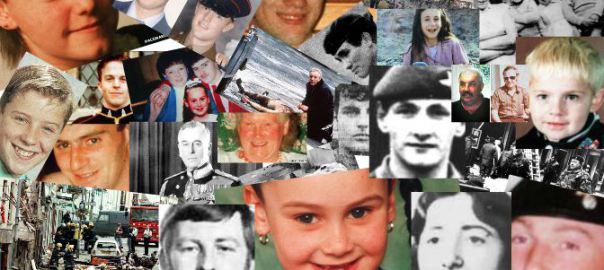


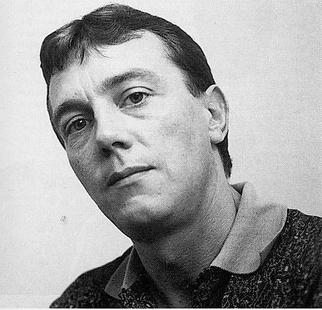

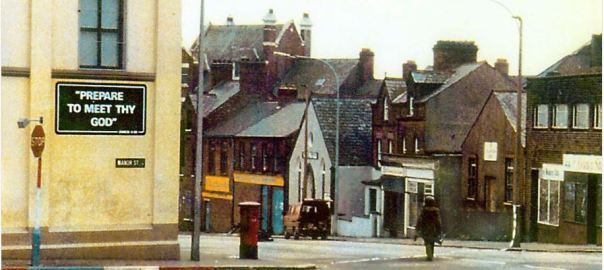


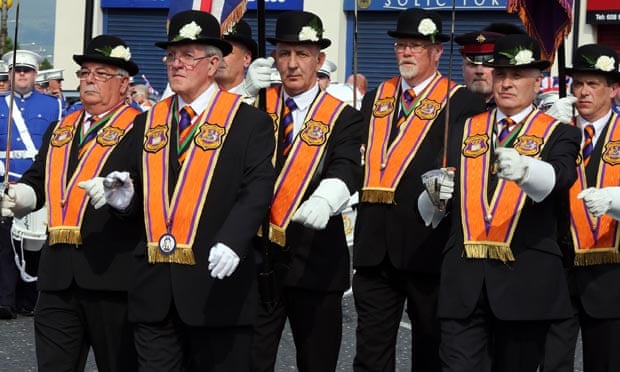




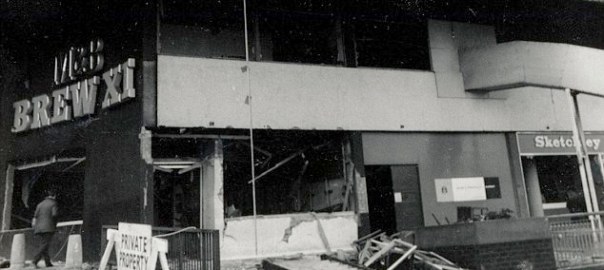




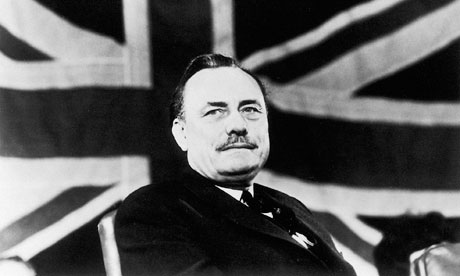




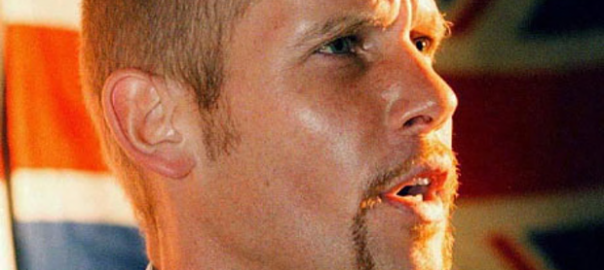


.jpg)


 belfastchildis.com