As a teenager growing up in Glencairn, a bleak loyalist council estate in West Belfast ( I loved it as a child ) there was little to do apart from joy riding, rioting and fighting with the gangs from the top and bottom of the estate.
Sure – I was surrounded by vast open spaces and miles of forest and glens , but I was a teenager and I needed excitement.
I couldn’t drive , was bored of rioting and so like many of my peers I turned to drugs to escape the madness around me and block out the car crash that was my tragic young life.
I was 14 years old and my dad had died when I was nine , after a long brutal struggle with cancer and I was missing him terribly. I didn’t know if my mum was alive or dead and all around me was death and destruction as Belfast tore itself apart and the paramilitaries waged a brutal sectarian war and the slaughter of the innocent at times seemed endless.
And I really fancied Gina Nixon and wanted to kiss her on the lips, but she didn’t even know I existed.
It’s hardly surprising that I wanted to escape reality and so l lost myself in drugs and through a hazy fuelled utopia I was able to suspend reality for brief moments of escape and boy did I need them.
Glue
My first drug was glue – Time Bond to be exact, although I could settle for Evo Stick or if I was really desperate Bridge Port, which was a horrible , thick black solution that was used to fix punctures on bikes –
although I can’t comment on how effective it was at mending tyres as I never used it for this purpose.
The first time I sniffed glue I remembering I was standing against the wall of an allay way and as the fumes entered my body I felt them gentle circulate throughout my entire being and as I slowly slid down the wall I was filled with the most beautiful feeling of being detached from my surrounding and floating in a Never Never land of soothing lights and utter peace of mind.
I was hooked.
Being a teenager who may or may not be an orphan (I still didn’t know if my mum was alive or dead) I was faced with the very real problem of needing more glue and not having the money to pay for it. So I did exactly what all my peers would do in the same situation and I begged, borrowed and stole.
————————————–
The Jam – That’s Entertainment
————————————–
I didn’t concern myself with the wrongs and right of it , I just needed to get my hands on more glue and visit my Never Never land again and again and again and..
When I say beg, borrowed or steal what I really mean is that I would beg most of the time , borrow some of the time (when I could get away with it ) and stand watch outside Woolies whilst the rest of the gang went shop lifting and I acted as look-out!
Despite the environment I lived in and the abuse a fickle fate had thrown at me, deep down I still wanted to believe in Baby Jesus and hadn’t Rev. Lewis told me on countless occasions that God saw everything and would one day judge me.
So I tried to be a good boy and obey the commandments – but this wasn’t always easy when you were surrounded by sectarian slaughter, thieves and psychopathic killers in the making.
And that was all perfectly normal to me as a child.
Once I was stood outside a shop in Belfast City Centre, I was lost in a drug induced fog as I waited for the others to return from shoplifting. It was close to Christmas and the town was full of shoppers and day trippers. Suddenly a guy taps the door of the shop with his toe and I could see that he’s weighed down with a tower of Quality Street tins. Feeling the Xmas spirit I opened and held the door for him and I was just a little surprised to note that once out of the shop, he kicked the door closed and started legging it down the street, dropping tins of Quality Street as he went.
Strange thinks I and then all hell broke out.
The Indian guy who owned the shop and his twelve sons (well two, but seemed like more ) came charging out of the door and before I knew what is happening they piled on top of me and I was pinned to the ground until the cops arrived.
It took all my powers of persuasion and a kind old lady who had witness the event to clear my name and eventually I was free to go and I caught up with the rest of the gang, whom had witness the whole thing , but because they were weighed down with their shoplifting haul had wisely kept their distance.
Another time when I was stood outside a local builder’s yard waiting for someone, I was delighted and beside myself with joy as I watched box after box of Time Bond glue being unloaded from a delivery truck and stacked against the yard wall.
I sent for the rest of the gang and when darkness fell I supervised as my cousin Pickle, scaled the wall and began throwing over boxes of glue. We brought it all up to a Davey Johnston’s (a friend) house and he promised to look after it and only take a few tins for himself and his mates. I didn’t really care at that stage as I was off my head on glue and went off to my favourite spot in the local park and laying down on a bed of grass I watched for hours as the stars drifting endlessly across the heavens on their timeless dance through the universe.
A few days later, out of glue I sat off to Davy’s house to pick a few tins and I was surprised to see a long line of teenagers queuing outside his front door. When I finally made it to the front of the queue I could see Davy’s Ma, Big Barbara hanging out the window with a fag dangling from her mouth, a glue bag under her arm and enquiring of me
“How many tins of glue did I wish to purchase, love ? ”
Well you could have knocked me down with a feather and I demanded to see Davy right away. Turns out that Barbara had been hitting the glue herself and she’d enjoyed the experience so much she wanted to share the joy with the local population – at the right price off course.
I hid my disgust as I realised that half the stash had been sold or sniffed by Barbara, who was now singing and dancing in the street in her knickers and making rude suggestions to all and sundry.
Grabbing an armful of glue tins I headed off to the forest and the night sky and for a few hours lost myself in the mysteries of the universe and time and space.
Smoking Weed with Paul Weller
—————————————-
The Jam – When You’re Young
—————————————-
As I grew older and wiser (I know ) I gravitated towards more ahem.. Socially accepted drugs like weed, pills and acid and I must confess I had some very strange experiences on the way.
I remember once when I was visiting a friend and we were just chillin out with Paul Weller ( his dog) and his sister , Mad Maggie , who worked as a cleaner in the local butchers shop came home with a bag full of off-cuts the butcher had gifted her.
Looking in the bag I was disgusted to see that it was mostly pig’s trotters (some of them still had hair on them) and the smell was so bad I almost threw up. Mad Maggie was rushing out on a date and putting the trotters on the stove to boil she ordered us to keep an eye on them and turn them off when they were cooked.
We sagely nodded our understanding and proceeded to get stoned as Paul Weller watched us from the floor with a look of utter disgust on his face.
After smoking’s countless joints we both got the mad munchies and as the shops were now closed we started hunting for food throughout the kitchen and were desperately disappointed to see that there was nothing in the fridge apart from a block of butter, half bottle of sour milk and a ball of cheese that had a fuzzy , luminous green cloak covering it.
Suddenly we both remember the pig’s trotters and after a momentary pause we grab them off the stove, drained them and proceeded to eat the lot, hair, toe nails and whatever other parts of a pig’s trotter that dwelled in the bottom of the pot.
Despite his unsociable behaviour we slung Paul Weller a few scraps and he rudely snatched them off us and giving us a contemptuous look he ran into the kitchen as if we were going to take them back of him and proceeded to hid them behind the bin.
But we were way to smart for that dog and when he settled down for a nap we tip toed past him and stole the trotters back and eat the lot
——————————–
The Jam “Down In The Tube Station”
————————————–
After our feast we both fell into a slumber and I drifted off into a satisfying snooze and the world was all good. Next thing I can feel something wet, hot and sticky sliding up and down my face and opening one eye I came face to face with Paul Weller and he was shamelessly licking the juices of the pigs trotter off my face.
Shooing him out of the way I made my way to the kitchen and rinsed his slobber of my face and put the kettle on. Just then Mad Maggie comes down the stairs with her fella in tow and they are both laughing their heads off.
“What’s so fecking funny “ , I enquired
“You’re looking Ruff, so you are” says Mad Maggie’s fella
“Did you enjoy the dogs dinner, did you? “
Laughs Mad Maggie in my face and I remembered the pigs trotter and almost throw up all over them.
Apparently the trotters had been laying about the butchers for the past two – three weeks and were far beyond what was considered fit for human consumption and we had eaten the lot of them. Grabbing my coat I left in a hurry and as I past Paul Weller in the hall I swear I heard him snigger!
Feckin dog.
Mod revival
I’m the one with the shades on
———————————
The Who – I Can’t Explain
———————————
The mod revival was a music genre and subculture that started in England in 1978 and later spread to other countries (to a lesser degree). The mod revival’s mainstream popularity was relatively short, although its influence has lasted for decades. The mod revival post-dated a Teddy Boy revival, and mod revivalists sometimes clashed with Teddy Boy revivalists, skinhead revivalists, casuals, punks and rival gang members.
——————————–
The Jam – Thick as Thieves
——————————–
The late 1970s mod revival was led by the band The Jam, who had adopted a stark mod look and mixed the energy of punk with the sound of 1960s mod bands. The mod revival was a conscious effort to harken back to an earlier generation in terms of style. In the early 1980s in the UK, a mod revival scene influenced by the original 1960s mod subculture developed.
A dedicated follower of fashion
—————————————
Small Faces – Itchycoo Park
—————————————
Around the early 1980s when I was 15/16 I started taking a more serious interest in my street cred and for the first time ever I started getting into music in a big way and this opened up a whole new world for me.
Up until that point I’d enjoyed some of the pop and disco tunes which dominated the late 70’s early 80s charts and if push came to shove I could sing along to all the songs in “Grease “if the feeling took.
Which I’m not ashamed to admit it sometimes did.
But then I discovered a band that seemed to speak to me personally and the lead singer seemed to understand the angst and pitfalls of my teenage odyssey and hence Paul Weller and The Jam became my teenage obsession.
——————————
The Jam – Going Underground
——————————
The Jam were starting to get noticed around this time and in my book were the coolest band in the world and Paul Weller’s lyrics spoke to my soul like no one before or since . I couldn’t get enough of The Jam and came to love timeless classic like Down in the Tube Station at Midnight , That’s Entertainment, Thick as Thieves and the tune that was their first number one hit “ Going Underground” released in March 1980 and going straight to the top of the charts.
I began to embraced the whole Mod scene and became a dedicated follower of fashion and a connoisseur of the Mod movement from the 60s to the “Modern World “of the early 1980s were I now dwelt.
Me in the Middle, My Brother David on the right and my BFF Gary on the left
—————————————
The High Numbers – Zoot Suit
—————————————
At first I followed the style of the modern Mods and dressed to impress I started hanging about the Ballysillian area of Belfast and was quickly accepted by all the Mods from Silver Stream and surrounding areas. Being Loyalist West Belfast many of these guys and their families were involved with the various loyalist paramilitaries groups and after the Friday night disco in the community centre we would often be approached and asked if we wanted to join the UDA and fight for our country.
I had no interest in fighting for my country at this stage in my life and was only interested in getting high and listening to Mod music and building up my ever growing record collection.
Also around this time I noticed that I had started getting interest from the female species and I was pleased to discover that they seemed to find me acceptable and without bragging I never had any problem finding female company when the mood took me. But once again my music and drugs came first and although I had many opportunities to “get off” with the various girls that hang about with us, I showed little interest and preferred the company of my mates and getting wasted.
Acid
It was around this time that I took my first acid trip and I had the most bizarre, scary, mind bending trip of my life. The acid in question was a particularly potent strain and I think my first mistake was taking three in one go.
There was a gang of us in the park and it was a dark, cold winter’s night and snow was falling all around and for a while I sat on the freezing ground and watched silently as the snowflakes drifted lazily from the sky and landed softly on the ground beneath me. Gradually the snow began to change colour and I watched fascinated as the flakes began to take on all the colours of the rainbow and red, blue, orange etc snowflakes engulfed me and explosions of colour, like tiny bombs were spontaneously appearing and disappearing before my eyes.
Well this started freaking me out and I asked my mates if they could also see what I was seeing and they all looked at me as if I was crazy and told me to “Enjoy the trip” .
Little did I know that this was only the beginning and I would be locked in a psychedelic world of wonder for the next ten hours.
As the night wore on and the acid took hold of me I began to get paranoid and was seeing things that couldn’t possibly be real, The moon had now turned into a giant purple and blue ball of fire and was playing pinball with a million different coloured stars and I watched in amazement as the stars bounced off each other and flew across the universe, to suddenly reappear right in front of my nose.
I was no longer enjoying this trip and in an effort to come down I decided to jog round the park and see if that brought me back to reality. As I jogged through the snow and slid all over the place I gradually started to feel more in control and coming to a shed at the back of some shops I sat down to catch my breath and then it happened.
Suddenly I heard the theme tune of Dr. Who and it seemed to fill every part of my being and soul and right in front of me I watched gob smacked as the Tardis materialised from thin air and the blue doors swung opened invitingly. Reality had been suspended and looking around I could see that there was no one or nothing in the universe but me and the Tardis and taking a few steps forward I entered and the door slammed closed behind me.
I stepped up to the console and fiddling with the time rotor I spun the dials and suddenly the engine started to rev up and the Tardis started to vibrate violently and the display started to spin backwards through the years , 1960 ,1920, 1901, 1876 , 1848 and stopped on 1841.
The Tardis had come to a stop and I nervously pushed the door open and stepped outside – straight into a scene from Victorian England. I was in a busy London street, the sun was shining and people dressed in Victorian clothes were going about their daily business. There were horses and carts everywhere and the smell was appalling and I stood in wonder and took in the scenes before.
The acid I had taken was not for the faint hearted and although my eyes and ears were telling me I was in Victorian England , somewhere at the back of my acid confused consciousness I knew I couldn’t really have travelled back through time – could I ?
Then I panicked – How the hell was I going to get back to Ballysillian and the 1980s.
I kid you not, in my altered state I really did believed that I had travelled back through time and I was now stuck in Victorian England. I didn’t consider the sheer ridiculousness of the situation I found myself in , my only concern was getting back to the future and I started to freak out and run up and down the streets , dodging horses I begged people to help me , but they didn’t seem to know I was there and this just freak me out more.
Eventually I came across the Tardis again and this time it opened from the top and I hurriedly climbed in and closed the door above me and peace descended as I closed my eyes and tried to block out the nightmare I found myself in.
I must have fallen asleep and was awoken suddenly as the Tardis started to vibrate again and opening my eyes I braced myself for another journey through time and space.
This acid was a bitch and I was cursing myself for taking so much.
Suddenly the top door of the Tardis open and light flooded in and to my amazement a man was staring down at me and the look on his face said it all. I was also relieved to see that he was dressed in clothes that were definitely 1980s and not 1880s. I clambered out and taking in the scene I realized that my Tardis had been an industrial wheelie bin and the guy had come to drop off some rubbish. I had spent the night covered in shit and waste and smelt like a bad weekend.
The guy who had released me looked as though he had seen a ghost and thanking him I made off down the hill and home for a long soothing bath and a good long talk with myself about the dangers of acid!
We are the Mods
When I wasn’t trying to kill myself with drugs or getting lost in a parallel universe I took being a Mod very seriously and fully embraced the sub cultural that was sweeping the UK and the streets of Belfast. At this stage I didn’t really know or mix with any Catholics, as simple I never had the opportunity to meet them as Catholics would never venture into the badlands of Loyalist West Belfast .
———————————————
Belfast Mods documentary
I’m the guy with the hat at 2.08
———————————————
But as time moved on and I got more and more into the Mod scene my world was ever expanding and I started going to Mod clubs in Belfast City Centre and further afield and mixing with Mods from all walks of life , regardless off religious or politically backgrounds.
Me and David Homes ( Homer)
Me on front of Belfast Mods Book
Before long I was a well known face in the Belfast Mod scene and was on the rocky road to more hell raising adventures and lost weekends and if you want to know about these come back soon and I will take you by the hand and lead you into a world of unimagable stupidity – My World. ( Secret Affairs )
To make a small ( or large ) donation please click the PayPal button below and follow instructions.
Thank you
———————————————————————-
Now I have two kids and I would be horrified if they got up to half the things I did back in me youth and I would be really disappointed to learn they were using drugs.. I know – hypocrite and all that , but back in the ghettos of loyalist West Belfast in the early 80s life was hard and very different and I was living the rock and roll lifestyle.
Farkhunda Malikzada[1] (Persian: فرخنده) was a 27-year-old Afghan woman who was publicly slain by a mob in Kabul on March 19, 2015. A large crowd formed in the streets around Farkhunda when accusers began yelling, announcing her alleged crimes to the public. They claimed that she had burned the Quran, and for that, her accusers announced that she must pay the ultimate price.
Police initially tried to protect Farkhunda and disperse the crowd, but were overwhelmed by the mob’s numbers and fury.
The mob grabbed Farkhunda, pulled her hair, hit her, spit at her, pushed her to the ground, stomped on her body, kicked her in the head, and ripped the veil from her face. Police, seeing the urgency of the situation, attempted to remove her from the crowds by climbing atop a shop roof. Farkhunda lost her balance while fighting to stay conscious, and slipped down the rooftop and back into the crowd.
She was brutally and mercilessly beaten into unconsciousness; seeing Farkhunda now motionless, the crowd dragged her into the street and ran over her body with a car, dragging her some 300 feet. They then set her corpse on fire and watched her body burn. They used their own clothing articles (e.g. scarves and hats) to keep the fire alight, because her own clothing and body were so bloodied that they would not catch alight.
She was murdered after allegedly arguing with a mullah who falsely accused her of burning the Quran, the Quran. Police investigations revealed that she had not burned anything.[2] Her murder led to 49 arrests;[3] three adult men received twenty year prison sentences, eight other adult males received sixteen year sentences, a minor received a ten year sentence, and eleven police officers received one year prison terms for failing to protect Farkhunda.[4] Her murder and the subsequent protests served to draw attention to women’s rights in Afghanistan.
Background
—————————————————
Farkhunda: The making of a martyr – BBC Newsnight
—————————————————
Farkhunda was an observant Muslim who wore a veil (hijab). At the time of the attack, she had just finished a degree in religious studies and was preparing to take a teaching post.[5] Her name means “auspicious” and “jubilation”.[6]
The attack
In a still frame from a video captured and widely disseminated on social media and in the news, a bloodied Farkhunda appears to plead with her attackers before she is knocked down.
Farkhunda had previously been arguing with a mullah named Zainuddin, in front of a mosque where she worked as a religious teacher,[2] about his practice of selling charms at the Shah-Do Shamshira Mosque, the Shrine of the King of Two Swords,[7] a religious shrine in Kabul.[8] During this argument, Zainuddin reportedly accused her of burning the Quran. She responded
“I am a Muslim, and Muslims do not burn the Quran!”[9]
According to eyewitnesses, hundreds of angry civilians flocked to the mosque upon overhearing the mullah’s accusation. They dragged out Farkhunda and started to beat her.[5] She was thrown from a roof, run over by a car, and beaten with sticks and stones outside the mosque. The mob then set her body alight and dumped it in the Kabul River while police allegedly looked on.[8][10] Farkhunda’s parents said the killing was instigated by the mullah with whom Farkhunda had been talking, who, according to Tolo News, began loudly accusing her of burning the Quran “in order to save his job and life.”[11] An eyewitness said that the mob was chanting anti-American and anti-democratic slogans while beating Farkhunda.[12]
—————————————————
The Killing of Farkhunda
—————————————————
Reactions
Public reaction in Afghanistan
A number of prominent public officials turned to Facebook immediately after the death to endorse the murder. The official spokesman for the Kabul police Hashmat Stanekzai, for instance, wrote that Farkhunda “thought, like several other unbelievers, that this kind of action and insult will get them U.S. or European citizenship. But before reaching their target, they lost their life.” The Deputy Minister for Culture and Information Simin Ghazal Hasanzada also approved the execution of a woman “working for the infidels.” Zalmai Zabuli, chief of the complaints commission of the upper house of parliament, posted a picture of Farkhunda with this message: “This is the horrible and hated person who was punished by our Muslim compatriots for her action. Thus, they proved to her masters that Afghans want only Islam and cannot tolerate imperialism, apostasy, and spies.” [13]
After it was revealed that she did not burn the Quran, the public reaction in Afghanistan turned to shock and anger. Hundreds of protesters took to the streets of Kabul on 23 March protesting her brutal death. Protesters marched from where the attack began to where Farkhunda was thrown in the river. A number of women on the march wore masks of her bloodied face while others condemned the government for failing to bring security to Afghanistan. Shukria Barakzai, a member of parliament representing Kabul Province and a longtime women’s rights activist, told Al Jazeera that her killing had triggered the city and the rest of the country to think about women’s rights.[10] She said: “This is not a male or female issue, this is a human issue and we will not stop until the killers are brought to justice.”[10]Roshan Siren, a former member of parliament, said that the murder highlights violence against women in the country, and has become a rallying point for a younger generation of women to campaign for “the protection and progress of women.”[14]
The woman’s father complained that police could have done more to save Farkhunda.[8]
Protests
On March 23, hundreds of women protested the attack, demanding that the government prosecute those responsible for Farkhunda’s death.[8] The protest was organized by Solidarity Party of Afghanistan and residents of Kabul.[15] Farkhunda’s death has also become a rallying point for women’s rights activists in Afghanistan.[16] On March 24, thousands of people protested the attack in front of the Afghan Ministry of Justice in Kabul.[17]
Official response in Afghanistan
Afghan presidentAshraf Ghani ordered an investigation into the incident and, in a statement released by his office, condemned the “act of extreme violence”.[18] He described the killing as “heinous”.[11] He also said that Farkhunda’s death revealed that Afghanistan’s police were too focused on the Taliban insurgency in the country and not focused enough on local policing.[19]
Nine men who were seen in the video of Farkhunda’s murder on social media were subsequently detained.[20] The Interior Ministry later reported that 28 people were arrested and 13 police officers suspended as part of investigations. Hashmat Stanikzai, a cleric who publicly endorsed the murder, was sacked over comments that he made on social media supporting Farkhunda’s killers.[5]
The European Union condemned the attack. A spokeswoman for European Union foreign policy chief Federica Mogherini said in a statement that “[t]he killing of Ms Farkhunda… is a tragic reminder of dangers women face from false accusations and the lack of justice in Afghanistan.” She added, “We all hope that [those] responsible can be brought to justice.”[5] The United States also condemned the murder, with a statement from its embassy in Kabul calling for “those responsible to be brought to justice so such heinous acts will never occur again”.[21]
Global Times China columnist Farman Nawaz wrote “Choosing rulers through the ballot box is a positive sign for the country, but the survival, and even growth, of extremist mentality even after suffering from the barbarism of extremist groups reflects a critical failure by Afghan political parties”.[22]Afghan American historian Ali A Olomi argued that Farkhunda’s murder demonstrated the endurance of an underlying culture of violence and devaluation of human life that comes out of generations of Afghans being raised during a war and facing oppression.[23]
Reaction from Islamic scholars
In Afghanistan
The day after the murder, certain imams and mullahs endorsed the killing during Friday prayer services in their mosques. One of them, the influential Maulavi Ayaz Niazi of the Wazir Akbar Khan mosque, warned the government that any attempt to arrest the men who had defended the Quran would lead to an uprising.[13][24]
After it was revealed she did not burn the Quran, senior Islamic scholars in Afghanistan expressed outrage over the incident. Ahmad Ali Jebreili, a member of Afghanistan’s Ulama Council set for administering Islamic law, condemned the attack, accusing it of contravening Islam.[18] Haji Noor Ahmad, a local cleric, said “People come and execute a person arbitrarily; this is totally prohibited and unlawful. However, some justified her killing and were met with public anger.”[25]
Abroad
Abu Ammaar Yasir Qadhi, a prominent, conservative, Islamic scholar, expressed horror on his Facebook page and said “A sign of how truly civilized a nation is, is how it treats its women. May Allah restore the honor and respect that women deserve in our societies!”[26]
On March 22, a number of women, dressed in black, carried Farkhunda’s coffin from an ambulance to a prayer ground and then to a graveyard. This was a marked departure from tradition, which holds that such funerals are typically only attended by men.[12]
Criminal cases
Of 49 suspects tried in the case, four men were sentenced to death for their roles in Farkhunda’s murder. The sentences were handed down by Judge Safiullah Mojadedi in Kabul on May 5, 2015. Eight other defendants were sentenced to 16 years in prison. The trial was noted for its unusual brevity, lasting just two days.[28] The verdict has been criticized because although some investigators believe a fortuneteller set the attacks on Farkhunda in motion, this person was found not guilty on appeal, and the shrine’s custodian had his death sentence commuted despite the fact that he originated the false charge that Farkhunda had burned the Koran.[29]
Three suspects in the murder were still at large at the time of the May 5 sentencing, according to Mojadedi.[30]
On May 19, eleven police officers were sentenced to one year in prison for failing to protect Farkhunda.[31]
On 2 July 2015, an appeals court overturned the death sentences for those convicted in the mob killing. Three of those had their sentences reduced to 20 years in jail, while the fourth was re-sentenced to 10 years prompting street protests and a debate on women’s rights.[32]
As of August 12, 2015 an examination of the outcome of the proceedings in the matter by a panel of lawyers appointed by Afghanistan’s president resulted in a planned recommendation to the Afghan Supreme Court that those accused in her death be retried.
This is simply the story of a boy trying to grow up, survive, thrive, have fun & discover himself against a backdro… twitter.com/i/web/status/1…— Belfast Child (@bfchild66) July 23, 2020
Valentine’s Day, also called Saint Valentine’s Day or the Feast of Saint Valentine,[1] is an annual holiday celebrated on February 14. It originated as a WesternChristianliturgical feast day honoring one or more early saints named Valentinus, and is recognized as a significant cultural and commercial celebration in many regions around the world, although it is not a public holiday in any country.
——————————————
Valentine’s Day funny Video
——————————————
Several martyrdom stories associated with the various Valentines that were connected to February 14 were added to later martyrologies,[2] including a popular hagiographical account of Saint Valentine of Rome which indicated he was imprisoned for performing weddings for soldiers who were forbidden to marry and for ministering to Christians, who were persecuted under the Roman Empire.[3] According to legend, during his imprisonment, Saint Valentine healed the daughter of his jailer, Asterius,[4] and before his execution, he wrote her a letter signed “Your Valentine” as a farewell.[5]
The day first became associated with romantic love within the circle of Geoffrey Chaucer in the 14th century, when the tradition of courtly love flourished. In 18th-century England, it evolved into an occasion in which lovers expressed their love for each other by presenting flowers, offering confectionery, and sending greeting cards (known as “valentines“). In Europe, Saint Valentine’s Keys are given to lovers “as a romantic symbol and an invitation to unlock the giver’s heart”, as well as to children, in order to ward off epilepsy (called Saint Valentine’s Malady).[6] Valentine’s Day symbols that are used today include the heart-shaped outline, doves, and the figure of the winged Cupid. Since the 19th century, handwritten valentines have given way to mass-produced greeting cards.[7]
Shrine of St. Valentine in Whitefriar Street Carmelite Church in Dublin, Ireland
Numerous early Christian martyrs were named Valentine.[11] The Valentines honored on February 14 are Valentine of Rome (Valentinus presb. m. Romae) and Valentine of Terni (Valentinus ep. Interamnensis m. Romae).[12] Valentine of Rome was a priest in Rome who was martyred about AD 496 and was buried on the Via Flaminia. The relics of Saint Valentine were kept in the Church and Catacombs of San Valentino in Rome, which “remained an important pilgrim site throughout the Middle Ages until the relics of St. Valentine were transferred to the church of Santa Prassede during the pontificate of Nicholas IV“.[13][14] The flower-crowned skull of Saint Valentine is exhibited in the Basilica of Santa Maria in Cosmedin, Rome. Other relics are found at Whitefriar Street Carmelite Church in Dublin, Ireland.[15]
Valentine of Terni became bishop of Interamna (modern Terni) about AD 197 and is said to have been martyred during the persecution under Emperor Aurelian. He is also buried on the Via Flaminia, but in a different location from Valentine of Rome. His relics are at the Basilica of Saint Valentine in Terni (Basilica di San Valentino). Jack B. Oruch states that “abstracts of the acts of the two saints were in nearly every church and monastery of Europe.”[16] The Catholic Encyclopedia also speaks of a third saint named Valentine who was mentioned in early martyrologies under date of February 14. He was martyred in Africa with a number of companions, but nothing more is known about him.[17] Saint Valentine’s head was preserved in the abbey of New Minster, Winchester, and venerated.[18]
February 14 is celebrated as St. Valentine’s Day in various Christian denominations; it has, for example, the rank of ‘commemoration’ in the calendar of saints in the Anglican Communion.[8] In addition, the feast day of Saint Valentine is also given in the calendar of saints of the Lutheran Church.[9] However, in the 1969 revision of the Roman Catholic Calendar of Saints, the feast day of Saint Valentine on February 14 was removed from the General Roman Calendar and relegated to particular (local or even national) calendars for the following reason: “Though the memorial of Saint Valentine is ancient, it is left to particular calendars, since, apart from his name, nothing is known of Saint Valentine except that he was buried on the Via Flaminia on February 14.”[19]
The feast day is still celebrated in Balzan (Malta) where relics of the saint are claimed to be found, and also throughout the world by Traditionalist Catholics who follow the older, pre-Second Vatican Council calendar. In the Eastern Orthodox Church, St. Valentine’s Day is celebrated on July 6, in which Saint Valentine, the Roman presbyter, is honoured; furthermore, the Eastern Orthodox Church observes the feast of Hieromartyr Valentine, Bishop of Interamna, on July 30.[20][21][22]
Legends
St Valentine baptizing St Lucilla, Jacopo Bassano
J.C. Cooper, in The Dictionary of Christianity, writes that Saint Valentine was “a priest of Rome who was imprisoned for succouring persecuted Christians.”[23] Contemporary records of Saint Valentine were most probably destroyed during this Diocletianic Persecution in the early 4th century.[24] In the 5th or 6th century, a work called Passio Marii et Marthae published a story of martyrdom for Saint Valentine of Rome, perhaps by borrowing tortures that happened to other saints, as was usual in the literature of that period. The same events are also found in Bede’s Martyrology, which was compiled in the 8th century.[24][25] It states that Saint Valentine was persecuted as a Christian and interrogated by Roman EmperorClaudius II in person. Claudius was impressed by Valentine and had a discussion with him, attempting to get him to convert to Roman paganism in order to save his life. Valentine refused and tried to convert Claudius to Christianity instead. Because of this, he was executed. Before his execution, he is reported to have performed a miracle by healing Julia, the blind daughter of his jailer Asterius. The jailer’s daughter and his forty-four member household (family members and servants) came to believe in Jesus and were baptized.[24]
A later Passio repeated the legend, adding that Pope Julius I built a church over his sepulchre (it is a confusion with a 4th-century tribune called Valentino who donated land to build a church at a time when Julius was a Pope).[25] The legend was picked up as fact by later martyrologies, starting by Bede‘s martyrology in the 8th century.[25] It was repeated in the 13th century, in Legenda Aurea.[26]
There is an additional embellishment to The Golden Legend, which according to Henry Ansgar Kelly, was added centuries later, and widely repeated.[27] On the evening before Valentine was to be executed, he is supposed to have written the first “valentine” card himself, addressed to the daughter of his jailer Asterius, who was no longer blind, signing as “Your Valentine.”[27] The expression “From your Valentine” was later adopted by modern Valentine letters.[28] This legend has been published by both American Greetings and The History Channel.[29]
John Foxe, an English historian, as well as the Order of Carmelites, state that Saint Valentine was buried in the Church of Praxedes in Rome, located near the cemetery of Saint Hippolytus. This order says that according to legend, “Julia herself planted a pink-blossomed almond tree near his grave. Today, the almond tree remains a symbol of abiding love and friendship.”[30][31]
Another embellishment suggests that Saint Valentine performed clandestine Christian weddings for soldiers who were forbidden to marry.[32] The Roman Emperor Claudius II supposedly forbade this in order to grow his army, believing that married men did not make for good soldiers.[32][33] However, this supposed marriage ban was never issued, and in fact Claudius II told his soldiers to take two or three women for themselves after his victory over the Goths.[34]
According to legend, in order “to remind these men of their vows and God’s love, Saint Valentine is said to have cut hearts from parchment”, giving them to these soldiers and persecuted Christians, a possible origin of the widespread use of hearts on St. Valentine’s Day.[35]
Saint Valentine supposedly wore a purple amethyst ring, customarily worn on the hands of Christian bishops with an image of Cupid engraved in it, a recognizable symbol associated with love that was legal under the Roman Empire;[33][36] Roman soldiers would recognize the ring and ask him to perform marriage for them.[33] Probably due to the association with Saint Valentine, amethyst has become the birthstone of February, which is thought to attract love.[37]
Folk traditions
While the European folk traditions connected with Saint Valentine and St. Valentine’s Day have become marginalized by the modern Anglo-American customs connecting the day with romantic love, there are some remaining associations connecting the saint with the advent of spring.[citation needed]
While the custom of sending cards, flowers, chocolates and other gifts originated in the UK, Valentine’s Day still remains connected with various regional customs in England. In Norfolk, a character called ‘Jack’ Valentine knocks on the rear door of houses leaving sweets and presents for children. Although he was leaving treats, many children were scared of this mystical person.[38][39]
In Slovenia, Saint Valentine or Zdravko was one of the saints of spring, the saint of good health and the patron of beekeepers and pilgrims.[40] A proverb says that “Saint Valentine brings the keys of roots”. Plants and flowers start to grow on this day. It has been celebrated as the day when the first work in the vineyards and in the fields commences. It is also said that birds propose to each other or marry on that day. Another proverb says “Valentin – prvi spomladin” (“Valentine — the first spring saint”), as in some places (especially White Carniola), Saint Valentine marks the beginning of spring.[41] Valentine’s Day has only recently been celebrated as the day of love. The day of love was traditionally March 12, the Saint Gregory‘s day, or February 22, Saint Vincent’s Day. The patron of love was Saint Anthony, whose day has been celebrated on June 13.[40]
Connection with romantic love
Lupercalia
There is no evidence of any link between St. Valentine’s Day and the rites of the ancient Roman festival, despite many claims by many authors.[18][42][notes 1] The celebration of Saint Valentine did not have any romantic connotations until Chaucer‘s poetry about “Valentines” in the 14th century.[24]
Popular modern sources claim links to unspecified Greco-Roman February holidays alleged to be devoted to fertility and love to St. Valentine’s Day, but prior to Chaucer in the 14th century, there were no links between the Saints named Valentinus and romantic love.[24] Earlier links as described above were focused on sacrifice rather than romantic love. In the ancient Athenian calendar the period between mid-January and mid-February was the month of Gamelion, dedicated to the sacred marriage of Zeus and Hera.[citation needed]
In Ancient Rome, Lupercalia, observed February 13–15, was an archaic rite connected to fertility. Lupercalia was a festival local to the city of Rome. The more general Festival of Juno Februa, meaning “Juno the purifier” or “the chaste Juno”, was celebrated on February 13–14. Pope Gelasius I (492–496) abolished Lupercalia. Some researchers have theorized that Gelasius I replaced Lupercalia with the celebration of the Purification of Mary in February 14 and claim a connection to the 14th century’s connotations of romantic love, but there is no historical indication that he ever intended such a thing.[notes 2][43] Also, the dates don’t fit because at the time of Gelasius I the feast was only celebrated in Jerusalem, and it was on February 14 only because Jerusalem placed the Nativity on January 6.[notes 3] Although it was called “Purification of Mary”, it dealt mainly with the presentation of Jesus at the temple.[44] The Jerusalem’s Purification of Mary on February 14 became the Presentation of Jesus at the Temple on February 2 as it was introduced to Rome and other places in the sixth century, after Gelasius I’s time.[44]
Alban Butler in his Lifes of the Principal Saints (1756–1759) claimed without proof that men and women in Lupercalia drew names from a jar to make couples, and that modern Valentine’s letters originated from this custom. In reality, this practice originated in the Middle Ages, with no link to Lupercalia, with men drawing the names of girls at random to couple with them. This custom was combated by priests, for example by Frances de Sales around 1600, apparently by replacing it with a religious custom of girls drawing the names of apostles from the altar. However, this religious custom is recorded as soon as the 13th century in the life of Saint Elizabeth of Hungary, so it could have a different origin.[18]
Jack B. Oruch writes that the first recorded association of Valentine’s Day with romantic love is in Parlement of Foules (1382) by Geoffrey Chaucer.[24] Chaucer wrote:
For this was on seynt Volantynys day Whan euery bryd comyth there to chese his make.
[“For this was on St. Valentine’s Day, when every bird cometh there to choose his mate.”]
This poem was written to honor the first anniversary of the engagement of King Richard II of England to Anne of Bohemia.[45] A treaty providing for a marriage was signed on May 2, 1381.[46]
Readers have uncritically assumed that Chaucer was referring to February 14 as Valentine’s Day; however, mid-February is an unlikely time for birds to be mating in England. Henry Ansgar Kelly has observed that Chaucer might have had in mind the feast day of St. Valentine of Genoa, an early bishop of Genoa who died around AD 307; it was probably celebrated on 3 May.[45][47][48] Jack B. Oruch notes that the date on which spring begins has changed since Chaucer’s time because of the precession of the equinoxes and the introduction of the more accurate Gregorian calendar only in 1582. On the Julian calendar in use in Chaucer’s time, 14 February would have fallen on the date now called 23 February, a time when some birds have started mating and nesting in England.[24]
Chaucer’s Parliament of Foules refers to a supposedly established tradition, but there is no record of such a tradition before Chaucer. The speculative derivation of sentimental customs from the distant past began with 18th-century antiquaries, notably Alban Butler, the author of Butler’s Lives of Saints, and have been perpetuated even by respectable modern scholars. Most notably, “the idea that Valentine’s Day customs perpetuated those of the Roman Lupercalia has been accepted uncritically and repeated, in various forms, up to the present”.[18][49]
Three other authors who made poems about birds mating on St. Valentine’s Day around the same years: Otton de Grandson from Savoy, John Gower from England, and a knight called Pardo from Valencia. Chaucer most probably predated all of them but, due to the difficulty of dating medieval works, it is not possible to ascertain which of the four first had the idea and influenced the others.[50]
Court of love
The earliest description of February 14 as an annual celebration of love appears in the Charter of the Court of Love. The charter, allegedly issued by Charles VI of France at Mantes-la-Jolie in 1400, describes lavish festivities to be attended by several members of the royal court, including a feast, amorous song and poetry competitions, jousting and dancing.[51] Amid these festivities, the attending ladies would hear and rule on disputes from lovers.[52] No other record of the court exists, and none of those named in the charter were present at Mantes except Charles’s queen, Isabeau of Bavaria, who may well have imagined it all while waiting out a plague.[51]
Valentine poetry
The earliest surviving valentine is a 15th-century rondeau written by Charles, Duke of Orléans to his wife, which commences.
Je suis desja d’amour tanné Ma tres doulce Valentinée…
The earliest surviving valentines in English appear to be those in the Paston Letters, written in 1477 by Margery Brewes to her future husband John Paston “my right well-beloved Valentine”.[55]
Valentine’s Day is mentioned ruefully by Ophelia in Hamlet (1600–1601):
To-morrow is Saint Valentine’s day, All in the morning betime, And I a maid at your window, To be your Valentine. Then up he rose, and donn’d his clothes, And dupp’d the chamber-door; Let in the maid, that out a maid Never departed more.
All the Ayre is thy Diocese And all the chirping Queristers And other birds ar thy parishioners Thou marryest every yeare The Lyrick Lark, and the graue whispering Doue, The Sparrow that neglects his life for loue, The houshold bird with the redd stomacher Thou makst the Blackbird speede as soone, As doth the Goldfinch, or the Halcyon The Husband Cock lookes out and soone is spedd And meets his wife, which brings her feather-bed. This day more cheerfully than ever shine
This day which might inflame thy selfe old Valentine.
— John Donne, Epithalamion Vpon Frederick Count Palatine and the Lady Elizabeth marryed on St. Valentines day
In 1797, a British publisher issued The Young Man’s Valentine Writer, which contained scores of suggested sentimental verses for the young lover unable to compose his own. Printers had already begun producing a limited number of cards with verses and sketches, called “mechanical valentines,” and a reduction in postal rates in the next century ushered in the less personal but easier practice of mailing Valentines. That, in turn, made it possible for the first time to exchange cards anonymously, which is taken as the reason for the sudden appearance of racy verse in an era otherwise prudishly Victorian.[59]
Paper Valentines became so popular in England in the early 19th century that they were assembled in factories. Fancy Valentines were made with real lace and ribbons, with paper lace introduced in the mid-19th century.[60] In 1835, 60,000 Valentine cards were sent by post in Britain, despite postage being expensive.[61] The Laura Seddon Greeting Card Collection at Manchester Metropolitan University gathers 450 Valentine’s Day cards dating from the early nineteenth century, printed by the major publishers of the day.[62] The collection is cataloged in Laura Seddon’s book Victorian Valentines (1996).[63]
In the United States, the first mass-produced valentines of embossed paper lace were produced and sold shortly after 1847 by Esther Howland (1828–1904) of Worcester, Massachusetts.[64][65] Her father operated a large book and stationery store, but Howland took her inspiration from an English Valentine she had received from a business associate of her father.[66][67] Intrigued with the idea of making similar Valentines, Howland began her business by importing paper lace and floral decorations from England.[67][68] A writer in Graham’s American Monthly observed in 1849, “Saint Valentine’s Day … is becoming, nay it has become, a national holyday.”[69] The English practice of sending Valentine’s cards was established enough to feature as a plot device in Elizabeth Gaskell‘s Mr. Harrison’s Confessions (1851): “I burst in with my explanations: ‘The valentine I know nothing about.’ ‘It is in your handwriting’, said he coldly.”[70] Since 2001, the Greeting Card Association has been giving an annual “Esther Howland Award for a Greeting Card Visionary”.[65]
Valentines candy
Valentine’s Day red roses
Box of Valentine chocolates
Since the 19th century, handwritten notes have given way to mass-produced greeting cards.[7] In the UK, just under half of the population spend money on their Valentines and around £1.3 billion is spent yearly on cards, flowers, chocolates and other gifts, with an estimated 25 million cards being sent.[71] The mid-19th century Valentine’s Day trade was a harbinger of further commercialized holidays in the United States to follow.[72]
In the second half of the 20th century, the practice of exchanging cards was extended to all manner of gifts. Such gifts typically include roses, and chocolates packed in a red satin, heart-shaped box. In the 1980s, the diamond industry began to promote Valentine’s Day as an occasion for giving jewelry.[citation needed]
The U.S. Greeting Card Association estimates that approximately 190 million valentines are sent each year in the US. Half of those valentines are given to family members other than husband or wife, usually to children. When the valentine-exchange cards made in school activities are included the figure goes up to 1 billion, and teachers become the people receiving the most valentines.[64] The average valentine’s spending has increased every year in the U.S, from $108 a person in 2010 to $131 in 2013.[73]
The rise of Internet popularity at the turn of the millennium is creating new traditions. Millions of people use, every year, digital means of creating and sending Valentine’s Day greeting messages such as e-cards, love coupons or printable greeting cards. An estimated 15 million e-valentines were sent in 2010.[64] Valentine’s Day is considered by some to be a Hallmark holiday due to its commercialization.[74]
Valentine’s Day customs[which?] developed in early modern England and spread throughout the Anglosphere in the 19th century. In the later 20th and early 21st centuries, these customs spread to other countries, but their effect has been more limited than those of Hallowe’en, or than aspects of Christmas, (such as Santa Claus).[citation needed]
Due to a concentrated marketing effort, Valentine’s Day is celebrated in some East Asian countries with Chinese and South Koreans spending the most money on Valentine’s gifts.[77]
Americas
Latin America
In some Latin American countries Saint Valentine’s Day is known as “el día de los enamorados” (day of lovers)[78] or as “Día del Amor y la Amistad” (Day of Love and Friendship). For example, Colombia,[79]Costa Rica,[80]Mexico,[81] and Puerto Rico, as well as others. It is also common to see people perform “acts of appreciation” for their friends. In Guatemala it is known as the “Día del Cariño” (Affection Day).[82]
In Brazil, the Dia dos Namorados (lit. “Lovers’ Day”, or “Boyfriends’/Girlfriends’ Day”) is celebrated on June 12, probably because that is the day before Saint Anthony’s day, known there as the marriage saint,[83] when traditionally many single women perform popular rituals, called simpatias, in order to find a good husband or boyfriend. Couples exchange gifts, chocolates, cards and flower bouquets. The February 14 Valentine’s Day is not celebrated at all because it usually falls too little before or too little after the Brazilian Carnival[84] — that can fall anywhere from early February to early March and lasts almost a week. Because of the absence of Valentine’s Day and due to the celebrations of the Carnivals, Brazil is a popular tourist spot during February for Western singles who want to get away from the holiday.[85]
In most of Latin America the Día del amor y la amistad and the Amigo secreto (“Secret friend”) are quite popular and are usually celebrated together on February 14 (one exception is Colombia, where it is celebrated on the third Saturday in September). The latter consists of randomly assigning to each participant a recipient who is to be given an anonymous gift (similar to the Christmas tradition of Secret Santa).[citation needed]
United States
Tree in San Diego decorated with hearts on Valentine’s Day
In the United States, about 190 million Valentine’s Day cards are sent each year, not including the hundreds of millions of cards school children exchange.[86] Additionally, in recent decades Valentine’s Day has become increasingly commercialized and a popular gift-giving event, with Valentine’s Day themed advertisements encouraging spending on loved ones. In fact, in the United States alone, the average valentine’s spending has increased every year, from $108 a person in 2010 to $131 in 2013.[73]
Asia
China
In Chinese, Valentine’s Day is called lovers’ festival (simplified Chinese: 情人节; traditional Chinese: 情人節; pinyin: qíng rén jié). The “Chinese Valentine’s Day” is the Qixi Festival, celebrated on the seventh day of the seventh month of the lunar calendar. It commemorates a day on which a legendary cowherder and weaving maid are allowed to be together. In Chinese culture, there is an older observance related to lovers, called “The Night of Sevens” (Chinese: 七夕; pinyin: Qi Xi). According to the legend, the Cowherd star and the Weaver Maid star are normally separated by the Milky Way (silvery river) but are allowed to meet by crossing it on the 7th day of the 7th month of the Chinese calendar.[citation needed]
In recent years, celebrating White Day has also become fashionable among some young people.[citation needed]
India
In India, in antiquity, there was a tradition of adoring Kamadeva, the lord of love; exemplificated by the erotic carvings in the Khajuraho Group of Monuments and by the writing of the Kamasutra treaty of lovemaking.[87] This tradition was lost around the Middle Ages, when Kamadeva was no longer celebrated, and public displays of sexual affection became frowned upon.[87] This repression of public affections persisted until the 1990s.[citation needed]
Valentine’s Day celebrations did not catch on in India until around 1992. It was spread due to the programs in commercial TV channels, such as MTV, dedicated radio programs and love letter competitions, in addition to an economical liberalization that allowed the explosion of the valentine card industry.[87][88] Economic liberalization also helped the Valentine card industry.[88] The celebration has caused a sharp change on how people have been displaying their affection in public since the Middle Ages.[87]
In modern times, Hindu and Islamic[89] traditionalists have considered the holiday to be cultural contamination from the West, a result of the globalization in India.[87][88]Shiv Sena and the Sangh Parivar have asked their followers to shun the holiday and the “public admission of love” because of them being “alien to Indian culture”.[90] Although these protests are organized by political elites, the protesters themselves are middle-class Hindu men who fear that the globalization will destroy the traditions in their society: arranged marriages, Hindu joint families, full-time mothers, etc.[88][89]
Despite these obstacles, Valentine’s Day is becoming increasingly popular in India.[91]
Valentine’s Day has been strongly criticized from a postcolonial perspective by intellectuals from the Indian left. The holiday is regarded as a front for “Western imperialism”, “neocolonialism“, and “the exploitation of working classes through commercialism by multinational corporations“.[92] It is claimed that as a result of Valentine’s Day, the working classes and rural poor become more disconnected socially, politically, and geographically from the hegemonic capitalist power structure. They also criticize mainstream media attacks on Indians opposed to Valentine’s Day as a form of demonization that is designed and derived to further the Valentine’s Day agenda.[93][94] Right wing Hindu nationalists are also hostile. In February 2012, Subash Chouhan of the Bajrang Dal warned couples that “They cannot kiss or hug in public places. Our activists will beat them up”.[95] He said “We are not against love, but we criticize vulgar exhibition of love at public places”.[96]
Iran
In the first part of the 21st century, the celebration of Valentine’s Day in Iran has been harshly criticized by Islamic teachers who see the celebrations as opposed to Islamic culture. In 2011, the Iranian printing works owners’ union issued a directive banning the printing and distribution of any goods promoting the holiday, including cards, gifts and teddy bears. “Printing and producing any goods related to this day including posters, boxes and cards emblazoned with hearts or half-hearts, red roses and any activities promoting this day are banned … Outlets that violate this will be legally dealt with”, the union warned.[97][98]
In Iran, the Sepandarmazgan, or Esfandegan, is a festival where people express love towards their mothers and wives, and it is also a celebration of earth in ancient Persian culture. It has been progressively forgotten in favor of the Western celebration of Valentine’s Day. The Association of Iran’s Cultural and Natural Phenomena has been trying since 2006 to make Sepandarmazgan a national holiday on February 17, in order to replace the Western holiday.[99]
Israel
In Israel, the Jewish tradition of Tu B’Av has been revived and transformed into the Jewish equivalent of Valentine’s Day. It is celebrated on the 15th day of the month of Av (usually in late August). In ancient times girls would wear white dresses and dance in the vineyards, where the boys would be waiting for them (Mishna Taanith end of Chapter 4). Today, Tu B’Av is celebrated as a second holiday of love by secular people (beside Valentine’s Day), and it shares many of the customs associated with Saint Valentine’s Day in western societies. In modern Israeli culture Tu B’Av is a popular day to pronounce love, propose marriage and give gifts like cards or flowers.[100]
Japan
In Japan, Morozoff Ltd. introduced the holiday for the first time in 1936, when it ran an advertisement aimed at foreigners. Later in 1953, it began promoting the giving of heart-shaped chocolates; other Japanese confectionery companies followed suit thereafter. In 1958, the Isetandepartment store ran a “Valentine sale”. Further campaigns during the 1960s popularized the custom.[101][102]
The custom that only women give chocolates to men may have originated from the translation error of a chocolate-company executive during the initial campaigns.[103] In particular, office ladies give chocolate to their co-workers. Unlike western countries, gifts such as greeting cards,[103] candies, flowers, or dinner dates[104] are uncommon, and most of the activity about the gifts is about giving the right amount of chocolate to each person.[103] Japanese chocolate companies make half their annual sales during this time of the year.[103]
Many women feel obliged to give chocolates to all male co-workers, except when the day falls on a Sunday, a holiday. This is known as giri-choko (義理チョコ), from giri (“obligation”) and choko, (“chocolate”), with unpopular co-workers receiving only “ultra-obligatory” chō-giri choko cheap chocolate. This contrasts with honmei-choko (本命チョコ, lit. “true feeling chocolate”), chocolate given to a loved one. Friends, especially girls, may exchange chocolate referred to as tomo-choko (友チョコ); from tomo meaning “friend”.[105]
In the 1980s, the Japanese National Confectionery Industry Association launched a successful campaign to make March 14 a “reply day”, where men are expected to return the favour to those who gave them chocolates on Valentine’s Day, calling it White Day for the color of the chocolates being offered. A previous failed attempt to popularize this celebration had been done by a marshmallow manufacturer who wanted men to return marshmallows to women.[101][102]
Men are expected to return gifts that are at least two or three times more valuable than the gifts received in Valentine’s Day. Not returning the gift is perceived as the man placing himself in a position of superiority, even if excuses are given. Returning a present of equal value is considered as a way to say that the relationship is being cut. Originally only chocolate was given, but now the gifts of jewelry, accessories, clothing and lingerie are usual. According to the official website of White Day, the color white was chosen because it’s the color of purity, evoking “pure, sweet teen love”, and because it’s also the color of sugar. The initial name was “Ai ni Kotaeru White Day” (Answer Love on White Day).[101][102]
In Japan, the romantic “date night” associated to Valentine’s Day is celebrated on Christmas Eve.[106]
In a 2006 survey of people between 10 and 49 years of age in Japan, Oricon Style found the 1986 Sayuri Kokushōsingle “Valentine Kiss” to be the most popular Valentine’s Day song, even though it sold only 317,000 copies.[107] The singles it beat in the ranking were number one selling “Love Love Love” from Dreams Come True (2,488,630 copies) and “Valentine’s Radio” from Yumi Matsutoya (1,606,780 copies). The final song in the top five was “My Funny Valentine” by Miles Davis.[107]
In Japan, a slightly different version of a holiday based on a lovers’ story called Tanabata (七夕) has been celebrated for centuries, on July 7 (Gregorian calendar).[108] It has been considered by Westerners as similar to St. Valentine’s Day.[109]
Lebanon
Bouquet of homemade cupcakes made by Chantal Hanna on Valentine’s Day
Saint Valentine is the patron saint for a large part of the Lebanese population. Couples take the opportunity of Valentine’s feast day to exchange sweet words and gifts as proof of love. Such gifts typically include chocolates boxes, Valentine’s Cupcakes as well as red roses which are the emblem of sacrifice and passion.
Malaysia
Islamic officials in Malaysia warned Muslims against celebrating Valentine’s Day, linking it with vice activities. Deputy Prime Minister Muhyiddin Yassin said the celebration of romantic love was “not suitable” for Muslims. Wan Mohamad Sheikh Abdul Aziz, head of the Malaysian Islamic Development Department (Jakim), which oversees the country’s Islamic policies said that a fatwa (ruling) issued by the country’s top clerics in 2005 noted that the day ‘is associated with elements of Christianity,’ and ‘we just cannot get involved with other religions’ worshipping rituals.’ Jakim officials planned to carry out a nationwide campaign called “Awas Jerat Valentine’s Day” (“Mind the Valentine’s Day Trap”), aimed at preventing Muslims from celebrating the day on February 14, 2011. Activities include conducting raids in hotels to stop young couples from having unlawful sex and distributing leaflets to Muslim university students warning them against the day.[110][111]
On Valentine’s Day 2011, Malaysian religious authorities arrested more than 100 Muslim couples concerning the celebration ban. Some of them would be charged in the Shariah Court for defying the department’s ban against the celebration of Valentine’s Day.[112]
Pakistan
The concept of Valentine’s Day was introduced into Pakistan during the late 1990s with special TV and radio programs. The Jamaat-e-Islami political party has called for the banning of Valentine’s Day celebration.[91] Despite this, the celebration is becoming popular among urban youth and the florists expect to sell a great amount of flowers, especially red roses. The case is the same with card publishers.[113]
In 2016, local governing body of Peshwar officially banned the celebration of Valentine’s Day in the city of Peshwar. The ban was also implemented in other city such as Kohat by the local government. [114]
Philippines
In the Philippines, Valentine’s Day is called Araw ng mga Pusòin much the same manner as in the West. It is usually marked by a steep increase in the price of flowers, particularly red roses.[citation needed]
Saudi Arabia
In Saudi Arabia, in 2002 and 2008, religious police banned the sale of all Valentine’s Day items, telling shop workers to remove any red items, because the day is considered a Christian holiday.[115][116] This ban has created a black market for roses and wrapping paper.[116][117] In 2012, the religious police arrested more than 140 Muslims for celebrating the holiday, and confiscated all red roses from flower shops.[118] Muslims are not allowed to celebrate the holiday, and non-Muslims can celebrate only behind closed doors.[119]
“Saudi cleric Sheikh Muhammad Al-‘Arifi said on Valentine’s Day Eve that celebrating this holiday constitutes bid’a – a forbidden innovation and deviation from religious law and custom – and mimicry of the West.”[120][121]
Singapore
According to findings, Singaporeans are among the biggest spenders on Valentine’s Day, with 60% of Singaporeans indicating that they would spend between $100 and $500 during the season leading up to the holiday.[77]
South Korea
In South Korea, women give chocolate to men on February 14, and men give non-chocolate candy to women on March 14 (White Day). On April 14 (Black Day), those who did not receive anything on February 14 or March go to a Chinese-Korean restaurant to eat black noodles (자장면 jajangmyeon) and lament their ‘single life’.[104] Koreans also celebrate Pepero Day on November 11, when young couples give each other Pepero cookies. The date ’11/11′ is intended to resemble the long shape of the cookie. The 14th of every month marks a love-related day in Korea, although most of them are obscure. From January to December: Candle Day, Valentine’s Day, White Day, Black Day, Rose Day, Kiss Day, Silver Day, Green Day, Music Day, Wine Day, Movie Day, and Hug Day.[122] Korean women give a much higher amount of chocolate than Japanese women.[104]
In Taiwan, traditional Qixi Festival, Valentine’s Day and White Day are all celebrated. However, the situation is the reverse of Japan’s. Men give gifts to women on Valentine’s Day, and women return them on White Day.[104]
Europe
United Kingdom
In the UK, just under half of the population spend money on their Valentines and around £1.3 billion is spent yearly on cards, flowers, chocolates and other gifts, with an estimated 25 million cards being sent.
In Wales, some people celebrate Dydd Santes Dwynwen (St Dwynwen’s Day) on January 25 instead of (or as well as) Valentine’s Day. The day commemorates St Dwynwen, the patron saint of Welsh lovers.[citation needed]
Finland and Estonia
In Finland Valentine’s Day is called ystävänpäivä which translates into “Friend’s Day”. As the name indicates, this day is more about remembering friends, not significant others. In Estonia Valentine’s Day is called sõbrapäev, which has the same meaning.[123]
France
In France, a traditionally Catholic country, Valentine’s Day is known simply as “Saint Valentin“, and is celebrated in much the same way as other western countries.[citation needed]
Greece
St. Valentine’s Day, or Ημέρα του Αγίου Βαλεντίνου in Greek tradition was not associated with romantic love; In the Eastern Orthodox church there is another Saint who protects people who are in love, Hyacinth of Caesarea (feast day July 3), but in contemporary Greece, this tradition has mostly been superseded by the “globalized” form of Valentine’s Day.[citation needed]
Portugal
In Portugal it is more commonly referred to as “Dia dos Namorados” (Lover’s Day / Day of the Enamoured).[citation needed]
Romania
In recent years, Romania has also started celebrating Valentine’s Day. This has drawn backlash from several groups, institutions[124] and nationalist organizations like Noua Dreaptǎ, who condemn Valentine’s Day for being superficial, commercialist and imported Western kitsch. In order to counter the perceived denaturation of national culture, Dragobete, a spring festival celebrated in parts of Southern Romania, has been rekindled as the traditional Romanian holiday for lovers. Its date used to vary depending on the geographical area, however nowadays it is commonly observed on February 24. The holiday is named after a character from Romanian folklore who was supposed to be the son of Baba Dochia. His name has been associated, possibly through folk etymology, to the word drag (“dear”), which can also be found in the word dragoste (“love”).[citation needed]
Scandinavia
Lars Jacob and Emil Eikner host a Valentine’s Day celebration dinner in Stockholm in 2015
In Denmark and Norway, although February 14 is known as Valentinsdag, it is not celebrated to a large extent, but is largely imported from American culture, and some people take time to eat a romantic dinner with their partner, to send a card to a secret love or give a red rose to their loved one. The cut-flower industry in particular is still working on promoting the holiday. In Sweden it is called Alla hjärtans dag (“All Hearts’ Day”) and was launched in the 1960s by the flower industry’s commercial interests, and due to the influence of American culture. It is not an official holiday, but its celebration is recognized and sales of cosmetics and flowers for this holiday are only exceeded by those for Mother’s Day.[citation needed]
Spain
In Spain, Valentine’s Day is known as “San Valentín” and is celebrated the same way as in the UK, it is however not celebrated in Catalonia
Patrick Finucane (1949 – 12 February 1989) was a Northern Irishhuman rights lawyer killed by loyalist paramilitaries acting in collusion with the British government intelligence service MI5.
In 2011 British Prime Minister David Cameron met with Pat Finucane’s family and admitted the collusion, although no member of the British security services has yet been prosecuted.
———————————————
– Disclaimer –
The views and opinions expressed in these pages/documentaries are soley intended to educate and provide background information to those interested in the Troubles of Northern Ireland. They in no way reflect my own opinions and I take no responsibility for any inaccuracies or factual errors.
———————————————
Finucane’s killing was one of the most controversial during the Troubles in Northern Ireland. Finucane came to prominence due to successfully challenging the British government in several important human rights cases during the 1980s.
He was shot fourteen times as he sat eating a meal at his Belfast home with his three children and his wife, who was also wounded during the attack.
After much international pressure, the British government eventually announced that an inquiry would be held. This was one result of an agreement made between the British and Irish governments at Weston Park in 2001. The British government said it would comply with the terms agreed by the two governments at Weston Park.
They agreed to appoint an international judge that would review Finucane’s case and if evidence of collusion was found, a public inquiry would be recommended. The British government reneged on this promise to Finucane’s family after the international judge found evidence of collusion.[10]The Daily Telegraph quoted Prime Minister David Cameron saying:
“[there are] people in buildings all around here who won’t let it happen”.
Two public investigations concluded that elements of the British security forces colluded in Finucane’s murder and there have been high-profile calls for a public inquiry. However, in October 2011, it was announced that a planned public inquiry would be replaced by a less wide-ranging review.
This review, led by Desmond Lorenz de Silva, released a report in December 2012 acknowledging that the case entailed:
“a wilful and abject failure by successive Governments”.
Finucane’s family called the De Silva report a “sham
Background
Born into a Catholic family in 1949, Finucane was the eldest child, with six brothers and one sister. He graduated from Trinity College, Dublin in 1973.
A third brother Seamus was the fiancé of Mairead Farrell, one of the IRA trio shot dead by the Special Air Service (SAS) in Gibraltar in March 1988. Seamus was the leader of an IRA unit in west Belfast before his arrest in 1976 with Bobby Sands and seven other IRA men, during an attempt to destroy Balmoral’s furniture store in south Belfast.
He was sentenced to 14 years’ imprisonment. Finucane’s wife, Geraldine, whom he met at Trinity College, is the daughter of middle-class Protestants; together they had three children.
His uncle Brendan ‘Paddy’ Finucane was an ace fighter pilot praised by Churchill for his heroism.
Finucane was shot dead at his home in Fortwilliam Drive, north Belfast, by Ken Barrett and another masked man using a Browning Hi-Power 9mm pistol and a .38 revolver respectively. He was hit 14 times.
The two gunmen knocked down the front door with a sledgehammer and entered the kitchen where Finucane had been having a Sunday meal with his family; they immediately opened fire and shot him twice, knocking him to the floor. Then while standing over him, the leading gunman fired 12 bullets into his face at close range.
Gerldine Finucane
Finucane’s wife Geraldine was slightly wounded in the shooting attack which their three children witnessed as they hid underneath the table. The Royal Ulster Constabulary (RUC) immediately launched an investigation into the killing.
The senior officer heading the CID team was Detective Superintendent Alan Simpson, who set up a major incident room inside the RUC D Division Antrim Road station. Simpson’s investigation ran for six weeks and he later stated that from the beginning, there had been a noticeable lack of intelligence coming from the other agencies regarding the killing.
Finucane’s killing was widely suspected by human rights groups to have been perpetrated in collusion with officers of the RUC and, in 2003, the British GovernmentStevens Report stated that the killing was indeed carried out with the collusion of police in Northern Ireland.
The Ulster Defence Association/Ulster Freedom Fighters (UDA/UFF) claimed they killed the 39-year-old solicitor because he was a high-ranking officer in the IRA. Police at his inquest said they had no evidence to support this claim. Finucane had represented republicans in many high-profile cases, but he had also represented loyalists.
Several members of his family had republican links, but the family strongly denied Finucane was a member of the IRA. Informer Sean O’Callaghan has claimed that he attended an IRA finance meeting alongside Finucane and Gerry Adams in Letterkenny in 1980.
However both Finucane and Adams have consistently denied being IRA members.
In Finucane’s case, both the RUC and the Stevens Report found that he was not a member of the IRA. Republicans have strongly criticised the claims made by O’Callaghan in his book ‘The Informer’ and subsequent newspaper articles. One Republican source says O’Callaghan:
“…has been forced to overstate his former importance in the IRA and to make increasingly outlandish accusations against individual republicans.”
———————————————-
Patrick Finucane and State collusion
———————————————-
Later investigations into the murder
In 1999, the third inquiry of John Stevens into allegations of collusion between the security forces and Loyalist paramilitaries concluded that there was such collusion in the murders of Finucane and Brian Adam Lambert.
As a result of the inquiry, RUC Special Branch agent and loyalist quartermaster William Stobie, a member of the Ulster Defence Association was later charged with supplying one of the pistols used to kill Finucane, but his trial collapsed because he claimed that he had given information about his actions to his Special Branch handlers.
The pistol belonged to the UDA, which at the time was a legal organisation under British law. A further suspect, Brian Nelson, was a member of the Army’sForce Research Unit. He had provided information about Finucane’s whereabouts, and also claimed that he had alerted his handlers about the planned killing.
Cory reported in April 2004, and recommended public enquiries be established including the case of the Finucane killing.
In 2004, a former policeman, Ken Barrett, pleaded guilty to Finucane’s murder. His conviction came after a taped confession to the police, lost since 1991, re-surfaced.
In June 2005, the then Irish TaoiseachBertie Ahern told a US Special Envoy to Northern Ireland that “everyone knows” the UK government was involved in the murder of Pat Finucane.
On 17 May 2006, the United States House of Representatives then passed a resolution calling on the British government to hold an independent public inquiry into Finucane’s killing.
Initial investigations
A public inquiry was announced by the British Government in 2007, but it was halted under the Inquiries Act 2005, which empowers the government to block scrutiny of state actions. Finucane’s family criticised its limited remit and announced that they would not co-operate. Judge Peter Cory also strongly criticised the Act.
Amnesty International has reiterated its call for an independent inquiry, and have called on members of the British judiciary not to serve on the inquiry if it is held under the terms of the Act.
Finucane’s widow, Geraldine (born 1950), has written letters repeating this request to all the senior judges in Great Britain, and took out a full-page advertisement in the newspaper The Times to draw attention to the campaign. In June 2007, it was reported that no police or soldiers would be charged in connection with the killing.
On 11 October 2011, members of the Finucane family met with Prime MinisterDavid Cameron in Downing Street. Cameron provided them with an official apology for state collusion into Pat Finucane’s death. Following the meeting, Finucane’s son Michael said that he and the family had been “genuinely shocked” to learn that the Cory recommendation of a public enquiry, previously accepted by Tony Blair, would not be followed, and that a review of the Stevens and Cory casefiles would be undertaken instead.
Geraldine Finucane described the proposal as:
“nothing less than an insult…a shoddy, half-hearted alternative to a proper public inquiry”.
The following day, the official apology was given publicly in the House of Commons by the Secretary of State for Northern Ireland, Owen Paterson.[35]
De Silva report
Sir Desmond de Silva
On 12 December 2012, the government released the Pat Finucane Review, the results of the inquiry conducted by Sir Desmond de Silva.
The report documented extensive evidence of State collaboration with Loyalist gunmen, including the selection of targets, and concluded that “there was a wilful and abject failure by successive governments to provide the clear policy and legal framework necessary for agent-handling operations to take place effectively within the law.”
Prime Minister David Cameron acknowledged “shocking levels of collusion” and issued an apology.
However, Finucane’s family denounced the De Silva report as a “sham” and a “suppression of the truth” into which they were allowed no input.
In May 2013, state documents dated 2011 disclosed through the courts revealed that David Cameron’s former director of security and intelligence, Ciarán Martin, had warned him that senior members of Margaret Thatcher’s government may have been aware of “a systemic problem with loyalist agents” at the time of Pat Finucane’s death but had done nothing about it.
Posthumous
Finucane’s law firm, Madden & Finucane Solicitors, led by Peter Madden, continues to act for those it considers to have been victims of mistreatment by the State, or their survivors. The Pat Finucane Centre (PFC), named in his honour, is a human rights advocacy and lobbying entity in Northern Ireland.
— John Chambers – A Belfast Child (@ABelfastChild1) January 19, 2020
– Disclaimer –
The views and opinions expressed in these pages/documentaries are soley intended to educate and provide background information to those interested in the Troubles of Northern Ireland. They in no way reflect my own opinions and I take no responsibility for any inaccuracies or factual errors.
This is simply the story of a boy trying to grow up, survive, thrive, have fun & discover himself against a backdrop of events that might best be described as ‘explosive’, captivating & shocking the world for thirty long years.
In the UK, there are various charities and service organisations dedicated to aiding veterans in readjusting to civilian life. The Royal British Legion and the more recently established Help for Heroes are two of Britain’s more high-profile veterans’ organisations which have actively advocated for veterans over the years. There has been some controversy that the NHS has not done enough in tackling mental health issues and is instead “dumping” veterans on charities such as Combat Stress.
Post traumatic stress disorder (PTSD)[note 1] is a mental illness that can develop after a person is exposed to one or more traumatic events, such as sexual assault, warfare, traffic collisions, terrorism or other threats on a person’s life.[1] Symptoms include disturbing recurring flashbacks, avoidance or numbing of memories of the event, and hyperarousal, continue for more than a month after the occurrence of a traumatic event.[1]
Most people who have experienced a traumatizing event will not develop PTSD.[2] People who experience interpersonal trauma (e.g., sexual assault, child abuse) are more likely to develop PTSD, as opposed to people who experience non-assault based trauma such as accidents, natural disasters and witnessing trauma.[3] Children are less likely to develop PTSD after trauma than adults, especially if they are under ten years of age.[2]
Psychotherapy is the “gold standard” of treatment for PTSD. Various psychotherapies are evidence-based for PTSD, including prolonged exposure, cognitive processing therapy, eye movement desensitization and reprocessing, cognitive restructuring therapy, trauma-focused cognitive behavioral therapy, brief eclectic psychotherapy, narrative therapy, and stress inoculation training.[4][5] Therapists generally meet one-on-one with individuals with PTSD, but frequently group therapy or more intensive settings are also beneficial. Serotonergic antidepressants (such as fluoxetine and paroxetine, which are the only medications FDA approved for PTSD) are the first-line pharmacologic agents used for PTSD, but medications are best used as in addition to psychotherapy as they rarely result in recovery from PTSD, alone.[4][6][7][8] Most other medications do not have enough evidence to support their use, may only improve symptoms a small amount without resulting in functional recovery, or, in the case of benzodiazepines, have actually been found to worsen and prolong PTSD, including inhibiting the benefits of psychotherapy.[9][10]
The term “posttraumatic stress disorder” was coined in the early 1970s in large part due to diagnoses of US military veterans of the Vietnam War.[11] It was officially recognized by the American Psychiatric Association in 1980 in the third edition of the Diagnostic and Statistical Manual of Mental Disorders (DSM-III).[12] Trauma-related mental disorders have been documented since at least the 17th century, and became more commonly recognized during the World Wars under various terms including “shell shock,” “combat fatigue,” and “war neurosis.”
Classification
Posttraumatic stress disorder was classified as an anxiety disorder in the DSM-IV, but has since been reclassified as a “trauma- and stressor-related disorder” in DSM-5. The characteristic symptoms are not present before exposure to the violently traumatic event. In the typical case, the individual with PTSD persistently avoids trauma-related thoughts and emotions, and discussion of the traumatic event, and may even have amnesia of the event. However, the event is commonly relived by the individual through intrusive, recurrent recollections, flashbacks, and nightmares.[15] While it is common to have symptoms after any traumatic event, these must persist to a sufficient degree (i.e., causing dysfunction in life and/or clinical levels of distress) for longer than one month after the trauma to be classified as PTSD (clinically significant dysfunction or distress for less than one month after the trauma may be acute stress disorder).[1][16][17][18]
PTSD is believed to be caused by the experience of a wide range of traumatic events and, in particular if the trauma is extreme, can occur in persons with no predisposing conditions.[20][21]
Persons considered at risk include, for example, combat military personnel, victims of natural disasters, concentration camp survivors, and victims of violent crime. Individuals frequently experience “survivor’s guilt” for remaining alive while others died. Causes of the symptoms of PTSD are the experiencing or witnessing of a stressor event involving death, serious injury or such threat to the self or others in a situation in which the individual felt intense fear, horror, or powerlessness.[22] Persons employed in occupations that expose them to violence (such as soldiers) or disasters (such as emergency service workers) are also at risk.[22]
Children or adults may develop PTSD symptoms by experiencing bullying.[23]
Several biological indicators have been identified that are related to later PTSD development. Heightened startle responses and a smaller hippocampal volume have been identified as biomarkers for the risk of developing PTSD.[24] Additionally, one study found that soldiers whose leukocytes had greater numbers of glucocorticoid receptors were more prone to developing PTSD after experiencing trauma.[24]
There is evidence that susceptibility to PTSD is hereditary. Approximately 30% of the variance in PTSD is caused from genetics alone. For twin pairs exposed to combat in Vietnam, having a monozygotic (identical) twin with PTSD was associated with an increased risk of the co-twin’s having PTSD compared to twins that were dizygotic (non-identical twins).[25] There is evidence that those with a genetically smaller hippocampus are more likely to develop PTSD following a traumatic event. Research has also found that PTSD shares many genetic influences common to other psychiatric disorders. Panic and generalized anxiety disorders and PTSD share 60% of the same genetic variance. Alcohol, nicotine, and drug dependence share greater than 40% genetic similarities.[26]
Most people will experience at least one traumatizing event in their lifetime.[27] Men are more likely to experience a traumatic event, but women are more likely to experience the kind of high-impact traumatic event that can lead to PTSD, such as interpersonal violence and sexual assault.[2]
Posttraumatic stress reactions have not been studied as well in children and adolescents as adults.[2] The rate of PTSD may be lower in children than adults, but in the absence of therapy, symptoms may continue for decades.[2] One estimate suggests that the proportion of children and adolescents having PTSD in a non-wartorn population in a developed country may be 1% compared to 1.5% to 3% of adults, and much lower below the age of 10 years.[2]
Predictor models have consistently found that childhood trauma, chronic adversity, and familial stressors increase risk for PTSD as well as risk for biological markers of risk for PTSD after a traumatic event in adulthood.[28][29][30] Peritraumatic dissociation in children is a predictive indicator of the development of PTSD later in life.[26] This effect of childhood trauma, which is not well-understood, may be a marker for both traumatic experiences and attachment problems.[31][32] Proximity to, duration of, and severity of the trauma make an impact, and interpersonal traumas cause more problems than impersonal ones.[33]
Quasi-experimental studies have demonstrated a relationship between intrusive thoughts and intentional control responses such that suppression increases the frequency of unwanted intrusive thoughts. These results suggest that suppression of intrusive thoughts may be important in the development and maintenance of PTSD.[34]
An individual that has been exposed to domestic violence is predisposed to the development of PTSD. However, being exposed to a traumatic experience does not automatically indicate that an individual will develop PTSD.[16] There is a strong association between the development of PTSD in mothers that experienced domestic violence during the perinatal period of their pregnancy.[35]
Military experience
A U.S. Long-Range Patrol team leader in Vietnam, 1968.
—————————
BBC Interview PTSD Treatment
—————————
Early intervention appears to be a critical preventive measure.[36] Studies have shown that soldiers prepared for the potential of a traumatic experience are more prepared to deal with the stress of a traumatic experience and therefore less likely to develop PTSD.[16]
Among American troops in Vietnam a greater portion of women experienced high levels of war-zone stress compared to theater men—39.9 percent versus 23.5 percent. The key to this fact is that the vast majority (6,250 or 83.3%) of the women who served in the war zone were nurses who dealt almost daily with death. Black veterans had nearly 2.5 fold the risk of developing war zone-related PTSD as compared to white/other veterans. Hispanics had more than three times the risk. But the most revealing fact, theater veterans injured or wounded in combat had nearly four times the risk of developing PTSD compared to those not injured/wounded according to two key studies—the August 2014 National Vietnam Veterans Longitudinal Study (NVVLS). Paired with the late 1980s National Vietnam Veterans Readjustment Study (NVVRS).[37]
The long-term medical consequence of PTSD among male veterans who served in the Vietnam War was that they were almost twice as likely to die in the quarter of a century between the two key studies than those who did not have PTSD. It was also found those with PTSD were more likely to die of chronic conditions such as cancer, nervous system disorders, and musculoskeletal problems. The etiology of this relationship is not certain other than lingering stress from combat such as nightmares, intrusive memories, and hyper-vigilance are aggravating factors contributing to psychological and physiological illnesses.[37]
The racial similarity between Hispanic and Vietnamese soldiers, and the discrimination Hispanic soldiers faced from their own military, made it difficult for Hispanic soldiers to dehumanize their enemy. Hispanic veterans who reported experiencing racial discrimination during their service displayed more symptoms of PTSD than Hispanic veterans who did not.[38]
PTSD is under-diagnosed in female veterans.[39] Sexual assault in the military is a leading cause for female soldiers developing PTSD; a female soldier who is sexually assaulted while serving in the military is nine times more likely to develop PTSD than a female soldier who is not assaulted. A soldier’s assailant may be her colleague or superior officer, making it difficult for her to both report the crime and to avoid interacting with her assailant again.[40] Until the Tailhook scandal drew attention to the problem, the role that sexual assault in the military plays in female veterans developing PTSD went largely unstudied.[41]
Protective effects include social support, which also helps with recovery if PTSD develops.[42][43] For more aggravating factors to recovery once home, see social alienation among returning war veterans.
Drug and substance abuse
Drug abuse and alcohol abuse commonly co-occur with PTSD.[44] Recovery from posttraumatic stress disorder or other anxiety disorders may be hindered, or the condition worsened, by medication or substance overuse, abuse, or dependence; resolving these problems can bring about a marked improvement in an individual’s mental health status and anxiety levels.[45][46]
Pathophysiology
Neuroendocrinology
PTSD symptoms may result when a traumatic event causes an over-reactive adrenaline response, which creates deep neurological patterns in the brain. These patterns can persist long after the event that triggered the fear, making an individual hyper-responsive to future fearful situations.[16][47] During traumatic experiences the high levels of stress hormones secreted suppress hypothalamic activity that may be a major factor toward the development of PTSD.[48]
In addition, most people with PTSD also show a low secretion of cortisol and high secretion of catecholamines in urine,[51] with a norepinephrine/cortisol ratio consequently higher than comparable non-diagnosed individuals.[52] This is in contrast to the normative fight-or-flight response, in which both catecholamine and cortisol levels are elevated after exposure to a stressor.[53]
The HPA axis is responsible for coordinating the hormonal response to stress.[26] Given the strong cortisol suppression to dexamethasone in PTSD, HPA axis abnormalities are likely predicated on strong negative feedback inhibition of cortisol, itself likely due to an increased sensitivity of glucocorticoid receptors.[57]
Translating this reaction to human conditions gives a pathophysiological explanation for PTSD by a maladaptive learning pathway to fear response through a hypersensitive, hyperreactive, and hyperresponsive HPA axis.[58]
Low cortisol levels may predispose individuals to PTSD: Following war trauma, Swedish soldiers serving in Bosnia and Herzegovina with low pre-service salivary cortisol levels had a higher risk of reacting with PTSD symptoms, following war trauma, than soldiers with normal pre-service levels.[59] Because cortisol is normally important in restoring homeostasis after the stress response, it is thought that trauma survivors with low cortisol experience a poorly contained—that is, longer and more distressing—response, setting the stage for PTSD.
Other studies indicate that people that suffer from PTSD have chronically low levels of serotonin, which contributes to the commonly associated behavioral symptoms such as anxiety, ruminations, irritability, aggression, suicidality, and impulsivity.[60] Serotonin also contributes to the stabilization of glucocorticoid production.
Dopamine levels in a person with PTSD can help contribute to the symptoms associated. Low levels of dopamine can contribute to anhedonia, apathy, impaired attention, and motor deficits. Increased levels of dopamine can cause psychosis, agitation, and restlessness.[60]
Hyperresponsiveness in the norepinephrine system can be caused by continued exposure to high stress. Overactivation of norepinephrine receptors in the prefrontal cortex can be connected to the flashbacks and nightmares frequently experienced by those with PTSD. A decrease in other norepinephrine functions (awareness of the current environment) prevents the memory mechanisms in the brain from processing that the experience, and emotions the person is experiencing during a flashback are not associated with the current environment.[60]
However, there is considerable controversy within the medical community regarding the neurobiology of PTSD. A review of existing studies on this subject showed no clear relationship between cortisol levels and PTSD. However, the majority of reports indicate people with PTSD have elevated levels of corticotropin-releasing hormone, lower basal cortisol levels, and enhanced negative feedback suppression of the HPA axis by dexamethasone
Three areas of the brain in which function may be altered in PTSD have been identified: the prefrontal cortex, amygdala, and hippocampus. Much of this research has utilised PTSD victims from the Vietnam War. For example, a prospective study using the Vietnam Head Injury Study showed that damage to the prefrontal cortex may actually be protective against later development of PTSD.[63] In a study by Gurvits et al., combat veterans of the Vietnam War with PTSD showed a 20% reduction in the volume of their hippocampus compared with veterans having suffered no such symptoms.[64] This finding could not be replicated in chronic PTSD patients traumatized at an air show plane crash in 1988 (Ramstein, Germany).[65]
In human studies, the amygdala has been shown to be strongly involved in the formation of emotional memories, especially fear-related memories. Neuroimaging studies in humans have revealed both morphological and functional aspects of PTSD.[66] However, during high stress times the hippocampus, which is associated with the ability to place memories in the correct context of space and time, and with the ability to recall the memory, is suppressed. This suppression is hypothesized to be the cause of the flashbacks that often affect people with PTSD. When someone with PTSD undergoes stimuli similar to the traumatic event, the body perceives the event as occurring again because the memory was never properly recorded in the person’s memory.[26][67][unreliable medical source?]
The amygdalocentric model of PTSD proposes that it is associated with hyperarousal of the amygdala and insufficient top-down control by the medial prefrontal cortex and the hippocampus in particular during extinction.[68] This is consistent with an interpretation of PTSD as a syndrome of deficient extinction ability.[68][69] A study at the European Neuroscience Institute-Goettingen (Germany) found that fear extinction-induced IGF2/IGFBP7 signalling promotes the survival of 17–19-day-old newborn hippocampal neurons. This suggests that therapeutic strategies that enhance IGF2 signalling and adult neurogenesis might be suitable to treat diseases linked to excessive fear memory such as PTSD.[70] Further animal and clinical research into the amygdala and fear conditioning may suggest additional treatments for the condition.
The maintenance of the fear involved with PTSD has been shown to include the HPA axis, the locus coeruleus–noradrenergic systems, and the connections between the limbic system and frontal cortex. The HPA axis that coordinates the hormonal response to stress,[71] which activates the LC-noradrenergic system, is implicated in the over-consolidation of memories that occurs in the aftermath of trauma.[72] This over-consolidation increases the likelihood of one’s developing PTSD. The amygdala is responsible for threat detection and the conditioned and unconditioned fear responses that are carried out as a response to a threat.[26]
The LC–noradrenergic system has been hypothesized to mediate the over-consolidation of fear memory in PTSD. High levels of cortisol reduce noradrenergic activity, and because people with PTSD tend to have reduced levels of cortisol, it is proposed that individuals with PTSD fail to regulate the increased noradrenergic response to traumatic stress.[73] It is thought that the intrusive memories and conditioned fear responses to associated triggers is a result of this response. Neuropeptide Y has been reported to reduce the release of norepinephrine and has been demonstrated to have anxiolytic properties in animal models. Studies have shown people with PTSD demonstrate reduced levels of NPY, possibly indicating their increased anxiety levels.[26]
The basolateral nucleus (BLA) of the amygdala is responsible for the comparison and development of associations between unconditioned and conditioned responses to stimuli, which results in the fear conditioning present in PTSD. The BLA activates the central nucleus (CeA) of the amygdala, which elaborates the fear response, (including behavioral response to threat and elevated startle response). Descending inhibitory inputs from the medial prefrontal cortex (mPFC) regulate the transmission from the BLA to the CeA, which is hypothesized to play a role in the extinction of conditioned fear responses.[26]
Studies have also shown that PTSD patients show hypoactiviation or decreased brain activity in the dorsal and rostral anterior cingulate cortices and the ventromedial prefrontal cortex, areas linked to the experience and regulation of emotion.[74]
Diagnosis
Screening and assessment
A number of screening instruments, including the UCLA PTSD Index for DSM-IV, which have good reliability and validity, are used for the screening of PTSD for children and young adults.[75] Primary Care PTSD Screen and PTSD Checklist are other screening tools.[76]
Since the introduction of DSM-IV, the number of possible events that might be used to diagnose PTSD has increased; one study suggests that the increase is around 50%.[78] Various scales to measure the severity and frequency of PTSD symptoms exist.[79][80] Standardized screening tools such as Trauma Screening Questionnaire[81] and PTSD Symptom Scale[82] can be used to detect possible symptoms of posttraumatic stress disorder and suggest the need for a formal diagnostic assessment.
In DSM-5, published in May, 2013, PTSD is classified as a trauma- and stress-related disorder.[1]
Exposure to a stressful event or situation (either short or long lasting) of exceptionally threatening or catastrophic nature, which is likely to cause pervasive distress in almost anyone.
Persistent remembering, or “reliving” the stressor by intrusive flash backs, vivid memories, recurring dreams, or by experiencing distress when exposed to circumstances resembling or associated with the stressor.
Actual or preferred avoidance of circumstances resembling or associated with the stressor (not present before exposure to the stressor).
Either (1) or (2):
Inability to recall, either partially or completely, some important aspects of the period of exposure to the stressor
Persistent symptoms of increased psychological sensitivity and arousal (not present before exposure to the stressor) shown by any two of the following:
difficulty in falling or staying asleep
irritability or outbursts of anger
difficulty in concentrating
hyper-vigilance
exaggerated startle response.
The International Statistical Classification of Diseases and Related Health Problems 10 diagnostic guidelines state:[83] In general, this disorder should not be diagnosed unless there is evidence that it arose within 6 months of a traumatic event of exceptional severity. A “probable” diagnosis might still be possible if the delay between the event and the onset was longer than 6 months, provided that the clinical manifestations are typical and no alternative identification of the disorder (e.g., as an anxiety or obsessive-compulsive disorder or depressive episode) is plausible. In addition to evidence of trauma, there must be a repetitive, intrusive recollection or re-enactment of the event in memories, daytime imagery, or dreams. Conspicuous emotional detachment, numbing of feeling, and avoidance of stimuli that might arouse recollection of the trauma are often present but are not essential for the diagnosis. The autonomic disturbances, mood disorder, and behavioural abnormalities all contribute to the diagnosis but are not of prime importance. The late chronic sequelae of devastating stress, i.e. those manifest decades after the stressful experience, should be classified under F62.0.
Differential diagnosis
A diagnosis of PTSD requires exposure to an extreme stressor such as one that is life-threatening. Any stressor can result in a diagnosis of adjustment disorder and it is an appropriate diagnosis for a stressor and a symptom pattern that does not meet the criteria for PTSD, for example a stressor like a partner being fired, or a spouse leaving. If any of the symptom pattern is present before the stressor, another diagnosis is required, such as brief psychotic disorder or major depressive disorder. Other differential diagnoses are schizophrenia or other disorders with psychotic features such as Psychotic disorders due to a general medical condition. Drug-induced psychotic disorders can be considered if substance abuse is involved.[15]
The symptom pattern for acute stress disorder must occur and be resolved within four weeks of the trauma. If it lasts longer, and the symptom pattern fits that characteristic of PTSD, the diagnosis may be changed.[15]
Obsessive compulsive disorder may be diagnosed for intrusive thoughts that are recurring but not related to a specific traumatic event.[15]
Malingering should be considered if a financial and/or legal advantage is a possibility.
Trauma-exposed individuals often receive treatment called psychological debriefing in an effort to prevent PTSD.[84] Several meta-analyses; however, find that psychological debriefing is unhelpful and is potentially harmful.[84][90][91] This is true for both single-session debriefing and multiple session interventions.[87] The American Psychological Association judges the status of psychological debriefing as No Research Support/Treatment is Potentially Harmful.[92]
Psychological debriefing was; however, the most often used preventive measure, partly because of the relative ease with which this treatment can be given to individuals directly following an event. It consists of interviews that are meant to allow individuals to directly confront the event and share their feelings with the counselor and to help structure their memories of the event.[84]
Risk-targeted interventions are those that attempt to mitigate specific formative information or events. It can target modeling normal behaviors, instruction on a task, or giving information on the event.[93][94]
An assistance dog trained to help veterans with PTSD
Psychological
Many forms of psychotherapy have been advocated for trauma-related problems such as PTSD. Basic counseling practices common to many treatment responses for PTSD include education about the condition and provision of safety and support.[16][82]
The psychotherapy programs with the strongest demonstrated efficacy include cognitive behavioral programs, variants of exposure therapy[citation needed], stress inoculation training (SIT), variants of cognitive therapy (CT), eye movement desensitization and reprocessing (EMDR),[95] mindfulness-based meditation[96] and many combinations of these procedures.[97]
EMDR and trauma-focused cognitive behavioral therapy (TFCBT) were recommended as first-line treatments for trauma victims in a 2007 review; however, “the evidence base [for EMDR] was not as strong as that for TFCBT … Furthermore, there was limited evidence that TFCBT and EMDR were superior to supportive/non-directive treatments, hence it is highly unlikely that their effectiveness is due to non-specific factors such as attention.”[98] A meta-analytic comparison of EMDR and cognitive behavioral therapy found both protocols indistinguishable in terms of effectiveness in treating PTSD; however, “the contribution of the eye movement component in EMDR to treatment outcome” is unclear.[99]
Cognitive behavioral therapy
Cognitive behavioral therapy (CBT) seeks to change the way a trauma victim feels and acts by changing the patterns of thinking or behavior, or both, responsible for negative emotions. CBT has been proven to be an effective treatment for PTSD and is currently considered the standard of care for PTSD by the United States Department of Defense.[100] In CBT, individuals learn to identify thoughts that make them feel afraid or upset and replace them with less distressing thoughts. The goal is to understand how certain thoughts about events cause PTSD-related stress.
Recent research on contextually based third-generation behavior therapies suggests that they may produce results comparable to some of the better validated therapies.[101] Many of these therapy methods have a significant element of exposure[100] and have demonstrated success in treating the primary problems of PTSD and co-occurring depressive symptoms.[102]
Exposure therapy is a type of cognitive behavioral therapy[103] that involves assisting trauma survivors to re-experience distressing trauma-related memories and reminders in order to facilitate habituation and successful emotional processing of the trauma memory. Most exposure therapy programs include both imaginal confrontation with the traumatic memories and real-life exposure to trauma reminders; this therapy modality is well supported by clinical evidence[citation needed]. The success of exposure-based therapies has raised the question of whether exposure is a necessary ingredient in the treatment of PTSD.[104] Some organizations[which?] have endorsed the need for exposure.[105][106] The US Department of Veterans Affairs has been actively training mental health treatment staff in prolonged exposure therapy[107] and Cognitive Processing Therapy[108] in an effort to better treat US veteranswith PTSD.
Eye movement desensitization and reprocessing (EMDR) is a form of psychotherapy developed and studied by Francine Shapiro.[109] She had noticed that, when she was thinking about disturbing memories herself, her eyes were moving rapidly. When she brought her eye movements under control while thinking, the thoughts were less distressing.[109]
In 2002, Shapiro and Maxfield published a theory of why this might work, called adaptive information processing.[110] This theory proposes that eye movement can be used to facilitate emotional processing of memories, changing the person’s memory to attend to more adaptive information.[111] The therapist initiates voluntary rapid eye movements while the person focuses on memories, feelings or thoughts about a particular trauma.[2][112] The therapists uses hand movements to get the person to move their eyes backward and forward, but hand-tapping or tones can also be used.[2] EMDR closely resembles cognitive behavior therapy as it combines exposure (re-visiting the traumatic event), working on cognitive processes and relaxation/self-monitoring.[2] However, exposure by way of being asked to think about the experience rather than talk about it has been highlighted as one of the more important distinguishing elements of EMDR.[113]
There have been multiple small controlled trials of four to eight weeks of EMDR in adults[114] as well as children and adolescents.[112] EMDR reduced PTSD symptoms enough in the short term that one in two adults no longer met the criteria for PTSD, but the number of people involved in these trials was small.[114] There was not enough evidence to know whether or not EMDR could eliminate PTSD.[114] There was some evidence that EMDR might prevent depression.[114] There were no studies comparing EMDR to other psychological treatments or to medication.[114] Adverse effects were largely unstudied.[114] The benefits were greater for women with a history of sexual assault compared with people who had experienced other types of traumatizing events (such as accidents, physical assaults and war). There is a small amount of evidence that EMDR may improve re-experiencing symptoms in children and adolescents, but EMDR has not been shown to improve other PTSD symptoms, anxiety, or depression.[112]
The eye movement component of the therapy may not be critical for benefit.[2][111] As there has been no major, high quality randomized trial of EMDR with eye movements versus EMDR without eye movements, the controversy over effectiveness is likely to continue.[113] Authors of a meta-analysis published in 2013 stated, “We found that people treated with eye movement therapy had greater improvement in their symptoms of post-traumatic stress disorder than people given therapy without eye movements….Secondly we found that that in laboratory studies the evidence concludes that thinking of upsetting memories and simultaneously doing a task that facilitates eye movements reduces the vividness and distress associated with the upsetting memories.”[95]
Interpersonal psychotherapy
Other approaches, in particular involving social supports,[42][43] may also be important. An open trial of interpersonal psychotherapy[115] reported high rates of remission from PTSD symptoms without using exposure.[116] A current, NIMH-funded trial in New York City is now (and into 2013) comparing interpersonal psychotherapy, prolonged exposure therapy, and relaxation therapy.[117][full citation needed][118][119]
Medication
Most medications do not have enough evidence to support their use.[10] With many medications, residual symptoms following treatment is the rule rather than the exception.[120]
Benzodiazepines are not recommended for the treatment of PTSD due to a lack of evidence of benefit and risk of worsening PTSD symptoms.[9][125] Some authors believe that the use of benzodiazepines is contraindicated for acute stress, as this group of drugs promotes dissociation and ulterior revivals.[126] Nevertheless, some use benzodiazepines with caution for short-term anxiety and insomnia.[127][128][129] While benzodiazepines can alleviate acute anxiety, there is no consistent evidence that they can stop the development of PTSD and may actually increase the risk of developing PTSD 2-5 times.[9] Additionally, benzodiazepines may reduce the effectiveness of psychotherapeutic interventions, and there is some evidence that benzodiazepines may actually contribute to the development and chronification of PTSD. For those who already have PTSD, benzodiazepines may worsen and prolong the course of illness, by worsening psychotherapy outcomes, and causing or exacerbating aggression, depression (including suicidality), and substance use.[9] Other drawbacks include the risk of developing a benzodiazepine dependence, tolerance (i.e., short-term benefits wearing off with time), and withdrawal syndrome; additionally, individuals with PTSD (even those without a history of alcohol or drug misuse) are at an increased risk of abusing benzodiazepines.[9][124][130] Due to a plethora of other treatments with greater efficacy for PTSD and less risks (e.g., prolonged exposure, cognitive processing therapy, eye movement desensitization and reprocessing, cognitive restructuring therapy, trauma-focused cognitive behavioral therapy, brief eclectic psychotherapy, narrative therapy, stress inoculation training, serotonergic antidepressants, adrenergic inhibitors, antipsychotics, and even anticonvulsants), benzodiazepines should be considered relatively contraindicated until all other treatment options are exhausted.[4][5][9] For those who argue that benzodiazepines should be used sooner in the most severe cases, the adverse risk of disinhibition (associated with suicidality, aggression and crimes) and clinical risks of delaying or inhibiting definitive efficacious treatments, make other alternative treatments preferable (e.g., inpatient, residential, partial hospitalization, intensive outpatient, dialectic behavior therapy; and other fast-acting sedating medications such as trazodone, mirtazapine, amitripytline, doxepin, prazosin, propranolol, guanfacine, clonidine, quetiapine, olanzapine, valproate, gabapentin).[4][7][8] “PTSD recovery should denote improved functioning (e.g. healthy relationships, employment), not simply sedation…. For years, sedatives were the only thing we had in our armamentarium for PTSD. Now, we have many more tools and our patients – whether survivors of assault, combat or any other trauma – deserve those treatments that have proven to be safer and more effective.”[9]
Glucocorticoids
Glucocorticoids may be useful for short-term therapy to protect against neurodegeneration caused by the extended stress response that characterizes PTSD, but long-term use may actually promote neurodegeneration.[131]
Cannabinoids
The cannabinoidnabilone is sometimes used off-label for nightmares in PTSD. Although some short-term benefit was shown, adverse effects are common and it has not been adequately studied to determine efficacy.[132] Additionally, there are other treatments with stronger efficacy and less risks (e.g., psychotherapy, serotonergic antidepressants, adrenergic inhibitors).
Other
Exercise, sport and physical activity
Physical activity can have an impact on people’s psychological wellbeing[133] and physical health.[134] The U.S. National Center for PTSD recommends moderate exercise as a way to distract from disturbing emotions, build self-esteem and increase feelings of being in control again. They recommend a discussion with a doctor before starting an exercise program.[135]
Play therapy for children
Play is thought to help children link their inner thoughts with their outer world, connecting real experiences with abstract thought.[136] Repetitive play can also be one of the ways a child relives traumatic events, and that can be a symptom of traumatization in a child or young person.[137] Although it is commonly used, there have not been enough studies comparing outcomes in groups of children receiving and not receiving play therapy, so the effects of play therapy are not yet understood.[2][136]
Military programs
Many veterans of the wars in Iraq and Afghanistan have faced significant physical, emotional, and relational disruptions. In response, the United States Marine Corps has instituted programs to assist them in re-adjusting to civilian life, especially in their relationships with spouses and loved ones, to help them communicate better and understand what the other has gone through.[138]Walter Reed Army Institute of Research (WRAIR) developed the Battlemind program to assist service members avoid or ameliorate PTSD and related problems.
There is debate over the rates of PTSD found in populations, but, despite changes in diagnosis and the criteria used to define PTSD between 1997 and 2007, epidemiological rates have not changed significantly.[140]
The United Nations’ World Health Organization publishes estimates of PTSD impact for each of its member states; the latest data available are for 2004. Considering only the 25 most populated countries ranked by overall age-standardizedDisability-Adjusted Life Year (DALY) rate, the top half of the ranked list is dominated by Asian/Pacific countries, the US, and Egypt.[141] Ranking the countries by the male-only or female-only rates produces much the same result, but with less meaningfulness, as the score range in the single-sex rankings is much-reduced (4 for women, 3 for men, as compared with 14 for the overall score range), suggesting that the differences between female and male rates, within each country, is what drives the distinctions between the countries.[142][143]
The National Comorbidity Survey Replication has estimated that the lifetime prevalence of PTSD among adult Americans is 6.8%, with women (9.7%) more than twice as likely as men[60] (3.6%) to have PTSD at some point in their lives.[144] More than 60% of men and more than 60% of women experience at least one traumatic event in their life. The most frequently reported traumatic events by men are rape, combat, and childhood neglect or physical abuse. Women most frequently report instances of rape, sexual molestation, physical attack, being threatened with a weapon and childhood physical abuse.[60] 88% of men and 79% of women with lifetime PTSD have at least one comorbid psychiatric disorder. Major depressive disorder, 48% of men and 49% of women, and lifetime alcohol abuse or dependence, 51.9% of men and 27.9% of women, are the most common comorbid disorders.[145]
The United States Department of Veterans Affairs estimates that 830,000 Vietnam War veterans suffered symptoms of PTSD.[146] The National Vietnam Veterans’ Readjustment Study (NVVRS) found 15.2% of male and 8.5% of female Vietnam veterans to suffer from current PTSD at the time of the study. Life-Time prevalence of PTSD was 30.9% for males and 26.9% for females. In a reanalysis of the NVVRS data, along with analysis of the data from the Matsunaga Vietnam Veterans Project, Schnurr, Lunney, Sengupta, and Waelde found that, contrary to the initial analysis of the NVVRS data, a large majority of Vietnam veterans suffered from PTSD symptoms (but not the disorder itself). Four out of five reported recent symptoms when interviewed 20–25 years after Vietnam.[147]
A 2011 study from Georgia State University and San Diego State University found that rates of PTSD diagnosis increased significantly when troops were stationed in combat zones, had tours of longer than a year, experienced combat, or were injured. Military personnel serving in combat zones were 12.1 percentage points more likely to receive a PTSD diagnosis than their active-duty counterparts in non-combat zones. Those serving more than 12 months in a combat zone were 14.3 percentage points more likely to be diagnosed with PTSD than those having served less than one year. Experiencing an enemy firefight was associated a 18.3 percentage point increase in the probability of PTSD, while being wounded or injured in combat was associated a 23.9 percentage point increase in the likelihood of a PTSD diagnosis. For the 2.16 million U.S. troops deployed in combat zones between 2001 and 2010, the total estimated two-year costs of treatment for combat-related PTSD are between $1.54 billion and $2.69 billion.[148]
As of 2013, rates of PTSD have been estimated at up to 20% for veterans returning from Iraq and Afghanistan.[27] As of 2013 13% of veterans returning from Iraq were unemployed.[149]
In the UK, there are various charities and service organisations dedicated to aiding veterans in readjusting to civilian life. The Royal British Legion and the more recently established Help for Heroes are two of Britain’s more high-profile veterans’ organisations which have actively advocated for veterans over the years. There has been some controversy that the NHS has not done enough in tackling mental health issues and is instead “dumping” veterans on charities such as Combat Stress.[150][151]
The 1952 edition of the DSM-I includes a diagnosis of “gross stress reaction”, which bears striking similarities to the modern definition and understanding of PTSD.[156] Gross stress reaction is defined as a “normal personality [utilizing] established patterns of reaction to deal with overwhelming fear” as a response to “conditions of great stress”.[157] The diagnosis includes language which relates the condition to combat as well as to “civilian catastrophe”.[157]
Early in 1978, the term was used in a working group finding presented to the Committee of Reactive Disorders.[158] The condition was added to the DSM-III, which was being developed in the 1980s, as posttraumatic stress disorder.[156][158] In the DSM-IV, the spelling “posttraumatic stress disorder” is used, while in the ICD-10, the spelling is “post-traumatic stress disorder”.[159]
The addition of the term to the DSM-III was greatly influenced by the experiences and conditions of US military veterans of the Vietnam War.[11] Due to its association with the war in Vietnam, PTSD has become synonymous with many historical war-time diagnoses such as railway spine, stress syndrome, nostalgia, soldier’s heart, shell shock, battle fatigue, combat stress reaction, or traumatic war neurosis.[160][161] Some of these terms date back to the 19th century, which is indicative of the universal nature of the condition. In a similar vein, psychiatrist Jonathan Shay has proposed that Lady Percy‘s soliloquy in the William Shakespeare play Henry IV, Part 1 (act 2, scene 3, lines 40–62[162]), written around 1597, represents an unusually accurate description of the symptom constellation of PTSD.[163]
Statue, Three Servicemen, Vietnam Veterans Memorial
The correlations between combat and PTSD are undeniable; according to Stéphane Audoin-Rouzeau and Annette Becker, “One-tenth of mobilized American men were hospitalized for mental disturbances between 1942 and 1945, and, after thirty-five days of uninterrupted combat, 98% of them manifested psychiatric disturbances in varying degrees.”[164] In fact, much of the available published research regarding PTSD is based on studies done on veterans of the war in Vietnam. A study based on personal letters from soldiers of the 18th-century Prussian Army concludes that combatants may have had PTSD.[165]
The researchers from the Grady Trauma Project highlight the tendency people have to focus on the combat side of PTSD: “less public awareness has focused on civilian PTSD, which results from trauma exposure that is not combat related… “ and “much of the research on civilian PTSD has focused on the sequelae of a single, disastrous event, such as the Oklahoma City bombing, September 11th attacks, and Hurricane Katrina”.[166] Disparity in the focus of PTSD research affects the already popular perception of the exclusive interconnectedness of combat and PTSD. This is misleading when it comes to understanding the implications and extent of PTSD as a neurological disorder. Dating back to the definition of Gross stress reaction in the DSM-I, civilian experience of catastrophic or high stress events is included as a cause of PTSD in medical literature. The 2014 National Comorbidity Survey reports that “the traumas most commonly associated with PTSD are combat exposure and witnessing among men and rape and sexual molestation among women.”[167] Because of the initial overt focus on PTSD as a combat related disorder when it was first fleshed out in the years following the war in Vietnam, in 1975 Ann Wolbert Burgess and Lynda Lytle Holmstrom defined Rape trauma syndrome, RTS, in order to draw attention to the striking similarities between the experiences of soldiers returning from war and of rape victims.[168] This paved the way for a more comprehensive understanding of causes of PTSD.
Terminology
The Diagnostic and Statistical Manual of Mental Disorders does not hyphenate ‘post’ and ‘traumatic’, thus, the DSM-5 lists the disorder as posttraumatic stress disorder. However, many scientific journal articles and other scholarly publications do hyphenate the name of the disorder, viz., post-traumatic stress disorder.[169] Dictionaries also differ with regard to the preferred spelling of the disorder with the Collins English Dictionary – Complete and Unabridged using the hyphenated spelling, and the American Heritage Dictionary of the English Language, Fifth Edition and the Random House Kernerman Webster’s College Dictionary giving the non-hyphenated spelling.[170]
Research
To recapitulate some of the neurological and neurobehavioral symptoms experienced by the veteran population of recent conflicts in Iraq and Afghanistan, researchers at the Roskamp Institute and the James A Haley Veteran’s Hospital (Tampa) have developed an animal model to study the consequences of mild traumatic brain injury (mTBI) and PTSD.[171] In the laboratory, the researchers exposed mice to a repeated session of unpredictable stressor (i.e. predator odor while restrained), and physical trauma in the form of inescapable foot-shock, and this was also combined with a mTBI. In this study, PTSD animals demonstrated recall of traumatic memories, anxiety, and an impaired social behavior, while animals subject to both mTBI and PTSD had a pattern of disinhibitory-like behavior. mTBI abrogated both contextual fear and impairments in social behavior seen in PTSD animals. In comparison with other animal studies,[171][172] examination of neuroendocrine and neuroimmune responses in plasma revealed a trend toward increase in corticosterone in PTSD and combination groups.
Psychotherapy adjuncts
MDMA was used for psychedelic therapy for a variety of indications before its criminalization in the US in 1985. In response to its criminalization, the Multidisciplinary Association for Psychedelic Studies was founded as a nonprofit drug-development organization to develop MDMA into a legal prescription drug for use as an adjunct in psychotherapy.[173] The drug is hypothesized to facilitate psychotherapy by reducing fear, thereby allowing patients to reprocess and accept their traumatic memories without becoming emotionally overwhelmed. In this treatment, patients participate in an extended psychotherapy session during the acute activity of the drug, and then spend the night at the treatment facility. In the sessions with the drug, therapists are not directive and support the patients in exploring their inner experiences. Patients participate in standard psychotherapy sessions before the drug-assisted sessions, as well as after the drug-assisted psychotherapy to help them integrate their experiences with the drug.[174] Preliminary results suggest MDMA-assisted psychotherapy might be effective for individuals who have not responded favorably to other treatments. Future research employing larger sample sizes and an appropriate placebo condition, i.e., one in which subjects cannot discern if they are in the experimental or control condition, will increase confidence in the results of initial research.[175][176]
In the UK, there are various charities and service organisations dedicated to aiding veterans in readjusting to civilian life. The Royal British Legion and the more recently established Help for Heroes are two of Britain’s more high-profile veterans’ organisations which have actively advocated for veterans over the years. There has been some controversy that the NHS has not done enough in tackling mental health issues and is instead “dumping” veterans on charities such as Combat Stress.
A combination of political, religious and social differences plus the threat of intercommunal tensions and violence has led to widespread self-segregation of the two communities. Catholics and Protestants lead largely separate lives in a situation that some have dubbed “self-imposed apartheid”.[1] The academic John H. Whyte argued that “the two factors which do most to divide Protestants as a whole from Catholics as a whole are endogamy and separate education
———————————————————
Inside Story – How divided is Northern Ireland
———————————————————
Education
Education in Northern Ireland is heavily segregated. Most state schools in Northern Ireland are predominantly Protestant, while the majority of Catholic children attend schools maintained by the Catholic Church. In all, 90 per cent of children in Northern Ireland still go to separate faith schools.[3] The consequence is, as one commentator has put it, that “the overwhelming majority of Ulster’s children can go from four to 18 without having a serious conversation with a member of a rival creed.”[4] The prevalence of segregated education has been cited as a major factor in maintaining endogamy (marriage within one’s own group).[5] The integrated education movement has sought to reverse this trend by establishing non-denominational schools such as the Portadown Integrated Primary. Such schools are, however, still the exception to the general trend of segregated education. Integrated schools in Northern Ireland have been established through the voluntary efforts of parents. The churches have not been involved in the development of integrated education.[6]
———————————————————
Why Ireland split into the Republic of Ireland & Northern Ireland
———————————————————
Employment
Historically, employment in the Northern Irish economy was highly segregated in favour of Protestants, particularly at senior levels of the public sector, in certain then important sectors of the economy, such as shipbuilding and heavy engineering, and strategically important areas such as the police.[7] Emigration to seek employment was therefore significantly more prevalent among the Catholic population. As a result, Northern Ireland’s demography shifted further in favour of Protestants leaving their ascendancy seemingly impregnable by the late 1950s.
A 1987 survey found that 80 per cent of the workforces surveyed were described by respondents as consisting of a majority of one denomination; 20 per cent were overwhelmingly unidenominational, with 95–100 per cent Catholic or Protestant employees. However, large organisations were much less likely to be segregated, and the level of segregation has decreased over the years.[8]
The British government has introduced numerous laws and regulations since the mid-1990s to prohibit discrimination on religious grounds, with the Fair Employment Commission (originally the Fair Employment Agency) exercising statutory powers to investigate allegations of discriminatory practices in Northern Ireland business and organisations.[7] This has had a significant impact on the level of segregation in the workplace;[8] John Whyte concludes that the result is that “segregation at work is one of the least acute forms of segregation in Northern Ireland.” [9]
Back of a house behind a “peace line”, on Bombay Street Belfast
Public housing is overwhelmingly segregated between the two communities. Intercommunal tensions have forced substantial numbers of people to move from mixed areas into areas inhabited exclusively by one denomination, thus increasing the degree of polarisation and segregation. The extent of self-segregation grew very rapidly with the outbreak of the Troubles. In 1969, 69 per cent of Protestants and 56 per cent of Catholics lived in streets where they were in their own majority; as the result of large-scale flight from mixed areas between 1969 and 1971 following outbreaks of violence, the respective proportions had by 1972 increased to 99 per cent of Protestants and 75 per cent of Catholics.[10] In Belfast, the 1970s were a time of rising residential segregation.[11] It was estimated in 2004 that 92.5% of public housing in Northern Ireland was divided along religious lines, with the figure rising to 98% in Belfast.[1] Self-segregation is a continuing process, despite the Northern Ireland peace process. It was estimated in 2005 that more than 1,400 people a year were being forced to move as a consequence of intimidation.[12]
In response to intercommunal violence, the British Army constructed a number of high walls called “peace lines” to separate rival neighbourhoods. These have multiplied over the years and now number forty separate barriers, mostly located in Belfast. Despite the moves towards peace between Northern Ireland’s political parties and most of its paramilitary groups, the construction of “peace lines” has actually increased during the ongoing peace process; the number of “peace lines” doubled in the ten years between 1995 and 2005.[13] In 2008 a process was proposed for the removal of the peace walls.[14]
The effective segregation of the two communities significantly affects the usage of local services in “interface areas” where sectarian neighbourhoods adjoin. Surveys in 2005 of 9,000 residents of interface areas found that 75% refused to use the closest facilities because of location, while 82% routinely travelled to “safer” areas to access facilities even if the journey time was longer. 60% refused to shop in areas dominated by the other community, with many fearing ostracism by their own community if they violated an unofficial de facto boycott of their sectarian opposite numbers.[13]
Intermarriage
In contrast with both the Republic of Ireland and most parts of Great Britain, where intermarriage between Protestants and Catholics is not unusual, in Northern Ireland it has been uncommon: from 1970 through to the 1990s, only 5 per cent of marriages were recorded as crossing community divides.[15] This figure remained largely constant throughout the Troubles. It rose to between 8 and 12 per cent, according to the Northern Ireland Life and Times Survey, in 2003, 2004 and 2005.[16][17][18] Attitudes towards Catholic–Protestant intermarriage have become more supportive in recent years (particularly among the middle class)[19] and younger people are also more likely to be married to someone of a different religion to themselves than older people. However, the data hides considerable regional variation across Northern Ireland.[20]
Anti-discrimination legislation
In the 1970s, the British government took action to legislate against religious discrimination in Northern Ireland. The Fair Employment Act 1976 prohibited discrimination in the workplace on the grounds of religion and established a Fair Employment Agency. This Act was strengthened with a new Fair Employment Act in 1989, which introduced a duty on employers to monitor the religious composition of their workforce, and created the Fair Employment Commission to replace the Fair Employment Agency. The law was extended to cover the provision of goods, facilities and services in 1998 under the Fair Employment and Treatment (Northern Ireland) Order 1998.[21] In 1999, the Commission was merged with the Equal Opportunities Commission, the Commission for Racial Equality and the Northern Ireland Disability Council to become part of the Equality Commission for Northern Ireland.[22]
An Equality Commission review in 2004 of the operation of the anti-discrimination legislation since the 1970s, found that there had been a substantial improvement in the employment profile of Catholics, most marked in the public sector but not confined to it. It said that Catholics were now well represented in managerial, professional and senior administrative posts, although there were some areas of under-representation such as local government and security but that the overall picture was a positive one. Catholics, however, were still more likely than Protestants to be unemployed and there were emerging areas of Protestant under-representation in the public sector, most notably in health and education at many levels including professional and managerial. The report also found that there had been a considerable increase in the numbers of people who work in integrated workplaces.
My autobiography: A Belfast Child is now available to pre-order on Amazon , launch date is 30th April.
The views and opinions expressed in this page and article are soley intended to educate and provide background information to those interested in the Troubles of Northern Ireland.
They in no way reflect my own opinions and I take no responsibility for any inaccuracies or factual errors.
——————————————————————————————
This article is by Paul Gallagher , a survivor of the Northern Ireland conflict and a fellow blogger . His frank and wry account of the day the UFF came calling and changed his life forever struck a cord in me and reminded me of the silent victims of The Troubles , those that had lived through the sectarian slaughter and although alive , lived daily with the physical and emotional legacy of thirty years of slaughter on the streets and Northern Ireland and mainland Britain.
“You realize that our mistrust of the future makes it hard to give up the past.”
Chuck Palahniuk
‘Injured On That Day’
by
Paul Gallagher
When you hear many of the stories about shootings and killings in this country, they usually contain the line that the victim was in the wrong place at the wrong time. On 6th January 1994 I was in the right place at the right time. I was a 21 year old man in my home in Lenadoon about to sit down to my dinner.
A rap at the door. My 15 year old sister, Joanne, goes to answer it and is pushed aside by an intrusion of wooly faces brandishing their hardware. “We are the IRA and we are taking over this house.” When the IRA come into a house in Lenadoon you sit down and shut up. So that’s what my mother Mary Jane, my 18 year old brother Damien, my sister and I did.
The Crystal Maze was on TV but nobody was watching. Joanne was frightened. The fat, wooly face had his machine gun pointed at her. She was crying. I asked the black head to stop pointing the gun in her direction. After giving me a cold look out of his sweaty mask he pointed the muzzle to the floor.
After a long 20 minutes the front door knocked again. Another of the gunmen came down into the living room from upstairs. He instructed me to go to the door, open it and bring whoever it was into the living room where we were being held. “If you do anything stupid, I will shoot your family.”
There was no argument. I went out to the hall and opened the door to my father, Paul. He had a few drinks on him but noticed that there was something wrong. We walked into the living room and the door was closed behind him.
I sat down while he stood there in the middle of the room. “What the fuck is going on here? What are you all doing in my house? ”. The little, wiry monkey one pulled out a big black hand cannon and pointed it up to my da’s forehead. “If you value your life, you will sit down now.” Joanne was hysterical now. “Da, just sit down. It’s the Ra. They’ll be out of here soon.” I said. He sat down beside Joanne. We were all a lot more nervous now.
Ten minutes later the door knocked again. “Just bring them in here!” I got up and went out to the door. It was a few of Joanne’s friends. Wee girls. “Joanne’s already out with her other friends” says I. I was not bringing these wee girls into this situation. I closed the door and went back in. The white eyes in the black heads weren’t too happy, but unlucky! “You don’t need to bring those wee girls into this”. I sat down again.
They all left the room and closed the door behind them. We all looked at each other and just sat there. The door was kicked open. “Operation’s over,” was the shout. Then a loud crackle of bangs rang out and they were gone. “Is everybody alright?” asked my mum.
“I’m not alright” says I, to myself. “I’ve been shot here”. But nobody could hear me. Five bullets had pierced my body. My arm, my femoral artery, my lung, my spleen, my spine. I was in shutdown and melting into the sofa. A strong smell of cordite filled the air. “There’s something wrong with Paul here”, says Damien. Keep him awake. Phone an ambulance. Get a towel. Stop the bleeding. Keep him awake. Slap his face. Stay awake screams Dee. Stay with us. Where’s that ambulance. Pandemonium.
I was quite happy and content. An enormous sense of warmth was flowing through my body. But I was falling away and I knew it. Damien was pulling me back out, he had a tight grip on my arm, both in my mind and literally. Stay with us. I started to come round a bit but I was only running on adrenalin. “I’m ok, I’m here” I thought, but I could not open my eyes.
The ambulance came and the boys got on with their job. They got me in the back and it was away we go. “I’m alright, don’t be worrying yourselves, lads” says I. That must have been some strong gear they gave me because I was in the clouds. We arrived at the RVH and it was like a movie scene. The stretcher banging through the doors, the strip lights above. “Paul, would you please stop that chanting?” requested one of the doctors. “Ay ya hi ya, ay ya hi ya” was all I could shout for the previous five minutes. My inner shaman was keeping me awake. Then the anaesthesia kicked in and that was that.
I woke up many, many hours later and was told that I was in intensive care. I had a very long breathing tube down my throat and could not speak. I motioned to get a pen and paper and scrawled ‘Don’t worry, be happy. Jah Lives’. My inner Bob Marley was in control. Back to the morphine.
The week in that bed was a nightmare. The heat was oppressive and the pain was here to stay, for good. After a few days I was told by the surgeon that I would never walk again. I was paralysed from the waist down. It was hard to take and it was even harder to express this on an Alphabet card. That bloody tube.
The next few months in Musgrave Park Hospital Spinal Injuries Unit were long but I was able to meet many more people who, in my eyes, were worse off than me. I still had my arms and that breathing tube was gone. A wheelchair couldn’t be that bad. I still had my family and all of my friends with me.
By the way it wasn’t the IRA after all. Turns out, the UFF did it. Their intended target, a neighbour, didn’t arrive so ‘any Fenian will do!!’. Who knows? Who cares?
Tareena Shakil jailed for six years for joining IS
Jihadi mother who took her toddler to join ISIS ‘is attention seeker who stole another woman’s husband’
Tareena Shakil is the first British woman to be convicted of joining ISIS
The 26-year-old took her toddler to war-torn Syria using her student loan
Her husband’s former wife said Shakil threatened to petrol bomb her home
The woman said Shakil enjoyed a party lifestyle and smoked cannabis
Claims the day they met she ‘didn’t see a single Muslim bone in her body’
A mother who took her toddler son to Syria has been jailed for six years for joining the so-called Islamic State.
Tareena Shakil, 26, is the first woman from the UK to return from the self-declared caliphate to be convicted of the offence.
Sentencing her, Mr Justice Inman said she had shown no remorse and had known her son’s future would ultimately be “as an IS fighter”.
He told Shakil: “You allowed him to be photographed next to an AK47.”
‘Abhorrent’
Shakil, from Birmingham, but formerly of Burton-upon-Trent in Staffordshire, admitted travelling to Syria but denied joining IS and encouraging acts of terrorism through messages posted on Twitter.
Passing sentence at Birmingham Crown Court, the judge said: “Most alarmingly you took your toddler son to Syria knowing how he would be used.
“You embraced your role in providing fighters of the future.”
Shakil posed the boy, who was 14 months old at the time, for pictures wearing an IS-branded balaclava, in what the judge described as one of the most “abhorrent” features of the case.
———————————–
Tareena Shakil
———————————–
Mr Justice Inman told Shakil she had “embraced Isis”, sending messages on the day she arrived in Syria saying she was not coming back to the UK, telling her family it was part of her faith to kill the murtadeen (apostates) and that she wanted to die a martyr.
He said it was clear she had been “radicalised” following online conversations with prominent members of the terrorist group.
Shakil, who was convicted on Friday, maintained she took her son to Syria, in October 2014, to escape an “unhappy family life”.

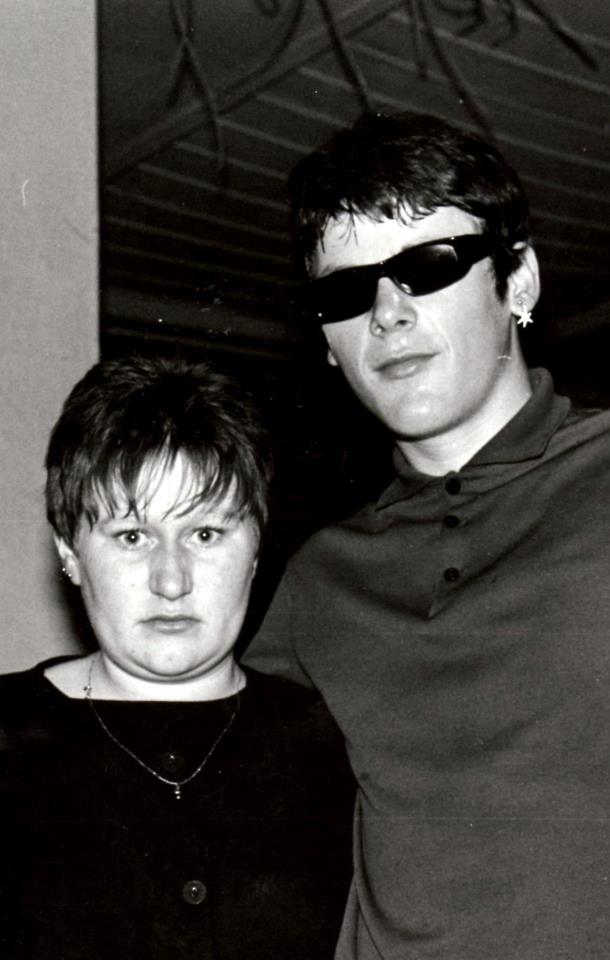


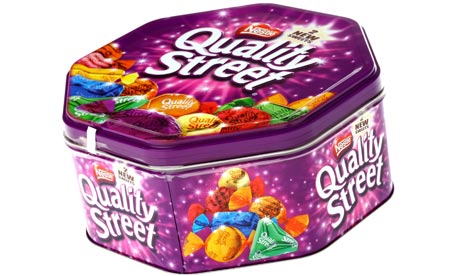


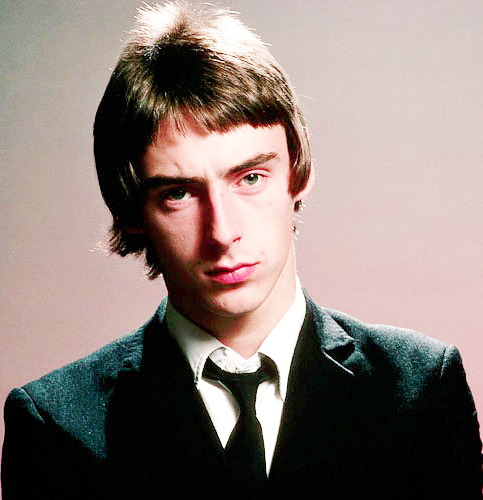



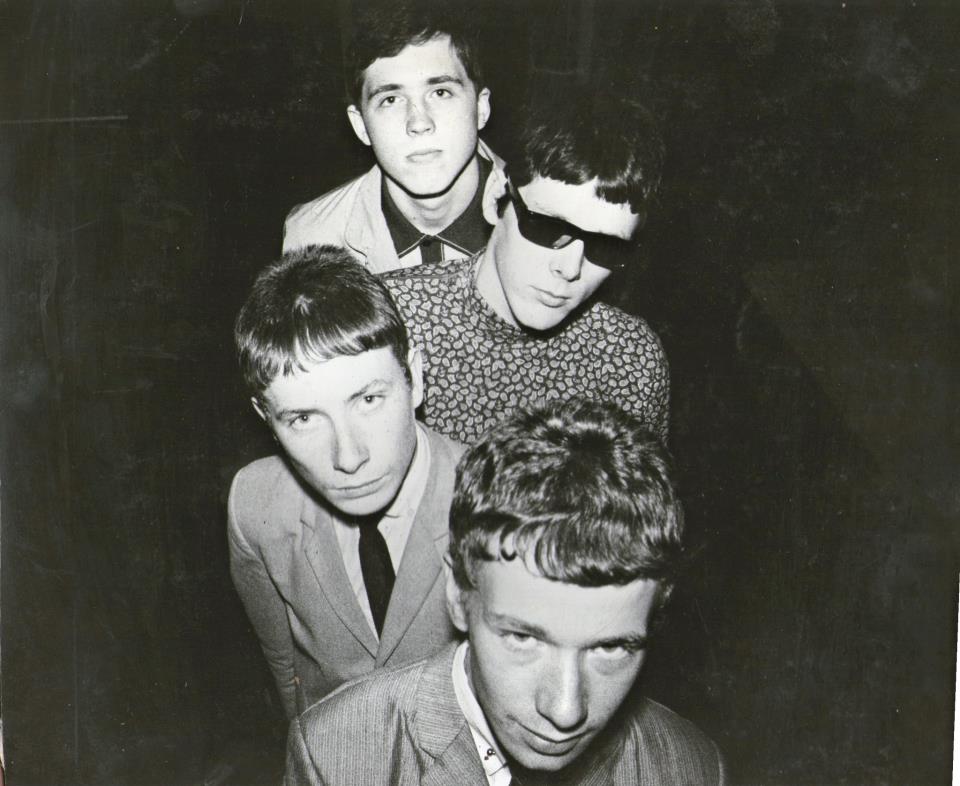
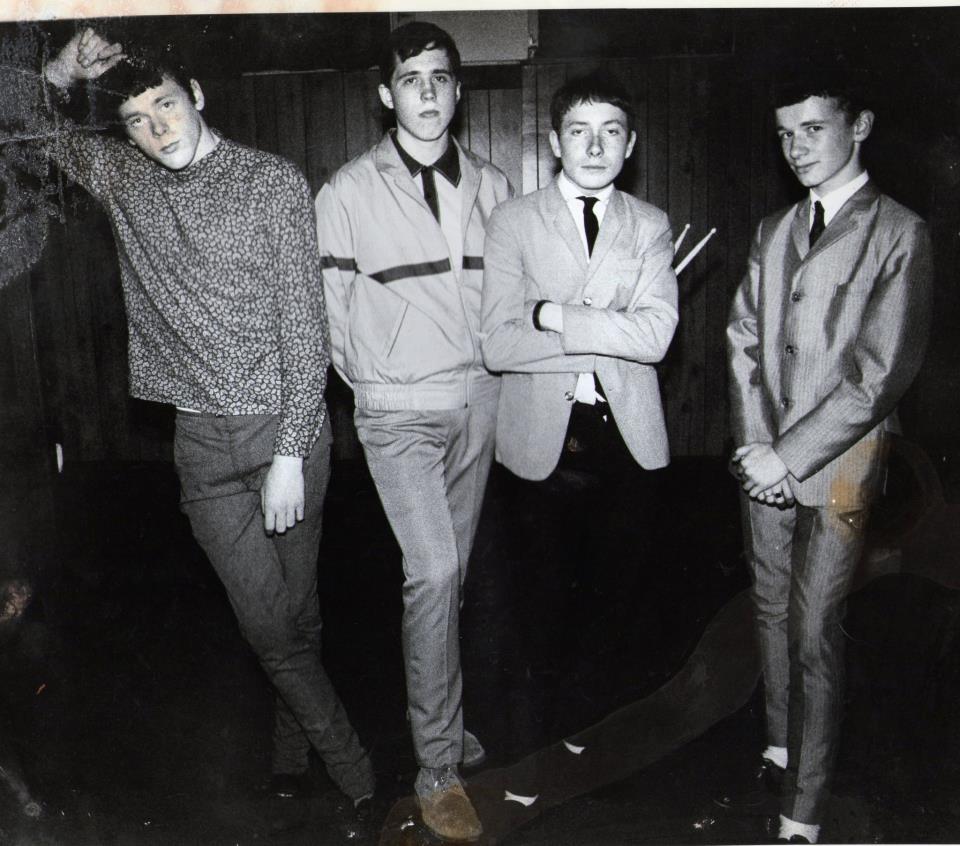


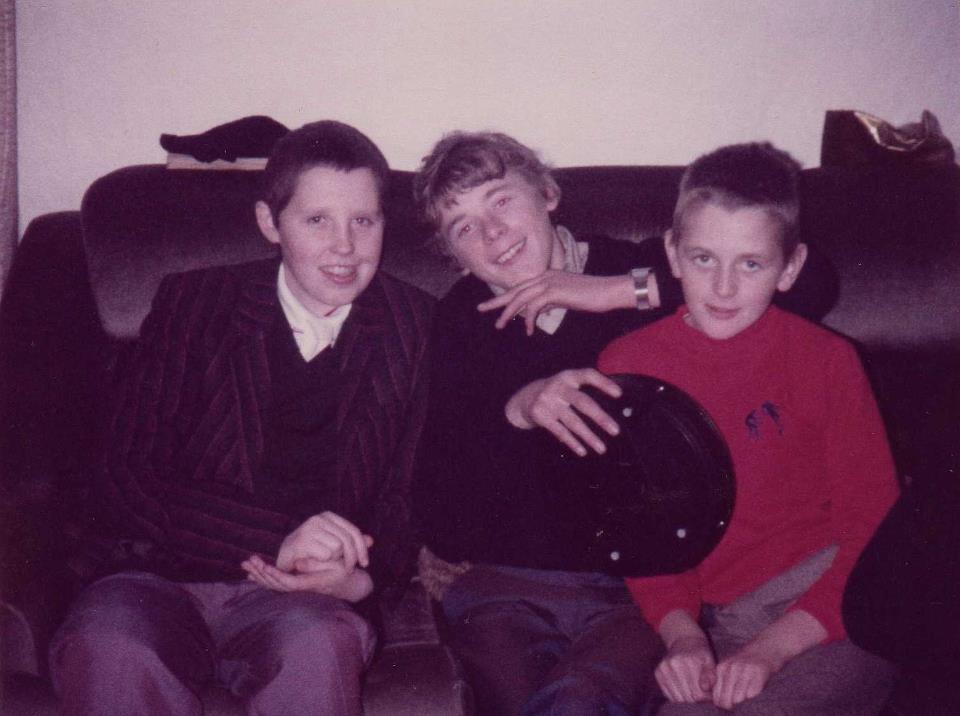


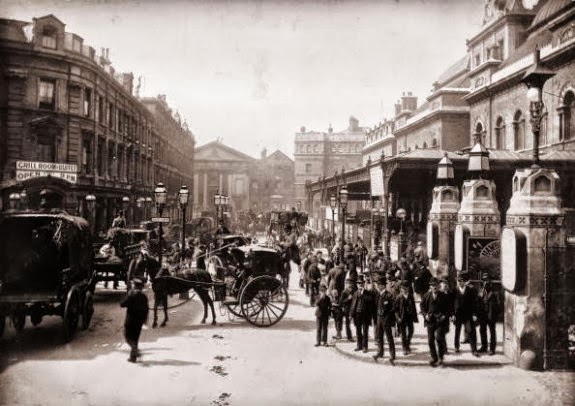

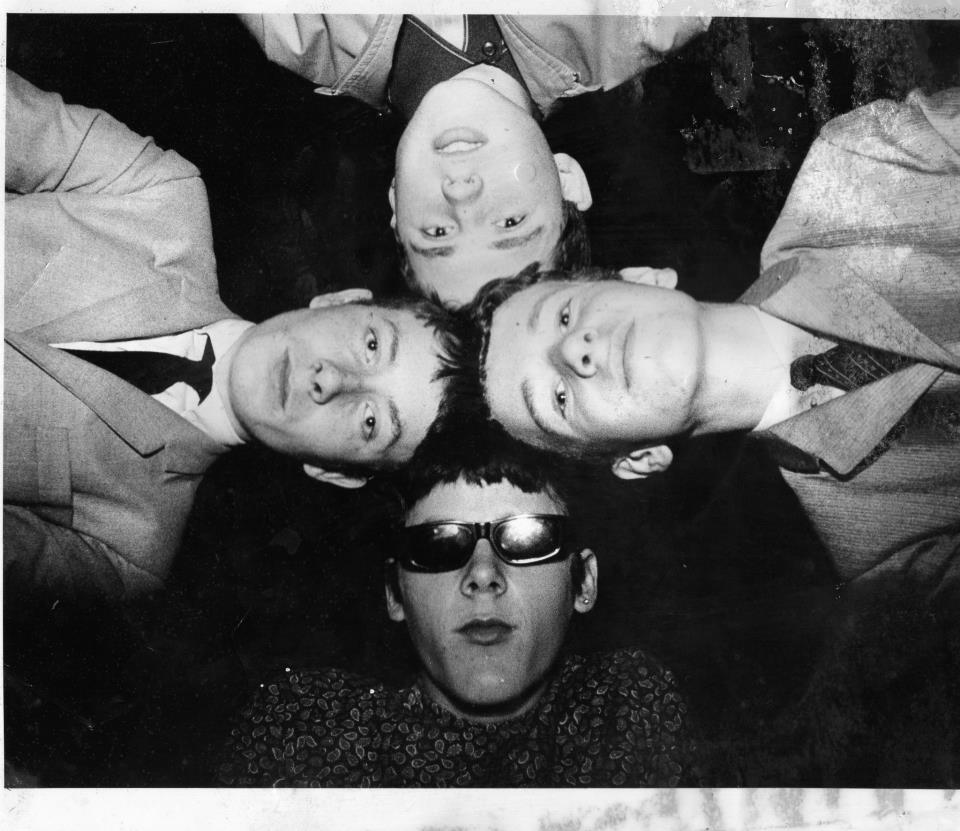
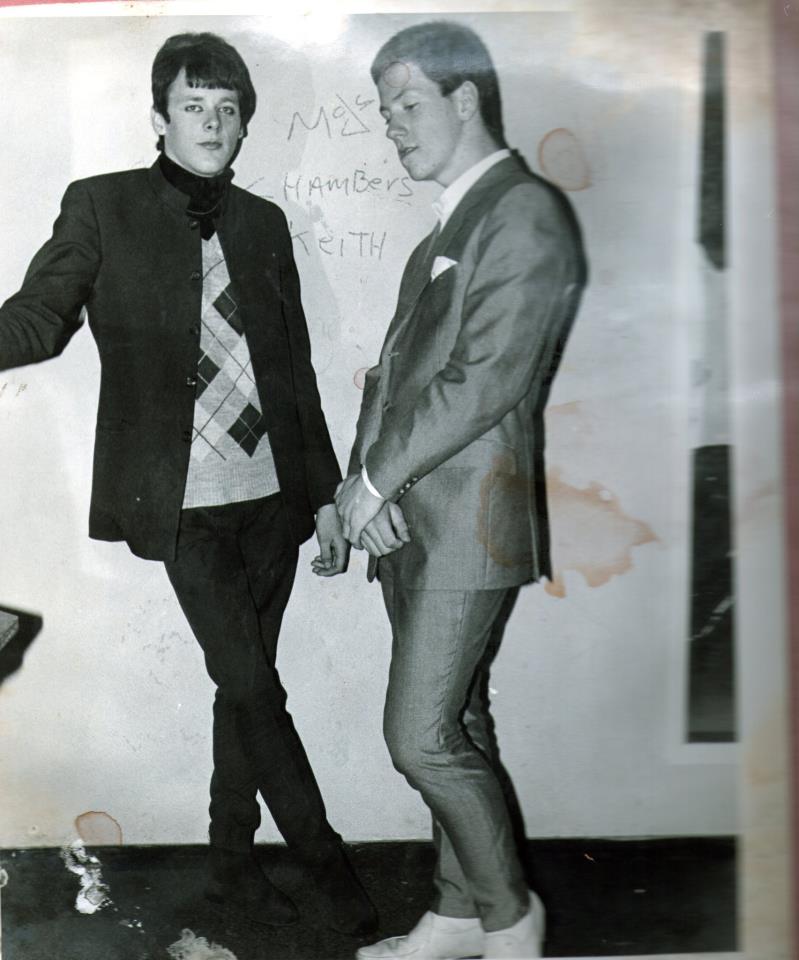
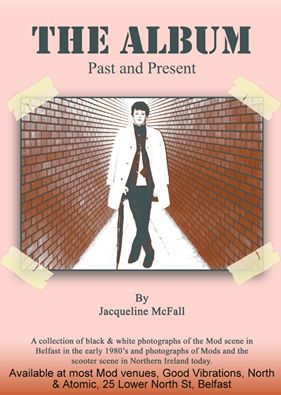


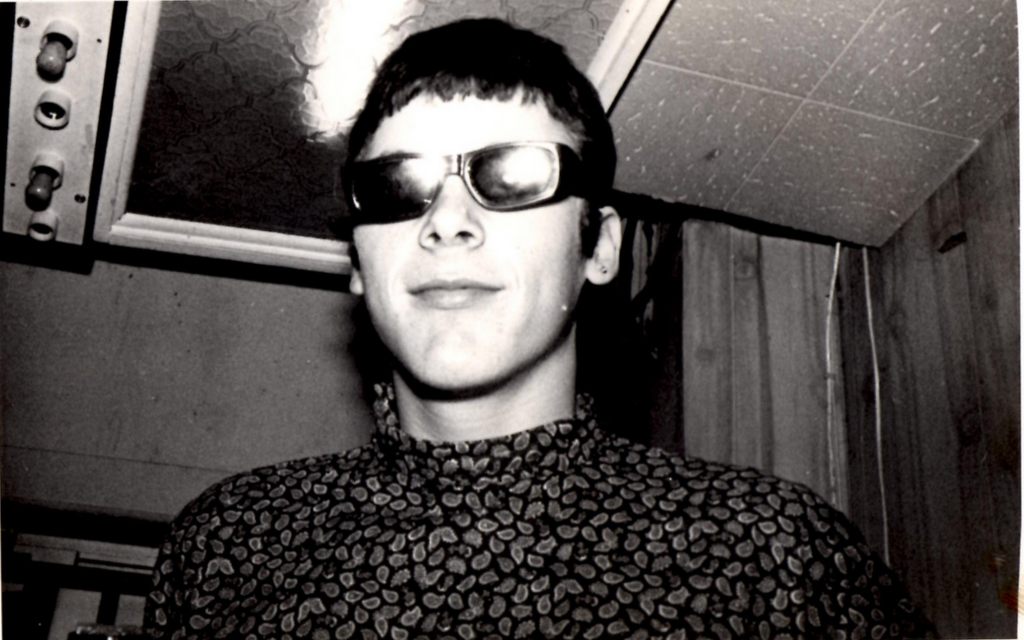






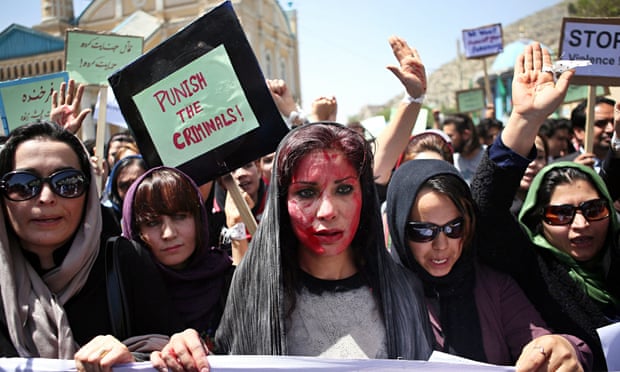





.JPG)

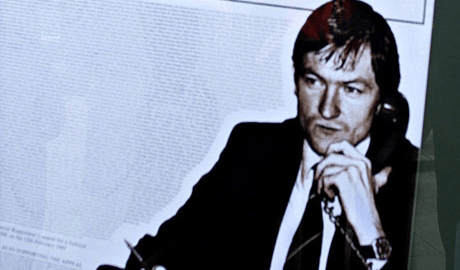


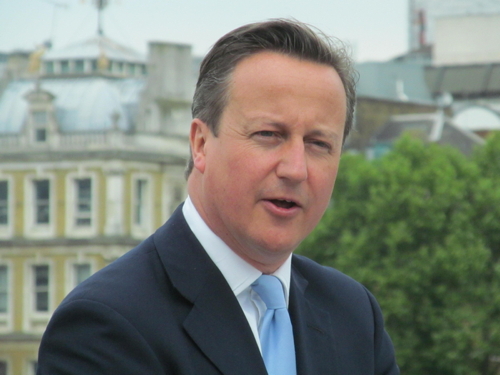
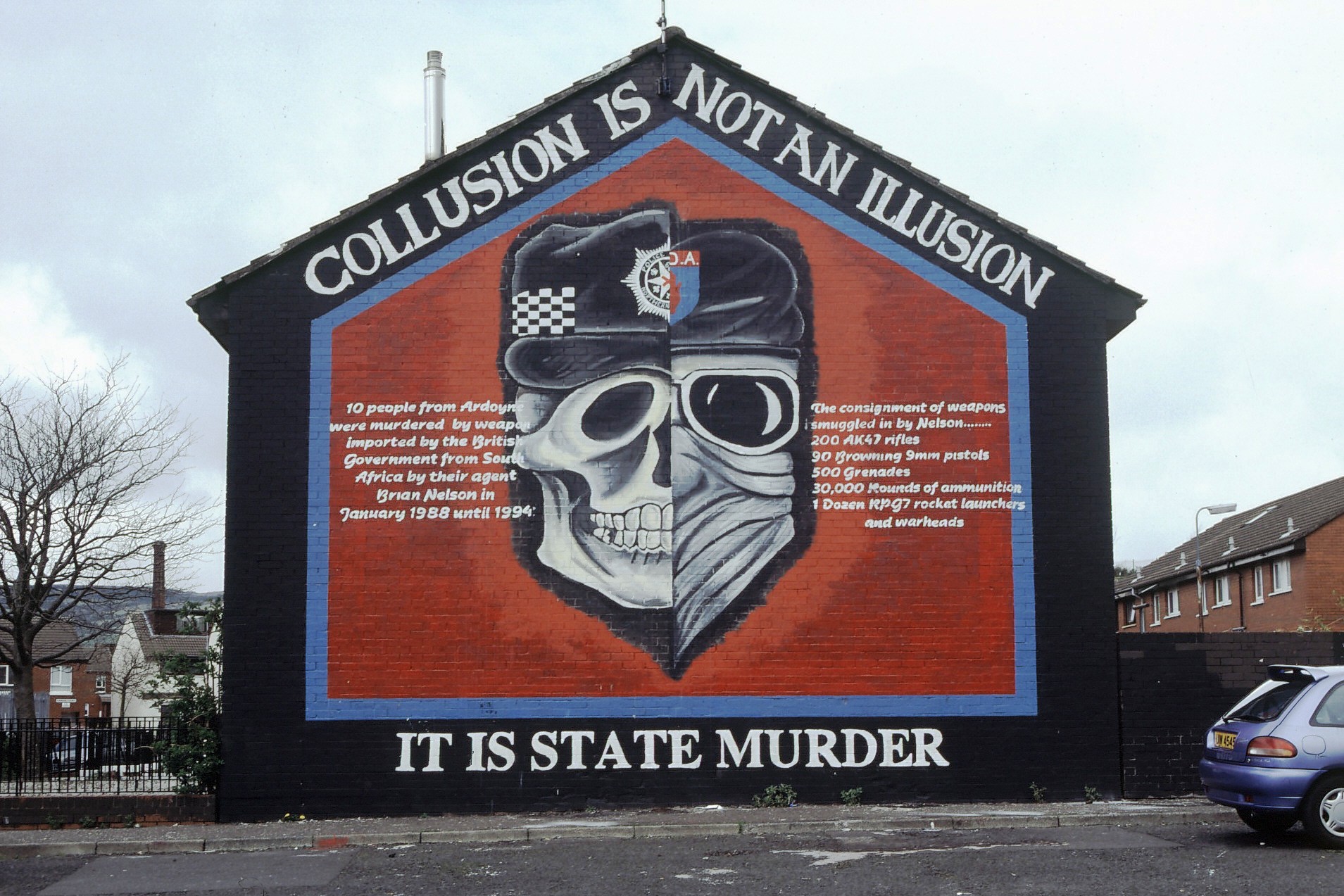




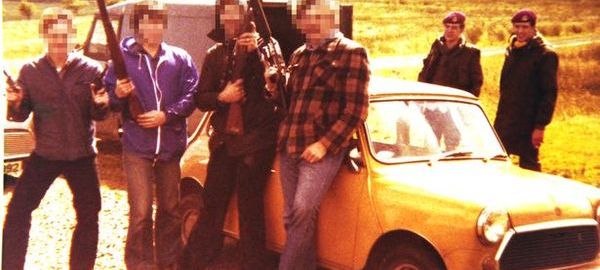










.jpg)

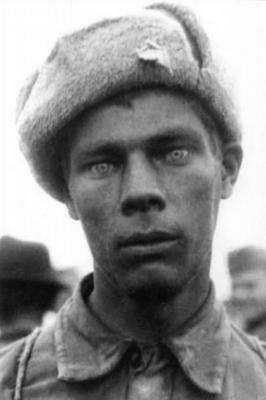
.jpg)


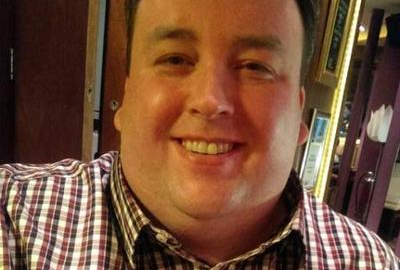


 belfastchildis.com