Unashamedly Proud of My Loyalist and British Heritage.
In fact I want the world to know that despite what loony lefties and followers of Corbyn think – its perfectly normal to take pride in our country and celebrate and embrace our long and glorious history.
—————————-
Someone emailed me yesterday after visiting my website and praised me for writing about the history of The Troubles and commemorating the memory of all those who had died during the 30 year conflict.
So far – so good!
And then she asked me………..
“Did I hate Catholic’s and what I thought of a United Ireland ?”.
Well at this stage my antenna went up and I thought ” Here we go again “
Let me explain….
When I set up this blog/website last year my primary objective was to promote my Autobiography Belfast Child and hopefully attract some attention from the publishing world and maybe one day see my book printed and share my story with the world.
That was the objective anyways and the process has been long and full of disappointments – but I am now working with high profile ghost writing Tom Henry to complete the book and his enthusiasm for the subject is feeding my dream.
I have always thought I had an interesting story to tell ( I would wouldn’t I ? ) and within weeks of launching the site I was pleasantly surprised to see that I was receiving a lot of visitors and people were commenting on my story. As of yesterday I have had more 100,000 visitors to the site and this figure is growing and increasing weekly by a few thousand and this I must say surprised me.
It had always been my aim to dedicate the book/my story to the memory of all those killed in the Troubles and off course to the memory of my beloved father John Chambers – who died way to young and left a wound in my soul that can never been healed or soothed.
So with this in mind I decided to use my website to tell the story of the Northern Ireland conflict and include an unbiased (mostly) comprehensive history of all major events and deaths in the Troubles. Due to my loyalist heritage and background this has not always been easy, considering I lived through the worst years of the Troubles among the loyalist communities of West Belfast and like those around me I was on the front-line of the sectarian slaughter and there was no escape from the madness that surrounded and engulfed us.
I blamed the IRA ( and other republican terrorists ) for all the woes of life in Belfast and I hated them with a passion – still do.
Growing up as a protestant in Northern Ireland is unlike life in any other part of the UK or British territories and from cradle to grave our lives are governed by the tenuous umbilical cord that reluctantly connects us to the rest of the UK and Westminster’s corridors of power.
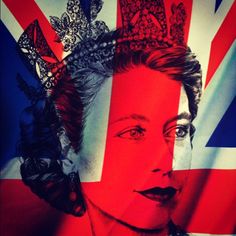
Unlike most other communities throughout the UK we are fanatically proud of our Britishness and we have literally fought for the right to remain part of Britain and have Queen Elizabeth II as the mother of our nation.
Long may she reign
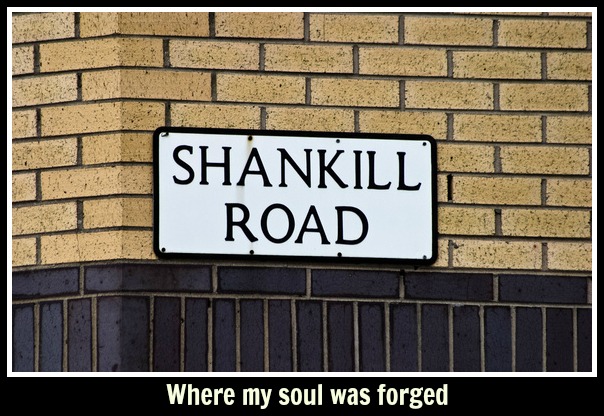
If you have read extracts from my Autobiography Belfast Child ( It’s worth it – promise ) you will know that I was raised within the heartlands of loyalist Northern Ireland – The Glorious Shankill Road.
The UDA ( Ulster Defense Force) and other loyalist paramilitaries governed and controlled our daily lives and lived and operated among us. The loyalist community stood as one against the IRA and other republican terrorists and although there was often war between the various different groups , they were untied in their hatred of Republican’s and pride in the Union.
The definition of loyalist is :
a. A supporter of union between Great Britain and Northern Ireland
b. A person who remains loyal to the established ruler or government, especially in the face of a revolt.
—————————————–
Why Ireland split into the Republic of Ireland & Northern Ireland
—————————————–
A bit of history for you
A very brief outlined of the beginning of the modern troubles
Whilst the Protestants’ clung to their British sovereignty and took pride in the union, our Catholic counterparts felt abandoned and second class citizens in a Unionist run state. The civil rights marches of the 60’s & Republican calls for a United Ireland were the catalyst for the IRA and other Republican terrorist groups to take up arms against the British and feed the paranoia of the loyalist community.
Northern Ireland descended into decades of sectarian conflict & slaughter. An attack on the crown was an attack on the Protestant people of the North and the Protestant paramilitaries took up arms and waged an indiscriminate war against the IRA, the Catholic population and each other. Many innocent Catholic’s and Protestant’s became targets of psychopathic sectarian murder squad’s. Murder was almost a daily occurrence and the killings on both sides perpetuated the hatred and mistrust between the two ever-warring communities. It was a recipe for disaster and Northern stood on the brink of all out civil war.
Growing up in this environment it is hardly surprising to learn that I hated republicans and all they stood for. But that doesn’t mean I hated Catholic’s or Irish people and would wish any harm on them – I don’t and I didn’t.
It means I have a different point of view and democracy is all about freedom of choice and my choice is to maintain the Union with the UK and embrace and celebrate my loyalist culture and tradition. It also means I have the right to take pride in the union with the rest of the UK and I wear my nationality like a badge of honor for all the world to see.
————————————–
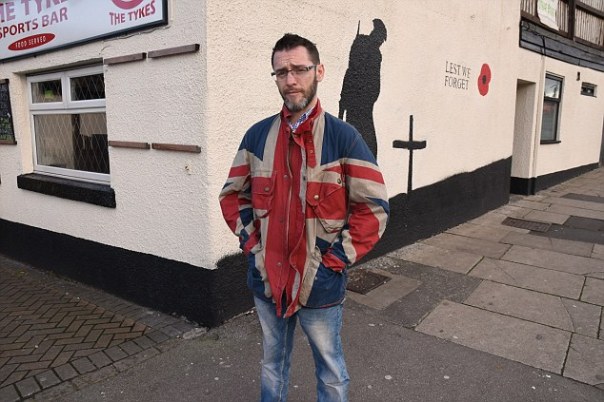
Jason Mawer has been warned twice to remove his jacket in case it offends someone
The unique Mod-style jacket in red, white and blue was made a few years ago for a Who convention in London
Pub landlord Jason Mawer has twice been asked in public to remove his treasured Union Jack jacket – for risk of it being ‘offensive’.
He was told to take off his valuable Mod-style Barbour jacket – designed in honour of legendary rock band The Who – by officials who appeared to be council enforcement officers.
On the second occasion the female official warned him: ‘Would you mind removing your coat it might offend somebody.’
In recent years it has become almost politically “incorrect” to show any signs of pride in being British and mad lefties and their deluded disciples are always banging on about offending other religions and communities throughout the UK. The fact that the UK has such a diverse melting pot of different nationalities and religions and is generally accommodating to them – is lost on these do gooders and they ignore our country’s long history of religious and politically tolerance and instead accuse us of being xenophobic and this offends me no end.
Have they forgotten that it was our forefathers who fought and died for our great nation and our democracy is built on their ultimate sacrifice for our freedom – they did not die in vain.
…back to the email
If you had taken the time to have a proper look through my site you would be aware that I commemorate the deaths of all innocent people killed as a direct result of the conflict in Northern Ireland , regardless of political or religious background . I also cover the deaths of paramilitaries from both sides killed “in Action” as my objective to to give a complete picture of the history of the Troubles.
I receive lots of emails and comments about my site and although most of these are positive – a few ( normally from republicans ) accuse me of being a loyalist and somehow responsible for the all the deaths in Northern Ireland’s tortured history. Generally I ignore these emails as they are so far of the mark – if they had taken the time to read my story they would know a bit more about my history and know that I preach love – not hate!
Just because I am proud of the union and my British heritage does not mean I hate Catholics or Irish people or any others for that matter – in fact I judge no man on his colour , creed , religious or political background (apart from Republican Terrorists ).
I judge people on their humanity and empathy towards others and the world around us . Life is for living – so live and let live.
“In spite of everything, I still believe that people are really good at heart.”
― Anne Frank
Four Protestant members of the Royal Ulster Constabulary (RUC), were killed by a Provisional IRA remote-controlled bomb hidden in a parked van, and detonated when their mobile patrol drove past, Bessbrook.
The bomb was estimated at 1,000 pound and was believed to be the largest bomb used by the IRA up to that date.
———————————————–
Victims
———————————————–
17 April 1979
Paul Gray, (25)
Protestant Status: Royal Ulster Constabulary (RUC),
Killed by: Irish Republican Army (IRA)
Killed by remote controlled bomb hidden in parked van, detonated when Royal Ulster Constabulary (RUC) mobile patrol drove past, Bessbrook, County Armagh.
Protestant Status: Royal Ulster Constabulary (RUC),
Killed by: Irish Republican Army (IRA)
Killed by remote controlled bomb hidden in parked van, detonated when Royal Ulster Constabulary (RUC) mobile patrol drove past, Bessbrook, County Armagh
Protestant Status: Royal Ulster Constabulary (RUC),
Killed by: Irish Republican Army (IRA)
Killed by remote controlled bomb hidden in parked van, detonated when Royal Ulster Constabulary (RUC) mobile patrol drove past, Bessbrook, County Armagh
Protestant Status: Royal Ulster Constabulary (RUC),
Killed by: Irish Republican Army (IRA)
Killed by remote controlled bomb hidden in parked van, detonated when Royal Ulster Constabulary (RUC) mobile patrol drove past, Bessbrook, County Armagh
In January 1981, Patrick Joseph Traynor (27) from Crossmaglen was found guilty of the four murders and a range of other charges. He was jailed for life on each of the four murder charges and was sentenced to 12 years for the related crimes.
———————————————-
BESSBROOK
Army Base
Bessbrook, saw some of the worst violence in the Troubles. 25 British soldiers and local Protestants, all male, lost their lives. Four soldiers died in a non-combat related air accident, but the rest (21 men) were killed by the Provisional Irish Republican Army (IRA).
The linen mill was converted by the British Army into a major military base. A helicopter landing area was established to supply other military outposts in the area since road-borne movements of troops and supplies were vulnerable to landmine attack.
At one stage the little village was reportedly the busiest helicopter airport in Europe, more so than the major heliports supplying the North Sea oil rigs. For many years British Army helicopters would take off and land every few minutes. To avoid the risk of missile attack they would fly at rooftop level over the village. For a time, direct access to much of the village was sealed off by security barriers to minimise the risk of vehicle-borne bomb attacks on the security forces. Some have claimed that this contributed to the commercial decline of local businesses.
—————————————————-
.
My autobiography: A Belfast Child is now available to pre-order on Amazon , launch date is 30th April.
Key Events & Deaths on this day in Northern Ireland Troubles
17th April
————————–
Thursday 17 April 1969
Westminster By-Election
In a by-election to the Westminster parliament Bernadette Devlin, standing as a Unity candidate in Mid-Ulster, was elected and, at 21 years of age, became the youngest woman ever to be elected as a Member of Parliament (MP).
Sunday 17 April 1977
Cardinal Willian Conway, then Catholic Primate of Ireland, died in Armagh.
Tuesday 17 April 1979
Four Royal Ulster Constabulary (RUC) officers were killed when the Irish Republican Army (IRA) exploded an estimated 1,000 pound van bomb at Bessbrook, County Armagh.
[This was believed to be the largest bomb used by the IRA to this date.]
A British soldier driving an armoured personnel carrier rammed the vehicle into the gable wall that formed ‘Free Derry Corner’. The soldier was later taken into military custody.
Wednesday 17 April 1991
The Combined Loyalist Military Command (CLMC), acting on behalf of the Ulster Volunteer Force (UVF), the Ulster Freedom Fighters (UFF), and the Red Hand Commandos (RHC), announced that there would be a ceasefire beginning on 30 April 1991.
[The ceasefire was to facilitate the proposed political talks and would last as long as the talks. Attacks by all three organisations continued in the period before the ceasefire.]
Friday 16 April 1993
Dick Spring, then Tánaiste (deputy Irish Prime Minister and Minister for Foreign Affairs), addressed a meeting of the British-Irish Association in Oxford, England. Spring stated that a possible solution to the conflict in Northern Ireland lay in a ‘Europe of the regions’.
Saturday 17 April 1993
Douglas Hurd, then British Foreign Secretary, said that the Republic of Ireland had a “crucial role” in any new talks. He also stated that the Republic’s willingness to consider changes to the Irish Constitution provided a “positive context”.
Monday 17 April 1995
The Royal Ulster Constabulary (RUC) rerouted an Apprentice Boys of Derry parade away from the lower Ormeau Road area of Belfast. Approximately 200 people had joined a protest against loyal order parades passing through the area.
[There was a further protest on 23 April 1995.]
Wednesday 17 April 1996
The Irish Republican Army (IRA) exploded a bomb in The Boltons, Earls Court, London. The bomb went off in a vacant house and there were no injuries.
Thursday 17 April 1997
Patrick Mayhew, then Secretary of State for Northern Ireland, referred the cases of two Scots Guards to the Life Sentence Review Board.
The two British soldiers, Mark Wright and James Fisher, were both serving life sentences for the murder of Peter McBride (18) in the New Lodge area of Belfast (on 4 September 1992).
Of the seven men who were arrested on 11 April 1997, three were released, three charged with various offences, and one man was flown to London for questioning about the Docklands bomb on 9 February 1996.
All seven men alleged that they had been beaten while in custody in Gough Barracks in Armagh.
The Council for Catholic Maintained Schools objected to a statement by Julia Neuberger, then Chancellor of the University of Ulster and a Rabbi, in which she criticised the sectarian nature of primary and secondary education in Northern Ireland. Neuberger denied that her statement referred solely to Catholic schools.
The University initially defended the remarks but later apologised to the Council for Catholic Maintained Schools
Friday 17 April 1998
Mark McNeill (32), a former member of the Irish National Liberation Army (INLA), was shot dead by two gunmen as he got out of his taxi on Shaw’s Road in the west of Belfast. McNeill was a father of five.
[It was believed that the attack was a “grudge killing” involving former INLA members and there was speculation that the killing may have been drugs-related.]
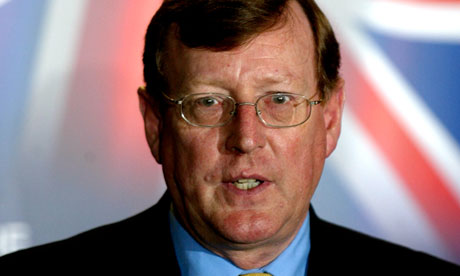
David Trimble, then leader of the Ulster Unionist Party (UUP), delivered a speech to the Northern Ireland Forum. Tony Blair, then British Prime Minister, stated that the Royal Ulster Constabulary (RUC) would not be disbanded and that only those prisoners whose organisations were on ceasefire would be release, on licence, from prison.
Saturday 17 April 1999
Ronnie Flanagan, then Chief Constable of the Royal Ulster Constabulary (RUC), announced that John Stevens would conduct a fresh inquire into the killing of Pat Finucane, a Belfast solicitor killed on 12 February 1989.
———————————————
Remembering all innocent victims of the Troubles
Today is the anniversary of the death of the following people killed as a results of the conflict in Northern Ireland
“To live in hearts we leave behind is not to die
– Thomas Campbell
To the innocent on the list – Your memory will live forever
– To the Paramilitaries –
There are many things worth living for, a few things worth dying for, but nothing worth killing for.
13 People lost their lives on the 17th April between 1972– 1998
———————————————–
17 April 1972 Patrick Magee,
(20) Catholic Status: Civilian (Civ),
Killed by: British Army (BA)
Shot as he walked along Divis Street, Lower Falls, Belfast.
———————————————–
17 April 1972 Patrick Donaghy,
(86) Catholic Status: Civilian (Civ),
Killed by: British Army (BA)
Shot at the window of his flat, Divis Tower, Divis Flats, Belfast.
———————————————–
17 April 1973
Brian Smyth,
(32) Catholic Status: Irish Republican Army (IRA),
Killed by: British Army (BA)
Shot by British Army (BA) sniper while standing with group of men, Etna Drive, Ardoyne, Belfast.
———————————————–
17 April 1976 Rachel Hyams, (79)
nfNIB Status: Civilian (Civ),
Killed by: Irish Republican Army (IRA)
Died three weeks after being injured in bomb attack on Ideal Home Exhibition, Olympia, London.
———————————————–
17 April 1977
Trevor McKibben, (19)
Catholic Status: Irish Republican Army (IRA),
Killed by: British Army (BA)
Shot by British Army (BA) sniper while carrying rifle, Flax Street, Ardoyne, Belfast.
———————————————–
17 April 1979
Paul Gray, (25)
Protestant Status: Royal Ulster Constabulary (RUC),
Killed by: Irish Republican Army (IRA)
Killed by remote controlled bomb hidden in parked van, detonated when Royal Ulster Constabulary (RUC) mobile patrol drove past, Bessbrook, County Armagh.
Protestant Status: Royal Ulster Constabulary (RUC),
Killed by: Irish Republican Army (IRA)
Killed by remote controlled bomb hidden in parked van, detonated when Royal Ulster Constabulary (RUC) mobile patrol drove past, Bessbrook, County Armagh
Protestant Status: Royal Ulster Constabulary (RUC),
Killed by: Irish Republican Army (IRA)
Killed by remote controlled bomb hidden in parked van, detonated when Royal Ulster Constabulary (RUC) mobile patrol drove past, Bessbrook, County Armagh
Protestant Status: Royal Ulster Constabulary (RUC),
Killed by: Irish Republican Army (IRA)
Killed by remote controlled bomb hidden in parked van, detonated when Royal Ulster Constabulary (RUC) mobile patrol drove past, Bessbrook, County Armagh
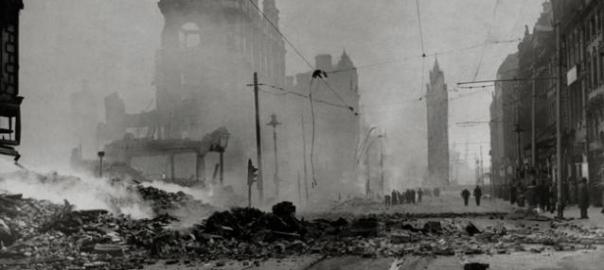
The Belfast Blitz was four attacks of high-casualty German air raids on strategic targets in the city of Belfast in Northern island . in April and May 1941 during World War II. The first was on the night of 7–8 April 1941, a small attack which probably took place only to test Belfast’s defences. The next took place on Easter Tuesday , 15 April 1941. Two hundred bombers of the Luftwaffe attacked military and manufacturing targets in the city of Belfast. Some 900 people died as a result of the bombing and 1,500 were injured. High explosive bombs predominated in this raid. Apart from those on London, this was the greatest loss of life in any night raid during the Blitz.
—————————
The Belfast Blitz-narrated
—————————
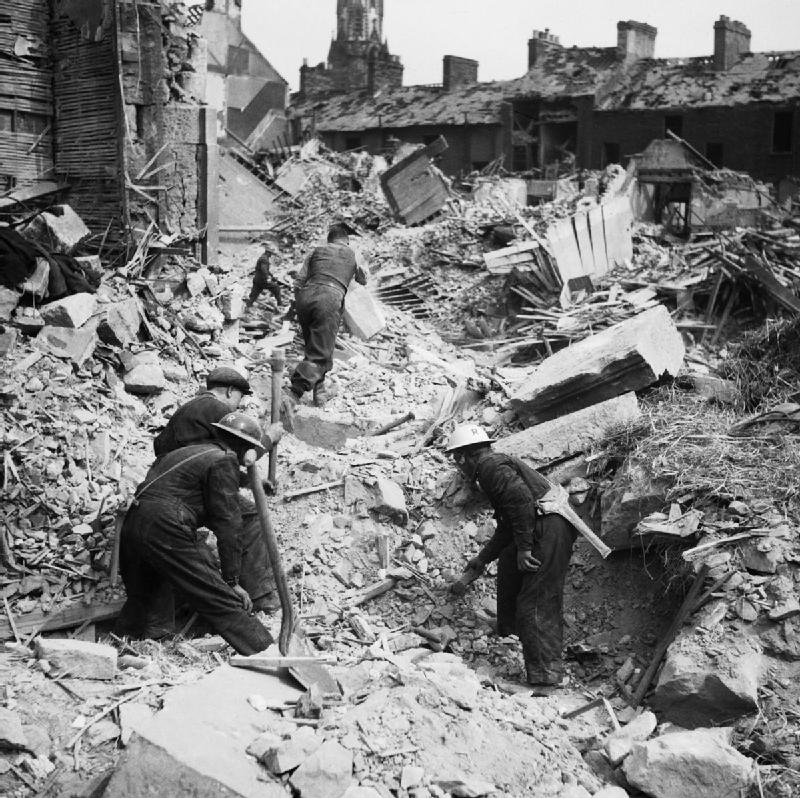
Rescue workers searching through the rubble after an air raid on Belfast
The third raid on Belfast took place over the evening and morning of 4–5 May 1941; 150 were killed. Incendiary bombs predominated in this raid. The fourth and final Belfast raid took place on the following night, 5–6 May.
Background
As the UK was preparing for the conflict, the factories and shipyards of Belfast were gearing up. Belfast made a considerable contribution towards the Allied war effort, producing many naval ships, aircraft and munitions; therefore, the city was deemed a suitable bombing target by the Luftwaffe. Meanwhile, unlike Northern Ireland, southern Ireland was no longer part of the UK. Under the leadership of Éamon de Valera, it had declared its neutrality during the Second World War. Although it arrested German spies that its police and military intelligence services caught, the state never broke off diplomatic relations with Axis nations: the German Legation in Dublin remained open throughout the war.
Government
Junction of Antrim Road and Hillman Street
The Government of Northern Ireland lacked the will, energy and capacity to cope with a major crisis when it came. James Craig, Lord Craigavon, was Prime Minister of Northern Ireland since its inception in 1921 until his death in 1940. Richard Dawson Bates, was the Home Affairs Minister. Sir Basil Brooke, the Minister of Agriculture, was the only active minister. He successfully busied himself with the task of making Northern Ireland a major supplier of food to Britain in her time of need
John Clarke MacDermott, the Minister of Public Security, after the first bombing, initiated the “Hiram Plan” to evacuate the city and to return Belfast to ‘normality’ as quickly as possible.[5] It was MacDermott who sent a telegram to de Valera seeking assistance. There was unease with the complacent attitude of the government, which led to resignations:
John Edmond Warnock, the parliamentary secretary at the Ministry of Home Affairs, resigned from the government on 25 May 1940. He said, “I have heard speeches about Ulster pulling her weight but they have never carried conviction.” and “the government has been slack, dilatory and apathetic.”[6]
Lieutenant ColonelAlexander Gordon (politician), Parliamentary and Financial Secretary at the Ministry of Finance (i.e. Chief Whip), resigned on 13 June 1940,[7] explaining to the Commons that the government was “quite unfitted to sustain the people in the ordeal we have to face.”
Craigavon died on 24 November 1940. He was succeeded by John Miller Andrews, then 70 years old, who was no more capable of dealing with the situation than his predecessor. On 28 April 1943, six members of the Government threatened to resign, forcing him from office. He was replaced by Sir Basil Brooke on 1 May.[8]
During the war years, Belfast shipyards built or converted over 3,000 navy vessels, repaired more than 22,000 others and launched over half a million tons of merchant shipping – over 140 merchantmen.[10]
James Mackie & Sons were re-equipped in 1938. They were the primary supplier of Bofors anti-aircraft shells.
Harland’s Engineering works built tanks. They designed the Churchill.
Aero linen for covering aircraft, such as the Hawker Hurricane, and military glider frames was manufactured by a number of Belfast flax spinning mills, such as The York Street Flax Spinning Co.; Brookfield Spinning Co.; Wm. Ewart’s Rosebank Weaving Co.; and the Linen Thread Co.
Other Belfast factories manufactured gun mountings, ordnance pieces, aircraft parts and ammunition.
War materials and food were sent by sea from Belfast to Britain, some under the protection of the neutralIrish tricolour. The M.V. Munster, for example, operated by the Belfast Steamship Company, plied between Belfast and Liverpool under the tricolour, until she hit a mine and was sunk outside Liverpool.[11]
Preparation
Sir James Craig, former Prime Minister of Northern Ireland.
Government preparation
There was little preparation for the conflict with Germany. However at the time Lord Craigavon, Prime Minister of Northern Ireland since its inception in 1921, said: “Ulster is ready when we get the word and always will be.” He was asked, in the N.I. parliament: “if the government realized ‘that these fast bombers can come to Northern Ireland in two and three quarter hours’ “. His reply was: “We here today are in a state of war and we are prepared with the rest of the United Kingdom and Empire to face all the responsibilities that imposes on the Ulster people. There is no slacking in our loyalty.”
Dawson Bates, the Home Affairs Minister, simply refused to reply to army correspondence and when the Ministry of Home Affairs was informed by imperial defence experts that Belfast was a certain Luftwaffe target, nothing was done.[13]
Air-raid shelters
Belfast, the city with the highest population density had the lowest proportion of air-raid shelters. Prior to the “Belfast Blitz” there were only 200 public shelters, although 4,000 households had built their own shelters. No searchlights were set up, as they had only arrived on 10 April. There were no night-fighters. On the night of the raid, no Royal Air Force (RAF) aircraft took to the air. There were only 22 anti-aircraft guns, six light, and sixteen heavy. On the night, only seven were operated for a short time. There was no smokescreen ability. There were some barrage balloons. These air-raid shelters were Anderson shelters. They were sheets of corrugated galvanised iron covered in earth. Since most casualties were caused by falling masonry rather than by blast, they provided effective shelter for those who had them.
Children
Few children had been successfully evacuated. The “Hiram Plan” initiated by Dawson Bates, the Home Affairs Minister, had failed to materialise. Fewer than 4,000 women and children were evacuated. There were still 80,000 more in Belfast. Even the children of soldiers had not been evacuated, with calamitous results when the married quarters of Victoria Barracks received a direct hit.
Earlier raids
There had been a number of small bombings, probably by planes that missed their targets over the River Clyde in Glasgow or the cities of the northwest of England. On 24 March 1941, John MacDermott, Minister for Security, wrote to Prime Minister John Andrews, expressing his concerns that Belfast was so poorly protected: “Up to now we have escaped attack. So had Clydeside until recently. Clydeside got its blitz during the period of the last moon. There [is] ground for thinking that the … enemy could not easily reach Belfast in force except during a period of moonlight. The period of the next moon from say the 7th to the 16th of April may well bring our turn.” MacDermott would be proved right.
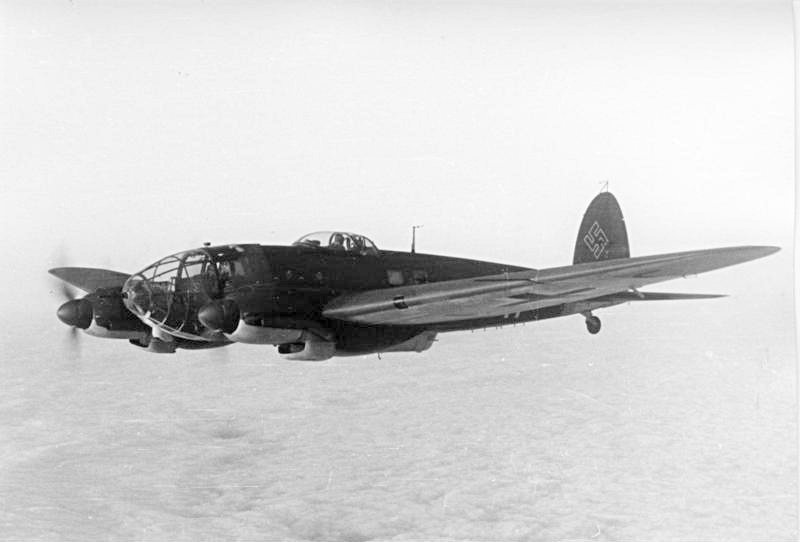
Heinkel He 111 bomber
The first deliberate raid took place on the night of 7 April. (Some authors count this as the second raid of four). It targeted the docks. Neighbouring residential areas were also hit. Six Heinkel He 111 bombers, from Kampfgruppe 26, flying at 7,000 feet (2,100 m), dropped incendiaries, high explosive and parachute-mines. By British mainland blitz standards, casualties were light. Thirteen lost their lives, including a soldier killed when an anti-aircraft gun, at the Balmoral show-grounds, misfired. The most significant loss was a 4.5-acre (1.8 ha) factory floor for manufacturing the fuselages of Short Stirling bombers. The Royal Air Force announced that Squadron Leader J.W.C. Simpson shot down one of the Heinkels over Downpatrick. The Luftwaffe crews returned to their base in Northern France and reported that Belfast’s defences were, “inferior in quality, scanty and insufficient”.
Easter Tuesday Blitz
William Joyce (known as “Lord Haw-Haw“) announced in radio broadcasts from Hamburg that there will be “Easter eggs for Belfast”.
That evening up to 200 bombers left their bases in northern France and the Netherlands and headed for Belfast. There were Heinkel He 111s, Junkers Ju 88s and Dorniers. At 10:40 pm the air raid sirens sounded. Accounts differ as to when flares were dropped to light up the city. The first attack was against the city’s waterworks, which had been attacked in the previous raid. High explosives were dropped. Initially it was thought that the Germans had mistaken this reservoir for the harbour and shipyards, where many ships, including HMS Ark Royal were being repaired. However that attack was not an error. Three vessels nearing completion at Harland and Wolff’s were hit as was its power station. Wave after wave of bombers dropped their incendiaries, high explosives and land-mines. When incendiaries were dropped, the city burned as water pressure was too low for effective firefighting.
Public buildings destroyed or badly damaged included Belfast City Hall’s Banqueting Hall, the Ulster Hospital for Women and Children and Ballymacarrett library, (the last two being located on Templemore Avenue). Strand Public Elementary school, the LMS railway station, the adjacent Midland Hotel on York Road, and Salisbury Avenue tram depot were all hit. Churches destroyed or wrecked included Macrory Memorial Presbyterian in Duncairn Gardens; Duncairn Methodist, Castleton Presbyterian on York Road; St Silas’s on the Oldpark Road; St James’s on the Antrim Road; Newington Presbyterian on Limestone Road; Crumlin Road Presbyterian; Holy Trinity on Clifton Street and Clifton Street Presbyterian; York Street Presbyterian and York Street Non-Subscribing Presbyterian; Newtownards Road Methodist and Rosemary Street Presbyterian (the last of which was not rebuilt).
Streets heavily bombed in the city centre included High Street, Ann Street, Callender Street, Chichester Street, Castle Street, Tomb Street, Bridge Street (effectively obliterated), Rosemary Street, Waring Street, North Street, Victoria Street, Donegall Street, York Street, Gloucester Street, and East Bridge Street. In the east of the city, Westbourne and Newcastle Streets on the Newtownards Road, Thorndyke Street off the Albertbridge Road and Ravenscroft Avenue were destroyed or damaged. In the west and north of the city, streets heavily bombed included Percy Street, York Park, York Crescent, Eglinton Street, Carlisle Street, Ballyclare, Ballycastle and Ballynure Streets off the Oldpark Road; Southport Street, Walton Street, Antrim Road, Annadale Street, Cliftonville Road, Hillman Street, Atlantic Avenue, Hallidays Road, Hughenden Avenue, Sunningdale Park, Shandarragh Park, and Whitewell Road. Burke Street which ran between Annadale and Dawson streets in the New Lodge area, was completely wiped off the map with all its 20 houses flattened and all of the occupants killed.
The Hawker Hurricane accounted for the most kills during the Battle of Britain
There was no opposition. In the mistaken belief that they might damage RAF fighters, the seven anti-aircraft batteries ceased firing. But the RAF had not responded. The bombs continued to fall until 5am.
Fifty-five thousand houses were damaged leaving 100,000 temporarily homeless. Outside of London, with some 900 dead, this was the greatest loss of life in a night raid during the Blitz. A stray bomber attacked Derry, killing 15. Another attacked Bangor, killing five. By 4 am the entire city seemed to be in flames. At 4.15am John MacDermott, the Minister of Public Security, managed to contact Basil Brooke (then Agriculture Minister), seeking permission to seek help from the Irish government. Brooke noted in his diary “I gave him authority as it is obviously a question of expediency”. Since 1.45am all telephones had been cut. Fortunately, the railway telegraphy link between Belfast and Dublin was still operational. The telegram was sent at 4.35am,[citation needed] asking the Irish Taoiseach, Éamon de Valera for assistance.
Human cost
Over 900 lives were lost, 1,500 people were injured, 400 of them seriously. Fifty-thousand houses, more than half the houses in the city, were damaged. Eleven churches, two hospitals and two schools were destroyed. These figures are based on newspaper reports of the time, personal recollections and other primary sources, such as:-
Jimmy Doherty, an air raid warden (who later served in London during the V1 and V2 blitz), who wrote a book on the Belfast blitz;
Emma Duffin, a nurse at the Queen’s University Hospital, (who previously served during the Great War), who kept a diary;
and Major Seán O’Sullivan, who produced a detailed report for the Dublin government. There are other diarists and narratives. Brian Barton of Queen’s University, Belfast, has written most on this topic. There is an eye-witness account from John Potter online.
Instructions
There were few bomb shelters. An air raid shelter on Hallidays Road received a direct hit, killing all those in it. Many people who were dug out of the rubble alive had taken shelter underneath their stairs and were fortunate that their homes had not received a direct hit or caught fire. In the New Lodge area people had taken refuge in a mill. Tragically 35 were crushed to death when the mill wall collapsed. In another building, the York Street Mill, one of its massive sidewalls collapsed on to Sussex and Vere Streets, killing all those who remained in their homes.
Major O’Sullivan reported that “In the heavily ‘blitzed’ areas people ran panic-stricken into the streets and made for the open country. As many were caught in the open by blast and secondary missiles, the enormous number of casualties can be readily accounted for. It is perhaps true that many saved their lives running but I am afraid a much greater number lost them or became casualties.”
That night almost 300 people, many from the Protestant Shankill area, took refuge in the Clonard Monastery in the Catholic Falls Road. The crypt under the sanctuary and the cellar under the working sacristy had been fitted out and opened to the public as an air-raid shelter. Prayers were said and hymns sung by the mainly Protestant women and children during the bombing.
Mortuary
The mortuary services had emergency plans to deal with only 200 bodies. 150 corpses remained in the Falls Road baths for three days before they were buried in a mass grave, with 123 still unidentified. Two hundred and fifty-five corpses were laid out in St George’s Market. Many bodies and body parts could not be identified.[19] Mass graves for the unclaimed bodies were dug in the Milltown and City Cemeteries.
Nurse Emma Duffin
Nurse Emma Duffin, who had served in the Great War, contrasted death in that conflict with what she saw:
(Great War casualties) had died in hospital beds, their eyes had been reverently closed, their hands crossed to their breasts. Death had to a certain extent been … made decent. It was solemn, tragic, dignified, but here it was grotesque, repulsive, horrible. No attendant nurse had soothed the last moments of these victims; no gentle reverent hand had closed their eyes or crossed their hands. With tangled hair, staring eyes, clutching hands, contorted limbs, their grey-green faces covered with dust, they lay, bundled into the coffins, half-shrouded in rugs or blankets, or an occasional sheet, still wearing their dirty, torn twisted garments. Death should be dignified, peaceful; Hitler had made even death grotesque. I felt outraged, I should have felt sympathy, grief, but instead feelings of revulsion and disgust assailed me.
Major Seán O’Sullivan
Major Seán O’Sullivan reported on the intensity of the bombing in some areas, such as the Antrim Road, where bombs “fell within fifteen to twenty yards of one another.” The most heavily-bombed area was that which lay between York Street and the Antrim Road, north of the city centre. O’Sullivan felt that the whole civil defence sector was utterly overwhelmed. Heavy jacks were unavailable. He described some distressing consequences, such as how “in one case the leg and arm of a child had to be amputated before it could be extricated.”
In his opinion, the greatest want was the lack of hospital facilities. He went to the Mater Hospital at 2 pm, nine hours after the raid ended, to find the street with a traffic jam of ambulances waiting to admit their casualties. He spoke with Professor Flynn, (Theodore Thomson Flynn, an Australian based at the Mater Hospital and father of actor Errol Flynn), head of the casualty service for the city, who told him of “casualties due to shock, blast and secondary missiles, such as glass, stones, pieces of piping, etc.” O’Sullivan reported: “There were many terrible mutilations among both living and dead – heads crushed, ghastly abdominal and face wounds, penetration by beams, mangled and crushed limbs etc.”. His report concluded with: “a second Belfast would be too horrible to contemplate”.
Refugees
Two hundred and twenty thousand people fled from the city. Many “arrived in Fermanagh having nothing with them only night shirts”. Ten thousand “officially” crossed the border. Over 500 received care from the Irish Red Cross in Dublin. The town of Dromara saw its population increase from 500 to 2,500. In Newtownards, Bangor, Larne, Carrickfergus, Lisburn and Antrim many thousands of Belfast citizens took refuge either with friends or strangers.
Major O’Sullivan reported on a:
continuous trek to railway stations. The refugees looked dazed and horror stricken and many had neglected to bring more than a few belongings… Any and every means of exit from the city was availed of and the final destination appeared to be a matter of indifference.
Train after train and bus after bus were filled with those next in line. At nightfall the Northern Counties Station was packed from platform gates to entrance gates and still refugees were coming along in a steady stream from the surrounding streets … Open military lorries were finally put into service and even expectant mothers and mothers with young children were put into these in the rather heavy drizzle that lasted throughout the evening. On the 17th I heard that hundreds who either could not get away or could not leave for other reasons simply went out into the fields and remained in the open all night with whatever they could take in the way of covering.
Moya Woodside noted in her diary: “Evacuation is taking on panic proportions. Roads out of town are still one stream of cars, with mattresses and bedding tied on top. Everything on wheels is being pressed into service. People are leaving from all parts of town and not only from the bombed areas. Where they are going, what they will find to eat when they get there, nobody knows.”
Dawson Bates informed the Cabinet of rack-renting of barns, and over thirty people per house in some areas.
Humanity knows no borders, no politics, no differences of religious belief. Yesterday for once the people of Ireland were united under the shadow of a national blow. Has it taken bursting bombs to remind the people of this little country that they have common tradition, a common genius and a common home? Yesterday the hand of good-fellowship was reached across the Border. Men from the South worked with men from the North in the universal cause of the relief of suffering.
Aftermath
Southern reaction
By 6am, within two hours of the request for assistance, 71 firemen with 13 fire tenders from Dundalk, Drogheda, Dublin, and Dún Laoghaire were on their way to cross the Irish border to assist their Belfast colleagues. In each station volunteers were asked for, as it was beyond their normal duties. In every instance, all stepped forward. They remained for three days, until they were sent back by the Northern Ireland government. By then 250 firemen from Clydeside had arrived. TaoiseachÉamon de Valera formally protested to Berlin. He followed up with his “they are our people” speech, made in Castlebar, County Mayo, on Sunday 20 April 1941 (Quoted in the Dundalk Democrat dated Saturday 26 April 1941):
In the past, and probably in the present, too, a number of them did not see eye to eye with us politically, but they are our people – we are one and the same people – and their sorrows in the present instance are also our sorrows; and I want to say to them that any help we can give to them in the present time we will give to them whole-heartedly, believing that were the circumstances reversed they would also give us their help whole-heartedly …
Initial German radio broadcasts celebrated the raid. A Luftwaffe pilot gave this description “We were in exceptional good humour knowing that we were going for a new target, one of England’s last hiding places. Wherever Churchill is hiding his war material we will go … Belfast is as worthy a target as Coventry, Birmingham, Bristol or Glasgow.” William Joyce “Lord Haw-Haw” announced that “The Führer will give you time to bury your dead before the next attack … Tuesday was only a sample.” However Belfast was not mentioned again by the Nazis. After the war, instructions from Joseph Goebbels were discovered ordering it not to be mentioned. It would appear that Adolf Hitler, in view of de Valera’s negative reaction, was concerned that de Valera and Irish American politicians might encourage the United States to enter the war.
Eduard Hempel, the German Minister to Ireland, visited the Irish Ministry for External Affairs to offer sympathy and attempt an explanation. J.P. Walshe, assistant secretary, recorded that Hempel was “clearly distressed by the news of the severe raid on Belfast and especially of the number of civilian casualties.” He stated that “he would once more tell his government how he felt about the matter and he would ask them to confine the operations to military objectives as far as it was humanly possible. He believed that this was being done already but it was inevitable that a certain number of civilian lives should be lost in the course of heavy bombing from the air”.
Recriminations
The government was blamed by some for inadequate precautions. Tommy Henderson, an Independent Unionist MP in the House of Commons of Northern Ireland, summed up the feeling when he invited the Minister of Home Affairs to Hannahstown and the Falls Road, saying “The Catholics and the Protestants are going up there mixed and they are talking to one another. They are sleeping in the same sheugh (ditch), below the same tree or in the same barn. They all say the same thing, that the government is no good.”
A map showing the location of Belfast Lough
At night Dublin was the only city without a blackout between New York and Moscow, and between Lisbon and Sweden; German bombers often flew overhead to check their bearings using its lights, angering the British. One widespread criticism was that the Germans located Belfast by heading for Dublin and following the railway lines north. In The Blitz: Belfast in the War Years, Brian Barton wrote: “Government Ministers felt with justification, that the Germans were able to use the unblacked out lights in the south to guide them to their targets in the North.” Barton insisted that Belfast was “too far north” to use radio guidance.
Other writers, such as Tony Gray in The Lost Years state that the Germans did follow their radio guidance beams. Several accounts point out that Belfast, standing at the end of the long inlet of Belfast Lough, would be easily located. Another claim was that the Catholic population in general and the IRA in particular guided the bombers. Barton wrote: “the Catholic population was much more strongly opposed to conscription, was inclined to sympathise with Germany”, “…there were suspicions that the Germans were assisted in identifying targets, held by the Unionist population.” This view was probably influenced by the decision of the IRA Army Council to support Germany. However they were not in a position to communicate with the Germans, and information recovered from Germany after the war showed that the planning of the blitz was based entirely on German aerial reconnaissance.
Firemen return south
After three days, sometime after 6pm, the fire crews from south of the border began taking up their hoses and ladders to head for home. By then most of the major fires were under control and the firemen from Clydeside and other British cities were arriving. Some had received food, others were famished. All were exhausted. Two of the crews received refreshments in Banbridge; others were entertained in the Ancient Order of Hibernians hall in Newry. In 1995 on the fiftieth anniversary of the ending of the Second World War an invitation was received by the Dublin Fire Brigade for any survivors of that time to attend a function at Hillsborough Castle and meet Prince Charles. Only four were known still to be alive; one, Tom Coleman, attended to receive recognition for his colleagues’ solidarity at such a critical time.
Second major raid
Soldiers clearing rubble after the May air raid
There was a second massive air raid on Belfast on Sunday 4–5 May 1941, three weeks after that of Easter Tuesday. Around 1am, Luftwaffe bombers flew over the city, concentrating their attack on the Harbour Estate and Queen’s Island. Nearby residential areas in east Belfast were also hit when “203 metric tonnes of high explosive bombs, 80 land mines attached to parachutes, and 800 firebomb canisters containing 96,000 incendiary bombs” were dropped. Over 150 people lost their lives in what became known as the ‘Fire Blitz’.
Casualties were lower than at Easter, partly because the sirens had sounded at 11.45 pm while the Luftwaffe attacked more cautiously from a greater height. St George’s Church in High Street was damaged by fire. Again the Irish emergency services crossed the border, this time without waiting for an invitation. On 31 May 1941, German bombers attacked neutral Dublin in error.
Key Events & Deaths on this day in Northern Ireland Troubles
16th April
—————————–
Thursday 16 April 1970
Ian Paisley
Paisley Won Stormont By-Election In a by – elections to the Stormont parliament, Ian Paisley, standing on behalf of Protestant Unionist, won the seat formerly held by Terence O’Neill.
Terence O’Neill, the former Northern Ireland Prime Minister, had vacated his seat following his elevation to the peerage. A second person, William Beattie, was also elected for Protestant Unionist.
These elections provided further evidence of the break-up of the unionist block and the unease among a large section of Protestants about the reform measures introduced under Chichester-Clark, then Northern Ireland Prime Minister.
Sunday 16 April 1972
Gerard Bristow and Martin Robinson
Two British soldiers were shot dead by the Official Irish Republican Army (OIRA) in separate incidents in Derry.
Friday 16 April 1976
Vincent Hamilton and Harry McAleese
Two Catholic civilians were killed in an Irish Republican Army (IRA) bomb at Servia Street, Lower Falls, Belfast.
Monday 16 April 1979
Michael Cassidy (31), a Prison Officer, was shot dead by the Irish Republican Army (IRA) as he left a church in Clogher, County Tyrone, where his sister had just gotten married.
Thursday 16 April 1981
1981 Hunger Strike.
Friday 16 April 1982
Stephen McConomy, an 11 year old Catholic boy, was struck in the head by a plastic bullet in Derry.
[McConomy died on 19 April 1982 from the injuries he received.]
James Prior, then Secretary of State for Northern Ireland, said that he had no plans to proscribe the Ulster Defence Association (UDA).
Saturday 16 April 1988
Proinsias De Rossa replaced Tomás Mac Giolla as leader of the Workers Party (WP).
Monday 16 April 1990
There was further trouble at Crumlin Road Prison when Republican prisoners damaged furniture in protest at the lack of segregation. This disturbance followed incidents at the prison on 14 March 1990.
Tuesday 16 April 1991
The Irish Republican Army (IRA) carried out a bomb attack on the Shorts aircraft factory in east Belfast.
Saturday 16 April 1994
Albert Reynolds, then Taoiseach (Irish Prime Minister), addressed a Fianna Fáil (FF) conference in Dublin. He said he envisaged that, in the event of a united Ireland, the government would be comprised of 30 per cent representation from Northern Ireland.
Sunday 16 April 1995
Gerry Adams, then President of Sinn Féin (SF), who was in Dublin at the time said that: “if the British won’t listen to reasoned and reasonable argument then let them listen to the sound of marching feet and angry voices.”
Tuesday 16 April 1996
British government published draft legislation (in the form of a Command Paper, ‘Ground Rules for Substantive All-Party Negotiations’) for the proposed elections in Northern Ireland on 30 May 1996.
[The proposals lead to a period of debate before the legislation was rushed through parliament on 18 April 1996. The number of parties entitled to stand in the elections was increased from the original 15 to 30, however the list still excluded the Irish Republican Socialist Party (IRSP).]
Wednesday 16 April 1997
There was an arson attack on St Coleman’s Catholic church in Annaclone, County Armagh. The chapel was badly damaged by the fire.
The Royal Ulster Constabulary (RUC) fired 8 plastic bullets in disturbances involving Catholics and Protestants in Lurgan, County Armagh.
David Trimble, then leader of the Ulster Unionist Party (UUP), proposed that the best solution for the forthcoming march in Drumcree on 6 July 1997 would be a repeat of the outcome to the march in 1995.
This would mean that the Orangemen would walk through the Nationalist Garvaghy Road in silence. This proposal was rejected by the Catholic residents who called for a face-to-face meeting with Trimble.
Thursday 16 April 1998
An opinion poll indicated that 73 per cent of people in Northern Ireland were in favour of the Good Friday Agreement. The British government gave the go-ahead for an “educational village” to be sited close to the ‘peaceline’ in Springvale, Belfast.
The new campus is to be a joint initiative of the University of Ulster (UU) and the Belfast Institute of Further and Higher Education (BIFHE) and is expected to cost £70 million.
———————————————
Remembering all innocent victims of the Troubles
Today is the anniversary of the death of the following people killed as a results of the conflict in Northern Ireland
“To live in hearts we leave behind is not to die
– Thomas Campbell
To the innocent on the list – Your memory will live forever
– To the Paramilitaries –
There are many things worth living for, a few things worth dying for, but nothing worth killing for.
9 People lost their lives on the 16th April between 1972– 1982
———————————————–
16 April 1972
Gerald Bristow, (26)
nfNI Status: British Army (BA),
Killed by: Official Irish Republican Army (OIRA)
Shot by sniper while on British Army (BA) foot patrol, Bishop Street, Derry.
———————————————–
16 April 1972
Martin Robinson, (21)
nfNI Status: British Army (BA),
Killed by: Official Irish Republican Army (OIRA)
Shot during gun attack on British Army (BA) base, Brandywell, Derry.
———————————————–
16 April 1974
Thomas McCall, (34)
Protestant Status: Royal Ulster Constabulary (RUC),
Killed by: Irish Republican Army (IRA)
Shot by sniper outside Newtownhamilton Royal Ulster Constabulary (RUC) base, County Armagh.
———————————————–
16 April 1974
Josepha Neill, (25)
Protestant Status: Ulster Volunteer Force (UVF),
Killed by: Ulster Volunteer Force (UVF)
Killed in premature bomb explosion in house, Union Street, Portadown, County Armagh.
———————————————–
16 April 1976
Vincent Hamilton, (45)
Catholic Status: Civilian (Civ),
Killed by: Irish Republican Army (IRA)
Killed in bomb explosion at his workshop, Servia Street, Lower Falls, Belfast.
———————————————–
16 April 1976
Henry McAleese, (23)
Catholic Status: Civilian (Civ),
Killed by: Irish Republican Army (IRA)
Killed in bomb explosion at his workplace, Servia Street, Lower Falls, Belfast.
———————————————–
16 April 1979
Michael Cassidy, (31)
Catholic Status: Prison Officer (PO),
Killed by: Irish Republican Army (IRA)
Off duty. Shot just after leaving St Macartan’s Church, Clogher, County Tyrone.
———————————————–
16 April 1981
John Donnelly, (56)
Protestant Status: Ulster Defence Regiment (UDR),
Killed by: Irish National Liberation Army (INLA)
Off duty. Shot while in The Village Inn, Moy, County Tyrone.
———————————————–
16 April 1982
David Brown, (35)
Protestant Status: Royal Ulster Constabulary (RUC),
Killed by: Irish Republican Army (IRA)
Died two weeks after being shot while travelling to New Barnsley British Army (BA) / Royal Ulster Constabulary (RUC) base, Springfield Crescent, off Springfield Road, Belfast
———————————————–
My autobiography: A Belfast Child is now available to pre-order on Amazon , launch date is 30th April.
Key Events & Deaths on this day in Northern Ireland Troubles
15th April
———————————-
Saturday 15 April 1972
Joe McCann, a member of the Official Irish Republican Army (OIRA), was shot dead by British soldiers at Joy Street in the Markets area of Belfast close to his home. McCann was unarmed at the time.
[McCann was a prominent member of the Official IRA. His funeral was one of the largest Republican funerals to be held in Belfast. Following McCann’s death a number of people were killed during disturbances in Belfast and Derry. The Official IRA carried out a number of attacks on the British Army and killed two soldiers in Derry.]
[On 29 January 2013 a Historical Enquires Team (HET) report found that the British soldiers were not justified in shooting McCann. See: BBC.]
Nicholas Hull, a member of the British Army, was shot dead by the Offiicial IRA in the Divis area of Belfast. Sean McConville (17), a Catholic man, was shot dead by members of a Loyalist paramilitary group on the Crumlin Road, Belfast.
[This shooting was subsequently believed to be carried out by the Ulster Defence Association (UDA). This was the first of an intense series of random shootings of innocent Catholics by Loyalist paramilitaries.]
At approximately 8.00 am two brothers were shot and injured in the Whiterock Road area of west Belfast.
[On 1 December 2015 the PSNI listed this shooting as one of nine incidents it was investigating in relation to the activities of the British Army’s Military Reaction Force (MRF).]
Tuesday 15 April 1980
Humphrey Atkins, then Secretary of State for Northern Ireland, travelled to Dublin for talks with Charles Haughey, then Taoiseach (Irish Prime Minister), and members of the Irish government.
Wednesday 15 May 1985
District Council Elections
District Council elections were held across Northern Ireland.
[When the votes were counted and seats allocated Sinn Féin (SF) had secured 11.8 per cent of the vote and 59 seats in its first local government election in Northern Ireland.]
Sunday 15 April 1990
Gerry Adams, the President of Sinn Féin (SF), addressed an Easter Rising commemoration and stated that the ‘struggle’ in Northern Ireland would continue as long as there was a British presence in Ireland.
Monday 15 April 1991
Peter Brooke, then Secretary of State for Northern Ireland, began a week-long visit to the United States of America (USA) to promote the forthcoming talks on the future of Northern Ireland. The then head of the Northern Ireland Civil Service, Sir Kenneth Bloomfield, retired and was replaced by David Fell.
[Bloomfield was later appointed as the first Victims’ Commissioner.]
Saturday 15 April 1995
Gerry Adams, then President of Sinn Féin (SF), gave a radio interview during which he again ruled out the decommissioning of Irish Republican Army (IRA) weapons.
Wednesday 15 April 1998
The Grand Orange Lodge, the ruling body of the Orange Order, decided not to support the Good Friday Agreement. While not rejecting the Agreement outright the members demanded clarification of a number of issues from British Prime Minister, Tony Blair before it would consider changing its position.
[During the referendum campaign the Orange Order came out against the Agreement.]
Thursday 15 April 1999
Pipe-bombs were pushed through the letter boxes of two Catholic homes in Randalstown, County Antrim. Neither device exploded. The attacks were carried out by Loyalist paramilitaries. Ulster Volunteer Force (UVF) graffiti had appeared near one of the houses prior to the attack.
Tony Blair, then British Prime Minister, and Bertie Ahern, then Taoiseach (Irish Prime Minister), held talks in London on the peace process. They announced a series of bilateral talks in London for 19 April 1999 aimed at breaking the deadlock over decommissioning.
The Alliance Party of Northern Ireland (APNI) accused the Irish government of double standards after it was disclosed that those convicted of killing Jerry McCabe, who was a Detective in the Garda Síochána (the Irish police), would not be included in the early release scheme.
———————————————
Remembering all innocent victims of the Troubles
Today is the anniversary of the death of the following people killed as a results of the conflict in Northern Ireland
“To live in hearts we leave behind is not to die
– Thomas Campbell
To the innocent on the list – Your memory will live forever
– To the Paramilitaries –
There are many things worth living for, a few things worth dying for, but nothing worth killing for.
10 People lost their lives on the 15th April between 1972– 1992
———————————————–
15 April 1972
Joe McCann, (25)
Catholic Status: Official Irish Republican Army (OIRA),
Killed by: British Army (BA)
Shot as he walked along Joy Street, Markets, Belfast.
———————————————–
15 April 1972
Nicholas Hull, (22)
nfNI Status: British Army (BA),
Killed by: Official Irish Republican Army (OIRA)
Shot by sniper while travelling in British Army (BA) Armoured Personnel Carrier, Divis Street, Lower Falls, Belfast.
———————————————–
15 April 1972
Sean McConville, (17)
Catholic Status: Civilian (Civ),
Killed by: Ulster Volunteer Force (UVF)
Shot from passing car while walking along Crumlin Road, Belfast.
———————————————–
15 April 1973
Margate Miller, (59)
Protestant Status: Civilian (Civ),
Killed by: non-specific Loyalist group (LOY)
Shot at her home, Beit Street, Village, Belfast. Mistaken for a Catholic neighbour
———————————————–
15 April 1976
Peter Cleary, (25)
Catholic Status: Irish Republican Army (IRA),
Killed by: British Army (BA)
Shot by undercover British Army (BA) member, shortly after being detained at a friend’s home, Tievecrom, near Forkhill, County Armagh.
———————————————–
15 April 1977 William Edgar, (34)
Catholic Status: British Army (BA),
Killed by: Irish Republican Army (IRA)
On leave. Found shot in City Cemetery, Creggan, Derry.
———————————————–
15 April 1978
John Moore, (57)
Protestant Status: Royal Ulster Constabulary (RUC),
Killed by: Irish Republican Army (IRA)
Off duty. Killed by booby trap bomb attached to his car, outside his home, Armoy, near Ballymoney, County Antrim.
———————————————–
15 April 1980 David Livingstone, (35)
Protestant Status: Ulster Defence Association (UDA),
Killed by: Ulster Defence Association (UDA)
Killed in premature bomb explosion at his workplace, Connsbrook Filling Station, Connsbrook Avenue, Belfast
———————————————–
15 April 1990
Eoin Morley, (23)
Catholic Status: ex-Irish Republican Army (xIRA),
Killed by: Irish Republican Army (IRA)
Shot at his girlfriend’s home, Iveagh Crescent, Newry, County Down. Internal Irish Republican Army (IRA) dispute.
———————————————–
15 April 1992 Edward McCreery, (46)
Protestant Status: Ulster Defence Association (UDA),
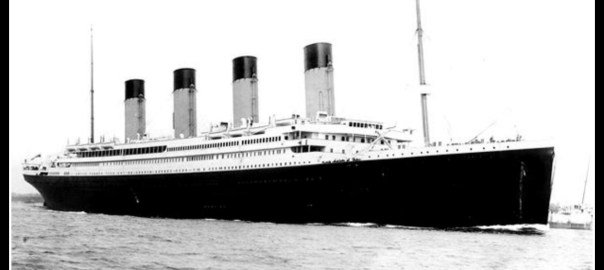
The Titanic sank in the North Atlantic Ocean in the early morning of 15 April 1912, after colliding with an iceberg during her maiden voyage from Southampton
The Titanic
——————————————
——————————————
History & Background
Facts & Iconic Pictures
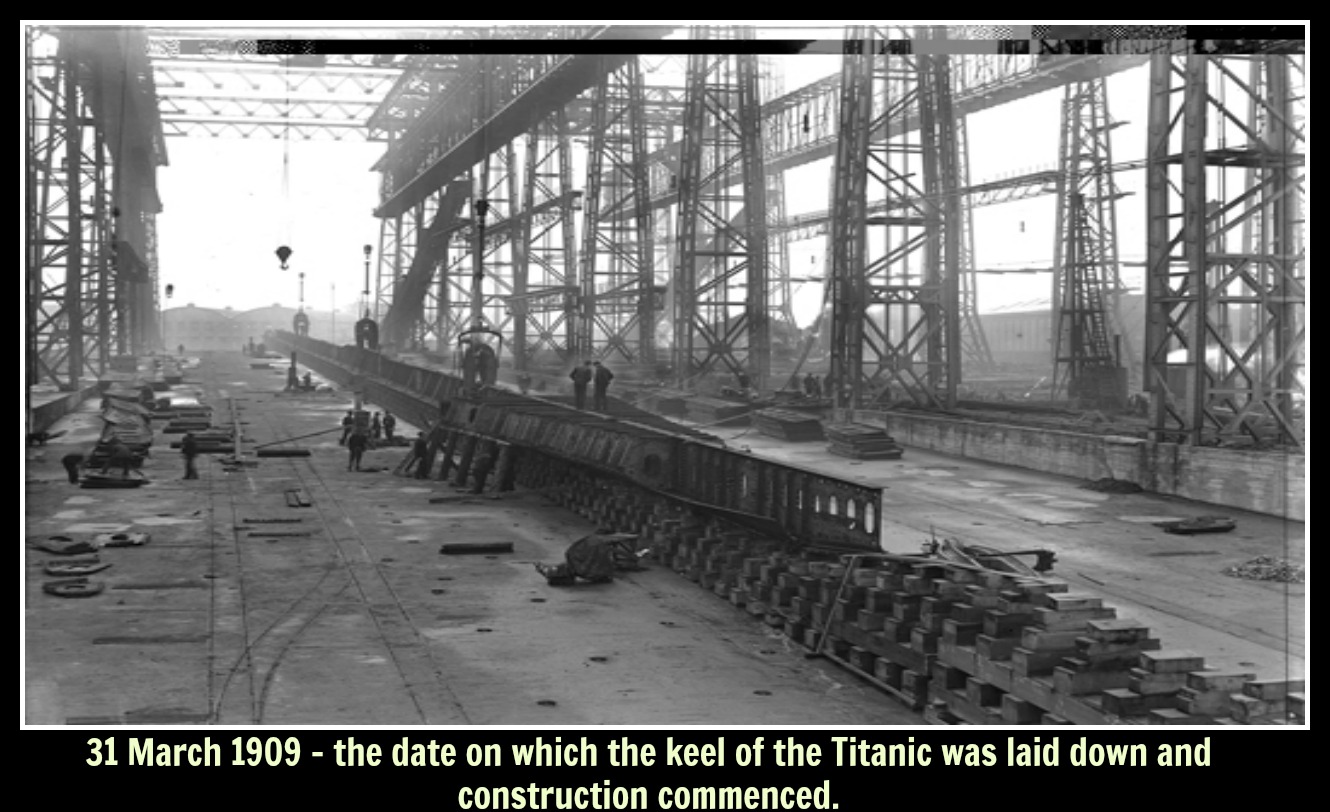
RMS Titanic was a British passenger liner that sank in the North Atlantic Ocean in the early morning of 15 April 1912, after colliding with an iceberg during her maiden voyage from Southampton, UK, to New York City, US. The sinking resulted in the deaths of more than 1,500 passengers and crew, making it one of the deadliest commercial peacetime maritime disasters in modern history. The RMS Titanic, the largest ship afloat at the time it entered service, was the second of three Olympic class ocean liners operated by the White Star Line, and was built by the Harland and Wolff shipyard in Belfast, with Thomas Andrews as her naval architect. Andrews was among those who died in the sinking. On her maiden voyage, she carried 2,224 passengers and crew.
Fact
The RMS Titanic was the world’s largest passenger ship…
Key Events & Deaths on this day in Northern Ireland Troubles
14th April
———————————-
Friday 14 April 1972
The Irish Republican Army (IRA) exploded 23 bombs at locations all over Northern Ireland.
[Public Records 1972 – Released 1 January 2003: Current Situation Report No 118 by A.W.Stephens, then Head of Defence Secretariat 10 at the Ministry of Defence, providing details of security incidents during the previous 24 hours in Northern Ireland.]
Wednesday 14 April 1982
The Royal Ulster Constabulary (RUC) carried out a raid on the Ulster Defence Association (UDA) headquarters in Belfast.
The raid uncovered ammunition and gun parts. Four leading members of the UDA were arrested.
[At this time the UDA was not a ‘proscribed’ organisation. It was only declared illegal on 10 August 1992.]
Sunday 14 April 1991
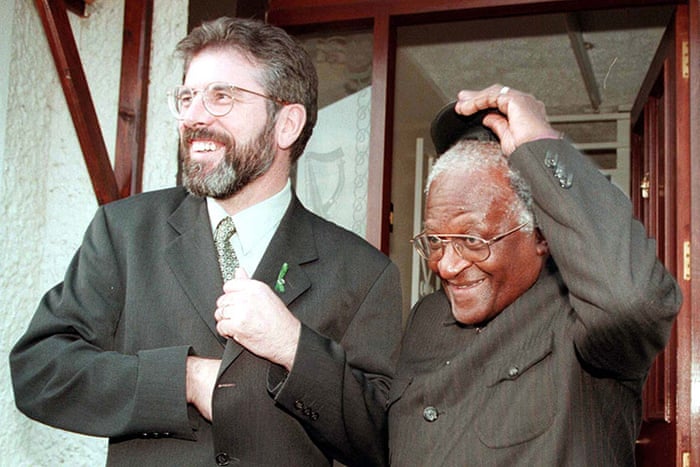
Bishop Desmond Tutu, from South Africa, attended an Anglican conference in Newcastle, County Down. Tutu said that Sinn Féin (SF) should be invited to attend the forthcoming talks on the future of Northern Ireland.
Tuesday 14 April 1992
Michael Newman
A British Army (BA) recruiting sergeant died after being shot by the Irish National Liberation Army (INLA) in Derby, England.
[This was the first killing by the INLA in Britain since March 1979.]
Thursday 14 April 1994
Teresa Clinton
Teresa Clinton (34), a Catholic Civilian, was shot dead by the Ulster Freedom Fighters (UFF), a cover name (pseudonym) used by the Ulster Defence Association (UDA), during a gun attack on her home, off Ormeau Road, Belfast.
Her husband had been a former Sinn Féin (SF) election candidate.
The UFF carried out another gun attack and wounded of two Catholic civilians.
The Northern Ireland Office (NIO) offered to clarify, for the benefit of SF, specific points related to the Downing Street Declaration (DSD).
Friday 14 April 1995
The Royal Ulster Constabulary (RUC) discovered 40 weapons and hundreds of rounds of ammunition which were believed to belong to the Ulster Volunteer Force (UVF). The cache was found in Holywood, County Down.
[Three men were arrested following the discovery. A second cache of arms was later found in the town.]
Monday 14 April 1997
There was an arson attack on St Peter’s Catholic church in Stoneyford, County Antrim. The chapel was badly damaged by the fire.
A man (24) was seriously injured in what was believed to be a Loyalist ‘punishment’ shooting that took place in the Ballysally estate in Coleraine, County Derry.
The Irish Republican Army (IRA) was believed to be responsible for a ‘punishment’ beating attack on a man in Derry. The man subsequently went into hiding.
Patrick Mayhew, then Secretary of State for Northern Ireland, referred the case of Patrick Kane to the Court of Appeal. Kane had been convicted of, and was serving a life sentence for, the murder of corporals Derek Wood and David Howes on 19 March 1988.
Tuesday 14 April 1998
In the Republic of Ireland the Irish authorities released nine Irish Republican Army (IRA) prisoners from Portlaoise Prison. On their release the prisoners pledged their “total support” for the leadership of Sinn Féin (SF).
[The releases were criticised by Unionists and by the Garda Representative Association.]
Wednesday 14 April 1999
Liz O’Donnell, then Irish Minister of State for Foreign Affairs, acknowledged that the Hillsborough Declaration would not be the basis for resolving the decommissioning impasse.
Saturday 14 April 2001
Bomb Explosion in London
There was a bomb explosion at a Post Office delivery depot in north London at 11.28pm (2328BST).
There had been no warning of the bomb but no one was injured in the explosion which caused “minor” damage to the building at The Hyde in Hendon. The “real” Irish Republican Army (rIRA) was thought to have been responsible for the attack.
———————————————
Remembering all innocent victims of the Troubles
Today is the anniversary of the death of the following people killed as a results of the conflict in Northern Ireland
“To live in hearts we leave behind is not to die
– Thomas Campbell
To the innocent on the list – Your memory will live forever
– To the Paramilitaries –
There are many things worth living for, a few things worth dying for, but nothing worth killing for.
8 People lost their lives on the 14th April between 1973– 1994
———————————————–
14 April 1973
Robert Millen, (23)
Protestant Status: Official Irish Republican Army (OIRA),
Killed by: Ulster Volunteer Force (UVF)
Shot from passing car while standing in McClure Street, off Ormeau Road, Belfast
———————————————–
14 April 1974 Anthony Pollen, (27)
nfNI Status: British Army (BA),
Killed by: Irish Republican Army (IRA)
Undercover British Army (BA) member. Shot while observing Republican Easter commemoration parade, Meenan Square, Bogside, Derry.
———————————————–
14 April 1975
Stafford Mateer, (32)
Protestant Status: Civilian (Civ),
Killed by: not known (nk)
Died two days after being shot while driving his car, at the junction of Albertbridge Road and Woodstock Road, Belfast.
———————————————–
14 April 1978
James McKee, (61)
Protestant Status: Ulster Defence Regiment (UDR),
Killed by: Irish Republican Army (IRA)
Off duty. Shot while driving school bus, Creggan, near Pomeroy, County Tyrone.
———————————————–
14 April 1978
Robert McCullough, (27)
Protestant Status: Civilian (Civ),
Killed by: Ulster Volunteer Force (UVF)
Shot at his home, Rathmore Drive, Rathcoole, Newtownabbey, County Antrim.
———————————————–
14 April 1986
White, Keith (20)
Protestant Status: Civilian (Civ),
Killed by: Royal Ulster Constabulary (RUC)
Died 15 days after being shot by plastic bullet, during street disturbances, Woodhouse Street, Portadown, County Armagh.
———————————————–
14 April 1992
Michael Newman, (34)
nfNIB Status: British Army (BA),
Killed by: Irish National Liberation Army (INLA)
Shot shortly after leaving British Army (BA) recruiting office, Derby, England.
———————————————–
14 April 1994
Teresa Clinton, (34)
Catholic Status: Civilian (Civ),
Killed by: Ulster Freedom Fighters (UFF)
Shot during gun attack on her home, Balfour Avenue, off Ormeau Road, Belfast. Her husband a Sinn Fein (SF) member.
———————————————–
My autobiography: A Belfast Child is now available to pre-order on Amazon , launch date is 30th April.
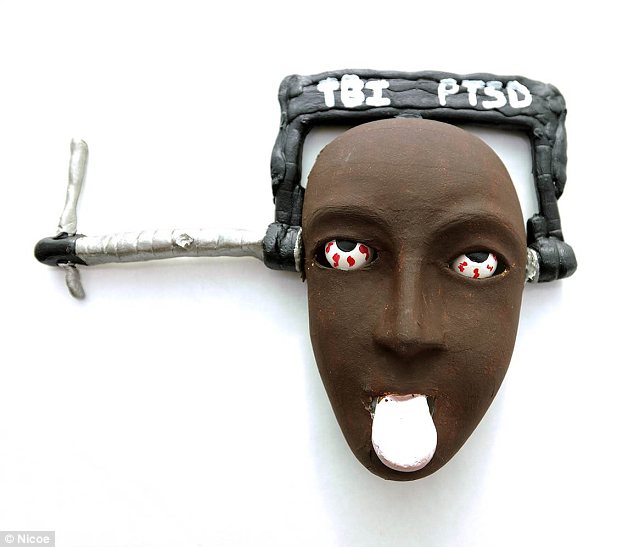
In the UK, there are various charities and service organisations dedicated to aiding veterans in readjusting to civilian life. The Royal British Legion and the more recently established Help for Heroes are two of Britain’s more high-profile veterans’ organisations which have actively advocated for veterans over the years. There has been some controversy that the NHS has not done enough in tackling mental health issues and is instead “dumping” veterans on charities such as Combat Stress.


















 belfastchildis.com