All posts by belfastchildis

21st November – Deaths & Events in Northern Ireland Troubles

Key Events & Deaths on this day in Northern Ireland Troubles

21st November

—————————————————

Wednesday 21 November 1973

Executive Agreed Agreement was reached between various political parties about the establishment of a power-sharing Executive to govern Northern Ireland. William Whitelaw, then Secretary of State for Northern Ireland, appeared on the steps of Stormont (with tears in his eyes) following the final negotiations. The Executive was to consist of 11 members.

[The actual composition was to be 6 Faulknerite Unionists, 4 Social Democratic and Labour Party (SDLP), and 1 Alliance Party of Northern Ireland (APNI). There were also to be 4 non-executive office holders who would not have a vote: 2 SDLP, 1 Unionist, and 1 APNI.] [ Political Developments. ]

Thursday 21 November 1974

See Birmingham Pub Bombing

Birmingham Pub Bombs The Irish Republican Army (IRA) planted bombs in two public houses, the Mulberry Bush and the Tavern in the Town in Birmingham and killed a total of 21 civilians (two of whom died in the weeks following the explosions).

[There was widespread outrage amongst the general public and the British government came under pressure to be seen to be acting against the threat of further bombs. On 29 November 1974 the Prevention of Terrorism Act was passed. Six Irish men, the ‘Birmingham Six‘, were arrested and convicted of causing the explosions and served 16 years in prison before being freed on appeal on 14 March 1991.]

A Protestant civilian was found shot dead in Belfast. It was not clear who was responsible for the killing.

Wednesday 21 December 1977

The Irish Republican Army (IRA) carried out a series of fire-bomb attacks on hotels in Northern Ireland and damaged five hotels.

Wednesday 21 November 1984

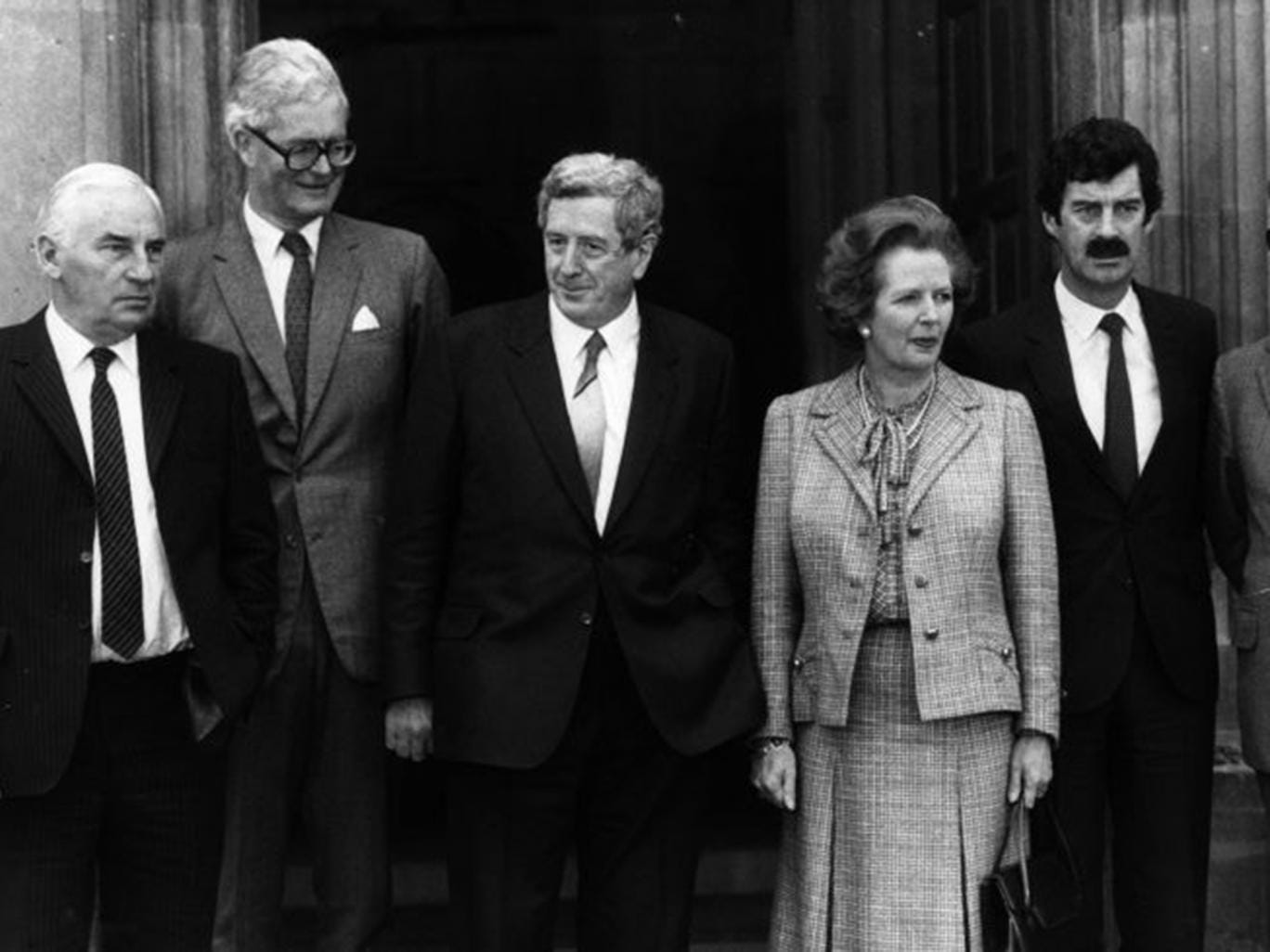
[It was reported that Garret FitzGerald, then Taoiseach (Irish Prime Minister), had told a Fine Gael party meeting that the behaviour of Margaret Thatcher, then British Prime Minister, during the press conference on 19 November 1984 had been “gratuitously offensive”. In his autobiography FitzGerald maintained that he was commenting on the fact that he “… recognised that her remarks were seen as gratuitously offensive …” (FitzGerald, 1992; p525).]

Thursday 21 November 1985

In the Republic of Ireland there was a vote in the Dáil on the Anglo-Irish Agreement (AIA). Although Fianna Fáil (FF) voted against the Agreement the motion was passed by 88 votes to 75. Charles Haughey, then leader of FF, said he would not oppose developments that were of benefit to Nationalists living in Northern Ireland.

Friday 21 November 1986

The Social Democratic and Labour Party (SDLP) held its annual conference in Newcastle, County Down. The delegates rejected Unionist calls for a suspension of the Anglo-Irish Agreement (AIA).

Thursday 21 November 1991

The report of the British Attitudes Survey showed that, of those questioned, 60 per cent were in favour of the withdrawal of British troops from Northern Ireland, and 56 per cent were in favour of the reunification of Ireland.

Sunday 21 November 1993

A rally in support of the Hume-Adams Initiative was held on the Falls Road in west Belfast. Approximately 2,000 attended the event.

Tuesday 21 November 1995

A small bomb, described as a “crude device”, exploded outside the courthouse in Omagh, County Tyrone.

Thursday 21 November 1996

The Continuity Irish Republican Army (CIRA) left a bomb, which failed to explode, in Derry.

Saturday 21 November 1998

For the first time in 28 years Linfield football club, considered a ‘Protestant club’, played at the ground of Cliftonville football club, considered a mainly ‘Catholic club’.

——————————————

———————————————————————————

Remembering all innocent victims of the Troubles

Today is the anniversary of the death of the following  people killed as a results of the conflict in Northern Ireland

“To live in hearts we leave behind is not to die

– Thomas Campbell

To the innocent on the list – Your memory will live  forever

– To  the Paramilitaries  –

There are many things worth living for, a few things worth dying for, but nothing worth killing for.

27 People lost their lives on the 21st November between 1972 – 1992

————————————————————

 21 November 1972
Joseph McIlroy,  (30)

Catholic
Status: Civilian (Civ),

Killed by: Ulster Volunteer Force (UVF)
Shot at his home, Sandhill Drive, Bloomfield, Belfast.

————————————————————

21 November 1974


 William Burns,  (39)

Protestant
Status: Civilian (Civ),

Killed by: not known (nk)
Found shot in his car, Apsley Street, Donegall Pass, Belfast.

————————————————————

21 November 1974
Stanley Bodman, (51)

nfNIB
Status: Civilian (Civ),

Killed by: Irish Republican Army (IRA)
Killed when bombs exploded almost simultaneously in two public houses, Mulberry Bush and Tavern in the Town, Birmingham, England.

————————————————————

21 November 1974
Trevor Thrupp,  (33)

nfNIB
Status: Civilian (Civ),

Killed by: Irish Republican Army (IRA)
Killed when bombs exploded almost simultaneously in two public houses, Mulberry Bush and Tavern in the Town, Birmingham, England.

————————————————————

21 November 1974
James Caddick,  (40)

nfNIB
Status: Civilian (Civ),

Killed by: Irish Republican Army (IRA)
Killed when bombs exploded almost simultaneously in two public houses, Mulberry Bush and Tavern in the Town, Birmingham, England.

————————————————————

21 November 1974
John Rowlands,  (46)

nfNIB
Status: Civilian (Civ),

Killed by: Irish Republican Army (IRA)
Killed when bombs exploded almost simultaneously in two public houses, Mulberry Bush and Tavern in the Town, Birmingham, England.

————————————————————

21 November 1974
Pamela Palmer,   (19)

7nfNIB
Status: Civilian (Civ),

Killed by: Irish Republican Army (IRA)
Killed when bombs exploded almost simultaneously in two public houses, Mulberry Bush and Tavern in the Town, Birmingham, England.

————————————————————

21 November 1974
Paul Davies,  (20)

nfNIB
Status: Civilian (Civ),

Killed by: Irish Republican Army (IRA)
Killed when bombs exploded almost simultaneously in two public houses, Mulberry Bush and Tavern in the Town, Birmingham, England.

————————————————————

21 November 1974
Neil Marsh ,  (20)

nfNIB
Status: Civilian (Civ),

Killed by: Irish Republican Army (IRA)
Killed when bombs exploded almost simultaneously in two public houses, Mulberry Bush and Tavern in the Town, Birmingham, England.

————————————————————

21 November 1974
Jane Davis,  (17)

nfNIB
Status: Civilian (Civ),

Killed by: Irish Republican Army (IRA)
Killed when bombs exploded almost simultaneously in two public houses, Mulberry Bush and Tavern in the Town, Birmingham, England.

————————————————————

21 November 1974
Eugene Reilly,  (23)

nfNIB
Status: Civilian (Civ),

Killed by: Irish Republican Army (IRA)
Killed when bombs exploded almost simultaneously in two public houses, Mulberry Bush and Tavern in the Town, Birmingham, England.

————————————————————

21 November 1974
Desmond Reilly,   (20)

nfNIB
Status: Civilian (Civ),

Killed by: Irish Republican Army (IRA)
Killed when bombs exploded almost simultaneously in two public houses, Mulberry Bush and Tavern in the Town, Birmingham, England.

————————————————————

21 November 1974
Lynn Bennett,  (18)

nfNIB
Status: Civilian (Civ),

Killed by: Irish Republican Army (IRA)
Killed when bombs exploded almost simultaneously in two public houses, Mulberry Bush and Tavern in the Town, Birmingham, England.

————————————————————

21 November 1974
Stephen Whalley,   (21)

nfNIB
Status: Civilian (Civ),

Killed by: Irish Republican Army (IRA)
Killed when bombs exploded almost simultaneously in two public houses, Mulberry Bush and Tavern in the Town, Birmingham, England.

————————————————————

21 November 1974
Marilyn Nash,(22)

nfNIB
Status: Civilian (Civ), K

illed by: Irish Republican Army (IRA)
Killed when bombs exploded almost simultaneously in two public houses, Mulberry Bush and Tavern in the Town, Birmingham, England.

————————————————————

21 November 1974
Anne Hayes, (19)

nfNIB
Status: Civilian (Civ),

Killed by: Irish Republican Army (IRA)
Killed when bombs exploded almost simultaneously in two public houses, Mulberry Bush and Tavern in the Town, Birmingham, England.

————————————————————

21 November 1974
Maureen Roberts,   (20)

nfNIB
Status: Civilian (Civ),

Killed by: Irish Republican Army (IRA)
Killed when bombs exploded almost simultaneously in two public houses, Mulberry Bush and Tavern in the Town, Birmingham, England.

————————————————————

21 November 1974
Michael Beasley,   (30)

nfNIB
Status: Civilian (Civ),

Killed by: Irish Republican Army (IRA)
Killed when bombs exploded almost simultaneously in two public houses, Mulberry Bush and Tavern in the Town, Birmingham, England.

————————————————————

21 November 1974


Maxine Hambleton,   (18)

nfNIB
Status: Civilian (Civ),

Killed by: Irish Republican Army (IRA)
Killed when bombs exploded almost simultaneously in two public houses, Mulberry Bush and Tavern in the Town, Birmingham, England.

————————————————————

21 November 1974
John Jones,  (51)

nfNIB
Status: Civilian (Civ),

Killed by: Irish Republican Army (IRA)
Killed when bombs exploded almost simultaneously in two public houses, Mulberry Bush and Tavern in the Town, Birmingham, England.

————————————————————

21 November 1974
Charles Grey,  (44)

nfNIB
Status: Civilian (Civ),

Killed by: Irish Republican Army (IRA)
Killed when bombs exploded almost simultaneously in two public houses, Mulberry Bush and Tavern in the Town, Birmingham, England.

————————————————————

21 November 1974
Thomas Chaytor,  (28)

nfNIB
Status: Civilian (Civ),

Killed by: Irish Republican Army (IRA)
Injured when bombs exploded almost simultaneously in two public houses, Mulberry Bush and Tavern in the Town, Birmingham, England. He died 28 November 1974.

————————————————————

21 November 1974
James Craig,   (34)

nfNIB
Status: Civilian (Civ),

Killed by: Irish Republican Army (IRA)
Injured when bombs exploded almost simultaneously in two public houses, Mulberry Bush and Tavern in the Town, Birmingham, England. He died 10 December 1974.

————————————————————

21 November 1975
Simon Francis,  (29)

nfNI
Status: British Army (BA),

Killed by: Irish Republican Army (IRA)
Killed by booby trap bomb hidden in abandoned rifle close to crashed car, Carrive, near Forkhill, County Armagh.

————————————————————

21 November 1985
Kurt Konig,  (38)

nfNI
Status: Civilian (Civ),

Killed by: Irish Republican Army (IRA)
German businessman. Shot outside his home, Gleneagle’s, Shantallow, Derry. Contractor to British Army (BA) / Royal Ulster Constabulary (RUC) .

————————————————————

21 November 1988


William Monteith,  (59)

Protestant
Status: Royal Ulster Constabulary (RUC),

Killed by: Irish Republican Army (IRA)
Shot while at security barrier, The Diamond, Castlederg, County Tyrone.

————————————————————

21 November 1992
Gerard Holmes,  (35)

Catholic
Status: Civilian (Civ),

Killed by: Irish Republican Army (IRA)
Found shot, in entry off Rinmore Drive, Creggan, Derry. Alleged informer.

————————————————————

20th November – Deaths & Events in Northern Ireland Troubles

Key Events & Deaths on this day in Northern Ireland Troubles

20th November

———————————————

Monday 20th  November 1972

Two British soldiers were killed in a booby trap bomb in Cullyhanna, County Armagh.

Tuesday 20 November 1973

The Ulster Unionist Council, then the policy making branch of the Ulster Unionist Party (UUP), voted by 379 to 369 in favour of power-sharing. [ Political Developments. ]

Thursday 20 November 1975

The Northern Ireland Office (NIO) published the Northern Ireland Constitutional Convention Report.

[The Report was debated in the House of Commons on 12 January 1976. The United Ulster Unionist Council (UUUC) later published a pamphlet entitled ‘A Guide to the Convention Report‘.]

Tuesday 20 November 1979

White Paper Published (Cmnd 7763) Humphrey Atkins, then Secretary of State for Northern Ireland, published a consultative document in the form of a White Paper called The Government of Northern Ireland: A Working Paper for a Conference (Cmnd 7763). The stated aim of the conference talks was to achieve

“the highest level of agreement … which will best meet the immediate needs of Northern Ireland”.

The White Paper however ruled out discussion on a number of possible ‘solutions’ to the conflict, namely, a United Ireland, confederation, or independence for Northern Ireland. The paper also excludes discussion on the constitutional status of the region. The paper states that ‘direct rule’ from Westminster is not a satisfactory basis for the government of Northern Ireland.

[James Molyneaux, then leader of the Ulster Unionist Party (UUP), rejected the invitation to talks. The fact that an ‘Irish dimension’ had been ruled out of the talks caused a split in the response of Social Democratic and Labour Party (SDLP) to the invitation (see 22 November 1979). Atkins was later to allow parallel talks which allowed the SDLP to raise the question of an Irish dimension in any solution.]

Thursday 20 November 1980

Margaret Thatcher, then British Prime Minister, stated in the House of Commons:

“The government will never concede political status to the hunger strikers, or to any others convicted of criminal offences in the province.”

Sunday 20 November 1983

Darkley Killings Three members of the Mountain Lodge Pentecostal Church, Darkley near Keady, County Armagh, were shot dead in an attack that was claimed by the ‘Catholic Reaction Force’ (CRF). Seven other people were injured in the attack. [The CRF was believed to be a covername used by the Irish National Liberation Army (INLA).]

Wednesday 20 November 1985

Tom King, then Secretary of State for Northern Ireland, was physically attacked by Loyalist protesters as he arrived for a function at Belfast City Hall. The protests were against the Anglo-Irish Agreement (AIA). [George Seawright, then a Loyalist councillor, was jailed for nine months in October 1986 for his part in this protest.]

Tuesday 20 November 1990

John Bruton was elected as the new leader of Fine Gael.

Wednesday 20 November 1991

The Anglo-Irish Intergovernmental Conference (AIIC) held a meeting in Dublin. Ray Burke, then Minister for Justice in the Irish government, confirmed that there would be changes to the laws on extradition.

Saturday 20 November 1993

John Hume, then leader of the Social Democratic and Labour Party (SDLP), held another meeting with Gerry Adams, then President of Sinn Féin (SF). The two leaders issued a third joint statement.

Wednesday 20 November 1996

Leaders of the Ulster Democratic Party (UDP) and the Progressive Unionist Party (PUP) held a meeting with John Major, then British Prime Minister, at Downing Street, London. The leaders of the two Loyalist parties warned Major that the impasse over the issue of decommissioning arms in the Stormont talks could put the Loyalist ceasefire in “jeopardy”.

Thursday 20 November 1997

The Continuity Irish Republican Army (CIRA) left a small bomb behind Belfast City Hall. The Progressive Unionist Party (PUP) claimed that the device was aimed at their ground floor office.

David Trimble, then leader of the Ulster Unionist Party (UUP), headed a five person delegation which held a meeting with Bertie Ahern, then Taoiseach (Irish Prime Minister), in London. The meeting was described as positive by both sides.

Saturday 20 November 1999

Peter Mandelson, then Secretary of State for Northern Ireland, gave a speech about political developments to the annual conference of the Northern Ireland Women’s Coalition (NIWC).

———————————————————————————

Remembering all innocent victims of the Troubles

Today is the anniversary of the death of the following  people killed as a results of the conflict in Northern Ireland

“To live in hearts we leave behind is not to die

– Thomas Campbell

To the innocent on the list – Your memory will live  forever

– To  the Paramilitaries  –

There are many things worth living for, a few things worth dying for, but nothing worth killing for.

10 People lost their lives on the 20th November between 1972 – 1983

————————————————————

20 November 1972


William Clarke,  (41)

Protestant
Status: Civilian (Civ),

Killed by: Ulster Defence Association (UDA)
Taxi driver. Died three weeks after being shot by passenger, Forthriver Road, Glencairn, Belfast. Assumed to be a Catholic.

————————————————————

20 November 1972


William Watson,  (28)

nfNI
Status: British Army (BA),

Killed by: Irish Republican Army (IRA)
Killed by booby trap bomb in derelict house, Cullyhanna, County Armagh.

————————————————————
20 November 1972


James Strothers,   (31)

nfNI
Status: British Army (BA), K

illed by: Irish Republican Army (IRA)
Killed by booby trap bomb in derelict house, Cullyhanna, County Armagh.

————————————————————

20 November 1974
Kevin Regan,   (26) Catholic
Status: Civilian (Civ),

Killed by: Ulster Volunteer Force (UVF)
Died five days after being shot during gun attack on Maguire’s Bar, Lower Cross Street, Larne, County Antrim.

————————————————————

20 November 1974


Robert Forde,   (29)

Protestant
Status: Royal Ulster Constabulary (RUC),

Killed by: Irish Republican Army (IRA)
Killed by booby trap bomb hidden under pathway, Rathmore, Craigavon, County Armagh

————————————————————

20 November 1974


Patrick Falls,   (49)

Catholic
Status: Civilian (Civ),

Killed by: Ulster Volunteer Force (UVF)
Shot during gun attack on Falls Bar, Aughamullan, near Coalisland, County Tyrone.

————————————————————

20 November 1982


Michael Fay,  (25)

Catholic
Status: Civilian (Civ),

Killed by: Protestant Action Force (PAF)
Found shot in his car, Mount Regan Avenue, Dundonald, Belfast.

————————————————————
20 November 1983


David Wilson,  (44)

Protestant
Status: Civilian (Civ),

Killed by: Catholic Reaction Force (CRF)
Shot in the entrance hall to Mountain Lodge Pentecostal Church, Darkley, near Keady, County Armagh.

————————————————————

20 November 1983


Harold Brown,   (59)

Protestant
Status: Civilian (Civ),

Killed by: Catholic Reaction Force (CRF)
Shot in the entrance hall to Mountain Lodge Pentecostal Church, Darkley, near Keady, County Armagh.

————————————————————
20 November 1983


Victor Cunningham,  (39)

Protestant
Status: Civilian (Civ), K

illed by: Catholic Reaction Force (CRF)
Shot in the entrance hall to Mountain Lodge Pentecostal Church, Darkley, near Keady, County Armagh.

————————————————————

British Jihadists – Thomas Evans – Life & Death

Source: British Jihadists – Thomas Evans – Life & Death

Khansaa Brigade – ISIS ‘female ” Police “

belfastchildis's avatar

Khansaa Brigade

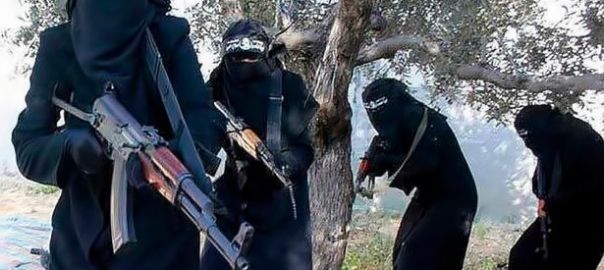
The Al-Khansaa Brigade, also spelled Al-Khanssaa Brigade, is an all-women police or religious enforcement unit of the jihadist Islamic State of Iraq and the Levant (ISIL), operating in its de facto capital of Raqqa and Mosul.[1] Formed in early 2014 and apparently named after Al-Khansa, a female Arabic poet from the earliest days of Islam, it is unclear how widespread and sustained the group is.

An ISIL official, Abu Ahmad, said in 2014, “We have established the brigade to raise awareness of our religion among women, and to punish women who do not abide by the law.”[2] The outfit has also been called ISIL’s ‘moral police’

ISIS ‘female Gestapo’ leading campaign of terror against own sex – and 60 are British

Al Khansaa brigade rule by terror

———————————————————–

Daesh Defectors – 3 women leave al-Khansaa brigade

———————————————————–

Islamic State’s ‘female Gestapo’ is…

View original post 776 more words

Man Survives an ISIS Massacre & Quotes from the Quaran

Source: Man Survives an ISIS Massacre & Quotes from the Quaran

ISIS Freak Show -The Bulldozer & Jihad ” Little ” John

Source: ISIS Freak Show -The Bulldozer & Jihad ” Little ” John

19th November – Deaths & Events in Northern Ireland Troubles

belfastchildis's avatar

Key Events & Deaths on this day in Northern Ireland Troubles

19th November

Thursday 19 November 1970 

Figures were released by the Commissioner for Complaints showing that there had been 970 complaints in the first ten months of his office, with 74 of them alleging discrimination.

Sunday 19 November 1972

Seán MacStiofáin, then leader of the Irish Republican Army (IRA), was arrested in Dublin.

[He was subsequently sentenced to six months imprisonment in Republic of Ireland.]

Monday 19 November 1984

Anglo-Irish Summit Meeting Margaret Thatcher, then British Prime Minister, held an Anglo-Irish summit meeting with Garret FitzGerald, then Taoiseach (Irish Prime Minister), together with British and Irish ministers and officials, at Chequers in England.

A joint communiqué was issued following the summit meeting. At 5.00pm Thatcher gave a press conference at 10 Downing Street, London. Responding to a question from a member of the press Thatcher ruled out the…

View original post 683 more words

18th November – Deaths & Events in Northern Ireland Troubles

belfastchildis's avatar

Key Events & Deaths on this day in Northern Ireland Troubles

18th November

————————-

Thursday 18 November 1971

A British soldier was shot dead by the Irish Republican Army (IRA) in Belfast.

Monday 18 November 1974

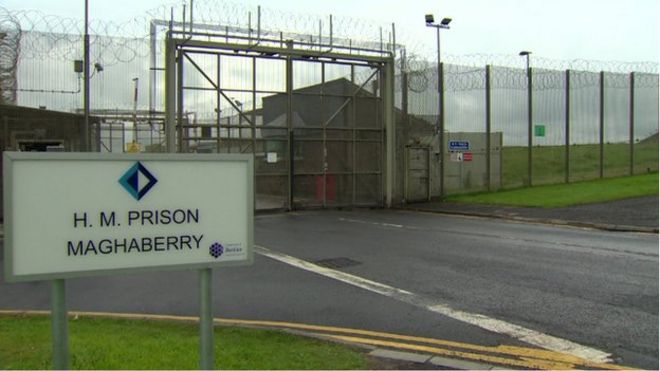
It was announced that a new high-security prison would be built at Maghaberry, County Antrim at a cost of £30m.

Tuesday 18 November 1975

Two civilians were killed and 23 were injured when members of the Irish Republican Army (IRA) threw a bomb into Walton’s Restaurant in Walton Street, Knightsbridge, London.

Thursday 18 November 1982

Raymond Gilmore

The Irish Republican Army (IRA) kidnapped Patrick Gilmour in Derry. Patrick Gilmour was the father of Raymond Gilmour who had been a member of the IRA and an Royal Ulster Constabulary (RUC) informer and who had gone into protective custody to become a ‘supergrass’.

[The IRA later said that Patrick Gilmour would not be released until…

View original post 982 more words

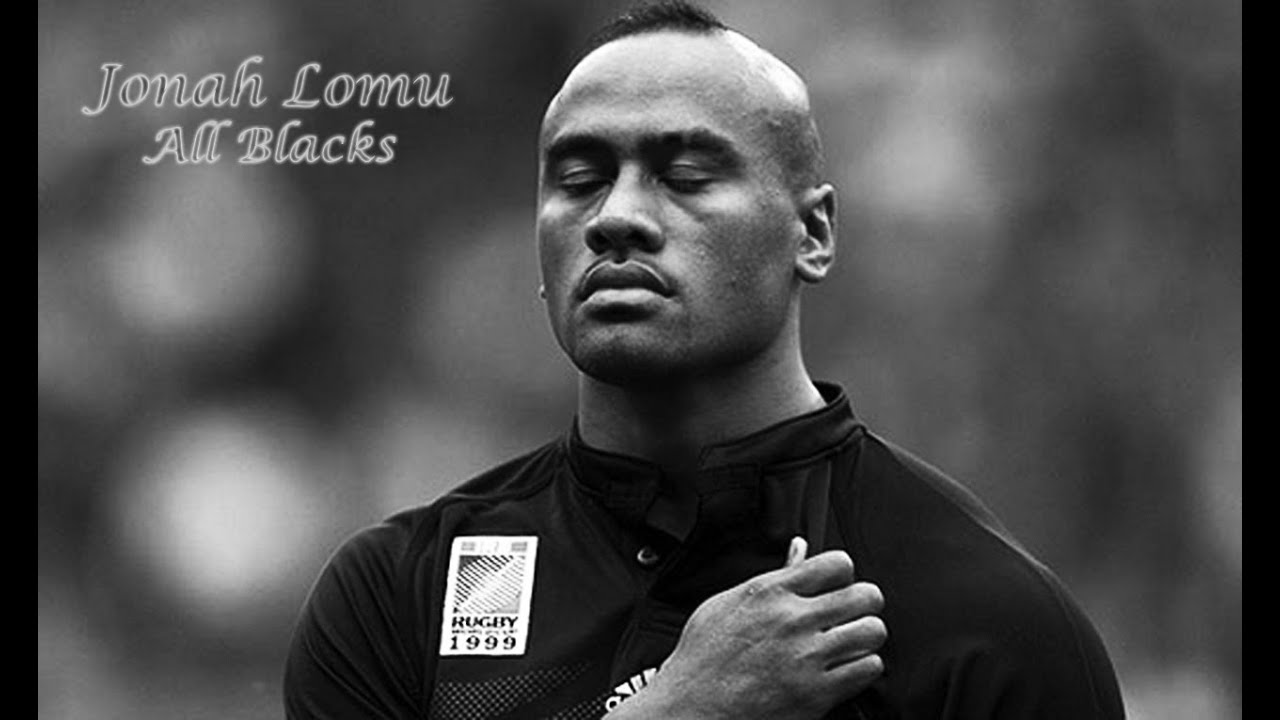
Jonah Lomu 12 May 1975 – 18 November 2015- R.I.P

Jonah Lomu

———————-

JONAH LOMU :

I just want to stay alive to see my kids make 21… Rugby’s first superstar is desperate for a second kidney transplant, but is still fighting

Sadly that wish  ended today

  • Rugby’s gentle giant catapulted to world fame after the 1995 World Cup 
  • It seemed then that nothing could ever stop him, not even the rare kidney disorder known as nephrotic syndrome
  • But rugby’s wunderkind is 40 now and he is at bay. A kidney transplant in 2004 fixed him for seven and a half years but his body rejected it in 2011 
  • He has been a prisoner of dialysis ever since
  • Now his ambition for life centres on seeing the sons he thought he could never have grow into men

‘My goal is to make it to the boys’ 21sts,’ says Lomu. ‘There are no guarantees that will happen, but it’s my focus. It’s a milestone that every parent wants to get to. My dad died young and that makes you think. I want my boys to be healthy and if they get to 21, they should be fit and healthy and live a normal life.’

So Lomu sinks into a sofa in the plush lobby of The Savoy hotel and smiles when he recalls taking the two children he thinks of as his ‘miracles’ on an open-top London double-decker bus last week. He and his wife, Nadene, retreated downstairs out of the wind and the rain. Brayley and Dhyreille insisted on staying upstairs, their hoods pulled tight around their faces, happy to be buffeted by the elements.

‘These are new adventures for them,’ says Lomu. ‘Getting them to write about this fantastic new world they have come to is going to be fun.’ He smiles again when he talks about how Nadene has to manage her ‘three boys’, but somewhere amid the great gentleness that is Lomu’s defining characteristic, there are also hints of melancholy and weariness.

Read full story Daily Mail

————-


Lomu ran riot against England four years later, scoring a memorable try in a comfortable 30-16 win 

Jonah Tali Lomu, MNZM (12 May 1975 – 18 November 2015) was a New Zealand rugby union player of Tongan descent.[1] He had sixty-three caps as an All Black after debuting in 1994. He has been described as the first true global superstar of rugby union[2] and as having a huge impact on the game.[3] He was inducted into the International Rugby Hall of Fame on 9 October 2007,[4] and the IRB Hall of Fame on 24 October 2011.[5]

———————————-

The Best of Jonah Lomu MUST SEE!! Part 1

Lomu burst onto the international rugby scene during the 1994 Hong Kong Sevens tournament and was widely acknowledged to be the top player at the 1995 World Cup in South Africa even though New Zealand lost the final to the host Springboks. At one time Lomu was considered ‘rugby union’s biggest drawcard’,[6] swelling attendances at any match where he appeared. He was one of the Rugby World Cup all-time top try scorers with 15 tries, a record he shares with Bryan Habana of South Africa—despite never winning a World Cup.[7]

He played for several domestic teams, in the Super Rugby, NPC and later the Magners League competitions. These included the Auckland Blues, Chiefs and Hurricanes, and Counties Manukau, Wellington and later North Harbour and Cardiff Blues. He made a comeback after undergoing a kidney transplant in 2004, finally retiring from professional rugby in 2007.


Early career

Lomu started his career in the forwards, mostly as an openside flanker (no.7)[8], before switching to the left wing in what he described as the “best move he could have made”.[9] He represented New Zealand in the national under-19 side in 1993, as well as the under-21 side the following year.[10] He first came to international attention at the 1994 Hong Kong Sevens tournament as part of a team including Eric Rush.[11]

At the age of 19 years and 45 days, Lomu became the youngest All Black test player as he debuted on the wing against France in 1994, breaking a record that had been held by Edgar Wrigley since 1905.[10] The match was played at Lancaster Park in Christchurch, and the All Blacks lost 22–8. The second match was played at Eden Park in Auckland with France winning again, 23–20. Lomu marked Emile N’tamack and admits that his inexperience led to him being exposed by the French team.[9]

——————-

Jonah Lomu creates carnage vs British Isles at RWC 1995

——————-

1995 World Cup

Despite having just two All Black caps, Lomu was included in the squad for the 1995 World Cup in South Africa. Lomu scored seven tries in five matches, two in the first match against Ireland in Johannesburg, a try in the quarter final against Scotland at Loftus Versfeld, and four tries in the semi-final against England at Newlands. The first try in the English match occurred after Lomu received a pass behind him, beat two defenders and then, after a stumble, ran straight over the top of Mike Catt.[12] This reduced one New Zealand commentator, Keith Quinn, to gasps.[13] After the game, England captain Will Carling said: “He is a freak and the sooner he goes away the better”.[14] In 2002 the UK public voted Lomu’s performance no. 19 in the list of the 100 Greatest Sporting Moments.[15] New Zealand played the World Cup final at Ellis Park against South Africa (the Springboks).[16] Neither side scored a try, with South Africa coming out on top 15–12 after kicking a drop-goal in extra time.

1996–1998

Following the World Cup New Zealand played Australia home and away for the Bledisloe Cup with Lomu scoring tries in both matches.[17] Lomu’s scoring for New Zealand continued later that year when he scored two tries in the All Blacks victory over Italy in Bologna.[18] Lomu played in a losing effort against France in Toulouse, where New Zealand failed to score any tries.[19] He scored a try in the second test in Paris, helping his team to victory. Lomu played for the All Blacks in matches against the touring Samoa[20] and Scotland teams in June 1996, scoring in one of the Scottish matches.[21]

Just before the World Cup final a deal was struck between South Africa, New Zealand and Australia (SANZAR) to create the Tri-Nations, an annual round robin competition between the three nations launched with the advent of professionalism in rugby.[22] New Zealand won all their games to become the first Tri-Nations winners.[23] Lomu scored a try in a 43–6 victory over Australia in the inaugural match, which has been described by New Zealand Herald journalist David Leggat as “the perfect wet-weather game”.[24]

Medal record
Commonwealth Games
Gold medal – first place 1998 Kuala Lumpur Rugby sevens

At the end of 1996, he was diagnosed with a rare and serious kidney disorder, which saw him take time off from the sport. As a result he did not play in the 1997 Tri Nations Series, but he was included in the All Blacks tour of the northern hemisphere at the end of the year. Lomu played in the two warm up matches, scoring tries against Wales ‘A’ and Emerging England. He played the first test against England at Old Trafford, as well as the test against Wales at Wembley Stadium, and the second match against England—he did not score in any of the three games.

At the 1998 Commonwealth Games in Kuala Lumpur, he won a gold medal representing New Zealand in the Sevens Rugby event.[25] The English rugby team came to New Zealand the following year for a two test series. Lomu played in both of the matches, scoring in the first, which was a 64–22 win in Dunedin, but not in the second test won 40–10 by the All Blacks.

1999 and the World Cup

Lomu’s 1999 international season kicked off with a warm-up match against New Zealand A, which was followed by a game against Samoa in which Lomu scored one of the All Blacks’ nine tries. He came on as a replacement in every game of the 1999 Tri Nations Series with Christian Cullen and Tana Umaga preferred as starters on the wings.[26][27][28][29] New Zealand were crowned Tri Nations champions despite losing the last game against Australia.

Lomu scored eight tries at the 1999 World Cup. In pool matches he scored two tries against Tonga, one against England and two against Italy. The All Blacks, finished top of their pool and proceeded to the quarter-finals. They defeated Scotland, with Lomu scoring one of New Zealand’s four tries. Lomu scored twice in the semi-final match against France, though it was not enough to see them through to the final as France went on to win 43–31.[30] Following the World Cup, despite speculation that he would be moving to play American Football in the National Football League or continue to play rugby in the English Premiership, Lomu returned to New Zealand.[31]

2000–2003

Jonah Lomu in training in 2001

After playing the 100+ victory over Tonga, Lomu and Tana Umaga scored five tries between them in the subsequent match against Scotland. One of Lomu’s tries was a characteristic bulldozing effort down the wing, leaving Scottish defenders in his wake. In the opening match of the 2000 Tri Nations Series, the All Blacks raced out to a 21 to nil lead, which had the potential to be 28, had George Gregan not stopped Lomu from scoring one of his own. Australia amazingly fought back, and with minutes remaining, both sides had scored five tries each.The world record rugby crowd of 109,874 was treated to the highest scoring match ever between the two sides. With just minutes remaining, the Wallabies led 35 to 34; until Lomu “brushed past a desperate Stephen Larkham to tip-toe down the line and score the winning try”.[32]

The match was followed by a victory over South Africa, and then a re-match of the thrilling Bledisloe Cup game, which Australia won by just a single point, 24 to 23. A barn-storming Lomu was stopped short of the line early in the second half in the final match against South Africa. The Springboks eventually won, 46 to 40. The All Blacks finished second on the table, with Australia winning the Tri Nations. Lomu played in one other test that year; against France at Stade de France in November, which the All Blacks won 39 to 26.

Lomu also led the New Zealand Sevens team to victory at the 2001 Sevens World Cup, filling in for Rush, who suffered a broken leg during the competition. In the lead up to the 2001 Tri Nations Series, the All Blacks played Argentina and France at home, Lomu scoring a try in the French match. Despite causing havoc for the Springboks, no tries were scored in the opening match of the Tri Nations, which was won on penalty goals by the All Blacks. Lomu played his 50th test for the All Blacks at the Carisbrook ‘House of Pain’, scoring a try in the second minute of play. The Wallabies spoiled the party however, winning 23 to 15. This was followed by a win over South Africa, and loss to the Wallabies at Stadium Australia.

During the 1999 off season, Lomu transferred to Wellington and won many plaudits by signing up with Wainuiomata RFC which at that time was a second division club. Lomu played his debut match against Northern United scoring twice and attracting a bumper crowd and followed that up with a further appearance in 2001. Supporters and club members were particularly proud when Lomu wore the green and black club socks when he played for the Barbarian F.C. in 2000.

At the end of the year, the All Blacks played Ireland at Lansdowne Road in Dublin. Lomu was a central figure in the 40 to 29 win, setting up Aaron Mauger for his debut try, and taking an inside pass to blast through for one of his own.[33] The All Blacks end of season tour continued at Murrayfield in Edinburgh, where they defeated Scotland 37 to six, with Lomu contributing one try. In the final match of the tour, the All Blacks played Argentina at the River Plate Stadium. Lomu put the All Blacks in front after Argentina took an early lead. New Zealand won the match by a score of 24 to 20.[34]

In his first test of 2002, he came off the bench in the second half to score a try in a match against Italy. He was again injected into play from the bench in the first of a two test series against Ireland in New Zealand; setting up the All Blacks second try coming on in the last fifteen minutes of play. Lomu was back at his usual starting position for the second test against the Irish, which New Zealand won 40 points to eight. Lomu did not score in the subsequent match against Fiji; though he did however make a trademark run down the wing, setting up Christian Cullen’s third try in the match. Lomu came off the bench in the All Blacks first game of the 2002 Tri Nations Series against South Africa, though he did not play in the rest of the tournament.

He was, however, back in his starting position on the wing for a game against England in November. Lomu ended up scoring a double, though it was not enough to secure a New Zealand victory, with England winning 31 to 28.[35] The subsequent match against France resulted in a draw, the first between the two nations in 96 years. The last match of the end of season tour was against Wales, which the All Blacks won 43 to 17.

Statistics

Jonah Lomu playing for Cardiff in 2006

International tries

Lomu scored tries against every major test playing nation in World Rugby except South Africa and Wales.[36] In his career, Lomu scored eight tries against England—more than any other All Black. Lomu set a record of 15 tries in World Cup tournaments, which was equaled by South African Bryan Habana in 2015.[37]

International analysis by opposition

Against Played Won Lost Drawn Tries Points  % Won
 Argentina 2 2 0 0 1 5 100
 Australia 13 6 7 0 6 30 46.15
 England 7 5 1 1 8 40 71.43
 Fiji 1 1 0 0 0 0 100
 France 8 3 4 1 4 20 37.5
 Ireland 4 4 0 0 3 15 100
 Italy 3 3 0 0 5 25 100
 Samoa 2 2 0 0 1 5 100
 Scotland 6 6 0 0 7 35 100
 South Africa 12 7 5 0 0 0 58.33
 Tonga 2 2 0 0 2 10 100
 Wales 3 3 0 0 0 0 100
Total 63 44 17 2 37 185 69.84

Personal life

Waxwork of Lomu in Madame Tussauds London

In 1996, Lomu married South African Tanya Rutter and they lived together in New Zealand for four years before divorcing. He married his second wife Fiona in a secret ceremony on Waiheke Island in August 2003, holding a party on the island a week later.[38] In 2008, Lomu and Fiona divorced after he had an affair with Nadene Quirk.[39] Lomu and Nadene later married and at the time of his death he was living with Nadene and their children.

Lomu was a member of the Champions for Peace club,[40] a group of 54 famous elite athletes committed to serving peace in the world through sport, created by Peace and Sport, a Monaco-based international organisation.[41] In 2012, Lomu and Nadene became members of The Church of Jesus Christ of Latter-day Saints.[42]

Lomu lent his name to various video games including Jonah Lomu Rugby and Rugby Challenge. He is portrayed by Isaac Fe’aunati in Invictus, a film chronicling Nelson Mandela‘s journey with the South African rugby team in the 1995 World Cup,

Health issues

At the end of 1995 Lomu was diagnosed with nephrotic syndrome, a serious kidney disorder. His rugby union career went on hold whilst the disorder was treated. In May 2003, the NZRFU announced that Lomu had been put on dialysis three times a week due to deterioration in his kidney function. Side effects of Lomu’s dialysis treatment led to severe nerve damage in his feet and legs; his doctors warned him that he faced life in a wheelchair if a kidney transplant was not performed soon.[43] At the end of July 2004 it was reported that Lomu had indeed undergone a kidney transplant on Tuesday, 28 July, in Auckland, New Zealand. The kidney was in fact donated by Wellington radio presenter Grant Kereama.[44]

Lomu’s vital statistics have been cited as an example of the problematic use of Body Mass Index as a measure of obesity.[45] Lomu had a BMI of 32, in excess of the value of 30 usually taken to signify obesity.[45]

Comeback

Jonah Lomu playing with French club Marseille on 22 November 2009.

In January 2005, Lomu announced his intention to lead a team against Martin Johnson‘s invitational XV on 4 June 2005, at Twickenham. He scored a try in the first half of the Johnson testimonial, but injured his shoulder in the process and did not return for the second half, dampening an otherwise encouraging first appearance.[46] As it turned out, his injury was more serious than originally thought; he underwent surgery on the shoulder, causing him to miss the 2005 NPC season.

Before returning to professional rugby, he needed special clearance from the World Anti-Doping Agency, as one of the anti-rejection drugs he was required to take is on the WADA list of banned substances.[47] On 8 April 2005, he signed a two-year contract to play for the New Zealand first division provincial team North Harbour in the NPC.[48]

On 9 August 2005, he joined North Harbour, but the shoulder injury he had picked up in the Martin Johnson testimonial game ruled him out for the season, so he worked with the team in a coaching capacity.[49] North Harbour agreed to allow him to play overseas during the NPC offseason, so Lomu signed with the Cardiff Blues of the Celtic League and began playing in Wales in December that year,[50] though he would then return to North Harbour for the 2006 NPC season.[51] Lomu made his first appearance in a competitive match since his transplant on 10 December, in Cardiff’s away Heineken Cup fixture against Italian club Calvisano. He started the match and played 60 minutes, although he did not score, making a key line break leading to Cardiff’s first try in their 25–10 win.

One week later, he made his home debut for Cardiff at Cardiff Arms Park and played for the whole match. Again, he did not get onto the scoresheet but his presence was enough to create space for other players to score in a 43–16 win over Calvisano. In front of a record home crowd, Lomu scored his first try for Cardiff on 27 December 2005, with a man-of-the-match performance during a Celtic League 41–23 win against the Newport Gwent Dragons. In early 2006, he was sidelined while he concentrated on gaining speed and strength, stating that “I have now lost between 10 and 11 kilos [1.7 and 1.9 st; 24 and 26 lb]”[52] He got his first start since January against Border Reivers on Saturday, 15 April, but broke his ankle as a result of a cover tackle on him four minutes from time. He was denied a try, but managed to get the ball away for Mark Lewis to score the Blues sixth try in their 46–11 win. He was estimated to be out for six weeks, as reported by his manager and wife, Fiona Lomu, meaning the end of his Celtic League season.

After three seasons of absence from rugby in New Zealand, Lomu played for Massey against Marist in the North Harbour club competition. Lomu was on for 30 minutes, making a blocking run before he twisted his right ankle and was subsequently replaced. Lomu said that it was “a small step”[53] in his comeback. Lomu’s aim was to return to the National Provincial Championship and reclaim his All Blacks jersey for the 2007 World Cup. Lomu ended up playing for North Harbour in round four of the National Provincial Championship, in a match against Wellington, playing in the last 26 minutes of the game. Harbour won the match 31–16. Lomu said after the match “For me it’s a dream come true… I’ve always said this is my goal—to come back and play in New Zealand.”

It became apparent in early 2007 that Lomu was not going to make the Rugby World Cup after not signing with a New Zealand Super 14 franchise, therefore ruling him out for the 2007 Rugby World Cup in France.[54] Previous to not gaining a Super 14 contract,[clarification needed] Lomu had been demoted to the North Harbour 2nd XV. Lomu stated that he was disappointed by his failure to gain a Super 14 contract, but that he had not failed himself.[54] It was subsequently speculated that Lomu may have played in Australia in 2007 for one of the then new national competition clubs.

On 16 October 2006, it was reported that Lomu was close to switching codes and signing for the Gold Coast Titans, a new Queensland franchise in the National Rugby League competition. He was offered a relatively small contract of one hundred thousand dollars. However, the deal did not materialise as Lomu had numerous important sponsorship contracts with companies associated with rugby union and it would have proved difficult to reconcile these if he was to play in the NRL.[55]

On 5 November 2006, the BBC reported that Lomu was considering a return to Welsh rugby.[56] He last played rugby in Hong Kong to take part in the Tens competition.

On 9 April 2007, Lomu appeared on New Zealand’s version of This Is Your Life, in which he was united with his brother John Lomu.

Lomu was appointed as a Member of the New Zealand Order of Merit in the Queen’s Birthday Honours list on 4 June 2007.[57]

Retirement

Lomu retired from rugby in 2007, but was persuaded to play in the Help For Heroes charity match at Twickenham a year later, although he had to withdraw after injuring his ankle in training.[58]

Later that year after recovering from the injury Lomu played in another charity match at Aberavon RFC‘s Talbot Athletic ground. The match was arranged by friends that Lomu had made during his playing days in Wales with Cardiff Blues. Lomu donned the navy blue jersey of the Aberavon Naval RFC, playing against a Port Talbot select XV made up of players from various local clubs such as; Aberavon Quins RFC, Baglan RFC & Taibach RFC in order to raise money for a local children’s charity. The match was covered by the BBC rugby show Scrum V.[59]

However, in June 2009, the BBC claimed he was close to joining French third division club Marseille Vitrolles and was expected to start in the first match of the new season.[60]

In September 2009, Lomu took part in an amateur bodybuilding contest in Wellington. He revealed that he had lost weight since preparing in March and weighed 115 kg (18.1 st; 254 lb), due to intensive gym work and a diet without carbohydrates. He claimed his weight had not been this low since he left school at 19. He finished second in two categories, including the men’s open over-90 kg, and the mixed pairs. His bodybuilding partner, Tracy Toulis, suffered from breast cancer but had recovered as Lomu had from his kidney transplant.[61] He also prepared for his comeback to rugby, joining French Fédérale 1 team Marseille Vitrolles in November.[62] Lomu made his debut against Montmelian, they won 64–13 at home.[63] Lomu started the match at centre and was nervous but enjoyed the occasion very much. Lomu then moved to number 8 successfully with Marseille Vitrolles Rugby, the position he played as a youngster in New Zealand.

Lomu also made an attempt to take part in a charity boxing event in New Zealand called “Fight for Life” 2011, which he was intended to be the captain of the rugby union team. He was intended to fight the main event against former league player Monty Betham. On 14 November Lomu pulled out of the competition as he had just recently been hospitalised for over a week due to his failing kidney.[64]

Death

On the morning of 18 November 2015, Lomu died unexpectedly in Auckland. The previous night he had returned from the United Kingdom with his family after a short holiday stay in Dubai. Lomu had been receiving dialysis treatments during his recent visit to Britain where he was involved in heavy promotional work during the 2015 Rugby World Cup

19th November – Deaths & Events in Northern Ireland Troubles

Key Events & Deaths on this day in Northern Ireland Troubles

19th November

Thursday 19 November 1970 

Figures were released by the Commissioner for Complaints showing that there had been 970 complaints in the first ten months of his office, with 74 of them alleging discrimination.

Sunday 19 November 1972

Seán MacStiofáin, then leader of the Irish Republican Army (IRA), was arrested in Dublin.

[He was subsequently sentenced to six months imprisonment in Republic of Ireland.]

Monday 19 November 1984

Anglo-Irish Summit Meeting Margaret Thatcher, then British Prime Minister, held an Anglo-Irish summit meeting with Garret FitzGerald, then Taoiseach (Irish Prime Minister), together with British and Irish ministers and officials, at Chequers in England.

A joint communiqué was issued following the summit meeting. At 5.00pm Thatcher gave a press conference at 10 Downing Street, London. Responding to a question from a member of the press Thatcher ruled out the three options proposed in the Report of the New Ireland Forum: “… a united Ireland was one solution. That is out. A second solution was confederation of the two states. That is out. A third solution was joint authority. That is out.”

[Thatcher’s ‘out, out, out’ comments were considered by many Nationalists as being perfunctorily dismissive.]

Douglas Hurd, then Secretary of State for Northern Ireland, also gave a press conference. At 6.00pm FitzGerald gave a press conference at the Irish Embassy in London.

Tuesday 19 November 1985

The 18 District Councils that were controlled by Unionists voted for a policy of adjournment against the Anglo-Irish Agreement (AIA). The councils also threatened to refuse to set the ‘rates’ (local government taxes).

[These developments sparked a long period of disruption in local government in Northern Ireland.]

Thursday 19 November 1987

George Seawright


A Loyalist activist, George Seawright, was shot and fatally wounded by the Irish People’s Liberation Organisation (IPLO); a splinter group of the Irish National Liberation Army (INLA). [George Seawright achieved notoriety for his extreme anti-republican and anti-Catholic views. He died of his injuries two weeks later.]

Friday 19 November 1993

The Irish Press (a Republic of Ireland newspaper) carried a report of a secret plan drawn up by the Irish Department of Foreign Affairs on the future of Northern Ireland.

Saturday 19 November 1994

Bertie Ahern


Bertie Ahern, was elected as the new leader of Fianna Fáil (FF).

Thursday 19 November 1998

A spokesperson on behalf of the Loyalist Volunteer Force (LVF) said that the group had decided to postpone the handover of (some) weapons. The reason given was the remarks made by Ken Maginness, Security Spokesman of the Ulster Unionist Party (UUP), when he called the LVF “ruthless” and “sectarian killers”.

The Northern Ireland Act, which provides for the implementation of the Good Friday Agreement, became law. The United Nations (UN) Committee Against Torture published a report calling for a ban on plastic bullets, the closure of Castlereagh and other Royal Ulster Constabulary (RUC) detention centres and the “reconstruction” of the RUC. The report was criticised by Unionists.

Friday 19 November 1999

An application to the High Court in Belfast for a judicial review of the decision of Marjorie (Mo) Mowlam, former Secretary of State of Northern Ireland, to accept as intact the ceasefire of the Irish Republican Army (IRA). The application was dismissed by the court. Two men lost their appeal against their life sentences.

The two men had been convicted of the murder of Greg Taylor, a Royal Ulster Constabulary (RUC) officer, on 1 June 1997. Taylor had been off-duty and was beaten to death by a Loyalist mob as he left a public house in Ballymoney. [The two men were later released under the terms of the Good Friday Agreement.]

———————————————

———————————————————————————

Remembering all innocent victims of the Troubles

Today is the anniversary of the death of the following  people killed as a results of the conflict in Northern Ireland

“To live in hearts we leave behind is not to die

– Thomas Campbell

To the innocent on the list – Your memory will live  forever

– To  the Paramilitaries  –

There are many things worth living for, a few things worth dying for, but nothing worth killing for.

4 People lost their lives on the 19th November between 1980 – 1992

————————————————————

19 November 1980
Thomas Orr,  (38)

Protestant
Status: Civilian (Civ),

Killed by: Irish National Liberation Army (INLA)
Shot outside his workplace, Ulster Bank, Boucher Road, Belfast.

————————————————————

19 November 1981
John McKeegan,  (49)

Protestant
Status: Ulster Defence Regiment (UDR),

Killed by: Irish Republican Army (IRA)
Off duty. Shot while delivering wood, Olympic Drive, Ballycolman, Strabane, County Tyrone.

————————————————————

19 November 1992


 Ian Warnock,  (27)

Protestant
Status: Royal Irish Regiment (RIR),

Killed by: Irish Republican Army (IRA)
Off duty. Shot while sitting in his stationary car outside his wife’s workplace, Moypark factory, Seagoe, Portadown, County Armagh.

————————————————————

19 November 1992


Peter McCormack,   (42)

Catholic
Status: Civilian (Civ),

Killed by: Ulster Volunteer Force (UVF)
Shot during gun attack on Thierafurth Inn, Kilcoo, near Castlewellan, County Down.

————————————————————

.

See : George Seawright