The views and opinions expressed in this documentary/ies and page are soley intended to educate and provide background information to those interested in the Troubles of Northern Ireland.
They in no way reflect my own opinions and I take no responsibility for any inaccuracies or factual errors
———————————————
William “Billy” Stobie (1950 – 12 December 2001) was an Ulster Defence Association (UDA) quartermaster and RUC Special Branch informer who was involved in the shootings of student Brian Adam Lambert in 1987 and solicitor Pat Finucane in 1989.
His 1990 admissions, to journalist Neil Mulholland, provided new information which led, in February 1999, to British Irish Rights Watch submitting a confidential report to the British Government.
This in turn would lead to the reopening of the Stevens Enquiry, which uncovered state/paramilitary collusion at a level “way beyond” what Sir John Stevens had originally reported.
Stobie was a native of loyalist west Belfast who joined the UDA for the first time around the time of its foundation in 1971. After a short spell he left and joined the British Army, serving outside Northern Ireland. Returning to Belfast when his spell in the army ended he rejoined the UDA and served the organisation as an armourer.
Stobie had initially applied to join the Ulster Volunteer Force but was rejected by that organisation, which feared that he might be a government agent due to his time in the army, and instead rejoined the UDA, joining A Company of the UDA West Belfast Brigade in Highfield.
There was no immediate direct reprisal, partially as a result of an appeal by Gordon Wilson, father of one of the victims. The exception to this was when Brian Adam Lambert was mistakenly targeted and shot the following day at a building site in Highfield, Belfast. He was a 19-year-old Protestant student with no criminal record or paramilitary links, but was assumed to have been a Catholic.
At the Stevens Enquiry (“Overview & Recommendations”), Stobie admitted supplying the guns for the attack and driving Stephen Harbinson in the getaway car. Both Stobie and Harbinson stated they were sickened by the mistake and for the first time Stobie realised that the UDA was unprofessional. Harbinson was also arrested; he was convicted and sentenced to life imprisonment. Following his release under the Good Friday Agreement he skipped bail on drug dealing charges in Northern Ireland. He was rearrested on the Costa Del Sol on separate charges of drug trafficking, kidnapping and arms possession. Once more he was given bail and disappeared.
Discovery as an informer
Stobie’s informing did not go unnoticed and in May 1992 he narrowly avoided being killed by other members of the West Belfast Brigade who suspected he was a “tout”. At the time Stobie was operating the switchboard at Circle Taxis on the Shankill when their offices were raided by the police and the owners questioned about a taxi that had been ordered to the Glencairn estate.
This car had been hijacked whilst on that call by the UVF and used in an abortive operation by the group. West Belfast brigadier Johnny Adair was told by a friend that Stobie had told the police about the incident and it was decided that he would be shot as an informer.
On the evening of 21 May 1992, Stobie was called to the house of Jackie Thompson on Snugville Street where a party was being held, with Adair and fellow UDA members Donald Hodgen, Tommy Potts and others in attendance. Stobie did not attend so Thompson and Hodgen drove up to his house and dragged him out. They took him to an alleyway where Adair was waiting and after a struggle a fleeing Stobie was shot five times in the back and legs.
However he survived the attack despite his injuries.
Pat Finucane
According to Henry McDonald and Jim Cusack, Stobie provided the gun used to kill Pat Finucane and they further claimed that once he gave the weapon to the hit team he called the RUC to let them know that a killing was about to take place.
In April 1999, as part of the Stevens Enquiry, Stobie was arrested and charged with Finucane’s murder. In June that year, as agreed, journalist Ed Moloney published Stobie’s version of the circumstances of Finucane’s death.The charges were later commuted to aiding and abetting the murder. Stobie’s trial eventually collapsed because of the failure of Neil Mulholland, by now Northern Ireland Office Press Officer, to take the witness stand.
Stobie was rearrested and charged with murder as a result of Stevens 3. At his trial the chief witness, Neil Mullholland, refused to take the witness stand and Stobie was released. In his overview and recommendations John Stevens stated:
“I have uncovered enough evidence to lead me to believe that the murders of Patrick Finucane and Brian Adam Lambert could have been prevented”.
Death
In 2001, Stobie let it be known that he would be willing to testify at an inquiry into Finucane’s killing, stating that he would not name loyalists but would name their RUC “handlers”. By declaring that he supported the Finucane family’s demand for a public inquiry he effectively made himself a target for his former UDA comrades.
On 12 December 2001, Stobie was shot dead outside his home at Forthriver Road, Glencairn, Belfast. The Red Hand Defenders (RHD) claimed responsibility. Stobie’s killers, who shot him five times, had actually belonged to the UDA and were using the Red Hand Defenders cover name.
In a statement made by a masked paramilitary after the killing it was claimed:
“Billy Stobie could have stayed on the Shankill and been left alone had he not spoken out on Ulster Television and backed the public inquiry [into the Finucane killing, He betrayed his comrades by doing that and for that reason he paid for his treason”
Who wants… A signed copy of my No.1 best selling book ? Makes a great Xmas gift for book lovers & those interested in the Troubles & the crazy, mad days my generation lived through.
United Kingdom European Communities membership referendum, 1975
Logo of the Keep Britain in Europe campaign.
The United Kingdom EC referendum of 1975, also known as the Common Market referendum and EEC membership referendum was a referendum held on 5 June 1975 in the United Kingdom to gauge support for the country’s continued membership of the European Communities (EC), often known as the Common Market at the time, which it had entered in 1973 under the Conservative government of Edward Heath. Labour‘s manifesto for the October 1974 general election promised that the people would decide “through the ballot box” whether to remain in the EEC.
Logo of the Out into the World campaign.
The electorate expressed significant support for EEC membership, with 67% in favour on a 65% turnout. This was the first ever referendum held throughout the entire United Kingdom; previously, other referendums had been arranged only in Scotland, Wales, Northern Ireland, Greater London and individual towns. It remained the only UK-wide referendum until the United Kingdom Alternative Vote referendum, 2011.
Referendum question
The question to be asked to the British electorate that was set out within the legislation was:
The Government has announced the results of the renegotiation of the United Kingdom’s terms of membership of the European Community.
Question:
Do you think that the United Kingdom should stay in the European Community (the Common Market)?
Permitting a simple YES / NO answer.
Results :
United Kingdom European Community (Common Market) Membership Referendum 1975
Key Events & Deaths on this day in Northern Ireland Troubles
23rd June
———————————————
Tuesday 23 June 1970
A five-year economic plan was published for Northern Ireland
Saturday 23 June 1973
Harold Wilson, then leader of the Labour Party, said that if the principals in the White Paper were rejected it might be necessary to reconsider the relationship between Britain and Northern Ireland.
Sunday 23 June 1985
The security service in England said that it had uncovered a plan by the Irish Republican Army (IRA) to launch a bombing campaign mainly against English seaside resort towns.
Monday 23 June 1986
Northern Ireland Assembly Dissolved
The Northern Ireland Assembly was officially dissolved. A group of 200 Loyalist protesters gathered outside Stormont and when trouble erupted the Royal Ulster Constabulary (RUC) baton-charged the crowd.
Inside the debating chamber 22 Unionist politicians refused to leave the building.
[Early the next day the RUC removed the Unionist politicians, including Ian Paisley, then leader of the Democratic Unionist Party (DUP).]
Friday 23 June 1995
Prince Charles paid a visit to Northern Ireland. In Belfast he met members of the Progressive Unionist Party (PUP) while visiting the Shankill Road. The Ulster Unionist Party (UUP) launched a Unionist Labour group. The new group was supported by Michael Connarty, then Labour MP for Falkirk.
Monday 23 June 1997
The Royal Ulster Constabulary (RUC) warned 13 Catholics that their names were on a Loyalist paramilitary ‘hit list’.
Marjorie (Mo) Mowlam, then Secretary of State for Northern Ireland, held a meeting with residents from the Bogside area of Derry to discuss the ‘marching season’.
The British and Irish governments agreed to appoint a sub-committee of the talks to decide on the issue of decommissioning of paramilitary weapons.
United Technology Automotive in Derry announced that it was closing its factory in the Creggan area of the city with the loss of all 525 jobs.
[This was a severe blow to an area of high unemployment.]
Tuesday 23 June 1998
The “real” Irish Republican Army (rIRA) was thought to be responsible for an explosion at 2.30am which damaged a road near Forkhill in County Armagh. No one was hurt in the explosion which may have been targeted at the security forces.
Wednesday 23 June 1999
Tony Blair, then British Prime Minister, demanded “an absolute commitment to decommissioning” on the part of paramilitary groups. Blair’s comments followed confirmation that the head of the International Commission, Gen John de Chastelain, had been asked to produce a report on the arms issue by Tuesday.
Saturday 23 June 2001
Loyalists Kill Catholic Man
John Henry McCormick (25), a Catholic civilian, was shot dead in the Ballysally area of Coleraine, County Derry.
Royal Ulster Constabulary (RUC) officers said that they believed he had been shot by Loyalist paramilitaries.
[The RUC had visited McCormick on Thursday 21 June 2001 and advised him of a threat to his life. The family had been attacked with a pipe-bomb during May 2001.]
There was an annual general meeting of the Ulster Unionist Council (UUC), the policy-making body of the Ulster Unionist Party (UUP).
David Trimble, then leader of the Ulster Unionist Party (UUP) repeated his threat to resign as first minister on 1 July 2001.
Trimble successfully avoided a leadership challenge and was elected unopposed by Council members
——————————————
Remembering all innocent victims of the Troubles
Today is the anniversary of the death of the following people killed as a results of the conflict in Northern Ireland
“To live in hearts we leave behind is not to die
– Thomas Campbell
To the innocent on the list – Your memory will live forever
– To the Paramilitaries –
There are many things worth living for, a few things worth dying for, but nothing worth killing for.
5 People lost their lives on the 23rd June between 1972 – 2001
——————————————
23 June 1972
Patrick McCullough (17)
Catholic Status: Civilian (Civ),
Killed by: non-specific Loyalist group (LOY)
Shot from passing car while standing at the corner of Antrim Road and Atlantic Avenue, New Lodge, Belfast.
——————————————
23 June 1987
Robert Guthrie (41)
Protestant Status: Royal Ulster Constabulary (RUC),
Killed by: Irish Republican Army (IRA)
Shot while driving his car into the rear entrance of Antrim Road Royal Ulster Constabulary (RUC) base, Belfast.
——————————————
23 June 1993
Joseph Mulhern (24)
Catholic Status: Irish Republican Army (IRA),
Killed by: Irish Republican Army (IRA)
Found shot by side of road, Ballymongan, near Castlederg, County Tyrone. Alleged informer.
——————————————
23 June 1996 Niall Donovan (28)
Catholic Status: Civilian (Civ),
Killed by: non-specific Loyalist group (LOY)
Died several hours after being found stabbed, by the side of Manse Road, Dungannon, County Tyrone.
——————————————
23 June 2001 John McCormick (25)
Catholic Status: Civilian (Civ),
Killed by: non-specific Loyalist group (LOY)
Shot at his home, Loughanhill Park, Ballysally, Coleraine, County Derry.
——————————————
As I child I learned the stories & legends of the Battle of Boyne & Siege of Derry at my grandfather’s & father’s k… twitter.com/i/web/status/1…— Belfast Child (@bfchild66) June 07, 2020
Operation Barbarossa (German: Unternehmen Barbarossa) was the code name for Nazi Germany‘s World War II invasion of the Soviet Union, which began on 22 June 1941. The operation was driven by Adolf Hitler‘s ideological desire to conquer Soviet territory as outlined in his 1925 manifesto Mein Kampf (“My Struggle”).
In the two years leading up to the invasion, the two countries signed political and economic pacts for strategic purposes. Nevertheless, on 18 December 1940, Hitler authorized an invasion of the Soviet Union, with a planned start date of 15 May 1941. The actual invasion began on 22 June 1941.
Over the course of the operation, about four million soldiers of the Axis powers invaded the Soviet Union along a 2,900-kilometer (1,800 mi) front, the largest invasion force in the history of warfare. In addition to troops, the Germans employed some 600,000 motor vehicles and between 600,000 and 700,000 horses. It marked the beginning of the rapid escalation of the war, both geographically and in the formation of the Allied coalition.
Operationally, the Germans won resounding victories and occupied some of the most important economic areas of the Soviet Union, mainly in Ukraine, both inflicting and sustaining heavy casualties. Despite their successes, the German offensive stalled on the outskirts of Moscow and was subsequently pushed back by a Soviet counteroffensive.
Military insignia of the Red Army, 1919–1924
The Red Army repelled the Wehrmacht‘s strongest blows and forced Germany into a war of attrition for which it was unprepared. The Germans would never again mount a simultaneous offensive along the entire strategic Soviet-Axis front. The failure of the operation drove Hitler to demand further operations inside the USSR of increasingly limited scope, all of which eventually failed, such as Case Blue and Operation Citadel.
The failure of Operation Barbarossa was a turning point in the fortunes of the Third Reich. Most importantly, the operation opened up the Eastern Front, to which more forces were committed than in any other theater of war in world history.
The Eastern Front became the site of some of the largest battles, most horrific atrocities, and highest casualties for Soviets and Germans alike, all of which influenced the course of both World War II and the subsequent history of the 20th century. The German forces captured millions of Soviet prisoners who were not granted protections stipulated in the Geneva Conventions. Most of them never returned alive; Germany deliberately starved the prisoners to death as part of a “Hunger Plan” that aimed to reduce the population of Eastern Europe and then re-populate it with ethnic Germans. Over a million Soviet Jews were murdered by Einsatzgruppen death squads and gassing as part of the Holocaust.
Background
Racial policies of Nazi Germany
—————————-
The Path to Nazi Genocide
—————————-
As early as 1925, Adolf Hitler vaguely declared in his political manifesto and autobiography Mein Kampf that he would invade the Soviet Union, asserting that the German people needed to secure Lebensraum (“living space”) to ensure the survival of Germany for generations to come.
On 10 February 1939, Hitler told his army commanders that the next war would be :
“purely a war of Weltanschauungen… totally a people’s war, a racial war.” On 23 November, once World War II had already started, Hitler declared that “racial war has broken out and this war shall determine who shall govern Europe, and with it, the world.”
Racial policy of Nazi Germany viewed the Soviet Union (and all of Eastern Europe) as populated by non-Aryan Untermenschen (“sub-humans”), ruled by “Jewish Bolshevik conspirators”. Hitler claimed in Mein Kampf that Germany’s destiny was to “turn to the East” as it did “six hundred years ago”. Accordingly, it was stated Nazi policy to kill, deport, or enslave the majority of Russian and other Slavic populations and repopulate the land with Germanic peoples, under the Generalplan Ost.
The Germans’ belief in their ethnic superiority is discernible in official German records and by pseudoscientific articles in German periodicals at the time, which covered topics such as “how to deal with alien populations”.
While older historiography tended to emphasize the notion of a “clean” Wehrmacht, the historian Jürgen Förster (de) notes that “In fact, the military commanders were caught up in the ideological character of the conflict, and involved in its implementation as willing participants.”
Before and during the invasion of the Soviet Union, German troops were heavily indoctrinated with anti-Bolshevik, anti-Semitic and anti-Slavic ideology via movies, radio, lectures, books and leaflets.
Likening the Soviets to the forces of Genghis Khan, Hitler told Croatian military leader Slavko Kvaternik that the “Mongolian race” threatened Europe.
Following the invasion, Wehrmacht officers told their soldiers to target people who were described as “Jewish Bolshevik subhumans”, the “Mongol hordes”, the “Asiatic flood” and the “Red beast”.
Nazi propaganda portrayed the war against the Soviet Union as both an ideological war between German National Socialism and Jewish Bolshevism and a racial war between the Germans and the Jewish, Gypsies and Slavic Untermenschen.
German army commanders cast the Jews as the major cause behind the “partisan struggle”. The main guideline policy for German troops was “Where there’s a partisan, there’s a Jew, and where there’s a Jew, there’s a partisan,” or “The partisan is where the Jew is.”
Many German troops viewed the war in Nazi terms and regarded their Soviet enemies as sub-human.
After the war began, the Nazis issued a ban on sexual relations between Germans and foreign slave workers. There were regulations enacted against the Ost-Arbeiter (“Eastern Workers”) that included the death penalty for sexual relations with a German person.
Heinrich Himmler, in his secret memorandum, Reflections on the Treatment of Peoples of Alien Races in the East, (dated 25 May 1940) outlined the future plans for the non-German populations in the East. Himmler believed the Germanization process in Eastern Europe would be complete when “in the East dwell only men with truly German, Germanic blood”.
In their plan to create the Greater Germanic Reich the Nazi leadership aimed to conquer Eastern European territories, Germanise those seen as part of the Aryan race, subjugate and exterminate the Soviet populations, and colonise the territory with ethnic German settlers.
The Nazi secret plan Generalplan Ost (“General Plan for the East”), which was prepared in 1941 and confirmed in 1942, called for a “new order of ethnographical relations” in the territories occupied by Nazi Germany in Eastern Europe. The plan envisaged ethnic cleansing, executions and enslavement of the overwhelming majority of the populations of conquered counties with very small differing percentages of the various conquered nations undergoing Germanization, expulsion into the depths of Russia and other fates.
The net effect of this plan would be to ensure that the conquered territories would be Germanized. It was divided into two parts: the Kleine Planung (“Small Plan”), which covered actions to be taken during the war, and the Große Planung (“Large Plan”), which covered actions to be undertaken after the war was won, and to be implemented gradually over a period of 25 to 30 years.
Evidence from a speech given by General Erich Hoepner indicates the disposition of Operation Barbarossa and the Nazi racial plan, as he informed the 4th Panzer Group that the war against the Soviet Union was “an essential part of the German people’s struggle for existence” (Daseinkampf), also referring to the imminent battle as the “old struggle of Germans against Slavs” and even stated, “the struggle must aim at the annihilation of today’s Russia and must therefore be waged with unparalleled harshness.”
To Hoepner, the imminent conflict would be “the old battle of the Germanic against the Slav peoples… the defense of European culture against Moscovite-Asiatic inundation, and the repulse of Jewish Bolshevism… No adherents of the present Russian-Bolshevik system are to be spared.” Walther von Brauchitsch also told his subordinates that troops should view the war as a “struggle between two different races and [should] act with the necessary severity.”
Racial motivations were central to Nazi ideology and played a key role in planning for Operation Barbarossa since both Jews and communists were considered equivalent enemies of the Nazi state. Nazi imperialist ambitions were exercised without moral consideration for either group in their ultimate struggle for Lebensraum.
In the eyes of the Nazis, the war against the Soviet Union would be a Vernichtungskrieg, a war of annihilation.
German-Soviet relations of 1939–40
The geopolitical disposition of Europe in 1941, immediately before the start of Operation Barbarossa. The grey area represents Nazi Germany, its allies, and countries under its firm control.
In August 1939, Germany and the Soviet Union signed a non-aggression pact in Moscow known as the Molotov–Ribbentrop Pact shortly before the German invasion of Poland that triggered the outbreak of World War II in Europe. A secret protocol to the pact outlined an agreement between Germany and the Soviet Union on the division of the eastern European border states between their respective “spheres of influence“: the Soviet Union and Germany would partition Poland in the event of an invasion by Germany, and the Soviets would be allowed to overrun the Baltic states and Finland.
On 23 August 1939 the rest of the world learned of the pact between the Nazis and the Soviets but were unaware of the provisions to partition Poland.
The conclusion of this pact was indeed followed by a Soviet invasion of Poland that led to the annexation of the eastern part of the country. The pact stunned the world because of the parties’ earlier mutual hostility and their conflicting ideologies. As a result of the pact, Germany and the Soviet Union maintained reasonably strong diplomatic relations for two years and fostered an important economic relationship. The countries entered a trade pact in 1940 by which the Soviets received German military equipment and trade goods in exchange for raw materials, such as oil and wheat, to help the Nazis circumvent a British blockade of Germany.
After two days of negotiations in Berlin from 12 to 14 November 1940, Germany presented a written proposal for a Soviet entry into the Axis. On 25 November 1940, the Soviet Union offered a written counter-proposal to join the Axis if Germany would agree to refrain from interference in the Soviet Union’s sphere of influence, but Germany did not respond.
As both sides began colliding with each other in Eastern Europe, conflict appeared more likely, although they did sign a border and commercial agreement addressing several open issues in January 1941. Historian Robert Service avows that Soviet leader Joseph Stalin was convinced that the overall military strength of the USSR was such that he had nothing to fear and anticipated an easy victory should Germany attack; moreover, Stalin believed that since the Germans were still fighting the British in the west, Hitler would be unlikely to open up a two front war and subsequently delayed the reconstruction of defensive fortifications in the border regions
When German soldiers swam across the Bug River to warn the Red Army of an impending attack, they were treated like enemy agents and shot. Some historians believe that Stalin, despite providing an amicable front to Hitler, did not wish to remain allies with Germany. Rather, Stalin might have had intentions to break off from Germany and proceed with his own campaign against Germany to be followed by one against the rest of Europe.
——————–
[Barbarossa] Just a Stupid Idea or not? An Analysis
The Marcks Plan (published 5 August 1940) showing the A-A line objective of any invasion of the Soviet Union.
Stalin’s reputation as a brutal dictator contributed both to the Nazis’ justification of their assault and their faith in success; many competent and experienced military officers were killed in the Great Purge of the 1930s, leaving the Red Army with a relatively inexperienced leadership compared to that of their German counterparts. The Nazis often emphasized the Soviet regime’s brutality when targeting the Slavs with propaganda.
In the middle of 1940, following the rising tension between the Soviet Union and Germany over territories in the Balkans, an eventual invasion of the Soviet Union seemed to Hitler to be the only solution.
While no concrete plans were made yet, Hitler told one of his generals in June that the victories in Western Europe finally freed his hands for his important real task: the showdown with Bolshevism. With the successful end to the campaign in France, General Erich Marcks was assigned to the working group drawing up the initial invasion plans of the Soviet Union. The first battle plans were entitled Operation Draft East (but colloquially it was known as the Marcks Plan).
His report advocated the A-A line to be the operational objective of any invasion of the Soviet Union. This goal would extend from northern city of Arkhangelsk on the Arctic Sea through Gorky and Rostov to the port city of Astrakhan at the mouth of the Volga on the Caspian Sea. The report concluded that this military border would reduce the threat to Germany (and the Third Reich) from attacks by enemy bombers.
Although Hitler was warned by his general staff that occupying “Western Russia” would create “more of a drain than a relief for Germany’s economic situation”, he anticipated compensatory benefits, such as the demobilization of entire divisions to relieve the acute labor shortage in German industry; the exploitation of Ukraine as a reliable and immense source of agricultural products; the use of forced labor to stimulate Germany’s overall economy; and the expansion of territory to improve Germany’s efforts to isolate Great Britain.
Hitler was convinced that Britain would sue for peace once the Germans triumphed in the Soviet Union.
On 5 December 1940, Hitler received the final military plans for the invasion on which the German High Command had been working since July 1940 under the codename “Operation Otto”. Hitler, however, was dissatisfied with these plans and on 18 December issued Führer Directive 21, which called for a new battle plan, now codenamed “Operation Barbarossa”.
Bust of Friedrich I., “Barbarossa”,
The operation was named after medieval Emperor Frederick Barbarossa of the Holy Roman Empire, a leader of the Third Crusade in the 12th century. The invasion was set for 15 May 1941, though it was delayed for about 7 weeks in favor of further time for preparation because of the war in the Balkans.
According to a 1978 essay by German historian Andreas Hillgruber, the invasion plans drawn up by the German military elite were coloured by hubris stemming from the rapid defeat of France at the hands of the “invincible” Wehrmacht and by ignorance tempered by traditional German stereotypes of Russia as a primitive, backward “Asiatic” country. Red Army soldiers were considered brave and tough, but the officer corps was held in contempt. The leadership of the Wehrmacht paid little attention to politics, culture and the considerable industrial capacity of the Soviet Union, in favour of a very narrow military view.
Hillgruber argued that because these assumptions were shared by the entire military elite, Hitler was able to push through with a “war of annihilation” that would be waged in the most inhumane fashion possible with the complicity of “several military leaders”, even though it was quite clear that this would be in violation of all accepted norms of warfare.
In autumn 1940, high-ranking German officials drafted a memorandum on the dangers of an invasion of the Soviet Union. They said Ukraine, Belorussia and the Baltic States would end up as only a further economic burden for Germany.
It was argued that the Soviets in their current bureaucratic form were harmless and that the occupation would not benefit Germany. Hitler disagreed with economists about the risks and told his right-hand man Hermann Göring, the chief of the Luftwaffe, that he would no longer listen to misgivings about the economic dangers of a war with Russia.
It is speculated that this was passed on to General Georg Thomas, who had produced reports that predicted a net economic drain for Germany in the event of an invasion of the Soviet Union unless its economy was captured intact and the Caucasus oilfields seized in the first blow, and he consequently revised his future report to fit Hitler’s wishes.
The Red Army‘s ineptitude in the Winter War against Finland in 1939–40 convinced Hitler of a quick victory within a few months. He did not anticipate a long campaign lasting into the winter, and therefore adequate preparations, such as the distribution of warm clothing and winterization of vehicles and lubricants, were not made.
Beginning in March 1941, Göring’s Green Folder laid out details for the disposal of the Soviet economy after conquest. The Hunger Plan outlined how the entire urban population of conquered territories was to be starved to death, thus creating an agricultural surplus to feed Germany and urban space for the German upper class.
Nazi policy aimed to destroy the Soviet Union as a political entity in accordance with the geopoliticalLebensraum ideals for the benefit of future generations of the “Nordicmaster race“.
n 1941, Nazi ideologue Alfred Rosenberg, later appointed Reich Minister of the Occupied Eastern Territories, suggested that conquered Soviet territory should be administered in the following Reichskommissariate (“Reich Commissionerships”):
Administration of conquered Soviet territory by Alfred Rosenberg
German military planners also researched Napoleon’s failed invasion of Russia. In their calculations, they concluded that there was little danger of a large-scale retreat of the Red Army into the Russian interior, as it could not afford to give up the Baltic states, Ukraine, or the Moscow and Leningrad regions, all of which were vital to the Red Army for supply reasons and would thus have to be defended.
Hitler and his generals disagreed on where Germany should focus its energy. Hitler, in many discussions with his generals, repeated his order of “Leningrad first, the Donbass second, Moscow third”; but he consistently emphasized the destruction of the Red Army over the achievement of specific terrain objectives.
Hitler believed Moscow to be of “no great importance” in the defeat of the Soviet Union and instead believed victory would come with the destruction of the Red Army west of the capital, especially west of the Western Dvina and Dnieper rivers, and this pervaded the plan for Barbarossa. This belief later led to disputes between Hitler and several German senior officers, including Heinz Guderian, Gerhard Engel, Fedor von Bock and Franz Halder, who believed the decisive victory could only be delivered at Moscow.
Hitler had grown overconfident in his own military judgment as a result of the rapid successes in Western Europe.
German preparations
German soldiers (Flamethrower team) in the Soviet Union, June 1941
The Germans had begun massing troops near the Soviet border even before the campaign in the Balkans had finished. By the third week of February 1941, 680,000 German soldiers were gathered in assembly areas on the Romanian-Soviet border. In preparation for the attack, Hitler moved more than 3.2 million German and about 500,000 Axis soldiers to the Soviet border, launched many aerial surveillance missions over Soviet territory, and stockpiled war materiel in the East.
Stalin and Ribbentrop after the signature of the Soviet–Nazi German pact. August 23, 1939
Although the Soviet High Command was alarmed by this, Stalin’s belief that the Third Reich was unlikely to attack only two years after signing the Molotov–Ribbentrop Pact resulted in a slow Soviet preparation. Since April 1941, the Germans had begun setting up Operation Haifisch to substantiate their claims that Britain was the real target. These simulated preparations in Norway and the English Channel coast included activities such as ship concentrations, reconnaissance flights and training exercises.
We have only to kick in the door and the whole rotten structure will come crashing down.
Adolf Hitler
The postponement of Barbarossa from the initially planned date of 15 May to the actual invasion date of 22 June 1941 (a 38-day delay) occurred for a number of reasons. Most importantly, the Balkans Campaign required a diversion of troops and resources that hampered preparations, and an unusually wet winter kept rivers at full flood until late spring. The full floods could have discouraged an earlier attack, even if it was unlikely to have happened before the end of the Balkans Campaign.
The importance of the delay is still debated. William Shirer argued that Hitler’s Balkans Campaign had delayed the commencement of Barbarossa by several weeks and thereby jeopardized it. He cited the deputy chief of the German General Staff in 1941 Friedrich Paulus, who claimed the campaign resulted in a delay of “about five weeks.”
This figure is corroborated by both the German Naval War Diary and Gerd von Rundstedt. Antony Beevor names a variety of factors that delayed Barbarossa, including the delay in distributing motor transport, problems with fuel distribution, and the difficulty in establishing forward airfields for the Luftwaffe.
The Germans deployed one independent regiment, one separate motorized training brigade and 153 divisions for Barbarossa, which included 104 infantry, 19 panzer and 15 motorized infantry divisions in three army groups, nine security divisions to operate in conquered territories, four divisions in Finland and two divisions as reserve under the direct control of OKH.
These were equipped with about 3,350 tanks, 7,200 artillery pieces, 2,770 aircraft (that amounted to 65 percent of the Luftwaffe), about 600,000 motor vehicles and 625,000–700,000 horses. Finland slated 14 divisions for the invasion, and Romania offered 13 divisions and eight brigades over the course of Barbarossa.
Army Norway was to operate in far northern Scandinavia and bordering Soviet territories. Army Group North was to march through the Baltic states into northern Russia, either take or destroy the city of Leningrad and link up with Finnish forces. Army Group Center, the army group equipped with the most armour and air power, was to strike from Poland into Belorussia and the west-central regions of Russia proper, and advance to Smolensk and then Moscow.
Army Group South was to strike the heavily populated and agricultural heartland of Ukraine, taking Kiev before continuing eastward over the steppes of southern USSR to the Volga with the aim of controlling the oil-rich Caucasus. Army Group South was deployed in two sections separated by a 198-mile (319 km) gap. The northern section, which contained the army group’s only panzer group, was in southern Poland right next to Army Group Center, and the southern section was in Romania.
On 17 June, Reich Main Security Office (RSHA) chief Reinhard Heydrich briefed around thirty to fifty Einsatzgruppen commanders on “the policy of eliminating Jews in Soviet territories, at least in general terms.”
While the Einsatzgruppen were assigned to the Wehrmacht’s units, which provided them with supplies such as gasoline and food, they were controlled by the RSHA. The official plan for Barbarossa assumed that the army groups would be able to advance freely to their primary objectives simultaneously, without spreading thin, once they had won the border battles and destroyed the Red Army’s forces in the border area.
Soviet preparations
In 1930, Mikhail Tukhachevsky, a prominent military theorist in tank warfare in the interwar period and later Marshal of the Soviet Union, forwarded a memo to the Kremlin that lobbied for colossal investment in the resources required for the mass production of weapons, pressing the case for “40,000 aircraft and 50,000 tanks”. In the early 1930s, a very modern operational doctrine for the Red Army was developed and promulgated in the 1936 Field Regulations in the form of the Deep Battle Concept. Defense expenditure also grew rapidly from just 12 percent of the gross national product in 1933 to 18 percent by 1940.
However, during Stalin’s Great Purge in the late 1930s, which was still partially ongoing at the start of the war in June 1941, the officer corps of the Red Army was decimated and their replacements, appointed by Stalin for political reasons, often lacked military competence.
Of the five Marshals of the Soviet Union appointed in 1935, only two survived Stalin’s purge. 15 out of 16 army commanders, 50 out of the 57 corps commanders, 154 out of the 186 divisional commanders and 401 out of 456 colonels were killed, and many other officers were dismissed.
In total, about 30,000 Red Army personnel were executed. Stalin further underscored his control by reasserting the role of political commissars at the divisional level and below to oversee the political loyalty of the Army to the regime. The commissars held a position equal to that of the commander of the unit they were overseeing. But in spite of efforts to ensure the political subservience of the armed forces, in the wake of Red Army’s poor performance in Poland and in the Winter War, about 80 percent of the officers dismissed during the Great Purge were reinstated by 1941.
Also, between January 1939 and May 1941, 161 new divisions were activated. Although about 75 percent of all the officers had been in their position for less than one year at the start of the German invasion of 1941, many of the short tenures can be attributed not only to the purge, but also to the rapid increase in creation of military units.
In the Soviet Union, speaking to his generals in December 1940, Stalin mentioned Hitler’s references to an attack on the Soviet Union in Mein Kampf and Hitler’s belief that the Red Army would need four years to ready itself. Stalin declared “we must be ready much earlier” and “we will try to delay the war for another two years”.
As early as August 1940, British intelligence had received hints of German plans to attack the Soviets only a week after Hitler informally approved the plans for Barbarossa and warned the Soviet Union accordingly. But Stalin’s distrust of the British led him to ignore their warnings in the belief that they were a trick designed to bring the Soviet Union into the war on their side.
He had an ill-founded confidence in the Molotov–Ribbentrop Pact and suspected the British of trying to spread false rumours in order to trigger a war between Germany and the USSR.
In early 1941, Stalin’s own intelligence services and American intelligence gave regular and repeated warnings of an impending German attack. Soviet spy Richard Sorge also gave Stalin the exact German launch date, but Sorge and other informers had previously given different invasion dates that passed peacefully before the actual invasion.
Stalin acknowledged the possibility of an attack in general and therefore made significant preparations, but decided not to run the risk of provoking Hitler.
Marshal Zhukov speaking at a military conference in Moscow, September 1941
Beginning in July 1940, the Red Army General Staff developed war plans that identified the Wehrmacht as the most dangerous threat to the Soviet Union, and that in the case of a war with Germany, the Wehrmacht’s main attack would come through the region north of the Pripyat Marshes into Belorussia; which later proved to be correct.
But Stalin disagreed, and in October he authorized the development of new plans that assumed a German attack would focus on the region south of Pripyat Marshes towards the economically vital regions in Ukraine. This became the basis for all subsequent Soviet war plans and the deployment of their armed forces in preparation for the German invasion.
In early 1941 Stalin authorized the State Defense Plan 1941 (DP-41), which along with the Mobilization Plan 1941 (MP-41), called for the deployment of 186 divisions, as the first strategic echelon, in the four military districts of the western Soviet Union that faced the Axis territories; and the deployment of another 51 divisions along the Dvina and Dnieper rivers as the second strategic echelon under Stavka control, which in the case of a German invasion was tasked to spearhead a Soviet counteroffensive along with the remaining forces of the first echelon.
But on 22 June 1941 the first echelon only contained 171 divisions, numbering 2.6–2.9 million; and the second strategic echelon contained 57 divisions that were still mobilizing, most of which were still seriously understrength. The second echelon was undetected by German intelligence until days after the invasion commenced, in most cases only when the German ground forces bumped into them.
At the start of the invasion, the manpower of the Soviet military force that had been mobilized was 5.3–5.5 million, and it was still increasing as the Soviet reserve force of 14 million, with at least basic military training, continued to mobilize.
—————————-
The Red Army before operation Barbarossa
—————————-
The Red Army was dispersed and still preparing when the invasion commenced. Their units were often separated and lacked adequate transportation.
The Soviet Union had some 23,000 tanks in service, of which about 11,000 were in the western military districts that faced the German invasion force.
Hitler later declared to some of his generals, “If I had known about the Russian tank strength in 1941 I would not have attacked”. However, maintenance and readiness standards were very poor; ammunition and radios were in short supply, and many armoured units lacked the trucks for supplies.
The most advanced Soviet tank models – the KV-1 and T-34 – which were superior to all current German tanks, as well as all designs still in development as of the summer 1941, were not available in large numbers at the time the invasion commenced.
Furthermore, in the autumn of 1939, the Soviets disbanded their mechanized corps and partly dispersed their tanks to infantry divisions; but following their observation of the German campaign in France, in late 1940 they began to reorganize most of their armored assets back into mechanized corps with a target strength of 1,031 tanks each. But these large armoured formations were unwieldy, and moreover they were spread out in scattered garrisons, with their subordinate divisions up to 100 kilometres apart.
Furthermore, the reorganization was still in progress and incomplete when Barbarossa commenced. Soviet tank units were rarely well equipped, and they lacked training and logistical support. Units were sent into combat with no arrangements in place for refueling, ammunition resupply, or personnel replacement. Often, after a single engagement, units were destroyed or rendered ineffective . The Soviet numerical advantage in heavy equipment was thoroughly offset by the superior training and organization of the Wehrmacht.
The Soviet Air Force (VVS) held the numerical advantage with a total of approximately 19,533 aircraft, which made it the largest air force in the world in the summer of 1941. About 7,133–9,100 of these were deployed in the five western military districts, and an additional 1445 were under Naval control.
Development of the Soviet Armed Forces –
Compiled by Russian military historian Mikhail Meltyukhov from various sources
1 January 1939
22 June 1941
Increase
Divisions calculated
131.5
316.5
140.7%
Personnel
2,485,000
5,774,000
132.4%
Guns and mortars
55,800
117,600
110.7%
Tanks
21,100
25,700
21.8%
Aircraft
7,700
18,700
142.8%
Historians have debated whether Stalin was planning an invasion of German territory in the summer of 1941. The debate began in the late 1980s when Viktor Suvorov published a journal article and later the book Icebreaker in which he stated that Stalin had seen the outbreak of war in western Europe as an opportunity to spread communist revolutions throughout the continent, and that the Soviet military was being deployed for an imminent attack at the time of the German invasion. This view had also been advanced by former German generals following the war. Suvorov’s thesis was fully or partially accepted by some historians, including Valeri Danilov, Joachim Hoffmann, Mikhail Meltyukhov and Vladimir Nevezhin, and attracted public attention in Germany, Israel and Russia.
However, it has been strongly rejected by most historians of this period, and Icebreaker is generally considered to be an “anti-Soviet tract” in western countries. David Glantz and Gabriel Gorodetsky wrote books to rebut Suvorov’s arguments, and most historians believe that Stalin was seeking to avoid war in 1941 as he believed that his military was not ready to fight the German forces.
20th Rifle, 45th Rifle, 67th Rifle and 21st Mechanized Corps.
Invasion
German infantryman in front of a burning BT-5 tank and a dead crew member in Ukraine, June 1941
At around 1:00 am on 22 June 1941, the Soviet military districts in the border area were alerted by NKO Directive No. 1, which was issued late on night of 21 June. It called on them to “bring all forces to combat readiness,” but to “avoid provocative actions of any kind.”
It took up to 2 hours for several of the units subordinate to the Fronts to receive the order of the directive, and the majority did not receive it before the invasion commenced.
At around 3:15 am on 22 June 1941, the Axis Powers commenced the invasion of the Soviet Union with the bombing of major cities in Soviet-occupied Poland and an artillery barrage on Red Army defences on the entire front. The heavy air-raids reached as far as Kronstadt near Leningrad, Ismail in Bessarabia, and Sevastopol in the Crimea. Meanwhile, ground troops crossed the border, accompanied in some locales by Lithuanian and Ukrainian fifth columnists.
Roughly three million soldiers of the Wehrmacht went into action and faced slightly fewer Soviet troops at the border.
At around noon, the news of the invasion was broadcast to the population by Soviet foreign minister Vyacheslav Molotov: “… Without a declaration of war, German forces fell on our country, attacked our frontiers in many places… The Red Army and the whole nation will wage a victorious Patriotic War for our beloved country, for honour, for liberty … Our cause is just. The enemy will be beaten. Victory will be ours!”
By calling upon the population’s devotion to their nation rather than the Party, Molotov struck a patriotic chord that helped a stunned people absorb the shattering news. Within the first few days of the invasion, the Soviet High Command and Red Army were extensively reorganized so as to place them on the necessary war footing. Stalin did not address the nation about the German invasion until 3 July, when he also called for a “Patriotic War … of the entire Soviet people”.
In Germany, on the morning of 22 June, Nazi propaganda minister Joseph Goebbels announced the invasion to the waking nation in a radio broadcast, “At this moment a march is taking place that, for its extent, compares with the greatest the world has ever seen. I have decided today to place the fate and future of the Reich and our people in the hands of our soldiers. May God aid us, especially in this fight!”
Later the same morning, Hitler proclaimed to his colleagues, “Before three months have passed, we shall witness a collapse of Russia, the like of which has never been seen in history.”
Phase one
German advances from June to August 1941
The initial momentum of the German ground and air attack completely destroyed the Soviet organizational command and control within the first few hours, paralyzing every level of command from the infantry platoon to the Soviet High Command in Moscow.
Therefore, Moscow failed to grasp the magnitude of the catastrophe that confronted the Soviet forces in the border area. At around 7:15 am, Stalin issued NKO Directive No. 2, which announced the invasion to the Soviet Armed Forces, and called on them to attack Axis forces wherever they had violated the borders and launch air strikes into the border regions of German territory.
At around 9:15 pm, Stalin issued NKO Directive No. 3, signed by Marshal Semyon Timoshenko, which now called for a general counteroffensive on the entire front “without any regards for borders” that both men hoped would sweep the enemy from Soviet territory . Timoshenko’s order was not based on a realistic appraisal of the military situation at hand, and it resulted in devastating casualties.
Air war
Luftwaffe reconnaissance units worked frantically to plot Soviet troop concentration, supply dumps, and airfields, and mark them down for destruction. In contrast, Soviet artillery observers based at the border area had been under the strictest instructions not to open fire on German aircraft prior to the invasion. The Luftwaffe reported to have destroyed 1,489 aircraft on the first day of the invasion and over 3,100 over the first three days.
Hermann Göring, Minister of Aviation and Commander-in-Chief of the Luftwaffe, distrusted the reports and ordered the figure checked. Luftwaffe staffs surveyed the wreckage on Soviet airfields, and their original figure proved conservative, as over 2,000 Soviet aircraft were estimated to have been destroyed on the first day of the invasion. In reality, Soviet losses were likely higher; a Soviet archival document recorded the loss of 3,922 Soviet aircraft in the first three days against an estimated loss of 78 German aircraft.
The Luftwaffe reported the loss of only 35 aircraft on the first day of combat.
A document from the German Federal Archives puts the Luftwaffe’s loss at 63 aircraft for the first day.
By the end of the first week, the Luftwaffe had achieved air supremacy over the battlefields of all the army groups, but was unable to effect this air dominance over the vast expanse of the western Soviet Union. According to the war diaries of the German High Command, the Luftwaffe by 5 July had lost 491 aircraft with 316 more damaged, leaving it with only about 70 percent of the strength it had at the start of the invasion.
On 22 June, Army Group North attacked the Soviet Northwestern Front and broke through its 8th and 11th Armies. The Soviets immediately launched a powerful counterattack against the German 4th Panzer Group with the Soviet 3rd and 12th Mechanized Corps, but the Soviet attack was defeated.
On 25 June, the 8th and 11th Armies were ordered to withdraw to the Western Dvina River, where it was planned to meetup with the 21st Mechanized Corps and the 22nd and 27th Armies. However, on 26 June, Erich von Manstein‘s LVI Panzer Corps reached the river first and secured a bridgehead across it.
The Northwestern Front was forced to abandon the river defenses, and on 29 June Stavka ordered the Front to withdraw to the Stalin Line on the approaches to Leningrad. On 2 July, Army Group North began its attack on the Stalin Line with its 4th Panzer Group, and on 8 July captured Pskov, devastating the defenses of the Stalin Line and reaching Leningrad oblast.
The 4th Panzer Group had advanced about 450 kilometres (280 mi) since the start of the invasion and was now only about 250 kilometres (160 mi) from its primary objective Leningrad. On 9 July it began its attack towards the Soviet defenses along the Luga River in Leningrad oblast.
The northern section of Army Group South faced the Southwestern Front, which had the largest concentration of Soviet forces, and the southern section faced the Southern Front. In addition, the Pripyat Marshes and the Carpathian Mountains posed a serious challenge to the army group’s northern and southern sections respectively.
On 22 June, only the northern section of Army Group South attacked, but the terrain impeded their assault, giving the Soviet defenders ample time to react. The German 1st Panzer Group and 6th Army attacked and broke through the Soviet 5th Army Starting on the night of 23 June, the Soviet 22nd and 15th Mechanized Corps attacked the flanks of the 1st Panzer Group from north and south respectively. Although intended to be concerted, Soviet tank units were sent in piecemeal due to poor coordination. The 22nd Mechanized Corp ran into the 1st Panzer Army’s III Motorized Corps and was decimated, and its commander killed.
The 1st Panzer Group bypassed much of the 15th Mechanized Corps, which engaged the German 6th Army’s 297th Infantry Division, where it was defeated by antitank fire and Luftwaffe attacks. On 26 June, the Soviets launched another counterattack on the 1st Panzer Group from north and south simultaneously with the 9th, 19th and 8th Mechanized Corps, which altogether fielded 1649 tanks, and supported by the remnants of the 15th Mechanized Corps. The battle lasted for four days, ending in the defeat of the Soviet tank units On 30 June Stavka ordered the remaining forces of the Southwestern Front to withdraw to the Stalin Line, where it would defend the approaches to Kiev.
On 2 July, the southern section of Army Group South – the Romanian 3rd and 4th Armies, alongside the German 11th Army – invaded Soviet Moldavia, which was defended by the Southern Front.
Counterattacks by the Front’s 2nd Mechanized Corps and 9th Army were defeated, but on 9 July the Axis advance stalled along the defenses of the Soviet 18th Army between the Prut and Dniester Rivers.
In the opening hours of the invasion, the Luftwaffe destroyed the Western Front’s air force on the ground, and with the aid of Abwehr and their supporting anti-communist fifth columns operating in the Soviet rear paralyzed the Front’s communication lines, which particularly cut off the Soviet 4th Army headquarters from headquarters above and below it.
On the same day, the 2nd Panzer Group crossed the Bug River, broke through the 4th Army, bypassed Brest Fortress, and pressed on towards Minsk, while the 3rd Panzer Group bypassed most of the 3rd Army and pressed on towards Vilnius. Simultaneously, the German 4th and 9th Armies engaged the Western Front forces in the environs of Białystok On the order of Dmitry Pavlov, the commander of the Western Front, the 6th and 11th Mechanized Corps and the 6th Cavalry Corps launched a strong counterstrike towards Grodno on 24–25 June in hopes of destroying the 3rd Panzer Group. However, the 3rd Panzer Group had already moved on, with its forward units reaching Vilnius on the evening of 23 June, and the Western Front’s armoured counterattack instead ran into infantry and antitank fire from the V Army Corps of the German 9th Army, supported by Luftwaffe air attacks.
By the night of 25 June, the Soviet counterattack was defeated, and the commander of the 6th Cavalry Corps was captured. The same night, Pavlov ordered all the remnants of the Western Front to withdraw to Slonim towards Minsk. Subsequent counterattacks to buy time for the withdrawal were launched against the German forces, but all of them failed.
On 27 June, the 2nd and 3rd Panzer Groups met near Minsk and captured the city the next day, completing the encirclement of almost all of the Western Front in two pockets: one around Białystok and another west of Minsk.
The Germans destroyed the Soviet 3rd and 10th Armies while inflicting serious losses on the 4th, 11th and 13th Armies, and reported to have captured 324,000 Soviet troops, 3,300 tanks, 1,800 artillery pieces. On 30 June, Stalin relieved Pavlov of his command, and on 22 July tried and executed him along with many members of his staff on charges of “cowardice” and “criminal incompetence”.
A Soviet directive was issued on 29 June to combat the mass panic rampant among the civilians and the armed forces personnel. The order stipulated swift, severe measures against anyone inciting panic or displaying cowardice. The NKVD worked with commissars and military commanders to scour possible withdrawal routes of soldiers retreating without military authorization. Field expedient general courts were established to deal with civilians spreading rumours and military deserte.
On 29 June, Hitler, through the Commander-in-Chief of the German Army Walther von Brauchitsch, instructed the commander of Army Group Center Fedor von Bock to halt the advance of his panzers until the infantry formations liquidating the pockets catch up. But the commander of the 2nd Panzer Group Heinz Guderian, with the tacit support of Fedor von Bock and the chief of OKH Franz Halder, ignored the instruction and attacked on eastward towards Bobruisk, albeit reporting the advance as a reconnaissance-in-force. He also personally conducted an aerial inspection of the Minsk-Białystok pocket on 30 June and concluded that his panzer group was not needed to contain it, since Hermann Hoth‘s 3rd Panzer Group was already involved in the Minsk pocket.
On the same day, some of the infantry corps of the 9th and 4th Armies, having sufficiently liquidated the Białystok pocket, resumed their march eastward to catch up with the panzer groups. On 1 July, Fedor von Bock ordered the panzer groups to resume their full offensive eastward on the morning of 3 July. But Brauchitsch, upholding Hitler’s instruction, and Halder, unwillingly going along with it, opposed Bock’s order. However, Bock insisted on the order by stating that it would be flatly irresponsible to reverse orders already issued. The panzer groups, however, resumed their offensive on 2 July before the infantry formations had sufficiently caught up.
German advances during the opening phases of Operation Barbarossa, August 1941
On 2 July and through the next six days, a rainstorm typical of Belarusian summers slowed the progress of the panzers of Army Group Center, and Soviet defenses stiffened.
The delays gave the Soviets time to organize a massive counterattack against Army Group Center. The army group’s ultimate objective was Smolensk, which commanded the road to Moscow. Facing the Germans was an old Soviet defensive line held by six armies. On 6 July, the Soviets attacked the 3rd Panzer Group with 1000 tanks. The Germans defeated this counterattack with overwhelming air superiority.
The 2nd Panzer Group crossed the Dnieper River and closed in on Smolensk from the south while the 3rd Panzer Group, after defeating the Soviet counterattack, closed on Smolensk from the north. Trapped between their pincers were three Soviet armies. On 18 July, the Panzer Groups came to within sixteen kilometres of closing the gap, but the trap did not snap shut until 26 July.
When the Panzer Groups finally closed the gap, 300,000 Red Army soldiers were captured, but 200,000 Red Army soldiers escaped to stand between the Germans and Moscow.
Four weeks into the campaign, the Germans realized they had grossly underestimated Soviet strength. The German troops had used their initial supplies without attaining the expected strategic freedom of movement.
Operations were now slowed down to allow for resupply; the delay was to be used to adapt strategy to the new situation. Hitler by now had lost faith in battles of encirclement as large numbers of Soviet soldiers had escaped the pincers. He now believed he could defeat the Soviets by economic damage, depriving them of the industrial capacity to continue the war. That meant seizing the industrial center of Kharkov, the Donbass and the oil fields of the Caucasus in the south and the speedy capture of Leningrad, a major center of military production, in the north
Fedor von Bock, the commander of Army Group Center, and almost all the German generals involved in Operation Barbarossa argued vehemently in favor of continuing the all-out drive toward Moscow. Besides the psychological importance of capturing the enemy’s capital, the generals pointed out that Moscow was a major center of arms production, the center of the Soviet communications system and an important transportation hub. More significantly, intelligence reports indicated that the bulk of the Red Army was deployed near Moscow under Semyon Timoshenko for an all-out defense of the capital.
But Hitler was adamant, and he issued a direct order to the panzer commander Heinz Guderian—bypassing Guderian’s commanding officer, von Bock—to send Army Group Center’s tanks to the north and south, temporarily halting the drive to Moscow.
By mid-July, the Germans had advanced within a few kilometers of Kiev below the Pripyat Marshes. The 1st Panzer Group then went south while the 17th Army struck east and trapped three Soviet armies near Uman
As the Germans eliminated the pocket, the tanks turned north and crossed the Dnieper. Meanwhile, the 2nd Panzer Group, diverted from Army Group Center, had crossed the Desna River with 2nd Army on its right flank. The two Panzer armies now trapped four Soviet armies and parts of two other.
By August, as the serviceability and the quantity of the Luftwaffe’s inventory steadily reduced due to combat, while demand for air support only increased as the VVS stubbornly resurged, the Luftwaffe found itself struggling to maintain local air superiority in the front lines.
Also with the onset of bad weather in October, the Luftwaffe was on several occasions forced to halt nearly all aerial operations. The VVS, although faced with the same weather difficulties, had a clear advantage thanks to the prewar experience with cold-weather flying techniques, and the fact that they were operating from intact airbases and airports.
By December, the VVS had matched the Luftwaffe and was even pressing to achieve air supremacy over the battlefields.
For its final attack on Leningrad, the 4th Panzer Group was reinforced by tanks from Army Group Center. On 8 August, the Panzers broke through the Soviet defenses. By the end of August, 4th Panzer Group had penetrated to within 48 kilometers of Leningrad. The Finns had pushed southeast on both sides of Lake Ladoga to reach the old Finnish-Soviet frontier.
General Guderian at a forward command post of a Panzer regiment near Kiev, 1941
The Germans attacked Leningrad in August 1941; in the following three “black months” of 1941, 400,000 residents of the city worked to build the city’s fortifications as fighting continued, while 160,000 others joined the ranks of the Red Army. On 7 September, the German 20th Motorized Division seized Shlisselburg, cutting off all land routes to Leningrad. The Germans severed the railroads to Moscow and captured the railroad to Murmansk with Finnish assistance to inaugurate the start of a siege that would last for over two years.
At this stage, Hitler ordered the final destruction of Leningrad with no prisoners taken, and on 9 September, Army Group North began the final push. Within ten days it had advanced within 11 kilometers of the city.
However, the push over the last 10 km (6.2 mi) proved very slow and casualties mounted. Hitler, now out of patience, ordered that Leningrad should not be stormed, but rather starved into submission. Deprived of its Panzer forces, Army Group Center remained static and was subjected to numerous Soviet counterattacks, in particular the Yelnya Offensive, in which the Germans suffered their first major tactical defeat since their invasion began.
These attacks prompted Hitler to concentrate his attention back to Army Group Center and its drive on Moscow. The Germans ordered the 3rd and 4th Panzer Armies to break off their Siege of Leningrad and support Army Group Center in its attack on Moscow.
Before it could begin, operations in Kiev needed to be finished. Half of Army Group Center had swung to the south in the back of the Kiev position, while Army Group South moved to the north from its Dniepr bridgehead.
The encirclement of Soviet forces in Kiev was achieved on 16 September. A savage battle ensued in which the Soviets were hammered with tanks, artillery, and aerial bombardment. After ten days of vicious fighting, the Germans claimed over 600,000 Soviet soldiers captured. Actual losses were 452,720 men, 3,867 artillery pieces and mortars from 43 divisions of the 5th, 21st, 26th, and 37th Soviet Armies.
Soviet planes flying over German positions near Moscow
After Kiev, the Red Army no longer outnumbered the Germans and there were no more trained reserves directly available. To defend Moscow, Stalin could field 800,000 men in 83 divisions, but no more than 25 divisions were fully effective. Operation Typhoon, the drive to Moscow, began on 2 October . In front of Army Group Center was a series of elaborate defense lines, the first centered on Vyazma and the second on Mozhaysk.
The first blow took the Soviets completely by surprise when the 2nd Panzer Group, returning from the south, took Oryol, just 121 km (75 mi) south of the Soviet first main defense line. Three days later, the Panzers pushed on to Bryansk, while the 2nd Army attacked from the west
The Soviet 3rd and 13th Armies were now encircled. To the north, the 3rd and 4th Panzer Armies attacked Vyazma, trapping the 19th, 20th, 24th and 32nd Armies. Moscow’s first line of defense had been shattered. The pocket eventually yielded over 500,000 Soviet prisoners, bringing the tally since the start of the invasion to three million. The Soviets had now only 90,000 men and 150 tanks left for the defense of Moscow .
The German government now publicly predicted the imminent capture of Moscow and convinced foreign correspondents of a pending Soviet collapse.
On 13 October, the 3rd Panzer Group penetrated to within 140 km (87 mi) of the capital. Martial law was declared in Moscow. Almost from the beginning of Operation Typhoon, however, the weather worsened. Temperatures fell while there was a continued rainfall. This turned the unpaved road network into mud and steadily slowed the German advance on Moscow to as little as 3.2 km (2.0 mi) a day
At the same time, the supply situation for the Germans rapidly deteriorated. On 31 October, the German Army High Command ordered a halt to Operation Typhoon while the armies were reorganized. The pause gave the Soviets, who were in a far better supply situation, time to consolidate their positions and organize formations of newly activated reservists. In little over a month, the Soviets organized eleven new armies that included 30 divisions of Siberian troops. These had been freed from the Soviet Far East after Soviet intelligence assured Stalin that there was no longer a threat from the Japanese.
Over 1,000 tanks and 1,000 aircraft arrived along with the Siberian forces.
On 15 November, with the ground hardening due to the cold weather, the Germans once again began the attack on Moscow.[171] Although the troops themselves were now able to advance again, there had been no delay allowed to improve the supply situation. Facing the Germans were the 5th, 16th, 30th, 43rd, 49th, and 50th Soviet armies. The Germans intended to let the 3rd and 4th Panzer Armies cross the Moscow Canal and envelop Moscow from the northeast. The 2nd Panzer Group would attack Tula and then close in on Moscow from the south.
As the Soviets reacted to the flanks, the 4th Army would attack the center. In two weeks of desperate fighting, lacking sufficient fuel and ammunition, the Germans slowly crept towards Moscow.
However, in the south, the 2nd Panzer Group was being blocked. On 22 November, Soviet Siberian units, augmented with the 49th and 50th Soviet Armies, attacked the 2nd Panzer Group and inflicted a shocking defeat on the Germans. The 4th Panzer Group pushed the Soviet 16th Army back, however, and succeeded in crossing the Moscow canal to begin the attempted encirclement of Moscow.
The German position of advances before the start of Operation Typhoon, September 1941
On 2 December, part of the 258th Infantry Division advanced to within 24 km (15 mi) of Moscow and could see the spires of the Kremlin, but by then the first blizzards had already begu
A reconnaissance battalion also managed to reach the town of Khimki, only about 8 km (5.0 mi) away from the Soviet capital. It captured the bridge over the Moscow-Volga Canal as well as the railway station, which marked the farthest eastern advance of German forces.
But in spite of the progress made, the Wehrmacht was not equipped for winter warfare, and the bitter cold caused severe problems for their guns and equipment. Furthermore, weather conditions grounded the Luftwaffe from conducting any large-scale operations. Newly created Soviet units near Moscow now numbered over 500,000 men, and on 5 December, they launched a massive counterattack as part of the Battle of Moscow that pushed the Germans back over 320 km (200 mi). By late December 1941, the Germans had lost the Battle for Moscow, and the invasion had cost the German army over 830,000 casualties in killed, wounded, captured or missing in action.
Aftermath
With the failure of the Battle of Moscow, all German plans for a quick defeat of the Soviet Union had to be revised. The Soviet counteroffensives in December 1941 caused heavy casualties on both sides, but ultimately eliminated the German threat to Moscow.
In addition to this devastating setback for Germany, the Soviet Union also suffered heavily from the conflict, losing huge tracts of territory, and vast losses in men and material. Despite the rapid relocation of Red Army armaments installations east of the Urals and a dramatic increase of production in 1942, especially of armour, new aircraft types and artillery, the Wehrmacht was able to mount another large-scale offensive in July 1942. Hitler, having realized that Germany’s oil supply was “severely depleted,” aimed to capture the oil fields of Baku in an offensive, codenamed Case Blue.
Once again, the Germans quickly overran great expanses of Soviet territory, but they failed to achieve their ultimate goals in the wake of their decisive defeat at the Battle of Stalingrad
By 1943, Soviet armaments production was fully operational and increasingly outproducing the German war economy. The Red Army through steadily more ambitious and tactically sophisticated offensives was able to liberate the areas previously occupied by the German invasion by the summer of 1944. The war ended with the total defeat and occupation of Nazi Germany in May 1945.
While the Soviet Union had not signed the Geneva convention, this did not mean their soldiers were entirely exempted from the protection it afforded; Germany had signed the treaty and was thus obligated to offer Soviet POWs treatment according to its provisions (as they generally did with other Allied POWs).
Article 82 of the convention specified that “In case, in time of war, one of the belligerents is not a party to the Convention, its provisions shall nevertheless remain in force as between the belligerents who are parties thereto.”
Despite this Hitler called for the battle against the Soviet Union to be a “struggle for existence” and accordingly authorized crimes against Soviet prisoners of war. A Nazi memorandum from 16 July 1941, recorded by Martin Bormann, quotes Hitler saying, “The giant [occupied] area must naturally be pacified as quickly as possible; this will happen at best if anyone who just looks funny should be shot”.
Himmler inspecting a prisoner of war camp
Before the war, Hitler issued the notorious Commissar Order, which called for all Soviet political commissars taken prisoner at the front to be shot immediately without trial. German soldiers both willingly and unwillingly participated in these mass killings.
On the eve of the invasion, German soldiers were informed that their battle “demands ruthless and vigorous measures against Bolshevik inciters, guerrillas, saboteurs, Jews and the complete elimination of all active and passive resistance.” Collective punishment was authorized against partisan attacks; if a perpetrator could not be quickly identified, then burning villages and mass executions were considered acceptable reprisals.
An estimated two million Soviet prisoners of war died of starvation during Barbarossa alone; nothing was done for their survival. The famished prisoners of war were hardly able to walk by themselv
By the end of the war, 58 percent of all Soviet prisoners of war died in German captivity.
Organized crimes against civilians, including women and children, were also carried out on a huge scale by the German police and military forces, as well as the local collaborators. Under the command of the Reich Main Security Office, the Einsatzgruppen killing squads conducted large-scale massacres of Jews and communists in conquered Soviet territories. Holocaust historian Raul Hilberg puts the number of Jews murdered by “mobile killing operations” at 1,400,000.
The original instructions to kill “Jews in party and state positions” was broadened to include “all male Jews of military age” and was expanded once more to “all male Jews regardless of age.” By the end of July, the Germans were regularly killing women and children.
On 18 December 1941, Himmler and Hitler discussed the “Jewish question”, and Himmler noted the meeting’s result in his appointment book: “To be annihilated as partisans.” According to Christopher Browning, this represented the Nazi decision of “annihilating Jews and solving the so-called ‘Jewish question’ under the cover of killing partisans.”
In accordance with Nazi policies against “inferior” Asian peoples, Turkmens were also persecuted; according to a post-war report by Prince Veli Kajum Khan, they were imprisoned in concentration camps in terrible conditions, where those deemed to have “Mongolian” features were murdered daily. Asians were also targeted by the Einsatzgruppen and were the subjects of lethal medical experiments and murder at a “pathological institute” in Kiev.
Burning houses suspected of being partisan meeting places and poisoning water wells became common practice for soldiers of the German 9th Army. At Kharkov, the fourth largest city in the Soviet Union, food was provided only to the small number of civilians who worked for the Germans, with the rest designated to slowly starve.
The citizens of Leningrad were subjected to heavy bombardment and a siege that would last 872 days and starve more than a million people to death, of whom approximately 400,000 were children below the age of 14. The German-Finnish blockade cut off access to food, fuel and raw materials, and rations reached a low, for the non-working population, of four ounces (five thin slices) of bread and a little watery soup per day.
Starving Soviet civilians began to eat their domestic animals, along with hair tonic and Vaseline. Some desperate citizens resorted to cannibalism; Soviet records list 2,000 people arrested for “the use of human meat as food” during the siege, 886 of them during the first winter of 1941–42.
The Wehrmacht planned to seal off Leningrad, starve out the population, and then demolish the city entirely.
Historical significance
Operation Barbarossa was the largest military operation in human history—more men, tanks, guns and aircraft were committed than had ever been deployed before in a single offensive. A total of 75 percent of the entire German military participated The invasion opened up the Eastern Front of World War II, the largest theater of war during that conflict, and it witnessed titanic clashes of unprecedented violence and destruction for four years that resulted in the deaths of more than 26 million people.[205]
More people died fighting on the Eastern Front than in all other fighting across the globe during World War II
Key Events & Deaths on this day in Northern Ireland Troubles
22nd June
——————————–
Saturday 22 June 1968
The Derry Housing Action Committee (DHAC) staged a protest by blocking the Lecky Road in the Bogside area of Derry
Monday 22 June 1970
Bernadette Devlin, then Member of Parliament (MP), lost her appeal against a six-month prison sentence imposed for taking part in riots in Derry. She was arrested on 26 June 1970.
Wednesday 22 June 1971
A system of committees to oversee control of key government departments was proposed by Brian Faulkner, then Northern Ireland Prime Minister. This system was seen as a way of providing a role for opposition parties at Stormont.
[The Social Democratic and Labour Party (SDLP) initially welcomed the proposal but events were to result in the withdrawal of the SDLP from Stormont.]
Thursday 22 June 1972
The Irish Republican Army (IRA) announced that it would call a ceasefire from 26 June 1972 provided that there is a “reciprocal response” from the security forces.
At approximately 12.00 pm four men were shot and injured in the Glen Road area of west Belfast.
[On 1 December 2015 the PSNI listed this shooting as one of nine incidents it was investigating in relation to the activities of the British Army’s Military Reaction Force (MRF).]
A Catholic civilian was shot dead by a British soldier following an altercation in Olympic Drive, Strabane, County Tyrone.
[The following day the soldier involved in the shooting was charged with murder. This was the first British soldier to be charged with murder during the conflict.]
Daniel O’Connor
A Royal Ulster Constabulary (RUC) officer was shot dead by the Irish Republican Army (IRA) in Belfast.
A British soldier was shot dead by the IRA in Belfast
Sunday 22 June 1975
Hugh Brankin
A Catholic civilian was shot dead in an attack by the Protestant Action Force (PAF), which was a covername used by the Ulster Volunteer Force (UVF), in Greenisland, County Antrim.
Another Catholic civilian died having been shot two days earlier in Fraser Street, Belfast. Two Protestant civilians were shot dead by Republican paramilitaries in an attack at Westland Road, Belfast.
A Catholic civilian was stabbed to death by Loyalists (paramilitaries?) in an attack at Baronrath Bridge, near Sallins, County Kildare, Republic of Ireland.
Monday 22 June 1981
Michael Devine, then an Irish National Liberation Army (INLA) prisoner, joined the hunger strike.
John Major, then British Prime Minister, came under continuing internal Conservative Party opposition to his leadership. In an effort to confront this opposition Major resigned as leader of the party but also announced that he would enter the resulting leadership contest.
Sunday 22 June 1997
Martin McGuinness, then Vice-President of Sinn Féin (SF), addressed SF’s annual Wolfe Tone commemoration and called for the “removal of decommissioning as an obstacle” to SF entering the all-party talks process.
There were a number of Orange Order parades across Northern Ireland, some of which were rerouted away from Nationalist areas. Marches passed off relatively peacefully in Bellaghy, County Derry, and Keady, County Armagh.
In Mountfield, County Tyrone, Orangemen accused the Royal Ulster Constabulary (RUC) of capitulating to Nationalists.
The Orange Order warned that the peaceful parades did not mean that there would not be a stand-off at Drumcree on 6 July 1997 if the march was not allowed down the Garvaghy Road.
Monday 22 June 1998
It was reported that Ronnie Flanagan, then Chief Constable of the Royal Ulster Constabulary (RUC), had said in an interview that he would be prepared to force the Drumcree march down the Garvaghy Road regardless of the decision of the Parades Commission.
[Flanagan later said the remarks had been taken out of context.]
Tuesday 22 June 1999
Bertie Ahern, then Taoiseach (Irish Prime Minister), said the Northern Ireland Executive must be established before paramilitary weapons were decommissioned. Ahern said it would be possible to persuade paramilitaries to disarm only “in the context of a confidence in functioning democratic institutions”.
David Trimble, then leader of the Ulster Unionist Party (UUP), called on Tony Blair, then British Prime Minister, to sack Marjorie (Mo) Mowlam, then Secretary of State for Northern Ireland.
Patrick Magee, who had been convicted of taking part in the Brighton bombing on 12 October 1984, was freed under the terms of the Good Friday Agreement after serving 14 years of a 34 year sentence.
[Magee was the 277th prisoner to be released on licence under the terms of the early release scheme.]
Friday 22 June 2001
There was another Loyalist blockade of the road to the Catholic Holy Cross Girls’ Primary School in Ardoyne, north Belfast.
Royal Ulster Constabulary (RUC) officers again prevented children and parents from attempting to enter the school through the front gate. Some of the school’s pupils entered the school throught the grounds of another school.
——————————————
Remembering all innocent victims of the Troubles
Today is the anniversary of the death of the following people killed as a results of the conflict in Northern Ireland
“To live in hearts we leave behind is not to die
– Thomas Campbell
To the innocent on the list – Your memory will live forever
– To the Paramilitaries –
There are many things worth living for, a few things worth dying for, but nothing worth killing for.
10 People lost their lives on the 22nd June between 1974 – 1979
——————————————
22 June 1974
Daniel O’Connor (35)
Catholic Status: Royal Ulster Constabulary (RUC),
Killed by: Irish Republican Army (IRA)
Shot from passing car while on Royal Ulster Constabulary (RUC) foot patrol, junction of Crumlin Road and Clifton Park Avenue, Belfast.
——————————————
22 June 1974 Hugh Devine (30)
Catholic Status: Civilian (Civ),
Killed by: British Army (BA)
Shot during altercation with British Army (BA) foot patrol, Olympic Drive, Ballycolman, Strabane, County Tyrone.
——————————————
22 June 1974 Kim Ian McCunn (18)
nfNI Status: British Army (BA),
Killed by: Irish Republican Army (IRA)
Shot by sniper while on British Army (BA) foot patrol, New Lodge Road, Belfast.
——————————————
22 June 1975
Hugh Brankin (32)
Catholic Status: Civilian (Civ),
Killed by: Protestant Action Force (PAF)
Found shot on the road to Knockagh War Memorial, near Greenisland, County Antrim.
——————————————
22 June 1975
Hugh Duffy (30)
Catholic Status: Civilian (Civ),
Killed by: Ulster Defence Association (UDA)
Died two days after being shot while walking home from work, Fraser Street, off Newtownards Road, Belfast.
——————————————
22 June 1975 Thomas Irvine (23)
Protestant Status: Civilian (Civ),
Killed by: Irish Republican Army (IRA)
Shot from passing car while standing at Westland Road, Belfast.
——————————————
22 June 1975 Alan Raymond (23)
Protestant Status: Civilian (Civ),
Killed by: Irish Republican Army (IRA)
Shot from passing car while standing at Westland Road, Belfast
——————————————
22 June 1975 Christopher Phelan (48)
nfNIRI Status: Civilian (Civ),
Killed by: Ulster Volunteer Force (UVF)
Found stabbed to death, by railway track, Baronrath Bridge, near Sallins, County Kildare.
——————————————
22 June 1977
John Millikin (57)
Protestant Status: Prison Officer (PO),
Killed by: Irish Republican Army (IRA)
Shot from passing car shortly after leaving Crumlin Road Prison, Belfast.
——————————————
22 June 1979
John Scott (49)
Protestant Status: Royal Ulster Constabulary (RUC),
Killed by: Irish Republican Army (IRA)
Off duty reservist. Shot while delivering milk, Ardboe, near Coagh, County Tyrone.
——————————————
As I child I learned the stories & legends of the Battle of Boyne & Siege of Derry at my grandfather’s & father’s k… twitter.com/i/web/status/1…— Belfast Child (@bfchild66) June 07, 2020
The Lychee and Dog Meat Festival, commonly referred to as Yulin Dog Meat Festival, is an annual celebration held in Yulin, Guangxi, China, during the summer solstice in which festival goers eat dog meat and lychees. The festival spans about ten days during which it is estimated that 10,000–15,000 dogs are consumed. The festival has been criticised by animal welfare supporters.
—————————-
Lychee and Dog Meat Festival
—————————-
Lychee and Dog Meat Festival 玉林荔枝狗肉节
A dog meat dish from Guilin, Guangxi, with the tail used as decoration.
The Lychee and Dog Meat Festival, commonly referred to as Yulin Dog Meat Festival, is an annual celebration held in Yulin, Guangxi, China, during the summer solstice in which festival goers eat dog meat and lychees. The festival spans about ten days during which it is estimated that 10,000–15,000 dogs are consumed. The festival has been criticised by animal welfare supporters.
——————————–
Dining on Dogs in Yulin: VICE Reports (Full Length)
——————————–
Background
The tradition of dog meat consumption began over 400 years ago in China. Many believe that dog meat would help ward off the heat felt through the summer months. It wasn’t until recent years when the festival in Yulin began.
The festival is celebrated annually in Yulin, Guangxi, China, during the summer solstice in June, by eating dog meat and lychees.About 10,000 to 15,000 dogs are consumed during the 10 days of the festival.
Throughout the 10 days of festivities dogs are paraded in wooden crates and metal cages and are taken to be skinned and cooked for consumption of festival attendants and local residents.
In a 2014 statement released to Xinhua, Yulin’s local government denies any official involvement or endorsement of the festival itself, and describes the event as a local custom observed by “a small percentage of Yulin’s residents. They attribute the branding of the event to local businesses and residents.
Animal welfare concern
The local residents and festival organizers claim that the dogs are killed humanely and that “eating dog is no different from eating pork or beef”.Campaigners have claimed, however, that the animals are “treated abominably”, which is shown by the various photographs that have surfaced of the event.
An American witness reported that some of the dogs eaten seem to be stolen household pets, judging by their collars.
Reactions
Domestic media
An editorial published by the People’s Daily expressed the view that while activists understand dogs as “companion animals”, neither the Chinese legal system or the current Chinese public moral standards recognize them with this special status. While noting the “duality” of dogs as both companions and food items, the editorial urges restraint in handling the issue and calls mutual understanding from both organizers and activists in reaching a respectful compromise.
An editorial published by the Global Times strongly criticized what the writer believed to be the Western obsession over the treatment of dogs, and cited bullfighting as an example of animal cruelty to which the West has turned a blind eye. He further categorised the controversy as a part of a Western campaign against China, and dismissed criticism and protests as “non-noteworthy”.
In The Guardian, the philosopher Julian Baggini considered the hypocrisy of western meat-eaters being outraged by the Chinese eating “cute animals”, commenting that “the double standards at play here are numerous, complicated, and not always obvious”, and that “vegans are the only group who can oppose the festival without any fear of hypocrisy”.
Writing in The Independent, Ashitha Nagesh compared the festival with the 1.9 million animals “brutally slaughtered” in the UK every month, noting that “the western distinction between dogs and farm animals is completely arbitrary”.
An American professor of East Asian politics professor noted that opposition to eating dog meat at the festival began with the Chinese themselves, as “the bond between companion animals and humans is not Western. It’s a transcultural phenomenon”.
Public
A retired school teacher, Yang Xiaoyun, paid ¥150,000 to rescue 360 dogs and tens of cats from the festival in 2014, and ¥7,000 to rescue 100 dogs in 2015.
In June 2015, an online petition against the festival was started in the United Kingdom, gathering over 4 million signatures.
Social Media campaigns have had a significant impact on spreading awareness of the festival around the globe. Many activist and public figures take to Twitter, Facebook, and Instagram and have created hashtags such as #stopyulinforver #stopyulin2015 and #stopyulin2016 to spread the word.
Because of the social media campaigns the number of dogs slaughtered have steadily decreased since 2013 from over 10,000 to 1,000.
Key Events & Deaths on this day in Northern Ireland Troubles
21st June
—————————
Friday 21 June 1968
The annual conference of the Nationalist Party unanimously approved of the protest action by Austin Currie in Caledon, County Tryone on 20 June 1968.
Tuesday 21 June 1977
The unemployment figures showed that the number of people out of work stood at 60,000, the highest June total for 37 years.
Wednesday 21 June 1978
Three members of the Irish Republican Army (IRA) and a passing Protestant civilian were shot dead by undercover members of the British Army during an attempted bomb attack on a Post Office depot, Ballysillan Road, Belfast.
The Federal Bureau of Investigation (FBI) arrested four men in New York who they claimed were trying to buy surface-to-air missiles on behalf of the Irish Republican Army (IRA).
Sunday 21 June 1992
Sinn Féin (SF) held its annual Wolfe Tone commemoration in County Kildare. Jim Gibney, then a leading member of SF, said that a British withdrawal from Northern Ireland would have to be preceded by a period of peace and negotiations involving Nationalists and Unionists.
[Some commentators took this as a sign that SF and the Irish Republican Army (IRA) were considering ending the ‘armed struggle’.]
Tuesday 21 June 1994
The Irish Times (a Dublin based newspaper) reported an interview with Albert Reynolds, then Taoiseach (Irish Prime Minister).
Reynolds said that cross-border institutions with executive powers would be required in return for any changes to Articles 2 and 3 of the Irish Constitution.
Unionist councillors on Belfast City Council voted to remove Alex Attwood, then Social Democratic and Labour Party (SDLP) councillor, from his committee chair. He had been the only Nationalist chairing a
Friday 21 June 1996
Hundreds of Royal Ulster Constabulary (RUC) officers escorted an Orange march through north Belfast. There were riots following the parade in Catholic areas of Belfast. Gareth Parker (23), a Catholic man, died following a beating he received near the Shaftesbury Inn in north Belfast.
Saturday 21 June 1997
Loyalist paramilitaries carried out a booby-trap bomb attack on a car in Claremont Street in south Belfast.
Three men were injured in the attack.
Séan Connolly, a Catholic priest based at the chapel in Harryville, Ballymena, announced that services would be suspended until 8 September 1997.
The Royal Ulster Constabulary (RUC) had informed Connolly that it could not guarantee the safety of those wishing to attend services at the chapel on 12 July 1997.
The decision to suspend the services over the ‘marching season’ was taken following 41 weeks of picketing by Loyalists outside the chapel.
Monday 21 June 1999
The BBC ‘Panorama’ programme alleged that Ronnie Flanagan, then Chief Constable of the Royal Ulster Constabulary (RUC), told a UN rapporteur that some lawyers in Ireland “were working for a paramilitary agenda”. Flanagan denied the claim.
The programme also alleged there had been collusion between RUC officers and Loyalist paramilitaries.
The results of a survey sponsored by the Parades Commission were published. Of those people questioned a majority of Protestants and Catholics agreed that the Loyal Orders should enter direct talks with residents groups and also with the Parades Commission.
A majority of Protestants questioned disagreed with the rulings reached by the Comission. Mary Freehill, then member of the Irish Labour party, and Damian Wallace, then a member of Fianna Fáil (FF), were elected Lord Mayor of Dublin and Cork respectively.
Fine Gael warned its councillors not to enter any voting pacts with Sinn Féin until there was a resolution of the decommissioning impasse.
Thursday 21 June 2001
There was another Loyalist blockade of the road to the Catholic Holy Cross Girls’ Primary School in Ardoyne, north Belfast. Royal Ulster Constabulary (RUC) officers advised children and parents not to attempt to enter the school.
Eventually about 60 of the school’s 230 pupils entered the school throught the grounds of another school.
Gerry Kelly, then a senior member of Sinn Féin (SF), said:
“It’s like something out of Alabama in the 1960s”.
Three Protestant families left their homes in Ardoyne Avenue, north Belfast, after they said that they were afraid of a Nationalist attack.
During the evening and night there were serious distrubances in the area around the Holy Cross school. Loyalists fired ten shots, and threw six blast bombs and 46 petrol bombs at police lines
——————————————
Remembering all innocent victims of the Troubles
Today is the anniversary of the death of the following people killed as a results of the conflict in Northern Ireland
“To live in hearts we leave behind is not to die
– Thomas Campbell
To the innocent on the list – Your memory will live forever
– To the Paramilitaries –
There are many things worth living for, a few things worth dying for, but nothing worth killing for.
11 People lost their lives on the 21st June between 1972 – 1991
——————————————
21 June 1972 Kerry McCarthy (19)
nfNI Status: British Army (BA),
Killed by: Irish Republican Army (IRA)
Shot by sniper while on sentry duty outside Victoria Royal Ulster Constabulary (RUC) / British Army (BA) base, Derry
——————————————
21 June 1973
Barry Gritten (29)
nfNI Status: British Army (BA),
Killed by: Irish Republican Army (IRA)
Killed by booby trap bomb in unoccupied building, Lecky Road, Bogside, Derry.
——————————————
21 June 1973 David Smith (31)
nfNI Status: British Army (BA),
Killed by: Irish Republican Army (IRA)
Killed by booby trap bomb while searching derelict house, Ballycolman, Strabane, County Tyrone.
——————————————
21 June 1973 David Walker (16)
Protestant Status: Civilian (Civ),
Killed by: Official Irish Republican Army (OIRA)
Found shot in entry off O’Neill Street, Falls, Belfast.
——————————————
21 June 1974 Stanley Lemon (51)
Protestant Status: Civilian (Civ),
Killed by: non-specific Loyalist group (LOY)
Shot as he arrived at his workplace, Shore Road, Skegoneill, Belfast. Mistaken for a Catholic.
Killed by: Irish Republican Army (IRA)
Shot at his shop, The Old Wheel Stores, Upper Dunmurry Lane, Dunmurry, near Belfast, County Antrim.
——————————————
21 June 1978
Denis Brown (28)
Catholic Status: Irish Republican Army (IRA),
Killed by: British Army (BA)
Shot by undercover British Army (BA) members, during attempted IRA bomb attack on Post Office depot, Ballysillan Road, Belfast.
——————————————
21 June 1978
William Mailey (30)
Catholic Status: Irish Republican Army (IRA),
Killed by: British Army (BA)
Shot by undercover British Army (BA) members, during attempted IRA bomb attack on Post Office depot, Ballysillan Road, Belfast.
——————————————
21 June 1978
James Mulvenna (28)
Catholic Status: Irish Republican Army (IRA),
Killed by: British Army (BA)
Shot by undercover British Army (BA) members during attempted IRA bomb attack on post office depot, Ballysillan Road, Belfast.
——————————————
21 June 1978
William Hanna (28)
Protestant Status: Ulster Volunteer Force (UVF),
Killed by: British Army (BA)
Shot by undercover British Army (BA) members, during attempted Irish Republican Army (IRA) bomb attack on Post Office depot, Ballysillan Road, Belfast. He was walking past at the time of the incident. Assumed to be an IRA member.
——————————————
21 June 1991 Mary Perry (26)
Catholic Status: Civilian (Civ),
Killed by: not known (nk)
Abducted somewhere in the Portadown area, County Armagh. Found beaten to death, on information supplied anonymously, buried in field, near Mullaghmore, County Sligo, on 30 June 1992.
——————————————
As I child I learned the stories & legends of the Battle of Boyne & Siege of Derry at my grandfather’s & father’s k… twitter.com/i/web/status/1…— Belfast Child (@bfchild66) June 07, 2020
Archaeologists believe it was constructed from 3000 BC to 2000 BC. The surrounding circular earth bank and ditch, which constitute the earliest phase of the monument, have been dated to about 3100 BC. Radiocarbon dating suggests that the first bluestones were raised between 2400 and 2200 BC, although they may have been at the site as early as 3000 BC.
Stonehenge could have been a burial ground from its earliest beginnings.
Deposits containing human bone date from as early as 3000 BC, when the ditch and bank were first dug, and continued for at least another five hundred years.
Etymology
The Oxford English Dictionary cites Ælfric‘s tenth-century glossary, in which henge-cliff is given the meaning “precipice”, or stone, thus the stanenges or Stanheng “not far from Salisbury” recorded by eleventh-century writers are “supported stones”.
“Pendulous rocks are now called henges in Yorkshire…I doubt not, Stonehenge in Saxon signifies the hanging stones.”
Christopher Chippindale‘s Stonehenge Complete gives the derivation of the name Stonehenge as coming from the Old English words stān meaning “stone”, and either hencg meaning “hinge” (because the stone lintels hinge on the upright stones) or hen(c)en meaning “hang” or “gallows” or “instrument of torture” (though elsewhere in his book, Chippindale cites the “suspended stones” etymology). Like Stonehenge’s trilithons, medieval gallows consisted of two uprights with a lintel joining them, rather than the inverted L-shape more familiar today.
The “henge” portion has given its name to a class of monuments known as henges. Archaeologists define henges as earthworks consisting of a circular banked enclosure with an internal ditch. As often happens in archaeological terminology, this is a holdover from antiquarian use, and Stonehenge is not truly a henge site as its bank is inside its ditch. Despite being contemporary with true Neolithic henges and stone circles, Stonehenge is in many ways atypical—for example, at more than 7.3 metres (24 ft) tall, its extant trilithons supporting lintels held in place with mortise and tenon joints, make it unique.
——————
Who Built Stonehenge?
——————
Early history
Plan of Stonehenge in 2004. After Cleal et al. and Pitts. Italicised numbers in the text refer to the labels on this plan. Trilithon lintels omitted for clarity. Holes that no longer, or never, contained stones are shown as open circles. Stones visible today are shown coloured
Mike Parker Pearson, leader of the Stonehenge Riverside Project based at Durrington Walls, noted that Stonehenge appears to have been associated with burial from the earliest period of its existence:
Stonehenge was a place of burial from its beginning to its zenith in the mid third millennium B.C. The cremation burial dating to Stonehenge’s sarsen stones phase is likely just one of many from this later period of the monument’s use and demonstrates that it was still very much a domain of the dead.
— Mike Parker Pearson
Stonehenge evolved in several construction phases spanning at least 1500 years. There is evidence of large-scale construction on and around the monument that perhaps extends the landscape’s time frame to 6500 years. Dating and understanding the various phases of activity is complicated by disturbance of the natural chalk by periglacial effects and animal burrowing, poor quality early excavation records, and a lack of accurate, scientifically verified dates. The modern phasing most generally agreed to by archaeologists is detailed below. Features mentioned in the text are numbered and shown on the plan, right.
Before the monument (8000 BC forward)
Archaeologists have found four, or possibly five, large Mesolithicpostholes (one may have been a natural tree throw), which date to around 8000 BC, beneath the nearby modern tourist car-park. These held pine posts around 0.75 metres (2 ft 6 in) in diameter which were erected and eventually rotted in situ.
Three of the posts (and possibly four) were in an east-west alignment which may have had ritual significance; no parallels are known from Britain at the time but similar sites have been found in Scandinavia. Salisbury Plain was then still wooded but 4,000 years later, during the earlier Neolithic, people built a causewayed enclosure at Robin Hood’s Ball and long barrow tombs in the surrounding landscape. In approximately 3500 BC, a Stonehenge Cursus was built 700 metres (2,300 ft) north of the site as the first farmers began to clear the trees and develop the area.
A number of other adjacent stone and wooden structures and burial mounds, previously overlooked, may date as far back as 4000 BC. Charcoal from the ‘Blick Mead’ camp 2.4 kilometres (1.5 mi) from Stonehenge (near the Vespasian’s Camp site) has been dated to 4000 BC.
The University of Buckingham‘s Humanities Research Institute believes that the community who built Stonehenge lived here over a period of several millennia making it potentially “one of the pivotal places in the history of the Stonehenge landscape.”
Stonehenge 1 (ca. 3100 BC)
Stonehenge 1. After Cleal et al.
The first monument consisted of a circular bank and ditch enclosure made of Late Cretaceous (Santonian Age) Seaford Chalk, measuring about 110 metres (360 ft) in diameter, with a large entrance to the north east and a smaller one to the south. It stood in open grassland on a slightly sloping spot.
The builders placed the bones of deer and oxen in the bottom of the ditch, as well as some worked flint tools. The bones were considerably older than the antler picks used to dig the ditch, and the people who buried them had looked after them for some time prior to burial. The ditch was continuous but had been dug in sections, like the ditches of the earlier causewayed enclosures in the area. The chalk dug from the ditch was piled up to form the bank. This first stage is dated to around 3100 BC, after which the ditch began to silt up naturally. Within the outer edge of the enclosed area is a circle of 56 pits, each about a metre (3 ft 3 in) in diameter, known as the Aubrey holes after John Aubrey, the seventeenth-century antiquarian who was thought to have first identified them. The pits may have contained standing timbers creating a timber circle, although there is no excavated evidence of them.
Bluestone
A recent excavation has suggested that the Aubrey Holes may have originally been used to erect a bluestone circle. If this were the case, it would advance the earliest known stone structure at the monument by some 500 years. A small outer bank beyond the ditch could also date to this period.
In 2013 a team of archaeologists, led by Mike Parker Pearson, excavated more than 50,000 cremated bones of 63 individuals buried at Stonehenge. These remains had originally been buried individually in the Aubrey holes, exhumed during a previous excavation conducted by William Hawley in 1920, been considered unimportant by him, and subsequently re-interred together in one hole, Aubrey Hole 7, in 1935.
Physical and chemical analysis of the remains has shown that the cremated were almost equally men and women, and included some children. As there was evidence of the underlying chalk beneath the graves being crushed by substantial weight, the team concluded that the first bluestones brought from Wales were probably used as grave markers. Radiocarbon dating of the remains has put the date of the site 500 years earlier than previously estimated, to around 3000 BC.
Analysis of animal teeth found at nearby Durrington Walls, thought to be the ‘builders camp’, suggests that as many as 4,000 people gathered at the site for the mid-winter and mid-summer festivals; the evidence showed that the animals had been slaughtered around 9 months or 15 months after their spring birth. Strontiumisotope analysis of the animal teeth showed that some had travelled from as far afield as the Scottish Highlands for the celebrations.
Stonehenge 2 (ca. 3000 BC)
Evidence of the second phase is no longer visible. The number of postholes dating to the early 3rd millennium BC suggest that some form of timber structure was built within the enclosure during this period. Further standing timbers were placed at the northeast entrance, and a parallel alignment of posts ran inwards from the southern entrance. The postholes are smaller than the Aubrey Holes, being only around 0.4 metres (16 in) in diameter, and are much less regularly spaced. The bank was purposely reduced in height and the ditch continued to silt up.
At least twenty-five of the Aubrey Holes are known to have contained later, intrusive, cremation burials dating to the two centuries after the monument’s inception. It seems that whatever the holes’ initial function, it changed to become a funerary one during Phase 2. Thirty further cremations were placed in the enclosure’s ditch and at other points within the monument, mostly in the eastern half.
Stonehenge is therefore interpreted as functioning as an enclosed cremation cemetery at this time, the earliest known cremation cemetery in the British Isles. Fragments of unburnt human bone have also been found in the ditch-fill. Dating evidence is provided by the late Neolithic grooved ware pottery that has been found in connection with the features from this phase.
Stonehenge 3 I (ca. 2,600 BC)
Graffiti on the sarsen stones include ancient carvings of a dagger and an axe
Archaeological excavation has indicated that around 2600 BC, the builders abandoned timber in favour of stone and dug two concentric arrays of holes (the Q and R Holes) in the centre of the site. These stone sockets are only partly known (hence on present evidence are sometimes described as forming ‘crescents’); however, they could be the remains of a double ring. Again, there is little firm dating evidence for this phase.
The holes held up to 80 standing stones (shown blue on the plan), only 43 of which can be traced today. It is generally accepted that the bluestones (some of which are made of dolerite, an igneous rock), were transported by the builders from the Preseli Hills, 150 miles (240 km) away in modern-day Pembrokeshire in Wales. Another theory is that they were brought much nearer to the site as glacial erratics by the Irish Sea Glacier although there is no evidence of glacial deposition within southern central England.
The long distance human transport theory was bolstered in 2011 by the discovery of a megalithic bluestone quarry at Craig Rhos-y-felin, near Crymych in Pembrokeshire, which is the most likely place for some of the stones to have been obtained.
Other standing stones may well have been small sarsens (sandstone), used later as lintels. The stones, which weighed about two tons, could have been moved by lifting and carrying them on rows of poles and rectangular frameworks of poles, as recorded in China, Japan and India. It is not known whether the stones were taken directly from their quarries to Salisbury Plain or were the result of the removal of a venerated stone circle from Preseli to Salisbury Plain to “merge two sacred centres into one, to unify two politically separate regions, or to legitimise the ancestral identity of migrants moving from one region to another”.
Each monolith measures around 2 metres (6.6 ft) in height, between 1 and 1.5 m (3.3 and 4.9 ft) wide and around 0.8 metres (2.6 ft) thick. What was to become known as the Altar Stone is almost certainly derived from the Senni Beds, perhaps from 50 miles east of Mynydd Preseli in the Brecon Beacons.
The north-eastern entrance was widened at this time, with the result that it precisely matched the direction of the midsummer sunrise and midwinter sunset of the period. This phase of the monument was abandoned unfinished, however; the small standing stones were apparently removed and the Q and R holes purposefully backfilled. Even so, the monument appears to have eclipsed the site at Avebury in importance towards the end of this phase.
The Heelstone, a Tertiary sandstone, may also have been erected outside the north-eastern entrance during this period. It cannot be accurately dated and may have been installed at any time during phase 3. At first it was accompanied by a second stone, which is no longer visible. Two, or possibly three, large portal stones were set up just inside the north-eastern entrance, of which only one, the fallen Slaughter Stone, 4.9 metres (16 ft) long, now remains.
Other features, loosely dated to phase 3, include the four Station Stones, two of which stood atop mounds. The mounds are known as “barrows” although they do not contain burials. Stonehenge Avenue, a parallel pair of ditches and banks leading 2 miles (3 km) to the River Avon, was also added. Two ditches similar to Heelstone Ditch circling the Heelstone (which was by then reduced to a single monolith) were later dug around the Station Stones.
——————
Secrets of Stonehenge – Documentary
——————
Stonehenge 3 II (2600 BC to 2400 BC)
Plan of the central stone structure today; after Johnson 2008
During the next major phase of activity, 30 enormous Oligocene–Miocene sarsen stones (shown grey on the plan) were brought to the site. They may have come from a quarry, around 25 miles (40 km) north of Stonehenge on the Marlborough Downs, or they may have been collected from a “litter” of sarsens on the chalk downs, closer to hand. The stones were dressed and fashioned with mortise and tenon joints before 30 were erected as a 33 metres (108 ft) diameter circle of standing stones, with a ring of 30 lintel stones resting on top.
The lintels were fitted to one another using another woodworking method, the tongue and groove joint. Each standing stone was around 4.1 metres (13 ft) high, 2.1 metres (6 ft 11 in) wide and weighed around 25 tons. Each had clearly been worked with the final visual effect in mind; the orthostats widen slightly towards the top in order that their perspective remains constant when viewed from the ground, while the lintel stones curve slightly to continue the circular appearance of the earlier monument.
The inward-facing surfaces of the stones are smoother and more finely worked than the outer surfaces. The average thickness of the stones is 1.1 metres (3 ft 7 in) and the average distance between them is 1 metre (3 ft 3 in). A total of 75 stones would have been needed to complete the circle (60 stones) and the trilithon horseshoe (15 stones). It was thought the ring might have been left incomplete, but an exceptionally dry summer in 2013 revealed patches of parched grass which may correspond to the location of removed sarsens.[22] The lintel stones are each around 3.2 metres (10 ft) long, 1 metre (3 ft 3 in) wide and 0.8 metres (2 ft 7 in) thick. The tops of the lintels are 4.9 metres (16 ft) above the ground.
Within this circle stood five trilithons of dressed sarsen stone arranged in a horseshoe shape 13.7 metres (45 ft) across with its open end facing north east. These huge stones, ten uprights and five lintels, weigh up to 50 tons each.
They were linked using complex jointing. They are arranged symmetrically. The smallest pair of trilithons were around 6 metres (20 ft) tall, the next pair a little higher and the largest, single trilithon in the south west corner would have been 7.3 metres (24 ft) tall. Only one upright from the Great Trilithon still stands, of which 6.7 metres (22 ft) is visible and a further 2.4 metres (7 ft 10 in) is below ground.
The images of a ‘dagger’ and 14 ‘axeheads’ have been carved on one of the sarsens, known as stone 53; further carvings of axeheads have been seen on the outer faces of stones 3, 4, and 5. The carvings are difficult to date, but are morphologically similar to late Bronze Age weapons; recent laser scanning work on the carvings supports this interpretation. The pair of trilithons in the north east are smallest, measuring around 6 metres (20 ft) in height; the largest, which is in the south west of the horseshoe, is almost 7.5 metres (25 ft) tall.
This ambitious phase has been radiocarbon dated to between 2600 and 2400 BC, slightly earlier than the Stonehenge Archer, discovered in the outer ditch of the monument in 1978, and the two sets of burials, known as the Amesbury Archer and the Boscombe Bowmen, discovered 3 miles (5 km) to the west.
At about the same time, a large timber circle and a second avenue were constructed 2 miles (3 km) away at Durrington Walls overlooking the River Avon. The timber circle was oriented towards the rising sun on the midwinter solstice, opposing the solar alignments at Stonehenge, whilst the avenue was aligned with the setting sun on the summer solstice and led from the river to the timber circle.
Evidence of huge fires on the banks of the Avon between the two avenues also suggests that both circles were linked, and they were perhaps used as a procession route on the longest and shortest days of the year. Parker Pearson speculates that the wooden circle at Durrington Walls was the centre of a ‘land of the living’, whilst the stone circle represented a ‘land of the dead’, with the Avon serving as a journey between the two.
Stonehenge 3 III (2400 BC to 2280 BC)
Later in the Bronze Age, although the exact details of activities during this period are still unclear, the bluestones appear to have been re-erected. They were placed within the outer sarsen circle and may have been trimmed in some way. Like the sarsens, a few have timber-working style cuts in them suggesting that, during this phase, they may have been linked with lintels and were part of a larger structure.
Stonehenge 3 IV (2280 BC to 1930 BC)
This phase saw further rearrangement of the bluestones. They were arranged in a circle between the two rings of sarsens and in an oval at the centre of the inner ring. Some archaeologists argue that some of these bluestones were from a second group brought from Wales. All the stones formed well-spaced uprights without any of the linking lintels inferred in Stonehenge 3 III. The Altar Stone may have been moved within the oval at this time and re-erected vertically. Although this would seem the most impressive phase of work, Stonehenge 3 IV was rather shabbily built compared to its immediate predecessors, as the newly re-installed bluestones were not well-founded and began to fall over. However, only minor changes were made after this phase.
Stonehenge 3 V (1930 BC to 1600 BC)
Soon afterwards, the north eastern section of the Phase 3 IV bluestone circle was removed, creating a horseshoe-shaped setting (the Bluestone Horseshoe) which mirrored the shape of the central sarsen Trilithons. This phase is contemporary with the Seahenge site in Norfolk.
After the monument (1600 BC on)
Computer rendering of the overall site
The Y and Z Holes are the last known construction at Stonehenge, built about 1600 BC, and the last usage of it was probably during the Iron Age. Roman coins and medieval artefacts have all been found in or around the monument but it is unknown if the monument was in continuous use throughout British prehistory and beyond, or exactly how it would have been used. Notable is the massive Iron Age hillfortVespasian’s Camp built alongside the Avenue near the Avon.
A decapitated seventh century Saxon man was excavated from Stonehenge in 1923. The site was known to scholars during the Middle Ages and since then it has been studied and adopted by numerous groups.
Function and construction
Stonehenge was produced by a culture that left no written records. Many aspects of Stonehenge remain subject to debate. A number of myths surround the stones.
The site, specifically the great trilithon, the encompassing horseshoe arrangement of the five central trilithons, the heel stone, and the embanked avenue, are aligned to the sunset of the winter solstice and the opposing sunrise of the summer solstice. A natural landform at the monument’s location followed this line, and may have inspired its construction. The excavated remains of culled animal bones suggest that people may have gathered at the site for the winter rather than the summer. Further astronomical associations, and the precise astronomical significance of the site for its people, are a matter of speculation and debate.
There is little or no direct evidence revealing the construction techniques used by the Stonehenge builders. Over the years, various authors have suggested that supernatural or anachronistic methods were used, usually asserting that the stones were impossible to move otherwise due to their massive size. However, conventional techniques, using Neolithic technology as basic as shear legs, have been demonstrably effective at moving and placing stones of a similar size.
How the stones could be transported by a prehistoric people without the aid of the wheel or a pulley system is not known. The most common theory of how prehistoric people moved megaliths has them creating a track of logs on which the large stones were rolled along.
Another megalith transport theory involves the use of a type of sleigh running on a track greased with animal fat. Such an experiment with a sleigh carrying a 40-ton slab of stone was successful near Stonehenge in 1995. A dedicated team of more than 100 workers managed to push and pull the slab along the 18-mile journey from Marlborough Downs.Proposed functions for the site include usage as an astronomical observatory or as a religious site.
They argue that this accounts for the high number of burials in the area and for the evidence of trauma deformity in some of the graves. However, they do concede that the site was probably multifunctional and used for ancestor worship as well.
Isotope analysis indicates that some of the buried individuals were from other regions. A teenage boy buried approximately 1550 BC was raised near the Mediterranean Sea; a metal worker from 2300 BC dubbed the “Amesbury Archer” grew up near the alpine foothills of Germany; and the “Boscombe Bowmen” probably arrived from Wales or Brittany, France.
On the other hand, Mike Parker Pearson of Sheffield University has suggested that Stonehenge was part of a ritual landscape and was joined to Durrington Walls by their corresponding avenues and the River Avon. He suggests that the area around Durrington Walls Henge was a place of the living, whilst Stonehenge was a domain of the dead. A journey along the Avon to reach Stonehenge was part of a ritual passage from life to death, to celebrate past ancestors and the recently deceased. Both explanations were first mooted in the twelfth century by Geoffrey of Monmouth, who extolled the curative properties of the stones and was also the first to advance the idea that Stonehenge was constructed as a funerary monument. Whatever religious, mystical or spiritual elements were central to Stonehenge, its design includes a celestial observatory function, which might have allowed prediction of eclipse, solstice, equinox and other celestial events important to a contemporary religion.
There are other hypotheses and theories. According to a team of British researchers led by Mike Parker Pearson of the University of Sheffield, Stonehenge may have been built as a symbol of “peace and unity”, indicated in part by the fact that at the time of its construction, Britain’s Neolithic people were experiencing a period of cultural unification.
Another idea has to do with a quality of the stones themselves: Researchers from the Royal College of Art in London have discovered that some of the monument’s stones possess “unusual acoustic properties”—when they are struck they respond with a “loud clanging noise”. According to Paul Devereux, editor of the journal Time and Mind: The Journal of Archaeology, Consciousness and Culture, this idea could explain why certain bluestones were hauled nearly 200 miles—a major technical accomplishment at the time. In certain ancient cultures rocks that ring out, known as lithophones, were believed to contain mystic or healing powers, and Stonehenge has a history of association with rituals. The presence of these “ringing rocks” seems to support the hypothesis that Stonehenge was a “place for healing”, as has been pointed out by Bournemouth University archaeologist Timothy Darvill, who consulted with the researchers. Some of the stones of Stonehenge were brought from near a town in Wales called Maenclochog, a name which means “ringing rock”.
Modern history
Folklore
The Heelstone
“Heel Stone,” “Friar’s Heel,” or “Sun-Stone”
The Heel Stone lies north east of the sarsen circle, beside the end portion of Stonehenge Avenue. It is a rough stone, 16 feet (4.9 m) above ground, leaning inwards towards the stone circle.
It has been known by many names in the past, including “Friar’s Heel” and “Sun-stone”. Today it is uniformly referred to as the Heel Stone.[ At summer solstice an observer standing within the stone circle, looking north-east through the entrance, would see the Sun rise in the approximate direction of the heel stone, and the sun has often been photographed over it.
A folk tale, relates the origin of the Friar’s Heel reference.
The Devil bought the stones from a woman in Ireland, wrapped them up, and brought them to Salisbury plain. One of the stones fell into the Avon, the rest were carried to the plain. The Devil then cried out, “No-one will ever find out how these stones came here!” A friar replied, “That’s what you think!”, whereupon the Devil threw one of the stones at him and struck him on the heel. The stone stuck in the ground and is still there.
Some claim “Friar’s Heel” is a corruption of “Freyja’s He-ol” from the Germanic goddess Freyja and the Welsh word for track.
The name is not unique; there was a monolith with the same name recorded in the nineteenth century by antiquarian Charles Warne at Long Bredy in Dorset.
Arthurian legend
A giant helps Merlin build Stonehenge. From a manuscript of the Roman de Brut by Wace in the British Library (Egerton 3028). Dating back to the second quarter of the 14th century, this is the oldest known depiction of Stonehenge.
In the twelfth century, Geoffrey of Monmouth included a fanciful story in his Historia Regum Britanniae that attributed the monument’s construction to Merlin . Geoffrey’s story spread widely, appearing in more and less elaborate form in adaptations of his work such as Wace‘s Norman French Roman de Brut, Layamon‘s Middle English Brut, and the Welsh Brut y Brenhinedd.
According to Geoffrey the rocks of Stonehenge were healing rocks, called the Giant’s dance, which Giants had brought from Africa to Ireland for their healing properties. The fifth-century king Aurelius Ambrosius wished to erect a memorial to 3,000 nobles slain in battle against the Saxons and buried at Salisbury, and at Merlin’s advice chose Stonehenge.
The king sent Merlin, Uther Pendragon (Arthur’s father), and 15,000 knights, to remove it from Ireland, where it had been constructed on Mount Killaraus by the Giants. They slew 7,000 Irish but, as the knights tried to move the rocks with ropes and force, they failed. Then Merlin, using “gear” and skill, easily dismantled the stones and sent them over to Britain, where Stonehenge was dedicated. After it had been rebuilt near Amesbury, Geoffrey further narrates how first Ambrosius Aurelianus, then Uther Pendragon, and finally Constantine III, were buried inside the “Giants’ Ring of Stonehenge”.
As well as the Historia Regum Britanniae, there is also place-name evidence to connect Ambrosius with nearby Amesbury.
In another legend of Saxons and Britons, in 472 the invading king Hengist invited Brythonic warriors to a feast, but treacherously ordered his men to draw their weapons from concealment and fall upon the guests, killing 420 of them. Hengist erected the stone monument—Stonehenge—on the site to show his remorse for the deed.
Sixteenth century to present
Farm carts near the site, ca. 1885
Stonehenge has changed ownership several times since King Henry VIII acquired Amesbury Abbey and its surrounding lands. In 1540 Henry gave the estate to the Earl of Hertford. It subsequently passed to Lord Carleton and then the Marquess of Queensberry. The Antrobus family of Cheshire bought the estate in 1824. During World War I an aerodrome (Royal Flying Corps “No. 1 School of Aerial Navigation and Bomb Dropping”) was built on the downs just to the west of the circle and, in the dry valley at Stonehenge Bottom, a main road junction was built, along with several cottages and a cafe.
The Antrobus family sold the site after their last heir was killed in the fighting in France. The auction by Knight Frank & Rutley estate agents in Salisbury was held on 21 September 1915 and included “Lot 15. Stonehenge with about 30 acres, 2 rods, 37 perches [12.44 ha] of adjoining downland.”
Sunrise at Stonehenge on the summer solstice, 21 June 2005
Cecil Chubb bought the site for £6,600 and gave it to the nation three years later. Although it has been speculated that he purchased it at the suggestion of—or even as a present for—his wife, in fact he bought it on a whim, as he believed a local man should be the new owner.
In the late 1920s a nationwide appeal was launched to save Stonehenge from the encroachment of the modern buildings that had begun to rise around it.
By 1928 the land around the monument had been purchased with the appeal donations, and given to the National Trust to preserve. The buildings were removed (although the roads were not), and the land returned to agriculture. More recently the land has been part of a grassland reversion scheme, returning the surrounding fields to native chalk grassland.
Neopaganism
10th Battalion, CEF marches past the site, winter 1914–15 (WW I); Background: Preservation work on stones, propped up by timbers
During the twentieth century, Stonehenge began to revive as a place of religious significance, this time by adherents of Neopaganism and New Age beliefs, particularly the Neo-druids. The historian Ronald Hutton would later remark that “it was a great, and potentially uncomfortable, irony that modern Druids had arrived at Stonehenge just as archaeologists were evicting the ancient Druids from it.”
The first such Neo-druidic group to make use of the megalithic monument was the Ancient Order of Druids, who performed a mass initiation ceremony there in August 1905, in which they admitted 259 new members into their organisation. This assembly was largely ridiculed in the press, who mocked the fact that the Neo-druids were dressed up in costumes consisting of white robes and fake beards.
Between 1972 and 1984, Stonehenge was the site of the Stonehenge Free Festival. After the Battle of the Beanfield in 1985, this use of the site was stopped for several years and ritual use of Stonehenge is now heavily restricted.
Some Druids have arranged an assembling of monuments styled on Stonehenge in other parts of the world as a form of Druidist worship.
Setting and access
When Stonehenge was first opened to the public it was possible to walk among and even climb on the stones, but the stones were roped off in 1977 as a result of serious erosion. Visitors are no longer permitted to touch the stones, but are able to walk around the monument from a short distance away. English Heritage does, however, permit access during the summer and winter solstice, and the spring and autumn equinox. Additionally, visitors can make special bookings to access the stones throughout the year.
The access situation and the proximity of the two roads has drawn widespread criticism, highlighted by a 2006 National Geographic survey. In the survey of conditions at 94 leading World Heritage Sites, 400 conservation and tourism experts ranked Stonehenge 75th in the list of destinations, declaring it to be “in moderate trouble”.
As motorised traffic increased, the setting of the monument began to be affected by the proximity of the two roads on either side—the A344 to Shrewton on the north side, and the A303 to Winterbourne Stoke to the south. Plans to upgrade the A303 and close the A344 to restore the vista from the stones have been considered since the monument became a World Heritage Site.
However, the controversy surrounding expensive re-routing of the roads has led to the scheme being cancelled on multiple occasions. On 6 December 2007, it was announced that extensive plans to build Stonehenge road tunnel under the landscape and create a permanent visitors’ centre had been cancelled.
On 13 May 2009, the government gave approval for a £25 million scheme to create a smaller visitors’ centre and close the A344, although this was dependent on funding and local authority planning consent.
On 20 January 2010 Wiltshire Council granted planning permission for a centre 2.4 km (1.5 miles) to the west and English Heritage confirmed that funds to build it would be available, supported by a £10m grant from the Heritage Lottery Fund.
On 23 June 2013 the A344 was closed to begin the work of removing the section of road and replacing it with grass. The centre, designed by Denton Corker Marshall, opened to the public on 18 December 2013.
A new visitor centre opened in December 2013, more than 2 km west of the monument, just off the A360 road in Wiltshire
Throughout recorded history Stonehenge and its surrounding monuments have attracted attention from antiquarians and archaeologists. John Aubrey was one of the first to examine the site with a scientific eye in 1666, and recorded in his plan of the monument the pits that now bear his name. William Stukeley continued Aubrey’s work in the early eighteenth century, but took an interest in the surrounding monuments as well, identifying (somewhat incorrectly) the Cursus and the Avenue. He also began the excavation of many of the barrows in the area, and it was his interpretation of the landscape that associated it with the Druids.
Stukeley was so fascinated with Druids that he originally named Disc Barrows as Druids’ Barrows. The most accurate early plan of Stonehenge was that made by Bath architect John Wood in 1740.
His original annotated survey has recently been computer redrawn and published.Importantly Wood’s plan was made before the collapse of the southwest trilithon, which fell in 1797 and was restored in 1958.
William Cunnington was the next to tackle the area in the early nineteenth century. He excavated some 24 barrows before digging in and around the stones and discovered charred wood, animal bones, pottery and urns. He also identified the hole in which the Slaughter Stone once stood. Richard Colt Hoare supported Cunnington’s work and excavated some 379 barrows on Salisbury Plain including on some 200 in the area around the Stones, some excavated in conjunction with William Coxe.
To alert future diggers to their work they were careful to leave initialled metal tokens in each barrow they opened. Cunnington’s finds are displayed at the Wiltshire Museum. In 1877 Charles Darwin dabbled in archaeology at the stones, experimenting with the rate at which remains sink into the earth for his book The Formation of Vegetable Mould Through the Action of Worms.
An early photograph of Stonehenge taken July 1877
The monument from a similar angle in 2008 showing the extent of reconstruction
A contemporary newspaper depiction of the 1920 restoration
William Gowland oversaw the first major restoration of the monument in 1901 which involved the straightening and concrete setting of sarsen stone number 56 which was in danger of falling. In straightening the stone he moved it about half a metre from its original position.
Gowland also took the opportunity to further excavate the monument in what was the most scientific dig to date, revealing more about the erection of the stones than the previous 100 years of work had done. During the 1920 restoration William Hawley, who had excavated nearby Old Sarum, excavated the base of six stones and the outer ditch. He also located a bottle of port in the Slaughter Stone socket left by Cunnington, helped to rediscover Aubrey’s pits inside the bank and located the concentric circular holes outside the Sarsen Circle called the Y and Z Holes.
Richard Atkinson, Stuart Piggott and John F. S. Stone re-excavated much of Hawley’s work in the 1940s and 1950s, and discovered the carved axes and daggers on the Sarsen Stones. Atkinson’s work was instrumental in furthering the understanding of the three major phases of the monument’s construction.
In 1958 the stones were restored again, when three of the standing sarsens were re-erected and set in concrete bases. The last restoration was carried out in 1963 after stone 23 of the Sarsen Circle fell over. It was again re-erected, and the opportunity was taken to concrete three more stones.
In 1966 and 1967, in advance of a new car park being built at the site, the area of land immediately northwest of the stones was excavated by Faith and Lance Vatcher. They discovered the Mesolithic postholes dating from between 7000 and 8000 BC, as well as a 10-metre (33 ft) length of a palisade ditch – a V-cut ditch into which timber posts had been inserted that remained there until they rotted away. Subsequent aerial archaeology suggests that this ditch runs from the west to the north of Stonehenge, near the avenue.
Excavations were once again carried out in 1978 by Atkinson and John Evans during which they discovered the remains of the Stonehenge Archer in the outer ditch, and in 1979 rescue archaeology was needed alongside the Heel Stone after a cable-laying ditch was mistakenly dug on the roadside, revealing a new stone hole next to the Heel Stone.
In 1993 the way that Stonehenge was presented to the public was called ‘a national disgrace’ by the House of Commons Public Accounts Committee. Part of English Heritage’s response to this criticism was to commission research to collate and bring together all the archaeological work conducted at the monument up to this date. This two-year research project resulted in the publication in 1995 of the monograph Stonehenge in its landscape, which was the first publication presenting the complex stratigraphy and the finds recovered from the site. It presented a rephasing of the monument.
More recent excavations include a series of digs held between 2003 and 2008 known as the Stonehenge Riverside Project, led by Mike Parker Pearson. This project mainly investigated other monuments in the landscape and their relationship to the stones — notably Durrington Walls, where another “Avenue” leading to the River Avon was discovered. The point where the Stonehenge Avenue meets the river was also excavated, and revealed a previously unknown circular area which probably housed four further stones, most likely as a marker for the starting point of the avenue.
In April 2008 Tim Darvill of the University of Bournemouth and Geoff Wainwright of the Society of Antiquaries, began another dig inside the stone circle to retrieve dateable fragments of the original bluestone pillars. They were able to date the erection of some bluestones to 2300 BC, although this may not reflect the earliest erection of stones at Stonehenge. They also discovered organic material from 7000 BC, which, along with the Mesolithic postholes, adds support for the site having been in use at least 4,000 years before Stonehenge was started.
In August and September 2008, as part of the Riverside Project, Julian Richards and Mike Pitts excavated Aubrey Hole 7, removing the cremated remains from several Aubrey Holes that had been excavated by Hawley in the 1920s, and re-interred in 1935. A licence for the removal of human remains at Stonehenge had been granted by the Ministry of Justice in May 2008, in accordance with the Statement on burial law and archaeology issued in May 2008. One of the conditions of the licence was that the remains should be reinterred within two years and that in the intervening period they should be kept safely, privately and decently.
A new landscape investigation was conducted in April 2009. A shallow mound, rising to about 40 cm (16 inches) was identified between stones 54 (inner circle) and 10 (outer circle), clearly separated from the natural slope. It has not been dated but speculation that it represents careless backfilling following earlier excavations seems disproved by its representation in eighteenth- and nineteenth-century illustrations. Indeed, there is some evidence that, as an uncommon geological feature, it could have been deliberately incorporated into the monument at the outset.
A circular, shallow bank, little more than 10 cm (4 inches) high, was found between the Y and Z hole circles, with a further bank lying inside the “Z” circle. These are interpreted as the spread of spoil from the original Y and Z holes, or more speculatively as hedge banks from vegetation deliberately planted to screen the activities within.
In July 2010, the Stonehenge Hidden Landscape Project discovered a “henge-like” monument less than 1 km (0.62 miles) away from the main site.
This new hengiform monument was subsequently revealed to be located “at the site of Amesbury 50”, a round barrow in the Cursus Barrows group.
On 26 November 2011, archaeologists from University of Birmingham announced the discovery of evidence of two huge pits positioned within the Stonehenge Cursus pathway, aligned in celestial position towards midsummer sunrise and sunset when viewed from the Heel Stone.
The new discovery is part of the Stonehenge Hidden Landscape Project which began in the summer of 2010. The project uses non-invasive geophysical imaging technique to reveal and visually recreate the landscape. According to team leader Vince Gaffney, this discovery may provide a direct link between the rituals and astronomical events to activities within the Cursus at Stonehenge.
On 18 December 2011, geologists from University of Leicester and the National Museum of Wales announced the discovery of the exact source of some of the rhyolite fragments found in the Stonehenge debitage. These fragments do not seem to match any of the standing stones or bluestone stumps. The researchers have identified the source as a 70-metre (230 ft) long rock outcrop called Craig Rhos-y-Felin (
On 10 September 2014 the University of Birmingham announced findings including evidence of adjacent stone and wooden structures and burial mounds, overlooked previously, that may date as far back as 4000 BC.
An area extending to 12 square kilometres (1,200 ha) was studied to a depth of three metres with ground-penetrating radar equipment. As many as seventeen new monuments, revealed nearby, may be Late Neolithic monuments that resemble Stonehenge. The interpretation suggests a complex of numerous related monuments. Also included in the discovery is that the cursus track is terminated by two five-meter wide extremely deep pits, whose purpose is still a mystery.
The summer solstice occurs during a hemisphere’s summer. This is the northern solstice in the northern hemisphere and the southern solstice in the southern hemisphere. Depending on the shift of the calendar, the summer solstice occurs some time between June 20 and June 22 in the northern hemisphere and between December 20 and December 23 each year in the southern hemisphere.
————————-
What is Summer Solstice 2016 – Longest day
————————-
The same dates in the opposite hemisphere are referred to as the winter solstice.
When on a geographic pole, the Sun reaches its greatest height, the moment of solstice, it can be noon only along that longitude which at that moment lies in the direction of the Sun from the pole. For other longitudes, it is not noon. Noon has either passed or has yet to come. Hence the notion of a solstice day is useful.
————————-
————————-
The term is colloquially used like midsummer to refer to the day on which solstice occurs. The summer solstice day has the longest period of daylight – except in the polar regions, where daylight is continuous, from a few days to six months around the summer solstice.
Worldwide, interpretation of the event has varied among cultures, but most recognize the event in some way with holidays, festivals, and rituals around that time with themes of religion or fertility.
Solstice is derived from the Latin words sol (sun) and sistere (to stand still).
Diagram of the Earth‘s seasons as seen from the north.
Far left: summer solstice for the Northern Hemisphere.
Front right: summer solstice for the Southern Hemisphere.
The summer solstice occurs when the tilt of a planet’s semi-axis, in either northern or southern hemispheres, is most inclined toward the star that it orbits.
Earth’s maximum axial tilt toward the Sun is 23° 26′. This happens twice each year (once in each hemisphere), at which times the Sun reaches its highest position in the sky as seen from the north or the south pole.
——————————-
Stonehenge Summer Solstice 2016
Summer Solstice 2016
Stonehenge is an ancient prehistoric site which has been a place of worship and celebration at the time of Summer Solstice for thousands of years.
This important place is seen by many as a sacred site – please respect it and please respect each other.
Open Access
English Heritage is pleased to provide free Managed Open Access to Stonehenge for Summer Solstice 2016 and ask that if you are planning to join us for this peaceful and special occasion that you follow these Conditions of Entry. These are written to ensure enjoyment and safety for everyone attending Summer Solstice at Stonehenge.
Please note to reduce risk to those attending and to the monument itself, alcohol is not permitted in the monument field during Summer Solstice. If you have any questions regarding the ceremonial use of mead please contact Solstice.Stonehenge@English-Heritage.org.uk
MONDAY 20 JUNE
Access to monument field – 7pm
Sunset – 9:26pm
TUESDAY 21 JUNE
Sunrise – 4:52am
Monument field closes – 8am
The Solstice Car Park opens at 7pm on 20th June with last admissions at 6am (or when full, if earlier) on 21st June. The car park will close at 12 noon on 21st June.
Admission, Parking and Planning Your Journey
Admission to the Summer Solstice at Stonehenge is free of charge, however please note that parking fees apply.
We strongly recommend travelling by public transport or arranging to car share. Help with planning your journey and accomodation can be found on the pages below, along with other helpful advice if you are planning to come to Summer Solstice.
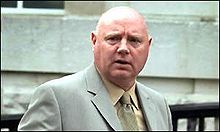


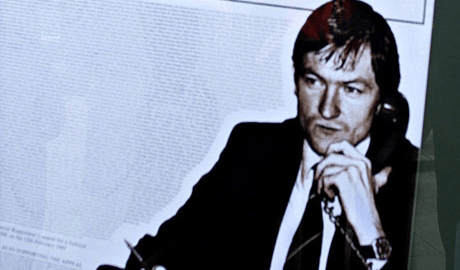




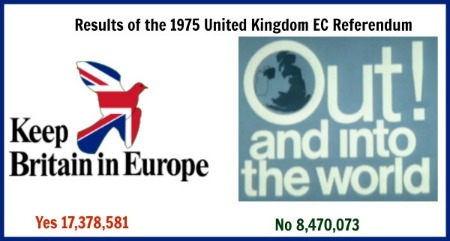




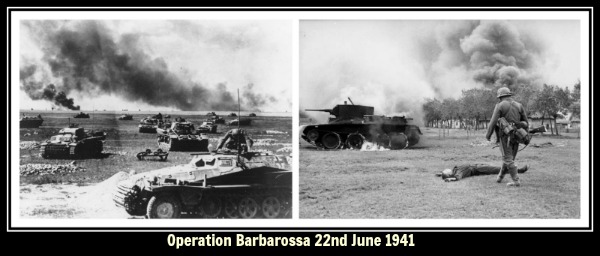
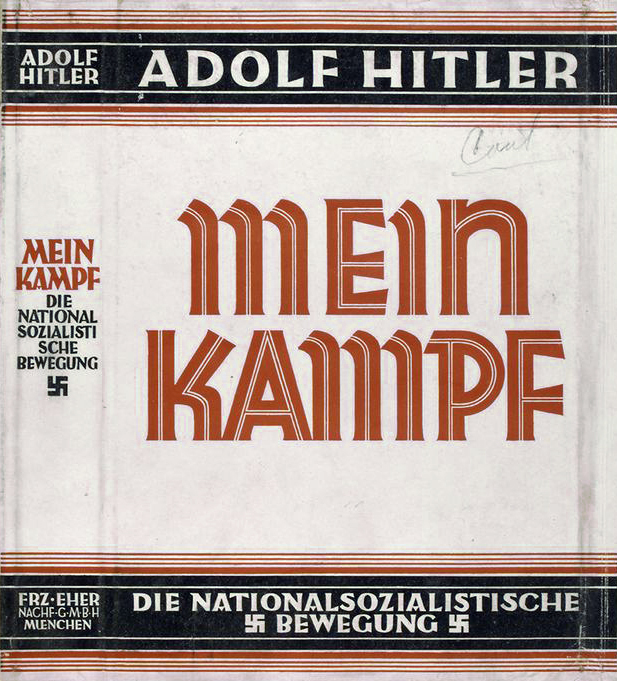


.png)



.svg)
.svg)


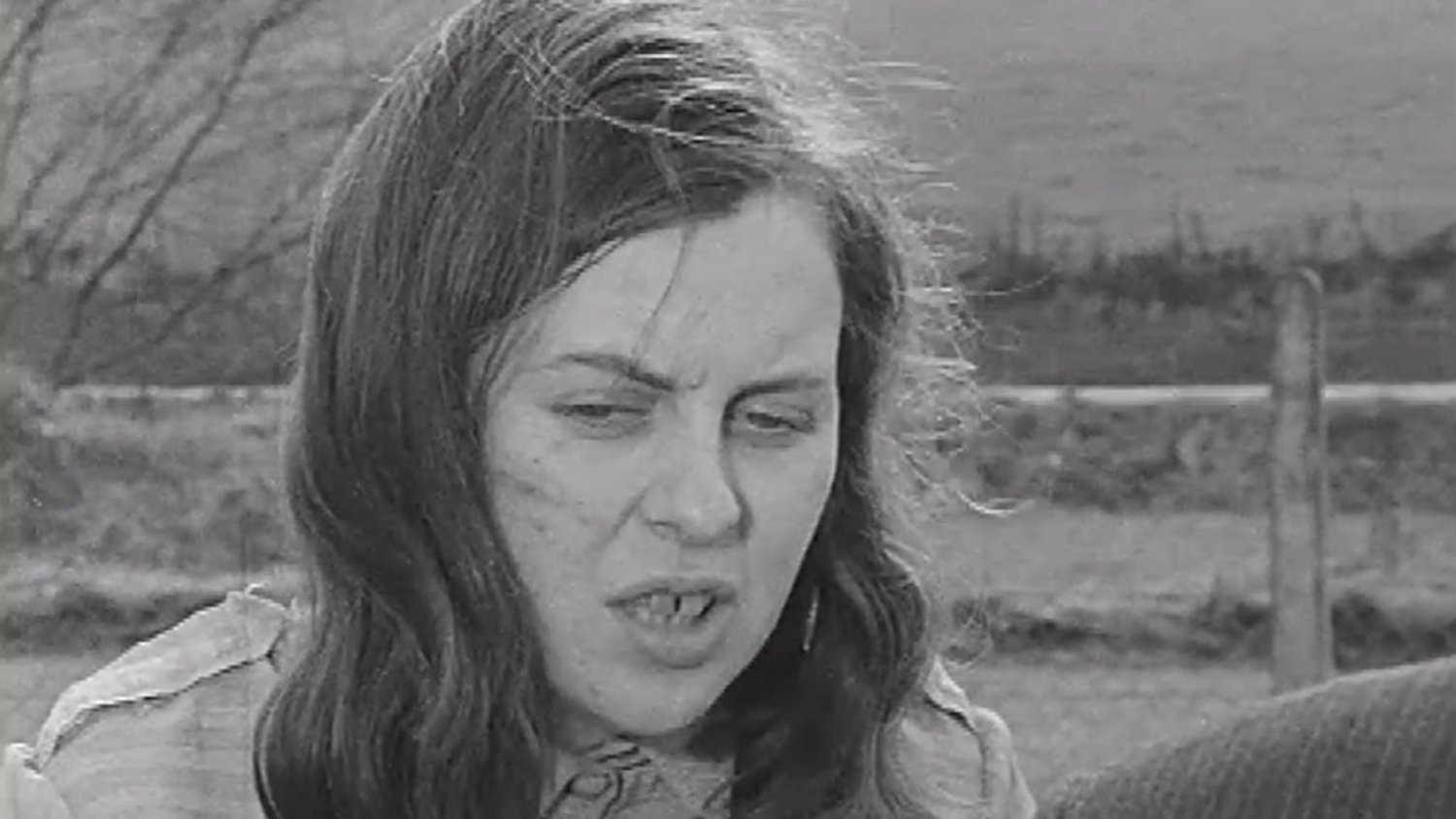


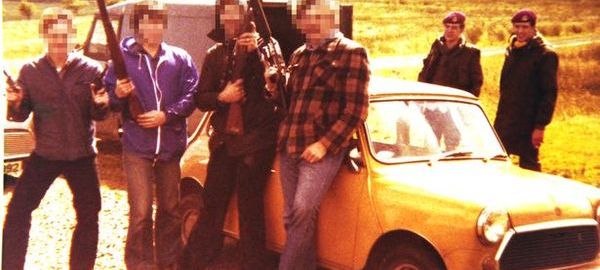










.jpg)





 belfastchildis.com