10 Songs for you Halloween Party!!




Craig Harrison (born November 1974) is a former Corporal of Horse (CoH) in the Blues and Royals, a cavalry regiment of the British Army, and as of November 2009 holds the record for the longest confirmed sniper kill in combat, at a range of 2,475 m (2,707 yd).

This exceeds the previous record of 2,430 m (2,657 yd) set by Rob Furlong in 2002. This record was certified by Guinness World Records.
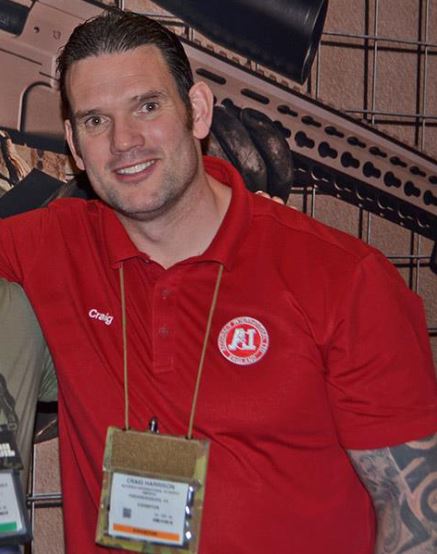
In November 2009, Harrison consecutively struck two Taliban machine gunners south of Musa Qala in Helmand Province in Afghanistan at a range of 2,474 m (2,706 yd) using a L115A3 Long Range Rifle.

In a BBC interview, Harrison reported it took about nine shots for him and his spotter to range the target. Then, he reported, his first shot “on target” was a killing shot followed consecutively by a kill shot on a second machine gunner.
The bodies were later found by Afghan National Police looking to retrieve the weapon (which had already been removed). The first Taliban was shot in the gut and the other through the side. Later in the day an Apache helicopter hovered over the firing position, using its laser range finder to measure the distance to the machine-gun position, confirming it was the longest kill in history.
In the reports, Harrison mentions the environmental conditions were perfect for long range shooting: no wind, mild weather and clear visibility.
Harrison’s father and mother were dog handlers in the Royal Air Force (RAF). They separated when he was very young. Harrison was the younger of two boys. He joined the Household Cavalry at 16, and later served in the Blues and Royals. He is married to Tanya and has a daughter.
After returning from Afghanistan in 2009 he developed post-traumatic stress disorder (PTSD) and was discharged from the army in 2014.
He has stated since that:
| “ | I joined when I was 16 and since all of this has happened I felt abandoned, absolutely abandoned by my regiment. … I spent 22 years loyal to that regiment, putting my life on the line doing tours, and they just hung me out to dry. My trust in people, the armed forces — it’s gone.” | ” |
The Ministry of Defence paid Harrison £100,000 in compensation for revealing his identity which put him at risk of kidnapping by Al-Qaeda supporters. The blunder led to Harrison being placed on permanent sick leave and then discharged.
Harrison has written The Longest Kill, about his life and career as a sniper
Reports regarding the longest recorded sniper kill that contain information regarding the shooting distance and the identity of the sniper have been presented to the general public since 1967. Snipers in modern warfare have had a substantial history following the development of long distance weaponry. As weapons, ammunition, and aids to determine ballistic solutions improved, so too did the distance from which a kill could be targeted.
Although technology such as electronics has improved optical equipment such as rangefinders and ballistic calculators have eliminated manual mathematical calculations to determine elevation and windage, the fundamentals of accurate and precise long-range shooting are the same as throughout the history of shooting, and the skill and training of the shooter and his spotter where applicable are the primary factors. Accuracy and precision of ammunition and firearms are also still reliant primarily on human factors and attention to detail in the complex process of producing maximum performance.
The modern method of long-distance sniping (shots over 1.1 kilometres or 0.7 miles) requires intense training and practice. A sniper must have the ability to accurately estimate the various factors that influence a bullet‘s trajectory and point of impact, such as range to the target, wind direction, wind velocity, air density, elevation, and even the Coriolis effect due to the rotation of the Earth. Mistakes in estimation compound over distance and can cause a shot to only injure, or to miss completely.
Any given combination of firearm and ammunition will have an associated value, known as the circular error probable (CEP), defined as the radius of a circle whose boundary is expected to contain the impact points of half of the rounds fired.
If the shooter wishes to improve accuracy and precision, wishes to increase range or wishes to do all of these things, the accuracy of “estimates” of external factors must improve accordingly. At extreme ranges, extremely accurate “estimates” are required and even with the most accurate estimates, hitting the target becomes subject to uncontrollable factors. For example, a rifle capable of firing a 1/2 MOA (approximately 1/2″ center to center of the two holes furthest apart) 5-round group (often referred to using the verb “grouping”) at 100 yards will fire a theoretical 12.5 group at 2700 yards. Unless the group is centered perfectly on the target at 100 yards, the 2500- yard group will be centered 25 times the off-center error at 100 yards. This example ignores all other factors and assumes “perfect” no-wind shooting conditions and identical muzzle velocities and ballistic performance for each shot.
USMC Gunnery Sergeant Carlos Hathcock’s confirmed 2500-yard kill in Vietnam was primarily due to the enemy soldier stopping his bicycle on the spot Hathcock had fired at while sighting in his Browning M2 heavy machine-gun.
Devices such as laser rangefinders, handheld meteorological measuring equipment, handheld computers, and ballistic-prediction software can contribute to increased accuracy (i.e. reduced CEP), although they rely on proper use and training to realize any advantages. In addition, as instruments of measure, they are subject to accuracy errors and malfunction. Handheld meteorological instruments only measure conditions at the location they are used. Wind direction and speed can and do vary dramatically along the path of the bullet.
The science of long-range sniping came to fruition in the Vietnam War. Carlos Hathcock held the record from 1967 to 2002 at 2,286 m (2,500 yd). He recorded 93 official kills before an injury halted his service on the front lines.
After returning to the U.S., Hathcock helped to establish a school for training Marine snipers, the Marine Corps Scout Sniper School, at the Marine base at Quantico, Virginia.
In addition to his success and performance as a USMC Scout-Sniper during multiple deployments to Vietnam, Gunnery Sergeant Hathcock competed as a member of multiple USMC shooting teams. Gunnery Sergeant Hathcock also won the 1966 Wimbledon Cup, which is earned by the winner of the U.S. 1000-yard high-powered rifle National Championship. The competition is held annually at the Camp Perry Matches and the finest civilian and military marksmen in the world compete. Even after being severely burned during an attack on an amtrac on which he was riding and his efforts to rescue other soldiers, and after being diagnosed with Multiple Sclerosis, Hathcock continued to serve, shoot and instruct.
During his Vietnam service, Hathcock also completed missions involving a “through the scope” shot which killed an enemy sniper specifically hunting him, and performed a multiple-day solo stalk and kill of an enemy general officer in his compound.
Hathcock’s record stood for over thirty years until Canadian Master Corporal Arron Perry of Princess Patricia’s Canadian Light Infantry beat it with a shot of 2,310 metres. Perry held the title for only a few days as another man in his unit (Corporal Rob Furlong) beat Perry’s distance with a 2,430 m (2,657 yd) shot in March 2002. Perry and Furlong were part of a six-man sniper team during 2002’s Operation Anaconda, during the War in Afghanistan.
The current record is held by Briton Corporal of Horse (CoH) Craig Harrison, of the UK’s Household Cavalry, who recorded a 2,475 m (2,707 yd) shot (confirmed by GPS) in November 2009, also during the War in Afghanistan, in which he hit two Taliban insurgents consecutively.CoH Harrison killed the two Taliban machine gunners with shots that took the 8.59 mm rounds almost five seconds to hit their targets, which were 914 metres (1,000 yd) beyond the L115A3 sniper rifle’s recommended range. A third shot took out the insurgents’ machine gun. The rifle used was made by Accuracy International.
This list is not exhaustive, as such data is generally not tracked nor managed under any official procedure. For example, the Canadian Army 2002 sniper team that saw two soldiers (Arron Perry/2,310 m and Rob Furlong/2,430 m) set consecutive new records, also made a number of kills at 1,500 m that are not counted here. The list also shows that, in some cases, an armed force command may choose to withhold the name of the actual sniper for security reasons. The United Nations Security Forces, such as in the Balkans, also had one American sniper (name withheld) attributed with a 1271-metre shot.
While not on the list due to the range being less than the minimum distance used to compile it, USMC Gunnery Sergeant’s second-longest confirmed kill was 1200 yards (1097 m) using a “standard” USMC sniper rifle chambered in .30-06 Springfield. At the time of Hathcock’s service, snipers had essentially been eliminated from the USMC and its sniper rifles were a hodgepodge mix of commercial Remington 700 and Winchester Model 70 rifles chambered for multiple cartridges. The major challenges and efforts of Hathcock and other scout-snipers was improving the performance and reliability of their rifles and ammunition.
cartridges. The major challenges and efforts of Hathcock and other scout-snipers was improving the performance and reliability of their rifles and ammunition.
| Sniper | Date | Distance | Weapon | Ammunition | Nationality | Military Unit | Conflict | References |
|---|---|---|---|---|---|---|---|---|
| Harrison !Corporal of Horse (CoH) Craig Harrison | 2009–11 !November 2009 | 2,475 m (2,707 yd) | Accuracy International L115A3 | .338 Lapua Magnum LockBase B408 bullets |  United Kingdom United Kingdom |
Household Cavalry | War in Afghanistan | [6][8][9][10] |
| Furlong, RobCorporal Rob Furlong | 2002–03 !March 2002 | 2,430 m (2,657 yd) | McMillan Tac-50 | .50 !Hornady A-MAX .50 (.50 BMG) |  Canada Canada |
3rd Battalion, Princess Patricia’s Canadian Light Infantry | War in Afghanistan | [7] |
| Perry !Master Corporal Arron Perry | 2002–03 !March 2002 | 2,310 m (2,526 yd) | McMillan Tac-50 | .50 !Hornady A-MAX .50 (.50 BMG) | Canada |
3rd Battalion, Princess Patricia’s Canadian Light Infantry | War in Afghanistan | [7] |
| Kremer !Sgt. Brian Kremer | 2004 !October 2004 | 2,300 m (2,515 yd) | Barrett M82A1 | Raufoss NM140 MP (.50 BMG) |  United States United States |
2nd Ranger Battalion, 75th Ranger Regiment, United States Army | Iraq War | [11] |
| Hathcock !Gunnery Sergeant Carlos Hathcock [A 1] | 1967-02 !February 1967 | 2,286 m (2,500 yd) | M2 Browning machine gun | .50 BMG | United States |
1st Marine Division, United States Marine Corps | Vietnam War | [3] |
| N !South African Special Forces sniper (Name withheld) [A 2] | 2013–08 !August 2013 | 2,125 m (2,324 yd) | Denel NTW-14.5 | 14.5×114mm |  South Africa South Africa |
South African Special Forces Brigade [A 3] | United Nations Organization Stabilization Mission in the Democratic Republic of the Congo | [12][13][14][15] |
| Ranstad , NicholasNicholas Ranstad | 2007-01 !January 2008 | 2,092 m (2,288 yd) | Barrett M82A1 | .50 BMG | United States |
1st Squadron, 91st Cavalry Regiment, United States Army | War in Afghanistan | [16] |
| Kyle !Chief Petty Officer Chris Kyle [A 4] | 2009-08 !August 2008 | 1,920 m (2,100 yd) | McMillan Tac-338 | .338 Lapua Magnum | United States |
US Navy SEAL – Team 3, Charlie | Iraq War – Sadr City | [17][18][19] |
| Reynolds !Corporal Christopher Reynolds | 2009-08 !August 2009 | 1,853 m (2,026 yd) | Accuracy International L115A3 | .338 Lapua Magnum LockBase B408 bullets | United Kingdom |
3 Scots – The Black Watch | War in Afghanistan | [20] |
| Staff Sgt. Reichert !Steve Reichert | 2004-04 !April 2004 | 1,614 m (1,765 yd) | Barrett M82A3 | Raufoss NM140 MP (.50 Cal) | United States |
2nd Battalion, 2nd Marine Regiment, United States Marine Corps | Iraq War- Latifiya | [21] |
| Dixon !Billy Dixon | 1874-06 !June 1874 | 1,406 m (1,538 yd) | Sharps .50-90 | .50-90 Sharps | United States |
Civilian Buffalo Hunter | American Indian Wars | [22] |
| N !Norwegian sniper (Name withheld) [A 5] | 2007–11 !November 2007 | 1,380 m (1,509 yd) | Barrett M82A1 | Raufoss NM140 MP (.50 Cal) |  Norway Norway |
Norwegian Army 2nd Battalion | War in Afghanistan | [23] |
| Sergeant Vladimir Ilyin !Vladimir Ilyin | 1985 !1985 | 1,350 m (1,476 yd) | Dragunov SVD | 7.62×54mmR 7N1 |  Soviet Union Soviet Union |
345th Independent Guards Airborne Regiment (Soviet Union), Soviet Army | Soviet War in Afghanistan | [24] |
| McGuire Brandon !Sgt. First Class Brandon McGuire | 2007-04 !April 2007 | 1,310 m (1,433 yd) | M107 (M82A1) | Raufoss NM140 MP (.50 Cal) | United States |
3rd Battalion, 509th Parachute Infantry Regiment, United States Army | Iraq War | [25] |
| C !Confederate sniper (Name unknown) | 1864-12-06 !December 5, 1864 | 1,271 m (1,390 yd) | Whitworth Rifle | .451 caliber hexagonal bullet |  Confederate States Confederate States |
South Carolina Troops | American Civil War – Fort Sumter to Morris Island, South Carolina | [26] |
| Gilliland !Staff Sergeant Jim Gilliland [A 6] | 2005-09-27 !September 27, 2005 | 1,250 m (1,367 yd) | M24 rifle | 7.62×51mm NATO | United States |
2nd Battalion, 69th Armored Regiment, United States Army | Iraq War – Ramadi | [27] |

Carlos Hathcock in 1996

via


Brian Nelson (30 September 1947 – 11 April 2003) was an Ulster loyalist during The Troubles in Northern Ireland. He was simultaneously an informant for the British Army‘s Intelligence Corps and the intelligence chief of the Ulster Defence Association (UDA), a terrorist organisation.
———————————————
The views and opinions expressed in this documentary/ies and page are soley intended to educate and provide background information to those interested in the Troubles of Northern Ireland.
They in no way reflect my own opinions and I take no responsibility for any inaccuracies or factual errors
———————————————
Nelson, a Protestant from the Shankill Road, Belfast, served with the Black Watch regiment before joining the Ulster Defence Association in the early 1970s, where he was a low-level informant for the Royal Ulster Constabulary (RUC).
In 1974 he was jailed for seven years for the kidnap and torture of a Catholic man…
View original post 1,000 more words
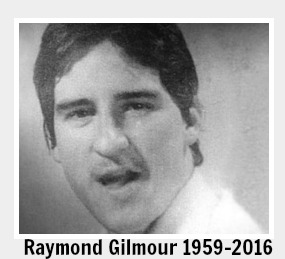

IRA supergrass Raymond Gilmour found dead at home in Kent
A former supergrass who infiltrated the IRA at the height of the Troubles in Northern Ireland has been found dead at his home in Kent.
Raymond Gilmour, from Londonderry, was found dead by his son, according to the Belfast Telegraph.
He became an RUC Special Branch informer when he was 17 and was the only witness in a trial of 35 IRA suspects that collapsed in 1984.
Ramond Gilmour lived under an assumed identity for more than 30 years.
It is understood that his death is not being treated as suspicious.
See Belfast Telegraph for additional information
—————————–

Photographed Recently
| Raymond Gilmour | |
|---|---|
| Born | 1959 Derry, Northern Ireland |
| Died | 29 October 2016 (aged 56–57) Kent |
| Occupation | Police agent, author |
| Known for | Successful infiltration of the INLA & Provisional IRA |
Raymond Gilmour (1959-2016) was a former Irish National Liberation Army (INLA) and Provisional Irish Republican Army (IRA) volunteer who worked clandestinely from 1977 until 1982 for the Royal Ulster Constabulary (RUC) within those paramilitary organisations. His testimony was one of the main elements of the supergrass policy, which hoped to convict large numbers of paramilitaries.
He was born in 1959 into a working class Catholic, nationalist family in Creggan, Derry to Patrick and Brigid Gilmour. He was the youngest of eleven siblings and grew up as The Troubles began in Derry City in the early 1970s. A cousin, Hugh Gilmour, was shot dead by the British Army on Bloody Sunday, a seminal event in the development of the “Troubles” and a traumatic event witnessed by the 12-year-old Gilmour himself.
His parents were reportedly split over the issue of political violence. He described his father as an “armchair supporter” of the IRA, while his mother was reportedly fiercely opposed to their actions.
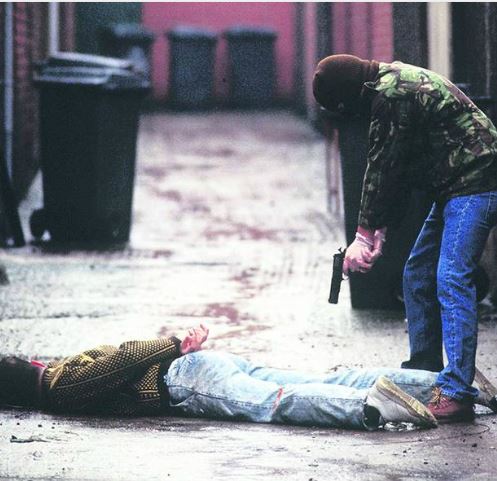
Two of Gilmour’s brothers were kneecapped by the IRA for alleged anti-social behaviour.
He was also given a beating by British soldiers at age 13 for petty crime and they attempted to recruit him as an informer.Gilmour left school without sitting for his O Level exams and drifted into crime. When he was 16, he was again in trouble with the authorities, this time for armed robbery.
On remand in Crumlin Road Prison, he was severely beaten by IRA prisoners. It was at this point that he apparently agreed to become an undercover agent for British security forces.

Several months later, he joined the INLA. He chose the INLA over the IRA as a number of his friends were already in the organisation. Gilmour participated in, among other activities, a botched car hijacking in which a friend, Colm McNutt, also an INLA member, was shot dead by an undercover soldier. In 1978, after two years with the INLA as an RUC agent, he left on police instructions. He got married the same year and fathered the first of two children.
BBC NI Spotlight: The Special Branch spy that infiltrated IRA & Sinn Féin.
After an interlude of several months, Gilmour was instructed by his RUC handler to join the IRA. He was offered £200 a week with bonuses for arrests and weapons finds.
The IRA vetted him for several weeks before accepting his application in late 1980. They attached him to an active service unit in the Brandywell area of Derry. Over the following two years, he was involved in many IRA operations, mostly as a getaway driver. Most of these operations were “shoots” or sniping attacks, but on only one occasion, in January 1981, his activities result in the death of a British soldier, who was shot and killed at Castle Gate, near Derry’s city walls.
Gilmour claims that he helped to foil many other IRA attacks, saving the lives of numerous police and soldiers. In November 1981, he was arrested by the RUC, along with two other IRA members, on their way to carry out a shooting attack on riot police, who were combating disturbances arising out of the 1981 Irish Hunger Strike. Gilmour was sent on remand to Crumlin Road Prison. After a riot that destroyed much of the republican wing there, he was transferred to the Maze Prison.
His RUC handler then applied pressure on the authorities for his release, he was freed on 1 April 1982.

He left the IRA and went into protective custody in August of that year, as he believed that his position in the IRA was about to be discovered after his information led to the capture of an M60 machine gun.
Around 100 IRA and INLA members were then arrested in Derry on his evidence, of whom 35 were charged with terrorist offences.
In November, Gilmour’s father was abducted by the IRA. He was held in secret in an unknown location for almost a year. Gilmour was then sent to Cyprus and then Newcastle by the RUC. The following year, Gilmour gave evidence in a special Diplock Court, jury-less trial against the 35 people he had incriminated. Under the “supergrass” scheme, his was the only evidence available against them.
On December 18, 1984, the presiding judge, Lord Lowry, ruled that Gilmour was not a credible witness. He said he was,
“entirely unworthy of belief … a selfish and self-regarding man, to whose lips a lie comes more naturally than the truth”.
Since then, Gilmour has been in hiding outside Northern Ireland. He states that of the IRA and INLA members he knew, almost half were dead or missing by the end of the conflict. In 1998, he published a book, Dead Ground; Infiltrating the IRA, telling of his experiences.

In 2007, Gilmour publicly voiced his desire to return home to Derry, asking Martin McGuinness for assurances of his safety. He also revealed that he had a heart complaint and was an alcoholic. McGuinness said Gilmour must decide for himself whether or not it was safe to return to Derry and that he was not under threat from Sinn Féin, nor – he believes – from the IRA.
McGuinness stated that if de facto exiles such as Gilmour wanted to return home, it was a matter for their own judgment and their ability to make peace with the community.
Gilmour’s former RUC handler advised him not to return, citing the 2006 murder in Glenties, County Donegal, of Denis Donaldson, a high-ranking Sinn Féin politician and activist who was revealed to have been a long-term informer.
In April 2014, Gilmour’s second book What Price Truth was published; in the book Gilmour goes into greater detail about his life within the IRA and INLA.
On 29 October 2016 Gilmour was found dead in his flat in Kent, where he had been lying abandoned and alone, for up to a week. He was reportedly an alcoholic with serious psychological problems, and died from natural causes
————————————-
See Dead Man Walking
See Brian Nelson
The Nutting Squad
Freddie Scapatticci British Agent License to Kill

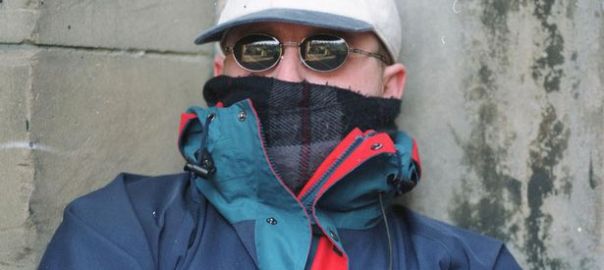
Martin “Marty” McGartland (born 30 January 1970 in Belfast, Northern Ireland)[1] is a former British agent who infiltrated the Provisional Irish Republican Army (IRA)[2] in 1989 to pass information to RUC Special Branch.
When he was exposed as an agent in 1991 he was abducted by the IRA, but escaped and was resettled in England. His identity became publicly known after a minor court case. He was later shot six times by an IRA gunman, but recovered from the injuries. He has written two books about his life, Fifty Dead Men Walking: The Terrifying True Story of a Secret Agent Inside the IRA and Dead Man Running
———————————————
Disclaimer
The views and opinions expressed in this documentary/ies and page are soley intended to educate and provide background information to those interested in the Troubles of Northern Ireland.
They in no way reflect my own opinions…
View original post 8,901 more words

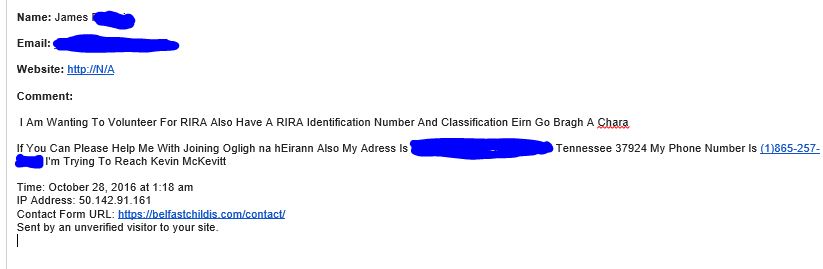
Some fool emailed me yesterday and although he was probably taking the pee he proclaimed he wanted to join the RIRA and enquired if I could help him.
This really pissed me off!
Well James there’s nothing funny about terrorists who killed innocent people and I’m in two minds whether to report you are not, who knows – the local police may be interested to know about your views or perhaps they are already familiar with you and know you are a complete Tosser .
So do me a favour and go away……….
For the record…….
My blog and other online platforms are dedicated to the memory of all innocent victims of the Northern Ireland Troubles ( regardless of political or religious background ) and I have never hid behind the fact that I am extremely proud of my Protestant upbringing in West Belfast .

That doesn’t mean I hate Catholics or wish harm on them, it means I have a different point of view and democracy is all about freedom of choice and my choice is to maintain the Union with the UK and embrace and celebrate my loyalist culture and traditions.
In fact during the worst years of the troubles whenever I learnt of the death of an innocent Catholic or anyone else for that matter, my heart would bleed for them and those they left behind.
My sympathy extended to all innocent victims of the conflict, regardless of religious or political background , including the army and other security forces tasked with the impossible job of policing two communities whom at times seemed to want to destroy each other.
I am a pacifist at heart and I abhor all murder, especially the murder of innocent people & those committed for political or religious reasons. Life’s to short and hard enough without having to worry that you will be killed for following a certain political system or worshipping a different god.
The definition of loyalist is :
a. A supporter of union between Great Britain and Northern Ireland
b. A person who remains loyal to the established ruler or government, especially in the face of a revolt.
Growing up in West Belfast during the height of the troubles was no laughing matter and I have seen things that no child should ever have to witness .Death stalked the streets of Belfast day in and day out and there was no escape from the madness that surrounded and engulfed us…


The death of Clayton Darrell Lockett occurred on April 29, 2014, when he suffered a heart attack during an execution by lethal injection in the U.S. state of Oklahoma. Lockett, aged 38, was convicted in 2000 of murder, rape, and kidnapping.
Lockett was administered an untested mixture of drugs that had not previously been used for executions in the United States.
Although the execution was stopped, Lockett died 43 minutes after being sedated. He writhed, groaned, convulsed, and spoke during the process and attempted to rise from the execution table fourteen minutes into the procedure, despite having been declared unconscious.
———————————
———————————
| Clayton Lockett | |
|---|---|
 Mugshot of Lockett | |
| Born | Clayton Darrell Lockett November 22, 1975 |
| Died | April 29, 2014 (aged 38) Oklahoma State Penitentiary,McAlester, Oklahoma |
| Cause of death | Heart attack (following an execution attempt by lethal injection) |
| Occupation | Criminal |
| Criminal penalty |
View original post 2,123 more words

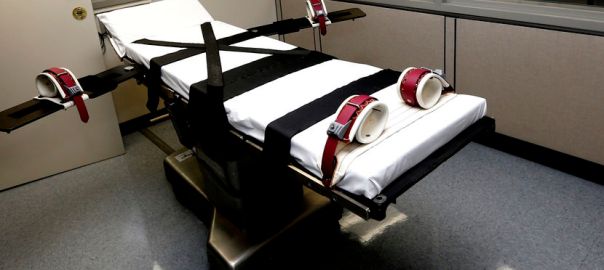
Today’s News and social media have been busy debating the fact the US pharmaceutical giant Pfizer, has recently took steps to prevent its drugs being used in lethal injection process for capital punishment –
Stating that :
“We strongly object to the use of any of our products in the lethal injection process for capital punishment,”
It stressed that its products were meant to save the lives of patients.
The move reportedly shuts off the last remaining open market source of drugs used in executions in the US and officials are now searching for a new drug cocktails by which the lethal injection could be achieved.
American has a long record of state sanctioned executions as a means of the ultimate deterrent and although the figures have been dropping over the past decade , the USA came fifth in a recent survey of countries who still use execution as a legal method of …
View original post 7,392 more words


Islamic State’s medieval Brutality in the 21st century
It’s only right that the country should debate the consequences of the decision to step up our role in the mess that is Syria/Iraq and the insane actions of IS and other global Islamic extremists.
Regardless of where you stand on the issues in question ( and there are many , both political and ethical ) spare a thought for the UK pilots ( and all pilots & other personnel) whom are now pawns in this new kind of war and will be flying over enemy territory as they take the fight to IS and their deluded followers.

How can anyone forget the brutal execution of Jordanian pilot Muath Al-Kasasbeh , burnt alive in a cage after a demonic stage show that saw him make his past masked IS fighters lining the route to the cage that would be his final destination and brutal execution.

Anyone unfortunate…
View original post 1,121 more words


 belfastchildis.com