Monthly Archives: August 2016

6th August – Deaths & Events in Northern Ireland Troubles

6th August

Key Events & Deaths on this day in Northern Ireland Troubles

Wednesday 6 August 1980

The British government announced an extra public spending package of £48 million for Northern Ireland to try to alleviate the high level of unemployment in the region which stood at 14.7 per cent.

This announcement came after a meeting between the Irish Congress of Trade Unions (ICTUs) and Margaret Thatcher, then British Prime Minister.

Wednesday 6 August 1997

Loyalist paramilitaries carried out a ‘punishment’ attack on an 18 year old man in Rathcoole, north Belfast.

A taxi driver was shot in the legs in a ‘punishment’ style attack in Grosvenor Road, Belfast.

The attack was alleged to have been carried out by the Official Irish Republican Army (OIRA).

A hoax bomb was sent to the office of the Progressive Unionist Party (PUP) on the Shankill Road.

It was believed that Loyalist paramilitaries were responsible.

There was an arson attack on an Orange Order hall near Caledon, County Tyrone.

Marjorie (Mo) Mowlam, then Secretary of State for Northern Ireland, held a meeting with Gerry Adams, then President of Sinn Féin (SF), together with other SF representatives in Stormont.

Thursday 6 August 1998

Marjorie (Mo) Mowlam, then Secretary of State for Northern Ireland, said that she believed that the “war is over”. [This was said in response to Unionist demands that Sinn Féin (SF) and the Irish Republican Army (IRA) should state publicly that the conflict had ended.]

Thomas McMahon, who had been convicted of the murder of Lord Mountbatten and three other people in 1979, was released from jail in the Republic of Ireland.

The release drew criticism from Unionists in Northern Ireland.

Friday 6 August 1999

The Irish Republican Army (IRA) issued a statement in which the organisation denied that it have been behind an attempt to smuggle arms from the USA into Ireland; the IRA “Army Council has not sanctioned any arms importation operation”.

In relation to the speculation around the killing of Charles Bennett on 30 July 1999 the IRA said “there had been no breaches of the IRA cessation”.

Monday 6 August 2001

The date set as the deadline for the political parties to give their response to the British and Irish governments’ Implementation Plan for the Good Friday Agreement.

A statement was issued by John de Chastelain (Gen.), then head of the Independent International Commission on Decommissioning (IICD), in which he announced that an Irish Republican Army (IRA) representative had proposed a method for putting weapons completely and verifiably beyond use.

De Chastelain told the British and Irish governments that the proposal met with the Commission’s remit in accordance with the governments’ scheme and regulations. De Chastelain said in the statement:

“Based on our discussions with the IRA representative, we believe that this proposal initiates a process that will put IRA arms completely and verifiably beyond use.”

Gerry Adams, then President of Sinn Féin (SF), declared the statement as a “hugely historical breakthrough”.
The Ulster Unionist Party (UUP) office board consisting of 14 members met on Monday evening to consider its response to the Implementation Plan (1 August 2001) and also the statement by the IICD.

————————————–

Remembering all innocent victims of the Troubles

Today is the anniversary of the death of the following people killed as a results of the conflict in Northern Ireland

“To live in hearts we leave behind is not to die

– Thomas Campbell

To the innocent on the list – Your memory will live forever

– To the Paramilitaries –

There are many things worth living for, a few things worth dying for, but nothing worth killing for.

1 Person lost their lives on the 6th  August  1985

——————————-

06 August 1985

Charles English  (21)

Catholic
Status: Irish Republican Army (IRA),

Killed by: Irish Republican Army (IRA)
Died when grenade exploded prematurely, during attack on British Army (BA) mobile patrol, William Street, Derry.

————————————————————–

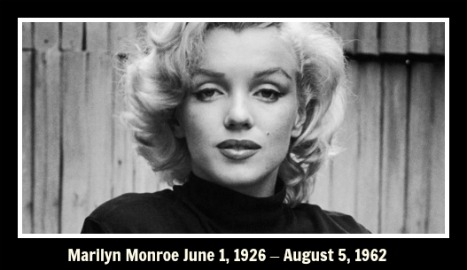
Marilyn Monroe died on this day in 1962

Norma Jeane Mortenson; June 1, 1926 – August 5, 1962 Marilyn Monroe (born Norma Jeane Mortenson; June 1, 1926 – August 5, 1962) was an American actress and model. Famous for playing “dumb blo…

Source: Marilyn Monroe died on this day in 1962

Marilyn Monroe died on this day in 1962

Norma Jeane Mortenson; June 1, 1926 – August 5, 1962

Marilyn Monroe (born Norma Jeane Mortenson; June 1, 1926 – August 5, 1962) was an American actress and model. Famous for playing “dumb blonde” characters, she became one of the most popular sex symbols of the 1950s, emblematic of the era’s attitudes towards sexuality. Although she was a top-billed actress for only a decade, her films grossed $200 million by the time of her unexpected death in 1962.

She continues to be considered a major popular culture icon.

Born and raised in Los Angeles, Monroe spent most of her childhood in foster homes and an orphanage and married for the first time at the age of sixteen. While working in a factory as part of the war effort in 1944, she met a photographer and began a successful pin-up modeling career. The work led to short-lived film contracts with Twentieth Century-Fox (1946–47) and Columbia Pictures (1948).

After a series of minor film roles, she signed a new contract with Fox in 1951. Over the next two years, she became a popular actress with roles in several comedies, including As Young as You Feel and Monkey Business, and in the dramas Clash by Night and Don’t Bother to Knock. Monroe faced a scandal when it was revealed that she had posed for nude photos before becoming a star, but rather than damaging her career, the story increased interest in her films.

By 1953, Monroe was one of the most bankable Hollywood stars, with leading roles in three films: the noir Niagara, which focused on her sex appeal, and the comedies Gentlemen Prefer Blondes and How to Marry a Millionaire, which established her star image as a “dumb blonde”. Although she played a significant role in the creation and management of her public image throughout her career, she was disappointed at being typecast and underpaid by the studio. She was briefly suspended in early 1954 for refusing a film project, but returned to star in one of the biggest box office successes of her career, The Seven Year Itch (1955).

When the studio was still reluctant to change her contract, Monroe founded a film production company in late 1954, Marilyn Monroe Productions (MMP). She dedicated 1955 to building her company and began studying method acting at the Actors Studio. In late 1955, Fox awarded her a new contract, which gave her more control and a larger salary. After a critically acclaimed performance in Bus Stop (1956) and acting in the first independent production of MMP, The Prince and the Showgirl (1957), she won a Golden Globe for Best Actress for Some Like It Hot (1959). Her last completed film was the drama The Misfits (1961).

Monroe’s troubled private life received much attention. She struggled with addiction, depression, and anxiety. She had two highly publicized marriages, to baseball player Joe DiMaggio and playwright Arthur Miller, which both ended in divorce. She died at the age of 36 from an overdose of barbiturates at her home in Los Angeles on August 5, 1962. Although the death was ruled a probable suicide, several conspiracy theories have been proposed in the decades following her death.

Death

Front page of New York Daily Mirror on August 6, 1962. The headline is "Marilyn Monroe Kills Self" and underneath it is written: "Found nude in bed... Hand on phone... Took 40 Pills"

Front page of the New York Daily Mirror on August 6, 1962

Monroe was found dead in the bedroom of her Brentwood home by her psychiatrist, Dr. Ralph Greenson, in the early morning hours of August 5, 1962. Greenson had been called there by her housekeeper Eunice Murray, who was staying overnight and had awoken at 3:00 a.m. “sensing that something was wrong”. Murray had seen light from under Monroe’s bedroom door, but had not been able to get a response and found the door locked.

The death was officially confirmed by Monroe’s physician, Dr. Hyman Engelberg, who arrived at the house at around 3:50 a.m.

At 4:25 a.m., they notified the Los Angeles Police Department.

The Los Angeles County Coroners Office was assisted in their investigation by experts from the Los Angeles Suicide Prevention Team.  It was estimated that Monroe had died between 8:30 and 10:30 p.m., and the toxicological analysis concluded that the cause of death was acute barbiturate poisoning, as she had 8 mg% of chloral hydrate and 4.5 mg% of pentobarbital (Nembutal) in her blood, and a further 13 mg% of pentobarbital in her liver.

Empty bottles containing these medicines were found next to her bed. The possibility of Monroe having accidentally overdosed was ruled out as the dosages found in her body were several times over the lethal limit. Her doctors and psychiatrists stated that she had been prone to “severe fears and frequent depressions” with “abrupt and unpredictable” mood changes, and had overdosed several times in the past, possibly intentionally.

Due to these facts and the lack of any indication of foul play, her death was classified a probable suicide.

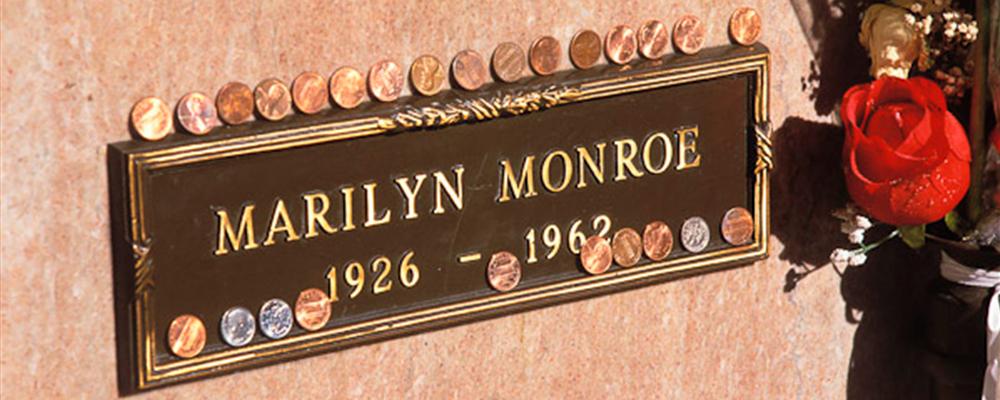
Monroe’s crypt at the Westwood Memorial Park

Monroe’s unexpected death was front-page news in the United States and Europe. According to Lois Banner, “it’s said that the suicide rate in Los Angeles doubled the month after she died; the circulation rate of most newspapers expanded that month”,  and the Chicago Tribune reported that they had received hundreds of phone calls from members of the public requesting information about her death.

French artist Jean Cocteau commented that her death “should serve as a terrible lesson to all those, whose chief occupation consists of spying on and tormenting film stars”, her former co-star Laurence Olivier deemed her “the complete victim of ballyhoo and sensation”, and Bus Stop director Joshua Logan stated that she was “one of the most unappreciated people in the world”.

Her funeral, held at the Westwood Village Memorial Park Cemetery on August 8, was private and attended by only her closest associates.. It was arranged by Joe DiMaggio and her business manager Inez Melson.  Hundreds of spectators crowded the streets around the cemetery.

Monroe was later interred at crypt No. 24 at the Corridor of Memories.

Several conspiracy theories about Monroe’s death have been proposed in the decades afterwards, including murder and accidental overdose. The murder speculations first gained mainstream attention with the publication of Norman Mailer‘s Marilyn: A Biography in 1973, and in the following years became widespread enough for the Los Angeles County District Attorney John Van de Kamp to conduct a “threshold investigation” in 1982 to see whether a criminal investigation should be opened.

No evidence of foul play was found.

See here for more details on Marilyn Monroe


—————————————

5th August – Deaths & Events in Northern Ireland Troubles

5th August

Key Events & Deaths on this day in Northern Ireland Troubles

Thursday 5 August 1971

There was a debate at Westminster on the situation in Northern Ireland. Brian Faulkner, then Northern Ireland Prime Minister, met with Edward Heath, then British Prime Minister, and Harry Tuzo, then General Officer Commanding the British Army (BA), in London to discuss the security situation.

5th August 1969

The UVF planted their first bomb in the Republic of Ireland , damaging the RTE Television Centre in Dublin


Sunday 5 August 1973


Francis & Bernadette Mullen

A Catholic husband and wife, Francis Mullan (59) and Bernadette Mullan (39), were found shot dead at their farmhouse near Moy, County Tyrone.

They had been killed by an unidentified Loyalist paramilitary group.

Friday 5 August 1977

There was a series of fire bomb attacks in Belfast and Lisburn, County Antrim.

Wednesday 5 August 1981

The Irish Republican Army (IRA) carried out a series of car bomb and incendiary bomb attacks in seven areas of Northern Ireland including Belfast, Derry and Lisburn. The attacks caused serious damage to property and minor injuries to a number of people.

Friday 5 August 1983

The ‘supergrass’ trial of 38 alleged members of the Irish Republican Army (IRA) ended in Belfast. The trial had lasted 120 days with most of the evidence being offered by IRA supergrass Christopher Black.

I.R.A supergrass Christopher Black

The judge jailed 22 of the accused to sentences totalling more that 4,000 years. Four people were acquitted and others received suspended sentences.

In 1986, 18 of the 22 who received prison sentences had their convictions quashed by the Court of Appeal.

Tuesday 5 August 1986

The Irish Republican Army (IRA) issued another warning that contractors who were carrying out work for the security services in Northern Ireland would be considered ‘part of the war machine’ and would be ‘treated as collaborators’.

Monday 5 August 1996

A meeting between the Apprentice Boys of Derry and the Bogside Residents Association ended without agreement about the march due to take place on 10 August 1996. A series of meetings between the two groups had been chaired by the local Member of Parliament John Hume, then leader of the Social Democratic and Labour Party (SDLP).

Tuesday 5 August 1997

A Catholic taxi driver survived an attempt to kill him when the gun being used by a Loyalist paramilitary jammed.

The attack occurred in the Parkmore estate in Lurgan.

The Loyalist Volunteer Force (LVF) later claimed responsibility for the attack.

A hoax bomb was sent to Sammy Wilson, then a Democratic Unionist Party (DUP) councillor, at Belfast City Hall.

Marjorie (Mo) Mowlam, then Secretary of State for Northern Ireland, held her first meeting with Gerry Adams, then President of Sinn Féin (SF), since the Irish Republican Army (IRA) announced its renewed ceasefire.

The Irish Times carried a report that John Hume, then leader of the Social Democratic and Labour Party (SDLP), was considering accepting the position of President of the Republic of Ireland as an agreed all-party candidate. Hume did not comment on the story.

The Bogside Residents Group (BRG) gave agreement to the planned Apprentice Boys of Derry (ABD) march in the city on 9 August 1997. This followed the news that the Royal Ulster Constabulary (RUC) would reroute a number of ABD ‘feeder’ parades in other Nationalist areas of Northern Ireland.

Thursday 5 August 1999

Two pipe-bombs were discovered by the Royal Ulster Constabulary (RUC) in a hedge in Glengormley, County Antrim. Police made the discovery at 2.45am during a search carried out at the junction between Elmfield Crescent and Elmfield Road in the town.

A report of the Victims’ Commission, established by the Irish government, into the 1974 Dublin and Monaghan bombings recommended the appointment of a former Supreme Court judge to inquire privately into events surrounding the bombings which killed 33 people and injured over 400.

Although it was intended that the findings would eventually be made public, the families of the victims wanted the immediate establishment of a public tribunal of Inquiry.

Other recommendations of the report were that a similar Inquiry be established into the killing of Seamus Ludlow on 2 May 1976, and that the Irish government should make a £10,000 payment to the 150 families affected by the bombings.

——————————————

Remembering all innocent victims of the Troubles

Today is the anniversary of the death of the following people killed as a results of the conflict in Northern Ireland

“To live in hearts we leave behind is not to die

– Thomas Campbell

To the innocent on the list – Your memory will live forever

– To the Paramilitaries –

There are many things worth living for, a few things worth dying for, but nothing worth killing for.

5  People lost their lives on the 5th August   between 1973 – 1994

——————————————

 05 August 1973

Francis Mullen,   (59)

Catholic
Status: Civilian (Civ),

Killed by: Ulster Volunteer Force (UVF)
Found shot at his farmhouse, Gorestown, near Moy, County Tyrone.

————————————————————–

 05 August 1973

Bernadette Mullen,   (39)

Catholic
Status: Civilian (Civ),

Killed by: Ulster Volunteer Force (UVF)
Found shot at her farmhouse, Gorestown, near Moy, County Tyrone.

————————————————————–

 05 August 1974

Martha Lavery,   (67)

Catholic
Status: Civilian (Civ),

Killed by: British Army (BA)
Shot while in her home during gun battle between Irish Republican Army (IRA) and British Army (BA), Jamaica Street, Ardoyne, Belfast.

————————————————————–

 05 August 1991

Eric Boyd,  (42)

Protestant
Status: ex-Ulster Defence Regiment (xUDR),

Killed by: Irish Republican Army (IRA)
Shot shortly after leaving his workplace, while driving along Altmore Road, Cappagh, County Tyrone.

————————————————————–

 05 August 1994

David Thompson,  (48)

Protestant
Status: Civilian (Civ),

Killed by: Ulster Volunteer Force (UVF)
Found shot, Ballyhill Lane, Nutts Corner, near Crumlin, County Antrim.

Statistical breakdown of deaths in the Troubles of Northern Ireland 1969 – 2001

Annual Killings by Military and Paramilitary Groups (1969-2001) Year Republican Loyalist British Others Total 1969 3 3 10 0 16 1970 18 1 5 2 26 1971 98 21 45 7 171 1972 265 117 86 12 480 1973 133 8…

Source: Statistical breakdown of deaths in the Troubles of Northern Ireland 1969 – 2001

60 Films about the “Troubles “

Below is a comprehensive list of 60 films about the “Troubles” and  Republican/Loyalist paramilitaries . The list includes background information on  the movies and where possible I have incl…

Source: 60 Films about the “Troubles “

4th August – Deaths & Events in Northern Ireland Troubles

4th  August

Key Events & Deaths on this day in Northern Ireland Troubles

Friday 4 August 1972


 Public Records 1972 – Released 1 January 2003:

Note from R.T. Armstrong, then with the Prime Minister’s office, to T.C. Platt, then with the Northern Ireland Office (NIO).

The note shows that Edward Heath, then Prime Minister, was highly sensitive to the issue of  interrogation of prisoners by the security forces.

Thursday 4 August 1988


William Hassard &  Frederick Love

Two Protestant building workers, were killed by the Irish Republican Army (IRA) in Belleek, County Fermanagh. The two workers had been carrying out repairs at Belleek police station.

Tuesday 4 August 1998

Dissident Republicans carried out an attack on a police patrol outside an Royal Ulster Constabulary (RUC) station in Lurgan, County Armagh.

——————————————

Remembering all innocent victims of the Troubles

Today is the anniversary of the death of the following people killed as a results of the conflict in Northern Ireland

“To live in hearts we leave behind is not to die

– Thomas Campbell

To the innocent on the list – Your memory will live forever

– To the Paramilitaries –

There are many things worth living for, a few things worth dying for, but nothing worth killing for.

————————————————————–

  5 People lost their lives on the 4th  of August between 1972  – 1988

——————————————

 04 August 1972

David Card,  (21) nfNI Status: British Army (BA),

Killed by: Irish Republican Army (IRA)

Shot while on British Army (BA) foot patrol, Commedagh Drive, Andersonstown, Belfast.

——————————————

 04 August 1977

John McCartan,  (55)

Catholic

Status: Civilian (Civ),

Killed by: British Army (BA)

Manager of Andersonstown Social Club. Shot as he was leaving the club premises, off South Link, Andersonstown, Belfast.

——————————————

 04 August 1986

Denis Taggart,  (33)

Protestant

Status: Ulster Defence Regiment (UDR),

Killed by: Irish Republican Army (IRA)

Off duty. Shot outside his home, Battenberg Street, Shankill, Belfast.

——————————————

 04 August 1988

William Hassard,  (59)

Protestant

Status: Civilian (Civ),

Killed by: Irish Republican Army (IRA)

Shot shortly after driving out of Belleek Royal Ulster Constabulary (RUC) / British Army (BA) base, County Fermanagh. Contractor to British Army (BA) / Royal Ulster Constabulary (RUC).

——————————————

 04 August 1988

Frederick Love,   (64)

Protestant

Status: Civilian (Civ),

Killed by: Irish Republican Army (IRA)

Shot shortly after driving out of Belleek Royal Ulster Constabulary (RUC) / British Army (BA) base, County Fermanagh. Employed by contractor to British Army (BA) / Royal Ulster Constabulary (RUC).

——————————————

3rd August – Deaths & Events in Northern Ireland Troubles

3rd  August

Key Events & Deaths on this day in Northern Ireland Troubles

Tuesday 3 August 1976

The Irish Republican Army (IRA) carried out a series of six bomb attacks on Portrush, County Antrim.

Monday 3 August 1981

 Liam McCloskey, then an Irish National Liberation Army (INLA) prisoner, joined the hunger strike.

Sunday 3 August 1997

Nationalist residents of Newtownbutler, County Fermanagh, protested against a Royal Black Preceptory march in the village.

The parade was escorted by Royal Ulster Constabulary (RUC) officers in riot gear. Six people were injured in disturbances.

The Claudy Bombing

The 25th anniversary of the bombing of Claudy, County Derry was marked in the village when approximately 1,500 people attended an open air service

See Claudy Bombing

Although no group claimed responsibility for the explosions it was widely believed that the Irish Republican Army (IRA) had planted the three car bombs in the village which resulted in the deaths of nine people. Inadequate warnings were given about the bombs.

Monday 3 August 1998

In the first break-through of its kind, Nationalists and Loyalists in Derry reached an agreement over the Apprentice Boys march in the city planned for 8 August 1999.

The agreement came after three days of shuttle (indirect) negotiations between the parties. [However, there were some minor disturbances following the march.]

Tuesday 3 August 1999

Security sources confirmed that the Irish Republican Army (IRA) was considered responsible for the death of Charles Bennett on 30 July 1999.

Republican sources claimed he was killed to pacify hardliners over decommissioning and the lack of political progress.

Friday 3 August 2001

The Ardchomhairle of Sinn Féin held a meeting to consider the party’s response to the British and Irish governments’ Implementation Plan. The meeting took place in County Louth, Republic of Ireland.

The Ardchomhairle is comprised of 41 members, including Gerry Adams, then President of SF, Mitchel McLaughlin, then Chairman, Pat Doherty, then Vice-President, and Martin McGuinness.

Sinn Féin rejected Monday’s deadline and said that the party needed to see the detail and guarantees on policing reform and demilitarisation.

In the days following the meeting SF said it needed to see more detail on policing, demilitarisation and criminal justice before it could support the package.

 3rd August   2010

Óglaigh na hÉireann claimed responsibility for detonating a 200 lb car bomb outside Strand Road PSNI station in Derry.

——————————————

Remembering all innocent victims of the Troubles

Today is the anniversary of the death of the following people killed as a results of the conflict in Northern Ireland

“To live in hearts we leave behind is not to die

– Thomas Campbell

To the innocent on the list – Your memory will live forever

– To the Paramilitaries –

There are many things worth living for, a few things worth dying for, but nothing worth killing for.

10  People lost their lives on the 3rd of August between 1972  – 1992

————————————————————–

03 August 1972

William Clark,   (34) nfNI
Status: British Army (BA),

Killed by: Irish Republican Army (IRA)
Killed attempting to defuse bomb discovered by side of road, Urney, near Clady, County Tyrone.

See: The Long Walk 

————————————————————–

03 August 1972

Robert McCrudden,   (19)

Catholic
Status: Irish Republican Army (IRA),

Killed by: British Army (BA)
Shot during gun battle, Hooker Street, Ardoyne, Belfast.

————————————————————–

03 August 1973
James Farrell,  (50) nfNIRI
Status: Civilian (Civ),

Killed by: Irish Republican Army (IRA)
Shot, during armed robbery, while delivering wages to British Leyland factory, Cashel Road, Crumlin, Dublin.

————————————————————–

 03 August 1974

Martin Skillen, (21)

Catholic
Status: Irish Republican Army (IRA),

Killed by: British Army (BA)
Shot from British Army (BA) undercover observation post in Clonard cinema building, Falls Road, Belfast.

————————————————————–

 03 August 1974
Charles McKnight,   (25)

Protestant
Status: Civilian (Civ),

Killed by: Irish Republican Army (IRA)
Killed by booby trap bomb when he entered the cab of his employer’s lorry, parked outside house, Ballycraigy, Newtownabbey, County Antrim.

————————————————————–

 03 August 1976
Alan Watkins,   (20) nfNI
Status: British Army (BA),

Killed by: Irish National Liberation Army (INLA)
Shot by sniper while on British Army (BA) foot patrol, Dungiven, County Derry.

————————————————————–

03 August 1979
Whilliam Whitten  (65)

Protestant
Status: Civilian (Civ),

Killed by: Irish Republican Army (IRA)
Died six weeks after being injured in bomb attack on Marine Hotel, Ballycastle, County Antrim. He was wounded on 19 June 1979. Inadequate warning given.

————————————————————–

 03 August 1980
William Clarke, (59)

Protestant
Status: Ulster Defence Regiment (UDR),

Killed by: Irish Republican Army (IRA)
Off duty. Shot while travelling in his car along laneway, Gortnessy, near Pettigoe, County Donegal.

————————————————————–

 03 August 1988

Raymond McNicholl,  (30)

Protestant
Status: Ulster Defence Regiment (UDR),

Killed by: Irish Republican Army (IRA)
Off duty. Shot by sniper, while driving his car to work, Desertcreat Road, near Cookstown, County Tyrone.

————————————————————–

03 August 1992
Damian Shackleton,   (24) nfNI
Status: British Army (BA),

Killed by: Irish Republican Army (IRA)
Shot by sniper while on British Army (BA) mobile patrol, Duncairn Avenue, New Lodge, Belfast.

————————————————————–

2nd August – Deaths & Events in Northern Ireland Troubles

2nd August

Key Events & Deaths on this day in Northern Ireland Troubles


Monday 2 August 1976

Cornelius Neeson (49), a Catholic civilian, was killed with an axe as he walked home along the Cliftonville Road, Belfast. Members of he Ulster Volunteer Force (UVF) gang known as the ‘Shankill Butchers’ were responsible for the killing.

See Shankilll Butchers Documentary

2 August 1978

Roy Mason, then Secretary of State for Northern Ireland, announced that a sports car factory would be built in West Belfast and would mean 2,000 new jobs. The new factory was seen as a breakthrough in securing American investment in Northern Ireland.


However the DeLorean factory required a British investment of £56 million out of a total of £65 million. At the time a number of commentators expressed reservations about the potential success of the venture and indeed the business did fail with the loss of substantial public funds.

Thursday 2 August 1979

Two British soldiers were killed by the Irish Republican Army (IRA) in a landmine attack at Cathedral Road, Armagh.

These deaths brought the total number of British Army soldiers killed in Northern Ireland since 1969 to 301.

A Royal Ulster Constabulary (RUC) officer was shot dead by the IRA in Belfast.

Sunday 2 August 1981

Eighth Hunger Striker Died

Kieran Doherty (25) died after 73 days on hunger strike. Doherty was a member of the Irish Republican Army (IRA) and had been elected as a Teachta Dáil (TD) during the general election in the Republic of Ireland on 11 June 1981.


John Smyth & Andrew Wood

Two Royal Ulster Constabulary (RUC) officers were killed in a landmine attack carried out by the Irish Republican Army (IRA) in Loughmacrory, near Omagh, County Tyrone.

Sunday 2 August 1992

Two bombs, each estimated at 200 pounds, exploded in Bedford Street, Belfast. Extensive damage was done to buildings in the area.

Hugh Annesley, Chief Constable of the Royal Ulster Constabulary (RUC), issued a statement on the Channel 4 programme entitled ‘The Committee’ broadcast on 2 October 1991. Annesley stated that there was no truth to the allegations.

Tuesday 2 August 1994

According to a report in the Irish Press (a Dublin based newspaper) on 8 August 1994 a meeting took place on 2 August between representatives of the Ulster Volunteer Force (UVF) and those of the Ulster Freedom Fighters (UFF), a cover name (pseudonym) used by the Ulster Defence Association (UDA).

At that meeting it was decided that Loyalist paramilitaries would continue with their campaigns of attacking Catholics irrespective of any future Irish Republican Army (IRA) ceasefire.

Friday 2 August 1996

U.V.F Logo

In a statement the Ulster Volunteer Force (UVF) announced that the Portadown unit of the Mid-Ulster Brigade was to disband. The statement also said that activities of the Portadown unit would be investigated.

Sinn Féin (SF) denied organising boycotts of Protestant businesses in rural areas of Northern Ireland.

Since the stand-off at Drumcree some nationalists had been boycotting Protestant businesses in Armagh, Castlederg, Lisnaskea, Omagh and Pomery.

Nationalists claimed that the business people had taken part in Orange roadblocks during the stand-off.

Thursday 2 August 2001

Amateur footage of the explosion

Bomb Explosion in London

Republican paramilitaries carried out a car bomb attack in the Ealing area of London. The explosion occurred just before midnight and caused six injuries and some damage to property. A telephone warning was received at 11.33pm (2333BST) but the area was still being cleared when the explosion happened.

The bomb (estimated at 40 kilograms of home-made explosives) was thought to have been planted by the “real” Irish Republican Army (rIRA).

Police in London criticised the warning as being imprecise as to the location; the warning referred to ‘Ealing Broadway Road’ instead of ‘The Broadway, Ealing’ .


Edward_Daly_Bloody_Sunday

Former soldiers who were involved in the shootings in Derry on ‘Bloody Sunday’, 30 January 1972, announced that they would seek a judical review of a ruling by the Inquiry that they must give their evidence in Derry rather than in Britain.

The soldiers had won an earlier ruling allowing them to retain anonymity when giving evidence.

See Bloody Sunday

—————————-

Remembering all innocent victims of the Troubles

Today is the anniversary of the death of the following people killed as a results of the conflict in Northern Ireland

“To live in hearts we leave behind is not to die

– Thomas Campbell

To the innocent on the list – Your memory will live forever

– To the Paramilitaries –

There are many things worth living for, a few things worth dying for, but nothing worth killing for.

11 People lost their lives on the 2nd August  between 1975 – 1988

——————————-

02 August 1975

George McCall, (22)

Protestant

Status: ex-Ulster Defence Regiment (xUDR),

Killed by: Irish Republican Army (IRA)

Shot while walking near his home, Moy, County Tyrone.

————————————————————–

02 August 1976

Cornelius Neeson,  (49)

Catholic

Status: Civilian (Civ),

Killed by: Ulster Volunteer Force (UVF)

Died a short time after being found badly beaten, at the junction of Manor Street and Cliftonville Road, Belfast.

————————————————————–

02 August 1978

John Lamont, (21)

Protestant

Status: Royal Ulster Constabulary (RUC),

Killed by: Irish Republican Army (IRA)

Shot from passing car, while on Royal Ulster Constabulary (RUC) foot patrol, George Street, Ballymena, County Antrim.

————————————————————–
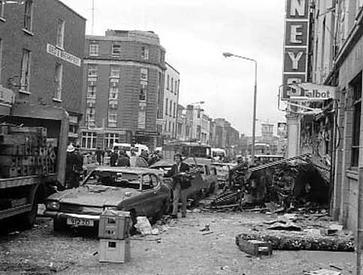
02 August 1979

Paul Reece, Paul (18) nfNI

Status: British Army (BA),

Killed by: Irish Republican Army (IRA)

Killed in land mine attack on British Army (BA) mobile patrol, Cathedral Road, Armagh.

————————————————————–

02 August 1979

Richard Furminger , (19) nfNI

Status: British Army (BA),

Killed by: Irish Republican Army (IRA)

Killed in land mine attack on British Army (BA) mobile patrol, Cathedral Road, Armagh.

————————————————————–

02 August 1979

Derek Davidson, (26)

Protestant

Status: Royal Ulster Constabulary (RUC),

Killed by: Irish Republican Army (IRA)

Shot by sniper when Royal Ulster Constabulary (RUC) patrol lured to scene of bogus robbery, Clondara Street, Falls, Belfast.

————————————————————–

02 August 1981

Kieran Dohert (25)

Catholic

Status: Irish Republican Army (IRA),

Killed by: not known (nk)

Also Teachta Dala. Died on the 73rd day of hunger strike, Long Kesh / Maze Prison, County Down.

————————————————————–

02 August 1981

John Smyth , (34)

Protestant

Status: Royal Ulster Constabulary (RUC),

Killed by: Irish Republican Army (IRA)

Killed in land mine attack on Royal Ulster Constabulary (RUC) mobile patrol, Loughmacrory, near Omagh, County Tyrone.

————————————————————–

02 August 1981

Andrew Wood, (50)

Protestant

Status: Royal Ulster Constabulary (RUC),

Killed by: Irish Republican Army (IRA)

Killed in land mine attack on Royal Ulster Constabulary (RUC) mobile patrol, Loughmacrory, near Omagh, County Tyrone

————————————————————–

02 August 1988

John Warnock, (45)

Protestant

Status: Royal Ulster Constabulary (RUC),

Killed by: Irish Republican Army (IRA)

Killed by booby trap bomb attached to his car outside Lisburn Royal Ulster Constabulary (RUC) base, County Antrim.

————————————————————–

02 August 1988

  Roy  Butler (29)

Protestant

Status: Ulster Defence Regiment (UDR),

Killed by: Irish Republican Army (IRA)

Off duty. Shot while in Park Shopping Centre, Donegall Road, Belfast.

60 Films about the “Troubles “

Below is a comprehensive list of 60 films about the “Troubles” and  Republican/Loyalist paramilitaries . The list includes background information on  the movies and where possible I have incl…

Source: 60 Films about the “Troubles “