Key Events & Deaths on this day in Northern Ireland Troubles
28th November
————————————-
Tueday 28 November 1972
Two members of the IRA were killed in a premature bomb explosion in the Bogside area of Derry. A RUC officer was killed in an IRA rocket attack in Fermanagh. A member of the bomb disposal team of the British Army was killed in Derry.
Wednesday 28 November 1973
Assembly proceedings were halted due to verbal assaults on those who had been named as members of the proposed Executive. The disruption was caused by Loyalists and those opposed to the new Executive. Eventually the meeting of the Assembly had to be adjourned.
Friday 22 November 1974
See Birmingham Bombing
The Irish Republican Army (IRA) denied responsibility for the bombs in Birmingham on 21 November 1974.
Thursday 28 November 1974
The Irish government introduced legislation which would allow people to be tried for offences committed outside the jurisdiction of the Republic of Ireland. Paul Hill was arrested in Southhampton and taken to Guildford for questioning about the bombings on 5 October 1974. [On 29 November 1974 Hill signed a statement admitting his involvement in the Guildford bombing. Hill became the first of the ‘Guildford Four’ to be charged with the bombing.]
Tuesday 28 November 1978
Increase in Number of MPs A Bill was passed in the House of Commons to increase the number of Northern Ireland Members of Parliament (MPs) at Westminster. The number was increase from 12 to 17 seats.
Wednesday 28 November 1979
John Hume succeeded Gerry Fitt as leader of the Social Democratic and Labour Party (SDLP).
Friday 28 November 1986
The Fair Employment Agency (FEA) published a report that concluded that the geographical distribution of government sponsored jobs did not disadvantage Catholics.
Sunday 28 November 1993
Secret Talks Between British and Republicans The nature and extent of a series of secret talks between the British Government and the Republican Movement was revealed by the Observer (a British Newspaper). The report indicated that a secret channel of communication had existed between the British government and the Irish Republican Army (IRA) for three years and the two sides had been in regular contact since February 1993. Patrick Mayhew, then Secretary of State for Northern Ireland, claimed that the Irish Republican Army (IRA) had initiated the contacts with an oral message on 22 February 1993 that stated:
“The conflict is over but we need your advice on how to bring it to a close. We wish to have an unannounced cease-fire in order to hold dialogue leading to peace.”
[Sinn Féin (SF) denied that it had sent the message. The Observer carried a report on 28 June 1998 in which it claimed that Denis Bradley, a former Catholic priest, had acted as a means of contact between the Republican movement and the British and Irish governments over a 20 year period. The report also claimed that Bradley was responsible for the message of 22 February 1993.]
Tuesday 28 November 1995
Joint Communiqué by British and Irish Governments The British and Irish Governments issued a Joint Communiqué stating that: “the two governments have agreed to launch a “twin-track” process to make progress in parallel on the decommissioning issue and on all-party negotiations”. The governments hoped to have all-party negotiations begin by the end of February 1996. They also invited the parties to intensive preparatory talks. The governments also undertook to: “… establish an international body to provide an independent assessment of the decommissioning issue”. [George Mitchell, a former American Senator, was asked to lead this body.]
Thursday 28 November 1996
John Major, then British Prime Minister, replied in the House of Commons to proposals for a new Irish Republican Army (IRA) ceasefire. The proposals were developed during meetings between John Hume, then leader of the Social Democratic and Labour Party (SDLP), and Gerry Adams, then President of Sinn Féin (SF). Essentially the proposals called for the entry of SF into the Stormont talks immediately following an IRA ceasefire. Major rejected the central proposal stating that the British government would make its own assessment of the permanence of any new ceasefire. Ian Paisley, then leader of the Democratic Unionist Party (DUP), warned against any changes to the Act of Succession which forbids any English monarch from marrying a Catholic.
Saturday 28 November 1998
George Mitchell, formerly Chairman of the multi-party talks, held meetings with Northern Ireland political leaders in Belfast. Seamus Mallon, Deputy First Minister designate, spoke of a “distinct possibility” that President Clinton would try to resolve the decommissioning row but added that he had no specific knowledge of the such a move. Peter Robinson, then deputy leader of the Democratic Unionist Party (DUP), addressed the Annual Conference of the DUP and urged members of the Ulster Unionists Party (UUP) to “topple” their leader David Trimble. Robinson went on to say: “Better by far that you topple Trimble now rather than give him time to drag this province step by step to Dublin.” The conference was also addressed by the party leader Ian Paisley.
———————————-
———————————————————————————
Remembering all innocent victims of the Troubles
Today is the anniversary of the death of the following people killed as a results of the conflict in Northern Ireland
“To live in hearts we leave behind is not to die
– Thomas Campbell
To the innocent on the list – Your memory will live forever
– To the Paramilitaries –
There are many things worth living for, a few things worth dying for, but nothing worth killing for.
6 People lost their lives on the 28th November between 1972 – 1983
————————————————————
28 November 1972
Robert Keys, (55)
Protestant Status: Royal Ulster Constabulary (RUC),
Killed by: Irish Republican Army (IRA)
Killed in rocket attack on Belleek Royal Ulster Constabulary (RUC) / British Army (BA) base, County Fermanagh.
————————————————————
28 November 1972
John Brady, (21)
Catholic Status: Irish Republican Army (IRA),
Killed by: Irish Republican Army (IRA)
Died in premature bomb explosion in house, Meenan Drive, Bogside, Derry.
————————————————————
28 November 1972
James Carr, (19)
Catholic Status: Irish Republican Army (IRA),
Killed by: Irish Republican Army (IRA)
Died in premature bomb explosion in house, Meenan Drive, Bogside, Derry.
————————————————————
28 November 1972 Paul Jackson, (21)
nfNI Status: British Army (BA),
Killed by: Irish Republican Army (IRA)
Member of British Army (BA) bomb disposal team. Killed while sitting in British Army (BA) Armoured Personnel Carrier monitoring bomb which exploded, Strand Road, Derry.
————————————————————
28 November 1981
William Coulter, (23)
Protestant Status: Royal Ulster Constabulary (RUC),
Killed by: Irish Republican Army (IRA)
Killed by remote controlled bomb hidden behind fencing while on Royal Ulster Constabulary (RUC) foot patrol, Unity Flats, Peter’s Hill, Belfast.
————————————————————
28 November 1983
Brigid Foster, (77)
Catholic Status: Civilian (Civ),
Killed by: Royal Ulster Constabulary (RUC)
Passerby. Shot shortly after armed robbery at Post Office, Pomeroy, County Tyrone.
Key Events & Deaths on this day in Northern Ireland Troubles
27th November
Thursday 27 November 1969
A Commissioner for Complaints, John Benn, was appointed to deal with matters related to local government and public bodies.
Saturday 27 November 1971
Two Customs officials, Ian Hankin (27) a Protestant and James O’Neill (39) a Catholic, were shot by an Irish Republican Army (IRA) sniper who fired upon a British Army (BA) patrol investigating a bomb attack on a Customs Post near Newry, County Armagh. A British soldier was shot dead in Belfast.
Wednesday 27 November 1974
Roy Jenkins
Roy Jenkins, then British Home Secretary, introduced the Prevention of Terrorism (Temporary Provisions) Bill into the House of Commons, Westminster. One of the provisions of the Bill provided the police with powers to arrest and detain suspected terroristts for up to 48 hours in the first instance, and for up to seven days if the police applied to the Home Secretary for additional time.
The provision also allowed for exclusion orders to be made against people suspected of involvement in terrorism. Jenkins described the provisions in the Bill as “draconian measures unprecedented in peacetime”.
[The Bill became law on 29 November 1974.]
The Irish Republican Army (IRA) carried out two bomb attacks near an Army museum in Tite Street, Chelsea, London. Initially a small bomb exploded in a post office pillar-box at 8.30pm. Approximately 20 minutes later a second, larger bomb, exploded behind a hedge just a short distance away from the first explosion. Twenty people were injured in the second explosion including an explosives officer, six policmen and two ambulance men.
[The tactic of the ‘come-on’ bomb was one which the IRA used on many occasions in Northern Ireland.]
Thursday 27 November 1975
Ross McWhirter (50), who had publicly criticised Irish Republican Army (IRA) violence, was shot dead by the IRA at his home in Village Road, Enfield, London. McWhirter was a founder of the Guinness Book of World Records and had offered a £50,000 reward for the capture of the IRA members responsible for the bombings in London.
Saturday 27 November 1976
The Irish Republican Army (IRA) killed two Catholic civilians in separate booby-trap bomb attacks in Lurgan, County Armagh and Bogside, Derry. The bombs had been intended for the security forces.
The Peace People held a rally in London which was attended by approximately 30,000 people. Republican sympathisers held a small counter demonstration and chanted ‘troops out’.
Thursday 27 November 1980
Humphrey Atkins, then Secretary of State for Northern Ireland, told the House of Commons that there was still no consensus amongst the parties in Northern Ireland and little prospect for a devolved government in the region.
Sunday 27 November 1983
Dominic McGlinchey, believed to be chief of staff of the Irish National Liberation Army (INLA), admitted that his organisation had been involved in the Darkley killings on 20 November 1983
Wednesday 27 November 1985
The House of Commons approved the Anglo-Irish Agreement (AIA) in a vote of 473 votes to 47. During her speech Margaret Thatcher, then British Prime Minister, said that the government would not give way to threats or violence.
Tuesday 27 November 1990
During the Conservative Party leadership contest Margaret Thatcher failed to win outright victory and withdrew from the race. John Major was elected as the new leader of the Conservative Party and the new British Prime Minister.
Wednesday 27 November 1991
Four members of the Irish National Liberation Army (INLA) were arrested outside the home of Laurence Kennedy, then leader of the Northern Ireland Conservative Party.
Saturday 27 November 1993
The Social Democratic and Labour Party (SDLP) held its annual conference in Cookstown, County Tyrone. In his address John Hume, then leader of the SDLP, stated that John Major, then British Prime Minister, held
“the key to peace”.
The Democratic Unionist Party (DUP) held its annual conference at Castlereagh in Belfast. Ian Paisley, then leader of the DUP, told delegates that Northern Ireland faced “the greatest threat to the Union since the Home Rule Crisis”.
Monday 27 November 1995
Catholic Killed in Sectarian Attack Norman Harley (46), a Catholic civilian, was found beaten to death at the Waterworks, off Cavehill Road, Belfast.
[Harley was going through the park to visit his mother when two Protestant men beat him to death with an iron bar before going to a public house. This sectarian killing appears not to have been carried out by Loyalist paramilitaries (McKitterick, 1999; p1383).]
Thursday 27 November 1997
Jack Mahood was shot and injured in his taxi depot in north Belfast.
[The attack was blamed on the Ulster Volunteer Force (UVF). Mahood had been a member of the Progressive Unionist Party (PUP) negotiation team who resigned over differences on matters of policy.]
Friday 27 November 1997
The Northern Ireland Office (NIO) published a list of the main initiatives introduced since the IRA ceasefire of 20 July 1997 to reduce the impact of security measures.
Friday 27 November 1998
British soldiers who were serving in Derry on 30 January 1972 were offered immunity from prosecution when they provide evidence to the Saville inquiry into the events of ‘Bloody Sunday’.
Saturday 27 November 1999
The Ulster Unionist Council (UUC), the policy-making body of the Ulster Unionist Party (UUP), held a meeting in the Waterfront Hall, Belfast, to discuss the Mitchell Review. The Council decided by 480 votes to 349 to back the deal. The decision opened the way for the UUP to enter the power-sharing Executive with Sinn Féin (SF).
The UUC also attached a condition that the Council should meet again in February 2000 “to take a final decision” on the matter. At a press conference after the vote David Trimble, then leader of the Ulster Unionist Party (UUP), said:
“We’ve done our bit. Mr Adams its over to you. We’ve jumped, you follow”.
[It was later revealed that Trimble had lodged a post dated resignation letter with a party official which would come into effect if Irish Republican Army (IRA) decommissioning did not occur.]
The Democratic Unionist Party (DUP) held its annual conference at the La Mon House Hotel near Belfast. During his speech Ian Paisley, then leader of the Democratic Unionist Party (DUP), said that Northern Ireland was facing its gravest crisis and that no unionist should be holding negotiations with the Irish government, the SDLP, or Sinn Féin. He accused the Ulster Unionist Party (UUP) of betrayal and said Trimble was as “much of an enemy of Ulster as the IRA”.
———————-
———————————————————————————
Remembering all innocent victims of the Troubles
Today is the anniversary of the death of the following people killed as a results of the conflict in Northern Ireland
“To live in hearts we leave behind is not to die
– Thomas Campbell
To the innocent on the list – Your memory will live forever
– To the Paramilitaries –
There are many things worth living for, a few things worth dying for, but nothing worth killing for.
11 People lost their lives on the 27th November between 1971 – 1995
————————————————————
27 November 1971 Ian Hankin, (27)
Protestant Status: Civilian (Civ),
Killed by: Irish Republican Army (IRA) Customs official. Shot by snipers firing at British Army (BA) patrol which had just arrived after bomb attack on Killeen Customs Post, near Newry, County Armagh.
————————————————————
27 November 1971 James O’Neill, (39) Catholic Status: Civilian (Civ), Killed by: Irish Republican Army (IRA) Customs official. Shot by snipers firing at British Army (BA) patrol which had just arrived after bomb attack on Killeen Customs Post, near Newry, County Armagh.
————————————————————
27 November 1971 Paul Nicholls, (18)
nfNI Status: British Army (BA),
Killed by: Irish Republican Army (IRA) Shot by sniper while on British Army (BA) foot patrol, St James Crescent, Falls, Belfast.
————————————————————
27 November 1972 Rory Gormley, (14)
Catholic Status: Civilian (Civ),
Killed by: Ulster Volunteer Force (UVF) Shot while travelling in car, junction of Downing Street and Ariel Street, Shankill, Belfast
————————————————————
27 November 1973 Desmond Morgan (18)
Catholic Status: Irish Republican Army (IRA),
Killed by: British Army (BA) Shot during attempted hijacking of vehicle, Coalisland, County Tyrone.
————————————————————
27 November 1975 Ross McWhirter, (50)
nfNIB Status: Civilian (Civ),
Killed by: Irish Republican Army (IRA) Shot at his home, Village Road, Enfield, London.
Killed by: Irish Republican Army (IRA) Killed by booby trap bomb in derelict house, Mary Street, Lurgan, County Armagh. House had been used as British Army (BA) observation post.
————————————————————
27 November 1976 Frank McConnellogue, (46)
Catholic Status: Civilian (Civ),
Killed by: Irish Republican Army (IRA) Killed by booby trap bomb in entry, off Lecky Road, Bogside, Derry.
————————————————————
27 November 1978 Robert Bachelor, (36)
Protestant Status: Ulster Defence Regiment (UDR),
Killed by: Irish Republican Army (IRA) Off duty. Shot just after leaving his workplace, Institution Place, off Durham Street, Belfast.
Key Events & Deaths on this day in Northern Ireland Troubles
26th November
————————————-
Sunday 26 November 1972
There was a bomb explosion at the Film Centre Cinema, in O’Connell Bridge House in Dublin. A late film was being shown and although no one was killed, approximately 40 people required hospital treatment.
The explosion happened at 1.25am and the bomb had been placed outside the rear exit door of the Film Centre Cinema in a laneway connecting Burgh Quay to Leinster Market.
[The ‘Interim Report on the Report of the Independent Commission of Inquiry into the Dublin Bombings of 1972 and 1973’, [PDF; 687KB], concluded that: “… it seems more likely than not that the bombing of the Film Centre Cinema was carried out by republican subversives as a response to a Government ‘crackdown’ on the IRA and their associates”.]
Friday 26 November 1976
Roy Mason, then Secretary of State for Northern Ireland, said that the region might be left behind by ‘the tide of devolution’.
Saturday 26 November 1977
William Craig, then an Member of Parliament (MP), announced that the Vanguard Unionist Progressive Party (VUPP) would cease to exist as a political party as from 25 February 1978.
Sunday 26 November 1978
Albert Miles
Albert Miles, then Deputy Governor of Crumlin Road Prison, was shot dead by the Irish Republican Army (IRA) outside his home in Evelyn Gardens, Belfast. [This was one of a series of attacks on prison officers.]
Tuesday 26 November 1985
In the House of Commons at Westminster a two-day debate on the Anglo-Irish Agreement (AIA) began.
Wednesday 26 November 1986
Ulster Unionist Party (UUP) councillors decided not to resign from district councils in protest at the Anglo-Irish Agreement (AIA). The decision was taken although the leadership of the UUP was in favour of mass resignations. The Standing Advisory Commission on Human Rights (SACHR) recommended that Diplock courts in Northern Ireland should have three judges to hear cases.
However, the Commission did not support calls for a return to jury trials for scheduled (terrorist) offences.
Tuesday 26 November 1996
David Trimble, then leader of the Ulster Unionist Party (UUP), criticised Mary Robinson, then President of the Republic of Ireland, for not following “the proper protocol” when arranging visits to Northern Ireland.
Thursday 26 November 1998
Tony Blair became the first British Prime Minister to address both houses of the Oireachtas (the Irish Parliament) the Dáil and the Seanad. His speech dealt with the Good Friday Agreement and the relationships between Britain and the Republic of Ireland.
Friday 26 November 1999
Ronnie Flanagan, then Chief Constable of the Royal Ulster Constabulary (RUC), said that there was “no intelligence basis” for the view that the Irish Republican Army (IRA) was planning to return to violence.
—————————————–
———————————————————————————
Remembering all innocent victims of the Troubles
Today is the anniversary of the death of the following people killed as a results of the conflict in Northern Ireland
“To live in hearts we leave behind is not to die
– Thomas Campbell
To the innocent on the list – Your memory will live forever
– To the Paramilitaries –
There are many things worth living for, a few things worth dying for, but nothing worth killing for.
6 People lost their lives on the 26th November between 1973 – 1991
————————————————————
26 November 1973 Anthony Braden, (58)
Catholic Status: Civilian (Civ),
Killed by: Irish Republican Army (IRA)
Shot while driving his car along Jamaica Street, Ardoyne, Belfast.
————————————————————
26 November 1974 Thomas Hamilton, (34)
Protestant Status: Civilian (Civ),
Killed by: non-specific Republican group (REP)
Shot at his shop, Duncairn Gardens, Belfast.
————————————————————
26 November 1978
Albert Miles, (50)
Protestant Status: Prison Officer (PO),
Killed by: Irish Republican Army (IRA)
Deputy Governor of Long Kesh / Maze Prison. Off duty. Shot outside his home, Evelyn Gardens, off Cavehill Road, Belfast.
————————————————————
26 November 1980 Norman Donaldson, (59)
Protestant Status: Ulster Defence Regiment (UDR),
Killed by: Irish Republican Army (IRA)
Shot while leaving Royal Ulster Constabulary (RUC) base, Derrygonnelly, County Fermanagh.
————————————————————
26 November 1987 Martin Bryan, (32)
Catholic Status: Irish National Liberation Army (INLA),
Killed by: Garda Siochana (GS)
Shot during gun battle at Garda Vehicle Check Point (VCP), Urlingford, County Kilkenny.
————————————————————
26 November 1991
Kenneth Newell, (30)
Protestant Status: Ulster Defence Regiment (UDR),
Killed by: Irish Republican Army (IRA)
Off duty. Abducted while driving delivery lorry, Crossmaglen, County Armagh. Found shot, near Crossmaglen, County Armagh, on 27 November 1991.
ISIS teenage ‘poster girl’ Samra Kesinovic ‘beaten to death’
Austrian teenage girl Samra Kesinovic has been beaten to death by militants of the Islamic State (ISIS) for trying to escape the group’s de facto capital of Raqqa, local sources reported on Tuesday.
Kesinovic, 17, left Austria with her friend in April 2014 to join the ranks of ISIS in Syria.
“The girl was caught by ISIS female jihadists while trying to escape Raqqa. She was then handed over to the group’s leadership and was subsequently beaten to death,” an informed local source told Kurdish independent agency in Raqqa.
Kesinovic’s friend Sabina Selimovic, who was 15 when she left Austria, was reported dead earlier this year in war-torn Syria.
The parents of both victims are Bosnian refugees based in Austria for nearly two decades, according to reports.
When Kesinovic and Selimovic decided to join ISIS, they had left behind a letter to their parents saying: “Don’t look for us. We will serve Allah… and we will die for him”.
More than 120 people have left Austria to join the ranks of the ISIS extremist group.
——————————————–
Previously the two girls had contacted their families and stated that they wanted to come – Sadly time has run out for them and they have paid the ultimate price for their association with IS
Austrian Teenage IS Girls ‘Want To Return Home’ After Marrying Jihadists And Falling Pregnant.
The act allowed for the establishment of a Commissioner to deal with complaints against local councils and public bodies. The Electoral Law Act (Northern Ireland) became law. The main provision of the act was to make the franchise in local government elections in Northern Ireland the same as that in Britain.
Thursday 25 November 1971
Harold Wilson, then leader of the Labour Party, proposed that Britain should work towards a withdraw from Northern Ireland, with the consent of Protestants, after a period of 15 years. As part of the proposal the Republic of Ireland would rejoin the British Commonwealth. [ Political Developments. ]
Sunday 25 November 1973
Two British soldiers were shot dead by the Irish Republican Army (IRA) in Derry.
Monday 25 November 1974
Roy Jenkins, then British Home Secretary, announced that the Irish Republican Army (IRA) was to be proscribed (declared illegal) in the United Kingdom and further emergency powers would be introduced through legislation. The IRA carried out three bomb attacks in the centre of London. In each case a small bomb with a timer was placed inside a post office pillar-box. The first bomb exploded at 5.50pm in King’s Cross and injured two people. The second bomb exploded at 6.00pm in a pillar-box in Piccadilly Circus injuring 16 people. The final bomb exploded at 6.50pm outside Victoria Station and two people were injured.
Saturday 22 November 1975
Three British soldiers were shot dead in a gun attack on a British Army observation post near Crossmaglen, County Armagh.
Wednesday 25 November 1981
The Irish National Liberation Army (INLA) carried out a bomb attack at a British Army base in Herford, West Germany. There were no injuries in the attack. [ Political Developments.]
Monday 25 November 1985
Unionists lost a High Court action in London during which they sought leave to challenge certain aspects of the Anglo-Irish Agreement (AIA).
Friday 25 November 1988
Patrick Ryan, a Catholic priest arrested for alleged involvement with the Irish Republican Army (IRA), was deported from Brussels directly to the Republic of Ireland.
The Belgian government had earlier refused an extradition request from Britain. The issue caused friction between the Irish and British governments.
Saturday 25 November 1989
The Democratic Unionist Party (DUP) held its annual conference. The DUP decided to contest all ‘safe’ Unionist seats so ending an electoral pact with the Ulster Unionist Party (UUP).
Wednesday 25 November 1992
Pearse Jordan (21), a member of the Irish Republican Army (IRA), was shot dead by members of an undercover Royal Ulster Constabulary (RUC) mobile patrol. Although Jordan was unarmed the RUC claimed that he had just left a ‘bomb-making factory’.
Thursday 25 November 1993
The Irish Times (a Republic of Ireland newspaper) carried a report of an interview with an Irish Republican Army (IRA) spokesperson. The IRA declared that there would be no unilateral cessation of violence.
Saturday 25 November 1995
The Times (a London based newspaper) carried a report that the Irish Republican Army (IRA) had warned its members to prepare for a “return to war” if the deadlock in the peace process was not resolved.
Monday 25 November 1996
Roisin McAliskey, daughter of the former Member of Parliament (MP) Bernadette McAliskey, was detained in prison following a request by German police for her extradition. The charge related to an Irish Republican Army (IRA) mortar attach on the British Army Osnabruck barracks in Germany on 28 June 1996. Roisin was five months pregnant at the time of her arrest.
Tuesday 25 November 1997
There were riots in Loyalist areas of north and west Belfast which were believed to have been sparked by the arrest of a leading Loyalist figure from the Shankill area.
The Northern Ireland Office (NIO) announced that the British Army would end its daytime patrolling of west Belfast.
[The move was welcomed by Nationalists but criticised by Unionists.]
The International Commission on Decommissioning issued an initial report stating that it had “detailed estimates” of the arms held by various paramilitary organisations.
Marjorie (Mo) Mowlam, then Secretary of State for Northern Ireland, issued a set of proposals for the future planning of police requirements. These included proposals for a community police service “which does not have to respond to a terrorist threat”.
Seán Brady, then Catholic Primate of Ireland, held a meeting with the South Armagh Residents and Farmers Association which were campaigning for a reduction in the level of security activity in the area.
Wednesday 25 November 1998
Tony Blair, then British Prime Minister, travelled to Northern Ireland for talks with representatives of the main political parties in the region.
Thursday 25 November 1999
A British Army bomb disposal unit carried out a controlled explosion on a pipe-bomb found in the village of Bushmills, County Antrim. The weapon was believed to have been produced by Loyalist paramilitaries.
In an interview with The Irish Times (a Dublin based newspaper), David Trimble, then leader of the Ulster Unionist Party (UUP), acknowledged Unionist concerns about accepting the Mitchell Review as an open-ended process. He promised his party that its entry into government with Sinn Féin (SF) could be time-limited to ensure decommissioning followed devolution, tied in with the developing role of the Independent International Commission on Decommissioning (IICD).
He criticised the “dirty tricks” of Unionist hardliners over a bogus Sinn Féin (SF) letter to Ulster Unionist Council (UUC) members ahead of the council’s meeting to vote on the Mitchell Review.
The letter purported to come from Gerry Adams and called for a ‘yes’ vote “so we can move forward together to build a new prosperous Ireland. Peter Mandelson, then Secretary of State for Northern Ireland, gave a speech on the theme of ‘Rebuilding Northern Ireland’ to staff and students at Victoria College, Belfast.
Saturday 25 November 2000
A pipe-bomb was defused after it had been left at a side entrance to a Catholic-owned public house in Coleraine. The attack was carried out by Loyalist paramilitaries.
———————————-
———————————————————————————
Remembering all innocent victims of the Troubles
Today is the anniversary of the death of the following people killed as a results of the conflict in Northern Ireland
“To live in hearts we leave behind is not to die
– Thomas Campbell
To the innocent on the list – Your memory will live forever
– To the Paramilitaries –
There are many things worth living for, a few things worth dying for, but nothing worth killing for.
15 People lost their lives on the 25th November between 1973 – 1992
————————————————————
25 November 1973
Heinz Pisarek (30)
nfNI Status: British Army (BA),
Killed by: Irish Republican Army (IRA)
Shot while on British Army (BA) foot patrol, Rossville Flats, Bogside, Derry.
————————————————————
25 November 1973
Joseph Brooks, (20)
nfNI Status: British Army (BA),
Killed by: Irish Republican Army (IRA)
Shot while on British Army (BA) foot patrol, Rossville Flats, Bogside, Derry.
————————————————————
25 November 1974
James Murdock, (55)
Protestant Status: Civilian (Civ),
Killed by: non-specific Republican group (REP)
Shot from passing car at the junction of Bray Street and Rathlin Street, Shankill, Belfast
————————————————————
25 November 1974 John Ramsey, (35)
Protestant Status: Civilian (Civ),
Killed by: Ulster Defence Association (UDA)
Shot shortly after leaving his workplace, Ewart’s Mill, Crumlin Road, Belfast. Assumed to be a Catholic.
————————————————————
25 November 1974
Patrick Cherry, (36)
Catholic Status: Civilian (Civ),
Killed by: non-specific Loyalist group (LOY)
Shot while sitting in stationary car, waiting to pick up workmate, Portaferry Road, Newtownards, County Down.
————————————————————
25 November 1975
Francis Crossan, (34)
Catholic Status: Civilian (Civ),
Killed by: Ulster Volunteer Force (UVF)
Abducted while walking along Library Street, off Royal Avenue, Belfast. Found stabbed to death several hours later in entry off Bisley Street, Shankill, Belfast.
————————————————————
25 November 1975
Patrick Maxwell, (36)
Catholic Status: Royal Ulster Constabulary (RUC),
Killed by: Irish Republican Army (IRA)
Shot by snipers while on Royal Ulster Constabulary (RUC) mobile patrol, Clonavaddy, near Ballygawley, County Tyrone.
————————————————————
25 November 1975
Samuel Clarke, (35)
Protestant Status: Royal Ulster Constabulary (RUC),
Killed by: Irish Republican Army (IRA)
Shot by snipers while on Royal Ulster Constabulary (RUC) mobile patrol, Clonavaddy, near Ballygawley, County Tyrone.
————————————————————
25 November 1975 Robert Stott, (22)
Protestant Status: Ulster Defence Regiment (UDR),
Killed by: Irish Republican Army (IRA)
Off duty. Shot outside his home, The Fountain, Derry.
————————————————————
25 November 1976 James Loughrey, (35)
Catholic Status: Civilian (Civ),
Killed by: Ulster Freedom Fighters (UFF)
Died eleven days after being shot at his home, Greysteel, County Derry. He was wounded on 14 November 1976.
————————————————————
25 November 1976 Andrew Crocker, (18)
nfNI Status: British Army (BA),
Killed by: Irish National Liberation Army (INLA)
Shot when British Army (BA) foot patrol arrived at scene of armed robbery, Monagh Post Office, Turf Lodge, Belfast.
————————————————————
25 November 1981
Angela D’Arcy, (25)
Catholic Status: Civilian (Civ),
Killed by: British Army (BA)
Shot by off duty British Army (BA) member, while walking along Middletown Street, Enniskillen, County Fermanagh.
————————————————————
25 November 1983
Daniel Rouse, (51)
Catholic Status: Civilian (Civ),
Killed by: non-specific Loyalist group (LOY)
Beaten to death, while walking along Old Portadown Road, Lurgan, County Armagh.
————————————————————
25 November 1991 James McCaffrey, (48)
Catholic Status: Civilian (Civ),
Killed by: Ulster Freedom Fighters (UFF)
Takeaway delivery driver. Shot shortly after leaving Chinese takeaway, Candahar Street, Ballynafeigh, Belfast.
————————————————————
25 November 1992
Pearce Jordan, (21)
Catholic Status: Irish Republican Army (IRA),
Killed by: Royal Ulster Constabulary (RUC)
Shot, immediately after being stopped by undercover Royal Ulster Constabulary (RUC) mobile patrol, while driving car along Falls Road, Belfast.
“greatest player to ever pull on the green shirt of Northern Ireland”
George Best: Top 10 Goals
Born and brought up in Belfast, Best began his club career in England with Manchester United, with the scout who had spotted his talent at the age of 15 sending a telegram to manager Matt Busby which read: “I think I’ve found you a genius.” He went on to see success with United, scoring 179 goals from 470 appearances over 11 years, and was the club’s top goalscorer in the league for five consecutive seasons.
One of the greatest dribblers of all time, his playing style combined pace, skill, balance, feints, two-footedness, goalscoring and the ability to beat defenders.
Best unexpectedly quit United relatively early in 1974 at age 27, but returned to football for a number of clubs around the world in short spells, until finally retiring in 1983, age 37. In international football, he was an automatic choice when fit, being capped 37 times and scoring nine goals from 1964 to 1977, although a combination of the team’s performance and his lack of fitness in 1982 never allowed his talent to be displayed in the finals of a European Championship or World Cup.
Such was Best’s talent and charisma that he became one of the first celebrity footballers, earning the nickname “El Beatle“, but his subsequent extravagant lifestyle led to various problems, most notably alcoholism, which he suffered from for the rest of his life. These problems affected him on and off the field throughout his career, at times causing controversy.
He often said of his career that:
“I spent a lot of money on booze, birds and fast cars – the rest I just squandered”.
After football he spent some time as a pundit, but his financial and health problems continued into his retirement. He died in 2005, age 59, due to complications from the immunosuppressive drugs he needed to take after being controversially granted an NHSliver transplant in 2002.
Best was married twice, to two former models, Angie Best and then Alex Best. His son Calum Best was born in 1981 from his first marriage.
Before he died, Best was voted 16th in the IFFHSWorld Player of the Century election in 1999 and was one of the inaugural 22 inductees into the English Football Hall of Fame in 2002; in 2004 he was also voted 19th in the public UEFA Golden Jubilee Poll and was named in the FIFA 100 list of the world’s greatest living players. Former Brazilian footballer Pelé, considered by many as the world’s greatest, admired Best, stating,
“George Best was the greatest player in the world”, later adding that Best was “an unbelievable player.”
Best was once quoted as saying, “Pelé called me the greatest footballer in the world. That is the ultimate salute to my life.” After his death, on what would have been his 60th birthday, Belfast City Airport was renamed the George Best Belfast City Airport. According to the BBC, Best was remembered by mourners at his public funeral held in Belfast as “the beautiful boy” [with a] “beautiful game”.
Early years and family
Football George Best Early Life
George Best was the first child of Dickie Best (1919–2008) and Anne Best (née Withers; 1922–1978). He grew up in Cregagh, east Belfast. Best was brought up in the Free Presbyterian faith. His father was a member of the Orange Order and as a boy George carried the strings of the banner in his local Cregagh lodge. In his autobiography, Best mentioned how important the order was to his family.
Best had four sisters, Carol, Barbara, Julie and Grace, and one brother, Ian (Ian Busby Best). Best’s father died on 16 April 2008, at the age of 88, in the Ulster Hospital in Dundonald, Northern Ireland.
Best’s mother Anne died from alcoholism-related cardiovascular disease in 1978, at the age of 55.
In 1957, at the age of 11, the academically gifted Best passed the 11 plus and went to Grosvenor High School, but he soon played truant as the school specialised in rugby. Best then moved to Lisnasharragh Secondary School, reuniting him with friends from primary school and allowing him to focus on football. He grew up supporting Glentoran and Wolverhampton Wanderers.
Club career
Manchester United
There’s Only One George Best
At the age of 15, Best was discovered in Belfast by Manchester United scout Bob Bishop, whose telegram to United manager Matt Busby read:
“I think I’ve found you a genius.”
His local club Glentoran had previously rejected him for being “too small and light”.
Best was subsequently given a trial and signed up by United’s chief scout Joe Armstrong. His first time moving to the club, Best quickly became homesick and stayed for only two days before going back home to Northern Ireland.
He returned to Manchester and spent two years as an amateur, as English clubs were not allowed to take Northern Irish players on as apprentices. He was given a job as an errand boy on the Manchester Ship Canal, allowing him to train with the club twice a week.
Best made his First Division debut, aged 17, on 14 September 1963 against West Bromwich Albion at Old Trafford in a 1–0 victory. He then dropped back into the reserves, before scoring his first goal for the first team in his second appearance in a 5–1 win over Burnley on 28 December.
Manager Matt Busby then kept Best in the team, and by the end of the 1963–64 season, he had made 26 appearances, scoring six goals. Manchester United finished second, four points behind Liverpool. They also reached the semi-finals of the FA Cup, where a defeat to West Ham United cost Best the chance to break a record; in the finalPreston North End‘s Howard Kendall became the youngest ever player in a FA Cup Final – he shared the same birthday as Best.
Though opponents would often use rough play to try to stifle his technical ability, Busby ensured that “fierce, sometimes brutal” training sessions left Best well used to coping with tough challenges. In the 1964–65 season, his first full season as a first team regular, Best helped Manchester United to claim the league title.
A 1–0 victory at Elland Road proved decisive as the title race came down to goal average between the “Red Devils” and bitter rivalsLeeds United; Leeds did manage to gain some measure of revenge though by knocking Manchester United out of the FA Cup at the semi-final stage. Over the course of the campaign Best contributed 14 goals in 59 competitive games.
The rising star of English football, Best was catapulted to superstar status at the age of 19 when he scored two goals in a European Cup quarter-final match against Benfica at the Estádio da Luz on 9 March 1966.The Portuguese media dubbed him “O Quinto Beatle“, “the fifth Beatle” in English, and on the team’s return to England Best was photographed in his new sombrero with the headline, “El Beatle”.
His talent and showmanship made him a crowd and media favourite, and he went from being headline news in the back pages to the front pages. Other nicknames included the “Belfast Boy”, and he was often referred to as Georgie, or Geordie in his native Belfast. However United failed to win any major honours in the 1965–66 season, and Best was injured from 26 March onwards with a twisted knee following a bad tackle from a Preston North End player.
However United staff claimed it was light ligament damage so as to keep Best on the field for the rest of the campaign . He had little faith in the United medical staff, and so he secretly saw Glentoran’s physiotherapist, who readjusted his ligaments in a painful procedure.
His last game of the season, his knee strapped-up, came on 13 April, and ended in a 2–0 defeat to Partizan Belgrade at Partizan Stadium.
The 1966–67 season was again successful, as Manchester United claimed the league title by four points. Best stated that:
“if the championship was decided on home games we would win it every season. This time our away games made the difference. We got into the right frame of mind.”
An ever-present all season long, he scored ten goals in 45 games. He then helped the “Red Devils” to share the Charity Shield with a 3–3 draw with FA Cup winners Tottenham Hotspur; it was the first game to be broadcast in colour on British television.
Best scored twice against rivalsLiverpool in a 2–0 win at Anfield, and also claimed a hat-trick over Newcastle United in a 6–0 home win on the penultimate league game of the season. However a home defeat to hated local rivalsManchester City proved costly, as City claimed the league title with a two-point lead over United. Yet the 1967–68 season would be remembered by United fans for the European Cup win.
After disposing of MalteseHibernians, United advanced past Yugoslavian Sarajevo with a 2–1 home win – Best assisted John Aston for the first and scored the second himself, and was described as Geoffrey Green of The Times as “the centrepiece of the chessboard … a player full of fantasy; a player who lent magic to what might have been whimsy”.
In the quarter-finals United advanced past Polish club Górnik Zabrze 2–1 on aggregate, having held on to their aggregate lead in freezing temperatures in front of 105,000 at Silesian Stadium; despite losing the away tie 1–0, Best described the defeat as:
“one of our best-ever performances, given all the unwelcome circumstances”
Facing six times champions Real Madrid in the semi-finals, Best scored the only goal of the home fixture with a 15-yard strike that Alex Stepney described as one of Best’s finest goals. In the tie at the Bernabéu, Best was marked effectively by Manuel Sanchís Martínez, but on the one time Best got the better of him he made a telling cross to Bill Foulkes, who calmly found the net to level the game at 3–3 and to win the aggregate tie 4–3.
Days after returning to England, as the First Division’s joint top-scorer (level on 28 goals with Southampton‘s Ron Davies) Best was presented with the FWA Footballer of the Year award, becoming the youngest ever recipient of the award. Facing United in the European Cup Final at Wembley were Benfica; whilst his teammates rested, Best found “a novel way to relax” before the big game by sleeping with “a particular young lady called Sue”
The game went into extra-time, and just three minutes into extra-time Best went on a mazy run and beat goalkeeper José Henrique with a dummy, before rolling the ball into the net; two further goals from Brian Kidd and Bobby Charlton settled the tie at 4–1.
The victory was not only the pinnacle of Best’s career, but arguably Manchester United’s greatest achievement, considering the Munich air disaster had wiped out most of the Busby Babes just ten years previously.
Best also won the Ballon d’Or in 1968 after receiving more votes than Bobby Charlton, Dragan Džajić and Franz Beckenbauer. This meant that he had won the three major honours in club football at the age of just 22 (the league title, European Cup, and European Player of the Year award). After this, his steady decline began.
“It seems impossible to hurt him. All manner of men have tried to intimidate him. Best merely glides along, riding tackles and brushing giants aside like leaves.”
The ‘holy trinity‘ of Best, Law and Charlton remained effective as ever in the 1968–69 campaign. However the club’s new recruits were not up to scratch, as United dropped to 11th in the league before Busby announced his retirement. Best later said that:
“I increasingly had the feeling that I was carrying the team at times on the pitch.”
He scored 22 goals in 55 games, though only he and Denis Law scored more than six league goals. In the Intercontinental Cup, fans and players alike looked forward to seeing United take on Argentine opposition Estudiantes de La Plata over the course of two legs. However Best said “no one tackled harder or dirtier than this Argentinian team” as a 1–0 defeat at the Estadio Camilo Cichero was followed by a 1–1 draw at Old Trafford.
In the home tie, Best was kicked and spat on by José Hugo Medina, and both players were sent off after Best reacted with a punch.
Despite their poor league form, United managed to reach the semi-finals of the European Cup (they had a relatively easy run in getting past Ireland‘s Waterford United, Belgium‘s Anderlecht, and Austria‘s Rapid Wien) where they were knocked out 2–1 on aggregate by A.C. Milan following a 2–0 defeat at the San Siro; Milan goalkeeper Fabio Cudicini was the hero after keeping United to only one goal at Old Trafford.
“It’s been a joke on the circuit ever since. You know, I’m on one side of the street, George Best is on the other. He nods to me and I dive under a bus.”
— Northampton goalkeeper Kim Book laughs about the jibes he has faced since being fooled by Best’s feint in the 1970 FA Cup game against Manchester United.
United improved slightly under new boss Wilf McGuinness, but still only managed an eighth-place finish in the 1969–70 season. Best hit 23 goals, including an FA Cup record six goals in an 8–2 win over Northampton Town in a mud-bath at the County Ground on 7 February 1970.
Best’s sixth goal saw him go one on one with Northampton goalkeeper Kim Book. Best made a feint to go right which put Book on his backside, before he went left and walked the ball into the net.
Of the goal Book said:
“I remember thinking George was going to go one way, but he dropped his shoulder and went the other, and by then I was already on the deck. He was just too good for me.”
Best’s six goal performance earned him an invitation to No 10 Downing Street from UK Prime Minister Harold Wilson, who had also regularly written fan letters to him.[47] In 2002 the British public voted Best’s record breaking performance #26 in the list of the 100 Greatest Sporting Moments.
Busby returned as manager in December 1970, though the 1970–71 season also ended without a trophy. Best began to get into trouble with his discipline: he was fined by the Football Association for receiving three yellow cards for misconduct, and he was suspended by United for two weeks after missing his train to Stamford Bridge so as to spend a weekend with actress Sinéad Cusack.
However he was also sent off against Chelsea, was the subject of death threats, and failed to turn up for training for a whole week in January as he instead spent his time with Miss Great Britain 1971, Carolyn Moore.
On 17 November, he was the subject of Eamonn Andrews‘s This Is Your Life when he was surprised at a central London restaurant. He would be the subject for a second time in 2003 when Michael Aspel surprised him at Teddington Studios. With 27 goals in 54 appearances, Best finished as the club’s top-scorer for the sixth – and final – consecutive season. Best then announced his retirement from football, but nevertheless turned up for pre-season training, and continued to play.
United’s decline continued in the 1972–73 season, as Best was part of the ‘old guard clique’ that barely talked to the newer, less talented players. Frustrated with the club’s decline, Best went missing in December to party at the London nightclubs.
He was suspended, and transfer-listed at a value of £300,000. After O’Farrell was replaced as manager by Tommy Docherty, Best announced his retirement for a second time.
He resumed training on 27 April.
Best’s last competitive game for the club was on 1 January 1974 against Queens Park Rangers at Loftus Road, which United lost 3–0.
He failed to turn up for training three days later and was dropped by Docherty, though he claimed Docherty was deceitful with him.
Best was arrested and charged with stealing a fur coat, passport, and cheque book from Marjorie Wallace, but was later cleared of all charges. United went on to suffer relegation into the Second Division in 1973–74.
Best played at United when shirt numbers were assigned to positions, and not the player. When Best played at right wing, as he famously did during the later stages of the 1966 and 1968 European Cups, he donned the number 7. As a left winger, where he played exclusively in his debut season and nearly all of the 1971–72 campaign, he wore the number 11. Best wore the number 8 shirt at inside right on occasion throughout the 1960s, but for more than half of his matches during 1970–71.
He was playing at inside left (wearing the number 10) in 1972 when he famously walked out on United the first time but was back in the number 11 for the autumn of 1973 before leaving for good. Best even wore the number 9 jersey once for United, with Bobby Charlton injured, on 22 March 1969 at Old Trafford, scoring the only goal in a 1–0 win over Sheffield Wednesday.
In total Best made 470 appearances for Manchester United in all competitions from 1963 to 1974, and scored 179 goals. Over the next decade he went into an increasingly rapid decline, drifting between several clubs, including spells in South Africa, Ireland, the United States, Scotland, and Australia.
Later years
Best in 1976.
Playing only five competitive matches for Jewish Guild in South Africa, Best endured criticism for missing several training sessions. During his short time there, he was the main draw attracting thousands of spectators to the matches.
Best had a brief spell at Cork Celtic in December 1975 and January 1976. He made his League of Ireland debut against Drogheda United at Flower Lodge on 28 December. He played only three league games, the others against Bohemians and Shelbourne, but despite attracting big crowds he failed to score or impress. Being on a rolling contract with Cork his failure to show for a game saw him being dropped and subsequently leaving the club.
He had a brief resurgence in form with Second Division club Fulham in 1976–77, showing that, although he had lost some of his pace, he retained his skills. His time with the “Cottagers” is particularly remembered for a match against Hereford United on 25 September 1976 in which he tackled his own teammate, and old drinking mate, Rodney Marsh. Best stated later in life that he enjoyed his time most while at Craven Cottage, despite not winning any honours.
Best played for three clubs in the United States: Los Angeles Aztecs, Fort Lauderdale Strikers and later San Jose Earthquakes; he also played for the Detroit Express on a European tour. Best revelled in the anonymity the United States afforded him after England and was a success on the field, scoring 15 goals in 24 games in his first season with the Aztecs and named as the NASL’s best midfielder in his second.
He and manager Ken Adam opened “Bestie’s Beach Club” (now called “The Underground” after the London subway system) in Hermosa Beach, California in the 1970s, and continued to operate it until the 1990s.
Best caused a stir when he returned to the UK to play for the Scottish club Hibernian.
The club was suffering a decline in fortunes and was heading for relegation from the Premier Division, before Best was signed on a “pay per play” basis after the club chairman, Tom Hart, received a tip-off from an Edinburgh Evening News reporter that he was available.
Even though Best failed to save Hibs from relegation, gates increased dramatically, and the attendance quadrupled for his first match at Easter Road.
One infamous incident saw Best initially sacked by Hibs after he went on a massive drinking session with the French rugby team, who were in Edinburgh to play Scotland.
He was brought back a week later. In August 1982, he played 20 minutes for Scone Thistle against Scone Amateurs; the appearance fee he received helped to pay off an income tax bill.
Best in 1982.
He returned to the USA to play for the San Jose Earthquakes in what was officially described as a “loan”, though he only managed a handful of appearances for Hibs in the First Division in the following season.
In his third season in the States, Best scored once in 12 appearances. His moves to Fort Lauderdale and San Jose were also unhappy, as his off-field demons began to take control of his life again. After failing to agree terms with Bolton Wanderers in 1981, he was invited as a guest player and played three matches for two Hong Kong First Division teams (Sea Bee and Rangers) in 1982.
In late 1982, Bournemouth manager Don Megson signed the 36-year-old Best for the Third Division side, and he remained there until the end of the 1982–83 season, when he retired from football at the age of 37.
He also was a guest player for an exhibition match between Dee Why Football Club and Manly Warringah held on 27 July 1983; Dee Why won the match 2–1, with Best having scored the winning goal.
On 8 August 1988, a testimonial match was held for Best at Windsor Park. Among the crowd were Sir Matt Busby, Jimmy Murphy, and Bob Bishop, the scout who discovered Best, while those playing included Osvaldo Ardiles, Pat Jennings and Liam Brady. Best scored twice, one goal from outside the box, the other from the penalty spot.
International career
“George Best was one of the most talented players of all time and probably the best footballer who never made it to a major world final.”
On 15 May 1971, Best scored possibly the most famous “goal” of his career at Windsor Park in Belfast against England. As Gordon Banks, the English goalkeeper, released the ball in the air in order to kick the ball downfield, Best managed to kick the ball first, which sent the ball high over their heads and heading towards the open goal.
Best outpaced Banks and headed the ball into the empty goal, but, although legal, the goal was disallowed by referee Alistair Mackenzie.
Best continued to be selected for Northern Ireland throughout the 1970s, despite his fluctuating form and off pitch problems. Dutch captain Johan Cruyff commented:
“What he [Best] had was unique, you can’t coach it”.
Best was considered briefly by manager Billy Bingham for the 1982 World Cup but, at the age of 36, with his football skills dulled by age and drink (and five years having passed since his last cap), he was not selected for the Northern Ireland squad.
A proponent of a United Ireland football team, in 2005 Best stated:
“I’ve always thought that at any given time both the Republic and Northern Ireland have had some great world-class players. I still hope that in my lifetime it happens.”
Personal life
During his early years at Old Trafford, Best was a shy teenager who passed his free time in snooker halls.
However he later became known for his long hair, good looks and extravagant celebrity lifestyle, and appeared on Top of the Pops in 1965.
He opened a nightclub called Slack Alice on Bootle Street in Manchester in 1973 and owned restaurants in the city including Oscars, on the site of the old Waldorf Hotel.
He also owned fashion boutiques, in partnership with Mike Summerbee. Best’s cousin Gary Reid, a member of the Ulster Defence Association, was killed in 1974 during an episode of serious rioting in east Belfast.
“In 1969 I gave up women and alcohol – it was the worst 20 minutes of my life.”
— Best quips on his lifestyle.
Best married Angela MacDonald-Janes on 24 January 1978 at Candlelight Wedding Chapel in Las Vegas, having met in the United States when Best was playing for the Los Angeles Aztecs. Their son, Calum, was born in 1981, but they separated the following year and divorced in 1986.
His niece by marriage is actress Samantha Janus, who is the daughter of Angie MacDonald-Janes’ brother.
He married Alex Pursey in 1995 in Kensington and Chelsea, London. They divorced in 2004; they had no children. In 2004 she alleged that Best was violent towards her during their marriage, an issue that was, in fact, covered in Best’s authorised 1998 biography “Bestie” in which Alex claimed that Best punched her in the face on more than one occasion.
Earlier in the book it is revealed that he struck another of his girlfriends at least once and was arrested and charged with assault on a waitress, Stevie Sloniecka, in November 1972, when he fractured her nose in Reuben’s nightclub, Manchester.
He was successfully defended when the case reached court in January 1973 by barrister George Carman QC, a close drinking companion of Best, as acknowledged in his book, Scoring at Half Time.
In the late 1960s and early 1970s, while at the peak of his career, Best advertised Cookstown Sausages on television with the phrase “the Best family sausages”. In 2007 a memorial plaque was placed outside the pork factory in the County Tyrone town.
When Best played football, salaries were a fraction of what top players earn today but, with his pop star image and celebrity status, Best still earned a tidy fortune. He lost almost all of it. When asked what happened to the money he had earned, Best quipped:
‘I spent a lot of money on booze, birds (women) and fast cars. The rest I just squandered.’
Alcoholism
“I was born with a great gift, and sometimes with that comes a destructive streak. Just as I wanted to outdo everyone when I played, I had to outdo everyone when we were out on the town.”
— Best on his excesses off the field.
Best suffered from alcoholism for most of his adult life, leading to numerous controversies and, eventually, his death. In 1981, while playing in the United States, Best stole money from the handbag of a woman he did not know in order to fund a drinking session.
“We were sitting in a bar on the beach, and when she got up to go to the toilet I leaned over and took all the money she had in her bag.”
In 1984, Best received a three-month prison sentence for drunk driving, assaulting a police officer and failing to answer bail. He spent Christmas of 1984 behind bars at Ford Open Prison. Contrary to popular belief and urban legend he never played football for the prison team.
In September 1990, Best appeared on the primetime BBC chat show Wogan in which he was heavily drunk and swore, at one point saying to the host, “Terry, I like screwing”.
He later apologised and said this was one of the worst episodes of his alcoholism.
Best was diagnosed with severe liver damage in March 2000.
In 2001, he was admitted to hospital with pneumonia. In August 2002, he had a successful liver transplant at King’s College Hospital in London. The transplant was performed at public expense on the NHS, a decision which was controversial due to Best’s alcoholism. The controversy was reignited in 2003 when he was spotted openly drinking white winespritzers.
On 2 February 2004, Best was convicted of another drink-driving offence and banned from driving for 20 months.
Graffiti honouring Best like this one in the New Lodge area appeared all over Belfast after his death.
Best continued to drink, and was sometimes seen at his local pub in Surbiton, Southwest London. On 3 October 2005, Best was admitted to intensive care at the private Cromwell Hospital in London, suffering from a kidney infection caused by the side effects of immuno-suppressive drugs used to prevent his body from rejecting his transplanted liver.
On 27 October, newspapers stated that Best was close to death and had sent a farewell message to his loved ones. Close friends in the game visited his bedside to make their farewells, including Rodney Marsh, and the two other members of the “United Trinity”, Bobby Charlton and Denis Law.
On 20 November the British tabloid News of the World published a picture of Best at his own request, showing him in his hospital bed, along with a warning about the dangers of alcohol with his message:
“Don’t die like me”.
In the early hours of 25 November 2005, treatment was stopped; later that day he died, aged 59, as a result of a lung infection and multiple organ failure.
Tributes were paid to Best from around the world, including from arguably the three greatest football players ever, Pelé, Diego Maradona and Johan Cruyff. Maradona commented:
“George inspired me when I was young. He was flamboyant and exciting and able to inspire his team-mates. I actually think we were very similar players – dribblers who were able to create moments of magic.”
Famous for his quotations, fellow Manchester United legend Eric Cantona gave a eulogy to Best:
“I would love him to save me a place in his team, George Best that is, not God.”
The Premier League announced that a minute’s silence would be observed before all Premier League games to be held over the weekend of his death; however at many grounds a minute’s applause broke out in his honour.
The first match at Old Trafford after Best’s death was a League Cup tie against West Bromwich Albion, the club against which he made his début for Manchester United in 1963.
The match, which United won, was preceded by tributes from former team-mate Sir Bobby Charlton. Best’s son Calum and former team-mates, surviving members from the West Brom team which he played against in his début, all joined the current United squad on the pitch for a minute’s silence, during which fans in every seat held aloft pictures of Best, which were given out before the match.
Funeral
His body left the family home at Cregagh Road, East Belfast, shortly after 10:00 UTC on Saturday, 3 December 2005. The cortege then travelled the short distance to Stormont. The route was lined with around 100,000 mourners. Former Northern Ireland manager Billy Bingham, international team-mates Derek Dougan, Peter McParland, Harry Gregg, Gerry Armstrong and Denis Law were the first to carry the coffin to the base of the Stormont steps.
There was an 11 am service in the Grand Hall attended by 300 invited guests relayed to around 25,000 mourners inside the grounds of Stormont. Best’s brother Ian, agent Phil Hughes, Dr Akeel Alisa, who treated Best, and his brothers-in-law Norman McNarry and Alan McPherson, were also pallbearers.
As the cortege left Stormont, the Gilnahirk pipe band played. The funeral was live on several television stations including BBC One. Afterward, Best was cremated, and his ashes were interred beside his mother Annie Elizabeth Kelly in a private ceremony at the hill-top Roselawn Cemetery, overlooking east Belfast.
Memorials
Following his death, the George Best Belfast City Airport was named after him.
Belfast City Airport was renamed George Best Belfast City Airport as a tribute to Best. The official new name and signage was unveiled to a gathering of the Best family and friends at the airport on 22 May 2006, which would have been his 60th birthday.
Public opinion in Northern Ireland about the renaming of the airport was divided, with one poll showing 52% in favour and 48% against.[105]Democratic Unionist Party (DUP) deputy leader and East Belfast Member of Parliament Peter Robinson, in whose constituency Belfast City airport is situated, stated that his preference was a sports stadium be named after Best.
“With feet as sensitive as a pickpocket’s hands, his control of the ball under the most violent pressure was astonishing. The bewildering repertoire of feints and swerves… and balance that would have made Isaac Newton decide he might as well have eaten the apple.”
In March 2006, the airline Flybe named a Dash 8 (Q400) plane The George Best. The aircraft was later used to carry Best’s family across to the Manchester memorial service for Best.
In June 2006, Sarah Fabergé, great-granddaughter of Russian Imperial Jeweller Peter Carl Fabergé, was commissioned to create the George Best Egg, in tribute. A strictly limited edition of 68 eggs were produced, with all profits from the sale of the eggs going to the George Best Foundation, which promotes health through sport and supports people with alcohol and drug problems.
The first egg is on display at the George Best Airport.
For the first anniversary of his death, Ulster Bank issued one million commemorative five pound notes. The notes sold out in five days. The notes sold on the online auction site eBay for up to £30.
In December 2006 the George Best Memorial Trust launched a fund-raising drive to raise £200,000 in subscriptions to pay for a life-size bronze sculpture of George Best. By 2008 the money had still not been raised until a local developer, Doug Elliott, announced on 29 January 2008, that he would put up the rest of the money and would manage delivery of the project.
Key Events & Deaths on this day in Northern Ireland Troubles
24th November
————————————-
Monday 24 November 1971
A woman was killed when members of the Irish Republican Army (IRA) carried out an attack on British soldiers in Strabane, County Tyrone. A British Army (BA) bomb-disposal specialist was killed by a bomb in Lurgan, County Armagh.
Friday 24 November 1972
Jack Lynch, then Taoiseach (Irish Prime Minister), met Edward Heath, then British Prime Minister, in London to give Irish approval to Attlee’s paper that said new arrangements should be ‘acceptable to and accepted by the Republic of Ireland.’
Wednesday 24 November 1982
‘Shoot to Kill’ Allegation Michael Tighe (17), a Catholic civilian, was shot dead by an undercover Royal Ulster Constabulary (RUC) unit at a farm in Derrymacash, near Lurgan, County Armagh.
Martin McCauley, a Catholic civilian, was shot and seriously injured in the same incident. Police officers said the two men were armed and they issued a warning before opening fire. McCauley denied that he and Tighe had been armed and said the police opened fire without warning. The police fired 47 shots but none were fired at them.
[The hayshed where the shooting occurred was being used by the Irish Republican Army (IRA) to store weapons and it was believed that the young men had discovered the arms by accident. This shooting, following on from the shooting on 11 November 1982, convinced many Nationalists that the security forces were operating a ‘shoot to kill’ policy.]
[Three years after the incident McCauley was convicted of the possession of three rifles found inside the shed. On 20 May 2014 the Court of Appeal ruled that the conviction was unsafe and was therefore quashed.] There was a General Election in the Republic of Ireland. [When the count was finished a new coalition government of Fine Gael (FG) and the Irish Labour party was elected. Garret FitzGerald became the new Taoiseach (Irish Prime Minister).]
Thursday 24 November 1983
Don Tidey, an American supermarket executive, was kidnapped by the Irish Republican Army (IRA). The kidnap took place in Rathfarnham, County Dublin, Republic of Ireland. [Tidey was rescued on 16 December 1983.]
Saturday 24 November 1990
The Democratic Unionist Party (DUP) held their annual conference. The Apprentice Boys of Derry rejected £277,500 from the International Fund for Ireland to cover part of the costs of a heritage centre.
Sunday 24 November 1991
Explosion Inside Crumlin Prison Two Loyalist paramilitary prisoners were killed by an explosion inside Crumlin Road Prison in Belfast. The explosives had been smuggled into the prison, and fabricated into a bomb, by Republican paramilitary prisoners.
Wednesday 24 November 1993
A consignment of arms that was being shipped to the Ulster Volunteer Force (UVF) was intercepted by British police at Teesport, England. The arms contained 300 assault rifles, thousands of bullets, 4,400 pounds of explosives, and detonators, and had originated in Poland. Representatives of the Democratic Unionist Party (DUP) held a meeting at Downing Street, London, with John Major, then British Prime Minister.
Thursday 24 November 1994
The two government ministers responsible for tourism in Northern Ireland and the Republic of Ireland launched a joint marketing initiative.
Friday 24 November 1995
There was a referendum in the Republic of Ireland on a change to the constitution. There was a narrow majority, 50.2 per cent, in favour of the right to divorce.
Suday 24 November 1996
A planned march by the Orange Order through the Catholic village of Dunloy was stopped by the Royal Ulster Constabulary (RUC). Following this RUC decision Loyalists resumed their weekly picket of the Catholic church in Harryville, Ballymena.
Monday 24 November 1997
Marjorie (Mo) Mowlam, then Secretary of State for Northern Ireland, gave a press conference in Stormont, Belfast, and told journalists that she would like to see “more direct communication between Sinn Féin [SF] and the UUP”
Ian Paisley, then leader of the Democratic Unionist Party (DUP), went to Downing Street, London, for a meeting with Tony Blair, then British Prime Minister. Paisley criticised Blair for making concessions to SF and said that the peace process and the Irish Republican Army (IRA) ceasefire were both “a sham
Wednesday 24 November 1999
Peter Mandelson, then Secretary of State for Northern Ireland, speaking in the House of Commons, Westminster, criticised the Democratic Unionist Party (DUP) and accused the party of “breathtaking hypocrisy” for being prepared to take up its two seats on the proposed Executive but not having contributed to the Mitchell Review of the Agreement.
All 860 members of the Ulster Unionist Council (UUC) were sent a letter signed by James Molyneaux, former leader of the Ulster Unionist Party (UUP), and Robert Salters, then Grand Master of the Orange Order, urging them to vote against the proposed deal on 27 November 1999. Gerry Adams, then President of Sinn Féin (SF), gave an address to a special meeting of the SF Ard Chomhairle in Dublin and told those present that the proposals from the Mitchell Review were “the historic compromise between Nationalism and Unionism”.
—————————–
———————————————————————————
Remembering all innocent victims of the Troubles
Today is the anniversary of the death of the following people killed as a results of the conflict in Northern Ireland
“To live in hearts we leave behind is not to die
– Thomas Campbell
To the innocent on the list – Your memory will live forever
– To the Paramilitaries –
There are many things worth living for, a few things worth dying for, but nothing worth killing for.
9 People lost their lives on the 24th November between 1971 – 1991
————————————————————
24 November 1971
Colin Davies, (38)
nfNI Status: British Army (BA),
Killed by: Irish Republican Army (IRA) Killed attempting to defuse bomb left in car showroom, William Street, Lurgan, County Armagh.
Killed by: Irish Republican Army (IRA) Killed in land mine attack on British Army (BA) foot patrol, Carlingford Street, Crossmaglen, County Armagh.
————————————————————
24 November 1973
Michael Marley, (17)
Catholic Status: Irish Republican Army Youth Section (IRAF),
Killed by: British Army (BA) Shot while involved in a bomb attack on a British Army (BA) foot patrol, Divis Flats, Belfast.
————————————————————
24 November 1978
Patrick Duffy, (50)
Catholic Status: Irish Republican Army (IRA),
Killed by: British Army (BA) Shot by undercover British Army (BA) members, at arms cache in unoccupied house, Maureen Avenue, off Abercorn Road, Derry.
————————————————————
24 November 1981 Stephen Murphy, (19)
Catholic Status: Civilian (Civ),
Killed by: Ulster Volunteer Force (UVF) Died ten days after being shot at his home, Oldpark Avenue, Belfast.
————————————————————
24 November 1982
Michael Tighe, (17)
Catholic Status: Civilian (Civ),
Killed by: Royal Ulster Constabulary (RUC) Shot by undercover Royal Ulster Constabulary (RUC) members at farm, Ballynerry Road North, near Lurgan, County Armagh.
————————————————————
24 November 1988
Phelim McNally, (28)
Catholic Status: Civilian (Civ),
Killed by: Ulster Volunteer Force (UVF) Shot during gun attack on the home of his brother, a Sinn Fein (SF) Councillor, Derrycrin Road, Coagh, County Tyrone.
————————————————————
24 November 1991
Robert Skey, (27)
Protestant Status: Ulster Defence Association (UDA),
Killed by: Irish Republican Army (IRA) Killed when time bomb exploded in dining hall of ‘C’ wing, Crumlin Road Prison, Belfast.
————————————————————
24 November 1991
Colin Caldwell, (23)
Protestant Status: Ulster Volunteer Force (UVF),
Killed by: Irish Republican Army (IRA) Injured when time bomb exploded in dining hall of ‘C’ wing, Crumlin Road Prison, Belfast. He died 28 November 1991
————————————————————
This is simply the story of a boy trying to grow up, survive, thrive, have fun & discover himself against a backdrop of events that might best be described as ‘explosive’, captivating & shocking the world for thirty long years.
Key Events & Deaths on this day in Northern Ireland Troubles
23rd November
——————————-
Monday 23 November 1970
Arthur Young resigned as Chief Constable of the Royal Ulster Constabulary (RUC). He had announced his decision to resign on 23 September 1970. He returned to his former role as Commissioner of the City of London Police. He was succeeded by the deputy Chief Constable, Graham Shillington.
Friday 23 November 1973
William Whitelaw, then Secretary of State for Northern Ireland, gave details of the agreement on the Executive to the House of Commons at Westminster.
Saturday 23 November 1974
A Catholic civilian and a Protestant civilian were shot dead by Loyalist paramilitaries at Clifton Street, Belfast.
Loyalists also shot dead a Catholic civilian on the Hightown Road, near Belfast.
Two Protestant civilians were killed at their workplace on Crumlin Road, Belfast, by members of the Irish Republican Army (IRA).
Monday 23 November 1981
Loyalist ‘Day of Action’ Ian Paisley, then leader of the Democratic Unionist Party (DUP), organised a Loyalist ‘Day of Action’ to protest at the British government’s policy on security in Northern Ireland. A series of rallies where held in Protestant areas of Northern Ireland and a number of businesses closed.
The DUP and the Ulster Unionist Party (UUP) held separate rallies at Belfast City Hall. The ‘Third Force’ held a rally in Newtownards, County Down, which was attended by an estimated 15,000 men. [ Day of Action.]
Saturday 23 November 1985
Unionist Rally Against AIA There was a huge Unionist rally, estimated at over 100,000 people, at Belfast City Hall to protest against the Anglo-Irish Agreement (AIA).
[The slogan in the campaign against the AIA was ‘Ulster Says NO’ and it was one that was to appear throughout the region and to remain for a considerable number of years.]
Monday 23 November 1987
An amendment bill on extradition was published in the Republic of Ireland. The amendment required prima-facie evidence of a case before someone could be extradited from the Republic of Ireland.
Wednesday 23 November 1988
A Catholic civilian, and his granddaughter, were killed in an attack on the RUC basee in Benburb, County Armagh.
Wednesday 23 November 1994
The British Army (BA) withdrew 150 soldiers who had been assigned to guard the Maze Prison.
Saturday 23 November 1996
Sinn Féin (SF) held a special conference in Athboy, County Meath, Repubic of Ireland. The main topic of discussion was the peace process. The media were not allowed to cover the event.
Sunday 23 November 1997
An 18 year old man was injured in a ‘punishment’ shooting in Donegall Street, Belfast.
[The Irish Republican Army (IRA) were thought to be responsible for the attack.] Sinn Féin (SF) held a rally in the Europa Hotel, Belfast. Addressing the rally Gerry Adams, then President of SF called for party unity. There was some criticism of the party’s policy on the peace process from those attending the rally
Monday 23 November 1998
Bertie Ahern, then Taoiseach (Irish Prime Minister), addressed the Fianna Fáil (FF) Ard Fheis and said that he believed a united Ireland was inevitable within 20 years. Ahern also called for an impartial police service in Northern Ireland.
Tuesday 23 November 1999
RUC Awarded the George Cross It was announced that the Royal Ulster Constabulary (RUC) was to be awarded the George Cross, Britain’s highest civilian award for gallantry. The British government rejected suggestions that the timing of the award was designed to placate Unionists and the RUC at a time when the force was facing major change. Ronnie Flanagan, then Chief Constable of the RUC, said it was a momentous day.
Sinn Féin (SF) criticised the award.
Peter Mandelson, then Secretary of State for Northern Ireland, and David Trimble, then leader of the Ulster Unionist Party (UUP), both addressed a meeting of UUP members in Edenderry Orange Hall in Portadown, County Armagh. Both men were heckled during the meeting. There were scuffles between anti-Agreement protestors and police outside the building. And abuse was shouted at Mandelson and Trimble as they entered and left the building. Bertie Ahern, then Taoiseach (Irish Prime Minister), made a statement to members of the Dáil that if any party ‘defaulted’ on its responsibilities under the Good Friday Agreement then the two governments would “step in and assume their responsibilities”.
The Ulster Freedom Fighters (UFF), a cover name (pseudonym) used by the Ulster Defence Association (UDA), issued a statement saying that the leadership had decided to defer its decision on the appointment of an interlocutor to liaise with the Independent International Commission on Decommissioning (IICD) until after the Irish Republican Army (IRA) has met its commitments.
———————–
———————————————————————————
Remembering all innocent victims of the Troubles
Today is the anniversary of the death of the following people killed as a results of the conflict in Northern Ireland
“To live in hearts we leave behind is not to die
– Thomas Campbell
To the innocent on the list – Your memory will live forever
– To the Paramilitaries –
There are many things worth living for, a few things worth dying for, but nothing worth killing for.
11 People lost their lives on the 23rd November between 1971 – 1988
————————————————————
23 November 1971 Bridget Carr, (24) nfNI Status: Civilian (Civ),
Killed by: Irish Republican Army (IRA)
From County Donegal. Died four days after being shot during sniper attack on nearby British Army (BA) patrol, while walking along Lifford Road, Strabane, County Tyrone.
————————————————————
23 November 1974 Thomas Gunn, (34)
Catholic Status: Civilian (Civ),
Killed by: non-specific Loyalist group (LOY)
Found shot in abandoned taxi, Hightown Road, near Belfast, County Antrim
————————————————————
23 November 1974 John McClean, (24)
Protestant Status: Civilian (Civ),
Killed by: Irish Republican Army (IRA)
Shot at his workplace, Edenderry Filling Station, Crumlin Road, Belfast.
————————————————————
23 November 1974
Heather Thompson, (17)
Protestant Status: Civilian (Civ),
Killed by: Irish Republican Army (IRA)
Shot at her workplace, Edenderry Filling Station, Crumlin Road, Belfast.
————————————————————
23 November 1974
Mary Shepherd, (41)
Catholic Status: Civilian (Civ),
Killed by: Ulster Defence Association (UDA)
Shot at her workplace, Arkle Taxi Company, Clifton Street, Belfast.
————————————————————
23 November 1974 William Hutton, (50)
Protestant Status: Civilian (Civ),
Killed by: Ulster Defence Association (UDA)
Shot while waiting for a taxi at Arkle Taxi Company, Clifton Street, Belfast.
————————————————————
23 November 1976
Joseph Glover, (60)
Protestant Status: Civilian (Civ),
Killed by: non-specific Republican group (REP)
Businessman. Shot at his workplace, Crawford Square, Derry.
————————————————————
23 November 1979
Gerald Melville, (45)
Catholic Status: Prison Officer (PO),
Killed by: Irish Republican Army (IRA)
Off duty. Shot at his home, Hightown Road, Glengormley, near Belfast, County Antrim
————————————————————
23 November 1984
William McLaughlin, (25)
Catholic Status: Civilian Political Activist (CivPA)
Killed by: Protestant Action Force (PAF)
Sinn Fein (SF) activist. Shot, shortly after leaving Department of Health and Social Services office, Church Road, Newtownabbey, County Antrim.
————————————————————
23 November 1988
Bernard Lavery, (67)
Catholic Status: Civilian (Civ),
Killed by: Irish Republican Army (IRA)
Killed together with his granddaughter in van bomb attack on Benburb Royal Ulster Constabulary (RUC) base, County Tyrone. Inadequate warning given.
————————————————————
23 November 1988
Emma Donnelly, (14)
Catholic Status: Civilian (Civ),
Killed by: Irish Republican Army (IRA)
Killed together with her grandfather in van bomb attack on Benburb Royal Ulster Constabulary (RUC) base, County Tyrone. Inadequate warning given.
Since the beginning of November there have been dozens of terrorist attacks across the globe and whilst events in Paris ,Mali and the downing of the Egyptian aircraft dominated world headlines – the slaughter of the innocent has not ceased elsewhere and the death count is rising by the day.
November has thus far seen over 327 deaths (excluding approx. 25 terrorists) and almost 1000 injured in high profile attacks and we are only twenty two days into the month.
The vast majority of these attacks have been carried out by Islamic extremists , primarily Islamic State & Boko Haram and between them they are responsible for a staggering 80% of all victims ( Approx. 280 deaths and over 950 injured, including life changing injuries.
These figures do not take into account the countless innocent victims of the ongoing , multi player conflict that is tearing parts of Syria & Iraq apart and the genocidal philosophy of Islamic State and their ever shifting partners in their quest for a single Islamic Nation.
See below for full figures
But what has all this to do with religion and God , I hear you ask.
Not a lot in my opinion!
Growing up in loyalist West Belfast I was born into an environment were prejudice and mistrust of our catholic counterparts was engrained into the very foundations of our culture and traditions.
Until I was old enough to know better , I hated all Catholics with equal measure. In my childhood ignorance I assumed all Catholics were members of the IRA and other republican terrorist groups and I wished them all dead or at least “kicked ” down South were they rightly belonged.
In my world they were responsible for the savage conflict that was tearing Northern Ireland apart and they were drenched in the blood of innocent.
I hated them all with a passion
I grew up surrounded by loyalist paramilitaries and some of the most dangerous men that have ever walked the streets of the UK were my neighbours and members and associates of my wider family. Like the vast majority of the community I lived in my day to day life was governed by the men of violence and they both policed the local population and protected us from the IRA and other republican terrorists.
When news came through of the assassination of a republican or one of their supporters , I celebrated with the rest of the community and we mourned collectively when one of our own died whilst “fighting” for queen and country. Although in truth they were probably more likely to die as a result of the ever present internal feuds that littered the history of loyalist paramilitaries.
Although on the whole the local community supported and harboured the paramilitaries that lived and operated among us , universal support was never achieved and many in the loyalist community wanted nothing to do with the men of violence and their brutal tit for tat killings of innocent Catholics, each other and anyone else that got in their way.
But they were part of our daily lives and although we could ignore them and sometimes disagree with their methods, we were inextricable linked to them and sadly judge guilty through association.
But not all loyalists were blood thirsty psychopaths and despite the bad press the majority were law abiding citizens that wanted nothing more than to live in peace and make the best of what life threw at them.
In many ways the mainstream Muslim community of the UK & wider world are also being judge guilty through association , for the heinous crimes of IS and other Islamic extremists. Regardless of how may times we are reminded that Islam is a religion of peace , Islamic extremists mock this concept with their daily slaughter and all carried out in the name of Islam and the quest for a single Islamic state.
The fact of the matter is that Islamic State’s ideology is based on a version of Islam and the reported sayings of the prophet Muhammad . Their twisted interpretation of the Qur’an is wide open to misinterpretation and is fuelled by violent verses & the call for the death of all none believers and the establishment of a..err , an Islamic Sate.
Mainstream Muslim’s are quick to defend Islam and label all negative references to their religion as prejudice and racist. They are quick to protest if their faith is under attack and in our country that is their democratic right.
And yet they have done too little in public to express solidarity with the victims in Paris and others slaughtered in recent days in the name of Islam.
All British muslims are under the spotlight at the moment and the religion of islam is being dragged through the dirt by extremist and their twisted ideology. The Muslim community needs to stand up and be counted and show the rest of the UK that they stand with us against the merchants of death and hate.
They need to show us that mainstream Islam REALLY is a religion of peace and they need to route out the hate preachers and others in their communities that wish to bring death and destruction to the streets of the UK and mainland Europe.
Until then they may find themselves isolated and ostracized by large parts of the UK public and that is sadly a fact of life in the maelstrom of religious violence that is currently sweeping the globe and slaughtering the innocent.
Millitants detonated a car bomb on an hotel in Mogadishu, opening their way inside. They then started shooting and throwing grenades at hotel guests, killing 12 people.[298]
A 19-year-old Palestinian stabbed three people in Rishon LeZion, including an eighty-year-old woman, before being apprehended by civilians and police.[299]
A 22-year-old Palestinian man from the West Bank stabbed and seriously injured a 71-year-old man in Netanya. The attacker was shot by the police, who confronted a mob trying to lynch him.[300]
Sulemain Shaheen rammed an Israeli border policeman on Highway 60 near Halhul. The policeman was critically injured and died on November 9th, the attacker was killed on the spot by other Israeli forces that were on the scene.[301]
A suicide bomber detonated a car bomb Wednesday near the North Sinai Police Officers Club in the city of Al-Arish, killing three police conscripts and injuring 10 others, the Ministry of Interior said. Wilayah Sayna, an ISIL-affiliated organization claimed responsibility for the attack.[302]
A suicide bomber attacked offices in Arsal where the Qalamoun Clerics Association was meeting. The association’s head, Sheikh Othman Mansour, was killed as well, along with four other people and the perpetrator.[303]
Unknown gunmen shot two Israelis near the Cave of the Patriarchs in Hebron, leaving one with moderate wounds, allegedly with a sniper rifle from a neighborhood near the holy site. No group claimed responsibility.[304]
Baraa Issa stabbed and wounded an Israeli civilian in Sha’ar Binyamin Industrial Zone and then fled the scene. A few hours later, he uploaded a video to Facebook, claiming respnsibility for the attack and stating he is a member of Al-Aqsa Martyrs’ Brigades.[304]
Multiple bombs were set off across Baghdad in the Duwanim, Nahrawan, and Tarmiya areas. The blasts killed 9 and left 15 wounded. Three men were also found shot dead. No one has claimed responsibility for the attacks, but ISIS is suspected.[306]
Sulemain Shaheen rammed his vehicle at a hitchhiking station at Tapuach Junction, wounding four pedestrians. Forces that were on the scene shot and killed the driver.[307]
Two suicide bombers, suspected to be sent by Boko Haram, have detonated themselves in a village on the shores of Lake Chad. 3 people were killed in the blast, including two kids and another 14 were wounded.[308][309]
14-year-old girl suicide bomber detonated herself at a mosque in Fotokol, killing five people and injured over 20. The army managed to foil another attack by another child bomber.[310]
ISIL suicide bomber detonated a bike loaded with explosives and when onlookers gathered, another suicide bomber detonated himself on them bringing the casualties to 43 dead and 240 wounded.[311]
Unknown gunmen ambushed and shot a family car with seven passengers, killing two men and wounding two other, including a 16-year-old teen. The perpetrators fled the scene.[312]
Attacks targeting Shiites in Baghdad, including a suicide bombing. The blasts killed 19 and left 33 wounded. ISIL has claimed responsibility for the attacks.[313]
A series of co-ordinated attacks began over about 35 minutes at six locations in central Paris. The first shooting attack occurred in a restaurant and a bar in the 10th arrondissement of Paris. There was shooting and a bomb detonated at Bataclan theatre in the 11th arrondissement during a rock concert. Approximately 100 hostages were then taken and overall 89 were killed there. Other bombings took place outside the Stade de France stadium in the suburb of Saint-Denis during a football match between France and Germany.[314]
A bombing took place in a farmer’s market near a major road in Yola, Nigeria. Red Cross and National Emergency Management Agency (NEMA) have reported 32 dead and 80 wounded. No group has claimed responsibility but Boko Haram is suspected. [315][316]
Two girls, aged 11 and 18, detonated themselves in a busy mobile phone market in Kano, Nigeria, killing at least 15 and injuring at least 123. Boko Haram is suspected. The attack is thought to have been revenge for an earlier call by the Emir of Kano, a traditional leader, for citizens to take up arms against the Islamist militants. [317]
Tziyon Saadon, a Jewish history teacher, was stabbed in the arm and leg by three men shouting praises for ISIS. The attackers also showed Mr. Saadon a picture of Mohammed Merah, a French-Algerian extremist who killed 7 people, including 4 Jews, in a crime spree in Southern France in 2012.[318]
Perpetrator Enes Omeragic killed two soldiers and opened fire on a bus, resulting in three more injured civilians. A few hours later Omeragic killed himself with a bomb.[319]
A thirty-six-year-old Palestinian man killed two and injured one at a makeshift synagogue in Tel Aviv. He was captured just after the attack and brought into custody.[320][321]
A Palestinian man opened fire on a line of traffic in Gush Etzion, in the West Bank region. The attacker then fled the scene, only to shoot at and intentionally ram into a group of pedestrians at a nearby junction. [322]
A roadside bomb planted near the mosque in Yousifiya went off as worshippers were leaving Friday prayers, killing two civilians and wounding nine. No group claimed responsibility but ISIS is suspected. [324]
A suicide bomber later detonated his explosives-packed vest, killing seven and wounding 28 others. No group claimed responsibility but ISIS is suspected. [324]
A suicide bomber detonated himself in a suburb of the Cameroonian town of Fotokol near the border with Nigeria, killing four people. Several minutes after another three suicide bombers detonate themselves but did not kill anyone. Around ten people were injured. Boko Haram is suspected. [325]
Palestinian illegal worker stabs four civilians, including a 13-year-old teen, in the southern Israeli city of Kiryat Gat and caught hours later. [326]
Three rebels suspected to be from the Front 73 guerrilla unit of the New People’s Army attacked a compound of a pineapple plantation owned by Dole Philippines and burned a tractor, a bulldozer and a ‘Saddam’ truck of the company by using siphoned fuel from one of the vehicles. It was initially reported that three company guards were hurt in the incident but it was later said that no one was hurt.[327]
Key Events & Deaths on this day in Northern Ireland Troubles
22nd November
Monday 22 November 1971
A member of the Irish Republican Army (IRA) was killed in a premature bomb explosion in Lurgan, County Armagh.
Thursday 22 November 1973
Edward Heath, then British Prime Minister, appointed the new Executive. Brian Faulkner was to become the Chief Executive and Gerry Fitt was to be his Deputy.
[News of the Executive was welcomed by politicians in Britain and in the Republic of Ireland, but Loyalists rejected the proposals. The matter of the Council of Ireland was left outstanding and wasn’t resolved until agreement was reached at Sunningdale 6 – 9 December 1973.] [ Political Developments. ]
Saturday 22 November 1975
Three British soldiers were shot dead in a gun attack on a British Army observation post near Crossmaglen, County Armagh.
Thursday 22 November 1979
A split developed within the Social Democratic and Labour Party (SDLP) as to its approach to the Humphrey Atkin’s, then Secretary of State for Northern Ireland, invitation to attend a conference on the future of Northern Ireland.
Gerry Fitt, then leader of the SDLP, wanted to attend the conference even without an Irish dimension being on the agenda. Others, including John Hume, then deputy leader of the SDLP, did not want to attend unless an Irish dimension was to be discussed. As a result of this dispute Fitt resigned as leader of the SDLP.
[Hume became leader on 28 November 1979. Atkins was later to allow parallel talks which allowed the SDLP to attend and raise the question of an Irish dimension in any potential solution.]
Sunday 22 November 1987
Margaret Thatcher, then British Prime Minister, attended a service of remembrance at Enniskillen. Over 7000 people took part.
Tuesday 22 November 1988
Remission of sentences for prisoners in Northern Ireland was reduced from a half to one third. It had been raised to 50 percent in 1976.
Thursday 22 November 1990
Thatcher Resigns Margaret Thatcher resigned as leader of the Conservative Party and Prime Minister.
Friday 22 November 1991
The Fair Employment Commission (FEC) announced that the display of religious or political symbols at places of work might be considered as being intimidatory.
Monday 22 November 1993
Patrick Mayhew, then Secretary of State for Northern Ireland, gave a speech at the Queen’s University of Belfast in which he stated that the British government would not talk with Sinn Féin (SF) until the Irish Republican Army (IRA) had ended its campaign of violence.
The Combined Loyalist Military Command (CLMC) stated that it was earnestly seeking peace. The CLMC also warned that the Loyalist paramilitary groups were preparing for war in case peace was “bought at any price”.
[An insight into these preparation was obtained on 24 November 1993.]
Sunday 22 November 1998
The Royal Ulster Constabulary (RUC) released figures on ‘punishment’ attacks that showed there had been 109 attacks by Loyalist paramilitaries and 79 carried out by Republican paramilitaries.
Monday 22 November 1999
Peter Mandelson, then Northern Ireland Secretary, in a speech to the House of Commons, said he planned for success and not failure on Northern Ireland. However, if there was a default in implementing either decommissioning or devolution, the two governments would take steps to suspend the operation of the institutions.
He said Northern Ireland stood on the brink of a
“remarkable transformation”.
David Trimble, then leader of the Ulster Unionist Party (UUP), addressed 70 senior members of his party at a private meeting in the Long Hall of Stormont in advance of the meeting of the Ulster Unionist Council (UUC) on 27 November 1999. Gerry Adams, then President of Sinn Féin (SF), issued a statement clarifying his party’s position on decommissioning
———————————————————————————
Remembering all innocent victims of the Troubles
Today is the anniversary of the death of the following people killed as a results of the conflict in Northern Ireland
“To live in hearts we leave behind is not to die
– Thomas Campbell
To the innocent on the list – Your memory will live forever
– To the Paramilitaries –
There are many things worth living for, a few things worth dying for, but nothing worth killing for.
10 People lost their lives on the 22nd November between 1971 – 1990
————————————————————
22 November 1971 Michael Crossey, (21)
Catholic Status: Irish Republican Army (IRA),
Killed by: Irish Republican Army (IRA)
Died in premature bomb explosion at Cellar Lounge Bar, Church Place, Lurgan, County Armagh.
————————————-
22 November 1972 Samuel Porter, (30)
Protestant Status: Ulster Defence Regiment (UDR),
Killed by: Irish Republican Army (IRA)
Off duty. Shot outside his home, Ballinahone, near Maghera, County Derry.
————————————-
22 November 1972 Liam Shivers, (48)
Catholic Status: Civilian (Civ), K
illed by: Ulster Defence Association (UDA)
Shot outside his home, Brough, near Castledawson, County Derry.
————————————-
22 November 1974
Geraldine Macklin, (20)
Catholic Status: Civilian (Civ), K
illed by: Ulster Defence Association (UDA)
Shot at her workplace, People’s Garage, Springfield Road, Belfast.
————————————-
22 November 1974 Michael Hanratty, (43)
Catholic Status: Civilian (Civ),
Killed by: non-specific Loyalist group (LOY)
Shot from passing car, at the entrance to the Hole in the Wall Social Club, Ballycarry Street, Oldpark, Belfast.
————————————-
22 November 1975
James Duncan, (19)
nfNI Status: British Army (BA),
Killed by: Irish Republican Army (IRA)
Shot during gun attack on British Army (BA) observation post, Drummuckavall, near Crossmaglen, County Armagh.
————————————-
22 November 1975
Peter McDonald, (19)
nfNI Status: British Army (BA),
Killed by: Irish Republican Army (IRA)
Shot during gun attack on British Army (BA) observation post, Drummuckavall, near Crossmaglen, County Armagh.
————————————-
22 November 1975 Michael Sampson, (20)
nfNI Status: British Army (BA),
Killed by: Irish Republican Army (IRA)
Shot during gun attack on British Army (BA) observation post, Drummuckavall, near Crossmaglen, County Armagh.
————————————-
22 November 1976 John Toland, (35)
Catholic Status: Civilian (Civ),
Killed by: Ulster Freedom Fighters (UFF)
Manager of the Happy Landing Bar. Shot while in the premises, Eglinton, County Derry.
————————————-
22 November 1990
Alexander Patterson, (31)
Catholic Status: Irish National Liberation Army (INLA),
Killed by: British Army (BA)
Shot by undercover British Army (BA) members, outside the home of a Ulster Defence Regiment (UDR) member, Victoria Bridge, near Strabane, County Tyrone.

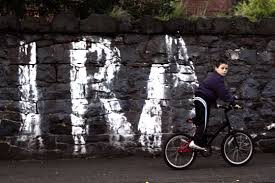




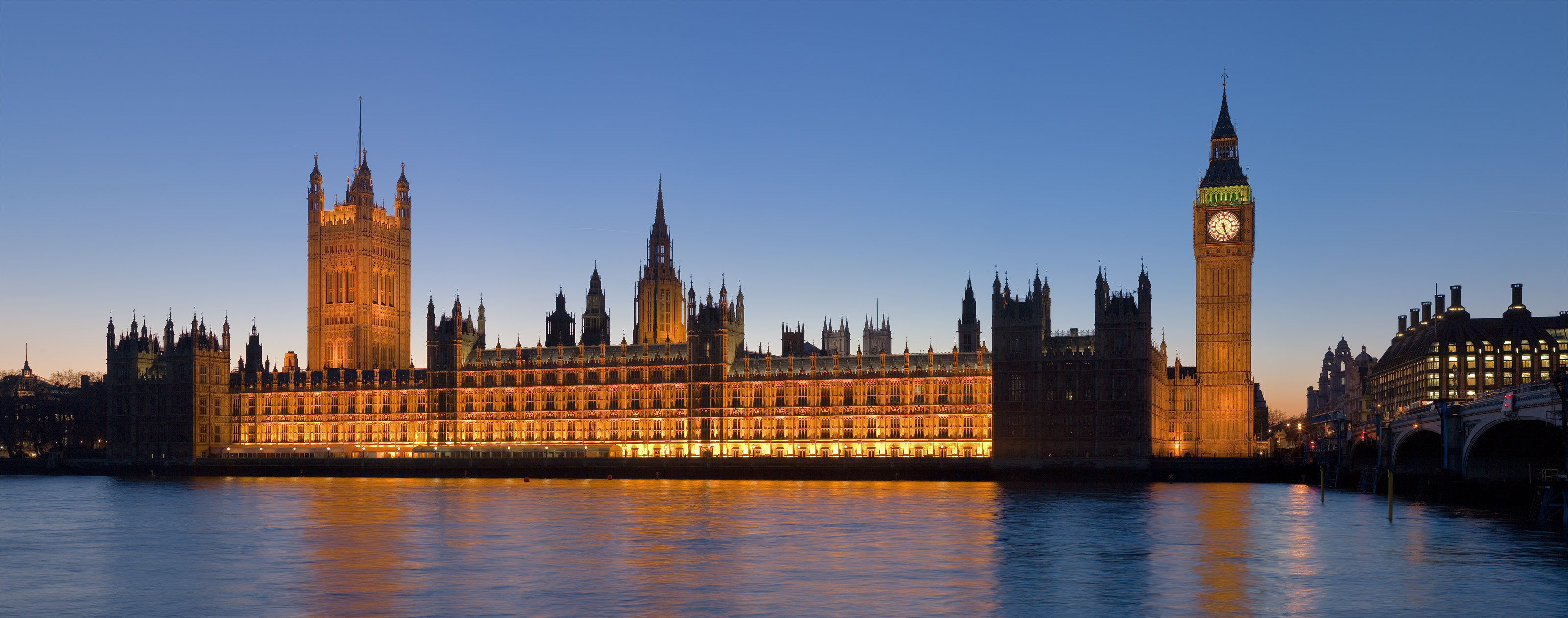


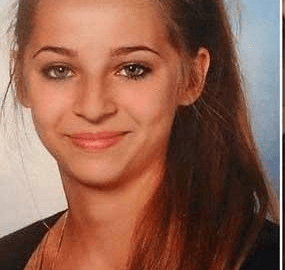





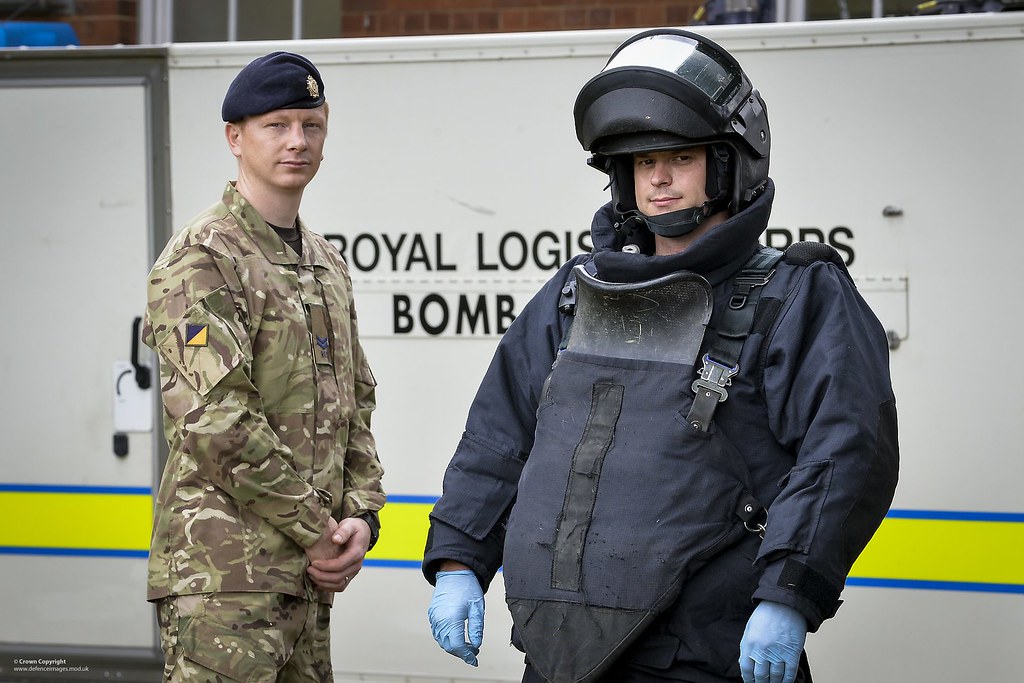
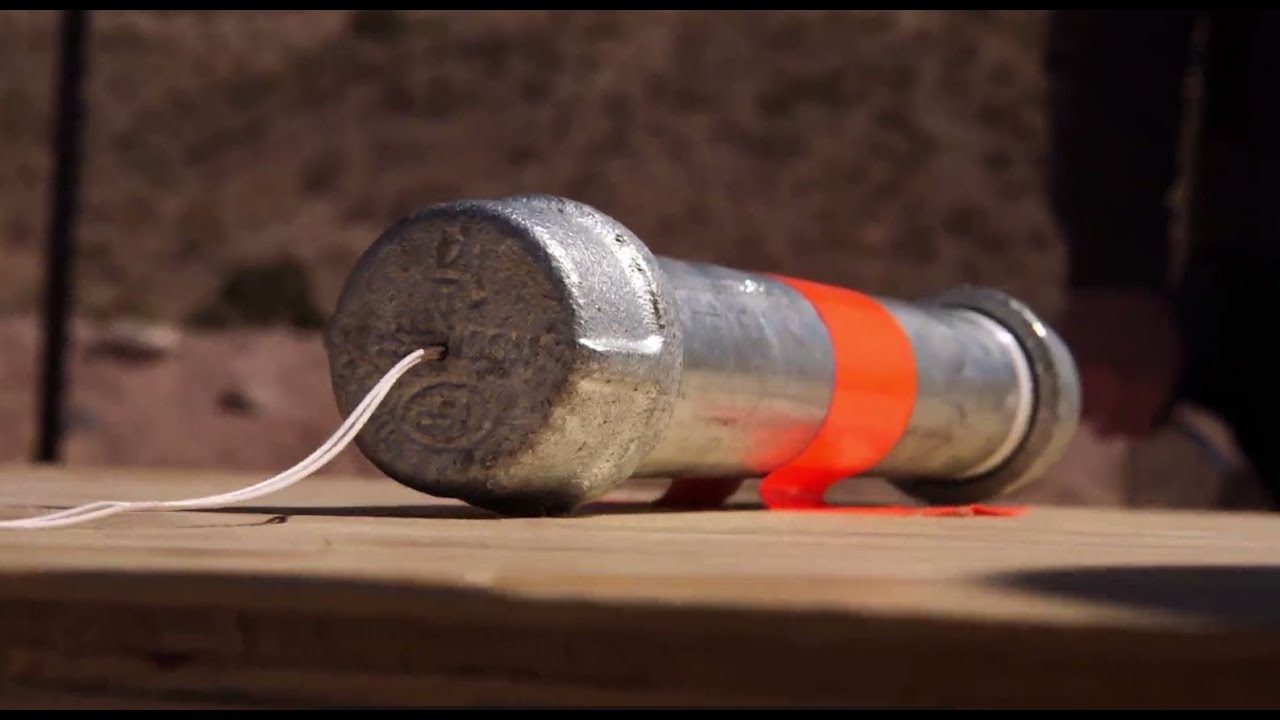




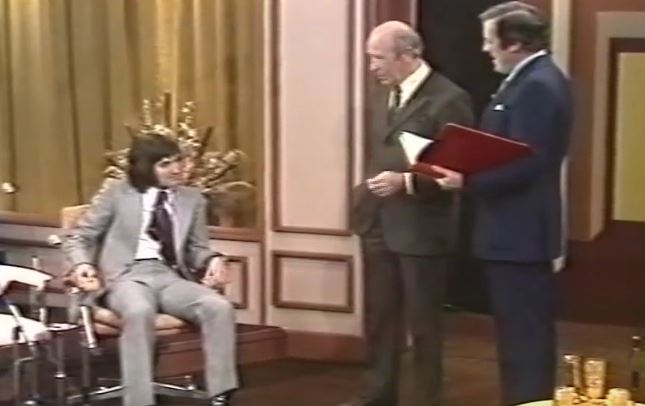

.jpg)


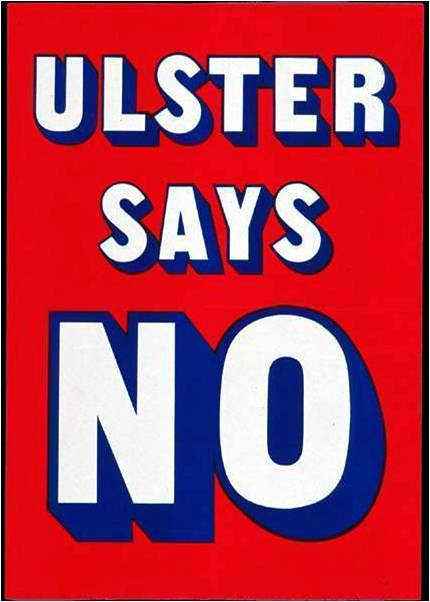


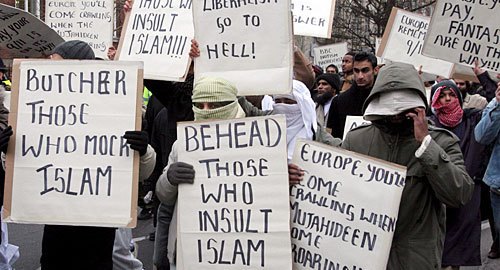


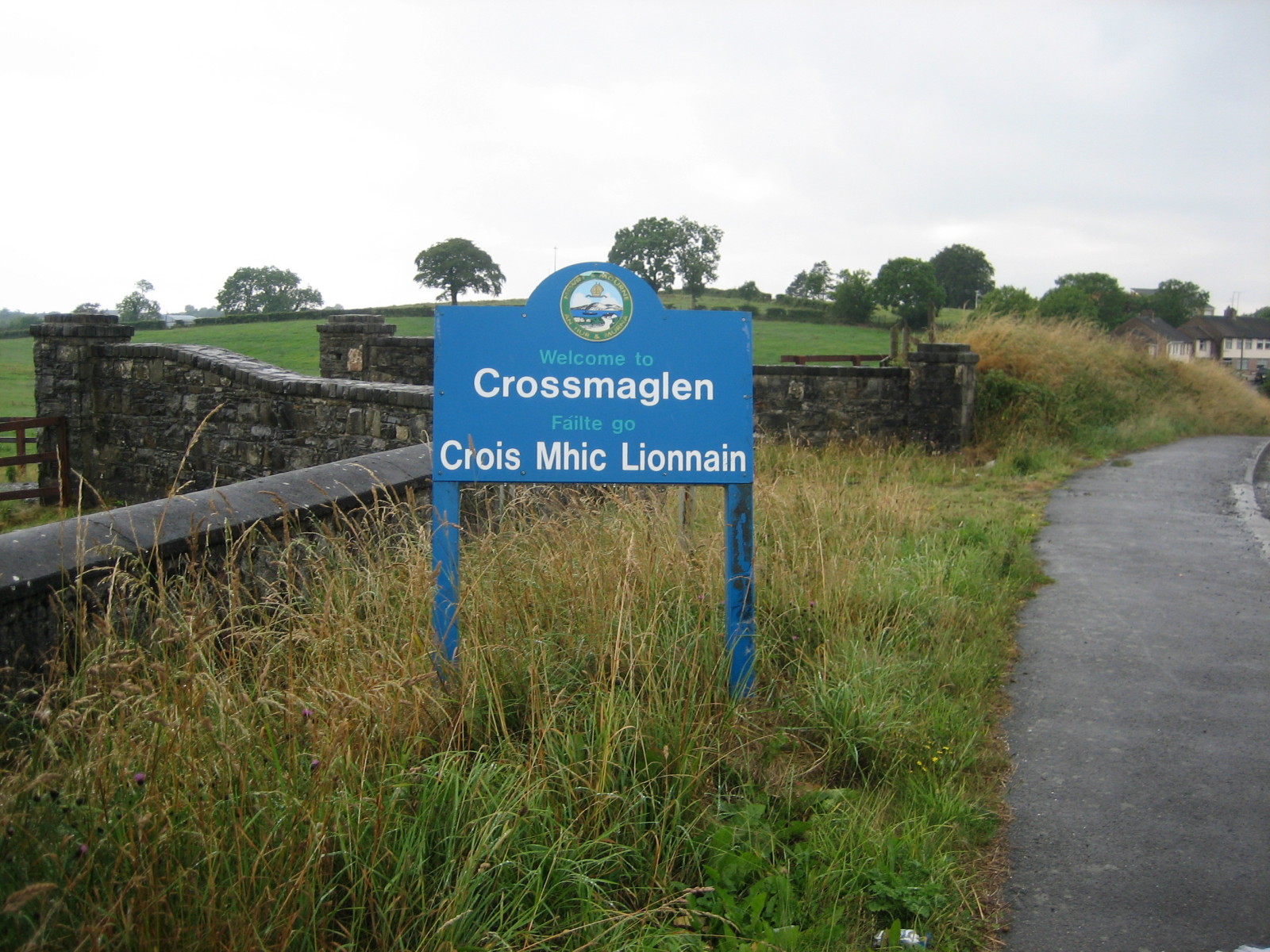


 belfastchildis.com
