Its not escaped my attention that my birth date includes the satanic numbers 666
Forty Nine years old and feeling it
If you wish to buy me a drink or show your appreciation for my blogging you can make a small (or large ) donation by clicking the PayPal button below
Happy Birthday to me
What was happening in 1966?
British Prime Minister Harold Wilson flies to Moscow to try to start peace negotiations about the Vietnam War (the Soviet government rejects his proposals).
Chinese engineer Hsu Tsu-tsai is found badly injured in The Hague, Netherlands after an apparent defection attempt. He is later abducted from hospital by Chinese officials and dies the next day at the Chinese legation. China and the Netherlands suspend diplomatic relations, and a five-month siege of the Chinese legation follows as Dutch police seek to question Hsu’s colleagues.[7]
Aberfan disaster in South Wales on October 21st in United Kingdom, a slag heap containing unwanted rock from the local coal mine slid down Merthyr Mountain. As it collapsed it destroyed twenty houses and a farm before going on to demolish virtually all of Pantglas Junior School 144 people were killed, 116 of whom were children mostly between the ages of 7 and 10.
England defeats Germany to win the 1966 World Cup Final. Find Out More About More Football World Cup and the origins, growth, and the modern game of soccer.
Popular Culture
Star Trek first episode of the science fiction television series Star Trek
(The Man Trap)
Author Jacqueline Susann has her first novel, Valley of the Dolls publish
Dr. Seuss’ “How the Grinch Stole Christmas” the animated television special adapted from the book is shown for first time on CBS
The Grinch Ending (Original 1966)
Simon and Garfunkel release Sounds of Silence,
Simon & Garfunkel – Sounds Of Silence (Live Canadian TV, 1966)
Popular Films
Thunderball
Dr. Zhivago
The Trailer Of This Great and Beatiful Movie of David Lean
Who’s Afraid of Virginia Woolf
Who’s Afraid of Virginia Woolf (1966): Killing Martha
A Man for All Seasons
A Man for All Seasons 1966 Biography / Drama Movies HD Full Movie
Popular Musicians
All my favourite songs from these great bands
The Mamas and the Papas
California Dreamin – Mamas & The Papas
The Who
THE WHO – 1966 – “My Generation”
The Beatles
The Beatles- yesterday live(1966)
The Monkees
The Kinks
The Kinks – “You Really Got Me” (1966)
The Small Faces
All Or Nothing
The Beach Boys
The Beach Boys – God only knows (1966)
The Rolling Stones
Rolling Stones – Paint It Black 1966
Simon and Garfunkel
Scarborough Fair / Canticle. Simon & Garfunkel..(1966)
The views and opinions expressed in this post and page are soley intended to educate and provide background information to those interested in the Troubles of Northern Ireland.
They in no way reflect my own opinions and I take no responsibility for any inaccuracies or factual errors
———————————————
Belfast Shankill Loyalist Bands
———————————————
The Ulster Defence Association (UDA) is the largest[5][6]Ulster loyalistparamilitary and vigilante[7] group in Northern Ireland. It was formed in September 1971 and undertook a campaign of almost twenty-four years during The Troubles. Within the UDA was a group tasked with launching paramilitary attacks; it used the covername Ulster Freedom Fighters (UFF) so that the UDA would not be outlawed. The United Kingdom outlawed the “UFF” in November 1973, but the UDA itself was not classified as a terrorist group until 10 August 1992.[8] The UDA/UFF is also classified as a terrorist organisation by the US State Department.[9]
The UDA were often referred to by their Ulster Volunteer Force (UVF) rivals as the “Wombles”,[17] derived from the furry fictional creatures, The Wombles, or “Japs”,[18] owing to their mass rallies and marches in combat clothing. Its motto is Quis Separabit, Latin for “Who will separate [us]?”.
History
Beginning
The Ulster Defence Association emerged from a series of meetings during the summer of 1971 of loyalist “vigilante” groups called “defence associations”.[19] The largest of these were the Shankill and Woodvale Defence Associations,[20] with other groups based in East Belfast, the Hammer and Roden Street.[21] The first meeting was chaired by Billy Hull, with Alan Moon as its vice-chair. Moon was quickly replaced by Jim Anderson and had left the organisation by the time of its formal launch in September.[22]
By this point, Charles Harding Smith had become the group’s leader, with former British soldier Davy Fogel as his second-in-command, who trained the new recruits in military tactics, the use of guns, and unarmed combat. Its most prominent early spokesperson was Tommy Herron,[19] however Andy Tyrie would emerge as leader soon after.[23] Its original motto was Cedenta Arma Togae (“Law before violence”) and it was a legal organisation until it was banned by the British Government on 10 August 1992.[19]
UDA members marching through Belfast city centre in a massive show of strength, summer 1972
The UDA were often referred to as “Wombles” by their rivals, mainly the Ulster Volunteer Force (UVF). The name is derived from the furry fictional creatures The Wombles, and was given to the UDA because many of its members wore fur-trimmed parkas.[17] Its headquarters is in Gawn Street, off the Newtownards Road in east Belfast,[30] and its current motto is Quis Separabit, which is Latin for “Who will separate us?”
Women’s units
The UDA had several women’s units, which acted independent of each other.[31][32] Although they occasionally helped man roadblocks, the women’s units were typically involved in local community work and responsible for the assembly and delivery of food parcels to UDA prisoners. This was a source of pride for the UDA.[33] The first women’s unit was founded on the Shankill Road by Wendy “Bucket” Millar (b. 1944), whose sons Herbie and James “Sham” Millar would later become prominent UDA members.[34] The UDA women’s department was headed by Jean Moore, who also came from the Shankill Road. She had also served as the president of the women’s auxiliary Loyalist Association of Workers. Her brother Ingram “Jock” Beckett, one of the UDA’s founding members, had been killed in March 1972 by a rival UDA faction in an internal dispute.[35] Moore was succeeded by Hester Dunn of east Belfast, who also ran the Public Relations and administration section at the UDA headquarters.[36] Wendy Millar’s Shankill Road group was a particularly active women’s unit, and another was based in Sandy Row, south Belfast – a traditional UDA stronghold. The latter was commanded by Elizabeth “Lily” Douglas.[37] Her teenaged daughter, Elizabeth was one of the members.[38]
The Sandy Row women’s UDA unit was disbanded after it carried out a vicious “romper room” punishment beating on 24 July 1974 which left 32-year-old Ann Ogilby dead. The body of Ogilby, a Protestant single mother who had an affair with the husband of one of the unit’s members, was found in a ditch five days later.[39] The day of the fatal beating Ogilby was abducted and forced upstairs to the first floor of a disused bakery in Sandy Row that had been converted into a UDA club. Two teenage girls, Henrietta Cowan and Christine Smith,[40] acting under Elizabeth Douglas’ orders to give Ogilby a “good rompering”,[41] punched, kicked, then battered her to death with bricks and sticks; the autopsy later revealed that Ogilby had suffered 24 blows to the head and body. The killing, which was carried out within earshot of Ogilby’s six-year-old daughter, caused widespread revulsion throughout Northern Ireland and was condemned by the UDA prisoners serving inside the Maze Prison. None of the other UDA women’s units had consented to or been aware of the fatal punishment beating until it was reported in the news.[32] Douglas, Cowan, and Smith were convicted of the murder and sentenced to imprisonment at Armagh Women’s Jail. Seven other members of the women’s unit and a UDA man were also convicted for their part in the murder.[41][38] At the time of the murder the Sandy Row commander was Sammy Murphy, who also ran the South Belfast UDA. He had engaged in successful talks with the British Army to defuse a potential confrontation during the UWC strike over the erection of street barricades in the Sandy Row area.[42][43] The UDA “romper rooms”, named after the children’s television programme, were places where victims were beaten and tortured prior to being killed. This was known as a “rompering”. The “romper rooms” were normally located in disused buildings, lock-up garages, warehouses, and rooms above pubs and drinking clubs.[44] The use of the “romper rooms” was a more common practise among male members of the UDA than their female counterparts.[32]
Masked and armed UDA/UFF members at a show of strength in Belfast
The flag of the “Ulster Freedom Fighters” with a clenched fist representing the Red Hand of Ulster and the Latin motto Feriens tego, meaning “striking I defend”
Throughout the majority of its period of legality, the UDA’s attacks were carried out under the name “Ulster Freedom Fighters” (UFF). The UDA’s campaign of violence began in 1972. In May of that year, the UDA’s pressured leader Tommy Herron decided that responsibility for acts of violence committed by the UDA would be claimed by the “UFF”. Its first public statements came one month later.[45]
The UDA’s official position during the Troubles was that if the Provisional Irish Republican Army (Provisional IRA) called off its campaign of violence, then it would do the same. However, if the British government announced that it was withdrawing from Northern Ireland, then the UDA would act as “the IRA in reverse.”[46]
Active throughout the Troubles, its armed campaign gained prominence in the early 1990s through Johnny Adair‘s ruthless leadership of the Lower Shankill 2nd Battalion, C. Company, which resulted in a greater degree of tactical independence for the UFF.[47] C. Company’s hit squad, led by Stephen McKeag, became notorious for a campaign of random murders of Catholic civilians in the first half of the 1990s.[48]
They benefited, along with the Ulster Volunteer Force, and a group called Ulster Resistance (set up by the Democratic Unionist Party), from a shipment of arms imported from Lebanon in 1988.[49] The weapons landed included rocket launchers, 200 rifles, 90 pistols and over 400 grenades.[50] Although almost two–thirds of these weapons were later recovered by the Royal Ulster Constabulary (RUC), they enabled the UDA to launch an assassination campaign against their perceived enemies.
A UFF mural in the Sandy Row area of South Belfast
North Belfast UDA brigadier Davy Payne was arrested after his “scout” car had been stopped at a RUC checkpoint and large caches of the weaponry were discovered in the boots of his associates’ cars. He was sentenced to 19 years in prison.
In 1992 Brian Nelson, a prominent UDA member convicted of sectarian killings, revealed that he was also a British Army agent. This led to allegations that the British Army and RUC were helping the UDA to target Irish republican activists. UDA members have since confirmed that they received intelligence files on republicans from British Army and RUC intelligence sources.[51]
One of the most high profile UDA attacks came in October 1993, when three masked men attacked a restaurant called the Rising Sun in the predominantly Catholic village of Greysteel, County Londonderry, where two hundred people were celebrating Halloween. The two men entered and opened fire. Eight people, including six Catholics and two Protestants were killed and nineteen wounded in what became known as the Greysteel massacre. The UFF claimed the attack was in retaliation to the IRA’sShankill Road bombing which killed nine, seven days earlier.
According to the Sutton database of deaths at the University of Ulster‘s CAIN project,[52] the UDA/UFF was responsible for 259 killings during the Troubles. 208 of its victims were civilians (predominantly Catholics), 12 were civilian political activists (mainly members of Sinn Fein), 37 were other loyalist paramilitaries (including 30 of its own members), three were members of the security forces and 11 were republican paramilitaries. A number of these attacks were carried out with the assistance or complicity of the British Army, the Royal Ulster Constabulary, or both, according to the Stevens Enquiry, although the exact number of people killed as a result of collusion has not been revealed. The preferred modus operandi of the UDA was individual killings of select civilian targets in nationalist areas, rather than large-scale bomb or mortar attacks.
The UDA employed various codewords whenever they claimed their attacks. These included: “The Crucible”, “Titanic”, and “Ulster Troubles”. The UFF used the codename of “Captain Black”.
A UFF flag in Finvoy,a rural area of County Antrim
Since the ceasefire, the UDA has been accused of taking vigilante action against alleged drug dealers, including tarring and feathering a man on the Taughmonagh estate in south Belfast.[53][54] It has also been involved in several feuds with the UVF, which led to many killings. The UDA has also been riddled by its own internecine warfare, with self-styled “brigadiers” and former figures of power and influence, such as Johnny Adair and Jim Gray (themselves bitter rivals), falling rapidly in and out of favour with the rest of the leadership. Gray and John Gregg are amongst those to have been killed during the internal strife. On 22 February 2003, the UDA announced a “12-month period of military inactivity”.[55] It said it would review its ceasefire every three months. The UPRG’s Frankie Gallagher has since taken a leading role in ending the association between the UDA and drug dealing.[56]
Following an August 2005 Sunday World article that poked fun at the gambling losses of one of its leaders, the UDA banned the sale of the newspaper from shops in areas it controls. Shops that defy the ban have suffered arson attacks, and at least one newsagent was threatened with death.[57] The Police Service of Northern Ireland began accompanying the paper’s delivery vans.[58][59] The UDA was also considered to have played an instrumental role in loyalist riots in Belfast in September 2005.[60]
On 13 November 2005 the UDA announced that it would “consider its future”, in the wake of the standing down of the Provisional IRA and Loyalist Volunteer Force.[61]
In February 2006, the Independent Monitoring Commission reported UDA involvement in organised crime, drug trafficking, counterfeiting, extortion, money laundering and robbery.[62]
A UDA/UFF mural in Bangor
On 20 June 2006, the UDA expelled Andre Shoukri and his brother Ihab, two of its senior members who were heavily involved in crime. Some see this as a sign that the UDA is slowly coming away from crime.[63] The move did see the southeast Antrim brigade of the UDA, which had been at loggerheads with the leadership for some time, support Shoukri and break away under former UPRG spokesman Tommy Kirkham.[64] Other senior members met with TaoiseachBertie Ahern for talks on 13 July in the same year.[65]
On 11 November 2007 the UDA announced that the Ulster Freedom Fighters would be stood down from midnight of the same day,[66] with its weapons “being put beyond use” although it stressed that these would not be decommissioned.[67]
Although the group expressed a willingness to move from criminal activity to “community development,” the IMC said it saw little evidence of this move because of the views of its members and the lack of coherence in the group’s leadership as a result of a loose structure. While the report indicated the leadership intends to follow on its stated goals, factionalism hindered this change. Factionalism was, in fact, said to be the strongest hindrance to progress. The report also said the main non-splintered faction remained active, though it was considerably smaller than the resulting party. Individuals within the group, however, took their own initiative to criminal activity. Although loyalist actions were curtailed, most of the loyalist activity did come from the UDA.
The IMC report concluded that the leadership’s willingness to change has resulted in community tension and the group would continue to be monitored, although “the mainstream UDA still has some way to go.” Furthermore, the IMC warned the group to “recognise that the organisation’s time as a paramilitary group has passed and that decommissioning is inevitable.” Decommissioning was said to be the “biggest outstanding issue for loyalist leaders, although not the only one.”[68]
A UDA/UFF South-East Antrim Brigade mural in Newtownabbey
Chastelain stated that the decommissioning included arms, ammunition, explosives and explosive devices and the UDA stated that the arms “constitute the totality of those under their control”.[69] Following the decommissioning the Ulster Political Research Group, the UDA’s political representatives, stated that the “Ulster Defence Association was formed to defend our communities; we state quite clearly and categorically that this responsibility now rests with the Government and its institutions where legitimacy resides”.[70] UDA representative Frankie Gallagher also stated that the group now regretted being responsible for the killing of more than 400 people.[71]
Shaun Woodward, the British Secretary of State for Northern Ireland, stated that this “is a major act of leadership by the UDA and further comprehensive evidence of the success of politics over violence in Northern Ireland” and the act was also welcomed by Sinn Féin and DUP politicians.[72] The President of the Republic of Ireland, Mary McAleese, described the decommissioning as “a very positive milestone on the journey of peace”.[73] US Secretary of State Hillary Clinton also welcomed the move as a step towards lasting peace in Northern Ireland.[74]
The breakaway faction continues to use the “UDA” title in its name, although it too expressed willingness to move towards “community development.” Though serious crime is not prevalent among the members, some who were arrested for drug peddling and extortion were exiled by the Brigade. Although a clear distinction between the factions was not available in the 20th IMC report, as this was the first report to differentiate between the two, future reports would tackle the differences.[68]
Politics
Some UDA leaders supported an independent Northern Ireland in the mid–late 1970s
The New Ulster Political Research Group (NUPRG) was initially the political wing of the UDA, founded in 1978, which then evolved into the Ulster Loyalist Democratic Party in 1981 under the leadership of John McMichael, a prominent UDA member killed by the IRA in 1987, amid suspicion that he was set up to be killed by some of his UDA colleagues.
In 1987, the UDA’s deputy commander John McMichael (who was then the leader of the UFF) promoted a document titled “Common Sense”, which promoted a consensual end to the conflict in Northern Ireland, while maintaining the Union. The document advocated a power sharing assembly, involving both Nationalists and Unionists, an agreed constitution and new Bill of Rights. It is not clear however, whether this programme was adopted by the UDA as their official policy.[50] However the killing of McMichael that same year and the subsequent removal of Tyrie from the leadership and his replacement with an Inner Council saw the UDA concentrate on stockpiling weapons rather than political ideas.[76]
In 1989, the ULDP changed its name to the Ulster Democratic Party (UDP) and finally dissolved itself in 2001 following very limited electoral success. Gary McMichael, son of John McMichael, was the last leader of the UDP, which supported the signing of the Good Friday Agreement but had poor electoral success and internal difficulties. The Ulster Political Research Group (UPRG) was subsequently formed to give political analysis to the UDA and act as community workers in loyalist areas. It is currently represented on the Belfast City Council.
In early January 1994, the UDA released a document calling for ethnic cleansing and repartition, with the goal of making Northern Ireland wholly Protestant.[77] The plan was to be implemented should the British Army withdraw from Northern Ireland. The vastly Catholic and nationalist areas would be handed over to the Republic, and those left stranded in the “Protestant state” would be “expelled, nullified, or interned”.[77] The story was printed in The Sunday Independent newspaper on 16 January.[78] The “doomsday plan” was based on the work of Dr Liam Kennedy, a lecturer at Queen’s University Belfast.[77] In 1986 he had published a book called Two Ulsters: A Case for Repartition; though it did not call for ethnic cleansing. The UDP’s Raymond Smallwoods said “I wasn’t consulted but the scenario set out is a perfectly plausible one”.[77] The DUP’s Sammy Wilson stated that the plan “shows that some loyalist paramilitaries are looking ahead and contemplating what needs to be done to maintain our separate Ulster identity”.[77]
Links with other groups
In his book Black Sun, Nicholas Goodrick-Clarke claimed that the UDA had links with Neo-Nazi groups in Britain—specifically Combat 18[79] (formed in 1991) and the British National Socialist Movement[80] (formed in 1985). He claims that members of these groups helped to smuggle weapons for the UDA/UFF. Ian S Wood‘s book Crimes of Loyalty: A History of the UDA claims that the UDA has received backing from Combat 18, the British National Front and the British National Party.[81] In 2006, the BBC also reported that the group has links with Combat 18.[82] It is unknown whether these links still exist. The links may not have been politically motivated, but mutually beneficial arms deals. On one occasion the UDA sent Louis Scott, one of a few black members of the UDA, to make the transaction.[83]
The Red Hand Defenders is a cover name used by breakaway factions of the UDA/UFF and the LVF.[1] The term was originally coined in 1997 when members of the LVF carried out attacks on behalf of Johnny Adair‘s “UFF 2nd Battalion, ‘C’ Company (Shankill Road)” and vice versa.[1] The relationship between the UDA/UFF (specifically Adair’s unit, not the wider leadership of the UDA) was initially formed after the death of Billy Wright, the previous leader of the LVF, and Adair’s personal friendship with Mark ‘Swinger’ Fulton, the organisations new chief.
The necessity for a cover name resulted from the need to avoid tensions between the UDA and the UVF, the organisation from which the LVF had broken away. It was perceived that any open co-operation between the UDA and the LVF would anger the UVF, something which proved to be the case in following years and resulted in the infamous ‘Loyalist Feud’.[1] There has been debate as to whether or not the Red Hand Defenders have become an entity in their own right[84] made up of dissident factions from both the UDA and the LVF (both of which have now declared ceasefires whilst the RHD has not), though much intelligence has been based on the claims of responsibility which, as has been suggested,[1] are frequently misleading.
Structure and leadership
The UDA is made up of:
the Inner Council
the Ulster Freedom Fighters (UFF)—whose role was to carry out attacks on republican and nationalist targets. However, many regard the UFF as merely a covername used when the UDA wished to claim responsibility for attacks.[85]
the Ulster Defence Force (UDF)—whose role was to give “specialist military training” to a select group of UDA members. The UDF was initiated by John McMichael[86] (the then UDA/UFF commander) in 1985 as a response to the Anglo-Irish Agreement. The UDF operated training camps in rural parts of Northern Ireland that young loyalists such as Johnny Adair claim to have attended.[86] One reported ‘survival’ training technique was to leave trainees stranded in Dublin with only £1.[86] Some of the training was given by former British Army soldiers and officers. It was described by the UDA as “the nucleus of a new loyalist army at the ready”.[87]
The UDA operated a devolved structure of leadership, each with a brigadier representing one of its six “brigade areas”.[86] Currently, it is not entirely clear whether or not this structure has been maintained in the UDA’s post cease-fire state. The UDA’s six “brigade areas” were:
North Belfast
East Belfast
South Belfast, the UDA’s largest brigade area, covering all of South Belfast down to Lisburn and operating as far away as South County Down, Lurgan and Counties Tyrone and Fermanagh.[90]
A wall sign in Dervock showing support for the North Antrim and Londonderry brigade.
In addition to these six core brigades two others may have existed. A seventh Mid-Ulster Brigade is mentioned by Steve Bruce as having existed for part of the UDA’s history[91] although Henry McDonald and Jim Cusack characterise this as a “battalion” rather than a brigade and suggest that its rural location prevented it from fully developing.[92] In the late 1970s a Scottish Brigade was established under the command of Roddy McDonald but this proved short-lived. The security forces infiltrated this brigade almost immediately and in 1979 arrested almost its entire membership, ninety people in all. Six members received particularly lengthy prison sentences for their involvement in UDA activities in Perth and the Scottish Brigade quietly disappeared.[93]
Some of the notable past brigadiers include:
Jackie McDonald—South Belfast (~1980s-present)[94] Resident of the Taughmonagh estate in South Belfast.[94] McDonald was a cautious supporter of the UDA’s ceasefire and a harsh critic of Johnny ‘Mad Dog’ Adair during his final years of membership of the organisation.[94] McDonald remains the only brigadier who did not have a commonly used nickname.
Johnny ‘Mad Dog’ Adair—West Belfast (1990–2002)[86] An active figure in the UDA/UFF, Adair rose to notoriety in the early 1990s when he led the 2nd Battalion, C Company unit in West Belfast which was responsible for one of the bloodiest killing sprees of the Troubles.[86]
Jim ‘Doris Day’ Gray—East Belfast (1992–2005)[86][95] An unlikely figure in Northern Ireland loyalism, the openly bi-sexual[86] Gray was a controversial figure in the organisation until his death on 4 October 2005. Always flamboyantly dressed, Gray was a key figure in the UDA’s negotiations with Northern Ireland SecretaryJohn Reid. It is widely believed that Gray received his nickname from the Royal Ulster Constabulary (RUC) Special Branch.[86]
Jimbo ‘Bacardi Brigadier’ Simpson—North Belfast (Unknown–2002)[86] Simpson is believed to have been an alcoholic, hence his nickname. He was leader of the UDA in the volatile North Belfast area, an interface between Catholics and Protestants in the New Lodge and Tiger’s Bay neighbourhoods.[86]
Billy ‘The Mexican’ McFarland—North Antrim and Londonderry (Unknown–2013)[86] He Earned his nickname because of his moustache and swarthy appearance, and had overall command of the UDA’s North Antrim and Derry brigade at the time of the Good Friday Agreement. He supported the leadership against Johnny Adair and has been associated with the magazine ‘Warrior’, which makes the case for Ulster Independence
Andre ‘The Egyptian’ Shoukri[86]—North Belfast (2002–2005)[86] Initially a close ally of Johnny Adair, Shoukri and his brother Ihab became involved with the UDA in his native North Belfast. The son of an Egyptian father and a Northern Irish mother, he was expelled from the UDA in 2005 following allegations of criminality.
John ‘Grug’ Gregg—South East Antrim (c.1993[96]–2003) John ‘Grug’ Gregg was a man with a fearsome reputation within the loyalist movement, known as a “Hawk” in loyalist circles, and controlled the streets of south east Antrim. On 14 March 1984, he severely wounded Sinn Féin president Gerry Adams in an assassination attempt for which he was jailed. When asked by the BBC in prison if he regretted anything about the shooting, his reply was “only that I didn’t succeed.” He was killed on Belfast’s Nelson Street, along with another UDA member (Rab Carson), while travelling in a taxi from the docks in 2003, and the murder was blamed on supporters of Johnny Adair, who had recently been expelled from the UDA in 2002.
Deaths as a result of activity
UDA South Belfast Brigade memorial plaque in Sandy Row
According to Malcolm Sutton’s Index of Deaths from the Conflict in Ireland (part of the CAIN database), the UDA/UFF was responsible for at least 260 killings during the Troubles, between 1969 and 2001. There are a further 250 loyalist killings where it is not yet certain which group was responsible.[97]
209 (~80%) were civilians, 12 of whom were civilian political activists
11 (~4%) were members or former members of republican paramilitary groups
37 (~14%) were members or former members of loyalist paramilitary groups
3 (~1%) were members of the British security forces
There were also 91 UDA members and four former members killed in the conflict.[98]
UVF ( Ulster Volunteer Force )
The Ulster Volunteer Force (UVF) is an Ulster loyalistparamilitary group in Northern Ireland. It emerged in 1966 and is named after the original UVF of the early 20th century. Its first leader was Gusty Spence, a former British soldier. The group undertook an armed campaign of almost thirty years during the Troubles. It declared a ceasefire in 1994 and officially ended its campaign in 2007, although some of its members have continued to engage in violence. The group is classified as a terrorist organization by the United Kingdom,[1] Republic of Ireland and United States.[2]
Until recent years,[3] it was noted for secrecy and a policy of limited, selective membership.[4][5][6][7][8] The UVF’s declared goals were to combat Irish republicanism – particularly the Irish Republican Army – and to maintain Northern Ireland’s status as part of the United Kingdom. It was responsible for at least 500 deaths, the vast majority (more than two-thirds)[9][10] of whom were Irish Catholic civilians. During the conflict, its deadliest attack in Northern Ireland was the 1971 McGurk’s Bar bombing, which killed fifteen civilians. The group also carried out attacks in the Republic of Ireland from 1969 onward. The biggest of these was the 1974 Dublin and Monaghan bombings, which killed 33 civilians, making it the deadliest terrorist attack of the conflict. The no-warning car bombings had been carried out by units from the Belfast and Mid-Ulster brigades. The Mid-Ulster Brigade was also responsible for the 1975 Miami Showband killings, in which three members of the popular Irish cabaret band were shot dead at a bogus military checkpoint by gunmen in British Army uniforms. Two UVF men were accidentally blown up in this attack. The UVF’s last major attack was the 1994 Loughinisland massacre, in which its members shot dead six Catholic civilians in a rural pub.
Since the ceasefire, the UVF has been involved in rioting, organized crime, vigilantism and feuds with other loyalist groups.[11] Some members have also been orchestrating a series of racist attacks.[12]
Aim and strategy
A UVF publicity photo showing masked and armed UVF members
The UVF’s stated goal was to combat Irish republicanism – particularly the Provisional Irish Republican Army (IRA) – and maintain Northern Ireland’s status as part of the United Kingdom.[13] The vast majority of its victims were Irish Catholic civilians, who were often killed at random.[14] Whenever it claimed responsibility for its attacks, the UVF usually claimed that those targeted were IRA members or were giving help to the IRA.[15] Other times, attacks on Catholic civilians were claimed as “retaliation” for IRA actions, since the IRA drew most of its support from the Catholic community. Such retaliation was seen as both collective punishment and an attempt to weaken the IRA’s support; it was thought that terrorizing the Catholic community and inflicting such a death toll on it would force the IRA to end its campaign.[16] Many retaliatory attacks on Catholics were claimed using the covername “Protestant Action Force” (PAF), which first appeared in Autumn 1974.[17] They always signed their statements with the fictitious name “Captain William Johnston”.[18]
Like the Ulster Defence Association (UDA), the UVF’s modus operandi involved assassinations, mass shootings, bombings and kidnappings. It used sub machine-guns, assault rifles, pistols, grenades (including homemade grenades), incendiary bombs, booby trap bombs and car bombs. Referring to its activity in the early and mid-1970s, journalist Ed Moloney described no-warning pub bombings as the UVF’s “forte”.[19] Members were trained in bomb-making and it developed home-made explosives.[20] In the late summer and autumn of 1973 the UVF detonated more bombs than the UDA and IRA combined,[21] and by the time of the group’s temporary ceasefire in late November it had been responsible for over 200 explosions that year.[22] However, from 1977 bombs largely disappeared from the UVF’s arsenal owing to a lack of explosives and bomb-makers, plus a conscious decision to abandon their use in favour of more contained methods.[23][24] The UVF did not return to regular bombings until the early 1990s when it obtained a quantity of the mining explosive Powergel.[25][26]
Since 1964, there had been a growing civil rights campaign in Northern Ireland. The civil rights movement sought to end discrimination against Catholics by the Protestant and Unionist-dominated government of Northern Ireland.[27] In March and April 1966, Irish republicans held parades throughout Ireland to mark the 50th anniversary of the Easter Rising. On 8 March, a group of ex-Irish Republican Army (IRA) volunteers planted a bomb that destroyed Nelson’s Pillar in Dublin. At the time, the IRA was weak and not engaged in armed action, but some unionists and loyalists warned that it was about to be revived and launch another campaign against Northern Ireland.[27] In April, loyalists led by Ian Paisley, a Protestant fundamentalist preacher, founded the Ulster Constitution Defence Committee (UCDC). It set up a paramilitary-style wing called the Ulster Protestant Volunteers (UPV).[27] The ‘Paisleyites’ set out to stymie the civil rights movement and oust Terence O’Neill, Prime Minister of Northern Ireland. Although O’Neill was a unionist, they saw him as being too ‘soft’ on the civil rights movement and too friendly with the Republic of Ireland. There was much overlap in membership between the UCDC/UPV and the UVF.[28]
A UVF mural on the Shankill Road
An old UVF mural on Shankill Road, where the group was formed
On 7 May, loyalists petrol bombed a Catholic-owned pub in the loyalist Shankill area of Belfast. Fire engulfed the house next door, badly burning the elderly Protestant widow who lived there. She died of her injuries on 27 June.[27] The group called itself the “Ulster Volunteer Force” (UVF), after the original UVF of the early 20th century. It was led by Gusty Spence, a former British soldier. Spence claimed that he was approached in 1965 by two men, one of whom was an Ulster Unionist Party MP, who told him that the UVF was to be re-established and that he was to have responsibility for the Shankill.[29] On 21 May, the group issued a statement:
From this day, we declare war against the Irish Republican Army and its splinter groups. Known IRA men will be executed mercilessly and without hesitation. Less extreme measures will be taken against anyone sheltering or helping them, but if they persist in giving them aid, then more extreme methods will be adopted… we solemnly warn the authorities to make no more speeches of appeasement. We are heavily armed Protestants dedicated to this cause.[30]
On 27 May, Spence sent four UVF members to kill IRA volunteer Leo Martin, who lived in Belfast. Unable to find their target, the men drove around the Falls district in search of a Catholic. They shot John Scullion, a Catholic civilian, as he walked home.[31] He died of his wounds on 11 June.[27] Spence later wrote “At the time, the attitude was that if you couldn’t get an IRA man you should shoot a Taig, he’s your last resort”.[31]
On 26 June, the group shot dead a Catholic civilian and wounded two others as they left a pub on Malvern Street, Belfast.[27] Two days later, the Government of Northern Ireland declared the UVF illegal.[27] The shootings led to Spence being arrested and sentenced to life imprisonment with a recommended minimum sentence of twenty years.[32] Spence appointed Samuel McClelland as UVF Chief of Staff in his stead.[33]
By 1969, the Catholic civil rights movement had escalted its protest campaign, and O’Neill had promised them some concessions. In March and April that year, UVF and UPV members bombed water and electricity installations in Northern Ireland, blaming them on the dormant IRA and elements of the civil rights movement. Some of them left much of Belfast without power and water.[34] The loyalists “intended to force a crisis which would so undermine confidence in O’Neill’s ability to maintain law and order that he would be obliged to resign”.[35] There were bombings on 30 March, 4 April, 20 April, 24 April and 26 April. All were widely blamed on the IRA, and British soldiers were sent to guard installations.[34] Unionist support for O’Neill waned, and on 28 April he resigned as Prime Minister.[34]
On 12 August 1969, the “Battle of the Bogside” began in Derry. This was a large, three-day riot between Irish nationalists and the police (RUC). In response to events in Derry, nationalists held protests throughout Northern Ireland, some of which became violent. In Belfast, loyalists responded by attacking nationalist districts. Eight people were shot dead and hundreds were injured. Scores of houses and businesses were burnt-out, most of them owned by Catholics. The British Army were deployed on the streets of Northern Ireland. The Irish Army also set up field hospitals near the border. Thousands of families, mostly Catholics, were forced to flee their homes and refugee camps were set up in the Republic of Ireland.[34]
On 12 October, a loyalist protest in the Shankill became violent. During the riot, UVF members shot dead RUC officer Victor Arbuckle. He was the first RUC officer to be killed during the Troubles.[36]
The UVF had launched its first attack in the Republic of Ireland on 5 August 1969, when it bombed the RTÉ Television Centre in Dublin.[37][38] There were further attacks in the Republic between October and December 1969. In October, UVF and UPV member Thomas McDowell was killed by the bomb he was planting at Ballyshannon power station. The UVF stated that the attempted attack was a protest against the Irish Army units “still massed on the border in County Donegal“.[39] In December the UVF detonated a car bomb near the Garda central detective bureau and telephone exchange headquarters in Dublin.[40]
The early to mid-1970s
A UVF mural on Shankill Road, Belfast
In January 1970, the UVF began bombing Catholic-owned businesses in Protestant areas of Belfast. It issued a statement vowing to “remove republican elements from loyalist areas” and stop them “reaping financial benefit therefrom”. During 1970, 42 Catholic-owned licensed premises in Protestant areas were bombed.[41] Catholic churches were also attacked. In February it began to target critics of militant loyalism – the homes of MPs Austin Currie, Sheelagh Murnaghan, Richard Ferguson and Anne Dickson were attacked with improvised bombs.[41] It also continued its attacks in the Republic of Ireland, bombing the Dublin-Belfast railway line, an electricity substation, a radio mast, and Irish nationalist monuments.[42]
In December 1969 the IRA had split into the Provisional IRA and Official IRA. In early 1971 they began a concerted campaign against the British Army and RUC. The first British soldier to die in the conflict was killed by the Provisional IRA in February 1971. That year, a string of tit-for-tat pub bombings began in Belfast.[43] This came to a climax on 4 December, when the UVF bombed McGurk’s Bar, a Catholic-owned pub in Belfast. Fifteen Catholic civilians were killed and seventeen wounded. It was the UVF’s deadliest attack in Northern Ireland, and the deadliest attack in Belfast during the Troubles.[44]
The following year, 1972, was the most violent of the Troubles. Along with the newly formed Ulster Defence Association (UDA), the UVF began carrying out gun attacks on random Catholic civilians and using car bombs to attack Catholic-owned pubs. It would continue these tactics for the rest of its campaign. On 23 October 1972, the UVF carried out an armed raid against King’s Park camp, a UDR/Territorial Army depot in Lurgan. They managed to procure a large cache of weapons and ammunition including self-loading rifles, Browning pistols, and Sterling submachine guns. Twenty tons of ammonium nitrate was also stolen from the Belfast docks.[45]
The UVF launched further attacks in the Republic of Ireland during December 1972 and January 1973, when it detonated three car bombs in Dublin and one in Belturbet, killing five civilians. It would attack the Republic again in May 1974, during the two-week Ulster Workers’ Council strike. This was a general strike in protest against the Sunningdale Agreement, which meant sharing political power with Irish nationalists and the Republic having more involvement in Northern Ireland. Along with the UDA, it helped to enforce the strike by blocking roads, intimidating workers, and shutting any businesses that opened.[46] On 17 May, two UVF units from the Belfast and Mid-Ulster brigades detonated four car bombs in Dublin and Monaghan. Thirty-three people were killed and almost 300 injured. It was the deadliest attack of the Troubles. There are various credible allegations that elements of the British security forces colluded with the UVF in the bombings. The Irish parliament‘s Joint Committee on Justice called the bombings an act of “international terrorism” involving the British security forces.[47] Both the UVF and the British Government have denied the claims.
The UVF’s Mid-Ulster Brigade was founded in 1972 in Lurgan by Billy Hanna, a sergeant in the UDR and a member of the Brigade Staff, who served as the brigade’s commander until his shooting death in July 1975. From that time until the early 1990s, the Mid-Ulster Brigade was led by Robin “the Jackal” Jackson, who then passed the leadership to Billy Wright. Hanna and Jackson have both been implicated by journalist Joe Tiernan, and RUC Special Patrol Group (SPG) officer John Weir as having led one of the units that bombed Dublin.[48] Jackson was allegedly the hitman who shot Hanna dead outside his home in Lurgan, and subsequently took over his command.[49]
The brigade formed part of the Glenanne gang, a loose alliance of loyalist assassins which the Pat Finucane Centre has linked to 87 killings in the 1970s. The gang comprised, in addition to the UVF, rogue elements of the UDR, RUC, SPG, and the regular Army, all acting allegedly under the direction of British Military Intelligence and/or RUC Special Branch.[50]
Mid to late-1970s
UVF mural in the Shankill Road, where the Brigade Staff is based
In 1974, hardliners staged a coup and took over the Brigade Staff.[51] This resulted in a lethal upsweep of sectarian killings and internecine feuding with both the UDA and within the UVF itself.[51] Some of the new Brigade Staff members bore nicknames such as “Big Dog” and “Smudger”.[52] Beginning in 1975, recruitment to the UVF, which until then had been solely by invitation, was now left to the discretion of local units.[53]
The UVF’s Mid-Ulster Brigade carried out further attacks during this same period. These included the Miami Showband killings of 31 July 1975 – when three members of the popular showband from the Republic of Ireland were killed having been stopped at a fake British Army checkpoint outside of Newry in County Down. Two members of the group survived the attack and later testified against those responsible. Two UVF members, Harris Boyle and Wesley Somerville, were accidentally killed by their own bomb while carrying out this attack. Two of those later convicted (James McDowell and Thomas Crozier) were also serving members of the Ulster Defence Regiment (UDR), a part-time, locally recruited regiment of the British Army.
From late 1975 to mid-1977, a unit of the UVF dubbed the Shankill Butchers (a group of UVF men based on Belfast’s Shankill Road) carried out a series of sectarian murders of Catholic civilians. Six of the victims were abducted at random, then beaten and tortured before having their throats slashed. This gang was led by Lenny Murphy. He was shot dead by the IRA in November 1982, four months after his release from the Maze Prison.
The group had been proscribed in July 1966, but this ban was lifted on 4 April 1974 by Merlyn Rees, Secretary of State for Northern Ireland, in an effort to bring the UVF into the democratic process.[54] A political wing was formed in June 1974, the Volunteer Political Party led by UVF Chief of Staff Ken Gibson, which contested West Belfast in the October 1974 General Election, polling 2,690 votes (6%). The UVF spurned the government efforts however and continued killing. Colin Wallace, part of the intelligence apparatus of the British Army, asserted in an internal memo in 1975 that MI6 and RUC Special Branch formed a pseudo-gang within the UVF, designed to engage in violence and to subvert moves of the UVF towards the political process. Captain Robert Nairac of 14 Intelligence Company was alleged to have been involved in many acts of UVF violence.[55] The UVF was banned again on 3 October 1975 and two days later twenty-six suspected UVF members were arrested in a series of raids. The men were tried and in March 1977 were sentenced to an average of twenty-five years each.[56][57]
In October 1975, after staging a counter-coup, the Brigade Staff acquired a new leadership of moderates with Tommy West serving as the Chief of Staff.[58] These men had overthrown the “hawkish” officers, who had called for a “big push”, which meant an increase in violent attacks, earlier in the same month.[59] In fact, the UVF was behind the deaths of seven civilians in a series of attacks on 2 October.[60] The hawks had been ousted by those in the UVF who were unhappy with their political and military strategy. The new Brigade Staff’s aim was to carry out attacks against known republicans rather than Catholic civilians.[59] This had been thoroughly endorsed by Gusty Spence who issued a statement asking all UVF volunteers to support the new regime.[61] The UVF’s activities in the last years of the decade were increasingly being curtailed by the number of UVF members who were sent to prison.[59] Indeed, the number of killings in Northern Ireland had decreased from 300 per year during the period between 1973 and 1976 to just under 100 in the years 1977–1981.[62] In 1976, Tommy West was replaced with “Mr. F” who is alleged to be John “Bunter” Graham and remains the incumbent Chief of Staff to date.[63][64] West died in 1980.
On 17 February 1979, the UVF carried out its only major attack in Scotland, when its members bombed two pubs in Glasgow frequented by Catholics. Both pubs were wrecked and a number of people were wounded. It claimed the pubs were used for republican fundraising. In June, nine UVF members were convicted of the attacks.[65]
The early to mid-1980s
In the 1980s, the UVF was greatly reduced by a series of police informers. The damage from security service informers started in 1983 with “supergrass” Joseph Bennett’s information which led to the arrest of fourteen senior figures. In 1984, they attempted to kill the northern editor of the Sunday World, Jim Campbell after he had exposed the paramilitary activities of Mid-Ulster brigadier Robin Jackson. By the mid-1980s, a Loyalist paramilitary-style organisation called Ulster Resistance was formed on 10 November 1986. The initial aim of Ulster Resistance was to bring an end to the Anglo-Irish Agreement. Loyalists were successful in importing arms into Northern Ireland. The weapons were Palestine Liberation Organisation arms captured by the Israelis, sold to Armscor, the South African state-owned company which, in defiance of the 1977 United Nations arms embargo, set about making South Africa self-sufficient in military hardware.[citation needed] The arms were divided between the UVF, the UDA (the largest loyalist group) and Ulster Resistance.[66]
The UVF received large numbers of Sa vz. 58 assault rifles in the 1980s
The UVF used this new infusion of arms to escalate their campaign of sectarian assassinations. This era also saw a more widespread targeting on the UVF’s part of IRA and Sinn Féin members, beginning with the killing of senior IRA member Larry Marley[67] and a failed attempt on the life of a leading republican which left three Catholic civilians dead.[68]
The UVF also attacked republican paramilitaries and their political activists. These attacks were stepped up in the late 1980s and early 1990s. The largest death toll was on 3 March 1991 when the UVF killed IRA members John Quinn, Dwayne O’Donnell and Malcolm Nugent, and civilian Thomas Armstrong in the car park next to Boyle’s Bar, Cappagh.[69] Republicans had responded to the attacks by assassinating UVF leaders, including John Bingham, William “Frenchie” Marchant, Trevor King[70] and, allegedly, Leslie Dallas.[71] The UVF also killed republicans James Burns, Liam Ryan and Larry Marley.[72] According to Conflict Archive on the Internet (CAIN), the UVF killed 17 active and four former republican paramilitaries. CAIN also states that Republicans killed 13 UVF members.[73]
According to journalist and author Ed Moloney the UVF campaign in Mid Ulster in this period “indisputably shattered Republican morale”, and put the leadership of the republican movement under intense pressure to “do something”.[74]
1994 ceasefire
A UVF mural referencing the ceasefire
In 1990 the UVF joined the Combined Loyalist Military Command (CLMC) and indicated its acceptance of moves towards peace. However, the year leading up to the loyalist ceasefire, which took place shortly after the Provisional IRA ceasefire, saw some of the worst sectarian killings carried out by loyalists during the Troubles. On 18 June 1994, UVF members machine-gunned a pub in Loughinisland, County Down on the basis that its customers were watching the Republic of Ireland national football team playing in the World Cup on television and were therefore assumed to be Catholics. The gunmen shot dead six people and injured five.
The UVF agreed to a ceasefire in October 1994.
Post-ceasefire activities
More militant members of the UVF, led by Billy Wright who disagreed with the ceasefire, broke away to form the Loyalist Volunteer Force (LVF). This development came soon after the UVF’s Brigade Staff in Belfast had stood down Wright and the Portadown unit of the Mid-Ulster Brigade, on 2 August 1996, for the killing of a Catholic taxi driver near Lurgan during Drumcree disturbances.[75]
There followed years of violence between the two organisations. In January 2000 UVF Mid-Ulster brigadier Richard Jameson was shot dead by a LVF gunman which led to an escalation of the UVF/LVF feud. The UVF was also clashing with the UDA in the summer of 2000. The feud with the UDA ended in December following seven deaths. Veteran anti-UVF campaigner Raymond McCord, whose son, Raymond Jr., a Protestant, was beaten to death by UVF men in 1997, estimates the UVF has killed more than thirty people since its 1994 ceasefire, most of them Protestants.[citation needed] The feud between the UVF and the LVF erupted again in the summer of 2005. The UVF killed four men in Belfast and trouble ended only when the LVF announced that it was disbanding in October of that year.[76]
On 14 September 2005, following serious loyalist rioting during which dozens of shots were fired at riot police, the Northern Ireland SecretaryPeter Hain announced that the British government no longer recognised the UVF ceasefire.[77]
On 12 February 2006, The Observer reported that the UVF was to disband by the end of 2006. The newspaper also reported that the group refused to decommission its weapons.[78]
On 2 September 2006, BBC News reported the UVF may be intending to re-enter dialogue with the Independent International Commission on Decommissioning, with a view to decommissioning of their weapons. This move comes as the organisation holds high level discussions about their future.[79]
On 3 May 2007, following recent negotiations between the Progressive Unionist Party (PUP) and Irish TaoiseachBertie Ahern and with Police Service of Northern Ireland (PSNI) Chief Constable Sir Hugh Orde, the UVF made a statement that they would transform to a “non-military, civilianised” organisation.[80] This was to take effect from midnight. They also stated that they would retain their weaponry but put them beyond reach of normal volunteers. Their weapons stock-piles are to be retained under the watch of the UVF leadership.[81][82][83]
In January 2008, the UVF was accused of involvement in vigilante action against alleged criminals in Belfast.[84]
In 2008, a loyalist splinter group calling itself the “Real UVF” emerged briefly to make threats against Sinn Féin in Co. Fermanagh.[85]
In the twentieth IMC report, the group was said to be continuing to put its weapons “beyond reach”, (in the group’s own words) to downsize, and reduce the criminality of the group. The report added that individuals, some current and some former members, in the group have, without the orders from above, continued to “localised recruitment”, and although some continued to try and acquire weapons, including a senior member, most forms of crime had fallen, including shootings and assaults. The group concluded a general acceptance of the need to decommission, though there was no conclusive proof of moves towards this end.[86]
In June 2009 the UVF formally decommissioned their weapons in front of independent witnesses as a formal statement of decommissioning was read by Dawn Purvis and Billy Hutchinson.[87] The IICD confirmed that “substantial quantities of firearms, ammunition, explosives and explosive devices” had been decommissioned and that for the UVF and RHC, decommissioning had been completed.[88] On 30 May 2010, however, the UVF was believed to have carried out the shotgun killing of expelled RHC member Bobby Moffett on the Shankill Road in broad daylight. The shooting raised questions over the future of the PUP.
On 25–26 October 2010, the UVF was involved in rioting and disturbances in the Rathcoole area of Newtownabbey with UVF gunmen seen on the streets at the time.[89][90]
On 28 May 2010, the UVF was severely criticised over the murder of Moffett. The Independent Monitoring Commission was highly critical of the leadership for having condoned and even sanctioned the attack, in contrast to praise bestowed on the Brigade Staff for a moderating influence during the marching season. The Progressive Unionist Party‘s condemnation, and Dawn Purvis and other leaders’ resignations as a response to the Moffett shooting, were also noted. Eleven months later, a 40-year-old man was arrested and charged with the attempted murder of the UVF’s alleged second-in-command Harry Stockman, described by the media as a “senior Loyalist figure”. Fifty-year-old Stockman was stabbed more than 15 times in a supermarket in the Greater Shankill area; the attack was believed to have been linked to the Moffett killing. However, public opinion suggests that the stabbing was a personal vendetta and any connection being made to the Moffett case was simply a fictitious tale of revenge.[91]
On the night of 20 June 2011, riots involving 500 people erupted in the Short Strand area of East Belfast. They were blamed by the PSNI on members of the UVF, who also said UVF guns had been used to try to kill police officers.[92] The UVF leader in East Belfast, who is popularly known as the “Beast of the East” and “Ugly Doris” also known as by real name Stephen Matthews, ordered the attack on Catholic homes and a church in the Catholic enclave of the Short Strand. This was in retaliation for attacks on Loyalist homes the previous weekend and after a young girl was hit in the face with a brick by Republicans.[92][93] A dissident Republican was arrested for “the attempted murder of police officers in east Belfast” after shots were fired upon the police.[94]
In July 2011 a UVF flag flying in Limavady was deemed legal by the PSNI after the police had received complaints about the flag from nationalist politicians.[95]
During the Belfast City Hall flag protests of 2012 – 2013, senior UVF members were confirmed to have actively been involved in orchestrating violence and rioting against the PSNI and the Alliance Party throughout Northern Ireland during the weeks of disorder.[96] Much of the UVF’s orchestration was carried out by its senior members in East Belfast, where many attacks on the PSNI and on residents of the Short Strand enclave took place.[97] There were also reports that UVF members fired shots at police lines during a protest.[98] The high levels of orchestration by the leadership of the East Belfast UVF, and the alleged ignored orders from the main leaders of the UVF to stop the violence has led to fears that the East Belfast UVF has now become a separate loyalist paramilitary grouping which doesn’t abide by the UVF ceasefire or the Northern Ireland Peace Process.[99][100]
In October 2013, the policing board announced that the UVF was still heavily involved in gangsterism despite its ceasefire. Assistant chief constable Drew Harris in a statement said “The UVF are subject to an organized crime investigation as an organized crime group. The UVF very clearly have involvement in drug dealing, all forms of gangsterism, serious assaults, intimidation of the community.” [11]
In November 2013, after a series of shootings and acts of intimidation by the UVF. Police Federation Chairman, Terry Spence declared that the UVF ceasefire was no longer active. Spence told Radio Ulster that the UVF had been “engaged in murder, attempted murder of civilians, attempted murder of police officers. They have been engaged in orchestrating violence on our streets, and it’s very clear to me that they are engaged in an array of mafia-style activities.”They are holding local communities to ransom. On the basis of that, we as a federation have called for the respecification of the UVF [stating that its ceasefire is over].”[101]
Leadership
Brigade Staff
Masked UVF Brigade Staff members at a press conference in October 1974. They are wearing part of the UVF uniform which earned them their nickname “Blacknecks”
The UVF’s leadership is based in Belfast and known as the Brigade Staff. It comprises high-ranking officers under a Chief of Staff or Brigadier-General. With a few exceptions, such as Mid-Ulster brigadier Billy Hanna (a native of Lurgan), the Brigade Staff members have been from the Shankill Road or the neighbouring Woodvale area to the west.[102] The Brigade Staff’s former headquarters were situated in rooms above “The Eagle” chip shop located on the Shankill Road at its junction with Spier’s Place. The chip shop has since been closed down.
In 1972, the UVF’s imprisoned leader Gusty Spence was at liberty for four months following a staged kidnapping by UVF volunteers. During this time he restructured the organisation into brigades, battalions, companies, platoons and sections.[45] These were all subordinate to the Brigade Staff. The incumbent Chief of Staff, is alleged to be John “Bunter” Graham, referred to by Martin Dillon as “Mr. F”.[63][64][103] Graham has held the position since he assumed office in 1976.[63]
The UVF’s nickname is “Blacknecks”, derived from their uniform of black polo neck jumper, black trousers, black leather jacket, black forage cap, along with the UVF badge and belt.[104][105] This uniform, based on those of the original UVF, was introduced in the early 1970s.[106]
Chiefs of Staff
Gusty Spence (1966–1966). Whilst remaining de jure UVF leader after he was jailed for murder, he no longer acted as the Chief of Staff
Sam “Bo” McClelland (1966–1973)[33] Described as a “tough disciplinarian”, he was personally appointed by Spence to succeed him as Chief of Staff, due to his having served in the Korean War with Spence’s former regiment, the Royal Ulster Rifles. He was interned in late 1973, although by that stage the de facto Chief of Staff was his successor, Jim Hanna.[33][107]
Jim Hanna (1973 – April 1974)[107] Hanna was allegedly shot dead by the UVF as a suspected informer.[107]
Unnamed Chief of Staff (1974 – October 1975). Leader of the Young Citizen Volunteers (YCV), the youth wing of the UVF. Assumed command after a coup by hardliners in 1974. He, along with the other hawkish Brigade Staff members were overthrown by Tommy West and a new Brigade Staff of “moderates” in a counter-coup supported by Gusty Spence. He left Northern Ireland after his removal from power.[61][109]
Tommy West (October 1975 – 1976)[58] A former British Army soldier, West was already the Chief of Staff at the time UVF volunteer Noel “Nogi” Shaw was killed by Lenny Murphy in November 1975 as part of an internal feud.[58]
The strength of the UVF is uncertain. The first Independent Monitoring Commission report in April 2004 described the UVF/RHC as “relatively small” with “a few hundred” active members “based mainly in the Belfast and immediately adjacent areas”.[110] Historically, the number of active UVF members in July 1971 was stated by one source to be no more than 20.[111] Later, in September 1972, Gusty Spence said in an interview that the organisation had a strength of 1,500.[112] A British Army report released in 2006 estimated a peak membership of 1,000.[113] Information regarding the role of women in the UVF is limited. One study focusing in part on female members of the UVF and Red Hand Commando noted that it “seem[ed] to have been reasonably unusual” for women to be officially asked to join the UVF.[114] Another estimates that over a 30-year period women accounted for just 2% of UVF membership at most.[115]
Prior to and after the onset of the Troubles the UVF carried out armed robberies.[116][117] This activity has been described as its preferred source of funds in the early 1970s,[118] and it continued into the 2000s with the UVF in Co Londonderry being active.[110] Members were disciplined after they carried out an unsanctioned theft of £8 million of paintings from an estate in Co Wicklow in April 1974.[119] Like the IRA, the UVF also operated black taxi services,[120][121][122] a scheme believed to have generated £100,000 annually for the organisation.[116] The UVF has also been involved in the extortion of legitimate businesses, although to a lesser extent than the UDA,[123] and was described in the fifth IMC report as being involved in organised crime.[124] In 2002 the House of Commons Northern Ireland Affairs Committee estimated the UVF’s annual running costs at £1–2 million per year, against an annual fundraising capability of £1.5 million.[125]
In contrast to the IRA, overseas support for loyalist paramilitaries including the UVF has been limited.[126] Its main benefactors have been in central Scotland,[127]Liverpool,[128]Preston[128] and the Toronto area of Canada.[129] Supporters in Scotland have helped supply explosives and guns.[130][131] Although Scottish support for loyalist paramilitaries has been hindered by the strong disapproval of the mainstream Orange Order in that country,[132][133] it is estimated that the UVF nevertheless received hundreds of thousands of pounds in donations to its Loyalist Prisoners Welfare Association.[134]
Drug dealing
The UVF have been implicated in drug dealing in areas from where they draw their support. Recently it has emerged from the Police Ombudsman that senior North Belfast UVF member and Royal Ulster Constabulary (RUC) Special Branch informant Mark Haddock has been involved in drug dealing. According to the Belfast Telegraph, “…70 separate police intelligence reports implicating the north Belfast UVF man in dealing cannabis, Ecstasy, amphetamines and cocaine.”[135]
According to Alan McQuillan, the assistant director of the Assets Recovery Agency in 2005, “In the loyalist community, drug dealing is run by the paramilitaries and it is generally run for personal gain by a large number of people.” When the Assets Recovery Agency won a High Court order to seize luxury homes belonging to ex-policeman Colin Robert Armstrong and his partner Geraldine Mallon in 2005, Alan McQuillan said “We have further alleged Armstrong has had links with the UVF and then the LVF following the split between those organisations.” It was alleged that Colin Armstrong had links to both drugs and loyalist terrorists.[136]
Billy Wright, the commander of the UVF Mid-Ulster Brigade, is believed to have started dealing drugs in 1991 [137] as a lucrative sideline to paramilitary murder. Wright is believed to have dealt mainly in Ecstasy tablets in the early 90s.[138] It was around this time that Sunday World journalists Martin O’Hagan and Jim Campbell coined the term “rat pack” for the UVF’s murderous mid-Ulster unit and, unable to identify Wright by name for legal reasons, they christened him “King Rat.” An article published by the newspaper fingered Wright as a drug lord and sectarian murderer. Wright was apparently enraged by the nickname and made numerous threats to O’Hagan and Campbell. The Sunday World’s offices were also firebombed. Mark Davenport from the BBC has stated that he spoke to a drug dealer who told him that he paid Billy Wright protection money.[139] Loyalists in Portadown such as Bobby Jameson have stated that the LVF (the Mid-Ulster Brigade that broke away from the main UVF – and led by Billy Wright) was not a ‘loyalist organisation but a drugs organisation causing misery in Portadown.’[140]
The UVF’s satellite organisation, the Red Hand Commando, was described by the IMC in 2004 as “heavily involved” in drug dealing.[110]
Affiliated groups
The Red Hand Commando (RHC) is an organisation that was established in 1972 and is closely linked with the UVF.
The Young Citizen Volunteers (YCV) is the youth section of the UVF. It was initially a youth group akin to the Scouts, but became the youth wing of the UVF during the Home Rule crisis.
The Protestant Action Force and, much less commonly, the Protestant Action Group were cover names used by the UVF to avoid directly claiming responsibility for killings and other acts of violence. The names were first used during the early 1970s.[142]
Deaths as a result of activity
The UVF has killed more people than any other loyalist paramilitary group. According to the University of Ulster‘s Sutton database, the UVF and RHC was responsible for at least 485 killings during the Troubles, between 1969 and 2001. This includes killings claimed by the “Protestant Action Force” and “Protestant Action Group”. There are a further 250 loyalist killings where it is not yet certain which group was responsible.[9]
World’s Most Dangerous | SAS Special Forces – New Documentary(2015)
————————————————————————————————–
The Special Air Service (SAS) is a unit of the British Army founded in 1941 as a regiment, and later reconstituted as a corps in 1950.[5] This special forces unit undertakes a number of roles including covert reconnaissance, counter-terrorism, direct action, and human intelligence gathering.[8][10]
————————————————————————————————
Royal British Special Forces – British SAS Documentary – HD Documentary
The Special Air Service traces its origins to 1941 and the Second World War, and was reformed as part of the Territorial Army in 1947, named the 21st Special Air Service Regiment (Artists Rifles). 22 Special Air Service Regiment, part of the regular army, later gained fame and recognition worldwide after successfully assaulting the Iranian Embassy in London and rescuing hostages during the 1980 Iranian Embassy siege, lifting the regiment from obscurity outside the military
The Special Air Service (SAS) is a unit of the British Army founded in 1941 as a regiment, and later reconstituted as a corps in 1950.[5] This special forces unit undertakes a number of roles including covert reconnaissance, counter-terrorism, direct action, and human intelligence gathering.[8][10]
The Special Air Service traces its origins to 1941 and the Second World War, and was reformed as part of the Territorial Army in 1947, named the 21st Special Air Service Regiment (Artists Rifles). 22 Special Air Service Regiment, part of the regular army, later gained fame and recognition worldwide after successfully assaulting the Iranian Embassy in London and rescuing hostages during the 1980 Iranian Embassy siege, lifting the regiment from obscurity outside the military
The Special Air Service (SAS) is a unit of the British Army founded in 1941 as a regiment, and later reconstituted as a corps in 1950.[5] This special forces unit undertakes a number of roles including covert reconnaissance, counter-terrorism, direct action, and human intelligence gathering.[8][10]
The Special Air Service traces its origins to 1941 and the Second World War, and was reformed as part of the Territorial Army in 1947, named the 21st Special Air Service Regiment (Artists Rifles). 22 Special Air Service Regiment, part of the regular army, later gained fame and recognition worldwide after successfully assaulting the Iranian Embassy in London and rescuing hostages during the 1980 Iranian Embassy siege, lifting the regiment from obscurity outside the military
The Special Air Service was a unit of the British Army during the Second World War, formed in July 1941 by David Stirling and originally called “L” Detachment, Special Air Service Brigade—the “L” designation and Air Service name being a tie-in to a British disinformation campaign, trying to deceive the Axis into thinking there was a paratrooper regiment with numerous units operating in the area (the real SAS would ‘prove’ to the Axis that the fake one existed).[1][13] It was conceived as a commando force to operate behind enemy lines in the North African Campaign[14] and initially consisted of five officers and 60 other ranks.[15] Its first mission, in November 1941, was a parachute drop in support of the Operation Crusader offensive.[13] Due to German resistance and adverse weather conditions, the mission was a disaster: 22 men, a third of the unit, were killed or captured.[16] Its second mission was a success: transported by the Long Range Desert Group, it attacked three airfields in Libya, destroying 60 aircraft without loss.[16] In September 1942 it was renamed 1st SAS, consisting at that time of four British squadrons, one Free French, one Greek, and the Folboat Section.[17]
In January 1943, Stirling was captured in Tunisia and Paddy Mayne replaced him as commander.[18] In April 1943, the 1st SAS was reorganised into the Special Raiding Squadron under Mayne’s command and the Special Boat Squadron was placed under the command of George Jellicoe.[19] The Special Raiding Squadron fought in Sicily and Italy along with the 2nd SAS, which had been formed in North Africa in 1943 in part by the renaming of the Small Scale Raiding Force.[20][21] The Special Boat Squadron fought in the Aegean Islands and Dodecanese until the end of the war.[22] In 1944 the SAS Brigade was formed from the British 1st and 2nd SAS, the French 3rd and 4th SAS and the Belgian 5th SAS.[23] It was tasked with parachute operations behind the German lines in France[2] and carried out operations supporting the Allied advance through Belgium, the Netherlands (Operation Pegasus), and eventually into Germany (Operation Archway).[23][24] As a result of Hitler’s issuing of the Commando Order 18 October 1942, the members of the unit faced the additional danger that they would be summarily executed if ever captured by the Germans. In July 1944, following Operation Bulbasket, 34 captured SAS commandos were summarily executed by the Germans. In October 1944, in the aftermath of Operation Loyton 31 captured SAS commandos were summarily executed by the Germans.[25]
Post war
At the end of the war the British Government saw no further need for the force and disbanded it on 8 October 1945.[2] The following year it was decided there was a need for a long-term deep-penetration commando unit, and a new SAS regiment was to be raised as part of the Territorial Army.[26] Ultimately, the Artists Rifles, raised in 1860 and headquartered at Dukes Road, Euston, took on the SAS mantle as 21st SAS Regiment (V) on 1 January 1947.[3][26]
21 SAS soldier after a night parachute drop exercise in Denmark, 1955
In 1950, a 21 SAS squadron was raised to fight in the Korean War. After three months of training in England, it was informed that the squadron would no longer be required in Korea and so it instead volunteered to fight in the Malayan Emergency.[27] Upon arrival in Malaya, it came under the command of Mike Calvert who was forming a new unit called the Malayan Scouts (SAS).[27] Calvert had already formed one squadron from 100 volunteers in the Far East, which became A Squadron—the 21 SAS squadron then became B Squadron; and after a recruitment visit to Rhodesia by Calvert, C Squadron was formed from 1,000 Rhodesian volunteers.[28] The Rhodesians returned home after three years service and were replaced by a New Zealand squadron.[29] By this time, the need for a regular army SAS regiment had been recognised; 22 SAS Regiment was formally added to the army list in 1952 and has been based at Hereford since 1960.[8] In 1959 the third regiment, 23 SAS Regiment, was formed by renaming the Reserve Reconnaissance Unit, which had succeeded MI9 and whose members were experts in escape and evasion.[30]
22 SAS Regiment
Since serving in Malaya, men from the regular army 22 SAS Regiment have taken part in covert reconnaissance and surveillance by patrols and some larger scale raiding missions in Borneo.[31] An operation against communist guerillas included the Battle of Mirbat in the Oman.[32] They have also taken part in operations in the Aden Emergency,[33]Northern Ireland,[34] and Gambia.[31] Their Special projects team assisted the West German counter-terrorism group GSG 9 at Mogadishu.[31] The SAS counter terrorist wing famously took part in a hostage rescue operation during the Iranian Embassy Siege in London.[35] During the Falklands War B squadron were prepared for Operation Mikado before it was subsequently cancelled whilst D and G squadrons were deployed and participated in the raid on Pebble Island.[36]Operation Flavius was a controversial operation in Gibraltar against the Provisional Irish Republican Army (PIRA).[31] 22 SAS also directed NATO aircraft onto Serb positions and hunted war criminals in Bosnia.[37][38] They were also involved in the Kosovo War helping KLA guerillas behind Serbian lines. According to Albanian sources one SAS sergeant was killed by Serbian special forces.[39]
The Gulf War, in which A, B and D squadrons deployed, was the largest SAS mobilisation since the Second World War, also notable for the failure of the Bravo Two Zero mission.[40] In Sierra Leone it took part in Operation Barras, a hostage rescue operation, to extract members of the Royal Irish Regiment.[31] In the Iraq War, it formed part of Task Force Black and Task Force Knight, with A Squadron 22 SAS being singled out for exceptional service by General Stanley McChrystal, the American commander of NATO forces: during a six-month tour it carried out 175 combat missions.[41] In 2006, members of the SAS were involved in the operation to free peace activists Norman Kember, James Loney and Harmeet Singh Sooden. The three men had been held hostage in Iraq for 118 days during the Christian Peacemaker hostage crisis.[42] Operations against the Taliban in Afghanistan[43] involved soldiers from 21 and 23 SAS Regiments.[4]
Various British newspapers have speculated on the SAS involvement in Operation Ellamy and the 2011 Libyan civil war, the Daily Telegraph reports that “defence sources have confirmed that the SAS has been in Libya for several weeks, and played a key role in coordinating the fall of Tripoli.”[44] While The Guardian reports “They have been acting as forward air controllers – directing pilots to targets – and communicating with NATO operational commanders. They have also been advising rebels on tactics.”[45]
A significant force of the Special Air Service was deployed to Northern Iraq in late August 2014, and according to former MI6 chief Richard Barrett will be sent to Syria, tasked with trying to track down the Islamic State terrorist group that the press labeled the Beatles using a range of high-tech equipment and with potentially freeing their hostages.[46][47][48][49] In October 2014, the SAS began executing raids against ISIS supply lines in western Iraq, using helicopters to drop light vehicles manned by sniper squads. It has been claimed that the SAS have killed up to eight ISIS fighters per day since the raids began.[50]
Following the post-war reconstitution of the Special Air Service, other countries in the Commonwealth recognised their need for similar units. The Canadian Special Air Service Company was formed in 1947, being disbanded in 1949.[55][56] The New Zealand Special Air Service squadron was formed in 1954 to serve with the British SAS in Malaya.[29] Australia formed the 1st SAS Company in July 1957, which became a full regiment of the Australian Special Air Service Regiment (SASR) in August 1964.[57] On its return from Malaya, the C (Rhodesian) Squadron formed the basis for creation of the Rhodesian Special Air Service in 1961.[30] It retained the name “C Squadron (Rhodesian) Special Air Service” within the Rhodesian Security Forces until 1978, when it became 1 (Rhodesian) Special Air Service Regiment.[58]
Well its an exciting day in the Chambers house hold.
Tomorrow is my 49th and I’m looking forward to a nice evening with the wife and kids..
I am also eagerly awaiting the latest pictures from the Pluto mission and my insatiable appetite for knowledge about the solar system and beyond is on over drive.
I’m no expert, but I sincerely believe that we are not alone in the universe .
Come on – between 100 billion – 400 billion stars in our galaxy ( Milky Way )
and over one 100 billion galaxies out there!
And I’ve not even touched on the multiverse
The numbers alone our mind boggling
I just find it unconceivable that out of these vast numbers our solar system is the only place that life took hold and evolved into the beautiful earth we know today.
I’m no Expert . But I assume that every thing that was needed to create the conditions for life on earth were no doubt abundant throughout space during the birth and evolution of space and the birth of Galaxies .
If the elements for life found their way to out tiny corner of the Milky Way , why not elsewhere?
I’m not saying that life is abundant throughout our galaxy and the billions of other galaxies out there , but surely the same elements that kick started life on earth must have travelled through space and found a home on other worlds out there.
Unfortunately due to the vast distances to these other worlds and galaxies we will never be able to travel to them or indeed send space ships and probes to unlock their secrets.
Our own Milky Way is so huge that even at the speed of light it would take 100,000 years to travel across it!
And even if we could travel these vast distances and survive the journey we would find that life on these other hostile worlds was beyond our comprehension , life – but not as we know it!
I expect that most life forms out there are single cell and far below the complex life forms that are found on earth.
But what if there are other more advance civilizations out there? No matter how advance they may be they will still be faced with the vast distances of space and time and would face the same frustrations as us , being stuck in their tiny corner of their galaxies and asking themselves the age of question”
“ARE WE ALONE”
The mind boggle….
The Drake Equation
The Drake Equation is used to estimate the number of communicating civilizations in the cosmos, or more simply put, the odds of finding intelligent life in the universe. N = The number of civilizations in the Milky Way galaxy whose electromagnetic emissions are detectable
The two major divisions of Ulster English are Ulster Scots English (spoken in much of northern County Antrim),[1][2] and mid Ulster English. Sometimes, a third, transitional dialect between Southern and Northern Ireland is designated, known as south Ulster
In the following chart, “UE” means Ulster English, including “MUE” or mid Ulster English (which may incorporate older, more traditional mid Ulster English or “TMUE”), as well as “USE” or Ulster Scots English. “SSIE” here refers to a mainstream, supraregional southern Irish English, used in the chart for the sake of comparison.
In more traditional mid Ulster English, this phoneme may be split, resulting in a distinction between [ɚ(ː)] and [ɛ(ː)ɚ], so that words like urn and earn, for example, are not homophones.
burn, first, learn
/ər/
ɚ
doctor, martyr, parker
/ɔr/
ɔ(ː)ɚ
ɒ(ː)ɹ
for, horse, war
/ɔər/
o(ː)ɚ
ɒ(ː)ɹ
four, hoarse, wore
/ʊər/
u(ː)ɚ
u(ː)ɹ
moor, poor, tour
Other, less overarching features of some Ulster varieties include:
Vowels have phonemic vowel length, with one set of lexically long and one of lexically short phonemes. This may be variously influenced by the Scots system. It is considerably less phonemic than Received Pronunciation, and in vernacular Belfast speech vowel length may vary depending on stress.
/ɑ/ and /ɔː/ distinction in cot and body versus caught and bawdy is mostly preserved, except in Ulster Scots (which here follows Scottish speech) and traditional varieties.
/e/ may occur in such words as beat, decent, leave, Jesus, etc., though this feature is recessive.
Lagan Valley /ɛ/ before /k/ in take and make, etc.
/ɛ/ before velars, as in sack, bag, and bang, etc.
Merger of /a/–/aː/ in all monosyllables, e.g. Sam and psalm[saːm ~ sɑːm] (the phonetic quality varies).
/ʉ/ is possible before /r/ in floor, whore, door, board, etc.
Consonant
Rhoticity, that is, retention of /r/ in all positions.
Palatalisation of /k, ɡ, ŋ/ in the environment of front vowels.
/l/ is not vocalised, except historically; usually “clear” as in Southern Hiberno-English, with some exceptions.
Unaspirated/p/, /k/ between vowels in words such as pepper and packet.
Voiced /d/ (or tapped [ɾ]) for /t/ between vowels in words such as butter and city. This is similar to North American and Australian English.
Dental [t̪] and [d̪] for /t/ and /d/ before /r/ in words such as butter or dry. Dental realisations of /n, l/ may occur as well, e.g. dinner, pillar. This feature, of Gaelic origin, is shared with Southern Hiberno-English.
/ʍ/–/w/ contrast in which–witch. This feature is recessive, particularly in vernacular Belfast speech.
Elision of /d/ in hand[hɑːn], candle[ˈkanl] and old[əʉl], etc.
Elision of /b, ɡ/ in sing[sɪŋ], thimble, finger etc.
/θ/ and /ð/ for th.
/x/ for gh is retained in proper names and a few dialect words or pronunciations, e.g. lough, trough and sheugh.
Grammar derived from Irish
The morphology and syntax of Irish is quite different from that of English, and it has influenced both Northern and Southern Hiberno-English to some degree.
Irish has separate forms for the second person singular (tú) and the second person plural (sibh), (“thou” and “ye” respectively in archaic and some intimate, informal English). Ulster English mirrors Irish in that the singular “you” is distinguished from the plural “you”. This is normally done by using the words yous, yousuns or yis.[3] For example:
“Are yous not finished yet?”
“Did yousuns all go to see it?”
“What are yis up to?”
Irish lacks words that directly translate as “yes” or “no”, and instead repeats the verb in a question (positively or negatively) to answer. As such, Northern and Southern Hiberno-English use “yes” and “no” less frequently than other English dialects.[4][5] For example:
“Are you coming home soon?” “I am”
“Is your computer working?” “It’s not”
The absence of the verb “have” in Irish has influenced some grammar. The concept of “have” is expressed in Irish by the construction ag (“at”) mé (“me”) to create agam (“at me”). Hence, Ulster English speakers sometimes use the verb “have” followed by “with me/on me”.[6] For example:
Much non-standard vocabulary found in Ulster English and many meanings of Standard English words peculiar to the dialect come from Scots and Irish. Some examples are shown in the table below. Many of these are also used in Southern Hiberno-English, especially in the northern half of the island.
Pronounced akh or okh. Usually used to replace “ah!” and “oh!”. Ach is Irish for “but”, and can be used in the same context. Och is Irish and Scottish Gaelic for “alas”, and again can be used in the same context.[7] Cf. German, Dutch, Frisian ach and English agh, German and Dutch have both ach and och.
Mainly used in Tyrone with different meanings depending on usage, but always refers to a female. “Look at thon blade” – “Look at that girl”; “Our blade” – “My sister/cousin” (Can also be used as a term of endearment in this form)
From the longer version “What about ye?” (“What about you?”), which is also used.[11][12]
bru
unemployment benefits
noun
Pronounced broo. Shortened from welfare bureau.[13]
cat-melodeon
awful
adjective
Probably a combination of cat and melodeon, referencing the sound of a screeching cat and badly-played melodeon tunes.[14]
The second part is pronounced mə-LOH-jin.
Crack is originally a Scots/Northern English word meaning something like “news”, “gossip” or “fun”. Originally spelt crack but the Gaelicized spelling craic started in the 1960s and is now common.[12]
From the Hiberno-English pronunciation of creature where ea is realised /e/ (see above) and –ture as archaic /tər/ rather than the standard affricate/tʃər/.
Origin uncertain—either from Irish coillte meaning “woods”;[20] from Irish cúl a’ tí meaning “back of the house” (for it was common practise for country people to go in the back door of the house they were visiting);[21] or from the -culture in “agriculture”.
Probably from Irish. However, it has parallels in both Goidelic (e.g. Irish trína chéile) and Germanic (e.g. Scots throuither,[47] Dutch door elkaar, door-een, German durcheinander).
The Irish huist,[52] meaning “be quiet”, is an unlikely source since the word is known throughout England and Scotland where it derives from early Middle English whist[53] (cf. Middle English hust[54] and Scots wheesht[55]).
wojus
awful/expression of surprise
adjective
Probably a variation of odious. Can also be used as an expression of surprise, usually to something negative. In this case it is most likely a shortened form of “Oh Jesus!”
Used throughout Ireland.
Furthermore, speakers of the dialect conjugate many verbs according to how they are formed in the most vernacular forms of Ulster Scots, e.g. driv instead of drove and driven as the past tense of drive, etc. (literary Scots drave, driven). Verbal syncretism is extremely widespread, as is the Northern subject rule.
Ulster Scots English
This region is heavily influenced by the historic presence of Ulster Scots and covers areas such as northern and eastern County Antrim, the Ards Peninsula in County Down, The Laggan district in County Donegal and northeastern County Londonderry. These districts are strongly Ulster Scots-influenced, and Scots pronunciation of words is often heard. People from here are often mistaken by outsiders as Scottish. This area includes the Glens of Antrim, where the last native Irish speakers of a dialect native to what is now Northern Ireland were to be found. It has been stated that, whilst in the written form, Gaelic of this area continued to use standardised Irish forms, the spoken dialect continued to the Scottish variant, and was in effect no different from the Gaelic of Argyll, or Galloway (both in Scotland).
In the 1830s, Ordnance Survey memoirs came to the following conclusion about the dialect of the inhabitants of Carnmoney, east Antrim:
Their accent is peculiarly, and among old people disagreeably, strong and broad.
The results of a BBC sociolinguistic survey can be found here.[56] East Donegal also has a strong Ulster Scots dialect (see below).
Mid Ulster English
The speech in southern and western County Donegal, southern County Tyrone, southern County Londonderry, northern County Fermanagh, north County Armagh, southwestern County Antrim and most of County Down form a geographical band across the province from east to west. On the whole, these areas have much more in common with the Derry accent in the west than inner-city Belfast except in the east. This accent is often claimed as being the “standard” Northern Irish dialect as it is the most widely used, and it is the dialect of famous Irish writerSéamus Heaney. Parts of the north of County Monaghan (an area centred on Monaghan Town and known as North Monaghan) would roughly fall into this category, but only to a certain extent. Bundoran, a town at the southern extremity of County Donegal, also has quite a western Ireland accent, as do parts of the south-west extremity of County Fermanagh.
Belfast and surroundings
The broad, working-class Belfast dialect is not limited to the city itself but also takes in neighbouring urban areas in the local vicinity (such as Lisburn, Carrickfergus and Newtownards), as well as towns whose inhabitants originally came from Belfast (such as Craigavon). It is generally perceived as being associated with economically disadvantaged areas, and with youth culture. This however is not the dialect used in the media (even those outlets which are based in Belfast). Features of the accent include several vowel shifts, including one from /æ/ to /ɛ/ before or after velars (/bɛɡ/ for bag). Nowadays, this shift largely only happens before /k/, so pack and peck are homophones as /pɛk/.
The Belfast dialect is now becoming more frequently heard in towns and villages whose inhabitants would have traditionally spoken with a distinctively rural accent. Examples of such areas are Moira, Ballyclare, Dromore and Ballynahinch. It could be said that many young people in these areas prefer to use the more cosmopolitan city accent, as opposed to the local variant that their parents or people in other areas would use.
Other phonological features include the following:
Two major realisations of /e/ are to be encountered: in open syllables a long monophthong near [ɛː], but in closed syllables an ingliding diphthong, perhaps most typically [eə], but ranging from [ɛə] to [iə]. Thus days[dɛːz] and daze[deəz] are not homophonous.
In Belfast, and in mid and south Ulster, the opposition between /ɔ/ and /ɒ/ is better maintained than in other parts of Ulster, though it is restricted to only a few environments, e.g., that of a following voiceless plosive. Thus stock[stɒk ~ stɑk ~ sta̠k] is distinct from stalk[stɔ(ː)k]. However, this is complicated by the fact that certain words belonging to the Standard Lexical Set THOUGHT have /ɒ/ rather than the expected /ɔ/. These typically include draw, fall, walk, and caught. Water often has /a/ (the TRAP vowel).
The /aʊ/ phoneme is pronounced [əʉ] in most of Ulster, but in Belfast it is extremely variable and is a sensitive social marker. Pronunciations with a relatively front first element, [ɛ̈] or fronter, are working class. Middle class speakers prefer back [ɑ] or even [ɔ]. The second element is [ʉ ~ y ~ ɨ], often with little or no rounding. How and now may receive special treatment in working-class Belfast speech, with an open first element [a ~ ɑ] and a second element ranging over [i ~ ʉ], a retroflex approximant [ɻ], and zero, i.e., there may be no second element.[57]
Some of the vocabulary used among young people in Ulster, such as the word “spide“, is of Belfast origin.
Derry City and surrounding
The accent of Derry City is actually that of western County Londonderry (including Dungiven and Limavady), northeastern County Donegal (including Inishowen), and northern and western County Tyrone (including Strabane). There is a higher incidence of palatalisation after /k/ and its voiced equivalent /ɡ/[58](e.g. /kʲɑɹ/ “kyar” for “car”), perhaps through influence from Southern Hiberno-English. However, the most noticeable difference is perhaps the intonation, which is unique to the Derry, Letterkenny and Strabane area. The accent of the Finn Valley and especially The Laggan district (centred on the town of Raphoe), both in East Donegal, together with the accent of neighbouring West Tyrone and the accent of the westernmost parts of County Londonderry (not including Derry City), are also quite Scottish sounding. A variety of Ulster Scots is spoken in these areas. This West Ulster variety of Ulster Scots is considered to be quite similar to the Scots spoken in Ayrshire in south-west Scotland.
South Ulster English
South Armagh, south Monaghan, south Fermanagh, south Donegal, north Leitrim, and north Cavan[59][60] natives speak their own distinct variety of English.[61] Areas such as southern and western County Armagh, central and southern County Monaghan (known locally as South Monaghan), northern County Cavan and the southern ‘strip’ of County Fermanagh are the hinterland of the larger Mid-Ulster dialect. The accent gradually shifts from village to village, forming part of the dialect continuum between areas to the North and Midlands (as it once did in Gaelic). This accent is also used in north County Louth (located in Leinster) and in part of the northern ‘strip’ of County Leitrim (in Connacht).
Is it just me or are the remaining housemates all looking very smug with themselves , especially that self obsessed nob Danny and his ever present side kick Christian.
And boy wouldn’t I love to give both of them a good kick.
Since Mark left the house has been as boring as watching paint dry, apart from the various cash bomb tasks, which to my delight caused some of them to show their real character , especially Cloe , whom tries her hardest to project a caring , sharing face, but in reality is the most cash obsessed one in there and really feels, deep down that she has it in the bag.
She threw a right hissy fit when they all turned on her about the £5000 and they were right to do so. She spent the week banging on about the cash being for the winner and at the first opportunity she grabs £5000 for her greedy self..
Take a closer look Cloe, cause Danny Boy knows he’s the winner and the final is nothing but a mere formality in his mind and he’s already spent the money. He readily accused Simon ” Showbiz” of sitting on the fence and yet he surly must have splinters torturing his behind, because apart from acting the “”hero” with Mark, he has been sweetness and light to the other housemates .and has not said a bad word about any of them and never offers an opinion that might upset his ” angelic persona.
Apart from his fall out with Cloe, which was at least amusing.
He is way to smooth and smug for my taste buds and I’ll b e appalled if he wins.
Well done Jack for taking the £23,999 , he’s had a bad few weeks and has come to the obvious conclusion that he has no chance of winning , how can he against the wonderful Danny and Cloe.
And should Jack forget for a moment that he has £23,999 strapped to his arm, I’m sure Cloe will remind him, as she did three or four times during tonight show. And she makes out that she doesn’t care about the money. Give me a break.
Going back to Friday’s eviction Harry’s departure was expected, although watching her was like car crash TV , she was entertaining and kept me on my toes..
Poor Sam being so ruthlessly evicted in such a manner was wrong and unfair. The rest of them had it easy compared to Sam and had Cloe drawn the £15000 card I truly believe that Danny and his side kicks would have overcome their moral responsibility to Cloe and dump her in favour of increasing the prize fund.
Who do I think will win?
We’ll I know who I don’t want to win , the smug trio of Danny, Cloe or Christian and it will be priceless to see their faces if they are first out of the house on finals night. If I had control I would get rid of Danny 1st, Then Christian and Cloe and good riddance to them..
To be honest none of the remaining house mates float my wagon , but Joel and Nick are probably the two that have infuriated me least and I would be happy if either won.
Poor Jack is not so poor now and I think he will reflect on his time in the house as the highlight of his life and I really hope he spends his money wisely , rather than throw it all on the favourite at Epson Downs next race meeting.
This one is for all those proud Ulster men and women missing home today and the glorious 12th of July celebrations.
Lyrics
So sure l’m an Ulster Orangeman, from Erin’s isle I came,
To see my British brethren all of honour and of fame,
And to tell them of my forefathers who fought in days of yore,
That I might have the right to wear, the sash my father wore!
Chorus:
It is old but it is beautiful, and its colours they are fine
It was worn at Derry, Aughrim, Enniskillen and the Boyne.
My father wore it as a youth in bygone days of yore,
And on the Twelfth I love to wear the sash my father wore.
Chorus
For those brave men who crossed the Boyne have not fought or died in vain
Our Unity, Religion, Laws, and Freedom to maintain,
If the call should come we’ll follow the drum, and cross that river once more
That tomorrow’s Ulsterman may wear the sash my father wore!
Chorus
And when some day, across the sea to Antrim’s shore you come,
We’ll welcome you in royal style, to the sound of flute and drum
And Ulster’s hills shall echo still, from Rathlin to Dromore
As we sing again the loyal strain of the sash my father wore!
SHANKILL PROTESTANT BOYS FLUTE BAND, SINGING THE SASH
——————————————————————————————————————–
Growing up in loyalist Belfast every child knew the words to the Sash and it was our national anthem.
As a child growing up in Belfast I would count the days down until the great day arrived and surrounded with friends and family we would peacefully celebrate our history and culture.
Just because we celebrated the 12th of July doesn’t mean we hated Catholic’s or people from the Republic. It means we are proud of our history and exercise the right to embrace our culture and the right to celebrate and mark the greatest day of the Protestant Calendar in Northern Ireland.
God Save the Queen
The Sash (also known as The Sash My Father Wore) is a ballad from the Irish province of Ulster commemorating the victory of King William III in the Williamite war in Ireland in 1690–1691.
The lyrics are thought to be around 100 years old, and the melody has been traced back to the early 19th century. The tune of “The Sash” was well known around Europe, and before the lyrics were added, it was a love song that lamented division between people. Instead of “it was old and it was beautiful”, the lyrics were “she was young and she was beautiful” and is in Broadside Ballads (1787)[1] titled Irish Molly O. Another known printing of the tune is from 1876 including the words “The Hat My Father Wore”.[2] The song is classified in the Roud Folk Song Index as number 4796. It has also been adapted by fans of Stockport County F.C., who call it “The Scarf My Father Wore” or simply “The Anthem”.
The tune is used by Liverpool F.C. fans in their song Poor Scouser Tommy.
Sixteen-year-old Pauline Reade isabducted while onher way to a dance nearher home in Gorton, England, by Ian Brady and Myra Hindley, the so-called “Moors Murderers,” launching a crime spree that will last for over two years. Reade’s body was not discovered until 1987, after Brady confessed to the murder during an interview with reporters while in a mental hospital. The teenager had been sexually assaulted and her throat had been slashed.
Brady and Hindley met in Manchester in 1961. The shy girl quickly became infatuated with Brady, a self-styled Nazi, who had a substantial library of Nazi literature and an obsession with sadistic sex. After photographing Hindley in obscene positions, Brady sold his amateur pornography to the public.
In order to satisfy their sadistic impulses, Brady and Hindley began abducting and killing young men and women. After Pauline Reade, they kidnapped 12-year-old John Kilbride in November and Keith Bennett, also 12, in June the next year. The day after Christmas in 1964, Leslie Ann Downey, a 10-year-old from Manchester, was abducted.
In 1965, the couplekilled a 17-year-old boy with a hatchet in front of Hindley’s brother-in-law, David Smith, perhaps in an attempt to recruit him for future murders. This apparently crossed the line for Smith, who then went to the police.
Inside Brady’s apartment, police found luggage tickets that led them to two suitcases in Manchester Central Station. They contained photos of Leslie Ann Downey being tortured along with audiotapes of her pleading for her life. Other photos depicted Hindley and Brady in a desolate area of England known as Saddleworth Moor. There, police found the body of John Kilbride.
The Moors Murderers were convicted and sentenced to life in prison in 1966. Their notoriety continued after it was revealed that a guard at Holloway women’s prison had fallen for Hindley and had an affair with her. For his part, Brady continued to confess to other murders, but police have been unable to confirm the validity of his confessions.
Also on this day in:
526 – St Felix IV begins his reign as Catholic Pope 1109 – Crusaders capture Syria’s harbor city of Tripoli 1191 – English King Richard I / the Lionheart & Crusaders defeat Saracens in Palestine 1290 – Jews are expelled from England by order of King Edward I 1442 – King Alfonso V of Aragon becomes king of Naples 1537 – Battle of Albancay: Diego de Almagro defeated by army led by Alonso de Alvarado on behalf of Francisco Pizarro 1542 – French troops under Maarten van Rossem occupies Flanders 1549 – Kett’s uprising occupies Norwich, England 1580 – Ostrog Bible, the first printed Bible in a Slavic language, is published. 1627 – English fleet under George Villiers lands on the Rhe [NS=June 22] 1630 – New Amsterdam’s governor buys Gull Island from Indians for cargo, renames it Oyster Island, it is later known as Ellis Island 1679 – Britain’s King Charles II ratifies Habeas Corpus Act allowing prisoners right to be imprisoned to be examined 1690 – Battle of Boyne in Ireland, Protestant King William III defeats English Catholic King James II
The battle took place on 1 July 1690 in the old style (Julian) calendar. This was equivalent to 11 July in the new style (Gregorian) calendar, although today its commemoration is held on 12 July,[1] on which the decisive Battle of Aughrim was fought a year later. William’s forces defeated James’s army, which consisted mostly of raw recruits. The symbolic importance of this battle has made it one of the best-known battles in the history of the British Isles and a key part of the folklore of the Orange Order. Its commemoration today is principally by the Protestant Orange Institution.
The battle was the decisive encounter in a war that was primarily about James’s attempt to regain the thrones of England and Scotland, resulting from the Immortal Seven’s invitation to James’s daughter and William’s wife, Mary, to take the throne. It is regarded as a crucial moment in the struggle between Irish Protestant and Catholic interests.
The previous year William had sent the Duke of Schomberg to take charge of the Irish campaign. He was a 75-year-old professional soldier who had accompanied the King during the glorious revolution. Under his command affairs had remained static and very little had been accomplished, partly because the English troops, unaccustomed to the climate, suffered severely from fever. William, dissatisfied with the general apathy of affairs in Ireland, had decided to take charge in person.
In an Irish context, however, the war was a sectarian and ethnic conflict, in many ways a re-run of the Irish Confederate Wars of 50 years earlier. For the Jacobites, the war was fought for Irish sovereignty, religious toleration for Catholicism, and land ownership. The Catholic upper classes had lost almost all their lands after Cromwell’s conquest, as well as the right to hold public office, practice their religion, and sit in the Irish Parliament. They saw the Catholic King James as a means of redressing these grievances and securing the autonomy of Ireland from England. To these ends, under Richard Talbot, 1st Earl of Tyrconnel, they had raised an army to restore James after the Glorious Revolution. By 1690, they controlled all of Ireland except for the province of Ulster. Most of James II’s troops at the Boyne were Irish Catholics.
The majority of Irish people were “Jacobites” and supported James II due to his 1687 Declaration of Indulgence or, as it is also known, The Declaration for the Liberty of Conscience, that granted religious freedom to all denominations in England and Scotland and also due to James II’s promise to the Irish Parliament of an eventual right to self-determination.[2][3]
Conversely, for the Williamites, the war was about maintaining Protestant and English rule in Ireland. They feared for their lives and their property if James and his Catholic supporters were to rule Ireland, nor did they trust the promise of toleration, seeing the Declaration of Indulgence as a ploy to re-establish Catholicism as the sole State religion. In particular, they dreaded a repeat of the Irish Rebellion of 1641, which had been marked by widespread killings. For these reasons, Protestants fought en masse for William of Orange. Many Williamite troops at the Boyne, including their very effective irregular cavalry, were Protestants from Ulster, who called themselves “Inniskillingers” and were referred to by contemporaries as “Scots-Irish“.
Ironically, historian Derek Brown notes that if the battle is seen as part of the War of the Grand Alliance, Pope Alexander VIII was an ally of William and an enemy to James; the Papal States were part of the Grand Alliance with a shared hostility to the catholic Louis XIV of France, who at the time was attempting to establish dominance in Europe and to whom James was an ally.[4]
King Charles II1691 – Antonio Pignatelli elected as Pope Innocentius XII 1691 – Battle of Aughrim (Aghrim) Ireland, William III beats James II 1700 – Gelderland accepts Gregorian calendar; yesterday is June 30, 1700 1704 – Stanislaw Leszcynski becomes king of part of Poland 1730 – Lorenzo Corsini chosen as Pope Clemens XII 1745 – Warship Elisabeth joins Bonnie Prince Charlie’s frigate Doutelle [NS] 1771 –James Cook sails Endeavour back to Downs England
Penn, pass a declaration of independence 1774 – Cossack leader Emilian Pugachevs army occupies Kazan 1776 – Captain Cook departs with Resolution for 3rd trip to Pacific Ocean 1785 – 1st manned flight by gas balloon in Netherlands 1801 – Battle at Algeciras: British fleet beats French & Spanish
1st US Secretary of Treasury Alexander Hamilton1804 – Former United States Secretary of the Treasury Alexander Hamilton dies after being shot in a duel. 1812 – US forces led by Gen Hull invade Canada (War of 1812) 1817 – 1st flower show held (Dannybrook, County Cork, Ireland) 1817 – Karl Drais von Sauerbronn demonstrates bicycle course 1843 – Mormon leader Joseph Smith says God allows polygamy 1850 – Dutch 2nd Chamber accepts establishment of Provincial States 1859 – Paper bag manufacturing machine patents by William Goodale, Mass 1862 – Congress authorizes Medal of Honor 1862 – Federal troops occupy Helena Arkansas 1863 – In New Zealand, British forces invade Waikato, home of the Maori King Movement, beginning a new phase of the wars between Maori and Colonial British 1874 – Ontario Agricultural College founded 1874 – Start of Sherlock Holmes Adventure “Gloria Scott” (BG)
Religious Leader Joseph Smith Jr1878 – Fever epidemic in New Orleans begin, it will kill 4,500 1882 – 1st ocean pier in US completed, Washington, DC 1898 – Jean-Baptiste Marchand hoists French flag in Fashoda Sudan 1900 – 114°F (46°C), Basin, Wyoming (state record) 1901 –Cy Young wins his 300th game 1901 – Striking Canadian salmon fishermen on the Pacific coast, resentful of the nonunion Japanese who continue to fish, maroon and imprison 47 1901 – In Germany a group of 104 aristocrats present a deceleration against dueling, though the tradition will go on 1902 – Australian parliament agrees to female suffrage 1902 – Arthur Balfour succeeds Lord Salisbury, who retired as Prime Minister on 11 July 1905 – The British and Japanese renew their alliance (of January 1902)for 10 years and agree to provide mutual support if attacked by other power
MLB Pitcher Cy Young1906 – Alfred Dreyfus found innocent in France 1909 – 16th Amendment approved (power to tax incomes) 1912 – 1st foreign feature film exhibited in US-“Queen Elizabeth”-NYC 1913 – 150,000 Ulstermen gather and resolve to resist Irish Home Rule by force of arms; since the British Liberals have promised the Irish nationalists Home Rule, civil war appears imminent 1917 – The Bisbee Deportation occurs as vigilantes kidnap and deport nearly 1,300 striking miners and others from Bisbee, Arizona. 1918 – Japanese battleship explodes in Bay of Tokayama, 500 killed 1920 – Lithuania & USSR sign peace treaty, Lithuania becomes independent republic 1921 –Babe Ruth sets record of 137 career home runs 1921 – Indians (9) & Yankees (7) combine for an AL record 16 doubles
Baseball Legend Babe Ruth1926 – Guomindangleger draws against warlord Wu Peifu 1926 –Paavo Nurmi walks world record 4x1500m (16:26.2) 1927 –Babe Ruth hits 30th of 60 HRs 1928 – 1st televised tennis match 1930 – 34th US Golf Open: Robert T “Bobby” Jones wins 1930 –Bradman out for 334 in Test Cricket at Headingley, 383 mins, 46 fours 1931 – 45,715 fans in 35,000 seat Sportsman Park St Louis, help cause many ground ruled doubles, 11 in 1st game & 21 in 2nd game for 32 1932 – Hedley Verity establishes a first-class cricket record by taking all ten wickets for only ten runs against Nottinghamshire on a pitch affected by a storm 1933 – Congress passes 1st minimum wage law (33 cents per hour) 1934 – US Disciplinary Barracks on Alcatraz Island abandoned
Cricket Legend Donald Bradman1934 – Willy de Supervise swims world record 400m (5:16.0) 1935 – Belgium recognizes Soviet Union 1937 – -13) Tupolev ANT-25 non-stop flight Moscow to San Jacinto Calif 1943 – Battle of Kolombangara (2nd battle of Gulf of Kula) 1943 – National Committee Freies Deutschland forms 1943 – Pope Pius XII receives German ambassador baron von Weizsacker 1943 – Russian offensive at Orel 1943 – WWII: Battle of Prokhorovka – Russians defeat German forces in one of the largest ever tank battles 1944 – Theresienstadt Family camp disbands, with 4,000 people gased 1944 – US government recognizes authority of General De Gaulle 1945 – Cubs stop Braves Tommy Holmes modern-day NL hitting streak at 37 games 1946 – Benjamin Britten’s “Rape of Lucretia” premieres in Glyndebourne 1946 – Vance Dinges hits only Phillie pinch hit inside-the-park HR 1948 – 1st jets to fly across Atlantic (6 RAF de Havilland Vampires) 1949 – 16th All Star Baseball Game: AL wins 11-7 at Ebbets Field, Brooklyn 1949 – Baseball owners agree to erect warning paths before each fence 1949 – Dutch KLM Constellation crashes near Bombay, 45 die 1949 – LA Rams sign Norm Van Brocklin 1950 – ILTF re-admit Germany & Japan in Davis Cup, Poland & Hungary withdraws 1950 – Hague Council of Annulment convicts German war criminals W Lages, FH Van de Funten & F Fischer to death 1951 – Mob tries to keep black family from moving into all-white Cicero Ill 1951 – NY Yankees Allie Reynolds no-hits Cleve Indians, 8-0 1952 – East German SED decides to form German DR army 1953 – KTVB TV channel 7 in Boise, ID (NBC/ABC) begins broadcasting 1954 – Major League Baseball Players Association founded
34th US President & WWII General Dwight D. Eisenhower1954 – President Eisenhower put forward a plan for an interstate highway system 1954 – ANC President Albert Luthuli banned by South African Minister of Justice from attending public gatherings and confined to the magisterial district of Lower Tugela, Natal 1955 – 22nd All Star Baseball Game: NL wins 6-5 in 12 at County Stad, Milw 1955 – Christian Democratic Party forms in Argentina 1957 – 1st President to fly in helicopter-Dwight Eisenhower 1957 – US Surgeon Gen Leroy Burney connects smoking with lung cancer 1958 – “Li’l Abner” closes at St James Theater NYC after 693 performances 1958 – US performs atmospheric nuclear test at Bikini Island 1959 – NBC uses cameras to show catchers signals during ankee-Red Sox game
1960 – Congo, Chad & Central African Republic declare independence 1960 – Echo I, 1st passive satellite launched 1960 – Joyce Ziske wins LPGA Hoosier Celebrity Golf Tournament 1960 – USSR’s Sputnik 5 launched with 2 dogs 1960 – XEWT TV channel 12 in Tijuana-San Diego, CA (IND) begins broadcasting 1960 – Orlyonok, the main Young Pioneer camp of the Russian SFSR, is founded. 1962 – 1st time 2 manned crafts in space (USSR) 1962 – Rolling Stones 1st performance (Marquee Club, London) 1964 – 19th US Women’s Open Golf Championship won by Mickey Wright 1966 – 10.51″ (26.70 cm) of rainfall, Sandusky Ohio (state record) 1966 – 37th All Star Baseball Game: NL wins 2-1 in 10 at Busch Stad, St Louis 1966 – All star MVP: Brooks Robinson (Balt Orioles) 1966 – Race riot in Chicago 1966 – US Treasury announces it will buy mutilated silver coins at silver bullion price at Philadelphia & Denver mints 1967 – 23 die in Newark race riot
LPGA Golfer Mickey Wright1967 – 5th Mayor’s Trophy Game, Mets beat Yanks 4-0 1967 – Blacks in Newark, riot, 26 killed, 1500 injured & over 1000 arrested 1967 – Greek regime deprives 480 Greeks of their citizenship 1968 – Couve de Murville forms government in France 1968 – USSR performs nuclear test at Eastern Kazakh/Semipalitinsk USSR 1969 – 98th British Golf Open: Tony Jacklin shoots a 280 at Royal Lytham 1969 – As the ‘marching season’ reaches its height there is serious rioting in Derry, Belfast and Dungiven; many familles in Belfast are forced to move from their homes 1970 –Thor Heyerdahl crosses Atlantic on raft Ra II, arrives in Barbados from Morocco in 57 days 1970 – 99th British Golf Open: Jack Nicklaus shoots a 283 at St Andrews 1970 – Blues-Rock singer Janis Joplin debuts in Kentucky
Singer Janis Joplin1970 – Tanzania signs contract with China for building Tanzam-railway 1971 – Juan Corona, indicted for 25 murders 1972 – Democrats nominated George McGovern for president in Miami Fla 1972 – Twelve years after the banning of the ANC and Pan Africanist Congress, a new political movement, the Black People Convention is formed after a three day long conference in Pietermaritzburg, South Africa 1973 – A fire destroys the entire 6th floor of the National Personnel Records Center of the United States. 1974 – John Ehrlichman convicted of violating Daniel Ellsberg’s rights 1975 – 104th British Golf Open: Tom Watson shoots a 279 at Carnoustie 1975 – Bob Taylor catches 7 in an innings, Derbyshire v Yorkshire 1975 – Sao Tomé e Príncipe gains independence from Portugal (Natl Day) 1976 – Ian Dury & Kilburns disband
Golfer Tom Watson1977 – John Edrich scores his 100th 100, Surrey v Derbyshire at The Oval 1978 – Sun Bank Building opens 1978 – US performs nuclear test at Nevada Test Site 1979 – Ian Palce joins Whitesnake 1979 – Kiribati (formerly Gilbert Islands) declares independence from UK 1979 – “Disco Demolition Night” at Comiskey Park, causes fans to go wild & causes White Sox to forfeit 2nd game of a doubleheader to Tigers 1981 – Debbie Austin wins LPGA Mayflower Golf Classic 1982 – Britain announces it is returning 593 Argentine POWs 1982 – FEMA promises survivors of a nuclear war will get their mail 1983 – Chad government troops reconquer Abéché 1984 – Geraldine Ferraro, NY becomes 1st woman major-party VP candidate 1984 – A car bomb set off by the military wing of the ANC, explodes in Durban South Africa killing 5 and injuring 27 people 1985 – “Singin’ in the Rain” opens at Gershwin Theater NYC for 367 perfs
US President & Actor Ronald Reagan1985 – Doctors discover a cancerous growth in President Reagan‘s colon 1985 – STS 51-F launch scrubbed at T -3s because of main engine shutdown 1987 – 15th du Maurier Golf Classic: Jody Rosenthal 1987 – 1st time in 20 years a delegation from USSR lands in Israel 1987 – 50 white South Africans meets ANCers in Dakar 1987 – 8th US Seniors Golf Open: Gary Player 1987 – Phillies Kent Tekulve pitches his 900th game in relief 1988 – 59th All Star Baseball Game: AL wins 2-1 at Riverfront Stadium, Cin 1988 – All star MVP: Terry Steinbach (Oakland A’s) 1988 – Margo Adams alleges Red Sox Wade Bogg’s had an affair with her 1988 – USSR launches Phobos II for Martian orbit 1989 – NY Yankee pitching great Ron Guidry retires (170-91 .651, 3.29 ERA) 1990 – “Les Miserables,” opens at National Theatre, Washington 1990 –Boris Yeltsin quits Soviet Communist Party
Russian President Boris Yeltsin1990 – Chicago White Sox Melido Perez no-hits Yankees 8-0 in a rain shortened 6 inning game at Yankee Stadium (7th no-hitter of 1990) 1990 – In Soweto, South Africa, Shanty town women strip to the waist and confront bulldozers sent by authorities to demolish their homes 1992 – 13th US Seniors Golf Open: Larry Laoretti 1992 – Axl Rose arrested on riot charges in St Louis of Jul 2, 1991 concert 1992 –Betsy King wins LPGA Phar-Mor in Youngstown Golf Tournament 1993 – 7.8 earthquake hits Hokkaido Japan, 160 killed 1993 –Andrew Lloyd Webber‘s musical “Sunset Promenade” opens in London 1993 – Don Imus begins broadcasting to Boston on WEEI (590 AM) 1994 – 65th All Star Baseball Game: AL wins 7-8 at 3 Rivers Stad, Pitts 1994 – All star MVP: Fred McGriff (Atlanta Braves) 1994 – Nomination hearings for Steven Breyer for supreme court justice begins 1995 –Enrique Iglesias releases his first album, “Enrique Iglesias”
MLB Center Fielder Kirby Puckett1996 –Kirby Puckett retires from Minnesota Twins 1996 –Michael Jordan signs a NBA contract for 1 year for $25 million 1996 – Start of 1st “Super 8’s” tournament in Kuala Lumpur 1997 – Cubs play in their 5,000th consecutive gane with out being no-hit 1997 – Pirates Francisco Cordova & Ricardo Rincon no-hit Astros 3-0 in 10 inn 1998 – FIFA World Cup: France beats Brazil 3-0 for football’s 16th World Cup in Saint-Denis (France’s 1st title) 1998 – Pres. Nelson Mandela accompanies Queen Elizabeth II on a coach drive through the streets of London 2005 – 76th All Star Baseball Game: AL wins 7-5 at Comerica Park, Detroit 2006 – Hezbollah initiates Operation True Promise. 2011 – 82nd All Star Baseball Game: NL wins 5-1 at Chase Field, Phoenix 2012 – 200 people are killed by the Syrian army in Tremseh 2012 – 90-155 people are killed after an oil tanker crashes and explodes in Okogbe, Rivers State, Nigeria
Anti-apartheid activist and South African President Nelson Mandela2013 – 8 people are killed after a commuter train derails in Paris 2013 –Malala Yousafzai addresses the United Nations and calls for worldwide access to education 2015 – Dancing with the Stars pro dancer Lindsay Arnold (21) weds highschool sweetheart Samuel Lightner Cusick in Salt Lake City
Famous Birthdays
Birthdays 1 – 100 of 202
1394 – Ashikaga Yoshinori, Japanese shogun (d. 1441) 1644 – Arnold Moonen, Dutch vicar/literature (David’s holy saint graduals) 1675 – Evaristo E Felice dall’ Abaco, Italian cellist/composer 1730 – Josiah Wedgwood, England, pottery designer/manufacturer (Wedgwood) 1757 – Christian Danner, composer 1794 – Heinrich Christian Pander, Russian zoologist 1801 – John Hill Hewitt, composer 1802 – Charles-Louis Hanssens, composer 1803 – Peter Chanel, French priest and saint (d. 1841) 1807 – Silas Casey, Major General (Union volunteers), (d. 1882)
Naturalist/Pacifist Henry David Thoreau (1817)1817 –Henry David Thoreau, Concord Mass, naturalist/pacifist (Walden Pond), (d. 1862) 1821 – Cesare Dominiceti, composer 1821 – Daniel Harvey Hill, Lt Gen (Confederate Army), (d. 1889) 1824 – Eugène Boudin, French painter (d. 1898) 1828 – Nikolai Chernyshevsky, Russian philosopher (d. 1889) 1840 – Abraham Goldfaden, Eastern European Yiddish dramatist 1849 – William Osler, Canada, physician/author (circulatory system) 1850 – Otto Schoetensack, German anthropologist (d. 1912) 1852 –Hipólito Yrigoyen, Buenos Aires, President of Argentina (1916-22, 1928-30) (d. 1933) 1854 –George Eastman, Waterville New York, inventor (Kodak camera) 1861 – Anton Stepanovich Arensky, composer 1863 – Albert Calmette, French physician (d. 1933)
Founder of the Eastman Kodak Company George Eastman (1854)1863 – Paul Karl Ludwig Drude, German physicist (d. 1906) 1864 – George Washington Carver, botanist (studied the peanut) [or Jan 10] 1868 – Stefan George, Germany, lyric poet (Algabal) 1870 – Louis II of Monaco (d. 1949) 1876 – Max Jacob, French poet (d. 1944) 1880 – Tod Browning, American film director (d. 1962) 1881 – Ludwig Rubiner, writer [or June 12] 1884 – Louis B. Mayer, Dymer, Ukraine, American film producer and creator of the star system (MGM) 1884 – Amedeo Modigliani, Italy, painter/sculptor (Reclining Nude) 1884 – Joseph Crehan, actor (Charlie Chan-Meeting at Midnight), born in Baltimore, Maryland 1885 – George Sainton Kaye Butterworth, composer 1886 – Jean Hersholt, Copenhagen Denmark, actor (Men in White, Aryan) 1888 – Tojohiko Kagawa, Japan, Christian-social reformer (Grain of Wheat) 1892 – Bruno Schulz, Polish writer and painter (d. 1942) 1895 – Kirsten Flagstad, Norwegian soprano (Wagner) 1895 – Oscar Hammerstein II, lyricist who worked with Richard Rodgers, born in NYC, New York 1895 – R Buckminster Fuller, architect/inventor (geodesic dome) 1900 – Fjodor Godunov-Tcherdynchev, Russian poet (Life of Tchernyshevsky) 1901 – Robert Allenby, Australian golfer, born in Melbourne, Victoria 1902 – Gunther Anders, writer
Poet Pablo Neruda (1904)1904 –Pablo Neruda, Chile, poet (Residence on Earth-Nobel 1971) 1905 – John C F, son of English King George V 1908 – Alain Cuny, actor (Detective, Weite Land, Emmanuelle) 1908 – Ernest Burnelle, Belgian politician 1908 – Johan Franco, composer 1908 – Milton Berle, Harlem comedian (Uncle Miltie, Mr Television), born in NYC, New York 1909 – 2nd viscount Camrose, British Conserv Lower house leader (1941-45) 1909 – Joey Faye, comedian (Joey Faye’s Follies), born in NYC, New York 1909 – Souphanouvong, [Red Prince], president of Laos (1975-87) 1909 – Curly Joe DeRita, American actor and comedian (d. 1993) 1909 – Fritz Leonhardt, German civil engineer (d. 1999) 1911 – Johanna Moosdorf, writer 1912 – Broderick Vernon Chinnery-Haldane, photographer 1913 – Willis Lamb, American physicist, Nobel laureate (d. 2008) 1915 – Michael Fenton Haddon, mining engineer 1917 – Andrew Wyeth, Chadds Ford Pa, painter (Christina’s World) 1919 – Vera Hruba Ralston, Prague Czech, actress (Dajkota) [or 6/12/1921] 1920 – Honoré Desmond Sharrer, West Point New York, American artist 1920 – Keith Andes, Ocean City NJ, actor (Farmer’s Daughter, Away All Boats) 1920 – Paul Foster, singer 1920 – Beah Richards, American actress (d. 2000)
Author Pierre Berton (1920)1920 –Pierre Berton, Whitehorse Yukon, Canadian author (War of 1812) 1921 – Trevor Illtyd Williams, scientific writer 1921 – Bob Fillion, French Canadian ice hockey player 1922 – Clark MacGregor, politician (involved in Watergate) 1922 – James E[dwin] Gunn, US, sci-fi author (Station in Space, Immortal) 1922 – Mark O Hatfield, (Sen-R Oregon, 1967- ) 1924 – Jaap Geraedts, composer 1925 – Roger Smith, CEO (General Motors) 1926 – Beah Richards, Vicksburg MS, actress/playwright (Big Shot, Generation) 1927 – Gualberto T Hernandez, perfect minister Neth Antilles 1928 – Elias James Corey, American chemist, Nobel laureate 1929 – Pavle Merku, composer 1930 – Gordon Pinsent, Canadian actor, director, and writer 1931 – Andre Laporte, Flemish composer 1931 – Bob Traxler, (Rep-D-MI, 1974- ) 1931 – Lord Clinton, English large landowner/multi-millionaire 1932 – Harold William Woolhouse, plant scientist 1932 – Otis Crandell Davis, Ala, 400m/4X400m relayer (Olympic-gold-1960) 1933 – Donald E. Westlake, American author 1934 – Van Cliburn Jr, [Harvey Lavan], La, pianist (Tchaikovsky 1958) 1935 – Barrie Wilson, academic 1935 – Chris Burger, cricketer (South African batsman v Australia 1957-58) 1936 – Jan Nemec, Prague Czech, director (Diamonds of the Night)
Actor/Comedian Bill Cosby (1937)1937 –Bill Cosby, Phila, actor/comedian (I Spy, Cosby, Leonard Part 6) 1937 – Mickey Edwards, (Rep-R-OK, 1977- ) 1937 – Lionel Jospin, Prime Minister of France 1997-2002 1937 – Michel Louvain, French Canadian singer 1938 – Mickey Stratton, Meriden Ct, softball catcher (Hall of Fame 1969) 1938 – Ron Fairly, American baseball player 1938 – Wieger Mensonides, Dutch swimmer 1938 – Eiko Ishioka, Tokyo, Japan, Costume Designer (Academy Award, Bram Stoker’s Dracula), (d. 2012) 1939 – Phillip Adams, Australian broadcaster and journalist 1941 – Joseph Whipp, American actor 1942 – Richard Stoltzman, clarinetist (Tashi), born in Omaha, Nebraska 1942 – Billy Smith, Australian rugby league footballer 1943 – Bruce Taylor, cricketer (big-hitting NZ all-rounder 1965-73)
1472 – Richard Plantagenet, Duke of Gloucester and later King of England, marries Anne Neville, daughter of the Earl of Warwick, in Westminster Abbey.
King of England Henry VIII (1543)1543 – England’s King Henry VIII weds Catherine Parr (6th & last wife) 1918 – Artist Pablo Picasso (36) marries ballet dancer Olga Khokhlova (27) 1933 – Fifth Greatest Male Star of All Time Fred Astaire (34) weds socialite Phyllis Livingston Potter (25) 1937 – Explorer Jacques Cousteau (27) weds scuba diver Simone Melchior (18) at Saint-Louis-des-Invalides in Paris 1963 – NFL coach Jimmy Johnson (19) weds Linda Kay Cooper 1998 – “Dynasty” actress Catherine Oxenberg (36) weds “Chinatown” film producer Robert Evans (68) in Beverly Hills, California 2007 – World’s tallest man who measures 7’9″ Bao Xishun (56) weds Xia Shujian (28) in a traditional Mongolian ceremony at the tomb of Kublai Khan in Beijing, China 2008 – Black Eyed Peas rapper Taboo (32) weds fashion publicist Jaymie Dizon (29) at St. Andrews Catholic Church in Pasadena, California
Famous Deaths
Deaths 1 – 100 of 102
783 – Bertha “with the great feet”, wife of French King Pippin III, dies 1073 – Johannes Gualbertus, Italian monk/saint, dies 1429 – John [Jean C] Gerson, Fren theologist (Theologica mystic), dies at 65 1441 – Ashikaga Yoshinori, Japanese shogun (b. 1394) 1450 – Jack Cade, slain in a revolt against British King Henry VI 1536 – Desiderius Erasmus, humanist/priest (Novum instrumentum omne), dies aged 69 1545 – Maria Manuela van Portugal, niece of Spanish king Philip II, dies
Humanist and Theologian Erasmus (1536)1575 – Renée/Renata de France, duchess of Ferara/daughter of Louis XII, dies 1584 – Steven Borough, English explorer (b. 1525) 1633 – Simon Besler, composer, dies at 49 1640 – Henry Casimir I, count of Nassau-Dietz, dies 1664 – Stefano della Bella, Italian printmaker (b. 1610) 1682 – Jean Picard, French astronomer (b. 1620) 1693 – John Ashby, English admiral 1712 – Richard Cromwell, English Lord Protector (1658-59), dies at 85 1742 – Evaristo EF dall’ Abaco, Ital cellist/composer, dies on 67th birthday 1749 – Charles de la Boische, Marquis de Beauharnois, Governor of New France 1773 – Johann Joachim Quantz, German royal flautist/composer, dies at 76 1804 –Alexander Hamilton, Secretary of the Treasury, killed by Vice President Aaron Burr in pistol duel near Weehawken 1839 – Christian Traugott Tag, composer, dies at 62
1st US Secretary of Treasury Alexander Hamilton (1804)1844 – Charles-Louis Panckoucke, French publisher, dies at 63 1845 – Henrik Wergeland, Norwegian author (b. 1808) 1849 – Dolley Madison, 4th First Lady Of The United States (b. 1768) 1874 – Fritz Reuter, writer, dies at 63 1882 – Alfred Humphreys Pease, composer, dies at 44 1883 – Hermann Zopff, composer, dies at 57 1897 – Felix Godefroid, composer, dies at 78 1898 – Paul Voulet, French captain/mass murderer in Senegal, dies 1899 – Esquire Mauritius A de Savornin Lohman, gov of Suriname, dies at 67 1902 – Pieter Caland, Dutch hydraulic engineer (New Waterway), dies at 74 1906 – Henrique Alves de Mesquita, composer, dies at 70 1910 – Charles Stewart Rolls, British engineer and aviator (b. 1887) 1916 – Aritius S Talma, Dutch minister of Agriculture, dies at 52 1917 – Fournier, Swiss/French postage stamp merchant/forger, dies 1918 – Dragutin Lerman, Croatian explorer (b. 1864) 1926 – Charles Wood, composer, dies at 40 1929 – Robert Henri, US painter (The Eight), dies at 63 1933 – Willem H Drucker, lawyer, dies at 45 1934 – Ole Evinrude, Norwegian-American inventor and industrialist (b. 1877) 1935 – Alfred Dreyfus, French officier (Dreyfus Affair), dies 1945 – Boris Galerkin, Russian mathematician (b. 1871) 1947 – Jimmie Lunceford, American saxophonist and bandleader (b. 1902) 1949 – Douglas Hyde, first President of Ireland (b. 1860) 1950 – Elsie de Wolfe, American socialite and interior decorator (b. 1865) 1953 – Joseph Jongen, Belgian composer, dies at 79 1953 – Marie-Alphonse-Nicolas-Joseph Jongen, composer, dies at 79 1956 – Maurice Lippens, Belgian governor of Congo (1921-23), dies at 80 1961 – Mazo de la Roche, Canadian author (b. 1879) 1962 – Roger Wolfe Kahn, American band leader (b. 1907) 1964 – William Solomon, South African cricketer (Test 1898-99), dies 1966 – D T Suzuki, Zen Buddhism scholar, dies in Tokyo Japan at 96 1971 – Yvon Robert, French Canadian professional wrestler (b. 1914) 1973 – Lon Chaney Jr, actor (Wolfman), dies after long illness at 66 1976 – Ted Mack, TV host (Original Amateur Hour), dies at 72 1977 – Ed Holmes, actor (Growing Paynes, Once Upon a Tune), dies at 66 1977 – Frantisek Suchy, composer, dies at 75 1979 – Kalervo Tuukkanen, composer, dies at 69 1979 – Minnie Ripperton, [Andrea Davis], singer (Lovin’ You), dies at 30 1980 – John W Davis, Pres (WV State college), dies at 92 1981 – Ben Seijes, historian (WW II), dies at 73 1982 – Kenneth More, Brit actor (Genevieve), dies of Parkinson disease at 67 1983 – Chris Wood, rocker (Traffic), dies at 39 1988 – Joshua Logan, Broadway producer, dies at 79 of palsy 1988 – Raymond W Goldsmith, US economist, dies at 83 1990 – Richard R Briggs, dies after short illness at 71 1990 – João Saldanha, Brazilian journalist and football manager (b. 1917) 1992 – Albert Pierrepont, last British executioner (433 men/17 women), dies 1992 – Reginald Beck, English film editor (Robbery, Accident, Boom), dies 1993 – Gusti Huber, Mother of Bibi Besch, dies of heart failure at 78 1993 – Lily van Lugt Melsert, actress (Tomorrow will be better), dies at 91 1993 – Dan Eldon, British photojournalist (b. 1970) 1994 – David Malcolm Lewis, expert in Greek Epigraphy, dies at 56 1994 – Henk Terlingen, radio/TV-host (Sport in Image), dies at 52 1994 – James Bysse Joll, historian, dies at 76 1995 – Alan David Marks, pianist/composer, dies at 49 1995 – Earl Coleman, singer, dies at 69 1995 – Ernie Furtado, bassist, dies at 72 1995 – Michael Clegg, naturalist/broadcaster, dies at 62 1996 – Andrew Rodger Waterson, scholar Naturalist, dies at 84 1996 – Gottfried von Einem, composer, dies at 78 1996 – John Boon, publisher, dies at 79 1996 – John Chancellor, news anchor (VOA, NBC), dies at 68 1996 – John William Chancellor, journalist, dies at 68 1996 – Jonathan Melvoin, keyboardist (Smashing Pumpkins), dies of heorin OD 1996 – Nazar Mohammad, cricketer (Pakistan’s 1st five Tests 1952-53), dies 1996 – William Darling, journalist, dies at 73 1998 – Serge Lemoyne, French Canadian artist (b. 1941) 1998 – Jimmy Driftwood, American folk songwriter and musician (b. 1907) 1999 – Bill Owen, British actor (b. 1914) 2000 – Charles Merritt, Canadian Army officer and recipient of the Victoria Cross during World War II (b. 1908) 2002 – Edward Lee Howard, CIA Case Officer and alleged Soviet spy, dies at 50 after breaking his neck during a fall 2003 – Benny Carter, American musician (b. 1907) 2004 – Betty Oliphant, co-founder of National Ballet of Canada (b. 1918) 2005 – John King, Baron King of Wartnaby, Chief executive of British Airways since its privitisation (b. 1917) 2007 – Stan Zemanek, Australian radio personality (b.1947) 2007 – Mr. Butch, Iconic Boston street figure (b. 1951) 2007 – Robert Burås, Norwegian guitar player (b. 1975) 2008 – Tony Snow, former speechwriter for Presidents George H.W. Bush and press secretary for George W. Bush (b. 1955) 2008 – Bobby Murcer, American baseball outfielder (NY Yankees, SF Giants and Chicago Cubs), dies from complications related to brain cancer at 62 2010 – Harvey Pekar, American comic book writer (b. 1939)
The Battle of Britain (German: Luftschlacht um England, literally “Air battle for England”) is the name given to the Second World War air campaign waged by the German Air Force (Luftwaffe) against the United Kingdom during the summer and autumn of 1940. The Battle of Britain was the first major campaign to be fought entirely by air forces,[18] and was also the largest and most sustained aerial bombing campaign to that date.
The objective of the Nazi German forces was to achieve air superiority over the Royal Air Force (RAF), especially its Fighter Command. Beginning in July 1940, coastal shipping convoys and shipping centres, such as Portsmouth, were the main targets; one month later, the Luftwaffe shifted its attacks to RAF airfields and infrastructure. As the battle progressed, the Luftwaffe also targeted factories involved in World War II aircraft production and ground infrastructure. Eventually the Luftwaffe resorted to attacking areas of political significance and using terror bombing strategy.[nb 10]
By preventing Germany from gaining air superiority, the British forced Adolf Hitler to postpone and eventually cancel Operation Sea Lion, a planned amphibious and airborne invasion of Britain. However, Germany continued bombing operations on Britain, known as The Blitz. The failure of Nazi Germany to achieve its objective of destroying Britain’s air defences in order to force Britain to negotiate an armistice (or even surrender outright) is considered by historians to be its first major defeat in World War II and a crucial turning point in the conflict.[20]
The Battle of Britain has an unusual distinction in that it gained its name prior to being fought. The name is derived from a famous speech delivered by Prime MinisterWinston Churchill in the House of Commons on June 18, more than three weeks prior to the generally accepted date for the start of the battle
… What General Weygand has called The Battle of France is over. The battle of Britain is about to begin. Upon this battle depends the survival of Christian civilisation. Upon it depends our own British life and the long continuity of our institutions and our Empire. The whole fury and might of the enemy must very soon be turned on us. Hitler knows that he will have to break us in this island or lose the war. If we can stand up to him, all Europe may be free and the life of the world may move forward into broad, sunlit uplands. But if we fail, then the whole world, including the United States, including all that we have known and cared for, will sink into the abyss of a new Dark Age made more sinister, and perhaps more protracted, by the lights of a perverted science. Let us therefore brace ourselves to our duties, and so bear ourselves that, if the British Empire and its Commonwealth last for a thousand years, men will still say, “This was their finest hour”.[21]
The early stages of World War II saw successful German invasions on the continent aided decisively by the air power of the Luftwaffe, which was able to establish tactical air superiority with great efficiency. The distressing speed with which German forces defeated most of the defending armies in Norway during the spring of 1940 created a significant political crisis in Britain. In early May 1940, the Norway Debate questioned the fitness for office of the British Prime MinisterNeville Chamberlain. On 10 May, the same day Winston Churchill became British Prime Minister, the Germans initiated the Battle of France with an aggressive invasion of French territory. RAF Fighter Command was desperately short of trained pilots and aircraft, but despite the objections of its commander Hugh Dowding that the diversion of his forces would leave home defences under-strength, Churchill sent fighter squadrons to support operations in France,[22] where the RAF suffered heavy losses.[23]
After the evacuation of British and French soldiers from Dunkirk and the French surrender on 22 June 1940, Hitler mainly focused his energies on the possibility of invading the Soviet Union[24] in the belief that the British, defeated on the continent and without European allies, would quickly come to terms.[25] The Germans were so convinced of an imminent armistice that they began constructing street decorations for the homecoming parades of victorious troops.[26] Although the British Foreign Secretary, Lord Halifax, and certain elements of the British public favoured a negotiated peace with an ascendant Germany, Churchill and a majority of his Cabinet refused to consider an armistice.[27] Instead, Churchill used his skilful rhetoric to harden public opinion against capitulation and to prepare the British for a long war. In his “This was their finest hour” speech of 18 June 1940, he declared that “the Battle of France is over. I expect that the Battle of Britain is about to begin.”[28]
After a series of military victories, Germany took control of huge territories in central, northern, and western Europe that mainly corresponded to the boundaries of the defeated countries of Poland, France, Denmark, Norway, Belgium, and the Netherlands. In addition to these conquests, the boundaries of Germany itself had already been swelled considerably by the annexation of Austria and Czechoslovakia in 1938 and 1939. Germany’s position thus seemed invincible to many Europeans. Hitler hoped for a negotiated peace with Britain, thus made no preparations for amphibious assault on a hostile shore. In any case, at the time, the only forces with experience in this type of warfare and modern equipment to support it were the Japanese, who became adept with it at the Battle of Wuhan in 1938.[29] On 11 July 1940, Grand Admiral Erich Raeder, Commander-in-Chief of the Kriegsmarine (German Navy), told Hitler that an invasion of Britain could only be contemplated as a last resort, and only after full air superiority had been achieved. The Kriegsmarine had been nearly crippled by the Norwegian Campaign, with many of its ships sunk or damaged, while the Royal Navy still had over 50 destroyers, 21 cruisers and eight battleships in the British Home Fleet.[30][31][nb 11] There was little that the weakened Kriegsmarine could do to stop the Royal Navy from intervening. The only alternative was to use the Luftwaffe’s dive bombers and torpedo bombers, which required air superiority to operate effectively. Grand Admiral Raeder said, “A powerful and effective air force might create conditions favourable for an invasion, whether it could was not in the Navy War Staff’s province.”[33]
Although he agreed with Raeder, Hitler ordered the preparation of a plan to invade the United Kingdom on July 16.[34] He hoped that news of the preparations would frighten the UK into peace negotiations. “Directive No. 16; On the Preparation of a Landing Operation against England” read, in part, as follows:
Since England, despite its militarily hopeless situation, still has not shown any signs of being prepared to negotiate, I have decided to prepare a landing operation against England and, if necessary, carry it out.
The objective of this operation is to eliminate the English home country as a base for the continuation of the war against Germany …
2) Included in these preparations is the bringing about of those preconditions which make a landing in England possible;
a) The English air force must have been beaten down to such an extent morally and in fact that it can no longer muster any power of attack worth mentioning against the German crossing. (italics added)[35][nb 12][36]
All preparations were to be made by mid-August. For secrecy, this directive was only issued to Commanders-in-Chief, but Hermann Göring passed it on to his Luftwaffe Air Fleet commanders by coded radio messages that were intercepted by Britain’s Y-Service and successfully decrypted by Hut 6 at Bletchley Park.[37]
The Kriegsmarine produced a draft plan for achieving a narrow beachhead near Dover. On 28 July the army responded that they wanted landings all along the south coast of England. Hitler held a meeting of his army and navy chiefs on 31 July in his residence of Berghof, and on 1 August the OKW (Oberkommando der Wehrmacht or “High Command of the Armed Forces”) issued its plan.[38] The plan, code named Operation Sea Lion, was scheduled to take place in mid-September 1940. Operation Sea Lion called for landings on the south coast of Great Britain backed by an airborne assault. Neither Hitler nor OKW believed it would be possible to carry out a successful amphibious assault on Britain until the RAF had been neutralised. Raeder believed that air superiority might make a successful landing possible although it would be a risky operation and require “absolute mastery over the Channel by our air forces”.[39]
For his part, Grand Admiral Karl Dönitz believed that air superiority was “not enough”. Dönitz later stated, “we possessed neither control of the air or the sea; nor were we in any position to gain it.”[40] Some writers, such as Derek Robinson, have agreed with Dönitz. Robinson argues that the massive superiority of the Royal Navy over the Kriegsmarine would have made Sea Lion a disaster and the Luftwaffe could not have prevented decisive intervention by British cruisers and destroyers, even with air superiority.[41][42] Williamson Murray argued that the task facing the Germans in summer 1940 was beyond their capabilities; the three German armed services were not capable of solving the problem of invading the British Isles. Murray contends that the Kriegsmarine had been effectively eliminated owing to heavy losses during the Norwegian Campaign.[43] and states that it is doubtful that the Kriegsmarine and Luftwaffe could have prevented the Royal Navy from engaging the invasion fleet.[44]
The Luftwaffe had not been represented at the Berghof, but Göring was confident that air victory was possible. Like many commanders in other air forces, including the RAF, he was convinced by the ideas of Giulio Douhet that “The bomber will always get through” and if attacks on military targets failed, the bombing of civilians could force the British government to surrender.[45]
The Luftwaffe faced a more capable opponent than any it had previously met: a sizeable, highly coordinated, well-supplied, modern air force.
Fighters
The Luftwaffe’s Messerschmitt Bf 109E and Bf 110C fought against the RAF’s workhorse Hurricane Mk I and the less numerous Spitfire Mk I; Hurricanes outnumbered Spitfires in RAF Fighter Command by about two to one when war broke out.[46] The Bf 109E had a better climb rate and was up to 40 mph faster in level flight [47] than the Rotol (constant speed propellor) equipped Hurricane Mk I, depending on altitude. The speed and climb disparity with the original non-Rotol Hurricane was even greater. In spring and summer 1940, all RAF Spitfire and Hurricane fighter squadrons converted to 100 octane aviation fuel,[48] which allowed their Merlin engines to generate significantly more power and an approximately 30 mph increase in speed at low altitudes[49][50] through the use of an Emergency Boost Override.[51][52][53] In September 1940, the more powerful Mk IIa series 1 Hurricanes started entering service in small numbers.[54] This version was capable of a maximum speed of 342 mph (550 km/h), some 20 mph more than the original (non-Rotol) Mk I, though it was still 15 to 20 mph slower than a Bf 109 (depending on altitude).[55]
X4382, a late production Spitfire Mk I of 602 Squadron flown by P/O Osgood Hanbury, Westhampnett, September 1940
The performance of the Spitfire over Dunkirk came as a surprise to the Jagdwaffe, although the German pilots retained a strong belief that the 109 was the superior fighter.[56] The British fighters were equipped with eight Browning .303 (7.7mm) machine guns, while most Bf 109Es had two 7.92mm machine guns supplemented by two 20mm cannons.[nb 13] The latter was much more effective than the .303; many German planes landed despite large numbers of .303 hits. At some altitudes, the Bf 109 could outclimb the British fighter. It could also engage in vertical-plane negative-g manoeuvres without the engine cutting out because its DB 601 engine used fuel injection; this allowed the 109 to dive away from attackers more readily than the carburettor-equipped Merlin. On the other hand, the Bf 109E had a much larger turning circle than its two foes.[57] In general, though, as Alfred Price noted in The Spitfire Story:
… the differences between the Spitfire and the Me 109 in performance and handling were only marginal, and in a combat they were almost always surmounted by tactical considerations of which side had seen the other first, which had the advantage of sun, altitude, numbers, pilot ability, tactical situation, tactical co-ordination, amount of fuel remaining, etc.[58]
The Bf 109E was also used as a Jabo (jagdbomber, fighter-bomber)—the E-4/B and E-7 models could carry a 250 kg bomb underneath the fuselage, the later model arriving during the battle. The Bf 109, unlike the Stuka, could fight on equal terms with RAF fighters after releasing its ordnance.[59][60]
At the start of the battle, the twin-engined Messerschmitt Bf 110C long range Zerstörer (“Destroyer”) was also expected to engage in air-to-air combat while escorting the Luftwaffe bomber fleet. Although the 110 was faster than the Hurricane and almost as fast as the Spitfire, its lack of manoeuvrability and acceleration meant that it was a failure as a long-range escort fighter. On 13 and 15 August, 13 and 30 aircraft were lost, the equivalent of an entire Gruppe, and the type’s worst losses during the campaign.[61] This trend continued with a further eight and fifteen lost on 16 and 17 August.[62] Göring ordered the Bf 110 units to operate “where the range of the single-engined machines were not sufficient”.[citation needed]
The most successful role of the Bf 110 during the battle was as a Schnellbomber (fast bomber). The Bf 110 usually used a shallow dive to bomb the target and escape at high speed.[63][64] One unit, Erprobungsgruppe 210 – initially formed as the service test unit (Erprobungskommando) for the emerging successor to the 110, the Me 210 – proved that the Bf 110 could still be used to good effect in attacking small or “pinpoint” targets.[63]
Four 264 Squadron Defiants (PS-V was shot down on 28 August 1940 over Kent by Bf 109s.)
The RAF’s Boulton Paul Defiant had some initial success over Dunkirk because of its resemblance to the Hurricane; Luftwaffe fighters attacking from the rear were surprised by its unusual gun turret.[65] However, during the Battle of Britain, this single-engined two-seater proved hopelessly outclassed. For various reasons, the Defiant lacked any form of forward-firing armament, and the heavy turret and second crewman meant it could not outrun or outmanoeuvre either the Bf 109 or Bf 110. By the end of August, after disastrous losses, the aircraft was withdrawn from daylight service.[66][67]
The Luftwaffe’s primary bombers were the Heinkel He 111, Dornier Do 17, and Junkers Ju 88 for level bombing at medium to high altitudes, and the Junkers Ju 87Stuka for dive bombing tactics. The He 111 was used in greater numbers than the others during the conflict. Forming the main brunt of the heavy formations, it is better known, partly due to its distinctive wing shape. Each level bomber also had a few reconnaissance versions accompanying them that were used during the battle.[68]
Although it was successful in previous Luftwaffe engagements, the Stuka suffered heavy losses in the Battle of Britain, particularly on 18 August, due to its slow speed and vulnerability to fighter interception after dive bombing a target. As the losses went up along with their limited payload and range, Stuka units were largely removed from operations over England and diverted to concentrate on shipping instead until they were eventually re-deployed to the Eastern Front in 1941. However, for some raids, they were called back, such as on 13 September to attack Tangmere airfield.[69][70][71]
The remaining three bomber types differed in their capabilities; the Heinkel 111 was the slowest; the Ju 88 was the fastest once its mainly external bomb load was dropped; and the Do 17 had the smallest bomb load.[68] All three bomber types suffered heavy losses from the home-based British fighters, but the Ju 88 disproportionately so. The German bombers required constant protection by the Luftwaffe’s fighter force. German escorts, however, were not enough. Bf 109Es were ordered to support more than 300–400 bombers on any given day.[72] Later in the conflict, when night bombing became more frequent, all three were used. However, due to its reduced bomb load, the lighter Do 17 was used less than the He 111 and Ju 88 for this purpose.
German propaganda photo purporting to show a Spitfire I flying very close to a Dornier 17Z.[nb 14]
On the British side, three bomber types were mostly used on night operations against targets such as factories, invasion ports and railway centres; the Armstrong Whitworth Whitley, the Handley-Page Hampden and the Vickers Wellington were classified as heavy bombers by the RAF, although the Hampden was a medium bomber comparable to the He 111. The twin-engined Bristol Blenheim and the obsolescent single-engined Fairey Battle were both light bombers; the Blenheim was the most numerous of the aircraft equipping RAF Bomber Command and was used in attacks against shipping, ports, airfields and factories on the continent by day and by night. The Fairey Battle squadrons, which had suffered heavy losses in daylight attacks during the Battle of France, were brought up to strength with reserve aircraft and continued to operate at night in attacks against the invasion ports, until the Battle was withdrawn from UK front line service in October 1940.[73][75]
Pilots
Before the war, the RAF’s processes for selecting potential candidates were opened to men of all social classes through the creation in 1936 of the RAF Volunteer Reserve, which “… was designed to appeal, to … young men … without any class distinctions …”[76] The older squadrons of the Royal Auxiliary Air Force did retain some of their upper-class exclusiveness,[77] but their numbers were soon swamped by the newcomers of the RAFVR; by 1 September 1939, 6,646 pilots had been trained through the RAFVR.[78]
A Spitfire pilot recounts how he shot down a Messerschmitt, Biggin Hill, September 1940
By summer 1940, there were about 9,000 pilots in the RAF to man about 5,000 aircraft, most of which were bombers.[citation needed] Fighter Command was never short of pilots, but the problem of finding sufficient numbers of fully trained-fighter pilots became acute by mid-August 1940.[79] With aircraft production running at 300 planes each week, only 200 pilots were trained in the same period. In addition, more pilots were allocated to squadrons than there were aircraft, as this allowed squadrons to maintain operational strength despite casualties and still provide for pilot leave.[80] Another factor was that only about 30% of the 9,000 pilots were assigned to operational squadrons; 20% of the pilots were involved in conducting pilot training, and a further 20% were undergoing further instruction, like those offered in Canada and in Southern Rhodesia to the Commonwealth trainees, although already qualified. The rest were assigned to staff positions, since RAF policy dictated that only pilots could make many staff and operational command decisions, even in engineering matters. At the height of fighting, and despite Churchill’s insistence, only 30 pilots were released to the front line from administrative duties.[81][nb 15]
For these reasons, and the permanent loss of 435 pilots during the Battle of France alone[23] along with many more wounded, and others lost in Norway, the RAF had fewer experienced pilots at the start of the initial defence of their home. It was the lack of trained pilots in the fighting squadrons, rather than the lack of aircraft, that became the greatest concern for Air Chief Marshal Hugh Dowding, Commander of Fighter Command. Drawing from regular RAF forces, the Auxiliary Air Force and the Volunteer Reserve, the British were able to muster some 1,103 fighter pilots on 1 July. Replacement pilots, with little flight training and often no gunnery training, suffered high casualty rates thus exacerbating the problem.[82]
The Luftwaffe on the other hand, were able to muster a larger number (1,450) of more experienced fighter pilots.[81] Drawing from a cadre of Spanish Civil War veterans, these pilots already had comprehensive courses in aerial gunnery and instructions in tactics suited for fighter-versus-fighter combat.[83] Training manuals discouraged heroism, stressing the importance of attacking only when the odds were in the pilot’s favour. Despite the high levels of experience, German fighter formations did not provide a sufficient reserve of pilots to allow for losses and leave,[80] and the Luftwaffe was unable to produce enough pilots to prevent a decline in operational strength as the battle progressed. Eventually, without the personnel available to continue the assault, the Luftwaffe failed during this segment of the war.
International participation
Allies
126 German aircraft or “Adolfs” were claimed by Polish pilots of 303 Squadron during the Battle
The Royal Air Force roll of honour for the Battle of Britain recognises 595 non-British pilots (out of 2,936) as flying at least one authorised operational sortie with an eligible unit of the RAF or Fleet Air Arm between 10 July and 31 October 1940.[13][84] These included 145 Poles, 127 New Zealanders, 112 Canadians, 88 Czechoslovaks, 10 Irish, 32 Australians, 28 Belgians, 25 South Africans, 13 French, 7 Americans, 3 Southern Rhodesians and one each from Jamaica and Mandatory Palestine.[85] “Altogether in the fighter battles, the bombing raids, and the various patrols flown between 10 July and 31 October 1940 by the Royal Air Force, 1495 aircrew were killed, of whom 449 were fighter pilots, 718 aircrew from Bomber Command, and 280 from Coastal Command. Among those killed were 47 airmen from Canada, 24 from Australia, 17 from South Africa, 35 from Poland, 20 from Czechoslovakia and six from Belgium. Forty-seven New Zealanders lost their lives, including 15 fighter pilots, 24 bomber and eight coastal aircrew. The names of these Allied and Commonwealth airmen are inscribed in a memorial book which rests in the Battle of Britain Chapel in Westminster Abbey. In the chapel is a stained glass window which contains the badges of the fighter squadrons which operated during the battle and the flags of the nations to which the pilots and aircrew belonged.”[86]
An element of the Italian Royal Air Force (Regia Aeronautica) called the Italian Air Corps (Corpo Aereo Italiano or CAI) first saw action in late October 1940. It took part in the latter stages of the battle, but achieved limited success. The unit was redeployed in early 1941.
The Luftwaffe strategy was devised to provide tactical support for the army on the battlefield. During the blitzkrieg offensives against Poland, Denmark and Norway, France and the Low Countries, the Luftwaffe had co-operated fully with the Wehrmacht. For the Battle of Britain however, the Luftwaffe had to operate in a strategic role, something for which it was unsuited. Its main task was to ensure air supremacy over southeast England, to pave the way for an invasion fleet.
The Luftwaffe regrouped after the Battle of France into three Luftflotten (Air Fleets) on Britain’s southern and northern flanks. Luftflotte 2, commanded by GeneralfeldmarschallAlbert Kesselring, was responsible for the bombing of southeast England and the London area. Luftflotte 3, under GeneralfeldmarschallHugo Sperrle, targeted the West Country, Wales, the Midlands, and northwest England. Luftflotte 5, led by GeneraloberstHans-Jürgen Stumpff from his headquarters in Norway, targeted the north of England and Scotland. As the battle progressed, command responsibility shifted, with Luftflotte 3 taking more responsibility for the night-time Blitz attacks while the main daylight operations fell upon Luftflotte 2’s shoulders.
Initial Luftwaffe estimates were that it would take four days to defeat the RAF Fighter Command in southern England. This would be followed by a four-week offensive during which the bombers and long-range fighters would destroy all military installations throughout the country and wreck the British aircraft industry. The campaign was planned to begin with attacks on airfields near the coast, gradually moving inland to attack the ring of sector airfields defending London. Later reassessments gave the Luftwaffe five weeks, from 8 August to 15 September, to establish temporary air superiority over England.[87] To achieve this goal, Fighter Command had to be destroyed, either on the ground or in the air, yet the Luftwaffe had to be able to preserve its own strength to be able to support the invasion; this meant that the Luftwaffe had to maintain a high “kill ratio” over the RAF fighters. The only alternative to the goal of air superiority was a terror bombing campaign aimed at the civilian population, but this was considered a last resort and it was (at this stage of the battle) expressly forbidden by Hitler.[87]
The Luftwaffe kept broadly to this scheme, but its commanders had differences of opinion on strategy. Sperrle wanted to eradicate the air defence infrastructure by bombing it. His counterpart, Kesselring, championed attacking London directly— either to bombard the British government into submission, or to draw RAF fighters into a decisive battle. Göring did nothing to resolve this disagreement between his commanders, and only vague directives were set down during the initial stages of the battle, with Göring seemingly unable to decide upon which strategy to pursue.[88] He seemed at times obsessed with maintaining his own power base in the Luftwaffe and indulging his outdated beliefs on air fighting, which would later lead to tactical and strategic errors.
Tactics
Fighter formations
Luftwaffe formations employed a loose section of two (nicknamed the Rotte), based on a leader (Rottenführer) followed at a distance of about 183 metres (200 yards)[nb 16] by his wingman (nicknamed the Rottenhund or Katschmareks), who also flew slightly higher and was trained always to stay with his leader. With more room between them, both pilots could spend less time maintaining formation and more time looking around and covering each other’s blind spots. Attacking aircraft could be sandwiched between the two 109s.[89][nb 17] The rotte allowed the Rottenführer to concentrate on getting kills, but few wingmen had the chance,[91] leading to some resentment in the lower ranks where it was felt that the high scores came at their expense. Two sections were usually teamed up into a Schwarm, where all the pilots could watch what was happening around them. Each Schwarm in a Staffel flew at staggered heights and with 183 metres (200 yards) of room between them, making the formation difficult to spot at longer ranges and allowing for a great deal of flexibility.[83] By utilising a tight “cross-over” turn, a Schwarm could quickly change direction.[89]
The Bf 110s adopted the same Schwarm formation as the 109s, but were seldom able to use this to the same advantage. The Bf 110’s most successful method of attack was the “bounce” from above. When attacked, Zerstörergruppen increasingly resorted to forming large “defensive circles“, where each Bf 110 guarded the tail of the aircraft ahead of it. Göring ordered that they be renamed “offensive circles” in a vain bid to improve rapidly declining morale.[92] These conspicuous formations were often successful in attracting RAF fighters that were sometimes “bounced” by high-flying Bf 109s. This led to the often repeated myth that the Bf 110s were escorted by Bf 109s.
Higher-level dispositions
Luftwaffe tactics were influenced by their fighters. The Bf 110 proved too vulnerable to the nimble single-engined RAF fighters. This meant the bulk of fighter escort duties fell on the Bf 109. Fighter tactics were then complicated by bomber crews who demanded closer protection. After the hard-fought battles of 15 and 18 August, Göring met with his unit leaders. During this conference, the need for the fighters to meet up on time with the bombers was stressed. It was also decided that one bomber Gruppe could only be properly protected by several Gruppen of 109s. In addition, Göring stipulated that as many fighters as possible were to be left free for Freie Jagd (“Free Hunts”: a free-roving fighter sweep preceded a raid to try to sweep defenders out of the raid’s path). The Ju 87 units, which had suffered heavy casualties, were only to be used under favourable circumstances.[93] In early September, due to increasing complaints from the bomber crews about RAF fighters seemingly able to get through the escort screen, Göring ordered an increase in close escort duties. This decision shackled many of the Bf 109s to the bombers and, although they were more successful at protecting the bomber forces, casualties amongst the fighters mounted primarily because they were forced to fly and manoeuvre at reduced speeds.[94]
The Luftwaffe consistently varied its tactics in its attempts to break through the RAF defences. It launched many Freie Jagd to draw up RAF fighters. RAF fighter controllers, however, were often able to detect these and position squadrons to avoid them, keeping to Dowding’s plan to preserve fighter strength for the bomber formations. The Luftwaffe also tried using small formations of bombers as bait, covering them with large numbers of escorts. This was more successful, but escort duty tied the fighters to the bombers’ slow speed and made them more vulnerable.
By September, standard tactics for raids had become an amalgam of techniques. A Freie Jagd would precede the main attack formations. The bombers would fly in at altitudes between 16,000 feet (4,900 m) and 20,000 feet (6,100 m), closely escorted by fighters. Escorts were divided into two parts (usually Gruppen), some operating in close contact with the bombers, and others a few hundred yards away and a little above. If the formation was attacked from the starboard, the starboard section engaged the attackers, the top section moving to starboard and the port section to the top position. If the attack came from the port side the system was reversed. British fighters coming from the rear were engaged by the rear section and the two outside sections similarly moving to the rear. If the threat came from above, the top section went into action while the side sections gained height to be able to follow RAF fighters down as they broke away. If attacked, all sections flew in defensive circles. These tactics were skilfully evolved and carried out, and were extremely difficult to counter.[95]
We had the impression that, whatever we did, we were bound to be wrong. Fighter protection for bombers created many problems which had to be solved in action. Bomber pilots preferred close screening in which their formation was surrounded by pairs of fighters pursuing a zigzag course. Obviously, the visible presence of the protective fighters gave the bomber pilots a greater sense of security. However, this was a faulty conclusion, because a fighter can only carry out this purely defensive task by taking the initiative in the offensive. He must never wait until attacked because he then loses the chance of acting.
We fighter pilots certainly preferred the free chase during the approach and over the target area. This gives the greatest relief and the best protection for the bomber force.[96]
The biggest disadvantage faced by Bf 109 pilots was that without the benefit of long-range drop tanks (which were introduced in limited numbers in the late stages of the battle), usually of 300 litres (66 imp gal; 79 US gal) capacity, the 109s had an endurance of just over an hour and, for the 109E, a 600 km (370 mi) range. Once over Britain, a 109 pilot had to keep an eye on a red “low fuel” light on the instrument panel: once this was illuminated, he was forced to turn back and head for France. With the prospect of two long flights over water, and knowing their range was substantially reduced when escorting bombers or during combat, the Jagdflieger coined the term Kanalkrankheit or “Channel sickness”.[97]
Intelligence
The Luftwaffe was ill-served by its lack of military intelligence about the British defences.[98] The German intelligence services were fractured and plagued by rivalries; their performance was “amateurish”.[99] By 1940, there were few German agents operating in Great Britain and a handful of bungled attempts to insert spies into the country were foiled.[100]
As a result of intercepted radio transmissions, the Germans began to realise that the RAF fighters were being controlled from ground facilities; in July and August 1939, for example, the airship Graf Zeppelin, which was packed with equipment for listening in on RAF radio and RDF transmissions, flew around the coasts of Britain. Although the Luftwaffe correctly interpreted these new ground control procedures, they were incorrectly assessed as being rigid and ineffectual. A British radar system was well known to the Luftwaffe from intelligence gathered before the war, but the highly developed “Dowding system” linked with fighter control had been a well-kept secret.[101][102] Even when good information existed, such as a November 1939 Abwehr assessment of Fighter Command strengths and capabilities by Abteilung V, it was ignored if it did not match conventional preconceptions.
On 16 July 1940, Abteilung V, commanded by Oberstleutnant “Beppo” Schmid, produced a report on the RAF and on Britain’s defensive capabilities which was adopted by the frontline commanders as a basis for their operational plans. One of the most conspicuous failures of the report was the lack of information on the RAF’s RDF network and control systems capabilities; it was assumed that the system was rigid and inflexible, with the RAF fighters being “tied” to their home bases.[103][104] An optimistic and, as it turned out, erroneous conclusion reached was:
D. Supply Situation… At present the British aircraft industry produces about 180 to 300 first line fighters and 140 first line bombers a month. In view of the present conditions relating to production (the appearance of raw material difficulties, the disruption or breakdown of production at factories owing to air attacks, the increased vulnerability to air attack owing to the fundamental reorganisation of the aircraft industry now in progress), it is believed that for the time being output will decrease rather than increase.
In the event of an intensification of air warfare it is expected that the present strength of the RAF will fall, and this decline will be aggravated by the continued decrease in production.[104]
Because of this statement, reinforced by another more detailed report, issued on 10 August, there was a mindset in the ranks of the Luftwaffe that the RAF would run out of frontline fighters.[103] The Luftwaffe believed it was weakening Fighter Command at three times the actual attrition rate.[105] Many times, the leadership believed Fighter Command’s strength had collapsed, only to discover that the RAF were able to send up defensive formations at will.
Throughout the battle, the Luftwaffe had to use numerous reconnaissance sorties to make up for the poor intelligence. Reconnaissance aircraft (initially mostly Dornier Do 17s, but increasingly Bf 110s) proved easy prey for British fighters, as it was seldom possible for them to be escorted by Bf 109s. Thus, the Luftwaffe operated “blind” for much of the battle, unsure of its enemy’s true strengths, capabilities, and deployments. Many of the Fighter Command airfields were never attacked, while raids against supposed fighter airfields fell instead on bomber or coastal defence stations. The results of bombing and air fighting were consistently exaggerated, due to inaccurate claims, over-enthusiastic reports and the difficulty of confirmation over enemy territory. In the euphoric atmosphere of perceived victory, the Luftwaffe leadership became increasingly disconnected from reality. This lack of leadership and solid intelligence meant the Germans did not adopt consistent strategy, even when the RAF had its back to the wall. Moreover, there was never a systematic focus on one type of target (such as airbases, radar stations, or aircraft factories); consequently, the already haphazard effort was further diluted.[106]
Navigational aids
While the British were using radar for air defence more effectively than the Germans realised, the Luftwaffe attempted to press its own offensive with advanced radio navigation systems of which the British were initially not aware. One of these was Knickebein (“bent leg”); this system was used at night and for raids where precision was required. It was rarely used during the Battle of Britain (see Reginald Victor Jones and Battle of the Beams).[107]
Air-sea rescue
The Luftwaffe was much better prepared for the task of air-sea rescue than the RAF, specifically tasking the Seenotdienst unit, equipped with about 30 Heinkel He 59 floatplanes, with picking up downed aircrew from the North Sea, English Channel and the Dover Straits. In addition, Luftwaffe aircraft were equipped with life rafts and the aircrew were provided with sachets of a chemical called fluorescein which, on reacting with water, created a large, easy-to-see, bright green patch.[108][109] In accordance with the Geneva Convention, the He 59s were unarmed and painted white with civilian registration markings and red crosses. Nevertheless, RAF aircraft attacked these aircraft, as some were escorted by Bf 109s.[110]
After single He 59s were forced to land on the sea by RAF fighters, on 1 and 9 July respectively,[110][111] a controversial order was issued to the RAF on 13 July; this stated that from 20 July, Seenotdienst aircraft were to be shot down. One of the reasons given by Churchill was:
We did not recognise this means of rescuing enemy pilots so they could come and bomb our civil population again … all German air ambulances were forced down or shot down by our fighters on definite orders approved by the War Cabinet.[112]
The British also believed that their crews would report on convoys,[109] the Air Ministry issuing a communiqué to the German government on 14 July that Britain was
unable, however, to grant immunity to such aircraft flying over areas in which operations are in progress on land or at sea, or approaching British or Allied territory, or territory in British occupation, or British or Allied ships. Ambulance aircraft which do not comply with the above will do so at their own risk and peril[113]
The white He 59s were soon repainted in camouflage colours and armed with defensive machine guns. Although another four He 59s were shot down by RAF aircraft,[114] the Seenotdienst continued to pick up downed Luftwaffe and Allied aircrew throughout the battle, earning praise from Adolf Galland for their bravery.[115]
During early tests of the Chain Home system, the slow flow of information from the CH radars and observers to the aircraft often caused them to miss their “bandits”. The solution, today known as the “Dowding system“, was to create a set of reporting chains to move information from the various observation points to the pilots in their fighters. It was named after its chief architect, “Stuffy” Dowding.[116]
Reports from CH radars and the Observer Corps were sent directly to Fighter Command Headquarters (FCHQ) at Bentley Priory where they were “filtered” to combine multiple reports of the same formations into single tracks. Telephone operators would then forward only the information of interest to the Group headquarters, where the map would be re-created. This process was repeated to produce another version of the map at the Sector level, covering a much smaller area. Looking over their maps, Group level commanders could select squadrons to attack particular targets. From that point the Sector operators would give commands to the fighters to arrange an interception, as well as return them to base. Sector stations also controlled the anti-aircraft batteries in their area; an army officer sat beside each fighter controller and directed the gun crews when to open and cease fire.[117]
The Dowding system dramatically improved the speed and accuracy of the information that flowed to the pilots. During the early war period it was expected that an average interception mission might have a 30% chance of ever seeing their target. During the battle, the Dowding system maintained an average rate over 75%, with several examples of 100% rates – every fighter dispatched found and intercepted its target. In contrast, Luftwaffe fighters attempting to intercept raids had to randomly seek their targets and often returned home having never seen enemy aircraft. The result is what is now known as an example of “force multiplication“; RAF fighters were as effective as two or more Luftwaffe fighters, greatly offsetting, or overturning, the disparity in actual numbers.
Effect of signals intelligence
It is unclear how much the British intercepts of the Enigma cipher, used for high-security German radio communications, affected the battle. Ultra, the information obtained from Enigma intercepts, gave the highest echelons of the British command a view of German intentions. According to F. W. Winterbotham, who was the senior Air Staff representative in the Secret Intelligence Service,[118] Ultra helped establish the strength and composition of the Luftwaffe’s formations, the aims of the commanders[119] and provided early warning of some raids.[120] In early August it was decided that a small unit would be set up at FCHQ, which would process the flow of information from Bletchley and provide Dowding only with the most essential Ultra material; thus the Air Ministry did not have to send a continual flow of information to FCHQ, preserving secrecy, and Dowding was not inundated with non-essential information. Keith Park and his controllers were also told about Ultra.[121] In a further attempt to camouflage the existence of Ultra, Dowding created a unit named No. 421 (Reconnaissance) Flight RAF. This unit (which later became No. 91 Squadron RAF), was equipped with Hurricanes and Spitfires and sent out aircraft to search for and report Luftwaffe formations approaching England.[122] In addition the radio listening service (known as Y Service), monitoring the patterns of Luftwaffe radio traffic, contributed considerably to the early warning of raids.
Air-sea rescue
One of the biggest oversights of the entire system was the lack of adequate air-sea rescue organisation. The RAF had started organising a system in 1940 with High Speed Launches (HSLs) based on flying boat bases and at a number of overseas locations, but it was still believed that the amount of cross-Channel traffic meant that there was no need for a rescue service to cover these areas. Downed pilots and aircrew, it was hoped, would be picked up by any boats or ships which happened to be passing by. Otherwise the local life boat would be alerted, assuming someone had seen the pilot going into the water.[123]
RAF aircrew were issued with a life jacket, nicknamed the “Mae West,” but in 1940 it still required manual inflation, which was almost impossible for someone who was injured or in shock. The waters of the English Channel and Dover Straits are cold, even in the middle of summer, and clothing issued to RAF aircrew did little to insulate them against these freezing conditions.[98] The RAF also imitated the German practice of issuing fluorescein.[109] A conference in 1939 had placed air-sea rescue under Coastal Command. Because a number of pilots had been lost at sea during the “Channel Battle”, on 22 August, control of RAF rescue launches was passed to the local naval authorities and 12 Lysanders were given to Fighter Command to help look for pilots at sea. In all some 200 pilots and aircrew were lost at sea during the battle. No proper air-sea rescue service was formed until 1941.[98]
Tactics
X4474, a late production Mk I Spitfire of 19 Squadron, September 1940. During the battle 19 Squadron was part of the Duxford Wing
Fighter formations
In the late 1930s, Fighter Command expected to face only bombers over Britain, not single-engined fighters. A series of “Fighting Area Tactics” were formulated and rigidly adhered to, involving a series of manoeuvres designed to concentrate a squadron’s firepower to bring down bombers. RAF fighters flew in tight, v-shaped sections (“vics”) of three, with four such “sections” in tight formation. Only the squadron leader at the front was free to watch for the enemy; the other pilots had to concentrate on keeping station.[124] Training also emphasised by-the-book attacks by sections breaking away in sequence. Fighter Command recognised the weaknesses of this structure early in the battle, but it was felt too risky to change tactics during the battle, because replacement pilots—often with only minimal flying time—could not be readily retrained,[125] and inexperienced pilots needed firm leadership in the air only rigid formations could provide.[126] German pilots dubbed the RAF formations Idiotenreihen (“rows of idiots”) because they left squadrons vulnerable to attack.[82][127]
Front line RAF pilots were acutely aware of the inherent deficiencies of their own tactics. A compromise was adopted whereby squadron formations used much looser formations with one or two “weavers” flying independently above and behind to provide increased observation and rear protection; these tended to be the least experienced men and were often the first to be shot down without the other pilots even noticing that they were under attack.[82][128] During the battle, 74 Squadron under Squadron Leader Adolph “Sailor” Malan adopted a variation of the German formation called the “fours in line astern”, which was a vast improvement on the old three aircraft “vic”. Malan’s formation was later generally used by Fighter Command.[129]
Squadron- and higher-level deployment
The weight of the battle fell upon 11 Group. Keith Park’s tactics were to dispatch individual squadrons to intercept raids. The intention was to subject incoming bombers to continual attacks by relatively small numbers of fighters and try to break up the tight German formations. Once formations had fallen apart, stragglers could be picked off one by one. Where multiple squadrons reached a raid the procedure was for the slower Hurricanes to tackle the bombers while the more agile Spitfires held up the fighter escort. This ideal was not always achieved, resulting in occasions when Spitfires and Hurricanes reversed roles.[130] Park also issued instructions to his units to engage in frontal attacks against the bombers, which were more vulnerable to such attacks. Again, in the environment of fast moving, three-dimensional air battles, few RAF fighter units were able to attack the bombers from head-on.[130]
During the battle, some commanders, notably Leigh-Mallory, proposed squadrons be formed into “Big Wings,” consisting of at least three squadrons, to attack the enemy en masse, a method pioneered by Douglas Bader.
Proponents of this tactic claimed interceptions in large numbers caused greater enemy losses while reducing their own casualties. Opponents pointed out the big wings would take too long to form up, and the strategy ran a greater risk of fighters being caught on the ground refuelling. The big wing idea also caused pilots to overclaim their kills, due to the confusion of a more intense battle zone. This led to the belief big wings were far more effective than they were.[131]
The issue caused intense friction between Park and Leigh-Mallory, as 12 Group was tasked with protecting 11 Group’s airfields whilst Park’s squadrons intercepted incoming raids. However, the delay in forming up Big Wings meant the formations often did not arrive at all or until after German bombers had hit 11 Group’s airfields.[132] Dowding, to highlight the problem of the Big Wing’s performance, submitted a report compiled by Park to the Air Ministry on 15 November. In the report, he highlighted that during the period of 11 September – 31 October, the extensive use of the Big Wing had resulted in just 10 interceptions and one German aircraft destroyed, but his report was ignored.[133] Post-war analysis agrees Dowding and Park’s approach was best for 11 Group.
Dowding’s removal from his post in November 1940 has been blamed on this struggle between Park and Leigh-Mallory’s daylight strategy. However, the intensive raids and destruction wrought during the Blitz damaged both Dowding and Park in particular, for the failure to produce an effective night-fighter defence system, something for which the influential Leigh-Mallory had long criticised them.[134]
Bomber and Coastal Command contributions
A Bristol Blenheim Mk IV of 21 Squadron. The Blenheim bomber units of Bomber and Coastal Commands bore heavy casualties while undertaking a number of tasks during the battle
Bomber Command and Coastal Command aircraft flew offensive sorties against targets in Germany and France during the battle. After the initial disasters of the war, with Vickers Wellington bombers shot down in large numbers attacking Wilhelmshaven and the slaughter of the Fairey Battle squadrons sent to France, it became clear that Bomber Command would have to operate mainly at night to achieve any results without incurring very high losses.[135] From 15 May 1940, a night time bomber campaign was launched against the German oil industry, communications, and forests/crops, mainly in the Ruhr area.
As the threat mounted, Bomber Command changed targeting priority on 3 June 1940 to attack the German aircraft industry. On 4 July, the Air Ministry gave Bomber Command orders to attack ports and shipping. By September, the build-up of invasion barges in the Channel ports had become a top priority target.[136] On 7 September, the government issued a warning that the invasion could be expected within the next few days and, that night, Bomber Command attacked the Channel ports and supply dumps. On 13 September, they carried out another large raid on the Channel ports, sinking 80 large barges in the port of Ostend.[137] 84 barges were sunk in Dunkirk after another raid on 17 September and by 19 September, almost 200 barges had been sunk.[136] The loss of these barges may have contributed to Hitler’s decision to postpone Operation Sea Lion indefinitely.[136] The success of these raids was in part because the Germans had few Freya radar stations set up in France, so that air defences of the French harbours were not nearly as good as the air defences over Germany; Bomber Command had directed some 60% of its strength against the Channel ports.
Wellington crews studying maps at a briefing with the station commander, September 1940
The Bristol Blenheim units also raided German-occupied airfields throughout July to December 1940, both during daylight hours and at night. Although most of these raids were unproductive, there were some successes; on 1 August, five out of 12 Blenheims sent to attack Haamstede and Evere (Brussels) were able to bomb, destroying or heavily damaging three Bf 109s of II./JG 27 and apparently killing a Staffelkapitän identified as a Hauptmann Albrecht von Ankum-Frank. Two other 109s were claimed by Blenheim gunners.[138][nb 18] Another successful raid on Haamstede was made by a single Blenheim on 7 August which destroyed one 109 of 4./JG 54, heavily damaged another and caused lighter damage to four more.[139]
German invasion barges waiting at Boulogne Harbour, France during the Battle of Britain
There were some missions which produced an almost 100% casualty rate amongst the Blenheims; one such operation was mounted on 13 August 1940 against a Luftwaffe airfield near Aalborg in north-eastern Denmark by 12 aircraft of 82 Squadron. One Blenheim returned early (the pilot was later charged and due to appear before a court martial, but was killed on another operation), the other 11, which reached Denmark, were shot down, five by flak and six by Bf 109s. Of the 33 crewmen who took part in the attack, 20 were killed and 13 captured.[140]
As well as the bombing operations, Blenheim-equipped units had been formed to carry out long-range strategic reconnaissance missions over Germany and German-occupied territories. In this role, the Blenheims again proved to be too slow and vulnerable against Luftwaffe fighters, and they took constant casualties.[141]
Coastal Command directed its attention towards the protection of British shipping, and the destruction of enemy shipping. As invasion became more likely, it participated in the strikes on French harbours and airfields, laying mines, and mounting numerous reconnaissance missions over the enemy-held coast. In all, some 9,180 sorties were flown by bombers from July to October 1940. Although this was much less than the 80,000 sorties flown by fighters, bomber crews suffered about half the total number of casualties borne by their fighter colleagues. The bomber contribution was, therefore, much more dangerous on a loss-per-sortie comparison.[142]
Bomber, reconnaissance, and antisubmarine patrol operations continued throughout these months with little respite and none of the publicity accorded to Fighter Command. In his famous 20 August speech about “The Few“, praising Fighter Command, Churchill also made a point of mentioning Bomber Command’s contribution, adding that bombers were even then striking back at Germany; this part of the speech is often overlooked, even today.[143][144] The Battle of Britain Chapel in Westminster Abbey lists in a roll of honour, 718 Bomber Command crew members, and 280 from Coastal Command who were killed between 10 July and 31 October.[145]
Phases of the battle
German Heinkel He 111 bombers over the English Channel 1940
The battle can be roughly divided into four phases:
10 July – 11 August: Kanalkampf (“the Channel battles”)
12–23 August: Adlerangriff (“Eagle Attack”), the early assault against the coastal airfields
24 August – 6 September: the Luftwaffe targets the airfields. The critical phase of the battle.
7 September onwards: the day attacks switch to British towns and cities.
Channel battles
The Kanalkampf comprised a series of running fights over convoys in the English Channel. It was launched partly because Kesselring and Sperrle were not sure about what else to do, and partly because it gave German aircrews some training and a chance to probe the British defences.[88] Dowding could only provide minimal shipping protection, and these battles off the coast tended to favour the Germans, whose bomber escorts had the advantage of altitude and outnumbered the RAF fighters. From 9 July reconnaissance probing by Dornier Do 17 bombers put a severe strain on RAF pilots and machines, with high RAF losses to Bf 109s. When nine 141 SquadronDefiants went into action on 19 July six were lost to Bf 109s before a squadron of Hurricanes intervened. On 25 July a coal convoy and escorting destroyers suffered such heavy losses to attacks by Stukadive bombers that the Admiralty decided convoys should travel at night: the RAF shot down 16 raiders but lost 7 aircraft. By 8 August 18 coal ships and 4 destroyers had been sunk, but the Navy was determined to send a convoy of 20 ships through rather than move the coal by railway. After repeated Stuka attacks that day, six ships were badly damaged, four were sunk and only four reached their destination. The RAF lost 19 fighters and shot down 31 German aircraft. The Navy now cancelled all further convoys through the Channel and sent the cargo by rail. Even so, these early combat encounters provided both sides with experience.[146]
Main assault
The main attack upon the RAF’s defences was code-named Adlerangriff (“Eagle Attack”).
Poor weather delayed Adlertag (“Eagle Day”) until 13 August 1940. On 12 August, the first attempt was made to blind the Dowding system, when aircraft from the specialist fighter-bomber unit Erprobungsgruppe 210 attacked four radar stations. Three were briefly taken off the air but were back working within six hours.[147] The raids appeared to show that British radars were difficult to knock out. The failure to mount follow-up attacks allowed the RAF to get the stations back on the air, and the Luftwaffe neglected strikes on the supporting infrastructure, such as phone lines and power stations, which could have rendered the radars useless, even if the towers themselves (which were very difficult to destroy) remained intact.[106]
Adlertag opened with a series of attacks, led again by Epro 210,[147] on coastal airfields used as forward landing grounds for the RAF fighters, as well as ‘satellite airfields’[nb 19] (including Manston and Hawkinge).[147] As the week drew on, the airfield attacks moved further inland, and repeated raids were made on the radar chain. 15 August was “The Greatest Day” when the Luftwaffe mounted the largest number of sorties of the campaign. Luftflotte 5 attacked the north of England. Believing Fighter Command strength to be concentrated in the south, raiding forces from Denmark and Norway ran into unexpectedly strong resistance. Inadequately escorted by Bf 110s, bombers were shot down in large numbers. North East England was attacked by 65 Heinkel 111s escorted by 34 Messerschmitt 110s, and RAF Great Driffield was attacked by 50 unescorted Junkers 88s. Out of 115 bombers and 35 fighters sent, 16 bombers and 7 fighters were destroyed.[148] As a result of these casualties, Luftflotte 5 did not appear in strength again in the campaign.
18 August, which had the greatest number of casualties to both sides, has been dubbed “The Hardest Day“. Following this grinding battle, exhaustion and the weather reduced operations for most of a week, allowing the Luftwaffe to review their performance. “The Hardest Day” had sounded the end for the Ju 87 in the campaign.[149] This veteran of Blitzkrieg was too vulnerable to fighters to operate over Britain. So as to preserve the Stuka force, Göring withdrew them from the fighting. This removed the main Luftwaffe precision-bombing weapon and shifted the burden of pinpoint attacks on the already-stretched Erpro 210. The Bf 110 proved too clumsy for dogfighting with single-engined fighters, and its participation was scaled back. It would only be used when range required it or when sufficient single-engined escort could not be provided for the bombers.
Göring made yet another fateful decision: to order more bomber escorts at the expense of free-hunting sweeps. To achieve this, the weight of the attack now fell on Luftflotte 2, and the bulk of the Bf 109s in Luftflotte 3 were transferred to Kesselring’s command, reinforcing the fighter bases in the Pas-de-Calais. Stripped of its fighters, Luftflotte 3 would concentrate on the night bombing campaign. Göring, expressing disappointment with the fighter performance thus far in the campaign, also made sweeping changes in the command structure of the fighter units, replacing many Geschwaderkommodore with younger, more aggressive pilots like Adolf Galland and Werner Mölders.[150]
Finally, Göring stopped the attacks on the radar chain. These were seen as unsuccessful, and neither the Reichsmarschall nor his subordinates realised how vital the Chain Home stations were to the defence systems. It was known that radar provided some early warning of raids, but the belief among German fighter pilots was that anything bringing up the “Tommies” to fight was to be encouraged.
Göring ordered attacks on aircraft factories on 19 August 1940; on 23 August 1940 he ordered that RAF airfields be attacked. That evening an attack was mounted on a tyre factory in Birmingham. Raids on airfields continued through 24 August, and Portsmouth was hit by a major attack. That night, several areas of London were bombed; the East End was set ablaze and bombs landed on central London. Some historians believe that these bombs were dropped accidentally by a group of Heinkel He 111s which had failed to find their target; this account has been contested.[151] In retaliation, the RAF bombed Berlin on the night of 25–26 August, and continued bombing raids on Berlin. Göring’s pride was hurt, as he had previously claimed the British would never be able to bomb the city. The attacks enraged Hitler, who ordered retaliatory attacks on London.[152]
From 24 August onwards, the battle was a fight between Kesselring’s Luftflotte 2 and Park’s 11 Group. The Luftwaffe concentrated all their strength on knocking out Fighter Command and made repeated attacks on the airfields. Of the 33 heavy attacks in the following two weeks, 24 were against airfields. The key sector stations were hit repeatedly: Biggin Hill and Hornchurch four times each; Debden and North Weald twice each. Croydon, Gravesend, Rochford, Hawkinge and Manston were also attacked in strength. Coastal Command‘s Eastchurch was bombed at least seven times because it was believed to be a Fighter Command aerodrome. At times these raids caused some damage to the sector stations, threatening the integrity of the Dowding system.
To offset some losses, some 58 Fleet Air Arm fighter pilot volunteers were seconded to RAF squadrons, and a similar number of former Fairey Battle pilots were used. Most replacements from Operational Training Units (OTUs) had as little as nine hours flying time and no gunnery or air-to-air combat training. At this point, the multinational nature of Fighter Command came to the fore. Many squadrons and personnel from the air forces of the Dominions were already attached to the RAF, including top level commanders – Australians, Canadians, New Zealanders, Rhodesians and South Africans. In addition, there were other nationalities represented, including Free French, Belgian and a Jewish pilot from the British mandate of Palestine.
They were bolstered by the arrival of fresh Czechoslovak and Polish squadrons. These had been held back by Dowding, who mistakenly thought non-English speaking aircrew would have trouble working within his control system: Polish and Czech fliers proved to be especially effective. The pre-war Polish Air Force had lengthy and extensive training, and high standards; with Poland conquered and under brutalGerman occupation, the pilots of No. 303 (Polish) Squadron, the highest-scoring Allied unit,[153] were strongly motivated. Josef František, a Czech regular airman who had flown from the occupation of his own country to join the Polish and then French air forces before arriving in Britain, flew as a guest of 303 Squadron and was ultimately credited with the highest “RAF score” in the Battle of Britain.[154]
The RAF had the advantage of fighting over home territory. Pilots who bailed out of their downed aircraft could be back at their airfields within hours, while if low on fuel and/or ammunition they could be immediately rearmed.[155] One RAF pilot interviewed in late 1940 had been shot down five times during the Battle of Britain, but was able to crash land in Britain or bail out each time.[156] For Luftwaffe aircrews, a bailout over England meant capture – in the critical August period, almost exactly as many Luftwaffe pilots were taken prisoner as were killed[157] – while parachuting into the English Channel often meant drowning or death from exposure. Morale began to suffer, and [Kanalkrankheit] (“Channel sickness”) – a form of combat fatigue – began to appear among the German pilots. Their replacement problem was even worse than the British.
Impact of offensive
The effect of the German attacks on airfields is unclear. According to Stephen Bungay, Dowding, in a letter to Hugh Trenchard[158] accompanying Park’s report on the period 8 August – 10 September 1940, states that the Luftwaffe “achieved very little” in the last week of August and the first week of September.[159] The only Sector Station to be shut down operationally was Biggin Hill, and it was non-operational for just two hours. Dowding admitted 11 Group’s efficiency was impaired but, despite serious damage to some airfields, only two out of 13 heavily attacked airfields were down for more than a few hours. The German refocus on London was not critical.[159]
Retired air marshal Peter Dye, head of the RAF Museum, discussed the logistics of the battle in 2000[160] and 2010,[161] dealing specifically with the single-seat fighters. Dye contends that not only was British aircraft production replacing aircraft, but replacement pilots were keeping pace with losses. The number of pilots in RAF Fighter Command increased during July, August and September. The figures indicate the number of pilots available never decreased. From July, 1,200 were available. In 1 August, 1,400 were available. Just over that number were in the field by September. In October the figure was nearly 1,600. By 1 November 1,800 were available. Throughout the battle, the RAF had more fighter pilots available than the Luftwaffe.[160][161] Although the RAF’s reserves of single seat fighters fell during July, the wastage was made up for by an efficient Civilian Repair Organisation (CRO), which by December had repaired and put back into service some 4,955 aircraft,[162] and by aircraft held at Air Servicing Unit (ASU) airfields.[163]
Richard Overy agrees with Dye and Bungay. Overy asserts only one airfield was temporarily put out of action and “only” 103 pilots were lost. British fighter production produced 496 new aircraft in July and 467 in August, and another 467 in September (not counting repaired aircraft), covering the losses of August and September. Overy indicates the number of serviceable and total strength returns reveal an increase in fighters from 3 August to 7 September, 1,061 on strength and 708 serviceable to 1,161 on strength and 746 serviceable.[164] Moreover, Overy points out that the number of RAF fighter pilots grew by one-third between June and August 1940. Personnel records show a constant supply of around 1,400 pilots in the crucial weeks of the battle. In the second half of September it reached 1,500. The shortfall of pilots was never above 10%. The Germans never had more than between 1,100 and 1,200 pilots, a deficiency of up to one-third. “If Fighter Command were ‘the few’, the German fighter pilots were fewer”.[165]
Other scholars assert that this period was the most dangerous of all. In The Narrow Margin, published in 1961, historians Derek Wood and Derek Dempster believed that the two weeks from 24 August to 6 September represented a real danger. According to them, from 24 August to 6 September 295 fighters had been totally destroyed and 171 badly damaged, against a total output of 269 new and repaired Spitfires and Hurricanes. They assert that 103 pilots were killed or missing and 128 were wounded, which represented a total wastage of 120 pilots per week out of a fighting strength of just fewer than 1,000. They conclude that during August no more than 260 fighter pilots were turned out by OTUs and casualties in the same month were just over 300. A full squadron establishment was 26 pilots whereas the average in August was 16. In their assessment, the RAF was losing the battle.[166]Denis Richards, in his 1953 contribution to the official British account History of the Second World War, agreed that lack of pilots, especially experienced ones, was the RAF’s greatest problem. He states that between 8 and 18 August 154 RAF pilots were killed, severely wounded, or missing, while only 63 new pilots were trained. Availability of aircraft was also a serious issue. While its reserves during the Battle of Britain never declined to a half dozen planes as some later claimed, Richards describes 24 August to 6 September as the critical period because during these two weeks Germany destroyed far more aircraft through its attacks on 11 Group’s southeast bases than Britain was producing. Three more weeks of such a pace would indeed have exhausted aircraft reserves. Germany had seen heavy losses of pilots and aircraft as well however, thus its shift to night-time attacks in September. On 7 September RAF aircraft losses fell below British production and remained so until the end of the war.[167]
Calais, September 1940. Göring giving a speech to pilots about the change in tactics: to bomb the towns instead of the airfields
Hitler’s No. 17 Directive on the conduct of war against the United Kingdom, issued on 1 August 1940, specifically prohibited the Luftwaffe from conducting terror raids on its own initiative, and reserved the right of ordering terror attacks as means of reprisal for the Führer himself:[168]
The war against England is to be restricted to destructive attacks against industry and air force targets which have weak defensive forces … The most thorough study of the target concerned, that is vital points of the target, is a pre-requisite for success. It is also stressed that every effort should be made to avoid unnecessary loss of life amongst the civilian population.[169]
The Luftwaffe offensive against Britain had included numerous raids on major ports since August, but Hitler had issued a directive that London was not to be bombed save on his sole instruction.[170] However, on the afternoon of 15 August, HauptmannWalter Rubensdörffer leading Erprobungsgruppe 210 mistakenly bombed the Croydon airfield (on the outskirts of London) instead of the intended target, RAF Kenley;[171] this was followed on the night of 23/24 August[137] by the accidental bombing of Harrow, also on the outskirts of London, as well as raids on Aberdeen, Bristol, and South Wales. The focus on attacking airfields had also been accompanied by a sustained bombing campaign which began on 24 August with the largest raid so far, killing 100 in Portsmouth, and that evening the first night raid on London as described above.[151] On 25 August 1940, 81 bombers of Bomber Command were sent out to raid industrial and commercial targets in Berlin. Clouds prevented accurate identification and the bombs fell across the city, causing some casualties among the civilian population as well as damage to residential areas.[172] Continuing RAF raids on Berlin in retaliation led to Hitler withdrawing his directive,[173] and on 3 September Göring planned to bomb London daily, with General Albert Kesselring‘s enthusiastic support, having received reports the average strength of RAF squadrons was down to five or seven fighters out of twelve and their airfields in the area were out of action. Hitler issued a directive on 5 September to attack cities including London.[174][175] In his speech delivered on 4 September 1940, Hitler threatened to obliterate (ausradieren) British cities if British bombing runs against Germany did not stop.
Bombing of London
On 7 September, a massive series of raids involving nearly four hundred bombers and more than six hundred fighters targeted docks in the East End of London, day and night. The raids were code named Operation Loge. The RAF anticipated attacks on airfields and 11 Group rose to meet them, in greater numbers than the Luftwaffe expected. The first official deployment of 12 Group’s Lee-Mallory’s Big Wing took twenty minutes to form up, missing its intended target, but encountering another formation of bombers while still climbing. They returned, apologetic about their limited success, and blamed the delay on being scrambled too late.[152][176] Fighter Command had been at its lowest ebb, short of men and machines, and the break from airfield attacks allowed them to recover. 11 Group had considerable success in breaking up daytime raids. 12 Group repeatedly disobeyed orders and failed to meet requests to protect 11 Group airfields, but their experiments with increasingly large Big Wings had some success. The Luftwaffe began to abandon their morning raids, with attacks on London starting late in the afternoon for fifty-seven consecutive nights.[177]
Members of the London Auxiliary Firefighting Service
The most damaging aspect to the Luftwaffe of targeting London was the increase in range. The Bf 109E escorts had a limited fuel capacity resulting in only a 660 km (410 mile) maximum range solely on internal fuel,[178] and when they arrived had only 10 minutes of flying time before turning for home, leaving the bombers undefended by fighter escorts. Its eventual stablemate, the Focke-Wulf Fw 190A, was only flying in prototype form in the summer of 1940; the first 28 Fw 190s were not delivered until November 1940. The Fw 190A-1 had a maximum range of 940 km (584 miles) on internal fuel, 40% greater than the Bf 109E.[179] The Messerschmitt Bf 109E-7 corrected this deficiency by adding a ventral center-line ordnance rack to take either an SC 250 bomb or a standard 300 litre Luftwaffe drop tank to double the range to 1,325 km (820 mi). The ordnance rack was not retrofitted to earlier Bf 109Es until October 1940.
On 14 September, Hitler chaired a meeting with the OKW staff. Göring was in France directing the decisive battle, so Erhard Milch deputized for him.[180] Hitler asked “Should we call it off altogether?”. General Hans Jeschonnek, Luftwaffe Chief of Staff, begged for a last chance to defeat the RAF and for permission to launch attacks on civilian residential areas to cause mass panic. Hitler refused the latter, perhaps unaware of how much damage had already been done to civilian targets. He reserved for himself the power to unleash the terror weapon. Instead political will was to be broken by destroying the material infrastructure, the weapons industry, and stocks of fuel and food.
On 15 September, two massive waves of German attacks were decisively repulsed by the RAF by deploying every aircraft in 11 Group. Sixty German and 26 RAF aircraft were shot down. Two days after the German defeat Hitler postponed preparations for the invasion of Britain. Henceforth, in the face of mounting losses in men, aircraft and the lack of adequate replacements, the Luftwaffe switched from daylight to nighttime bombing. 15 September is commemorated as Battle of Britain Day.
On 16 September, Göring ordered the air fleets to begin the new phase of the battle.[181] Hitler hoped this might result in “eight million going mad” (referring to the population of London in 1940), which would “cause a catastrophe” for the British. In those circumstances, Hitler said, “even a small invasion might go a long way”. Hitler was against cancelling the invasion as “the cancellation would reach the ears of the enemy and strengthen his resolve”.[nb 20][nb 21]
Gun camera film shows tracer ammunition from a Supermarine Spitfire Mark I of 609 Squadron, flown by Flight Lieutenant J H G McArthur, hitting a Heinkel He 111 on its starboard quarter. These aircraft were part of a large formation from KG 53 and 55 which attacked the Bristol Aeroplane Company’s works at Filton, Bristol, just before midday on 25 September 1940.
A Junkers Ju 88 returning from a raid on London was shot down in Kent on 27 September resulting in the Battle of Graveney Marsh, the last action between British and foreign military forces on British mainland soil.[183]
Hitler postponed the invasion on 13 October “until the spring of 1941”, and October is regarded as the month regular bombing of Britain ended. It was not until Hitler’s Directive 21 was issued, on 18 December 1940, that the threat of invasion finally ended.[137]
During the battle, and for the rest of the war, an important factor in keeping public morale high was the continued presence in London of King George VI and his wife Queen Elizabeth. When war broke out in 1939, the King and Queen decided to stay in London and not flee to Canada, as had been suggested.[nb 22] George VI and Elizabeth officially stayed in Buckingham Palace throughout the war, although they often spent weekends at Windsor Castle to visit their daughters, Elizabeth (the future queen) and Margaret.[184] Buckingham Palace was damaged by bombs which landed in the grounds on 10 September and, on 13 September, more serious damage was caused by two bombs which destroyed the Royal Chapel. The royal couple were in a small sitting room about 80 yards from where the bombs exploded.[185][186] On 24 September, in recognition of the bravery of civilians, King George VI inaugurated the award of the George Cross.
Overall, by 2 November, the RAF fielded 1,796 pilots, an increase of over 40% from July 1940’s count of 1,259 pilots.[187] Based on German sources (from a Luftwaffe intelligence officer Otto Bechtle attached to KG 2 in February 1944) translated by the Air Historical Branch, Stephen Bungay asserts German fighter and bomber “strength” declined without recovery, and that from August – December 1940, the German fighter and bomber strength declined by 30 and 25 percent.[11] In contrast, Williamson Murray, argues (using translations by the Air Historical Branch) that 1,380 German bombers were on strength on 29 June 1940,[9][188] 1,420 bombers on 28 September,[189] 1,423 level bombers on 2 November[190] and 1,393 bombers on 30 November 1940.[190] In July – September the number of Luftwaffe pilots available fell by 136, but the number of operational pilots had shrunk by 171 by September. The training organisation of the Luftwaffe was failing to replace losses. German fighter pilots, in contrast to popular perception, were not afforded training or rest rotations unlike their British counterparts.[80] The first week of September accounted for 25% of the Fighter Command, and 24% of the Luftwaffe’s overall losses.[191] Between the dates 26 August – 6 September, on only one day (1 September) did the Germans destroy more aircraft than they lost. Losses were 325 German and 248 British.[192]
Luftwaffe losses for August numbered 774 aircraft to all causes, representing 18.5% of all combat aircraft at the beginning of the month.[193] Fighter Command’s losses in August were 426 fighters destroyed,[194] amounting to 40 per cent of 1,061 fighters available on 3 August.[195] In addition, 99 German bombers and 27 other types were destroyed between 1 and 29 August.[196]
From July to September, the Luftwaffe’s loss records indicate the loss of 1,636 aircraft, 1,184 to enemy action.[188] This represented 47% of the initial strength of single-engined fighters, 66% of twin-engined fighters, and 45% of bombers. This indicates the Germans were running out of aircrews as well as aircraft.[197]
Throughout the battle, the Germans greatly underestimated the size of the RAF and the scale of British aircraft production. Across the Channel, the Air Intelligence division of the Air Ministry consistently overestimated the size of the German air enemy and the productive capacity of the German aviation industry. As the battle was fought, both sides exaggerated the losses inflicted on the other by an equally large margin. However, the intelligence picture formed before the battle encouraged the Luftwaffe to believe that such losses pushed Fighter Command to the very edge of defeat, while the exaggerated picture of German air strength persuaded the RAF that the threat it faced was larger and more dangerous than was the case.[198] This led the British to the conclusion that another fortnight of attacks on airfields might force Fighter Command to withdraw their squadrons from the south of England. The German misconception, on the other hand, encouraged first complacency, then strategic misjudgement. The shift of targets from air bases to industry and communications was taken because it was assumed that Fighter Command was virtually eliminated.[199]
Between the 24 August and 4 September, German serviceability rates, which were acceptable at Stuka units, were running at 75% with Bf 109s, 70% with bombers and 65% with Bf 110s, indicating a shortage of spare parts. All units were well below established strength. The attrition was beginning to affect the fighters in particular.”[200] By 14 September, the Luftwaffe’s Bf 109 Geschwader possessed only 67% of their operational crews against authorised aircraft. For Bf 110 units it was 46 per cent; and for bombers it was 59 per cent. A week later the figures had dropped to 64 per cent, 52% and 52 per cent.[197] Serviceability rates in Fighter Command’s fighter squadrons, between the 24 August and 7 September, were listed as: 64.8% on 24 August; 64.7% on 31 August and 64.25% on 7 September 1940.[195]
Due to the failure of the Luftwaffe to establish air supremacy, a conference assembled on 14 September at Hitler’s headquarters. Hitler concluded that air superiority had not yet been established and “promised to review the situation on 17 September for possible landings on 27 September or 8 October. Three days later, when the evidence was clear that the German Air Force had greatly exaggerated the extent of their successes against the RAF, Hitler postponed Sea Lion indefinitely.”[201]
Aftermath
The Battle of Britain marked the first defeat of Hitler’s military forces, with air superiority seen as the key to victory.[202] Pre-war theories had led to exaggerated fears of strategic bombing, and UK public opinion was buoyed by coming through the ordeal.[203] For the RAF, Fighter Command had achieved a great victory in successfully carrying out Sir Thomas Inskip’s 1937 air policy of preventing the Germans from knocking Britain out of the war. Churchill concluded his famous 18 June ‘Battle of Britain’ speech in the House of Commons by referring to pilots and aircrew who fought the Battle: “… if the British Empire and its Commonwealth lasts for a thousand years, men will still say, ‘This was their finest hour.'”[204][nb 23]
The battle also significantly shifted American opinion. During the battle, many Americans accepted the view promoted by Joseph Kennedy, the American ambassador in London, who believed that the United Kingdom could not survive. Roosevelt wanted a second opinion, and sent “Wild Bill” Donovan on a brief visit to the UK; he became convinced the UK would survive and should be supported in every possible way.[205][206] Before the end of the year, American journalist Ralph Ingersoll, who had been in Britain, published an influential book concluding that “Adolf Hitler met his first defeat in eight years” in what might “go down in history as a battle as important as Waterloo or Gettysburg“. The turning point was when the Germans reduced the intensity of the Blitz after 15 September. According to Ingersoll, “[a] majority of responsible British officers who fought through this battle believe that if Hitler and Göring had had the courage and the resources to lose 200 planes a day for the next five days, nothing could have saved London”; instead, “[the Luftwaffe’s] morale in combat is definitely broken, and the RAF has been gaining in strength each week.”[207]
Both sides in the battle made exaggerated claims of numbers of enemy aircraft shot down. In general, claims were two to three times the actual numbers, because of the confusion of fighting in dynamic three-dimensional air battles. Postwar analysis of records has shown that between July and September, the RAF claimed 2,698 kills, while the Luftwaffe fighters claimed 3,198 RAF aircraft downed. Total losses, and start and end dates for recorded losses, vary for both sides. Luftwaffe losses from 10 July to 30 October 1940 total 1,652 aircraft, including 229 twin- and 533 single-engined fighters.[208] In the same period, RAF Fighter Command aircraft losses number 1,087, including 53 twin-engined fighters.[208] To the RAF figure should be added 376 Bomber Command and 148 Coastal Command aircraft conducting bombing, mining, and reconnaissance operations in defence of the country.[11]
Dr. Andrew Gordon, who lectures at the Joint Services Command and Staff College, and a former lecturer Professor Gary Sheffield, have suggested the existence of the Royal Navy was enough to prevent the Germans from invading;[209] even had the Luftwaffe won the air battle, the Germans had limited means with which to combat the Royal Navy, which would have intervened to prevent a landing. Some veterans of the battle point out the Royal Navy would have been vulnerable to air attack by the Luftwaffe if Germany had achieved air superiority,[210] citing the sinking of Prince of Wales and Repulse in December 1941 by an attack by Japanese aircraft.[210] In late May 1941 during the successful German airborne assault which seized Crete, the Royal Navy was able to prevent attempted German seaborne landings on the coast of Crete, despite losing six ships in three days due to undisputed Luftwaffe air supremacy. Churchill later wrote that the Royal Navy’s defeat of “these practically defenceless convoys of troops across waters of which they did not possess naval command as well as that of the air is a sample of what might have happened on a gigantic scale in the North Sea and English Channel in September 1940.”[211][212] Crete was lost to German airborne troops which neither the RN nor the absent RAF could stop.
A considered view of the battle also has to take into account the vital role of the Royal Navy. It was widely acknowledged by both sides that the only way of achieving a successful invasion of the British Isles was through the establishment of naval supremacy. Given the inability of the Luftwaffe to effect real damage on the RN throughout the battle and during the Dunkirk and Norwegian campaigns, as well as the lack of surface assets in the Kriegsmarine‘s inventory, sea control of the Channel by Germany was impossible. As one of ‘the Few’, Wg Cdr H R Allen said, “It was sea power that ruled the day in 1940, and fortunately Britain had a sufficiency. The air situation was, of course, important, but by no means fundamental. Without doubt the five hundred or so section, flight and squadron commanders in Fighter Command earned their laurels. But the real victor was the Royal Navy, the Silent Service.”[213] The Luftwaffe had 1,380 bombers on 29 June 1940. By 2 November 1940, this had increased to 1,423,[214] and to 1,511 by 21 June 1941, prior to Operation Barbarossa, but showing a drop of 200 from 1,711 reported on 11 May 1940.[215][216][nb 24] 1,107 single- and 357 twin-engined daylight fighters were reported on strength prior to the battle on 29 June 1940, compared to 1,440 single- and 188 twin-engined fighters, plus 263 night fighters, on 21 June 1941.[188][215]
There is a consensus among historians that the Luftwaffe simply could not crush the RAF. Stephen Bungay described Dowding and Park’s strategy of choosing when to engage the enemy whilst maintaining a coherent force as vindicated; their leadership, and the subsequent debates about strategy and tactics, however, had created enmity among RAF senior commanders and both were sacked from their posts in the immediate aftermath of the battle.[217] All things considered, the RAF proved to be a robust and capable organisation which was to use all the modern resources available to it to the maximum advantage.[218] Richard Evans wrote:
Irrespective of whether Hitler was really set on this course, he simply lacked the resources to establish the air superiority that was the sine qua non-of a successful crossing of the English Channel. A third of the initial strength of the German air force, the Luftwaffe, had been lost in the western campaign in the spring. The Germans lacked the trained pilots, the effective fighter aircraft, and the heavy bombers that would have been needed.[219][nb 25]
The Germans launched some spectacular attacks against important British industries, but they could not destroy the British industrial potential, and made little systematic effort to do so. Hindsight does not disguise the fact the threat to Fighter Command was very real, and for the participants it seemed as if there was a narrow margin between victory and defeat. Nevertheless, even if the German attacks on the 11 Group airfields which guarded southeast England and the approaches to London had continued, the RAF could have withdrawn to the Midlands out of German fighter range and continued the battle from there.[221] The victory was as much psychological as physical. Writes Alfred Price:
The truth of the matter, borne out by the events of 18 August is more prosaic: neither by attacking the airfields, nor by attacking London, was the Luftwaffe likely to destroy Fighter Command. Given the size of the British fighter force and the general high quality of its equipment, training and morale, the Luftwaffe could have achieved no more than a Pyrrhic victory. During the action on 18 August it had cost the Luftwaffe five trained aircrew killed, wounded or taken prisoner, for each British fighter pilot killed or wounded; the ratio was similar on other days in the battle. And this ratio of 5:1 was very close to that between the number of German aircrew involved in the battle and those in Fighter Command. In other words the two sides were suffering almost the same losses in trained aircrew, in proportion to their overall strengths. In the Battle of Britain, for the first time during the Second World War, the German war machine had set itself a major task which it patently failed to achieve, and so demonstrated that it was not invincible. In stiffening the resolve of those determined to resist Hitler the battle was an important turning point in the conflict.[222]
The British victory in the Battle of Britain was achieved at a heavy cost. Total British civilian losses from July to December 1940 were 23,002 dead and 32,138 wounded, with one of the largest single raids on 19 December 1940, in which almost 3,000 civilians died. With the culmination of the concentrated daylight raids, Britain was able to rebuild its military forces and establish itself as an Allied stronghold, later serving as a base from which the Liberation of Western Europe was launched.[20]
Battle of Britain Day
Winston Churchill summed up the effect of the battle and the contribution of Fighter Command with the words, “Never in the field of human conflict was so much owed by so many to so few“.[144][223] Pilots who fought in the battle have been known as The Few ever since; at times being specially commemorated on “Battle of Britain Day”, the 15th of September. On this day in 1940, the Luftwaffe embarked on their largest bombing attack yet, forcing the engagement of the entirety of the RAF in defence of London and the South East, which resulted in a decisive British victory that proved to mark a turning point in Britain’s favour.[224][225]
Within the Commonwealth, Battle of Britain Day has been observed more usually on the third Sunday in September, and even on the 2nd Thursday in September in some areas in the British Channel Islands.
The day has been observed by many artists over the years, often with works that show the battle itself. Many Mixed Media artists have also created pieces in honor of the Battle of Britain.[226]
Send in the SAS See how brave they are faced with real Warriors
——————————————————————————————————
British Forces In Firefight with Taliban ( Afghanistan )
The footage follows a squad of British soldiers on foot patrol through irrigated farmland who quickly, soon after leaving their combat outpost, run into a firefight with
Taliban insurgents
——————————————————————————————————
UK vs ISIS: Elite SAS soldiers deployed on secret sniper missions to kill Islamic State militants
Squads of elite British Special Air Service soldiers have been deployed on secret missions to kill Islamic State militants, eliminating up to eight jihadists a day, according to a report in the Mail on Sunday.
Such attacks, which are often launched at night, may reflect a heightened effort from the United Kingdom to fight the Islamic State, as the SAS had previously said it was only engaged in non-combat missions in the area.
Before a mission begins, drones are sent to collect footage of potential target sites, while intelligence officials tap the phones of Islamic State leaders to gather more information.
SAS soldiers are carried to the drop site in Chinook helicopters. Since the helicopter’s engines are loud, the drop site can be as far as 80 kilometres from the target. The troops then prepare their heavy machine guns and sniper rifles before heading to the target site on quad bikes.
Their guerilla-style attacks take enemies by surprise and make it difficult for them to mount a defense. “Our tactics are putting the fear of God into IS as they don’t know where we’re going to strike next and there’s frankly nothing they can do to stop us,” an unnamed SAS source told the Mail on Sunday.
The United States and the United Kingdom will be coordinating an offensive by 20,000 Iraqi and Kurdish troops in spring.







_-_geograph.org.uk_-_520788.jpg)


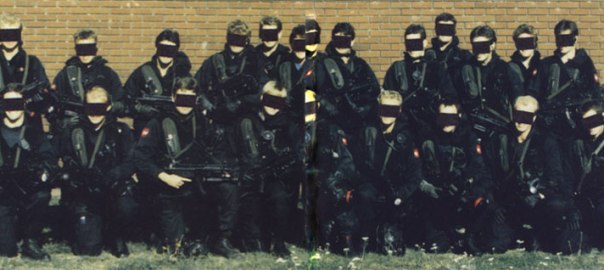








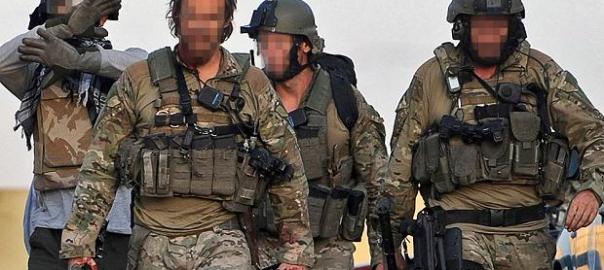


 belfastchildis.com