Key Events & Deaths on this day in Northern Ireland Troubles
18th September
Tuesday 18 September 1973
Edward Heath, then British Prime Minister, gave a media interview where he said that if the Northern Ireland Assembly failed to establish a power-sharing Executive by March 1974 then the best option would be to integrate Northern Ireland fully into the United Kingdom (UK).
Saturday 18 September 1976
Two Royal Ulster Constabulary (RUC) officers were shot by the Irish Republican Army (IRA) during a gun attack in Portadown, County Armagh. Albert Craig (33), then a Sergeant, was pronounced dead on arrival at Craigavon Hospital.
Thursday 18 September 1986
International Fund for Ireland
The International Fund for Ireland was established by the British and Irish governments.
[The fund was designed to support economic developments in Northern Ireland and the border counties in the Republic of Ireland. The initial £36 million for the fund was donated by the United States of America (which gave the bulk of the money), Canada, New Zealand and, since 1988, the European Community Commission.]
Saturday 18 September 1993
An interview with Martin McGuinness, then Vice-President of Sinn Féin (SF), was published in the Guardian (a British newspaper). McGuinness stated that any political settlement should be decided by the people of Ireland and spoke of the “right to self-determination of the Irish people”.
The Royal Ulster Constabulary (RUC) issued a statement in reply to Sinn Féin (SF) claims that members of the party had been refused licences to carry firearms for personal protection. The RUC denied that was any such policy and stated that five SF councillors had been issued with firearm certificates.
Sunday 18 September 1994
The Observer (a London based newspaper) carried a report of an interview with Albert Reynolds, then Taoiseach (Irish Prime Minister). Reynolds was reported as saying that the unification of Ireland would not come about “in this generation”.
Monday 18 September 1995
Mitchel McLaughlin, then Sinn Féin (SF) chairman, and Gary McMichael, then leader of the Ulster Democratic Party (UDP), took part in a debate during the Liberal Democrats’ conference in Glasgow, Scotland. This was the first time representatives of the two parties shared a platform.
Thursday 18 September 1997
The Irish News carried a story that on Friday 12 September 1997 four unarmed members of the Irish Republican Army (IRA) stopped a member of the Continuity Irish Republican Army (CIRA) and took a gun off him. The incident happened in the Ardoyne area of Belfast. [The story was later confirmed as true by Ruairí O Brádaigh, then President of Republican Sinn Féin (RSF).] During a referendum in Wales the electorate voted by a narrow majority for a Welsh Assembly. [This followed the vote for a Scottish Parliament held on 11 September 1997.]
Saturday 18 September 1999
A rally in Belfast against the reform of the Royal Ulster Constabulary (RUC) proposed by the Patten report was addressed by a former chief constable of the force, Sir John Hermon. He warned against pushing the report’s recommendations through the British parliament before the Northern Ireland Assembly was properly in place. The dissident Republican group, the 32-County Sovereignty Movement, opened a branch in Derry saying it plans to build “the strongest Republican opposition ever to British rule”.
Tuesday 18 September 2001
There was a gun attack on a man sitting in a car in the Loyalist Killycomaine estate, Portadown, County Armagh, shortly before 8.00am (08.00BST). The man was uninjured. A group of men in a second car fired several shots before driving off.
[The attack is believed to have been carried out by the Ulster Volunteer Force (UVF). Royal Ulster Constabulary (RUC) officers are considering the possibility that the incident is related to an on-going feud between the Loyalist Volunteer Force (LVF) and the UVF in the Portadown area..]
The Loyalist protest at the Holy Cross Girls’ Primary School continued. The protest was silent as Catholic children and parents entered the school but protesters jeered, shouted abuse, waved flags, held up banners, and whistled as the parents returned from the school. Catholic parents were scheduled to have a meeting with John Reid, then Secretary of State for Northern Ireland, at Hillsborough, County Down, about the situation at Holy Cross school.
Seamus Mallon, then deputy leader of the Social Democratic and Labour Party (SDLP), announced that he would not be standing for leader of the party in the forthcoming leadership contest in November. He also announced that he wished to stand down as deputy leader of the party. Following the announcement Alban Maginness declared that he would stand as a candidate for the deputy leadership post. British and Irish officials are expected to meet in London this afternoon at the beginning of a new round of political talks to try and resolve remaining issues in the peace process. The current deadline for agreement between the political parties is 22 September 2001.
Remembering all innocent victims of the Troubles
Today is the anniversary of the follow people killed as a results of the conflict in Northern Ireland
To the innocent on the list – Your memory will live forever
– To the Paramilitaries –
“There are many things worth living for, a few things worth dying for, but nothing worth killing for.
7 People lost their lives on the 18th September between 1971 – 1976
————————————————————–
18 September 1971
Robert Leslie, (20)
Protestant Status: Royal Ulster Constabulary (RUC),
Killed by: Irish Republican Army (IRA)
Shot while on Royal Ulster Constabulary (RUC) foot patrol, Abercorn Square, Strabane County Tyrone.
————————————————————–
18 September 1972 Edmund Woolsey, (32)
Catholic Status: Civilian (Civ),
Killed by: not known (nk)
Killed by booby trap bomb attached to a friend’s stolen car, which exploded when he attempted to open the door, Glassdrumman, near Crossmaglen, County Armagh.
————————————————————–
18 September 1972 John Van Beck, (26) nfNI Status: British Army (BA),
Killed by: Irish Republican Army (IRA)
Died one day after being shot while on British Army (BA) foot patrol, Lecky Road, Derry
————————————————————–
18 September 1973
Richard Miller, (21) nfNI Status: British Army (BA),
Killed by: Irish Republican Army (IRA)
Undercover British Army (BA) member. Died three weeks after being shot outside Royal Victoria Hospital, Falls Road, Belfast. He was wounded on 25 August 1973.
————————————————————–
18 September 1974
Patrick McGreevy, (15)
Catholic Status: Official Irish Republican Army Youth Section (OIRAF),
Killed by: Ulster Volunteer Force (UVF)
Shot from passing car while standing outside Pacific Cafe, Clifton Street, Belfast.
————————————————————–
18 September 1975
Brendan Doran, (29)
Catholic Status: Civilian (Civ),
Killed by: non-specific Loyalist group (LOY)
Shot at his workplace, newsagent’s, Greenway, Cregagh, Belfast.
————————————————————–
18 September 1976
Albert Craig, (33)
Protestant Status: Royal Ulster Constabulary (RUC),
Killed by: Irish Republican Army (IRA)
Shot while directing traffic, Brownstone Road, Portadown, County Armagh.
————————————————————–
This is simply the story of a boy trying to grow up, survive, thrive, have fun & discover himself against a backdrop of events that might best be described as ‘explosive’, captivating & shocking the world for thirty long years.
Key Events & Deaths on this day in Northern Ireland Troubles
14th September
————————————————————————–
Tuesday 14 September 1971
Two British soldiers, Martin Carroll (23) and John Rudman (21) were killed in separate shooting incidents in Derry and Edendork, near Coalisland, County Tyrone. Another soldier was seriously injured during the incident in Derry which took place at the Army base in the old Essex factory.
[A Catholic civilian was shot dead in the early hours of the next morning from the same Army base.]
Thursday 14 September 1972
Two people were killed and one mortally wounded in a UVF bomb attack on the Imperial Hotel, Belfast.
Monday 14 September 1981
Gerard Hodgkins, then an Irish Republican Army (IRA) prisoner, joined the hunger strike.
Monday 14 September 1987
James Molyneaux, then leader of the Ulster Unionist Party (UUP), and Ian Paisley, then leader of the Democratic Unionist Party (DUP), met Tom King, then Secretary of State for Northern Ireland. The meeting was the first of a series of ‘talks about talks’. This was the first meeting between government ministers and leaders of Unionist parties in 19 months.
Friday 14 September 1990
There was a meeting of the Anglo-Irish Intergovernmental Conference (AIIC) in Dublin.
Tuesday 14 September 1993
Jean Kennedy Smith, then USA Ambassador to the Republic of Ireland, began a week-long fact-finding visit to Northern Ireland.
Thursday 14 September 1995
The ‘Unionist Commission’ held an inaugural meeting in Belfast. The commission was comprised of 14 members representing a range of Unionist opinion. The Democratic Unionist Party (DUP) was responsible for the initiative. The Ulster Unionist Party (UUP) was represented by two councillors acting in a personal capacity. Kevin McNamara, then opposition spokesperson on the civil service, resigned his post as a protest over the Labour Party policy which he considered was “slavishly” following the approach of the Conservative government.
Sunday 14 September 1997
An Orange Order parade planned for the Nationalist village of Dunloy, County Antrim, was rerouted by the Royal Ulster Constabulary (RUC). The Loyalists responsible for a picket outside the Catholic church at Harryville in Ballymena, County Antrim, said that because Orangemen were unable to parade at Dunloy the picket would resume.
Gerry Adams, then President of Sinn Féin (SF), addressed a rally at Belfast City Hall in support of Saoirse.
Monday 14 September 1998
The Northern Ireland Assembly met for the first time since July 1998. David Trimble, then First Minister designate, said that the issue of decommissioning remained an obstacle to the establishment of the Northern Ireland Executive. The formation of the Executive was postponed.
[The executive was established on 29 November 1999.]
Trimble also said that the Democratic Unionist Party (DUP) could not take part in the Executive in a selective fashion. Two former members of the UUP and an Independent Unionist joined together to form the United Unionist Assembly Party (UUAP).
Tuesday 14 September 1999
Johnny Adair became the 293rd prisoner to be freed under the Good Friday Agreement’s early release scheme. He was one of Northern Ireland’s most notorious Loyalist paramilitaries and had been sentenced in 1995 to 16 years imprisonment for directing terrorism.
There were two separate paramilitary ‘punishment’ attacks on 14 year old boys. One attack took place in Dundonald, near Belfast, and the second on the Ardowen estate, near Craigavon, County Armagh. Both boys were hospitalised as a result of their injuries.
Thursday 14 September 2000
A pipe-bomb exploded at a house in Coleraine, County Derry, although the two occupants were uninjured. The Royal Ulster Constabulary (RUC) said that the motive for the attack was unclear.
Friday 14 September 2001
People throughout Northern Ireland will observe three-minutes of silence at 11.00am (11.00BST) as a mark of respect to those who lost their lives in the terrorist attacks in the United States of America (USA). The Republic of Ireland is holding a national day of mourning for the victims of the terrorist attacks in the United States of America (USA). Bertie Ahern, then Taoiseach (Irish Prime Minister), and Mary McAleese, then President of the Republic of Ireland, will lead the mourning at an ecumenical service in Dublin.
The Irish Government asked shops, banks, schools, government offices, and businesses, to close and people attended religious services. Pubs and hotels also closed and there was limited public transport. The Republic is expected to a virtual standstill. Loyalist protesters at the Holy Cross Girls’ Primary School have said they will call off their protest at the school for one day only as a mark of respect for what happened in the USA.
John Reid, then Secretary of State for Northern Ireland, is to hold a meeting in London with David Trimble, then leader of the Ulster Unionist Party (UUP), and Ian Paisley, then leader of the Democratic Unionist Party (DUP). The meeting will discuss the future of policing in Northern Ireland.
Remembering all innocent victims of the Troubles
Today is the anniversary of the follow people killed as a results of the conflict in Northern Ireland
To the innocent on the list – Your memory will live forever
– To the Paramilitaries –
“There are many things worth living for, a few things worth dying for, but nothing worth killing for.
10 People lost their lives on the 14th September between 1971 – 1986
————————————————————–
14 September 1971
Martin Carroll, (23) nfNI
Status: British Army (BA),
Killed by: Official Irish Republican Army (OIRA) Shot by sniper at British Army (BA) base, Eastway Gardens, Creggan, Derry.
————————————————————–
14 September 1971
John Rudman, (21) nfNI Status: British Army (BA),
Killed by: Irish Republican Army (IRA) Shot while on British Army (BA) mobile patrol, Edendork, near Coalisland, County Tyrone.
————————————————————–
14 September 1972 Andrew McKibben, (28)
Protestant Status: Civilian (Civ),
Killed by: Ulster Volunteer Force (UVF) Killed in car bomb explosion outside Imperial Hotel, Cliftonville Road, Belfast. Driving past at the time of the explosion.
————————————————————–
14 September 1972 Martha Smilie, (91)
Protestant Status: Civilian (Civ),
Killed by: Ulster Volunteer Force (UVF) Killed in car bomb explosion outside Imperial Hotel, Cliftonville Road, Belfast.
————————————————————–
14 September 1972 Anne Murray, (53)
Catholic Status: Civilian (Civ),
Killed by: Ulster Volunteer Force (UVF) Injured in car bomb explosion outside Imperial Hotel, Cliftonville Road, Belfast. She died 16 September 1972.
————————————————————–
14 September 1975 Seamus Hardy, (20)
Catholic Status: Civilian (Civ),
Killed by: non-specific Loyalist group (LOY) Found shot in entry, off Columbia Street, Shankill, Belfast.
————————————————————–
14 September 1979
George Foster (30)
Protestant Status: Prison Officer (PO),
Killed by: Irish Republican Army (IRA) Off duty. Shot outside Buffs Social Club, Century Street, off Crumlin Road, Belfast.
————————————————————–
14 September 1981
John Proctor, (25)
Protestant Status: Royal Ulster Constabulary (RUC),
Killed by: Irish Republican Army (IRA) Off duty. Shot while leaving Magherafelt Hospital, County Derry.
————————————————————–
14 September 1986
————————————————————
Orangemen show their support for Sectarian Murderers
————————————————————
John Bingham, (33)
Protestant Status: Ulster Volunteer Force (UVF),
Killed by: Irish Republican Army (IRA) Shot at his home, Ballysillan Crescent, Ballysillan, Belfast.
See below for more details on John Bingham
————————————————————–
14 September 1986
James McKernan, (29)
Catholic Status: Irish Republican Army (IRA),
Killed by: British Army (BA) Shot shortly after being involved in Irish Republican Army (IRA) sniper attack on British Army (BA) foot patrol, Andersonstown Road, Belfast.
See:
This is simply the story of a boy trying to grow up, survive, thrive, have fun & discover himself against a backdrop of events that might best be described as ‘explosive’, captivating & shocking the world for thirty long years.
Key Events & Deaths on this day in Northern Ireland Troubles
Monday 13 September 1971
Two Loyalists, James Finlay (31) and John Thompson (21), were mortally injured when the bomb they were preparing exploded prematurely in a house in Bann Street, Belfast. Finlay died on 21 September 1971, and Thompson died on 12 October 1971.
Monday 13 September 1976
Following the resignation of Brian Faulkner the Unionist Party of Northern Ireland (UPNI) elected Anne Dickson as its new leader.
[Dickson became the first woman to lead a political party in Ireland.]
Tuesday 14 September 1976
‘Blanket Protest’ Began
Kieran Nugent was the first prisoner to be sentenced under the new prison regime introduced on 1 March 1976 which meant that he would not receive special category status. Nugent was sent to the new ‘H-Blocks’ of the Maze Prison where he refused to wear prison clothes choosing instead to wrap a blanket around himself.
[This marked the beginning of the ‘Blanket Protest’. This protest was to culminate in the hunger strikes of 1981 when 10 Republican prisoners died. Eventually many of the elements of special category status such as, no uniforms, free association and no prison work, were conceded to paramilitary prisoners.]
Sunday 13 September 1981
Humphrey Atkins, then Secretary of State for Northern Ireland, was appointed as deputy Foreign Secretary. James Prior was appointed by the British government to take over the post of Secretary of State. [ 1981 Hunger Strike.]
Tuesday 13 September 1983
James Prior, then Secretary of State for Northern Ireland, defended the use of evidence supplied by ‘supergrasses’.
Friday 14 September 1990
There was a meeting of the Anglo-Irish Intergovernmental Conference (AIIC) in Dublin.
Friday 13 September 1991
The Ulster Freedom Fighters (UFF), a cover name (pseudonym) used by the Ulster Defence Association (UDA), planted two bombs planted in Catholic areas. The devices were defused by the British Army. The Anglo-Irish Intergovernmental Conference (AIIC) held a meeting at Stormont in Belfast.
Tuesday 13 September 1994
There were sectarian clashes outside Crumlin Road Courthouse, Belfast, which were connected to a case being heard at the time. Later in the evening there was serious rioting in Loyalist areas of Belfast. Shots were fired, and petrol bombs were thrown, at the Royal Ulster Constabulary (RUC).
Friday 13 September 1996
British Government Ministers were reportedly warned that the Irish Republican Army (IRA) were ready to launch a renewed bombing campaign in Britain.
Saturday 13 September 1997
The Executive Council of the Ulster Unionist Party (UUP) held a meeting to decide its position on entering the resumed multi-party talks on 15 September 1997. However the meeting did not arrive at a decision and the matter was postponed to a further meeting on the morning of 15 September 1997. Loyalists held a parade on the Shankill Road with 70 bands taking part. Four members of the Ulster Volunteer Force (UVF) appeared during the parade and posed with weapons before slipping away into the crowd.
Monday 13 September 1999
The Ulster Unionist Party (UUP) executive set up a committee to devise an alternative to the Patten proposals for policing in Northern Ireland. David Trimble, then leader of the UUP, dismissed threats to his leadership and said his party would continue to be involved in the Mitchell Review of the Good Friday Agreement. A survey of public opinion in Northern Ireland found that of those questioned 69 per cent of Catholics approved of the proposals in the Patten report while 65 per cent of Protestants disapproved. The survey was conducted by Ulster Marketing Surveys.
Thursday 13 September 2001
The British Army had to deal with a pipe-bomb that had been discovered found at Carrowdore near Newtownards, County Down. Royal Ulster Constabulary (RUC) officers discovered a gun, ammunition, a telescopic sight, and bomb-making parts in a hedge on the Knockagh Road in Monkstown, County Antrim.
The Loyalist protest at the Holy Cross Girls’ Primary School followed the pattern of earlier in the week. The Northern Ireland Assembly met to discuss the motion: “This Assembly condemns the shocking and inhuman acts of terrorism carried out in the United States of America on Tuesday and, on behalf of the people of Northern Ireland, extends its sympathy to the government and people of America and all who have suffered so grievously.” The motion was a joint one submitted by Reg Empey (Sir), then Ulster Unionist Party (UUP) Minster of Development and Enterprise, and Seamus Mallon, then Social Democratic and Labour Party (SDLP) deputy First Minister.
Empey and Mallon described the attacks as “shocking and inhuman acts”. The motion was passed unanimously. However, during the debate Ian Paisley, then leader of the Democratic Unionist Party (DUP), led his party members out of the chamber when Gerry Adams, then President of Sinn Féin (SF), rose to speak. Iain Duncan Smith was elected leader of the Conservative Party. Quentin Davies of the Conservative Party was appointed the new shadow spokesman for Northern Ireland.
Remembering all innocent victims of the Troubles
Today is the anniversary of the follow people killed as a results of the conflict in Northern Ireland
To the innocent on the list – Your memory will live forever
– To the Paramilitaries –
“There are many things worth living for, a few things worth dying for, but nothing worth killing for.
7 People lost their lives on the 13th September between 1972 – 1993
————————————————————–
13 September 1972
Patrick Doyle, (19)
Catholic Status: Civilian (Civ),
Killed by: non-specific Loyalist group (LOY)
Son of publican. Shot in Divis Castle Bar, Springfield Road, Belfast.
————————————————————–
13 September 1972
Robert Warnock, (18)
Protestant Status: Ulster Defence Association (UDA),
Killed by: Royal Ulster Constabulary (RUC)
Shot by off duty Royal Ulster Constabulary (RUC) member during attempted armed robbery at Hillfoot Bar, Glen Road, Castlereagh, Belfast.
————————————————————–
13 September 1975
Leo Norney, (17)
Catholic Status: Civilian (Civ),
Killed by: British Army (BA)
Shot while walking along Shepherd’s Path, near Turf Lodge, Belfast.
————————————————————–
13 September 1977 Robin Smyrl, (26)
Protestant Status: Ulster Defence Regiment (UDR),
Killed by: Irish Republican Army (IRA)
Off duty. Shot while driving to his workplace, Gortin, County Tyrone.
————————————————————–
13 September 1978 Williams Crawford, (17)
Protestant Status: Civilian (Civ),
Killed by: Ulster Volunteer Force (UVF)
Died five days after being shot, during gun attack on Lawnbrook Social Club, Centurion Street, Shankill, Belfast. Intention to scare the patrons, after earlier fracas at the social club.
————————————————————–
13 September 1991
Kevin Flood, (31)
Catholic Status: Civilian (Civ),
Killed by: Ulster Volunteer Force (UVF)
Shot from passing car while standing outside his home, Ligoniel Road, Ligoniel, Belfast.
————————————————————–
13 September 1993 Vernon Bailie, (41)
Protestant Status: Civilian (Civ),
Killed by: Red Hand Commando (RHC)
Shot outside his girlfriend’s home, Johnston Park, Carrowdore, near Newtownards, County Down
This is simply the story of a boy trying to grow up, survive, thrive, have fun & discover himself against a backdrop of events that might best be described as ‘explosive’, captivating & shocking the world for thirty long years.
Disclaimer – The views and opinions expressed in these documentary are soley intended to educate and provide background information to those interested in the Troubles of Northern Ireland. They … Continue reading The Shankill Bomb→
Key Events & Deaths on this day in Northern Ireland Troubles
12th September
Sunday 12 September 1971
A statement on Internment, violence and the ill-treatment of detainees was released by the William Conway, then Catholic Cardinal of Ireland, and six Bishops. In a statement Cardinal Conway asked, ‘Who wanted to bomb one million Protestants into a United Ireland?’
Thursday 12 September 1974
Demonstrations were held in Belfast by Loyalists and Republicans in support of prisoners who were protesting about parole and food.
Monday 12 September 1977
Roy Mason, then Secretary of State for Northern Ireland, marked the end of his first year in the region by stating that ‘the myth of British withdrawal from Northern Ireland’ was now dead.
Tuesday 12 September 1989
Margaret Thatcher, then British Prime Minister, paid a visit to Northern Ireland and described the Ulster Defence Regiment (UDR) as a group of “very, very, very brave men”. In Dublin Sinn Féin (SF) announced the launch of the Irish National Congress.
Saturday 12 September 1992
A confidential discussion paper was leaked from the political talks (later known as the Brooke / Mayhew talks). It was claimed that the paper had been prepared by Patrick Mayhew, then Secretary of State for Northern Ireland, in an attempt to overcome a perceived lack of channels of communication between Northern Ireland and the Republic of Ireland.
[The paper was heavily criticised by Unionists and was later withdrawn when James Molyneaux, then leader of the Ulster Unionist Party (UUP), threatened to leave the talks. In particular Unionists were angered by certain phrases that had been used such as ‘an agreed Ireland’ as well as ‘powers to be exercised through North/South channels’. There were further leaks on 20 September 1992.]
Sunday 12 September 1993
Patrick Mayhew, then Secretary of State for Northern Ireland, gave a speech to the British Irish Association. Mayhew called for flexibility on the part of the political parties. The Democratic Unionist Party (DUP) published a policy document entitled ‘Breaking the Log-Jam’.
Monday 12 September 1994
The Ulster Volunteer Force (UVF) planted a 1.5kg bomb on the Belfast to Dublin train. Only the detonator exploded and two people were injured. on 20 September 1992.
Tuesday 12 September 1995
Patrick Mayhew, then Secretary of State for Northern Ireland, held his first formal talks with representatives of the Ulster Democratic Party (UDP) and representatives of the Progressive Unionist Party (PUP). David Trimble, then leader of the Ulster Unionist Party (UUP), said he would not attend the Forum for Peace and Reconciliation in Dublin. Trimble held a meeting with Peter Robinson, then deputy leader of the Democratic Unionist Party (DUP), and Robert McCartney, then leader of the United Kingdom Unionist Party (UKUP), to discuss proposals for Unionist unity.
Thursday 12 September 1996
Mary Robinson, then President of the Republic of Ireland, had a number of engagements in Belfast. There were protests at one of the venues, a women’s centre on the Donegal Road, and the centre was later badly damaged in an arson attack. Michael Whelan (35), a Catholic man, was discovered beaten to death in the lower Ormeau area of Belfast. The Royal Ulster Constabulary (RUC) later said the motive for the killing was sectarian.
Friday 12 September 1997
Tony Blair, then British Prime Minister, issued a statement calling on David Trimble, then leader of the Ulster Unionist Party (UUP), to remain in the multi-party talks at Stormont. Mary Robinson formally resigned as President of the Republic of Ireland. She took up a new position as High Commissioner for Human Rights at the United Nations.
Sunday 12 September 1999
Ronnie Flanagan, then Chief Constable of the Royal Ulster Constabulary (RUC), speaking on ‘Sunday With Adam Boulton’ on Sky News, said the threat from dissident Republicans was growing. Groups such as the ‘real IRA’ were regrouping and posed a threat, especially in border areas, he said. There was a sectarian attack by loyalists on the home of Danny O’Connor, then Social Democratic and Labour Party (SDLP) MLA. A group of loyalists had gathered outside his home shouting threats and causing damage to his car. It was the third sectarian attack on his home in three months.
Tuesday 12 September 2000
British army bomb disposal experts defused a pipe-bomb thrown through the window of a house in the upper Shankill on Sunday night. The house on the Ballygomartin Road was unoccupied when the device and a petrol bomb were thrown through the living room window at around 11.00pm.
A pipe-bomb was thrown at the home of a Loyalist politician during an outbreak of violence on the Loyalist Shankill Road area of Belfast. Billy Hutchinson, Progressive Unionist Party (PUP) Assemblyman, was at the scene of the attack when a device was thrown at his home in the Shankill area. Hutchinson’s wife and father-in-law had to be moved from the house and other nearby homes were evacuated.
Wednesday 12 September 2001
There was a bomb attack at 12.30am (0030BST) on an Royal Ulster Constabulary (RUC) patrol in Derry. Three RUC officers were investigating a burning car at a building site when a bomb exploded at the side of the road. The officers were treated for shock.
[The attack was thought to have been carried out by dissident Republican paramilitaries.]
The Loyalist protest at the Holy Cross Girls’ Primary School followed the pattern of Monday and Tuesday. However, before going to the school the children and parents held a a prayer service and a minute’s silence for the victims of the terrorist attacks in the United States of America (USA) on 11 September 2001.
Richard Haass, then a United States special envoy, had a series of meetings with political leaders in Northern Ireland. Bertie Ahern, then Taoiseach (Irish Prime Minister), announced that Friday would be a national day of mourning for the victims of the terrorist attacks in the USA.
Ronnie Flanagan, then Chief Constable of the Royal Ulster Constabulary (RUC), announced that the target of 50:50 recruitment of Catholics and Protestants to the new Police Service of Northern Ireland (PSNI) was being achieved. New policing legislation following recommendations in the Patten Report had laid down 50:50 recruitment rule. During the first phase of the application process 8000 people had applied for jobs of whom 550 were deemed qualified and a minimum of 260, possibly as many as 300, would be offered places on the trainee program.
[The first recruits to the PSNI will begin their training in the period between 14 October and 4 November 2001. They are expected to be on duty by the spring of 2002.]
Remembering all innocent victims of the Troubles
Today is the anniversary of the follow people killed as a results of the conflict in Northern Ireland
To the innocent on the list – Your memory will live forever
– To the Paramilitaries –
“There are many things worth living for, a few things worth dying for, but nothing worth killing for.
4 People lost their lives on the 12th September between 1975 – 1986
————————————————————–
12 September 1975 John Snoddy, (32)
Protestant Status: Civilian (Civ),
Killed by: non-specific Republican group (REP)
Shot at his home, Milltown Avenue, Derriaghy, near Belfast.
————————————————————–
12 September 1979
Gabriel Wiggans, (56)
Catholic Status: Civilian (Civ),
Killed by: Ulster Volunteer Force (UVF)
Shot at his home, Springfield Road, Belfast.
————————————————————–
12 September 1981
Alan Clarke, (20)
Protestant Status: Ulster Defence Regiment (UDR),
Killed by: Irish Republican Army (IRA)
Off duty. Shot while walking along Hall Street, Maghera, County Derry.
————————————————————–
12 September 1986 Kenneth Robinson, (30)
Protestant Status: Civilian (Civ),
Killed by: Irish Republican Army (IRA)
Killed by booby trap bomb, attached to his Ulster Defence Regiment (UDR) member father’s car outside their home, Clonmakane Court, Caw, Derry.
————————————————————–
This is simply the story of a boy trying to grow up, survive, thrive, have fun & discover himself against a backdrop of events that might best be described as ‘explosive’, captivating & shocking the world for thirty long years.
Key Events & Deaths on this day in Northern Ireland Troubles
Thursday 11 September 1975
Harold Wilson, then British Prime Minister, together with Merlyn Rees, then Secretary of State for Northern Ireland, held a meeting with Margaret Thatcher, then leader of the Conservative Party, to brief her about a number of matters including Northern Ireland.
[On 3 May 2006 the Irish News (a Belfast based newspaper) published details of confidential cabinet minutes that had been taken at the meeting. The minutes reveal that the British government was aware of collusion between the security forces, particularly the Ulster Defence Regiment (UDR), and Loyalist paramilitaries.]
Monday 11 September 1989
Further security forces documents, containing details of suspected Irish Republican Army (IRA) members, were reported to have gone missing. Nationalists called for the disbandment of the Ulster Defence Regiment (UDR).
Wednesday 11 September 1996
John Bruton, then Taoiseach (Irish Prime Minister), addressed a joint session of the United States Congress. His address was upbeat and optimistic about the prospects for progress in the all-party talks and also the possibility of a new Irish Republican Army (IRA) ceasefire.
Thursday 11 September 1997
An Phoblacht published an interview with an Irish Republican Army (IRA) spokesperson who said that “the IRA would have problems with sections of the Mitchell Principles”. However, the person said that what Sinn Féin (SF) decided to do “was a matter for them”.
[SF signed up to the Mitchell Principles on 9 September 1997.]
In a referendum in Scotland the electorate voted for a devolved parliament with tax-raising powers.
[The Labour Party policy of conceding devolution was considered by many commentators as an attempt to undermine growing demands for independence for Scotland. Some people believe that independence in Scotland would have implications on the constitutional position of Northern Ireland.]
Friday 11 September 1998
First Paramilitary Prisoners Released Under Agreement The first of the paramilitary prisoners were released from jails in Northern Ireland under the terms of the Good Friday Agreement. Seven prisoners, including three Republican and three Loyalist, were released in a programme that was expected to take two years to complete.
Bertie Ahern, then Taoiseach (Irish Prime Minister), told Chris Patten, then chairman of the Commission reviewing the future of the Royal Ulster Constabulary (RUC), that major reform of the force was necessary if the force was to become acceptable to both communities in Northern Ireland. Ahern made his comments during a meeting with Patten at Government buildings in Dublin.
Monday 11 September 2000
A family escaped uninjured after a pipe-bomb was thrown at their home on the Ballysally estate in Coleraine, County Derry. The attack was carried out by Loyalist paramilitaries.
Tuesday 11 September 2001
Richard Haass, then a United States special envoy, was in Dublin for a meeting with Bertie Ahern, then Taoiseach (Irish Prime Minister), when news of the terrorist attacks in New York and Washington were passed to the two men. Richard Haass decided to continue with his meetings in Dublin and then to travel to Belfast for pre-arranged meetings with political leaders in Northern Ireland.
The Loyalist protest at the Holy Cross Girls’ Primary School followed the pattern of yesterday. Loyalist protesters remained silent as Catholic children and parents made their way into the school along a security cordon. However, protesters used air horns (klaxons), blew whistles, and banged metal bin lids, as the Catholic parents made their way back down the Ardoyne Road.
Aidan Troy (Fr), then Chairman of the Board of Governors of the Holy Cross Girls’ Primary School, together with a local Protestant clergyman, held a meeting with representatives of the Concerned Residents of Upper Ardoyne (CRUA) who were engaged in a protest at the school. The meeting was described as “exploratory”. John Reid, then Secretary of State for Northern Ireland, held a meeting with representatives of the residents of the Glenbryn estate who were engaged in the protest at the Holy Cross school in Ardoyne, north Belfast. The meeting lasted for 2 hours but residents made no comment after the meeting.
Remembering all innocent victims of the Troubles
Today is the anniversary of the follow people killed as a results of the conflict in Northern Ireland
To the innocent on the list – Your memory will live forever
– To the Paramilitaries –
“There are many things worth living for, a few things worth dying for, but nothing worth killing for.
3 People lost their lives on the 11th September between 1976 – 1992
————————————————————–
11 September 1976
Victor Moody, (18)
Protestant Status: Ulster Defence Association (UDA),
Killed by: Ulster Defence Association (UDA)
Found shot in entry off Disraeli Street, Shankill, Belfast. Internal Ulster Defence Association (UDA) dispute.
————————————————————–
11 September 1978
Howard Donaghy, (24)
Protestant Status: Royal Ulster Constabulary (RUC),
Killed by: Irish Republican Army (IRA)
Off duty. Shot at the site of his new home, Loughmacrory, near Carrickmore, County Tyrone
This is simply the story of a boy trying to grow up, survive, thrive, have fun & discover himself against a backdrop of events that might best be described as ‘explosive’, captivating & shocking the world for thirty long years.
Disclaimer – The views and opinions expressed in these documentary are soley intended to educate and provide background information to those interested in the Troubles of Northern Ireland. They … Continue reading The Shankill Bomb→
Key Events & Deaths on this day in Northern Ireland Troubles
10th September
Sunday 10 September 1972
Three British soldiers were killed in a land mine attack near Dungannon, County Tyrone.
Monday 10 September 1973
There were two bomb attacks at train stations in London; the attacks were carried out by the Irish Republican Army (IRA). At 1.00pm a small bomb exploded at King’s Cross Railway Station, London. At 1.05pm the Press Association received a phone call warning of a bomb at Euston Railway Station. At 1.15pm another small bomb (estimated at 2-5 pounds of explosives) exploded outside the Rail Bar at Euston Station, London. There were no deaths but 12 people were injured in the blast.
Friday 10 September 1976
Roy Mason succeeded Merlyn Rees as Secretary of Sate for Northern Ireland. [Mason was to oversee a period involving a much more severe security regime in the region.]
Monday 10/11th September 1984
Douglas Hurd replaced James Prior as Secretary of State for Northern Ireland. Rhodes Boyson became the Minister of State at the Northern Ireland Office (NIO).
Wednesday 10 September 1986
There was a ministerial reshuffle at the Northern Ireland Office (NIO). Nicholas Scott was promoted to Minster of State and Deputy Secretary of State while Peter Viggers replaced Rhodes Boyson at Economic Development.
Friday 10 September 1993
Three Royal Ulster Constabulary (RUC) detectives who had been involved in the original ‘UDR [Ulster Defence Regiment] Four’ case were themselves sent for trial.
Saturday 10 September 1994
Five Irish Republican Army (IRA) prisoners, together with a sixth prisoner, attempted to escape from Whitemoor jail in Cambridgeshire, England. [On 22 September 1994 the prison authorities found plastic explosive and detonators at the prison.]
Sunday 10 September 1995
There were disturbances involving Gaelic Athletic Association (GAA) supporters and Orange Order members at a parade in the village of Dunloy, County Antrim. Four Royal Ulster Constabulary (RUC) officers and several civilians were injured during the clashes.
Tuesday 10 September 1996
The two governments, British and Irish, decided that the Progressive Unionist Party (PUP) and the Ulster Democratic Party (UDP) were not in breach of the ‘Mitchell Principles’ and therefore could remain in the talks at Stormont.
Wednesday 10 September 1997
Mary McAleese, then a Pro-Vice Chancellor at Queen’s University of Belfast, announced that she would enter the contest to become the Fianna Fáil (FF) nomination for President of Ireland.
[McAleese was successful and went on to win the Presidential election.]
Thursday 10 September 1998
Meeting Between Trimble and Adams David Trimble, then First Minister designate and leader of the Ulster Unionist Party (UUP), held his first face-to-face meeting with Gerry Adams, then President of Sinn Féin (SF). The meeting took place in private at Stormont, Belfast. Both men later described the meeting as cordial and businesslike. Adams said: “He is a man I can do business with” but repeated his position that he could not deliver on decommissioning.
[This was the first meeting between SF and a Unionist leader since the formation of Northern Ireland.]
Ronnie Flanagan, then Chief Constable of the Royal Ulster Constabulary (RUC), announced that British army patrols in Belfast would cease from the weekend because of the reduced threat from paramilitaries.
Monday 10 September 2001
There was a pipe-bomb attack on a house in the Woodburn estate, Carrickfergus, County Antrim. The attack took place in the early hours of Monday morning when the device exploded in the living room of the dwelling. There were no injuries but there was some damage to the property.
British Army bomb disposal officers had to defuse a pipe-bomb that had been left in a public house in Portstewart, County Derry. The device had been left in the pub the previous day by Loyalist paramilitaries.
The first part of the protest by Loyalists at the Holy Cross Girls’ Primary School passed off quietly as Catholic children and parents made their way into the school along a security cordon. However, as the parents returned from the school the protest turned noisy and more abusive. Protesters used air horns (klaxons), blew whistles, and banged metal bin lids, as the Catholic parents made their way back down the Ardoyne Road.
Some of the Loyalist protesters shouted “Fenian scum” at the parents. [This was day 6 of the most recent protest.] Richard Haass, then a United States special envoy, held a meeting with John Reid, then Secretary of State for Northern Ireland, in London about the current political situation in Northern Ireland. The two men also discussed the protest at the Holy Cross Girls’ Primary School in north Belfast.
[Haass is expected to travel to Northern Ireland on Tuesday to meet with representatives of the main political parties.]
Gerry Kelly, then a senior member of Sinn Féin (SF), introduced a private members’ motion in the Northern Ireland Assembly proposing that the “Assembly supports the right to education of children attending the Holy Cross Primary School in north Belfast”. Unionist members proposed an ammendment to the motion to make it apply to all schools in the area. The amended motion was passed by the Assembly.
Remembering all innocent victims of the Troubles
Today is the anniversary of the follow people killed as a results of the conflict in Northern Ireland
To the innocent on the list – Your memory will live forever
– To the Paramilitaries –
“There are many things worth living for, a few things worth dying for, but nothing worth killing for.
7 People lost their lives on the 10th September between 1972 – 1991
————————————————————–
10 September 1972
Douglas Richmond, (21) nfNI Status: British Army (BA),
Killed by: Irish Republican Army (IRA)
Killed in land mine attack on British Army (BA) Armoured Personnel Carrier, Sanaghanroe, near Dungannon, County Tyrone.
————————————————————–
10 September 19724
Duncan McPhee, (21) nfNI Status: British Army (BA),
Killed by: Irish Republican Army (IRA)
Killed in land mine attack on British Army (BA) Armoured Personnel Carrier, Sanaghanroe, near Dungannon, County Tyrone.
————————————————————–
10 September 1972
William McIntyre, (23) nfNI Status: British Army (BA),
Killed by: Irish Republican Army (IRA)
Killed in land mine attack on British Army (BA) Armoured Personnel Carrier, Sanaghanroe, near Dungannon, County Tyrone.
————————————————————–
10 September 1975 Michael O’Toole, (41)
Catholic
Status: Civilian (Civ), Killed by: non-specific Loyalist group (LOY)
Died two days after being injured by booby trap bomb attached to his car, outside his home, Coast Road, Larne, County Antrim.
————————————————————–
10 September 1979 Hugh O’Halloran, (28)
Catholic Status: Civilian (Civ),
Killed by: Official Irish Republican Army (OIRA)
Died two days after being badly beaten by group of men near his home, Moyard Park, Ballymurphy, Belfast.
————————————————————–
10 September 1986 David McVeigh, (37)
Catholic Status: Irish Republican Army (IRA),
Killed by: Irish Republican Army (IRA)
Found shot by the side of the road, Flagstaff, near Killeen, County Armagh. Alleged informer.
————————————————————–
10 September 1991
John Hanna, (19)
Protestant Status: Ulster Volunteer Force (UVF),
Killed by: Irish Republican Army (IRA)
Shot at his home, Donegall Road, Village, Belfast.
This is simply the story of a boy trying to grow up, survive, thrive, have fun & discover himself against a backdrop of events that might best be described as ‘explosive’, captivating & shocking the world for thirty long years.
Disclaimer – The views and opinions expressed in these documentary are soley intended to educate and provide background information to those interested in the Troubles of Northern Ireland. They … Continue reading The Shankill Bomb→
Key Events & Deaths on this day in Northern Ireland Troubles
Wednesday 9 September 1971
A British soldier was killed trying to defuse a bomb near Lisburn.
Thursday 11 September 1975
Harold Wilson, then British Prime Minister, together with Merlyn Rees, then Secretary of State for Northern Ireland, held a meeting with Margaret Thatcher, then leader of the Conservative Party, to brief her about a number of matters including Northern Ireland.
[On 3 May 2006 the Irish News (a Belfast based newspaper) published details of confidential cabinet minutes that had been taken at the meeting. The minutes reveal that the British government was aware of collusion between the security forces, particularly the Ulster Defence Regiment (UDR), and Loyalist paramilitaries.]
Thursday 9 September 1976
The leaders of the main churches in Ireland issued a statement supporting the Women’s Peace Movement.
Wednesday 9 September 1992
Ian Paisley, then leader of the Democratic Unionist Party (DUP), together with Peter Robinson, then deputy leader of the DUP, walked out of Strand Two of the political talks (later known as the Brooke / Mayhew talks). The politicians left because Articles 2 and 3 of the Irish Constitution were not the first item on the agenda for the talks. Two members of the DUP remained in the talks as ‘observers’.
Friday 9 September 1994
John Taylor, then Deputy Leader of the Ulster Unionist Party (UUP), said that he believed that the Irish Republican Army (IRA) ceasefire was “for real”.
Monday 9 September 1996
The ‘General Head Quarters’ (GHQ) faction of the Irish National Liberation Army announced that the group was disbanding. This decision followed the killing of Hugh Torney on 3 September 1996.
This marked the ending of a feud within the INLA which started with the killing of Gino Gallagher on 30 January 1996.
This latest feud had claimed six lives.
The Stormont talks resumed after a break during the summer. The Democratic Unionist Party (DUP) and the United Kingdom Unionists brought a complaint against the Progressive Unionist Party (PUP) and the Ulster Democratic Party (UDP) for breach of the ‘Mitchell Principles’ because of their failure to condemn threats made against Billy Wright and Alex Kerr; both Loyalists from Portadown, County Armagh.
The Irish Times (a Dublin based newspaper) published the details of a poll, one of the results of which showed that two-thirds of people in Northern Ireland thought the Stormont talks would fail.
Tuesday 9 September 1997
Sinn Féin Signed Mitchell Principles
Petrol bombs were thrown at the homes of two Catholic families in the Protestant Ballykeel estate in Ballymena, County Antrim.
[One of the families, who had been living on the estate for 33 years, decided to leave their home following the attack.]
Representatives of Sinn Féin (SF) entered Stormont, Belfast, to sign a pledge that the party would agreed to abide by the Mitchell Principles.
[See 11 September 1997 for the reaction of the Irish Republican Army (IRA).]
The Ulster Unionist Party (UUP), the Progressive Unionist Party (PUP), and the Ulster Democratic Party (UDP) all refused to attend the session at Stormont. The PUP and the UDP held meetings with Adam Ingram, then Security Minister, to discuss the situation of Loyalist prisoners
. A number of UDP supporters took part in a protest outside the gates of Stormont. Madeline Albright, then Secretary of State of the United States of America (USA), asked the Attorney General to suspend the extradition to Britain of six men who were former members of the IRA.
Thursday 9 September 1999
Patten Report Published The Report of the Independent Commission on Policing in Northern Ireland was released and was accompanied by a statement from the author Chris Patten. Patten called on Catholics to join the Royal Ulster Constabulary (RUC). It contained recommendations for a radical overhaul of the police service in the region. The proposed changes to the ethos, composition, training and structure of the Royal Ulster Constabulary (RUC) met with a mixed reaction. David Trimble, then leader of the Ulster Unionist Party (UUP), described it as “the most shoddy piece of work I have seen in my entire life”, and there were strong objections from rank-and-file RUC officers.
The UUP also issued an initial statement on the report. Many criticisms related to the proposed change to the name and symbols of the RUC. Ian Paisley, then leader of the Democratic Unionist Party (DUP), issued a statement about the proposals.
The Social Democratic and Labour Party (SDLP) statement and the Sinn Féin (SF) statement indicated that the two parties were prepared to view the document positively. Marjorie (Mo) Mowlam, then Secretary of State of Northern Ireland, issued a statement. The Irish government issued a statement on the report. The Police Federation for Northern Ireland also issued a statement.
There was a sectarian attack on a 13 year old Catholic student attending Hazelwood Integrated College in north Belfast. The young boy was attacked by three loyalists and beaten with baseball bats and shot in the stomach with a pellet gun. The attack happened near the White City estate in Belfast. Police said the motive for the attack was sectarian.
William Billy Giles
There was an inquest in Belfast into the death by hanging of William Giles (41). Giles had been part of an Ulster Volunteer Force (UVF) gang which had abducted and killed Michael Fay (25), a Catholic civilian, on 20 November 1982.
Billy Giles
Giles had been released from prison in 1997 after serving 15 years of a life sentence. It was claimed that Giles had hanged himself out of remorse.
Killed by: non-specific Loyalist group (LOY)
Found shot near Turf Lodge roundabout, Springfield Road, Belfast.
————————————————————–
09 September 1985 James Burnett, (28) nfNI Status: Irish National Liberation Army (INLA),
Killed by: Irish National Liberation Army (INLA)
From County Dublin. Found shot, Killeen, County Armagh. Alleged informer.
————————————————————–
09 September 1987
Patrick Hamill, (29)
Catholic Status: Civilian (Civ),
Killed by: Ulster Freedom Fighters (UFF)
Died several hours after being shot at his home, Forfar Street, off Springfield Road, Belfast.
————————————————————–
09 September 1987
Harry Sloan, (38)
Protestant Status: Civilian (Civ),
Killed by: Irish Republican Army (IRA)
Shot outside his home, Alliance Parade, Belfast. Mistaken for off duty Ulster Defence Regiment (UDR) member.
————————————————————–
09 September 1988
Colin Abernethy,
(30) Protestant Status: Civilian Political Activist (CivPA),
Killed by: Irish Republican Army (IRA)
Ulster Clubs member. Shot while travelling on train to his workplace, Finaghy, Belfast
This is simply the story of a boy trying to grow up, survive, thrive, have fun & discover himself against a backdrop of events that might best be described as ‘explosive’, captivating & shocking the world for thirty long years.
Disclaimer – The views and opinions expressed in these documentary are soley intended to educate and provide background information to those interested in the Troubles of Northern Ireland. They … Continue reading The Shankill Bomb→
Key Events & Deaths on this day in Northern Ireland Troubles
UVF Logo
Sunday 7 September 1975
The Ulster Volunteer Force (UVF) shot dead one of their members near Templepatrick, County Antrim, alleging that the had been an informer.
Friday 7 September 1979
James Molyneaux succeeded Harry West and became the leader of the Ulster Unionist Party (UUP). [Molyneaux was to remain as leader of the UUP until 28 August 1995.]
Monday 7 September 1981
Two Royal Ulster Constabulary (RUC) officers were killed in a landmine attack carried out by the Irish Republican Army (IRA) on their mobile patrol near Cappagh, County Tyrone. John Pickering, then an Irish Republican Army (IRA) prisoner, joined the hunger strike. [ 1981 Hunger Strike.]
Wednesday 7 September 1983
A referendum was held in the Republic of Ireland on whether or not to include an amendment to the Irish Constitution banning abortion. When the counting was completed 66.9 per cent had voted in favour of the ‘pro-life’ amendment. A number of Unionists in Northern Ireland criticised the outcome as demonstrating the sectarian nature of life in the Republic.
Friday 7 September 1984
A member of the Ulster Defence Regiment (UDR) and a Protestant civilian were killed in an Irish Republican Army (IRA) attack in County Tyrone.
Monday 7 September 1987
John Cushnahan, then leader of the Alliance Party of Northern Ireland (APNI) announced that he was to resign as party leader.
Thursday 7 September 1989
The Irish Republican Army (IRA) shot and killed Heidi Hazell, the German wife of a British Army soldier serving in Dortmund, West Germany.
Wednesday 7 September 1994
Patrick Mayhew, then Secretary of State for Northern Ireland, addressed a group of Orange Order member in Comber, County Down. Mayhew is reported to have told the group that there was no reason why north-south bodies could not have executive powers. Al Gore, then United States Vice-President, had a meeting with Albert Reynolds, then Taoiseach (Irish Prime Minister), at Shannon Airport, Republic of Ireland.
Monday 7 September 1998
“real” IRA Announce Ceasefire The “real” Irish Republican Army (rIRA) announced a “complete cessation” of its campaign of violence.
[The announcement came after weeks of intense pressure on the group in the wake of the Omagh bombing. The only remaining Republican grouping that had not called a ceasefire was the Continuity Irish Republican Army (CIRA).]
Bertie Ahern, then Taoiseach (Irish Prime Minister), called on the CIRA to state its position or face the full rigours of the law. A Royal Ulster Constabulary (RUC) officer was critically injured when a blast bomb was thrown at him as he policed an Orange Order / ‘Loyalist Right to March’ demonstration at Drumcree, County Armagh. Two Catholic-owned businesses were also destroyed in petrol bomb attacks.
Friday 7 September 2001
Loyalists held a silent protest as Catholic children and parents passed along a security cordon to get to the Holy Cross Girls’ Primary School. The decision on a silent protest was as a mark of respect for Thomas McDonald (16) the Protestant boy killed in Belfast on Tuesday (4 September 2001) who was due to be buried later in the day.
Catholic parents held a minute’s silence before beginning their walk to the school. Inside the school grounds prayers involving clergymen from both denominations were said.
[This was the fifth day in the current round of protest at the school which first began on 19 June 2001.]
During the evening two men were found in the Nationalist New Lodge area of Belfast with gunshot wounds following a Republican paramilitary ‘punishment’ attack. One had been shot in both ankles, the other had been shot in both wrists and both ankles. The men, one aged 18 years and the other aged 19 years, had been abducted by a gang of up to 15 men on Thursday evening.
Remembering all innocent victims of the Troubles
Today is the anniversary of the follow people killed as a results of the conflict in Northern Ireland
To the innocent on the list – Your memory will live forever
– To the Paramilitaries –
“There are many things worth living for, a few things worth dying for, but nothing worth killing for.
16 People lost their lives on the 7th September between 1972 – 1993
————————————————————–
07 September 1972
Robert McKinnie, (49)
Protestant Status: Civilian (Civ),
Killed by: British Army (BA)
Shot during street disturbances while driving his car along Matchett Street, Shankill, Belfast.
————————————————————–
07 September 1972
Robert Johnston, (50)
Protestant Status: Civilian (Civ),
Killed by: British Army (BA)
Shot during street disturbances, Berlin Street, Shankill, Belfast.
————————————————————–
07 September 1973 Mathew Lilley, (54)
Protestant Status: Ulster Defence Regiment (UDR),
Killed by: Irish Republican Army (IRA)
Off duty. Shot while collecting milk from farm, near Belcoo, County Fermanagh.
————————————————————–
07 September 1974 Mary Bingham, (58)
Protestant Status: Civilian (Civ),
Killed by: Irish Republican Army (IRA)
Shot during sniper attack on British Army (BA) foot patrol, Dungannon, County Tyrone.
————————————————————–
07 September 1975 Robert McCreight, (21)
Protestant Status: Ulster Volunteer Force (UVF),
Killed by: Ulster Volunteer Force (UVF)
Found shot at farm, Lylehill, near Templepatrick, County Antrim. Alleged informer.
————————————————————–
07 September 1977 John Lawlor, (38) nfNIRI Status: Civilian (Civ),
Killed by: Irish Republican Army (IRA)
Shot while in Timmon’s Bar, Watling Street, Dublin. Alleged informer.
————————————————————–
07 September 1981
Mark Evans, (20)
Protestant Status: Royal Ulster Constabulary (RUC),
Killed by: Irish Republican Army (IRA)
Killed in land mine attack on Royal Ulster Constabulary (RUC) mobile patrol, Sessadonaghy, near Cappagh, County Tyrone.
————————————————————–
07 September 1981
Stuart Montgomery, (19)
Protestant Status: Royal Ulster Constabulary (RUC),
Killed by: Irish Republican Army (IRA)
Killed in land mine attack on Royal Ulster Constabulary (RUC) mobile patrol, Sessadonaghy, near Cappagh, County Tyrone.
————————————————————–
07 September 1984
Robert Bennett, (45)
Protestant Status: Ulster Defence Regiment (UDR),
Killed by: Irish Republican Army (IRA)
Off duty. Shot at his workplace, a timber yard, Ballygawley Road, Dungannon, County Tyrone.
————————————————————–
07 September 1984
Malcolm Cullen, (23)
Protestant Status: Civilian (Civ),
Killed by: Irish Republican Army (IRA)
Shot at his workplace, a timber yard, Ballygawley Road, Dungannon, County Tyrone. With off duty Ulster Defence Regiment member at the time.
————————————————————–
07 September 1988
William Quee, (32)
Protestant Status: Ulster Defence Association (UDA),
Killed by: Irish People’s Liberation Organisation (IPLO)
Shot at his shop, junction of Century Street and Oldpark Road, Belfast.
————————————————————–
07 September 1989
Heidi Hazell, (26) nfNIE Status: Civilian (Civ),
Killed by: Irish Republican Army (IRA)
German woman married to British Army (BA) member. Shot while sitting in stationary car outside British Army (BA) married quarters, Unna Messen, Dortmund, West Germany
————————————————————–
07 September 1990
Emmanuel Shields, (34)
Catholic Status: Civilian (Civ),
Killed by: Ulster Freedom Fighters (UFF)
Shot at his home, Deramore Street, Ballynafeigh, Belfast.
————————————————————–
07 September 1992
Charles Fox, (63)
Catholic Status: Civilian (Civ), Killed by:
Ulster Volunteer Force (UVF)
Shot at his home, Listamlat Road, near Moy, County Armagh.
————————————————————–
07 September 1992
Teresa Fox, (53)
Catholic Status: Civilian (Civ),
Killed by: Ulster Volunteer Force (UVF) Shot at her home, Listamlat Road, near Moy, County Armagh.
————————————————————–
07 September 1993
Sean Hughes, (40)
Catholic Status: Civilian (Civ),
Killed by: Ulster Freedom Fighters (UFF)
Shot at his hairdresser’s shop, Donegall Road, Falls, Belfast
This is simply the story of a boy trying to grow up, survive, thrive, have fun & discover himself against a backdrop of events that might best be described as ‘explosive’, captivating & shocking the world for thirty long years.
Disclaimer – The views and opinions expressed in these documentary are soley intended to educate and provide background information to those interested in the Troubles of Northern Ireland. They … Continue reading The Shankill Bomb→
Key Events & Deaths on this day in Northern Ireland Troubles
Friday 21 August 1970SDLP Formed
The Social and Democratic Labour Party (SDLP) was established. The first leader of the party was Gerry Fitt and the deputy leader John Hume. Other prominent members included, Paddy Devlin, Austin Currie, Ivan Cooper, Paddy O’Hanlon and Paddy Wilson. [The party effectively took over from most of the various Nationalist and Labour party groupings and became the main political voice of Nationalists in Northern Ireland until Sinn Fein began to contest elections in the early 1980s.]
Saturday 21 August 1976
Approximately 20,000 people, mainly women from Protestant and Catholic areas of Belfast, attended a Peace People’s rally at Ormeau Park, Belfast.
Wednesday 21 August 1991
The Irish Republican Army (IRA) exploded a large bomb, estimated at 500 pounds, near an Royal Ulster Constabulary (RUC) station in Kilrea, County Derry. The explosion causes damage to nearby homes and churches.
Gerry Adams, then President of Sinn Féin (SF), wrote a letter, seeking ‘open-ended discussions’, to the British and Irish governments and to political and Church leaders in Northern Ireland.
Friday 21 August 1992
Hugh McKibben (21), then a member of the Irish People’s Liberation Organisation (IPLO), was shot dead at the Lámh Dhearg Gaelic Athletic Association (GAA) social club on the outskirts of Belfast. His was killed by the Belfast Brigade of the IPLO during an internal IPLO feud. Two other men were wounded in the attack.
Saturday 21 August 1999
The remains of Tom Williams were exhumed from Crumlin Road Prison and handed over to his surviving family members. Williams had been a member of the Irish Republican Army (IRA) and was hanged in 1942 for the killing of Patrick Murphy a Constable in the Royal Ulster Constabulary (RUC).
Monday 21 August 2000Loyalist Paramilitary Feud
Two men, Jackie Coulter and Bobby Mahood, were killed as the Loyalist paramilitary feud erupted into further violence. Coulter, who had Ulster Defence Association (UDA) connections and was an associate of Johnny Adair, died immediately at the scene. Mahood, who had been seriously wounded, died later in hospital.
Loyalist sources said that Mahood had Ulster Volunteer Force (UVF) connections but he opposed the Belfast Agreement and the policies of the Progressive Unionist Party (PUP). The killings were carried out by the UVF and were part of a feud between the UDA and the UVF.
U.V.F Logo
In addition to the shootings there were also attacks on offices used by the two Loyalist parties closely associated with the UDA and the UVF. Troops were deployed on the streets of Belfast to try to control the situation.
[Seven people were killed during the feud which officially ended on 15 December 2000.]
Tuesday 21 August 2001
Two pipe-bombs were thrown at two separate houses at Inchcolme Avenue, Ballymena, County Antrim, at about 12.30am (0030BST). The front door of one house was damaged and a window broken in the other house. There were no injuries in the two attacks.
[The RUC have not established a motive for the attacks.]
The Ulster Unionist Party (UUP) announced that it required more time to respond to the ‘Patten Report – Updated Implementation Plan 2001’ (issued on 17 August 2001). James Cooper, then Chairman of the UUP, said that:
“While we are not opposed in principle to nominations to the police board, we still have a number of concerns.”
The Democratic Unionist Party (DUP) also missed the British government’s deadline of midday in which to respond to the policing proposals.
[The DUP were critical of the new implementation plan and were expected to make a detailed response at a later date.]
John Reid, then Secretary of State for Northern Ireland, said that he believed that the new Police Board would be operational at the end of September 2001. Nigel Baylor (Rev), then Church of Ireland rector, criticised as “insulting” the Ulster Defence Association (UDA) parade and ‘show of strength’ on the Shankill Road in Belfast on Saturday 19 August 2001.
Baylor had led the service at the funeral of Gavin Brett (18), who had been shot dead by Loyalist paramilitaries on 29 July 2001.
[Although the Red Hand Defenders (RHD) had claimed responsibility for the killing most people blamed the UDA.]
The Guardian (a British newspaper) carried a report on the results of an opinion poll on the future of Northern Ireland carried out by ICM in Britain. Of those questioned, 41 per cent stated that they thought there should be a united Ireland. Only 26 per cent felt that Northern Ireland should remain part of the United Kingdom (UK). The report stated: “For unionists, many of whom consider themselves British and refer to Britain as ‘the mainland’, today’s findings amount to a cold shoulder from their fellow citizens. Only one in four wants the province to stay part of the country.”
[This survey maked a significant shift in public opinion in Britain from the 1980s and 1990s when there was a majority in favour of Northern Ireland remaining within the UK.]
William Esson, then a reserve judge with the Bloody Sunday Inquiry, announced that he was resigning from the inquiry for reasons of ill health.
Remembering all innocent victims of the Troubles
Today is the anniversary of the follow people killed as a results of the conflict in Northern Ireland
To the innocent on the list – Your memory will live forever
– To the Paramilitaries –
“There are many things worth living for, a few things worth dying for, but nothing worth killing for.
6 people lost their lives on the 21st August between 1975 – 2000
————————————————————–
21 August 1975
John Finlay, (30)
Catholic Status: Civilian (Civ),
Killed by: non-specific Loyalist group (LOY)
Shot while walking to work along Brougham Street, Belfast.
————————————————————–
21 August 1975 David Davidson, (30)
Protestant Status: Civilian (Civ),
Killed by: non-specific Republican group (REP)
Shot at his workplace, scrapyard / garage, Antrim Road, Ballyvessy, near Glengormley, County Antrim.
————————————————————–
21 August 1978
Patrick Fee, (64)
Catholic Status: Civilian (Civ),
Killed by: Irish Republican Army (IRA)
Shot by sniper while travelling to work in his firm’s van, Scribbagh, near Garrison, County Fermanagh. The van driver, an off duty Ulster Defence Regiment (UDR) member, the intended target.
————————————————————–
21 August 1992
Isobel Leyland, (40)
Catholic Status: Civilian (Civ),
Killed by: Irish Republican Army (IRA)
Shot during sniper attack on nearby Royal Ulster Constabulary (RUC) mobile patrol, while walking at the junction of Ardoyne Avenue and Flax Street, Ardoyne, Belfast
————————————————————–
21 August 2000
Jackie Coulter, (46)
Protestant Status: Ulster Defence Association (UDA),
Killed by: Ulster Volunteer Force (UVF)
Shot while sitting in stationary jeep, Crumlin Road, Belfast. Ulster Defence Association (UDA) / Ulster Volunteer Force (UVF) feud.
————————————————————–
21 August 2000
Bobby Mahood, (48)
Protestant Status: Ulster Volunteer Force (UVF),
Killed by: Ulster Volunteer Force (UVF)
Shot while sitting with UDA member Jackie Coulter, in stationary jeep, Crumlin Road, Belfast. Ulster Defence Association (UDA) / Ulster Volunteer Force (UVF) feud.
The views and opinions expressed in this page and documentaries are soley intended to educate and provide background information to those interested in the Troubles of Northern Ireland.
They in no way reflect my own opinions and I take no responsibility for any inaccuracies or factual errors.
Johnny ‘Mad Dog’ Adair, Former UDA & UFF Loyalist Commander Talks About His Life.
—————————————————
U.V.F Logo
Although the UDA and UVF have frequently co-operated and generally co-existed, the two groups have clashed. Two particular feuds stood out for their bloody nature.
1974-1975
UDA Logo
A feud in the winter of 1974-75 broke out between the UDA and the UVF, the two main loyalist paramilitary organisations in Northern Ireland. The bad blood originated from an incident in the Ulster Workers’ Council strike of May 1974 when the two groups were co-operating in support of the Ulster Workers’ Council.
That support the UDA & UVF members were giving involved shutting down their own social clubs & pubs due to complaints from loyalist wives of the striking men, the reason for this was with the men not working & funds being tight the wives saw what little money they did have being spent at the pubs & social clubs controlled by UDA/UVF, therefore the wives put pressure on the leaders of both groups to shut them down for the duration of the strike & after consultation they agreed.
All shut down except for a lone UVF affiliated pub on the shankill road. On a November night in 1974, a UVF man named Joe Shaw visited the pub for a drink. While there, he was “ribbed by the regulars about having allowed his local to be closed”.[2] A few pints later Shaw and some friends returned to their local, on North Queen St., and open it up. UDA men patrolling the area had seen the pubs lights on and ordered Shaw and his friends to close the place down & go home. Shaw refused, and the UDA men left, but they returned a short while later with a shotgun, determined to close the pub down.
Stephen Goatley
In the brawl that developed Shaw was fatally shot. A joint statement described it as a tragic accident although a subsequent UVF inquiry put the blame on Stephen Goatley and John Fulton, both UDA men. With antagonism grown another man was killed in a drunken brawl on 21 February 1975, this time the UDA’s Robert Thompson. This was followed by another pub fight in North Belfast in March and this time the UVF members returned armed and shot and killed both Goatley and Fulton, who had been involved in the earlier fight.
The following month UDA Colonel Hugh McVeigh and his aide David Douglas were the next to die, kidnapped by the UVF on the Shankill Road and taken to Carrickfergus where they were beaten before being killed near Islandmagee.
The UDA retaliated in East Belfast by attempting to kill UVF leader Ken Gibson who in turn ordered the UDA’s headquarters in the east of the city to be blown up, although this attack also failed. The feud rumbled on for several months in 1976 with a number of people, mostly UDA members, being killed before eventually the two groups came to an uneasy truce.
2000
Although the two organisations had worked together under the umbrella of the Combined Loyalist Military Command, the body crumbled in 1997 and tensions simmered between West Belfast UDA Brigadier Johnny Adair, who had grown weary of the Northern Ireland peace process and the Good Friday Agreement, and the UVF leadership. Adair by this time had forged close links with the dissident LVF, a group which the UVF had been on poor terms with since its foundation.
Amidst an atmosphere of increasing tension in the area, Adair decided to host a “Loyalist Day of Culture” on the Shankill on Saturday 19 August 2000, which saw thousands of UDA members from across Northern Ireland descend on his Lower Shankill stronghold, where a series of newly commissioned murals were officially unveiled on a day which also featured a huge UDA/UFF parade and armed UDA/UFF show of strength.
Unknown to the UVF leadership, who had sought and been given assurances that no LVF regalia would be displayed on the Shankill on the day of the procession, as well as the rest of the UDA outside of Adair’s “C Company”, Adair had an LVF flag delivered to the Lower Shankill on the morning of the celebrations, which he planned to have unfurled as the procession passed the Rex Bar, a UVF haunt, in order to antagonise the UVF and try and drag it into conflict with as much of the UDA as possible.
———————————————————————–
The Rex Bar – Shankill
———————————————————————–
Adair waited until the bulk of the parade of UDA men had made its way up into the heart of the Shankill before initiating the provocative gesture. When it happened skirmishes broke out between UVF men who had been standing outside the Rex watching the procession and the group involved in unfurling the contentious flag, which had been discreetly concealed near the tail end of the parade. Prior to this the atmosphere at the Rex had been jovial, with the UVF spectators even joining in to sing UDA songs along to the tunes of the UDA-aligned flute bands which accompanied the approximately ten thousand UDA men on their parade up the Shankill Road.
But vicious fighting ensued, with a roughly three hundred-strong C Company (the name given to the Lower Shankill unit of the UDA’s West Belfast Brigade, which contained Adair’s most loyal men) mob attacking the patrons of the Rex, initially with hand weapons such as bats and iron bars, before they shot up the bar as its patrons barricaded themselves inside.
Also shot up was the Progressive Unionist Party (PUP) headquarters which faced the pub. C Company then went on the rampage in the Lower Shankill, attacking the houses of known UVF members and their families, including the home of veteran UVF leader Gusty Spence, and evicting the inhabitants at gunpoint as they wrecked and stole property and set fire to homes. By the end of the day nearly all those with UVF associations had been driven from the Lower Shankill.
Later that night C Company gunmen shot up the Rex again, this time from a passing car. While most of the UDA guests at Adair’s carnival had duly left for home when it became apparent that he was using it to engineer violent conflict with the UVF, festivities nonetheless continued late into the night on the Lower Shankill, where Adair hosted an open air rave party and fireworks display.
The UVF struck back on Monday morning, shooting dead two Adair associates, Jackie Coulter and Bobby Mahood, as they sat in a Range Rover on the Crumlin Road. The UVF also shot up the Ulster Democratic Party headquarters on the Middle Shankill. An hour later Adair’s unit burned down the PUP’s offices close to Agnes Street, the de facto border between the UVF-dominated Middle and Upper Shankill and the UDA-dominated Lower Shankill. The UVF responded by blowing up the UDP headquarters on the Middle Shankill. Adair was returned to prison by the Secretary of State on 14 September, although the feud continued with four more killed before the end of the year.
Violence also spread to North Belfast, where members of the UVF’s Mount Vernon unit shot and killed a UDA member, David Greer, in the Tiger’s Bay area, sparking a series of killings in that part of the city. In another incident the County Londonderry town of Coleraine saw tumult in the form of an attempted expulsion of UVF members by UDA members, which was successfully resisted by the UVF.
But aside from these exceptions Adair’s attempt to ignite a full-scale war between the two organisations failed, as both the UVF and UDA leaderships moved decisively to contain the trouble within the Shankill area, where hundreds of families had been displaced, and focused on dealing with its source as well as its containment. To Adair’s indignation even the “A” and “B” Companies of his West Belfast Brigade of the UDA declined to get involved in C Company’s war with the UVF.
Eventually a ceasefire was reluctantly agreed upon by the majority of those involved in the feuding after new procedures were established with the aim of preventing the escalation of any future problems between the two organisations, and after consideration was paid to the advice of Gary McMichael and David Ervine, the then leaders of the two political wings of loyalism.
UVF-LVF feuds
——————————————-
Loyalist Feud in Portadown, March 2000
——————————————-
The nature of the LVF, which was founded by Billy Wright when he, along with the Portadown unit of the UVF Mid-Ulster Brigade, was stood down by the UVF leadership on 2 August 1996 for breaking the ceasefire has led to frequent battles between the two movements. This had come about when Wright’s unit killed a Catholic taxi-driver during the Drumcree standoff.
Although Wright had been expelled from the UVF, threatened with execution and an order to leave Northern Ireland, which he defied, the feud was largely contained during his life and the two major eruptions came after his death.
1999-2001
Simmering tensions boiled over in a December 1999 incident involving LVF members and UVF Mid-Ulster brigadier Richard Jameson and his men at the Portadown F.C. social club in which the LVF supporters were severely beaten. The LVF members swore revenge and on 10 January 2000 they took it by shooting Jameson dead on the outskirts of Portadown.[14] The UVF retaliated by killing two Protestant teenagers suspected of LVF membership and involvement in Jameson’s death. As it turned out, the victims, Andrew Robb and David McIlwaine, were not part of any loyalist paramilitary organisation.
The UDA’s Johnny Adair supported the LVF and used the feud to stoke up the troubles that eventually flared in his feud with the UVF later that year. Meanwhile the UVF attempted to kill the hitman responsible for Jameson, unsuccessfully, before the LVF struck again on 26 May, killing PUP man Martin Taylor in Ballysillan. The LVF then linked up with Johnny Adair’s C Company for a time as their feud with the UVF took centre stage.
However the UVF saw fit to continue the battle in 2001, using its satellite group the Red Hand Commando to kill two of the LVF’s leading figures, Adrian Porter and Stephen Warnock. Adair however convinced the LVF that the latter killing was the work of one of his rivals in the UDA, Jim Gray, who the LVF then unsuccessfully attempted to assassinate.
In July 2005 the feud came to a conclusion as the UVF made a final move against its rival organisation. The resulting activity led to the deaths of at least four people, all associated with the LVF. As a result of these attacks on 30 October 2005 the LVF announced that its units had been ordered to cease their activity and that it was disbanding. In February 2006, the Independent Monitoring Commission reported that this feud had come to an end.
UDA internal feuds
The UDA, the largest of the loyalist paramilitary groups, has seen a number of internal struggles within its history.
Gangsters At War – Loyalist Paramilitaries in Northern Ireland
1972-1974
From its beginnings the UDA was wracked by internal problems and in 1972, the movement’s first full year of existence, three members, Ingram Beckett, John Brown and Ernest Elliott were killed by other UDA members. The main problems were between East Belfast chief Tommy Herron and Charles Harding Smith, his rival in the west of the city, over who controlled the movement. Although they had agreed to make compromise candidate Andy Tyrie the leader, each man considered himself the true leader. Herron was killed in September 1973 in an attack that remains unsolved.
Andy Tyrie
However with confirmed in overall control of the UDA Harding Smith initially remained silent until in 1974 he declared that the West Belfast brigade of the movement was splitting from the mainstream UDA on the pretext of a visit to Libya organised by Tyrie in a failed attempt to procure arms from Colonel Qadaffi. The trip had been roundly criticised by the Unionist establishment and raised cries that the UDA was adopting socialism, and so Harding Smith used it re-ignite his attempts to take charge.
Harding Smith survived two separate shootings but crucially lost the support of other leading Shankill Road UDA figures and eventually left Belfast after being visited by North Belfast Brigadier Davy Payne, who warned him that he would not survive a third attack.
1987-1989
South Belfast Brigadier John McMichael was killed by the Provisional IRA in December 1987 but it was later admitted that UDA member James Pratt Craig, a rival of McMichael’s within the movement, had played a role in planning the murder. A new generation of leaders emerged at this time and decided that the woes facing the UDA, including a lack of arms and perceived poor leadership by ageing brigadiers, were being caused by the continuing leadership of Andy Tyrie.
Tyrie was forced to resign in March 1988 and the new men, most of whom had been trained up by McMichael, turned on some of the veterans whom Tyrie had protected. Craig was killed, Tommy Lyttle was declared persona non grata and various brigadiers were removed from office, with the likes of Jackie McDonald, Joe English and Jim Gray taking their places.
2002-2003
————————-
JOHN GREGG UDA- LEADERS FUNERAL
————————-
A second internal feud arose in 2002 when Johnny Adair and former politician John White were expelled from the UDA. Many members of the 2nd Battalion Shankill Road West Belfast Brigade, commonly known as ‘C’ Company, stood by Adair and White, while the rest of the organisation were involved with attacks on these groups and vice versa. There were four murders; the first victim being a nephew of a leading loyalist opposed to Adair, Jonathon Stewart, killed at a party on 26 December 2002.
Roy Green was killed in retaliation. The last victims were John ‘Grug’ Gregg (noted for a failed attempt on the life of Gerry Adams) and Robert Carson, another Loyalist. Adair’s time as leader came to an end on 6 February 2003 when south Belfast brigadier Jackie McDonald led a force of around 100 men onto the Shankill to oust Adair, who promptly fled to England. Adair’s former ally Mo Courtney, who had returned to the mainstream UDA immediately before the attack, was appointed the new West Belfast brigadier, ending the feud.
UVF internal feuds
The feud between the UVF and the LVF began as an internal feud but quickly changed when Billy Wright established the LVF as a separate organisation. Beyond this the UVF has largely avoided violent internal strife, with only two killings that can be described as being part of an internal feud taking place on Belfast’s Shankill Road in late November 1975, with Archibald Waller and Noel Shaw being the two men killed. Several months prior to these killings, Mid-Ulster BrigadierBilly Hanna was shot dead outside his Lurgan home on 27 July 1975, allegedly by his successor, Robin Jackson. This killing, however, was not part of a feud but instead carried out as a form of internal discipline from within the Mid-Ulster Brigade.
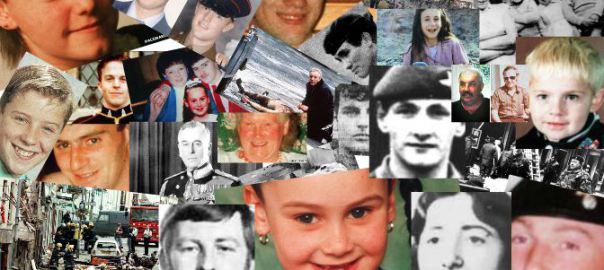




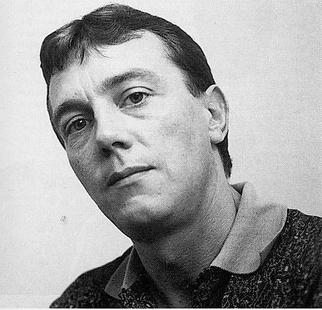

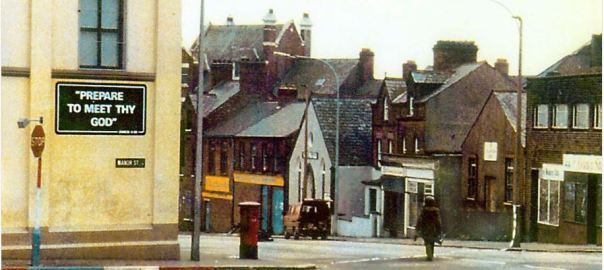











 belfastchildis.com