Tag Archives: UDA

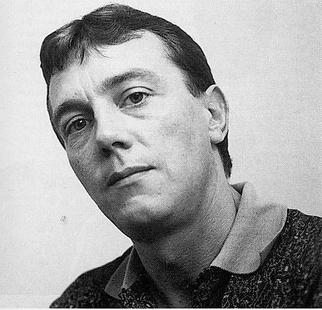
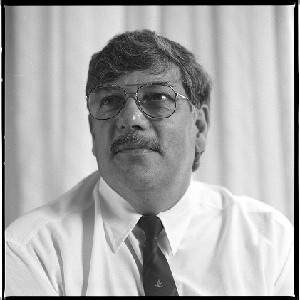
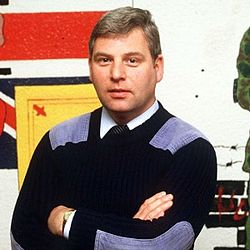
John “Big John” McMichael – 9th January 1948 – 22nd December 1987

John “Big John” McMichael (9 January 1948 – 22 December 1987) was a leading Northern Ireland loyalist who rose to become the most prominent and charismatic figure within the Ulster Defence Association (UDA) as the Deputy Commander and leader of its South Belfast Brigade. He was also commander of the organisation’s cover name, the “Ulster Freedom Fighters” (UFF), overseeing an assassination campaign against prominent republican figures whose details were included in a notorious “shopping list” derived from leaked security forces documents.
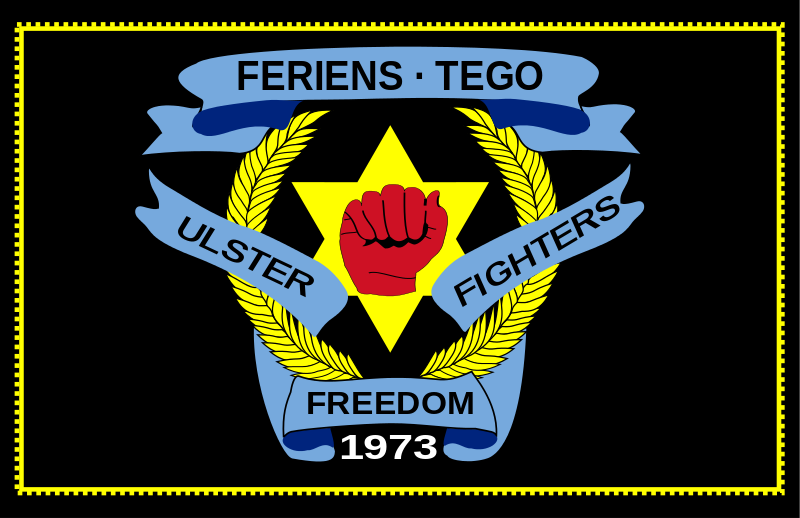
The UDA used the UFF name when it wished to claim responsibility for attacks, thus allowing it to remain a legal paramilitary organisation until August 1992 when it was proscribed by the British Government.

— Disclaimer –

The views and opinions expressed in this post/documentaries  are soley intended to educate and provide background information to those interested in the Troubles of Northern Ireland. They in no way reflect my own opinions and I take no responsibility for any inaccuracies or factual errors.

McMichael held political office as leader of the Ulster Democratic Party (UDP) from 1981 until his death. He was killed outside his home by a booby-trap car bomb which was carried out by the Provisional IRA. There were allegations that members within the UDA had colluded with the IRA in his death by passing on vital information about him and his activities, enabling the IRA to target his car.

Ulster Defence Association

John McMichael was born in Lisburn, County Antrim on 9 January 1948, one of the children of John and Annie McMichael. He came from a working-class background and was brought up in the Church of Ireland religion. He had married twice and was the father of two sons, Gary and Saul.

————————–

News footage following murder of John McMichael

————————–

McMichael, who owned and operated the “Admiral Benbow” pub in his native Lisburn initially rose to prominence in the UDA in the 1970s as the commander of the South Belfast Brigade and a member of its Inner Council, where he became known for his belief in the unique identity of Ulster Protestants, as well as his talent as an organiser. He had taken over command of the South Belfast UDA from Sammy Murphy, who had also led the Sandy Row unit. According to McDonald and Cusack, Murphy appeared to have been a commander rather than brigadier.

Described as the UDA’s most “effective and strategic leader”, McMichael helped establish a political think tank called the New Ulster Political Research Group in 1977, and served as its chairman. He also assisted in the composition of a document entitled Beyond the Religious Divide which promoted independence for Northern Ireland along with a constitutional Bill of Rights—acceptable to both nationalists and unionists—as the “only hope of achieving a united Northern Ireland”. This was the first step on the UDA’s road to political development.

He was a supporter of the ideas of Ian Adamson a gynaecologist, and subsequently a Unionist politician, who self-funded a series of books and pamphlets about the alleged ancient origins of Ulster people as a separate ethnic group to the Irish.

By 1979 he had emerged as the leading figure within the UDA and the organisation’s most charismatic senior member. According to the Belfast Telegraph, he drew up a ‘shopping list’ of targets (mostly members of Sinn Féin and other republican groups) that he felt the UDA should eliminate. Information about the individuals had been supplied to the UDA by individuals within the security forces who leaked the information. McMichael hand-picked his own squad for this task and throughout 1980 a number of the targets were assassinated.

The new commando unit, which was known internally in the UDA as the Ulster Defence Force, carried out four murders in 1979, three of which were from the “shopping list”.

McMichael then turned his attention to members of the Relatives’ Action Committee and on his orders Irish Independence Party leader John Turnly and Irish Republican Socialist Party (IRSP) activist Miriam Daly, both prominent within this republican prisoners’ rights group, were killed.

Rodney McCormick, a less prominent IRSP member, was killed in Larne soon afterwards before McMichael’s team struck again, killing Ronnie Bunting and his friend Noel Lyttle at Bunting’s Ballymurphy home on 15 October 1980.

However the attacks came to an end in 1981, following an ambush by the Parachute Regiment after a failed attempt by the UFF on the lives of Bernadette McAliskey and her husband, Michael, during which the three-man unit (including Ray Smallwoods who acted as the getaway driver) were captured and later imprisoned. McAliskey, who was shot seven times in front of her children at her home in Coalisland, County Tyrone on 16 January 1981 survived the attack, as did her husband who was also wounded. McMichael himself was arrested in April 1981 in the wake of a Royal Ulster Constabulary (RUC) raid on UDA headquarters. He was brought before the court as it was alleged he and his men had organised the McAliskey shootings.

Raymond Murray in his book SAS in Ireland claimed that McAliskey’s shooting was planned in a room above McMichael’s “Admiral Benbow” pub. Ultimately charges relating to McMichael’s involvement, as well as his possession of classified information in the form of the details of republican activists leaked to him, were dropped along with similar charges against fellow arrestees Sammy McCormick, John McClatchey, Eddie Martin and Bobby McDevitt.

McMichael’s “shopping list” was published in the press soon after the failed assassination attempt on McAliskey, apparently leaked by his internal opponents within the UDA.Michael Farrell was named as the next target, although he moved to Dublin before any attack could occur.[17] The IRA responded to the revelations by killing two prominent Unionist figures, James Stronge and his father Norman at their Tynan Abbey home. The Irish National Liberation Army also retaliated by shooting and wounding Shankill Road UDA activist Sammy Millar, leading a series of tit-for-tat shootings involving the UDA and INLA.

McMichael would return to the idea at later times, and during the mid to late 1980s had Michael Stone working directly under him as a lone gunman with a remit to kill alleged republicans.

Electoral politics

McMichael depicted on a mural in the “Village” area of Donegall Road with the titles of the two documents he was involved in producing

McMichael came to support the ideas of republican Danny Morrison regarding the Armalite and ballot box strategy and felt that the UDA should also build up a political wing to this end. As a result, following the murder of Robert Bradford, he stood as the Ulster Loyalist Democratic Party candidate in the by-election for Bradford’s South Belfast seat and ran the most high profile ULDP campaign ever seen, calling for a long term strategy of negotiated independence for Northern Ireland. Despite fears from mainstream unionists that McMichael might split their vote, he ultimately only captured 576 votes. McMichael’s failure to make any inroads into the popular vote led to the UDA largely abandoning electoral politics outside of the occasional local foray for over a decade.

After the failure of his political strategy, McMichael returned to his work with the UDA and, after the signing of the Anglo-Irish Agreement, he co-wrote another document Common Sense: Northern Ireland – An Agreed Process, which outlined plans for a future political settlement in Northern Ireland. Under the guidance of David Trimble, at the time a law lecturer in Queens University Belfast, the document attempted to set out a legal framework for a power-sharing system under British rule.

The paper was viewed positively by some politicians including SDLP leader John Hume and Secretary of State for Northern Ireland, Tom King.

McMichael and the UDA’s Supreme Commander Andy Tyrie set up an elite group of men carefully selected from within the UDA; this unit, called the ‘Ulster Defence Force’ (UDF), was formed to make the organisation capable of meeting any “Doomsday” situation (such as a civil war) that might occur as a result of the Anglo-Irish Agreement. The group’s motto was Sans Peur (French for “fearless”.), and the men received training by former British soldiers. McMichael was also allegedly put in charge of a UDA/UFF bombing campaign that was to be waged against the Republic of Ireland.

Ultimately the proposed campaign was unsuccessful. The four incendiary bombs planted in the city centre of Dublin in November 1986 failed to inflict much damage. McMichael himself put the failure down to the lack of bombing expertise in the UDA.

McMichael sat on the Ulster Clubs executive and its security committee. In June 1985, he instructed UDA Intelligence chief Brian Nelson to travel to South Africa to investigate the possibility of obtaining weapons by proposing an exchange of arms. Nelson, who was a British military intelligence agent recruited by the Force Research Unit, made the journey.

When he returned from the trip he reported his findings to McMichael, who had previously received reports regarding Nelson’s unsatisfactory conduct in South Africa.

Four years earlier, McMichael had hoped to draw Catholic support for Beyond the Religious Divide, having made the following statement

“We’ll just continue what we’ve been doing during the past year. It will become more and more obvious that the UDA is taking a very steady line, that we’re not willing to fall into line behind sectarian politicians. It will take time. What people forget is that we also have to sell the idea to Protestants”.[29]

Paul Arthur, professor of politics at the University of Ulster, called him an “astute thinker”.British journalist Peter Taylor, who met McMichael, described him as having been “articulate and tough”, and his son by his first marriage, Gary, said of his father:

“I think it was recognised that my father was no angel. He was a leader in a paramilitary organisation. Perhaps he’d been there and done that and bought the T-shirt. He was a well-respected person within the loyalist community and his credentials were extremely strong. People saw my father as someone who said that loyalism was at war with militant republicanism and he was unashamed about that. At that same time, he was also making a contribution to trying to push not just loyalism but everyone beyond conflict”.[4]

Killing

———————-

Funeral of John McMichael

———————-

McMichael’s name heads a list of South Belfast UDA on this Sandy Row plaque

McMichael was killed by a bomb attached to his car outside his Hilden Court home, in Lisburn’s loyalist Hilden estate on 22 December 1987 shortly before his fortieth birthday. He was on his way to deliver Christmas turkeys to the families of loyalist prisoners.

At 8.20 p.m. after he had turned on the ignition of his car and the vehicle slowly reversed down the driveway, the movement-sensitive switch in the detonating mechanism of the five pound booby-trap bomb attached to its underside was activated, and the device exploded. McMichael lost both legs in the blast and suffered grave internal injuries. He was rushed to Lagan Valley Hospital. On account of his physical strength, he managed to hold onto life for two hours and muttered a few words about his wife and children before he died.

His 18-year-old son, Gary had been attending a Stiff Little Fingers concert in Belfast’s Ulster Hall at the time the bomb detonated. During the performance, a note was passed to the band’s lead singer, Jake Burns, who then made an announcement that Gary McMichael was to phone his home.

McMichael had initially planned to take his two-year-old son Saul with him to deliver the turkeys, but had changed his mind at the last minute. McMichael’s wife, Shirley and son were inside the house at the time of the explosion. She later told the inquest into his death that he had been away from home for two weeks and had returned the day he was killed.

In the hours proceeding McMichael’s funeral the UDA sealed off Dromore to enable a volley of shots to be fired into the air in the town square. The funeral was attended by 5,000 people; among the mourners were many unionist politicians including Rev. Ian Paisley. Representatives from the moderate Social Democratic and Labour Party (SDLP) were also in attendance. A large number of UDA members wearing combat uniforms marched in the procession behind the coffin which was preceded by the RUC and a bagpiper. The local Apprentice Boys of Derry formed a guard of honour with some carrying UDA wreathes as they escorted the coffin which was draped in UDA and Ulster flags.

The UDA’s commander Andy Tyrie was one of the pallbearers along with DUP deputy leader Peter Robinson.The family had wanted a loyalist flute band to lead the cortège but the request was rejected by the police. The funeral was held at the Lambeg Parish Church. At the burial service, Rev. Canon R. H. Lowry eulogised McMichael as:

“a man of great intelligence and ability, and a man of great kindness and one who had been working towards peace”.

Cardinal Tomás Ó Fiaich, Archbishop of Armagh and Primate of Ireland described him as having been “untiring, fresh and constructive and ready to cross the religious divide to find a solution for Northern Ireland”. McMichael was buried at the New Blaris Cemetery in Lisburn.

The People newspaper later summed up his death as having been a “blow to peace hopes in Northern Ireland at the time”.

Allegations

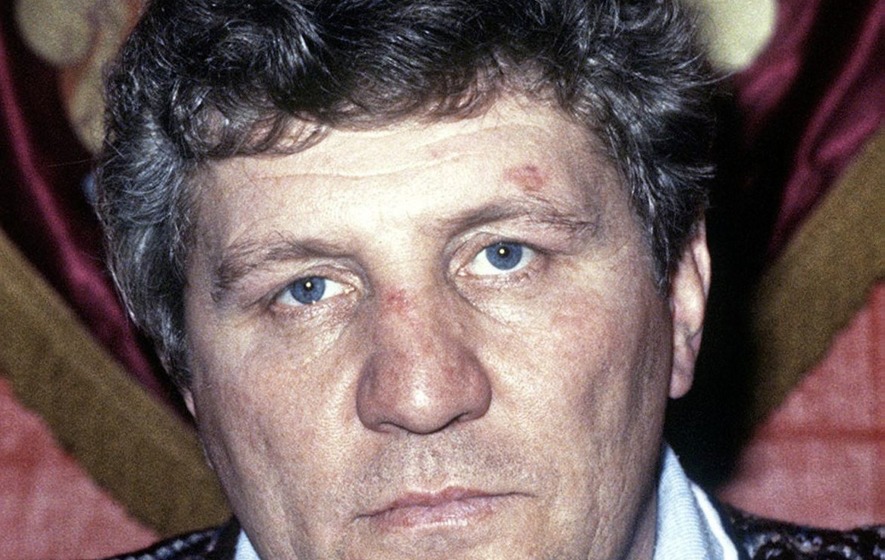
The attack was claimed by the Provisional IRA, and carried out by a unit led by Seán Savage, who would himself be shot dead by the SAS in Gibraltar three months later in “Operation Flavius“. At the time, however, the Royal Ulster Constabulary (RUC) hinted that some within the UDA may have had knowledge that the assassination was about to happen. The UDA backed the killing of racketeer and UDA fund-raiser James Pratt Craig by the Ulster Freedom Fighters (UFF) in 1988, claiming that he had been involved in planning the murder of McMichael. According to author Martin Dillon, McMichael had begun an inquiry into Craig’s racketeering business, and Craig, fearing McMichael would put a stop to his lucrative protection operation, passed on information to the IRA which led to the assassination.

Prior to his death, McMichael had his own personal bodyguard and changed his car every two weeks. McMichael had been warned that the IRA had already made an attempt to kill him just one week before his assassination. McMichael’s son, Gary is firmly convinced that Craig was involved in his father’s killing. Another suspect was West Belfast brigadier Tommy Lyttle, who it was alleged helped set him up under orders by the security forces after it was rumoured McMichael was planning to carry out a bombing campaign against the Irish Republic.

Jackie McDonald 2014 (cropped).jpg
Jackie McDonald

McMichael’s close friend and second-in-command, Jackie McDonald, who was appointed leader of the South Belfast Brigade following his death, opined that it was possible Lyttle had a hand in the killing rather than Craig. However, he added, “We just may never know”.

Later, it emerged that Lyttle was an RUC Special Branch informer. Lyttle in his turn placed the blame on Craig.

In response to a question put to him at a press conference held after McMichael’s killing, Chief Constable of the RUC, Sir John Hermon gave the following statement:

“The murder of John McMichael, whoever caused it, or whoever orchestrated it regardless of who may have committed it, was designed to cause grievous dissention and disruption and to eliminate a threat to whosoever that threat may have existed. I would not wish to take it further than that. But think of my words very carefully.”

Andy Tyrie was not convinced of Craig’s complicity in McMichael’s killing; he instead put the blame on John Hanna, a prison officer in the Maze Prison, who obtained information about McMichael when the latter visited loyalist inmates and then supplied the IRA with the gathered information through Belfast Catholic actress, Rosena Brown with whom Hanna (a Protestant) was reportedly infatuated. Brown was a PIRA intelligence operative.

According to Tyrie, Brown was introduced to McMichael in the “Admiral Benbow”; McMichael was warned he was “being watched”. Tyrie himself narrowly escaped an attempt on his life by a car bomb in March 1988. Shortly after the failed attack, Tyrie tendered his resignation as UDA commander. In an interview with Peter Taylor, Tyrie explained the IRA’s possible motive for assassinating McMichael:

“John was killed because he was the best person we had and the Republican Movement didn’t like him. I didn’t have anybody as astute in politics as he was. They also didn’t like him because he was being listened to and they knew the loss we would incur with John being killed.”

Tyrie said that on another occasion, McMichael, prior to being interviewed, would practice his replies to likely questions in front of a mirror.
See: James Craig UDA – Life & Death

Legacy

John McMichael Centre (Belfast South Community Resources)

McMichael’s eldest son, Gary, followed in his father’s footsteps of trying to build up the Ulster Democratic Party as a strong political wing for the UDA, but following the collapse of the party he dropped out of politics.

His widow, Shirley McMichael (née McDowell) is a member of the Forum For Victims and Survivors, a group established to bring healing to those who were themselves victims or lost loved ones in The Troubles. A community engagement worker for the Northern Ireland Policing Board, she is an adherent of Contemporary Paganism and a member of the Police Pagan Association.

The John McMichael Centre, a community centre in Belfast’s Sandy Row area, is named in honour of McMichael. Its principal organiser is the UDA’s incumbent leader and McMichael’s successor, Jackie McDonald, who for a period had acted as one of McMichael’s bodyguards. In a 2012 interview he recalled McMichael as having been:

“a very, very powerful man…had a great presence and great ideas – far, far ahead of his time”.

As part of a series of events organised to commemorate the 25th anniversary of his death, a John McMichael memorial debate was held in Lisburn on 25 October 2012. It was hosted by Jackie McDonald and the Ulster Political Research Group (UPRG). Unionist politicians and senior republican leaders including Danny Morrison sat on the panel of guests. Among the topics discussed was McMichael’s “Common Sense” document.

Buy Me A Coffee

See UDA Page

Who wants… A signed copy of my No.1 best selling book ? Makes a great Xmas gift for book lovers & those interested in the Troubles & the crazy, mad days my generation lived through.
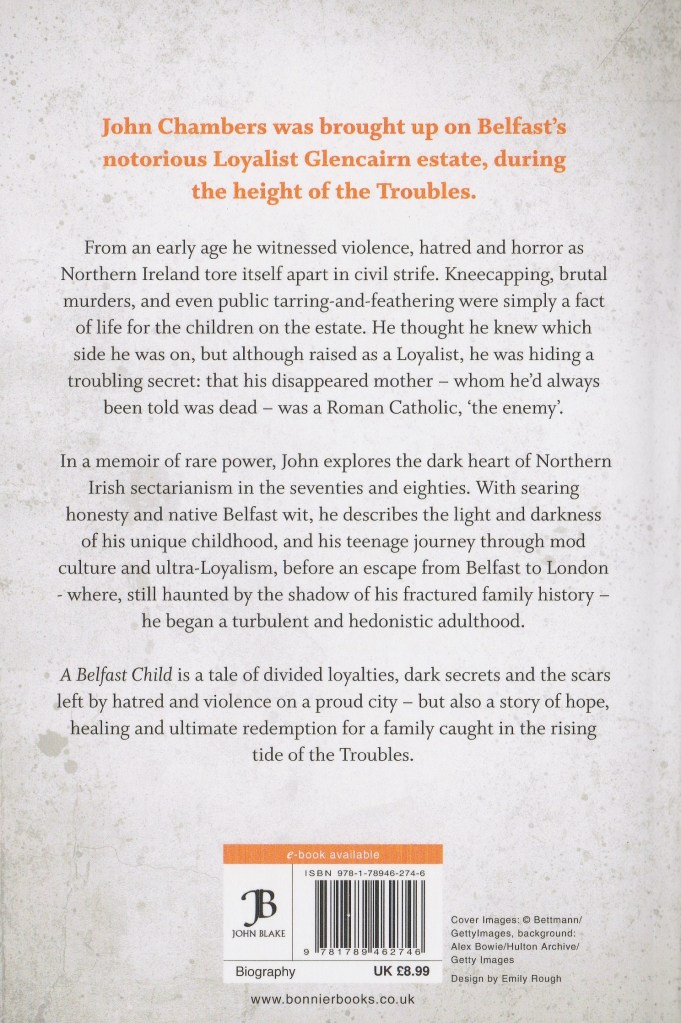

Click here to order : https://tinyurl.com/2p9b958v

UK orders only – if you live outside the UK email me belfastchildis@googlemail.com and Ill send you a link for ordering outside the UK.

3rd November – Deaths & Events in Northern Ireland Troubles

Key Events & Deaths on this day in Northern Ireland Troubles

3rd November

——————————————————————-

November 1975

Monday 3 November 1975

James Fogarty (22), who had been a Republican Clubs member, was shot dead at his home in Ballymurphy, Belfast, by members of the Provisional Irish Republican Army (PIRA). This killing was part of the continuing feud between the two wings of the IRA.

Wednesday 3 November 1976

Two Protestant civilians were killed in separate shooting incidents carried out by Republican paramilitaries in Dundrod, County Antrim and Tiger’s Bay, Belfast.

Saturday 3 November 1979

The Social Democratic and Labour Party (SDLP) held its annual conference. The party rejected calls for talks with the Irish Republican Army (IRA). The party also called for a joint approach by the British and Irish governments to finding a solution to the problems in Northern Ireland.

Tuesday 3 November 1981 s[ Political Developments.]

Friday 3 November 1989

In a speech, Peter Brooke, then Secretary of State for Northern Ireland, said that the Irish Republican Army (IRA) could not be defeated militarily. He also said that he would not rule out talks with Sinn Féin (SF) in the event of an end to violence. [His remarks caused controversy.]

Tuesday 3 November 1992

The ‘Belfast Brigade’ of the Irish People’s Liberation Organisation (IPLO) that it would disband. [This followed an internal feud and the intervention of the Irish Republican Army (IRA) on 31 October 1992.]

Wednesday 3 November 1993

The Irish Congress of Trade Unions (ICTU) organised peace rallies in Belfast and Derry.

Thursday 3 November 1994

Albert Reynolds, then Taoiseach (Irish Prime Minister), said that there would be no change in the constitutional status of Northern Ireland without the consent of the majority of its people.

Friday 3 November 1995

The Northern Ireland Office (NIO) published a document referred to as the ‘Building Blocks’ paper. Copies of the document had been given to the political parties and the Irish and American government during the previous week. The paper suggested that: “all-party preparatory talks and an independent international body to consider the decommissioning issue will be convened in parallel by the two governments”

. Hence the process was to be called the ‘twin-track’ process. Martin McGuinness, then Vice-President of Sinn Féin (SF), held a meeting with Michael Ancram, the Political Development Minister at the NIO, and discussed decommissioning of paramilitary weapons and also all-party talks.

Sunday 3 November 1996

Gerry Adams, then President of Sinn Féin (SF), refused to comment on reports in the Sunday Tribune (a Dublin based newspaper) that the British government had reopened contacts with Sinn Féin (SF). Sean Brady succeeded Cathal Daly and was appointed as Archbishop of Armagh and head of the Catholic church in Ireland.

Wednesday 3 November 1999

The Royal Ulster Constabulary (RUC) conducted a series of raids in County Armagh and County Antrim against Loyalist paramilitaries. Fifty RUC detectives were involved in the operation and three men were arrested and arms and explosives recovered. In one of the raids at Stoneyford Orange Hall, County Antrim, the police held six men for questioning when military documents were uncovered with the personal details of over 300 Republicans from Belfast and south Armagh.

The Orange Order said it was “aghast” at the finds. Sinn Féin (SF) said the documents were evidence of collusion between the security forces and Loyalist paramilitaries. The RUC held three men for questioning about the killing of Pat Finucane, a Belfast solicitor shot dead on 12 February 1989. The arrests were made at the request of the team carrying out an inquiry into the killing. The team was headed by John John Stevens, then Commissioner of the Metropolitan Police. John White, then Ulster Democratic Party (UDP) spokesman, accused the inquiry team of “deliberately harassing Loyalists”.

Saturday 3 November 2001

Saturday (midnight) marked the new deadline for the election of a First Minister and a Deputy First Minister by the parties in the Northern Ireland Assembly (NIA).

[The date represented a period of six weeks since the political institutions were restored to power following their last 24 hour suspension (22 September 2001). John Reid, then Secretary of State for Northern Ireland, allowed the deadline to pass without taking any action. The intention was to try to elect a First Minister and a Deputy First Minister on Monday 5 November 2001. The Democratic Unionist Party (DUP) announced that it would seek a legal challenge to the decision taken by Reid.]

——————————————————————————————


———————————————————————————

Remembering all innocent victims of the Troubles

Today is the anniversary of the death of the following  people killed as a results of the conflict in Northern Ireland

“To live in hearts we leave behind is not to die

– Thomas Campbell

To the innocent on the list – Your memory will live  forever

– To  the Paramilitaries  –

There are many things worth living for, a few things worth dying for, but nothing worth killing for.

  4   People lost their lives on the 3rd November between 1975 – 1991

————————————————————

03 November 1975


 James Fogarty,  (22)

Catholic
Status: Civilian Political Activist (CivPA),

Killed by: Irish Republican Army (IRA)
Former Republican Clubs member. Shot at his home, Rock Grove, Ballymurphy, Belfast. Official Irish Republican Army (OIRA) / Irish Republican Army (IRA) feud.

————————————————————

03 November 1976
Samuel McConnell,  (59)

Protestant
Status: Civilian (Civ), Killed by: non-specific Republican group (REP)
Shot at his farm, Sycamore Road, Dundrod, County Antrim.

————————————————————

03 November 1976


Georgina Strain,   (50)

Protestant
Status: Civilian (Civ),

Killed by: non-specific Republican group (REP)
Shot at her home, Hogarth Street, Tiger’s Bay, Belfast.

————————————————————

03 November 1991


 Gerard Maginn,   (17)

Catholic
Status: Civilian (Civ),

Killed by: Royal Ulster Constabulary (RUC)
Found shot in abandoned stolen car, Glen Road, Andersonstown, Belfast.

————————————————————

See below on how to order a copy of my No.1 Bestselling book: A Belfast Child 

2nd November – Deaths & Events in Northern Ireland Troubles

Key Events & Deaths on this day in Northern Ireland Troubles

 2nd November

———————————————————————————————

Saturday 2 November 1968

There was a march in Derry by the fifteen committee members of the Derry Citizen’s Action Committee (DCAC). The march took place over the route of the banned 5 October 1968 march. Thousands of people walked in support behind the DCAC committee.

[Due to the number of people taking part the Royal Ulster Constabulary (RUC) were unable to prevent the march taking place.] [ Civil Rights Campaign; Law Order. ]

Tuesday 2 November 1971

The Irish Republican Army (IRA) exploded two bombs on the Ormeau Road in Belfast, one at a drapery shop and the other at the Red Lion bar, and killed three Protestant civilians; John Cochrane (67), Mary gemmell (55) and William Jordan (31).

Thursday 2 November 1972

Fianna Fáil, then the goverment of the Republic of Ireland, introduced a bill to the Dáil to remove the special position of the Catholic Church from the Irish Constitution.

Thursday 2 November 1978

[A British Army intelligence document, ‘Northern Ireland: Future Terrorist Trends’, was uncovered. The document contained an assessment of the capacity of the Irish Republican Army (IRA). It noted that the calibre of members was high and that the new ‘cell structure’ that the Active Service Units (ASUs) had adopted made them less vulnerable to informers.]

Tuesday 2 November 1982

Representatives of the Social Democratic and Labour Party (SDLP) held a meeting with James Prior, then Secretary of State for Northern Ireland, and told him that the party would continue its boycott of the Assembly.

Saturday 2 November 1985

Early Ulster Clubs

Loyalists began a campaign to establish ‘Ulster Clubs’ in each District Council area in Northern Ireland. To begin the campaign there was a march through Belfast by an estimated 5,000 members of the United Ulster Loyalist Front (UULF). The main aim of the organisation was to oppose any forthcoming Anglo-Irish agreement.

Sinn Féin began a two day Ard Fheis (annual conference) during which a debate was held on a motion that the party’s “… policy on abstentionism be viewed as a tactic and not as a principle”.

[In essence this proposed that SF should in the future consider taking up, if successful, any seats won by the party in the Dail, the parliament of the Republic of Ireland. After a vote however the motion was defeated by 187 votes to 161. The issue was debated again at the Ard Fheis held on 1-2 November 1986.]

Sunday 2 November 1986

SF End Abstentionism / Split in SF

During the second day of the Sinn Féin (SF) Ard Fheis in Dublin, a majority of delegates voted to end the party’s policy of abstentionism – that of refusing to take seats in Dáil Éireann. The change in policy led to a split in SF and Ruairí Ó Brádaigh, a former President of SF, Dáithí Ó Conaill, a former vice-President of SF, and approximately 100 people staged a walk-out. [Ó Brádaigh and Ó Conaill went on to establish a new organisation called Republican Sinn Féin (RSF).]

Saturday 2 November 1991

The Irish Republican Army (IRA) exploded a bomb at the military wing of Musgrave Park Hospital in Belfast killing two British soldiers. Eighteen people were also injured in the attack.

Tuesday 2 November 1993

John Major, then British Prime Minister, proposed a series of bilateral meetings with the leaders of the four main (constitutional) political parties to try to start a talks process. The Ulster Unionist Party (UUP) and the Democratic Unionist Party (DUP) said that the parties would not talk to the Social Democratic and Labour Party (SDLP) until the Hume-Adams Initiative was ended.

Thursday 2 November 1995

An article by Gerry Adams, then President of Sinn Féin (SF), entitled ‘Peace Process in Very Serious Difficulty‘, was published in An Phoblacht (Republican News). Adams held a meeting with John Bruton, then Taoiseach (Irish Prime Minister), in Dublin.

Monday 2 November 1998

Bertie Ahern, then Taoiseach (Irish Prime Minister), became the first Taoiseach in over 30 years to visit Stormont. Ahern was there to discuss the North-South Ministerial Council.

Tuesday 2 November 1999

Royal Ulster Constabulary (RUC) detectives found a number of pipe-bombs hidden in a hedgerow while conducting a search of the Loyalist Mourneview area of Lurgan, County Armagh.

Martin McGartland
Martin McGartland.

The RUC in Belfast and police in Glasgow, Scotland, arrested two men in a joint operation. The men were held for questioning about the shooting of Martin McGartland. McGartland, formerly a member of the Irish Republican Army (IRA) who turned informer, was shot and injured on 17 June 1999 at his home in Whitley Bay, England. McGartland blamed the IRA for trying to kill him.

[The two men were questioned by police in Northumbria but were released on 4 November 1999.] George Mitchell, then chairman of the Review of the Agreement, indicated that he thought the Review would end within a week. He also announced that he was asking John de Chastelain for an assessment of the impasse over decommissioning.

Friday 2 November 2001

There was a meeting of the Northern Ireland Assembly to try to elect a First Minister and a Deputy First Minister. David Trimble, then leader of the Ulster Unionist Party (UUP), stood for re-election to the post of First Minister.

Mark Durkan (leader in waiting of the Social Democratic and Labour Party; SDLP), then Minister of Finance and Personnel, stood for the post of Deputy First Minister. The Democratic Unionist Party (DUP) opposed the election of Trimble and the party obtained enough Unionist support to prevent his election. Trimble needed 30 ‘Unionist’ votes to secure his re-election but only managed to obtain 29 votes. The motion therefore fell although 72 voted in favour of it as opposed to 30 against. The Northern Ireland Women’s Coalition had earlier won a motion to reduce the 30 days notice required for Members of the Legislative Assembly (MLAs) to re-nominate themselves as ‘Unionist’, ‘Nationalist’, or ‘Other’.

The NIWC then changed the community nomination of its two MLAs from ‘Other’ to one ‘Unionist’ and one ‘Nationalist’. Despite this move Trimble failed to be elected. [John Reid, then Secretary of State for Northern Ireland, faced a decision on what action to take. He could have suspended the Assembly for either an open-ended period and thus re-introduce Direct Rule.

Another option was to call fresh Assembly elections. Another possibility was that the Secretary of State could have suspended the Assembly for one day (this has already been done twice before) which would allow a further six week period in which to find agreement. In the event Reid decided to simply ignore the deadline. The Assembly met again on Monday 5 November 2001 but it was at a meeting on Tuesday 6 November 2001 that Trimble and Durkan were elected.]

—————————————

———————————————————————————

Remembering all innocent victims of the Troubles

Today is the anniversary of the death of the following  people killed as a results of the conflict in Northern Ireland

“To live in hearts we leave behind is not to die

– Thomas Campbell

To the innocent on the list – Your memory will live  forever

– To  the Paramilitaries  –

There are many things worth living for, a few things worth dying for, but nothing worth killing for.

  10  People lost their lives on the 2nd November between 1971 – 1993

————————————————————

02 November 1971
John Cochrane, (67)

Protestant
Status: Civilian (Civ),

Killed by: Irish Republican Army (IRA)
Killed in bomb attacks on drapery shop and Red Lion Bar, either side of Ormeau Road Royal Ulster Constabulary (RUC) base, Belfast. Inadequate warning given.

————————————————————

02 November 1971
Mary Gemmell, (55)

Protestant
Status: Civilian (Civ),

Killed by: Irish Republican Army (IRA)
Killed in bomb attacks on drapery shop and Red Lion Bar, either side of Ormeau Road Royal Ulster Constabulary (RUC) base, Belfast. Inadequate warning given.

————————————————————

02 November 1971
William Jordan,  (31)

Protestant
Status: Civilian (Civ), Killed by: Irish Republican Army (IRA)
Injured in bomb attacks on drapery shop and Red Lion Bar, either side of Ormeau Road Royal Ulster Constabulary (RUC), Belfast. Inadequate warning given. He died on 4 November 1971.

————————————————————

02 November 1974
Lorenzo Sinclair,   (44)

Protestant
Status: Civilian (Civ),

Killed by: non-specific Republican group (REP)
Security man. Shot from passing car, at the entrance to Park Bar, Lawther Street, Tiger’s Bay, Belfast.

————————————————————

02 November 1976

Noel McCabe,   (25)

Protestant
Status: Royal Ulster Constabulary (RUC),

Killed by: Irish Republican Army (IRA)
Undercover Royal Ulster Constabulary (RUC) member. Shot while sitting in civilian type car, junction of Falls Road and Clonard Street, Belfast.

————————————————————

02 November 1977
Walter Kerr,  (34)

Protestant
Status: Ulster Defence Regiment (UDR),

Killed by: Irish Republican Army (IRA)
Off duty. Died one week after being injured when detonated booby trap bomb, attached to his car, outside his home, Magherafelt, County Derry.

————————————————————

02 November 1990
Albert Cooper,   (42)

Protestant
Status: Ulster Defence Regiment (UDR),

Killed by: Irish Republican Army (IRA)
Off duty. Killed by booby trap bomb attached to car at his workplace, a garage, Union Street, Cookstown, County Tyrone.

————————————————————

02 November 1991


Philip Cross,   (33)

nfNI
Status: British Army (BA),

Killed by: Irish Republican Army (IRA)
Killed in time bomb attack on Musgrave Park British Army (BA) hospital base, Belfast.

————————————————————

02 November 1991


Craig Pantry,  (20)

nfNI
Status: British Army (BA),

Killed by: Irish Republican Army (IRA)
Killed in time bomb attack on Musgrave Park British Army (BA) hospital base, Belfast.

————————————————————

02 November 1993


Brian Woods,  (30)

Protestant
Status: Royal Ulster Constabulary (RUC),

Killed by: Irish Republican Army (IRA)
Died two days after being shot by sniper, while at Royal Ulster Constabulary (RUC) Vehicle Check Point (VCP), Upper Edward Street, Newry, County Down.

————————————————————

See below on how to order a copy of my No.1 Bestselling book: A Belfast Child 

14th October – Deaths & Events in Northern Ireland Troubles


Key Events & Deaths on this day in Northern Ireland Troubles

14th October

Saturday 14 October 1972

Three people were killed in two incidents in Belfast. Loyalist paramilitaries carried out a raid on the Headquarters of the 10 Ulster Defence Regiment (UDR) at Lislea Drive in Belfast and stole 14 British Army issue self-loading rifles (SLRs) and a quantity of ammunition. The camp guard claimed that they were ‘overpowered’ by the Loyalists. [There was another raid on a UDR base on 23 October 1972.]

Friday 14 October 1977

Tomás Ó Fiaich was appointed as the new Catholic Primate of Ireland.

Saturday 14 October 1978

The Democratic Unionist Party (DUP) organised another march in Derry to protest against the march in the city on the previous Sunday, 8 October 1978. There were clashes between Loyalists and Royal Ulster Constabulary (RUC) officers which resulted in 32 policemen being injured and there was also damage to property in the city.

Monday 14 October 1985

the troubles new logo

The Irish Information Partnership published some results from its database of deaths from the conflict. The information showed that more than 50 per cent of the 2,400 dead had been killed by Republican paramilitaries. In addition the data also showed that over 25 per cent of those killed by Republicans were Catholic civilians.


Friday 14 October 1988

Duisburg Meetings Members from four Northern Ireland political parties met for talks in Duisburg, West Germany. The parties involved were; Alliance Party of Northern Ireland (APNI), Social Democratic and Labour Party (SDLP), Ulster Unionist Party (UUP) and Democratic Unionist Party (DUP). Little progress was reported from the meetings.

Friday 14 October 1994

John Major, then British Prime Minister, address the Conservative Party conference and told delegates that he would pursue the peace process in his own time.

Saturday 14 October 1995

There were scuffles between Sinn Féin (SF) supporters and Royal Ulster Constabulary (RUC) officers when SF attempted to hold a demonstration in the centre of Lurgan, County Armagh. The last ‘peace train’ travelled between Dublin and Belfast.

Monday 14 October 1996

Marjorie (Mo) Mowlam, then the British Labour Party spokesperson on Northern Ireland, met with Loyalist prisoners in the Maze Prison in an effort to “keep the talks process alive”. The Ulster Unionist Party (UUP) and the Social Democratic and Labour Party (SDLP) agreed on a draft agenda for the Stormont talks.

Thursday 14 October 1999

The funeral of Patrick Campbell, who was an Irish National Liberation Army (INLA) member, took place in Belfast.

Campbell had been injured on 6 October 1999 in Dublin and died on 10 October. Approximately 1,000 people attended the funeral among them Patrick’s father Robert Campbell who had been ‘on the run’ in the Republic of Ireland since 1981.

A joint statement was issued by anti-Agreement Unionists including the Democratic Unionist Party (DUP), the United Kingdom Unionist Party (UKUP), the Northern Ireland Unionist Party, and some members of the Ulster Unionist Party (UUP). The statement set out a common strategy for opposing any political deal leading the establishment of a power-sharing Executive which included Sinn Féin (SF).

Saturday 14 October 2000

A Catholic father-of-six and his two teenage sons all escaped uninjured when a bomb exploded in their car. The explosion happened shortly before 9.00pm at Blackstaff Way, off the Grosvenor Road, in west Belfast. The man said he was with his two sons, aged 17 and 18, for a driving lesson in the Kennedy Road Industrial Estate. He tried to adjust the driver’s seat, with one of his sons sitting in it, when he found a jar containing liquid and a pipe. He said it started to “fizz” and the three of them immediately fled from the vehicle just seconds before the device exploded. The attack was carried out by Loyalist paramilitaries.

Sunday 14 October 2001

Martin McGuinness, the Vice-President of Sinn Féin (SF), said that he was working “flat out” to convince the Irish Republican Army (IRA) to put its weapons beyond use.

[McGuinness made the comments on the British Broadcasting Corporation (BBC) ‘Radio Ulster’ programme. There was continuing media speculation that the IRA was close to making a move on decommissioning.]

Aidan Troy (Fr), then Chairman of the Board of Governors of the Holy Cross Girls’ Primary School, called on Loyalist protesters to immediately end the daily protest at the school. Troy was speaking at Sunday mass and said that a member of the congregation had made the point that the only other country where girls are prevented from having an education was Afghanistan.

It was revealed in the media that David Burnside, then Ulster Unionist Party (UUP) MP, had held a meeting with the ‘inner council’ of the Ulster Defence Association (UDA) sometime during the summer of 2001.

[Burnside later defended his decision to hold private talks with the Loyalist paramilitary group and said he would meet the group again if asked. Burnside said that he would not meet with the Irish Republican Army (IRA). Burside was an opponent of the Good Friday Agreement.]

The Irish government held a state funeral for 10 Irish Republican Army (IRA) men who had been executed by British authorities during Ireland’s War of Independence 80 years ago. The men had originally been buried in Mountjoy Prison but were reburied in Glasnevin cemetery following a mass at the Pro-Cathedral. The most famous of the 10 men was Kevin Barry an 18-year-old medical student who took part in the rebellion and was hanged in 1920. He is remembered today in a still-popular song that bears his name.


———————————————————————————

Remembering all innocent victims of the Troubles

Today is the anniversary of the death of the following  people killed as a results of the conflict in Northern Ireland

“To live in hearts we leave behind is not to die.”
Thomas Campbell

To the innocent on the list – Your memory will live  forever

– To  the Paramilitaries  –

There are many things worth living for, a few things worth dying for, but nothing worth killing for.

  6 People lost their lives on the 14th October  between 1972 – 1991

————————————————————–

14 October 1972
Terence Maguire,  (23)

Catholic
Status: Civilian (Civ),

Killed by: non-specific Loyalist group (LOY)
Found shot in entry, off Clandeboye Street, Belfast.

————————————————————–

14 October 1972
Leo John Duffy, (45)

Catholic
Status: Civilian (Civ),

Killed by: non-specific Loyalist group (LOY)
Shot at his workplace, Northern Wine Company, Tate’s Avenue, off Lisburn Road, Belfast.

————————————————————–

14 October 1972
Thomas Marron,  (59)

Catholic
Status: Civilian (Civ),

Killed by: non-specific Loyalist group (LOY)
Shot at his workplace, Northern Wine Company, Tate’s Avenue, off Lisburn Road, Belfast.

————————————————————–

14 October 1975


Andrew Baird,  (37)

Protestant
Status: Royal Ulster Constabulary (RUC),

Killed by: Irish Republican Army (IRA)
Died three weeks after being injured by booby trap bomb attached to security barrier, Church Street, Portadown, County Armagh.

————————————————————–

14 October 1975
Stewart Robinson,  (23)

Protestant
Status: Ulster Volunteer Force (UVF),

Killed by: Ulster Volunteer Force (UVF)
Found shot in entry off Aberdeen Street, Shankill, Belfast. Internal Ulster Volunteer Force (UVF) dispute.


See: Shankill Butchers 

————————————————————–

14 October 1991


Henry Conlon,   (54)

Catholic
Status: Civilian (Civ),

Killed by: Ulster Freedom Fighters (UFF)
Taxi driver. Shot when lured to bogus call, Finnis Drive, Taughmonagh, Belfast.

————————————————————–


14th September – Deaths & Events in Northern Ireland Troubles

Key Events & Deaths on this day in Northern Ireland Troubles

14th September

————————————————————————–

Tuesday 14 September 1971

Two British soldiers, Martin Carroll (23) and John Rudman (21) were killed in separate shooting incidents in Derry and Edendork, near Coalisland, County Tyrone. Another soldier was seriously injured during the incident in Derry which took place at the Army base in the old Essex factory.

[A Catholic civilian was shot dead in the early hours of the next morning from the same Army base.]

Thursday 14 September 1972

Two people were killed and one mortally wounded in a UVF bomb attack on the Imperial Hotel, Belfast.

Monday 14 September 1981

Gerard Hodgkins, then an Irish Republican Army (IRA) prisoner, joined the hunger strike.

Monday 14 September 1987

James Molyneaux, then leader of the Ulster Unionist Party (UUP), and Ian Paisley, then leader of the Democratic Unionist Party (DUP), met Tom King, then Secretary of State for Northern Ireland. The meeting was the first of a series of ‘talks about talks’. This was the first meeting between government ministers and leaders of Unionist parties in 19 months.

Friday 14 September 1990

There was a meeting of the Anglo-Irish Intergovernmental Conference (AIIC) in Dublin.

Tuesday 14 September 1993

Jean Kennedy Smith, then USA Ambassador to the Republic of Ireland, began a week-long fact-finding visit to Northern Ireland.

Thursday 14 September 1995

The ‘Unionist Commission’ held an inaugural meeting in Belfast. The commission was comprised of 14 members representing a range of Unionist opinion. The Democratic Unionist Party (DUP) was responsible for the initiative. The Ulster Unionist Party (UUP) was represented by two councillors acting in a personal capacity. Kevin McNamara, then opposition spokesperson on the civil service, resigned his post as a protest over the Labour Party policy which he considered was “slavishly” following the approach of the Conservative government.

Sunday 14 September 1997

An Orange Order parade planned for the Nationalist village of Dunloy, County Antrim, was rerouted by the Royal Ulster Constabulary (RUC). The Loyalists responsible for a picket outside the Catholic church at Harryville in Ballymena, County Antrim, said that because Orangemen were unable to parade at Dunloy the picket would resume.

Gerry Adams, then President of Sinn Féin (SF), addressed a rally at Belfast City Hall in support of Saoirse.

Monday 14 September 1998

The Northern Ireland Assembly met for the first time since July 1998. David Trimble, then First Minister designate, said that the issue of decommissioning remained an obstacle to the establishment of the Northern Ireland Executive. The formation of the Executive was postponed.

[The executive was established on 29 November 1999.]

Trimble also said that the Democratic Unionist Party (DUP) could not take part in the Executive in a selective fashion. Two former members of the UUP and an Independent Unionist joined together to form the United Unionist Assembly Party (UUAP).

Tuesday 14 September 1999

Johnny Adair became the 293rd prisoner to be freed under the Good Friday Agreement’s early release scheme. He was one of Northern Ireland’s most notorious Loyalist paramilitaries and had been sentenced in 1995 to 16 years imprisonment for directing terrorism.

There were two separate paramilitary ‘punishment’ attacks on 14 year old boys. One attack took place in Dundonald, near Belfast, and the second on the Ardowen estate, near Craigavon, County Armagh. Both boys were hospitalised as a result of their injuries.

Thursday 14 September 2000

A pipe-bomb exploded at a house in Coleraine, County Derry, although the two occupants were uninjured. The Royal Ulster Constabulary (RUC) said that the motive for the attack was unclear.

Friday 14 September 2001

never forget

People throughout Northern Ireland will observe three-minutes of silence at 11.00am (11.00BST) as a mark of respect to those who lost their lives in the terrorist attacks in the United States of America (USA). The Republic of Ireland is holding a national day of mourning for the victims of the terrorist attacks in the United States of America (USA). Bertie Ahern, then Taoiseach (Irish Prime Minister), and Mary McAleese, then President of the Republic of Ireland, will lead the mourning at an ecumenical service in Dublin.

The Irish Government asked shops, banks, schools, government offices, and businesses, to close and people attended religious services. Pubs and hotels also closed and there was limited public transport. The Republic is expected to a virtual standstill. Loyalist protesters at the Holy Cross Girls’ Primary School have said they will call off their protest at the school for one day only as a mark of respect for what happened in the USA.

John Reid, then Secretary of State for Northern Ireland, is to hold a meeting in London with David Trimble, then leader of the Ulster Unionist Party (UUP), and Ian Paisley, then leader of the Democratic Unionist Party (DUP). The meeting will discuss the future of policing in Northern Ireland.


Remembering all innocent victims of the Troubles

Today is the anniversary of the follow  people killed as a results of the conflict in Northern Ireland

To the innocent on the list – Your memory will live  forever

– To  the Paramilitaries  –

“There are many things worth living for, a few things worth dying for, but nothing worth killing for.

  10 People lost their lives on the 14th September  between 1971 – 1986

————————————————————–

14 September 1971

Martin Carroll,  (23) nfNI

Status: British Army (BA),

Killed by: Official Irish Republican Army (OIRA)
Shot by sniper at British Army (BA) base, Eastway Gardens, Creggan, Derry.

————————————————————–

14 September 1971


 John Rudman,  (21) nfNI
Status: British Army (BA),

Killed by: Irish Republican Army (IRA)
Shot while on British Army (BA) mobile patrol, Edendork, near Coalisland, County Tyrone.

————————————————————–

14 September 1972
Andrew McKibben,  (28)

Protestant
Status: Civilian (Civ),

Killed by: Ulster Volunteer Force (UVF)
Killed in car bomb explosion outside Imperial Hotel, Cliftonville Road, Belfast. Driving past at the time of the explosion.

————————————————————–

14 September 1972
Martha Smilie,  (91)

Protestant
Status: Civilian (Civ),

Killed by: Ulster Volunteer Force (UVF)
Killed in car bomb explosion outside Imperial Hotel, Cliftonville Road, Belfast.

————————————————————–

14 September 1972
Anne Murray,  (53)

Catholic
Status: Civilian (Civ),

Killed by: Ulster Volunteer Force (UVF)
Injured in car bomb explosion outside Imperial Hotel, Cliftonville Road, Belfast. She died 16 September 1972.

————————————————————–

14 September 1975
Seamus Hardy,  (20)

Catholic
Status: Civilian (Civ),

Killed by: non-specific Loyalist group (LOY)
Found shot in entry, off Columbia Street, Shankill, Belfast.

————————————————————–

14 September 1979


George Foster (30)

Protestant
Status: Prison Officer (PO),

Killed by: Irish Republican Army (IRA)
Off duty. Shot outside Buffs Social Club, Century Street, off Crumlin Road, Belfast.

————————————————————–

14 September 1981


John Proctor,  (25)

Protestant
Status: Royal Ulster Constabulary (RUC),

Killed by: Irish Republican Army (IRA)
Off duty. Shot while leaving Magherafelt Hospital, County Derry.

————————————————————–

14 September 1986

————————————————————

Orangemen show their support for Sectarian Murderers

————————————————————

John Bingham,  (33)

Protestant
Status: Ulster Volunteer Force (UVF),

Killed by: Irish Republican Army (IRA)
Shot at his home, Ballysillan Crescent, Ballysillan, Belfast.

See below for more details on John Bingham

————————————————————–

14 September 1986


James McKernan, (29)

Catholic
Status: Irish Republican Army (IRA),

Killed by: British Army (BA)
Shot shortly after being involved in Irish Republican Army (IRA) sniper attack on British Army (BA) foot patrol, Andersonstown Road, Belfast.


See:

12th September – Deaths & Events in Northern Ireland Troubles

Key Events & Deaths on this day in Northern Ireland Troubles

12th   September

Sunday 12 September 1971

A statement on Internment, violence and the ill-treatment of detainees was released by the William Conway, then Catholic Cardinal of Ireland, and six Bishops. In a statement Cardinal Conway asked, ‘Who wanted to bomb one million Protestants into a United Ireland?’

Thursday 12 September 1974

Demonstrations were held in Belfast by Loyalists and Republicans in support of prisoners who were protesting about parole and food.

Monday 12 September 1977

Roy Mason, then Secretary of State for Northern Ireland, marked the end of his first year in the region by stating that ‘the myth of British withdrawal from Northern Ireland’ was now dead.

Tuesday 12 September 1989

Margaret Thatcher, then British Prime Minister, paid a visit to Northern Ireland and described the Ulster Defence Regiment (UDR) as a group of “very, very, very brave men”. In Dublin Sinn Féin (SF) announced the launch of the Irish National Congress.

Saturday 12 September 1992

A confidential discussion paper was leaked from the political talks (later known as the Brooke / Mayhew talks). It was claimed that the paper had been prepared by Patrick Mayhew, then Secretary of State for Northern Ireland, in an attempt to overcome a perceived lack of channels of communication between Northern Ireland and the Republic of Ireland.

[The paper was heavily criticised by Unionists and was later withdrawn when James Molyneaux, then leader of the Ulster Unionist Party (UUP), threatened to leave the talks. In particular Unionists were angered by certain phrases that had been used such as ‘an agreed Ireland’ as well as ‘powers to be exercised through North/South channels’. There were further leaks on 20 September 1992.]

Sunday 12 September 1993

Patrick Mayhew, then Secretary of State for Northern Ireland, gave a speech to the British Irish Association. Mayhew called for flexibility on the part of the political parties. The Democratic Unionist Party (DUP) published a policy document entitled ‘Breaking the Log-Jam’.

Monday 12 September 1994

The Ulster Volunteer Force (UVF) planted a 1.5kg bomb on the Belfast to Dublin train. Only the detonator exploded and two people were injured. on 20 September 1992.

Tuesday 12 September 1995

Patrick Mayhew, then Secretary of State for Northern Ireland, held his first formal talks with representatives of the Ulster Democratic Party (UDP) and representatives of the Progressive Unionist Party (PUP). David Trimble, then leader of the Ulster Unionist Party (UUP), said he would not attend the Forum for Peace and Reconciliation in Dublin. Trimble held a meeting with Peter Robinson, then deputy leader of the Democratic Unionist Party (DUP), and Robert McCartney, then leader of the United Kingdom Unionist Party (UKUP), to discuss proposals for Unionist unity.

Thursday 12 September 1996

Mary Robinson, then President of the Republic of Ireland, had a number of engagements in Belfast. There were protests at one of the venues, a women’s centre on the Donegal Road, and the centre was later badly damaged in an arson attack. Michael Whelan (35), a Catholic man, was discovered beaten to death in the lower Ormeau area of Belfast. The Royal Ulster Constabulary (RUC) later said the motive for the killing was sectarian.

Friday 12 September 1997

Tony Blair, then British Prime Minister, issued a statement calling on David Trimble, then leader of the Ulster Unionist Party (UUP), to remain in the multi-party talks at Stormont. Mary Robinson formally resigned as President of the Republic of Ireland. She took up a new position as High Commissioner for Human Rights at the United Nations.

Sunday 12 September 1999

Ronnie Flanagan, then Chief Constable of the Royal Ulster Constabulary (RUC), speaking on ‘Sunday With Adam Boulton’ on Sky News, said the threat from dissident Republicans was growing. Groups such as the ‘real IRA’ were regrouping and posed a threat, especially in border areas, he said. There was a sectarian attack by loyalists on the home of Danny O’Connor, then Social Democratic and Labour Party (SDLP) MLA. A group of loyalists had gathered outside his home shouting threats and causing damage to his car. It was the third sectarian attack on his home in three months.

Tuesday 12 September 2000

British army bomb disposal experts defused a pipe-bomb thrown through the window of a house in the upper Shankill on Sunday night. The house on the Ballygomartin Road was unoccupied when the device and a petrol bomb were thrown through the living room window at around 11.00pm.

A pipe-bomb was thrown at the home of a Loyalist politician during an outbreak of violence on the Loyalist Shankill Road area of Belfast. Billy Hutchinson, Progressive Unionist Party (PUP) Assemblyman, was at the scene of the attack when a device was thrown at his home in the Shankill area. Hutchinson’s wife and father-in-law had to be moved from the house and other nearby homes were evacuated.

Wednesday 12 September 2001

There was a bomb attack at 12.30am (0030BST) on an Royal Ulster Constabulary (RUC) patrol in Derry. Three RUC officers were investigating a burning car at a building site when a bomb exploded at the side of the road. The officers were treated for shock.

[The attack was thought to have been carried out by dissident Republican paramilitaries.]

The Loyalist protest at the Holy Cross Girls’ Primary School followed the pattern of Monday and Tuesday. However, before going to the school the children and parents held a a prayer service and a minute’s silence for the victims of the terrorist attacks in the United States of America (USA) on 11 September 2001.

Richard Haass, then a United States special envoy, had a series of meetings with political leaders in Northern Ireland. Bertie Ahern, then Taoiseach (Irish Prime Minister), announced that Friday would be a national day of mourning for the victims of the terrorist attacks in the USA.

Ronnie Flanagan, then Chief Constable of the Royal Ulster Constabulary (RUC), announced that the target of 50:50 recruitment of Catholics and Protestants to the new Police Service of Northern Ireland (PSNI) was being achieved. New policing legislation following recommendations in the Patten Report had laid down 50:50 recruitment rule. During the first phase of the application process 8000 people had applied for jobs of whom 550 were deemed qualified and a minimum of 260, possibly as many as 300, would be offered places on the trainee program.

[The first recruits to the PSNI will begin their training in the period between 14 October and 4 November 2001. They are expected to be on duty by the spring of 2002.]


Remembering all innocent victims of the Troubles

Today is the anniversary of the follow  people killed as a results of the conflict in Northern Ireland

To the innocent on the list – Your memory will live  forever

– To  the Paramilitaries  –

“There are many things worth living for, a few things worth dying for, but nothing worth killing for.

 4 People lost their lives on the 12th September  between 1975 – 1986

————————————————————–

12 September 1975
John Snoddy,  (32)

Protestant
Status: Civilian (Civ),

Killed by: non-specific Republican group (REP)
Shot at his home, Milltown Avenue, Derriaghy, near Belfast.

————————————————————–

12 September 1979


Gabriel Wiggans,   (56)

Catholic
Status: Civilian (Civ),

Killed by: Ulster Volunteer Force (UVF)
Shot at his home, Springfield Road, Belfast.

————————————————————–

12 September 1981


Alan Clarke,  (20)

Protestant
Status: Ulster Defence Regiment (UDR),

Killed by: Irish Republican Army (IRA)
Off duty. Shot while walking along Hall Street, Maghera, County Derry.

————————————————————–

12 September 1986
Kenneth Robinson,   (30)

Protestant
Status: Civilian (Civ),

Killed by: Irish Republican Army (IRA)
Killed by booby trap bomb, attached to his Ulster Defence Regiment (UDR) member father’s car outside their home, Clonmakane Court, Caw, Derry.

————————————————————–

11th September – Deaths & Events in Northern Ireland Troubles

11th   September

Key Events & Deaths on this day in Northern Ireland Troubles

Thursday 11 September 1975

Harold Wilson, then British Prime Minister, together with Merlyn Rees, then Secretary of State for Northern Ireland, held a meeting with Margaret Thatcher, then leader of the Conservative Party, to brief her about a number of matters including Northern Ireland.

[On 3 May 2006 the Irish News (a Belfast based newspaper) published details of confidential cabinet minutes that had been taken at the meeting. The minutes reveal that the British government was aware of collusion between the security forces, particularly the Ulster Defence Regiment (UDR), and Loyalist paramilitaries.]

Monday 11 September 1989

Further security forces documents, containing details of suspected Irish Republican Army (IRA) members, were reported to have gone missing. Nationalists called for the disbandment of the Ulster Defence Regiment (UDR).

Wednesday 11 September 1996

John Bruton, then Taoiseach (Irish Prime Minister), addressed a joint session of the United States Congress. His address was upbeat and optimistic about the prospects for progress in the all-party talks and also the possibility of a new Irish Republican Army (IRA) ceasefire.

Thursday 11 September 1997

An Phoblacht published an interview with an Irish Republican Army (IRA) spokesperson who said that “the IRA would have problems with sections of the Mitchell Principles”. However, the person said that what Sinn Féin (SF) decided to do “was a matter for them”.

[SF signed up to the Mitchell Principles on 9 September 1997.]

In a referendum in Scotland the electorate voted for a devolved parliament with tax-raising powers.

[The Labour Party policy of conceding devolution was considered by many commentators as an attempt to undermine growing demands for independence for Scotland. Some people believe that independence in Scotland would have implications on the constitutional position of Northern Ireland.]

Friday 11 September 1998

First Paramilitary Prisoners Released Under Agreement The first of the paramilitary prisoners were released from jails in Northern Ireland under the terms of the Good Friday Agreement. Seven prisoners, including three Republican and three Loyalist, were released in a programme that was expected to take two years to complete.

Bertie Ahern, then Taoiseach (Irish Prime Minister), told Chris Patten, then chairman of the Commission reviewing the future of the Royal Ulster Constabulary (RUC), that major reform of the force was necessary if the force was to become acceptable to both communities in Northern Ireland. Ahern made his comments during a meeting with Patten at Government buildings in Dublin.

Monday 11 September 2000

A family escaped uninjured after a pipe-bomb was thrown at their home on the Ballysally estate in Coleraine, County Derry. The attack was carried out by Loyalist paramilitaries.

Tuesday 11 September 2001

Richard Haass, then a United States special envoy, was in Dublin for a meeting with Bertie Ahern, then Taoiseach (Irish Prime Minister), when news of the terrorist attacks in New York and Washington were passed to the two men. Richard Haass decided to continue with his meetings in Dublin and then to travel to Belfast for pre-arranged meetings with political leaders in Northern Ireland.

The Loyalist protest at the Holy Cross Girls’ Primary School followed the pattern of yesterday. Loyalist protesters remained silent as Catholic children and parents made their way into the school along a security cordon. However, protesters used air horns (klaxons), blew whistles, and banged metal bin lids, as the Catholic parents made their way back down the Ardoyne Road.

Aidan Troy (Fr), then Chairman of the Board of Governors of the Holy Cross Girls’ Primary School, together with a local Protestant clergyman, held a meeting with representatives of the Concerned Residents of Upper Ardoyne (CRUA) who were engaged in a protest at the school. The meeting was described as “exploratory”. John Reid, then Secretary of State for Northern Ireland, held a meeting with representatives of the residents of the Glenbryn estate who were engaged in the protest at the Holy Cross school in Ardoyne, north Belfast. The meeting lasted for 2 hours but residents made no comment after the meeting.


Remembering all innocent victims of the Troubles

Today is the anniversary of the follow  people killed as a results of the conflict in Northern Ireland

To the innocent on the list – Your memory will live  forever

– To  the Paramilitaries  –

“There are many things worth living for, a few things worth dying for, but nothing worth killing for.

 3 People lost their lives on the 11th September  between 1976 – 1992

————————————————————–

11 September 1976


Victor Moody,  (18)

Protestant
Status: Ulster Defence Association (UDA),

Killed by: Ulster Defence Association (UDA)
Found shot in entry off Disraeli Street, Shankill, Belfast. Internal Ulster Defence Association (UDA) dispute.

————————————————————–

11 September 1978


Howard Donaghy, (24)

Protestant
Status: Royal Ulster Constabulary (RUC),

Killed by: Irish Republican Army (IRA)
Off duty. Shot at the site of his new home, Loughmacrory, near Carrickmore, County Tyrone

————————————————————–

11 September 1992


Michael Macklin,   (31)

Catholic
Status: Civilian (Civ),

Killed by: Irish People’s Liberation Organisation (IPLO)
Shot outside his home, Whiterock Gardens, Ballymurphy, Belfast. Internal Irish People’s Liberation Oraganisation (IPLO) feud.


Main source CAIN Web Service

Major Events in the Troubles

See 12th Sept

9th September – Deaths & Events in Northern Ireland Troubles

9th September

Key Events & Deaths on this day in Northern Ireland Troubles

Wednesday 9 September 1971

A British soldier was killed trying to defuse a bomb near Lisburn.

Thursday 11 September 1975

Harold Wilson, then British Prime Minister, together with Merlyn Rees, then Secretary of State for Northern Ireland, held a meeting with Margaret Thatcher, then leader of the Conservative Party, to brief her about a number of matters including Northern Ireland.

[On 3 May 2006 the Irish News (a Belfast based newspaper) published details of confidential cabinet minutes that had been taken at the meeting. The minutes reveal that the British government was aware of collusion between the security forces, particularly the Ulster Defence Regiment (UDR), and Loyalist paramilitaries.]

Thursday 9 September 1976

The leaders of the main churches in Ireland issued a statement supporting the Women’s Peace Movement.

Wednesday 9 September 1992

Ian Paisley, then leader of the Democratic Unionist Party (DUP), together with Peter Robinson, then deputy leader of the DUP, walked out of Strand Two of the political talks (later known as the Brooke / Mayhew talks). The politicians left because Articles 2 and 3 of the Irish Constitution were not the first item on the agenda for the talks. Two members of the DUP remained in the talks as ‘observers’.

Friday 9 September 1994

John Taylor, then Deputy Leader of the Ulster Unionist Party (UUP), said that he believed that the Irish Republican Army (IRA) ceasefire was “for real”.

Monday 9 September 1996

The ‘General Head Quarters’ (GHQ) faction of the Irish National Liberation Army announced that the group was disbanding. This decision followed the killing of Hugh Torney on 3 September 1996.

This marked the ending of a feud within the INLA which started with the killing of Gino Gallagher on 30 January 1996.

This latest feud had claimed six lives.

The Stormont talks resumed after a break during the summer. The Democratic Unionist Party (DUP) and the United Kingdom Unionists brought a complaint against the Progressive Unionist Party (PUP) and the Ulster Democratic Party (UDP) for breach of the ‘Mitchell Principles’ because of their failure to condemn threats made against Billy Wright and Alex Kerr; both Loyalists from Portadown, County Armagh.

The Irish Times (a Dublin based newspaper) published the details of a poll, one of the results of which showed that two-thirds of people in Northern Ireland thought the Stormont talks would fail.

Tuesday 9 September 1997

Sinn Féin Signed Mitchell Principles

Petrol bombs were thrown at the homes of two Catholic families in the Protestant Ballykeel estate in Ballymena, County Antrim.

[One of the families, who had been living on the estate for 33 years, decided to leave their home following the attack.]

Representatives of Sinn Féin (SF) entered Stormont, Belfast, to sign a pledge that the party would agreed to abide by the Mitchell Principles.

[See 11 September 1997 for the reaction of the Irish Republican Army (IRA).]

The Ulster Unionist Party (UUP), the Progressive Unionist Party (PUP), and the Ulster Democratic Party (UDP) all refused to attend the session at Stormont. The PUP and the UDP held meetings with Adam Ingram, then Security Minister, to discuss the situation of Loyalist prisoners

. A number of UDP supporters took part in a protest outside the gates of Stormont. Madeline Albright, then Secretary of State of the United States of America (USA), asked the Attorney General to suspend the extradition to Britain of six men who were former members of the IRA.

Thursday 9 September 1999

Patten Report Published The Report of the Independent Commission on Policing in Northern Ireland was released and was accompanied by a statement from the author Chris Patten. Patten called on Catholics to join the Royal Ulster Constabulary (RUC). It contained recommendations for a radical overhaul of the police service in the region. The proposed changes to the ethos, composition, training and structure of the Royal Ulster Constabulary (RUC) met with a mixed reaction. David Trimble, then leader of the Ulster Unionist Party (UUP), described it as “the most shoddy piece of work I have seen in my entire life”, and there were strong objections from rank-and-file RUC officers.

The UUP also issued an initial statement on the report. Many criticisms related to the proposed change to the name and symbols of the RUC. Ian Paisley, then leader of the Democratic Unionist Party (DUP), issued a statement about the proposals.

The Social Democratic and Labour Party (SDLP) statement and the Sinn Féin (SF) statement indicated that the two parties were prepared to view the document positively. Marjorie (Mo) Mowlam, then Secretary of State of Northern Ireland, issued a statement. The Irish government issued a statement on the report. The Police Federation for Northern Ireland also issued a statement.

There was a sectarian attack on a 13 year old Catholic student attending Hazelwood Integrated College in north Belfast. The young boy was attacked by three loyalists and beaten with baseball bats and shot in the stomach with a pellet gun. The attack happened near the White City estate in Belfast. Police said the motive for the attack was sectarian.

William Billy Giles

There was an inquest in Belfast into the death by hanging of William Giles (41). Giles had been part of an Ulster Volunteer Force (UVF) gang which had abducted and killed Michael Fay (25), a Catholic civilian, on 20 November 1982.

Billy Giles.jpg
Billy Giles

Giles had been released from prison in 1997 after serving 15 years of a life sentence. It was claimed that Giles had hanged himself out of remorse.

See here for more info on: Billy Giles ,Life & Death


Remembering all innocent victims of the Troubles

Today is the anniversary of the follow  people killed as a results of the conflict in Northern Ireland

To the innocent on the list – Your memory will live forever

– To  the Paramilitaries  –

“There are many things worth living for, a few things worth dying for, but nothing worth killing for.

6 People lost their lives on the 9th September  between 1971 – 1988

————————————————————–

09 September 1971


David Stewardson,  (29) nfNI

Status: British Army (BA),

Killed by: Irish Republican Army (IRA)
Killed attempting to defuse bomb at Castlerobin Orange Hall, Drumankelly, near Lisburn, County Antrim.


See: The Long Walk – Iconic Pictures & Story behind them

————————————————————–

09 September 1975
George Quinn,  (41)

Catholic
Status: Civilian (Civ),

Killed by: non-specific Loyalist group (LOY)
Found shot near Turf Lodge roundabout, Springfield Road, Belfast.

————————————————————–

09 September 1985
James Burnett,   (28) nfNI
Status: Irish National Liberation Army (INLA),

Killed by: Irish National Liberation Army (INLA)
From County Dublin. Found shot, Killeen, County Armagh. Alleged informer.

————————————————————–

09 September 1987


Patrick Hamill,   (29)

Catholic
Status: Civilian (Civ),

Killed by: Ulster Freedom Fighters (UFF)
Died several hours after being shot at his home, Forfar Street, off Springfield Road, Belfast.

————————————————————–

09 September 1987


Harry Sloan,  (38)

Protestant
Status: Civilian (Civ),

Killed by: Irish Republican Army (IRA)
Shot outside his home, Alliance Parade, Belfast. Mistaken for off duty Ulster Defence Regiment (UDR) member.

————————————————————–

09 September 1988


Colin Abernethy,

(30) Protestant
Status: Civilian Political Activist (CivPA),

Killed by: Irish Republican Army (IRA)
Ulster Clubs member. Shot while travelling on train to his workplace, Finaghy, Belfast


Main source CAIN Web Service

Major Events in the Troubles

See: 10th September

21st August – Deaths & Events in Northern Ireland Troubles


21st   August

Key Events & Deaths on this day in Northern Ireland Troubles

Friday 21 August 1970 SDLP Formed

The Social and Democratic Labour Party (SDLP) was established. The first leader of the party was Gerry Fitt and the deputy leader John Hume. Other prominent members included, Paddy Devlin, Austin Currie, Ivan Cooper, Paddy O’Hanlon and Paddy Wilson. [The party effectively took over from most of the various Nationalist and Labour party groupings and became the main political voice of Nationalists in Northern Ireland until Sinn Fein began to contest elections in the early 1980s.]

Saturday 21 August 1976

Approximately 20,000 people, mainly women from Protestant and Catholic areas of Belfast, attended a Peace People’s rally at Ormeau Park, Belfast.

Wednesday 21 August 1991

The Irish Republican Army (IRA) exploded a large bomb, estimated at 500 pounds, near an Royal Ulster Constabulary (RUC) station in Kilrea, County Derry. The explosion causes damage to nearby homes and churches.

Gerry Adams, then President of Sinn Féin (SF), wrote a letter, seeking ‘open-ended discussions’, to the British and Irish governments and to political and Church leaders in Northern Ireland.

Friday 21 August 1992

Hugh McKibben (21), then a member of the Irish People’s Liberation Organisation (IPLO), was shot dead at the Lámh Dhearg Gaelic Athletic Association (GAA) social club on the outskirts of Belfast. His was killed by the Belfast Brigade of the IPLO during an internal IPLO feud. Two other men were wounded in the attack.

Saturday 21 August 1999

The remains of Tom Williams were exhumed from Crumlin Road Prison and handed over to his surviving family members. Williams had been a member of the Irish Republican Army (IRA) and was hanged in 1942 for the killing of Patrick Murphy a Constable in the Royal Ulster Constabulary (RUC).

Monday 21 August 2000 Loyalist Paramilitary Feud

Two men, Jackie Coulter and Bobby Mahood, were killed as the Loyalist paramilitary feud erupted into further violence. Coulter, who had Ulster Defence Association (UDA) connections and was an associate of Johnny Adair, died immediately at the scene. Mahood, who had been seriously wounded, died later in hospital.

Flag_of_the_Ulster_Defence_Association_svg

Loyalist sources said that Mahood had Ulster Volunteer Force (UVF) connections but he opposed the Belfast Agreement and the policies of the Progressive Unionist Party (PUP). The killings were carried out by the UVF and were part of a feud between the UDA and the UVF.

U.V.F Logo
U.V.F Logo

In addition to the shootings there were also attacks on offices used by the two Loyalist parties closely associated with the UDA and the UVF. Troops were deployed on the streets of Belfast to try to control the situation.

[Seven people were killed during the feud which officially ended on 15 December 2000.]

Tuesday 21 August 2001

Two pipe-bombs were thrown at two separate houses at Inchcolme Avenue, Ballymena, County Antrim, at about 12.30am (0030BST). The front door of one house was damaged and a window broken in the other house. There were no injuries in the two attacks.

[The RUC have not established a motive for the attacks.]

The Ulster Unionist Party (UUP) announced that it required more time to respond to the ‘Patten Report – Updated Implementation Plan 2001’ (issued on 17 August 2001). James Cooper, then Chairman of the UUP, said that:

“While we are not opposed in principle to nominations to the police board, we still have a number of concerns.”

The Democratic Unionist Party (DUP) also missed the British government’s deadline of midday in which to respond to the policing proposals.

[The DUP were critical of the new implementation plan and were expected to make a detailed response at a later date.]

John Reid, then Secretary of State for Northern Ireland, said that he believed that the new Police Board would be operational at the end of September 2001. Nigel Baylor (Rev), then Church of Ireland rector, criticised as “insulting” the Ulster Defence Association (UDA) parade and ‘show of strength’ on the Shankill Road in Belfast on Saturday 19 August 2001.

Baylor had led the service at the funeral of Gavin Brett (18), who had been shot dead by Loyalist paramilitaries on 29 July 2001.

[Although the Red Hand Defenders (RHD) had claimed responsibility for the killing most people blamed the UDA.]

The Guardian (a British newspaper) carried a report  on the results of an opinion poll on the future of Northern Ireland carried out by ICM in Britain. Of those questioned, 41 per cent stated that they thought there should be a united Ireland. Only 26 per cent felt that Northern Ireland should remain part of the United Kingdom (UK). The report stated: “For unionists, many of whom consider themselves British and refer to Britain as ‘the mainland’, today’s findings amount to a cold shoulder from their fellow citizens. Only one in four wants the province to stay part of the country.”

[This survey maked a significant shift in public opinion in Britain from the 1980s and 1990s when there was a majority in favour of Northern Ireland remaining within the UK.]

William Esson, then a reserve judge with the Bloody Sunday Inquiry, announced that he was resigning from the inquiry for reasons of ill health.


Remembering all innocent victims of the Troubles

Today is the anniversary of the follow  people killed as a results of the conflict in Northern Ireland

To the innocent on the list – Your memory will live forever

– To  the Paramilitaries  –

“There are many things worth living for, a few things worth dying for, but nothing worth killing for.

6 people lost their lives on the 21st  August between 1975 – 2000

————————————————————–

21 August 1975


John Finlay,   (30)

Catholic
Status: Civilian (Civ),

Killed by: non-specific Loyalist group (LOY)
Shot while walking to work along Brougham Street, Belfast.

————————————————————–

21 August 1975
David Davidson,   (30)

Protestant
Status: Civilian (Civ),

Killed by: non-specific Republican group (REP)
Shot at his workplace, scrapyard / garage, Antrim Road, Ballyvessy, near Glengormley, County Antrim.

————————————————————–

21 August 1978


Patrick Fee,  (64)

Catholic
Status: Civilian (Civ),

Killed by: Irish Republican Army (IRA)
Shot by sniper while travelling to work in his firm’s van, Scribbagh, near Garrison, County Fermanagh. The van driver, an off duty Ulster Defence Regiment (UDR) member, the intended target.

————————————————————–

21 August 1992


Isobel Leyland,  (40)

Catholic
Status: Civilian (Civ),

Killed by: Irish Republican Army (IRA)
Shot during sniper attack on nearby Royal Ulster Constabulary (RUC) mobile patrol, while walking at the junction of Ardoyne Avenue and Flax Street, Ardoyne, Belfast

————————————————————–

21 August 2000


Jackie Coulter,   (46)

Protestant
Status: Ulster Defence Association (UDA),

Killed by: Ulster Volunteer Force (UVF)
Shot while sitting in stationary jeep, Crumlin Road, Belfast. Ulster Defence Association (UDA) / Ulster Volunteer Force (UVF) feud.

————————————————————–

21 August 2000


Bobby Mahood,  (48)

Protestant
Status: Ulster Volunteer Force (UVF),

Killed by: Ulster Volunteer Force (UVF)
Shot while sitting with UDA member Jackie Coulter, in stationary jeep, Crumlin Road, Belfast. Ulster Defence Association (UDA) / Ulster Volunteer Force (UVF) feud.

————————————————————–

Loyalist Feuds – Past & Present

Loyalist Feuds

A loyalist feud refers to any of the sporadic feuds which have erupted almost routinely between Northern Ireland‘s various loyalist paramilitary groups during and after the ethno-political conflict known as the Troubles broke out in the late 1960s. The feuds have frequently involved problems between and within the Ulster Defence Association (UDA) and the Ulster Volunteer Force (UVF) as well as, later, the Loyalist Volunteer Force (LVF).

——————————————————————————————

The views and opinions expressed in this page and  documentaries are soley intended to educate and provide background information to those interested in the Troubles of Northern Ireland.

They in no way reflect my own opinions and I take no responsibility for any inaccuracies or factual errors.

——————————————————————————————

UDA-UVF feuds

See UDA Page

See UVF Page

—————————————————

UDA-UVF Feud,

Johnny ‘Mad Dog’ Adair, Former UDA & UFF Loyalist Commander Talks About His Life.

—————————————————

U.V.F Logo
U.V.F Logo

Although the UDA and UVF have frequently co-operated and generally co-existed, the two groups have clashed. Two particular feuds stood out for their bloody nature.

1974-1975

UDA Logo
UDA Logo

A feud in the winter of 1974-75 broke out between the UDA and the UVF, the two main loyalist paramilitary organisations in Northern Ireland. The bad blood originated from an incident in the Ulster Workers’ Council strike of May 1974 when the two groups were co-operating in support of the Ulster Workers’ Council.

Ulster Workers’ Council strike

That support the UDA & UVF members were giving involved shutting down their own social clubs & pubs due to complaints from loyalist wives of the striking men, the reason for this was with the men not working & funds being tight the wives saw what little money they did have being spent at the pubs & social clubs controlled by UDA/UVF, therefore the wives put pressure on the leaders of both groups to shut them down for the duration of the strike & after consultation they agreed.

All shut down except for a lone UVF affiliated pub on the shankill road. On a November night in 1974, a UVF man named Joe Shaw visited the pub for a drink. While there, he was “ribbed by the regulars about having allowed his local to be closed”.[2] A few pints later Shaw and some friends returned to their local, on North Queen St., and open it up. UDA men patrolling the area had seen the pubs lights on and ordered Shaw and his friends to close the place down & go home. Shaw refused, and the UDA men left, but they returned a short while later with a shotgun, determined to close the pub down.

Stephen Goatley

In the brawl that developed Shaw was fatally shot. A joint statement described it as a tragic accident although a subsequent UVF inquiry put the blame on Stephen Goatley and John Fulton, both UDA men. With antagonism grown another man was killed in a drunken brawl on 21 February 1975, this time the UDA’s Robert Thompson. This was followed by another pub fight in North Belfast in March and this time the UVF members returned armed and shot and killed both Goatley and Fulton, who had been involved in the earlier fight.

The following month UDA Colonel Hugh McVeigh and his aide David Douglas were the next to die, kidnapped by the UVF on the Shankill Road and taken to Carrickfergus where they were beaten before being killed near Islandmagee.

The UDA retaliated in East Belfast by attempting to kill UVF leader Ken Gibson who in turn ordered the UDA’s headquarters in the east of the city to be blown up, although this attack also failed. The feud rumbled on for several months in 1976 with a number of people, mostly UDA members, being killed before eventually the two groups came to an uneasy truce.

2000

Although the two organisations had worked together under the umbrella of the Combined Loyalist Military Command, the body crumbled in 1997 and tensions simmered between West Belfast UDA Brigadier Johnny Adair, who had grown weary of the Northern Ireland peace process and the Good Friday Agreement, and the UVF leadership. Adair by this time had forged close links with the dissident LVF, a group which the UVF had been on poor terms with since its foundation.

Amidst an atmosphere of increasing tension in the area, Adair decided to host a “Loyalist Day of Culture” on the Shankill on Saturday 19 August 2000, which saw thousands of UDA members from across Northern Ireland descend on his Lower Shankill stronghold, where a series of newly commissioned murals were officially unveiled on a day which also featured a huge UDA/UFF parade and armed UDA/UFF show of strength.

Unknown to the UVF leadership, who had sought and been given assurances that no LVF regalia would be displayed on the Shankill on the day of the procession, as well as the rest of the UDA outside of Adair’s “C Company”, Adair had an LVF flag delivered to the Lower Shankill on the morning of the celebrations, which he planned to have unfurled as the procession passed the Rex Bar, a UVF haunt, in order to antagonise the UVF and try and drag it into conflict with as much of the UDA as possible.

———————————————————————–

The Rex Bar – Shankill

———————————————————————–

Adair waited until the bulk of the parade of UDA men had made its way up into the heart of the Shankill before initiating the provocative gesture. When it happened skirmishes broke out between UVF men who had been standing outside the Rex watching the procession and the group involved in unfurling the contentious flag, which had been discreetly concealed near the tail end of the parade. Prior to this the atmosphere at the Rex had been jovial, with the UVF spectators even joining in to sing UDA songs along to the tunes of the UDA-aligned flute bands which accompanied the approximately ten thousand UDA men on their parade up the Shankill Road.

But vicious fighting ensued, with a roughly three hundred-strong C Company (the name given to the Lower Shankill unit of the UDA’s West Belfast Brigade, which contained Adair’s most loyal men) mob attacking the patrons of the Rex, initially with hand weapons such as bats and iron bars, before they shot up the bar as its patrons barricaded themselves inside.

Also shot up was the Progressive Unionist Party (PUP) headquarters which faced the pub. C Company then went on the rampage in the Lower Shankill, attacking the houses of known UVF members and their families, including the home of veteran UVF leader Gusty Spence, and evicting the inhabitants at gunpoint as they wrecked and stole property and set fire to homes. By the end of the day nearly all those with UVF associations had been driven from the Lower Shankill.

Later that night C Company gunmen shot up the Rex again, this time from a passing car. While most of the UDA guests at Adair’s carnival had duly left for home when it became apparent that he was using it to engineer violent conflict with the UVF, festivities nonetheless continued late into the night on the Lower Shankill, where Adair hosted an open air rave party and fireworks display.

The UVF struck back on Monday morning, shooting dead two Adair associates, Jackie Coulter and Bobby Mahood, as they sat in a Range Rover on the Crumlin Road. The UVF also shot up the Ulster Democratic Party headquarters on the Middle Shankill. An hour later Adair’s unit burned down the PUP’s offices close to Agnes Street, the de facto border between the UVF-dominated Middle and Upper Shankill and the UDA-dominated Lower Shankill. The UVF responded by blowing up the UDP headquarters on the Middle Shankill. Adair was returned to prison by the Secretary of State on 14 September, although the feud continued with four more killed before the end of the year.

Violence also spread to North Belfast, where members of the UVF’s Mount Vernon unit shot and killed a UDA member, David Greer, in the Tiger’s Bay area, sparking a series of killings in that part of the city. In another incident the County Londonderry town of Coleraine saw tumult in the form of an attempted expulsion of UVF members by UDA members, which was successfully resisted by the UVF.

But aside from these exceptions Adair’s attempt to ignite a full-scale war between the two organisations failed, as both the UVF and UDA leaderships moved decisively to contain the trouble within the Shankill area, where hundreds of families had been displaced, and focused on dealing with its source as well as its containment. To Adair’s indignation even the “A” and “B” Companies of his West Belfast Brigade of the UDA declined to get involved in C Company’s war with the UVF.

Eventually a ceasefire was reluctantly agreed upon by the majority of those involved in the feuding after new procedures were established with the aim of preventing the escalation of any future problems between the two organisations, and after consideration was paid to the advice of Gary McMichael and David Ervine, the then leaders of the two political wings of loyalism.

UVF-LVF feuds

——————————————-

Loyalist Feud in Portadown, March 2000

——————————————-

The nature of the LVF, which was founded by Billy Wright when he, along with the Portadown unit of the UVF Mid-Ulster Brigade, was stood down by the UVF leadership on 2 August 1996 for breaking the ceasefire has led to frequent battles between the two movements. This had come about when Wright’s unit killed a Catholic taxi-driver during the Drumcree standoff.

Although Wright had been expelled from the UVF, threatened with execution and an order to leave Northern Ireland, which he defied, the feud was largely contained during his life and the two major eruptions came after his death.

1999-2001

Simmering tensions boiled over in a December 1999 incident involving LVF members and UVF Mid-Ulster brigadier Richard Jameson and his men at the Portadown F.C. social club in which the LVF supporters were severely beaten. The LVF members swore revenge and on 10 January 2000 they took it by shooting Jameson dead on the outskirts of Portadown.[14] The UVF retaliated by killing two Protestant teenagers suspected of LVF membership and involvement in Jameson’s death. As it turned out, the victims, Andrew Robb and David McIlwaine, were not part of any loyalist paramilitary organisation.

The UDA’s Johnny Adair supported the LVF and used the feud to stoke up the troubles that eventually flared in his feud with the UVF later that year. Meanwhile the UVF attempted to kill the hitman responsible for Jameson, unsuccessfully, before the LVF struck again on 26 May, killing PUP man Martin Taylor in Ballysillan. The LVF then linked up with Johnny Adair’s C Company for a time as their feud with the UVF took centre stage.

However the UVF saw fit to continue the battle in 2001, using its satellite group the Red Hand Commando to kill two of the LVF’s leading figures, Adrian Porter and Stephen Warnock. Adair however convinced the LVF that the latter killing was the work of one of his rivals in the UDA, Jim Gray, who the LVF then unsuccessfully attempted to assassinate.

See: Jim Gray – aka Doris Day

2005

In July 2005 the feud came to a conclusion as the UVF made a final move against its rival organisation. The resulting activity led to the deaths of at least four people, all associated with the LVF. As a result of these attacks on 30 October 2005 the LVF announced that its units had been ordered to cease their activity and that it was disbanding. In February 2006, the Independent Monitoring Commission reported that this feud had come to an end.

UDA internal feuds

The UDA, the largest of the loyalist paramilitary groups, has seen a number of internal struggles within its history.

Gangsters At War – Loyalist Paramilitaries in Northern Ireland

1972-1974

From its beginnings the UDA was wracked by internal problems and in 1972, the movement’s first full year of existence, three members, Ingram Beckett, John Brown and Ernest Elliott were killed by other UDA members. The main problems were between East Belfast chief Tommy Herron and Charles Harding Smith, his rival in the west of the city, over who controlled the movement. Although they had agreed to make compromise candidate Andy Tyrie the leader, each man considered himself the true leader. Herron was killed in September 1973 in an attack that remains unsolved.

Andy Tyrie

However with confirmed in overall control of the UDA Harding Smith initially remained silent until in 1974 he declared that the West Belfast brigade of the movement was splitting from the mainstream UDA on the pretext of a visit to Libya organised by Tyrie in a failed attempt to procure arms from Colonel Qadaffi. The trip had been roundly criticised by the Unionist establishment and raised cries that the UDA was adopting socialism, and so Harding Smith used it re-ignite his attempts to take charge.

Harding Smith survived two separate shootings but crucially lost the support of other leading Shankill Road UDA figures and eventually left Belfast after being visited by North Belfast Brigadier Davy Payne, who warned him that he would not survive a third attack.

1987-1989

South Belfast Brigadier John McMichael was killed by the Provisional IRA in December 1987 but it was later admitted that UDA member James Pratt Craig, a rival of McMichael’s within the movement, had played a role in planning the murder. A new generation of leaders emerged at this time and decided that the woes facing the UDA, including a lack of arms and perceived poor leadership by ageing brigadiers, were being caused by the continuing leadership of Andy Tyrie.

Tyrie was forced to resign in March 1988 and the new men, most of whom had been trained up by McMichael, turned on some of the veterans whom Tyrie had protected. Craig was killed, Tommy Lyttle was declared persona non grata and various brigadiers were removed from office, with the likes of Jackie McDonald, Joe English and Jim Gray taking their places.

2002-2003

————————-

JOHN GREGG UDA- LEADERS FUNERAL

————————-

A second internal feud arose in 2002 when Johnny Adair and former politician John White were expelled from the UDA. Many members of the 2nd Battalion Shankill Road West Belfast Brigade, commonly known as ‘C’ Company, stood by Adair and White, while the rest of the organisation were involved with attacks on these groups and vice versa. There were four murders; the first victim being a nephew of a leading loyalist opposed to Adair, Jonathon Stewart, killed at a party on 26 December 2002.

Roy Green was killed in retaliation. The last victims were John ‘Grug’ Gregg (noted for a failed attempt on the life of Gerry Adams) and Robert Carson, another Loyalist. Adair’s time as leader came to an end on 6 February 2003 when south Belfast brigadier Jackie McDonald led a force of around 100 men onto the Shankill to oust Adair, who promptly fled to England. Adair’s former ally Mo Courtney, who had returned to the mainstream UDA immediately before the attack, was appointed the new West Belfast brigadier, ending the feud.

UVF internal feuds

The feud between the UVF and the LVF began as an internal feud but quickly changed when Billy Wright established the LVF as a separate organisation. Beyond this the UVF has largely avoided violent internal strife, with only two killings that can be described as being part of an internal feud taking place on Belfast’s Shankill Road in late November 1975, with Archibald Waller and Noel Shaw being the two men killed. Several months prior to these killings, Mid-Ulster Brigadier Billy Hanna was shot dead outside his Lurgan home on 27 July 1975, allegedly by his successor, Robin Jackson. This killing, however, was not part of a feud but instead carried out as a form of internal discipline from within the Mid-Ulster Brigade.

See : Robin Jackson

See also