21st April – Deaths & Events in Northern Ireland Troubles

Key Events & Deaths on this day in Northern Ireland Troubles

21st April

——————————————–

Monday 21 April 1969
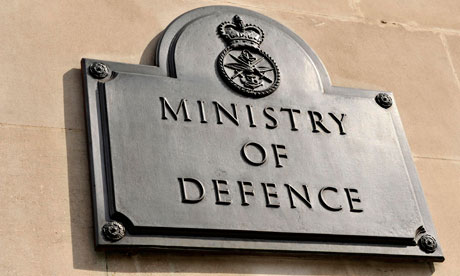
The Ministry of Defence in London announced that British troops would be used in Northern Ireland to guard key public installations. The announcement was made in response to a request from the Northern Ireland government.

[The troops to be used were ones already stationed in the region.]

Tuesday 21 April 1970 Alliance Party Formed

The Alliance Party of Northern Ireland (APNI) was formed.

The founders of the party were attempting to appeal to Catholics and Protestant to unite in support of moderate policies.

[Oliver Napier became leader of the party in 1972.]

Monday 21 April 1975

Three Catholic civilians, two brothers and a sister, were killed by a booby-trap bomb in a house in Killyliss, near Dungannon, County Tyrone.

The attack was claimed by the Protestant Action Force (PAF), which was a covername used by the Ulster Volunteer Force (UVF).

Tuesday 21 April 1981

Margaret Thatcher, then British Prime Minister, spoke to a press conference in Saudi Arabia and stated that the British government would not meet with Irish TDs (Teachta Dáil;

Members of the Irish Parliament) to discuss the hunger strike. Thatcher went on to say: “We are not prepared to consider special category status for certain groups of people serving sentences for crime. Crime is crime is crime, it is not political.”

Friday 21 April 1989

Three Loyalists were arrested in Paris, France, as they were in the process of giving parts from a Shorts Aircraft Company Blowpipe missile to a South African embassy official. The incident revived claims of links between the then South African Government and Loyalist paramilitaries.

Sunday 21 April 1991 Census

The United Kingdom (UK) census was held with information being collected across Northern Ireland. Unlike the situation in 1981 there was no protest against the census by Republicans. [When the religion report was published in 1993 it showed that the total population was 1,577,836.

The breakdown of the main denominations was: 605,639 Catholic; 336,891 Presbyterians; 279,280 Church of Ireland; and 59,517 Methodists. A large number of people did not provide information on religion with 7.3 per cent not stating a denomination and 3.8 per cent stating ‘none’ to the religion question. Later analysis revealed that the likely size of the Catholic population was approximately 41.5 per cent.

Wednesday 21 April 1993

Albert Reynolds, then Taoiseach (Irish Prime Minister), travelled to the United States of America (USA). While in Boston he said that the suggestion of a ‘peace envoy’ was “not appropriate at present”.

Thursday 21 April 1994

Brian Hutton (Sir), then Northern Ireland Lord Chief Justice, quashed the conviction of Paul Hill for the murder of a former British soldier in 1974. Hutton declared that the conviction was “unsafe and unsatisfactory”.

Sunday 21 April 1996
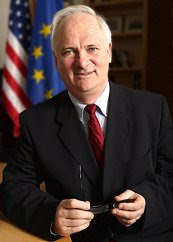
Bertie Ahern, then leader of Fianna Fáil, criticised the Irish government’s approach to Northern Ireland. He placed some of the blame for the ending of the Irish Republican Army’s (IRA) ceasefire on John Bruton, then Taoiseach (Irish Prime Minister).

The criticism placed strain on the bipartisan approach to Northern Ireland in the Dáil.

Monday 21 April 1997

The Irish Republican Army (IRA) issued a series of hoax bomb warnings in central London which caused widespread disruption. A group of men claiming to be members of the Irish People’s Liberation Organisation (IPLO) carried out a robbery on the office of a Credit Union in Newry.

Tuesday 21 April 1998

Adrian Lamph (29), a Catholic civilian, was shot dead by the Loyalist Volunteer Force (LVF) at the council yard where he worked in Portadown, County Armagh. Lamph was the first victim of the conflict since the signing of the Good Friday Agreement.

[He had lived on the Garvaghy Road in the mainly Protestant town of Portadown. He left a partner and a 2 year old son.]

The Democratic Unionist Party (DUP) held the first of a series of anti-Agreement rallies in the run up to the referendum. The 32 County Sovereignty Committee issued a statement rejecting the Agreement as “fundamentally undemocratic, anti-Republican and unacceptable”.

The Celtic Tiger phenomenon continued with the Republic of Ireland being ranked 11th in a league table of the world’s 20 most competitive economies, ahead of both Japan and Britain.

The Freedom of Information Act, which allows access to personal information held by public bodies, came into effect in the Republic of Ireland. In the light of the Good Friday Agreement the Gaelic Athletic Association (GAA) came under renewed pressure to remove the rule from its constitution which excluded members of the security forces in Northern Ireland from joining the organisation.

Wednesday 21 April 1999

The Belfast Telegraph (a Belfast based newspaper) carried a report which claimed that Royal Ulster Constabulary (RUC) sources believed that Éamon Collins had been killed by Irish Republican Army (IRA) members from south Armagh. The RUC sources said that it was unclear if the killing had been sanctioned by the leadership of the IRA

Saturday 21 April 2001

Christopher O’Kane (37), a Catholic civilian, was shot dead near to his home in Tullyally, Derry. [It was believed that Republican paramilitaries carried out the killing although no organisations claimed responsibility.]

 ———————————————

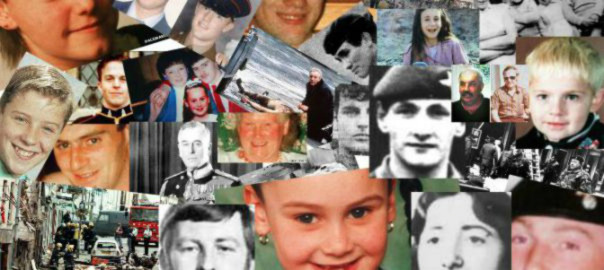
Remembering all innocent victims of the Troubles

Today is the anniversary of the death of the following people killed as a results of the conflict in Northern Ireland

“To live in hearts we leave behind is not to die

– Thomas Campbell

To the innocent on the list – Your memory will live forever

– To the Paramilitaries –

There are many things worth living for, a few things worth dying for, but nothing worth killing for.

 10  People lost their lives on the 21st  April   between 1974– 2001

———————————————–

21 April 1974
James Murphy,  (40)

Catholic
Status: Civilian Political Activist (CivPA),

Killed by: Ulster Volunteer Force (UVF)
Sinn Fein (SF) member. Found shot at his garage, Corravehy, near Derrylin, County Fermanagh.

———————————————–

21 April 1975


Seamus McKenna,  (25)

Catholic
Status: Civilian (Civ),

Killed by: Protestant Action Force (PAF)
Killed, together with his sister and brother, when they detonated booby trap bomb at the future home of his sister, Killyliss, near Dungannon, County Tyrone.

———————————————–

21 April 1975


Michael McKenna   (27)

Catholic
Status: Civilian (Civ),

Killed by: Protestant Action Force (PAF)
Killed, together with his sister and brother, when they detonated booby trap bomb at the future home of his sister, Killyliss, near Dungannon, County Tyrone.

———————————————–

21 April 1975


Marion Bowen   (21)

Catholic
Status: Civilian (Civ),

Killed by: Protestant Action Force (PAF)
Killed, together with her brothers, when they detonated booby trap bomb at her future home, Killyliss, near Dungannon, County Tyrone.

———————————————–

21 April 1977
Brian Smith  (24)

Protestant
Status: Civilian (Civ),

Killed by: Republican Action Force (RepAF)
Shot at the corner of Snugville Street and Queensland Street, Shankill, Belfast.

———————————————–

21 April 1984


Richard Quigley,   (20)

Catholic
Status: Irish Republican Army (IRA),

Killed by: Irish Republican Army (IRA)
Killed by flying shrapnel while involved in remote controlled bomb attack on British Army (BA) mobile patrol, Foyle Street, Derry.

———————————————–

21 April 1987


Harold Henry   (52)

Protestant
Status: Civilian (Civ),

Killed by: Irish Republican Army (IRA)
Shot at his home, The Loup, near Moneymore, County Derry. Contractor to British Army (BA) / Royal Ulster Constabulary (RUC).

———————————————–

21 April 1989


William Thompson  (26)

Protestant
Status: Civilian (Civ),

Killed by: Irish Republican Army (IRA)
Shot from passing car while driving his Shankill black taxi, Crumlin Road, Belfast.

———————————————–

21 April 1998


Adrian Lamph (29)

Catholic
Status: Civilian (Civ),

Killed by: Loyalist Volunteer Force (LVF)
Shot, at his workplace, council depot, Duke Street, Portadown, County Armagh.

———————————————–

21 April 2001


Christopher O’Kane  (37)

Catholic
Status: Civilian (Civ),

Killed by: non-specific Republican group (REP)
Shot near to his home, Milldale Crescent, Tullyally, Derry.

———————————————–


20th April – Deaths & Events in Northern Ireland Troubles

Key Events & Deaths on this day in Northern Ireland Troubles

20th April

———————————————

Sunday 20 April 1969 Loyalist Bombs

There was an explosion at Silent Valley reservoir in County Down cutting off water supplies to Belfast. There was a second explosion at an electricity pylon at Kilmore, County Armagh.

[It was later established that the bombs were planted by Loyalists who were members of the Ulster Volunteer Force (UVF) and the Ulster Protestant Volunteers (UPV). Following these, and earlier attacks on other

Wednesday 20 April 1977

Two Catholic civilians were killed when the Ulster Volunteer Force (UVF) carried out a bomb attack on the funeral of an Irish Republican Army (IRA) member in the Ardoyne area of Belfast.

Monday 20 April 1981

Three Irish TDs (Teachta Dáil; Members of the Irish Parliament) together with Owen Carron, then Bobby Sands’ election agent, paid a visit to the Maze Prison. Following a meeting with Sands the TDs called for urgent talks with the British government. [Margaret Thatcher, then British Prime Minister, announced on 21 April 1981 that the British government would not meet the TDs.]

Tuesday 20 April 1982

The Irish Republican Army (IRA) carried out a series of attacks in Northern Ireland. Wilbert Kennedy (36) and Noel McCulloch (32), both Protestant civilians, were killed in a bomb blast at the Diamond, Magherafelt, County Derry. An inadequate warning had been given. A further 12 people were injured in the attacks. Bombs exploded in Armagh, Ballymena, Belfast, Bessbroke, Derry, and Magherafelt, and caused an estimated £1 million pounds in damage.

Wednesday 20 April 1983

There was a Northern Ireland Assembly by-election in Armagh. The by-election occurred because Seamus Mallon, then Deputy Leader of the Social Democratic and Labour Party (SDLP), was removed from his seat because he had been a member of the Irish senate at the time of the election.

The SDLP had called on voters to boycott the election and the turnout was 34.1 per cent. The Ulster Unionist Party (UUP) candidate, Jim Speers, won the by-election beating the only challenger, Tom French, the Workers’ Party (WP) candidate.

Saturday 20 April 1985

Four senior Irish Republican Army (IRA) members were believed to have been expelled from the organisation.

Tuesday 20 April 1993

James Molyneaux, then leader of the Ulster Unionist Party (UUP), presented a set of proposals entitled ‘Blueprint for Stability’ to John Major, then British Prime Minister, while on a visit to London.

Wednesday 20 April 1994

The Irish Republican Army (IRA) killed Gregory Pollock (23), a Royal Ulster Constabulary (RUC) officer, and wounded two other officers, in an attack on a RUC mobile patrol in Derry.

Pollock was killed when a horizontal mortar bomb struck the vehicle he was travelling in on Spencer Road, Waterside, Derry.

Saturday 20 April 1996

It was believed that John Major, then British Prime Minister, and Bill Clinton, then President of the United States of America (USA), discussed the ‘Peace Process’ at a summit in Moscow. A Child Poverty Action Group (CPAG) report showed that poverty in Northern Ireland continued to be the highest in the United Kingdom (UK).

Sunday 20 April 1997

David Ervine, then a spokesperson for the Progressive Unionist Party (PUP), said that dissident Loyalists from the Loyalist Volunteer Force (LVF) had carried out the attack on the Mountpottinger Baptist Tabernacle in east Belfast.

Initially Catholics were blamed by Sammy Wilson, then a Democratic Unionist Party (DUP) councillor. Ervine said the attack on the Protestant church was an attempt by the LVF to stir up sectarian tension.

Gerry Adams, then President of Sinn Féin (SF), addressed the SF Ard Fheis in Monaghan and said that a vote for SF was a vote for peace. He also called for an electoral pact with the Social Democratic and Labour Party (SDLP) in areas where a split Nationalist vote would allow a Unionist candidate to win the seat.

[The SDLP later rejected his appeal for a pact.]

Monday 20 April 1998

Ian Paisley, then leader of the Democratic Unionist Party (DUP), said that his party aimed to secure a 40 per cent ‘no’ vote in the forthcoming referendum on the Good Friday Agreement. [The actual ‘no’ vote was 28.88%.]

Tuesday 20 April 1999

The Northern Ireland Office (NIO) released figures that showed that the annual cost of running the Northern Ireland Assembly was £10.7 million. The US Congress called for the ending of the financing of joint initiatives by the Federal Bureau of Investigation (FBI) and the Royal Ulster Constabulary (RUC) because of allegations of intimidation and harassment of lawyers by the RUC.

———————————————

Remembering all innocent victims of the Troubles

Today is the anniversary of the death of the following people killed as a results of the conflict in Northern Ireland

“To live in hearts we leave behind is not to die

– Thomas Campbell

To the innocent on the list – Your memory will live forever

– To the Paramilitaries –

There are many things worth living for, a few things worth dying for, but nothing worth killing for.

 8  People lost their lives on the 20th   April   between 1972– 1994

———————————————–

20 April 1972
Gerard Donnelly,   (22)

Catholic
Status: Civilian (Civ),

Killed by: non-specific Loyalist group (LOY)
Taxi driver. Found shot, Harrybrook Street, off Crumlin Road, Belfast.

———————————————–

20 April 1974
James Corbett,   (20)

Catholic
Status: Civilian (Civ),

Killed by: Irish Republican Army (IRA)
Found shot by the side of Upper Springfield Road, Hannahstown, Belfast. Alleged informer.

———————————————–

20 April 1977


Sean Campbell,  (19)

Catholic
Status: Civilian (Civ),

Killed by: Ulster Volunteer Force (UVF)
Killed in car bomb attack on funeral of Irish Republican Army (IRA) member Trevor McKibben, Etna Drive, Ardoyne, Belfast.

———————————————–

20 April 1977


John McBride,  (18)

Catholic
Status: Civilian (Civ),

Killed by: Ulster Volunteer Force (UVF)
Killed in car bomb attack on funeral of Irish Republican Army (IRA) member Trevor McKibben, Etna Drive, Ardoyne, Belfast.

———————————————–

20 April 1982


Noel McCulloch,  (32)

Protestant
Status: Civilian (Civ),

Killed by: Irish Republican Army (IRA)
Killed in car bomb explosion, The Diamond, Magherafelt, County Derry. Inadequate warning given.

———————————————–

20 April 1982


Wilbert Kennedy,  (36)

Protestant
Status: Civilian (Civ),

Killed by: Irish Republican Army (IRA)
Killed in car bomb explosion, The Diamond, Magherafelt, County Derry. Inadequate warning given.

———————————————–

20 April 1987


David Ead,   (38)

Protestant
Status: Royal Ulster Constabulary (RUC),

Killed by: Irish Republican Army (IRA)
Shot while on Royal Ulster Constabulary (RUC) foot patrol, Central Promenade, Newcastle, County Down.

———————————————–

20 April 1994


 Gregory Pollock, (23)

Protestant
Status: Royal Ulster Constabulary (RUC),

Killed by: Irish Republican Army (IRA)
Killed during horizontal mortar bomb attack on Royal Ulster Constabulary (RUC) mobile patrol, Spencer Road, Waterside, Derry.

———————————————–


The Crusades – Christians vs Muslims – What”s it all about?

The Crusades – Muslims vs Christians The Crusades were military campaigns sanctioned by the Catholic Church in the Middle Ages. Pope Urban II authorized the First Crusade in 1095 with the goa…

Source: The Crusades – Christians vs Muslims – What”s it all about?

St. George’s Day – The Neglected Saint.


St. George’s Day is on the 23rd April and It is England’s national day.


St Georges Day. Nottingham. 23 April 2014

———————————————-

As a protestants from Northern Ireland who has made England his home –  I feel appalled and outraged ( just a little) by the fact that St. George’s Day is all but ignored by the rest of the UK and has never been honoured with a Bank Holiday – such as Scotland’s Wee Willie Burns Day and Ireland’s St. Patrick  Day Piss-up (he was in fact Roman/English) .

Through the years there have been many calls for St. George’s Day to be made a bank holidays and I’m right behind this cause – Stop neglecting poor St George and give us a Bank Holiday to celebrate England’s long and glorious history.

Do you think St. George’s Day should be a Bank Holiday ?

Vote Below

———————–

For the Kids

Who was St George?

St. George is the patron saint of England and his emblem is  a red cross on a white background, which  is also the flag of England, and part of the British flag.

St George’s emblem was adopted by Richard The Lion Heart and brought to England in the 12th century. The king’s soldiers wore it on their tunics to avoid confusion in battle

The most famous legend of Saint George is of him slaying a dragon. In the Middle Ages the dragon was commonly used to represent the Devil. The slaying of the dragon by St George was first credited to him in the twelfth century, long after his death. It is therefore likely that the many stories connected with St George’s name are fictitious.

There are many versions of story of St George slaying the dragon, but most agree on the following:

  1. A town was terrorised by a dragon.
  2. A young princess was offered to the dragon
  3. When George heard about this he rode into the village
  4. George slayed the dragon and rescued the princess

For the Big Kids

Saint George is the patron saint of England and as such is celebrated annually on 23 April, the day of his death in 303 AD. See Saint George’s Day for more information.

Saint George never visited the British Isles in his lifetime, but during the Middle Ages he became revered by the English and according to legend fought on their side in the Crusades and the Hundred Years’ War. After the union of England and Scotland in 1707, celebration of the day waned in popularity, but in modern times it remains as a celebration of English culture.

History of celebrating St George in England

References to St George prior to 1066

The earliest documented mention of St George in England comes from the venerable Bede (c. 673–735). His feast day is also mentioned in the Durham Collectar, a ninth-century liturgical work.  The will of Alfred the Great is said to refer to the saint, in a reference to the church of Fordington, Dorset.Certainly at Fordington a stone over the south door records the miraculous appearance of St George to lead crusaders into battle.Early (c. 10th century) dedications of churches to St George are noted in England, for example at Fordington, Dorset, at Thetford, Southwark and Doncaster.

1066 (Norman Conquest) – 1707 (Union of the Crowns)

Edward III (1327–1377) put his Order of the Garter (founded c. 1348) under the patronage of St. George. This order is still the foremost order of knighthood in England and St George’s Chapel at Windsor Castle was built by Edward IV and Henry VII in honour of the order. The badge of the Order shows Saint George on horseback slaying the dragon. Froissart observed the English invoking St. George as a battle cry on several occasions during the Hundred Years’ War (1337–1453). Certain English soldiers displayed the pennon of St George.  In his play Henry V, William Shakespeare has the title character utter a now-famous invocation of the Saint at Harfleur prior to the battle of Agincourt (1415): “Follow your spirit, and upon this charge Cry ‘God for Harry, England, and Saint George!'” At Agincourt many believed they saw him fighting on the English side.

St. George’s feast day in England was no different from the numerous saints on the liturgical calendar until the Late Middle Ages. In the past, historians mistakenly pointed to the Synod of Oxford in 1222 as elevating the feast to special prominence, but the earliest manuscripts of the synod’s declaration do not mention the feast of St George. The declarations of the Province of Canterbury in 1415 and the Province of York in 1421 elevated the feast to a double major, and as a result, work was prohibited and church attendance was mandatory.

During the Tudor period the celebration of feast of Saint George’s was abolished along with most of the other saints, with them went the tradition of flying saint’s flags in public (to be replaced with royal badges on banners). The one exception was the Cross of Saint George.

1707–1894

The tradition of celebration St George’s day had waned by the end of the 18th century after the union of England and Scotland. The Royal Society of St. George, dedicated to promoting English culture including St George’s Day, was founded in 1894 and famous members have included Sir Winston Churchill.

Modern celebration of St George’s day in England


A crowd celebrates Saint George’s Day at an event in Trafalgar Square in 2010

In recent years the popularity of St George’s Day appears to have been gradually increasing. In March 2002 the London Mayor sparked controversy by announcing plans to spend £100,000 to mark St Patrick’s Day – after refusing to organise a celebration for St George’s Day. He also stated that he would dye the Trafalgar Square fountains green On St George’s Day that year members of the Campaign for an English Parliament (www.thecep.org.uk) protested at the mayor’s lack of support for St George’s Day by dying the fountains in Trafalgar Square red.

Around July of that year the Campaign’s London co-ordinator put the idea to the London Branch that they should set up a company to establish a St George’s Day event in London. Several were in agreement and they pooled their money together.

The ethos of the company was to promote St George’s Day in the face of some lukewarm response both from the London media and of course the mayor’s constant disparaging words about St George. He was reported to have said that there was no call for the day to be celebrated and indeed poo-pooed the idea.

They applied to Westminster Council to hold an event. It was very forthcoming with documents that stood at least 6″ thick. However one member contacted Covent Garden directly, and instantly began a rapport with the management, suddenly the 6″ of paperwork became a ½”. Whilst he was dealing with Covent Garden the others had set the wheels in motion to become a limited company and this was finally completed, ironically, on St.Patrick’s Day 2003.

The relationship with Covent Garden continued and the first event held under the St George’s Day Events company was on April 23rd 2003, although only a small affair it was the beginning of what was to become the London celebrations.

In 2004, they were in touch with the English Folk Dance and Song Society, who gladly appeared at Covent Garden. Although funds were severely limited they continually looked for new acts. In November, they turned to the London Assembly for funding, were given the criteria by the Assembly and with the help of Cross of St George Association a grant of £2500 was to be made to the St George’s Day Events company but as with anything of this nature hurdles were put in their way. The biggest one was that they had to have an advertisement in the London events guide ‘Time Out’, but with 24hrs to go before the printing deadline in the early hours of the morning they were informed of the format the advertisement should be in. Nevertheless the spirit of St George must have been with them because no sooner had a scathing letter to the London Assembly leisure committee been composed, than their graphics artist had manipulated the advertisement to the Assembly liking and thus it went ahead.

The St George’s Day events in Covent Garden 2004 were set up and once again the spirit of St George was with them, they could not have been blessed with better weather, a lovely sunny day with a small breeze to keep the flags flying to attention, the acts included :- Punch and Judy, English Folk Dancers, Mummers Players, Morris Dancers and some good old English folk music, for a group of amateurs the event went without a hitch and was enjoyed by all, a big thanks for Cross of St George Association for help with this event they were magnificent.

St George’s Day in Covent Garden 2005 went very much the same as the previous year but to a bigger audience. The company felt they had re-launched St George’s Day in London and it was now here to stay. During their meetings they often felt that situations and events would overtake them, after all they could not summon up the large amounts of money that were made available to other events.

Fortunately, they were contacted by the Royal Society of St.George as to what they could do to make the event much bigger and indeed better, with the Company’s help and with their clout St George’s Day 2006 was even a bigger success than before. BBC Radio 3 had a full programme of St George’s Day events in 2006, and Andrew Rosindell, Conservative MP for Romford, has been putting the argument forward in the House of Commons to make St George’s Day a public holiday. In early 2009 Mayor of London Boris Johnson spearheaded a campaign to encourage the celebration of St George’s Day. Today St George’s day may be celebrated with anything English from morris dancing to a Punch and Judy show.


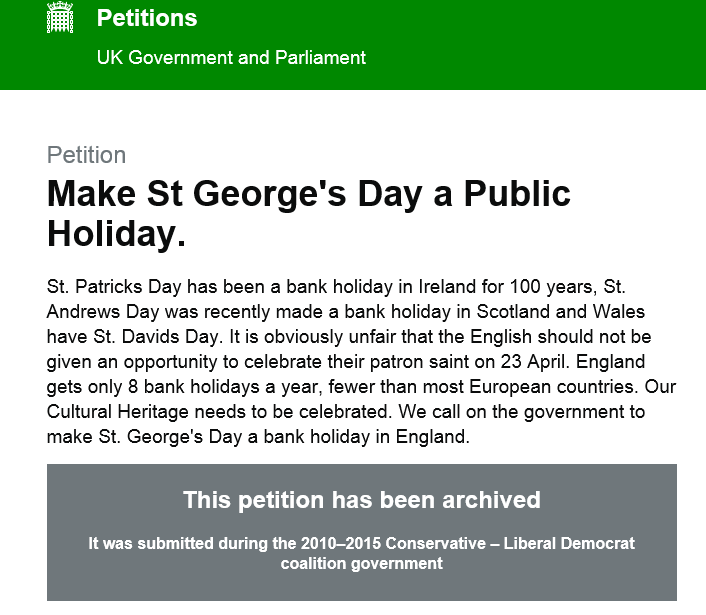
st goerges day petition


In 2011, a campaign to make St. George’s Day a public holiday in England began on the UK government’s e-petition website. It received 4,266 signatures, not achieving the 100,000 signatures required before the deadline in August 2012 to make a debate of the matter in the House of Commons a possibility.[10]

A traditional custom on St George’s day is to wear a red rose in one’s lapel, though this is no longer widely practised. Another custom is to fly or adorn the St George’s Cross flag, the flag of England, in some way: pubs in particular can be seen on 23 April festooned with garlands of St George’s crosses. It is customary for the hymn “Jerusalem” to be sung in cathedrals, churches and chapels on St George’s Day, or on the Sunday closest to it. Traditional English foods and drink (e.g. afternoon tea) may be consumed.


There is a growing reaction to the recent indifference to St George’s Day. Organisations such as English Heritage, and the Royal Society of Saint George have been encouraging celebrations. There have also been calls from some commentators to replace St George as patron saint of England, on claims that he was an obscure figure who had no direct connection with the country. However, there is no obvious consensus as to whom to replace him with, though names suggested include Edmund the Martyr, Cuthbert of Lindisfarne, or Saint Alban, with the latter having topped a BBC Radio 4 poll on the subject.

British scouting organisations such as The Scout Association celebrate St George’s Day. St George was selected by scouting founder Robert Baden-Powell as the patron saint of the movement. Most scout districts host events on the Sunday closest to St George’s day, often a parade and religious service for their members.

Shakespeare anniversaries and St George’s day

Main article: William Shakespeare

This composite portrait of William Shakespeare by 90 artists was organised by BBC Coventry and Warwickshire. The picture was unveiled by Judi Dench and Patrick Stewart at the Royal Shakespeare Theatre on 23 April 2006.

Additional celebrations involve the commemoration of the 23 April as Shakespeare‘s birthday and death. Shakespeare is known to have been baptised on 26 April 1564 and to have died on 23 April 1616. 23 April is widely recognised as his traditional date of birth and commemorated on this day every year in his home Stratford upon Avon and throughout the world.

Other notable anniversaries on St George’s Day

23 April is also the anniversary of the birth of the artist J. M. W. Turner (1775–1851), the death of the Romantic poets William Wordsworth (1770–1850) and Rupert Brooke (1887–1915). It is also notable as the day of death of the following Englishmen: Wihtred, King of Kent (725); King Ethelred of Wessex (871), Ethelred II of England (1016), and the cricketers Jim Laker (1986) and Denis Compton (1997) In addition, on 23 April 871 Alfred became King of Wessex, on 23 April 1348 the English order of knighthood was founded, in 1661 King Charles II of England was crowned in Westminster Abbey and on 23 April 1924 was the first broadcast by an English monarch (King George V at the opening of the British Empire Exhibition at Wembley).

Other anniversaries include:

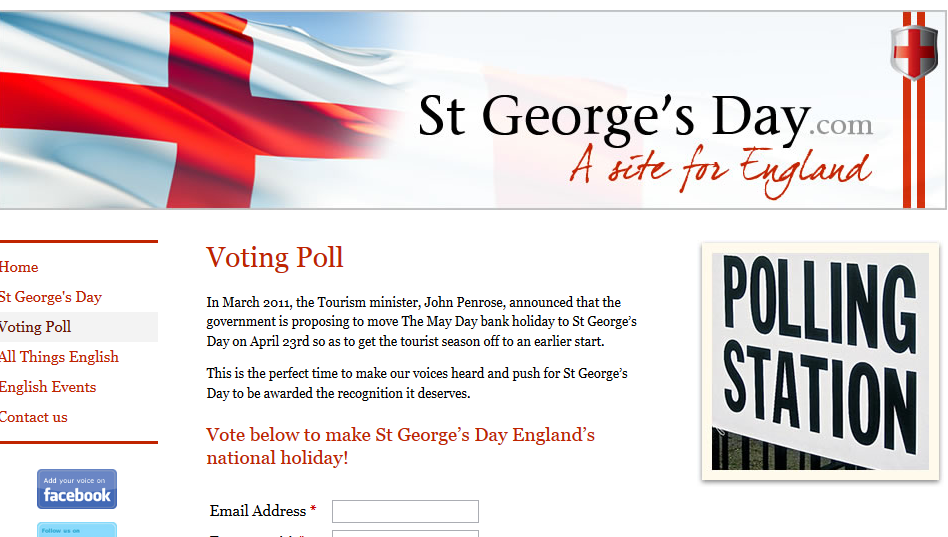
st georges day site

Visit the Website and help the  cause: WWW.Stgeorgesday.com


ISIS Executes 250 Women in Mosul for Refusing Sex Slavery

ISIS Executes 250 Women in Mosul for Refusing Sex Slavery

——————————————-

——————————————-

See Khansaa Brigade – ISIS ‘female ” Police “

Following the fall of Mosul, the second largest city in Iraq, at the hands of the ISIS, the militants started forcing women to a accept temporary marriage or sexual jihad (jihad al-nikah), under the pretext of implementing the Sharia, and the women face severe punishments if they refuse to submit.

————————————-
Women Under Sharia Law – (Islamic Law) – CNN

————————————–

See Sharia Law

A Kurdistan Democratic Party (KDP) official from Mosul, Said Mamuzini, said that life is too hard for the women in Mosul due to the ISIS strict rules imposed on them. ISIS began selecting women of Mosul and forced them into marrying its militants calling it temporary marriage or sexual jihad (jihad al-nikah) since it has taken control over Mosul, and the women who refused to submit to this practice would be executed.

“At least 250 girls have so far been executed by IS for refusing to accept the practice of sexual jihad, and sometimes the families of the girls were also executed for rejecting to submit to IS’s request” he said.

———————————-

Muslim opinions on Women

———————————-

Ghayas Surchi, a PUK official from Mosul revealed that human rights are being widely violated in all IS-held territories, particularly the womens’ rights as they’re seen as commodities and they have no choice in choosing their spouses.

Surchi added that women are prohibited to go out alone in Mosul and they must be fully covered when they are in public. Girls and boys are also not allowed to see each other and talk, it is, therefore, hard for them to choose their soulmates.

However, there are dealers who secretly organise meetings between boys and girls and they charge a great deal of money.

IS militants took control of Mosul in June 2014, after the fall of Iraqi army in the city and since then it has been executing the residents of the city for various charges to spread fear and push the civilians to obey.

—————————————–

The Miserable Life American Muslim Women Face When They Marry Muslim Men From Abroad

—————————————–

19th April – Deaths & Events in Northern Ireland Troubles

Key Events & Deaths on this day in Northern Ireland Troubles

19th April

————————————–

Saturday 19 April 1969

There was serious rioting in the Bogside area of Derry following clashes between Northern Ireland Civil Rights Association (NICRA) marchers, and Loyalists and members of the Royal Ulster Constabulary (RUC). A number of RUC officers entered the house of Samuel Devenny, who had not been involved in the disturbances, and severely beat him with batons causing internal injuries and a heart attack.

A number of other people in the house were also beaten by the police including Devenny’s 16 year old and 18 year old daughters.

[Samuel Devenny died on 17 July 1969 as a result of his injuries. The Police Ombudsman for Northern Ireland issued a report on 4 October 2001 about the death of Devenny (PDF File; 44KB).]

See Battle of Bogside –


Wednesday 19 April 1972

Edward Heath, then British Prime Minister, confirmed that the plan to conduct an arrest operation, in the event of a riot during the march on 30 January 1972, was known to British government Ministers in advance.

Wednesday 19 April 1978

James Callaghan, then British Prime Minister, announced that legislation would be brought forward to increase the number of Members of Parliament (MPs) who represented Northern Ireland at Westminster from 12 to between 16 and 18.

[A Bill was passed at parliament on 28 November 1978 which increased the representation to 17 seats.]

Thursday 19 April 1979

Agnes Wallace (40), a Prison Officer, was shot dead and three of her colleagues injured when the Irish Republican Army (IRA) carried out a gun and grenade attack outside Armagh women’s prison. A member of the British Army was shot dead by the IRA in Belfast.

Sunday 19 April 1981


James Brown & Gary English

James Brown (18) and Gary English (19), both Catholic civilians, were killed when a British Army vehicle drove into a crowd of people on Creggan Road, Derry.

[There had been rioting in the area but local people stated that the vehicle was driven deliberately at the crowd.]

Monday 19 April 1982

Stephen McConomy, an 11 year old Catholic boy, died as a result of the injuries he received when he was hit on the head by a plastic bullet in Fahan Street, Derry.

[His death lead to calls for the weapon to banned. On 13 May 1982 the European Parliament called on member states not to use plastic bullets.]

Monday 19 April 1993

Patrick Mayhew, then Secretary of State for Northern Ireland, held a meeting with John Alderdice, then leader of the Alliance Party of Northern Ireland (APNI), at the start of a new round of bilateral talks with the main political parties.

Monday 19 April 1999

A pipe-bomb was found on the side of Catholic home in Serpentine Park, Belfast. A hoax device was found in Newtownabbey, Belfast. Several families had to be evacuated from their homes. The Red Hand Defenders (RHD) admitted responsibility.

Gerry Kelly, then a senior member of Sinn Féin (SF), said that the latest attack was part of a Loyalist attempt at “ethnic cleansing” in the area.

[In 2001 it became apparent that RHD was a cover name used by both the Ulster Defence Association (UDA) and the Ulster Volunteer Force (UVF).]

Tony Blair, then British Prime Minister, and Bertie Ahern, then Taoiseach (Irish Prime Minister), held an intensive round of negotiations in Downing Street with the Ulster Unionist Party (UUP), Sinn Féin (SF), and the Social Democratic and Labour Party (SDLP).

The talks failed to achieve a breakthrough on decommissioning and the implementation of the Executive.

The British government ruled out any suggestion of ‘parking’ the political negotiations. A campaign for an independent international investigation and a judicial inquiry into the killing of the Rosemary Nelson was opened in Belfast.

———————————————

Remembering all innocent victims of the Troubles

Today is the anniversary of the death of the following people killed as a results of the conflict in Northern Ireland

“To live in hearts we leave behind is not to die

– Thomas Campbell

To the innocent on the list – Your memory will live forever

– To the Paramilitaries –

There are many things worth living for, a few things worth dying for, but nothing worth killing for.

 11  People lost their lives on the 19th  April   between 1972– 1989

———————————————–

19 April 1972
James Elliott, (36)

Protestant
Status: Ulster Defence Regiment (UDR),

Killed by: Irish Republican Army (IRA)
Off duty. Found shot by the side of the road, Altnamackan, near Newtownhamilton, County Armagh

———————————————–

19 April 1972
Martin Owens  (22)

Catholic
Status: Civilian (Civ),

Killed by: Irish Republican Army (IRA)
Found shot shortly after being thrown from car, Horn Drive, Suffolk, Belfast.

———————————————–

19 April 1973


Anthony McDowell (12)

Catholic
Status: Civilian (Civ),

Killed by: British Army (BA)
Shot while travelling in car during gun battle between British Army (BA) and Irish Republican Army (IRA), Alliance Avenue, Ardoyne, Belfast.

———————————————–

19 April 1976
John Cummings  (55)

Protestant
Status: Prison Officer (PO),

Killed by: Irish Republican Army (IRA)
Off duty. Shot at his home, Coolemoyne House, Dunmurry, near Belfast, County Antrim.

———————————————–

19 April 1977
William Strathearn  (39)

Catholic
Status: Civilian (Civ),

Killed by: Ulster Volunteer Force (UVF)
Shot at his shop, Ahoghill, near Ballymena, County Antrim.

———————————————–

19 April 1979


Agnes Wallace (40)

Protestant
Status: Prison Officer (PO),

Killed by: Irish National Liberation Army (INLA)
Shot during sniper and grenade attack, outside Armagh Prison, Armagh.

———————————————–

19 April 1979
Paul Rogers  (37)

nfNI
Status: British Army (BA),

Killed by: Irish Republican Army (IRA)
Shot by sniper while on British Army (BA) mobile patrol, Falls Road, Belfast.

———————————————–

19 April 1981


 James Brown   (18)

Catholic
Status: Civilian (Civ),

Killed by: British Army (BA)
Knocked down by British Army (BA) landrover, which drove into crowd during street disturbances, Creggan Road, Derry.

———————————————–

19 April 1981


Gary English   (19)

Catholic
Status: Civilian (Civ),

Killed by: British Army (BA)
Knocked down by British Army (BA) landrover, which drove into crowd during street disturbances, Creggan Road, Derry.

———————————————–

19 April 1982


Stephen McConomy   (11)

Catholic
Status: Civilian (Civ),

Killed by: British Army (BA)
Died three days after being shot by plastic bullet, Fahan Street, Bogside, Derry.

———————————————–

19 April 1989
Francis Galbraith   (29)

Protestant
Status: Civilian (Civ),

Killed by: non-specific Loyalist group (LOY)
Shot while walking along Park Avenue, off Holywood Road, Belfast.

———————————————–


18th April – Deaths & Events in Northern Ireland Troubles

Key Events & Deaths on this day in Northern Ireland Troubles

18th April 

————————————–

Tuesday 18 April 1972

Widgery Report Published

The Widgery Report on ‘Bloody Sunday’, Report of the Tribunal appointed to inquire into the events on Sunday, 30th January 1972, (HC 220) was published.

See Bloody Sunday

[The findings of this report caused outrage among the people of Derry and was referred to as the “Widgery Whitewash”. It was to lead to a 26 year campaign for a new independent inquiry.]

Thursday 18 April 1974

Harold Wilson, then British Prime Minister, paid a visit to Northern Ireland and said that there was no alternative to the Sunningdale Agreement.

[Public Records 1974 – Released 1 January 2005: Note of the meeting between Harold Wilson and the Northern Ireland Executive which was held in Stormont Castle on 18 April 1974.]

  Sunningdale; Ulster Workers’ Council Strike.

Thursday 18 April 1996

Although the Unionist parties and the Social Democratic and Labour Party (SDLP) opposed aspects of the legislation, the Northern Ireland (Entry to Negotiations) Act was passed at Westminster. The names of the 30 parties and individuals who will appear on the ballot paper for the Northern Ireland election were published in the Bill.

Friday 18 April 1997

The Irish Republican Army (IRA) planted two bombs and issued a number of other hoax bomb warnings across a number of motorways and railways in England. The bombs and alerts resulted in large-scale disruption.

Saturday 18 April 1998

The Ulster Unionist Council (UUC), the policy making body of the Ulster Unionist Party (UUP), gave the Good Friday Agreement a significant boost when delegates backed if by 540 to 210 (72 per cent). While this was a major boost to David Trimble, then leader of the UUP, six out of the 10 UUP Members of Parliament (MPs) opposed the Agreement.

Gerry Adams, then President of Sinn Féin (SF), addressed the SF Ard Fheis in Dublin. During his address he informed delegates of the news of the UUP vote on the Agreement and said “Well done, David”; there was a round of applause from the delegates at the news.

Trimble later said this support by SF was a “poisoned chalice”.

Later in his speech to delegates on the Agreement, and the negotiations that had preceded it, Adams gave a cautious response. In particular, he noted the concerns of many republicans with certain aspects of the Agreement such as the proposed new Northern Ireland Assembly.

Adams recognised that Irish republicans still had “… an emotional … political as well as constitutional block to participation in a Stormont parliament”. At the same time however Adams went onto point out that if SF did not fully participate then the opportunity “… we have to make and implement policy on an all Ireland basis … could be allocated to other parties”.

[In the end no definitive response on the Agreement was reached and it was agreed to reconvene the Ard Fheis on 10 May 1998 to deal with the issue.]


———————————————

Remembering all innocent victims of the Troubles

Today is the anniversary of the death of the following people killed as a results of the conflict in Northern Ireland

“To live in hearts we leave behind is not to die

– Thomas Campbell

To the innocent on the list – Your memory will live forever

– To the Paramilitaries –

There are many things worth living for, a few things worth dying for, but nothing worth killing for.

 3  People lost their lives on the 18th April   between 1974– 1992

———————————————–

18 April 1974
Seamus O’Neill,  (32)

Catholic
Status: Civilian (Civ),

Killed by: Irish Republican Army (IRA)
Killed by booby trap bomb while driving tractor on his farm, The Loup, near Moneymore, County Derry.

———————————————–

18 April 1990


Martin Corrigan, (25)

Catholic
Status: Irish People’s Liberation Organisation (IPLO),

Killed by: British Army (BA)
Shot while in the back garden of Royal Ulster Constabulary (RUC) member’s home, Lislasley Road, Kinnegoe, near Loughgall, County Armagh.

———————————————–

18 April 1992
Brendan McWilliams,  (50)

Catholic
Status: Civilian (Civ),

Killed by: Irish Republican Army (IRA)
Civilian employed by British Army (BA) . Shot at his home, Nialls Crescent, off Killylea Road, Armagh.

———————————————–

Proud to be a Loyalist – But I don’t hate Catholic’s

I am 

Unashamedly Proud of My Loyalist and British Heritage.

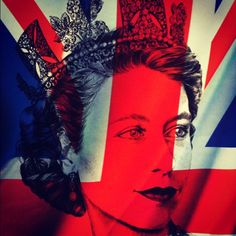
 queen union jack.jpg

In fact I want the world to know that despite what loony lefties and followers of Corbyn think – its perfectly normal to take pride in our country and celebrate and embrace our long and glorious history.

—————————-

Someone emailed me yesterday after visiting my website and praised me for writing about the history of The Troubles and commemorating the memory of all those who had died during the  30 year conflict.

So far – so good!

And then she asked me………..

“Did I hate Catholic’s and what I thought of a United Ireland ?”.

Well at this stage my antenna went up and I thought ” Here we go again “

Let me explain….

When I set up this blog/website  last year my primary objective was to promote my Autobiography Belfast Child and hopefully attract some attention from the publishing world and maybe one day see my book printed and share my story with the world.

That was the objective anyways and the process  has been long and full of disappointments – but I am now working with high profile ghost writing Tom Henry  to complete the book and his enthusiasm for the subject is feeding my dream.


I  have always   thought I had an interesting story to tell ( I would wouldn’t I ? ) and within weeks of launching the site I was pleasantly surprised to see that I was receiving a lot of visitors and people were commenting on my story. As of yesterday I have had more 100,000 visitors to the site and this figure is growing and increasing weekly by a few thousand and this I must say surprised me.

It had always been my aim to dedicate the book/my story to the memory of all those killed in the Troubles  and off course to the memory of  my beloved father John Chambers – who died way to young and left a wound in my soul that can never been healed or soothed.

So with this in mind I decided to use my website to tell the story of the Northern Ireland conflict and include an unbiased (mostly) comprehensive history of all major events and deaths in the Troubles. Due to my loyalist heritage and background this has not always been easy, considering I lived through the worst years of the Troubles among the loyalist communities of West Belfast and like those around me I was on the front-line of the sectarian slaughter and there was no escape from the madness that surrounded and engulfed us.

I blamed the IRA ( and other republican terrorists ) for all the woes of life in Belfast and  I hated them with a passion  – still do.

Growing up as a protestant in Northern Ireland  is unlike life in any other part of the UK or British territories and from cradle to grave our lives are governed by the tenuous umbilical cord that reluctantly connects us to the rest of the UK and Westminster’s corridors of power.

Unlike most other communities throughout the UK we are fanatically proud of our Britishness and we have literally fought for the right to remain part of Britain and have Queen Elizabeth II as the mother of our nation.

Long may she reign

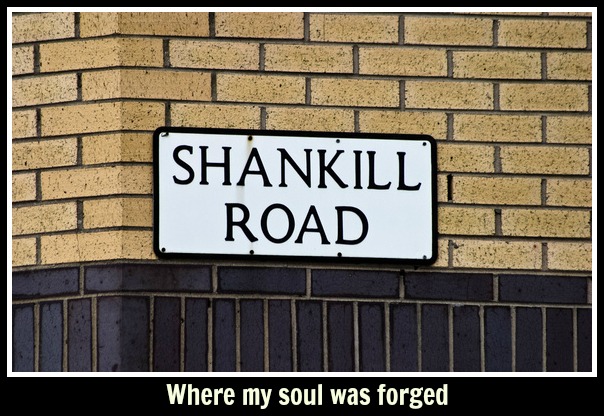
shankill road where my soul was forged.jpg

If you have read extracts from my Autobiography Belfast Child ( It’s worth it – promise ) you will know that  I was raised within the heartlands of loyalist Northern Ireland – The Glorious Shankill Road.

The UDA ( Ulster Defense Force) and other loyalist paramilitaries governed and controlled our daily lives and lived and operated among us. The loyalist community stood as one against the IRA and other republican terrorists and although there was often war between the various different groups , they were untied in their hatred of Republican’s and pride in the Union.

The definition of loyalist is :

a. A supporter of union between Great Britain and Northern Ireland

b. A person who remains loyal to the established ruler or government, especially in the face of a revolt.


—————————————–

Why Ireland split into the Republic of Ireland & Northern Ireland

—————————————–

A bit of history for you

A very brief  outlined of the beginning of the modern troubles

Whilst the Protestants’ clung to their British sovereignty and took pride in the union, our Catholic counterparts felt abandoned and second class citizens in a Unionist run state. The civil rights marches of the 60’s & Republican calls for a United Ireland were the catalyst for the IRA and other Republican terrorist groups to take up arms against the British and feed the paranoia of the loyalist community.

Northern Ireland descended into decades of sectarian conflict & slaughter. An attack on the crown was an attack on the Protestant people of the North and the Protestant paramilitaries took up arms and waged an indiscriminate war against the IRA, the Catholic population and each other. Many innocent Catholic’s and Protestant’s became targets of psychopathic sectarian murder squad’s. Murder was almost a daily occurrence and the killings on both sides perpetuated the hatred and mistrust between the two ever-warring communities. It was a recipe for disaster and Northern stood on the brink of all out civil war.

Growing up in this environment it is hardly surprising to learn that  I hated republicans and all they stood for. But that doesn’t mean I hated Catholic’s or Irish people and would  wish  any harm on them – I don’t and I didn’t.

It means I have a different point of view and democracy is all about freedom of choice and my choice is to maintain the Union with the UK and embrace and celebrate my loyalist culture and tradition. It also means I have the right to take pride in the union with the rest of the UK and I wear my nationality like a badge of honor for all the world to  see.

————————————–

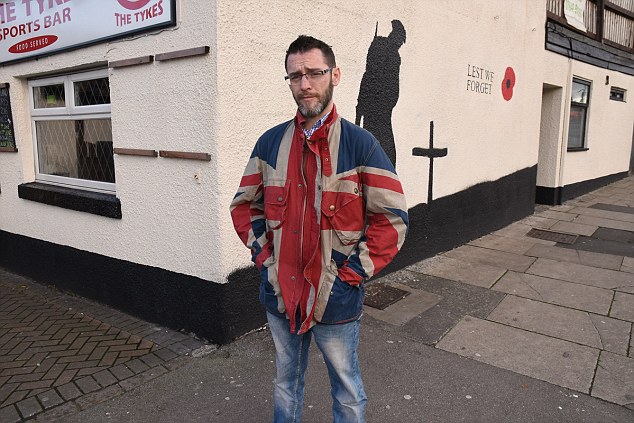
proud to be british jason mawer

Jason Mawer has been warned twice to remove his jacket in case it offends someone

The unique Mod-style jacket in red, white and blue was made a few years ago for a Who convention in London

Pub landlord Jason Mawer has twice been asked in public to remove his treasured Union Jack jacket – for risk of it being ‘offensive’.

He was told to take off his valuable Mod-style Barbour jacket – designed in honour of legendary rock band The Who – by officials who appeared to be council enforcement officers.

On the second occasion the female official warned him: ‘Would you mind removing your coat it might offend somebody.’

See Daily Mail for full Story 

————————————–

In recent years it has become almost politically  “incorrect” to show any signs of pride in being British and mad lefties and their deluded disciples are always banging on about offending other religions and communities throughout the UK. The fact that the UK has such a diverse melting pot of different nationalities and religions  and is generally accommodating to them – is lost on these do gooders and they ignore our country’s  long history of religious and politically tolerance and instead accuse us of being  xenophobic  and this offends me no end.

Have they forgotten that it was our forefathers who fought and died for our great nation and our democracy is built on their ultimate  sacrifice for our freedom – they did not die in vain.

…back to the email

If you had taken the time to have a proper  look through my site you would be aware that I commemorate the deaths of all innocent people killed as a direct result of the conflict in Northern Ireland , regardless of political or religious  background  . I also cover the deaths of paramilitaries from both sides killed “in Action” as my objective to to give a complete picture of the history of the Troubles.

I receive lots of emails and comments about my site and although most of these are positive –  a few ( normally from republicans ) accuse me of being a loyalist and somehow responsible for the all the deaths in Northern Ireland’s tortured history. Generally I ignore these emails as they are so far of the mark – if they had taken the time to read my story they would know a bit more about my history and know that I preach love – not hate!

Just because I am proud of the union and my British heritage does not mean I hate Catholics or Irish people or any others for that matter – in fact I judge no man on his colour , creed , religious or political background (apart from Republican Terrorists ).

I judge people on their humanity and empathy towards others and the world around us . Life is for living – so live and let live.

Anne Frank

“In spite of everything, I still believe that people are really good at heart.”
Anne Frank

Bessbrook bomb kills four RUC men- 17th April 1979

Bessbrook

Booby Trap Van Bomb

17th April 1979

Four Protestant members of the Royal Ulster Constabulary (RUC), were killed by a Provisional IRA remote-controlled bomb hidden in a parked van, and detonated when their mobile patrol drove past, Bessbrook.

The bomb was estimated at 1,000 pound and was believed to be the largest bomb used by the IRA up to that date.

———————————————–

Victims

———————————————–
17 April 1979


Paul Gray, (25)

Protestant
Status: Royal Ulster Constabulary (RUC),

Killed by: Irish Republican Army (IRA)
Killed by remote controlled bomb hidden in parked van, detonated when Royal Ulster Constabulary (RUC) mobile patrol drove past, Bessbrook, County Armagh.

See 17th April Deaths & Events

———————————————–

17 April 1979


Robert Lockhart,  (44)

Protestant
Status: Royal Ulster Constabulary (RUC),

Killed by: Irish Republican Army (IRA)
Killed by remote controlled bomb hidden in parked van, detonated when Royal Ulster Constabulary (RUC) mobile patrol drove past, Bessbrook, County Armagh

See 17th April Deaths & Events

———————————————–
17 April 1979


Richard Baird,  (28)

Protestant
Status: Royal Ulster Constabulary (RUC),

Killed by: Irish Republican Army (IRA)
Killed by remote controlled bomb hidden in parked van, detonated when Royal Ulster Constabulary (RUC) mobile patrol drove past, Bessbrook, County Armagh

See 17th April Deaths & Events

———————————————–

17 April 1979


Noel Webb,  (30)

Protestant
Status: Royal Ulster Constabulary (RUC),

Killed by: Irish Republican Army (IRA)
Killed by remote controlled bomb hidden in parked van, detonated when Royal Ulster Constabulary (RUC) mobile patrol drove past, Bessbrook, County Armagh

See 17th April Deaths & Events

———————————————–
Visit the RUC website & memorial list

———————

17 April 1980


In January 1981, Patrick Joseph Traynor (27) from Crossmaglen was found guilty of the four murders and a range of other charges. He was jailed for life on each of the four murder charges and was sentenced to 12 years for the related crimes.

———————————————-

BESSBROOK

Army Base

Bessbrook, saw some of the worst violence in the Troubles. 25 British soldiers and local Protestants, all male, lost their lives. Four soldiers died in a non-combat related air accident, but the rest (21 men) were killed by the Provisional Irish Republican Army (IRA).

The linen mill was converted by the British Army into a major military base. A helicopter landing area was established to supply other military outposts in the area since road-borne movements of troops and supplies were vulnerable to landmine attack.

At one stage the little village was reportedly the busiest helicopter airport in Europe, more so than the major heliports supplying the North Sea oil rigs. For many years British Army helicopters would take off and land every few minutes. To avoid the risk of missile attack they would fly at rooftop level over the village. For a time, direct access to much of the village was sealed off by security barriers to minimise the risk of vehicle-borne bomb attacks on the security forces. Some have claimed that this contributed to the commercial decline of local businesses.

—————————————————-


.

17th April – Deaths & Events in Northern Ireland Troubles

Key Events & Deaths on this day in Northern Ireland Troubles

17th April

————————–

Thursday 17 April 1969

Westminster By-Election

In a by-election to the Westminster parliament Bernadette Devlin, standing as a Unity candidate in Mid-Ulster, was elected and, at 21 years of age, became the youngest woman ever to be elected as a Member of Parliament (MP).

Sunday 17 April 1977

Cardinal Willian Conway, then Catholic Primate of Ireland, died in Armagh.

Tuesday 17 April 1979


Four Royal Ulster Constabulary (RUC) officers were killed when the Irish Republican Army (IRA) exploded an estimated 1,000 pound van bomb at Bessbrook, County Armagh.

[This was believed to be the largest bomb used by the IRA to this date.]

See Bessbrook Van Bomb

Saturday 17 April 1982

A British soldier driving an armoured personnel carrier rammed the vehicle into the gable wall that formed ‘Free Derry Corner’. The soldier was later taken into military custody.

Wednesday 17 April 1991

The Combined Loyalist Military Command (CLMC), acting on behalf of the Ulster Volunteer Force (UVF), the Ulster Freedom Fighters (UFF), and the Red Hand Commandos (RHC), announced that there would be a ceasefire beginning on 30 April 1991.

[The ceasefire was to facilitate the proposed political talks and would last as long as the talks. Attacks by all three organisations continued in the period before the ceasefire.]

Friday 16 April 1993

Dick Spring, then Tánaiste (deputy Irish Prime Minister and Minister for Foreign Affairs), addressed a meeting of the British-Irish Association in Oxford, England. Spring stated that a possible solution to the conflict in Northern Ireland lay in a ‘Europe of the regions’.

Saturday 17 April 1993

Douglas Hurd, then British Foreign Secretary, said that the Republic of Ireland had a “crucial role” in any new talks. He also stated that the Republic’s willingness to consider changes to the Irish Constitution provided a “positive context”.

Monday 17 April 1995

The Royal Ulster Constabulary (RUC) rerouted an Apprentice Boys of Derry parade away from the lower Ormeau Road area of Belfast. Approximately 200 people had joined a protest against loyal order parades passing through the area.

[There was a further protest on 23 April 1995.]

Wednesday 17 April 1996

The Irish Republican Army (IRA) exploded a bomb in The Boltons, Earls Court, London. The bomb went off in a vacant house and there were no injuries.

Thursday 17 April 1997

Patrick Mayhew, then Secretary of State for Northern Ireland, referred the cases of two Scots Guards to the Life Sentence Review Board.

The two British soldiers, Mark Wright and James Fisher, were both serving life sentences for the murder of Peter McBride (18) in the New Lodge area of Belfast (on 4 September 1992).

Of the seven men who were arrested on 11 April 1997, three were released, three charged with various offences, and one man was flown to London for questioning about the Docklands bomb on 9 February 1996.

All seven men alleged that they had been beaten while in custody in Gough Barracks in Armagh.

The Council for Catholic Maintained Schools objected to a statement by Julia Neuberger, then Chancellor of the University of Ulster and a Rabbi, in which she criticised the sectarian nature of primary and secondary education in Northern Ireland. Neuberger denied that her statement referred solely to Catholic schools.

The University initially defended the remarks but later apologised to the Council for Catholic Maintained Schools

Friday 17 April 1998

Mark McNeill (32), a former member of the Irish National Liberation Army (INLA), was shot dead by two gunmen as he got out of his taxi on Shaw’s Road in the west of Belfast. McNeill was a father of five.

[It was believed that the attack was a “grudge killing” involving former INLA members and there was speculation that the killing may have been drugs-related.]

David Trimble, then leader of the Ulster Unionist Party (UUP), delivered a speech to the Northern Ireland Forum. Tony Blair, then British Prime Minister, stated that the Royal Ulster Constabulary (RUC) would not be disbanded and that only those prisoners whose organisations were on ceasefire would be release, on licence, from prison.

Saturday 17 April 1999

Ronnie Flanagan, then Chief Constable of the Royal Ulster Constabulary (RUC), announced that John Stevens would conduct a fresh inquire into the killing of Pat Finucane, a Belfast solicitor killed on 12 February 1989.


———————————————

Remembering all innocent victims of the Troubles

Today is the anniversary of the death of the following people killed as a results of the conflict in Northern Ireland

“To live in hearts we leave behind is not to die

– Thomas Campbell

To the innocent on the list – Your memory will live forever

– To the Paramilitaries –

There are many things worth living for, a few things worth dying for, but nothing worth killing for.

 13  People lost their lives on the 17th April   between 1972– 1998

———————————————–

17 April 1972
Patrick Magee, 

  (20) Catholic
Status: Civilian (Civ),

Killed by: British Army (BA)
Shot as he walked along Divis Street, Lower Falls, Belfast.

———————————————–

17 April 1972
Patrick Donaghy, 

(86) Catholic
Status: Civilian (Civ),

Killed by: British Army (BA)
Shot at the window of his flat, Divis Tower, Divis Flats, Belfast.

———————————————–

17 April 1973


Brian Smyth, 

  (32) Catholic
Status: Irish Republican Army (IRA),

Killed by: British Army (BA)
Shot by British Army (BA) sniper while standing with group of men, Etna Drive, Ardoyne, Belfast.

———————————————–
17 April 1976
Rachel Hyams,  (79)

nfNIB
Status: Civilian (Civ),

Killed by: Irish Republican Army (IRA)
Died three weeks after being injured in bomb attack on Ideal Home Exhibition, Olympia, London.

———————————————–

17 April 1977


Trevor McKibben,  (19)

Catholic
Status: Irish Republican Army (IRA),

Killed by: British Army (BA)
Shot by British Army (BA) sniper while carrying rifle, Flax Street, Ardoyne, Belfast.

———————————————–

17 April 1979


Paul Gray, (25)

Protestant
Status: Royal Ulster Constabulary (RUC),

Killed by: Irish Republican Army (IRA)
Killed by remote controlled bomb hidden in parked van, detonated when Royal Ulster Constabulary (RUC) mobile patrol drove past, Bessbrook, County Armagh.

See Bessbrook Van Bomb

———————————————–

17 April 1979


Robert Lockhart,  (44)

Protestant
Status: Royal Ulster Constabulary (RUC),

Killed by: Irish Republican Army (IRA)
Killed by remote controlled bomb hidden in parked van, detonated when Royal Ulster Constabulary (RUC) mobile patrol drove past, Bessbrook, County Armagh

See Bessbrook Van Bomb

———————————————–

17 April 1979


Richard Baird,  (28)

Protestant
Status: Royal Ulster Constabulary (RUC),

Killed by: Irish Republican Army (IRA)
Killed by remote controlled bomb hidden in parked van, detonated when Royal Ulster Constabulary (RUC) mobile patrol drove past, Bessbrook, County Armagh

See Bessbrook Van Bomb

———————————————–

17 April 1979


Noel Webb,  (30)

Protestant
Status: Royal Ulster Constabulary (RUC),

Killed by: Irish Republican Army (IRA)
Killed by remote controlled bomb hidden in parked van, detonated when Royal Ulster Constabulary (RUC) mobile patrol drove past, Bessbrook, County Armagh

See Bessbrook Van Bomb

———————————————–
17 April 1980


Victor Morrow,  (61)

Protestant
Status: ex-Ulster Defence Regiment (xUDR),

Killed by: Irish Republican Army (IRA)
Shot near to his home, Newtownbutler, County Fermanagh.

———————————————–

17 April 1982
William Morrison,  (42)

Protestant
Status: Civilian (Civ),

Killed by: Irish Republican Army (IRA)
Shot at his farm, Kilturbid Road, Middletown, County Armagh.

———————————————–

17 April 1991


John O’Hara,  (41)

Catholic
Status: Civilian (Civ),

Killed by: Ulster Freedom Fighters (UFF)
Taxi driver. Shot when lured to bogus call, Dunluce Avenue, off Lisburn Road, Belfast

———————————————–

17 April 1998


Mark McNeill,  (32)

Catholic
Status: ex-Irish National Liberation Army (xINLA),

Killed by: Irish National Liberation Army (INLA)
Taxi driver. Shot while getting out of his car, outside taxi depot, Shaws Road, Anderstown, Belfast.

———————————————–