6 People lost their lives on the 6th January between 1980 – 2001
6th January – Deaths & Events in Northern Ireland Troubles
Category Archives: Uncategorized

Should I Stay or Should I Go – Back to Belfast ?
Should I Stay or Should I Go ?
I’m torn between going or staying .
Throughout my time living and working in London and recent years in and around the North West of England it was always my long term intention that when I reached a ripe old age and my kids had settled into happy secure independent adult lives I would relocate to Belfast and spend the remainder of my time in the company of friends and loved ones and the Shankill community that has always been my spiritual home and where my heart and soul were forged within the heartlands and hallowed streets of loyalist Belfast .
You can take the boy out of the Shankill but you can’t take the Shankill out of the boy , Oh so true .
But as usual my path through life has seldom been straight forward and the Norms in their infinite wisdom and cruel nature weaved me a crooked path fluctuating between epic highs and soul destroying lows.
To be honest these past five years have been the most trying and stressful I’ve faced in decades of relative happiness and personal satisfaction and to say they have taken a toll on my mental and emotional wellbeing would be something of an understatement.
Looking back it all started to fall apart when I lost my much missed and loved mum to cancer, a heartbreaking period that I am still trying to come to terms with. If you are familiar with my history, you’ll know I spent many years not knowing if mum was alive or dead and the turmoil this caused throughout my early and teenage years is laid bare in my best-selling book A Belfast Child .

Come on – I had to get a plug in somewhere 😜
In fact back in the early 2000’s I was seriously considering leaving London altogether (I’d had enough of the rat race and a coke habit that was threatening to get out of hand ) and the possibility of moving back to Belfast and sorting myself out was one of two tempting options opened to me and my growing family. Mum was the second and she made it crystal clear she would love for me to live closer to her and help me get back on my feet . So I delayed my return home and we relocated to a little town on the outskirts of Preston, where we have lived since.
It was great to be so close to mum and we were able to spend quality time together getting to know each other and mending the damage of our tragic family history. The gravitational weight of my traumatic childhood has been a constant presence throughout my life and parts of my soul will always be held hostage to the past.
Nevertheless, this was one of the happiest and most productive periods of my life and at times it seemed I had an almost perfect life and wanted for nothing.
But as the years ticked by the pull of Belfast was becoming stronger and I missed and longed to be in the company of those I love and cherished above all others. Mostly I missed my three siblings and best mate “ Billy “ , we are supernaturally close and I grew to resent the years I had spent away from them.
And a little voice inside my head constantly reminded me that we were only given a brief spell on this mortal coil and time was running out.
Time keeps on slipping into the future
My biggest fear , a fear shared by all of us was that one of us might die prematurely and the landscape and future of our close family unit would be reshaped and destroyed forevermore.
After mums’ death the only thing keeping me in England was the fact my two children had been born and raised here and all their memories and historical roots were firmly planted in English soil . So once again I kicked the idea of the move home into the long grass and settled into the humdrum existence of daily life.
There were some high points during this period and after years of toying with the idea of seeing my story in print I finally managed to get a book deal and realised one of my long-held dreams. Subconsciously I think I was a little uncomfortable with publishing the book whilst mum was alive , although I had completed most of it back in the late 90s and she had read and approved of the early drafts.
As you may suspect this was not a straightforward process and there were many soul destroying bumps and rejections along the way but I persevered and much to my delight the book has went onto be a bestseller. Despite the popular misconception being a bestselling author has not made me rich , far from it and like many I struggle sometimes financially to make ends meet. Having said that I know the book will be my legacy and fingers crossed I’m working on a film script that I hope to sell in the coming years.
Stay tuned.
I will be covering the whole journey from concept to publication of the book in a future post and Princess Diana features in this story.
Life went on and my fragile soul struggled to deal with mums passing but always in the background I had my two sister’s supporting and comforting me from Belfast. Both desperately wanting me to return, and Jean was forever begging me to come home and to be honest I wanted nothing more. I began to feel trapped in England due to the dilemma of my children and the deep roots they had planted here, and I could see no way forward.
But the fates love to toy with the destinies of mortal men and the unpredictability of life weaved by the wicked Norns was about to shake my world to its very foundations and nothing would ever be the same. In the space of twenty four short months I lost three members of my close family, my uncle William, much loved brother in law Richard and the hardest loss of all my beloved big sister Jean. My grief and sorrow were biblical and the pain of losing Jean took me to dark places that hunt me still.
To make things even more difficult during this brutal period my “perfect” marriage of twenty-eight years was falling apart and suddenly I had to adjust to being a single parent and living alone in a life I had grown to detest.
To be completely honest these events are still too raw and painful for me to write about in-depth and I will leave them here for now. but I find the process of putting my thoughts on paper cathartic and will be covering these in a later post.
Oh , I almost forgot to mention in the midst of all this turmoil I was diagnosed with a potential life threatening brain aneurysm and I will cover this also in an upcoming post.
All these events have led me to a crossroad in my life and once again I am seriously considering moving back to Belfast permanently . Although I love England and its been good to me I have nothing left here but my children (and three legged cat) and they both understand and support my desire move back home. Autumn has now flown the nest and is settled with her new fella and yes I approve of him. Jude is a typical grumpy teenager and splits his time happily between his mum and me and as long as we feed him and give him money, he is happy with his lot and for me to move back to Belfast.
But it’s not that black and white for me.
He’s only seventeen and in my eyes still a child, although he thinks he’s a big man! I want to be there for him as he grows and matures and evolves as a young adult and be there to share and support him through the trials and tribulations life throws at him. I want to be there when he has he’s first pint in a pub , ( a regret I never had with my own dad) be there to pick him up when he falls down and be a constant presence in his life. Down the line when my children marry ( or not ) and have their own kids I want to be part of their lives and not a distant grandfather living over the Irish sea they see a few times a year. Also, since Jeans death Belfast has lost some of its magic for me as spending time with her was always a highlight of my trips home and in some ways I would feel guilty moving back when she’s not there.
So what am I going to do ?
Stay tuned and when I make up my mind Ill let you know x
That’s all for now folks, I’m pushing myself to write again as I’ve not put pen to paper in almost two years and I’m a little rusty and out of practice. . So be gentle with me please.
Before you go

Upcoming posts :
The reasons I left Belfast.
Book writing process and publication
My movie script, where I’m at
Once upon a time in Northern Ireland, why thoughts and the process of taking part
My love of music and how its shaped my life
And much more…
Share this:

my site now includes a comprehensive searchable database of every major event and killings during the Troubles.
Donate- The least visited page on my Blog



Share this:
Share this:

Testing something
nothing to see here…

Share this:

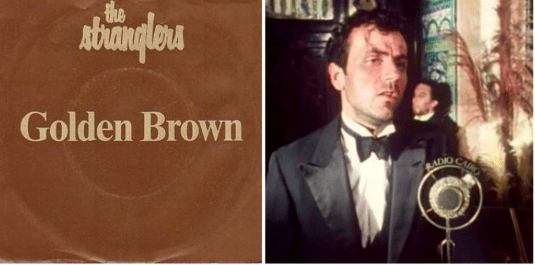
Golden Brown – The Stranglers: Iconic Songs & the story behind them

The Stranglers
Golden Brown
January 1982
Golden Brown – The Stranglers: Iconic Songs & the story behind them
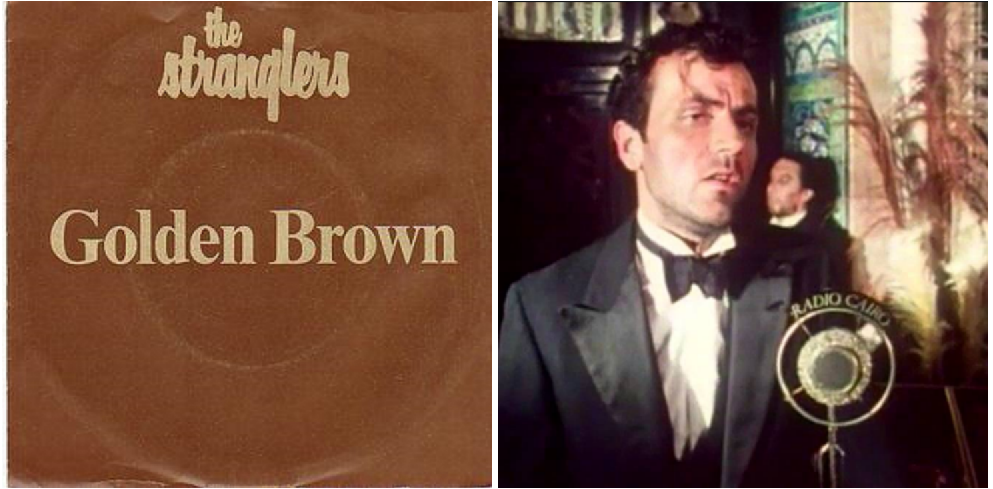
Golden Brown – The Stranglers
“Golden Brown” is a song by the English rock bandthe Stranglers. It was released as a 7″ single in December 1981 in the United States and in January 1982 in the United Kingdom, onLiberty. It was the second single released from the band’s sixth albumLa folie.
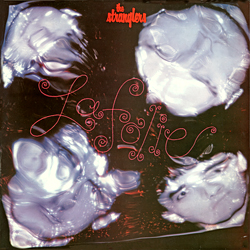
See:La folie(album) Track Listing
It peaked at No. 2 in theUK Singles Chart, the band’s highest ever placing in that chart.
In January 2014,NMEranked the song as No. 488 on its list of the500 Greatest Songs of All Time. It has also been recorded by many other artists.
See : 500 Greatest Songs of All Time NME
| SinglebyThe Stranglers |
|---|
| from the… |
View original post 958 more words
Share this:

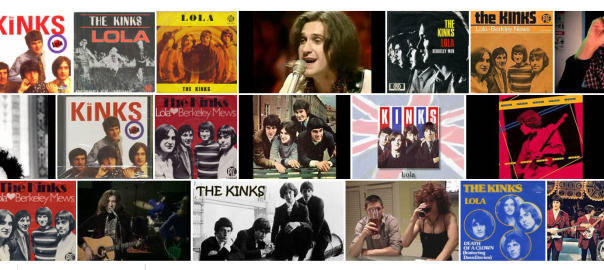
Lola – The Kinks : Iconic Songs & the story behind them
Lola – The Kinks : Iconic Songs
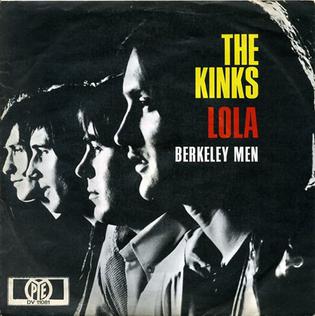
Iconic Songs and the story behind them


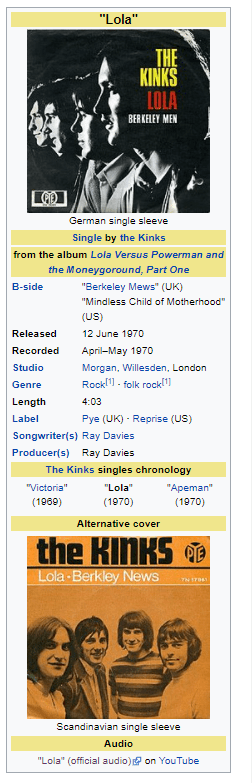
“Lola” is a song written by Ray Davies and performed by English rock band the Kinks on their album Lola Versus Powerman and the Moneygoround, Part One. The song details a romantic encounter between a young man and a possible cross-dresser, whom he meets in a club in Soho, London. In the song, the narrator describes his confusion towards Lola, who:
“walked like a woman but talked like a man”
The song was released in the United Kingdom on 12 June 1970, while in the United States it was released on 28 June 1970. Commercially, the single reached number two on the UK Singles Chart and number nine on the Billboard Hot 100.
The track has since become one of The Kinks’ most iconic and popular songs, later being ranked number 422 on “Rolling Stone’s 500 Greatest Songs of All Time” as well as number 473 on the “NME‘s 500 Greatest Songs Of All Time” list.
Since its release, “Lola” has appeared on multiple compilation and live albums. In 1980, a live version of the song from the album One for the Road was released as a single in the US and some European countries, becoming a minor hit. In the Netherlands it became #1, just as in 1970 with the studio version. Other versions include live renditions from 1972’s Everybody’s in Show-Biz and 1996’s To the Bone.
The “Lola” character also made an appearance in the lyrics of the band’s 1981 song, “Destroyer“.
The Kinks – Lola (Official Audio)
Lola was the lead single from the album “Lola Versus Powerman and the Moneygoround, Part One” originally released in the UK and the US in June 1970 and reached number two on the UK Singles Chart nine on the Billboard Hot 100
Lyrics
“Lola”
I met her in a club down in old Soho
Where you drink champagne and it tastes just like cherry-cola [LP version – Coca-Cola:]
C O L A cola
She walked up to me and she asked me to dance
I asked her her name and in a dark brown voice she said Lola
L O L A Lola la-la-la-la Lola
Well I’m not the world’s most physical guy
But when she squeezed me tight she nearly broke my spine
Oh my Lola la-la-la-la Lola
Well I’m not dumb but I can’t understand
Why she walked like a woman and talked like a man
Oh my Lola la-la-la-la Lola la-la-la-la Lola
Well that’s the way that I want it to stay
And I always want it to be that way for my Lola
La-la-la-la Lola
Girls will be boys and boys will be girls
It’s a mixed up muddled up shook up world except for Lola
La-la-la-la Lola
Well I left home just a week before
And I’d never ever kissed a woman before
But Lola smiled and took me by the hand
And said dear boy I’m gonna make you a man
Well I’m not the world’s most masculine man
But I know what I am and I’m glad I’m a man
And so is Lola
La-la-la-la Lola la-la-la-la Lola
Lola la-la-la-la Lola la-la-la-la Lola
Source: www.azlyrics.com/lyrics/kinks/lola
Origin and inspiration
My Thoughts
As an old mod I have long loved the Kinks and everything about them and their iconic music legacy is embedded deep within my soul and still gives me much pleasure and joy. In my opinion they are one of the most underrated English bands of the 60s and although their music has always been well received and revered by their musical peers, they never had the commercial success of the Who or the Stones and to my mind that is a shame.
From the first time I heard Lola spoke to me in a way few tunes do and the surreal theme of the lyrics and the haunting melody its in my top ten tunes ever!
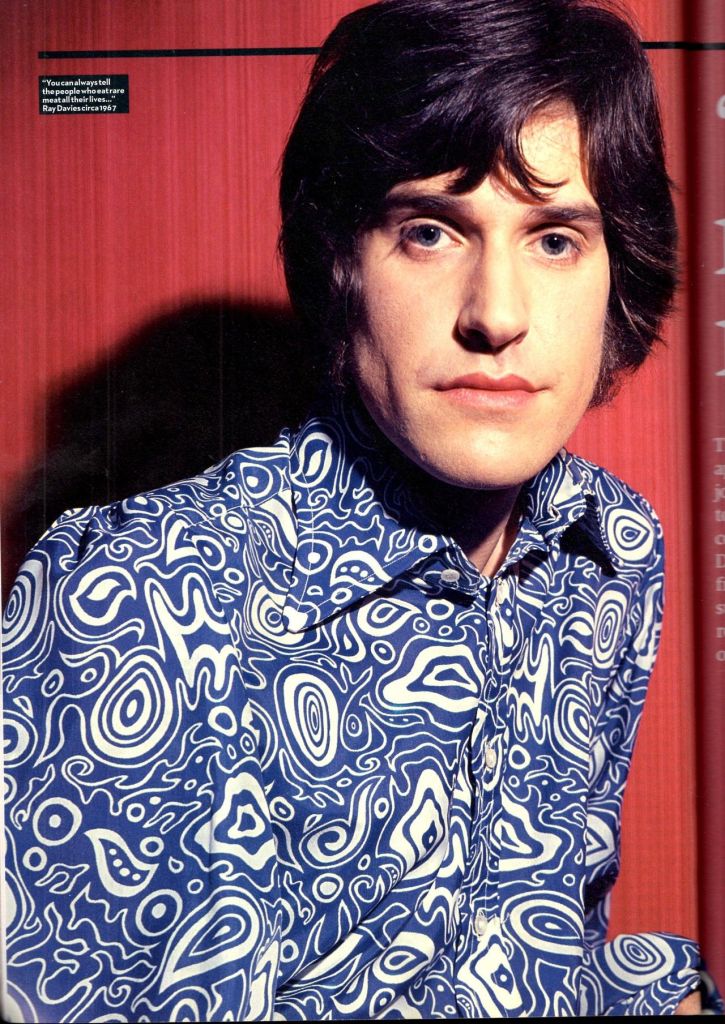
Ray Davies has claimed that he was inspired to write “Lola” after Kinks manager Robert Wace spent a night in Paris dancing with a cross-dresser.
Davies said of the incident, “In his apartment, Robert had been dancing with this black woman, and he said, ‘I’m really onto a thing here.’ And it was okay until we left at six in the morning and then I said, ‘Have you seen the stubble?’ He said ‘Yeah’, but he was too pissed [intoxicated] to care, I think”.[7]
It was a real experience in a club. I was asked to dance by somebody who was a fabulous looking woman. I said “no thank you”. And she went in a cab with my manager straight afterwards. It’s based on a personal experience. But not every word.
– Ray Davies
Drummer Mick Avory has offered an alternative explanation for the song’s lyrics, claiming that “Lola” was partially inspired by Avory’s frequenting of certain bars in West London.
Avory said:
“We used to know this character called Michael McGrath. He used to hound the group a bit, because being called The Kinks did attract these sorts of people. He used to come down to Top of the Pops, and he was publicist for John Stephen’s shop in Carnaby Street. He used to have this place in Earl’s Court, and he used to invite me to all these drag queen acts and transsexual pubs. They were like secret clubs. And that’s where Ray [Davies] got the idea for ‘Lola’. When he was invited too, he wrote it while I was getting drunk”.
Ray Davies has denied claims that the song was written about a date between himself and Candy Darling—Davies contends the two only went out to dinner together and that he had known the whole time that Darling was trans.
In his autobiography, Dave Davies said that he came up with the music for what would become “Lola”, noting that brother Ray added the lyrics after hearing it.[9] In a 1990 interview, Dave Davies stated that “Lola” was written in a similar fashion to “You Really Got Me” in that the two worked on Ray’s basic skeleton of the song, saying that the song was more of a collaborative effort than many believed.[10]
Writing and recording
I remember going into a music store on Shaftesbury Avenue when we were about to make “Lola”. I said, “I want to get a really good guitar sound on this record, I want a Martin”. And in the corner they had this old 1938 Dobro [resonating guitar] that I bought for £150. I put them together on “Lola” which is what makes that clangy sound: the combination of the Martin and the Dobro with heavy compression.
– Ray Davies
Written in April 1970, “Lola” was cited by Ray Davies as the first song he wrote following a break he took to act in the 1970 Play for Today film The Long Distance Piano Player. Davies said that he had initially struggled with writing an opening that would sell the song, but the rest of the song “came naturally”.
Initial recordings of the song began in April 1970, but, as the band’s bassist John Dalton remembered, recording for “Lola” took particularly long, stretching into the next month.
During April, four to five versions were attempted, utilizing different keys as well as varying beginnings and styles. In May, new piano parts were added to the backing track by John Gosling, the band’s new piano player that had just been auditioned. Vocals were also added at this time. The song was then mixed during that month. Mick Avory remembered the recording sessions for the song positively, saying that it “was fun, as it was the Baptist’s [John Gosling’s] first recording with us”.
The guitar opening on the song was produced as a result of combining the sound of a Martin guitar and a vintage Dobro resonating guitar. Ray Davies cited this blend of guitar sounds for the song’s unique guitar sound.
I remember going into a music store on Shaftesbury Avenue when we were about to make “Lola”. I said, “I want to get a really good guitar sound on this record, I want a Martin”. And in the corner they had this old 1938 Dobro [resonating guitar] that I bought for £150. I put them together on “Lola” which is what makes that clangy sound: the combination of the Martin and the Dobro with heavy compression.
– Ray Davies
Release
Despite the chart success “Lola” would achieve, its fellow Lola vs. Powerman track “Powerman” was initially considered to be the first single from the album. However, “Lola”, which Ray Davies later claimed was an attempt to write a hit, was eventually decided on as the debut single release.
“Lola” was released as a single in 1970. In the UK, the B-side to the single was the Kinks Are the Village Green Preservation Society outtake “Berkeley Mews“
while the Dave Davies-penned “Mindless Child of Motherhood” was used in the US. It became an unexpected chart smash for the Kinks, reaching number two in Britain and number nine in the United States.
The single also saw success worldwide, reaching the top of the charts in Ireland, New Zealand, and South Africa, as well as the top 5 in Germany, Austria, Belgium, and Switzerland. The success of the single had important ramifications for the band’s career at a critical time, allowing them to negotiate a new contract with RCA Records, construct their own London Studio, and assume more creative and managerial control.
In a 1970 interview, Dave Davies stated that, if “Lola” had been a failure, the band would have “gone on making records for another year or so and then drifted apart”.
Although the track was a major hit for the band, Dave Davies did not enjoy the success of “Lola”, saying, “In fact, when ‘Lola’ was a hit, it made me feel a bit uncomfortable. Because it was taking us out of a different sort of comfort zone, where we’d been getting into the work, and the writing and the musicality was more thought about. It did have that smell of: ‘Oh blimey, not that again.’ I found it a bit odd, that period. And then it got odder and weirder”.
Mick Avory said that he “enjoyed the success” the band had with “Lola” and its follow-up, “Apeman“.
I wanted to write a hit [with “Lola”.] It wasn’t just the song. it was the musical design. It wasn’t a power chord song like “You Really Got Me“. It was a power chord beginning. It needed a special acoustic guitar sound … sonorous, growling, with an attack to it.
– Ray Davies, Radio 4’s Master Tapes
Controversy
Originally, “Lola” saw controversy for its lyrics. In a Record Mirror article entitled “Sex Change Record: Kink Speaks”, Ray Davies addressed the matter, saying, “It really doesn’t matter what sex Lola is, I think she’s alright”.
Some radio stations would fade the track out before implications of Lola’s biological sex were revealed. On 18 November 1970, “Lola” was banned from being played by some radio stations in Australia because of its “controversial subject matter”.
The BBC banned the track for a different reason: the original stereo recording had the words “Coca-Cola” in the lyrics, but because of BBC Radio’s policy against product placement, Ray Davies was forced to make a 6000-mile round-trip flight from New York to London and back on June 3, 1970, interrupting the band’s American tour, to change those words to the generic “cherry cola” for the single release, which is included on various compilation albums as well.
Reception and legacy
“Lola” received positive reviews from critics. Upon the single’s release, the NME praised the song as “an engaging and sparkling piece with a gay Latin flavour and a catchy hook chorus”.
Writing a contemporary review in Creem, critic Dave Marsh recognized it as “the first significantly blatant gay-rock ballad”.Billboard said of the song at the time of its US release, “Currently a top ten British chart winner, this infectious rhythm item has all the ingredients to put the Kinks right back up the Hot 100 here with solid impact”.
Rolling Stone critic Paul Gambaccini called the song “brilliant and a smash”. Music critic Robert Christgau, despite his mixed opinion on the Lola vs. Powerman album, praised the single as “astounding”.
Stephen Thomas Erlewine of AllMusic lauded the song for “its crisp, muscular sound, pitched halfway between acoustic folk and hard rock”. Ultimate Classic Rock ranked “Lola” as The Kinks’ third best song, saying “the great guitar riff that feeds the song is one of Dave’s all-time greatest”. Paste Magazine listed the track as the band’s fourth best song.
The song was also well-liked by the band. Mick Avory, who noted the song as one of the songs he was most proud to be associated with, said “I always liked ‘Lola’, I liked the subject. It’s not like anything else. I liked it for that. We’d always take a different path”.
In a 1983 interview, Ray Davies said, “I’m just very pleased I recorded it and more pleased I wrote it”. The band revisited the “Lola” character in the lyrics of their 1981 song, “Destroyer“, a minor chart hit in America.
Satirical artist “Weird Al” Yankovic created a parody of the song called “Yoda“, featuring lyrics about the Star Wars character of the same name, on his 1985 album Dare to Be Stupid.[30]
Live versions
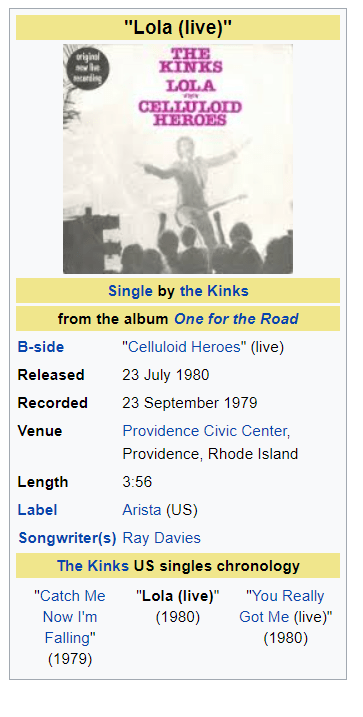
Since its release, “Lola” became a mainstay in The Kinks’ live repertoire, appearing in the majority of the band’s subsequent set-lists until the group’s break-up.
In 1972, a live performance of the song recorded at Carnegie Hall in New York City appeared on the live half of the band’s 1972 album, Everybody’s in Show-Biz, a double-LP which contained half new studio compositions and half live versions of previously released songs.
A live version of “Lola”, recorded on 23 September 1979 in Providence, Rhode Island, was released as a single in the US in July 1980 to promote the live album One for the Road. The B-side was the live version of “Celluloid Heroes“.
The single was a moderate success, reaching number 81 on the Billboard Hot 100. It was also released in some countries in Europe (although not the UK) in April 1981. It topped the charts in both the Netherlands, matching the number one peak of the original version, and in Belgium, where it exceeded the original’s peak of three.
It also charted in Australia, peaking at number 69 and spending 22 weeks on the charts. Although not released as a stand-alone single in the UK, it was included on a bonus single (backed with a live version of “David Watts” from the same album) with initial copies of “Better Things” in June 1981.
This live rendition, along with the live versions of “Celluloid Heroes” and “You Really Got Me” from the same album, also appeared on the 1986 compilation album Come Dancing with The Kinks: The Best of the Kinks 1977–1986.
Although it did not appear on the original 1994 version, another live version of “Lola” was included on the 1996 US double-album release of To the Bone, the band’s final release of new material before their dissolution.
Covers
Madness – Lola
BAD MANNERS – LOLA
Robbie Williams – Lola
Top 10 70s Songs You Forgot Were Awesome
Iconic Songs & the story behind them
- Love Will Tear Us Apart – Joy Division: Iconic Songs & the story behind them
 Love Will Tear Us Apart Joy Division June 1980 Iconic Songs & the story behind them “Love Will Tear Us Apart” is a song by English rock band Joy Division, released in June 1980. Its lyrics were inspired by lead singer Ian Curtis‘ marriage problems and frame of mind before his suicide in May 1980 Recording Joy Division first … Continue reading Love Will Tear Us Apart – Joy Division: Iconic Songs & the story behind them
 - That’s Entertainment -The Jam : Iconic Songs & the story behind them
 The Jam That’s Entertainment January 1981 The Jam : Iconic Songs & the story behind them “That’s Entertainment” is a 1980 song by British punk–mod revivalist group the Jam from their fifth album, Sound Affects. Although never released as a domestic single in the UK during the band’s lifetime, “That’s Entertainment” nonetheless charted as an import single (backed by a … Continue reading That’s Entertainment -The Jam : Iconic Songs & the story behind them
 - Tin Soldier – Small Faces : Iconic Songs & the story behind them
 Small Faces TIN SOLDIER 2nd December 1967 Tin Soldier – Small Faces : Iconic Songs & the story behind them “Tin Soldier” is a song released by the English rock band Small Faces on 2 December 1967, written by Steve Marriott (credited to Marriott/Lane). The song peaked at number nine in the UK singles chart and number 38 in Canada. It has since … Continue reading Tin Soldier – Small Faces : Iconic Songs & the story behind them
 - Going Underground – The Jam: Iconic Songs & the story behind them
 Going Underground – The Jam The Jam Going Underground March 1980 Going Underground – The Jam: Iconic Songs & the story behind them “Going Underground” is the first British #1 chart single by The Jam, released in March 1980. It went straight in at #1 in the UK Singles Chart, spending three weeks at the top. It was the first … Continue reading Going Underground – The Jam: Iconic Songs & the story behind them
 - Golden Brown – The Stranglers: Iconic Songs & the story behind them
 The Stranglers Golden Brown January 1982 Golden Brown – The Stranglers: Iconic Songs & the story behind them Golden Brown – The Stranglers “Golden Brown” is a song by the English rock band the Stranglers. It was released as a 7″ single in December 1981 in the United States and in January 1982 in the United … Continue reading Golden Brown – The Stranglers: Iconic Songs & the story behind them
Share this:

The Andy Rowe Show – My Interview
The Andy Rowe Show – My Interview
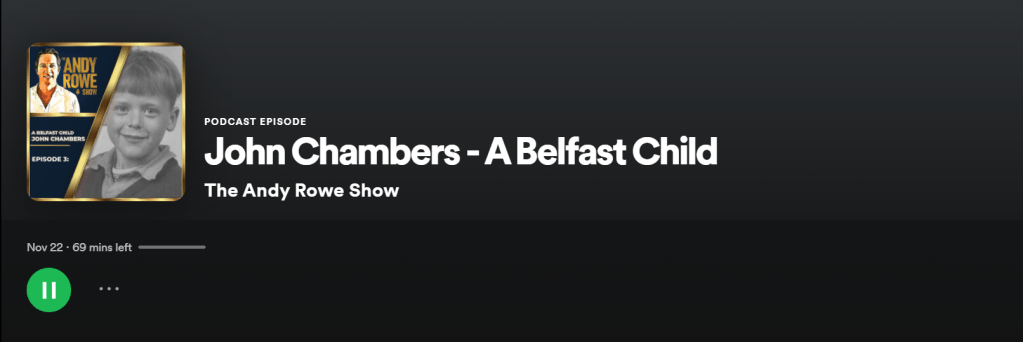
Here’s my latest interview , as you can tell Im rather nervous and as a result I get a little muddled in some areas and stumble over some of the questions and answers as if I have no idea what Im speaking about.
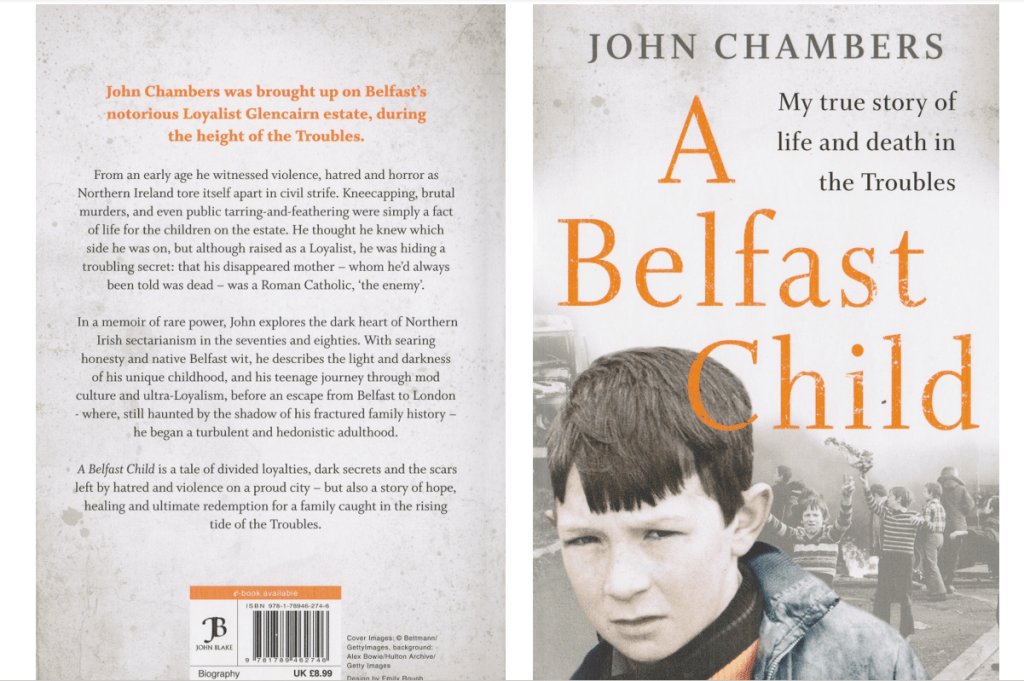
This is simply the story of a boy trying to grow up, survive, thrive, have fun & discover himself against a backdrop of events that might best be described as ‘explosive’, captivating & shocking the world for thirty long years.
To order a copy follow this link https://tinyurl.com/wzpp5ra
Share this:

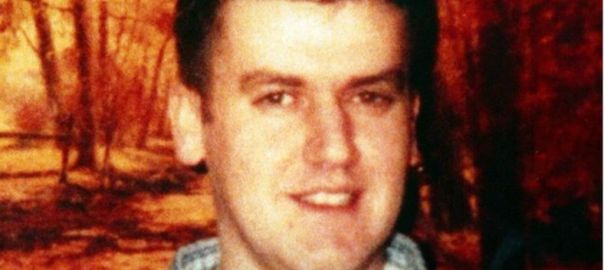
Death of Robert Hamill: 27th April 1997
Death of Robert Hamill

Robert Hamill was an Irish Catholic civilian who was beaten to death by a loyalist mob in Portadown, County Armagh, Northern Ireland. Hamill and his friends were attacked on 27 April 1997 on the town’s main street. It has been claimed that the local Royal Ulster Constabulary (RUC), parked a short distance away, did nothing to stop the attack.
At the time of the murder, tension between loyalists (mainly Protestants) and Irish nationalists (mainly Catholics) was high, mostly due to the ongoing Drumcree parade dispute.
— Disclaimer –
The views and opinions expressed in this post/documentaries are solely intended to educate and provide background information to those interested in the Troubles of Northern Ireland. They in no way reflect my own opinions and I take no responsibility for any inaccuracies or factual errors.
Death
Loyalism RUC Robert Hamill
Hamill and his friends were attacked by a group of loyalists while walking home from St. Patrick’s dance hall at about 1.30 a.m on 27 April 1997.
After walking along Market Street from the dance hall, they came to the intersection of Market and Thomas Streets in Portadown, where they were attacked. Hamill and his friend, Gregory Girvan, were kicked by the crowd while their attackers shouted abuse at them and Robert Hamill was knocked unconscious almost immediately.
Girvan’s wife and sister, Joanne and Siobhán Garvin, respectively, called for help from four RUC officers sitting in a Land Rover about twenty feet away from the attack, but they did not intervene to stop the attack. The assault lasted about ten minutes, leaving both men unconscious. Just before the ambulance arrived, one of the RUC men got out of the Land Rover and told Garvin to put Robert into the recovery position.
Robert Hamill never regained consciousness and died of his injuries eleven days later on 8 May 1997, aged 25. The cause of his death was recorded as
“Diffuse Brain Injury associated with Fracture of Skull due to Blows to the Head”.
Six people were arrested after Robert Hamill’s death, but only one was eventually tried for his murder.
Investigation
Trial of Paul Hobson
Paul R. Hobson was charged with murder, but found not guilty, though he was found guilty of unlawful fighting and causing an affray and sentenced to four years’ imprisonment. The case under which Hobson was prosecuted is questionable as the main witness,
Constable Atkinson of the then RUC, was at one stage a suspect in conspiracy to cause murder in the same case. His solicitor also did not use crucial evidence in the case to cross-examine witnesses. Mr. Justice McCollum said during his verdict that the killing was a sectarian act, with a very large number of loyalists attacking a small number of nationalists, but that he could not decide whether the RUC men had left their Land Rover or not during the attack.
Allegations of police collusion
The RUC have been criticised for initially claiming in press releases that there was a riot between two large groups; then afterwards claiming it was a large group attacking a group of four. Rosemary Nelson was solicitor for the Hamill family until she was assassinated by a loyalist car bomb in Lurgan

See Rosemary Nelson
There have been allegations of collusion between the RUC and suspects. A public inquiry is currently being held on the recommendation of Cory Collusion Inquiry
New charges
In December 2010 it was announced that three people, including a former RUC officer, were to be charged in relation to Robert Hamill’s death.
In September 2014 District Judge Peter King, sitting at Craigavon court, ruled that a key witness was entirely unreliable and utterly unconvincing. The case against the three, ex-policeman Robert Cecil Atkinson, his wife Eleanor Atkinson, and Kenneth Hanvey, was not sufficient to try.
Man acquitted of Robert Hamill’s Murder in Portadown, March 1999
References
- ^ Jump up to:a b c d e f g h Cory Collusion Report Robert Hamill
- ^ Jump up to:a b c d e f g The Sectarian Killing of Robert Hamill Archived 2009-09-06 at the Wayback Machine, Amnesty International, 1 October 1999.
- ^ Portadown man cleared of Robert Hamill’s murder, RTÉ News, 25 March 1999
- ^ Claims against RUC at Hamill inquiry, RTÉ News, 13 January 2009
- ^ Robert Hamill Inquiry
- ^ Moriarty, Gerry (22 December 2010). “Former RUC officer to be charged in Hamill case”. The Irish Times. Retrieved 23 December 2010.
- ^ “Robert Hamill murder: Three accused will not face trial”. BBC News. Retrieved 2016-07-23.
- Killing Rage – The life and death of Eamon Collins
- Ann Ogilby’s brutal murder: ” Forgotten ” victims of the Troubles
- Joe McCann – Life & Death
- Máire Drumm: Life & Death
- Death of Robert Hamill: 27th April 1997
- John Bingham UVF : Life & Death
- Patrick Rooney First Child killed in the Troubles 14th August 1969 : Northern Ireland History
- Dawn of the Troubles – August 1969: Northern Ireland History
- Ian Gow : Assassinated by the IRA 3oth July 1990
- Miriam Daly: Life & Death
- Ronnie Bunting: Life & Death
- Dolours Price IRA Icon ? Life & Death
- Kevin Fulton ( aka Peter Keeley ) – Double Agent ?
- Double Agent: My Secret Life Undercover in the IRA
- Tullyvallen Massacre – The Forgotten Massacre
- Mark “Swinger” Fulton: Life and Death
Share this:

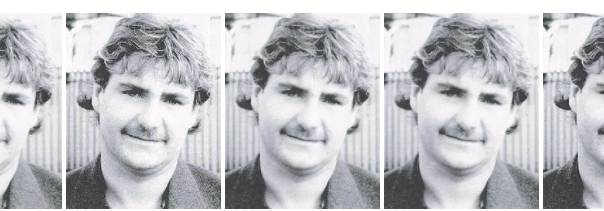
John Bingham UVF : Life & Death
John Bingham Life & Death
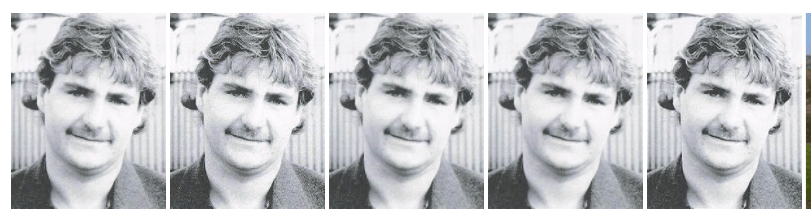
John Dowey Bingham (c. 1953 – 14 September 1986) was a prominent Northern Irish loyalist who led “D Company” (Ballysillan), 1st Battalion, Ulster Volunteer Force (UVF). He was shot dead by the Provisional IRA after they had broken into his home.
Bingham was one of a number of prominent UVF members to be assassinated during the 1980s, the others being Lenny Murphy, William Marchant, Robert Seymour and Jackie Irvine
– Disclaimer –
The views and opinions expressed in these pages/documentaries are solely intended to educate and provide background information to those interested in the Troubles of Northern Ireland. They in no way reflect my own opinions and I take no responsibility for any inaccuracies or factual errors.
Ulster Volunteer Force
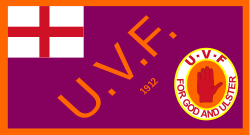
John Bingham was born in Northern Ireland around 1953 and was brought up in a Protestant family. Described as a shopkeeper, he was married with two children. He lived in Ballysillan Crescent, in the unionist estate of Ballysillan in North Belfast, and also owned a holiday caravan home in Millisle, County Down.
He was a member of the “Old Boyne Island Heroes” Lodge of the Orange Order. On an unknown date, he joined the Ulster loyalist paramilitary organisation, the UVF, and eventually became the commander of its “D Company”, 1st Battalion, Ballysillan, with the rank of lieutenant-colonel.

See: Oranger Order
He was the mastermind behind a productive gun-running operation from Canada, which over the years had involved the smuggling of illegal weapons into Northern Ireland to supply UVF arsenals; however, three months after Bingham’s death, the entire operation collapsed following a raid on a house in Toronto by the Royal Canadian Mounted Police in December 1986.
Bingham was one of the loyalist paramilitaries named in the evidence given by supergrass Joe Bennett, who accused him of being a UVF commander. He testified that he had seen Bingham armed with an M60 machine gun and claimed that Bingham had been sent to Toronto to raise funds for the UVF.
These meetings opened contact with Canadian businessman John Taylor, who became involved in smuggling guns from North America to the UVF. As a result of Bennett’s testimony, Bingham was sentenced to 20 years imprisonment after being convicted of committing serious crimes.
He publicly denounced the supergrass system before live television cameras outside Belfast’s Crumlin Road Courthouse when he was released in December 1984 after his conviction had been overturned, having spent two and a half years in prison.

On one occasion, Bingham allegedly placed a loaded pistol inside journalist Martin Dillon‘s mouth because of the latter’s offensive words he had used against him. In an attempt to make amends for his threat, Bingham invited Dillon to visit him at his home in North Belfast.
Dillon accepted the invitation and after several whiskeys and brandishing a pistol, Bingham offered to show him his racing pigeons as he was an avid pigeon fancier. He then told Dillon that he shouldn’t believe what people said about him claiming that he couldn’t harm a pigeon. As they said farewell at the front door, Bingham reportedly murmured in a cold voice to Dillon:
“You ever write about me again and I’ll blow yer fuckin’ brains out, because you’re not a pigeon”.
Killing
IRA Belfast Brigade, shoot & kill UVF Inner Council memember John Bingham 14 September 1986
In July 1986, a 25-year-old Catholic civilian, Colm McCallan, was shot close to his Ligoniel home; two days later, he died of his wounds. The IRA sought to avenge McCallan’s death by killing Bingham, the man they held responsible for the shooting.[
Bingham was also believed to have been behind the deaths of several other Catholic civilians.
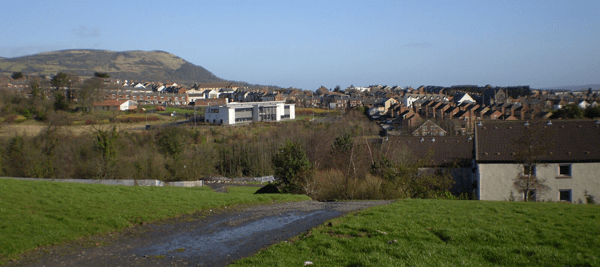
Ballysillan, north Belfast, where John Bingham lived and commanded the Ballysillan UVF
At 1:30 am on 14 September 1986, Bingham had just returned to Ballysillan Crescent from his caravan home in Millisle. Three gunmen from the IRA’s Ardoyne 3rd Battalion Belfast Brigade, armed with two automatic rifles and a .38 Special, smashed down his front door with a sledgehammer and shot Bingham twice in the legs. Despite his injuries, Bingham ran up the stairs in an attempt to escape his attackers and had just reached a secret door at the top when the gunmen shot him three more times, killing him.
He was 33 years old. He was given a UVF paramilitary funeral, which was attended by politicians from the two main unionist parties, the Ulster Unionist Party and the Democratic Unionist Party (DUP). Members of his “Old Boyne Island Heroes” Orange Order (OO) Lodge formed the guard of honour around his coffin, which was covered with the UVF flag and his gloves and beret. Prominent DUP activist George Seawright helped carry the coffin whilst wearing his OO sash, and called for revenge.
See: George Seawright
In retaliation, the UVF killed Larry Marley, a leading IRA member from Ardoyne who was also a close friend of Sinn Féin president Gerry Adams. The IRA in their turn gunned down William “Frenchie” Marchant the following spring on the Shankill Road. The deaths of three leading UVF members caused suspicion amongst the UVF leadership that someone within their ranks was setting up high-ranking UVF men by passing on pertinent information to the IRA; therefore, they decided to conduct an enquiry.
Although it was revealed that the three men, Shankill Butcher Lenny Murphy, Bingham, and Marchant had all quarrelled with powerful UDA fund-raiser and racketeer James Pratt Craig prior to their deaths, the UVF did not believe the evidence was sufficient to warrant an attack against Craig, who ran a large protection racket in Belfast.

Craig was later shot to death in an East Belfast pub by the UDA (using their “Ulster Freedom Fighters” covername) for “treason”, claiming he had been involved in the assassination of South Belfast UDA brigadier John McMichael, who was blown up by a booby-trap car bomb planted by the IRA outside his Lisburn home in December 1987.
See : James Craig
In Ballysillan Road, there is a memorial plaque dedicated to the memory of Bingham. His name is also on the banner of the “Old Boyne Island Heroes” Lodge.
- Killing Rage – The life and death of Eamon Collins

- Ann Ogilby’s brutal murder: ” Forgotten ” victims of the Troubles
- Joe McCann – Life & Death
- Máire Drumm: Life & Death
- Death of Robert Hamill: 27th April 1997

 belfastchildis.com
