Category Archives: Deaths in the Troubles

Deaths in Northern Ireland Troubles

13th February – Deaths & Events in Northern Ireland Troubles

Key Events & Deaths on this day in Northern Ireland Troubles

13th February

————————————-

Friday 13 February 1976

There were riots in Belfast and Derry following the news of the death of the Irish Republican Army (IRA) hunger-striker Frank Stagg in a prison in England on 12 February 1976.

Saturday 13 February 1988

Representatives of Sinn Féin (SF) endorsed the talks between John Hume, then leader of the Social Democratic and Labour Party (SDLP), and Gerry Adams, then leader of Sinn Féin (SF).

Tuesday 13 February 1996

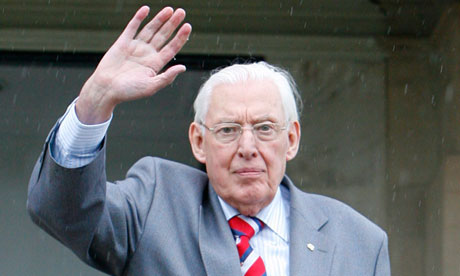
John Major, then British Prime Minister, met Ian Paisley, then leader of the Democratic Unionist Party (DUP), for talks at Downing Street, London.

Saturday 13 February 1999

The Royal Ulster Constabulary (RUC) released figures on the number of paramilitary ‘punishment’ attacks carried out by Republicans. There had been 18 attacks from 1 January 1999 to 2 February 1999 but no attacks since that date

Tuesday 13 February 2001

British Army (BA) technical experts have made safe a pipe-bomb in Belfast that had been picked up by a 4 year old girl and carried into her home. The target of the attack was a Catholic family living on the Springfield Road in the west of the city. The attack was carried out by Loyalist paramilitaries.

Wednesday 13 February 2002

Two men were charged in London with bombing offences during 2001.

The Metropolitan Police charged one man (33) with causing explosions outside the British Broadcasting Corporation (BBC) on 3 March 2001, in Ealing on 3 August 2001, and in Birmingham on 3 November 2001, and with a number of other offences. The second man (24) was charged with conspiracy to cause an explosion on or before 14 November 2001.

[The two men had been arrested separately in Northern Ireland on 6 and 9 February 2002. The men appeared at Belmarsh Magistrate’s Court on Thursday 14 February 2002.]

Jane kennedy, then Security Minister, announced in the House of Commons extra funding of £16 million for the Police Service of Northern Ireland (PSNI). The additional funding takes the total figure to £656 million. Ian Paisley, then leader of the Democratic Unionist Party (DUP), said the extra funding was not enough for policing needs.

Tony Blair, then British Prime Minister, called on Sinn Féin (SF) to take note of the plight of ‘exiles’ – people who had been forced to leave Northern Ireland by paramilitaries. He said that a resolution of the issue was an important part of the peace process.

[The issue was debated in the House of Commons on Thursday 14 February 2002.]

 ———————————————————————

Remembering all innocent victims of the Troubles

Today is the anniversary of the death of the following  people killed as a results of the conflict in Northern Ireland

“To live in hearts we leave behind is not to die

– Thomas Campbell

To the innocent on the list – Your memory will live  forever

– To  the Paramilitaries  –

There are many things worth living for, a few things worth dying for, but nothing worth killing for.

3 People   lost their lives on the 13th  February  between  1972 – 1984

  —————————————————————————

13 February 1972
Thomas McCann,  (19)

nfNI
Status: British Army (BA),

Killed by: non-specific Republican group (REP)
From Dublin. Off duty. Found shot, near Newtownbutler, County Fermanagh.

  —————————————————————————

13 February 1976
Sean Bailey,  (20)

Catholic
Status: Irish Republican Army (IRA),

Killed by: Irish Republican Army (IRA)
Died one day after being injured in premature bomb explosion in house, Nansen Street, Falls, Belfast.

  —————————————————————————

13 February 1984
 James Young,  (41)

Catholic
Status: Irish Republican Army (IRA),

Killed by: Irish Republican Army (IRA)
Found shot, Blaney Road, near Crossmaglen, County Armagh. Alleged informer

  —————————————————————————


See: IRA Nutting Squad

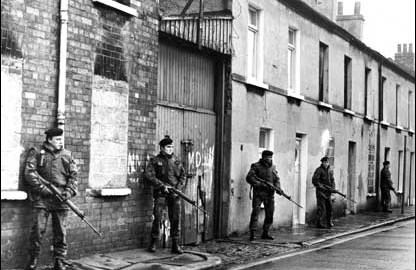
Operation Banner – August 1969 – July 2007

belfastchildis's avatar

Remembering all our murdered Hero’s

1441 British armed force personnel died in Operation Banner

During the 38 year operation, 1,441 members of the British armed forces died in Operation Banner. This includes those who were killed in paramilitary attacks as well as those who died as a result of assault, accidents, suicide and natural causes

————————————-

Operation Banner – The Forgotten War Tribute

————————————-

Operation Banner was the operational name for the British Armed Forces‘ operation in Northern Ireland from August 1969 to July 2007. It was initially deployed at the request of the unionistgovernment of Northern Ireland to support the Royal Ulster Constabulary (RUC). After the 1998 Belfast Agreement, the operation was gradually scaled down. Its role was to assert the authority of the government of the United Kingdom in Northern Ireland.

The main opposition to the British military’s deployment came from the Provisional Irish Republican…

View original post 3,538 more words

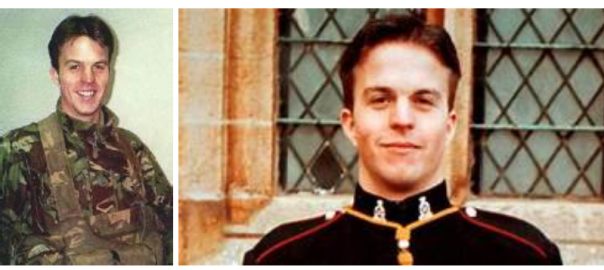
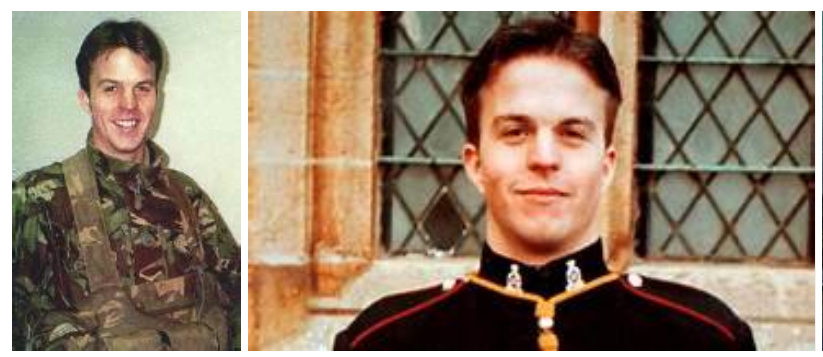
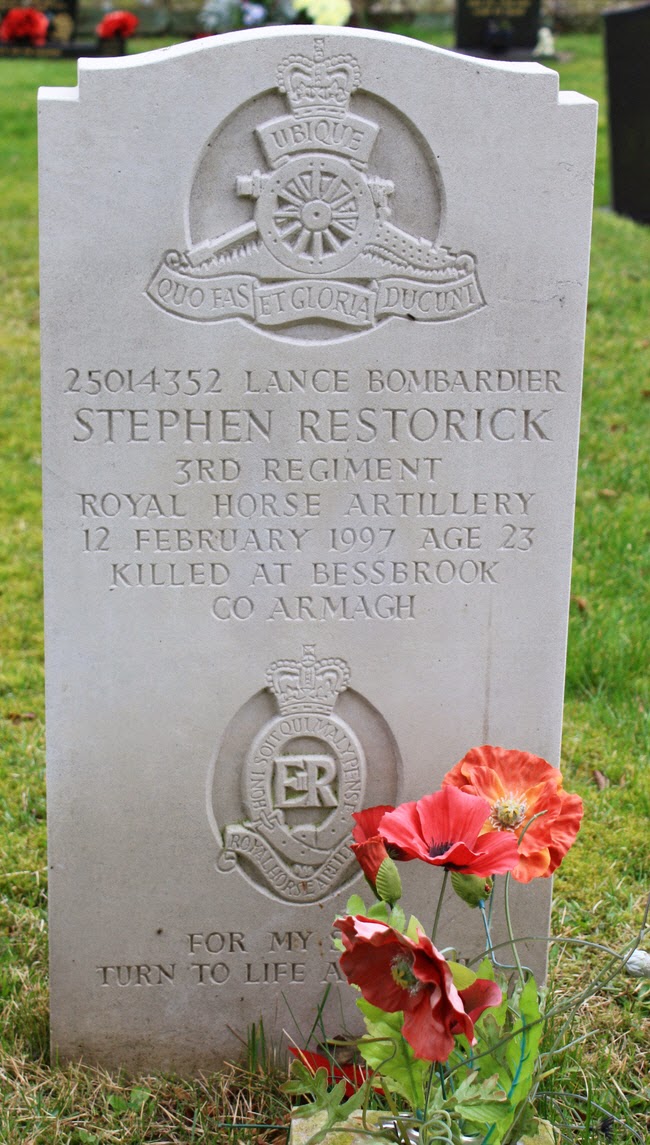
Lance Bombardier Stephen Restorick – Last soldier killed in Northern Ireland Troubles

Lance Bombardier Stephen Restorick

12th Februar  1997

The last British Soldier to die on active service in Northern Ireland as a consequence of the Troubles.

See operation banner

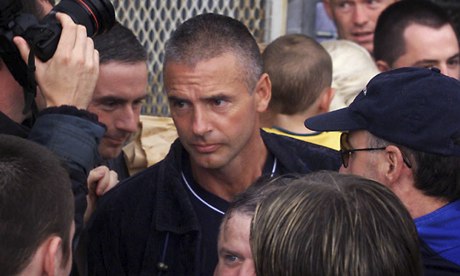
IRA Killer Bernard McGinn

Shot by IRA sniper Bernard McGinn  as he manned a checkpoint in Bessbrook, south Armagh, in February 1997 he held the tragic distinction of being the last British soldier to be murdered by paramilitaries in Northern Ireland. Until now.


The 23-year-old, serving with the 3rd Regiment Royal Horse Artillery, was five months into his second tour of duty in the Province when he was shot on Feb 12 1997.

He was manning a checkpoint on the Green Road outside the village when he was hit with single shot fired from a .50 calibre Barrett rifle.

Claims from a former soldier that an SAS team had been on standby ready to intercept the sniper that day but had been ordered to stand down, emerged six years later in the media.

The province’s police ombudsman, Nuala O’Loan, later concluded that the killing could not have been prevented – not because the snipers had not been under surveillance but because not enough resources had been devoted to the task that day, despite a raised threat level.

Within months of his killing, the Provisional IRA announced its second ceasefire, paving the way for the Good Friday Agreement and the road toward arms decommissioning.

In the intervening years his death has been the subject of intense controversy, amid claims that it could have been prevented and that he was deliberately sacrificed to save an informer.

But his parents, John and Rita, from Underwood, Notts, have been staunch supporters of the peace process, even facing criticism for doing so.

That support has been tested to the limit. When Bernard McGinn was convicted of the killing in 1999 he was sentenced to a total of 490 years in prison.

McGinn  who has since died  was captured by an SAS unit which raided a farmhouse in South Armagh three months after the Restorick murder. He was arrested along with a number of other key members of the Provisonal IRA’s South Armagh brigade during the security operation.

After his arrest McGinn confessed to his role in the IRA’s bombing campaign in England during the late 1980s and early 1990s. He also handed over the names of other IRA members during interrogations with the police.

McGinn admitted to police that he made explosives north and south of the border on an almost daily basis, “like a day’s work”. His information on other PIRA operatives provided vital intelligence for the security forces and caused anger among his former comrades.

———————————–

SOUTH ARMAGH I.R.A SNIPER TEAM JAILED

———————————–

He was sentenced to a total of 490 years in 1999 for 34 separate offences, including the murder of three British soldiers, his involvement in the 1992 bombing of the Baltic Exchange and the 1996 South Quay bombing, and the bombing of Hammersmith bridge later the same year.

However, he was released in 2000 under the Good Friday agreement after the IRA and loyalist paramilitary prisoners were granted a de facto amnesty for all crimes relating to the Troubles before Easter 1998.

He joined the Provisional IRA at the age of 15. His father was a former Sinn Féin councillor and he was the brother-in-law of Sinn Féin politician Caoimhghín Ó Caoláin.

Karma Collects its debt

McGinn was found dead in a house in the Irish Republic on 21st December 2013 , the Garda Síochána has announced. McGinn is believed to have died from natural causes after being discovered at the property in Monaghan town on Saturday.

Soldier’s family on sad pilgrimage

SD3537946@Elizabeth Cross P

Wednesday 19 March 1997

The parents of a young soldier shot dead by the IRA in Northern Ireland yesterday made a painful pilgrimage to the spot where he died.

John and Rita Restorick fought back tears as they laid flowers by the checkpoint outside the military base at Bessbrook in South Armagh where their son, Stephen, was murdered last month. Clutching each other’s hands tightly, they placed their floral tribute among dozens of others left by local people.

They were accompanied on their journey from Peterborough by their other son, Mark, 26, and eight uncles, aunts and cousins.

Lance Bombardier Restorick, 23, of the 3rd Battalion Royal Horse Artillery was killed by a single shot fired at long range by a hidden sniper as he manned the checkpoint.

The Restoricks were escorted by their son’s commanding officer, Lt Col Matthew Sykes, and Battery Commander Major Mark Vincent.

Afterwards, inside the heavily-fortified base, they attended a service to dedicate a marble memorial to Stephen.

R.I.P Stephen

God will judge them!


See operation banner

——————————————————-

Bernard Henry McGinn

Bernard Henry McGinn (c. 1957 – body discovered 21 December 2013) was a Provisional Irish Republican Army (PIRA) member, specialising in explosives, who was sentenced to a total of 490 years imprisonment in 1999.[1] He was released in 2000 under the terms of the Good Friday Agreement

Background and IRA activity

McGinn was born into an Irish republican family in Castleblayney, County Monaghan, Ireland. His father was a former Sinn Féin councillor and his brother-in-law, Caoimhghín Ó Caoláin, has been a Sinn Féin TD for Cavan–Monaghan since 1997.

In 1978 Dessie O’Hare and McGinn killed Thomas Johnston, a former member of the Ulster Defence Regiment (UDR) in Keady, South Armagh. In 1979 McGinn was arrested at a disused farmhouse and charged with possession of explosives. He failed to turn up at his trial and was sentenced to 10 years imprisonment in absentia. After several months on the run, he was arrested in Dundalk following a 27-hour siege, during which he held a family hostage with a pistol and a hand grenade.

McGinn was released from prison in 1987, and joined the IRA’s South Armagh Brigade. Initially viewed as an outsider, within several years he became a trusted member of the brigade, helping assemble bombs used by the IRA in England. He was a member of one of two sniper teams which killed nine members of the security forces between 1992 and 1997, including Lance Bombardier Stephen Restorick, who was killed by a single shot from a Barrett M90 sniper rifle on 12 February 1997, and was among the last British Army soldiers to be killed during The Troubles.

Arrest and trial

McGinn and other members of the sniper team were arrested by the Special Air Service at a farm near Crossmaglen on 10 April 1997, and taken to Gough Barracks in Armagh for questioning. During a week of questioning, McGinn confessed to his role in the IRA bombing campaign, and implicated more than twenty members of the South Armagh Brigade in attacks in Northern Ireland and England. He claimed to have manufactured explosive mixes varying from between 200 lb and 10 tons, and said it was “like a day’s work”.

On 19 March 1999 McGinn was sentenced to a total of 490 years imprisonment for 34 separate offences, including the murder of three British soldiers, and involvement in the 1992 bombing of the Baltic Exchange, the 1996 Docklands bombing, and the bombing of Hammersmith Bridge later the same year.

He laughed at his sentence, knowing that he would be freed, at most, in shortly over a year under the terms of the Good Friday Agreement. Two months after his conviction McGinn was temporarily released on compassionate grounds to visit his sick mother, which caused anger and consternation among unionists.

On 28 July 2000, McGinn was freed from HM Prison Maze, after serving 16 months.

Appeal

On 5 October 2000 McGinn’s convictions for explosives offences and the soldiers’ murders were overturned at the Court of Appeal in Belfast on the grounds that he was not properly cautioned before he confessed. The court, however, dismissed his appeals against convictions for conspiracy to murder and firearms possession for which he received a twenty-year sentence at his original trial

Death

McGinn was found dead at a house in Monaghan Town on 21 December 2013. The cause of death remains unknown, pending a post-mortem examination.


12th February – Deaths & Events in Northern Ireland Troubles

Key Events & Deaths on this day in Northern Ireland Troubles

12th February

——————————–

Tuesday 12 February 1974

The Irish Republican Army (IRA) exploded a bomb at the National Defence College at Latimer, Buckinghamshire, England. The bomb (estimated at 20 pounds) injured 10 people but there were no deaths.

Wednesday 12 February 1975

A series of seven ‘Incident Centres’ were established in Nationalist areas across Northern Ireland to monitor the Irish Republican Army (IRA) ceasefire and the response of the security forces. The centres were manned by members of Sinn Féin (SF) who liased with government officials at the Northern Ireland Office (NIO).

Thursday 12 February 1976

Frank Stagg, a member of the Irish Republican Army (IRA), died after 61 days on hunger strike in Wakefield Prison, Yorkshire, England. Stagg had been on hunger strike in protest at the British government’s refusal to transfer him to a prison in Northern Ireland.

A member of the RUC was shot dead by the IRA in Claudy, County Derry. A member of the youth section of the IRA was killed during an arson atttach on a warehouse in Belfast.

Talks between the United Ulster Unionist Council (UUUC) and the Social Democratic and Labour Party (SDLP) broke down after only an hour. The UUUC would not agree on SDLP involvement in any future Northern Ireland cabinet.

[This was a key element as far as Merlyn Rees, then Secretary of Sate for Northern Ireland, was concerned. The final meeting of the Convention took place on 3 March 1976. The British government brought the Convention to an end on 5 March 1976.] [ Constitutional Convention. ]

Thursday 12 February 1981

Ian Paisley, then leader of the Democratic Unionist Party (DUP), was suspended from the House of Commons when he repeatedly called Humphrey Atkins, then Secretary of State for Northern Ireland, a liar. [ Political Developments; Employment.]

Friday 12 February 1982

Three of the five members of the Committee of Inquiry set up to investigate the Kincora Scandal resigned. They claimed that the Royal Ulster Constabulary (RUC) had not dealt with all the major criminal matters surrounding the case. The DeLorean Motor Company laid off 1,100 of its 2,600 workers.

[This was a major blow to the economically deprived area of west Belfast.]

Thursday 12 February 1987

Unionist Petition A 400,000 signature petition was delivered to Buckingham Palace by Unionist Members of Parliament (MPs). The petition was in protest at the Anglo-Irish Agreement (AIA).

Sunday 12 February 1989

Finucane Killing

See Pat Finucane Post

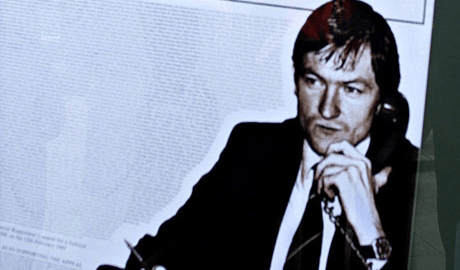
Patrick Finucane (38), a Catholic civilian, was shot dead by members of the Ulster Freedom Fighters (UFF), a cover name (pseudonym) used by the Ulster Defence Association (UDA). Finucane was a Belfast solicitor who had represented a number of Republicans. He was killed at his home, Fortwilliam Drive, off Antrim Road, Belfast, in front of the members of his family.

The shooting followed comments made (on 17 January 1989) by Douglas Hogg, then a British Home Office Minister, about a “number of solicitors in Northern Ireland who are unduly sympathetic to the cause of the IRA”.

[There were a number of accusations that there had been collusion between Loyalist paramilitaries and the security forces in the killing of Finucane. There were futher claims of collusion on 29 August 1989. On 17 April 1999 John Stevens, then deputy commissioner of the Metropolitan Police, returned to Northern Ireland to launch a third Inquiry specifically into the killing of Finucane. He also began to investigate allegations raised by campaign group British-Irish Rights Watch and the United Nations. Stevens’ third report was presented to the Police Service of Northern Ireland (PSNI) on 17 April 2003. The report concluded that there had been collusion in the killing of Finucane between members of the security forces, especially the Force Research Unit (FRU), and Loyalists. See: Stevens summary report.]

Monday 12 February 1990

Harold McCusker, then Deputy Leader of the Ulster Unionist Party (UUP) and Member of Parliament (MP) for Upper Bann, died as a result of cancer at the age of 50. The Green Party, a political party with a mainly environmental platform, was launched in Northern Ireland.

Thursday 12 February 1993

Christopher Harte (24), a member of the Irish Republican Army (IRA), was found dead near Castlederg, County Tyrone. He had been shot dead by the IRA who claimed that he had been an informer.

Saturday 12 February 1994

The Ulster Freedom Fighters (UFF), a cover name (pseudonym) used by the Ulster Defence Association (UDA), carried out rocket attack on the headquarters of Sinn Féin (SF) in west Belfast.

Wednesday 12 February 1997

The Irish Republican Army (IRA) shot dead Stephen Restorick, then a British soldier, at an Army checkpoint in Bessbrook, County Armagh.

[This killing was often refered to as the last British soldier killed in Northern Ireland, until 7 March 2009 when two soldiers were killed by the Real IRA in County Antrim.]

See : Stephen Restorick

12 February 1998

The Irish Republican Army (IRA) issued a statement which said that the IRA’s ceasefire was still intact.

[This was seen as an attempt to prevent Sinn Féin (SF) from being expelled from the multi-party talks.]

Friday 12 February 1999

The Loyalist Volunteer Force (LVF) denied that it was involved in recent attacks on Catholic homes and businesses. Gerry Adams, then President of Sinn Féin (SF), gave an interview to the Press Association in which he said that Northern Ireland would be moving into a united Ireland in 15 years’ time.

[Reference may have been to the 100th anniversary of the Easter Rising of 1916?]

Tuesday 12 February 2002

The High Court in Belfast heard an appeal by lawyers representing the Bloody Sunday Inquiry for the court to postpone a court action brought (on 11 February 2002) by the families of those killed.

The action surrounded the Inquiry’s decision to allow police witnesses to give evidence from behind screens. The action was allowed to proceed and the Inquiry’s appeal was dismissed.

[On Wednesday 13 February 2002 the judge announced he would make a final decision on the families’ action during the following week.]

The Democratic Unionist Party (DUP) put forward a motion in the Northern Ireland Assembly that all primary school pupils should receive souvenir medals to mark the Queen’s Golden Jubilee. The motion was passed by 26 votes to 11 votes. Martin McGuinness (SF), then Minister for Education, said that his department would not pay for the medals. David Trimble (UUP), then First Minister, and Mark Durkan (SDLP), then Deputy First Minister, announced that they would begin a consultation process on a comprehensive review of public administration in Northern Ireland.

Among the matters for review are: local government structures (the 26 district councils); the five education and library boards; the four health boards; and the many unelected quangos (committees) that manage many areas of public administration.

The Lawyers Committee for Human Rights, a group based in the United States of America (USA), published a report in to the death of Pat Finucane, a Belfast solicitor killed on 12 February 1989. The report was entitled: ‘Beyond Collusion: The UK Security Forces and the Murder of Pat Finucane’ [PDF FILE 324KB]. The report repeated earlier allegations of collusion between security forces and Loyalist paramilitary groups and also claimed to have found new evidence to support the claims.

 ———————————————————————

Remembering all innocent victims of the Troubles

Today is the anniversary of the death of the following  people killed as a results of the conflict in Northern Ireland

“To live in hearts we leave behind is not to die

– Thomas Campbell

To the innocent on the list – Your memory will live  forever

– To  the Paramilitaries  –

There are many things worth living for, a few things worth dying for, but nothing worth killing for.

9 People   lost their lives on the 12th February  between  1974 – 1997

  —————————————————————————

12 February 1974


Peter Carty,   (57)

Catholic
Status: Civilian (Civ),

Killed by: Ulster Defence Association (UDA)
Shot at his workplace, Balmoral Service Station, Lisburn Road, Belfast.

  —————————————————————————

12 February 1976


Frank Stagg,  (34)

nfNIB
Status: Irish Republican Army (IRA),

Killed by: not known (nk)
Originally from County Mayo. Died on 62 day of hunger strike, Wakefield Prison, Yorkshire, England.

  —————————————————————————

12 February 1976


William Hamer,   (31)

Protestant
Status: Royal Ulster Constabulary (RUC),

Killed by: Irish Republican Army (IRA)
Shot while on Royal Ulster Constabulary (RUC) foot patrol, Claudy, County Derry

  —————————————————————————

12 February 1976


James O’Neill, (17)

Catholic
Status: Irish Republican Army Youth Section (IRAF),

Killed by: Irish Republican Army (IRA)
Died when badly burnt during arson attack on furniture warehouse, Antrim Road, New Lodge, Belfast.

  —————————————————————————

12 February 1977


Samuel McKane,  (33)

Protestant
Status: Royal Ulster Constabulary (RUC),

Killed by: Irish Republican Army (IRA)
Off duty. Shot outside his home, Cloughmills, County Antrim.

  —————————————————————————

12 February 1979
Patrick Sills,  (27)

nfNI
Status: Irish Republican Army (IRA),

Killed by: Irish Republican Army (IRA)
From County Donegal. Found shot in field, Laghtfoggy, near Castlederg, County Tyrone. Internal IRA dispute

  —————————————————————————

12 February 1989


Patrick Finucane,  (38)

Catholic
Status: Civilian (Civ),

Killed by: Ulster Freedom Fighters (UFF)
Lawyer. Shot at his home, Fortwilliam Drive, off Antrim Road, Belfast

See Pat Finucane Post

  —————————————————————————

12 February 1993
Christopher Harte,   (24)

Catholic
Status: Irish Republican Army (IRA),

Killed by: Irish Republican Army (IRA)
Found shot in ditch by side of Carn Road, near Castlederg, County Tyrone. Alleged informer.

  —————————————————————————

12 February 1997


Stephen Restorick,  (23)

nfNI
Status: British Army (BA),

Killed by: Irish Republican Army (IRA)
Shot, by sniper, while at British Army (BA) Vehicle Check Point (VCP), Green Road, Bessbrook, County Armagh.

  —————————————————————————

See Bombardier Stephen Restorick – Last soldier killed in Northern

11th February – Deaths & Events in Northern Ireland Troubles

Key Events & Deaths on this day in Northern Ireland Troubles

11th February

—————————————–

Monday 11 February 1974

Thomas Donaghy

Margaret McErlean 

Two Catholic civilians were shot (one died immediately, one died on 18 February 1974) as they arrived for work in Glenville Road, Newtownabbey, County Antrim. They were killed by the Ulster Freedom Fighters (UFF), a covername used by the Ulster Defence Association (UDA).

Monday 11 February 1980

Joseph Rose

Winston Howe

Two Royal Ulster Constabulary (RUC) officers were killed in a land mine attack at Rosslea, County Fermanagh.

Sunday 11 February 1986

An off-duty RUC officer and a Catholic civilian were killed in an Irish Republican Army (IRA) gun attack on the Talk of the Town bar in Maguiresbridge, County Fermanagh.

Tuesday 11 February 1992

John Major, then British Prime Minister, and Peter Brooke, then Secretary of State for Northern Ireland, held meetings with the leaders of the main political parties in Northern Ireland to discuss the security situation.

Friday 11 February 1994

The Ulster Freedom Fighters (UFF), a cover name (pseudonym) used by the Ulster Defence Association (UDA), carried out gun attacks on the homes of two Social Democratic and Labour Party (SDLP) members.

In one attack the son of one SDLP member was shot and wounded. James Molyneaux, then leader of the Ulster Unionist Party (UUP), said that the Downing Street Declaration (DSD) had failed and that an internal settlement for Northern Ireland should now be sought by the British government.

Tuesday 11 February 1997

Kevin McNamara, a former Labour Party Northern Ireland spokesperson, and Seamus Mallon, then deputy leader of the Social Democratic and Labour Party (SDLP), called for a new appeal for Danny McNamee who received a 25 year sentence in 1987 for Irish Republican Army (IRA) bomb making offences.

Roisin McAliskey


An International Urgent Alert was issued by Amnesty International on the case of Roisín McAliskey who was six months pregnant and was imprisoned pending a decision about extradition to Germany.

Thursday 11 February 1999

A new report on the death of Patrick Finucane, a Belfast solicitor who had represented a number of Republicans, claimed that there was collusion between Loyalist paramilitaries and British security forces in his death on 12 February 1989. More than 1,100 lawyers signed a petition calling for a independent judicial inquiry into the killing. The appeal for the inquiry was also supported by Amnesty International.

See: Pat Finucane – 12th February 1989 Executed by the UFF

Friday 11 February 2000

Assembly and Executive Suspended

Peter Mandelson, then Secretary of State for Northern Ireland, suspended the 72 day-old power-sharing Executive and restored Direct Rule of Northern Ireland from Westminster as of midnight. The move followed reports from the Independent International Commission on Decommissioning (IICD) that it had “received no information from the IRA as to when decommissioning will start.”

Sunday 11 February 2001

The Royal Ulster Constabulary (RUC) uncovered a ‘bomb factory’ in a block of flats in a Loyalist area of north Belfast. A significant amount of explosives and component parts for making pipe-bombs were seized during raids of three flats in Ross House in the Mount Vernon area. Police later linked the find to the Ulster Volunteer Force (UVF).

The home of a Catholic family was damaged in a pipe-bomb attack in north Belfast. The device was thrown at the back of the house shortly before 1.30am. A number of windows were smashed and a door was damaged. The people inside the house, two men and a woman, escaped injury. The attack was carried out by Loyalist paramilitaries

Monday 11 February 2002

There were disturbances in the Arthur Bridge area of the Whitewell Road, north Belfast, at approximately 7.00am (0700GMT).

The trouble began following reports of fireworks being thrown from the Loyalist White City area towards the Nationalist Longlands estate. Police arrested a man and a boy from the Longlands estate.

[There had been rioting in the same area on Saturday evening (9 February 2002) and Sunday evening (10 February 2002).]

A man (26) was shot in both ankles in a paramilitary ‘punishment’ attack in Kilrea, County Derry. A gang of four men broke into the victim’s house and beat him with iron bars before shooting him. The attack took place in front of the man’s wife and two young daughters.

Solicitors representing most of the families of those killed on Bloody Sunday (30 January 1972) lodged an application in the High Court in Belfast to challenge the decision of the Inquiry to allow police witnesses to be screened when giving evidence.

See Bloody Sunday

Geraldine Finucane the widow of Pat Finucane, a Belfast solicitor killed on 12 February 1989, criticised the British government for a delay in considering her appeal for an independent inquiry into the circumstances surrounding the death of her husband. In November 2001 John Reid, then Secretary of State for Northern Ireland, announced that an international judge would be appointed to decide if an independent public inquiry into her husband’s death was necessary.

[However this decision was criticised as a delaying tactic by the government.]

John Reid, then Secretary of State for Northern Ireland, travelled to Washington, United States of America (USA), for meetings with members of the Bush administration. During a media briefing he called on Sinn Féin (SF) to take up its seats in the Northern Ireland Policing Board (NIPB):

“The whole community has to take its part and its responsibilities in supporting that police service – and that includes Republicans.”

———————————————————————

Remembering all innocent victims of the Troubles

Today is the anniversary of the death of the following  people killed as a results of the conflict in Northern Ireland

“To live in hearts we leave behind is not to die

– Thomas Campbell

To the innocent on the list – Your memory will live  forever

– To  the Paramilitaries  –

There are many things worth living for, a few things worth dying for, but nothing worth killing for.

11 People   lost their lives on the 11th  February  between  1974 – 1993

  —————————————————————————

11 February 1974


Thomas Donaghy,   (16)

Catholic
Status: Civilian (Civ),

Killed by: Ulster Freedom Fighters (UFF)
Shot as he arrived at his workplace, Abbey Meat Packers, Glenville Road, Newtownabbey, County Antrim.

  —————————————————————————

11 February 1974


Margaret McErlean,  (18)

Catholic
Status: Civilian (Civ),

Killed by: Ulster Freedom Fighters (UFF)
Shot as she arrived at her workplace, Abbey Meat Packers, Glenville Road, Newtownabbey, County Antrim. She died 18 February 1974.

  —————————————————————————

11 February 1975


Christopher Mein,   (25)

Protestant
Status: Civilian (Civ),

Killed by: Irish Republican Army (IRA)
Relief milkman. Shot on his milk round, Galbally, Cappagh, County Tyrone. Regular milkman intended target.

  —————————————————————————

11 February 1978


 Mary Smyth,  (71)

Catholic
Status: Civilian (Civ),

Killed by: Ulster Volunteer Force (UVF)
Killed in bomb attack on her home, Oldpark Avenue, Belfast.

  —————————————————————————

11 February 1978


Michael Scott,  (10)

Catholic
Status: Civilian (Civ),

Killed by: Ulster Volunteer Force (UVF)
Killed in bomb attack, while in relative’s home, Oldpark Avenue, Belfast

  —————————————————————————

11 February 1980


Joseph Rose,   (21)

Protestant
Status: Royal Ulster Constabulary (RUC),

Killed by: Irish Republican Army (IRA)
Killed in land mine attack on Royal Ulster Constabulary (RUC) mobile patrol, Lisnaskea Road, near Rosslea, County Fermanagh.

  —————————————————————————

11 February 1980


Winston Howe,  (35)

Protestant
Status: Royal Ulster Constabulary (RUC),

Killed by: Irish Republican Army (IRA)
Killed in land mine attack on Royal Ulster Constabulary (RUC) mobile patrol, Lisnaskea Road, near Rosslea, County Fermanagh.

  —————————————————————————

11 February 1986

Derek Breen,   (29)

Protestant
Status: Royal Ulster Constabulary (RUC),

Killed by: Irish Republican Army (IRA)
Off duty. Shot together with barman while in Talk of the Town Bar, Maguiresbridge, County Fermanagh.

  —————————————————————————

11 February 1986
 John McCabe,   (25)

Catholic
Status: Civilian (Civ),

Killed by: Irish Republican Army (IRA)
Barman. Shot together with off duty Royal Ulster Constabulary (RUC) member while at his workplace, Talk of the Town Bar, Maguiresbridge, County Fermanagh.

  —————————————————————————

11 February 1987
 Nigel Watton,   (18)

Protestant
Status: Civilian (Civ),

Killed by: Ulster Volunteer Force (UVF)
Shot near his home, Ballybogey, near Ballymoney, County Antrim.

  —————————————————————————

11 February 1993
Thomas Molloy,  (32)

Catholic
Status: Civilian (Civ),

Killed by: Ulster Volunteer Force (UVF)
Shot at his home, Derrymagown Road, near Loughgall, County Armagh.

  —————————————————————————

The London Docklands bombing – 9 February 1996

Source: The London Docklands bombing – 9 February 1996

Birmingham Pub Bombings – 21 November, 1974

Source: Birmingham Pub Bombings – 21 November, 1974

10th February – Deaths & Events in Northern Ireland Troubles

Key Events & Deaths on this day in Northern Ireland Troubles

10th February

——————————————————————-

Thursday 10 February 1972


Two British soldiers were killed in a land mine attack near Cullyhanna, County Armagh.. An IRA member was shot dead during an exchange of gunfire with RUC officers.

Saturday 10 February 1973

Two members of the Irish Republican Army (IRA) were killed in a premature explosion near Strangford, County Down.

Monday 10 February 1975

The Irish Republican Army (IRA) Truce

Two Catholic civilians were shot dead by Loyalist paramilitaries in a gun attack on Hayden’s Bar, near Pomeroy, County Tyrone. A Catholic civilian was shot dead by Loyalists in Belfast. The renewed Irish Republican Army (IRA) ceasefire began.

[The ceasefire was to last officially until 23 January  however there were a number of incidents during 1975 involving members of the IRA. During the period of the ceasefire the British government and the Northern Ireland Office (NIO) denied that a deal had been made with the IRA. Sinn Féin (SF) and the IRA said a 12 point plan had been agreed with the British. Some of the elements of this alleged deal were to become apparent such as the setting up of ‘incident centres’ and a reduction in security force activity in Nationalist areas.]

Thursday 10 February 1977

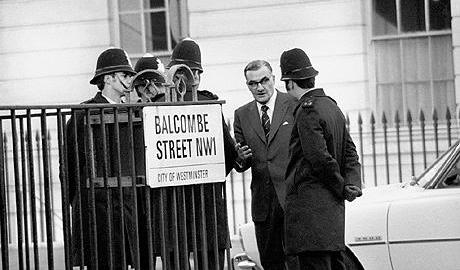
Those members of the Irish Republican Army (IRA) who were arrested at the end of the Balcombe Street siege in London were convicted of six murders.

Crime - Balcombe Street Seige...Metropolitan Police Commissioner Sir Robert Mark (second r) talks to policemen on the corner of Balcombe Street, Marylebone, near the flat where a group of gunmen are holding a middle-aged couple hostage ... Crime - Balcombe Street Seige ... 08-12-1975 ... London ... Great Britain ... Photo credit should read: PA Photos/PA Archive. Unique Reference No. 4268185 ...

[The Balcombe Street siege had begun on 6 December 1975.]

See Balcombe Street siege

Sunday 10 February 1980

Betty Williams, one of the founding members of the Peace People, resigned from the organisation for family reasons.

[There was speculation that there had been serious disagreements among the main members of the organisation. On 5 March 1980 another member of the Peace People, Peter McLachlan, also resigned.]

Tuesday 10 February 1987

An opinion poll published in the Daily Express (a British newspaper) found that 61 per cent of the British public were in favour of British withdrawal from Northern Ireland.

Saturday 10 February 1990

A Royal Ulster Constabulary (RUC) patrol came under gunfire on the Shankill Road, Belfast. The shooting incident was attributed to the Ulster Defence Association (UDA) which, it was claimed, was resentful of the work of the Stevens Inquiry.

Hugh Annesley, then Chief Constable of the RUC, issued a strategy document for the future of the RUC.

Monday 10 February 1992

The British government sent an extra battalion of British Army troops to Northern Ireland.

Wednesday 10 February 1993

Albert Reynolds, then Taoiseach (Irish Prime Minister), nominated Gordon Wilson to become a member of the Irish Senate (the upper house of the Irish Parliament).

[Gordon Wilson had been injured, and his daughter killed, in the Enniskillen bomb on 8 November 1987.]

Thursday 10 February 1994

McGlinchey Killed

Dominic McGlinchey, former leader of the Irish National Liberation Army (INLA), was shot dead by three gunmen in Drogheda, Republic of Ireland.

 It is not clear which organisation was responsible for the killing

Saturday 10 February 1996

John Bruton, then Taoiseach (Irish Prime Minister), announced that the Irish Government was breaking off ministerial contact with Sinn Féin (SF) in the light of the Irish Republican Army (IRA) bombing in London on 9 February 1996.

Monday 10 February 1997

The Irish Republican Army (IRA) left a large bomb on the outskirts of Strabane, County Tyrone. The bomb was defused by the British Army.

Ed Turner, then Ulster Unionist Party (UUP) mayor of Strabane, said that in light of the attempted bombing he would not be recommending anyone to invest in the town. His statement drew criticism from Nationalists. Gerry Adams, then President of Sinn Féin (SF), sent a fax to John Major, then British Prime Minister, requesting talks between SF and the British government.

Tuesday 10 February 1998

Robert Dougan (38), a leading Loyalist, was shot dead in Dunmurry near Belfast.

[It was believed that Dougan was a leading member of the Ulster Defence Association (UDA). While no group claimed responsibility for the killing Republican paramilitaries were involved and the Irish Republican Army (IRA) were later blamed by the Royal Ulster Constabulary (RUC) for the death. The killing of Dougan (and Brendan Campbell on 9 February 1998) led to the expulsion of Sinn Féin (SF) from the multi-party talks on 20 February 1998.]

Mark Fulton, considered to be a leading Loyalist figure, was attacked by a gunman who fired two shots at him in the Redmondville estate, Portadown, County Armagh. Fulton escaped injury but blamed the Ulster Volunteer Force (UVF) for the attack. This claim was denied by David Ervine, then leader of the Progressive Unionist Party (PUP).

Wednesday 10 February 1999

The Belfast Telegraph (a Belfast based newspaper) published the results of an opinion poll. The poll showed that, of Ulster Unionist Party (UUP) supporters questioned, 63 per cent approved of David Trimble, then leader of the UUP.

Saturday 10 February 2001

There was a pipe-bomb attack on a Catholic home in Derry. A couple and their two nieces, aged five and three, escaped injury when the device was thrown through the kitchen window of their home in the Waterside area. It exploded, causing minor damage to the house. The attack was carried out by Loyalist paramilitaries.

Sunday 10 February 2002

There was stone throwing in the Arthur Bridge area of the Whitewell Road, north Belfast. The disturbances happened during the evening and followed on from rioting on Saturday (9 February 2002).

Pupils from the Holy Cross Girls’ Primary School in Ardoyne, north Belfast, travelled to County Galway to begin a holiday as guests of Peacock’s Hotel. The management of the hotel had made the offer of the holiday following incidents during 2001 when the school was blockaded by Loyalist protesters.


————————————————————————

Remembering all innocent victims of the Troubles

Today is the anniversary of the death of the following  people killed as a results of the conflict in Northern Ireland

“To live in hearts we leave behind is not to die

– Thomas Campbell

To the innocent on the list – Your memory will live  forever

– To  the Paramilitaries  –

There are many things worth living for, a few things worth dying for, but nothing worth killing for.

12  People   lost their lives on the 10th February  between  1972 – 1998

  —————————————————————————

10 February 1972


Joseph Cunningham,   (26)

Catholic
Status: Irish Republican Army (IRA),

Killed by: Royal Ulster Constabulary (RUC)
Shot during gun battle, O’Neill’s Road, Newtownabbey, County Antrim.

 —————————————————————————

10 February 1972


Ian Harris,  (26)

nfNI
Status: British Army (BA),

Killed by: Irish Republican Army (IRA)
Killed in land mine attack on British Army (BA) mobile patrol, Cullyhanna, County Armagh.

 —————————————————————————

10 February 1972


David Champ,  (23)

nfNI
Status: British Army (BA),

Killed by: Irish Republican Army (IRA)
Killed in land mine attack on British Army (BA) mobile patrol, Cullyhanna, County Armagh

 —————————————————————————

10 February 1973
Leonard O’Hanlon,  (23)

Catholic
Status: Irish Republican Army (IRA),

Killed by: Irish Republican Army (IRA)
Died in premature bomb explosion in the grounds of Castleward National Trust Estate, near Strangford, County Down.

 —————————————————————————

10 February 1973
Vivienne Fitzsimmons,   (17)

Catholic
Status: Irish Republican Army (IRA),

Killed by: Irish Republican Army (IRA)
Died in premature bomb explosion in the grounds of Castleward National Trust Estate, near Strangford, County Down.

 —————————————————————————

10 February 1975


Joseph Fitzpatrick,   (19)

Catholic
Status: Civilian (Civ),

Killed by: non-specific Loyalist group (LOY)
Road sweeper. Shot while sweeping street, Cooke Place, off Ormeau Road, Belfast

 —————————————————————————

0 February 1975


Arthur Mulholland,  (65)

Catholic
Status: Civilian (Civ),

Killed by: Ulster Volunteer Force (UVF)
Shot during gun attack on Hayden’s Bar, The Rock, near Pomeroy, County Tyrone

 —————————————————————————

10 February 1975


Eugene Doyle,   (18)

Catholic
Status: Civilian (Civ),

Killed by: Ulster Volunteer Force (UVF)
Shot during gun attack on Hayden’s Bar, The Rock, near Pomeroy, County Tyrone

 —————————————————————————

10 February 1980


Hugh Maguire, (9)

Catholic
Status: Civilian (Civ),

Killed by: not known (nk)
Killed during street disturbances, Springfield Road, Ballymurphy, Belfast. Confrontation between local people and British Army (BA) patrol.

 —————————————————————————

10 February 1981
David Montgomery,  (27)

Protestant
Status: Ulster Defence Regiment (UDR),

Killed by: Irish Republican Army (IRA)
Off duty. Shot at his workplace, a timber yard, Strand Road, Derry.

 —————————————————————————

10 February 1994


 Dominic McGlinchey,  (42)

Catholic
Status: ex-Irish National Liberation Army (xINLA),

Killed by: not known (nk)
Former leader of Irish National Liberation Army (INLA). Shot while at public telephone kiosk, Hardmans Gardens, Drogheda, County Louth.

 —————————————————————————

10 February 1998


Robert Dougan,  (38)

Protestant
Status: Ulster Defence Association (UDA),

Killed by: Irish Republican Army (IRA)
Shot, while sitting in his stationary car, outside Balmoral Textiles Ltd, Station View, off Upper Dunmurry Lane, Dunmurry, near Belfast, County Antrim.

 —————————————————————————


9th February – Deaths & Events in Northern Ireland Troubles

Key Events & Deaths on this day in Northern Ireland Troubles

9th February

————————-

Tuesday 9 February 1971
 

Five men, two of them British Broadcasting Corporation (BBC) engineers, the others construction workers, were killed near a BBC transmitter on Brougher Mountain, County Tyrone in a landmine attack carried out by the Irish Republican Army (IRA).

[It was believed that a British Army (BA) mobile patrol, which had been visiting the site, was the intended target.]

Wednesday 9 February 1972
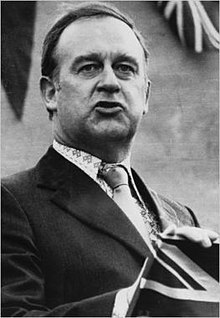

William Craig, who had been Northern Ireland Minister for Home Affairs, launched ‘Ulster Vanguard’ as an umbrella movement for the right-ring of Unionism.

[The new group held a series of demonstrations and marches over next few months. These demonstrations intensified when Stormont was replaced and ‘direct rule’ introduced.]

A Report (Cmnd. 4901) was published by a committee headed by Lord Parker on the methods used by the security forces in to interogate those interned. The methods included: ‘in-depth interrogation’, hooding, food deprivation, use of ‘white noise’ to cause disorientation and sleep deprivation, and being forced to stand for long periods leaning against a wall with their finger-tips. Two members of the committee, including Lord Parker, held that the techniques were justified. Lord Gardiner disagreed.

Saturday 9 February 1974


Anthony O’Connor & Hugh Duffy

Two Catholic civilians were shot dead at O’Kane’s Bar, Grosvenor Road, Belfast, by Loyalist paramilitaries.

Sunday 9 February 1975

Two Catholic civilians, both aged 19, were shot dead by Loyalist paramilitaries as they left St Brigit’s Catholic Church, Malone, Belfast.

The Irish Republican Army (IRA) announced that it was reinstating its ceasefire for an indefinite period as of 6pm on 10 February 1975.

Monday 9 February 1976


Two Protestant civilians were shot dead by the Ulster Volunteer Force (UVF) in the Shankill area of Belfast. It was believed that the two men were mistaken for Catholics.

Monday 9 February 1981

Ian Paisley, then leader of the Democratic Unionist Party (DUP), and other senior members of the DUP held a rally at Belfast City Hall were they signed a covenant, the ‘Ulster Declaration’, based on the Ulster Covenant of 1912. Paisley also announced a ‘Carson Trail’ which was to be a series of protest rallies against the continuing dialogue between Margaret Thatcher, then British Prime Minister, and Charles Haughey, then Taoiseach (Irish Prime Minister).

Friday 9 February 1990
Tommy Lyttle, then leader of the Ulster Defence Association (UDA), appeared in court on charges of having a threatening letter sent to the sister of Brian Nelson.

Amnesty International published a report which claimed that there was “mounting evidence” of collusion between the security forces and Loyalist paramilitaries. The RUC said that the claims were “utter nonsense”.

Thursday 9 February 1995

Sinn Féin (SF) called off a planned meeting with Northern Ireland Office (NIO) officials after the party claimed that the room where the meeting was to have taken place was bugged.

Friday 9 February 1996

End of IRA Ceasefire
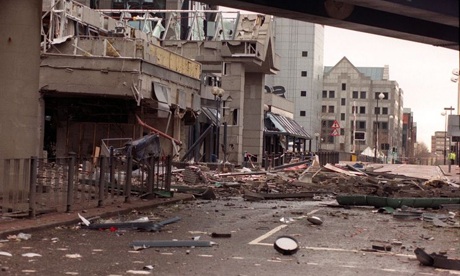
The Irish Republican Army (IRA) exploded a large bomb at South Quay in the Docklands area of London. The lorry bomb killed two people, injured many more, caused millions of pounds worth of damage, and marked the end of the IRA ceasefire after 17 months and 9 days. A statement had been issued by the IRA one hour before the explosion occurred at 7.01pm.

See Docklands bombing

Monday 9 February 1998
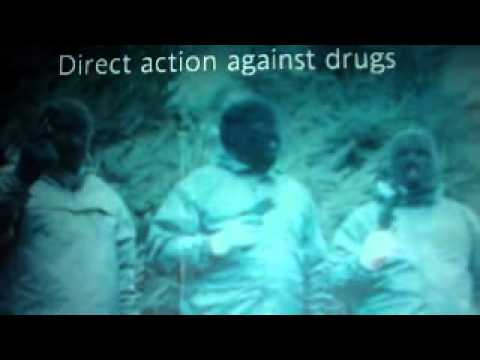
Brendan Campbell (30), a Catholic civilian, was shot dead outside a restaurant on the Lisburn Road, Belfast. Campbell was alleged to be a drugs dealer and the group called Direct Action Against Drugs (DAAD) claimed responsibility.

[Many people believed that DAAD was a cover name (pseudonym) used by the Irish Republican Army (IRA). The killing of Campbell (and Robert Dougan on 10 February 1998) led to the expulsion of Sinn Féin (SF) from the multi-party talks on 20 February 1998.]

A political row broke out between Ken Maginnis, then Security spokesperson for the Ulster Unionist Party (UUP), and Marjorie (Mo) Mowlam, then Secretary of State for Northern Ireland.

In a letter to David Trimble, then leader of the Ulster Unionist Party (UUP), Mowlam demanded an apology from Maginnis for allegedly calling her “a damned liar” during a session of the talks at Stormont. Maginnis said he had “no intention whatsoever” of apologising.

In another row, involving Sinn Féin (SF) and the Social Democratic and Labour Party (SDLP), John Hume, then leader of the SDLP, defended his party colleague, Seamus Mallon, from accusations by Republicans that his attitude at the talks had been “extremely unhelpful”.
The British government published proposals, Your Voice Your Choice, for reforms to the Northern Ireland Police Authority (NIPA).
The Standing Advisory Commission on Human Rights (SACHR) submitted a report to Marjorie (Mo) Mowlam, then Secretary of State for Northern Ireland, expressing concern about the continuing high levels of Catholic unemployment despite the introduction of two Fair Employment acts. The report entitled Employment Equality: Building for the Future examined the effectiveness of fair employment legislation and the impact of government policy. Figures on unemployment showed that Catholics continued to be twice as likely to be unemployed as Protestants.
A number of UUP members, who opposed the party’s involvement in the multi-party talks, established a new pressure group called the ‘Committee for Traditional Ulster Unionist Values’. The new grouping was led by Nelson McCausland.

Tuesday 9 February 1999

The Orange Volunteers (OV) admitted carrying out an attack on a Catholic owned public house in Castledawson, County Derry.

The Belfast Telegraph (a Belfast based newspaper) published the results of an opinion poll. The poll showed that, of those questioned, 50 per cent believed that the Ulster Unionist Party (UUP) should join Sinn Féin (SF) in a power-sharing Executive even without prior decommissioning.

Tuesday 9 February 1999

A middle-aged man discovered an unexploded pipe-bomb outside a public house in Crumlin, County Antrim. The Loyalist paramilitary group the Orange Volunteers (OV) claimed they had targeted the bar.

Saturday 9 February 2002

An estimated 80 people were involved in rioting in the Whitewell Road area of north Belfast. The disturbances broke out in the Arthur Bridge, Longlands estate, and Gunnell Hill areas along the Whitewell Road and eight petrol bombs were thrown. One man was arrested on suspicion of riotous behaviour.

[There were further disturbances in the area on Sunday evening (10 February 2002) and again on Monday morning (11 February 2002).]

A gun was found close to Coronation Park, Aughnacloy, County Tyrone. The main Aughnacloy to Monaghan road was closed for a while on both sides of the Northern Ireland border while the security alert was on-going.

The Executive committee of the Ulster Unionist Party (UUP) held a meeting at which it was decided to seek an increase in affiliation fees from the Orange Order. It was believed that the UUP would be seeking £12,000 per annum. The Orange Order has 120 of the 860 seats on the Ulster Unionist Council (UUC) which is the policy making body of the UUP.

————————————————————————

Remembering all innocent victims of the Troubles

Today is the anniversary of the death of the following  people killed as a results of the conflict in Northern Ireland

“To live in hearts we leave behind is not to die

– Thomas Campbell

To the innocent on the list – Your memory will live  forever

– To  the Paramilitaries  –

There are many things worth living for, a few things worth dying for, but nothing worth killing for.

17 People   lost their lives on the 9th  February  between  1971 – 1998

  —————————————————————————

09 February 1971


 John Eakins,   (52)

Protestant
Status: Civilian (Civ),

Killed by: Irish Republican Army (IRA)
Killed while travelling in Landrover, which detonated landmine on track, Brougher Mountain, near Trillick, County Tyrone. British Army (BA) mobile patrol intended target.

  —————————————————————————

09 February 1971


William Thomas,  (35)

nfNI
Status: Civilian (Civ),

Killed by: Irish Republican Army (IRA)
Killed while travelling in Landrover, which detonated landmine on track, Brougher Mountain, near Trillick, County Tyrone. British Army (BA) mobile patrol intended target.

  —————————————————————————

09 February 1971
 Harry Edgar,  (26)

Protestant
Status: Civilian (Civ),

Killed by: Irish Republican Army (IRA)
Killed while travelling in Landrover, which detonated landmine on track, Brougher Mountain, near Trillick, County Tyrone. British Army (BA) mobile patrol intended target.

  —————————————————————————

09 February 1971
David Henson,  (24)

nfNI
Status: Civilian (Civ),

Killed by: Irish Republican Army (IRA)
Englishman temporarily working in Northern Ireland. Killed while travelling in Landrover, which detonated landmine on track, Brougher Mountain, near Trillick, County Tyrone. British Army (BA) mobile patrol intended target.

  —————————————————————————

09 February 1971


George Beck,   (43)

Protestant
Status: Civilian (Civ),

Killed by: Irish Republican Army (IRA)
Killed while travelling in Landrover, which detonated landmine on track, Brougher Mountain, near Trillick, County Tyrone. British Army (BA) mobile patrol intended target.

  —————————————————————————

09 February 1972
Patrick Casey,  (26)

Catholic
Status: non-specific Republican group (REP),

Killed by: non-specific Republican group (REP)
Died three days after being injured in an explosion at temporary council offices in school hall, Keady, County Armagh. Explosion occurred 6 February 1972.

  —————————————————————————

09 February 1974


Anthony O’Connor,   (42)

Catholic
Status: Civilian (Civ),

Killed by: Ulster Freedom Fighters (UFF)
Shot while leaving O’Kane’s Bar, Grosvenor Road, Belfast.

  —————————————————————————

09 February 1974


Hugh Duffy,  (24)

Catholic
Status: Civilian (Civ),

Killed by: Ulster Freedom Fighters (UFF)
Shot while leaving O’Kane’s Bar, Grosvenor Road, Belfast.

  —————————————————————————

09 February 1975
Kevin Ballantine,   (19)

Catholic
Status: Civilian (Civ),

Killed by: non-specific Loyalist group (LOY)
Shot as he left St Brigid’s Roman Catholic Church, Derryvolgie Avenue, Malone, Belfast.

  —————————————————————————

09 February 1975
Gerard Kiely,  (19)

Catholic
Status: Civilian (Civ),

Killed by: non-specific Loyalist group (LOY)
Shot as he left St Brigid’s Roman Catholic Church, Derryvolgie Avenue, Malone, Belfast

  —————————————————————————

09 February 1976


Archibald Hanna,   (51)

Protestant
Status: Civilian (Civ),

Killed by: Ulster Volunteer Force (UVF)
Shot while sitting in stationary lorry outside newsagent’s shop, Cambrai Street, Shankill, Belfast. Assumed to be a Catholic.

  —————————————————————————

09 February 1976


Raymond Carlisle,  (27)

Protestant
Status: Civilian (Civ),

Killed by: Ulster Volunteer Force (UVF)
Shot while sitting in stationary lorry outside newsagent’s shop, Cambrai Street, Shankill, Belfast. Assumed to be a Catholic.

  —————————————————————————

09 February 1989

Anthony Fusco,  (33)

Catholic
Status: Civilian (Civ),

Killed by: Ulster Volunteer Force (UVF)
Shot while walking to his workplace, West Street, Smithfield, Belfast.

  —————————————————————————

09 February 1993


Michael Beswick,  (21)

nfNI
Status: British Army (BA),

Killed by: Irish Republican Army (IRA)
Killed by remote controlled bomb hidden in wall, detonated when British Army (BA) foot patrol passed, Cathedral Road, Armagh.

  —————————————————————————

09 February 1996


Inan Ul-Haq Bashir,   (29)

nfNIB
Status: Civilian (Civ),

Killed by: Irish Republican Army (IRA)
Killed in lorry bomb explosion, left in car park, South Quay railway station, Isle of Dogs, London. Inadequate warning given.

See Docklands bombing

  —————————————————————————

09 February 1996


John Jefferies,  (31)

nfNIB
Status: Civilian (Civ),

Killed by: Irish Republican Army (IRA)
Killed in lorry bomb explosion, left in car park, South Quay railway station, Isle of Dogs, London. Inadequate warning given.

See Docklands bombing

  —————————————————————————

09 February 1998
Brendan Campbell  (30)

Catholic
Status: Civilian (Civ),

Killed by: Irish Republican Army (IRA)
Shot, shortly after leaving Planks Restaurant, Brookland Street, off Lisburn Road, Belfast.

  —————————————————————————

The London Docklands bombing – 9 February 1996


Docklands bombing

1996

The London Docklands bombing (also known as the Canary Wharf bombing or South Quay bombing) occurred on 9 February 1996, when the Provisional Irish Republican Army (IRA) detonated a powerful truck bomb in Canary Wharf, one of the two financial districts of London. The blast devastated a wide area and caused an estimated £100 million worth of damage. Although the IRA had sent warnings 90 minutes beforehand, the area was not fully evacuated; two people were killed and 39 were injured.

———————————————-

IRA bombs Canary Wharf, London

———————————————-

It marked an end to the IRA’s seventeen-month ceasefire. The IRA had agreed to a ceasefire in August 1994, on the understanding that Sinn Féin would be allowed to take part in peace negotiations. However, when the British government then demanded the IRA must fully disarm before any negotiations, the IRA resumed its campaign. After the bombing, the British government dropped its demand for the IRA to disarm before any negotiations


Background and planning

Since the beginning of its campaign in the early 1970s, the IRA had carried out many bomb attacks in England. As well as attacking military and political targets, it also bombed infrastructure and commercial targets. The goal was to damage the economy and cause disruption, which would put pressure on the British government to negotiate a withdrawal from Northern Ireland.[1] In the early 1990s, the IRA began another major bombing campaign in England. In February 1991 it launched a mortar attack on 10 Downing Street, headquarters of the British government, while Prime Minister John Major was holding a meeting. The mortars narrowly missed the building and there were no casualties. In April 1992, the IRA detonated a powerful truck bomb at the Baltic Exchange in the City of London, its main financial district. The blast killed three people and caused £800 million worth of damage; more than the total damage caused by all IRA bombings before it.[2] In November 1992, the IRA planted a large van bomb at Canary Wharf, London’s second financial district. However, security guards immediately alerted the police and the bomb was defused.[3] In April 1993 the IRA detonated another powerful truck bomb in the City of London. It killed one person and caused £500 million worth of damage.

In December 1993 the British and Irish governments issued the Downing Street Declaration. It allowed Sinn Féin, the political party associated with the IRA, to participate in all-party peace negotiations on condition that the IRA called a ceasefire. The IRA called a ceasefire on 31 August 1994. Over the next seventeen months there were a number of meetings between representatives of the British government and Sinn Féin. There were also talks—among the British and Irish governments and the Northern Ireland parties—about how all-party peace negotiations could take place.

By 1996, John Major’s government had lost its majority in the British parliament and was depending on Ulster unionist votes to stay in power. It was accused of pro-unionist bias as a result. The British government began insisting that the IRA must fully disarm before Sinn Féin would be allowed to take part in full-fledged peace talks. The IRA rejected this, seeing it as a demand for total surrender.[4] Sinn Féin said that the IRA would not disarm before talks, but that it would discuss disarmament as part of an overall solution. On 23 January 1996, the international commission for disarmament in Northern Ireland recommended that Britain drop its demand, suggesting that disarmament begin during talks rather than before.[5] The British government refused to drop its demand.

The bombing

At about 19:01 on 9 February, the IRA detonated a large bomb containing 500 kg of ammonium nitrate fertilizer and sugar,[4][6] in a small lorry about 80 yards (70 m) from South Quay Station on the Docklands Light Railway (in the Canary Wharf area of London), directly under the point where the tracks cross Marsh Wall.[7] The detonating cord was made of semtex, PETN and RDX high explosives.[4] The IRA had sent telephoned warnings 90 minutes beforehand, and the area was evacuated. However, two men working in the newsagents shop directly opposite the explosion, Inam Bashir (29) and John Jeffries (31), had not been evacuated in time and were killed in the explosion. 39 people required hospital treatment due to blast injuries and falling glass. Part of the South Quay Plaza was destroyed.[7] The explosion left a crater ten metres wide and three metres deep.[4] The shockwave from the blast caused windows as far east as Barking, approximately five miles away, to rattle.

————

Victims

————

—————————————

09 February 1996


Inan Ul-Haq Bashir,  (29)

nfNIB
Status: Civilian (Civ),

Killed by: Irish Republican Army (IRA)
Killed in lorry bomb explosion, left in car park, South Quay railway station, Isle of Dogs, London. Inadequate warning given.

—————————————
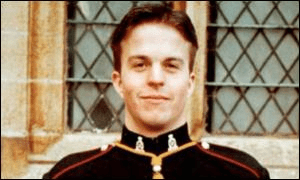
09 February 1996


John Jefferies,  (31)

nfNIB
Status: Civilian (Civ),

Killed by: Irish Republican Army (IRA)
Killed in lorry bomb explosion, left in car park, South Quay railway station, Isle of Dogs, London. Inadequate warning given.

—————————————

Approximately £100 million worth of damage was done by the blast.[4] Three nearby buildings (the Midland Bank building, South Quay Plaza I and II) were severely damaged (the latter two requiring complete rebuilding whilst the former was beyond economic repair and was demolished). The station itself was extensively damaged, but both it and the bridge under which the bomb was exploded were reopened within weeks (on 22 April), the latter requiring only cosmetic repairs despite its proximity to the blast.

This bomb represented the end to the IRA ceasefire during the Northern Ireland peace process at the time. James McArdle was convicted of conspiracy to cause explosions, and sentenced to 25 years in prison, but murder charges were dropped.[citation needed] McArdle was released under the terms of the Good Friday Agreement in June 2000 with a royal prerogative of mercy from Queen Elizabeth II.[8]

The IRA described the deaths and injuries as a result of the bomb as “regrettable”, but said that they could have been avoided if police had responded promptly to “clear and specific warnings”. Commissioner of the Metropolitan Police Sir Paul Condon said: “It would be unfair to describe this as a failure of security. It was a failure of humanity.”[9]

On 28 February, John Major, the Prime Minister of the United Kingdom, and John Bruton, the Taoiseach of the Republic of Ireland, announced that all-party talks would be resumed in June. Major’s decision to drop the demand for IRA decommissioning of weapons before Sinn Fein would be allowed into talks led to criticism from the press, which accused him of being “bombed to the table”.[10]

My blog and Twitter account are dedicated to remembering all innocent victims of the Northern Ireland Troubles and all those killed by terrorists across the globe. Have a little look around , you might find something of interest.

Please take the time to follow me on Twitter @bfchild66   and sign up for my blog by clicking the follow button at the bottom  of this page , or any page for that matter.

Take Care and be safe!