Category Archives: Blog

Countdown to Pluto’s Latest Pictures & My 49th Birthday

paypal donation button

– Please consider making a small donation –

Well its an exciting day in the Chambers house hold.

Tomorrow is my 49th and I’m looking forward to a nice evening with the wife and kids..

I am also eagerly awaiting the latest pictures from the Pluto mission  and my insatiable appetite for knowledge about the solar system and beyond is on over drive.

I’m no expert,  but I sincerely believe that we are not alone in the universe .

  • Come on  – between  100 billion  – 400 billion stars in our galaxy ( Milky Way )
  • and over one 100 billion galaxies out there!
  • And I’ve not even touched on the multiverse
  • The numbers alone our mind boggling

I just find it unconceivable that out of these vast numbers our solar system is the only place that life took hold and evolved into the beautiful earth we know today.

I’m no Expert . But I assume that every thing that was needed to create the conditions for life on earth were no doubt abundant throughout space during the birth and evolution  of space and the birth of Galaxies .

If  the elements for life found their way to out tiny corner of the Milky Way , why not elsewhere?

I’m not saying that life is  abundant throughout our galaxy and the billions of  other galaxies out there , but surely the same elements that kick started life on earth must have travelled through space and found a home on other worlds out there.

Unfortunately  due to the vast distances to these other worlds and galaxies we will never be able to travel to them or indeed send space ships and probes to unlock their secrets.

 Our own Milky Way  is so huge that even at the speed of light it would take 100,000 years to travel across it!

And even if we could travel these vast distances and survive the journey we would find that life on these other hostile worlds was beyond our comprehension , life – but not as we know it!

I expect that most life forms out there are single cell and far below the complex life forms that are found on earth.

But what if there are other more  advance civilizations out there? No matter how advance they may be they will still be faced with the vast distances of space and time and would face the same frustrations as us , being stuck in their tiny corner of their galaxies and asking themselves the age of question”

“ARE WE ALONE”

The mind boggle….

The Drake Equation

The Drake Equation is used to estimate the number of communicating civilizations in the cosmos, or more simply put, the odds of finding intelligent life in the universe. N = The number of civilizations in the Milky Way galaxy whose electromagnetic emissions are detectable

Light Year

1 light year = 9.4605284 × 10¹⁵ metres
Astronomy
noun: light year; plural noun: light years; noun: lightyear; plural noun: lightyears
  1. a unit of astronomical distance equivalent to the distance that light travels in one year, which is 9.4607 × 10¹² km (nearly 6 million million miles).
    • informal
      a long distance or great amount.
      “the new range puts them light years ahead of the competition”

paypal donation button

if you have enjoyed reading my story and daily blogs please consider making a small donation

BBC Documentary | The Planets Episode 1 – Different Worlds ( HD Documentary )

BBC Documentary| The Planets Episode 2 – Terra Firma ( HD Documentary )

paypal donation button

if you have enjoyed reading my story and daily blogs please consider making a small donation

BBC Documentary | The Planets Episode 3 – Giants ( HD Documentary )

BBC Documentary | The Planets Episode 4 – Moon ( Full HD Documentary )

BBC Documentary | The Planets Episode 5 – Star ( HD Full Documentary )

paypal donation button

if you have enjoyed reading my story and daily blogs please consider making a small donation

BBC Documentary | The Planets Episode 6 – Atmosphere ( HD Documentary )

BBC Documentary | The Planets Episode 7 – Life ( HD Documentary )

BBC Documentary | The Planets Episode 8 – Destiny ( HD Documentary )

if you have enjoyed reading my story and daily blogs please consider making a small donation

paypal donation button

if you have enjoyed reading my story and daily blogs please consider making a small donation

How to speak Belfast / Northern Ireland

How to speak Belfast / Northern Ireland

( Made me laugh)

Ulster English (also called Northern Hiberno-English or Northern Irish English) is a major variety of Hiberno-English, spoken in the province of Ulster: Northern Ireland and three counties of the Republic of Ireland. The dialect has been influenced by the Ulster Irish dialect and also by the Scots language, which was brought over by settlers during the Plantation of Ulster.

And if you are really interested see below for a lesson in Ulster speak!

Ulster Scots

The two major divisions of Ulster English are Ulster Scots English (spoken in much of northern County Antrim),[1][2] and mid Ulster English. Sometimes, a third, transitional dialect between Southern and Northern Ireland is designated, known as south Ulster

Phonolog

Phonetics are in IPA.

Vowels[edit]

In the following chart, “UE” means Ulster English, including “MUE” or mid Ulster English (which may incorporate older, more traditional mid Ulster English or “TMUE”), as well as “USE” or Ulster Scots English. “SSIE” here refers to a mainstream, supraregional southern Irish English, used in the chart for the sake of comparison.

Pure vowels (Monophthongs)
English
diaphoneme
UE SSIE Example words
/æ/ äː~a æ~a bath, trap, man
/ɑː/ ɑː~äː aː~äː blah, calm, father
conservative /ɒ/ ɒ~ɑ~ä ä bother, lot, top
divergent /ɒ/ ɒː(MUE)
ɔː(USE)
äː(TMUE)
ɒː cloth, loss, off
/ɔː/ all, bought, saw
/ɛ/ ɛ dress, met, bread
/ə/ ə about, syrup, arena
/ɪ/ ɪ̈(MUE)
ə~ɘ(TMUE)
ɛ(USE)
e(unstressed, word-final)
ɪ hit, skim, tip
/iː/ i(ː)

beam, chic, fleet
/ɨ/ ɪ~ɪ̈~ə island, gamut, wasted
/ʌ/ ɞ~ʌ̈ ʊ~ʌ̈ bus, flood, young
/ʊ/ ʉ(MUE)
ʊ̈(USE)
ʊ book, put, should
/uː/ food, glue, new
Diphthongs
/aɪ/ ä(ː)e aɪ~äɪ~ɑɪ eye, five, try
ɐi~ɜi bright, dice, site
/aʊ/ ɐʏ~ɜʉ æʊ~ɛʊ now, ouch, scout
/eɪ/

lame, rein, stain
/ɔɪ/ ɔɪ ɒɪ boy, choice, moist
/oʊ/ o(ː) goat, oh, show
R-coloured vowels
/ɑr/ ɑ(ː)ɻ ɑ(ː)ɹ~ä(ː)ɹ barn, car, park
/ɪər/ i(ː)ɚ i(ː)ɹ fear, peer, tier
/ɛər/ ɛ(ː)ɚ
ɚː~ɝː(Belfast)
e(ː)ɹ bare, bear, there
/ɜr/ ɚ(ː)

burn, first, learn
/ər/ ɚ doctor, martyr, parker
/ɔr/ ɔ(ː)ɚ ɒ(ː)ɹ for, horse, war
/ɔər/ o(ː)ɚ ɒ(ː)ɹ four, hoarse, wore
/ʊər/ u(ː)ɚ u(ː)ɹ moor, poor, tour

Other, less overarching features of some Ulster varieties include:

  • Vowels have phonemic vowel length, with one set of lexically long and one of lexically short phonemes. This may be variously influenced by the Scots system. It is considerably less phonemic than Received Pronunciation, and in vernacular Belfast speech vowel length may vary depending on stress.
  • /ɑ/ and /ɔː/ distinction in cot and body versus caught and bawdy is mostly preserved, except in Ulster Scots (which here follows Scottish speech) and traditional varieties.
  • /e/ may occur in such words as beat, decent, leave, Jesus, etc., though this feature is recessive.
  • Lagan Valley /ɛ/ before /k/ in take and make, etc.
  • /ɛ/ before velars, as in sack, bag, and bang, etc.
  • Merger of /a//aː/ in all monosyllables, e.g. Sam and psalm [saːm ~ sɑːm] (the phonetic quality varies).
  • /ʉ/ is possible before /r/ in floor, whore, door, board, etc.

Consonant

  • Rhoticity, that is, retention of /r/ in all positions.
  • Palatalisation of /k, ɡ, ŋ/ in the environment of front vowels.
  • /l/ is not vocalised, except historically; usually “clear” as in Southern Hiberno-English, with some exceptions.
  • Unaspirated /p/, /k/ between vowels in words such as pepper and packet.
  • Voiced /d/ (or tapped [ɾ]) for /t/ between vowels in words such as butter and city. This is similar to North American and Australian English.
  • Dental [t̪] and [d̪] for /t/ and /d/ before /r/ in words such as butter or dry. Dental realisations of /n, l/ may occur as well, e.g. dinner, pillar. This feature, of Gaelic origin, is shared with Southern Hiberno-English.
  • /ʍ//w/ contrast in which–witch. This feature is recessive, particularly in vernacular Belfast speech.
  • Elision of /d/ in hand [hɑːn], candle [ˈkanl] and old [əʉl], etc.
  • Elision of /b, ɡ/ in sing [sɪŋ], thimble, finger etc.
  • /θ/ and /ð/ for th.
  • /x/ for gh is retained in proper names and a few dialect words or pronunciations, e.g. lough, trough and sheugh.

Grammar derived from Irish

The morphology and syntax of Irish is quite different from that of English, and it has influenced both Northern and Southern Hiberno-English to some degree.

Irish has separate forms for the second person singular () and the second person plural (sibh), (“thou” and “ye” respectively in archaic and some intimate, informal English). Ulster English mirrors Irish in that the singular “you” is distinguished from the plural “you”. This is normally done by using the words yous, yousuns or yis.[3] For example:

  • “Are yous not finished yet?”
  • “Did yousuns all go to see it?”
  • “What are yis up to?”

Irish lacks words that directly translate as “yes” or “no”, and instead repeats the verb in a question (positively or negatively) to answer. As such, Northern and Southern Hiberno-English use “yes” and “no” less frequently than other English dialects.[4][5] For example:

  • “Are you coming home soon?” “I am”
  • “Is your computer working?” “It’s not”

The absence of the verb “have” in Irish has influenced some grammar. The concept of “have” is expressed in Irish by the construction ag (“at”) (“me”) to create agam (“at me”). Hence, Ulster English speakers sometimes use the verb “have” followed by “with me/on me”.[6] For example:

  • “Do you have the book with you?”[clarification needed]
  • “Have you money for the bus on you?”

Vocabulary

Much non-standard vocabulary found in Ulster English and many meanings of Standard English words peculiar to the dialect come from Scots and Irish. Some examples are shown in the table below. Many of these are also used in Southern Hiberno-English, especially in the northern half of the island.

Ulster English Standard English Type Notes
ach!, och!, ack! annoyance, regret, etc. interjection Pronounced akh or okh. Usually used to replace “ah!” and “oh!”. Ach is Irish for “but”, and can be used in the same context. Och is Irish and Scottish Gaelic for “alas”, and again can be used in the same context.[7] Cf. German, Dutch, Frisian ach and English agh, German and Dutch have both ach and och.
aul, oul old adjective Pronounced owl. From auld, an archaic form of old that is still used in Scots and Northern English dialects.
aye, auy yes adverb Used throughout Ireland, Scotland and parts of northern England.
General Scots and dialect/archaic English, first attested 1575.
bake mouth noun A different pronunciation and extended meaning of beak. Dutch bek is used as a rude word for mouth too
banjax to break/ruin/destroy,
a mess
verb
noun
Used throughout Ireland; origin unknown.[8]
blade girl noun Mainly used in Tyrone with different meanings depending on usage, but always refers to a female. “Look at thon blade” – “Look at that girl”; “Our blade” – “My sister/cousin” (Can also be used as a term of endearment in this form)
boak, boke to retch/vomit,
vomit
verb
noun
From Scots bowk.[9]
bog wetland/toilet noun From Irish bogach meaning “wetland”.
boreen a narrow road/lane/track noun From Irish bóithrín meaning “small road”.[10]
bout ye? how are you? greeting From the longer version “What about ye?” (“What about you?”), which is also used.[11][12]
bru unemployment benefits noun Pronounced broo. Shortened from welfare bureau.[13]
cat-melodeon awful adjective Probably a combination of cat and melodeon, referencing the sound of a screeching cat and badly-played melodeon tunes.[14]
The second part is pronounced mə-LOH-jin.
caul, coul cold adjective Pronounced kowl. From Scots cauld meaning “cold”.[15]
carlin’ old woman noun From Norse kerling meaning “woman” (especially an old woman).[16]
carnaptious[16] quarrelsome/irritable adjective From Scots.[17]
claggerd covered with something adhesive (usually dirt) adjective From Scots claggert meaning “besmeared”.[18]
cowp to tip over/to fall over verb From Scots.[19]
crack, craic banter/fun/gossip/news
(e.g. “What’s the crack?)
noun Crack is originally a Scots/Northern English word meaning something like “news”, “gossip” or “fun”. Originally spelt crack but the Gaelicized spelling craic started in the 1960s and is now common.[12]
craitur, craytur a term of endearment
(e.g. “The poor craitur”)
noun From the Hiberno-English pronunciation of creature where ea is realised /e/ (see above) and –ture as archaic /tər/ rather than the standard affricate /tʃər/.
culchie farmer/rural dweller noun Origin uncertain—either from Irish coillte meaning “woods”;[20] from Irish cúl a’ tí meaning “back of the house” (for it was common practise for country people to go in the back door of the house they were visiting);[21] or from the -culture in “agriculture”.
dander walk noun/verb From Scots or Northern English.
dead-on okay/no problem interjection
adjective
Origin uncertain.[12]
drawk,
drawky
to soak/drench,
wet/showery
verb
adjective
From Irish droch-aimsir meaning “bad weather” or “wet weather”[22] or the less likely Scots draik/drawk.[23]
eejit idiot noun From the Hiberno-English pronunciation of idiot.[24]
feck a mild form of fuck interjection Gained popularity following its frequent use in the 1990s comedy TV series Father Ted.
feg cigarette noun Pronounced fayg. From the English slang term fag.
fella man noun From English fellow; ultimately from Norse felagi.
footer,
futer
fidget/waste time verb Via Scots fouter from Old French foutre.Perhaps from Irish fútar.[25]
fornenst in front of/facing adverb From Scots or Northern English.
founder,
foundered
cold,
to be cold
noun
adjective
From Scots foundert/foondert/fundert which can mean “(to be) chilled”.[26]
geg, geggin’ joke, joking noun/verb From English gag.
glen valley noun From Irish gleann.
gob, gub mouth noun From Irish gob, which can mean “mouth”.
grub food
gutties, guddies running shoes noun From Scots, in which it is used to mean anything made of rubber. Note also the phrase “Give her the guttie” meaning “Step on it (accelerate)”.[27]
hallion a good-for-nothing noun From Scots hallion meaning “rascal”.[28]
hesp a scolding old woman noun Perhaps from Irish easpan.[29] Cf. Scots hesper: a hard thing to do; a difficult person to get on with.[30]
hoak, hoke to search for/to forage
(e.g. “Have a hoak for it”)
verb From Scots howk.[31]
hooley party noun Origin unknown; perhaps a variant of Irish céilí.[32]
houl hold verb Pronounced howl. From Scots/Northern English.
jap to splatter; to splash; (of a frying pan) emit tiny ‘sparks’ of hot fat verb From Scots jaup.[33]
jouk, juke to dodge/to go verb From Scots jouk meaning “to dodge”.[34]
keen,
keenin’,
keenin’
to lament/to wail,
lamenting/wailing,
shrill (in terms of sound)
verb
noun
adjective
From Irish caoin meaning “lament”. Keening was a traditional practice done by woman at Irish funerals.
lock’a an unspecified amount
(e.g. “In a lock’a minutes”)
determiner From Irish loca meaning “a pile of” or “a wad of”, or simply an extended meaning of “lock” as in “a lock of hair”.
loch, lough lake/sea inlet noun Pronounced lokh. From Irish loch.
lug ear noun From Norse. Originally used to mean “an appendage” (cf. Norwegian lugg meaning “a tuft of hair”).
Used throughout Ireland.
malarky, malarkey nonsense noun Probably from Irish.
munya great/lovely/attractive adjective Origin unknown.[35]
oxter armpit/under-arm noun From Scots.[36] Dutch oksel = armpit
poke ice-cream noun From Scots poke meaning “bag” or “pouch”.
potcheen hooch/bootleg alcohol noun From Irish poitín.
quare, kwer very/considerable
(e.g. “A quare distance”)
adjective
adverb
A different pronunciation and extended meaning of “queer”.[37]
Used throughout Ireland.
scrab,
scrawb
scratch/scrape noun/verb From Irish scráib.[38] Cf. Northern English scrab and Dutch schrabben (to scrape).
scunner/scunder,
scunnerd/scunderd
to annoy/embarrass,
annoyed/embarrassed
verb
adjective
From Scots scunner/scunnert meaning “offended” or “fed up”.[39]
sheuch,
sheugh
a small shallow ditch
(pronounced /ʃʌx/)
noun From Scots sheuch.[40]
skite,
skitter,
scoot
to move quickly verb From Norse skjuta meaning “to shoot” (cf. Norwegian skutla meaning “to glide quickly”).
skite to splatter with force verb From Norse skjuta.
slew a great amount noun From Irish slua meaning “a crowd/multitude”.[41]
smidgen a very small piece noun From Irish smidean.
snig to snap-off/lop-off verb Origin unknown.[42] Cf. Scots sneg[43] < sneck.[44]
stoor dust noun From Old French estour.[45]
tae tea noun Pronounced tay, this is the Irish word for “tea”.
til to preposition From Norse til.
the-day,
the-night,
the-marra
today,
tonight,
tomorrow
noun/adverb From Scots the day, the nicht, the morra.
thon that adjective From Scots; originally yon in archaic English, the th by analogy with this and that.[46]
thonder there (something distant but within sight) adjective From Scots; originally yonder in archaic English.
throughother disorganised and careless adjective Probably from Irish. However, it has parallels in both Goidelic (e.g. Irish trína chéile) and Germanic (e.g. Scots throuither,[47] Dutch door elkaar, door-een, German durcheinander).
wee little, but also used as a generic diminutive adjective From Middle English.
Used throughout the north of Ireland and in Scotland.
weean, wean child noun From Scots wee (small) + ane (one).[48]
wheeker excellent adjective From Scots wheech meaning “to snatch”. Onomatopoeic.[49]
wheen[50] a few/several determiner From Scots.[51] Usually used in the phrase “a wheen of…”
whisht be quiet (a command) interjection The Irish huist,[52] meaning “be quiet”, is an unlikely source since the word is known throughout England and Scotland where it derives from early Middle English whist[53] (cf. Middle English hust[54] and Scots wheesht[55]).
wojus awful/expression of surprise adjective Probably a variation of odious. Can also be used as an expression of surprise, usually to something negative. In this case it is most likely a shortened form of “Oh Jesus!”
Used throughout Ireland.
ye you (singular) pronoun From Middle English ye, but pronounced with a short e sound.
yous, yousuns you (plural) pronoun See grammar derived from Irish.

Furthermore, speakers of the dialect conjugate many verbs according to how they are formed in the most vernacular forms of Ulster Scots, e.g. driv instead of drove and driven as the past tense of drive, etc. (literary Scots drave, driven). Verbal syncretism is extremely widespread, as is the Northern subject rule.

Ulster Scots English

This region is heavily influenced by the historic presence of Ulster Scots and covers areas such as northern and eastern County Antrim, the Ards Peninsula in County Down, The Laggan district in County Donegal and northeastern County Londonderry. These districts are strongly Ulster Scots-influenced, and Scots pronunciation of words is often heard. People from here are often mistaken by outsiders as Scottish. This area includes the Glens of Antrim, where the last native Irish speakers of a dialect native to what is now Northern Ireland were to be found. It has been stated that, whilst in the written form, Gaelic of this area continued to use standardised Irish forms, the spoken dialect continued to the Scottish variant, and was in effect no different from the Gaelic of Argyll, or Galloway (both in Scotland).

In the 1830s, Ordnance Survey memoirs came to the following conclusion about the dialect of the inhabitants of Carnmoney, east Antrim:

Their accent is peculiarly, and among old people disagreeably, strong and broad.

The results of a BBC sociolinguistic survey can be found here.[56] East Donegal also has a strong Ulster Scots dialect (see below).

Mid Ulster English

The speech in southern and western County Donegal, southern County Tyrone, southern County Londonderry, northern County Fermanagh, north County Armagh, southwestern County Antrim and most of County Down form a geographical band across the province from east to west. On the whole, these areas have much more in common with the Derry accent in the west than inner-city Belfast except in the east. This accent is often claimed as being the “standard” Northern Irish dialect as it is the most widely used, and it is the dialect of famous Irish writer Séamus Heaney. Parts of the north of County Monaghan (an area centred on Monaghan Town and known as North Monaghan) would roughly fall into this category, but only to a certain extent. Bundoran, a town at the southern extremity of County Donegal, also has quite a western Ireland accent, as do parts of the south-west extremity of County Fermanagh.

Belfast and surroundings

The broad, working-class Belfast dialect is not limited to the city itself but also takes in neighbouring urban areas in the local vicinity (such as Lisburn, Carrickfergus and Newtownards), as well as towns whose inhabitants originally came from Belfast (such as Craigavon). It is generally perceived as being associated with economically disadvantaged areas, and with youth culture. This however is not the dialect used in the media (even those outlets which are based in Belfast). Features of the accent include several vowel shifts, including one from /æ/ to /ɛ/ before or after velars (/bɛɡ/ for bag). Nowadays, this shift largely only happens before /k/, so pack and peck are homophones as /pɛk/.

The Belfast dialect is now becoming more frequently heard in towns and villages whose inhabitants would have traditionally spoken with a distinctively rural accent. Examples of such areas are Moira, Ballyclare, Dromore and Ballynahinch. It could be said that many young people in these areas prefer to use the more cosmopolitan city accent, as opposed to the local variant that their parents or people in other areas would use.

Other phonological features include the following:

  • Two major realisations of /e/ are to be encountered: in open syllables a long monophthong near [ɛː], but in closed syllables an ingliding diphthong, perhaps most typically [eə], but ranging from [ɛə] to [iə]. Thus days [dɛːz] and daze [deəz] are not homophonous.
  • In Belfast, and in mid and south Ulster, the opposition between /ɔ/ and /ɒ/ is better maintained than in other parts of Ulster, though it is restricted to only a few environments, e.g., that of a following voiceless plosive. Thus stock [stɒk ~ stɑk ~ sta̠k] is distinct from stalk [stɔ(ː)k]. However, this is complicated by the fact that certain words belonging to the Standard Lexical Set THOUGHT have /ɒ/ rather than the expected /ɔ/. These typically include draw, fall, walk, and caught. Water often has /a/ (the TRAP vowel).
  • The /aʊ/ phoneme is pronounced [əʉ] in most of Ulster, but in Belfast it is extremely variable and is a sensitive social marker. Pronunciations with a relatively front first element, [ɛ̈] or fronter, are working class. Middle class speakers prefer back [ɑ] or even [ɔ]. The second element is [ʉ ~ y ~ ɨ], often with little or no rounding. How and now may receive special treatment in working-class Belfast speech, with an open first element [a ~ ɑ] and a second element ranging over [i ~ ʉ], a retroflex approximant [ɻ], and zero, i.e., there may be no second element.[57]

Some of the vocabulary used among young people in Ulster, such as the word “spide“, is of Belfast origin.

Derry City and surrounding

The accent of Derry City is actually that of western County Londonderry (including Dungiven and Limavady), northeastern County Donegal (including Inishowen), and northern and western County Tyrone (including Strabane). There is a higher incidence of palatalisation after /k/ and its voiced equivalent /ɡ/[58](e.g. /kʲɑɹ/ “kyar” for “car”), perhaps through influence from Southern Hiberno-English. However, the most noticeable difference is perhaps the intonation, which is unique to the Derry, Letterkenny and Strabane area. The accent of the Finn Valley and especially The Laggan district (centred on the town of Raphoe), both in East Donegal, together with the accent of neighbouring West Tyrone and the accent of the westernmost parts of County Londonderry (not including Derry City), are also quite Scottish sounding. A variety of Ulster Scots is spoken in these areas. This West Ulster variety of Ulster Scots is considered to be quite similar to the Scots spoken in Ayrshire in south-west Scotland.

South Ulster English

South Armagh, south Monaghan, south Fermanagh, south Donegal, north Leitrim, and north Cavan[59][60] natives speak their own distinct variety of English.[61] Areas such as southern and western County Armagh, central and southern County Monaghan (known locally as South Monaghan), northern County Cavan and the southern ‘strip’ of County Fermanagh are the hinterland of the larger Mid-Ulster dialect. The accent gradually shifts from village to village, forming part of the dialect continuum between areas to the North and Midlands (as it once did in Gaelic). This accent is also used in north County Louth (located in Leinster) and in part of the northern ‘strip’ of County Leitrim (in Connacht).

Big Brother’s Final Days

Big Brother’s Final Days

Is it just me or are the remaining housemates all looking very smug with themselves , especially that self obsessed  nob Danny and his ever present side kick Christian.

And boy wouldn’t I love to give both of them a good kick.

Since Mark left the house has been as boring as watching paint dry, apart from the various cash bomb tasks, which to my  delight caused some of them to show their real character , especially Cloe , whom tries her hardest to project a caring , sharing face, but in reality is the most cash obsessed one in there and really feels, deep down that she has it in the bag.

She threw a right hissy fit when they all turned on her about the £5000 and they were right to do so. She spent the week banging on about the cash being for the winner and at the first opportunity she grabs £5000 for her greedy self..

Take a closer look Cloe, cause Danny Boy knows he’s the winner and the  final is nothing but a mere formality in his mind and he’s already spent the money. He readily accused Simon  ” Showbiz” of sitting on the fence and yet he surly  must have splinters torturing his behind, because apart from acting the “”hero” with Mark, he has been sweetness and light to the other housemates .and has not said a bad word about any of them  and never offers an opinion that might upset his ” angelic persona.

Apart from his fall out with Cloe, which was at least amusing.

He is way to smooth and smug for my taste buds and I’ll b e appalled if he wins.

Well done Jack for taking the £23,999 , he’s had a bad few weeks and has come to the obvious conclusion  that he has no chance of winning , how can he against the wonderful Danny and Cloe.

And should Jack forget for a moment that he has £23,999 strapped to his arm, I’m sure Cloe will remind him, as she did three or four times during tonight show. And she makes out that she doesn’t care about the money. Give me a break.

Going back to Friday’s eviction Harry’s departure was expected, although watching her was like car crash TV , she was entertaining and kept me on my toes..

Poor Sam being so  ruthlessly evicted in such a manner was wrong and unfair. The rest of them had it easy compared to Sam and had Cloe drawn the £15000 card I truly  believe that Danny and his side kicks would have  overcome their moral responsibility to Cloe and dump her in favour of increasing the prize fund.

Who do I think will win?

We’ll I know who I don’t want to win , the smug trio of Danny, Cloe or Christian and it will be priceless to see their faces if they are first out of the house on finals night. If I had control I would get  rid of Danny 1st, Then Christian and Cloe and good riddance to them..

To be honest none of the remaining house mates float my wagon , but Joel and Nick are probably the two that have infuriated  me least and I would be happy if either won.

Poor Jack is not so poor now and I think he will reflect on his time in the house as the highlight of his life and I really hope he spends his money wisely , rather than throw it all on the favourite at  Epson Downs next race meeting.

Only a few days to go and as Joel would sing.

” The Winner takes it all”

The Sash my Father Wore

The Sash my Father Wore

This one is for all those proud Ulster men and women missing home today and the glorious 12th  of July celebrations.

Lyrics

So sure l’m an Ulster Orangeman, from Erin’s isle I came,
To see my British brethren all of honour and of fame,
And to tell them of my forefathers who fought in days of yore,
That I might have the right to wear, the sash my father wore!

Chorus:
It is old but it is beautiful, and its colours they are fine
It was worn at Derry, Aughrim, Enniskillen and the Boyne.
My father wore it as a youth in bygone days of yore,
And on the Twelfth I love to wear the sash my father wore.

Chorus

For those brave men who crossed the Boyne have not fought or died in vain
Our Unity, Religion, Laws, and Freedom to maintain,
If the call should come we’ll follow the drum, and cross that river once more
That tomorrow’s Ulsterman may wear the sash my father wore!

Chorus

And when some day, across the sea to Antrim’s shore you come,
We’ll welcome you in royal style, to the sound of flute and drum
And Ulster’s hills shall echo still, from Rathlin to Dromore
As we sing again the loyal strain of the sash my father wore!

SHANKILL PROTESTANT BOYS FLUTE BAND, SINGING THE SASH

——————————————————————————————————————–

Growing up in loyalist Belfast every child knew the words to the Sash and it was our national anthem.

As a child growing up in Belfast I would count the days down until the great day arrived and surrounded with friends and family we would peacefully celebrate our history and culture.

Just because we celebrated the 12th of July doesn’t mean we hated Catholic’s or people from the Republic. It means we are proud of our history and exercise the right to embrace our culture and   the right to celebrate and mark the greatest day of the Protestant Calendar in Northern Ireland.

God Save the Queen

The Sash (also known as The Sash My Father Wore) is a ballad from the Irish province of Ulster commemorating the victory of King William III in the Williamite war in Ireland in 1690–1691.

The lyrics mention the 1689 Siege of Derry, the 1689 Battle of Newtownbutler near Enniskillen, the 1690 Battle of the Boyne and the 1691 Battle of Aughrim. It is popular amongst Ulster loyalists and many unionists in Northern Ireland, as well as in parts of Scotland where it can often be heard sung at football games by supporters of Rangers F.C. and in England, albeit as a variant called The Scarf, at Stockport County (in particular by the more vocal support at away matches).

The lyrics are thought to be around 100 years old, and the melody has been traced back to the early 19th century. The tune of “The Sash” was well known around Europe, and before the lyrics were added, it was a love song that lamented division between people. Instead of “it was old and it was beautiful”, the lyrics were “she was young and she was beautiful” and is in Broadside Ballads (1787)[1] titled Irish Molly O. Another known printing of the tune is from 1876 including the words “The Hat My Father Wore”.[2] The song is classified in the Roud Folk Song Index as number 4796. It has also been adapted by fans of Stockport County F.C., who call it “The Scarf My Father Wore” or simply “The Anthem”.

The tune is used by Liverpool F.C. fans in their song Poor Scouser Tommy.

On this day.12th July

On this day in 1963

The Moors Murderers begin their killing spree

Sixteen-year-old Pauline Reade isabducted while onher way to a dance nearher home in Gorton, England, by Ian Brady and Myra Hindley, the so-called “Moors Murderers,” launching a crime spree that will last for over two years. Reade’s body was not discovered until 1987, after Brady confessed to the murder during an interview with reporters while in a mental hospital. The teenager had been sexually assaulted and her throat had been slashed.

Brady and Hindley met in Manchester in 1961. The shy girl quickly became infatuated with Brady, a self-styled Nazi, who had a substantial library of Nazi literature and an obsession with sadistic sex. After photographing Hindley in obscene positions, Brady sold his amateur pornography to the public.

In order to satisfy their sadistic impulses, Brady and Hindley began abducting and killing young men and women. After Pauline Reade, they kidnapped 12-year-old John Kilbride in November and Keith Bennett, also 12, in June the next year. The day after Christmas in 1964, Leslie Ann Downey, a 10-year-old from Manchester, was abducted.

In 1965, the couplekilled a 17-year-old boy with a hatchet in front of Hindley’s brother-in-law, David Smith, perhaps in an attempt to recruit him for future murders. This apparently crossed the line for Smith, who then went to the police.

Inside Brady’s apartment, police found luggage tickets that led them to two suitcases in Manchester Central Station. They contained photos of Leslie Ann Downey being tortured along with audiotapes of her pleading for her life. Other photos depicted Hindley and Brady in a desolate area of England known as Saddleworth Moor. There, police found the body of John Kilbride.

The Moors Murderers were convicted and sentenced to life in prison in 1966. Their notoriety continued after it was revealed that a guard at Holloway women’s prison had fallen for Hindley and had an affair with her. For his part, Brady continued to confess to other murders, but police have been unable to confirm the validity of his confessions.

Also on this day in:

526 St Felix IV begins his reign as Catholic Pope
1109 Crusaders capture Syria’s harbor city of Tripoli
1191 English King Richard I / the Lionheart & Crusaders defeat Saracens in Palestine
1290 Jews are expelled from England by order of King Edward I
1442 King Alfonso V of Aragon becomes king of Naples
1537 Battle of Albancay: Diego de Almagro defeated by army led by Alonso de Alvarado on behalf of Francisco Pizarro
1542 French troops under Maarten van Rossem occupies Flanders
1549 Kett’s uprising occupies Norwich, England
1580 Ostrog Bible, the first printed Bible in a Slavic language, is published.
1627 English fleet under George Villiers lands on the Rhe [NS=June 22]
1630 New Amsterdam’s governor buys Gull Island from Indians for cargo, renames it Oyster Island, it is later known as Ellis Island
1679 Britain’s King Charles II ratifies Habeas Corpus Act allowing prisoners right to be imprisoned to be examined
1690 Battle of Boyne in Ireland, Protestant King William III defeats English Catholic King James II
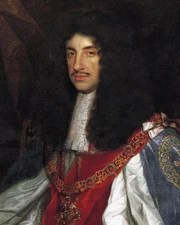
King Charles II

The Battle of the Boyne (Irish: Cath na Bóinne IPA: [ˈkah n̪ˠə ˈbˠoːn̪ʲə]) was a battle in 1690 between the English James II and the Dutch William of Orange, who, with his wife, Mary II (his cousin and James’ daughter), had overthrown James in England in 1688. The battle took place across the River Boyne near the town of Drogheda on the east coast of Ireland, and resulted in a victory for William. This turned the tide in James’s failed attempt to regain the British crown and ultimately aided in ensuring the continued Protestant ascendancy in Ireland.

The battle took place on 1 July 1690 in the old style (Julian) calendar. This was equivalent to 11 July in the new style (Gregorian) calendar, although today its commemoration is held on 12 July,[1] on which the decisive Battle of Aughrim was fought a year later. William’s forces defeated James’s army, which consisted mostly of raw recruits. The symbolic importance of this battle has made it one of the best-known battles in the history of the British Isles and a key part of the folklore of the Orange Order. Its commemoration today is principally by the Protestant Orange Institution.

The Background[edit]

The battle was the decisive encounter in a war that was primarily about James’s attempt to regain the thrones of England and Scotland, resulting from the Immortal Seven’s invitation to James’s daughter and William’s wife, Mary, to take the throne. It is regarded as a crucial moment in the struggle between Irish Protestant and Catholic interests.

The previous year William had sent the Duke of Schomberg to take charge of the Irish campaign. He was a 75-year-old professional soldier who had accompanied the King during the glorious revolution. Under his command affairs had remained static and very little had been accomplished, partly because the English troops, unaccustomed to the climate, suffered severely from fever. William, dissatisfied with the general apathy of affairs in Ireland, had decided to take charge in person.

In an Irish context, however, the war was a sectarian and ethnic conflict, in many ways a re-run of the Irish Confederate Wars of 50 years earlier. For the Jacobites, the war was fought for Irish sovereignty, religious toleration for Catholicism, and land ownership. The Catholic upper classes had lost almost all their lands after Cromwell’s conquest, as well as the right to hold public office, practice their religion, and sit in the Irish Parliament. They saw the Catholic King James as a means of redressing these grievances and securing the autonomy of Ireland from England. To these ends, under Richard Talbot, 1st Earl of Tyrconnel, they had raised an army to restore James after the Glorious Revolution. By 1690, they controlled all of Ireland except for the province of Ulster. Most of James II’s troops at the Boyne were Irish Catholics.

The majority of Irish people were “Jacobites” and supported James II due to his 1687 Declaration of Indulgence or, as it is also known, The Declaration for the Liberty of Conscience, that granted religious freedom to all denominations in England and Scotland and also due to James II’s promise to the Irish Parliament of an eventual right to self-determination.[2][3]

Conversely, for the Williamites, the war was about maintaining Protestant and English rule in Ireland. They feared for their lives and their property if James and his Catholic supporters were to rule Ireland, nor did they trust the promise of toleration, seeing the Declaration of Indulgence as a ploy to re-establish Catholicism as the sole State religion. In particular, they dreaded a repeat of the Irish Rebellion of 1641, which had been marked by widespread killings. For these reasons, Protestants fought en masse for William of Orange. Many Williamite troops at the Boyne, including their very effective irregular cavalry, were Protestants from Ulster, who called themselves “Inniskillingers” and were referred to by contemporaries as “Scots-Irish“.

Ironically, historian Derek Brown notes that if the battle is seen as part of the War of the Grand Alliance, Pope Alexander VIII was an ally of William and an enemy to James; the Papal States were part of the Grand Alliance with a shared hostility to the catholic Louis XIV of France, who at the time was attempting to establish dominance in Europe and to whom James was an ally.[4]

King Charles II 1691 Antonio Pignatelli elected as Pope Innocentius XII
1691 – Battle of Aughrim (Aghrim) Ireland, William III beats James II
1700 Gelderland accepts Gregorian calendar; yesterday is June 30, 1700
1704 Stanislaw Leszcynski becomes king of part of Poland
1730 Lorenzo Corsini chosen as Pope Clemens XII
1745 Warship Elisabeth joins Bonnie Prince Charlie’s frigate Doutelle [NS]
1771 James Cook sails Endeavour back to Downs England

Penn, pass a declaration of independence
1774 – Cossack leader Emilian Pugachevs army occupies Kazan
1776 Captain Cook departs with Resolution for 3rd trip to Pacific Ocean
1785 1st manned flight by gas balloon in Netherlands
1801 Battle at Algeciras: British fleet beats French & Spanish
1st US Secretary of Treasury Alexander Hamilton

1st US Secretary of Treasury Alexander Hamilton 1804 Former United States Secretary of the Treasury Alexander Hamilton dies after being shot in a duel.
1812 US forces led by Gen Hull invade Canada (War of 1812)
1817 1st flower show held (Dannybrook, County Cork, Ireland)
1817 – Karl Drais von Sauerbronn demonstrates bicycle course
1843 Mormon leader Joseph Smith says God allows polygamy
1850 Dutch 2nd Chamber accepts establishment of Provincial States
1859 Paper bag manufacturing machine patents by William Goodale, Mass
1862 Congress authorizes Medal of Honor
1862 – Federal troops occupy Helena Arkansas
1863 In New Zealand, British forces invade Waikato, home of the Maori King Movement, beginning a new phase of the wars between Maori and Colonial British
1874 Ontario Agricultural College founded
1874 – Start of Sherlock Holmes Adventure “Gloria Scott” (BG)
Religious Leader Joseph Smith Jr

Religious Leader Joseph Smith Jr 1878 Fever epidemic in New Orleans begin, it will kill 4,500
1882 1st ocean pier in US completed, Washington, DC
1898 Jean-Baptiste Marchand hoists French flag in Fashoda Sudan
1900 114°F (46°C), Basin, Wyoming (state record)
1901 Cy Young wins his 300th game
1901 – Striking Canadian salmon fishermen on the Pacific coast, resentful of the nonunion Japanese who continue to fish, maroon and imprison 47
1901 – In Germany a group of 104 aristocrats present a deceleration against dueling, though the tradition will go on
1902 Australian parliament agrees to female suffrage
1902 – Arthur Balfour succeeds Lord Salisbury, who retired as Prime Minister on 11 July
1905 The British and Japanese renew their alliance (of January 1902)for 10 years and agree to provide mutual support if attacked by other power
MLB Pitcher Cy Young

MLB Pitcher Cy Young 1906 Alfred Dreyfus found innocent in France
1909 16th Amendment approved (power to tax incomes)
1912 1st foreign feature film exhibited in US-“Queen Elizabeth”-NYC
1913 150,000 Ulstermen gather and resolve to resist Irish Home Rule by force of arms; since the British Liberals have promised the Irish nationalists Home Rule, civil war appears imminent
1917 The Bisbee Deportation occurs as vigilantes kidnap and deport nearly 1,300 striking miners and others from Bisbee, Arizona.
1918 Japanese battleship explodes in Bay of Tokayama, 500 killed
1920 Lithuania & USSR sign peace treaty, Lithuania becomes independent republic
1921 Babe Ruth sets record of 137 career home runs
1921 – Indians (9) & Yankees (7) combine for an AL record 16 doubles
Baseball Legend Babe Ruth

Baseball Legend Babe Ruth 1926 Guomindangleger draws against warlord Wu Peifu
1926 – Paavo Nurmi walks world record 4x1500m (16:26.2)
1927 Babe Ruth hits 30th of 60 HRs
1928 1st televised tennis match
1930 34th US Golf Open: Robert T “Bobby” Jones wins
1930 – Bradman out for 334 in Test Cricket at Headingley, 383 mins, 46 fours
1931 45,715 fans in 35,000 seat Sportsman Park St Louis, help cause many ground ruled doubles, 11 in 1st game & 21 in 2nd game for 32
1932 Hedley Verity establishes a first-class cricket record by taking all ten wickets for only ten runs against Nottinghamshire on a pitch affected by a storm
1933 Congress passes 1st minimum wage law (33 cents per hour)
1934 US Disciplinary Barracks on Alcatraz Island abandoned
Cricket Legend Donald Bradman

Cricket Legend Donald Bradman 1934 – Willy de Supervise swims world record 400m (5:16.0)
1935 Belgium recognizes Soviet Union
1937 -13) Tupolev ANT-25 non-stop flight Moscow to San Jacinto Calif
1943 Battle of Kolombangara (2nd battle of Gulf of Kula)
1943 – National Committee Freies Deutschland forms
1943 – Pope Pius XII receives German ambassador baron von Weizsacker
1943 – Russian offensive at Orel
1943 – WWII: Battle of Prokhorovka – Russians defeat German forces in one of the largest ever tank battles
1944 Theresienstadt Family camp disbands, with 4,000 people gased
1944 – US government recognizes authority of General De Gaulle
1945 Cubs stop Braves Tommy Holmes modern-day NL hitting streak at 37 games
1946 Benjamin Britten’s “Rape of Lucretia” premieres in Glyndebourne
1946 – Vance Dinges hits only Phillie pinch hit inside-the-park HR
1948 1st jets to fly across Atlantic (6 RAF de Havilland Vampires)
1949 16th All Star Baseball Game: AL wins 11-7 at Ebbets Field, Brooklyn
1949 – Baseball owners agree to erect warning paths before each fence
1949 – Dutch KLM Constellation crashes near Bombay, 45 die
1949 – LA Rams sign Norm Van Brocklin
1950 ILTF re-admit Germany & Japan in Davis Cup, Poland & Hungary withdraws
1950 – Hague Council of Annulment convicts German war criminals W Lages, FH Van de Funten & F Fischer to death
1951 Mob tries to keep black family from moving into all-white Cicero Ill
1951 – NY Yankees Allie Reynolds no-hits Cleve Indians, 8-0
1952 East German SED decides to form German DR army
1953 KTVB TV channel 7 in Boise, ID (NBC/ABC) begins broadcasting
1954 Major League Baseball Players Association founded
34th US President & WWII General Dwight D. Eisenhower

34th US President & WWII General Dwight D. Eisenhower 1954 – President Eisenhower put forward a plan for an interstate highway system
1954 – ANC President Albert Luthuli banned by South African Minister of Justice from attending public gatherings and confined to the magisterial district of Lower Tugela, Natal
1955 22nd All Star Baseball Game: NL wins 6-5 in 12 at County Stad, Milw
1955 – Christian Democratic Party forms in Argentina
1957 1st President to fly in helicopter-Dwight Eisenhower
1957 – US Surgeon Gen Leroy Burney connects smoking with lung cancer
1958 “Li’l Abner” closes at St James Theater NYC after 693 performances
1958 – US performs atmospheric nuclear test at Bikini Island
1959 NBC uses cameras to show catchers signals during ankee-Red Sox game

1960 Congo, Chad & Central African Republic declare independence
1960 – Echo I, 1st passive satellite launched
1960 – Joyce Ziske wins LPGA Hoosier Celebrity Golf Tournament
1960 – USSR’s Sputnik 5 launched with 2 dogs
1960 – XEWT TV channel 12 in Tijuana-San Diego, CA (IND) begins broadcasting
1960 – Orlyonok, the main Young Pioneer camp of the Russian SFSR, is founded.
1962 1st time 2 manned crafts in space (USSR)
1962 – Rolling Stones 1st performance (Marquee Club, London)
1964 19th US Women’s Open Golf Championship won by Mickey Wright
1966 10.51″ (26.70 cm) of rainfall, Sandusky Ohio (state record)
1966 – 37th All Star Baseball Game: NL wins 2-1 in 10 at Busch Stad, St Louis
1966 – All star MVP: Brooks Robinson (Balt Orioles)
1966 – Race riot in Chicago
1966 – US Treasury announces it will buy mutilated silver coins at silver bullion price at Philadelphia & Denver mints
1967 23 die in Newark race riot
LPGA Golfer Mickey Wright

LPGA Golfer Mickey Wright 1967 – 5th Mayor’s Trophy Game, Mets beat Yanks 4-0
1967 – Blacks in Newark, riot, 26 killed, 1500 injured & over 1000 arrested
1967 – Greek regime deprives 480 Greeks of their citizenship
1968 Couve de Murville forms government in France
1968 – USSR performs nuclear test at Eastern Kazakh/Semipalitinsk USSR
1969 98th British Golf Open: Tony Jacklin shoots a 280 at Royal Lytham
1969 – As the ‘marching season’ reaches its height there is serious rioting in Derry, Belfast and Dungiven; many familles in Belfast are forced to move from their homes
1970 Thor Heyerdahl crosses Atlantic on raft Ra II, arrives in Barbados from Morocco in 57 days
1970 – 99th British Golf Open: Jack Nicklaus shoots a 283 at St Andrews
1970 – Blues-Rock singer Janis Joplin debuts in Kentucky
Singer Janis Joplin

Singer Janis Joplin 1970 – Tanzania signs contract with China for building Tanzam-railway
1971 Juan Corona, indicted for 25 murders
1972 Democrats nominated George McGovern for president in Miami Fla
1972 – Twelve years after the banning of the ANC and Pan Africanist Congress, a new political movement, the Black People Convention is formed after a three day long conference in Pietermaritzburg, South Africa
1973 A fire destroys the entire 6th floor of the National Personnel Records Center of the United States.
1974 John Ehrlichman convicted of violating Daniel Ellsberg’s rights
1975 104th British Golf Open: Tom Watson shoots a 279 at Carnoustie
1975 – Bob Taylor catches 7 in an innings, Derbyshire v Yorkshire
1975 – Sao Tomé e Príncipe gains independence from Portugal (Natl Day)
1976 Ian Dury & Kilburns disband
Golfer Tom Watson

Golfer Tom Watson 1977 John Edrich scores his 100th 100, Surrey v Derbyshire at The Oval
1978 Sun Bank Building opens
1978 – US performs nuclear test at Nevada Test Site
1979 Ian Palce joins Whitesnake
1979 – Kiribati (formerly Gilbert Islands) declares independence from UK
1979 – “Disco Demolition Night” at Comiskey Park, causes fans to go wild & causes White Sox to forfeit 2nd game of a doubleheader to Tigers
1981 Debbie Austin wins LPGA Mayflower Golf Classic
1982 Britain announces it is returning 593 Argentine POWs
1982 – FEMA promises survivors of a nuclear war will get their mail
1983 Chad government troops reconquer Abéché
1984 Geraldine Ferraro, NY becomes 1st woman major-party VP candidate
1984 – A car bomb set off by the military wing of the ANC, explodes in Durban South Africa killing 5 and injuring 27 people
1985 “Singin’ in the Rain” opens at Gershwin Theater NYC for 367 perfs
US President & Actor Ronald Reagan

US President & Actor Ronald Reagan 1985 – Doctors discover a cancerous growth in President Reagan‘s colon
1985 – STS 51-F launch scrubbed at T -3s because of main engine shutdown
1987 15th du Maurier Golf Classic: Jody Rosenthal
1987 – 1st time in 20 years a delegation from USSR lands in Israel
1987 – 50 white South Africans meets ANCers in Dakar
1987 – 8th US Seniors Golf Open: Gary Player
1987 – Phillies Kent Tekulve pitches his 900th game in relief
1988 59th All Star Baseball Game: AL wins 2-1 at Riverfront Stadium, Cin
1988 – All star MVP: Terry Steinbach (Oakland A’s)
1988 – Margo Adams alleges Red Sox Wade Bogg’s had an affair with her
1988 – USSR launches Phobos II for Martian orbit
1989 NY Yankee pitching great Ron Guidry retires (170-91 .651, 3.29 ERA)
1990 “Les Miserables,” opens at National Theatre, Washington
1990 – Boris Yeltsin quits Soviet Communist Party
Russian President Boris Yeltsin

Russian President Boris Yeltsin 1990 – Chicago White Sox Melido Perez no-hits Yankees 8-0 in a rain shortened 6 inning game at Yankee Stadium (7th no-hitter of 1990)
1990 – In Soweto, South Africa, Shanty town women strip to the waist and confront bulldozers sent by authorities to demolish their homes
1992 13th US Seniors Golf Open: Larry Laoretti
1992 – Axl Rose arrested on riot charges in St Louis of Jul 2, 1991 concert
1992 – Betsy King wins LPGA Phar-Mor in Youngstown Golf Tournament
1993 7.8 earthquake hits Hokkaido Japan, 160 killed
1993 – Andrew Lloyd Webber‘s musical “Sunset Promenade” opens in London
1993 – Don Imus begins broadcasting to Boston on WEEI (590 AM)
1994 65th All Star Baseball Game: AL wins 7-8 at 3 Rivers Stad, Pitts
1994 – All star MVP: Fred McGriff (Atlanta Braves)
1994 – Nomination hearings for Steven Breyer for supreme court justice begins
1995 Enrique Iglesias releases his first album, “Enrique Iglesias”
MLB Center Fielder Kirby Puckett

MLB Center Fielder Kirby Puckett 1996 Kirby Puckett retires from Minnesota Twins
1996 – Michael Jordan signs a NBA contract for 1 year for $25 million
1996 – Start of 1st “Super 8’s” tournament in Kuala Lumpur
1997 Cubs play in their 5,000th consecutive gane with out being no-hit
1997 – Pirates Francisco Cordova & Ricardo Rincon no-hit Astros 3-0 in 10 inn
1998 FIFA World Cup: France beats Brazil 3-0 for football’s 16th World Cup in Saint-Denis (France’s 1st title)
1998 – Pres. Nelson Mandela accompanies Queen Elizabeth II on a coach drive through the streets of London
2005 76th All Star Baseball Game: AL wins 7-5 at Comerica Park, Detroit
2006 Hezbollah initiates Operation True Promise.
2011 82nd All Star Baseball Game: NL wins 5-1 at Chase Field, Phoenix
2012 200 people are killed by the Syrian army in Tremseh
2012 – 90-155 people are killed after an oil tanker crashes and explodes in Okogbe, Rivers State, Nigeria
Anti-apartheid activist and South African President Nelson Mandela

Anti-apartheid activist and South African President Nelson Mandela 2013 8 people are killed after a commuter train derails in Paris
2013 – Malala Yousafzai addresses the United Nations and calls for worldwide access to education
2015 Dancing with the Stars pro dancer Lindsay Arnold (21) weds highschool sweetheart Samuel Lightner Cusick in Salt Lake City

Famous Birthdays

Birthdays 1 – 100 of 202

1394 Ashikaga Yoshinori, Japanese shogun (d. 1441)
1644 Arnold Moonen, Dutch vicar/literature (David’s holy saint graduals)
1675 Evaristo E Felice dall’ Abaco, Italian cellist/composer
1730 Josiah Wedgwood, England, pottery designer/manufacturer (Wedgwood)
1757 Christian Danner, composer
1794 Heinrich Christian Pander, Russian zoologist
1801 John Hill Hewitt, composer
1802 Charles-Louis Hanssens, composer
1803 Peter Chanel, French priest and saint (d. 1841)
1807 Silas Casey, Major General (Union volunteers), (d. 1882)
Naturalist/Pacifist Henry David Thoreau

Naturalist/Pacifist Henry David Thoreau (1817) 1817 Henry David Thoreau, Concord Mass, naturalist/pacifist (Walden Pond), (d. 1862)
1821 Cesare Dominiceti, composer
1821 – Daniel Harvey Hill, Lt Gen (Confederate Army), (d. 1889)
1824 Eugène Boudin, French painter (d. 1898)
1828 Nikolai Chernyshevsky, Russian philosopher (d. 1889)
1840 Abraham Goldfaden, Eastern European Yiddish dramatist
1849 William Osler, Canada, physician/author (circulatory system)
1850 Otto Schoetensack, German anthropologist (d. 1912)
1852 Hipólito Yrigoyen, Buenos Aires, President of Argentina (1916-22, 1928-30) (d. 1933)
1854 George Eastman, Waterville New York, inventor (Kodak camera)
1861 Anton Stepanovich Arensky, composer
1863 Albert Calmette, French physician (d. 1933)
Founder of the Eastman Kodak Company George Eastman

Founder of the Eastman Kodak Company George Eastman (1854) 1863 – Paul Karl Ludwig Drude, German physicist (d. 1906)
1864 George Washington Carver, botanist (studied the peanut) [or Jan 10]
1868 Stefan George, Germany, lyric poet (Algabal)
1870 Louis II of Monaco (d. 1949)
1876 Max Jacob, French poet (d. 1944)
1880 Tod Browning, American film director (d. 1962)
1881 Ludwig Rubiner, writer [or June 12]
1884 Louis B. Mayer, Dymer, Ukraine, American film producer and creator of the star system (MGM)
1884 – Amedeo Modigliani, Italy, painter/sculptor (Reclining Nude)
1884 – Joseph Crehan, actor (Charlie Chan-Meeting at Midnight), born in Baltimore, Maryland
1885 George Sainton Kaye Butterworth, composer
1886 Jean Hersholt, Copenhagen Denmark, actor (Men in White, Aryan)
1888 Tojohiko Kagawa, Japan, Christian-social reformer (Grain of Wheat)
1892 Bruno Schulz, Polish writer and painter (d. 1942)
1895 Kirsten Flagstad, Norwegian soprano (Wagner)
1895 – Oscar Hammerstein II, lyricist who worked with Richard Rodgers, born in NYC, New York
1895 – R Buckminster Fuller, architect/inventor (geodesic dome)
1900 Fjodor Godunov-Tcherdynchev, Russian poet (Life of Tchernyshevsky)
1901 Robert Allenby, Australian golfer, born in Melbourne, Victoria
1902 Gunther Anders, writer
Poet Pablo Neruda

Poet Pablo Neruda (1904) 1904 Pablo Neruda, Chile, poet (Residence on Earth-Nobel 1971)
1905 John C F, son of English King George V
1908 Alain Cuny, actor (Detective, Weite Land, Emmanuelle)
1908 – Ernest Burnelle, Belgian politician
1908 – Johan Franco, composer
1908 – Milton Berle, Harlem comedian (Uncle Miltie, Mr Television), born in NYC, New York
1909 2nd viscount Camrose, British Conserv Lower house leader (1941-45)
1909 – Joey Faye, comedian (Joey Faye’s Follies), born in NYC, New York
1909 – Souphanouvong, [Red Prince], president of Laos (1975-87)
1909 – Curly Joe DeRita, American actor and comedian (d. 1993)
1909 – Fritz Leonhardt, German civil engineer (d. 1999)
1911 Johanna Moosdorf, writer
1912 Broderick Vernon Chinnery-Haldane, photographer
1913 Willis Lamb, American physicist, Nobel laureate (d. 2008)
1915 Michael Fenton Haddon, mining engineer
1917 Andrew Wyeth, Chadds Ford Pa, painter (Christina’s World)
1919 Vera Hruba Ralston, Prague Czech, actress (Dajkota) [or 6/12/1921]
1920 Honoré Desmond Sharrer, West Point New York, American artist
1920 – Keith Andes, Ocean City NJ, actor (Farmer’s Daughter, Away All Boats)
1920 – Paul Foster, singer
1920 – Beah Richards, American actress (d. 2000)
Author Pierre Berton

Author Pierre Berton (1920) 1920 – Pierre Berton, Whitehorse Yukon, Canadian author (War of 1812)
1921 Trevor Illtyd Williams, scientific writer
1921 – Bob Fillion, French Canadian ice hockey player
1922 Clark MacGregor, politician (involved in Watergate)
1922 – James E[dwin] Gunn, US, sci-fi author (Station in Space, Immortal)
1922 – Mark O Hatfield, (Sen-R Oregon, 1967- )
1924 Jaap Geraedts, composer
1925 Roger Smith, CEO (General Motors)
1926 Beah Richards, Vicksburg MS, actress/playwright (Big Shot, Generation)
1927 Gualberto T Hernandez, perfect minister Neth Antilles
1928 Elias James Corey, American chemist, Nobel laureate
1929 Pavle Merku, composer
1930 Gordon Pinsent, Canadian actor, director, and writer
1931 Andre Laporte, Flemish composer
1931 – Bob Traxler, (Rep-D-MI, 1974- )
1931 – Lord Clinton, English large landowner/multi-millionaire
1932 Harold William Woolhouse, plant scientist
1932 – Otis Crandell Davis, Ala, 400m/4X400m relayer (Olympic-gold-1960)
1933 Donald E. Westlake, American author
1934 Van Cliburn Jr, [Harvey Lavan], La, pianist (Tchaikovsky 1958)
1935 Barrie Wilson, academic
1935 – Chris Burger, cricketer (South African batsman v Australia 1957-58)
1936 Jan Nemec, Prague Czech, director (Diamonds of the Night)
Actor/Comedian Bill Cosby

Actor/Comedian Bill Cosby (1937) 1937 Bill Cosby, Phila, actor/comedian (I Spy, Cosby, Leonard Part 6)
1937 – Mickey Edwards, (Rep-R-OK, 1977- )
1937 – Lionel Jospin, Prime Minister of France 1997-2002
1937 – Michel Louvain, French Canadian singer
1938 Mickey Stratton, Meriden Ct, softball catcher (Hall of Fame 1969)
1938 – Ron Fairly, American baseball player
1938 – Wieger Mensonides, Dutch swimmer
1938 – Eiko Ishioka, Tokyo, Japan, Costume Designer (Academy Award, Bram Stoker’s Dracula), (d. 2012)
1939 Phillip Adams, Australian broadcaster and journalist
1941 Joseph Whipp, American actor
1942 Richard Stoltzman, clarinetist (Tashi), born in Omaha, Nebraska
1942 – Billy Smith, Australian rugby league footballer
1943 Bruce Taylor, cricketer (big-hitting NZ all-rounder 1965-73)
Rock vocalist Christine McVie

Rock vocalist Christine McVie (1943) 1943 – Christine McVie, Lancashire, rock vocalist (Fleetwood Mac-Got A Hold on Me)

Famous Weddings

Weddings 1 – 9 of 9

1472 Richard Plantagenet, Duke of Gloucester and later King of England, marries Anne Neville, daughter of the Earl of Warwick, in Westminster Abbey.
King of England Henry VIII

King of England Henry VIII (1543) 1543 England’s King Henry VIII weds Catherine Parr (6th & last wife)
1918 Artist Pablo Picasso (36) marries ballet dancer Olga Khokhlova (27)
1933 Fifth Greatest Male Star of All Time Fred Astaire (34) weds socialite Phyllis Livingston Potter (25)
1937 Explorer Jacques Cousteau (27) weds scuba diver Simone Melchior (18) at Saint-Louis-des-Invalides in Paris
1963 NFL coach Jimmy Johnson (19) weds Linda Kay Cooper
1998 “Dynasty” actress Catherine Oxenberg (36) weds “Chinatown” film producer Robert Evans (68) in Beverly Hills, California
2007 World’s tallest man who measures 7’9″ Bao Xishun (56) weds Xia Shujian (28) in a traditional Mongolian ceremony at the tomb of Kublai Khan in Beijing, China
2008 Black Eyed Peas rapper Taboo (32) weds fashion publicist Jaymie Dizon (29) at St. Andrews Catholic Church in Pasadena, California

Famous Deaths

Deaths 1 – 100 of 102

783 Bertha “with the great feet”, wife of French King Pippin III, dies
1073 Johannes Gualbertus, Italian monk/saint, dies
1429 John [Jean C] Gerson, Fren theologist (Theologica mystic), dies at 65
1441 Ashikaga Yoshinori, Japanese shogun (b. 1394)
1450 Jack Cade, slain in a revolt against British King Henry VI
1536 Desiderius Erasmus, humanist/priest (Novum instrumentum omne), dies aged 69
1545 Maria Manuela van Portugal, niece of Spanish king Philip II, dies
Humanist and Theologian Erasmus

Humanist and Theologian Erasmus (1536) 1575 Renée/Renata de France, duchess of Ferara/daughter of Louis XII, dies
1584 Steven Borough, English explorer (b. 1525)
1633 Simon Besler, composer, dies at 49
1640 Henry Casimir I, count of Nassau-Dietz, dies
1664 Stefano della Bella, Italian printmaker (b. 1610)
1682 Jean Picard, French astronomer (b. 1620)
1693 John Ashby, English admiral
1712 Richard Cromwell, English Lord Protector (1658-59), dies at 85
1742 Evaristo EF dall’ Abaco, Ital cellist/composer, dies on 67th birthday
1749 Charles de la Boische, Marquis de Beauharnois, Governor of New France
1773 Johann Joachim Quantz, German royal flautist/composer, dies at 76
1804 Alexander Hamilton, Secretary of the Treasury, killed by Vice President Aaron Burr in pistol duel near Weehawken
1839 Christian Traugott Tag, composer, dies at 62
1st US Secretary of Treasury Alexander Hamilton

1st US Secretary of Treasury Alexander Hamilton (1804) 1844 Charles-Louis Panckoucke, French publisher, dies at 63
1845 Henrik Wergeland, Norwegian author (b. 1808)
1849 Dolley Madison, 4th First Lady Of The United States (b. 1768)
1874 Fritz Reuter, writer, dies at 63
1882 Alfred Humphreys Pease, composer, dies at 44
1883 Hermann Zopff, composer, dies at 57
1897 Felix Godefroid, composer, dies at 78
1898 Paul Voulet, French captain/mass murderer in Senegal, dies
1899 Esquire Mauritius A de Savornin Lohman, gov of Suriname, dies at 67
1902 Pieter Caland, Dutch hydraulic engineer (New Waterway), dies at 74
1906 Henrique Alves de Mesquita, composer, dies at 70
1910 Charles Stewart Rolls, British engineer and aviator (b. 1887)
1916 Aritius S Talma, Dutch minister of Agriculture, dies at 52
1917 Fournier, Swiss/French postage stamp merchant/forger, dies
1918 Dragutin Lerman, Croatian explorer (b. 1864)
1926 Charles Wood, composer, dies at 40
1929 Robert Henri, US painter (The Eight), dies at 63
1933 Willem H Drucker, lawyer, dies at 45
1934 Ole Evinrude, Norwegian-American inventor and industrialist (b. 1877)
1935 Alfred Dreyfus, French officier (Dreyfus Affair), dies
1945 Boris Galerkin, Russian mathematician (b. 1871)
1947 Jimmie Lunceford, American saxophonist and bandleader (b. 1902)
1949 Douglas Hyde, first President of Ireland (b. 1860)
1950 Elsie de Wolfe, American socialite and interior decorator (b. 1865)
1953 Joseph Jongen, Belgian composer, dies at 79
1953 – Marie-Alphonse-Nicolas-Joseph Jongen, composer, dies at 79
1956 Maurice Lippens, Belgian governor of Congo (1921-23), dies at 80
1961 Mazo de la Roche, Canadian author (b. 1879)
1962 Roger Wolfe Kahn, American band leader (b. 1907)
1964 William Solomon, South African cricketer (Test 1898-99), dies
1966 D T Suzuki, Zen Buddhism scholar, dies in Tokyo Japan at 96
1971 Yvon Robert, French Canadian professional wrestler (b. 1914)
1973 Lon Chaney Jr, actor (Wolfman), dies after long illness at 66
1976 Ted Mack, TV host (Original Amateur Hour), dies at 72
1977 Ed Holmes, actor (Growing Paynes, Once Upon a Tune), dies at 66
1977 – Frantisek Suchy, composer, dies at 75
1979 Kalervo Tuukkanen, composer, dies at 69
1979 – Minnie Ripperton, [Andrea Davis], singer (Lovin’ You), dies at 30
1980 John W Davis, Pres (WV State college), dies at 92
1981 Ben Seijes, historian (WW II), dies at 73
1982 Kenneth More, Brit actor (Genevieve), dies of Parkinson disease at 67
1983 Chris Wood, rocker (Traffic), dies at 39
1988 Joshua Logan, Broadway producer, dies at 79 of palsy
1988 – Raymond W Goldsmith, US economist, dies at 83
1990 Richard R Briggs, dies after short illness at 71
1990 – João Saldanha, Brazilian journalist and football manager (b. 1917)
1992 Albert Pierrepont, last British executioner (433 men/17 women), dies
1992 – Reginald Beck, English film editor (Robbery, Accident, Boom), dies
1993 Gusti Huber, Mother of Bibi Besch, dies of heart failure at 78
1993 – Lily van Lugt Melsert, actress (Tomorrow will be better), dies at 91
1993 – Dan Eldon, British photojournalist (b. 1970)
1994 David Malcolm Lewis, expert in Greek Epigraphy, dies at 56
1994 – Henk Terlingen, radio/TV-host (Sport in Image), dies at 52
1994 – James Bysse Joll, historian, dies at 76
1995 Alan David Marks, pianist/composer, dies at 49
1995 – Earl Coleman, singer, dies at 69
1995 – Ernie Furtado, bassist, dies at 72
1995 – Michael Clegg, naturalist/broadcaster, dies at 62
1996 Andrew Rodger Waterson, scholar Naturalist, dies at 84
1996 – Gottfried von Einem, composer, dies at 78
1996 – John Boon, publisher, dies at 79
1996 – John Chancellor, news anchor (VOA, NBC), dies at 68
1996 – John William Chancellor, journalist, dies at 68
1996 – Jonathan Melvoin, keyboardist (Smashing Pumpkins), dies of heorin OD
1996 – Nazar Mohammad, cricketer (Pakistan’s 1st five Tests 1952-53), dies
1996 – William Darling, journalist, dies at 73
1998 Serge Lemoyne, French Canadian artist (b. 1941)
1998 – Jimmy Driftwood, American folk songwriter and musician (b. 1907)
1999 Bill Owen, British actor (b. 1914)
2000 Charles Merritt, Canadian Army officer and recipient of the Victoria Cross during World War II (b. 1908)
2002 Edward Lee Howard, CIA Case Officer and alleged Soviet spy, dies at 50 after breaking his neck during a fall
2003 Benny Carter, American musician (b. 1907)
2004 Betty Oliphant, co-founder of National Ballet of Canada (b. 1918)
2005 John King, Baron King of Wartnaby, Chief executive of British Airways since its privitisation (b. 1917)
2007 Stan Zemanek, Australian radio personality (b.1947)
2007 – Mr. Butch, Iconic Boston street figure (b. 1951)
2007 – Robert Burås, Norwegian guitar player (b. 1975)
2008 Tony Snow, former speechwriter for Presidents George H.W. Bush and press secretary for George W. Bush (b. 1955)
2008 – Bobby Murcer, American baseball outfielder (NY Yankees, SF Giants and Chicago Cubs), dies from complications related to brain cancer at 62
2010 Harvey Pekar, American comic book writer (b. 1939)

 

CAREFUL WHO YOU INVITE AT YOUR WEDDING

I don’t know exactly why but this clip always make me laugh

I’ve seen it a 1000 times, but still works for me

Bonefire – World record bonfire – Bejesus look at the size of it!

I didn’t know they celebrated the 12th over there ? I know – I jest

Your $12.5millio​n Has Been Approved Via U’B’A Bank ATM Master Debit Card!!

Your $12.5millio​n Has Been Approved Via U’B’A Bank ATM Master Debit Card!!.

Your $12.5millio​n Has Been Approved Via U’B’A Bank ATM Master Debit Card!!

Wow , I’m a millionaire
I got the email confirmation a few days ago and my feet haven’t touched thee ground since.
Hmmmmmmmmmmmmmmmmm
Attn: Dear Beneficiary !!
This is to officially inform you that the management of this United Bank For African plc, can not afford to wait for your response anymore after all our previous email messages that you did not respond.
  Now we wishes to inform you again that you have a wining contract compensation sum of $ 12.5Million USD from Cotonou state of Benin Republic. These funds was deposited last month and this bank have been doing their best to get in touch with you but all to no avail
   The bank have decided to activate the total sum into an electronic debit master card and deliver to your address.
The said debit card will be highly upgraded in other for you to be able to make withdrawal of $ 8000.00 per day from it ‘until the total sum is withdrawn completely. The reason for this sudden development is because bank to bank wire transfer will attract a lot of distractions and other international transfer troubles.
 
Here Are your ATM Master card details / Master No. 70000.4442311.9991 / Reactivation pin- 06TX  /.   
However ‘you are to provide only the below details in other for this transaction to move forward quickly:
Your Full Name_____________
Your Current Home or office address__________
Your Home or Cell Telephone number_________
Sex________
Age_________
Occupation________
other email address_________
Identity card copy or Number______
             
     Finally, you are advised to indicate this serial code of conduct XC09 in your subject while responding, so that we can quickly attend to you as the real beneficiary because there are a lot of internet scam these days. And again you will be required only to pay for your Courier Services which is delivery cost of $ 109.00 Via FedEx Express, it will take only 48hours to arrive your address but before then, the tracking number of your parcel will be sent to you so that you can keep on tracking your parcel until the arrival date.
please protect your email address for your own good because all the required information such as your funds document will be passed to you via your email box.
Sincerely 
U’B’A BANK PLC
Mr. Andrew Bashar Khan
Foreign Remittance department
TeL: + 229-97314542

The Jihad culture of death. British Muslims need to stand up and be counted!

Remembering all victims of the 7/7 Bombings

Today as we remember the innocent victims of the 7/7 bombing my thoughts are with the families of those so callously murdered that day and the many injured, both physically and mentally who will live with the terrible events of that day for the rest of their lives.

The 52 victims were of diverse backgrounds; among them were several foreign-born British nationals, foreign exchange students, parents. Christian alongside Muslins and other faiths died for the twisted ideology of a few sick individuals. More than 700 more were also injured in the attacks.

Three of the bombers were British-born sons of Pakistani immigrants; Lindsay was a convert born in Jamaica. All had lived in our country and enjoyed our freedom and democracy and this made their betrayal all the more hard to stomach.

The investigation into the bombings found that both Mohammad Sidique Khan and Shehzad Tanweer had previously spent several months in Pakistan where it is very likely that they were in contact with Al-Qaeda and went through extensive extremist training. Regardless of where these animals were radicalised It is a sad truth that throughout history all terrorists fundamentally see themselves as altruists believing that they are serving a “good” cause designed to achieve a greater good for a wider constituency—whether real or imagined—which the terrorist and his organization or cell purport to represent.

For decades the IRA and other Republican terrorists waged a indiscriminate savage war against the British government and people and the British population were sadly familiar with the slaughter of the innocent and murder of members of their security forces on an industrial scale. That doesn’t mean we were immune to the almost daily attacks during the height of the troubles, but we learnt to live with it and day to day life continued in spite of the shock and horror of these terrorist outrages. The British people have long been able to move forward after such attacks and this resolve must surely send a message to all terrorist throughout the world. You can attack us, kill our people and hurt us but we will never give in to your demands and we will hunt you to the ends of the earth.

Hell has no fury like a vengeful British public.

Growing up in Loyalist Belfast during the worst years of the troubles I have seen things that no child should ever have to witness and I have lost count of how many bombs, bullets, murders and terrorist attacks that have affected me directly. As a child I was always fearful of the IRA and lived in a constant state of alertness for the next IRA attack and every car that backed fired was a bomb going off and I would “hit the deck”

Death stalked the streets of Belfast & Northern Ireland day in and day out and there was no escape from the madness that surrounded and engulfed us.

The communities from The Shankill , The Falls and surrounding areas arguable suffered most during the Troubles , as not only were we on the “frontline” of the sectarian divide , but the paramilitaries from both sides lived and operated among us. I have lost count of how many people I grew up with whom have been murdered, imprisoned or had their life’s destroyed as a direct result of the Troubles.

When I had finally had enough of the madness of Belfast I moved to London and began to build a better life for myself and was able to look forward to the future. Most of the people I met were friendly and accommodating and I made friends fast and learnt a bit about the world. However there was always an element of suspicion and mistrust in some people and this was largely because of my thick Belfast accent. I have lost count of how many times I have been in pubs or clubs in London and people have heard my accent and automatically came to the conclusion that I was either a member of the IRA or I sympathised with their cause.

This was extremely annoying to me and as I am very proud of my Protestant culture and heritage.

I was born British into a British country and I am extremely proud of my British & Unionist heritage That doesn’t mean I hate Catholics or wish harm on them, I don’t, it means I have a different point of view and democracy is all about freedom of choice and my choice is to maintain the Union with the UK and embrace and celebrate my loyalist culture and traditions.

I remember once I was working part time as a barman in a private members club in central London and the membership was largely made up of retired British army personnel. One day whilst working I noticed a guy at the end of the bar whom had no legs from the knee down. When I went to serve him, he started to abuse me and told me that his legs had been blown off in a bomb attack in Belfast and he hated all “Paddy’s”.

Not my problem I told him.

When he heard that I was from the Shankill Road his attitude changed and he even left me a large tip.

Another time there was a huge leaving do for someone high up in the British Army and the day before all these security force persons arrived and swept the place, I suppose making sure there were no bombs or terrorists hiding in the loo. When one of these guys heard my accent he came over and had a casual chat with me. Five minutes after they had completed the sweep the bar manager came over and told me to go home as I wasn’t needed anymore. I knew this to be a lie, as I had been called in last minute. The next day I got a call to say I wouldn’t be needed that day and furthermore they never used to again. I was a victim of discrimination due to my accent and there was nothing I could do about it.

The point I am trying to make is that at the minute there is a sense of suspicion and mistrust surrounding all Muslims and many British Muslins feel isolated and ostracised. I know from first hand experience what it feels like to be judge on your culture (Belfast Accent) and face prejudice on a regular basis.

British muslim’s need to stand up and be counted and let the rest of the UK know that they abhor the extremists and they will do everything in their power to steer their young away from the preachers of hate and bring these scum to the attention of the authorities.

At the minute the silence from the Muslim community is deafening and its up to their leaders to lead the way and show their communities that they are proud to be British and stand along side us in the fight against the merchants of death. the  mistrust that many hold against the Muslim community .

I can understand the mistrust and suspicion many white British people feel towards Muslims and Islam.  This is largely due to the actions of a few twisted individuals whom follow the Jihhad culture of death and can’t wait to claim their 72 Dark-Eyed Virgins when they arrive in heaven.

Jihhad Bride

If there is a god and any justice the only thing waiting for them in heaven will hopefully be a nine hundred pound ugly transvestite, will long black teeth and short curly beards and a taste for sadistic torture and all of eternity to torment these scum of thee earth

To beat terrorism we must stand as one and send a clear message out to the Jihad death merchants and the message is this.

You will never defeat us and no matter how long it takes we will destroy you and your erase your twisted ideology forever!

if you have enjoyed reading my story and daily blogs please consider making a small donation

paypal donation button