Top ISIS commander ‘Omar the Chechen ‘ believed to have been killed in airstrike.
This is the third or fourth time he has reportedly been killed and like any death of Islamic States top leaders confirmation is slow and details are often hidden behind the fog of war.
However US sources are confident they have got it right this time and if so this will be a major blow to the disciples of hate and the twisted ideology of Islamic State and their deluded followers.
Slowly slowly catch the monkey
Fighters from the Syrian Democratic Forces (SDF)
According to todays Independent ISIS opposition is at the ‘ gates of Raqqa ‘ as Syrian Democratic Forces reclaim villages from their control
The Syrian Democratic Forces have been celebrating a string of victories as they reclaim villages from Isis control, putting them within 20 miles of Raqqa
Without a doubt the forces against IS are slowly gaining the upper hand and IS’s area of control is reducing almost daily. Desertion among their members has become such an issue that it carries a mandatory death sentence and according to local sources the majority of deserters are foreign and European fighters whom have become disillusioned with the harsh conditions and religious fanaticism.
Whatever is causing disharmony among these monstrous Jihadists is good news for the world in general and the death of the Chechen is another nail in the coffin which will send these scum straight to HELL!
————————————-
Abu Omar the Chechen Dead
The United States has confirmed that ISIS commander Omar al-Shishani, also known as “Omar the Chechen,” is dead, CBS News’ David Martin reports.
According to officials, he survived an initial attack carried out in the beginning of March, but has since died of his wounds, Martin reports. A U.S. official previously said an attack was carried out March 4 by multiple waves of planes and drone aircraft.
Al-Shishani, whose real name was Tarkhan Batirashvili, was described as the Islamic State of Iraq and Syria (ISIS) equivalent of a Secretary of Defense. He was an ethnic Chechen from the former Soviet Republic of Georgia.
The U.S. government had a longstanding $5-million bounty for information leading to his being brought to justice.
In announcing the strike last week, Pentagon press secretary Peter Cook said it occurred near al-Shaddadeh, a former ISIS stronghold that was captured in February by the U.S.-backed, predominantly Kurdish Syria Democratic Forces. He said the ISIS leader held numerous senior military positions within the group, including “minister of war,” and was based in Raqqa, Syria.
Tarkhan Tayumurazovich Batirashvili (Georgian: თარხან ბათირაშვილი; February 11, 1986 – March 14, 2016), known by his nom de guerreAbu Omar al-Shishani (Arabic: أبو عمر الشيشاني, Abū ‘Umar ash-Shīshānī , “Abu Omar the Chechen”)[9] or Omar al-Shishani, was a GeorgianKist jihadist who served as a commander for the Islamic State in Syria, and a former sergeant in the Georgian Army.[9]
In May 2013, Batirashvili was appointed northern commander for ISIL, with authority over ISIL’s military operations and forces in northern Syria, specifically Aleppo, al-Raqqah, Latakia, and northern Idlib Provinces.By late 2013, he was the ISIL amir (leader) for northern Syria and was operating in and around Aleppo Province. He was also in charge of fighters from Chechnya and elsewhere in the Caucasus.[10] Units under his command participated in major assaults on Syrian military bases in and around Aleppo, including the capture of Menagh Airbase in August 2013.[3] He was considered “one of the most influential military leaders of the Syrian opposition forces”.[2] By mid-2014, Batirashvili was a senior ISIL commander and Shura Council member based in al-Raqqah, Syria.[10]
Batirashvili died from his injuries several days after being the target of a 4 March 2016 U.S. Airstrike near the al-Shaddadi region in Northern Syria, according to U.S. officials
Batirashvili grew up in the largely Kist-populated village of Birkiani, located in the Pankisi Gorge in northeast Georgia. In his youth, he worked as a shepherd in the hills above the gorge. Later in the 1990s, the Pankisi Gorge was a major transit point for rebels participating in the Second Chechen War, and it was there that Batirashvili reportedly came into contact with the Chechen rebels moving into Russia.[17] According to his father, a young Batirashvili secretly helped Chechen militants into Russia and sometimes joined them on missions against Russian troops.[3]
Service in the Georgian Armed Forces
After finishing high school, Batirashvili joined the Georgian Army and distinguished himself as master of various weaponry and maps, according to his former commander Malkhaz Topuria, who recruited him into a special reconnaissance group.[3] His unit was trained by US special forces, and Batirashvili was reportedly a “star pupil”.[18] He rose to the rank of sergeant in a newly formed intelligence unit, and during the 2008 Russo-Georgian War he served near the front line at the Battle of Tskhinvali, spying on Russian tank columns and relaying their coordinates to Georgian artillery units.[3] Batirashvili’s unit inflicted serious damage on the Russians, and among the actions they participated in was an attack on a column of the Russian 58th Army during which the commander of the 58th Army, General Anatoly Khrulyov, was wounded.[18]
Batirashvili was never decorated for his military service.[2] He was due to be promoted to become an officer, but in 2010 he was diagnosed with tuberculosis. After spending several months in a military hospital, he was discharged on medical grounds. He tried and failed to re-enlist.[3][17] Upon returning home, he was unable to secure work in the local police force. Around this time, his mother also died of cancer. According to his father, he became “very disillusioned”.[3]
Militant activity
According to the Georgian Defense Ministry, Batirashvili was arrested in September 2010 for illegally harboring weapons and was sentenced to three years in prison.[3] He was allegedly released after serving about 16 months in early 2012 and immediately left the country. According to an interview on a jihadist website, Batirashvili said that prison transformed him; “I promised God that if I come out of prison alive, I’ll go fight jihad for the sake of God”, he said.[3]
Batirashvili reportedly told his father that he was leaving for Istanbul, where members of the Chechen diaspora were ready to recruit him to lead fighters inside war-ravaged Syria; an older brother had already gone to Syria some months before.[3] In an interview, Batirashvili said that he had considered going to Yemen and briefly lived in Egypt before ultimately arriving in Syria in March 2012.[19][20]
Muhajireen Brigade
His first command was the Muhajireen Brigade, an Islamist jihadist group made up of foreign fighters that was formed in the summer of 2012. His unit became involved in the Battle of Aleppo, and in October 2012 they assisted Al-Nusra Front in a raid on an air defense and Scud missile base in Aleppo.[8]
In December 2012, they fought alongside Al-Nusra Front during the overrunning of the Sheikh Suleiman Army base in Western Aleppo. In February 2013, together with the Tawhid Brigades and Al-Nusra Front, they stormed the base of the Syrian military’s 80th Regiment near the main airport in Aleppo.[21]
In March 2013, Kavkaz Center reported that the Muhajireen Brigade had merged with two Syrian jihadist groups called Jaish Muhammad and Kataeb Khattab to form a new group called Jaish al-Muhajireen wal-Ansar, or Army of Emigrants and Helpers.[22] The group played a key role in the August 2013 capture of Menagh Air Base, which culminated in a Vehicle Borne Improvised Explosive Device (VBIED) driven by two of their members killing and wounding many of the last remaining Syrian Armed Forces defenders.[23] A branch of the Muhajireen Brigade was involved in the 2013 Latakia offensive.[24]
Islamic State of Iraq and the Levant
In Mid 2013, Batirashvili made an oath of allegiance to Abu Bakr al-Baghdadi and was appointed northern commander for the Islamic State of Iraq and the Levant (ISIL).[25] In August 2013, Batirashvili released a statement announcing the expulsion of one of his commanders, Emir Seyfullah, and twenty-seven of his fighters. Batirashvili accused the men of embezzlement and stirring up the animosity of local Syrians against the foreign fighters by indulging in takfir—excommunication—against other Muslims.[26] However, Seyfullah denied these allegations and claimed that the dispute was due to his refusal to join ISIL with Batirashvili.[27] In late 2013, Batirashvili was replaced as leader of Jaish al-Muhajireen wal-Ansar by another Chechen commander known as Salahuddin, as most of the Chechen members of the group did not support Batirashvili’s support of ISIL, due to their preexisting oath to the Caucasus Emirate militant group, and it’s leader Dokka Umarov.[2][6] By mid-2014, Batirashvili was a senior ISIL commander and Shura Council member operating in Ar-Raqqah, Syria.[25]
According to Batirashvili’s father, he called him once since he left for Syria to tell him that he was now married to a Chechen woman and had a daughter named Sophia.[15] For a time, Batirashvili lived with his family in a large villa owned by a businessman in the town of Huraytan just northwest of Aleppo.[28] He is said to have overseen the group’s prison facility near Ar-Raqqah, where foreign hostages may have been held.[29] By 2016, Batirashvili led special battalions of the Islamic State, in particular a unit named as ‘the group of the central directorate’ which appears to be the primary special forces strike force of the group.[30]
Reports of death or capture
Shishani has been reported as being killed on numerous occasions. In 2014, there were reports that he had been killed in various parts of Syria and Iraq in May, June, August and October, all of which proved to be untrue.[31] On 13 November 2014, Chechen leader Ramzan Kadyrov posted on his personal Instagram account that al-Shishani had been killed, and posted a photo of a dead ginger-bearded man, however the man in the photograph was not Shishani, and Kadyrov later deleted the post. Before the post was deleted, the statement was picked up and reported on by many media outlets around the world.[31]
There were further reports of his death in 2015: in May,[32] June[33] and October.[34] On December 27, Russian News Agency TASS, quoting EIN news, claimed that American special forces had captured al-Shishani near Kirkuk in Iraq.[35] This report was denied by a Pentagon spokesman.[36]
In March 2016, several unnamed US Officials told CNN that Shishani may have been killed in a 4 March targeted airstrike, near the Syrian town of al-Shadadi; however, they were unable to confirm his death. Other officials said he had been “critically injured” in the strike, and that US military intelligence was assessing whether or not he had died.[37][38] On 12 March, the Syrian Observatory for Human Rights (SOHR) reported that al-Shishani had become clinically dead following the US airstrikes, with the ISIL commander in critical condition and unable to breathe without the use of life-support machines.[39][40] On 14 March 2016, two U.S. officials told CNN that there was confirmation al-Shishani had died after the airstrike
— John Chambers – A Belfast Child (@ABelfastChild1) January 19, 2020
Two Dublin Families at war as underworld godfathers fight for supremacy
All-out gang war has broken out in Dublin, with two high-profile murders within a few days
On Monday 8th February Eddie Hutch, 59, brother of former gangland boss Gerry “The Monk” Hutch, was shot dead by four masked men at his home in Poplar Row in Dublin’s north inner city.
Eddie Hutch
Detectives have no doubt it was a revenge killing for the murder three days earlier of leading Dublin criminal David Byrne, 33, in a prohibition era, Chicago-style attack at the Regency Hotel, also on Dublin’s North Side.
David Byrne’s body
——————————————
Fatal Dublin Shooting at boxing weigh-in Linked To Gangland Feud
——————————————
Byrne’s murder at a boxing weigh-in before 200 people, including children, was believed to have been in retaliation for last September’s assassination of 34-year-old Gary Hutch, a nephew of both Eddie and The Monk, near Marbella in southern Spain.
Gary Hutch
Gary Hutch is believed to have been shot dead by members of a gang run by Spain-based Dublin criminal Christy “Dapper Don” Kinahan, 59, with whom Byrne worked in massive ongoing operations to smuggle drugs into Britain and Ireland. Gary Hutch was believed by the Kinahan gang to have been a police informer.
Christy ‘Dapper Don ‘ Kinahan
Kinahan, who has served terms in prison, lives in a $7 million mansion near Marbella. Kinihan is thought to have stashed away hundreds of millions of euros from his criminal activities.
———————————–
Inside the Irish Mafia
———————————–
His son, Daniel, a boxing promoter, was believed to have been a target in the Friday Regency Hotel shooting by a gang of six, including three men disguised as an elite Swat unit from the gardai (Irish police), a man dressed as a woman, and two others.
Daniel Kinahan, who travelled from Spain for the boxing tournament – abandoned after the shootout – was reported to have escaped by diving with his bodyguard through a window.
Two of murder victim David Byrne’s criminal associates were also injured in the shooting and received hospital treatment. The hotel attack gang used IRA-style AK47 rifles and pistols in the attack.
Although the Continuity IRA on Monday claimed responsibility for the attack in a coded phone call to the BBC – claiming it was in revenge for the 2012 murder of Real IRA Dublin boss Alan Ryan – Gardai were skeptical the call was genuine. They are convinced it is a gangland war not involving paramilitaries.
Within hours of the call, and despite a huge Garda presence at checkpoints throughout Dublin, four men drove a silver BMW to Eddie Hutch’s home where they killed him immediately with several shots.
They abandoned their car a short distance away and made efforts to set fire to it, but it was seized in time by Gardai who also found balaclavas and a can of petrol inside the vehicle.
In the Friday shooting at the Regency Hotel – a familiar sight to tourists on the way to Dublin Airport – one child was heard on a video phone-recording scream, “Daddy, help me! What was that?”
Kevin McAnena, a sports reporter for BBC Radio Foyle in Northern Ireland who was at the weigh-in, said he dived behind a desk and a gunman peered over and aimed a rifle at him but didn’t fire.
McAnena added, “I was looking down the barrel of the gun and thought I was going to die. It was utterly terrifying.”
Detectives believe some of the gang may have been imported from abroad, but eyewitnesses also said at least one of the masked gunmen disguised as a Garda spoke with a Dublin accent.
Gardai collected video footage and photographs from the scene and they believe they are close to identifying some of the gunmen. They also say evidence in the car seized after the Eddie Hutch murder will help them trace the gunmen who killed him.
Eddie Hutch was known to the Gardai, but for mostly minor crimes. Although relatives were linked to gangland, he was not regarded as violent and was not believed to be criminally active.
————————————-
————————————-
—————————————————
Gerry Hutch
Profile
Gerry Hutch (born 1963) is an Irish former criminal. He was regarded as the prime suspect for two of the biggest armed robberies in Irish history. Known for leading a “disciplined, ascetic lifestyle” since leaving prison in 1985, he was christened “The Monk” by Veronica Guerin, an investigative journalist who applied nicknames to Ireland’s crime bosses before being assassinated in 1996
Born in central Dublin, his career began at the age of 10 when Hutch joined the Bugsy Malone Gang of inner city youngsters (named after the feature film), which he later led, whose crimes in the 1970s included “jump-overs” – jumping over bank counters, grabbing cash and running.
He was later part of a gang involved in major robberies and received many convictions between 1970 and 1983 intermittently spending time in prison. His gang was said to have amassed an estimated IR£40 million from a series of bank robberies, jewellery heists, and fraud scams spanning almost eight years. Hutch has also been awarded money from legal actions in Irish courts. These included £8,500 won from Securicor Ireland in June 1991, £2,000 from the Sunday Tribune newspaper in a libel action and around £26,000 won in legal actions against the Irish state.
Hutch admitted to being a “convicted criminal” in a 2008 interview with The Independent, but insisted that he made his money through property deals, not crime.
Corinthians Boxing Club
In 1998 he was a founder member of the Corinthians Boxing Club in Dublin and has served as treasurer for the club. The club has a full gym and a boxing ring. The latter was donated by film director Jim Sheridan after making the film The Boxer.
Criminal Assets Bureau
In 1999, in the course of court proceedings brought against Hutch by the Irish state’s anti money laundering agency, the Criminal Assets Bureau (CAB), Detective Chief Superintendent Felix McKenna stated that Hutch had been involved in the IR£1.7 million robbery of an armoured van at Marino Mart in January 1987 and the IR£3 million armed robbery of a Brinks Allied Security Depot in Clonshaugh, County Dublin, in 1995, which had been the largest cash robbery in the State at the time.
Hutch eventually reached an IR£1.2m settlement with the CAB to “cover back taxes and interest for a nine-year period”.
Carry Any Body
After the CAB settlement, Hutch applied for and was granted a taxi licence, and set up the limousine service Carry Any Body. The name is a humorous reference to the Criminal Assets Bureau.
He has featured in the Irish media as he has driven celebrities including Mike Tyson on their visits to Ireland.
Hutch appeared on RTÉ’s Prime Time programme in March 2008 where he was interviewed about his life and criminal career. Hutch denied any criminal activity, since his last prison sentence, other than tax evasion.
Hutch was the subject of investigation in the Irish TV3 channel’s television series, Dirty Money. Episode 5, which aired March 2008 was solely devoted to the assets seized by the CAB from Hutch and the threat to seize assets from his family
Evening all , Im heading home to Belfast tomorrow for the Easter period and hopefully a trip down south to visit my bro and his family in County Meath , depending on a few factors which are out of my control 😜 Belfast will always be my home and although I look forward to visiting…
Hi folks, Just a shortish blog post to wish you all a wonderful evening and a fantastic Xmas day. Some of you guys have followed me and my story for years now and during recent tragic soul destroying lows to a few joy filled epic highs you have been there to support , comfort and…
John Gregg (1957 – 1 February 2003) was a senior member of the UDA/UFFloyalist paramilitary organisation in Northern Ireland. In 1984, Gregg seriously wounded Sinn Féin president Gerry Adams in an assassination attempt. From the 1990s until his shooting death in 2003 by rival associates, Gregg served as brigadier of the UDA’s South East Antrim Brigade. Widely known as a man with a fearsome reputation, Gregg was considered a “hawk” in loyalist circles
———————————————
The views and opinions expressed in this documentary/ies and page are soley intended to educate and provide background information to those interested in the Troubles of Northern Ireland.
They in no way reflect my own opinions and I take no responsibility for any inaccuracies or factual errors
———————————————
John Gregg
John “Grugg” Gregg in 1990
Birth name
John Gregg
Nickname(s)
“Grugg”, “The Reaper”
Born
1957
Died
1 February 2003 (aged 45–46) Belfast, Northern Ireland
Gregg was born in 1957 and raised in a Protestant family from the Tigers Bay area of North Belfast. Gregg when explaining his family background, revealed that his father, regarded as a quiet man, had trust in the Royal Ulster Constabulary (RUC) and British Army but joined the loyalist vigilante groups set up around the start of the Troubles ostensibly to protect the Protestant community from attacks by republicans. His own earliest memory of the Troubles was the Northern Ireland Civil Rights Association marches in Derry, a movement to which Gregg and his family were strongly opposed.
Ulster Defence Association
Gregg joined the Ulster Young Militants (UYM), the youth wing of the loyalist paramilitary Ulster Defence Association (UDA) at the age of 14. He spent six months in jail for rioting in 1977. He later became part of the UDA South East Antrim Brigade. Members of this brigade were believed to be behind the killings of Catholic postman Danny McColgan, Protestant teenager Gavin Brett and Trevor Lowry (the latter kicked to death in the mistaken belief he was a Catholic), and a spate of pipe bomb attacks on the homes of Catholics.
Gregg, at the time the head of the UDA commando in Rathcoole, was in charge of a three-man hit team that pulled up alongside Adams’ car near Belfast City Hall and opened fire injuring Adams and his three fellow passengers, who nonetheless escaped to seek treatment at the Royal Victoria Hospital, Belfast.
Police guard outside hospital were Adams is treated
Gregg and his team were apprehended almost immediately by a British Army patrol that opened fire on them before ramming their car.[4] The attack had been known in advance by security forces due to a tip-off from informants within Rathcoole; Adams and his co-passengers had survived in part because Royal Ulster Constabulary officers, acting on the informants’ information, had replaced much of the ammunition in the UDA’s Rathcoole weapons dump with low-velocity bullets.
Gregg was jailed for 18 years; however, he only served half his sentence and was released in 1993.
When asked by the BBC in prison if he regretted anything about the shooting, his reply was:
“Only that I didn’t succeed.”
Brigadier
UDA mural in Gregg’s Rathcoole stronghold
Following his release from prison, Gregg returned to Rathcoole where he again became an important figure, taking a central role in the illegal drug trade, with his Rathcoole stronghold a centre of narcotics.Sometime after the Combined Loyalist Military Command of 1994 he succeeded Joe English, who had emerged as a leading figure in the Ulster Democratic Party, as brigadier of the South-East Antrim UDA.
Under Gregg the South-East Antrim Brigade were prepared to ignore the terms of the loyalist ceasefire, such as on 25 April 1997 when he dispatched a five-man team to Carrickfergus to set fire to a Catholic church in retaliation for a similar attack on a Protestant church in East Belfast (this earlier attack had actually been organised by dissident loyalists seeking to provoke the UDA into returning to violence).[9] Gregg’s fearsome reputation earned him the nickname “the Reaper” and he bore a tattoo of the Grim Reaper on his back as a tribute.
Gregg played the bass drum in the UDA-affiliated flute band Cloughfern Young Conquerors, a loyalist flute band which police claimed regularly caused trouble at Orange Order parades. In late August 1997 this band was one of a number of similar flute bands to travel to Derry for the annual Apprentice Boys of Derry march through the city centre.
As the band prepared to take the train home that evening they met members of the Shankill Protestant Boys, another band in town for the parade that was affiliated to the Ulster Volunteer Force (UVF). Brawls between the two had been frequent and tensions had been growing between the UDA and UVF leading to a drink-fuelled pitched battle between the two groups at the train station.
During the course of the melee a Shankill Protestant Boys member managed to gouge out Gregg’s eye, although it is also claimed that Gregg lost his eye due to a fight with republicans at the same parade.
Anti-Catholic campaigns
Along with Jackie McDonald and Billy McFarland, fellow brigadiers on the UDA’s Inner Council, Gregg was lacking in enthusiasm for the Belfast Agreement when it appeared in 1998. Throughout 1999 his brigade continued to be active, undertaking a pipe bomb campaign against Catholic homes whilst on 12 May members of his brigade shot and wounded a Catholic builder in Carrickfergus under the cover name “Protestant Liberation Force”. Much of this activity was inspired by Gregg’s personal hatred of Catholics.
A senior police source once described him as a man driven by “pure and absolute bigotry”. Gregg was also characterised as “a bully, a racketeer, and a sectarian bigot who took particular delight in carrying out vicious punishment attacks and randomly targeting Roman Catholics.”
In 2000 he helped to ensure that a proposal before the Inner Council to initiate the decommissioning of weapons was rejected.
Having witnessed demographic shifts in Glengormley and Crumlin, traditionally loyalist majority towns that had come to have nationalist majorities on account of loyalists moving out of Belfast, he determined that the same thing would not happen in Carrickfergus and Larne and so launched a campaign of pipe bomb and arson attacks on Catholic homes there (despite these towns having very small Catholic populations).
The main target proved to be Danny O’Connor, a Social Democratic and Labour Party (SDLP) representative on initially Larne Borough Council and then the Northern Ireland Assembly, whose home and office were attacked at least twelve times by Gregg’s men between 2000 and 2002. Protestant Trevor Lowry (aged 49) was beaten to death in Glengormley by UDA members under Gregg’s command on 11 April 2001 after he was mistaken for a Catholic. Catholic workman Gary Moore was killed in Monkstown in 2000 in another killing attributed to Gregg’s unit.
He called on the Police Service of Northern Ireland (PSNI) to establish an auxiliary police “clinic” on the estate, which had no permanent police building, so as locals concerned about crime could have somewhere to go. This followed in summer 2002 when a community centre was taken over for this purpose although Gregg’s UDA objected and daubed the building with the word “tout”.
On 4 September Langhammer’s car was blown up outside his Whiteabbey home by Gregg’s men, although Langhammer himself was asleep at the time and no one was injured.
Johnny Adair
Despite the continuing activity of his brigade, and his own earlier maiming, Gregg shared the reluctance of other brigadiers about what he saw as a coming war between the UVF and West Belfast brigadier Johnny Adair. Nonetheless he was not keen to antagonise Adair and so, along with McFarland, McDonald and Jimbo Simpson, accepted his invitation to attended a “Loyalist Day of Culture” organised by Adair on the Lower Shankill on 19 August 2000. Old tensions resurfaced however, and after Adair’s men fought with UVF supporters at the Shankill’s Rex Bar, Adair launched a pogrom of the lower Shankill, forcing out all UVF members and their families and initiating a loyalist feud.[22]
Gregg initially remained aloof from the struggle and instead concentrated on his anti-Catholic campaign. However in the second half of 2002 he was dragged into the conflict after Adair made him a target in his own attempts to take full control of the UDA. A UDA member originally from the Woodvale Road had moved to Rathcoole where he had been beaten up after it emerged that he was a friend of Joe English, the former brigadier who had been exiled from the estate by Gregg for his anti-drugs stance.
As a result of the attack, three Woodvale UDA members went to Gregg and complained about the attack. Gregg took this as a threat and, after complaining to senior figures in the West Belfast UDA, ordered the three men to be kneecapped. The shootings raised some anger on the Shankill, where the three were well-liked figures, and Adair sought to exploit this as a method of getting rid of Gregg. He sought to portray Gregg as unstable and thuggish and spread a rumour that he was about to be replaced as brigadier.
By September 2002, Adair had even circulated stories to contacts in the media that Gregg was under death threat from the UDA. In late August, Adair had even managed to have Gregg stood down as Brigadier for “not being militant enough” and replaced by one of Adair’s own associates.
However, this proved short-lived. In October 2002, Gregg was one of the brigadiers who passed the resolution expelling Adair from the UDA for his involvement in the non-fatal shooting of Jim Gray.
Adair ignored the expulsion, erecting “West Belfast UDA – Business as Usual” banners on the Shankill Road, whilst continuing his struggles with the remaining brigadiers, Gregg in particular. On 8 December a bomb was found under Gregg’s car, apparently placed there by one of Adair’s allies from the Loyalist Volunteer Force.
Soon after two pipe bombs were thrown at Gregg’s house, and his friend Tommy Kirkham‘s house was shot at. In response, graffiti appeared around the walls of Rathcoole in December, stating:
“Daft Dog and White beware. The Reaper is coming for you”
as a threat to “Mad Dog” Adair and his ally John White. A bomb attack on Adair’s house on 8 January 2003 was blamed on Gregg by White, although Adair himself was returned to prison two days later after a dossier detailing his drug-dealing and racketeering activities was shown to Secretary of State for Northern IrelandPaul Murphy.
Shooting death and aftermath
A mural commemorating Gregg and Carson in Cloughfern
————————————-
John Gregg – Funeral
————————————-
1 February 2003, along with another UDA member, Robert “Rab” Carson, Gregg was shot dead on Nelson Street, in the old Sailortown district near the Belfast docks, while travelling in a red Toyota taxi after returning from Glasgow where he regularly went to watch Rangers F.C. games. Gregg had been a regular visitor to Ibrox Park for a number of years,
often in the company of Michael Stone, and had even picked up a conviction for violence at an Old Firm match. Gregg’s movements were known to C Company member Alan McCullough who, receiving instruction from Adair (then in HMP Maghaberry), arranged for a hit team to kill Gregg and his associate as the taxi took them from the port of Belfast.
When the taxi stopped at traffic lights close to the motorway, it was rammed by another taxi which had been hijacked earlier on the Shankill Road. Masked gunmen immediately opened fire on the occupants with automatic weapons. Gregg, seated in the backseat, was hit at close range and died instantly.
A mortally-wounded Carson died later in hospital, and taxi driver William McKnight was seriously hurt. Gregg’s 18-year-old son Stuart and another man were also in the vehicle but neither sustained injuries in the shooting attack. Carson was described by UDA sources as a “dear friend” of Gregg’s and a junior member of the South-East Antrim Brigade.
South East Antrim Brigade mural in Ballymena honouring Gregg
Gregg’s killing proved to be the undoing of Adair. Gregg was the most senior UDA member killed since South Belfast brigadier John McMichael was blown up by the IRA in 1987. Despite his reputation for gangsterism, Gregg’s failed attack on Gerry Adams had afforded him legendary status and, under the direction of Jackie McDonald, the remaining UDA brigadiers concluded that Adair had to be removed.
Gregg was given a paramilitary funeral which was attended by thousands of mourners, including senior UDA members Jackie McDonald, Jim Gray, Sammy Duddy and Michael Stone. Senior members of the Ulster Volunteer Force and Red Hand Commando also attended. A volley of shots was fired over his coffin by UDA gunmen outside his Rathcoole home. The coffin was draped in the Ulster flag and the flag of the UFF. Members of the Cloughfern Young Conquerors dressed in uniform accompanied the coffin.
Afterwards a lone piper led the cortege to Carnmoney Cemetery where he was buried. At the service on 6 February, UVF/RHC representatives joined the UDA leadership in a show of anti-Adair solidarity. That same night Jackie McDonald’s forces invaded the lower Shankill and ran those members of C Company that had remained loyal to Adair, who was still in prison, out of the city. In May of that same year, Alan McCullough was himself killed by the UDA.
Following the conclusion of the feud with Adair the UDA reconstituted its ceasefire in what they christened the “Gregg initiative”. The juxtaposition of this initiative with the name of Gregg was condemned by the mother of a Catholic who had been killed by members of the South-East Antrim Brigade in 2000 as she argued:
“it’s sickening to call it the Gregg initiative when he was a ruthless terrorist….Everyone goes on about Johnny Adair but they’re all as bad as each other”.
In November 2011, Stuart Gregg received £400,000 compensation for psychological trauma due to having witnessed his father’s murder.
Personal life
Gregg was married with one son and two stepdaughters
Twenty-seven years ago, Shin Dong-hyuk was born inside Camp 14, one of five sprawling political prisons in the mountains of North Korea. Located about 55 miles north of Pyongyang, the labor camp is a ‘complete control district,’ a no-exit prison where the only sentence is life.
No one born in Camp 14 or in any North Korean political prison camp has escaped. No one except Shin. This is his story.
A gripping, terrifying memoir with a searing sense of place, ESCAPE FROM CAMP 14 will unlock, through Shin, a dark and secret nation, taking readers to a place they have never before been allowed to go.
‘This is a story unlike any other’ Barbara Demick, author of Nothing toEnvy: Ordinary Lives in North Korea
———————————————————–
This extraordinary story lifts the lid on the secretive and brutal totalitarian regime of North Korean ‘s labour camps and the forgotten political prisoners and their families whom are destined too suffer unbelievable inhumanity and are subject to summary execution at the whims of their “guards”.
Shin Dong-hyuk ‘s story appalled and horrified me and I’m still trying to work out how such a place and regime could still exist in the 21st century and why the world is not doing more to eradicate the brutal and oppressive abuse of over 23 million North Korean people.
North Korea is a problem that the world will have to face up to at some stage and whilst the supreme leader Kim Jong-un is obviously mad as a march hare and insane , his quest for nuclear weapons is not just a threat to his neighbour – but to the world in general and the stability to the entire region.
—————————————————-
Shin Dong-hyuk
Shin Dong-hyuk (born 19 November 1982 or 1980 as Shin In Geun) is reputed to be the only known prisoner to have successfully escaped from a “total-control zone” grade internment camp in North Korea.
He was the subject of a biography, Escape from Camp 14: One Man’s Remarkable Odyssey From North Korea to Freedom in the West, by former Washington Post journalist Blaine Harden. Shin has given talks to audiences around the world about his life in Camp 14 and about the totalitarian North Korean regime to raise awareness of the situation in North Korean internment and concentration camps and North Korea.
Shin has been described as the world’s “single strongest voice” on the atrocities inside North Korean camps by a member of the United Nations’ first commission of inquiry into human rights abuses of North Korea. In January 2015, he recanted aspects of his story but a majority of experts continued to support his credibility as a victim of North Korean human rights abuses.
——————————————————
Camp 14: Total Control Zone
——————————————————
Biography
The following is Shin’s biography as told by him prior to 2015 which he later partially recanted.
Early life
Shin Dong-hyuk was born Shin In Geun at the Kaechon internment camp, commonly known as Camp 14. He was born to two prisoners who were allowed to marry as a reward for good work, although:
“neither bride nor groom had much say in deciding whom they would marry.”
Shin’s father, Shin Gyung Sub, told Shin that the guards gave him his mother, Jang Hye-gyung, as payment for his skill in operating a metal lathe in the camp’s machine shop. Shin lived with his mother until he was 12. He rarely saw his father who lived elsewhere in the camp and was allowed to visit a few times a year. According to Shin, he saw his mother as a competitor for their insufficient food rations, and consequently had no bonds of affection with his parents or his brother, Shin He Geun.
The North Korean government officials and camp guards told him he was imprisoned because his parents had committed crimes against the state, and that he had to work hard and always obey the guards; otherwise he would be punished or executed.
Shin went to primary and secondary school while in the camp. The secondary school was “little more than slave quarters from which he was sent out as a rock picker, weed puller and dam labourer.” At one point, a young girl was beaten to death by the teacher for hoarding a few kernels of corn. His education did not include propaganda or even basic information about North Korea. The personality cult around Kim Il-Sung and Kim Jong-Il was also absent; for example there were no portraits of the Kim leaders on display.
The camp was near a hydroelectric dam and mines in which the prisoners were forced to labour. In one of Shin’s prison cells, where he was held during an interrogation, he said he had electricity and running water. Shin’s mother lived in a house with multiple rooms in a “model village” in the camp, given to women who had children.
Shin experienced considerable violence in the camp, and witnessed dozens of executions every year.Part of Shin’s right middle finger was cut off by his supervisor as punishment for accidentally breaking a sewing machine. He witnessed adult prisoners and children beaten every day, and many prisoners dying of starvation, illness, torture and work accidents. He learned to survive by any means, including eating rats, frogs, and insects, and reporting fellow inmates for rewards.
Scars and deformed arms due to torture
Mother and brother plan to escape
When Shin was 13 years old, he overheard his mother and brother planning an escape attempt. Shin had just finished eating watery corn porridge, and was trying to sleep until he overheard that He Geun, his brother had run from the cement factory. Shin’s mother, Jang was preparing rice, a symbol of wealth in North Korea for the escape from Camp 14. Shin was jealous his brother was getting rice. Shin’s teacher was already in the gated Bowiwon village, so Shin told the night guard of his school with another boy, as informing was something he was taught to do from an early age, and he hoped to be rewarded. However, the school night guard took full credit for discovering the plan, and rather than being rewarded, Shin was arrested and guards tortured him for four days to extract more information, believing him to be part of the plan to escape.
According to Shin, the guards lit a charcoal fire under his back and forced a hook into his skin so that he could not struggle which caused many large scars still visible on his body.
On 29 November 1996, after approximately seven months spent in a tiny concrete prison cell, he was released and joined by his father, who had also been imprisoned. They were driven back to the main camp wearing blindfolds and their hands tied behind their backs. Camp officials then forced Shin and his father to watch the public executions of Shin’s mother and brother; he then understood he had been responsible for the executions.
Shin stated that at the time of the executions of his brother and mother, in his teenaged mind he felt they “deserved” their fates for both breaking prison rules and, conversely, not including him in the escape plan. Shin has since expressed remorse over his actions, saying in an interview with Anderson Cooper for the CBS television show 60 Minutes
, “My mother and brother, if I could meet them through a time machine, I would like to go back and apologize”.
In interviews to South Korea’s National Intelligence Service and others, and in his Korean language memoir, Shin had said that he had no prior knowledge of the escape. It was only when talking to Harden that he revised his story and said that he had informed on his mother and brother.
Escape with Park
While working at a textile factory, Shin became friends with a 40-year-old political prisoner from Pyongyang (surnamed Park), who was educated and had traveled outside North Korea. Park had been to East Germany, and China. Park said that he shook Kim Jong Il’s hand. Park told him about the outside world, such as stories about food that Shin had not experienced before. According to Shin, nearly every meal he had eaten up to that point had been a soupy gruel of cabbage, corn, and salt, with occasional wild-caught rats and insects. He was excited by the idea of being able to eat as much food as he wanted to, which Shin considered to be the essence of freedom. “I still think of freedom as roasted chicken,” he later acknowledged.
Shin decided to attempt to escape with Park. They formed a plan in which Shin would provide local information about the camp, while Park would use his knowledge once outside the camp to escape the country. On 2 January 2005, the pair was assigned to a work detail near the camp’s electric fence on the top of a 1,200-foot (370 m) mountain ridge to collect firewood. Noting the long interval between the guards’ patrols, the two waited until the guards were out of sight, then made their attempt to escape.
Park attempted to go through first, but was fatally electrocuted climbing the high voltage fence. Shin managed to pass over the wire using Park’s body as a shield to ground the current, but still suffered severe burns and permanent scars when his legs slipped onto the lowermost wire as he crawled over Park’s body.
After escaping, Shin broke into a nearby farmer’s barn and found an old military uniform. Wearing the uniform, he was able to masquerade as a North Korean soldier at times. He survived by scrounging and stealing food.Shin was unfamiliar with money, but within two days of his escape, he had sold a 10 lb (4.5 kg) bag of rice stolen from a house and used the money to buy cookies and cigarettes. Eventually, he reached the northern border with China along the Tumen River and bribed destitute North Korean border guards with food and cigarettes.
Revision in 2015
In January 2015, Shin contacted Blaine Harden and recanted parts of his story.Harden outlined the changes to Shin’s account in a new foreword to his book, Escape from Camp 14, but did not revise every detail. He said a complete revision of the book would have taken months and he wanted to publish the new version as soon as possible.
With Blain Harden
Shin told Harden that he had changed some dates and locations and incorporated some “fictive elements” into the story. Shin said that he did not spend his entire North Korean life at Camp 14. He said that he was born there, but when he was young, his family was transferred to the less severe Camp 18, and spent several years there. He said that not only did he inform on the escape plan of his mother and brother, but also falsely implicated them in murder. He said that he twice escaped from Camp 18. The first time, in 1999, he was caught within days. The second time, in 2001, he said he crossed into China, but was caught after four months by Chinese police and sent back to North Korea. He said that he was tortured in Camp 14 in 2002, when he was 20 years old (not 13, as previously stated), as punishment for his escape. He said he was repeatedly burned and tortured in an underground prison for six months. As a result of education in Camp 18, and his previous escapes, he said he wasn’t as naive about the outside world when he made his final escape from Camp 14 as he had previously described.
In Escape from Camp 14 Blaine Harden commented that, “Shin was the only available source of information about his early life.” In his new foreword for the book in 2015, he described Shin as an “unreliable narrator” and commented that, “It seems prudent to expect new revisions”, but also clarifying “I don’t know if that’s true (that the story will change)”. Harden theorized that “Shin appears to have been exposed to prolonged and repeated torture. We can expect that this would have a major impact on every aspect of who he is, on his memory, his emotional regulation, his ability to relate to others, his willingness to trust, his sense of place in the world, and the way he gives his testimony.”
A Russian-born Korean specialist Andrei Lankov commented that “some suspicions had been confirmed when Shin suddenly admitted what many had hitherto suspected”, described Harden’s book as unreliable, and noted that defectors faced considerable psychological pressure to embroider their stories.
Shin explained he did not tell the full story because he wished to hide “that my mother and brother were executed because of my report,” saying “the most important reason why I could not reveal all of the truth was because of my family.” He went on to say:
“All I did until last September was discuss the camps as they were, but once the video was released [of his father], the nastiness of North Korea infuriated me. Then I realized I should not hold anything back.”
Post-North Korea life
After spending some time working as a laborer in different parts of China, Shin was accidentally discovered by a journalist in a restaurant in Shanghai, and the reporter recognized the importance of his story. The journalist brought Shin to the South Korean embassy for asylum, and from there he traveled to South Korea, where he underwent extensive questioning from authorities to determine if he was a North Korean assassin or spy. Afterwards, his story was broadcast by the press and he published a Korean language memoir.
Shin later moved to southern California, changing his name from Shin In Geun to Shin Dong-hyuk in “an attempt to reinvent himself as a free man,” and worked for Liberty in North Korea (LiNK), a non-profit organization that raises awareness of human rights issues in North Korea and provides aid to North Korean refugees. Shin moved back to South Korea to campaign for the eradication of the North Korean prison camps.
In August 2013, Shin gave several hours of testimony to the United Nations‘ first commission of inquiry into human rights abuses of North Korea. A member of the UN commission described Shin as the world’s “single strongest voice” on the atrocities inside North Korean camps.
Shin described some aspects of his personal life in South Korea in a Financial Times interview, on popular culture saying that “I don’t really know anything about music. I can’t sing and I don’t feel any emotion from it. But I do watch lots of films and the one that moves me the most is Schindler’s List“. On food he says “I know everything is delicious. I look at the colours and the way the food is presented on the plate but it’s very difficult to choose. When I first came to South Korea, I was so greedy that I used to order too much food. Nowadays I try to order only as much as I can handle.” Although Shin lives in South Korea, he was informally adopted by an American couple in Ohio during his time in the United States. He says he maintains the relationship, “I have a good relationship with my US foster parents. I contact them often. Whenever I have a holiday, I visit them. I think of them as good parents and I try to be a good son.”
In December 2013, Shin wrote an open letter in the Washington Post to American basketball star Dennis Rodman who visited North Korea a number of times as a self-avowed “friend for life”[43] of Kim Jong-un.
North Korean response
In 2012, when the United Nations Working Group on Arbitrary Detention asked the North Korean government about the status of Shin Dong-hyuk’s father, they responded that there was no such person. Then in 2014, after identifying Shin Dong-hyuk as Shin In Geun, the North Korean government produced a video which attempted to discredit Shin through interviews with his father and other supposed witnesses. His father denied Shin had grown up in a prison camp. According to the video, Shin had worked in a mine and fled North Korea after being accused of raping a 13-year-old girl. It also said that Shin’s mother and brother were guilty of murder. The video claimed he was now spreading “preposterous false information” about human rights. Shin confirmed the man was his father. He said that the rape allegation was a fabrication that he had heard before. He later confirmed that his mother and brother were convicted of murder, but stated they were innocent.
Shin said that he believed the North Korean government was sending him a message to be quiet about human rights abuses or his father would be killed, in effect holding his father hostage. The video prompted Shin to recant parts of his story.
Books and films
In 2012, journalist Blaine Harden published Escape from Camp 14: One Man’s Remarkable Odyssey From North Korea to Freedom in the West, based on his interviews with Shin. Harden gave a one-hour interview about the book on the C-SPAN television program Q&A.
Executive Director of the US Committee for Human Rights in North Korea, Greg Scarlatoiu, said the book played “an important role” in raising wider public awareness of the North Korean camps. Dalhousie University issued a statement averring that Shin’s story, as told through the book, “has shifted the global discourse about North Korea, shining a light on the human rights abuses so prevalent within the regime.”
A German documentary, Camp 14: Total Control Zone, directed by Marc Wiese, was released in 2012. It includes interviews with Shin Dong-hyuk and two former North Korean officers: the first, Kwon Hyuk, was a guard in Camp 22 and brought out amateur film footage (the only known footage of Camp 22), and the second, Oh Yang-nam, was a secret policeman who arrested people who were sent to camps. Supplementing the film are animated sequences of the camp created by Ali Soozandeh.
On 2 December 2012, Shin was featured on 60 Minutes during which he recounted to Anderson Cooper his story of his life in Camp 14 and escape. Shin said “when I see videos of the Holocaust it moves me to tears. I think I am still evolving—from an animal to a human.”
Awards and honours
In June 2013, Shin received the Moral Courage Award given by UN Watch, a Geneva-based NGO (non-governmental organization).
In May 2014, Shin was awarded an honorary Doctor of Laws degree from Dalhousie University (Nova Scotia, Canada). Students at the university “held a peace march and launched a social media campaign to raise awareness of human rights violations in North Korea. They then fundraised to bring Mr. Shin to Halifax, where his speech to an over-capacity crowd drew international attention
——————————————————————–
Camp 14
Kaechon internment camp
Kaechon internment camp (Hangeul: 개천 제14호 관리소, also spelled Kae’chŏn or Gaecheon) is a forced labor camp in North Korea for political prisoners. The official name is Kwan-li-so (Penal-labor colony) No. 14. It is not to be confused with Kaechon concentration camp (Kyo-hwa-so No. 1), which is located 20 km (12 mi) to the northwest. This place is commonly known as Camp 14.
Description
Pyongyang
Kaechon
Location of Kaechon camp in North Korea
The camp was established around 1959 in central North Korea near Kae’chŏn county, South Pyongan Province. It is situated along the middle reaches of Taedong river, which forms the southern boundary of the camp, and includes the mountains north of the river, including Purok-san. Bukchang, a concentration camp (Kwan-li-so No. 18) adjoins the southern banks of the Taedong River. The camp is about 155 km2 (60 sq mi) in area, with farms, mines and factories threaded through steep mountain valleys.
The camp includes overcrowded barracks that house males, females, and older children separately, and a headquarters with administration and guards housing.
Altogether around 15,000 prisoners live in Kaechon internment camp.
Purpose
The main purpose of Kaechon internment camp is to keep politically unreliable persons classed “unredeemable”[1] isolated from society, and exploit their labor. Those sent to the camp include officials perceived to have performed poorly in their job, people who criticize the regime and anyone suspected of engaging in “anti-government” activities. Prisoners have to work in one of the coal mines, in one of the factories that produce textiles, paper, food, rubber, shoes, ceramics and cement or in agriculture.
Human rights situation
Many prisoners of the camp were born there under North Korea’s “three generations of punishment”. This means anyone found guilty of committing a crime, which could be as simple as trying to escape North Korea, would be sent to the camp along with that person’s entire family. The subsequent two generations of family members would be born in the camp and must also live their entire lives and die there.
As reported by witnesses, the prisoners have to do very hard and dangerous work in mines and other workplaces from 5:30 in the morning until midnight. Even 11-year-old children have to work after school and may see their parents rarely. People are forced to work like slaves and are tortured in case of minor offences.
Food rations are very small, consisting of salted cabbage and corn, so that the prisoners are very skinny and weak. Many die of undernourishment, illness, work accidents, and the aftereffects of torture. Many prisoners resort to eating frogs, insects, rats, snakes, and even convert to cannibalism in order to try to survive. Eating rat flesh helps to prevent pellagra, a common disease in the camp which results from the absence of protein and niacin in the diet. In order to eat anything outside of the prison-sanctioned meal, including these animals, prisoners must first get permission from the guards.
Imprisoned witnesses
Shin Dong-hyuk
In his official biography Escape from Camp 14 by Blaine Harden, Shin Dong-hyuk claimed that he was born in the camp and lived there until escaping in his early twenties. In 2015, Shin recanted some of this story. Shin told Harden that he had changed some dates and locations and incorporated some “fictive elements” into his account. Harden outlined these revisions in a new foreword, but did not revise the entire book. Shin said that he did not spend his entire North Korean life at Camp 14. Though maintaining that he was born there, he stated that, when he was young, his family was transferred to the less severe Camp 18, and spent several years there. He said that he was tortured in Camp 14 in 2002, as punishment for escaping from Camp 18.
Kim Yong
Kim Yong (1995–1996 in Kaechon, then in Bukchang) was imprisoned after it was revealed that two men executed as alleged US spies were his father and brother. He witnessed approximately 25 executions in his section of the camp within less than two years
Veronica Guerin (5 July 1958 – 26 June 1996) was an Irish crime reporter who was murdered on 26 June 1996 by drug lords, an event which helped establish the Criminal Assets Bureau.
The daughter of accountant Christopher and his wife Bernadette, Veronica was nicknamed “Ronnie.” She and her four siblings were born and brought up in Artane, Dublin, and attended Catholic school where she excelled in athletics. Besides basketball and camogie, aged 15 she played in the all-Ireland football finals with a slipped disc. Guerin studied accountancy at Trinity College, Dublin.
Guerin married Graham Turley, and the couple had a son Cathal. A big fan of Manchester United football team, her prized possession was a photo of her and Eric Cantona taken on a visit to Old Trafford.
PR career: 1983–1990
After she graduated, her father employed her at his company; but following his death three years later, she changed professions and started a public relations firm in 1983, which she ran for seven years.
In 1983–84, she served as secretary to the Fianna Fáil group at the New Ireland Forum.[5] She served as Charles Haughey‘s personal assistant, and became a family friend, taking holidays with his children. In 1987 she served as election agent and party treasurer in Dublin North for Seán Haughey.
Journalism career: 1990–1996
In 1990, she changed careers again, switching to journalism as a reporter with the Sunday Business Post and Sunday Tribune, working under editor Damien Kiberd. Craving first-hand information, she pursued a story directly to the source with little regard for her personal safety, to engage those she deemed central to a story. This allowed her to build close relationships with both the legitimate authorities, such as the Garda Síochána (police), and the criminals, with both sides respecting her diligence by providing highly detailed information. She also reported on Irish Republican Army activities in the Republic of Ireland.
From 1994 onwards, she began to write about criminals for the Sunday Independent. Using her accountancy knowledge to trace the proceeds of illegal activity, she used street names or pseudonyms for underworld figures to avoid Irish libel laws.
When she began to cover drug dealers, and gained information from convicted drugs criminal John Traynor, she received numerous death threats. The first violence against her occurred in October 1994, when two shots were fired into her home after her story on murdered crime kingpin Martin Cahill was published. Guerin dismissed the “warning”. The day after writing an article on Gerry “The Monk” Hutch, on 30 January 1995, she answered her doorbell to a man pointing a revolver at her head. The gunman missed and shot her in the leg. Regardless, she vowed to continue her investigations. Independent Newspapers installed a security system to protect her, and the police gave her a 24-hour escort; however, she did not approve of this, saying that it hampered her work.[citation needed]
On 13 September 1995, convicted criminal John Gilligan, Traynor’s boss, attacked her when she confronted him about his lavish lifestyle with no source of income. He later called her at home and threatened to kidnap and rape her son, and kill her if she wrote anything about him.
On the evening of 25 June 1996, Gilligan drug gang members Charles Bowden, Brian Meehan, Peter Mitchell and Seamus Ward had met at their distribution premises on the Greenmount Industrial Estate. Bowden, the gang’s distributor and ammunition quartermaster, had supplied the three with a Colt Python revolver loaded with .357 MagnumSemiwadcutter bullets.
On 26 June 1996, while driving her red Opel Calibra, Guerin stopped at a red traffic light on the Naas Dual Carriageway near Newlands Cross, on the outskirts of Dublin, unaware she was being followed. She was shot six times, fatally, by one of two men sitting on a motorcycle.
About an hour after Guerin was murdered, a meeting took place in Moore Street, Dublin, between Bowden, Meehan, and Mitchell. Bowden later denied under oath in court that the purpose of the meeting was the disposal of the weapon but rather that it was an excuse to appear in a public setting to place them away from the incident.
At the time of her murder, Traynor was seeking a High Court order against Guerin, to prevent her from publishing a book about his involvement in organised crime.[
Guerin was killed two days before she was due to speak at a Freedom Forum conference in London. The topic of her segment was “Dying to Tell the Story: Journalists at Risk.
Her funeral was attended by Ireland’s TaoiseachJohn Bruton, and the head of the armed forces. It was covered live by Raidió Teilifís Éireann. On 4 July, labour unions across Ireland called for a moment of silence in her memory, which was duly observed by people around the country. Guerin is buried in Dardistown Cemetery, County Dublin.
Aftermath
—————————————
Ward charged with murder
—————————————
Guerin’s murder caused outrage, and Taoiseach John Bruton called it “an attack on democracy”. The Oireachtas, the Irish parliament, realised the potential of using tax enforcement laws as a means of deterring and punishing criminals. Within a week of her murder, it enacted the Proceeds of Crime Act 1996 and the Criminal Assets Bureau Act 1996, so that assets purchased with money obtained through crime could be seized by the government. This led to the formation of the Criminal Assets Bureau (CAB).
After the murder of Guerin, Bowden was arrested as were the other members of Gilligan’s gang who were still in Ireland. In an agreement with the Attorney General of Ireland, Bowden agreed to turn state’s witness, and become the first person to enter the Republic of Ireland’s Witness Security Programme. Granted immunity from prosecution for the murder of Guerin, he was the only witness to give evidence against all four drug gang members at their trials in the Special Criminal Court: Patrick Holland, Paul “Hippo” Ward, Brian Meehan and John Gilligan. The investigation into Guerin’s death resulted in over 150 other arrests and convictions, as well as seizures of drugs and arms. Drug crime in Ireland dropped 15 percent in the following 12 months.
Patrick “Dutchy” Holland
In 1997 while acting as a Garda witness, Bowden named Patrick “Dutchy” Holland in court as the man he supplied the gun to, and hence suspected of shooting Guerin. Holland was never convicted of the murder, and he denied the accusation up until his death in June 2009 while in prison in the UK.
In November 1998, after evidence from Bowden and others, Paul “Hippo” Ward was convicted of the murder and sentenced to life in prison as an accomplice, because he had disposed of the murder weapon and the motorbike. This conviction was later overturned on appeal.
Brian Meehan fled to Amsterdam with Traynor (who later escaped to Portugal). After the court dismissed additional evidence from Bowden, Meehan was convicted on the testimony of gang member turned state’s witness Russell Warren, who had followed Guerin’s movements in the hours before the murder, and then called Meehan on a mobile phone with the details. Meehan was convicted of murdering Guerin, and sentenced to life imprisonment.
John Gilligan left Ireland the day before Guerin was murdered, on a flight to Amsterdam. He was arrested 12 months later in the United Kingdom trying to board a flight for Amsterdam, after a routine search of his baggage revealed $500,000 in cash. Claiming it was the proceeds of gambling, he was charged with money laundering. After a three-year legal battle, he was extradited to Ireland on 3 February 2000. Tried and acquitted of Guerin’s murder, he was later convicted of importing 20 tonnes of cannabis and sentenced to 28 years in prison, reduced to 20 years on appeal.
Pursued by CAB, in January 2008, Gilligan made a court appearance in an attempt to stop the Irish State from selling off his assets. He accused Traynor of having ordered Guerin’s murder without his permission. Despite the presiding judge’s attempt to silence Gilligan, he continued to blame a botched Gardaí investigation and planted evidence as the reason for his current imprisonment. Traynor had fled to Portugal after Guerin’s murder, and having been on the run from British authorities since 1992, resided mainly in Spain and the Netherlands from 1996 onwards. After a failed extradition from the Netherlands in 1997, which brought Meehan back to Ireland, in 2010 Traynor was arrested after a joint UK SOCA/Regiokorpsen operation in Amsterdam. Traynor, as of 2013, is living in Kent, England after serving time in an English gaol. It is reported that he is still wanted for tax evasion in Ireland.
Turley remarried in 2011
Memorial
Monument to Veronica Guerin, located in Dublin Castle gardens
A memorial statue to Guerin is located in Dubh Linn Gardens, in the grounds of Dublin Castle.
On 2 May 1997, at a ceremony in Arlington, Virginia, her name and those of 38 other international journalists who died in the line of duty in 1996 were added to the Freedom Forum Journalists Memorial. Her husband addressed the audience:
“Veronica stood for freedom to write. She stood as light, and wrote of life in Ireland today, and told the truth. Veronica was not a judge, nor was she a juror, but she paid the ultimate price with the sacrifice of her life.”
In 2007, the Veronica Guerin Memorial Scholarship was set up at Dublin City University, offering a bursary intended to meet the cost of fees and part of the general expenses of an MA in Journalism student who wishes to specialise in investigative journalism
Rest in Peace – Roz, I still can’t believe your gone.
I said goodbye to a friend today for the final time and now I feel sad and depressed and a dark cloud of melancholy is threatening to envelope my entire being.
Normally I like to embrace the good in life and am a happy chappy by nature – but certain things like the death of a loved one or someone close to me can send me off on a journey down the dark corridors of depression and I can spend days/weeks in varying states of gloom.
But I’m making an effort not to give in to the depression – because Roz was always happy and faced her illness with her usual attitude towards life and just got on with it.
But this was one battle she could never beat and in the end Cancer claimed another beautiful, young life that was cut way too short and left friends and family without a mother, wife, daughter,sister, aunty ,cousin, a friend ………….and so very much more..
Death comes to us all and yet the reality of seeing someone you loved or cared for for the final time can never be easy and we are left with a lifetime of sorrow and never ending grief .
But life must go on and it always does, but always in the background there is something missing and our hearts are scarred forever by the pain of missing someone we can never again see in this lifetime.
So rest in peace Roz, until me will again!!
xx
My autobiography: A Belfast Child is now available to pre-order on Amazon , launch date is 30th April.
As a loyalist I take great pride in the culture and traditions of my protestant heritage and like most Northern Ireland protestants I am fiercely proud of the Union with Britain and am proud to call myself British
That doesn’t mean I hate Catholics or Irish people (I don’t) and would wish any harm on them. In fact during the worst years of the troubles whenever I learnt of the death of an innocent Catholic or anyone else for that matter, my heart would bleed for them and those they left behind.
The definition of loyalist is :
a. A supporter of union between Great Britain and Northern Ireland
b. A person who remains loyal to the established ruler or government, especially in the face of a revolt
I was born British into a British country and I am extremely proud of my British & Unionist heritage and it saddens me to see this being slowly eradicated by Sinn Féin//IRA and other Irish Republican groups.
Again that doesn’t mean I hate Catholics or wish harm on them, it means I have a different point of view and democracy is all about freedom of choice and my choice is to maintain the Union with the UK and embrace and celebrate my loyalist culture and traditions.
Not all loyalists are psychopathic killers and most like me are peaceful souls who are happy to live side by side with our catholic counterparts and are hunted by the sectarian slaughter of the Troubles.
The tortured history of Northern Ireland & the Republic of Ireland are inextricably linked and the two warring sides have suffered much as the last remnants of the British Empire tore themselves apart. The legacy of 30 years of conflict in Northern Ireland will long be a dark shadow over the people of the north , but time is the great healer and decades from now the pain and the hurt of our generation will diminish and our grandchildren’s children will hopefully live in a better world and the past can finally be laid to rest.
The Easter rising was a pivotal event in the shared history of Britain and Ireland and was instigated by 15 men who had the audacity to take on the might of what was then one of the world’s super powers. To some these men were traitors to the crown and deserved all they got , to others they were hailed as hero’s for standing up to British “oppression “.
Kilmainham Jail 1916
At the end of the uprising the leaders were tried and sentenced to the ultimate punishment and were executed at Kilmainham Jail .
Rising Plaque Garden of Remembrance for 1916 Rising in Dublin
The views and opinions expressed in these pages/documentaries are soley intended to educate and provide background information to those interested in the Troubles of Northern Ireland. They in no way reflect my own opinions and I take no responsibility for any inaccuracies or factual errors.
Easter Rising
——————————-
Real archival footage from 1916 Easter Rising, Dublin
~2,000–3,000 elsewhere, but they took little part in the fighting.16,000 troops and 1,000 armed police in Dublin by the end of the week.Casualties and losses64 killed
unknown wounded
The Easter Rising (Irish: Éirí Amach na Cásca),[1] also known as the Easter Rebellion, was an armed insurrection in Ireland during Easter Week, 1916. The Rising was mounted by Irish republicans to end British rule in Ireland and establish an independent Irish Republic while the United Kingdom was heavily engaged in World War I. It was the most significant uprising in Ireland since the rebellion of 1798.
With vastly superior numbers and artillery, the British army quickly suppressed the Rising, and Pearse agreed to an unconditional surrender on Saturday 29 April. Most of the leaders were executed following courts-martial, but the Rising succeeded in bringing physical force republicanism back to the forefront of Irish politics. Support for republicanism continued to rise in Ireland. In December 1918, republicans (by then represented by the Sinn Féin party) won 73 Irish seats out of 105 in the 1918 General Election to the British Parliament, on a policy of abstentionism and Irish independence. On 21 January 1919 they convened the First Dáil and declared the independence of the Irish Republic, and later that same day the Irish War of Independence began with the Soloheadbeg ambush.
After the fall of Parnell, younger and more radical nationalists became disillusioned with parliamentary politics and turned toward more extreme forms of separatism. The Gaelic Athletic Association, the Gaelic League and the cultural revival under W. B. Yeats and Lady Augusta Gregory, together with the new political thinking of Arthur Griffith expressed in his newspaper Sinn Féin and organisations such as the National Council and the Sinn Féin League led to the identification of many Irish people with the concept of a Gaelic nation and culture, completely independent of Britain.
This was sometimes referred to by the generic term Sinn Féin, particularly by the authorities.
The Irish Republican Brotherhood (IRB) saw an opportunity to create an armed organisation to advance its own ends, and on 25 November 1913 the Irish Volunteers, whose stated object was “to secure and to maintain the rights and liberties common to all the people of Ireland”, was formed. Its leader was Eoin MacNeill, who was not an IRB member.
A Provisional Committee was formed that included people with a wide range of political views, and the Volunteers’ ranks were open to
“all able-bodied Irishmen without distinction of creed, politics or social group.”
Another militant group, the Irish Citizen Army, was formed by trade unionists as a result of the Dublin Lock-out of that year. The increasing militarisation of Irish politics was overshadowed soon after by the outbreak of the First World War and Ireland’s involvement in the conflict.
Though many Irishmen had volunteered for Irish regiments and divisions of the New British Army at the outbreak of war in 1914, the growing likelihood of enforced conscription created a backlash. Opposition to the war was based particularly on the implementation of the Government of Ireland Act 1914 (as previously recommended in March by the Irish Convention) increasingly and controversially linked with a “dual policy” enactment of the Military Service Bill, a dual policy that would require Irish conscription to begin if there would be any hope of Ireland seeing the implementation of the Government of Ireland Act 1914.
The linking of conscription and Home Rule outraged the Irish secessionist parties at Westminster, including the IPP, the All-for-Ireland League and others, who walked out in protest and returned to Ireland to organise opposition.
The Supreme Council of the IRB met on 5 September 1914, just over a month after the UK government had declared war on Germany. At this meeting, they decided to stage a rising before the war ended and to accept whatever help Germany might offer. Responsibility for the planning of the rising was given to Tom Clarke and Seán MacDermott.
The Irish Volunteers—the smaller of the two forces resulting from the September 1914 split over support for the British war effort — set up a “headquarters staff” that included Patrick Pearse as Director of Military Organisation, Joseph Plunkett as Director of Military Operations and Thomas MacDonagh as Director of Training. Éamonn Ceannt was later added as Director of Communications.
In May 1915, Clarke and MacDermott established a Military Committee within the IRB, consisting of Pearse, Plunkett and Ceannt, to draw up plans for a rising.[22] This dual role allowed the Committee, to which Clarke and MacDermott added themselves shortly afterward, to promote their own policies and personnel independently of both the Volunteer Executive and the IRB Executive—in particular Volunteer Chief of Staff Eoin MacNeill, who supported a rising only on condition of an increase in popular support following unpopular moves by the London government, such as the introduction of conscription or an attempt to suppress the Volunteers or its leaders, and IRB President Denis McCullough, who held similar views.
IRB members held officer rank in the Volunteers throughout the country and took their orders from the Military Committee, not from MacNeill.
Plunkett travelled to Germany in April 1915 to join Roger Casement, who had gone there from the United States the previous year with the support of Clan na Gael leader John Devoy, and after discussions with the German Ambassador in Washington, Count von Bernstorff, to try to recruit an “Irish Brigade” from among Irish prisoners of war and secure German support for Irish independence.
Together, Plunkett and Casement presented a plan which involved a German expeditionary force landing on the west coast of Ireland, while a rising in Dublin diverted the British forces so that the Germans, with the help of local Volunteers, could secure the line of the River Shannon.
James Connolly—head of the Irish Citizen Army (ICA), a group of armed socialist trade union men and women—was unaware of the IRB’s plans, and threatened to start a rebellion on his own if other parties failed to act. If they had gone it alone, the IRB and the Volunteers would possibly have come to their aid; however, the IRB leaders met with Connolly in January 1916 and convinced him to join forces with them. They agreed to act together the following Easter and made Connolly the sixth member of the Military Committee. Thomas MacDonagh would later become the seventh and final member.
Build-up to Easter Week
General Post Office, Dublin. Centre of the Easter Rising
In an effort to thwart both informers and the Volunteers’ own leadership, Pearse issued orders in early April for three days of “parades and manoeuvres” by the Volunteers for Easter Sunday (which he had the authority to do, as Director of Organisation). The idea was that the republicans within the organisation (particularly IRB members) would know exactly what this meant, while men such as MacNeill and the British authorities in Dublin Castle would take it at face value. However, MacNeill got wind of what was afoot and threatened to “do everything possible short of phoning Dublin Castle” to prevent the rising.
MacNeill was briefly convinced to go along with some sort of action when Mac Diarmada revealed to him that a shipment of German arms was about to land in County Kerry, planned by the IRB in conjunction with Roger Casement; he was certain that the authorities’ discovery of such a shipment would inevitably lead to suppression of the Volunteers, thus the Volunteers were justified in taking defensive action, including the originally planned manoeuvres.
Casement—disappointed with the level of support offered by the Germans— insisted on returning to Ireland on a German U-boat and was captured upon landing at Banna Strand in Tralee Bay. His reason for travel was to stop or at least postpone the Rising. The arms shipment was lost when the German ship carrying it, Aud, was scuttled after interception by the Royal Navy. The ship had already attempted a landing, but the local Volunteers failed to rendezvous at the agreed time.
The following day, MacNeill reverted to his original position when he found out that the ship carrying the arms had been scuttled. With the support of other leaders of like mind, notably Bulmer Hobson and The O’Rahilly, he issued a countermand to all Volunteers, cancelling all actions for Sunday. This succeeded in putting the rising off for only a day, although it greatly reduced the number of Volunteers who turned out.
British Naval Intelligence had been aware of the arms shipment, Casement’s return, and the Easter date for the rising through radio messages between Germany and its embassy in the United States that were intercepted by the Navy and deciphered in Room 40 of the Admiralty.
The information was passed to the Under-Secretary for Ireland, Sir Matthew Nathan, on 17 April, but without revealing its source, and Nathan was doubtful about its accuracy.[31] When news reached Dublin of the capture of the Aud and the arrest of Casement, Nathan conferred with the Lord Lieutenant, Lord Wimborne. Nathan proposed to raid Liberty Hall, headquarters of the Citizen Army, and Volunteer properties at Father Matthew Park and at Kimmage, but Wimborne insisted on wholesale arrests of the leaders. It was decided to postpone action until after Easter Monday, and in the meantime Nathan telegraphed the Chief Secretary, Augustine Birrell, in London seeking his approval.
By the time Birrell cabled his reply authorising the action, at noon on Monday 24 April 1916, the Rising had already begun.
The Rising in Dublin
Easter Monday
One of two flags flown over the GPO during the Rising
Early on Monday morning, 24 April 1916, roughly 1,200 Volunteers and Citizen Army members took over strongpoints in Dublin city centre. A joint force of about 400 Volunteers and Citizen Army gathered at Liberty Hall under the command of Commandant James Connolly.
After occupying the Post Office, the Volunteers hoisted two Republican flags and Pearse read a Proclamation of the Republic.
Elsewhere, rebel forces took up positions at the Four Courts, the centre of the Irish legal establishment, at Jacob’s Biscuit Factory, Boland’s Mill, the South Dublin Union hospital complex and the adjoining Distillery at Marrowbone Lane. Another contingent, under Michal Mallin, dug in on St. Stephen’s Green.
Although it was lightly guarded, Volunteer and Citizen Army forces under Seán Connolly failed to take Dublin Castle, the centre of British rule in Ireland, shooting dead a police sentry and overpowering the soldiers in the guardroom, but failing to press home the attack. The Under-secretary, Sir Matthew Nathan, alerted by the shots, helped close the castle gates.
The rebels occupied the Dublin City Hall and adjacent buildings.[37] They also failed to take Trinity College, in the heart of the city centre and defended by only a handful of armed unionist students.
At midday a small team of Volunteers and Fianna Éireann members attacked the Magazine Fort in the Phoenix Park and disarmed the guards, with the intent to seize weapons and blow up the building as a signal that the rising had begun. They set explosives but failed to obtain any arms.
In at least two incidents, at Jacob’s and Stephen’s Green, the Volunteers and Citizen Army shot dead civilians trying to attack them or dismantle their barricades. Elsewhere, they hit civilians with their rifle butts to drive them off.
The British military were caught totally unprepared by the rebellion and their response of the first day was generally un-coordinated. Two troops of British cavalry, one at the Four Courts and the other on O’Connell Street, sent to investigate what was happening took fire and casualties from rebel forces
The only substantial combat of the first day of the Rising took place at the South Dublin Union where a piquet from the Royal Irish Regiment encountered an outpost of Éamonn Ceannt‘s force at the north-western corner of the South Dublin Union. The British troops, after taking some casualties, managed to regroup and launch several assaults on the position before they forced their way inside and the small rebel force in the tin huts at the eastern end of the Union surrendered.
However, the Union complex as a whole remained in rebel hands.
Three unarmed Dublin Metropolitan Police were shot dead on the first day of the Rising and their Commissioner pulled them off the streets. Partly as a result of the police withdrawal, a wave of looting broke out in the city centre, especially in the O’Connell Street area. A total of 425 people were arrested after the Rising for looting.
Tuesday to Saturday
A British armoured truck, hastily built from the smokeboxes of several steam locomotives at Inchicore railway works
Lord Wimborne, the Lord Lieutenant, declared martial law on Tuesday evening and handed over civil power to Brigadier-General William Lowe. British forces initially put their efforts into securing the approaches to Dublin Castle and isolating the rebel headquarters, which they believed was in Liberty Hall. The British commander, Lowe, worked slowly, unsure of the size of the force he was up against, and with only 1,269 troops in the city when he arrived from the Curragh Camp in the early hours of Tuesday 25 April.
City Hall was taken from the rebel unit that had attacked Dublin Castle on Tuesday morning.
The rebels had failed to take either of Dublin’s two main train stations or either of its ports, at Dublin Port and Kingstown. As a result, during the following week, the British were able to bring in thousands of reinforcements from England and from their garrisons at the Curragh and Belfast. By the end of the week, British strength stood at over 16,000 men.
Their firepower was provided by field artillery summoned from their garrison at Athlone which they positioned on the northside of the city at Phibsborough and at Trinity College, and by the patrol vessel Helga, which sailed up the Liffey, having been summoned from the port at Kingstown. On Wednesday, 26 April, the guns at Trinity College and Helga shelled Liberty Hall, and the Trinity College guns then began firing at rebel positions, first at Boland’s Mill and then in O’Connell Street.
“Birth of the Irish Republic” by Walter Paget, depicting the GPO during the shelling
The principal rebel positions at the GPO, the Four Courts, Jacob’s Factory and Boland’s Mill saw little combat. The British surrounded and bombarded them rather than assault them directly. One Volunteer in the GPO recalled, “we did practically no shooting as there was no target”.[52] Similarly, the rebel position at St Stephen’s Green, held by the Citizen Army under Michael Mallin, was made untenable after the British placed snipers and machine guns in the Shelbourne Hotel and surrounding buildings.
As a result, Mallin’s men retreated to the Royal College of Surgeons building where they remained for the rest of the week. However, where the insurgents dominated the routes by which the British tried to funnel reinforcements into the city, there was fierce fighting.
Reinforcements were sent to Dublin from England, and disembarked at Kingstown on the morning of 26 April. Heavy fighting occurred at the rebel-held positions around the Grand Canal as these troops advanced towards Dublin. The Sherwood Foresters were repeatedly caught in a cross-fire trying to cross the canal at Mount Street. Seventeen Volunteers were able to severely disrupt the British advance, killing or wounding 240 men. Despite there being alternative routes across the canal nearby, General Lowe ordered repeated frontal assaults on the Mount Street position.
The British eventually took the position, which had not been reinforced by the nearby rebel garrison at Boland’s Mills, on Thursday but the fighting there inflicted up to two thirds of their casualties for the entire week for a cost of just four dead Volunteers.
The rebel position at the South Dublin Union (site of the present day St. James’s Hospital) and Marrowbone Lane, further west along the canal, also inflicted heavy losses on British troops. The South Dublin Union was a large complex of buildings and there was vicious fighting around and inside the buildings. Cathal Brugha, a rebel officer, distinguished himself in this action and was badly wounded.
By the end of the week, the British had taken some of the buildings in the Union, but others remained in rebel hands. British troops also took casualties in unsuccessful frontal assaults on the Marrowbone Lane Distillery.
Placements of Rebel forces and British troops around the River Liffey in Dublin
The third major scene of combat during the week was at North King Street, behind the Four Courts, where the British, on Thursday, tried to take a well-barricaded rebel position. By the time of the rebel headquarter’s surrender, the South Staffordshire Regiment under Colonel Taylor had advanced only 150 yd (140 m) down the street at a cost of 11 dead and 28 wounded.
The enraged troops broke into the houses along the street and shot or bayonetted 15 male civilians whom they accused of being rebel fighters.
These instances of British troops killing Irish civilians would later be highly controversial in Ireland.
Surrender
The headquarters garrison at the GPO, after days of shelling, was forced to abandon their headquarters when fire caused by the shells spread to the GPO. Connolly had been incapacitated by a bullet wound to the ankle and had passed command on to Pearse. The O’Rahilly was killed in a sortie from the GPO.
They tunnelled through the walls of the neighbouring buildings in order to evacuate the Post Office without coming under fire and took up a new position in 16 Moore Street. On Saturday 29 April, from this new headquarters, after realising that they could not break out of this position without further loss of civilian life, Pearse issued an order for all companies to surrender.
In order to prevent the further slaughter of Dublin citizens, and in the hope of saving the lives of our followers now surrounded and hopelessly outnumbered, the members of the Provisional Government present at headquarters have agreed to an unconditional surrender, and the commandants of the various districts in the City and County will order their commands to lay down arms.
The GPO was the only major rebel post to be physically taken during the week. The others surrendered only after Pearse’s surrender order, carried by a nurse named Elizabeth O’Farrell, reached them. Sporadic fighting therefore continued until Sunday, when word of the surrender was got to the other rebel garrisons.[66] Command of British forces had passed from Lowe to General John Maxwell, who arrived in Dublin just in time to take the surrender. Maxwell was made temporary military governor of Ireland.
The Rising outside Dublin
Irish Volunteer units mobilised on Easter Sunday in several places outside of Dublin, but due to Eoin MacNeill’s countermanding order, most of them returned home without fighting. In addition, due to the interception of the German arms aboard the Aud, the provincial Volunteer units were very poorly armed.
In the south, around 1,200 Volunteers mustered in Cork, under Tomás Mac Curtain on the Sunday, but they dispersed after receiving nine contradictory orders by dispatch from the Volunteer leadership in Dublin. Much to the anger of many Volunteers, MacCurtain, under pressure from Catholic clergy, agreed to surrender his men’s arms to the British on Wednesday.
The only violence in Cork occurred when the Kent family resisted arrest by the RIC, shooting one. One brother was killed in the shootout and another later executed.
Similarly, in the north, several Volunteer companies were mobilised at Coalisland in County Tyrone including 132 men from Belfast led by IRB President Dennis McCullough. Also, Volunteer leaders Daniel Kelly and James McNulty assembled a group of 33 men in Creeslough, County Donegal and awaited instruction. However, in part due to the confusion caused by the countermanding order, the Volunteers in these locations dispersed without fighting.
Ashbourne
The only large-scale engagement outside the city of Dublin occurred at Ashbourne, County Meath. The Volunteers′ Dublin Brigade, 5th Battalion (also known as the Fingal Battalion), led by Thomas Ashe and his second in command Richard Mulcahy, composed of some 60 men, mobilised at Swords, where they seized the RIC Barracks and the Post Office. They did the same in the nearby villages of Donabate and Garristown before attacking the RIC barracks at Ashtown.
During the attack on the barracks, an RIC patrol from Slane happened upon the firefight – leading to a five-hour gun battle, in which eight RIC constables were killed and 15 wounded. Two Volunteers were also killed and five wounded.
One civilian was also mortally wounded. Ashe’s men camped at Kilsalaghan, near Dublin until they received orders to surrender on Saturday.
Volunteer contingents also mobilised nearby in counties Meath and Louth, but proved unable to link up with the North Dublin unit until after it had surrendered. In County Louth, Volunteers shot dead an RIC man near the village of Castlebellingham on 24 April, in an incident in which 15 RIC men were also taken prisoner.
Enniscorthy
Irish War News, produced during the Rising
In County Wexford, some 100 Volunteers led by Robert Brennan, Seamus Doyle and J R Etchingham took over Enniscorthy on Thursday 27 April until the following Sunday. They made a brief and unsuccessful attack on the RIC barracks, but unable to take it, resolved to blockade it instead. During their occupation of the town, they made such gestures as flying the tricolour over the Atheneum theatre, which they had made their headquarters, and parading uniformed in the streets.
A small party set off for Dublin, but turned back when they met a train full of British troops (part of a 1,000-strong force, which included the Connaught Rangers) on their way to Enniscorthy. On Saturday, two Volunteer leaders were escorted by the British to Arbour Hill Prison, where Pearse ordered them to surrender.
Galway
In the west, Liam Mellows led 600–700 Volunteers in abortive attacks on several police stations, at Oranmore and Clarinbridge in County Galway. There was also a skirmish at Carnmore in which one RIC man (Constable Patrick Whelan) was killed. However, his men were poorly armed, with only 25 rifles and 300 shotguns, many of them being equipped only with pikes. Toward the end of the week, Mellows′ followers were increasingly poorly fed and heard that large British reinforcements were being sent westwards. In addition, the British cruiserHMS Gloucester arrived in Galway Bay and shelled the fields around Athenry where the rebels were based.
On 29 April, the Volunteers, judging the situation to be hopeless, dispersed from the town of Athenry. Many of these Volunteers were arrested in the period following the rising, while others, including Mellows had to go “on the run” to escape. By the time British reinforcements arrived in the west, the rising there had already disintegrated.
Casualties
The British Army reported casualties of 116 dead, 368 wounded and nine missing. Sixteen policemen died, and 29 were wounded. Rebel and civilian casualties were 318 dead and 2,217 wounded. The Volunteers and ICA recorded 64 killed in action, but otherwise Irish casualties were not divided into rebels and civilians.
All 16 police fatalities and 22 of the British soldiers killed were Irishmen
British families came to Dublin Castle in May 1916 to reclaim the bodies and funerals were arranged. British bodies which were not claimed were given military funerals in Grangegorman Military Cemetery.
The majority of the casualties, both killed and wounded, were civilians. Both sides, British and rebel, shot civilians deliberately on occasion when they refused to obey orders such as to stop at checkpoints.
On top of that, there were two instances of British troops killing civilians out of revenge or frustration, at Portobello Barracks, where six were shot and North King Street, where 15 were killed.
However, the majority of civilian casualties were killed by indirect fire from artillery, heavy machine guns and incendiary shells. The British, who used such weapons extensively, therefore seem to have caused most non-combatant deaths. One Royal Irish Regiment officer recalled,
“they regarded, not unreasonably, everyone they saw as an enemy, and fired at anything that moved”.
Aftermath
Sackville Street (now O’Connell Street), Dublin, after the Rising
Ruins of the Metropole Hotel on Sackville Street.
The burial spot of the Leaders of the Rising, in the old prison yard of Arbour Hill prison. The memorial was designed by G. McNicholl. The Proclamation of 1916 is inscribed on the wall in both Irish and English
British soldiers searching the River Tolka in Dublin for arms and ammunition after the Easter Rising. May 1916
Arrests and executions
General Maxwell quickly signalled his intention “to arrest all dangerous Sinn Feiners”, including
“those who have taken an active part in the movement although not in the present rebellion”,
reflecting the popular belief that Sinn Féin, a separatist organisation that was neither militant nor republican, was behind the Rising.
A total of 3,430 men and 79 women were arrested, although most were subsequently released. In attempting to arrest members of the Kent family in County Cork on 2 May, a Head Constable was shot dead in a gun battle. Richard Kent was also killed, and Thomas and William Kent were arrested.
In a series of courts martial beginning on 2 May, 90 people were sentenced to death. Fifteen of those (including all seven signatories of the Proclamation) had their sentences confirmed by Maxwell and were executed at Kilmainham Gaol by firing squad between 3 and 12 May (among them the seriously wounded Connolly, shot while tied to a chair due to a shattered ankle). Not all of those executed were leaders: Willie Pearse described himself as “a personal attaché to my brother, Patrick Pearse”; John MacBride had not even been aware of the Rising until it began, but had fought against the British in the Boer War fifteen years before;
Thomas Kent did not come out at all—he was executed for the killing of a police officer during the raid on his house the week after the Rising. The most prominent leader to escape execution was Éamon de Valera, Commandant of the 3rd Battalion, who did so partly due to his American birth.
The report, published on 26 June, was critical of the Dublin administration, saying that “Ireland for several years had been administered on the principle that it was safer and more expedient to leave the law in abeyance if collision with any faction of the Irish people could thereby be avoided.”
Birrell and Nathan had resigned immediately after the Rising. Wimborne had also reluctantly resigned, recalled to London by Lloyd George, but was re-appointed in late 1917. Chamberlain resigned soon after.
Reaction of the Dublin public
At first, many members of the Dublin public were simply bewildered by the outbreak of the Rising.[95]James Stephens, who was in Dublin during the week, thought,
“None of these people were prepared for Insurrection. The thing had been sprung on them so suddenly they were unable to take sides.”
There was considerable hostility towards the Volunteers in some parts of the city. When occupying positions in the South Dublin Union and Jacob’s factory, the rebels got involved in physical confrontations with civilians trying to prevent them from taking over the buildings. The Volunteers’ shooting and clubbing of civilians made them extremely unpopular in these localities.
There was outright hostility to the Volunteers from the “separation women” (so-called because they were paid “Separation Money” by the British government), who had husbands and sons fighting in the British Army in World War I, and among unionists.
That the Rising caused a great deal of death and destruction, as well as disrupting food supplies, also contributed to the antagonism toward the rebels. After the surrender, the Volunteers were hissed at, pelted with refuse, and denounced as “murderers” and “starvers of the people”.
Volunteer Robert Holland for example remembered being “subjected to very ugly remarks and cat-calls from the poorer classes” as they marched to surrender. He also reported being abused by people he knew as he was marched through the Kilmainham area into captivity and said the British troops saved them from being manhandled by the crowd.
However, there was not universal hostility towards the defeated insurgents. Some onlookers were cowed rather than hostile and it appeared to the Volunteers that some of those watching in silence were sympathetic. Canadian journalist and writer Frederick Arthur McKenzie wrote that in poorer areas, “there was a vast amount of sympathy with the rebels, particularly after the rebels were defeated.”
“no sign of sympathy for the rebels, but general admiration for their courage and strategy.”
The aftermath of the Rising, and in particular the British reaction to it, helped sway a large section of Irish nationalist opinion away from hostility or ambivalence and towards support for the rebels of Easter 1916. Dublin businessman and QuakerJames G. Douglas, for example, hitherto a Home Ruler, wrote that his political outlook changed radically during the course of the Rising due to the British military occupation of the city and that he became convinced that parliamentary methods would not be sufficient to remove the British presence.
The Garden of Remembrance opened in 1966, to mark the anniversary of the Rising. The Garden is “dedicated to all those who gave their lives in the fight for Ireland’s freedom”
Shortly after the Easter Rising, poet Francis Ledwidge wrote “O’Connell Street” and “Lament for the Poets of 1916,” which both describe his sense of loss and an expression of holding the same “dreams”, as the Easter Rising’s Irish Republicans. He would also go on to write lament for Thomas MacDonagh for his fallen friend and fellow Irish Volunteer. A few months after the Easter Rising, W. B. Yeats commemorated some of the fallen figures of the Irish Republican movement, as well as his torn emotions regarding these events, in the poem Easter, 1916.
Some of the survivors of the Rising went on to become leaders of the independent Irish state. Those who were executed were venerated by many as martyrs; their graves in Dublin’s former military prison of Arbour Hill became a national monument and the Proclamation text was taught in schools. An annual commemorative military parade was held each year on Easter Sunday, culminating in a huge national celebration on the 50th anniversary in 1966.
RTÉ, the Irish national broadcaster, as one of its first major undertakings made a series of commemorative programmes for the 1966 anniversary of the Rising. Roibéárd Ó Faracháin, head of programming said,
“While still seeking historical truth, the emphasis will be on homage, on salutation.”
With the outbreak of the Troubles in Northern Ireland, government, academics and the media began to revise the country’s militant past, and particularly the Easter Rising. The coalition government of 1973–77, in particular the Minister for Posts and Telegraphs, Conor Cruise O’Brien, began to promote the view that the violence of 1916 was essentially no different from the violence then taking place in the streets of Belfast and Derry.
O’Brien and others asserted that the Rising was doomed to military defeat from the outset, and that it failed to account for the determination of Ulster Unionists to remain in the United Kingdom.
A mural in Belfast depicting the Easter Rising of 1916
Irish republicans continue to venerate the Rising and its leaders with murals in republican areas of Belfast and other towns celebrating the actions of Pearse and his comrades, and annual parades in remembrance of the Rising. The Irish government, however, discontinued its annual parade in Dublin in the early 1970s, and in 1976 it took the unprecedented step of proscribing (under the Offences against the State Act) a 1916 commemoration ceremony at the GPO organised by Sinn Féin and the Republican commemoration Committee.
A Labour PartyTD, David Thornley, embarrassed the government (of which Labour was a member) by appearing on the platform at the ceremony, along with Máire Comerford, who had fought in the Rising, and Fiona Plunkett, sister of Joseph Plunkett.
With the advent of a Provisional IRA ceasefire and the beginning of what became known as the Peace Process during the 1990s, the official view of the Rising grew more positive and in 1996 an 80th anniversary commemoration at the Garden of Remembrance in Dublin was attended by the Taoiseach and leader of Fine Gael, John Bruton.
In 2005, the Taoiseach, Bertie Ahern, announced the government’s intention to resume the military parade past the GPO from Easter 2006, and to form a committee to plan centenary celebrations in 2016.
The 90th anniversary was celebrated with a military parade in Dublin on Easter Sunday, 2006, attended by the President of Ireland, the Taoiseach and the Lord Mayor of Dublin. There is now an annual ceremony at Easter attended by relatives of those who fought, by the President, the Taoiseach, ministers, senators and TDs, and by usually large and respectful crowds.
In December 2014 Dublin City Council approved a proposal to create a historical path commemorating the Rising, similar to the Freedom Trail in Boston. Lord Mayor of Dublin Christy Burke announced that the council had committed to building the trail, marking it with a green line or bricks, with brass plates marking the related historic sites such as the Rotunda and the General Post Office.
Date of commemoration
The Easter Rising lasted from Easter Monday 24 April 1916 to Easter Saturday 29 April 1916. Annual commemorations, rather than taking place on 24–29 April, are typically based on the date of Easter, which is a moveable feast. For example, the annual military parade is on Easter Sunday; the date of coming into force of the Republic of Ireland Act 1948 was symbolically chosen as Easter Monday (18 April) 1949.
The official programme of centenary events in 2016 climaxes from 26 March (Good Friday) to 3 April (Easter Saturday) with other events earlier and later in the year taking place on the calendrical anniversaries.
My father – in – law recently won almost £100,000 in a Euro Millions syndicate ( I’m still waiting on him sharing some of it with me ) and this has got me thinking that I should set up my own syndicate and here it is.
Euromillions is the biggest lottery in Europe with a weekly Jackpot which can reach 190 million euros.
The draw is held in twice per week – every Tuesday and Friday.
To play you select s five main numbers between 1-50 and two lucky star numbers between 1-11. To win the Jackpot all seven numbers must be matched.
However there are 13 levels of prizes and you need to find only two main numbers to win a prize.
EUROMILLIONS SYNDICATE
If you play Euromillions as an individual the odds against a single ticket winning the jackpot are astronomical , but did you know that 1 in 3 of the BIG Jackpots wins are won by syndicates.
If you would like to join my syndicate please fill in the form below and when it has been processed I will send you confirmation by email and an online invoice. I will post the current tickets on this page and you can check the numbers as they are drawn live on the show.
Sample Tickets
I will also send you a syndicate contract and welcome pack and list all current syndicate members for relevant draws.
As a teenager growing up in Glencairn, a bleak loyalist council estate in West Belfast there was little to do apart from joy riding, rioting and fighting with the gangs from the top and bottom of the estate.
I couldn’t drive , was bored of rioting and so like many of my peers I turned to drugs to escape the madness around me and block out the car crash that was my tragic young life.
I was 14 years old and my dad had just died after a long brutal struggle with cancer and I was missing him terribly, I didn’t know if my mum was alive or dead and all around me was death and destruction as Belfast tore itself apart and the paramilitaries waged a brutal sectarian war and the slaughter…
The Ulster Volunteers were a unionist militia founded in 1912 to block Home Rule for Ireland. In 1913 they organised themselves into the Ulster Volunteer Force to give armed resistance to the prospective Third Home Rule Act (enacted in 1914). With a rival Irish Volunteers being formed by nationalists in response, outright civil war in Ireland seemed possible. However, the outbreak of World War I intervened: the Act was put in abeyance until after what was expected to be a short war.
The leading battalions (of the 36th (Ulster) Division) had been ordered out from the wood just before 7.30am and laid down near the German trenches … At zero hour the British barrage lifted. Bugles blew the “Advance”. Up sprang the Ulstermen and, without forming up in the waves adopted by other divisions, they rushed the German front line ….. By a combination of sensible tactics and Ulster dash, the prize that eluded so many, the capture of a long section of the German front line, had been accomplished.[1]
During the Battle of the Somme the Ulster Division was the only division of X Corps to have achieved its objectives on the opening day of the battle. This came at a heavy price, with the division suffering in two days of fighting 5,500 officers and enlisted men killed, wounded or missing.[2] War correspondent Philip Gibbs said of the Division, “Their attack was one of the finest displays of human courage in the world.[3]
Of nine Victoria Crosses given to British forces in the battle, four were awarded to 36th Division soldiers.[3]
An arch in the Shankill Road area of Belfast commemorating the 36th Ulster Division.
Thiepval – Somme
“I am not an Ulsterman but yesterday, the 1st July, as I followed their amazing attack, I felt that I would rather be an Ulsterman than anything else in the world.”
Captain Wilfred Spender after the Battle of the Somme
——————————————
The Somme From Defeat to Victory
——————————————
Thiepval, as a battle memorial, commemorates the 1916 Anglo-French offensive on the Somme. It pays tribute and respect for those who died where it stands (90% of commemorations 1 July – 13 November 1916) and is the biggest British war memorial to the missing of The Western Front, both in physical size and the numbers it commemorates (more than 73,000). It was built in the late 1920s to early 1930s.
The 36th Ulster Division’s sector of the Somme lay astride the marshy valley of the river Ancre and the higher ground south of the river. Their task was to cross the ridge and take the German second line near Grandcourt. In their path lay not only the German front line, but just beyond it, the intermediate line within which was the Schwaben Redoubt.
To their left flank was the 29th Division, which included the Newfoundlanders. For them in less than half an hour it was all over; 801 men went into action and on the unwounded name call next day, only 68 answered.
To their right flank was the 32nd Division, including the Grimsby Chums. Prior to the attack at 07:28 a large mine was exploded beneath the German line; the Chums would then attack at 07:30. Unknown to them, the mine was short of the German position. During the 2-minute gap between explosion and whistle, the Germans set up their machine guns, probably in the new bunker which would give them a second defense. The attack did not last long; their task was to take the fortress village of Thiepval.
The First Day of the Somme was the anniversary (Julian Calendar) of the Battle of the Boyne, a fact remarked on by the leaders of the Division. Stories that some men went over the top wearing orange sashes are, however,sometimes thought to be myths.[4]
“There was many who went over the top at the Somme who were Ulstermen, at least one, Sergeant Samuel Kelly of 9th Inniskillings wearing his Ulster Sash, while others wore orange ribbons”[5]
When some of his men wavered, one Company commander from the West Belfasts, Maj. George Gaffikin, took off his Orange Sash, held it high for his men to see and roared the traditional war-cry of the battle of the Boyne; ” Come on, boys! No surrender!” [6]
On 1 July, following the preliminary bombardment, the Ulstermen quickly took the German front line. But intelligence was so poor that, with the rest of the division attacking under creep bombardment (artillery fired in front or over men; they advance as it moves), the Ulstermen would have come under attack from their own bombardment at the German first line.
But they still advanced, moving to the crest so rapidly that the Germans had no time to come up from their dugouts (generally 30–40 feet below ground). In the Schwaben Redoubt, which was also taken, so successful was the advance that by 10:00 some had reached the German second line. But again they came under their own barrage, not due to finish until 10:10. However, this successful penetration had to be given up before nightfall, as it was unmatched by those at its flanks. The Ulstermen were exposed in a narrow salient, open to attack on three sides. They were running out of ammunition and supplies, and a full German counter-attack at 22:00 forced them to withdraw, giving up virtually all they gained.
The Ulstermen had gained an advantage on the day of battle by not sticking to the rigid orders issued. Both the German and British generals considered the men of the New Army/Kitcheners Men as insufficiently trained in the skills of warfare. Consequently, the battle tactics they were ordered to follow by commanders was more strict and regimented than those of regular army. But the Ulstermen advanced during the bombardment by pushing forward small trenches the depth of a man, then cutting the barbed wire which was 30 inches in depth and height in places (before bombardment). So when the bombardment stopped at 07:28/07:30 the Ulstermen attacked quickly. These Ulstermen were also here by choice. Kitchener asked Sir Edward Carson for some of the already armed men of the Ulster Division. He hoped for a Brigade (4x battalions), he got in Volunteers, a Division (3x Brigade).[7] Thiepval was not to fall until late September; the Schwaben Redoubt fell in mid-October. The battle ended in mid-November. The Allies advanced 8 km and the British suffered 420,000 casualties, the French 195,000, and the Germans 650,000. The only success was relieving the French at Verdun. On the first day of battle, the British suffered 57,740 casualties, of which 19,240 were dead (the largest single loss). 60% of the officers involved were killed.
The Ulster Memorial Tower
—————————————
36th Ulster Division March Past Centenary Parade 09/05/15 ( Full Main Parade)
The Ulster Memorial Tower was unveiled by Field-Marshal Sir Henry Wilson in Thiepval, France, on 19 November 1921, in dedication to the contributions of the 36th Ulster Division during World War I.[2] The tower marks the site of the Schwaben redoubt, against which the Ulster Division advanced on the first day of the Battle of the Somme.[2]
Lord Carson had intended to perform the unveiling himself, but due to illness, his place was taken by Field Marshal Sir Henry Wilson. The money was raised by public subscription in Northern Ireland in memory of the officers and men of the 36th (Ulster) Division, and all Ulsterman who died in the great war.[8]
The tower itself is a replica of Helen’s Tower at Clandeboye, County Down. It was at Helen’s Tower that the men of the then newly formed Ulster Division drilled and trained on the outbreak of World War I.[2] For many of the men of the 36th (Ulster) Division, the distinctive sight of Helen’s Tower rising above the surrounding countryside was one of their last abiding memories of home before their departure for England and, subsequently, the Western Front.[2]
Rifleman William Frederick McFadzean, 14th Battalion The Royal Irish Rifles. Died 20 years old, 1 July 1916, Battle of the Somme.
Rifleman Robert Quigg, 12th Battalion The Royal Irish Rifles. Awarded for actions during the Battle of the Somme on 1 July 1916. Also awarded the Medal of Order of St. George (Fourth Class), the highest honour of the Russian Empire.
Lieutenant Geoffrey Cather 9th Battalion The Royal Irish Fusiliers. Died 25 years old, 2 July 1916, Battle of the Somme.
Captain Wilfred Spender of the Ulster Division’s HQ staff after the Battle of the Somme was quoted in the press as saying, “I am not an Ulsterman but yesterday, the 1st. July, as I followed their amazing attack, I felt that I would rather be an Ulsterman than anything else in the world. My pen cannot describe adequately the hundreds of heroic acts that I witnessed… The Ulster Volunteer Force, from which the division was made, has won a name which equals any in history. Their devotion deserves the gratitude of the British Empire.”[10] The final sentences of Captain Wilfred Spender’s account furthered his viewpoint:[11]
“
The Ulster Division has lost more than half the men who attacked and, in doing so, has sacrificed itself for the Empire which has treated them none too well. Their devotion, which no doubt has helped the advance elsewhere, deserved the gratitude of the British Empire. It is due to the memory of these brave fellows that their beloved Province shall be fairly treated.
”
After the war had ended, King George V paid tribute to the 36th Division saying, “I recall the deeds of the 36th (Ulster) Division, which have more than fulfilled the high opinion formed by me on inspecting that force on the eve of its departure for the front. Throughout the long years of struggle, which now so gloriously ended, the men of Ulster have proved how nobly they fight and die …”.[2]
Winston Churchill
“The record of the Thirty-Sixth Division will ever be the pride of Ulster. At Theipval in the battle of the Somme on July 1st 1916; at Wytschaete on June 17th,1917, in the storming of the Messines Ridge; on the Canal du Nord, in the attack on the Hindenburg Line of November 20th same year; on March 21, 1918, near Fontaine-les-Clercs, defending their positions long after they were isolated and surrounded by the enemy; and later in the month at Andechy in the days of ‘backs to the wall’, they acquired a repution for conduct and devotion deathless in military history of the United Kingdom, and repeatedly signalised in the despatches of the Commander-in-Chief.”
Colonel John Buchan (History of War)
North of Theipval the Ulster Division broke through the enemy trenches, passed the crest of the ridge, and reached the point called the Crucifix, in rear of the first German position. For a little while they held the strong Schwaben Rebout (where), enfiled on three sides, they went on through successive German lines, and only a remnant came back to tell the tale. Nothing finer was done in the war. The splendid troops drawn from those Volunteers who had banded themselves together for another cause, now shed their blood like water for the liberty of the world.”
Richard Doherty
Whether town dweller or country lad, volunteer or regular, officer or other rank, Catholic or Protestant, the Sons of Ulster knew a comradship and a trust in adversity that should be a lesson to us all.
As I child I learned the stories & legends of the Battle of Boyne & Siege of Derry at my grandfather’s & father’s k… twitter.com/i/web/status/1…— Belfast Child (@bfchild66) June 07, 2020


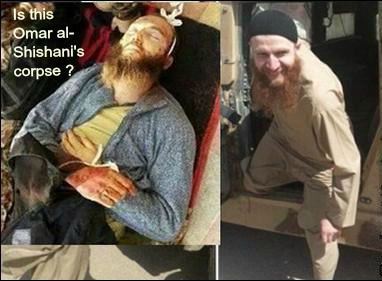


 Georgian Armed Forces
 Jaish al-Muhajireen wal-Ansar
 Islamic State of Iraq and the Levant[5][6]
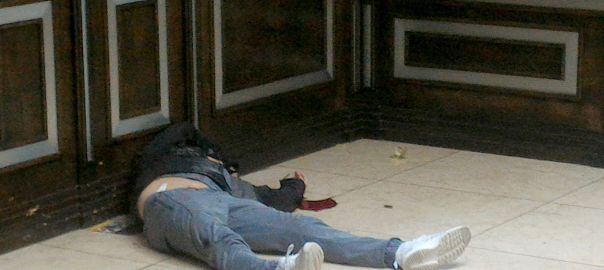


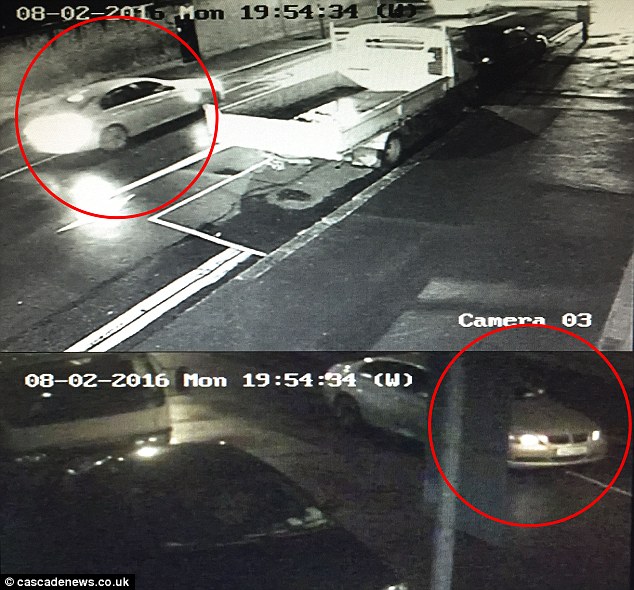

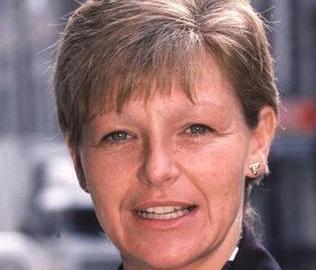





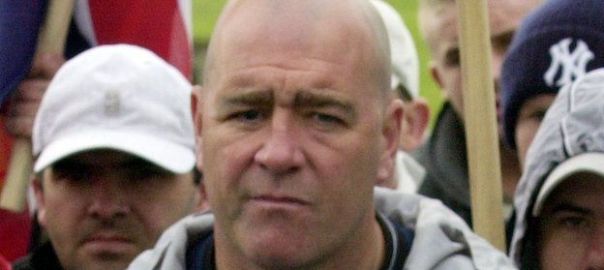


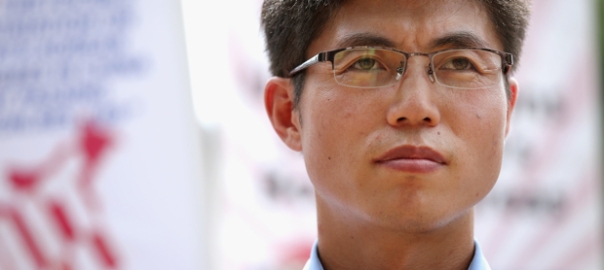


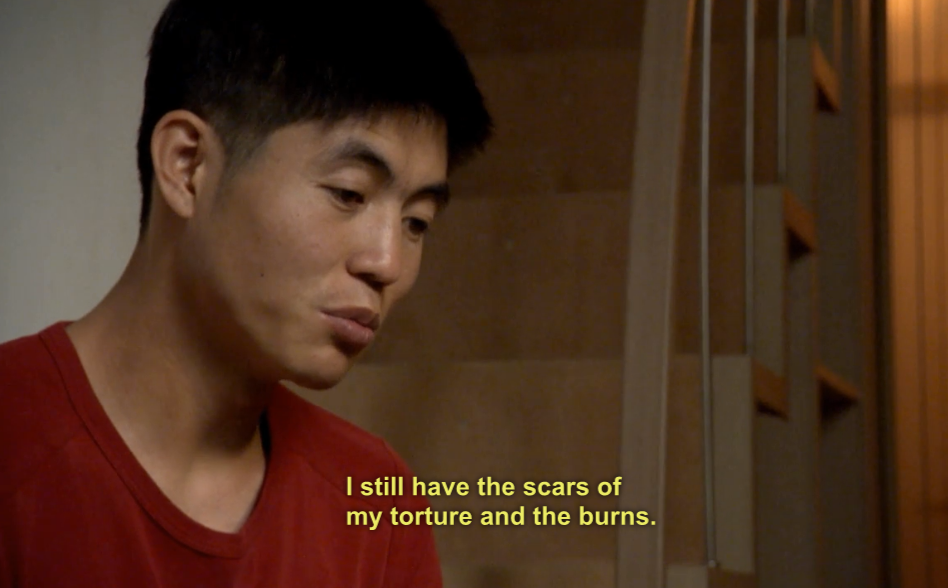


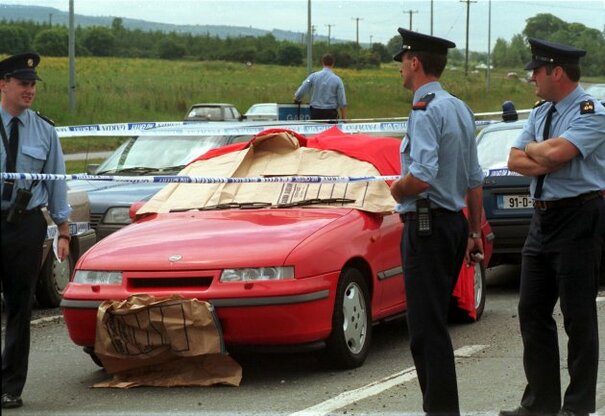


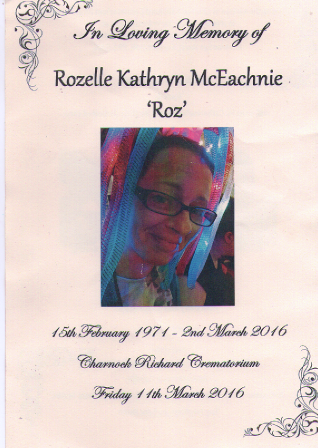

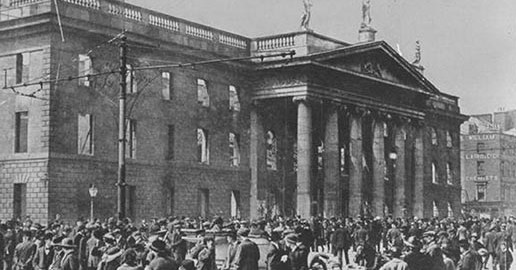


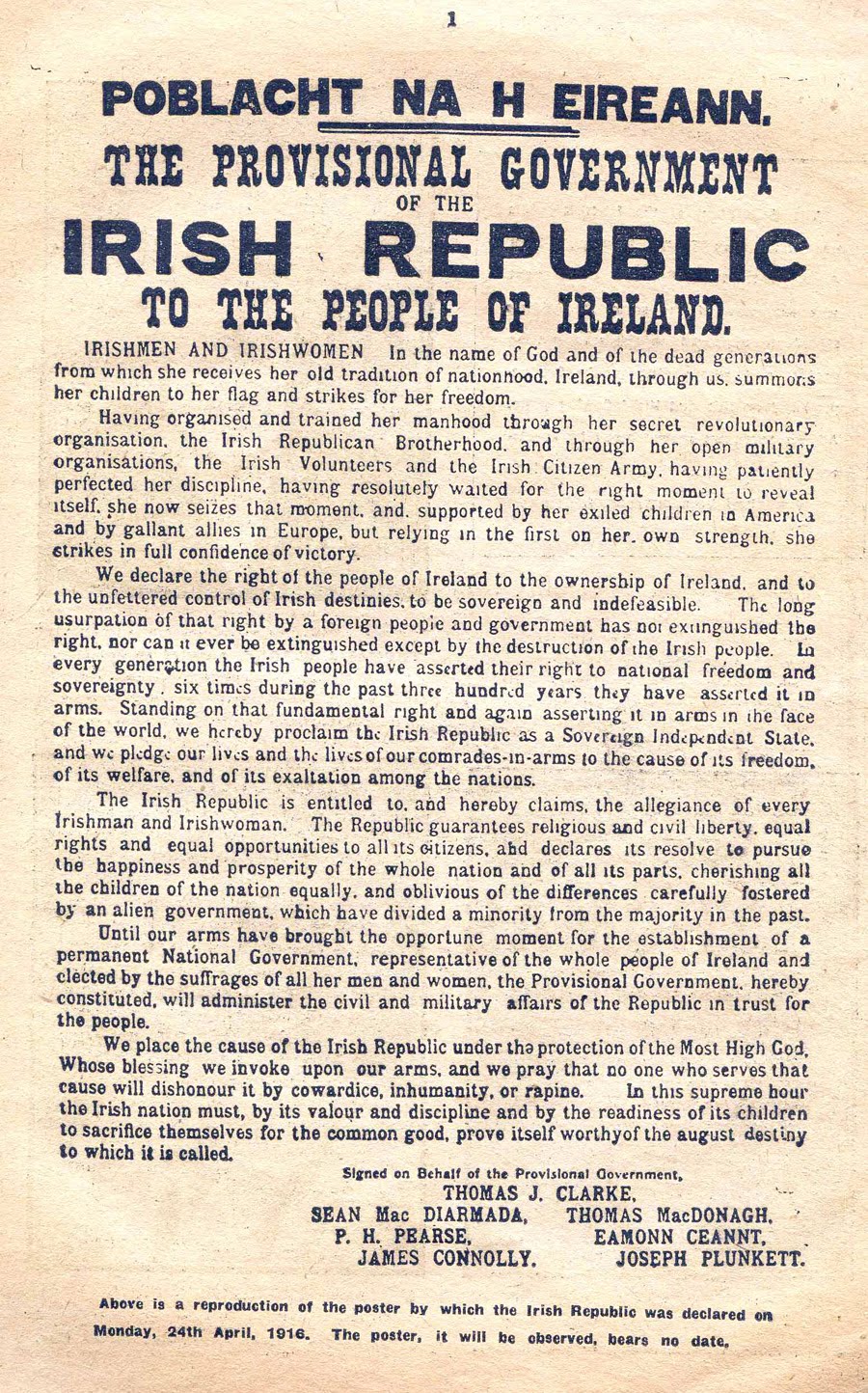


_after_the_1916_Easter_Rising.JPG)
.jpg)





 Me and my BFF Jay McFall



 belfastchildis.com