The Lychee and Dog Meat Festival, commonly referred to as Yulin Dog Meat Festival, is an annual celebration held in Yulin, Guangxi, China, during the summer solstice in which festival goers eat dog meat and lychees. The festival spans about ten days during which it is estimated that 10,000–15,000 dogs are consumed. The festival has been criticised by animal welfare supporters.
—————————-
Lychee and Dog Meat Festival
—————————-
Lychee and Dog Meat Festival 玉林荔枝狗肉节
A dog meat dish from Guilin, Guangxi, with the tail used as decoration.
The Lychee and Dog Meat Festival, commonly referred to as Yulin Dog Meat Festival, is an annual celebration held in Yulin, Guangxi, China, during the summer solstice in which festival goers eat dog meat and lychees. The festival spans about ten days during which it is estimated that 10,000–15,000 dogs are consumed. The festival has been criticised by animal welfare supporters.
——————————–
Dining on Dogs in Yulin: VICE Reports (Full Length)
——————————–
Background
The tradition of dog meat consumption began over 400 years ago in China. Many believe that dog meat would help ward off the heat felt through the summer months. It wasn’t until recent years when the festival in Yulin began.
The festival is celebrated annually in Yulin, Guangxi, China, during the summer solstice in June, by eating dog meat and lychees.About 10,000 to 15,000 dogs are consumed during the 10 days of the festival.
Throughout the 10 days of festivities dogs are paraded in wooden crates and metal cages and are taken to be skinned and cooked for consumption of festival attendants and local residents.
In a 2014 statement released to Xinhua, Yulin’s local government denies any official involvement or endorsement of the festival itself, and describes the event as a local custom observed by “a small percentage of Yulin’s residents. They attribute the branding of the event to local businesses and residents.
Animal welfare concern
The local residents and festival organizers claim that the dogs are killed humanely and that “eating dog is no different from eating pork or beef”.Campaigners have claimed, however, that the animals are “treated abominably”, which is shown by the various photographs that have surfaced of the event.
An American witness reported that some of the dogs eaten seem to be stolen household pets, judging by their collars.
Reactions
Domestic media
An editorial published by the People’s Daily expressed the view that while activists understand dogs as “companion animals”, neither the Chinese legal system or the current Chinese public moral standards recognize them with this special status. While noting the “duality” of dogs as both companions and food items, the editorial urges restraint in handling the issue and calls mutual understanding from both organizers and activists in reaching a respectful compromise.
An editorial published by the Global Times strongly criticized what the writer believed to be the Western obsession over the treatment of dogs, and cited bullfighting as an example of animal cruelty to which the West has turned a blind eye. He further categorised the controversy as a part of a Western campaign against China, and dismissed criticism and protests as “non-noteworthy”.
In The Guardian, the philosopher Julian Baggini considered the hypocrisy of western meat-eaters being outraged by the Chinese eating “cute animals”, commenting that “the double standards at play here are numerous, complicated, and not always obvious”, and that “vegans are the only group who can oppose the festival without any fear of hypocrisy”.
Writing in The Independent, Ashitha Nagesh compared the festival with the 1.9 million animals “brutally slaughtered” in the UK every month, noting that “the western distinction between dogs and farm animals is completely arbitrary”.
An American professor of East Asian politics professor noted that opposition to eating dog meat at the festival began with the Chinese themselves, as “the bond between companion animals and humans is not Western. It’s a transcultural phenomenon”.
Public
A retired school teacher, Yang Xiaoyun, paid ¥150,000 to rescue 360 dogs and tens of cats from the festival in 2014, and ¥7,000 to rescue 100 dogs in 2015.
In June 2015, an online petition against the festival was started in the United Kingdom, gathering over 4 million signatures.
Social Media campaigns have had a significant impact on spreading awareness of the festival around the globe. Many activist and public figures take to Twitter, Facebook, and Instagram and have created hashtags such as #stopyulinforver #stopyulin2015 and #stopyulin2016 to spread the word.
Because of the social media campaigns the number of dogs slaughtered have steadily decreased since 2013 from over 10,000 to 1,000.
Key Events & Deaths on this day in Northern Ireland Troubles
21st June
—————————
Friday 21 June 1968
The annual conference of the Nationalist Party unanimously approved of the protest action by Austin Currie in Caledon, County Tryone on 20 June 1968.
Tuesday 21 June 1977
The unemployment figures showed that the number of people out of work stood at 60,000, the highest June total for 37 years.
Wednesday 21 June 1978
Three members of the Irish Republican Army (IRA) and a passing Protestant civilian were shot dead by undercover members of the British Army during an attempted bomb attack on a Post Office depot, Ballysillan Road, Belfast.
The Federal Bureau of Investigation (FBI) arrested four men in New York who they claimed were trying to buy surface-to-air missiles on behalf of the Irish Republican Army (IRA).
Sunday 21 June 1992
Sinn Féin (SF) held its annual Wolfe Tone commemoration in County Kildare. Jim Gibney, then a leading member of SF, said that a British withdrawal from Northern Ireland would have to be preceded by a period of peace and negotiations involving Nationalists and Unionists.
[Some commentators took this as a sign that SF and the Irish Republican Army (IRA) were considering ending the ‘armed struggle’.]
Tuesday 21 June 1994
The Irish Times (a Dublin based newspaper) reported an interview with Albert Reynolds, then Taoiseach (Irish Prime Minister).
Reynolds said that cross-border institutions with executive powers would be required in return for any changes to Articles 2 and 3 of the Irish Constitution.
Unionist councillors on Belfast City Council voted to remove Alex Attwood, then Social Democratic and Labour Party (SDLP) councillor, from his committee chair. He had been the only Nationalist chairing a
Friday 21 June 1996
Hundreds of Royal Ulster Constabulary (RUC) officers escorted an Orange march through north Belfast. There were riots following the parade in Catholic areas of Belfast. Gareth Parker (23), a Catholic man, died following a beating he received near the Shaftesbury Inn in north Belfast.
Saturday 21 June 1997
Loyalist paramilitaries carried out a booby-trap bomb attack on a car in Claremont Street in south Belfast.
Three men were injured in the attack.
Séan Connolly, a Catholic priest based at the chapel in Harryville, Ballymena, announced that services would be suspended until 8 September 1997.
The Royal Ulster Constabulary (RUC) had informed Connolly that it could not guarantee the safety of those wishing to attend services at the chapel on 12 July 1997.
The decision to suspend the services over the ‘marching season’ was taken following 41 weeks of picketing by Loyalists outside the chapel.
Monday 21 June 1999
The BBC ‘Panorama’ programme alleged that Ronnie Flanagan, then Chief Constable of the Royal Ulster Constabulary (RUC), told a UN rapporteur that some lawyers in Ireland “were working for a paramilitary agenda”. Flanagan denied the claim.
The programme also alleged there had been collusion between RUC officers and Loyalist paramilitaries.
The results of a survey sponsored by the Parades Commission were published. Of those people questioned a majority of Protestants and Catholics agreed that the Loyal Orders should enter direct talks with residents groups and also with the Parades Commission.
A majority of Protestants questioned disagreed with the rulings reached by the Comission. Mary Freehill, then member of the Irish Labour party, and Damian Wallace, then a member of Fianna Fáil (FF), were elected Lord Mayor of Dublin and Cork respectively.
Fine Gael warned its councillors not to enter any voting pacts with Sinn Féin until there was a resolution of the decommissioning impasse.
Thursday 21 June 2001
There was another Loyalist blockade of the road to the Catholic Holy Cross Girls’ Primary School in Ardoyne, north Belfast. Royal Ulster Constabulary (RUC) officers advised children and parents not to attempt to enter the school.
Eventually about 60 of the school’s 230 pupils entered the school throught the grounds of another school.
Gerry Kelly, then a senior member of Sinn Féin (SF), said:
“It’s like something out of Alabama in the 1960s”.
Three Protestant families left their homes in Ardoyne Avenue, north Belfast, after they said that they were afraid of a Nationalist attack.
During the evening and night there were serious distrubances in the area around the Holy Cross school. Loyalists fired ten shots, and threw six blast bombs and 46 petrol bombs at police lines
——————————————
Remembering all innocent victims of the Troubles
Today is the anniversary of the death of the following people killed as a results of the conflict in Northern Ireland
“To live in hearts we leave behind is not to die
– Thomas Campbell
To the innocent on the list – Your memory will live forever
– To the Paramilitaries –
There are many things worth living for, a few things worth dying for, but nothing worth killing for.
11 People lost their lives on the 21st June between 1972 – 1991
——————————————
21 June 1972 Kerry McCarthy (19)
nfNI Status: British Army (BA),
Killed by: Irish Republican Army (IRA)
Shot by sniper while on sentry duty outside Victoria Royal Ulster Constabulary (RUC) / British Army (BA) base, Derry
——————————————
21 June 1973
Barry Gritten (29)
nfNI Status: British Army (BA),
Killed by: Irish Republican Army (IRA)
Killed by booby trap bomb in unoccupied building, Lecky Road, Bogside, Derry.
——————————————
21 June 1973 David Smith (31)
nfNI Status: British Army (BA),
Killed by: Irish Republican Army (IRA)
Killed by booby trap bomb while searching derelict house, Ballycolman, Strabane, County Tyrone.
——————————————
21 June 1973 David Walker (16)
Protestant Status: Civilian (Civ),
Killed by: Official Irish Republican Army (OIRA)
Found shot in entry off O’Neill Street, Falls, Belfast.
——————————————
21 June 1974 Stanley Lemon (51)
Protestant Status: Civilian (Civ),
Killed by: non-specific Loyalist group (LOY)
Shot as he arrived at his workplace, Shore Road, Skegoneill, Belfast. Mistaken for a Catholic.
Killed by: Irish Republican Army (IRA)
Shot at his shop, The Old Wheel Stores, Upper Dunmurry Lane, Dunmurry, near Belfast, County Antrim.
——————————————
21 June 1978
Denis Brown (28)
Catholic Status: Irish Republican Army (IRA),
Killed by: British Army (BA)
Shot by undercover British Army (BA) members, during attempted IRA bomb attack on Post Office depot, Ballysillan Road, Belfast.
——————————————
21 June 1978
William Mailey (30)
Catholic Status: Irish Republican Army (IRA),
Killed by: British Army (BA)
Shot by undercover British Army (BA) members, during attempted IRA bomb attack on Post Office depot, Ballysillan Road, Belfast.
——————————————
21 June 1978
James Mulvenna (28)
Catholic Status: Irish Republican Army (IRA),
Killed by: British Army (BA)
Shot by undercover British Army (BA) members during attempted IRA bomb attack on post office depot, Ballysillan Road, Belfast.
——————————————
21 June 1978
William Hanna (28)
Protestant Status: Ulster Volunteer Force (UVF),
Killed by: British Army (BA)
Shot by undercover British Army (BA) members, during attempted Irish Republican Army (IRA) bomb attack on Post Office depot, Ballysillan Road, Belfast. He was walking past at the time of the incident. Assumed to be an IRA member.
——————————————
21 June 1991 Mary Perry (26)
Catholic Status: Civilian (Civ),
Killed by: not known (nk)
Abducted somewhere in the Portadown area, County Armagh. Found beaten to death, on information supplied anonymously, buried in field, near Mullaghmore, County Sligo, on 30 June 1992.
——————————————
As I child I learned the stories & legends of the Battle of Boyne & Siege of Derry at my grandfather’s & father’s k… twitter.com/i/web/status/1…— Belfast Child (@bfchild66) June 07, 2020
Archaeologists believe it was constructed from 3000 BC to 2000 BC. The surrounding circular earth bank and ditch, which constitute the earliest phase of the monument, have been dated to about 3100 BC. Radiocarbon dating suggests that the first bluestones were raised between 2400 and 2200 BC, although they may have been at the site as early as 3000 BC.
Stonehenge could have been a burial ground from its earliest beginnings.
Deposits containing human bone date from as early as 3000 BC, when the ditch and bank were first dug, and continued for at least another five hundred years.
Etymology
The Oxford English Dictionary cites Ælfric‘s tenth-century glossary, in which henge-cliff is given the meaning “precipice”, or stone, thus the stanenges or Stanheng “not far from Salisbury” recorded by eleventh-century writers are “supported stones”.
“Pendulous rocks are now called henges in Yorkshire…I doubt not, Stonehenge in Saxon signifies the hanging stones.”
Christopher Chippindale‘s Stonehenge Complete gives the derivation of the name Stonehenge as coming from the Old English words stān meaning “stone”, and either hencg meaning “hinge” (because the stone lintels hinge on the upright stones) or hen(c)en meaning “hang” or “gallows” or “instrument of torture” (though elsewhere in his book, Chippindale cites the “suspended stones” etymology). Like Stonehenge’s trilithons, medieval gallows consisted of two uprights with a lintel joining them, rather than the inverted L-shape more familiar today.
The “henge” portion has given its name to a class of monuments known as henges. Archaeologists define henges as earthworks consisting of a circular banked enclosure with an internal ditch. As often happens in archaeological terminology, this is a holdover from antiquarian use, and Stonehenge is not truly a henge site as its bank is inside its ditch. Despite being contemporary with true Neolithic henges and stone circles, Stonehenge is in many ways atypical—for example, at more than 7.3 metres (24 ft) tall, its extant trilithons supporting lintels held in place with mortise and tenon joints, make it unique.
——————
Who Built Stonehenge?
——————
Early history
Plan of Stonehenge in 2004. After Cleal et al. and Pitts. Italicised numbers in the text refer to the labels on this plan. Trilithon lintels omitted for clarity. Holes that no longer, or never, contained stones are shown as open circles. Stones visible today are shown coloured
Mike Parker Pearson, leader of the Stonehenge Riverside Project based at Durrington Walls, noted that Stonehenge appears to have been associated with burial from the earliest period of its existence:
Stonehenge was a place of burial from its beginning to its zenith in the mid third millennium B.C. The cremation burial dating to Stonehenge’s sarsen stones phase is likely just one of many from this later period of the monument’s use and demonstrates that it was still very much a domain of the dead.
— Mike Parker Pearson
Stonehenge evolved in several construction phases spanning at least 1500 years. There is evidence of large-scale construction on and around the monument that perhaps extends the landscape’s time frame to 6500 years. Dating and understanding the various phases of activity is complicated by disturbance of the natural chalk by periglacial effects and animal burrowing, poor quality early excavation records, and a lack of accurate, scientifically verified dates. The modern phasing most generally agreed to by archaeologists is detailed below. Features mentioned in the text are numbered and shown on the plan, right.
Before the monument (8000 BC forward)
Archaeologists have found four, or possibly five, large Mesolithicpostholes (one may have been a natural tree throw), which date to around 8000 BC, beneath the nearby modern tourist car-park. These held pine posts around 0.75 metres (2 ft 6 in) in diameter which were erected and eventually rotted in situ.
Three of the posts (and possibly four) were in an east-west alignment which may have had ritual significance; no parallels are known from Britain at the time but similar sites have been found in Scandinavia. Salisbury Plain was then still wooded but 4,000 years later, during the earlier Neolithic, people built a causewayed enclosure at Robin Hood’s Ball and long barrow tombs in the surrounding landscape. In approximately 3500 BC, a Stonehenge Cursus was built 700 metres (2,300 ft) north of the site as the first farmers began to clear the trees and develop the area.
A number of other adjacent stone and wooden structures and burial mounds, previously overlooked, may date as far back as 4000 BC. Charcoal from the ‘Blick Mead’ camp 2.4 kilometres (1.5 mi) from Stonehenge (near the Vespasian’s Camp site) has been dated to 4000 BC.
The University of Buckingham‘s Humanities Research Institute believes that the community who built Stonehenge lived here over a period of several millennia making it potentially “one of the pivotal places in the history of the Stonehenge landscape.”
Stonehenge 1 (ca. 3100 BC)
Stonehenge 1. After Cleal et al.
The first monument consisted of a circular bank and ditch enclosure made of Late Cretaceous (Santonian Age) Seaford Chalk, measuring about 110 metres (360 ft) in diameter, with a large entrance to the north east and a smaller one to the south. It stood in open grassland on a slightly sloping spot.
The builders placed the bones of deer and oxen in the bottom of the ditch, as well as some worked flint tools. The bones were considerably older than the antler picks used to dig the ditch, and the people who buried them had looked after them for some time prior to burial. The ditch was continuous but had been dug in sections, like the ditches of the earlier causewayed enclosures in the area. The chalk dug from the ditch was piled up to form the bank. This first stage is dated to around 3100 BC, after which the ditch began to silt up naturally. Within the outer edge of the enclosed area is a circle of 56 pits, each about a metre (3 ft 3 in) in diameter, known as the Aubrey holes after John Aubrey, the seventeenth-century antiquarian who was thought to have first identified them. The pits may have contained standing timbers creating a timber circle, although there is no excavated evidence of them.
Bluestone
A recent excavation has suggested that the Aubrey Holes may have originally been used to erect a bluestone circle. If this were the case, it would advance the earliest known stone structure at the monument by some 500 years. A small outer bank beyond the ditch could also date to this period.
In 2013 a team of archaeologists, led by Mike Parker Pearson, excavated more than 50,000 cremated bones of 63 individuals buried at Stonehenge. These remains had originally been buried individually in the Aubrey holes, exhumed during a previous excavation conducted by William Hawley in 1920, been considered unimportant by him, and subsequently re-interred together in one hole, Aubrey Hole 7, in 1935.
Physical and chemical analysis of the remains has shown that the cremated were almost equally men and women, and included some children. As there was evidence of the underlying chalk beneath the graves being crushed by substantial weight, the team concluded that the first bluestones brought from Wales were probably used as grave markers. Radiocarbon dating of the remains has put the date of the site 500 years earlier than previously estimated, to around 3000 BC.
Analysis of animal teeth found at nearby Durrington Walls, thought to be the ‘builders camp’, suggests that as many as 4,000 people gathered at the site for the mid-winter and mid-summer festivals; the evidence showed that the animals had been slaughtered around 9 months or 15 months after their spring birth. Strontiumisotope analysis of the animal teeth showed that some had travelled from as far afield as the Scottish Highlands for the celebrations.
Stonehenge 2 (ca. 3000 BC)
Evidence of the second phase is no longer visible. The number of postholes dating to the early 3rd millennium BC suggest that some form of timber structure was built within the enclosure during this period. Further standing timbers were placed at the northeast entrance, and a parallel alignment of posts ran inwards from the southern entrance. The postholes are smaller than the Aubrey Holes, being only around 0.4 metres (16 in) in diameter, and are much less regularly spaced. The bank was purposely reduced in height and the ditch continued to silt up.
At least twenty-five of the Aubrey Holes are known to have contained later, intrusive, cremation burials dating to the two centuries after the monument’s inception. It seems that whatever the holes’ initial function, it changed to become a funerary one during Phase 2. Thirty further cremations were placed in the enclosure’s ditch and at other points within the monument, mostly in the eastern half.
Stonehenge is therefore interpreted as functioning as an enclosed cremation cemetery at this time, the earliest known cremation cemetery in the British Isles. Fragments of unburnt human bone have also been found in the ditch-fill. Dating evidence is provided by the late Neolithic grooved ware pottery that has been found in connection with the features from this phase.
Stonehenge 3 I (ca. 2,600 BC)
Graffiti on the sarsen stones include ancient carvings of a dagger and an axe
Archaeological excavation has indicated that around 2600 BC, the builders abandoned timber in favour of stone and dug two concentric arrays of holes (the Q and R Holes) in the centre of the site. These stone sockets are only partly known (hence on present evidence are sometimes described as forming ‘crescents’); however, they could be the remains of a double ring. Again, there is little firm dating evidence for this phase.
The holes held up to 80 standing stones (shown blue on the plan), only 43 of which can be traced today. It is generally accepted that the bluestones (some of which are made of dolerite, an igneous rock), were transported by the builders from the Preseli Hills, 150 miles (240 km) away in modern-day Pembrokeshire in Wales. Another theory is that they were brought much nearer to the site as glacial erratics by the Irish Sea Glacier although there is no evidence of glacial deposition within southern central England.
The long distance human transport theory was bolstered in 2011 by the discovery of a megalithic bluestone quarry at Craig Rhos-y-felin, near Crymych in Pembrokeshire, which is the most likely place for some of the stones to have been obtained.
Other standing stones may well have been small sarsens (sandstone), used later as lintels. The stones, which weighed about two tons, could have been moved by lifting and carrying them on rows of poles and rectangular frameworks of poles, as recorded in China, Japan and India. It is not known whether the stones were taken directly from their quarries to Salisbury Plain or were the result of the removal of a venerated stone circle from Preseli to Salisbury Plain to “merge two sacred centres into one, to unify two politically separate regions, or to legitimise the ancestral identity of migrants moving from one region to another”.
Each monolith measures around 2 metres (6.6 ft) in height, between 1 and 1.5 m (3.3 and 4.9 ft) wide and around 0.8 metres (2.6 ft) thick. What was to become known as the Altar Stone is almost certainly derived from the Senni Beds, perhaps from 50 miles east of Mynydd Preseli in the Brecon Beacons.
The north-eastern entrance was widened at this time, with the result that it precisely matched the direction of the midsummer sunrise and midwinter sunset of the period. This phase of the monument was abandoned unfinished, however; the small standing stones were apparently removed and the Q and R holes purposefully backfilled. Even so, the monument appears to have eclipsed the site at Avebury in importance towards the end of this phase.
The Heelstone, a Tertiary sandstone, may also have been erected outside the north-eastern entrance during this period. It cannot be accurately dated and may have been installed at any time during phase 3. At first it was accompanied by a second stone, which is no longer visible. Two, or possibly three, large portal stones were set up just inside the north-eastern entrance, of which only one, the fallen Slaughter Stone, 4.9 metres (16 ft) long, now remains.
Other features, loosely dated to phase 3, include the four Station Stones, two of which stood atop mounds. The mounds are known as “barrows” although they do not contain burials. Stonehenge Avenue, a parallel pair of ditches and banks leading 2 miles (3 km) to the River Avon, was also added. Two ditches similar to Heelstone Ditch circling the Heelstone (which was by then reduced to a single monolith) were later dug around the Station Stones.
——————
Secrets of Stonehenge – Documentary
——————
Stonehenge 3 II (2600 BC to 2400 BC)
Plan of the central stone structure today; after Johnson 2008
During the next major phase of activity, 30 enormous Oligocene–Miocene sarsen stones (shown grey on the plan) were brought to the site. They may have come from a quarry, around 25 miles (40 km) north of Stonehenge on the Marlborough Downs, or they may have been collected from a “litter” of sarsens on the chalk downs, closer to hand. The stones were dressed and fashioned with mortise and tenon joints before 30 were erected as a 33 metres (108 ft) diameter circle of standing stones, with a ring of 30 lintel stones resting on top.
The lintels were fitted to one another using another woodworking method, the tongue and groove joint. Each standing stone was around 4.1 metres (13 ft) high, 2.1 metres (6 ft 11 in) wide and weighed around 25 tons. Each had clearly been worked with the final visual effect in mind; the orthostats widen slightly towards the top in order that their perspective remains constant when viewed from the ground, while the lintel stones curve slightly to continue the circular appearance of the earlier monument.
The inward-facing surfaces of the stones are smoother and more finely worked than the outer surfaces. The average thickness of the stones is 1.1 metres (3 ft 7 in) and the average distance between them is 1 metre (3 ft 3 in). A total of 75 stones would have been needed to complete the circle (60 stones) and the trilithon horseshoe (15 stones). It was thought the ring might have been left incomplete, but an exceptionally dry summer in 2013 revealed patches of parched grass which may correspond to the location of removed sarsens.[22] The lintel stones are each around 3.2 metres (10 ft) long, 1 metre (3 ft 3 in) wide and 0.8 metres (2 ft 7 in) thick. The tops of the lintels are 4.9 metres (16 ft) above the ground.
Within this circle stood five trilithons of dressed sarsen stone arranged in a horseshoe shape 13.7 metres (45 ft) across with its open end facing north east. These huge stones, ten uprights and five lintels, weigh up to 50 tons each.
They were linked using complex jointing. They are arranged symmetrically. The smallest pair of trilithons were around 6 metres (20 ft) tall, the next pair a little higher and the largest, single trilithon in the south west corner would have been 7.3 metres (24 ft) tall. Only one upright from the Great Trilithon still stands, of which 6.7 metres (22 ft) is visible and a further 2.4 metres (7 ft 10 in) is below ground.
The images of a ‘dagger’ and 14 ‘axeheads’ have been carved on one of the sarsens, known as stone 53; further carvings of axeheads have been seen on the outer faces of stones 3, 4, and 5. The carvings are difficult to date, but are morphologically similar to late Bronze Age weapons; recent laser scanning work on the carvings supports this interpretation. The pair of trilithons in the north east are smallest, measuring around 6 metres (20 ft) in height; the largest, which is in the south west of the horseshoe, is almost 7.5 metres (25 ft) tall.
This ambitious phase has been radiocarbon dated to between 2600 and 2400 BC, slightly earlier than the Stonehenge Archer, discovered in the outer ditch of the monument in 1978, and the two sets of burials, known as the Amesbury Archer and the Boscombe Bowmen, discovered 3 miles (5 km) to the west.
At about the same time, a large timber circle and a second avenue were constructed 2 miles (3 km) away at Durrington Walls overlooking the River Avon. The timber circle was oriented towards the rising sun on the midwinter solstice, opposing the solar alignments at Stonehenge, whilst the avenue was aligned with the setting sun on the summer solstice and led from the river to the timber circle.
Evidence of huge fires on the banks of the Avon between the two avenues also suggests that both circles were linked, and they were perhaps used as a procession route on the longest and shortest days of the year. Parker Pearson speculates that the wooden circle at Durrington Walls was the centre of a ‘land of the living’, whilst the stone circle represented a ‘land of the dead’, with the Avon serving as a journey between the two.
Stonehenge 3 III (2400 BC to 2280 BC)
Later in the Bronze Age, although the exact details of activities during this period are still unclear, the bluestones appear to have been re-erected. They were placed within the outer sarsen circle and may have been trimmed in some way. Like the sarsens, a few have timber-working style cuts in them suggesting that, during this phase, they may have been linked with lintels and were part of a larger structure.
Stonehenge 3 IV (2280 BC to 1930 BC)
This phase saw further rearrangement of the bluestones. They were arranged in a circle between the two rings of sarsens and in an oval at the centre of the inner ring. Some archaeologists argue that some of these bluestones were from a second group brought from Wales. All the stones formed well-spaced uprights without any of the linking lintels inferred in Stonehenge 3 III. The Altar Stone may have been moved within the oval at this time and re-erected vertically. Although this would seem the most impressive phase of work, Stonehenge 3 IV was rather shabbily built compared to its immediate predecessors, as the newly re-installed bluestones were not well-founded and began to fall over. However, only minor changes were made after this phase.
Stonehenge 3 V (1930 BC to 1600 BC)
Soon afterwards, the north eastern section of the Phase 3 IV bluestone circle was removed, creating a horseshoe-shaped setting (the Bluestone Horseshoe) which mirrored the shape of the central sarsen Trilithons. This phase is contemporary with the Seahenge site in Norfolk.
After the monument (1600 BC on)
Computer rendering of the overall site
The Y and Z Holes are the last known construction at Stonehenge, built about 1600 BC, and the last usage of it was probably during the Iron Age. Roman coins and medieval artefacts have all been found in or around the monument but it is unknown if the monument was in continuous use throughout British prehistory and beyond, or exactly how it would have been used. Notable is the massive Iron Age hillfortVespasian’s Camp built alongside the Avenue near the Avon.
A decapitated seventh century Saxon man was excavated from Stonehenge in 1923. The site was known to scholars during the Middle Ages and since then it has been studied and adopted by numerous groups.
Function and construction
Stonehenge was produced by a culture that left no written records. Many aspects of Stonehenge remain subject to debate. A number of myths surround the stones.
The site, specifically the great trilithon, the encompassing horseshoe arrangement of the five central trilithons, the heel stone, and the embanked avenue, are aligned to the sunset of the winter solstice and the opposing sunrise of the summer solstice. A natural landform at the monument’s location followed this line, and may have inspired its construction. The excavated remains of culled animal bones suggest that people may have gathered at the site for the winter rather than the summer. Further astronomical associations, and the precise astronomical significance of the site for its people, are a matter of speculation and debate.
There is little or no direct evidence revealing the construction techniques used by the Stonehenge builders. Over the years, various authors have suggested that supernatural or anachronistic methods were used, usually asserting that the stones were impossible to move otherwise due to their massive size. However, conventional techniques, using Neolithic technology as basic as shear legs, have been demonstrably effective at moving and placing stones of a similar size.
How the stones could be transported by a prehistoric people without the aid of the wheel or a pulley system is not known. The most common theory of how prehistoric people moved megaliths has them creating a track of logs on which the large stones were rolled along.
Another megalith transport theory involves the use of a type of sleigh running on a track greased with animal fat. Such an experiment with a sleigh carrying a 40-ton slab of stone was successful near Stonehenge in 1995. A dedicated team of more than 100 workers managed to push and pull the slab along the 18-mile journey from Marlborough Downs.Proposed functions for the site include usage as an astronomical observatory or as a religious site.
They argue that this accounts for the high number of burials in the area and for the evidence of trauma deformity in some of the graves. However, they do concede that the site was probably multifunctional and used for ancestor worship as well.
Isotope analysis indicates that some of the buried individuals were from other regions. A teenage boy buried approximately 1550 BC was raised near the Mediterranean Sea; a metal worker from 2300 BC dubbed the “Amesbury Archer” grew up near the alpine foothills of Germany; and the “Boscombe Bowmen” probably arrived from Wales or Brittany, France.
On the other hand, Mike Parker Pearson of Sheffield University has suggested that Stonehenge was part of a ritual landscape and was joined to Durrington Walls by their corresponding avenues and the River Avon. He suggests that the area around Durrington Walls Henge was a place of the living, whilst Stonehenge was a domain of the dead. A journey along the Avon to reach Stonehenge was part of a ritual passage from life to death, to celebrate past ancestors and the recently deceased. Both explanations were first mooted in the twelfth century by Geoffrey of Monmouth, who extolled the curative properties of the stones and was also the first to advance the idea that Stonehenge was constructed as a funerary monument. Whatever religious, mystical or spiritual elements were central to Stonehenge, its design includes a celestial observatory function, which might have allowed prediction of eclipse, solstice, equinox and other celestial events important to a contemporary religion.
There are other hypotheses and theories. According to a team of British researchers led by Mike Parker Pearson of the University of Sheffield, Stonehenge may have been built as a symbol of “peace and unity”, indicated in part by the fact that at the time of its construction, Britain’s Neolithic people were experiencing a period of cultural unification.
Another idea has to do with a quality of the stones themselves: Researchers from the Royal College of Art in London have discovered that some of the monument’s stones possess “unusual acoustic properties”—when they are struck they respond with a “loud clanging noise”. According to Paul Devereux, editor of the journal Time and Mind: The Journal of Archaeology, Consciousness and Culture, this idea could explain why certain bluestones were hauled nearly 200 miles—a major technical accomplishment at the time. In certain ancient cultures rocks that ring out, known as lithophones, were believed to contain mystic or healing powers, and Stonehenge has a history of association with rituals. The presence of these “ringing rocks” seems to support the hypothesis that Stonehenge was a “place for healing”, as has been pointed out by Bournemouth University archaeologist Timothy Darvill, who consulted with the researchers. Some of the stones of Stonehenge were brought from near a town in Wales called Maenclochog, a name which means “ringing rock”.
Modern history
Folklore
The Heelstone
“Heel Stone,” “Friar’s Heel,” or “Sun-Stone”
The Heel Stone lies north east of the sarsen circle, beside the end portion of Stonehenge Avenue. It is a rough stone, 16 feet (4.9 m) above ground, leaning inwards towards the stone circle.
It has been known by many names in the past, including “Friar’s Heel” and “Sun-stone”. Today it is uniformly referred to as the Heel Stone.[ At summer solstice an observer standing within the stone circle, looking north-east through the entrance, would see the Sun rise in the approximate direction of the heel stone, and the sun has often been photographed over it.
A folk tale, relates the origin of the Friar’s Heel reference.
The Devil bought the stones from a woman in Ireland, wrapped them up, and brought them to Salisbury plain. One of the stones fell into the Avon, the rest were carried to the plain. The Devil then cried out, “No-one will ever find out how these stones came here!” A friar replied, “That’s what you think!”, whereupon the Devil threw one of the stones at him and struck him on the heel. The stone stuck in the ground and is still there.
Some claim “Friar’s Heel” is a corruption of “Freyja’s He-ol” from the Germanic goddess Freyja and the Welsh word for track.
The name is not unique; there was a monolith with the same name recorded in the nineteenth century by antiquarian Charles Warne at Long Bredy in Dorset.
Arthurian legend
A giant helps Merlin build Stonehenge. From a manuscript of the Roman de Brut by Wace in the British Library (Egerton 3028). Dating back to the second quarter of the 14th century, this is the oldest known depiction of Stonehenge.
In the twelfth century, Geoffrey of Monmouth included a fanciful story in his Historia Regum Britanniae that attributed the monument’s construction to Merlin . Geoffrey’s story spread widely, appearing in more and less elaborate form in adaptations of his work such as Wace‘s Norman French Roman de Brut, Layamon‘s Middle English Brut, and the Welsh Brut y Brenhinedd.
According to Geoffrey the rocks of Stonehenge were healing rocks, called the Giant’s dance, which Giants had brought from Africa to Ireland for their healing properties. The fifth-century king Aurelius Ambrosius wished to erect a memorial to 3,000 nobles slain in battle against the Saxons and buried at Salisbury, and at Merlin’s advice chose Stonehenge.
The king sent Merlin, Uther Pendragon (Arthur’s father), and 15,000 knights, to remove it from Ireland, where it had been constructed on Mount Killaraus by the Giants. They slew 7,000 Irish but, as the knights tried to move the rocks with ropes and force, they failed. Then Merlin, using “gear” and skill, easily dismantled the stones and sent them over to Britain, where Stonehenge was dedicated. After it had been rebuilt near Amesbury, Geoffrey further narrates how first Ambrosius Aurelianus, then Uther Pendragon, and finally Constantine III, were buried inside the “Giants’ Ring of Stonehenge”.
As well as the Historia Regum Britanniae, there is also place-name evidence to connect Ambrosius with nearby Amesbury.
In another legend of Saxons and Britons, in 472 the invading king Hengist invited Brythonic warriors to a feast, but treacherously ordered his men to draw their weapons from concealment and fall upon the guests, killing 420 of them. Hengist erected the stone monument—Stonehenge—on the site to show his remorse for the deed.
Sixteenth century to present
Farm carts near the site, ca. 1885
Stonehenge has changed ownership several times since King Henry VIII acquired Amesbury Abbey and its surrounding lands. In 1540 Henry gave the estate to the Earl of Hertford. It subsequently passed to Lord Carleton and then the Marquess of Queensberry. The Antrobus family of Cheshire bought the estate in 1824. During World War I an aerodrome (Royal Flying Corps “No. 1 School of Aerial Navigation and Bomb Dropping”) was built on the downs just to the west of the circle and, in the dry valley at Stonehenge Bottom, a main road junction was built, along with several cottages and a cafe.
The Antrobus family sold the site after their last heir was killed in the fighting in France. The auction by Knight Frank & Rutley estate agents in Salisbury was held on 21 September 1915 and included “Lot 15. Stonehenge with about 30 acres, 2 rods, 37 perches [12.44 ha] of adjoining downland.”
Sunrise at Stonehenge on the summer solstice, 21 June 2005
Cecil Chubb bought the site for £6,600 and gave it to the nation three years later. Although it has been speculated that he purchased it at the suggestion of—or even as a present for—his wife, in fact he bought it on a whim, as he believed a local man should be the new owner.
In the late 1920s a nationwide appeal was launched to save Stonehenge from the encroachment of the modern buildings that had begun to rise around it.
By 1928 the land around the monument had been purchased with the appeal donations, and given to the National Trust to preserve. The buildings were removed (although the roads were not), and the land returned to agriculture. More recently the land has been part of a grassland reversion scheme, returning the surrounding fields to native chalk grassland.
Neopaganism
10th Battalion, CEF marches past the site, winter 1914–15 (WW I); Background: Preservation work on stones, propped up by timbers
During the twentieth century, Stonehenge began to revive as a place of religious significance, this time by adherents of Neopaganism and New Age beliefs, particularly the Neo-druids. The historian Ronald Hutton would later remark that “it was a great, and potentially uncomfortable, irony that modern Druids had arrived at Stonehenge just as archaeologists were evicting the ancient Druids from it.”
The first such Neo-druidic group to make use of the megalithic monument was the Ancient Order of Druids, who performed a mass initiation ceremony there in August 1905, in which they admitted 259 new members into their organisation. This assembly was largely ridiculed in the press, who mocked the fact that the Neo-druids were dressed up in costumes consisting of white robes and fake beards.
Between 1972 and 1984, Stonehenge was the site of the Stonehenge Free Festival. After the Battle of the Beanfield in 1985, this use of the site was stopped for several years and ritual use of Stonehenge is now heavily restricted.
Some Druids have arranged an assembling of monuments styled on Stonehenge in other parts of the world as a form of Druidist worship.
Setting and access
When Stonehenge was first opened to the public it was possible to walk among and even climb on the stones, but the stones were roped off in 1977 as a result of serious erosion. Visitors are no longer permitted to touch the stones, but are able to walk around the monument from a short distance away. English Heritage does, however, permit access during the summer and winter solstice, and the spring and autumn equinox. Additionally, visitors can make special bookings to access the stones throughout the year.
The access situation and the proximity of the two roads has drawn widespread criticism, highlighted by a 2006 National Geographic survey. In the survey of conditions at 94 leading World Heritage Sites, 400 conservation and tourism experts ranked Stonehenge 75th in the list of destinations, declaring it to be “in moderate trouble”.
As motorised traffic increased, the setting of the monument began to be affected by the proximity of the two roads on either side—the A344 to Shrewton on the north side, and the A303 to Winterbourne Stoke to the south. Plans to upgrade the A303 and close the A344 to restore the vista from the stones have been considered since the monument became a World Heritage Site.
However, the controversy surrounding expensive re-routing of the roads has led to the scheme being cancelled on multiple occasions. On 6 December 2007, it was announced that extensive plans to build Stonehenge road tunnel under the landscape and create a permanent visitors’ centre had been cancelled.
On 13 May 2009, the government gave approval for a £25 million scheme to create a smaller visitors’ centre and close the A344, although this was dependent on funding and local authority planning consent.
On 20 January 2010 Wiltshire Council granted planning permission for a centre 2.4 km (1.5 miles) to the west and English Heritage confirmed that funds to build it would be available, supported by a £10m grant from the Heritage Lottery Fund.
On 23 June 2013 the A344 was closed to begin the work of removing the section of road and replacing it with grass. The centre, designed by Denton Corker Marshall, opened to the public on 18 December 2013.
A new visitor centre opened in December 2013, more than 2 km west of the monument, just off the A360 road in Wiltshire
Throughout recorded history Stonehenge and its surrounding monuments have attracted attention from antiquarians and archaeologists. John Aubrey was one of the first to examine the site with a scientific eye in 1666, and recorded in his plan of the monument the pits that now bear his name. William Stukeley continued Aubrey’s work in the early eighteenth century, but took an interest in the surrounding monuments as well, identifying (somewhat incorrectly) the Cursus and the Avenue. He also began the excavation of many of the barrows in the area, and it was his interpretation of the landscape that associated it with the Druids.
Stukeley was so fascinated with Druids that he originally named Disc Barrows as Druids’ Barrows. The most accurate early plan of Stonehenge was that made by Bath architect John Wood in 1740.
His original annotated survey has recently been computer redrawn and published.Importantly Wood’s plan was made before the collapse of the southwest trilithon, which fell in 1797 and was restored in 1958.
William Cunnington was the next to tackle the area in the early nineteenth century. He excavated some 24 barrows before digging in and around the stones and discovered charred wood, animal bones, pottery and urns. He also identified the hole in which the Slaughter Stone once stood. Richard Colt Hoare supported Cunnington’s work and excavated some 379 barrows on Salisbury Plain including on some 200 in the area around the Stones, some excavated in conjunction with William Coxe.
To alert future diggers to their work they were careful to leave initialled metal tokens in each barrow they opened. Cunnington’s finds are displayed at the Wiltshire Museum. In 1877 Charles Darwin dabbled in archaeology at the stones, experimenting with the rate at which remains sink into the earth for his book The Formation of Vegetable Mould Through the Action of Worms.
An early photograph of Stonehenge taken July 1877
The monument from a similar angle in 2008 showing the extent of reconstruction
A contemporary newspaper depiction of the 1920 restoration
William Gowland oversaw the first major restoration of the monument in 1901 which involved the straightening and concrete setting of sarsen stone number 56 which was in danger of falling. In straightening the stone he moved it about half a metre from its original position.
Gowland also took the opportunity to further excavate the monument in what was the most scientific dig to date, revealing more about the erection of the stones than the previous 100 years of work had done. During the 1920 restoration William Hawley, who had excavated nearby Old Sarum, excavated the base of six stones and the outer ditch. He also located a bottle of port in the Slaughter Stone socket left by Cunnington, helped to rediscover Aubrey’s pits inside the bank and located the concentric circular holes outside the Sarsen Circle called the Y and Z Holes.
Richard Atkinson, Stuart Piggott and John F. S. Stone re-excavated much of Hawley’s work in the 1940s and 1950s, and discovered the carved axes and daggers on the Sarsen Stones. Atkinson’s work was instrumental in furthering the understanding of the three major phases of the monument’s construction.
In 1958 the stones were restored again, when three of the standing sarsens were re-erected and set in concrete bases. The last restoration was carried out in 1963 after stone 23 of the Sarsen Circle fell over. It was again re-erected, and the opportunity was taken to concrete three more stones.
In 1966 and 1967, in advance of a new car park being built at the site, the area of land immediately northwest of the stones was excavated by Faith and Lance Vatcher. They discovered the Mesolithic postholes dating from between 7000 and 8000 BC, as well as a 10-metre (33 ft) length of a palisade ditch – a V-cut ditch into which timber posts had been inserted that remained there until they rotted away. Subsequent aerial archaeology suggests that this ditch runs from the west to the north of Stonehenge, near the avenue.
Excavations were once again carried out in 1978 by Atkinson and John Evans during which they discovered the remains of the Stonehenge Archer in the outer ditch, and in 1979 rescue archaeology was needed alongside the Heel Stone after a cable-laying ditch was mistakenly dug on the roadside, revealing a new stone hole next to the Heel Stone.
In 1993 the way that Stonehenge was presented to the public was called ‘a national disgrace’ by the House of Commons Public Accounts Committee. Part of English Heritage’s response to this criticism was to commission research to collate and bring together all the archaeological work conducted at the monument up to this date. This two-year research project resulted in the publication in 1995 of the monograph Stonehenge in its landscape, which was the first publication presenting the complex stratigraphy and the finds recovered from the site. It presented a rephasing of the monument.
More recent excavations include a series of digs held between 2003 and 2008 known as the Stonehenge Riverside Project, led by Mike Parker Pearson. This project mainly investigated other monuments in the landscape and their relationship to the stones — notably Durrington Walls, where another “Avenue” leading to the River Avon was discovered. The point where the Stonehenge Avenue meets the river was also excavated, and revealed a previously unknown circular area which probably housed four further stones, most likely as a marker for the starting point of the avenue.
In April 2008 Tim Darvill of the University of Bournemouth and Geoff Wainwright of the Society of Antiquaries, began another dig inside the stone circle to retrieve dateable fragments of the original bluestone pillars. They were able to date the erection of some bluestones to 2300 BC, although this may not reflect the earliest erection of stones at Stonehenge. They also discovered organic material from 7000 BC, which, along with the Mesolithic postholes, adds support for the site having been in use at least 4,000 years before Stonehenge was started.
In August and September 2008, as part of the Riverside Project, Julian Richards and Mike Pitts excavated Aubrey Hole 7, removing the cremated remains from several Aubrey Holes that had been excavated by Hawley in the 1920s, and re-interred in 1935. A licence for the removal of human remains at Stonehenge had been granted by the Ministry of Justice in May 2008, in accordance with the Statement on burial law and archaeology issued in May 2008. One of the conditions of the licence was that the remains should be reinterred within two years and that in the intervening period they should be kept safely, privately and decently.
A new landscape investigation was conducted in April 2009. A shallow mound, rising to about 40 cm (16 inches) was identified between stones 54 (inner circle) and 10 (outer circle), clearly separated from the natural slope. It has not been dated but speculation that it represents careless backfilling following earlier excavations seems disproved by its representation in eighteenth- and nineteenth-century illustrations. Indeed, there is some evidence that, as an uncommon geological feature, it could have been deliberately incorporated into the monument at the outset.
A circular, shallow bank, little more than 10 cm (4 inches) high, was found between the Y and Z hole circles, with a further bank lying inside the “Z” circle. These are interpreted as the spread of spoil from the original Y and Z holes, or more speculatively as hedge banks from vegetation deliberately planted to screen the activities within.
In July 2010, the Stonehenge Hidden Landscape Project discovered a “henge-like” monument less than 1 km (0.62 miles) away from the main site.
This new hengiform monument was subsequently revealed to be located “at the site of Amesbury 50”, a round barrow in the Cursus Barrows group.
On 26 November 2011, archaeologists from University of Birmingham announced the discovery of evidence of two huge pits positioned within the Stonehenge Cursus pathway, aligned in celestial position towards midsummer sunrise and sunset when viewed from the Heel Stone.
The new discovery is part of the Stonehenge Hidden Landscape Project which began in the summer of 2010. The project uses non-invasive geophysical imaging technique to reveal and visually recreate the landscape. According to team leader Vince Gaffney, this discovery may provide a direct link between the rituals and astronomical events to activities within the Cursus at Stonehenge.
On 18 December 2011, geologists from University of Leicester and the National Museum of Wales announced the discovery of the exact source of some of the rhyolite fragments found in the Stonehenge debitage. These fragments do not seem to match any of the standing stones or bluestone stumps. The researchers have identified the source as a 70-metre (230 ft) long rock outcrop called Craig Rhos-y-Felin (
On 10 September 2014 the University of Birmingham announced findings including evidence of adjacent stone and wooden structures and burial mounds, overlooked previously, that may date as far back as 4000 BC.
An area extending to 12 square kilometres (1,200 ha) was studied to a depth of three metres with ground-penetrating radar equipment. As many as seventeen new monuments, revealed nearby, may be Late Neolithic monuments that resemble Stonehenge. The interpretation suggests a complex of numerous related monuments. Also included in the discovery is that the cursus track is terminated by two five-meter wide extremely deep pits, whose purpose is still a mystery.
The summer solstice occurs during a hemisphere’s summer. This is the northern solstice in the northern hemisphere and the southern solstice in the southern hemisphere. Depending on the shift of the calendar, the summer solstice occurs some time between June 20 and June 22 in the northern hemisphere and between December 20 and December 23 each year in the southern hemisphere.
————————-
What is Summer Solstice 2016 – Longest day
————————-
The same dates in the opposite hemisphere are referred to as the winter solstice.
When on a geographic pole, the Sun reaches its greatest height, the moment of solstice, it can be noon only along that longitude which at that moment lies in the direction of the Sun from the pole. For other longitudes, it is not noon. Noon has either passed or has yet to come. Hence the notion of a solstice day is useful.
————————-
————————-
The term is colloquially used like midsummer to refer to the day on which solstice occurs. The summer solstice day has the longest period of daylight – except in the polar regions, where daylight is continuous, from a few days to six months around the summer solstice.
Worldwide, interpretation of the event has varied among cultures, but most recognize the event in some way with holidays, festivals, and rituals around that time with themes of religion or fertility.
Solstice is derived from the Latin words sol (sun) and sistere (to stand still).
Diagram of the Earth‘s seasons as seen from the north.
Far left: summer solstice for the Northern Hemisphere.
Front right: summer solstice for the Southern Hemisphere.
The summer solstice occurs when the tilt of a planet’s semi-axis, in either northern or southern hemispheres, is most inclined toward the star that it orbits.
Earth’s maximum axial tilt toward the Sun is 23° 26′. This happens twice each year (once in each hemisphere), at which times the Sun reaches its highest position in the sky as seen from the north or the south pole.
——————————-
Stonehenge Summer Solstice 2016
Summer Solstice 2016
Stonehenge is an ancient prehistoric site which has been a place of worship and celebration at the time of Summer Solstice for thousands of years.
This important place is seen by many as a sacred site – please respect it and please respect each other.
Open Access
English Heritage is pleased to provide free Managed Open Access to Stonehenge for Summer Solstice 2016 and ask that if you are planning to join us for this peaceful and special occasion that you follow these Conditions of Entry. These are written to ensure enjoyment and safety for everyone attending Summer Solstice at Stonehenge.
Please note to reduce risk to those attending and to the monument itself, alcohol is not permitted in the monument field during Summer Solstice. If you have any questions regarding the ceremonial use of mead please contact Solstice.Stonehenge@English-Heritage.org.uk
MONDAY 20 JUNE
Access to monument field – 7pm
Sunset – 9:26pm
TUESDAY 21 JUNE
Sunrise – 4:52am
Monument field closes – 8am
The Solstice Car Park opens at 7pm on 20th June with last admissions at 6am (or when full, if earlier) on 21st June. The car park will close at 12 noon on 21st June.
Admission, Parking and Planning Your Journey
Admission to the Summer Solstice at Stonehenge is free of charge, however please note that parking fees apply.
We strongly recommend travelling by public transport or arranging to car share. Help with planning your journey and accomodation can be found on the pages below, along with other helpful advice if you are planning to come to Summer Solstice.
Key Events & Deaths on this day in Northern Ireland Troubles
20th June
——————————–
Tuesday 20 June 1972
Secret Meeting Between IRA and British Officials
[There was a secret meeting between representatives of the Provisonal Irish Republican Army (PIRA) and officials from William Whitelaw’s office (Whitelaw was then Secretary of State for Northern Ireland). The meeting took place at 3.00pm in a country house in Ballyarnet, close to the Derry / Donegal border. The PIRA representatives were David O’Connell and Gerry (Gerard) Adams. The officials acting on behalf of William Whitelaw were P.J. Woodfield and Frank Steele (who, at the time, was actually an MI6 Intelligence Officer).]
“There is no doubt whatever that these two at least [O’Connell and Adams] genuinely want a cease fire and a permanent end to violence. Whatever pressures in Northern Ireland have brought them to this frame of mind there is also little doubt that now that the prospect of peace is there they have a strong personal incentive to try and get it. … Their appearance and manner were respectable and respectful. … Their behaviour and attitude appeared to bear no relation to the indiscriminate campaigns of bombing and shooting in which they have both been prominent leaders”.
[Public Records 1972 – Released 1 January 2003: Note of the discussions that took place during a secret meeting between officials from William Whitelaw’s office and representatives of the Provisonal Irish Republican Army (PIRA). The meeting laid the groundwork for a PIRA ceasefire and a direct (secret) meeting between the PIRA and the British government on 7 July 1972.]
Thursday 20 June 1974
Assembly By-Election There was a Northern Ireland Assembly by-election in the constituency of North Antrim. Clifford Smyth was elected.
Francis Sullivan (36), a Catholic civilian, was shot dead at his home in the Falls Road area of Belfast by Loyalist paramilitaries.
Wednesday 20 June 1984
Neil Kinnock, then leader of the Labour Party, said that he was in favour of a united Ireland by consent.
Friday 20 June 1986
John Hermon, then Chief Constable of the Royal Ulster Constabulary (RUC), threatened to take libel action against those in the media who accused him of being involved in the decision to remove John Stalker, then Deputy Chief Constable of the Greater Manchester Police, from the ‘shoot to kill’ investigation.
Tuesday 20 June 1995
Patrick Mayhew, then Secretary of State for Northern Ireland, said that Sinn Féin (SF) could not join full political talks unless the decommissioning of Irish Republican Army (IRA) weapons began to happen first.
Martin McGuinness, then Vice-President of SF, said that:
“in reality there is not a snowball’s chance in hell of any weapons being decommissioned this side of a negotiated settlement.”
Thursday 20 June 1996
An Irish Republican Army (IRA) ‘bomb factory’ was found by Gardí near Clonasee, County Laois, Republic of Ireland. In response the Irish Government ended all contacts with Sinn Féin (SF).
Friday 20 June 1997
Patrick Kane, then serving a life sentence for the murders of corporals Derek Wood and David Howes on 19 March 1988, was cleared of the killings by the Court of Appeal in Belfast.
Mickey Timmons and John Kelly, the other members of the ‘Casement Three’, continued to insist that they were also innocent of the killings.
Tony Blair, then British Prime Minister, paid a visit to the United States of America (USA). During the visit he said: “a moment of decision is coming for Sinn Féin (SF) and the IRA [Irish Republican Army] as to whether they want to be any part of a forward process that is going to lead to a lasting settlement for peace”.
Wednesday 20 June 2001
The Catholic Holy Cross Girls’ Primary School in Ardoyne north Belfast was forced to close when Loyalists from the Glenbryn estate blockaded the entrance to the school. Royal Ulster Constabulary (RUC) officers advised children and parents not to attempt to enter the school.
During the evening there were serious distrubances in the area around the Holy Cross school as hundreds of Loyalists and Nationalists were involved in riots with the Royal Ulster Constabulary (RUC).
Shots were also fired at the police during the evening. During the riots the RUC fired a number of the new ‘L21 A1’ plastic baton rounds.
[This was the first time the new rounds had been used.]
——————————————
Remembering all innocent victims of the Troubles
Today is the anniversary of the death of the following people killed as a results of the conflict in Northern Ireland
“To live in hearts we leave behind is not to die
– Thomas Campbell
To the innocent on the list – Your memory will live forever
– To the Paramilitaries –
There are many things worth living for, a few things worth dying for, but nothing worth killing for.
5 People lost their lives on the 20th June between 1975 – 1981
——————————————
20 June 1975 Anthony Molloy (18)
Catholic Status: Civilian (Civ),
Killed by: Protestant Action Force (PAF)
Shot at his home, Ballymena Street, Oldpark, Belfast.
——————————————
20 June 1976 Edmund McNeill (22)
Catholic Status: Civilian (Civ),
Killed by: non-specific Loyalist group (LOY)
Found stabbed to death beside Ballysillan Playing Fields, Alliance Road, Belfast.
——————————————
20 June 1976 Richard Doherty (27)
Protestant Status: Civilian (Civ),
Killed by: non-specific Republican group (REP)
Shot at his home, Alexandra Park Avenue, Skegoneill, Belfast.
——————————————
20 June 1979 Francis Sullivan (36)
Catholic Status: Civilian (Civ),
Killed by: Ulster Volunteer Force (UVF)
Shot at his home, Bombay Street, Falls, Belfast
——————————————
20 June 1981
Neal Quinn (53)
Catholic Status: Royal Ulster Constabulary (RUC),
Killed by: Irish Republican Army (IRA)
Off duty. Shot while in Bridge Bar, Newry, County Down.
——————————————
As I child I learned the stories & legends of the Battle of Boyne & Siege of Derry at my grandfather’s & father’s k… twitter.com/i/web/status/1…— Belfast Child (@bfchild66) June 07, 2020
Roberto Calvi (13 April 1920 – 17 June 1982) was an Italianbanker dubbed “God’s Banker” (Italian: Banchiere di Dio) by the press because of his close association with the Holy See. A native of Milan, Calvi was Chairman of Banco Ambrosiano, which collapsed in one of modern Italy’s biggest political scandals. His death in London in June 1982 is a source of enduring controversy and was ruled a murder after two coroner‘s inquests and an independent investigation. In Rome, in June 2007, five people were acquitted of the murder.
—————————-
Roberto Calvi
Gods Banker Life & Death
—————————-
Claims have been made that factors in Calvi’s death were the Vatican Bank, Banco Ambrosiano’s main shareholder; the Mafia, which may have used Banco Ambrosiano for money laundering; and the Propaganda Due or P2 clandestine Masonic Lodge.
The Banco Ambrosiano scandal
Roberto Calvi was the chairman of Italy’s second largest private bank, Banco Ambrosiano, when it collapsed in 1982. In 1978, the Bank of Italy produced a report on the Banco Ambrosiano, which found that several billion lire had been exported illegally, leading to criminal investigations. In 1981, Calvi was tried, given a four-year suspended sentence and fined $19.8 million for transferring $27 million out of the country in violation of Italian currency laws.
He was released on bail pending appeal and kept his position at the bank. During his short spell in jail, he attempted suicide. Calvi’s family maintains that he was manipulated by others and was innocent of the crimes attributed to him.
The controversy surrounding Calvi’s dealings at Banco Ambrosiano echoed a previous scandal in 1974, when the Holy See lost an estimated $30 million upon the collapse of the Franklin National Bank, owned by the Sicilian-born financier Michele Sindona. Bad loans and foreign currency transactions led to the collapse of the bank. Sindona later died in prison after drinking coffee laced with cyanide.
On 5 June 1982, two weeks before the collapse of Banco Ambrosiano, Calvi wrote a letter of warning to Pope John Paul II, stating that such a forthcoming event would :
“provoke a catastrophe of unimaginable proportions in which the Church will suffer the gravest damage.”
Banco Ambrosiano collapsed in June 1982 following the discovery of debts (according to various sources) between 700 million and 1.5 billion US dollars. Much of the money had been siphoned off via the Vatican Bank (strictly named the Istituto per le Opere Religiose or Institute for Works of Religion), which owned 10% of Banco Ambrosiano, and was their main shareholder.
In 1984, the Vatican Bank agreed to pay US$224 million to the 120 creditors of the failed Banco Ambrosiano as a “recognition of moral involvement” in the bank’s collapse.
Death
On 10 June 1982, Calvi went missing from his Rome apartment, having fled the country on a false passport in the name of Gian Roberto Calvini. He shaved off his moustache and fled initially to Venice. From there, he apparently hired a private plane to London via Zurich. At 7:30 am on Friday, 18 June 1982, a postal clerk was crossing Blackfriars Bridge and noticed his body hanging from scaffolding beneath Blackfriars Bridge on the edge of the financial district of London. Calvi’s clothing was stuffed with bricks, and he was carrying around $15,000 worth of cash in three different currencies.
Calvi was a member of Licio Gelli‘s illegal masonic lodge, P2, and members of P2 referred to themselves as frati neri or “black friars”. This led to a suggestion in some quarters that Calvi was murdered as a masonic warning because of the symbolism associated with the word “Blackfriars”.
The day before his body was found, Calvi was stripped of his post at Banco Ambrosiano by the Bank of Italy, and his 55-year-old private secretary, Graziella Corrocher, jumped to her death from a fifth floor window at Banco Ambrosiano. Corrocher left behind an angry note condemning the damage that Calvi had done to the bank and its employees. Corrocher’s death was ruled a suicide.
Calvi’s death was the subject of two coroner‘s inquests in the United Kingdom. The first recorded a verdict of suicide in July 1982. The Calvi family then secured the services of George Carman QC. At the second inquest, in July 1983, the jury recorded an open verdict, indicating that the court had been unable to determine the exact cause of death. Calvi’s family maintained that his death had been a murder.
In 1991 the Calvi family commissioned the New York-based investigation company Kroll Associates to investigate the circumstances of Calvi’s death. The case was assigned to Jeff Katz, who was then a senior case manager for the company in London. As part of his two-year investigation, Katz instructed former Home Office forensic scientists, including Angela Gallop, to undertake forensic tests.
As a result, it was found that Calvi could not have hanged himself from the scaffolding because the lack of paint and rust on his shoes proved that he had not walked on the scaffolding. In October 1992 the forensic report was submitted to the Home Secretary and the City of London Police, who dismissed it at the time.
Following the exhumation of Calvi’s body in December 1998, an Italian court commissioned a German forensic scientist to repeat the work produced by Katz and his forensic team. That report was published in October 2002, ten years after the original, and confirmed the first report. In addition, it said that the injuries to Calvi’s neck were inconsistent with hanging and he had not touched the bricks found in his pockets.
When Calvi’s body was found, the level of the Thames had receded with the tide, giving the scene the appearance of a suicide by hanging, but at the exact time of his death, the place on the scaffolding where the rope had been tied could have been reached by a person standing in a boat. That had also been the conclusion of a separate report by Katz to the Calvi family in 1992, which also detailed a reconstruction based on Calvi’s last known movements in London and theorized that Calvi had been taken by boat from a point of access to the River Thames in West London.[
Roberto Calvi’s life was insured for $10 million with Unione Italiana. Attempts by his family to obtain a payout resulted in litigation (Fisher v Unione Italiana [1998] CLC 682). Following the forensic report of 2002, which established that Calvi had been murdered, the policy was finally settled, although around half of the sum was paid to creditors of the Calvi family who incurred considerable costs during their attempts to establish that Calvi had been murdered.[5][13][14]
Prosecution of Giuseppe Calò and Licio Gelli
In July 1991, the Mafia pentito (a mafioso turned informer) Francesco Marino Mannoia claimed that Roberto Calvi had been killed because he had lost Mafia funds when Banco Ambrosiano collapsed.
According to Mannoia, the killer was Francesco Di Carlo, a mafioso living in London at the time. The order to kill Calvi had come from Mafia boss Giuseppe Calò and Licio Gelli. When Di Carlo became an informer in June 1996, he denied he was the killer, but admitted he had been approached by Calò to do the job. However, Di Carlo could not be reached in time. When he later called Calò, the latter said that everything had been taken care of. According to Di Carlo, the killers were Vincenzo Casillo and Sergio Vaccari, who belonged to the Camorra from Naples and were later killed.
In 1997, Italian prosecutors in Rome implicated a member of the Sicilian Mafia, Giuseppe Calò, in Calvi’s murder, along with Flavio Carboni, a Sardinian businessman with wide ranging interests. Two other men, Ernesto Diotallevi (purportedly one of the leaders of the Banda della Magliana, a Roman Mafia-like organization) and former Mafia member turned informer Francesco Di Carlo, were also alleged to be involved in the killing.
In July 2003, the Italian prosecutors concluded that the Mafia acted not only in its own interests, but also to ensure that Calvi could not blackmail :
“politico-institutional figures and [representatives] of freemasonry, the P2 lodge, and the Institute of Religious Works with whom he had invested substantial sums of money, some of it from Cosa Nostra and Italian public corporations”.
The Square and Compasses is one of the most prominent symbols of Freemasonry.
On 19 July 2005, Licio Gelli, the grand master of the Propaganda Due or P2 masonic lodge, received a notification – required by Italian law – informing him that he was formally under investigation on charges of ordering the murder of Calvi along with Giuseppe Calò, Ernesto Diotallevi, Flavio Carboni and Carboni’s Austrian ex-girlfriend, Manuela Kleinszig. The four other suspects were already indicted on murder charges in April in a separate indictment. According to the indictment, the five ordered Calvi’s murder to prevent the banker “from using blackmail power against his political and institutional sponsors from the world of Masonry, belonging to the P2 lodge, or to the Institute for Religious Works (the Vatican Bank) with whom he had managed investments and financing with conspicuous sums of money, some of it coming from Cosa Nostra and public agencies”.
Gelli was accused of provoking Calvi’s death to punish him for embezzling money from Banco Ambrosiano that was owed to him and the Mafia. The Mafia allegedly wanted to prevent Calvi from revealing that Banco Ambrosiano was used for money laundering. Gelli denied involvement, but acknowledged that the financier was murdered. In his statement before the court, he said the killing was commissioned in Poland. This is thought to be a reference to Calvi’s alleged involvement in financing the Solidarity trade union movement at the request of Pope John Paul II, allegedly on behalf of the Vatican.
However, Gelli’s name was not in the final indictment at the trial that started in October 2005.
Trials in Italy
In 2005 the Italian magistrates investigating Calvi’s death took their inquiries to London in order to question witnesses. They had been cooperating with Chief Superintendent Trevor Smith who built his case partly on evidence provided by Jeff Katz. Smith had been able to make the first ever arrest of a UK witness who had allegedly committed perjury during the Calvi inquest.
On 5 October 2005, the trial of the five individuals charged with Calvi’s murder began in Rome. The defendants were Giuseppe Calò, Flavio Carboni, Manuela Kleinszig, Ernesto Diotallevi, and Calvi’s former driver and bodyguard Silvano Vittor. The trial took place in a specially fortified courtroom in Rome’s Rebibbia prison.
On 6 June 2007, all five individuals were cleared by the court of murdering Calvi.
Mario Lucio d’Andria, the presiding judge at the trial, threw out the charges citing “insufficient evidence” after hearing 20 months of evidence. The verdict was a surprise to some observers. The court ruled that Calvi’s death was murder and not suicide.
The defence suggested there were plenty of people with a motive for Calvi’s murder, including Vatican officials and Mafia figures who wanted to ensure his silence.
Legal experts following the trial said that the prosecutors found it hard to present a convincing case due to the 25 years that elapsed since Calvi’s death. Additionally, key witnesses were unwilling to testify, untraceable, or dead.
The prosecution called for Manuela Kleinszig to be cleared, stating that there was insufficient evidence against her, but sought life sentences for the four men.
The private investigator Jeff Katz, hired by Calvi’s family in 1991 to look into his death, claimed it was likely that senior figures in the Italian establishment escaped prosecution. “The problem is that the people who probably actually ordered the death of Calvi are not in the dock – but to get to those people might be very difficult indeed,” he said in an interview. Katz said it was “probably true” that the Mafia carried out the killing, but that the gangsters suspected of the crime were either dead or missing.
The verdict in the trial was not the end of the matter, since by June 2007 the prosecutor’s office in Rome had opened a second investigation implicating, among others, Licio Gelli.
In May 2009, the case against Licio Gelli was dropped. According to the magistrate there was insufficient evidence to argue that Gelli, the former head of the secret Masonic lodge P2, had played a role in the planning and execution of the crime.
On 7 May 2010, the Court of Appeals confirmed the acquittal of Calò, Carboni and Diotallevi. The public prosecutor, Luca Tescaroli, commented, after the verdict, that for the family
“Calvi has been murdered for the second time.”
On November 18, 2011, the court of last resort, the Court of Cassation, confirmed the acquittal. Giuseppe Calò is still serving a life sentence on unrelated Mafia charges.
Films about Calvi’s death
————————
The Pope and the Mafia Millions Documentary
————————
A 1983 PBS Frontline Documentary, titled “God’s Banker” investigated Calvi’s links with the Vatican, P-2, and if his death was really a suicide.
The circumstances surrounding Calvi’s death were made into a feature film, I Banchieri di Dio – Il Caso Calvi (God’s Bankers – The Calvi Case), in 2001.
Following the release of the film, Flavio Carboni sued the director Giuseppe Ferrara for slander, but lost the action. The lawsuit caused the film to be withdrawn from Italian cinemas, but it was released on video when the legal action ended.
A heavily fictionalized version of Calvi appears in the film The Godfather Part III in the character of Frederick Keinszig.
With the same director and co-writers, the comedy film The Pope Must Die (1991), in which a naive priest, played by Robbie Coltrane, is unexpectedly made Pope and takes on a mafia dominated Vatican, has been described by Variety as “Loosely based on the Roberto Calvi banking scandal”.
Key Events & Deaths on this day in Northern Ireland Troubles
19th June
——————————————–
Monday 19 June 1972
Desmond Mackin (37), a Catholic civilian, was shot dead by the Provisional Irish Republican Army (PIRA) in the Cracked Cup Social Club, Leeson Street, Lower Falls, Belfast.
Mackin was involved in an altercation with PIRA members, part of a feud between the Official Irish Republican Army (OIRA) and the Provisionals.
Representatives of the Social Democratic and Labour Party (SDLP) held another meeting with William Whitelaw, then Secretary of State for Northern Ireland.
There was a hunger strike at Crumlin Road Jail at the time and Whitelaw conceded ‘special category’ status, or ‘political status’ for paramilitary prisoners.
Wednesday 19 June 1974
Representatives of Loyalist paramilitaries held a ‘conference’ which announced their support for the negotiated independence of Northern Ireland.
Sunday 19 June 1977
Robert Muldoon, then New Zealand Prime Minister, held talks with representatives of the Peace People in Belfast.
One of the items discussed was the possibility of of ex-paramilitaries being allowed to emigrate to New Zealand.
Monday 19 June 1978
Margaret Thatcher, then leader of the Conservative Party, paid a visit to Northern Ireland.
Thursday 19 June 1980
The European Commission on Human Rights rejected a case brought on behalf of Republican prisoners taking part in the ‘blanket protest’ at the Maze Prison.
The Commission found that the conditions were self-inflicted but the Commission also criticised the British government for being inflexible.
Friday 19 June 1992
There was a meeting between representatives of the British and Irish Governments and the Northern Ireland parties to discuss an agenda for Strand Two of the political talks (later known as the Brooke / Mayhew talks).
Wednesday 19 June 1996
The Irish Republican Army (IRA) issued a statement in which it said: “We are still prepared to enhance the democratic peace process”.
Friday 19 June 1998
In a debate in the House of Commons on the Northern Ireland (Sentences) Bill there were divisions over the issue of the release of paramilitary prisoners. David Trimble, then leader of the Ulster Unionist Party (UUP), and John Taylor, then deputy leader of the UUP, abstained from voting but six UUP Members of Parliament (MPs) voted against the bill along with Conservative MPs.
Saturday 19 June 1999
David Trimble, then leader of the Ulster Unionist Party (UUP), invited Jeffrey Donaldson, a critic of the Good Friday Agreement, to rejoin his talks team in preparation for meetings with the British and Irish governments over the 30 June 1999 devolution deadline.
[The move seemed to dispel hopes in London and Dublin that the UUP leader might be persuaded to form the Northern Ireland Executive without a hard and fast agreement on IRA decommissioning.]
Ten men were arrested on both sides of the Border in connection with the bombing of Omagh on 15 August 1998. A further two men were arrested on 21 June 1999.
Tuesday 19 June 2001
School-children Face Loyalist Protest
Royal Ulster Constabulary (RUC) officers had to protect children and parents entering the Catholic Holy Cross Girls’ Primary School in north Belfast after they were attacked by Loyalist stone throwers. Police described the attack as “vicious”.
The school is on the Ardoyne Road next to the Loyalist Glenbryn estate.
Following the incident a blockade of the school developed.
[The blockade was to continue each morning during the remainder of the school term (until 29 June 2001) with Loyalists standing across the road and RUC officers refusing Catholic children and their parents permission to proceed along the road to the school.
Some of the school-children and their parents were forced to enter the building through the grounds of another school. The protests resumed on 3 September 2001 when the school reopened for the new term.]
——————————————
Remembering all innocent victims of the Troubles
Today is the anniversary of the death of the following people killed as a results of the conflict in Northern Ireland
“To live in hearts we leave behind is not to die
– Thomas Campbell
To the innocent on the list – Your memory will live forever
– To the Paramilitaries –
There are many things worth living for, a few things worth dying for, but nothing worth killing for.
8 People lost their lives on the 19th June between 1972 – 1991
——————————————
19 June 1972 Desmond Mackin (37)
Catholic Status: Civilian (Civ),
Killed by: Irish Republican Army (IRA) Shot during altercation with Irish Republican Army (IRA) members in Cracked Cup Social Club, Leeson Street, Lower Falls, Belfast. Official Irish Republican Army (OIRA) / Irish Republican Army (IRA) feud.
——————————————
19 June 1972
Bryan Sodden, (21)
nfNI Status: British Army (BA),
Killed by: Irish Republican Army (IRA) Shot by sniper while on British Army (BA) mobile patrol, Brompton Park, Ardoyne, Belfast.
——————————————
19 June 1975
Francis Bradley (16)
Catholic Status: Civilian (Civ),
Killed by: Protestant Action Force (PAF) Killed by bomb left in oil can at Shamrock Filling Station, Great Patrick Street, Belfast.
——————————————
19 June 1976 William Rankin (32)
Protestant Status: Civilian (Civ),
Killed by: Irish Republican Army (IRA) Shot at his home, Westland Road, Belfast.
——————————————
19 June 1976 Wesley Nicholl (40)
Protestant Status: Ulster Defence Association (UDA),
Killed by: Irish Republican Army (IRA) Shot at his home, Larch Grove, Seymour Hill, Dunmurry, near Belfast, County Antrim
——————————————
19 June 1977 Robert Whitten (73)
Protestant Status: Civilian (Civ),
Killed by: Irish National Liberation Army (INLA) Magistrate. Died three months after being shot from passing car while walking along Thomas Street, Portadown, County Armagh.
——————————————
19 June 1979 John Hannigan (34)
Protestant Status: Ulster Defence Regiment (UDR),
Killed by: Irish Republican Army (IRA) Off duty. Shot while on his way to work, Omagh, County Tyrone.
——————————————
19 June 1991
Anthony Harrison (21)
nfNI Status: British Army (BA),
Killed by: Irish Republican Army (IRA) Off duty. Shot at his girlfriend’s home, Nevis Avenue, Strandtown, Belfast.
——————————————
As I child I learned the stories & legends of the Battle of Boyne & Siege of Derry at my grandfather’s & father’s k… twitter.com/i/web/status/1…— Belfast Child (@bfchild66) June 07, 2020
Key Events & Deaths on this day in Northern Ireland Troubles
18th June
——————————
Wednesday 18 June 1969
A report was published by the International Commission of Jurists (ICJ) on the British government’s policy in Northern Ireland.
The report was critical of both the British government and the Northern Ireland government.
Thursday 18 June 1970
Westminster General Election
A general election was held across the United Kingdom with the Conservative Party replacing the Labour Party to form the government at Westminster.
Edward Heath became Prime Minister.
Reginald Maudling, was appointed as Home Secretary and had responsibility for Northern Ireland.
In Northern Ireland the Unionist Party held ‘only’ eight of the 12 seats.
Ian Paisley, gained North Antrim, Frank McManus, a Nationalist unity candidate, gained Fermanagh-South Tyrone, Gerry Fitt held West Belfast and Bernadette Devlin held Mid-Ulster.
Friday 18 June 1971
Social Democratic and Labour Party (SDLP) and Nationalist Members of Parliament (MPs) refuse to attend the state opening of Stormont.
Sunday 18 June 1972
Arthur McMillan & Colin Leslie
(Two of the murdered soldiers)
Three members of the British Army were killed by an Irish Republican Army (IRA) bomb in a derelict house near Lurgan, County Down.
Wednesday 18 June 1975
At Westminster a Bill was introduced to make amendments to the Northern Ireland Emergency Provision Act (1973).
The main amendment had the effect of giving control of detention to the Secretary of State.
Sunday 18 June 1978
Hugh Murphy, then a Catholic priest was kidnapped in retaliation for the abduction of a Royal Ulster Constabulary (RUC) officer the day before, 17 June 1978.
The kidnappers issued a statement saying that they would return the priest in the same condition as the RUC officer is returned.
A number of Protestant ministers appealed for the priest to be released and he was subsequently returned unharmed.
[On 10 July 1978 the body of Officer Turbitt was discovered. In December 1978 three RUC officers were charged with kidnapping the Catholic priest. The same officers were also charged, along with two additional officers, of killing a Catholic shopkeeper in Ahoghill on 19 April 1977.]
Wednesday 18 July 1979
Ian Paisley, then leader of the Democratic Unionist Party (DUP), tried to interrupt Jack Lynch, then Taoiseach (Irish Prime Minister) and President of the European Council, but was shouted down by other Members of the European Parliament (MEPs).
Wednesday 18 June 1980
Hunger Strike.]
Friday 18 June 1982
Lord Gowrie, then a Northern Ireland Office (NIO) Minister, was quoted as saying:
“Northern Ireland is extremely expensive on the British taxpayer … if the people of Northern Ireland wished to join with the South of Ireland, no British government would resist it for twenty minutes.”
Tuesday 18 June 1991
An additional 500 British Army soldiers arrived in Northern Ireland bringing the total number deployed to approximately 11,000.
Friday 18 June 1993
President Shakes Adams’ Hand
Mary Robinson, then President of the Republic of Ireland, paid an unofficial visit to community groups in Belfast.
The visit went ahead against the wishes of the British government and the Northern Ireland Office (NIO). During the visit Robinson met Gerry Adams, then President of Sinn Féin (SF), and shook his hand.
[This gesture provoked a lot of criticism amongst Unionists.]
Robinson also visited Coalisland, in County Tyrone.
Saturday 18 June 1994
Loughlinisland Killings
The Ulster Volunteer Force (UVF) killed six Catholic men and wounded five others in a gun attack on a bar in Loughlinisland, County Down.
The people in the bar were watching a televised World Cup football match when the gunmen entered.
———————–
———————–
[The attack was widely condemned. Patrick Mayhew, then Secretary of State for Northern Ireland, said that the “moral squalor” of the killers was beyond description. Dick Spring, then Tánaiste (deputy Irish Prime Minister and Minister for Foreign Affairs), said it was a “night of savagery”.]
Shots were fired into the home of a Catholic family in Lisburn, County Antrim.
Sunday 18 June 1995
The Royal Ulster Constabulary (RUC) rerouted an Orange Order parade away from the Nationalist area of the lower Ormeau Road, Belfast.
Tuesday 18 June 1996
Parts of the centre of Dublin were evacuated in a bomb hoax which was believed to have been made by the Ulster Freedom Fighters (UFF).
Friday 18 June 1999
Lee Clegg, then a soldier in the Parachute Regiment, was sentenced to four years for attempting to wound Martin Peake with intent in west Belfast on 30 September 1990.
Clegg was however immediately released because of the time he had already served in prison.
[Clegg was originally convicted of the murder of Karen Reilly during the same incident but was cleared on appeal on 11 March 1999.]
Three people from Northern Ireland were appointed as Working Peers by the Labour government. They were John Laird, a former Ulster Unionist Party (UUP) Stormont MP; Dennis Rogan, then UUP Chairman; and May Bloody, then a Shankill Road community worker.
James McCarry, then a Sinn Féin Councillor, became the first Republican to obtain a firearms licence following the personal intervention of Marjorie (Mo) Mowlam, then Secretary of State for Northern Ireland.
Monday 18 June 2001
New Political Talks
Tony Blair, then British Prime Minister, and Bertie Ahern, then Taoiseach (Irish Prime Minister), launched another attempt to find a resolution of the outstanding issues in the peace process. The two leaders held talks with represetatives of the three main pro-Agreement parties: the Ulster Unionist Party (UUP), the Social Democratic and Labour Party (SDLP), and Sinn Féin (SF).
——————————————
Remembering all innocent victims of the Troubles
Today is the anniversary of the death of the following people killed as a results of the conflict in Northern Ireland
“To live in hearts we leave behind is not to die
– Thomas Campbell
To the innocent on the list – Your memory will live forever
– To the Paramilitaries –
There are many things worth living for, a few things worth dying for, but nothing worth killing for.
13 People lost their lives on the 18th June between 1972 – 1994
——————————————
18 June 1972
Arthur McMillan (37)
nfNI Status: British Army (BA),
Killed by: Irish Republican Army (IRA)
Killed by booby trap bomb in derelict house, Bleary, near Lurgan, County Down.
——————————————
18 June 1972 Ian Mutch (31)
nfNI Status: British Army (BA),
Killed by: Irish Republican Army (IRA)
Killed by booby trap bomb in derelict house, Bleary, near Lurgan, County Down
——————————————
18 June 1972
Colin Leslie (26)
nfNI Status: British Army (BA),
Killed by: Irish Republican Army (IRA)
Killed by booby trap bomb in derelict house, Bleary, near Lurgan, County Down.
——————————————
18 June 1974
John Forsythe (30)
Protestant Status: Royal Ulster Constabulary (RUC),
Killed by: Irish Republican Army (IRA)
Killed by booby trap bomb while on Royal Ulster Constabulary (RUC) foot patrol, in entry off Market Street, Lurgan, County Armagh.
——————————————
18 June 1976 Robert Craven (51)
Catholic Status: Civilian (Civ),
Killed by: non-specific Loyalist group (LOY)
Killed in bomb attack on Conway’s Bar, Greencastle, Belfast.
Killed by: Irish Republican Army (IRA)
Civilian employed by the Royal Ulster Constabulary (RUC). Shot while driving his car, near to his home, Balmoral Park, Newry, County Down.
——————————————
18 June 1985
William Gilliland (39)
Protestant Status: Royal Ulster Constabulary (RUC),
Killed by: Irish Republican Army (IRA)
Killed in land mine attack on Royal Ulster Constabulary (RUC) mobile patrol, Coragh Glebe, near Kinawley, County Fermanagh.
——————————————
18 June 1994
Adrian Rogan (34)
Catholic Status: Civilian (Civ),
Killed by: Ulster Volunteer Force (UVF)
Shot, during gun attack, on The Heights Bar, Loughinisland, County Down.
——————————————
18 June 1994
Malcolm Jenkinson (52)
Catholic Status: Civilian (Civ),
Killed by: Ulster Volunteer Force (UVF)
Shot, during gun attack, on The Heights Bar, Loughinisland, County Down.
——————————————
18 June 1994
Barney Greene (87)
Catholic Status: Civilian (Civ),
Killed by: Ulster Volunteer Force (UVF)
Shot, during gun attack, on The Heights Bar, Loughinisland, County Down.
——————————————
18 June 1994
Daniel McCreanor (59)
Catholic Status: Civilian (Civ),
Killed by: Ulster Volunteer Force (UVF)
Shot, during gun attack, on The Heights Bar, Loughinisland, County Down.
——————————————
18 June 1994
Patrick O’Hare (35)
Catholic Status: Civilian (Civ),
Killed by: Ulster Volunteer Force (UVF)
Shot, during gun attack, on The Heights Bar, Loughinisland, County Down.
——————————————
18 June 1994
Eamon Byrne (39)
Catholic Status: Civilian (Civ),
Killed by: Ulster Volunteer Force (UVF)
Shot, during gun attack, on The Heights Bar, Loughinisland, County Down.
——————
As I child I learned the stories & legends of the Battle of Boyne & Siege of Derry at my grandfather’s & father’s k… twitter.com/i/web/status/1…— Belfast Child (@bfchild66) June 07, 2020
Key Events & Deaths on this day in Northern Ireland Troubles
17th June
———————–
Monday 17 June 1974
The Irish Republican Army (IRA) exploded a bomb at Westminster Hall in London, 11 people were injured in the explosion.
Thursday 17 June 1976
Brendan Meehan & Gerard Stitt
Two Catholic civilians were shot dead, by the UDA or (UVF), as they travelled on a bus on Crumlin Road, Belfast. A Catholic civilian died 11 days after being shot by the IRA in a case of mistaken identity.
Saturday 17 June 1978
Hugh McConnell & William Turbitt
The Irish Republican Army (IRA) carried out a gun attack on an Royal Ulster Constabulary (RUC) patrol car near Crossmaglen, County Armagh.
One officer, Hugh McConnell (32), was killed at the scene and a second officer, William Turbitt (42), was kidnapped.
A Catholic priest was kidnapped the following day in retaliation but was later released.
On 10 July 1978 the body of Officer Turbitt was discovered.
In December 1978 three RUC officers were charged with kidnapping the Catholic priest. The same officers were also charged, along with two additional officers, of killing a Catholic shopkeeper in Ahoghill on 19 April 1977.
Kevin Dyer, Kevin
A Catholic civilian was found beaten to death on a rubbish tip in Belfast. He had been killed by Loyalists.
Tuesday 17 July 1979
Ian Paisley, then leader of the Democratic Unionist Party (DUP), interrupted the opening proceedings of the European parliament to protest that the Union flag was flying the wrong way up on the Parliament Buildings.
Monday 17 June 1991
Political Talks Began
The four main political parties met at Stormont, Belfast, to begin talks on the future of Northern Ireland.
The talks (later known as the Brooke / Mayhew talks) began with opening statements from each of the parties. Prospects of a breakthrough however are slim given the fact that a meeting of the Anglo-Irish Intergovernmental Conference (AIIC) is scheduled for the middle of July.
This event is important given the fact that Unionists have stated that they will withdraw from the talks once the two governments begin their preparations for the AIIC.
Friday 17 June 1994
Three Men Shot by UVF
Gerald Brady (27), a Catholic civilian, was shot dead by the Ulster Volunteer Force (UVF). Brady was a taxi driver and was found shot in his car, Blackthorn Park, Sunnylands, Carrickfergus, County Antrim.
Cecil Dougherty (30), a Protestant civilian, was shot dead by the UVF) during a gun attack on a workers hut, Rushpark, off Shore Road, Newtownabbey, County Antrim.
He was assumed to have been a Catholic.
In the same attack William Corrigan (32), a Protestant civilian, was also shot and mortally wounded.
He died 10 July 1994.
Corrigan was also assumed to have been a Catholic.
A meeting of the Anglo-Irish Intergovernmental Conference took place in Dublin, Republic of Ireland. Patrick Mayhew, then Secretary of State for Northern Ireland, stated that there would be no successful political solution in Northern Ireland unless Articles 2 and 3 of the Irish Constitution were amended.
Dick Spring, then Tánaiste (deputy Irish Prime Minister and Minister for Foreign Affairs), replied by saying that the British government would have to make changes to Section 75 of the Government of Ireland Act.
Saturday 17 June 1995
Gerry Adams, then President of Sinn Féin (SF), said that preliminary talks with British ministers had run their course and were now over.
Tuesday 17 June 1997
There were arson attacks on the homes of two Prison Officers.
[The attacks were blamed on the Ulster Volunteer Force (UVF).] Marjorie (Mo) Mowlam, then Secretary of State for Northern Ireland, held separate meetings with representatives of the Orange Order and representatives of the residents of the Garvaghy Road in an attempt to find a settlement to the dispute over the parade planned for Sunday 6 July 1997.
Thursday 17 June 1999
Martin McGartland, formerly a member of the Irish Republican Army (IRA) who turned informer, was shot seven times and seriously injured at his home in Whitley Bay, England. McGartland blamed the IRA for trying to kill him.
The High Court in London passed a ruling (by 2 to 1) that the 17 former soldiers giving evidence to the Saville Inquiry into Bloody Sunday could remain anonymous.
The ruling was criticised by relatives of the victims. Bertie Ahern, then Taoiseach (Irish Prime Minister), corrected a statement he had made in the Dáil earlier in the day.
In the statement he had said that he believed the Garda Síochána (the Irish police) had given up on some of the sites being searched for the remains of those killed and buried in secret by the Irish Republican Army (IRA).
He said he had discussions with officials from the Department of Justice and had been assured that the Garda had not given up on the searches.
——————————————
Remembering all innocent victims of the Troubles
Today is the anniversary of the death of the following people killed as a results of the conflict in Northern Ireland
“To live in hearts we leave behind is not to die
– Thomas Campbell
To the innocent on the list – Your memory will live forever
– To the Paramilitaries –
There are many things worth living for, a few things worth dying for, but nothing worth killing for.
13 People lost their lives on the 17th June between 1973 – 1994
——————————————
17 June 1973 Joseph Kelly (25)
Catholic Status: Civilian (Civ),
Killed by: Ulster Freedom Fighters (UFF)
Found shot by Corr’s Corner, Larne Road, near Glengormley, County Antrim.
——————————————
17 June 1976 Daniel McCann (50)
Catholic Status: Civilian (Civ),
Killed by: Irish Republican Army (IRA)
Died 11 days after being shot at a relative’s home, Ringford Park, Suffolk, Belfast. Mistaken for Ulster Defence Association (UDA) member.
——————————————
17 June 1976
Brendan Meehan (48)
Catholic Status: Civilian (Civ),
Killed by: Ulster Defence Association (UDA)
Shot while sitting in Citybus travelling along Crumlin Road, Belfast.
——————————————
17 June 1976
Gerard Stitt (21)
Catholic Status: Civilian (Civ),
Killed by: Ulster Defence Association (UDA)
Shot while sitting in Citybus travelling along Crumlin Road, Belfast.
——————————————
17 June 1978
Kevin Dyer (26)
Catholic Status: Civilian (Civ),
Killed by: non-specific Loyalist group (LOY)
Found beaten to death on rubbish tip, Glencairn Road, Belfast.
——————————————
17 June 1978
Hugh McConnell (32)
Protestant Status: Royal Ulster Constabulary (RUC),
Killed by: Irish Republican Army (IRA)
Shot by snipers while travelling in Royal Ulster Constabulary (RUC) civilian type car, Sturgan Brae, by Cam Lough, near Belleek, County Armagh.
——————————————
17 June 1978
William Turbitt (42)
Protestant Status: Royal Ulster Constabulary (RUC),
Killed by: Irish Republican Army (IRA)
Shot by snipers while travelling in Royal Ulster Constabulary (RUC) civilian type car, Sturgan Brae, by Cam Lough, near Belleek, County Armagh.
Apparently still alive, abducted by the IRA from the scene of the ambush. Body found, on information supplied by the IRA, in derelict farmhouse, Drumlougher, near Crossmaglen, County Armagh, on 10 July 1978.
——————————————
17 June 1981
Christopher Kyle (25)
Protestant Status: Royal Ulster Constabulary (RUC),
Killed by: Irish Republican Army (IRA)
Off duty. Shot near to his home, Beragh, County Tyrone.
——————————————
17 June 1991
Brian Lawrence (34)
Protestant Status: Ulster Defence Regiment (UDR),
Killed by: Irish Republican Army (IRA)
Off duty. Shot at his workplace, tyre depot, Duncrue Street, Belfast.
Killed by: Irish National Liberation Army (INLA)
Shot while inside York Hotel, Botanic Avenue, Belfast.
——————————————
17 June 1994
Gerard Brady (27)
Catholic Status: Civilian (Civ),
Killed by: Ulster Volunteer Force (UVF)
Taxi driver. Found shot in his car, Blackthorn Park, Sunnylands, Carrickfergus, County Antrim.
——————————————
17 June 1994
Cecil Dougherty (30)
Protestant Status: Civilian (Civ),
Killed by: Ulster Volunteer Force (UVF)
Shot, during gun attack on workers hut, Rushpark, off Shore Road, Newtownabbey, County Antrim. Assumed to be a Catholic.
——————————————
17 June 1994 William Corrigan (32)
Protestant Status: Civilian (Civ), Killed by: Ulster Volunteer Force (UVF)
Shot, during gun attack on workers hut, Rushpark, off Shore Road, Newtownabbey, County Antrim. Assumed to be a Catholic. He died 10 July 1994.
——————————————
As I child I learned the stories & legends of the Battle of Boyne & Siege of Derry at my grandfather’s & father’s k… twitter.com/i/web/status/1…— Belfast Child (@bfchild66) June 07, 2020

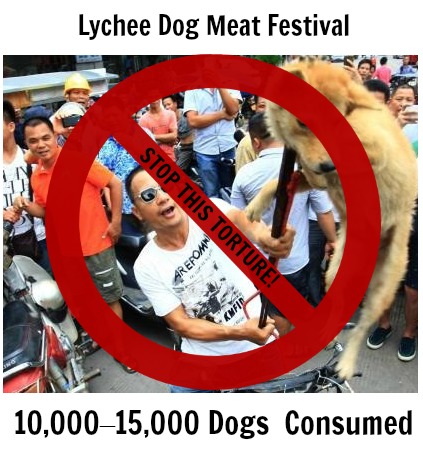




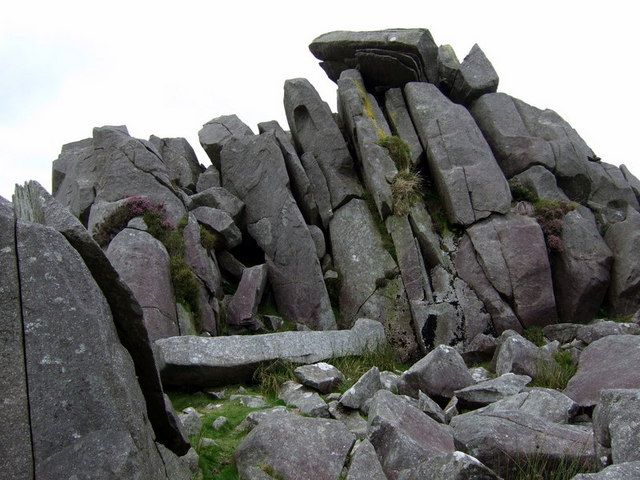


.jpg)





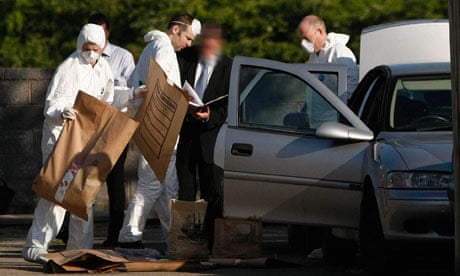


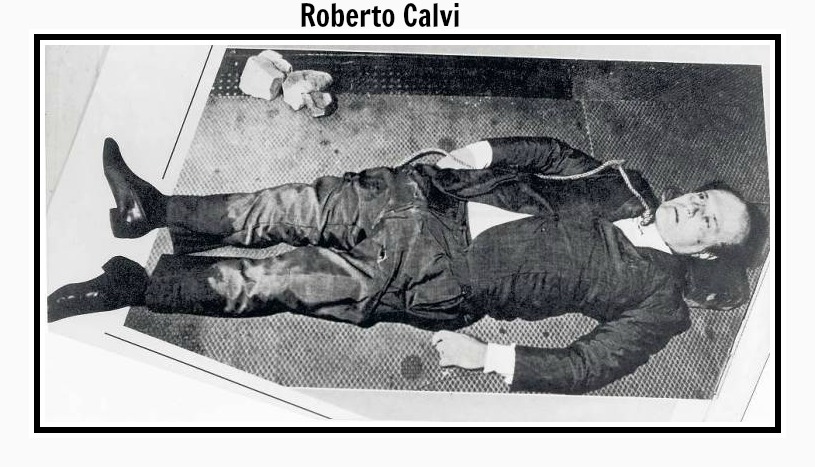





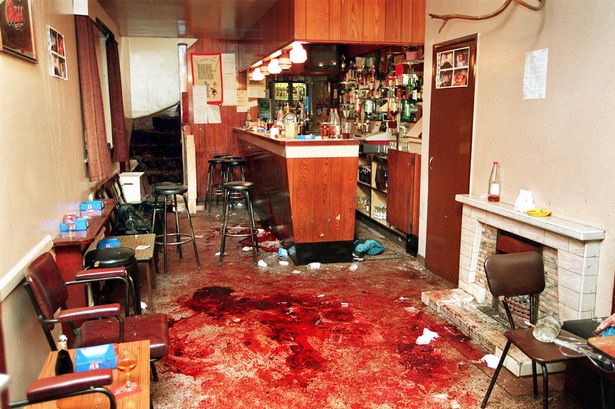

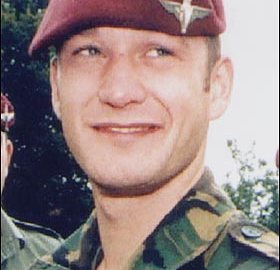


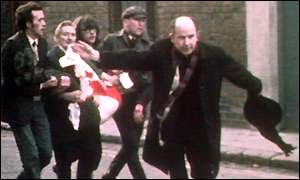
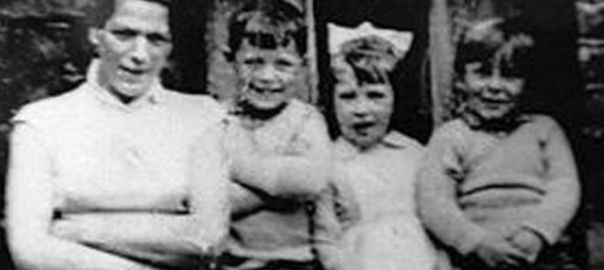


 belfastchildis.com