Update 17/7/2016 Suffering the hang- over from hell after my 50th birthday celebrations yesterday! Hi all just a little update on Baby and to introduce you to the new member of our family Delilah …
Source: Update on Baby- Our Little Man – Cat
Update 17/7/2016 Suffering the hang- over from hell after my 50th birthday celebrations yesterday! Hi all just a little update on Baby and to introduce you to the new member of our family Delilah …
Source: Update on Baby- Our Little Man – Cat

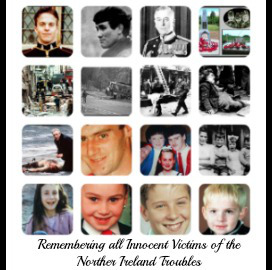
Key Events & Deaths on this day in Northern Ireland Troubles
17th July
—————————–
Thursday 17 July 1969
Devenny Died

Samuel Devenny (42) died as a result of injuries he received when he was severely beaten by Royal Ulster Constabulary (RUC) officers using batons.
The attack took place in Devenny’s home in William Street, Bogside, Derry, on 19 April 1969.
In some accounts of ‘the Troubles’ this is recorded as the first death
Friday 17 July 1970

Chichester-Clark, then Northern Ireland Prime Minister, and Robert Porter, then Minister of Home Affairs, met with Reginald Maulding, then British Home Secretary, in London.
Tuesday 17 July 1973


Christopher Brady & Geoffrey Breakwell
Two members of the British Army were killed by a booby-trap bomb that had been planted by the Irish Republican Army (IRA) in Divis Flats, Belfast. A Catholic civilian was killing in a Loyalist bomb attack in Crumlin, County Antrim.
Wednesday 17 July 1974

The Irish Republican Army (IRA) exploded a bomb at the Tower of London which killed one person and injured a further 41 others.
The Westminster Parliament passed the Northern Ireland Act 1974 which contained provisions for the election of a Constitutional Convention on the future government of Northern Ireland. The Convention would elect 78 members by Proportional Representation (PR) (using the STV system) from the 12 Westminster constituencies.
[The election was held on 1 May 1975.]
Thursday 17 July 1975
The Irish Republican Army (IRA) killed four British soldiers in a remote controlled bomb attack near Forkhill, County Armagh
See Forkhill
. [While the IRA claimed the attack was in retaliation to the killing of a Catholic earlier in the month, this incident was another serious breach of the truce.]
Saturday 17 July 1976
Two members of the Irish Republican Army (IRA) were killed when the bomb they were transporting in a car exploded prematurely. The explosion took place in Castlederg, County Tyrone.
Tuesday 17 July 1979
Ian Paisley, then leader of the Democratic Unionist Party (DUP), interrupted the opening proceedings of the European parliament to protest that the Union flag was flying the wrong way up on the Parliament Buildings.
Friday 17 July 1981
The delegation from the International Committee of the Red Cross had a meeting with Humphrey Atkins, then Secretary of State for Northern Ireland, to discuss the hunger strike.
Saturday 17 July 1982
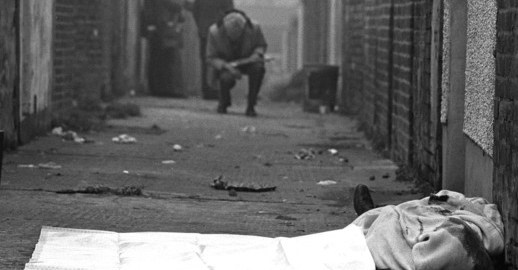
Norman Maxwell (33), a Protestant civilian, was severely beaten and then killed when a car was driven over him several times. The attack was carried out by members of the Ulster Volunteer Force (UVF) gang known as the ‘Shankill Butchers’ at the rear of Rumford Street Loyalist Club.
Maxwell’s body was later dumped in Alliance Parade off the Old Park Road, Belfast.
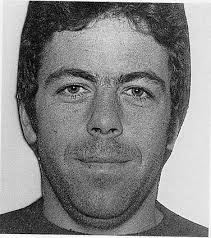
[It is believed that Lenny Murphy, who had been the leader of the ‘Shankill Butchers’ was responsible for the killing with the attack happening one day after Murphy’s release from prison (Dillon, 1990).]
See Lenny Murphy
Sunday 17 July 1983
Merlyn Rees, a former Secretary of Sate for Northern Ireland, reported that a Cabinet subcommittee had considered the possibility of withdrawal from Northern Ireland between 1974 and 1976.
Thursday 17 July 1986

Eighteen people, who had been sentenced on the evidence of Republican ‘supergrass’ informer Christopher Black on 5 August 1983, had their convictions quashed by the Court of Appeal in Belfast. Four others had their convictions confirmed by the court.
Tuesday 17 July 1990
After a five hour meeting of the Anglo-Irish Intergovernmental Conference (AIIC) involving Peter Brooke, then Secretary of State for Northern Ireland, no progress was made on setting a date for political talks to begin.
Wednesday 17 July 1991
Nicholas Fenn was replaced as Britain’s Ambassador to the Republic of Ireland by David Blatherwick.
Monday 17 July 1995
There was an arson attack on a Catholic primary school on the Shore Road, Belfast.
Wednesday 17 July 1996
Richard Dallas, then the mayor of Derry, was stripped of the use of council facilities because of his part in an Orange roadblock on the Craigavon Bridge in the city.
Friday 17 July 1998
After 12 days of often violent protest the Orange Order conceded that it would not be able to force its way down the Garvaghy Road. The number of people taking part in the demonstrations at Drumcree had dropped from 10,000 to 1,500 since the death of the three Quinn children on 12 July 1998.
Harold Gracey, the Portadown District Master, confirmed that only a token presence would be maintained at Drumcree church.
[The token presence was maintained until July 1999.] Tony Blair, then British Prime Minister, pledged that the Royal Ulster Constabulary (RUC) would remain intact despite any review of its future.
See Orange Order
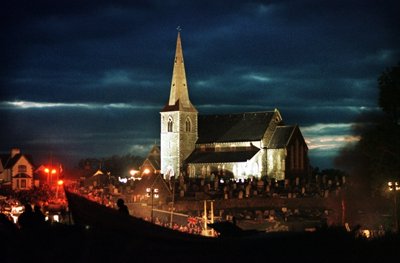
See Drumcree
Saturday 17 July 1999
It was announced that the former Northern Ireland talks chairman, Senator George Mitchell, had been invited to take part in a summit meeting on the peace process between the Taoiseach and the British Prime Minister. [There had been earlier speculation that Mitchell would be asked to chair a Review of the Agreement.]
——————————————
Remembering all innocent victims of the Troubles
Today is the anniversary of the death of the following people killed as a results of the conflict in Northern Ireland
“To live in hearts we leave behind is not to die
– Thomas Campbell
To the innocent on the list – Your memory will live forever
– To the Paramilitaries –
There are many things worth living for, a few things worth dying for, but nothing worth killing for.
15 People lost their lives on the 17th July between 1969 – 1994
——————————————
17 July 1969

Samuel Devenny (42)
Catholic
Status: Civilian (Civ),
Killed by: Royal Ulster Constabulary (RUC)
Died three months after being badly beaten in his home, William Street, Bogside, Derry. He was injured on 19 April 1969
——————————————
17 July 1973
Christopher Brady (21)
nfNI
Status: British Army (BA), K
illed by: Irish Republican Army (IRA)
Killed by booby trap bomb in electricity junction box, while on British Army (BA) foot patrol, Divis Flats, Belfast.
——————————————
17 July 1973
Geoffrey Breakwell (20)
nfNI
Status: British Army (BA),
Killed by: Irish Republican Army (IRA)
Killed by booby trap bomb in electricity junction box, while on British Army (BA) foot patrol, Divis Flats, Belfast
——————————————
17 July 1973
Owen Ruddy (60)
Catholic
Status: Civilian (Civ),
Killed by: non-specific Loyalist group (LOY)
Killed in car bomb attack outside Silver Eel Bar, Aghalee Road, Crumlin, County Antrim.
——————————————
17 July 1974
Dorothy Household (48)
nfNIB
Status: Civilian (Civ),
Killed by: Irish Republican Army (IRA)
Killed in bomb attack on White Tower, Tower of London, London
——————————————
17 July 1975
Peter Willis (37)
nfNI
Status: British Army (BA),
Killed by: Irish Republican Army (IRA)
Killed by remote controlled bomb, hidden in milk churn, detonated when British Army (BA) foot patrol passed, Tullydonnell, near Forkhill, County Armagh.
——————————————
17 July 1975

Edward Garside (34)
nfNI
Status: British Army (BA),
Killed by: Irish Republican Army (IRA)
Killed by remote controlled bomb, hidden in milk churn, detonated when British Army (BA) foot patrol passed, Tullydonnell, near Forkhill, County Armagh.
——————————————
17 July 1975

Robert McCarter (33)
nfNI
Status: British Army (BA),
Killed by: Irish Republican Army (IRA)
Killed by remote controlled bomb, hidden in milk churn, detonated when British Army (BA) foot patrol passed, Tullydonnell, near Forkhill, County Armagh.
——————————————
17 July 1975

Calvert Brown (25)
nfNI
Status: British Army (BA),
Killed by: Irish Republican Army (IRA)
Killed by remote controlled bomb, hidden in milk churn, detonated when British Army (BA) foot patrol passed, Tullydonnell, near Forkhill, County Armagh.
——————————————
17 July 1976
Peter McElcar (24)
nfNI
Status: Irish Republican Army (IRA),
Killed by: Irish Republican Army (IRA)
From County Donegal. Killed in premature bomb explosion while travelling in car, Castlederg, County Tyrone.
——————————————
17 July 1976
Patrick Cannon (20)
nfNI
Status: Irish Republican Army (IRA),
Killed by: Irish Republican Army (IRA)
From County Dublin. Killed in premature bomb explosion while travelling in car, Castlederg, County Tyrone.
——————————————
17 July 1979
Sylvia Crowe (31)
Protestant
Status: Civilian (Civ),
Killed by: Irish Republican Army (IRA)
Killed by remote controlled bomb hidden in parked lorry during attack on Ulster Defence Regiment mobile patrol, Rosslea, County Fermanagh.
——————————————
17 July 1982
Norman Maxwell (33)
Protestant
Status: Civilian (Civ),
Killed by: Ulster Volunteer Force (UVF)
Found beaten to death on waste ground, off Alliance Road, Belfast.
——————————————
17 July 1993
Kevin Pullin (28)
nfNI
Status: British Army (BA),
Killed by: Irish Republican Army (IRA)
Shot by sniper while on British Army (BA) foot patrol, Carran Road, Crossmaglen, County Armagh.
——————————————
17 July 1994

Caroline Moreland (34)
Catholic
Status: Civilian (Civ),
Killed by: Irish Republican Army (IRA)
Found shot, Clogh, near Rosslea, County Fermanagh. Alleged informer.
——————————————

Key Events & Deaths on this day in Northern Ireland Troubles
16th July
—————————–
Friday 16 July 1971
The Social Democratic and Labour Party (SDLP) withdrew from Stormont because no inquiry had been announced into the shooting dead of Seamus Cusack and Desmond Beattie in Derry on 8 July 1971.


Seamus Cusack & Desmond Beattie
Sunday 16 July 1972
Two British soldiers were killed in an IRA land mine attack near Crossmaglen, County Armagh.

Robert Laverty ( RUC)
An RUC officer was shot dead by the IRA in Belfast.

Tobias Molloy ( IRA )
A member of the youth wing of the IRA was killed by a rubber bullet in Strabane, County Tyrone.
Tuesday 16 July 1974

Liam Cosgrave, then Taoiseach (Irish Prime Minister), voted, as a matter of conscience, against his own government’s contraception Bill which was defeated by 75 votes to 61.
Unionists in Northern Ireland often pointed to the Republic’s position on issues such as contraception and divorce as an indication that the country was dominated by the Catholic church and was not a modern pluralistic society.
Thursday 16 July 1981

Representatives of the International Committee of the Red Cross paid a visit to the Maze Prison and met Republican prisoners to discuss the hunger strike. [1981 Hunger Strike.]
Friday 16 July 1982
Colm Carey (28), a Catholic civilian, died from loss of blood following a ‘punishment’ shooting carried out by the Irish Republican Army (IRA) at his home on Strabane Old Road, Gobnascale, Derry.

Carey had been shot in the knee.
Lenny Murphy
Lenny Murphy, who had been leader of the Ulster Volunteer Force (UVF) gang known as the ‘Shankill Butchers’, was released from prison.
See Lenny Murphy
Wednesday 16 July 1986
Rioting continued for a sixth night in areas of Belfast and Portadown, County Armagh.
Royal Ulster Constabulary (RUC) figures showed that 167 RUC officers and 125 civilians had been injured since 11 July; 200 people had been arrested; 300 plastic baton rounds fired; 111 cases of reported intimidation (including 11 cases against the homes of RUC officers.
Tuesday 16 July 1991
The Anglo-Irish Intergovernmental Conference (AIIC) held a meeting in Dublin, Republic of Ireland. Meetings of the AIIC had been suspended for 11 weeks to allow the political talks (later known as the Brooke / Mayhew talks) to proceed.
Saturday 16 July 1994

Almost 100 Loyalist paramilitary prisoners rioted in Crumlin Road prison, Belfast, causing extensive damage.
Sunday 16 July 1995
Members of the Orange Order picketed a Catholic Church in north Belfast as a protest following attacks on Orange Halls and Protestant businesses in the area.
See Orange Order
Wednesday 16 July 1997

Gerry McCabe
Two men appeared in a Dublin court and were charged with the capital murder of Gerry McCabe, who had been a Garda officer, in June 1996.
The Democratic Unionist Party (DUP) and the United Kingdom Unionist Party (UKUP) walked out of the Stormont talks in protest at what they claimed was a lack of clarification by the British government on the issue of decommissioning.

Alistair Simpson,
Alistair Simpson, then governor of the Apprentice Boys of Derry (ABD), said that he would not talk to the Bogside Residents Group (BRG) about the forthcoming ABD parade in the city. The reason given was that one of the spokespersons for the BRG had served a sentence for paramilitary involvement.
Thursday 16 July 1998

Bill Clinton, then President of the United States of America (USA), made a pledge to the surviving Quinn brother, Lee (13), that he would do all he could to bring peace to Northern Ireland.
——————————————
Remembering all innocent victims of the Troubles
Today is the anniversary of the death of the following people killed as a results of the conflict in Northern Ireland
“To live in hearts we leave behind is not to die
– Thomas Campbell
To the innocent on the list – Your memory will live forever
– To the Paramilitaries –
There are many things worth living for, a few things worth dying for, but nothing worth killing for.
9 People lost their lives on the 16th July between 1972 – 1986
——————————————
16 July 1972
Terence Graham (24)
nfNI
Status: British Army (BA),
Killed by: Irish Republican Army (IRA)
Killed in land mine attack on British Army (BA) Armoured Personnel Carrier, Carran, near Crossmaglen, County Armagh.
——————————————
16 July 1972
James Lee (25)
nfNI
Status: British Army (BA),
Killed by: Irish Republican Army (IRA)
Killed in land mine attack on British Army (BA) Armoured Personnel Carrier, Carran, near Crossmaglen, County Armagh.
——————————————
16 July 1972
Robert Laverty (18)
Protestant
Status: Royal Ulster Constabulary (RUC),
Killed by: Irish Republican Army (IRA)
Shot while sitting in stationary Royal Ulster Constabulary (RUC) patrol car, Antrim Road, Belfast.
——————————————
16 July 1972
Tobias Molloy (18)
Catholic
Status: Irish Republican Army Youth Section (IRAF),
Killed by: British Army (BA)
Shot by rubber bullet during street disturbances, outside Lifford Road British Army (BA) base, Strabane, County Tyrone.
——————————————
16 July 1972

Francis McKeown (43)
Catholic
Status: Civilian (Civ),
Killed by: British Army (BA)
Died one day after being shot, Shaw’s Road, Andersonstown, Belfast.
——————————————
16 July 1974

Thomas Braniff (25)
Catholic
Status: Civilian (Civ),
Killed by: Ulster Volunteer Force (UVF)
Killed in bomb attack on Sunflower Bar, Corporation Street, Belfast.
——————————————
16 July 1981
Gavin Dean (21)
nfNI
Status: British Army (BA),
Killed by: Irish Republican Army (IRA)
Shot during sniper attack on British Army (BA) observation post, Glassdrumman, near Crossmaglen, County Armagh.
——————————————
16 July 1982
Colm Carey (28)
Catholic
Status: Civilian (Civ),
Killed by: Irish Republican Army (IRA)
Died from loss of blood, shortly after being shot in the knee at his home, Strabane Old Road, Gobnascale, Derry. Alleged criminal.
——————————————
16 July 1986

Colm McCallan (25)
Catholic
Status: Civilian (Civ),
Killed by: Protestant Action Force (PAF)
Died two days after being shot near to his home, Millview Court, Ligoniel, Belfast.
——————————————

Key Events & Deaths on this day in Northern Ireland Troubles
15th July
——————————–
Wednesday 15 July 1981

Humphrey Atkins, then Secretary of State for Northern Ireland, announced that representatives of the International Committee of the Red Cross have been invited to carry out an investigation of prison conditions in Northern Ireland.
[Over the next eight days the delegation meets with the two sides to the dispute but announced on 23 July 1981 that they were unable to help resolve the hunger strike.]
Monday 15 July 1985
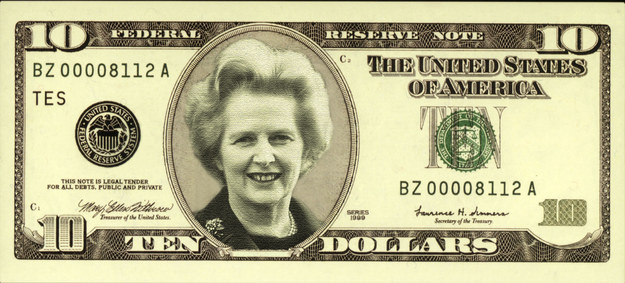
Margaret Thatcher, then British Prime Minister, delivered a speech to the American Bar Association in London. During her speech Thatcher referred to the role of the media during the conflict in Northern Ireland and said that it would be necessary to starve paramilitary organisations of “the oxygen of publicity”.
Sunday 15 July 1990
Two civilians were shot dead in separate incidents in Belfast and Lisburn.
Thursday 15 July 1993
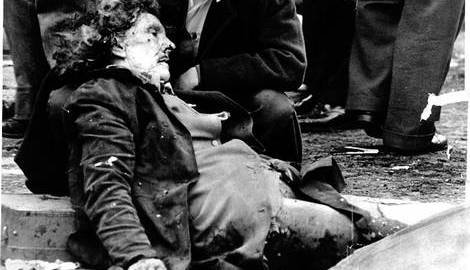
The Ulster Volunteer Force (UVF) released a statement in which the organisation admitted sole responsibility for the Dublin and Monaghan bombs on 17 May 1974. The statement was issued in response to the television documentary ‘Hidden Hand – the Forgotten Massacre’ broadcast on 6 July 1993.
Statement
“Following the sinister allegations of collusion mischeviously constructed by presenters of the recent First Tuesday programme which supposedly investigated the 1974 Dublin and Monaghan bombings. The UVF avails itself of this opportunity to state clearly and without reservation that the entire operation was from its conception to its successful conclusion, planned and carried out by our volunteers aided by no outside bodies.
In contrast to the scenario painted by the programme, it would have been unnecessary and indeed undesirable to compromise our volunteers anonimity [sic] by using clandestine Security Force personnel, British or otherwise, to achieve [an] objective well within our capabilities.
The operation whilst requiring a fair degree of preparation and not a little courage did not as was suggested by the so called experts require a great deal of technical expertise.
The comments made by some of those interviewed were at best naive if not deliberately misleading.
Given the backdrop of what was taking place in Northern Ireland when the UVF [were] bombing republican targets at will, either the researchers decided to take poetic licence to the limit or the truth was being twisted by knaves to make [a ] trap for the fools…The minimum of scrutiny should have revealed that the structure of the bombs placed in Dublin and Monaghan were similar if not identical to those being placed in Northern Ireland on an almost daily basis.
The type of explosives, timing and detonating methods all bore the hallmark of the UVF.
It is incredulous that these points were lost on the Walter Mittys who conjured up this programme.
To suggest that the UVF were not, or are not, capable of operating in the manner outlined in the programme is tempting fate to a dangerous degree.”
Ulster Volunteer Force (UVF), Belfast, 15 July 1993.
Saturday 15 July 1995

John Hume, then leader of the Social Democratic and Labour Party (SDLP), said it was his opinion that the Irish Republican Army (IRA) would “get rid” of its arms if Sinn Féin (SF) were included in political talks
Monday 15 July 1996

In a series of raids the London Metropolitan Police found components for making bombs at a number of addresses in Tooting and Peckham, London. The police speculated that the equipment would have been used in bomb attacks on utility installations in London and the south-east of England.
Seven men were arrested in the raids, and a man and a woman were later arrested in Birmingham.

It was revealed in a television programme (BBC’s Panorama) that David Trimble, then leader of the Ulster Unionist Party (UUP), had held a meeting during the Drumcree stand-off with Billy Wright, then a leading Loyalist in Portadown.
The Social Democratic and Labour Party (SDLP) accused David Trimble of being in breach of the Mitchell principles. Patrick Mayhew, then Secretary of State for Northern Ireland, announced the setting up of a committee to review parades in Northern Ireland (the Independent Review of Parades and Marches).
Tuesday 15 July 1997

Bernadette Martin (18), a Catholic civilian, was killed when she was shot four times in the head as she lay asleep in the home of her Protestant boyfriend’s parents at Aghalee, County Armagh.
Although no organisation admitted responsibility (‘no claim, no blame’) the Royal Ulster Constabulary (RUC) and Nationalists were certain that the Loyalist Volunteer Force (LVF) was responsible for the killing.
[The manner in which Bernadette Martin was killed caused revulsion across Northern Ireland.]
Wednesday 15 July 1998
The Royal Ulster Constabulary (RUC) carried out a search of the ‘field’ at Drumcree where the Orange Order had been holding its protests. The RUC uncovered a home-made sub-machinegun, spent and live ammunition, a number of explosive devices, a five-gallon drum of petrol, two crossbows with over a dozen explosive-tipped darts.
The British government introduced the Northern Ireland Bill into the House of Commons. The Bill was designed to implement the various provisions of the Good Friday Agreement.
Thursday 15 July 1999
Failed Attempt to Form Executive

The attempt to form the Executive of the Northern Ireland Assembly collapsed when David Trimble, then First Minister Designate, and the other Ulster Unionist Party (UUP) Assembly members failed to attend the sitting.
The Democratic Unionist Party (DUP) and the Alliance Party of Northern Ireland (APNI) also refused to nominate members to the Executive. An Executive of Social Democratic and Labour Party (SDLP) members and Sinn Féin (SF) members was formed for a few moments, but was then disbanded because it did not have cross-community participation.

Seamus Mallon then made a statement in which he tendered his resignation from the position of Deputy First Minister designate and called upon David Trimble to also resign.
[The political developments meant that the British and Irish governments were forced to begin a review of the Good Friday Agreement. Marjorie (Mo) Mowlam, then Secretary of State for Northern Ireland, adjourned the Assembly.
[Mallon was reinstated on 29 November 1999.] An article written by David Trimble on Decommissioning was published in The Irish Times (a Dublin based newspaper).]
Saturday 15 July 2000
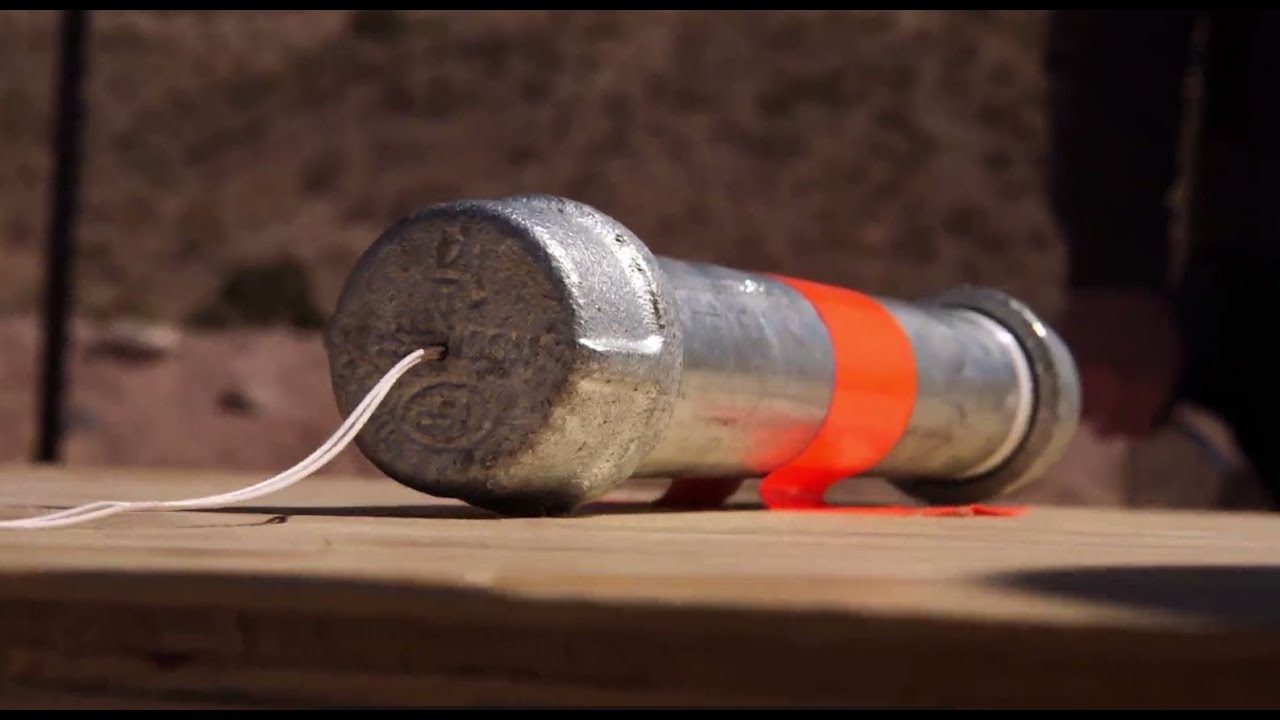
An 11 year old boy held an unexploded pipe-bomb for about an hour after it was found near a playground in Armagh. The boy was among a group of children who discovered the device beside a walkway on the Loyalist Ballinahone estate. The Royal Ulster Constabulary (RUC) said Loyalist paramilitaries could have hidden the bomb with the intention of using it that night or in the following days. It had been stored in a drainage hole in a wall beside the playground.
——————————————
Remembering all innocent victims of the Troubles
Today is the anniversary of the death of the following people killed as a results of the conflict in Northern Ireland
“To live in hearts we leave behind is not to die
– Thomas Campbell
To the innocent on the list – Your memory will live forever
– To the Paramilitaries –
There are many things worth living for, a few things worth dying for, but nothing worth killing for.
9 People lost their lives on the 15th July between 1972 – 1997
——————————————
15 July 1972

Felix Hughes (35)
Catholic
Status: Civilian (Civ),
Killed by: Ulster Defence Association (UDA)
Abducted somewhere in Portadown, County Armagh. Found shot in drainage ditch, off Watsons Street, Edenderry, Portadown, County Armagh, on 4 August 1972.
——————————————
15 July 1972
John Young (27)
nfNI
Status: British Army (BA),
Killed by: Irish Republican Army (IRA)
Killed attempting to defuse bomb by side of road, Silverbridge, near Crossmaglen, County Armagh.
——————————————
15 July 1972
John Mooney (17)
Catholic
Status: Civilian (Civ),
Killed by: British Army (BA)
Shot while walking along Ligoniel Road, Ligoniel, Belfast.
——————————————
15 July 1972
Kenneth Canham (24)
nfNI
Status: British Army (BA),
Killed by: Irish Republican Army (IRA)
Shot by sniper while on British Army (BA) foot patrol, Lenadoon Avenue, Belfast
——————————————
15 July 1977
William Hutchinson (33)
Protestant
Status: Ulster Defence Association (UDA),
Killed by: Ulster Defence Association (UDA)
Found shot off Old Glencairn Road, Belfast. Alleged informer.
——————————————
15 July 1979
Patrick O’Hanlon (69)
Catholic
Status: Civilian (Civ),
Killed by: Irish Republican Army (IRA)
Shot in car park of Falls Bowling Club, Andersonstown Road, Belfast
——————————————
15 July 1990
William Sloss (31)
Protestant
Status: Civilian (Civ),
Killed by: Irish People’s Liberation Organisation (IPLO)
Shot at his home, Tate’s Avenue, off Lisburn Road, Belfast.
——————————————
15 July 1990

Martin Hughes (33)
Catholic
Status: Civilian (Civ),
Killed by: Ulster Freedom Fighters (UFF)
Shot outside his home, Huguenot Drive, Lisburn, County Antrim.
——————————————
15 July 1997
Bernadette Martin (18)
Catholic
Status: Civilian (Civ),
Killed by: Loyalist Volunteer Force (LVF)
Shot, at her friends home, Soldierstown Road, Aghalee, County Antrim.
——————————————

Key Events & Deaths on this day in Northern Ireland Troubles
14th July
—————————————–
Wednesday 14 July 1971
A British soldier was shot dead in Belfast.

Richard Barton
Friday 14 July 1972
Six people were shot and killed in separate incidents in Belfast.
Three were British Army soldiers, two were members of the Irish Republican Army (IRA) and one was a Protestant civilian.
Sunday 14 July 1974
The Irish Republican Army (IRA) carried out bomb attacks in Manchester and Birmingham.
Monday 14 July 1975

Merlyn Rees, then Secretary of Sate for Northern Ireland, outlined the governments response to the Irish Republican Army’s (IRA) truce.
There had been a reduction in the level of British Army patrols, and house searches had been scaled down. He also indicated that in the event of a permanent end to paramilitary violence, security would be returned to a ‘peace time level’.
Tuesday 14 July 1981

Matt Devlin joined the hunger strike to replace Martin Hurson. The Irish government asked the United States government to use its influence with Britain on the issue of the hunger strike.
Wednesday 14 July 1982

James Prior, then Secretary of State for Northern Ireland, announced that elections to the new Assembly at Stormont would be held on 20 October 1982.
Saturday 14 July 1984
Two Ulster Defence Regiment (UDR) soldiers were killed in an Irish Republican Army (IRA) landmine attack at Castlederg, County Tyrone.
Monday 14 July 1986
Around 50 Loyalists attacked Catholic homes in the village of Rasharkin, County Antrim.
Thursday 14 July 1994

The Combined Loyalist Military Command (CLMC) issued a statement saying that if the Irish Republican Army (IRA) ended its campaign then Loyalist paramilitaries would respond.
Friday 14 July 1995
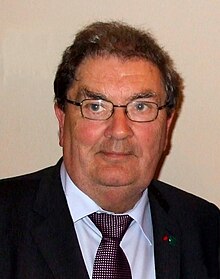
John Hume, then leader of the Social Democratic and Labour Party (SDLP), and Gerry Adams, then President of Sinn Féin (SF), travelled to Dublin for a meeting with John Bruton, then Taoiseach (Irish Prime Minister), and Dick Spring, then Tánaiste (deputy Irish Prime Minister and Minister for Foreign Affairs).
Following the meeting the four men issued a joint statement calling for all-party talks as soon as possible. An article by Adams was published in the Irish Times (a Dublin based newspaper).
He wrote that the Irish Republican Army (IRA) would not have called a ceasefire if the decommissioning of paramilitary weapons had been a major issue for the British government.
Sunday 14 July 1996
Nationalists held large rallies in Belfast, Derry and Lurgan.
Monday 14 July 1997

The Royal Black Preceptory decided to voluntarily rerouted a parade that had been planned to pass through the centre of Newry, County Down.
An article in the Irish Times revealed that the British government had maintained regular contacts with the Republican movement since late June. Unionists called for the imposition of stringent rules on the decommissioning of arms as a precondition for the entry of Sinn Féin (SF) into all-party talks.
Tuesday 14 July 1998
The funeral took place of the three Quinn children in Rasharkin, County Antrim. There was a huge turnout for the funeral.
The three boys were buried in a single grave. David Trimble, then leader of the Ulster Unionist Party (UUP), criticised those people who were claiming that the attack was not sectarian. There was also Nationalist anger at remarks made by Ian Paisley, then leader of the Democratic Unionist Party (DUP), that “Republicans carried out far worse murders”.
David Jones, then a spokesman for the Portadown Orange Order, accused the security forces and Loyalist paramilitaries of colluding to launch the petrol bomb attack on the Quinn home on 12 July. He claimed the aim of the security forces would have been to discredit the Orange Order. Three Orange Halls and a Protestant church were damaged in petrol bomb attacks.
See : Murder of the Innocent.
Wednesday 14 July 1999
Following a meeting of the Ulster Unionist Party (UUP) Executive David Trimble, then leader of the UUP, indicated that he would not participate in the d’Hondt procedure to appoint ministers to the North’s proposed power-sharing Executive.
[The decision to reject the ‘Way Forward’ proposals created another crisis in the peace process. Some commentators said that the move challenged the authority and prestige of Tony Blair, then British Prime Minister.]
Gerry Adams, then President of Sinn Féin (SF) published an article in the Irish News (a Belfast based newspaper) stating that his party was against the safeguard legislation introduced on 12 July and that it is unnecessary under the terms of the Good Friday Agreement.
Security force personnel dismantled barriers between Drumcree Church and the Garvaghy Road in Portadown. The barriers had been erected earlier in the month to prevent the Orange Order from marching through the mainly Nationalist area of Garvaghy Road.
Saturday 14 July 2001
Political talks to try to secure the peace process finally broke down at Weston Park in England. The British and Irish governments said they would now put together a document containing a package of proposals for the parties, on a take-it-or-leave-it basis.
[The document was finally presented to the parties, and made public, on 1 August 2001.]
——————————————
Remembering all innocent victims of the Troubles
Today is the anniversary of the death of the following people killed as a results of the conflict in Northern Ireland
“To live in hearts we leave behind is not to die
– Thomas Campbell
To the innocent on the list – Your memory will live forever
– To the Paramilitaries –
There are many things worth living for, a few things worth dying for, but nothing worth killing for.
10 People lost their lives on the 14th July between 1969 – 1984
——————————————
14 July 1969
Francis McCloskey (67)
Catholic
Status: Civilian (Civ),
Killed by: Royal Ulster Constabulary (RUC)
Died one day after being hit on head with batons during street disturbances, Dungiven, County Derry.
——————————————
14 July 1971
Richard Barton (24)
nfNI
Status: British Army (BA),
Killed by: Irish Republican Army (IRA)
Shot by sniper while on British Army (BA) mobile patrol, Shaw’s Road, Andersonstown, Belfast.
——————————————
14 July 1972

Louis Scullion (27)
Catholic
Status: Irish Republican Army (IRA),
Killed by: British Army (BA)
Shot while walking through Unity Flats, off Upper Library Street, Belfast
——————————————
14 July 1972

Robert Williams-Wynn (24)
nfNI
Status: British Army (BA),
Killed by: Irish Republican Army (IRA)
Shot by sniper during gun battle, Lenadoon, Belfast.
——————————————
14 July 1972
Peter Heppenstall (20)
nfNI
Status: British Army (BA),
Killed by: Irish Republican Army (IRA)
Shot by sniper while on British Army (BA) foot patrol, Alliance Avenue, Ardoyne, Belfast
——————————————
14 July 1972
Jane McIntyre (64)
Protestant
Status: Civilian (Civ),
Killed by: Irish Republican Army (IRA)
Shot outside her home, Highpark Drive, during Irish Republican Army (IRA) sniper attack on the nearby Black Mountain School British Army (BA) base, Highfield, Belfast.
——————————————
14 July 1972
Edward Brady (30)
Catholic
Status: Official Irish Republican Army (OIRA),
Killed by: British Army (BA)
Shot during gun battle, Ardilea Street, Ardoyne, Belfast.
——————————————
14 July 1972
John Williams (22)
nfNI
Status: British Army (BA),
Killed by: Irish Republican Army (IRA)
Shot during gun battle, Alliance Avenue, Ardoyne, Belfast.
——————————————
14 July 1984

Norman McKinley (32)
Protestant
Status: Ulster Defence Regiment (UDR),
Killed by: Irish Republican Army (IRA)
Killed in land mine attack on Ulster Defence Regiment foot patrol, Second Corgary, near Castlederg, County Tyrone.
——————————————
14 July 1984

Heather Kerrigan (20)
Protestant
Status: Ulster Defence Regiment (UDR),
Killed by: Irish Republican Army (IRA)
Killed in land mine attack on Ulster Defence Regiment foot patrol, Second Corgary, near Castlederg, County Tyrone
——————————————

Key Events & Deaths on this day in Northern Ireland Troubles
13th July
——————————-
Monday 13 July 1970

The annual ‘Twelfth’ parades pass off without serious incident.
[These parades are not normally held on a Sunday hence they took place on 13 July.]
Thursday 13 July 1972
Seven people were shot and killed in separate incidents in Belfast.
Sunday 13 July 1975
Denis Berry (21), then a member of the Ulster Defence Association (UDA), was shot dead by the Ulster Volunteer Force (UVF) in Belfast.
The killing was part of a continuing feud between the UDA and the UVF. A Catholic boy (16) was shot dead by the British Army in Belfast.
Monday 13 July 1981
Sixth Hunger Striker Died
Martin Hurson (29) died after 46 days on hunger strike.
Wednesday 13 July 1983
Four UDR Soldiers Killed


Ronald Alexander, John Roxborough , Oswell Neely & Thomas Harron
The Irish Republican Army (IRA) exploded a land mine in Tyrone killing four members of the Ulster Defence Regiment (UDR).
[This was the highest casualty rate suffered by the UDR in a single incident.] The Irish National Liberation Army (INLA) shot dead two Catholic civilians in County Armagh.
The House of Commons rejected a motion calling for the reintroduction of capital punishment in Northern Ireland.
Sunday 13 July 1986

John Hermon, then Chief Constable of the Royal Ulster Constabulary (RUC), suspended two senior RUC officers following the investigations into the alleged ‘shoot to kill’ policy of the security forces in Northern Ireland
Friday 13 July 1990
The case of the Maguire family was referred to the Court of Appeal. Peter Brooke, then Secretary of State for Northern Ireland, met with Gerry Collins, then Irish Minister of Foreign Affairs, to review the ongoing stalemate in the political progress.
Saturday 13 July 1996 CIRA Bombing

A car bomb exploded outside the Kilyhelvin Hotel, Enniskillen, County Fermanagh, causing substantial damage. The bomb was estimated to have contained 1,200 pounds of home-made explosive and the large blast injured 17 people as they were being evacuated from the hotel.
The Irish Republican Army (IRA) denied responsibility for the bomb as did Republican Sinn Féin (RSF).
Security sources placed the blame for the attack on the Irish Republican National Army (IRNA) considered to be the military wing of RSF.
[A group calling itself the Continuity Irish Republican Army (CIRA) later claimed responsibility for the bomb.]
There were further riots in nationalist areas.

The Social Democratic and Labour Party announced that it would withdraw from the Northern Ireland Forum.
Sunday 13 July 1997
The Royal Ulster Constabulary (RUC) uncovered 500 pounds of explosives and three booster charges in the Creggan area of Derry.
Monday 13 July 1998

The Orange Order ‘Twelfth’ celebrations were held at centres across Northern Ireland (the parades were held on 13 July because the 12 July fell on a Sunday)
. Catholic residents of the Lower Ormeau Road held a peaceful protest against an Orange parade through the area.
Joel Patton, then leader of the ‘Spirit of Drumcree’ group, verbally attacked William Bingham, then a chaplain in the Orange Order, and accused him of betraying the Orangemen of Portadown.
The number of people involved in the Drumcree stand-off decreased considerably following the extensive condemnation of the Orange Order’s response to the deaths of the Ouinn children in a sectarian attack in Ballymoney, County Antrim, on 12 July 1998.
Tuesday 13 July 1999

David Trimble, then leader of the Ulster Unionist Party (UUP), failed to win any concessions from the British government on its failsafe legislation in the House of Commons. The Bill passed its third reading in the House of Commons by 343 votes to 24
Firday 13 July 2001
Political talks resumed at Weston Park in England.
——————————————
Remembering all innocent victims of the Troubles
Today is the anniversary of the death of the following people killed as a results of the conflict in Northern Ireland
“To live in hearts we leave behind is not to die
– Thomas Campbell
To the innocent on the list – Your memory will live forever
– To the Paramilitaries –
There are many things worth living for, a few things worth dying for, but nothing worth killing for.
18 People lost their lives on the 13th July between 1972 – 1996
——————————————
13 July 1972

Martin Rooney (22)
nfNI
Status: British Army (BA),
Killed by: Irish Republican Army (IRA)
Shot by sniper while on British Army (BA) mobile patrol, Clonard Street, Lower Falls, Belfast.
——————————————
13 July 1972

Kenneth Mogg (29)
nfNI
Status: British Army (BA),
Killed by: Irish Republican Army (IRA)
Shot by sniper while on British Army (BA) mobile patrol, Dunville Park, Falls Road, Belfast
——————————————
13 July 1972
David Meeke (24)
nfNI
Status: British Army (BA),
Killed by: Irish Republican Army (IRA)
Shot by sniper while on British Army (BA) foot patrol, Hooker Street, Ardoyne, Belfast
——————————————
13 July 1972
Henry Russell (23)
Catholic
Status: Ulster Defence Regiment (UDR),
Killed by: non-specific Loyalist group (LOY)
Off duty. Found shot, Larkfield Drive, Sydenham, Belfast
——————————————
13 July 1972
Thomas Burns (35)
Catholic
Status: Civilian (Civ),
Killed by: British Army (BA)
Shot while leaving Glenpark Social Club, Glenpark Street, Oldpark, Belfast.
——————————————
13 July 1972

James Reid (27)
Catholic
Status: Irish Republican Army (IRA),
Killed by: British Army (BA)
Shot during gun battle Eskdale Gardens, Ardoyne, Belfast.
——————————————
13 July 1972

Terence Toolan (36)
Catholic
Status: Civilian (Civ),
Killed by: British Army (BA)
Shot during gun battle Eskdale Gardens, Ardoyne, Belfast
——————————————
13 July 1975

Charles Irvine (16)
Catholic
Status: Civilian (Civ),
Killed by: British Army (BA)
Shot while travelling in car, junction of Falls Road and Waterford Street, Lower Falls, Belfast
——————————————
13 July 1975
Denis Berry (21)
Protestant
Status: Ulster Defence Association (UDA),
Killed by: Ulster Volunteer Force (UVF)
Shot shortly after leaving Ulster Defence Association social club, Taughmonagh, Belfast. Ulster Defence Association (UDA) / Ulster Volunteer Force (UVF) feud.
——————————————
13 July 1976

Gerard Gilmore (19)
Catholic
Status: Official Irish Republican Army (OIRA),
Killed by: non-specific Loyalist group (LOY)
Shot from passing car, while standing outside Boundary Bar, Shore Road, Greencastle, Belfast.
——————————————
13 July 1981

Martin Hurson (29)
Catholic
Status: Irish Republican Army (IRA),
Killed by: not known (nk)
Died on the 46th day of hunger strike, Long Kesh / Maze Prison, County Down
——————————————
13 July 1983
Eamon McMahon (35)
Catholic
Status: Civilian (Civ),
Killed by: Irish National Liberation Army (INLA)
Found shot in his car, Glassdrumman, near Crossmaglen, County Armagh.
——————————————
13 July 1983
Patrick Mackin (37)
Catholic
Status: Civilian (Civ),
Killed by: Irish National Liberation Army (INLA)
Found shot in Eamon McMahon’s car, Glassdrumman, near Crossmaglen, County Armagh
——————————————
13 July 1983
Ronald Alexander (19)
Protestant
Status: Ulster Defence Regiment (UDR),
Killed by: Irish Republican Army (IRA)
Killed in land mine attack on Ulster Defence Regiment (UDR) mobile patrol, near Ballygawley, County Tyrone.
——————————————
13 July 1983
John Roxborough (19)
Protestant
Status: Ulster Defence Regiment (UDR),
Killed by: Irish Republican Army (IRA)
Killed in land mine attack on Ulster Defence Regiment (UDR) mobile patrol, near Ballygawley, County Tyrone.
——————————————
13 July 1983
Oswell Neely (20)
Protestant
Status: Ulster Defence Regiment (UDR),
Killed by: Irish Republican Army (IRA)
Killed in land mine attack on Ulster Defence Regiment (UDR) mobile patrol, near Ballygawley, County Tyrone.
——————————————
13 July 1983
Thomas Harron (25)
Protestant
Status: Ulster Defence Regiment (UDR),
Killed by: Irish Republican Army (IRA)
Killed in land mine attack on Ulster Defence Regiment (UDR) mobile patrol, near Ballygawley, County Tyrone.
——————————————
13 July 1984

William Price (28)
Catholic
Status: Irish Republican Army (IRA),
Killed by: British Army (BA)
Shot by undercover British Army (BA) members, during attempted incendiary bomb attack on factory, Ardboe, County Tyrone.
——————————————
13 July 1996

Dermot McShane (35)
Catholic
Status: ex-Irish National Liberation Army (xINLA),
Killed by: not known (nk)
Knocked down by British Army (BA) Armoured Personnel Carrier during street disturbances, Little James Street, Derry.
——————————————

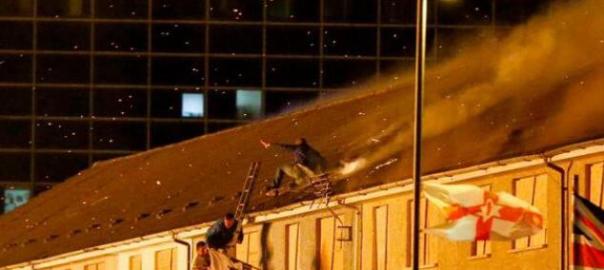
Shankill Road Bonfire Horror
Take a close look at this picture…
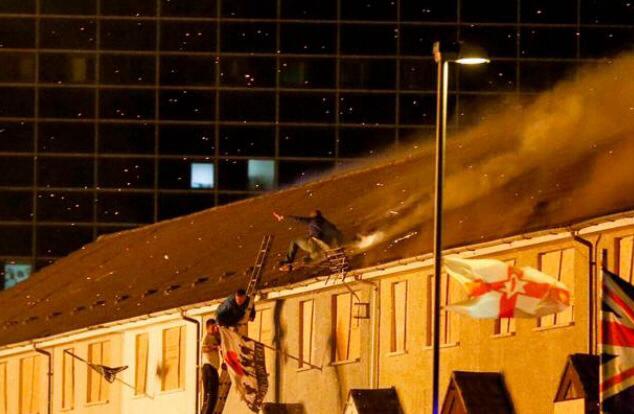
This guy was almost burnt to death trying to put out a fire in the roof of this house on the 11th and in my opinion he is the luckiest man in all of Northern Ireland today and should be thanking his lucky stars.
Seconds after this picture was taking the roof caved in and had he not move he would have fallen into the inferno that was engulfing the roof space of this house and hundreds watching would have witness someone being burnt to death and every time I think about I get shivers down my spine.
The family and I had watched a few fires in and around the Woodvale & Glenciarn before heading down to the lower Shankill to watch the main fire there , with 1000’s of others. The heat was unbelievable hot and the local council expecting this had covered the doors and windows of those houses deemed to close to the fire with hoarding , including those houses that eventually caught fire.
As the night wore on and the fire was reaching its peak everyone was happy and celebrating the 11th bonfires , but gradually we became concerned with the vast heat coming from the fire and the showers of hot ash and sparks that the wind was blowing towards the row of houses to the north of the fire. Gradually we noticed some a small fire in the air vents in one of the roofs and this quickly spread to three or four adjoining houses.
At this stage it was only tiny flames and no one seemed overly concerned when someone brought out a ladder and a few men/boy started a small chain and were passing buckets of water to the guy at the top of the ladder as he tried to put the fire out.
And then things took a sinister turn. The guy at the top climb onto the roof and to all our amazement he clambered over the roof tiles to reach the small fire better. The crowd held their breath as we watched him attempt to extinguish the flames and then to our horror he slips and one of his feet went through the tiles and flames shot up from the loft of the house and it was immediately obvious the fire was much worse than we had thought and the whole of the loft/roof spaces were engulfed in fire and the situation was grave.
Then as the guy on the roof was trying to climb away from the hole he slipped again and almost feel into the hole and certain death and i have to say my heart was in my throat and like many in the crowd i had to look away as I had no wish to see someone die such a terrible death. Screams of terror echoed round the square and everyone present held their breaths , but thankfully he made his way back over the roof and down the ladder to relative safety on the ground.
Seconds later the roof he had been on collapsed completely and had he been still in the same position he would not have been here today as it would have been impossible to save him and besides for some reason the fire-brigade had not yet arrived on the scene and when they did it seem to take them ages to get the equipment set up and working to deal with the fire.

Sadly this was to late for these houses.

Some more pictures from the night.


Key Events & Deaths on this day in Northern Ireland Troubles
12th July
———————————-
Saturday 12 July 1969

As the ‘marching season’ reached its height there was serious rioting in Derry, Belfast and Dungiven. Many familles in Belfast were forced to move from their homes.
[The upsurge in violence followed a period of relative calm
Monday 12 July 1971

David Walker
A British soldier was shot dead in Belfast. The main Orange Order parades across Northern Ireland passed off relatively peacefully.
Wednesday 12 July 1972
A Protestant man was found shot dead in Portadown.
Two men, one Catholic one Protestant, were shot dead in a public house in Portadown.
Two men were shot dead in separate incidents in Belfast.
Thursday 12 July 1979
Margaret Thatcher, then British Prime Minister, criticised the British Broadcasting Corporation (BBC) after it had broadcast an interview with a member of the Irish National Liberation Army (INLA).
[This incident was to set a pattern of confrontation between the media, particularly the broadcast media, and Conservative governments during the 1980s and 1990s.]
Thursday 12 July 1984
Twelfth in Northern Ireland 2013
The annual Orange Order ‘Twelfth’ parades took place across Northern Ireland. There was violence following the parades with attacks on security forces and shops in Derry. Catholic families were also attacked in Limavady, County Derry, in Ballymena, County Antrim, and in Ballynahinch, County Down.
During speeches at the various centres across the region leading Orange figures condemned the Report of the New Ireland Forum
Friday 12 July 1985

There was further rioting in Portadown, County Armagh, following the decision by the Royal Ulster Constabulary (RUC) to re-route Orange Order and Royal Black Institution parades away from Obins Street, a mainly Catholic area of Portadown. During serious rioting between Loyalists and the RUC extensive damage was inflicted on property in the town and 52 RUC officers were injured.
Saturday 12 July 1986
There were further periods of violence following the Orange Order ‘Twelfth’ parades.
[Later the Royal Ulster Constabulary (RUC) released figures that showed there had been 128 RUC officers and 66 civilians injured and 127 arrests made. 281 plastic baton rounds had been fired and there were 79 reported cases of intimidation.]

Brian Leonard (20), a Catholic civilian, died two days after been shot while working on a building site in Shugville Street, Shankill, Belfast. The Protestant Action Force (PAF) claimed responsibility for the killing.
[The PAF killed two more Catholic civilians during July 1986 and two in September 1986.]
Wednesday 12 July 1989

Charles Haughey was re-elected as Taoiseach (Irish Prime Minister). Fianna Fáil (FF) formed the new government with the support of the Progressive Democrats (PDs). This was the first occasion that FF had been part of a coalition government.
Thursday 12 July 1990
The case of the Maguire family was referred to the Court of Appeal.
Friday 12 July 1991
The results of a survey of public opinion on the political talks (later known as the Brooke / Mayhew talks) was published. It showed a high level of support for the resumption of the talks (73 per cent of people questioned in Northern Ireland; 87 per cent in the Republic of Ireland; and 79 per cent in Britain). The survey was carried out by Ulster Marketing Surveys, Irish Marketing Surveys, and Gallup.
Tuesday 12 July 1994

The security forces in England seized a lorry containing over 1,800kgs of explosives at the port of Heysham, Lancashire. The explosives had been hidden in false compartments and the Irish Republican Army (IRA) was considered to be responsible.
[There was speculation that the explosives would have been used in London.]
Wednesday 12 July 1995
Orange Order parades took place at a number of centres across Northern Ireland. In the lower Ormeau Road area of Belfast the Royal Ulster Constabulary (RUC) moved hundreds of police officers into the area to prevent Nationalist residents from protesting on the street.
Many residents were blocked inside their homes for the duration of the operation. Approximately 150 Orangemen, accompanied by four bands, left Ballynafeigh Hall at 9.30am to parade along the Ormeau Road. There were clashes between the Nationalist residents and the RUC.
A number of vehicles were hijacked and burned. During the evening there were attacks on the homes of several Catholic and Protestant families and there were arson attacks on five Orange Halls.
[ The Irish government later accused the RUC of bias in favour of the Orange Order and made a complaint to the Anglo-Irish Secretariat at Maryfield.]
Friday 12 July 1996

Ballynafeigh Orangemen were allowed to march through the Catholic lower Ormeau Road area of Belfast. There was continuing rioting in nationalist areas.
Dermot McShane (35), a Catholic man, was killed when he was run over by a British Army armoured car in Little James Street, Derry.

It was estimated that 1,000 petrol bombs were thrown and 1,000 plastic bullets were fired in Derry. John Bruton, then Taoiseach (Irish Prime Minister), criticised the decision to allow the Orange march to proceed on the Garvaghy Road. He accused the British government of yielding to force and the threat of force.
Saturday 12 July 1997
The ‘Twelfth’ Orange Order parades across Northern Ireland passed off relatively peacefully with only minor incidents. There were some stones thrown in the White City area of Belfast. Two Royal Ulster Constabulary (RUC) officers and three soldiers were slightly injured in an Irish Republican Army (IRA) attack in north Belfast.
John Hume, then leader of the Social Democratic and Labour Party (SDLP), held a meeting with Tony Blair, then British Prime Minister, and called on the IRA to announce a new ceasefire. An RUC Landrover, being used to police an Orange Order parade at Dunloy, appeared with a handpainted rat with a crown and the words “King Rat”.
[‘King Rat’ was the nickname of Billy Wright, then leader of the Loyalist Volunteer Force (LVF). Wright was believed to have been responsible for the deaths of many innocent Catholic civilians.]
The relative of one of his victims called on the RUC to take immediate disciplinary action against the officers responsible for the painting.
See Billy Wright
Sunday 12 July 1998
Three Boys Killed at Ballymoney
Three young Catholic boys, Richard (11), Mark (10), and Jason (9) Ouinn, were burnt to death after their home, in Ballymoney, County Antrim, was petrol bombed in a sectarian attack carried out by Loyalists.

[It was later disclosed that members of the Ulster Volunteer Force (UVF) had been involved in the attack.]
Christine Quinn the boys mother, her partner, Raymond Craig, and a family friend, Christina Archibald (18) escaped from the house but they and neighbours were unable to reach the three boys. Lee Ouinn (13), the oldest son, was staying with his grandmother when the incident occurred.
[There was a general sense of shock when the news of the deaths broke and in the following days the incident was to have a major impact on the Orange Order protest at Drumcree. Although senior representatives of the Order tried to distance the organisation from the violence that had been almost continuous since the 5 July 1998, many commentators argued that the Orange Order had to accept some responsibility for the violence of its followers.]

William Bingham (Rev.), then Deputy Grand Chaplain of the Orange Order, called for the Drumcree protest to be ended and said that the 15 minute march down the Garvaghy Road would be “a hallow victory” as it would be taking place in the shadows of three little white coffins. David Trimble, then leader of the Ulster Unionist Party (UUP), and Robin Eames (Dr), then Church of Ireland Primate, also called for an end to the protest.
The Orange Order rejected these and other similar calls.
[The protest at Drumcree declined following the Quinn deaths but a token protest was maintained during most of the year to July 1999.]
Monday 12 July 1999
Across Northern Ireland the Twelfth parades passed off without incident. The largest Orange parade with around 20,000 marchers proceeded through south Belfast to the Ormeau Park, keeping to a compromise route.
Other parades passed off without major incident. Legislation was put before the Westminster Parliament, designed to act as a safeguard for the decommissioning of arms and the devolution of power in Northern Ireland.

Mary McAleese, then President of the Republic of Ireland, attended a reception to mark the 50th anniversary of the death of the Republic’s first president, Douglas Hyde (Dr). She said his message was that barriers between differing traditions should not be broken down by threat or stealth.
Wednesday 12 July 2000
Andrew Cairns (22), a member of the Ulster Volunteer Force (UVF), was shot dead while attending “eleventh night” bonfire celebrations in Boyne Square, Larne, County Antrim.

The Ulster Defence Association (UDA) were believed to have been responsible for the killing. The killing was part of a feud between the UDA and the UVF.
Thursday 12 July 2001
Serious Violence in Belfast

Orange Order parades took place across Northern Ireland. Speakers at Orange rallies across the region attacked the peace process and the Good Friday Agreement.
About a hundred members of the Ballynafeigh Lodge were prevented by a Parades Commission ruling from marching along the Nationalist Lower Ormeau Road area of Belfast.
The Parades Commission had also re-routed the main parade in Derry. The worst riots for a number of years took place as the Royal Ulster Constabulary (RUC) sealed off part of the Nationalist Ardoyne area of Belfast to allow an Orange Order parade to pass close to the Catholic area.

The RUC reported that 10 officers had been injured in the disturbances. Nationalists claimed that a number of people had been injured by the RUC with at least 12 people being struck by plastic bullets.
[Senior police later accused the Irish Republican Army (IRA) of orchestrating the violence. The claim was rejected by Sinn Féin (SF).]
There was also violence in the east of Belfast when a Orange Order parade passed the Nationalist Short Strand area.
——————————————
Remembering all innocent victims of the Troubles
Today is the anniversary of the death of the following people killed as a results of the conflict in Northern Ireland
“To live in hearts we leave behind is not to die
– Thomas Campbell
To the innocent on the list – Your memory will live forever
– To the Paramilitaries –
There are many things worth living for, a few things worth dying for, but nothing worth killing for.
18 People lost their lives on the 12th July between 1971 – 2000
——————————————
12 July 1971
David Walker (30)
nfNI
Status: British Army (BA),
Killed by: Irish Republican Army (IRA)
Shot by sniper, while leaving British Army (BA) observation post, Northumberland Street, Lower Falls, Belfast.
——————————————
12 July 1972
Paul Beattie (19)
Protestant
Status: Civilian (Civ),
Killed by: non-specific Republican group (REP)
Found shot in entry, off Churchill Park, Portadown, County Armagh.
——————————————
12 July 1972

Jack McCabe (48)
Catholic
Status: Civilian (Civ),
Killed by: Ulster Defence Association (UDA)
Shot at his licensed premises, McCabe’s Bar, High Street, Portadown, County Armagh.
——————————————
12 July 1972
William Cochrane (53)
Protestant
Status: Civilian (Civ),
Killed by: Ulster Defence Association (UDA)
Shot while inside McCabe’s Bar, High Street, Portadown, County Armagh.
——————————————
12 July 1972
David McClenaghan (15)
Catholic
Status: Civilian (Civ),
Killed by: non-specific Loyalist group (LOY)
Shot at his home, Southport Street, Lower Oldpark, Belfast.
——————————————
12 July 1972
Colin Poots (21)
Protestant
Status: Civilian (Civ),
Killed by: non-specific Republican group (REP)
Found shot by Flush River, off Springfield Road, Belfast.
——————————————
12 July 1973
Frederick Davis (28)
Protestant
Status: Civilian (Civ),
Killed by: non-specific Republican group (REP)
Found strangled in entry off Seaforde Street, Short Strand, Belfast.
——————————————
12 July 1974
John Beattie (17)
Protestant
Status: Ulster Defence Association (UDA),
Killed by: Irish Republican Army (IRA)
Shot while standing on the corner of Glenrosa Street and Moyola Street, Tiger’s Bay, Belfast
——————————————
12 July 1974
Michael Browne (16)
Catholic
Status: Civilian (Civ),
Killed by: Ulster Volunteer Force (UVF)
Found shot, Castle grounds, Bangor, County Down.
——————————————
12 July 1975

James Carberry (20)
Protestant
Status: Civilian (Civ),
Killed by: Irish Republican Army (IRA)
Found shot, Old Templepatrick Road, Ballyutoag, near Belfast, County Antrim.
——————————————
12 July 1978

John Fisher (19)
nfNI
Status: British Army (BA),
Killed by: Irish Republican Army (IRA)
Killed by remote controlled bomb hidden in manhole while on British Army (BA) foot patrol, Crossmaglen, County Armagh.
——————————————
12 July 1979
Michael Kearney (21)
Catholic
Status: Irish Republican Army (IRA),
Killed by: Irish Republican Army (IRA)
Found shot Legakelly, near Newtownbutler, County Fermanagh. Alleged informer.
——————————————
12 July 1986
Brian Leonard (20)
Catholic
Status: Civilian (Civ),
Killed by: Protestant Action Force (PAF)
Died two days after being shot while working on building site, Snugville Street, Shankill, Belfast.
——————————————
12 July 1987

Alan McQuiston (46)
Protestant
Status: Civilian (Civ),
Killed by: Irish Republican Army (IRA)
Shot during street disturbances, Alliance Avenue, Ardoyne, Belfast.
——————————————
12 July 1998

Richard Quinn (11)
Catholic
Status: Civilian (Civ),
Killed by: Ulster Volunteer Force (UVF)
Killed during petrol bomb attack on his home, Carnany Park, Ballymoney, County Antrim
——————————————
12 July 1998

Mark Quinn (10)
Catholic
Status: Civilian (Civ),
Killed by: Ulster Volunteer Force (UVF)
Killed during petrol bomb attack on his home, Carnany Park, Ballymoney, County Antrim
——————————————
12 July 1998

Jason Quinn (9)
Catholic
Status: Civilian (Civ),
Killed by: Ulster Volunteer Force (UVF)
Killed during petrol bomb attack on his home, Carnany Park, Ballymoney, County Antrim.
——————————————
12 July 2000
Andrew Cairns (22)
Protestant
Status: Ulster Volunteer Force (UVF),
Killed by: Ulster Defence Association (UDA)
Shot while attending eleventh night bonfire celebrations, Boyne Square, Larne, County Antrim. Ulster Defence Association (UDA) / Ulster Volunteer Force (UVF) feud.
——————————————

– Disclaimer – The views and opinions expressed in these documentaries are soley intended to educate and provide background information to those interested in the Troubles of Northern I…
Source: The Siege Of Derry 1689 – What’s it all about?
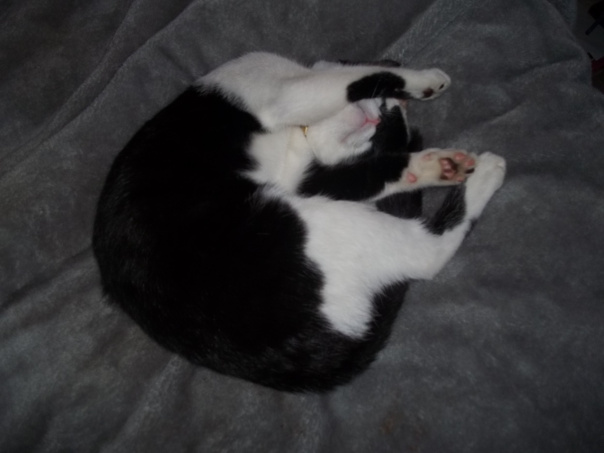 Update: 11/July/2016 Hi All just a quick update on our cat Baby ‘s condition – from Belfast. We spoke to the vet today and unfortunately Baby has managed to undo the pins in his…
Source: Update on Baby- Our Little Man – Cat


 belfastchildis.com