The views and opinions expressed in this documentary/ies and page are soley intended to educate and provide background information to those interested in the Troubles of Northern Ireland.
They in no way reflect my own opinions and I take no responsibility for any inaccuracies or factual errors
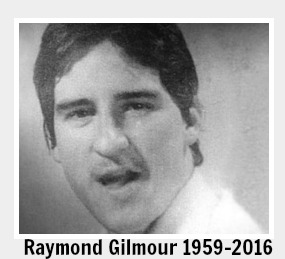
He was born in 1959 into a working class Catholic, nationalist family in Creggan, Derry to Patrick and Brigid Gilmour. He was the youngest of eleven siblings and grew up as The Troubles began in Derry City in the early 1970s. A cousin, Hugh Gilmour, was shot dead by the British Army on Bloody Sunday, a seminal event in the development of the “Troubles” and a traumatic event witnessed by the 12-year-old Gilmour himself.
His parents were reportedly split over the issue of political violence. He described his father as an “armchair supporter” of the IRA, while his mother was reportedly fiercely opposed to their actions.
Two of Gilmour’s brothers were kneecapped by the IRA for alleged anti-social behaviour.
He was also given a beating by British soldiers at age 13 for petty crime and they attempted to recruit him as an informer.Gilmour left school without sitting for his O Level exams and drifted into crime. When he was 16, he was again in trouble with the authorities, this time for armed robbery.
On remand in Crumlin Road Prison, he was severely beaten by IRA prisoners. It was at this point that he apparently agreed to become an undercover agent for British security forces.
INLA member
Several months later, he joined the INLA. He chose the INLA over the IRA as a number of his friends were already in the organisation. Gilmour participated in, among other activities, a botched car hijacking in which a friend, Colm McNutt, also an INLA member, was shot dead by an undercover soldier. In 1978, after two years with the INLA as an RUC agent, he left on police instructions. He got married the same year and fathered the first of two children.
IRA career
BBC NI Spotlight: The Special Branch spy that infiltrated IRA & Sinn Féin.
After an interlude of several months, Gilmour was instructed by his RUC handler to join the IRA. He was offered £200 a week with bonuses for arrests and weapons finds.
The IRA vetted him for several weeks before accepting his application in late 1980. They attached him to an active service unit in the Brandywell area of Derry. Over the following two years, he was involved in many IRA operations, mostly as a getaway driver. Most of these operations were “shoots” or sniping attacks, but on only one occasion, in January 1981, his activities result in the death of a British soldier, who was shot and killed at Castle Gate, near Derry’s city walls.
Gilmour claims that he helped to foil many other IRA attacks, saving the lives of numerous police and soldiers. In November 1981, he was arrested by the RUC, along with two other IRA members, on their way to carry out a shooting attack on riot police, who were combating disturbances arising out of the 1981 Irish Hunger Strike. Gilmour was sent on remand to Crumlin Road Prison. After a riot that destroyed much of the republican wing there, he was transferred to the Maze Prison.
His RUC handler then applied pressure on the authorities for his release, he was freed on 1 April 1982.
Supergrass
He left the IRA and went into protective custody in August of that year, as he believed that his position in the IRA was about to be discovered after his information led to the capture of an M60 machine gun.
Around 100 IRA and INLA members were then arrested in Derry on his evidence, of whom 35 were charged with terrorist offences.
In November, Gilmour’s father was abducted by the IRA. He was held in secret in an unknown location for almost a year. Gilmour was then sent to Cyprus and then Newcastle by the RUC. The following year, Gilmour gave evidence in a special Diplock Court, jury-less trial against the 35 people he had incriminated. Under the “supergrass” scheme, his was the only evidence available against them.
On December 18, 1984, the presiding judge, Lord Lowry, ruled that Gilmour was not a credible witness. He said he was,
“entirely unworthy of belief … a selfish and self-regarding man, to whose lips a lie comes more naturally than the truth”.
Exile and plea to return home
Since then, Gilmour has been in hiding outside Northern Ireland. He states that of the IRA and INLA members he knew, almost half were dead or missing by the end of the conflict. In 1998, he published a book, Dead Ground; Infiltrating the IRA, telling of his experiences.
In 2007, Gilmour publicly voiced his desire to return home to Derry, asking Martin McGuinness for assurances of his safety. He also revealed that he had a heart complaint and was an alcoholic. McGuinness said Gilmour must decide for himself whether or not it was safe to return to Derry and that he was not under threat from Sinn Féin, nor – he believes – from the IRA.
McGuinness stated that if de facto exiles such as Gilmour wanted to return home, it was a matter for their own judgment and their ability to make peace with the community.
Gilmour’s former RUC handler advised him not to return, citing the 2006 murder in Glenties, County Donegal, of Denis Donaldson, a high-ranking Sinn Féin politician and activist who was revealed to have been a long-term informer.
In April 2014, Gilmour’s second book What Price Truth was published; in the book Gilmour goes into greater detail about his life within the IRA and INLA.
Death
On 29 October 2016 Gilmour was found dead in his flat in Kent, where he had been lying abandoned and alone, for up to a week. He was reportedly an alcoholic with serious psychological problems, and died from natural causes
When he was exposed as an agent in 1991 he was abducted by the IRA, but escaped and was resettled in England. His identity became publicly known after a minor court case. He was later shot six times by an IRA gunman, but recovered from the injuries. He has written two books about his life, Fifty Dead Men Walking: The Terrifying True Story of a Secret Agent Inside the IRA and Dead Man Running
———————————————
Disclaimer
The views and opinions expressed in this documentary/ies and page are soley intended to educate and provide background information to those interested in the Troubles of Northern Ireland.
Some fool emailed me yesterday and although he was probably taking the pee he proclaimed he wanted to join the RIRA and enquired if I could help him.
This really pissed me off!
Well James there’s nothing funny about terrorists who killed innocent people and I’m in two minds whether to report you are not, who knows – the local police may be interested to know about your views or perhaps they are already familiar with you and know you are a complete Tosser .
So do me a favour and go away……….
For the record…….
My blog and other online platforms are dedicated to the memory of all innocent victims of the Northern Ireland Troubles ( regardless of political or religious background ) and I have never hid behind the fact that I am extremely proud of my Protestant upbringing in West Belfast .
That doesn’t mean I hate Catholics or wish harm on them, it means I have a different point of view and democracy is all about freedom of choice and my choice is to maintain the Union with the UK and embrace and celebrate my loyalist culture and traditions.
In fact during the worst years of the troubles whenever I learnt of the death of an innocent Catholic or anyone else for that matter, my heart would bleed for them and those they left behind.
My sympathy extended to all innocent victims of the conflict, regardless of religious or political background , including the army and other security forces tasked with the impossible job of policing two communities whom at times seemed to want to destroy each other.
I am a pacifist at heart and I abhor all murder, especially the murder of innocent people & those committed for political or religious reasons. Life’s to short and hard enough without having to worry that you will be killed for following a certain political system or worshipping a different god.
The definition of loyalist is :
a. A supporter of union between Great Britain and Northern Ireland
b. A person who remains loyal to the established ruler or government, especially in the face of a revolt.
Growing up in West Belfast during the height of the troubles was no laughing matter and I have seen things that no child should ever have to witness .Death stalked the streets of Belfast day in and day out and there was no escape from the madness that surrounded and engulfed us…
The death of Clayton Darrell Lockett occurred on April 29, 2014, when he suffered a heart attack during an execution by lethal injection in the U.S. state of Oklahoma. Lockett, aged 38, was convicted in 2000 of murder, rape, and kidnapping.
Lockett was administered an untested mixture of drugs that had not previously been used for executions in the United States.
Although the execution was stopped, Lockett died 43 minutes after being sedated. He writhed, groaned, convulsed,and spoke during the process and attempted to rise from the execution table fourteen minutes into the procedure, despite having been declared unconscious.
———————————
Clayton Lockett tasered before bungled lethal injection
Today’s News and social media have been busy debating the fact the US pharmaceutical giant Pfizer, has recently took steps to prevent its drugs being used in lethal injection process for capital punishment –
Stating that :
“We strongly object to the use of any of our products in the lethal injection process for capital punishment,”
It stressed that its products were meant to save the lives of patients.
The move reportedly shuts off the last remaining open market source of drugs used in executions in the US and officials are now searching for a new drug cocktails by which the lethal injection could be achieved.
American has a long record of state sanctioned executions as a means of the ultimate deterrent and although the figures have been dropping over the past decade , the USA came fifth in a recent survey of countries who still use execution as a legal method of …
Islamic State’s medieval Brutality in the 21st century
It’s only right that the country should debate the consequences of the decision to step up our role in the mess that is Syria/Iraq and the insane actions of IS and other global Islamic extremists.
Regardless of where you stand on the issues in question ( and there are many , both political and ethical ) spare a thought for the UK pilots ( and all pilots & other personnel) whom are now pawns in this new kind of war and will be flying over enemy territory as they take the fight to IS and their deluded followers.
How can anyone forget the brutal execution of Jordanian pilot Muath Al-Kasasbeh , burnt alive in a cage after a demonic stage show that saw him make his past masked IS fighters lining the route to the cage that would be his final destination and brutal execution.
On a sunny day in 1970 my osteomyelitis was finally given the all clear and I was on my way home from the hospital, for a couple of years at least. I was so heartbroken to leave Nurse Brown, that on the day of my discharge I hid in a broom cupboard, in the childish belief if they couldn’t find me they would let me stay in the children’s ward with Nurse Brown.
The day before dad had explained to me that we had a new home and that‘s where I would be going to live when I left hospital. He explained that we had moved to Glencairn to be near his family, so that our grandmother could help look after us. We all loved my grandmother dearly and although I was grief stricken at the thought of leaving…
Tabby’s Star, the explanation that has everyone so intrigued, is that an alien civilization may be building a megastructure.
Beginning tonight (October 26, 2016), and over two more nights more in the coming two months, astronomers will use the Green Bank radio telescope in rural West Virginia to observe Tabby’s Star. Tabby herself – astronomer Tabetha Boyajian, formerly of Yale and now at Louisiana State University – will be there to help lead the observations.
Her Ted Talk earlier this year created a sensation when she called this star “the most mysterious in the universe.” Beginning tonight, the Breakthrough Listen project at University of California Berkeley is devoting eight hours per night for three nights to observing Tabby’s Star with the Green Bank telescope. The astronomers admit it’s a long-shot, but they want to see if this telescope can detect signals from a possible extraterrestrial civilization that might – or might not – reside on a planet orbiting this star.
Get Involved
The astronomers will also be doing a live chat from Green Bank Observatory today starting at 2000 UTC (4 p.m. Eastern, 1 p.m. Pacific; translate to your time zone) about the upcoming observations of Tabby’s Star.
KIC 8462852 (also Tabby’s Star or WTF Star) is an F-type main-sequence star located in the constellationCygnus approximately 454 parsecs (1,480 ly) from Earth. Unusual light fluctuations of the star were discovered by citizen scientists as part of the Planet Hunters project, and in September 2015 astronomers and citizen scientists associated with the project posted a preprint of a paper on arXiv describing the data and possible interpretations.
The discovery was made from data collected by the Kepler space telescope, which observes changes in the brightness of distant stars to detect exoplanets.
Several hypotheses have been proposed to explain the star’s large irregular changes in brightness as measured by its unusual light curve, but none have fully explained all aspects of the curve. The leading hypothesis, based on a lack of observed infrared light, posits a swarm of cold, dusty comet fragments in a highly eccentric orbit. Another hypothesis is that of a large number of small masses in “tight formation” orbiting the star.
It has been speculated that the changes in brightness could be signs of activity associated with intelligent extraterrestrial life constructing a Dyson swarm. The SETI Institute‘s initial radio reconnaissance of KIC 8462852, however, found no evidence of technology-related radio signals from the star.
KIC 8462852 is not the only star that has such large irregular dimmings. However, all other such stars are young stellar objects called YSO dippers that have different dimming patterns. An example of such an object is EPIC 204278916.
The names “Tabby’s Star” and “Boyajian’s Star” refer to the initial study’s lead author, Tabetha S. Boyajian; KIC 8462852 is also known as the “WTF Star”, after the study’s subtitle “Where’s The Flux?” (a joking reference to the colloquial expression of disbelief “WTF”).
Apparent location
Map showing location of NGC 6866. KIC 8462852 is northeast between NGC 6866 and ο¹ Cygni.
KIC 8462852 in Cygnus is located roughly halfway between the major visually apparent bright stars Deneb (α Cyg, α Cygni, Alpha Cygni) and Delta Cygni (δ Cyg, δ Cygni) to the eye as part of the Northern Cross. KIC 8462852 is situated south of Omicron¹ Cygni (ο¹ Cygni, 31 Cygni), and northeast of the star clusterNGC 6866.While only a few arcminutes away from the cluster, it is unrelated and closer to the Sun than it is to the star cluster.
With an apparent magnitude of 11.7, the star cannot be seen by the naked eye, but is visible with a 5-inch (130 mm) telescope in a dark sky with little light pollution.
History of observations
KIC 8462852 was observed as early as the year 1890. The star was cataloged in the Tycho, 2MASS, UCAC4 and WISEastronomical catalogs (published in 1997, 2003, 2009 and 2012, respectively).
The main source of information about the luminosity fluctuations of KIC 8462852 is the Kepler space observatory. During its primary and extended mission from 2009 to 2013 it continuously monitored the light curves of over 100,000 stars in a patch of sky in the constellations Cygnus and Lyra.
Luminosity
Observations of the luminosity of the star by the Kepler space telescope show small, frequent, non-periodic dips in brightness, along with two large recorded dips in brightness appearing to occur roughly 750 days apart. The amplitude of the changes in the star’s brightness, and the aperiodicity of the changes, mean that this star is of particular interest for astronomers. The star’s changes in brightness are consistent with many small masses orbiting the star in “tight formation”.
]
The first major dip, on 5 March 2011, obscured the star’s brightness by up to 15%, and the other (on 28 February 2013) by up to 22%. In comparison, a planet the size of Jupiter would only obscure a star of this size by 1%, indicating that whatever is blocking light during the star’s major dips is not a planet, but rather something covering up to half the width of the star.
Due to the failure of two of Kepler‘sreaction wheels, the star’s predicted 750-day dip around April 2015 was not recorded; further observations are planned for May 2017.
The irregular light dips do not show a pattern.
In addition to the day-long dimmings, a study of a century’s worth of photographic plates suggest the star has gradually faded from 1890 to 1989 by about 20%, which would be unprecedented for any F-type main sequence star. However, teasing accurate magnitudes from long-term photographic archives is a complex procedure, requiring adjustment for equipment changes, and is strongly dependent on the choice of comparison stars. A contrasting study, examining the same photographic plates, concluded that the possible century-long dimming was likely a data artifact, and not a real astrophysical event.
A third study, using light measured by the Kepler observatory over a four-year period, determined that KIC 8462852 dimmed at about 0.34 percent per year before dropping dramatically by about 2.5 percent in 200 days. It then returned to its original slow fade rate. The same technique was used to study 193 stars in its vicinity and 355 stars similar in size and composition to KIC 8462852. None of these stars exhibited such dimming.
Hypotheses
Based on KIC 8462852’sspectrum and stellar type, its changes in brightness could not be attributed to intrinsic variability; while a few hypotheses have been proposed involving material orbiting the star and blocking its light, none of these fully fit the observed data.
Some of the proposed explanations involve instrument or data artifacts, interstellar dust, a series of giant planets with very large ring structures, a recently captured asteroid field, the system undergoing Late Heavy Bombardment, and an artificial megastructure orbiting the star.
Younger star with coalescing material around it
Artist’s impression of a young star with coalescing material around it
Astronomer Jason Wright (who was consulted by Boyajian) and others who have studied KIC 8462852 have suggested in a follow-up paper that if the star is younger than its position and speed would suggest, then it may still have coalescing material around it.
Artist’s impression of a massive collision with a proto-planet
High-resolution spectroscopy and imaging observations have also been made, as well as spectral energy distribution analyses using the Nordic Optical Telescope in Spain. A massive collision scenario would create warm dust that glows in infrared wavelengths, but there is no observed excess infrared energy, ruling out massive planetary collision debris.
Other researchers think the planetary debris field explanation is unlikely, given the very low probability that Kepler would ever witness such an event due to the rarity of collisions of such size.
As with the possibility of coalescing material around the star, spectroscopic studies using the NASA IRTF found no evidence for hot close-in dust or circumstellar matter from an evaporating or exploding planet within a few astronomical units of the central star.
Similarly, a study of past infrared data from NASA’s Spitzer Space Telescope and Wide-field Infrared Survey Explorer found no evidence for an excess of infrared emission from the star, which would have been an indicator of warm dust grains that could have come from catastrophic collisions of meteors or planets in the system. This absence of emission supports the hypothesis that a swarm of cold comets on an unusually eccentric orbit could be responsible for the star’s unique light curve, but more studies are needed.
A cloud of disintegrating comets
Artist’s impression of an orbiting swarm of dusty comet fragments
One proposed explanation for the reduction in light is that it is due to a cloud of disintegrating comets orbiting the star elliptically. Under this scenario, gravity from a nearby star may have caused comets from KIC 8462852’sOort cloud to fall in-system. Evidence supporting this hypothesis includes an M-type red dwarf within 132 billion kilometers (885 AU) of KIC 8462852. However, the notion that disturbed Oort cloud comets orbiting elliptically close to the star could exist in high enough numbers to obscure 22% of the star’s observed luminosity has been doubted.
Submillimetre wavelength observations searching for farther-out cold dust in the system’s Kuiper Belt suggest that a distant “catastrophic” planetary disruption explanation is unlikely; the possibility of a disrupted Kuiper Belt scattering comets into the inner system is still to be determined.
An artificial megastructure
Artist’s impression of a Dyson swarm
Astronomer Jason Wright and others who have studied KIC 8462852 hypothesized that the objects eclipsing the star could be parts of a megastructure made by an alien civilization, such as a Dyson swarm, a hypothetical structure that an advanced civilization might build around a star to intercept some of its light for their energy needs. Due to extensive media coverage on this matter, KIC 8462852 has been compared by Kepler‘s Steve Howell with KIC 4110611, another star with an odd light curve (which proved, after years of research, to be a part of a five-star system). Regarding the current light curve data of KIC 8462852, Wright has emphasized the importance of upcoming spectral studies. According to Wright, the likelihood of extraterrestrial intelligence being the cause of the dimming is very low; however, the star remains an outstanding SETI target because natural explanations have yet to fully explain the dimming phenomenon.
Follow-up studies
Many optical telescopes are monitoring KIC 8462852 in anticipation of another multi-day dimming event, with planned follow-up observations of a dimming event using large telescopes equipped with spectrographs to determine if the eclipsing mass is a solid object, or if composed of dust or gas. Additional follow-up observations may involve the ground-based Green Bank Telescope, the Very Large Array Radio Telescope, and future orbital telescopes dedicated to exoplanetology such as WFIRST, TESS, and PLATO.
A fund-raising campaign was led by Tabetha Boyajian, the author of the initial study on KIC 8462852’s anomalous light curve. The project proposes to use the Las Cumbres Observatory Global Telescope Network to continue observation of the star in the future and observe it in additional wavelengths to reveal new details on the composition of the objects obfuscating the star. The campaign raised over US$100,000, enough for one year of observations.
SETI results
In October 2015, the SETI Institute used the Allen Telescope Array to look for radio emissions from possible intelligent extraterrestrial life in the vicinity of the star.[56][57] After an initial two-week survey, the SETI Institute reported that it found no evidence of technology-related radio signals from the star system.
No narrowband radio signals were found at a level of 180–300 Jy in a 1 Hz channel, or medium-band signals above 10 Jy in a 100 kHz channel. Another SETI-related study, one using archival VERITAS gamma-ray observatory observations from 2009 to 2015, found no evidence of pulsed optical beacons associated with KIC 8462852.
Astronomer Jason Wright and his colleagues plan to conduct another search beginning in October 2016 using West Virginia’s Green Bank Telescope.
A star called EPIC 204278916, as well as some other young stellar objects, was observed to have similar dips to those observed in KIC 8462852. However, they differ in many aspects. EPIC 204278916 shows much deeper dips than KIC 8462852, and the dips seem to be grouped over a short period of time, whereas the dips at KIC 8462852 are spread out over several years. Further, EPIC 204278916 is surrounded by a proto-stellar disc, while KIC 8462852 appears to be a normal F-type star displaying no evidence of a disc.
See also
PSR B1919+21, a pulsar mistaken for an alien radio signal (LGM-1)
Strange messages coming from the stars are ‘probably’ from aliens, scientists say.
‘It is too early to unequivocally attribute these purported signals to the activities of extraterrestrial civilizations,’ a group of scientists looking for aliens have warned – but the signals are encouraging.
Scientists have heard hugely unusual messages from deep in space that they think are coming from aliens.
A new analysis of strange modulations in a tiny set of stars appears to indicate that it could be coming from extraterrestrial intelligence that is looking to alert us to their existence.
The new study reports the finding of specific modulations in just 234 out of the 2.5 million stars that have been observed during a survey of the sky. The work found that a tiny fraction of them seemed to be behaving strangely…….


















 belfastchildis.com