Although there’s nothing funny about the madmen of Islamic State and their crimes against humanity , its nice to see these fools getting a taste of their own medicine from time to time. The sheer incompetence of these idiots defies belief and the fact that they all think they are going to “paradise” and collecting 75 blue eyed virgins on the way speaks volumes for the twisted, deluded ideology they follow and in my opinion each and every one of them is clinical insane!
Therefore I have put together this short collection of video’s of the DOGS of Islam getting blown up, shooting themselves and well…being completely stupid and showing themselves for the amateur’s they really are. If they ever find themselves in a real battle with REAL warriors they wouldn’t last five minutes.
Nothing too gruesome as to be honest I can’t stomach watching people die and sleep well in my bed at night, even if it is these bastards getting a one way ticket to hell!
Enjoy………
————————————-
Stupidity of the Islamic Front. Footage is all recent from southern
————————————-
İSİS terrorists destroying themselves
————————————-
What It’s Really Like to Fight for the Islamic State
————————————-
Islamic state Suicide Bomber hit by a MILAN Rocket
————————————-
Kurds destroy a suicide bomber’s truck filled with explosives coming at them
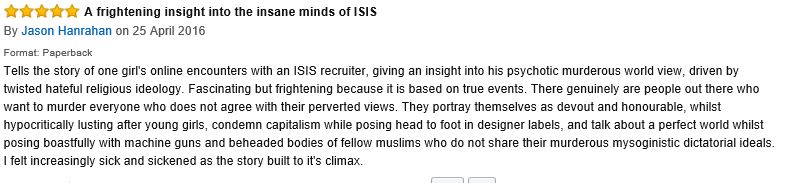
I read this book in one sitting and to be honest the writing style and constant divergence from the main theme was a bit of distraction and at times tiring , but the subject matter is one I am very interested in and there was much to appreciate and learn from Anna’s journey.
Her online encounters with a senior ISIS recruiter and his attempts to groom her , with the ultimate aim of having her travel to Syria to becomes his wife and live in “ paradise “ , gives the reader an insight into the road to hell many young vulnerable and disillusioned European women ( and men) embark on and invariably come to regret.
Unfortunately for them few can escape and many end up being slaughtered by those that entice them to the Islamic “paradise” . Not that I have an ounce of sympathy for any that choose that path , for there lay demons and if you dance with the devil there can only ever be one outcome!
Karma always collects it debts!
————————————————
Previously published as ‘In the Skin of a Jihadist’
Twenty year-old “Mélodie”, a recent convert to Islam, meets the leader of an ISIS brigade on Facebook. In 48 hours he has ‘fallen in love’ with her, calls her every hour, urges her to marry him, join him in Syria in a life of paradise – and join his jihad.
Anna Erelle is the undercover journalist behind “Melodie”. Created to investigate the powerful propaganda weapons of Islamic State, “Melodie” is soon sucked in by Bilel, right-hand man of the infamous Abu Bakr al-Baghdadi. An Iraqi for whose capture the US government has promised $10 million, al-Baghdadi is described by Time Magazine as the most dangerous man in the world and by himself as the caliph of Islamic State. Bilel shows off his jeep, his guns, his expensive watch. He boasts about the people he has just killed.
With Bilel impatient for his future wife, “Melodie” embarks on her highly dangerous mission, which – at its ultimate stage – will go very wrong … Enticed into this lethal online world like hundreds of other young people, including many young British girls and boys, Erelle’s harrowing and gripping investigation helps us to understand the true face of terrorism.
Extracts
Listen to me! I love you more than I’ve loved anyone. You should be here with me. I can’t stand to think of you in that corrupt country. I’ll protect you. I’ll shelter you from the world’s evils. When you come to live with me, you’ll see what a paradise me and my men are building. You’ll be amazed. Here, people care about each other. They respect each other. We’re one big family, and we’ve already made a place for you—everyone is waiting for you! You should see how happy the women are here. They used to be like you—lost. One of my friends’ wives has arranged a program for your arrival. After your shooting lessons, she’ll take you to a very beautiful store, the only one in the country that sells fine cloth. I’ll pay for everything. You’ll establish your own little world here with your new friends. I’m so excited for you to be here. Mélodie, my wife! Hurry up; I can’t wait.”
Mélodie stares into her computer screen, admiring the strong man eighteen years her senior. She loves him, even if she’s only ever seen him on Skype.
“Do you really love me?” Mélodie murmurs, her voice childish and frail.
“I love you for the sake of Allah. You are my treasure, and the Islamic State is your home. Brick by brick, we’ll build a better world, a place where kafirs* won’t be allowed, and we’ll carve a name for ourselves in history. I’ve found a huge apartment for you! If you bring friends, I’ll find an even bigger one. You’ll take care of orphans and the wounded during the day, while I’m fighting. We’ll spend our evenings together . . . insha’Allah*.”
Mélodie feels loved. She feels useful. She’s been looking for purpose in her life: now she’s found it.
I was frustrated that Friday night as I left the editorial offices of a magazine where I do freelance work. The paper had received a letter from a lawyer forbidding me from publishing an article I’d written about a young female jihadist. I had just spent two days in Belgium with Samira, the girl’s mother. Her daughter ran away to Syria a year before to join Tarik, the man of her life and a fanatic devoted to the Islamic State’s cause. Naïve and blind with emotion, Leila* wanted to live with her great love. A bullet to the heart ended his twenty years and one spring. Samira was hopeful when she learned of the death of the man she’d been forced to consider her son-in-law. With Tarik dead, Samira saw no reason for her daughter to stay in the tragically war-torn country, but Leila was clear: she now belonged to that sacred land and wanted to do her part in the fight to create a religious state in the Middle East. With or without her husband. Tarik had been an emir,* which meant his widow was well taken care of. People respected her, and Leila asked her mother, “Why should I go back?”
Local news sources had picked up the story and begun comparing the eighteen-year-old jihadist to the black widow, a prominent figure in the world of international terrorism and the wife of the man who assassinated Ahmad Shah Massoud.* Samira’s love for her daughter was great, and her response to the situation swift, but she was coming up against an immense challenge. Not only did she have to find a way to repatriate Leila to Belgium; she also had to prove to the authorities that her daughter was living in one of the most dangerous countries on earth for humanitarian reasons. Otherwise, Leila would be considered a threat to domestic security and sent to prison, before potentially being banned from setting foot in her own country.
That was when Samira’s and my paths crossed. Journalism can lead a person to many things, sometimes to the aid of a distressed mother. Samira was beside herself, and she’d turned to Dimitri Bontinck, a former member of the Belgian Special Forces who famously managed to repatriate his own son from Syria. Dimitri is a source of hope for all these European families who wake up one morning to the harsh realization that even those they’d least suspect, even their own teenagers, could be jihadists. After his personal experience, Dimitri became a tireless crusader, volunteering for virtual suicide missions to save other youths—or at least dig up concrete information to help their families. Aware of the risks that Leila faced for being branded the “new black widow,” he’d asked me to meet her mother. I’m a journalist, and though I’m keenly interested in geopolitics, I’m not an expert. However, I’ve always been drawn to erratic behavior, whatever the cause—religion, nationality, social milieu. I’m fascinated by what motivates people to make fatal decisions. Sometimes it’s drugs. Sometimes it’s crime or marginality. I’ve also done a lot of work on radical Islam. Back then, I’d been studying European jihadists in the Islamic State for about a year. There were many similarities between the successive cases, but I was interested in understanding what it was that made each individual decide to give up everything and brave death for this cause.
At the time, Dimitri and I were writing a book about the nine horrifying months he spent looking for his son. We spoke with many European families facing the same ordeal. I tried to interview as many people as I could. I saw the impact of digital propaganda on God’s newly minted soldiers, but I still didn’t understand what drove them. Why did they leave everything—their past, their families? Over the course of a few weeks, they threw away their lives, convinced they’d never look back. Ever. Walking through their bedrooms, often preserved by their parents, always gave me chills. I was peering into other people’s intimate spaces, which had become shrines to forgotten lives, as if their teenage relics were the last proof of their existences. Leila’s existence seemed frozen in time. Pictures of her “normal” life abounded. There she was in a tank top, wearing makeup, at friends’ houses, or in a café. These idealized images were a far cry from the new Leila with her burqa and her Kalashnikov.
After listening to Samira’s story, I continued my investigation, which confirmed some of what she’d told me, and I wrote the article. Yet another piece on a subject that had become increasingly ubiquitous over the past several months. But it wouldn’t be published. Leila was furious when her mother mentioned our interview, and threatened to burn all bridges. “If you talk about me to the press,” her panicked mother tearfully reported her words, “not only will I never come back, you’ll never hear from me again. You won’t know if I’m dead or alive.” After that, I couldn’t convince the mother to let me publish. In absolute terms, I didn’t need her permission to do it—the story was already public knowledge in Belgium. But what good would it do? Sadly, each week brimmed with new stories like this one. I was all-too familiar with the determination of these young people who believed they’d found faith. All day, they were bombarded with messages to forget their “depraved” families and open their arms to their new brothers. “Infidels,” even if called “mom” or “dad,” were seen as obstacles in their spiritual journey.
It wasn’t Leila’s fault. She honestly believed she was protecting her mother by telling her how to behave. Alone at home, I got worked up over the methods of propaganda used by Islamists. Searching for videos of Tarik alive, I came across an incalculable number of propaganda films on YouTube. I muted the sound whenever the language wasn’t French or English. The monotonous chants went to my head, deadening my mind. I couldn’t listen to them anymore. Still, the sounds were more tolerable than the images of torture and charred bodies laid out in the sun. Wandering through jihadist Francophone networks online, I was continually shocked by the contrast between sound and image. The juvenile laughter accompanying these horrific scenes made the videos all the more unbearable. I’d noticed an uptick in activity over the past year. Many teenage jihadists have a second Facebook account, registered under a fake identity. They act normal around their families, but once alone in their bedrooms, they travel to their virtual world, which they take for reality. Some call for murder, though without really understanding the impact or significance of their messages. Others encourage jihad. Girls share links about Gazan children, underscoring the suffering of the very young. The girls’ pseudonyms all begin with Umm, “mom” in Arabic.
Social networks contain precious information for those who know how to look. That is why, like many other journalists, I had a fictional account I’d created several years before. I used it to keep an eye on current events. I rarely posted on the account, and when I did it was very brief, and only directed at my list of approximately one hundred “friends” from around the world. My name on this account was Mélodie. My followers weren’t using their real identities, either. Avatars ensure anonymity, which allows users to express themselves more freely and accounts for the growing number of young people attracted to Islamist propaganda. New technologies have of course bred new forms of proselytism. I spent hours scanning users’ public descriptions of gruesome or simply outrageous plans. Happily, not all of the teenagers writing about criminal activity become murderers. For some, Jihadism 2.0 is a fad. For others, it represents the first step on their path to radicalism.
I spent that Friday night in April on my couch, stewing over the gag order on my article and flicking from account to account. Suddenly I came across a video of a French jihadist who looked to be about thirty-five. The video showed him taking inventory of the items inside his SUV. It was like a bad parody of the farcical news show Les Guignols de l’info. I smiled wryly at the deplorable images. I wasn’t proud of myself, but I couldn’t help watching; it was absurd. The man in the video wore military fatigues and called himself Abu Bilel. He claimed to be in Syria. The scene around him, a true no-man’s-land, didn’t contradict him. He proudly brandished his CB radio, which looked like it came straight out of the 1970s. He used it to communicate with other militants when he couldn’t reach them through telephone networks. In reality, it crackled more than it communicated. In the back of his car, his bulletproof vest sat beside one of his machine guns, an Uzi—a historic gun originally manufactured for the Israeli military. He presented a series of weapons, including “an M16 stolen from a marine in Iraq”—I burst out laughing. The factoid, I would later learn, was entirely plausible. I would also discover that Abu Bilel was not as stupid as he seemed. In fact, he had spent the past fifteen years waging jihad all over the world. But for the moment I knew nothing of the bellicose man on my screen proudly unveiling the contents of his glove box—a thick stack of Syrian pounds, candy, a knife. He removed his reflective Ray-Bans, revealing darkly lined black eyes.
I knew that Afghani soldiers used eyeliner to keep their eyes from tearing up when exposed to smoke. Still, seeing a terrorist with eyes made up like my own was surprising, to say the least. Abu Bilel spoke perfect French, with what sounded to me like a very slight Algerian accent. He smiled broadly in an expression of self-satisfaction as he beckoned viewers and called for hijrah.*
I shared his video. I usually kept a low profile on my account, but I occasionally imitated my digital peers in order to carve a place for myself in their world. I didn’t preach or encourage the cause. I simply posted links to articles relating strikes by Bashar al-Assad’s army or videos like this one. My profile picture was a cartoon image of Princess Jasmine from the Disney movie Aladdin. For my cover photo, I uploaded a popular slogan I’d seen online: “We’ll do to you as you do unto us.” I tended to change my profile location depending on whatever story I was presently researching. Now I claimed to be in Toulouse, a city in southwestern France. Over the past five years, many stories had led me there, notably, the shooting carried out by Mohammed Merah in 2012. The housing project where he’d lived in the northeastern outskirts of Toulouse was an endless mine of information. It was also an important hub for the traffic of hashish.
I was actually in Paris, casting around for a fresh angle on the departures to Syria. Many of these tragic cases resembled one another, and I suspected that readers were saturated with information. In addition, the nightmarish situation in Syria made it difficult to analyze. Each week, I worked with editors, trying to find new angles. Each week, we arrived at the same conclusion: would-be jihadists came from all sorts of social backgrounds and religions; they turned to radical Islam after a single failure or a lifetime of not fitting in; then they left for Syria to join one of the many Islamist gangs that have been proliferating there. Yes, but despite the similarities, after having spent so much time working on these issues, I had grown attached to individual families. I cared about their children and their stories, even if I wasn’t likely to meet them. And I had actually met some “teens” drawn to jihadism while I was working on stories. Today, when I see them again, they tell me they want to go there. There? “What’s there for you?” I ask them, exasperated, “Except death and the opportunity to become cannon fodder?” The response is almost always the same: “You don’t understand, Anna. You’re thinking with your head, not with your heart.” I exhaust myself coming up with dubious comparisons to historic events. Germany, a country rich in culture, fell into Hitler’s hands during the last century. Or the black-and-white view of the world according to communism. Or the generation of 1970s intellectuals who extolled the virtues of Maoist thought, insisting that truth resided in the Little Red Book. But my cyber interlocutors poke fun at my historical references, pointing out that red and green are very different colors. However, I’m not talking about the Koran, which has nothing to do with fanatic ideology.
In 2014, journalism was no longer a respected profession. And when one worked on “societal” issues, it was out of passion. If only I could write about this topic in a new way, one that avoided treating individuals as part of a succession of similar cases. I wanted to investigate the roots of “digital jihadism” and get to the bottom of an evil phenomenon affecting more and more families—of all religious backgrounds. To dissect how kids here fell into the trap of propaganda, and to grasp the paradox of soldiers there who spent their days torturing, stealing, raping, killing, and being killed, and their nights staring into their computers and bragging about their “exploits” with the maturity of video-game-obsessed preteens.
Deep in reflection, I was feeling discouraged but unwilling to give up, when my computer alerted me to three messages sent to “Mélodie’s” private inbox from . . . Abu Bilel. It was surreal. There I was, at ten o’clock on a Friday night in spring, sitting on my sofa in my one-bedroom Parisian apartment, wondering how to continue my investigation on European teenagers tempted by Islamic extremism, when a French terrorist based in Syria all of a sudden started writing me. I was speechless. At that moment, the only thing of which I was certain was that I hadn’t imagined starting my weekend like this.
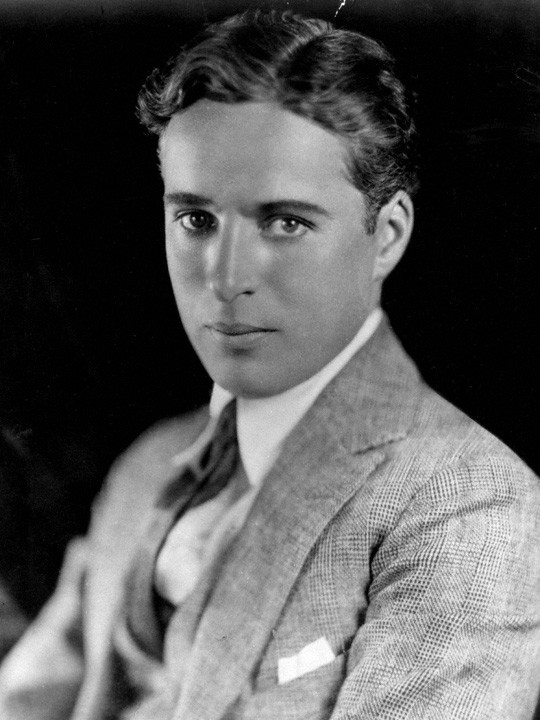
On this day in 1978 Charlie Chaplin’s stolen body found
The coffin containing the body of Charlie Chaplin – missing since his grave was robbed eleven weeks previously was found
The legendary silent movie star’s body had been stolen by a pair hapless , stupid grave robbers
The kidnapping of Charlie Chaplin’s coffin
Missing coffin
Having suffered from strokes during the 1960s and ’70s, a frail and wheelchair-bound Chaplin spent his final years living with his fourth wife, Oona, by Lake Geneva in Switzerland.
Then, on Christmas Day 1977, he died in his sleep at his home in Corsier-sur-Vevey, aged 88. Chaplin was laid to rest a few days later in the local cemetery, but sadly his eternal rest lasted only a couple of months.
On 2 March 1978, police phoned the Chaplin mansion to inform 51-year-old Oona that there had been…
Guy Fawkes (/ˈɡaɪˈfɔːks/; 13 April 1570 – 31 January 1606), also known as Guido Fawkes, the name he adopted while fighting for the Spanish, was a member of a group of provincial English Catholics who planned the failed Gunpowder Plot of 1605.
The club was formed on McIndoe’s initiative in June 1941 with 39 patients, primarily as a drinking club. The members were aircrew patients in the hospital and the surgeons and anaesthetists who treated them. Aircrew members had to be serving airmen who had gone through at least two surgical procedures. By the end of the war the club had 649 members.
The name “Guinea Pig” – the rodent species commonly used as a laboratory test subject – was chosen to reflect the experimental nature of the techniques and equipment used for reconstructive work carried out at East Grinstead. The treatment of burns by surgery was in its infancy, and many casualties were suffering from injuries which, only a few years earlier, would have led to certain death.
The original members were Royal Air Force (RAF) aircrew who had severe burns, generally to the face or hands. Most were British but other significant minorities included Canadians, Australians, New Zealanders and by the end of the war Americans, French, Russians, Czechs and Poles. During the Battle of Britain, most of the patients were fighter pilots, but by the end of the war around 80% of the members were from bomber crews of RAF Bomber Command.
Before the war the RAF had made preparations by setting up burns units in several hospitals to treat the expected casualties. At East Grinstead, McIndoe and his colleagues, including Albert Ross Tilley, developed and improved many techniques for treating and reconstructing burns victims. They had to deal with very severe injuries: one man, Air Gunner Les Wilkins, lost his face and hands and McIndoe recreated his fingers by making incisions between his knuckles.
Aware that many patients would have to stay in hospital for several years and undergo many reconstructive operations, MacIndoe set out to make their lives relaxed and socially productive. He gave much thought to the reintegration of patients into normal life after treatment, an aspect of care that had previously been neglected. They were encouraged to lead as normal a life as possible, including being permitted to wear their own clothes or service uniforms instead of “convalescent blues”, and to leave the hospital at will. Local families were encouraged to welcome them as guests, and other residents to treat them without distinction:
East Grinstead became “the town that did not stare”. The Guinea Pig Club was part of these efforts to make life in hospital easier, and to rebuild patients psychologically in preparation for life outside. There were even barrels of beer in wards to encourage an informal and happy atmosphere.
Later, many of the men also served in other capacities in RAF operations control rooms, and occasionally as pilots between the surgeries. Those unable to serve in any capacity received full pay until the last surgical operations and only then were invalided out of the service. McIndoe also later loaned some of his patients money for their subsequent entry into civilian life.
Post-war history
The club was not disbanded at the end of the war, but continued to meet for over sixty years, offering a sense of community and practical support to former patients. Annual meetings at East Grinstead attracted visitors from all over the world. McIndoe had been elected life president at the club’s foundation: after his death in 1960, Prince Philip, Duke of Edinburgh, became president. Geoffrey Page was the first chairman.
In 2003, there were around two hundred survivors; by 2007 there were 97 (57 in Britain; 40 elsewhere in the world), their ages ranging from 82 to 102. The last annual reunion was held in 2007, and attracted over 60 attendees, but in view of the frailty of many of the survivors the decision was then taken to wind the club down.
By April 2015, there were believed to be 29 survivors.
Legacy
Sixteen members of the club wrote books about their experiences, some of them during the war. The best known, and most influential in raising public awareness of McIndoe’s work, was Richard Hillary‘s The Last Enemy, originally published in the United States as Falling Through Space (1942).
One of the local pubs in East Grinstead adopted the name “The Guinea Pig”. The pub closed in 2008 and was demolished in 2009 to make way for a social housing development named Guinea Pig Place.
We are McIndoe’s army,
We are his Guinea Pigs.
With dermatomes and pedicles,
Glass eyes, false teeth and wigs.
And when we get our discharge
We’ll shout with all our might:
“Per ardua ad astra”
We’d rather drink than fight.
John Hunter runs the gas works,
Ross Tilley wields the knife.
And if they are not careful
They’ll have your flaming life.
So, Guinea Pigs, stand ready
For all your surgeon’s calls:
And if their hands aren’t steady
They’ll whip off both your ears.
We’ve had some mad Australians,
Some French, some Czechs, some Poles.
We’ve even had some Yankees,
God bless their precious souls.
While as for the Canadians –
Ah! That’s a different thing.
They couldn’t stand our accent
And built a separate Wing.
Sergeant Talaiasi Labalaba with Omani children in Oman
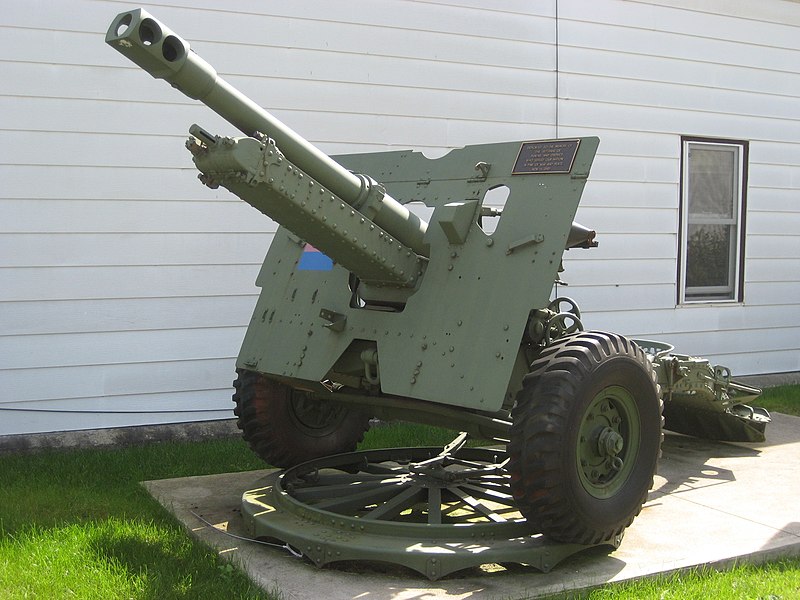
Labalaba, aged 30, was shot dead whilst firing a 25-pounder gun at the attacking guerrilla forces.
He displayed notable bravery by continuing to fire the 25 pounder single handed in spite of being seriously wounded when a bullet hit him on the jaw, after his Omani loader was seriously wounded early in the battle.
Captain Mike Kealy, fellow troopers Tommy Tobin and Sekonaia Takavesi ran a gauntlet of enemy fire but arrived too late to save Labalaba. Both…
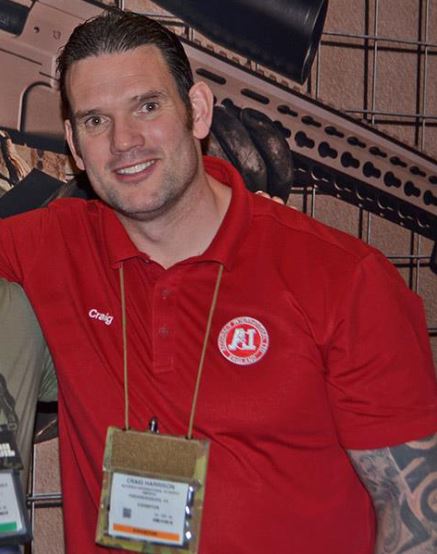
In a BBC interview, Harrison reported it took about nine shots for him and his spotter to range the target. Then, he reported, his first shot “on target” was a killing shot followed consecutively by a kill shot on a second machine gunner.
The bodies were later found by Afghan National Police looking to retrieve the weapon (which had already been removed). The first Taliban was shot in the gut and the other through the side. Later in the day an Apache helicopter hovered over the firing position, using its laser range finder to measure the distance to the machine-gun position, confirming it was the longest kill in history.
In the reports, Harrison mentions the environmental conditions were perfect for long range shooting: no wind, mild weather and clear visibility.
Private life
Harrison’s father and mother were dog handlers in the Royal Air Force (RAF). They separated when he was very young. Harrison was the younger of two boys. He joined the Household Cavalry at 16, and later served in the Blues and Royals. He is married to Tanya and has a daughter.
After returning from Afghanistan in 2009 he developed post-traumatic stress disorder (PTSD) and was discharged from the army in 2014.
He has stated since that:
“
I joined when I was 16 and since all of this has happened I felt abandoned, absolutely abandoned by my regiment. … I spent 22 years loyal to that regiment, putting my life on the line doing tours, and they just hung me out to dry. My trust in people, the armed forces — it’s gone.”
”
The Ministry of Defence paid Harrison £100,000 in compensation for revealing his identity which put him at risk of kidnapping by Al-Qaeda supporters. The blunder led to Harrison being placed on permanent sick leave and then discharged.
Harrison has written The Longest Kill, about his life and career as a sniper
Longest recorded sniper kills
Reports regarding the longest recorded sniper kill that contain information regarding the shooting distance and the identity of the sniper have been presented to the general public since 1967. Snipers in modern warfare have had a substantial history following the development of long distance weaponry. As weapons, ammunition, and aids to determine ballistic solutions improved, so too did the distance from which a kill could be targeted.
Although technology such as electronics has improved optical equipment such as rangefinders and ballistic calculators have eliminated manual mathematical calculations to determine elevation and windage, the fundamentals of accurate and precise long-range shooting are the same as throughout the history of shooting, and the skill and training of the shooter and his spotter where applicable are the primary factors. Accuracy and precision of ammunition and firearms are also still reliant primarily on human factors and attention to detail in the complex process of producing maximum performance.
The modern method of long-distance sniping (shots over 1.1 kilometres or 0.7 miles) requires intense training and practice. A sniper must have the ability to accurately estimate the various factors that influence a bullet‘s trajectory and point of impact, such as range to the target, wind direction, wind velocity, air density, elevation, and even the Coriolis effect due to the rotation of the Earth. Mistakes in estimation compound over distance and can cause a shot to only injure, or to miss completely.
Any given combination of firearm and ammunition will have an associated value, known as the circular error probable (CEP), defined as the radius of a circle whose boundary is expected to contain the impact points of half of the rounds fired.
If the shooter wishes to improve accuracy and precision, wishes to increase range or wishes to do all of these things, the accuracy of “estimates” of external factors must improve accordingly. At extreme ranges, extremely accurate “estimates” are required and even with the most accurate estimates, hitting the target becomes subject to uncontrollable factors. For example, a rifle capable of firing a 1/2 MOA (approximately 1/2″ center to center of the two holes furthest apart) 5-round group (often referred to using the verb “grouping”) at 100 yards will fire a theoretical 12.5 group at 2700 yards. Unless the group is centered perfectly on the target at 100 yards, the 2500- yard group will be centered 25 times the off-center error at 100 yards. This example ignores all other factors and assumes “perfect” no-wind shooting conditions and identical muzzle velocities and ballistic performance for each shot.
USMC Gunnery Sergeant Carlos Hathcock’s confirmed 2500-yard kill in Vietnam was primarily due to the enemy soldier stopping his bicycle on the spot Hathcock had fired at while sighting in his Browning M2 heavy machine-gun.
Devices such as laser rangefinders, handheld meteorological measuring equipment, handheld computers, and ballistic-prediction software can contribute to increased accuracy (i.e. reduced CEP), although they rely on proper use and training to realize any advantages. In addition, as instruments of measure, they are subject to accuracy errors and malfunction. Handheld meteorological instruments only measure conditions at the location they are used. Wind direction and speed can and do vary dramatically along the path of the bullet.
History
The science of long-range sniping came to fruition in the Vietnam War. Carlos Hathcock held the record from 1967 to 2002 at 2,286 m (2,500 yd). He recorded 93 official kills before an injury halted his service on the front lines.
After returning to the U.S., Hathcock helped to establish a school for training Marine snipers, the Marine Corps Scout Sniper School, at the Marine base at Quantico, Virginia.
In addition to his success and performance as a USMC Scout-Sniper during multiple deployments to Vietnam, Gunnery Sergeant Hathcock competed as a member of multiple USMC shooting teams. Gunnery Sergeant Hathcock also won the 1966 Wimbledon Cup, which is earned by the winner of the U.S. 1000-yard high-powered rifle National Championship. The competition is held annually at the Camp Perry Matches and the finest civilian and military marksmen in the world compete. Even after being severely burned during an attack on an amtrac on which he was riding and his efforts to rescue other soldiers, and after being diagnosed with Multiple Sclerosis, Hathcock continued to serve, shoot and instruct.
During his Vietnam service, Hathcock also completed missions involving a “through the scope” shot which killed an enemy sniper specifically hunting him, and performed a multiple-day solo stalk and kill of an enemy general officer in his compound.
The current record is held by Briton Corporal of Horse (CoH) Craig Harrison, of the UK’s Household Cavalry, who recorded a 2,475 m (2,707 yd) shot (confirmed by GPS) in November 2009, also during the War in Afghanistan, in which he hit two Taliban insurgents consecutively.CoH Harrison killed the two Taliban machine gunners with shots that took the 8.59 mm rounds almost five seconds to hit their targets, which were 914 metres (1,000 yd) beyond the L115A3 sniper rifle’s recommended range. A third shot took out the insurgents’ machine gun. The rifle used was made by Accuracy International.
Confirmed kills 1,250 m (1,367 yd) or greater
This list is not exhaustive, as such data is generally not tracked nor managed under any official procedure. For example, the Canadian Army 2002 sniper team that saw two soldiers (Arron Perry/2,310 m and Rob Furlong/2,430 m) set consecutive new records, also made a number of kills at 1,500 m that are not counted here. The list also shows that, in some cases, an armed force command may choose to withhold the name of the actual sniper for security reasons. The United Nations Security Forces, such as in the Balkans, also had one American sniper (name withheld) attributed with a 1271-metre shot.
While not on the list due to the range being less than the minimum distance used to compile it, USMC Gunnery Sergeant’s second-longest confirmed kill was 1200 yards (1097 m) using a “standard” USMC sniper rifle chambered in .30-06 Springfield. At the time of Hathcock’s service, snipers had essentially been eliminated from the USMC and its sniper rifles were a hodgepodge mix of commercial Remington 700 and Winchester Model 70 rifles chambered for multiple cartridges. The major challenges and efforts of Hathcock and other scout-snipers was improving the performance and reliability of their rifles and ammunition.
cartridges. The major challenges and efforts of Hathcock and other scout-snipers was improving the performance and reliability of their rifles and ammunition.
During the Vietnam War Hathcock had 93 confirmed kills of North Vietnamese Army and Viet-Cong personnel. During the Vietnam War, kills had to be confirmed by an acting third party, who had to be an officer, besides the sniper’s spotter. Hathcock himself estimated that he had killed 300 or more enemy personnel during his time in Vietnam.
Longest confirmed kill using 14.5×114 mm ammunition
Christopher Scott “Chris” Kyle (April 8, 1974 – February 2, 2013) was a United States Navy SEAL who claimed to be the most lethal sniper in American military history with 160 “confirmed” kills out of 255 claimed kills. This figure has been corroborated by the Department of Defense, U.S. Special Operations Command, and the U.S. Navy Special Warfare Command.
Longest confirmed kill using 12.7 mm multi-purpose ammunition
Longest confirmed kill with a 7.62×51mm NATO chambered rifle
Simo Häyhä, the Finnish sniper, who, using a standard iron-sighted bolt-action rifle, recorded the highest number of confirmed kills in any major war (505 or 542).



 I read this book in one sitting and to be honest the writing style and constant divergence from the main theme was a bit of distraction and at times tiring , but the subject matter is one I am very interested in and there was much to appreciate and learn from Anna’s journey.



 A Young Chaplin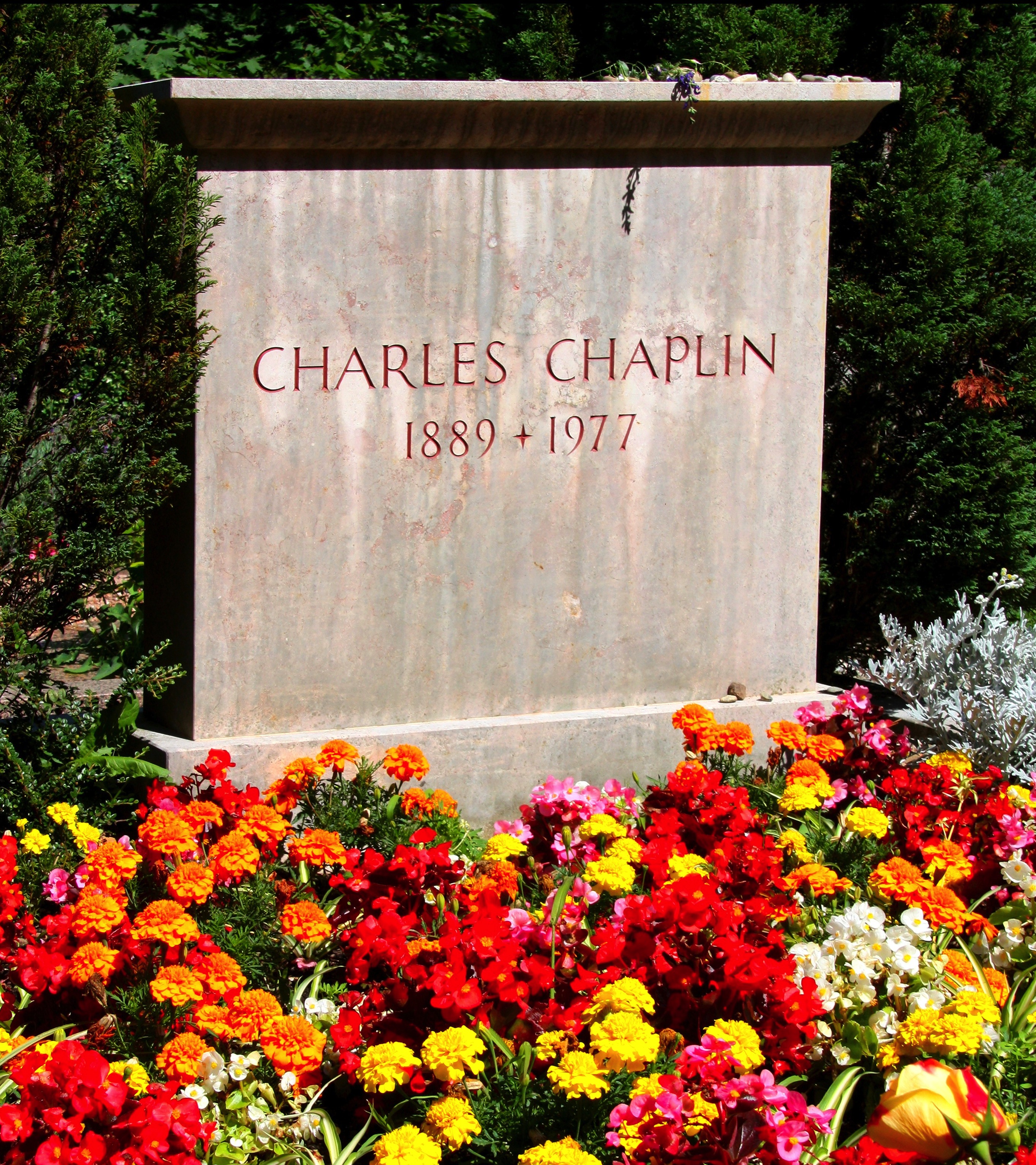









 belfastchildis.com