Monthly Archives: April 2016

12th April – Deaths & Events in Northern Ireland Troubles

Key Events & Deaths on this day in Northern Ireland Troubles

12th April Saturday

———————————

12 April 1975

Loyalist paramilitaries killed six Catholic civilians in a gun and bomb attack on the Strand Bar, in the Short Strand area of Belfast.

Paul Crawford

Paul Crawford (25), then a member of the Official Irish Republican Army (OIRA), was shot dead on the Falls Road, Belfast. This killing was another in the feud between the OIRA and the Irish National Liberation Army (INLA).

Thursday 12 April 1984


Margaret Whyte (51), a Catholic civilian, and Michael Dawson (23), a Royal Ulster Constabulary (RUC) officer, were killed in a bomb attack carried out by Loyalists on Mrs Whyte’s home, University Street, Belfast.

Lord Lyell replaced Lord Mansfield as government spokesman on Northern Ireland in the House of Lords.

Tuesday 12 April 1994

Ian Hamiltion (21), a Ulster Volunteer Force (UVF) member, was shot dead by the UVF because they claimed he had admitted killing Margaret Wright on 7 April 1994.

Wednesday 12 April 1995

The leaders of the Ulster Unionist Party (UUP), Democratic Unionist Party (DUP), and the Social Democratic and Labour Party (SDLP), met for talks. Unemployment in Northern Ireland in March 1995 was recorded as 89,600 which was the lowest it had been since December 1981.

Friday 12 April 1996

The 26th annual conference of the Alliance Party of Northern Ireland (APNI) opened in Belfast.

Saturday 12 April 1997

Following a series of attacks and intimidation by Loyalists, eight Catholic families left their homes in the Limestone Road area of north Belfast. There were arson attacks on commercial properties in Armagh, Derry and Portadown.

Sunday 12 April 1998

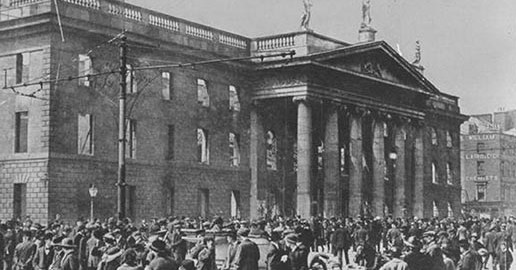
At a series of Sinn Féin (SF) rallies in Ireland to commemorate the Easter Rising in Dublin in 1916, speeches were delivered which appeared to give the Good Friday Agreement a cautious welcome.

The Irish Republican Army (IRA) issued a statement which said that it would judge the Agreement “against its potential to deliver a just and durable peace in our country”. Republican Sinn Féin (RSF) called for a ‘no’ vote in the planned referendums on the Agreement.

Monday 12 April 1999

UN Report on RUC

Param Cumaraswamy, then United Nations (UN) Special Rapporteur, published a report that criticised Ronnie Flanagan, then Chief Constable of the Royal Ulster Constabulary (RUC), over the alleged harassment of defence solicitors.

Cumaraswamy also called for an independent inquiry into the killing of Pat Finucane because there was evidence of collusion between members of the security forces and Loyalist paramilitaries.
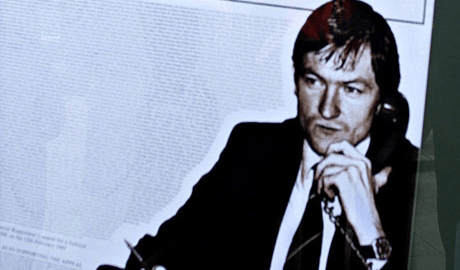
Patrick Finucane

See Pat Finucane

Flanagan rejected an accusation of indifference over the matter. Marjorie (Mo) Mowlam, then Secretary of State for Northern Ireland, said she would have talks with Cumara

swamy, about his report.

A man was shot and injured in the Ardoyne area of Belfast by Republicans during a paramilitary ‘punishment’ attack.

Thursday 12 April 2001

Census Day

The Census was conducted across Britain and Northern Ireland.

The Northern Ireland contained two questions on Religion.

[The Religon Report of the Census would not be published for a year or two but there was speculation about how large an increase there would be in the percentage of Catholics in the region. Analysis of the 1991 Census put the figure for Catholics at 41.5 per cent of the population. There was speculation that the figure could now be as high as 45 per cent.]

Security forces made safe a “barrack buster” bomb which had been discovered at Altmore Forest, Galbally, County Tyrone. The bomb was believed to have been manufactured by the “real” Irish Republican Army (rIRA).


———————————————

Remembering all innocent victims of the Troubles

Today is the anniversary of the death of the following people killed as a results of the conflict in Northern Ireland

“To live in hearts we leave behind is not to die

– Thomas Campbell

To the innocent on the list – Your memory will live forever

– To the Paramilitaries –

There are many things worth living for, a few things worth dying for, but nothing worth killing for.

13 People lost their lives on the 12th April   between 1973 – 1994

———————————————–

12 April 1973


Edward O’Rawe,  (27)

Catholic
Status: Irish Republican Army (IRA),

Killed by: British Army (BA)
Shot while at the rear of house, Cape Street, Lower Falls, Belfast.

———————————————–

12 April 1975


Paul Crawford,  (25)

Catholic
Status: Official Irish Republican Army (OIRA),

Killed by: People’s Liberation Army (PLA)
Shot while selling United Irishman newspaper outside Beagon’s Bar, Falls Road, Belfast. Official Irish Republican Army (OIRA) / Irish National Liberation Army (INLA) feud

———————————————–

12 April 1975


Mary McAleavey,  (57)

Catholic
Status: Civilian (Civ),

Killed by: Ulster Volunteer Force (UVF)
Killed in gun and bomb attack on Strand Bar, Anderson Street, Short Strand, Belfast.

———————————————–

12 April 1975


Elizabeth Carson,   (64)

Catholic
Status: Civilian (Civ),

Killed by: Ulster Volunteer Force (UVF)
Killed in gun and bomb attack on Strand Bar, Anderson Street, Short Strand, Belfast.

———————————————–

12 April 1975


Marie Bennett,  (42)

Catholic
Status: Civilian (Civ),

Killed by: Ulster Volunteer Force (UVF)
Killed in gun and bomb attack on Strand Bar, Anderson Street, Short Strand, Belfast.

———————————————–

12 April 1975


Agnes McAnoy,   (62)

Catholic
Status: Civilian (Civ),

Killed by: Ulster Volunteer Force (UVF)
Killed in gun and bomb attack on Strand Bar, Anderson Street, Short Strand, Belfast

———————————————–

12 April 1975


Arthur Penn,   (33)

Catholic
Status: Civilian (Civ),

Killed by: Ulster Volunteer Force (UVF)
Killed in gun and bomb attack on Strand Bar, Anderson Street, Short Strand

———————————————–

12 April 1975
Michael Mulligan,  (33)

Catholic
Status: Civilian (Civ),

Killed by: Ulster Volunteer Force (UVF)
Injured in gun and bomb attack on Strand Bar, Anderson Street, Short Strand, Belfast. He died 20 April 1975.

———————————————–

12 April 1984


Margaret Whyte,  (51)

Catholic
Status: Civilian (Civ),

Killed by: non-specific Loyalist group (LOY)
Killed by time bomb left on the windowsill of her home, University Street, Belfast

———————————————–

12 April 1984


Michael Dawson,   (23)

Protestant
Status: Royal Ulster Constabulary (RUC),

Killed by: non-specific Loyalist group (LOY)
Killed by time bomb left on the windowsill of Margaret Whyte’s home, University Street, Belfast.

———————————————–

12 April 1987
Charles McIlmurray,  (30)

Catholic
Status: Irish Republican Army (IRA),

Killed by: Irish Republican Army (IRA)
Found shot in van, abandoned at the rear of petrol filling station, Killeen, County Armagh. Alleged informer.

———————————————–

12 April 1989
Joanne Reilly,  (20)

Catholic
Status: Civilian (Civ),

Killed by: Irish Republican Army (IRA)
Killed in van bomb attack on Warrenpoint Royal Ulster Constabulary (RUC) base, County Down. Inadequate warning given.

———————————————–

12 April 1994
Ian Hamilton, (21)

Protestant
Status: Ulster Volunteer Force (UVF),

Killed by: Ulster Volunteer Force (UVF)
Found shot on playing field, off Agnes Close, Shankill, Belfast. Alleged to have been involved in the killing of Margaret Wright on 6 April 1994.

———————————————–

v

11th April – Deaths & Events in Northern Ireland Troubles

Key Events & Deaths on this day in Northern Ireland Troubles

11th April

———————————–

Wednesday 11 April 1979

Two British soldiers died as a result of a gun attack carried out by the Irish Republican Army (IRA) in Ballymurphy, Belfast.

Saturday 11 April 1981

Following the announcement that Bobby Sands had won the Fermanagh / South Tyrone by-election there were celebration parades in many Republican areas across Northern Ireland.

In Belfast, Cookstown and in Lurgan these celebrations ended in rioting.

Monday 11 April 1983

Sentences in First ‘Supergrass’ Trial

In a ‘supergrass’ trial in Belfast 14 Ulster Volunteer Force (UVF) members were jailed for a total of 200 years.

The whole trial was based on the evidence of Joseph Bennett. Bennett was granted immunity from prosecution for the crimes he committed, including involvement in killings, in return for his evidence.

[Following other ‘supergrass’ trials it was revealed that those providing evidence were offered substantial sums of money.]

The Belfast shipyard, Harland and Wolff, announced that there would be a further 700 job losses.

Saturday 11 April 1987


Robert McLean and  Frederick Armstrong

The IRA killed two Royal Ulster Constabulary (RUC) officers in Portrush, County Antrim. There were low turnouts at demonstrations on the Unionist ‘Day of Defiance’.

Tuesday 11 April 1989

Restrictions on Sinn Féin (SF) under the ‘Broadcasting Ban’ were lifted for the duration of the local government elections.

Wednesday 11 April 1990

Official Visit by Taoiseach

Charles Haughey, then Taoiseach (Irish Prime Minister), made the first official visit to Northern Ireland by a Taoiseach since that by Seán Lemass in 1965. Haughey addressed a conference organised by the Institute of Directors in Belfast. Four hundred loyalists staged a protest against the visit.

Saturday 11 April 1992

Mayhew Appointed Secretary of State

Patrick Mayhew was chosen to replace Peter Brooke as Secretary of State for Northern Ireland. There were further changes at the Northern Ireland Office (NIO) with Michael Mates becoming deputy Secretary of State and the minister responsible for security.

Sunday 11 April 1993

The secret talks held between John Hume, then leader of the Social Democratic and Labour Party (SDLP), and Gerry Adams, then President of Sinn Féin (SF), became public knowledge follow a report in the Sunday Tribune (a Republic of Ireland newspaper).

[The talks were criticised by a number of parties and individuals.]

Tuesday 11 April 1995

The Irish government granted early release to seven Irish Republican Army (IRA) prisoners.

Friday 11 April 1997

Seven men were arrested by the Royal Ulster Constabulary (RUC).

The RUC also recovered a number of weapons including a Barrett Light .50 rifle which was the type of weapon that had been used in a number of Irish Republican Army (IRA) sniper attacks.

[Some of the men were charged and some released on 17 April 1997.]

The Democratic Unionist Party (DUP) announced that it was withdrawing its candidates from the constituencies of West Tyrone and North Belfast. This move was part of a electoral pact to allow the Ulster Unionist Party (UUP) the opportunity to maximise the Unionist vote in the contest against the Social Democratic and Labour Party (SDLP) and Sinn Féin (SF).

Saturday 11 April 1998

In a “pro” vote, the Good Friday Agreement overcame its first test with 55 members of Ulster Unionist Party Executive voting for it and 23 voting against.

[It had been anticipated that with so many of party’s Members of Parliament (MPs) against the Agreement (including William Ross and William Thompson), the vote would have been much closer.]

Reaction to the Agreement from people and organisations around the world continued to be expressed. There was an overwhelming positive and welcoming response to the news of the Agreement at the multi-party talks in Belfast.

Wednesday 11 April 2001

Grahame Marks (37), a member of the Ulster Volunteer Force (UVF), was shot dead at his home, Tullyhue Park, Tandragee, County Armagh. The Loyalist Volunteer Force (LVF) were responsible for the killing which was part of a feud between the LVF and the UVF.


———————————————

Remembering all innocent victims of the Troubles

Today is the anniversary of the death of the following people killed as a results of the conflict in Northern Ireland

“To live in hearts we leave behind is not to die

– Thomas Campbell

To the innocent on the list – Your memory will live forever

– To the Paramilitaries –

There are many things worth living for, a few things worth dying for, but nothing worth killing for.

10 People lost their lives on the 11th April   between 1973 – 2001

———————————————–

11 April 1973


Keith Evans,   (20)

nfNI
Status: British Army (BA),

Killed by: Irish Republican Army (IRA)
Shot by sniper while on British Army (BA) foot patrol, Westland Street, Bogside, Derry.

———————————————–

11 April 1974
Norman McKenzie,   (25)

nfNI
Status: British Army (BA),

Killed by: Irish Republican Army (IRA)
Killed in land mine attack on British Army (BA) mobile patrol, Mullynaburtlan, near Lisnaskea, County Fermanagh.

———————————————–

11 April 1974
David Sinnamon,   (34)

Protestant
Status: Ulster Defence Regiment (UDR),

Killed by: Irish Republican Army (IRA)
Killed by remote controlled bomb, hidden in derelict house, detonated when Ulster Defence Regiment foot patrol passed, Dungannon, County Tyrone.

———————————————–

11 April 1975
Robert Wadsworth,  (21)

Protestant
Status: Ulster Volunteer Force (UVF),

Killed by: British Army (BA)
Shot by British Army (BA) immediately after being involved in gun and bomb attack on Jubilee Arms, Lavinia Street, off Ormeau Road, Belfast.

———————————————–

11 April 1979
Christopher Shanley,  (21)

nfNI
Status: British Army (BA),

Killed by: Irish Republican Army (IRA)
Shot by sniper while travelling in British Army (BA) Armoured Personnel Carrier, Glenalina Crescent, Ballymurphy, Belfast.

———————————————–

11 April 1979
Stephen Rumble,   (19)

nfNI
Status: British Army (BA),

Killed by: Irish Republican Army (IRA)
Shot by sniper while travelling in British Army (BA) Armoured Personnel Carrier, Glenalina Crescent, Ballymurphy, Belfast. He died 19 April 1979.

———————————————–

11 April 1980


Fred Wilson,   (43)

Protestant
Status: Royal Ulster Constabulary (RUC),

Killed by: Irish Republican Army (IRA)
Off duty reservist. Shot on his way to work, Franklin Street, Belfast.

———————————————–

11 April 1987


Robert McLean,   (44)

Protestant
Status: Royal Ulster Constabulary (RUC),

Killed by: Irish Republican Army (IRA)
Shot while on Royal Ulster Constabulary (RUC) foot patrol, Main Street, Portrush, County Antrim.

———————————————–

11 April 1987


 Frederick Armstrong,   (40)

Protestant
Status: Royal Ulster Constabulary (RUC),

Killed by: Irish Republican Army (IRA)
Shot while on Royal Ulster Constabulary (RUC) foot patrol, Main Street, Portrush, County Antrim.

———————————————–

11 April 2001
Grahame Marks,  (37)

Protestant
Status: Ulster Volunteer Force (UVF),

Killed by: Loyalist Volunteer Force (LVF)
Shot at his home, Tullyhue Park, Tandragee, County Armagh. Loyalist Volunteer Force (LVF) / Ulster Volunteer Force (UVF) feud.

———————————————–


10th April – Deaths & Events in Northern Ireland Troubles

Key Events & Deaths on this day in Northern Ireland Troubles

10th April

——————————-

Saturday 10 April 1971

The Republican commemorations held in Belfast of the Easter Rising (in 1916 in Dublin) provided an opportunity to gauge public support for the two wings of the Irish Republican Army (IRA).

The march organised by the Official movement appeared only to attract half the level of support as that organised by the Provisionals

Monday 10 April 1972

Two British soldiers were killed in a bomb attack in Derry. Lord Widgery submitted the report of his findings to Reginald Maudling, then Home Secretary.

Tuesday 10 April 1973

The British government introduced the ‘Northern Ireland Assembly Bill’ in parliament in Westminster. This bill was to pave the way for an assembly at Stormont based on proposals outlined in the White Paper, ‘Northern Ireland Constitutional Proposals‘, which had been published on 20 March 1973.

[The bill became law on 3 May 1973.]

Wednesday 10 April 1974

[Public Records 1974 – Released 1 January 2005: Minutes of a meeting held by the British Cabinet on Wednesday 10 April 1974 at 6.00pm. This part of the minutes deals with the security situation in Northern Ireland.]

Sunday 10 April 1977

Kevin McMenamin (10), a Catholic boy, was killed by the Ulster Volunteer Force (UVF) when they carried out a bomb attack on a Republican Clubs Easter commemoration parade in the Falls Road area of Belfast.

John Short (49), a Catholic civilian, was shot dead by the Irish Republican Army (IRA) in the Turf Lodge area of Belfast. This killing was part of a feud between the Official and Provisional wings of the IRA.

Friday 10 April 1987

James Molyneaux, then leader of the Ulster Unionist Party (UUP), Ian Paisley, then leader of the Democratic Unionist Party (DUP), and eight other Unionist Members of Parliament (MPs) took part in an illegal march in Belfast to protest at new Public Order legislation.

Friday 10 April 1992

Baltic Exchange Bombing

The Irish Republican Army (IRA) exploded two bombs at the Baltic Exchange in the centre of London and killed three people including a 15 year old girl. The IRA warning proved to be inadequate and added to the confusion as it mentioned the Stock Exchange. [In August there were reports in the media that insurance claims amounted to £800 million pounds.

Saturday 10 April 1993

Hume Meets Adams Gerry Adams, then President of Sinn Féin (SF), was seen visiting the home of John Hume, then leader of the Social Democratic and Labour Party (SDLP), in Derry. The two men met for “extensive discussions” in their capacities as leaders of their respective parties.

Thursday 10 April 1997

A woman Royal Ulster Constabulary (RUC) officer was shot and seriously wounded while she was on guard duty outside the Courthouse in the centre of Derry. The Irish Republican Army (IRA) carried out the attack.

Friday 10 April 1998

Good Friday Agreement

After almost 30 years of violence and two years of intensive talks the Northern Ireland Peace Process reached a climax at 5.36pm when George Mitchell, then Chairman of the multi-party talks at Stormont, finally made the historic statement:

“I am pleased to announce that the two governments and the political parties in Northern Ireland have reached agreement”.

The Agreement exceeded Mitchell’s deadline by almost 18 hours, and it was clear that there were elements of the Agreement which did not suit each of the signatories. The main points of the Agreement were: a Northern Ireland Assembly with 108 seats, elected by proportional representation; a 12 member Executive committee of ministers to be elected by the Assembly; the setting up of a North-South Ministerial Council within one year by the Assembly; the council being accountable to Assembly and Daíl; amendments to Articles 2 and 3 of the Irish Constitution, to establish the principle of consent, and the repeal of the (British) Government of Ireland Act; a Council of the Isles with members drawn from assemblies in England, Scotland, Wales, Belfast and Dublin. Later it was learnt that Bill Clinton, then President of the United States of America (USA), had made, and received, a number of telephone calls to party leaders in an effort to encourage them to reach a settlement. Ian Paisley, then leader of the Democratic Unionist Party (DUP), was heckled by some Loyalists as he addressed the media at Stormont.

The DUP and the United Kingdom Unionist Party (UKUP), in addition to some leading members of the Ulster Unionist Party (UUP) led the opposition to the Agreement.

Saturday 10 April 1999

The Orange Volunteers (OV) claimed responsibility for an attack in which a pipe-bomb was exploded at a public house near Templepatrick, County Antrim. One man was injured in the attack. There was an arson attack in north Belfast.

Loyalists resumed their picket outside the Catholic church of Our Lady in Harryville, Ballymena, County Antrim. The picket was held, for the first time since spring 1998, at the church during Saturday evening’s Mass. Protesters said they would return the following weekend.

[The picket had been maintained for a 20 month period between 1997 and 1998.]

Seven men were killed in road accidents during the weekend, four in the Republic of Ireland, and three in Northern Ireland.

Wednesday 10 May 2000

Gerry Loughran was appointed as the head of the Civil Service in Northern Ireland. He was the first Catholic to serve in the post.

Tuesday 10 April 2001

The Northern Ireland Assembly was recalled from recess for an emergency debate, initiated by the Democratic Unionist Party (DUP), about a display of Easter lilies in the reception hall of Stormont. The lilies had been commissioned by Sinn Féin (SF). [Easter lilies are a Republican symbol and most Unionists were opposed to the display. However the motion was rejected as it did not receive cross-community support. “What sort of lunacy has descended on this Assembly that we have to be urgently reconvened over a bowl of lilies?” asked Alban Maginness of the Social Democratic and Labour Party (SDLP).]


———————————————

Remembering all innocent victims of the Troubles

Today is the anniversary of the death of the following people killed as a results of the conflict in Northern Ireland

“To live in hearts we leave behind is not to die

– Thomas Campbell

To the innocent on the list – Your memory will live forever

– To the Paramilitaries –

There are many things worth living for, a few things worth dying for, but nothing worth killing for.

9 People lost their lives on the 10th April   between 1972– 1992

———————————————–

10 April 1972
Eric Blackburn,  (24)

nfNI
Status: British Army (BA),

Killed by: Official Irish Republican Army (OIRA)
Killed in bomb attack on British Army (BA) foot patrol, Brooke Park, Rosemount, Derry.

———————————————–

10 April 1972
Brian Thomasson,  (21)

nfNI
Status: British Army (BA),

Killed by: Official Irish Republican Army (OIRA)
Killed in bomb attack on British Army (BA) foot patrol, Brooke Park, Rosemount, Derry.

———————————————–

10 April 1974
George Saunderson,  (58)

Protestant
Status: ex-Ulster Defence Regiment (xUDR),

Killed by: Irish Republican Army (IRA)
Shot at his workplace, Derrylin Primary School, County Fermanagh.

———————————————–

10 April 1977


Kevin McMenamin,  (7)

Catholic
Status: Civilian (Civ),

Killed by: Ulster Volunteer Force (UVF)
Killed in bomb attack on Republican Clubs Easter Commemoration Parade, Beechmount Avenue, Falls, Belfast.

———————————————–

10 April 1977
John Shortt,  (49)

Catholic
Status: Civilian (Civ),

Killed by: Irish Republican Army (IRA)
Shot while walking with his relatives along pathway, off Springfield Road, Turf Lodge, Belfast. His relative the intended target. Official Irish Republican Army (OIRA) / Irish Republican Army (IRA) feud.

———————————————–

10 April 1991


Colm Marks,  (29)

Catholic
Status: Irish Republican Army (IRA),

Killed by: Royal Ulster Constabulary (RUC)
Shot while preparing mortar bomb, St Patrick’s Avenue, Downpatrick, County Down

———————————————–

10 April 1992
Danielle Carter,

  (15)

nfNIB
Status: Civilian (Civ),

Killed by: Irish Republican Army (IRA)
Killed by car bomb which exploded outside Baltic Exchange, St Mary Axe, London. Inadequate warning given.

———————————————–

10 April 1992
Paul Butt,  (29)

nfNIB
Status: Civilian (Civ),

Killed by: Irish Republican Army (IRA)
Killed by car bomb which exploded outside Baltic Exchange, St Mary Axe, London. Inadequate warning given.

———————————————–

10 April 1992
Thomas Casey,   (49)

nfNIB
Status: Civilian (Civ),

Killed by: Irish Republican Army (IRA)
Killed by car bomb which exploded outside Baltic Exchange, St Mary Axe, London. Inadequate warning given

———————————————–


9th April – Deaths & Events in Northern Ireland Troubles

Key Events & Deaths on this day in Northern Ireland Troubles

9th April

———————————————-

Friday 9 April 1976

Two Catholic civilians were killed in separate Loyalist paramilitary attacks in Belfast and Armagh.

Thursday 9 April 1981

Bobby Sands Elected to Westminster In the Fermanagh / South Tyrone by-election Bobby Sands, then on hunger strike in the Maze Prison, was elected (following the final count on 11 April 1981) as Member of Parliament for the constituency. The turnout for the contest was 86.9 per cent and Sands obtained 30,492 votes and Harry West, the Unionist candidate, obtained 29,046 votes.

[The election had been followed by media organisations around the world and the outcome gave added impetus to the hunger strike campaign. The British government declared that the election would not change its position in regard to special category status. On 12 June 1981 the government published proposals to change the Representation of the People Act making it impossible for prisoners to stand as candidates for election to parliament.]

Monday 9 April 1990

The Irish Republican Army (IRA) exploded a large landmine near Downpatrick, County Down, killing four soldiers of the Ulster Defence Regiment (UDR).

See: UDR – Ballydugan Four – Lest We Forget!

Tuesday 9 April 1991

The Anglo-Irish Intergovernmental Conference held a meeting in Belfast. Following the meeting Gerry Collins, then Irish Foreign Minister, announced that there would be a 10 week gap after its next meeting on 26 April 1991

[The break in meetings was designed to allow Unionists to enter talks on the future of Northern Ireland.]

Thursday 9 April 1992

General Election in UK

A general election was held in the United Kingdom (UK). The Conservative Party won the election with a reduced majority of 21 seats in the House of Commons. In Northern Ireland the main news in the election was that Gerry Adams, then President of Sinn Féin (SF), lost his seat in West Belfast to Joe Hendron (Dr) of the Social Democratic and Labour Party (SDLP). [Adams was to regain the seat at the 1997 general election. Towards the end of the parliament, as the majority was further reduced, the Unionists were able to increase their influence over matters related to Northern Ireland.]

Saturday 9 April 1994

The Irish Republican Army (IRA) carried out a number of attacks on security forces in Aughnacloy, County Tyrone, Newtownbutler, County Fermanagh, and in Belfast. The attacks marked the end of a three-day IRA ceasefire

Wednesday 9 April 1997

A Catholic man from north Belfast was shot and wounded by Loyalist paramilitaries in Newtownabbey near Belfast.

The Orange Order held a second meeting in County Antrim to discuss the compromise that had been negotiated by Mediation Network on marches in Dunloy. The meeting ended with the Orangemen rejecting all attempts at mediation. Brendan McAllister, then Director of Mediation Network, warned that a “Bosnia-style” conflict could develop over the issue of parades.

John Bruton, then Taoiseach (Irish Prime Minister), called on Nationalists in Northern Ireland not to vote for Sinn Féin (SF) in the forthcoming general election. Bruton said that a vote for SF would be a “vote for murder”.

Thursday 9 April 1998

At the parliament building in Stormont, Belfast, the multi-party talks continued all day and extended beyond the designated 12 midnight deadline. At 6pm David Trimble, then leader of the Ulster Unionist Party (UUP), held a meeting to brief the UUP Executive which gave him its support.

At 11pm there were angry exchanges between Loyalists in favour, and those against, the talks, as Ian Paisley, then leader of the Democratic Unionist Party (DUP), led a march to the buildings in protest against the negotiations.

Jeffery Donaldson, who had been a member of the Ulster Unionist Party (UUP) talks team left Stormont without comment amid rumours of a further split in the UUP over the proposed agreement.

Friday 9 April 1999

Loyalist paramilitaries carried out a pipe-bomb attack on a public house in County Antrim. One man was injured in the attack. The Irish government announced that six Irish Republican Army (IRA) prisoners would be granted early release.

Among the prisoners named were them members of the Balcombe Street seige gang.

[The move was seen as an attempt to influence Sinn Féin (SF) into accepting the Hillsborough declaration.]

Mitchel McLaughlin, then Sinn Féin (SF) chairman, said that the two governments should defend the Good Friday Agreement and stated that his party would be adopting that approach in the coming week. Despite the fact that several Ulster Unionist Party (UUP) Assembly members had expressed reservations about the Hillsborough Declaration the UUP Assembly team later accepted the declaration as a basis for negotiation.

Tuesday 9 May 2000 Closure of Security Bases Ronnie Flanagan, then Chief Constable of the Royal Ulster Constabulary (RUC), disclosed that five military installations were to close.

———————————————

Remembering all innocent victims of the Troubles

Today is the anniversary of the death of the following people killed as a results of the conflict in Northern Ireland

“To live in hearts we leave behind is not to die

– Thomas Campbell

To the innocent on the list – Your memory will live forever

– To the Paramilitaries –

There are many things worth living for, a few things worth dying for, but nothing worth killing for.

14 People lost their lives on the 9th April   between 1973– 1991

———————————————–

09 April 1973
Charles Marchant,   (18)

nfNI
Status: British Army (BA),

Killed by: Irish Republican Army (IRA)
Died ten weeks after being shot by sniper while on British Army (BA) foot patrol, North Street, Lurgan, County Armagh. He was injured on 26 January 1973.

———————————————–

09 April 1973


Anthony Hughes,  (20)

Catholic
Status: Official Irish Republican Army (OIRA),

Killed by: British Army (BA)
Shot while moving arms from car outside house, Culdee Terrace, Armagh.

———————————————–

09 April 1974
John Stevenson,  (53)

nfNIB
Status: British Army (BA),

Killed by: Irish Republican Army (IRA)
Commanding Officer. Shot at his home, near Otterburn British Army (BA) base, Northumberland, England.

———————————————–

09 April 1974
Daniel Burke,  (53)

Catholic
Status: Irish Republican Army (IRA),

Killed by: British Army (BA)
Manager of Andersonstown Social Club. Shot while in club premises, off South Link, Andersonstown, Belfast.

———————————————–

09 April 1976


Francis Mallon,   (51)

Catholic
Status: Civilian (Civ),

Killed by: non-specific Loyalist group (LOY)
Killed in bomb attack on Divis Castle Bar, Springfield Road, Belfast.

———————————————–

09 April 1976
Michael Sweeney,   (73)

Catholic
Status: Civilian (Civ),

Killed by: non-specific Loyalist group (LOY)
Killed in bomb attack on Lenny’s Bar, Railway Street, Armagh.

———————————————–

09 April 1977


Myles McGrogan,   (22)

Catholic
Status: Civilian (Civ),

Killed by: Irish Republican Army (IRA)
Found shot, Collin Glen, Hannahstown, near Belfast. Alleged informer.

———————————————–

09 April 1980


Stephen Magill,   (24)

Protestant
Status: Royal Ulster Constabulary (RUC),

Killed by: Irish Republican Army (IRA)
Shot during gun attack on Royal Ulster Constabulary (RUC) mobile patrol, Stewartstown Road, Suffolk, Belfast.

———————————————–

09 April 1983
Richard Biddle,   (20)

nfNI
Status: British Army (BA),

Killed by: Irish Republican Army (IRA)
Off duty. Killed by booby trap bomb attached to his car, in car park off High Street, Omagh, County Tyrone.

———————————————–

09 April 1990


John Bradley,  (25)

Protestant
Status: Ulster Defence Regiment (UDR),

Killed by: Irish Republican Army (IRA)
Killed in land mine attack on Ulster Defence Regiment mobile patrol, Ballydugan Road, Downpatrick, County Down

See: UDR – Ballydugan Four – Lest We Forget!


———————————————–

09 April 1990


John Birch,  (28)

Protestant
Status: Ulster Defence Regiment (UDR),

Killed by: Irish Republican Army (IRA)
Killed in land mine attack on Ulster Defence Regiment mobile patrol, Ballydugan Road, Downpatrick, County Down.

See: UDR – Ballydugan Four – Lest We Forget!

———————————————–

09 April 1990


Steven Smart,   (23)

Protestant
Status: Ulster Defence Regiment (UDR),

Killed by: Irish Republican Army (IRA)
Killed in land mine attack on Ulster Defence Regiment mobile patrol, Ballydugan Road, Downpatrick, County Down.

See: UDR – Ballydugan Four – Lest We Forget!

———————————————–

09 April 1990
Michael Adams,   (23)

Protestant
Status: Ulster Defence Regiment (UDR),

Killed by: Irish Republican Army (IRA)
Killed in land mine attack on Ulster Defence Regiment mobile patrol, Ballydugan Road, Downpatrick, County Down.

See: UDR – Ballydugan Four – Lest We Forget!

———————————————–

09 April 1991


Derek Ferguson,   (31)

Protestant
Status: Civilian (Civ),

Killed by: Irish Republican Army (IRA)
Shot at his mobile home, Aughaveagh Road, Coagh, County Tyrone.

———————————————–


8th April – Deaths & Events in Northern Ireland Troubles

Key Events & Deaths on this day in Northern Ireland Troubles

8th April

——————————-

Monday 8 April 1974

Merlyn Rees, then Secretary of Sate for Northern Ireland, held a meeting with representatives of the Ulster Workers’ Council (UWC). The meeting did not produce any agreement.

[At this time the UWC was not consider a serious threat to the future of the Executive mainly because of the failure of previous stoppages by the Loyalist Association of Workers (LAW) and because of apparently low support during demonstrations against the Sunningdale Agreement.]

Friday 8 April 1977

Two Royal Ulster Constabulary (RUC) officers were shot dead by the Irish Republican Army (IRA) near Moneymore, County Derry.

Wednesday 8 April 1981

See 1981 Hunger Strike

Friday 8 April 1983

James Prior, then Secretary of State for Northern Ireland, announced the setting up of an inquiry into the working of the Emergency Provisions Act.

Sunday 8 April 1984

The Irish Republican Army (IRA) carried out a gun attack on Thomas Travers, then a Resident Magistrate, outside St Brigid’s Catholic Church in Belfast. Travers was seriously injured in the attack but his daughter Mary Travers (22) was shot and killed.

Tuesday 8 April 1986

There was further rioting in Belfast and more attacks by Loyalists on the homes of Royal Ulster Constabulary (RUC) officers

Monday 8 April 1996

There was violence following an Apprentice Boys organisation protest at the banning of their march through the Lower Ormeau Road, Belfast.

Tuesday 8 April 1997

Two men serving life sentences for murders committed in 1994 began their appeal in the High Court in Belfast against their sentences.

Wednesday 8 April 1998

Trevor Deeny (34), a former Ulster Volunteer Force (UVF) prisoner, was shot dead by Irish National Liberation Army (INLA) gunmen in the Waterside area of Derry.

It was the first ‘Troubles’ related killing in the city for almost four years.

Tony Blair, then British Prime Minister, held a breakfast meeting with Bertie Ahern, then Taoiseach (Irish Prime Minister), at Hillsborough Castle, County Down, to co-ordinate their efforts to find agreement.

[Bertie Ahern’s also travelled to Dublin for the funeral of his mother before returning to Belfast to rejoin the talks.]

Thursday 8 April 1999

Loyalists in Portadown, County Armagh, said they intended to mount a “Harryville-style” picket on the St John the Baptist Catholic Church at the top of the town’s Garvaghy Road. Pauline Armitage, then Ulster Unionist Party (UUP) Assembly member, expressed her opposition to the Hillsborough Declaration.

Monday 8 May 2000

Peter Mandelson, then Secretary of State for Northern Ireland, offered to reduce the number of British Army soldiers in Northern Ireland if the Irish Republican Army (IRA) kept to its promise on decommissioning. Mandelson refused to discuss the precise number of troops that would be withdrawn from the region.

———————————————

Remembering all innocent victims of the Troubles

Today is the anniversary of the death of the following people killed as a results of the conflict in Northern Ireland

“To live in hearts we leave behind is not to die

– Thomas Campbell

To the innocent on the list – Your memory will live forever

– To the Paramilitaries –

There are many things worth living for, a few things worth dying for, but nothing worth killing for.

7 People lost their lives on the 8th April   between 1976– 1998

———————————————–

08 April 1976
Pacelli Dillon, (36)

Catholic
Status: Prison Officer (PO),

Killed by: Irish Republican Army (IRA)
Off duty. Shot outside his home, Loughmacrory Park, Carrickmore, County

———————————————–

08 April 1977


John McCracken,   (22)

Protestant
Status: Royal Ulster Constabulary (RUC),

Killed by: Irish Republican Army (IRA)
Shot by occupants of stationary car, as he approached the vehicle, while on Royal Ulster Constabulary (RUC) mobile patrol, Gortagilly, near Moneymore, County Derry.

———————————————–

08 April 1977


Kenneth Sheehan,   (19)

Protestant
Status: Royal Ulster Constabulary (RUC),

Killed by: Irish Republican Army (IRA)
Shot by occupants of stationary car, as he approached the vehicle, while on Royal Ulster Constabulary (RUC) mobile patrol, Gortagilly, near Moneymore, County Derry.

———————————————–

08 April 1978


Brendan Megraw,  (23)

Catholic
Status: Civilian (Civ),

Killed by: Irish Republican Army (IRA)
Abducted from his home, Stewartstown House, off Summerhill Road, Twinbrook, Belfast. His remains eventually found, on general instructions from the IRA, buried in bogland, Oristown, near Kells, County Meath, on 1 October 2014.

———————————————–

08 April 1984


Mary Travers,   (22)

Catholic
Status: Civilian (Civ),

Killed by: Irish Republican Army (IRA)
Shot during gun attack on her Resident Magistrate father, Thomas Travers, shortly after leaving St Brigid’s Roman Catholic Church, while walking along Windsor Avenue, Malone, Belfast.

———————————————–

08 April 1986


William Pollock,  (27)

Protestant
Status: Ulster Defence Regiment (UDR),

Killed by: Irish Republican Army (IRA)
Off duty. Killed by booby trap bomb attached to trailer at his farm, off Ganvaghan Road, near Castlederg, County Tyrone.

———————————————–

08 April 1998


Trevor Deeny,  (34)

Protestant
Status: ex-Ulster Volunteer Force (xUVF),

Killed by: Irish National Liberation Army (INLA)
Shot, outside his home, Hillhampton, off Rossdowney Road, Kilfennan, Derry.

———————————————–


Military Animals – Past and Present

War-wounded military dog awarded charity medal

A military dog who lost her leg on duty in Afghanistan has received a vet charity’s medal honouring the work of animals in war.

Lucca, a 12-year-old German Shepherd, suffered injuries including the loss of a leg during a search for improvised explosive devices (IEDs) in 2012.

She received the medal at a ceremony at Wellington Barracks in central London.

The Dickin medal, founded in 1943, is awarded by the People’s Dispensary for Sick Animals (PDSA) charity.

Lucca was trained by US Marine Corps as a search dog to sniff out munitions and explosives, and according to the Marines, protected the lives of thousands of allied troops.

On her final patrol Lucca discovered a 30lb (13.6kg) IED and, as she searched for additional explosives, a second device detonated.
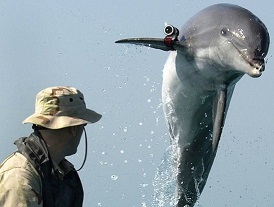
———————————-

Military Dog Lucca Injured in Afghanistan Retires

———————————-

See BBC News for full story

A U.S. Navy dog handler at the War Dog Memorial in the National War Dog Cemetery at Naval Base Guam.

Belgian machine guns pulled by dogs

————————————-

Military animals

————————————-

25 Animals You Won’t Believe Went To War

————————————-

Military animals are domestic animals that are used in warfare and other combat related activities. As working animals , military animals serve a variety of functions. Dogs , pigs , oxen , camels , horses  and other animals are sometimes used for transportation and bomb detection. Elephants , pigeons  and rats  are also used during wartime, while dolphins , and sea lions  are in active use.

Meet the animals Troopers

Anti-tank dogs

anti-tank dog


Bomb-sniffing bees

bomb-sniffing honeybees

Dolphin spies

dolphin in the U.S. Navy's Marine Mammal Program

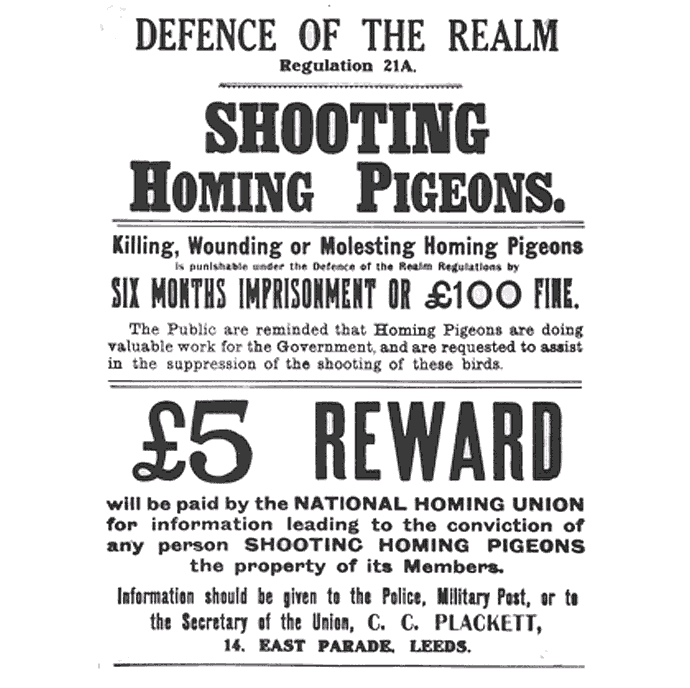
During the First and Second World Wars, carrier pigeons were used to transport messages back to their home coop behind the lines. When they landed, wires in the coop would sound a bell or buzzer and a soldier of the Signal Corps would know a message had arrived. He would go to the coop, remove the message from the canister, and send it to its destination by telegraph, field phone, or personal messenger.

RAF Fox

RAF fox mascot with pilot in WW1

There are many stories of animals who became companions to soldiers during World War One. Here is an RAF fox mascot sitting on a plane with the pilot during World War One.

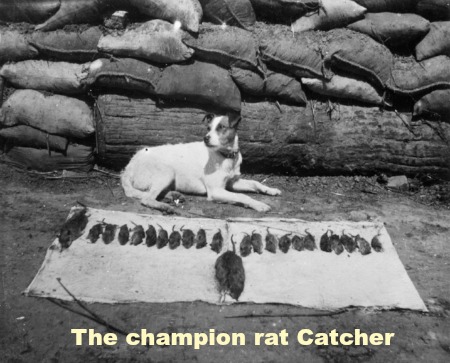
Rat Catchers

the rat catcher with text resized

Red Cross Dogs

French Red Cross dogs line up for inspection on the Western Front, 1914.

War Elephant

A war elephant was an elephant trained and guided by humans for combat.

The war elephant’s main use was to charge the enemy, breaking their ranks and instilling terror. Elephantry are military units with elephant-mounted troops.[1] They were first employed in India, the practice spreading out across south-east Asia and westwards into the Mediterranean. Their most famous use in the West was by the Greek King Pyrrhus of Epirus and in significant numbers by the armies of Carthage, including briefly by Hannibal.

In the Mediterranean, improved tactics reduced the value of the elephant in battle, while their availability in the wild also decreased. In the east, where supplies of animals were greater and the terrain ideal, it was the advent of the cannon that finally concluded the use of the combat elephant at the end of the 19th century, thereafter restricting their use to engineering and labour roles.

War Horse

 Horses carrying ammunition in Flanders,

The first use of horses in warfare occurred over 5,000 years ago. The earliest evidence of horses ridden in warfare dates from Eurasia between 4000 and 3000 BC. A Sumerian illustration of warfare from 2500 BC depicts some type of equine pulling wagons. By 1600 BC, improved harness and chariot designs made chariot warfare common throughout the Ancient Near East, and the earliest written training manual for war horses was a guide for training chariot horses written about 1350 BC. As formal cavalry tactics replaced the chariot, so did new training methods, and by 360 BC, the Greek cavalry officer Xenophon had written an extensive treatise on horsemanship. The effectiveness of horses in battle was also revolutionized by improvements in technology, including the invention of the saddle, the stirrup, and later, the horse collar.

Many different types and sizes of horse were used in war, depending on the form of warfare. The type used varied with whether the horse was being ridden or driven, and whether they were being used for reconnaissance, cavalry charges, raiding, communication, or supply. Throughout history, mules and donkeys as well as horses played a crucial role in providing support to armies in the field

See Wikipedia for more details


7th April – Deaths & Events in Northern Ireland Troubles

Key Events & Deaths on this day in Northern Ireland Troubles

7th April

——————————————

Friday 7 April 1972

PicMonkey Collage with text.jpg

Three members of the Irish Republican Army (IRA) died in a premature bomb explosion at Bawnmore Park, Greencastle, Belfast.

Saturday 7 April 1973

The Irish Republican Army (IRA) carried out a land-mine attack on a mobile patrol of the British Army and killed two soldiers near Newtownhamilton, County Armagh.

A member of the Official Irish Republican Army (OIRA) was shot dead near his home in Armagh city.

Monday 7 April 1975

IRA Truce

Wednesday 7 April 1976


Elizabeth & Noleen Herron

Herron, William also died

Three members of a Protestant family were killed by the Irish Republican Army (IRA) when an incendiary bomb caused a fire in the drapery business below the Herron family home.

Friday 7 April 1978

Airey-Neave 2 resized

Airey Neave, then Conservative party spokesperson on Northern Ireland, said that power-sharing no longer represented practical politics.

See Airey Neave- The Assasination of Airey Neave

James Callaghan, then British Prime Minister, held a meeting with Jack Lynch, then Taoiseach (Irish Prime Minister), at the European Community summit at Copenhagen.

[The talks helped to ease relationships between the British and Irish governments.]

Tuesday 7 April 1981

Joanne Mathers (29), a Protestant civilian who was acting as a census enumerator, was shot dead in the Gobnascale area of Derry, while she was collecting census returns. Republican paramilitaries were responsible for the killing.

Saturday 7 April 1984

John Hermon, then Chief Constable of the Royal Ulster Constabulary (RUC), denied there was a ‘shoot to kill’ policy being operated by security forces in Northern Ireland. He also said there was no cover-up in relation to events surrounding the killing of two Irish National Liberation Army (INLA) members at a vehicle check-point at Mullacreavie, County Armagh, on 12 December 1982.


See 12th December

Hermon did admit that two unarmed RUC officers had entered the Republic of Ireland for ‘observation purposes’ in December 1982. Wednesday 7 April 1993 Gordon Wilson met with representatives of the Irish Republican Army (IRA) to try to persuade them to stop their military campaign. [Gordon Wilson had been injured, and his daughter killed, in the Enniskillen bombing on 8 November 1987. Following the meeting he said that he was saddened by the outcome.]

Thursday 7 April 1994

Protestant Woman Killed by Loyalists

See 6th April

Margaret Wright (31), a Protestant civilian, was badly beaten by a group of men, and then finally shot four times in the head, in a Loyalist band-hall in the Donegal Road area of Belfast.

[She had been invited to the hall on the evening of 6 April 1994 and was then killed by Loyalists who believed that she was a Catholic. There was strong condemnation of the killing in Protestant areas.

Ian Hamiltion (21), a Ulster Volunteer Force (UVF) member, was shot dead by the UVF on 12 April 1994 because they claimed he had admitted killing Wright. William Elliott (32), a member of the Red Hand Commando (RHC), a group associated with the UVF, was also shot dead on 28 September 1995 for his alleged part in the killing of Wright.]

Sunday 7 April 1996

easter rising

(Easter Sunday) Republicans held a series of rallies to commemorate the Easter Rising of 1916. Gerry Adams, then President of Sinn Féin (SF), addresses a rally in the Bogside, Derry. The Irish Republican Army (IRA) issued an Easter statement which did not mention a renewed ceasefire.

See Easter Rising

Monday 7 April 1997

A Catholic chapel, Mullavilly in County Armagh, was destroyed by arsonists and a Protestant parish hall was also damaged in Dungiven, County Derry.

Gary Martin Quinn (33) was charged with four murders dating from 1989 and was also charged with being a member of the Ulster Freedom Fighters (UFF), a covername used by the Ulster Defence Association (UDA).

Tuesday 7 April 1998

The Ulster Unionist Party (UUP) rejected the Mitchell draft settlement paper which had been presented to the parties on 6 April 1998.

Tony Blair, then British Prime Minister, travelled to Northern Ireland to be present during the final stages of the search for agreement. On arriving in Northern Ireland the Prime Minister said, ‘I feel the hand of history upon our shoulder’. Blair held a two hour meeting with David Trimble, then leader of the Ulster Unionist Party (UUP), at Hillsborough Castle, County Down.

Wednesday 7 April 1999

Martin McGuinness, then Vice-President of Sinn Féin (SF), said the Irish Republican Army (IRA) would not accept decommissioning as a precondition to his party’s entry into a power-sharing Executive in Northern Ireland.

Billy Armstrong, then Ulster Unionist Party (UUP) Assembly member, described the Hillsborough Declaration as unacceptable. Sources in the Ulster Volunteer Force (UVF) were reported as saying that the organisation would not decommission its weapons “to get Sinn Féin into government”.


———————————————

Remembering all innocent victims of the Troubles

Today is the anniversary of the death of the following people killed as a results of the conflict in Northern Ireland

“To live in hearts we leave behind is not to die

– Thomas Campbell

To the innocent on the list – Your memory will live forever

– To the Paramilitaries –

There are many things worth living for, a few things worth dying for, but nothing worth killing for.

16  People lost their lives on the 7th April   between 1972– 1985

———————————————–

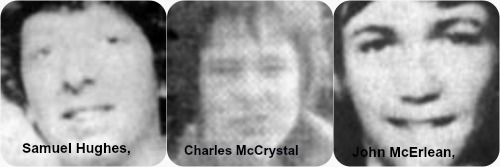
07 April 1972


Charles McCrystal,   (17)

Catholic
Status: Irish Republican Army (IRA),

Killed by: Irish Republican Army (IRA)
Died in premature bomb explosion in garage, Bawnmore Park, Greencastle, Belfast

———————————————–

07 April 1972


Samuel Hughes,  (17)

Catholic
Status: Irish Republican Army (IRA), Killed by: Irish Republican Army (IRA)
Died in premature bomb explosion in garage, Bawnmore Park, Greencastle, Belfast

———————————————–

07 April 1972


John McErlean,  (17)

Catholic
Status: Irish Republican Army (IRA),

Killed by: Irish Republican Army (IRA)
Died in premature bomb explosion in garage, Bawnmore Park, Greencastle, Belfast

———————————————–

07 April 1972


Peter Sime,   (22)

nfNI
Status: British Army (BA),

Killed by: Irish Republican Army (IRA)
Shot by sniper while on British Army (BA) foot patrol, Springfield Road, Belfast

———————————————–

7 April 1973
Steven Harrison,  (26)

nfNI
Status: British Army (BA),

Killed by: Irish Republican Army (IRA)
Killed in land mine attack on British Army (BA) mobile patrol, Tullyogallaghan, near Newtownhamilton, County Armagh.

———————————————–

07 April 1973
Terence Brown,   (26)

nfNI
Status: British Army (BA),

Killed by: Irish Republican Army (IRA)
Killed in land mine attack on British Army (BA) mobile patrol, Tullyogallaghan, near Newtownhamilton, County Armagh

———————————————–

07 April 1973


James McGerrigan,  (17)

Catholic
Status: Official Irish Republican Army (OIRA),

Killed by: British Army (BA)
Shot near his home, Windmill Hill, Armagh.

———————————————–

07 April 1975


Gerard McLaughlin,  (21)

Catholic
Status: Civilian (Civ),

Killed by: non-specific Loyalist group (LOY)
Shot while walking to work along Carnmoney Road North, Glengormley, near Belfast, County Antrim.

———————————————–

07 April 1975

Hugh McVeigh,  (36)

Protestant
Status: Ulster Defence Association (UDA),

Killed by: Ulster Volunteer Force (UVF)
Abducted while delivering furniture somewhere in the Shankill area, Belfast. Found shot, on information supplied to the British authorities, buried in wasteland, Gobbins, Islandmagee, County Antrim, on 1 September 1975. Ulster Defence Association (UDA) / Ulster Volunteer Force (UVF) feud.

———————————————–

07 April 1975


David Douglas, (20)

Protestant
Status: Ulster Defence Association (UDA),

Killed by: Ulster Volunteer Force (UVF)
Abducted while delivering furniture somewhere in the Shankill area, Belfast. Found shot, on information supplied to the British authorities, buried in wasteland, Gobbins, Islandmagee, County Antrim, on 1 September 1975. Ulster Defence Association (UDA) / Ulster Volunteer Force (UVF) feud.

———————————————–

07 April 1976
William Herron,   (64)

Protestant
Status: Civilian (Civ),

Killed by: Irish Republican Army (IRA)
Killed during incendiary bomb attack on his drapery shop, The Square, Dromore, County Down. He lived above the shop

———————————————–

07 April 1976


Elizabeth Herron,  (58)

Protestant
Status: Civilian (Civ),

Killed by: Irish Republican Army (IRA)
Killed during incendiary bomb attack on her drapery shop, The Square, Dromore, County Down. She lived above the shop

———————————————–

07 April 1976


Noleen Herron,   (26)

Protestant
Status: Civilian (Civ),

Killed by: Irish Republican Army (IRA)
Killed during incendiary bomb attack on her parents’ drapery shop, The Square, Dromore, County Down. She lived above the shop.

———————————————–

07 April 1981


Joanne Mathers,   (29)

Protestant
Status: Civilian (Civ),

Killed by: non-specific Republican group (REP)
Shot while collecting census forms, Anderson Crescent, Gobnascale, Derry.

———————————————–

07 April 1983


Gerald Jeffrey,   (28)

nfNI
Status: British Army (BA),

Killed by: Irish Republican Army (IRA)
Died eight days after being injured by remote controlled bomb while on British Army (BA) foot patrol, Falls Road, Belfast.

———————————————–

07 April 1985
Martin Love,  (24)

Catholic
Status: Civilian (Civ),

Killed by: Ulster Freedom Fighters (UFF)
Shot while walking along Factory Row, Enniskillen, County Fermanagh

———————————————–


6th April – Deaths & Events in Northern Ireland Troubles

Key Events & Deaths on this day in Northern Ireland Troubles

6th April

———————————————–

Tuesday 6 April 1971

During a debate at Westminster on Northern Ireland, Harold Wilson, then leader of the Labour Party, claimed that a draft Bill for the imposition of direct rule existed.

Thursday 6 April 1972

Scarman Report The Scarman Tribunal Report (Cmd. 566) was published. The report was into the causes of violence during the summer of 1969.

The report found that the Royal Ulster Constabulary (RUC) had been seriously at fault on a number of occasions.

Sunday 6 April 1975

Daniel Loughran (18), then a member of the People’s Liberation Army (PLA; later to become the Irish National Liberation Army, INLA), was shot dead at Divis Flats, Belfast, by members of the Official Irish Republican Army (OIRA) in the continuing feud between the OIRA and the INLA. A Protestant civilian was shot dead by Republicans in Belfast.

Friday 6 April 1990

The Irish Supreme Court rejected an application for the extradition of Owen Carron. Carron had been charged with a firearms offence in Northern Ireland but had fled to the Republic of Ireland before his trial.

This decision, following earlier decisions on 1 March 1990 and 13 March 1990 causes further strains on relations between the British and the Irish Governments.

Wednesday 6 April 1994

IRA Ceasefire The Irish Republican Army (IRA) called a three-day ceasefire (Wednesday 6 April 1994 to Friday 8 April 1994).

Saturday 6 April 1996

Patrick Mayhew, then Secretary of State for Northern Ireland, said that the Irish Republican Army was “out of a touch” with the wishes of Irish People. Ian Paisley, then leader of the Democratic Unionist Party (DUP), celebrated his 70th birthday and stated his intention to continue as leader of the DUP and the Free Presbyterian Church.

Monday 6 April 1998

George Mitchell, then Chairman of the multi-party talks at Stormont, presented a draft settlement paper to the parties involved in the talks late in the evening. Mitchell appealed for the document not to be leaked: “Lives and deaths are at stake here”.

The paper had been delayed because of disagreement between the Ulster Unionist Party (UUP) and the Social Democratic and Labour Party (SDLP) over how “consensus” decisions would be reached in the proposed Northern Ireland Assembly and also whether or not cross-border bodies would be accountable to the Assembly. Sinn Féin (SF) said that 12 people had resigned from the party over its decision to be involved in the multi-party talks. SF denied however that there had been large-scale resignations from the party.

[Those people who had left the party claimed that they had been expelled to stop criticism of the party’s leadership at the forthcoming Ard Fheis.]

Tuesday 6 April 1999

Members of the Orange Order in Ballynafeight, Belfast, accepted calls to enter proximity talks with the Lower Ormeau Concerned Community Group. [This did not involve face-to-face discussions between the Orangemen and the residents.]

Saturday 6 May 2000

The Irish Republican Army (IRA) undertook to open some of its arms dumps for inspection and said it was prepared to “initiate a process that will completely and verifiably put IRA arms beyond use”.


———————————————

Remembering all innocent victims of the Troubles

Today is the anniversary of the death of the following people killed as a results of the conflict in Northern Ireland

“To live in hearts we leave behind is not to die

– Thomas Campbell

To the innocent on the list – Your memory will live forever

– To the Paramilitaries –

There are many things worth living for, a few things worth dying for, but nothing worth killing for.

8 People lost their lives on the 6th April  between 1974– 1994

———————————————–

06 April 1974
Ellen McDowell,   (21)

Protestant
Status: Civilian (Civ),

Killed by: Ulster Volunteer Force (UVF)
Shot while walking with her boyfriend along Shankill Road, Belfast.

———————————————–

06 April 1975


Daniel Loughran,  (18)

Catholic
Status: People’s Liberation Army (PLA),

Killed by: Official Irish Republican Army (OIRA)
Shot while walking along Albert Street, Lower Falls, Belfast. Official Irish Republican Army (OIRA) / Irish National Liberation Army (INLA) feud.

———————————————–

06 April 1975


William Archer,   (19)

Protestant
Status: Ulster Defence Association (UDA),

Killed by: non-specific Republican group (REP)
Shot while standing outside social club, Alliance Road, Belfast.

———————————————–

06 April 1976


Gillian Liggett,  (33)

Protestant
Status: Ulster Defence Regiment (UDR),

Killed by: Irish Republican Army (IRA)
Shot during sniper attack on Ulster Defence Regiment (UDR) mobile patrol, Ashfort, near Middletown, County Armagh.

———————————————–

06 April 1977
Gerald Cloete,   (46)

Protestant
Status: Ulster Defence Regiment (UDR),

Killed by: Irish Republican Army (IRA)
Off duty. Shot while driving his car, near to his home, Glenside Park, off Northland Road, Derry.

———————————————–

06 April 1988
William Burleigh,  (51)

Protestant
Status: Ulster Defence Regiment (UDR),

Killed by: Irish Republican Army (IRA)
Off duty. Killed by booby trap bomb attached to his car, Tirraroe, near Derrylin, County Fermanagh

———————————————–

06 April 1991


Spence McGarry,   (46)

Protestant
Status: Royal Ulster Constabulary (RUC),

Killed by: Irish Republican Army (IRA)
Off duty. Killed by booby trap bomb attached to his car in car park, Castle Street, Ballycastle, County Antrim.

———————————————–

06 April 1994


Margaret Wright,   (31)

Protestant
Status: Civilian (Civ),

Killed by: Red Hand Commando (RHC)
Shot while in social club, Meridi Street, off Donegall Road, Belfast. Her body found in backyard of unoccupied house, Donegall Avenue, Village, Belfast, on 7 April 1994. Assumed to be a Catholic.

———————————————–

Female serial killer – Joanna Dennehy

Sadly murder and barbaric acts of violence (Islamic State ) have become part of modern life and almost daily we watch in shock and horror at the evil mankind is capable off.  The Islamic merchants of death  thrive on and glorify their slaughter through social media – to a global audience and we can be forgiven for almost taking it in our stride -it has become so common.

But there are still some acts of murder and brutality that can stop us in our tracks and today in the UK two 15-year-old girls who “battered and tortured” a woman to death in her own home were  found guilty of murder.

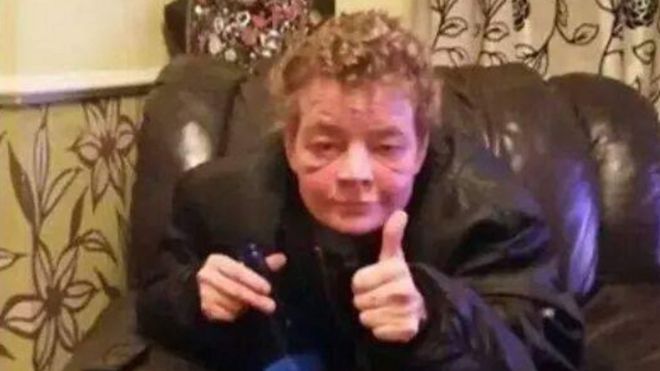
Angela Wrightson
Angela Wrightson


Angela Wrightson, 39, was found in her living room with more than 100 injuries – including 80 to her face – in Hartlepool in December 2014.

The girls, then aged 13 and 14, used a variety of weapons including a coffee table and a computer printer.

They then rang police for a lift home before taking a selfie in the back of the van, Leeds Crown Court heard.

See BBC News for full story

The fact that this murder was carried out by two young females makes it all the more horrific, as crimes like this are seldom carried out by females in the UK apart from Myra Hindley and a few others. America has a long history of female killers and Aileen Wuornos became a global curiosity thanks to Hollywood and her brutal crimes.

Aileen Carol Wuornos (February 29, 1956 – October 9, 2002) was an American serial killer who killed seven men in Florida between 1989 and 1990. Wuornos claimed that her victims had either raped or attempted to rape her while she was working as a prostitute, and that all of the homicides were committed in self-defense.

She was convicted and sentenced to death for six of the murders and was executed by lethal injection on October 9, 2002.

.

——————————————–

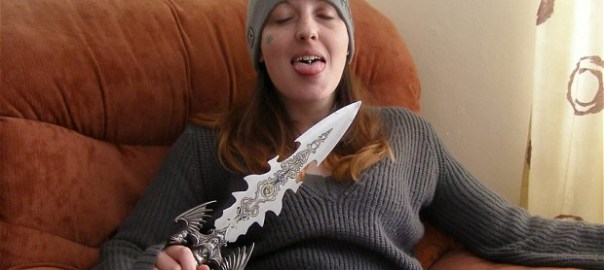
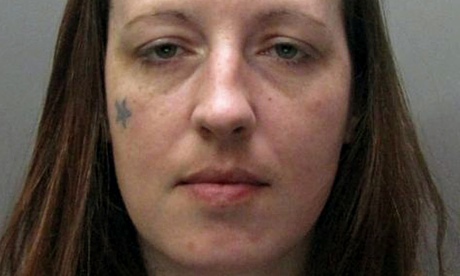
UK Female Serial Killer Joanna Dennehy 

————————–

Joanna Dennehy – female serial killer

————————–

.Joanna Dennehy a serial killer becomes first woman told by judge to die in jail .Judge told the murderer of three men she was ‘a cruel, calculating, selfish and manipulative serial killer’ .

She was convicted of killing three men in what became known as the Peterborough ditch murders

Peterborough ditch murders

The Peterborough ditch murders were a series of three murders which took place in England in March 2013. All of the victims were male and died from stab wounds. The bodies of all three men were discovered dumped in ditches outside Peterborough. The perpetrator of the murders was Joanna Dennehy, a local woman who was later sentenced to life imprisonment with a recommendation that she never be released.

Court proceedings

In November 2013, Joanna Dennehy pleaded guilty to all three murders and two further attempted murders.[1][2] Dennehy’s sister Maria was unsurprised by the guilty plea and said, “I think she did that to control the situation. She likes people to know she’s the boss.”[3] Dennehy has been held at HM Prison Bronzefield where Rosemary West is also being held.[4] Assessing psychiatrists later diagnosed Dennehy with “psychopathic, anti-social and emotional instability disorders” (also known as borderline personality disorder).[5]

Two men, Gary Richards (known as Gary Stretch), 47, and Leslie Layton, 36, stood trial charged with a range of crimes assisting Dennehy, 31. Neither agreed to enter the witness box, give sworn evidence or face cross-examination.[6] The jury began considering their verdict on 4 February 2014.[7][8][9][10] On 10 February Richards was found guilty of attempted murder. Layton was found guilty of perverting the course of justice.[11][12] On 12 February Layton and Richards were convicted of all other charges.[13][14][15]

On 28 February 2014 at the Old Bailey, Joanna Dennehy was sentenced to life imprisonment. The trial judge, Mr Justice Spencer, recommended that she should never be released. He said that this was justified due to the premeditation of each murder. Spencer said further that Dennehy was sadomasochistic, and lacked the normal range of human emotions.[16] Dennehy is believed to be one of just three women in the United Kingdom to be told that her life sentence should mean life. The other two confirmed cases are Myra Hindley (now dead) and Rosemary West.[17] Gary ‘Stretch’ Richards was also sentenced at the Old Bailey alongside Dennehy to life imprisonment with a recommended minimum term of 19 years. Leslie Layton was sentenced to a total of 14 years, and Robert Moore, 55, who admitted to assisting an offender received a three-year prison sentence.[18][19][20]

———————————————

Joanna Dennehy’s Ex-Boyfried Talks Of Their Relationship | This Morning

———————————————

Victims

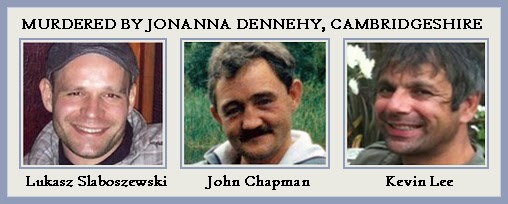
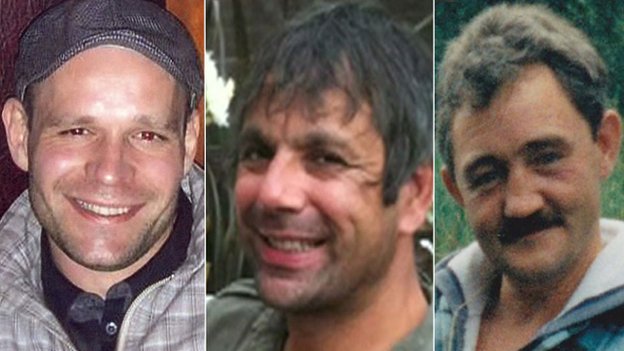
Kevin Lee was a property developer, landlord of Joanna Dennehy and her lover.[21][22] He was killed on 29 March, and his body found the next day near Newborough.[23] Dennehy dressed Lee’s body in a black sequined dress before dumping his corpse.[24]

Lukasz Slaboszewski and John Chapman were both housemates of Dennehy.[21] Slaboszewski was killed at some point between 19 and 29 March, and Chapman on 29 March.[23] The bodies of Slaboszewski and Chapman were both found on 3 April near Thorney with stab wounds.[25]

After the killings, Dennehy and Richards drove to Hereford where she stabbed two random men, both of whom survived.[26] One of them, John Rogers, died of unrelated causes in November 2014.[27]

Victim selection and motives

Dennehy specifically targeted men during her killing spree, telling Lloyd that she did not wish to kill a woman and especially not a woman with children. Lloyd stated Dennehy had wanted to kill nine men in total, seeking to be like Bonnie and Clyde. Dennehy hunted and stabbed men for the purpose of entertainment, telling Stretch, “I want my fun. I need you to get my fun.” She later told a psychiatrist that she had found murder to be “moreish” and that after the first killing she “got a taste for it.”[28][22][29]

——————————————————–


5th April – Deaths & Events in Northern Ireland Troubles

Key Events & Deaths on this day in Northern Ireland Troubles

5th April

——————————

Saturday 5 April 1975


Kevin Kane  and Michael Coyle

Two Catholic civilians were killed in a bomb attack on McLaughlin’s Bar in the New Lodge area of Belfast. The attack was claimed by the Protestant Action Force (PAF) a covername used by the Ulster Volunteer Force (UVF).

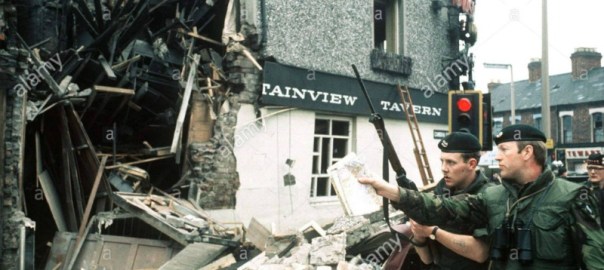
IRA bomb blast wrecks the Mountainview Tavern in Belfast 
Soldiers view the destruction caused by the blast

Republican paramilitaries carried out a bomb attack on Mountainview Tavern, Shankill Road, Belfast, and killed five people. Four of the dead were Protestant civilians and one was a member of the Ulster Defence Association (UDA).

See Mountainview Tavern bomb

Thomas Robinson

A Catholic civilian was shot dead by Loyalists as he walked home in the Ardoyne area of Belfast. Merlyn Rees, then Secretary of Sate for Northern Ireland, said that Loyalist paramilitaries had tried to assassinate him in 1974.

Monday 5 April 1976

James Callaghan succeeded Harold Wilson as the British Prime Minister.

Thursday 5 April 1979


Anthony Dykes  and Anthony Thornett

Two British soldiers were shot dead by the Irish Republican Army (IRA) while standing outside Andersonstown join Royal Ulster Constabulary (RUC) and British Army base in Belfast.

Sunday 5 April 1981

The 1981 Census

During the census Sinn Féin (SF) campaigned for non completion of the census forms as a demonstration of support for the hunger strike. As a result in many Republican areas the census enumerators were unable to collect completed forms. Indeed one enumerator was shot dead in Derry by Republican paramilitaries on 7 April 1981.

[This led to a large under representation of Catholics in the published figures. The population of Northern Ireland was recorded as 1,481,959 with 28 per cent giving their religion as Catholic. 18.5 per cent of the population had refused to state their religion. Later estimates of the true Catholic population put the figure at 38.5 per cent.]

Monday 5 April 1982

White Paper Published

The British government published its White Paper, ‘Northern Ireland: A Framework for Devolution‘ (Cmnd 8541). The paper set out proposals for the establishment of an elected 78 member Assembly at Stormont. The Assembly would then be asked to reach agreement on how any powers devolved to it from Westminster would be administered. The proposals indicated that it would need the agreement of 70 per cent of Assembly members before powers would be devolved.

It was also envisaged that power would be passed to particular Northern Ireland Departments one at a time; because of this the scheme became known as ‘rolling devolution’.

[The ideas contained in the White Paper had been discussed for some time prior to its publication and most of the political parties had expressed opposition to it.]

Friday 5 April 1985

The British government said that it would not provide the funding to save the ‘town gas’ industry in Northern Ireland.

Thursday 5 April 1990

The report of the Stevens Inquiry was presented to Hugh Annesley, then Chief Constable of the Royal Ulster Constabulary (RUC).

Sunday 5 April 1992

Bill Clinton gave a speech to the American-Irish Presidential Forum in New York, United States of America (USA). He undertook, if elected President, to: reverse the ban on Gerry Adams, then President of Sinn Féin (SF), entering the USA; support the ‘MacBride Principles’; appoint a peace envoy to Northern Ireland; and raise the issue of human rights violations with the British government.

Saturday 5 April 1997

‘Grand National’ Cancelled

Two Catholic chapels, St MacNissi’s in Randalstown and St Comgall’s in Antrim Town, and a Protestant church, St Patrick’s in Donoghmore, were damaged by arson attacks.

Seamus Mallon, deputy leader of the Social Democratic and Labour Party (SDLP), blamed the comments made by Ian Paisley, then leader of the Democratic Unionist Party (DUP), in Portadown on 4 April 1997 for fuelling “sectarian hatred”.

Paisley called Mallon’s comments “vile bile”.

The ‘Grand National’ horse race at Aintree in Liverpool had to be abandoned following a hoax warning that the Irish Republican Army (IRA) had planted a bomb at the race course. [In terms of public interest the Grand National is the premier event in the horse racing calendar. There was widespread anger that the race had to be cancelled.

Jack Straw, then Labour Party shadow Home Secretary, said that the IRA had “put themselves beyond the pale”. This incident was one of a number in which the IRA demonstrated its ability to disrupt the ordinary life of people in Britain at minimum effort and risk on the part of IRA members.]

Sunday 5 April 1998

Julia Ahern, the mother of Bertie Ahern, then Taoiseach (Irish Prime Minister), died aged 87. Bertie Ahern, who was heavily involved with the multi-party talks at Stormont, had to leave the talks at various times to organise funeral arrangements and attend the service.

Friday 5 May 2000

A Catholic couple were forced to leave their home in a Loyalist area of south Belfast following a sectarian pipe-bomb attack. The husband sustained minor leg injuries after the device, which was packed with nails, blew a hole in the back door of the house at Broadway Parade and exploded into the kitchen.

His wife who also was in the kitchen escaped unhurt. The attack was carried out by Loyalist paramilitaries.

———————————————

Remembering all innocent victims of the Troubles

Today is the anniversary of the death of the following people killed as a results of the conflict in Northern Ireland

“To live in hearts we leave behind is not to die

– Thomas Campbell

To the innocent on the list – Your memory will live forever

– To the Paramilitaries –

There are many things worth living for, a few things worth dying for, but nothing worth killing for.

15  People lost their lives on the 5th   April  between 1975– 1993

———————————————–

05 April 1975
Kevin Kane,   (18)

Catholic
Status: Civilian (Civ),

Killed by: Protestant Action Force (PAF)
Killed in bomb attack on McLaughlin’s Bar, Antrim Road, New Lodge, Belfast.

———————————————–

05 April 1975
Michael Coyle,   (20)

Catholic
Status: Civilian (Civ),

Killed by: Protestant Action Force (PAF)
Killed in bomb attack on McLaughlin’s Bar, Antrim Road, New Lodge, Belfast

———————————————–

05 April 1975


Williams Andrews,  (33)

Protestant
Status: Ulster Defence Association (UDA),

Killed by: non-specific Republican group (REP)
Killed in bomb attack on Mountainview Tavern, Shankill Road, Belfast.

———————————————–

05 April 1975


Alan Madden,  (18)

Protestant
Status: Civilian (Civ),

Killed by: non-specific Republican group (REP)
Killed in bomb attack on Mountainview Tavern, Shankill Road, Belfast.

———————————————–

05 April 1975


Albert Fletcher,  (32)

Protestant
Status: Civilian (Civ),

Killed by: non-specific Republican group (REP)
Killed in bomb attack on Mountainview Tavern, Shankill Road, Belfast

———————————————–

05 April 1975
Nathaniel Adams,   (29)

Protestant
Status: Civilian (Civ),

Killed by: non-specific Republican group (REP)
Killed in bomb attack on Mountainview Tavern, Shankill Road, Belfast.

———————————————–

05 April 1975


Joseph Bell,   (52)

Protestant
Status: Civilian (Civ),

Killed by: non-specific Republican group (REP)
Killed in bomb attack on Mountainview Tavern, Shankill Road, Belfast

———————————————–

05 April 1975
Thomas Robinson,  (61)

Catholic
Status: Civilian (Civ),

Killed by: non-specific Loyalist group (LOY)
Shot while walking home from social club, Etna Drive, Ardoyne, Belfast.

———————————————–

05 April 1976
Robert McConnell,   (32)

Protestant
Status: Ulster Defence Regiment (UDR)

, Killed by: Irish Republican Army (IRA)
Off duty. Shot outside his home, Tullyvallen, Newtownhamilton, County Armagh

———————————————–

05 April 1976
Sean McDermott,  (20)

Catholic
Status: Irish Republican Army (IRA),

Killed by: Royal Ulster Constabulary (RUC)
Shot by off duty Royal Ulster Constabulary (RUC) member shortly after being involved in bomb attack on Conway Hotel, Dunmurry, near Belfast, County Antrim.

———————————————–

05 April 1977
 Sean Prendergast,  (22)

nfNI
Status: British Army (BA),

Killed by: Irish Republican Army (IRA)
Died one day after being injured during land mine attack on British Army (BA) Armoured Personnel Carrier, Derrynacross, near Belleek, County Fermanagh.

———————————————–

05 April 1979
Anthony Dykes,   (25)

nfNI
Status: British Army (BA),

Killed by: Irish Republican Army (IRA)
Shot by snipers while standing outside Andersonstown Royal Ulster Constabulary (RUC) / British Army (BA) base, Belfast.

———————————————–

05 April 1979
Anthony Thornett,   (20)

nfNI
Status: British Army (BA),

Killed by: Irish Republican Army (IRA)
Shot by snipers while standing outside Andersonstown Royal Ulster Constabulary (RUC) / British Army (BA) base, Belfast.

———————————————–

05 April 1987
Samuel Lawrence, (60)

Protestant
Status: Civilian (Civ),

Killed by: Ulster Volunteer Force (UVF)
Died two days after being injured during robbery at railway station, York Road,

———————————————–

05 April 1993
William Killen,   (36)

Protestant
Status: ex-Ulster Defence Association (xUDA),

Killed by: Ulster Defence Association (UDA)
Shot at his home, Westlea Gardens, Portavogie, County Down. Internal Ulster Defence Association dispute.

———————————————–