Dougald McCaughey (23), Joseph McCaig (18) and John McCaig (17), all three members of the Royal Highland Fusiliers (a regiment of the British Army; BA), were killed by members of the Irish Republican Army (IRA).
The soldiers were off-duty and lured from a pub where they had been drinking. Their bodies were found at Squire’s Hill, in the Ligoniel area of Belfast.
[There was widespread condemnation of the killings and increased pressure on Chichester-Clark, then Northern Ireland Prime Minister, to take a tougher line on security in the region.]
Two Catholic teenagers were killed by an Irish Republican Army (IRA) booby-trap bomb near Forkhill, County Armagh. The bomb had been intended for a British Army foot patrol.
Wednesday 10 March 1976
Sammy Smith
The Irish Republican Army (IRA) shot and killed Sammy Smyth (46), a former spokesman for the Ulster Defence Association (UDA), at his sister’s house in Alliance Avenue, Ardoyne, Belfast.
A Protestant civilian was shot dead by the IRA in an attack on a public house near Lisburn, County Antrim.
The Irish government referred Britain to the European Commission on Human Rights over the case of alleged ill-treatment of internees in 1971.
[A decision by the Commission was announced on 2 September 1976. The case was then passed to the European Court of Human Rights who made a further ruling on 18 January 1978.] [ Hunger Strike. ]
Monday 10 March 1986
Unionist leaders said that they would resume talks with the British government if the Anglo-Irish Agreement (AIA) was suspended.
Tuesday 10 March 1987
Fianna Fáil (FF), then led by Charles Haughey, formed a minority government in the Republic of Ireland.
Thursday 10 March 1988
Sixty British Labour Party Members of Parliament (MPs) criticised the shootings in Gibraltar on 6 March 1988.
Tuesday 10 March 1992
The Garda Síochána (the Irish police) uncovered an estimated 3,500 pounds of explosives together with a number of weapons at Drumkeen in County Donegal, Republic of Ireland.
Wednesday 10 March 1993
The House of Commons at Westminster decided by 329 to 202 votes to renew the Prevention of Terrorism Act. The Labour Party voted against the motion whereas in previous years the party had abstained.
Thursday 10 March 1994
James Haggan (33), an Royal Ulster Constabulary (RUC) officer, was shot dead by the Irish Republican Army (IRA) while he was off-duty at a greyhound track in north Belfast.
Friday 10 March 1995
The Ulster Unionist Party (UUP) rejected all the proposals in the ‘Framework Documents’ (22 February 1995).
Monday 10 March 1997
Maurice Hayes
Maurice Hayes, the former Northern Ireland Ombudsman, was appointed by the Northern Ireland Office (NIO) to investigate the claim that a Catholic woman, who was the victim of sectarian harassment, was moved from her job in the office of Baroness Denton.
Michael Ancram, then Political Development Minister, condemned the picketing by Loyalists of the Catholic chapel at Harryville, Ballymena. Ancram made the comments when on a visit to Catholic schools in Ballymena which had been damaged in arson attacks.
The parents of Stephen Restorick, a British soldier who had been shot dead by the Irish Republican Army (IRA) on 12 February 1997, received a letter of condolence from Gerry Adams, then President of Sinn Féin (SF).
Republican paramilitaries carried out a mortar attack on the Royal Ulster Constabulary (RUC) base on the Newry Road in Armagh.
A British Army patrol spotted the mortars and raised the alarm. People were evacuated from the surrounding area and there were no injuries.
[It was believed that the attack was carried out by the Continuity Irish Republican Army (CIRA).]
A west Belfast Republican activist accused members of a joint Royal Ulster Constabulary (RUC) and British Army patrol of firing blank shots at him after they had carried out a body search and an identity check.
A British soldier fired live rounds 20 minutes later in a nearby area when he believed he had seen a gunman. No shots were fired at the patrol.
The chairmen of the multi-party talks issued a discussion paper on the proposed cross-border bodies.
Wednesday 10 March 1999
Bertie Ahern, then Taoiseach (Irish Prime Minister) issued a statement on the present state of the peace process and the implementation of the Good Friday Agreement.
Friday 10 March 2000
The Belfast shipbuilding company Harland and Wolff lost a contract worth £400m to build the passenger ship Queen Mary II. The contract would have helped to secure the company’s future.
—————————————————————————
Remembering all innocent victims of the Troubles
Today is the anniversary of the death of the following people killed as a results of the conflict in Northern Ireland
“To live in hearts we leave behind is not to die
– Thomas Campbell
To the innocent on the list – Your memory will live forever
– To the Paramilitaries –
There are many things worth living for, a few things worth dying for, but nothing worth killing for.
13 People lost their lives on the 10th March between 1971 – 1994
—————————————————————————
10 March 1971
Dougald McCaughey, (23)
nfNI Status: British Army (BA),
Killed by: Irish Republican Army (IRA)
Off duty. Found shot, Squire’s Hill, Ligoniel, Belfast.
Protestant Status: Ulster Defence Association (UDA),
Killed by: non-specific Loyalist group (LOY)
Shot while in Ulster Defence Association social club, Silverstream Road, Ballysillan, Belfast.
—————————————————————————
10 March 1974
Michael McCreesh, (15)
Catholic Status: Civilian (Civ),
Killed by: Irish Republican Army (IRA)
Killed by booby trap bomb hidden in abandoned car, Dromintee, near Forkhill, County Armagh. Intended for British Army (BA) foot patrol.
—————————————————————————
10 March 1974 Michael Gallagher, (18)
Catholic Status: Civilian (Civ),
Killed by: Irish Republican Army (IRA)
Injured by booby trap bomb hidden in abandoned car, Dromintee, near Forkhill, County Armagh. Intended for British Army (BA) foot patrol. He died 14 March 1974.
—————————————————————————
10 March 1976 Robert Dorman, (60)
Protestant Status: Civilian (Civ),
Killed by: Irish Republican Army (IRA)
Shot during gun attack on Homestead Inn, Ballyaghlis, near Lisburn, County Antrim
—————————————————————————
10 March 1976
Sammy Smyth, (46)
Protestant Status: Ulster Defence Association (UDA),
Killed by: Irish Republican Army (IRA)
Shot while at his relative’s home, Alliance Avenue, Ardoyne, Belfast.
—————————————————————————
10 March 1977 Norman Sharkie, (18)
Protestant Status: Civilian (Civ),
Killed by: Irish Republican Army (IRA)
Shot during bomb attack on his workplace, a shop in York Street, Belfast.
—————————————————————————
10 March 1987
Peter Nesbitt, (32)
Protestant Status: Royal Ulster Constabulary (RUC),
Killed by: Irish Republican Army (IRA)
Killed by remote controlled bomb hidden in derelict shop, detonated when Royal Ulster Constabulary (RUC) mobile patrol lured to bogus robbery at an adjoining shop, Ardoyne shops, Crumlin Road, Belfast.
—————————————————————————
10 March 1989
James McCartney, (38)
Catholic Status: Civilian (Civ),
Killed by: Protestant Action Force (PAF)
Security man. Shot outside Orient Bar, Springfield Road, Belfast.
—————————————————————————
10 March 1993
Norman Truesdale, (39)
Protestant Status: Ulster Defence Association (UDA),
Killed by: Irish Republican Army (IRA)
Shot at his shop, Century Street, Lower Oldpark, Belfast.
—————————————————————————
10 March 1994
John Haggan, (33)
Protestant Status: Royal Ulster Constabulary (RUC),
Killed by: Irish Republican Army (IRA)
Off duty. Shot while at Dunmore Greyhound Stadium, off Antrim Road, Belfast.
—————————————————————————
My autobiography: A Belfast Child is now available to pre-order on Amazon , launch date is 30th April.
Key Events & Deaths on this day in Northern Ireland Troubles
9th March
————————————————————-
Thursday 9 March 1972
Gerard Crossan one of the IRA members killed in premature bomb
Four members of the Irish Republican Army (IRA) died in a premature explosion at a house in Clonard Street, Lower Falls, Belfast.
Saturday 9 March 1974
The United Ulster Unionist Council (UUUC) organise a protest march to Stormont to call for an end to the Executive.
Tuesday 9 March 1976
Anthony & Myles O’Reilly
Two Catholic civilians were shot dead during a gun and bomb attack on their restaurant, the Golden Pheasant Inn, Ballynahinch Road, Baillies Mills, near Lisburn, County Down. The attack was carried out by Loyalist paramilitaries. Merlyn Rees, then Secretary of State, announced the dissolution of the Constitutional Convention.
Sunday 9 March 1986
John Hermon, then Chief Constable of the Royal Ulster Constabulary (RUC), defended the action of the Royal Ulster Constabulary (RUC) during the ‘Day of Action’ on 3 March 1986.
[The RUC had been criticised for not dealing with the high level of intimidation and for not keeping main roads open.]
Monday 9 March 1987
In a sex-discrimination case against the Chief Constable of the Royal Ulster Constabulary (RUC), 31 women RUC officers were awarded £240,000 compensation.
Monday 9 March 1992
Plenary Session of Talks
Representatives of the four main political parties in Northern Ireland held a ‘plenary session’ of talks (later known as the Brooke / Mayhew talks) in Stormont. The parties agreed to meet again following the forthcoming general election.
The Fair Employment Commission (FEC) published a report on the religious composition of the workforce based on returns from over 1,700 employers in Northern Ireland. The report showed that Catholics made up 35 per cent of those employed but 38 per cent of those available for work.
Wednesday 9 March 1994
First IRA Mortar Attack on Heathrow
The Irish Republican Army (IRA) carried out a mortar attack on the perimeter of Heathrow Airport. Although the five mortars fell inside the airport grounds none of them exploded. The mortars were fired from a car parked near to the perimeter fence.
[Police and security services searched the area looking for other vehicles containing mortars but found none. However, this turned out to be the first in a series of three carefully planned attacks on the airport; the others happened on 11 March 1994 and 13 March 1994.]
The House of Commons voted to set up a select committee on Northern Ireland affairs. The Commons also voted to renew the Prevention of Terrorism Act (PTA).
Thursday 9 March 1995
The White House in Washington announced that Gerry Adams, then President of Sinn Féin (SF), would be allowed to raise funds in the United States on behalf of SF and that he would be invited to attend the President’s St Patrick’s Day reception.
[The British government reacted furiously to the announcement and indeed for several days John Major, then British Prime Minister, refused for accept a call from Bill Clinton, then President of the USA. The two men met on 4 April 1995 and began to repair the damage to relations between the two administrations.]
Boy grabs a cheeky selfie with Queen in Northern Ireland
The Queen paid a one day visit to Northern Ireland. During her visit the Queen met Cardinal Cahal Daly, then Catholic Primate.
Saturday 9 March 1996
The Irish Republican Army (IRA) later admitted responsibility for a small ‘improvised device’ which exploded in Old Brompton Road, London. The explosion caused no injuries and only minor damage.
Monday 9 March 1998
Decision Not To Extradite McAliskey
The British government took the decision not to extradite Roísín McAliskey to Germany. The charge related to an Irish Republican Army (IRA) mortar attack on the British Army Osnabruck barracks in Germany on 28 June 1996.
McAliskey was five months pregnant at the time of her arrest. The British decision was based on medical grounds and followed the detention of McAliskey for a period of 16 months during which time she gave birth to a baby girl. McAliskey was subsequently released in April 1998 and returned to Northern Ireland.
[There had been a strong campaign to secure her release in Britain, Ireland, Europe and the United States of America (USA). A number of commentators felt that the timing of the announcement was designed to increase the pressure on Sinn Féin (SF) to rejoin the multi-party talks at Stormont.]
Tuesday 9 March 1999
There was a pipe-bomb attack in Portadown, County Armagh. Nine families had to be evacuated from houses nearby while the device was made safe.
Representatives of the Ulster Unionist Party (UUP) and Sinn Féin (SF) met at Stormont for talks. Paul Murphy, then Political Development Minister, introduced the Implementation Bodies (Northern Ireland) Order in the House of Commons.
Saturday 9 March 2002
Sectarian State Speech by Trimble
David Trimble, then leader of the Ulster Unionist Party (UUP), gave a (scripted) speech to the annual general meeting of the Ulster Unionist Council (UUC) during which he referred to the Republic of Ireland as a: “pathetic sectarian, mono-ethnic, mono-cultural state”.
[The comments provoked widespread criticism from Nationalists in Northern Ireland and in the Republic.]
At a press conference following the meeting Trimble defended his comments. He maintained that what he had said was “self-evident” but refused requests from reporters to provide evidence to support his claims.
During his speech Trimble also called for a border poll to test whether a majority of people in Northern Ireland would favour a united Ireland. He suggested that the referendum be held on the same day as the next Northern Ireland Assembly election (1 May 2003).
[A number of commentators suggested this was a ploy which would have the effect of maximising the UUP vote at the Assembly election.]
During his speech Trimble also criticised the work of the two Sinn Féin (SF) ministers Martin McGuinness, then Education Minister, and Bairbre de Brún, then Minister of Health.
At the UUC meeting Trimble was re-elected unopposed as leader of the party.
Bertie Ahern, then Taoiseach (Irish Prime Minister), later responded to the criticism by insisting that no one would identify the description “sectarian state” with the Republic which did not have “the Drumcrees or the Garvaghy Roads” of Northern Ireland.
—————————————————————————
Remembering all innocent victims of the Troubles
Today is the anniversary of the death of the following people killed as a results of the conflict in Northern Ireland
“To live in hearts we leave behind is not to die
– Thomas Campbell
To the innocent on the list – Your memory will live forever
– To the Paramilitaries –
There are many things worth living for, a few things worth dying for, but nothing worth killing for.
9 People lost their lives on the 9th March between 1972 – 2009
—————————————————————————
09 March 1972
Gerard Crossen, (19)
Catholic Status: Irish Republican Army (IRA),
Killed by: Irish Republican Army (IRA)
Died in premature bomb explosion in house, Clonard Street, Lower Falls, Belfast
—————————————————————————
09 March 1972 Anthony Lewis, (16)
Catholic Status: Irish Republican Army (IRA),
Killed by: Irish Republican Army (IRA)
Died in premature bomb explosion in house, Clonard Street, Lower Falls
—————————————————————————
09 March 1972 Sean Johnson, (19)
Catholic Status: Irish Republican Army (IRA),
Killed by: Irish Republican Army (IRA)
Died in premature bomb explosion in house, Clonard Street, Lower Falls, Belfast
—————————————————————————
09 March 1972 Thomas McCann, (20)
Catholic Status: Irish Republican Army (IRA),
Killed by: Irish Republican Army (IRA)
Died in premature bomb explosion in house, Clonard Street, Lower Falls, Belfast
—————————————————————————
09 March 1976
Anthony O’Reilly, (43)
Catholic Status: Civilian (Civ),
Killed by: non-specific Loyalist group (LOY)
Shot, together with his brother, during gun and bomb attack on their restaurant, Golden Pheasant Inn, Ballynahinch Road, Baileysmill, near Lisburn, County Down.
—————————————————————————
09 March 1976
Myles O’Reilly, (41)
Catholic Status: Civilian (Civ),
Killed by: non-specific Loyalist group (LOY)
Shot, together with his brother, during gun and bomb attack on their restaurant, Golden Pheasant Inn, Ballynahinch Road, Baileysmill, near Lisburn, County Down.
—————————————————————————
09 March 1977 John Reid, (53)
Protestant Status: Ulster Defence Regiment (UDR), K
illed by: Irish Republican Army (IRA)
Off duty. Shot at his farm, Annaghroe, near Caledon, County Tyrone.
—————————————————————————
09 March 1983 James Hogg, (23)
Protestant Status: Civilian (Civ),
Killed by: non-specific Republican group (REP)
Shot while renovating houses, Dobbin Lane, Armagh.
—————————————————————————
9 March 2009
Stephen Paul Carroll (48)
Catholic Status: Police Service of Northern Ireland (PSNI)
Killed by:Continuity Irish Republican Army (CIRA)
Shot dead at Lismore Manor, Craigavon, County Armagh.
First member of the PSNI to be killed. The previous RUC officer killed, died from injuries on 6 October 1998.
—————————————————————————-
Source:
My autobiography: A Belfast Child is now available to pre-order on Amazon , launch date is 30th April.
Key Events & Deaths on this day in Northern Ireland Troubles
8th March
————————————————-
Monday 8 March
1971
Members of the Official Irish Republican Army (OIRA) engaged in a gun battle with members of the Provisional IRA (PIRA). One man was killed. The feud between the two wings of the IRA had been developing ever since the Republic movement split on 11 January 1970.
Thursday 8 March 1973
The Border Poll
A referendum was held on whether or not the people of Northern Ireland wanted to remain part of the United Kingdom (UK). This referendum became known as the ‘Border Poll’. However, Nationalists boycotted the referendum and only 57 per cent of the electorate took part in the poll. It was not surprising therefore that, of those who took part, 98 per cent were in favour of maintaining the Union with Britain.
A British soldier guarding a polling station in the lower Falls area of Belfast was shot dead by the Irish Republican Army (IRA).
A Catholic civilian was found shot dead in an abandoned car in the Oldpark area of Belfast. He had been killed by Loyalist paramilitaries.
The IRA exploded two car bombs in London and injured over 200 people. (One person in the vicinity died a sudden death due to a heart problem; listed in appendix to Sutton.)
One of the bombs had been planted at the ‘Old Bailey’ court in London. Two other car bombs were diffused.
[Nine people were found guilty of the bombings on 14th November 1973. Among those found guilty was Gerry Kelly. Kelly was later to become a leading member of Sinn Féin and played a role in the negotiations that led to the Goody Friday Agreement on 10th April 1998 ]
There were bombs in Belfast and Derry. Loyalist paramilitaries carried out a raid on an Ulster Defence Regiment (UDR) guard at a polling station in east Belfast and stole 8 British Army issue self-loading rifles (SLRs) and ammunition. The members of the guard claimed that they were ‘overpowered’ by the Loyalists.
Tuesday 8 March 1977
Eight members of the SAS were each fined £100 in a Dublin court for carrying guns without a certificate. The men had been found in the Republic of Ireland and were arrested.
Wednesday 8 March 1978
Thomas Trainor (29), a member of the Irish National Liberation Army (INLA), and Denis Kelly (31), a Catholic civilian, were shot dead by the Red Hand Commando (RHC) in Portadown, County Armagh.
[The RHC was a Loyalist paramilitary group with links to the Ulster Volunteer Force (UVF).]
Sunday 8 March 1987
The body of Lorraine McCausland’s (23), a Protestant civilian, was found in a stream near a Tynedale loyalist club in north Belfast.
McCausland had been drinking in the club the night before her half-naked body was discovered. She had been beaten to death.
[The book ‘Lost Lives’ (2004; p1064) included a claim that “Reliable loyalist sources said the men who killed her belonged to the UDA”. However, currently (2007) the motivation for the killing remains unclear.]
Tuesday 8 March 1988
A car believed to belong to those killed in Gibraltar was found in Marbella and was discovered to contain 140 pounds of high explosives.
Wednesday 8 March 1989
Miles Amos & Stephen Cummins
The Irish Republican Army (IRA) killed two soldiers and injured six others in a landmine explosion on the Buncrana Road near Derry. The Emergency Provision Act was renewed in the House of Commons.
Monday 8 March 1993
Patrick Mayhew, then Secretary of State for Northern Ireland, welcomed the speech made by Dick Spring, then Tánaiste (deputy Irish Prime Minister and Minister for Foreign Affairs), on 5 March 1993. Mayhew said that Spring was someone he could “do business with”.
Wednesday 8 March 1995
Michael Howard, then British Home Secretary, lifted exclusion orders against 16 people. The orders were made under the Prevention of Terrorism Act (PTA). The Northern Ireland Office (NIO) announced that security barriers in Belfast city centre would be removed.
Friday 8 March 1996
David Cook, then chairman of the Police Authority of Northern Ireland, and Chris Ryder, then a Police Authority member, were both dismissed from their positions on the Authority by Patrick Mayhew, then Secretary of State for Northern Ireland. The two men had earlier lost a vote of confidence.
Saturday 8 March 1997
or
Sunday 9 March 1997
The Loyalist Volunteer Force (LVF) planted firebombs in the offices of the Northern Ireland Tourist Board (NITB) in Banbridge and Newcastle, which caused serious damage.
[The attacks were believed to be a response to the marketing of the whole of Ireland as a tourist destination by the Northern Ireland Tourist Board in conjunction with Bord Fáilte (the tourist board in the Republic of Ireland). Many Loyalists are opposed to cross-border co-operation of any kind.]
There were demonstrations in support of Roisín McAliskey, then being held in prison awaiting a decision about extradition, in Dublin, London, New York, Washington, and a number of other cities.
Sunday 8 March 1998
Loyalist paramilitaries carried out a bomb attack on the home of a Catholic man and his Protestant partner in Larne, County Antrim. The man claimed that attack was sectarian and blamed local members of the Ulster Defence Association (UDA); he said that he was involved in a ‘run-in’ (a fracas) with a leading Loyalist figure the previous week.
The Royal Ulster Constabulary (RUC) said that no motive had been established for the attack.
The Loyalist Volunteer Force (LVF) issued threats against Protestant churchmen, business leaders and politicians whom it claimed were “colluding” with the peace process. In a ‘policy document’ the LVF expressed support for Ian Paisley, then leader of the Democratic Unionist Party (DUP), saying “Paisley has got it absolutely right”.
Gerry Adams, then President of Sinn Féin (SF), conceded that there was no prospect of an imminent united Ireland. An article written by Adams appeared in the Ireland on Sunday (a Republic of Ireland newspaper) set out the minimum demands that would have to be met before SF would sign any agreement.
An opinion poll published in the same paper reported that 71 per cent of people in the Republic of Ireland wanted to see a united Ireland.
Monday 8 March 1999
Treaties Signed
The British and Irish governments signed four international treaties providing the legal framework for the establishment of the associated institutions of devolved government in Northern Ireland. The treaties covered: the six North-South implementation bodies; the North-South Ministerial Council; the British-Irish Council; and the British-Irish Intergovernmental Conference.
David Trimble, then First Minister Designate, reacted angrily to Marjorie (Mo) Mowlam’s, then Secretary of State for Northern Ireland, announcement extending the deadline for the creation of the Northern Ireland Executive until Easter week (2 April 1999).
Sinn Féin (SF) also criticised the delay.
Bertie Ahern, then Taoiseach (Irish Prime Minister), met with Gerry Adams, then President of SF, in Government Buildings in Dublin.
Loyalists carried out a ‘pipe-bomb’ attack on the home of a family in Portadown, County Armagh
. It was disclosed that the Royal Ulster Constabulary (RUC) had advised Gerry Adams of a threat to his life from dissident Republicans.
On International Women’s Day, the President, Mrs McAleese, said “skewed, twisted and unhealthy” thinking and teaching about the role of women over generations had left an obstacle course of impediments to their equal treatment.
A special debate in Parliament Buildings, Stormont, was among many events to mark the day on both sides of the Border.
Thursday 8 March 2001
Political Talks in Northern Ireland
Tony Blair, then British Prime Minister, and Bertie Ahern, then Taoiseach (Irish Prime Minister), held new talks in Belfast with the political parties. It appeared that the two governments were resigned to being unable to achieve any breakthrough deal before the British general election.
However the two men hoped for an interim agreement to keep the peace process alive.
The Irish Republican Army (IRA) stated that it was willing to meet with John de Chastelain (Gen.), then head of the Independent International Commission on Decommissioning (IICD).
[This was to be the first meeting since June 2000. Most Unionists were not impressed by the IRA offer of talks and demanded action on disarmament.]
—————————————————————————
Remembering all innocent victims of the Troubles
Today is the anniversary of the death of the following people killed as a results of the conflict in Northern Ireland
“To live in hearts we leave behind is not to die
– Thomas Campbell
To the innocent on the list – Your memory will live forever
– To the Paramilitaries –
There are many things worth living for, a few things worth dying for, but nothing worth killing for.
14 People lost their lives on the 8th March between 1971 – 1993
—————————————————————————
08 March 1971
Charles Hughes, (26)
Catholic Status: Irish Republican Army (IRA),
Killed by: Official Irish Republican Army (OIRA)
Shot while leaving house, Leeson Street, Lower Falls, Belfast. Official Irish Republican Army (OIRA) / Irish Republican Army (IRA) feud.
—————————————————————————
08 March 1972 Eamon Gamble, (27)
Catholic Status: non-specific Republican group (REP),
Killed by: non-specific Republican group (REP)
Died one month after being injured in an explosion at temporary council offices in school hall, Keady, County Armagh. Explosion occurred on 6 February 1972.
—————————————————————————
08 March 1972
Joseph Jardine, (44)
Protestant Status: Ulster Defence Regiment (UDR),
Killed by: Irish Republican Army (IRA)
Off duty. Shot at his workplace, Ministry of Agriculture office, Middletown, County Armagh.
—————————————————————————
08 March 1973
David Glennon, (45)
Catholic Status: Civilian (Civ),
Killed by: non-specific Loyalist group (LOY)
Found shot in abandoned car, Summer Street, Lower Oldpark, Belfast
—————————————————————————
08 March 1973 John Green, (21)
nfNI Status: British Army (BA),
Killed by: Irish Republican Army (IRA)
Shot by sniper while guarding polling station, Slate Street School, Lower Falls,
—————————————————————————
08 March 1973 Joseph Leahy, (31)
nfNI Status: British Army (BA),
Killed by: Irish Republican Army (IRA)
Died two days after being injured when detonated booby trap bomb in derelict house, Mullaghbawn, near Forkhill, County Armagh.
—————————————————————————
08 March 1975 Michael Adamson, (23)
Catholic Status: Civilian (Civ),
Killed by: Ulster Volunteer Force (UVF)
Shot at his home, Clifton Drive, off Cliftonville Road, Belfast.
—————————————————————————
08 March 1978 Thomas Trainor, (29)
Catholic Status: Irish National Liberation Army (INLA),
Killed by: Ulster Volunteer Force (UVF)
Shot from passing motorcycle shortly after leaving Department of Health and Social Services office, Armagh Road, Portadown, County Armagh.
—————————————————————————
08 March 1978 Denis Kelly, (31)
Catholic Status: Civilian (Civ),
Killed by: Ulster Volunteer Force (UVF)
Shot from passing motorcycle shortly after leaving Department of Health and Social Services office, Armagh Road, Portadown, County Armagh.
—————————————————————————
08 March 1984
David Montgomery, (24)
Protestant Status: Ulster Defence Regiment (UDR),
Killed by: Irish Republican Army (IRA)
Off duty. Shot at his workplace, a petrol station, Airport Road, near Moira, County Down.
—————————————————————————
08 March 1989
Miles Amos, (18)
nfNI Status: British Army (BA),
Killed by: Irish Republican Army (IRA)
Killed in land mine attack, while on British Army (BA) mobile patrol, Buncrana Road, near Derry.
—————————————————————————
08 March 1989
Stephen Cummins, (24)
nfNI Status: British Army (BA),
Killed by: Irish Republican Army (IRA)
Killed in land mine attack while on British Army (BA) mobile patrol, Buncrana Road, near Derry.
—————————————————————————
08 March 1990
Thomas Jamison, (40)
Protestant Status: Ulster Defence Regiment (UDR),
Killed by: Irish Republican Army (IRA)
Off duty. Shot while driving his firm’s lorry, Tullynure, near Donaghmore, County Tyrone.
—————————————————————————
08 March 1993 Nigel McCollum, (25)
Protestant Status: Civilian (Civ),
Killed by: Irish Republican Army (IRA)
Killed in mortar bomb attack on Keady British Army (BA) / Royal Ulster Constabulary (RUC) base, County Armagh. Construction worker at the base.
—————————————————————————
My autobiography: A Belfast Child is now available to pre-order on Amazon , launch date is 30th April.
Battle of Clontarf Part 1 Part 2 The Battle of Clontarf (Irish: Cath Chluain Tarbh) was a battle that took place on 23 April 1014 at Clontarf, near Dublin, on the east coast of Ireland. It pitted t…
Disclaimer – The views and opinions expressed in these documentary are soley intended to educate and provide background information to those interested in the Troubles of Northern Ireland. They in …
Key Events & Deaths on this day in Northern Ireland Troubles
7th March
——————————————————–
Monday 7 March 1983
James Prior, then Secretary of State for Northern Ireland, announced a new anti-terrorism Bill which would have a five year life and be subject to annual review.
Thursday 7 March 1985
In London two men were sentenced to 35 years’ imprisonment for planning the 1981 bombings in the city.
Tuesday 7 March 1989
See below for more details
The Irish Republican Army (IRA) killed three Protestant men in Coagh, County Tyrone.
Wednesday 7 March 1990
Sam Marshall (31), a former Republican prisoner, was shot dead by the Ulster Volunteer Force (UVF) in Lurgan, County Armagh. He, and two other Republicans, had earlier been to the Royal Ulster Constabulary (RUC) police station in the town to sign in as part of their bail conditions. The attack on the three men happened minutes after they had left the police station.
[Republicans claimed that there had been police collusion in the attack because only the men, their solicitors and the police knew of the timing of their appearance at the police station. Republicans also claimed that the men were under security force surveillance at the time of the killing, this was denied by the RUC.]
[On 5 March 2012 some details from an Historical Enquires Team (HET) report into the incident were released. The HET review found that at least eight armed undercover British soldiers were deployed near the killing, while their commander monitored the operation from a remote location. The armed soldiers were in six cars. When the three men left the police station, two soldiers followed them on foot and “partially witnessed” the shooting. There were two plainclothed soldiers with camera equipment in the observation post at the entrance to the police station. The guns used by the UVF were never recovered but were linked through ballistic tests to three other killings and one attempted killing.]
Sunday 7 March 1993
The Irish Republican Army (IRA) exploded a large bomb, estimated at 500 pounds, in Main Street in Bangor, County Down. Four Royal Ulster Constabulary (RUC) officers were injured in the explosion.
[The cost of the damage was later estimated at £2 million. The blast came five days after Patrick Mayhew, then Secretary of State for Northern Ireland, delivered a speech in the town. There was another large explosion in the same street in Bangor on 21 October 1992.]
Tuesday 7 March 1995
‘Washington Three’ Conditions
Patrick Mayhew, then Secretary of State for Northern Ireland, during a visit to Washington outlined a three-point plan for the decommissioning of Irish Republican Army (IRA) weapons. Mayhew said that Sinn Féin (SF) could only enter into substantive negotiations when: there was a willingness by the IRA to “disarm progressively”; there was agreement on the method of decommissioning; and there had been a start to the process of decommissioning.
[These three conditions became known as the ‘Washington 3’ conditions. This statement signalled a period of deadlock over the issue of decommissioning of paramilitary weapons.]
Friday 7 March 1997
The Irish Republican Army (IRA) left a bomb near Dungannon, County Tyrone. The bomb was defused by the British Army.
Billy Wright, then a leading Loyalist figure from Portadown, was sentenced to seven years for threatening a witness. At the same trial Dale Weathered and Trevor Buchanan were sentenced to seven and eight years respectively for their part in a paramilitary ‘punishment’ attack.
The security status of Roisín McAliskey, then being held in prison awaiting a decision about extradition, was reduced from High Risk Category A to Standard Risk Category A. This had the affect of ending regular strip searches of McAliskey who was then seven months pregnant.
Thursday 7 March 2002
The Police Service of Northern Ireland (PSNI) announced that it had received at least 200 names of people ‘on the run’ (paramilitary fugitives). However, it was also understood that some of the names submitted to the PSNI were ones that were not known to the police. The offences for which people were being sought by the police included firearms offences, bombings and murder. Most of those seeking to return to Northern Ireland have been living in the Republic of Ireland with some in the United States of America (USA), central America, and a number of other countries.
It was reported in the media that relations between Catholic and Protestant workers in the Mater Hospital, north Belfast, were so bad that the Irish Congress of Trade Unions (ICTU) was to bring in Counteract, the union’s anti-sectarian unit, to try to ease the situation.
Loyalist paramilitaries had issued death threats against Catholic staff 13 months earlier. However, following the protest by Glenbryn residents outside the Holy Cross Girls Primary School relationships had deteriorated to such an extent that staff were refusing to speak to each other. Glenbryn residents and parents of children attend the Holy Cross school were both employed in the hospital.
The family of Pat Finucane, a Belfast solicitor killed on 12 February 1989, said they were “insulted” by a British government’s offer of compensation of £10,000. The British government had been ordered to pay compensation by the European Court of Human Rights because the government had failed to carry out a proper investigation into his killing. Finucane’s widow said her family had not sought compensation but had requested a full independent judicial inquiry.
The number of people on hospital waiting lists in Northern Ireland had reached an all-time high of 58,000. Bairbre de Brún (SF) then Minister of Health, admitted that her department had failed to meet its pledge made last year of reducing the waiting list to 48,000.
There was a referendum in the Republic of Ireland over a change to the constitution that would have had the affect of tightening the rules surrounding abortion. Although Fianna Fáil (FF) had campaigned for a ‘yes’ vote, and was backed by the Catholic church, there was a slight majority who voted ‘no’ (50.42% ‘No’, 49.58% ‘Yes’).
[Some commentators saw this as evidence of the further liberalisation of society in the Republic.]
Killed by: Irish National Liberation Army (INLA) Found shot, Ballinliss, near Meigh, County Armagh. Irish National Liberation Army (INLA) / Irish Peoples Liberation Organisation (IPLO) feud.
—————————————————————————
07 March 1989
Leslie Dallas, (38)
Protestant Status: Civilian (Civ),
Killed by: Irish Republican Army (IRA) Shot at his garage, Hanover Square, Coagh, County Tyrone.
—————————————————————————
07 March 1989
Austin Nelson, (62)
Protestant Status: Civilian (Civ),
Killed by: Irish Republican Army (IRA) Shot at Leslie Dallas’ garage, Hanover Square, Coagh, County Tyrone.
—————————————————————————
07 March 1989
Ernest Rankin, (72)
Protestant Status: Civilian (Civ),
Killed by: Irish Republican Army (IRA) Shot at Leslie Dallas’ garage, Hanover Square, Coagh, County Tyrone
—————————————————————————
07 March 1990
Samuel Marshall, (31)
Catholic Status: ex-Irish Republican Army (xIRA),
Killed by: Ulster Volunteer Force (UVF) Former Republican prisoner. Shot from passing car while walking along Kilmaine Street, Lurgan, County Armagh.
—————————————————————————
———————————————————————
Saturday
9th March 2009
Sapper Patrick Azimkar (21) nfNI
Status: British Army (BA)
Killed by: Real IRA
Sappers Patrick Azimkar from 25 Field Squadron, 38 Engineer Regiment, was killed in an attack at Massareene Barracks in Antrim, Northern Ireland, on Saturday 7 March 2009.
———————————————————————
Saturday
9th March 2009
Sapper Mark Quinsey (23) nfNI
Status: British Army (BA)
Killed by: Real IRA
Sappers Mark Quinsey was from 25 Field Squadron, 38 Engineer Regiment, was killed in an attack at Massareene Barracks in Antrim, Northern Ireland, on Saturday 7 March 2009.
As a loyalist I take great pride in the culture and traditions of my protestant heritage and like most Northern Ireland protestants I am fiercely proud of the Union with Britain and am proud to call myself British
That doesn’t mean I hate Catholics or Irish people (I don’t) and would wish any harm on them. In fact during the worst years of the troubles whenever I learnt of the death of an innocent Catholic or anyone else for that matter, my heart would bleed for them and those they left behind.
The definition of loyalist is :
a. A supporter of union between Great Britain and Northern Ireland
b. A person who remains loyal to the established ruler or government, especially in the face of a revolt
I was born British into a British country and I am extremely proud of my British & Unionist heritage and it saddens me to see this being slowly eradicated by Sinn Féin//IRA and other Irish Republican groups.
Again that doesn’t mean I hate Catholics or wish harm on them, it means I have a different point of view and democracy is all about freedom of choice and my choice is to maintain the Union with the UK and embrace and celebrate my loyalist culture and traditions.
Not all loyalists are psychopathic killers and most like me are peaceful souls who are happy to live side by side with our catholic counterparts and are hunted by the sectarian slaughter of the Troubles.
The tortured history of Northern Ireland & the Republic of Ireland are inextricably linked and the two warring sides have suffered much as the last remnants of the British Empire tore themselves apart. The legacy of 30 years of conflict in Northern Ireland will long be a dark shadow over the people of the north , but time is the great healer and decades from now the pain and the hurt of our generation will diminish and our grandchildren’s children will hopefully live in a better world and the past can finally be laid to rest.
The Easter rising was a pivotal event in the shared history of Britain and Ireland and was instigated by 15 men who had the audacity to take on the might of what was then one of the world’s super powers. To some these men were traitors to the crown and deserved all they got , to others they were hailed as hero’s for standing up to British “oppression “.
Kilmainham Jail 1916
At the end of the uprising the leaders were tried and sentenced to the ultimate punishment and were executed at Kilmainham Jail .
Rising Plaque Garden of Remembrance for 1916 Rising in Dublin
The views and opinions expressed in these pages/documentaries are soley intended to educate and provide background information to those interested in the Troubles of Northern Ireland. They in no way reflect my own opinions and I take no responsibility for any inaccuracies or factual errors.
Easter Rising
——————————-
Real archival footage from 1916 Easter Rising, Dublin
~2,000–3,000 elsewhere, but they took little part in the fighting.16,000 troops and 1,000 armed police in Dublin by the end of the week.Casualties and losses64 killed
unknown wounded
The Easter Rising (Irish: Éirí Amach na Cásca),[1] also known as the Easter Rebellion, was an armed insurrection in Ireland during Easter Week, 1916. The Rising was mounted by Irish republicans to end British rule in Ireland and establish an independent Irish Republic while the United Kingdom was heavily engaged in World War I. It was the most significant uprising in Ireland since the rebellion of 1798.
With vastly superior numbers and artillery, the British army quickly suppressed the Rising, and Pearse agreed to an unconditional surrender on Saturday 29 April. Most of the leaders were executed following courts-martial, but the Rising succeeded in bringing physical force republicanism back to the forefront of Irish politics. Support for republicanism continued to rise in Ireland. In December 1918, republicans (by then represented by the Sinn Féin party) won 73 Irish seats out of 105 in the 1918 General Election to the British Parliament, on a policy of abstentionism and Irish independence. On 21 January 1919 they convened the First Dáil and declared the independence of the Irish Republic, and later that same day the Irish War of Independence began with the Soloheadbeg ambush.
After the fall of Parnell, younger and more radical nationalists became disillusioned with parliamentary politics and turned toward more extreme forms of separatism. The Gaelic Athletic Association, the Gaelic League and the cultural revival under W. B. Yeats and Lady Augusta Gregory, together with the new political thinking of Arthur Griffith expressed in his newspaper Sinn Féin and organisations such as the National Council and the Sinn Féin League led to the identification of many Irish people with the concept of a Gaelic nation and culture, completely independent of Britain.
This was sometimes referred to by the generic term Sinn Féin, particularly by the authorities.
The Irish Republican Brotherhood (IRB) saw an opportunity to create an armed organisation to advance its own ends, and on 25 November 1913 the Irish Volunteers, whose stated object was “to secure and to maintain the rights and liberties common to all the people of Ireland”, was formed. Its leader was Eoin MacNeill, who was not an IRB member.
A Provisional Committee was formed that included people with a wide range of political views, and the Volunteers’ ranks were open to
“all able-bodied Irishmen without distinction of creed, politics or social group.”
Another militant group, the Irish Citizen Army, was formed by trade unionists as a result of the Dublin Lock-out of that year. The increasing militarisation of Irish politics was overshadowed soon after by the outbreak of the First World War and Ireland’s involvement in the conflict.
Though many Irishmen had volunteered for Irish regiments and divisions of the New British Army at the outbreak of war in 1914, the growing likelihood of enforced conscription created a backlash. Opposition to the war was based particularly on the implementation of the Government of Ireland Act 1914 (as previously recommended in March by the Irish Convention) increasingly and controversially linked with a “dual policy” enactment of the Military Service Bill, a dual policy that would require Irish conscription to begin if there would be any hope of Ireland seeing the implementation of the Government of Ireland Act 1914.
The linking of conscription and Home Rule outraged the Irish secessionist parties at Westminster, including the IPP, the All-for-Ireland League and others, who walked out in protest and returned to Ireland to organise opposition.
The Supreme Council of the IRB met on 5 September 1914, just over a month after the UK government had declared war on Germany. At this meeting, they decided to stage a rising before the war ended and to accept whatever help Germany might offer. Responsibility for the planning of the rising was given to Tom Clarke and Seán MacDermott.
The Irish Volunteers—the smaller of the two forces resulting from the September 1914 split over support for the British war effort — set up a “headquarters staff” that included Patrick Pearse as Director of Military Organisation, Joseph Plunkett as Director of Military Operations and Thomas MacDonagh as Director of Training. Éamonn Ceannt was later added as Director of Communications.
In May 1915, Clarke and MacDermott established a Military Committee within the IRB, consisting of Pearse, Plunkett and Ceannt, to draw up plans for a rising.[22] This dual role allowed the Committee, to which Clarke and MacDermott added themselves shortly afterward, to promote their own policies and personnel independently of both the Volunteer Executive and the IRB Executive—in particular Volunteer Chief of Staff Eoin MacNeill, who supported a rising only on condition of an increase in popular support following unpopular moves by the London government, such as the introduction of conscription or an attempt to suppress the Volunteers or its leaders, and IRB President Denis McCullough, who held similar views.
IRB members held officer rank in the Volunteers throughout the country and took their orders from the Military Committee, not from MacNeill.
Plunkett travelled to Germany in April 1915 to join Roger Casement, who had gone there from the United States the previous year with the support of Clan na Gael leader John Devoy, and after discussions with the German Ambassador in Washington, Count von Bernstorff, to try to recruit an “Irish Brigade” from among Irish prisoners of war and secure German support for Irish independence.
Together, Plunkett and Casement presented a plan which involved a German expeditionary force landing on the west coast of Ireland, while a rising in Dublin diverted the British forces so that the Germans, with the help of local Volunteers, could secure the line of the River Shannon.
James Connolly—head of the Irish Citizen Army (ICA), a group of armed socialist trade union men and women—was unaware of the IRB’s plans, and threatened to start a rebellion on his own if other parties failed to act. If they had gone it alone, the IRB and the Volunteers would possibly have come to their aid; however, the IRB leaders met with Connolly in January 1916 and convinced him to join forces with them. They agreed to act together the following Easter and made Connolly the sixth member of the Military Committee. Thomas MacDonagh would later become the seventh and final member.
Build-up to Easter Week
General Post Office, Dublin. Centre of the Easter Rising
In an effort to thwart both informers and the Volunteers’ own leadership, Pearse issued orders in early April for three days of “parades and manoeuvres” by the Volunteers for Easter Sunday (which he had the authority to do, as Director of Organisation). The idea was that the republicans within the organisation (particularly IRB members) would know exactly what this meant, while men such as MacNeill and the British authorities in Dublin Castle would take it at face value. However, MacNeill got wind of what was afoot and threatened to “do everything possible short of phoning Dublin Castle” to prevent the rising.
MacNeill was briefly convinced to go along with some sort of action when Mac Diarmada revealed to him that a shipment of German arms was about to land in County Kerry, planned by the IRB in conjunction with Roger Casement; he was certain that the authorities’ discovery of such a shipment would inevitably lead to suppression of the Volunteers, thus the Volunteers were justified in taking defensive action, including the originally planned manoeuvres.
Casement—disappointed with the level of support offered by the Germans— insisted on returning to Ireland on a German U-boat and was captured upon landing at Banna Strand in Tralee Bay. His reason for travel was to stop or at least postpone the Rising. The arms shipment was lost when the German ship carrying it, Aud, was scuttled after interception by the Royal Navy. The ship had already attempted a landing, but the local Volunteers failed to rendezvous at the agreed time.
The following day, MacNeill reverted to his original position when he found out that the ship carrying the arms had been scuttled. With the support of other leaders of like mind, notably Bulmer Hobson and The O’Rahilly, he issued a countermand to all Volunteers, cancelling all actions for Sunday. This succeeded in putting the rising off for only a day, although it greatly reduced the number of Volunteers who turned out.
British Naval Intelligence had been aware of the arms shipment, Casement’s return, and the Easter date for the rising through radio messages between Germany and its embassy in the United States that were intercepted by the Navy and deciphered in Room 40 of the Admiralty.
The information was passed to the Under-Secretary for Ireland, Sir Matthew Nathan, on 17 April, but without revealing its source, and Nathan was doubtful about its accuracy.[31] When news reached Dublin of the capture of the Aud and the arrest of Casement, Nathan conferred with the Lord Lieutenant, Lord Wimborne. Nathan proposed to raid Liberty Hall, headquarters of the Citizen Army, and Volunteer properties at Father Matthew Park and at Kimmage, but Wimborne insisted on wholesale arrests of the leaders. It was decided to postpone action until after Easter Monday, and in the meantime Nathan telegraphed the Chief Secretary, Augustine Birrell, in London seeking his approval.
By the time Birrell cabled his reply authorising the action, at noon on Monday 24 April 1916, the Rising had already begun.
The Rising in Dublin
Easter Monday
One of two flags flown over the GPO during the Rising
Early on Monday morning, 24 April 1916, roughly 1,200 Volunteers and Citizen Army members took over strongpoints in Dublin city centre. A joint force of about 400 Volunteers and Citizen Army gathered at Liberty Hall under the command of Commandant James Connolly.
After occupying the Post Office, the Volunteers hoisted two Republican flags and Pearse read a Proclamation of the Republic.
Elsewhere, rebel forces took up positions at the Four Courts, the centre of the Irish legal establishment, at Jacob’s Biscuit Factory, Boland’s Mill, the South Dublin Union hospital complex and the adjoining Distillery at Marrowbone Lane. Another contingent, under Michal Mallin, dug in on St. Stephen’s Green.
Although it was lightly guarded, Volunteer and Citizen Army forces under Seán Connolly failed to take Dublin Castle, the centre of British rule in Ireland, shooting dead a police sentry and overpowering the soldiers in the guardroom, but failing to press home the attack. The Under-secretary, Sir Matthew Nathan, alerted by the shots, helped close the castle gates.
The rebels occupied the Dublin City Hall and adjacent buildings.[37] They also failed to take Trinity College, in the heart of the city centre and defended by only a handful of armed unionist students.
At midday a small team of Volunteers and Fianna Éireann members attacked the Magazine Fort in the Phoenix Park and disarmed the guards, with the intent to seize weapons and blow up the building as a signal that the rising had begun. They set explosives but failed to obtain any arms.
In at least two incidents, at Jacob’s and Stephen’s Green, the Volunteers and Citizen Army shot dead civilians trying to attack them or dismantle their barricades. Elsewhere, they hit civilians with their rifle butts to drive them off.
The British military were caught totally unprepared by the rebellion and their response of the first day was generally un-coordinated. Two troops of British cavalry, one at the Four Courts and the other on O’Connell Street, sent to investigate what was happening took fire and casualties from rebel forces
The only substantial combat of the first day of the Rising took place at the South Dublin Union where a piquet from the Royal Irish Regiment encountered an outpost of Éamonn Ceannt‘s force at the north-western corner of the South Dublin Union. The British troops, after taking some casualties, managed to regroup and launch several assaults on the position before they forced their way inside and the small rebel force in the tin huts at the eastern end of the Union surrendered.
However, the Union complex as a whole remained in rebel hands.
Three unarmed Dublin Metropolitan Police were shot dead on the first day of the Rising and their Commissioner pulled them off the streets. Partly as a result of the police withdrawal, a wave of looting broke out in the city centre, especially in the O’Connell Street area. A total of 425 people were arrested after the Rising for looting.
Tuesday to Saturday
A British armoured truck, hastily built from the smokeboxes of several steam locomotives at Inchicore railway works
Lord Wimborne, the Lord Lieutenant, declared martial law on Tuesday evening and handed over civil power to Brigadier-General William Lowe. British forces initially put their efforts into securing the approaches to Dublin Castle and isolating the rebel headquarters, which they believed was in Liberty Hall. The British commander, Lowe, worked slowly, unsure of the size of the force he was up against, and with only 1,269 troops in the city when he arrived from the Curragh Camp in the early hours of Tuesday 25 April.
City Hall was taken from the rebel unit that had attacked Dublin Castle on Tuesday morning.
The rebels had failed to take either of Dublin’s two main train stations or either of its ports, at Dublin Port and Kingstown. As a result, during the following week, the British were able to bring in thousands of reinforcements from England and from their garrisons at the Curragh and Belfast. By the end of the week, British strength stood at over 16,000 men.
Their firepower was provided by field artillery summoned from their garrison at Athlone which they positioned on the northside of the city at Phibsborough and at Trinity College, and by the patrol vessel Helga, which sailed up the Liffey, having been summoned from the port at Kingstown. On Wednesday, 26 April, the guns at Trinity College and Helga shelled Liberty Hall, and the Trinity College guns then began firing at rebel positions, first at Boland’s Mill and then in O’Connell Street.
“Birth of the Irish Republic” by Walter Paget, depicting the GPO during the shelling
The principal rebel positions at the GPO, the Four Courts, Jacob’s Factory and Boland’s Mill saw little combat. The British surrounded and bombarded them rather than assault them directly. One Volunteer in the GPO recalled, “we did practically no shooting as there was no target”.[52] Similarly, the rebel position at St Stephen’s Green, held by the Citizen Army under Michael Mallin, was made untenable after the British placed snipers and machine guns in the Shelbourne Hotel and surrounding buildings.
As a result, Mallin’s men retreated to the Royal College of Surgeons building where they remained for the rest of the week. However, where the insurgents dominated the routes by which the British tried to funnel reinforcements into the city, there was fierce fighting.
Reinforcements were sent to Dublin from England, and disembarked at Kingstown on the morning of 26 April. Heavy fighting occurred at the rebel-held positions around the Grand Canal as these troops advanced towards Dublin. The Sherwood Foresters were repeatedly caught in a cross-fire trying to cross the canal at Mount Street. Seventeen Volunteers were able to severely disrupt the British advance, killing or wounding 240 men. Despite there being alternative routes across the canal nearby, General Lowe ordered repeated frontal assaults on the Mount Street position.
The British eventually took the position, which had not been reinforced by the nearby rebel garrison at Boland’s Mills, on Thursday but the fighting there inflicted up to two thirds of their casualties for the entire week for a cost of just four dead Volunteers.
The rebel position at the South Dublin Union (site of the present day St. James’s Hospital) and Marrowbone Lane, further west along the canal, also inflicted heavy losses on British troops. The South Dublin Union was a large complex of buildings and there was vicious fighting around and inside the buildings. Cathal Brugha, a rebel officer, distinguished himself in this action and was badly wounded.
By the end of the week, the British had taken some of the buildings in the Union, but others remained in rebel hands. British troops also took casualties in unsuccessful frontal assaults on the Marrowbone Lane Distillery.
Placements of Rebel forces and British troops around the River Liffey in Dublin
The third major scene of combat during the week was at North King Street, behind the Four Courts, where the British, on Thursday, tried to take a well-barricaded rebel position. By the time of the rebel headquarter’s surrender, the South Staffordshire Regiment under Colonel Taylor had advanced only 150 yd (140 m) down the street at a cost of 11 dead and 28 wounded.
The enraged troops broke into the houses along the street and shot or bayonetted 15 male civilians whom they accused of being rebel fighters.
These instances of British troops killing Irish civilians would later be highly controversial in Ireland.
Surrender
The headquarters garrison at the GPO, after days of shelling, was forced to abandon their headquarters when fire caused by the shells spread to the GPO. Connolly had been incapacitated by a bullet wound to the ankle and had passed command on to Pearse. The O’Rahilly was killed in a sortie from the GPO.
They tunnelled through the walls of the neighbouring buildings in order to evacuate the Post Office without coming under fire and took up a new position in 16 Moore Street. On Saturday 29 April, from this new headquarters, after realising that they could not break out of this position without further loss of civilian life, Pearse issued an order for all companies to surrender.
In order to prevent the further slaughter of Dublin citizens, and in the hope of saving the lives of our followers now surrounded and hopelessly outnumbered, the members of the Provisional Government present at headquarters have agreed to an unconditional surrender, and the commandants of the various districts in the City and County will order their commands to lay down arms.
The GPO was the only major rebel post to be physically taken during the week. The others surrendered only after Pearse’s surrender order, carried by a nurse named Elizabeth O’Farrell, reached them. Sporadic fighting therefore continued until Sunday, when word of the surrender was got to the other rebel garrisons.[66] Command of British forces had passed from Lowe to General John Maxwell, who arrived in Dublin just in time to take the surrender. Maxwell was made temporary military governor of Ireland.
The Rising outside Dublin
Irish Volunteer units mobilised on Easter Sunday in several places outside of Dublin, but due to Eoin MacNeill’s countermanding order, most of them returned home without fighting. In addition, due to the interception of the German arms aboard the Aud, the provincial Volunteer units were very poorly armed.
In the south, around 1,200 Volunteers mustered in Cork, under Tomás Mac Curtain on the Sunday, but they dispersed after receiving nine contradictory orders by dispatch from the Volunteer leadership in Dublin. Much to the anger of many Volunteers, MacCurtain, under pressure from Catholic clergy, agreed to surrender his men’s arms to the British on Wednesday.
The only violence in Cork occurred when the Kent family resisted arrest by the RIC, shooting one. One brother was killed in the shootout and another later executed.
Similarly, in the north, several Volunteer companies were mobilised at Coalisland in County Tyrone including 132 men from Belfast led by IRB President Dennis McCullough. Also, Volunteer leaders Daniel Kelly and James McNulty assembled a group of 33 men in Creeslough, County Donegal and awaited instruction. However, in part due to the confusion caused by the countermanding order, the Volunteers in these locations dispersed without fighting.
Ashbourne
The only large-scale engagement outside the city of Dublin occurred at Ashbourne, County Meath. The Volunteers′ Dublin Brigade, 5th Battalion (also known as the Fingal Battalion), led by Thomas Ashe and his second in command Richard Mulcahy, composed of some 60 men, mobilised at Swords, where they seized the RIC Barracks and the Post Office. They did the same in the nearby villages of Donabate and Garristown before attacking the RIC barracks at Ashtown.
During the attack on the barracks, an RIC patrol from Slane happened upon the firefight – leading to a five-hour gun battle, in which eight RIC constables were killed and 15 wounded. Two Volunteers were also killed and five wounded.
One civilian was also mortally wounded. Ashe’s men camped at Kilsalaghan, near Dublin until they received orders to surrender on Saturday.
Volunteer contingents also mobilised nearby in counties Meath and Louth, but proved unable to link up with the North Dublin unit until after it had surrendered. In County Louth, Volunteers shot dead an RIC man near the village of Castlebellingham on 24 April, in an incident in which 15 RIC men were also taken prisoner.
Enniscorthy
Irish War News, produced during the Rising
In County Wexford, some 100 Volunteers led by Robert Brennan, Seamus Doyle and J R Etchingham took over Enniscorthy on Thursday 27 April until the following Sunday. They made a brief and unsuccessful attack on the RIC barracks, but unable to take it, resolved to blockade it instead. During their occupation of the town, they made such gestures as flying the tricolour over the Atheneum theatre, which they had made their headquarters, and parading uniformed in the streets.
A small party set off for Dublin, but turned back when they met a train full of British troops (part of a 1,000-strong force, which included the Connaught Rangers) on their way to Enniscorthy. On Saturday, two Volunteer leaders were escorted by the British to Arbour Hill Prison, where Pearse ordered them to surrender.
Galway
In the west, Liam Mellows led 600–700 Volunteers in abortive attacks on several police stations, at Oranmore and Clarinbridge in County Galway. There was also a skirmish at Carnmore in which one RIC man (Constable Patrick Whelan) was killed. However, his men were poorly armed, with only 25 rifles and 300 shotguns, many of them being equipped only with pikes. Toward the end of the week, Mellows′ followers were increasingly poorly fed and heard that large British reinforcements were being sent westwards. In addition, the British cruiserHMS Gloucester arrived in Galway Bay and shelled the fields around Athenry where the rebels were based.
On 29 April, the Volunteers, judging the situation to be hopeless, dispersed from the town of Athenry. Many of these Volunteers were arrested in the period following the rising, while others, including Mellows had to go “on the run” to escape. By the time British reinforcements arrived in the west, the rising there had already disintegrated.
Casualties
The British Army reported casualties of 116 dead, 368 wounded and nine missing. Sixteen policemen died, and 29 were wounded. Rebel and civilian casualties were 318 dead and 2,217 wounded. The Volunteers and ICA recorded 64 killed in action, but otherwise Irish casualties were not divided into rebels and civilians.
All 16 police fatalities and 22 of the British soldiers killed were Irishmen
British families came to Dublin Castle in May 1916 to reclaim the bodies and funerals were arranged. British bodies which were not claimed were given military funerals in Grangegorman Military Cemetery.
The majority of the casualties, both killed and wounded, were civilians. Both sides, British and rebel, shot civilians deliberately on occasion when they refused to obey orders such as to stop at checkpoints.
On top of that, there were two instances of British troops killing civilians out of revenge or frustration, at Portobello Barracks, where six were shot and North King Street, where 15 were killed.
However, the majority of civilian casualties were killed by indirect fire from artillery, heavy machine guns and incendiary shells. The British, who used such weapons extensively, therefore seem to have caused most non-combatant deaths. One Royal Irish Regiment officer recalled,
“they regarded, not unreasonably, everyone they saw as an enemy, and fired at anything that moved”.
Aftermath
Sackville Street (now O’Connell Street), Dublin, after the Rising
Ruins of the Metropole Hotel on Sackville Street.
The burial spot of the Leaders of the Rising, in the old prison yard of Arbour Hill prison. The memorial was designed by G. McNicholl. The Proclamation of 1916 is inscribed on the wall in both Irish and English
British soldiers searching the River Tolka in Dublin for arms and ammunition after the Easter Rising. May 1916
Arrests and executions
General Maxwell quickly signalled his intention “to arrest all dangerous Sinn Feiners”, including
“those who have taken an active part in the movement although not in the present rebellion”,
reflecting the popular belief that Sinn Féin, a separatist organisation that was neither militant nor republican, was behind the Rising.
A total of 3,430 men and 79 women were arrested, although most were subsequently released. In attempting to arrest members of the Kent family in County Cork on 2 May, a Head Constable was shot dead in a gun battle. Richard Kent was also killed, and Thomas and William Kent were arrested.
In a series of courts martial beginning on 2 May, 90 people were sentenced to death. Fifteen of those (including all seven signatories of the Proclamation) had their sentences confirmed by Maxwell and were executed at Kilmainham Gaol by firing squad between 3 and 12 May (among them the seriously wounded Connolly, shot while tied to a chair due to a shattered ankle). Not all of those executed were leaders: Willie Pearse described himself as “a personal attaché to my brother, Patrick Pearse”; John MacBride had not even been aware of the Rising until it began, but had fought against the British in the Boer War fifteen years before;
Thomas Kent did not come out at all—he was executed for the killing of a police officer during the raid on his house the week after the Rising. The most prominent leader to escape execution was Éamon de Valera, Commandant of the 3rd Battalion, who did so partly due to his American birth.
The report, published on 26 June, was critical of the Dublin administration, saying that “Ireland for several years had been administered on the principle that it was safer and more expedient to leave the law in abeyance if collision with any faction of the Irish people could thereby be avoided.”
Birrell and Nathan had resigned immediately after the Rising. Wimborne had also reluctantly resigned, recalled to London by Lloyd George, but was re-appointed in late 1917. Chamberlain resigned soon after.
Reaction of the Dublin public
At first, many members of the Dublin public were simply bewildered by the outbreak of the Rising.[95]James Stephens, who was in Dublin during the week, thought,
“None of these people were prepared for Insurrection. The thing had been sprung on them so suddenly they were unable to take sides.”
There was considerable hostility towards the Volunteers in some parts of the city. When occupying positions in the South Dublin Union and Jacob’s factory, the rebels got involved in physical confrontations with civilians trying to prevent them from taking over the buildings. The Volunteers’ shooting and clubbing of civilians made them extremely unpopular in these localities.
There was outright hostility to the Volunteers from the “separation women” (so-called because they were paid “Separation Money” by the British government), who had husbands and sons fighting in the British Army in World War I, and among unionists.
That the Rising caused a great deal of death and destruction, as well as disrupting food supplies, also contributed to the antagonism toward the rebels. After the surrender, the Volunteers were hissed at, pelted with refuse, and denounced as “murderers” and “starvers of the people”.
Volunteer Robert Holland for example remembered being “subjected to very ugly remarks and cat-calls from the poorer classes” as they marched to surrender. He also reported being abused by people he knew as he was marched through the Kilmainham area into captivity and said the British troops saved them from being manhandled by the crowd.
However, there was not universal hostility towards the defeated insurgents. Some onlookers were cowed rather than hostile and it appeared to the Volunteers that some of those watching in silence were sympathetic. Canadian journalist and writer Frederick Arthur McKenzie wrote that in poorer areas, “there was a vast amount of sympathy with the rebels, particularly after the rebels were defeated.”
“no sign of sympathy for the rebels, but general admiration for their courage and strategy.”
The aftermath of the Rising, and in particular the British reaction to it, helped sway a large section of Irish nationalist opinion away from hostility or ambivalence and towards support for the rebels of Easter 1916. Dublin businessman and QuakerJames G. Douglas, for example, hitherto a Home Ruler, wrote that his political outlook changed radically during the course of the Rising due to the British military occupation of the city and that he became convinced that parliamentary methods would not be sufficient to remove the British presence.
The Garden of Remembrance opened in 1966, to mark the anniversary of the Rising. The Garden is “dedicated to all those who gave their lives in the fight for Ireland’s freedom”
Shortly after the Easter Rising, poet Francis Ledwidge wrote “O’Connell Street” and “Lament for the Poets of 1916,” which both describe his sense of loss and an expression of holding the same “dreams”, as the Easter Rising’s Irish Republicans. He would also go on to write lament for Thomas MacDonagh for his fallen friend and fellow Irish Volunteer. A few months after the Easter Rising, W. B. Yeats commemorated some of the fallen figures of the Irish Republican movement, as well as his torn emotions regarding these events, in the poem Easter, 1916.
Some of the survivors of the Rising went on to become leaders of the independent Irish state. Those who were executed were venerated by many as martyrs; their graves in Dublin’s former military prison of Arbour Hill became a national monument and the Proclamation text was taught in schools. An annual commemorative military parade was held each year on Easter Sunday, culminating in a huge national celebration on the 50th anniversary in 1966.
RTÉ, the Irish national broadcaster, as one of its first major undertakings made a series of commemorative programmes for the 1966 anniversary of the Rising. Roibéárd Ó Faracháin, head of programming said,
“While still seeking historical truth, the emphasis will be on homage, on salutation.”
With the outbreak of the Troubles in Northern Ireland, government, academics and the media began to revise the country’s militant past, and particularly the Easter Rising. The coalition government of 1973–77, in particular the Minister for Posts and Telegraphs, Conor Cruise O’Brien, began to promote the view that the violence of 1916 was essentially no different from the violence then taking place in the streets of Belfast and Derry.
O’Brien and others asserted that the Rising was doomed to military defeat from the outset, and that it failed to account for the determination of Ulster Unionists to remain in the United Kingdom.
A mural in Belfast depicting the Easter Rising of 1916
Irish republicans continue to venerate the Rising and its leaders with murals in republican areas of Belfast and other towns celebrating the actions of Pearse and his comrades, and annual parades in remembrance of the Rising. The Irish government, however, discontinued its annual parade in Dublin in the early 1970s, and in 1976 it took the unprecedented step of proscribing (under the Offences against the State Act) a 1916 commemoration ceremony at the GPO organised by Sinn Féin and the Republican commemoration Committee.
A Labour PartyTD, David Thornley, embarrassed the government (of which Labour was a member) by appearing on the platform at the ceremony, along with Máire Comerford, who had fought in the Rising, and Fiona Plunkett, sister of Joseph Plunkett.
With the advent of a Provisional IRA ceasefire and the beginning of what became known as the Peace Process during the 1990s, the official view of the Rising grew more positive and in 1996 an 80th anniversary commemoration at the Garden of Remembrance in Dublin was attended by the Taoiseach and leader of Fine Gael, John Bruton.
In 2005, the Taoiseach, Bertie Ahern, announced the government’s intention to resume the military parade past the GPO from Easter 2006, and to form a committee to plan centenary celebrations in 2016.
The 90th anniversary was celebrated with a military parade in Dublin on Easter Sunday, 2006, attended by the President of Ireland, the Taoiseach and the Lord Mayor of Dublin. There is now an annual ceremony at Easter attended by relatives of those who fought, by the President, the Taoiseach, ministers, senators and TDs, and by usually large and respectful crowds.
In December 2014 Dublin City Council approved a proposal to create a historical path commemorating the Rising, similar to the Freedom Trail in Boston. Lord Mayor of Dublin Christy Burke announced that the council had committed to building the trail, marking it with a green line or bricks, with brass plates marking the related historic sites such as the Rotunda and the General Post Office.
Date of commemoration
The Easter Rising lasted from Easter Monday 24 April 1916 to Easter Saturday 29 April 1916. Annual commemorations, rather than taking place on 24–29 April, are typically based on the date of Easter, which is a moveable feast. For example, the annual military parade is on Easter Sunday; the date of coming into force of the Republic of Ireland Act 1948 was symbolically chosen as Easter Monday (18 April) 1949.
The official programme of centenary events in 2016 climaxes from 26 March (Good Friday) to 3 April (Easter Saturday) with other events earlier and later in the year taking place on the calendrical anniversaries.
Key Events & Deaths on this day in Northern Ireland Troubles
6th March
——————————————-
Saturday 6 March 1971
A Catholic man was shot dead by British soldiers in Belfast.
Monday 6 March 1978
The Ulster Unionist Party (UUP) refused to consider talks with Ian Paisley, then leader of the Democratic Unionist Party (DUP), and Ernest Baird, then leader of the United Ulster Unionist Movement (UUUM).
Friday 6 March 1981
Second day of visit by Margaret Thatcher, then British Prime Minister, to Northern Ireland.
William McConnell (35), then Assistant Governor of the Maze Prison, was shot dead by the Irish Republican Army (IRA) outside his home in east Belfast.
Sunday 6 March 1988Gibraltar Killings
Three unarmed Irish Republican Army (IRA) members were shot dead by undercover members of the Special Air Service (SAS) in Gibraltar.
[The episode sparked intense controversy and began a chain of events that lead to a series of deaths in Northern Ireland on 16 March 1988 and 19 March 1988. The British government claimed that the SAS shot the IRA members because they thought a bomb was about to be detonated. Eye-witnesses claimed that those shot were given no warning.]
In a court in Paris, France, five people were sentenced for attempting to smuggle guns from Libya to Ireland in 1987. The men had been members of the crew of the ship Eksund.
Monday 6 March 1995
The Ulster Unionist Party (UUP) published a document written by Ken Maginnis, then Security Spokesman of the UUP, outlining a plan for a seven member commission to oversee the decommissioning of paramilitary weapons. The document had been given to John Major, then British Prime Minister, in January 1995.
[The plan was rejected by Sinn Féin (SF) and the Ulster Democratic Party (UDP).]
Friday 6 March 1998
In the village of Poyntzpass, County Armagh, Protestants and Catholics attended both funeral services for the victims of the double killings on 3 March 1998.
[Many people believed and hoped that the killings might prove a watershed in the conflict.]
Ian Paisley Jr and Sammy Wilson, then both members of the Democratic Unionist Party (DUP), attended a Loyalist rally in Portadown, County Armagh, which was called to oppose the Peace Process. Paisley called for the Irish Republican Army (IRA) to be “exterminated”.
[The rally was organised by the Concerned Protestants Committee (CPC) a group which was campaigning for an inquiry into the death of Billy Wright (37), who had been leader of the Loyalist Volunteer Force (LVF).
The Social Democratic and Labour Party (SDLP) was critical of the DUP for taking part in the rally and claimed that the organisers were sympathetic to the LVF.]
A report in The Irish Times confirmed that the Irish nation would be defined in terms of its people, rather than its territory, in the new wording for Article 2 of the Irish Constitution. The paper also reported that the new Article 3 would enshrine the principle of consent while “expressing the wish of the majority of the Irish people for a united Ireland”. The proposed amendments to the Irish Constitution was part of the political package to bring about a settlement in the North.
Saturday 6 March 1999
David Trimble, then leader of the Ulster Unionist Party (UUP), called for a face-to-face ‘summit’ between himself, John Taylor, then Deputy Leader of the UUP, Gerry Adams, then President of Sinn Féin (SF), and Martin McGuinness, then Vice-President of Sinn Féin (SF).
The summit would try to break the deadlock surrounding the appointment of an Executive Committee. However, senior UUP figures said there was no secret deal that would let Sinn Féin (SF) into the power-sharing Executive without prior decommissioning by the Irish Republican Army (IRA).
Wednesday 6 March 2002
The Northern Ireland Assembly debated a motion proposing the expulsion of Sinn Féin (SF) from the Executive for a period of one year. The motion was tabled by the Democratic Unionist Party (DUP) and other anti-Agreement Unionist parties. David Trimble, then leader of the Ulster Unionist Party (UUP), had described the timing of the motion as a “stunt”.
Those requesting the debate had specifically asked for it to be held before 9 March 2002 – the date of the Ulster Unionist Council (UUC) annual general meeting. Most pro-Agreement Members of the Legislative Assembly (MLAs) did not attend the debate and the motion was defeated. Trimble told the House of Commons that he opposed any “amnesty” for paramilitary fugitives (those described as being ‘on the run’). He said it would represent the “last straw” for many Unionist supporters of the Agreement.
—————————————————————————
Remembering all innocent victims of the Troubles
Today is the anniversary of the death of the following people killed as a results of the conflict in Northern Ireland
“To live in hearts we leave behind is not to die
– Thomas Campbell
To the innocent on the list – Your memory will live forever
– To the Paramilitaries –
There are many things worth living for, a few things worth dying for, but nothing worth killing for.
8 People lost their lives on the 6th March between 1971– 1988
—————————————————————————
06 March 1971 William Halligan, (21)
Catholic Status: Civilian (Civ),
Killed by: British Army (BA)
Shot during street disturbances, Balaclava Street, Lower Falls, Belfast.
—————————————————————————
06 March 1973
Anton Brown, (22)
nfNI Status: British Army (BA),
Killed by: Irish Republican Army (IRA)
Shot by sniper while on British Army (BA) foot patrol, Whitecliff Crescent, Ballymurphy, Belfast.
—————————————————————————
06 March 1975
Edward Clayton, (27)
Protestant Status: Civilian (Civ),
Killed by: non-specific Republican group (REP)
Killed by booby trap bomb attached to his car parked near to his home, Bognor Terrace, Portadown, County Armagh.
Key Events & Deaths on this day in Northern Ireland Troubles
5th March
————————————-
Thursday 1 March 1973
Liam Cosgrave
There was a general election in the Republic of Ireland. As a result of the election there was a change of government. Fine Gael / Labour coalition government took over from Fianna Fáil which had been in power for 16 years. Liam Cosgrave succeeded Jack Lynch as Taoiseach (Irish Prime Minister).
Tuesday 5 March 1974
Merlyn Rees was appointed as Secretary of State for Northern Ireland.
[Due to the narrow majority of the Labour government, Rees found that he was tied to Westminster more than he may have wished.
Sunningdale; Ulster Workers’ Council Strike.
Friday 5 March 1976
Merlyn Rees, then Secretary of State, announced the dissolution of the Constitutional Convention.
Wednesday 5 March 1980
Tomás Ó Fiaich, then Catholic Primate of Ireland, and Edward Daly, then Bishop of Derry held a meeting with Humphrey Atkins, then Secretary of State for Northern Ireland, to express their concerns about conditions within the Maze Prison.
A former chairman of the Peace People, Peter McLachlan, resigned from the organisation.
Thursday 5 March 1981
Frank Maguire, then Independent Member of Parliament for Fermanagh / South Tyrone, died.
[In the aftermath of his death there was some debate amongst Nationalists as to the possibility of an agreed candidate for the forthcoming by-election. Initially Noel Maguire, Frank’s brother, Austin Curry, then a member of the Social Democratic and Labour Party (SDLP), and Bernadette McAliskey all expressed an interest in standing for the vacant seat.
However McAliskey later stated that she would be willing to step down in favour of a candidate chosen by the prisoners in the H-Blocks. Eventually the leadership of Sinn Féin (SF) decided to put forward a candidate and on 26 March 1981 Bobby Sands was nominated.]
Margaret Thatcher, then British Prime Minister, paid a visit to Northern Ireland and denied claims that the constitutional position of Northern Ireland would be threatened by the on-going talks between the British and Irish governments.
1981 Hunger Strike.
Friday 5 March 1982
Seamus Morgan (24), a member of the Irish Republican Army (IRA), was shot dead by fellow members of the IRA who alleged that he was an informer. His body was found near to Forkhill, County Armagh.
Sunday 5 March 1989
Gerry Adams, then President of Sinn Féin (SF), delivered a speech in which he said that he sought a “non-armed political movement to work for self-determination” in Ireland.
Thursday 5 March 1992
The Irish Republican Army (IRA) exploded a bomb, estimated at 1,000 pounds, in the centre of Lurgan, County Armagh. The bomb caused extensive damage of commercial properties in the town.
The IRA exploded another bomb in the centre of Belfast that also caused extensive damage.
Friday 5 March 1993
Dick Spring, then Tánaiste (deputy Irish Prime Minister and Minister for Foreign Affairs), gave a speech at a meeting of the Irish Association in which he acknowledged that changes to the Irish Constitution would be required in any future settlement
Wednesday 5 March 1997
Stormont Talks Adjourned
The Stormont multi-party talks were adjourned until 3 June 1997. This break was to allow the parties to contest the forthcoming general election.
Thursday 5 March 1998
The Loyalist Volunteer Force (LVF) were believed to be responsible for a gun attack on a family in the mainly Protestant Parkhill Estate in Antrim, County Antrim.
A three year old girl and her Protestant mother were injured in the attack while her Catholic husband escaped injury.
Marjorie (Mo) Mowlam, then Secretary of State for Northern Ireland, visited the families of the two men killed in Poyntzpass, County Armagh, on 3 March 1998.
[Mowlam was seen to be visibly moved following the meeting. She was later criticised by Unionists for not going to the bomb sites at Moira and Portadown.]
The Anglo-Irish Inter-Governmental Conference issued a joint statement following a meeting of the Conference
Friday 5 March 1999
Arson attacks were carried out by Loyalists on the homes of two Catholic families in north Belfast.
Bobby Philpott, formerly a leader in the Ulster Defence Association (UDA), said that when active in the organisation he had received so many leaked security documents from the Royal Ulster Constabulary (RUC) and the British Army (BA) that he had difficulty in storing them. The claim was made in a British Broadcasting Corporation (BBC) programme.
Tuesday 5 March 2002
Martin McGuinness (SF), then Education Minister, addressed the Sinn Féin (SF) student group at the Student Union building in the Queen’s University, Belfast.
A group called Unionist Students Against Intimidation (USAI) staged a protest against the visit and were involved in scuffles and also threw eggs. No one was injured.
It was disclosed that insurance claims by former workers of the Harland and Wolff shipyard could cost the British government up to £190 million. The claims related to illness caused by exposure to asbestos.
Reg Empy (Sir), then Enterprise Minister, told the Northern Ireland Assembly that up to 3,000 former employees could become affected.
Members of the Legislative Assembly (MLAs) lobbied Reg Empy to gain his support for a campaign calling for the closure of all nuclear power plants on the west coast of Britain including Sellafield.
John Reid, then Secretary of State for Northern Ireland, confirmed that he did have face-to-face discussions with the Loyalist Commission, a body which includes representatives from the Ulster Defence Association (UDA), the Ulster Volunteer Force (UVF), and the Red Hand Commando (RHC).
A plan to display ‘Easter lilies’ in the main hall of Stormont parliament buildings was rejected by the corporate body of the Assembly. Unionists had objected to the display of flowers which are seen as a Republican symbol. It was suggested that shamrocks should be put on display instead.
At the monthly meeting of Belfast City Council, Sinn Féin (SF) accused the Democratic Unionist Party (DUP) of being “spoilers” for blocking funding to the St Patrick’s Carnival Committee.
[The result meant that there would be no officially backed St Patrick’s Day event in Belfast.]
The Northern Ireland Yearbook was launched in Dublin by John Hume, former leader of the Social Democratic and Labour Party (SDLP). The yearbook includes a history of Northern Ireland, and an A-Z guide to government departments and agencies as well as independent organisations, and is described as: “a comprehensive reference guide to political, economic and social life”.
—————————————————————
Remembering all innocent victims of the Troubles
Today is the anniversary of the death of the following people killed as a results of the conflict in Northern Ireland
“To live in hearts we leave behind is not to die
– Thomas Campbell
To the innocent on the list – Your memory will live forever
– To the Paramilitaries –
There are many things worth living for, a few things worth dying for, but nothing worth killing for.
4 People lost their lives on the 5th March between 1973– 1996
—————————————————————————
05 March 1973 Raymond Hall, (22)
nfNI Status: British Army (BA),
Killed by: Ulster Volunteer Force (UVF)
Died four weeks after being shot during street disturbances, junction of Welland Street and Newtownards Road, Belfast. He was injured on 7 February 1973.
—————————————————————————
05 March 1976
Alexander Jamison (48)
Protestant Status: Ulster Defence Association (UDA),
Killed by: Ulster Defence Association (UDA)
Found shot in derelict house, Argyle Street, Shankill, Belfast. Internal Ulster Defence Association dispute.
—————————————————————————
05 March 1982
Seamus Morgan, (24)
Catholic Status: Irish Republican Army (IRA),
Killed by: Irish Republican Army (IRA)
Found shot near Forkhill, County Armagh. Alleged informer.
—————————————————————————
05 March 1996
John Fennell, (40)
Catholic Status: Irish National Liberation Army (INLA),
Killed by: Irish National Liberation Army (INLA)
Found beaten to death at caravan park, Station Road, Bundoran, County Donegal. Internal Irish National Liberation Army dispute.
—————————————————————————
My autobiography: A Belfast Child is now available to pre-order on Amazon , launch date is 30th April.
Key Events & Deaths on this day in Northern Ireland Troubles
4th March
——————————-
Thursday 4 March 1971
The first meeting of the Northern Ireland Housing Executive was held at Stormont.
[The headquarters and regional offices of the NIHE were to be the target of paramilitary attacks on many occasions during ‘the Troubles’.]
Saturday 4 March 1972
The Abercorn Restaurant in Belfast was bombed without warning. Two Catholic civilians were killed and over 130 people injured. The Irish Republican Army (IRA) did not claim responsibility for the bomb but were universally considered to have been involved.
The Stormont government refused to hand over control of law and order to Westminster control.
Monday 4 March 1974
Those Unionists who were in favour of the Assembly and the Executive decided that the Sunnindale Agreement should not be ratified unless Articles 2 and 3 of the Irish Constitution were repealed.
The Social Democratic and Labour Party (SDLP) continued to argue that there could be no “watering down” of the Agreement
. [Public Records 1974 – Released 1 January 2005: Note of a meeting that took place in Northern Ireland on Monday 4 March 1974. Those attending were Brian Faulkner, then Chief Executive of the Northern Ireland Executive, Kenneth Bloomfield, Northern Ireland Civil Servant, and Frank Cooper, then Permanet Secretary at the Northern Ireland Office (NIO). The meeting discussed the implications of the result of the Westminster General Election (NI) held on Thursday 28th February 1972
Thursday 4 March 1982
By-Election in South Belfast Following the killing of Robert Bradford on 14 November 1981 there was a by – election in the constituency of South Belfast to fill the vacant Westminster seat.
Martin Smyth, then head of the Orange Order, won the election as a Ulster Unionist Party (UUP) candidate.
[The election campaign was marked by antagonism between the UUP and the Democratic Unionist Party (DUP) who both fielded candidates.]
Gerard Tuite, formerly a member of the Irish Republican Army (IRA), was arrested in the Republic of Ireland following a period ‘on the run’.
[Tuite became the first person to be charged in the Republic for offences committed in Britain. He had escaped from Brixton Prison in London on 16 December 1980 where he had been serving a sentence for bombing offences in London in 1978. He was sentenced in July 1982 to 10 years imprisonment.]
Tuesday 4 March 1986
James Molyneaux, then leader of the Ulster Unionist Party (UUP), and Ian Paisley, then leader of the Democratic Unionist Party (DUP), issued a joint statement which condemned the violence and the intimidation during the ‘Day of Action’ (3 March 1986).
Tom King, then Secretary of State for Northern Ireland, speaking in the House of Commons said that Unionist Members of Parliament (MPs) had made common cause with men in paramilitary uniforms.
Monday 4 March 1991
Councillors in Belfast City Council voted by 21 to 19 to end the ban on visits by government ministers.
[The first visit by a government minister since the signing of the Anglo-Irish Agreement (AIA) took place on 25 March 1991.]
Friday 4 March 1994
Hugh Annesley, then Chief Constable of the Royal Ulster Constabulary (RUC), was subpoenaed to produce the Stalker report in order to assist the ‘shoot to kill’ inquest.
Monday 4 March 1996
Proximity Talks Launch of a period of intensive consultations between the Northern Ireland political parties at Stormont. The Ulster Unionist Party (UUP) and the Democratic Unionist Party (DUP) refused to join these ‘proximity’ talks. Sinn Féin (SF) were refused entry to the talks.
Patrick Mayhew, then Secretary of State for Northern Ireland, and Dick Spring, then Tánaiste (deputy Irish Prime Minister and Minister for Foreign Affairs), met a number of the other parties.
Tuesday 4 March 1997
The Radio Telefis Éireann (RTE) programme Prime Time claimed that Gerry Adams, then President of Sinn Féin (SF), had indicated that SF was “behind” some of the residents groups that were opposing Orange Order parades.
[Adams was alleged to have made the comments at a Republican conference in Athboy, County Meath on 23 November 1996. SF denied the claims.]
Wednesday 4 March 1998
The impact of the double killing in the village of Poyntzpass, County Armagh, on 3 March 1998 continued to be felt across Northern Ireland. In a rare show of unity David Trimble, then leader of the Ulster Unionist Party (UUP), and Seamus Mallon, then Deputy leader of the Social Democratic and Labour Party (SDLP), and the Member of Parliament (MP) for the area, walked through the village together to pay their respect to the families of those killed and to condemn the killings
. Leaders of the main Churches in Ireland issued a strong condemnation of the violence that had escalated since 27 December 1997.
The British government issued a discussion paper on the future of policing in Northern Ireland. John McDonnell, then a Labour Member of Parliament (MP), said that the Irish in Britain should be treated as a separate ethnic category in the census in 2001.
Thursday 4 March 1999
Final details of four new British-Irish treaties were agreed between the Bertie Ahern, then Taoiseach (Irish Prime Minister), and David Trimble, then First Minister Designate. The treaties provide for the establishment, in principle, of North-South bodies and other institutions in the Good Friday Agreement. The principal treaty would establish the six North-South implementation bodies that had been agreed before Christmas.
The other one-page treaties allowed for the setting up of the North-South ministerial council, the British-Irish council and the new British-Irish inter-governmental conference.
[The treaties were signed by the two governments on 8 March 1999.]
Tony Blair, then British Prime Minister, called on the Irish Republican Army (IRA) to begin handing over its weapons before Sinn Féin (SF) joined an Executive Committee. An opinion poll commissioned by the British Broadcasting Corporation (BBC) and Price Waterhouse Coopers indicated that, of those asked, only 41 per cent of Unionists now supported the Good Friday Agreement.
Sunday 4 March 2001
Bomb Explosion in London A car-bomb exploded outside British Broadcasting Corporation (BBC) Television Centre in west London at 12.30am (00.30GMT). A warning had been received at 11.20pm (23.20GMT) on Saturday evening. The bomb (thought to have contained 20 kilograms of home-made explosives) exploded as bomb squad officers tried to carry out a controlled explosion on a taxi left near Television Centre.
One man was injured in the explosion and there was some damage to surrounding buildings.
[The bomb was thought to have been planted by the “real” Irish Republican Army (rIRA). There was speculation that the bomb was in retaliation for last year’s Panorama programme which named four men allegedly responsible for the Omagh bombing.]
Monday 4 March 2002
There was a sectarian attack on a young Catholic man (19) in north Belfast. Four youths stabbed him in the back as he was leaving the Yorkgate Centre. He suffered a collapsed lung and needed 15 stitches to the stab wound.
[The Yorkgate complex is on the interface between the Nationalist New Lodge area and the Loyalist Tigers Bay area. The four attackers ran towards Tigers Bay following the incident. Sinn Féin (SF) described the attack as attempted murder.]
A total of 28 windows were broken in a Catholic church in Newcastle, County Down.
The Belfast Telegraph (a Belfast based newsaper) reported on a paper entitled Post Mortem by Michael McKeown. The paper (which was circulated privately) was a study of the motives behind the killings that occurred during the conflict. McKeown used eight general categories, ranging from “counter insurgency” to “economic sabotage”, and applied one to each of the more than 3,600 deaths that occurred after 1969. His figures showed that 31.19 per cent of the deaths were attributable to attacks on security forces and most of these were carried out by Republican paramilitaries. 26.91 per cent were the result of sectarian attacks with the majority carried out by Loyalist paramilitaries. 18.52 per cent of killings were “punitive” attacks – killings carried out by paramilitaries to intimidate their own communities or protect rackets. ” Counter insurgency” killings accounted for 7.15 per cent of the deaths.
Unionist Members of Parliament (MPs) criticised the government in the House of Commons for not allowing more time to debate the Bill which is intended to review the criminal justice system in Northern Ireland.
[The issue of the use of Royal Crests in courtrooms and the flying of the Union Flag outside the buildings has proved controversial.]
Jeffrey Donaldson and David Burnside, then both Ulster Unionist Party (UUP) MPs, had a meeting with Ronnie Flanagan, then Chief Constable of the Police Service of Northern Ireland (PSNI), to discuss their concerns about the phasing out of the Police Reserve. Following the meeting Donaldson said that he believed that Flanagan would recommend the retention of the reserve force.
—————————————————————
Remembering all innocent victims of the Troubles
Today is the anniversary of the death of the following people killed as a results of the conflict in Northern Ireland
“To live in hearts we leave behind is not to die
– Thomas Campbell
To the innocent on the list – Your memory will live forever
– To the Paramilitaries –
There are many things worth living for, a few things worth dying for, but nothing worth killing for.
9 People lost their lives on the 4th March between 1972– 1992
—————————————————————————
04 March 1972
Albert Kavanagh, (18)
Catholic Status: Irish Republican Army (IRA),
Killed by: Royal Ulster Constabulary (RUC)
Shot during attempted bomb attack on factory, Boucher Road, Belfast
—————————————————————————
04 March 1972
Janet Bereen, (21)
Catholic Status: Civilian (Civ),
Killed by: Irish Republican Army (IRA)
Killed in bomb attack on Abercorn Restaurant, Castle Lane,
—————————————————————————
04 March 1972 Anne Owens, (22)
Catholic Status: Civilian (Civ),
Killed by: Irish Republican Army (IRA)
Killed in bomb attack on Abercorn Restaurant, Castle Lane, Belfast.
Killed by: Official Irish Republican Army (OIRA)
Found shot, by the side of Braehead Road, Derry.
—————————————————————————
04 March 1973 Gary Barlow, (19)
nfNI Status: British Army (BA),
Killed by: Irish Republican Army (IRA)
Shot while part of British Army (BA) patrol searching house, Albert Street, Lower Falls, Belfast.
—————————————————————————
04 March 1977 Rory O’Kelly, (59)
Catholic Status: Civilian (Civ),
Killed by: Irish Republican Army (IRA)
Senior Department of Public Prosecutions official. Shot while in Little’s Bar, Coalisland, County Tyrone.
—————————————————————————
04 March 1978 Nicholas Smith, (20)
nfNI Status: British Army (BA),
Killed by: Irish Republican Army (IRA)
Killed by booby trap bomb while attempting to remove Irish flag from telegraph pole, Crossmaglen, County Armagh.
—————————————————————————
04 March 1991 Michael Lenaghan, (46)
Catholic Status: Civilian (Civ),
Killed by: Ulster Volunteer Force (UVF)
Taxi driver. Found shot inside his car, Heather Street, Shankill,
—————————————————————————
04 March 1992 James Gray, (39)
Catholic Status: Civilian (Civ),
Killed by: Ulster Volunteer Force (UVF)
Shot by sniper, while driving his lorry, Cornascriebe, near Portadown, County Armagh
—————————————————————————
My autobiography: A Belfast Child is now available to pre-order on Amazon , launch date is 30th April.


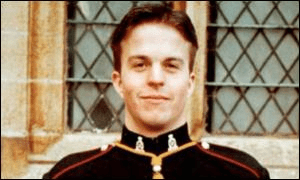

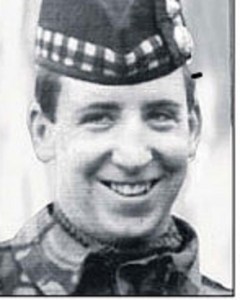


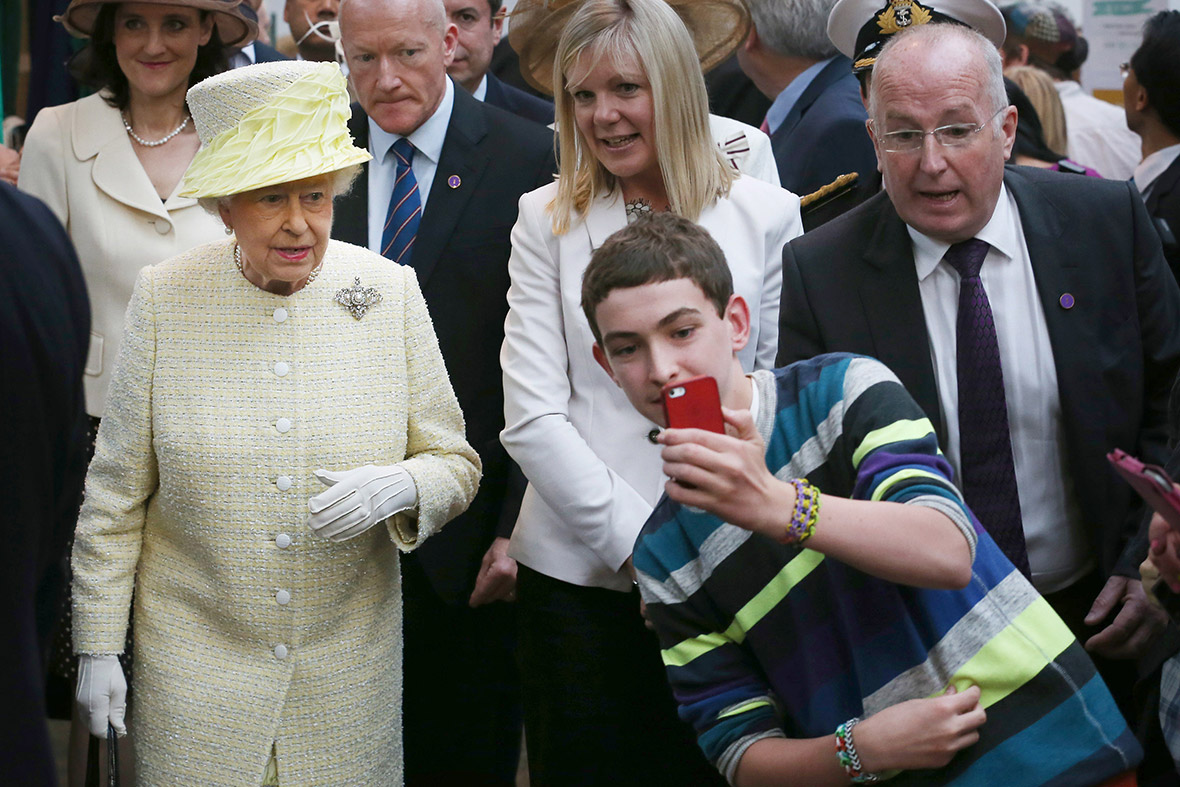

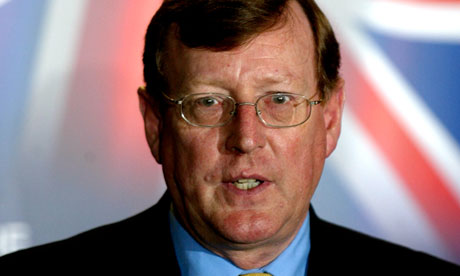




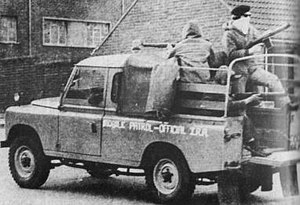
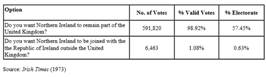


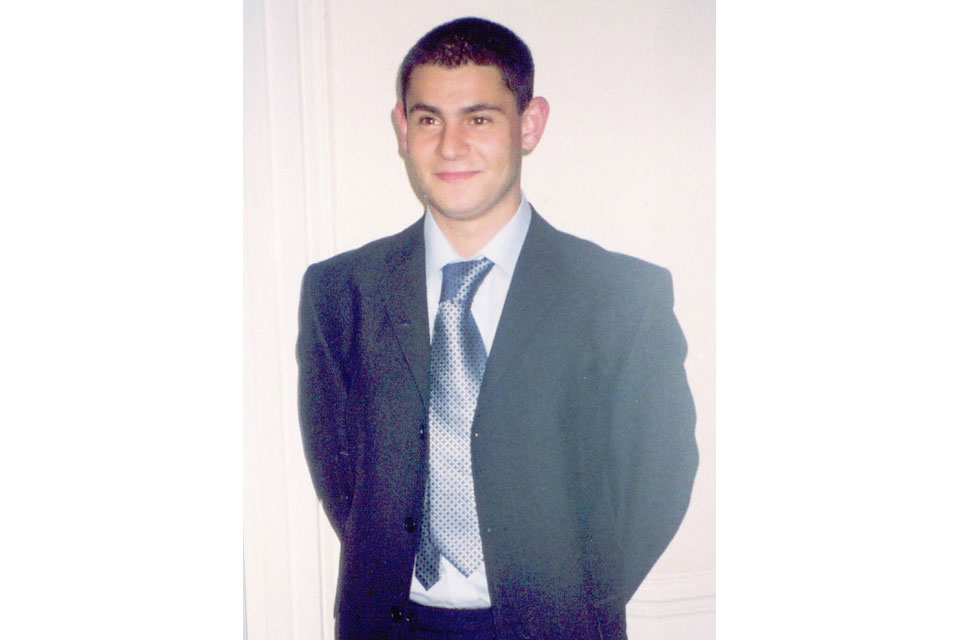

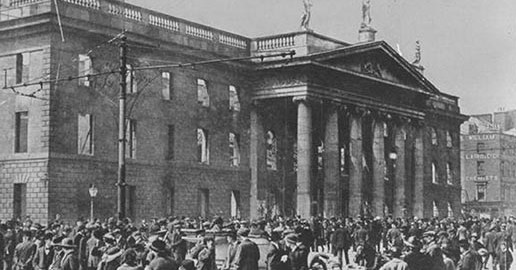


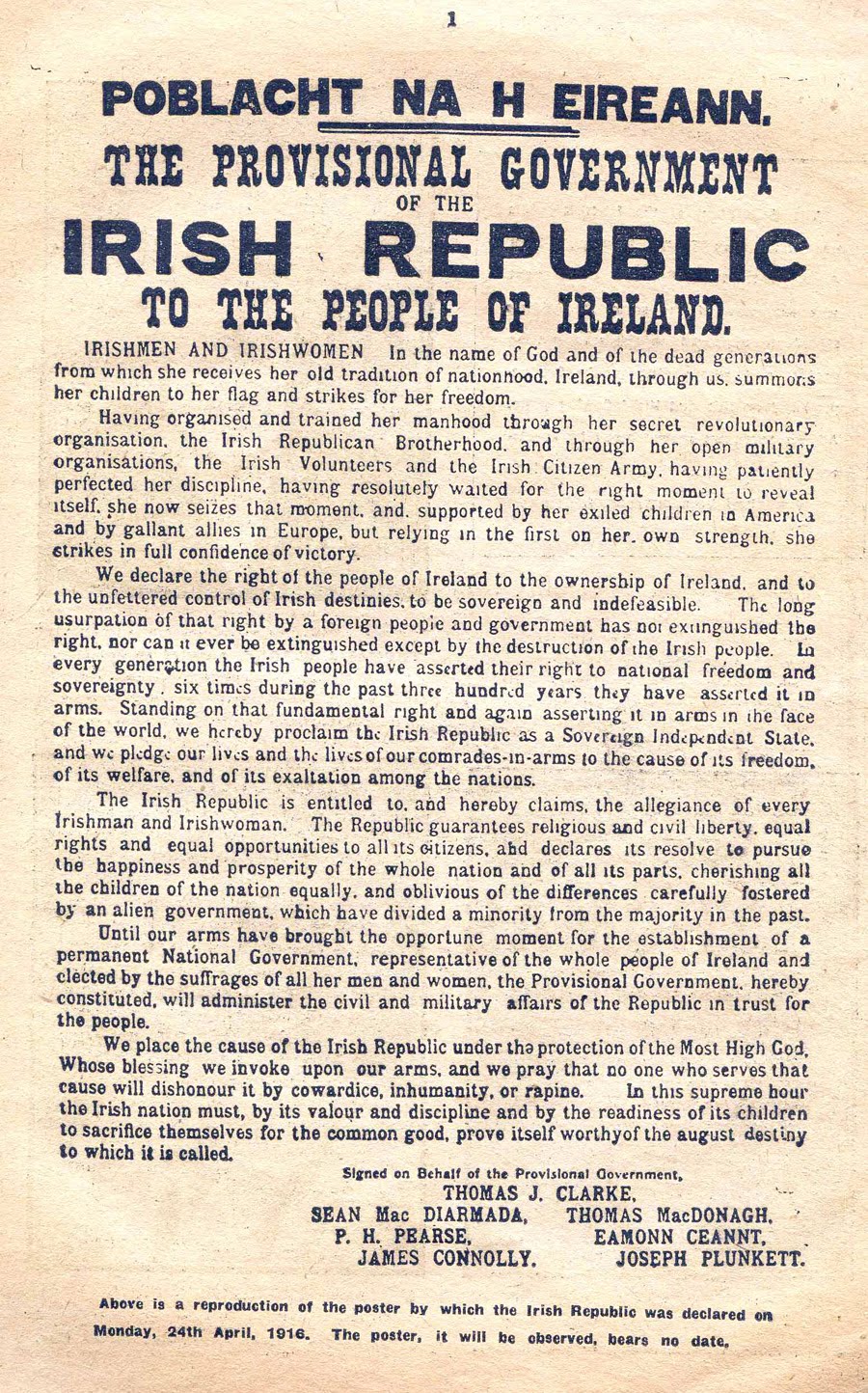


_after_the_1916_Easter_Rising.JPG)
.jpg)


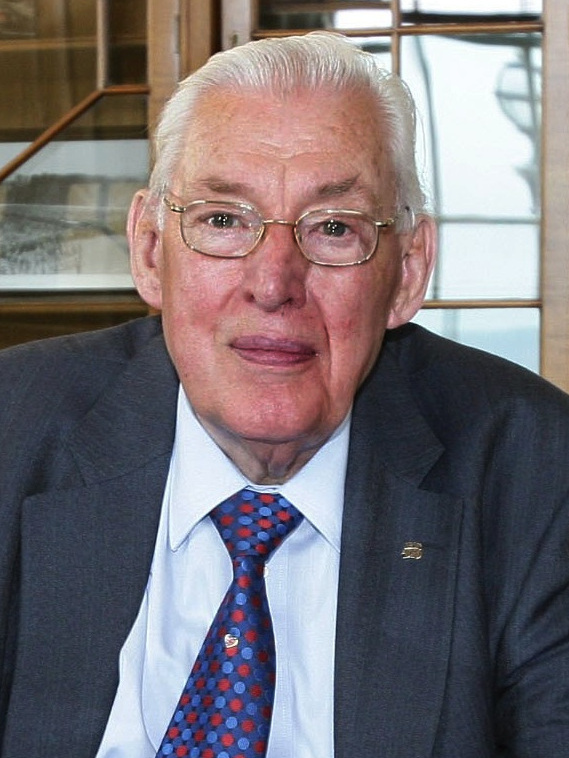


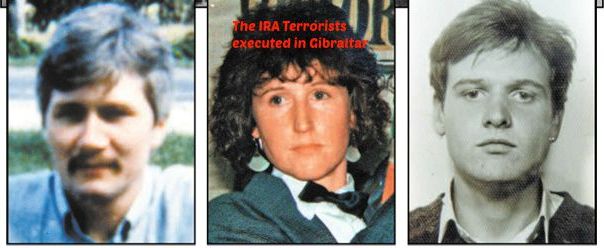


.JPG)




.JPG/250px-Troubled_Images_Exhibition,_Belfast,_August_2010_(03).JPG)


 belfastchildis.com