Key Events & Deaths on this day in Northern Ireland Troubles
28th September
Tuesday 28 September 1971
Tripartite talks continued at Chequers, England.
Sunday 28 September 1975
The Irish Republican Army (IRA) exploded a bomb in Caterham, Surrey, England
Wednesday 28 September 1977
James Callaghan, then British Prime Minister, and Jack Lynch, then Taoiseach (Irish Prime Minister), held a meeting in Downing Street, London. One of the main issues discussed was economic cross-border co-operation.
Thursday 28 September 1978
Joshua Eilberg, then a Democrat Congressman, and Hamilton Fish, then a Republican Congressman, paid a five day visit to Northern Ireland. The two men later argued that the United States of America (USA) should play a part in finding a political settlement in the region.
Friday 28 September 1984 – Saturday 29 September 1984
Security forces in the Republic of Ireland intercepted a trawler, the Marita Ann, off the coast of County Kerry and uncovered seven tons of arms and explosives believed to be on route to the Irish Republican Army (IRA). Five men were arrested during the operation. The haul represented the largest find in the Republic of Ireland since 1973. [In June 1987 four American men were sentenced by an American court for their part in the incident. In August 1987 two American men and two Irish men were also sentenced by a French court.]
Tuesday 28 September 1993
Unionist politicians rejected a suggestion by the Ulster Defence Association (UDA) for a boycott of government.
Thursday 28 September 1995
William Elliott (31), a member of Red Hand Commando (RHC), was shot dead by members of his own Loyalist paramilitary group, while leaving a friends’ house, Primacy Park, Bangor, County Down.
[The killing was the result of an internal RHC dispute. It was alleged that he had been killed because of his part in the killing of Margaret Wright (31) on 7 April 1994.]
Martin McGuinness, then Vice-President of Sinn Féin (SF), held a meeting with Michael Ancram, then Political Development Minister at the Northern Ireland Office (NIO). The meeting was held at the request of SF to discuss the political situation; there was agreement to meet again.
Sunday 28 September 1997
Loyalist who were taking part in the weekly picket of the Catholic church at Harryville, Ballymena, said that they would extend the protest to include Catholic chapels at Ballycastle, Dervcock, and Lisburn. They said that they would continue their protest until the Orange Order was allowed to parade in the Catholic village of Dunloy, County Antrim.
In continuing sectarian tension in the Oldpark area of north Belfast, the homes of three Catholic families were attacked with petrol bombs. There were no serious injuries in the attacks.
Tuesday 28 September 1999
David Trimble, then leader of the Ulster Unionist Party (UUP), criticised loyalist paramilitaries for attacks on Catholics. He also called on people to repudiate “mafia loyalism” in Protestant areas. Trimble quoted figures indicating that Loyalist paramilitaries were responsible for 9 murders, 76 shootings, 178 ‘punishment’ beatings, and over 400 incidents of forced exclusions. The Progressive Unionist Party (PUP) and the Ulster Democratic Party (UDP) criticised Trimble for his remarks.
Friday 28 September 2001
Martin O’Hagan
See Martin O’Hagan Page
Loyalists Kill Journalist Martin O’Hagan (51), a Catholic civilian, who worked as a journalist for the Sunday World (a Dublin based newspaper) was shot dead at 10.45pm (22.45BST) by Loyalist paramilitaries as he walked towards his home with his wife in Lurgan, County Armagh. The Red Hand Defenders (RHD), a cover name previously used by the Ulster Defence Association (UDA) and the Loyalist Volunteer Force (LVF), claimed responsibility for the killing. O’Hagan was the first journalist to be killed during the course of ‘the Troubles’.
[The Royal Ulster Constabulary (RUC) believed that the LVF was responsible for the killing. O’Hagan had written a number of stories about the activities of the LVF and had been threatened on a number of occasions.]
Ronnie Flanagan, then Chief Constable of the RUC, made a further appeal to political and community leaders to do all they can to try to bring an end to the on-going violence in north Belfast. He again stated his belief that Loyalist paramilitaries, in particular the Ulster Defence Association (UDA), were involved in the shooting and rioting.
John Reid, then Secretary of State, stopped short of officially declaring that the UDA ceasefire was over.
In a statement Reid said the he would give the UDA one last opportunity to end the violence in north Belfast. [Reid had warned the UDA on 31 July 2001 that he was keeping that organisation’s ceasefire under review.] A concrete block was thrown at a school bus in north Belfast. Seven children were injured in the incident. The bus was taking children, aged 12 to 16 years, to Hazelwood Integrated College when it was attacked at Skegoniel Avenue.
[Integrated schools in Northern Ireland are attended by Catholic and Protestant pupils.]
Remembering all innocent victims of the Troubles
Today is the anniversary of the follow people killed as a results of the conflict in Northern Ireland
To the innocent on the list – Your memory will live forever
– To the Paramilitaries –
“There are many things worth living for, a few things worth dying for, but nothing worth killing for.
7 People lost their lives on the 28th September between 1972 – 2001
————————————————————–
28 September 1972 Edward Pavis, (32)
Protestant Status: Civilian (Civ),
Killed by: Ulster Volunteer Force (UVF)
Shot at his home, Glenvarlock Street, Belfast.
————————————————————–
28 September 1978 Brian Russell, (30)
Protestant Status: Civilian (Civ),
Killed by: Irish Republican Army (IRA)
Civilian searcher. Shot during sniper attack on British Army (BA) patrol, Waterloo Place, Derry.
————————————————————–
28 September 1981
Alexander Beck, (37)
Protestant Status: Royal Ulster Constabulary (RUC),
Killed by: Irish Republican Army (IRA)
Killed in rocket attack on Royal Ulster Constabulary (RUC) mobile patrol, Glen Road, Andersonstown, Belfast.
————————————————————–
28 September 1982 Ronald Brennan, (22)
Protestant Status: Civilian (Civ),
Killed by: Royal Ulster Constabulary (RUC)
Shot during attempted robbery at Mallusk Post Office, near Belfast, County Antrim.
————————————————————–
28 September 1991 Larry Murchan, (63)
Catholic Status: Civilian (Civ),
Killed by: Loyalist Retaliation and Defence Group (LRDG)
Shot outside his shop, St James Road, Falls, Belfast.
————————————————————–
28 September 1995
William Elliott, (31)
Protestant Status: Red Hand Commando (RHC),
Killed by: Red Hand Commando (RHC)
Shot, while leaving friends house, Primacy Park, Bangor, County Down. Internal Red Hand Commando (RHC) dispute.
————————————————————–
28 September 2001
Martin O’Hagan, (51)
Catholic Status: Civilian (Civ),
Killed by: Red Hand Defenders (RHD)
Journalist. Shot while walking near to his home, Westfield Gardens, off Tandragee Road, Lurgan, County Armagh.
See Martin O’Hagan Page
————————————————————–
This is simply the story of a boy trying to grow up, survive, thrive, have fun & discover himself against a backdrop of events that might best be described as ‘explosive’, captivating & shocking the world for thirty long years.
Owen Martin O’Hagan, (23 June 1950 – 28 September 2001) was an Irish investigative journalist from Lurgan, Northern Ireland and a former member of the Official Irish Republican Army who spent much of the 1970s in prison. He was the most prominent journalist to be killed as a consequence of the Troubles and the only one to be specifically assassinated as a result of his work.
——————————————————————————————–
Insight: The Murder Of Martin O’Hagan
——————————————————————————————–
Life
Martin O’Hagan’s father worked as a radio and TV repairman for the British military. O’Hagan was one of six children, and spent part of his childhood in the married quarters of British bases in Germany. His grandfather was also a British soldier, and saw service at Dunkirk. O’Hagan’s family returned to Lurgan when he was seven, and he was educated in the town, leaving after taking O-levels to work in his father’s TV repair shop.
As a teenager during the early Troubles, he joined the Official IRA‘s Lurgan unit (a relative was Joe B. O’Hagan, a highly regarded Irish republican active from the 1940s onwards). He was drawn to the Officials because of their then radical socialist-republican politics, and became active in their military wing. He was interned in 1971 and spent more than a year in the Official IRA compound at Long Kesh. After he was released in 1973, he was jailed for seven years for transporting guns, and was released in 1978.
He despised the sectarianism of Northern Ireland society and married a local Ulster Protestant woman, Marie Dukes, with whom he had three daughters. O’Hagan retained his socialist outlook throughout his life. He studied sociology at the Open University and the University of Ulster.
O’Hagan worked as a reporter for the tabloid newspaper, the Sunday World. In this capacity, he wrote about a range of criminals and paramilitaries. He was also secretary of the Belfast branch of the National Union of Journalists (NUJ) at the time of his death.[1]
Work
Notwithstanding his history with the Official IRA, O’Hagan became accepted into the press community in Northern Ireland. His hard work quickly gaining him respect. In addition to his insightful stories on paramilitaries, he was known for old-fashioned, muck-raking tabloid stories, especially for exposing the private and sometimes seedy lifestyles of Ulster loyalists. One story included a picture of a well-known Orangeman, wearing Orange Order regalia, beside one of the same man found in a sex-contact publication, showing him naked.[2]
In the late 1980s he was prominently featured in the controversial Channel 4 documentary The Committee, which made allegations of RUC collusion in loyalist murders of Roman Catholics. As a witness in a subsequent libel action against the producer of the programme at the High Court in London he said: “I have tried to be an independent and objective journalist but my conviction has hung over me like a sword, although I have always tried to be honest about it… I have always tried to be squeaky clean because people will always try to cast this up in my face.” [3]
Not all of his work was controversial. In the early 1990s he collaborated with several Portadown musicians and took over a talent competition previously run by the Ulster Star newspaper in Lisburn, turning it into a Northern Ireland-wide event.
O’Hagan would often confuse paramilitaries by writing under an assumed name or by not naming the subject of his articles. He would instead use a nickname. The person would be described in great detail: appearance, habits, haunts, associates, type of car, etc. – everything but his name, but in the Who? column (a long-running and sometimes hard-hitting page of snippets in the newspaper) he would refer to the person by name in a way which would allow the reader to link both stories.
In the early 1990s, he wrote several pieces about the UVF Mid-Ulster Brigade. He coined the nickname “the Rat Pack” for this group, and “King Rat” for its leader Billy Wright. Wright later founded the Loyalist Volunteer Force, a breakaway faction. He was responsible for an attack on the Sunday World offices in Belfast, and threatened to kill O’Hagan. Wright was assassinated by the Irish National Liberation Army in 1997.
Provisional IRA abduction
O’Hagan was abducted by the Provisional IRA in 1989 following a report by the Sunday World about the killing of John McAnulty on 18 July 1989.[4] He was interrogated for several days regarding the source of reports to the newspaper (supposedly from an IRA insider) and expected to be killed. He was later released unharmed. Following this incident and Loyalist threats he moved to the Cork offices of the newspaper for several years but later returned to the Belfast office.[3]
Assassination
After returning to live in Lurgan, O’Hagan published a series of articles on drug dealing in a loyalist paramilitary grouping,[5] and had been the subject of death threats. He had bumped into a known loyalist on a previous walk home from his pub and had been advised that he had been “clocked” (a local term meaning ‘observed’) walking the route.[6] He and his colleagues on the Dublin-based Sunday World were accustomed to threats of this nature, however, and although “rattled” by the veiled threat, O’Hagan continued to walk home from the pub on Friday nights but varied his route as a precautionary measure.[6]
On 28 September 2001 Martin and his wife Marie walked to “Fa’ Joe’s” pub, a well-known mixed bar on Lurgan’s Market Street, for their usual Friday night drink together. The pub had been Martin’s favourite for many years. As they walked home to Westland Gardens, close to the loyalist Mourneview Estate, a car pulled slowly alongside them just yards from their house. Martin pushed his wife into a hedge as a gunman opened fire from the car hitting him several times. As he lay wounded he asked his wife to call an ambulance. When she returned from doing so he was dead.
Martin O’Hagan’s murder was “claimed” by the Red Hand Defenders, a nom de guerre used by the Loyalist Volunteer Force.[7]
Legacy
No-one has yet been prosecuted for the killing of Martin O’Hagan. However his colleagues at the Sunday World (particularly Jim Campbell, who was also wounded in an assassination attempt by Loyalist paramilitaries),[8] and the NUJ continue to criticise police and prosecutors in Northern Ireland for the absence to date of any murder convictions. On 6 April 2008 the Sunday World published an article naming Robin “Billy” King as the killer, and asked why the PSNI had not arrested and charged him with the murder.[9] In the same issue the newspaper ran a story on the unveiling of a plaque in memory of O’Hagan at Belfast’s Linenhall Library.[10] The Sunday World has run a series of articles which have “targeted the O’Hagan suspects with an extremely accurate weekly account of their activities.”[8]
The NUJ has discovered that Martin’s journalistic notes, written in a personalised and initially undecipherable shorthand, have been partially decoded and the PSNI are examining the interpretations in connection with the Omagh Bombing.[11]
Writing in the NUJ newsletter “Freelance” in September 2008, Kevin Cooper said:
He continues to be remembered and missed by his colleagues and friends of the Belfast and District Branch of the NUJ. We miss his good humour, his love of mischief, his tireless commitment to socialism and trade unionism. He was no saint; he was, like the rest of us, human and made mistakes. He could infuriate and delight you at the same time. He was not always treated with the respect and dignity he deserved.[12]
Murder trial
Five men were arrested and sent for trial in September 2008 for the murder of Martin O’Hagan. However, no one was ever charged for the murder, leaving Martin O’Hagan and his grieving family without justice
Key Events & Deaths on this day in Northern Ireland Troubles
27th September
Wednesday 27 September 1972
Five people died in separate incidents across Northern Ireland.
Monday 27 September 1976
Roy Mason, then Secretary of State for Northern Ireland, gave his first press conference since his appointment. In a statement he stressed the importance of trying to improve the Northern Ireland economy and in trying to reduce unemployment.
Sunday 27 September 1981
Garret FitzGerald, then Taoiseach (Irish Prime Minister), gave an interview on Radio Telefis Éireann (RTE) and set out his vision for a new Republic of Ireland in what became know as his ‘constitutional crusade’.
[The main theme of his ideas was to make the Republic of Ireland a society where the majority ethos would be expressed in a way so as to not alienate Protestants living in Northern Ireland.]
Thursday 27 September 1984
There were serious disturbances at the Maze Prison involving Republican and Loyalist paramilitary prisoners. Eight Prison Officers and five prisoners were injured in the clashes.
Wednesday 27 September 1989
John Taylor, Ulster Unionist Party (UUP) Member of Parliament, issued proposals for a devolved assembly in Northern Ireland.
Friday 27 September 1991
The Irish Times carried a report of an interview with Peter Brooke, then Secretary of State for Northern Ireland. Brooke was reported as stating that Articles 2 and 3 of the Republic of Ireland’s constitution were “not helpful” in finding an agreement in Northern Ireland. He also warned that people should not seek to stretch the Anglo-Irish Agreement (AIA).
Monday 27 September 1993
The Irish Republican Army (IRA) exploded a large bomb, estimated at 300 pounds, in the centre of Belfast and caused extensive damage. The IRA exploded a second bomb, estimated at 500 pounds, in south Belfast. John Hume, then leader of the Social Democratic and Labour Party (SDLP), and Gerry Adams, then President of Sinn Féin (SF), suspended their talks while a report from them (the Hume-Adams Initiative) was being considered by the British and Irish Governments.
A report in the Irish Times (a Republic of Ireland newspaper) claimed that the Hume-Adams Initiative asked the British government to state that it no long-term interest in Northern Ireland and that it would use its influence to persuade Unionists that their best interest lay in a united Ireland.
Tuesday 27 September 1994
The European Parliament passed a motion which called for all paramilitary groups in Northern Ireland to begin ceasefires. John Hume, then leader of the Social Democratic and Labour Party (SDLP), was nominated for the Nobel Peace Prize by the Socialist Group of the European Parliament.
In Strasbourg the European Court of Human Rights ruled that the shooting on 6 March 1988 of three unarmed Irish Republican Army (IRA) members in Gibraltar by undercover members of the Special Air Service (SAS) breached the Human Rights Convention in relation to the right to life. The court found that the SAS killings were “unnecessary” and that the three IRA members could have been arrested. No damages were awarded but the British government was ordered to pay the legal costs of the families. [On 24 December 1995 the British government paid £38,700 to cover the legal costs.]
Saturday 27 September 1997
Following an increase in sectarian tensions in the Oldpark area of north Belfast, the homes of two Protestant families were attacked.
[There were attacks on Catholic homes on 28 September 1997.]
Loyalists took part in a picket of the Catholic church at Harryville, Ballymena.
Monday 27 September 1999
Interlocutory hearings of the Bloody Sunday Inquiry took place in the Guildhall in Derry. The hearings were chaired by Lord Saville and discussed the issue of anonymity for up to 500 security force witnesses to the shootings on 30 January 1972.
[The first of the main hearings began on 27 March 2000.]
Sinn Féin (SF) demonstrators disrupted the public launch of the annual report of the Police Authority of Northern Ireland (PANI). Figures in the report indicated that recorded crime for 1998/99 had increased by 28 per cent while detection rates had dropped by 5 per cent. Michael Cunningham, then an Social Democratic and Labour Party (SDLP) councillor, pleaded guilty to 13 charges of indecent assault on two girls aged six and seven years.
[On 12 November 1999 Cunningham was sentenced to two years imprisonment.]
Thursday 27 September 2001
There was a second night of shooting and rioting following Loyalist protests in north Belfast. Loyalist paramilitaries fired approximately 30 shots at security forces on Cambrai Street, off the Crumlin Road. One woman was injured when she was shot in the leg. 13 Royal Ulster Constabulary (RUC) officers were injured as a result of the rioting. Ronnie Flanagan, then Chief Constable of the RUC, stated in an interview on the British Broadcasting Corporation (BBC) ‘Newsline’ programme that the Ulster Defence Association (UDA) was involved in the most recent shooting and rioting in north Belfast.
British Airways announced that it was cutting back on a number of its European and United States routes. The service between Belfast and London is one of the ones to close on 27 October 2001. Up to 160 employees are expected to lose their job.
Remembering all innocent victims of the Troubles
Today is the anniversary of the follow people killed as a results of the conflict in Northern Ireland
To the innocent on the list – Your memory will live forever
– To the Paramilitaries –
“There are many things worth living for, a few things worth dying for, but nothing worth killing for.
9 People lost their lives on the 27th September between 1972 – 1992
————————————————————–
27 September 1972 Daniel McErlane, (46)
Catholic Status: Civilian (Civ),
Killed by: non-specific Loyalist group (LOY)
Died one day after being injured during car bomb attack on social club, Upper Library Street, Belfast.
————————————————————–
27 September 1972
Daniel Rooney, (19)
Catholic Status: Civilian (Civ),
Killed by: British Army (BA)
Shot by undercover British Army (BA) member, from passing car while walking along St James Crescent, Falls, Belfast.
————————————————————–
27 September 1972
George Lockhart, (24) nfNI Status: British Army (BA),
Killed by: Irish Republican Army (IRA)
Died four days after being shot by sniper while on British Army (BA) foot patrol, Lecky Road, Bogside, Derry.
————————————————————–
27 September 1972 Alexander Greer, (54)
Protestant Status: Civilian (Civ),
Killed by: Irish Republican Army (IRA)
Shot while standing with friend at the corner of Ligoniel Road and Mill Avenue, Ligoniel, Belfast.
————————————————————–
27 September 1972 James Boyle, (17)
Catholic Status: Civilian (Civ),
Killed by: non-specific Loyalist group (LOY)
Found shot by Flush River, Elswick Street, off Springfield Road, Belfast.
————————————————————–
27 September 1978 Mary McCaffrey, (65)
Catholic Status: Civilian (Civ),
Killed by: Irish Republican Army (IRA)
Died four weeks after being injured in remote controlled bomb attack near to her home, Forfar Street, off Springfield Road, Belfast.
————————————————————–
27 September 1981
Anthony Braniff, (27)
Catholic Status: Irish Republican Army (IRA),
Killed by: Irish Republican Army (IRA)
Found shot in entry off Odessa Street, Falls, Belfast. Alleged informer.
————————————————————–
27 September 1982 Leon Bush, (22) nfNI Status: British Army (BA),
Killed by: Irish National Liberation Army (INLA)
Killed by booby trap bomb attached to security barrier, West Circular Road, Highfield, Belfast.
————————————————————–
27 September 1992
Gerard O’Hara, (18)
Catholic Status: Civilian (Civ), Killed by:
Ulster Freedom Fighters (UFF)
Shot at his home, North Queen Street, New Lodge, Belfast.
————————————————————–
This is simply the story of a boy trying to grow up, survive, thrive, have fun & discover himself against a backdrop of events that might best be described as ‘explosive’, captivating & shocking the world for thirty long years.
In August 1968, the Soviet Union invaded Czechoslovakia to crush the liberalising reforms of Alexander Dubček‘s government during what was known as the Prague Spring. Prague-born Palach decided to sacrifice himself in protest of the invasion and set himself on fire, in Wenceslas Square, on 16 January 1969. According to a letter he sent to several public figures, an entire clandestine resistance organization had been established with the purpose of practicing self-immolation until their demands were met; however, it seems that such a group never existed.[1] The demands declared in the letter were the abolition of censorship and a halt to the distribution of Zprávy, the official newspaper of the Soviet occupying forces. In addition, the letter called for the Czech and the Slovak peoples to go on a general strike in support of these demands.[2] An earlier draft of the letter that Palach wrote also called for the resignation of a number of pro-Soviet politicians,[3] but that demand did not make it into the final version, which included the remark that “our demands are not extreme, on the contrary”. Palach died from his burns several days after his act, at the hospital. On his deathbed, he was visited by a female acquaintance from his college and by a student leader, to whom he had addressed one of the copies of his letter. It was reported that he had pleaded for others not to do what he had done but instead to continue the struggle by other means, although it has been doubted whether he really said that.[4]
According to Jaroslava Moserová, a burns specialist who was the first to provide care to Palach at the Charles University Faculty Hospital, Palach did not set himself on fire to protest against the Soviet occupation, but did so to protest against the “demoralization” of Czechoslovak citizens caused by the occupation.
“
“It was not so much in opposition to the Soviet occupation, but the demoralization which was setting in, that people were not only giving up, but giving in. And he wanted to stop that demoralization. I think the people in the street, the multitude of people in the street, silent, with sad eyes, serious faces, which when you looked at those people you understood that everyone understands, that all the decent people were on the verge of making compromises.“[5]
The funeral of Palach turned into a major protest against the occupation, and a month later (on 25 February 1969) another student, Jan Zajíc, burned himself to death in the same place, followed in April of the same year by Evžen Plocek in Jihlava.
Posthumous recognition
Memorial plaque with Jan Palach’s death mask taken by Olbram Zoubek
Palach was initially interred in Olšany Cemetery. As his gravesite was growing into a national shrine, the Czechoslovak secret police (StB) set out to destroy any memory of Palach’s deed and exhumed his remains on the night of 25 October 1973. His body was then cremated and sent to his mother in Palach’s native town of Všetaty while an anonymous old woman from a rest home was laid in the grave.[6] Palach’s mother was not allowed to deposit the urn in the local cemetery until 1974. On 25 October 1990 the urn was officially returned to its initial site in Prague.
On the 20th anniversary of Palach’s death, protests ostensibly in memory of Palach (but intended as criticism of the regime) escalated into what would be called “Palach Week”. The series of anticommunist demonstrations in Prague between 15 and 21 January 1989 were suppressed by the police, who beat demonstrators and used water cannons, often catching passers-by in the fray. Palach Week is considered one of the catalyst demonstrations which preceded the fall of communism in Czechoslovakia 10 months later.[citation needed]
After the Velvet Revolution, Palach (along with Zajíc) was commemorated in Prague by a bronze cross embedded at the spot where he fell outside the National Museum, as well as a square named in his honour. The Czech astronomer Luboš Kohoutek, who left Czechoslovakia the following year, named an asteroid which had been discovered on 22 August 1969, after Jan Palach (1834 Palach). There are several other memorials to Palach in cities throughout Europe, including a small memorial inside the glacier tunnels beneath the Jungfraujoch in Switzerland.
Several later incidents of self-immolation may have been influenced by the example of Palach and his media popularity. In the spring of 2003, a total of six young Czechs burned themselves to death,[7] notably Zdeněk Adamec, a 19-year-old student from Humpolec who burned himself on 6 March 2003 on almost the same spot in front of the National Museum where Palach burnt himself, leaving a suicide note explicitly referring to Palach and the others who had committed suicide in the 1969 Prague Spring.[8])
Just walking distance from the site of Palach’s self-immolation, a statuary in Prague’s Old Town Square honours iconic Bohemian religious thinker Jan Hus, who was burned at the stake for his beliefs in 1415. Himself celebrated as a national hero for many centuries, some commentary has linked Palach’s self-immolation to the execution of Hus.[9][10][11]
Cultural references
The memorial to Jan Palach and Jan Zajíc in front of the National Museum during 25th anniversary of Velvet Revolution
The music video for the song “Club Foot” by the band Kasabian is dedicated to Palach. The composition “The Funeral of Jan Palach” performed by The Zippo Band and composed by Phil Kline is a tribute. He is mentioned in The Stranglers‘ bassist, Jean-Jacques Burnel‘s 1979 solo album, Euroman Cometh.
After seeking political asylum in the United States, Polish artist Wiktor Szostalo commemorated Jan Palach in his “Performance for Freedom” proclaiming “I am Jan Palach. I’m a Czech, I’m a Pole, a Lithuanian, a Vietnamese, an Afghani, a betrayed You. After I’ve burnt myself a thousand times, perhaps we’ll win”.[12]
On the occasion of the 40th anniversary of the death of Jan Palach, a statue sculpted by András Beck as a tribute to the student was transported from France to the Czech Republic. The statue was installed in Mělník, the city where Jan Palach did his studies.[13]
Italian songwriter Francesco Guccini wrote a song “La Primavera di Praga” in dedication to Jan Palach, compared to religious scholar Jan Hus: “Once again Jan Hus is burning alive”. Polish singer Jacek Kaczmarski wrote a song about Palach’s suicide, called “Pochodnie” (“Torches”). The Italian far-right Folk group, ”La Compagnia dell’Anello” released a song dedicated to him, titled Jan Palach. The Kasabian, British band, released the “Club Foot” on their 2004 debut album Kasabian on 17 May 2004 in the UK. The video of this song is dedicated to Jan Palach.
The Luxembourg-based Welsh composer Dafydd Bullock was commissioned to write “Requiem for Jan Palach” (op 182) to commemorate the fortieth anniversary of Palach’s suicide. It includes a setting of words which appeared briefly on a statue in Wenceslas Square after the event, before being erased by the authorities: “Do not be indifferent to the day when the light of the future was carried forward by a burning body”.[14]
In their 1983 song “Nuuj Helde” the Janse Bagge Bend (from the Netherlands) asks whether people know why Jan Palach burned. This song was meant to make the general public aware of heroes.
Palach featured in a monologue radio play entitled “Torch No 1” on BBC Radio 4, directed by Martin Jenkins, and written by David Pownall. Palach was played by Karl Davies.[15]
French documentary filmmaker Raymond Depardon directed a 1969 film about Jan Palach.
Norwegian songwriter Hans Rotmo mentioned Palach’s name among other notable political activists such as Victor Jara and Steve Biko in his 1989 song “Lennon Street”.
Norwegian songwriter and singer Åge Aleksandersen mentioned Palach’s name in his 1984 song “Va det du Jesus”.
A sequence of poems exploring the implications of Palach’s death called One Match by the poet Sheila Hamilton were published in issue 51 of the Dorset-based poetry serial, Tears in the Fence (ed. David Caddy) in 2010.
A three-part 2013 Czech-Polish television show “Burning Bush“, directed by Agnieszka Holland, is situated around the events that happened after Jan Palach’s self-immolation.
In the Czech republic, many towns have streets or squares named after Palach, of which perhaps most notable is the Jan Palach Square in central Prague. He also had streets named after him in Luxembourg city (Luxembourg), Angers and Parthenay (France), Kraków (Poland), Assen and Haarlem (Netherlands), Varna (Bulgaria) and Nantwich (United Kingdom). In Rome (Italy) (as well as in many other Italian towns), there is a central square named after Palach with a commemorative statue.
The oldest rock club in Croatia is named Palach. It is situated in Rijeka since 1969 to this day. There is a bus station in the town of Curepipe, Mauritius named after Jan Palach. A student hall in Venice, Italy on the Giudecca island has also been given the name of Jan Palach.
See below for other Iconic Pictures & pictures that changed the world.
is a comprehensive history of the Northern Ireland Troubles.
Now completely revised and updated this is widely regarded as one of the most ‘comprehensive books on the Troubles
————————————————————————–
Key Events & Deaths on this day in Northern Ireland Troubles
26th September
Saturday 26 September 1970
There was serious trouble in Belfast when groups of Protestant youths attacked the Catholic Unity Flats. Rioting continued in the Protestant Shankill Road area for four nights.
Sunday 26 September 1971
David Bleakley resigned as Minister of Community Relations in protest over the introduction of Internment and the lack of any new political initiatives by the Northern Ireland government.
Monday 27 September 1971
There was a series of tripartite talks, over two days, involving the prime ministers of Northern Ireland, Britain, and the Taoiseach (Irish Prime Minister) of the Republic of Ireland, which took place at Chequers, England.
Saturday 26 September 1981
Liam McCloskey
Liam McCloskey, then on day 55 of his hunger strike, ended his fast. McCloskey’s family had said that they would call for medical intervention to save his life if he became unconscious.
Monday 26 September 1983
Patrick Gilmour, the father of ‘supergrass’ informer Raymond Gilmour, was released by the Irish Republican Army (IRA) having been held for 10 months.
A group of representatives from the New Ireland Forum paid a visit to Derry during which there were attacked by Democratic Unionist Party (DUP) demonstrators. James Prior, then Secretary of State for Northern Ireland, established an inquiry into the Maze escape (on 25 September 1983) under the direction of James Hennessy.
The Director of Public Prosecutions ordered four Royal Ulster Constabulary (RUC) officers to stand trial for murder in the ‘shoot-to-kill’ investigation.
Wednesday 26 September 1990
Peter Brooke, then Secretary of State for Northern Ireland, stated that he might produce his own proposals for the future of Northern Ireland.
Saturday 26 September 1992
In a radio interview John Hume, then leader of the Social Democratic and Labour Party (SDLP), declared that Northern Ireland was “not a natural entity and therefore you cannot have a normal democracy”. In addition he went on to describe the SDLP’s proposal, already outlined at the political talks, for the governance of Northern Ireland.
Tuesday 26 September 1995
John Major, then British Prime Minister, held a meeting with John Hume, then leader of the Social Democratic and Labour Party (SDLP), in London. Major also had a separate meeting with Ian Paisley, then leader of the Democratic Unionist Party (DUP).
Friday 26 September 1997
Following a request by the Progressive Unionist Party (PUP) Marjorie (Mo) Mowlam, then Secretary of State for Northern Ireland, approved the transfer of Jason Campbell from a Scottish prison to the Maze Prison in Northern Ireland.
The decision drew criticism from Unionists and Nationalists.
[Campbell was serving a sentence for the murder of a Celtic football supporter in Glasgow in October 1995. The killing was purely sectarian in nature and the man had been attacked because he was wearing the colours of the Celtic team. Later it was revealed that Campbell had no close family connections in Northern Ireland. The PUP later withdrew its request for Campbell’s transfer.]
Mowlam held a meeting with Ian Paisley, then leader of the Democratic Unionist Party (DUP), but failed in her effort to persuade Paisley to join the multi-party talks. A memorial to the 33 people who were killed in the Dublin and Monaghan bombs in the Republic of Ireland on 17 May 1974 was unveiled in Talbot Street in Dublin. Five Irish Republican Army (IRA) prisoners who were serving sentences in Portlaoise Prison in the Republic of Ireland were granted early release.
Sunday 26 September 1999
Ken Maginnis, then Ulster Unionist Party (UUP) MP, said the meeting of UUP Assembly members in Glasgow at the weekend was not an attempt to discuss a change of policy on Irish Republican Army (IRA) decommissioning. He insisted that tactics in the Assembly, not overall party strategy, had been discussed. The ‘Long March’ walked from Sandy Row in south Belfast to Stormont. Approximately 600 people took part in the march to protest against “terrorists in government”.
Wednesday 26 September 2001
The Royal Ulster Constabulary (RUC) discovered a pipe-bomb in north Belfast. The device was found at the Everton Complex, Ardoyne Road, at about 3.00am (03.00BST) and was made safe by the British Army.
Tension remained high in north Belfast during the evening and a Loyalist protest, which blocked the Crumlin Road, turned into a serious riot as the RUC came under gun fire, and pipe-bomb, blast bomb, and petrol bomb attack. The RUC said they had moved to prevent Loyalists from attacking Catholic homes.
Thirty-three RUC officers were reported to have been injured in the riot. The RUC said that approximately 50 shots were fired at police lines, six blast bombs were thrown, along with 125 petrol bombs. The RUC returned fire with four bullet rounds and also fired nine ‘L21 A1’ plastic baton rounds.
The Loyalist protesters at the Holy Cross Girls’ Primary School threw fireworks at Children and parents returning from the school during the afternoon. It was reported that the Red Hand Defenders (RHD), a cover name used by members of the Ulster Defence Association (UDA), had renewed its threat against parents taking their children to school.
The Police Federation criticised an internal RUC draft report suggesting how the new Police Service of Northern Ireland (PSNI) could maintain a neutral working environment. The Federation said that a “clean walls policy” could airbrush out any reference to the RUC. Shorts, the aerospace manufacturers based in Belfast, announced it would have to lay off 900 people in the period up to the end of January 2002 because of the anticipated fall in demand for aircraft caused by the attacks in the United States of America. It was also announced that another 1,100 people may may have to be made redundant after January.
Remembering all innocent victims of the Troubles
Today is the anniversary of the follow people killed as a results of the conflict in Northern Ireland
To the innocent on the list – Your memory will live forever
– To the Paramilitaries –
“There are many things worth living for, a few things worth dying for, but nothing worth killing for.
3 People lost their lives on the 26th September between 1972 – 1982
————————————————————–
26 September 1972 Paul McCartan, (52)
Catholic Status: Civilian (Civ),
Killed by: Ulster Defence Association (UDA)
Found shot near his home, Park Avenue, Strandtown, Belfast.
————————————————————–
26 September 1981
George Stewart, (34)
Protestant Status: Royal Ulster Constabulary (RUC),
Killed by: Irish Republican Army (IRA)
Off duty. Shot while in the Ann Boal Inn, Killough, County Down.
————————————————————–
26 September 1982
William Nixon, (68)
Protestant Status: Civilian (Civ),
Killed by: Irish National Liberation Army (INLA)
Shot outside his home, Harland Walk, off Newtownards Road, Belfast
————————————————————–
This is simply the story of a boy trying to grow up, survive, thrive, have fun & discover himself against a backdrop of events that might best be described as ‘explosive’, captivating & shocking the world for thirty long years.
Key Events & Deaths on this day in Northern Ireland Troubles
25th September
Monday 25 – Thursday 28 September 1972
A conference was held at Darlington, England on the issue of devolution with power-sharing. The Darlington meeting consisted of the Ulster Unionist Party (UUP), the Northern Ireland Labour Party (NILP), the Alliance Party of Northern Ireland (APNI), and William Whitelaw, then Secretary of State for Northern Ireland. The Social Democratic and Labour Party (SDLP) refused to attend because of the continuing operation of Internment. Some hard-line Unionists also refused to attend.
[There was no agreement on the shape of any future Northern Ireland government.] Jack Lynch, then Taoiseach (Irish Prime Minister), met Edward Heath, then British Prime Minister.
Saturday 25 September 1976
Two members of a Protestant family, James Kyle (61) and Rosaleen Kyle (19), died as a result of a gun attack on their home in Ormonde Park, Finaghy, Belfast. The attack was carried out by the Irish National Liberation Army (INLA). A Catholic civilian was shot dead by Loyalists in Belfast.
Sunday 25 September 1983
———————————————————————————
Click here to buy this book
Billy Wright’s death was the start of William McKee’s descent into life changing circumstances, that would ultimately lead to the loss of his home, health, career, family and on a number of occasions almost his life, both through murder attempts and finally thoughts of suicide. William tells his story with rare honesty and skill. This is an eye-opening account of what life is really like inside Northern Ireland’s prisons. This is a no-holds-barred account of life as a prison governor.
———————————————————————————
Mass Escape From Maze 38 members of the Irish Republican Army (IRA) escaped from the maximum security Maze prison near Lisburn. During the escape a Prison Officer was stabbed; he later died from a heart problem. The escape represented the largest breakout in British prison history and a major political embarrassment for the British government.
[Within a few days 19 of the original escapees were recaptured however others remained at large for years or were never returned to prison in Northern Ireland. An inquiry into the escape was established on 26 September 1983. The report of the inquiry was published on 26 January 1984.]
Thursday 25 September 1986
James Molyneaux, then leader of the Ulster Unionist Party (UUP), revealed a leaked Department of the Environment document on proposed changes to government policy on the Irish language and the use of Irish street names.
Friday 25 September 1992
John Major, then British Prime Minister, held a meeting with Albert Reynolds, then Taoiseach (Irish Prime Minister), in London. The two leaders set the 16 November 1992 as the date for the next meeting of the Anglo-Irish Intergovernmental Conference (AIIC).
[As Unionists refused to take part in political talks while the AIIC was operating this date put a limit on the process.]
Saturday 25 September 1993
John Hume, then leader of the Social Democratic and Labour Party (SDLP), and Gerry Adams, then President of Sinn Féin (SF), issued a second joint statement. The statement outlined the Hume-Adams Initiative which “aimed at the creation of a peace process”. The document was believed to have been forwarded to the Irish government.
[The full text of the Hume-Adams Initiative has never been published.]
UDA Logo
The Ulster Defence Association (UDA) issued a statement.
Friday 25 September 1998
David Trimble, then leader of the Ulster Unionist Party (UUP), and Seamus Mallon, then deputy leader of the Social Democratic and Labour Party (SDLP), became involved in a disagreement over the timing of the establishment of a shadow Executive. Mallon stated that the issue of decommissioning had “almost become a soap opera”.
Tuesday 25 September 2001
A man (19) was shot in a paramilitary ‘punishment’ attack in Laburnum Street in Twinbrook, Belfast. The man was taken from his home at 8.15am (08.15BST) by a number of masked men and was shot in both ankles.
During the evening the British Army were called to defuse two pipe-bombs that had been thrown at Catholic homes in Rosapenna Street close to the Ardoyne area of north Belfast. The devices had been thrown over the ‘peace-line’. Component parts for pipe-bombs were discovered during a security force search in Ballysillan Avenue, north Belfast.
There was speculation in the media about the names of the nine ‘independent’ members of the new Policing Board. The official list is expected to be published by John Reid, then Secretary of State for Northern Ireland, in a few days. Iain Duncan Smith, then Conservative Party leader, said that any new war against terrorism must include Northern Ireland. This was his first major speech in London since being elected party leader on 13 September 2001.
Remembering all innocent victims of the Troubles
Today is the anniversary of the follow people killed as a results of the conflict in Northern Ireland
To the innocent on the list – Your memory will live forever
– To the Paramilitaries –
“There are many things worth living for, a few things worth dying for, but nothing worth killing for.
8 People lost their lives on the 25th September between 1972 – 1988
————————————————————–
25 September 1972 John Barry, (22) nfNI Status: British Army (BA),
Killed by: Irish Republican Army (IRA)
Died two days after being shot while on British Army (BA) mobile patrol, junction of Cyprus Street and McDonnell Street, Lower Falls, Belfast.
————————————————————–
25 September 1973 Seamus Larkin, (34)
Catholic Status: ex-Official Irish Republican Army (xOIRA),
Killed by: Official Irish Republican Army (OIRA)
Found shot in laneway, Flagstaff, near Killeen, County Armagh. Internal OIRA dispute.
————————————————————–
25 September 1974 Kieran McIlroy, (20)
Catholic Status: Civilian (Civ),
Killed by: Ulster Volunteer Force (UVF)
Shot shortly after leaving work, Limestone Road, Belfast.
————————————————————–
25 September 1976 Rosaleen Kyle, (19)
Protestant Status: Civilian (Civ),
Killed by: Irish National Liberation Army (INLA)
Shot at her home, Ormonde Park, Finaghy, Belfast.
————————————————————–
25 September 1976
James Kyle, (61)
Protestant Status: Civilian (Civ),
Killed by: Irish National Liberation Army (INLA)
Shot at his home, Ormonde Park, Finaghy, Belfast. He died 28 October 1976
————————————————————–
25 September 1976 Michael Boothman, (32)
Catholic Status: Civilian (Civ),
Killed by: non-specific Loyalist group (LOY)
Shot while standing outside Wolfe Tone Social Club, Shore Road, Greencastle, Belfast
————————————————————–
25 September 1977 Robert Bloomer, (29)
Protestant Status: Ulster Defence Regiment (UDR),
Killed by: Irish Republican Army (IRA)
Off duty. Died seven days after being shot outside his home, Brantry, near Eglish, County Tyrone.
————————————————————–
25 September 1988
Stephen McKinney, (22)
Protestant Status: Ulster Defence Regiment (UDR),
Killed by: Irish Republican Army (IRA)
Off duty. Shot outside his home, Cabragh, off Loughgall Road, near Armagh.
————————————————————–
This is simply the story of a boy trying to grow up, survive, thrive, have fun & discover himself against a backdrop of events that might best be described as ‘explosive’, captivating & shocking the world for thirty long years.
Henry Tudor was able to establish himself as a candidate not only for traditional Lancastrian supporters, but also for the discontented supporters of their rival House of York, and he rose to capture the throne in battle, becoming Henry VII. His victory was reinforced by his marriage to Elizabeth of York, symbolically uniting the former warring factions under a new dynasty. The Tudors extended their power beyond modern England, achieving the full union of England and the Principality of Wales in 1542 (Laws in Wales Acts 1535–1542), and successfully asserting English authority over the Kingdom of Ireland. They also maintained the nominal English claim to the Kingdom of France; although none of them made substance of it, Henry VIII fought wars with France trying to reclaim that title. After him, his daughter Mary I lost control of all territory in France permanently with the fall of Calais in 1558.
———————————————————–
The Wars of The Roses: A Bloody Crown
———————————————————–
In total, five Tudor monarchs ruled their domains for just over a century. Henry VIII of England was the only male-line male heir of Henry VII to live to the age of maturity. Issues around the royal succession (including marriage and the succession rights of women) became major political themes during the Tudor era. The House of Stuart came to power in 1603 when the Tudor line failed, as Elizabeth I died without issue
Ascent to the throne
The Tudors are descended on Henry VII’s mother’s side from John Beaufort, 1st Earl of Somerset, one of the illegitimate children of the 14th century English Prince John of Gaunt, 1st Duke of Lancaster (the third surviving son of Edward III of England) by Gaunt’s long-term mistress Katherine Swynford. The descendants of an illegitimate child of English Royalty would normally have no claim on the throne, but the situation was complicated when Gaunt and Swynford eventually married in 1399, when John Beaufort was 25. The church retroactively declared the Beauforts legitimate by way of a papal bull the same year, confirmed by an Act of Parliament in 1397. A subsequent proclamation by John of Gaunt’s legitimate son, Henry IV of England, also recognised the Beauforts’ legitimacy, but declared them ineligible ever to inherit the throne. Nevertheless, the Beauforts remained closely allied with Gaunt’s legitimate descendants from his first marriage, the House of Lancaster.
On 1 November 1455, John Beaufort’s granddaughter, Margaret Beaufort, Countess of Richmond and Derby, married Henry VI of England‘s half-brother Edmund Tudor, 1st Earl of Richmond. It was his father, Owen Tudor (Welsh: Owain ap Maredudd ap Tewdur ap Goronwy ap Tewdur ap Goronwy ap Ednyfed Fychan), who abandoned the Welsh patronymic naming practice and adopted a fixed surname. When he did, he did not choose, as was generally the custom, his father’s name, Maredudd, but chose his grandfather’s instead. Tewdur or Tudor is derived from the words tud “territory” and rhi “king”.[2]
Owen Tudor was one of the body guards for Queen DowagerCatherine of Valois, whose husband, Henry V of England, had died in 1422. Evidence suggests that the two were secretly married in 1429. The two sons born of the marriage, Edmund and Jasper, were among the most loyal supporters of the House of Lancaster in its struggle against the House of York.
Henry VI ennobled his half brothers. Edmund became earl of Richmond and was married to Margaret Beaufort, the great-granddaughter of John of Gaunt, the progenitor of the house of Lancaster. Jasper became earl of Pembroke and by 1460 had collected so many offices in Wales that he had become the virtual viceroy of the country. Edmund died in November 1456. On 28 January 1457, his widow, who had just attained her fourteenth birthday, gave birth to a son, Henry VII of England, at her brother-in-law’s castle of Pembroke.
——————————————————————-
Henry VII of England
——————————————————————-
Henry Tudor spent his childhood at Raglan Castle, the home of William Herbert, 1st Earl of Pembroke, a leading Yorkist. Following the murder of Henry VI and his son, Edward, in 1471, Henry became the person upon whom the Lancastrian cause rested. Concerned for his young nephew’s life, Jasper Tudor took Henry to Brittany for safety. Lady Margaret remained in England and remarried, living quietly while advancing the Lancastrian, and her son’s cause. Capitalizing on the growing unpopularity of King Richard III of England, she was able to forge an alliance with discontented Yorkists in support of her son. Two years after Richard III was crowned, Henry and Jasper sailed from the mouth of the Seine to the Milford Haven Waterway and defeated Richard III at the Battle of Bosworth Field.[2] Upon this victory, Henry Tudor proclaimed himself King Henry VII.
Family tree of the principal members of the house of Tudor.
Now King, Henry’s first concern was to secure his hold on the throne. On 18 January 1486 at Westminster, he honoured a pledge made three years earlier and married Elizabeth of York.[3] They were third cousins, as both were great-great-grandchildren of John of Gaunt. The marriage unified the warring houses of Lancaster and York and gave his children a strong claim to the throne. The unification of the two houses through this marriage is symbolized by the heraldic emblem of the Tudor rose, a combination of the white rose of York and the red rose of Lancaster.
Henry VII and Queen Elizabeth had several children, four of whom survived infancy: Arthur, Prince of Wales; Henry, Duke of Richmond; Margaret, who married James IV of Scotland; and Mary, who married Louis XII of France. One of the objectives of Henry VII’s foreign policy was dynastic security, which is portrayed through the alliance forged with the marriage of his daughter Margaret to James IV of Scotland and through the marriage of his eldest son. Henry VII married his son Arthur to Catherine of Aragon, cementing an alliance with the Spanish monarchs, Ferdinand II of Aragon and Isabella I of Castile, and the two spent their honeymoon at Ludlow Castle, the traditional seat of the Prince of Wales.[4] However, four months after the marriage, Arthur died, leaving his younger brother Henry as heir apparent. Henry VII acquired a papal dispensation allowing Prince Henry to marry Arthur’s widow; however, Henry VII delayed the marriage. Henry VII limited his involvement in European politics. He went to war only twice, once in 1489 during the Breton crisis and the invasion of Brittany, and in 1496–1497 in revenge for Scottish support of Perkin Warbeck and for their invasion of Northern England. Henry VII made peace with France in 1492 and the war against Scotland was abandoned because of the Western Rebellion of 1497. Henry VII came to peace with James IV in 1502, paving the way for the marriage of his daughter Margaret.[4]
One of the main concerns of Henry VII during his reign was the re-accumulation of the funds in the royal treasury. England had never been one of the wealthier European countries, and after the War of the Roses this was even more true. Through his strict monetary strategy, he was able to leave a considerable amount of money in the Treasury for his son and successor, Henry VIII. Although it is debated whether Henry VII was a great king, he certainly was a successful one if only because he restored the nation’s finances, strengthened the judicial system and successfully denied all other claimants to the throne, thus further securing it for his heir.[5]
Henry VIII
Catherine of Aragon: marriage was annulled – by the Church of England – for not producing a male heir to the Tudor dynasty
The new King Henry VIII married Catherine of Aragon on 11 June 1509; they were crowned at Westminster Abbey on 24 June the same year. Catherine was Henry’s older brother’s wife, making the path for their marriage a rocky one from the start. A papal dispensation had to be granted for Henry to be able to marry Catherine, and the negotiations took some time. Despite the fact that Henry’s father died before he was married to Catherine, he was determined to marry her anyway and make sure that everyone knew he intended on being his own master. When Henry first came to the throne, he had very little interest in actually ruling; rather, he preferred to indulge in luxuries and to partake in sports. He let others control the kingdom for the first two years of his reign, and then when he became more interested in military strategy, he took more interest in ruling his own throne.[6] In his younger years, Henry was described as a man of gentle friendliness, gentle in debate, and who acted as more of a companion than a king. He was generous in his gifts and affection and was said to be easy to get along with. However, the Henry that many people picture when they hear his name is the Henry of his later years, when he became obese, volatile, and was known for his great cruelty.[7] Unfortunately, Catherine did not bear Henry the sons he was desperate for; Catherine’s first child, a daughter, was stillborn, and her second child, a son named Henry, Duke of Cornwall, died 52 days after the birth. A further set of stillborn children were conceived, until a daughter Mary was born in 1516. When it became clear to Henry that the Tudor dynasty was at risk, he consulted his chief minister CardinalThomas Wolsey about the possibility of annulling his marriage to Catherine. Along with Henry’s concern that he would not have an heir, it was also obvious to his court that he was becoming tired of his aging wife, who was six years older than he. Wolsey visited Rome, where he hoped to get the Pope’s consent for an annulment. However, the church was reluctant to rescind the earlier papal dispensation and felt heavy pressure from Catherine’s nephew, Charles V, Holy Roman Emperor, in support of his aunt. Catherine contested the proceedings, and a protracted legal battle followed. Wolsey fell from favour as a result of his failure to procure the annulment, and Henry appointed Thomas Cromwell in his place.
Despite his failure to produce the results that Henry wanted, Wolsey actively pursued the annulment—divorce was synonymous with annulment at that time—however, he never planned that Henry would marry Anne Boleyn, with whom the king had become enamoured while she was lady-in-waiting in Queen Catherine’s household. It is unclear how far Wolsey was actually responsible for the Reformation, but it is very clear that Henry’s desire to marry Anne Boleyn precipitated the schism with the Church. Henry’s concern about having an heir to secure his family line and increase his security while alive would have prompted him to ask for a divorce sooner or later, whether Anne had precipitated it or not. Only Wolsey’s sudden death at Leicester[8] on his journey to the Tower of London saved him from the public humiliation and inevitable execution he would have suffered upon his arrival at the Tower.[9]
In order to allow Henry to divorce his wife, the English parliament enacted laws breaking ties with Rome, and declaring the king Supreme Head of the Church of England (from Elizabeth I the monarch is known as the Supreme Governor of the Church of England), thus severing the ecclesiastical structure of England from the Catholic Church and the Pope. The newly appointed Archbishop of Canterbury, Thomas Cranmer, was then able to declare Henry’s marriage to Catherine annulled. Catherine was removed from Court, and she spent the last three years of her life in various English houses under “protectorship,” similar to house arrest.[10]
This allowed Henry to marry one of his courtiers Anne Boleyn, the daughter of a minor diplomat Sir Thomas Boleyn. Anne had become pregnant by the end of 1532 and gave birth on 7 September 1533 to Elizabeth named in honour of Henry’s mother.[11] Anne may have had later pregnancies which ended in miscarriage or stillbirth. In May 1536, Anne was arrested, along with six courtiers. Thomas Cromwell stepped in again, claiming that Anne had taken lovers during her marriage to Henry, and she was tried for high treason, witchcraft and incest; these charges were most likely fabricated, but she was found guilty, and executed in May 1536.
Henry married again, for the third time, to Jane Seymour, the daughter of a Wiltshire knight, and with whom he had become enamoured while she was still a lady-in-waiting to Queen Anne. Jane became pregnant, and in 1537 produced a son, who became King Edward VI following Henry’s death in 1547. Jane died of puerperal fever only a few days after the birth, leaving Henry devastated. Cromwell continued to gain the king’s favour when he designed and pushed through the Laws in Wales Acts, uniting England and Wales.
Anne of Cleves,by Hans Holbein the Younger
In 1540 Henry married for the fourth time to the daughter of a Protestant German duke, Anne of Cleves, thus forming an alliance with the Protestant German states. Henry was reluctant to marry again, especially to a Protestant, but he was persuaded when the court painter Hans Holbein the Younger showed him a flattering portrait of her. She arrived in England in December 1539, and Henry rode to Rochester to meet her on 1 January 1540. Although the historian Gilbert Burnet claimed that Henry called her a Flanders Mare, there is no evidence that he said this; in truth, court ambassadors negotiating the marriage praised her beauty. Whatever the circumstances were, the marriage failed, and Anne agreed to a peaceful annulment, assumed the title My Lady, the King’s Sister, and received a massive divorce settlement, which included Richmond Palace, Hever Castle, and numerous other estates across the country. Although the marriage made sense in terms of foreign policy, Henry was still enraged and offended by the match. Henry chose to blame Cromwell for the failed marriage, and ordered him beheaded on 28 July 1540.[12] Henry kept his word and took care of Anne in his last years alive; however, after his death Anne suffered from extreme financial hardship because Edward VI’s councillors refused to give her any funds and confiscated the homes she had been given. She pleaded to her brother to let her return home, but he only sent a few agents who tried to assist in helping her situation and refused to let her return home. Anne died on 16 July 1557 in Chelsea Manor.[13]
The fifth marriage was to the Catholic Catherine Howard, the niece of Thomas Howard, the third Duke of Norfolk, who was promoted by Norfolk in the hope that she would persuade Henry to restore the Catholic religion in England. Henry called her his “rose without a thorn”, but the marriage ended in failure. Henry’s fancy with Catherine started before the end of his marriage with Anne when she was still a member of Anne’s court. Catherine was young and vivacious, but Henry’s age made him less inclined to use Catherine in the bedroom; rather, he preferred to admire her, which Catherine soon grew tired of. Catherine, forced into a marriage to an unattractive, obese man over 30 years her senior, had never wanted to marry Henry, and conducted an affair with the King’s favourite, Thomas Culpeper, while Henry and she were married. During her questioning, Catherine first denied everything but eventually she was broken down and told of her infidelity and her pre-nuptial relations with other men. Henry, first enraged, threatened to torture her to death but later became overcome with grief and self-pity. She was accused of treason and was executed on 13 February 1542, destroying the English Catholic holdouts’ hopes of a national reconciliation with the Catholic Church. Her execution also marked the end of the Howard family’s power within the court.[14]
Catherine Parr
By the time Henry conducted another Protestant marriage with his final wife Catherine Parr in 1543, the old Roman Catholic advisers, including the powerful third Duke of Norfolk had lost all their power and influence. The duke himself was still a committed Catholic, and he was nearly persuaded to arrest Catherine for preaching Lutheran doctrines to Henry while she attended his ill health. However, she managed to reconcile with the King after vowing that she had only argued about religion with him to take his mind off the suffering caused by his ulcerous leg. Her peacemaking also helped reconcile Henry with his daughters Mary and Elizabeth and fostered a good relationship between her and the crown prince.
Meanwhile, Edward was brought up a strict and devout Protestant by numerous tutors, including Bishop Richard Cox, John Belmain, and Sir John Cheke. The lady in charge of his upbringing was Blanche Herbert Lady Troy, whose ancestors had residual Lollard connections.[15] Her elegy includes the lines: …To King Edward she was a true – (And) wise lady of dignity, – In charge of his fosterage (she was pre-eminent)….[16]
Edward VI:
Edward VI of England
Protestant zeal
———————————————
———————————————
Henry died on 28 January 1547. His will had reinstated his daughters by his annulled marriages to Catherine of Aragon and Anne Boleyn to the line of succession, but did not legitimise them. (Because his marriages had been annulled, they legally never occurred, so his children by those marriages were illegitimate.) In the event that all 3 of his children died without heir, the will stipulated that the descendant of his younger sister Mary would take precedence over the descendants of his elder sister, Margaret, Queen of Scotland. Edward, his nine-year-old son by Jane Seymour, succeeded as Edward VI of England. Unfortunately, the young King’s kingdom was usually in turmoil between nobles who were trying to strengthen their own position in the kingdom by using the Regency in their favour.[17]
Although Henry had specified a group of men to act as regents during Edward’s minority, Edward Seymour, Edward’s uncle, quickly seized complete control, and created himself Duke of Somerset on 15 February 1547. His domination of the Privy Council, the king’s most senior body of advisers, was unchallenged. Somerset aimed to unite England and Scotland by marrying Edward to the young Scottish queen Mary, and aimed to forcibly impose the English Reformation on the Church of Scotland. Somerset led a large and well equipped army to Scotland, where he and the Scottish regent James Hamilton, 2nd Earl of Arran, commanded their armies at the Battle of Pinkie Cleugh on 10 September 1547. Somerset’s army eventually defeated the Scots, but the young Queen Mary was smuggled to France, where she was betrothed to the Dauphin, the future Francis II of France. Despite Somerset’s disappointment that no Scottish marriage would take place, his victory at Pinkie Cleugh made his position appear unassailable.
Meanwhile, Edward VI, despite the fact that he was only a child of nine, had his mind set on religious reform. In 1549, Edward ordered the publication of the Book of Common Prayer, containing the forms of worship for daily and Sunday church services. The controversial new book was not welcomed by either reformers or Catholic conservatives; and it was especially condemned in Devon and Cornwall, where traditional Catholic loyalty was at its strongest. In Cornwall at the time, many of the people could only speak the Cornish language, so the uniform English Bibles and church services were not understood by many. This caused the Prayer Book Rebellion, in which groups of Cornish non-conformists gathered round the mayor. The rebellion worried Somerset, now Lord Protector, and he sent an army to impose military solution to the rebellion. One in ten of the indigenous Cornish population was slaughtered.[dubious– discuss] The rebellion did not persuade Edward to tread carefully, and only hardened his attitude towards Catholic non-conformists. This extended to Edward’s elder sister, the daughter of Catherine of Aragon, Mary Tudor, who was a pious and devout Catholic. Although called before the Privy Council several times to renounce her faith and stop hearing the Catholic Mass, she refused. He had a good relationship with his sister Elizabeth, who was a Protestant, albeit a moderate one, but this was strained when Elizabeth was accused of having an affair with the Duke of Somerset’s brother, Thomas Seymour, 1st Baron Seymour of Sudeley, the husband of Henry’s last wife Catherine Parr. Elizabeth was interviewed by one of Edward’s advisers, and she was eventually found not to be guilty, despite forced confessions from her servants Catherine Ashley and Thomas Parry. Thomas Seymour was arrested and beheaded on 20 March 1549.
A small boy with a big mind: Edward VI, desperate for a Protestant succession, changed his father’s will to allow Lady Jane Grey to become queen
Problematic succession
Lord ProtectorSomerset was also losing favour. After forcibly removing Edward VI to Windsor Castle, with the intention of keeping him hostage, Somerset was removed from power by members of the council, led by his chief rival, John Dudley, the first Earl of Warwick, who created himself Duke of Northumberland shortly after his rise. Northumberland effectively became Lord Protector, but he did not use this title, learning from the mistakes his predecessor made. Northumberland was furiously ambitious, and aimed to secure Protestant uniformity while making himself rich with land and money in the process. He ordered churches to be stripped of all traditional Catholic symbolism, resulting in the simplicity often seen in Church of England churches today. A revision of the Book of Common Prayer was published in 1552. When Edward VI became ill in 1553, his advisers looked to the possible imminent accession of the Catholic Lady Mary, and feared that she would overturn all the reforms made during Edward’s reign. Perhaps surprisingly, it was the dying Edward himself who feared a return to Catholicism, and wrote a new will repudiating the 1544 will of Henry VIII. This gave the succession to his cousin Lady Jane Grey, the granddaughter of Henry VIII’s sister Mary Tudor, who, after the death of Louis XII of France in 1515 had married Henry VIII’s favourite Charles Brandon, the first Duke of Suffolk. Lady Jane’s mother was Lady Frances Brandon, the daughter of Suffolk and Princess Mary. Northumberland married Jane to his youngest son Guildford Dudley, allowing himself to get the most out of a necessary Protestant succession. Most of Edward’s council signed the Devise for the Succession, and when Edward VI died on 6 July 1553 from his battle with tuberculosis, Lady Jane was proclaimed queen. However, the popular support for the proper Tudor dynasty–even a Catholic member–overruled Northumberland’s plans, and Jane, who had never wanted to accept the crown, was deposed after just nine days. Mary’s supporters joined her in a triumphal procession to London, accompanied by her younger sister Elizabeth.
Mary I: A troubled queen’s reign
Mary I of England, who tried to return England to the Roman Catholic Church
However, Mary soon announced that she was intending to marry the Spanish prince Philip, son of her mother’s nephew Charles V, Holy Roman Emperor. The prospect of a marriage alliance with Spain proved unpopular with the English people, who were worried that Spain would use England as a satellite, involving England in wars without the popular support of the people. Popular discontent grew; a Protestant courtier, Thomas Wyatt the younger led a rebellion against Mary, with the aim of deposing and replacing her with her half-sister Elizabeth. The plot was discovered, and Wyatt’s supporters were hunted down and killed. Wyatt himself was tortured, in the hope that he would give evidence that Elizabeth was involved so that Mary could have her executed for treason. Wyatt never implicated Elizabeth, and he was beheaded. Elizabeth spent her time between different prisons, including the Tower of London.
Mary married Philip at Winchester Cathedral, on 25 July 1554. Philip found her unattractive, and only spent a minimal amount of time with her. Despite Mary believing she was pregnant numerous times during her five-year reign, she never reproduced. Devastated that she rarely saw her husband, and anxious that she was not bearing an heir to Catholic England, Mary became bitter. In her determination to restore England to the Catholic faith and to secure her throne from Protestant threats, she had many Protestants burnt at the stake between 1555 and 1558. Mary’s main goal was to restore the Catholic faith to England; however, the Marian Persecutions were unpopular with the Protestant majority of England, though naturally supported by the Catholic minority. Because of her actions against the Protestants, Mary is to this day referred to as “Bloody Mary”. English author Charles Dickens stated that “as bloody Queen Mary this woman has become famous, and as Bloody Queen Mary she will ever be remembered with horror and detestation”[18]
Mary’s dream of a resurrected Catholic Tudor dynasty was finished, and her popularity further declined when she lost the last English area on French soil, Calais, to Francis, Duke of Guise, on 7 January 1558. Mary’s reign, however, introduced a new coining system that would be used until the 18th century, and her marriage to Philip II created new trade routes for England. Mary’s government took a number of steps towards reversing the inflation, budgetary deficits, poverty, and trade crisis of her kingdom. She explored the commercial potential of Russian, African, and Baltic markets, revised the customs system, worked to counter the currency debasements of her predecessors, amalgamated several revenue courts, and strengthened the governing authority of the middling and larger towns.[19] Mary also welcomed the first Russian ambassador to England, creating relations between England and Russia for the first time. Had she lived a little longer, then the Catholic religion that she worked so hard to restore into the realm may have taken deeper roots than it did; however, Mary died on 17 November 1558 at the relatively young age of 42.[20]
Elizabeth I, who was staying at Hatfield House at the time of her accession, rode to London to the cheers of both the ruling class and the common people.
When Elizabeth came to the throne, there was much apprehension among members of the council appointed by Mary, due to the fact that many of them (as noted by the Spanish ambassador) had participated in several plots against Elizabeth, such as her imprisonment in the Tower, trying to force her to marry a foreign prince and thereby sending her out of the realm, and even pushing for her death.[21] In response to their fear, she chose as her chief minister Sir William Cecil, a Protestant, and former secretary to Lord Protector the Duke of Somerset and then to the Duke of Northumberland. Under Mary, he had been spared, and often visited Elizabeth, ostensibly to review her accounts and expenditure. He was the cousin and friend of Blanche Parry, the closest person to Elizabeth for 56 years.[22] Elizabeth also appointed her personal favourite, the son of the Duke of Northumberland Lord Robert Dudley, her Master of the Horse, giving him constant personal access to the queen.
The early years
Elizabeth had a long, turbulent path to the throne. She had a number of problems during her childhood, one of the main ones being after the execution of her mother, Anne Boleyn. When Anne was beheaded, Henry declared Elizabeth an illegitimate child and she would, therefore, not be able to inherit the throne. After the death of her father, she was raised by his widow, Catherine Parr and her husband Thomas Seymour, 1st Baron Seymour of Sudeley. A scandal arose with her and the Lord Admiral to which she stood trial. During the examinations, she answered truthfully and boldly and all charges were dropped. She was an excellent student, well-schooled in Latin, French, Italian, and somewhat in Greek, and was a talented writer.[23][24] She was supposedly a very skilled musician as well, in both singing and playing the lute. After the rebellion of Thomas Wyatt the younger, Elizabeth was imprisoned in the Tower of London. No proof could be found that Elizabeth was involved and she was released and retired to the countryside until the death of her sister, Mary I of England.[25]
Imposing the Church of England
Elizabeth was a moderate Protestant; she was the daughter of Anne Boleyn, who played a key role in the English Reformation in the 1520s. She had been brought up by Blanche Herbert Lady Troy. At her coronation in January 1559, many of the bishops – Catholic, appointed by Mary, who had expelled many of the Protestant clergymen when she became queen in 1553 – refused to perform the service in English. Eventually, the relatively minor Bishop of Carlisle, Owen Oglethorpe, performed the ceremony; but when Oglethorpe attempted to perform traditional Catholic parts of the Coronation, Elizabeth got up and left. Following the Coronation, two important Acts were passed through parliament: the Act of Uniformity and the Act of Supremacy, establishing the Protestant Church of England and creating Elizabeth Supreme Governor of the Church of England (Supreme Head, the title used by her father and brother, was seen as inappropriate for a woman ruler). These acts, known collectively as the Elizabethan Religious Settlement, made it compulsory to attend church services every Sunday; and imposed an oath on clergymen and statesmen to recognise the Church of England, the independence of the Church of England from the Catholic Church, and the authority of Elizabeth as Supreme Governor. Elizabeth made it clear that if they refused the oath the first time, they would have a second opportunity, after which, if the oath was not sworn, the offenders would be deprived of their offices and estates.
Mary, Queen of Scots, who conspired with English nobles to take the English throne for herself
Pressure to marry
Even though Elizabeth was only twenty-five when she came to the throne, she was absolutely sure of her God-given place to be the queen and of her responsibilities as the ‘handmaiden of the Lord’. She never let anyone challenge her authority as queen, even though many people, who felt she was weak and should be married, tried to do so.[21] The popularity of Elizabeth was extremely high, but her Privy Council, her Parliament and her subjects thought that the unmarried queen should take a husband; it was generally accepted that, once a queen regnant was married, the husband would relieve the woman of the burdens of head of state. Also, without an heir, the Tudor dynasty would end; the risk of civil war between rival claimants was a possibility if Elizabeth died childless. Numerous suitors from nearly all European nations sent ambassadors to English court to put forward their suit. Risk of death came dangerously close in 1564 when Elizabeth caught smallpox; when she was most at risk, she named Robert Dudley as Lord Protector in the event of her death. After her recovery, she appointed Dudley to the Privy Council and created him Earl of Leicester, in the hope that he would marry Mary, Queen of Scots. Mary rejected him, and instead married Henry Stuart, Lord Darnley, a descendant of Henry VII, giving Mary a stronger claim to the English throne. Although many Catholics were loyal to Elizabeth, many also believed that, because Elizabeth was declared illegitimate after her parents’ marriage was annulled, Mary was the strongest legitimate claimant. Despite this, Elizabeth would not name Mary her heir; as she had experienced during the reign of her predecessor Mary I, the opposition could flock around the heir if they were disheartened with Elizabeth’s rule.
Pope St. Pius V, who issued the Papal bull excommunicating Elizabeth and relieving her subjects of their allegiance to her
Numerous threats to the Tudor dynasty occurred during Elizabeth’s reign. In 1569, a group of Earls led by Charles Neville, the sixth Earl of Westmorland, and Thomas Percy, the seventh Earl of Northumberland attempted to depose Elizabeth and replace her with Mary, Queen of Scots. In 1571, the Protestant-turned-Catholic Thomas Howard, the fourth Duke of Norfolk, had plans to marry Mary, Queen of Scots, and then replace Elizabeth with Mary. The plot, masterminded by Roberto di Ridolfi, was discovered and Norfolk was beheaded. The next major uprising was in 1601, when Robert Devereux, the second Earl of Essex, attempted to raise the city of London against Elizabeth’s government. The city of London proved unwilling to rebel; Essex and most of his co-rebels were executed. Threats also came from abroad. In 1570, Pope Pius V issued a Papal bull, Regnans in Excelsis, excommunicating Elizabeth, and releasing her subjects from their allegiance to her. Elizabeth came under pressure from Parliament to execute Mary, Queen of Scots, to prevent any further attempts to replace her; though faced with several official requests, she vacillated over the decision to execute an anointed queen. Finally, she was persuaded of Mary’s (treasonous) complicity in the plotting against her, and she signed the death warrant in 1586. Mary was executed at Fotheringay Castle on 8 February 1587, to the outrage of Catholic Europe.
There are many reasons debated as to why Elizabeth never married. It was rumoured that she was in love with Robert Dudley, 1st Earl of Leicester, and that on one of her summer progresses she had birthed his illegitimate child. This rumour was just one of many that swirled around the two’s long-standing friendship. However, more important to focus on were the disasters that many women, such as Lady Jane Grey, suffered due to being married into the royal family. Her sister Mary’s marriage to Philip brought great contempt to the country, for many of her subjects despised Spain and Philip and feared that he would try to take complete control. Recalling her father’s disdain for Anne of Cleves, Elizabeth also refused to enter into a foreign match with a man that she had never seen before, so that also eliminated a large number of suitors.[26]
The Spanish Armada: Catholic Spain’s attempt to depose Elizabeth and take control of England
Last hopes of a Tudor heir
Despite the uncertainty of Elizabeth’s – and therefore the Tudor dynasty’s – hold on England, she never married. The closest she came to marriage was between 1579 and 1581, when she was courted by Francis, Duke of Anjou, the son of Henry II of France and Catherine de’ Medici. Despite Elizabeth’s government constantly begging her to marry in the early years of her reign, it was now persuading Elizabeth not to marry the French prince for his mother, Catherine de’ Medici, was suspected of ordering the St Bartholomew’s Day massacre of tens of thousands of French Protestant Huguenots in 1572. Elizabeth bowed to public feeling against the marriage, learning from the mistake her sister made when she married Philip II of Spain, and sent the Duke of Anjou away. Elizabeth knew that the continuation of the Tudor dynasty was now impossible; she was forty-eight in 1581, and too old to bear children.
While Elizabeth declined physically with age, her running of the country continued to benefit her people. In response to famine across England due to bad harvests in the 1590s, Elizabeth introduced the poor law, allowing peasants who were too ill to work a certain amount of money from the state. All the money Elizabeth had borrowed from Parliament in 12 of the 13 parliamentary sessions was paid back; by the time of her death, Elizabeth not only had no debts, but was in credit. Elizabeth died childless at Richmond Palace on 24 March 1603. She never named a successor. However, her chief minister Sir Robert Cecil had corresponded with the Protestant King James VI of Scotland, son of Mary, Queen of Scots, and James’s succession to the English throne was unopposed. The Tudor dynasty survived only in the female line, and the House of Stuart occupied the English throne for most of the following century.
Public interference regarding the Roses dynasties was always a threat until the 17th century Stuart/Bourbon re-alignment occasioned by a series of events such as the execution of Lady Jane Grey, despite her brother in law, Leicester’s reputation in Holland, the Rising of the North (in which the old Percy-Neville feud and even anti-Scottish sentiment was discarded on account of religion; Northern England shared the same Avignonese bias as the Scottish court, on par with Valois France and Castile, which became the backbone of the Counter-Reformation, with Protestants being solidly anti-Avignonese) and death of Elizabeth I of England without children.
The Tudors made no substantial changes in their foreign policy from either Lancaster or York, whether the alliance was with Aragon or Cleves, the chief foreign enemies continuing as the Auld Alliance, but the Tudors resurrected old ecclesiastic arguments once pursued by Henry II of England and his son John of England. Yorkists were tied so much to the old order that Catholic rebellions (such as the Pilgrimage of Grace) and aspirations (exemplified by William Allen) were seen as continuing in their reactionary footsteps, when in opposition to the Tudors’ reformation policies, although the Tudors were not uniformly Protestant according to Continental definition—instead were true to their Lancastrian Beaufort allegiance, in the appointment of Reginald Pole.
The essential difference between the Tudors and their predecessors, is the nationalization and integration of John Wycliffe‘s ideas to the Church of England, holding onto the alignment of Richard II of England and Anne of Bohemia, in which Anne’s Hussite brethren were in alliance to her husband’s Wycliffite countrymen against the Avignon Papacy. The Tudors otherwise rejected or suppressed other religious notions, whether for the Pope’s award of Fidei Defensor or to prevent them from being in the hands of the common laity, who might be swayed by cells of foreign Protestants, with whom they had conversation as Marian exiles, pursuing a strategy of containment which the Lancastrians had done (after being vilified by Wat Tyler), even though the phenomenon of “Lollard knights” (like John Oldcastle) had become almost a national sensation all on its own.
In essence, the Tudors followed a composite of Lancastrian (the court party) and Yorkist (the church party) policies. Henry VIII tried to extend his father’s balancing act between the dynasties for opportunistic interventionism in the Italian Wars, which had unfortunate consequences for his own marriages and the Papal States; the King furthermore tried to use similar tactics for the “via media” concept of Anglicanism. A further parallelism was effected by turning Ireland into a kingdom and sharing the same episcopal establishment as England, whilst enlarging England by the annexation of Wales. The progress to Northern/Roses government would thenceforth pass across the border into Scotland, in 1603, due not only to the civil warring, but also because the Tudors’ own dynasty was fragile and insecure, trying to reconcile the mortal enemies who had weakened England to the point of having to bow to new pressures, rather than dictate diplomacy on English terms.
Coat of arms of Edmund Tudor, first Earl of Richmond. As he was the son of a princess of France and a minor Welsh Squire, the grant of these arms to him by his half-brother Henry VI recognizes his status as part of the Lancastrian Royal Family.
Coat of Arms of Jasper Tudor, Duke of Bedford, and Earl of Pembroke, brother of Edmund Tudor
Patrilineal descent, the descent from a male ancestor in which all intervening ancestors are also male, is the principle behind membership in royal houses, as it can be traced back through the paternal line. Note that as siblings, Edward, Mary and Elizabeth, share a generation number.
Coat of Arms of the Tudor Princes of Wales (1489-1574.
Tudor Badges
The Welsh Dragon supporter honored the Tudor’s Welsh origins. The most popular symbol of the house of Tudor was the Tudor rose (see top of page). When Henry Tudor took the crown of England from Richard III in battle, he brought about the end of the Wars of the Roses between the House of Lancaster (whose badge was a red rose) and the House of York (whose badge was a white rose). He married Elizabeth of York to bring all factions together. On his marriage, Henry adopted the Tudor Rose badge conjoining the White Rose of York and the Red Rose of Lancaster. It symbolized the Tudor’s right to rule as well the uniting of the kingdom after the Wars of the Roses. It was used by every British Monarch since Henry VII as a Royal Badge.
Royal Roses Badge of England showing the red rose of Lancaster, the white rose of York, and the combined Tudor rose.
Tudor Rose Royal Badge of England combining the Red Rose of Lancaster and White Rose of York.
Tudor Rose Uncrowned
Tudor dragon badge symbolizing the Tudor’s Welsh heritage and the Welsh union with England.
Tudor Portcullis Badge taken from their Beaufort ancestors
Crowned Fleur de lys (Tudor Crown) showing the claim to crown of France.
Crowned Harp of Ireland(Tudor Crown)showing the Tudors as Kings of Ireland. The harp was later quartered into the royal arms.
Tudor Monograms
The Tudors also used monograms to denote themselves:
Royal Monogram of King Henry VIII of England.
Royal Monogram of Queen Elizabeth I of England.
Lineage and the Tudor name
Patrimonial Lineage
As noted above Tewdur or Tudor is derived from the words tud “territory” and rhi “king”. Owen Tudor took it as a surname on being knighted. It is doubtful whether the Tudor kings used the name on the throne. Kings and princes were not seen as needing a name, and a ” ‘Tudor’ name for the royal family was hardly known in the sixteenth century. The royal surname was never used in official publications, and hardly in ‘histories’ of various sorts before 1584. … Monarchs were not anxious to publicize their descent in the paternal line from a Welsh adventurer, stressing instead continuity with the historic English and French royal families. Their subjects did not think of them as ‘Tudors’, or of themselves as ‘Tudor people’”.[27] Princes and Princess would have been known as “of England”. The medieval practice of colloquially calling princes after their place birth (e.g. Henry of Bolingbroke for Henry IV or Henry of Monmouth for Henry V) was not followed. Henry VII was likely known as “Henry of Richmond” before his taking of the throne.
The Tudors claim to the throne was the strongest one at the end of the Wars of the Roses, as it combined the Lancastrian claim in their descent from the Beauforts and the Royal Yorkist claim by the marriage of Henry VII to the heiress of Edward IV.
Key Events & Deaths on this day in Northern Ireland Troubles
24th September
Tuesday 24 September 1968
Civil Rights Campaign; Derry March
Monday 24 September 1973
Garret FitzGerald, then Irish Foreign Minister, said that the British and Irish governments had agreed on the formation of an Executive for Northern Ireland, and on the reform of the Royal Ulster Constabulary (RUC), the reform of the civil service, and on the creation of a Council of Ireland.
Friday 24 September 1976
Two Protestant civilians were shot dead by Republican paramilitaries during an attack on Crangle’s Bar, Cavehill Road, Belfast. A Catholic civilian was shot dead by Loyalists in Belfast.
Sunday 24 September 1978
Ian Paisley, then leader of the Democratic Unionist Party (DUP), held a religious service in Dublin, at the Mansion House, for the first time.
Wednesday 24 September 1980
Tomás Ó Fiaich, then Catholic Primate of Ireland, said that he was hopeful of progress on the issue of the blanket protest at the Maze Prison.
Thursday 24 September 1981
Bernard Fox, then on day 32 of his hunger strike, ended his fast. Fox’s condition had deteriorated quickly and Sinn Féin (SF) was reported as having said that he was ‘dying too quickly’.
Monday 24 September 1984
Oliver Napier resigned as leader of the Alliance Party of Northern Ireland (APNI). His successor was John Cushnahan.
Wednesday 24 September 1986
James Molyneaux, then leader of the Ulster Unionist Party (UUP), and Ian Paisley, then leader of the Democratic Unionist Party (DUP), called off the ‘rates’ strike that had been announced on 23 April 1986. The two leaders advised people on strike to now pay the amounts owed in full.
Saturday 24 September 1994
Gerry Adams, then President of Sinn Féin (SF), flew to the United States of America (USA) for a second visit. [Adams received an enthusiastic reception in America.] Michael Mates, a former Northern Ireland Office (NIO) Minister, also flew to the USA in an attempt to counter some of the publicity surrounding Adam’s visit.
Wednesday 24 September 1997
Procedures Agreed at Multi-party Talks A bomb was sent by post to the constituency office of Robert McCartney, then leader of the United Kingdom Unionist Party (UKUP). The bomb was defused by the British Army.
[This was the second bomb that had been sent to McCartney in two months.]
At the multi-party talks there was agreement over the procedures that would govern the conduct of the negotiations. This agreement on procedures took 16 months to achieve.
[In effect the issue of the decommissioning of paramilitary weapons was side-stepped with the parties agreeing to move to “substantive issues” on 29 September 1997. This was the first time in 70 years that Unionist parties had sat at the same talks table as Republicans.]
The Independent Commission on Decommissioning was formally launched. The Commission members were: John de Chastelain, who was a co-chair of the multi-party talks and a General in the Canadian Army, Tauno Nieminen, then a Brigadier in the Finnish Army, and Donal Johnson, then a United States of America (USA) diplomat.
Thursday 24 September 1998
There was disagreement between David Trimble, then First Minister designate, and Seamus Mallon, Deputy First Minister designate, over the establishment of the North-South Ministerial Council. Trimble said that the inaugural meeting of the new body should take place within weeks. However, Mallon said that he would not agree to such a move until the “shadow” Executive was set up first.
Friday 24 September 1999
The 29 Members of the Legislative Assembly (MLA) belonging to the Ulster Unionist Party (UUP) travelled to Glasgow, Scotland, to discuss the Mitchell Review of the Good Friday Agreement and political strategy. The exact location of the meeting was not revealed to the media. The arrangements for the meeting were criticised by anti-Agreement unionists. There were claims in the Irish News (a Belfast based newspaper) that Direct Action Against Drugs (DAAD), believed to be a cover name used by the Irish Republican Army (IRA), had ordered nine people to leave Bessbrook in south Armagh.
Monday 24 September 2001
Loyalists held a protest on the Crumlin Road, north Belfast. More than 100 protesters blocked the main road in what they said was a protest against attacks by Republicans. There was further serious rioting in north Belfast during Monday night and the early hours of Tuesday. The British Army was called to make safe an explosive device found in Newington Avenue, north Belfast, just before 11.00pm (23.00BST).
There were three incidents when shots were fired [from an automatic weapon (?)] and a number of pipe-bombs and blast bombs were also thrown. Eight shots were fired from the Nationalist end of Hallidays Road, north Belfast, at a Royal Ulster Constabulary (RUC) patrol. Later in the evening approximately 15 shots were fired at a Protestant house at the end of the same street. No one was injured in during these attacks.
[Unionist politicians called on the British government to review the status of the Irish Republican Army (IRA) ceasefire. Sinn Féin (SF) accused Loyalist paramilitaries of stoking up the recent violence.]
RUC officers also investigated two loud explosions at Clanchattan Street. Sinn Féin claimed that blast bombs had been thrown across the interface at Catholic owned homes. A pipe-bomb also exploded near a house at Hallidays Road.
There were no reported injuries. Alan McQuillan, then Assistant Chief Constable of the Royal Ulster Constabulary (RUC), said the rioting was the worst that Belfast had experienced for 20 years. A man (19) was shot in a paramilitary ‘punishment’ attack in Newtownabbey, County Antrim. The man was forced into a van at about 8.00pm (2000BST) and was taken to the Fairview area where he was shot. A man (27) was shot in a paramilitary ‘punishment’ attack in Bangor, County Down. The man was taken from the Kilcooley estate at about 9.30pm (21.30BST) and driven to the Old Bangor Road where he was shot.
Mark Durkan (Social Democratic and Labour Party; SDLP), then Minister of Finance and Personnel, announced a period of consultation on the draft Programme for Government (2002-2003) {external_link} [draft document – PDF file; 395KB]. David Trimble, then leader of the Ulster Unionist Party (UUP), and Ian Paisley, then leader of the Democratic Unionist Party (DUP), held a meeting in Stormont to discuss their separate attempts to obtain enough votes bring froward a motion to exclude Sinn Féin (SF) from the Northern Ireland Assembly. The UUP and the DUP had been unable to agree who should introduce the motion to the Assembly. The UUP motion is short of three signatures while the DUP is short by one.
Remembering all innocent victims of the Troubles
Today is the anniversary of the follow people killed as a results of the conflict in Northern Ireland
To the innocent on the list – Your memory will live forever
– To the Paramilitaries –
“There are many things worth living for, a few things worth dying for, but nothing worth killing for.
5 People lost their lives on the 24th September between 1976 – 1992
————————————————————–
24 September 1976 Pauline Doherty, (17)
Catholic Status: Civilian (Civ),
Killed by: non-specific Loyalist group (LOY)
Shot while in her home, Oldpark Avenue, Belfast
————————————————————–
24 September 1976 Frederick McLaughlin, (27)
Protestant Status: Civilian (Civ),
Killed by: non-specific Republican group (REP)
Shot during gun attack on the Cavehill Inn, Cavehill Road, Belfast.
————————————————————–
24 September 1976 George Rankin, (50)
Protestant Status: Ulster Defence Association (UDA),
Killed by: non-specific Republican group (REP)
Shot during gun attack on the Cavehill Inn, Cavehill Road, Belfast.
————————————————————–
24 September 1987
Ian McKeown, (37)
Protestant Status: Civilian (Civ),
Killed by: Irish Republican Army (IRA)
Shot while driving his car along Kilmorey Street, Newry, County Down.
————————————————————–
24 September 1992 Leonard Fox, (40)
Catholic Status: ex-Irish Republican Army (xIRA),
Killed by: Ulster Freedom Fighters (UFF)
Former republican prisoner. Shot while renovating house, Kilmuir Avenue, Dundonald, Belfast.
————————————————————–
This is simply the story of a boy trying to grow up, survive, thrive, have fun & discover himself against a backdrop of events that might best be described as ‘explosive’, captivating & shocking the world for thirty long years.
The BBC News has today reported that a New Inquest is to be held in the deaths of eight IRA terrorist.
Click anyway to read story on BBC News
—————————————————————-
Loughgall: Provo scum ‘fired first at SAS’
—————————————————————-
Does that mean there will be new enquires into the 1000’s of innocent victims whom the IRA and other Republican Terrorist slaughtered on the street of Belfast & throughout mainland Britain ?
These Terrorists were in the act of launching an attack on the village’s Royal Ulster Constabulary (RUC) base and in my opinion these merchants of death got exactly what they deserved.
They have killed countless innocent members of the Armed Forces and destroyed the lives of 1000’s of others and yet their families are bleating on about the poor dears getting a taste of their own medicine. It infuriates me that a law firm would even consider representing these murderers and their families.
They choose to live by the sword and they died by the sword and good riddance to them.
———————————————————————————————
The Loughgall ambush took place on 8 May 1987 in the village of Loughgall, Northern Ireland. An eight-man unit of the Provisional Irish Republican Army (PIRA) launched an attack on the village’s Royal Ulster Constabulary (RUC) base. Three IRA members drove a digger with a bomb in its bucket through the base’s perimeter fence, while the rest of the unit arrived in a van and fired on the building. As the bomb exploded, the IRA unit was ambushed and killed by a 36-man unit of the British Army‘s Special Air Service (SAS). The British Army and RUC had received detailed intelligence about the IRA’s plans and had been waiting in hidden positions. A civilian was also killed by the SAS after unwittingly driving into the ambush zone.
The joint SAS and RUC operation was codenamed Operation Judy. It was the IRA’s greatest loss of life in a single incident during the Troubles
– Disclaimer –
The views and opinions expressed in this post / documentary are soley intended to educate and provide background information to those interested in the Troubles of Northern Ireland.
They in no way reflect my own opinions and I take no responsibility for any inaccuracies or factual errors.
Background and preparations
The Provisional IRA East Tyrone Brigade was active mainly in eastern County Tyrone and neighbouring parts of County Armagh. By the mid-1980s it had become one of the IRA’s most professional and effective units. Members of the unit, such as Jim Lynagh and Pádraig McKearney, advocated a strategy of destroying bases and preventing them being rebuilt or repaired, thus “denying ground” to British forces.
In 1985, Patrick Joseph Kelly became its commander and began implementing the strategy. In 1985 and 1986, it carried out two major attacks on RUC bases described by author Mark Urban as “spectaculars”. The first was an attack on the RUC barracks in Ballygawley on 7 December 1985. The second was an attack on an RUC base at The Birches on 11 August 1986. In both attacks, the bases were raked with gunfire and then destroyed with a bomb. In the attack at The Birches, they had breached the base’s perimeter fence with a digger that had a bomb in its bucket.
It planned to use the same tactic in an attack on the lightly-manned Loughgall base.
The British security forces, however, had received detailed and accurate intelligence about the IRA’s plans. It is believed that this was obtained by RUC Special Branch and the British Army’s Special Reconnaissance Unit (SRU).[7] It has been alleged that the security forces had a double agent inside the IRA unit, and that he was killed by the SAS in the ambush.
Other sources claim that the security forces had instead learned of the ambush through other surveillance methods.
On 7 May, the RUC base was secretly evacuated and about 36 SAS soldiers, as well as officers from the RUC’s Mobile Support Unit (MSU), were deployed. The MSU was the RUC’s equivalent of the SAS. Most of the soldiers and officers were hidden around the base, with one team inside and others hidden along the IRA’s anticipated route.
The IRA’s attack involved two teams. One team would drive a digger with a bomb in its bucket through the base’s perimeter fence and light the fuse. At the same time, the other would arrive in a van and open fire on the base. Both teams would then leave the area in the van.
The van and digger that would be used were hijacked in the hours leading up to the attack. The van, a blue Toyota HiAce, was taken from a business in Dungannon. The digger (a backhoe loader) was taken from a farm at Lislasly Road, about two miles west of Loughgall. Two IRA members stayed at the farm to stop the owners raising the alarm. IRA member Declan Arthurs drove the digger, while two others drove ahead of him in a scout car. The rest of the unit travelled in the van from another location, presumably also with a scout car.
Ambush
The two IRA teams arrived in Loughgall from the northeast shortly after 7PM. All were armed and wearing bulletproof vests, boilersuits, gloves and balaclavas. The IRA men drove past the RUC base a number of times for reconnaissance. At about 7:15, Declan Arthurs drove the digger towards the base, with Gerard O’Callaghan and Tony Gormley riding alongside. In the front bucket was 200 lb (90 kg) of semtex inside an oil drum, wired to two 40-second fuses. The other five followed in the van: unit commander Patrick Kelly, Jim Lynagh, Pádraig McKearney, Eugene Kelly and Seamus Donnelly.
The digger crashed through the fence and the fuses were lit. The van stopped a short distance ahead and—according to the British security forces—three of the team jumped out and fired on the building. Author Raymond Murray, however, disputes this. Within seconds, the SAS opened fire from a number of hidden positions with M16 and H&K G3 rifles and L7A2general-purpose machine guns. The bomb detonated, destroying the digger along with much of the building, and injuring three members of the security forces.
The SAS fired about 1,200 rounds at the IRA unit, riddling the van with bullets. The eight IRA members were killed in the hail of gunfire; all had multiple wounds and were shot in the head.[ Seamus Donnelly managed to escape into the football field beside the road, but was shot dead there. It has been alleged that three of the wounded IRA members were shot dead as they lay on the ground after surrendering. According to author Raymond Murray, citing Jim Cusack’s article in The Irish Times of 5 June 1987, the IRA members in the scout cars escaped.
Two civilians travelling in a car were also shot by the SAS. The two brothers, Anthony and Oliver Hughes, were driving back from work and were wearing blue overalls like the IRA unit. About 130 yards from the base, SAS members opened fire on them from behind, killing Anthony (the driver) and badly wounding Oliver.
The SAS fired about 50 rounds at them from a garden. The villagers had not been told of the operation and no attempt had been made to evacuate anyone, or to seal-off the ambush zone, as this might have alerted the IRA. Anthony’s widow was later compensated by the British Government for the death of her husband.
The security forces recovered one firearm from each dead IRA member at the scene: three H&K G3 rifles, one FN FAL rifle, two FN FNC rifles, a Franchi SPAS-12T shotgun and a Ruger Security-Sixrevolver. The RUC linked the guns to seven killings and twelve attempted killings in the Mid-Ulster area. The Ruger had been stolen from Reserve RUC officer William Clement, killed two years earlier in the attack on Ballygawley RUC base by the same IRA unit. It was found that another of the guns had been used in the killing of Harold Henry, a key contractor to the British Army and RUC in Northern Ireland.
The East Tyrone Brigade continued to be active until the last Provisional IRA ceasefire ten years later. SAS operations against the IRA also continued. The IRA searched to find the informer it believed to be among them, although it has been suggested that the informer, if there ever was one, had been killed in the ambush. The RUC station was attacked again on 5 September 1990, when a van bomb caused widespread damage and wounded seven constables.
The IRA members became known as the “Loughgall Martyrs” among republicans. The men’s relatives considered their killings to be part of a deliberate shoot-to-kill policy by the security forces. Thousands of people attended their funerals, the biggest republican funerals in Northern Ireland since those of the IRA hunger strikers of 1981. Gerry Adams, in his graveside oration, gave a speech stating the British Government understood that it could buy off the government of the Republic of Ireland, which he described as the “shoneen clan” (pro-British), but added “it does not understand the Jim Lynaghs, the Pádraig McKearneys or the Séamus McElwaines. It thinks it can defeat them. It never will.”
Shortly after the ambush the Provisional IRA released a statement saying: “volunteers who shot their way out of the ambush and escaped saw other volunteers being shot on the ground after being captured”.
In 2001 the European Court of Human Rights ruled that ten IRA members, including the eight killed at Loughgall, had their human rights violated by the failure of the British Government to conduct a proper investigation into their deaths. The court did not make any finding that these deaths amounted to unlawful killing. In December 2011, Northern Ireland’s Historical Enquiries Team found that not only did the IRA team fire first but that they could not have been safely arrested. They concluded that the SAS were justified in opening fire.
Loughgall RUC station was re-built, transferred to the Police Service of Northern Ireland in 2001, and shut in August 2009. In April 2011 it was sold for private development
The IRA members became known as the “Loughgall Martyrs” among republicans.[21] The men’s relatives considered their killings to be part of a deliberate shoot-to-kill policy by the security forces. Thousands of people attended their funerals, the biggest republican funerals in Northern Ireland since those of the IRA hunger strikers of 1981. Gerry Adams, in his graveside oration, gave a speech stating the British Government understood that it could buy off the government of the Republic of Ireland, which he described as the “shoneen clan” (pro-British), but added “it does not understand the Jim Lynaghs, the Pádraig McKearneys or the Séamus McElwaines. It thinks it can defeat them. It never will.”
Shortly after the ambush the Provisional IRA released a statement saying: “volunteers who shot their way out of the ambush and escaped saw other volunteers being shot on the ground after being captured”.
In 2001 the European Court of Human Rights ruled that ten IRA members, including the eight killed at Loughgall, had their human rights violated by the failure of the British Government to conduct a proper investigation into their deaths. The court did not make any finding that these deaths amounted to unlawful killing. In December 2011, Northern Ireland’s Historical Enquiries Team found that not only did the IRA team fire first but that they could not have been safely arrested. They concluded that the SAS were justified in opening fire.
Loughgall RUC station was re-built, transferred to the Police Service of Northern Ireland in 2001, and shut in August 2009. In April 2011 it was sold for private development.
Who Dares, Wins Who Dares, Wins (Latin: Qui audet adipiscitur; French: Qui ose gagne; Italian: Chi osa vince; Portuguese: Quem ousa, vence; German: Wer wagt, gewinnt) is a motto made popular by the British Special Air Service. It is normally credited to the founder of the SAS, David Stirling. David Stirling Among the SAS themselves it is sometimes humorously corrupted to: “Who cares [who] wins?”. May have a much earlier…
Talaiasi Labalaba Talaiasi Labalaba BEM (13 July 1942 – 19 July 1972), who initially served in the British Army in the Royal Irish Rangers, was a British-Fijian Sergeant in B Squadron 22nd British SAS unit involved in the Battle of Mirbat on 19 July 1972. Mirbat Castle, site of the Battle of Mirbat ————————— SAS…
The Clonoe ambush SAS take out four IRA men – Clonoe ambush The Clonoe ambush happened on 16 February 1992 in the village of Clonoe, County Tyrone, Northern Ireland. A local Provisional Irish Republican Army (IRA) unit was ambushed by the Special Air Service and 14 Intelligence Company at a graveyard after launching a…
Loughall Attack New inquests into deaths of civilian and IRA men The BBC News has today reported that a New Inquest is to be held in the deaths of eight IRA terrorist. —————————————————————- Loughgall: Provo scum ‘fired first at SAS’ —————————————————————- Does that mean there will be new enquires into the 1000’s of innocent victims…
Operation Flavius Operation Flavius (also referred to as the “Gibraltar killings”) was a controversial military operation in which three members of the Provisional Irish Republican Army (IRA) were shot dead by the British Special Air Service (SAS) in Gibraltar on 6 March 1988. The three—Seán Savage, Daniel McCann, and Mairéad Farrell—were believed to be mounting…
Key Events & Deaths on this day in Northern Ireland Troubles
23rd September
Wednesday 23 September 1970
Arthur Young
Arthur Young, then Chief Constable of the Royal Ulster Constabulary (RUC), announced his resignation as from 23 November 1970.
Sunday 23 September 1973
A British soldier was killed when trying to defuse a bomb which had been planted by the Irish Republican Army (IRA) in Birmingham.
Thursday 23 September 1982
John Hermon
John Hermon, then Chief Constable of the Royal Ulster Constabulary (RUC), said that the Irish Republican Army (IRA) and the Irish National Liberation Army (INLA) were both “reeling” from the evidence given by informers (called ‘supergrass’ by the media) and the subsequent arrests.
Friday 23 September 1983
The Fair Employment Agency (FEA) said that it would monitor recruitment policy at Short Brothers aircraft factory in Belfast following allegations of an anti-Catholic bias in the organisation.#
Tuesday 23 September 1986
Ulster Unionist Party (UUP) and Democratic Unionist Party (DUP) councillors held separate meetings and decided to continue the protests in council chambers against the Anglo-Irish Agreement (AIA). However they decided against mass resignations.
Sunday 23 September 1990
The Irish Republican Army (IRA) shot and killed an off-duty Ulster Defence Regiment (UDR) soldier at Oxford Island, Lough Neagh, County Armagh.
[This shooting was the first in a series of fresh killings. On 6 October 1990 a Catholic man was shot dead by the Protestant Action Force (PAF) at the same location.]
Loyalists shot and killed two Protestant civilians in Lisburn, County Down.
Wednesday 23 September 1992
IRA Bomb at Forensic Science Laboratory The Irish Republican Army (IRA) exploded a huge bomb, estimated at 2,000 pounds, at the Northern Ireland forensic science laboratories in south Belfast. Twenty people were injured, the laboratories destroyed, and approximately 700 houses were damaged in the blast.
[The cost of repairs was estimated at £6 million.]
Thursday 23 September 1993
The Social Democratic and Labour Party (SDLP) held a meeting with Michael Ancram, then Political Development Minister at the Northern Ireland Office (NIO), to discuss the possibility of future political talks. The Campaign for Labour Representation in Northern Ireland (CLRNI), which was established in 1977 to try to persuade the British Labour Party to stand for elections in Northern Ireland, was dissolved without achieving its central aim.
Friday 23 September 1994
The Ulster Volunteer Force (UVF) tried to kill a Republican in the lower Falls area of west Belfast.
John Major, then British Prime Minister, said in an interview on BBC radio that “exploratory talks” between British officials and Sinn Féin (SF) could start by Christmas. He added that this would depend whether or not Republicans intended to give up violence for good.
The United States of America (USA) granted another visa to Gerry Adams, then President of SF, to allow him to make a second trip to America on 24 September 1994.
Saturday 23 September 1995
John Bruton, then Taoiseach (Irish Prime Minister), met with John Major, then British Prime Minister, at a European Union meeting in Majorca.
Monday 23 September 1996
Diarmuid O’Neill (21) (later confirmed as a member of the Irish Republican Army; IRA) was shot dead in raids by security service personnel. In the security operation several people were arrested and bomb-making material recovered.
Ten tonnes of home-made explosives, two pounds of Semtex, rifles and other bomb equipment were recovered.
[Initial reports of the arrest operation suggested that there had been a ‘shoot-out’ but it was later revealed that Mr O’Neill was unarmed at the time of the shooting.]
Tuesday 23 September 1997
The Ulster Unionist Party (UUP) sat in the same room as Sinn Féin (SF) during a plenary session of the multi-party talks at Stormont, Belfast. The UUP proposed a motion to have SF removed following an indication by the Irish Republican Army (IRA) on 11 September 1997 that it had some difficulties with aspects of the Mitchell Principles, however the motion was defeated. William Thompson, then a UUP Member of Parliament (MP), threatened to resign because of David Trimble’s, then leader of the Ulster Unionist Party (UUP), decision to enter the talks at Stormont.
The British Broadcasting Corporation (BBC) screened a programme called Provos: Born Again which alleged that Gerry Adams, then President of Sinn Féin (SF), had been a senior member of the IRA.
Wednesday 23 September 1998
There was disagreement between Gerry Adams, then President of Sinn Féin (SF), and David Trimble, then First Minister designate, over the issue of decommissioning. Adams said that Irish Republican Army (IRA) decommissioning was not within SF’s gift and accused Trimble of trying to impose conditions on SF’s entry into the Executive and trying to renegotiate the Agreement.
Thursday 23 September 1999
Sinn Féin published its submission to the Mitchell Review of the Good Friday Agreement.
Sunday 23 September 2001
At around 2.00am (02.00BST) there were clashes at a sectarian interface at Cliftonpark Avenue, north Belfast. Loyalist paramilitaries fired a number of shots at a Nationalist crowd and a woman (19) was reported to have been shot in the leg.
A pipe-bomb was discovered in Newington Street, north Belfast. The device was defused by the British Army. A pipe-bomb exploded at a community centre in the Brookfield Mill, near the Ardoyne, north Belfast.
A second pipe-bomb was also thrown but failed to explode. A number of Catholic workmen in the area were uninjured. The attack was carried out by Loyalist paramilitaries. There were further sectarian clashes in the Tiger’s Bay / North Queen Street area of Belfast during the afternoon. The rival crowds were dispersed by security forces.
[The Red Hand Defenders (RHD), a cover name previously used by the Ulster Defence Association (UDA), later admitted responsibility for several attacks in north Belfast.]
It was reported that members of the 32 County Sovereignty Committee met in Dundalk, Republic of Ireland, to discuss the political situation in Ireland following the attacks in America on 11 September 2001. [Some commentators believe that the Committee has political links with the “real” Irish Republican Army (rIRA) but this has been denied by both organisations. There was media speculation that the rIRA may be considering a ceasefire following the attacks in America.]
Remembering all innocent victims of the Troubles
Today is the anniversary of the follow people killed as a results of the conflict in Northern Ireland
To the innocent on the list – Your memory will live forever
– To the Paramilitaries –
“There are many things worth living for, a few things worth dying for, but nothing worth killing for.
9 People lost their lives on the 23rd September between 1971 – 1996
————————————————————–
23 September 1971
Rose Curry, (18)
Catholic Status: Official Irish Republican Army (OIRA),
Killed by: Official Irish Republican Army (OIRA)
Killed in premature bomb explosion at house, Merrion Street, Lower Falls, Belfast.
————————————————————–
23 September 1971
Gerard O’Hare, (17) Catholic Status: Official Irish Republican Army (OIRA),
Killed by: Official Irish Republican Army (OIRA)
Killed in premature bomb explosion at house, Merrion Street, Lower Falls, Belfast.
————————————————————–
23 September 1973 Ronald Wilkinson, (30) nfNIB Status: British Army (BA),
Killed by: Irish Republican Army (IRA)
Died six days after attempting to defuse bomb outside office block, Highfield Road, Edgbaston, Birmingham, England
————————————————————–
23 September 1980
Ernest Johnston, (36)
Protestant Status: Royal Ulster Constabulary (RUC),
Killed by: Irish Republican Army (IRA)
Off duty reservist. Shot while driving into the laneway of his home, Lisrace, near Rosslea, County Fermanagh.
————————————————————–
23 September 1988
Gerard Slane, (27)
Catholic Status: Civilian (Civ),
Killed by: Ulster Freedom Fighters (UFF)
Shot at his home, Waterville Street, Falls, Belfast.
————————————————————–
23 September 1990
Colin McCullough, (22)
Protestant Status: Ulster Defence Regiment (UDR),
Killed by: Irish Republican Army (IRA)
Off duty. Shot while sitting in stationary car with his girlfriend, Oxford Island, Lough Neagh, County Armagh.
————————————————————–
23 September 1990 William Allister, (46)
Protestant Status: Civilian (Civ),
Killed by: Ulster Freedom Fighters (UFF)
Shot while in County Down Arms, Hillhall Road, Lisburn, County Antrim.
————————————————————–
23 September 1990 George Friars, (28)
Protestant Status: Ulster Defence Association (UDA),
Killed by: Ulster Freedom Fighters (UFF)
Shot while in County Down Arms, Hillhall Road, Lisburn, County Antrim. Alleged informer. He died 7 October 1990.
————————————————————–
23 September 1996
Diarmuid O’Neill, (27) nfNIB Status: Irish Republican Army (IRA),
Killed by: British Police (BP)
Born in England, of Irish background. Shot, during raid on his home, Glenthorne Road, Hammersmith, London
————————————————————–
This is simply the story of a boy trying to grow up, survive, thrive, have fun & discover himself against a backdrop of events that might best be described as ‘explosive’, captivating & shocking the world for thirty long years.
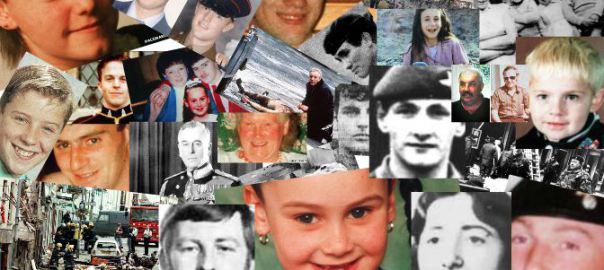


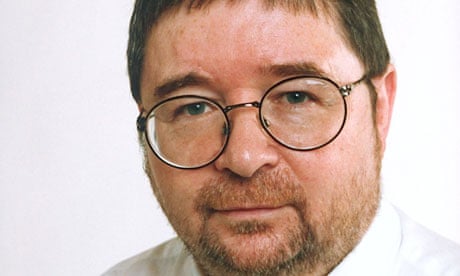


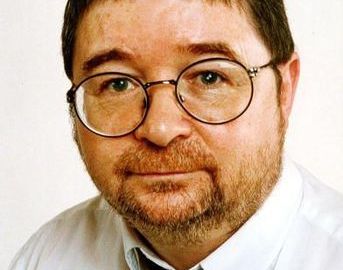


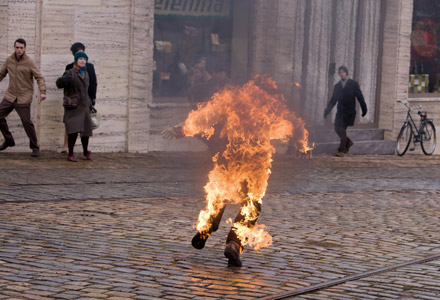


.JPG)
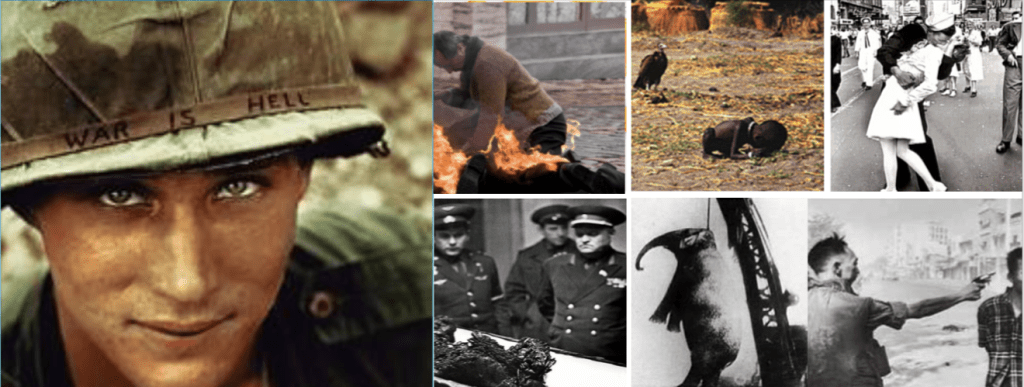



 Making Sense of the Troubles
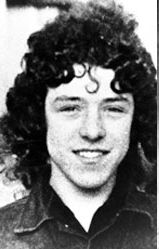


 Billy Wright’s death was the start of William McKee’s descent into life changing circumstances, that would ultimately lead to the loss of his home, health, career, family and on a number of occasions almost his life, both through murder attempts and finally thoughts of suicide. William tells his story with rare honesty and skill. This is an eye-opening account of what life is really like inside Northern Ireland’s prisons. This is a no-holds-barred account of life as a prison governor.
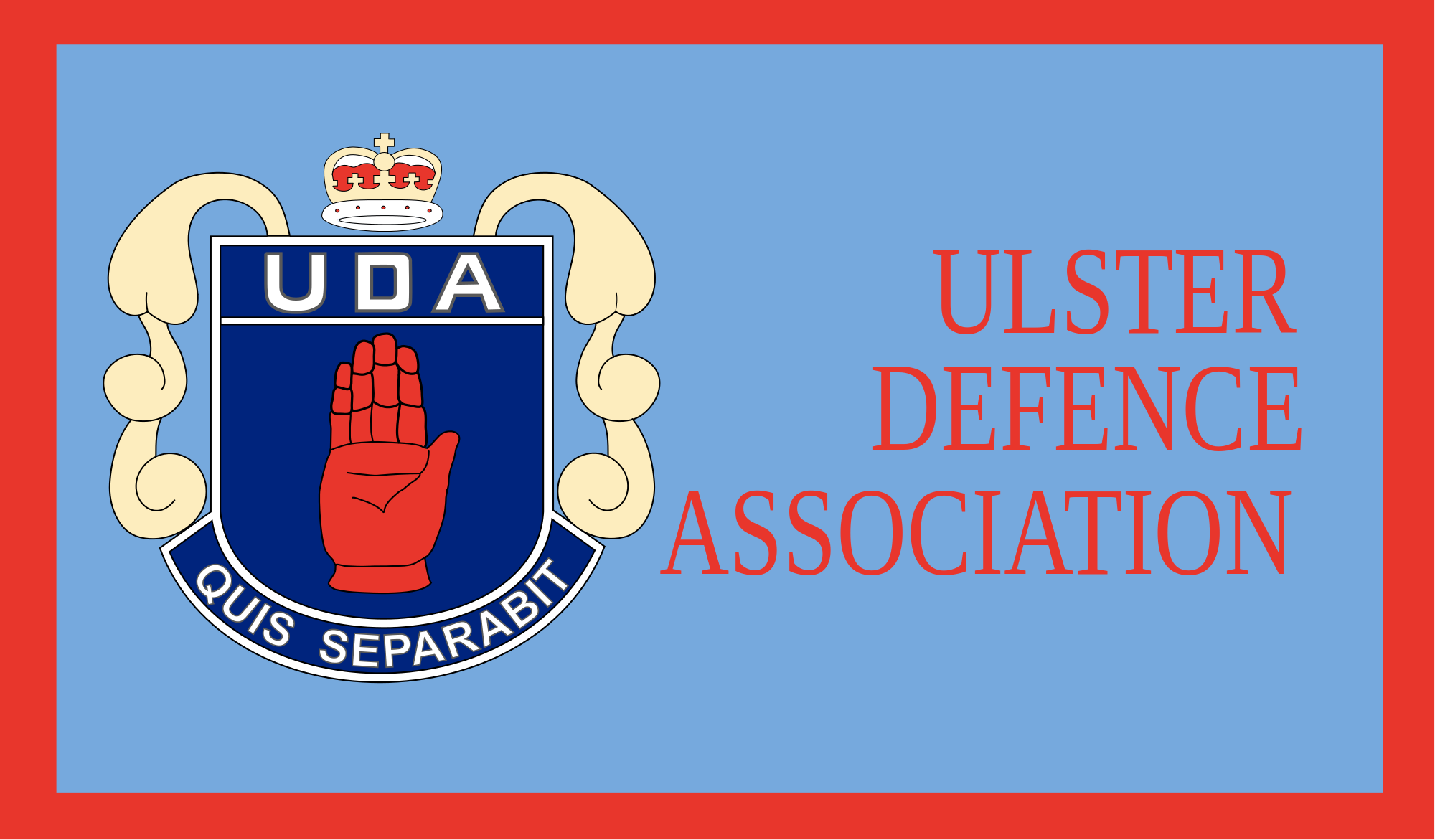


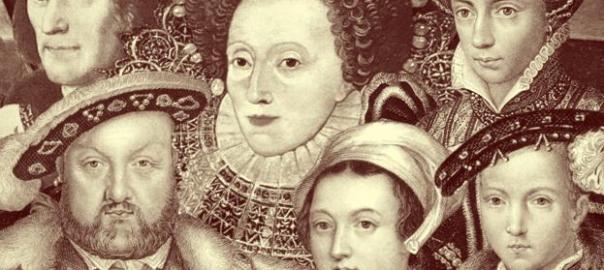


01.jpg)

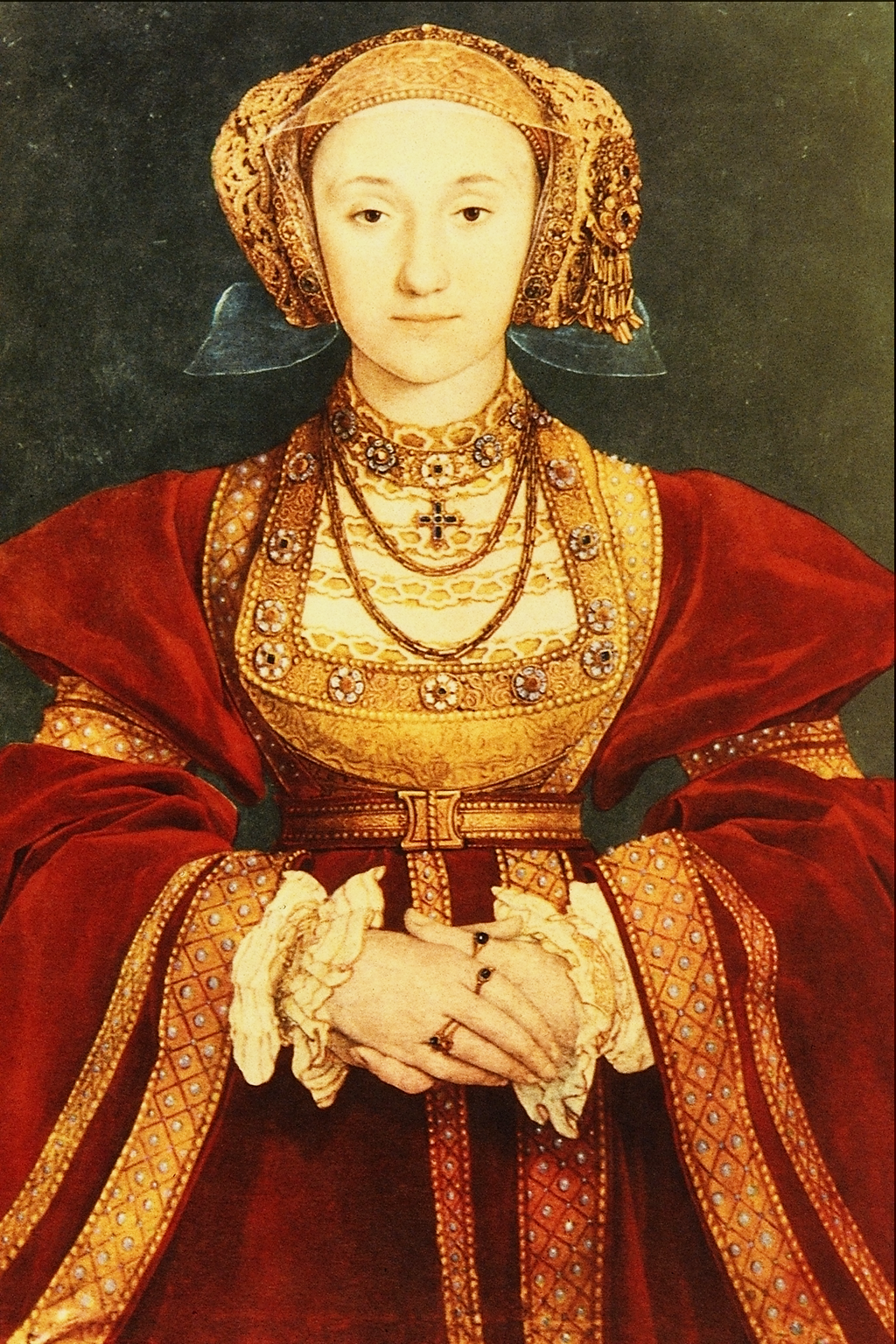

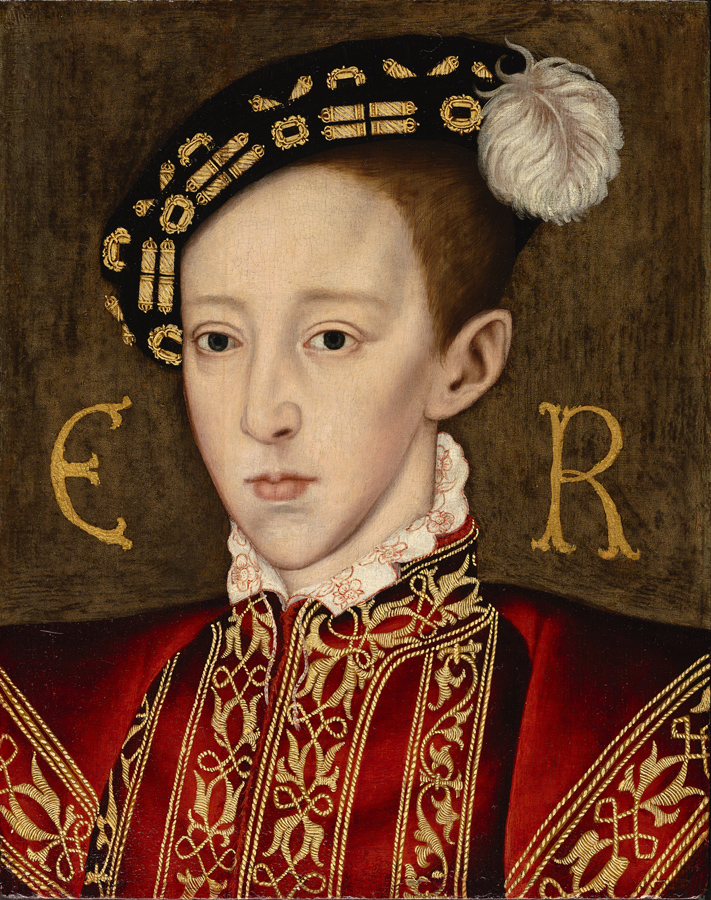


.svg)
.svg)
.svg)
.svg)
.svg)


.svg)


.svg)
.svg)


.svg)


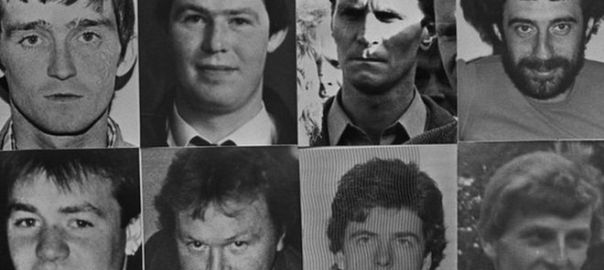



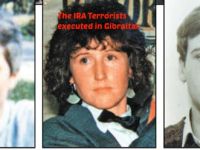






 belfastchildis.com
