Bethnal Green Academy pupils Shamima Begum and Amira Abase, both 15, and Kadiza Sultana, 16, travelled to Istanbul in February after telling their parents they were going out for the day. Police believe they have crossed the border into Syria. Mobile phone footage released to the media shows this was with the help of a people smuggler who is alleged to have worked for Canadian intelligence. The three girls had been studying for their GCSEs at the school in Tower Hamlets – where they have been described as “straight-A students”. They followed in the footsteps of their school friend, Sharmeena Begum who the Metropolitan Police say left
The three girls had been questioned by the police in December 2014 after another girl from their school travelled to Syria, but were found not to be at risk.[1] They flew via Turkish Airlines from Gatwick Airport to Istanbul on 17 February.[1] Their families went to Turkey in March to probe the disappearance, deeming the police investigation inadequate.[2]
Their disappearance has been attributed to Aqsa Mahmood, a Glasgow woman who joined ISIL in 2013. There have been electronic communications between the girls and Mahmood.[1] She faces criminal charges if she returns.[3] Mahmood denies the allegations.[4]
In March 2015, footage was circulated of Abase Hussen, father of Amira Abase, on a 2012 rally led by Islamist preacher Anjem Choudary against the film Innocence of Muslims. The Metropolitan Police examined the footage but said that it was unlikely that offences had been committed.[5] Hussen said in April that he feels ashamed of his involvement in the rally, as he did not know who had organised it.[6]
The girls stole family jewellery to pay for their flight. They will not face criminal charges if they return to the United Kingdom.[7]
Aftermath
The disappearance resulted in the Metropolitan Police giving evidence to the Home Affairs Select Committee of the House of Commons on its circumstances in March 2015.[7] The families of the girls received an apology from Scotland Yard, who did not tell them about the other girl from their school who went to Syria in 2014.[8]
British Prime Minister David Cameron has said that police should not be made “scapegoats” for people joining ISIL.[9] Contrary to the stance of the Metropolitan Police, Cameron said “Whoever has gone out to join a terrorist organisation is breaking the law and has to face the consequences of breaking the law and we have to let the law take its course in the proper way”.[10]
In March 2015, a travel ban was imposed upon five girls from the Bethnal Green Academy due to concerns from social services that they would join ISIL. The girls’ identities were kept secret, but the Press Association won a challenge at the High Court to be able to disclose that the girls attend the same school as the three who had already joined the group, stating that it was in the public interest.
According to The Guardian Two of the three east London schoolgirls who fled to join Islamic State in Syria have married men approved for them by the terrorist group, their families have told the Guardian.
Shamima Begum, 15, Kadiza Sultana, 16, and Amira Abase, 15, fled in February from Britain after deceiving their parents and siblings.
Two of the teenagers have been allowed to tell their families that they have been married and are living in the war-torn country. One phoned and another used a social media platform to tell the loved ones the news they have been dreading. At the request of their families, the Guardian is not naming the married pair.
Their families are said be be distraught at the news and have been clinging to the hope their daughters would want to come home.
The schoolgirls say that they have been separated and have been living apart for several weeks, in and around Raqqa, Syria – an Isis stronghold.
The two schoolgirls have been living with the men whom they married in a ceremony approved by Isis authorities.
The two schoolgirls are understood to have been given an effective “catalogue” of men deemed suitable by Isis for marriage. They then made their picks from those presented to them. The teenagers who married are believed to have been wed to older men, in their 20s.
Tasnime Akunjee, a solicitor representing the families, said they were grieving at the news of the marriages, as told to them by their daughters: “It has caused a lot of distress. It entrenches their lives in Syria, rather than in Britain. It erodes significantly hopes that they will come back.”
The girls initially lived together in Raqqa. They plotted the trip together, drawing up a shopping list of items to take with them.
Bethnal Green Academy pupils Shamima Begum and Amira Abase, both 15, and Kadiza Sultana, 16, travelled to Istanbul in February after telling their parents they were going out for the day. Police believe they have crossed the border into Syria. Mobile phone footage released to the media shows this was with the help of a people smuggler who is alleged to have worked for Canadian intelligence. The three girls had been studying for their GCSEs at the school in Tower Hamlets – where they have been described as “straight-A students”. They followed in the footsteps of their school friend, Sharmeena Begum who the Metropolitan Police say left
The three girls had been questioned by the police in December 2014 after another girl from their school travelled to Syria, but were found not to be at risk.[1] They flew via Turkish Airlines from Gatwick Airport to Istanbul on 17 February.[1] Their families went to Turkey in March to probe the disappearance, deeming the police investigation inadequate.[2]
Their disappearance has been attributed to Aqsa Mahmood, a Glasgow woman who joined ISIL in 2013. There have been electronic communications between the girls and Mahmood.[1] She faces criminal charges if she returns.[3] Mahmood denies the allegations.[4]
In March 2015, footage was circulated of Abase Hussen, father of Amira Abase, on a 2012 rally led by Islamist preacher Anjem Choudary against the film Innocence of Muslims. The Metropolitan Police examined the footage but said that it was unlikely that offences had been committed.[5] Hussen said in April that he feels ashamed of his involvement in the rally, as he did not know who had organised it.[6]
The girls stole family jewellery to pay for their flight. They will not face criminal charges if they return to the United Kingdom.[7]
Aftermath
The disappearance resulted in the Metropolitan Police giving evidence to the Home Affairs Select Committee of the House of Commons on its circumstances in March 2015.[7] The families of the girls received an apology from Scotland Yard, who did not tell them about the other girl from their school who went to Syria in 2014.[8]
British Prime Minister David Cameron has said that police should not be made “scapegoats” for people joining ISIL.[9] Contrary to the stance of the Metropolitan Police, Cameron said “Whoever has gone out to join a terrorist organisation is breaking the law and has to face the consequences of breaking the law and we have to let the law take its course in the proper way”.[10]
In March 2015, a travel ban was imposed upon five girls from the Bethnal Green Academy due to concerns from social services that they would join ISIL. The girls’ identities were kept secret, but the Press Association won a challenge at the High Court to be able to disclose that the girls attend the same school as the three who had already joined the group, stating that it was in the public interest.
According to the Daily Mail the British runaway schoolgirl, Amira Abase 16, had married Australian ISIS fanatic dubbed the ‘Ginger Jihadi’ in Syria.
The British teenager who fled to Syria has married a notorious Islamic State terrorist, who sent a chilling message to The Mail on Sunday threatening attacks on Britain.
Amira Abase, 16 – who travelled to Syria with two other school friends from East London – has married Australian extremist Abdullah Elmir.
He has bragged that IS would not stop their murderous campaign until their flag was flying over Buckingham Palace.
Police have now launched an urgent investigation after the radicalised fighter sent a horrific warning to this newspaper that supporters of the terror group are ‘itching to do an attack’ on targets in London.
Dubbed the ‘Ginger Jihadi’ because of his long red hair, 18-year-old Elmir became a poster boy for the Islamic State after he fled his home city of Sydney last year, and later turned up in Syria, appearing in sick propaganda videos.
One of the youngest Western fighters to have joined the group, he sent a message to The Mail on Sunday following our exclusive investigation into Abase, who we exposed last week as trying to lure an undercover reporter to Syria to become a jihadi bride like herself.
Elmir confirmed that he has married the British schoolgirl, who was only 15 when she travelled to Syria via Turkey earlier this year, and told us not to contact her again.
Boasting of his ‘connections’ in Britain, he warned of attacks against the UK as ‘brothers that I know there… are itching to do an attack.’
Bethnal Green Academy pupils Shamima Begum and Amira Abase, both 15, and Kadiza Sultana, 16, travelled to Istanbul in February after telling their parents they were going out for the day. Police believe they have crossed the border into Syria. Mobile phone footage released to the media shows this was with the help of a people smuggler who is alleged to have worked for Canadian intelligence. The three girls had been studying for their GCSEs at the school in Tower Hamlets – where they have been described as “straight-A students”. They followed in the footsteps of their school friend, Sharmeena Begum who the Metropolitan Police say left
The three girls had been questioned by the police in December 2014 after another girl from their school travelled to Syria, but were found not to be at risk.[1] They flew via Turkish Airlines from Gatwick Airport to Istanbul on 17 February.[1] Their families went to Turkey in March to probe the disappearance, deeming the police investigation inadequate.[2]
Their disappearance has been attributed to Aqsa Mahmood, a Glasgow woman who joined ISIL in 2013. There have been electronic communications between the girls and Mahmood.[1] She faces criminal charges if she returns.[3] Mahmood denies the allegations.[4]
In March 2015, footage was circulated of Abase Hussen, father of Amira Abase, on a 2012 rally led by Islamist preacher Anjem Choudary against the film Innocence of Muslims. The Metropolitan Police examined the footage but said that it was unlikely that offences had been committed.[5] Hussen said in April that he feels ashamed of his involvement in the rally, as he did not know who had organised it.[6]
The girls stole family jewellery to pay for their flight. They will not face criminal charges if they return to the United Kingdom.[7]
Aftermath
The disappearance resulted in the Metropolitan Police giving evidence to the Home Affairs Select Committee of the House of Commons on its circumstances in March 2015.[7] The families of the girls received an apology from Scotland Yard, who did not tell them about the other girl from their school who went to Syria in 2014.[8]
British Prime Minister David Cameron has said that police should not be made “scapegoats” for people joining ISIL.[9] Contrary to the stance of the Metropolitan Police, Cameron said “Whoever has gone out to join a terrorist organisation is breaking the law and has to face the consequences of breaking the law and we have to let the law take its course in the proper way”.[10]
In March 2015, a travel ban was imposed upon five girls from the Bethnal Green Academy due to concerns from social services that they would join ISIL. The girls’ identities were kept secret, but the Press Association won a challenge at the High Court to be able to disclose that the girls attend the same school as the three who had already joined the group, stating that it was in the public interest.
An inquest held in Gibraltar decided that the Special Air Service (SAS) soldiers who shot dead three Irish Republican Army (IRA) members on 6 March 1988 had acted lawfully. There was conflicting evidence on whether or not the IRA members had been given a warning before being shot.
Sunday 30 September 1990
‘Joy riders’ Shot Dead Martin Peake (17) and Karen Reilly (18), both Catholic civilians, were shot dead by British Army paratroopers in Belfast. The two teenagers were travelling (‘joy riding’) in a stolen car. At the time it was claimed that the stolen car had failed to stop at an army check point and struck a member of the army foot patrol.
[Later it was revealed that the injuries suffered by the soldier were deliberately inflicted after the incident by another soldier. In June 1993 Lee Clegg, a private in the Parachute Regiment, was sentenced to life imprisonment. Clegg’s subsequent early release and return to his regiment caused uproar in the nationalist community.]
Wednesday 30 September 1992
The Democratic Unionist Party (DUP) returned to the resumed political talks (later known as the Brooke / Mayhew talks) at Stormont. The DUP attended this section of the talks because the main business was Articles 2 and 3 of the Irish Constitution.
[The DUP were criticised as having an ‘a la carte’ approach to the talks.]
Saturday 30 September 1995
Sinn Féin (SF) held a special one-day conference to review the peace process in the RDS, Dublin, attended by approximately 800 members. The delegates supported the SF leadership’s position that there was “no other
Tuesday 30 September 1997
Format of Negotiations Agreed at Talks The parties involved in the talks at Stormont agreed the format for the substantive negotiations. The talks would take place in three strands. The first strand would deal with arrangements for government in Northern Ireland, the second would look at relationships between Northern Ireland and the Republic of Ireland, and the third would look at the relationships between Britain and Ireland.
The substantive talks were due to begin on 7 October 1997. Marjorie (Mo) Mowlam, then Secretary of State for Northern Ireland, addressed the Labour Party’s annual conference and announced that internment would be removed form the statute books. William Hague, then leader of the Conservative Party, paid his first official visit to Northern Ireland but did not meet any political leaders.
Wednesday 30 September 1998
Ronnie Flanagan, then Chief Constable of the Royal Ulster Constabulary (RUC), announced that a number of British Army installations and check-points were to be demolished. There was a further series of releases under the terms of the Good Friday Agreement. Seamus Mallon, then deputy leader of the Social Democratic and Labour Party (SDLP), addressed a meeting of the of the Labour Party conference in Blackpool, England. Mallon, while acknowledging that there was no pre-condition to Sinn Féin’s (SF) entry into an Executive, nevertheless called on the Irish Republican Army (IRA) to make a confidence building gesture.
Gerry Adams, then President of Sinn Féin (SF), also addressed the meeting and stated that the row over decommissioning had the potential to wreck the Good Friday Agreement.
Thursday 30 September 1999
See Robert Hamill Killing
The Director of Public Prosecutions (DPP) decided not to charge any Royal Ulster Constabulary (RUC) officer in connection with the killing of Robert Hamill following a beating he received on 29 April 1997. Hamill was severely beaten in a sectarian attack by a gang of up to 30 loyalists in the centre of Portadown, County Armagh, and he died from head injuries on 8 May 1997.
Royal Ulster Constabulary (RUC) officers were present close to the scene of the attack and were accused by witnesses and Hamill’s family of not intervening to save him. Ian Paisley, then leader of the Democratic Unionist Party (DUP), travelled to Dublin for a meeting at his request with Bertie Ahern, then Taoiseach (Irish Prime Minister).
The meeting was called to discuss a series of attacks that had occurred on Free Presbyterian churches in the Republic of Ireland. The Northern Ireland Human Rights Commission (NIHRC) launched a three year strategic plan part of which was to involve the drafting of a Bill of Rights.`
Remembering all innocent victims of the Troubles
Today is the anniversary of the follow people killed as a results of the conflict in Northern Ireland
To the innocent on the list – Your memory will live forever
– To the Paramilitaries –
“There are many things worth living for, a few things worth dying for, but nothing worth killing for.
16 People lost their lives on the 30th September between 1970 – 1992
————————————————————–
30 September 1970 David Murray, (49)
Protestant Status: Civilian (Civ),
Killed by: non-specific Loyalist group (LOY) Shot at his home, Wilton Street, Shankill, Belfast.
————————————————————–
30 September 1972
Patricia McKay, (20)
Catholic Status: Official Irish Republican Army (OIRA),
Killed by: British Army (BA) Shot during attempted attack on British Army (BA) foot patrol, Ross Street, Lower Falls, Belfast.
————————————————————–
30 September 1972
Francis Lane, (23)
Catholic Status: Civilian (Civ),
Killed by: non-specific Loyalist group (LOY) Found shot on waste ground, Glencairn Road, Glencairn, Belfast.
————————————————————–
30 September 1972 John Kelly, (43)
Catholic Status: Civilian (Civ),
Killed by: British Army (BA) Died three days after being shot during altercation between local people and British Army (BA) patrol, Tullagh Park, Andersonstown, Belfast.
————————————————————–
30 September 1972
Thomas Rudman, (20) nfNI Status: British Army (BA),
Killed by: Irish Republican Army (IRA) Shot by sniper while on British Army (BA) foot patrol, Ladbrooke Drive, Ardoyne, Belfast.
————————————————————–
30 September 1972
Patrick McKee, (25)
Catholic Status: Civilian (Civ),
Killed by: Ulster Volunteer Force (UVF) Killed in car bomb attack outside Conlon’s Bar, Smithfield, Belfast.
————————————————————–
30 September 1972
James Gillen, (21)
Catholic Status: Civilian (Civ),
Killed by: Ulster Volunteer Force (UVF) Injured in car bomb attack outside Conlon’s Bar, Smithfield, Belfast. He died 17 October 1972.
————————————————————–
30 September 1972
Joseph Lynskey, (45)
Catholic Status: Irish Republican Army (IRA),
Killed by: Irish Republican Army (IRA) Went missing from the Beechmount area, Belfast, during August/September 1972. Presumed killed. Body never found.
————————————————————–
30 September 1974
Ralph Laverty, (55)
Catholic Status: Civilian (Civ),
Killed by: Ulster Volunteer Force (UVF) Shot at his workplace, bakery, Orby Road, Bloomfield, Belfast.
————————————————————–
30 September 1974 John Cameron, (57)
Protestant Status: Civilian (Civ),
Killed by: non-specific Loyalist group (LOY) Shot at his home, Elimgrove Street, off Cliftonville Road, Belfast. Mistaken for a Catholic neighbour.
————————————————————–
30 September 1978
James Taylor, (23)
Protestant Status: Civilian (Civ),
Killed by: British Army (BA) Shot by undercover British Army (BA) member, Ballygoney Road, near Coagh, County Tyrone.
Killed by: Irish Republican Army (IRA) Shot at his workplace, ambulance depot, Royal Victoria Hospital, Falls Road, Belfast.
————————————————————–
30 September 1982
Gerard O’Neill, (28)
Catholic Status: Civilian (Civ),
Killed by: Ulster Volunteer Force (UVF) Shot at his workplace, Rosetta petrol station, Ormeau Road, Belfast.
————————————————————–
30 September 1990
Martin Peake, (17) Catholic Status: Civilian (Civ),
Killed by: British Army (BA) Shot while travelling in stolen car, Glen Road, Andersonstown, Belfast.
————————————————————–
30 September 1990
Karen Reilly, (18)
Catholic Status: Civilian (Civ),
Killed by: British Army (BA) Shot while travelling in stolen car, Glen Road, Andersonstown, Belfast.
————————————————————–
30 September 1992
Harry Black, (27)
Protestant Status: Ulster Defence Association (UDA),
Killed by: Irish Republican Army (IRA) Shot while in friend’s home, Annadale Flats, Ballynafeigh, Belfast.
————————————————————–
See: Robert Hamill Killing
This is simply the story of a boy trying to grow up, survive, thrive, have fun & discover himself against a backdrop of events that might best be described as ‘explosive’, captivating & shocking the world for thirty long years.
Planning for the operation began in 1943. In the months leading up to the invasion, the Allies conducted a substantial military deception, codenamed Operation Bodyguard, to mislead the Germans as to the date and location of the main Allied landings. The weather on D-Day was far from ideal, but postponing would have meant a delay of at least two weeks, as the invasion planners had requirements for the phase of the moon, the tides, and the time of day that meant only a few days in each month were deemed suitable. Hitler placed German Field Marshal Erwin Rommel in command of German forces and of developing fortifications along the Atlantic Wall in anticipation of an Allied invasion.
The amphibious landings were preceded by extensive aerial and naval bombardment and an airborne assault—the landing of 24,000 British, US, and Canadian airborne troops shortly after midnight. Allied infantry and armoured divisions began landing on the coast of France at 06:30. The target 50-mile (80 km) stretch of the Normandy coast was divided into five sectors: Utah, Omaha, Gold, Juno, and Sword Beach. Strong winds blew the landing craft east of their intended positions, particularly at Utah and Omaha. The men landed under heavy fire from gun emplacements overlooking the beaches, and the shore was mined and covered with obstacles such as wooden stakes, metal tripods, and barbed wire, making the work of the beach clearing teams difficult and dangerous. Casualties were heaviest at Omaha, with its high cliffs. At Gold, Juno, and Sword, several fortified towns were cleared in house-to-house fighting, and two major gun emplacements at Gold were disabled using specialised tanks.
————————————————————————-
Surviving D-Day Omaha Beach 1944 – Full Documentary
————————————————————————-
The Allies failed to achieve all of their goals on the first day. Carentan, St. Lô, and Bayeux remained in German hands, and Caen, a major objective, was not captured until 21 July. Only two of the beaches (Juno and Gold) were linked on the first day, and all five bridgeheads were not connected until 12 June. However, the operation gained a foothold that the Allies gradually expanded over the coming months. German casualties on D-Day were around 1,000 men. Allied casualties were at least 10,000, with 4,414 confirmed dead. Museums, memorials, and war cemeteries in the area host many visitors each year.
Background
Between 27 May and 4 June 1940, over 338,000 troops of the British Expeditionary Force and the French Army, trapped along the northern coast of France, were evacuated in the Dunkirk evacuation.[12] After the Germans invaded the Soviet Union in June 1941, Soviet leader Joseph Stalin began pressing for the creation of a second front in western Europe.[13] In late May 1942 the Soviet Union and United States made a joint announcement that a “… full understanding was reached with regard to the urgent tasks of creating a second front in Europe in 1942.”[14] However, Churchill persuaded Roosevelt to postpone the promised invasion as, even with American help, the Allies did not have adequate forces for such a strike.[15]
Instead of an immediate return to France, the Western Allies staged offensives in the Mediterranean Theater of Operations, where British troops were already stationed. By mid-1943, the North African Campaign had been won. The Allies then launched the invasion of Sicily in July 1943, and Italy in September 1943. By then, Soviet forces were on the offensive and had won a major victory at the Battle of Stalingrad. The decision to undertake a cross-channel invasion within the next year was taken at the Trident Conference in Washington in May 1943.[16] Initial planning was constrained by the number of available landing craft, most of which were already committed in the Mediterranean and Pacific.[17] At the Tehran Conference in November 1943, Roosevelt and Churchill promised Stalin that they would open the long-delayed second front in May 1944.[18]
Four sites were considered for the landings: Brittany, the Cotentin Peninsula, Normandy, and Pas de Calais. As Brittany and Cotentin are peninsulas, it would have been possible for the Germans to cut off the Allied advance at a relatively narrow isthmus, so these sites were rejected.[19] As the Pas de Calais is the closest point in continental Europe to Britain, the Germans considered it to be the most likely initial landing zone, so it was the most heavily fortified region.[20] But it offered few opportunities for expansion, as the area is bounded by numerous rivers and canals,[21] whereas landings on a broad front in Normandy would permit simultaneous threats against the port of Cherbourg, coastal ports further west in Brittany, and an overland attack towards Paris and eventually into Germany. Normandy was hence chosen as the landing site.[22] The most serious drawback of the Normandy coast—the lack of port facilities—would be overcome through the development of artificial Mulberry harbours.[23] A series of specialised tanks, nicknamed Hobart’s Funnies, were created to deal with conditions expected during the Normandy campaign, such as scaling sea walls and providing close support on the beach.[24]
The Allies planned to launch the invasion on 1 May 1944.[21] The initial draft of the plan was accepted at the Quebec Conference in August 1943. General Dwight D. Eisenhower was appointed commander of Supreme Headquarters Allied Expeditionary Force (SHAEF).[25] General Bernard Montgomery was named as commander of the 21st Army Group, which comprised all of the land forces involved in the invasion.[26] On 31 December 1943, Eisenhower and Montgomery first saw the plan, which proposed amphibious landings by three divisions with two more divisions in support. The two generals immediately insisted that the scale of the initial invasion be expanded to five divisions, with airborne descents by three additional divisions, to allow operations on a wider front and speed up the capture of the port at Cherbourg.[27] The need to acquire or produce extra landing craft for the expanded operation meant that the invasion had to be delayed to June.[27] Eventually, thirty-nine Allied divisions would be committed to the Battle of Normandy: twenty-two American, twelve British, three Canadian, one Polish, and one French, totalling over a million troops[28] all under overall British command.[29]
Operations
Operation Overlord was the name assigned to the establishment of a large-scale lodgement on the Continent. The first phase, the amphibious invasion and establishment of a secure foothold, was codenamed Operation Neptune.[23] To gain the air superiority needed to ensure a successful invasion, the Allies undertook a bombing campaign (codenamed Operation Pointblank) that targeted German aircraft production, fuel supplies, and airfields.[23] Elaborate deceptions, codenamed Operation Bodyguard, were undertaken in the months leading up to the invasion to prevent the Germans from learning the timing and location of the invasion.[30]
The landings were to be preceded by airborne landings near Caen on the eastern flank to secure the Orne River bridges and north of Carentan on the western flank. The Americans, assigned to land at Utah Beach and Omaha Beach, were to attempt to capture Carentan and St. Lô the first day, then cut off the Cotentin Peninsula and eventually capture the port facilities at Cherbourg. The British at Sword Beach and Gold Beach and Canadians at Juno Beach would protect the American flank and attempt to establish airfields near Caen. A secure lodgement would be established and an attempt made to hold all territory north of the Avranches–Falaise line within the first three weeks.[31][32] Montgomery envisaged a ninety-day battle, lasting until all Allied forces reached the Seine.[33]
Under the overall umbrella of Operation Bodyguard, the Allies conducted several subsidiary operations designed to mislead the Germans as to the date and location of the Allied landings.[34]Operation Fortitude included Fortitude North, a misinformation campaign using fake radio traffic to lead the Germans into expecting an attack on Norway,[35] and Fortitude South, a major deception involving the creation of a fictitious First United States Army Group under Lieutenant General George S. Patton, supposedly located in Kent and Sussex. Fortitude South was intended to deceive the Germans into believing that the main attack would take place at Calais.[30][36] Genuine radio messages from 21st Army Group were first routed to Kent via landline and then broadcast, to give Germans the impression that most of the Allied troops were stationed there.[37] Patton was stationed in England until 6 July, thus continuing to deceive the Germans into believing a second attack would take place at Calais.[38]
Many of the German radar stations on the French coast were destroyed in preparation for the landings.[39] In addition, on the night before the invasion, a small group of Special Air Service (SAS) operators deployed dummy paratroopers over Le Havre and Isigny. These dummies led the Germans to believe that an additional airborne landing had occurred. On that same night, in Operation Taxable, No. 617 Squadron RAF dropped strips of “window”, metal foil that caused a radar return which was mistakenly interpreted by German radar operators as a naval convoy near Le Havre. The illusion was bolstered by a group of small craft towing barrage balloons. A similar deception was undertaken near Boulogne-sur-Mer in the Pas de Calais area by No. 218 Squadron RAF in Operation Glimmer.[40][2]
Weather
The invasion planners determined a set of conditions involving the phase of the moon, the tides, and the time of day that would be satisfied on only a few days in each month. A full moon was desirable, as it would provide illumination for aircraft pilots and have the highest tides. The Allies wanted to schedule the landings for shortly before dawn, midway between low and high tide, with the tide coming in. This would improve the visibility of obstacles on the beach, while minimising the amount of time the men would be exposed in the open.[41] Eisenhower had tentatively selected 5 June as the date for the assault. However, on 4 June, conditions were unsuitable for a landing: high winds and heavy seas made it impossible to launch landing craft, and low clouds would prevent aircraft from finding their targets.[42]
Group Captain James Stagg of the Royal Air Force (RAF) met Eisenhower on the evening of 4 June. He and his meteorological team predicted that the weather would improve enough for the invasion to proceed on 6 June.[43] The next available dates with the required tidal conditions (but without the desirable full moon) would be two weeks later, from 18 to 20 June. Postponement of the invasion would have required recalling men and ships already in position to cross the Channel, and would have increased the chance that the invasion plans would be detected.[44] After much discussion with the other senior commanders, Eisenhower decided that the invasion should go ahead on the 6th.[45] A major storm battered the Normandy coast from 19 to 22 June, which would have made the beach landings impossible.[42]
Allied control of the Atlantic meant German meteorologists had less information than the Allies on incoming weather patterns.[39] As the Luftwaffe meteorological centre in Paris was predicting two weeks of stormy weather, many Wehrmacht commanders left their posts to attend war games in Rennes, and men in many units were given leave.[46] Field Marshal Erwin Rommel returned to Germany for his wife’s birthday and to meet Hitler to try to obtain more Panzers.[47]
German order of battle
Nazi Germany had at its disposal fifty divisions in France and the Low Countries, with another eighteen stationed in Denmark and Norway. Fifteen divisions were in the process of formation in Germany.[48] Combat losses throughout the war, particularly on the Eastern Front, meant that the Germans no longer had a pool of able young men from which to draw. German soldiers were now on average six years older than their Allied counterparts. Many in the Normandy area were Ostlegionen (eastern legions) – conscripts and volunteers from Russia, Mongolia, and elsewhere. They were provided mainly with unreliable captured equipment and lacked motorised transport.[49] Many German units were under strength.[50]
Americans assaulting Omaha Beach were faced the following troops:
352nd Infantry Division under GeneralleutnantDietrich Kraiss, a full-strength unit of around 12,000 brought in by Rommel on 15 March and reinforced by two additional regiments.[53]
Alarmed by the raids on St Nazaire and Dieppe in 1942, Hitler had ordered the construction of fortifications all along the Atlantic coast, from Spain to Norway, to protect against an expected Allied invasion. He envisioned 15,000 emplacements manned by 300,000 troops, but shortages, particularly of concrete and manpower, meant that most of the strongpoints were never built.[59] As it was expected to be the site of the invasion, the Pas de Calais was heavily defended.[59] In the Normandy area, the best fortifications were concentrated at the port facilities at Cherbourg and Saint-Malo.[27] Rommel was assigned to oversee the construction of further fortifications along the expected invasion front, which stretched from the Netherlands to Cherbourg,[59][60] and was given command of the newly re-formed Army Group B, which included the 7th Army, the 15th Army, and the forces guarding the Netherlands. Reserves for this group included the 2nd, 21st, and 116th Panzer divisions.[61][62]
Rommel believed that the Normandy coast could be a possible landing point for the invasion, so he ordered the construction of extensive defensive works along that shore. In addition to concrete gun emplacements at strategic points along the coast, he ordered wooden stakes, metal tripods, mines, and large anti-tank obstacles to be placed on the beaches to delay the approach of landing craft and impede the movement of tanks.[63] Expecting the Allies to land at high tide so that the infantry would spend less time exposed on the beach, he ordered many of these obstacles to be placed at the high water mark.[41] Tangles of barbed wire, booby traps, and the removal of ground cover made the approach hazardous for infantry.[63] On Rommel’s order, the number of mines along the coast was tripled.[27] The Allied air offensive over Germany had crippled the Luftwaffe and established air supremacy over western Europe, so Rommel knew he could not expect effective air support.[64] The Luftwaffe could muster only 815 aircraft[65] over Normandy in comparison to the Allies’ 9,543.[66] Rommel arranged for booby-trapped stakes known as Rommelspargel (Rommel’s asparagus) to be installed in meadows and fields to deter airborne landings.[27]
Armoured reserves
Rommel believed that Germany’s best chance was to stop the invasion at the shore. He requested that the mobile reserves, especially tanks, be stationed as close to the coast as possible. Rundstedt, Geyr, and other senior commanders objected. They believed that the invasion could not be stopped on the beaches. Geyr argued for a conventional doctrine: keeping the Panzer formations concentrated in a central position around Paris and Rouen and deploying them only when the main Allied beachhead had been identified. He also noted that, in the Italian Campaign, the armoured units stationed near the coast had been damaged by naval bombardment. Rommel’s opinion was that, because of Allied air supremacy, the large-scale movement of tanks would not be possible once the invasion was under way. Hitler made the final decision, which was to leave three Panzer divisions under Geyr’s command and give Rommel operational control of three more as reserves. Hitler took personal control of four divisions as strategic reserves, not to be used without his direct orders.[67][68][69]
Allied order of battle
D-day assault routes into Normandy
Commander, SHAEF: General Dwight D. Eisenhower
Commander, 21st Army Group: General Bernard Montgomery[70]
Overall, the Second Army contingent consisted of 83,115 men, 61,715 of them British.[11] The nominally British air and naval support units included a large number of personnel from Allied nations, including several RAF squadrons manned almost exclusively by overseas air crew. For example, the Australian contribution to the operation included a regular Royal Australian Air Force (RAAF) squadron, nine Article XV squadrons, and hundreds of personnel posted to RAF units and RN warships.[74] The RAF supplied two-thirds of the aircraft involved in the invasion.[75]
———————————————————————–
D-Day Gold Beach WWII British Landing Beach Normandy France
Some elements of the 79th Armoured Division (commanded by Major General Percy Hobart[79]) provided specialised armoured vehicles which supported the landings on all beaches in Second Army’s sector.
Through the London-based État-major des Forces Françaises de l’Intérieur (French Forces of the Interior), the British Special Operations Executive orchestrated a massive campaign of sabotage to be implemented by the French Resistance. The Allies developed four plans for the Resistance to execute on D-Day and the following days:
Plan Vert was a 15-day operation to sabotage the rail system.
Plan Bleu dealt with destroying electrical facilities.
Plan Tortue was a delaying operation aimed at the enemy forces that would potentially reinforce Axis forces at Normandy.
Plan Violet dealt with cutting underground telephone and teleprinter cables.[80]
The resistance was alerted to carry out these tasks by messages personnels transmitted by the BBC’s French service from London. Several hundred of these messages, which might be snatches of poetry, quotations from literature, or random sentences, were regularly transmitted, masking the few that were actually significant. In the weeks preceding the landings, lists of messages and their meanings were distributed to resistance groups.[81] An increase in radio activity on 5 June was correctly interpreted by German intelligence to mean that an invasion was imminent or underway. However, because of the barrage of previous false warnings and misinformation, most units ignored the warning.[82][83]
A 1965 report from the Counter-insurgency Information Analysis Center details the results of the French Resistance’s sabotage efforts: “In the southeast, 52 locomotives were destroyed on 6 June and the railway line cut in more than 500 places. Normandy was isolated as of 7 June.”[84]
Naval operations for the invasion were described by historian Correlli Barnett as a “never surpassed masterpiece of planning”.[85] In overall command was British Admiral Sir Bertram Ramsay, who had served as Flag officer at Dover during the Dunkirk evacuation four years earlier. He had also been responsible for the naval planning of the invasion of North Africa in 1942, and one of the two fleets carrying troops for the invasion of Sicily the following year.[86]
The invasion fleet was drawn from eight different navies, comprising 6,939 vessels: 1,213 warships, 4,126 landing craft of various types, 736 ancillary craft, and 864 merchant vessels.[11] The majority of the fleet was supplied by the UK and Canada, who provided 892 warships and 3,261 landing craft.[75] There were 195,700 naval personnel involved.[11] The invasion fleet was split into the Western Naval Task Force (under Admiral Alan G Kirk) supporting the American sectors and the Eastern Naval Task Force (under Admiral Sir Philip Vian) in the British and Canadian sectors.[87][86] Available to the fleet were five battleships, twenty cruisers, sixty-five destroyers, and two monitors.[88] German ships in the area on D-Day included three torpedo boats, twenty-nine fast attack craft, thirty-six R boats, and thirty-six minesweepers and patrol boats.[89] The Germans also had several U-boats available, and all the approaches had been heavily mined.[41]
Naval losses
At 05:10, four German torpedo boats reached the Eastern Task Force and launched fifteen torpedoes, sinking the Norwegian destroyer HNoMS Svenner off Sword beach but missing the battleships HMS Warspite and Ramillies. After firing, the German vessels turned away and fled east into a smoke screen that had been laid by the RAF to shield the fleet from the long-range battery at Le Havre.[90] Allied losses to mines included USS Corry off Utah and USS PC-1261, a 173-foot patrol craft.[91] In addition, many landing craft were lost.[92]
Map of the invasion area showing channels cleared of mines, location of vessels engaged in bombardment, and targets on shore
Bombing of Normandy began around midnight with over 2,200 British and American bombers attacking targets along the coast and further inland.[41] The coastal bombing attack was largely ineffective at Omaha, because low cloud cover made the assigned targets difficult to see. Concerned about inflicting casualties on their own troops, many bombers delayed their attacks too long and failed to hit the beach defences.[93] The Germans had 570 aircraft stationed in Normandy and the Low Countries on D-Day, and another 964 in Germany.[41]
Minesweepers began clearing channels for the invasion fleet shortly after midnight and finished just after dawn without encountering the enemy.[94] The Western Task Force included the battleships Arkansas, Nevada, and Texas, plus eight cruisers, twenty-eight destroyers, and one monitor.[95] The Eastern Task Force included the battleships HMS Ramillies and Warspite and the monitor HMS Roberts, twelve cruisers, and thirty-seven destroyers.[6] Naval bombardment of areas behind the beach commenced at 05:45, while it was still dark, with the gunners switching to pre-assigned targets on the beach as soon as it was light enough to see, at 05:50.[96] Since troops were scheduled to land at Utah and Omaha starting at 06:30 (an hour earlier than the British beaches), these areas received only about 40 minutes of naval bombardment before the assault troops began to land on the shore.[97] Some of the landing craft had been modified to provide close support fire, and self-propelled amphibious Duplex-Drive tanks (DD tanks), specially designed for the Normandy landings, were to land shortly before the infantry to provide covering fire. However, few arrived in advance of the infantry, and many sank before reaching the shore, especially at Omaha.[98][99]
The landings
Airborne operations
The success of the amphibious landings depended on the establishment of a secure lodgement from which to expand the beachhead to allow the buildup of a well-supplied force capable of breaking out. The amphibious forces were especially vulnerable to strong enemy counter-attacks before the buildup of sufficient forces in the beachhead could be accomplished. To slow or eliminate the enemy’s ability to organise and launch counter-attacks during this critical period, airborne operations were used to seize key objectives such as bridges, road crossings, and terrain features, particularly on the eastern and western flanks of the landing areas. The airborne landings some distance behind the beaches were also intended to ease the egress of the amphibious forces off the beaches, and in some cases to neutralise German coastal defence batteries and more quickly expand the area of the beachhead.[100][101]
The US 82nd and 101st Airborne Divisions were assigned to objectives west of Utah Beach, where they hoped to capture and control the few narrow causeways through terrain that had been intentionally flooded by the Germans. Reports from Allied intelligence in mid-May of the arrival of the German 91st Infantry Division meant the intended drop zones had to be shifted eastward and to the south.[102] The British 6th Airborne Division, on the eastern flank, was assigned to capture intact the bridges over the Caen Canal and River Orne, destroy five bridges over the Dives 6 miles (9.7 km) to the east, and destroy the Merville Gun Battery overlooking Sword Beach.[103]Free French paratroopers from the British SAS Brigade were assigned to objectives in Brittany from 5 June through August in Operations Dingson, Samwest, and Cooney.[104][105]
BBC war correspondent Robert Barr described the scene as paratroopers prepared to board their aircraft:
Their faces were darkened with cocoa; sheathed knives were strapped to their ankles; tommy guns strapped to their waists; bandoliers and hand grenades, coils of rope, pick handles, spades, rubber dinghies hung around them, and a few personal oddments, like the lad who was taking a newspaper to read on the plane … There was an easy familiar touch about the way they were getting ready, as though they had done it often before. Well, yes, they had kitted up and climbed aboard often just like this – twenty, thirty, forty times some of them, but it had never been quite like this before. This was the first combat jump for every one of them.[106]
The American airborne landings began with the arrival of pathfinders at 00:15. Navigation was difficult because of a bank of thick cloud, and as a result only one of the five paratrooper drop zones was accurately marked with radar signals and Aldis lamps.[107] Paratroopers of the US 82nd and 101st Airborne Divisions, numbering over 13,000 men, were delivered by Douglas C-47 Skytrains of the IX Troop Carrier Command.[108] To avoid flying over the invasion fleet, the planes arrived from the west over the Cotentin Peninsula and exited over Utah Beach.[109][107]
Paratroops from 101st Airborne were dropped beginning around 01:30, tasked with controlling the causeways behind Utah Beach and destroying road and rail bridges over the Douve River.[110] The C-47s could not fly in a tight formation because of thick cloud cover, and many paratroopers were dropped far from their intended landing zones. Many planes came in so low that they were under fire from both flak and machine gun fire. Some paratroopers were killed on impact when their parachutes did not have time to open, and others drowned in the flooded fields.[111] Gathering together into fighting units was made difficult by a shortage of radios and by the bocage terrain, with its hedgerows, stone walls, and marshes.[112][113] Some units did not arrive at their targets until afternoon, by which time several of the causeways had already been cleared by members of the 4th Infantry Division moving up from the beach.[114]
Troops of the 82nd Airborne began arriving around 02:30, with the primary objective of capturing two bridges over the River Merderet and destroying two bridges over the Douve.[110] On the east side of the river, 75 per cent of the paratroopers landed in or near their drop zone, and within two hours they captured the important crossroads at Sainte-Mère-Église (the first town liberated in the invasion[115]) and began working to protect the western flank.[116] Because of the failure of the pathfinders to accurately mark their drop zone, the two regiments dropped on the west side of the Merderet were extremely scattered, with only four per cent landing in the target area.[116] Many landed in nearby swamps, with much loss of life.[117] Paratroopers consolidated into small groups, usually a combination of men of various ranks from different units, and attempted to concentrate on nearby objectives.[118] They captured but failed to hold the Merderet River bridge at La Fière, and fighting for the crossing continued for several days.[119]
Reinforcements arrived by glider around 04:00 (Mission Chicago and Mission Detroit), and 21:00 (Mission Keokuk and Mission Elmira), bringing additional troops and heavy equipment. Like the paratroopers, many landed far from their drop zones.[120] Even those that landed on target experienced difficulty, with heavy cargo such as Jeeps shifting during landing, crashing through the wooden fuselage, and in some cases crushing personnel on board.[121]
After 24 hours, only 2,500 men of the 101st and 2,000 of the 82nd Airborne were under the control of their divisions, approximately a third of the force dropped. This wide dispersal had the effect of confusing the Germans and fragmenting their response.[122] The 7th Army received notification of the parachute drops at 01:20, but Rundstedt did not initially believe that a major invasion was underway. The destruction of radar stations along the Normandy coast in the week before the invasion meant that the Germans did not detect the approaching fleet until 02:00.[123]
An abandoned Waco CG-4 glider is examined by German troops.
The first Allied action of D-Day was Operation Deadstick, a glider assault at 00:16 at Pegasus Bridge over the Caen Canal and the bridge (since renamed Horsa Bridge) over the Orne, half a mile (800 metres) to the east. Both bridges were quickly captured intact, with light casualties, by members of the 5th Parachute Brigade and the 7th (Light Infantry) Parachute Battalion.[124][125] The five bridges over the Dives were destroyed with minimal difficulty by the 3rd Parachute Brigade.[126][127] Meanwhile, the pathfinders tasked with setting up radar beacons and lights for further paratroopers (scheduled to begin arriving at 00:50 to clear the landing zone north of Ranville) were blown off course, and had to set up the navigation aids too far east. Many paratroopers, also blown too far east, landed far from their intended drop zones; some took hours or even days to be reunited with their units.[128][129] Major General Richard Gale arrived in the third wave of gliders at 03:30, along with equipment, such as antitank guns and jeeps, and more troops to help secure the area from counter-attacks, which were initially staged only by troops in the immediate vicinity of the landings.[130] At 02:00, the commander of the German 716th Infantry Division ordered Feuchtinger to move his 21st Panzer Division into position to counter-attack. However, as the division was part of the armoured reserve, Feuchtinger was obliged to seek clearance from OKW before he could commit his formation.[131] Feuchtinger did not receive orders until nearly 09:00, but in the meantime on his own initiative he put together a battle group (including tanks) to fight the British forces east of the Orne.[132]
Only 160 men out of the 600 members of the 9th Battalion tasked with eliminating the enemy battery at Merville arrived at the rendezvous point. Lieutenant Colonel Terence Otway, in charge of the operation, decided to proceed regardless, as the emplacement had to be destroyed by 06:00 to prevent it firing on the invasion fleet and the troops arriving on Sword Beach. In the Battle of Merville Gun Battery, Allied forces disabled the guns at a cost of 75 casualties. The emplacement was found to contain 75 mm guns rather than the expected 150 mm heavy coastal artillery.[133]
Carrying full equipment, American assault troops move onto Utah Beach. Landing craft can be seen in the background.
Utah Beach was in the area defended by two battalions of the 919th Grenadier Regiment.[136] Members of the 8th Infantry Regiment of the 4th Infantry Division were the first to land, arriving at 06:30. Their landing craft were pushed to the south by strong currents, and they found themselves about 2,000 yards (1.8 km) from their intended landing zone. This site turned out to be better, as there was only one strongpoint nearby rather than two, and bombers of IX Bomber Command had bombed the defences from lower than their prescribed altitude, inflicting considerable damage. In addition, the strong currents had washed ashore many of the underwater obstacles. The assistant commander of the 4th Infantry Division, Brigadier General Theodore Roosevelt, Jr., the first senior officer ashore, made the decision to “start the war from right here”, and ordered further landings to be re-routed.[137][138]
The initial assault battalions were quickly followed by 28 DD tanks and several waves of engineer and demolition teams to remove beach obstacles and clear the area directly behind the beach of obstacles and mines. Gaps were blown in the sea wall to allow quicker access for troops and tanks. Combat teams began to exit the beach at around 09:00, with some infantry wading through the flooded fields rather than travelling on the single road. They skirmished throughout the day with elements of the 919th Grenadier Regiment, who were armed with antitank guns and rifles. The main strongpoint in the area and another 1,300 yards (1.2 km) to the south were disabled by noon.[139] The 4th Infantry Division did not meet all of their D-Day objectives at Utah Beach, partly because they had arrived too far to the south, but they landed 21,000 troops at the cost of only 197 casualties.[140][141]
Pointe du Hoc, a prominent headland situated between Utah and Omaha, was assigned to two hundred men of 2nd Ranger Battalion, commanded by Lieutenant Colonel James Rudder. Their task was to scale the 30-metre (98 ft) cliffs with grappling hooks, ropes, and ladders to destroy the coastal gun battery located at the top. The cliffs were defended by the German 352nd Infantry Division and French collaborators firing from above.[142] Allied destroyers Satterlee and Talybont provided fire support. After scaling the cliffs, the Rangers discovered that the guns had already been withdrawn. They located the weapons, unguarded but ready to use, in an orchard some 550 metres (600 yd) south of the point, and disabled them with explosives.[142]
The now-isolated Rangers fended off numerous counter-attacks from the German 914th Grenadier Regiment. The men at the point became isolated and some were captured. By dawn on D+1, Rudder had only 90 men able to fight. Relief did not arrive until D+2, when members of the 743rd Tank Battalion and others arrived.[143][144] By then, Rudder’s men had run out of ammunition and were using captured German weapons. Several men were killed as a result, because the German weapons made a distinctive noise, and the men were mistaken for the enemy.[145] By the end of the battle, the Rangers casualties were 135 dead and wounded, while German casualties were 50 killed and 40 captured. An unknown number of French collaborators were executed.[146][147]
Omaha, the most heavily defended beach, was assigned to the 1st Infantry Division and 29th Infantry Division.[148] They faced the 352nd Infantry Division rather than the expected single regiment.[149] Strong currents forced many landing craft east of their intended position or caused them to be delayed.[150] For fear of hitting the landing craft, American bombers delayed releasing their loads and, as a result, most of the beach obstacles at Omaha remained undamaged when the men came ashore.[151] Many of the landing craft ran aground on sandbars and the men had to wade 50 to 100 yards (46 to 91 m) in water up to their necks while under fire to get to the beach.[99] In spite of the rough seas, DD tanks of two companies of the 741st Tank Battalion were dropped 5,000 yards (4,600 m) from shore, and 27 of the 32 flooded and sank, with the loss of 33 crew.[152] Some tanks, disabled on the beach, continued to provide covering fire until their ammunition ran out or they were swamped by the rising tide.[153]
Casualties were around 2,000, as the men were subjected to fire from the cliffs above.[154] Problems clearing the beach of obstructions led to the beachmaster calling a halt to further landings of vehicles at 08:30. A group of destroyers arrived around this time to provide fire support so landings could resume.[155] Exit from the beach was possible only via five heavily defended gullies, and by late morning barely 600 men had reached the higher ground.[156] By noon, as the artillery fire took its toll and the Germans started to run out of ammunition, the Americans were able to clear some lanes on the beaches. They also started clearing the gullies of enemy defences so that vehicles could move off the beach.[156] The tenuous beachhead was expanded over the following days, and the D-Day objectives for Omaha were accomplished by D+3.[157]
British troops come ashore at Jig Green sector, Gold Beach.
At Gold, high winds made conditions difficult for the landing craft, and the amphibious DD tanks were released close to shore or directly on the beach instead of further out as planned.[158] Three of the four guns in a large emplacement at the Longues-sur-Mer battery were disabled by direct hits from the cruisers Ajax and Argonaut at 06:20. The fourth gun resumed firing intermittently in the afternoon, and its garrison surrendered on 7 June.[159] Aerial attacks had failed to hit the Le Hamel strongpoint, which had its embrasure facing east to provide enfilade fire along the beach and had a thick concrete wall on the seaward side.[160] Its 75 mm gun continued to do damage until 16:00, when a modified Armoured Vehicle Royal Engineers (AVRE) tank fired a large petard charge into its rear entrance.[161][162] A second casemated emplacement at La Rivière containing an 88 mm gun was neutralised by a tank at 07:30.[163]
Meanwhile, infantry began clearing the heavily fortified houses along the shore and advanced on targets further inland.[164] The No. 47 (Royal Marine) Commando moved toward the small port at Port-en-Bessin and captured it the following day in the Battle of Port-en-Bessin.[165]Company Sergeant MajorStanley Hollis received the only Victoria Cross awarded on D-Day for his actions while attacking two pillboxes at the Mont Fleury high point.[166] On the western flank, the 1st Battalion, Hampshire Regiment captured Arromanches (future site of Mulberry “B”), and contact was made on the eastern flank with the Canadian forces at Juno.[167] Bayeux was not captured the first day due to stiff resistance from the 352nd Infantry Division.[164] Allied casualties at Gold Beach are estimated at 1,000.[11]
Personnel of Royal Canadian Navy Beach Commando “W” land on Mike Beach sector of Juno Beach, 6 June 1944.
The landing at Juno was delayed because of choppy seas, and the men arrived ahead of their supporting armour, suffering many casualties while disembarking. Most of the offshore bombardment had missed the German defences.[168] Several exits from the beach were created, but not without difficulty. At Mike Beach on the western flank, a large crater was filled using an abandoned AVRE tank and several rolls of fascine, which were then covered by a temporary bridge. The tank remained in place until 1972, when it was removed and restored by members of the Royal Engineers.[169] The beach and nearby streets were clogged with traffic for most of the day, making it difficult to move inland.[92]
Major German strongpoints with 75 mm guns, machine-gun nests, concrete fortifications, barbed wire, and mines were located at Courseulles-sur-Mer, St Aubin-sur-Mer, and Bernières-sur-Mer.[170] The towns themselves also had to be cleared in house-to-house fighting.[171] Soldiers on their way to Bény-sur-Mer, 3 miles (5 km) inland, discovered that the road was well covered by machine gun emplacements that had to be outflanked before the advance could proceed.[172] Elements of the 9th Canadian Infantry Brigade advanced to within sight of the Carpiquet airfield late in the afternoon, but by this time their supporting armour was low on ammunition so the Canadians dug in for the night. The airfield was not captured until a month later as the area became the scene of fierce fighting.[173] By nightfall, the contiguous Juno and Gold beachheads covered an area 12 miles (19 km) wide and 7 miles (10 km) deep.[174] Casualties at Juno were 961 men.[175]
British troops take cover after landing on Sword Beach.
On Sword, 21 of 25 DD tanks of the first wave made it safely ashore to provide cover for the infantry, who began disembarking at 07:30.[176] The beach was heavily mined and peppered with obstacles, making the work of the beach clearing teams difficult and dangerous.[177] In the windy conditions, the tide came in more quickly than expected, so manoeuvring the armour was difficult. The beach quickly became congested.[178] Brigadier Simon Fraser, 15th Lord Lovat and his 1st Special Service Brigade arrived in the second wave, piped ashore by Private Bill Millin, Lovat’s personal piper.[179] Members of No. 4 Commando moved through Ouistreham to attack from the rear a German gun battery on the shore. A concrete observation and control tower at this emplacement had to be bypassed and was not captured until several days later.[180] French forces under Commander Philippe Kieffer (the first French soldiers to arrive in Normandy) attacked and cleared the heavily fortified strongpoint at the casino at Riva Bella, with the aid of one of the DD tanks.[180]
The ‘Morris’ strongpoint near Colleville-sur-Mer was captured after about an hour of fighting.[178] The nearby ‘Hillman’ strongpoint, headquarters of the 736th Infantry Regiment, was a large complex defensive work that had come through the morning’s bombardment essentially undamaged. It was not captured until 20:15.[181] The 2nd Battalion, King’s Shropshire Light Infantry began advancing to Caen on foot, coming within a few kilometres of the town, but had to withdraw due to lack of armour support.[182] At 16:00, the 21st Panzer Division mounted a counter-attack between Sword and Juno and nearly succeeded in reaching the Channel. It met stiff resistance from the British 3rd Division and was soon recalled to assist in the area between Caen and Bayeux.[183][184] Estimates of Allied casualties on Sword Beach are as high as 1,000.[11]
Analysis
Situation map for 24:00, 6 June 1944
The Normandy landings were the largest seaborne invasion in history, with nearly 5,000 landing and assault craft, 289 escort vessels, and 277 minesweepers participating.[185] Nearly 160,000 troops crossed the English Channel on D-Day,[29] with 875,000 men disembarking by the end of June.[186] Allied casualties on the first day were at least 10,000, with 4,414 confirmed dead.[187] The Germans lost 1,000 men.[188] The Allied invasion plans had called for the capture of Carentan, St. Lô, Caen, and Bayeux on the first day, with all the beaches (other than Utah) linked with a front line 10 to 16 kilometres (6 to 10 mi) from the beaches; none of these objectives were achieved.[32] The five bridgeheads were not connected until 12 June, by which time the Allies held a front around 97 kilometres (60 mi) long and 24 kilometres (15 mi) deep.[189] Caen, a major objective, was still in German hands at the end of D-Day and would not be completely captured until 21 July.[190] The Germans had ordered French civilians, other than those deemed essential to the war effort, to leave potential combat zones in Normandy.[191] Civilian casualties on D-Day and D+1 are estimated at 3,000 people.[192]
Victory in Normandy stemmed from several factors. German preparations along the Atlantic Wall were only partially finished; shortly before D-Day Rommel reported that construction was only 18 per cent complete in some areas as resources were diverted elsewhere.[193] The deceptions undertaken in Operation Fortitude were successful, leaving the Germans obligated to defend a huge stretch of coastline.[194] The Allies achieved and maintained air supremacy, which meant that the Germans were unable to make observations of the preparations underway in Britain and were unable to interfere via bomber attacks.[195] Transportation infrastructure in France was severely disrupted by Allied bombers and the French Resistance, making it difficult for the Germans to bring up reinforcements and supplies.[196] Some of the opening bombardment was off-target or not concentrated enough to have any impact,[151] but the specialised armour worked well except on Omaha, providing close artillery support for the troops as they disembarked onto the beaches.[197] Indecisiveness and an overly complicated command structure on the part of the German high command were also factors in the Allied success.[198]
At Omaha Beach, parts of the Mulberry harbour are still visible, and a few of the beach obstacles remain. A memorial to the American National Guard sits at the location of a former German strongpoint. Pointe du Hoc is little changed from 1944, with the terrain covered with bomb craters and most of the concrete bunkers still in place. The Normandy American Cemetery and Memorial is nearby, in Colleville-sur-Mer.[199] A museum about the Utah landings is located at Sainte-Marie-du-Mont, and there is one dedicated to the activities of the American airmen at Sainte-Mère-Église. Two German military cemeteries are located nearby.[200]
Pegasus Bridge, a target of the British 6th Airborne, was the site of some of the earliest action of the Normandy landings. The bridge was replaced in 1994 by one similar in appearance, and the original is now housed on the grounds of a nearby museum complex.[201] Sections of Mulberry Harbour B still sit in the sea at Arromanches, and the well-preserved Longues-sur-Mer battery is nearby.[202] The Juno Beach Centre, opened in 2003, was funded by the Canadian federal and provincial governments, France, and Canadian veterans
Pope Francis urges Georgia to call off execution scheduled for Tuesday night
The pope’s plea was addressed to the Georgia board of pardons and paroles, which met on Tuesday morning to hear from the children of Kelly Renee Gissendaner, who is scheduled to die by lethal injection at 7pm at the state prison in Jackson.
Kelly Renee Gissendaner was convicted in 1998 of recruiting her lover to kill her husband, Doug Gissendaner, 30 on February 7, 1997. Her boyfriend, Gregory Owen, testified against her as part of a plea bargain that landed him a life sentence but spared him from the death penalty.
So far this year twenty people have been executed in the USA with a further twenty two before the end of December 2015.
Execution List 2015
DATE
NUMBER
SINCE 1976
STATE
NAME
AGE
RACE
VICTIM RACE
METHOD
DRUG PROTOCOL
YEARS FROM SENTENCE TO EXECUTION
1/13/15
1395
GA
Andrew Brannan
66
White
1 White
Lethal Injection
1-drug (pentobarbital)
15
1/15/15
1396
FL
Johnny Kormondy
42
White
1 White
Lethal Injection
3-drug (midazolam)
21
1/15/15
1397
OK
Charles Warner
46
Black
1 Black
Lethal Injection
3-drug (midazolam)
17
1/21/15
1398
TX
Arnold Prieto
41
Latino
2 Latino, 1 White
Lethal Injection
1-drug (pentobarbital)
20
1/27/15
1399
GA
Warren Hill
54
Black
1 White
Lethal Injection
1-drug (pentobarbital)
25
1/29/15
1400
TX
Robert Ladd
57
Black
1 White
Lethal Injection
1-drug (pentobarbital)
28
2/4/15
1401
TX
Donald Newbury
52
White
1 White
Lethal Injection
1-drug (pentobarbital)
15
2/11/15
1402
MO
Walter Storey
47
White
1 White
Lethal Injection
1-drug (pentobarbital)
24
3/11/15
1403
TX
Manuel Vasquez
46
Latino
1 Latino
Lethal Injection
1-drug (pentobarbital)
16
3/17/15
1404
MO
Cecil Clayton
74
White
1 White
Lethal Injection
1-drug (pentobarbital)
18
4/9/15
1405
TX
Kent Sprouse
42
White
1 White, 1 Latino
Lethal Injection
1-drug (pentobarbital)
11
4/14/15
1406
MO
Andre Cole
52
Black
1 Black
Lethal Injection
1-drug (pentobarbital)
14
4/15/15
1407
TX
Manuel Garza
34
Latino
1 Latino
Lethal Injection
1-drug (pentobarbital)
13
5/12/15
1408
TX
Derrick Charles
32
Black
3 Black
Lethal Injection
1-drug (pentobarbital)
12
6/3/15
1409
TX
Lester Bower
67
White
4 White
Lethal Injection
1-drug (pentobarbital)
31
6/9/15
1410
MO
Richard Strong
48
Black
2 Black
Lethal Injection
1-drug (pentobarbital)
12
6/18/15
1411
TX
Gregory Russeau
45
Black
1 White
Lethal Injection
1-drug (pentobarbital)
14
7/14/15
1412
MO
David Zink
55
White
1 White
Lethal Injection
1-drug (pentobarbital)
11
8/12/15
1413
TX
Daniel Lopez*
27
Latino
1 White
Lethal Injection
1-drug (pentobarbital)
5
9/1/15
1414
MO
Roderick Nunley
50
Black
1 White
Lethal Injection
1-drug (pentobarbital)
24
The three-drug protocol typically begins with an anesthetic or sedative, followed by pancuronium bromide to paralyze the inmate and potassium chloride to stop the inmate’s heart. The first drug used varies by state and is listed above for each execution.
Friends, family and Twitter buddies I hope I find well and life is not grinding you down too much.
The bane of my Life! Sorry meant love of my life!
Her indoors has been abusing me for the amount of time I spend on Twitter and working on my Website https://belfastchildis.wordpress.com and if you are reading this then you probably know what the good lady wife is referring too.
I explained to her that I enjoyed my time on Twitter and people seemed to like the posts from my blog, but alas, she yelled
“That won’t pay the bills”
After a moment’s hesitation I had no option but to agree with her. After many wrong approaches in our early days I have found from bitter , bruising experience that this is always the best and quickest way to appease her – Although I failed to see why her Xmas list ( Shoe’s, Clothes, Perfume, Make-up, more shoe’s , twenty movies, jewellery , more shoes………. ) comes under the “Bills” budget.
Wives’ can be so harsh sometimes – But I wouldn’t be without her!
After a lengthy debate (she done most of the talking) we (she) came to the conclusion that I should perhaps put an Amazon link on my home page and she assures me that this is the best approach and who am I to argue?
Anyways with Halloween, Xmas , New Year and countless other expensive dates looming I suspect that many of you will be using Amazon in the coming months and if you would consider popping over to my site and using the link there I would be most grateful and her in-doors will get off my back!
You can find the link on my home page and throughout the site Thank you
In a picture that looks like it could have been lifted from a family photo album, mother Sally Jones and her partner cradle her new-born son.
Muslim convert Sally Jones, 45, looking lovingly into the camera as she holds her baby boy with her former partner, just hours after the baby was born on December 19, 2004
———————————————————————————
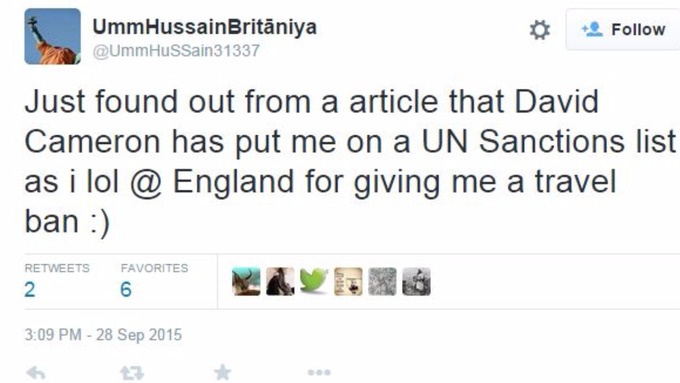
‘LOL @ England’:
British jihadi Sally-Anne Jones appears to mock Cameron on Twitter after being placed on UK’s most wanted list of ISIS fanatics and hit with travel ban
The Twitter account has now been closed down
———————————————————————————
The new image shows Muslim convert Jones, 45 – who spent a lifetime on benefits – looking lovingly into the camera as she holds her baby boy, just hours after he was born on December 19, 2004.
But ten years later the mother-of-two fled from Britain to Syria to join bloodthirsty ISIS militants.
Jones, from Chatham in Kent, also known as ‘Mrs Terror’, was one of four Britons suspected of leading recruitment drives and plotting terrorist attacks against the UK and elsewhere added to a United Nations list.
The other three are Omar Hussain from High Wycombe, Nasser Muthana from Cardiff and Aqsa Mahmood from Glasgow.
Click to read full story
——————————————————————
The Women of ISIS
——————————————————————
Back in the UK She played in a punk band back in Britain called Krunch. Now Sally Ann Jones is looking to raise holy hell online for the Islamic State.
A navel-baring British punk rocker turned Islamic State widow she is now aiming for a leadership role in the terror group’s cadre of hackers and online recruiters, United States officials believe.
Should she succeed, Sally Ann Jones, 45, would become ISIS’s most public European national to openly threaten U.S. and U.K. networks. She also would likely become the most influential woman in the so-called Islamic State, widely known as ISIS, transforming her into a key operational figure.
Key Events & Deaths on this day in Northern Ireland Troubles
29th September
Wednesday 29 September 1971
Two Protestant civilians, Alexander Andrews (60) and Ernest Bates (38), were killed in an explosion at the Four Step Inn on the Shankill Road in Belfast, no group claimed responsibility but it was believed to be the responsibility of the Provisional Irish Republican Army (IRA).
Monday 29 September 1975
Seven people were injured in an Irish Republican Army (IRA) bomb attack in Oxford Street, London.
Saturday 29 September 1979
Pope’s Visit to Ireland Pope John Paul II visited Drogheda, County Louth, Republic of Ireland. The Pope spoke to an estimated crowd of 250,000 people and appealed for an end to violence in Northern Ireland, “On my knees I beg of you to turn away from the paths of violence and to return to the ways of peace”.
Tuesday 29 September 1981
At the British Labour party’s annual conference a motion was passed committing the party to ‘campaign actively’ for a United Ireland by consent. [ 1981 Hunger Strike.]
Monday 29 September 1986
Amnesty International called for a full judicial inquiry into disputed killings in Northern Ireland.
Wednesday 29 September 1993
In a speech, Patrick Mayhew, then Secretary of State for Northern Ireland, asserted the right of “self-determination of the people living in Northern Ireland”. Mayhew also stated that Sinn Féin (SF) could only join political talks when Irish Republican Army (IRA) violence had ended “for real”.
Sunday 29 September 1996
A 250 pound car bomb made of home-made explosives was abandoned in Belfast. Security forces used a controlled explosion to make the bomb safe. The Continuity Irish Republican Army (CIRA) later claimed responsibility for the bomb.
Monday 29 September 1997
Ian Paisley, then leader of the Democratic Unionist Party (DUP), and Robert McCartney, then leader of the United Kingdom Unionist Party (UKUP), addressed a rally in the Ulster Hall, Belfast, which was in protest at the multi-party talks at Stormont. Approximately 1,000 people attended the rally called “Ulster’s Crisis – Where Now David Trimble, then leader of the Ulster Unionist Party (UUP), later attacked the “relentless negativity of a minority of Unionists”.
Wednesday 29 September 1999
Both David Trimble, then leader of the Ulster Unionist Party (UUP), and Martin McGuinness, the Vice-President of Sinn Féin (SF), held separate meetings with Tony Blair, then British Prime Minister, during the Labour Party annual conference. Trimble was reported as having said that he would be prepared to share power with Sinn Féin if the Irish Republican Army (IRA) undertook to decommission its weapons within days of the establishment of the proposed Executive.
29 September 2000
Patrick Quinn (32), a Catholic civilian, was shot dead while in The Depot Bar in Magherafelt, County Derry.
[Republican paramilitaries were believed to have been responsible for the shooting but no group claimed responsibility.]
Saturday 29 September 2001
Sinn Féin (SF) held its Ard Fheis (annual conference) at the RDS in Dublin, Republic of Ireland. Richard Egan, then United States Ambassador to Ireland, attended part of the proceedings to listen to the presidential address by Gerry Adams. Adams warned that the political institutions established by the Good Friday Agreement would collapse unless Unionists lifted their threats to exclude SF from the Northern Ireland Assembly.
Adams also said, in response to the attacks in America on 11 September 2001, that “terrorism is ethically indefensible”. However he drew a distinction between terrorists and freedom-fighters:
“We will not be part of any effort to criminalise or to deem as terrorists those men and women who fought when they considered they had no other choice …”.
John Reid, then Secretary of State for Northern Ireland, announced the names of the nine independent members who will join the new Northern Ireland Policing Board. The ten political members had already been nominated by the Ulster Unionist Party (UUP), the Social Democratic and Labour Party (SDLP), and the Democratic Unionist Party (DUP). Sinn Féin (SF) had refused to nominate members to the board.
The nine independent members were named as: Desmond Rea (Prof.) chairman, Denis Bradley vice-chairman, Viscount Brookeborough, Brian Dougherty, Barry Gilligan, Tom Kelly, Pauline McCabe, Rosaleen Moore, and Suneil Sharma.
Remembering all innocent victims of the Troubles
Today is the anniversary of the follow people killed as a results of the conflict in Northern Ireland
To the innocent on the list – Your memory will live forever
– To the Paramilitaries –
“There are many things worth living for, a few things worth dying for, but nothing worth killing for.
11 People lost their lives on the 29th September between 1971 – 2000
————————————————————–
29 September 1971
Alexander Andrews, (60)
Protestant Status: Civilian (Civ),
Killed by: not known (nk)
Killed in bomb attack on Four Step Inn, Shankill Road, Belfast.
————————————————————–
29 September 1971
Ernest Bates, (38)
Protestant Status: Civilian (Civ),
Killed by: not known (nk)
Killed in bomb attack on Four Step Inn, Shankill Road, Belfast.
————————————————————–
29 September 1972 Thomas Paisley, (49)
Protestant Status: Civilian (Civ),
Killed by: Ulster Volunteer Force (UVF)
Milkman, shot during armed robbery at farmhouse, Straid Road, Ballynure, near Ballyclare, County Antrim.
————————————————————–
29 September 1972
James Quigley, (18)
Catholic Status: Irish Republican Army (IRA),
Killed by: British Army (BA)
Shot during attempted sniper attack on British Army (BA) foot patrol, Albert Street, Lower Falls, Belfast.
————————————————————–
29 September 1972 Ian Burt, (18) nfNI Status: British Army (BA),
Killed by: Irish Republican Army (IRA)
Shot by sniper while on British Army (BA) foot patrol, Albert Street, Lower Falls, Belfast.
————————————————————–
29 September 1974
Gerard McWilliams, (23)
Catholic Status: Civilian (Civ),
Killed by: Ulster Defence Association (UDA)
Found stabbed to death in entry off Lecale Street, Donegall Road, Belfast.
————————————————————–
29 September 1978
Joseph Skelly, (74)
Protestant Status: Civilian (Civ),
Killed by: Irish Republican Army (IRA)
Shot from passing car, while driving through the centre of Newry, County Down. Former RUC member in car with him was intended target.
————————————————————–
29 September 1981 Mark Stockman, (20)
Protestant Status: Ulster Defence Regiment (UDR),
Killed by: Irish National Liberation Army (INLA)
Off duty. Shot shortly after leaving his workplace, Mackie’s factory, Springfield Road, Belfast.
————————————————————–
29 September 1984
Brian Stack, (47) nfNIRI Status: Irish Prison Officer (IPO),
Killed by: Irish Republican Army (IRA)
Employed at Portlaoise Prison. Died 18 months after being shot shortly after leaving the National Stadium, while walking along South Circular Road, Dublin. He was injured on 25 March 1983.
————————————————————–
29 September 1991
Kevin McGovern, (19)
Catholic Status: Civilian (Civ),
Killed by: Royal Ulster Constabulary (RUC)
Shot by undercover Royal Ulster Constabulary (RUC) member, while walking along, Westland Road South, Cookstown, County Tyrone.
————————————————————–
29 September 2000 Patrick Quinn, (32)
Catholic Status: Civilian (Civ),
Killed by: non-specific Republican group (REP)
Shot while in The Depot Bar, Union Street, Magherafelt, County Derry.
————————————————————–
This is simply the story of a boy trying to grow up, survive, thrive, have fun & discover himself against a backdrop of events that might best be described as ‘explosive’, captivating & shocking the world for thirty long years.
While everyone thinks that the Japanese attack on the US Navy’s Pacific Fleet at Pearl Harbour on December 7, 1941, was unprovoked, that isn’t true. More than seven decades after the surprise attack, a lot of people still think that the Japanese were aggressive imperialists who wanted to dominate the Asia-Pacific region. Today, Americans believe that their forefathers were minding their own business when the crazy Japanese attacked them, out of the blue. Very few people know that the US provoked the Japanese to resort to this unannounced, sneak attack.
Imperial Japan’s Aggressive Overtures
Tensions between the US and Japan had been rising throughout 1941. Imperial Japan, had in 1937, initiated an unjustified war with China, a favored US ally. This war had been raging on for over 4 years before the Pearl Harbour strike. Further, Japan’s totalitarian government had occupied Indochina and was hell-bent on imposing its will in East Asia. The US resented these developments in Asia.
Imperial Japan’s Booming Economy
From 1900, Japan’s economy experienced unprecedented growth. The nation industrialized rapidly. Since Japan had limited natural resources, its burgeoning industries relied heavily on imports. Raw materials such as petroleum, coal, copper, tin, steel scrap, iron ore, bauxite, and rubber were the chief imports. Many of these were from the US or European colonies in Asia. Without access to these imports, Japan’s industrial economy would have collapsed. However, the Japanese engaged in international trade and had built a reasonably developed industrial economy by 1941.
Japan’s Military-Industrial Complex
Simultaneously, the Japanese promoted a military-industrial complex. Consequently, the nation’s army and navy became increasingly powerful. Imperial Japan’s armed forces permitted the rising nation to exert its military might into several places in the Asia-Pacific region. Northern China and Korea were prime among these regions. This exertion of military power was similar to the US using its industrial prowess to equip armed forces that demonstrated the nation’s power into Latin America and Caribbean Islands, and even as far as the Philippines.
The US President’s Personal Preferences and Foreign Policy
The US government was controlled by its President Franklin D. Roosevelt since 1933. He won an unprecedented four 4-year terms and was the President until his death in 1945. He disliked the Japanese but loved the Chinese because his forefathers had prospered in the China trade. Roosevelt also favoured the British, an ally of China in WWII. He didn’t like Germany’s Hitler. Since 1937, Roosevelt paid great attention to foreign policy, partly to fulfil his political ambitions.
The Economic Warfare of the US Provoked Imperial Japan’s Sneak Attack
In the late 1930s, as Hitler’s Germany began to rearm, the Roosevelt administration worked closely with Britain and France to oppose German expansion. The US assistance to these nations included the destroyer deal as well as the deceptive Lend-Lease program. The US military attempted to create an incident that would justify its entry into the WWII arena by working closely with the British Navy. But Hitler didn’t fall for this ploy.
Roosevelt and His Subordinates Put Japan in an Untenable Position
In June 1940, the US Secretary of War Henry L. Stimson supported the Open Door Policy for China. Stimson recommended economic sanctions to check Japan’s advance in Asia. The US President, Treasury Secretary, and Interior Secretary also favoured this economic warfare. Roosevelt was hopeful that these sanctions would instigate the Japanese into committing a rash mistake by starting a war against the US. He also hoped that this would bring Germany in because Japan had a treaty with Germany.
US Administration Throttles Imperial Japan’s War Machine
Accordingly, the US administration curtly dismissed Japanese diplomatic overtures to normalize relations. Conversely, the US imposed a set of increasingly harsh economic sanctions on Japan right from 1939 when the 1911 Commercial Treaty with Japan was terminated. On July 2, 1940, the Export Control Act came into force. This Act authorized the US President to regulate the export of important defence materials. Under this power, on July 31, 1940, US exports of heavy melting iron, steel scrap, and aviation motor fuels to Japan were restricted.
Key Economic Sanctions that Crippled Imperial Japan
October 16, 1940: Roosevelt slapped an embargo on exports of steel and scrap iron to all destinations. Only Britain and some nations located in the Western Hemisphere were excluded in this stifling measure.
July 26, 1941: The President froze all Japanese assets in the US. Roosevelt effectively ended commercial relations between Japan and the US.
August 3, 1941: Roosevelt imposed an embargo of all the grades of oil that were still in commercial flow to Japan. Holland and Britain also followed suit. The European nations also imposed an embargo on exports to Imperial Japan from their Southeast Asian colonies.
Summary
Months before attacking Pearl Harbour, the Japanese offered to withdraw troops from Indochina under two conditions. First, the Japanese would work out peace with China without US interference. Second, US would lift the economic sanctions. The US did not want to abandon China. So, the Roosevelt administration continued to insist that Japan withdraw troops from Indochina and also reconsider the agreement it had with Germany and Italy.
Although this happened long ago, you can still take Pearl Harbour tours & see the sunken ships. There are 1,177 people still under the water. In addition, the USS Arizona Battleship is STILL leaking drops of oil. It is said the droplets of oil coming out of the USS Arizona are the tears of the dead. When the oil droplets stop, the dead will stop crying. See this at Pearl Harbour.
———————————————————————————————————————————
Luxury Pearl Harbour Tours. Free Pickup from Waikiki!
15% OFF Coupon Code: Hoku2015. Only available for the H1 & H4 Tours.
Starting with Pick-Up in Waikiki
Our Pearl Harbour Tours represent one of the most significant sites in United States History! Pay homage to the 1,177 fallen heroes of December 7, 1941 as you experience the museums, displays, exhibits, and movie short. You’ll have the choice of touring the USS Arizona Memorial, USS Missouri Battleship, USS Bowfin Submarine, and the Pacific Aviation Museum. With our expert tour guides the Pearl Harbour Tours are designed to fit your schedule.
The views and opinions expressed in this page and documentaries are soley intended to educate and provide background information to those interested in WWII .They in no way reflect my own opinions and I take no responsibility for any inaccuracies or factual errors.





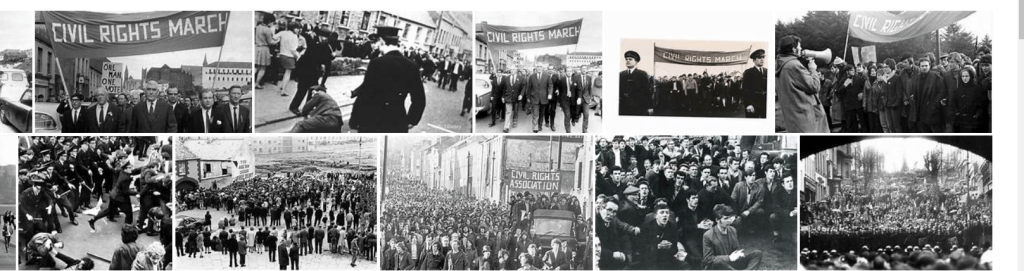


.png)






 Thank you