Well that is according to the wonderful Miss Biannca Lake whose brief appearance on BB last year was way to brief and something I’m still trying to come to terms with. I mean , was she for real? I sincerely hope not for the sake of her parents.
Having said that she was a breath of fresh air and the most entertaining thing on BB last year , apart from that nob Steven Goode , who was socially inadequate and ahem.. a bit mad really.
Steven Goode
But I digress.
My beef at the moment is with Danny and his sycophantic side kicks. mainly Christian. Danny seems to be under the delusion that is “The Father ” of the house and its his full time job to protect the rest of his flock from the evil Marc O’ Neill.
Even before one person nominated yesterday (I suspect like most other viewers ) I knew what was coming. Marc and Sam would get the majority of noms and Harry would be thrown into the equation for good measure. And how right I was. The only surprise was Pie face’s inclusion , not that that upset me, I just thought all nominations would be for Marc & Sam.
Danny , The 29-year-old demolition worker has already appeared on ITV2’s Girlfriends, Sky Living’s Love Machine and as an extra in TOWIE , so there’s obviously a wanton desire on his part to raise his profile and subject us to as much of his wonderful self as possible.
And wasn’t this the same guy a few weeks ago got a hump because another housemate suggested he wanted to be famous?
And now he has teamed up with that ugly ( BB Legend ) slapper Aisleyne Horgan-Wallace he’s walking about like the cat that got the cream. Sour cream in my opinion and they are well suited.
Danny repeatedly butts into Marc’s discussions ( arguments) with other housemates and he has been aggressive and confrontational on numerous occasions towards Marc and yet the BB fraternity seem to love him? I think he is bang out of order and would love to see him up for nom and evicted , but that cant happen whilst he is surrounded by his “followers”.
I posted last week about the nepotism BB shows towards BB Legends like Nicky Graham and Brian and my views have not changed. Both Brian and Nicky broke the BB rules in regards to being confrontational and evading someone space ( Marc & Helen) and yet neither was told off or criticised for their actions during the “sickening” exit interviews with Emma or BBBOTS team..
Big Brother 2015: Helen Wood reveals Nikki Grahame got a formal warning over her behaviour in the house.
Writing her column for the Daily Star, she said: “Things need putting into perspective. The public need to start reading between those fine lines. We all know my role is to be the panto villain.
“They weren’t going to show me making cups of tea and painting my nails.”
She added that she felt bullied while in the house that the show was edited against her. “I’m sick to death with people thinking it’s fine to slate me all the time, like I’m made of stone,” she continued.
“They pressed my buttons, that’s not shown, so when I explode it appears as if it’s come out of nowhere.
Similarly, Nikki got a formal warning, not shown. My formal warning, shown.
Give me Marc or Helen any day of the week over the rest of these wasters. At least with Marc & Helen you get what you see and they are honest and up-front.
Big Brother – Stop the Nepotism – its boring and unfair!
The Kingsmill massacre occurred on January 5, 1976 when ten Protestant men were killed just outside the village of Kingsmill in south Armagh, Northern Ireland by Irish republicans IRA.
——————————————-
——————————————-
The Kingsmill massacre was one of the worst single incidents in a period of severe sectarian violence during the Troubles, in Northern Ireland.
January 5, 1976, a Ford Transit mini-bus carried Protestant textile workers travelling home from work. The Provisional IRA South Armagh Brigade stopped the van and shot the men in cold blood with Armalite rifles, SLRs, a 9mm pistol and an M1 carbine, a total of 136 rounds were fired in less than a minute. No one was ever charged in relation to the Kingsmill killings.
The Kingsmill massacre took place on 5 January 1976 near the village of Kingsmill in south County Armagh, Northern Ireland.
Gunmen stopped a minibus carrying eleven Protestant workmen, lined them up beside it and then shot them. Only one of them survived, despite having been shot 18 times. A group calling itself the South Armagh Republican Action Force claimed responsibility. It said the shooting was retaliation for a string of attacks on Catholic civilians in the area by Loyalists, particularly the killing of six Catholics the night before.
The Kingsmill massacre was the climax of a string of tit-for-tat killings in the area during the mid-1970s, and was one of the deadliest mass shootings of the Troubles.
A 2011 report by the Historical Enquiries Team (HET) found that members of the Provisional IRA carried out the attack, despite the organisation being on ceasefire. It has been claimed that the IRA members acted without the sanction of the IRA Army Council. The HET report said that the men were targeted because they were Protestants and that, although it was a response to the night before, it had been planned in advance.
The weapons used were linked to 110 other attacks.
Following the massacre, the British government declared County Armagh to be a “Special Emergency Area” and hundreds of extra troops and police were deployed in the area. It also announced that the Special Air Service (SAS) was being moved into South Armagh. This was the first time that SAS presence in Northern Ireland was officially acknowledged.
——————————
The Victims
Alan Black the only survivor of the massacre
——————————
05 January 1976
John McConville, (20)
Protestant Status: Civilian (Civ),
Killed by: Republican Action Force (RepAF) Shot shortly after his firm’s minibus stopped at bogus vehicle check point while travelling home from work, Kingsmills, near Bessbrook, County Armagh.
——————————
05 January 1976
Walter Chapman, (23)
Protestant Status: Civilian (Civ),
Killed by: Republican Action Force (RepAF) Shot shortly after his firm’s minibus stopped at bogus vehicle check point while travelling home from work, Kingsmills, near Bessbrook, County Armagh.
——————————
05 January 1976
Reginald Chapman, (25)
Protestant Status: Civilian (Civ),
Killed by: Republican Action Force (RepAF) Shot shortly after his firm’s minibus stopped at bogus vehicle check point while travelling home from work, Kingsmills, near Bessbrook, County Armagh.
——————————
05 January 1976
Joseph Lemmon, (46)
Protestant Status: Civilian (Civ)
Killed by: Republican Action Force (RepAF) Shot shortly after his firm’s minibus stopped at bogus vehicle check point while travelling home from work, Kingsmills, near Bessbrook, County Armagh.
——————————
05 January 1976
James McWhirter, (58)
Protestant Status: Civilian (Civ),
Killed by: Republican Action Force (RepAF) Shot shortly after his firm’s minibus stopped at bogus vehicle check point while travelling home from work, Kingsmills, near Bessbrook, County Armagh.
——————————
05 January 1976
Kenneth Worton, (24)
Protestant Status: Civilian (Civ),
Killed by: Republican Action Force (RepAF) Shot shortly after his firm’s minibus stopped at bogus vehicle check point while travelling home from work, Kingsmills, near Bessbrook, County Armagh.
——————————
05 January 1976
Robert Chambers, (19)
Protestant Status: Civilian (Civ),
Killed by: Republican Action Force (RepAF) Shot shortly after his firm’s minibus stopped at bogus vehicle check point while travelling home from work, Kingsmills, near Bessbrook, County Armagh.
——————————
05 January 1976
John Bryans, (46)
Protestant Status: Civilian (Civ),
Killed by: Republican Action Force (RepAF) Shot shortly after his firm’s minibus stopped at bogus vehicle check point while travelling home from work, Kingsmills, near Bessbrook, County Armagh
——————————
05 January 1976
Robert Freeburn, (50)
Protestant Status: Civilian (Civ),
Killed by: Republican Action Force (RepAF) Shot shortly after his firm’s minibus stopped at bogus vehicle check point while travelling home from work, Kingsmills, near Bessbrook, County Armagh.
——————————
05 January 1976
Robert Walker, (46)
Protestant Status: Civilian (Civ),
Killed by: Republican Action Force (RepAF) Shot shortly after his firm’s minibus stopped at bogus vehicle check point while travelling home from work, Kingsmills, near Bessbrook, County Armagh.
——————————
Survivor
Alan Black
Background
On 10 February 1975, the Provisional IRA and British government entered into a truce and restarted negotiations. The IRA agreed to halt attacks on the British security forces, and the security forces mostly ended its raids and searches.
However, there were dissenters on both sides. Some Provisionals wanted no part of the truce, while British commanders resented being told to stop their operations against the IRA just when—they claimed—they had the Provisionals on the run.
The security forces boosted their intelligence offensive during the truce and thoroughly infiltrated the IRA.
There was a rise in sectarian killings during the truce, which ‘officially’ lasted until February 1976. Loyalists, fearing they were about to be forsaken by the British government and forced into a united Ireland, increased their attacks on Irish Catholics/nationalists. Loyalists killed 120 Catholics in 1975, the vast majority civilians.
They hoped to force the IRA to retaliate and thus hasten an end to the truce. Under orders not to engage the security forces, some IRA units concentrated on tackling the loyalists. The fall-off of regular operations had caused serious problems of internal discipline and some IRA members, with or without permission from higher up, engaged in tit-for-tat killings. Irish National Liberation Army (INLA) members, and current or former members of the Official IRA, were also involved.
Between the beginning of the truce (10 February 1975) and the Kingsmill massacre, loyalist paramilitaries killed 25 Catholic civilians in County Armagh and just over the border in County Louth.
In that same period, republican paramilitaries killed 14 Protestant civilians and 16 members of the security forces in County Armagh.
On 1 September, five Protestant civilians were killed by masked gunmen at Tullyvallan Orange Hall near Newtownhamilton. The attack was claimed by a group calling itself the “South Armagh Republican Action Force”. This was the first time the name had been used.
On 19 December, loyalists detonated a car bomb at Kay’s Tavern in Dundalk, a few miles across the Irish border. No warning was given beforehand and two civilians were killed. Later that day, three Catholic civilians were killed and six were wounded in a gun and grenade attack on Donnelly’s Bar in Silverbridge. The “Red Hand Commandos” claimed responsibility for both attacks. Royal Ulster Constabulary (RUC) officers investigating the attack said they believed the culprits included an RUC officer and a British soldier from the Ulster Defence Regiment (UDR).
On 31 December, three Protestant civilians were killed in an explosion at the Central Bar, Gilford. The “People’s Republican Army” claimed responsibility. It is believed this was a cover name used by members of the INLA.
Four days later, on 4 January 1976, the UVF Mid-Ulster Brigadeshot dead six Catholic civilians in two co-ordinated attacks. They killed three members of the Reavey family in Whitecross and three members of the O’Dowd family in Ballydougan, within twenty minutes of each other. The Irish News reported that the killings were in revenge for the bombing in Gilford. RUC officer Billy McCaughey admitted taking part and accused another officer of being involved. His colleague, John Weir, said that two police officers and a British soldier were involved.
The HET report found that while the massacre was in “direct response” to the Reavey and O’Dowd killings, the attack was planned before that: “The murderous attacks on the Reavey and O’Dowd families were simply the catalyst for the premeditated and calculated slaughter of these innocent and defenceless men”.
The attack
The bullet-riddled minibus which had been transporting the 11 Protestant workers who were gunned down as they lined up beside the vehicle
On 5 January 1976 just after 5.30 pm, a red Ford Transitminibus was carrying sixteen textile workers home from work in Glenanne to Bessbrook. Five were Catholics and eleven were Protestants. Four of the Catholics got out at Whitecross, while the rest continued on the road to Bessbrook.
As the bus cleared the rise of a hill, it was stopped by a man in British Army uniform standing on the road and flashing a torch. The workers assumed they were being stopped and searched by the British Army. As the bus stopped, eleven masked gunmen with blackened faces and wearing combat jackets emerged from the hedges. A man “with a pronounced English accent” then began talking.
He ordered them to line-up beside the bus and then asked:
“Who is the Catholic?”.
The only Catholic was Richard Hughes. His workmates—now fearing that the gunmen were loyalists who had come to kill him—tried to stop him from identifying himself. However, when Hughes stepped forward the gunman told him to “Get down the road and don’t look back”. The lead gunman then said “Right” and the other armed men immediately opened fire on the workers.
The remaining eleven men were shot at very close range with AR-18 and L1A1 SLRrifles, a 9mmpistol, and an M1 carbine. A total of 136 rounds were fired in less than a minute. The dead and wounded men’s bodies fell on top of each other. When the shooting stopped, one of the gunmen walked amongst the dying men and shot each of them in the head as they lay on the ground.
Ten of them died at the scene; John Bryans, Robert Chambers, Reginald Chapman, Walter Chapman, Robert Freeburn, Joseph Lemmon, John McConville, James McWhirter, Robert Walker and Kenneth Worton.
Alan Black survived despite having eighteen gunshot wounds.
Hughes managed to stop a car and was driven to Bessbrook RUC station, where he raised the alarm. Meanwhile, a man and his wife had come upon the scene of the killings and had begun praying beside the victims. They found Alan Black, who was lying in a ditch and badly wounded. When an ambulance arrived, Black was taken to hospital in Newry, where he was operated on and survived.
A police officer said that the road was “an indescribable scene of carnage”, whilst Johnston Chapman, the uncle of victims Reginald and Walter Chapman, said that the dead men were “just lying there like dogs, blood everywhere”.
At least two of the victims were so badly mutilated by gunfire that immediate relatives were prevented from identifying them. One relative stated that the hospital mortuary “was like a butcher’s shop with bodies lying on the floor like slabs of meat”
Nine of the dead, the textile workers, were from the village of Bessbrook, while the bus driver, Robert Walker (46), was from nearby Mountnorris. Four of the men were members of the Orange Order.
———————————–
Evidence exists to arrest untouchable IRA killers who committed the Kingsmills massacre
———————————–
The perpetrators
The next day, a caller claimed responsibility for the attack on behalf of the South Armagh Republican Action Force. He said that it was retaliation for the Reavey and O’Dowd killings of the night before, and that there would be “no further action on our part” if loyalists stopped their attacks. He added that the group had no connection with the IRA.
The IRA at the time denied responsibility for the killings. It stated on 17 January 1976:
The Irish Republican Army has never initiated sectarian killings… [but] if loyalist elements responsible for over 300 sectarian assassinations in the past four years stop such killing now, then the question of retaliation from whatever source does not arise.
However, a 2011 report by the Historical Inquiries Team (HET) found that Provisional IRA members were responsible and that the “South Armagh Republican Action Force” was merely a covername. It added: “There is some intelligence that the Provisional IRA unit responsible was not well-disposed towards central co-ordination but there is no excuse in that. These dreadful murders were carried out by the Provisional IRA and none other”.
Responding to the report, Sinn Féin spokesman Mitchel McLaughlin said that he did “not dispute the sectarian nature of the killings” but continued to believe “the denials by the IRA that they were involved”. SDLP Assemblyman Dominic Bradley called on Sinn Féin to “publicly accept that the HET’s forensic evidence on the firearms used puts Provisional responsibility beyond question” and cease “deny[ing] that the Provisional IRA was in the business of organising sectarian killings on a large scale”.
According to the account of journalist Toby Harnden, the British Military Intelligence assessment at the time was that the attack was carried out by local IRA members “who were acting outside of the normal IRA command structure”.
He also quoted an alleged South Armagh IRA member, Volunteer M, who said that “IRA members were ordered by their leaders to carry out the Kingsmill massacre”. Furthermore, Harnden reported a contradictory RUC allegation that the attack was planned, and that future Real IRA leader Michael McKevitt was among the IRA members who planned it (at the nearby Road House pub on New Year’s Eve) and took part.
It was alleged by Harnden that IRA Chief of StaffSeamus Twomey, on the suggestion of Brian Keenan, ordered that there had to be a disproportionate retaliation against Protestants in order to stop Catholics being killed by loyalists. According to IRA informer Sean O’Callaghan, “Keenan believed that the only way to put the nonsense out of the Prods [Protestants], was to hit back much harder and more savagely than them”.
However, O’Callaghan reports that Twomey and Keenan did not consult the IRA Army Council before sanctioning the Kingsmill attack. Ruairí Ó Brádaigh claims that he and Twomey only learned of the Kingsmill attack after it had taken place.
Two AR-18 rifles used in the shooting were found by the British Army in 1990 in a wall near Cullyhanna and forensically tested. It was reported that the rifles were linked to 17 killings in the South Armagh area from 1974 to 1990. Further ballistic studies found that guns used in the attack were linked to 37 killings, 22 attempted killings, 19 non-fatal shootings and 11 finds of spent cartridges between 1974 and 1989.
In 2012, a secret Royal Military Police (RMP) document shown to the Sunday World newspaper revealed that the gunman who finished off the dying men could have been arrested five months later. The document says that the man (referred to as ‘P’) was wounded when British soldiers engaged an IRA unit near the Mountain House Inn on the Newry–Newtownhamilton Road on 25 June 1976. He managed to flee over the border and was treated at Louth County Hospital shortly after.
The three other members of the IRA unit were captured within hours. According to the RMP document, two of them named ‘P’ as the fourth member. Four guns were also captured by security forces after the gunfight, including two that had been used in the Kingsmill massacre. The RMP document reveals that both the British Army and RUC knew that ‘P’ was being treated at the hospital but “made no attempt to have him arrested and extradited”. This has led to suspicions that ‘P’ – “who has never been prosecuted despite extensive paramilitary involvement” – was a British agent.
Eugene Reavey had “witnessed the immediate aftermath of the [Kingsmill] massacre, which took place near his home. He was driving to Newry and happened upon it. He and his family were on their way to Daisy Hill hospital to collect the bodies of two of his brothers, John (24) and Brian (22).”
Eugene Reavey “was also going to visit his younger brother, Anthony, who had been badly injured in the attack. The bodies of the murdered workmen were being brought into the mortuary when he arrived. He went into the room where the shattered families were gathering, and wept with them. Alan Black [sole survivor of the Kingsmill massacre] and Anthony Reavey shared a hospital room. Black lived whilst Reavey later died.”
Paisley used parliamentary privilege to name those he believed responsible, including Eugene Reavey, whom he accused of being “a well-known republican” who “set up the Kingsmills massacre”. Paisley claimed to be quoting from what he described as a “police dossier” but what is believed to be an Ulster Defence Regiment intelligence file.
Paisley’s claims were rejected by the sole survivor of the Kingsmill massacre, Alan Black, and also by Reavey himself.
…went straight to the Reaveys’ house in Whitecross, south Armagh. He told Reavey that he knew he was innocent. The PSNI has stated that it had no reason to suspect Reavey of any crime, let alone of masterminding the atrocity … The then Northern Ireland deputy first minister, the SDLP‘s Seamus Mallon, expressed outrage. Reavey went to the chief constable of the RUC, Ronnie Flanagan. Flanagan said he had “absolutely no evidence whatsoever” to connect him with the massacre, and that no police file contained any such allegation.
In May 2010, the HET released a report which exonerated the three Reavey brothers and their family of any links to paramilitarism, leading Eugene Reavey to demand an apology from Ian Paisley for the comments he made in 1999. Paisley died in 2014 without retracting his allegations.
Strong indications of UDR involvement and collusion with the UVF led to a case being taken before the European Court of Human Rights regarding the killings. In November 2007, the court ruled that the RUC had not properly investigated allegations made by John Weir, a former RUC officer and self-confessed former member of the Glennane gang.
Weir has made detailed claims of collusion between high-ranking members of the security forces and paramilitary groups.
Alan Black’s claims
Alan Black
Alan Black, the sole survivor, has claimed that state agents were involved.
Reactions and aftermath
The Kingsmill massacre was the last in the series of sectarian killings in South Armagh during the mid-1970s. According to Willie Frazer of FAIR, this was as a result of deal between the local UVF and IRA groups.
Two days after the massacre, Prime Minister Harold Wilson announced that the Special Air Service (SAS) was being moved into the South Armagh area. This was the first time that SAS presence in Northern Ireland was officially acknowledged.
However, according to historian Richard English, “It seems clear that the SAS had been in the north well before this. According to the Provisionals since 1971; according to a former SAS soldier they had been there even earlier”. Units and personnel under SAS control are alleged to have been involved in loyalist attacks.
Author Toby Harnden places regiment’s B squadron in Belfast as early as 1974.
There were no immediate revenge attacks by loyalist paramilitaries. However, in 2007 it emerged that local UVF members from the “Glenanne gang” had planned to kill at least 30 Catholic school children as retaliation.
This gang had been involved in the Reavey–O’Dowd killings and it included members of the RUC’s Special Patrol Group and the British Army’s Ulster Defence Regiment. Following the Kingsmill shootings, the gang drew-up plans to attack St Lawrence O’Toole Primary School in the South Armagh village of Belleeks.
The plan was aborted at the last minute on orders of the UVF’s Brigade Staff (Belfast leadership), who ruled that it would be “morally unacceptable”, would undermine support for the UVF, and could lead to civil war. One Glenanne gang member said that the UVF leadership also feared the potential IRA response. The gang member who suggested the attack was a UDR soldier. The leadership allegedly suspected that he was working for British Military Intelligence, and that Military Intelligence were seeking to provoke a civil war.
Another UVF gang, the “Shankill Butchers“, also planned retaliation for the massacre. This gang, led by Lenny Murphy, operated in Belfast and was notorious for its late-night kidnapping, torture and murder (by throat slashing) of random Catholic civilians. Within a week of the massacre, Murphy had laid the groundwork for an attack on a lorry that ferried Catholic workmen to Corry’s Timber Yard in West Belfast. The plan was to shoot all of those on board. However, Murphy abandoned the plan after the workers changed their route and transport.[67]
Some loyalists claim the Kingsmill massacre is the reason they joined paramilitary groups. One was Billy Wright, who said:
I was 15 when those workmen were pulled out of that bus and shot dead. I was a Protestant and I realised that they had been killed simply because they were Protestants. I left Mountnorris, came back to Portadown and immediately joined the youth wing of the UVF.[68]
He went on to assume command of the UVF Mid-Ulster Brigade when its leader Robin “the Jackal” Jackson “retired” in the early 1990s; Wright later founded the breakaway Loyalist Volunteer Force (LVF) in 1996. He was suspected of at least 20 sectarian killings of Catholics in the 1980s and 1990s.
Another with similar claims was RUC Special Patrol Group officer Billy McCaughey, who was one of the RUC officers present at the aftermath of the massacre. He told Toby Harnden, “the sides of the road were running red with blood and it was the blood of totally innocent Protestants”. Afterwards, McCaughey says that he began passing RUC intelligence to loyalist militants and also to participate in their operations. McCaughey was convicted in 1980 of one sectarian killing, the kidnapping of a Catholic priest, and one failed bombing.
However, McCaughey had colluded with loyalists before the Kingsmill attack, and later admitted to taking part in the Reavey killings the day before – he claimed he “was at the house but fired no shots”.
McCaughey also gave his view on how the massacre affected loyalists:
I think Kingsmills forced people to ask themselves where they were going, especially the Protestant support base, the civilian support base – the people who were not members of the UVF but would let you use a building or a field. Those people, many of them withdrew. It wasn’t because of anything the UVF did. It was fear of retaliation.[19]
No one was ever charged in relation to the Kingsmill massacre. In August 2003, there were calls for the Police Service of Northern Ireland to reopen the files relating to the massacre.
Republican response
As noted above, the IRA denied involvement in the attack. Although author Toby Harnden and others have alleged that it was ordered by elements of the IRA leadership (Seamus Twomey and Brian Keenan), other republican leaders were reported to be very unhappy about it. According to the informer Sean O’Callaghan, Gerry Adams said in an Army Council meeting, “there’ll never again be another Kingsmill”.
Harnden stated that IRA members in South Armagh who talked to him in the late 1990s generally condemned the massacre. One of them, Volunteer M, was quoted as saying that it was “a gut reaction [to the killing of Catholics] and a wrong one. The worst time in my life was in jail after Kingsmill. It was a dishonourable time”. Another, Volunteer G, was quoted as saying that he “never agreed with Kingsmill”. Republican activist Peter John Caraher said that those ultimately responsible were “the loyalists who shot the Reavey brothers”.
He added, “It was sad that those people [at Kingsmill] had to die, but I’ll tell you something, it stopped any more Catholics being killed”. This view was reiterated by a County Tyrone republican and Gaelic Athletic Association veteran who spoke to Ed Moloney. “It’s a lesson you learn quickly on the football field… If you’re fouled, you hit back”, he said.
Memorial parade controversy
In February 2012, controversy arose when Willie Frazer of FAIR proposed a “March for Justice” in which the victims’ relatives, along with 11 loyalist bands, would follow the route taken by the workmen the night they were killed. This would have meant passing through the mainly nationalist village of Whitecross and past the homes of the Reavey family, where the three brothers had been killed the night before the massacre.
Over 200 people voiced their opposition to the march at a meeting with the Parades Commission in Whitecross. Local SDLP and Sinn Féin representatives also opposed it, saying it would raise sectarian tension in the area. The Parades Commission approved the march on condition that there be no marching bands, flags, banners or placards. Pastor Barrie Halliday, a member of FAIR, received a death threat telling him that he would be shot and his church would be burnt if the march went ahead.
There is a memorial in Beesbrook inscribed ‘The Innocent Victims Murdered at Kingsmills’.
A second memorial, near the site of the attack was vandalised on Friday 30 November 2012 while it was undergoing construction. IRA graffiti was scratched into the plaster of the memorial. Danny Kennedy MLA, who has campaigned on behalf of the families, said he was “absolutely appalled by the attack”. The Ulster Unionist representative also claimed that there was an attempt to “intimidate” construction workers at the memorial site, prior to the graffiti appearing.
In June 2013, Northern Ireland’s SDLP Environment Minister Alex Attwood apologised that his Department has sent a letter to the land owner of the memorial site demanding it be removed as it did not have planning permission. Attwood said: “That letter should not have been issued. How the planning system went off and issued a letter is beyond me. I am not happy.” MLA William Irwin criticised the Department’s action and contrasted it with its inaction over 19 “illegal roadside terrorist memorials”, five of which were in the Newry and Armagh constituency, which similarly had no planning permission
—————————
Alan Black
The sole survivor of the Kingsmill massacre has threatened legal action over the failure to appoint a new coroner to hear a fresh inquest into the murders of 10 Protestant workmen in South Armagh almost 40 years ago
A number of victims’ relatives joined Alan Black in issuing the ultimatum to the Department of Justice on Tuesday.
He was one of 11 textile workers who were ambushed in South Armagh in 1976. Ten of the men died when they were lined up against the minibus they were travelling in and shot.
Northern Ireland’s Senior Coroner John Leckey has been presiding over preliminary proceedings ahead of the new inquest being heard, but he is due to retire in the autumn.
No other coroner has been assigned to the case, despite calls from Mr Leckey for Justice Minister David Ford to find a successor.
During the final preliminary hearing in the case before retirement, a lawyer representing Mr Black and the family of victim John McConville warned judicial review proceedings would be initiated if no action is taken.
Mr Black said the families would not accept a further hold-up in their long battle for an inquest.
“Over the years since we got involved, it has been one obstacle put in our way after the other and all coming from the Department of Justice,” he said.
“They knew for two years that John Leckey was going to go. David Ford wants to kick us into the long grass again, we are not going.
“We’ll do whatever’s necessary with the legal people and hopefully get a result then.”
No one has been convicted of the murders, which were widely blamed on the IRA, although the organisation never admitted responsibility.
Mr Black was hit 18 times but survived the gun attack.
The only Catholic worker was told to flee the scene.
In a statement, a spokesman for the justice minister said: “The Department of Justice fully appreciates the concerns of the families who are awaiting inquests into the deaths of loved ones.
“The Coroners Service currently has three full-time coroners, including the senior coroner.
“The justice minister also recently approved the appointment of an additional county court judge to create additional judicial capacity for legacy cases.
“The assignment of a coroner to hear inquests is currently the responsibility of the senior coroner and will become the responsibility of the Lord Chief Justice when he assumes the Presidency of the Coroners’ Courts.”
The sole survivor of a sectarian massacre of 10 Protestant workmen in Northern Ireland has led a solitary life since the slaughter, a lawyer told an inquest
Alan Black was shot 18 times and left for dead alongside the lifeless bodies of his friends, cut down in a hail of bullets by a South Armagh roadside in 1976, blamed on He has problems trusting people and suffered health issues, a Belfast courtroom was told. The elderly former engineer applied for legal representation in an upcoming coroner’s investigation into a mass killing near the village of Kingsmill, one of the most notorious Troubles shootings.
Barrister Fiona Doherty told the hearing: “He has not been able to work since the shooting and leads a solitary life.”
The textile workers were gunned down after a masked gang stopped their minibus close to Kingsmill as they were travelling home from work.
They were forced to line up alongside the van and ordered to divulge their religion. The only Catholic was told to flee while the 11 remaining were shot.
No-one has ever been convicted of the murders, widely blamed on the IRA even though the organisation never admitted responsibility
Ms Doherty said the only survivor had left school at 15 and worked as a mechanic or engineer until the incident.
She argued that she should be allowed to represent him, alongside relatives of the deceased, during what is expected to be one of the largest inquests in recent times in Northern Ireland.
She claimed it would be nearly impossible for him to properly understand and respond to the evidence and stressed his importance to shed light on what happened.
“He is not simply a witness, he is a survivor.
“He is the only person who can give a first hand account of what happened.”
She told coroner Brian Sherrard it may be only when another witness gave evidence or documents were made available that the value of his input was realised.
“The court should be very slow to disregard that full input and the benefit that you and the inquest get from having that input.”
She argued counsel for the coroner could not adequately replace a dedicated lawyer.
“He needs help and support to come from people he knows and trusts and has built up a rapport with. He has issues with trust stemming from the incident…and he needs help and support to be fully informed.”
She warned the consequences of not granting legal representation could be profound.
“There is a real risk that the inquest will pass him by.”
A barrister for the Police Service of Northern Ireland (PSNI), Peter Coll, asked what purpose would be served.
“What extra element will be brought to the inquest proceedings, what marks Mr Black out as being different from a witness/survivor in any other incident?
“We respectfully say there would be nothing to be gained from it.”
This is simply the story of a boy trying to grow up, survive, thrive, have fun & discover himself against a backdrop of events that might best be described as ‘explosive’, captivating & shocking the world for thirty long years.
The Romans came to Britain and conquered it, ruling the island for centuries. But why did they come and how did they succeed in the face of the inhabitants’ ferocious resistance? Using state-of-the-art graphic imagery and expert reconstructions of the Roman army in action, Bettany Hughes goes back in time to see how they inspired shock and awe. Hughes analyses the motives and actions of Roman emperors and generals, and of their opponents like Caratacus, a warrior from South-East England who became a hero to the Britons.
The Druids were priests who carried out religious rituals in Iron Age Britain and France. The Romans, who visited and later conquered France and Britain, met Druids and wrote about their beliefs and rites
Posting this one for any fans of ancient warfare , especially The Romans who dominated & controlled much of the known world at one time or other, Including good old Britain.
The Iceni under Boudica ( and many other tribes ) give them a run for their money, but alas nothing could stand in the way of the brutal killing machine that was the Roman Army and the rest is history.
If I had the powers to travel back in time it would be to the golden days of Pompey the Great , Julius Caesar & The reign of Emperors.
Enjoy
————————————————————————————–
Rise and Fall of the Druids (Full Documentary )
————————————————————————————–
A druid (Irish: Druí; Welsh: Derwydd) was a member of the educated, professional class among the Celtic peoples of Gaul, Britain, Ireland, and possibly elsewhere during the Iron Age. The druid class included law-speakers, poets and doctors, among other learned professions, although the best known among the druids were the religious leaders.
Very little is known about the ancient druids. They left no written accounts of themselves, and the only evidence is a few descriptions left by Greek, Roman, and various scattered authors and artists, as well as stories created by later medieval Irish writers.[2] While archaeological evidence has been uncovered pertaining to the religious practices of the Iron Age people, “not one single artefact or image has been unearthed that can undoubtedly be connected with the ancient Druids.”[3] Various recurring themes emerge in a number of the Greco-Roman accounts of the druids, including that they performed animal and even human sacrifice, believed in a form of reincarnation, and held a high position in Gaulish society. Next to nothing is known for certain about their cultic practice, except for the ritual of oak and mistletoe as described by Pliny the Elder.
The earliest known reference to the druids dates to 200 BCE, although the oldest actual description comes from the Roman military general Julius Caesar in his Commentarii de Bello Gallico (50s BCE). Later Greco-Roman writers also described the druids, including Cicero,[4]Tacitus[5] and Pliny the Elder.[6] Following the Roman invasion of Gaul, druidism was suppressed by the Roman government under the 1st century CE emperors Tiberius and Claudius, and it had disappeared from the written record by the 2nd century.
In about 750 CE the word druid appears in a poem by Blathmac, who wrote about Jesus, saying that he was “… better than a prophet, more knowledgeable than every druid, a king who was a bishop and a complete sage.”[7] The druids then also appear in some of the medieval tales from Christianized Ireland like the “Táin Bó Cúailnge“, where they are largely portrayed as sorcerers who opposed the coming of Christianity.[8] In the wake of the Celtic revival during the 18th and 19th centuries, fraternal and Neopagan groups were founded based on ideas about the ancient druids, a movement known as Neo-Druidism. Many popular modern notions about druids have no connection to the druids of the Iron Age and are largely based on much later inventions or misconceptions.[9]
————————————————————————————–
Pre-Roman Britain Rise and Fall of the Ancient Druids: Why Were the Romans So Afraid of Them?
————————————————————————————–
Etymology
The modern English word druid derives from the Latin druides (pronounced [druˈides]), which was considered by ancient Roman writers to come from the native Celtic Gaulish word for these figures.[10][11][12] Other Roman texts also employ the form druidae, while the same term was used by Greek ethnographers as δρυΐδης (druidēs).[13][14] Although no extant Romano-Celtic inscription is known to contain the form,[10] the word is cognate with the later insular Celtic words, Old Irishdruí (“druid, sorcerer”) and early Welsh dryw (“seer”).[12] Based on all available forms, the hypothetical proto-Celtic word may then be reconstructed as *dru-wid-s (pl. *druwides) meaning “oak-knower”. The two elements go back to the Proto-Indo-European roots *deru-[15] and *weid- “to see”.[16] The sense of “oak-knower” (or “oak-seer”) is supported by Pliny the Elder,[12] who in his Natural History considered the word to contain the Greek noun δρύς (drus), “oak-tree”[17] and the Greek suffix -ιδης (-idēs).[18] The modern Irish word for Oak is Dair, which occurs in anglicized placenames like Derry – Doire, and Kildare – Cill Dara (literally the “church of oak”). There are many stories about saints, heroes, and oak trees, and also many local stories and superstitions (called pishogues) about trees in general, which still survive in rural Ireland. Both Irish druí and Welsh dryw could also refer to the wren,[12] possibly connected with an association of that bird with augury in Irish and Welsh tradition (see also Wren Day).[12][19]
Practices and doctrines
According to historian Ronald Hutton, “we can know virtually nothing of certainty about the ancient Druids, so that—although they certainly existed—they function more or less as legendary figures.”[20] However, the sources provided about them by ancient and medieval writers, coupled with archaeological evidence, can give us an idea of what they might have performed as a part of their religious duties.
Societal role and training
Imaginative illustration of ‘An Arch Druid in His Judicial Habit’, from “The Costume of the Original Inhabitants of the British Islands” by S.R. Meyrick and C.H. Smith (1815), the gold gorget collar copying Irish Bronze Age examples.[21]
One of the few things that both the Greco-Roman and the vernacular Irish sources agree on about the druids is that they played an important part in pagan Celtic society. In his description, Julius Caesar claimed that they were one of the two most important social groups in the region (alongside the equites, or nobles) and were responsible for organizing worship and sacrifices, divination, and judicial procedure in Gaulish, British and Irish society.[22] He also claimed that they were exempt from military service and from the payment of taxes, and that they had the power to excommunicate people from religious festivals, making them social outcasts.[22] Two other classical writers, Diodorus Siculus and Strabo, also wrote about the role of druids in Gallic society, claiming that the druids were held in such respect that if they intervened between two armies they could stop the battle.[23]
Pomponius Mela[24] is the first author who says that the druids’ instruction was secret, and was carried on in caves and forests. Druidic lore consisted of a large number of verses learned by heart, and Caesar remarked that it could take up to twenty years to complete the course of study. There is no historic evidence during the period when Druidism was flourishing to suggest that Druids were other than male.[25] What was taught to Druid novices anywhere is conjecture: of the druids’ oral literature, not one certifiably ancient verse is known to have survived, even in translation. All instruction was communicated orally, but for ordinary purposes, Caesar reports,[26] the Gauls had a written language in which they used Greek characters. In this he probably draws on earlier writers; by the time of Caesar, Gaulish inscriptions had moved from the Greek script to the Latin script.
Sacrifice
An 18th century illustration of a wicker man, the form of execution that Caesar alleged the druids used for human sacrifice. From the “Duncan Caesar”, Tonson, Draper, and Dodsley edition of the Commentaries of Caesar translated by William Duncan published in 1753.
Greek and Roman writers frequently made reference to the druids as practitioners of human sacrifice, a trait they themselves reviled, believing it to be barbaric.[27] Such reports of druidic human sacrifice are found in the works of Lucan, Julius Caesar, Suetonius and Cicero.[28] Caesar claimed that the sacrifice was primarily of criminals, but at times innocents would also be used, and that they would be burned alive in a large wooden effigy, now often known as a wicker man. A differing account came from the 10th-century Commenta Bernensia, which claimed that sacrifices to the deities Teutates, Esus and Taranis were by drowning, hanging and burning, respectively (see threefold death).
Diodorus Siculus asserts that a sacrifice acceptable to the Celtic gods had to be attended by a druid, for they were the intermediaries between the people and the divinities. He remarked upon the importance of prophets in druidic ritual:
“These men predict the future by observing the flight and calls of birds and by the sacrifice of holy animals: all orders of society are in their power… and in very important matters they prepare a human victim, plunging a dagger into his chest; by observing the way his limbs convulse as he falls and the gushing of his blood, they are able to read the future.”
There is archaeological evidence from western Europe that has been widely used to back up the idea that human sacrifice was performed by the Iron Age Celts. Mass graves found in a ritual context dating from this period have been unearthed in Gaul, at both Gournay-sur-Aronde and Ribemont-sur-Ancre in what was the region of the Belgae chiefdom. The excavator of these sites, Jean-Louis Brunaux, interpreted them as areas of human sacrifice in devotion to a war god,[29][30] although this view was criticized by another archaeologist, Martin Brown, who believed that the corpses might be those of honoured warriors buried in the sanctuary rather than sacrifices.[31] Some historians have questioned whether the Greco-Roman writers were accurate in their claims. J. Rives remarked that it was “ambiguous” whether the druids ever performed such sacrifices, for the Romans and Greeks were known to project what they saw as barbarian traits onto foreign peoples including not only druids but Jews and Christians as well, thereby confirming their own “cultural superiority” in their own minds.[32] Taking a similar opinion, Ronald Hutton summarized the evidence by stating that “the Greek and Roman sources for Druidry are not, as we have received them, of sufficiently good quality to make a clear and final decision on whether human sacrifice was indeed a part of their belief system.”[33]Nora Chadwick, an expert in medieval Welsh and Irish literature, who believed the Druids to be great philosophers, has also supported the idea that they had not been involved in human sacrifice, and that such accusations were imperialist Roman propaganda.[34]National Geographic recently revealed evidence that “[suggests] that Druids possibly committed cannibalism and ritual human sacrifice.” But Mark Horton, an archaeologist at the University of Bristol associated with these recent findings, states that if cannibalism was practised it was probably extremely rare; it may be evidence of increasing hunger and desperation as Roman invaders closed in, or even the result of battle atrocities.[35]Guy G. Stroumsa, as well as Thomas Hartwell Horne, states that these practices were eventually halted with the introduction and spread of Christianity in Europe, as well as in the Mediterranean region.[36][37]
“The Pythagorean doctrine prevails among the Gauls’ teaching that the souls of men are immortal, and that after a fixed number of years they will enter into another body.”
Caesar remarks: “The principal point of their doctrine is that the soul does not die and that after death it passes from one body into another” (see metempsychosis). Caesar wrote:
With regard to their actual course of studies, the main object of all education is, in their opinion, to imbue their scholars with a firm belief in the indestructibility of the human soul, which, according to their belief, merely passes at death from one tenement to another; for by such doctrine alone, they say, which robs death of all its terrors, can the highest form of human courage be developed. Subsidiary to the teachings of this main principle, they hold various lectures and discussions on astronomy, on the extent and geographical distribution of the globe, on the different branches of natural philosophy, and on many problems connected with religion.
—Julius Caesar, De Bello Gallico, VI, 13
Diodorus Siculus, writing in 36 BCE, described how the druids followed “the Pythagorean doctrine”, that human souls “are immortal and after a prescribed number of years they commence a new life in a new body.”[38] In 1928, folklorist Donald A. Mackenzie speculated that Buddhist missionaries had been sent by the Indian king Ashoka.[39] Others have invoked common Indo-European parallels.[40] Caesar noted the druidic doctrine of the original ancestor of the tribe, whom he referred to as Dispater, or Father Hades.
Sources on druidism
Greek and Roman records
Druids Inciting the Britons to Oppose the Landing of the Romans – from Cassell’s History of England, Vol. I – anonymous author and artists
The earliest surviving literary evidence of the druids emerges from the classical world of Greece and Rome. The archaeologist Stuart Piggott compared the attitude of the Classical authors towards the druids as being similar to the relationship that had existed in the 15th and 18th centuries between Europeans and the societies that they were just encountering in other parts of the world, such as the Americas and the South Sea Islands. In doing so, he highlighted that both the attitude of the Early Modern Europeans and the Classical authors was that of “primitivism“, viewing these newly encountered societies as primitive because of their lesser technological development and perceived backwardness in socio-political development.[41]
The historian Nora Chadwick, in a categorization subsequently adopted by Piggott, divided the Classical accounts of the druids into two groups, distinguished by their approach to the subject as well as their chronological contexts. She refers to the first of these groups as the “Posidonian” tradition after one of its primary exponents, Posidonious, and notes that it takes a largely critical attitude towards the Iron Age societies of Western Europe that emphasizes their “barbaric” qualities. The second of these two groups is termed the “Alexandrian” group, being centred on the scholastic traditions of Alexandria in Egypt; she notes that it took a more sympathetic and idealized attitude towards these foreign peoples.[42] Piggott drew parallels between this categorisation and the ideas of “hard primitivism” and “soft primitivism” identified by historians of ideasA.O. Lovejoy and Franz Boas.[43]
One school of thought within historical scholarship has suggested that all of these accounts are inherently unreliable, and might be entirely fictional. They have suggested that the idea of the druid might have been a fiction created by Classical writers to reinforce the idea of the barbaric “other” who existed beyond the civilized Greco-Roman world, thereby legitimising the expansion of the Roman Empire into these areas.[44]
The earliest record of the druids comes from two Greek texts of c. 300 BCE: one was a history of philosophy written by Sotion of Alexandria, and the other a study of magic that was widely albeit incorrectly[citation needed] attributed to Aristotle. These mention the existence of Druidas, or wise men belonging to the Keltois (Celts) and Galatias (the Galatians or the Gauls).[45] Both texts are now lost, but were quoted in the 2nd century CE work Vitae by Diogenes Laertius.[46]
Some say that the study of philosophy originated with the barbarians. In that among the Persians there existed the Magi, and among the Babylonians or Assyrians the Chaldaei, among the Indians the Gymnosophistae, and among the Celts and Gauls men who were called Druids and Semnothei, as Aristotle relates in his book on Magic, and Sotion in the twenty-third book of his Succession of Philosophers.
Subsequent Greek and Roman texts from the third century BCE refer to “barbarian philosophers”,[48] possibly in reference to the Gaulish druids.
Julius Caesar
Julius Caesar, the Roman general and later dictator, who wrote the “fullest” and “earliest original text” to describe the druids.[45]
The first known text that describes the druids is Julius Caesar‘s Commentarii de Bello Gallico, book VI, written in the 50s or 40s BCE. A military general who was intent on conquering Gaul and Britain, Caesar described the druids as being concerned with “divine worship, the due performance of sacrifices, private or public, and the interpretation of ritual questions.” He claimed that they played an important part in Gaulish society, being one of the two respected classes along with the equites (in Rome the name for members of a privileged class above the common people, but also “horsemen”) and that they performed the function of judges. He claimed that they recognized the authority of a single leader, who would rule until his death, when a successor would be chosen by vote or through conflict. He also remarked that they met annually at a sacred place in the region occupied by the Carnute tribe in Gaul, while they viewed Britain as the centre of druidic study; and that they were not found amongst the German tribes to the east of the Rhine. According to Caesar, many young men were trained to be druids, during which time they had to learn all the associated lore by heart. He also claimed their main teaching was “the souls do not perish, but after death pass from one to another”. They were also concerned with “the stars and their movements, the size of the cosmos and the earth, the world of nature, and the powers of deities”, indicating they were involved with not only such common aspects of religion as theology and cosmology, but also astronomy. Caesar also held that they were “administrators” during rituals of human sacrifice, for which criminals were usually used, and that the method was through burning in a wicker man.[22]
Although he had first-hand experience of Gaulish people, and therefore likely with druids, Caesar’s account has been widely criticized by modern historians as inaccurate. One issue raised by such historians as Fustel de Coulanges[49] and Ronald Hutton was that while Caesar described the druids as a significant power within Gaulish society, he did not mention them even once in his accounts of his Gaulish conquests. Nor did Aulus Hirtius, who continued Caesar’s account of the Gallic Wars following Caesar’s death. Hutton believed that Caesar had manipulated the idea of the druids so they would appear both civilized (being learned and pious) and barbaric (performing human sacrifice) to Roman readers, thereby representing both “a society worth including in the Roman Empire” and one that required civilizing with Roman rule and values, thus justifying his wars of conquest.[50] Sean Dunham suggested that Caesar had simply taken the Roman religious functions of senators and applied them to the druids.[51] Daphne Nash believed it “not unlikely” that he “greatly exaggerates” both the centralized system of druidic leadership and its connection to Britain.[52]
Other historians have accepted that Caesar’s account might be more accurate. Norman J. DeWitt surmised that Caesar’s description of the role of druids in Gaulish society may report an idealized tradition, based on the society of the 2nd century BCE, before the pan-Gallic confederation led by the Arverni was smashed in 121 BCE, followed by the invasions of Teutones and Cimbri, rather than on the demoralized and disunited Gaul of his own time.[53] John Creighton has speculated that in Britain, the druidic social influence was already in decline by the mid-1st century BCE, in conflict with emergent new power structures embodied in paramount chieftains.[54] Other scholars see the Roman conquest itself as the main reason for the decline of druidism.[55] Archaeologist Miranda Aldhouse-Green (2010) asserted that Caesar offered both “our richest textual source” regarding the druids, and “one of the most reliable.” She defended the accuracy of his accounts by highlighting that while he may have embellished some of his accounts to justify Roman imperial conquest, it was “inherently unlikely” that he constructed a fictional class system for Gaul and Britain, particularly considering that he was accompanied by a number of other Roman senators who would have also been sending reports on the conquest to Rome, and who would have challenged his inclusion of serious falsifications.[44]
It would not only be Caesar, but other Greco-Roman writers who would subsequently comment on the druids and their practices, although none of them would go into as much detail as he. Caesar’s contemporary, Marcus Tullius Cicero, noted that he had met a Gallic druid, Divitiacus, who was a member of the Aedui tribe. Divitiacus supposedly knew much about the natural world and performed divination through augury.[4] Whether Diviaticus was genuinely a druid can however be disputed, for Caesar also knew this figure, and also wrote about him, calling him by the more Gaulish-sounding (and thereby presumably the more authentic) Diviciacus, but never referred to him as a druid and indeed presented him as a political and military leader.[57]
Another classical writer to take up describing the druids not too long after was Diodorus Siculus, who published this description in his Bibliotheca historicae in 36 BCE. Alongside the druids, or as he called them, drouidas, whom he viewed as philosophers and theologians, he also remarked how there were poets and singers in Celtic society whom he called bardous, or bards.[38] Such an idea was expanded on by Strabo, writing in the 20s CE, who declared that amongst the Gauls, there were three types of honoured figures: the poets and singers known as bardoi, the diviners and specialists in the natural world known as o’vateis, and those who studied “moral philosophy”, the druidai.[58] Nonetheless, the accuracy of these writers has been brought into question, with Ronald Hutton stating that “All that can be concluded is that we have absolutely no secure knowledge of the sources used by any of these authors for their comments on Druids, and therefore of their date, their geographical framework or their accuracy.”[59]
The Roman writer Tacitus, himself a senator and a historian, described how when the Roman army, led by Suetonius Paulinus, attacked the island of Mona (Anglesey, Ynys Môn in Welsh), the legionaries were awestruck on landing by the appearance of a band of druids, who, with hands uplifted to the sky, poured forth terrible imprecations on the heads of the invaders. He states that these “terrified our soldiers who had never seen such a thing before…” The courage of the Romans, however, soon overcame such fears, according to the Roman historian; the Britons were put to flight, and the sacred groves of Mona were cut down.[60] Tacitus is also the only primary source that gives accounts of druids in Britain, but maintains a hostile point of view, seeing them as ignorant savages.[61]Ronald Hutton meanwhile points out that there “is no evidence that Tacitus ever used eye-witness reports” and casts doubt upon the reliability of Tacitus’s account of events.[62]
Irish and Welsh records
During the Middle Ages, after Ireland and Wales were Christianized, druids appeared in a number of written sources, mainly tales and stories such as the Táin Bó Cúailnge, but also in the hagiographies of various saints. These were all written by Christian monks, who, according to Ronald Hutton, “may not merely have been hostile to the earlier paganism but actually ignorant of it” and so would not have been particularly reliable, but at the same time may provide clues as to the practices of druids in Ireland, and to a lesser extent, Wales.[63]
Irish literature and law codes
The Irish passages referring to druids in such vernacular sources were “more numerous than those on the classical texts” of the Greeks and Romans, and paint a somewhat different picture of them. The druids in Irish literature—for whom words such as drui, draoi, drua and drai are used—are sorcerers with supernatural powers, who are respected in society, particularly for their ability to perform divination. They can cast spells and turn people into animals or stones, or curse peoples’ crops to be blighted. At the same time, the term druid is sometimes used to refer to any figure who uses magic, for instance in the Fenian Cycle, both giants and warriors are referred to as druids when they cast a spell, even though they are not usually referred to as such; as Ronald Hutton noted, in medieval Irish literature, “the category of Druid [is] very porous.”[64]
When druids are portrayed in early Irish sagas and saints’ lives set in the pre-Christian past of the island, they are usually accorded high social status. The evidence of the law-texts, which were first written down in the 7th and 8th centuries, suggests that with the coming of Christianity the role of the druid in Irish society was rapidly reduced to that of a sorcerer who could be consulted to cast spells or practise healing magic and that his standing declined accordingly.[65] According to the early legal tract Bretha Crólige, the sick-maintenance due to a druid, satirist and brigand (díberg) is no more than that due to a bóaire (an ordinary freeman). Another law-text, Uraicecht Becc (‘Small primer’), gives the druid a place among the dóer-nemed or professional classes which depend for their status on a patron, along with wrights, blacksmiths and entertainers, as opposed to the fili, who alone enjoyed free nemed-status.[66]
Welsh literature
While druids featured prominently in many medieval Irish sources, they were far rarer in their Welsh counterparts. Unlike the Irish texts, the Welsh term commonly seen as referring to the druids, dryw, was used to refer purely to prophets and not to sorcerers or pagan priests. Historian Ronald Hutton noted that there were two explanations for the use of the term in Wales: the first was that it was a survival from the pre-Christian era, when dryw had been ancient priests, while the second was that the Welsh had borrowed the term from the Irish, as had the English (who used the terms dry and drycraeft to refer to magicians and magic respectively, most probably influenced by the Irish terms.)[67]
Archaeology
As the historian Jane Webster stated, “individual druids… are unlikely to be identified archaeologically”,[68] a view which was echoed by Ronald Hutton, who declared that “not one single artefact or image has been unearthed that can undoubtedly be connected with the ancient Druids.”[3] A.P. Fitzpatrick, in examining what he believed to be astral symbolism on Late Iron Age swords has expressed difficulties in relating any material culture, even the Coligny calendar, with druidic culture.[69] Nonetheless, some archaeologists have attempted to link certain discoveries with written accounts of the druids, for instance the archaeologist Anne Ross linked what she believed to be evidence of human sacrifice in Celtic pagan society—such as the Lindow Man bog body—to the Greco-Roman accounts of human sacrifice being officiated over by the druids.[70][71]
An excavated burial in Deal, Kent discovered the “Deal warrior” a man buried around 200–150 BCE with a sword and shield, and wearing a unique crown, too thin to be a helmet. The crown is bronze with a broad band around the head and a thin strip crossing the top of the head. It was worn without any padding beneath, as traces of hair were left on the metal. The form of the crown is similar to that seen in images of Romano-British priests several centuries later, leading to speculation among archaeologists that the man might have been a druid.[72]
History of reception
Prohibition and decline under Roman rule
During the Gallic Wars of 58 to 51 BCE, the Roman army, led by Julius Caesar, conquered the many tribal chiefdoms of Gaul, and annexed it as a part of the Roman Empire. According to accounts produced in the following centuries, the new rulers of Roman Gaul subsequently introduced measures to wipe out the druids from that country. According to Pliny the Elder, writing in the 70s CE, it was the emperor Tiberius (who ruled from 14 to 37 CE), who introduced laws banning not only druidism, but also other native soothsayers and healers, a move which Pliny applauded, believing that it would end human sacrifice in Gaul.[73] A somewhat different account of Roman legal attacks on druidism was made by Suetonius, writing in the 2nd century CE, when he claimed that Rome’s first emperor, Augustus (who had ruled from 27 BCE till 14 CE), had decreed that no-one could be both a druid and a Roman citizen, and that this was followed by a law passed by the later Emperor Claudius (who had ruled from 41 to 54 CE) which “thoroughly suppressed” the druids by banning their religious practices.[74]
The best evidence of a druidic tradition in the British Isles is the independent cognate of the Celtic*druwid- in Insular Celtic: The Old Irish druídecht survives in the meaning of “magic”, and the Welsh dryw in the meaning of “seer”.
While the druids as a priestly caste were extinct with the Christianization of Wales, complete by the 7th century at the latest, the offices of bard and of “seer” (Welsh: dryw) persisted in medieval Wales into the 13th century.
Phillip Freeman, a classics professor, discusses a later reference to Dryades, which he translates as Druidesses, writing that “The fourth century A.D. collection of imperial biographies known as the Historia Augusta contains three short passages involving Gaulish women called “Dryades” (“Druidesses”).” He points out that “In all of these, the women may not be direct heirs of the Druids who were supposedly extinguished by the Romans — but in any case they do show that the druidic function of prophesy continued among the natives in Roman Gaul.”[75] However, the Historia Augusta is frequently interpreted by scholars as a largely satirical work, and such details might have been introduced in a humorous fashion.[citation needed] Additionally, Druidesses are mentioned in later Irish mythology, including the legend of Fionn mac Cumhaill, who, according to the 12th century The Boyhood Deeds of Fionn, is raised by the druidess Bodhmall and a wise-woman.[76][77]
Christian historiography and hagiography
The story of Vortigern, as reported by Nennius, provides one of the very few glimpses of possible druidic survival in Britain after the Roman conquest: unfortunately, Nennius is noted for mixing fact and legend in such a way that it is now impossible to know the truth behind his text. He wrote that after being excommunicated by Germanus, the British leader Vortigern invited twelve druids to assist him.
In the lives of saints and martyrs, the druids are represented as magicians and diviners. In Adamnan‘s vita of Columba, two of them act as tutors to the daughters of Lóegaire mac Néill, the High King of Ireland, at the coming of Saint Patrick. They are represented as endeavouring to prevent the progress of Patrick and Saint Columba by raising clouds and mist. Before the battle of Culdremne (561) a druid made an airbe drtiad (fence of protection?) round one of the armies, but what is precisely meant by the phrase is unclear. The Irish druids seem to have had a peculiar tonsure. The word druí is always used to render the Latinmagus, and in one passage St Columba speaks of Christ as his druid. Similarly, a life of St Beuno states that when he died he had a vision of ‘all the saints and druids’.
Sulpicius Severus‘ Vita of Martin of Tours relates how Martin encountered a peasant funeral, carrying the body in a winding sheet, which Martin mistook for some druidic rites of sacrifice, “because it was the custom of the Gallic rustics in their wretched folly to carry about through the fields the images of demons veiled with a white covering.” So Martin halted the procession by raising his pectoral cross: “Upon this, the miserable creatures might have been seen at first to become stiff like rocks. Next, as they endeavoured, with every possible effort, to move forward, but were not able to take a step farther, they began to whirl themselves about in the most ridiculous fashion, until, not able any longer to sustain the weight, they set down the dead body.” Then discovering his error, Martin raised his hand again to let them proceed: “Thus,” the hagiographer points out, “he both compelled them to stand when he pleased, and permitted them to depart when he thought good.”[78]
“The Druidess”, oil on canvas, by French painter Alexandre Cabanel (1823–1890)
From the 18th century, England and Wales experienced a revival of interest in the druids. John Aubrey (1626–1697) had been the first modern writer to connect Stonehenge and other megalithic monuments with the druids; since Aubrey’s views were confined to his notebooks, the first wide audience for this idea were readers of William Stukeley (1687–1765).[79] It is incorrectly believed that John Toland (1670–1722) founded the Ancient Druid Order however the research of historian Ronald Hutton has revealed that the ADO was founded by George Watson MacGregor Reid in 1909. The order never used (and still does not use) the title “Archdruid” for any member, but falsely credited William Blake as having been its “Chosen Chief” from 1799 to 1827, without corroboration in Blake’s numerous writings or among modern Blake scholars. Blake’s bardic mysticism derives instead from the pseudo-Ossianic epics of Macpherson; his friend Frederick Tatham’s depiction of Blake’s imagination, “clothing itself in the dark stole of moral sanctity”— in the precincts of Westminster Abbey— “it dwelt amid the Druid terrors”, is generic rather than specifically neo-Druidic.[80]John Toland was fascinated by Aubrey’s Stonehenge theories, and wrote his own book about the monument without crediting Aubrey. The roles of bards in 10th century Wales had been established by Hywel Dda and it was during the 18th century that the idea arose that Druids had been their predecessors.[81]
The 19th-century idea, gained from uncritical reading of the Gallic Wars, that under cultural-military pressure from Rome the druids formed the core of 1st-century BCE resistance among the Gauls, was examined and dismissed before World War II,[82] though it remains current in folk history.
Druids began to figure widely in popular culture with the first advent of Romanticism. Chateaubriand‘s novel Les Martyrs (1809) narrated the doomed love of a druid priestess and a Roman soldier; though Chateaubriand’s theme was the triumph of Christianity over Pagan druids, the setting was to continue to bear fruit. Opera provides a barometer of well-informed popular European culture in the early 19th century: in 1817 Giovanni Pacini brought druids to the stage in Trieste with an opera to a libretto by Felice Romani about a druid priestess, La Sacerdotessa d’Irminsul (“The Priestess of Irminsul“). The most famous druidic opera, Vincenzo Bellini‘s Norma was a fiasco at La Scala, when it premiered the day after Christmas, 1831; but in 1833 it was a hit in London. For its libretto, Felice Romani reused some of the pseudo-druidical background of La Sacerdotessa to provide colour to a standard theatrical conflict of love and duty. The story was similar to that of Medea, as it had recently been recast for a popular Parisian play by Alexandre Soumet: the chaste goddess (casta diva) addressed in Norma’s hit aria is the moon goddess, worshipped in the “grove of the Irmin statue”.
A central figure in 19th century Romanticist Neo-Druidism is the Welshman Edward Williams, better known as Iolo Morganwg. His writings, published posthumously as The Iolo Manuscripts (1849) and Barddas (1862), are not considered credible by contemporary scholars. Williams claimed to have collected ancient knowledge in a “Gorsedd of Bards of the Isles of Britain” he had organized. Many scholars deem part or all of Williams’s work to be fabrication, and purportedly many of the documents are of his own fabrication, but a large portion of the work has indeed been collected from meso-pagan sources dating from as far back as 600 CE.[citation needed] Regardless, it has become impossible to separate the original source material from the fabricated work, and while bits and pieces of the Barddas still turn up in some “Neo-druidic” works, the documents are considered irrelevant by most serious scholars.
In 1927 T.D. Kendrick sought to dispel the pseudo-historical aura that had accrued to druids,[83] asserting that “a prodigious amount of rubbish has been written about druidism”;[84] Neo-druidism has nevertheless continued to shape public perceptions of the historical druids. The British Museum is blunt:
Modern Druids have no direct connection to the Druids of the Iron Age. Many of our popular ideas about the Druids are based on the misunderstandings and misconceptions of scholars 200 years ago. These ideas have been superseded by later study and discoveries.[85]
Some strands of contemporary Neodruidism are a continuation of the 18th-century revival and thus are built largely around writings produced in the 18th century and after by second-hand sources and theorists. Some are monotheistic. Others, such as the largest Druid group in the world, The Order of Bards, Ovates and Druids draw on a wide range of sources for their teachings. Members of such Neo-druid groups may be Neopagan, occultist, Reconstructionist, Christian or non-specifically spiritual.
Modern scholarship
In the 20th century, as new forms of textual criticism and archaeological methods were developed, allowing for greater accuracy in understanding the past, various historians and archaeologists published books on the subject of the druids and came to their own conclusions. The archaeologist Stuart Piggott, author of The Druids (1968), accepted the Greco-Roman accounts and considered the druids to be a barbaric and savage priesthood who performed human sacrifices.[86] This view was largely supported by another archaeologist, Anne Ross, author of Pagan Celtic Britain (1967) and The Life and Death of a Druid Prince (1989), although she believed that they were essentially tribal priests, having more in common with the shamans of tribal societies than with the classical philosophers.[87] Ross’ views were largely accepted by two other prominent archaeologists to write on the subject, Miranda Aldhouse-Green[88]—author of The Gods of the Celts (1986), Exploring the World of the Druids (1997) and Caesar’s Druids: Story of an Ancient Priesthood (2010)—and Barry Cunliffe, author of Iron Age Communities in Britain (1991) and The Ancient Celts (1997).[89]
With a population of under 500,000 people, Ireland had over 150 kings, with greater or lesser domains.[1] The Uí Néill king Máel Sechnaill mac Domnaill, abandoned by his northern kinsmen of the Cenél nEógain and Cenél Conaill, acknowledged Brian as High King at Athlone in 1002. In the decade that followed, Brian campaigned against the northern Uí Néill, who refused to accept his claims, against Leinster, where resistance was frequent, and against the Norse-GaelicKingdom of Dublin. Brian’s hard-won authority was seriously challenged in 1013 when his ally Máel Sechnaill was attacked by the Cenél nEógain king Flaithbertach Ua Néill, with the Ulstermen as his allies. This was followed by further attacks on Máel Sechnaill by the Dubliners under their king Sihtric Silkbeard and the Leinstermen led by Máel Mórda mac Murchada. Brian campaigned against these enemies in 1013. In 1014, Brian’s armies confronted the armies of Leinster and Dublin at Clontarf near Dublin on Good Friday. The resulting Battle of Clontarf was a bloody affair, with Brian, his son Murchad, and Máel Mórda among those killed. The list of the noble dead in the Annals of Ulster includes Irish kings, Norse Gaels, Scotsmen, and Scandinavians. The immediate beneficiary of the slaughter was Máel Sechnaill who resumed his interrupted reign. The Norse-Gaels and Scandinavians also produced works mentioning Brian, among these Njal’s Saga, the Orkneyinga Saga, and the now-lost Brian’s Saga. Brian’s war against Máel Mórda and Sihtric was to be inextricably connected with his complicated marital relations, in particular his marriage to Gormlaith, Máel Mórda’s sister and Sihtric’s mother, who had been in turn the wife of Amlaíb Cuarán, king of Dublin and York, then of Máel Sechnaill, and finally of Brian.
Am I the only person in the UK whom is getting a bit miffed with Big Brother’s Nepotism ?
Just watching Emma Willis as she ( sycophantically) interviews
the infuriating Nikki” Grahame ( I’m a Legend, you know)
And the contrast between her interview with Helen Wood is striking.
Helen is treated like the pantomime “baddie” and the whole Big Brother fraternity gang up and condemn her behaviour.
I personally think that Helen is misunderstood and her biggest crime is not being able to articulate her feelings in a none aggressive and confrontational way. And you can’t really hold that against her, can you?
Emma kept going on about how Helen had crossed the line and how much she had ” Bullied & Harassed ” Brian & Nicky .
From where I was sitting Brian and Nicky give as good as they took. In fact it seemed to me that Brain and Nicky were started up against Helen at every opportunity and I know this might not be popular, I exactly felt sorry for Helen.
I know she is fouled mouthed and has no social graces what so ever , but for Gods sake she’s not t Katie Hopkins (foul human being in my opinion )
and I have always had a soft spot for the underdog.
This post was supposed to be longer and go into the issues mentioned in much more details. But unfortunately I am drunk and the words and room are starting to spin. So time for bed………………………..
A Belfast man in London
Extracts from my Autobiography – Belfast Child
( see link above)
When I first arrived in London it was my first time on a plane and I was bricking myself. I knew flying was supposed to be the safest form of travel (apart from all those planes crashes that seem to be happening all the time) and the odds on the plane going down where astronomical, but still I wasn’t happy.
I just couldn’t get my head around the fact that I was safe flying at over seventeen thousand feet about terra firma, in a tin can or what-ever- planes were made from back then and I didn’t even have a parachute.
And how did planes fly anyway, I mean what kept them from just falling out of the sky?
The Plane I’m on!
If the plane did go t down for any reason (and I considered many) there was no chance of survival what so ever and my life would be over. However if I was on a ship and it sank, at least I would have a chance of survival and finding my way into a lifeboat. But I wasn’t on a ship, I was one a plane and I was driving myself mad with worry and closed my eyes and pretended to be in a better place.
Me!
The only good thing I could think about flying was that back then smoking was still permitted on planes and there was always a section at the back for die hard smokers like me – who couldn’t do without their nicotine fix for the short ( long for me ) fifty minute flight.
I still hate flying to this day , thirty years later.
Hopping on a Tube at Heathrow I made my way to Walthamstow in E17, where I would be staying with my mate Jay McFall until further notice. You could smoke on tubes back then also, oh how things have changed!
The flat was above a row of shops on Blackhorse Road and there was a pub facing it called the Lord Palmer, which became our regular hunt.
God save our ……..
The first night there I was surprised at the end of the evening when the DJ didn’t play the QUEEN (National Anthem). Back on the Shankill Road and throughout loyalist Belfast the very last act of the DJ or MC was to play the Queen and everyone was expected to stand up and saluted /show respect , regarding of how much beer you had consumed and how pissed you were.
If you neglected to honour this protocol in the pubs and bars of the Shankill there would be server consequences and you didn’t make the same mistake twice.
In my naivety I had thought this ritual was practiced throughout the UK and remnants of the empire and once again I was reminded of how isolated and tribal my community back in Belfast was. I had arrived in the Motherland and I was disappointed to realise I had more respect and pride in the union than those that surrounded me. At least the bar had a picture of the queen above the optics and I saluted her every time I went to the bar…….
John Daly brings Northern Ireland’s history to life. He lifts the lid on the antics of Baron of Belfast, Arthur Chichester and the second Marquis of Donegal.
Belfast is the capital and largest city of Northern Ireland. Most of Belfast is in County Antrim, but parts of East and South Belfast are in County Down. It is on the flood plain of the River Lagan.


![Helen Wood said Big Brother was edited against her [Wenn]](https://i0.wp.com/images.ok.co.uk/1435506253_helen.jpg)

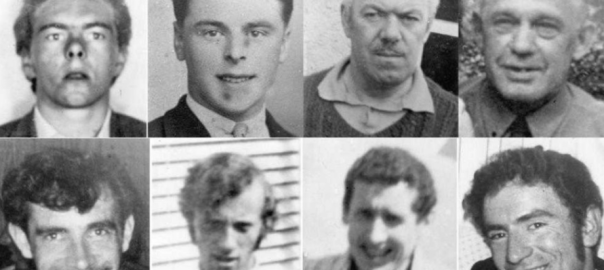
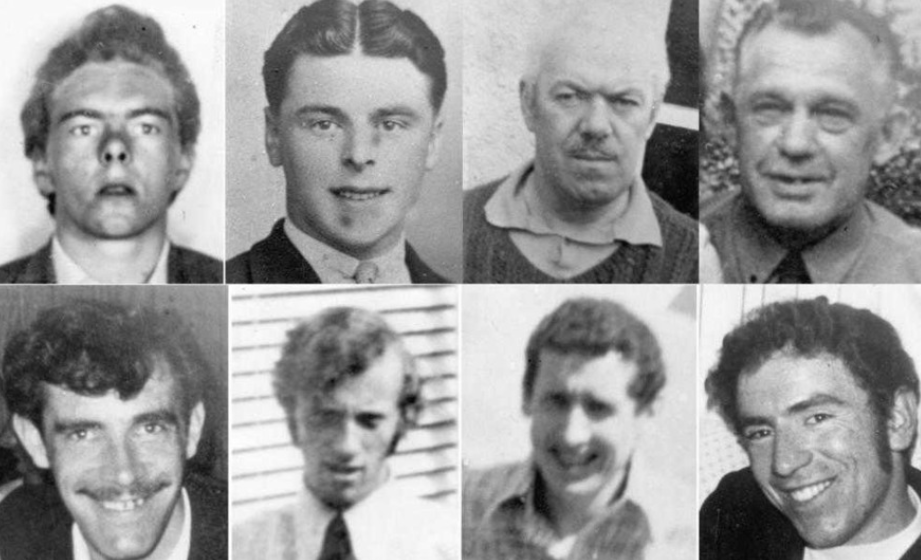
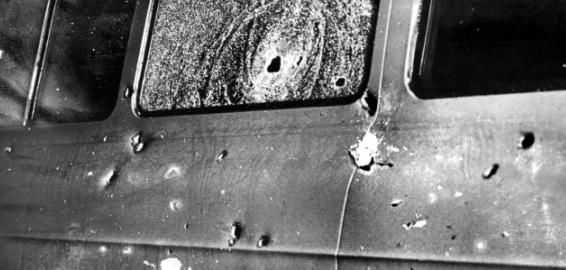


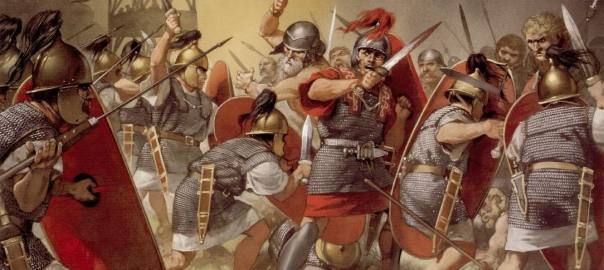

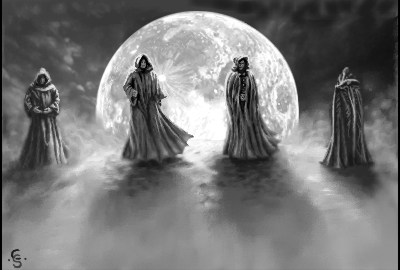


.JPG)


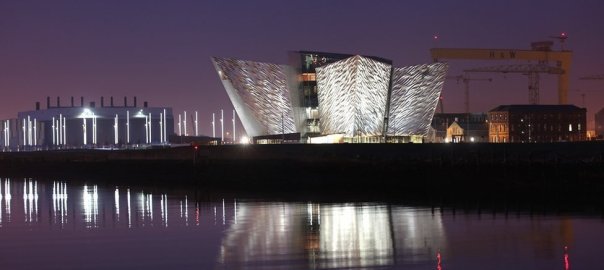


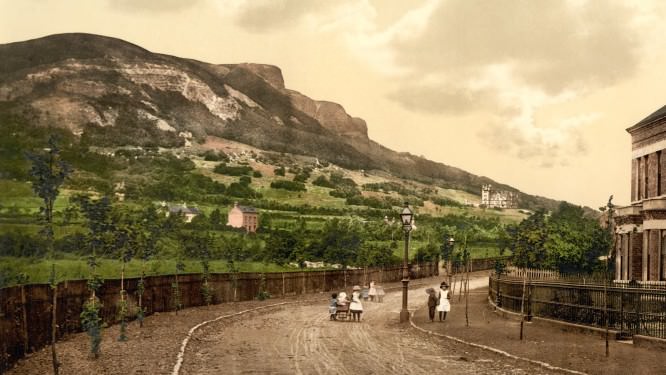


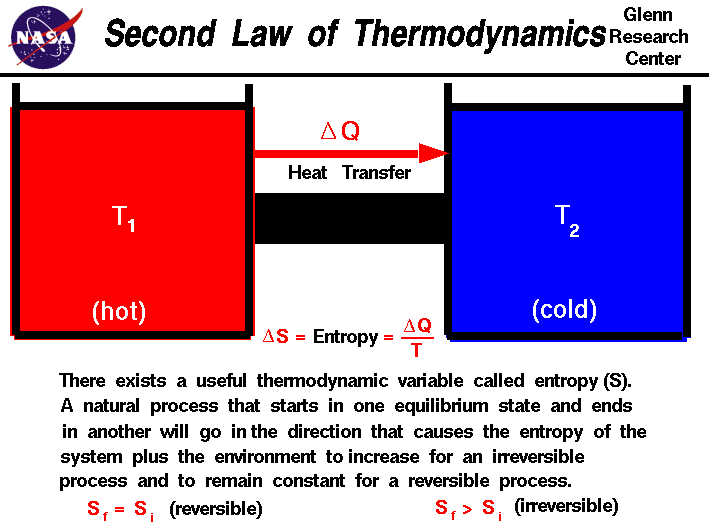




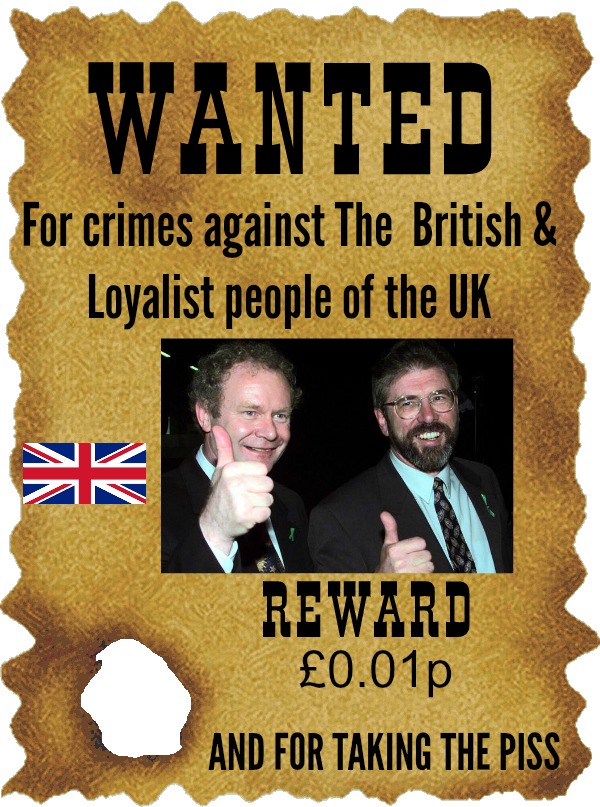


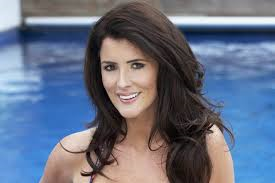
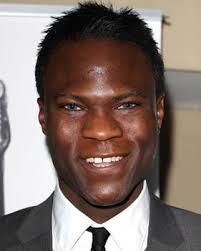




 belfastchildis.com