Key Events & Deaths on this day in Northern Ireland Troubles
Wednesday 26 August 1970
Robert Porter, then Minister of Home Affairs, resigned from the Stormont government.
[The official reason was given as ‘health’ but Porter later said that he had not been consulted about the Falls Road curfew. Initially Chichester-Clark, then Northern Ireland Prime Minister, took over responsibility for Home Affairs, but later appointed John Taylor who was very critical of the reform programme.]
Saturday 26 August 1972
Six people were killed in three incidents across Northern Ireland.
Tuesday 26 August 1986
The cigarette company Gallagher announced the closure of its factory in Belfast with the loss of 700 jobs.
Wednesday 26 August 1987
In a shooting in a Belfast bar two Royal Ulster Constabulary (RUC) officers were shot dead by the Irish Republican Army (IRA). A number of bystanders were injured.
Monday 26 August 1991
The Northern Ireland Emergency Provision Act came into force in Northern Ireland.
Thursday 26 August 1993
John Wheeler (Sir), then a Northern Ireland Office (NIO) minister, gave an interview to the British Broadcasting Corporation (BBC) in which he said that “the IRA [Irish Republican Army] is already defeated”.
[The IRA issued a stateme Saturday 26 August 1995 There were scuffles between protesters and Royal Ulster Constabulary (RUC) officers at a Royal Black Institution parade in Bellaghy, County Derry. Sinn Féin (SF) said that the party did not rule out the possibility of an international commission being established to oversee the decommissioning of paramilitary weapons. nt in reply on 27 August 1993.]
Saturday 26 August 1995
There were scuffles between protesters and Royal Ulster Constabulary (RUC) officers at a Royal Black Institution parade in Bellaghy, County Derry. Sinn Féin (SF) said that the party did not rule out the possibility of an international commission being established to oversee the decommissioning of paramilitary weapons.
Tuesday 26 August 1997Agreement on Decommissioning Body
The British and Irish governments jointly signed an agreement to set up an Independent International Commission on Decommissioning (IICD). Marjorie (Mo) Mowlam, then Secretary of State for Northern Ireland, held a meeting with Ronnie Flanagan, then Chief Constable of the Royal Ulster Constabulary (RUC), where concerns were expressed at the state of the Loyalist ceasefire. U2, the Dublin pop group, held a concert at Botanic Gardens in Belfast before an estimated 40,000 people.
Wednesday 26 August 1998Blair Visits Omagh
Tony Blair, then British Prime Minister, paid a visit to the site of the bomb in Omagh, County Tyrone. Blair promised draconian legislation to deal with any paramilitary groups that refused to call a ceasefire. Sinn Féin (SF) said the new measures would amount to “internment in another guise”.
Thursday 26 August 1999
Marjorie (Mo) Mowlam, then Secretary of State for Northern Ireland, ruled that the Irish Republican Army (IRA) ceasefire had not broken down. However, she said she was in no doubt the IRA was involved in the murder of Charles Bennett and said there was clear information about the organisation being implicated in the Florida gun-running operation. Unionists reacted with fury to the decision.
Human rights campaigners said they were concerned at the news that John Stephens was being promoted to Commissioner of the Metropolitan Police. Stevens was leading the inquiry into the killing of Pat Finucane, a Belfast solicitor killed on 12 February 1989. However, Stevens said that much of the work of the inquiry would be completed before he took up his new position.
Sunday 26 August 2001
A man (46) was treated in hospital for gunshot wounds and other injuries following a paramilitary ‘punishment’ shooting and beating in County Tyrone. The man was attacked by a number of masked men in the living room of a house at Foyagh Road in Castlecaulfield. The attack happened just after 11.00pm (2300BST).
The British Army defused a second pipe-bomb in Shearwater Way in the Waterside area of Derry. It was the second device found in the street in two days.
[The attack was believed to have been carried out by Loyalist paramilitaries.]
Two ‘temporary’ classrooms in the grounds of Corpus Christi Chapel on Westrock Drive, Belfast, were badly damaged in a fire which was reported just before 8.00pm (2000BST). Royal Ulster Constabulary (RUC) officers who attended at the scene of the fire were attacked by people throwing stones. Two police vehicles were damaged during the violence.
[The bodies of three young men were found in two houses in west Belfast. It was believed that the three men had all taken drugs and alcohol at a party the previous evening. The police were investigating the possibility all three may have taken prescription drugs.]
Remembering all innocent victims of the Troubles
Today is the anniversary of the follow people killed as a results of the conflict in Northern Ireland
To the innocent on the list – Your memory will live forever
– To the Paramilitaries –
“There are many things worth living for, a few things worth dying for, but nothing worth killing for.
14 People lost their lives on the 26th of August between 1972 – 1987
————————————————————–
26 August 1972
Alfred Johnston, (32)
Protestant Status: Ulster Defence Regiment (UDR),
Killed by: Irish Republican Army (IRA)
Killed by remote controlled bomb, hidden in abandoned car, detonated when Ulster Defence Regiment patrol approached, Cherrymount, near Enniskillen, County Fermanagh.
————————————————————–
26 August 1972
James Eames, (33)
Protestant Status: Ulster Defence Regiment (UDR),
Killed by: Irish Republican Army (IRA)
Killed by remote controlled bomb, hidden in abandoned car, detonated when Ulster Defence Regiment patrol approached, Cherrymount, near Enniskillen, County Fermanagh.
————————————————————–
26 August 1972 John Nulty, (26)
Catholic Status: Civilian (Civ),
Killed by: Ulster Volunteer Force (UVF)
Found shot, Agnes Street, Shankill, Belfast.
————————————————————–
26 August 1972 Patrick Kelly, (26)
Catholic
Status: Civilian (Civ),
Killed by: Ulster Volunteer Force (UVF)
Found shot, Benwell Street, Lower Oldpark, Belfast
————————————————————–
26 August 1972 James Carlin, (-9)
Catholic Status: Irish Republican Army (IRA),
Killed by: Irish Republican Army (IRA)
Died in premature bomb explosion at racecourse grandstand, Downpatrick, County Down.
————————————————————–
26 August 1972 Martin Curran, (-9)
Catholic Status: Irish Republican Army (IRA),
Killed by: Irish Republican Army (IRA)
Died in premature bomb explosion at racecourse grandstand, Downpatrick, County Down
————————————————————–
26 August 1973 Owen Devine, (24)
Catholic Status: Civilian (Civ),
Killed by: Irish Republican Army (IRA)
Found shot in derelict house, McClure Street, off Ormeau Road, Belfast.
————————————————————–
26 August 1974
Philip Drake, (20) nfNI Status: British Army (BA),
Killed by: Irish Republican Army (IRA)
Shot by sniper while on British Army (BA) mobile patrol, Drumbeg, Craigavon, County Armagh.
————————————————————–
26 August 1976 Thomas Passmore, (68)
Protestant Status: Civilian (Civ),
Killed by: Irish Republican Army (IRA)
Father of Orange Order leader. Died seven days after being shot at his home, West Circular Crescent, Highfield, Belfast.
————————————————————–
26 August 1976
James Heaney, (20)
Catholic Status: Royal Ulster Constabulary (RUC),
Killed by: Irish Republican Army (IRA)
Off duty. Shot outside his mother’s home, Andersonstown Grove, Andersonstown, Belfast
————————————————————–
26 August 1982
Francis McCluskey, (45)
Catholic Status: Civilian (Civ),
Killed by: Ulster Freedom Fighters (UFF)
Shot from passing car while on his way to work, Mountainhill Road, Ligoniel, Belfast
————————————————————–
26 August 1986
Patrick McAllister, (47)
Catholic Status: Civilian (Civ),
Killed by: Ulster Freedom Fighters (UFF)
Shot at his home, Rodney Drive, Falls, Belfast.
————————————————————–
26 August 1987
Michael Malone, (35)
Catholic Status: Royal Ulster Constabulary (RUC),
Killed by: Irish Republican Army (IRA)
Plainclothes Royal Ulster Constabulary (RUC) member. Shot while in Liverpool Bar, Donegall Quay, Belfast.
————————————————————–
26 August 1987
Ernest Carson, (50)
Protestant Status: Royal Ulster Constabulary (RUC),
Killed by: Irish Republican Army (IRA)
Plainclothes Royal Ulster Constabulary (RUC) member. Shot while in Liverpool Bar, Donegall Quay, Belfast
Key Events & Deaths on this day in Northern Ireland Troubles
Wednesday 25 August 1971
Henry Beggs (23), a Protestant civilian, was killed when the Irish Republican Army (IRA) planted a bomb at the Northern Ireland Electricity Service office on the Malone Road in Belfast. Gerry Fitt, then Leader of the Social Democratic and Labour Party (SDLP), held a meeting with representatives of the United Nations at which he presented a number of allegations of brutality by the security
Saturday 25 August 1973
Loyalists shot and killed 3 Catholic civilians during an attack on their place of work on the Cliftonville Road,
Thursday 25 August 1977
The Social Democratic and Labour Party (SDLP) issued a policy document (Facing Reality) which called for greater emphasis on the ‘Irish dimension’.
[This was seen to be a response to the perceived adoption of a greater integrationist stance by the British government. Later Paddy Devlin resigned as Chairman of the SDLP in response to the document.]
Wednesday 25 August 1982
The Social Democratic and Labour Party (SDLP) announced that it would contest the forthcoming Northern Ireland Assembly elections but those elected would not take their seats. [Following this decision Sinn Féin (SF) confirmed that it would oppose the SDLP in a number of constituencies. SF made clear that its preference would have been to support a complete boycott of the poll by all shades of northern nationalism, however it stated that under no circumstances would any of its successful candidates sit in the new assembly. Instead the party’s decision to take part in the poll was “… to give the nationalist electorate (in Northern Ireland) an opportunity to reject the uncontested monopoly in leadership which the SDLP has had …”. [In the end SF decided to field 12 candidates in 6 of the 12 Northern Ireland constituencies.]
Thursday 25 August 1983
Elizabeth Kirkpatrick, who was the wife of a police informer, was released having been held captive by the Irish National Liberation Army (INLA) for two months.
Friday 25 August 1989
Loughlin Maginn was shot and killed by the Ulster Freedom Fighters (UFF).
[Claims were made on 29 (?) August 1989 that the UFF had received security force details on Loughlin Maginn.]
Wednesday 25 August 1993
The Red Hand Commando (RHC) announced that it would attack bars or hotels where Irish folk music is played. The RHC stated that the music was part of the “pan-nationalist front”.
[Following widespread criticism the RHC withdrew the threat on 26 August 1993.]
Friday 25 August 1995
The Combined Loyalist Military Command (CLMC) released a statement which said:
“There will be no first strike”
by Loyalist paramilitaries provided the rights of the people of Northern Ireland are upheld. The statement also ruled out decommissioning of Loyalist weapons. Patrick Mayhew, then Secretary of State for Northern Ireland, announced that the British government would produce a White Paper on reform of the Royal Ulster Constabulary (RUC) and an independent review of emergency legislation. He also announced that the remission of sentence for paramilitary prisoners would be returned to 50 per cent.
[The legislation to make the change to the remission rate obtained royal assent on 7 November 1995.]
Saturday 25 August 2001
————————————————————————–
Above The Law:
Punishment Attacks In Northern Ireland
————————————————————————–
Four men were treated for gunshot wounds following two separate paramilitary ‘punishment’ attacks. Three men in their 20s were shot in the legs in an attack at approximately 9.30pm (2130BST) in the Kilcooley estate in Bangor, County Down.
In the second attack a man was shot in the ankles and the wrist in Victoria Parade, north Belfast. The British Army defused a pipe-bomb in the garden of a Catholic-owned house in Shearwater Way in the Waterside area of Derry.
[The attack was believed to have been carried out by Loyalist paramilitaries.]
A man was been arrested in the Shankill Road area of Belfast. The Royal Ulster Constabulary (RUC) said the man was being questioned about serious crime in north Belfast.
[It was thought that the arrest related to pipe-bomb attacks on Catholic homes.]
The Royal Black Institution held a series of parades across Northern Ireland on the ‘last Saturday in August’ which marks the end of ‘marching season’. The Belfast districts held their demonstration in Carrickfergus, County Antrim. There were also parades in Counties Tyrone, Derry, Down, and Armagh. A number of the parades had restrictions placed on them by the Parades Commission.
Sinn Féin held a press briefing at which which the party’s response to the revised policing implementation plan was outlined. The party said that it would “campaign vigorously” against the plans.
The Irish News (a Northern Ireland newspaper) carried a report that the Royal Ulster Constabulary (RUC) had agreed to pay an out-of-court settlement of £100,000 to a Catholic teenager who had been beaten by police and later accused of possessing explosives.
Remembering all innocent victims of the Troubles
Today is the anniversary of the follow people killed as a results of the conflict in Northern Ireland
To the innocent on the list – Your memory will live forever
– To the Paramilitaries –
“There are many things worth living for, a few things worth dying for, but nothing worth killing for.
6 people lost their lives on the 25th of August between 1971 – 1989
————————————————————–
25 August 1971
Henry Beggs, (23)
Protestant Status: Civilian (Civ),
Killed by: Irish Republican Army (IRA)
Killed in bomb attack on NIES office, Malone Road, Belfast. Inadequate warning given.
————————————————————–
25 August 1972 Arhur Whitelock, (24) nfNI Status: British Army (BA),
Killed by: Irish Republican Army (IRA)
Shot by sniper while on British Army (BA) foot patrol, Moyola Drive, Shantallow, Derry.
————————————————————–
25 August 1973 Sean McDonald, (50) Catholic Status: Civilian (Civ),
Killed by: Ulster Volunteer Force (UVF)
Found shot shortly after bomb attack on his workplace, a garage, Cliftonville Road, Belfast.
————————————————————–
25 August 1973 Ronald McDonald, (55) Catholic Status: Civilian (Civ),
Killed by: Ulster Volunteer Force (UVF)
Found shot shortly after bomb attack on his workplace, a garage, Cliftonville Road, Belfast.
————————————————————–
25 August 1973 Anthony McGrady, (16)
Catholic Status: Civilian (Civ),
Killed by: Ulster Volunteer Force (UVF)
Found shot shortly after bomb attack on his workplace, a garage, Cliftonville Road, Belfast.
————————————————————–
25 August 1982
Eamon Bradley, (23)
Catholic Status: Irish Republican Army (IRA),
Killed by: British Army (BA)
Shot while leaving Shantallow House Bar, Racecourse Road, Derry
————————————————————–
25 August 1989
Loughlin Maginn, (28)
Catholic Status: Civilian (Civ),
Killed by: Ulster Freedom Fighters (UFF)
Shot at his home, Lissize, near Rathfriland, County Down.
Key Events & Deaths on this day in Northern Ireland Troubles
Sunday 22 August 1971
Approximately 130 non-Unionist councillors announced their withdrawal from participation on district councils across Northern Ireland in protest against Internment.
Tuesday 22 August 1972Newry Bomb
A bomb that was being planted by the Irish Republican Army (IRA) exploded prematurely at a customs post at Newry, County Down. Nine people, including three members of the IRA and five Catholic civilians, were killed in the explosion.
Friday 22 August 1975
Three Catholic civilians were killed in a gun and bomb attack on McGleenan’s Bar, Upper English Street, Armagh. The attack was carried out by Loyalist paramilitaries. A Catholic civilian died six days after being shot by Loyalists in Belfast.
Wednesday 22 August 1979
Humphrey Atkins, then Secretary of State for Northern Ireland, rejected a proposal that Hugh Carey, then Governor of New York, should chair talks in New York between Atkins and Michael O’Kennedy, then Irish Foreign Minister.
Wednesday 22 August 1984
Gerry Curran, then Armagh coroner, resigned after discovering “grave irregularities” in Royal Ulster Constabulary (RUC) files related to the killing of two Irish National Liberation Army (INLA) members on 12 December 1982.
September 1984
Friday 22 August 1986
John Stalker, then Deputy Chief Constable of the Greater Manchester Police, was cleared of all allegations of misconduct and reinstated in his police position. However, Stalker was not returned to the inquiry into the ‘shoot to kill’ allegations in Northern Ireland. The Shorts aircraft company in Belfast ordered that all flags and emblems displayed by workers should be removed. The company had received complaints of intimidation against Catholics.
[The decision led to the walk-out of 1,000 employees on 27 August 1986. A letter issued later by senior management stated that the Union Jack flag would be flown from the company’s flagstaff at all times.]
Tuesday 22 August 1995
The Irish News (a Belfast based newspaper) published the results of an opinion poll on issues related to all-party talks. Of those who responded, 52 per cent supported the setting of a date for all-party talks whether or not weapons had been decommissioned.
Saturday 22 August 1998INLA Ceasefire
The Irish National Liberation Army (INLA) announced that it was to go on ceasefire as from midday. [In terms of size the INLA was the second largest of the Republican paramilitary organisations. There were calls for the Continuity Irish Republican Army (CIRA) to also announce a ceasefire.] The Gaelic Athletic Association (GAA) announced that it intended to establish a trust fund for the victims of the Omagh bombing.
Sunday 22 August 1999
David Trimble, then leader of the Ulster Unionist Party (UUP), said the UUP was correct not to form a power-sharing government on 15 July 1999 in light of the subsequent killing of a Belfast taxi driver, Charles Bennett, and the uncovering of a Florida-based gun-smuggling operation.
Tuesday 22 August 2000
Johnny Adair, then a leader of the Ulster Freedom Fighters (UFF), a cover name (pseudonym) used by the Ulster Defence Association (UDA), was arrested and returned to prison by the order of Peter Mandelson, then Secretary of State for Northern Ireland. The arrest was an attempt to calm the atmosphere following the escalation in the Loyalist paramilitary feud. Adair had been released early on licence under the terms of the Good Friday Agreement and was returned to prison because he was believed to have taken part “in the commission, preparation or instigation of acts of terrorism”.
Wednesday 22 August 2001
There were a series of bomb alerts around Northern Ireland. Approximately 30 elderly people had to be moved from their homes in Armagh after a suspicious object was found under a van. A suspected ‘pipe bomb’ was found in the letter box at the constituency office of Martin McGuinness, then Member of Parliament (MP) for Mid-Ulster.
Approximately 40 buildings on Burn Road, Cookstown, County Tyrone, were evacuated to allow British Army technical officers to deal with the device. The Red Hand Defenders (RHD), a cover name previously used by the Ulster Defence Association (UDA), claimed responsibility for both these attacks.
Loyalist paramilitaries left a pipe-bomb outside the Boleran Gaelic Athletic Association (GAA) club in Garvagh, County Derry. There was another pipe-bomb attack on Gulladuff GAA club, near Maghera, County Derry. The Foyle Bridge in Derry had to be closed after a claim that a bomb had been left nearby. The train line under the bridge was also closed disrupting services between Derry and Belfast. Later in the day the Craigavon Bridge was also closed during the evening rush hour. This brought traffic in the centre of the city to a standstill and effectively cut off the Cityside from the Waterside. People were faced with a 30 mile detour via the next bridge at Strabane, County Tyrone.
[Both alerts were thought to have been caused by warnings from the “real” Irish Republican Army (rIRA).]
Colombian authorities announced that the three Irishmen arrested on 13 August 2001 would be held while a criminal investigation was undertaken. The three men face charges of allegedly training Marxist rebels and carrying false passports. Liam Kennendy (Dr.), then Professor of Modern History at Queen’s University of Belfast, published his findings on paramilitary ‘punishment’ attacks in a report entitled ‘They Shoot Children Don’t They‘.
One of the findings of the report was that between 1990 and 2000, 372 teenagers had been beaten and 207 shot by Loyalist and Republican paramilitary groups in what is commonly termed ‘punishment’ attacks. The report showed that during 1999 and 2000 there were 47 ‘punishment’ attacks on under 18 year olds compared with 25 in the previous two years. The report was prepared for the Northern Ireland Committee Against Terrorism and the Northern Ireland Affairs Committee of the House of Commons. The report will also be submitted to the Northern Ireland Assembly.
Remembering all innocent victims of the Troubles
Today is the anniversary of the follow people killed as a results of the conflict in Northern Ireland
To the innocent on the list – Your memory will live forever
– To the Paramilitaries –
There are many things worth living for, a few things worth dying for, but nothing worth killing for.
17 people lost their lives on the 22nd August between 1972 – 1998
————————————————————–
22 August 1972 James Johnston, (40)
Protestant Status: Civilian Political Activist (CivPA),
Killed by: Irish Republican Army (IRA)
Member of Loyalist Association of Workers. Found shot in abandoned van, Turin Street, off Grosvenor Road, Belfast.
————————————————————–
22 August 1972
Oliver Rowntree, (22)
Catholic Status: Irish Republican Army (IRA),
Killed by: Irish Republican Army (IRA)
Died in premature bomb explosion at Customs Office, Newry, County Down.
————————————————————–
22 August 1972
Noel Madden, (18)
Catholic Status: Irish Republican Army (IRA),
Killed by: Irish Republican Army (IRA)
Died in premature bomb explosion at Customs Office, Newry, County Down.
————————————————————–
22 August 1972
Patrick Hughes, (35)
Catholic Status: Irish Republican Army (IRA),
Killed by: Irish Republican Army (IRA)
Died in premature bomb explosion at Customs Office, Newry, County Down.
————————————————————–
22 August 1972
Francis Quinn, (28)
Catholic Status: Civilian (Civ),
Killed by: Irish Republican Army (IRA)
Died in premature bomb explosion at Customs Office, Newry, County Down.
————————————————————-
22 August 1972 Patrick Murphy, (45)
Catholic Status: Civilian (Civ),
Killed by: Irish Republican Army (IRA)
Died in premature bomb explosion at Customs Office, Newry, County Down.
————————————————————–
22 August 1972 Craig Lawrence, (33)
Protestant Status: Civilian (Civ),
Killed by: Irish Republican Army (IRA)
Died in premature bomb explosion at Customs Office, Newry, County Down.
————————————————————–
22 August 1972 Michael Gilleece, (32)
Catholic Status: Civilian (Civ),
Killed by: Irish Republican Army (IRA)
Died in premature bomb explosion at Customs Office, Newry, County Down
————————————————————–
22 August 1972 Joseph Fegan, (28)
Catholic Status: Civilian (Civ),
Killed by: Irish Republican Army (IRA)
Died in premature bomb explosion at Customs Office, Newry
————————————————————–
22 August 1972 John McCann, (60)
Catholic Status: Civilian (Civ),
Killed by: Irish Republican Army (IRA)
Died in premature bomb explosion at Customs Office, Newry, County Down.
————————————————————–
22 August 1975 William Daniel, (27)
Catholic Status: Civilian (Civ),
Killed by: Ulster Volunteer Force (UVF)
Died six days after being shot while sitting in his car outside his girlfriend’s home, Glenbank Place, off Crumlin Road, Belfast.
————————————————————–
22 August 1975 John McGleenan (45)
Catholic Status: Civilian (Civ),
Killed by: non-specific Loyalist group (LOY)
Killed in gun and bomb attack on McGleenan’s Bar, Upper English Street, Armagh
————————————————————–
22 August 1975 Patrick Hughes, (30)
Catholic Status: Civilian (Civ),
Killed by: non-specific Loyalist group (LOY)
Killed in gun and bomb attack on McGleenan’s Bar, Upper English Street, Armagh.
————————————————————–
22 August 1975 Thomas Morris, (22)
Catholic Status: Civilian (Civ),
Killed by: non-specific Loyalist group (LOY)
Injured in gun and bomb attack on McGleenan’s Bar, Upper English Street, Armagh. He died 28 August 1975.
————————————————————–
22 August 1977 Martin, William (60)
Catholic Status: Civilian (Civ),
Killed by: Irish Republican Army (IRA)
Abducted from his home, St. Joseph’s Place, Crossmaglen, County Armagh. Found shot a short time later, Moybane, near Crossmaglen, County Armagh. Alleged informer.
————————————————————–
22 August 1985 Daniel Mallon, (65)
Catholic Status: Civilian (Civ),
Killed by: Irish Republican Army (IRA)
Shot while in Railway Bar, Strabane, County Tyrone. Mistaken for contractor to British Army (BA) / Royal Ulster Constabulary (RUC).
————————————————————–
22 August 1988 Alan Shields, (45) nfNI Status: Royal Navy (RN),
Killed by: Irish Republican Army (IRA)
Originally from Scotland. Royal Navy recruiting officer. Killed when detonated booby trap bomb attached to his car while travelling along Middlepath Street, Belfast.
Key Events & Deaths on this day in Northern Ireland Troubles
Friday 21 August 1970SDLP Formed
The Social and Democratic Labour Party (SDLP) was established. The first leader of the party was Gerry Fitt and the deputy leader John Hume. Other prominent members included, Paddy Devlin, Austin Currie, Ivan Cooper, Paddy O’Hanlon and Paddy Wilson. [The party effectively took over from most of the various Nationalist and Labour party groupings and became the main political voice of Nationalists in Northern Ireland until Sinn Fein began to contest elections in the early 1980s.]
Saturday 21 August 1976
Approximately 20,000 people, mainly women from Protestant and Catholic areas of Belfast, attended a Peace People’s rally at Ormeau Park, Belfast.
Wednesday 21 August 1991
The Irish Republican Army (IRA) exploded a large bomb, estimated at 500 pounds, near an Royal Ulster Constabulary (RUC) station in Kilrea, County Derry. The explosion causes damage to nearby homes and churches.
Gerry Adams, then President of Sinn Féin (SF), wrote a letter, seeking ‘open-ended discussions’, to the British and Irish governments and to political and Church leaders in Northern Ireland.
Friday 21 August 1992
Hugh McKibben (21), then a member of the Irish People’s Liberation Organisation (IPLO), was shot dead at the Lámh Dhearg Gaelic Athletic Association (GAA) social club on the outskirts of Belfast. His was killed by the Belfast Brigade of the IPLO during an internal IPLO feud. Two other men were wounded in the attack.
Saturday 21 August 1999
The remains of Tom Williams were exhumed from Crumlin Road Prison and handed over to his surviving family members. Williams had been a member of the Irish Republican Army (IRA) and was hanged in 1942 for the killing of Patrick Murphy a Constable in the Royal Ulster Constabulary (RUC).
Monday 21 August 2000Loyalist Paramilitary Feud
Two men, Jackie Coulter and Bobby Mahood, were killed as the Loyalist paramilitary feud erupted into further violence. Coulter, who had Ulster Defence Association (UDA) connections and was an associate of Johnny Adair, died immediately at the scene. Mahood, who had been seriously wounded, died later in hospital.
Loyalist sources said that Mahood had Ulster Volunteer Force (UVF) connections but he opposed the Belfast Agreement and the policies of the Progressive Unionist Party (PUP). The killings were carried out by the UVF and were part of a feud between the UDA and the UVF.
U.V.F Logo
In addition to the shootings there were also attacks on offices used by the two Loyalist parties closely associated with the UDA and the UVF. Troops were deployed on the streets of Belfast to try to control the situation.
[Seven people were killed during the feud which officially ended on 15 December 2000.]
Tuesday 21 August 2001
Two pipe-bombs were thrown at two separate houses at Inchcolme Avenue, Ballymena, County Antrim, at about 12.30am (0030BST). The front door of one house was damaged and a window broken in the other house. There were no injuries in the two attacks.
[The RUC have not established a motive for the attacks.]
The Ulster Unionist Party (UUP) announced that it required more time to respond to the ‘Patten Report – Updated Implementation Plan 2001’ (issued on 17 August 2001). James Cooper, then Chairman of the UUP, said that:
“While we are not opposed in principle to nominations to the police board, we still have a number of concerns.”
The Democratic Unionist Party (DUP) also missed the British government’s deadline of midday in which to respond to the policing proposals.
[The DUP were critical of the new implementation plan and were expected to make a detailed response at a later date.]
John Reid, then Secretary of State for Northern Ireland, said that he believed that the new Police Board would be operational at the end of September 2001. Nigel Baylor (Rev), then Church of Ireland rector, criticised as “insulting” the Ulster Defence Association (UDA) parade and ‘show of strength’ on the Shankill Road in Belfast on Saturday 19 August 2001.
Baylor had led the service at the funeral of Gavin Brett (18), who had been shot dead by Loyalist paramilitaries on 29 July 2001.
[Although the Red Hand Defenders (RHD) had claimed responsibility for the killing most people blamed the UDA.]
The Guardian (a British newspaper) carried a report on the results of an opinion poll on the future of Northern Ireland carried out by ICM in Britain. Of those questioned, 41 per cent stated that they thought there should be a united Ireland. Only 26 per cent felt that Northern Ireland should remain part of the United Kingdom (UK). The report stated: “For unionists, many of whom consider themselves British and refer to Britain as ‘the mainland’, today’s findings amount to a cold shoulder from their fellow citizens. Only one in four wants the province to stay part of the country.”
[This survey maked a significant shift in public opinion in Britain from the 1980s and 1990s when there was a majority in favour of Northern Ireland remaining within the UK.]
William Esson, then a reserve judge with the Bloody Sunday Inquiry, announced that he was resigning from the inquiry for reasons of ill health.
Remembering all innocent victims of the Troubles
Today is the anniversary of the follow people killed as a results of the conflict in Northern Ireland
To the innocent on the list – Your memory will live forever
– To the Paramilitaries –
“There are many things worth living for, a few things worth dying for, but nothing worth killing for.
6 people lost their lives on the 21st August between 1975 – 2000
————————————————————–
21 August 1975
John Finlay, (30)
Catholic Status: Civilian (Civ),
Killed by: non-specific Loyalist group (LOY)
Shot while walking to work along Brougham Street, Belfast.
————————————————————–
21 August 1975 David Davidson, (30)
Protestant Status: Civilian (Civ),
Killed by: non-specific Republican group (REP)
Shot at his workplace, scrapyard / garage, Antrim Road, Ballyvessy, near Glengormley, County Antrim.
————————————————————–
21 August 1978
Patrick Fee, (64)
Catholic Status: Civilian (Civ),
Killed by: Irish Republican Army (IRA)
Shot by sniper while travelling to work in his firm’s van, Scribbagh, near Garrison, County Fermanagh. The van driver, an off duty Ulster Defence Regiment (UDR) member, the intended target.
————————————————————–
21 August 1992
Isobel Leyland, (40)
Catholic Status: Civilian (Civ),
Killed by: Irish Republican Army (IRA)
Shot during sniper attack on nearby Royal Ulster Constabulary (RUC) mobile patrol, while walking at the junction of Ardoyne Avenue and Flax Street, Ardoyne, Belfast
————————————————————–
21 August 2000
Jackie Coulter, (46)
Protestant Status: Ulster Defence Association (UDA),
Killed by: Ulster Volunteer Force (UVF)
Shot while sitting in stationary jeep, Crumlin Road, Belfast. Ulster Defence Association (UDA) / Ulster Volunteer Force (UVF) feud.
————————————————————–
21 August 2000
Bobby Mahood, (48)
Protestant Status: Ulster Volunteer Force (UVF),
Killed by: Ulster Volunteer Force (UVF)
Shot while sitting with UDA member Jackie Coulter, in stationary jeep, Crumlin Road, Belfast. Ulster Defence Association (UDA) / Ulster Volunteer Force (UVF) feud.
The views and opinions expressed in this page and documentaries are soley intended to educate and provide background information to those interested in the Troubles of Northern Ireland.
They in no way reflect my own opinions and I take no responsibility for any inaccuracies or factual errors.
Johnny ‘Mad Dog’ Adair, Former UDA & UFF Loyalist Commander Talks About His Life.
—————————————————
U.V.F Logo
Although the UDA and UVF have frequently co-operated and generally co-existed, the two groups have clashed. Two particular feuds stood out for their bloody nature.
1974-1975
UDA Logo
A feud in the winter of 1974-75 broke out between the UDA and the UVF, the two main loyalist paramilitary organisations in Northern Ireland. The bad blood originated from an incident in the Ulster Workers’ Council strike of May 1974 when the two groups were co-operating in support of the Ulster Workers’ Council.
That support the UDA & UVF members were giving involved shutting down their own social clubs & pubs due to complaints from loyalist wives of the striking men, the reason for this was with the men not working & funds being tight the wives saw what little money they did have being spent at the pubs & social clubs controlled by UDA/UVF, therefore the wives put pressure on the leaders of both groups to shut them down for the duration of the strike & after consultation they agreed.
All shut down except for a lone UVF affiliated pub on the shankill road. On a November night in 1974, a UVF man named Joe Shaw visited the pub for a drink. While there, he was “ribbed by the regulars about having allowed his local to be closed”.[2] A few pints later Shaw and some friends returned to their local, on North Queen St., and open it up. UDA men patrolling the area had seen the pubs lights on and ordered Shaw and his friends to close the place down & go home. Shaw refused, and the UDA men left, but they returned a short while later with a shotgun, determined to close the pub down.
Stephen Goatley
In the brawl that developed Shaw was fatally shot. A joint statement described it as a tragic accident although a subsequent UVF inquiry put the blame on Stephen Goatley and John Fulton, both UDA men. With antagonism grown another man was killed in a drunken brawl on 21 February 1975, this time the UDA’s Robert Thompson. This was followed by another pub fight in North Belfast in March and this time the UVF members returned armed and shot and killed both Goatley and Fulton, who had been involved in the earlier fight.
The following month UDA Colonel Hugh McVeigh and his aide David Douglas were the next to die, kidnapped by the UVF on the Shankill Road and taken to Carrickfergus where they were beaten before being killed near Islandmagee.
The UDA retaliated in East Belfast by attempting to kill UVF leader Ken Gibson who in turn ordered the UDA’s headquarters in the east of the city to be blown up, although this attack also failed. The feud rumbled on for several months in 1976 with a number of people, mostly UDA members, being killed before eventually the two groups came to an uneasy truce.
2000
Although the two organisations had worked together under the umbrella of the Combined Loyalist Military Command, the body crumbled in 1997 and tensions simmered between West Belfast UDA Brigadier Johnny Adair, who had grown weary of the Northern Ireland peace process and the Good Friday Agreement, and the UVF leadership. Adair by this time had forged close links with the dissident LVF, a group which the UVF had been on poor terms with since its foundation.
Amidst an atmosphere of increasing tension in the area, Adair decided to host a “Loyalist Day of Culture” on the Shankill on Saturday 19 August 2000, which saw thousands of UDA members from across Northern Ireland descend on his Lower Shankill stronghold, where a series of newly commissioned murals were officially unveiled on a day which also featured a huge UDA/UFF parade and armed UDA/UFF show of strength.
Unknown to the UVF leadership, who had sought and been given assurances that no LVF regalia would be displayed on the Shankill on the day of the procession, as well as the rest of the UDA outside of Adair’s “C Company”, Adair had an LVF flag delivered to the Lower Shankill on the morning of the celebrations, which he planned to have unfurled as the procession passed the Rex Bar, a UVF haunt, in order to antagonise the UVF and try and drag it into conflict with as much of the UDA as possible.
———————————————————————–
The Rex Bar – Shankill
———————————————————————–
Adair waited until the bulk of the parade of UDA men had made its way up into the heart of the Shankill before initiating the provocative gesture. When it happened skirmishes broke out between UVF men who had been standing outside the Rex watching the procession and the group involved in unfurling the contentious flag, which had been discreetly concealed near the tail end of the parade. Prior to this the atmosphere at the Rex had been jovial, with the UVF spectators even joining in to sing UDA songs along to the tunes of the UDA-aligned flute bands which accompanied the approximately ten thousand UDA men on their parade up the Shankill Road.
But vicious fighting ensued, with a roughly three hundred-strong C Company (the name given to the Lower Shankill unit of the UDA’s West Belfast Brigade, which contained Adair’s most loyal men) mob attacking the patrons of the Rex, initially with hand weapons such as bats and iron bars, before they shot up the bar as its patrons barricaded themselves inside.
Also shot up was the Progressive Unionist Party (PUP) headquarters which faced the pub. C Company then went on the rampage in the Lower Shankill, attacking the houses of known UVF members and their families, including the home of veteran UVF leader Gusty Spence, and evicting the inhabitants at gunpoint as they wrecked and stole property and set fire to homes. By the end of the day nearly all those with UVF associations had been driven from the Lower Shankill.
Later that night C Company gunmen shot up the Rex again, this time from a passing car. While most of the UDA guests at Adair’s carnival had duly left for home when it became apparent that he was using it to engineer violent conflict with the UVF, festivities nonetheless continued late into the night on the Lower Shankill, where Adair hosted an open air rave party and fireworks display.
The UVF struck back on Monday morning, shooting dead two Adair associates, Jackie Coulter and Bobby Mahood, as they sat in a Range Rover on the Crumlin Road. The UVF also shot up the Ulster Democratic Party headquarters on the Middle Shankill. An hour later Adair’s unit burned down the PUP’s offices close to Agnes Street, the de facto border between the UVF-dominated Middle and Upper Shankill and the UDA-dominated Lower Shankill. The UVF responded by blowing up the UDP headquarters on the Middle Shankill. Adair was returned to prison by the Secretary of State on 14 September, although the feud continued with four more killed before the end of the year.
Violence also spread to North Belfast, where members of the UVF’s Mount Vernon unit shot and killed a UDA member, David Greer, in the Tiger’s Bay area, sparking a series of killings in that part of the city. In another incident the County Londonderry town of Coleraine saw tumult in the form of an attempted expulsion of UVF members by UDA members, which was successfully resisted by the UVF.
But aside from these exceptions Adair’s attempt to ignite a full-scale war between the two organisations failed, as both the UVF and UDA leaderships moved decisively to contain the trouble within the Shankill area, where hundreds of families had been displaced, and focused on dealing with its source as well as its containment. To Adair’s indignation even the “A” and “B” Companies of his West Belfast Brigade of the UDA declined to get involved in C Company’s war with the UVF.
Eventually a ceasefire was reluctantly agreed upon by the majority of those involved in the feuding after new procedures were established with the aim of preventing the escalation of any future problems between the two organisations, and after consideration was paid to the advice of Gary McMichael and David Ervine, the then leaders of the two political wings of loyalism.
UVF-LVF feuds
——————————————-
Loyalist Feud in Portadown, March 2000
——————————————-
The nature of the LVF, which was founded by Billy Wright when he, along with the Portadown unit of the UVF Mid-Ulster Brigade, was stood down by the UVF leadership on 2 August 1996 for breaking the ceasefire has led to frequent battles between the two movements. This had come about when Wright’s unit killed a Catholic taxi-driver during the Drumcree standoff.
Although Wright had been expelled from the UVF, threatened with execution and an order to leave Northern Ireland, which he defied, the feud was largely contained during his life and the two major eruptions came after his death.
1999-2001
Simmering tensions boiled over in a December 1999 incident involving LVF members and UVF Mid-Ulster brigadier Richard Jameson and his men at the Portadown F.C. social club in which the LVF supporters were severely beaten. The LVF members swore revenge and on 10 January 2000 they took it by shooting Jameson dead on the outskirts of Portadown.[14] The UVF retaliated by killing two Protestant teenagers suspected of LVF membership and involvement in Jameson’s death. As it turned out, the victims, Andrew Robb and David McIlwaine, were not part of any loyalist paramilitary organisation.
The UDA’s Johnny Adair supported the LVF and used the feud to stoke up the troubles that eventually flared in his feud with the UVF later that year. Meanwhile the UVF attempted to kill the hitman responsible for Jameson, unsuccessfully, before the LVF struck again on 26 May, killing PUP man Martin Taylor in Ballysillan. The LVF then linked up with Johnny Adair’s C Company for a time as their feud with the UVF took centre stage.
However the UVF saw fit to continue the battle in 2001, using its satellite group the Red Hand Commando to kill two of the LVF’s leading figures, Adrian Porter and Stephen Warnock. Adair however convinced the LVF that the latter killing was the work of one of his rivals in the UDA, Jim Gray, who the LVF then unsuccessfully attempted to assassinate.
In July 2005 the feud came to a conclusion as the UVF made a final move against its rival organisation. The resulting activity led to the deaths of at least four people, all associated with the LVF. As a result of these attacks on 30 October 2005 the LVF announced that its units had been ordered to cease their activity and that it was disbanding. In February 2006, the Independent Monitoring Commission reported that this feud had come to an end.
UDA internal feuds
The UDA, the largest of the loyalist paramilitary groups, has seen a number of internal struggles within its history.
Gangsters At War – Loyalist Paramilitaries in Northern Ireland
1972-1974
From its beginnings the UDA was wracked by internal problems and in 1972, the movement’s first full year of existence, three members, Ingram Beckett, John Brown and Ernest Elliott were killed by other UDA members. The main problems were between East Belfast chief Tommy Herron and Charles Harding Smith, his rival in the west of the city, over who controlled the movement. Although they had agreed to make compromise candidate Andy Tyrie the leader, each man considered himself the true leader. Herron was killed in September 1973 in an attack that remains unsolved.
Andy Tyrie
However with confirmed in overall control of the UDA Harding Smith initially remained silent until in 1974 he declared that the West Belfast brigade of the movement was splitting from the mainstream UDA on the pretext of a visit to Libya organised by Tyrie in a failed attempt to procure arms from Colonel Qadaffi. The trip had been roundly criticised by the Unionist establishment and raised cries that the UDA was adopting socialism, and so Harding Smith used it re-ignite his attempts to take charge.
Harding Smith survived two separate shootings but crucially lost the support of other leading Shankill Road UDA figures and eventually left Belfast after being visited by North Belfast Brigadier Davy Payne, who warned him that he would not survive a third attack.
1987-1989
South Belfast Brigadier John McMichael was killed by the Provisional IRA in December 1987 but it was later admitted that UDA member James Pratt Craig, a rival of McMichael’s within the movement, had played a role in planning the murder. A new generation of leaders emerged at this time and decided that the woes facing the UDA, including a lack of arms and perceived poor leadership by ageing brigadiers, were being caused by the continuing leadership of Andy Tyrie.
Tyrie was forced to resign in March 1988 and the new men, most of whom had been trained up by McMichael, turned on some of the veterans whom Tyrie had protected. Craig was killed, Tommy Lyttle was declared persona non grata and various brigadiers were removed from office, with the likes of Jackie McDonald, Joe English and Jim Gray taking their places.
2002-2003
————————-
JOHN GREGG UDA- LEADERS FUNERAL
————————-
A second internal feud arose in 2002 when Johnny Adair and former politician John White were expelled from the UDA. Many members of the 2nd Battalion Shankill Road West Belfast Brigade, commonly known as ‘C’ Company, stood by Adair and White, while the rest of the organisation were involved with attacks on these groups and vice versa. There were four murders; the first victim being a nephew of a leading loyalist opposed to Adair, Jonathon Stewart, killed at a party on 26 December 2002.
Roy Green was killed in retaliation. The last victims were John ‘Grug’ Gregg (noted for a failed attempt on the life of Gerry Adams) and Robert Carson, another Loyalist. Adair’s time as leader came to an end on 6 February 2003 when south Belfast brigadier Jackie McDonald led a force of around 100 men onto the Shankill to oust Adair, who promptly fled to England. Adair’s former ally Mo Courtney, who had returned to the mainstream UDA immediately before the attack, was appointed the new West Belfast brigadier, ending the feud.
UVF internal feuds
The feud between the UVF and the LVF began as an internal feud but quickly changed when Billy Wright established the LVF as a separate organisation. Beyond this the UVF has largely avoided violent internal strife, with only two killings that can be described as being part of an internal feud taking place on Belfast’s Shankill Road in late November 1975, with Archibald Waller and Noel Shaw being the two men killed. Several months prior to these killings, Mid-Ulster BrigadierBilly Hanna was shot dead outside his Lurgan home on 27 July 1975, allegedly by his successor, Robin Jackson. This killing, however, was not part of a feud but instead carried out as a form of internal discipline from within the Mid-Ulster Brigade.
My niece was married at Narrow Castle a few years ago and it touched my heart and soul to stand at the exact spot where this horrendous, unforgivable , cowardly act took place. I could feel the ghosts of those poor soldiers all around me and the hair on the back of my neck stood up.Surely one of the darkest deeds ever to take place during the thirty years of hell that wa the troubles
——————————–
————————————————————————————–
————————————————————————————–
27 August 1979
David Blair, (40) nfNI Status: British Army (BA),
Killed by: Irish Republican Army (IRA)
Killed in two remote controlled bomb attacks at Narrow Water, near Warrenpoint, County Down. The first bomb was left in parked lorry and detonated when British Army (BA) lorry passed. The second bomb was left in a nearby Gate Lodge and detonated when British Army (BA) reinforcements arrived at the scene of the first explosion.
————————————————————————————–
27 August 1979
Thomas Vance (23) nfNI
Status: British Army (BA),
Killed by: Irish Republican Army (IRA)
Killed in two remote controlled bomb attacks at Narrow Water, near Warrenpoint, County Down. The first bomb was left in parked lorry and detonated when British Army (BA) lorry passed. The second bomb was left in a nearby Gate Lodge and detonated when British Army (BA) reinforcements arrived at the scene of the first explosion.
————————————————————————————–
27 August 1979
Ian Rogers, (31) nfNI Status: British Army (BA),
Killed by: Irish Republican Army (IRA)
Killed in two remote controlled bomb attacks at Narrow Water, near Warrenpoint, County Down. The first bomb was left in parked lorry and detonated when British Army (BA) lorry passed. The second bomb was left in a nearby Gate Lodge and detonated when British Army (BA) reinforcements arrived at the scene of the first explosion.
————————————————————————————–
27 August 1979
Roberts England, (23) nfNI
Status: British Army (BA)
Killed by: Irish Republican Army (IRA)
Killed in two remote controlled bomb attacks at Narrow Water, near Warrenpoint, County Down. The first bomb was left in parked lorry and detonated when British Army (BA) lorry passed. The second bomb was left in a nearby Gate Lodge and detonated when British Army (BA) reinforcements arrived at the scene of the first explosion.
————————————————————————————–
27 August 1979
Jeffrey Jones, (18) nfNI
Status: British Army (BA)
Killed by: Irish Republican Army (IRA)
Killed in two remote controlled bomb attacks at Narrow Water, near Warrenpoint, County Down. The first bomb was left in parked lorry and detonated when British Army (BA) lorry passed. The second bomb was left in a nearby Gate Lodge and detonated when British Army (BA) reinforcements arrived at the scene of the first explosion.
————————————————————————————–
27 August 1979
Gary Barnes, (18) nfNI
Status: British Army (BA)
Killed by: Irish Republican Army (IRA)
Killed in two remote controlled bomb attacks at Narrow Water, near Warrenpoint, County Down. The first bomb was left in parked lorry and detonated when British Army (BA) lorry passed. The second bomb was left in a nearby Gate Lodge and detonated when British Army (BA) reinforcements arrived at the scene of the first explosion.
————————————————————————————–
27 August 1979
Anthony Wood, (19) nfNI
Status: British Army (BA)
Killed by: Irish Republican Army (IRA)
Killed in two remote controlled bomb attacks at Narrow Water, near Warrenpoint, County Down. The first bomb was left in parked lorry and detonated when British Army (BA) lorry passed. The second bomb was left in a nearby Gate Lodge and detonated when British Army (BA) reinforcements arrived at the scene of the first explosion.
————————————————————————————–
27 August 1979
John Giles, (22) nfNI
Status: British Army (BA)
Killed by: Irish Republican Army (IRA)
Killed in two remote controlled bomb attacks at Narrow Water, near Warrenpoint, County Down. The first bomb was left in parked lorry and detonated when British Army (BA) lorry passed. The second bomb was left in a nearby Gate Lodge and detonated when British Army (BA) reinforcements arrived at the scene of the first explosion.
————————————————————————————–
27 August 1979
Victor MacLeod, (24) nfNI Status: British Army (BA)
Killed by: Irish Republican Army (IRA)
Killed in two remote controlled bomb attacks at Narrow Water, near Warrenpoint, County Down. The first bomb was left in parked lorry and detonated when British Army (BA) lorry passed. The second bomb was left in a nearby Gate Lodge and detonated when British Army (BA) reinforcements arrived at the scene of the first explosion.
————————————————————————————–
27 August 1979
Leonard Jones, (26) nfNI Status: British Army (BA)
Killed by: Irish Republican Army (IRA)
Killed in two remote controlled bomb attacks at Narrow Water, near Warrenpoint, County Down. The first bomb was left in parked lorry and detonated when British Army (BA) lorry passed. The second bomb was left in a nearby Gate Lodge and detonated when British Army (BA) reinforcements arrived at the scene of the first explosion.
————————————————————————————–
27 August 1979
Robert Jones, (18) nfNI
Status: British Army (BA)
Killed by: Irish Republican Army (IRA)
Killed in two remote controlled bomb attacks at Narrow Water, near Warrenpoint, County Down. The first bomb was left in parked lorry and detonated when British Army (BA) lorry passed. The second bomb was left in a nearby Gate Lodge and detonated when British Army (BA) reinforcements arrived at the scene of the first explosion.
————————————————————————————–
27 August 1979
Donald Blair, (23) nfNI
Status: British Army (BA)
Killed by: Irish Republican Army (IRA)
Killed in two remote controlled bomb attacks at Narrow Water, near Warrenpoint, County Down. The first bomb was left in parked lorry and detonated when British Army (BA) lorry passed. The second bomb was left in a nearby Gate Lodge and detonated when British Army (BA) reinforcements arrived at the scene of the first explosion.
————————————————————————————–
27 August 1979
Nicholas Andrew, (24) nfNI
Status: British Army (BA)
Killed by: Irish Republican Army (IRA)
Killed in two remote controlled bomb attacks at Narrow Water, near Warrenpoint, County Down. The first bomb was left in parked lorry and detonated when British Army (BA) lorry passed. The second bomb was left in a nearby Gate Lodge and detonated when British Army (BA) reinforcements arrived at the scene of the first explosion.
————————————————————————————–
27 August 1979
Raymond Dunn, (20) nfNI
Status: British Army (BA)
Killed by: Irish Republican Army (IRA)
Killed in two remote controlled bomb attacks at Narrow Water, near Warrenpoint, County Down. The first bomb was left in parked lorry and detonated when British Army (BA) lorry passed. The second bomb was left in a nearby Gate Lodge and detonated when British Army (BA) reinforcements arrived at the scene of the first explosion.
————————————————————————————–
27 August 1979
Michael Woods, (18) nfNI
Status: British Army (BA)
Killed by: Irish Republican Army (IRA)
Killed in two remote controlled bomb attacks at Narrow Water, near Warrenpoint, County Down. The first bomb was left in parked lorry and detonated when British Army (BA) lorry passed. The second bomb was left in a nearby Gate Lodge and detonated when British Army (BA) reinforcements arrived at the scene of the first explosion.
————————————————————————————–
27 August 1979
Peter Fursman, (35) nfNI
Status: British Army (BA)
Killed by: Irish Republican Army (IRA)
Killed in two remote controlled bomb attacks at Narrow Water, near Warrenpoint, County Down. The first bomb was left in parked lorry and detonated when British Army (BA) lorry passed. The second bomb was left in a nearby Gate Lodge and detonated when British Army (BA) reinforcements arrived at the scene of the first explosion.
————————————————————————————–
27 August 1979
Christopher Ireland, (25) nfNI
Status: British Army (BA)
Killed by: Irish Republican Army (IRA)
Killed in two remote controlled bomb attacks at Narrow Water, near Warrenpoint, County Down. The first bomb was left in parked lorry and detonated when British Army (BA) lorry passed. The second bomb was left in a nearby Gate Lodge and detonated when British Army (BA) reinforcements arrived at the scene of the first explosion.
————————————————————————————–
27 August 1979
Walter Beard, (33) nfNI
Status: British Army (BA)
Killed by: Irish Republican Army (IRA)
Killed in two remote controlled bomb attacks at Narrow Water, near Warrenpoint, County Down. The first bomb was left in parked lorry and detonated when British Army (BA) lorry passed. The second bomb was left in a nearby Gate Lodge and detonated when British Army (BA) reinforcements arrived at the scene of the first explosion.
The first bomb targeted a British Army convoy and the second targeted the reinforcements sent to deal with the incident. IRA volunteers hidden in nearby woodland also allegedly fired on the troops. The castle is on the banks of the Newry River, which marks the border between Northern Ireland and the Republic of Ireland.
Eighteen British soldiers were killed and six were seriously injured, making it the deadliest attack on the British Army during the Troubles. An English civilian was also killed and another injured when British soldiers fired across the border after the first blast. The attack happened on the same day that the IRA assassinated Lord Louis Mountbatten.
—————————————————–
The day Mountbatten died and Warrenpoint bombs
—————————————————————-
Lest We Forget !
—————————————————————-
Warrenpoint
Never Forgotten
—————————————————————-
First explosion
At 16:40, a British Army convoy consisting of one Land Rover and two four-ton lorries was driving past Narrow Water Castle on the A2 road. As it passed, a 500-pound (227 kg) fertiliser bomb, hidden in a lorry loaded with strawbales and parked near the castle, was detonated by remote control. The explosion caught the last lorry in the convoy, hurling it on its side and instantly killing six members of 2nd Battalion, The Parachute Regiment, whose bodies were scattered across the road.
There were only two survivors amongst the soldiers travelling in the lorry; they both received serious injuries. Anthony Wood (19), the lorry’s driver, was one of those killed. All that remained of Wood’s body was his pelvis, which had been welded to the seat by the fierce heat of the blast.
Immediately after the blast, the soldiers said they were targeted by sniper fire, coming from woods on the other side of the border. The soldiers began firing back across the water. An uninvolved civilian, Michael Hudson (an Englishman who was a coachman at Buckingham Palace), was killed by the soldiers’ gunfire and his cousin Barry Hudson wounded. They had been birdwatching on an island opposite the castle.
However, according to Royal Ulster Constabulary (RUC) researchers, the soldiers may have mistaken the sound of ammunition cooking off for enemy gunfire. Two IRA members arrested by the Gardaí and suspected of being behind the ambush, Brendan Burns and Joe Brennan, had traces of gunsmoke residue on their hands and the motorbike they were riding on.
On hearing the first explosion a Royal Marine unit alerted the British Army and reinforcements from other units of the Parachute Regiment were dispatched to the scene by road. A rapid reaction unit, consisting of medical staff and senior commander Lieutenant-Colonel David Blair (the commanding officer of the Queen’s Own Highlanders), together with his signaller Lance Corporal Victor MacLeod, were sent by Gazelle helicopter; another helicopter, a Wessex, landed to pick up the wounded. Colonel Blair assumed command once at the site.
Second explosion
The IRA had been studying how the British Army behaved after a bombing and correctly predicted that they would set up an incident command point (ICP) in the gatehouse on the opposite side of the road. At 17:12, thirty-two minutes after the first explosion, an 800-pound (363 kg) bomb hidden in milk pails exploded against the gatehouse, destroying it and hurling lumps of granite through the air. It detonated as the Wessex helicopter was taking off carrying wounded soldiers. The helicopter was damaged by the blast but did not crash.
Narrow Water Castle
The second explosion killed twelve soldiers: ten from the Parachute Regiment and the two from the Queen’s Own Highlanders. Mike Jackson, then a major in the Parachute Regiment, was at the scene soon after the second explosion and later described seeing body parts scattered over the road, in the water and hanging from the trees. He was asked to identify the face of his friend, Major Peter Fursman, still recognisable after it had been completely ripped from his head by the explosion and recovered from the water by divers from the Royal Engineers. Only one of Colonel Blair’s epaulettes remained to identify him as his body had been vaporised in the blast.
The epaulette was taken from the scene by Brigadier David Thorne to a security briefing with Prime Minister Margaret Thatcher to “illustrate the human factor” of the attack.
Press photographer Peter Molloy, who arrived at the scene after the first explosion, came close to being shot by an angry paratrooper who saw him taking photographs of the dead and dying, instead of offering to help the wounded. The soldier was tackled by his comrades. Molloy said,
“I was shouted at and called all sorts of things but I understood why. I had trespassed on the worst day of these fellas’ lives and taken pictures of it.”
Aftermath
The Warrenpoint ambush was a propaganda victory for the IRA. It was the deadliest attack on the British Army during the Troubles and the Parachute Regiment’s biggest loss since World War II. The 2nd battalion of the British Paratrooper regiment sustained sixteen casualties. The first battalion of the British Paratrooper regiment was responsible for Bloody Sunday on the 30, January 1972 where 14 unarmed protesters were shot dead.
The IRA made clear it was targeting British paratroopers because of Bloody Sunday. General Sir James Glover, Commander of British forces in Northern Ireland, said it was
“arguably the most successful and certainly one of the best planned IRA attacks of the whole campaign”.
Shortly after the Warrenpoint ambush, IRA members Brendan Burns and Joe Brennan were arrested by Gardaí (the Irish police). They were stopped while riding a motorbike on a road opposite Narrow Water Castle. However, they were later released on bail due to lack of evidence.
Immediately after the Mountbatten and Warrenpoint attacks, the Ulster Volunteer Force (UVF) retaliated by shooting dead a Catholic man, John Patrick Hardy (43), at his home in Belfast’s New Lodge estate. Hardy was targeted in the mistaken belief that he was an IRA member.
According to Toby Harnden, the attack “drove a wedge” between the Army and the RUC. Lieutenant-General Sir Timothy Creasey, General Officer Commanding Northern Ireland, suggested to Margaret Thatcher that internment should be brought back and that liaison with the Gardaí should be left in the hands of the military.Sir Kenneth Newman, the RUC Chief Constable, claimed instead that the British Army practice, already in place since 1975, of supplying their garrisons in South County Armagh by helicopter, gave too much freedom of movement to the IRA. One tangible security outcome was the appointment of Sir Maurice Oldfield to a new position of Co-ordinator of Security Intelligence in Northern Ireland. His role was to co-ordinate intelligence between the military, MI5 and the RUC. The other was the expansion of the RUC by 1,000 members.
Lieutenant-Colonel Blair is remembered on a memorial at Radley School.
IRA member Brendan Burns was killed in 1988 when a bomb he was transporting exploded prematurely.
IRA member Joe Brennan was jailed in 1982 for carrying out an armed bank raid to raise funds for the organisation. He left the IRA in 1986 and went on to become a successful property developer and novelist.
Disclaimer – The views and opinions expressed in these documentary are soley intended to educate and provide background information to those interested in the Troubles of Northern Ireland. They … Continue reading The Shankill Bomb→
This is simply the story of a boy trying to grow up, survive, thrive, have fun & discover himself against a backdro… twitter.com/i/web/status/1…— Belfast Child (@bfchild66) July 23, 2020
Key Events & Deaths on this day in Northern Ireland Troubles
Tuesday 19 August 1969
Representatives of the British and Northern Ireland governments held a meeting in London lasting two days.
A Communique and Declaration was issued at the end of the first day. The declaration affirmed that there would be no change in the constitutional status of Northern Ireland without the consent of the Parliament of Northern Ireland.
[This Joint Declaration became known as the ‘Downing Street Declaration’, a name which was applied to another document on 15 December 1993.]
Wednesday 19 August 1998
Bertie Ahern, then Taoiseach (Irish Prime Minister), announced his governments intention to introduce tough anti-terrorist measures. The proposals would include seizure of land or other property which has been used for storing weapons or making bombs. In addition it was announced that a suspect’s right to silence would be withdrawn. Ahern admitted that the measures could be described as “draconian”.
Sunday 19 August 2001
Catholic bishops in Northern Ireland issued a statement calling on people to support the latest proposals on policing in the region:
“We believe the time is now right for all those who sincerely want a police service that is fair, impartial and representative to grasp the opportunity that is presented and to exercise their influence to achieve such a service.”
Remembering all innocent victims of the Troubles
5 People lost their lives on the 19th August between 1972 – 1997
Today is the anniversary of the follow people killed as a results of the conflict in Northern Ireland
To the innocent on the list – Your memory will live forever
– To the Paramilitaries –
“There are many things worth living for, a few things worth dying for, but nothing worth killing for.
————————————————————–
19 August 1972
James Neill, (44)
Protestant Status: Civilian (Civ),
Killed by: Irish Republican Army (IRA)
Found shot, Elswick Street, off Springfield Road, Belfast.
————————————————————–
19 August 1976
William Creighton, (77)
Protestant Status: Civilian (Civ),
Killed by: Irish Republican Army (IRA)
Shot attempting to stop bomb attack on his garage, Upper Lisburn Road, Finaghy, Belfast.
Killed by: Irish Republican Army (IRA)
Died two months after being shot at his home, Denmark Street, Shankill, Belfast
————————————————————–
19 August 1997 Brian O’Raw, (31) nfNI
Status: Ulster Defence Association (UDA),
Killed by: Ulster Volunteer Force (UVF)
Originally from Scotland. Abducted somewhere in the Dundonald area, County Down. Found beaten to death, Kiltonga nature reserve, off Belfast Road, Newtownards, County Down, on 26 September 1977. Ulster Defence Association (UDA) / Ulster Volunteer Force (UVF) feud
Key Events & Deaths on this day in Northern Ireland Troubles
Wednesday 18 August 1971
Eamon Lafferty (20), a member of the Irish Republican Army (IRA), was shot dead by the British Army (BA) during a gun battle in the Creggan area of Derry. Eamon McDevitt (24), a Catholic civilian who was deaf and dumb, was shot dead by the British Army in Strabane, County Tyrone.
Thursday 19 August 1971
The British Broadcasting Corporation (BBC) was accused of political bias by the then British Minister of Defence, Lord Carrington.
[This was the first of many direct and indirect attempts by successive British governments to influence the way the media reported the conflict in Northern Ireland.]
Wednesday 18 August 1976
Brian Faulkner announced that he would be retiring from active political life.
Tuesday 18 August 1992
Jimmy Brown (36), then a member of the Irish People’s Liberation Organisation (IPLO), was shot dead in Belfast at the start of an internal IPLO feud. [It was later revealed that a new group called the Belfast Brigade of the IPLO was responsible for the killing.]
Thursday 18 August 1994
The Irish Republican Army (IRA) left an incendiary device which exploded in a Protestant public house in Belfast.
Martin Cahill (45), who was alleged to be a leading Dublin criminal, was shot dead by the Irish Republican Army (IRA).
He was killed while driving his car, at the junction of Oxford Road and Charleston Road, Ranelagh, Dublin.
[His nickname was ‘The General’ and his life formed the basis of a film of the same name. A second film called ‘Ordinary Decent Criminal’ also was based on aspects of his life.]
Friday 18 August 1995
Sir Hugh Annesley, then Chief Constable of the Royal Ulster Constabulary (RUC), said that he believed Irish Republican Army (IRA) units were active behind the scenes. However, he believed that the IRA ceasefire would hold.
Monday 18 August 1997
In the Student Union building in Queen’s University of Belfast, signs which were in English and Irish were removed. This was in response to a report which claimed that the Irish language alienated Protestant students by causing a “chill factor”.
[The Student Union had a policy of promoting bilingualism.]
13 Republican prisoners serving sentences in Britain had their security status reduced allowing them to be moved from Special Secure Units to main prison accommodation.
Tuesday 18 August 1998“real” IRA Suspension of Military Actions
The “real” Irish Republican Army (rIRA) announced that “all military operations have been suspended”. The announcement came in a telephone call to the Irish News, a Northern Ireland newspaper, at 11.35 pm and the ‘suspension’ took effect from midnight. Earlier in the day the rIRA had contacted the Dublin office of the Irish News and stated that the organisation was responsible for the Omagh bombing but denied that it had deliberately set out to kill people. During the day people all over Ireland were still coming to terms with the death toll in the Omagh bomb as the first of the funerals took place. Funerals continued for the rest of the week.
Friday 18 August 2000
The Royal Ulster Constabulary (RUC) defused a pipe-bomb in Cullybackey near Ballymena, County Antrim. Police ruled out a sectarian motive for a pipe-bomb attack in which a woman in her 80’s escaped injury. The device was found by a neighbour on the windowsill of the house at Lowtown Terrace in Cullybackey at about 7.30am. The police said the fuse of the bomb had been lit but it did not explode.
Saturday 18 August 2001
The Ulster Defence Association (UDA) held a parade down the Shankill Road in Belfast. The paramilitary march involved an estimated 15,000 members of the organisation. Around 100 masked members of the Ulster Freedom Fighters (UFF), a cover name used by the UDA, together with 16 bands took part in the parade. The event was held to commemorate Jackie Coulter (46) who was shot dead during the Loyalist feud on 21 August 2000.
Remembering all innocent victims of the Troubles
Today is the anniversary of the follow people killed as a results of the conflict in Northern Ireland
To the innocent on the list – Your memory will live forever
– To the Paramilitaries –
“There are many things worth living for, a few things worth dying for, but nothing worth killing for.
11 people lost their lives on the 18th August between 1971 – 1994
————————————————————–
18 August 1971
Eamon Lafferty, (20)
Catholic Status: Irish Republican Army (IRA),
Killed by: British Army (BA)
Shot during gun battle, Kildrum Gardens, Creggan, Derry
————————————————————–
18 August 1971
Eamon McDevitt, (24)
Catholic Status: Civilian (Civ),
Killed by: British Army (BA)
Deaf and dumb man, shot during street disturbances, Fountain Street, Strabane, County Tyrone.
————————————————————–
18 August 1972 Philip Faye, (21)
Catholic Status: Civilian (Civ),
Killed by: Ulster Defence Association (UDA)
Shot at his home, Island Street, Belfast.
————————————————————–
18 August 1972 Leonard Layfield, (24) nfNI Status: British Army (BA),
Killed by: Irish Republican Army (IRA)
Shot by sniper while at British Army (BA) Vehicle Check Point (VCP), junction of Falls Road and Beechmount Avenue, Belfast.
————————————————————–
18 August 1972 Richard Jones, (23) nfNI Status: British Army (BA),
Killed by: Irish Republican Army (IRA)
Shot by sniper while on British Army (BA) mobile patrol, Excise Street, off Grosvenor Road, Belfast.
————————————————————–
18 August 1973
Trevor Holland, (36)
Protestant Status: Civilian (Civ),
Killed by: Irish Republican Army (IRA)
Shot from passing car while standing outside cafe, West Street, Edgarstown, Portadown
————————————————————–
18 August 1976 Robert Walker, (32)
Protestant Status: Ulster Volunteer Force (UVF),
Killed by: Ulster Defence Association (UDA)
Found shot by the side of Flush Road, off Crumlin Road, Belfast. Ulster Defence Association (UDA) / Ulster Volunteer Force (UVF) feud.
————————————————————–
18 August 1988 Michael Laverty, (32)
Catholic Status: Civilian (Civ),
Killed by: Ulster Volunteer Force (UVF)
Shot while renovating house, Cliftonville Road, Belfast.
————————————————————–
18 August 1990 Andrew Bogle, (43)
Protestant Status: Civilian (Civ),
Killed by: Irish Republican Army (IRA)
Killed by booby trap bomb when he entered his workplace, building site, Strabane Road, Castlederg, County Tyrone.
Killed by: Irish People’s Liberation Organisation Belfast Brigade (IPLOBB)
Shot while sitting in his car, Clonard Street, Lower Falls, Belfast. Internal Irish People’s Liberation Oraganisation (IPLO) feud.
————————————————————–
18 August 1994
Martin Cahill, (45) nfNIRI Status: Civilian (Civ),
Killed by: Irish Republican Army (IRA)
Shot, while driving his car, at the junction of Oxford Road and Charleston Road, Ranelagh, Dublin. Alleged criminal.
Key Events & Deaths on this day in Northern Ireland Troubles
Monday 17 August 1981
Jackie McMullan, then an Irish Republican Army (IRA) prisoner, joined the hunger strike. [ 1981 Hunger Strike.]
Friday 17 August 1984
Clive Soley, then Labour Party spokesperson on Northern Ireland, called for ‘harmonisation’ of Northern Ireland society to that in the Republic of Ireland in preparation for the reunification of the island.
Wednesday 17 August 1994
The Irish Republican Army (IRA) carried out two bomb attacks on public houses in Belfast. One bomb exploded and badly damaged a bar on York Road. The second bomb in a pub on the Shankill Road was defused. Ian Paisley, then leader of the Democratic Unionist Party (DUP), said that his party would not take part in any fresh round of political talks.
Thursday 17 August 1995
Gerry Adams, then President of Sinn Féin (SF), said that the Republican Movement was ready to make “critical compromises” to achieve peace. He appealed to Unionists to enter all-party talks.
Thursday 17 August 1995
Gerry Adams, then President of Sinn Féin (SF), said that the Republican Movement was ready to make “critical compromises” to achieve peace. He appealed to Unionists to enter all-party talks.
Monday 17 August 1998
The Irish Republican Socialist Party (IRSP) issued a statement calling upon the Irish National Liberation Army (INLA) to announce a ceasefire. The IRSP said that it felt, in the light of the Omagh bombing, that the ‘armed struggle’ could no longer be justified. The IRSP also felt that the INLA would call a ceasefire in the near future.
Tuesday 17 August 1999
Marjorie (Mo) Mowlam, then Secretary of State for Northern Ireland, met the Martin McGuinness, then Vice-President of Sinn Féin (SF), at Stormont. She was seeking further information from US and Irish authorities on the attempt to import arms from Florida and the recent murder in west Belfast of Charles Bennett, before deciding if the Irish Republican Army (IRA) had broken its ceasefire.
Friday 17 August 2001Policing Implementation Plan Published
A number of shots were fired at a house in the Westacres area of Craigavon, County Armagh. Nobody was injured in the attack which happened at around 12.20am (0020BST). A gang of seven or eight masked men broke into a house at Donegore Drive in Antrim shortly after midnight. They were armed with a handgun, a machete, and knives. There were seven people in the house at the time and all were assaulted and injured. The revised proposals for the policing service were published. Entitled ‘The Patten Report | Updated Implementation Plan 2001‘ [PDF document; 366KB] the report was issued by the British government. John Reid, then Secretary of State for Northern Ireland, urged everyone to back the Implementation Plan and said it offered “unprecedented opportunities for a new start, a real partnership to policing”. He set a deadline of midday on Tuesday (21 August 2001) for the political parties to respond to the plan. The Northern Ireland Police Federation welcomed the fact that many of the recommendations in the plan were dependent on an assessment of the security situation. The Democratic Unionist Party (DUP) rejected the plan stating that the measures it contained went far beyond the Patten Report. The Social Democratic and Labour Party (SDLP) said it would consider the plan in detail before responding. [Some of the pro-Agreement political parties had been shown a copy of the plan prior to its publication. Sinn Féin (SF) had rejected the document for not going far enough and the Ulster Unionist Party (UUP) stated that it would not consider the issue of policing without IRA decommissioning.] The Irish government called on the SDLP and SF to support the Implementation Plan and to nominate representatives to the Northern Ireland Policing Board. Nuala O’Loan, then Northern Ireland Police Ombudsman, announced that her office would investigate claims that security sources had prior warning about the Omagh bomb (15 August 1998). The claim was made by former British Army informant who uses the pseudonym Kevin Fulton. Ronnie Flanagan, then Chief Constable of the Royal Ulster Constabulary (RUC), welcomed the investigation but said the claim was “preposterous”.
Friday 17 August 2001Policing Implementation Plan Published
A number of shots were fired at a house in the Westacres area of Craigavon, County Armagh. Nobody was injured in the attack which happened at around 12.20am (0020BST). A gang of seven or eight masked men broke into a house at Donegore Drive in Antrim shortly after midnight. They were armed with a handgun, a machete, and knives. There were seven people in the house at the time and all were assaulted and injured. The revised proposals for the policing service were published. Entitled ‘The Patten Report | Updated Implementation Plan 2001‘ [PDF document; 366KB] the report was issued by the British government. John Reid, then Secretary of State for Northern Ireland, urged everyone to back the Implementation Plan and said it offered “unprecedented opportunities for a new start, a real partnership to policing”. He set a deadline of midday on Tuesday (21 August 2001) for the political parties to respond to the plan. The Northern Ireland Police Federation welcomed the fact that many of the recommendations in the plan were dependent on an assessment of the security situation. The Democratic Unionist Party (DUP) rejected the plan stating that the measures it contained went far beyond the Patten Report. The Social Democratic and Labour Party (SDLP) said it would consider the plan in detail before responding. [Some of the pro-Agreement political parties had been shown a copy of the plan prior to its publication. Sinn Féin (SF) had rejected the document for not going far enough and the Ulster Unionist Party (UUP) stated that it would not consider the issue of policing without IRA decommissioning.] The Irish government called on the SDLP and SF to support the Implementation Plan and to nominate representatives to the Northern Ireland Policing Board. Nuala O’Loan, then Northern Ireland Police Ombudsman, announced that her office would investigate claims that security sources had prior warning about the Omagh bomb (15 August 1998). The claim was made by former British Army informant who uses the pseudonym Kevin Fulton. Ronnie Flanagan, then Chief Constable of the Royal Ulster Constabulary (RUC), welcomed the investigation but said the claim was “preposterous”.
Saturday 18 August 2001
UDA Logo
The Ulster Defence Association (UDA) held a parade down the Shankill Road in Belfast. The paramilitary march involved an estimated 15,000 members of the organisation. Around 100 masked members of the Ulster Freedom Fighters (UFF), a cover name used by the UDA, together with 16 bands took part in the parade. The event was held to commemorate Jackie Coulter (46) who was shot dead during the Loyalist feud on 21 August 2000.
Sunday 19 August 2001
Catholic bishops in Northern Ireland issued a statement calling on people to support the latest proposals on policing in the region: “We believe the time is now right for all those who sincerely want a police service that is fair, impartial and representative to grasp the opportunity that is presented and to exercise their influence to achieve such a service.”
Monday 20 August 2001SDLP Support Policing Plan
The Social Democratic and Labour Party (SDLP) held a meeting to decide on whether or not to accept the ‘Patten Report – Updated Implementation Plan 2001’ that was issued on 17 August 2001. Following the meeting the party announced that it would nominate representatives to the proposed 19 member Policing Board which would oversee the new Police Service of Northern Ireland (PSNI). John Hume, then leader of the SDLP, said: “We will respond positively to an invitation to join the Policing Board and we will be encouraging people from all sections of the community to join the new police service.” The SDLP issued a document outlining its reasons for the change in policy. [The decision represented a historic shift in SDLP policy given that the party had withheld support from the Royal Ulster Constabulary (RUC) since 1970. The decision was welcomed by the Irish government, the British government, the Catholic Church, and the Department of Sate in the United States of America (USA).] There was a gun attack on a house at Mounthill Drive, Cloughmills, County Antrim, at approximately 10.30pm (2230BST). Two shots were fired at a bedroom window of the dwelling but none of the family of five in the house at the time were injured. The estate where the shooting happened was mixed and the house was owned by a Protestant family. [The RUC have not established a motive for the attack.] A ‘paint-bomb’ was thrown at the home of a Protestant man in Hesketh Park, north Belfast. The bottle of paint broke a window and caused paint damage to fittings and furnishings. The man had taken part in a Loyalist stand-off in Ardoyne in June which prevented primary school-children from going to the Catholic Holy Cross Girls’ Primary School. Nelson McCausland, then Democratic Unionist Party (DUP) councillor, accused Republicans of being responsible for the attack. There were two security alerts in west Belfast. One suspect device was thrown at a house in Tullymore Gardens in Andersonstown, while the other device was discovered on the Hannahstown Road. Sinn Féin accused the Ulster Defence Association (UDA) of being responsible for the attacks. The Equality Commission for Northern Ireland published an annual report on the religions composition of the workforce in the region: A Profile of the Workforce in Northern Ireland, Summary of 2000 Monitoring Returns. The report showed that the overall composition of the monitored workforce was 60.4 per cent Protestant and 39.6 per cent Catholic. Other surveys showed that the economically active population is 58 per cent Protestant and 42 per cent Catholic. The imbalance between Catholic and Protestant employment rates has narrowed over the past 10 years. However the last year saw the smallest improvement at 0.1 per cent.
17th August
Key Events & Deaths on this day in Northern Ireland Troubles
Today is the anniversary of the follow people killed as a results of the conflict in Northern Ireland
To the innocent on the list – Your memory will live forever
– To the Paramilitaries –
“There are many things worth living for, a few things worth dying for, but nothing worth killing for.
4 people lost their lives on the 17th August between 1972 – 1991
————————————————————–
17 August 1972
Michael Boddy, (24) nfNI Status: British Army (BA),
Killed by: Irish Republican Army (IRA)
Shot by sniper while on British Army (BA) foot patrol, Selby Street, off Grosvenor Road, Belfast.
————————————————————–
17 August 1978 Robert Miller, Robert (22) nfNI Status: British Army (BA),
Killed by: Irish Republican Army (IRA)
Killed by remote controlled bomb hidden in parked car, detonated when British Army (BA) foot patrol passed, Forkhill, County Armagh.
————————————————————–
17 August 1988
Frederick Otley, (44)
Protestant Status: ex-Ulster Volunteer Force (xUVF),
Killed by: Irish National Liberation Army (INLA)
Shot at his shop, Shankill Road, Belfast.
————————————————————–
17 August 1991
Simone Ware, (22) nfNI Status: British Army (BA),
Killed by: Irish Republican Army (IRA)
Killed in land mine attack on British Army (BA) foot patrol, Carrickrovaddy, near Cullyhanna, County Armagh.
The Miami Showband killings (also called the Miami Showband Massacre) was an attack by the Ulster Volunteer Force (UVF), a loyalist paramilitary group, on 31 July 1975. It took place on the A1 road at Buskhill in County Down, Northern Ireland. Five people were killed, including three members of The Miami Showband, who were then one of Ireland’s most popular cabaret bands.
The Day The Music Died
The band was travelling home to Dublin late at night after a performance in Banbridge. Seven miles (11 km) north of Newry, their minibus was stopped at what appeared to be a military checkpoint, where gunmen in British Army uniforms ordered them to line up by the roadside. At least four of the gunmen were serving soldiers from the British Army’s Ulster Defence Regiment (UDR) but, unbeknownst to the band, all were members of the UVF. While two of the gunmen (both soldiers) were hiding a time bomb on the minibus, it exploded prematurely and killed them.
It has been suggested that the plan had been for it to explode en route and kill the band, who would be branded IRA bomb smugglers. The other gunmen then opened fire on the dazed band members, killing three and wounding two.
Two serving British soldiers and one former British soldier were found guilty of the murders and received life sentences; they were released in 1998. Allegations of collusion between British military intelligence and the loyalist militants persist. According to former Secret Intelligence Service (SIS) agent Captain Fred Holroyd, the killings were organised by British Army Captain Robert Nairac (a member of 14th Intelligence Company), in collaboration with the UVF’s Mid-Ulster Brigade and its commander Robin “The Jackal” Jackson.
Robin ( The Jackal) Jackson
The Historical Enquiries Team, which investigated the killings, released their report to the victims’ families in December 2011. It confirmed that Jackson was linked to the attack by fingerprints. There are claims that those involved in the Miami Showband killings belonged to the Glenanne gang; a secret alliance of loyalist militants, rogue police officers and British soldiers.
In a report published in the Sunday Mirror in 1999, Colin Wills called the Miami Showband attack “one of the worst atrocities in the 30-year history of the Troubles”. Irish Times diarist Frank McNally summed up the massacre as “an incident that encapsulated all the madness of the time”
Disclaimer
The views and opinions expressed in this post and page are soley intended to educate and provide background information to those interested in the Troubles of Northern Ireland.
They in no way reflect my own opinions and I take no responsibility for any inaccuracies or factual errors
UK Home SecretaryRoy Jenkins introduced the Prevention of Terrorism Act, which gave the government unprecedented powers against the liberty of individuals in the United Kingdom in peacetime. At Christmas 1974 the IRA declared a ceasefire, which theoretically lasted throughout most of 1975. This move made loyalists apprehensive and suspicious that a secret accord was being conducted between the British government and the IRA, and that Northern Ireland’s Protestants would be “sold out”.
Their fears were slightly grounded in fact, as the MI6 officer Michael Oatley was involved in negotiations with a member of the IRA Army Council, during which “structures of disengagement” from Ireland were discussed. This had meant the possible withdrawal of British troops from Northern Ireland. The existence of these talks led unionists to believe that they were about to be abandoned by the British government and forced into a united Ireland; as a result, the loyalist paramilitary groups reacted with a violence that, combined with the tit-for-tat retaliations from the IRA (despite their ceasefire), made 1975 one of the “bloodiest years of the conflict”.
In early 1975 Merlyn Rees set up elections for the Northern Ireland Constitutional Convention at which all of Northern Ireland’s politicians would plan their way forward. These were held on 1 May 1975 and the United Ulster Unionist Council (UUUC), which had won 11 out of 12 Northern Irish seats in the February 1974 general election, won a majority again. As the UUUC would not abide any form of power-sharing with the Dublin government, no agreement could be reached and the convention failed, again marginalising Northern Ireland’s politicians and the communities they represented
The brigade was described by author Don Mullan as one of the most ruthless units operating in the 1970s. At the time of the attack the Mid-Ulster Brigade was commanded by Robin Jackson, also known as “The Jackal”. Jackson had assumed command of the Mid-Ulster UVF just a few days before the Miami Showband attack, after allegedly shooting Hanna dead outside his home in Lurgan on 27 July 1975.
According to authors Paul Larkin and Martin Dillon, Jackson was accompanied by Harris Boyle when he killed Hanna. Hanna was named by former British Intelligence Corps operative Colin Wallace as having organised and led the 1974 Dublin and Monaghan bombings, along with Jackson. Journalist Joe Tiernan suggested that Hanna was shot for refusing to participate in the Miami Showband attack and that he had become an informer for the Gardaí in exchange for immunity from prosecution for the Dublin bombings. Dillon suggested that because a large number of joint UDR/UVF members were to be used for the planned Miami Showband ambush, Hanna was considered to have been a “security risk”, and the UVF decided he had to be killed before he could alert the authorities.
The Miami Showband in 1975; one of the last photos of the band before the attack
L–R: Tony Geraghty, Fran O’Toole, Ray Millar, Des McAlea (“Des Lee”), Brian McCoy, Stephen Travers
The Miami Showband was a popular Dublin-based cabaret band, enjoying fame and, according to journalist Peter Taylor, “Beatle-like devotion” from fans on both sides of the Irish border. A typical Irish showband was based on the popular six- or seven-member dance band. Its basic repertoire included cover versions of pop songs that were currently in the charts and standard dance numbers. The music ranged from rock and country and western to Dixieland jazz. Sometimes the showbands played traditional Irish music at their performances.
Originally called the Downbeats Quartet, the Miami Showband was reformed in 1962 by rock promoter Tom Doherty, who gave them their new name. With Dublin-born singer Dickie Rock as frontman, the Miami Showband underwent many personnel changes over the years. In December 1972, Rock left the band to be briefly replaced by two brothers, Frankie and Johnny Simon. That same year keyboardist Francis “Fran” O’Toole (from Bray, County Wicklow) had won the Gold Star Award on RTÉ‘s Reach For the Stars television programme.
In early 1973, Billy MacDonald (aka “Billy Mac”) took over as the group’s frontman when the Simon brothers quit the band. The following year, Fran O’Toole became the band’s lead vocalist after Mick Roche (Billy Mac’s replacement) was sacked. O’Toole was noted for his good looks and popularity with female fans. was described by the Miami Showband’s former bass guitarist, Paul Ashford, as having been the “greatest soul singer” in Ireland. Ashford had been asked to leave the band in 1973, for complaining that performing in Northern Ireland put their lives at risk.
He was replaced by Johnny Brown, who in turn was replaced by Dave Monks until Stephen Travers eventually became the band’s permanent bass player. In late 1974, the Miami Showband’s song Clap Your Hands and Stomp Your Feet (featuring O’Toole on lead vocals) reached number eight in the Irish charts.
The 1975 line-up comprised four Catholics and two Protestants. They were: lead vocalist and keyboard player Fran O’Toole (28, Catholic), guitarist Anthony “Tony” Geraghty (24, Catholic) from Dublin, trumpeter Brian McCoy (32, Protestant) from Caledon, County Tyrone, saxophonist Des McAlea (aka “Des Lee”), 24, a Catholic from Belfast, bassist Stephen Travers (24, Catholic) from Carrick-on-Suir, County Tipperary and drummer Ray Millar (Protestant) from Antrim. O’Toole and McCoy were both married; each had two children. Geraghty was engaged to be married.
Their music was described as “contemporary and trans-Atlantic”, with no reference to the Northern Ireland conflict. By 1975 they had gained a large following, playing to crowds of people in dance halls and ballrooms across the island.The band had no overt interest in politics nor in the religious beliefs of the people who made up their audience. They were prepared to travel anywhere in Ireland to perform for their fans.
According to the Irish Times, at the height of the Irish showband’s popularity (from the 1950s to the 1970s), up to as many as 700 bands travelled to venues all over Ireland on a nightly basis.
Five members of the Dublin-based band were travelling home after a performance at the Castle Ballroom in Banbridge, County Down on Thursday 31 July 1975. Ray Millar, the band’s drummer, was not with them as he had chosen to go to his home town of Antrim to spend the night with his parents. The band’s road manager, Brian Maguire, had already gone ahead a few minutes earlier in the equipment van. At about 2.30 a.m., when the band was seven miles (11 km) north of Newry on the main A1 road, their Volkswagen minibus (driven by trumpeter Brian McCoy with Stephen Travers in the front seat beside him) reached the townland of Buskhill.
Near the junction with Buskhill Road they were flagged down by armed men dressed in British Army uniforms waving a red torch in a circular motion. During “The Troubles” it was normal for the British Army to set up checkpoints daily, at any time.
Assuming it was a legitimate checkpoint, McCoy informed the others inside the minibus of a military checkpoint up ahead and pulled in at the lay-by as directed by the armed men.
As McCoy rolled down the window and produced his driving licence, gunmen came up to the minibus and one of them said in a Northern Irish accent,
“Goodnight, fellas. How are things? Can you step out of the van for a few minutes and we’ll just do a check”.
The unsuspecting band members got out and were politely told to line up facing the ditch at the rear of the minibus with their hands on their heads. More uniformed men appeared from out of the darkness, their guns pointed at the minibus. About 10 gunmen were at the checkpoint, according to author and journalist Martin Dillon.
After McCoy told them they were the Miami Showband, one gunman, Thomas Crozier (who had a notebook) asked the band members for their names and addresses, while the others bantered with them about the success of their performance that night.
As Crozier took down the information, a car pulled up and another uniformed man appeared on the scene. He wore a uniform and beret noticeably different from the others. He spoke with an educated English accent and immediately took charge, ordering a man who appeared to have been the leader of the patrol, to tell Crozier to obtain their names and dates of birth instead of addresses.
The jocular mood of the gunmen abruptly ceased. At no time did this new soldier speak to any of the band members nor did he directly address Crozier. He relayed all his instructions to the gunman in command. Travers, the band’s new bass player, assumed he was a British Army officer; an opinion shared by McCoy. Just after the arrival of this mysterious soldier, McCoy nudged Travers, who was standing beside him, and reassured him by saying “Don’t worry Stephen, this is British Army”. Travers thought that McCoy, a Protestant from Northern Ireland, was familiar with security checkpoints and had reckoned the regular British Army would be more efficient than the Ulster Defence Regiment (UDR), who had a reputation for unprofessional and unpredictable behaviour especially towards people from the Irish Republic.
McCoy, son of the Orange Order‘s Grand Master for County Tyrone, had close relatives in the security forces; his brother-in-law was a former member of the B Specials which had been disbanded in 1970. Travers described McCoy as a “sophisticated, father-type figure. Everybody was respectful to Brian”. McCoy’s words, therefore, were taken seriously by the other band members, and anything he said was considered to be accurate.
Explosion
At least four of the gunmen were soldiers from the UDR; a locally recruited infantry regiment of the British Army in Northern Ireland. Martin Dillon suggested, in The Dirty War, that at least five serving UDR soldiers were present at the checkpoint.
All the gunmen were members of the UVF’s Mid-Ulster Brigade, and had been lying in wait to ambush the band having set up the checkpoint just minutes before.
Out of sight of the band members, two of the gunmen placed a ten-pound (4.5 kg) time bomb in the rear of the minibus. The UVF’s plan was that the bomb would explode once the minibus had reached Newry, killing all on board. However, Martin Dillon alleged that the bomb was meant to go off in the Irish Republic.
He suggested that had all gone according to plan, the loyalist extremists would have been able to clandestinely bomb the Republic of Ireland, yet claim that the band were republican bomb-smugglers carrying explosives on behalf of the IRA. They had hoped to embarrass the Government of Ireland, as well as to draw attention to its under-patrolled border. This would have resulted in the Irish authorities enforcing tighter controls over people crossing the border, thus greatly restricting IRA operations.
Dillon opined that another reason the UVF decided to target the Miami Showband was because the nationalist community held them in high regard; to attack the band was to strike the nationalists indirectly.
Stephen Travers heard the gunmen rummaging in the back of the minibus, where he kept his guitar. Concerned it may be damaged, he approached the two gunmen and told them to be careful. Asked whether he had anything valuable inside the case, Travers replied no. The gunman turned him round, punched him in the back and pushed him on the shoulder back into the line-up.
When the two gunmen closed the rear door, clumsy soldering on the clock used as a timer caused the device to explode prematurely, blowing the minibus apart and killing the gunmen Harris Boyle (aged 22, a telephone wireman from Portadown) and Wesley Somerville (aged 34, a textile worker from Moygashel) instantly. Hurled in opposite directions, they were both decapitated and their bodies dismembered. What little that remained intact of their bodies was burnt beyond recognition; one of the limbless torsos was completely charred.
Following the explosion, the remaining gunmen opened fire on the dazed band members, who had all been knocked down into the field below the level of the road from the force of the blast. The order to shoot was given by the patrol’s apparent leader, James McDowell, to eliminate witnesses to the bogus checkpoint and subsequent bombing. Three of the musicians were killed: lead singer Fran O’Toole, trumpeter Brian McCoy, and guitarist Tony Geraghty.
Brian McCoy was the first to die, having been hit in the back by nine rounds from a 9mm Luger pistol in the initial volley of gunfire. Fran O’Toole attempted to run away, but was quickly chased down by the gunmen who had immediately jumped down into the field in pursuit. He was then machine-gunned 22 times, mostly in the face, as he lay supine on the ground. Tony Geraghty also attempted to escape; but he was caught by the gunmen and shot at least four times in the back of the head and back. Both men had pleaded for their lives before they were shot; one had cried out,
“Please don’t shoot me, don’t kill me”.
Bassist Stephen Travers was seriously wounded by a dum-dum bullet which had struck him when the gunmen had first begun shooting.
He survived by pretending he was dead, as he lay beside the body of McCoy.Saxophone player Des McAlea was hit by the minibus’s door when it was blown off in the explosion, but was not badly wounded. He lay hidden in thick undergrowth, undetected by the gunmen. He also survived. However, the flames from the burning hedge (which had been set on fire by the explosion) soon came dangerously close to where he lay; he was forced to leave his hiding spot. By this time the gunmen had left the scene, assuming everyone else had been killed. Travers later recalled hearing one of the departing gunmen tell his comrade who had kicked McCoy’s body to make sure he was not alive: “Come on, those bastards are dead. I got them with dum-dums”.
McAlea made his way up the embankment to the main road where he hitched a lift to alert the RUC at their barracks in Newry.
Forensic and ballistic evidence
When the RUC arrived at the site they found five dead bodies, a seriously injured Stephen Travers, body parts, the smouldering remains of the destroyed minibus, debris from the bomb blast, bullets, spent cartridges, and the band members’ personal possessions, including clothing, shoes, and a photograph of the group, strewn across the area. They also discovered a stolen white Ford Escort registration number 4933 LZ, which had been left behind by the gunmen, along with two guns, ammunition, green UDR berets and a pair of glasses later traced to James McDowell, the gunman who had ordered the shootings.
One of the first RUC men who arrived at Buskhill in the wake of the killings was scenes of crime officer James O’Neill. He described the scene as having “just the smell of utterly death about the place … burning blood, burning tyres”. He also added that “that bomb was definitely placed there with a view to killing all in that band”.
The only identifiable body part from the bombers to survive the blast (which had been heard up to four miles away) was a severed arm belonging to Wesley Somerville. It was found 100 yards from the site with a “UVF Portadown” tattoo on it.
The RUC’s investigative unit, the Assassination or “A” Squad of detectives, was set up to investigate the crime and to discover the identities of the UVF gunmen who perpetrated the killings. Afterwards, as Travers recovered in hospital, the second survivor Des McAlea gave the police a description of McDowell as the gunman with a moustache and wearing dark glasses who appeared to have been the leader of the patrol. Some time after the attack, RUC officers questioned Stephen Travers at Dublin Castle. He subsequently stated they refused to accept his description of the different-coloured beret worn by the soldier with the English accent.
The UVF gunmen had worn green UDR berets, whereas the other man’s had been lighter in colour.
The dead bombers were named by the UVF, in a statement issued within 12 hours of the attack. Harris Boyle and Wesley Somerville were UDR soldiers as well as holding the rank of major and lieutenant, respectively, in the UVF.
In 1993 Boyle was named by The Hidden Hand programme as one of the Dublin car bombers.
The stolen Ford Escort belonged to a man from Portadown, who according to Captain Fred Holroyd, had links with one of the UVF bombers and the driver of the bomb car which had been left to explode in Parnell Street, Dublin on 17 May 1974. He was also one of the prime suspects in the sectarian killing of Dorothy Traynor on 1 April 1975 in Portadown.
Ballistic evidence indicates that the 10-member gang took at least six guns with them on the attack. An independent panel of inquiry commissioned by the Pat Finucane Centre has established that among the weapons actually used in the killings were two Sterling 9mm submachine guns and a 9mm Luger pistol serial no. U 4. The submachine guns, which had been stolen years earlier from a former member of the B Specials, were linked to prior and later sectarian killings, whereas the Luger had been used to kill leading IRA member, John Francis Green, the previous January.
In a letter to the Independent Commission of Inquiry into the Bombing of Kay’s Tavern dated 22 February 2004, the Northern Ireland Office stated that: “The PSNI [The Police Service of Northern Ireland] have confirmed that a 9mm Luger pistol was ballistically traced both to the murder of John Francis Green and to the Miami Showband murders.”
In May 1976, Robin Jackson’s fingerprints were discovered on the metal barrel of a home-made silencer constructed for a Luger.[53] Both the silencer and pistol – which was later established to have been the same one used in the Miami Showband killings – were found by the security forces at the home of Edward Sinclair. Jackson was charged with possession of the silencer but not convicted, the trial judge having reportedly said: “At the end of the day I find that the accused somehow touched the silencer, but the Crown evidence has left me completely in the dark as to whether he did that wittingly or unwittingly, willingly or unwillingly”. The Luger was destroyed by the RUC on 28 August 1978.[54]
Aftermath
Reactions
Within 12 hours of the attack the UVF’s Brigade Staff (Belfast leadership) issued a statement. It was released under the heading Ulster Central Intelligence Agency – Miami Showband Incident Report:
A UVF patrol led by Major Boyle was suspicious of two vehicles, a minibus and a car parked near the border. Major Boyle ordered his patrol to apprehend the occupants for questioning. As they were being questioned, Major Boyle and Lieutenant Somerville began to search the minibus. As they began to enter the vehicle, a bomb was detonated and both men were killed outright.
At the precise moment of the explosion, the patrol came under intense automatic fire from the occupants of the other vehicle. The patrol sergeant immediately ordered fire to be returned. Using self-loading rifles and sub-machine guns, the patrol returned fire, killing three of their attackers and wounding another. The patrol later recovered two Armalite rifles and a pistol.
The UVF maintains regular border patrols due to the continued activity of the Provisional IRA. The Mid-Ulster Battalion has been assisting the South Down-South Armagh units since the IRA Forkhill boobytrap which killed four British soldiers. Three UVF members are being treated for gunshot wounds after last night but not in hospital.
It would appear that the UVF patrol surprised members of a terrorist organisation transferring weapons to the Miami Showband minibus and that an explosive device of some description was being carried by the Showband for an unlawful purpose. It is obvious, therefore, that the UVF patrol was justified in taking the action it did and that the killing of the three Showband members should be regarded as justifiable homicide. The Officers and Agents of the Ulster Central Intelligence Agency commend the UVF on their actions and tender their deepest sympathy to the relatives of the two Officers who died while attempting to remove the bomb from the minibus.
The killings shocked both Northern Ireland and Ireland and put a serious strain on Anglo-Irish relations.
The Irish Times reported that on the night following the attack, the British ambassador Sir Arthur Galsworthy was summoned to hear the Government of Ireland’s strong feelings regarding the murder of the three band members. The government held the view that the British Government had not done enough to stop sectarian assassinations in Northern Ireland.
Following the post-mortems, funerals were held for the three slain musicians; they received televised news coverage by RTÉ, Ireland’s public service broadcaster. According to RTÉ,
“Their families were in deep mourning and Ireland mourned with them”.
According to Peter Taylor, the Provisional IRA’s gun and bomb attack on the loyalist Bayardo Bar in Belfast’s Shankill Road on 13 August was in retaliation for the Miami Showband ambush. Four Protestant civilians (two men and two women) and UVF member Hugh Harris were killed in the attack.
Two days later, Portadown disc jockey Norman “Mooch” Kerr, aged 28, was shot dead by the IRA as he packed up his equipment after a show at the Camrick Bar in Armagh. Although not a member of any loyalist paramilitary group, he was a close friend of Harris Boyle and the two were often seen together.
The IRA said it killed him because of an alleged association with British Army officer and member of 14th Intelligence Company, Captain Robert Nairac, and claimed it was in possession of his diary, which had been stolen in Portadown.
Altnamachin attack
Less than one month after the Miami Showband massacre, another UVF unit, operating as part of the Glenanne gang, used the same modus operandi on 24 August 1975, at Altnamachin, outside Tullyvallen, close to the border with the Republic of Ireland. Two Gaelic football supporters, Colm McCartney and Sean Farmer, were stopped in their car by a UVF patrol wearing full military combat uniforms at a bogus vehicle checkpoint. The two men were ordered out of the car and then both were shot dead a short distance away. Three RUC men had earlier been stopped in their unmarked car by the same “soldiers”, who let them through upon ascertaining their identity.
The RUC, however, had suspected that the checkpoint had been fake. After receiving radio confirmation that there were no authorised regular army or UDR checkpoints in the area that night, they reported the incident and requested help from the British Army to investigate it, but no action was taken. UDR corporal Robert McConnell was implicated by RUC Special Patrol Group officer John Weir in this attack.
Convictions
A number of suspects were arrested by the RUC in early August 1975. One of these men, Lance-Corporal Thomas Raymond Crozier (aged 25, a painting contractor from Lurgan) of C Company, 11th Battalion UDR was charged with the Miami killings. It was believed he had been betrayed to the RUC by a member of the gang.
Thomas Crozier recounted that on the night of the killings, he had driven to the grounds of a school in Lurgan where he had picked up two men. He then drove to a lay-by on the Newry-Banbridge dual carriageway and met up with another five men, who were all wearing British Army uniforms. They subsequently set up a roadblock with “all the trappings of a regular military checkpoint”. Crozier told police, and later a court, that he had not played a large part in the attack. He refused to name his accomplices, as he felt that to do so would put the lives of his family in danger.
On 22 January 1976, a second UDR soldier, Sergeant James Roderick Shane McDowell (aged 29, an optical worker, also from Lurgan) was arrested and charged with the Miami killings. He served in C Company, 11th Battalion UDR. The RUC were led to him through his glasses which had been found at the murder scene. Tests done on the glasses, which were eventually traced back to McDowell, revealed that the lenses were of a prescription worn by just 1 in 500,000 of the population.
McDowell’s statement of admission was published in David McKittrick‘s book Lost Lives:
“There was very little planning. I only came into it because of my UDR connection and the fact that I had a uniform. I was given a sub-machine gun but I had never fired it. I passed out when the explosion happened and that was when I lost the gun, the glasses, and a UDR beret”.
On 15 October 1976, Crozier and McDowell both received life sentences for the Miami Showband murders. McDowell had pleaded guilty. Crozier had pleaded not guilty. The judge, by sentencing McDowell and Crozier to 35 years imprisonment each, had handed down the longest life sentences in the history of Northern Ireland; he commented that “killings like the Miami Showband must be stopped”. He added that had the death penalty not been abolished, it would have been imposed in this case.
A third person, former UDR soldier John James Somerville (aged 37, a lorry-helper and the brother of Wesley), was arrested following an RUC raid in Dungannon on 26 September 1980. He was charged with the Miami Showband murders, the attempted murder of Stephen Travers, and the murder of Patrick Falls in 1974. He was given a total of four life sentences (three for the murders of the Miami Showband members and one for the Falls murder) on 9 November 1981; he had pleaded not guilty.
The three convicted UVF men, although admitting to having been at the scene, denied having shot anyone. None of the men ever named their accomplices, and the other UVF gunmen were never caught. The three men were sent to serve their sentence in the Maze Prison, on the outskirts of Lisburn. Fortnight Magazine reported that on 1 June 1982, John James Somerville began a hunger strike at the Maze to obtain special category status. Crozier, McDowell, and Somerville were released after 1998 under the terms of the Belfast Agreement.
Allegations
A continued allegation in the case has been the presence of Captain Robert Nairac at the scene. Former serving Secret Intelligence Service agent Captain Fred Holroyd, and others, suggested that Nairac had organised the attack in co-operation with Robin Jackson and the Mid-Ulster UVF. In his maiden parliamentary speech on 7 July 1987, Ken Livingstone MP told the House of Commons, “it was likely” that Nairac had organised the attack.
Surviving band members Stephen Travers and Des McAlea told police and later testified in court that a British Army officer with a “crisp, clipped English accent” oversaw the Buskhill attack, the implication being that this was Nairac.
In his book The Dirty War, Martin Dillon adamantly dismissed the allegation that Nairac had been present. He believed it was based on the erroneous linkage of Nairac to the earlier murder of IRA man John Francis Green in County Monaghan – the same pistol was used in both attacks. Regarding the soldier with the English accent, Dillon wrote:
it is to say the least highly dubious, if not absurd to conclude from such superficial factors that Nairac was present at the Miami murders. I was told by a source close to “Mr. A” and another loyalist hitman that Nairac was not present at either murder [Miami Showband and John Francis Green].
Travers had described the English-accented man as having been of normal height and thought he had fair hair, but was not certain. Travers was not able to positively identify Nairac, from his photograph, as having been the man at Buskhill . The RTÉ programme Today Tonight aired a documentary in 1987 in which it claimed that former UVF associates of Harris Boyle revealed to the programme’s researchers that Nairac had deliberately detonated the bomb to eliminate Boyle, with whom he had carried out the Green killing.
Journalist Emily O’Reilly noted in the Sunday Tribune that none of the three men convicted of the massacre ever implicated Nairac in the attack or accused him of causing Boyle’s death.
The band’s road manager, Brian Maguire stated that when he drove away from Banbridge in the lead, a few minutes ahead of the band’s minibus, he passed through security barriers manned by the RUC. As Maguire continued ahead, up the by-pass towards Newry, he noticed a blue Triumph 2000 pulling-out from where it had been parked in a lay-by. Maguire recalled that the car first slowed down, then it accelerated, flashing its lights. Two men had been observed acting suspiciously inside the Castle Ballroom during the band’s performance that night, suggesting that the Miami Showband’s movements were being carefully monitored.
Another persistent allegation is the direct involvement of Mid-Ulster UVF leader Robin Jackson. He was one of the men taken in by the RUC in August 1975 and questioned as a suspect in the killings, but was released without charge. The independent panel of inquiry commissioned by the Pat Finucane Centre concluded that there was “credible evidence that the principal perpetrator [of the Miami Showband attack] was a man who was not prosecuted – alleged RUC Special Branch agent Robin Jackson”.
The same panel revealed that about six weeks before the attack, Thomas Crozier, Jackson, and the latter’s brother-in-law Samuel Fulton Neill, were arrested for the possession of four shotguns. Neill’s car was one of those allegedly used in the Buskhill attack. He was later shot dead in Portadown on 25 January 1976, allegedly by Jackson for having informed the RUC about Thomas Crozier’s participation in the attack.
The panel stated that it was unclear why Crozier, Jackson, and Neill were not in police custody at the time the Miami Showband killings took place. Martin Dillon maintained in The Dirty War that the Miami Showband attack was planned weeks before at a house in Portadown, and the person in charge of the overall operation was a former UDR man, whom Dillon referred to for legal reasons as “Mr. A”. Dillon also opined in God and the Gun: the Church and Irish Terrorism that the dead bombers, Harris Boyle and Wesley Somerville, had actually led the UVF gang at Buskhill.
Journalists Kevin Dowling and Liam Collins in the Irish Independent however, suggested in their respective articles that Jackson had been the leader of the unit.
Former British soldier and writer Ken Wharton published in his book Wasted Years, Wasted Lives, Volume 1, an alternative theory that was suggested to him by loyalist paramilitarism researcher Jeanne Griffin; this was that the ambush was planned by Robin Jackson as an elaborate means of eliminating trumpet player Brian McCoy.
Griffin suggests that McCoy, who originally came from Caledon, County Tyrone and had strong UDR and Orange Order family connections, was possibly approached at some stage by Jackson with a view of securing his help in carrying out UVF attacks in the Irish Republic. When McCoy refused, Jackson then hatched his plan to murder McCoy and his band mates in retaliation, even macabrely choosing Buskhill as the ambush site due to its similarity to Bus-kill. Griffin goes on to add that the bogus checkpoint was set up not only to plant the bomb on board the van but to ensure the presence of McCoy which would have been confirmed when he handed over his driver’s license to the gunmen.
She also thinks that had everything gone to plan once the bomb was planted in the van McCoy would have been instructed to drive through Newry where the bomb would have gone off and the UVF could then afterwards portray the Miami Showband as IRA members on a mission to blow up the local RUC barracks. Griffin based her theory on the nine bullets that were fired from a Luger into McCoy’s body and that Jackson’s fingerprints were found on the silencer used for a Luger.
She furthermore opined that Jackson was the man Travers saw kicking McCoy’s body to make sure he was dead.
The Pat Finucane Centre has named the Miami Showband killings as one of the 87 violent attacks perpetrated by the Glenanne gang against the Irish nationalist community in the 1970s. The Glenanne gang was a loose alliance of loyalist extremists allegedly operating under the command of British Military Intelligence and/or RUC Special Branch. It comprised rogue elements of the British security forces who, together with the UVF, carried out sectarian killings in the Mid-Ulster/County Armagh area. Their name comes from a farm in Glenanne, County Armagh, which was owned by RUC reservist James Mitchell; according to RUC Special Patrol Group officer John Weir, it was used as a UVF arms dump and bomb-making site.
Weir alleged the bomb used in the Miami Showband attack came from Mitchell’s farm. Weir’s affidavit implicating Robin Jackson in a number of attacks including the 1974 Dublin bombings was published in the 2003 Barron Report; the findings of an official investigation into the Dublin and Monaghan bombings commissioned by Irish Supreme Court Judge Henry Barron.
Later years
During the six years from the onset of “The Troubles” until the July 1975 attack, there had never been an incident involving any of the showbands. The incident had an adverse effect on the Irish showband scene, with many of the bands afraid to play in Northern Ireland. The emergence of discos later in the decade meant that ballrooms were converted into nightclubs, leaving the showbands with few venues available in which to perform. By the mid-1980s, the showbands had lost their appeal for the Irish public; although The Miami Showband, albeit with a series of different line-ups, did not disband until 1986.
The Miami Showband reformed in 2008, with Travers, Des McAlea, Ray Millar and other new members. It is fronted by McAlea, who returned to Northern Ireland the same year after living in South Africa since about 1982.
In 1994, Eric Smyth, a former UDR member and the husband of Brian McCoy’s sister, Sheila, was killed by the IRA.
Travers travelled to Belfast in 2006 for a secret meeting with the second-in-command of the UVF’s Brigade Staff, in an attempt to come to terms with the killing of his former colleagues and friends. The meeting was arranged by Rev. Chris Hudson, a former intermediary between the government of Ireland and the UVF, whose role was crucial to the Northern Ireland peace process. Hudson, a Unitarian minister, had been a close friend of Fran O’Toole.
The encounter took place inside Hudson’s church, All Souls Belfast. The UVF man, who identified himself only as “the Craftsman”, apologised to Travers for the attack, and explained that the UVF gunmen had opened fire on the band because they “had panicked” that night. It was revealed in Peter Taylor’s book Loyalists that “the Craftsman” had been instrumental inbringing about the 1994 Combined Loyalist Military Command (CLMC) ceasefire.
Travers also visited the home of Thomas Crozier, hoping to meet with him, but the latter did not come to the door. He presently resides near Craigavon. James McDowell lives in Lurgan, and John James Somerville became an evangelical minister in Belfast. The UVF had cut all ties with Somerville after he had opposed the 1994 ceasefire. In January 2015 he was found dead in his Shankill Road flat. Aged 70, he died of cancer of the kidney.
Memorials
Memorial to the three dead band members at Parnell Square, Dublin
A monument dedicated to the dead Miami Showband members was unveiled at a ceremony at Parnell Square North, Dublin, on 10 December 2007. Survivors Stephen Travers and Des McAlea were both present at the unveiling, as was the Taoiseach, Bertie Ahern, who made a tribute. The monument, made of limestone, bronze and granite, by County Donegal sculptor Redmond Herrity, is at the site of the old National Ballroom, where the band often played.
A mural and memorial plaque to Harris Boyle and Wesley Somerville is in the Killycomain Estate in Portadown, where Boyle had lived. The plaque describes them as having been “killed in action”.
In a report on Nairac’s alleged involvement in the massacre, published in the Sunday Mirror newspaper on 16 May 1999, Colin Wills called the ambush “one of the worst atrocities in the 30-year history of the Troubles”.
Irish Times diarist, Frank McNally, summed up the massacre as “an incident that encapsulated all the madness of the time”. In 2011, Journalist Kevin Myers denounced the attack with the following statement: “in its diabolical inventiveness against such a group of harmless and naïve young men, it is easily one of the most depraved [of the Troubles]”.
A stamp was issued in Ireland on 22 September 2010 commemorating the Miami Showband. The 55-cent stamp, designed with a 1967 publicity photograph of the band, included two of the slain members Fran O’Toole and Brian McCoy as part of the line-up when Dickie Rock was the frontman. It was one of a series of four stamps issued by An Post, celebrating the “golden age of the Irish showband era from the 1950s to the 1970s”.
The HET Report
The Historical Enquiries Team (HET), which was set up to investigate the more controversial Troubles-related deaths, released its report on the Miami Showband killings to the victims’ families in December 2011. The findings noted in the report confirmed Mid-Ulster UVF leader Robin Jackson’s involvement and identified him as an RUC Special Branch agent.
According to the report, Jackson had claimed during police interrogations that after the shootings, a senior RUC officer had advised him to “lie low”. Although this information was passed on to RUC headquarters, nothing was done about it. In a police statement made following his arrest for possession of the silencer and Luger on 31 May 1976, Jackson maintained that a week before he was taken into custody, two RUC officers had tipped him off about the discovery of his fingerprints on the silencer; he also claimed they had forewarned him: “I should clear as there was a wee job up the country that I would be done for and there was no way out of it for me”.
Although ballistic testing had linked the Luger (for which the silencer had been specifically made) to the Miami Showband attack, Jackson was never questioned about the killings after his fingerprints had been discovered on the silencer, and the Miami inquiry team were never informed about these developments.
Robin Jackson died of cancer on 30 May 1998, aged 49.
The families held a press conference in Dublin after the report was released. When asked to comment about the report, Des McAlea replied, “It’s been a long time but we’ve got justice at last”. He did, however, express his concern over the fact that nobody was ever charged with his attempted murder.
Stephen Travers
Stephen Travers offered, “We believe the only conclusion possible arising from the HET report is that one of the most prolific loyalist murderers of the conflict was an RUC Special Branch agent and was involved in the Miami Showband attack”.
The HET said the killings raised “disturbing questions about collusive and corrupt behaviour”.
My autobiography: A Belfast Child is now available to pre-order on Amazon , launch date is 30th April.
Image bel… twitter.com/i/web/status/1…— A Belfast Child (@ABelfastChild1) January 19, 2020


.svg/2000px-Royal_Coat_of_Arms_of_the_United_Kingdom_(HM_Government).svg.png)


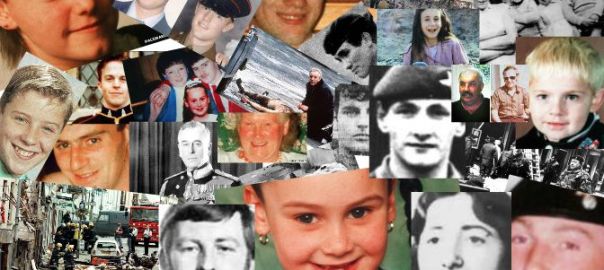











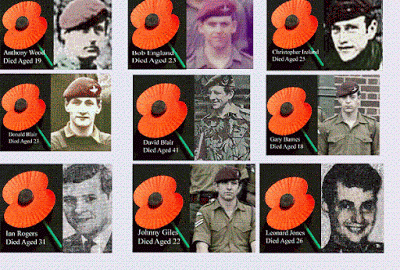


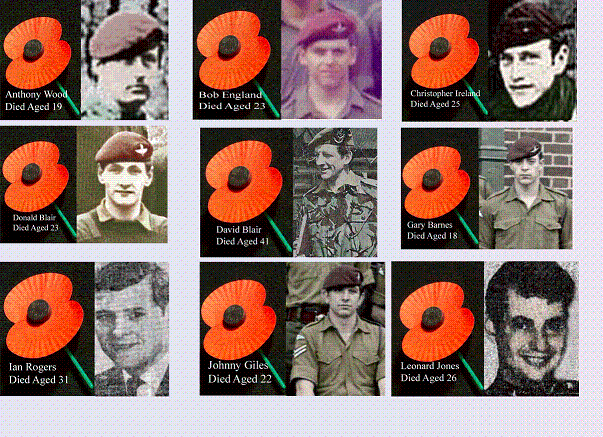
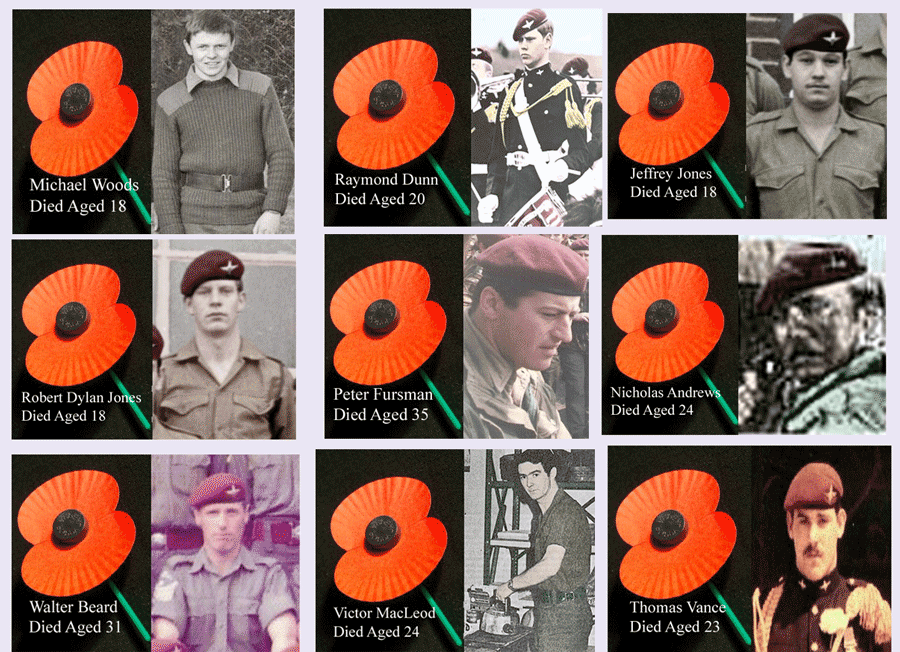
![[ 2 Para Remember ]](https://i0.wp.com/www.parachuteregiment-hsf.org/Warren-Point.gif)

![[ Private Thomas R. Vance ]](https://i0.wp.com/www.parachuteregiment-hsf.org/Pte-Thomas-Vance.gif)


![[ Private Gary I. Barnes ]](https://i0.wp.com/www.parachuteregiment-hsf.org/Barns.gif)


![[ Corporal Leonard Jones ]](https://i0.wp.com/www.parachuteregiment-hsf.org/Leonard_Jones.gif)
![[ Private Robert D. Vaughan-Jones ]](https://i0.wp.com/www.parachuteregiment-hsf.org/VJ.gif)
![[ Lance Corporal Donald F. Blair ]](https://i0.wp.com/www.parachuteregiment-hsf.org/Donald%20Blair.JPG)
![[ Private Raymond Dunn ]](https://i0.wp.com/www.parachuteregiment-hsf.org/Pte_Dunn.gif)
![[ Private Michael Woods ]](https://i0.wp.com/www.parachuteregiment-hsf.org/M_Woods.gif)
![[ Major Peter Fursman ]](https://i0.wp.com/www.parachuteregiment-hsf.org/Fursman.gif)
![[ Lance Corporal Chris G. Ireland ]](https://i0.wp.com/www.parachuteregiment-hsf.org/Chris-Irelands.gif)

![[ Warrant Officer Walter Beard ]](https://i0.wp.com/www.parachuteregiment-hsf.org/Wally_Beard.gif)


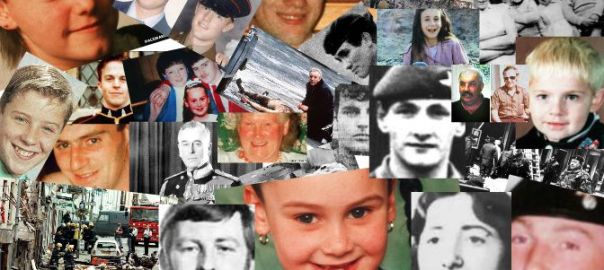





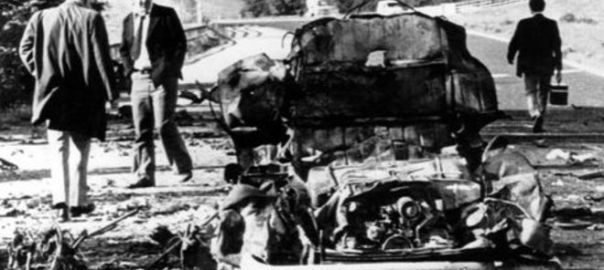
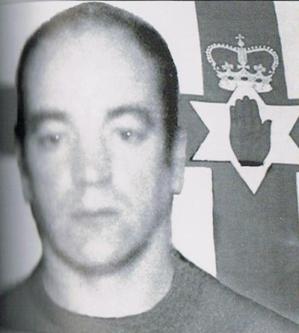


_van_02.jpg)





 belfastchildis.com
