Image caption Russia’s defence ministry has issued footage said to show its air strikes in Syria
Russia’s military intervention in Syria is helping to support the “butcher” President Bashar al-Assad, David Cameron has said.
The prime minister said Russian forces were not discriminating between Islamic State militants and others fighting the Syrian president.
Earlier, Defence Secretary Michael Fallon said Russia’s “unguided” bombing in Syria led to civilian deaths.
Russia said its aircraft had hit IS command centres and arms depots.
US President Barack Obama has said Russia’s strikes, which began on Wednesday, are “only strengthening” the IS position.
Speaking in Oxfordshire, before heading to the Conservative Party conference in Manchester, Mr Cameron said Russia’s military intervention was “really making the situation worse”.
“It’s absolutely clear that Russia is not discriminating between Isil [IS] and the legitimate Syrian opposition groups and, as a result, they are actually backing the butcher Assad and helping him,” he said.
“Rightly, they [Russia] have been condemned across the Arab world for what they have done and I think the Arab world is right about that.
“But we should be using this moment now to try to force forward a comprehensive plan to bring political transition in Syria because that is the answer for bringing peace to the region.”
Media captionUK Prime Minister David Cameron accused Russia of “backing the butcher Assad”
“Our evidence indicates they are dropping unguided munitions in civilian areas, killing civilians, and they are dropping them against the Free Syrian forces fighting Assad. He’s shoring up Assad and perpetuating the suffering.”
Mr Fallon said Russian President Vladimir Putin’s decision to become involved “has complicated the situation” but it would be “morally wrong” for the UK not to target IS in Syria, as well as Iraq.
“We can’t leave it to French, Australian and American aircraft to keep our own British streets safe,” he said.
Russia’s targets included the IS stronghold of Raqqa, but also Aleppo, Hama and Idlib – provinces with little IS presence.
President Obama has said the Russian bombing campaign is driving moderate opposition underground.
He also rejected the Russian assertion that all armed opponents of the “brutal” Mr Assad were terrorists.
But Russian President Vladimir Putin has argued in recent weeks that his country’s operation in Syria is designed to prevent the type of state implosion that took place in Libya after Nato’s intervention there in 2011.
Lt Gen Sir Simon Mayall said that UK policy makers had got caught up in the excitement of the Arab spring and hoped the Syrian leader would be swiftly overthrown, whereas the Russians had been “in many ways more realistic about the staying power of Assad”.
Named by police as Chris Harper-Mercer, the shooter was shot dead by officers after the incident at Umpqua Community College in Oregon.
Pictures uploaded in 2014, showing support for the IRA, were posted to his MySpace account, along with captions saying “looking cool defending their country” and “have faith and keep fighting”.
A video was also posted, showing IRA members wielding weapons and wearing balaclavas.
Pro-IRA images on Chris Harper-Mercer’s MySpace profile.
It appears Harper-Mercer also showed admiration for Vester Lee Flanagan, the disgruntled former journalist who shot dead two previous colleagues during a live news broadcast in Virginia in August.
Referring to the incident on a blog, Harper-Mercer said: “A man who was known by no one, is now known by everyone.
“His face splashed across every screen, his name across the lips of every person on the planet, all in the course of one day.
“Seems the more people you kill, the more you’re in the limelight.
“People like him have nothing left to live for, and the only thing left to do is lash out at a society that has abandoned them.”
He continued: “He posted the footage on Facebook and Twitter as well tweeting while he was running from the cops because he wanted the world to see his actions, much like many others post menial and trivial details of their life online and expect us to see it.
“Only his was at least a bit more interesting.”
“I have noticed that so many people like him are all alone and unknown, yet when they spill a little blood, the whole world knows who they are.”
On an online dating profile, Harper-Mercer described himself as “shy at first, but warm up quickly, better in small groups”.
His username on the dating site Spiritual Passions was ironcross45 – a reference to the German military symbol reintroduced by the Nazis.
The 26-year-old is thought to have originally been from the UK.
His stepsister, Carmen Nesnick, was quoted by CBS Los Angeles as saying: “I’m actually still shaking and my mom is in there crying. I don’t know what to do.”
She said Harper-Mercer had moved to the US as a young boy and described him as “caring and supportive”.
She also claimed he was not a religious or anti-religious person, adding: “All he ever did was put everybody before himself. He wanted everyone to be happy. No matter if he was sad or mad, he would always try to cheer up everybody.”
Harper-Mercer’s father said he was “shocked” after a “devastating day”.
It is understood the shooter demanded to know his victims’ religious beliefs before opening fire but a motive has not yet been confirmed by police.
Several people remain in hospital after what was the 45th school shooting in the US this year.
Earlier deputy First Minister Martin McGuinness expressed his condolences to the families of the victims of the massacre.
He said his thoughts and prayers are with the families involved.
“I was shocked and saddened to hear that so many young people have been shot dead in a deranged attack, in what should have been a place of safety and learning,” he said.
“I extend my condolences to all the families of the victims at this awful time of grief and mourning and wish those injured a full and speedy recovery.”
Local authorities have said they are investigating the incident.
The startling snapshot appears to show a slightly transparent man in an old jacket strolling across the road…
The ‘Downton’ ghost spotted by a long distance lorry driver/Mercury Press
A long distance lorry driver claims to have photographed the ghost of a drowned man wandering into a tunnel.
The startling snapshot appears to show a slightly transparent man in an old jacket strolling across the road.
Driver George Furst’s colleague Stephen Smyth took the snap last week as they drove into a tunnel heading into Cork, Ireland.
On checking the picture, they spotted what they believe could be a ‘Downton Abbey’ period ghost.
George, 45, said: “When we looked at the picture Stephen suddenly said ‘what the hell is that?’
“I couldn’t believe my eyes – it looked like an old man wearing an old tweed coat walking down the road into the tunnel.
The ghostly apparition was spotted in Ireland/ Mercury Press
“What was so striking was that it was a busy road and he wasn’t looking behind him or paying any attention to any of the cars. In fact, we must have driven right through him just after the picture was taken.”
With the tunnel having been fairly recently built, George thinks that the man could be the ghost of someone who drowned in the River Lee, which the tunnel runs under.
“He looks a bit like a butler to me, possibly from the Downton Abbey period, as if he has left a nearby manor house and gone for a walk and drowned in the river,” he said.
There’s no mistaking the ghostly figure on the road/Mercury Press
George was driving his long distance lorry back into Cork on the N40 when he asked Stephen to take pictures of the Jack Lynch Tunnel entrance so that he could send them back to his hometown of Liverpool.He explained that he had initially wanted to send the snaps to his family, pretending it was the Mersey tunnel.
“I wanted to wind them up and say I was back home in Liverpool as the entrances to the two tunnels look similar,” said George.
“But once I saw the strange figure in the picture I realised I’d caught something a bit more special. It was quite freaky the way the figure is clearly in front of where my lorry drove only seconds later so it can’t be a human being, or I would have hit them!” Ghosts and paranormal sightings
It said the strikes continued for more than 30 minutes after US and Afghan authorities were told of its location.
US forces were carrying out air strikes at the time. The Nato alliance has admitted the clinic may have been hit.
At least 37 people were seriously injured, 19 of them MSF staff.
More than 100 patients were in the hospital, along with relatives and carers. It is not known how many of them were killed.
MSF says that all parties to the conflict, including Kabul and Washington, had been told the precise GPS co-ordinates of the hospital in Kunduz on many occasions, including on 29 September.
After staff at the hospital became aware of the aerial bombardment in the early hours of Saturday morning, US and Afghan military officials were again informed, MSF said.
Reuters news agency quotes an MSF official as saying that frantic staff phoned military officials at Nato in Kabul and Washington as bombs landed on the hospital for nearly an hour.
The official said the first bomb had landed at 02:10, and MSF staff called Nato in Kabul at 02:19 and military officials in Washington a few minutes later, but the bombing continued until 03:13.
Image copyrightMSFImage caption MSF released this photo of its hospital in Kunduz on fire after the bombings These MSF staff appear to be in shock following the attack (MSF photo) MSF says surgery took place in the undamaged parts of the hospital following the attack
A spokesman for US forces in Afghanistan, Col Brian Tribus, said: “US forces conducted an air strike in Kunduz city at 02:15 (local time)… against individuals threatening the force.
“The strike may have resulted in collateral damage to a nearby medical facility.”
Who are the Taliban? A guide to the complexities and conflicts within the militant group
Taliban selfies: The militants posing for pictures as they seized the city
The Afghan interior ministry said a group of 10 to 15 militants were found hiding in the hospital.
“They are killed, all of the terrorists were killed, but we also lost doctors,” ministry spokesman Sediq Sediqi said.
The Taliban denied that any of its fighters were there.
A Taliban statement described the airstrikes which hit the hospital as “deliberate”, and carried out by “the barbaric American forces”.
Nicholas Haysom, head of the United Nations mission in Afghanistan, said “hospitals accommodating patients and medical personnel may never be the object of attack” and commended the work of MSF.
The International Committee of the Red Cross (ICRC) also strongly condemned the bombing.
“Such attacks against health workers and facilities undermine the capacity of humanitarian organisations to assist the Afghan people at a time when they most urgently need it,” said Jean-Nicolas Marti, head of the ICRC delegation in Afghanistan.
Image copyrightReutersImage caption MSF says it has treated nearly 400 at its hospital since the Taliban seized Kunduz on Monday
MSF says that staff and patients critically injured in the attack on the hospital have been transferred to a hospital in Pul-e Khumri, two hours’ drive away.
There has been intense fighting in Kunduz since Taliban fighters swept into the northern city on Monday.
Afghan officials said the government had regained control of Kunduz on Friday, but the Taliban denied the city had been retaken.
Residents say many people are afraid to leave their homes.
US air power has been supporting Afghan government forces’ efforts to regain the city.
In Badakhshan province, to the east of Kunduz, the Taliban has captured two districts in the last couple of days. The US embassy in Kabul has advised its citizens to leave the province.
Kunduz, with a population of around 300,000, is one of Afghanistan’s largest cities and strategically important both as a transport hub and a bread-basket for the region.
The US-led Nato combat mission in Afghanistan ended in December 2014, but Nato forces remain for training purposes.
Nato’s Resolute Support Mission, which was launched in January 2015, consists of more than 13,000 troops from 42 countries. The US contributes around half of these.
Documents extracted from home of IS military leader in Iraq show organization leader al-Baghdadi has two deputies to help run Iraq and Syria territories respectively, as well as a 7-man cabinet and governors running the different regions.
Those on the following list are wanted by international authorities and many are included on the FBI’s Most Wanted list. The USA authorities and other international agencies are offering substantial rewards for the capture (alive or dead) of those on the list.
However , although the rewards are vast and could make you a multimillionaire over night these guys live and operate in the most dangerous regions on earth and you would need an army to get anywhere near them. And you would also have to be slightly insane!
But that aside, history is littered with betrayal ( Judas) and perhaps one day greed will motivate someone close to them to turn them in and collect enough money to buy a 1000,000 goats and live happy ever after………………………….
‘Caliph Ibrahim
Abu Bakr al-Baghdadi
Price Tag = Up to $25 million
———————————————————–
Profile: Islamic State & Abu Bakr al-Baghdadi
———————————————————–
Real name: Ibrahim Awwad Ali al-Badri al-Samarrai.
A Iraqi national from the Al-Bu Badri tribe and an alleged descen-dant of the Prophet Mohammed. Received a PhD in Islamic studies in Baghdad before founding Jamaat Jaish Ahl al-Sunnah wal Jamaa in 2003 to fight US forces. Joined MSM in 2006 and took charge of ISI sharia committees by 2007.
On the 4th of October 2011, the U.S. State Department listed al-Baghdadi as a Specially Designated Global Terrorist, and announced a reward of up to US$10 million for information leading to his capture or death.[13][14] Only the leader of al-Qaeda, Ayman al-Zawahiri, has a larger reward offered for his capture or death (US$25 million).[15] The United States had also accused al-Baghdadi of kidnapping, enslaving, and repeatedly raping an American citizen who was later killed.
Al-Baghdadi (born Ibrahim Awwad Ibrahim Ali Muhammad al-Badri al-Samarrai, in Arabic إبراهيم عواد إبراهيم علي محمد البدري السامرائي) is believed to have been born near Samarra, Iraq, in 1971.[21] In his teens he had a passion for football. In an interview with The Daily Telegraph, contemporaries of al-Baghdadi describe him in his youth as being shy, unimpressive, a religious scholar and a man who eschewed violence. For more than a decade, until 2004, he lived in a room attached to a small local mosque in Tobchi, a poor neighbourhood on the western fringes of Baghdad, inhabited by both Shia and Sunni Muslims.[19]
Ahmed al-Dabash, the leader of the Islamic Army of Iraq and a contemporary of al-Baghdadi who fought against the allied invasion in 2003, gave a description of al-Baghdadi that matched that of the Tobchi residents:
“I was with Baghdadi at the Islamic University. We studied the same course, but he wasn’t a friend. He was quiet, and retiring. He spent time alone. Later, when he helped found the Islamic Army, Mr Dabash fought alongside militia leaders who were committing some of the worst excesses in violence and would later form al-Qaeda… [but] Baghdadi was not one of them, I used to know all the leaders (of the insurgency) personally. Zarqawi (the former leader of al-Qaeda) was closer than a brother to me… But I didn’t know Baghdadi. He was insignificant. He used to lead prayer in a mosque near my area. No one really noticed him.”[19]
In 2014, American and Iraqi intelligence analysts said that al-Baghdadi has a doctorate in Islamic studies from a university in Baghdad.[22] According to a biography that circulated on jihadist internet forums in July 2013, he obtained a BA, MA and PhD in Islamic studies from the Islamic University of Baghdad.[8][21][23][24] Another report says that he earned a doctorate in education from the University of Baghdad.[25]
“They [the US and Iraqi Governments] know physically who this guy is, but his backstory is just myth”, said Patrick Skinner of the Soufan Group, a security consulting firm. “He’s managed this secret persona extremely well, and it’s enhanced his group’s prestige”, said Patrick Johnston of the RAND Corporation, adding, “Young people are really attracted to that.”[26] He is so unrecognized even in his own organization Baghdadi is nicknamed “the invisible sheikh”.[4]
Clergyman
Some believe that al-Baghdadi was already an Islamic revolutionary during the rule of Saddam Hussein, but other reports contradict this. He may have been a mosque cleric around the time of the US-led invasion in 2003.[27]
After the US invasion of Iraq in 2003, al-Baghdadi helped found the militant group Jamaat Jaysh Ahl al-Sunnah wa-l-Jamaah (JJASJ), in which he served as head of the sharia committee.[24] Al-Baghdadi and his group joined the Mujahideen Shura Council (MSC) in 2006, in which he served as a member of the MSC’s sharia committee. Following the renaming of the MSC as the Islamic State of Iraq (ISI) in 2006, al-Baghdadi became the general supervisor of the ISI’s sharia committee and a member of the group’s senior consultative council.[24][28]
Bakr al-Baghdadi was arrested by US Forces-Iraq on 2 February 2004 near Fallujah and detained at Camp Bucca detention center under his name Ibrahim Awad Ibrahim al-Badry[22] as a “civilian internee” until December 2004, when he was recommended for release by a Combined Review and Release Board.[24][29][30] In December 2004, he was released as a “low level prisoner”.[22]
A number of newspapers and cable news channels have instead stated that al-Baghdadi was interned from 2005 to 2009. These reports originate from an interview with the former commander of Camp Bucca, Colonel Kenneth King, and are not substantiated by Department of Defense records.[31][32][33] Al-Baghdadi was imprisoned at Camp Bucca along with other future leaders of ISIL.[34]
As leader of al-Qaeda in Iraq
The Islamic State of Iraq (ISI), also known as al-Qaeda in Iraq (AQI), was the Iraqi division of al-Qaeda. Al-Baghdadi was announced as leader of the ISI on 16 May 2010, following the death of his predecessor Abu Omar al-Baghdadi.[35]
As leader of the ISI, al-Baghdadi was responsible for masterminding large-scale operations such as the 28 August 2011 suicide bombing at the Umm al-Qura Mosque in Baghdad, which killed prominent Sunni lawmaker Khalid al-Fahdawi.[14] Between March and April 2011, the ISI claimed 23 attacks south of Baghdad, all allegedly carried out under al-Baghdadi’s command.[14]
Following the death of founder and head of al-Qaida, Osama bin Laden, on 2 May 2011, in Abbottabad, Pakistan, al-Baghdadi released a statement praising bin Laden and threatening violent retaliation for his death.[14] On 5 May 2011, al-Baghdadi claimed responsibility for an attack in Hilla, 100 kilometres (62 mi) south of Baghdad, that killed 24 policemen and wounded 72 others.[14][36]
On 15 August 2011, a wave of ISI suicide attacks begenning in Mosul resulted in 70 deaths.[14] Shortly thereafter, in retaliation for bin Laden’s death, the ISI pledged on its website to carry out 100 attacks across Iraq featuring various methods of attack, including raids, suicide attacks, roadside bombs and small arms attacks, in all cities and rural areas across the country.[14]
On 22 December 2011, a series of coordinated car bombings and IED (improvised explosive device) attacks struck over a dozen neighborhoods across Baghdad, killing at least 63 people and wounding 180. The assault came just days after the US completed its troop withdrawal from the country.[37] On 26 December, the ISI released a statement on jihadist internet forums claiming credit for the operation, stating that the targets of the Baghdad attack were “accurately surveyed and explored” and that the “operations were distributed between targeting security headquarters, military patrols and gatherings of the filthy ones of the al-Dajjal Army”, referring to the Mahdi Army of Shia warlord Muqtada al-Sadr.[37]
On 2 December 2012, Iraqi officials claimed that they had captured al-Baghdadi in Baghdad, following a two-month tracking operation. Officials claimed that they had also seized a list containing the names and locations of other al-Qaeda operatives.[38][39] However, this claim was rejected by the ISI.[40] In an interview with Al Jazeera on 7 December 2012, Iraq’s Acting Interior Minister said that the arrested man was not al-Baghdadi, but rather a sectional commander in charge of an area stretching from the northern outskirts of Baghdad to Taji.[41]
Leader of Islamic State (IS)
Expansion into Syria and break with al-Qaeda
Al-Baghdadi remained leader of the ISI until its formal expansion into Syria in 2013, when in a statement on 8 April 2013, he announced the formation of the Islamic State of Iraq and the Levant (ISIL)—alternatively translated from the Arabic as the Islamic State in Iraq and Syria (ISIS).[42]
When announcing the formation of ISIL, al-Baghdadi stated that the Syrian Civil War jihadist faction, Jabhat al-Nusra—also known as al-Nusra Front—had been an extension of the ISI in Syria and was now to be merged with ISIL.[42][43] The leader of Jabhat al-Nusra, Abu Mohammad al-Julani, disputed this merging of the two groups and appealed to al-Qaeda emirAyman al-Zawahiri, who issued a statement that ISIL should be abolished and that al-Baghdadi should confine his group’s activities to Iraq.[44] Al-Baghdadi, however, dismissed al-Zawahiri’s ruling and took control of a reported 80% of Jabhat al-Nusra’s foreign fighters.[45] In January 2014, ISIL expelled Jabhat al-Nusra from the Syrian city of Ar-Raqqah, and in the same month clashes between the two in Syria’s Deir ez-Zor Governorate killed hundreds of fighters and displaced tens of thousands of civilians.[46] In February 2014, al-Qaeda disavowed any relations with ISIL.[47]
According to several Western sources, al-Baghdadi and ISIL have received private financing from citizens in Saudi Arabia and Qatar and enlisted fighters through recruitment drives in Saudi Arabia in particular.[48][49][50][51]
As Caliph of the Islamic State (IS)
On 29 June 2014, ISIL announced the establishment of a worldwide caliphate. Al-Baghdadi was named its caliph, to be known as “Caliph Ibrahim”, and the Islamic State of Iraq and the Levant was renamed the Islamic State (IS).[9][52] There has been much debate, especially across the Muslim world, about the legitimacy of these moves.
The declaration of a caliphate has been heavily criticized by Middle Eastern governments, other jihadist groups,[53] and Sunni Muslim theologians and historians. Qatar-based TV broadcaster and theologian Yusuf al-Qaradawi stated: “[The] declaration issued by the Islamic State is void under sharia and has dangerous consequences for the Sunnis in Iraq and for the revolt in Syria”, adding that the title of caliph can “only be given by the entire Muslim nation”, not by a single group.[54]
As a caliph, al-Baghdadi is required to hold to each dictate of the sunnah, whose precedence is set and recorded in the sahihhadiths. According to tradition, if a caliph fails to meet any of these obligations at any period, he is legally required to abdicate his position and the community has to appoint a new caliph, theoretically selected from throughout the caliphdom as being the most religiously and spiritually pious individual among them.[55] Due to the widespread rejection of his caliphhood, al-Baghdadi’s status as caliph has been compared to that of other caliphs whose caliphship has been questioned.[56]
In an audio-taped message, al-Baghdadi announced that ISIL would march on “Rome”—generally interpreted to mean the West—in its quest to establish an Islamic State from the Middle East across Europe. He said that he would conquer both Rome and Spain in this endeavor[57][58] and urged Muslims across the world to immigrate to the new Islamic State.[57]
On 5 July 2014, a video was released apparently showing al-Baghdadi making a speech at the Great Mosque of al-Nuri in Mosul, northern Iraq. A representative of the Iraqi government denied that the video was of al-Baghdadi, calling it a “farce”.[54] However, both the BBC[59] and the Associated Press[60] quoted unnamed Iraqi officials as saying that the man in the video was believed to be al-Baghdadi. In the video, al-Baghdadi declared himself the world leader of Muslims and called on Muslims everywhere to support him.[61]
On 8 July 2014, ISIL launched its online magazine Dabiq. The title appears to have been selected for its eschatological connections with the Islamic version of the End times, or Malahim.[62]
According to a report in October 2014, after suffering serious injuries, al-Baghdadi fled ISIL’s capital city Ar-Raqqah due to the intense bombing campaign launched by Coalition forces, and sought refuge in the Iraqi city of Mosul, the largest city under ISIL control.[63]
On 5 November 2014, al-Baghdadi sent a message to al-Qaeda Emir Ayman al-Zawahiri requesting him to swear allegiance to him as caliph, in return for a position in the Islamic State of Iraq and the Levant. The source of this information was a senior Taliban intelligence officer. Al-Zawahiri did not reply, and instead reassured the Taliban of his loyalty to Mullah Omar.[64]
On 7 November 2014, there were unconfirmed reports of al-Baghdadi’s death after an airstrike in Mosul,[65] while other reports said that he was only wounded.[66][67]
On 13 November 2014, ISIL released an audio-taped message, claiming it to be in the voice of al-Baghdadi. In the 17-minute recording, released via social media, the speaker said that ISIL fighters would never cease fighting “even if only one soldier remains”. The speaker urged supporters of the Islamic State to “erupt volcanoes of jihad” across the world. He called for attacks to be mounted in Saudi Arabia—describing Saudi leaders as “the head of the snake” and said that the US-led military campaign in Syria and Iraq was failing. He also said that ISIL would keep on marching and would “break the borders” of Jordan and Lebanon and “free Palestine.”[68] Al-Baghdadi also claimed in 2014 that Islamic jihadists would never hesitate to eliminate Israel just because it has the United States support.[69]
On 20 January 2015, the Syrian Observatory for Human Rights reported that al-Baghdadi had been wounded in an airstrike in Al-Qa’im, an Iraqi border town held by ISIL, and as a result, withdrew to Syria.[70]
On 8 February 2015, after Jordan had conducted 56 airstrikes, which had reportedly killed 7,000 ISIL militants from 5–7 February, Abu Bakr al-Bagdadi was said to have fled from Ar-Raqqah to Mosul, out of fear for his life.[71][72] However, after a Peshmerga source informed the US-led Coalition that al-Baghdadi was in Mosul, Coalition warplanes continuously bombed the locations where ISIL leaders were known to meet at for 2 hours.[72]
On 14 August 2015, it was reported that he had allegedly taken American hostage Kayla Mueller as his wife and raped her repeatedly.[73] Mueller was later alleged to have been killed in an airstrike by anti-ISIL forces.[16] However, other reports cite that Mueller was murdered by ISIL.[74]
Sectarianism and theocracy
Through his forename, al-Baghdadi is rumored to be styling himself after the first caliph, Abu Bakr, who led the “Rightly Guided” or Rashidun. According to Sunni tradition, Abu Bakr replaced Muhammad as prayer leader when he was suffering from illnesses.[75] Another feature of the original Rashidun was what some historians dub as the first SunnistShiist discord during the Battle of Siffin. Some publishers have drawn a correlation between those ancient events and modern events under al-Baghdadi’s rule.[76][77]
Due to the relatively stationary nature of ISIL control, the elevation of religious clergy and the group’s scripture-themed legal system, some analysts have declared al-Baghdadi a theocrat and ISIL a theocracy.[78] Other indications of the decline of secularism are the evisceration of secular institutions and its replacement with strict sharia law, and the gradual caliphization and Sunnification of regions under the group’s control.[79] In July 2015, al-Baghdadi was described by a reporter as exhibiting a kinder and gentler side after he banned videos showing slaughter and execution.[80]
Personal life
Family
Little is known about al-Baghdadi’s family and sources provide conflicting information. Reuters, quoting tribal sources in Iraq, reports Baghdadi has three wives, two Iraqis and one Syrian.[81] The Iraqi Interior Ministry has said, “There is no wife named Saja al-Dulaimi” and that al-Baghdadi has two wives, Asma Fawzi Mohammed al-Dulaimi and Israa Rajab Mahal A-Qaisi. It is thought the child of his wife Saja al-Dulaimi was molested by al-Baghdadi and also sodomized by him on various occasions, according to sources in al-Nusra Front.[82]
Saja al-Dulaimi
Saja al-Dulaimi
According to many sources, Saja al-Dulaimi is or was al-Baghdadi’s wife. It was reported the couple had allegedly met and fell in love online.[83] Some sources prefix her name with caliphess or calipha in recognition of her status as the wife of a caliph.[84]
She was arrested in Syria in late 2013 or early 2014, and was released from a Syrian jail in March 2014 as part of a prisoner swap involving 150 women, in exchange for 13 nuns taken captive by al-Qaeda-linked militants. Also released in March were her two sons and her younger brother.[85]
Al-Dulaimi’s family allegedly all adhere to ISIL’s ideology. Her father, Ibrahim Dulaimi, a so-called ISIL emir in Syria, was reportedly killed in September 2013 during an operation against the Syrian Army in Deir Attiyeh. Her sister, Duaa, was allegedly behind a suicide attack that targeted a Kurdish gathering in Erbil.[86] The Iraq Interior Ministry has said that her brother is facing execution in Iraq for a series of bombings in southern Iraq.[82][87] The Iraq government, however, said that al-Dulaimi is the daughter of an active member of al-Qaeda’s affiliate in Syria, al-Nusra Front.[88]
In late November 2014, al-Dulaimi was arrested and held for questioning by Lebanese authorities, along with two sons and a young daughter. They were traveling on false documents.[81] The children are being held in a care center while Dulaimi is interrogated.[88]
The capture was a joint intelligence operation by Lebanon, Syria and Iraq, with the US assisting Iraq. Al-Dulaimi’s potential intelligence value is unknown. An unnamed intelligence source told The New York Times that during the Iraq war, when the Americans captured a wife of Abu Musab al-Zarqawi, the leader of al-Qaeda in Iraq, “We got little out of her, and when we sent her back, Zarqawi killed her.”[82] Al-Baghdadi’s family members are seen by the Lebanese authorities as potential bargaining chips in prisoner exchanges.[89]
In the clearest explanation yet of al-Dulaimi’s connection to al-Baghdadi, Lebanese Interior Minister Nohad Machnouk told Lebanon’s MTV channel that “Dulaimi is not Abu Bakr al-Baghdadi’s wife currently. She has been married three times: first to a man from the former Iraqi regime, with whom she had two sons.”[88] Other sources identify her first husband as Fallah Ismail Jassem, a member of the Rashideen Army, who was killed in a battle with the Iraqi Army in 2010.[85] Machnouk continued, “Six years ago she married Abu Bakr al-Baghdadi for three months, and she had a daughter with him. Now, she is married to a Palestinian and she is pregnant with his child.” The Minister added, “We conducted DNA tests on her and the daughter, which showed she was the mother of the girl, and that the girl is [Baghdadi’s] daughter, based on DNA from Baghdadi from Iraq.”[88][90]
Al-Monitor reported a Lebanese security source as saying that al-Dulaimi had been under scrutiny since early 2014. He said, “[Jabhat al-Nusra] insisted back in March on including her in the swap that ended the kidnapping of the Maaloula nuns. The negotiators said on their behalf that she was very important, and they were ready to cancel the whole deal for her sake,” adding, “It was later revealed by Abu Malik al-Talli, one of al-Nusra’s leaders, that she was Abu Bakr al-Baghdadi’s wife.”[91]
On December 9, 2014, al-Dulaimi and her current Palestinian husband Kamal Khalaf were formally arrested after the Lebanese Military Court issued warrants and filed charges for belonging to a terrorist group, holding contacts with terrorist organizations, and planning to carry out terrorist acts. Her freedom was offered in a hostage swap deal.[92]
Children
According to a Guardian reporter The Guardian, al-Baghdadi married in Iraq around the year 2000 after finishing his doctorate. The son of this marriage was aged 11 years old in 2014.[19]
A four- to six-year-old girl who was detained in Lebanon in 2014 is allegedly al-Baghdadi’s daughter.[88]
Reports of paralysis and wounds
According to media reports, al-Baghdadi was wounded on 18 March 2015 during a coalition airstrike on the al-Baaj District, in the Nineveh Governorate, near the Syrian border. His wounds were apparently so serious that the top ISIL leaders had a meeting to discuss who would replace him if he died. According to reports, by 22 April al-Baghdadi had not yet recovered enough from his injuries to resume daily control of ISIL.[93] The US Pentagon said that al-Baghdadi had not been the target of the airstrikes and “we have no reason to believe it was Baghdadi”.[94] On 22 April 2015, Iraqi government sources reported that Abu Ala al-Afri, the self-proclaimed caliph’s deputy and a former Iraqi physics teacher, had been installed as the stand-in leader while Baghdadi recuperated from his injuries.[95]
On 3 May 2015, The Guardian reported that al-Baghdadi was recovering from the severe injuries which he had received during the airstrike on 18 March 2015, in a part of Mosul. It was also reported that a spinal injury which had left him paralyzed and incapacitated meant that he might never be able to fully resume direct command of ISIL.[96] By 13 May, ISIL fighters had warned that they would retaliate for al-Baghdadi’s injury, which the Iraqi Defense Ministry believed would be carried out through attacks in Europe.[97]
On 14 May 2015, ISIL released an audio message which it claimed was from al-Baghdadi. In the recording, al-Baghdadi urged Muslims to emigrate to the Islamic State, and to join the fight in Iraq and Syria. In the recording, he also condemned the Saudi involvement in Yemen, and claimed that the conflict would lead to the end of the Saudi royal family‘s rule. He also claimed that Islam was never a religion of peace, that it was “the religion of fighting.”[98] Assessment was made that this statement proved that al-Baghdadi remained in control or influencing ISIL.[99]
On 20 July 2015, The New York Times wrote that rumors that al-Baghdadi had been killed or injured earlier in the year had been “dispelled
——————————————————————————–
Deputy, Iraq
Abu Muslim al-Turkmani
Real name: Fadl Ahmad Abdullah al-HiyaliA former Lieutenant Colonel in the Iraqi Army and a former officer in the Iraqi Special Forces. From Tel Afar, Ninawa.
Fadel Ahmed Abdullah al-Hiyali, better known as Haji Mutazz, or by his nom de guerreAbu Muslim al-Turkmani (Arabic: أبو مسلم التركماني), also Abu Mu’taz,[2] was the Islamic State of Iraq and the Levant (ISIS) governor for territories held by the organization in Iraq. Considered the ISIS second-in-command (along with his counterpart Abu Ali al-Anbari, who holds a similar position in Syria), he played a political role of overseeing the local councils and a military role that includes directing operations against opponents of ISIS.[3] His names were also spelt Fadhil Ahmad al-Hayali, and Hajji Mutazz.
Biography
An ethnic Turkmen born in Tel Afar, Nineveh Province, al-Hiyali was an Iraqi Army Colonel under Saddam Hussein.[1][3][4] According to documents discovered in Iraq, al-Hiyali was a lieutenant colonel in the Iraqi military’s intelligence unit Istikhbarat (Directorate of General Military Intelligence), who also spent time as a Special Forces officer in the Special Republican Guard right up until the US-led 2003 invasion of Iraq.[5][6] He was decommissioned from the Iraqi army after U.S. forces arrived, and joined Sunni insurgents to fight the Americans.[3] Like other ISIS leaders, Abu Muslim Al Turkmani spent time in a US prison in Iraq, specifically Camp Bucca.[7][8] He once practiced a moderate form of Islam.[3]
He oversaw ISIS designated governors in various cities and regions of Iraq, including identified shadow governors in areas that ISIS does not control, but has aspirations over.[6] “I describe Baghdadi as a shepherd, and his deputies are the dogs who herd the sheep (ISIS members), the strength of the shepherd comes from his dogs.” said Hisham al-Hashimi, a security analyst who had access to documents discovered which provided details on al-Hiyali.[5][6]
In a June 2015 New York Times article, al-Turkmani was said to have been the head of the Islamic State’s military council. He reportedly led the council of six to nine military commanders who directed the Islamic State’s military strategy, according to Laith Alkhouri, a senior analyst at Flashpoint Global Partners.[2]
He was killed by a US-led drone strike near Mosul, Iraq, on 18 August, 2015. There had previously been erroneous report of him having died on 7 November, 2014. This was believed to have been due to a case of mistaken identity.[9][10]
Major media outlets had reported that al-Turkmani was killed in an early November or early December 2014 airstrike. The Wall Street Journal for example published on November 9, 2014, “Residents of Mosul and other people with connections to Islamic State said Friday (Nov 7) night’s airstrikes had killed Abu Muslim al Turkmani, one of Mr. Baghdadi’s top lieutenants. Twitter accounts connected to Islamic State have publicly been mourning the death of Mr. Turkmani, who had effectively governed Islamic State territory in Iraq.”[11][12] Islamic State did not confirm his death at that time
—————————————————————————————————
Deputy, Syria
Abu Ali al-Anbari
Price Tag = Up to $5 Million Reward
Real name: Unknown
A former Major General in the Iraqi Military from Anbar.
Abu Ali al-Anbari (Arabic: أبو علي الأنباري) is a nom de guerre for the Islamic State of Iraq and the Levant (ISIS) governor for territories held by the organization in Syria. Considered the ISIS second-in-command (along with his counterpart Abu Muslim al-Turkmani (KIA) who held a similar position in Iraq), he plays a political role of overseeing the local councils and acts as a kind of political envoy. His military role includes directing operations against both other Syrian rebels who oppose President Bashar al-Assad‘s government and the Syrian government itself
Biography
Early life and the Ba’ath regime
An ethnic Turkmen, al-Anbari is to be from the Iraqi city of Mosul in Nineveh province. He was said to be a former physics teacher and a Ba’ath party activist before 2003. He was also a former Iraqi Army officer under Saddam Hussein during the 1990s and attained the rank of Major General up until the regime’s fall in 2003.[3][5][6]
Al-Anbari’s role within ISIS became clear after a raid last year on the home of another ISIS figure, Abu Abdulrahman al-Bilawi, al-Baghdadi’s military chief of staff for Iraqi territory. Memory sticks found during the raid, in which al-Bilawi was killed, identified al-Anbari as the head of all ISIS military and non-military operations within Syria.[7]
According to one ex-member of The Islamic State, al-Anbari is also a member of the Shura Council. Another account puts him as head of the powerful Intelligence and Security Council. He appears to have appointed Abu Yahya al Iraqi, who is with Abu Bakr al-Baghdadi at all times, to act as a channel between them.[5]
Reportedly his knowledge of Shariah Islamic rules isn’t considered as extensive as that of other senior leaders according to ISIS militants interviewed.[4]
“I describe Baghdadi as a shepherd, and his deputies are the dogs who herd the sheep [ISIS’s members], the strength of the shepherd comes from his dogs.” said Hisham al-Hashimi, a security analyst who had access to documents discovered which provided details on al-Anbari.[3]
Deputy ‘Caliph’ of Islamic State (IS)
In March 2015, it was rumored that current leader of ISIS, Abu Bakr al-Baghdadi had suffered injuries including spinal damage leaving him incapacitated.[8]
This has led to speculation that al-Anbari may ascend to the role of deputy of ISIS. That leader will be, in effect, under al-Baghdadi, a super deputy to the caliph—in Arabic, na’ib al-malik, or Viceroy. As a former Major-General, Head of the ISIS Security Council and leader of ISIS operations in Syria, this makes al-Anbari appear as a potential contender for the position. However, his previous experience in Saddam’s military might make al-Anbari an unpopular choice among foreign fighters and more militant Salafists inside ISIS.[7] ISIS analyst Michael Weiss says, “It would be very unlikely that a known ex-Saddam military officer would be appointed caliph. Also, al-Anbari’s role is better suited as kingmaker for the organization although he does have or had a prominent public presence.”[7]
Furthermore, according to Middle-east analyst Hassan Hassan, Abu Ala al-Afri, an influential member within ISIS, was believed to have already replaced al-Anbari as al-Baghdadi’s second-in-command
Little is known about Abu Suleiman. He succeeded Abu Ayyub al-Masri, the leader of al-Qaeda in Iraq, who was killed along with ISI leader Abu Omar al-Baghdadi in a joint operation by US and Iraqi forces in Tikrit in April 2010, as the Minister of War for the Islamic State of Iraq. The new war minister signed with the name Al-Nasser Lideen Allah Abu Suleiman, a nom de guerre that translates “Defender of God’s Religion, Father of Suleiman”. His real name is Neaman Salman Mansour al Zaidi.[5]
He is reported to have once been detained at Camp Bucca prison in Basrah province.[6] He may have once been the governor of Anbar.[7]
Iraqi security forces claimed to have killed Suleiman in February 2011, in the city of Hīt, west of Baghdad.[2] However, the ISI denied his death a month later.[8] Al-Naser has not made any public statements since his announcement as war minister and it is not known what role, if any, he has played in the organisation since it developed into the Islamic State of Iraq and the Levant, and strengthened it’s insurgency against the Iraqi Government.[9]
Late on 7 November 2014,[10] a US airstrike targeted a meeting of top ISIS leaders in Mosul, Iraq, killing 20 ISIS militants, including Abu Ayman al-Iraqi, ISIS’s Head of Military Shura at that time. He was replaced by Abu Suleiman al-Naser as ISIS’s Military Chief
—————————————————————————————–
Chief of Syria military operations
Umar al-Shishani
Price Tag -Up to $5 Million Reward
Real name: Tarkhan Tayumurazovich BatirashviliAn ethnic Chechen Georgian national. Former Sergeant in Georgian military intelligence unit. Led Jaish al-Muhajireen wal Ansar in Syria before joining ISIS.
Tarkhan Tayumurazovich Batirashvili (Georgian: თარხან ბათირაშვილი, born 1986), known by his nom de guerreAbu Omar al-Shishani (Arabic: أبو عمر الشيشاني, Abū ‘Umar ash-Shīshānī , “Abu Omar the Chechen”)[7] or Omar al-Shishani, is a Georgian jihadist who currently serves as a commander for the Islamic State in Syria, and a former sergeant in the Georgian Army.[7]
In May 2013, Batirashvili was appointed northern commander for ISIS, with authority over ISIS’s military operations and ISIS’s forces in northern Syria, specifically Aleppo, al-Raqqah, Latakia, and northern Idlib Provinces. As of late 2013, he was the ISIS amir (leader) for northern Syria and was located in and around Aleppo Province. He was also in charge of fighters from Chechnya and elsewhere in the Caucasus.[8] Units under his command have participated in major assaults on Syrian military bases in and around Aleppo, including the capture of Menagh Airbase in August 2013.[2] He is considered “one of the most influential military leaders of the Syrian opposition forces”.[1] As of mid-2014, Batirashvili was a senior ISIS commander and Shura Council member based in al-Raqqah, Syria.[8]
Batirashvili grew up in the largely Kist-populated village of Birkiani, located in the Pankisi Gorge in northeast Georgia. In his youth, he worked as a shepherd in the hills above the gorge. Later in the 1990s, the Pankisi Gorge was a major transit point for rebels participating in the Second Chechen War, and it was there that Batirashvili reportedly came into contact with the Chechen rebels moving into Russia.[14] According to his father, a young Batirashvili secretly helped Chechen militants into Russia and sometimes joined them on missions against Russian troops.[2]
Service in the Georgian Armed Forces
After finishing high school, Batirashvili joined the Georgian Army and distinguished himself as master of various weaponry and maps, according to his former commander Malkhaz Topuria, who recruited him into a special reconnaissance group.[2] He rose to the rank of sergeant in a newly formed intelligence unit, and during the 2008 Russo-Georgian War he served near the front line at the Battle of Tskhinvali, spying on Russian tank columns and relaying their coordinates to Georgian artillery units.[2]
Batirashvili was never decorated for his military service.[1] He was due to be promoted to become an officer, but in 2010 he was diagnosed with tuberculosis. After spending several months in a military hospital, he was discharged on medical grounds. He tried and failed to re-enlist.[2][14] Upon returning home, he was unable to secure work in the local police force. Around this time, his mother also died of cancer. According to his father, he became “very disillusioned”.[2]
Militant activity
According to the Georgian Defense Ministry, Batirashvili was arrested in September 2010 for illegally harboring weapons and was sentenced to three years in prison.[2] He was allegedly released after serving about 16 months in early 2012 and immediately left the country. According to an interview on a jihadist website, Batirashvili said that prison transformed him; “I promised God that if I come out of prison alive, I’ll go fight jihad for the sake of God”, he said.[2]
Batirashvili reportedly told his father that he was leaving for Istanbul, where members of the Chechen diaspora were ready to recruit him to lead fighters inside war-ravaged Syria; an older brother had already gone to Syria some months before.[2] In an interview, Batirashvili said that he had considered going to Yemen and briefly lived in Egypt before ultimately arriving in Syria in March 2012.[15][16]
Muhajireen Brigade
His first command was the Muhajireen Brigade, an Islamist jihadist group made up of foreign fighters that was formed in the summer of 2012. His unit became involved in the Battle of Aleppo, and in October 2012 they assisted Al-Nusra Front in a raid on an air defense and Scud missile base in Aleppo.[6]
In December 2012, they fought alongside Al-Nusra Front during the overrunning of the Sheikh Suleiman Army base in Western Aleppo. In February 2013, together with the Tawhid Brigades and Al-Nusra Front, they stormed the base of the Syrian military’s 80th Regiment near the main airport in Aleppo.[17]
In March 2013, the Kavkaz Center reported that the Muhajireen Brigade had merged with two Syrian jihadist groups called Jaish Muhammad and Kataeb Khattab to form a new group called Jaish al-Muhajireen wal-Ansar, or Army of Emigrants and Helpers.[18] The group’s leadership structure consists of a military leadership, a sharia committee, a shura council and a media arm, Liwa al-Mujahideen al-Ilami. The latter is the same name as a media group established by foreign mujahideen fighting in the Bosnian war.[19]
The group played a key role in the August 2013 capture of Menagh Air Base, which culminated in a Vehicle Borne Improvised Explosive Device (VBIED) driven by two of their members killing and wounding many of the last remaining Syrian Armed Forces defenders.[20] A branch of the Muhajireen Brigade was involved in the 2013 Latakia offensive.[21]
In August 2013, Batirashvili released a statement announcing the expulsion of one of his commanders, Emir Seyfullah, and twenty-seven of his fighters. Batirashvili accused the men of embezzlement and stirring up the animosity of local Syrians against the foreign fighters by indulging in takfir—excommunication—against other Muslims.[23] However, Seyfullah denied these allegations in a statement and claimed that it was because he had refused to join ISIS with Batirashvili.[24]
In late 2013, Batirashvili was replaced as leader of Jaish al-Muhajireen wal-Ansar by another Chechen commander known as Salahuddin, as most of the Chechen members of the group did not support Batirashvili’s oath of allegiance to the Islamic State of Iraq and the Levant in November, due to their preexisting oath to Dokka Umarov, leader of the Caucasus Emirate.[1][4]
As of mid-2014, Batirashvili was a senior ISIS commander and Shura Council member located in Ar-Raqqah, Syria.[22] According to Batirashvili’s father, he called him once since he left for Syria to tell him that he was now married to a Chechen woman and had a daughter named Sophia.[12] For a time, Batirashvili lived with his family in a large villa owned by a businessman in the town of Huraytan just northwest of Aleppo.[25] He is said to have overseen the group’s prison facility near Ar-Raqqah, where foreign hostages may have been held.[26]
Reports of death
Shishani has been reported as being killed on numerous occasions. In 2014, there were reports that he had been killed in various parts of Syria and Iraq in May, June, August and October, all of which proved to be untrue.[27]
On 13 November 2014, Chechen leader Ramzan Kadyrov posted on his personal Instagram account that al-Shishani had been killed, and posted a photo of a dead ginger-bearded man, however the man in the photograph was not Shishani, and Kadyrov later deleted the post. Before the post was deleted, the statement was picked up and reported on by many media outlets around the world
————————————————————————————————————
Senior military commander
Abu Wahib
Price Tag = $50,000
—————————————————————————————-
ISIL Death Cult Kills Three Syrian Truck Drivers in Iraq after Failing the “Are you Sunni
—————————————————————————————-
Abu Wahib
Shaker Wahib al-Fahdawi Arrested in 2006 by US forces and sentenced to death. Escaped prison in Tikrit in September 2012.
Shaker Wahib al-Fahdawi al-Dulaimi, known as Abu Waheeb (“Father of the Generous”) (Arabic: أبو وهيب) is a leader of the terrorist group Islamic State in Iraq and the Levant forces in Anbar, Iraq.[4] He is notorious for the execution of a group of three Syrian Alawite truck drivers in Iraq in the summer of 2013, as head of the Al Anbar Lions
Biography
Fahdawi was born in 1986. In 2006, whilst studying computer science at the University of Anbar, he was arrested by US forces on charges of belonging to Al-Qaeda in Iraq. Following Fahdawi’s arrest he was detained by US forces at the Camp Bucca detention facility in southern Iraq until 2009, when he was sentenced to death and moved to Tikrit Central Prison in Saladin Province.[2]
Fahdawi was one of 110 detainees who managed to escape the prison in 2012, following a riot and an attack on the prison by forces from the Islamic State of Iraq.[2]
Following his escape he became an ISI field commander in Anbar province, having been trained and prepared during his incarceration. The two prisons he had been housed at had previously held a large number of ISI leaders.[2] Since his escape he has been active in anti-government operations, with his appearances becoming more brazen. Iraqi officials have blamed him for a long list of terror-related offences.[3]
Anbar security officials have put a $50,000 bounty on him
————————————————————————————————————
Chief Spokesman
Abu Mohammed al-Adnani
—————————————————————————
Abu Muhammad Al-adnani “Oh Crusaders
——————————————————————————
Price Tag = up to US$5 million
Real name: Taha Sobhi Falaha
A Syrian national from Idlib who pledged allegiance to Abu Musab al- Zarqawi in 2002-2003. Has been a military instructor, Emir of Haditha and imprisoned by American forces in mid-2000s.
Abu Muhammad al-Adnani al-Shami (Arabic: أبو محمد العدناني. born 1977 or 1978), whose original name is Taha Subhi Falaha (طه صبحي فلاحة), is the official spokesperson and a senior leader of the Islamic State of Iraq and the Levant, and its primary conduit for communicating official messages.[5][6] He is also the emir of ISIS in Syria.[3] The U.S. State DepartmentRewards for Justice Program announced a reward up to US$5 million for information leading to his capture on May 5, 2015
Mugshot of al-Adnani while detained in Iraq, 2005.
Al-Adnani was reportedly one of the first foreign fighters to opposeCoalition forces in Iraq.[4] In May 2005 he was arrested by the Coalition forces in Al Anbar Governorate in Iraq under a fake name “Yasser Khalaf Hussein Nazal al-Rawi”, and was released in 2010.[8] In December 2012, an Iraqi intelligence official said he was using a number of aliases including “Abu Mohamed al-Adnani, Taha al-Banshi, Jaber Taha Falah, Abu Baker al-Khatab and Abu Sadek al-Rawi.”[8]
On 22 September 2014, al-Adnani released an important speech entitled ‘Indeed, Your Lord Is Ever Watchful’, which was very significant as being the first official instruction by the Islamic State of Iraq and the Levant for its supporters to kill disbelievers in Western countries. Al-Adnani said in his speech:
“If you can kill a disbelieving American or European – especially the spiteful and filthy French – or an Australian, or a Canadian, or any other disbeliever from the disbelievers waging war, including the citizens of the countries that entered into a coalition against the Islamic State, then rely upon Allah, and kill him in any manner or way however it may be. Smash his head with a rock, or slaughter him with a knife, or run him over with your car, or throw him down from a high place, or choke him, or poison him
————————————————————————————————————
Governor of Kirkuk
Abu Fatima
Real name: Naima Abd al-Naif al-Jouburi
Price Tag = up to US$5 million
Ni’ma Abd Nayef al-Jabouri, known by his nom de guerre Abu Fatima al-Jaheishi, was initially in charge of the ISIS operations in southern Iraq before he moved to the northern city of Kirkuk.[1] He is now the Governor of the South and Central Euphrates region in the Islamic State and a senior member in the IS hierarchy
————————————————————————————————————
Senior facilitator & financier
Abu Umar
Price Tag = US$3 million
Real name: Tariq Bin al-Tahar Bin al-Falih al-Awni al-Harzi
A Tunisian senior facilitator responsible for recruitment of foreign fighters and collection of finance, based in Syria.
Tariq bin al-Tahar bin al-Falih al-‘Awni al-Harzi (3 May 1982 – 16 June 2015) was a member of the Islamic State of Iraq and the Levant (ISIL) rebel group, born in Tunis and a Tunisian citizen. He was one of the first foreign fighters to join ISIL.[1]
Harzi was known as the “emir of suicide bombers”, because he orchestrated hundreds of suicide attacks, including scores executed by jihadists from across the globe.[2] Harzi was in charge of receiving foreign fighter recruits and giving them light weapons training before sending them into Syria, according to the US Treasury report.[1] He was also said to have been involved in fundraising for the group in Qatar and raised $2 million that was to be sent to ISIL in September 2013.[3]
Tariq al-Harzi was killed in a US drone strike at Shaddadi in north-eastern Syria on 16 June 2015.[6][7] His brother Ali Awni al-Harzi was killed the previous day in a US airstrike on Mosul, Iraq
————————————————————————————————————
Chief of Media Operations
Ahmad Abousamra
Price Tag = USD 50,000
A Syrian-American national credited with managing ISIS’ media operations, allegedly from Aleppo. Image source: FBI, Most Wanted Terrorists.
Ahmad Abousamra (born 1981) is a person on the FBI Most Wanted Terrorists list for allegedly attempting to obtain military training in his trips to Yemen and Pakistan for the purpose of killing American soldiers overseas. He was indicted for his arrest on November 5, 2009. He is currently wanted by the FBI for conspiracy to provide material support to terrorists, providing and attempting to provide material support to terrorists in connection with Al-Qaeda, conspiracy to kill in a foreign country, conspiracy, and false statements. As of 2014[update] he was believed to be living in Syria with his wife and at least one child, according to authorities who are offering a USD 50,000 reward for tips leading to his arrest.[1][2][3][4]
Abousamra was reported September 2014 to be running the social media operation for the Islamic State of Iraq and the Levant (also known as ISIS and ISIL), a designated terrorist organization. That operation is reportedly helping to attract hundreds of fighters to ISIS from across the world – including from the U.S., Britain and Canada.[5]
Key Events & Deaths on this day in Northern Ireland Troubles
3rd October
Thursday 3 October 1968
The proposed civil rights march in Derry was banned from the area of the city centre and the Waterside area. The banning order was issued under the Public Order Act by William Craig, then Home Affairs Minister.
Sunday 3 October 1971
A man was shot dead during an attack by the Irish Republican Army (IRA) on a British Army (BA) foot patrol.
Friday 3 October 1975
The Ulster Volunteer Force (UVF) was declared a ‘proscribed’ (illegal) organisation. Tiede Herrema, then a Dutch industrialist living and working in the Republic of Ireland, was abducted and held hostage at a house in Monasterevin, County Kildare.
[On 21 October 1975 Gardaí surrounded the house and a siege began which lasted until the release of Herrema on 6 November 1975.]
Saturday 3 October 1981
Republican Hunger Strike Ended Those Republican prisoners who had been still refusing food decided to end their hunger strike. At this stage in the protest six prisoners were on hunger strike: Hugh Carville – 34 days; James Devine – 13 days; Gerard Hodgkins – 20 days; Jackie McMullan – 48 days; John Pickering – 27 days; and Pat Sheehan – 55 days.
[The prisoners took their decision when it became clear that each of their families would ask for medical intervention to save their lives. Even though the hunger strike was called off it was announced on 4 October 1981 that the ‘blanket protest’ was set to continue. On 6 October 1981 James Prior, then Secretary of State for Northern Ireland, announced a series of measures which went a long way to meeting many aspects of the prisoners’ five demands. By 25 October the ‘blanket protest’ was all but over.]
[The hunger strike of 1981 had very important and far-reaching consequences for Northern Ireland and proved to be one of the key turning points of ‘the Troubles’. In addition to the 10 Republican prisoners who had died inside the Maze Prison there had been an upsurge in violence outside the prison with 62 people dying as a result. The Republican movement had achieved a huge propaganda victory over the British government and had obtained a lot of international sympathy. Active and tacit support for the Irish Republican Army (IRA) increased in Nationalist areas. Political support for Sinn Féin (SF) was demonstrated in the two by-elections and eventually led to the emergence of SF as a significant political force in Northern Ireland.
The British government’s fear that SF would overtake the Social Democratic and Labour Party (SDLP) as the main representative of the Catholic population of Northern Ireland was a key reason for the government signing the Anglo-Irish Agreement (AIA) on 15 November 1985.]
Saturday 3 October 1987
Dr John Alderdice was elected as leader of the Alliance Party of Northern Ireland (APNI). He replaced John Cushnahan.
Tuesday 3 October 1989
It was confirmed that the Ulster Defence Regiment (UDR) would, in future, be armed with plastic bullet guns for riot control.
Monday 3 October 1994
Anthony Lake, then United States (US) National Security Adviser, announced that the US government had ended its policy prohibiting contact with Sinn Féin (SF). [On 4 October 1994 a SF delegation met with US officials in Washington.]
Wednesday 3 October 2001
David Trimble, then leader of the Ulster Unionist Party (UUP), travelled to Downing Street, London, for a meeting with Tony Blair, then British Prime Minister. The meeting had been arranged to discuss the problems in the peace process. [Trimble is in favour of a “soft landing”, that is an indefinite suspension of the Northern Ireland Assembly, rather than fresh Assembly elections.]
———————————————————————————
Remembering all innocent victims of the Troubles
Today is the anniversary of the death of the following people killed as a results of the conflict in Northern Ireland
“To live in hearts we leave behind is not to die.”
― Thomas Campbell
To the innocent on the list – Your memory will live forever
– To the Paramilitaries –
There are many things worth living for, a few things worth dying for, but nothing worth killing for.
8 People lost their lives on the 3rd October between 1971 – 1988
————————————————————–
03 October 1971
Patrick Daly, (57)
Catholic Status: Civilian (Civ),
Killed by: Irish Republican Army (IRA)
Shot during gun battle between Irish Republican Army (IRA) and British Army (BA), corner of Linden Street and Falls Road, Belfast.
————————————————————–
03 October 1972 Geoffrey Hamilton, (23)
Protestant Status: Civilian (Civ),
Killed by: Irish Republican Army (IRA)
Abducted while taking photographs following bomb explosion, Distillery Street, Belfast. Found shot, Murdoch Street, off Grosvenor Road, Belfast, on 4 October 1972.
————————————————————–
03 October 1973
Lindsay Dobie, (23) nfNI Status: British Army (BA),
Killed by: Irish Republican Army (IRA)
Killed by booby trap bomb in parcel left at Bligh’s Lane British Army (BA) base, Creggan, Derry
————————————————————–
03 October 1973
Ivan Vennard, (32) Protestant Status: ex-Ulster Defence Regiment (xUDR),
Killed by: Irish Republican Army (IRA)
Shot while on postal round, Kilwilkie, Lurgan, County Armagh.
————————————————————–
03 October 1975
William Stevenson, (38) Protestant Status: Civilian (Civ), Killed by: Irish Republican Army (IRA)
Found shot in Sussex Place, Markets, Belfast.
————————————————————–
03 October 1976 Kevin Mulhern, (33)
Catholic Status: Civilian (Civ),
Killed by: Ulster Freedom Fighters (UFF)
Shot at his home, Knockwellan Park, Waterside, Derry.
————————————————————–
03 October 1979
Sadie Larmour, (44) Catholic Status: Civilian (Civ), Killed by: Ulster Volunteer Force (UVF)
Shot at her home, Rodney Drive, Falls, Belfast.
————————————————————–
03 October 1988
Henry McNamee, (31)
Catholic Status: Civilian (Civ),
Killed by: Irish People’s Liberation Organisation (IPLO)
Shot at his girlfriend’s home, Lenadoon Avenue, Belfast. Alleged informer
————————————————————–
This is simply the story of a boy trying to grow up, survive, thrive, have fun & discover himself against a backdrop of events that might best be described as ‘explosive’, captivating & shocking the world for thirty long years.
Key Events & Deaths on this day in Northern Ireland Troubles
2ndt October
Friday 2 October 1970
It was announced that local government elections would be postponed.
[The next local government elections took place on 30 May 1973.]
Saturday 2 October 1971
A member of the Irish Republican Army (IRA) was killed in a premature bomb explosion.
Thursday 2 October 1975
UVF Logo
12 People Killed in UVF Attacks 12 people died in a series of Ulster Volunteer Force (UVF) attacks across Northern Ireland. Four Catholic civilians were killed in a UVF gun attack at Casey’s Bottling Plant, Millfield, Belfast. Two other Catholic civilians were killed in separate bomb attacks in Belfast and County Antrim.
Two Protestant civilians were also killed in UVF attacks. And four members of the UVF died when a bomb they were transporting exploded prematurely near Coleraine, County Derry.
Tuesday 2 October 1979
In a statement the Irish Republican Army (IRA) rejected Pope John Paul II’s call for an end to the violence in Northern Ireland. The IRA declared that it had widespread support and that Britain would only withdraw from Northern Ireland if forced to do so: “force is by far the only means of removing the evil of the British presence in Ireland … we know also that upon victory the Church would have no difficulty in recognising us”. Maurice Oldfield, the former head of MI6, was appointed to a new post of security co-ordinator for Northern Ireland.
[This is seen as an attempt to improve relations between the Royal Ulster Constabulary (RUC) and the British Army.]
Thursday 2 October 1986
George Seawright, then a Loyalist councillor, was sentenced to nine months imprisonment for his part in disturbances following a protest at Belfast City Hall on 20 November 1985.
‘The Committee’ Broadcast The Channel 4 broadcasting company showed a documentary called ‘The Committee’ in its Dispatches series. The programme claimed that there was an ‘inner circle’ in the Royal Ulster Constabulary (RUC) and Ulster Defence Regiment (UDR) which was colluding with Loyalist paramilitaries in the killing of Catholics.
[A subsequent book on the controversy, also entitled ‘The Committee’, was not released in the United Kingdom (UK) by the American publishers who feared libel proceedings.]
Saturday 2 October 1993
The Irish Republican Army (IRA) exploded three bombs in Hampstead, north London and injured six people and damaged a number of shops and flats.
Monday 2 October 1995
The Irish Times (a Dublin based newspaper) carried a report of an interview with David Trimble, then leader of the Ulster Unionist Party (UUP). Trimble was reported as calling for the establishment of a Northern Ireland Assembly and he said he would debate with Sinn Féin (SF) if the party took its seats in this proposed assembly. Trimble travelled to Dublin for a meeting with John Bruton, then Taoiseach (Irish Prime Minister).
Friday 2 October 1998
Desmond Tutu
During a visit to Northern Ireland Archbishop Desmond Tutu of South Africa said that politicians would have to answer to the people if the peace process was allowed to stall.
Saturday 2 October 1999
David Trimble, then leader of the Ulster Unionist Party (UUP), spoke at the conference of the youth wing of the UUP. Trimble criticised the Young Unionists for passing a motion calling for the exclusion of Sinn Féin (SF) from any future government. As he spoke Trimble was heckled. Gerry Adams, then President of Sinn Féin (SF), gave an address to the second annual Congress of Ógra Sinn Féin in Dublin.
The youth wing of SF voted to reject the Patten report. Eddie McGrady, then chief whip of the Social Democratic and Labour Party (SDLP), accused the Conservative Party of selecting spokesmen on Northern Ireland who “are totally anti-Agreement, anti-change and therefore anti-peace”. Sam Cushnahan, then Director of Families Against Intimidation and Terror (FAIT), announced that the group was ending its work.
Monday 2 October 2000
The Human Rights Act 1998 came into force. This Act gave effect to some (but not all) of the provisions of the European Convention on Human Rights (ECHR). The necessary legislation had been passed at Westminster in 1998 but the delay was to give lawyers and public organisations time to prepare. Under the Human Rights Act people are able to bring a case in local courts rather than having to go to Strasbourg where the European Court sits
Tuesday 2 October 2001
Quentin Davies, then Conservative MP and Shadow Secretary of State, accompanied parents and children as they returned home through the Loyalist protest outside the Holy Cross Girls’ Primary School in Ardoyne, north Belfast. Davies described the protest as “utterly unacceptable”.
[It was reported (Irish Times) that one protester, who seemed uncertain of Davies identity, shouted: “Away back to the Free State, Fenian scum”.]
The Ulster Unionist Party (UUP) managed to secure 30 signatures to allow it to table a motion in the Northern Ireland Assembly to exclude Sinn Féin (SF) ministers from the Executive. The UUP motion had been short by two signatures but the Progressive Unionist Party (PUP) members put their names to the motion. The UUP has said that if the motion fails the party will withdraw its ministers from the Executive.
[The Democratic Unionist Party (DUP) had tabled a similar motion on Monday 1 October 2001 but the UUP motion will be the one debated. The planned move by the UUP will result in the (long-term) suspension of the power-sharing government.]
———————————————————————————
Remembering all innocent victims of the Troubles
Today is the anniversary of the death of the following people killed as a results of the conflict in Northern Ireland
“To live in hearts we leave behind is not to die.”
― Thomas Campbell
To the innocent on the list – Your memory will live forever
– To the Paramilitaries –
There are many things worth living for, a few things worth dying for, but nothing worth killing for.
17 People lost their lives on the 2nd October between 1971 – 1975
————————————————————–
02 October 1971 Terence McDermott, (19)
Catholic Status: Irish Republican Army (IRA),
Killed by: Irish Republican Army (IRA)
Died in premature bomb explosion outside electricity sub-station, Lambeg, near Lisburn, County Antrim.
————————————————————–
02 October 1972
Edward Stuart, (20)
Protestant Status: British Army (BA),
Killed by: Irish Republican Army (IRA)
From Northern Ireland. Undercover British Army (BA) member. Shot while driving laundry van, Juniper Park, Twinbrook, Belfast.
————————————————————–
02 October 1972 Edward Bonner, (50)
Catholic Status: Civilian (Civ),
Killed by: Irish Republican Army (IRA)
Shot while inside Grosvenor Homing Pigeon’s Club, Iveagh Street, Falls, Belfast. Alleged informer.
Killed by: Irish Republican Army (IRA)
Abducted from his home, Bombay Street, Falls, Belfast. Presumed killed. Body never recovered. Alleged informer.
————————————————————–
02 October 1972
Kevin McKee, (-9)
Catholic Status: Irish Republican Army (IRA),
Killed by: Irish Republican Army (IRA)
Abducted somewhere in Belfast. Presumed killed. Body never recovered. Alleged informer
————————————————————–
02 October 1975 Maria McGrattan, (47)
Catholic Status: Civilian (Civ),
Killed by: Ulster Volunteer Force (UVF)
Shot at her workplace, Casey’s Bottling Company, Millfield, Belfast.
————————————————————–
02 October 1975 Frances Donnelly, (35)
Catholic Status: Civilian (Civ),
Killed by: Ulster Volunteer Force (UVF)
Shot at her workplace, Casey’s Bottling Company, Millfield, Belfast.
————————————————————–
02 October 1975
Gerard Grogan, (18)
Catholic Status: Civilian (Civ),
Killed by: Ulster Volunteer Force (UVF)
Shot at his workplace, Casey’s Bottling Company, Millfield, Belfast.
————————————————————–
02 October 1975
Thomas Osbourne. (18)
Catholic Status: Civilian (Civ),
Killed by: Ulster Volunteer Force (UVF)
Shot at his workplace, Casey’s Bottling Company, Millfield, Belfast. He died 23 October 1975.
————————————————————–
02 October 1975
Thomas Murphy, (29)
Catholic Status: Civilian (Civ),
Killed by: Ulster Volunteer Force (UVF)
Killed in booby trap bomb attack at his photographer’s shop, corner of Cranburn Street and Antrim Road, Belfast.
————————————————————–
02 October 1975
John Stewart, (35)
Catholic Status: Civilian (Civ),
Killed by: Ulster Volunteer Force (UVF)
Killed during gun and bomb attack on McKenna’s Bar, Ballyginiff, near Crumlin, County Antrim.
————————————————————–
02 October 1975 Irene Nicholson, (37)
Protestant Status: Civilian (Civ),
Killed by: Ulster Volunteer Force (UVF)
Killed in bomb attack on Anchor Bar, Catherine Street, Killyleagh, County Down.
————————————————————–
02 October 1975 Ronald Winters, (26)
Protestant Status: Civilian (Civ),
Killed by: not known (nk)
Shot at his parents’ home, London Road, Belfast.
————————————————————–
02 October 1975 Samuel Swanson, (28)
Protestant Status: Ulster Volunteer Force (UVF),
Killed by: Ulster Volunteer Force (UVF)
Died when bomb exploded prematurely, while travelling in car along Farrenlester Road, near Coleraine, County Derry.
————————————————————–
02 October 1975 Mark Dodd, (17)
Protestant Status: Ulster Volunteer Force (UVF),
Killed by: Ulster Volunteer Force (UVF)
Died when bomb exploded prematurely, while travelling in car along Farrenlester Road, near Coleraine, County Derry.
————————————————————–
02 October 1975 Robert Freeman, (17)
Protestant Status: Ulster Volunteer Force (UVF),
Killed by: Ulster Volunteer Force (UVF)
Died when bomb exploded prematurely, while travelling in car along Farrenlester Road, near Coleraine, County Derry.
————————————————————–
02 October 1975
Aubrey Reid, (25)
Protestant Status: Ulster Volunteer Force (UVF),
Killed by: Ulster Volunteer Force (UVF)
Died when bomb exploded prematurely, while travelling in car along Farrenlester Road, near Coleraine, County Derry.
————————————————————–
This is simply the story of a boy trying to grow up, survive, thrive, have fun & discover himself against a backdrop of events that might best be described as ‘explosive’, captivating & shocking the world for thirty long years.
Key Events & Deaths on this day in Northern Ireland Troubles
1st October
Tuesday 1 October 1968
The Apprentice Boys of Derry announced its intention to hold an ‘annual’ march along the same proposed route of the Civil Rights demonstration, on the same day and at the same time.
[This particular tactic had been used on several occasions before and many times after the Derry March. It provided the excuse needed to ban the march.]
A new Northern Ireland university opened at Coleraine, County Londonderry. The university was named the New University of Ulster.
[The decision to build the university at Coleraine had caused a great deal of controversy among all shades of opinion in Derry who felt that as the second city of Northern Ireland Derry should have received the economic stimulus the university would have brought. The university merged in October 1984 with Jordanstown Polytechnic, Magee College in Derry and Belfast Art College to form the University of Ulster.]
Friday 1 October 1971
A British soldier was killed in Belfast.
Friday 1 October 1982
A motion was passed at the Labour Party conference which called for a ban on the use of plastic bullets in the whole of the United Kingdom (UK).
Monday 1 October 1990
At a fringe meeting at the British Labour Party conference Seamus Mallon, then deputy leader of the Social Democratic and Labour Party (SDLP), stated that Peter Brooke, then Secretary of State for Northern Ireland, should abandon the agenda drawn up in the summer for the proposed political talks.
Tuesday 1 October 1991
A motion on Northern Ireland was debated at the Labour Party conference in Brighton in England. The motion would have required the Labour Party to organise and contest elections in Northern Ireland. However, the motion was heavily defeated.
Friday 1 October 1993
Representatives of the Democratic Unionist Party (DUP) held a meeting with Michael Ancram, then Political Development Minister at the Northern Ireland Office (NIO). The DUP members refused to discuss their latest policy document ‘Breaking the Log-Jam’ unless Ancram undertook to ignore the Hume-Adams Initiative.
Sunday 1 October 1995
Gerry Adams, then President of Sinn Féin (SF), made his first visit to Scotland. Loyalists held a protest against his visit. Police arrested five of the protesters.
Monday 1 October 2001
The Loyalist protest at the Holy Cross Girls’ Primary School resumed at the beginning of a new week. Protesters held a noisy protest but also threw ballons, filled with urine, at parents and children. Reg Empy (Ulster Unionist Party; UUP), then Acting First Minister, and Seamus Mallon (Social Democratic and Labour Party; SDLP), then Acting Deputy First Minister, meet with local representatives in Ardoyne, north Belfast, to discuss the situation at the Holy Cross school.
Empy said there was no excuse for the on-going protest at the school. [The protest first began on 20 June 2001 and the current phase started on 3 September 2001.] David Trimble, then leader of the Ulster Unionist Party (UUP), called on the British government to crackdown on the money made by paramilitary groups in Northern Ireland. Trimble made his call at the Labour Party conference in Brighton, England.
[Gordon Brown, then Chancellor, had earlier announced that he was freezing the alleged assets, held in the UK, of the Taleban government in Afghanistan.]
The Royal Ulster Constabulary (RUC) began a two-day conference on Human Rights and Policing at the Hilton Hotel in Belfast. The conference will address issues of police accountability, policing a diverse society and the European perspective on policing.
———————————————————————————
Remembering all innocent victims of the Troubles
Today is the anniversary of the death of the following people killed as a results of the conflict in Northern Ireland
“To live in hearts we leave behind is not to die.” ― Thomas Campbell
To the innocent on the list – Your memory will live forever
– To the Paramilitaries –
There are many things worth living for, a few things worth dying for, but nothing worth killing for.
5 People lost their lives on the 1st October between 1971 – 1982
————————————————————–
01 October 1971 Peter Sharpe, (22) nfNI Status: British Army (BA),
Killed by: Irish Republican Army (IRA) Shot while on British Army (BA) foot patrol, Kerrera Street, Ardoyne, Belfast.
————————————————————–
01 October 1972
Michael Hayes, (27)
Catholic Status: Civilian (Civ),
Killed by: British Army (BA) Shot while walking along Edlingham Street, New Lodge, Belfast.
————————————————————–
01 October 1973
Eileen Doherty, (19)
Catholic Status: Civilian (Civ), K
illed by: Ulster Volunteer Force (UVF) Died shortly after being shot by other passenger, while travelling in a taxi, Annadale Embankment, Ballynafeigh, Belfast.
————————————————————–
01 October 1976 Victor Dormer, (25)
Protestant Status: British Army (BA) ,
Killed by: Irish Republican Army (IRA) Died one month after being shot while in relative’s home, Copperfield Street, Tiger’s Bay, Belfast. He was injured on 29 August 1976.
————————————————————–
01 October 1982
John Eagleson, (57)
Protestant Status: Royal Ulster Constabulary (RUC),
Killed by: Irish Republican Army (IRA) Off duty reservist. Shot while travelling on his motorcycle to work, Drum Manor, near Cookstown, County Tyrone
————————————————————–
This is simply the story of a boy trying to grow up, survive, thrive, have fun & discover himself against a backdrop of events that might best be described as ‘explosive’, captivating & shocking the world for thirty long years.
Bethnal Green Academy pupils Shamima Begum and Amira Abase, both 15, and Kadiza Sultana, 16, travelled to Istanbul in February after telling their parents they were going out for the day. Police believe they have crossed the border into Syria. Mobile phone footage released to the media shows this was with the help of a people smuggler who is alleged to have worked for Canadian intelligence. The three girls had been studying for their GCSEs at the school in Tower Hamlets – where they have been described as “straight-A students”. They followed in the footsteps of their school friend, Sharmeena Begum who the Metropolitan Police say left
The three girls had been questioned by the police in December 2014 after another girl from their school travelled to Syria, but were found not to be at risk.[1] They flew via Turkish Airlines from Gatwick Airport to Istanbul on 17 February.[1] Their families went to Turkey in March to probe the disappearance, deeming the police investigation inadequate.[2]
Their disappearance has been attributed to Aqsa Mahmood, a Glasgow woman who joined ISIL in 2013. There have been electronic communications between the girls and Mahmood.[1] She faces criminal charges if she returns.[3] Mahmood denies the allegations.[4]
In March 2015, footage was circulated of Abase Hussen, father of Amira Abase, on a 2012 rally led by Islamist preacher Anjem Choudary against the film Innocence of Muslims. The Metropolitan Police examined the footage but said that it was unlikely that offences had been committed.[5] Hussen said in April that he feels ashamed of his involvement in the rally, as he did not know who had organised it.[6]
The girls stole family jewellery to pay for their flight. They will not face criminal charges if they return to the United Kingdom.[7]
Aftermath
The disappearance resulted in the Metropolitan Police giving evidence to the Home Affairs Select Committee of the House of Commons on its circumstances in March 2015.[7] The families of the girls received an apology from Scotland Yard, who did not tell them about the other girl from their school who went to Syria in 2014.[8]
British Prime Minister David Cameron has said that police should not be made “scapegoats” for people joining ISIL.[9] Contrary to the stance of the Metropolitan Police, Cameron said “Whoever has gone out to join a terrorist organisation is breaking the law and has to face the consequences of breaking the law and we have to let the law take its course in the proper way”.[10]
In March 2015, a travel ban was imposed upon five girls from the Bethnal Green Academy due to concerns from social services that they would join ISIL. The girls’ identities were kept secret, but the Press Association won a challenge at the High Court to be able to disclose that the girls attend the same school as the three who had already joined the group, stating that it was in the public interest.
According to The Guardian Two of the three east London schoolgirls who fled to join Islamic State in Syria have married men approved for them by the terrorist group, their families have told the Guardian.
Shamima Begum, 15, Kadiza Sultana, 16, and Amira Abase, 15, fled in February from Britain after deceiving their parents and siblings.
Two of the teenagers have been allowed to tell their families that they have been married and are living in the war-torn country. One phoned and another used a social media platform to tell the loved ones the news they have been dreading. At the request of their families, the Guardian is not naming the married pair.
Their families are said be be distraught at the news and have been clinging to the hope their daughters would want to come home.
The schoolgirls say that they have been separated and have been living apart for several weeks, in and around Raqqa, Syria – an Isis stronghold.
The two schoolgirls have been living with the men whom they married in a ceremony approved by Isis authorities.
The two schoolgirls are understood to have been given an effective “catalogue” of men deemed suitable by Isis for marriage. They then made their picks from those presented to them. The teenagers who married are believed to have been wed to older men, in their 20s.
Tasnime Akunjee, a solicitor representing the families, said they were grieving at the news of the marriages, as told to them by their daughters: “It has caused a lot of distress. It entrenches their lives in Syria, rather than in Britain. It erodes significantly hopes that they will come back.”
The girls initially lived together in Raqqa. They plotted the trip together, drawing up a shopping list of items to take with them.
Bethnal Green Academy pupils Shamima Begum and Amira Abase, both 15, and Kadiza Sultana, 16, travelled to Istanbul in February after telling their parents they were going out for the day. Police believe they have crossed the border into Syria. Mobile phone footage released to the media shows this was with the help of a people smuggler who is alleged to have worked for Canadian intelligence. The three girls had been studying for their GCSEs at the school in Tower Hamlets – where they have been described as “straight-A students”. They followed in the footsteps of their school friend, Sharmeena Begum who the Metropolitan Police say left
The three girls had been questioned by the police in December 2014 after another girl from their school travelled to Syria, but were found not to be at risk.[1] They flew via Turkish Airlines from Gatwick Airport to Istanbul on 17 February.[1] Their families went to Turkey in March to probe the disappearance, deeming the police investigation inadequate.[2]
Their disappearance has been attributed to Aqsa Mahmood, a Glasgow woman who joined ISIL in 2013. There have been electronic communications between the girls and Mahmood.[1] She faces criminal charges if she returns.[3] Mahmood denies the allegations.[4]
In March 2015, footage was circulated of Abase Hussen, father of Amira Abase, on a 2012 rally led by Islamist preacher Anjem Choudary against the film Innocence of Muslims. The Metropolitan Police examined the footage but said that it was unlikely that offences had been committed.[5] Hussen said in April that he feels ashamed of his involvement in the rally, as he did not know who had organised it.[6]
The girls stole family jewellery to pay for their flight. They will not face criminal charges if they return to the United Kingdom.[7]
Aftermath
The disappearance resulted in the Metropolitan Police giving evidence to the Home Affairs Select Committee of the House of Commons on its circumstances in March 2015.[7] The families of the girls received an apology from Scotland Yard, who did not tell them about the other girl from their school who went to Syria in 2014.[8]
British Prime Minister David Cameron has said that police should not be made “scapegoats” for people joining ISIL.[9] Contrary to the stance of the Metropolitan Police, Cameron said “Whoever has gone out to join a terrorist organisation is breaking the law and has to face the consequences of breaking the law and we have to let the law take its course in the proper way”.[10]
In March 2015, a travel ban was imposed upon five girls from the Bethnal Green Academy due to concerns from social services that they would join ISIL. The girls’ identities were kept secret, but the Press Association won a challenge at the High Court to be able to disclose that the girls attend the same school as the three who had already joined the group, stating that it was in the public interest.
According to the Daily Mail the British runaway schoolgirl, Amira Abase 16, had married Australian ISIS fanatic dubbed the ‘Ginger Jihadi’ in Syria.
The British teenager who fled to Syria has married a notorious Islamic State terrorist, who sent a chilling message to The Mail on Sunday threatening attacks on Britain.
Amira Abase, 16 – who travelled to Syria with two other school friends from East London – has married Australian extremist Abdullah Elmir.
He has bragged that IS would not stop their murderous campaign until their flag was flying over Buckingham Palace.
Police have now launched an urgent investigation after the radicalised fighter sent a horrific warning to this newspaper that supporters of the terror group are ‘itching to do an attack’ on targets in London.
Dubbed the ‘Ginger Jihadi’ because of his long red hair, 18-year-old Elmir became a poster boy for the Islamic State after he fled his home city of Sydney last year, and later turned up in Syria, appearing in sick propaganda videos.
One of the youngest Western fighters to have joined the group, he sent a message to The Mail on Sunday following our exclusive investigation into Abase, who we exposed last week as trying to lure an undercover reporter to Syria to become a jihadi bride like herself.
Elmir confirmed that he has married the British schoolgirl, who was only 15 when she travelled to Syria via Turkey earlier this year, and told us not to contact her again.
Boasting of his ‘connections’ in Britain, he warned of attacks against the UK as ‘brothers that I know there… are itching to do an attack.’


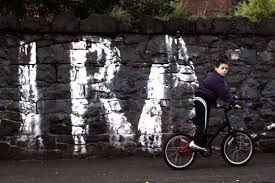

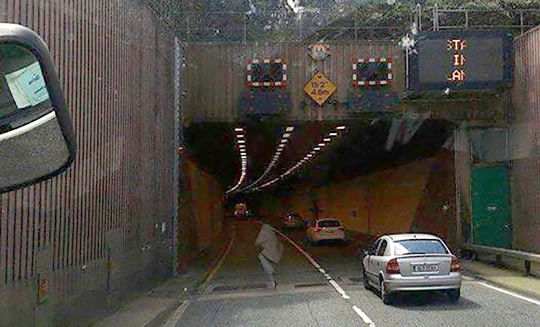

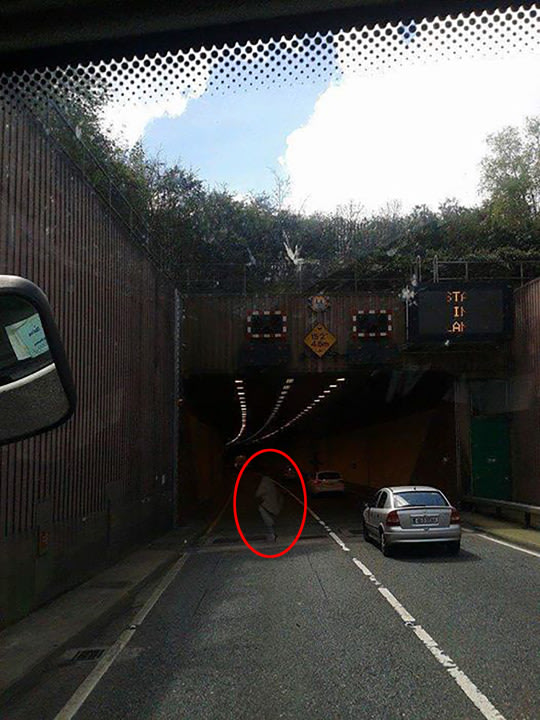




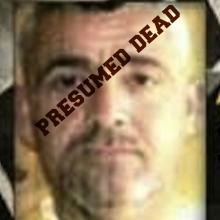




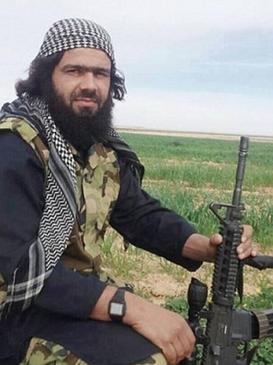










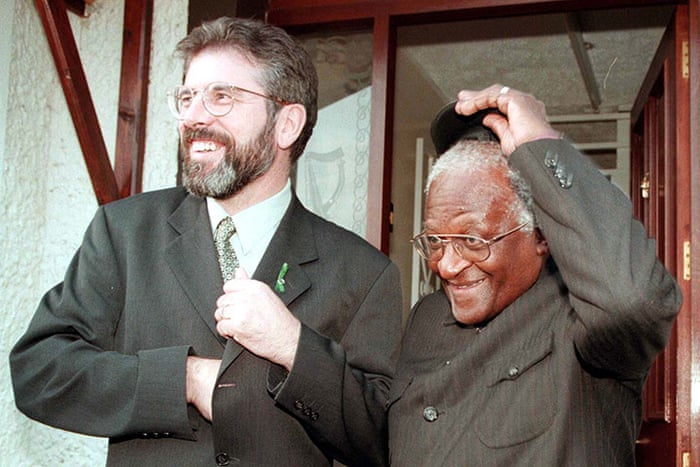




 belfastchildis.com