Mark “Swinger” Fulton: Life and Death

Mark “Swinger” Fulton (c. 1961 – 10 June 2002) was a Northern Irish loyalist. He was the leader of the Loyalist Volunteer Force (LVF), having taken over its command following the assassination of Billy Wright in the Maze Prison in 1997 by members of the Irish National Liberation Army (INLA).

Image result for Mark "Swinger" Fulton

Fulton was alleged by journalist Susan McKay to have carried out a dozen sectarian killings in the 1990s. He also allegedly organized the murder of a Catholic lawyer, Rosemary Nelson, in 1999 while he was out of prison on compassionate leave. In 2002, he was found hanged in his cell at Maghaberry Prison, an apparent suicide. He was awaiting trial having been charged with conspiracy to murder a man from a rival loyalist paramilitary organisation. At the time of his death, Fulton was married with two children

– Disclaimer –

The views and opinions expressed in these blog post/documentary are soley intended to educate and provide background information to those interested in the Troubles of Northern Ireland. They in no way reflect my own opinions and I take no responsibility for any inaccuracies or factual errors

Early years

Mark Fulton was born in PortadownCounty Armagh in 1961, one of the children of Jim Fulton, a former British soldier who worked as a window cleaner. His mother, Sylvia (née Prentice), came from a family of wealthy car dealers. Fulton grew up in the working-class Protestant Killycomain area. A childhood friend described Fulton as “a lovely, sweet wee boy”.

Following the outbreak of the Troubles in the late 1960s, Fulton’s father became a member of the Ulster Defence Association (UDA). According to journalist Susan McKay, senior Ulster Volunteer Force (UVF) members Robin “the Jackal” Jackson and Harris Boyle were frequent visitors to the Fulton home in the early 1970s.

Jackson, one of the alleged leaders of the gang which carried out the 1974 Dublin car bombings, became the commander of the UVF’s Mid-Ulster Brigade in July 1975. Four days later, Boyle was blown up after placing a bomb on the Miami Showband’s minibus after the band was stopped at a bogus checkpoint by UVF gunmen, and three band members shot dead.

Ulster Volunteer Force

Fulton left school early and promptly joined the Mid-Ulster UVF, being sworn in at the age of 15.[3] According to Sean McPhilemy, Fulton’s early activity included being part of the UVF gang that opened fire on a Craigavon mobile sweetshop on 28 March 1991, killing two teenaged girls and one man, all Catholics. The attack was allegedly planned by Robin Jackson.

In the early 1990s, Billy Wright, also from Portadown, took over command of the UVF Mid-Ulster Brigade from Jackson. The Mid-Ulster Brigade, founded in 1972 by its first commander, Billy Hanna, operated mainly in the Lurgan and Portadown areas. Fulton soon became Wright’s closest associate and right-hand man and had an “extreme fixation and obsession over Wright; he even had an image of Wright tattooed over his heart.

Fulton was alleged to have perpetrated twelve sectarian killings in the 1990s, and reportedly was implicated in many other attacks. His victims were often questioned about their religion prior to their killings, and sometimes they were killed in front of their families.

He was very violent and had a quick temper. Wright was the only person who was able to control him. A Royal Ulster Constabulary (RUC) detective who knew both of them said that whenever they were stopped by the police in the 1990s, Wright was “coolness personified”, while Fulton would rage, shout and make threats.

Although he was brought up in the Church of Ireland religion, Fulton was a follower of the Reverend Ian Paisley, founder and moderator of the Free Presbyterian Church of Ulster.  In appearance Fulton was heavily tattooed and was known for his habit of always wearing a waistcoat.

The Mid-Ulster Brigade called themselves the “Brat Pack”, which journalist Martin O’Hagan of the Sunday World altered to “Rat Pack”. After the nickname of “King Rat” was given to Wright by local Ulster Defence Association (UDA) commander Robert John Kerr as a form of pub bantering, O’Hagan took to describing Wright by that term.

This soubriquet was thereafter used by the media, much to Wright’s fury. This led him to issue threats against O’Hagan and all journalists who worked for the newspaper. The unit initially welcomed the Combined Loyalist Military Command ceasefire in October 1994; however, things were to change drastically over the next few years.

Loyalist Volunteer Force

Following the order given in August 1996 by the UVF’s Brigade Staff (Belfast leadership) for Wright and the Portadown unit of the Mid-Ulster Brigade to stand down, Fulton remained loyal to Wright and defied the order. This came after the Mid-Ulster UVF’s killing of a Catholic taxi driver, Michael McGoldrick, while the UVF were on ceasefire. Fulton was close to Alex Kerr, the sometime South Befast brigadier of the Ulster Defence Association who had become an ally of Wright during the Drumcree conflict and had been expelled by the UDA at the same time Wright was removed from the UVF.

After Wright defied a UVF order to leave Northern Ireland, he formed the breakaway Loyalist Volunteer Force (LVF), taking the members of the officially-disbanded Portadown unit with him, including Fulton. Fulton acted as an adviser to Kerr during the emergence of the LVF as a separate group and told both Kerr and Wright that the LVF should seek a closer relationship with the UDA in order to more fully oppose the UVF.

Fulton, as Wright’s deputy, assumed effective control of the LVF when Wright was sent to the Maze Prison in March 1997, and his relationship with Kerr, who had relocated to the LVF’s Portadown stronghold, soon ended. Fulton, who continued to advocate a closer alliance with the UDA, reasoned that the group would be more prepared to co-operate with the LVF if their dissident former brigadier was not involved and so before long Fulton and his cousin Gary, also a leading LVF member, began to threaten Kerr, resulting in the Kerr family fleeing to England.

Not long after this, on 13 May, Fulton was said by McPhilemy to have been responsible for the abduction and murder of 61 year-old civil servant and GAA official Séan Brown, who was kidnapped in Bellaghy before being murdered in Randalstown.

When Wright was shot dead by the INLA in December 1997, in a prison van while being taken to the Maze’s visitor block, Fulton assumed control of the LVF. In the immediate aftermath he attempted to minimise local violence as youths sympathetic to Wright amassed on Portadown’s loyalist estates preparing to riot in protest at the killing of their leader and local hero.[12] Unlike Wright, Fulton had always been on good personal terms with UDA chief Johnny Adair as the two had socialized together on and off since the early 1990s.

 The alliance was sealed soon afterwards when Mark and Gary Fulton arrived at the Maze prison,ostensibly to visit a friend, but instead sat at Adair’s table in the visiting room. Fulton was deeply affected by Wright’s death, and reportedly spent many nights alone by his grave.

The LVF published a magazine, Leading the Way. The special 1998 edition, commemorating Billy Wright, was edited by and written almost exclusively by Fulton. In an article, “Have Faith”, he advised loyalists to refuse the notion of extending the hand of friendship to “those who are genetically violent, inherent in the Catholic Church, a church as sly as a fox and vicious as a tiger”, citing historic examples of persecution of Protestants by Catholics. In May 1998, the LVF called a ceasefire. It was accepted by the Northern Ireland Office six months later.

See : Who are the Loyalist Volunteer Force

Rosemary Nelson killing

Fulton was arrested in 1998 after shooting at an off-duty soldier in Portadown. He was heavily intoxicated at the time and sentenced to four years imprisonment. While he was out on compassionate leave in early 1999, he allegedly organised the killing of Catholic human rights lawyer Rosemary Nelson. During the Drumcree standoff, Nelson had represented the Catholic Portadown residents who opposed the Orange Order‘s march through the predominantly nationalist Garvaghy area. She was blown up by a car bomb on 15 March 1999 outside her home in Lurgan. The bomb was allegedly made by a man from the Belfast UDA but planted by Fulton’s associates acting on his orders.

Colin Port, the Deputy Chief Constable of Norfolk Constabulary who headed the investigation into her death, said “without question” Fulton was the person who had masterminded her killing. Although he was back in prison at the time, he was excited when he heard the news of her death on the radio. He was linked to the killing by police informers but not forensics. It was also revealed that prior to his own death, Wright had threatened to kill Nelson in the belief she had defended IRA volunteers.

See: Rosemary Nelson – September 1958 – March 1999

Fulton was released from prison in April 2001.

Death

On 10 June 2002, Fulton, who was being held on remand in HMP Maghaberry since December 2001, was found dead in his prison cell with a leather belt around his neck. Fulton was found on his bed rather than hanging from the ceiling, leading to speculation that he has death had been accidentally caused by autoerotic asphyxiation.

 Friends claimed he had expressed suicidal thoughts due to both his failure to recover from his close friend Wright’s death, as well as fears he had that he was suffering from stomach cancer. Some reports suggested his unstable mental state had seen him stood down as leader several weeks before his death, with the LVF’s power base transferred to Belfast. He was also afraid that rival loyalist inmates wished to kill him inside the prison.

At the time of his death, Fulton had been awaiting trial, having been charged with conspiracy to murder Rodney Jennett, a member of a rival loyalist paramilitary organisation, in connection with an ongoing feud. He left behind his wife, Louise and two children, Lee and Alana. His funeral was attended by 500 mourners, including a number of senior loyalist paramilitaries, including Johnny Adair and John White, who acted as pallbearers alongside Fulton’s brother Jim and son, Lee.

After a service at St Columba’s Parish Church, he was interred in Kernan Cemetery in Portadown. Among the tributes placed in the Belfast Telegraph was one which described Fulton as “Never selfish/Always kind”.

See: 19th October

See: 10th June
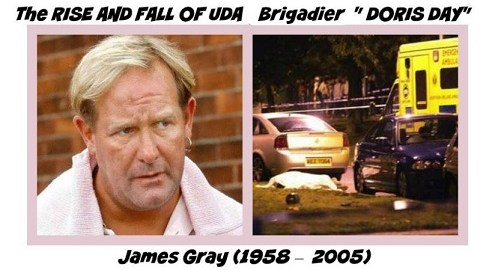
See: The Rise & Fall of UDA Brigadier of Bling James Gray – AKA ” Doris Day

Major events in the Troubles

See : Billy Wright

See:  Robin “the Jackal” Jackson 

See: Deaths in the Troubles 10th Feb

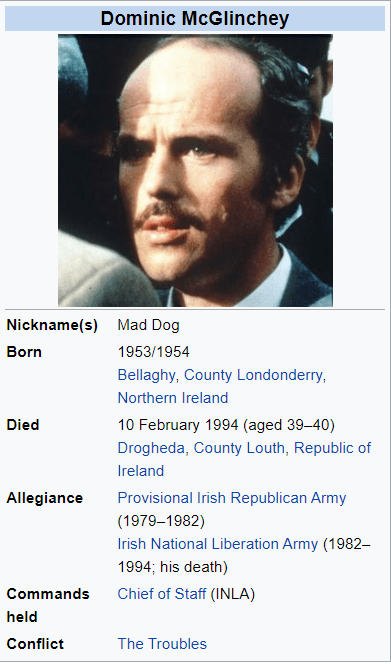
Dominic “Mad Dog” McGlinchey: Life and Death

Dominic “Mad Dog” McGlinchey (1953/1954 – 10 February 1994) was an Irish republican militant, who moved from the Provisional IRA to become head of the Irish National Liberation Army (INLA) paramilitary group. He was the first Republican extradited from Ireland. He was shot dead by unidentified

– Disclaimer –

The views and opinions expressed in these blog post/documentary are soley intended to educate and provide background information to those interested in the Troubles of Northern Ireland. They in no way reflect my own opinions and I take no responsibility for any inaccuracies or factual errors

Background

McGlinchey was one of 11 siblings born into a large BellaghyCounty Londonderry family, with a “strong republican background”.

Paramilitary activities: IRA

In August 1971, at the age of 17, he was interned without charge for ten months at Ballykelly (Shackleton Barracks) and Long Kesh. After his release, he was imprisoned again in 1973 on arms charges.

After his next release, he joined an independent Republican unit along with Ian Milne and future Provisional IRA hunger strikers Francis Hughes and Thomas McElwee. The unit would later merge with the Provisional IRA. Their activities led the Royal Ulster Constabulary to take the unusual step of issuing wanted posters.

McGlinchey was arrested by the Gardaí in 1977, and charged with hijacking a police vehicle in County Monaghan, threatening a police officer with a gun, and resisting arrest. In 1982, while serving time in Portlaoise Prison, he clashed with the IRA leadership and despite his effectiveness in an active service unit he was expelled from the IRA.

INLA

The Irish National Liberation Army (INLA) welcomed McGlinchey because of his previous experience. He joined as Operations Officer for South Derry in 1982, and became Chief of Staff within six months. Under McGlinchey the organisation, which previously had a reputation for disorganization and incompetence, became extremely active in cross-border assassinations and bombings.

 In a Sunday Tribune interview, McGlinchey admitted involvement in the Droppin Well bombing in Ballykelly, County Londonderry, in which eleven off-duty soldiers and six civilians were murdered. He also said he had provided the weapons for the Darkley massacre, an attack on a remote evangelical Protestant chapel, but had not approved that attack.

It has been alleged that he was targeted for assassination by 14 Intelligence Company.

In the same interview, which was conducted by Vincent Browne, McGlinchey claimed personal responsibility for at least 30 killings. By this time McGlinchey had already earned the moniker “Mad Dog” because of his ruthlessness.

Internal feud

Tim Pat Coogan, a historian of the Irish republican movement, asserted that McGlinchey’s authority within the INLA was absolute and that he re-enforced it by ordering the deaths of “anyone he didn’t like”. Other authors claimed that decisions were actually taken collectively by a council of leading members, although those disgruntled with the outcomes tended to attribute everything solely to McGlinchey.

When a powerful northern unit based around an extended family did not turn over £50,000 raised in a fake postal order scheme (which was essential to the INLA’s finances) the scheme’s originator insisted that unless the offending unit was punished he would not supply any more funds. It was decided, reportedly against McGlinchey’s objections, that members of the northern faction were to be killed.

Two were summoned to a meeting; Mary McGlinchey acted as an emissary thus lulling the pair into thinking that there would be no danger of violence. However, they were led to waiting gunmen and shot dead. The incident was the beginning of a feud between the northern family and McGlinchey, whereby a long running series of tit for tat revenge killings between the factions eventually led to the demise of the original participants on both sides.

Imprisonment and release

In March 1984 McGlinchey was wounded in a shoot-out with the Gardaí in Ralahine, Newmarket on Fergus, County Clare and arrested. McGlinchey was wanted in the north for the shooting of an elderly woman, this was deemed by a judge in the south to be a “cowardly” act that disqualified him from the protection afforded for political offences and he became the first Republican to be extradited to Northern Ireland. He was convicted and sentenced to life imprisonment after being convicted of murder.

This conviction was overturned in October 1985 by the Belfast Court of Appeals on grounds of insufficient evidence, and McGlinchey was returned to the Republic of Ireland, where he was sentenced to ten years’ imprisonment on firearms charges.

Mary McGlinchey was killed in her Dundalk home by INLA gunmen who broke in while she was bathing her children on 31 January 1987. McGlinchey was unable to attend his wife’s funeral as he was still imprisoned in the Republic.

Dominic McGlinchey Interview

After being released from prison in March 1993, he investigated claims that criminals in the Republic were involved in money laundering with the Ulster Volunteer Force (UVF). He survived an assassination attempt by UVF Mid-Ulster Brigade leader Billy Wright in June 1993.

Death

Gravestone erected to Dominic McGlinchey.

On 10 February 1994, McGlinchey was making a call from a phone box in Drogheda when two men got out of a vehicle and shot him 14 times. No one has been charged with his killing and it is not known who carried out the assassination or why.

His funeral took place in his native Bellaghy. The mourners included Martin McGuinness and Ruairí Ó Brádaigh. The oration was delivered by Bernadette McAliskey. During the oration she described journalists, particularly from the Sunday Independent, who had claimed that McGlinchy was involved in criminality, as:

curs and dogs. May everyone of them rot in hell. They have taken away Dominic McGlinchy’s character and they will stand judgement for it. He was the finest Republican of them all. He never dishonoured the cause he believed in. His war was with the armed soldiers and the police of this state.

Personal life

He married Mary O’Neill on 5 July 1975. The couple had three children: Declan, Dominic, and Máire (who died as an infant from meningitis). Mary later became a member of the INLA. Dominic Jr. also became a republican activist.

In October 2006, Declan McGlinchey was remanded in custody at Derry Magistrates’ Court on explosives charges. The charges were connected to the discovery of a bomb in Bellaghy in July. He was cleared of these charges. He was again arrested on 14 March 2009 in connection with the murder of Police Service of Northern Ireland constable Stephen Carroll but no charges were brought. Declan McGlinchey died suddenly of a heart attack on 1 November 2015, aged 39.

In popular culture

Dominic McGlinchey is the subject of the songs “Paddy Public Enemy Number One” by Shane MacGowan of The Pogues, and “Hands up Trousers Down” by The Irish Brigade. The former charts McGlinchey’s life from his teens through to his eventual killing in a phonebox while the latter references his theft and use of Garda uniforms.  When asked about McGlinchey, Shane MacGowan remarked, “He was a great man.”

See: Deaths in the Troubles 10th Feb
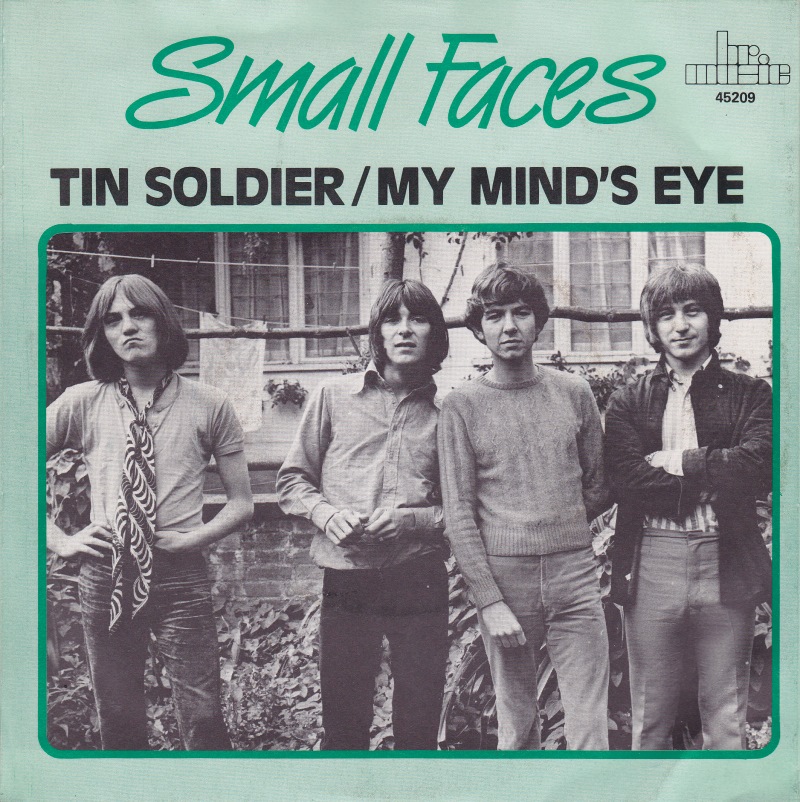
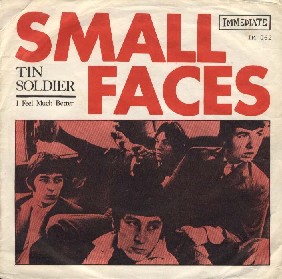
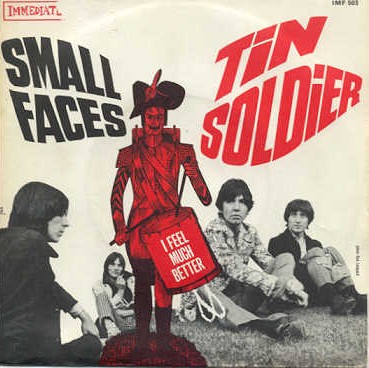
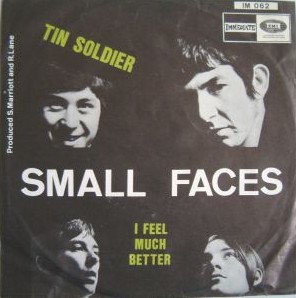
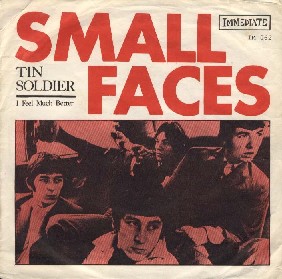
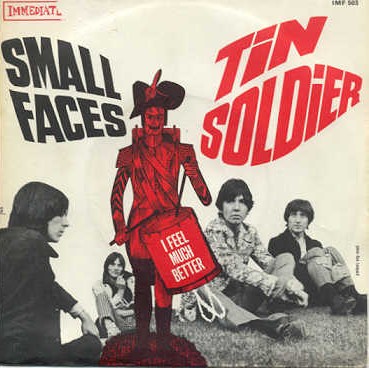
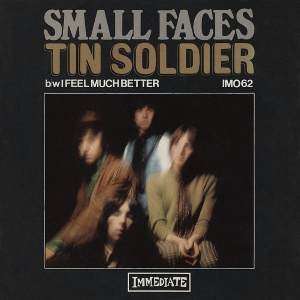
Tin Soldier – Small Faces : Iconic Songs & the story behind them

Small Faces

TIN SOLDIER

2nd December 1967

Tin Soldier – Small Faces : Iconic Songs & the story behind them

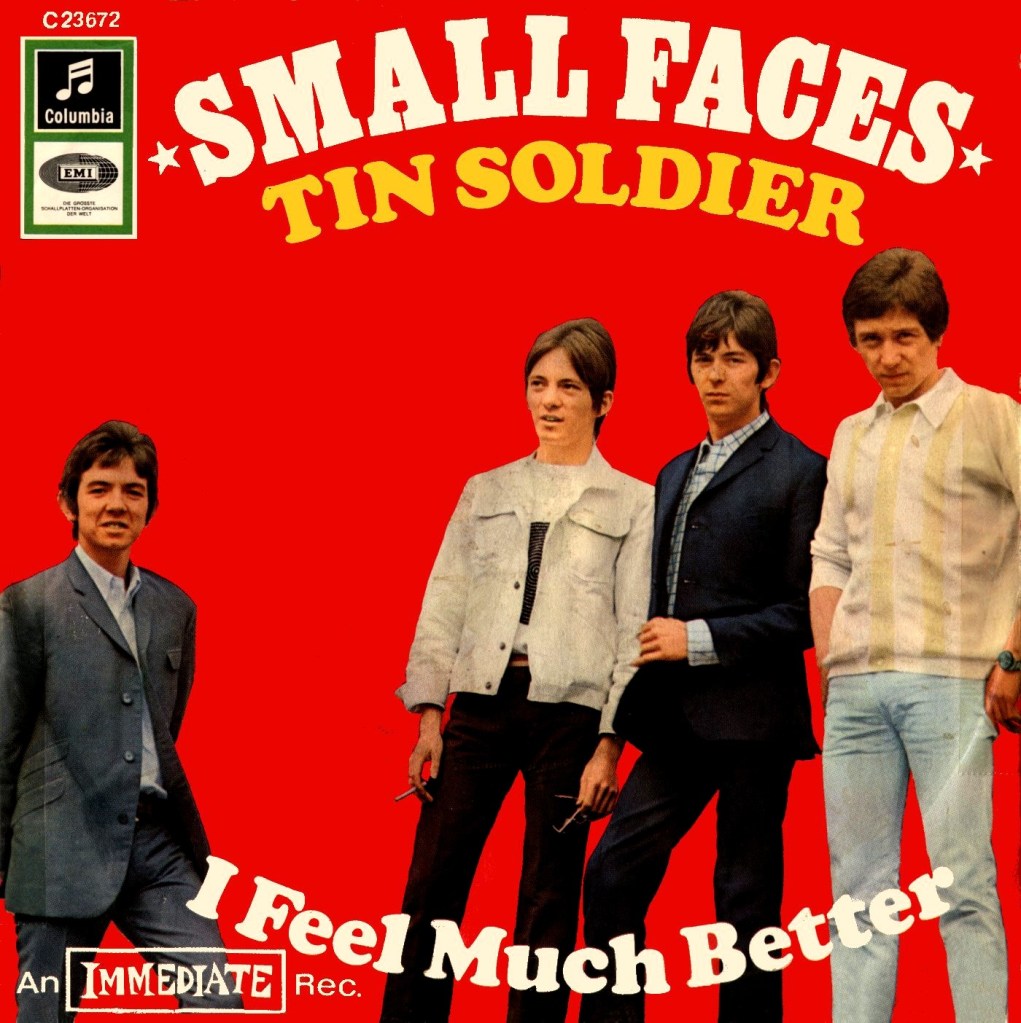
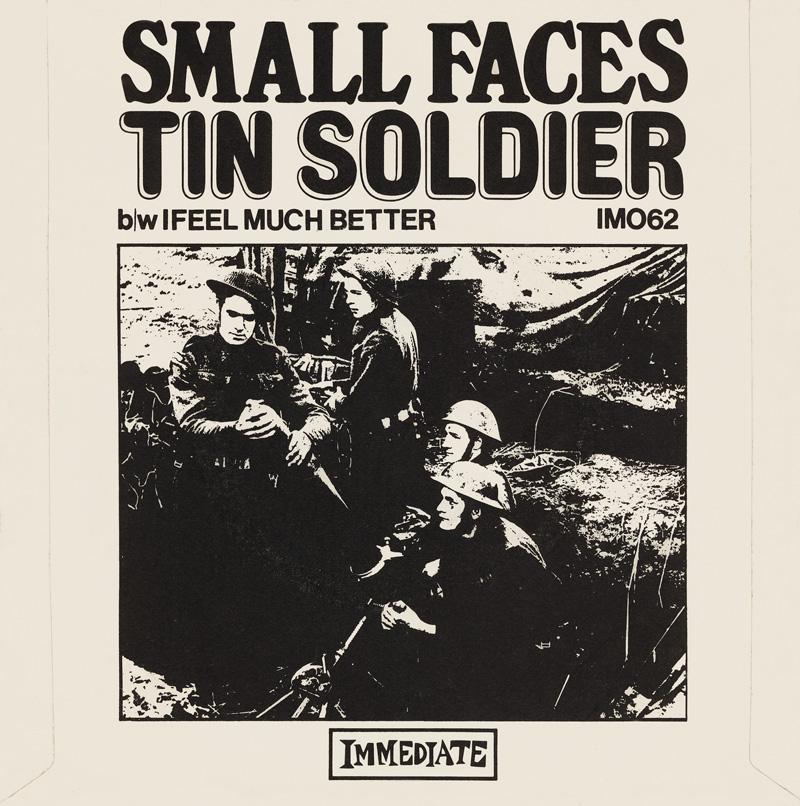
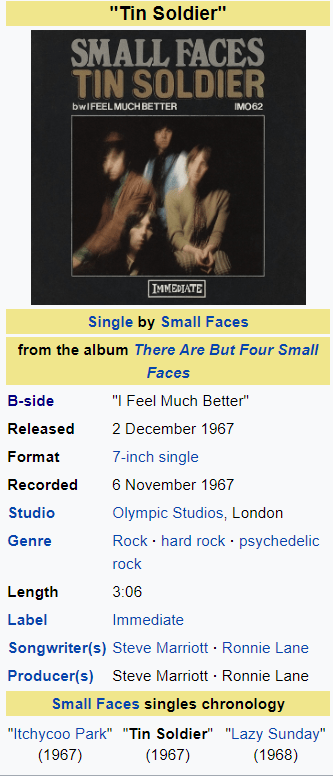
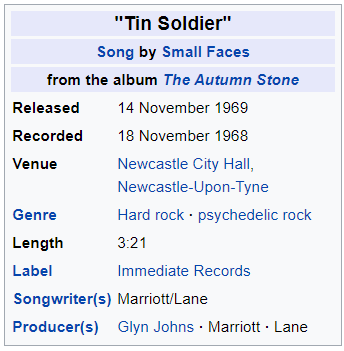
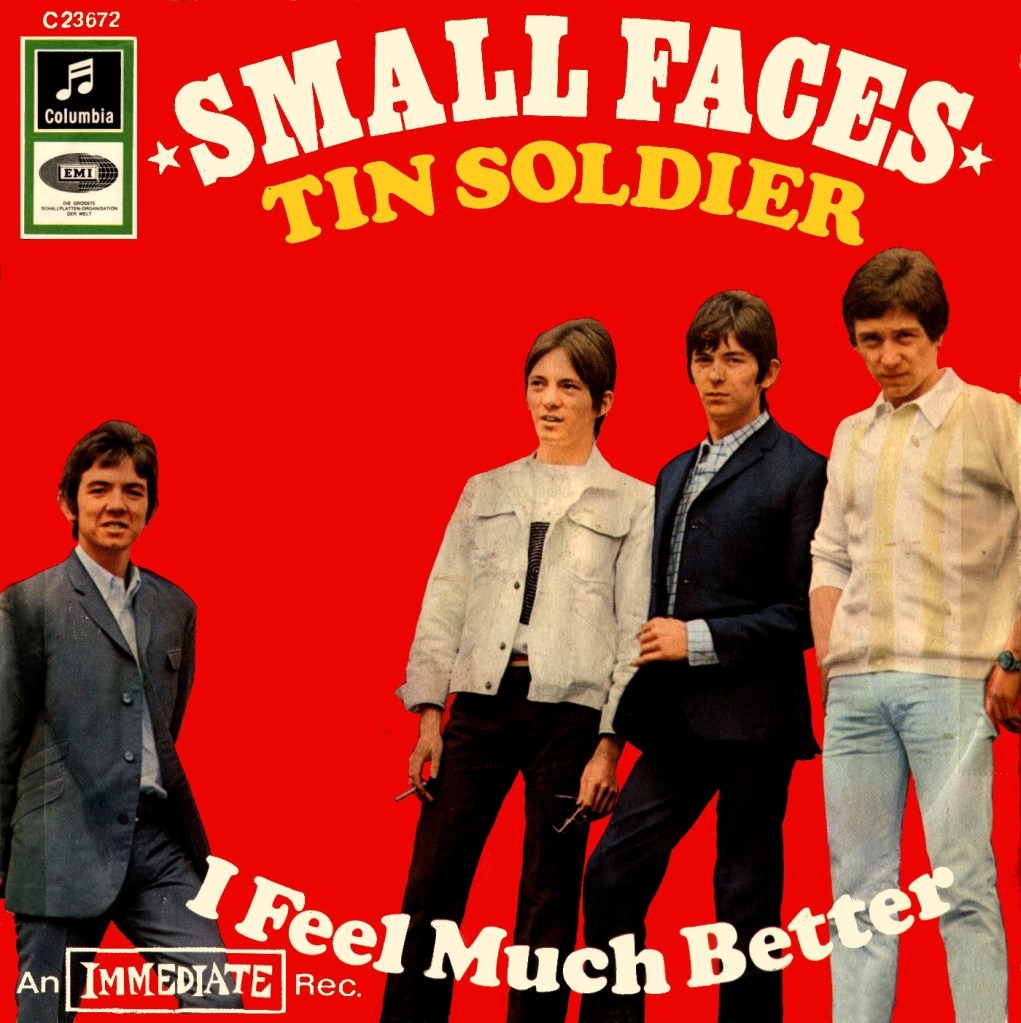
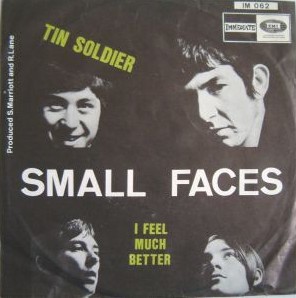
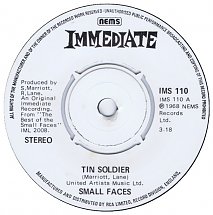
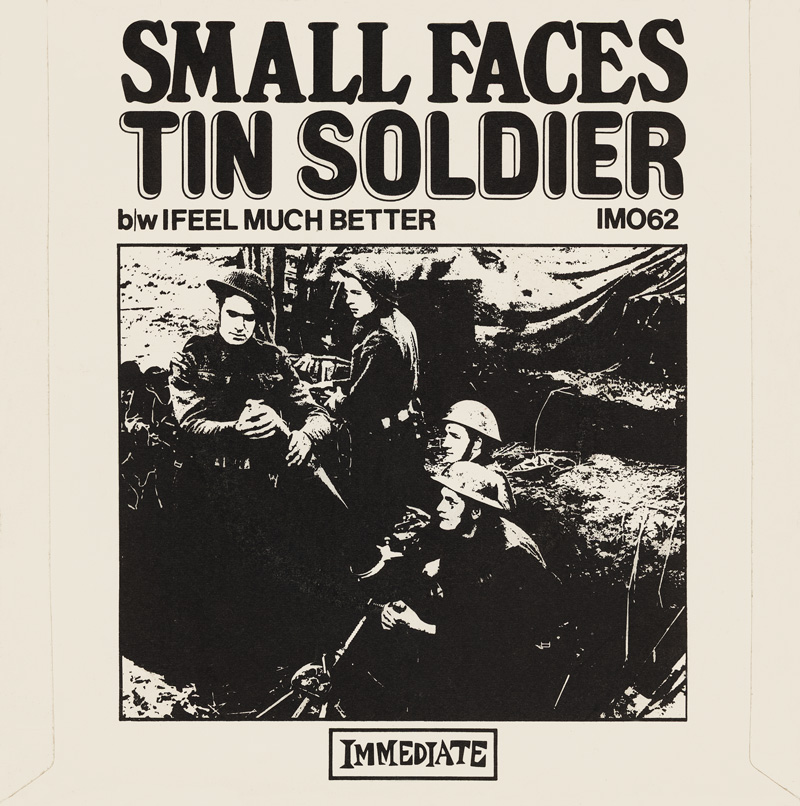
Tin Soldier” is a song released by the English rock band Small Faces on 2 December 1967, written by Steve Marriott (credited to Marriott/Lane). The song peaked at number nine in the UK singles chart and number 38 in Canada. It has since been covered by many other notable rock artists

Tin Soldier – Small Faces

My Thoughts ?

Me in my Mod days

Song profile

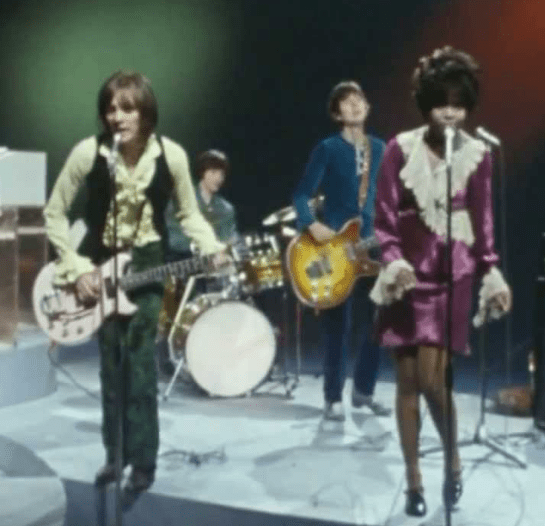
Tin Soldier was originally written by Steve Marriott for singer P.P. Arnold, but Marriott liked it so much he kept it himself. It was a song that he wrote to his first wife, Jenny Rylance. P.P. Arnold can be heard singing backing vocals on the song and also performed as guest singer at television recordings of the song.

The song signalled a return to the band’s R&B roots whilst continuing their forays into psychedelic rock and other musical experiments. When Tin Soldier was released the BBC informed the band that the last line of the song had to be removed from all TV and radio broadcasts, mistakenly believing that Marriott sang “sleep with you”, when in fact the lyric is “sit with you”. Marriott explained that the song was about getting into someone’s mind—not their body.

 Tin Soldier reached number nine in the UK Singles Chart and remains one of Small Faces’ best known songs.

Talking about the song, and the influence of his wife Jenny, Marriott stated:

The meaning of the song is about getting into somebody’s mind—not their body. It refers to a girl I used to talk to all the time and she really gave me a buzz. The single was to give her a buzz in return and maybe other people as well. I dig it. There’s no great message really and no physical scenes.

The song seems to have been influenced by Hans Christian Andersen‘s fairy tale The Steadfast Tin Soldier, the story of an imperfect tin soldier’s desire for a paper ballerina. The opening lyric is:

“I am a little tin soldier that wants to jump into your fire”.

Upon reaching No. 73 in the USA with this single, their label Immediate Records abandoned its attempts to penetrate the American market. “Tin Soldier” would ultimately be the last song performed live by the Small Faces during their original incarnation; It was performed on 8 March 1969 at the Theatre of Jersey in Jersey.

” So now I’ve lost my way
I need help to show me things to say
Give me your love before mine fades away “

Lyrics

“Tin Soldier”

I am a little tin soldier
That wants to jump into your fire
You are a look in your eye
A dream passing by in the sky

I don’t understand
All I need is treat me like a man
‘Cause I ain’t no child
Take me like I am

I got to know that I belong to you
Do anything that you want to do
Sing any song that you want me to sing to you

I don’t need no aggravation
I just got to make you
I just got to make you my occupation

I got to know that I belong to you
Do anything that you want to do
Sing any song that you want me to sing to you

All I need is your whispered hello
Smiles melting the snow nothing heard
Your eyes are deeper than time
Say a love that won’t rhyme without words

So now I’ve lost my way
I need help to show me things to say
Give me your love before mine fades away

I got to know that I belong to you
Do anything that you want to do
Sing any song that you want me to sing to you

Oh no no
I just want some reaction
Someone to give me satisfaction
All I want to do is stick with you
‘Cause I love you

Mojo readers’ poll

In 1997, some 30 years after the song’s original release, Mojo voted “Tin Soldier” the tenth best single of all time, in a readers’ poll. The poll placed it ahead of anything by The Who or The Rolling Stones. The song has also been much mentioned over the years by Paul Weller and featured in Noel Gallagher‘s personal all-time top ten song list.

Personnel

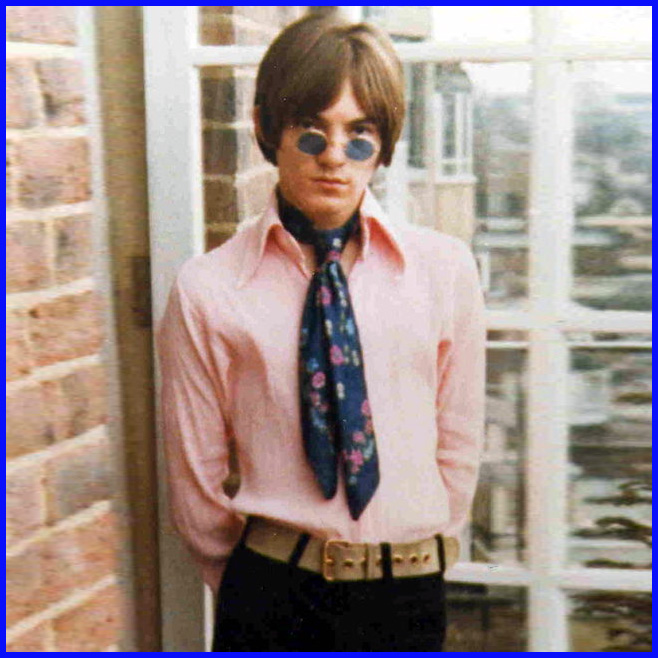
Steve Marriott – lead and backing vocals, acoustic and electric guitars

Ronnie Lane – bass guitar, backing vocals

Ronnie Lane

Ian McLagan – acoustic and electric pianos, Hammond organ, backing vocals

Ian McLagan

Kenney Jones – drums

Image result for kenney jones small faces
Kenney Jones

Additional personnel

P.P. Arnold – backing vocals

Image result for P.P. Arnold small faces
P.P. Arnold

Covers

The song has been covered by Quiet RiotLou GrammUriah HeepStreetheartTodd RundgrenThe Guess WhoPaul WellerTransatlantic, and Humble Pie (which also featured Marriott.) Scorpions made a cover of the song for their 2011 album Comeblack. Progressive rock band Transatlantic covered this song on their 2014 album Kaleidoscope, on disc 2 of the special edition. In October 2007 Tim Rogers, of You Am I, and Talei Wolfgramm performed the track on Australian music quiz show RocKwiz. In 1998 the Argentine musician Charly Garcia recorded a version, in Spanish, for his album El aguante

See also

See: Steve Marriott Jan 1947 – April 1991 All or Nothing

Small Faces Documentary

Buy Me A Coffee

See: below for other Iconic songs and the story behind them .

Whats on my mind ……?

I need to chill , the daily grind of everyday life gets a little boring sometimes , esp after 53 years of many crazy highs and at times epic lows .But I’ve got to be grateful for what I have. I know my life although far from perfect is much better than many others . Thank god for small mercies.

Hospital appointment tomorrow morning for over active thyroid , I ain’t complaining about it but my god I didn’t even know it was a thing until they found I had it after some blood tests. I knew there was something not quite right , but took ages to diagnose. Caused me loads of problems , mostly with my eyes which is kind of scary ,chronic tiredness , weight …..

Wifey going to Goa on Friday to teach yoga and go to a yoga retreat. I was invited along but not my kind of thing,. To be sure I like the philosophy of it all , just not bendy enough to do most of the moves. Might take up tai chi , that’s more my style. hee he.

She’s away for nine days so I’ll be in charge of the kids, two cats , one with only three legs and two very nervous goldfish. Hope I don’t drink myself to death. I wonder if she’ll make me a curry before she goes.. Hmmmm…

Wondering if I can be arsed joining the local astronomy club , or should I wait until spring/summer ? Star gazing is something I really enjoy, I have a telescope and all the equipment , but when no one else in the family is interested in sitting in the garden in the middle of winter in the dark and cold it can become quite a lonely venture. .Tried to get son interested, but he’s a teenager now, thinks he’s a gangster and hates me at least five times a day at the mo.
Wondering if that big asteroid gonna destroy the Earth and when we’ll ever hear the end of the harry and Meghan debate. Snzzzz……….

Worried and anxious about my forthcoming book , its a massive thing for me and I’m about to go down the rabbit hole and have no idea what I’ll find down there.

Considering if it would be a good idea to have a gin.

And finally Im testing out some new features on my blog and wanted to see how they all worked and looked , hence this boring post!

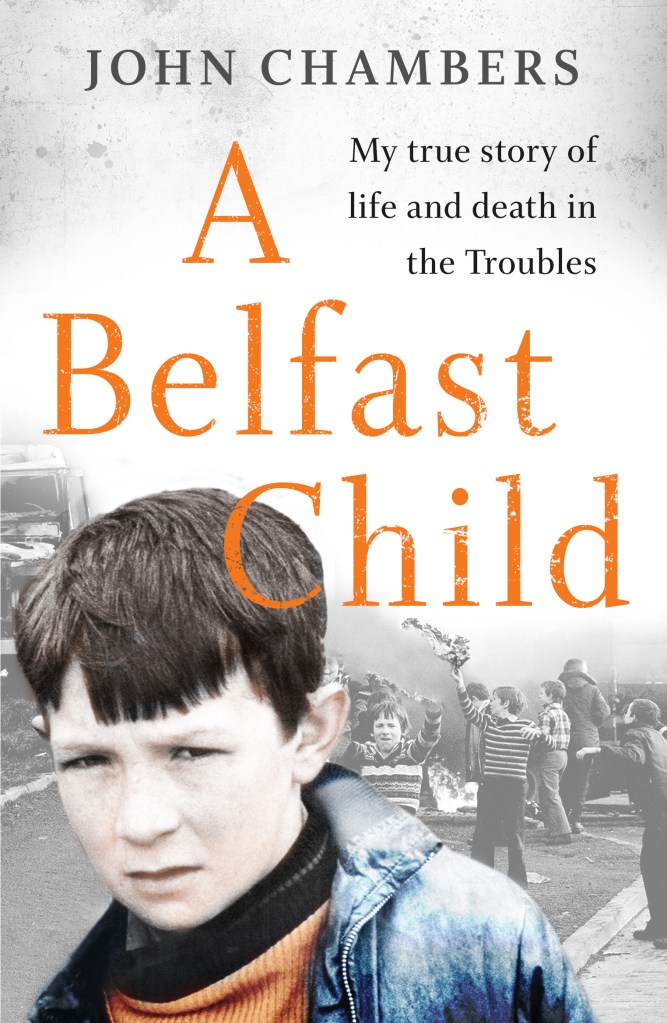
My autobiography: A Belfast Child is now available to order on line

Hi folks

Just a quick post to let you know my book: A Belfast Child is now avaiable on line from Amazon , see link below for details and how to order.

Cheers

Click here to order online : A Belfast Child

Books about the Troubles – Anyone want to write a few book reviews for my Website/blog ?

I’m creating a new page for my website/blog , Books about the Troubles ( see: 60 Films about the Troubles ) which will be a comprehensive list of the “best” /most popular books covering all sides of the Northern Ireland conflict.

The list is very long and I dont have the time or to be completely honest the patience to read them all and then write countless reviews. Therefore as many of my Twitter friends/followers are interested/lived through the Troubles I was hoping some of you guys would be interested in writing reviews for any book of your choice and I will give you full credit when I publish the blog post/add the new page.

If your interested DM me or leave a comment at the bottom of this page and I’ll be in touch.

Cheers !!


Spotlight On The Troubles: A Secret History

Episode 1

see: 60 Films about the Troubles

Barry Seal – DEA Informant : Life & Death

Adler Berrima Adler Berriman “Barry” Seal

Barry Seal

Adler Berriman “Barry” Seal (July 16, 1939 – February 19, 1986) was a Trans World Airlines (TWA) pilot who became a major drug smuggler for the Medellín Cartel. When Seal was convicted of smuggling charges, he became an informant for the Drug Enforcement Administration and testified in several major drug trials. He was murdered in 1986 by contract killers hired by Pablo Escobar, head of the Medellín Cartel.

——————————————————————–

The Rise & Fall of Pablo Escobar El Patron Medellin Cartel Documentary

——————————————————————–

Early life

Seal, born in Baton Rouge, Louisiana, was the son of Mary Lou (née Delcambre) and Benjamin Kurtis Seal, a candy wholesaler. Seal began flying as a teenager. According to his flight instructor, he was a naturally gifted pilot. He earned his student pilot certificate at 16 and a private pilot’s certificate at 17.

In 1961, Seal enlisted in the Louisiana Army National Guard for six years, serving with the 20th Special Forces Group. He graduated from United States Army Airborne School but never completed United States Army Special Forces selection and training. Seal later served in the 245th Engineer Battalion with his MOS being radio telephone operator.

Early career

Barry Seal In his TWA uniform

Seal joined TWA as a flight engineer in 1964 and was soon promoted to first officer, then captain, flying a Boeing 707 on a regular Western Europe route. He was one of the youngest 707 command pilots in the TWA fleet.

Seal’s career with TWA ended in July 1972, when he was arrested for involvement in a conspiracy to smuggle a shipment of plastic explosives to Mexico using a DC-4. The case was eventually dismissed in 1974 for prosecutorial misconduct, but TWA in the meantime fired Seal, who had falsely taken medical leave to participate in the scheme.

Drug smuggling career

According to statements Seal made after becoming a DEA informant, he began smuggling small quantities of cannabis . By 1978, he had begun flying significant loads of cocaine, because pound-for-pound it was more profitable.

In December 1979, Seal was arrested in Honduras after returning from a drug smuggling trip to Ecuador. Although the Honduran police did not find any cocaine, they did find an M-1 rifle, and Seal was imprisoned until July 1980.

Undeterred by his arrest, Seal expanded his operations upon returning to the United States. He hired William Bottoms, his ex-brother-in-law, as a pilot, and from 1980 on Bottoms was the main pilot in Seal’s smuggling enterprise, while Seal oversaw planning and operations.

Seal later began working for the Medellín Cartel as a pilot and drug smuggler. He transported numerous shipments of cocaine from Colombia and Panama to the United States, and earned as much as $1,300,000 per flight.

After successful runs at his home base in Louisiana he moved operations to Mena Intermountain Municipal Airport, in Mena, Arkansas. There he bought, sold and operated many planes.

Undercover informant and operative

Seal was eventually arrested in connection with his drug smuggling activities. In a Florida federal court, he was indicted, tried, convicted and sentenced to 10 years in prison. After his sentencing, Seal approached the DEA and offered to cooperate with the government as an informant.

Federal officials agreed to use him in that capacity and mentioned his cooperation during hearings in which Seal sought a reduction of his sentence. With an agreement reached, Seal began working as a federal informant in March 1984.

According to the FrontlineGodfather of Cocaine investigation, Ernst “Jake” Jacobson was Seal’s DEA handler during this period. Jacobson claims he still has the high-tech message encrypter which he gave Seal.

“We made sure all of his aircraft were equipped with the most expensive cryptic radio communications we had ever seen at that time,”

said Jacobson.

In order to mitigate his 1984 arrest in Fort Lauderdale, Florida for money laundering and Quaalude smuggling, Seal agreed to testify against his former employers and associates in the drug trade, and thereby contributed to putting several of them in jail. Among those against whom Seal testified were Chief Minister of the Turks and Caicos Islands Norman Saunders and members of the Medellín Cartel. Seal also testified before the President’s Commission on Organized Crime in October 1985.

Jacobson, testifying in 1988, told a House Judiciary Committee that Seal had flown to an airstrip in Nicaragua in an airplane that had cameras installed by the Central Intelligence Agency. Seal took pictures during the Nicaragua sting operation that showed Pablo EscobarJorge Luis Ochoa Vásquez, and other members of the Medellín Cartel loading kilos of cocaine onto a C-123 transport plane. Federico Vaughan, the Sandinista Minister of the Interior, who Seal claimed was a top aide of Tomas Borge‘s, was also photographed with Sandinista soldiers helping load the plane.

Pablo Escobar

Seal was both a smuggler and a DEA informant/operative in this sting operation against the Sandinista government in Nicaragua. In 1984, Seal flew from Nicaragua to Homestead Air Force Base in Florida with a shipment of cocaine that had been allegedly brokered through the Sandinista government.

This cocaine was seized by the DEA and was never received by the cartel’s distribution handlers in Florida, which in Medellín caused suspicion to fall upon Seal as the person responsible for this lost shipment.

Edmond Jacoby’s report in the July 17, 1984 issue of the Washington Times linked officials in the Sandinista government to the Medellín cartel and discussed Seal’s mission to Nicaragua. The public disclosures jeopardized Seal’s life and quickly brought an end to the sting operation designed to capture the cartel’s leaders.

Questioned about the identity of the source, Jacobson replied, “I heard that the leak came from an aide in the White House”. He stated that Iran–Contra figure Oliver North had attended two meetings about the sting operation and had motivation to release the information. UPI reported: “By linking the Sandinistas with drug traffic … aid to the rebels accused of human rights violations might seem more palatable”.

Subcommittee chairman William J. Hughes strongly suggested that North was the source of the leak, but Representative Bill McCollum said,

“…we don’t know who leaked this. No one has been able to tell us”.

 Citing testimony of DEA Administrator John C. Lawn, the report of the Kerry Committee released in December 1988 pinned the leak on North stating he “decided to play politics with the issue”. In an interview with Frontline, North said he was told by his superiors on the National Security Council to brief Senator Paula Hawkins about the operation, but he denied leaking the report.

Hawkins told Frontline that neither she nor her staff leaked the information after the briefing.Jacoby later denied that North was the source of his story and attributed it to a deceased staff member for Representative Dan Daniel.

The Wall Street Journal also printed the story, contributing to media coverage that indirectly exposed Seal’s involvement in the operation. The articles also exposed the Colombian cartel leaders and Nicaraguan Interior Minister who had been photographed moving cocaine onto Seal’s aircraft. Despite these pressures, Seal went ahead and testified with the pictures taken during the trip showing Sandinista officials in Nicaragua brokering a cocaine deal with members of Colombia’s Medellín Cartel.

Murder

Seal was sentenced to work in public service at the Salvation Army facility on Airline Highway (U.S. 61), in Baton Rouge, as a modification by the judge to Seal’s original plea deal. On February 19, 1986, Seal was shot to death in front of the site. His murder abruptly brought the DEA’s investigation to an end.

 Barry Seal | American Dope

Colombian assassins sent by the Medellín Cartel were apprehended while trying to leave Louisiana, soon after Seal’s murder. Authorities thus concluded Seal’s murderers were hired by Ochoa. The killers were indicted by a state grand jury on March 27, 1986.

In May 1987, Luis Carlos Quintero-Cruz, Miguel Vélez (died in custody 2015) and Bernardo Antonio Vásquez were convicted of first degree murder in Seal’s death, and sentenced to life in prison without parole.

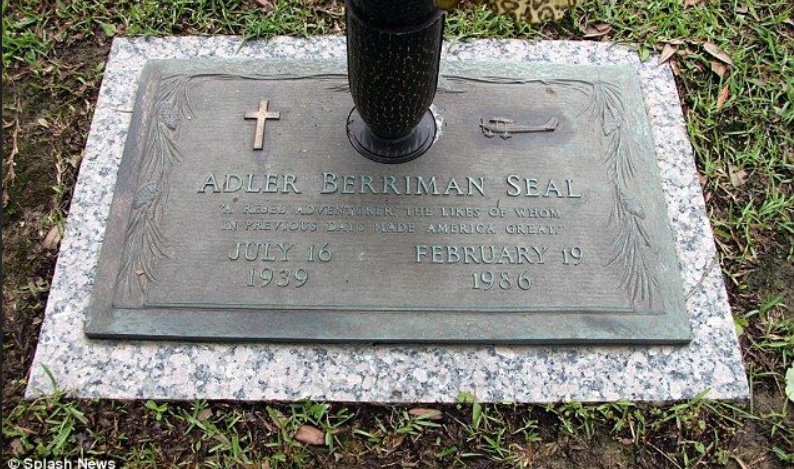
Barry Seal’s Grave

Louisiana Attorney General William Guste wrote to United States Attorney General Edwin Meese criticizing the government’s failure to protect Seal as a witness. At Guste’s request, Meese launched an investigation to determine whether or not attorneys in Louisiana, Miami, and Washington had mishandled the case, and to determine whether or not Seal should have been forced into protective custody. Government attorneys stated that Seal placed himself in danger by refusing to move his family and enter a witness protection program.

In 1991, cartel member Max Mermelstein testified that he had been instructed in December 1984 either to kidnap Seal and return him to Colombia, or to murder him. The reward to kidnap Seal was $1 million, and the reward to kill him was $500,000.

Personal life

Deborah DuBois his third wife and children

Seal married three times; the first to Barbara Dodson from 1963 to 1971 and to Lynn Ross from 1971 to 1972 – ended in divorce. His marriage to Deborah DuBois, in 1973, ended with his death in 1986. Seal had 6 children, 2 from his first wife, one child from a relationship he had in between marriages and three more with Debbie. 

Media depictions

Films

  • Seal is portrayed by Dennis Hopper in the docudrama Doublecrossed (1991), which prominently features Seal’s co-pilot and collaborator Emile Camp[27][28] (portrayed by G. W. Bailey), although some of the Camp plotlines stand in for actual events involving William Roger Reeves, who met Seal in jail and introduced him to the Medellín Cartel.
  • Seal is portrayed by Michael Paré in the American crime drama film The Infiltrator (2016), in two brief, historically inaccurate scenes that exercise dramatic license to depict the film’s title character, Robert Mazur, as a passenger in a car being driven by Seal who is killed in a motorcycle drive-by shooting.
  • Seal is portrayed by Tom Cruise in the crime drama-comedy film American Made (2017), loosely based on Seal’s life, produced by Imagine Entertainment. Little of the film is historically accurate; most of the plot, such as the assassination of Seal’s brother-in-law, were invented for purposes of the film.

Television

  • Seal is portrayed by theater director Thaddeus Phillips in the 2013 TV series Alias El Mexicano.
  • Seal is portrayed by Dylan Bruno in Season 1, Episode 4, of the Netflix series Narcos (2015).

Inside the Colombian Cartels

Other drug stories

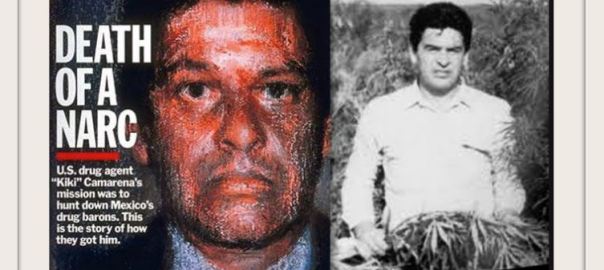
See: Kiki Camarena – The Brutal Torture & Death of a Narc

See : Gangster Warlords – Amado Carrillo Fuentes – Lord of the Skies

Ross McWhirter – TV personality Assassinated by the IRA

Ross McWhirter

12 August 1925 – 27 November 1975

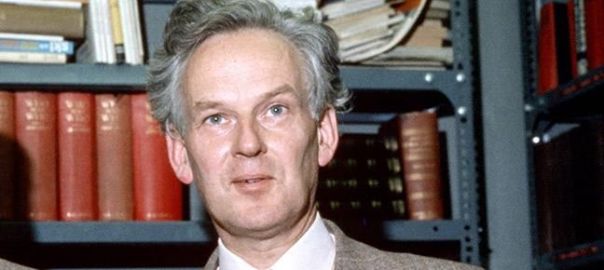
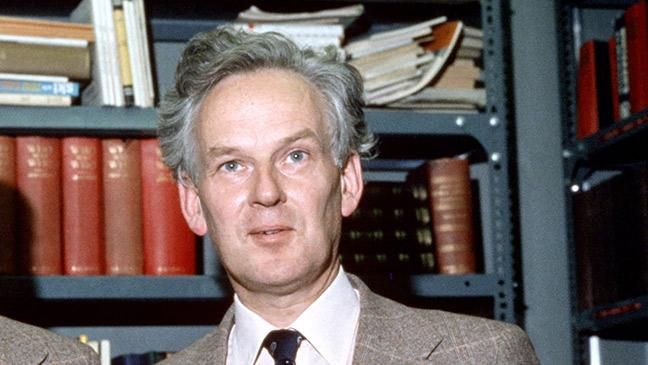
Alan Ross McWhirter (12 August 1925 – 27 November 1975) was, with his twin brother, Norris, the co-founder in 1955 of Guinness Book of Records (known since 2000 as Guinness World Records) and a contributor to the television programme Record Breakers.

He was assassinated by the Provisional Irish Republican Army (IRA) in 1975.

Ross McWhirter
BornAlan Ross McWhirter
12 August 1925
Winchmore HillMiddlesex, England
Died27 November 1975 (aged 50)
Gordon HillGreater London, England
Cause of deathGunshot wounds
EducationMarlborough College
Trinity College, Oxford
Occupationwriterpolitical activisttelevision presenter
Notable credit(s)The Guinness Book of RecordsRecord Breakers
Spouse(s)Rosemary McWhirter
RelativesNorris McWhirter
FamilyWilliam McWhirter, father; Margaret Williamson, mother

Early life

McWhirter was the youngest son of William McWhirter, editor of the Sunday Pictorial, and Margaret “Bunty” Williamson. He was born at “Giffnock” (after Giffnock Church in Glasgow, where the McWhirters were married), 10 Branscombe Gardens, Winchmore Hill, London, N21.

In 1929, as William was working on the founding of the Northcliffe Newspapers Group chain of provincial newspapers, the family moved to “Aberfoyle”, in Broad Walk, Winchmore Hill. Like his two brothers , Ross McWhirter was educated at Chesterton School, Seaford, Marlborough College and Trinity College, Oxford. Between 1943 and 1946, Ross served as a sub-lieutenant with the Royal Naval Volunteer Reserve on board a minesweeper in the Mediterranean.

Career

Ross and Norris both became sports journalists in 1950. In 1951, they published Get to Your Marks, and earlier that year they had founded an agency to provide facts and figures to Fleet Street, setting out, in Norris McWhirter’s words:

“to supply facts and figures to newspapers, yearbooks, encyclopaedias and advertisers”.

While building up their business, they both worked as sports journalists. One of the athletes they knew and covered was runner Christopher Chataway, an employee at Guinness who recommended them to Hugh Beaver. After an interview in 1954 in which the Guinness directors enjoyed testing the twins’ knowledge of records and unusual facts, the brothers agreed to start work on the book that would become The Guinness Book of Records.

In August 1955, the first slim green volume – 198 pages long – was at the bookstalls, and in four more months it was the UK’s number one non-fiction best-seller. Both brothers were regulars on the BBC show Record Breakers. They were noted for their encyclopedic memories, enabling them to provide detailed answers to questions from the audience about entries in The Guinness Book of Records. Norris continued to appear on the programme after Ross’s death.

In 1958, long after the legend of William Webb Ellis as the originator of rugby had become engrained in rugby culture, Ross managed to rediscover his grave in le cimetière du vieux château at Menton in Alpes Maritimes (it has since been renovated by the French Rugby Federation).

Political activity

In the early 1960s, he was a Conservative Party activist and sought, unsuccessfully, the seat of Edmonton in the 1964 general election. Following his killing, his brother and others founded the National Association for Freedom (later The Freedom Association).

Norris McWhirter interview 1979

Views on Ireland

McWhirter advocated various restrictions on the freedom of the Irish community in Britain, such as making it compulsory for all of them to register with the local police and to provide signed photographs of themselves when renting flats or booking into hotels and hostels.

 In addition, McWhirter offered a £50,000 reward for information leading to a conviction for several recent high-profile bombings in England that were publicly claimed by the Provisional Irish Republican Army (IRA). In doing so, McWhirter recognised that he could then be a target himself.

This was described as a bounty by McWhirter, and considered a bounty by the IRA Army Council, a view that led directly to the events that followed, although the idea was not originally his, but that of John Gouriet.

Assassination

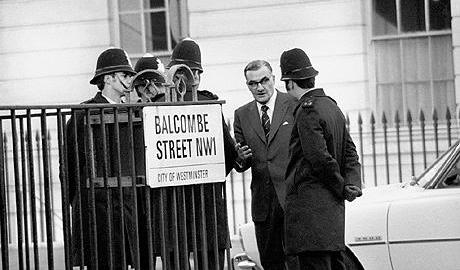
On 27 November 1975 at 6.45 p.m., McWhirter was shot and killed by two IRA volunteers, Harry Duggan and Hugh Doherty, both of whom were members of what became known as the Balcombe Street Gang,[ the group for whose capture McWhirter had offered the reward. McWhirter was shot at close range in the head and chest with a .357 Magnum revolver outside his home in Village Road, Bush Hill Park.

He was taken to Chase Farm Hospital, but died soon after being admitted. Duggan and Doherty were apprehended following the Balcombe Street siege and charged with murdering McWhirter, in addition to nine other victims. They were sentenced to life imprisonment, but released in 1999 under the terms of the Good Friday Agreement.

See : Balcombe Street Siege

See: 27th November deaths in the Troubles

Books I’ve read: Saladin: The Life, the Legend and the Islamic Empire

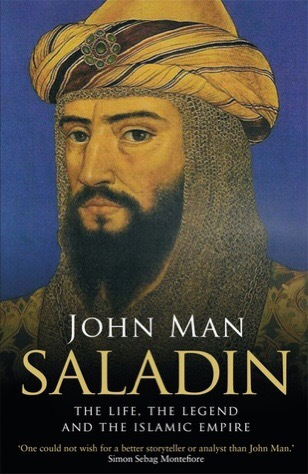
Saladin:

The Life, the Legend and the Islamic Empire 

Saladin remains one of the most iconic figures of his age. As the man who united the Arabs and saved Islam from Christian crusaders in the 12th century, he is the Islamic world’s preeminent hero. Ruthless in defence of his faith, brilliant in leadership, he also possessed qualities that won admiration from his Christian foes. He knew the limits of violence, showing such tolerance and generosity that many Europeans, appalled at the brutality of their own people, saw him as the exemplar of their own knightly ideals.

My thoughts ?

A fascinating and engaging easy to follow account of the life and times of one of the greatest and most respected Muslim leaders ever to have lived in my humble opinion. At a time when religious wars dominated the political landscape and European Christians considered it a religious duty to wage holy war , Saladin’s story unfolds and what a story it is. With a cast of characters as diverse as Raynald of Châtillon , ( evil bastard ) , Richard the Lion Heart ( treacherous ) and the mysterious and much feared assassins this is a page turner and I read it within two days.

Well worth a read for those interested in this tumultuous period of history and the legacy of God’s ” Holy Warriors. “

But Saladin is far more than a historical hero. Builder, literary patron and theologian, he is a man for all times, and a symbol of hope for an Arab world once again divided. Centuries after his death, in cities from Damascus to Cairo and beyond, to the Arabian Peninsula and the Gulf, Saladin continues to be an immensely potent symbol of religious and military resistance to the West. He is central to Arab memories, sensibilities and the ideal of a unified Islamic state.

In this authoritative biography, historian John Man brings Saladin and his world to life in vivid detail. Charting his rise to power, his struggle to unify the warring factions of his faith, and his battles to retake Jerusalem and expel Christian influence from Arab lands, Saladin explores the life and the enduring legacy of this champion of Islam, and examines his significance for the world today.

Amazon Reviews


Saladin Documentary

Biography of the Life of Saladin

See more reviews : The Life, the Legend and the Islamic Empire

See below for more details on Saladin

Assassins and Occult Secret Societies 

Raynald of Châtillon

Raynald of Châtillon, also known as Reynald or Reginald of Châtillon (FrenchRenaud de Châtillonc. 1125 – 4 July 1187), was Prince of Antioch from 1153 to 1160 or 1161, and Lord of Oultrejordain from 1175 until his death. He was born as his father’s second son into a French noble family. After losing a part of his patrimony, he joined the Second Crusade in 1147. He settled in the Kingdom of Jerusalem and served in the royal army as a mercenary.

Raynald married Constance, the reigning Princess of Antioch, in 1153, in spite of her subjects’ opposition. He was always in need of funds. He captured and tortured Aimery of LimogesLatin Patriarch of Antioch, because Aimery had refused to pay a subsidy to him. Raynald launched a plundering raid in Cyprus in 1155, causing great destruction. Four years later, the Byzantine EmperorManuel I Komnenos, came to Antioch at the head of a large army, forcing Raynald to beg for his mercy. Raynald made a raid in the valley of the river Euphrates at Marash to seize booty from the local peasants in 1160 or 1161, but he was captured by the governor of Aleppo.

Raynald was held in prison until 1176. After his release for a large ransom, he did not return to Antioch, because his wife had meanwhile died. He married Stephanie of Milly, the wealthy heiress of Oultrejordain. Since Baldwin IV of Jerusalem also granted Hebron to him, Raynald was one of the wealthiest barons of the realm. He controlled the caravan routes between Egypt and Syria. Baldwin, who suffered from leprosy, made him regent in 1177.

Raynald led the crusader army that defeated Saladin at the Battle of Montgisard. He was the only Christian leader to pursue an offensive policy against Saladin, making plundering raids against the caravans travelling near his domains. He built a fleet of five ships which plundered the coast of the Red Sea, threatening the route of the Muslim pilgrims towards Mecca in early 1183. Saladin pledged that he would never forgive Raynald.

Raynald was a firm supporter of Baldwin IV’s sister, Sybilla, and her husband, Guy of Lusignan, during conflicts regarding the succession of the king. Sibylla and Guy were able to seize the throne in 1186 due to Raynald’s co-operation with her uncle, Joscelin III of Courtenay. Raynald attacked a caravan travelling from Egypt to Syria in late 1186 or early 1187, claiming that the truce between Saladin and the Kingdom of Jerusalem did not bind him. After Raynald refused to pay a compensation, Saladin invaded the kingdom and annihilated the crusader army in the Battle of Hattin. Raynald was captured in the battlefield. Saladin personally beheaded him after he refused to convert to Islam. Most historians have regarded Raynald as an irresponsible adventurer whose lust for booty caused the fall of the Kingdom of Jerusalem. On the other hand, Bernard Hamilton says that he was the only crusader leader who tried to prevent Saladin from unifying the nearby Muslim states.

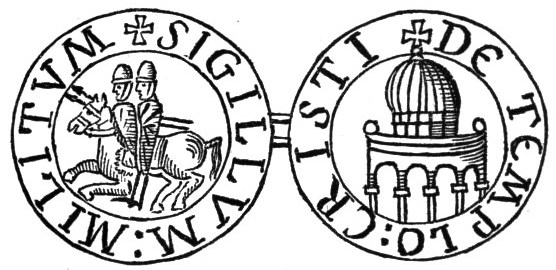
See: Knights Templar – God’s Holy Warriors’

Why Did Saladin Execute Raynald of Châtillon?

– Raynald of Châtillon –

The Untold Truth of a Crusader

Saladin

See : Raynald of Châtillon

Salah ad-Din Yusuf
Custodian of the Two Holy Mosques
Al-Malik an-Nasir
Statue of Saladin in Damascus
Sultan of Egypt and Syria
Reign1174 – 4 March 1193
Coronation1174, Cairo
PredecessorNew office
SuccessorAl-Aziz Uthman (Egypt)Al-Afdal (Syria)
Born1137
TikritUpper MesopotamiaAbbasid Caliphate
Died4 March 1193 (aged 55–56)
DamascusSyriaAyyubid Sultanate
BurialUmayyad Mosque, Damascus
SpouseIsmat ad-Din Khatun
Full nameAn-Nasir Ṣalāḥ ad-Dīn Yūsuf ibn Ayyūb
DynastyAyyubid
FatherNajm ad-Dīn Ayyūb
ReligionSunni Islam (Shafi’i)[1][2][3]

An-Nasir Salah ad-Din Yusuf ibn Ayyub (Arabic: صلاح الدين يوسف بن أيوب‎ / ALA-LCṢalāḥ ad-Dīn Yūsuf ibn AyyūbKurdish: سەلاحەدینی ئەییووبی‎ / ALA-LC: Selahedînê Eyûbî), known as Salah ad-Din or Saladin (/ˈsælədɪn/; 1137 – 4 March 1193), was the first sultan of Egypt and Syria and the founder of the Ayyubid dynasty. A Sunni Muslim of Kurdish ethnicity, Saladin led the Muslim military campaign against the Crusader states in the Levant. At the height of his power, his sultanate included Egypt, Syria, Upper Mesopotamia, the HejazYemen and other parts of North Africa.

He was originally sent to Fatimid Egypt in 1164 alongside his uncle Shirkuh, a general of the Zengid army, on the orders of their lord Nur ad-Din to help restore Shawar as vizier of the teenage Fatimid caliph al-Adid. A power struggle ensued between Shirkuh and Shawar after the latter was reinstated. Saladin, meanwhile, climbed the ranks of the Fatimid government by virtue of his military successes against Crusader assaults against its territory and his personal closeness to al-Adid.

After Shawar was assassinated and Shirkuh died in 1169, al-Adid appointed Saladin vizier, a rare nomination of a Sunni Muslim to such an important position in the Isma’ili Shia caliphate. During his tenure as vizier, Saladin began to undermine the Fatimid establishment and, following al-Adid’s death in 1171, he abolished the Fatimid Caliphate and realigned the country’s allegiance with the Sunni, Baghdad-based Abbasid Caliphate.

In the following years, he led forays against the Crusaders in Palestine, commissioned the successful conquest of Yemen, and staved off pro-Fatimid rebellions in Upper Egypt. Not long after Nur ad-Din’s death in 1174, Saladin launched his conquest of Syria, peacefully entering Damascus at the request of its governor. By mid-1175, Saladin had conquered Hama and Homs, inviting the animosity of other Zengid lords, the official rulers of Syria’s various regions.

Soon after, he defeated the Zengid army at the Battle of the Horns of Hama and was thereafter proclaimed the “Sultan of Egypt and Syria” by the Abbasid caliph al-Mustadi. Saladin made further conquests in northern Syria and Jazira, escaping two attempts on his life by the “Assassins“, before returning to Egypt in 1177 to address issues there. By 1182, Saladin had completed the conquest of Muslim Syria after capturing Aleppo, but ultimately failed to take over the Zengid stronghold of Mosul.

Under Saladin’s command, the Ayyubid army defeated the Crusaders at the decisive Battle of Hattin in 1187, and thereafter wrested control of Palestine—including the city of Jerusalem—from the Crusaders, who had conquered the area 88 years earlier. Although the Crusader Kingdom of Jerusalem continued to exist until the late 13th century, its defeat at Hattin marked a turning point in its conflict with the Muslim powers of the region. Saladin died in Damascus in 1193, having given away much of his personal wealth to his subjects. He is buried in a mausoleum adjacent to the Umayyad Mosque. Saladin has become a prominent figure in MuslimArabTurkish and Kurdish culture, and he has often been described as being the most famous Kurd in history.

First Crusade Part 1 of 2

See: Saladin/ Wikipedia

Fragging – The deliberate killing or attempted killing by a soldier of a fellow soldier

Fragging –

The deliberate killing or attempted killing by a soldier of a fellow soldier………

Fragging is the deliberate killing or attempted killing by a soldier of a fellow soldier, usually a superior officer or non-commissioned officer (NCO). The word was coined by U.S. military personnel during the Vietnam War, when such killings were most often attempted with a fragmentation grenade, sometimes making it appear as though the killing was accidental or during combat with the enemy. The term fragging is now often used to encompass any means used to deliberately and directly cause the death of military colleagues.

What was ‘Fragging’? (The Vietnam War)

The high number of fragging incidents in the latter years of the Vietnam War was symptomatic of the unpopularity of the war with the American public and the breakdown of discipline in the U.S. Armed Forces. Documented and suspected fragging incidents totaled nearly nine hundred from 1969 to 1972

Motivation

Soldiers have killed colleagues, especially superior officers, since the beginning of armed conflict, with many documented instances throughout history (one such attempt was on unpopular Civil War general Braxton Bragg). However, the practice of fragging seems to have been relatively uncommon in American armies until the Vietnam War. The prevalence of fragging was partially based on the ready availability of fragmentation hand grenades. Grenades were untraceable to an owner and did not leave any ballistic evidence. M18 Claymore mines and other explosives were also occasionally used in fragging, as were firearms, although the term, as defined by the military during the Vietnam War, applied only to the use of explosives to kill fellow soldiers.

Most fragging incidents were in the Army and Marine Corps. Fragging was rare among Navy and Air Force personnel who had less access to grenades and weapons than did soldiers and Marines.

The first known incidents of fragging in South Vietnam took place in 1966, but events in 1968 appear to have catalyzed an increase in fragging. After the Tet Offensive in January and February 1968, the Vietnam War became increasingly unpopular in the United States and among American soldiers in Vietnam, many of them conscripts. Secondly, racial tensions between white and African-American soldiers and Marines increased after the assassination of Martin Luther King in April 1968.

With soldiers reluctant to risk their lives in what was perceived as a lost war, fragging was seen by some enlisted men:

“as the most effective way to discourage their superiors from showing enthusiasm for combat.

Morale plummeted among soldiers and marines. By 1971, a U.S. Army colonel declared in the Armed Forces Journal that:

“The morale, discipline, and battleworthiness of the U.S. Armed Forces are, with a few salient exceptions, lower and worse than at any time in this century and possibly in the history of the United States.”

The U.S. military reflected social problems and issues in the U.S. such as racism, drug use, and resentment toward authoritarian leaders. As the U.S. began to withdraw its military forces from Vietnam, some American enlisted men and young officers lost their sense of purpose for being in Vietnam, and the relationship between enlisted men and their officers deteriorated.

The resentment directed from enlisted men toward older officers was exacerbated by generational gaps, as well as different perceptions of how the military should conduct itself. Enforcement of military regulations, especially if done overzealously, led to troops’ complaining and sometimes threats of physical violence directed toward officers.

A number of factors may have influenced the incidence of fragging. The demand for manpower for the war in Vietnam caused the armed forces to lower their standards for inducting both officers and enlisted men. The rapid rotation of personnel, especially of officers who served (on average) less than six months in command roles, decreased the stability and cohesion of military units.

Most important of all, perhaps, was the loss of purpose in fighting the war, as it became apparent to all that the United States was withdrawing from the war without having achieved any sort of victory. Morale and discipline deteriorated.

Most fragging was perpetrated by enlisted men against leaders. Enlisted men, in the words of one company commander, “feared they would get stuck with a lieutenant or platoon sergeant who would want to carry out all kinds of crazy John Wayne tactics, who would use their lives in an effort to win the war single-handedly, win the big medal, and get his picture in the hometown paper.”

Harassment of subordinates by a superior was another frequent motive. The stereotypical fragging incident was of “an aggressive career officer being assaulted by disillusioned subordinates.” Several fragging incidents resulted from alleged racism between African-American and white soldiers. Attempts by officers to control drug use caused others. Most known fragging incidents were carried out by soldiers in support units rather than soldiers in combat units.

Soldiers sometimes used non-lethal smoke and tear-gas grenades to warn superiors that they were in danger of being fragged if they did not change their behavior. A few instances occurred—and many more were rumored—in which enlisted men collected “bounties” on particular officers or non-commissioned officers to reward soldiers for fragging them.

Fragging: Why U. S. Soldiers Assaulted Their Officers In Vietnam

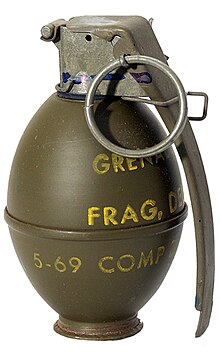
M26 grenade, issued to the U.S. Army and U.S. Marines in the Vietnam War, used in many fragging incidents

Fragging incidents

1969197019711972
Army9620922228
Marine Corps30+50+30+5
Suspected306211131
Total156+321+363+64
Deaths4638123
Note: Statistics were not kept before 1969.

According to author George Lepre, the total number of known and suspected fragging cases by explosives in Vietnam from 1969 to 1972 totaled nearly 900 with 99 deaths and many injuries. This total is incomplete as some cases were not reported, nor were statistics kept before 1969 although several incidents from 1966 to 1968 are known. Most of the victims or intended victims were officers or non-commissioned officers. The number of fraggings increased in 1970 and 1971 even though the U.S. military was withdrawing and the number of U.S. military personnel in Vietnam was declining.

An earlier calculation by authors Richard A. Gabriel and Paul L. Savage, estimated that up to 1,017 fragging incidents may have taken place in Vietnam causing 86 deaths and 714 injuries of U.S. military personnel, the majority officers and NCOs.

Fragging statistics include only incidents involving explosives, most commonly grenades. Several hundred murders of U.S. soldiers by firearms occurred in Vietnam but most were of enlisted men killing enlisted men of nearly equal rank. Fewer than 10 officers are known to have been murdered by firearms. However, rumors and claims abound of deliberate killing of officers and non-commissioned officers by enlisted men under battlefield conditions. The frequency and number of these fraggings, indistinguishable from combat deaths, cannot be quantified.

Response

The U.S. military’s responses to fragging incidents included greater restrictions on access to weapons, especially grenades, for soldiers in non-combat units and “lockdowns” after a fragging incident in which a whole unit was isolated until an investigation was concluded. For example, in May 1971, the U.S. Army in Vietnam temporarily halted the issuance of grenades to nearly all its units and soldiers in Vietnam, inventoried stocks of weapons, and searched soldier’s quarters, confiscating weapons, ammunition, grenades, and knives.

This action, however, failed to reduce fragging incidents as soldiers could easily obtain weapons in a flourishing black market among nearby Vietnamese communities. The U.S. military also attempted to diminish adverse publicity concerning fragging and the security measures it was taking to reduce it.

Only a few fraggers were identified and prosecuted. It was often difficult to distinguish between fragging and enemy action. A grenade thrown into a foxhole or tent could be a fragging, or the action of an enemy infiltrator or saboteur. Enlisted men were often close-mouthed in fragging investigations, refusing to inform on their colleagues out of fear or solidarity.

Although the sentences prescribed for fragging were severe, the few men convicted often served fairly brief prison sentences. Ten fraggers were convicted of murder and served sentences ranging from ten months to thirty years with a mean prison time of about nine years.

Influence

In the Vietnam War, the threat of fragging caused many officers and NCOs to go armed in rear areas and to change their sleeping arrangements as fragging often consisted of throwing a grenade into a tent where the target was sleeping. For fear of being fragged, some leaders turned a blind eye to drug use and other indiscipline among the men in their charge. Fragging, the threat of fragging, and investigations of fragging sometimes disrupted or delayed tactical combat operations. Officers were sometimes forced to negotiate with their enlisted men to obtain their consent before undertaking dangerous patrols.

The breakdown of discipline, including fragging, was an important factor leading to the creation of an all-volunteer military force by the United States and the termination of conscription. The last conscript was inducted into the army in 1973. The volunteer military moderated some of the coercive methods of discipline previously used to maintain order in military ranks.

Notable incidents

World War I

Vietnam War (U.S. forces)

  • On 21 April 1969, a grenade was thrown into the company office of K Company, 9th Marines, at Quảng Trị Combat Base, RVN; First Lieutenant Robert T. Rohweller died of wounds he received in the explosion. Private Reginald F. Smith pleaded guilty to the premeditated murder of Rohweller and was sentenced to 40 years’ imprisonment; he died in custody on 25 June 1982.
  • On 15 March 1971, a grenade tossed into an officer billet at Bien Hoa Army Airfield killed Lieutenants Thomas A. Dellwo and Richard E. Harlan of the 1st Cavalry Division (Airmobile); Private E-2 Billy Dean Smith was charged with killing the officers but was acquitted in November 1972.

Vietnam War (Australian forces)

  • On 23 November 1969, Lieutenant Robert Thomas Convery of the 9th Battalion of the Royal Australian Regiment was killed when a grenade exploded while he was sleeping in his tent at Nui Dat, South Vietnam. Private Peter Denzil Allen was convicted of Convery’s murder and served ten years and eight months of a life sentence in Risdon Prison.
  • On Christmas Day 1970, Sergeants Allan Brian Moss and John Wallace Galvin were shot dead and Sergeant Frederick Edwin Bowtell injured when Private Paul Ramon Ferriday opened fire with his rifle into the Sergeant’s Mess of the Royal Australian Army Service Corps at Nui Dat, South Vietnam after an all-day drinking session. Ferriday was convicted on two counts of manslaughter and one of assault with a weapon, and served eight years of a ten-year sentence.

Middle East peacekeeping

In Country: A Vietnam Story

War in Afghanistan

  • 17 August 2002, British Army Sergeant Robert Busuttil of the Royal Logistic Corps was shot dead by subordinate Corporal John Gregory during a barbecue at Kabul International Airport. It was later revealed that Corporal Gregory had been drinking and the two men had earlier been involved in an altercation. It was in the immediate aftermath of this that Corporal Gregory returned with his weapon loaded, and fired up to ten rounds killing Sergeant Busuttil as he lay in a hammock before turning the weapon on himself.

Iraq War (U.S. forces)

  • On 23 March 2003, in Kuwait, Sergeant Hasan Karim Akbar cut power to his base, threw four hand grenades into three tents where fellow members of the 101st Airborne Division were sleeping, and opened fire with his rifle when the personnel ran to take cover. Army Captain Christopher S. Seifert and Air Force Major Gregory L. Stone were killed, and fourteen other soldiers were wounded by shrapnel. Akbar was tried by court martial at Fort Bragg, North Carolina, in 2005. On 21 April 2005, Akbar was found guilty of two counts of premeditated murder and three counts of attempted premeditated murder and was sentenced to death on 28 April.
  • Captain Phillip Esposito and 1st Lieutenant Louis Allen were killed on 7 June 2005 as a result of the explosion of a Claymore mine placed on Esposito’s office window at Forward Operating Base Danger in TikritIraq. The unit’s supply sergeant was charged with the murder, but was acquitted at court martial.
  • On 11 May 2009, Sergeant John Russell opened fire on Camp Liberty with an M16A2 rifle and shot dead five U.S. military personnel (U.S. Army Specialist Jacob D. Barton, Sergeant Christian E. Bueno-Galdos, Major Matthew P. Houseal, Private First Class Michael E. Yates, and U.S. Navy Commander Charles K. Springle). Russell pleaded guilty to five counts of premeditated murder and was sentenced to life in prison without the possibility of parole.

Royal Navy

  • On 8 April 2011, during a port visit to Southampton, Able Seaman Ryan Donovan abandoned his sentry post at the boarding ramp of submarine HMS Astute, and opened fire on CPOs David McCoy and Chris Brown after they confronted him at the submarine’s weapons locker; he then forced his way into the control room and opened fire, killing Lt Cdr Ian Molyneux and wounding Lt Cdr Christopher Hodge before being tackled to the ground by a visiting dignitary as he reloaded. Donovan pleaded guilty to Molyneux’s murder and the attempted murders of Hodge, Brown, and McCoy and was sentenced to life imprisonment with a minimum of 25 years.

See: The Battle of the Teutoburg Forest – Rome’s darkest hour

See: Decimation in the Roman Army – Brutal!