Category Archives: Iconic songs and the story behind them

I Don’t Like Mondays – the Boomtown Rats: Iconic Songs & the story behind them

I Don’t Like Mondays

The Boomtown Rats
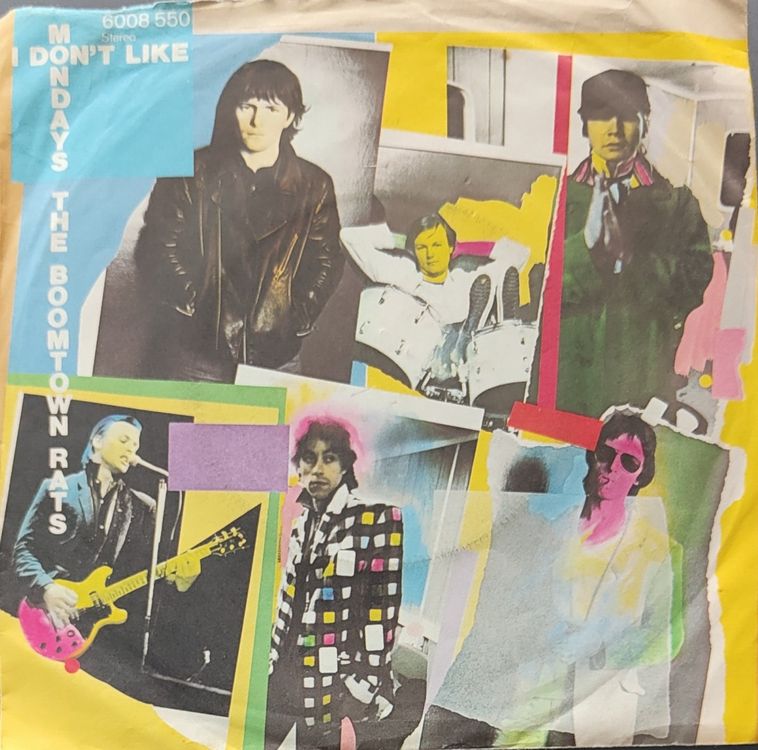
13 July 1979 

Iconic Songs & the story behind them

“I Don’t Like Mondays” is a song by the Irish new wave band the Boomtown Rats about the Cleveland Elementary School shooting in San Diego. It was released in 1979 as the lead single from their third studio album, The Fine Art of Surfacing. The song was a number-one single in the UK singles chart for four weeks during the summer of 1979, and ranks as the sixth-biggest hit of the UK in 1979.

 Written by Bob Geldof and Johnnie Fingers, the piano ballad was the band’s second single to reach number one on the UK chart.

Behind The Vinyl: Bob Geldof “I Don’t Like Mondays”

“I Don’t Like Mondays”
Single by the Boomtown Rats
from the album The Fine Art of Surfacing
B-side“It’s All the Rage”
Released13 July 1979 (UK)
StudioTrident Studios
GenreNew wave pop
Length4:19 (LP)
3:47 (single/video)
LabelEnsign (UK)
Columbia (US)
SongwritersBob GeldofJohnnie Fingers
ProducerPhil Wainman
The Boomtown Rats singles chronology
“Rat Trap“
(1978)”I Don’t Like Mondays“
(1979)”Diamond Smiles“
(1979)
Music video
“I Don’t Like Mondays” on YouTube
Audio
“I Don’t Like Mondays” on YouTube

Lyrics

“I Don’t Like Mondays”

The silicon chip inside her head
Gets switched to overload
And nobody’s gonna go to school today
She’s going to make them stay at home

And daddy doesn’t understand it
He always said she was as good as gold
And he can see no reason ’cause there are no reasons
What reason do you need to be shown?

(Tell me why) I don’t like Mondays
I wanna shoot

The whole day down

The telex machine is kept so clean
And it types to a waiting world
Her mother feels so shocked, father’s world is rocked
And their thoughts turn to their own little girl

Sweet 16 ain’t that peachy keen
No, it ain’t so neat to admit defeat
They can see no reasons ’cause there are no reasons
What reason do you need, oh, ohoho

(Tell me why) I don’t like Mondays
I wanna shoot

The whole day down, down, down
Shoot it all down

And all the playing’s stopped in the playground now
She wants to play with the toys a while
And school’s out early and soon we be learning
And the lesson today is how to die

And then the bullhorn crackles and the captain tackles
With the problems and the hows and whys
And he can see no reasons ’cause there are no reasons
What reason do you need to die, die, ohoho

And the silicon chip inside her head
Gets switched to overload, oh
And nobody’s gonna go to school today
She’s going to make them stay at home

And daddy doesn’t understand it
He always said she was as good as gold
And he can see no reason ’cause there are no reasons
What reason do you need to be shown?

(Tell me why) I don’t like Mondays
(Tell me why) I don’t like, I don’t like
(Tell me why) I don’t like Mondays

Tell me why I don’t like, I don’t like
(Tell me why) I don’t like Mondays
Tell me why I don’t like Mondays
I wanna shoot

The whole day down
(Ooohooohooo, ooohooohooo
Ooohooohooo)

Background and writing
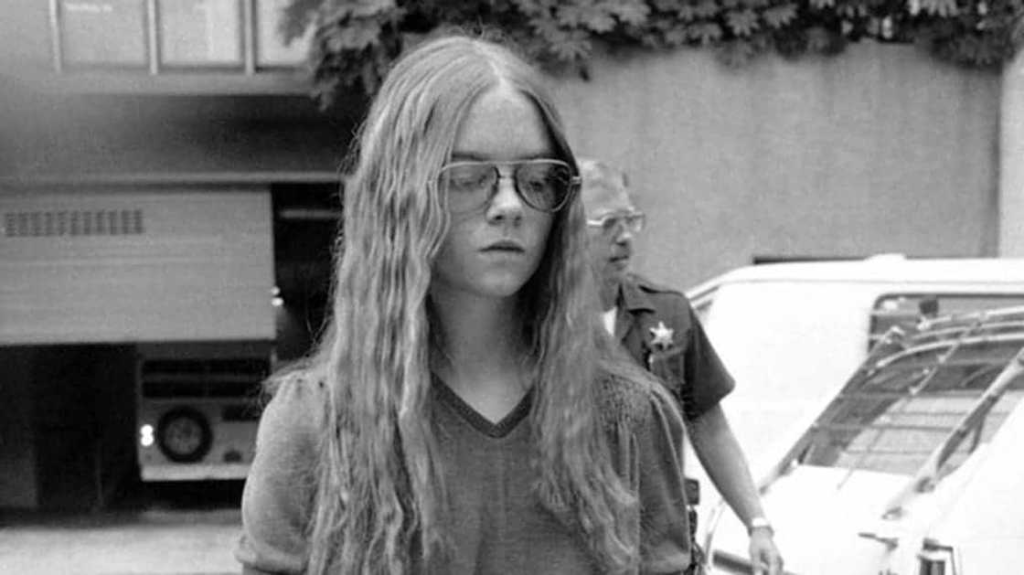
Brenda Ann Spencer

According to Geldof, he wrote the song after reading a telex report  at Georgia State University’s campus radio station, WRAS, on the shooting spree of 16-year-old Brenda Ann Spencer, who fired from her bedroom window at children in a school playground at Grover Cleveland Elementary School in San Diego, California, on 29 January 1979, killing two adults and injuring eight children and one police officer. Spencer showed no remorse for her crime; her explanation for her actions was:

“I don’t like Mondays. This livens up the day”

.Her flippant response attracted media attention and inspired the song. Geldof had been contacted by Steve Jobs to play a gig for Apple, inspiring the opening line about a “silicon chip”. The song was first performed less than a month later.

Geldof explained how he wrote the song:

I was doing a radio interview in Atlanta with Johnnie Fingers and there was a telex machine beside me. I read it as it came out. Not liking Mondays as a reason for doing somebody in is a bit strange. I was thinking about it on the way back to the hotel and I just said ‘silicon chip inside her head had switched to overload’.

 I wrote that down. And the journalists interviewing her said, ‘Tell me why?’ It was such a senseless act. It was the perfect senseless act and this was the perfect senseless reason for doing it. So perhaps I wrote the perfect senseless song to illustrate it.

It wasn’t an attempt to exploit tragedy.

The cheerful music is deliberate

One of the most striking things:

  • The song sounds almost upbeat and melodic
  • But the subject is extremely dark

That contrast is intentional:

  • It mirrors how shocking the real quote was
  • A horrific act paired with a casual, almost trivial explanation

Geldof had originally intended the song as a B-side, but changed his mind after the song was successful with audiences on the Rats’ US tour. Spencer’s family tried to prevent the single from being released in the United States, but were unsuccessful.

In later years, Geldof stated that he regretted writing the song because he “made Brenda Spencer famous”.

In 2019, Geldof and Fingers reached an agreement in their dispute over who wrote the song, until then credited solely to Geldof. Fingers received a financial settlement and co-credit.

Released on 13 July 1979, the song reached number one in the United Kingdom, Ireland, Australia and South Africa, and the top 10 in several other countries. It was less successful in the US, reaching only number 73 on the Billboard Hot 100.

In 1994, the song was re-released to promote the greatest hits album Loudmouth. It then peaked at number 38 on the UK singles chart.

In the UK, the song won the Best Pop Song and Outstanding British Lyric categories at the Ivor Novello Awards.

See here for more details :

Brenda Ann Spencer & Cleveland Elementary School shooting
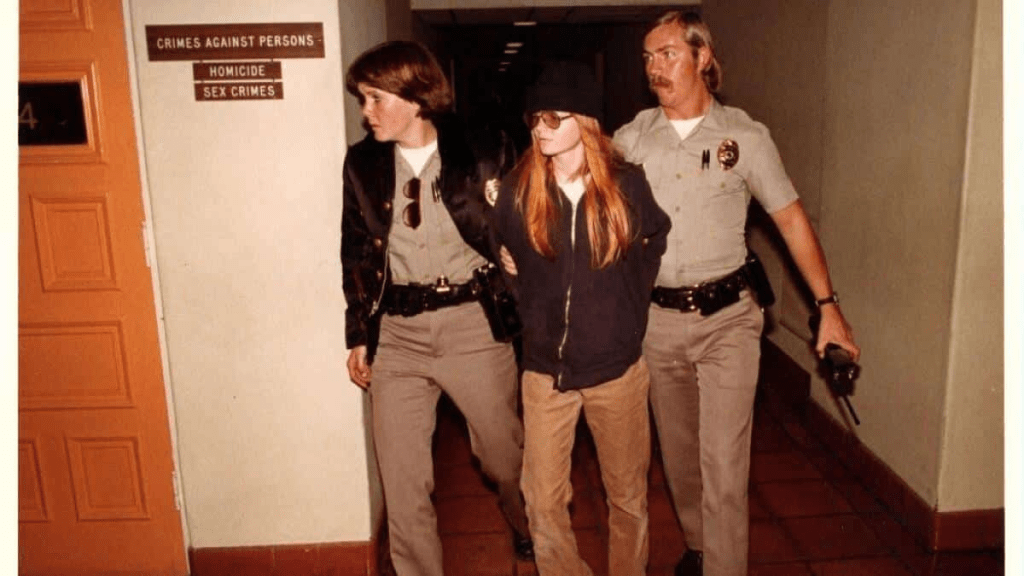
The story behind“I Don’t Like Mondays” by The Boomtown Rats is much darker than most people realise — it’s not really about disliking the start of the week at all. It comes from a real-life tragedy, and the meaning of the song is tied to the unsettling idea of senseless violence with no clear reason.

The shooting took place on January 29, 1979, at Grover Cleveland Elementary School in San Diego, California, United States] This is considered the first mass shooting at an elementary school in United States history.
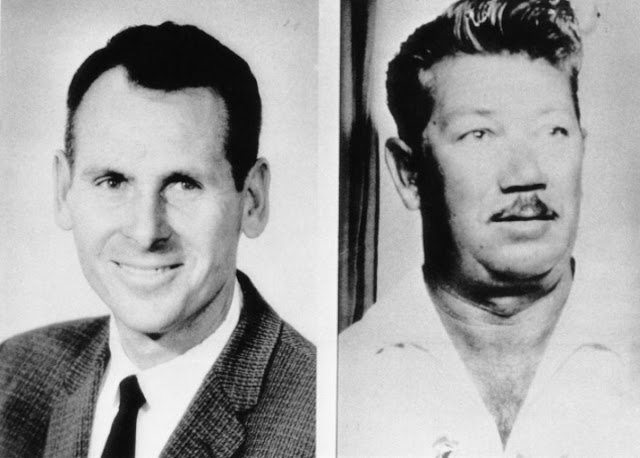
  Principal  Burton Wragg and custodian Mike Suchar

  • Burton Wragg, age 53, the school principal, who had stepped outside to help children get to safety
  • Mike Suchar, age 56, the school custodian

The principal  Burton Wragg and the custodian Mike Suchar were killed; eight children and a police officer were wounded. Brenda Spencer, a 16-year-old girl who lived in a house across the street from the school, was convicted of the shootings. Charged as an adult, she pleaded guilty to two counts of murder and assault with a deadly weapon and was sentenced to life in prison with a chance of parole after 25 years. As of 2026, she is still in prison.

While police surrounded the house, a journalist called her and asked a simple question:

“Why did you do it?”

Her answer was chillingly casual:


“I don’t like Mondays. This livens up the day.”

That line shocked people worldwide — not just because of what happened, but because of how empty and random the reason sounded.

The shooting

On the morning of Monday, January 29, 1979, Spencer began shooting from her house at children across the street who were waiting for 53-year-old Principal Burton Wragg to open the gates to Grover Cleveland Elementary.[4] She injured eight children. She first shot nine-year-old Cam Miller, who said he believed it was because he was wearing blue, which he had learned was her favorite color. Spencer shot and killed Wragg as he and teacher Daryl Barnes tried to help children. She fatally shot 56-year-old custodian Mike Suchar as he tried to pull a student to safety. A 28-year-old police officer, Robert Robb, had responded to a call for assistance and she shot and wounded him in the neck as he arrived.

Robb prevented further casualties by moving a garbage truck in front of the school entrance to obstruct her line of fire.

After firing thirty-six times, Spencer barricaded herself inside her home for several hours. She spoke by telephone to a reporter from The Evening Tribune, who had been calling random telephone numbers in the neighborhood. Spencer told the reporter she had shot at the school children and adults because, “I don’t like Mondays. This livens up the day.”

She told police negotiators that the children and adults whom she had shot were easy targets and that she was going to “come out shooting”.  

She surrendered and left the house after being promised a Burger King meal by negotiators.

Brenda Ann Spencer background and family life

Brenda Ann Spencer (born April 3, 1962) was born to Dorothy Nadine (née Hobel) and Wallace Edward Spencer. They married on December 12, 1954, in Chula Vista and had three children. Brenda was the youngest. In January 1972, after Dorothy found out her husband had been cheating on her with multiple women, she filed for divorce.

After her parents separated, Brenda allegedly lived in poverty with her father. Both father and daughter slept on a single mattress on the living room floor, in a house strewn with empty bottles of alcohol.

At later parole hearings, she claimed to have been subject to “total neglect” from her mother and sexual abuse from her father. The accusations have been disputed by the respective parents. At the time, she lived in a house across the street from the school. Aged 16 at the time of the shooting, she was 5’2″ (157 cm) and very thin, and had bright red hair.

Acquaintances said Spencer expressed hostility toward police officers, had spoken about shooting one, and had talked of doing something big to get on television. Although Spencer showed ability as a photographer, winning first place in a Humane Society competition, she was generally uninterested in school. She attended Patrick Henry High School, where one teacher recalled frequently inquiring if she was awake in class. Later, during tests while she was in custody, it was discovered that Spencer had an injury to one of the temporal lobes of her brain. It was attributed to an accident on her bicycle.

Spencer described herself as a “radical” and referred to police officers as “pigs,” exclaiming “All right!” when seeing news on TV about police officers being killed. She often talked about wanting to kill police officers or “blow them away.”[ Some classmates described her as “crazy” and reported being scared of her.

In early 1978, staff at a facility for problem students, into which Spencer had been referred for truancy, informed her parents that she was suicidal. That summer, Spencer, who was known to hunt birds in the neighborhood, was arrested for shooting out the windows of Grover Cleveland Elementary with a BB gun and for burglary.  Police reports and eyewitnesses do not mention the use of a BB gun during the school vandalism.

In December 1978, while she was still on probation for breaking into the school, a psychiatric evaluation arranged by her probation officer recommended that Spencer be admitted to a mental hospital for depression. Her father refused to give permission. For Christmas 1978, he gave her a Ruger 10/22 semi-automatic .22 caliber rifle with a telescopic sight and 500 rounds of ammunition.

Spencer later said, “I asked for a radio and got a rifle.” Asked why he had done that, she answered:

“He bought the rifle so I would kill myself.”

Analysis

Several 21st century accounts identify the Cleveland Elementary School shooting in San Diego as the earliest recorded elementary school shooting in the United States. The perpetrator, Brenda Spencer, has been described as the first modern high-profile school shooter. According to a 2013 article in the New York Daily News, her actions marked a significant turning point in American history. Given later history of violent acts, Spencer has been referred to as “the mother” of subsequent school shootings, including those at Columbine, Colorado, and Newtown, Connecticut, both committed by teenage males.  The number of school shootings has increased markedly since 1979.

San Diego County Deputy District Attorney Richard Sachs noted that Spencer “hurt so many people and had so much to do with starting a deadly trend in America.” In a 2001 statement, Spencer acknowledged the potential influence of her actions on later incidents, remarking, “With every school shooting, I feel I’m partially responsible. What if they got the idea from what I did?”

Imprisonment

Convicted school shooter Brenda Spencer speaks with San Diego’s News 8 – PART 1

Spencer was charged as an adult. She pleaded guilty to two counts of murder and assault with a deadly weapon. On April 4, 1980, a day after her 18th birthday, she was sentenced to concurrent terms of 25 years to life in prison. Nine counts of attempted murder were dismissed. In prison, Spencer was diagnosed with epilepsy and received medication to treat epilepsy and depression. While at California Institution for Women in Chino, she worked repairing electronic equipment.

Under the terms of her sentencing, Spencer became eligible in 1993 for hearings to consider her suitability for parole.

At her first hearing, in 1993, Spencer said she had hoped that police would shoot her, and that she had been a user of alcohol and drugs at the time of the crime. But, results of drug tests done when she was taken into custody were negative. At her 2001 parole hearing, Spencer claimed that her father had been subjecting her to beatings and sexual abuse, but he said the allegations were not true. The parole board chairman said that, because she had not previously told anyone about the allegations, he doubted their veracity.

In 2005, a San Diego deputy district attorney cited an incident of self-harm from four years earlier, when Spencer’s girlfriend was released from jail, as showing that Spencer was psychotic and unfit to be released. Early reports indicated that Spencer had scratched the words “courage” and “pride” into her own skin. Spencer corrected this during her parole hearing; she said the words were “unforgiven” and “alone.”

2020 mugshot of Spencer.

In 2009, the board again refused her application for parole, and ruled it would be ten years before she would be considered again.  In August 2022, Spencer and the Board of Parole Hearings agreed that she was not suitable for parole and that she would not be eligible for another hearing for a further three years. In February 2025, she was again denied parole. She remains imprisoned at California Institution for Women in Chino.


Life in prison

Brenda Spencer has spent her entire adult life incarcerated.

  • She has been held in California state prison since 1979
  • She grew up, matured, and aged entirely behind bars

Over the years:

  • Reports suggest she has had disciplinary issues at times
  • She has taken part in some education and prison programmes (details vary by source)

But importantly: she has never been released.


Parole hearings (and why she remains in prison)

Because of her sentence, she became eligible for parole in the early 1990s (about 25 years after sentencing).

However:

  • She has applied for parole multiple times
  • Each request has been denied

Why she keeps being denied parole

Parole boards look at several factors, and in her case:

1. Nature of the crime

  • It involved children and a public setting
  • It’s seen as a serious and shocking act

2. Her explanations

  • At different times, she has given varying reasons for what she did
  • These sometimes included:
    • claims of abuse
    • claims of intoxication
    • shifting accounts over the years

This inconsistency raises concerns about:

  • whether she fully understands or takes responsibility

3. Perceived risk

Parole boards assess:

  • whether someone is likely to reoffend
  • whether they show remorse and insight

Her case has often been judged as:

  • not showing enough clear, consistent insight into the crime

Attempts to explain her actions (after the fact)

In later years, Spencer did try to explain what happened more deeply than her original statement.

She has claimed:

  • she suffered abuse and neglect growing up
  • she was using alcohol and possibly medication at the time

However:

  • Some of these claims were disputed or unverified
  • And they didn’t fully satisfy the authorities reviewing her case

The core issue remains: Even her later explanations don’t fully match the scale or randomness of the act.


Where things stand today

  • Brenda Ann Spencer remains in prison to this day
  • She continues to be eligible for future parole hearings, but release is uncertain


If you want, I can explain how this case influenced public awareness of school violence or how it compares to later cases.

Here’s a clear summary of Brenda Ann Spencer’s parole history, based only on what the sources explicitly confirm.


Parole hearing history (summary)

📅 Eligibility

  • Spencer was sentenced to life with the possibility of parole after 25 years
  • That made her eligible for her first parole hearings starting in the early 1990s (25 years after 1979)

❌ Repeated denials

  • She has applied for parole multiple times over several decades
  • Each time, parole has been denied


🧾 Current status

  • As of the most recent information available today
    • She remains in prison
    • She is still eligible for future parole hearings

Patterns in parole outcomes (from reported information)

While detailed parole transcripts aren’t always public, sources consistently point to:

  • Ongoing concerns about the seriousness of the crime
  • Questions about her explanations and insight (her reasons have changed over time)
  • The need for demonstrable remorse and understanding, which parole boards assess

One‑sentence takeaway

👉 Brenda Ann Spencer has been eligible for parole for decades but has never been granted release, and she remains incarcerated today.

 Her next opportunity for a parole hearing will be in 2028.

Aftermath

A plaque and flagpole were erected at Cleveland Elementary in memory of the shooting victims. Due to declining enrollment, the school was closed in 1983, along with a dozen other public schools around the city.  In the ensuing decades, it was leased to several charter and private schools. From 2005 to 2017, it housed the Magnolia Science Academy, a public charter middle school serving students in grades 6–8.
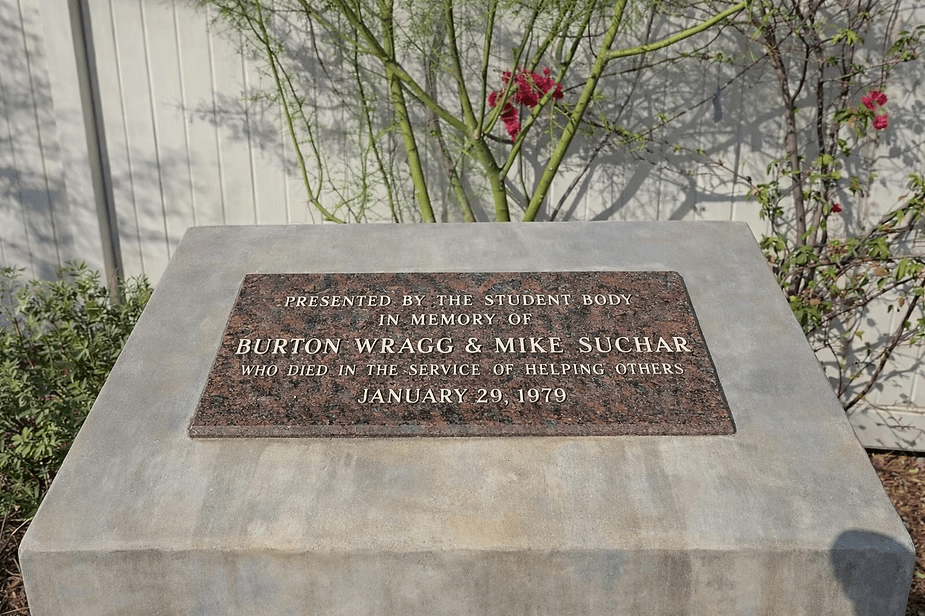
memorial plaque honoring Burton Wragg and Mike Suchar

The school board decided to sell the school because of budget issues. In 2018, the building was demolished by the new owner and the site was redeveloped for housing. The memorial plaque was relocated to the southern edge of the former school site, at the corner of Lake Atlin Avenue and Lake Angela Drive.

Spencer and her family

In the months following the shooting, one of Brenda Spencer’s first cellmates at the juvenile facility was released. The 17-year-old girl moved in with Spencer’s father, whom she’d met through his visits to Brenda. They later married on March 26, 1980, in Yuma, Arizona. They had a daughter together, after which she fled the household and eventually divorced her estranged husband.She left Wallace Spencer to raise the girl alone.

Wallace Spencer died in February 2016.

Survivors

On January 17, 1989, almost ten years after the shooting, there was a shooting at a school in Stockton, California. Coincidentally it was also named Grover Cleveland Elementary. Five students were killed and thirty injured. Christy Buell, a survivor of the 1979 shooting, was “shocked, saddened, horrified” by the headlines concerning the incident.

Bon Jovi & Bob Geldof – I Don’t Like Mondays (London 2010)

Buy the book

😏

Hit the button below and surprise me 👍

Iconic Songs & the story behind them

Lola – The Kinks : Iconic Songs & the story behind them

Lola – The Kinks : Iconic Songs

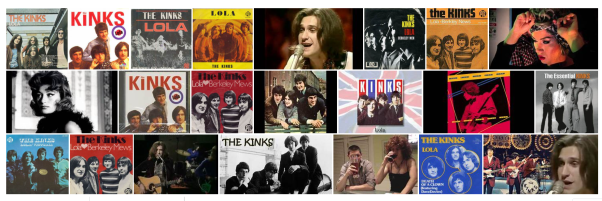
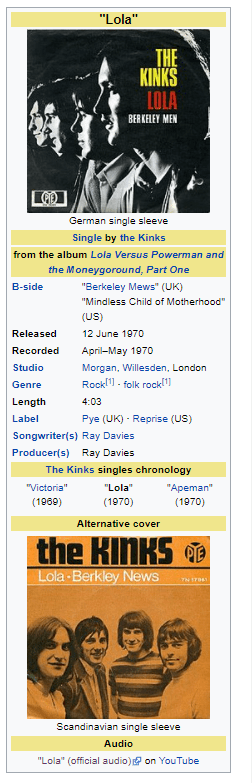
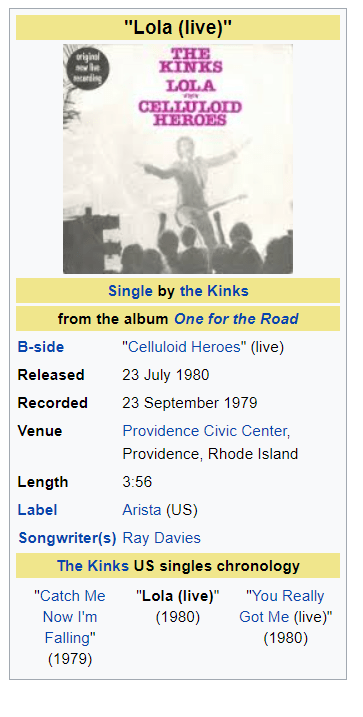
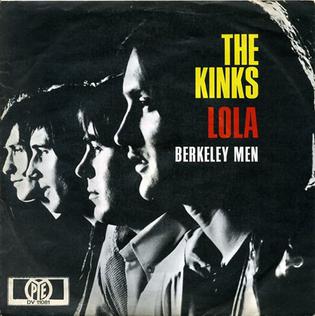
The original UK 45 release cover for Lola

Iconic Songs and the story behind them

“Lola” is a song written by Ray Davies and performed by English rock band the Kinks on their album Lola Versus Powerman and the Moneygoround, Part One. The song details a romantic encounter between a young man and a possible cross-dresser, whom he meets in a club in Soho, London. In the song, the narrator describes his confusion towards Lola, who:

“walked like a woman but talked like a man”

The song was released in the United Kingdom on 12 June 1970, while in the United States it was released on 28 June 1970. Commercially, the single reached number two on the UK Singles Chart  and number nine on the Billboard Hot 100.

 The track has since become one of The Kinks’ most iconic and popular songs, later being ranked number 422 on “Rolling Stone’s 500 Greatest Songs of All Time” as well as number 473 on the “NME‘s 500 Greatest Songs Of All Time” list.

Since its release, “Lola” has appeared on multiple compilation and live albums. In 1980, a live version of the song from the album One for the Road was released as a single in the US and some European countries, becoming a minor hit. In the Netherlands it became #1, just as in 1970 with the studio version. Other versions include live renditions from 1972’s Everybody’s in Show-Biz and 1996’s To the Bone.

The “Lola” character also made an appearance in the lyrics of the band’s 1981 song, “Destroyer“.

The Kinks – Lola (Official Audio)

Lola was the lead single from the album “Lola Versus Powerman and the Moneygoround, Part One” originally released in the UK and the US in June 1970 and reached number two on the UK Singles Chart nine on the Billboard Hot 100

Lyrics

“Lola”

I met her in a club down in old Soho
Where you drink champagne and it tastes just like cherry-cola [LP version – Coca-Cola:]
C O L A cola
She walked up to me and she asked me to dance
I asked her her name and in a dark brown voice she said Lola
L O L A Lola la-la-la-la Lola

Well I’m not the world’s most physical guy
But when she squeezed me tight she nearly broke my spine
Oh my Lola la-la-la-la Lola
Well I’m not dumb but I can’t understand
Why she walked like a woman and talked like a man
Oh my Lola la-la-la-la Lola la-la-la-la Lola


Well that’s the way that I want it to stay
And I always want it to be that way for my Lola
La-la-la-la Lola
Girls will be boys and boys will be girls
It’s a mixed up muddled up shook up world except for Lola
La-la-la-la Lola

Well I left home just a week before
And I’d never ever kissed a woman before
But Lola smiled and took me by the hand
And said dear boy I’m gonna make you a man

Well I’m not the world’s most masculine man
But I know what I am and I’m glad I’m a man
And so is Lola
La-la-la-la Lola la-la-la-la Lola
Lola la-la-la-la Lola la-la-la-la Lola

Source: www.azlyrics.com/lyrics/kinks/lola

Origin and inspiration

My Thoughts

As an old mod I have long loved the Kinks and everything about them and their iconic music legacy is embedded deep within my soul and still gives me much pleasure and joy. In my opinion they are one of the most underrated English bands of the 60s and although their music has always been well received and revered by their musical peers, they never had the commercial success of the Who or the Stones and to my mind that is a shame.

From the first time I heard Lola spoke to me in a way few tunes do and the surreal theme of the lyrics and the haunting melody its in my top ten tunes ever!

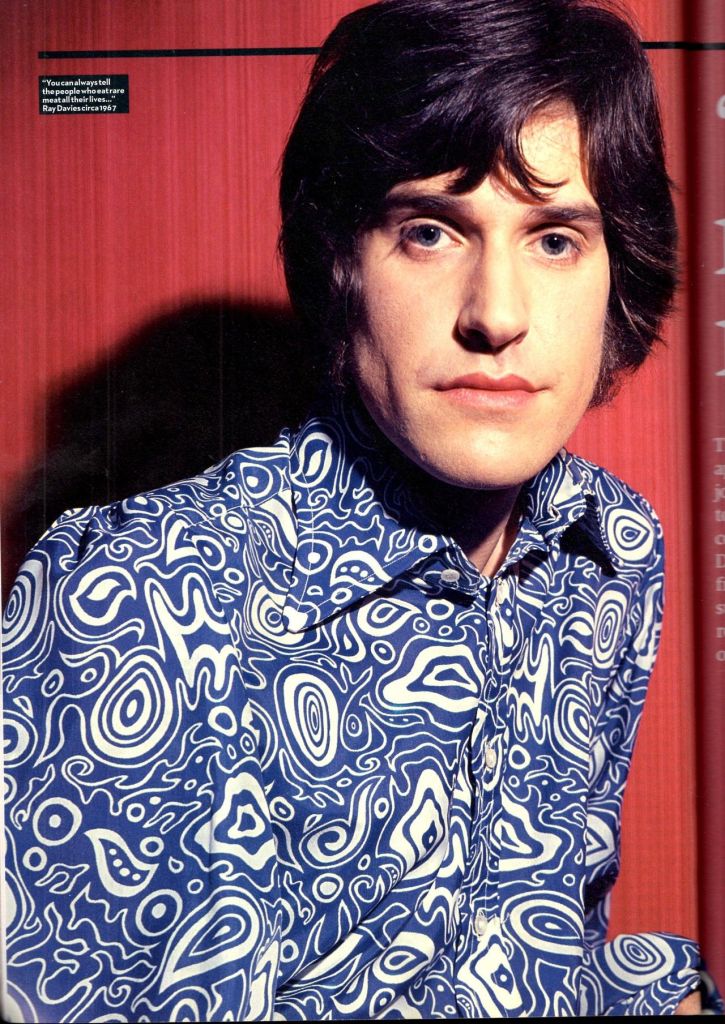
ray davis

Ray Davies has claimed that he was inspired to write “Lola” after Kinks manager Robert Wace spent a night in Paris dancing with a cross-dresser.

 Davies said of the incident, “In his apartment, Robert had been dancing with this black woman, and he said, ‘I’m really onto a thing here.’ And it was okay until we left at six in the morning and then I said, ‘Have you seen the stubble?’ He said ‘Yeah’, but he was too pissed [intoxicated] to care, I think”.[7]

It was a real experience in a club. I was asked to dance by somebody who was a fabulous looking woman. I said “no thank you”. And she went in a cab with my manager straight afterwards. It’s based on a personal experience. But not every word.

– Ray Davies

Drummer Mick Avory has offered an alternative explanation for the song’s lyrics, claiming that “Lola” was partially inspired by Avory’s frequenting of certain bars in West London.

Avory said:

“We used to know this character called Michael McGrath. He used to hound the group a bit, because being called The Kinks did attract these sorts of people. He used to come down to Top of the Pops, and he was publicist for John Stephen’s shop in Carnaby Street. He used to have this place in Earl’s Court, and he used to invite me to all these drag queen acts and transsexual pubs. They were like secret clubs. And that’s where Ray [Davies] got the idea for ‘Lola’. When he was invited too, he wrote it while I was getting drunk”.

Ray Davies has denied claims that the song was written about a date between himself and Candy Darling—Davies contends the two only went out to dinner together and that he had known the whole time that Darling was trans.

In his autobiography, Dave Davies said that he came up with the music for what would become “Lola”, noting that brother Ray added the lyrics after hearing it.[9] In a 1990 interview, Dave Davies stated that “Lola” was written in a similar fashion to “You Really Got Me” in that the two worked on Ray’s basic skeleton of the song, saying that the song was more of a collaborative effort than many believed.[10]

Writing and recording

I remember going into a music store on Shaftesbury Avenue when we were about to make “Lola”. I said, “I want to get a really good guitar sound on this record, I want a Martin”. And in the corner they had this old 1938 Dobro [resonating guitar] that I bought for £150. I put them together on “Lola” which is what makes that clangy sound: the combination of the Martin and the Dobro with heavy compression.

– Ray Davies

Written in April 1970, “Lola” was cited by Ray Davies as the first song he wrote following a break he took to act in the 1970 Play for Today film The Long Distance Piano Player. Davies said that he had initially struggled with writing an opening that would sell the song, but the rest of the song “came naturally”.

Initial recordings of the song began in April 1970, but, as the band’s bassist John Dalton remembered, recording for “Lola” took particularly long, stretching into the next month.

 During April, four to five versions were attempted, utilizing different keys as well as varying beginnings and styles.  In May, new piano parts were added to the backing track by John Gosling, the band’s new piano player that had just been auditioned. Vocals were also added at this time. The song was then mixed during that month. Mick Avory remembered the recording sessions for the song positively, saying that it “was fun, as it was the Baptist’s [John Gosling’s] first recording with us”.

The guitar opening on the song was produced as a result of combining the sound of a Martin guitar and a vintage Dobro resonating guitar. Ray Davies cited this blend of guitar sounds for the song’s unique guitar sound.

I remember going into a music store on Shaftesbury Avenue when we were about to make “Lola”. I said, “I want to get a really good guitar sound on this record, I want a Martin”. And in the corner they had this old 1938 Dobro [resonating guitar] that I bought for £150. I put them together on “Lola” which is what makes that clangy sound: the combination of the Martin and the Dobro with heavy compression.

– Ray Davies

Release

Despite the chart success “Lola” would achieve, its fellow Lola vs. Powerman track “Powerman” was initially considered to be the first single from the album.  However, “Lola”, which Ray Davies later claimed was an attempt to write a hit, was eventually decided on as the debut single release.

“Lola” was released as a single in 1970.  In the UK, the B-side to the single was the Kinks Are the Village Green Preservation Society outtake “Berkeley Mews“

 while the Dave Davies-penned “Mindless Child of Motherhood” was used in the US. It became an unexpected chart smash for the Kinks, reaching number two in Britain and number nine in the United States.

The single also saw success worldwide, reaching the top of the charts in Ireland, New Zealand, and South Africa, as well as the top 5 in Germany, Austria, Belgium, and Switzerland. The success of the single had important ramifications for the band’s career at a critical time, allowing them to negotiate a new contract with RCA Records, construct their own London Studio, and assume more creative and managerial control.

In a 1970 interview, Dave Davies stated that, if “Lola” had been a failure, the band would have “gone on making records for another year or so and then drifted apart”.

Although the track was a major hit for the band, Dave Davies did not enjoy the success of “Lola”, saying, “In fact, when ‘Lola’ was a hit, it made me feel a bit uncomfortable. Because it was taking us out of a different sort of comfort zone, where we’d been getting into the work, and the writing and the musicality was more thought about. It did have that smell of: ‘Oh blimey, not that again.’ I found it a bit odd, that period. And then it got odder and weirder”.

Mick Avory said that he “enjoyed the success” the band had with “Lola” and its follow-up, “Apeman“.

I wanted to write a hit [with “Lola”.] It wasn’t just the song. it was the musical design. It wasn’t a power chord song like “You Really Got Me“. It was a power chord beginning. It needed a special acoustic guitar sound … sonorous, growling, with an attack to it.

– Ray Davies, Radio 4’s Master Tapes

Controversy

Originally, “Lola” saw controversy for its lyrics. In a Record Mirror article entitled “Sex Change Record: Kink Speaks”, Ray Davies addressed the matter, saying, “It really doesn’t matter what sex Lola is, I think she’s alright”.

 Some radio stations would fade the track out before implications of Lola’s biological sex were revealed. On 18 November 1970, “Lola” was banned from being played by some radio stations in Australia because of its “controversial subject matter”.

The BBC banned the track for a different reason: the original stereo recording had the words “Coca-Cola” in the lyrics, but because of BBC Radio’s policy against product placement, Ray Davies was forced to make a 6000-mile round-trip flight from New York to London and back on June 3, 1970, interrupting the band’s American tour, to change those words to the generic “cherry cola” for the single release, which is included on various compilation albums as well.

Reception and legacy

“Lola” received positive reviews from critics. Upon the single’s release, the NME praised the song as “an engaging and sparkling piece with a gay Latin flavour and a catchy hook chorus”.

 Writing a contemporary review in Creem, critic Dave Marsh recognized it as “the first significantly blatant gay-rock ballad”.Billboard said of the song at the time of its US release, “Currently a top ten British chart winner, this infectious rhythm item has all the ingredients to put the Kinks right back up the Hot 100 here with solid impact”.

Rolling Stone critic Paul Gambaccini called the song “brilliant and a smash”.  Music critic Robert Christgau, despite his mixed opinion on the Lola vs. Powerman album, praised the single as “astounding”.

 Stephen Thomas Erlewine of AllMusic lauded the song for “its crisp, muscular sound, pitched halfway between acoustic folk and hard rock”. Ultimate Classic Rock ranked “Lola” as The Kinks’ third best song, saying “the great guitar riff that feeds the song is one of Dave’s all-time greatest”. Paste Magazine listed the track as the band’s fourth best song.

The song was also well-liked by the band. Mick Avory, who noted the song as one of the songs he was most proud to be associated with,  said “I always liked ‘Lola’, I liked the subject. It’s not like anything else. I liked it for that. We’d always take a different path”.

 In a 1983 interview, Ray Davies said, “I’m just very pleased I recorded it and more pleased I wrote it”. The band revisited the “Lola” character in the lyrics of their 1981 song, “Destroyer“, a minor chart hit in America.

Satirical artist “Weird Al” Yankovic created a parody of the song called “Yoda“, featuring lyrics about the Star Wars character of the same name, on his 1985 album Dare to Be Stupid.[30]

Live versions

Since its release, “Lola” became a mainstay in The Kinks’ live repertoire, appearing in the majority of the band’s subsequent set-lists until the group’s break-up.

 In 1972, a live performance of the song recorded at Carnegie Hall in New York City appeared on the live half of the band’s 1972 album, Everybody’s in Show-Biz, a double-LP which contained half new studio compositions and half live versions of previously released songs.

A live version of “Lola”, recorded on 23 September 1979 in Providence, Rhode Island, was released as a single in the US in July 1980 to promote the live album One for the Road. The B-side was the live version of “Celluloid Heroes“.

The single was a moderate success, reaching number 81 on the Billboard Hot 100. It was also released in some countries in Europe (although not the UK) in April 1981. It topped the charts in both the Netherlands, matching the number one peak of the original version, and in Belgium, where it exceeded the original’s peak of three.

It also charted in Australia, peaking at number 69 and spending 22 weeks on the charts. Although not released as a stand-alone single in the UK, it was included on a bonus single (backed with a live version of “David Watts” from the same album) with initial copies of “Better Things” in June 1981.

This live rendition, along with the live versions of “Celluloid Heroes” and “You Really Got Me” from the same album, also appeared on the 1986 compilation album Come Dancing with The Kinks: The Best of the Kinks 1977–1986.

Although it did not appear on the original 1994 version, another live version of “Lola” was included on the 1996 US double-album release of To the Bone, the band’s final release of new material before their dissolution.

Covers

Madness – Lola

BAD MANNERS – LOLA

Robbie Williams – Lola

😏

Hit the button below and surprise me 👍

Top 10 70s Songs You Forgot Were Awesome

Iconic Songs & the story behind them

Iconic Songs & the story behind them

Buy Me A Coffee

Love Will Tear Us Apart – Joy Division: Iconic Songs & the story behind them

Love Will Tear Us Apart

Joy Division

June 1980

Iconic Songs & the story behind them

“Love Will Tear Us Apart” is a song by English rock band Joy Division, released in June 1980. Its lyrics were inspired by lead singer Ian Curtis‘ marriage problems and frame of mind before his suicide in May 1980

Recording

Joy Division first recorded “Love Will Tear Us Apart” at Pennine Studios, Oldham, on 8 January 1980, along with the B-side, “These Days”. This version was similar to the version the band played live. However, singer Ian Curtis and producer Martin Hannett disliked the results, and the band reconvened at Strawberry Studios, Stockport in March to rerecord it.

 Drummer Stephen Morris recalled:

Stephen Morris

Martin Hannett played one of his mind games when we were recording it – it sounds like he was a tyrant, but he wasn’t, he was nice. We had this one battle where it was nearly midnight and I said, “Is it all right if I go home, Martin – it’s been a long day?”

And he said [whispers], “OK … you go home”.

So I went back to the flat. Just got to sleep and the phone rings.

“Martin wants you to come back and do the snare drum”.

At four in the morning! I said,

“What’s wrong with the snare drum!?”

So every time I hear “Love Will Tear Us Apart”, I grit my teeth and remember myself shouting down the phone,

“YOU BASTARD!” …

I can feel the anger in it even now. It’s a great song and it’s a great production, but I do get anguished every time I hear it.

The guitar on the recording, a 12-string Eko guitar, was played by Bernard Sumner. While Curtis generally did not play guitar, to perform the song live, the band taught him how to strum a D major chord. Sumner said:

Ian Curtis

Ian didn’t really want to play guitar, but for some reason we wanted him to play it. I can’t remember the reason now … We showed him how to play D and we wrote a song. I wonder if that’s why we wrote “Love Will Tear Us Apart”, you could drone a D through it. I think he played it live because I was playing keyboards.

While Joy Division were recording, U2 were in the studio to see Hannett about producing their first album, Boy. U2 singer Bono said of the encounter:

Bono

Talking to Ian Curtis is … or was a strange experience because he’s very warm … he talked—it was like two people inside of him—he talked very light, and he talked very well-mannered, and very polite.

But when he got behind the microphone he really surged forth; there was another energy. It seemed like he was just two people and, you know, “Love Will Tear Us Apart”, it was like [when] that record was released … it was like, as if, there were the personalities, separate; there they were, torn apart.

Joy Division – Love Will Tear Us Apart, 1995 Remastered Version (Official Video)

Releases

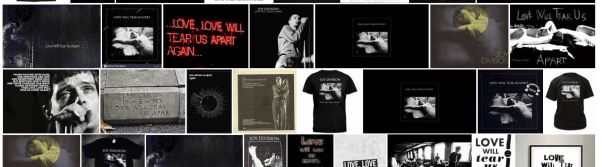
12" cover

Lyrics

“Love Will Tear Us Apart”

When routine bites hard,
And ambitions are low,
And resentment rides high,
But emotions won’t grow,
And we’re changing our ways,
Taking different roads.

Then love, love will tear us apart again.
Love, love will tear us apart again.

Why is the bedroom so cold?
You’ve turned away on your side.
Is my timing that flawed?
Our respect runs so dry.
Yet there’s still this appeal
That we’ve kept through our lives.

But love, love will tear us apart again.
Love, love will tear us apart again.

You cry out in your sleep,
All my failings exposed.
And there’s a taste in my mouth,
As desperation takes hold.
Just that something so good
Just can’t function no more.

But love, love will tear us apart again.
Love, love will tear us apart again.

Joy Division

“Love Will Tear Us Apart” became Joy Division’s first chart hit, reaching number 13 in the UK Singles Chart.

The following month, the single topped the UK Indie Chart. The song also peaked at number 42 on the Billboard disco chart in October 1980.

 “Love Will Tear Us Apart” also reached number 1 in New Zealand in June 1981.

The single was re-released in 1983 and reached number 19 on the UK charts and number 3 in New Zealand during March 1984. In 1985, the 7″ single was released in Poland by Tonpress in different sleeve under licence from Factory and sold over 20,000 copies.  In November 1988, it made one more Top 40 appearance in New Zealand, peaking at number 39.

“Love Will Tear Us Apart” appears on the Substance compilation album. It was first recorded for a John Peel session in November 1979, then re-recorded in January 1980 and March 1980. It is the latter version that appears on Substance. The January 1980 version, which has become known as the “Pennine version”, originally appeared as one of the single’s B-sides.

Joy Division – Love Will Tear Us Apart (Pennine Version)

In 1995, to publicise the release of Permanent, the track was reissued, complete with a new remix by Arthur Baker and a new radio edit, also known as the “Permanent Mix”. On 24 September 2007, the single was again reissued, in its original configuration. This time, it was to publicise the Collector’s Edition re-issues of the band’s three albums. Although the single was now issued on the Warner label, it retained the classic Factory packaging, including the FAC 23 catalogue number.

Cover photo

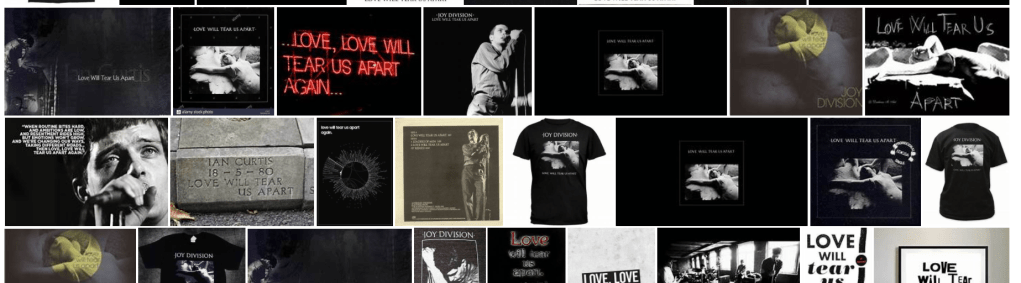
According to Curtis’s wife Deborah, to create the single cover photo, the song title was etched upon a sheet of metal; this was aged with acid and exposed to the weather to create the appearance of a stone slab.

 For the 12″ version of the single, a photograph of a grieving angel on the Ribaudo family tomb in Genoa‘s Monumental Cemetery of Staglieno (sculpted by Onorato Toso circa 1910) was used. This photograph was taken by Bernard Pierre Wolff in 1978.

Music video

Joy Division – Love Will Tear Us Apart [OFFICIAL MUSIC VIDEO]

The video was shot by the band themselves on 25 April 1980 as they rehearsed the song at T.J. Davidson’s studio, where the band had previously rehearsed during the early days of their career. At the start of the video, the door that opens and shuts is carved with Ian Curtis’ name; reportedly this was the beginning of an abusive message (the rest later erased) carved into the door.

Due to poor production, the video’s colour is ‘browned out’ at some points. Also, as the track recorded during the recording of the video was poor, it was replaced with the single-edit recording of the song by the band’s record company in Australia, leading to problems with the synchronisation of music and video. This edited version of the music video would later become the official version due to the improvement of sound quality.

This was the only promotional video the band ever produced as Ian Curtis hanged himself three weeks after the video was recorded.

Legacy

“Love Will Tear Us Apart” was named NME Single of the Year in 1980, and was listed as the best single of all time by NME in 2002.

In 2004, the song was listed by Rolling Stone magazine at number 179 in its list of the “500 Greatest Songs of All Time”.

 In 2011, the song was listed at number 181.

In May 2007, NME placed it at number 19 in its list of the 50 Greatest Indie Anthems Ever, one place ahead of another Joy Division song, “Transmission”. The song is also listed as being one of the 5 best indie songs of all time in the “All Time Indie Top 50”.

The song reached number 1 in the inaugural Triple J Hottest 100 music poll of 1989 and again in 1990. When being interviewed for New Order Story, Neil Tennant of the Pet Shop Boys stated that “Love Will Tear Us Apart” was his favourite pop song of all time.

At Christmas 2011, listeners of Dublin’s Phantom FM voted “Love Will Tear Us Apart” as their favourite song of all time. Furthermore, in 2012, in celebration of the NME‘s 60th anniversary, a list of the 100 Greatest Songs of NME‘s Lifetime was compiled, and the list was topped by “Love Will Tear Us Apart”. Serbian rock musician, journalist and writer Dejan Cukić wrote about “Love Will Tear Us Apart” as one of the 46 songs that changed history of popular music in his 2007 book 45 obrtaja: Priče o pesmama. In 2015, the online magazine Pitchfork listed “Love Will Tear Us Apart” as number 7 upon their “200 best songs of the 1980s” compilation

Following Curtis’s suicide, his wife Deborah had the phrase “Love Will Tear Us Apart” inscribed on his memorial stone.

A greyish stone block with "Ian Curtis 18-5-80 Love Will Tear Us Apart" carved into it in a sans-serif typeface. There are several small pots of flowers and other objects on top.

In June 2013, Mighty Box Games released Will Love Tear Us Apart?, a browser-based video game that adapts every verse of the song into a level

My Thoughts ?

Epic and awesome on so many different levels and one of my fave tunes of all time. The melancholy lyrics and theme of the tune touch my heart and souls everytime I hear it and it never grows old. Tru
ly a song that defined the music scene back then.

😏

Hit the button below and surprise me 👍
New Order – Love Will Tear Us Apart [Live in Glasgow]

THE CURE – Love Will Tear Us Apart (Joy Division COVER)

Joy Division Documentary

Love Will Tear Us Apart – Nerina Pallot

See: Joy Division open up about ‘Love Will Tear Us Apart’

See: Ian Curtis

See: Joy Division

Iconic Songs & the story behind them

Buy Me A Coffee

Iconic Songs & the story behind them

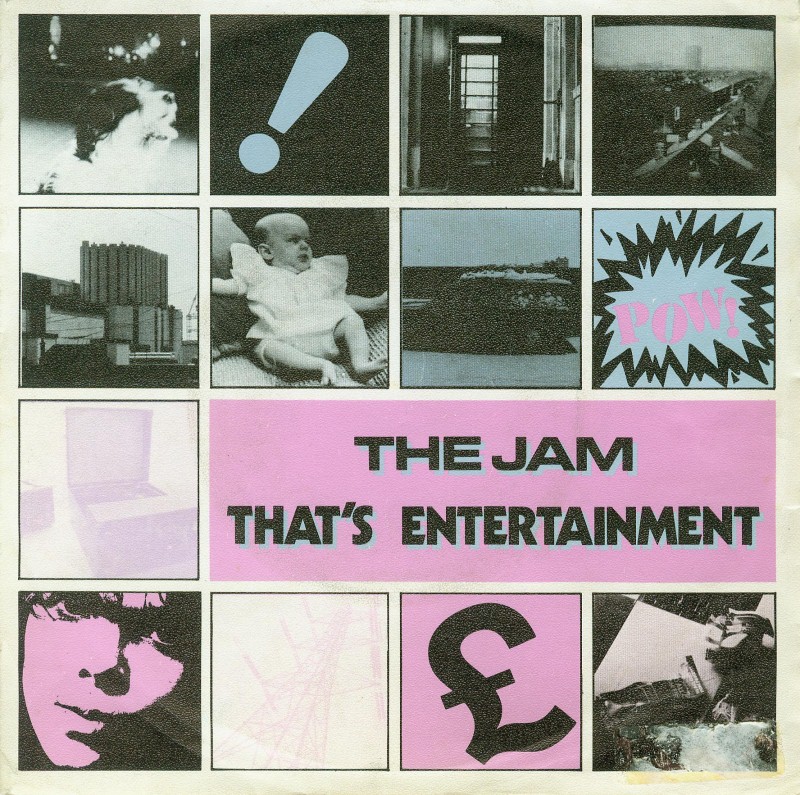
That’s Entertainment -The Jam : Iconic Songs & the story behind them

The Jam That’s Entertainment

January 1981

The Jam : Iconic Songs & the story behind them

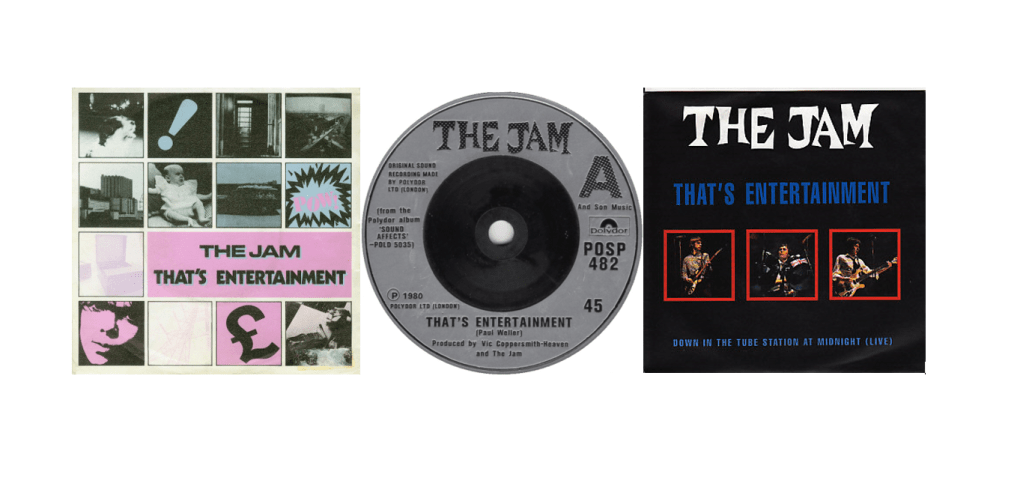
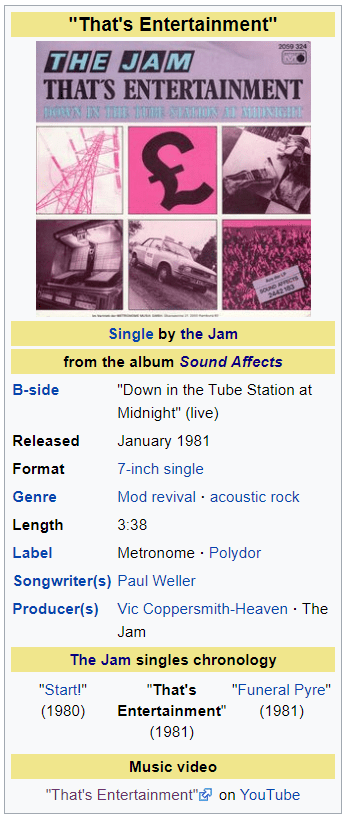
“That’s Entertainment” is a 1980 song by British punk–mod revivalist group the Jam from their fifth album, Sound Affects.

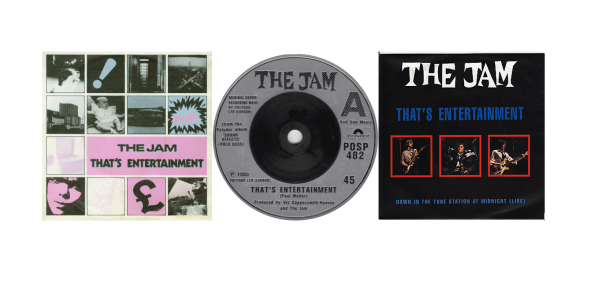
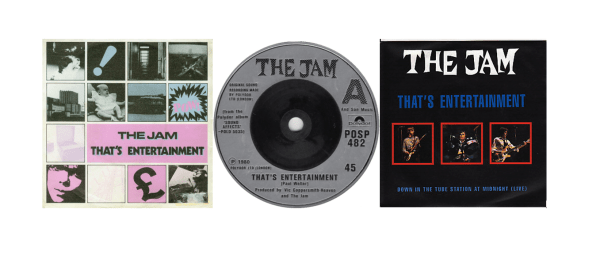
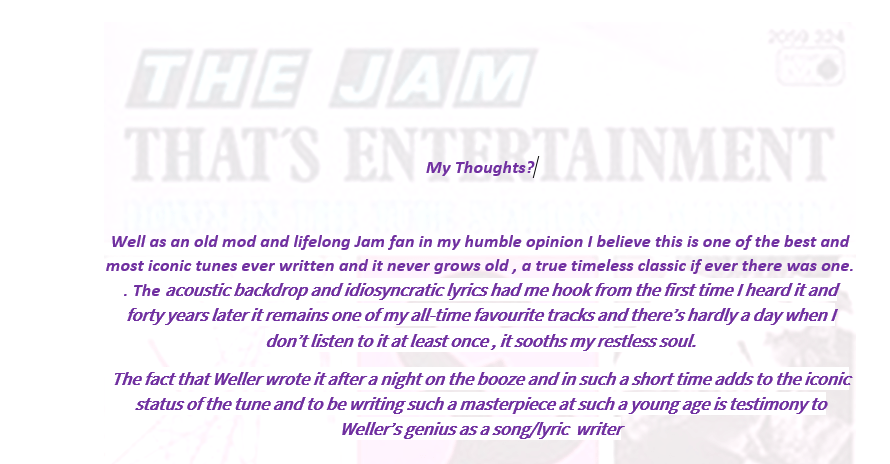
Although never released as a domestic single in the UK during the band’s lifetime, “That’s Entertainment” nonetheless charted as an import single (backed by a live version of “Down in the Tube Station at Midnight“), peaking at No. 21. It was given its first full UK release in 1983 and peaked at No. 60. A second reissue in 1991 also made the top 50.

The song remains one of the two all-time biggest selling import singles in the UK, alongside the Jam’s “Just Who Is the 5 O’Clock Hero?“, which hit the charts at No. 8 as an import in 1982.

“That’s Entertainment” has been listed by BBC Radio 2 as the 43rd best song ever released by any artist.

The Jam – That’s Entertainment (Official Video)

Song profile

“That’s Entertainment” is the group’s lone entry, at No.306, on Rolling Stone’s 500 Greatest Songs of All Time list released in 2004. It consistently makes similar British lists of all-time great songs, such as BBC Radio 2‘s “Sold on Song” 2004 Top 100, at No.43.

The song uses an almost entirely acoustic arrangement with only very light percussion. Like much of Sound Affects, the song has strong undercurrents of pop-psychedelia. The only electric guitar part in the song is played backwards over one of the verses, a hallmark of psychedelia.

The minimalist, slice-of-life lyrics list various conditions of British working-class life. The first verse:

A police car and a screaming siren
Pneumatic drill and ripped-up concrete
A baby wailing, stray dog howling
The screech of brakes and lamp light blinking

culminating in the laconic and ironic refrain of “That’s entertainment, That’s entertainment”

“I was in London by the time I wrote ‘That’s Entertainment’,” said Weller, “writing it was easy in a sense because all those images were at hand, around me.”

In an interview with Absolute Radio he said:

“I wrote it in 10 mins flat, whilst under the influence, I’d had a few but some songs just write themselves. It was easy to write, I drew on everything around me.“

Lyrics

“That’s Entertainment”

A police car and a screaming siren
Pneumatic drill and ripped-up concrete
A baby wailing, a stray dog howling
The screech of brakes and lamplight blinking

That’s entertainment

A smash of glass and the rumble of boots
An electric train and a ripped-up phone booth
Paint-splattered walls and the cry of a tomcat
Lights going out and a kick in the balls

I say that’s entertainment
That’s entertainment
La la la la la, ah
La la la la la, ah

Days of speed and slow-time Mondays
Pissing down with rain on a boring Wednesday
Watching the news and not eating your tea
A freezing cold flat with damp on the walls

I say that’s entertainment
That’s entertainment
La la la la la
La la la la la

Waking up at 6 A.M. on a cool warm morning
Opening the windows and breathing in petrol
An amateur band rehearsing in a nearby yard
Watching the telly and thinking ’bout your holidays

That’s entertainment
La la la la la, ah
La la la la la, ah
La la la la la, ah
La la la la la

Waking up from bad dreams and smoking cigarettes
Cuddling a warm girl and smelling stale perfume
A hot summer’s day and sticky black tarmac
Feeding ducks in the park and wishing you were far away

That’s entertainment

Two lovers kissing masks a scream of midnight
Two lovers missing the tranquility of solitude
Getting a cab and traveling on buses
Reading the graffiti about slashed-seat affairs

I say that’s entertainment
That’s entertainment
La la la la la, ah
La la la la la, ah
La la la la la, ah
La la la la la
La la la la la, ah
La la la la la, ah
La la la la la, ah
La la la la la
La la la la la, ah
La la la la la, ah
La la la la la, ah

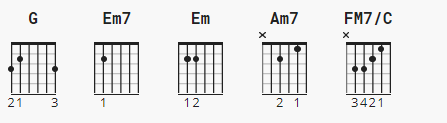
See: Thats Entertainment chords

Morrissey – That’s Entertainment ( rare version, The Jam cover)

Main Source: Wikipedia , That’s Entertainment

😏

Hit the button below and surprise me 👍
Iconic Songs & the story behind them

See below for some stories during my crazy mod days ,

I write about these in my book

See: Mod Days & Getting Stoned with Paul Weller

noddy funeral

See: The Loyalist Mod: Death of a fellow Mod & A catholic friend! Noddy Clarke R.I.P

Buy Me A Coffee

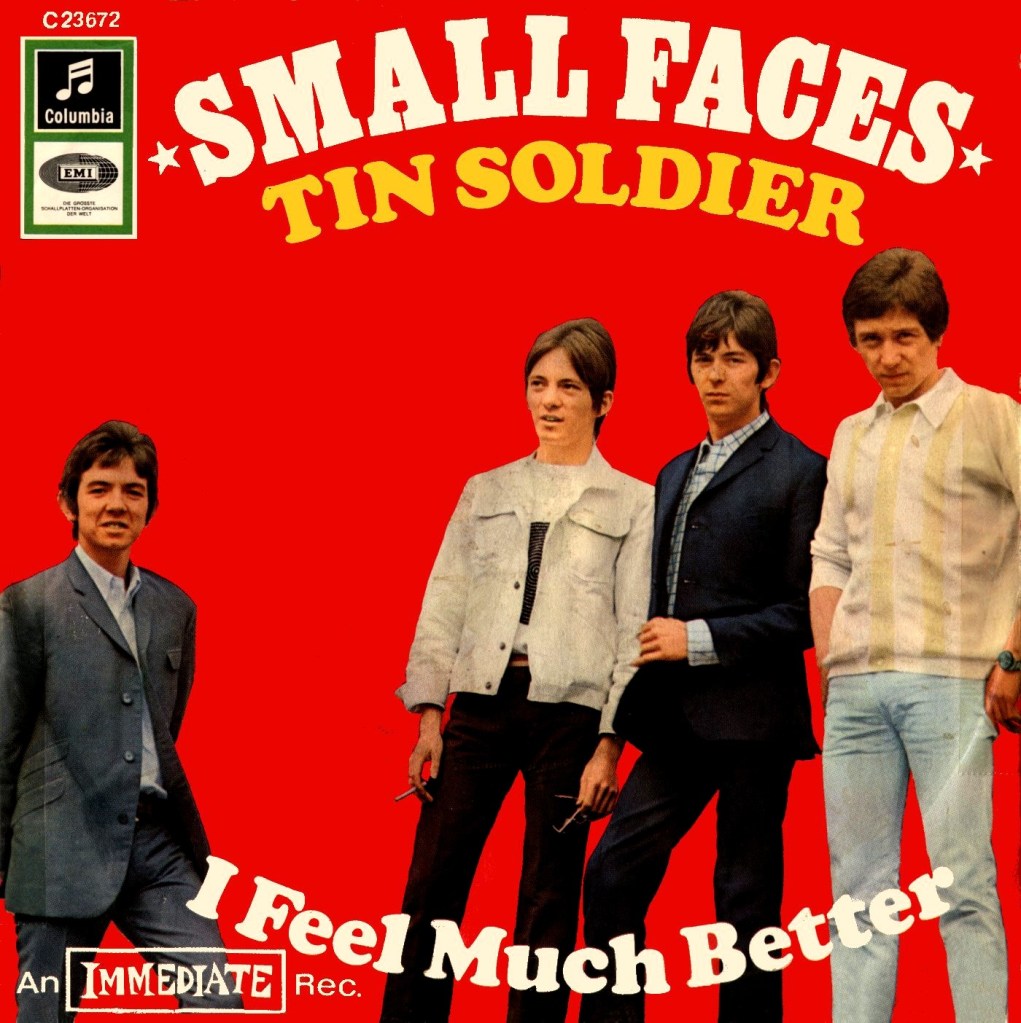
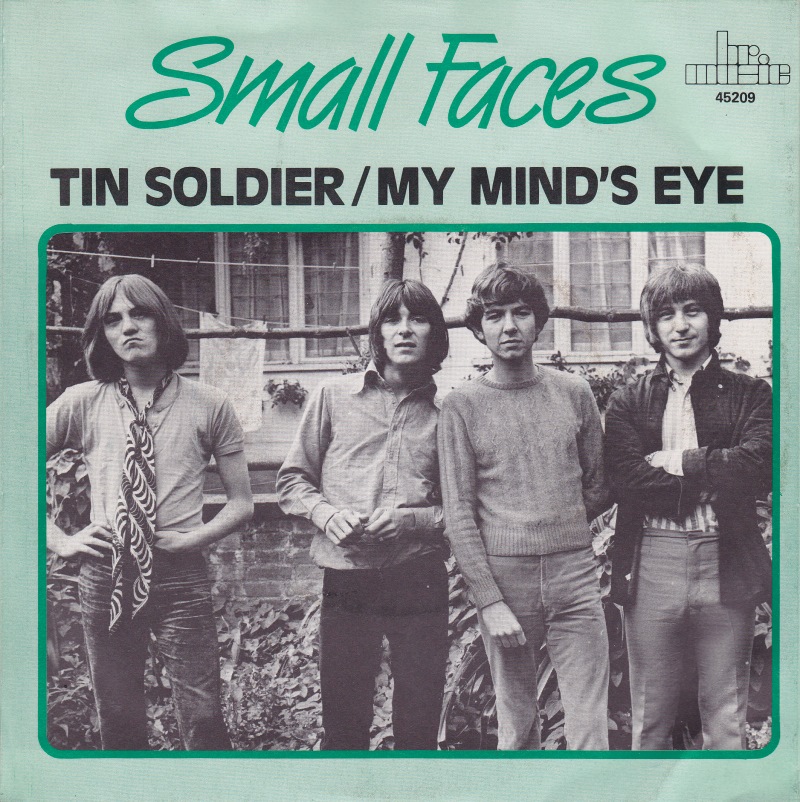
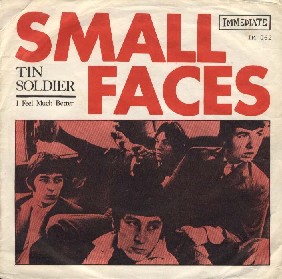
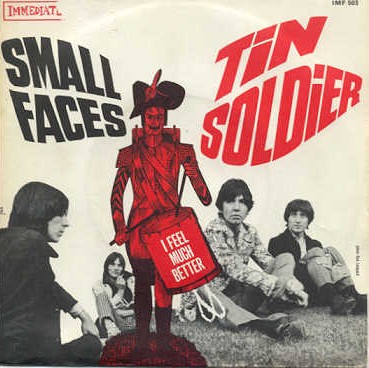
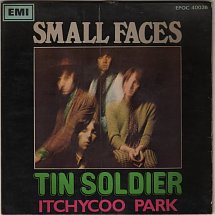
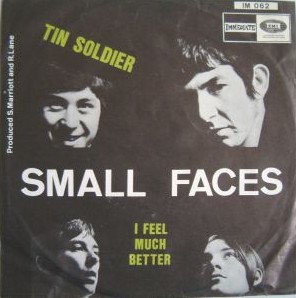
Tin Soldier – Small Faces : Iconic Songs & the story behind them

Small Faces

TIN SOLDIER

2nd December 1967

Tin Soldier – Small Faces : Iconic Songs & the story behind them

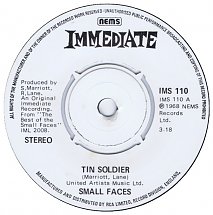
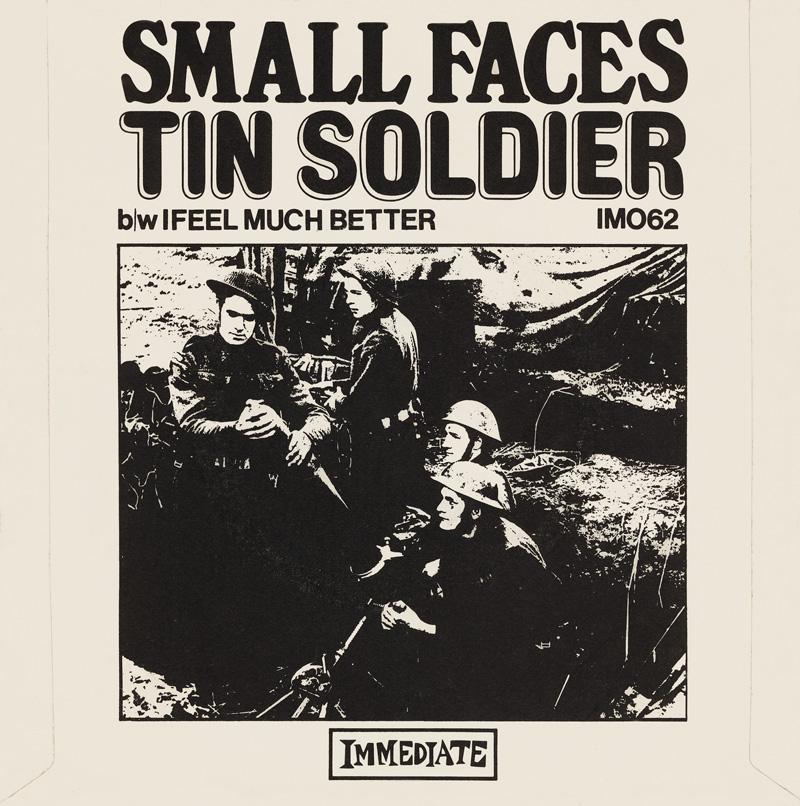
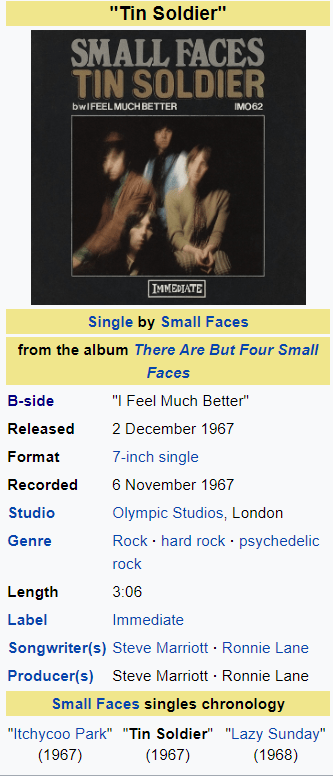
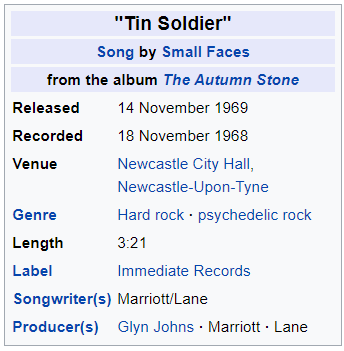
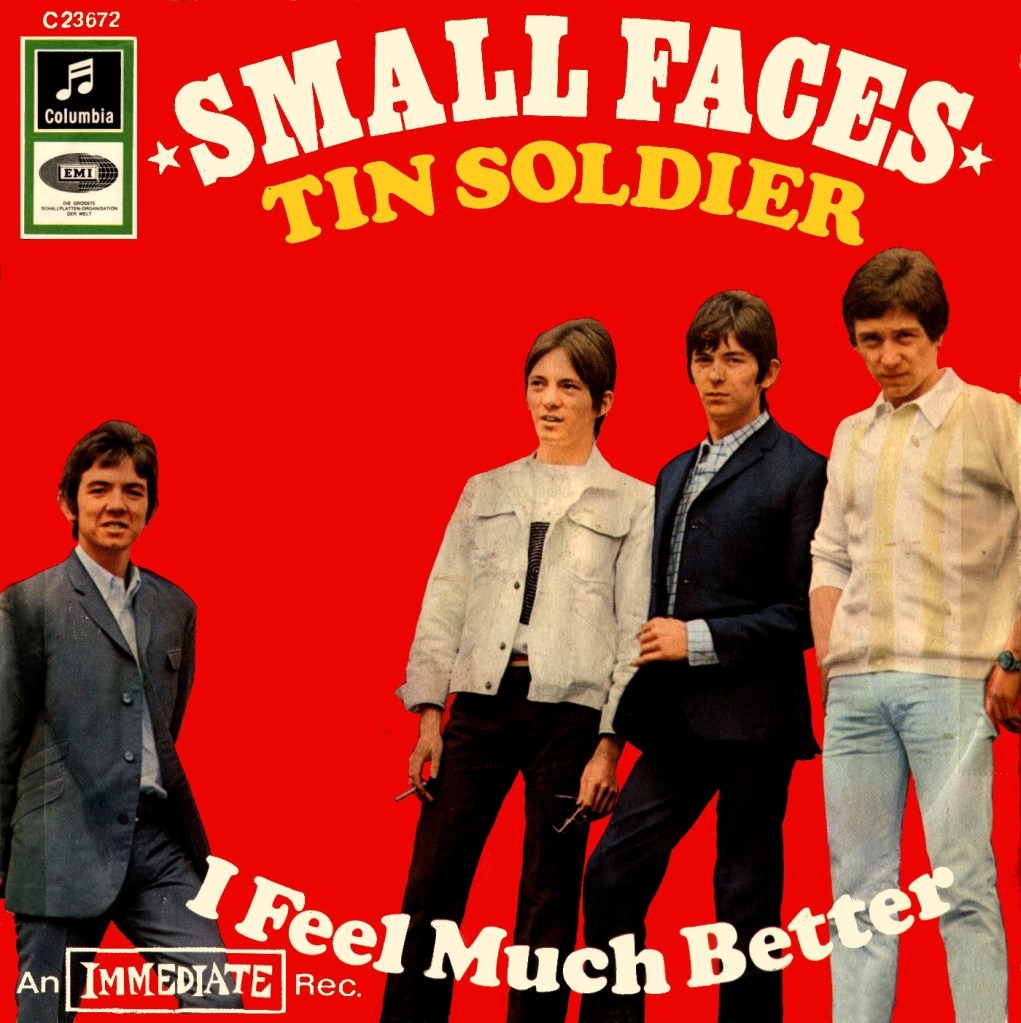
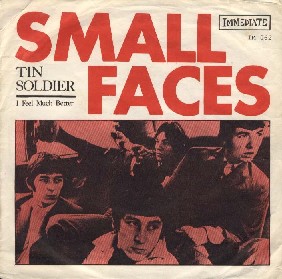
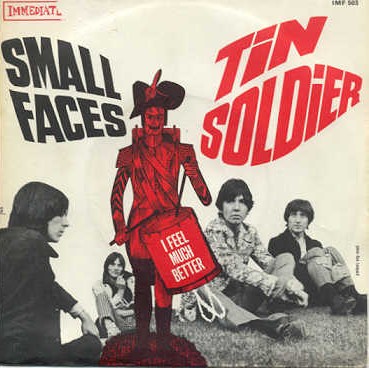
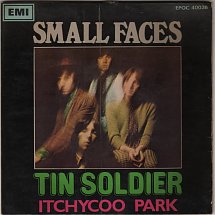
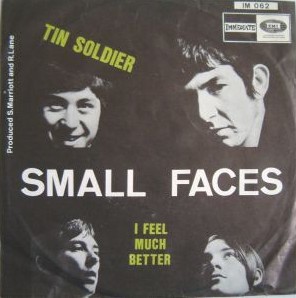
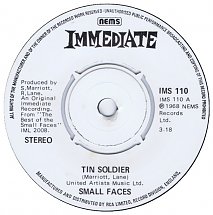
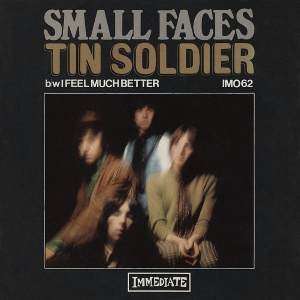
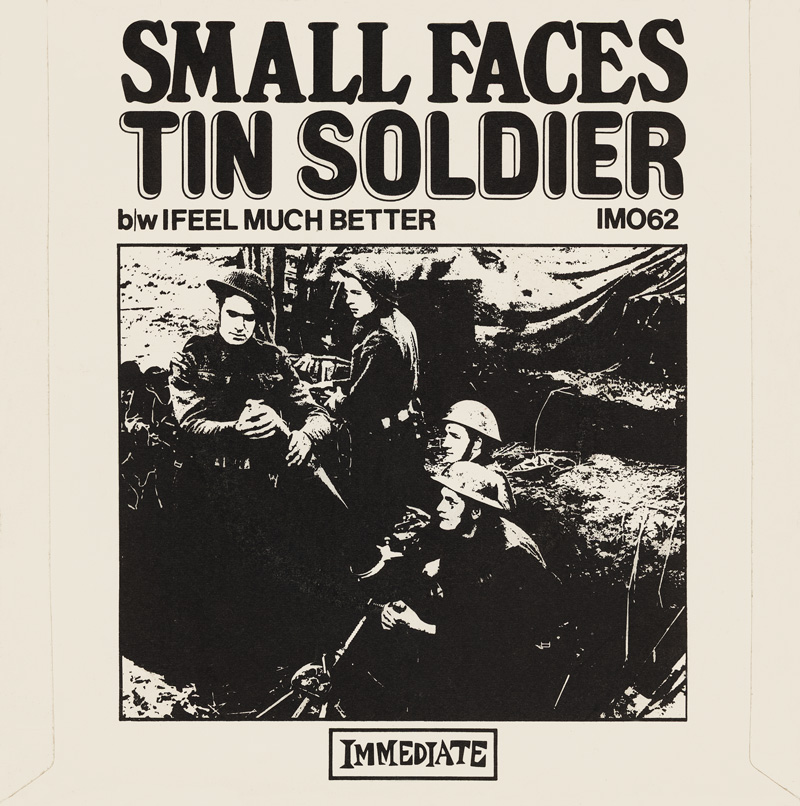
“Tin Soldier” is a song released by the English rock band Small Faces on 2 December 1967, written by Steve Marriott (credited to Marriott/Lane). The song peaked at number nine in the UK singles chart and number 38 in Canada. It has since been covered by many other notable rock artists

Tin Soldier – Small Faces

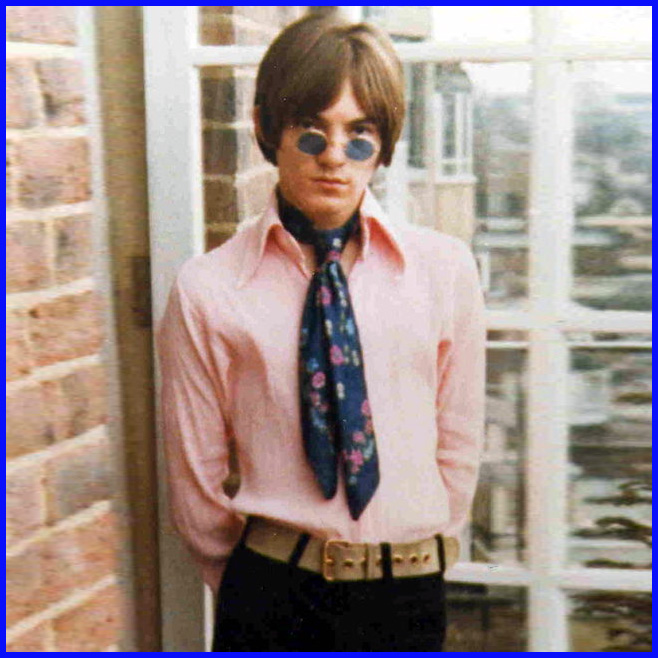
My Thoughts ?

Me in my Mod days

Song profile

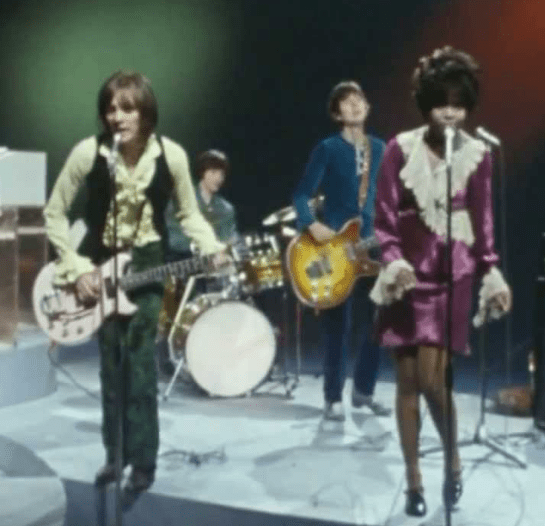
Tin Soldier was originally written by Steve Marriott for singer P.P. Arnold, but Marriott liked it so much he kept it himself. It was a song that he wrote to his first wife, Jenny Rylance. P.P. Arnold can be heard singing backing vocals on the song and also performed as guest singer at television recordings of the song.

The song signalled a return to the band’s R&B roots whilst continuing their forays into psychedelic rock and other musical experiments. When Tin Soldier was released the BBC informed the band that the last line of the song had to be removed from all TV and radio broadcasts, mistakenly believing that Marriott sang “sleep with you”, when in fact the lyric is “sit with you”. Marriott explained that the song was about getting into someone’s mind—not their body.

 Tin Soldier reached number nine in the UK Singles Chart and remains one of Small Faces’ best known songs.

Talking about the song, and the influence of his wife Jenny, Marriott stated:

The meaning of the song is about getting into somebody’s mind—not their body. It refers to a girl I used to talk to all the time and she really gave me a buzz. The single was to give her a buzz in return and maybe other people as well. I dig it. There’s no great message really and no physical scenes.

The song seems to have been influenced by Hans Christian Andersen‘s fairy tale The Steadfast Tin Soldier, the story of an imperfect tin soldier’s desire for a paper ballerina. The opening lyric is:

“I am a little tin soldier that wants to jump into your fire”.

Upon reaching No. 73 in the USA with this single, their label Immediate Records abandoned its attempts to penetrate the American market. “Tin Soldier” would ultimately be the last song performed live by the Small Faces during their original incarnation; It was performed on 8 March 1969 at the Theatre of Jersey in Jersey.

” So now I’ve lost my way
I need help to show me things to say
Give me your love before mine fades away “

Lyrics

“Tin Soldier”

I am a little tin soldier
That wants to jump into your fire
You are a look in your eye
A dream passing by in the sky

I don’t understand
All I need is treat me like a man
‘Cause I ain’t no child
Take me like I am

I got to know that I belong to you
Do anything that you want to do
Sing any song that you want me to sing to you

I don’t need no aggravation
I just got to make you
I just got to make you my occupation

I got to know that I belong to you
Do anything that you want to do
Sing any song that you want me to sing to you

All I need is your whispered hello
Smiles melting the snow nothing heard
Your eyes are deeper than time
Say a love that won’t rhyme without words

So now I’ve lost my way
I need help to show me things to say
Give me your love before mine fades away

I got to know that I belong to you
Do anything that you want to do
Sing any song that you want me to sing to you

Oh no no
I just want some reaction
Someone to give me satisfaction
All I want to do is stick with you
‘Cause I love you

Mojo readers’ poll

In 1997, some 30 years after the song’s original release, Mojo voted “Tin Soldier” the tenth best single of all time, in a readers’ poll. The poll placed it ahead of anything by The Who or The Rolling Stones. The song has also been much mentioned over the years by Paul Weller and featured in Noel Gallagher‘s personal all-time top ten song list.

Personnel

Steve Marriott – lead and backing vocals, acoustic and electric guitars

Ronnie Lane – bass guitar, backing vocals

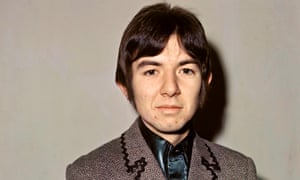
Ronnie Lane

Ian McLagan – acoustic and electric pianos, Hammond organ, backing vocals

Ian McLagan

Kenney Jones – drums

Image result for kenney jones small faces
Kenney Jones

Additional personnel

P.P. Arnold – backing vocals

Image result for P.P. Arnold small faces
P.P. Arnold

Covers

The song has been covered by Quiet Riot, Lou Gramm, Uriah Heep, Streetheart, Todd Rundgren, The Guess Who, Paul Weller, Transatlantic, and Humble Pie (which also featured Marriott.) Scorpions made a cover of the song for their 2011 album Comeblack. Progressive rock band Transatlantic covered this song on their 2014 album Kaleidoscope, on disc 2 of the special edition. In October 2007 Tim Rogers, of You Am I, and Talei Wolfgramm performed the track on Australian music quiz show RocKwiz. In 1998 the Argentine musician Charly Garcia recorded a version, in Spanish, for his album El aguante

See also

Small Faces Documentary

😏

Hit the button below and surprise me 👍

Iconic Songs & the story behind them

Buy Me A Coffee

Going Underground – The Jam: Iconic Songs & the story behind them

Going Underground – The Jam

The Jam

Going Underground

March 1980

Going Underground – The Jam: Iconic Songs & the story behind them

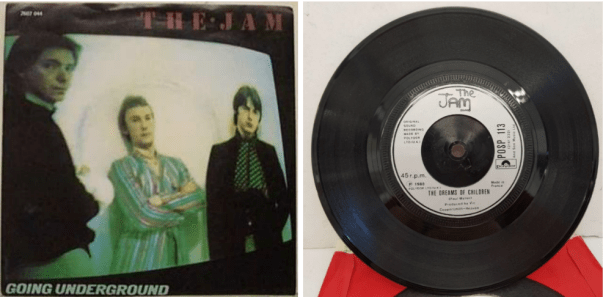
“Going Underground” is the first British #1 chart single by The Jam, released in March 1980. It went straight in at #1 in the UK Singles Chart, spending three weeks at the top.

It was the first of three instant chart-toppers for the group

Going Underground

Song profile

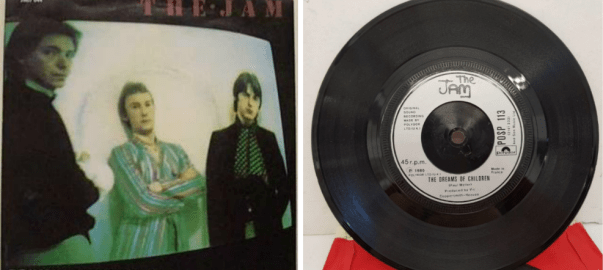
“Going Underground” was not released on any of the band’s six studio albums, although it has appeared on many compilations and re-releases since then. The song was released as a double A-side with “Dreams of Children”, which originally had been intended to be the sole A-side; following a mix-up at the pressing plant, the single became a double A-side, and DJs tended to choose the more melodic “Going Underground” to play on the radio.

The song was ranked at #2 among the “Tracks of the Year” for 1980 by NME. In March 2005, Q magazine placed “Going Underground” at #73 in its list of the 100 Greatest Guitar Tracks, and in October 2006, placed it at #98 in its list of the 100 Greatest Songs Ever.

Jam Facts:

The band released 18 consecutive Top 40 singles in the United Kingdom, from their debut in 1977 to their break-up in December 1982, including four number one hits

“Going Underground”
Single by The Jam
A-side“Dreams of Children”
Released14 March 1980
Format7″ vinyl
RecordedDecember 1979
GenreNew wavemod revivalpower pophard rock[1]
Length2:50
LabelPolydor
Songwriter(s)Paul Weller
Producer(s)Vic Coppersmith-Heaven
The Jam singles chronology
“The Eton Rifles“
(1979)”Going Underground” / “Dreams of Children”
(1980)”Start!“
(1980)

My Thoughts ?

me with hat.PNG
Me in my Mod days

Being an old Mod and a Jam super-fan this was one of the first Jam records I bought and from the first moment I heard it I loved it and became obsessed with the Jam and this set me on the road to becoming a Mod and the best years of my teenage/young adult life in Belfast, what I can remember anyways. The Jam became the sound track to my crazy teenage odyssey and I came to love everything about them and the Mod way of life and even to this day I still love all the Jams stuff and listen to it whenever the feelings take me , which is a few times a week at least.

My fav Jam album ?

Its a hard one but its between Setting Sons & Sound Affects , although I love In the City and This is a Modern World also . Grrrr…. Its like trying to choose which of your kids or pets you love best , an impossible task and Im the same with Jam albums I feel i’d be betraying those I left out. Going Underground is a personal fav of mine for the path it set me on but I have to say Thick as Thieves and That’s Entertainment are two of my fav Jam tunes off all time.

See: Getting Stoned with Paul Well

See: The Loyalist Mod – Death of a fella Mod and a catholic friend

See: Steve Marriott Jan 1947 – April 1991 All or Nothing

Lyrics

“Going Underground”

Some people might say my life is in a rut
But I’m quite happy with what I’ve got
People might say that I should strive for more
But I’m so happy I can’t see the point

Something’s happening here today
A show of strength with your boy’s brigade
And I’m so happy and you’re so kind
You want more money – of course I don’t mind
To buy nuclear textbooks for atomic crimes
And the public gets what the public wants

But I want nothing this society’s got
I’m going underground (going underground)
Well, let the brass bands play and feet start to pound
Going underground (going underground)
Well, let the boys all sing and let the boys all shout for tomorrow

Some people might get some pleasure out of hate
Me, I’ve enough already on my plate
People might need some tension to relax
Me, I’m too busy dodging between the flak

What you see is what you get
You’ve made your bed, you’d better lie in it
You choose your leaders and place your trust
As their lies wash you down and their promises rust
You’ll see kidney machines replaced by rockets and guns
And the public wants what the public gets

But I don’t get what this society wants
I’m going underground (going underground)
Well, let the brass bands play and feet start to pound
Going underground (going underground)
So let the boys all sing and let the boys all shout for tomorrow

La la la la…

We talk and we talk until my head explodes
I turn on the news and my body froze
These braying sheep on my TV screen
Make this boy shout, make this boy scream!

Going underground, I’m going underground!

La la la la…

These braying sheep on my TV screen
Make this boy shout, make this boy scream!

I’m going underground (going underground)
Well, let the brass bands play and feet start to pound
Going underground (going underground)
Well, let the boys all sing and let the boys all shout,
Going underground (going underground)
Well, let the brass bands play and feet go pow, pow, pow
Going underground (going underground)
So let the boys all sing and let the boys all shout for tomorrow

Covers and parodies

Ade Edmondson‘s folk punk band The Bad Shepherds covered it in 2013.

The Bad Shepherds Going Underground

Welsh alternative metal band Lostprophets covered the song in 2007 as a B-side to their single 4:AM Forever.

The comedy band Amateur Transplants released a two-minute parody titled “London Underground” in 2005 in the light of the December strike. It became a popular download in the United Kingdom.

Jam Facts:

Jam biographer Sean Egan said of the Jam that they “took social protest and cultural authenticity to the top of the charts.

Amatuer Transplants London Underground

The song was covered by Buffalo Tom for the 1999 Jam tribute album Fire and Skill: The Songs of the Jam. This version also was released as part of a double A-side single with Liam Gallagher‘s and Steve Cradock‘s version of “Carnation” and reached #6 in the UK singles chart.[6]

Manfred Mann’s Earth Band covered the song on their 1986 album “Criminal Tango“.

Daryl Denham released a version of the song titled “Go England” in 2002 after Weller gave permission for it to be adapted as a football song.

Jam Facts:

Paul Weller on becoming a Mod

“I saw that through becoming a Mod it would give me a base and an angle to write from, and this we eventually did. We went out and bought suits and started playing Motown, Stax and Atlantic covers. I bought a Rickenbacker guitar, a Lambretta GP 150 and tried to style my hair like Steve Marriott‘s circa ’66.

Dreams of Children

“Going Underground” was coupled with “Dreams of Children” as a double A-side. It opens and is intermittently accentuated with a backmasked sample of the band’s 1979 song “Thick as Thieves“. In the US the backwards intro was edited out making the single 10 seconds shorter than the UK Version. This US edit is available on the best-of compilation Snap!.

The Jam released two other double A-side singles: “David Watts“/”‘A’ Bomb in Wardour Street” and “Town Called Malice“/”Precious“.

Jam Facts:

On 29 April 1977, Polydor released the Jam’s debut single, “In the City“, which charted in the Top 40 in the UK.

See: here for more information on the Jam

Thick As Thieves

😏

Hit the button below and surprise me 👍

Iconic Songs & the story behind them

Buy Me A Coffee

Golden Brown – The Stranglers: Iconic Songs & the story behind them
The Stranglers

Golden Brown

January 1982

Golden Brown – The Stranglers: Iconic Songs & the story behind them
Golden Brown – The Stranglers

“Golden Brown” is a song by the English rock band the Stranglers. It was released as a 7″ single in December 1981 in the United States and in January 1982 in the United Kingdom, on Liberty. It was the second single released from the band’s sixth album La folie.

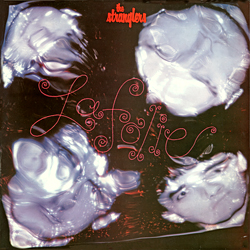
Stranglers - La Folie album cover.jpg

See: La folie (album) Track Listing

It peaked at No. 2 in the UK Singles Chart, the band’s highest ever placing in that chart.

In January 2014, NME ranked the song as No. 488 on its list of the 500 Greatest Songs of All Time.  It has also been recorded by many other artists.

See : 500 Greatest Songs of All Time NME

Single by The Stranglers
from the album La folie
B-side“Love 30”
Released28 December 1981 (US)10 January 1982 (UK)
Format7″ vinyl
Recorded1981
GenreNew wave[1]baroque pop[2]
Length3:30
LabelLibertyBP 407 (UK, 7″)
Songwriter(s)Hugh CornwellJean-Jacques BurnelDave GreenfieldJet Black
Producer(s)The StranglersSteve Churchyard
The Stranglers singles chronology
“Let Me Introduce You to the Family” 
(1981)”Golden Brown” 
(1981)”La Folie” 
(1982)
The Stranglers singles chronoly
“Always the Sun (Sunny Side Up Mix)”
(1991)”Golden Brown“
(1991)”Heaven or Hell”
(1992)

My Thought ?

This is one of my favorite tunes of all time and I never tire of listening to it, especially after a skinfull of beer and/or a few wee Gin and Tonics , to get me in the mood so to speak. The hunting theme of the song and the hypnotic harpsichord always mesmerize me to the point I feel as though I’m in a trance and thats the kind of escapism I’m looking for when i want to chill out to some music and sooth my sometimes weary soul.

Lyrics

“Golden Brown”

Golden Brown texture like sun
Lays me down with my mind she runs
Throughout the night
No need to fight
Never a frown with Golden Brown

Every time just like the last
On her ship tied to the mast
To distant lands
Takes both my hands
Never a frown with Golden Brown

Golden Brown, finer temptress
Through the ages she’s heading west
From far away
Stays for a day
Never a frown with Golden Brown

(La la la la la la la la leeeah)

Never a frown
With Golden Brown
Never a frown
With Golden Brown

Overview

Originally featured on the group’s album La folie, which was released in November 1981, and later on the USA pressings of Feline, “Golden Brown” was released as a single in December 1981, and was accompanied by a video.

Golden Brown The Strangles

It reached No. 2 in the official UK Singles Chart in February 1982, remaining there for two weeks behind double A-sided record “Town Called Malice/Precious” by the Jam.

The Jam – Town Called Malice (1982)
The Jam – The Gift – Precious

The comparatively conservative BBC Radio 2, at that time a middle-of-the-road (MOR) music radio station, decided to make the record the single of the week, a surprising step considering the band were almost as notorious as Sex Pistols only a few years before.

The band claimed that the song’s lyrics were akin to an aural Rorschach test and that people only heard in it what they wanted to hear, although this did not prevent persistent allegations that the lyrics alluded to heroin.

How does the Rorschach inkblot test work? 

The single was a top 10 hit around the world, including Australia. It was also featured in the film Snatch and is included on its soundtrack album.[

Meaning

Hugh Cornwell
Hugh Cornwell

There has been much controversy surrounding the lyrics. In his book The Stranglers Song By Song (2001), Hugh Cornwell states “‘Golden Brown’ works on two levels. It’s about heroin and also about a girl.

” Essentially the lyrics describe how “both provided me with pleasurable times.”

Musical composition

The main body of the song has a 6/8 feel and is pitched halfway between the keys of E minor and E-flat minor, possibly to accommodate the tuning of the harpsichord. The instrumental introduction, in (a very flat) B minor, is unconventional. The keyboard and harpsichord vamp in 3/4, and in the head every fourth bar is in 4/4. The music was largely written by keyboardist Dave Greenfield and drummer Jet Black, with lyrics by singer/guitarist Hugh Cornwell.

The BBC newsreader Bill Turnbull attempted to waltz to the song in the 2005 series of Strictly Come Dancing. In February 2012, when interviewing Stranglers bassist Jean-Jacques Burnel on BBC Breakfast, Turnbull described the attempted dance as “a disaster”,

Bill Turnbull attempted to waltz to the song in the 2005 series of Strictly Come Dancing.

Burnel responded that the alternating time signatures made “Golden Brown” impossible to dance to; in contrast, a song written entirely in 6/8 is not unusual in waltzing.

Music video

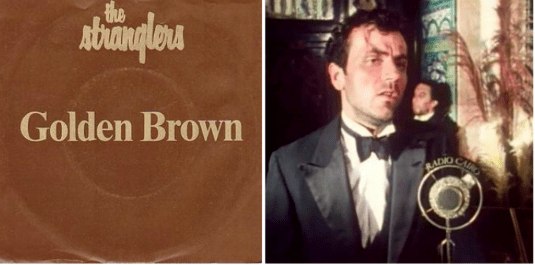
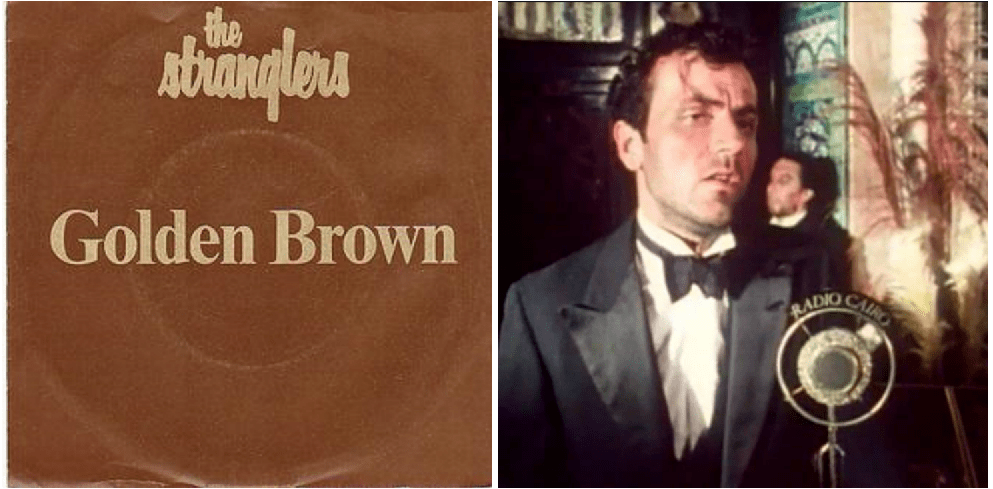
Two shots from Golden Brown: the band performing the song in Leighton House and as explorers

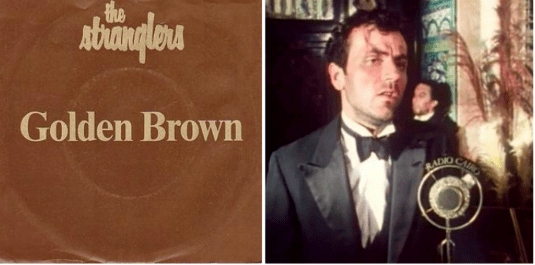
The video for “Golden Brown”, directed by Lindsey Clennell, depicts the band members both as explorers in an Arabian country and non-Arab Muslim countries (sequences include images of the Pyramids as well as the explorers studying a map of Egypt) in the 1920s and performers for a fictional “Radio Cairo”.

Golden Brown – The Stranglers (Restored Music Video)

In addition to the Pyramids, the video is intercut with stock footage of the Mir-i-Arab Madrasah in Bukhara, the Shah Mosque in Isfahan, and Great Sphinx, Feluccas sailing, Bedouins riding and camel racing in the United Arab Emirates. The performance scenes were filmed in the Leighton House Museum in Holland Park, London, which was also used in the filming of the video for “Gold” by Spandau Ballet.

Charts

Chart (1982)Peak
position
Australia (Kent Music Report)10
Belgium (Ultratop 50 Flanders)7
France (IFOP)73
Germany (Official German Charts)63
Ireland (IRMA)3
Netherlands (Dutch Top 40)8
Netherlands (Single Top 100)10
UK Singles (Official Charts Company)2
Chart (1991)1Peak
position
Ireland (IRMA)25
UK Singles (Official Charts Company)68

1Remix

Chart (2013)Peak
position
UK Singles (Official Charts Company)98

Main Source/More Info : Wikipedia/Golden Brown

The Stranglers Documentray Part 1

😏

Hit the button below and surprise me 👍

Iconic Songs & the story behind them
Buy Me A Coffee