3rd February – Deaths & Events in Northern Ireland Troubles

Key Events & Deaths on this day in Northern Ireland Troubles

3rd February

———————————–

Monday 3 February 1969

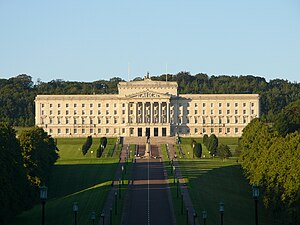
Terence O’Neill, then Northern Ireland Prime Minister, announced the dissolution of the Stormont parliament and the holding of an election on 24 February 1969.

[This was a political gamble by O’Neill in an attempt to strenghten the hand of of those in favour of reform.]

Wednesday 3 February 1971

There were a series of house searches by the British Army (BA) in Catholic areas of Belfast. Serious rioting and gun battles took place during the searches.

Thursday 3 February 1972

[Public Records 1972 – Released 1 January 2003:

Annex to British Cabinet Minutes which recorded the discussion of the aftermath of the killings on 30 January 1972 (‘Bloody Sunday’)

Saturday 3 February 1973

A Catholic civilian was shot dead by Loyalists at his cafe in York Street, Belfast.

A member of the Irish Republican Army (IRA) was shot dead by the Ulster Defence Association (UDA) in the New Lodge area of Belfast.

Two Loyalists were detained, and then subsequently interned (5 February 1973), because of their alleged involvement in the killing of an innocent Catholic man.

Following their arrest a crowd of approximately 2,000 marched in protest to the Castlereagh Royal Ulster Constabulary (RUC) station to demand the release of the two men.

Tuesday 3 February 1976

The Constitutional Convention was reconvened in an attempt to reach agreement on a constitutional arrangement for Northern Ireland. A series of inter-party talks were held over the next three weeks and these were chaired by Robert Lowry.

Thursday 3 February 1977

Joseph Morrissey (52), a Catholic civilian, was found stabbed and with his throat cut on the Glencairn Road, Belfast. Members of he Ulster Volunteer Force (UVF) gang known as the ‘Shankill Butchers’ were responsible for the killing.

 See The Shankill Butchers

Sunday 3 February 1985

Garret FitzGerald, then Taoiseach (Irish Prime Minister), said that the proposed meeting between John Hume, then leader of the Social Democratic and Labour Party (SDLP), and the Irish Republican Army (IRA) would be used by Republicans for propaganda purposes. Charles Haughey, then leader of Fianna Fáil (FF), supported Hume.

Sunday 3 February 1991

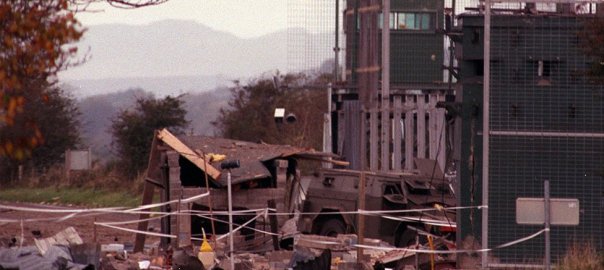
The Irish Republican Army (IRA) carried out a ‘proxy bomb’ attack on a Ulster Defence Regiment (UDR) base in Magherafelt, County Derry.

A man, who was employed by a company that carried out work for the security forces, was forced to drive his van containing a bomb, estimated at 500 pounds, into the UDR base. He managed to get away from the vehicle before the bomb exploded. The bomb caused extensive damage to the UDR base and also damaged approximately 50 nearby houses.

proxy bomb
Coshquin Proxy Bomb


See Coshquin Proxy Bomb

Wednesday 3 February 1993

The Irish Republican Army (IRA) carried out two bomb attacks in London. The Anglo-Irish Intergovernmental Conference (AIIC) held a meeting in London and decided to issue invitations to the political parties to attend bilateral talks.

Thursday 3 February 1994

Mark Sweeney (31), a Catholic civilian, was shot dead by the Ulster Freedom Fighters (UFF), a cover name (pseudonym) used by the Ulster Defence Association (UDA), on the outskirts of Newtownards, County Down.

The Ulster Volunteer Force (UVF) carried out a gun attack in west Belfast on a minibus used by relatives of Republican prisoners. The driver of the minibus and a woman passerby were both injured in the attack.

The Irish Republican Army (IRA) planted a small Semtex bomb outside the home of an Royal Ulster Constabulary (RUC) Assistant Chief Constable in Derry.

On his return to Ireland from the United States of America (USA) Gerry Adams, then President of Sinn Féin (SF), was confronted in Dublin airport by a protest by victims of IRA violence. Adams said that he thought this was “the final phase” of the conflict.

Thursday 2 February 1995

Results from the 1993 Labour Force Survey showed that Catholics remained twice as likely to be unemployed as Protestants.

Monday 3 February 1997

It was reported in the Irish Times that Members of Parliament (MP) from the Ulster Unionist Party (UUP) had met representatives of the British Foreign Office to complain about the frequency of visits by Mary Robinson, then President of the Republic of Ireland, to Northern Ireland. They also expressed concerns about breaches of protocol and distinctions between ‘official’ and ‘private’ visits.

Tuesday 3 February 1998

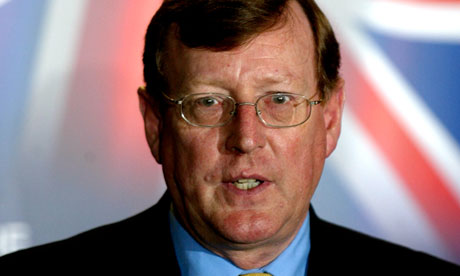
David Trimble, then leader of the Ulster Unionist Party (UUP), published his reply to a letter from Gerry Adams, then President of Sinn Féin (SF), requesting a meeting between the two parties.

In his reply, in the form of a statement to the Irish Times (a Republic of Ireland newspaper), Trimble set out a number of conditions for meeting with Adams.

Wednesday 3 February 1999

There were disturbances in Prortadown, County Armagh, when approximately two hundred loyalists clashed with Royal Ulster Constabulary (RUC) officers.

The Belfast Telegraph (a Belfast based newspaper) contained a report that the North Ulster Unit of the Ulster Volunteer Force (UVF) had brought new weapons into Northern Ireland. The report also claimed that the Continuity Irish Republican Army (CIRA) had also obtained new weapons.

Jerry McCabe


At the trial of four men for the murder of Jerry McCabe, who was a Detective in the Garda Síochána (the Irish police), the charges were changed from capital murder to manslaughter, to which the four men pleaded guilty. There was widespread criticism at the development from politicians, Gardaí, and members of the public.

Bertie Ahern, then Taoiseach (Irish Prime Minister), said the men would not benefit from early release under the Good Friday Agreement.

Saturday 3 February 2001

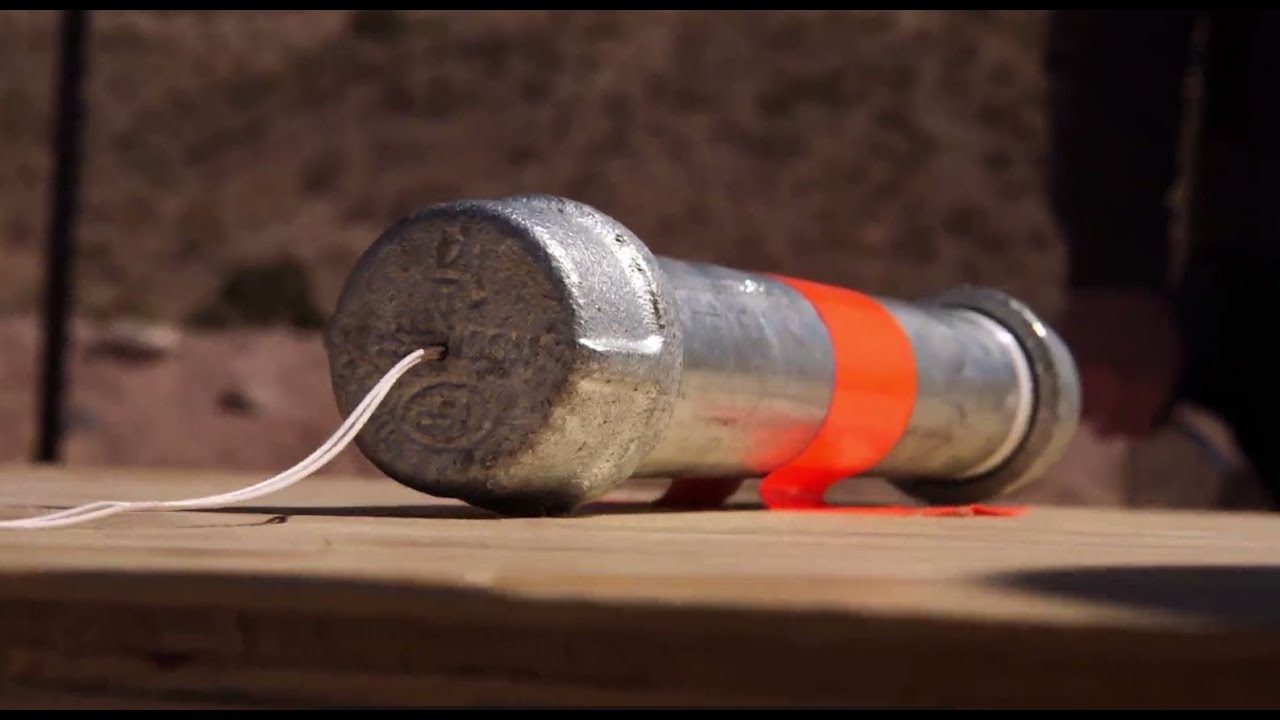
There was a pipe-bomb attack on a public house in the village of Whitehead, County Antrim. Customers escaped injury after the device failed to explode when it was thrown through a window.

A pipe-bomb explosion in north Belfast came close to killing an entire family. Two parents and their three children escaped around midnight when a fire caused by the explosion gutted their house in the New Lodge area of north Belfast. The attack was carried out by Loyalist paramilitaries.

Sunday 3 February 2002

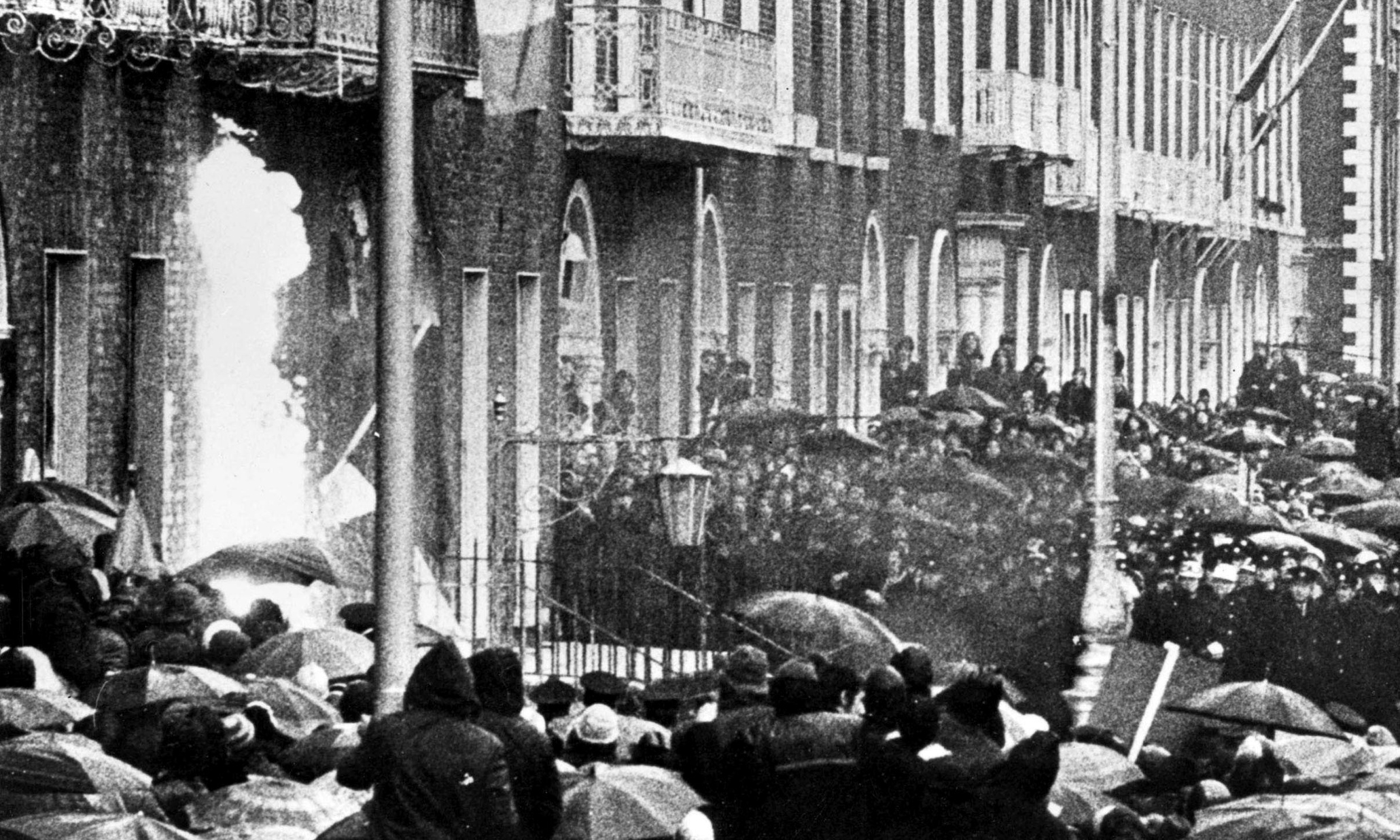
The was a ‘Bloody Sunday’ commemoration march in Derry to mark the 30th anniversary of the events in the city on 30 January 1972. British Army paratroopers shot dead 13 people and injured another 14 during a civil rights march in what became known as Bloody Sunday.

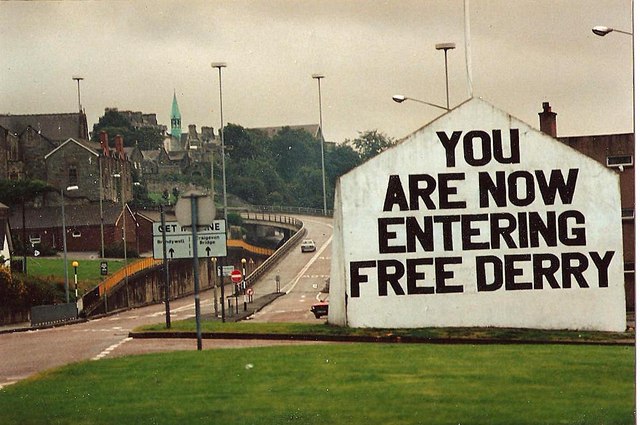
An estimated 30,000 people took part in the march through the Creggan and the Bogside areas of the city to a rally at ‘Free Derry Corner’. There were representatives from the main nationalist political parties, and people had travelled from throughout Ireland, Britain, and America to take part.

Up to 400 members of the Ancient Order of Hibernians (AOH) from different cities in the United States of America (USA) also took part in the march. Representatives from political parties in Northern Ireland were present at the World Economic Forum in New York, USA. During a discussion session Gerry Adams, then President of Sinn Féin (SF), said that he did not want to force Unionists into a united Ireland without their consent.

See Bloody Sunday

—————————————————————————

Remembering all innocent victims of the Troubles

Today is the anniversary of the death of the following  people killed as a results of the conflict in Northern Ireland

“To live in hearts we leave behind is not to die

– Thomas Campbell

To the innocent on the list – Your memory will live  forever

– To  the Paramilitaries  –

There are many things worth living for, a few things worth dying for, but nothing worth killing for.

7 People   lost their lives on the 3rd  February  between  1973 – 1994

  —————————————————————————

03 February 1973


Alfredo Fusco,   (56)

Catholic
Status: Civilian (Civ),

Killed by: Ulster Defence Association (UDA)
Shot at his cafe, York Road, Belfast.

 —————————————————————————

03 February 1973


James Sloan,   (19)

Catholic
Status: Irish Republican Army (IRA),

Killed by: non-specific Loyalist group (LOY)
Shot from passing car while standing outside Lynch’s Bar, corner of Antrim Road and New Lodge Road, Belfast

 —————————————————————————

03 February 1977


 Joseph Morrissey,   (52)

Catholic
Status: Civilian (Civ),

Killed by: Ulster Volunteer Force (UVF)
Abducted while walking along Donegall Street, Belfast. Found stabbed to death a short time later, near the community centre, off Forthriver Road, Glencairn, Belfast.

 —————————————————————————

03 February 1978
Bernard Brown,   (50)

Catholic
Status: Civilian (Civ),

Killed by: Irish Republican Army (IRA)
From Northern Ireland. Died 5 days after being shot, during armed robbery at supermarket, Killygordon, County Donegal.

 —————————————————————————

03 February 1986


John Earley,   (21)

Catholic
Status: Ulster Defence Regiment (UDR),

Killed by: Irish Republican Army (IRA)
Killed in remote controlled bomb attack on Ulster Defence Regiment (UDR) foot patrol, Belcoo, County Fermanagh

 —————————————————————————

03 February 1992
Gordon Hamill,   (42)

Protestant
Status: Civilian (Civ),

Killed by: Irish Republican Army (IRA)
Shot as he delivered bread to supermarket, Newell Road, Dungannon, County Tyrone

 —————————————————————————

03 February 1994


Mark Sweeney,   (31)

Catholic
Status: Civilian (Civ),

Killed by: Ulster Volunteer Force (UVF)
Taxi driver. Found shot in his car, Ballyreagh Road, Newtownards, County Down

 —————————————————————————


Segregation in Northern Ireland

Segregation in Northern Ireland

Segregation in Northern Ireland is a long-running issue in the political and social history of Northern Ireland. The segregation involves Northern Ireland’s two main voting blocs – Irish nationalist/republicans (mainly Roman Catholic) and unionist/loyalist (mainly Protestant). It is often seen as both a cause and effect of the “Troubles“.

A combination of political, religious and social differences plus the threat of intercommunal tensions and violence has led to widespread self-segregation of the two communities. Catholics and Protestants lead largely separate lives in a situation that some have dubbed “self-imposed apartheid”.[1] The academic John H. Whyte argued that “the two factors which do most to divide Protestants as a whole from Catholics as a whole are endogamy and separate education

———————————————————

Inside Story – How divided is Northern Ireland

———————————————————

Education

Education in Northern Ireland is heavily segregated. Most state schools in Northern Ireland are predominantly Protestant, while the majority of Catholic children attend schools maintained by the Catholic Church. In all, 90 per cent of children in Northern Ireland still go to separate faith schools.[3] The consequence is, as one commentator has put it, that “the overwhelming majority of Ulster’s children can go from four to 18 without having a serious conversation with a member of a rival creed.”[4] The prevalence of segregated education has been cited as a major factor in maintaining endogamy (marriage within one’s own group).[5] The integrated education movement has sought to reverse this trend by establishing non-denominational schools such as the Portadown Integrated Primary. Such schools are, however, still the exception to the general trend of segregated education. Integrated schools in Northern Ireland have been established through the voluntary efforts of parents. The churches have not been involved in the development of integrated education.[6]

———————————————————

Why Ireland split into the Republic of Ireland & Northern Ireland

———————————————————

Employment

Historically, employment in the Northern Irish economy was highly segregated in favour of Protestants, particularly at senior levels of the public sector, in certain then important sectors of the economy, such as shipbuilding and heavy engineering, and strategically important areas such as the police.[7] Emigration to seek employment was therefore significantly more prevalent among the Catholic population. As a result, Northern Ireland’s demography shifted further in favour of Protestants leaving their ascendancy seemingly impregnable by the late 1950s.

A 1987 survey found that 80 per cent of the workforces surveyed were described by respondents as consisting of a majority of one denomination; 20 per cent were overwhelmingly unidenominational, with 95–100 per cent Catholic or Protestant employees. However, large organisations were much less likely to be segregated, and the level of segregation has decreased over the years.[8]

The British government has introduced numerous laws and regulations since the mid-1990s to prohibit discrimination on religious grounds, with the Fair Employment Commission (originally the Fair Employment Agency) exercising statutory powers to investigate allegations of discriminatory practices in Northern Ireland business and organisations.[7] This has had a significant impact on the level of segregation in the workplace;[8] John Whyte concludes that the result is that “segregation at work is one of the least acute forms of segregation in Northern Ireland.” [9]

———————————————————

BBC Spotlight – Poverty in Northern Ireland

———————————————————

Housing

Gates in a peace line in West Belfast

Back of a house behind a “peace line”, on Bombay Street Belfast

Public housing is overwhelmingly segregated between the two communities. Intercommunal tensions have forced substantial numbers of people to move from mixed areas into areas inhabited exclusively by one denomination, thus increasing the degree of polarisation and segregation. The extent of self-segregation grew very rapidly with the outbreak of the Troubles. In 1969, 69 per cent of Protestants and 56 per cent of Catholics lived in streets where they were in their own majority; as the result of large-scale flight from mixed areas between 1969 and 1971 following outbreaks of violence, the respective proportions had by 1972 increased to 99 per cent of Protestants and 75 per cent of Catholics.[10] In Belfast, the 1970s were a time of rising residential segregation.[11] It was estimated in 2004 that 92.5% of public housing in Northern Ireland was divided along religious lines, with the figure rising to 98% in Belfast.[1] Self-segregation is a continuing process, despite the Northern Ireland peace process. It was estimated in 2005 that more than 1,400 people a year were being forced to move as a consequence of intimidation.[12]

In response to intercommunal violence, the British Army constructed a number of high walls called “peace lines” to separate rival neighbourhoods. These have multiplied over the years and now number forty separate barriers, mostly located in Belfast. Despite the moves towards peace between Northern Ireland’s political parties and most of its paramilitary groups, the construction of “peace lines” has actually increased during the ongoing peace process; the number of “peace lines” doubled in the ten years between 1995 and 2005.[13] In 2008 a process was proposed for the removal of the peace walls.[14]

The effective segregation of the two communities significantly affects the usage of local services in “interface areas” where sectarian neighbourhoods adjoin. Surveys in 2005 of 9,000 residents of interface areas found that 75% refused to use the closest facilities because of location, while 82% routinely travelled to “safer” areas to access facilities even if the journey time was longer. 60% refused to shop in areas dominated by the other community, with many fearing ostracism by their own community if they violated an unofficial de facto boycott of their sectarian opposite numbers.[13]

Intermarriage

In contrast with both the Republic of Ireland and most parts of Great Britain, where intermarriage between Protestants and Catholics is not unusual, in Northern Ireland it has been uncommon: from 1970 through to the 1990s, only 5 per cent of marriages were recorded as crossing community divides.[15] This figure remained largely constant throughout the Troubles. It rose to between 8 and 12 per cent, according to the Northern Ireland Life and Times Survey, in 2003, 2004 and 2005.[16][17][18] Attitudes towards Catholic–Protestant intermarriage have become more supportive in recent years (particularly among the middle class)[19] and younger people are also more likely to be married to someone of a different religion to themselves than older people. However, the data hides considerable regional variation across Northern Ireland.[20]

Anti-discrimination legislation

In the 1970s, the British government took action to legislate against religious discrimination in Northern Ireland. The Fair Employment Act 1976 prohibited discrimination in the workplace on the grounds of religion and established a Fair Employment Agency. This Act was strengthened with a new Fair Employment Act in 1989, which introduced a duty on employers to monitor the religious composition of their workforce, and created the Fair Employment Commission to replace the Fair Employment Agency. The law was extended to cover the provision of goods, facilities and services in 1998 under the Fair Employment and Treatment (Northern Ireland) Order 1998.[21] In 1999, the Commission was merged with the Equal Opportunities Commission, the Commission for Racial Equality and the Northern Ireland Disability Council to become part of the Equality Commission for Northern Ireland.[22]

An Equality Commission review in 2004 of the operation of the anti-discrimination legislation since the 1970s, found that there had been a substantial improvement in the employment profile of Catholics, most marked in the public sector but not confined to it. It said that Catholics were now well represented in managerial, professional and senior administrative posts, although there were some areas of under-representation such as local government and security but that the overall picture was a positive one. Catholics, however, were still more likely than Protestants to be unemployed and there were emerging areas of Protestant under-representation in the public sector, most notably in health and education at many levels including professional and managerial. The report also found that there had been a considerable increase in the numbers of people who work in integrated workplaces.


Paul Gallagher – A Survivors Story

Paul Gallagher – A Survivors Story

——————————————————————————————

The views and opinions expressed in this page and  article  are soley intended to educate and provide background information to those interested in the Troubles of Northern Ireland.

They in no way reflect my own opinions and I take no responsibility for any inaccuracies or factual errors.

——————————————————————————————

This article is by Paul Gallagher , a survivor of the Northern Ireland conflict and a fellow blogger . His frank and wry account of the day the UFF came calling and changed his life forever struck a cord in me and reminded me of the silent victims of The Troubles , those that had lived through the sectarian slaughter and although alive , lived daily with the  physical and emotional legacy of thirty years of slaughter on the streets and Northern Ireland and mainland Britain.

“You realize that our mistrust of the future makes it hard to give up the past.”

  Chuck Palahniuk

‘Injured On That Day’

by

Paul Gallagher

When you hear many of the stories about shootings and killings in this country, they usually contain the line that the victim was in the wrong place at the wrong time.  On 6th January 1994 I was in the right place at the right time.  I was a 21 year old man in my home in Lenadoon about to sit down to my dinner.

A rap at the door.  My 15 year old sister, Joanne, goes to answer it and is pushed aside by an intrusion of wooly faces brandishing their hardware.  “We are the IRA and we are taking over this house.”  When the IRA come into a house in Lenadoon you sit down and shut up.  So that’s what my mother Mary Jane, my 18 year old brother Damien, my sister and I did.

The Crystal Maze was on TV but nobody was watching.  Joanne was frightened.  The fat, wooly face had his machine gun pointed at her.  She was crying.  I asked the black head to stop pointing the gun in her direction.  After giving me a cold look out of his sweaty mask he pointed the muzzle to the floor. 

After a long 20 minutes the front door knocked again.  Another of the gunmen came down into the living room from upstairs.  He instructed me to go to the door, open it and bring whoever it was into the living room where we were being held.  “If you do anything stupid, I will shoot your family.”  

There was no argument.  I went out to the hall and opened the door to my father, Paul.  He had a few drinks on him but noticed that there was something wrong.  We walked into the living room and the door was closed behind him.

I sat down while he stood there in the middle of the room.  “What the fuck is going on here? What are you all doing in my house? ”.  The little, wiry monkey one pulled out a big black hand cannon and pointed it up to my da’s forehead.  “If you value your life, you will sit down now.”  Joanne was hysterical now.  “Da, just sit down.   It’s the Ra.  They’ll be out of here soon.” I said.  He sat down beside Joanne.  We were all a lot more nervous now. 

Ten minutes later the door knocked again.  “Just bring them in here!”  I got up and went out to the door.  It was a few of Joanne’s friends.  Wee girls.  “Joanne’s already out with her other friends” says I.  I was not bringing these wee girls into this situation.  I closed the door and went back in.  The white eyes in the black heads weren’t too happy, but unlucky!  “You don’t need to bring those wee girls into this”.  I sat down again.

They all left the room and closed the door behind them.  We all looked at each other and just sat there.  The door was kicked open.  “Operation’s over,” was the shout.  Then a loud crackle of bangs rang out and they were gone.  “Is everybody alright?” asked my mum. 

“I’m not alright” says I, to myself.  “I’ve been shot here”.  But nobody could hear me.  Five bullets had pierced my body.  My arm, my femoral artery, my lung, my spleen, my spine.  I was in shutdown and melting into the sofa.  A strong smell of cordite filled the air.  “There’s something wrong with Paul here”, says Damien.  Keep him awake. Phone an ambulance.  Get a towel.  Stop the bleeding.  Keep him awake.  Slap his face.  Stay awake screams Dee.  Stay with us.  Where’s that ambulance.   Pandemonium.

I was quite happy and content.  An enormous sense of warmth was flowing through my body.  But I was falling away and I knew it.  Damien was pulling me back out, he had a tight grip on my arm, both in my mind and literally.  Stay with us.  I started to come round a bit but I was only running on adrenalin.  “I’m ok, I’m here” I thought, but I could not open my eyes. 

The ambulance came and the boys got on with their job.  They got me in the back and it was away we go.  “I’m alright, don’t be worrying yourselves, lads” says I.  That must have been some strong gear they gave me because I was in the clouds.  We arrived at the RVH and it was like a movie scene.  The stretcher banging through the doors, the strip lights above.  “Paul, would you please stop that chanting?” requested one of the doctors.  “Ay ya hi ya, ay ya hi ya” was all I could shout for the previous five minutes.  My inner shaman was keeping me awake.  Then the anaesthesia kicked in and that was that.  

I woke up many, many hours later and was told that I was in intensive care.  I had a very long breathing tube down my throat and could not speak.  I motioned to get a pen and paper and scrawled ‘Don’t worry, be happy.  Jah Lives’.  My inner Bob Marley was in control.  Back to the morphine.

The week in that bed was a nightmare.  The heat was oppressive and the pain was here to stay, for good.  After a few days I was told by the surgeon that I would never walk again.  I was paralysed from the waist down.  It was hard to take and it was even harder to express this on an Alphabet card.  That bloody tube.

The next few months in Musgrave Park Hospital Spinal Injuries Unit were long but I was able to meet many more people who, in my eyes, were worse off than me.  I still had my arms and that breathing tube was gone.  A wheelchair couldn’t be that bad.  I still had my family and all of my friends with me.

By the way it wasn’t the IRA after all.  Turns out, the UFF did it.  Their intended target, a neighbour, didn’t arrive so ‘any Fenian will do!!’.  Who knows?  Who cares? 

Visit  Pauls Website:  cutabegs.blogspot.co.uk


2nd February – Deaths & Events in Northern Ireland Troubles

Key Events & Deaths on this day in Northern Ireland Troubles

2nd February

———————————————–

Wednesday 2 February 1972

British Embassy Destroyed

The funerals of 11 of the dead of ‘Bloody Sunday’ (30 January 1972) took place in the Creggan area of Derry. Tens of thousands attended the funeral including clergy, politicians from North and South, and thousands of friends and neighbours.

Throughout the rest of Ireland prayer services were held to coincide with the time of the funerals. In Dublin over 90 per cent of workers stopped work in respect of those who had died, and approximately 30,000 – 100,000 people turned out to march to the British Embassy.

They carried 13 coffins and black flags. Later a crowd attacked the Embassy with stones and bottles, then petrol bombs, and the building was burnt to the ground

See Bloody Sunday

Friday 2 February 1973

A Protestant civilian, James Greer (21), was shot dead by the Irish Republican Army (IRA) at his workplace in Belfast.

A Catholic civilian, Patrick Brady (28), was found dead having been shot by Loyalists in Belfast. A member of the Ulster Defence Association (UDA) was shot dead by the Irish Republican Army (IRA) in Belfast. There was serious rioting in Protestant areas of east Belfast.


Wednesday 2 February 1977

Jeffrey Agate (59), then Managing Director of the American Du Pont factory in Derry was shot dead by members of the Irish Republican Army (IRA) outside his home at Talbot Park, Derry.

[This killing marked the beginning of a series of attacks on businessmen. There were further killings on 2 March 1977 and 14 March 1977.]

Saturday 2 February 1991

An interview with Garret FitzGerald, former Taoiseach (Irish Prime Minister), was published in the Irish Independent (a Republic of Ireland newspaper). Fitzgerald said that he had considered holding a referendum on Articles 2 and 3 of the Irish constitution at the time of the Anglo-Irish Agreement (AIA).

Tuesday 2 February 1993

Eugene Martin (28), a Catholic civilian, was shot dead by the Ulster Volunteer Force (UVF) at his home in Ballyronan, County Derry. Two incendiary bombs were planted outside the homes of two Social Democratic and Labour Party (SDLP) councillors. The Ulster Defence Association (UDA) was responsible for the attacks.

[These attacks followed an UDA statement on 12 January 1993.]

Wednesday 2 February 1994

Before leaving New York Gerry Adams, then President of Sinn Féin (SF), said he would not disappoint those who had “stuck their neck out” to secure his visa. Douglas Hurd, then British Foreign Secretary, speaking in the House of Commons described Adams as a “failed politician”.

Thursday 2 February 1995

Results from the 1993 Labour Force Survey showed that Catholics remained twice as likely to be unemployed as Protestants.

Sunday 2 February 1997

A march was held in Derry to commemorate the 25th anniversary of ‘Bloody Sunday’. The march attracted an estimated 30,000 to 40,000 people.

Sean O’Callaghan


Sean O’Callaghan, an Irish Republican Army (IRA) informer, claimed in Fortnight magazine that Gerry Adams, then President of Sinn Féin (SF), had in the past suggested killing John Hume, then leader of the Social Democratic and Labour Party (SDLP).

See Dead Man Walking

[The claims were widely reported in national and international media. SF said the claims were “rubbish”.]

Tuesday 2 February 1999

John Lockington (Dr) was elected as the new Moderator of the Presbyterian Church. Lockington was a long-standing member of the Orange Order and he said that he would not participate in joint worship with Catholics.

Friday 2 February 2001

Components for 11 pipe-bombs were uncovered in Larne, County Antrim, following a planned search of derelict houses in the predominantly Protestant Antiville estate. The discovery was described as a “manufacturing base” in the town that was the scene of numerous sectarian attacks in previous months.

Saturday 2 February 2002

David Trimble (UUP), then First Minister, and Mark Durkan (SDLP), then Deputy First Minister, travelled to the United States of America (USA) at the beginning of a week long visit.

[During their stay the two men attended the World Economic Forum in New York on 3 February 2002. They also opened, on 6 February 2002, the Northern Ireland Bureau which was established to promote Northern Ireland in the USA. There was some criticism at home of the cost of the office.]

In a pre-recorded interview for the British Broadcasting Corporation (BBC), Martin McGuinness, then Vice-President of Sinn Féin (SF), denied that he had fired the first shot during Bloody Sunday (30 January 1972). He described the allegations as a “Plan B” on the part of the British Military Establishment: “Everybody knows that every single person shot on that day was an innocent marcher. So they now move to plan B, and plan B is – if you can’t blame the people who were killed on the day try to blame Martin McGuinness.”

[McGuinness had given a written statement to the Bloody Sunday Inquiry stating that he was second in command of the (Provisional) Irish Republican Army (IRA) at the time of Bloody Sunday.]

[A man (32) was abducted from west Belfast and taken with a hood over his head to an unknown location where he was was stripped, threatened and questioned. He was released at 5.00am on Sunday 3 February 2002, but his car was burnt and destroyed. It was assumed that he had been abducted by Republican paramilitaries. Details of the incident were released by police on 7 February 2002.]


—————————————————————————

Remembering all innocent victims of the Troubles

Today is the anniversary of the death of the following  people killed as a results of the conflict in Northern Ireland

“To live in hearts we leave behind is not to die

– Thomas Campbell

To the innocent on the list – Your memory will live  forever

– To  the Paramilitaries  –

There are many things worth living for, a few things worth dying for, but nothing worth killing for.

10 People   lost their lives on the 2nd February  between  1972 – 1993

  —————————————————————————

02 February 1972


Thomas McElroy,   (29)

Catholic
Status: Civilian (Civ),

Killed by: British Army (BA)
Shot by sniper from Henry Taggart British Army (BA) base, while in Divismore Park, Ballymurphy, Belfast.

  —————————————————————————

02 February 1972
Louis O’Neill,  (49)

Catholic
Status: Civilian (Civ),

Killed by: non-specific Loyalist group (LOY)
Killed in bomb attack on Imperial Bar, Stewartstown, County Tyrone.

  —————————————————————————

02 February 1973


James Greer,  (21)

Protestant
Status: Civilian (Civ),

Killed by: Irish Republican Army (IRA)
Shot at his workplace, paint store, off Springfield Road, Belfast.

  —————————————————————————

02 February 1973


Patrick Brady,  (28)

Catholic
Status: Civilian (Civ),

Killed by: non-specific Loyalist group (LOY)
Found shot in abandoned car, Maurice Street, off Springfield Road, Belfast.

  —————————————————————————

02 February 1973


Robert Burns,   (18)

Protestant
Status: Ulster Defence Association (UDA),

Killed by: Irish Republican Army (IRA)
Shot from passing car while standing outside shop, Oldpark Road, Belfast.

  —————————————————————————

02 February 1977


Jeffrey Agate,   (59)

nfNI
Status: Civilian (Civ),

Killed by: Irish Republican Army (IRA)
Originally from England. Manager of Du Pont factory. Shot outside his home, Talbot Park, Derry.

  —————————————————————————

02 February 1980
William McAteer,   (40)

Catholic
Status: Civilian (Civ),

Killed by: Ulster Volunteer Force (UVF)
Shot while walking along Rugby Avenue, off Ormeau Road, Belfast.

  —————————————————————————

02 February 1983


Eugene McMonagle,   (24)

Catholic
Status: Irish National Liberation Army (INLA),

Killed by: British Army (BA)
Shot by undercover British Army (BA) member during altercation, Leafair Park, Shantallow, Derry.

  —————————————————————————

02 February 1992


Padraig O Cleirigh,  (52)

Catholic
Status: Civilian (Civ),

Killed by: Ulster Freedom Fighters (UFF)
Shot at his home, Rosemount Gardens, off Antrim Road, Belfast.

  —————————————————————————

02 February 1993


Eugene Martin,   (28)

Catholic
Status: Civilian (Civ),

Killed by: Ulster Volunteer Force (UVF)
Shot at his home, Guassen Villas, Ballyronan, County Derry.

  —————————————————————————

Tareena Shakil -Justice Served!

Tareena Shakil jailed for six years for joining IS


Jihadi mother who took her toddler to join ISIS ‘is attention seeker who stole another woman’s husband’

  • Tareena Shakil is the first British woman to be convicted of joining ISIS  

  • The 26-year-old took her toddler to war-torn Syria using her student loan
  • Her husband’s former wife said Shakil threatened to petrol bomb her home 
  • The woman said Shakil enjoyed a party lifestyle and smoked cannabis
  • Claims the day they met she ‘didn’t see a single Muslim bone in her body’

A mother who took her toddler son to Syria has been jailed for six years for joining the so-called Islamic State.

Tareena Shakil, 26, is the first woman from the UK to return from the self-declared caliphate to be convicted of the offence.

Sentencing her, Mr Justice Inman said she had shown no remorse and had known her son’s future would ultimately be “as an IS fighter”.

He told Shakil: “You allowed him to be photographed next to an AK47.”

‘Abhorrent’

Shakil sent photographs of her son in Syria, including one image showing him sitting next to an AK-47 machinegun. The caption of the picture describes him as 'Abu Jihad al-Britani'

Shakil, from Birmingham, but formerly of Burton-upon-Trent in Staffordshire, admitted travelling to Syria but denied joining IS and encouraging acts of terrorism through messages posted on Twitter.

Passing sentence at Birmingham Crown Court, the judge said: “Most alarmingly you took your toddler son to Syria knowing how he would be used.

“You embraced your role in providing fighters of the future.”

Shakil posed the boy, who was 14 months old at the time, for pictures wearing an IS-branded balaclava, in what the judge described as one of the most “abhorrent” features of the case.

———————————–

Tareena Shakil

———————————–

Mr Justice Inman told Shakil she had “embraced Isis”, sending messages on the day she arrived in Syria saying she was not coming back to the UK, telling her family it was part of her faith to kill the murtadeen (apostates) and that she wanted to die a martyr.

He said it was clear she had been “radicalised” following online conversations with prominent members of the terrorist group.

Shakil, who was convicted on Friday, maintained she took her son to Syria, in October 2014, to escape an “unhappy family life”.

See BBC News for full story


1st February – Deaths & Events in Northern Ireland Troubles

Key Events & Deaths on this day in Northern Ireland Troubles

1st February

———————————————————-

Thursday 6 February 1969

The New Ulster Movement (NUM) was formed. This pressure group was established to promote moderate and non-sectarian policies and to assist those candidates who supported Terence O’Neill, then Northern Ireland Prime Minister, in the election on 24 February 1969.

Tuesday 1 February 1972

Edward Heath, then British Prime Minister, announced the appointment of Lord Widgery, then Lord Chief Justice, to undertake an inquiry into the 13 deaths on ‘Bloody Sunday’ (30 January 1972).

[The response of the people of Derry to this choice of candidate, was for the most part one of scepticism and a lack of confidence in his ability to be objective. Indeed a number of groups in Derry initially called for non-participation in the tribunal but many were persuaded later to given evidence to the inquiry.]

There was an Opposition adjournment debate in the House of Commons on the subject of ‘Bloody Sunday’. During the debate the then Minister of State for Defence gave an official version of events and went on to say:

“We must also recognise that the IRA is waging a war, not only of bullets and bombs but of words…. If the IRA is allowed to win this war I shudder to think what will be the future of the people living in Northern Ireland.”

The Ministry of Defence also issued a detailed account of the British Army’s version of events during ‘Bloody Sunday’ which stated that:

“Throughout the fighting that ensued, the Army fired only at identified targets – at attacking gunmen and bombers. At all times the soldiers obeyed their standing instructions to fire only in self-defence or in defence of others threatened.”

Harold Wilson, then leader of the Labour Party, said that a United Ireland was the only solution to the conflict in Northern Ireland. William Craig, then Home Affairs Minister, suggested that the west bank area of Derry should be ceded to the Republic of Ireland.

See Bloody Sunday

Thursday 1 February 1973

Patrick Heenan (50), a Catholic man, was killed in a grenade attack carried out by the Ulster Freedom Fighters (UFF).

[It was later established that the UFF was a cover name which members of the Ulster Defence Association (UDA) used to claim the responsibility for the killing of Catholics.]

A British soldier was shot dead by the Irish Republican Army (IRA) in Strabane.

Frank King, a Lieutenant-General, succeeded Harry Tuzo as General Officer Commanding (GOC) the British Army in Northern Ireland.

Friday 1 February 1974

Liam Cosgrave, then Taoiseach (Irish Prime Minister), and seven of his ministers flew to Hillsborough, County Down, for a meeting with members of the Northern Ireland Executive. The meeting agreed to establish working groups consisting of civil servants from North and South which would consider which ‘executive functions’ would be given to the Council of Ireland.

[The report from the civil servants recommended that only tourism, conservation, and ‘aspects of animal health’, should come under the control of the Council of Ireland.]

Sunningdale; Ulster Workers’ Council Strike

Monday 1 February 1982

Representatives of the Ulster Unionist Party (UUP) held a meeting with James Prior, then Secretary of State for Northern Ireland, and they told him that they were opposed to his policy of ‘rolling devolution’. Michael Foot, then leader of the Labour Party, began a three day visit to Northern Ireland.

Tuesday 1 February 1983

Peter Barry, then Irish Foreign Minister, held a meeting with James Prior, then Secretary of State for Northern Ireland, in London. Barry expressed his view that the Northern Ireland Assembly would not prove successful.

Friday 1 February 1985

John Hume, then leader of the Social Democratic and Labour Party (SDLP), announced that he was accepting an invitation to a meeting with the Irish Republican Army (IRA). Hume said he would urge the IRA leadership to end the campaign of violence. However he was heavily criticised by Unionists and others.

[The meetining took place on 23 February 1985.]

1 February 1989

Details of the meeting on 14 October 1988 between members of the four main Northern Ireland political parties in Duisburg, West Germany were revealed in a British Broadcasting Corporation (BBC) programme. The parties involved were; Alliance Party of Northern Ireland (APNI), Social Democratic and Labour Party (SDLP), Ulster Unionist Party (UUP) and Democratic Unionist Party (DUP).

Friday 1 February 1991

Gerry Adams, then President of Sinn Féin (SF), described rumours of a possible Irish Republican Army (IRA) ceasefire as being “unfounded speculation”.

Sunday 2 February 1992

During a television interview Peter Brooke, then Secretary of State for Northern Ireland, refused to rule out the possibility of the British government doing a post-election deal with Unionists. He stated that if talks were not successful a solution might be imposed that was more integrationist than devolutionist.

Tuesday 1 February 1994

The Ulster Volunteer Force (UVF) carried out a bomb attack on the home of a Catholic family in Portadown, County Armagh. An Royal Ulster Constabulary (RUC) officer was injured in the explosion.

There was an Irish Republican Army (IRA) mortar attack on a British Army (BA) observation post at Cloghoge, County Armagh.

David McGaughey (Rev.), then Presbyterian moderator-designate, said that he would not take part in ecumenical services.

The National Committee on American Foreign Policy was address in New York by John Hume, then leader of the Social Democratic and Labour Party (SDLP), Gerry Adams, then President of Sinn Féin (SF), and John Alderdice, then leader of the Alliance Party of Northern Ireland (APNI). [The whole of Adams’ visit to the USA was a major publicity coup for SF.]

Wednesday 1 February 1995

The Times (a London based newspaper) published what it claimed to be extracts from the ‘Framework Documents’ which the British and Irish governments had drawn up.

[The two governments launched the documents on 22 February 1995.]

Thursday 1 February 1996

A large number of bullets were fired into the home of a reserve member of the Royal Ulster Constabulary (RUC). No group admitted responsibility. The Irish Times (a Dublin based newspaper) ran a report that Sinn Féin (SF) was unhappy with the final report from the Forum for Peace and Reconciliation, based in Dublin.

Sunday 1 February 1998

A march was held in Derry to mark the 26th anniversary of ‘Bloody Sunday’. A estimated crowd of 30,000 people walked over the same route as the original march from the Creggan estate to the Bogside area of the city.

Some of the relatives of those killed on 30 January 1972 said the announcement of the new inquiry (on 29 January 1998) gave them hope that the truth would be uncovered. Some buses taking people back to Belfast following the march were attacked with stones as they travelled through the mainly Protestant village of Drumahoe, County Derry.

See Bloody Sunday

The Sunday Life (a Northern Ireland newspaper) carried a story that the Irish Republican Army (IRA) had acquired a set of confidential British Army intelligence files. The story claimed the files were accidentally dumped when an army barracks was demolished in Kilkeel, County Down.

A survey of opinion reported in the Sunday Independent (a Republic of Ireland newspaper) indicated that almost half of those questioned thought that internment should be introduced on both sides of the border if Loyalist or Republican paramilitaries rejected any agreement and continued violence.

Monday 1 February 1999

An explosive device was discovered at a Catholic church in Antrim. The device was made safe by British Army technical officers.

Unionists on Belfast City Council voted to withdraw funding of £50,000 that was to given to the organising committee of the Saint Patrick’s Day parade on 17 March 1999.

John Kelly, a Christian Brother, was jailed for eight years after pleading guilty to more than 100 charges of sexual assault on 11 boys over a period of 12 years. The assaults took place in Dublin, Waterford, Cork, Wicklow, Kildare and Tipperary.

Thursday 1 February 2001

Two pipe-bomb attacks on Catholic homes in Ballynahinch were condemned as a “blatant attempt at murder”. A family of six was asleep in Loughside Drive when the first device exploded shortly after 2.00am, smashing a window. Around 10 minutes later a second device went off two doors away, near where neighbours had walked past to investigate the first blast. No-one was injured. The attacks were carried out by Loyalist paramilitaries.

Friday 1 February 2002

Loyalist paramilitaries attached a bomb to the bottom of a car belonging to a Catholic family who live near Dungannon, County Tyrone. The family moved from their home when the bomb was discovered following suspicious activity around their home. The police said the bomb would have “caused death or serious injury” if it had exploded.

The British Army discovered guns and ammunition in north Belfast. The weapons were found during a search of an area of wasteland at the back of Braehill Crescent, near Ballysillen Avenue. The weapons included sawn-off shotguns, a rifle and magazines, and 400 rounds of assorted ammunition.

John Hume, former leader of the Social Democratic and Labour Party (SDLP), was presented with the Gandhi Peace Prize, India’s premier prize, at a ceremony in the president’s residence in Delhi. A jury chaired by Atal Behari Vajpayee, then Indian Prime Minister, unanimously decided to confer the award. Hume was described as a man who had been “instrumental in heralding a new era of justice, peace and reconciliation in Ireland”.

 —————————————————————————

Remembering all innocent victims of the Troubles

Today is the anniversary of the death of the following  people killed as a results of the conflict in Northern Ireland

“To live in hearts we leave behind is not to die

– Thomas Campbell

To the innocent on the list – Your memory will live  forever

– To  the Paramilitaries  –

There are many things worth living for, a few things worth dying for, but nothing worth killing for.

4 People   lost their lives on the 1st February   between  1972 – 1985

  —————————————————————————

01 February 1972
 Ian Bramley,  (25)

nfNI
Status: British Army (BA),

Killed by: Irish Republican Army (IRA)
Shot by sniper while leaving Hastings Street Royal Ulster Constabulary (RUC) / British Army (BA) base, Lower Falls, Belfast.

  —————————————————————————

01 February 1973
Patrick Heenan,  (50)

Catholic
Status: Civilian (Civ),

Killed by: Ulster Defence Association (UDA)
Killed by hand grenade thrown into firm’s bus while travelling to work, Kingsway Park, Tullycarnet, Belfast.

  —————————————————————————

01 February 1973
William Boardley,  (30)

nfNI
Status: British Army (BA),

Killed by: Irish Republican Army (IRA)
Shot by sniper while at British Army (BA) Vehicle Check Point (VCP), Meeting House Street, Strabane, County Tyrone.

  —————————————————————————

01 February 1985


James Graham,  (39)

Protestant
Status: Ulster Defence Regiment (UDR),

Killed by: Irish Republican Army (IRA)
Off duty. Shot while driving school bus, Derrylin, County Fermanagh.

  —————————————————————————

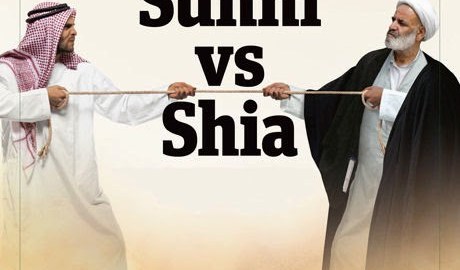
Sunnis and Shia – What’s the difference?

According to Adherents.com the two biggest religions in the world are Christianity , with approximately 2.2 billion practising followers and Islam , with approximately 1.6 billion practising followers and both have various offshoots and different strands often dictated by regional and cultural boundaries.

When you consider that the world population is approximately 7.3 billion ( as of July 2015  )  then almost half of the world population follow Christianity and/or Islam and sadly both religions are responsibly for more deaths and devastation  than any act of nature or global war and the corridors of time are littered with the blood of the innocent and the souls of the none believers – In my book religion has a lot to answer for!


——————————

Sunnis and Shia – What’s the difference?

Struggles between Sunni and Shia forces have fed the Syrian civil war that threatens to transform the map of the Middle East, spurred violence that is fracturing Iraq and widened fissures in a number of tense Gulf countries. Growing sectarian clashes have also sparked a revival of transnational jihadi networks that poses a threat beyond the region.

The Major Difference Between the Shi’a and the Sunni

All the Muslims agree that Allah is One, Muhammad (S) is His last Prophet, the Qur’an is His last Book for mankind, and that one day

Allah will resurrect all human beings, and they will be questioned about their beliefs and actions. There are, however, disagreements between the two schools in the following two areas:

1. The Caliphate (successorship/leadership) which the Shi’a believe is the right of the Imams of Ahlul-Bayt.

2. The Islamic rule when there is no clear Qur’anic statement, nor is there a Hadith upon which Muslim schools have agreed.

The second issue has root into the first one. The Shi’a bound themselves to refer to Ahlul-Bayt for deriving the Sunnah of Prophet (S). They do this in conformity with the order of Prophet reported in the authentic Sunni and Shi’i collections of traditions beside what the Qur’an attests to their perfect purity.

The disagreement about the caliphate should not be a source of division between the two schools. Muslims agree that the caliphate of Abu Bakr came through election by a limited number of people and was a surprise for all other companions. By limited number, I mean, the majority of the prominent companions of prophet had no knowledge of this election. ‘Ali, Ibn Abbas,

Uthman, Talha, Zubair, Sa’d Ibn Abi Waqqas, Salman al-Farsi, Abu Dharr,

Ammar Ibn Yasir, Miqdad, Abdurrahman Ibn Owf were among those who were not consulted nor even informed of. Even Umar confessed to the fact that the election of Abu Bakr was without consultation of Muslims. (See sahih al-

Bukhari, Arabic-English, Tradition 8.817)

On the other hand, election implies choice and freedom, and that every

Muslim has the right to elect the nominee. Whoever refuses to elect him does not oppose God or His Messenger because neither God nor His Messenger appointed the nominated person by people.

Election, by its nature, does not compel any Muslim to elect a specific nominee. Otherwise, the election would be coercion. This means that the election would lose its own nature and it would be a dictatorial operation.

It is well known that the Prophet said: “There is no validity for any allegiance given by force.”

Imam ‘Ali refused to give his allegiance to Abu Bakr for six months. He gave his allegiance to Abu Bakr only after the martyrdom of his wife

Fatimah al-Zahra (sa), Daughter of the Holy Prophet, six month after the departure of Prophet. (see Sahih al-Bukhari, Arabic-English version, Tradition 5.546). If refusal to give allegiance to an elected nominee was prohibited in Islam, Imam ‘Ali would not have allowed himself to delay in giving his allegiance.

In the same tradition in Sahih al-Bukhari, Imam ‘Ali (as) said that he had some rights in Caliphate which was not honored, and he complained why Abu Bakr should have not consulted him in deciding upon the ruler. He later gave his allegiance when he found that the only way to save Islam is to leave the isolation which occured due to his refusal of giving the oath of allegiance.

What’s more? The well known companions, Abdullah Ibn Umar and Sa’d Ibn Abi

Waqqas, refused to give their allegiance to Imam ‘Ali for the entire duration of his caliphate. (Ibn Al-Athir, his history Al-Kamil, v3, p98).

But the Imam did not punish these companions.

If it was permissible for a Muslim, who was a contemporary of the caliph,to refuse to give his allegiance, it would be more permissible for a person who came in a later century to believe or not to believe in the qualifications of that elected caliph. In doing so, he would not be sinning, provided that the Caliph is not assigned by Allah.

The Shi’a say that Imam must be appointed by God; that appointment may be known through the declaration of the Prophet or the preceding Imam. The

Sunni scholars say that Imam (or Caliph, as they prefer to say) can be either elected, or nominated by the preceding Caliph, or selected by a committee, or may attempt to gain the power through a military coup (as was in the case of Muawiyah).

The Shi’a scholars say that a divinely appointed Imam is sinless and

Allah does not grant such position to the sinful. The Sunni scholars (including Mu’tazilites) say that Imam can be sinful as he is appointed by other than Allah. Even if he is tyrant and sunk in sins (like in the case of Muawiyah and Yazid), the majority of the scholars from the schools of Hanbali, Shafi’i, and Maliki discourage people to rise against that Caliph. They think that they should be preserved although they disagree with the evil actions.

The Shi’a say that Imam must possess above all such qualities as knowledge, bravery, justice, wisdom, piety, love of God etc. The Sunni scholars say it is not necessary. A person inferior in these qualities may be elected in preference to a person having all these qualities of superior degree.

See Al – Islam org for more details

———————————-

Shia–Sunni relations

Sunni and Shia Islam are the two major denominations of Islam. The demographic breakdown between the two denominations is difficult to assess and varies by source, but a good approximation is that 85-90% of the world’s Muslims are Sunni[1] and 10-15% are Shia,[2][3] with most Shias belonging to the Twelver tradition and the rest divided between many other groups.[2] Sunnis are a majority in most Muslim communities: in Southeast Asia, China, South Asia, Africa, and most of the Arab world. Shia make up the majority of the citizen population in Iraq, Iran, Azerbaijan, and Bahrain, as well as being a politically significant minority in Lebanon. Azerbaijan is predominantly Shia; however, practicing adherents are much fewer.[4] Indonesia has the largest number of Sunni Muslims, while Iran has the largest number of Shia Muslims (Twelver) in the world. Pakistan has the second-largest Sunni as well as the second-largest Shia Muslim (Twelver) population in the world.

The historic background of the Sunni–Shia split lies in the schism that occurred when the Islamic prophet Muhammad died in the year 632, leading to a dispute over succession to Muhammad as a caliph of the Islamic community spread across various parts of the world, which led to the Battle of Siffin. The dispute intensified greatly after the Battle of Karbala, in which Hussein ibn Ali and his household were killed by the ruling Umayyad Caliph Yazid I, and the outcry for revenge divided the early Islamic community. Today, there are differences in religious practice, traditions, and customs, often related to jurisprudence. Although all Muslim groups consider the Quran to be divine, Sunni and Shia have different opinions on hadith.

Over the years, Sunni–Shia relations have been marked by both cooperation and conflict. Sectarian violence persists to this day from Pakistan to Yemen and is a major element of friction throughout the Middle East.[5][6] Tensions between communities have intensified during power struggles, such as the Bahraini uprising, the Iraq War, and most recently the Syrian Civil War[7][8][9] and in the formation of the self-styled Islamic State of Iraq and Syria and its advancement on Syria and Northern Iraq.

Numbers

Sunnis are a majority in most Muslim communities in Southeast Asia, China, South Asia, Africa, most of the Arab World, and among Muslims in the United States (of which 85–90% are Sunnis).[10][11] This can also be confusing because of the fact that the majority of Arab Muslims in the United States are Shia, while the majority of Arab Americans are Christians, the conflation of Arab and Muslim being quite common.[12]

Shias make up the majority of the Muslim population in Iran (around 95%), Azerbaijan (around 90%),[13] Iraq (around 75%) and Bahrain (around 70%). Minority communities are also found in Yemen where over 45% of the population are Shia (mostly of the Zaidi sect), according to the UNHCR.[14] Others put the numbers of Shias at 30%.[15][16] About 15-20% of Turkey’s population belong to the Alevi sect. The Shia constitute around 30–40% of Kuwait,[17][18] 45–55% of the Muslim population in Lebanon, 25% of Saudi Arabia,[18][19] 12% of Syria, and 20-25% of Pakistan. Around 15–20% of Afghanistan, less than 6% of the Muslims in Nigeria, and around 5% of population of Tajikistan are Shia.[20]

…Shias are about 25-to-30 percent of the entire Muslim world. We don’t have accurate statistics because in much of the Middle East it is not convenient to have them, for ruling regimes in particular. But the estimates are that they are about 25 to 30 percent of the Muslim world, which puts them somewhere between 185 and 215 million people….The overwhelming majority of that population lives between Pakistan and Lebanon. Iran always had been a Shia country, the largest one, with a population of about 70 million. Pakistan is the second-largest Shia country in the world, with about 30 million population. Also potentially, there are as many Shias in India as there are in Iraq.[21][22]

— Vali Nasr, October 18, 2006

The main Islamic madh’habs (schools of law) of Muslim countries or distributions

Historical beliefs and leadership

Successors of Muhammad

Sunnis believe that Abu Bakr, the father of Muhammad’s wife Aisha, was Muhammad’s rightful successor and that the method of choosing or electing leaders (Shura) endorsed by the Quran is the consensus of the Ummah (the Muslim community).

Shias believe that Muhammad divinely ordained his cousin and son-in-law Ali Ibn Abi Talib (the father of his grandsons Hasan ibn Ali and Hussein ibn Ali) in accordance with the command of God to be the next caliph, making Ali and his direct descendants Muhammad’s successors. Shias believe that Muhammad quoted this, in Hadith of the pond of Khumm. Ali was married to Fatimah, Muhammad’s daughter by his wife Khadijah bint Khuwaylid.

Aisha endorsed her father Abu Bakr as the successor to Muhammad. In the Battle of the Camel (656), Aisha opposed her step son-in-law Ali outside the city of Basra, because she wanted justice on the assassins of the previous caliph, Uthman. Aisha’s forces were defeated and Muhammad’s widow was respectfully escorted back to Medina.

Sunnis follow the Rashidun “rightly guided Caliphs”, who were the first four caliphs who ruled after the death of Muhammad: Abu Bakr (632–634), Umar ibn al-Khattab (634–644), Uthman ibn Affan (644-656), and the aforementioned Ali Ibn Abi Talib (656–661).

Shia theology discounts the legitimacy of the first three caliphs and believes that Ali is the second-most divinely inspired man (after Muhammad) and that he and his descendants by Fatimah, the Imams, are the sole legitimate Islamic leaders.

The Imamate of the Shia encompasses far more of a prophetic function than the Caliphate of the Sunnis. Unlike Sunni, Shias believe special spiritual qualities have been granted not only to Muhammad but also to Ali and the other Imams. Twelvers believe the imams are immaculate from sin and human error (ma’sūm), and can understand and interpret the hidden inner meaning of the teachings of Islam. In this way the Imams are trustees (wasi) who bear the light of Muhammad (Nūr Muhammadin).[23][24]

Mahdi

The Mahdi is the prophesied redeemer of Islam. While Shias and Sunnis differ on the nature of the Madhi, many members of both groups, especially Sufis,[25] believe that the Mahdi will appear at the end of the world to bring about a perfect and just Islamic society.

In Shia Islam “the Mahdi symbol has developed into a powerful and central religious idea.”[26] Twelvers believe the Mahdi will be Muhammad al-Mahdi, the twelfth Imam returned from the Occultation, where he has been hidden by God since 874. In contrast, mainstream Sunnis believe the Mahdi will be named Muhammad, be a descendant of Muhammad, and will revive the faith, but will not necessarily be connected with the end of the world.[27]

Hadith

The Shias accept some of the same hadiths used by Sunnis as part of the sunnah to argue their case. In addition, they consider the sayings of Ahl al-Bayt that are not attributed directly to Muhammad as hadiths. Shias do not accept many Sunni hadiths unless they are also recorded in Shia sources or the methodology can be proven of how they were recorded. Also, some Sunni-accepted hadith are less favored by Shias; one example is that because of Aisha’s opposition to Ali, hadiths narrated by Aisha are not given the same authority as those by other companions. Another example is hadith narrated by Abu Hurairah, who is considered by Shias as the enemy of Ali. The Shia argument is that Abu Hurairah was only a Muslim four years of his life before Muhammad’s death. Although he accompanied Muhammad for four years only, he managed to record ten times as many hadiths as Abu Bakr and Ali each.[28]

Shiism and Sufism

Shiism and Sufism are said to share a number of hallmarks: Belief in an inner meaning to the Quran, special status for some mortals (saints for Sufi, Imams for Shias), as well as veneration of Ali and Muhammad’s family.[29]

Pillars of faith

The Five Pillars of Islam (Arabic: أركان الإسلام) is the term given to the five duties incumbent on every Muslim. These duties are Shahada (profession of faith), salat (prayers), Zakāt (giving of alms), Sawm (fasting, specifically during Ramadan) and Hajj (pilgrimage to Mecca). These five practices are essential to Sunni and Shia Muslims. Shia theology has two concepts that define religion as a whole. There are Roots of Religion (Usūl al-Dīn) and Branches of Religion (Furu al Din).

Practices

Many distinctions can be made between Sunnis and Shiaīs through observation alone:

Salat

When prostrating during ritual prayer (salat), Shias place their forehead onto a piece of naturally occurring material, most often a clay tablet (mohr), soil (turbah) at times from Karbala, the place where Hussein ibn Ali was martyred, instead of directly onto a prayer rug. There is precedence for this in Sunni thought too, as it is recommended to prostrate on earth, or upon something that grows from the earth.[30][31]

Some Shia perform prayers back to back, sometimes worshipping two times consecutively (1+2+2 i.e. fajr on its own Dhuhr with Asr and Maghrib with Isha’), thus praying five times a day but with a very small break in between the prayer, a tradition followed by Muslims all over the world while performing Hajj, instead of five prayers with at least one hour gap between them as required by Sunni schools of law.[32]

Shias and the followers of the Sunni Maliki school hold their hands at their sides during prayer; Sunnis of other schools cross their arms (right over left) and clasp their hands;[33] it is commonly held by Sunni scholars especially of Maliki school that either is acceptable.[34][35][36][37][38]

Mut’ah and Misyar


Twelver Shia permit Nikah mut‘ah—fixed-term temporary marriage— which is not acceptable within the Sunni community, the Ismaili Shia or the Zaidi Shia and is believed a planned and agreed fornication. Twelvers believe that Mutah was permitted until Umar forbade it during his rule. Mutah is not the same as Misyar marriage or ‘Arfi marriage, which has no date of expiration and is permitted by some Sunnis. A Misyar marriage differs from a conventional Islamic marriage in that the man does not have financial responsibility over the woman by her own free will. The man can divorce the woman whenever he wants to in a Misyar marriage.[39]

Hijab and dress

Both Sunni and Shia women wear the hijab. Devout women of the Shia traditionally wear black and yellow as do some Sunni women in the Gulf. Some Shia religious leaders also wear a black robe. Mainstream Shia and Sunni women wear the hijab differently. Some Sunni scholars emphasize covering of all body including the face in public whereas some scholars exclude the face from hijab. Shias believe that the hijab must cover around the perimeter of the face and up to the chin.[40] Like Sunnis, some Shia women, such as those in Iran and Iraq, use their hand to hold the black chador, in order to cover their faces when in public.

Given names

Shia are sometimes recognizable by their names, which are often derived from the names of Ahl al-Bayt. In particular, the names Fatima, Zaynab, Ali, Abbas, Hussein, and Hassan are disproportionately common among Shias, though they may also be used by Sunnis.[33] Umar, Uthman, Abu Bakr, Aisha, Muawiya, Yazid being the names of figures recognized by Sunnis but not Shias, are commonly used as names for Sunnis but are very rare, if not virtually absent, for Shias.[41]

History

Abbasid era

Destruction of the Tomb of Husayn ibn Ali at Karbala, condemned in a Mughal era manuscript.

The Umayyads were overthrown in 750 by a new dynasty, the Abbasids. The first Abbasid caliph, As-Saffah, recruited Shia support in his campaign against the Umayyads by emphasising his blood relationship to Muhammad’s household through descent from his uncle, ‘Abbas ibn ‘Abd al-Muttalib.[42] The Shia also believe that he promised them that the Caliphate, or at least religious authority, would be vested in the Shia Imam. As-Saffah assumed both the temporal and religious mantle of Caliph himself. He continued the Umayyad dynastic practice of succession, and his brother al-Mansur succeeded him in 754.

Ja’far al-Sadiq, the sixth Shia Imam, died during al-Mansur’s reign, and there were claims that he was murdered on the orders of the caliph.[43] (However, Abbasid persecution of Islamic lawyers was not restricted to the Shia. Abū Ḥanīfa, for example, was imprisoned by al-Mansur and tortured.)

Shia sources further claim that by the orders of the tenth Abassid caliph, al-Mutawakkil, the tomb of the third Imam, Hussein ibn Ali in Karbala, was completely demolished,[44] and Shias were sometimes beheaded in groups, buried alive, or even placed alive within the walls of government buildings still under construction.[45]

The Shia believe that their community continued to live for the most part in hiding and followed their religious life secretly without external manifestations.[46]

Shia–Sunni in Iraq

Many Shia Iranians migrated to what is now Iraq in the 16th century. “It is said that when modern Iraq was formed, some of the population of Karbala was Iranian”. In time, these immigrants adopted the Arabic language and Arab identity, but their origin has been used to “unfairly cast them as lackeys of Iran”.[47] Other Iraqi Shias are ethnic Arabs with roots in Iraq as deep as those of their Sunni counterparts’.[48]

Shia–Sunni in Persia

Main article: Islam in Iran

Shafi’i Sunnism was the dominant form of Islam in most of Iran until rise of the Safavid Empire although a significant undercurrent of Ismailism and a very large minority of Twelvers were present all over Persia. Many illustrious scholars and scientists who lived before the Safavid era, such as Avicenna, Jābir ibn Hayyān, Alhazen, Al-Farabi, Ferdowsi and Nasir al-Din al-Tusi and the poet Hafez were Shia Muslims of both the Ismaili and Twelver traditions (some indistinguishably so, such as al-Tusi), as was most of Iran’s elite. There were many Sunni scientists and scholars as well, such as Fakhr al-Din al-Razi, philosopher-theologian Al-Ghazali, and poet Saadii. Nezamiyehs were the medieval institutions of Islamic higher education established by Nizam al-Mulk in the 11th century. Nizamiyyah institutes were the first well-organized universities in the Muslim world. The most famous and celebrated of all the nizamiyyah schools was Al-Nizamiyya of Baghdad (established 1065), where Nizam al-Mulk appointed the distinguished philosopher and theologian, Ghazali, as a professor. Other Nizamiyyah schools were located in Nishapur, Balkh, Herat and Isfahan.

The Sunni hegemony did not undercut the Shia presence in Iran. The writers of the Shia Four Books were Iranian, as were many other great scholars. According to Morteza Motahhari:[49]

The majority of Iranians turned to Shi’ism from the Safawid period onwards. Of course, it cannot be denied that Iran’s environment was more favourable to the flourishing of the Shi’ism as compared to all other parts of the Muslim world. Shi’ism did not penetrate any land to the extent that it gradually could in Iran. With the passage of time, Iranians’ readiness to practise Shi’ism grew day by day. Had Shi`ism not been deeply rooted in the Iranian spirit, the Safawids (907‑1145/ 1501‑1732) would not have succeeded in converting Iranians to the Shi’i creed and making them follow the Prophet’s Ahl al-Bayt sheerly by capturing political power.

Yavuz Sultan Selim who delivered a devastating blow to the Shia Safavids and Ismail I in the Battle of Chaldiran, a battle of historical significance.

The Shia in Persia before the Safavids


The domination of the Sunni creed during the first nine Islamic centuries characterizes the religious history of Iran during this period. There were however some exceptions to this general domination which emerged in the form of the Zaidis of Tabaristan, the Buwayhid, the rule of the Sultan Muhammad Khudabandah (r. 1304-1316) and the Sarbedaran. Nevertheless, apart from this domination there existed, firstly, throughout these nine centuries, Shia inclinations among many Sunnis of this land and, secondly, Twelver and Zaidi Shiism had prevalence in some parts of Iran. During this period, the Shia in Iran were nourished from Kufa, Baghdad and later from Najaf and Al Hillah.[50] Shia were dominant in Tabaristan, Qom, Kashan, Avaj and Sabzevar. In many other areas the population of Shias and Sunni was mixed.

The first Zaidi state was established in Daylaman and Tabaristan (northern Iran) in 864 by the Alavids;[51] it lasted until the death of its leader at the hand of the Samanids in 928. Roughly forty years later the state was revived in Gilan (north-western Iran) and survived under Hasanid leaders until 1126. After which from the 12th-13th centuries, the Zaidis of Daylaman, Gilan and Tabaristan then acknowledge the Zaidi Imams of Yemen or rival Zaidi Imams within Iran.[52]

The Buyids, who were Zaidi and had a significant influence not only in the provinces of Persia but also in the capital of the caliphate in Baghdad, and even upon the caliph himself, provided a unique opportunity for the spread and diffusion of Shia thought. This spread of Shiism to the inner circles of the government enabled the Shia to withstand those who opposed them by relying upon the power of the caliphate.

Twelvers came to Iran from Arab regions in the course of four stages. First, through the Asharis tribe[clarification needed] at the end of the 7th and during the 8th century. Second through the pupils of Sabzevar, and especially those of Al-Shaykh Al-Mufid, who were from Rey and Sabzawar and resided in those cities. Third, through the school of Hillah under the leadership of Al-Hilli and his son Fakhr al-Muhaqqiqin. Fourth, through the scholars of Jabal Amel residing in that region, or in Iraq, during the 16th and 17th centuries who later migrated to Iran.[53]

On the other hand, the Ismaili da‘wah (“missionary institution”) sent missionaries (du‘āt, sg. dā‘ī) during the Fatimid Caliphate to Persia. When the Ismailis divided into two sects, Nizaris established their base in northern Persia. Hassan-i Sabbah conquered fortresses and captured Alamut in 1090. Nizaris used this fortress until the Mongols finally seized and destroyed it in 1256.

After the Mongols and the fall of the Abbasids, the Sunni Ulama suffered greatly. In addition to the destruction of the caliphate there was no official Sunni school of law. Many libraries and madrasahs were destroyed and Sunni scholars migrated to other Islamic areas such as Anatolia and Egypt. In contrast, most Shia were largely unaffected as their center was not in Iran at this time. For the first time, the Shia could openly convert other Muslims to their movement.

Several local Shia dynasties like the Marashi and Sarbadars were established during this time. The kings of the Kara Koyunlu dynasty ruled in Tabriz with a domain extending to Fars and Kerman. In Egypt the Fatimid government ruled.[54]

Muhammad Khudabandah, the famous builder of Soltaniyeh, was among the first of the Mongols to convert to Shiaism, and his descendants ruled for many years in Persia and were instrumental in spreading Shī‘ī thought.[55] Sufism played a major role in spread of Shiism in this time.

After the Mongol invasion Shiims and Sufism once again formed a close association in many ways. Some of the Ismailis whose power had broken by the Mongols, went underground and appeared later within Sufi orders or as new branches of already existing orders. In Twelve-Imam Shiism, from the 13th to the 16th century, Sufism began to grow within official Shiite circles.[56]

The extremist sects of the Hurufis and Shasha’a grew directly out of a background that is both Shiite and Sufi. More important in the long run than these sects were the Sufi orders which spread in Persia at this time and aided in the preparing the ground for the Shiite movement of Safavids. Two of these orders are of particular significance in this question of the relation of Shiism and Sufism: The Nimatullahi order and Nurbakhshi order.

Shiism in Persia after Safavids

Ismail I initiated a religious policy to recognize Shiism as the official religion of the Safavid Empire, and the fact that modern Iran and Azerbaijan remain officially Shia states is a direct result of Ismail’s actions.

Shah Ismail I of Safavid dynasty destroyed the tombs of Abū Ḥanīfa and the Sufi Abdul Qadir Gilani in 1508.[58] In 1533, Ottomans restored order, reconquered Iraq and rebuilt Sunni shrines.[59]

Unfortunately for Ismail, most of his subjects were Sunni. He thus had to enforce official Shiism violently, putting to death those who opposed him. Under this pressure, Safavid subjects either converted or pretended to convert, but it is safe to say that the majority of the population was probably genuinely Shia by the end of the Safavid period in the 18th century, and most Iranians today are Shia, although there is still a Sunni minority.[60]

Immediately following the establishment of Safavid power the migration of scholars began and they were invited to Iran … By the side of the immigration of scholars, Shi’i works and writings were also brought to Iran from Arabic-speaking lands, and they performed an important role in the religious development of Iran … In fact, since the time of the leadership of Shaykh Mufid and Shaykh Tusi, Iraq had a central academic position for Shi’ism. This central position was transferred to Iran during the Safavid era for two-and-a-half centuries, after which it partly returned to Najaf. … Before the Safavid era Shi’i manuscripts were mainly written in Iraq, with the establishment of the Safavid rule these manuscripts were transferred to Iran.[53]

This led to a wide gap between Iran and its Sunni neighbors, particularly its rival, the Ottoman Empire, in the wake of the Battle of Chaldiran. This gap continued until the 20th century.

Shia–Sunni in Levant

Rashid ad-Din Sinan the Grand Master of the Ismaili Shia at Masyaf successfully deterred Saladin, not to assault the minor territories under the control of their sect.

Shias claim that despite these advances, many Shias in Syria continued to be killed during this period for their faith. One of these was Muhammad Ibn Makki, called Shahid-i Awwal (the First Martyr), one of the great figures in Shia jurisprudence, who was killed in Damascus in 1384.[54]

Shahab al-Din Suhrawardi was another eminent scholar, killed in Aleppo on charges of cultivating Batini teachings and philosophy.[54]

Shia–Sunni in South Asia

Main article: Islam in Asia

Sunni–Shia clashes also occurred occasionally in the 20th century in South Asia. There were many between 1904 and 1908. These clashes revolved around the public cursing of the first three caliphs by Shias and the praising of them by Sunnis. To put a stop to the violence, public demonstrations were banned in 1909 on the three most sensitive days: Ashura, Chehlum and Ali’s death on 21 Ramadan. Intercommunal violence resurfaced in 1935-36 and again in 1939 when many thousands of Sunni and Shias defied the ban on public demonstrations and took to the streets.[61] Shia are estimated to be 21-35% of the Muslim population in South Asia, although the total number is difficult to estimate due to the intermingling between the two groups and practice of taqiyya by Shia [62]

Sunni razzias which came to be known as Taarajs virtually devastated the community. History records 10 such Taarajs also known as Taraj-e-Shia between the 15th and 19th centuries in 1548, 1585, 1635, 1686, 1719, 1741, 1762, 1801, 1830, 1872 during which the Shia habitations were plundered, people slaughtered, libraries burnt and their sacred sites desecrated.[63]

Shia-Sunni Relations in the Mughal Empire

Shia in South Asia faced persecution by some Sunni rulers and Mughal Emperors which resulted in the killings of Shia scholars like Qazi Nurullah Shustari[64] (also known as Shaheed-e-Thaalis, the third Martyr) and Mirza Muhammad Kamil Dehlavi[65] (also known as Shaheed-e- Rabay, the fourth Martyr) who are two of the five martyrs of Shia Islam. Shias in Kashmir in subsequent years had to pass through the most atrocious period of their history.

Modern Sunni–Shia relations

In addition to Iran, Iraq has emerged as a major Shia government when the Twelvers achieved political dominance in 2005 under American occupation. The two communities have often remained separate, mingling regularly only during the Hajj pilgrimage in Mecca. In some countries like Iraq, Syria, Kuwait and Bahrain, communities have mingled and intermarried. Some Shia have complained of mistreatment in countries dominated by Sunnis, especially in Saudi Arabia,[66] while some Sunnis have complained of discrimination in the Twelver-dominated states of Iraq and Iran.[67]

Some tension developed between Sunnis and Shia as a result of clashes over Iranian pilgrims and Saudi police at the hajj.[68] Millions of Saudi adhere to the school of Wahhabism which is a branch of Hanbali Sunni.[69]

According to some reports, as of mid-2013, the Syrian Civil War has become “overtly sectarian” with the “sectarian lines fall most sharply” between Alawites and Sunnis.[70] With the involvement of Lebanese Shia paramilitary group Hezbollah, the fighting in Syria has reignited “long-simmering tensions between Sunnis and Shi’ites” spilling over into Lebanon and Iraq.[71] Ex-Ambassador Dimitar Mihaylov further claims that the current post-Arab Spring situation (encompassing ISIS, the Syrian civil war, Yemen, Iraq and others) represents a “qualitatively new” development in the history of Shi’a-Sunni dynamics. Historically, the inner rifts within Islamic ideology were to be hidden from the public sphere, while the new violent outbreaks highlight said rift in an obvious manner and is nourished by the two extremes of their mutual rivalry which will strongly affect both globally and regionally.[72]

1919–1970

At least one scholar sees the period from the collapse of the Ottoman Empire through the decline of Arab nationalism as a time of relative unity and harmony between traditionalist Sunni and Shia Muslims—unity brought on by a feeling of being under siege from a common threat, secularism, first of the European colonial variety and then Arab nationalist.[7]

An example of Sunni–Shia cooperation was the Khilafat Movement which swept South Asia following the defeat of the Ottoman Empire, the seat of the Caliphate, in World War I. Shia scholars “came to the caliphate’s defence” by attending the 1931 Caliphate Conference in Jerusalem, although they were theologically opposed to the idea that non-imams could be caliphs or successors to Muhammad, and that the caliphate was “the flagship institution” of Sunni, not Shia, authority. This has been described as unity of traditionalists in the face of the twin threats of “secularism and colonialism.”[7]

In these years Allama Muhammad Taqi Qummi travelled to Cairo and started his efforts for reforming Islamic unity at Al-Azhar University, since 1938. Finally, his efforts and contacting with scholars such as Mahmud Shaltut and Seyyed Hossein Borujerdi led to the founding of Dar-al-Taghrib (community for reforming unity between Sunni and Shia Muslims).[73]

Another example of unity was a fatwā issued by the rector of Al-Azhar University, Mahmud Shaltut, recognizing Shia Islamic law as the fifth school of Islamic law. In 1959, al-Azhar University in Cairo, the most influential center of Sunni learning, authorized the teaching of courses of Shia jurisprudence as part of its curriculum.[74]

The year of Iranian Islamic Revolution was “one of great ecumentical discourse”,[75] and shared enthusiasm by both Shia and Sunni Islamists. After the Iranian Revolution, Ayatollah Ruhollah Khomeini endeavored to bridge the gap between Shiites and Sunnis by declaring it permissible for Twelvers to pray behind Sunni imams and by forbidding criticizing the Caliphs who preceded Ali—an issue that had caused much animosity between the two groups.[76] In addition, he designated the period of Prophet’s Birthday celebrations from 12th to the 17th of Rabi Al-Awwal as the Islamic Unity Week. (There being a gap in the dates of when Shiites and Sunnis celebrate Muhammad’s Birthday).[77] However, this harmony was short lived.

Post-1980

See also: Iran–Iraq War

Damage to a mosque in Khoramshahr, Iran

Following this period, Sunni–Shia strife has seen a major upturn, particularly in Iraq and Pakistan. Many explain the bloodshed as the work of conspiracies by outside forces—”the forces of hegemony and Zionism which aim to weaken [Arabs]” (Akbar Hashemi Rafsanjani and Yusuf al-Qaradawi),[78] unspecified “enemies” (Iran president Mahmoud Ahmadinejad),[79] or “oppressive pressure by the imperialist front.” (Mahmoud Ahmadinejad).[80]

Others lay the blame for the strife at a very different source, the unintended effects of the Islamic revival. According to scholar Vali Nasr, as the Muslim world was decolonialised and Arab nationalism lost its appeal, fundamentalism blossomed and reasserted the differences and conflicts between the two movements, particularly in the strict teachings of Sunni scholar Ibn Taymiyyah.[81] The Iranian Islamic revolution changed the Shia–Sunni power equation in Muslim countries “from Lebanon to India” arousing the traditionally subservient Shia to the alarm of traditionally dominant and very non-revolutionary Sunni.[82] “Where Iranian revolutionaries saw Islamic revolutionary stirrings, Sunnis saw mostly Shia mischief and a threat to Sunni predominance.”[83]

Although the Iranian revolution’s leader, Ayatollah Khomeini, was very much in favor of Shia–Sunni unity, he also challenged Saudi Arabia, in his view an “unpopular and corrupt dictatorship” and an “American lackey” ripe for revolution. In part because Saudi Arabia was the world’s major international funder of Islamic schools, scholarships, and fellowships, this angered not only Saudi Arabia but its many fundamentalist allies and benefactors throughout the Arab world, according to Nasr.[84]

Another effect noted by political scientist Gilles Kepel, is that the initial attraction of the Islamic Revolution to Sunnis as well as Shia, and Khomeini’s desire to export his revolution motivated the Saudi establishment to shore up its “religious legitimacy” with more strictness in religion (and with jihad in Afghanistan) to compete with Iran’s revolutionary ideology.[85] But doing so in Saudi meant a more anti-Shia policies because Saudi’s own native Sunni school of Islam is Wahhabism, which includes the prohibition of Shia Islam itself, as strict Wahhabis do not consider Shia to be Islamic. This new strictness was spread not only among Saudis in the kingdom but thousands of students and Saudi funded schools and international Islamist volunteers who came to training camps in Peshawar Pakistan in the 1980s to learn to fight jihad in Afghanistan and went home in the 1990s to fight jihad. Both groups (especially in Iraq and Pakistan) saw Shia as the enemy.[86][87][88] Thus, although the Iranian revolution’s leader, Ayatollah Khomeini, was very much in favor of Shia–Sunni unity, and “the leadership position that went with it”,[89] his revolution worked against it.

From the Iranian Revolution to 2015, Shia groups in Lebanon, Iraq, Syria, Yemen, supported by Iran have recently won “important political victories” which have boosted Iran’s regional influence.[90] In Lebanon, Hezbollah, the Lebanese Shia militia and political movement is the “strongest political actor” in the country. Since the 2003 invasion of Iraq removed Saddam Hussein from power and instituted elected government, the Shia majority has dominated the parliament and its prime ministers have been Shia.[90] In Syria, a Shia minority—the heterodox Alawi sect that makes up only about 13 percent of the population—dominate the upper reaches of the government, military and security services in Syria, and are the “backbone” of the forces fighting to protect the Bashir al-Assad regime in Syria’s civil war.[90] In Yemen, Houthi rebels have expanded their territory south of Saudi Arabia, and become the country’s “dominant power“.[90]

Olivier Roy, research director at the French National Centre for Scientific Research, sees the “Shia awakening and its instrumentalisation by Iran” as leading to a “very violent Sunni reaction”, starting first in Pakistan before spreading to “the rest of the Muslim world, without necessarily being as violent.” According to Roy, “two events created a sea change in the balance of power between Shia and Sunnis: the Islamic revolution in Iran and the American military intervention in Iraq” in 2003. “Today, Azerbaijan is probably the only country where there are still mixed mosques and Shia and Sunnis pray together.”[91]

From 1994-2014 satellite television and high-speed Internet has spread “hate speech” against both Sunni and Shia. Fundamentalist Sunni clerics have popularized slurs against Shia such as “Safawis” (from the Safavid empire, thus implying their being an Iranian agents), or even worse rafidha (rejecters of the faith), and majus (Zoroastrian or crypto Persian). In turn, Shia religious scholars have “mocked and cursed” the first three caliphs and Aisha, Mohammed’s youngest wife who fought against Ali.[90]

Iraq

Shia–Sunni discord in Iraq starts with disagreement over the relative population of the two groups. According to most sources, including the CIA’s World Factbook, the majority of Iraqis are Shia Arab Muslims (60%-55%), and Sunni Arab Muslims represent between 32% and 37% of the population.[92] However, Sunni are split ethnically between Arabs, Kurds and Turkmen. Many Sunnis hotly dispute their minority status, including ex-Iraqi Ambassador Faruq Ziada,[93] and many believe Shia majority is “a myth spread by America”.[94] One Sunni belief shared by Jordan’s King Abdullah as well as his then Defense Minister Shaalan is that Shia numbers in Iraq were inflated by Iranian Shias crossing the border.[95] Shia scholar Vali Nasr believes the election turnout in summer and December 2005 confirmed a strong Shia majority in Iraq.[96]

The British, having put down a Shia rebellion against their rule in the 1920s, “confirmed their reliance on a corps of Sunni ex-officers of the collapsed Ottoman empire”. The British colonial rule ended after the Sunni and Shia united against it.[97]

The Shia suffered indirect and direct persecution under post-colonial Iraqi governments since 1932, erupting into full-scale rebellions in 1935 and 1936. Shias were also persecuted during the Ba’ath Party rule, especially under Saddam Hussein. It is said that every Shia clerical family of note in Iraq had tales of torture and murder to recount.[98] In 1969 the son of Iraq’s highest Shia Ayatollah Muhsin al-Hakim was arrested and allegedly tortured. From 1979-1983 Saddam’s regime executed 48 major Shia clerics in Iraq.[99] They included Shia leader Mohammad Baqir al-Sadr and his sister. Tens of thousands of Iranians and Arabs of Iranian origin were expelled in 1979 and 1980 and a further 75,000 in 1989.[100]

The Shias openly revolted against Saddam following the Gulf War in 1991 and were encouraged by Saddam’s defeat in Kuwait and by simultaneous Kurdish uprising in the north. However, Shia opposition to the government was brutally suppressed, resulting in some 50,000 to 100,000 casualties and successive repression by Saddam’s forces. The governing regimes of Iraq were composed mainly of Sunnis for nearly a century until the 2003 Iraq War.

Iraq War

Some of the worst sectarian strife ever has occurred after the start of the Iraq War, steadily building up to the present.[8] The war has featured a cycle of Sunni–Shia revenge killing—Sunni often used car bombs, while Shia favored death squads.[101]

According to one estimate, as of early 2008, 1,121 suicide bombers have blown themselves up in Iraq.[102] Sunni suicide bombers have targeted not only thousands of civilians,[103] but mosques, shrines,[104] wedding and funeral processions,[105] markets, hospitals, offices, and streets.[106] Sunni insurgent organizations include Ansar al-Islam.[107] Radical groups include Al-Tawhid Wal-Jihad, Jaish al-Ta’ifa al-Mansurah, Jeish Muhammad, and Black Banner Organization.[108]

Takfir motivation for many of these killings may come from Sunni insurgent leader Abu Musab al-Zarqawi. Before his death Zarqawi was one to quote Muhammad ibn Abd al-Wahhab, especially his infamous statement urging followers to kill the Shia of Iraq,[109] and calling the Shias “snakes”.[110] An al-Qaeda-affiliated website posted a call for “a full-scale war on Shiites all over Iraq, whenever and wherever they are found.”[111] Wahhabi suicide bombers continue to attack Iraqi Shia civilians,[112] and the Shia ulama have in response declared suicide bombing as haraam:

حتی كسانی كه با انتحار می‌آيند و می‌زنند عده‌ای را می‌كشند، آن هم به عنوان عملیات انتحاری، این‌ها در قعر جهنم هستند
Even those who kill people with suicide bombing, these shall meet the flames of hell.

— Ayatollah Yousef Saanei[113]

Some believe the war has strengthened the takfir thinking and may spread Sunni–Shia strife elsewhere.[114]

On the Shia side, in early February 2006 militia-dominated government death squads were reportedly “tortur[ing] to death or summarily” executing “hundreds” of Sunnis “every month in Baghdad alone,” many arrested at random.[115][116][117] According to the British television Channel 4, from 2005 through early 2006, commandos of the Ministry of the Interior which is controlled by the Badr Organization, and

…who are almost exclusively Shia Muslims — have been implicated in rounding up and killing thousands of ordinary Sunni civilians.[118]

The violence shows little sign of getting opposite sides to back down. Iran’s Shia leaders are said to become “more determined” the more violent the anti-Shia attacks in Iraq become.[119] One Shia Grand Ayatollah, Yousef Saanei, who has been described as a moderate, reacted to the 2005 suicide bombings of Shia targets in Iraq by saying the bombers were “wolves without pity” and that “sooner rather than later, Iran will have to put them down”.[120]

Egypt

Almost all of Egypt’s Muslims are Sunni,[121] but the Syrian Civil War has brought on an increase in anti-Shia rhetoric,[122] and what Human Rights Watch states is “anti-Shia hate speech by Salafis”.[123] In 2013 a mob of several hundred attacked a house in the village of Abu Musallim near Cairo, dragging four Shia worshipers through the street before lynching them.[123] Eight other Shia were injured.[122]

            Jordan
Main article: Islam in Jordan

Although the country of Jordan is 95% Sunni and has not seen any Shia–Sunni fighting within, it has played a part in the recent Shia-Sunni strife. It is the home country of anti-Shia insurgent Raed Mansour al-Banna, who died perpetrating one of Iraq’s worst suicide bombings in the city of Al-Hillah. Al-Banna killed 125 Shia and wounded another 150 in the 2005 Al Hillah bombing of a police recruiting station and adjacent open air market. In March 2005 Salt, al-Banna’s home town, saw a three-day wake for al-Banna who Jordanian newspapers and celebrants proclaimed a martyr to Islam, which by definition made the Shia victims “infidels whose murder was justified.” Following the wake Shia mobs in Iraq attacked the Jordanian embassy on March 20, 2005. Ambassadors were withdrawn from both countries.[124][125] All this resulted despite the strong filial bonds, ties of commerce, and traditional friendship between the two neighboring countries.[125]

Pakistan

Pakistan’s citizens have had serious Shia-Sunni discord. Almost 80% of Pakistan’s Muslim population is Sunni, with 20% being Shia, but this Shia minority forms the second largest Shia population of any country,[126] larger than the Shia majority in Iraq.

Until recently Shia–Sunni relations have been cordial, and a majority of people of both sects participated in the creation the state of Pakistan in the 1940s.[5] Despite the fact that Pakistan is a Sunni majority country, Shias have been elected to top offices and played an important part in the country’s politics. Several top Pakistani Generals such as General Muhammad Musa. Pakistan’s President Yahya Khan[citation needed] were Shia. Former President Asif Ali Zardari is a Shia. There are many intermarriages between Shia and Sunnis in Pakistan.

Unfortunately, from 1987–2007, “as many as 4,000 people are estimated to have died” in Shia-Sunni sectarian fighting in Pakistan”, 300 being killed in 2006.[127] Amongst the culprits blamed for the killing are Al-Qaeda working “with local sectarian groups” to kill what they perceive as Shia apostates, and “foreign powers … trying to sow discord.”[127] Most violence takes place in the largest province of Punjab and the country’s commercial and financial capital, Karachi.[128] There have also been conflagrations in the provinces of Khyber Pakhtunkhwa, Balochistan and Azad Kashmir,[128] with several hundreds of Shia Hazara killed in Balochistan killed since 2008.[129]

Arab states especially Saudi Arabia and GCC states have been funding extremist Deobandi Sunnis and Wahhabis in Pakistan, since the Afghan Jihad.[130] Whereas Iran has been funding Shia militant groups such as Sipah-e-Muhammad Pakistan, resulting in tit-for-tat attacks on each other.[128] Pakistan has become a battleground between Saudi Arabia-funded Deobandi Sunni and Wahhabis and Iran-funded Shia resulting in the deaths of thousands of innocent Muslims.

Background

Some see a precursor of Pakistani Shia–Sunni strife in the April 1979 execution of deposed President Zulfikar Ali Bhutto on questionable charges by Islamic fundamentalist General Muhammad Zia-ul-Haq. Ali Bhutto was Shia, Zia ul-Haq a Sunni.[131]

Zia-ul-Haq’s Islamization that followed was resisted by Shia who saw it as “Sunnification” as the laws and regulations were based on Sunni fiqh. In July 1980, 25,000 Shia protested the Islamization laws in the capital Islamabad. Further exacerbating the situation was the dislike between Shia leader Imam Khomeini and General Zia ul-Haq.[132]

Shia formed student associations and a Shia party, Sunni began to form sectarian militias recruited from Deobandi and Ahl al-Hadith madrasahs. Preaching against the Shia in Pakistan was radical cleric Israr Ahmed. Muhammad Manzour Numani, a senior Indian cleric with close ties to Saudi Arabia published a book entitled Iranian Revolution: Imam Khomeini and Shiism. The book, which “became the gospel of Deobandi militants” in the 1980s, attacked Khomeini and argued the excesses of the Islamic revolution were proof that Shiism was not the doctrine of misguided brothers, but beyond the Islamic pale.[133]

Anti-Shia groups in Pakistan include the Lashkar-e-Jhangvi and Sipah-e-Sahaba Pakistan, offshoots of the Jamiat Ulema-e-Islam (JUI). The groups demand the expulsion of all Shias from Pakistan and have killed hundreds of Pakistani Shias between 1996 and 1999.[134] As in Iraq they “targeted Shia in their holy places and mosques, especially during times of communal prayer.” [135] From January to May 1997, Sunni terror groups assassinated 75 Shia community leaders “in a systematic attempt to remove Shias from positions of authority.”[136] Lashkar-e-Jhangvi has declared Shia to be “American agents” and the “near enemy” in global jihad.[137]

An example of an early Shia–Sunni fitna shootout occurred in Kurram, one of the tribal agencies of the Northwest Pakistan, where the Pushtun population was split between Sunnis and Shia. In September 1996 more than 200 people were killed when a gun battle between teenage Shia and Sunni escalated into a communal war that lasted five days. Women and children were kidnapped and gunmen even executed out-of-towners who were staying at a local hotel.[138]

Afghanistan

Shia–Sunni strife in Pakistan is strongly intertwined with that in Afghanistan. Though now deposed, the anti-Shia Afghan Taliban regime helped anti-Shia Pakistani groups and vice versa. Lashkar-e-Jhangvi and Sipah-e-Sahaba Pakistan, have sent thousands of volunteers to fight with the Taliban regime and “in return the Taliban gave sanctuary to their leaders in the Afghan capital of Kabul.” [139]

“Over 80,000 Pakistani Islamic militants have trained and fought with the Taliban since 1994. They form a hardcore of Islamic activists, ever-ready to carry out a similar Taliban-style Islamic revolution in Pakistan.”, according to Pakistani journalist Ahmed Rashid.[134]

Shia–Sunni strife inside of Afghanistan has mainly been a function of the puritanical Sunni Taliban’s clashes with Shia Afghans, primarily the Hazara ethnic group.

In 1998 more than 8,000 noncombatants were killed when the Taliban attacked Mazar-i-Sharif and Bamiyan where many Hazaras live.[140] Some of the slaughter was indiscriminate, but many were Shia targeted by the Taliban. Taliban commander and governor Mullah Niazi banned prayer at Shia mosques[141] and expressed takfir of the Shia in a declaration from Mazar’s central mosque:

Last year you rebelled against us and killed us. From all your homes you shot at us. Now we are here to deal with you. The Hazaras are not Muslims and now we have to kill Hazaras. You must either accept to be Muslims or leave Afghanistan. Wherever you go, we will catch you. If you go up we will pull you down by your feet; if you hide below, we will pull you up by your hair.[142]

Assisting the Taliban in the murder of Iranian diplomatic and intelligence officials at the Iranian Consulate in Mazar were “several Pakistani militants of the anti-Shia, Sipah-e-Sahaba party.”[143]

Iran and Shia statehood

Iran is unique in the Muslim world because its population is overwhelmingly more Shia than Sunni (Shia constitute 83% of the population) and because its constitution is theocratic republic based on rule by a Shia jurist.

Although the founder of the Islamic Republic, Ayatollah Ruhollah Khomeini, supported good Sunni–Shia relations, there have been complaints by Sunni of discrimination, particularly in important government positions.[144] In a joint appearance with former Iranian president Akbar Hashemi Rafsanjani calling for Shia-Suni unity, Sunni Shiekh Yusuf al-Qaradawi complained that no ministers in Iran have been Sunni for a long time, that Sunni officials are scarce even in the regions with majority of Sunni population (such as Kurdistan, or Balochistan).[145] Sunnis cite the lack of a Sunni mosque in Tehran, Iran’s capital and largest city, despite the presence of over 1 million Sunnis there,[146] and despite the presence of Christian churches, as a prominent example of this discrimination. Although reformist President Mohammad Khatami promised during his election campaign to build a Sunni mosque in Tehran, none was built during his eight years in office. The president explained the situation by saying Supreme Leader Ayatollah Ali Khamenei would not agree to the proposal.[147] As in other parts of the Muslim world, other issues may play a part in the conflict, since most Sunnis in Iran are also ethnic minorities.[146]

Soon after the 1979 revolution, Sunni leaders from Kurdistan, Balouchistan, and Khorassan, set up a new party known as Shams, which is short for Shora-ye Markaz-e al Sunaat, to unite Sunnis and lobby for their rights. But six months after that they were closed down, bank accounts suspended and had their leaders arrested by the government on charges that they were backed by Saudi Arabia and Pakistan.[144]

A UN human rights report states that:

…information indicates Sunnis, along with other religious minorities, are denied by law or practice access to such government positions as cabinet minister, ambassador, provincial governor, mayor and the like, Sunni schools and mosques have been destroyed, and Sunni leaders have been imprisoned, executed and assassinated. The report notes that while some of the information received may be difficult to corroborate there is a clear impression that the right of freedom of religion is not being respected with regard to the Sunni minority.[148][149]

Members of the ‘Balochistan Peoples Front’ claim that Sunnis are systematically discriminated against educationally by denial of places at universities, politically by not allowing Sunnis to be army generals, ambassadors, ministers, prime minister, or president, religiously insulting Sunnis in the media, economic discrimination by not giving import or export licenses for Sunni businesses while the majority of Sunnis are left unemployed.[150]

There has been a low level resistance in mainly Sunni Iranian Balouchistan against the regime for several years. Official media refers to the fighting as armed clashes between the police and “bandits,” “drug-smugglers,” and “thugs,” to disguise what many believe is essentially a political-religious conflict. Revolutionary Guards have stationed several brigades in Balouchi cities, and have allegedly tracked down and assassinated Sunni leaders both inside Iran and in neighboring Pakistan. In 1996 a leading Sunni, Abdulmalek Mollahzadeh, was gunned down by hitmen, allegedly hired by Tehran, as he was leaving his house in Karachi.[151]

Members of Sunni groups in Iran however have been active in what the authorities describe as terrorist activities. Balochi Sunni Abdolmalek Rigi continue to declare the Shia as Kafir and Mushrik.[152] These Sunni groups have been involved in violent activities in Iran and have waged terrorist[153] attacks against civilian centers, including an attack next to a girls’ school[154] according to government sources. The “shadowy Sunni militant group Jundallah” has reportedly been receiving weaponry from the United States for these attacks according to the semi-official Fars News Agency.[155][156] The United Nations[157] and several countries worldwide have condemned the bombings. (See 2007 Zahedan bombings for more information)

Non-Sunni Iranian opposition parties, and Shia like Ayatollah Jalal Gange’i have criticised the regime’s treatment of Sunnis and confirmed many Sunni complaints.[158]

Following the 2005 elections, much of the leadership of Iran has been described as more “staunchly committed to core Shia values” and lacking Ayatollah Khomeini’s commitment to Shia–Sunni unity.[159] Polemics critical of Sunnis were reportedly being produced in Arabic for dissemination in the Arab Muslim world by Hojjatieh-aligned elements in the Iranian regime.[160]

Syria
Main article: Islam in Syria

Syria is approximately three quarters Sunni,[161] but its government is predominantly Alawite, a Shia sect that makes up less than 15% of the population. Under Hafez al-Assad, Alawites dominated the Arab Socialist Ba’ath Party, a secular Arab nationalist party which had ruled Syria under a state of emergency from 1963 to 2011. Alawites are often considered a form of Shia Islam, that differs somewhat from the larger Twelver Shia sect.[162]

During the 20th century, an Islamic uprising in Syria occurred with sectarian religious overtones between the Alawite-dominated Assad government and the Islamist Sunni Muslim Brotherhood, culminating with the 1982 Hama massacre. An estimated 10,000 to 40,000 Syrians, mostly civilians, were killed by Syrian military in the city. During the uprising, the Sunni Muslim Brotherhood attacked military cadets at an artillery school in Aleppo, performed car bomb attacks in Damascus, as well as bomb attacks against the government and its officials, including Hafez al-Assad himself, and had killed several hundred.

How much of the conflict was sparked by Sunni versus Shia divisions and how much by Islamism versus secular-Arab-nationalism, is in question, but according to scholar Vali Nasr the failure of the Ayatollah Khomeini and the Islamic Republic of Iran to support the Muslim Brotherhood against the Baathists “earned [Khomeini] the Brotherhood’s lasting contempt.” It proved to the satisfaction of the Brotherhood that sectarian loyalty trumped Islamist solidarity for Khomeini and eliminated whatever appeal Khomeini might have had to the MB movement as a pan-Islamic leader.[163]

Syria Civil War
Main article: Syrian Civil War

The Syrian Civil War, though it started as a political conflict, developed into a struggle between the Alawite-dominated Army and government on the one hand, and the mainly Sunni rebels and former members of the regular army on the other. The casualty toll of the war’s first three years has exceeded that of Iraq’s decade-long conflict, and the fight has “amplified sectarian tensions to unprecedented levels”.[90] Rebel groups with 10,000s of Sunni Syrian fighters such as Ahrar ash-Sham, the Islamic Front, and al-Qaeda’s al-Nusra Front, employ anti-Shia rhetoric and foreign Arab and Western Sunni fighters have joined the rebels. On the other side Shia from Hezbollah in Lebanon and from Asaib Ahl al-Haq and Kata’ib Hezbollah militias from Iraq have backed the Syrian government.[90] “Even Afghan Shia refugees in Iran”, driven from Afghanistan by Sunni extremism, have “reportedly been recruited by Tehran for the war in Syria”.[90]

Lebanon

Though sectarian tensions in Lebanon were at their height during the Lebanese Civil War, the Shia–Sunni relations were not the main conflict of the war. The Shia party/militia of Hizbullah emerged in Lebanon during the Lebanese Civil War as one of the strongest forces following the Israeli withdrawal in the year 2000, and the collapse of the South Lebanese Army in the South. The tensions blew into a limited warfare between Shia dominated and Sunni dominated political alliances in 2008.

With the eruption of the Syrian Civil War, tensions increased between the Shia-affiliated Alawites and Sunnis of Tripoli, erupting twice into deadly violence – on June 2011, and the second time on February 2012. The Syrian war has affected Hizbullah, which was once lauded by both Sunnis and Shi’ites for its battles against Israel, but now has lost support from many Sunnis for its military assistance to Syrian President Bashar al-Assad.

Hezbollah has been blamed for bombings of two mosques (Taqwa and al-Salam) frequented by Sunnis in Tripoli on August 23, 2013 that killed at least 42 and wounded hundreds.[164] The bombings are thought to be in retaliation[165] for a large car bomb which detonated on August 15 and killed at least 24 and wounded hundreds in a part of Beirut controlled by the Hizbullah[166]

Yemen
Main article: Islam in Yemen

Muslims in Yemen include the majority Shafi’i (Sunni) and the minority Zaidi (Shia). Zaidi are sometimes called “Fiver Shia” instead of Twelver Shia because they recognize the first four of the Twelve Imams but accept Zayd ibn Ali as their “Fifth Imām” rather than his brother Muhammad al-Baqir. Shia–Sunni conflict in Yemen involves the Shia insurgency in northern Yemen.[6]

Both Shia and Sunni dissidents in Yemen have similar complaints about the government—cooperation with the American government and an alleged failure to following Sharia law[167]—but it’s the Shia who have allegedly been singled out for government crackdown.

During and after the US-led invasion of Iraq, members of the Zaidi-Shia community protested after Friday prayers every week outside mosques, particularly the Grand Mosque in Sana’a, during which they shouted anti-US and anti-Israeli slogans, and criticised the government’s close ties to America.[168] These protests were led by ex-parliament member and Imam, Bader Eddine al-Houthi.[169] In response the Yemeni government has implemented a campaign to crush to the Zaidi-Shia rebellion”[170] and harass journalists.[171]

These latest measures come as the government faces a Sunni rebellion with a similar motivation to the Zaidi discontent.[172][173][174]

A March 2015 suicide bombing of two mosques (used mainly by supporters of the Zaidi Shia-led Houthi rebel movement), in the Yemeni capital of Sanaa, killed at least 137 people and wounded 300. The Sunni Islamic State of Iraq and the Levant movement claimed responsibility, issuing a statement saying: “Let the polytheist Houthis know that the soldiers of the Islamic State will not rest until we have uprooted them.” Both the Sunni al-Qaeda and “Islamic State” consider Shia Muslims to be heretics.[175]

Bahrain

The small Persian Gulf island state of Bahrain has a Shia majority but is ruled by Sunni Al Khalifa family as a constitutional monarchy, with Sunni dominating the ruling class and military and disproportionately represented in the business and landownership.[176] According to the CIA World Factbook, Al Wefaq the largest Shia political society, won the largest number of seats in the elected chamber of the legislature. However, Shia discontent has resurfaced in recent years with street demonstrations and occasional low-level violence.”[177] Bahrain has many disaffected unemployed youths and many have protested Sheikh Hamad bin Isa Al Khalifa‘s efforts to create a parliament as merely a “cooptation of the effendis“, i.e. traditional elders and notables. Bahrain’s 2002 election was widely boycotted by Shia. Mass demonstrations have been held in favor of full-fledged democracy in March and June 2005, against an alleged insult to Ayatollah Khamenei in July 2005.[178]

Nigeria

An example of governments working “to drive wedges between Sunnism and Shiism” was found in Nigeria in 1998 when the Nigerian government of General Sani Abacha accused Muslim Brotherhood leader Sheikh Ibrahim al-Zak Zaki of being a Shia. This was despite the fact that there are few if any Shia among Nigerias Muslims and the Muslim Brotherhood is a Sunni organization.[179]

Indonesia

Islam is the dominant religion in Indonesia, which also has a larger Muslim population than any other country in the world, with approximately 202.9 million identified as Muslim (88.2% of the total population) as of 2009.[180]

The majority adheres to the Sunni Muslim tradition mainly of the Shafi’i madhhab.[181] Around one million are Shias, who are concentrated around Jakarta.[182] In general, the Muslim community can be categorized in terms of two orientations: “modernists,” who closely adhere to orthodox theology while embracing modern learning; and “traditionalists,” who tend to follow the interpretations of local religious leaders (predominantly in Java) and religious teachers at Islamic boarding schools (pesantren).

Saudi Arabia

While Shia make up roughly 15% of Saudi Arabia’s population,[183] they form a large portion of the residents of the eastern province of Hasa—by some estimates a majority[184]—where much of the petroleum industry is based. Between 500,000 and a million Shia live there,[185] concentrated especially around the oases of Qatif and Al-Hasa. The Majority of Saudi Shia belong to the sect of the Twelvers.[186]

The Saudi conflict of Shia and Sunni extends beyond the borders of the kingdom because of international Saudi “Petro-Islam” influence. Saudi Arabia backed Iraq in the 1980–1988 war with Iran and sponsored militants in Pakistan and Afghanistan who—though primarily targeting the Soviet Union, which had invaded Afghanistan in 1979—also fought to suppress Shia movements.[187]

Relations between the Shia and the Wahhabis are inherently strained because the Wahhabis consider the rituals of the Shia to be the epitome of shirk, or polytheism. In the late 1920s, the Ikhwan (Ibn Saud’s fighting force of converted Wahhabi Bedouin Muslims) were particularly hostile to the Shia and demanded that Abd al Aziz forcibly convert them. In response, Abd al Aziz sent Wahhabi missionaries to the Eastern Province, but he did not carry through with attempts at forced conversion. In recent decades the late leading Saudi cleric, Abd al-Aziz ibn Abd Allah ibn Baaz, issued fatwa denouncing Shia as apostates, and according to Shia scholar Vali Nasr “Abdul-Rahman al-Jibrin, a member of the Higher Council of Ulama, even sanctioned the killing of Shias,[185] a call that was reiterated by Wahhabi religious literature as late as 2002.”[188]

Government policy has been to allow Shia their own mosques and to exempt Shia from Hanbali inheritance practices. Nevertheless, Shia have been forbidden all but the most modest displays on their principal festivals, which are often occasions of sectarian strife in the Persian Gulf region, with its mixed Sunni–Shia populations.[186]

According to a report by the Human Rights Watch:

Shia Muslims, who constitute about eight percent of the Saudi population, faced discrimination in employment as well as limitations on religious practices. Shia jurisprudence books were banned, the traditional annual Shia mourning procession of Ashura was discouraged, and operating independent Islamic religious establishments remained illegal. At least seven Shi’a religious leaders-Abd al-Latif Muhammad Ali, Habib al-Hamid, Abd al-Latif al-Samin, Abdallah Ramadan, Sa’id al-Bahaar, Muhammad Abd al-Khidair, and Habib Hamdah Sayid Hashim al-Sadah-reportedly remained in prison for violating these restrictions.”[189]

And Amnesty International adds:

Members of the Shi‘a Muslim community (estimated at between 7 and 10 per cent of Saudi Arabia’s population of about 19 million) suffer systematic political, social, cultural as well as religious discrimination.[190]

As of 2006 four of the 150 members of Saudi Arabia’s “handpicked” parliament were Shia, but no city had a Shia mayor or police chief, and none of the 300 girls schools for Shia in the Eastern Province had a Shia principal. According to scholar Vali Nasr, Saudi textbooks “characterize Shiism as a form of heresy … worse than Christianity and Judaism.”[191]

Forced into exile in the 1970s, Saudi Shia leader Hassan al-Saffar is said to have been “powerfully influenced” by the works of Sunni Islamists of the Muslim Brotherhood and Jamaat-e-Islami and by their call for Islamic revolution and an Islamic state.[192]

Following the 1979 Iranian Revolution, Shia in Hasa ignored the ban on mourning ceremonies commemorating Ashura. When police broke them up three days of rampage ensued—burned cars, attacked banks, looted shops—centered around Qatif. At least 17 Shia were killed. In February 1980 disturbances were “less spontaneous” and even bloodier.[193] Meanwhile, broadcasts from Iran in the name of the Islamic Revolutionary Organization attacked the monarchy, telling listeners, “Kings despoil a country when they enter it and make the noblest of its people its meanest … This is the nature of monarchy, which is rejected by Islam.”[194]

By 1993, Saudi Shia had abandoned uncompromising demands and some of al-Saffar’s followers met with King Fahd with promises made for reform. In 2005 the new King Abdullah also relaxed some restrictions on the Shia.[195] However, Shia continue to be arrested for commemorating Ashura as of 2006.[196] In December 2006, amidst escalating tensions in Iraq, 38 high ranking Saudi clerics called on Sunni Muslims around the world to “mobilise against Shiites”.[197]

Shia Grand Ayatollah Naser Makarem Shirazi is reported to have responded:

The Wahhabis ignore the occupation of Islam’s first Qiblah by Israel, and instead focus on declaring Takfiring fatwas against Shias.[198]

Saudi Sunni

A large fraction of the foreign Sunni extremists who have entered Iraq to fight against Shia and the American occupation are thought to be Saudis. According to one estimate, of the approximately 1,200 foreign fighters captured in Syria between summer 2003 and summer 2005, 85% were Saudis.[120]

Another reflection of grassroots Wahhabi or Saudi antipathy to Shia was a statement by Saudi cleric Nasir al-Umar, who accused Iraqi Shias of close ties to the United States and argued that both were enemies of Muslims everywhere.[199]

Al-Qaeda

Some Wahabi groups, often labeled[by whom?] as takfiri and sometimes linked[by whom?] to Al-Qaeda, have even advocated the persecution of the Shia as heretics.[200][201] Such groups have been allegedly responsible for violent attacks and suicide bombings at Shi’a gatherings at mosques and shrines, most notably in Iraq during the Ashura mourning ceremonies where hundreds of Shias were killed in coordinated suicide bombings,[202][203][204] but also in Pakistan and Afghanistan. However, in a video message, Al-Qaeda deputy Dr Ayman al-Zawahiri directed Abu Musab al-Zarqawi, of Al-Qaeda in Iraq, not to attack civilian targets but to focus on the occupation troops. His call seems to have been ignored, or swept away in the increasing tensions of Iraq under occupation.

United States

In late 2006 or early 2007, in what journalist Seymour Hersh called The Redirection, the United States changed its policy in the Muslim world, shifting its support from the Shia to the Sunni, with the goal of “containing” Iran and as a by-product bolstering Sunni extremist groups.[205] Richard Engel, who is an NBC News Chief Foreign Correspondent, wrote an article in late 2011 alleging that the United States Government is pro-Sunni and anti-Shia. During the Iraq War, the United States feared that a Shiite-led, Iran-friendly Iraq could have major consequences for American national security. However, nothing can be done about this as Iraq’s Shiite government were democratically elected.[206] Shadi Bushra of Stanford University wrote that the United States’ support of the Sunni monarchy during the Bahraini uprising is the latest in a long history of US support to keep the Shiites in check. The United States fears that Shiite rule in the Gulf will lead to anti-US and anti-Western sentiment as well as Iranian influence in the Arab majority states.[207] One analyst told CNN that the US strategy on putting pressure on Iran by arming its Sunni neighbors is not a new strategy for the United States.[208]

ISIS[edit]

As of March 2015, the Islamic State of Iraq and the Levant (or ISIS), a Salafi jihadi extremist militant group and self-proclaimed caliphate and Islamic state led by Sunni Arabs from Iraq and Syria,[209] had control over territory occupied by ten million people[210] in Iraq and Syria, as well as limited territorial control in some other countries.[211][212] The United Nations has held ISIS responsible for human rights abuses and war crimes, and Amnesty International has reported ethnic cleansing by the group on a “historic scale”, including attacks on Shia Muslims.

According to Shia rights watch, in 2014 ISIS forces killed over 1,700 Shia civilians at Camp Speicher in Tikrit Iraq, and 670 Shia prisoners at the detention facility on the outskirts of Mosul.[213] In June 2014, the New York Times wrote that as ISIS has “seized vast territories” in western and northern Iraq, there have been “frequent accounts of fighters’ capturing groups of people and releasing the Sunnis while the Shiites are singled out for execution”. The report listed questions ISIS uses to “tell whether a person is a Sunni or a Shiite”—What is your name? Where do you live? How do you pray? What kind of music do you listen to?[214]

After the collapse of the Iraqi army and capture of the city of Mosul by ISIS in June 2014, the “most senior”[215] Shia spiritual leader based in Iraq, the Grand Ayatollah Ali al-Sistani, who had been known as “pacific” in his attitudes, issued a fatwa calling for jihad against ISIS and its Sunni allies, which was seen by the Shia militias as a “de facto legalization of the militias’ advance”.[216] In Qatari another Shiite preacher, Nazar al-Qatari, “put on military fatigues to rally worshipers after evening prayers,” calling on them to fight against “the slayers of Imams Hasan and Hussein” (the second and third Imams of Shia history) and for Iran’s supreme leader Ayatollah Ali Khamenei.[216]

Efforts to foster Sunni–Shia unity

In a special interview broadcast on Al Jazeera on February 14, 2007, former Iranian president and chairman of the Expediency Discernment Council of Iran, Ayatollah Akbar Hashemi Rafsanjani and highly influential Sunni scholar Yusuf Al-Qaradawi, “stressed the impermissibility of the fighting between the Sunnis and the Shi’is” and the need to “be aware of the conspiracies of the forces of hegemony and Zionism which aim to weaken [Islam] and tear it apart in Iraq.”[78]

Even on this occasion there were differences, with Rafsanjani openly asking “more than once who started” the inter-Muslim killing in Iraq, and Al-Qaradawi denying claims by Rafsanjani that he knew where “those arriving to Iraq to blow Shi’i shrines up are coming from”.[78]

Saudi-Iran summit

In a milestone for the two countries’ relations, on March 3, 2007 King Abdullah of Saudi Arabia and President Mahmoud Ahmadinejad held an extraordinary summit meeting. They displayed mutual warmth with hugs and smiles for cameras and promised “a thaw in relations between the two regional powers but stopped short of agreeing on any concrete plans to tackle the escalating sectarian and political crises throughout the Middle East.”[217]

On his return to Tehran, Ahmadinejad declared that:

Both Iran and Saudi Arabia are aware of the enemies’ conspiracies. We decided to take measures to confront such plots. Hopefully, this will strengthen Muslim countries against oppressive pressure by the imperialist front.[218]

Saudi officials had no comment about Ahmadinejad’s statements, but the Saudi official government news agency did say:

The two leaders affirmed that the greatest danger presently threatening the Islamic nation is the attempt to fuel the fire of strife between Sunni and Shiite Muslims, and that efforts must concentrate on countering these attempts and closing ranks.[219]

Saudi Foreign Minister Prince Saud bin Faisal bin Abdul-Aziz said:

The two parties have agreed to stop any attempt aimed at spreading sectarian strife in the region.[220]

Effort to bring unity between Sunni and Shia Muslims had been attempted by Allama Muhammad Taqi Qummi.[73]

Some opinions about unity

Sunni scholars

  • Sheikh Mahmoud Shaltut: In a Fatwa Sheikh Shaltut declared worship according to the doctrine of the Twelve Shia to be valid and recognized the Shiite as an Islamic School.[221]
  • Muhammad Sayyid Tantawy: «I think that anyone who believes that there is no god but Allah and that Muhammad is his Messenger is definitely a Muslim. Therefore, we have been supporting, for a long time, through Al-Azhar, many calls for the reconciliation of Islamic schools of thought. Muslims should work on becoming united, and protecting themselves from denominational sectarian fragmentation. There are no Shiites and no Sunni. We are all Muslims. Regretfully; the passions and prejudices that some resort to, are the reason behind the fragmentation of the Islamic nation.»[222]
  • Sheikh Mohammed al-Ghazali: It is the duty of all Muslims to unite against enemies of Islam and their propaganda.[223]
  • Sheikh Abd al-Majid Salim: In a letter that was sent to Ayatollah Borujerdi by Sheikh Abd al-Majid Salim, was wrote:«The first thing that becomes obligatory to scholars, Shia or Sunni, is removing dissension from the minds of Muslims.»[224]
  • Doctor Vasel Nasr The Grand Mufti of Egypt: «We ask Allah to create unity among Muslims and remove any enmity, disagreement and contention in the ancillaries of Fiqh between them.»[225]

Shiite scholars[edit]

  • Ayatollah Seyyed Hossein Borujerdi: Ayatollah Borujerdi sent a letter to Sheikh Abd al-Majid Salim, the Grand Mufti of Sunnis and former Chancellor of Al-Azhar University and wrote: «I ask Almighty Allah to change ignorance, separation and distribution among different Islamic Schools to each other, to the actual knowledge and kindness and solidarity.»[226]
  • Ayatollah Ruhollah Khomeini: «We are Oneness with Sunni Muslims. We are their brothers.» «It is obligatory for all Muslims that Maintain unity.» Ayatollah Khomeini said.[227]
  • Ayatollah Seyed Ali Khamenei: In a Fatwa about creating dissension, Ayatollah Khamenei said: «In Addition to dissension is contrary to the Qur’an and Sunnah, this weakens Muslims. So, creating dissension is forbid (Haram).»[225]
  • Ayatollah Ali al-Sistani: To answer this question that:«Does anyone say Shahadah, pray and follow one of the Islamic Schools is a Muslim?», Ayatollah Sistani says: «Every one says Shahadah and does not any work unlike that and does not enmity with Ahl al-Bayt, is muslim.


mmmmmmmmmmmmmmmmmmmmmm

Terry Wogan- R.I.P 3 August 1938 – 31 January 2016

Terry Wogan

Beloved “son” of all Ireland

3th August 19938 – 31 January 2016

Sir Michael Terence “Terry” Wogan, KBE DL (3 August 1938 – 31 January 2016) was an Irish radio and television broadcaster who worked for the BBC in the United Kingdom for most of his career. Before he retired from his BBC Radio 2 weekday breakfast programme Wake Up to Wogan in 2009, it had eight million regular listeners, making him the most listened-to radio broadcaster in Europe.[1] Wogan began his career on the Irish national broadcaster Raidió Teilifís Éireann where he presented shows such as Jackpot in the 1960s.

Wogan was a leading media personality in the UK from the late 1960s and was often referred to as a “national treasure“.[1] In addition to his weekday radio show, he was known in the United Kingdom for his work for television, including the BBC One chat show Wogan, presenting Children in Need, the game show Blankety Blank and Come Dancing and as the BBC’s commentator for the Eurovision Song Contest from 1971 to 2008. Wogan used to present a two-hour Sunday morning show, Weekend Wogan, on BBC Radio 2.[2][3] He also hosted the Eurovision Song Contest 1998 in Birmingham along with Ulrika Jonsson.[4]

Wogan was granted a knighthood in 2005. He held dual British and Irish citizenship and was thus entitled to use “Sir” in front of his name.[5] He died in January 2016.

Early life

Terry in 1968


Wogan, the son of the manager of Leverett and Frye, a high class grocery store in Limerick, was educated at Crescent College, a Jesuit school, from the age of eight. He experienced a strongly religious upbringing, later commenting that “There were hundreds of churches, all these missions breathing fire and brimstone, telling you how easy it was to sin, how you’d be in hell. We were brainwashed into believing.”[6] Despite this, he has often expressed his fondness for the city of his birth, commenting on one occasion that “Limerick never left me, whatever it is, my identity is Limerick.”[7]

At the age of 15, after his father was promoted to general manager, Wogan moved to Dublin with his family. While living in Dublin, he attended Crescent College’s sister school, Belvedere College. He participated in amateur dramatics and discovered a love of rock and roll. After leaving Belvedere in 1956, Wogan had a brief career in the banking profession, joining the Royal Bank of Ireland.[8] While in his twenties, he joined the national broadcaster of Ireland, RTÉ (Raidió Teilifís Éireann) as a newsreader and announcer, after seeing a newspaper advertisement inviting applicants.[9]

Radio work

Early career

Wogan conducted interviews and presented documentary features during his first two years at Raidió Teilifís Éireann, before moving to the light entertainment department as a disc jockey and host of TV quiz and variety shows such as Jackpot, a top rated quiz show on RTÉ in the 1960s. It was here that he developed his signature catchphrase, based on his name: “Wo’gwan.”[10] When the show was dropped by RTÉ TV in 1967, Wogan approached the BBC for extra work. He began working for BBC Radio, initially ‘down the line’ from London, first broadcasting on the Light Programme on Tuesday 27 September 1966. He presented the Tuesday edition of Late Night Extra for two years on BBC Radio 1, commuting weekly from Dublin to London. After covering Jimmy Young‘s mid-morning show throughout July 1969, he was offered a regular afternoon slot between 3 and 5.

In April 1972, he took over the breakfast show on BBC Radio 2, swapping places with John Dunn, who briefly hosted the afternoon show. Wogan enjoyed unprecedented popularity, achieving audiences of up to 7.6 million.[11] His seemingly ubiquitous presence across the media meant that he frequently became the butt of jokes by comedians of the time, among them The Goodies and The Barron Knights. He was capable of self-parody too, releasing a vocal version of the song “The Floral Dance” in 1978, by popular request from listeners who enjoyed hearing him sing over the instrumental hit by the Brighouse and Rastrick Brass Band. His version reached number 21 in the UK Singles Chart.[11] A follow-up single, entitled “Me and the Elephant”, and an eponymous album were also released, but did not chart. In December 1984, Wogan left his breakfast show to pursue a full-time career in television and was replaced by Ken Bruce.[12] His first chat show Wogan’s World, was broadcast on BBC Radio 4 from 6 June 1974 to 21 September 1975.[10]

Return to radio

In January 1993, he returned to BBC Radio 2 to present the breakfast show, then called Wake Up to Wogan. His tendency to go off on rambling, esoteric tangents, often including banter with his then producer, Paul Walters, seems to have become popular with both younger and older listeners. The show was highly interactive with much of the entertainment coming from letters and emails sent in by listeners (many of whom adopt punning pseudonyms, such as Edina Cloud, Lucy Lastic, Sly Stunnion, Roland Butter, Lucy Quipment, Anne Kersaway, Peregrine Trousers, Alf Hartigan, Mick Sturbs or Hellen Bach, for the purpose) with an often surrealistic bent. One memorable occasion involved Wogan reading out an email from someone using the name “Tess Tickles”, without realising what the name was referring to, prompting Paul Walters’ standard reply in such situations – “I only print ’em!”

As his radio show was considered to attract older listeners, Wogan jokingly referred to his fans as “TOGs”, standing for “Terry’s Old Geezers” or “Terry’s Old Gals”, whilst “TYGs” were “Terry’s Young Geezers/Gals” who he joked were forced to listen to him because of their parents’ choice of radio station. Wogan was referred to as “The Togmeister” on his own programme by himself and members of his production team, and he referred to the podcast of his show as a ‘togcast’ in keeping with the acronyms described above.[13]

There were also running jokes involving Wogan’s newsreader colleagues Alan Dedicoat (nicknamed ‘Deadly’ after the spoonerism ‘Deadly Alancoat’), Fran Godfrey and John Marsh (nicknamed ‘Boggy’). Marsh once told Wogan on air that his wife was called Janet, and a series of “Janet and John” stories followed, read by Wogan during the breakfast show. These are a pastiche of children’s learn-to-read stories but are littered with humorous sexual double-entendres which often led to Wogan and Marsh breaking into uncontrollable laughter. Five CDs, the first with fourteen stories, the second with sixteen, the third with eighteen (two never broadcast), the fourth with eighteen and the fifth with nineteen (one never broadcast), have been sold by listeners in aid of Children in Need, and have raised an enormous amount for the campaign (to date: over £3 million from all sales of related TOG/TYG products). A long-running campaign by Wogan criticising the British government for levying VAT on these CDs eventually led to a government rebate of £200,000.[14]

Another feature of the programme was Wogan’s exchanges with “the Totty from Splotty “ – Lynn Bowles, the Welsh traffic reporter from Splott, Cardiff – which often involved reading limericks from listeners cut short after 1 or 2 lines as risqué innuendo in the later lines was telegraphed. Through his show Wogan is also widely credited with launching the career of singer Katie Melua after he repeatedly played her debut single, “The Closest Thing to Crazy“, in late 2003. When she performed on Children in Need in 2005, Wogan jokingly said to Melua, “You owe it all to me, and maybe a little to your own talent”. He has, however, made no secret that the credit for discovering her lies with his longtime producer, Paul Walters.[15]

In 2005, it was reported that his breakfast show Wake Up to Wogan attracted an audience of eight million. According to figures leaked to British newspapers in April 2006, Wogan was the highest paid BBC radio presenter at that time, with an £800,000 a year salary.[16]

In an interview with Britain’s Hello magazine in its 30 May 2006 issue, Wogan confirmed this, saying, “The amount they said was true and I don’t give a monkey’s about people knowing it. Nor do I feel guilty. If you do the maths, factoring in my eight million listeners, I cost the BBC about 2p a fortnight. I think I’m cheap at the price”. On 23 May 2005, Wogan crossed BBC strike picket lines to present his show. He wished the strikers luck but explained that “I have a job to do. I am on a contract”.[17]

Wogan was forced off air on 16 February 2007 when steam from a nearby gym set off fire alarms.[18] For 15 minutes an emergency tape played non-stop music. On returning, Wogan read out several light hearted comments from listeners saying that they thought he had died with his sudden disappearance and the playing of such sentimental music. On 7 September 2009, Wogan confirmed to his listeners that he would be leaving the breakfast show at the end of the year with Chris Evans taking over.[19] The Times published an ode to Terry: “Stop all the clocks, cut off the telephone. Terry Wogan is abandoning his microphone”, and novelist Allison Pearson commented: “Heard the one about the Irishman who reminded the British of what they could be at their best? His name was Terry Wogan.”[1] Wogan presented his final Radio 2 breakfast show on 18 December 2009.[20]

It was announced that Wogan would return to Radio 2 from 14 February 2010 to host a live weekly two-hour Sunday show on Radio 2, featuring live musical performance and guests, between 11.00 am and 1.00 pm.[21] The show, titled Weekend Wogan was hosted in front of a live audience in the Radio Theatre at Broadcasting House until the 4th series where he returned to the studio.

Wogan continued to host the show until 29 November 2015 when, due to ill health, he was replaced by Richard Madeley.

Television work

——————————————-

Terry Wogan’s Best Bits

——————————————-

Children in Need

Sir Terry Wogan attempts Gangnam Style

allowfullscreen></iframe>

——————————————-

Main article: Children in Need

In 1980, the BBC’s charity appeal for children was first broadcast as a telethon called Children in Need, with Wogan presenting alongside Sue Lawley and Esther Rantzen.[22] He campaigned extensively for the charity and often involved himself via auctions on his radio show, or more directly by taking part in well-publicised sponsored activities.

——————————————-

David Icke destroys Terry Wogan

——————————————-

He was reported to be the only celebrity paid for his participation in Children in Need, having received a fee every year since 1980 (£9,065 in 2005). Wogan, however, stated that he would “quite happily do it for nothing” and that he “never asked for a fee”. The BBC stated that the fee had “never been negotiated”. Wogan’s fee had been paid from BBC resources and not from the Children in Need charity fund.[23] His first and only appearance on the panel comedy show QI was in the 2008 episode for Children in Need, ‘Families‘.

In 2008, Wogan and singer Aled Jones released a single “Little Drummer Boy/Peace on Earth” which got to number three in the UK music charts. The money raised went to BBC Children in Need. The two recorded a second Christmas single “Silver Bells” in 2009 which was also in aid of BBC Children in Need.[24]

——————————————-

George Best & Terry Wogan” embarrassing drunk interview.

——————————————-

Wogan was the main regular presenter of Children in Need for more than thirty years, his last such appearance being in 2014. In November 2015, Wogan was unable to participate in the televised Children in Need appeal for the first time in its 35-year history due to poor health after a surgical procedure on his back.[25] He was replaced by Dermot O’Leary.[26] Prior to his death, Wogan hoped to return to Children In Need 2016, carrying on as main presenter.

Eurovision Song Contest

——————————————-

Eurovision 1993 Voting with Terry Wogan’s Commentary

——————————————-

In 1971 and from 1974 until 1977, Wogan provided the BBC’s radio commentary for the Eurovision Song Contest. He became better known for his television commentary, which he handled first in 1973 and then again in 1978. From 1980 until 2008, he provided the BBC’s television commentary every year and became known for his sardonic and highly cynical comments. He co-hosted the contest with Ulrika Jonsson in 1998, in Birmingham on 9 May were Dana International of Israel won the contest. From 1977 until 1996, Wogan hosted the UK selection heat each year, returning to the job in 1998 and again from 2003 until 2008. In 1973, 1975 and every year from 1977 until 1984 and once more in 1994, Wogan also presented the UK Eurovision Song Contest Previews on BBC 1.

Wogan’s commentating style, which often involved humour at the expense of others, caused some minor controversy: for example, when he referred to the hosts of the 2001 contest in Denmark, Søren Pilmark and Natasja Crone Back, as “Doctor Death and the Tooth Fairy”.[27]

During the presentation of the Dutch televote in the Eurovision Song Contest 2006, Wogan called the Dutch televote presenter, Paul de Leeuw, an “eejit“, as de Leeuw started to make ad lib comments, gave his mobile phone number and lengthened the Dutch results. Chris Tarrant later remarked that “Terry Wogan’s commentary is why any sane person would choose to watch the Eurovision,” referring to his well-known acerbity.[28]

During the 2007 BBC show Making Your Mind Up, in which the British public voted to decide their Eurovision entry, Terry Wogan announced, wrongly, that the runner-up Cyndi was the winner. The actual winner was the group Scooch and, according to the BBC, Terry Wogan had been provided with the correct result during the live show. His response to this on his radio show was quite simple, “It’s not like anybody died or anything.” He also stated that if they’d gone with Cyndi, we’d not have come last.[29]

In recent years, the Contest has become notorious for what is widely seen as an increase in political voting (an aspect of the voting which has been suspected for many years). In the 2008 contest, the UK’s entry, Andy Abraham, came last, much to Wogan’s disappointment. Wogan argued that Abraham “gave, I think, the performance of his life with a song that certainly deserved far more points than it got when you look at the points that Spain got, that Bosnia-Herzegovina got – some really ridiculous songs.”[30]

Unknown to the majority of television viewers across Europe, Wogan was well-known to many veteran broadcasters across the continent, being seen as a Eurovision Song Contest institution. Indeed, at the 2008 contest he was acknowledged by both hosts, and welcomed personally by name to the show (alongside only two other individuals from the 43 participating broadcasting nations: France’s Jean-Paul Gaultier and Finland’s 2007 Contest host Jaana Pelkonen).[31]

After hinting of his intentions on live television during the closing credits of the 2008 contest, on 11 August 2008, Wogan said in an interview with the Radio Times magazine that he was ‘very doubtful’ about presenting the Eurovision Song Contest for the United Kingdom again, claiming it was “predictable” and “no longer a music contest”.[32] On 5 December 2008, Wogan officially stepped down from the role after 35 years. Graham Norton succeeded Wogan as BBC commentator for the 2009 contest and has commentated since then. Norton said during the opening comments “I know, I miss Terry too.”[33]

In November 2014, Wogan reviewed Norton’s autobiography for The Irish Times.[34] Describing his attitude towards the contest, he writes that he saw it as a “sometimes foolish farce”. However, he hints that the 2014 winner, Austrian drag act Conchita Wurst, was a “freakshow”.[35]

Chat shows

Wogan’s first foray into TV interviewing was with What’s on Wogan?, which ran for one series in 1980 on BBC1, primarily on early Saturday evenings. In 1981, he had a chance to host a one-off chat show, Saturday Live. Among his guests on this show were Larry Hagman, promoting S.O.B., and Frank Hall. Hagman was at the height of his fame, which gave the show a high profile.

Soon after Wogan was given his own chat show, Wogan, which after a trial run on a midweek evening, was recommissioned for broadcast on Saturday nights from 1982 to 1984. Between 1985 and 1992, the show became thrice-weekly on early weekday evenings. Memorable incidents in the series included the interviews with a drunk George Best, a silent Chevy Chase, a nervous Anne Bancroft who was so petrified she gave monosyllabic answers and counted to ten before descending the entrance steps to the studio, Ronnie Barker announcing his retirement on the show, and David Icke claiming to be the “Son of God“, to whom Wogan famously stated: “They’re not laughing with you, they’re laughing at you.”[36]

The BBC stopped an interview in 1989 with Simon Hayward, a former Captain of the Life Guards, just hours before he was due to appear on the Wogan show. Hayward insisted that he was innocent of drug smuggling offences. The decision was taken by the then Controller of BBC 1 Jonathan Powell after protests from several MPs. However, the BBC was accused of censorship and Conservative MP John Gorst described the decision to ban Hayward from Wogan as “outrageous”.[37]

Wogan was released from his talk-show contract in 1992 after pressure from the BBC.[36] He claims that the BBC also wanted his scheduling slot for the ill-fated soap Eldorado. After Eldorado took over the 7pm slot, Wogan briefly hosted a new weekly chat strand Terry Wogan’s Friday Night in 1993, but this series was not recommissioned.

Wogan presented Wogan Now and Then (2006), a show where he interviewed guests from his old chat show as well as new guests. BBC Two launched a new compilation series, Wogan: the Best Of in 2015[38] featuring selected interview segments and music performances from Wogan’s past chat series, linked by new introductions from Wogan.

Other television work

Wogan set the world record for the longest successful golf putt ever televised in 1981, which was 33 yards at the Gleneagles golf course in a pro-celebrity TV programme on the BBC.[39] Wogan narrated the BBC television series Stoppit and Tidyup which was broadcast in 1987.[40]

Wogan appeared on Friday Night with Jonathan Ross four times, between 2004 and 2009. In an appearance on the BBC programme Top Gear, Wogan managed to become the second-slowest guest to go around the test track as the “Star in a Reasonably-Priced Car“, a Suzuki Liana. His time of 2 minutes and 4 seconds was faster only than Richard Whiteley‘s 2 minutes and 6 seconds.[41]

In 2010, Wogan made a cameo appearance in the second series of Being Human,[42] and also guest-hosted the fourth episode of the 24th series of Never Mind the Buzzcocks.[43] The following year, Wogan hosted Wogan on Wodehouse for BBC Two.[44]

On 21 September 2013, Wogan appeared as a panellist on ITV game show Through the Keyhole.[45] In November 2013, he participated in a celebrity edition of the BBC One game show Pointless, with celebrities including Bobby Ball and Esther Rantzen, in aid of Children in Need.[46]

On 31 March 2014, Wogan was a guest reporter on Bang Goes the Theory, on which he discussed old-age dementia.[47] During the week of 12 to 16 May 2014, Wogan appeared on the Channel 4 game show Draw It!.[48]

On 10 November 2014, in the run up to that year’s Children in Need telethon, Wogan guest hosted an episode of The One Show with Alex Jones.[49]

Honours and awards

Wogan was appointed an Honorary Officer of the Order of the British Empire (OBE) in 1997 and elevated to an Honorary Knight Commander of the same order (KBE) in the Queen’s Birthday Honours in 2005. After asserting his right to British citizenship (he retained his Irish citizenship) that year, the knighthood was made substantive on 11 October 2005, allowing him to use the style “Sir”.[50] On 29 May 2007, he was appointed a Deputy Lieutenant of Buckinghamshire.[51]

On 15 June 2007, Wogan’s home City of Limerick honoured him with the Freedom of the City at a ceremony in Limerick’s Civic Hall. The Freedom of Limerick honour dates from medieval times and the City received it charter from Prince John in 1197. Because of his long absence from the city and unflattering remarks about the city in a 1980 interview, the local press carried out a vox pop which resulted in unanimous support for the award. He acknowledged the city, saying “Limerick never left me; whatever it is, my identity is Limerick. I am so pleased that I am from Limerick.”[52] In 2004, he received an Honorary D.Litt. degree from the University of Limerick[53] as well as a special lifetime achievement award from his native city.

Wogan received an Honorary LL.D. degree from Leicester University in 2010.[54][55]

Wogan was the subject of This Is Your Life in 1978 when he was surprised by Eamonn Andrews at Broadcasting House. In the first ‘hit’ of its kind, Eamonn interrupted Terry’s BBC Radio 2 morning show to surprise him live on air. Wogan was inducted into the Radio Academy Hall of Fame at a gala dinner held in his honour on 10 December 2009.[56] Wogan was announced as the Ultimate Icon of Radio 2, commemorating the station’s 40th birthday. The shortlist of sixteen candidates had been published on the BBC Radio 2 website and the winner was announced live on Radio 2 during Family Favourites with Michael Aspel on 30 September 2007. He praised his fellow nominees, The Beatles, Diana, Princess of Wales and Nelson Mandela during his acceptance speech which was broadcast live on BBC Radio 2, and he chose Nat King Cole‘s recording of “Stardust” as his iconic song of the last 40 years.[57] Wogan was fond of this song and had chosen it twice before as his favourite record on Desert Island Discs, “It is absolutely magical -the most wonderful piece of music And… I want to be buried with it.”[58]

Personal life

On 25 April 1965, Wogan married Helen Joyce. They lived in Taplow, Buckinghamshire,[59] with another home in Gascony. They had four children (one of whom, a daughter Vanessa, died when only a few weeks old) and five grandchildren. In 2010 Wogan explained the anguish he felt on the loss of his baby daughter.[60][61]

In April 2013, Wogan was invited by the family of Baroness Thatcher to attend her funeral.[62]

Wogan was brought up and educated as a Catholic. In an interview with Gay Byrne on the RTÉ religious programme The Meaning of Life and in the Irish newspaper The Sunday Independent, he stated that he was an atheist but respected those who have “the gift of faith”.[63][64]

Death

Wogan died of cancer, aged 77, on 31 January 2016. The British Prime Minister, David Cameron, said that “Britain has lost a huge talent.”[65]

Filmography

Television
Year Title Role Note(s)
1971, 1974–77 Eurovision Song Contest Presenter Radio Presenter
1974 Castlebar Song Contest Presenter
1974–79 Come Dancing Presenter
1979–1983 Blankety Blank Presenter
1980—2014 Children in Need Main presenter Telethon presenter, with various co-presenters
1982–1992 Wogan Host / Presenter British television chat show
1973, 1978, 1980–2008 Eurovision Song Contest Presenter Commentary for the final
1999–2008 Points of View Viewers’ letters section presenter
2003–04 The Terry and Gaby Show Presenter With Gaby Roslin
2006 Blankety Blank DVD Game Presenter Returned to Blankety Blank for a special DVD edition
2008–10 Wogan’s Perfect Recall Presenter
2014 Secrets of the Body Clock[66]
2014 The One Show Guest presenter 1 episode
2015 Terry and Mason’s Great Food Trip Presenter Documentary series

Terry Wogan at MasterChef Live, London, 2009.

Bibliography

Biography

Fiction

General non-fiction

Travel

31st January – Deaths & Events in Northern Ireland Troubles

Key Events & Deaths on this day in Northern Ireland Troubles

31st January

——————————————

Monday 31 January 1972

Reginald Maudling, then British Home Secretary, made a statement to the House of Commons on the events of ‘Bloody Sunday’ (30 January 1972) :

“The Army returned the fire directed at them with aimed shots and inflicted a number of casualties on those who were attacking them with firearms and with bombs”.

Maudling then went on to announce an Inquiry into the circumstances of the march. [ Bloody Sunday. ]

Wednesday 31 January 1973

Philip Rafferty


A Catholic boy, Philip Rafferty (14), was abducted and killed by Loyalists in Belfast. A young Catholic man, Gabriel Savage (17), was shot dead by Loyalists in Belfast.

Thursday 31 January 1974

Two Catholic civilians were shot dead by the Ulster Freedom Fighters (UFF), a covername used by the Ulster Defence Association (UDA), as they worked in Rush Park, Newtownabbey, County Antrim.

Ulster Workers’ Council Strike; Law Order

Thursday 31 January 1980

 Hunger Strike.

Tuesday 31 January 1984


Two Royal Ulster Constabulary (RUC) officers were killed in an Irish Republican Army (IRA) land mine attack on their armoured patrol car, near Forkhill, County Armagh.

Thursday 31 January 1991

There was a meeting of the Anglo-Irish Intergovernmental Conference in Dublin. Following the meeting Peter Brooke, then Secretary of State for Northern Ireland, said that political talks were “a possibility, not a probability”.

Saturday 31 January 1998

The Loyalist picket of the Catholic church in Harryville, Ballymena, continued. The picket first began in September 1996.

Sunday 31 January 1999

Paddy Fox, a former Irish Republican Army (IRA) prisoner and a critic of the Sinn Féin leadership’s involvement in the Good Friday Agreement, was abducted early on Sunday morning from outside a hotel in Monaghan, Republic of Ireland. Fox was beaten before being released later the same day.

The Ulster rugby team won a decisive victory over the French team, Colomiers, in the European Cup. The game was played in Lansdowne Road in Dublin and an estimated 30,000 Ulster supporters travelled south for the match.

Monday 31 January 2000

lee glegg

Lee Clegg, then a Paratrooper in the British Army, had his conviction for shooting Martin Peake overturned by the Court of Appeal in Belfast.

See Lee Clegg

[Martin Peake (17) and Karen Reilly (18), both Catholic civilians, were shot dead by British Army paratroopers in Belfast on 30 September 1990. The two teenagers were travelling (‘joy riding’) in a stolen car at the time of the shooting.]

Wednesday 31 January 2001

A Catholic worker at the Wishing Well Family Centre on the predominantly Protestant Alliance Road, Belfast, escaped injury when a pipe-bomb was hurled through her car window. The attack was carried out by Loyalist paramilitaries.

At around the same time the RUC received two bomb warnings in the nearby Nationalist Ardoyne area,

Thursday 31 January 2002

Barrie Bradbury, a Loyalist from Lurgan, County Armagh, was told he could join a personal protection scheme. Bradbury had survived several attempts on his life that were believed to have been carried out by the Loyalist Volunteer Force (LVF).

Bradbury had initially been told by the Secretary of State that he would not receive protective measures. Bradbury undertook a judicial review in Belfast High Court but the case was adjourned once the court was informed of the reversal of the earlier decision.

Mark Durkan, then leader of the Social Democratic and Labour Party (SDLP), led a delegation of his party to Dublin, Republic of Ireland, for a meeting with Bertie Ahern, then Taoiseach (Irish Prime Minister).

One of the items discussed was the disagreements between Nuala O’Loan, then Police Ombudsman for Northern Ireland (PONI), and Ronnie Flanagan, then Chief Constable of the Police Service of Northern Ireland (PSNI), over the handling of the Investigation of the Omagh bombing (15 August 1998).

 —————————————————————————

Remembering all innocent victims of the Troubles

Today is the anniversary of the death of the following  people killed as a results of the conflict in Northern Ireland

“To live in hearts we leave behind is not to die

– Thomas Campbell

To the innocent on the list – Your memory will live  forever

– To  the Paramilitaries  –

There are many things worth living for, a few things worth dying for, but nothing worth killing for.

12 People   lost their lives on the 31st  January  between  1973 – 1989

  —————————————————————————

31 January 1973


Philip Rafferty,  (14)

Catholic
Status: Civilian (Civ),

Killed by: non-specific Loyalist group (LOY)
Found shot in car park, Giant’s Ring, off Ballynahatty Road, near Shaw’s Bridge, Belfast.

  —————————————————————————

31 January 1973
Gabriel Savage,  (17)

Catholic
Status: Civilian (Civ),

Killed by: non-specific Loyalist group (LOY)
Found shot on grass verge by M1 motorway, near Donegall Road, Belfast.

  —————————————————————————

31 January 1974


Terence McCafferty,  (37)

Catholic
Status: Civilian (Civ),

Killed by: Ulster Freedom Fighters (UFF)
Shot during gun attack on workers’ hut at Northern Ireland Electricity Service building site, Rush Park, Newtownabbey, County Antrim.

  —————————————————————————

31 January 1974


 James McCloskey,  (29)

Catholic
Status: Civilian (Civ),

Killed by: Ulster Freedom Fighters (UFF)
Shot during gun attack on workers’ hut at Northern Ireland Electricity Service building site, Rush Park, Newtownabbey, County Antrim.

  —————————————————————————

31 January 1975

George Coulter,   (43)

Protestant
Status: Royal Ulster Constabulary (RUC),

Killed by: Irish Republican Army (IRA)
Shot by sniper while on Royal Ulster Constabulary (RUC) mobile patrol, Donaghmore Road, near Dungannon, County Tyrone.

  —————————————————————————

31 January 1976


Hugh Woodside,  (60)

Protestant
Status: Civilian (Civ),

Killed by: British Army (BA)
Shot during altercation between British Army (BA) patrol and local people in Long Bar, Shankill Road, Belfast.

  —————————————————————————

31 January 1977
James Moorehead,  (30)

Protestant
Status: Ulster Defence Association (UDA),

Killed by: Ulster Volunteer Force (UVF)
Found beaten to death, Adela Street, off Antrim Road, Belfast. Ulster Defence Association (UDA) / Ulster Volunteer Force (UVF) feud.

  —————————————————————————

31 January 1984


Willam Savage,  (27)

Protestant
Status: Royal Ulster Constabulary (RUC),

Killed by: Irish Republican Army (IRA)
Killed in land mine attack on Royal Ulster Constabulary (RUC) armoured patrol car, Drumintee Road, near Forkhill, County Armagh.

  —————————————————————————

31 January 1984


Thomas Bingham,   (29)

Protestant
Status: Royal Ulster Constabulary (RUC),

Killed by: Irish Republican Army (IRA)
Killed in land mine attack on Royal Ulster Constabulary (RUC) armoured patrol car, Drumintee Road, near Forkhill, County Armagh

  —————————————————————————

31 January 1986


Martin Quinn,   (34)

Catholic
Status: Civilian (Civ),

Killed by: Ulster Volunteer Force (UVF)
Shot at his home, Bawnmore Park, Greencastle, Belfast.

  —————————————————————————

31 January 1987


Mary McGlinchey,  (32)

Catholic
Status: ex-Irish National Liberation Army (xINLA),

Killed by: not known (nk)
Wife of former Irish National Liberation Army (INLA) leader Dominic McGlinchey. Shot at her home, Slieve Foy Park, Dundalk, County Louth

  —————————————————————————

31 January 1989
Nicholas Peacock,   (20)

nfNI
Status: British Army (BA),

Killed by: Irish Republican Army (IRA)
Killed by remote controlled bomb, hidden in drainpipe, while on British Army (BA) foot patrol, Rockmore Street, Falls, Belfast.

  —————————————————————————


Buy Me A Coffee

Is there life on Mars – Stuart Clark

Is There Life on Mars?

&

The 20 Big Universe Questions

by

Dr. Stuart Clark

Click to buy the book

 Is There Life On Mars?

will help you start to answer 20 of the most perplexing and fascinating questions about the universe, such as: Why do the planets stay in orbit? Was Einstein right? What is Dark Matter? Are we made from Stardust? Is there cosmological evidence for God? Distilling the wisdom and research of scientists operating at the cutting edge of their field, Stuart Clark’s book is a stimulating and challenging guide to the wonders of the universe.

If like me you are curious by nature and like to question the world ( and  Universe ) around you and you spend fruitless hours pondering  some of the most mind boggling mysteries of the Universe and beyond , then this is the book for you.

Dr. Stuart Clark’s book covers some of the biggest and most perplexing questions out there and if like me you consider yourself an amateur  cosmologist  ( the wife just doesn’t understand) , but struggle to get your head round some of the seemingly  unfathomable concepts of time and space , particle and  theoretical physics etc.   , then the good Dr. explains it all in a manner that is condensed and accessible to all  and I was gipped from the first page.

In fact I enjoyed this book so much that I have read it three times and I am pleased to announce that my knowledge as an amateur  cosmologist is increasing by the day , ( the wife doesn’t care ) although my mind is frazzled trying to get my head around the time scales and distances involved and getting to grips with the ” cosmological distance ladder ” ( page 19) .

Great for amateurs …but experts should already know these things……….

For me it was perfect and for a brief moment in time  I lost myself amongst the stars and other wonders of the Universe and never wanted it to end. ( page 269)

Content:

I have highlighted my favourite topics , which was pretty much everything

  1. WHAT IS THE UNIVERSE?

         The human quest to know what’s out there

     2. HOW BIG IS THE UNIVERSE?

         The cosmological ladder

     3. HOW OLD IS THE UNIVERSE?

        Cosmology’s age crisis

     4. WHAT ARE STARS MADE FROM?

         The cosmic recipe

    5. HOW DID THE EARTH FORM?

        The birth of the planet we call home

    6. WHY DO THE PLANETS STAY IN ORBIT?

        And why the moon doesn’t fall down

    7. WAS EINSTEIN RIGHT?

        Gravitational force versus space-time warp


    8. WHAT IS A BLACK HOLE?

       Gobbling monster, evaporating pin pricks and balls of string


   9. HOW DID THE UNIVERSE FORM?

       Picturing the Big Bang

  10. WHAT WERE THE FIRST CELESTIAL OBJECTS?

       The beginnings of the Universe as we know it

 11. WHAT IS DARK MATTER?

       The debate about what holds the Universe together

12. WHAT IS DARK ENERGY?

      The most mysterious substance in the Universe

 13. ARE WE MADE FROM STARDUST?

      The mystery of how life emerged

  14. IS THERE LIFE ON MARS?

        The chances of finding we have neighbours

   15. ARE THERE OTHER INTELLIGENT BEINGS?

         Is anyone out there?

    16. CAN WE TRAVEL THROUGH TIME AND SPACE?

        The possibility of warp drives and time travel

    17. CAN THE LAWS OF PHYSICS CHANGE?

        Physics beyond Einstein

    18. ARE THERE ALTERNATIVE UNIVERSES?

        Schrodinger’s cat and the implications for us all

    19. WHAT WILL BE THE FATE OF THE UNIVERSE?

         Big crunch, slow heat death or big rip

    20. IS THERE COSMOLOGICAL EVIDENCE FOR GOD?

          The apparent fine-tuning of the Universe for human life

    21. WHY DO THEY COVER JELLY BABIES WITH FLOUR?

      Eating my son’s Jelly Babies and I was wondering what that flour like substance that covered them was and why they and no other jelly sweets have it ?

Visit Stuart Clarks website: Stuart Clarks Universe

———————————————-

Reviews

———————————————-

Alok

Mar 09, 2015 Alok rated it really liked it
Great book for lapsed physics majors. It steers clear of math, but you can still get a lot out of this book if you being your physics intuition. For example, you may remember that the universe is expanding, but do you know the history and evidence for that? I learned a bunch of cosmology/ astronomy, though I was starting from very little. If you already know how to date a globular cluster using the main sequence turnoff, this book is not for you, but for the rest of us it’s a great overview.
———————————————-

Aaron Wong

Oct 15, 2014 Aaron Wong rated it liked it
A rare talent who can makes the amazingly difficult easy to understand. Bravo.
———————————————-